EP2445049A1 - Verbesserung der Leistung einer Elektrode (Anode und Kathode) mittels Verbundstoffbildung mit Graphenoxid - Google Patents
Verbesserung der Leistung einer Elektrode (Anode und Kathode) mittels Verbundstoffbildung mit Graphenoxid Download PDFInfo
- Publication number
- EP2445049A1 EP2445049A1 EP11184855A EP11184855A EP2445049A1 EP 2445049 A1 EP2445049 A1 EP 2445049A1 EP 11184855 A EP11184855 A EP 11184855A EP 11184855 A EP11184855 A EP 11184855A EP 2445049 A1 EP2445049 A1 EP 2445049A1
- Authority
- EP
- European Patent Office
- Prior art keywords
- lithium
- electrode
- electronically active
- eam
- dispersion
- Prior art date
- Legal status (The legal status is an assumption and is not a legal conclusion. Google has not performed a legal analysis and makes no representation as to the accuracy of the status listed.)
- Granted
Links
Images








Classifications
-
- H—ELECTRICITY
- H01—ELECTRIC ELEMENTS
- H01M—PROCESSES OR MEANS, e.g. BATTERIES, FOR THE DIRECT CONVERSION OF CHEMICAL ENERGY INTO ELECTRICAL ENERGY
- H01M4/00—Electrodes
- H01M4/02—Electrodes composed of, or comprising, active material
- H01M4/36—Selection of substances as active materials, active masses, active liquids
- H01M4/362—Composites
- H01M4/364—Composites as mixtures
-
- C—CHEMISTRY; METALLURGY
- C01—INORGANIC CHEMISTRY
- C01G—COMPOUNDS CONTAINING METALS NOT COVERED BY SUBCLASSES C01D OR C01F
- C01G31/00—Compounds of vanadium
-
- H—ELECTRICITY
- H01—ELECTRIC ELEMENTS
- H01M—PROCESSES OR MEANS, e.g. BATTERIES, FOR THE DIRECT CONVERSION OF CHEMICAL ENERGY INTO ELECTRICAL ENERGY
- H01M4/00—Electrodes
- H01M4/02—Electrodes composed of, or comprising, active material
- H01M4/36—Selection of substances as active materials, active masses, active liquids
- H01M4/58—Selection of substances as active materials, active masses, active liquids of inorganic compounds other than oxides or hydroxides, e.g. sulfides, selenides, tellurides, halogenides or LiCoFy; of polyanionic structures, e.g. phosphates, silicates or borates
- H01M4/583—Carbonaceous material, e.g. graphite-intercalation compounds or CFx
-
- H—ELECTRICITY
- H01—ELECTRIC ELEMENTS
- H01M—PROCESSES OR MEANS, e.g. BATTERIES, FOR THE DIRECT CONVERSION OF CHEMICAL ENERGY INTO ELECTRICAL ENERGY
- H01M10/00—Secondary cells; Manufacture thereof
- H01M10/05—Accumulators with non-aqueous electrolyte
-
- H—ELECTRICITY
- H01—ELECTRIC ELEMENTS
- H01M—PROCESSES OR MEANS, e.g. BATTERIES, FOR THE DIRECT CONVERSION OF CHEMICAL ENERGY INTO ELECTRICAL ENERGY
- H01M10/00—Secondary cells; Manufacture thereof
- H01M10/05—Accumulators with non-aqueous electrolyte
- H01M10/058—Construction or manufacture
-
- H—ELECTRICITY
- H01—ELECTRIC ELEMENTS
- H01M—PROCESSES OR MEANS, e.g. BATTERIES, FOR THE DIRECT CONVERSION OF CHEMICAL ENERGY INTO ELECTRICAL ENERGY
- H01M10/00—Secondary cells; Manufacture thereof
- H01M10/42—Methods or arrangements for servicing or maintenance of secondary cells or secondary half-cells
- H01M10/44—Methods for charging or discharging
-
- H—ELECTRICITY
- H01—ELECTRIC ELEMENTS
- H01M—PROCESSES OR MEANS, e.g. BATTERIES, FOR THE DIRECT CONVERSION OF CHEMICAL ENERGY INTO ELECTRICAL ENERGY
- H01M4/00—Electrodes
- H01M4/02—Electrodes composed of, or comprising, active material
- H01M4/13—Electrodes for accumulators with non-aqueous electrolyte, e.g. for lithium-accumulators; Processes of manufacture thereof
- H01M4/131—Electrodes based on mixed oxides or hydroxides, or on mixtures of oxides or hydroxides, e.g. LiCoOx
-
- H—ELECTRICITY
- H01—ELECTRIC ELEMENTS
- H01M—PROCESSES OR MEANS, e.g. BATTERIES, FOR THE DIRECT CONVERSION OF CHEMICAL ENERGY INTO ELECTRICAL ENERGY
- H01M4/00—Electrodes
- H01M4/02—Electrodes composed of, or comprising, active material
- H01M4/13—Electrodes for accumulators with non-aqueous electrolyte, e.g. for lithium-accumulators; Processes of manufacture thereof
- H01M4/133—Electrodes based on carbonaceous material, e.g. graphite-intercalation compounds or CFx
-
- H—ELECTRICITY
- H01—ELECTRIC ELEMENTS
- H01M—PROCESSES OR MEANS, e.g. BATTERIES, FOR THE DIRECT CONVERSION OF CHEMICAL ENERGY INTO ELECTRICAL ENERGY
- H01M4/00—Electrodes
- H01M4/02—Electrodes composed of, or comprising, active material
- H01M4/13—Electrodes for accumulators with non-aqueous electrolyte, e.g. for lithium-accumulators; Processes of manufacture thereof
- H01M4/139—Processes of manufacture
- H01M4/1391—Processes of manufacture of electrodes based on mixed oxides or hydroxides, or on mixtures of oxides or hydroxides, e.g. LiCoOx
-
- H—ELECTRICITY
- H01—ELECTRIC ELEMENTS
- H01M—PROCESSES OR MEANS, e.g. BATTERIES, FOR THE DIRECT CONVERSION OF CHEMICAL ENERGY INTO ELECTRICAL ENERGY
- H01M4/00—Electrodes
- H01M4/02—Electrodes composed of, or comprising, active material
- H01M4/36—Selection of substances as active materials, active masses, active liquids
- H01M4/48—Selection of substances as active materials, active masses, active liquids of inorganic oxides or hydroxides
- H01M4/485—Selection of substances as active materials, active masses, active liquids of inorganic oxides or hydroxides of mixed oxides or hydroxides for inserting or intercalating light metals, e.g. LiTi2O4 or LiTi2OxFy
-
- H—ELECTRICITY
- H01—ELECTRIC ELEMENTS
- H01M—PROCESSES OR MEANS, e.g. BATTERIES, FOR THE DIRECT CONVERSION OF CHEMICAL ENERGY INTO ELECTRICAL ENERGY
- H01M4/00—Electrodes
- H01M4/02—Electrodes composed of, or comprising, active material
- H01M4/62—Selection of inactive substances as ingredients for active masses, e.g. binders, fillers
- H01M4/624—Electric conductive fillers
- H01M4/625—Carbon or graphite
-
- C—CHEMISTRY; METALLURGY
- C01—INORGANIC CHEMISTRY
- C01P—INDEXING SCHEME RELATING TO STRUCTURAL AND PHYSICAL ASPECTS OF SOLID INORGANIC COMPOUNDS
- C01P2002/00—Crystal-structural characteristics
- C01P2002/70—Crystal-structural characteristics defined by measured X-ray, neutron or electron diffraction data
- C01P2002/72—Crystal-structural characteristics defined by measured X-ray, neutron or electron diffraction data by d-values or two theta-values, e.g. as X-ray diagram
-
- C—CHEMISTRY; METALLURGY
- C01—INORGANIC CHEMISTRY
- C01P—INDEXING SCHEME RELATING TO STRUCTURAL AND PHYSICAL ASPECTS OF SOLID INORGANIC COMPOUNDS
- C01P2002/00—Crystal-structural characteristics
- C01P2002/70—Crystal-structural characteristics defined by measured X-ray, neutron or electron diffraction data
- C01P2002/77—Crystal-structural characteristics defined by measured X-ray, neutron or electron diffraction data by unit-cell parameters, atom positions or structure diagrams
-
- C—CHEMISTRY; METALLURGY
- C01—INORGANIC CHEMISTRY
- C01P—INDEXING SCHEME RELATING TO STRUCTURAL AND PHYSICAL ASPECTS OF SOLID INORGANIC COMPOUNDS
- C01P2004/00—Particle morphology
- C01P2004/01—Particle morphology depicted by an image
- C01P2004/03—Particle morphology depicted by an image obtained by SEM
-
- H—ELECTRICITY
- H01—ELECTRIC ELEMENTS
- H01M—PROCESSES OR MEANS, e.g. BATTERIES, FOR THE DIRECT CONVERSION OF CHEMICAL ENERGY INTO ELECTRICAL ENERGY
- H01M10/00—Secondary cells; Manufacture thereof
- H01M10/05—Accumulators with non-aqueous electrolyte
- H01M10/052—Li-accumulators
-
- H—ELECTRICITY
- H01—ELECTRIC ELEMENTS
- H01M—PROCESSES OR MEANS, e.g. BATTERIES, FOR THE DIRECT CONVERSION OF CHEMICAL ENERGY INTO ELECTRICAL ENERGY
- H01M4/00—Electrodes
- H01M4/02—Electrodes composed of, or comprising, active material
- H01M4/04—Processes of manufacture in general
- H01M4/0471—Processes of manufacture in general involving thermal treatment, e.g. firing, sintering, backing particulate active material, thermal decomposition, pyrolysis
-
- Y—GENERAL TAGGING OF NEW TECHNOLOGICAL DEVELOPMENTS; GENERAL TAGGING OF CROSS-SECTIONAL TECHNOLOGIES SPANNING OVER SEVERAL SECTIONS OF THE IPC; TECHNICAL SUBJECTS COVERED BY FORMER USPC CROSS-REFERENCE ART COLLECTIONS [XRACs] AND DIGESTS
- Y02—TECHNOLOGIES OR APPLICATIONS FOR MITIGATION OR ADAPTATION AGAINST CLIMATE CHANGE
- Y02E—REDUCTION OF GREENHOUSE GAS [GHG] EMISSIONS, RELATED TO ENERGY GENERATION, TRANSMISSION OR DISTRIBUTION
- Y02E60/00—Enabling technologies; Technologies with a potential or indirect contribution to GHG emissions mitigation
- Y02E60/10—Energy storage using batteries
-
- Y—GENERAL TAGGING OF NEW TECHNOLOGICAL DEVELOPMENTS; GENERAL TAGGING OF CROSS-SECTIONAL TECHNOLOGIES SPANNING OVER SEVERAL SECTIONS OF THE IPC; TECHNICAL SUBJECTS COVERED BY FORMER USPC CROSS-REFERENCE ART COLLECTIONS [XRACs] AND DIGESTS
- Y02—TECHNOLOGIES OR APPLICATIONS FOR MITIGATION OR ADAPTATION AGAINST CLIMATE CHANGE
- Y02P—CLIMATE CHANGE MITIGATION TECHNOLOGIES IN THE PRODUCTION OR PROCESSING OF GOODS
- Y02P70/00—Climate change mitigation technologies in the production process for final industrial or consumer products
- Y02P70/50—Manufacturing or production processes characterised by the final manufactured product
-
- Y—GENERAL TAGGING OF NEW TECHNOLOGICAL DEVELOPMENTS; GENERAL TAGGING OF CROSS-SECTIONAL TECHNOLOGIES SPANNING OVER SEVERAL SECTIONS OF THE IPC; TECHNICAL SUBJECTS COVERED BY FORMER USPC CROSS-REFERENCE ART COLLECTIONS [XRACs] AND DIGESTS
- Y10—TECHNICAL SUBJECTS COVERED BY FORMER USPC
- Y10T—TECHNICAL SUBJECTS COVERED BY FORMER US CLASSIFICATION
- Y10T29/00—Metal working
- Y10T29/49—Method of mechanical manufacture
- Y10T29/49002—Electrical device making
- Y10T29/49108—Electric battery cell making
Definitions
- This invention relates to an improved electrode material and to methods for manufacturing such an improved electrode material and a battery comprising such electrode material.
- H 2 V 3 0 8 -H 2 V 3 O 8 is a known compound that has already been described in 1970 [1] and that was structurally analyzed in 1990 [2].
- H y Na 1 - y V 3 O 8 is investigated as cathode material.
- H y Na 1-y V 3 O 8 is described to intercalate up to 3 lithium ions during the first discharging cycle. Upon charging, the three lithium ions are deintercalated.
- the fibrous H 2 V 3 O 8 is able to reversibly exchange large amounts (up to 4.5 eq.) of lithium [4], due to the therewith connected volume changes, the fibers decompose into small fragments that show an optimal exchangeability at a certain fragmentation, wherein the capacity is markedly reduced upon further fragmentation so that the stability of the electrode is compromised.
- cathode materials include Li 4 V 3 O 8 [5], Na V 3 O 8 [6] and Li 1.3-y Cu y V 3 O 8 [7], Li x FePO 4 , Li x CoO 2 , Li x Mn 2 O 4 , Li x (Mn u Co v Ni y Al z )O 2 with u+v+y+z ⁇ 1.
- Suitable EA materials usually are formed into electrodes by means of a binder that is conductively filled, e.g. with conducting carbon black and/or graphite, and/or that may itself be electronically conducting.
- the binder and the conducting fillers significantly add to the volume and to the total weight of the battery without actually participating in the charging discharging cycle.
- binding material that optionally comprises a conductive filler is further on also referred to as binder matrix or matrix.
- the electrode of the present invention is manifested by the characteristics that it comprises and preferably consists of electronically active material (EAM) in nanoparticulate form and a matrix, said matrix consisting of a pyrolization product with therein incorporated graphene flakes and optionally an ionic lithium source and - dependent on the EAM - optionally also a stabilizing agent (for H 2 V 3 O 8 e.g. vanadium (IV) sulfate).
- EAM electronically active material
- a matrix consisting of a pyrolization product with therein incorporated graphene flakes and optionally an ionic lithium source and - dependent on the EAM - optionally also a stabilizing agent (for H 2 V 3 O 8 e.g. vanadium (IV) sulfate).
- the pyrolization product is obtained by pyrolizing a suitably pyrolizable material, e.g. in a method that also belongs to the present invention.
- the weight ratio of the matrix to the nanoparticulate material in the final product i.e. the active electrode
- the matrix comprises graphene oxide in a ratio of amorphous carbonaceous material to graphene of about 2 : 1 to about 1 : 1, preferably about 3 : 2.
- any cathode materials and also anode materials may be used as EAM, provided that they are present in form of nanoparticles.
- a much preferred EAM is, prior to the first charging or discharging, Li x H 2-x V 3 O 8 , wherein at least 1 of the 3 V-atoms in the formula unit has the oxidation state 4+ and x ranges from 0.1 to 1.5 and usually is around 1.
- This green-yellow colored EAM has the advantageous feature that at least part of the Lithium (Li x in the formula unit) can be removed during the first charge.
- the method for producing a particle based, especially a fiber based electrode material is manifested by the steps of
- Such electrode may be further processed into a cell by covering the electrode with at least one separator and then filling the cell with electrolyte, completing the cell with an anode and then tightly closing the cell.
- a stabilizing agent such as a metallic compound that is soluble and comprises the metal in a suitable oxidation state such as V(IV), e.g. as sulfate, to stabilize H 2 V 3 O 8 .
- the method for producing a particle based, especially a fiber based electrode material is manifested by the steps of
- the method of the present invention is manifested by the steps of
- Suitable pyrolising materials are materials that are thermolysable within about 150°C to about 350°C, preferably at about 200°C and that in case of cathodic electronically active material (EAM) are oxidizing, especially hydroxy carboxylic acids and sugars, in case of anodic EAM reducing, especially organic materials with low oxygen content such as polyanilines.
- EAM cathodic electronically active material
- the reaction is preferably performed in water.
- another solvent may be used, e.g. an aprotic polar solvent that is miscible with water.
- solvent also encompasses a mixture of two or more solvents. Examples for polar aprotic solvents are acetonitril and/or tetrahydrofurane. Water is not subsumed under the term solvents.
- the organic part comprising substance may be any pyrolizable substance such as a pyrolizable sugar like lactose, but preferably is a lithium salt, in particular a lithium hydroxycarboxylate such as lithium lactate, lithium citrate or another pyrolizable anion comprising lithium compound, but preferably is or comprises lithium lactate.
- the lithium lactate simultaneously acts as binder precursor for being pyrolized and as part of the lithium source. Since also a hydroxide source must be present, another preferred lithium source is lithium hydroxide that simultaneously acts as at least part of the hydroxide source.
- the dispersion prepared in step (a) also comprises a vanadium(IV) source as stabilizer.
- a partially lithiated H 2 V 3 O 8 is used or directly generated in the inventive method such as Li x H 2-x V 3 O 8 with x ranging from 0.1 to 1.5 and usually being around 1.
- the graphene solution used in step (b) may be prepared according to co-owned published European patent application EP 2 256 087 , the disclosure of which is enclosed herein in its entirety. A specific example can be found in the experimental part.
- the electronically active particles are glued together by a binder based on pyrolized material.
- the binder matrix comprises graphene and optionally and preferably also lithium or lithium and transition metal, e.g. vanadium, or it may consist of pyrolized material, graphene and optionally and preferably lithium or lithium and transition metal such as vanadium.
- the pyrolized material is predominantly formed by amorphous carbonaceous material but may also comprise minor amounts of oxygen and hydrogen containing reaction products.
- the weight ratio of the matrix to the nanoparticulate material in the final product i.e. the active electrode
- the weight ratio of the matrix to the nanoparticulate material in the final product is at least about 2 % by weight, preferably at least 3 % by weight and the upper limit should not exceed 10 % by weight and preferably is 5 ⁇ 2 % by weight referred to the weight of the active electrode, i.e. the electrode without current collector, or the electronically active coating, respectively.
- These values are also referred to as reduced or low binder content.
- the above described binding method may be applied to all cathode materials and also to anode materials, provided that the EAM are used in form of nanoparticles and the pyrolizable material is suitably chosen for anodes or cathodes, respectively.
- Examples for such EAM are:
- One preferred cathode material is H 2 V 3 O 8 , in particular in a partially lithiated form, i.e. Li x H 2-x V 3 O 8 .
- Li x H 2-x V 3 O 8 may be prepared in the inventive method as described before or demonstrated below in one of the examples, i.e. the lithium comprising material may directly be generated during the preparation of the electronically active precursor material.
- the reaction vessel is sealed. Homogenization takes place, e.g. by means of ultrasound and/or shaking.
- a hydrothermal step is performed, such as step (d) of the first specific embodiment, the temperature usually is in a range of 140 to 160°C, such as 150°C, and the time needed for such hydrothermal step usually is about 1 to 2 hours, such as 1.5 hours.
- the pressure inside the vessel has been found to increase to approx. 3-4 bar while lithiation, self-assembly and thermolysis of graphene oxide (GO) to graphene takes place.
- the suspension changes into a black liquid with a dense solid floating in it.
- This dense solid floating material is the electronically active precursor material that is subsequently applied to the substrate, in particular a current collector, after having been separated from the liquid phase. This separation of the solid phase from the liquid phase is much preferably performed without washing.
- the remaining liquid is removed, e.g. soaked with a paper or tissue until the paper or tissue remains dry after having been pressed against the solid deposit on the current collector.
- This may either be done batchwise, with an e.g. paper or tissue covered flat press or continuously with an e.g paper or tissue covered roll or roll system.
- the electrode is further dried, e.g. air dried.
- the temperature in this drying step should be below the boiling point of the solvents present, in the case of water in the range of 80 to 90°C such as 85°C. At these temperatures, a drying time of about 10 minutes proved sufficient for a layer thickness of about 100 ⁇ m. The drying time is dependent of the layer thickness and for a preferred range of 50 ⁇ m to 500 ⁇ m ranges from about 5 minutes to about 60 minutes.
- the pyrolysis step is subsequently performed at pyrolysis temperature, for preferably partially lithiated H 2 V 3 O 8 e.g. 200 to 250°C, such as 220°C. During this step the organic substance, e.g.
- the lactate is mainly reacted to amorphous carbonaceous material.
- the pyrolysis step may be performed in air and takes at least about 5 min. Cooling is performed by subjecting the hot electrode to a vacuum, then treating it with inert gas such as nitrogen or argon again followed by vacuum. The inert gas treatment followed by application of vacuum may be performed more than once. Then the cooling is continued under vacuum.
- a suitable container for inert gas and vacuum treatment - at least at laboratory scale - is a glove box. Evacuation during and following cooling is performed for at least 1 hour in the first specific embodiment or at least 30 minutes in the second specific embodiment, leading to the removal of volatile pyrolysis products.
- the low temperature that may be applied during the pyrolysis step is at least partially due to a temperature lowering effect of specific EAM, such as optionally and preferably partially lithiated H 2 V 3 O 8 .
- particle, particulate in connection with the electronically active material and optionally in connection with the binder refers to nanosized or microsized particles, especially to elongated particles with one dimension exceeding the other dimensions for at least about 20 times. Such particles with one dimension exceeding the others for at least 20 times is also termed fiber.
- Usual particle sizes for non elongated particles are e.g. ⁇ 500 nm, in particular nanoparticles having an average particle size in the range of 5 to 500 nm, preferably in the range of 5 to 400 nm, more preferred in the range of 20 to 300 nm.
- preferred dimensions are a width of less than 200 nm, preferably about 100 nm and a length of up to about 100 ⁇ m, preferably about 10 ⁇ m.
- the fibers are too long, they may be pestled during dispersion resulting in shorter fibers.
- this compound is preferably stabilized by addition of vanadyl sulfate.
- vanadyl sulfate is dissolved in water and then the H 2 V 3 O 8 is added and dispersed. Then GO solution is added dropwise while stirring.
- the at least partially organic pyrolizable compound preferably lithium lactate and the lithium and hydroxide sources, e.g. lithium hydroxide.
- the preferred sequence of adding these two substances is first the lactate and once the lactate is dissolved, adding the lithium hydroxide.
- the resulting blue suspension is then filtered and pre-dried at RT followed by drying above the boiling temperature of water.
- the dry electronically active precursor material is then transferred to a pyrolization oven operated at pyrolization temperature.
- the such pyrolized material is then evacuated for at least 30 minutes, optionally in inert gas atmosphere established by one or more evacuation/gas addition cycles. During this evacuation time the active electrode is cooled down to ambient temperature.
- the optimization of the electrodes involves an optimized method for producing carbon coated self organized and preferably also partially lithiated electrode materials with improved electrochemical performance of the material once a cell is assembled
- a preferred EAM for being used in the method of the present invention is H 2 V 3 O 8 that naturally is present in form of small fibers.
- a more preferred EAM is H 2 V 3 O 8 that is partially lithiated during the electrode preparation process to yield Li x H 2-x V 3 O 8 , wherein x ranges from 0.1 to 1.5, preferably 0.5 to 1.5; more preferred x is close to 1.
- This partially lithiated EAM can be converted in the battery to Li y H 2-x V 3 O 8 , wherein x is as defined above and y ranges from 0 to 4.5 (dependent on the charging or discharging, respectively).
- the use of a partially lithiated EAM has the advantage that some Li is "stress-free" incorporated resulting in less volume work in the charging and discharching cycle.
- the good behavior of the inventive cathode is assumed to be due to the Li x H 2-x V 3 O 8 being coated with a lithium ions conducting coating of pyrolized material, e.g. a material that comprises primarily carbon but possibly also oxygen, hydrogen and lithium.
- a lithium ions conducting coating of pyrolized material e.g. a material that comprises primarily carbon but possibly also oxygen, hydrogen and lithium.
- the inventors assume that the benefit of the inventive matrix is not only the low amount of matrix material but also the fact that instead of nanoparticulate carbon and/or graphite graphene layers or rather graphene flakes are used as electronically conducting "filler" which are more elastic than the particles and in spite of their low weight and high surface area may span several EAM nanoparticles while embedded into the pyrolized conducting layer.
- the Li x H 2-x V 3 O 8 cathodes of the present invention provide significantly better results with regard to the cycling stability (or number of cycles, respectively), capacity and high power loads.
- the cathodes of the present invention show extraordinary high current rate capability such as a capacity of 400 Ah/kg of electronically active material at current densities up to 2 C (i.e. about 800 A/kg). Surprisingly it has even been found that loading in a current range from 20 to 2000 A/kg is possible with almost no capacity loss.
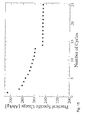
- the Li x H 2-x V 3 O 8 cathodes of the present invention are characterized by a cycling near theoretical capacity for 30 cycles, a capacity of at least 400 Ah/kg, such as 430 Ah/kg, in the second cycle, a capacity of still more than 400 Ah/kg after 20 cycles and a capacity of still around 380 Ah/kg after 30 cycles, which means that the material is almost constant over more than 20 cycles (1C).
- the cathode are furthermore characterized by an extension of the plateau from 3.5 to 4.2 volt.
- the practically usable capacity is between 250 and 350 Ah/kg (1C-rate around 300 A/kg). The large range is due to the fact that the capacity is dependent on the material positioning.
- At 2.7 V average a practical 410 Ah/kg gave rise to a single electrode specific energy of 1107 Wh/kg.
- a complete battery might deliver approx. 400 Wh/kg, which is roughly twice as much as a commercial battery does today.
- the carbon content of the electrodes measured was 5 ⁇ 2 % by weight (compared to still 10 to 15 % by weight in the former co-owned application) referred to the active electrode and the anode used was Li.
- the enormous benefit of the cathodes and anodes of the present invention is the low amount of matrix. Due to the use of a pyrolization product instead of a polymer and of graphene instead of graphite the matrix volume can be drastically reduced to at most 10 % by weight and preferably 5 ⁇ 2 % by weight referred to the electronically active material or active electrode, respectively, compared to at least 10 and up to 15 % by weight of the former co-owned application with a pyrolized matrix comprising conducting filler particles, e.g. graphite instead of graphene flakes.
- Suitable current collectors are titanium, nickel or (presently preferred) graphite. Also possible is aluminum, however, aluminum is less preferred because it is corrosive.
- cathodes and/or anodes may be used in any rechargeable lithium ion battery, preferably, however, in connection with an electrolyte selected from LiPF 6 in a mixture of ethylene carbonate with ethyl methyl carbonate and/or dimethyl carbonate, or LiPF 3 (C 2 F 5 ) 3 that proved to be more stable than LiPF 6 .
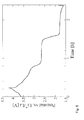
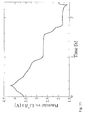
- Stable H 2 V 3 O 8 electrodes have the particularity to behave asymmetrically on charge and discharge (potential vs time). Their discharge curve displays three electroactive regions, while during the charge only two regions are observable. The deintercalation at the lowest potential (2V) does not occur in the charging curve. Nevertheless, anodic and cathodic capacities remain equal, since the missing lithium is extracted at 2.7V.
- the electrochemical behaviour upon charging between 2V and 2.7V was further investigated and it was found that it could not be correlated to one of the phases generated during the discharge. In addition the inventors found that there is a risk that irreversible processes might be triggered in this range.
- the charging preferably is carried out in two steps, a first cyclovoltammetric (CV) step between 1.6V and 2.8V, followed by a second step performed immediately after the first step which is a galvanostatic step from 2.8V to 4.1V, shifting the first deintercalation plateau from 2V to 2.5V.
- CV cyclovoltammetric
- H 2 V 3 O 8 Several promising EAM for cathodes and anodes exist. However, many of them have to be used in form of nanoparticles due to low conductivity.
- One of the most promising cathode materials is H 2 V 3 O 8 . Although this material stands out in view of its high lithium intercalation capacity (up to at least 4.5 Li per H 2 V 3 O 8 ) and its relatively low molecular weight (due to the presence of two hydrogen atoms it has the lowest possible molecular weight for such vanadium oxide), several difficulties had been encountered with it.
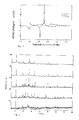
- the fibrous H 2 V 3 O 8 is able to exchange a large amount of lithium. This is primarily due to its specific crystal structure Due to the volume work in connection with the intercalation/deintercalation of the Li ions the fibers decompose to small fragments but no phase transition is observed and the cyclovoltammogram remains almost constant (see Figure 1 ).
- a vanadyl chloride solution suitable for being used as starting material in the above reaction was prepared by quantitative precipitation of the sulfate out of a vanadyl sulfate solution with barium chloride. After filtration with microsize filter (0.22 ⁇ m pore diameter) a clear vanadyl chloride solution was obtained.
- the oxidative route of the present invention is safe and fast.
- vanadium (IV) is used in excess in the reaction mixture such that some vanadium (IV) remains in the mixture at the end of the synthesis.
- the vanadyl solution is acidic (pH ⁇ 3).
- Hydrothermal treatment was performed during 12 h at 220°C (temperature measured at the outside of the reaction vessel or 180°C if the temperature is measured within the reaction mixture). The 12 h at 220°C are a minimum. No more than half of the reaction vessel should be filled. In order to prevent aggregation, the product may be washed with a non-coordinating solvent.
- Second Method Preferred method for obtaining homogeneous nanosized H 2 V 3 O 8
- Example 2b Self-assembly, Lithiation and Carbonization
- the vanadyl sulfate was dissolved in water in a beaker with magnetic stirrer. H2V308 was added and dispersed shortly through ultrasonication and stirring. GO solution (prepared according to Example 3) was added dropwise while stirring. The mixture was left for 30 minutes with stirring and then the suspension was frozen. The time during which the suspension was kept in a frozen state is uncritical. It may be warmed up as soon as it has reached the fully frozen status. Once the suspension had warmed up again to room temperature (RT) and stirring worked again, lithium lactate was added and dissolved. Once the lithium lactate was fully dissolved, lithium hydroxide powder was added.
- RT room temperature
- the product was filtered, rinsed with thf and then left drying at RT. Then the electrode material was separated from the filter, usually in the form of a solid disk and dried at 150°C for 15 minutes in air. The electrode material, which had become green again, was transferred in an oven operated at 220°C for 10 minutes. For cooling, the hot electrode material was then transferred in a glove box where the electrode material was evacuated for at least 30 minutes.
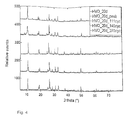
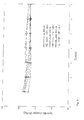
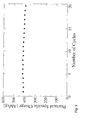
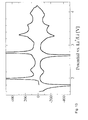
- a SEM picture of the active electrode material is shown in Figure 8 , a typical discharge curve in Figure 11 , a galvanostatic measurement in Figure 12 , a differential specific charge plot (7 th cycle) in Figure 13 and an XRD pattern of the active electrode material in Figure 14 .
- a piece of the electrode material was cut of the disk, weighted (for interpretation of the results) and placed on a metallic current collector.
- the electode then was covered first with a polypropylene cellguard separator and then with one silica foam separator, the cell was filled with LP30 electrolyte (1M LiPF6 in EC/DMC 1:1), the lithium anode was placed inside and the cell closed tightly.
- Example 3 Preparation of colloidal GO dispersion (also referred to as GO solution)
- Graphite oxide was prepared according to the well known method by Brodie as modified by Boehm et al. [8].
- the colloidal graphene oxide dispersion obtained by dispersing graphite oxide in water was optically clear to the naked eye and even in the light microskope at 1000 fold magnification, free of particles and had a pH of about 5. Using a laser, the resulting Tyndall effect showed that the graphite oxide resulted in a colloidal dispersion.
- colloidal dispersion consists of single layers of oxidized graphene, i.e. graphene oxide.
- the diminished OCV comes from self-discharge during which part of the electrolyte is oxidized by vanadium (V).
- V vanadium
- the process greatly influenced the performances of the battery. Electrochemical measurements showed improved kinetics. The time (and therefore the capacity) obtained from the first charge increased with prolongated storage time. Close to theoretical capacity (420-450 Ah/kg) values could be obtained durably in this way.
- Example 5 Improved Charging Technique for the H 2 V 3 O 8 Electrode of Example 2a
- Stable H 2 V 3 O 8 electrodes have the particularity to behave asymmetrically on charge and discharge (potential vs time). Their discharge curve displays three electroactive regions, while during the charge only two regions are observable. The deintercalation at the lowest potential (2V) does not occur in the charging curve. Nevertheless, anodic and cathodic capacities remain equal, since the missing lithium is extracted at 2.7V. A natural occurrence of this property is examplified in Figures 15 and 16 , and can be artificially produced as shown in Figure 17 . A completed charge step between 1.6V and 2.7V presents a polarization part, a short plateau at 2V (approximately half of the one during discharging) and a linear region to the 2,7V plateau.
- Example 6 Electrochemistry of the Electrode of Example 2b:
- the first step was a fast cyclovoltammetric (CV)step between 1.6V and 2.8V.
- the second step was performed immediately after the first step and was a galvanostatic step until 4.1V.
- the first deintercalation plateau shifted from 2V to 2.5V.
- a similar effect is obtainable if charging begins after a storage time or a rest time of the fully discharged battery of a time sufficient to allow relaxation to little above 2 V, typically about 15 to 20 minutes.
Landscapes
- Chemical & Material Sciences (AREA)
- Chemical Kinetics & Catalysis (AREA)
- Electrochemistry (AREA)
- General Chemical & Material Sciences (AREA)
- Engineering & Computer Science (AREA)
- Manufacturing & Machinery (AREA)
- Inorganic Chemistry (AREA)
- Materials Engineering (AREA)
- Organic Chemistry (AREA)
- Composite Materials (AREA)
- Battery Electrode And Active Subsutance (AREA)
- Secondary Cells (AREA)
Priority Applications (2)
| Application Number | Priority Date | Filing Date | Title |
|---|---|---|---|
| EP11184855.2A EP2445049B1 (de) | 2010-10-22 | 2011-10-12 | Verbesserung der Leistung einer Elektrode (Anode und Kathode) mittels Verbundstoffbildung mit Graphenoxid |
| EP13185186.7A EP2698854B1 (de) | 2010-10-22 | 2011-10-12 | Verbesserung der Leistung einer Elektrode (Anode und Kathode) mittels Verbundstoffbildung mit Graphenoxid |
Applications Claiming Priority (3)
| Application Number | Priority Date | Filing Date | Title |
|---|---|---|---|
| EP10188609 | 2010-10-22 | ||
| EP10196127 | 2010-12-21 | ||
| EP11184855.2A EP2445049B1 (de) | 2010-10-22 | 2011-10-12 | Verbesserung der Leistung einer Elektrode (Anode und Kathode) mittels Verbundstoffbildung mit Graphenoxid |
Related Child Applications (2)
| Application Number | Title | Priority Date | Filing Date |
|---|---|---|---|
| EP13185186.7A Division EP2698854B1 (de) | 2010-10-22 | 2011-10-12 | Verbesserung der Leistung einer Elektrode (Anode und Kathode) mittels Verbundstoffbildung mit Graphenoxid |
| EP13185186.7A Division-Into EP2698854B1 (de) | 2010-10-22 | 2011-10-12 | Verbesserung der Leistung einer Elektrode (Anode und Kathode) mittels Verbundstoffbildung mit Graphenoxid |
Publications (2)
| Publication Number | Publication Date |
|---|---|
| EP2445049A1 true EP2445049A1 (de) | 2012-04-25 |
| EP2445049B1 EP2445049B1 (de) | 2018-06-20 |
Family
ID=45346191
Family Applications (2)
| Application Number | Title | Priority Date | Filing Date |
|---|---|---|---|
| EP11184855.2A Active EP2445049B1 (de) | 2010-10-22 | 2011-10-12 | Verbesserung der Leistung einer Elektrode (Anode und Kathode) mittels Verbundstoffbildung mit Graphenoxid |
| EP13185186.7A Active EP2698854B1 (de) | 2010-10-22 | 2011-10-12 | Verbesserung der Leistung einer Elektrode (Anode und Kathode) mittels Verbundstoffbildung mit Graphenoxid |
Family Applications After (1)
| Application Number | Title | Priority Date | Filing Date |
|---|---|---|---|
| EP13185186.7A Active EP2698854B1 (de) | 2010-10-22 | 2011-10-12 | Verbesserung der Leistung einer Elektrode (Anode und Kathode) mittels Verbundstoffbildung mit Graphenoxid |
Country Status (8)
| Country | Link |
|---|---|
| US (2) | US8802295B2 (de) |
| EP (2) | EP2445049B1 (de) |
| JP (1) | JP5711095B2 (de) |
| KR (2) | KR101468265B1 (de) |
| CN (1) | CN102456869B (de) |
| AU (1) | AU2011236100A1 (de) |
| IL (1) | IL215768A0 (de) |
| TW (1) | TWI530005B (de) |
Cited By (14)
| Publication number | Priority date | Publication date | Assignee | Title |
|---|---|---|---|---|
| US8470477B2 (en) | 2011-08-29 | 2013-06-25 | Semiconductor Energy Laboratory Co., Ltd. | Method of manufacturing positive electrode active material for lithium ion battery |
| EP2607319A1 (de) * | 2011-12-20 | 2013-06-26 | Belenos Clean Power Holding AG | H4V3O8, ein neues Vanadium-(IV)oxid elektroaktives Material für wässrige und nicht wässrige Batterien |
| EP2747175A1 (de) | 2012-12-21 | 2014-06-25 | Belenos Clean Power Holding AG | Selbst zusammengestellter Verbundstoff aus Grafenoxid und H4V3O8 |
| EP2755259A1 (de) | 2013-01-10 | 2014-07-16 | Belenos Clean Power Holding AG | Selbst zusammengestellter Verbundstoff aus Grafenoxid und H4V3O8 |
| EP2784847A1 (de) * | 2013-03-26 | 2014-10-01 | Belenos Clean Power Holding AG | Oberflächenmodifiziertes lithiumhaltiges H2V3O8 |
| EP2905257A1 (de) | 2014-02-05 | 2015-08-12 | Belenos Clean Power Holding AG | Verfahren zur Herstellung von Graphitoxid und Verwendungen davon |
| US9252419B2 (en) | 2011-09-09 | 2016-02-02 | Semiconductor Energy Laboratory Co., Ltd. | Positive electrode for lithium secondary battery, manufacturing method thereof, and lithium secondary battery |
| US9293770B2 (en) | 2012-04-10 | 2016-03-22 | Semiconductor Energy Laboratory Co., Ltd. | Graphene oxide, positive electrode for nonaqueous secondary battery using graphene oxide, method of manufacturing positive electrode for nonaqueous secondary battery, nonaqueous secondary battery, and electronic device |
| US9373834B2 (en) | 2011-12-16 | 2016-06-21 | Semiconductor Energy Laboratory Co., Ltd. | Method for forming positive electrode for lithium-ion secondary battery |
| US9385366B2 (en) | 2012-08-27 | 2016-07-05 | Semiconductor Energy Laboratory Co., Ltd. | Positive electrode for secondary battery, secondary battery, and method for fabricating positive electrode for secondary battery |
| US9627686B2 (en) | 2011-03-18 | 2017-04-18 | Semiconductor Energy Laboratory Co., Ltd. | Method for manufacturing lithium-containing composite oxide |
| EP3163655A1 (de) * | 2015-10-28 | 2017-05-03 | Renata AG | Elektroaktives material aus einer kathode für primärbatterie |
| US10038177B2 (en) | 2012-06-15 | 2018-07-31 | Semiconductor Energy Laboratory Co., Ltd. | Method for manufacturing storage battery electrode, storage battery electrode, storage battery, and electronic device |
| US10243214B2 (en) | 2011-06-03 | 2019-03-26 | Semiconductor Energy Laboratory Co., Ltd. | Method of manufacturing electrode |
Families Citing this family (46)
| Publication number | Priority date | Publication date | Assignee | Title |
|---|---|---|---|---|
| KR102131859B1 (ko) | 2011-03-25 | 2020-07-08 | 가부시키가이샤 한도오따이 에네루기 켄큐쇼 | 리튬 이온 2차 전지 |
| US9218916B2 (en) | 2011-06-24 | 2015-12-22 | Semiconductor Energy Laboratory Co., Ltd. | Graphene, power storage device, and electric device |
| US9118077B2 (en) | 2011-08-31 | 2015-08-25 | Semiconductor Energy Laboratory Co., Ltd. | Manufacturing method of composite oxide and manufacturing method of power storage device |
| US9249524B2 (en) | 2011-08-31 | 2016-02-02 | Semiconductor Energy Laboratory Co., Ltd. | Manufacturing method of composite oxide and manufacturing method of power storage device |
| KR102514830B1 (ko) | 2011-09-30 | 2023-03-30 | 가부시키가이샤 한도오따이 에네루기 켄큐쇼 | 양극, 리튬 이차 전지, 전기 자동차, 하이브리드 자동차, 이동체, 시스템, 및 전기 기기 |
| CN103035922B (zh) | 2011-10-07 | 2019-02-19 | 株式会社半导体能源研究所 | 蓄电装置 |
| US9487880B2 (en) | 2011-11-25 | 2016-11-08 | Semiconductor Energy Laboratory Co., Ltd. | Flexible substrate processing apparatus |
| US9680272B2 (en) | 2012-02-17 | 2017-06-13 | Semiconductor Energy Laboratory Co., Ltd. | Method for forming negative electrode and method for manufacturing lithium secondary battery |
| EP2629353A1 (de) * | 2012-02-17 | 2013-08-21 | Belenos Clean Power Holding AG | Nichtwässrige Sekundärbatterie mit gemischtem Kathodenaktivmaterial |
| JP5719859B2 (ja) | 2012-02-29 | 2015-05-20 | 株式会社半導体エネルギー研究所 | 蓄電装置 |
| US10396365B2 (en) | 2012-07-18 | 2019-08-27 | Printed Energy Pty Ltd | Diatomaceous energy storage devices |
| CN104584160B (zh) * | 2012-07-18 | 2018-03-23 | 印制能源技术有限公司 | 能量储存装置与用于印刷薄膜的墨水 |
| US9548511B2 (en) | 2012-07-18 | 2017-01-17 | Nthdegree Technologies Worldwide Inc. | Diatomaceous energy storage devices |
| WO2014015139A1 (en) * | 2012-07-20 | 2014-01-23 | Academia Sinica | Graphene-containing electrodes |
| TWI441947B (zh) | 2012-07-20 | 2014-06-21 | Academia Sinica | 電化學石墨烯及包含其之電極複合材料與鋰電池 |
| KR101399042B1 (ko) * | 2012-09-17 | 2014-05-27 | 주식회사 예일전자 | 이차전지의 음극재용 고용량 실리콘-그래핀계 복합재의 제조방법 |
| US9397341B2 (en) | 2012-10-10 | 2016-07-19 | Nthdegree Technologies Worldwide Inc. | Printed energy storage device |
| US9520598B2 (en) | 2012-10-10 | 2016-12-13 | Nthdegree Technologies Worldwide Inc. | Printed energy storage device |
| JP6159228B2 (ja) | 2012-11-07 | 2017-07-05 | 株式会社半導体エネルギー研究所 | 非水系二次電池用正極の製造方法 |
| JP5836254B2 (ja) * | 2012-11-12 | 2015-12-24 | 太平洋セメント株式会社 | 導電性複合粒子、正極活物質及びそれを用いた二次電池 |
| TWI652319B (zh) | 2012-12-28 | 2019-03-01 | 澳大利亞商印製能源技術有限公司 | 導電墨水及其製造方法與導電膜 |
| US20140199580A1 (en) * | 2013-01-14 | 2014-07-17 | Semiconductor Energy Laboratory Co., Ltd. | Electronic device |
| JP6060699B2 (ja) * | 2013-01-23 | 2017-01-18 | 東レ株式会社 | 正極活物質と導電性炭素の複合体粒子 |
| TWI509866B (zh) * | 2013-01-24 | 2015-11-21 | Univ Nat Taiwan Science Tech | 表面改質之粉末 |
| US9673454B2 (en) | 2013-02-18 | 2017-06-06 | Semiconductor Energy Laboratory Co., Ltd. | Sodium-ion secondary battery |
| US12261285B2 (en) * | 2019-11-07 | 2025-03-25 | Enevate Corporation | Control of furnace atmosphere for improving capacity retention of silicon-dominant anode cells |
| US9490472B2 (en) | 2013-03-28 | 2016-11-08 | Semiconductor Energy Laboratory Co., Ltd. | Method for manufacturing electrode for storage battery |
| CN105379000B (zh) | 2013-07-17 | 2019-08-27 | 印制能源技术有限公司 | 能量储存装置 |
| US10394848B2 (en) | 2013-07-29 | 2019-08-27 | Amazon Technologies, Inc. | Generating a multi-column index for relational databases by interleaving data bits for selectivity |
| GB2516932B (en) | 2013-08-07 | 2018-12-26 | Nokia Technologies Oy | An apparatus and associated methods for water detection |
| US20150044560A1 (en) | 2013-08-09 | 2015-02-12 | Semiconductor Energy Laboratory Co., Ltd. | Electrode for lithium-ion secondary battery and manufacturing method thereof, and lithium-ion secondary battery |
| CN103730663B (zh) * | 2013-12-16 | 2016-03-02 | 广西科技大学 | 一种纳米二氧化硅掺杂正极材料的制备方法 |
| WO2015123808A1 (en) * | 2014-02-18 | 2015-08-27 | Robert Bosch Gmbh | A graphene/he-ncm composite for lithium ion battery, a method for preparing said composite, and an electrode material and a lithium ion battery comprising said composite |
| EP2919298B1 (de) | 2014-03-12 | 2017-08-23 | Belenos Clean Power Holding AG | Si/C-Kompositanoden für Lithium-Ionen-Batterien mit anhaltender hoher Kapazität pro Flächeneinheit |
| JP6745587B2 (ja) | 2014-05-29 | 2020-08-26 | 株式会社半導体エネルギー研究所 | 電極の製造方法 |
| CN104495781A (zh) * | 2014-11-19 | 2015-04-08 | 中国科学院长春应用化学研究所 | 一种水热切割方法 |
| KR101753126B1 (ko) | 2015-08-31 | 2017-07-04 | 한국지질자원연구원 | 그래핀-백금-금 나노복합체의 제조방법 및 이로부터 제조된 그래핀-백금-금 3차원 나노복합체 |
| CN105826547A (zh) * | 2016-05-15 | 2016-08-03 | 河北工业大学 | 一种三步法制备石墨烯掺杂/碳包覆钛酸锂复合负极材料的方法 |
| CN106159241A (zh) * | 2016-08-31 | 2016-11-23 | 四川剑兴锂电池有限公司 | 一种正极极片及含有该正极片的无定形碳锂电池 |
| KR102066704B1 (ko) * | 2016-09-09 | 2020-01-15 | 주식회사 엘지화학 | 이차전지용 전극의 제조방법 및 이로부터 제조된 전극 |
| JP7122309B2 (ja) * | 2016-12-20 | 2022-08-19 | ナノテク インストゥルメンツ,インコーポレイテッド | 可撓性および形状適合性のケーブル型アルカリ金属電池 |
| CN108126712B (zh) * | 2017-12-22 | 2020-11-13 | 陕西科技大学 | 一种vooh/vs4微米复合粉体及其制备方法与应用 |
| EP3503268B1 (de) | 2017-12-22 | 2020-09-16 | Belenos Clean Power Holding AG | Flüssige elektrolytformulierung für lithium-metall-sekundärbatterie und lithium-metall-sekundärbatterie diese umfassend |
| US11251430B2 (en) | 2018-03-05 | 2022-02-15 | The Research Foundation For The State University Of New York | ϵ-VOPO4 cathode for lithium ion batteries |
| WO2021059171A1 (en) * | 2019-09-24 | 2021-04-01 | Talga Technologies Limited | Anode material and method for producing same |
| EP4167311A1 (de) * | 2021-10-15 | 2023-04-19 | Belenos Clean Power Holding AG | Aktivmaterial für eine elektrode für eine batteriezelle und verfahren zur herstellung davon |
Citations (4)
| Publication number | Priority date | Publication date | Assignee | Title |
|---|---|---|---|---|
| WO2001074716A1 (fr) | 2000-04-04 | 2001-10-11 | Centre National De La Recherche Scientifique | Oxyde de sodium et de vanadium, son utilisation comme matiere active d'une electrode positive |
| US20100176337A1 (en) * | 2009-01-13 | 2010-07-15 | Aruna Zhamu | Process for producing nano graphene reinforced composite particles for lithium battery electrodes |
| EP2228855A1 (de) | 2009-03-12 | 2010-09-15 | Belenos Clean Power Holding AG | Offen poröses elektrisch leitfähiges Nanoverbundmaterial |
| EP2256087A1 (de) | 2009-05-26 | 2010-12-01 | Belenos Clean Power Holding AG | Stabile Dispersionen von Einzel- und Mehrfachgraphenschichten in einer Lösung |
Family Cites Families (4)
| Publication number | Priority date | Publication date | Assignee | Title |
|---|---|---|---|---|
| KR100471979B1 (ko) * | 2002-05-08 | 2005-03-08 | 삼성에스디아이 주식회사 | 리튬 전지용 전해질 및 이를 포함하는 리튬 전지 |
| US7566410B2 (en) * | 2006-01-11 | 2009-07-28 | Nanotek Instruments, Inc. | Highly conductive nano-scaled graphene plate nanocomposites |
| US7745047B2 (en) * | 2007-11-05 | 2010-06-29 | Nanotek Instruments, Inc. | Nano graphene platelet-base composite anode compositions for lithium ion batteries |
| CN101811696B (zh) * | 2010-04-28 | 2013-01-02 | 东南大学 | 一种石墨烯负载四氧化三钴纳米复合材料及其制备方法 |
-
2011
- 2011-10-12 EP EP11184855.2A patent/EP2445049B1/de active Active
- 2011-10-12 EP EP13185186.7A patent/EP2698854B1/de active Active
- 2011-10-18 TW TW100137740A patent/TWI530005B/zh active
- 2011-10-18 AU AU2011236100A patent/AU2011236100A1/en not_active Abandoned
- 2011-10-20 US US13/277,360 patent/US8802295B2/en active Active
- 2011-10-21 KR KR1020110108363A patent/KR101468265B1/ko active Active
- 2011-10-23 IL IL215768A patent/IL215768A0/en unknown
- 2011-10-24 JP JP2011232595A patent/JP5711095B2/ja active Active
- 2011-10-24 CN CN201110325299.4A patent/CN102456869B/zh active Active
-
2013
- 2013-10-21 KR KR1020130125307A patent/KR101468330B1/ko active Active
-
2014
- 2014-01-14 US US14/154,275 patent/US9337481B2/en active Active
Patent Citations (4)
| Publication number | Priority date | Publication date | Assignee | Title |
|---|---|---|---|---|
| WO2001074716A1 (fr) | 2000-04-04 | 2001-10-11 | Centre National De La Recherche Scientifique | Oxyde de sodium et de vanadium, son utilisation comme matiere active d'une electrode positive |
| US20100176337A1 (en) * | 2009-01-13 | 2010-07-15 | Aruna Zhamu | Process for producing nano graphene reinforced composite particles for lithium battery electrodes |
| EP2228855A1 (de) | 2009-03-12 | 2010-09-15 | Belenos Clean Power Holding AG | Offen poröses elektrisch leitfähiges Nanoverbundmaterial |
| EP2256087A1 (de) | 2009-05-26 | 2010-12-01 | Belenos Clean Power Holding AG | Stabile Dispersionen von Einzel- und Mehrfachgraphenschichten in einer Lösung |
Non-Patent Citations (9)
| Title |
|---|
| CHEM. EUR. J., vol. 14, 2008, pages 11141 - 11148 |
| CHEM. MATER., vol. 17, 2005, pages 984 - 991 |
| ELECTROCHIMICA ACTA, vol. 54, 2009, pages 1115 - 1118 |
| H.P. BOEHM ET AL., ANNALEN DER CHEMIE, vol. 691, 1965, pages 1 - 8 |
| J. ELECTROCHEM. SOC., vol. 145, no. 2, 1998 |
| LEGAGNEUR V. ET AL.: "New layered vanadium oxides MyH1-yV3O8*nH2O (M=Li, Na, K) obtained by oxidation of the precursor H2V3O8", JOURNAL OF MATERIALS CHEMISTRY, vol. 10, 6 November 2000 (2000-11-06), pages 2805 - 2810, XP002636962, DOI: 10.1039/b005559j * |
| OKA Y.; T. YAO; N. YAMAMOTO, JOURNAL OF SOLID STATE CHEMISTRY, vol. 86, no. 1, 1990, pages 116 |
| OKA Y.; T. YAO; N. YAMAMOTO, JOURNAL OF SOLID STATE CHEMISTRY, vol. 89, no. 2, 1990, pages 372 |
| THEOBALD F.; R. CABALA, COMPTES RENDUS HEBDOMADAIRES DES SEANCES DE L'ACADEMIE DES SCIENCES, SERIE C, vol. 270, no. 26, 1970, pages 2138 |
Cited By (27)
| Publication number | Priority date | Publication date | Assignee | Title |
|---|---|---|---|---|
| US9627686B2 (en) | 2011-03-18 | 2017-04-18 | Semiconductor Energy Laboratory Co., Ltd. | Method for manufacturing lithium-containing composite oxide |
| US10243214B2 (en) | 2011-06-03 | 2019-03-26 | Semiconductor Energy Laboratory Co., Ltd. | Method of manufacturing electrode |
| US8685570B2 (en) | 2011-08-29 | 2014-04-01 | Semiconductor Energy Laboratory Co., Ltd. | Method of manufacturing positive electrode active material for lithium ion battery |
| US10096428B2 (en) | 2011-08-29 | 2018-10-09 | Semiconductor Energy Laboratory Co., Ltd. | Method of manufacturing positive electrode active material for lithium ion battery |
| US9711292B2 (en) | 2011-08-29 | 2017-07-18 | Semiconductor Energy Laboratory Co., Ltd. | Method of manufacturing positive electrode active material for lithium ion battery |
| US8470477B2 (en) | 2011-08-29 | 2013-06-25 | Semiconductor Energy Laboratory Co., Ltd. | Method of manufacturing positive electrode active material for lithium ion battery |
| US9935313B2 (en) | 2011-09-09 | 2018-04-03 | Semiconductor Energy Laboratory Co., Ltd. | Positive electrode for lithium secondary battery, manufacturing method thereof, and lithium secondary battery |
| US9556536B2 (en) | 2011-09-09 | 2017-01-31 | Semiconductor Energy Laboratory Co., Ltd. | Positive electrode for lithium secondary battery, manufacturing method thereof, and lithium secondary battery |
| US9252419B2 (en) | 2011-09-09 | 2016-02-02 | Semiconductor Energy Laboratory Co., Ltd. | Positive electrode for lithium secondary battery, manufacturing method thereof, and lithium secondary battery |
| US9373834B2 (en) | 2011-12-16 | 2016-06-21 | Semiconductor Energy Laboratory Co., Ltd. | Method for forming positive electrode for lithium-ion secondary battery |
| US9023527B2 (en) | 2011-12-20 | 2015-05-05 | Belenos Clean Power Holding Ag | H4V3O8, a new vanadium(IV) oxide electroactive material for aqueous and non aqueous batteries |
| EP2607319A1 (de) * | 2011-12-20 | 2013-06-26 | Belenos Clean Power Holding AG | H4V3O8, ein neues Vanadium-(IV)oxid elektroaktives Material für wässrige und nicht wässrige Batterien |
| US9293770B2 (en) | 2012-04-10 | 2016-03-22 | Semiconductor Energy Laboratory Co., Ltd. | Graphene oxide, positive electrode for nonaqueous secondary battery using graphene oxide, method of manufacturing positive electrode for nonaqueous secondary battery, nonaqueous secondary battery, and electronic device |
| US10038177B2 (en) | 2012-06-15 | 2018-07-31 | Semiconductor Energy Laboratory Co., Ltd. | Method for manufacturing storage battery electrode, storage battery electrode, storage battery, and electronic device |
| US11411209B2 (en) | 2012-06-15 | 2022-08-09 | Semiconductor Energy Laboratory Co., Ltd. | Method for manufacturing storage battery electrode, storage battery electrode, storage battery, and electronic device |
| US10818908B2 (en) | 2012-06-15 | 2020-10-27 | Semiconductor Energy Laboratory Co., Ltd. | Method for manufacturing storage battery electrode, storage battery electrode, storage battery, and electronic device |
| US9385366B2 (en) | 2012-08-27 | 2016-07-05 | Semiconductor Energy Laboratory Co., Ltd. | Positive electrode for secondary battery, secondary battery, and method for fabricating positive electrode for secondary battery |
| US11108038B2 (en) | 2012-08-27 | 2021-08-31 | Semiconductor Energy Laboratory Co., Ltd. | Positive electrode for secondary battery, secondary battery, and method for fabricating positive electrode for secondary battery |
| US9225009B2 (en) | 2012-12-21 | 2015-12-29 | Belenos Clean Power Holding Ag | Self-assembled composite of graphene oxide and tetravalent vanadium oxohydroxide |
| EP2747175A1 (de) | 2012-12-21 | 2014-06-25 | Belenos Clean Power Holding AG | Selbst zusammengestellter Verbundstoff aus Grafenoxid und H4V3O8 |
| EP2755259A1 (de) | 2013-01-10 | 2014-07-16 | Belenos Clean Power Holding AG | Selbst zusammengestellter Verbundstoff aus Grafenoxid und H4V3O8 |
| EP2784847A1 (de) * | 2013-03-26 | 2014-10-01 | Belenos Clean Power Holding AG | Oberflächenmodifiziertes lithiumhaltiges H2V3O8 |
| US9391323B2 (en) | 2013-03-26 | 2016-07-12 | Belenos Clean Power Holding Ag | Surface modified lithiated H2V3O8 |
| EP2905257A1 (de) | 2014-02-05 | 2015-08-12 | Belenos Clean Power Holding AG | Verfahren zur Herstellung von Graphitoxid und Verwendungen davon |
| US9422163B2 (en) | 2014-02-05 | 2016-08-23 | Belenos Clean Power Holding Ag | Method of production of graphite oxide and uses thereof |
| EP3163655A1 (de) * | 2015-10-28 | 2017-05-03 | Renata AG | Elektroaktives material aus einer kathode für primärbatterie |
| US10367195B2 (en) | 2015-10-28 | 2019-07-30 | Renata Ag | Electro-active material of a cathode of primary battery |
Also Published As
| Publication number | Publication date |
|---|---|
| KR101468265B1 (ko) | 2014-12-04 |
| KR20130121799A (ko) | 2013-11-06 |
| US8802295B2 (en) | 2014-08-12 |
| EP2698854B1 (de) | 2017-02-22 |
| EP2445049B1 (de) | 2018-06-20 |
| TW201232896A (en) | 2012-08-01 |
| CN102456869B (zh) | 2015-05-13 |
| AU2011236100A1 (en) | 2012-05-10 |
| US20120100402A1 (en) | 2012-04-26 |
| TWI530005B (zh) | 2016-04-11 |
| CN102456869A (zh) | 2012-05-16 |
| IL215768A0 (en) | 2012-02-29 |
| KR101468330B1 (ko) | 2014-12-02 |
| JP5711095B2 (ja) | 2015-04-30 |
| EP2698854A1 (de) | 2014-02-19 |
| KR20120047782A (ko) | 2012-05-14 |
| JP2012094516A (ja) | 2012-05-17 |
| US20140127562A1 (en) | 2014-05-08 |
| US9337481B2 (en) | 2016-05-10 |
Similar Documents
| Publication | Publication Date | Title |
|---|---|---|
| EP2698854B1 (de) | Verbesserung der Leistung einer Elektrode (Anode und Kathode) mittels Verbundstoffbildung mit Graphenoxid | |
| Kundu et al. | Investigation of nano-fibrous selenium and its polypyrrole and graphene composite as cathode material for rechargeable Li-batteries | |
| Roh et al. | In situ synthesis of chemically bonded NaTi2 (PO4) 3/rGO 2D nanocomposite for high-rate sodium-ion batteries | |
| EP2562854B1 (de) | Herstellungsverfahren für übergangsmetalloxid- und kohlenstoffnanoröhrchenverbundstoff sowie verbundstoff daraus | |
| KR101444189B1 (ko) | 나트륨 이차전지용 음극활물질, 이를 이용한 전극의 제조방법 및 이를 포함하는 나트륨 이차전지 | |
| KR101355000B1 (ko) | 비정질상 음극활물질 및 이를 이용한 전극의 제조방법 및 이를 포함하는 리튬이차전지 | |
| Liu et al. | Hydrated titanic acid as an ultralow-potential anode for aqueous zinc-ion full batteries | |
| Fang et al. | Sn–Ca amorphous alloy as anode for lithium ion battery | |
| Cho et al. | Control of side reactions using LiNbO3 mixed/doped solid electrolyte for enhanced sulfide-based all-solid-state batteries | |
| US20130337335A1 (en) | Negative electrode material for a secondary battery and method for manufacturing same | |
| US20190267615A1 (en) | Oxyfluoride cathodes and a method of producing the same | |
| Liu et al. | Mg-doped LiMnPO4/C cathode materials for enhanced lithium storage performance | |
| Aghamohammadi et al. | Effects of calcination parameters on the purity, morphology, and electrochemical properties of the synthesized TiNb2O7 by the solvothermal method as anode materials for Li-ion batteries | |
| Le et al. | Enhanced reversible lithium storage property of Sn0. 1V2O5 in the voltage window of 1.5–4.0 V | |
| Wang et al. | Electrochemical performance of hydrothermally synthesized manganese dioxide as anode for lithium-ion batteries | |
| Assengar et al. | Enhancement of LiVPO4F cathode materials via manganese doping: Boosting energy density and rate capability for high-voltage lithium-ion batteries | |
| Gao et al. | Synthesis and electrochemical properties of nanocrystalline V2O5 flake via a citric acid-assistant sol–gel method | |
| EP3686966A1 (de) | Elektrochemischer energiespeicher und verfahren zur herstellung eines anodenaktivmaterials für den elektrochemischen energiespeicher | |
| Yu et al. | Controllable synthesis of various V 2 O 5 micro-/nanostructures as high performance cathodes for lithium ion batteries | |
| RU2703629C1 (ru) | Анодный материал для литий-ионного аккумулятора и способ его получения | |
| Albertina et al. | Versatile alkali-ion storage in hierarchically porous Mo2C@ C hybrid architectures | |
| Cheng | An easy large-scale preparation of γ-MnOOH 1D nanorods for advanced LIBs application | |
| Rashitova et al. | Simple, cheap and fast way to produce mixed valence vanadium oxide/PEDOT composite for cathode material of Li-ion batteries with enhanced stability | |
| KR102801675B1 (ko) | 전고체 전지의 성능 향상을 위한 황화물계 고체 전해질, 이를 제조하기 위한 볼 밀링이 적용된 혼합 습식 공정 및 이를 포함하는 리튬 이차전지 | |
| KR102801668B1 (ko) | 황화물계 고체 전해질, 이의 제조방법 및 이를 포함하는 리튬 이차전지 |
Legal Events
| Date | Code | Title | Description |
|---|---|---|---|
| AK | Designated contracting states |
Kind code of ref document: A1 Designated state(s): AL AT BE BG CH CY CZ DE DK EE ES FI FR GB GR HR HU IE IS IT LI LT LU LV MC MK MT NL NO PL PT RO RS SE SI SK SM TR |
|
| AX | Request for extension of the european patent |
Extension state: BA ME |
|
| PUAI | Public reference made under article 153(3) epc to a published international application that has entered the european phase |
Free format text: ORIGINAL CODE: 0009012 |
|
| 17P | Request for examination filed |
Effective date: 20121025 |
|
| 17Q | First examination report despatched |
Effective date: 20160322 |
|
| REG | Reference to a national code |
Ref country code: DE Ref legal event code: R079 Ref document number: 602011049380 Country of ref document: DE Free format text: PREVIOUS MAIN CLASS: H01M0010052000 Ipc: H01M0004485000 |
|
| GRAP | Despatch of communication of intention to grant a patent |
Free format text: ORIGINAL CODE: EPIDOSNIGR1 |
|
| RIC1 | Information provided on ipc code assigned before grant |
Ipc: H01M 4/131 20100101ALI20180124BHEP Ipc: C01G 31/00 20060101ALI20180124BHEP Ipc: H01M 4/36 20060101ALI20180124BHEP Ipc: H01M 10/44 20060101ALI20180124BHEP Ipc: H01M 4/04 20060101ALI20180124BHEP Ipc: H01M 10/052 20100101ALI20180124BHEP Ipc: H01M 4/62 20060101ALI20180124BHEP Ipc: H01M 10/04 20060101ALI20180124BHEP Ipc: H01M 4/485 20100101AFI20180124BHEP Ipc: H01M 4/1391 20100101ALI20180124BHEP |
|
| INTG | Intention to grant announced |
Effective date: 20180227 |
|
| GRAS | Grant fee paid |
Free format text: ORIGINAL CODE: EPIDOSNIGR3 |
|
| GRAA | (expected) grant |
Free format text: ORIGINAL CODE: 0009210 |
|
| AK | Designated contracting states |
Kind code of ref document: B1 Designated state(s): AL AT BE BG CH CY CZ DE DK EE ES FI FR GB GR HR HU IE IS IT LI LT LU LV MC MK MT NL NO PL PT RO RS SE SI SK SM TR |
|
| REG | Reference to a national code |
Ref country code: GB Ref legal event code: FG4D |
|
| REG | Reference to a national code |
Ref country code: IE Ref legal event code: FG4D |
|
| REG | Reference to a national code |
Ref country code: AT Ref legal event code: REF Ref document number: 1011202 Country of ref document: AT Kind code of ref document: T Effective date: 20180715 |
|
| REG | Reference to a national code |
Ref country code: DE Ref legal event code: R096 Ref document number: 602011049380 Country of ref document: DE |
|
| REG | Reference to a national code |
Ref country code: FR Ref legal event code: PLFP Year of fee payment: 8 |
|
| REG | Reference to a national code |
Ref country code: NL Ref legal event code: MP Effective date: 20180620 |
|
| PG25 | Lapsed in a contracting state [announced via postgrant information from national office to epo] |
Ref country code: SE Free format text: LAPSE BECAUSE OF FAILURE TO SUBMIT A TRANSLATION OF THE DESCRIPTION OR TO PAY THE FEE WITHIN THE PRESCRIBED TIME-LIMIT Effective date: 20180620 Ref country code: FI Free format text: LAPSE BECAUSE OF FAILURE TO SUBMIT A TRANSLATION OF THE DESCRIPTION OR TO PAY THE FEE WITHIN THE PRESCRIBED TIME-LIMIT Effective date: 20180620 Ref country code: NO Free format text: LAPSE BECAUSE OF FAILURE TO SUBMIT A TRANSLATION OF THE DESCRIPTION OR TO PAY THE FEE WITHIN THE PRESCRIBED TIME-LIMIT Effective date: 20180920 Ref country code: BG Free format text: LAPSE BECAUSE OF FAILURE TO SUBMIT A TRANSLATION OF THE DESCRIPTION OR TO PAY THE FEE WITHIN THE PRESCRIBED TIME-LIMIT Effective date: 20180920 Ref country code: LT Free format text: LAPSE BECAUSE OF FAILURE TO SUBMIT A TRANSLATION OF THE DESCRIPTION OR TO PAY THE FEE WITHIN THE PRESCRIBED TIME-LIMIT Effective date: 20180620 |
|
| REG | Reference to a national code |
Ref country code: LT Ref legal event code: MG4D |
|
| PG25 | Lapsed in a contracting state [announced via postgrant information from national office to epo] |
Ref country code: LV Free format text: LAPSE BECAUSE OF FAILURE TO SUBMIT A TRANSLATION OF THE DESCRIPTION OR TO PAY THE FEE WITHIN THE PRESCRIBED TIME-LIMIT Effective date: 20180620 Ref country code: RS Free format text: LAPSE BECAUSE OF FAILURE TO SUBMIT A TRANSLATION OF THE DESCRIPTION OR TO PAY THE FEE WITHIN THE PRESCRIBED TIME-LIMIT Effective date: 20180620 Ref country code: HR Free format text: LAPSE BECAUSE OF FAILURE TO SUBMIT A TRANSLATION OF THE DESCRIPTION OR TO PAY THE FEE WITHIN THE PRESCRIBED TIME-LIMIT Effective date: 20180620 Ref country code: GR Free format text: LAPSE BECAUSE OF FAILURE TO SUBMIT A TRANSLATION OF THE DESCRIPTION OR TO PAY THE FEE WITHIN THE PRESCRIBED TIME-LIMIT Effective date: 20180921 |
|
| REG | Reference to a national code |
Ref country code: AT Ref legal event code: MK05 Ref document number: 1011202 Country of ref document: AT Kind code of ref document: T Effective date: 20180620 |
|
| PG25 | Lapsed in a contracting state [announced via postgrant information from national office to epo] |
Ref country code: NL Free format text: LAPSE BECAUSE OF FAILURE TO SUBMIT A TRANSLATION OF THE DESCRIPTION OR TO PAY THE FEE WITHIN THE PRESCRIBED TIME-LIMIT Effective date: 20180620 |
|
| PG25 | Lapsed in a contracting state [announced via postgrant information from national office to epo] |
Ref country code: CZ Free format text: LAPSE BECAUSE OF FAILURE TO SUBMIT A TRANSLATION OF THE DESCRIPTION OR TO PAY THE FEE WITHIN THE PRESCRIBED TIME-LIMIT Effective date: 20180620 Ref country code: SK Free format text: LAPSE BECAUSE OF FAILURE TO SUBMIT A TRANSLATION OF THE DESCRIPTION OR TO PAY THE FEE WITHIN THE PRESCRIBED TIME-LIMIT Effective date: 20180620 Ref country code: EE Free format text: LAPSE BECAUSE OF FAILURE TO SUBMIT A TRANSLATION OF THE DESCRIPTION OR TO PAY THE FEE WITHIN THE PRESCRIBED TIME-LIMIT Effective date: 20180620 Ref country code: IS Free format text: LAPSE BECAUSE OF FAILURE TO SUBMIT A TRANSLATION OF THE DESCRIPTION OR TO PAY THE FEE WITHIN THE PRESCRIBED TIME-LIMIT Effective date: 20181020 Ref country code: PL Free format text: LAPSE BECAUSE OF FAILURE TO SUBMIT A TRANSLATION OF THE DESCRIPTION OR TO PAY THE FEE WITHIN THE PRESCRIBED TIME-LIMIT Effective date: 20180620 Ref country code: AT Free format text: LAPSE BECAUSE OF FAILURE TO SUBMIT A TRANSLATION OF THE DESCRIPTION OR TO PAY THE FEE WITHIN THE PRESCRIBED TIME-LIMIT Effective date: 20180620 Ref country code: RO Free format text: LAPSE BECAUSE OF FAILURE TO SUBMIT A TRANSLATION OF THE DESCRIPTION OR TO PAY THE FEE WITHIN THE PRESCRIBED TIME-LIMIT Effective date: 20180620 |
|
| PG25 | Lapsed in a contracting state [announced via postgrant information from national office to epo] |
Ref country code: IT Free format text: LAPSE BECAUSE OF FAILURE TO SUBMIT A TRANSLATION OF THE DESCRIPTION OR TO PAY THE FEE WITHIN THE PRESCRIBED TIME-LIMIT Effective date: 20180620 Ref country code: SM Free format text: LAPSE BECAUSE OF FAILURE TO SUBMIT A TRANSLATION OF THE DESCRIPTION OR TO PAY THE FEE WITHIN THE PRESCRIBED TIME-LIMIT Effective date: 20180620 Ref country code: ES Free format text: LAPSE BECAUSE OF FAILURE TO SUBMIT A TRANSLATION OF THE DESCRIPTION OR TO PAY THE FEE WITHIN THE PRESCRIBED TIME-LIMIT Effective date: 20180620 |
|
| REG | Reference to a national code |
Ref country code: DE Ref legal event code: R097 Ref document number: 602011049380 Country of ref document: DE |
|
| PLBE | No opposition filed within time limit |
Free format text: ORIGINAL CODE: 0009261 |
|
| STAA | Information on the status of an ep patent application or granted ep patent |
Free format text: STATUS: NO OPPOSITION FILED WITHIN TIME LIMIT |
|
| 26N | No opposition filed |
Effective date: 20190321 |
|
| PG25 | Lapsed in a contracting state [announced via postgrant information from national office to epo] |
Ref country code: DK Free format text: LAPSE BECAUSE OF FAILURE TO SUBMIT A TRANSLATION OF THE DESCRIPTION OR TO PAY THE FEE WITHIN THE PRESCRIBED TIME-LIMIT Effective date: 20180620 |
|
| GBPC | Gb: european patent ceased through non-payment of renewal fee |
Effective date: 20181012 |
|
| REG | Reference to a national code |
Ref country code: BE Ref legal event code: MM Effective date: 20181031 |
|
| PG25 | Lapsed in a contracting state [announced via postgrant information from national office to epo] |
Ref country code: LU Free format text: LAPSE BECAUSE OF NON-PAYMENT OF DUE FEES Effective date: 20181012 Ref country code: MC Free format text: LAPSE BECAUSE OF FAILURE TO SUBMIT A TRANSLATION OF THE DESCRIPTION OR TO PAY THE FEE WITHIN THE PRESCRIBED TIME-LIMIT Effective date: 20180620 |
|
| REG | Reference to a national code |
Ref country code: IE Ref legal event code: MM4A |
|
| PG25 | Lapsed in a contracting state [announced via postgrant information from national office to epo] |
Ref country code: SI Free format text: LAPSE BECAUSE OF FAILURE TO SUBMIT A TRANSLATION OF THE DESCRIPTION OR TO PAY THE FEE WITHIN THE PRESCRIBED TIME-LIMIT Effective date: 20180620 Ref country code: BE Free format text: LAPSE BECAUSE OF NON-PAYMENT OF DUE FEES Effective date: 20181031 |
|
| PG25 | Lapsed in a contracting state [announced via postgrant information from national office to epo] |
Ref country code: IE Free format text: LAPSE BECAUSE OF NON-PAYMENT OF DUE FEES Effective date: 20181012 Ref country code: GB Free format text: LAPSE BECAUSE OF NON-PAYMENT OF DUE FEES Effective date: 20181012 |
|
| PG25 | Lapsed in a contracting state [announced via postgrant information from national office to epo] |
Ref country code: AL Free format text: LAPSE BECAUSE OF FAILURE TO SUBMIT A TRANSLATION OF THE DESCRIPTION OR TO PAY THE FEE WITHIN THE PRESCRIBED TIME-LIMIT Effective date: 20180620 |
|
| PG25 | Lapsed in a contracting state [announced via postgrant information from national office to epo] |
Ref country code: MT Free format text: LAPSE BECAUSE OF NON-PAYMENT OF DUE FEES Effective date: 20181012 |
|
| PG25 | Lapsed in a contracting state [announced via postgrant information from national office to epo] |
Ref country code: TR Free format text: LAPSE BECAUSE OF FAILURE TO SUBMIT A TRANSLATION OF THE DESCRIPTION OR TO PAY THE FEE WITHIN THE PRESCRIBED TIME-LIMIT Effective date: 20180620 |
|
| PG25 | Lapsed in a contracting state [announced via postgrant information from national office to epo] |
Ref country code: PT Free format text: LAPSE BECAUSE OF FAILURE TO SUBMIT A TRANSLATION OF THE DESCRIPTION OR TO PAY THE FEE WITHIN THE PRESCRIBED TIME-LIMIT Effective date: 20180620 |
|
| PG25 | Lapsed in a contracting state [announced via postgrant information from national office to epo] |
Ref country code: MK Free format text: LAPSE BECAUSE OF NON-PAYMENT OF DUE FEES Effective date: 20180620 Ref country code: CY Free format text: LAPSE BECAUSE OF FAILURE TO SUBMIT A TRANSLATION OF THE DESCRIPTION OR TO PAY THE FEE WITHIN THE PRESCRIBED TIME-LIMIT Effective date: 20180620 Ref country code: HU Free format text: LAPSE BECAUSE OF FAILURE TO SUBMIT A TRANSLATION OF THE DESCRIPTION OR TO PAY THE FEE WITHIN THE PRESCRIBED TIME-LIMIT; INVALID AB INITIO Effective date: 20111012 |
|
| P01 | Opt-out of the competence of the unified patent court (upc) registered |
Effective date: 20230718 |
|
| PGFP | Annual fee paid to national office [announced via postgrant information from national office to epo] |
Ref country code: FR Payment date: 20250923 Year of fee payment: 15 |
|
| REG | Reference to a national code |
Ref country code: CH Ref legal event code: U11 Free format text: ST27 STATUS EVENT CODE: U-0-0-U10-U11 (AS PROVIDED BY THE NATIONAL OFFICE) Effective date: 20251101 |
|
| PGFP | Annual fee paid to national office [announced via postgrant information from national office to epo] |
Ref country code: DE Payment date: 20250923 Year of fee payment: 15 |
|
| PGFP | Annual fee paid to national office [announced via postgrant information from national office to epo] |
Ref country code: CH Payment date: 20251101 Year of fee payment: 15 |