EP2446018B1 - Wärmebehandelte limulus-amebocyt-lysaten - Google Patents
Wärmebehandelte limulus-amebocyt-lysaten Download PDFInfo
- Publication number
- EP2446018B1 EP2446018B1 EP10792714.7A EP10792714A EP2446018B1 EP 2446018 B1 EP2446018 B1 EP 2446018B1 EP 10792714 A EP10792714 A EP 10792714A EP 2446018 B1 EP2446018 B1 EP 2446018B1
- Authority
- EP
- European Patent Office
- Prior art keywords
- minutes
- lysate
- glucan
- endotoxin
- temperature
- Prior art date
- Legal status (The legal status is an assumption and is not a legal conclusion. Google has not performed a legal analysis and makes no representation as to the accuracy of the status listed.)
- Active
Links
Images


Classifications
-
- G—PHYSICS
- G01—MEASURING; TESTING
- G01N—INVESTIGATING OR ANALYSING MATERIALS BY DETERMINING THEIR CHEMICAL OR PHYSICAL PROPERTIES
- G01N33/00—Investigating or analysing materials by specific methods not covered by groups G01N1/00 - G01N31/00
- G01N33/48—Biological material, e.g. blood, urine; Haemocytometers
- G01N33/50—Chemical analysis of biological material, e.g. blood, urine; Testing involving biospecific ligand binding methods; Immunological testing
- G01N33/579—Chemical analysis of biological material, e.g. blood, urine; Testing involving biospecific ligand binding methods; Immunological testing involving limulus lysate
-
- G—PHYSICS
- G01—MEASURING; TESTING
- G01N—INVESTIGATING OR ANALYSING MATERIALS BY DETERMINING THEIR CHEMICAL OR PHYSICAL PROPERTIES
- G01N2400/00—Assays, e.g. immunoassays or enzyme assays, involving carbohydrates
- G01N2400/10—Polysaccharides, i.e. having more than five saccharide radicals attached to each other by glycosidic linkages; Derivatives thereof, e.g. ethers, esters
- G01N2400/12—Homoglycans, i.e. polysaccharides having a main chain consisting of one single sugar
- G01N2400/24—Homoglycans, i.e. polysaccharides having a main chain consisting of one single sugar beta-D-Glucans, i.e. having beta 1,n (n=3,4,6) linkages between saccharide units, e.g. xanthan
Definitions
- LAL Limulus Amebocyte Lysate
- Endotoxin is a cell wall component of Gram-negative bacteria, and is pyrogenic, mitogenic, and potentially lethally toxic. Accordingly, accurate and reliable detection of endotoxin is important for confirming the safety of parenteral drugs. LAL assays are the accepted standard for endotoxin detection (see, for example, the United States Pharmacopeia "Bacterial Endotoxins Test").
- ⁇ -glucan is commonly found in fungi, yeast, algae, and plants, and causes false positives in Bacterial Endotoxin Tests.
- ⁇ -glucan contamination has been reported in parenteral drugs, such as blood products ( Ikemura et al. (1989) J. Clin. Microbiol. 27(9):1965-1968 ), and medical devices, such as hemodialyzers ( Peason et al. (1984) Artif. Organs 8:291-298 ).
- the detection of ⁇ -glucan contamination in parenteral drugs and medical devices is useful to avoid unexpected rejection of a product that should not be rejected ( Cooper et al. (1997) J. Parenter. Sci. Technol. 51:2-6 ).
- ⁇ -glucan detection can also be used on human blood samples to assist in the diagnosis of deep mycosis ( Obayashi et al. (1995) Lancet 345:17-20 ; Mori et al. (1997) Eur. J. Clin. Chem. Clin. Biochem. 35:553-560 ; Odabasi et al. (2004) Clin. Infect. Dis. 39:199-205 ; Ostrosky-Zeichner et al. (2005) Clin. Infect. Dis. 41:654-659 ).
- the FDA and the Japanese government have each approved such assays as clinical diagnostic methods.
- Fractionation methods are based on removing the endotoxin sensitive factor ("Factor C") from LAL by column chromatography, or by separation steps between solid absorbents and LAL.
- the column chromatography and separation steps must be performed aseptically. Thus, these systems can require expensive instruments and significant efforts to prevent contamination of the system with endotoxin or ⁇ -glucan.
- U.S. Patent No. 5,571,683 adds an endotoxin neutralizing peptide to a ⁇ -glucan assay with LAL.
- This method requires the purification of an endotoxin neutralizing peptide from the blood of horseshoe crabs. The purification can be expensive, and avoiding contamination with endotoxin and ⁇ -glucan during the purification can be difficult.
- U.S. Patent No. 5,266,461 adds an antibody against Factor C. This method requires preparation, synthesis and purification of antibody, again adding expense and the risk of contamination with endotoxin or ⁇ -glucan during the purification process.
- the invention relates to methods of preparing a Limulus amebocyte lysate (LAL) with increased specificity for (1 ⁇ 3)- ⁇ -D-glucan.
- the methods include heating the LAL to a temperature above 40°C to reduce reactivity to an endotoxin.
- the invention also relates to methods of preparing a Limulus amebocyte lysate with reduced sensitivity to an endotoxin.
- the methods include heating the LAL to reduce Factor C activity in the lysate while retaining reactivity to (1 ⁇ 3)- ⁇ -D-glucan.
- the heating conditions can be selected to provide a lysate in which reactivity to endotoxin is only mildly reduced, or in which endotoxin reactivity is substantially eliminated, affording a lysate that is (1 ⁇ 3)- ⁇ -D-glucan-specific.
- the resulting lysate may remain sensitive to concentrations of carboxymethylated pachyman (a (1 ⁇ 3)- ⁇ -D-glucan) of 100 ng/mL; 10 ng/mL; 1 ng/mL; 100 pg/mL; 10 pg/mL; 1 pg/mL; or 0.1 pg/mL.
- the (1 ⁇ 3)- ⁇ -D-glucan reactivity of the LAL is reduced by a factor of not more than 1,000 (i.e. retaining at least 0.1% of the original reactivity), not more than 100 (retaining at least 1% of the original reactivity), not more than 50 (retaining at least 2% of the original reactivity), not more than 10 (retaining at least 10% of the original reactivity), not more than 5 (retaining at least 20% of the original reactivity), or not more than 2 (retaining at least 50% of the original reactivity).
- the reduction in endotoxin reactivity should exceed reductions in reactivity to (1 ⁇ 3)- ⁇ -D-glucan. If a substantial reduction in endotoxin reactivity is desired, the reduction can be by a factor of at least 10 ( i.e .
- retaining no more than 10% of the original reactivity at least 50 (retaining no more than 2% of the original reactivity), at least 100 (retaining no more than 1% of the original reactivity), at least 500 (retaining no more than 0.2% of the original reactivity), at least 1,000 (retaining no more than 0.1% of the original reactivity), at least 5,000 (retaining no more than 0.02% of the original reactivity), at least 10,000 (retaining no more than 0.01% of the original reactivity), at least 100,000 (retaining no more than 0.001% of the original reactivity), or at least 1,000,000 (retaining no more than 0.0001% of the original reactivity).
- the methods involve heating the LAL to between 40°C and 80°C, although at higher temperatures (particularly at or above 56°C), heating times should be corresponding brief to avoid also rendering the LAL insensitive to (1 ⁇ 3)- ⁇ -D-glucan.
- the heating time is preferably less than one minute.
- heating times exceeding 40 minutes may be used.
- the LAL is heated for at least a minimum time to achieve a desired reduction in endotoxin reactivity.
- any precipitate is removed from the lysate, such as by centrifugation.
- the lysate can also be prepared for use or storage, for example by admixing one or more additives (such as salts and/or buffer), or by lyophilization.
- additives such as salts and/or buffer
- lyophilization Preferably, neither endotoxin neutralizing peptides nor anti-Factor C antibodies are added, as these can add complexity and cost to the process of preparing the heat-treated LAL.
- the invention provides a heat-treated LAL comprising (1 ⁇ 3)- ⁇ -D-glucan-sensitive Limulus Factor G.
- the LAL has an endotoxin reactivity less than 0.1% of the endotoxin reactivity of an untreated Limulus amebocyte lysate.
- the LAL may be lyophilized, and preferably remains sensitive to 100 pg/mL, 10 pg/mL, 1 pg/mL, or even 0.1 pg/mL of carboxymethylated pachyman, while preferably being insensitive to 200 EU/mL of Reference Standard Endotoxin, and/or to 0.01, 0.1, 1, or even 10 mcg/mL of lipopolysaccharide (LPS).
- LPS lipopolysaccharide
- the invention also provides a composition including a heat-treated Limulus amebocyte lysate and a substrate which, upon activation of the LAL, yields a detectable product indicative of the activation of the lysate.
- the substrate may, for example, be chromogenic, presenting a change in absorbance at a particular wavelength or spectrum of wavelengths upon activation of the lysate.
- the substrate may be fluorogenic, with fluorescent properties that change (increasing or decreasing or changing wavelength, for example) upon activation of the lysate.
- the invention also provides methods for detecting a (1 ⁇ 3)- ⁇ -D-glucan in a sample.
- the methods include combining the sample with a substrate and a heat-treated Limulus amebocyte lysate according to any of the above descriptions.
- the methods can include detecting a change in an optical property (such as absorbance, transmittance, fluorescence or turbidity) of the sample after the combination with the substrate and heat-treated LAL.
- the present invention provides a method for preparing Limulus amebocyte lysates with enhanced specificity for (1 ⁇ 3)- ⁇ -D-glucan and reduced sensitivity to endotoxin. This objective is achieved without the need for additives such as endotoxin neutralizing peptides or antibodies, and without the need for exposure to chromatographic media. In this way, unnecessary expense and labor are avoided. Perhaps more importantly, unnecessary exposure of the LAL to potential sources of contamination is also avoided.
- the present invention provides a simple, controlled heating step, which can be done on a crude lysate sealed, for example, in a vial or tube, creating little opportunity for contamination. The LAL can subsequently be centrifuged to remove any precipitate and lyophilized for storage and later use in a ⁇ -glucan detection assay.
- (1 ⁇ 3)- ⁇ -D-glucan is understood to mean any polysaccharide or derivative thereof that is (i) capable of inducing formation of a coagulin clot in Limulus amebocyte lysate, and (ii) contains ⁇ -D glucosides, connected by a (1 ⁇ 3)- ⁇ -D glycosidic linkage.
- such a polysaccharide or derivative thereof in addition to containing a (1 ⁇ 3)- ⁇ -D glycosidic linkage, may also contain glucoside moieties connected by a variety of other glycosidic linkages, for example, via a (1 ⁇ 4)- ⁇ -D glycosidic linkage and/or by a (1 ⁇ 6)- ⁇ -D glycosidic linkage. It is contemplated that such (1 ⁇ 3)- ⁇ -D-glucans may be isolated from a variety of sources including, without limitation, plants, bacteria, yeast, algae, and fungi, or alternatively may be synthesized using conventional sugar chemistries.
- Limulus amebocyte lysate can include a complete amebocyte lysate from Limulus polyphemus, or a fraction or component thereof, naturally derived or recombinantly produced, containing Limulus polyphemus Factor G and detectably reactive with a (1 ⁇ 3)- ⁇ -D-glucan.
- the LAL is generally heated while in a sealed container (for example, a sealed tube or vial) to minimize the risk of contamination.
- a sealed container for example, a sealed tube or vial
- the heat can be applied in any controlled manner, such as immersion in a temperature-controlled water bath or heating block.
- heating conditions can be selected to minimize the differential between the temperature of the environment and the temperature of the LAL by, for example, using a sealed container with thinner and/or more heat-conductive walls, reducing the volume of LAL, or using a container with a larger ratio of surface area/unit volume (such as a flatter container, a coiled container, etc .)
- the LAL is heated to a temperature exceeding 40°C.
- endotoxin reactivity is slightly reduced after 30 minutes, whereas ⁇ -glucan reactivity remains essentially unaffected.
- endotoxin reactivity is largely eliminated after only 20 minutes, whereas ⁇ -glucan reactivity is only slightly reduced.
- endotoxin reactivity decreases more rapidly than ⁇ -glucan reactivity, permitting a controlled reduction in endotoxin reactivity while preserving ⁇ -glucan reactivity.
- the temperature and heating time can be selected to preserve a desired level of ⁇ -glucan reactivity and/or to eliminate a desired fraction of endotoxin reactivity.
- a range of temperatures can be used, higher temperatures necessitate significantly shorter heating times.
- the heating time is preferably less than one minute (and, for increasingly elevated temperatures, substantially less than one minute).
- temperatures greater than 40°C but less than 56°C can be more convenient.
- inactivation of endotoxin reactivity is comparatively slow 40 °C-45 °C, often requiring in excess of forty minutes to achieve substantial inactivation of endotoxin reactivity
- temperatures greater than 45°C can provide a more efficient process for preparing a (1 ⁇ 3)- ⁇ -D-glucan-specific LAL.
- the methods involve heating the LAL to between 40°C and 80°C, although at higher temperatures (particularly at or above 56°C), heating times should be corresponding brief to avoid also rendering the LAL insensitive to (1 ⁇ 3)- ⁇ -D-glucan.
- the heating time is preferably less than one minute.
- heating times exceeding 40 minutes may be used.
- the LAL is heated to a maximum temperature above 40°C but no more than 45°C (for example, 41°C-45°C, 42°C-45°C, 43°C-45°C, 44°C-45°C, or about 45°C).
- the LAL is heated to a temperature above 45°C (for example, 46°C-80°C, 46°C-70°C, 46°C-60°C, 46°C-55°C, 46°C-54°C, 46°C-53°C, 46°C-52°C, 46°C-51°C, 46°C-50°C, 46°C-49°C, 46°C-48°C, 46°C-47°C, or about 46°C).
- Heating to temperatures less than 55°C for example, 41°C-55°C, 41°C-54°C, 41°C-53°C, 41°C-52°C, 41°C-51°C, 41°C-50°C, 41°C-49°C, 41°C-48°C, 41°C-47°C, 41°C-46°C) or less than 53°C (for example, 42°C-53°C, 43°C-53°C, 44°C-53°C, 45°C-53°C, 46°C-53°C, 47°C-53°C, 48°C-53°C, 49°C-53°C, 50°C-53°C, 51°C-53°C, or 52°C-53°C) provides the advantage of a slower degradation of (1 ⁇ 3)- ⁇ -D-glucan reactivity.
- the heating time of the LAL can be varied depending on the temperature and the desired level of endotoxin and (1 ⁇ 3)- ⁇ -D-glucan reactivities.
- the heating time can be less than one minute; 1-5 minutes; 1-10 minutes; 1-20 minutes; 1-30 minutes, 1-40 minutes; 1-50 minutes; 1-60 minutes; 1-80 minutes; 1-100 minutes; 1-120 minutes; 1-240 minutes; at least five minutes; 5-10 minutes; 5-20 minutes; 5-30 minutes; 5-40 minutes; 5-50 minutes; 5-60 minutes; 5-80 minutes; 5-100 minutes; 5-120 minutes; 5-240 minutes; at least twenty minutes, 20-30 minutes; 20-40 minutes; 20-50 minutes; 20-60 minutes; 20-80 minutes; 20-100 minutes; 20-120 minutes; 20-240 minutes; more than forty minutes; 40-50 minutes; 40-60 minutes; 40-80 minutes; 40-100 minutes; 40-120 minutes; 40-240 minutes; two hours or less; or, at the lower temperatures, as long as several days.
- the lysate is tested to 40°C for 750-13500 minutes, or to 41 °C for 425-6200 minutes, or to 42°C for 240-2900 minutes, or to 43°C for 137-1350 minutes, or to 44°C for 78-620 minutes, or to 45°C for 45-290 minutes, or to 46 °C for 26-135 minutes, or to 47°C for 15-64 minutes, or to 48 °C for 8.5-31 minutes, or to 49°C for 5-15 minutes, or to 50°C for 2.5-7 minutes, or to 51 °C for 1.5-3.5 minutes, or to 52°C for 1-1.6 minutes, or to 53 °C for 0.6-0.8 minutes.
- Example 8 An analysis of the relationships among heating time, temperature, and rates of inactivation of endotoxin reactivity and ⁇ -glucan reactivity is provided in Example 8. As discussed in Example 8, a series of experiments measured onset times for activation of heat-treated LAL. The experiments varied heating time, temperature, and concentration of endotoxin or ⁇ - glucan.
- Example 8 the rate of reduction of ⁇ -glucan reactivity increases exponentially with increasing temperature, although with moderate heating temperatures the rate of loss for ⁇ -glucan reactivity can be substantially smaller than the rate of loss for endotoxin reactivity.
- any precipitate can be removed from the lysate by centrifugation (at 2500xG for 20 minutes, for example), filtration, or other separation step.
- the heat-treated LAL can also be dried onto a solid surface (such as a vial, a cartridge or a 12-well or 96-well plate), such as by lyophilization.
- a solid surface such as a vial, a cartridge or a 12-well or 96-well plate
- one or more additives are optionally admixed with the heat-treated LAL.
- a resolubilizing and/or an anti-flaking agent can be included.
- the resolubilizing agent is an agent that, either alone or in combination with another resolubilizing agent, facilitates the resolubilization of one or more components of the LAL once the LAL is exposed to a fluid sample.
- the resolubilizing agent preferably also stabilizes the lysate in its dried form.
- the resolubilizing agent provided in the mixture facilitates the stability of the reagents and their dissolution during the assay.
- Resolubilizing agents include, for example, one or more sugars, salts, or combinations thereof.
- Preferred sugar resolubilizing agents include, for example, mannitol, mannose, sorbitol, trehalose, maltose, dextrose, sucrose, and other monosaccharides or disaccharides.
- the anti-flaking agent included in the mixture further stabilizes the reagents and reduces flaking of the dried lysate.
- the anti-flaking agent preferably also stabilizes the lysate in its dried form.
- Preferred anti-flaking agents include, for example, one or more polymers, for example, polyethylene glycol, polyvinyl pyrolidone, polyvinyl alcohol, mannitol, dextran, and proteins, for example, serum albumin.
- An anti-frothing agent such as polyvinyl alcohol or polypropylene glycol can also be included.
- Salts and/or buffers, such as sodium chloride, magnesium sulfate, and HEPES buffer can also be included, as exemplified in Example 1.
- buffers such as TRIS-HCl buffer, TES, MOPS, PIPES, BES, MOPSO, DIPSO, MOBS, TAPSO, HEPPSO, POPSO, TEA, EPPS, Tricine, and phosphate can be used, as can other buffers with buffering capacity between pH 7 and pH 8, as this is a preferred range of pH for the reaction.
- the target pH of the composition, after admixture with a sample, is preferably between 7.3 and 8.0.
- the mixture can be dried onto a surface of the conduit in an environment having a temperature of about 4°C to about 40°C, more preferably, from about 10°C to about 35°C, more preferably, from about 15°C to about 30°C. and a relative humidity of about 0% to about 30%, more preferably, from about 2% to about 20%, more preferably, from about 4% to about 10%.
- the temperature is about 25°C and the relative humidity is about 5%. Drying preferably occurs for about 10 minutes to about 8 hours, more preferably for about 1 hour in a temperature regulated drying chamber.
- the mixture is dried onto the surface of the conduit by lyophilization or freeze-drying, for example, at temperatures below 0°C, for example, from about -75°C to about -10°C, more preferably from about -30°C to about -20°C.
- Heat-treated LAL can be used to detect ⁇ -glucan using any of a variety of endpoint or kinetic assays.
- Exemplary endpoint assays include an endpoint chromogenic assay or an endpoint turbidimetric assay.
- Exemplary kinetic assays include a kinetic turbidimetric assay, a one-step kinetic assay or a multi-step kinetic assay. Each of the assays is discussed in more detail below.
- the assays may be modified to be performed in a particular assay format, for example, in a cartridge or in the well of a plate, for example, a 96 well plate.
- Exemplary kinetic assays include multi-step kinetic assays, single-step kinetic assays, and kinetic turbidimetric assays.
- a multi-step kinetic assay (for example, as described in U.S. Patent No. 7,329,538 ) is initiated by combining the sample to be tested with a volume of heat-treated LAL to produce a sample-LAL mixture. The mixture then is incubated for a predetermined period of time. The mixture then is contacted with a substrate, for example, a chromogenic or fluorogenic substrate, to produce a sample-LAL-substrate mixture. Thereafter, the time in which a preselected change in an optical property (for example, a specific change in an absorbance value or a specific change in a transmission value) is measured.
- a preselected change in an optical property for example, a specific change in an absorbance value or a specific change in a transmission value
- the assay can be calibrated by measuring the time in which a preselected change in an optical property occurs when a certain amount of carboxymethylated pachyman or other ⁇ -glucan is introduced into the assay. By comparing the result generated by a test sample against the results generated by one or more known amounts of ⁇ -glucan, it is possible to detect the presence or amount of ⁇ -glucan in a test sample.
- a multi-step kinetic assay can be run in a cartridge format.
- the cartridge preferably is used with an optical detector, for example, a hand-held optical detector as shown and described in U.S. Patent No. Des. 390,661 .
- cartridge 1 has a substantially planar housing fabricated, for example, from a moldable biocompatible material.
- the housing may be fabricated from any material, however, transparent and/or translucent glass or polymers are preferred.
- Preferred polymers include, for example, polystyrene, polycarbonate, acrylic, polyester, optical grade polymers, or any plastic such that the optical cell is substantially transparent.
- the housing contains at least one fluid inlet port 4, at least one optical cell 6, and at least one conduit 8 having a fluid contacting surface for providing fluid flow communication between the fluid inlet port 4 and optical cell 6.
- Cartridge 1 may also have at least one pump port 12 in fluid flow communication with fluid inlet port 4 and optical cell 6 for attaching the cartridge 1 to a pump. The pump may then impart a negative pressure via pump port 12 to pull the sample from fluid inlet port 4 to optical cell 6.
- a heat-treated LAL is disposed on a first region 14 of the fluid contacting surface of conduit 8, so that when a sample is applied to fluid inlet port 4, the sample traverses region 14 and solubilizes or reconstitutes the LAL into the sample as it moves toward optical cell 6.
- a second region 16 of the fluid contacting surface of conduit 8 is spaced apart from and downstream of first region 14.
- LAL is disposed at first region 14 and a chromogenic or fluorogenic substrate is disposed at second region 16, so that after the sample is contacted with the LAL in region 14, the sample-lysate mixture traverses conduit 8 and contacts the substrate in region 16. The sample-lysate-substrate mixture then traverses conduit 8 to optical cell 6.
- the cartridges can be designed and used according to the type and/or number of tests required. For example, a single sample may be tested, for example, in duplicate or triplicate, for example, for research laboratory use or for medical device and biopharmaceutical testing. Alternatively, two or more different samples may be tested individually.
- the cartridge preferably is a single-use, disposable cartridge that is discarded after one use.
- the cartridges typically use approximately 20-100 fold less hemocyte lysate per sample than is used in the conventional endpoint chromogenic or kinetic chromogenic assays performed in multi-well plates, and thus provides a less costly and environmentally-friendlier test.
- a sample is first moved, for example, by pump action, to a first region 14 containing the heat-treated LAL, where it is mixed and incubated for a predetermined period of time.
- the sample-LAL mixture then is moved, for example, by pump action, to the second region 16 containing the substrate, for example, a chromogenic or fluorogenic substrate, where it is solubilized.
- the sample-substrate mixture then is moved to optical cell 6, for a measurement of an optical property.
- the time intervals required for mixing and incubating steps are preprogrammed for optimal specificity and sensitivity to the ⁇ -glucan concentration range of interest.
- the multi-step assay may be performed in a cartridge of the type discussed above, it may also be employed in a variety of other formats, for example, within the well of a microtiter plate.
- a sample of interest is combined with a heat-treated LAL and incubated for a predetermined period of time. Then, after the predetermined period of time, a chromogenic or fluorogenic substrate is added to the well. After mixing, the time in which a preselected change in an optical property occurs is measured. The result can then be compared against one or more standard values to measure the presence or amount of ⁇ -glucan in the sample.
- the samples and reagents are added to each of the wells, preferably using an automated system, such as a robot, and the plate processed by a microplate reader, which can be programmed to sequentially read the absorbance of each well in a repetitive fashion.
- a kinetic chromogenic assay includes the steps of (i) simultaneously solubilizing a heat-treated LAL with a sample to be analyzed and a substrate, for example, a chromogenic substrate, (ii) incubating the resulting mixture at a temperature of about 0° to about 40°C, preferably about 25° to about 40°C, over a predetermined time range and (iii) measuring a time required for a calorimetric change to reach a pre-selected value or change of the calorimetric readout, using a conventional spectrophotometer.
- This type of assay can be performed in a cartridge or a well-type format.
- a cartridge similar to that described above for the multi-step kinetic assay can be modified for use in single-step kinetic assay.
- chromogenic or fluorogenic substrate is applied, for example, to the surface of conduit 8 at first region 14 together with the heat-treated LAL.
- a sample is moved, for example, by pump action, to a first region 14 of the conduit 8 containing both the LAL and substrate, where they are solubilized, for example, by cycling between forward and reverse pump action.
- the sample-LAL-substrate mixture then is moved to optical cell 6 for measurement of an optical property, for example, the absorbance or transmittance properties of the sample by an optical detector.
- the detector may determine how long it takes for each optical property to exhibit, for example, a 5% drop in optical transmittance. Results from multiple assays, for example, two assays, can be averaged.
- the assay can be calibrated by measuring the time in which a preselected change in an optical property occurs when a certain amount of ⁇ -glucan is introduced into the assay. By comparing the result generated by a test sample against one or more results with known amounts of ⁇ -glucan, it is possible to measure the presence or amount of ⁇ -glucan in the test sample.
- This type of assay format may be employed in a variety of other formats, for example, within the well of a microtiter plate.
- a sample of interest is mixed with a heat-treated LAL and a chromogenic or fluorogenic substrate. After mixing, the time in which a preselected change in an optical property occurs is measured. The result can then be compared against standard values to measure the presence or amount of ⁇ -glucan in the sample of interest.
- a kinetic turbidimetric ⁇ -glucan assay can include the steps of (i) solubilizing a heat-treated LAL with a sample to be analyzed, (ii) incubating the resulting mixture at a temperature of about 0° to about 40°C, preferably about 25° to about 40°C, over a predetermined time range, and (iii) measuring a time required for either a turbidity change caused by coagulation to reach a pre-selected value or a ratio in change of the turbidity, using a conventional coagulometer, nepherometer, or spectrophotometer.
- This type of assay can be performed in a cartridge or a well-type format.
- a cartridge similar to that described above for the multi-step or single-step kinetic assays can be modified for use in kinetic turbidimetric assays.
- no chromogenic or fluorogenic substrate needs to be applied to either first region 14 or second region 16.
- a sample is, for example, moved to a first region 14 of the conduit 8 containing the heat-treated LAL, where it is solubilized, for example, by cycling between forward and reverse pump action.
- the sample-lysate mixture then is moved to optical cell 6 for measurement of an optical property, for example, turbidity, by measuring, for example, the absorbance or transmittance properties of the sample-lysate mixture using an optical detector.
- the detector may determine how long it takes for each optical property to exhibit, for example, a 5% drop in optical transmittance. Results from multiple assays, for example, two assays can be averaged.
- the assay can be calibrated by measuring the time in which a preselected change in an optical property, for example, turbidity, occurs when a certain amount of ⁇ -glucan is introduced into the assay. By comparing the result generated by a test sample against one or more results with known amounts of ⁇ -glucan, it is possible to measure the presence or amount of ⁇ -glucan in the test sample.
- a preselected change in an optical property for example, turbidity
- This type of assay format may be employed in a variety of other formats, for example, within the well of a microtiter plate.
- a sample of interest is mixed with a heat-treated LAL. After mixing, the time in which a preselected change in an optical property, for example, turbidity, occurs is measured. The result can then be compared against standard values to measure the presence or amount of ⁇ -glucan in the sample of interest.
- Exemplary endpoint assays include endpoint chromogenic or fluorogenic and endpoint turbidimetric assays.
- Endpoint chromogenic or fluorogenic ⁇ -glucan assays can include the steps of (i) solubilizing a heat-treated LAL with a sample to be analyzed, (ii) incubating the resulting mixture at a temperature of about 0° to about 40°C, preferably about 25° to about 40°C, for a predetermined time, (iii) contacting substrate, for example, a chromogenic or fluorogenic substrate, with the incubated sample-LAL mixture, (iv) optionally adding a reaction inhibitor, for example, acetic acid, and (v) measuring, for example by calorimetric change, a substance produced from the substrate by enzymatic activity.
- This type of assay can be performed in a cartridge or in a well-type format.
- a sample is moved, for example, to a first region 14 of the conduit 8 containing the heat-treated LAL, where it is solubilized, for example, by cycling between forward and reverse pump action.
- the sample-LAL mixture then is moved, for example, by pump action to a second region 16 of the conduit 8 containing the chromogenic or fluorogenic substrate, where it is solubilized, for example, by cycling between forward and reverse pump action.
- the sample-LAL-substrate mixture optionally then is moved to a third region containing a reaction inhibitor. Afterwards, the sample-LAL-substrate mixture is moved to optical cell 6 for measurement of an optical property, for example, the absorbance or transmittance properties of the sample by an optical detector. It is contemplated, however, that when performing an end-point chromogenic or fluorogenic assay in a cartridge it is not necessary to stop the reaction using a reaction inhibitor. Under this type of assay, the final optical readings (endpoint readings) are recorded at a predetermined time.
- the assay can be calibrated by measuring an optical property, for example, absorbance or transmittance, when a certain amount of ⁇ -glucan is introduced into the assay. By comparing the result generated by a test sample against one or more results with known amounts of ⁇ -glucan, it is possible to measure the presence or amount of ⁇ -glucan in the test sample.
- an optical property for example, absorbance or transmittance
- this type of assay format may be employed in a variety of other formats, for example, within the well of a microtiter plate.
- a sample of interest is mixed with a heat-treated LAL and incubated for a preselected period of time.
- a chromogenic or fluorogenic substrate is added to the mixture and the sample incubated for another period of time.
- a reaction inhibitor for example, acetic acid
- an optical property of the sample for example, absorbance or transmittance
- End point turbidimetric ⁇ -glucan assays can include the steps of (i) solubilizing a heat-treated LAL with a sample to be analyzed, (ii) incubating the resulting mixture at a temperature of about 0° to about 40°C, preferably about 25° to about 40°C, for a predetermined time, (iii) optionally adding a reaction inhibitor, for example, acetic acid, and (iv) measuring the increase in turbidity as a result of coagulation, if any, using a conventional coagulometer, nepherometer, or spectrophotometer.
- a reaction inhibitor for example, acetic acid
- Endpoint turbidimetric assays can be performed in a cartridge-type format.
- a sample is applied to cartridge 1 and is moved, for example, to a first region 14 of the conduit 8 containing the hemocyte lysate, where it is solubilized, for example, by cycling between forward and reverse pump action.
- the sample-lysate mixture then is moved to optical cell 6 for measurement of an optical property, for example, turbidity, using an optical detector. Results from multiple assays, for example, two assays can be averaged.
- the assay can be calibrated, for example, by measuring the turbidity at a preselected time when a certain amount of ⁇ -glucan is introduced into the assay. By comparing the result generated by a test sample against one or more results with known amounts of ⁇ -glucan, it is possible to measure the presence or amount of ⁇ -glucan in the test sample.
- This type of assay format may also be run in other formats, for example, within the well of a microtiter plate.
- a sample of interest is mixed with a heat-treated LAL and incubated for a preselected period of time.
- the reaction can then be stopped by the addition of an inhibitor.
- An optical property, for example, turbidity, of the sample then is measured at a preselected time point.
- the result can then be compared against standard values to measure the presence or amount of ⁇ -glucan in the sample of interest.
- Heat-treatment of a lysate can also be performed to reduce the differential sensitivity of the lysate to endotoxin and ⁇ -glucan. In this way, the relative reactivity of the lysate to endotoxin and to ⁇ -glucan can be titrated to provide a dual-specificity detection reagent.
- Assays for endotoxin can be performed using any of the assay formats described above in the context of ⁇ -glucan assays, except that the positive control would be an endotoxin source, such as a lipopolysaccharide preparation.
- Such an assay can be used to confirm the specificity of a ⁇ -glucan-specific heat-treated lysate, or to detect endotoxin in a test sample using a lysate retaining sufficient sensitivity to endotoxin.
- materials used to harvest, store, or otherwise contact a sample to be tested, as well as test reagents should be free of microbial contamination, for example, should be pyrogen-free. Materials may be rendered pyrogen-free by, for example, heating at 250°C for 30 minutes. Appropriate precautions should be taken to protect depyrogenated materials from subsequent environmental contamination.
- the heat-treated LAL may be used to measure the presence or amount of ⁇ -glucan in a sample of interest, for example, in a fluid, for example, a fluid to be administered locally or systemically, for example, parenterally to a mammal, or a body fluid to be tested for infection, including, for example, blood, lymph, urine, serum, plasma, ascites fluid, lung aspirants, and the like.
- the assays may be used to detect ⁇ -glucan present on a surface. For example, the surface of interest is swabbed and the swab then is introduced into or dissolved in liquid. The liquid can then be assayed as described herein.
- Crude LAL was prepared by harvesting hemolymph from American horseshoe crabs ( Limulus polyphemus ). The resulting hemolymph was centrifuged at 150G for 15 minutes to collect amebocytes. The amebocytes were rinsed with 3% sodium chloride and recentrifuged at 150G for 15 minutes. After second rinsing with 3% sodium chloride and harvesting steps by the centrifugation at 150G for 15 minutes, the resulting amebocytes were lysed by osmotic shock with addition of water for injection, and resulting crude LAL stored at 2-8°C until further use.
- LAL for the measurement was prepared by adding 0.34 M sodium chloride, 0.04 M magnesium sulfate, 0.35% (w/v) dextran, and 0.04 M HEPES buffer (pH 8.0) to 20% (v/v) crude LAL.
- Carboxymethylated pachyman CM-Pachyman, Megazyme Lot90501
- Lipopolysaccharide endotoxin
- E. coli O55:B5 List Biological Lab, Inc., lot 20315A5
- WFI Water for irrigation
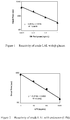
- Figures 1 and 2 show the dose-response curves of CM-Pachyman (a ⁇ -D-glucan) and endotoxin, respectively. Increased activation of LAL is reflected in a shorter "onset time" in kinetic LAL methods. As expected, the concentration of either endotoxin or carboxymethylated pachyman showed good correlations with onset time.
- Each 1 mL of the crude LAL prepared as described in Example 1 was distributed in depyrogenated 13 mm glass tubes.
- the glass tubes were incubated on an aluminum block heater at a temperature between 40°C and 50°C.
- a glass tube was sampled at the scheduled incubation time, and was stored in a refrigerator.
- the glass tubes were centrifuged at 170G for 20 minutes with a refrigerated centrifuge. The supernatant in the glass tubes was used as heat-treated crude LAL.
- LAL for use in the assay was prepared as described in Example 1 by using the sampled crude LAL.
- a solution of 50 ng/mL endotoxin derived from E. coli O55:B5, and a solution of 100 ng/mL carboxymethlated curdlan (CM-curdlan, Wako Chemicals) (a P-D-glucan) were measured with LAL.
- Onset times were measured as described in Example 1. The results are summarized in Tables 1 and 2.
- Table 1 Effect of Temperature on the Reactivity of LAL with Endotoxin.
- Table 1 shows the effect of temperature on reactivity of the crude LAL with endotoxin. Higher temperature showed a faster decrease in reactivity of the crude LAL with endotoxin.
- Table 2 shows the effect of temperature on reactivity of the crude LAL with ⁇ -glucan. The ⁇ -glucan reactivity of the crude LAL was relatively more stable with increasing temperature than the endotoxin reactivity was.
- Each 5 mL of the crude LAL prepared as described in Example 1 was distributed in depyrogenated 10-mL glass vials.
- the glass vials were incubated on an aluminum block heater at 47°C.
- a glass vial was sampled at the scheduled incubation time, and was stored in a refrigerator.
- the crude LAL in the vials was transferred to polypropylene centrifuge tubes, and the centrifuge tubes were centrifuged at 2500G for 20 minutes with a refrigerated centrifuge. Supernatant in the centrifuge tubes was used as heat-treated crude LAL.
- LAL for use in the assay was prepared as described in Example 1 by using the sampled crude LAL.
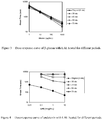
- a dilution series of endotoxin derived from E. coli O55:B5 betweem 10 ng/mL and 10,000 ng/mL, and a dilution series of CM-Pachyman between 1 pg/mL and 1000 pg/mL were measured with LAL.
- the procedures of the measurement were the same as described in Example 1. The results are summarized in Figures 3 and 4 .
- Figures 3 and 4 show the effect of heating on dose-response curves of endotoxin and ⁇ -glucan (CM-Pachyman), respectively. There was no considerable difference in the dose-response curves for different incubation times (30 minutes - 75 minutes). On the other hand, the dose-response of endotoxin was significantly decreased by heating at 47°C.
- Each 3 mL of the crude LAL prepared as described in Example 1 was distributed in 10 depyrogenated 13 mm glass tubes. The glass tubes were incubated on an aluminum block heater at 47°C for 15 minutes. The heated crude LAL was collected in polypropylene centrifuge tubes, and the centrifuge tubes were centrifuged at 170G for 20 minutes with a refrigerated centrifuge. Supernatant in the centrifuge tubes was used as heat treated crude LAL.
- LAL for use in the assay was prepared as described in Example 1 by using the heated crude LAL.
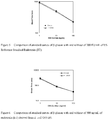
- Dilution series of CM-Curdlan between 1 ng/mL and 100 ng/mL were prepared with and without 200 EU/mL US Reference Standard Endotoxin (RSE).
- RSE Reference Standard Endotoxin
- the dilutions were measured with LAL.
- the procedures of the measurement were same as described in Example 1. The results are summarized in Figure 5 .
- Figure 5 shows the effect of RSE on the ⁇ -glucan standard curve.
- the standard curve was not affected by the addition of 200 EU/mL RSE. Considering that commonly measured endotoxin levels are less than 50 EU/mL, normal endotoxin contamination does not interfere with the ability of the heat-treated LAL to accurately measure ⁇ -glucan levels.
- Each 3 mL of the crude LAL prepared as described in Example 1 was distributed in 10 depyrogenated 13 mm glass tubes. The glass tubes were incubated on an aluminum block heater at 47°C for 20 minutes. The heated crude LAL was collected in polypropylene centrifuge tubes, and the centrifuge tubes were centrifuged at 170G for 20 minutes with a refrigerated centrifuge. Supernatant in the centrifuge tubes was used as heat treated crude LAL.
- LAL for use in the assay was prepared as described in Example 1 by using the heated crude LAL.
- Dilution series of CM-Curdlan between 1 ng/mL and 100 ng/mL were prepared with and without 500 ng/mL endotoxin derived from E. coli O55:B5.
- the dilutions were measured with LAL.
- the procedures of the measurement were same as described in Example 1. The results are summarized in Figure 6 .
- Figure 6 shows the effect of RSE on the standard curve of ⁇ -glucan.
- the standard curve was not affected by the addition of 100 ng/mL endotoxin derived from E. coli O55:B5.
- 500 ng/mL endotoxin derived from E. coli O55:B5 approximates 5000 EU/mL, normal levels of endotoxin contamination would not interfere with the ability of the heat-treated LAL to accurately measure ⁇ -glucan levels.
- Each 5 mL of the crude LAL prepared as described in Example 1 was distributed in depyrogenated 10-mL glass vials.
- the glass vials were incubated on an aluminum block heater at 47°C for 60 minutes.
- the crude LAL in the vials was transferred to polypropylene centrifuge tubes, and the centrifuge tubes were centrifuged at 2500G. for 20 min. with a refrigerated centrifuge. Supernatant in the centrifuge tubes was used as heat treated crude LAL.
- LAL for the measurement was prepared as described in Example 1 by using the heated crude LAL.
- a dilution series of endotoxin derived from E. coli O55:B5 between 1 ng/mL and 1000 ng/mL, and a dilution series of CM-Pachyman between 1 ng/mL and 100 ng/mL were measured with LAL.
- the procedures of the measurement were same as described in Example 1.
- Table 3 shows the reactivity of the heat treated LAL with endotoxin and ⁇ -glucan by using the kinetic turbidimetric assay (KTA). ⁇ -glucan was detected with KTA, but endotoxin did not show any reactivity even at 1000 ng/mL, again confirming the specificity of the assay for ⁇ -glucan.
- KTA kinetic turbidimetric assay
- Example 7 ⁇ - glucan Detection in Patients.
- Serum samples from patients with positive blood culture were diluted 10-fold with water for injection, and the diluted serum samples were incubated at 80°C for 10 min.
- the pretreated samples were measured with lyophilized heat-treated LAL by the kinetic chromogenic method.
- the lyophilized heat-treated LAL was prepared from the LAL described in Example 5.
- CM-pachyman was used as a ⁇ -glucan standard.
- Serum samples from healthy subjects were also pretreated and measured as the same manner.
- ⁇ -glucan values of the serum samples from the patients were higher than 100 pg/mL, and those from the healthy subjects were less than 34 pg/mL. Since the results of blood culture of the patients showed yeast ( Candida ) and fungus ( Aspergillus ), these patients were proven as fungemia. Considering these results, the ⁇ -glucan assay with the heat-treated LAL is useful for the diagnosis of deep mycosis. Table 4. ⁇ -glucan Values in Serum Samples From Fungemia Patients Sample Blood culture ⁇ -glucan (pg/ml) Patient #1: Pulmonary disease Candida albicans 137 Patient #2: Pulmonary disease Aspergillus sp. 878 Patient# 3 Candida albicans 275 Healthy subject #1 not available ⁇ 34 Healthy subject #2 not available ⁇ 34
- Example 8 Decreases in Endotoxin and ⁇ - glucan Reactivity as a Function of Temperature and Heating Time.
- Table 7 presents various proposed ranges of heating times and temperatures permitting, for example, an endotoxin reactivity reduction of at least 1,000-fold and/or a ⁇ -glucan reactivity reduction of no more than about 10-fold (indicated in bold-face type).
Landscapes
- Life Sciences & Earth Sciences (AREA)
- Health & Medical Sciences (AREA)
- Engineering & Computer Science (AREA)
- Molecular Biology (AREA)
- Biomedical Technology (AREA)
- Chemical & Material Sciences (AREA)
- Hematology (AREA)
- Immunology (AREA)
- Urology & Nephrology (AREA)
- Cell Biology (AREA)
- Biochemistry (AREA)
- Biotechnology (AREA)
- Food Science & Technology (AREA)
- Medicinal Chemistry (AREA)
- Physics & Mathematics (AREA)
- Analytical Chemistry (AREA)
- Microbiology (AREA)
- General Health & Medical Sciences (AREA)
- General Physics & Mathematics (AREA)
- Pathology (AREA)
- Measuring Or Testing Involving Enzymes Or Micro-Organisms (AREA)
- Investigating Or Analysing Biological Materials (AREA)
- Compounds Of Unknown Constitution (AREA)
Claims (15)
- Ein Verfahren zur Herstellung eines Limulus-Amöbozyten-Lysats mit erhöhter Spezifität für (1->3)-β-D-Glucan, wobei das Verfahren den Schritt des Erhitzens des Limulus-Amöbozyten-Lysats auf eine Temperatur über 40 °C umfasst, um die Reaktivität für ein Endotoxin unter Bedingungen zu reduzieren, welche die Faktor C-Aktivität im Lysat reduzieren, während die Reaktivität gegenüber (1->3)-β-D-Glucan beibehalten wird, wobei:(a) das Lysat auf eine Temperatur von 41-49 °C erhitzt wird; oder(b) das Lysat auf eine Temperatur von 46-49 °C erhitzt wird; oder(c) das Lysat auf eine Temperatur von 51-53 °C erhitzt wird; oder(d) das Lysat für 1-5 Minuten erhitzt wird; oder(e) das Lysat erhitzt wird, für 750-13.500 Minuten auf 40 °C, oder für 425-6200 Minuten auf 41 °C, oder für 240-2900 Minuten auf 42 °C, oder für 137-1350 Minuten auf 43 °C, oder für 78-620 Minuten auf 44 °C, oder für 45-290 Minuten auf 45 °C, oder für 26-135 Minuten auf 46 °C, oder für 15-64 Minuten auf 47 °C, oder für 8,5-31 Minuten auf 48 °C, oder für 5-15 Minuten auf 49 °C, oder für 2,5-7 Minuten auf 50 °C, oder für 1,5-3,5 Minuten auf 51 °C, oder für 1-1,6 Minuten auf 52 °C, oder für 0,6-0,8 Minuten auf 53 °C; oder(f) das Lysat wird für weniger als eine Minute auf eine Temperatur von größer als 56 °C erhitzt; oder(g) das Lysat wird für einen Zeitraum, der 40 Minuten übersteigt, auf eine Temperatur von nicht mehr als 45 °C erhitzt; und gewünschtenfalls(h) das Lysat nach der Wärmebehandlung auf eine feste Oberfläche getrocknet wird; oder(i) das Lysat nach der Wärmebehandlung lyophilisiert wird.
- Verfahren aus Anspruch 1, wobei die Erhitzungszeit tA1 Stunden übersteigt, wobei tA1 = 0,825 * 2,718(56340/(T + 273))/ (9,54 * 1076) ist, wobei T die Temperatur in °C ist.
- Verfahren zur Herstellung eines Limulus-Amöbozyten-Lysats mit verminderter Empfindlichkeit gegenüber einem Endotoxin, wobei das Verfahren den Schritt des Erhitzens des Limulus-Amöbozyten-Lysats auf eine Temperatur über 40 °C umfasst, wobei die Erhitzungszeit tA1 Stunden übersteigt, wobei tA1 = 0,825 * 2,718(56340/(T + 273))/ (9,54 * 1076) ist, wobei T die Temperatur in °C ist, die Erhitzungszeit aber nicht mehr als tB1 Stunden beträgt, wobei tB1 = 0,353 * 2,718(76510/(T + 273))/ (2,2 * 10103) ist, wobei T die Temperatur in °C ist.
- Verfahren nach Anspruch 2 oder 3, wobei die Erhitzungszeit tA2 Stunden übersteigt, wobei tA2 = 1,65 * 2,718(56340/(T + 273))/ (9,54 * 1076) ist, wobei T die Temperatur in °C ist.
- Verfahren nach einem der vorhergehenden Ansprüche, wobei die Erhitzungszeit nicht mehr als tB1 Stunden beträgt, wobei tB1 = 0,353 * 2,718(76510/(T+ 273))/ (2,2 * 10103) ist, wobei T die Temperatur in °C ist.
- Verfahren nach einem der vorhergehenden Ansprüche, wobei das Limulus-Amöbozyten-Lysat eine Empfindlichkeit gegenüber 100 ng/ml, 1 ng/ml, 1 pg/ml oder 0,1 pg/ml carboxymethyliertem Pachyman beibehält.
- Verfahren nach einem der vorhergehenden Ansprüche, wobei das resultierende Limulus-Amöbozyten-Lysat ein (1->3)-β-D-Glucan-spezifisches Lysat ist.
- Verfahren nach einem der vorhergehenden Ansprüche, wobei die Reaktivität des (1->3)-β-D-Glucans nicht um einen Faktor von mehr als 10 verringert wird und/oder die Endotoxinreaktivität um einen Faktor reduziert wird, von: (a) mindestens 100; (b) mindestens 1.000; oder (c) mindestens 106.
- Verfahren nach einem der vorhergehenden Ansprüche, wobei das Limulus-Amöbozyten-Lysat auf zwischen 40 °C und 80 °C erhitzt wird.
- Verfahren nach einem der vorhergehenden Ansprüche, wobei (i) falls die Temperatur nicht mehr als 45 °C beträgt, die Erhitzungszeit 40 Minuten übersteigt; und (ii) falls die Temperatur nicht mehr als 55 °C beträgt, die Erhitzungszeit weniger als eine Minute beträgt.
- Verfahren nach Anspruch 8, wobei die Temperatur: (a) nicht mehr als 45 °C beträgt; oder (b) nicht mehr als 45 °C und weniger als 55 °C, 52 °C oder 50 °C beträgt.
- Verfahren nach einem der Ansprüche 1-8 und 11, wobei das Limulus-Amöbozyten-Lysat erhitzt wird für: (a) wenigstens fünf Minuten; (b) wenigstens zwanzig Minuten; oder (c) nicht mehr als zwei Stunden.
- Verfahren nach einem der vorhergehenden Ansprüche, umfassend den zusätzlichen Schritt des Entfernens eines Niederschlags aus dem Limulus-Amöbozyten-Lysat und/oder Lyophilisieren des Limulus-Amöbozyten-Lysats.
- Ein wärmebehandeltes Limulus-Amöbozyten-Lysat, beispielsweise ein lyophilisiertes wärmebehandeltes Limulus-Amöbozyten-Lysat, das (1->3)-β-D-Glucan-empfindlichen Limulus-Faktor G umfasst und eine Endotoxinreaktivität von weniger als 0,1 % der Endotoxinreaktivität eines unbehandelten Limulus-Amöbozyten-Lysats aufweist, wobei das Limulus-Amöbozyten-Lysat die Empfindlichkeit beibehält, gegenüber: (a) 1 pg/ml carboxymethyliertem Pachyman; oder (b) 0,1 pg/ml carboxymethyliertem Pachyman; und das Lysat unempfindlich ist, gegenüber: (a) 200 EU/ml von Referenz-Standard-Endotoxin; (b) 0,01 µg/ml LPS; (c) 0,1 µg/ml LPS; (d) 1 µg/ml LPS; oder (e) 10 µg/ml LPS.
- Ein Verfahren zum Nachweisen von (1->3)-β-D-Glucan in einer Probe, wobei das Verfahren das Kombinieren der Probe mit einem Limulus-Amöbozyten-Lysat gemäß Anspruch 14 und das Nachweisen einer Änderung einer optischen Eigenschaft der Probe umfasst, wahlweise weiterhin umfassend das Kombinieren der Probe mit einem Substrat vor dem Nachweis der Änderung der optischen Eigenschaft der Probe.
Applications Claiming Priority (2)
| Application Number | Priority Date | Filing Date | Title |
|---|---|---|---|
| US22078509P | 2009-06-26 | 2009-06-26 | |
| PCT/US2010/039967 WO2010151751A2 (en) | 2009-06-26 | 2010-06-25 | Heat-treated limulus amebocyte lysates |
Publications (3)
| Publication Number | Publication Date |
|---|---|
| EP2446018A2 EP2446018A2 (de) | 2012-05-02 |
| EP2446018A4 EP2446018A4 (de) | 2013-02-27 |
| EP2446018B1 true EP2446018B1 (de) | 2017-01-18 |
Family
ID=43381157
Family Applications (1)
| Application Number | Title | Priority Date | Filing Date |
|---|---|---|---|
| EP10792714.7A Active EP2446018B1 (de) | 2009-06-26 | 2010-06-25 | Wärmebehandelte limulus-amebocyt-lysaten |
Country Status (6)
| Country | Link |
|---|---|
| US (3) | US10473663B2 (de) |
| EP (1) | EP2446018B1 (de) |
| JP (3) | JP5981338B2 (de) |
| AU (1) | AU2010265985B2 (de) |
| CA (1) | CA2766288C (de) |
| WO (1) | WO2010151751A2 (de) |
Families Citing this family (6)
| Publication number | Priority date | Publication date | Assignee | Title |
|---|---|---|---|---|
| EP2446018B1 (de) | 2009-06-26 | 2017-01-18 | Charles River Laboratories, Inc. | Wärmebehandelte limulus-amebocyt-lysaten |
| EP3425401B1 (de) | 2012-10-08 | 2023-09-27 | BL Technologies, Inc. | Vorgespannte testsubstrate zum testen von lal-reaktiven stoffen, verfahren zur verwendung und verfahren zur herstellung |
| GB201312635D0 (en) * | 2013-07-15 | 2013-08-28 | Univ Plymouth | Water testing |
| WO2018156888A1 (en) | 2017-02-24 | 2018-08-30 | Biothera Pharmaceuticals, Inc. | Beta glucan immunopharmacodynamics |
| CN111077307B (zh) * | 2018-10-21 | 2022-08-23 | 厦门鲎试剂生物科技股份有限公司 | 一种用革兰氏阴性细菌感染快速检测脓毒病的新方法 |
| CN121443750A (zh) | 2023-06-05 | 2026-01-30 | 查尔斯河实验室公司 | 重组变形细胞凝血因子及其用途 |
Family Cites Families (24)
| Publication number | Priority date | Publication date | Assignee | Title |
|---|---|---|---|---|
| US4067776A (en) | 1975-11-25 | 1978-01-10 | Research Foundation Of Children's Hospital | Method for differential diagnosis of meningitis with a limulus lysate test |
| US5175089A (en) * | 1988-07-15 | 1992-12-29 | The Trustees Of Columbia University In The City Of New York | Method for monitoring periodontal disease by monitoring endotoxins and inflammatory agents |
| JP2688773B2 (ja) * | 1988-11-24 | 1997-12-10 | 和光純薬工業株式会社 | エンドトキシンの不活化方法 |
| DK0426395T3 (de) | 1989-10-30 | 1997-03-03 | Biowhittaker Inc | |
| JP2944709B2 (ja) * | 1990-06-21 | 1999-09-06 | 生化学工業株式会社 | (1→3)―β―D―グルカンの測定剤 |
| US5681710A (en) | 1991-03-14 | 1997-10-28 | Seikagaku Kogyo Kabushiki Kaisha | Reagent for determining (1→3)-β-D-glucan |
| EP0549102B1 (de) | 1991-12-25 | 1996-07-03 | Maruha Corporation | Reagenzien und Verfahren zur Bestimmung von Beta-Glucanen |
| JP3614849B2 (ja) | 1992-05-08 | 2005-01-26 | 生化学工業株式会社 | 前処理剤、前処理方法、前処理された試料による測定法、測定用キット及び試料の判定方法 |
| JP3524120B2 (ja) | 1992-05-08 | 2004-05-10 | 生化学工業株式会社 | 前処理剤、前処理方法、前処理された試料による測定法、測定用キット及び試料の判定方法 |
| CA2112776C (en) * | 1993-01-21 | 2002-11-12 | Masakazu Tsuchiya | Process for inhibiting activity of endotoxin |
| US5716834A (en) | 1994-08-19 | 1998-02-10 | National University Of Singapore | Cloned factor C cDNA of the Singapore horseshoe crab, Carcinoscorpius rotundicauda and purification of factor C proenzyme |
| US6110692A (en) | 1996-05-01 | 2000-08-29 | The Collaborative Group, Ltd. | Receptor for underivatized aqueous soluble β(1-3)-glucan |
| US6084092A (en) | 1997-01-31 | 2000-07-04 | The Collaborative Group, Ltd. | β(1-3)-glucan diagnostic assays |
| US6413715B2 (en) | 1997-01-31 | 2002-07-02 | The Collaborative Group | β(1-3)-glucan diagnostic assays |
| US6645724B1 (en) | 1997-09-19 | 2003-11-11 | National University Of Singapore | Assays for endotoxin |
| US5965374A (en) | 1997-10-16 | 1999-10-12 | Biowhittaker Technologies, Inc. | Glucan-specific assay |
| US6733997B1 (en) | 1998-10-30 | 2004-05-11 | National University Of Singapore | Isolated nucleic acids encoding a secretory signal for expression and secretion of heterologous recombinant proteins |
| US6719973B1 (en) | 1998-12-24 | 2004-04-13 | National University Of Singapore | Recombinant proteins and peptides for endotoxin biosensors, endotoxin removal, and anti-microbial and anti-endotoxin therapeutics |
| US6849426B2 (en) | 2001-06-28 | 2005-02-01 | Cambrex Bio Science Walkersville, Inc. | Methods and reagents for detecting endotoxin |
| JP4346844B2 (ja) | 2001-11-16 | 2009-10-21 | 生化学工業株式会社 | (1→3)−β−D−グルカン結合ドメインタンパク質、該物質を使用した測定法及び測定キット |
| US7329538B2 (en) | 2003-03-17 | 2008-02-12 | Charles River Laboratories, Inc. | Methods and compositions for the detection of microbial contaminants |
| JP2007240397A (ja) | 2006-03-10 | 2007-09-20 | Wako Pure Chem Ind Ltd | (1→3)−β−D−グルカンの測定方法 |
| JP5437660B2 (ja) * | 2009-02-19 | 2014-03-12 | 興和株式会社 | コアギュロゲン原料及びその製造方法、それを用いた生物由来の生理活性物質の測定方法及び測定装置 |
| EP2446018B1 (de) | 2009-06-26 | 2017-01-18 | Charles River Laboratories, Inc. | Wärmebehandelte limulus-amebocyt-lysaten |
-
2010
- 2010-06-25 EP EP10792714.7A patent/EP2446018B1/de active Active
- 2010-06-25 CA CA2766288A patent/CA2766288C/en active Active
- 2010-06-25 US US12/823,506 patent/US10473663B2/en active Active
- 2010-06-25 WO PCT/US2010/039967 patent/WO2010151751A2/en not_active Ceased
- 2010-06-25 AU AU2010265985A patent/AU2010265985B2/en active Active
- 2010-06-25 JP JP2012517765A patent/JP5981338B2/ja active Active
-
2014
- 2014-03-28 US US14/228,993 patent/US10473664B2/en active Active
- 2014-06-26 JP JP2014130960A patent/JP2014178336A/ja active Pending
-
2016
- 2016-05-18 JP JP2016099727A patent/JP2016145845A/ja not_active Withdrawn
-
2019
- 2019-11-06 US US16/675,978 patent/US11221335B2/en active Active
Non-Patent Citations (1)
| Title |
|---|
| None * |
Also Published As
| Publication number | Publication date |
|---|---|
| EP2446018A2 (de) | 2012-05-02 |
| US10473664B2 (en) | 2019-11-12 |
| US10473663B2 (en) | 2019-11-12 |
| WO2010151751A2 (en) | 2010-12-29 |
| WO2010151751A3 (en) | 2011-05-05 |
| US11221335B2 (en) | 2022-01-11 |
| CA2766288A1 (en) | 2010-12-29 |
| JP2012531594A (ja) | 2012-12-10 |
| EP2446018A4 (de) | 2013-02-27 |
| JP2014178336A (ja) | 2014-09-25 |
| JP5981338B2 (ja) | 2016-08-31 |
| US20200217845A1 (en) | 2020-07-09 |
| AU2010265985B2 (en) | 2016-04-21 |
| JP2016145845A (ja) | 2016-08-12 |
| AU2010265985A1 (en) | 2012-01-19 |
| US20100330597A1 (en) | 2010-12-30 |
| CA2766288C (en) | 2020-05-05 |
| US20140212902A1 (en) | 2014-07-31 |
Similar Documents
| Publication | Publication Date | Title |
|---|---|---|
| US11221335B2 (en) | Heat-treated limulus amebocyte lysates | |
| EP1606414B1 (de) | Methoden und zusammensetzungen für den nachweis mikrobieller verunreinigungen | |
| JP3524120B2 (ja) | 前処理剤、前処理方法、前処理された試料による測定法、測定用キット及び試料の判定方法 | |
| Gnauck et al. | Chasing a ghost?–Issues with the determination of circulating levels of endotoxin in human blood | |
| Obayashi et al. | Endotoxin-inactivating activity in normal and pathological human blood samples | |
| WO2003093323A9 (en) | Automated sequential injection analysis systems for the determination of trace endotoxin levels | |
| JP2012068266A (ja) | 生体サンプル中の微生物を分類する方法 | |
| WO1991019981A1 (fr) | REACTIF DESTINE A LA DETERMINATION DU (1←3)-β-D-GLUCANE | |
| Tamura et al. | A new sensitive method for determining endotoxin in whole blood | |
| US20160161490A1 (en) | Reagent for measuring endotoxin and method for measuring endotoxin | |
| EP0731354A1 (de) | Verfahren zur bestimmung einer mit limulus-reagenz reagierenden substanz | |
| JP2008522640A (ja) | グラム陽性菌夾雑物の検出および/または定量化のための方法ならびに組成物 | |
| JP3950470B2 (ja) | リムルス反応活性化物質、この物質の不活化方法、並びに、この物質及びエンドトキシンの測定方法 | |
| JP3614849B2 (ja) | 前処理剤、前処理方法、前処理された試料による測定法、測定用キット及び試料の判定方法 | |
| JP2022545171A (ja) | エンドトキシン検出のための混合領域を備えたカートリッジ | |
| EP0731353A1 (de) | Verfahren zur bestimmung einer mit limulus-reagenz reagierenden substanz |
Legal Events
| Date | Code | Title | Description |
|---|---|---|---|
| PUAI | Public reference made under article 153(3) epc to a published international application that has entered the european phase |
Free format text: ORIGINAL CODE: 0009012 |
|
| 17P | Request for examination filed |
Effective date: 20120126 |
|
| AK | Designated contracting states |
Kind code of ref document: A2 Designated state(s): AL AT BE BG CH CY CZ DE DK EE ES FI FR GB GR HR HU IE IS IT LI LT LU LV MC MK MT NL NO PL PT RO SE SI SK SM TR |
|
| DAX | Request for extension of the european patent (deleted) | ||
| RIC1 | Information provided on ipc code assigned before grant |
Ipc: C12P 1/00 20060101ALI20130115BHEP Ipc: G01N 33/48 20060101ALI20130115BHEP Ipc: C12Q 1/00 20060101ALI20130115BHEP Ipc: G01N 33/579 20060101ALI20130115BHEP Ipc: C12N 1/06 20060101AFI20130115BHEP |
|
| A4 | Supplementary search report drawn up and despatched |
Effective date: 20130124 |
|
| 17Q | First examination report despatched |
Effective date: 20131122 |
|
| REG | Reference to a national code |
Ref country code: DE Ref legal event code: R079 Ref document number: 602010039701 Country of ref document: DE Free format text: PREVIOUS MAIN CLASS: C12N0001060000 Ipc: G01N0033579000 |
|
| GRAP | Despatch of communication of intention to grant a patent |
Free format text: ORIGINAL CODE: EPIDOSNIGR1 |
|
| RIC1 | Information provided on ipc code assigned before grant |
Ipc: C12N 1/06 20060101ALI20160706BHEP Ipc: C12P 1/00 20060101ALI20160706BHEP Ipc: C12Q 1/00 20060101ALI20160706BHEP Ipc: G01N 33/579 20060101AFI20160706BHEP |
|
| INTG | Intention to grant announced |
Effective date: 20160801 |
|
| GRAS | Grant fee paid |
Free format text: ORIGINAL CODE: EPIDOSNIGR3 |
|
| GRAA | (expected) grant |
Free format text: ORIGINAL CODE: 0009210 |
|
| AK | Designated contracting states |
Kind code of ref document: B1 Designated state(s): AL AT BE BG CH CY CZ DE DK EE ES FI FR GB GR HR HU IE IS IT LI LT LU LV MC MK MT NL NO PL PT RO SE SI SK SM TR |
|
| REG | Reference to a national code |
Ref country code: GB Ref legal event code: FG4D |
|
| REG | Reference to a national code |
Ref country code: CH Ref legal event code: EP |
|
| REG | Reference to a national code |
Ref country code: AT Ref legal event code: REF Ref document number: 863204 Country of ref document: AT Kind code of ref document: T Effective date: 20170215 |
|
| REG | Reference to a national code |
Ref country code: IE Ref legal event code: FG4D |
|
| REG | Reference to a national code |
Ref country code: DE Ref legal event code: R096 Ref document number: 602010039701 Country of ref document: DE |
|
| REG | Reference to a national code |
Ref country code: NL Ref legal event code: MP Effective date: 20170118 |
|
| REG | Reference to a national code |
Ref country code: LT Ref legal event code: MG4D |
|
| REG | Reference to a national code |
Ref country code: AT Ref legal event code: MK05 Ref document number: 863204 Country of ref document: AT Kind code of ref document: T Effective date: 20170118 |
|
| REG | Reference to a national code |
Ref country code: FR Ref legal event code: PLFP Year of fee payment: 8 |
|
| PG25 | Lapsed in a contracting state [announced via postgrant information from national office to epo] |
Ref country code: NL Free format text: LAPSE BECAUSE OF FAILURE TO SUBMIT A TRANSLATION OF THE DESCRIPTION OR TO PAY THE FEE WITHIN THE PRESCRIBED TIME-LIMIT Effective date: 20170118 |
|
| PG25 | Lapsed in a contracting state [announced via postgrant information from national office to epo] |
Ref country code: NO Free format text: LAPSE BECAUSE OF FAILURE TO SUBMIT A TRANSLATION OF THE DESCRIPTION OR TO PAY THE FEE WITHIN THE PRESCRIBED TIME-LIMIT Effective date: 20170418 Ref country code: GR Free format text: LAPSE BECAUSE OF FAILURE TO SUBMIT A TRANSLATION OF THE DESCRIPTION OR TO PAY THE FEE WITHIN THE PRESCRIBED TIME-LIMIT Effective date: 20170419 Ref country code: IS Free format text: LAPSE BECAUSE OF FAILURE TO SUBMIT A TRANSLATION OF THE DESCRIPTION OR TO PAY THE FEE WITHIN THE PRESCRIBED TIME-LIMIT Effective date: 20170518 Ref country code: HR Free format text: LAPSE BECAUSE OF FAILURE TO SUBMIT A TRANSLATION OF THE DESCRIPTION OR TO PAY THE FEE WITHIN THE PRESCRIBED TIME-LIMIT Effective date: 20170118 Ref country code: LT Free format text: LAPSE BECAUSE OF FAILURE TO SUBMIT A TRANSLATION OF THE DESCRIPTION OR TO PAY THE FEE WITHIN THE PRESCRIBED TIME-LIMIT Effective date: 20170118 Ref country code: FI Free format text: LAPSE BECAUSE OF FAILURE TO SUBMIT A TRANSLATION OF THE DESCRIPTION OR TO PAY THE FEE WITHIN THE PRESCRIBED TIME-LIMIT Effective date: 20170118 |
|
| PG25 | Lapsed in a contracting state [announced via postgrant information from national office to epo] |
Ref country code: PT Free format text: LAPSE BECAUSE OF FAILURE TO SUBMIT A TRANSLATION OF THE DESCRIPTION OR TO PAY THE FEE WITHIN THE PRESCRIBED TIME-LIMIT Effective date: 20170518 Ref country code: AT Free format text: LAPSE BECAUSE OF FAILURE TO SUBMIT A TRANSLATION OF THE DESCRIPTION OR TO PAY THE FEE WITHIN THE PRESCRIBED TIME-LIMIT Effective date: 20170118 Ref country code: LV Free format text: LAPSE BECAUSE OF FAILURE TO SUBMIT A TRANSLATION OF THE DESCRIPTION OR TO PAY THE FEE WITHIN THE PRESCRIBED TIME-LIMIT Effective date: 20170118 Ref country code: PL Free format text: LAPSE BECAUSE OF FAILURE TO SUBMIT A TRANSLATION OF THE DESCRIPTION OR TO PAY THE FEE WITHIN THE PRESCRIBED TIME-LIMIT Effective date: 20170118 Ref country code: BG Free format text: LAPSE BECAUSE OF FAILURE TO SUBMIT A TRANSLATION OF THE DESCRIPTION OR TO PAY THE FEE WITHIN THE PRESCRIBED TIME-LIMIT Effective date: 20170418 Ref country code: SE Free format text: LAPSE BECAUSE OF FAILURE TO SUBMIT A TRANSLATION OF THE DESCRIPTION OR TO PAY THE FEE WITHIN THE PRESCRIBED TIME-LIMIT Effective date: 20170118 Ref country code: ES Free format text: LAPSE BECAUSE OF FAILURE TO SUBMIT A TRANSLATION OF THE DESCRIPTION OR TO PAY THE FEE WITHIN THE PRESCRIBED TIME-LIMIT Effective date: 20170118 |
|
| REG | Reference to a national code |
Ref country code: DE Ref legal event code: R097 Ref document number: 602010039701 Country of ref document: DE |
|
| PG25 | Lapsed in a contracting state [announced via postgrant information from national office to epo] |
Ref country code: CZ Free format text: LAPSE BECAUSE OF FAILURE TO SUBMIT A TRANSLATION OF THE DESCRIPTION OR TO PAY THE FEE WITHIN THE PRESCRIBED TIME-LIMIT Effective date: 20170118 Ref country code: RO Free format text: LAPSE BECAUSE OF FAILURE TO SUBMIT A TRANSLATION OF THE DESCRIPTION OR TO PAY THE FEE WITHIN THE PRESCRIBED TIME-LIMIT Effective date: 20170118 Ref country code: SK Free format text: LAPSE BECAUSE OF FAILURE TO SUBMIT A TRANSLATION OF THE DESCRIPTION OR TO PAY THE FEE WITHIN THE PRESCRIBED TIME-LIMIT Effective date: 20170118 Ref country code: EE Free format text: LAPSE BECAUSE OF FAILURE TO SUBMIT A TRANSLATION OF THE DESCRIPTION OR TO PAY THE FEE WITHIN THE PRESCRIBED TIME-LIMIT Effective date: 20170118 |
|
| PLBE | No opposition filed within time limit |
Free format text: ORIGINAL CODE: 0009261 |
|
| STAA | Information on the status of an ep patent application or granted ep patent |
Free format text: STATUS: NO OPPOSITION FILED WITHIN TIME LIMIT |
|
| PG25 | Lapsed in a contracting state [announced via postgrant information from national office to epo] |
Ref country code: DK Free format text: LAPSE BECAUSE OF FAILURE TO SUBMIT A TRANSLATION OF THE DESCRIPTION OR TO PAY THE FEE WITHIN THE PRESCRIBED TIME-LIMIT Effective date: 20170118 Ref country code: SM Free format text: LAPSE BECAUSE OF FAILURE TO SUBMIT A TRANSLATION OF THE DESCRIPTION OR TO PAY THE FEE WITHIN THE PRESCRIBED TIME-LIMIT Effective date: 20170118 |
|
| 26N | No opposition filed |
Effective date: 20171019 |
|
| PG25 | Lapsed in a contracting state [announced via postgrant information from national office to epo] |
Ref country code: MC Free format text: LAPSE BECAUSE OF FAILURE TO SUBMIT A TRANSLATION OF THE DESCRIPTION OR TO PAY THE FEE WITHIN THE PRESCRIBED TIME-LIMIT Effective date: 20170118 |
|
| PG25 | Lapsed in a contracting state [announced via postgrant information from national office to epo] |
Ref country code: SI Free format text: LAPSE BECAUSE OF FAILURE TO SUBMIT A TRANSLATION OF THE DESCRIPTION OR TO PAY THE FEE WITHIN THE PRESCRIBED TIME-LIMIT Effective date: 20170118 |
|
| REG | Reference to a national code |
Ref country code: IE Ref legal event code: MM4A |
|
| PG25 | Lapsed in a contracting state [announced via postgrant information from national office to epo] |
Ref country code: IE Free format text: LAPSE BECAUSE OF NON-PAYMENT OF DUE FEES Effective date: 20170625 Ref country code: LU Free format text: LAPSE BECAUSE OF NON-PAYMENT OF DUE FEES Effective date: 20170625 |
|
| REG | Reference to a national code |
Ref country code: BE Ref legal event code: MM Effective date: 20170630 |
|
| REG | Reference to a national code |
Ref country code: FR Ref legal event code: PLFP Year of fee payment: 9 |
|
| PG25 | Lapsed in a contracting state [announced via postgrant information from national office to epo] |
Ref country code: BE Free format text: LAPSE BECAUSE OF NON-PAYMENT OF DUE FEES Effective date: 20170630 |
|
| PG25 | Lapsed in a contracting state [announced via postgrant information from national office to epo] |
Ref country code: MT Free format text: LAPSE BECAUSE OF NON-PAYMENT OF DUE FEES Effective date: 20170625 |
|
| PG25 | Lapsed in a contracting state [announced via postgrant information from national office to epo] |
Ref country code: HU Free format text: LAPSE BECAUSE OF FAILURE TO SUBMIT A TRANSLATION OF THE DESCRIPTION OR TO PAY THE FEE WITHIN THE PRESCRIBED TIME-LIMIT; INVALID AB INITIO Effective date: 20100625 |
|
| PG25 | Lapsed in a contracting state [announced via postgrant information from national office to epo] |
Ref country code: CY Free format text: LAPSE BECAUSE OF NON-PAYMENT OF DUE FEES Effective date: 20170118 |
|
| PG25 | Lapsed in a contracting state [announced via postgrant information from national office to epo] |
Ref country code: MK Free format text: LAPSE BECAUSE OF FAILURE TO SUBMIT A TRANSLATION OF THE DESCRIPTION OR TO PAY THE FEE WITHIN THE PRESCRIBED TIME-LIMIT Effective date: 20170118 |
|
| PG25 | Lapsed in a contracting state [announced via postgrant information from national office to epo] |
Ref country code: TR Free format text: LAPSE BECAUSE OF FAILURE TO SUBMIT A TRANSLATION OF THE DESCRIPTION OR TO PAY THE FEE WITHIN THE PRESCRIBED TIME-LIMIT Effective date: 20170118 |
|
| PG25 | Lapsed in a contracting state [announced via postgrant information from national office to epo] |
Ref country code: AL Free format text: LAPSE BECAUSE OF FAILURE TO SUBMIT A TRANSLATION OF THE DESCRIPTION OR TO PAY THE FEE WITHIN THE PRESCRIBED TIME-LIMIT Effective date: 20170118 |
|
| P01 | Opt-out of the competence of the unified patent court (upc) registered |
Effective date: 20230514 |
|
| PGFP | Annual fee paid to national office [announced via postgrant information from national office to epo] |
Ref country code: CH Payment date: 20250701 Year of fee payment: 16 |
|
| REG | Reference to a national code |
Ref country code: CH Ref legal event code: U11 Free format text: ST27 STATUS EVENT CODE: U-0-0-U10-U11 (AS PROVIDED BY THE NATIONAL OFFICE) Effective date: 20260701 |
|
| PGFP | Annual fee paid to national office [announced via postgrant information from national office to epo] |
Ref country code: GB Payment date: 20260622 Year of fee payment: 17 |
|
| PGFP | Annual fee paid to national office [announced via postgrant information from national office to epo] |
Ref country code: IT Payment date: 20260623 Year of fee payment: 17 |
|
| PGFP | Annual fee paid to national office [announced via postgrant information from national office to epo] |
Ref country code: DE Payment date: 20260623 Year of fee payment: 17 |
|
| PGFP | Annual fee paid to national office [announced via postgrant information from national office to epo] |
Ref country code: FR Payment date: 20260622 Year of fee payment: 17 |