EP2447367B1 - Nouveaux peptides pour traiter et prévenir les troubles de type immunitaire, y compris le traitement et la prévention des infections en modulant l'immunité innée - Google Patents
Nouveaux peptides pour traiter et prévenir les troubles de type immunitaire, y compris le traitement et la prévention des infections en modulant l'immunité innée Download PDFInfo
- Publication number
- EP2447367B1 EP2447367B1 EP11182635.0A EP11182635A EP2447367B1 EP 2447367 B1 EP2447367 B1 EP 2447367B1 EP 11182635 A EP11182635 A EP 11182635A EP 2447367 B1 EP2447367 B1 EP 2447367B1
- Authority
- EP
- European Patent Office
- Prior art keywords
- peptide
- infection
- seq
- subject
- immunological
- Prior art date
- Legal status (The legal status is an assumption and is not a legal conclusion. Google has not performed a legal analysis and makes no representation as to the accuracy of the status listed.)
- Active
Links
Images




Classifications
-
- C—CHEMISTRY; METALLURGY
- C07—ORGANIC CHEMISTRY
- C07K—PEPTIDES
- C07K7/00—Peptides having 5 to 20 amino acids in a fully defined sequence; Derivatives thereof
-
- A—HUMAN NECESSITIES
- A61—MEDICAL OR VETERINARY SCIENCE; HYGIENE
- A61P—SPECIFIC THERAPEUTIC ACTIVITY OF CHEMICAL COMPOUNDS OR MEDICINAL PREPARATIONS
- A61P29/00—Non-central analgesic, antipyretic or antiinflammatory agents, e.g. antirheumatic agents; Non-steroidal antiinflammatory drugs [NSAID]
-
- A—HUMAN NECESSITIES
- A61—MEDICAL OR VETERINARY SCIENCE; HYGIENE
- A61P—SPECIFIC THERAPEUTIC ACTIVITY OF CHEMICAL COMPOUNDS OR MEDICINAL PREPARATIONS
- A61P31/00—Antiinfectives, i.e. antibiotics, antiseptics, chemotherapeutics
-
- A—HUMAN NECESSITIES
- A61—MEDICAL OR VETERINARY SCIENCE; HYGIENE
- A61P—SPECIFIC THERAPEUTIC ACTIVITY OF CHEMICAL COMPOUNDS OR MEDICINAL PREPARATIONS
- A61P31/00—Antiinfectives, i.e. antibiotics, antiseptics, chemotherapeutics
- A61P31/04—Antibacterial agents
-
- A—HUMAN NECESSITIES
- A61—MEDICAL OR VETERINARY SCIENCE; HYGIENE
- A61P—SPECIFIC THERAPEUTIC ACTIVITY OF CHEMICAL COMPOUNDS OR MEDICINAL PREPARATIONS
- A61P31/00—Antiinfectives, i.e. antibiotics, antiseptics, chemotherapeutics
- A61P31/10—Antimycotics
-
- A—HUMAN NECESSITIES
- A61—MEDICAL OR VETERINARY SCIENCE; HYGIENE
- A61P—SPECIFIC THERAPEUTIC ACTIVITY OF CHEMICAL COMPOUNDS OR MEDICINAL PREPARATIONS
- A61P31/00—Antiinfectives, i.e. antibiotics, antiseptics, chemotherapeutics
- A61P31/12—Antivirals
-
- A—HUMAN NECESSITIES
- A61—MEDICAL OR VETERINARY SCIENCE; HYGIENE
- A61P—SPECIFIC THERAPEUTIC ACTIVITY OF CHEMICAL COMPOUNDS OR MEDICINAL PREPARATIONS
- A61P31/00—Antiinfectives, i.e. antibiotics, antiseptics, chemotherapeutics
- A61P31/12—Antivirals
- A61P31/14—Antivirals for RNA viruses
-
- A—HUMAN NECESSITIES
- A61—MEDICAL OR VETERINARY SCIENCE; HYGIENE
- A61P—SPECIFIC THERAPEUTIC ACTIVITY OF CHEMICAL COMPOUNDS OR MEDICINAL PREPARATIONS
- A61P31/00—Antiinfectives, i.e. antibiotics, antiseptics, chemotherapeutics
- A61P31/12—Antivirals
- A61P31/14—Antivirals for RNA viruses
- A61P31/16—Antivirals for RNA viruses for influenza or rhinoviruses
-
- A—HUMAN NECESSITIES
- A61—MEDICAL OR VETERINARY SCIENCE; HYGIENE
- A61P—SPECIFIC THERAPEUTIC ACTIVITY OF CHEMICAL COMPOUNDS OR MEDICINAL PREPARATIONS
- A61P31/00—Antiinfectives, i.e. antibiotics, antiseptics, chemotherapeutics
- A61P31/12—Antivirals
- A61P31/14—Antivirals for RNA viruses
- A61P31/18—Antivirals for RNA viruses for HIV
-
- A—HUMAN NECESSITIES
- A61—MEDICAL OR VETERINARY SCIENCE; HYGIENE
- A61P—SPECIFIC THERAPEUTIC ACTIVITY OF CHEMICAL COMPOUNDS OR MEDICINAL PREPARATIONS
- A61P31/00—Antiinfectives, i.e. antibiotics, antiseptics, chemotherapeutics
- A61P31/12—Antivirals
- A61P31/20—Antivirals for DNA viruses
-
- A—HUMAN NECESSITIES
- A61—MEDICAL OR VETERINARY SCIENCE; HYGIENE
- A61P—SPECIFIC THERAPEUTIC ACTIVITY OF CHEMICAL COMPOUNDS OR MEDICINAL PREPARATIONS
- A61P31/00—Antiinfectives, i.e. antibiotics, antiseptics, chemotherapeutics
- A61P31/12—Antivirals
- A61P31/20—Antivirals for DNA viruses
- A61P31/22—Antivirals for DNA viruses for herpes viruses
-
- A—HUMAN NECESSITIES
- A61—MEDICAL OR VETERINARY SCIENCE; HYGIENE
- A61P—SPECIFIC THERAPEUTIC ACTIVITY OF CHEMICAL COMPOUNDS OR MEDICINAL PREPARATIONS
- A61P33/00—Antiparasitic agents
-
- A—HUMAN NECESSITIES
- A61—MEDICAL OR VETERINARY SCIENCE; HYGIENE
- A61P—SPECIFIC THERAPEUTIC ACTIVITY OF CHEMICAL COMPOUNDS OR MEDICINAL PREPARATIONS
- A61P33/00—Antiparasitic agents
- A61P33/02—Antiprotozoals, e.g. for leishmaniasis, trichomoniasis, toxoplasmosis
-
- A—HUMAN NECESSITIES
- A61—MEDICAL OR VETERINARY SCIENCE; HYGIENE
- A61P—SPECIFIC THERAPEUTIC ACTIVITY OF CHEMICAL COMPOUNDS OR MEDICINAL PREPARATIONS
- A61P33/00—Antiparasitic agents
- A61P33/14—Ectoparasiticides, e.g. scabicides
-
- A—HUMAN NECESSITIES
- A61—MEDICAL OR VETERINARY SCIENCE; HYGIENE
- A61P—SPECIFIC THERAPEUTIC ACTIVITY OF CHEMICAL COMPOUNDS OR MEDICINAL PREPARATIONS
- A61P37/00—Drugs for immunological or allergic disorders
- A61P37/02—Immunomodulators
-
- A—HUMAN NECESSITIES
- A61—MEDICAL OR VETERINARY SCIENCE; HYGIENE
- A61P—SPECIFIC THERAPEUTIC ACTIVITY OF CHEMICAL COMPOUNDS OR MEDICINAL PREPARATIONS
- A61P37/00—Drugs for immunological or allergic disorders
- A61P37/02—Immunomodulators
- A61P37/04—Immunostimulants
-
- A—HUMAN NECESSITIES
- A61—MEDICAL OR VETERINARY SCIENCE; HYGIENE
- A61P—SPECIFIC THERAPEUTIC ACTIVITY OF CHEMICAL COMPOUNDS OR MEDICINAL PREPARATIONS
- A61P43/00—Drugs for specific purposes, not provided for in groups A61P1/00-A61P41/00
-
- C—CHEMISTRY; METALLURGY
- C07—ORGANIC CHEMISTRY
- C07K—PEPTIDES
- C07K14/00—Peptides having more than 20 amino acids; Gastrins; Somatostatins; Melanotropins; Derivatives thereof
- C07K14/81—Protease inhibitors
- C07K14/8103—Exopeptidase (E.C. 3.4.11-19) inhibitors
-
- C—CHEMISTRY; METALLURGY
- C07—ORGANIC CHEMISTRY
- C07K—PEPTIDES
- C07K5/00—Peptides containing up to four amino acids in a fully defined sequence; Derivatives thereof
- C07K5/04—Peptides containing up to four amino acids in a fully defined sequence; Derivatives thereof containing only normal peptide links
- C07K5/08—Tripeptides
- C07K5/0802—Tripeptides with the first amino acid being neutral
- C07K5/0804—Tripeptides with the first amino acid being neutral and aliphatic
- C07K5/0806—Tripeptides with the first amino acid being neutral and aliphatic the side chain containing 0 or 1 carbon atoms, i.e. Gly, Ala
-
- C—CHEMISTRY; METALLURGY
- C07—ORGANIC CHEMISTRY
- C07K—PEPTIDES
- C07K5/00—Peptides containing up to four amino acids in a fully defined sequence; Derivatives thereof
- C07K5/04—Peptides containing up to four amino acids in a fully defined sequence; Derivatives thereof containing only normal peptide links
- C07K5/08—Tripeptides
- C07K5/0802—Tripeptides with the first amino acid being neutral
- C07K5/0804—Tripeptides with the first amino acid being neutral and aliphatic
- C07K5/081—Tripeptides with the first amino acid being neutral and aliphatic the side chain containing O or S as heteroatoms, e.g. Cys, Ser
-
- C—CHEMISTRY; METALLURGY
- C07—ORGANIC CHEMISTRY
- C07K—PEPTIDES
- C07K5/00—Peptides containing up to four amino acids in a fully defined sequence; Derivatives thereof
- C07K5/04—Peptides containing up to four amino acids in a fully defined sequence; Derivatives thereof containing only normal peptide links
- C07K5/08—Tripeptides
- C07K5/0815—Tripeptides with the first amino acid being basic
- C07K5/0817—Tripeptides with the first amino acid being basic the first amino acid being Arg
-
- C—CHEMISTRY; METALLURGY
- C07—ORGANIC CHEMISTRY
- C07K—PEPTIDES
- C07K5/00—Peptides containing up to four amino acids in a fully defined sequence; Derivatives thereof
- C07K5/04—Peptides containing up to four amino acids in a fully defined sequence; Derivatives thereof containing only normal peptide links
- C07K5/10—Tetrapeptides
- C07K5/1019—Tetrapeptides with the first amino acid being basic
-
- C—CHEMISTRY; METALLURGY
- C07—ORGANIC CHEMISTRY
- C07K—PEPTIDES
- C07K7/00—Peptides having 5 to 20 amino acids in a fully defined sequence; Derivatives thereof
- C07K7/04—Linear peptides containing only normal peptide links
- C07K7/06—Linear peptides containing only normal peptide links having 5 to 11 amino acids
-
- C—CHEMISTRY; METALLURGY
- C07—ORGANIC CHEMISTRY
- C07K—PEPTIDES
- C07K7/00—Peptides having 5 to 20 amino acids in a fully defined sequence; Derivatives thereof
- C07K7/04—Linear peptides containing only normal peptide links
- C07K7/08—Linear peptides containing only normal peptide links having 12 to 20 amino acids
-
- C—CHEMISTRY; METALLURGY
- C07—ORGANIC CHEMISTRY
- C07K—PEPTIDES
- C07K7/00—Peptides having 5 to 20 amino acids in a fully defined sequence; Derivatives thereof
- C07K7/64—Cyclic peptides containing only normal peptide links
-
- C—CHEMISTRY; METALLURGY
- C12—BIOCHEMISTRY; BEER; SPIRITS; WINE; VINEGAR; MICROBIOLOGY; ENZYMOLOGY; MUTATION OR GENETIC ENGINEERING
- C12Q—MEASURING OR TESTING PROCESSES INVOLVING ENZYMES, NUCLEIC ACIDS OR MICROORGANISMS; COMPOSITIONS OR TEST PAPERS THEREFOR; PROCESSES OF PREPARING SUCH COMPOSITIONS; CONDITION-RESPONSIVE CONTROL IN MICROBIOLOGICAL OR ENZYMOLOGICAL PROCESSES
- C12Q1/00—Measuring or testing processes involving enzymes, nucleic acids or microorganisms; Compositions therefor; Processes of preparing such compositions
- C12Q1/34—Measuring or testing processes involving enzymes, nucleic acids or microorganisms; Compositions therefor; Processes of preparing such compositions involving hydrolase
- C12Q1/37—Measuring or testing processes involving enzymes, nucleic acids or microorganisms; Compositions therefor; Processes of preparing such compositions involving hydrolase involving peptidase or proteinase
-
- G—PHYSICS
- G01—MEASURING; TESTING
- G01N—INVESTIGATING OR ANALYSING MATERIALS BY DETERMINING THEIR CHEMICAL OR PHYSICAL PROPERTIES
- G01N33/00—Investigating or analysing materials by specific methods not covered by groups G01N1/00 - G01N31/00
- G01N33/48—Biological material, e.g. blood, urine; Haemocytometers
- G01N33/50—Chemical analysis of biological material, e.g. blood, urine; Testing involving biospecific ligand binding methods; Immunological testing
- G01N33/53—Immunoassay; Biospecific binding assay; Materials therefor
- G01N33/569—Immunoassay; Biospecific binding assay; Materials therefor for microorganisms, e.g. protozoa, bacteria, viruses
-
- G—PHYSICS
- G01—MEASURING; TESTING
- G01N—INVESTIGATING OR ANALYSING MATERIALS BY DETERMINING THEIR CHEMICAL OR PHYSICAL PROPERTIES
- G01N33/00—Investigating or analysing materials by specific methods not covered by groups G01N1/00 - G01N31/00
- G01N33/48—Biological material, e.g. blood, urine; Haemocytometers
- G01N33/50—Chemical analysis of biological material, e.g. blood, urine; Testing involving biospecific ligand binding methods; Immunological testing
- G01N33/68—Chemical analysis of biological material, e.g. blood, urine; Testing involving biospecific ligand binding methods; Immunological testing involving proteins, peptides or amino acids
- G01N33/6893—Chemical analysis of biological material, e.g. blood, urine; Testing involving biospecific ligand binding methods; Immunological testing involving proteins, peptides or amino acids related to diseases not provided for elsewhere
-
- A—HUMAN NECESSITIES
- A61—MEDICAL OR VETERINARY SCIENCE; HYGIENE
- A61K—PREPARATIONS FOR MEDICAL, DENTAL OR TOILETRY PURPOSES
- A61K38/00—Medicinal preparations containing peptides
-
- G—PHYSICS
- G01—MEASURING; TESTING
- G01N—INVESTIGATING OR ANALYSING MATERIALS BY DETERMINING THEIR CHEMICAL OR PHYSICAL PROPERTIES
- G01N2800/00—Detection or diagnosis of diseases
- G01N2800/24—Immunology or allergic disorders
-
- G—PHYSICS
- G01—MEASURING; TESTING
- G01N—INVESTIGATING OR ANALYSING MATERIALS BY DETERMINING THEIR CHEMICAL OR PHYSICAL PROPERTIES
- G01N2800/00—Detection or diagnosis of diseases
- G01N2800/26—Infectious diseases, e.g. generalised sepsis
-
- G—PHYSICS
- G01—MEASURING; TESTING
- G01N—INVESTIGATING OR ANALYSING MATERIALS BY DETERMINING THEIR CHEMICAL OR PHYSICAL PROPERTIES
- G01N2800/00—Detection or diagnosis of diseases
- G01N2800/52—Predicting or monitoring the response to treatment, e.g. for selection of therapy based on assay results in personalised medicine; Prognosis
-
- Y—GENERAL TAGGING OF NEW TECHNOLOGICAL DEVELOPMENTS; GENERAL TAGGING OF CROSS-SECTIONAL TECHNOLOGIES SPANNING OVER SEVERAL SECTIONS OF THE IPC; TECHNICAL SUBJECTS COVERED BY FORMER USPC CROSS-REFERENCE ART COLLECTIONS [XRACs] AND DIGESTS
- Y02—TECHNOLOGIES OR APPLICATIONS FOR MITIGATION OR ADAPTATION AGAINST CLIMATE CHANGE
- Y02A—TECHNOLOGIES FOR ADAPTATION TO CLIMATE CHANGE
- Y02A50/00—TECHNOLOGIES FOR ADAPTATION TO CLIMATE CHANGE in human health protection, e.g. against extreme weather
- Y02A50/30—Against vector-borne diseases, e.g. mosquito-borne, fly-borne, tick-borne or waterborne diseases whose impact is exacerbated by climate change
Definitions
- This invention relates to peptides for use in treating and preventing immune-related disorders, including treating and preventing infection by modulating innate immunity.
- the invention relates to compositions and uses thereof for modulating innate immunity.
- the invention provides novel peptides and uses thereof effective in reducing DPPIV activity.
- Microbial cells are distinct from the cells of animals and plants - which are unable to live alone in nature, existing only as parts of multicellular organisms. Microbial cells can be pathogenic or non-pathogenic, depending, in part, on the microorganism and the status of the host. For example, in an immunocompromised host, a normally harmless bacterium can become a pathogen. Entry into host cells is critical for the survival of bacterial pathogens that replicate in an intracellular milieu. For organisms that replicate at extracellular sites, the significance of bacterial entry into host cells is less well defined.
- Drug resistance remains an obstacle in the ongoing effort to fight infection.
- penicillin was effective in treating Staphylococcus aureus , until the bacterium became resistant.
- new antibiotics such as vancomycin and methicillin, were developed; these successfully cured S . aureus infections.
- methicillin-resistant strains of S. aureus evolved in the 1970s, and have been plaguing hospitals worldwide ever since. More recently, vancomycin-resistant strains of S . aureus have surfaced.
- Host defense against microorganisms begins with the epithelial barriers of the body and the innate immune system, and culminates in the induction of the adaptive immune response.
- the host innate immune response encompasses a set of highly-conserved mechanisms that recognize and counter microbial infections. Elements of innate immunity are continuously maintained at low levels, and are activated very rapidly when stimulated. The innate immune response begins with events that occur immediately after exposure to a microbial pathogen. Events associated with adaptive immunity, such as rearrangement of immunoglobulin receptor genes, are not considered part of the innate response.
- TLRs Toll-like receptors
- the innate immune system provides a range of protective mechanisms, including epithelial-barrier function and secretion of cytokines and chemokines.
- chemokines include epithelial-barrier function and secretion of cytokines and chemokines.
- four families of chemokines have been categorized, according to the number of conserved N-terminal cysteine motifs: C, CC, CXC, and CX3C, where X is a non-conserved amino acid residue.
- the CXC chemokines are known to be chemotactic for cells bearing the CXCR3 receptor, including monocytes, activated T cells (Th1), and NK cells.
- CXCR3 receptor and its ligands constitutively express the CXCR3 receptor and its ligands, IP-10, I-TAC, and MIG (Kelsen et al. , The chemokine receptor CXCR3 and its splice variant are expressed in human airway epithelial cells, Am. J. Physiol. Lung Cell Mol. Physiol. , 287:L584, 2004). Furthermore, CXCR3 ligands induce chemotactic responses and actin reorganization in 16-HBE cells (Kelsen et al., The chemokine receptor CXCR3 and its splice variant are expressed in human airway epithelial cells, Am. J. Physiol. Lung Cell Mol. Physiol. , 287:L584, 2004).
- CD26/DPPIV transmembrane serine protease dipeptidyl peptidase IV
- CD26/DPPIV is a 110-kD cell surface glycoprotein that is mainly expressed on mature thymocytes, activated T-cells, B-cells, NK-cells, macrophages, and epithelial cells. It has at least two functions, a signal transduction function and a proteolytic function ( Morimoto C, Schlossman SF. The structure and function of CD26 in the T-cell immune response. Immunol. Review. 1998, 161: 55-70 .).
- chemokine activity is modulation of chemokine activity by cleaving dipeptides from the chemokine N-terminus.
- modulation of the NH 2 termini of chemokines is of great importance not only for binding to their receptors and the following reactions but also for altering the receptor specificity of the processed chemokine.
- DPPIV activity has been associated with a number of immune-related conditions.
- WO2005/025607 describes a method of identifying a polynucleotide or pattern of polynucleotides regulated by one or more sepsis or inflammatory inducing agents and inhibited by a peptide.
- peptides according to claim 1 can enhance a host's innate immunity.
- the immunomodulatory peptides of the invention were found to lack antimicrobial activity while demonstrating an ability to improve survival in infected hosts.
- the invention provides peptides that modulate DPPIV activity.
- the invention provides peptides that reduce DPPIV activity.
- the invention provides peptides which can be used in the diagnosis, treatment or prevention of an immunological disorder, such as one associated with DPPIV activity and/or innate immunity.
- the present invention provides a pharmaceutical composition that includes an isolated peptide according to claim 1, in combination with a pharmaceutically-acceptable carrier, diluent, or excipient.
- the peptide of the present invention may be used in a method for treating and/or preventing infection (e . g ., a microbial infection) in a subject, by administering to the subject having, or being at risk of having, infection the peptide according to claim 1
- the peptide modulates innate immunity in the subject, thereby treating and/or preventing the infection in the subject.
- Exemplary infections which may be treated and/or prevented include an infection by a bacterium (e . g ., a Gram-positive or Gram-negative bacterium), an infection by a fungus, an infection by a parasite, and an infection by a virus.
- the infection is a bacterial infection (e . g ., infection by E. coli , Klebsiella pneumoniae, Pseudomonas aeruginosa, Salmonella spp., Staphylococcus aureus, Streptococcus spp ., or vancomycin-resistant enterococcus).
- the infection is a fungal infection ( e .
- the infection is a parasitic infection (e . g ., infection by a single-celled or multicellular parasite, including Giardia duodenalis, Cryptosporidiumparvum, Cyclospora cayetanensis , and Toxoplasma gondii ).
- the infection is a viral infection ( e .
- g . infection by a virus associated with AIDS, avian flu, chickenpox, cold sores, common cold, gastroenteritis, glandular fever, influenza, measles, mumps, pharyngitis, pneumonia, rubella, SARS, and lower or upper respiratory tract infection ( e . g ., respiratory syncytial virus)).
- a virus associated with AIDS avian flu, chickenpox, cold sores, common cold, gastroenteritis, glandular fever, influenza, measles, mumps, pharyngitis, pneumonia, rubella, SARS, and lower or upper respiratory tract infection (e . g ., respiratory syncytial virus)).
- the peptide of the present invention may be administered to the subject directly ( i.e ., by administering the peptide itself) or indirectly ( e . g ., by administering to the subject a nucleic acid sequence encoding the peptide, in a manner permitting expression of the peptide in the subject).
- the peptide of the invention (or nucleic acid encoding same) may be administered to the subject orally, parenterally ( e . g ., intradermally, intramuscularly, intraperitoneally, intravenously, or subcutaneously), transdermally, intranasally, by pulmonary administration ( e . g ., by intratracheal administration), and/or by osmotic pump.
- DPPIV-related disorder or "DPPIV-related condition” or “DPPIV associated condition” as used herein means any medical condition that has been correlated with DPPIV activity and wherein modulation of said activity can be used to treat and/or prevent or diagnose said condition.
- Examples of such conditions include, but are not limited to: HIV/AIDS, autoimmune conditions, such as Rheumatoid Arthritis, multiple sclerosis, cancer (e.g. colon and lung), diabetes, and Graves disease.
- Immuno-related disorder is a condition that is associated with the immune system of a subject, either through activation or inhibition of the immune system, or that can be treated, prevented or diagnosed by targeting a certain component of the immune response in a subject, such as the innate immune response.
- Immunologically active refers to innate immune activity (e.g. the ability to modulate the innate immune response or component thereof in a subject) or the ability to modulate DPPIV activity.
- Modulate or “Modulating” as used herein, for instance such as modulating DPPIV activity or a particular response, encompasses the increase or decrease of activity or response in relation to a control or the normal or baseline level of activity or response under certain conditions. It can also encompass the maintaining of a level of activity or response under conditions that would normally increase or decrease the level of activity of the peptide. or response.
- “Pharmaceutically acceptable salts” refer to the non-toxic alkali metal, alkaline earth metal, and ammonium salts commonly used in the pharmaceutical industry including the sodium, potassium, lithium, calcium, magnesium, barium, ammonium, and protamine zinc salts, which are prepared by methods well known in the art.
- the term also includes non-toxic acid addition salts, which are generally prepared by reacting the compounds of this invention with a suitable organic or inorganic acid.
- Representative salts include the hydrochloride, hydrobromide, sulfate, bisulfate, acetate, oxalate, valerate, oleate, laurate, borate, benzoate, lactate, phosphate, tosylate, citrate, maleate, fumarate, succinate, tartrate, napsylate, trifluoroacetate and the like.
- “Pharmaceutically acceptable acid addition salt” refers to those salts which retain the biological effectiveness and properties of the free bases and which are not biologically or otherwise undesirable, formed with inorganic acids such as hydrochloric acid, hydrobromic acid, sulfuric acid, nitric acid, phosphoric acid and the like, and organic acids such as trifluoroacetic acid, acetic acid, propionic acid, glycolic acid, pyruvic acid, oxalic acid, malic acid, malonic acid, succinic acid, maleic acid, fumaric acid, tartaric acid, citric acid, benzoic acid, cinnamic acid, mandelic acid, menthanesulfonic acid, ethanesulfonic acid, p-toluenesulfonic acid, salicylic acid and the like.
- inorganic acids such as hydrochloric acid, hydrobromic acid, sulfuric acid, nitric acid, phosphoric acid and the like
- organic acids such as trifluoroacetic
- “Pharmaceutically acceptable ester” refers to those esters which retain, upon hydrolysis of the ester bond, the biological effectiveness and properties of the carboxylic acid or alcohol and are not biologically or otherwise undesirable.
- esters are typically formed from the corresponding carboxylic acid and an alcohol.
- ester formation can be accomplished via conventional synthetic techniques. (See, e.g., March, Advanced Organic Chemistry, 3rd Ed., John Wiley & Sons, New York (1985) p.
- the alcohol component of the ester will generally comprise (i) a C. 2 -C. 12 .
- aliphatic alcohol that can or can not contain one or more double bonds and can or can not contain branched carbon chains or (ii) a C. 7 -C. 12 aromatic or heteroaromatic alcohols.
- This invention also contemplates the use of those compositions which are both esters as described herein and at the same time are the pharmaceutically acceptable acid addition salts thereof.
- “Pharmaceutically acceptable amide” refers to those amides which retain, upon hydrolysis of the amide bond, the biological effectiveness and properties of the carboxylic acid or amine and are not biologically or otherwise undesirable.
- pharmaceutically acceptable amides as prodrugs, see Bundgaard, H., ed., supra. These amides are typically formed from the corresponding carboxylic acid and an amine. Generally, amide formation can be accomplished via conventional synthetic techniques. (See, e.g., March, Advanced Organic Chemistry, 3rd Ed., John Wiley & Sons, New York (1985) p.
- compositions which are both amides as described herein and at the same time are the pharmaceutically acceptable acid addition salts thereof.
- “Pharmaceutically or therapeutically acceptable carrier” refers to a carrier medium which does not interfere with the effectiveness of the biological activity of the active ingredients and which is not toxic to the host or patient.
- Stepoisomer refers to a chemical compound having the same molecular weight, chemical composition, and constitution as another, but with the atoms grouped differently. That is, certain identical chemical moieties are at different orientations in space and, therefore, when pure, has the ability to rotate the plane of polarized light. However, some pure stereoisomers may have an optical rotation that is so slight that it is undetectable with present instrumentation.
- the compounds of the instant invention may have one or more asymmetrical carbon atoms and therefore include various stereoisomers. All immunologically active stereoisomers are included within the scope of the invention.
- “Therapeutically or pharmaceutically effective amount” as applied to the compositions of the instant invention refers to the amount of composition sufficient to induce a desired biological result. That result can be alleviation of the signs, symptoms, or causes of a disease, or any other desired alteration of a biological system. For instance, in the present invention, the result will typically involve enhancement of the innate immune response, reduction of DPPIV activity and/or modulation (such as inhibition or reduction or non-stimulaton) of the inflammatory responses to infection or tissue injury.
- Amino acid residues in peptides are abbreviated as follows: Phenylalanine is Phe or F; Leucine is Leu or L; Isoleucine is Ile or I; Methionine is Met or M; Valine is Val or V; Serine is Ser or S; Proline is Pro or P; Threonine is Thr or T; Alanine is Ala or A; Tyrosine is Tyr or Y; Histidine is His or H; Glutamine is Gln or Q; Asparagine is Asn or N; Lysine is Lys or K; Aspartic Acid is Asp or D; Glutamic Acid is Glu or E; Cysteine is Cys or C; Tryptophan is Trp or W; Arginine is Arg or R; and Glycine is Gly or G.
- Nal is used to denote 1 -naphthylalanine
- Ornithine is Orn or O
- Cit is citrulline Hci is citrulline with one more methylene groups
- Vx or Valine x wherein the "x" refers to a variation in the backbone of the amino acid, wherein the amino acid linkage is no longer an amide bond, but a methylated amine, this similarly applies to other amino acids with the "x" designation.
- peptidomimetics or peptide analogs are also provided.
- Peptide analogs are commonly used in the pharmaceutical industry as non-peptide drugs with properties analogous to those of the template peptide. These types of non-peptide compound are termed "peptide mimetics” or “peptidomimetics” ( Fauchere, J., Adv. Drug Res. 15:29 (1986 ); Veber and Freidinger, TINS p. 392 (1985 ); and Evans et al., J Med. Chem. 30:1229 (1987 ). Peptide mimetics that are structurally similar to therapeutically useful peptides may be used to produce an equivalent or enhanced therapeutic or prophylactic effect.
- the non-peptide linkage is --CH 2 NH-.
- Such peptide mimetics may have significant advantages overpolypeptide embodiments, including, for example: more economical production, greater chemical stability, enhanced pharmacological properties (half-life, absorption, potency, efficacy, etc.), altered specificity (e.g., a broad-spectrum of biological activities), reduced antigenicity, and others.
- Labeling of peptidomimetics usually involves covalent attachment of one or more labels, directly or through a spacer (e.g., an amide group), to non-interfering position(s) on the peptidomimetic that are predicted by quantitative structure-activity data and/or molecular modeling.
- Such non-interfering positions generally are positions that do not form direct contacts with the macromolecules(s) (e.g., immunoglobulin superfamily molecules) to which the peptidomimetic binds to produce the therapeutic effect.
- Derivatization (e.g., labeling) of peptidomimetics should not substantially interfere with the desired biological or pharmacological activity of the peptidomimetic.
- peptidomimetics of receptor-binding peptides bind to the receptor with high affinity and possess detectable biological activity (i.e., are agonistic or antagonistic to one or more receptor-mediated phenotypic changes).
- the inventors have identified novel peptides having and/or comprising the amino acid sequence as shown in TABLE 1 or an analogue, derivative, or variant of the amino acid sequences disclosed therein.
- the inventors have also demonstrated that a peptide having or comprising one of the amino acid sequences of TABLE 1 and an amidated C-terminus has therapeutic utility in the enhancement of innate immunity.
- the inventors have shown that a peptide comprising an amino acid sequence of TABLE 1 lacked antimicrobial efficacy against S. aureus, yet provided in vivo protection in mice infected with S. aureus.
- the peptide enhanced the host response to infection, resulting in improved bacterial clearance and host survival.
- the novel peptides described can be used as a therapeutic for the treatment of infectious disease.
- the peptides of the invention have been shown to reduce DPPIV activity, which has been shown to be related to a number of immune-related disorders, such as , AIDS and HIV disease progression (Blazquez et al. 1992; Vanham et al. 1993; Schols et al. 1998 Oravecz et al. 1995), Graves' disease (Eguchi et al. 1989; Nishikawa et al. 1995), and cancer (Stecca et al. 1997), such as lung and colon cancer, and diabetes (Hinke et al. 2000;Marguet et al. 2000).
- DPPIV as an indicator of T-cell activation has been shown to fluctuate in parallel with several autoimmune diseases such as rheumatoid arthritis (Nakao et al., 1989) and autoimmune thyroiditis (Eguchi et al., 1989). DPPIV has been described as a marker that correlates well with the level of activity of these diseases. It has furthermore been studied as an indicator of disease progression in chronic progressive multiple sclerosis (Constantinescu et al., 1995). The peptides of the invention can be used in the treatment of such conditions.
- an "isolated" peptide of the invention is a peptide which either has no naturally-occurring counterpart or has been separated or purified from components which naturally accompany it.
- An isolated peptide of the invention can be obtained, for example, by expression of a recombinant nucleic acid encoding the peptide or by chemical synthesis. Because a peptide that is chemically synthesized is, by its nature, separated from the components that naturally accompany it, the synthetic peptide is "isolated”.
- a "peptide comprising an amino acid sequence of a sequence of TABLE 1" or a “peptide comprising an amino acid sequence of a sequence of TABLE 1 " includes the peptide itself, obvious chemical equivalents thereto, isomers thereof (e.g., isomers, stereoisomers, retro isomers, retro-inverso isomers, all-[D] isomers, all-[L] isomers, or mixed [L] and [D] isomers thereof), conservative substitutions therein, precursor forms thereof, endoproteolytically-processed forms thereof, such as cleavage of single amino acids from N or C terminals or immunologically active metabolites of the peptides of the invention, pharmaceutically-acceptable salts and esters thereof, and other forms resulting from post-translational modification.
- isomers thereof e.g., isomers, stereoisomers, retro isomers, retro-inverso isomers, all-[D] isomers, all-[L] iso
- any parent sequence up to and including 10, 9, 8, 7, 6, 5 and 4 amino acids in length (cyclized, or linear, or branched from the core parent sequence), for which the specified sequence is a subsequence.
- the peptide in the table is a trimer, it could be a subsequence of a 10, 9, 8, 7, 6, 5, and 4 mer, whereas if the peptide listed in TABLE 1 is a hexamer, it could be a subsequence of a 10, 9, 8, and 7 mer, but not a 5 or 4 mer.
- the invention comprises sequences that are greater than 10 mer, SEQ. ID. NOs. 44 and 54.
- an "obvious chemical equivalent" of a peptide of the invention is a molecule which possesses the same desired activity, e.g immunological activity, as peptides described herein, and exhibits a trivial chemical different, or a molecule which is converted, under mild conditions, into a peptide of the invention (e . g ., esters, ethers, reduction products, and complexes of the peptides of the invention).
- “conservative substitutions” are those amino acid substitutions which are functionally equivalent to the substituted amino acid residue, either because they have similar polarity or steric arrangement, or because they belong to the same class as the substituted residue ( e . g ., hydrophobic, acidic, or basic).
- the term "conservative substitutions”, as defined herein, includes substitutions having an inconsequential effect on the ability of the peptide of the invention to enhance innate immunity. Examples of conservative substitutions include the substitution of a polar (hydrophilic) residue for another ( e .
- arginine/lysine glutamine/asparagine, or threonine/serine
- substitution of a non-polar (hydrophobic) residue e . g ., isoleucine, leucine, methionine, phenylalanine, tyrosine, or valine
- substitution of an acidic residue e . g ., aspartic acid or glutamic acid
- substitution of a basic residue e . g ., arginine, histidine, lysine or ornithine
- analogue includes any peptide having an amino acid sequence substantially identical to a sequence described herein, in which at least one residue has been conservatively substituted with a functionally-similar residue.
- An “analogue” has 60% or greater (preferably, 70% or greater, 80% or greater, 85% or greater, 90% or greater, 95% or greater, or 99%) amino-acid-sequence homology with an amino acid sequence of TABLE 1, and is a functional variant thereof.
- the term “functional variant” refers to the activity of a peptide that demonstrates an ability to enhance innate immunity or reduce DPPIV activity, as described herein.
- an “analogue” includes a variant of an amino acid of TABLE 1 that has an homologous three-dimensional conformation.
- An “analogue” further includes any pharmaceutically-acceptable salt of an analogue as described herein.
- a “variant” further includes any pharmaceutically-acceptable salt of a variant as described herein.
- a “derivative”, as used herein, refers to a peptide of the invention having one or more amino acids chemically derivatized by reaction of a functional side group.
- exemplary derivatized molecules include, without limitation, peptide molecules in which free amino groups have been derivatized to form salts or amides, by adding acetyl groups, amine hydrochlorides, carbobenzoxy groups, chloroacetyl groups, formyl groups, p-toluene sulfonyl groups, or t-butyloxycarbonyl groups. Free hydroxyl groups may be derivatized to form O-acyl or O-alkyl derivatives.
- a “derivative” further includes any pharmaceutically-acceptable salt of a derivative as described herein.
- the isolated peptide of the invention has a modified C-terminus and/or a modified N-terminus.
- the isolated peptide may have an amidated C-terminus.
- the amino terminus can be acetylated (Ac) or the carboxy terminus can be amidated (NH 2 ).
- the peptides of the invention are not preferably acetylated if such a modification would result in loss of desired immunological activity.
- Amino terminus modifications include methylating (i.e., --NHCH 3 or --NH(CH 3 ) 2 , acetylating, adding a carbobenzoyl group, or blocking the amino terminus with any blocking group containing a carboxylate functionality defined by RCOO--, where R is selected from the group consisting of naphthyl, acridinyl, steroidyl, and similar groups.
- Carboxy terminus modifications include replacing the free acid with a carboxamide group or forming a cyclic lactam at the carboxy terminus to introduce structural constraints.
- backbone substitutions can be made, such as NH to NCH 3 .
- proline analogs in which the ring size of the proline residue is changed from 5 members to 4, 6, or 7 members can be employed.
- Cyclic groups can be saturated or unsaturated, and if unsaturated, can be aromatic or non-aromatic.
- the present invention contemplates peptides, including peptide analogues, derivatives, and variants, that are produced synthetically, generated recombinantly, or isolated from native cells.
- a peptide of the invention may be synthesized by methods commonly known to one skilled in the art (e . g ., as described in Modern Techniques of Peptide and Amino Acid Analysis (New York: John Wiley & Sons, 1981 ; and Bodansky, M., Principles of Peptide Synthesis (New York: Springer-Verlag N.Y., Inc., 1984 ).
- peptides of the invention examples include, but are not limited to, solid-phase peptide synthesis, solution or liquid-method peptide synthesis, and synthesis using any of the commercially-available peptide synthesizers.
- a peptide of the invention is synthesized in vitro , e . g ., by chemical means or in vitro translation of mRNA.
- a peptide of the invention is produced recombinantly, using conventional techniques and cDNA encoding the peptide.
- the amino acid sequences of the present invention may further comprise coupling agents and protecting groups which are used in the synthesis of peptide sequences, and which are well known to one of skill in the art.
- Peptide analogues, derivatives, and variants of the invention can be made by a wide variety of different mutagenesis techniques well known to those skilled in the art. These techniques can be found in any molecular biology laboratory manual, including, for example, Sambrook et al., Molecular Cloning - A Laboratory Manual, 2nd ed. (Plainview, NY: Cold Spring Harbor Press, 1989 ); or Ausubel et al., Current Protocols in Molecular Biology (John Wiley & Sons ). Mutagenesis kits are also available from many commercial molecular biology suppliers. Methods are available to make site-directed, regio-specific, or random mutagenesis in the initial amino acid sequence. After the analogues, derivatives, and variants are produced, they can be screened for the desired ability to enhance innate immunity, as described herein.
- the present invention further provides a pharmaceutical composition
- a pharmaceutical composition comprising a peptide according to claim 1, in combination with at least one pharmaceutically-acceptable carrier, diluent, or excipient.
- the pharmaceutically-acceptable carrier, diluent, or excipient must be "acceptable” in the sense of being compatible with the other ingredients of the composition, and not deleterious to the recipient thereof.
- acceptable pharmaceutical carriers, diluents, and excipients include, without limitation, carboxymethyl cellulose, crystalline cellulose, glycerin, gum arabic, lactose, magnesium stearate, methyl cellulose, powders, saline, sodium alginate, sucrose, starch, talc, and water, among others.
- Formulations of the pharmaceutical composition of the invention, as described herein, may be conveniently presented in unit dosage.
- the peptides of the invention have been shown to have therapeutic utility in enhancing innate immunity.
- the enhancement of innate immunity is demonstrated by the lack of antimicrobial activity (Example 2) and the protection against infection in in vivo models (Examples 3 and 4) and also by the DPPIV assays of Example 5.
- the peptides of the present invention can be used in a method for treating and/or preventing infection in a subject.
- the "subject" is a bird (e . g ., a chicken, turkey, etc.) or a mammal ( e . g ., a cow, dog, human, monkey, mouse, pig, rat, etc.).
- the subject is a human.
- the subject may have, or be at risk of having, an infection.
- the infection may be a microbial infection.
- Microbial infections which may be treated by the method of the present invention include, without limitation, infection by a bacterium, infection by a fungus, infection by a parasite, and infection by a virus.
- bacteria Most bacterial pathogens are present in the general environment, or in the host's normal bacterial flora. Bacteria have evolved the ability to cause severe disease by acquiring different mechanisms (called virulence factors) which enable them to colonize, disseminate within, and invade host tissues. When these pathogenicity factors are suppressed, bacteria are no longer able to maintain themselves in host tissues, and, therefore, cannot cause disease.
- Exemplary bacteria which may be treated by the method of the present invention include, without limitation, E. coli, Klebsiella pneumoniae, Pseudomonas aeruginosa, Salmonella spp. ( e.g ., Salmonella typhimurium ), Staphylococcus aureus, Streptococcus spp ., and vancomycin-resistant enterococcus.
- Pseudomonas aeruginosa is a ubiquitous Gram-negative bacterium that is noted for its environmental versatility, its ability to cause disease in susceptible individuals, and its resistance to antibiotics. It is a versatile organism that grows in soil, marshes, and coastal marine habitats, and on plant and animal tissues. The most serious complication of cystic fibrosis is respiratory tract infection by P. aeruginosa. Cancer and burn patients also commonly suffer serious infections by this organism, as do certain other individuals with immune system deficiencies. Unlike many environmental bacteria, P. aeruginosa has a remarkable capacity to cause disease in susceptible hosts.
- Staphylococcus aureus is a Gram-positive spherical bacterium, about 1 micrometer in diameter, that thrives in microscopic clusters. It is one of the most important human pathogens, causing both community-acquired and nosocomial infections that range from endocarditis to pneumonia.
- S. aureus is generally classified as an extracellular pathogen, recent data have revealed its ability to infect various types of host cells, e.g., both professional phagocytes and non-phagocytes, including endothelial cells, fibroblasts, and others. This invasion is initiated by the adherence of S. aureus to the cell surface, a process in which staphylococcal fibronectin-binding proteins play a prominent role. Phagocytosed S. aureus can either induce apoptosis of the host cell or survive for several days in the cytoplasm - which is thought to be devoid of anti-staphylococcal effector mechanisms.
- S. aureus colonizes nasal passages, skin surfaces, mucous membranes, and areas around the mouth, genitals, and rectum. S. aureus may cause superficial skin lesions, such as boils, styes, and furuncles. More serious infections include pneumonia, mastitis, phlebitis, meningitis, and urinary tract infections; deep-seated infections include osteomyelitis and endocarditis.
- Exemplary fungi which may be treated by the method of the present invention include, without limitation, moulds, yeasts, and higher fungi. All fungi are eukaryotic, and have sterols, but not peptidoglycan, in their cell membranes. Fungal infections, or mycoses, are classified according to the degree of tissue involvement and the mode of entry into the host. In the immunocompromised host, a variety of non-pathogenic fungi, or fungi that are normally mild, can cause potentially fatal infections.
- Parasites are organisms that derive nourishment and protection from other living organisms (known as hosts). They may be transmitted from animals to humans, from humans to humans, or from humans to animals. Several parasites have emerged as significant causes of food-borne and water-borne disease. They may be transmitted from host to host through consumption of contaminated food and water, or through ingestion of a substance that has come into contact with the stool (feces) of an infected person or animal. Parasites live and reproduce within the tissues and organs of infected human and animal hosts, and are often excreted in feces.
- parasites There are different types of parasites, ranging in size from tiny, single-celled, microscopic organisms (protozoa), to larger, multi-cellular worms (helminths) that may be seen without a microscope.
- Examples of common parasites which may be treated by the method of the present invention include, without limitation, Giardia duodenalis, Cryptosporidium parvum, Cyclospora cayetanensis, and Toxoplasma gondii.
- Viruses are unlike fungi and bacteria, lacking many of the attributes of free-living cells.
- a single virus particle is a static structure, quite stable and unable to change or replace its parts. Only when associated with a cell does a virus become capable of replicating and acquiring some of the attributes of a living system.
- Viruses cause numerous diseases, including such upper respiratory tract infections (URTIs) as the common cold and pharyngitis (sore throat).
- URTIs upper respiratory tract infections
- viruses associated with AIDS avian flu, chickenpox, cold sores, common cold, gastroenteritis (especially in children), glandular fever, influenza, measles, mumps, pharyngitis, pneumonia, rubella, SARS, and lower respiratory tract infection (e . g ., respiratory syncytial virus, or RSV)).
- the present method of treating and/or preventing infection in a subject comprises administering to the subject a peptide of the present invention. It is within the confines of the present invention that the peptide of the invention may be linked to another agent or administered in combination with another agent, such as an antibiotic (e . g ., penicillin, methicillin, or vancomycin), in order to increase the effectiveness of the treatment and/or prevention of infection, and/or increase the efficacy of targeting.
- an antibiotic e . g ., penicillin, methicillin, or vancomycin
- the peptide of the invention modulates innate immunity in the subject, thereby treating and/or preventing the infection in the subject.
- the innate immune response is the front line response to a pathogen encounter. It comprises a multiplicity of mechanisms to prevent development of infectious disease. One such mechanism involves the priming and recruitment of immune effector cells.
- the peptides of the invention can enhance innate immunity or the innate immune response, while limiting inflammation.
- the peptides of the invention have been shown to be modulators of DPPIV activity. They have been shown to reduce DPPIV activity. As such, they would be useful in the screening of subjects who may benefit from administration of the peptides to treat a particular immunological condition, comprising taking a sample from a subject suspected or known to have a DPPIV-related condition, incubating it together with a peptide of the invention and a DDPIV substrate and then monitoring the effect of the peptide on DDPIV activity in comparison to a control wherein a reduction in activity would indicate the potential benefit of administration of the peptide to the subject to treat a DPPIV-related condition.
- modulation of DPPIV activity in the presence of the peptide as compared to the control can be indicative of a DPPIV-related condition.
- the peptides of the invention can be used in the diagnosis of DPPIV-related conditions.
- the peptides of the invention would be useful in the treatment of a number of immunological disorders, such as DPPIV-related disorder, such as : HIV/AIDS, Grave's disease, cancer (such as lung and colon cancer), diabetes, and autoimmune disorders such as rheumatoid arthritis and multiple sclerosis.
- a peptide of the present invention as described herein may be administered to the subject directly, in an amount effective to treat and/or prevent infection in the subject and or to treat or prevent a DPPIV-related condition, e.g. a therapeutic effective amount.
- a peptide as described herein may be administered to the subject indirectly, by administering to the subject a nucleic acid sequence encoding the peptide, in a manner permitting expression of the peptide in the subject, and in an amount effective to treat and/or prevent infection.
- a peptide of the invention may be administered to a subject in an amount effective to treat the infection in the subject.
- the phrase "effective to treat the infection” means effective to ameliorate or minimize the clinical impairment or symptoms resulting from infection (by a bacterium, fungus, parasite, virus, etc.).
- the amount of peptide (or nucleic acid encoding same) which is effective to treat the microbial infection is that which can ameliorate or minimize the symptoms of the microbial infection, including, without limitation, headache, stiff neck, anorexia, nausea, vomiting, diarrhea, abdominal discomfort, acute renal failure, changing manifestations of ischemic damage to multiple organs, fever, and thrombocytopenia.
- the amount of peptide (or nucleic acid encoding same) effective to treat an infection in a subject will vary depending on the particular factors of each case, including the subject's weight and the severity of the subject's condition. The appropriate amount of peptide (or nucleic acid encoding same) can be readily determined by the skilled artisan.
- the amount effective to treat a DPPIV-related condition can vary depending on a number of similar factors known to a person skilled in the art.
- a peptide of the invention may also be administered to a subject at risk of developing an infection, in an amount effective to prevent the infection in the subject.
- the phrase "effective to prevent the infection” includes effective to hinder or prevent the development or manifestation of clinical impairment or symptoms resulting from infection (by a bacterium, fungus, parasite, virus, etc.).
- the amount of peptide (or nucleic acid encoding same) effective to prevent an infection in a subject will vary depending on the particular factors of each case, including the subject's sex, weight and the severity of the subject's condition, nature of condition, site of infection, and mode of administration. The appropriate amount of peptide (or nucleic acid encoding same) can be readily determined by the skilled artisan.
- the peptide of the invention, or the nucleic acid sequence encoding same, as disclosed herein, may be administered to a human or animal subject by known procedures, including, without limitation, oral administration, parenteral administration (e . g ., epifascial, intracapsular, intracutaneous, intradermal, intramuscular, intraorbital, intraperitoneal, intraspinal, intrasternal, intravascular, intravenous, parenchymatous, or subcutaneous administration), transdermal administration, intranasal administration, pulmonary administration ( e . g ., intratracheal administration), and administration by osmotic pump.
- the method of administration is parenteral administration, by intravenous or subcutaneous injection.
- the formulation of the peptide may be presented as capsules, tablets, powders, granules, or as a suspension or liquid.
- the formulation may have conventional additives, such as lactose, mannitol, corn starch, or potato starch.
- the formulation also may be presented with binders, such as crystalline cellulose, cellulose derivatives, acacia, corn starch, or gelatins.
- the formulation may be presented with disintegrators, such as corn starch, potato starch, or sodium carboxymethylcellulose.
- the formulation may be further presented with dibasic calcium phosphate anhydrous or sodium starch glycolate.
- the formulation may be presented with lubricants, such as talc or magnesium stearate.
- the peptide (or nucleic acid encoding same) may be combined with a sterile aqueous solution, which is preferably isotonic with the blood of the subject.
- a sterile aqueous solution which is preferably isotonic with the blood of the subject.
- a formulation may be prepared by dissolving a solid active ingredient in water containing physiologically-compatible substances, such as sodium chloride, glycine, and the like, and having a buffered pH compatible with physiological conditions, so as to produce an aqueous solution, then rendering said solution sterile.
- the formulation may be presented in unit or multi-dose containers, such as sealed ampoules or vials.
- the formulation also may be delivered by any mode of injection, including any of those described herein.
- the peptide (or nucleic acid encoding same) may be combined with skin penetration enhancers, such as propylene glycol, polyethylene glycol, isopropanol, ethanol, oleic acid, N-methylpyrrolidone, and the like, which increase the permeability of the skin to the peptide or nucleic acid, and permit the peptide or nucleic acid to penetrate through the skin and into the bloodstream.
- skin penetration enhancers such as propylene glycol, polyethylene glycol, isopropanol, ethanol, oleic acid, N-methylpyrrolidone, and the like, which increase the permeability of the skin to the peptide or nucleic acid, and permit the peptide or nucleic acid to penetrate through the skin and into the bloodstream.
- composition of enhancer and peptide or nucleic acid also may be further combined with a polymeric substance, such as ethylcellulose, hydroxypropyl cellulose, ethylene/vinylacetate, polyvinyl pyrrolidone, and the like, to provide the composition in gel form, which may be dissolved in solvent, such as methylene chloride, evaporated to the desired viscosity, and then applied to backing material to provide a patch.
- a polymeric substance such as ethylcellulose, hydroxypropyl cellulose, ethylene/vinylacetate, polyvinyl pyrrolidone, and the like
- solvent such as methylene chloride
- the peptide or nucleic acid may be administered transdermally, at or near the site on the subject where the infection may be localized.
- the peptide or nucleic acid may be administered transdermally at a site other than the affected area, in order to achieve systemic administration.
- Aerosol formulations may comprise either solid particles or solutions (aqueous or non-aqueous).
- Nebulizers e . g ., jet nebulizers, ultrasonic nebulizers, etc.
- atomizers may be used to produce aerosols from solutions ( e . g ., using a solvent such as ethanol); metered-dose inhalers and dry-powder inhalers may be used to generate small-particle aerosols.
- the desired aerosol particle size can be obtained by employing any one of a number of methods known in the art, including, without limitation, jet-milling, spray drying, and critical-point condensation.
- compositions for intranasal administration may be solid formulations (e . g ., a coarse powder), and may contain excipients (e . g ., lactose). Solid formulations may be administered from a container of powder held up to the nose, using rapid inhalation through the nasal passages. Compositions for intranasal administration may also comprise aqueous or oily solutions of nasal spray or nasal drops.
- the formulation of peptide or nucleic acid may comprise an aqueous solution and additional agents, including, for example, an excipient, a buffer, an isotonicity agent, a preservative, or a surfactant.
- a nasal spray may be produced, for example, by forcing a suspension or solution of the peptide or nucleic acid through a nozzle under pressure.
- Formulations of the peptide or nucleic acid for pulmonary administration may be presented in a form suitable for delivery by an inhalation device, and may have a particle size effective for reaching the lower airways of the lungs or sinuses.
- the formulation of the present invention may comprise an emulsion that includes, for example, a bioactive peptide, a plurality of submicron particles, a mucoadhesive macromolecule, and/or an aqueous continuous phase. Absorption through mucosal surfaces may be achieved through mucoadhesion of the emulsion particles.
- compositions for use with a metered-dose inhaler device may include a finely-divided powder containing the peptide or nucleic acid as a suspension in a non-aqueous medium.
- the peptide or nucleic acid may be suspended in a propellant with the aid of a surfactant (e . g ., sorbitan trioleate, soya lecithin, or oleic acid).
- a propellent gas e . g ., a chlorofluorocarbon, a hydrochlorofluorocarbon, a hydrofluorocarbon, or a hydrocarbon
- a cannister as a mixture ( e . g ., as a liquefied, compressed gas).
- Inhalers require actuation during inspiration. For example, actuation of a metering valve may release the mixture as an aerosol. Dry-powder inhalers use breath-actuation of a mixed powder.
- the peptide or nucleic acid of the present invention also may be released or delivered from an osmotic mini-pump or other timed-release device.
- the release rate from an elementary osmotic mini-pump may be modulated with a microporous, fast-response gel disposed in the release orifice.
- An osmotic mini-pump would be useful for controlling release, or targeting delivery, of the peptide or nucleic acid.
- the peptide of the invention may be administered to a subject by introducing to the subject the peptide itself, or by introducing to the subject a nucleic acid encoding the peptide in a manner permitting expression of the peptide.
- infection in a subject may be treated or prevented by administering to the subject an amount of a peptide of the invention.
- infection in the subject may be treated or prevented by administering to the subject a nucleic acid sequence encoding a peptide of the invention, in a manner permitting expression of the peptide in the subject.
- the peptides of the present invention may be administered or introduced to a subject by known techniques used for the introduction of proteins and other drugs, including, for example, injection and transfusion. Where an infection is localized to a particular portion of the body of the subject, it may be desirable to introduce the therapeutic peptide directly to that area by injection or by some other means ( e . g ., by introducing the peptide into the blood or another body fluid).
- the amount of peptide to be used is an amount effective to treat and/or prevent the infection in the subject, as defined above, and may be readily determined by the skilled artisan.
- the peptide also may be administered or introduced to the subject by introducing into a sufficient number of cells of the subject a nucleic acid encoding the peptide, in a manner permitting expression of the peptide.
- the amount of nucleic acid encoding the therapeutic peptide is an amount that will produce the peptide in an amount effective to treat and/or prevent infection, as defined above, in the subject. This amount may be readily determined by the skilled artisan.
- Nucleic acid encoding the peptide of the present invention may be introduced to the subject using conventional procedures known in the art, including, without limitation, electroporation, DEAE Dextran transfection, calcium phosphate transfection, lipofection, monocationic liposome fusion, polycationic liposome fusion, protoplast fusion, creation of an in vivo electrical field, DNA-coated microprojectile bombardment, injection with recombinant replication-defective viruses, homologous recombination, in vivo gene therapy, ex vivo gene therapy, viral vectors, naked DNA transfer, or any combination thereof.
- Recombinant viral vectors suitable for gene therapy include, but are not limited to, vectors derived from the genomes of viruses such as retrovirus, HSV, adenovirus, adeno-associated virus, Semiliki Forest virus, cytomegalovirus, and vaccinia virus.
- viruses such as retrovirus, HSV, adenovirus, adeno-associated virus, Semiliki Forest virus, cytomegalovirus, and vaccinia virus.
- a nucleic acid encoding a peptide of the invention may be introduced into suitable cells in vitro, using conventional procedures, to achieve expression of the therapeutic peptide in the cells.
- Cells expressing the peptide then may be introduced into a subject to treat and/or prevent infection in vivo.
- the cells are preferably removed from the subject, subjected to DNA techniques to incorporate nucleic acid encoding the therapeutic peptide, and then reintroduced into the subject.
- a formulation containing a peptide of the invention, or a nucleic acid encoding same may be further associated with a pharmaceutically-acceptable carrier, diluent, or excipient, thereby comprising a pharmaceutical composition.
- a pharmaceutically-acceptable carrier diluent, or excipient
- the formulations of the present invention may be prepared by methods well-known in the pharmaceutical arts.
- the peptide of the invention, or a nucleic acid encoding same may be brought into association with a carrier, diluent, or excipient, as a suspension or solution.
- a carrier e.g ., diluent, or excipient
- one or more accessory ingredients e . g ., buffers, flavoring agents, surface active agents, and the like
- the choice of carrier will depend upon the route of administration.
- the pharmaceutical composition would be useful for administering the peptide of the present invention, or a nucleic acid molecule encoding same, to a subject, in order to treat and/or prevent infection.
- the peptide or nucleic acid is provided in an amount that is effective to treat and/or prevent infection in a subject to whom the pharmaceutical composition is administered. This amount may be readily determined by the skilled artisan, as described above.
- the peptides of the present invention may be used in a method for diagnosing a subject who is suspected of having an innate immune condition, or DPPIV-related condition, for predicting whether a subject would be responsive to treatment with a peptide of the invention, or an analogue, derivative or variant thereof, and to screening for agents that would modulate (e.g., enhance, inhibit or mimic) the immunological effect of the peptides of the invention.
- the peptides of the present invention may be used in methods for screening for immunologically active analogues, derivatives, and variants of the peptides of the invention or to immunologically active modifications thereof.
- a method for predicting whether a patient with a immunological disorder, such as an innate immune-related condition would be responsive to treatment with a peptide of the invention comprises obtaining a biological sample from the subject, administering a peptide of the invention to said sample, and monitoring levels of a predetermined marker that is indicative of the condition, such as DPPIV for a DPPIV-related condition, an inflammatory biomarker for an infection, cell viability or bacterial load, in comparison to a positive and/or negative control.
- the positive control can be a sample from a subject with a known immunological condition.
- a negative control can be a sample from the same subject that is not administered the peptide. If the peptide modulates the activity, level of marker, or cell viability in relation to the control, the subject may have such immunological disorder and may benefit from treatment with the peptide.
- DPPIV activity as the marker for the condition
- monitoring DPPIV activity as the marker for the condition would be appropriate.
- reduction of DPPIV activity in comparison to the control would be indicative that the subject would be responsive to treatment with the peptide.
- obtaining a sample from the patient monitoring it for pathogen load or cell viability in comparison to a sample from the patient after administration of the peptide, wherein pathogen load is less or cell viability is higher in the patient after administration of the peptide, is indicative that the subject would benefit from peptide treatment or has an immunological disorder.
- a sample either from a mouse infected with an agent or a known DPPIV-related condition
- a sample either from a mouse infected with an agent or a known DPPIV-related condition
- Said sample can be an animal model, wherein induction of the condition or infection is done in an accepted animal model in accordance with ethical guidelines and then the animal or appropriate biological sample of the animal is screened for effect of the peptide.
- the peptides of the present invention may be used in a method for predicting whether a subject would be responsive to treatment for a microbial infection wherein the treatment comprises administering to the subject a peptide comprising an amino acid sequence of TABLE 1 or an analogue, derivative, or variant thereof.
- the method includes assaying a diagnostic sample of the subject for one or more biomarkers (such as an inflammatory biomarker), wherein the presence of at least one biomarker (such as an inflammatory biomarker) is indicative that the subject would be responsive to the treatment.
- biomarker or “marker is any suitable biomarker known to be, or recognized as being, related to the condition (e.g. immune condition, infection, inflammatory condition, DPPIV-related condition, innate immune condition), and includes any molecule derived from a gene ( e . g ., a transcript of the gene), a sense (coding) or antisense (non-coding) probe sequence derived from a gene, or a partial-length or full-length translation product of a gene, or an antibody thereto, which can be used to monitor a condition, disorder, or disease associated with the immune response, innate immune response, inflammation, and/or a DPPIV-related condition.
- condition e.g. immune condition, infection, inflammatory condition, DPPIV-related condition, innate immune condition
- the diagnostic sample of a subject may be assayed in vitro or in vivo.
- a diagnostic sample from the subject may be removed using standard procedures.
- the diagnostic sample may be tissue, including any muscle tissue, skin tissue, or soft tissue, which may be removed by standard biopsy.
- the diagnostic sample may be a bodily fluid, including blood, saliva, serum, or urine.
- the subject or patient may be known to have a microbial infection or other immunological disorder such as a DPPIV-related condition, suspected of having a microbial infection or other immunological condition, such as an innate immune condition or DPPIV-related condition, or believed not to have a microbial infection or other immunological condition ,such as an innate-immune condition, or DPPIV-related condition.
- a microbial infection or other immunological disorder such as a DPPIV-related condition, suspected of having a microbial infection or other immunological condition, such as an innate immune condition or DPPIV-related condition, or believed not to have a microbial infection or other immunological condition , such as an innate-immune condition, or DPPIV-related condition.
- a diagnostic sample of the subject may be assayed for expression of one or more desired markers.
- expression means the transcription of an inflammatory-marker gene into at least one mRNA transcript, or the translation of at least one mRNA into a marker protein.
- a diagnostic sample may be assayed for marker expression by assaying for a marker protein, marker cDNA, or marker mRNA. The appropriate form of the marker will be apparent based on the particular techniques discussed herein.
- Protein to be assayed may be isolated and purified from the diagnostic sample of the subject or patient using standard methods known in the art, including, without limitation, extraction from a tissue (e . g ., with a detergent that solubilizes the protein) where necessary, followed by affinity purification on a column, chromatography (e . g ., FPLC and HPLC), immunoprecipitation (with an antibody to an inflammatory marker of interest), and precipitation ( e . g ., with isopropanol and a reagent such as Trizol). Isolation and purification of the protein may be followed by electrophoresis ( e . g ., on an SDS-polyacrylamide gel).
- electrophoresis e . g ., on an SDS-polyacrylamide gel.
- the diagnostic sample may be assayed for expression of any or all forms of marker protein (including precursor, endoproteolytically-processed forms, and other forms resulting from post-translational modification).
- Nucleic acid may be isolated from a diagnostic sample using standard techniques known to one of skill in the art.
- a diagnostic sample of a subject may be assayed for marker expression, and marker expression may be detected in a diagnostic sample, using assays and detection methods readily determined from the known art (e.g. , immunological techniques, hybridization analysis, fluorescence imaging techniques, and/or radiation detection), as well as any assays and detection methods disclosed herein (e . g ., immunoprecipitation, Western blot analysis, etc.).
- a diagnostic sample of a subject may be assayed for marker expression using an agent reactive with an inflammatory marker.
- "reactive" means the agent has affinity for, binds to, or is directed against the marker.
- an “agent” shall include a protein, polypeptide, peptide, nucleic acid (including DNA or RNA), antibody, Fab fragment, F(ab') 2 fragment, molecule, compound, antibiotic, drug, and any combination(s) thereof.
- a diagnostic sample taken from the subject may be purified by passage through an affinity column which contains antibody to the marker, attached as a ligand to a solid support (e . g ., an insoluble organic polymer in the form of a bead, gel, or plate).
- a solid support e . g ., an insoluble organic polymer in the form of a bead, gel, or plate.
- the antibody attached to the solid support may be used in the form of a column.
- suitable solid supports include, without limitation, agarose, cellulose, dextran, polyacrylamide, polystyrene, sepharose, and other insoluble organic polymers.
- the antibody to the marker may be further attached to the solid support through a spacer molecule, if desired. Appropriate binding conditions (e . g ., temperature, pH, and salt concentration) for ensuring binding of the agent and the antibody may be readily determined by the skilled artisan.
- the antibody to the marker is attached to a sepharose column, such
- a diagnostic sample of the subject may be assayed for expression of the immunological marker using binding studies that utilize one or more antibodies immunoreactive with the marker, along with standard immunological detection techniques.
- the marker protein eluted from the affinity column may be subjected to an ELISA assay, Western blot analysis, flow cytometry, or any other immunostaining method employing an antigen-antibody interaction.
- the diagnostic sample is assayed formarker expression using Western blotting.
- a diagnostic sample of a subject may be assayed for -marker expression using hybridization analysis of nucleic acid extracted from the diagnostic sample taken from the subject.
- the hybridization analysis may be conducted using Northern blot analysis of mRNA.
- This method also may be conducted by performing a Southern blot analysis of DNA using one or more nucleic acid probes which hybridize to nucleic acid encoding the marker.
- the nucleic acid probes may be prepared by a variety of techniques known to those skilled in the art, including, without limitation, the following: restriction enzyme digestion of -marker nucleic acid; and automated synthesis of oligonucleotides having sequences which correspond to selected portions of the nucleotide sequence of the marker nucleic acid, using commercially-available oligonucleotide synthesizers, such as the Applied Biosystems Model 392 DNA/RNA synthesizer.
- Nucleic acid probes may be DNA or RNA, and may vary in length from about 8 nucleotides to the entire length of the inflammatory-marker nucleic acid.
- the nucleic acid probes may be labeled with one or more detectable markers or labels. Labeling of the nucleic acid probes may be accomplished using one of a number of methods known in the art, including any of those described herein. Combinations of two or more nucleic acid probes (or primers), corresponding to different or overlapping regions of the marker nucleic acid, also may be used to assay a diagnostic sample for marker expression, using, for example, PCR or RT-PCR.
- the detection of marker expression in the method may be followed by an assay to measure or quantify the extent of marker expression in a diagnostic sample of a subject.
- assays are well known to one of skill in the art, and may include immunohistochemistry/immunocytochemistry, flow cytometry, mass spectroscopy, Western blot analysis, or an ELISA for measuring amounts of marker protein.
- immunohistochemistry assay histological (paraffin-embedded) sections of tissue may be placed on slides, and then incubated with an antibody against a marker. The slides then may be incubated with a second antibody (against the primary antibody), which is tagged to a dye or other calorimetric system (e . g ., a fluorochrome, a radioactive agent, or an agent having high electron-scanning capacity), to permit visualization of the marker present in the sections.
- a dye or other calorimetric system e . g ., a fluorochrome, a radioactive agent, or an
- the peptides in TABLE 1 were synthesized using a solid phase peptide synthesis technique.
- the resin was de-protected by adding 25% piperidine in DMF (30 ml) to the resin and mixing for 20 minutes.
- the first coupling was made by mixing the 3mMol amino acid solution with 4mMol 2-(1H-benzitriazole-1-yl)-1,1,3,3-tetramethyluronium hexafluorophosphate (HBTU) and 8mMol N,N-diisopropylethylamine (DIEPA).
- HBTU 4mMol 2-(1H-benzitriazole-1-yl)-1,1,3,3-tetramethyluronium hexafluorophosphate
- DIEPA 8mMol N,N-diisopropylethylamine
- the peptide was cleaved from the resin with the use of a cleavage cocktail containing 97.5 % Trifluoroacetic acid (TFA) and 2.5% water.
- TFA Trifluoroacetic acid
- the resin was allowed to swim in the cleavage cocktail for 1 1 ⁇ 2 hours.
- the solution was then filtered by gravity using a Buchner funnel and the filtrate was collected in a 50 ml centrifugation tube.
- the peptide was isolated by precipitating with chilled diethyl ether. After centrifuging and decanting diethyl ether the crude peptide was washed with diethyl ether once more before being dried in a vacuum desiccator for 2 hours.
- the peptide was then dissolved in de-ionized water (10 ml), frozen at -80°C and lyophilized. The dry peptide was then ready for HPLC purification.
- Peptides SEQ. ID. NOs. 33 and 34 each contained one N-methyl amino acid. This coupling was carried out by combining the N-methyl amino acid, PyBroP and N-hydroxybenzotriazole*H2O (HOBt) and DIEPA solutions together in the RV containing the resin. After allowing to couple for 45 minutes the N-methyl amino acid was then doubled coupled to ensure complete coupling. It was observed that the coupling following the N-methyl amino acid was not fully complete. Therefore this coupling was performed using N,N,N',N'-Tetramethyl-O-(7-azabenzotriazol- 1-yl)uronium hexafluorophosphate (HATU) instead of HBTU. This still resulted in a crude peptide that typically contained two impurities totaling 30-40% of the total purity. The peptide was purified under modified HPLC conditions to isolate the pure peptide peak away from the closely eluting impurities.
- H2O N-hydroxybenzotriazole*H2
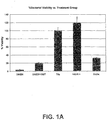
- Bacteria S. aureus 25923 were seeded into wells containing peptide (200 ⁇ M), vehicle (Tris), or antibiotic (erythromycin; 120 ⁇ g/ml). The bacteria were allowed to grow for 2 hours. Thereafter, bacterial viability was determined utilizing a WST-1 colorimetric viability assay (catalogue number 1 644 807; Roche Diagnostics). DMEM and DMEM+WST-1 were included as background controls. As shown in FIG. 1A and B , the peptide of SEQ ID NOs: 5 and 47 clearly show a lack of activity, as compared with an antibiotic control.
- mice were infected with S. aureus 25923 via intraperitoneal (IP) injection.
- IP intraperitoneal
- the peptide of SEQ ID NOs:1, 4, 5, 6, 45, and 47 were administered at 12 mg/kg and 24 mg/kg for SEQ. ID. NO. 1 ( FIG. 2A and 2B ), 9.6 mg/kg for SEQ. ID. NO. 5 ( FIG. 2C ), 13 mg/kg for SEQ. ID. NO. 47 ( FIG. 2D ), 12 mg/kg for SEQ. ID. NO. 4 ( FIG. 2E ), 9 mg/kg for SEQ. ID. NO. 6 ( FIG. 2F ), and 13 mg/kg for SEQ. ID. NO. 45 ( FIG. 2G ), via IP injection. Twenty-four hours post-infection, surviving animals were sacrificed, and intraperitoneal lavage fluid was plated to determine residual bacterial counts (# colony forming units per ml (CFU/ml)) in the presence and absence of peptide treatment.
- peptide was administered at 12 mg/kg (SEQ. ID. NO.1, FIG. 3A ) and 11.5 mg/kg (SEQ. ID. No.5, FIG. 3B ), via IP injection. Mice were then infected with S. aureus 25923 via IP injection. Twenty-four hours post-infection, surviving animals were sacrificed and intraperitoneal lavage fluid was plated to determine residual bacterial counts (# colony forming units per ml (CFU/ml)) in the presence and absence of peptide treatment.
- CFU/ml colony forming units per ml
- a peptide having the amino acid sequence of those shown in TABLE 1 or as described herein as part of the invention can enhance innate immunity.
- the peptides of SEQ ID NOs:1, 4, 5, 6, 45, and 47 had the ability to prevent and protect against infection, as demonstrated in in vivo models ( FIG. 2 and Example 3; FIG. 3 and Example 4)
- the peptide of SEQ ID NOs:5 and 47 lacked antimicrobial activity, as shown in Example 1 and FIG. 1 .
- modulation of innate immunity via the peptide of SEQ ID NOs:5 and/or 47, indicate that these peptides can be used as a therapeutic for the treatment of infectious disease.
- Mouse blood was obtained by cardiac puncture from ICR mice and collected in heparinized blood collection tubes. Blood from several mice was pooled and aliquoted into 300 ⁇ L aliquots. The peptide was dissolved in acetate buffered saline, pH 5.5, to a concentration of 9 mM. Of this stock solution 30 ⁇ L were added to 300 ⁇ L of blood and mixed by resuspension (concentration in blood 0.82 mM). For the control, 30 ⁇ L of blank acetate buffered saline was added to 300 ⁇ L of blood. Each peptide group was prepared in triplicate, whereas the control was prepared in six replicates. The samples were incubated at 37°C in closed microtubes for two hours.
- the plasma was isolated from the samples by centrifugation at 4000 rcf.
- the plasma was transferred to a 96-well assay plate for the DPPIV assay.
- the assay was started by adding 5 ⁇ L of the DPPIV substrate gly-pro-p-nitroanilide (16 mM in de-ionized water) to 95 ⁇ L of plasma (concentration in plasma 0.8 mM) and the increase in UV absorbance (405 nm) was monitored over a 20 min time period.
- a reduction by of DPPIV activity by about, or in one embodiment, at least, 25% (i.e. to about 75%) was deemed to be active.
- the desired level of activity may vary depending on the use of the peptides.
- CD26/DPPIV transmembrane serine protease dipeptidyl peptidase IV
- CD26/DPPIV is a 110-kD cell surface glycoprotein that is mainly expressed on mature thymocytes, activated T-cells, B-cells, NK-cells, macrophages, and epithelial cells. It has at least two functions, a signal transduction function and a proteolytic function ( Morimoto C, Schlossman SF. The structure and function of CD26 in .-. The T-cell immune response. Immunol. Review. 1998, 161: 55-70 .).
- chemokine activity involves modulation of chemokine activity by cleaving dipeptides from the chemokine N-terminus.
- modulation of the NH 2 termini of chemokines is of great importance not only for binding to their receptors and the following reactions but also for altering the receptor specificity of the processed chemokine.
- soluble rCD26 enhances transendothelial migration of T cells whereas it reduces the migratory response of monocytes [ Oravecz, T. et.
- CD26/dipeptidyl peptidase IV differentially regulates the chemotaxis of T cells and monocytes toward RANTES: possible mechanism for the switch from innate to acquired immune response. Int. Immunol. 11:417-426 ).
- CD26/DPPIV is involved in the pathology of a variety of diseases, such as AIDS and HIV disease progression (Blazquez et al. 1992; Vanham et al. 1993; Schols et al. 1998 Oravecz et al. 1995), Graves' disease (Eguchi et al. 1989; Nishikawa et al. 1995), and cancer (Stecca et al. 1997) and diabetes (Hinke et al. 2000;Marguet et al. 2000).
- diseases such as AIDS and HIV disease progression (Blazquez et al. 1992; Vanham et al. 1993; Schols et al. 1998 Oravecz et al. 1995), Graves' disease (Eguchi et al. 1989; Nishikawa et al. 1995), and cancer (Stecca et al. 1997) and diabetes (Hinke et al. 2000;Marguet et al. 2000).
- CD26 as an indicator of T-cell activation has been shown to fluctuate in parallel with several autoimmune diseases such as rheumatoid arthritis (Nakao et al., 1989) and autoimmune thyroiditis (Eguchi et al., 1989). CD26 has been described as a marker that correlates well with the level of activity of these diseases. It has furthermore been studied as an indicator of disease progression in chronic progressive multiple sclerosis (Constantinescu et al., 1995).
- the peptides of the present invention have demonstrated that they can reduce the activity of DPPIV. As such, they can be used in the treatment of certain immunological conditions, such as DPPIV- related or associated conditions, and may, in one aspect modulate innate immunity and inflammation, such as inflammation leading to sepsis.
- X 1 is selected from the group consisting of K, H, R, S, T, O, Cit, Hci, Dab, Dpr, or glycine based compounds with basic functional groups substituted on the N-terminal (e.g., Nlys), hSer, Val(betaOH)and wherein X 2 is selected from the group consisting of A, I, L, V, K, P, G, H, R, S, O, Dab, Dpr, Cit, Hci, Abu, Nva, Nle and where X 2 can be N-methylated,and wherein X 3 is selected from the group consisting of I, V, P, wherein in one embodiment, X 3 is not N-methylated.
- the isolated peptide can be an amino acid sequence of up to 10 amino acids, but is not SEQ. ID. NOs. 2 or 17.
- X 1 X 2 X 3 P are as defined in SEQ. ID. NO. 56 and "b" is selected from the group consisting of A, A*, G, S, L, F, K, C, I, V, T, Y, R, H, O, and M, but in one embodiment not P.
- the isolated peptide is a peptide of up to 10 amino acids comprising SEQ. ID. NO. 58 but not SEQ. ID. NO. 17.
- X 1 , X 2 and X 3 are as defined in SEQ. ID. NO. 56 and "a 1 " is selected from the group consisting of K, I R, H, O, L, V, A, and G and "a 2 " is selected from the group consisting of S, P, R T, H, K, O, L, V, A, G, S, and I.
- "a 1 " is not acetylated, or where a 1 is K, K is not acetylated or not SEQ. ID. NO. 2.
- the isolated peptide comprises up to 10 amino acids comprising SEQ. ID. NO. 59.
- X 1 , X 2 and X 3 are as defined in SEQ. ID. NO. 56 and where "a” is selected from the group consisting of S, R, K, H, O, T, I, L, V, A, and G and wherein "b” is selected from the group consisting of A, V, I, L, G, K, H, R, O, S, T, and F or a peptide of up to 10 amino acids comprising SEQ. ID. NO. 60.
Landscapes
- Health & Medical Sciences (AREA)
- Chemical & Material Sciences (AREA)
- Life Sciences & Earth Sciences (AREA)
- Organic Chemistry (AREA)
- General Health & Medical Sciences (AREA)
- Medicinal Chemistry (AREA)
- Molecular Biology (AREA)
- Proteomics, Peptides & Aminoacids (AREA)
- Biochemistry (AREA)
- Engineering & Computer Science (AREA)
- Biophysics (AREA)
- Genetics & Genomics (AREA)
- Immunology (AREA)
- Veterinary Medicine (AREA)
- Pharmacology & Pharmacy (AREA)
- Public Health (AREA)
- Animal Behavior & Ethology (AREA)
- Virology (AREA)
- General Chemical & Material Sciences (AREA)
- Chemical Kinetics & Catalysis (AREA)
- Nuclear Medicine, Radiotherapy & Molecular Imaging (AREA)
- Biotechnology (AREA)
- Urology & Nephrology (AREA)
- Hematology (AREA)
- Biomedical Technology (AREA)
- Oncology (AREA)
- Communicable Diseases (AREA)
- Microbiology (AREA)
- Analytical Chemistry (AREA)
- Physics & Mathematics (AREA)
- Tropical Medicine & Parasitology (AREA)
- Bioinformatics & Cheminformatics (AREA)
- Wood Science & Technology (AREA)
- Zoology (AREA)
- General Physics & Mathematics (AREA)
- Pathology (AREA)
- Cell Biology (AREA)
- Food Science & Technology (AREA)
- General Engineering & Computer Science (AREA)
- Gastroenterology & Hepatology (AREA)
Claims (5)
- Peptide isolé pour son utilisation dans le traitement et/ou la prévention d'une infection chez un sujet, dans lequel le peptide consiste en l'un quelconque parmi :RIVPA SEQ ID NO : 5,RIVPA* SEQ ID NO : 7, dans lequel A* est un acide aminé D d'alanineRIVPAOH SEQ ID NO : 10, dans lequel AOH est l'acide libre,RIVPK SEQ ID NO : 14,RIVPG SEQ ID NO : 22,RIVPS SEQ ID NO : 23,RIVPL SEQ ID NO : 24,RixVPA SEQ ID NO : 33, dans lequel Ix est I N-méthylé,RIVPAx SEQ ID NO : 34, dans lequel Ax est A N-méthylé, etRIVPF SEQ ID NO : 35, ou un sel, ester ou amide pharmaceutique de celui-ci, dans lequel P est une proline ou un analogue de proline dans lequel la taille de cycle du résidu proline est changée de 5 chaînons à 4, 6, ou 7 chaînons.
- Peptide isolé pour l'utilisation selon la revendication 1, dans lequel le peptide présente une extrémité C-terminale amidée.
- Peptide isolé pour l'utilisation selon la revendication 1 ou 2, dans lequel le peptide est administré par voie orale, parentérale, transdermique, intranasale, par administration pulmonaire, ou par une pompe osmotique.
- Peptide isolé pour l'utilisation selon l'une quelconque des revendications 1 à 3, dans lequel l'infection est une infection par une bactérie à Gram positif ou à Gram négatif.
- Composition pharmaceutique pour son utilisation dans le traitement et/ou la prévention d'une infection chez un sujet comprenant le peptide isolé tel que défini dans l'une quelconque des revendications 1 à 4 et un support, diluant, et/ou excipient pharmaceutiquement acceptable.
Applications Claiming Priority (6)
| Application Number | Priority Date | Filing Date | Title |
|---|---|---|---|
| US72296205P | 2005-10-04 | 2005-10-04 | |
| US72295805P | 2005-10-04 | 2005-10-04 | |
| US72295905P | 2005-10-04 | 2005-10-04 | |
| EP10003191.3A EP2236608B1 (fr) | 2005-10-04 | 2006-10-04 | Nouvelles peptides pour traiter et prévenir les troubles de type immunitaire, y compris le traitement et la prévention des infections en modulant l'immunité innée |
| EP06790808A EP1931779A4 (fr) | 2005-10-04 | 2006-10-04 | Nouveaux peptides destines au traitement et a la prevention de troubles lies a l'immunite, y compris au traitement et a la prevention de l'infection par modulation de l'immunite innee |
| PCT/CA2006/001650 WO2007038876A1 (fr) | 2005-10-04 | 2006-10-04 | Nouveaux peptides destines au traitement et a la prevention de troubles lies a l'immunite, y compris au traitement et a la prevention de l'infection par modulation de l'immunite innee |
Related Parent Applications (5)
| Application Number | Title | Priority Date | Filing Date |
|---|---|---|---|
| EP10003191.3A Division-Into EP2236608B1 (fr) | 2005-10-04 | 2006-10-04 | Nouvelles peptides pour traiter et prévenir les troubles de type immunitaire, y compris le traitement et la prévention des infections en modulant l'immunité innée |
| EP10003191.3A Division EP2236608B1 (fr) | 2005-10-04 | 2006-10-04 | Nouvelles peptides pour traiter et prévenir les troubles de type immunitaire, y compris le traitement et la prévention des infections en modulant l'immunité innée |
| EP06790808.7 Division | 2006-10-04 | ||
| EP06790808A Division EP1931779A4 (fr) | 2005-10-04 | 2006-10-04 | Nouveaux peptides destines au traitement et a la prevention de troubles lies a l'immunite, y compris au traitement et a la prevention de l'infection par modulation de l'immunite innee |
| EP10003191.3 Division | 2010-03-25 |
Publications (3)
| Publication Number | Publication Date |
|---|---|
| EP2447367A2 EP2447367A2 (fr) | 2012-05-02 |
| EP2447367A3 EP2447367A3 (fr) | 2013-01-02 |
| EP2447367B1 true EP2447367B1 (fr) | 2018-12-05 |
Family
ID=37905947
Family Applications (6)
| Application Number | Title | Priority Date | Filing Date |
|---|---|---|---|
| EP11182638A Withdrawn EP2447369A3 (fr) | 2005-10-04 | 2006-10-04 | Nouveaux peptides pour traiter et prévenir les troubles de type immunitaire, y compris le traitement et la prévention des infections en modulant l'immunité innée |
| EP10003191.3A Active EP2236608B1 (fr) | 2005-10-04 | 2006-10-04 | Nouvelles peptides pour traiter et prévenir les troubles de type immunitaire, y compris le traitement et la prévention des infections en modulant l'immunité innée |
| EP11182636A Withdrawn EP2447368A3 (fr) | 2005-10-04 | 2006-10-04 | Nouveaux peptides pour traiter et prévenir les troubles de type immunitaire, y compris le traitement et la prévention des infections en modulant l'immunité innée |
| EP06790808A Withdrawn EP1931779A4 (fr) | 2005-10-04 | 2006-10-04 | Nouveaux peptides destines au traitement et a la prevention de troubles lies a l'immunite, y compris au traitement et a la prevention de l'infection par modulation de l'immunite innee |
| EP11182635.0A Active EP2447367B1 (fr) | 2005-10-04 | 2006-10-04 | Nouveaux peptides pour traiter et prévenir les troubles de type immunitaire, y compris le traitement et la prévention des infections en modulant l'immunité innée |
| EP07719467A Withdrawn EP2076596A4 (fr) | 2005-10-04 | 2007-04-03 | Nouveaux peptides pour le traitement et la prévention de troubles associés aux troubles immunitaires, comprenant le traitement et la prévention d'une infection par modulation de l'immunité innée |
Family Applications Before (4)
| Application Number | Title | Priority Date | Filing Date |
|---|---|---|---|
| EP11182638A Withdrawn EP2447369A3 (fr) | 2005-10-04 | 2006-10-04 | Nouveaux peptides pour traiter et prévenir les troubles de type immunitaire, y compris le traitement et la prévention des infections en modulant l'immunité innée |
| EP10003191.3A Active EP2236608B1 (fr) | 2005-10-04 | 2006-10-04 | Nouvelles peptides pour traiter et prévenir les troubles de type immunitaire, y compris le traitement et la prévention des infections en modulant l'immunité innée |
| EP11182636A Withdrawn EP2447368A3 (fr) | 2005-10-04 | 2006-10-04 | Nouveaux peptides pour traiter et prévenir les troubles de type immunitaire, y compris le traitement et la prévention des infections en modulant l'immunité innée |
| EP06790808A Withdrawn EP1931779A4 (fr) | 2005-10-04 | 2006-10-04 | Nouveaux peptides destines au traitement et a la prevention de troubles lies a l'immunite, y compris au traitement et a la prevention de l'infection par modulation de l'immunite innee |
Family Applications After (1)
| Application Number | Title | Priority Date | Filing Date |
|---|---|---|---|
| EP07719467A Withdrawn EP2076596A4 (fr) | 2005-10-04 | 2007-04-03 | Nouveaux peptides pour le traitement et la prévention de troubles associés aux troubles immunitaires, comprenant le traitement et la prévention d'une infection par modulation de l'immunité innée |
Country Status (21)
| Country | Link |
|---|---|
| US (3) | US8124721B2 (fr) |
| EP (6) | EP2447369A3 (fr) |
| JP (2) | JP2009509552A (fr) |
| KR (1) | KR101410685B1 (fr) |
| CN (1) | CN101351554B (fr) |
| AU (1) | AU2006299682B2 (fr) |
| BR (1) | BRPI0616936B8 (fr) |
| CA (1) | CA2625183C (fr) |
| CY (1) | CY1118840T1 (fr) |
| DK (2) | DK2236608T3 (fr) |
| ES (1) | ES2609520T3 (fr) |
| HU (1) | HUE031989T2 (fr) |
| IL (1) | IL190601A (fr) |
| LT (1) | LT2236608T (fr) |
| MX (1) | MX2009003636A (fr) |
| MY (1) | MY157947A (fr) |
| PL (1) | PL2236608T3 (fr) |
| PT (1) | PT2236608T (fr) |
| RU (2) | RU2507213C2 (fr) |
| SI (1) | SI2236608T1 (fr) |
| WO (1) | WO2007038876A1 (fr) |
Families Citing this family (9)
| Publication number | Priority date | Publication date | Assignee | Title |
|---|---|---|---|---|
| US20080118525A1 (en) * | 2006-10-04 | 2008-05-22 | Oreola Donini | Novel peptides for treating and preventing immune-related disorders, including treating and preventing infection by modulating innate immunity |
| DK2236608T3 (en) | 2005-10-04 | 2017-02-20 | Soligenix Inc | New peptides for the treatment and prevention of immune-related diseases, including the treatment and prevention of infection by modulating natural immunity |
| US10227384B2 (en) * | 2013-04-12 | 2019-03-12 | Yale University | Modified proteins and methods of use thereof |
| US11311598B2 (en) * | 2013-09-13 | 2022-04-26 | Soligenix, Inc. | Peptides and analogs for use in the treatment of oral mucositis |
| CA2923553C (fr) * | 2013-09-13 | 2023-05-23 | Soligenix, Inc. | Nouveaux peptides et analogues destines a etre utilises dans le traitement d'une mucosite orale |
| US20150148304A1 (en) * | 2013-10-24 | 2015-05-28 | Soligenix, Inc. | Novel Peptides and Analogs for Use in the Treatment of Macrophage Activation Syndrome |
| US20180298084A1 (en) * | 2015-10-16 | 2018-10-18 | Arsanis Biosciences Gmbh | Bactericidal monoclonal antibody targeting klebsiella pneumoniae |
| MX2019011060A (es) * | 2017-03-16 | 2019-12-09 | Microsintesis Inc | Composiciones y metodos que involucran moleculas probioticas. |
| WO2024038888A1 (fr) * | 2022-08-19 | 2024-02-22 | 森永乳業株式会社 | Composition |
Family Cites Families (33)
| Publication number | Priority date | Publication date | Assignee | Title |
|---|---|---|---|---|
| NO812612L (no) | 1980-08-06 | 1982-02-08 | Ferring Pharma Ltd | Enzym-inhibitorer. |
| EP0618813B1 (fr) | 1992-09-16 | 2002-01-09 | The University Of Tennessee Research Corporation | Antigene de la proteine m hybride et porteur destine au vaccin anti-streptococcique du groupe a |
| US5916872A (en) * | 1996-07-24 | 1999-06-29 | Intrabiotics Pharmaceuticals, Inc. | Cyclic peptides having broad spectrum antimicrobial activity |
| US20030176357A1 (en) * | 1998-10-06 | 2003-09-18 | Pospisilik Andrew J. | Dipeptidyl peptidase IV inhibitors and their uses for lowering blood pressure levels |
| US7504490B1 (en) * | 1998-10-16 | 2009-03-17 | Oscient Pharmaceuticals Corporation | Nucleic acid and amino acid sequences relating to Apergillus fumigatus for diagnostics and therapeutics |
| PT2275551E (pt) * | 1999-10-29 | 2015-06-29 | Novartis Vaccines & Diagnostic | Péptidos antigénicos de neisseria |
| GB9929464D0 (en) * | 1999-12-13 | 2000-02-09 | Proteom Ltd | Complementary peptide ligande generated from the human genome |
| IL134830A0 (en) | 2000-03-01 | 2001-05-20 | Chay 13 Medical Res Group N V | Peptides and immunostimulatory and anti-bacterial pharmaceutical compositions containing them |
| US20090062512A1 (en) * | 2000-10-10 | 2009-03-05 | Hildebrand William H | Comparative ligand mapping from MHC class I positive cells |
| FR2825095B1 (fr) * | 2001-05-28 | 2003-09-26 | Dev Des Antigenes Combinatoire | Dispositif de presentation de polypeptides, utilisable comme "puce" pour la detection miniaturisee de molecules |
| EP1421204A4 (fr) | 2001-05-31 | 2004-12-15 | Univ Princeton | Peptides se liant a l'inhibiteur iap et dosages permettant d'identifier les composes qui se lient a l'inhibiteur iap |
| WO2003072556A1 (fr) | 2001-06-27 | 2003-09-04 | Prosidion Ltd. | Inhibiteurs de dpiv a base de groupes glutaminyl |
| US20030130199A1 (en) * | 2001-06-27 | 2003-07-10 | Von Hoersten Stephan | Dipeptidyl peptidase IV inhibitors and their uses as anti-cancer agents |
| US7368421B2 (en) * | 2001-06-27 | 2008-05-06 | Probiodrug Ag | Use of dipeptidyl peptidase IV inhibitors in the treatment of multiple sclerosis |
| GB0125445D0 (en) * | 2001-10-23 | 2001-12-12 | Ferring Bv | Protease Inhibitors |
| US7507787B2 (en) * | 2001-12-03 | 2009-03-24 | The University Of British Columbia | Effectors of innate immunity |
| NZ563261A (en) * | 2001-12-03 | 2008-08-29 | Univ British Columbia | Effectors of innate immunity |
| EP2157101B1 (fr) | 2002-01-31 | 2014-09-24 | Andromeda Bio Tech Ltd. | Peptides HSP et analogues pour la modulation de réponses immunes via des cellules présentant l'antigène |
| US8535672B2 (en) * | 2002-04-04 | 2013-09-17 | Yissum Research Development Of The Hebrew University Of Jerusalem | Broad-spectrum in-vivo effective superantigen toxin antagonists based on the interaction between CD28 and the superantigen and uses thereof |
| US7618788B2 (en) * | 2002-05-10 | 2009-11-17 | Millipore Corporation | Proteome epitope tags and methods of use thereof in protein modification analysis |
| SE0201863D0 (en) | 2002-06-18 | 2002-06-18 | Cepep Ab | Cell penetrating peptides |
| US20040037809A1 (en) | 2002-06-28 | 2004-02-26 | Nastech Pharmaceutical Company Inc. | Compositions and methods for enhanced mucosal delivery of interferon beta |
| JP2006512300A (ja) | 2002-10-03 | 2006-04-13 | エピミューン インコーポレイテッド | Hla結合ペプチド及びその使用 |
| CN1878791A (zh) | 2003-09-12 | 2006-12-13 | 诺和酶股份有限公司 | 合成的抗微生物多肽 |
| WO2005038000A2 (fr) * | 2003-10-17 | 2005-04-28 | Pecos Labs, Inc. | Epitopes t destines a l'elaboration d'un vaccin contre mycobacterium tuberculosis, utilises comme outils de diagnostic et leurs methodes d'identification |
| KR20070007128A (ko) * | 2004-03-01 | 2007-01-12 | 펩테라 파마슈티컬스 엘티디. | 카제인 파생 펩타이드들과 그의 치료적 사용들 |
| WO2006038208A2 (fr) | 2004-07-12 | 2006-04-13 | Medical Research Fund Of Tel Aviv Sourasky Medical Center | Agents capable de reguler a la baisse un hif-1$g(a) dependant de msf-a et utilisation de ceux-ci pour traiter un cancer |
| WO2006005190A1 (fr) * | 2004-07-14 | 2006-01-19 | Inimex Pharmaceuticals Inc. | Procede de criblage destine a la protection contre l'infection microbienne |
| EP1626059A1 (fr) | 2004-08-09 | 2006-02-15 | Institut National De La Sante Et De La Recherche Medicale (Inserm) | Applications angiogéniques et immunologiques de composés spécifiques anti-CD160 pouvant être obtenus à partir de l'anticorps monoclonal CL1-R2 |
| EP2116603A3 (fr) | 2004-11-12 | 2010-02-17 | The University Of British Columbia | Peptides antimicrobiens |
| WO2006114478A1 (fr) | 2005-04-26 | 2006-11-02 | Karyon-Ctt Ltd | Agents diagnostiques et therapeutiques |
| DK2236608T3 (en) * | 2005-10-04 | 2017-02-20 | Soligenix Inc | New peptides for the treatment and prevention of immune-related diseases, including the treatment and prevention of infection by modulating natural immunity |
| US20080118525A1 (en) * | 2006-10-04 | 2008-05-22 | Oreola Donini | Novel peptides for treating and preventing immune-related disorders, including treating and preventing infection by modulating innate immunity |
-
2006
- 2006-10-04 DK DK10003191.3T patent/DK2236608T3/en active
- 2006-10-04 CA CA2625183A patent/CA2625183C/fr active Active
- 2006-10-04 EP EP11182638A patent/EP2447369A3/fr not_active Withdrawn
- 2006-10-04 KR KR1020087010890A patent/KR101410685B1/ko active Active
- 2006-10-04 ES ES10003191.3T patent/ES2609520T3/es active Active
- 2006-10-04 BR BRPI0616936A patent/BRPI0616936B8/pt active IP Right Grant
- 2006-10-04 WO PCT/CA2006/001650 patent/WO2007038876A1/fr not_active Ceased
- 2006-10-04 EP EP10003191.3A patent/EP2236608B1/fr active Active
- 2006-10-04 AU AU2006299682A patent/AU2006299682B2/en active Active
- 2006-10-04 US US12/083,086 patent/US8124721B2/en active Active
- 2006-10-04 EP EP11182636A patent/EP2447368A3/fr not_active Withdrawn
- 2006-10-04 PT PT100031913T patent/PT2236608T/pt unknown
- 2006-10-04 EP EP06790808A patent/EP1931779A4/fr not_active Withdrawn
- 2006-10-04 PL PL10003191T patent/PL2236608T3/pl unknown
- 2006-10-04 SI SI200632149A patent/SI2236608T1/sl unknown
- 2006-10-04 JP JP2008533838A patent/JP2009509552A/ja not_active Withdrawn
- 2006-10-04 CN CN200680045440.2A patent/CN101351554B/zh active Active
- 2006-10-04 RU RU2008115390/10A patent/RU2507213C2/ru active
- 2006-10-04 LT LTEP10003191.3T patent/LT2236608T/lt unknown
- 2006-10-04 EP EP11182635.0A patent/EP2447367B1/fr active Active
- 2006-10-04 HU HUE10003191A patent/HUE031989T2/en unknown
- 2006-10-04 DK DK11182635.0T patent/DK2447367T3/en active
-
2007
- 2007-04-03 EP EP07719467A patent/EP2076596A4/fr not_active Withdrawn
- 2007-04-03 MX MX2009003636A patent/MX2009003636A/es not_active Application Discontinuation
- 2007-04-03 RU RU2009117490/10A patent/RU2009117490A/ru not_active Application Discontinuation
-
2008
- 2008-04-03 MY MYPI20080957A patent/MY157947A/en unknown
- 2008-04-03 IL IL190601A patent/IL190601A/en active IP Right Grant
-
2012
- 2012-01-27 US US13/360,163 patent/US9416157B2/en active Active
- 2012-04-26 US US13/457,162 patent/US8791061B2/en active Active
- 2012-08-08 JP JP2012175961A patent/JP5780600B2/ja active Active
-
2017
- 2017-02-17 CY CY20171100218T patent/CY1118840T1/el unknown
Non-Patent Citations (1)
| Title |
|---|
| None * |
Also Published As
Similar Documents
| Publication | Publication Date | Title |
|---|---|---|
| US9416157B2 (en) | Peptides for treating and preventing immune-related disorders, including treating and preventing infection by modulating innate immunity | |
| US20090186824A1 (en) | Novel peptides for treating and preventing immune-related disorders, including treating and preventing infection by modulating innate immunity | |
| EP1733231B1 (fr) | Peptides et peptidomimetiques se liant a cd23 | |
| JP5384342B2 (ja) | 癌のような変更された細胞遊走に関連する障害の治療のための薬理学的活性を有するペプチド | |
| AU2006264567A1 (en) | Cytokine receptor modulators and uses thereof | |
| CN101578368A (zh) | 包括通过调节先天免疫治疗和预防感染在内的治疗和预防免疫相关疾病的新型肽 | |
| HK1128728B (en) | Novel peptides for treating and preventing immune-related disorders, including treating and preventing infection by modulating innate immunity | |
| MX2008004255A (en) | Novel peptides for treating and preventing immune-related disorders, including treating and preventing infection by modulating innate immunity |
Legal Events
| Date | Code | Title | Description |
|---|---|---|---|
| PUAI | Public reference made under article 153(3) epc to a published international application that has entered the european phase |
Free format text: ORIGINAL CODE: 0009012 |
|
| AC | Divisional application: reference to earlier application |
Ref document number: 1931779 Country of ref document: EP Kind code of ref document: P Ref document number: 2236608 Country of ref document: EP Kind code of ref document: P |
|
| AK | Designated contracting states |
Kind code of ref document: A2 Designated state(s): AT BE BG CH CY CZ DE DK EE ES FI FR GB GR HU IE IS IT LI LT LU LV MC NL PL PT RO SE SI SK TR |
|
| RIC1 | Information provided on ipc code assigned before grant |
Ipc: C12P 21/02 20060101ALI20120731BHEP Ipc: A61K 38/08 20060101ALI20120731BHEP Ipc: A61P 37/02 20060101ALI20120731BHEP Ipc: C12N 15/11 20060101AFI20120731BHEP Ipc: C12Q 1/37 20060101ALI20120731BHEP Ipc: C07K 16/00 20060101ALI20120731BHEP Ipc: A61K 38/10 20060101ALI20120731BHEP Ipc: A61P 33/00 20060101ALI20120731BHEP Ipc: C12N 15/63 20060101ALI20120731BHEP Ipc: C12N 1/21 20060101ALI20120731BHEP Ipc: A61P 31/00 20060101ALI20120731BHEP |
|
| PUAL | Search report despatched |
Free format text: ORIGINAL CODE: 0009013 |
|
| AK | Designated contracting states |
Kind code of ref document: A3 Designated state(s): AT BE BG CH CY CZ DE DK EE ES FI FR GB GR HU IE IS IT LI LT LU LV MC NL PL PT RO SE SI SK TR |
|
| RIC1 | Information provided on ipc code assigned before grant |
Ipc: A61P 37/02 20060101ALI20121126BHEP Ipc: A61P 31/00 20060101ALI20121126BHEP Ipc: C12N 15/63 20060101ALI20121126BHEP Ipc: A61K 38/08 20060101ALI20121126BHEP Ipc: C12Q 1/37 20060101ALI20121126BHEP Ipc: C12N 1/21 20060101ALI20121126BHEP Ipc: C12P 21/02 20060101ALI20121126BHEP Ipc: C12N 15/11 20060101AFI20121126BHEP Ipc: A61K 38/10 20060101ALI20121126BHEP Ipc: C07K 16/00 20060101ALI20121126BHEP Ipc: A61P 33/00 20060101ALI20121126BHEP |
|
| RAP1 | Party data changed (applicant data changed or rights of an application transferred) |
Owner name: SOLIGENIX, INC. |
|
| 17P | Request for examination filed |
Effective date: 20130702 |
|
| RBV | Designated contracting states (corrected) |
Designated state(s): AT BE BG CH CY CZ DE DK EE ES FI FR GB GR HU IE IS IT LI LT LU LV MC NL PL PT RO SE SI SK TR |
|
| 17Q | First examination report despatched |
Effective date: 20140217 |
|
| STAA | Information on the status of an ep patent application or granted ep patent |
Free format text: STATUS: EXAMINATION IS IN PROGRESS |
|
| GRAP | Despatch of communication of intention to grant a patent |
Free format text: ORIGINAL CODE: EPIDOSNIGR1 |
|
| STAA | Information on the status of an ep patent application or granted ep patent |
Free format text: STATUS: GRANT OF PATENT IS INTENDED |
|
| INTG | Intention to grant announced |
Effective date: 20180612 |
|
| GRAS | Grant fee paid |
Free format text: ORIGINAL CODE: EPIDOSNIGR3 |
|
| GRAA | (expected) grant |
Free format text: ORIGINAL CODE: 0009210 |
|
| GRAA | (expected) grant |
Free format text: ORIGINAL CODE: 0009210 |
|
| STAA | Information on the status of an ep patent application or granted ep patent |
Free format text: STATUS: THE PATENT HAS BEEN GRANTED |
|
| AC | Divisional application: reference to earlier application |
Ref document number: 2236608 Country of ref document: EP Kind code of ref document: P Ref document number: 1931779 Country of ref document: EP Kind code of ref document: P |
|
| AK | Designated contracting states |
Kind code of ref document: B1 Designated state(s): AT BE BG CH CY CZ DE DK EE ES FI FR GB GR HU IE IS IT LI LT LU LV MC NL PL PT RO SE SI SK TR |
|
| REG | Reference to a national code |
Ref country code: GB Ref legal event code: FG4D |
|
| REG | Reference to a national code |
Ref country code: CH Ref legal event code: EP |
|
| REG | Reference to a national code |
Ref country code: AT Ref legal event code: REF Ref document number: 1073087 Country of ref document: AT Kind code of ref document: T Effective date: 20181215 |
|
| REG | Reference to a national code |
Ref country code: IE Ref legal event code: FG4D |
|
| REG | Reference to a national code |
Ref country code: DE Ref legal event code: R096 Ref document number: 602006057037 Country of ref document: DE |
|
| REG | Reference to a national code |
Ref country code: CH Ref legal event code: NV Representative=s name: ISLER AND PEDRAZZINI AG, CH |
|
| REG | Reference to a national code |
Ref country code: DK Ref legal event code: T3 Effective date: 20190212 |
|
| REG | Reference to a national code |
Ref country code: SE Ref legal event code: TRGR |
|
| REG | Reference to a national code |
Ref country code: NL Ref legal event code: FP |
|
| REG | Reference to a national code |
Ref country code: AT Ref legal event code: MK05 Ref document number: 1073087 Country of ref document: AT Kind code of ref document: T Effective date: 20181205 |
|
| REG | Reference to a national code |
Ref country code: LT Ref legal event code: MG4D |
|
| PG25 | Lapsed in a contracting state [announced via postgrant information from national office to epo] |
Ref country code: BG Free format text: LAPSE BECAUSE OF FAILURE TO SUBMIT A TRANSLATION OF THE DESCRIPTION OR TO PAY THE FEE WITHIN THE PRESCRIBED TIME-LIMIT Effective date: 20190305 Ref country code: LT Free format text: LAPSE BECAUSE OF FAILURE TO SUBMIT A TRANSLATION OF THE DESCRIPTION OR TO PAY THE FEE WITHIN THE PRESCRIBED TIME-LIMIT Effective date: 20181205 Ref country code: LV Free format text: LAPSE BECAUSE OF FAILURE TO SUBMIT A TRANSLATION OF THE DESCRIPTION OR TO PAY THE FEE WITHIN THE PRESCRIBED TIME-LIMIT Effective date: 20181205 Ref country code: AT Free format text: LAPSE BECAUSE OF FAILURE TO SUBMIT A TRANSLATION OF THE DESCRIPTION OR TO PAY THE FEE WITHIN THE PRESCRIBED TIME-LIMIT Effective date: 20181205 Ref country code: ES Free format text: LAPSE BECAUSE OF FAILURE TO SUBMIT A TRANSLATION OF THE DESCRIPTION OR TO PAY THE FEE WITHIN THE PRESCRIBED TIME-LIMIT Effective date: 20181205 Ref country code: FI Free format text: LAPSE BECAUSE OF FAILURE TO SUBMIT A TRANSLATION OF THE DESCRIPTION OR TO PAY THE FEE WITHIN THE PRESCRIBED TIME-LIMIT Effective date: 20181205 |
|
| PG25 | Lapsed in a contracting state [announced via postgrant information from national office to epo] |
Ref country code: GR Free format text: LAPSE BECAUSE OF FAILURE TO SUBMIT A TRANSLATION OF THE DESCRIPTION OR TO PAY THE FEE WITHIN THE PRESCRIBED TIME-LIMIT Effective date: 20190306 |
|
| PG25 | Lapsed in a contracting state [announced via postgrant information from national office to epo] |
Ref country code: IT Free format text: LAPSE BECAUSE OF FAILURE TO SUBMIT A TRANSLATION OF THE DESCRIPTION OR TO PAY THE FEE WITHIN THE PRESCRIBED TIME-LIMIT Effective date: 20181205 Ref country code: CZ Free format text: LAPSE BECAUSE OF FAILURE TO SUBMIT A TRANSLATION OF THE DESCRIPTION OR TO PAY THE FEE WITHIN THE PRESCRIBED TIME-LIMIT Effective date: 20181205 Ref country code: PL Free format text: LAPSE BECAUSE OF FAILURE TO SUBMIT A TRANSLATION OF THE DESCRIPTION OR TO PAY THE FEE WITHIN THE PRESCRIBED TIME-LIMIT Effective date: 20181205 Ref country code: PT Free format text: LAPSE BECAUSE OF FAILURE TO SUBMIT A TRANSLATION OF THE DESCRIPTION OR TO PAY THE FEE WITHIN THE PRESCRIBED TIME-LIMIT Effective date: 20190405 |
|
| PG25 | Lapsed in a contracting state [announced via postgrant information from national office to epo] |
Ref country code: EE Free format text: LAPSE BECAUSE OF FAILURE TO SUBMIT A TRANSLATION OF THE DESCRIPTION OR TO PAY THE FEE WITHIN THE PRESCRIBED TIME-LIMIT Effective date: 20181205 Ref country code: RO Free format text: LAPSE BECAUSE OF FAILURE TO SUBMIT A TRANSLATION OF THE DESCRIPTION OR TO PAY THE FEE WITHIN THE PRESCRIBED TIME-LIMIT Effective date: 20181205 Ref country code: IS Free format text: LAPSE BECAUSE OF FAILURE TO SUBMIT A TRANSLATION OF THE DESCRIPTION OR TO PAY THE FEE WITHIN THE PRESCRIBED TIME-LIMIT Effective date: 20190405 Ref country code: SK Free format text: LAPSE BECAUSE OF FAILURE TO SUBMIT A TRANSLATION OF THE DESCRIPTION OR TO PAY THE FEE WITHIN THE PRESCRIBED TIME-LIMIT Effective date: 20181205 |
|
| REG | Reference to a national code |
Ref country code: DE Ref legal event code: R097 Ref document number: 602006057037 Country of ref document: DE |
|
| PLBE | No opposition filed within time limit |
Free format text: ORIGINAL CODE: 0009261 |
|
| STAA | Information on the status of an ep patent application or granted ep patent |
Free format text: STATUS: NO OPPOSITION FILED WITHIN TIME LIMIT |
|
| PG25 | Lapsed in a contracting state [announced via postgrant information from national office to epo] |
Ref country code: SI Free format text: LAPSE BECAUSE OF FAILURE TO SUBMIT A TRANSLATION OF THE DESCRIPTION OR TO PAY THE FEE WITHIN THE PRESCRIBED TIME-LIMIT Effective date: 20181205 |
|
| 26N | No opposition filed |
Effective date: 20190906 |
|
| PG25 | Lapsed in a contracting state [announced via postgrant information from national office to epo] |
Ref country code: TR Free format text: LAPSE BECAUSE OF FAILURE TO SUBMIT A TRANSLATION OF THE DESCRIPTION OR TO PAY THE FEE WITHIN THE PRESCRIBED TIME-LIMIT Effective date: 20181205 |
|
| PG25 | Lapsed in a contracting state [announced via postgrant information from national office to epo] |
Ref country code: MC Free format text: LAPSE BECAUSE OF FAILURE TO SUBMIT A TRANSLATION OF THE DESCRIPTION OR TO PAY THE FEE WITHIN THE PRESCRIBED TIME-LIMIT Effective date: 20181205 |
|
| PG25 | Lapsed in a contracting state [announced via postgrant information from national office to epo] |
Ref country code: LU Free format text: LAPSE BECAUSE OF NON-PAYMENT OF DUE FEES Effective date: 20191004 |
|
| REG | Reference to a national code |
Ref country code: BE Ref legal event code: MM Effective date: 20191031 |
|
| PG25 | Lapsed in a contracting state [announced via postgrant information from national office to epo] |
Ref country code: BE Free format text: LAPSE BECAUSE OF NON-PAYMENT OF DUE FEES Effective date: 20191031 |
|
| PG25 | Lapsed in a contracting state [announced via postgrant information from national office to epo] |
Ref country code: IE Free format text: LAPSE BECAUSE OF NON-PAYMENT OF DUE FEES Effective date: 20191004 |
|
| PG25 | Lapsed in a contracting state [announced via postgrant information from national office to epo] |
Ref country code: CY Free format text: LAPSE BECAUSE OF FAILURE TO SUBMIT A TRANSLATION OF THE DESCRIPTION OR TO PAY THE FEE WITHIN THE PRESCRIBED TIME-LIMIT Effective date: 20181205 |
|
| PG25 | Lapsed in a contracting state [announced via postgrant information from national office to epo] |
Ref country code: HU Free format text: LAPSE BECAUSE OF FAILURE TO SUBMIT A TRANSLATION OF THE DESCRIPTION OR TO PAY THE FEE WITHIN THE PRESCRIBED TIME-LIMIT; INVALID AB INITIO Effective date: 20061004 |
|
| REG | Reference to a national code |
Ref country code: CH Ref legal event code: U11 Free format text: ST27 STATUS EVENT CODE: U-0-0-U10-U11 (AS PROVIDED BY THE NATIONAL OFFICE) Effective date: 20251101 |
|
| PGFP | Annual fee paid to national office [announced via postgrant information from national office to epo] |
Ref country code: NL Payment date: 20251026 Year of fee payment: 20 |
|
| PGFP | Annual fee paid to national office [announced via postgrant information from national office to epo] |
Ref country code: DE Payment date: 20251029 Year of fee payment: 20 |
|
| PGFP | Annual fee paid to national office [announced via postgrant information from national office to epo] |
Ref country code: GB Payment date: 20251027 Year of fee payment: 20 |
|
| PGFP | Annual fee paid to national office [announced via postgrant information from national office to epo] |
Ref country code: DK Payment date: 20251027 Year of fee payment: 20 |
|
| PGFP | Annual fee paid to national office [announced via postgrant information from national office to epo] |
Ref country code: FR Payment date: 20251027 Year of fee payment: 20 |
|
| PGFP | Annual fee paid to national office [announced via postgrant information from national office to epo] |
Ref country code: CH Payment date: 20251101 Year of fee payment: 20 Ref country code: SE Payment date: 20251027 Year of fee payment: 20 |