EP2452337B1 - Zuweisung von bits bei einer verstärkten codierung/decodierung zur verbesserung einer hierarchischen codierung/decodierung digitaler tonsignale - Google Patents
Zuweisung von bits bei einer verstärkten codierung/decodierung zur verbesserung einer hierarchischen codierung/decodierung digitaler tonsignale Download PDFInfo
- Publication number
- EP2452337B1 EP2452337B1 EP10745328.4A EP10745328A EP2452337B1 EP 2452337 B1 EP2452337 B1 EP 2452337B1 EP 10745328 A EP10745328 A EP 10745328A EP 2452337 B1 EP2452337 B1 EP 2452337B1
- Authority
- EP
- European Patent Office
- Prior art keywords
- coding
- decoding
- bits
- allocation
- band
- Prior art date
- Legal status (The legal status is an assumption and is not a legal conclusion. Google has not performed a legal analysis and makes no representation as to the accuracy of the status listed.)
- Not-in-force
Links
- 230000005236 sound signal Effects 0.000 title claims description 7
- 238000000034 method Methods 0.000 claims description 24
- 230000006872 improvement Effects 0.000 claims description 22
- 238000004590 computer program Methods 0.000 claims description 5
- 230000002708 enhancing effect Effects 0.000 claims 3
- 239000010410 layer Substances 0.000 description 29
- OVOUKWFJRHALDD-UHFFFAOYSA-N 2-[2-(2-acetyloxyethoxy)ethoxy]ethyl acetate Chemical compound CC(=O)OCCOCCOCCOC(C)=O OVOUKWFJRHALDD-UHFFFAOYSA-N 0.000 description 27
- 238000001228 spectrum Methods 0.000 description 11
- 230000003595 spectral effect Effects 0.000 description 10
- 238000013139 quantization Methods 0.000 description 8
- 238000001914 filtration Methods 0.000 description 5
- 230000008901 benefit Effects 0.000 description 3
- 230000005540 biological transmission Effects 0.000 description 3
- 230000015572 biosynthetic process Effects 0.000 description 3
- 238000004364 calculation method Methods 0.000 description 3
- 238000003786 synthesis reaction Methods 0.000 description 3
- 230000009466 transformation Effects 0.000 description 3
- 241001362574 Decodes Species 0.000 description 2
- 238000004422 calculation algorithm Methods 0.000 description 2
- 230000007547 defect Effects 0.000 description 2
- 238000012545 processing Methods 0.000 description 2
- 230000006978 adaptation Effects 0.000 description 1
- 239000012792 core layer Substances 0.000 description 1
- 230000003247 decreasing effect Effects 0.000 description 1
- 238000002592 echocardiography Methods 0.000 description 1
- 230000006870 function Effects 0.000 description 1
- 230000004927 fusion Effects 0.000 description 1
- 230000005055 memory storage Effects 0.000 description 1
- 238000005457 optimization Methods 0.000 description 1
- 230000008447 perception Effects 0.000 description 1
- 238000012805 post-processing Methods 0.000 description 1
- 238000007781 pre-processing Methods 0.000 description 1
- 230000008569 process Effects 0.000 description 1
- 230000009467 reduction Effects 0.000 description 1
- 238000009877 rendering Methods 0.000 description 1
- 230000017105 transposition Effects 0.000 description 1
Images


Classifications
-
- G—PHYSICS
- G10—MUSICAL INSTRUMENTS; ACOUSTICS
- G10L—SPEECH ANALYSIS TECHNIQUES OR SPEECH SYNTHESIS; SPEECH RECOGNITION; SPEECH OR VOICE PROCESSING TECHNIQUES; SPEECH OR AUDIO CODING OR DECODING
- G10L19/00—Speech or audio signals analysis-synthesis techniques for redundancy reduction, e.g. in vocoders; Coding or decoding of speech or audio signals, using source filter models or psychoacoustic analysis
- G10L19/04—Speech or audio signals analysis-synthesis techniques for redundancy reduction, e.g. in vocoders; Coding or decoding of speech or audio signals, using source filter models or psychoacoustic analysis using predictive techniques
- G10L19/16—Vocoder architecture
- G10L19/18—Vocoders using multiple modes
- G10L19/24—Variable rate codecs, e.g. for generating different qualities using a scalable representation such as hierarchical encoding or layered encoding
-
- G—PHYSICS
- G10—MUSICAL INSTRUMENTS; ACOUSTICS
- G10L—SPEECH ANALYSIS TECHNIQUES OR SPEECH SYNTHESIS; SPEECH RECOGNITION; SPEECH OR VOICE PROCESSING TECHNIQUES; SPEECH OR AUDIO CODING OR DECODING
- G10L19/00—Speech or audio signals analysis-synthesis techniques for redundancy reduction, e.g. in vocoders; Coding or decoding of speech or audio signals, using source filter models or psychoacoustic analysis
- G10L19/002—Dynamic bit allocation
-
- G—PHYSICS
- G10—MUSICAL INSTRUMENTS; ACOUSTICS
- G10L—SPEECH ANALYSIS TECHNIQUES OR SPEECH SYNTHESIS; SPEECH RECOGNITION; SPEECH OR VOICE PROCESSING TECHNIQUES; SPEECH OR AUDIO CODING OR DECODING
- G10L19/00—Speech or audio signals analysis-synthesis techniques for redundancy reduction, e.g. in vocoders; Coding or decoding of speech or audio signals, using source filter models or psychoacoustic analysis
- G10L19/02—Speech or audio signals analysis-synthesis techniques for redundancy reduction, e.g. in vocoders; Coding or decoding of speech or audio signals, using source filter models or psychoacoustic analysis using spectral analysis, e.g. transform vocoders or subband vocoders
- G10L19/0212—Speech or audio signals analysis-synthesis techniques for redundancy reduction, e.g. in vocoders; Coding or decoding of speech or audio signals, using source filter models or psychoacoustic analysis using spectral analysis, e.g. transform vocoders or subband vocoders using orthogonal transformation
-
- G—PHYSICS
- G10—MUSICAL INSTRUMENTS; ACOUSTICS
- G10L—SPEECH ANALYSIS TECHNIQUES OR SPEECH SYNTHESIS; SPEECH RECOGNITION; SPEECH OR VOICE PROCESSING TECHNIQUES; SPEECH OR AUDIO CODING OR DECODING
- G10L19/00—Speech or audio signals analysis-synthesis techniques for redundancy reduction, e.g. in vocoders; Coding or decoding of speech or audio signals, using source filter models or psychoacoustic analysis
- G10L19/02—Speech or audio signals analysis-synthesis techniques for redundancy reduction, e.g. in vocoders; Coding or decoding of speech or audio signals, using source filter models or psychoacoustic analysis using spectral analysis, e.g. transform vocoders or subband vocoders
- G10L19/032—Quantisation or dequantisation of spectral components
- G10L19/038—Vector quantisation, e.g. TwinVQ audio
Definitions
- the present invention relates to a binary allocation method for sound data processing.
- This processing is adapted in particular to the transmission and / or storage of digital signals such as audio-frequency signals (speech, music, or other).
- the invention applies more particularly to hierarchical coding (or "scalable” coding) which generates a so-called “hierarchical” bit stream because it comprises a core rate and one or more enhancement layer (s) (the standardized coding according to G ITU-T G.729.1 and MPEG-4 CELP are scalable in both bit rate and bandwidth.
- hierarchical coding or “scalable” coding
- s enhancement layer
- Hierarchical coding having the capacity to provide varied bit rates, is described below by distributing the information relating to an audio signal to be coded in hierarchical subsets, so that this information can be used in order of importance. in terms of audio rendering quality.
- the criterion taken into account for determining the order is a criterion for optimizing (or rather reducing) the quality of the coded audio signal.
- Hierarchical coding is particularly suited to transmission over heterogeneous networks or having variable available rates over time, or to transmission to terminals with varying capacities.
- Hierarchical audio coding (or " scalable” ) can be described as follows.
- the bit stream includes a base layer and one or more enhancement layers.
- the base layer is generated by a fixed rate codec, termed a "core codec ", guaranteeing the minimum quality of the coding.
- This layer must be received by the decoder to maintain an acceptable level of quality. Improvement layers are used to improve quality. However, they may not all be received by the decoder.
- the main advantage of hierarchical coding is that it allows an adaptation of the bit rate simply by "truncation of the bit stream ".
- the number of layers i.e., the number of possible truncations of the bitstream
- the number of layers defines the granularity of the coding.
- scalable scalability and bandwidth encoding techniques with a CELP heart-coder, a telephone band, and one or more broadband enhancement layer (s).
- An example of such systems is given in the ITU-T G.729.1 8-32 kbit / s fine grain standard.
- the G.729.1 coding / decoding algorithm is summarized below.
- the G.729.1 coder a general overview of which is published in the document S. Ragot et al. "ITU-T G.729.1: AN 8-32 KBIT / S SCALABLE CODER INTEROPERABLE WITH G.729 FOR WIDEBAND TELEPHONY AND VOICE OVER IP", Proceedings of the IEEE ICASSP 2007, 15-20 April 2007 , is an extension of the ITU-T G.729 coder. It is a modified G.729 heart-coded core encoder producing a bandwidth ranging from narrowband (50-4000 Hz) to wideband (50-7000 Hz) at a rate of 8 to 32 kbit / s for conversational services. This codec is compatible with existing VoIP devices that use the G.729 codec.
- the G.729.1 coder is schematized on the figure 1 .
- the WB broadband input signal sampled at 16 kHz, is first decomposed into two subbands by QMF (for "Quadrature Mirror Filter") filtering.
- the low band (0-4000 Hz) is obtained by LP low-pass filtering (block 100) and decimation (block 101), and the high band (4000-8000 Hz) by HP high-pass filtering (block 102) and decimation (block 103).
- the LP and HP filters are of length 64.
- the low band is pretreated with a high-pass filter eliminating the components below 50 Hz (block 104), to obtain the signal s LB , before CELP coding in narrow band (block 105) at 8 and 12 kbit / s.
- This high-pass filtering takes into account the fact that the wanted band is defined as covering the interval 50-7000 Hz.
- the narrow-band CELP coding is a cascaded CELP coding comprising as a first stage a modified G.729 coding without a filter. preprocessing and as a second stage an additional fixed CELP dictionary.
- the high band is first pretreated (block 106) to compensate for the folding due to the high-pass filter (block 102) combined with the decimation (block 103).
- the high band is then filtered by a low pass filter (block 107) eliminating the components between 3000 and 4000 Hz from the high band (i.e. the components between 7000 and 8000 Hz in the original signal) to obtain the signal s HB .
- a parametric band extension (block 108) is then performed.
- the LB of error signal of the low band is calculated (block 109) from the output of the CELP coder (block 105) and a predictive transform coding (of TDAC type for "Time Domain Aliasing Cancellation" in the standard G .729.1) is carried out at block 110.
- a predictive transform coding of TDAC type for "Time Domain Aliasing Cancellation" in the standard G .729.1
- Additional parameters can be transmitted by the block 111 to a homologous decoder, this block 111 performing a so-called “FEC” treatment for "Frame Erasure Concealment", in order to reconstitute possible erased frames.
- the different bitstreams generated by the coding blocks 105, 108, 110 and 111 are finally multiplexed and structured into a hierarchical bit stream in the multiplexing block 112.
- the coding is performed by 20 ms sample blocks (or frames). 320 samples per frame.
- the bit stream of the 8 and 12 kbit / s layers is used by the CELP decoder (block 201) to generate the narrow-band synthesis (0-4000 Hz).
- the portion of the bit stream associated with the 14 kbit / s layer is decoded by the tape extension module (block 202).
- the portion of the bit stream associated with data rates greater than 14 kbit / s is decoded by the TDAC module (block 203).
- Pre-echo treatment and post-echoes is performed by the blocks 204 and 207 as well as an enrichment (block 205) and a post-processing of the low band (block 206).
- the broadband output signal ⁇ wb sampled at 16 kHz, is obtained via the QMF synthesis filter bank (blocks 209, 210, 211, 212 and 213) incorporating the inverse folding (block 208).
- the TDAC type transform coding in the G.729.1 encoder is illustrated on the figure 3 .
- MDCT transforms (blocks 301 and 302) apply to 20 ms of sampled signal at 8 kHz (160 coefficients).
- This spectrum is divided into eighteen sub-bands, a sub-band j being assigned a number of coefficients noted nb _ coef ( j ).
- the subband splitting is specified in Table 1 below.
- a subband j comprises the coefficients Y ( k ) with sb_bound ( j ) ⁇ k ⁇ sb_bound ( j + 1).
- the coefficients 280-319 corresponding to the frequency band 7000 Hz - 8000 Hz are not coded; they are set to zero at the decoder because the bandwidth of the codec is 50-7000 Hz.
- Table 1 ⁇ / b> TDAC Code Subband Bounds and Size J sb_bound ( j ) nb_coef ( j ) 0 0 16 1 16 16 2 32 16 3 48 16 4 64 16 5 80 16 6 96 16 7 112 16 8 128 16 9 144 16 10 160 16 11 176 16 12 192 16 13 208 16 14 224 16 15 240 16 16 256 16 17 272 8 18 280 -
- the spectral envelope is coded at variable rate in block 305.
- This quantized value rms_index ( j ) is transmitted to the bit allocation block 306.
- a bit (0 or 1) is transmitted to the decoder to indicate the encoding mode that has been chosen.
- the number of bits allocated to each subband for its quantization is determined at block 306 from the quantized spectral envelope from block 305.
- the allocation of the bits performed minimizes the squared error while respecting the constraint of an integer number of bits allocated per subband and a maximum number of bits not to be exceeded.
- the spectral content of the subbands is then encoded by spherical vector quantization (block 307).
- the different bit streams generated by the blocks 305 and 307 are then multiplexed and structured into a hierarchical bit stream at the multiplexing block 308.
- the TDAC type transform decoding step in the G.729.1 decoder is illustrated on the figure 4 .
- the decoded spectral envelope (block 401) makes it possible to find the allocation of the bits (block 402).
- each of the subbands is found by inverse spherical vector quantization (block 403).
- the sub-bands not transmitted, due to a lack of "budget" of bits, are extrapolated (block 404) from the MDCT transform of the signal at the output of the band extension block (block 202 of FIG. figure 2 ).
- the subbands bit allocation (block 306 of FIG. figure 3 or block 402 of the figure 4 ).
- nbit ( j ) arg ⁇ min r ⁇ R nb_coef j ⁇ nb_coef j ⁇ ip j - ⁇ Opt - r
- SWB super-wideband
- This document describes a super-wideband coding / decoding system comprising a G.729.1 or G.718 core coding stage and a band extension stage.
- the core coding performs the coding of the frequency band from 0 to 7 kHz while the extension band performs coding in the frequency band from 7 to 14 kHz.
- a first extension coding layer is based on a parametric model based on two coding modes: a generic mode and a sinusoidal mode.
- the generic mode uses a transposition method in the MDCT domain for the artificial generation of high frequency MDCT coefficients (7-14 kHz) from low frequencies (0-7 kHz).
- the low frequency band for encoding a high frequency band is selected on a criterion of maximizing the normalized correlation.
- Sinusoidal mode is normally used for particularly harmonic or tonal signals. In this mode, the most energetic components are selected. We then transmit their positions, their amplitudes and their signs.
- This first layer is transmitted with a bit rate of 4 kbit / s.
- a second 7-14 kHz band enhancement layer is proposed which is based on the additional sinusoidal coding approaching the MDCT spectrum of the input signal.
- the bit allocation for this second extension layer is fixed once and for all.
- extension coding presented in this document improves the signal only in the extension frequency band from 7 to 14 kHz.
- the 0 to 7 kHz frequency band of the core coding is not modified.
- the decoder then directly uses the synthesized signal from the first TDBWE band extension coding layer for the 4-7kHz band to fill the non-band. allocated.
- a binary allocation method in a coding / decoding improvement of a hierarchical encoding / decoding of digital audio signals comprising a core coding / decoding in a first frequency band and an extension coding / decoding. band in a second frequency band.
- the process is such that, for a predetermined number of bits to be allocated for the coding / decoding enhancement of the extension coding / decoding, a first number of bits ( nbit_enhanced (j) ) is allocated to a coding / decoding correction / decoding heart in the first frequency band and according to a first coding / decoding mode and a second number of bits ( nb_sin ) is allocated to a coding / decoding improvement of the coding / decoding extension in the second frequency band and according to a second encoding / decoding mode.
- the allocation according to one embodiment of the invention makes it possible to allocate additional bits for these sub-bands. in order to improve the core coding in these sub-bands and this while also guaranteeing an improvement for the extension coding.
- the method comprises a step of receiving tone information of a residual signal resulting from a difference between a signal from a first band extension layer and the original signal and in case of residual tone signal, the second number of bits allocated for coding / decoding enhancement of the band extension is larger than the first number.
- this tone information is calculated directly on the original signal, for example by detecting peak energy in the spectrum.
- the enhancement layer of the band extension is adapted to the type of signal that it has to code.
- the coding according to the extension coding mode being particularly adapted to the tonal type signal, the priority is thus given to this coding mode.
- the core coding / decoding is of G.729.1 standardized coding / decoding type, the first coding / decoding mode being a transform coding / decoding and the second coding / decoding mode being a parametric encoding / decoding.
- the invention relates to a hierarchical coder comprising an allocation module according to the invention.
- the invention also relates to a hierarchical decoder comprising an allocation module according to the invention.
- the invention relates to a computer program comprising code instructions for implementing the steps of an allocation method according to the invention, when they are executed by a processor.
- Such an encoder as represented consists of an extension of the frequencies coded by the module 515, the frequency band used passing from [50Hz-7KHz] to [50Hz-14kHz] and an improvement of the base layer of G.729.1 by the TDAC coding module (block 510) and as described later with reference to the figure 7 .
- the encoder as represented in figure 5 has the same modules as the G.729.1 core coding represented in figure 1 and an additional band extension module 515 which provides an extension signal to the multiplexing module 512.
- This extension coding module 515 operates in the frequency band ranging from 7 to 14 kHz, said second frequency band with respect to the first frequency band ranging from 0 to 7 kHz of the core coding.
- This frequency band extension is calculated on the original full-band signal S SWB while the input signal of the core encoder is obtained by decimation (block 516) and low-pass filtering (block 517). At the output of these blocks, the broadband input signal S WB is obtained.
- the module 515 includes a first extension coding layer based on a parametric model based on two coding modes, a generic mode and a sinusoidal mode, depending on whether the original signal S WB is tonal or non-tonal as described in FIG. document Mr Tammi, L. Laaksonen, A. Rämö, H. Toukomaa, entitled Scalable Superwideband Extension for Wideband Coding, ICASSP, 2009 .
- It also comprises a coding layer for improving this first coding layer by sinusoidal coding and whose bit allocation is performed according to a bit allocation method as described with reference to FIG. figure 7 .
- the extension module 515 receives information from the TDAC coder 510, in particular the number of bits allocated in the frequency sub-bands of the core coding.
- the allocation module as described later with reference to the figure 7 is integrated into the 515 expansion module.
- this module is integrated with the TDAC module 510. In yet another embodiment, this module is independent of the two modules 510 and 515 and communicates the bit allocation results to the respective two modules.
- a bit allocation module allocates a first number of bits to a correction coding of the core coding in the first frequency band and according to a first coding mode, in this case a coding by transformed. This allocation is performed according to a predetermined number of bits to be allocated for the improvement coding.
- the module allocates a second number of bits to a coding for improving the extension coding in the second frequency band and according to a second coding mode, here the sinusoidal parametric mode.
- the flow allocation between the two models can in this case be difficult.
- the criteria for improving the core coder and the band extension are different and can hardly be compared to each other.
- a G.729.1 decoder in super-expanded mode is described with reference to the figure 6 . It has the same modules as the G.729.1 decoder described with reference to the figure 2 .
- the decoder also comprises the synthesis filter bank (blocks 616, 615) making it possible to obtain the super-wide band output signal ⁇ SWb .
- the decoder thus described thus benefits from the improvement coding implemented by the enhancement coder as now described with reference to FIG. figure 7 .
- An allocation module as described with reference to the figure 7 implements the allocation method according to the invention.
- Block 306 shown on the figure 7 corresponds to the bit allocation block for the core coding and as described in the TDAC coder of the figure 3 , for G.729.1 core coding.
- This core allocation block delivers bit allocation information nbit ( j ) of the core coding, by frequency subband of the core frequency band.
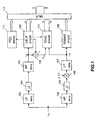
- This information is received by the joint bit allocation module 701. Based on a rate available for the enhancement coding, the module 701 allocates a first number of bits nbit_enhanced ( j ) to perform a correction of the transformed type core coding in a first frequency band and a second number of bits nb_sin for parametric sinusoidal type coding, improvement of the extension coding in a second frequency band.
- the threshold can be set to 0.
- the threshold can be set to 0.
- the predetermined threshold is greater than 0.
- a first test is performed with a minimum number of bits to be allocated for the sub-bands that have an allocation less than this threshold. In the case where many subbands have a bit allocation below the threshold, the available rate may be exceeded. In this case, the threshold is decreased to perform a second trial. This reduction can be done for example by dichotomy, until finding a threshold that allows to allocate the minimum number of bits per subbands.
- the remaining number of bits is then allocated for sinusoidal band extension coding. It corresponds to the number of sine waves that can be encoded for the enhancement coding enhancement coding.
- the allocation module 701 therefore provides a first bit allocation per sub-band, nbit-enhanced ( j ), to a core coding correction coding block 703 which performs a spherical vector quantization of a residual signal resulting from the quantization.
- spherical vector of the TDAC coder of the G.729.1 core coding, and the original signal S HB are provided.
- the correction coding block 703 thus provides the multiplexer block 704 with a correction signal of the core coding according to the number of bits allocated for this coding.
- This coding block receives the signal from the first band extension layer S ⁇ SWB BWE as well as the original signal S SWB and codes the residual signal resulting from the difference calculation of these two signals.
- the coded improvement signal from the block 702 is transmitted to the multiplexing block 704 according to the bit allocation determined by the allocation method.
- this bit allocation module is integrated with the TDAC module 510 of the figure 5 . It delivers the first number of bits allocated to the quantization block of the TDAC encoder and the second number of bits allocated to the extension module 515 for the enhancement coding of the block 702.
- This figure 7 represents the improvement coding stage.
- An allocation module 701 then gives the number of bits nbit_enhanced (j) for the decoding enhancement (SVQ decod) of the decoding heart realized for example in the decoding module TDAC 603 of the figure 6 and the number of nb_sin bits for the enhancement layer enhancement decoding (sine decod), realized for example by the extension decoding module 614 of the figure 6 .
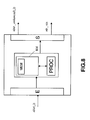
- the figure 8 illustrates an allocation module comprising a PROC processor cooperating with a memory block BM having a memory storage and / or work MEM.
- the description of the figure 7 takes the steps of an algorithm of such a computer program.
- the computer program can also be stored on a memory medium readable by a reader of the module or an encoder integrating the allocation module or downloadable in the memory space thereof.
- the allocation module comprises an output module able to transmit the first number of bits nbit_enhanced (j) allocated for the encoding correction of the core coding and a second number of bits nb_sin for the coding of improvement of the extension coding.
Landscapes
- Engineering & Computer Science (AREA)
- Physics & Mathematics (AREA)
- Computational Linguistics (AREA)
- Signal Processing (AREA)
- Health & Medical Sciences (AREA)
- Audiology, Speech & Language Pathology (AREA)
- Human Computer Interaction (AREA)
- Acoustics & Sound (AREA)
- Multimedia (AREA)
- Quality & Reliability (AREA)
- Compression, Expansion, Code Conversion, And Decoders (AREA)
- Spectroscopy & Molecular Physics (AREA)
Claims (11)
- Verfahren zur Bitzuweisung in einer Verbesserungs-Codierung/Decodierung einer hierarchischen Codierung/Decodierung von digitalen Tonsignalen, das eine Kern-Codierung/Decodierung in einem ersten Frequenzband und eine Banderweiterungs-Codierung/Decodierung in einem zweiten Frequenzband enthält, dadurch gekennzeichnet, dass für eine vorbestimmte zuzuweisende Bitanzahl für die Verbesserungs-Codierung/Decodierung der Erweiterungs-Codierung/Decodierung eine erste Bitanzahl (nbit_enhanced(j)) einer Korrektur-Codierung/Decodierung der Kern-Codierung/Decodierung im ersten Frequenzband und gemäß einem ersten Codierung/Decodierungs-Modus und eine zweite Bitanzahl (nb_sin) einer Verbesserungs-Codierung/Decodierung der Erweiterungs-Codierung/Decodierung im zweiten Frequenzband und gemäß einem zweiten Codierung/Decodierungs-Modus zugewiesen wird.
- Verfahren nach Anspruch 1, dadurch gekennzeichnet, dass es die folgenden Schritte aufweist:- Erhalt der zugewiesenen Bitanzahl (nbit(j)) für die Kern-Codierung/Decodierung pro Frequenzteilband des ersten Frequenzbands;- in den Frequenzteilbändern, in denen die zugewiesene Bitanzahl für die Kerncodierung/Decodierung eine vorbestimmte Schwelle nicht überschreitet, Zuweisung einer Bitanzahl pro Teilband, die die erste Bitanzahl für die Korrektur-Codierung/Decodierung der Kern-Codierung/Decodierung bildet;- Zuweisung der zweiten Bitanzahl, die für die Verbesserungs-Codierung/Decodierung der Erweiterungs-Codierung/Decodierung zugewiesen wird, abhängig von der ersten zugewiesenen Bitanzahl und der vorbestimmten zuzuweisenden Bitanzahl.
- Verfahren nach Anspruch 2, dadurch gekennzeichnet, dass eine Mindestbitanzahl pro Teilfrequenzband für die Zuweisung der ersten Bitanzahl festgelegt wird.
- Verfahren nach Anspruch 2, dadurch gekennzeichnet, dass die vorbestimmte Schwelle auf 0 festgelegt wird.
- Verfahren nach Anspruch 3, dadurch gekennzeichnet, dass die vorbestimmte Schwelle höher als 0 ist, und dass, wenn die erste zugewiesene Bitanzahl höher als die vorbestimmte Bitanzahl ist, der Wert der Schwelle verringert wird.
- Verfahren nach Anspruch 2, dadurch gekennzeichnet, dass es einen Schritt des Empfangs einer Tonzeicheninformation eines Restsignals enthält, das aus einer Differenz zwischen einem von einer ersten Banderweiterungsschicht stammenden Signal und dem Ursprungssignal resultiert, und im Fall eines Resttonsignals die zweite zugewiesene Bitanzahl für die Verbesserungs-Codierung/Decodierung der Banderweiterung höher ist als die erste Anzahl.
- Verfahren nach Anspruch 1, dadurch gekennzeichnet, dass die Kern-Codierung/Decodierung von der Art Codierung/Decodierung der Norm G. 729.1 ist, wobei der erste Codierung/Decodierungs-Modus eine Transformations-Codierung/Decodierung und der zweite Codierung/Decodierungs-Modus eine parametrische Codierung/Decodierung ist.
- Modul zur Bitzuweisung in einem Verbesserungs-Codierer/Decodierer eines hierarchischen Codierers/Decodierers von digitalen Tonsignalen, das ein Kern-Codierung/Decodierungs-Modul in einem ersten Frequenzband und ein Banderweiterungs-Codierung/Decodierungs-Modul in einem zweiten Frequenzband enthält,
dadurch gekennzeichnet, dass es aufweist:- Einrichtungen zur Zuweisung einer ersten Bitanzahl(nbit_enhanced(j)) an ein Korrektur-Codierung/Decodierungs-Modul des Kern-Codierers/Decodierers im ersten Frequenzband und gemäß einem ersten Codierung/Decodierungs-Modus für eine vorbestimmte zuzuweisende Bitanzahl für den Verbesserungs-Codierer/Decodierer der Erweiterungscodierung/Decodierung, und- Einrichtungen zur Zuweisung einer zweiten Bitanzahl (nb_sin) an ein Verbesserungs-Codierung/Decodierungs-Modul des Erweiterungs-Codierers/Decodierers im zweiten Frequenzband und gemäß einem zweiten Codierung/Decodierungs-Modus. - Hierarchischer Codierer, dadurch gekennzeichnet, dass er ein Zuweisungsmodul nach Anspruch 8 enthält.
- Hierarchischer Decodierer, dadurch gekennzeichnet, dass er ein Zuweisungsmodul nach Anspruch 8 enthält.
- EDV-Programm, das Codeanweisungen für die Durchführung der Schritte eines Zuweisungsverfahrens nach einem der Ansprüche 1 bis 7 aufweist, wenn sie von einem Prozessor ausgeführt werden.
Applications Claiming Priority (2)
| Application Number | Priority Date | Filing Date | Title |
|---|---|---|---|
| FR0954688A FR2947945A1 (fr) | 2009-07-07 | 2009-07-07 | Allocation de bits dans un codage/decodage d'amelioration d'un codage/decodage hierarchique de signaux audionumeriques |
| PCT/FR2010/051308 WO2011004098A1 (fr) | 2009-07-07 | 2010-06-25 | Allocation de bits dans un codage/décodage d'amélioration d'un codage/décodage hiérarchique de signaux audionumériques |
Publications (2)
| Publication Number | Publication Date |
|---|---|
| EP2452337A1 EP2452337A1 (de) | 2012-05-16 |
| EP2452337B1 true EP2452337B1 (de) | 2013-05-29 |
Family
ID=41531495
Family Applications (1)
| Application Number | Title | Priority Date | Filing Date |
|---|---|---|---|
| EP10745328.4A Not-in-force EP2452337B1 (de) | 2009-07-07 | 2010-06-25 | Zuweisung von bits bei einer verstärkten codierung/decodierung zur verbesserung einer hierarchischen codierung/decodierung digitaler tonsignale |
Country Status (8)
| Country | Link |
|---|---|
| US (1) | US8965775B2 (de) |
| EP (1) | EP2452337B1 (de) |
| KR (1) | KR101703810B1 (de) |
| CN (1) | CN102511062B (de) |
| CA (1) | CA2766777C (de) |
| FR (1) | FR2947945A1 (de) |
| WO (1) | WO2011004098A1 (de) |
| ZA (1) | ZA201200906B (de) |
Families Citing this family (17)
| Publication number | Priority date | Publication date | Assignee | Title |
|---|---|---|---|---|
| US8924222B2 (en) * | 2010-07-30 | 2014-12-30 | Qualcomm Incorporated | Systems, methods, apparatus, and computer-readable media for coding of harmonic signals |
| US9208792B2 (en) | 2010-08-17 | 2015-12-08 | Qualcomm Incorporated | Systems, methods, apparatus, and computer-readable media for noise injection |
| US9767822B2 (en) * | 2011-02-07 | 2017-09-19 | Qualcomm Incorporated | Devices for encoding and decoding a watermarked signal |
| CN102737636B (zh) * | 2011-04-13 | 2014-06-04 | 华为技术有限公司 | 一种音频编码方法及装置 |
| NO2669468T3 (de) * | 2011-05-11 | 2018-06-02 | ||
| CN102509547B (zh) * | 2011-12-29 | 2013-06-19 | 辽宁工业大学 | 基于矢量量化的声纹识别方法及系统 |
| CN105976824B (zh) | 2012-12-06 | 2021-06-08 | 华为技术有限公司 | 信号解码的方法和设备 |
| US9478224B2 (en) | 2013-04-05 | 2016-10-25 | Dolby International Ab | Audio processing system |
| CN104217727B (zh) * | 2013-05-31 | 2017-07-21 | 华为技术有限公司 | 信号解码方法及设备 |
| FR3007563A1 (fr) * | 2013-06-25 | 2014-12-26 | France Telecom | Extension amelioree de bande de frequence dans un decodeur de signaux audiofrequences |
| AU2014360038B2 (en) | 2013-12-02 | 2017-11-02 | Huawei Technologies Co., Ltd. | Encoding method and apparatus |
| US10410645B2 (en) | 2014-03-03 | 2019-09-10 | Samsung Electronics Co., Ltd. | Method and apparatus for high frequency decoding for bandwidth extension |
| KR102653849B1 (ko) * | 2014-03-24 | 2024-04-02 | 삼성전자주식회사 | 고대역 부호화방법 및 장치와 고대역 복호화 방법 및 장치 |
| EP3128513B1 (de) * | 2014-03-31 | 2019-05-15 | Fraunhofer Gesellschaft zur Förderung der Angewand | Encoder, decoder, codierungsverfahren und decodierungsverfahren |
| US9847087B2 (en) | 2014-05-16 | 2017-12-19 | Qualcomm Incorporated | Higher order ambisonics signal compression |
| KR102736785B1 (ko) | 2017-09-20 | 2024-12-03 | 보이세지 코포레이션 | 씨이엘피 코덱에 있어서 서브-프레임들간에 비트-예산을 할당하는 방법 및 디바이스 |
| WO2020253941A1 (en) | 2019-06-17 | 2020-12-24 | Fraunhofer-Gesellschaft zur Förderung der angewandten Forschung e.V. | Audio encoder with a signal-dependent number and precision control, audio decoder, and related methods and computer programs |
Family Cites Families (8)
| Publication number | Priority date | Publication date | Assignee | Title |
|---|---|---|---|---|
| FR2849727B1 (fr) * | 2003-01-08 | 2005-03-18 | France Telecom | Procede de codage et de decodage audio a debit variable |
| KR100923300B1 (ko) * | 2003-03-22 | 2009-10-23 | 삼성전자주식회사 | 대역 확장 기법을 이용한 오디오 데이터의 부호화 방법,그 장치, 복호화 방법 및 그 장치 |
| US7343291B2 (en) * | 2003-07-18 | 2008-03-11 | Microsoft Corporation | Multi-pass variable bitrate media encoding |
| FR2888699A1 (fr) * | 2005-07-13 | 2007-01-19 | France Telecom | Dispositif de codage/decodage hierachique |
| US8032359B2 (en) * | 2007-02-14 | 2011-10-04 | Mindspeed Technologies, Inc. | Embedded silence and background noise compression |
| JP4871894B2 (ja) * | 2007-03-02 | 2012-02-08 | パナソニック株式会社 | 符号化装置、復号装置、符号化方法および復号方法 |
| JP4708446B2 (ja) * | 2007-03-02 | 2011-06-22 | パナソニック株式会社 | 符号化装置、復号装置およびそれらの方法 |
| KR100921867B1 (ko) * | 2007-10-17 | 2009-10-13 | 광주과학기술원 | 광대역 오디오 신호 부호화 복호화 장치 및 그 방법 |
-
2009
- 2009-07-07 FR FR0954688A patent/FR2947945A1/fr not_active Withdrawn
-
2010
- 2010-06-25 KR KR1020127003329A patent/KR101703810B1/ko not_active Expired - Fee Related
- 2010-06-25 EP EP10745328.4A patent/EP2452337B1/de not_active Not-in-force
- 2010-06-25 US US13/382,794 patent/US8965775B2/en not_active Expired - Fee Related
- 2010-06-25 CN CN2010800396761A patent/CN102511062B/zh not_active Expired - Fee Related
- 2010-06-25 CA CA2766777A patent/CA2766777C/fr not_active Expired - Fee Related
- 2010-06-25 WO PCT/FR2010/051308 patent/WO2011004098A1/fr not_active Ceased
-
2012
- 2012-02-07 ZA ZA2012/00906A patent/ZA201200906B/en unknown
Also Published As
| Publication number | Publication date |
|---|---|
| WO2011004098A1 (fr) | 2011-01-13 |
| CA2766777A1 (fr) | 2011-01-13 |
| CA2766777C (fr) | 2015-12-15 |
| EP2452337A1 (de) | 2012-05-16 |
| KR101703810B1 (ko) | 2017-02-16 |
| ZA201200906B (en) | 2012-10-31 |
| CN102511062A (zh) | 2012-06-20 |
| FR2947945A1 (fr) | 2011-01-14 |
| KR20120061826A (ko) | 2012-06-13 |
| US20120185256A1 (en) | 2012-07-19 |
| US8965775B2 (en) | 2015-02-24 |
| CN102511062B (zh) | 2013-07-31 |
Similar Documents
| Publication | Publication Date | Title |
|---|---|---|
| EP2452337B1 (de) | Zuweisung von bits bei einer verstärkten codierung/decodierung zur verbesserung einer hierarchischen codierung/decodierung digitaler tonsignale | |
| EP2115741B1 (de) | Fortgeschrittene kodierung/dekodierung von digitalen tonsignalen | |
| EP2452336B1 (de) | Verbesserte codierung/decodierung digitaler audiosignale | |
| EP1989706B1 (de) | Vorrichtung für wahrnehmungsgewichtung bei der tonkodierung/-dekodierung | |
| EP1905010B1 (de) | Hierarchischen Audio-kodierung/-dekodierung | |
| JP5129116B2 (ja) | 音声信号を帯域分割符号化する方法及び装置 | |
| RU2437172C1 (ru) | Способ кодирования/декодирования индексов кодовой книги для квантованного спектра мдкп в масштабируемых речевых и аудиокодеках | |
| EP2366177B1 (de) | Codieren eines audio-digitalsignals mit rauschtransformation in einem skalierbaren codierer | |
| EP1692689B1 (de) | Optimiertes mehrfach-codierungsverfahren | |
| EP1989707A2 (de) | Verfahren zur binären kodierung von quantifizierungsindizes einer signalhüllkurve; verfahren zur dekodierung einer signalhüllkurve und entsprechende kodier- und dekodiermodule | |
| EP2005424A2 (de) | Verfahren zur nachverarbeitung eines signals in einem audiodecoder | |
| WO2011073600A1 (fr) | Codage/decodage parametrique stereo avec optimisation du traitement de reduction des canaux | |
| FR2737360A1 (fr) | Procedes de codage et de decodage de signaux audiofrequence, codeur et decodeur pour la mise en oeuvre de tels procedes |
Legal Events
| Date | Code | Title | Description |
|---|---|---|---|
| PUAI | Public reference made under article 153(3) epc to a published international application that has entered the european phase |
Free format text: ORIGINAL CODE: 0009012 |
|
| 17P | Request for examination filed |
Effective date: 20120203 |
|
| AK | Designated contracting states |
Kind code of ref document: A1 Designated state(s): AL AT BE BG CH CY CZ DE DK EE ES FI FR GB GR HR HU IE IS IT LI LT LU LV MC MK MT NL NO PL PT RO SE SI SK SM TR |
|
| RIN1 | Information on inventor provided before grant (corrected) |
Inventor name: VIRETTE, DAVID Inventor name: BERTHET, PIERRE |
|
| DAX | Request for extension of the european patent (deleted) | ||
| GRAP | Despatch of communication of intention to grant a patent |
Free format text: ORIGINAL CODE: EPIDOSNIGR1 |
|
| GRAS | Grant fee paid |
Free format text: ORIGINAL CODE: EPIDOSNIGR3 |
|
| GRAA | (expected) grant |
Free format text: ORIGINAL CODE: 0009210 |
|
| RIC1 | Information provided on ipc code assigned before grant |
Ipc: G10L 19/16 20130101ALI20130412BHEP Ipc: G10L 19/02 20130101AFI20130412BHEP |
|
| AK | Designated contracting states |
Kind code of ref document: B1 Designated state(s): AL AT BE BG CH CY CZ DE DK EE ES FI FR GB GR HR HU IE IS IT LI LT LU LV MC MK MT NL NO PL PT RO SE SI SK SM TR |
|
| REG | Reference to a national code |
Ref country code: GB Ref legal event code: FG4D Free format text: NOT ENGLISH |
|
| REG | Reference to a national code |
Ref country code: CH Ref legal event code: EP |
|
| REG | Reference to a national code |
Ref country code: AT Ref legal event code: REF Ref document number: 614841 Country of ref document: AT Kind code of ref document: T Effective date: 20130615 |
|
| REG | Reference to a national code |
Ref country code: IE Ref legal event code: FG4D Free format text: LANGUAGE OF EP DOCUMENT: FRENCH |
|
| REG | Reference to a national code |
Ref country code: DE Ref legal event code: R096 Ref document number: 602010007406 Country of ref document: DE Effective date: 20130801 |
|
| REG | Reference to a national code |
Ref country code: CH Ref legal event code: PUE Owner name: ORANGE, FR Free format text: FORMER OWNER: FRANCE TELECOM, FR |
|
| RAP2 | Party data changed (patent owner data changed or rights of a patent transferred) |
Owner name: ORANGE |
|
| REG | Reference to a national code |
Ref country code: AT Ref legal event code: MK05 Ref document number: 614841 Country of ref document: AT Kind code of ref document: T Effective date: 20130529 |
|
| REG | Reference to a national code |
Ref country code: LT Ref legal event code: MG4D |
|
| PG25 | Lapsed in a contracting state [announced via postgrant information from national office to epo] |
Ref country code: NO Free format text: LAPSE BECAUSE OF FAILURE TO SUBMIT A TRANSLATION OF THE DESCRIPTION OR TO PAY THE FEE WITHIN THE PRESCRIBED TIME-LIMIT Effective date: 20130829 Ref country code: ES Free format text: LAPSE BECAUSE OF FAILURE TO SUBMIT A TRANSLATION OF THE DESCRIPTION OR TO PAY THE FEE WITHIN THE PRESCRIBED TIME-LIMIT Effective date: 20130909 Ref country code: SE Free format text: LAPSE BECAUSE OF FAILURE TO SUBMIT A TRANSLATION OF THE DESCRIPTION OR TO PAY THE FEE WITHIN THE PRESCRIBED TIME-LIMIT Effective date: 20130529 Ref country code: PT Free format text: LAPSE BECAUSE OF FAILURE TO SUBMIT A TRANSLATION OF THE DESCRIPTION OR TO PAY THE FEE WITHIN THE PRESCRIBED TIME-LIMIT Effective date: 20130930 Ref country code: AT Free format text: LAPSE BECAUSE OF FAILURE TO SUBMIT A TRANSLATION OF THE DESCRIPTION OR TO PAY THE FEE WITHIN THE PRESCRIBED TIME-LIMIT Effective date: 20130529 Ref country code: FI Free format text: LAPSE BECAUSE OF FAILURE TO SUBMIT A TRANSLATION OF THE DESCRIPTION OR TO PAY THE FEE WITHIN THE PRESCRIBED TIME-LIMIT Effective date: 20130529 Ref country code: SI Free format text: LAPSE BECAUSE OF FAILURE TO SUBMIT A TRANSLATION OF THE DESCRIPTION OR TO PAY THE FEE WITHIN THE PRESCRIBED TIME-LIMIT Effective date: 20130529 Ref country code: LT Free format text: LAPSE BECAUSE OF FAILURE TO SUBMIT A TRANSLATION OF THE DESCRIPTION OR TO PAY THE FEE WITHIN THE PRESCRIBED TIME-LIMIT Effective date: 20130529 Ref country code: GR Free format text: LAPSE BECAUSE OF FAILURE TO SUBMIT A TRANSLATION OF THE DESCRIPTION OR TO PAY THE FEE WITHIN THE PRESCRIBED TIME-LIMIT Effective date: 20130830 Ref country code: IS Free format text: LAPSE BECAUSE OF FAILURE TO SUBMIT A TRANSLATION OF THE DESCRIPTION OR TO PAY THE FEE WITHIN THE PRESCRIBED TIME-LIMIT Effective date: 20130929 |
|
| REG | Reference to a national code |
Ref country code: NL Ref legal event code: VDEP Effective date: 20130529 |
|
| PG25 | Lapsed in a contracting state [announced via postgrant information from national office to epo] |
Ref country code: HR Free format text: LAPSE BECAUSE OF FAILURE TO SUBMIT A TRANSLATION OF THE DESCRIPTION OR TO PAY THE FEE WITHIN THE PRESCRIBED TIME-LIMIT Effective date: 20130529 Ref country code: BG Free format text: LAPSE BECAUSE OF FAILURE TO SUBMIT A TRANSLATION OF THE DESCRIPTION OR TO PAY THE FEE WITHIN THE PRESCRIBED TIME-LIMIT Effective date: 20130829 Ref country code: PL Free format text: LAPSE BECAUSE OF FAILURE TO SUBMIT A TRANSLATION OF THE DESCRIPTION OR TO PAY THE FEE WITHIN THE PRESCRIBED TIME-LIMIT Effective date: 20130529 |
|
| BERE | Be: lapsed |
Owner name: FRANCE TELECOM Effective date: 20130630 |
|
| PG25 | Lapsed in a contracting state [announced via postgrant information from national office to epo] |
Ref country code: LV Free format text: LAPSE BECAUSE OF FAILURE TO SUBMIT A TRANSLATION OF THE DESCRIPTION OR TO PAY THE FEE WITHIN THE PRESCRIBED TIME-LIMIT Effective date: 20130529 |
|
| PG25 | Lapsed in a contracting state [announced via postgrant information from national office to epo] |
Ref country code: SK Free format text: LAPSE BECAUSE OF FAILURE TO SUBMIT A TRANSLATION OF THE DESCRIPTION OR TO PAY THE FEE WITHIN THE PRESCRIBED TIME-LIMIT Effective date: 20130529 Ref country code: CZ Free format text: LAPSE BECAUSE OF FAILURE TO SUBMIT A TRANSLATION OF THE DESCRIPTION OR TO PAY THE FEE WITHIN THE PRESCRIBED TIME-LIMIT Effective date: 20130529 Ref country code: DK Free format text: LAPSE BECAUSE OF FAILURE TO SUBMIT A TRANSLATION OF THE DESCRIPTION OR TO PAY THE FEE WITHIN THE PRESCRIBED TIME-LIMIT Effective date: 20130529 Ref country code: EE Free format text: LAPSE BECAUSE OF FAILURE TO SUBMIT A TRANSLATION OF THE DESCRIPTION OR TO PAY THE FEE WITHIN THE PRESCRIBED TIME-LIMIT Effective date: 20130529 |
|
| PG25 | Lapsed in a contracting state [announced via postgrant information from national office to epo] |
Ref country code: NL Free format text: LAPSE BECAUSE OF FAILURE TO SUBMIT A TRANSLATION OF THE DESCRIPTION OR TO PAY THE FEE WITHIN THE PRESCRIBED TIME-LIMIT Effective date: 20130529 Ref country code: IT Free format text: LAPSE BECAUSE OF FAILURE TO SUBMIT A TRANSLATION OF THE DESCRIPTION OR TO PAY THE FEE WITHIN THE PRESCRIBED TIME-LIMIT Effective date: 20130529 Ref country code: RO Free format text: LAPSE BECAUSE OF FAILURE TO SUBMIT A TRANSLATION OF THE DESCRIPTION OR TO PAY THE FEE WITHIN THE PRESCRIBED TIME-LIMIT Effective date: 20130529 |
|
| REG | Reference to a national code |
Ref country code: IE Ref legal event code: MM4A |
|
| PG25 | Lapsed in a contracting state [announced via postgrant information from national office to epo] |
Ref country code: BE Free format text: LAPSE BECAUSE OF NON-PAYMENT OF DUE FEES Effective date: 20130630 |
|
| PLBE | No opposition filed within time limit |
Free format text: ORIGINAL CODE: 0009261 |
|
| STAA | Information on the status of an ep patent application or granted ep patent |
Free format text: STATUS: NO OPPOSITION FILED WITHIN TIME LIMIT |
|
| PG25 | Lapsed in a contracting state [announced via postgrant information from national office to epo] |
Ref country code: IE Free format text: LAPSE BECAUSE OF NON-PAYMENT OF DUE FEES Effective date: 20130625 |
|
| 26N | No opposition filed |
Effective date: 20140303 |
|
| REG | Reference to a national code |
Ref country code: DE Ref legal event code: R097 Ref document number: 602010007406 Country of ref document: DE Effective date: 20140303 |
|
| REG | Reference to a national code |
Ref country code: CH Ref legal event code: PL |
|
| PG25 | Lapsed in a contracting state [announced via postgrant information from national office to epo] |
Ref country code: MT Free format text: LAPSE BECAUSE OF FAILURE TO SUBMIT A TRANSLATION OF THE DESCRIPTION OR TO PAY THE FEE WITHIN THE PRESCRIBED TIME-LIMIT Effective date: 20130529 |
|
| PG25 | Lapsed in a contracting state [announced via postgrant information from national office to epo] |
Ref country code: CH Free format text: LAPSE BECAUSE OF NON-PAYMENT OF DUE FEES Effective date: 20140630 Ref country code: LI Free format text: LAPSE BECAUSE OF NON-PAYMENT OF DUE FEES Effective date: 20140630 |
|
| PG25 | Lapsed in a contracting state [announced via postgrant information from national office to epo] |
Ref country code: SM Free format text: LAPSE BECAUSE OF FAILURE TO SUBMIT A TRANSLATION OF THE DESCRIPTION OR TO PAY THE FEE WITHIN THE PRESCRIBED TIME-LIMIT Effective date: 20130529 |
|
| PG25 | Lapsed in a contracting state [announced via postgrant information from national office to epo] |
Ref country code: CY Free format text: LAPSE BECAUSE OF FAILURE TO SUBMIT A TRANSLATION OF THE DESCRIPTION OR TO PAY THE FEE WITHIN THE PRESCRIBED TIME-LIMIT Effective date: 20130529 Ref country code: TR Free format text: LAPSE BECAUSE OF FAILURE TO SUBMIT A TRANSLATION OF THE DESCRIPTION OR TO PAY THE FEE WITHIN THE PRESCRIBED TIME-LIMIT Effective date: 20130529 |
|
| PG25 | Lapsed in a contracting state [announced via postgrant information from national office to epo] |
Ref country code: HU Free format text: LAPSE BECAUSE OF FAILURE TO SUBMIT A TRANSLATION OF THE DESCRIPTION OR TO PAY THE FEE WITHIN THE PRESCRIBED TIME-LIMIT; INVALID AB INITIO Effective date: 20100625 Ref country code: MK Free format text: LAPSE BECAUSE OF FAILURE TO SUBMIT A TRANSLATION OF THE DESCRIPTION OR TO PAY THE FEE WITHIN THE PRESCRIBED TIME-LIMIT Effective date: 20130529 Ref country code: MC Free format text: LAPSE BECAUSE OF FAILURE TO SUBMIT A TRANSLATION OF THE DESCRIPTION OR TO PAY THE FEE WITHIN THE PRESCRIBED TIME-LIMIT Effective date: 20130529 Ref country code: LU Free format text: LAPSE BECAUSE OF NON-PAYMENT OF DUE FEES Effective date: 20130625 |
|
| REG | Reference to a national code |
Ref country code: FR Ref legal event code: PLFP Year of fee payment: 7 |
|
| PGFP | Annual fee paid to national office [announced via postgrant information from national office to epo] |
Ref country code: DE Payment date: 20160524 Year of fee payment: 7 Ref country code: GB Payment date: 20160527 Year of fee payment: 7 |
|
| PGFP | Annual fee paid to national office [announced via postgrant information from national office to epo] |
Ref country code: FR Payment date: 20160526 Year of fee payment: 7 |
|
| REG | Reference to a national code |
Ref country code: DE Ref legal event code: R119 Ref document number: 602010007406 Country of ref document: DE |
|
| GBPC | Gb: european patent ceased through non-payment of renewal fee |
Effective date: 20170625 |
|
| REG | Reference to a national code |
Ref country code: FR Ref legal event code: ST Effective date: 20180228 |
|
| PG25 | Lapsed in a contracting state [announced via postgrant information from national office to epo] |
Ref country code: DE Free format text: LAPSE BECAUSE OF NON-PAYMENT OF DUE FEES Effective date: 20180103 Ref country code: GB Free format text: LAPSE BECAUSE OF NON-PAYMENT OF DUE FEES Effective date: 20170625 |
|
| PG25 | Lapsed in a contracting state [announced via postgrant information from national office to epo] |
Ref country code: FR Free format text: LAPSE BECAUSE OF NON-PAYMENT OF DUE FEES Effective date: 20170630 |
|
| PG25 | Lapsed in a contracting state [announced via postgrant information from national office to epo] |
Ref country code: AL Free format text: LAPSE BECAUSE OF FAILURE TO SUBMIT A TRANSLATION OF THE DESCRIPTION OR TO PAY THE FEE WITHIN THE PRESCRIBED TIME-LIMIT Effective date: 20130529 |