EP2464657B1 - Nouvelles stratégies de criblage pour l'identification d'anticorps ou de leurs fragments qui lient un antigène qui possède une activité enzymatique - Google Patents
Nouvelles stratégies de criblage pour l'identification d'anticorps ou de leurs fragments qui lient un antigène qui possède une activité enzymatique Download PDFInfo
- Publication number
- EP2464657B1 EP2464657B1 EP10741944.2A EP10741944A EP2464657B1 EP 2464657 B1 EP2464657 B1 EP 2464657B1 EP 10741944 A EP10741944 A EP 10741944A EP 2464657 B1 EP2464657 B1 EP 2464657B1
- Authority
- EP
- European Patent Office
- Prior art keywords
- antigen
- ns2b
- antibodies
- antibody
- binding
- Prior art date
- Legal status (The legal status is an assumption and is not a legal conclusion. Google has not performed a legal analysis and makes no representation as to the accuracy of the status listed.)
- Active
Links
Images



Classifications
-
- C—CHEMISTRY; METALLURGY
- C12—BIOCHEMISTRY; BEER; SPIRITS; WINE; VINEGAR; MICROBIOLOGY; ENZYMOLOGY; MUTATION OR GENETIC ENGINEERING
- C12Q—MEASURING OR TESTING PROCESSES INVOLVING ENZYMES, NUCLEIC ACIDS OR MICROORGANISMS; COMPOSITIONS OR TEST PAPERS THEREFOR; PROCESSES OF PREPARING SUCH COMPOSITIONS; CONDITION-RESPONSIVE CONTROL IN MICROBIOLOGICAL OR ENZYMOLOGICAL PROCESSES
- C12Q1/00—Measuring or testing processes involving enzymes, nucleic acids or microorganisms; Compositions therefor; Processes of preparing such compositions
- C12Q1/34—Measuring or testing processes involving enzymes, nucleic acids or microorganisms; Compositions therefor; Processes of preparing such compositions involving hydrolase
- C12Q1/37—Measuring or testing processes involving enzymes, nucleic acids or microorganisms; Compositions therefor; Processes of preparing such compositions involving hydrolase involving peptidase or proteinase
-
- C—CHEMISTRY; METALLURGY
- C07—ORGANIC CHEMISTRY
- C07K—PEPTIDES
- C07K14/00—Peptides having more than 20 amino acids; Gastrins; Somatostatins; Melanotropins; Derivatives thereof
- C07K14/005—Peptides having more than 20 amino acids; Gastrins; Somatostatins; Melanotropins; Derivatives thereof from viruses
-
- C—CHEMISTRY; METALLURGY
- C07—ORGANIC CHEMISTRY
- C07K—PEPTIDES
- C07K16/00—Immunoglobulins [IG], e.g. monoclonal or polyclonal antibodies
- C07K16/08—Immunoglobulins [IG], e.g. monoclonal or polyclonal antibodies against material from viruses
- C07K16/10—RNA viruses
- C07K16/116—Togaviridae (F); Matonaviridae (F); Flaviviridae (F)
-
- C—CHEMISTRY; METALLURGY
- C07—ORGANIC CHEMISTRY
- C07K—PEPTIDES
- C07K16/00—Immunoglobulins [IG], e.g. monoclonal or polyclonal antibodies
- C07K16/40—Immunoglobulins [IG], e.g. monoclonal or polyclonal antibodies against enzymes
-
- C—CHEMISTRY; METALLURGY
- C07—ORGANIC CHEMISTRY
- C07K—PEPTIDES
- C07K2299/00—Coordinates from 3D structures of peptides, e.g. proteins or enzymes
-
- C—CHEMISTRY; METALLURGY
- C07—ORGANIC CHEMISTRY
- C07K—PEPTIDES
- C07K2317/00—Immunoglobulins specific features
- C07K2317/20—Immunoglobulins specific features characterized by taxonomic origin
- C07K2317/21—Immunoglobulins specific features characterized by taxonomic origin from primates, e.g. man
-
- C—CHEMISTRY; METALLURGY
- C07—ORGANIC CHEMISTRY
- C07K—PEPTIDES
- C07K2317/00—Immunoglobulins specific features
- C07K2317/30—Immunoglobulins specific features characterized by aspects of specificity or valency
- C07K2317/33—Crossreactivity, e.g. for species or epitope, or lack of said crossreactivity
-
- C—CHEMISTRY; METALLURGY
- C07—ORGANIC CHEMISTRY
- C07K—PEPTIDES
- C07K2317/00—Immunoglobulins specific features
- C07K2317/50—Immunoglobulins specific features characterized by immunoglobulin fragments
- C07K2317/515—Complete light chain, i.e. VL + CL
-
- C—CHEMISTRY; METALLURGY
- C07—ORGANIC CHEMISTRY
- C07K—PEPTIDES
- C07K2317/00—Immunoglobulins specific features
- C07K2317/50—Immunoglobulins specific features characterized by immunoglobulin fragments
- C07K2317/55—Fab or Fab'
-
- C—CHEMISTRY; METALLURGY
- C07—ORGANIC CHEMISTRY
- C07K—PEPTIDES
- C07K2317/00—Immunoglobulins specific features
- C07K2317/50—Immunoglobulins specific features characterized by immunoglobulin fragments
- C07K2317/56—Immunoglobulins specific features characterized by immunoglobulin fragments variable (Fv) region, i.e. VH and/or VL
- C07K2317/565—Complementarity determining region [CDR]
-
- C—CHEMISTRY; METALLURGY
- C07—ORGANIC CHEMISTRY
- C07K—PEPTIDES
- C07K2317/00—Immunoglobulins specific features
- C07K2317/70—Immunoglobulins specific features characterized by effect upon binding to a cell or to an antigen
- C07K2317/76—Antagonist effect on antigen, e.g. neutralization or inhibition of binding
-
- C—CHEMISTRY; METALLURGY
- C07—ORGANIC CHEMISTRY
- C07K—PEPTIDES
- C07K2317/00—Immunoglobulins specific features
- C07K2317/90—Immunoglobulins specific features characterized by (pharmaco)kinetic aspects or by stability of the immunoglobulin
- C07K2317/92—Affinity (KD), association rate (Ka), dissociation rate (Kd) or EC50 value
-
- C—CHEMISTRY; METALLURGY
- C12—BIOCHEMISTRY; BEER; SPIRITS; WINE; VINEGAR; MICROBIOLOGY; ENZYMOLOGY; MUTATION OR GENETIC ENGINEERING
- C12N—MICROORGANISMS OR ENZYMES; COMPOSITIONS THEREOF; PROPAGATING, PRESERVING, OR MAINTAINING MICROORGANISMS; MUTATION OR GENETIC ENGINEERING; CULTURE MEDIA
- C12N2770/00—MICROORGANISMS OR ENZYMES; COMPOSITIONS THEREOF; PROPAGATING, PRESERVING, OR MAINTAINING MICROORGANISMS; MUTATION OR GENETIC ENGINEERING; CULTURE MEDIA ssRNA viruses positive-sense
- C12N2770/00011—Details
- C12N2770/24011—Flaviviridae
- C12N2770/24111—Flavivirus, e.g. yellow fever virus, dengue, JEV
- C12N2770/24122—New viral proteins or individual genes, new structural or functional aspects of known viral proteins or genes
-
- G—PHYSICS
- G01—MEASURING; TESTING
- G01N—INVESTIGATING OR ANALYSING MATERIALS BY DETERMINING THEIR CHEMICAL OR PHYSICAL PROPERTIES
- G01N2333/00—Assays involving biological materials from specific organisms or of a specific nature
- G01N2333/005—Assays involving biological materials from specific organisms or of a specific nature from viruses
- G01N2333/08—RNA viruses
- G01N2333/18—Togaviridae; Flaviviridae
- G01N2333/183—Flaviviridae, e.g. pestivirus, mucosal disease virus, bovine viral diarrhoea virus, classical swine fever virus (hog cholera virus) or border disease virus
- G01N2333/185—Flaviviruses or Group B arboviruses, e.g. yellow fever virus, japanese encephalitis, tick-borne encephalitis, dengue
-
- G—PHYSICS
- G01—MEASURING; TESTING
- G01N—INVESTIGATING OR ANALYSING MATERIALS BY DETERMINING THEIR CHEMICAL OR PHYSICAL PROPERTIES
- G01N2333/00—Assays involving biological materials from specific organisms or of a specific nature
- G01N2333/90—Enzymes; Proenzymes
- G01N2333/914—Hydrolases (3)
- G01N2333/948—Hydrolases (3) acting on peptide bonds (3.4)
- G01N2333/95—Proteinases, i.e. endopeptidases (3.4.21-3.4.99)
-
- G—PHYSICS
- G01—MEASURING; TESTING
- G01N—INVESTIGATING OR ANALYSING MATERIALS BY DETERMINING THEIR CHEMICAL OR PHYSICAL PROPERTIES
- G01N2500/00—Screening for compounds of potential therapeutic value
- G01N2500/04—Screening involving studying the effect of compounds C directly on molecule A (e.g. C are potential ligands for a receptor A, or potential substrates for an enzyme A)
Definitions
- antigen binding moieties are well established as biotherpeutic agents but also other scaffolds comprising target specificity already entered the market or proceed in development. Apart from that the use of antibodies and fragments thereof are self evident and indispensable for research purposes.
- the selection process to isolate the target-specific candidates from a highly diverse library is a crucial step within any antibody generation project and therefor many different strategies and procedures are well established.
- the selection process comprises the incubation of the library with the antigen and the subsequent isolation of antibody-antigen complexes.
- the antigen can be presented to the library in solution, immobilized on a solid phase or presented on a cell.
- these strategies are limited and desired candidates are isolated only by chance and thus have to be identified during extensive experimental characterization.
- a binding moietiy which detects only a specific variant of an antigen or a specific relevant epitope is necessary.
- the specificity of the antibody shall be directed to for example specific isoforms or splice variants of antigens or only to monomeric or heteromeric compositions of the target.
- the detection of an active form but not the inactive form of an enzyme states another scenario which necessitates an epitope or site-directed selection.
- Antibodies targeting disease-relevant enzymes are not only relevant for research purposes but also for use as a therapeutic agent or diagnostic tool for many indications.
- the antagonism of proteases can be used to inhibit uncontrollable bleeding during surgery exemplified by the development of the trypsin inhibitor Aprotinin but also Kallikrein Inhibitors that were described to be potentially useful not only to reduce blood loss during surgery but also to treat allery mediated hereditary angioedema.
- sectreted proteases from pathogens provide additional potential targets for therapeutic but also diagnostic antibodies.
- NS2B-NS3 proteinase (NS2B-NS3pro) expressed by the West Nile virus (WNV) which is a virus of the family Flaviviridae. It mainly infects birds, but is known to infect humans, horses, dogs, cats, bats, chipmunks, skunks, squirrels, and domestic rabbits. The main route of human infection is through the bite of an infected mosquito. WNV may have different effects on humans - asymptomatic infection; a mild febrile syndrome termed West Nile Fever; or a neuroinvasive disease termed West Nile meningitis or encephalitis.
- WNV West Nile virus
- WNV control is largely achieved through mosquito control, by elimination of mosquito breeding sites, larviciding active breeding areas and encouraging personal use of mosquito repellents. Along with such efforts go environmental concerns and questions whether the detrimental health effects of spraying pesticides outweigh the relatively few lives which may be saved.
- WNV is an enveloped, positive-stranded, 11-kb RNA virus.
- the genomic RNA of WNV encodes a polyprotein precursor which consists of three structural proteins (C, capsid; prM, membrane, and E, envelope) and seven nonstructural proteins (NS1, NS2A, NS2B, NS3, NS4A, NS4B and NS5) arranged in the order C-prM-E-NS1-NS2A-NS2BNS3-NS4A-NS4B-NS5.
- NS2B-NS3pro Polyprotein processing by the viral two component NS2B-NS3 proteinase (NS2B-NS3pro) and also by the host cell secretase and furin is required to generate individual viral proteins.
- the full-length NS3 is a multifunctional protein in which the N-terminal 184 amino acid residues represent the NS3pro domain and the C-terminal sequence codes for the enzyme with the helicase, nucleoside triphosphatase and RNA triphosphatase activities, all of which are coordinately regulated through localization within membrane compartments in the infected cell.
- NS2B functions as an essential cofactor of NS3pro.
- the cofactor activity of the 48 amino acid central portion of NS2B is roughly equivalent to that of the entire NS2B sequence ( Biochem J.
- NS3pro is responsible for the cleavage of the capsid protein C and at the NS2A/NS2B, NS2B/NS3, NS3/NS4A, NS4A/NS4B and NS4B/NS5 boundaries. Because inactivating mutations of the NS3pro cleavage sites in the polyprotein precursor abolished viral infectivity ( J Virol. 67, 6797-6807 ; Curr Med Chem. 15, 2771-2784 ) it is a reasonable expectation that the NS3pro function is vitally important for the virus, and that NS3pro antagonists have may have merit as viral drugs.
- Antibodies could provide a much sought, excellent scaffold for designing inhibitors targeted to this enzyme.
- Over the past decade recombinant technology has enabled the production of engineered antibody fragments such as Fabs or single-chain FV (scFv) fragments and phage display technology has been used successfully for the isolation of specific scFv or Fab from human repertoire libraries ( Curr. Opin. Biotechnol. 13, 598-602 .).
- scFv single-chain FV
- the disclosed screening method dismisses all antibodies targeting an irrelevant epitope and therby accelerates lead candidate identification and development. Furthermore the antibodies that bind specifically to the active site of a protein isolated by the disclosed screening method can be used for the identification of idiotypic antibodies which mimic the activity of the enzyme/protein. In turn such antibodies bearing enzymatic activity can be used for therapeutic purposes.
- the present invention provides a method to identify an antibody or fragment thereof which binds to the active variant of an antigen that has an enzymatic activity, said method comprising
- said selected site of the antigen is an epitope of the antigen.
- said variant antigen is an epitope mutant of the wild type antigen.
- said selected site of the antigen only exists within one or more isoforms of the antigen.
- said selected site of the antigen only exists in the monomeric, multimeric or hereromeric form of the antigen.
- said antigen has an enzymatic activity.
- the variant antigen is used for counter-screening the members of a library isolated from a prior screening of a library of antigen-binding moieties against an antigen comprising the selected site, wherein said variant antigen is an epitope mutant of the wild type antigen.
- said variant antigen is an epitope mutant of the wild type antigen.
- the variant antigen is used for counter-screening the members of a library isolated from a prior screening of a library of antigen-binding moieties against an antigen comprising the selected site, wherein said variant antigen is an active site mutant of the wild type antigen.
- said variant antigen is an active site mutant of the wild type antigen.
- said antigen is a protease.
- said protease is a viral protease, such as NS2B-NS3 proteinase of West Nile Virus.
- present disclosure pertains to antigen-binding moieties identified according to the methods provided by the present disclosure.
- the present disclosure pertains to the use of a first polypeptide comprising an enzymatic activity and a second polypeptide for the isolation of antigen-binding moieties that inhibit the enzymatic activity of the first polypeptide, wherein said second polypeptide is a variant of said first polypeptide which is devoid of enzymatic activity.
- the present disclosure pertains to isolated antigen-binding moieties, or fragments thereof, which bind NS2B-NS3 proteinase of West Nile Virus.
- the present disclosure pertains to isolated antigen-binding moieties, or fragments thereof, which bind to the active site NS2B-NS3 proteinase of West Nile Virus.
- the present disclosure pertains to isolated antigen-binding moieties, or fragments thereof, which inhibit the enzymatic activity of NS2B-NS3 proteinase of West Nile Virus.
- the present disclosure pertains to isolated antigen-binding moieties, or fragments thereof, which bind NS2B-NS3 proteinase of West Nile Virus, but which do not bind to active site mutants of NS2B-NS3 proteinase of West Nile Virus, such as a H51A, a T52V or a R76L mutant.
- the present disclosure provides a novel screening and identification method for antigen-binding moieties with novel and advantageous properties.
- Said method can be used to isolate antigen-binding moieties, for example antibodies, which bind to a selected site of an antigen.
- the selected site of an antigen is only present or displayed within a specific variant of the antigen.
- this specific variant can be a specific epitope of an antigen an active form of a protein or an isoform of a target family or a monomeric or heteromeric variant of an antigen but is not limited to that.
- epitope means a protein determinant capable of specific binding to an antibody.
- Epitopes usually consist of chemically active surface groupings of molecules such as amino acids or sugar side chains and usually have specific three dimensional structural characteristics, as well as specific charge characteristics. Conformational and nonconformational epitopes are distinguished in that the binding to the former but not the latter is lost in the presence of denaturing solvents.
- an epitope preferably represents a specific site of an antigen which has functional relevance by either mediting acitivation or inhibition of a specific downstream processing and thereby defines a potential target site for a therapeutic or diagnosic agent.
- epitope mutants represent variants of the antigen in which the relevant epitope is either removed or substituted by other amino acid. According to the selection method described herein epitope mutant can be used for counterscreening to identify antigen binding moieties which are specific for the seleceted epitope of the antigen.
- cross-block means the ability of an antibody or other binding agent to interfere with the binding of other antibodies or binding agents to a certain epitope in a standard competitive binding assay.
- the ability or extent to which an antibody or other binding agent is able to interfere with the binding of another antibody or binding molecule to an epitope, and therefore whether it can be said to cross-block according to the present disclosure, can be determined using standard competition binding assays.
- One suitable assay involves the use of the Biacore technology (e.g. by using the BIAcore 3000 instrument (Biacore, Uppsala, Sweden)), which can measure the extent of interactions using surface plasmon resonance technology.
- Another assay for measuring cross-blocking uses an ELISA-based approach. Such antibodies are also referred to as antibodies which "compete for binding" to an epitope.
- the present disclosure provides antigen-binding moieties which cross-block antigen-binding moieties, antibodies or antibody fragments specifically disclosed in the present disclosure.
- said antigen contains at least one enzymatic activity, such as protease activity.
- the novel screening method provides for the isolation of antigen-binding moieties which inhibit the enzymatic activity of the antigen.
- Enzymatic activities that may be targeted by the antigen-binding moieties isolated in accordance with the method of the present invention include oxidoreductase activity (oxidoreductases catalyze the transfer of electrons from one molecule to another), transferase activity (transferases catalyze the transfer of a functional group, e.g.
- hydrolase activity hydrolysis of a chemical bond
- lyase activity lyases catalyze the breaking of chemical bonds by means other than hydrolysis and oxidation
- isomerase activity isomerases catalyze the structural rearrangement of isomers
- ligase activity ligases catalyse the joining of two molecules by forming a new chemical bond
- the antigen-binding moieties isolated by the screening method are isolated form a library of antigen-binding moieties.
- Such library may be any kind of library, such as an antibody library, a Fab library, a scFv library or a phage display library.
- Such library may comprise more than 10 3 , more than 10 4 , more than 10 5 , more than 10 6 , more than 10 7 , more than 10 8 , more than 10 9 , more than 10 10 , more than 10 11 or more than 10 12 members.
- an “active” antigen is used in an initial screening step to isolate members form a library of antigen-binding moieties that bind to said "active" antigen.
- the antigen is “active” in a sense that it comprises an activity or a functional property that differentiates it from a corresponding "inactive" variant of the same antigen.
- Such "inactive" variant is used in a second counter-screening step, in which those antigen-binding moieties are isolated which do not bind to said variant antigen.
- An “active” antigen may be an antigen that possesses an enzymatic activity and an "inactive" antigen a respective antigen which is devoid of the respective activity, e.g. due a mutation in the active site.
- an “active” antigen may also be an antigen which elicits an immune response and a corresponding "inactive” antigen an antigen which does not elicit an immune response.
- Other pairs of active and inactive antigens may however be used as well and will be self evident to the skilled artisan.
- isoform refers to a different version of a protein that may be produced by different genes or from the same gene by alternative splicing as defined by the Unified Medical Language System at the National Library of Medicine. In certain embodiments isoforms may have the same function, and in alternate embodiments protein isoforms may have different functions.
- an isoform preferably represents a specific variant of an antigen which is implicated to play a role in the induction and / or progression of specific diseases and thereby represents a reasonable target molecule for a therapeutic agent or a potential marker to be targeted by diagnostic agents.
- multimeric generally refers to the aggregation state of an antigen wherein at least two species of the same antigen interact.
- heteromer refers to the state of at least two different species polypeptides associated with each other.
- monomer refers to a single peptide chain of an antigen.
- a "multimeric" state of an antigen represents a reasonable diagnostic marker or therapeutic target if solely the occurrence of a specific aggregation state or its level of occurrence is in conjunction to the induction and / or progression of specific diseases.
- the present disclosure provides for the use of a first polypeptide comprising an enzymatic activity and a second polypeptide for the isolation of antigen-binding moieties that inhibit the enzymatic activity of the first polypeptide, wherein said second polypeptide is a variant of said first polypeptide which is devoid of enzymatic activity.
- antigen binding moiety refers to one or more fragments that confer to a molecule the ability to specifically bind to a given antigen (e.g. NS2B-NS3 proteinase of West Nile Virus).
- Antibodies for example are molecules comprising antigen binding moieties.
- Antibody derivatives, antibody-like scaffolds and alternative scaffolds may do so as well.
- molecules comprising antigen binding moieties include fibronectin (Compound Therapeutics, Inc., Waltham, MA), camelid antibodies, ankyrin (Molecular Partners AG, Zurich, Switzerland), domain antibodies (Domantis, Ltd., Cambridge, MA, and Ablynx nv, Zwijnaarde, Belgium), lipocalin (Pieris Proteolab AG, Freising, Germany), small modular immuno-pharmaceuticals (Trubion Pharmaceuticals Inc., Seattle, WA), maxybodies (Avidia, Inc., Mountain View, CA), Protein A (Affibody AG, Sweden), and affilin (gamma-crystallin or ubiquitin) (Scil Proteins GmbH, Halle, Germany).
- fibronectin Compound Therapeutics, Inc., Waltham, MA
- camelid antibodies camelid antibodies
- ankyrin Molecular Partners AG, Zurich, Switzerland
- domain antibodies Domantis, Ltd., Cambridge, MA, and Ablynx nv, Zwijnaard
- antibody as used herein includes whole antibodies and any fragment or single chains thereof.
- a naturally occurring “antibody” is a glycoprotein comprising at least two heavy (H) chains and two light (L) chains inter-connected by disulfide bonds.
- Each heavy chain is comprised of a heavy chain variable region (abbreviated herein as VH) and a heavy chain constant region.
- the heavy chain constant region is comprised of three domains, CH1, CH2 and CH3.
- Each light chain is comprised of a light chain variable region (abbreviated herein as VL) and a light chain constant region.
- the light chain constant region is comprised of one domain, CL.
- VH and VL regions can be further subdivided into regions of hypervariability, termed complementary determining regions (CDR), interspersed with regions that are more conserved, termed framework regions (FR).
- CDR complementary determining regions
- FR framework regions
- Each VH and VL is composed of three CDRs and four FRs arranged from amino-terminus to carboxy-terminus in the following order: FR1, CDR1, FR2, CDR2, FR3, CDR3, FR4.
- the variable regions of the heavy and light chains contain a binding domain that interacts with an antigen.
- the constant regions of the antibodies may mediate the binding of the immunoglobulin to host tissues or factors, including various cells of the immune system (e.g., effector cells) and the first component (C1q) of the classical complement system.
- Antigen binding functions of an antibody can be performed by fragments of an intact antibody.
- antibody fragment encompassed within the term "antibody fragment” of an antibody include a Fab fragment, a monovalent fragment consisting of the VL, VH, CL and CH1 domains; a F(ab)2 fragment, a bivalent fragment comprising two Fab fragments linked by a disulfide bridge at the hinge region; an Fd fragment consisting of the VH and CH1 domains; an Fv fragment consisting of the VL and VH domains of a single arm of an antibody; a single domain antibody (dAb) fragment ( Ward et al., 1989 Nature 341:544-546 ), which consists of a VH domain; and an isolated complementary determining region (CDR).
- Fab fragment a monovalent fragment consisting of the VL, VH, CL and CH1 domains
- F(ab)2 fragment a bivalent fragment comprising two Fab fragments linked by a disulfide bridge at the hinge region
- the two domains of the Fv fragment, VL and VH are coded for by separate genes, they can be joined, using recombinant methods, by an artificial peptide linker that enables them to be made as a single protein chain in which the VL and VH regions pair to form monovalent molecules (known as single chain Fv (scFv); see, e.g., Bird et al., 1988 Science 242:423-426 ; and Huston et al., 1988 Proc. Natl. Acad. Sci. 85:5879-5883 ).
- Such single chain antibodies include one or more antigen binding moieties.
- These antibody fragments are obtained using conventional techniques known to those of skill in the art, and the fragments are screened for utility in the same manner as are intact antibodies.
- Antigen binding moieties can also be incorporated into single domain antibodies, maxibodies, minibodies, intrabodies, diabodies, triabodies, tetrabodies, v-NAR and bis-scFv (see, e.g., Hollinger and Hudson, 2005, Nature Biotechnology, 23, 9, 1126-1136 ).
- Antigen binding moieties of antibodies can be grafted into scaffolds based on polypeptides such as Fibronectin type III (Fn3) (see U.S. Pat. No. 6,703,199 , which describes fibronectin polypeptide monobodies).
- Fn3 Fibronectin type III
- Antigen binding moieties can be incorporated into single chain molecules comprising a pair of tandem Fv segments (VH-CH1-VH-CH1) which, together with complementary light chain polypeptides, form a pair of antigen binding regions ( Zapata et al., 1995 Protein Eng. 8(10):1057-1062 ; and U.S. Pat. No. 5,641,870 ).
- antibody/immunoglobulin frameworks or scaffolds comprising "antigen-binding moieties" can be employed in line with the present disclosure. This includes non-immunoglobulin based antibodies and scaffolds onto which CDRs of the disclosure can be grafted.
- the fibronectin scaffolds are based on fibronectin type III domain (e.g., the tenth module of the fibronectin type III (10 Fn3 domain)).
- the fibronectin type III domain has 7 or 8 beta strands which are distributed between two beta sheets, which themselves pack against each other to form the core of the protein, and further containing loops (analogous to CDRs) which connect the beta strands to each other and are solvent exposed. There are at least three such loops at each edge of the beta sheet sandwich, where the edge is the boundary of the protein perpendicular to the direction of the beta strands (see US 6,818,418 ).
- fibronectin-based scaffolds are not an immunoglobulin, although the overall fold is closely related to that of the smallest functional antibody fragment, the variable region of the heavy chain, which comprises the entire antigen recognition unit in camel and Ilama IgG. Because of this structure, the non-immunoglobulin antibody mimics antigen binding properties that are similar in nature and affinity to those of antibodies.
- These scaffolds can be used in a loop randomization and shuffling strategy in vitro that is similar to the process of affinity maturation of antibodies in vivo.
- These fibronectin-based molecules can be used as scaffolds where the loop regions of the molecule can be replaced with CDRs of the present disclosure using standard cloning techniques.
- Certain IgG antibodies from this family of mammals as found in nature lack light chains, and are thus structurally distinct from the typical four chain quaternary structure having two heavy and two light chains, for antibodies from other animals. See WO 94/04678 .
- the ankyrin technology is based on using proteins with ankyrin derived repeat modules as scaffolds for bearing variable regions which can be used for binding to different targets.
- the ankyrin repeat module is a 33 amino acid polypeptide consisting of two anti-parallel ⁇ -helices and a ⁇ -turn. Binding of the variable regions is mostly optimized by using ribosome display.
- Avimers are derived from natural A-domain containing protein such as LRP-1. These domains are used by nature for protein-protein interactions and in human over 250 proteins are structurally based on A-domains. Avimers consist of a number of different "A-domain" monomers (2-10) linked via amino acid linkers. Avimers can be created that can bind to the target antigen using the methodology described in, for example, U.S. Patent Application Publication Nos. 20040175756 ; 20050053973 ; 20050048512 ; and 20060008844 .
- Affibody affinity ligands are small, simple proteins composed of a three-helix bundle based on the scaffold of one of the IgG-binding domains of Protein A.
- Protein A is a surface protein from the bacterium Staphylococcus aureus. This scaffold domain consists of 58 amino acids, 13 of which are randomized to generate affibody libraries with a large number of ligand variants (See e.g., US 5,831,012 ).
- Affibody molecules mimic antibodies, they have a molecular weight of 6 kDa, compared to the molecular weight of antibodies, which is 150 kDa. In spite of its small size, the binding site of affibody molecules is similar to that of an antibody.
- Anticalins are products developed by the company Pieris ProteoLab AG. They are derived from lipocalins, a widespread group of small and robust proteins that are usually involved in the physiological transport or storage of chemically sensitive or insoluble compounds. Several natural lipocalins occur in human tissues or body liquids. The protein architecture is reminiscent of immunoglobulins, with hypervariable loops on top of a rigid framework. However, in contrast with antibodies or their recombinant fragments, lipocalins are composed of a single polypeptide chain with 160 to 180 amino acid residues, being just marginally bigger than a single immunoglobulin domain. The set of four loops, which makes up the binding pocket, shows pronounced structural plasticity and tolerates a variety of side chains.
- the binding site can thus be reshaped in a proprietary process in order to recognize prescribed target molecules of different shape with high affinity and specificity.
- One protein of lipocalin family the bilin-binding protein (BBP) of Pieris Brassicae has been used to develop anticalins by mutagenizing the set of four loops.
- BBP bilin-binding protein
- One example of a patent application describing anticalins is in PCT Publication No. WO 199916873 .
- Affilin molecules are small non-immunoglobulin proteins which are designed for specific affinities towards proteins and small molecules.
- New affilin molecules can be very quickly selected from two libraries, each of which is based on a different human derived scaffold protein. Affilin molecules do not show any structural homology to immunoglobulin proteins.
- two affilin scaffolds are employed, one of which is gamma crystalline, a human structural eye lens protein and the other is "ubiquitin" superfamily proteins. Both human scaffolds are very small, show high temperature stability and are almost resistant to pH changes and denaturing agents. This high stability is mainly due to the expanded beta sheet structure of the proteins. Examples of gamma crystalline derived proteins are described in WO200104144 and examples of "ubiquitin-like" proteins are described in WO2004106368 .
- PEM Protein epitope mimetics
- human antibody is intended to include antibodies having variable regions in which both the framework and CDR regions are derived from sequences of human origin. Furthermore, if the antibody contains a constant region, the constant region also is derived from such human sequences, e.g., human germline sequences, or mutated versions of human germline sequences.
- the human antibodies of the disclosure may include amino acid residues not encoded by human sequences (e.g., mutations introduced by random or site-specific mutagenesis in vitro or by somatic mutation in vivo). Compared to the chimeric or humanized antibodies, antibodies of the disclosure have further reduced antigenicity when administered to human subjects.
- a human antibody comprises heavy or light chain variable regions or full length heavy or light chains that are "the product of” or “derived from” a particular germline sequence if the variable regions or full length chains of the antibody are obtained from a system that uses human germline immunoglobulin genes.
- Such systems include immunizing a transgenic mouse carrying human immunoglobulin genes with the antigen of interest or screening a human immunoglobulin gene library displayed on phage with the antigen of interest.
- a human antibody that is "the product of” or “derived from” a human germline immunoglobulin sequence can be identified as such by comparing the amino acid sequence of the human antibody to the amino acid sequences of human germline immunoglobulins and selecting the human germline immunoglobulin sequence that is closest in sequence (i.e., greatest % identity) to the sequence of the human antibody.
- a human antibody that is "the product of” or “derived from” a particular human germline immunoglobulin sequence may contain amino acid differences as compared to the germline sequence, due to, for example, naturally occurring somatic mutations or intentional introduction of site-directed mutations.
- a selected human antibody typically is at least 90% identical in amino acids sequence to an amino acid sequence encoded by a human germline immunoglobulin gene and contains amino acid residues that identify the human antibody as being human when compared to the germline immunoglobulin amino acid sequences of other species (e.g., murine germline sequences).
- a human antibody may be at least 60%, 70%, 80%, 90%, or at least 95%, or even at least 96%, 97%, 98%, or 99% identical in amino acid sequence to the amino acid sequence encoded by the germline immunoglobulin gene.
- a recombinant human antibody will display no more than 10 amino acid differences from the amino acid sequence encoded by the human germline immunoglobulin gene in the VH or VL framework regions. In certain cases, the human antibody may display no more than 5, or even no more than 4, 3, 2, or 1 amino acid difference from the amino acid sequence encoded by the germline immunoglobulin gene.
- monoclonal antibody refers to a preparation of antibody molecules of single molecular composition.
- a monoclonal antibody composition displays a single binding specificity and affinity for a particular epitope.
- human monoclonal antibody refers to antibodies displaying a single binding specificity which have variable regions in which both the framework and CDR regions are derived from human sequences.
- the human monoclonal antibodies are produced by a hybridoma which includes a B cell obtained from a transgenic nonhuman animal, e.g., a transgenic mouse, having a genome comprising a human heavy chain transgene and a light chain transgene fused to an immortalized cell.
- a “humanized” antibody is an antibody that retains the reactivity of a non-human antibody while being less immunogenic in humans. This can be achieved, for instance, by retaining the non-human CDR regions and replacing the remaining parts of the antibody with their human counterparts (i.e., the constant region as well as the framework portions of the variable region). See, e.g., Morrison et al., Proc. Natl. Acad. Sci. USA, 81:6851-6855, 1984 ; Morrison and Oi, Adv. Immunol., 44:65-92, 1988 ; Verhoeyen et al., Science, 239:1534-1536, 1988 ; Padlan, Molec. Immun., 28:489-498, 1991 ; and Padlan, Molec. Immun., 31:169-217, 1994 .
- Other examples of human engineering technology include, but is not limited to Xoma technology disclosed in US 5,766,886 .
- chimeric antibody is an antibody molecule in which (a) the constant region, or a portion thereof, is altered, replaced or exchanged so that the antigen binding site (variable region) is linked to a constant region of a different or altered class, effector function and/or species, or an entirely different molecule which confers new properties to the chimeric antibody, e.g., an enzyme, toxin, hormone, growth factor, drug, etc.; or (b) the variable region, or a portion thereof, is altered, replaced or exchanged with a variable region having a different or altered antigen specificity.
- a mouse antibody can be modified by replacing its constant region with the constant region from a human immunoglobulin. Due to the replacement with a human constant region, the chimeric antibody can retain its specificity in recognizing the antigen while having reduced antigenicity in human as compared to the original mouse antibody.
- the antigen-binding moieties, antibodies or fragments thereof are human, humanized, chimeric or murine. In specific embodiments the antigen-binding moieties, antibodies or fragments thereof, are human or humanized. In other specific embodiments the antigen-binding moieties, antibodies or fragments thereof, are human
- isolated antibody refers to an antibody that is substantially free of other antibodies having different antigenic specificities. Moreover, an isolated antibody may be substantially free of other cellular material and/or chemicals.
- isotype refers to the antibody class (e.g., IgM, IgE, IgG such as IgG1 or IgG4) that is provided by the heavy chain constant region genes. Isotype also includes modified versions of one of these classes, where modifications have been made to alter the Fc function, for example, to enhance or reduce effector functions or binding to Fc receptors.
- the antigen-binding moieties of are of the type IgG, IgM, IgA, IGE or IgD. In specific embodiments the antigen-binding moieties of are of the type IgG.
- the antigen-binding moieties of are of the subtype IgG1, IgG2, IgG3 or IgG4. In specific embodiments the antigen-binding moieties are of the subtype IgG1 or IgG4. In other specific embodiments the antigen-binding moieties are of the subtype IgG1.
- amino acid refers to naturally occurring and synthetic amino acids, as well as amino acid analogs and amino acid mimetics that function in a manner similar to the naturally occurring amino acids.
- Naturally occurring amino acids are those encoded by the genetic code, as well as those amino acids that are later modified, e.g., hydroxyproline, ⁇ -carboxyglutamate, and O-phosphoserine.
- Amino acid analogs refer to compounds that have the same basic chemical structure as a naturally occurring amino acid, i.e., an alpha carbon that is bound to a hydrogen, a carboxyl group, an amino group, and an R group, e.g., homoserine, norleucine, methionine sulfoxide, methionine methyl sulfonium. Such analogs have modified R groups (e.g., norleucine) or modified peptide backbones, but retain the same basic chemical structure as a naturally occurring amino acid.
- Amino acid mimetics refers to chemical compounds that have a structure that is different from the general chemical structure of an amino acid, but that functions in a manner similar to a naturally occurring amino acid.
- polypeptide and "protein” are used interchangeably herein to refer to a polymer of amino acid residues.
- the terms apply to amino acid polymers in which one or more amino acid residue is an artificial chemical mimetic of a corresponding naturally occurring amino acid, as well as to naturally occurring amino acid polymers and non-naturally occurring amino acid polymer. Unless otherwise indicated, a particular polypeptide sequence also implicitly encompasses conservatively modified variants thereof.
- nucleic acid is used herein interchangeably with the term “polynucleotide”and refers to deoxyribonucleotides or ribonucleotides and polymers thereof in either single- or double-stranded form. he term encompasses nucleic acids containing known nucleotide analogs or modified backbone residues or linkages, which are synthetic, naturally occurring, and non-naturally occurring, which have similar binding properties as the reference nucleic acid, and which are metabolized in a manner similar to the reference nucleotides.
- Examples of such analogs include, without limitation, phosphorothioates, phosphoramidates, methyl phosphonates, chiral-methyl phosphonates, 2-O-methyl ribonucleotides, peptide-nucleic acids (PNAs).
- PNAs peptide-nucleic acids
- a particular nucleic acid sequence also implicitly encompasses conservatively modified variants thereof (e.g., degenerate codon substitutions) and complementary sequences, as well as the sequence explicitly indicated.
- degenerate codon substitutions may be achieved by generating sequences in which the third position of one or more selected (or all) codons is substituted with mixed-base and/or deoxyinosine residues ( Batzer et al., Nucleic Acid Res. 19:5081, 1991 ; Ohtsuka et al., J. Biol. Chem. 260:2605-2608, 1985 ; and Rossolini et al., Mol. Cell. Probes 8:91-98, 1994 ).
- operably linked refers to a functional relationship between two or more polynucleotide (e.g., DNA) segments. Typically, it refers to the functional relationship of a transcriptional regulatory sequence to a transcribed sequence.
- a promoter or enhancer sequence is operably linked to a coding sequence if it stimulates or modulates the transcription of the coding sequence in an appropriate host cell or other expression system.
- promoter transcriptional regulatory sequences that are operably linked to a transcribed sequence are physically contiguous to the transcribed sequence, i.e., they are cis-acting.
- some transcriptional regulatory sequences, such as enhancers need not be physically contiguous or located in close proximity to the coding sequences whose transcription they enhance.
- the term, "optimized" means that a nucleotide sequence has been altered to encode an amino acid sequence using codons that are preferred in the production cell or organism, generally a eukaryotic cell, for example, a cell of Pichia, a Chinese Hamster Ovary cell (CHO) or a human cell.
- the optimized nucleotide sequence is engineered to retain completely or as much as possible the amino acid sequence originally encoded by the starting nucleotide sequence, which is also known as the "parental" sequence.
- the optimized sequences herein have been engineered to have codons that are preferred in mammalian cells. However, optimized expression of these sequences in other eukaryotic cells or prokaryotic cells is also envisioned herein.
- the amino acid sequences encoded by optimized nucleotide sequences are also referred to as optimized.
- recombinant host cell refers to a cell into which a recombinant expression vector has been introduced. It should be understood that such terms are intended to refer not only to the particular subject cell but to the progeny of such a cell. Because certain modifications may occur in succeeding generations due to either mutation or environmental influences, such progeny may not, in fact, be identical to the parent cell, but are still included within the scope of the term “host cell” as used herein.
- vector is intended to refer to a polynucleotide molecule capable of transporting another polynucleotide to which it has been linked.
- plasmid refers to a circular double stranded DNA loop into which additional DNA segments may be ligated.
- viral vector Another type of vector is a viral vector, wherein additional DNA segments may be ligated into the viral genome.
- Certain vectors are capable of autonomous replication in a host cell into which they are introduced (e.g., bacterial vectors having a bacterial origin of replication and episomal mammalian vectors).
- vectors e.g., non-episomal mammalian vectors
- vectors can be integrated into the genome of a host cell upon introduction into the host cell, and thereby are replicated along with the host genome.
- certain vectors are capable of directing the expression of genes to which they are operatively linked.
- Such vectors are referred to herein as "recombinant expression vectors” (or simply, “expression vectors”).
- expression vectors of utility in recombinant DNA techniques are often in the form of plasmids.
- plasmid and vector may be used interchangeably as the plasmid is the most commonly used form of vector.
- affinity refers to the strength of interaction between a molecule comprising an antigen-binding moiety and an antigen at single antigenic sites. Within each antigenic site, the variable region of the antibody “arm” interacts through weak non-covalent forces with antigen at numerous sites; the more interactions, the stronger the affinity.
- binding specificity refers to the ability of an individual antibody combining site to react with only one antigenic determinant.
- the combining site of the antibody is located in the Fab portion of the molecule and is constructed from the hypervariable regions of the heavy and light chains. Binding affinity of an antibody is the strength of the reaction between a single antigenic determinant and a single combining site on the antibody. It is the sum of the attractive and repulsive forces operating between the antigenic determinant and the combining site of the antibody.
- the phrases "an antigen-binding moiety recognizing an antigen” and “an antigen-binding specific for an antigen” are used interchangeably herein with the term “an antigen-binding which binds specifically to an antigen”.
- NS2B-NS3 proteinase and “NS2B-NS3” are used interchangeably, and refer to the viral two component system encoded by West Nile Virus.
- NS2B refers to the essential cofactor of NS3pro of West Nile Virus.
- the primary amino acid sequences of NS2B from two strains of West Nile Virus are shown in Figure 1 .
- NS3pro and “NS3 proteinase” are used interchangeably, and refer to the West Nile Virus protein exhibiting proteinase activity.
- the primary amino acid sequences of NS3pro from two strains of West Nile Virus are shown in Figure 1 .
- WNV West Nile virus
- the terms "West Nile virus” or "WNV” are used herein interchangeably.
- WNV the causative agent of West Nile fever.
- Flaviviridae The term is art recognized.
- the antigen-binding moieties of the present disclosure specifically bind to NS2B-NS3 proteinase of West Nile Virus. In other aspects the antigen-binding moieties of the present disclosure specifically bind to NS3 polypeptide of West Nile Virus. In yet other aspects the antigen-binding moieties of the present disclosure specifically bind to NS3pro domain of the NS3 polypeptide of West Nile Virus. The NS3pro domain corresponds to about the N-terminal 184 amino acid residues of the full length NS3 polypeptide ( Current Medicinal Chemistry, Volume 15, Number 27, November 2008 , pp. 2771-2784 ). Therefore, in certain aspects of the present disclosure the antigen-binding moieties of the present invention specifically bind to the N-terminal 184 amino acid residues of the full length NS3 polypeptide of West Nile Virus.
- the antigen-binding moieties specifically bind to the active site of NS2B-NS3 proteinase of West Nile Virus.
- the active site of NS2B-NS3 proteinase of West Nile Virus was studied in detail.
- Some of the key publications include J Virol. 2003 Jul;77(14):7804-13 , J Biol Chem. 2005 Jan 28;280(4):2896-903 , J Biol Chem. 2006 Dec 15;281(50):38448-58 , Biol. Chem., April 27, 2007; 282(17): 12883 - 12892 , J. Virol., May 1, 2007; 81(9): 4501 - 4509 , & J Gen Virol. 2008 Mar;89(Pt 3):636-41 .
- the antigen-binding moieties inhibits the enzymatic activity of NS2B-NS3 proteinase of West Nile Virus.
- amino acid residues which are essential for the enzymatic activity of NS2B-NS3 proteinase of West Nile Virus can readily be deduced from the publications recited in the preceding paragraph.
- the antigen-binding moieties bind to wild type NS2B-NS3 proteinase of West Nile Virus but not to an active site mutant of NS2B-NS3 proteinase of West Nile Virus.
- active site mutants include, but are not limited to H51A, T52V and/or R76L mutants of NS2B-NS3 proteinase of West Nile Virus. Therefore, in certain aspects of the present disclosure the antigen-binding moieties bind to wild type NS2B-NS3 proteinase of West Nile Virus but not to a H51A mutant of NS2B-NS3 proteinase.
- the antigen-binding moieties bind to wild type NS2B-NS3 proteinase of West Nile Virus but not to a T52V mutant of NS2B-NS3 proteinase. In other aspects of the present disclosure the antigen-binding moieties bind to wild type NS2B-NS3 proteinase of West Nile Virus but not to a R76L mutant of NS2B-NS3 proteinase. In other aspects of the present disclosure the antigen-binding moieties bind to wild type NS2B-NS3 proteinase of West Nile Virus but not to a H51A mutant and not to a T52V mutant of NS2B-NS3 proteinase.
- the antigen-binding moieties bind to wild type NS2B-NS3 proteinase of West Nile Virus but not to a H51A mutant and not to a R76L mutant of NS2B-NS3 proteinase. In other aspects of the present disclosure the antigen-binding moieties bind to wild type NS2B-NS3 proteinase of West Nile Virus but not to a T52V mutant and not to a R76L mutant of NS2B-NS3 proteinase.
- the antigen-binding moieties bind to wild type NS2B-NS3 proteinase of West Nile Virus but not to a not to a H51A mutant, not to a T52V mutant and not to a R76L mutant of NS2B-NS3 proteinase.
- the antigen-binding moieties specifically bind to NS2B-NS3 proteinase of strain NY99 of West Nile Virus. In certain aspects of the present disclosure the antigen-binding moieties specifically bind to the active site of NS2B-NS3 proteinase of strain NY99 of West Nile Virus. In certain aspects of the present disclosure the antigen-binding moieties inhibit the enzymatic activity of NS2B-NS3 proteinase of strain NY99 of West Nile Virus.
- the antigen-binding moieties specifically bind to NS2B-NS3 proteinase of strain DV of West Nile Virus. In certain aspects of the present disclosure the antigen-binding moieties specifically bind to the active site of NS2B-NS3 proteinase of strain DV of West Nile Virus. In certain aspects of the present disclosure the antigen-binding moieties inhibit the enzymatic activity of NS2B-NS3 proteinase of strain DV of West Nile Virus.
- conservatively modified variants refers to those nucleic acids which encode identical or essentially identical amino acid sequences, or where the nucleic acid does not encode an amino acid sequence, to essentially identical sequences. Because of the degeneracy of the genetic code, a large number of functionally identical nucleic acids encode any given protein. For instance, the codons GCA, GCC, GCG and GCU all encode the amino acid alanine. Thus, at every position where an alanine is specified by a codon, the codon can be altered to any of the corresponding codons described without altering the encoded polypeptide.
- nucleic acid variations are "silent variations," which are one species of conservatively modified variations. Every nucleic acid sequence herein which encodes a polypeptide also describes every possible silent variation of the nucleic acid.
- each codon in a nucleic acid except AUG, which is ordinarily the only codon for methionine, and TGG, which is ordinarily the only codon for tryptophan
- TGG which is ordinarily the only codon for tryptophan
- conservatively modified variants include individual substitutions, deletions or additions to a polypeptide sequence which result in the substitution of an amino acid with a chemically similar amino acid. Conservative substitution tables providing functionally similar amino acids are well known in the art. Such conservatively modified variants are in addition to and do not exclude polymorphic variants, interspecies homologs, and alleles of the present disclosure.
- the following eight groups contain amino acids that are conservative substitutions for one another: 1) Alanine (A), Glycine (G); 2) Aspartic acid (D), Glutamic acid (E); 3) Asparagine (N), Glutamine (Q); 4) Arginine (R), Lysine (K); 5) Isoleucine (I), Leucine (L), Methionine (M), Valine (V); 6) Phenylalanine (F), Tyrosine (Y), Tryptophan (W); 7) Serine (S), Threonine (T); and 8) Cysteine (C), Methionine (M) (see, e.g., Creighton, Proteins (1984 )).
- the term "conservative sequence modifications" are used to refer to amino acid modifications that do not significantly affect or alter the binding characteristics of the antibody containing the amino acid sequence.
- nucleic acids or polypeptide sequences refer to two or more sequences or subsequences that are the same.
- Two sequences are “substantially identical” if two sequences have a specified percentage of amino acid residues or nucleotides that are the same (i.e., 60% identity, optionally 65%, 70%, 75%, 80%, 85%, 90%, 95%, or 99% identity over a specified region, or, when not specified, over the entire sequence), when compared and aligned for maximum correspondence over a comparison window, or designated region as measured using one of the following sequence comparison algorithms or by manual alignment and visual inspection.
- the identity exists over a region that is at least about 50 nucleotides (or 10 amino acids) in length, or more preferably over a region that is 100 to 500 or 1000 or more nucleotides (or 20, 50, 200 or more amino acids) in length.
- high affinity for an IgG antibody refers to an antibody having a KD of 10 -8 M or less, 10 -9 M or less, or 10 -10 M, or 10 -11 M or less for a target antigen.
- high affinity binding can vary for other antibody isotypes.
- high affinity binding for an IgM isotype refers to an antibody having a KD of 10 -7 M or less, or 10 -8 M or less.
- Kassoc or “Ka”, as used herein, is intended to refer to the association rate of a particular antibody-antigen interaction (or general a binder-ligand interaction), whereas the term “Kdis” or “Kd,” as used herein, is intended to refer to the dissociation rate of a particular antibody-antigen interaction.
- K D is intended to refer to the dissociation constant, which is obtained from the ratio of Kd to Ka (i.e. Kd/Ka) and is expressed as a molar concentration (M). K D values for antibodies can be determined using methods well established in the art.
- a method for determining the K D of an antibody is by using surface plasmon resonance, or using a biosensor system such as a Biacore ® system.
- a biosensor system such as a Biacore ® system.
- Ki or “K i”
- K i is equivalent to term "K D ", but is, as mentioned, generally only used for inhibitory molecules, such as the antibodies of the present disclosure.
- subject includes human and non-human animals.
- Non-human animals include all vertebrates, e.g., mammals and non-mammals, such as non-human primates, sheep, dog, cow, chickens, amphibians, and reptiles. Except when noted, the terms “patient” or “subject” are used herein interchangeably.
- treating includes the administration of compositions or antibodies to prevent or delay the onset of the symptoms, complications, or biochemical indicia of a disease (e.g., AMD), alleviating the symptoms or arresting or inhibiting further development of the disease, condition, or disorder.
- Treatment may be prophylactic (to prevent or delay the onset of the disease, or to prevent the manifestation of clinical or subclinical symptoms thereof) or therapeutic suppression or alleviation of symptoms after the manifestation of the disease.
- the present disclosure provides antigen-binding moieties that specifically bind to NS2B-NS3 proteinase of West Nile Virus, pharmaceutical compositions, production methods, and methods of use of such antigen-binding moieties and compositions.
- the present disclosure provides methods of treating a subject infected with West Nile Virus by administering to a subject in need thereof an effective amount of the antigen-binding moiety of the disclosure.
- the present disclosure provides methods of reducing or eliminating the symptoms of a subject infected with West Nile Virus by administering to a subject in need thereof an effective amount of the antigen-binding moiety of the disclosure.
- Subjects to be treated with therapeutic agents of the present disclosure can also be administered other therapeutic agents with know methods of treating conditions associated with West Nile Virus infection.
- the therapeutic agents of the present disclosure are administered together with another agent, the two can be administered sequentially in either order or simultaneously.
- an antigen-binding moiety of the present disclosure is administered to a subject who is also receiving therapy with a second agent.
- the present disclosure provides the use of an antigen-binding moiety, an antibody, or an antibody fragment according to the present disclosure for the prophylaxis or treatment of an infection with West Nile Virus.
- the present disclosure provides a method for preventing or treating an infection with West Nile Virus, said method comprising administering an antigen-binding moiety, an antibody, or an antibody fragment according to the present disclosure to a patient infected or suspected to be infected with West Nile Virus.
- the disclosure encompasses diagnostic assays for determining NS2B-NS3 proteinase and/or nucleic acid expression as well as NS2B-NS3 proteinase function, in the context of a biological sample (e.g., blood, serum, cells, tissue) or from individual is afflicted with a disease or disorder, or is at risk of developing a disorder associated with West Nile Virus infection.
- a biological sample e.g., blood, serum, cells, tissue
- the present disclosure provides the use of an antigen-binding moiety, an antibody, or an antibody fragment according to the present disclosure for diagnosing or monitoring infection with West Nile Virus.
- the present disclosure provides a method for diagnosing or monitoring an infection with West Nile Virus, said method comprising detecting West Nile Virus via an antigen-binding moiety, an antibody, or an antibody fragment of the present disclosure.
- Diagnostic assays such as competitive assays rely on the ability of a labeled analogue (the "tracer") to compete with the test sample analyte for a limited number of binding sites on a common binding partner.
- the binding partner generally is insolubilized before or after the competition and then the tracer and analyte bound to the binding partner are separated from the unbound tracer and analyte. This separation is accomplished by decanting (where the binding partner was preinsolubilized) or by centrifuging (where the binding partner was precipitated after the competitive reaction).
- the amount of test sample analyte is inversely proportional to the amount of bound tracer as measured by the amount of marker substance.
- Dose-response curves with known amounts of analyte are prepared and compared with the test results in order to quantitatively determine the amount of analyte present in the test sample. These assays are called ELISA systems when enzymes are used as the detectable markers.
- competitive binding between antigen-binding moieties and C5-binding antigen-binding moieties results in the bound NS2B-NS3 proteinase, preferably the NS2B-NS3 proteinase epitopes of the disclosure , being a measure of antigen-binding moieties in the serum sample, most particularly, neutralising antibodies in the serum sample.
- a significant advantage of the assay is that measurement is made of neutralising antibodies directly (i.e., those which interfere with binding of NS2B-NS3 proteinase protein, specifically, epitopes).
- Such an assay particularly in the form of an ELISA test has considerable applications in the clinical environment and in routine blood screening.
- the detection of NS2B-NS3 proteinase in comparison to the levels in a corresponding biological sample from a normal subject is indicative of a patient's infection with or exposure to West Nile virus.
- the disclosure also pertains to the field of predictive medicine in which diagnostic assays, prognostic assays, pharmacogenomics, and monitoring clinical trials are used for prognostic (predictive) purposes to thereby treat an individual prophylactically.
- the disclosure also provides for prognostic (or predictive) assays for determining whether an individual is infected with West Nile virus or is at risk of developing symptoms of West Nile Virus infection after exposure to the virus or after having had contact with other subject with West Nile Virus infection.
- prognostic (or predictive) assays for determining whether an individual is infected with West Nile virus or is at risk of developing symptoms of West Nile Virus infection after exposure to the virus or after having had contact with other subject with West Nile Virus infection.
- Such assays can be used for prognostic or predictive purpose to thereby prophylactically treat an individual prior to an infection with West Nile Virus.
- Another aspect of the disclosure provides methods for determining NS2B-NS3 proteinase nucleic acid expression or NS2B-NS3 proteinase protein activity in an individual to thereby select appropriate therapeutic or prophylactic agents for that individual (referred to herein as "pharmacogenomics").
- Pharmacogenomics allows for the selection of agents (e.g., antigen-binding moieties of the present disclosure) for therapeutic or prophylactic treatment of an individual based on the genotype of the individual (e.g., the genotype of the individual examined to determine the ability of the individual to respond to a particular agent.)
- Yet another aspect of the disclosure pertains to monitoring the influence of agents (e.g., antigen-binding moieties of the present disclosure) on the expression or activity of NS2B-NS3 proteinase in clinical trials.
- agents e.g., antigen-binding moieties of the present disclosure
- compositions comprising the NS2B-NS3 proteinase-binding antigen-binding moieties (intact or binding fragments) formulated together with a pharmaceutically acceptable carrier.
- the compositions can additionally contain one or more other therapeutic agents that are suitable for treating or preventing West Nile Virus infection or symptoms associated with West Nile Virus infection.
- Pharmaceutically carriers enhance or stabilize the composition, or to facilitate preparation of the composition.
- Pharmaceutically acceptable carriers include solvents, dispersion media, coatings, antibacterial and antifungal agents, isotonic and absorption delaying agents, and the like that are physiologically compatible.
- a pharmaceutical composition of the present disclosure can be administered by a variety of methods known in the art.
- the route and/or mode of administration vary depending upon the desired results. It is preferred that administration be intravenous, intramuscular, intraperitoneal, or subcutaneous, or administered proximal to the site of the target.
- the pharmaceutically acceptable carrier should be suitable for intravenous, intramuscular, subcutaneous, parenteral, spinal or epidermal administration (e.g., by injection or infusion).
- the active compound i.e., antigen-binding moiety, antibody, bispecific and multispecific molecule, may be coated in a material to protect the compound from the action of acids and other natural conditions that may inactivate the compound.
- the composition should be sterile and fluid. Proper fluidity can be maintained, for example, by use of coating such as lecithin, by maintenance of required particle size in the case of dispersion and by use of surfactants. In many cases, it is preferable to include isotonic agents, for example, sugars, polyalcohols such as mannitol or sorbitol, and sodium chloride in the composition. Long-term absorption of the injectable compositions can be brought about by including in the composition an agent which delays absorption, for example, aluminum monostearate or gelatin.
- compositions of the disclosure can be prepared in accordance with methods well known and routinely practiced in the art. See, e.g., Remington: The Science and Practice of Pharmacy, Mack Publishing Co., 20th ed., 2000 ; and Sustained and Controlled Release Drug Delivery Systems, J.R. Robinson, ed., Marcel Dekker, Inc., New York, 1978 .
- Pharmaceutical compositions are preferably manufactured under GMP conditions.
- a therapeutically effective dose or efficacious dose of the NS2B-NS3 proteinase -binding antigen-binding moiety is employed in the pharmaceutical compositions of the disclosure.
- NS2B-NS3 proteinase -binding antigen-binding moieties are formulated into pharmaceutically acceptable dosage forms by conventional methods known to those of skill in the art. Dosage regimens are adjusted to provide the optimum desired response (e.g., a therapeutic response). For example, a single bolus may be administered, several divided doses may be administered over time or the dose may be proportionally reduced or increased as indicated by the exigencies of the therapeutic situation. It is especially advantageous to formulate parenteral compositions in dosage unit form for ease of administration and uniformity of dosage.
- Dosage unit form as used herein refers to physically discrete units suited as unitary dosages for the subjects to be treated; each unit contains a predetermined quantity of active compound calculated to produce the desired therapeutic effect in association with the required pharmaceutical carrier.
- NS2BNS3pro K48A mutant is resistant to autoproteolysis and is represented by the intact, single-chain NS2B-NS3pro construct.
- H51A the histidine residue at the catalytically essential position 51 is substituted alanine. This H51A mutant is catalytically inert and is not autocleaved.
- cDNAs of two WNV strains were used in this study.
- cDNA of WNV strain NY99 was kindly provided by Drs. Richard Kinney (CDC, Fort Collins, CO).
- cDNA of WNV strain of the DV serotype 2 (DV2; strain 16681) was kindly provided by Michael Diamond (Washington University, St. Louis, MO).
- NS3pro from these two strains share a 50% sequence identity. Although the number of amino acid substitutions proximal to the catalytic triad is minimal, the two proteinases display significant differences in their substrate cleavage preferences, what is also reflected in the sequence and the structure of the active site region.
- Strain NY99 has a threonine residue at position 52, where as strain DV2 has a valine residue at this position. At position 76 strain NY99 has an arginine residue, whereas DV2 has a leucine residue.
- Thr52 and Arg76 residues we constructed chimeric proteins with T52V and R76L mutations. Additional mutants we were created in NS2B of NY99 - a G22S mutation and a triple DDD/AAA mutation at positions 32-34, a region which might affect either the folding or the interactions of NS2B with NS3pro in the proximity of the active site region or both. Sequence of NS2B and NS3pro for both WNV strains are depicted in Figure 1 , including the mutations generated in the present study.
- WNV strain DV2 cDNA was used in PCR reactions followed by routine gene engineering manipulations to generate the DV2 NS2B-NS3pro constructs which included the 48 residue NS2B cofactor (amino acids 1393-1440) linked via a nona-peptide linker GGGGSGGQQ to the NS3pro part (amino acids 1476-1687).
- the NY99 cDNA was used to generate the WNV NS2B-NS3pro constructs which included the 48 residue NS2B cofactor (amino acids 1423-1470) linked via a GGGGSGGGG linker to the NS3pro sequence (amino acids 1506-1689; J Virol. 81,4501-4509 ).
- the NY99 and DV2 constructs were purified from the supernatant fraction using HiTrap Co2+-chelating chromatography.
- the 6xHis-tagged NS2B-NS3pro constructs were eluted using a 0-500 mM gradient of imidazole. Fractions were analyzed using SDS-gel electrophoresis followed by Coomassie staining, and also by Western blotting with an anti- 6xHis antibody (Clontech).
- the cleavage kinetics of all constructs were measured in an Pyr-RTKR-AMC cleavage assay, employing a fluorogenic peptide.
- This assay for NS2B-NS3pro peptide cleavage activity was performed in 0.2 ml 20 mM Tris-HCl buffer, pH 8.0, containing 20% glycerol and 0.005% Brij 35.
- the cleavage peptide (Pyr-RTKR-AMC) and enzyme concentrations were 25 ⁇ M and 10 nM, respectively.
- the concentration of catalytically active NS2B-NS3pro samples was measured using a fluorescence assay by titration against a standard aprotinin solution (5 nM) ( Biochem J. 393, 503-511 ). The concentration of active NS2B-NS3pro was close to 100% when compared to the protein concentration.
- the purified constructs were used as baits in the antibody selection and characterization procedures.
- a novel screening approach for the generation of high affinity, inhibitory human antibodies that specifically target the active site region comprises screening against the active site of an enzyme, in the present case a wild-type proteinase.
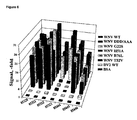
- a counter screen is performed against a mutated, enzymatically non-active form of the enzyme, in the present case a proteinase mutant with a single H51A mutation in the active site.
- Recombinant antibodies were generated from the HuCAL GOLD collection of human antibody genes ( J Mol Biol. 376, 1182-1200 ) by three rounds of selection (panning) on immobilized recombinant NS2B-NS3pro protein, as previously described ( J Immunol Methods. 275, 203-212 ; Biol Chem. 387, 995-1003 ; J Mol Biol. 296, 57-86 ; J Immunol Methods. 254, 67-84 ; J Biol Chem. 278, 38194-38205 ). Prior to selection, the phage library was blocked with NS2B-NS3pro H51A protein in order to deplete antibodies which are specific for epitopes also present on the immobilized antigen.
- the digest samples were separated by 4-20% gradient SDS-PAGE.
- Antibodies AbD05320, AbD05321, AbD05322 and AbD05323 antibodies were completely resistant to NS2B-NS3pro proteolysis.
- AbD05320, AbD05321, AbD05322, AbD05323, AbD05444, AbD05445 and AbD05446 samples were each co-incubated for 60 min at ambient temperature with NS2B-NS3-K48A (50 nM). The residual proteolytic activity of the protease was then measured using the Pyr-RTKR-AMC fluorescent peptide substrate.
- NS2B-NS3-K48A (10 nM) was pre-incubated with the increasing concentrations of the antibodies for 60 min at ambient temperature in 10 mM Tris-HCl buffer, pH 8.0, containing 20% (v/v) glycerol and 0.005% Brij 35.
- the Pyr-RTKR-AMC substrate 24 ⁇ M was then added to the 0.1 ml reactions.
- Wells of a Nunc-Immuno MaxiSorp 96-well flat-bottom plate were coated in triplicate for 18 h at 4°C using the NY99 or DV constructs (0.1 ml/well; 1 ⁇ g/ml).
- Control wells were coated with 1 ⁇ g/ml BSA.
- unspecific binding sites were saturated by incubation with 0. 2 ml 1% BSA (2 h; room temperature).
- the wells were then washed using PBS-0.05% Tween 20.
- the 2 ⁇ g/ml antibody solution (0.1 ml) in PBS-1% BSA-0.05% Tween 20 was added to the wells.
- the E2 Fab is a 15 pM inhibitor of matriptase.
- Our modeling results indicate that the binding affinity of the AbD05323 Fab can be dramatically increased by replacing the original Leu-108, Asn-109 and Asp-110 sequence of the hypervariable loop with the sequence Arg-Arg-Ala/Ser/Gly. See Figure 7 .
- Antibodies with these mutant sequences will allow the hypervariable loop of the modified AbD05323 to enter the binding pocket of NS2B-NS3pro. This modified antibody is a particular highly potent inhibitor of this viral proteinase.
Landscapes
- Chemical & Material Sciences (AREA)
- Organic Chemistry (AREA)
- Life Sciences & Earth Sciences (AREA)
- Health & Medical Sciences (AREA)
- Proteomics, Peptides & Aminoacids (AREA)
- Biophysics (AREA)
- Biochemistry (AREA)
- General Health & Medical Sciences (AREA)
- Genetics & Genomics (AREA)
- Molecular Biology (AREA)
- Medicinal Chemistry (AREA)
- Immunology (AREA)
- Virology (AREA)
- Wood Science & Technology (AREA)
- Engineering & Computer Science (AREA)
- Zoology (AREA)
- Analytical Chemistry (AREA)
- Biotechnology (AREA)
- Microbiology (AREA)
- Physics & Mathematics (AREA)
- Bioinformatics & Cheminformatics (AREA)
- General Engineering & Computer Science (AREA)
- Gastroenterology & Hepatology (AREA)
- Peptides Or Proteins (AREA)
- Medicines Containing Antibodies Or Antigens For Use As Internal Diagnostic Agents (AREA)
Claims (4)
- Procédé d'identification d'un anticorps ou fragment de celui-ci qui se lie au variant actif d'un antigène, qui a une activité enzymatique, ledit procédé comprenant les étapes consistant à(a) effectuer un criblage d'une banque d'anticorps, ou de fragments de ceux-ci, contre ledit antigène et isoler les membres de ladite banque qui se lient au dit antigène,(b) effectuer un contre-criblage des membres de la banque, ayant été isolés dans l'étape (a), vis-à-vis d'un variant de l'antigène, dans lequel ledit antigène variant est dépourvu d'une activité enzymatique et dans lequel ledit variant est un mutant du site actif de l'antigène, et(c) isoler ces membres qui ne se lient pas au dit antigène variant.
- Procédé selon la revendication 1, dans laquelle ledit antigène est une protéase.
- Procédé selon la revendication 2, dans laquelle ladite protéase est une protéase virale, telle qu'une protéinase NS2B-NS3 du virus du Nil occidental.
- Procédé, selon l'une des revendications précédentes, comprenant en outre l'étape consistant à (d) tester si les anticorps ou fragments de ceux-ci isolés dans l'étape (c) inhibent l'activité enzymatique de l'antigène.
Applications Claiming Priority (3)
| Application Number | Priority Date | Filing Date | Title |
|---|---|---|---|
| US23256109P | 2009-08-10 | 2009-08-10 | |
| US23350409P | 2009-08-13 | 2009-08-13 | |
| PCT/EP2010/061522 WO2011018421A1 (fr) | 2009-08-10 | 2010-08-06 | Nouvelles stratégies de criblage pour l'identification de ligands |
Publications (2)
| Publication Number | Publication Date |
|---|---|
| EP2464657A1 EP2464657A1 (fr) | 2012-06-20 |
| EP2464657B1 true EP2464657B1 (fr) | 2015-04-01 |
Family
ID=42830744
Family Applications (1)
| Application Number | Title | Priority Date | Filing Date |
|---|---|---|---|
| EP10741944.2A Active EP2464657B1 (fr) | 2009-08-10 | 2010-08-06 | Nouvelles stratégies de criblage pour l'identification d'anticorps ou de leurs fragments qui lient un antigène qui possède une activité enzymatique |
Country Status (4)
| Country | Link |
|---|---|
| US (1) | US9133500B2 (fr) |
| EP (1) | EP2464657B1 (fr) |
| DK (1) | DK2464657T3 (fr) |
| WO (1) | WO2011018421A1 (fr) |
Families Citing this family (4)
| Publication number | Priority date | Publication date | Assignee | Title |
|---|---|---|---|---|
| US9394372B2 (en) | 2011-10-21 | 2016-07-19 | Crystal Bioscience Inc. | In vivo method for generating diversity in a protein scaffold |
| US20140283153A1 (en) * | 2011-10-28 | 2014-09-18 | Trianni, Inc. | Transgenic animals and methods of use |
| WO2019193418A1 (fr) | 2018-04-05 | 2019-10-10 | Bio-Rad Abd Serotec Gmbh | Systèmes d'affichage pour protéines d'intérêt |
| US11353454B2 (en) * | 2019-03-26 | 2022-06-07 | The United States Of America, As Represented By The Secretary, Department Of Health And Human Services | Methods for detection of flavivirus antibodies |
Family Cites Families (34)
| Publication number | Priority date | Publication date | Assignee | Title |
|---|---|---|---|---|
| US4458066A (en) | 1980-02-29 | 1984-07-03 | University Patents, Inc. | Process for preparing polynucleotides |
| US4946778A (en) | 1987-09-21 | 1990-08-07 | Genex Corporation | Single polypeptide chain binding molecules |
| WO1988007089A1 (fr) | 1987-03-18 | 1988-09-22 | Medical Research Council | Anticorps alteres |
| US5336603A (en) | 1987-10-02 | 1994-08-09 | Genentech, Inc. | CD4 adheson variants |
| KR900005995A (ko) | 1988-10-31 | 1990-05-07 | 우메모또 요시마사 | 변형 인터류킨-2 및 그의 제조방법 |
| US5112946A (en) | 1989-07-06 | 1992-05-12 | Repligen Corporation | Modified pf4 compositions and methods of use |
| WO1991006570A1 (fr) | 1989-10-25 | 1991-05-16 | The University Of Melbourne | MOLECULES RECEPTRICES Fc HYBRIDES |
| US5349053A (en) | 1990-06-01 | 1994-09-20 | Protein Design Labs, Inc. | Chimeric ligand/immunoglobulin molecules and their uses |
| DE69123241T2 (de) | 1990-12-14 | 1997-04-17 | Cell Genesys Inc | Chimärische ketten zur transduktion von rezeptorverbundenen signalwegen |
| EP1291360A1 (fr) | 1991-12-13 | 2003-03-12 | Xoma Corporation | Procedes et matieres de preparation de domaines variables d'anticorps modifies et leurs utilisations therapeutiques |
| US5622929A (en) | 1992-01-23 | 1997-04-22 | Bristol-Myers Squibb Company | Thioether conjugates |
| US5447851B1 (en) | 1992-04-02 | 1999-07-06 | Univ Texas System Board Of | Dna encoding a chimeric polypeptide comprising the extracellular domain of tnf receptor fused to igg vectors and host cells |
| AU701578B2 (en) | 1992-08-21 | 1999-02-04 | Vrije Universiteit Brussel | Immunoglobulins devoid of light chains |
| US6187579B1 (en) * | 1993-10-28 | 2001-02-13 | Carlsberg A/S | Customized proteases |
| SE9400088D0 (sv) | 1994-01-14 | 1994-01-14 | Kabi Pharmacia Ab | Bacterial receptor structures |
| US5834252A (en) | 1995-04-18 | 1998-11-10 | Glaxo Group Limited | End-complementary polymerase reaction |
| US5605793A (en) | 1994-02-17 | 1997-02-25 | Affymax Technologies N.V. | Methods for in vitro recombination |
| US5837458A (en) | 1994-02-17 | 1998-11-17 | Maxygen, Inc. | Methods and compositions for cellular and metabolic engineering |
| JPH10503371A (ja) | 1994-07-29 | 1998-03-31 | スミスクライン・ビーチャム・パブリック・リミテッド・カンパニー | 新規化合物 |
| US5641870A (en) | 1995-04-20 | 1997-06-24 | Genentech, Inc. | Low pH hydrophobic interaction chromatography for antibody purification |
| EP1958962A3 (fr) | 1997-06-12 | 2013-05-01 | Novartis International Pharmaceutical Ltd. | Polypeptides anticorps artificiels |
| DE19742706B4 (de) | 1997-09-26 | 2013-07-25 | Pieris Proteolab Ag | Lipocalinmuteine |
| US6818418B1 (en) | 1998-12-10 | 2004-11-16 | Compound Therapeutics, Inc. | Protein scaffolds for antibody mimics and other binding proteins |
| DE19932688B4 (de) | 1999-07-13 | 2009-10-08 | Scil Proteins Gmbh | Design von Beta-Faltblatt-Proteinen des gamma-II-kristallins antikörperähnlichen |
| US20040175756A1 (en) | 2001-04-26 | 2004-09-09 | Avidia Research Institute | Methods for using combinatorial libraries of monomer domains |
| US20050053973A1 (en) | 2001-04-26 | 2005-03-10 | Avidia Research Institute | Novel proteins with targeted binding |
| US20050048512A1 (en) | 2001-04-26 | 2005-03-03 | Avidia Research Institute | Combinatorial libraries of monomer domains |
| DE10324447A1 (de) | 2003-05-28 | 2004-12-30 | Scil Proteins Gmbh | Generierung künstlicher Bindungsproteine auf der Grundlage von Ubiquitin |
| EP1651955A4 (fr) * | 2003-07-15 | 2007-11-21 | Univ California | Procedes pour detecter et analyser l'acide n-glycolylneuraminique (neu5gc) dans des matieres biologiques |
| US20060008844A1 (en) | 2004-06-17 | 2006-01-12 | Avidia Research Institute | c-Met kinase binding proteins |
| EP1778879A4 (fr) | 2004-06-21 | 2010-02-24 | Univ Washington | Anticorps anti-virus west nile: utilisations therapeutiques et prophylactiques |
| US7572456B2 (en) | 2004-09-13 | 2009-08-11 | Macrogenics, Inc. | Humanized antibodies against West Nile Virus and therapeutic and prophylactic uses thereof |
| US20090130652A1 (en) | 2005-06-23 | 2009-05-21 | Crucell Holland B.V. | Optimization of West Nile Virus Antibodies |
| EP2155894A4 (fr) * | 2007-05-09 | 2010-08-18 | Burnham Inst Medical Research | Ciblage de protéinases de l'hôte en tant que stratégie thérapeutique contre des pathogènes viraux et bactériens |
-
2010
- 2010-08-06 EP EP10741944.2A patent/EP2464657B1/fr active Active
- 2010-08-06 DK DK10741944.2T patent/DK2464657T3/en active
- 2010-08-06 US US13/379,680 patent/US9133500B2/en active Active
- 2010-08-06 WO PCT/EP2010/061522 patent/WO2011018421A1/fr not_active Ceased
Non-Patent Citations (1)
| Title |
|---|
| KIM C-H ET AL: "Effective selection of the monoclonal antibodies inhibiting the enzymatic activity of the bifunctional amylase-pullulanase produced by Bacillus circulans: possible presence of two enzymatic active sites on one polypeptide", JOURNAL OF MICROBIOLOGICAL METHODS, ELSEVIER, AMSTERDAM, NL, vol. 19, no. 1, 1 January 1994 (1994-01-01), pages 39 - 49, XP023698929, ISSN: 0167-7012, [retrieved on 19940101], DOI: 10.1016/0167-7012(94)90024-8 * |
Also Published As
| Publication number | Publication date |
|---|---|
| US20120178909A1 (en) | 2012-07-12 |
| DK2464657T3 (en) | 2015-06-29 |
| US9133500B2 (en) | 2015-09-15 |
| EP2464657A1 (fr) | 2012-06-20 |
| WO2011018421A1 (fr) | 2011-02-17 |
Similar Documents
| Publication | Publication Date | Title |
|---|---|---|
| US10851155B2 (en) | Middle east respiratory syndrome coronavirus neutralizing antibodies and methods of use thereof | |
| JP5801194B2 (ja) | 組織因子経路インヒビター(tfpi)に対するモノクローナル抗体 | |
| US11028167B1 (en) | Anti-SARS-Cov-2 antibodies derived from 3bgf | |
| US11021532B1 (en) | Superhuman anti-SARS-CoV-2 antibodies and uses thereof | |
| JP2023528072A (ja) | SARS-CoV-2糖タンパク質Sに対する中和活性を有する治療用抗体 | |
| US9238689B2 (en) | Antibodies that are cross-reactive for macrophage migration inhibitory factor (MIF) and D-dopachrome tautomerase (D-DT) | |
| US11028150B1 (en) | Anti-SARS-CoV-2 antibodies derived from 2DD8 | |
| JP7463366B2 (ja) | 新規の抗ジカウイルス抗体及びその使用 | |
| JP2019506135A (ja) | 抗HtrA1抗体及びその使用方法 | |
| EP2464657B1 (fr) | Nouvelles stratégies de criblage pour l'identification d'anticorps ou de leurs fragments qui lient un antigène qui possède une activité enzymatique | |
| US20240270825A1 (en) | Anti-sars-cov-2 antibodies derived from cr3022 | |
| US20230287090A1 (en) | USE OF SARS-CoV-2 RECEPTOR BINDING MOTIF (RBM)-REACTIVE MONOCLONAL ANTIBODIES TO TREAT COVID-19 | |
| JP2024506020A (ja) | サルベコウイルス結合剤 | |
| US11034762B1 (en) | Anti-SARS-Cov-2 antibodies derived from CR3022 | |
| CN113631579B (zh) | 组织纤溶酶原激活物抗体及其使用方法 | |
| US20250320284A1 (en) | Novel Molecules for Therapy and Diagnosis | |
| EP2778173A1 (fr) | Anticorps dirigé contre les toxines de l'anthrax et ses utilisations | |
| WO2021238854A1 (fr) | Anticorps monoclonal dirigé contre la protéine de spicule du sars-cov-2, son procédé de préparation et son utilisation | |
| US12534513B2 (en) | Anti-SARS-CoV-2 antibodies derived from 2DD8 | |
| CN114080396B (zh) | 抗-angpt2抗体 | |
| CA3250430A1 (fr) | Anticorps spécifiques de la protéine 7 liée à l'angiopoïétine et leurs utilisations | |
| WO2021194896A1 (fr) | Anticorps anti-sras-cov-2 dérivés de 2ghw | |
| WO2021194886A1 (fr) | Anticorps anti-sras-cov-2 dérivés de 3bgf | |
| WO2021194965A1 (fr) | Anticorps anti-sars-cov-2 surhumain et leurs utilisations | |
| US20240209065A1 (en) | Secretory iga antibodies against covid infection |
Legal Events
| Date | Code | Title | Description |
|---|---|---|---|
| PUAI | Public reference made under article 153(3) epc to a published international application that has entered the european phase |
Free format text: ORIGINAL CODE: 0009012 |
|
| 17P | Request for examination filed |
Effective date: 20111212 |
|
| AK | Designated contracting states |
Kind code of ref document: A1 Designated state(s): AL AT BE BG CH CY CZ DE DK EE ES FI FR GB GR HR HU IE IS IT LI LT LU LV MC MK MT NL NO PL PT RO SE SI SK SM TR |
|
| DAX | Request for extension of the european patent (deleted) | ||
| 17Q | First examination report despatched |
Effective date: 20130424 |
|
| REG | Reference to a national code |
Ref country code: DE Ref legal event code: R079 Ref document number: 602010023600 Country of ref document: DE Free format text: PREVIOUS MAIN CLASS: C07K0014180000 Ipc: C07K0016400000 |
|
| RIC1 | Information provided on ipc code assigned before grant |
Ipc: C12Q 1/37 20060101ALI20140826BHEP Ipc: C07K 16/10 20060101ALI20140826BHEP Ipc: C07K 14/005 20060101ALI20140826BHEP Ipc: C07K 16/40 20060101AFI20140826BHEP |
|
| GRAP | Despatch of communication of intention to grant a patent |
Free format text: ORIGINAL CODE: EPIDOSNIGR1 |
|
| INTG | Intention to grant announced |
Effective date: 20141022 |
|
| GRAS | Grant fee paid |
Free format text: ORIGINAL CODE: EPIDOSNIGR3 |
|
| GRAA | (expected) grant |
Free format text: ORIGINAL CODE: 0009210 |
|
| AK | Designated contracting states |
Kind code of ref document: B1 Designated state(s): AL AT BE BG CH CY CZ DE DK EE ES FI FR GB GR HR HU IE IS IT LI LT LU LV MC MK MT NL NO PL PT RO SE SI SK SM TR |
|
| REG | Reference to a national code |
Ref country code: GB Ref legal event code: FG4D |
|
| REG | Reference to a national code |
Ref country code: CH Ref legal event code: EP |
|
| REG | Reference to a national code |
Ref country code: IE Ref legal event code: FG4D |
|
| REG | Reference to a national code |
Ref country code: DE Ref legal event code: R096 Ref document number: 602010023600 Country of ref document: DE Effective date: 20150513 |
|
| REG | Reference to a national code |
Ref country code: AT Ref legal event code: REF Ref document number: 719039 Country of ref document: AT Kind code of ref document: T Effective date: 20150515 |
|
| REG | Reference to a national code |
Ref country code: DK Ref legal event code: T3 Effective date: 20150623 |
|
| REG | Reference to a national code |
Ref country code: CH Ref legal event code: NV Representative=s name: FIAMMENGHI-FIAMMENGHI, CH |
|
| REG | Reference to a national code |
Ref country code: SE Ref legal event code: TRGR |
|
| REG | Reference to a national code |
Ref country code: NL Ref legal event code: T3 |
|
| REG | Reference to a national code |
Ref country code: NO Ref legal event code: T2 Effective date: 20150401 |
|
| REG | Reference to a national code |
Ref country code: LT Ref legal event code: MG4D |
|
| PG25 | Lapsed in a contracting state [announced via postgrant information from national office to epo] |
Ref country code: HR Free format text: LAPSE BECAUSE OF FAILURE TO SUBMIT A TRANSLATION OF THE DESCRIPTION OR TO PAY THE FEE WITHIN THE PRESCRIBED TIME-LIMIT Effective date: 20150401 Ref country code: LT Free format text: LAPSE BECAUSE OF FAILURE TO SUBMIT A TRANSLATION OF THE DESCRIPTION OR TO PAY THE FEE WITHIN THE PRESCRIBED TIME-LIMIT Effective date: 20150401 Ref country code: PT Free format text: LAPSE BECAUSE OF FAILURE TO SUBMIT A TRANSLATION OF THE DESCRIPTION OR TO PAY THE FEE WITHIN THE PRESCRIBED TIME-LIMIT Effective date: 20150803 Ref country code: ES Free format text: LAPSE BECAUSE OF FAILURE TO SUBMIT A TRANSLATION OF THE DESCRIPTION OR TO PAY THE FEE WITHIN THE PRESCRIBED TIME-LIMIT Effective date: 20150401 Ref country code: CZ Free format text: LAPSE BECAUSE OF FAILURE TO SUBMIT A TRANSLATION OF THE DESCRIPTION OR TO PAY THE FEE WITHIN THE PRESCRIBED TIME-LIMIT Effective date: 20150401 |
|
| PG25 | Lapsed in a contracting state [announced via postgrant information from national office to epo] |
Ref country code: GR Free format text: LAPSE BECAUSE OF FAILURE TO SUBMIT A TRANSLATION OF THE DESCRIPTION OR TO PAY THE FEE WITHIN THE PRESCRIBED TIME-LIMIT Effective date: 20150702 Ref country code: IS Free format text: LAPSE BECAUSE OF FAILURE TO SUBMIT A TRANSLATION OF THE DESCRIPTION OR TO PAY THE FEE WITHIN THE PRESCRIBED TIME-LIMIT Effective date: 20150801 Ref country code: LV Free format text: LAPSE BECAUSE OF FAILURE TO SUBMIT A TRANSLATION OF THE DESCRIPTION OR TO PAY THE FEE WITHIN THE PRESCRIBED TIME-LIMIT Effective date: 20150401 |
|
| REG | Reference to a national code |
Ref country code: DE Ref legal event code: R097 Ref document number: 602010023600 Country of ref document: DE |
|
| PG25 | Lapsed in a contracting state [announced via postgrant information from national office to epo] |
Ref country code: EE Free format text: LAPSE BECAUSE OF FAILURE TO SUBMIT A TRANSLATION OF THE DESCRIPTION OR TO PAY THE FEE WITHIN THE PRESCRIBED TIME-LIMIT Effective date: 20150401 |
|
| PLBE | No opposition filed within time limit |
Free format text: ORIGINAL CODE: 0009261 |
|
| STAA | Information on the status of an ep patent application or granted ep patent |
Free format text: STATUS: NO OPPOSITION FILED WITHIN TIME LIMIT |
|
| PG25 | Lapsed in a contracting state [announced via postgrant information from national office to epo] |
Ref country code: SK Free format text: LAPSE BECAUSE OF FAILURE TO SUBMIT A TRANSLATION OF THE DESCRIPTION OR TO PAY THE FEE WITHIN THE PRESCRIBED TIME-LIMIT Effective date: 20150401 Ref country code: PL Free format text: LAPSE BECAUSE OF FAILURE TO SUBMIT A TRANSLATION OF THE DESCRIPTION OR TO PAY THE FEE WITHIN THE PRESCRIBED TIME-LIMIT Effective date: 20150401 Ref country code: RO Free format text: LAPSE BECAUSE OF NON-PAYMENT OF DUE FEES Effective date: 20150401 |
|
| 26N | No opposition filed |
Effective date: 20160105 |
|
| PG25 | Lapsed in a contracting state [announced via postgrant information from national office to epo] |
Ref country code: MC Free format text: LAPSE BECAUSE OF FAILURE TO SUBMIT A TRANSLATION OF THE DESCRIPTION OR TO PAY THE FEE WITHIN THE PRESCRIBED TIME-LIMIT Effective date: 20150401 Ref country code: LU Free format text: LAPSE BECAUSE OF FAILURE TO SUBMIT A TRANSLATION OF THE DESCRIPTION OR TO PAY THE FEE WITHIN THE PRESCRIBED TIME-LIMIT Effective date: 20150806 |
|
| PG25 | Lapsed in a contracting state [announced via postgrant information from national office to epo] |
Ref country code: SI Free format text: LAPSE BECAUSE OF FAILURE TO SUBMIT A TRANSLATION OF THE DESCRIPTION OR TO PAY THE FEE WITHIN THE PRESCRIBED TIME-LIMIT Effective date: 20150401 |
|
| REG | Reference to a national code |
Ref country code: FR Ref legal event code: PLFP Year of fee payment: 7 |
|
| PG25 | Lapsed in a contracting state [announced via postgrant information from national office to epo] |
Ref country code: MT Free format text: LAPSE BECAUSE OF FAILURE TO SUBMIT A TRANSLATION OF THE DESCRIPTION OR TO PAY THE FEE WITHIN THE PRESCRIBED TIME-LIMIT Effective date: 20150401 |
|
| PG25 | Lapsed in a contracting state [announced via postgrant information from national office to epo] |
Ref country code: HU Free format text: LAPSE BECAUSE OF FAILURE TO SUBMIT A TRANSLATION OF THE DESCRIPTION OR TO PAY THE FEE WITHIN THE PRESCRIBED TIME-LIMIT; INVALID AB INITIO Effective date: 20100806 Ref country code: BG Free format text: LAPSE BECAUSE OF FAILURE TO SUBMIT A TRANSLATION OF THE DESCRIPTION OR TO PAY THE FEE WITHIN THE PRESCRIBED TIME-LIMIT Effective date: 20150401 Ref country code: SM Free format text: LAPSE BECAUSE OF FAILURE TO SUBMIT A TRANSLATION OF THE DESCRIPTION OR TO PAY THE FEE WITHIN THE PRESCRIBED TIME-LIMIT Effective date: 20150401 |
|
| REG | Reference to a national code |
Ref country code: AT Ref legal event code: UEP Ref document number: 719039 Country of ref document: AT Kind code of ref document: T Effective date: 20150401 |
|
| REG | Reference to a national code |
Ref country code: NO Ref legal event code: CHAD Owner name: MORPHOSYS AG, DE |
|
| PG25 | Lapsed in a contracting state [announced via postgrant information from national office to epo] |
Ref country code: CY Free format text: LAPSE BECAUSE OF FAILURE TO SUBMIT A TRANSLATION OF THE DESCRIPTION OR TO PAY THE FEE WITHIN THE PRESCRIBED TIME-LIMIT Effective date: 20150401 |
|
| REG | Reference to a national code |
Ref country code: NO Ref legal event code: CHAD Owner name: MORPHOSYS AG, DE |
|
| REG | Reference to a national code |
Ref country code: FR Ref legal event code: PLFP Year of fee payment: 8 |
|
| PG25 | Lapsed in a contracting state [announced via postgrant information from national office to epo] |
Ref country code: TR Free format text: LAPSE BECAUSE OF FAILURE TO SUBMIT A TRANSLATION OF THE DESCRIPTION OR TO PAY THE FEE WITHIN THE PRESCRIBED TIME-LIMIT Effective date: 20150401 |
|
| REG | Reference to a national code |
Ref country code: FR Ref legal event code: CA Effective date: 20170918 |
|
| PG25 | Lapsed in a contracting state [announced via postgrant information from national office to epo] |
Ref country code: MK Free format text: LAPSE BECAUSE OF FAILURE TO SUBMIT A TRANSLATION OF THE DESCRIPTION OR TO PAY THE FEE WITHIN THE PRESCRIBED TIME-LIMIT Effective date: 20150401 |
|
| REG | Reference to a national code |
Ref country code: FR Ref legal event code: PLFP Year of fee payment: 9 |
|
| PG25 | Lapsed in a contracting state [announced via postgrant information from national office to epo] |
Ref country code: AL Free format text: LAPSE BECAUSE OF FAILURE TO SUBMIT A TRANSLATION OF THE DESCRIPTION OR TO PAY THE FEE WITHIN THE PRESCRIBED TIME-LIMIT Effective date: 20150401 |
|
| REG | Reference to a national code |
Ref country code: CH Ref legal event code: PCOW Free format text: NEW ADDRESS: SEMMELWEISSTR. 7, 82152 PLANEGG (DE) |
|
| REG | Reference to a national code |
Ref country code: DE Ref legal event code: R082 Ref document number: 602010023600 Country of ref document: DE Representative=s name: KILBURN & STRODE LLP, NL |
|
| P01 | Opt-out of the competence of the unified patent court (upc) registered |
Effective date: 20230516 |
|
| PGFP | Annual fee paid to national office [announced via postgrant information from national office to epo] |
Ref country code: NL Payment date: 20250724 Year of fee payment: 16 |
|
| PGFP | Annual fee paid to national office [announced via postgrant information from national office to epo] |
Ref country code: FI Payment date: 20250814 Year of fee payment: 16 |
|
| PGFP | Annual fee paid to national office [announced via postgrant information from national office to epo] |
Ref country code: DK Payment date: 20250814 Year of fee payment: 16 Ref country code: DE Payment date: 20250722 Year of fee payment: 16 |
|
| PGFP | Annual fee paid to national office [announced via postgrant information from national office to epo] |
Ref country code: NO Payment date: 20250808 Year of fee payment: 16 |
|
| PGFP | Annual fee paid to national office [announced via postgrant information from national office to epo] |
Ref country code: IT Payment date: 20250728 Year of fee payment: 16 |
|
| PGFP | Annual fee paid to national office [announced via postgrant information from national office to epo] |
Ref country code: BE Payment date: 20250724 Year of fee payment: 16 Ref country code: GB Payment date: 20250717 Year of fee payment: 16 |
|
| PGFP | Annual fee paid to national office [announced via postgrant information from national office to epo] |
Ref country code: AT Payment date: 20250725 Year of fee payment: 16 Ref country code: FR Payment date: 20250721 Year of fee payment: 16 |
|
| PGFP | Annual fee paid to national office [announced via postgrant information from national office to epo] |
Ref country code: CH Payment date: 20250901 Year of fee payment: 16 Ref country code: SE Payment date: 20250728 Year of fee payment: 16 |
|
| PGFP | Annual fee paid to national office [announced via postgrant information from national office to epo] |
Ref country code: IE Payment date: 20250723 Year of fee payment: 16 |