EP2474355A1 - Katalysator zur kohlenwasserstoffgasreformierung, verfahren zu seiner herstellung und synthesegasherstellungsverfahren - Google Patents
Katalysator zur kohlenwasserstoffgasreformierung, verfahren zu seiner herstellung und synthesegasherstellungsverfahren Download PDFInfo
- Publication number
- EP2474355A1 EP2474355A1 EP10813676A EP10813676A EP2474355A1 EP 2474355 A1 EP2474355 A1 EP 2474355A1 EP 10813676 A EP10813676 A EP 10813676A EP 10813676 A EP10813676 A EP 10813676A EP 2474355 A1 EP2474355 A1 EP 2474355A1
- Authority
- EP
- European Patent Office
- Prior art keywords
- hydrocarbon
- catalyst
- hydrocarbon gas
- reforming catalyst
- srtio
- Prior art date
- Legal status (The legal status is an assumption and is not a legal conclusion. Google has not performed a legal analysis and makes no representation as to the accuracy of the status listed.)
- Withdrawn
Links
Images


Classifications
-
- C—CHEMISTRY; METALLURGY
- C01—INORGANIC CHEMISTRY
- C01B—NON-METALLIC ELEMENTS; COMPOUNDS THEREOF; METALLOIDS OR COMPOUNDS THEREOF NOT COVERED BY SUBCLASS C01C
- C01B3/00—Hydrogen; Gaseous mixtures containing hydrogen; Separation of hydrogen from mixtures containing it; Purification of hydrogen; Reversible storage of hydrogen
- C01B3/02—Production of hydrogen; Production of gaseous mixtures containing hydrogen
- C01B3/32—Production of hydrogen; Production of gaseous mixtures containing hydrogen by reaction of gaseous or liquid organic compounds with gasifying agents, e.g. water, carbon dioxide or air
- C01B3/34—Production of hydrogen; Production of gaseous mixtures containing hydrogen by reaction of gaseous or liquid organic compounds with gasifying agents, e.g. water, carbon dioxide or air by reaction of hydrocarbons with gasifying agents
- C01B3/38—Production of hydrogen; Production of gaseous mixtures containing hydrogen by reaction of gaseous or liquid organic compounds with gasifying agents, e.g. water, carbon dioxide or air by reaction of hydrocarbons with gasifying agents using catalysts
- C01B3/40—Production of hydrogen; Production of gaseous mixtures containing hydrogen by reaction of gaseous or liquid organic compounds with gasifying agents, e.g. water, carbon dioxide or air by reaction of hydrocarbons with gasifying agents using catalysts characterised by the catalyst
-
- B—PERFORMING OPERATIONS; TRANSPORTING
- B01—PHYSICAL OR CHEMICAL PROCESSES OR APPARATUS IN GENERAL
- B01J—CHEMICAL OR PHYSICAL PROCESSES, e.g. CATALYSIS OR COLLOID CHEMISTRY; THEIR RELEVANT APPARATUS
- B01J21/00—Catalysts comprising the elements, oxides, or hydroxides of magnesium, boron, aluminium, carbon, silicon, titanium, zirconium, or hafnium
- B01J21/06—Silicon, titanium, zirconium or hafnium; Oxides or hydroxides thereof
- B01J21/063—Titanium; Oxides or hydroxides thereof
-
- B—PERFORMING OPERATIONS; TRANSPORTING
- B01—PHYSICAL OR CHEMICAL PROCESSES OR APPARATUS IN GENERAL
- B01J—CHEMICAL OR PHYSICAL PROCESSES, e.g. CATALYSIS OR COLLOID CHEMISTRY; THEIR RELEVANT APPARATUS
- B01J23/00—Catalysts comprising metals or metal oxides or hydroxides, not provided for in group B01J21/00
- B01J23/002—Mixed oxides other than spinels, e.g. perovskite
-
- B—PERFORMING OPERATIONS; TRANSPORTING
- B01—PHYSICAL OR CHEMICAL PROCESSES OR APPARATUS IN GENERAL
- B01J—CHEMICAL OR PHYSICAL PROCESSES, e.g. CATALYSIS OR COLLOID CHEMISTRY; THEIR RELEVANT APPARATUS
- B01J23/00—Catalysts comprising metals or metal oxides or hydroxides, not provided for in group B01J21/00
- B01J23/70—Catalysts comprising metals or metal oxides or hydroxides, not provided for in group B01J21/00 of the iron group metals or copper
- B01J23/76—Catalysts comprising metals or metal oxides or hydroxides, not provided for in group B01J21/00 of the iron group metals or copper combined with metals, oxides or hydroxides provided for in groups B01J23/02 - B01J23/36
- B01J23/78—Catalysts comprising metals or metal oxides or hydroxides, not provided for in group B01J21/00 of the iron group metals or copper combined with metals, oxides or hydroxides provided for in groups B01J23/02 - B01J23/36 with alkali- or alkaline earth metals
-
- B—PERFORMING OPERATIONS; TRANSPORTING
- B01—PHYSICAL OR CHEMICAL PROCESSES OR APPARATUS IN GENERAL
- B01J—CHEMICAL OR PHYSICAL PROCESSES, e.g. CATALYSIS OR COLLOID CHEMISTRY; THEIR RELEVANT APPARATUS
- B01J37/00—Processes, in general, for preparing catalysts; Processes, in general, for activation of catalysts
- B01J37/0009—Use of binding agents; Moulding; Pressing; Powdering; Granulating; Addition of materials ameliorating the mechanical properties of the product catalyst
- B01J37/0027—Powdering
- B01J37/0036—Grinding
-
- B—PERFORMING OPERATIONS; TRANSPORTING
- B01—PHYSICAL OR CHEMICAL PROCESSES OR APPARATUS IN GENERAL
- B01J—CHEMICAL OR PHYSICAL PROCESSES, e.g. CATALYSIS OR COLLOID CHEMISTRY; THEIR RELEVANT APPARATUS
- B01J37/00—Processes, in general, for preparing catalysts; Processes, in general, for activation of catalysts
- B01J37/0009—Use of binding agents; Moulding; Pressing; Powdering; Granulating; Addition of materials ameliorating the mechanical properties of the product catalyst
- B01J37/0063—Granulating
-
- B—PERFORMING OPERATIONS; TRANSPORTING
- B01—PHYSICAL OR CHEMICAL PROCESSES OR APPARATUS IN GENERAL
- B01J—CHEMICAL OR PHYSICAL PROCESSES, e.g. CATALYSIS OR COLLOID CHEMISTRY; THEIR RELEVANT APPARATUS
- B01J37/00—Processes, in general, for preparing catalysts; Processes, in general, for activation of catalysts
- B01J37/02—Impregnation, coating or precipitation
- B01J37/0201—Impregnation
-
- B—PERFORMING OPERATIONS; TRANSPORTING
- B01—PHYSICAL OR CHEMICAL PROCESSES OR APPARATUS IN GENERAL
- B01J—CHEMICAL OR PHYSICAL PROCESSES, e.g. CATALYSIS OR COLLOID CHEMISTRY; THEIR RELEVANT APPARATUS
- B01J37/00—Processes, in general, for preparing catalysts; Processes, in general, for activation of catalysts
- B01J37/08—Heat treatment
- B01J37/082—Decomposition and pyrolysis
- B01J37/084—Decomposition of carbon-containing compounds into carbon
-
- B—PERFORMING OPERATIONS; TRANSPORTING
- B01—PHYSICAL OR CHEMICAL PROCESSES OR APPARATUS IN GENERAL
- B01J—CHEMICAL OR PHYSICAL PROCESSES, e.g. CATALYSIS OR COLLOID CHEMISTRY; THEIR RELEVANT APPARATUS
- B01J37/00—Processes, in general, for preparing catalysts; Processes, in general, for activation of catalysts
- B01J37/16—Reducing
- B01J37/18—Reducing with gases containing free hydrogen
-
- B—PERFORMING OPERATIONS; TRANSPORTING
- B01—PHYSICAL OR CHEMICAL PROCESSES OR APPARATUS IN GENERAL
- B01J—CHEMICAL OR PHYSICAL PROCESSES, e.g. CATALYSIS OR COLLOID CHEMISTRY; THEIR RELEVANT APPARATUS
- B01J23/00—Catalysts comprising metals or metal oxides or hydroxides, not provided for in group B01J21/00
- B01J23/70—Catalysts comprising metals or metal oxides or hydroxides, not provided for in group B01J21/00 of the iron group metals or copper
- B01J23/74—Iron group metals
-
- B—PERFORMING OPERATIONS; TRANSPORTING
- B01—PHYSICAL OR CHEMICAL PROCESSES OR APPARATUS IN GENERAL
- B01J—CHEMICAL OR PHYSICAL PROCESSES, e.g. CATALYSIS OR COLLOID CHEMISTRY; THEIR RELEVANT APPARATUS
- B01J2523/00—Constitutive chemical elements of heterogeneous catalysts
-
- B—PERFORMING OPERATIONS; TRANSPORTING
- B01—PHYSICAL OR CHEMICAL PROCESSES OR APPARATUS IN GENERAL
- B01J—CHEMICAL OR PHYSICAL PROCESSES, e.g. CATALYSIS OR COLLOID CHEMISTRY; THEIR RELEVANT APPARATUS
- B01J37/00—Processes, in general, for preparing catalysts; Processes, in general, for activation of catalysts
- B01J37/04—Mixing
-
- C—CHEMISTRY; METALLURGY
- C01—INORGANIC CHEMISTRY
- C01B—NON-METALLIC ELEMENTS; COMPOUNDS THEREOF; METALLOIDS OR COMPOUNDS THEREOF NOT COVERED BY SUBCLASS C01C
- C01B2203/00—Integrated processes for the production of hydrogen or synthesis gas
- C01B2203/02—Processes for making hydrogen or synthesis gas
- C01B2203/0205—Processes for making hydrogen or synthesis gas containing a reforming step
- C01B2203/0227—Processes for making hydrogen or synthesis gas containing a reforming step containing a catalytic reforming step
- C01B2203/0233—Processes for making hydrogen or synthesis gas containing a reforming step containing a catalytic reforming step the reforming step being a steam reforming step
-
- C—CHEMISTRY; METALLURGY
- C01—INORGANIC CHEMISTRY
- C01B—NON-METALLIC ELEMENTS; COMPOUNDS THEREOF; METALLOIDS OR COMPOUNDS THEREOF NOT COVERED BY SUBCLASS C01C
- C01B2203/00—Integrated processes for the production of hydrogen or synthesis gas
- C01B2203/02—Processes for making hydrogen or synthesis gas
- C01B2203/0205—Processes for making hydrogen or synthesis gas containing a reforming step
- C01B2203/0227—Processes for making hydrogen or synthesis gas containing a reforming step containing a catalytic reforming step
- C01B2203/0238—Processes for making hydrogen or synthesis gas containing a reforming step containing a catalytic reforming step the reforming step being a carbon dioxide reforming step
-
- C—CHEMISTRY; METALLURGY
- C01—INORGANIC CHEMISTRY
- C01B—NON-METALLIC ELEMENTS; COMPOUNDS THEREOF; METALLOIDS OR COMPOUNDS THEREOF NOT COVERED BY SUBCLASS C01C
- C01B2203/00—Integrated processes for the production of hydrogen or synthesis gas
- C01B2203/02—Processes for making hydrogen or synthesis gas
- C01B2203/0205—Processes for making hydrogen or synthesis gas containing a reforming step
- C01B2203/0227—Processes for making hydrogen or synthesis gas containing a reforming step containing a catalytic reforming step
- C01B2203/0244—Processes for making hydrogen or synthesis gas containing a reforming step containing a catalytic reforming step the reforming step being an autothermal reforming step, e.g. secondary reforming processes
-
- C—CHEMISTRY; METALLURGY
- C01—INORGANIC CHEMISTRY
- C01B—NON-METALLIC ELEMENTS; COMPOUNDS THEREOF; METALLOIDS OR COMPOUNDS THEREOF NOT COVERED BY SUBCLASS C01C
- C01B2203/00—Integrated processes for the production of hydrogen or synthesis gas
- C01B2203/02—Processes for making hydrogen or synthesis gas
- C01B2203/025—Processes for making hydrogen or synthesis gas containing a partial oxidation step
- C01B2203/0261—Processes for making hydrogen or synthesis gas containing a partial oxidation step containing a catalytic partial oxidation step [CPO]
-
- C—CHEMISTRY; METALLURGY
- C01—INORGANIC CHEMISTRY
- C01B—NON-METALLIC ELEMENTS; COMPOUNDS THEREOF; METALLOIDS OR COMPOUNDS THEREOF NOT COVERED BY SUBCLASS C01C
- C01B2203/00—Integrated processes for the production of hydrogen or synthesis gas
- C01B2203/10—Catalysts for performing the hydrogen forming reactions
- C01B2203/1041—Composition of the catalyst
- C01B2203/1047—Group VIII metal catalysts
- C01B2203/1052—Nickel or cobalt catalysts
- C01B2203/1058—Nickel catalysts
-
- Y—GENERAL TAGGING OF NEW TECHNOLOGICAL DEVELOPMENTS; GENERAL TAGGING OF CROSS-SECTIONAL TECHNOLOGIES SPANNING OVER SEVERAL SECTIONS OF THE IPC; TECHNICAL SUBJECTS COVERED BY FORMER USPC CROSS-REFERENCE ART COLLECTIONS [XRACs] AND DIGESTS
- Y02—TECHNOLOGIES OR APPLICATIONS FOR MITIGATION OR ADAPTATION AGAINST CLIMATE CHANGE
- Y02P—CLIMATE CHANGE MITIGATION TECHNOLOGIES IN THE PRODUCTION OR PROCESSING OF GOODS
- Y02P20/00—Technologies relating to chemical industry
- Y02P20/141—Feedstock
-
- Y—GENERAL TAGGING OF NEW TECHNOLOGICAL DEVELOPMENTS; GENERAL TAGGING OF CROSS-SECTIONAL TECHNOLOGIES SPANNING OVER SEVERAL SECTIONS OF THE IPC; TECHNICAL SUBJECTS COVERED BY FORMER USPC CROSS-REFERENCE ART COLLECTIONS [XRACs] AND DIGESTS
- Y02—TECHNOLOGIES OR APPLICATIONS FOR MITIGATION OR ADAPTATION AGAINST CLIMATE CHANGE
- Y02P—CLIMATE CHANGE MITIGATION TECHNOLOGIES IN THE PRODUCTION OR PROCESSING OF GOODS
- Y02P20/00—Technologies relating to chemical industry
- Y02P20/50—Improvements relating to the production of bulk chemicals
- Y02P20/52—Improvements relating to the production of bulk chemicals using catalysts, e.g. selective catalysts
Definitions
- the present invention relates to a catalyst for reforming a hydrocarbon gas used in manufacturing a synthesized gas containing hydrogen and carbon monoxide by reforming a hydrocarbon source material gas, a method of manufacturing the same, and a method of manufacturing a synthesized gas using the catalyst for reforming a hydrocarbon gas.
- hydrocarbon gases are generated from the field of art such as petroleum refining or petrochemistry; however, these gases are not necessarily utilized efficiently as source material gases of various substances, so that a method of conversion into more effective substances has been demanded.
- Reforming hydrocarbon with carbon dioxide is suitable for manufacturing a synthesized gas having a comparatively high carbon monoxide concentration by allowing saturated hydrocarbon such as methane and carbon dioxide to react in the presence of a catalyst.
- reforming hydrocarbon with water vapor is suitable for manufacturing a synthesized gas having a comparatively high hydrogen concentration by allowing saturated hydrocarbon such as methane and water vapor to react in the presence of a catalyst.
- the method of reforming saturated hydrocarbon such as methane by using carbon dioxide and water vapor in combination in which both of carbon dioxide and water vapor are allowed to react in the presence of a catalyst has an advantage in that the ratio of hydrogen and carbon monoxide in the synthesized gas to be manufactured can be adjusted by adjusting the ratio of carbon dioxide and water vapor.
- carbon may be deposited on the catalyst during the process of decomposition of the hydrocarbon.
- the degree of this carbon deposition varies depending on a hydrocarbon reforming condition. It is reported that carbon is most liable to be deposited in the reforming of hydrocarbon with carbon dioxide, and that the amount of carbon deposition is comparatively small in the reforming of hydrocarbon with water vapor. However, the carbon deposited on the catalyst is gradually accumulated to lower the catalyst activity. When carbon is deposited in a large amount, there is a fear of clogging the reaction tube. Therefore, even in the reforming of hydrocarbon with water vapor, carbon deposition is restrained generally by setting the ratio of water vapor to hydrocarbon (hereafter, "water vapor/hydrocarbon ratio”) to be high so as to introduce water vapor in an excessive amount.
- water vapor/hydrocarbon ratio water vapor/hydrocarbon ratio
- a nickel catalyst in which nickel is carried on a base such as alumina a ruthenium catalyst in which ruthenium is carried (See Patent Document 1), and further a rhodium catalyst in which rhodium is carried on a base such as alumina (See Patent Document 2) and the like.
- a nickel catalyst typical as a catalyst for reforming hydrocarbon with water vapor in which nickel is carried on a base such as alumina is liable to cause carbon deposition on the catalyst. Therefore, in order to restrain the lowering of activity by carbon deposition, there is a need to perform a reaction of reforming hydrocarbon with water vapor under a condition of a water vapor/hydrocarbon ratio in which water vapor is excessive relative to the hydrocarbon. However, in order to make the water vapor excessive, there is raised a problem in that the energy consumption increases in the process of vaporizing water.
- a ruthenium catalyst as shown in Patent Document 1 has a function of restraining carbon deposition, so that the carbon deposition is less in amount as compared with a nickel catalyst, and also maintenance of the activity is easy.
- unsaturated hydrocarbon such as ethylene coexists in a source material
- thermal carbon deposition and a decrease in the activity are liable to occur, so that, even if the ruthenium catalyst produces an effect of restraining the carbon deposition, the catalyst is poisoned by unsaturated hydrocarbon or the like contained in the source material gas, leading to a decrease in the activity.
- a catalyst having a perovskite type complex oxide as a carrier as shown in Patent Document 3 can restrain carbon deposition even if supply of water vapor is lowered in the water vapor reforming; however, the catalyst is still unable to restrain the carbon deposition in carbon dioxide reforming in which carbon deposition is liable to occur.
- the present invention solves the aforementioned problems, and an object of the invention is to provide a catalyst for reforming a hydrocarbon gas capable of efficiently producing hydrogen and carbon monoxide by carrying out reaction of a hydrocarbon source material gas and carbon dioxide, water vapor, and oxygen while restraining the deposition of carbon, a method of manufacturing the same, and a method of manufacturing a synthesized gas using the produced catalyst for reforming a hydrocarbon gas.
- a catalyst for reforming a hydrocarbon gas of the present invention is a catalyst used for reforming a hydrocarbon source material gas and producing a synthesized gas containing carbon monoxide and hydrogen, containing NiO and SrTiO 3 as main components, and is characterized in that the catalyst contains a Ni-SrTiO 3 solid solution in which 1 to 3 parts by mole of Ni is dissolved in 100 parts by mole of SrTiO 3 .
- This hydrocarbon gas reforming catalyst containing a Ni-SrTiO 3 solid solution in which 1 to 3 parts by mole of Ni is dissolved in 100 parts by mole of SrTiO 3 is desirable to have a ratio I 500 /I 700 of reflection intensity I 500 at a wavelength of 500 nm to reflection intensity I 700 at a wavelength of 700 nm within a range of 0.3 to 0.6.
- Another catalyst for reforming a hydrocarbon gas of the present invention is a catalyst used for reforming a hydrocarbon source material gas and producing a synthesized gas containing carbon monoxide and hydrogen, containing NiO and SrZrO 3 as main components, and is characterized in that the catalyst contains a Ni-SrZrO 3 solid solution in which 1 to 2 parts by mole of Ni is dissolved in 100 parts by mole of SrZrO 3 .
- This hydrocarbon gas reforming catalyst containing a Ni-SrZrO 3 solid solution in which 1 to 2 parts by mole of Ni is dissolved in 100 parts by mole of SrZrO 3 is desirable to have a ratio I 500 /I 700 of reflection intensity I 500 at a wavelength of 500 nm to reflection intensity I 700 at a wavelength of 700 nm within a range of 0.8 or lower.
- Still another catalyst for reforming a hydrocarbon gas of the present invention is a catalyst used for reforming a hydrocarbon source material gas and producing a synthesized gas containing carbon monoxide and hydrogen, containing NiO, SrTiO 3 , and SrZrO 3 as main components, and is characterized in that the catalyst contains a Ni-SrTiO 3 solid solution in which Ni is dissolved in SrTiO 3 and a Ni-SrZrO 3 solid solution in which Ni is dissolved in SrZrO 3 .
- This catalyst for reforming a hydrocarbon gas containing the Ni-SrTiO 3 solid solution in which Ni is dissolved in SrTiO 3 and the Ni-SrZrO 3 solid solution in which Ni is dissolved in SrZrO 3 is desirable to have a ratio I 500 /I 700 of reflection intensity I 500 at a wavelength of 500 nm to reflection intensity I 700 at a wavelength of 700 nm within a range of 0.3 to 0.8.
- a method of manufacturing a hydrocarbon gas reforming catalyst of the present invention is a method of manufacturing the hydrocarbon gas reforming catalyst as described in claims 1 to 6 and involves a step of producing the Ni-SrTiO 3 solid solution and/or the Ni-SrZrO 3 solid solution, which is a perovskite compound containing Ni forming the solid solution, by thermally treating a containing source material containing Sr and a source material containing Ti and/or Zr in the presence of NiO.
- An already reduced hydrocarbon gas reforming catalyst of the present invention is a catalyst obtained by subjecting the hydrocarbon gas reforming catalyst described in one of claims 1 to 6 to reduction treatment and is characterized by containing metal Ni and SrTiO 3 and/or SrZrO 3 as main components.
- a method of manufacturing the already reduced hydrocarbon gas reforming catalyst of the present invention is characterized by involving a step of subjecting the hydrocarbon gas reforming catalyst described in one of claims 1 to 6 to reduction treatment by heating in an atmosphere containing hydrogen.
- the method of manufacturing a synthesized gas of the present invention is characterized by involving the steps of: preparing a reformer filled with the catalyst described in one of claims 1 to 6 and 9, and producing a synthesized gas containing carbon monoxide and hydrogen by passing a hydrocarbon source material gas in combination with a gas containing carbon dioxide and/or water vapor and/or oxygen through the reformer and bringing the gases into contact with the catalyst.
- the hydrocarbon gas reforming catalyst of the present invention (claim 1) containing a Ni-SrTiO 3 solid solution in which 1 to 3 parts by mole of Ni is dissolved in 100 parts by mole of SrTiO 3 can restrain deposition of carbon at the time of reforming reaction. Consequently, use of this hydrocarbon gas reforming catalyst can efficiently produce hydrogen and carbon monoxide by carrying out reaction of a hydrocarbon source material gas and carbon dioxide and/or water vapor and/or oxygen while restraining the deposition of carbon.
- the hydrocarbon gas reforming catalyst of the present invention (claim 1) has a ratio I 500 /I 700 of reflection intensity I 500 at a wavelength of 500 nm to reflection intensity I 700 at a wavelength of 700 nm within a range of 0.3 to 0.6, Ni forms a solid solution with SrTiO 3 , which is a perovskite compound, in the ratio defined by the present invention and thus it is made possible to obtain the hydrocarbon gas reforming catalyst excellent in the carbon deposition resistance.
- the hydrocarbon gas reforming catalyst of the present invention (claim 2) containing a Ni-SrZrO 3 solid solution in which 1 to 2 parts by mole of Ni is dissolved in 100 parts by mole of SrZrO 3 can also restrain deposition of carbon at the time of reforming reaction. Consequently, use of this hydrocarbon gas reforming catalyst can efficiently produce hydrogen and carbon monoxide by carrying out reaction of a hydrocarbon source material gas and carbon dioxide and/or water vapor and/or oxygen while restraining the deposition of carbon.
- the hydrocarbon gas reforming catalyst of the present invention (claim 2) has a ratio I 500 /I 700 of reflection intensity I 500 at a wavelength of 500 nm to reflection intensity I 700 at a wavelength of 700 nm witnin a range of 0.8 or lower, Ni forms a solid solution with SrZrO 3 , which is a perovskite compound, in the ratio defined by the present invention and thus it is made possible to obtain the hydrocarbon gas reforming catalyst excellent in the carbon deposition resistance.
- this hydrocarbon gas reforming catalyst containing Ni forming a solid solution with SrZrO 3 within a range of 1 to 2 parts by mole to 100 parts by mole of SrZrO 3 generally has a ratio I 500 /I 700 not exceeding 0.8 and often within a range of 0.3 to 0.8.
- the hydrocarbon gas reforming catalyst of the present invention (claim 3) containing a Ni-SrTiO 3 solid solution containing Ni forming a solid solution with SrTiO 3 and a Ni-SrZrO 3 solid solution containing Ni forming a solid solution with SrZrO 3 can also restrain deposition of carbon at the time of reforming reaction. Consequently, use of this hydrocarbon gas reforming catalyst can efficiently produce hydrogen and carbon monoxide by carrying out reaction of a hydrocarbon source material gas and carbon dioxide and/or water vapor and/or oxygen while restraining the deposition of carbon.
- the hydrocarbon gas reforming catalyst of the present invention (claim 3 ) has a ratio I 500 /I 700 of reflection intensity I 500 at a wavelength of 500 nm to reflection intensity I 700 at a wavelength of 700 nm within a range of 0.3 to 0.8
- the catalyst contains a Ni-SrTiO 3 solid solution containing Ni forming a solid solution with SrTiO 3 and a Ni-SrZrO 3 solid solution containing Ni forming a solid solution with SrZrO 3 and thus it is made possible to obtain the hydrocarbon gas reforming catalyst excellent in the carbon deposition resistance.
- the method of manufacturing a hydrocarbon gas reforming catalyst of the present invention involves a step of producing the Ni-SrTiO 3 solid solution and/or the Ni-SrZrO 3 solid solution, which is a perovskite compound containing Ni forming the solid solution, by thermally treating a source material containing Sr and a source material containing Ti and/or Zr in the presence of NiO, it is made possible to efficiently produce the hydrocarbon gas reforming catalyst of the present invention which is excellent in dispersibility of Ni and can restrain carbon deposition in reforming under the condition in which carbon deposition is liable to occur.
- the perovskite compound (Ni-SrTiO 3 and/or Ni-SrZrO 3 ) containing Ni forming the solid solution is synthesized by thermally treating source materials in the presence of NiO; however, a starting material of NiO is not necessarily limited to NiO.
- a starting material of NiO is not necessarily limited to NiO.
- the metal Ni is oxidized during the thermal treatment to be NiO and therefore, the same effect can be caused as that in the case of using NiO as the starting material. Consequently, various kinds of Ni compounds to be NiO can be used during the step of thermal treatment.
- a hydrocarbon gas reforming catalyst of the present invention can be more efficiently produced by using SrCO 3 as a source material containing Sr, TiO 2 as a source material containing Ti, and ZrO 2 as a source material containing Zr.
- An already reduced hydrocarbon gas reforming catalyst of the present invention is obtained by subjecting a hydrocarbon gas reforming catalyst of the present invention to reduction treatment and is capable of restraining carbon deposition in reforming under a condition in which the carbon deposition is liable to occur since metal Ni is sufficiently dispersed in SrTiO 3 and/or SrZrO 3 by the reduction treatment.
- a hydrocarbon gas reforming catalyst in which metal Ni is sufficiently dispersed in SrTiO 3 and/or SrZrO 3 and capable of restraining carbon deposition is efficiently produced by carrying out the reduction treatment by thermal treatment in an atmosphere containing hydrogen.
- a synthesized gas containing hydrogen and carbon monoxide can be efficiently manufactured from a hydrocarbon source material gas while restraining carbon deposition when the catalyst is used in any of the reforming reactions of reforming with carbon dioxide in which reforming is carried out by reaction of hydrocarbon and carbon dioxide with each other, reforming with water vapor in which reforming is carried out by reaction of hydrocarbon and water vapor with each other, combination reforming with use of both of carbon dioxide and water vapor, and reforming by partial oxidation reaction of methane.
- the CO 2 reforming reaction, partial oxidation reaction, and water vapor reforming reaction of methane using a hydrocarbon gas reforming catalyst according to the present invention are reactions represented as the following formulae (1), (2), and (3) for obtaining a synthesized gas containing hydrogen (H 2 ) and carbon monoxide (CO) using methane (CH 4 ) in combination with a carbon dioxide gas (CO 2 ), an oxygen gas (O 2 ) , and water vapor (H 2 O) as source materials.
- Strontium carbonate (SrCO 3 ) and titanium oxide (TiO 2 ) were weighed so as to attain a molar ratio of 1.0 : 1.0, and further, nickel oxide (NiO) was added and mixed so as to attain a ratio of 2.0 wt.% relative to SrTiO 3 to be produced. Subsequently, a binder was added to this mixture for granulation so as to obtain a spherical granulated body having a diameter of 2 to 5 mm.
- the obtained granular body was then fired under the condition of 1100°C for 1 h in air to obtain a hydrocarbon gas reforming catalyst (sample) A.
- this hydrocarbon gas reforming catalyst (sample) A was subjected to x-ray diffraction measurement. As a result, it was confirmed that the obtained fired body is a mixed body of NiO phase and SrTiO 3 phase according to the obtained diffraction lines.
- This hydrocarbon gas reforming catalyst (sample) A was thermally treated under the condition of 500°C for 1 h in, for example, a nitrogen atmosphere containing 5% of hydrogen to subject the hydrocarbon gas reforming catalyst to reduction treatment and thus obtain an already reduced hydrocarbon gas reforming catalyst in which fine metal Ni was sufficiently dispersed in SrTiO 3 .
- Strontium carbonate (SrCO 3 ) and zirconium oxide (ZrO 2 ) were weighed so as to attain a molar ratio of 1.0 : 1.0, and further, nickel oxide (NiO) was added and mixed so as to attain a ratio of 2.0 wt.% relative to SrZrO 3 to be produced. Subsequently, a binder was added to this mixture for granulation so as to obtain a spherical granulated body having a diameter of 2 to 5 mm.
- the obtained granular body was then fired under the condition of 1100°C for 1 h in air to obtain a hydrocarbon gas reforming catalyst (sample) B.
- this hydrocarbon gas reforming catalyst (sample) B was subjected to x-ray diffraction measurement. As a result, it was confirmed that the obtained fired body is a mixed body of NiO phase and SrZrO 3 phase according to the obtained diffraction lines.
- This hydrocarbon gas reforming catalyst (sample) B was thermally treated under the condition of 500°C for 1 h in, for example, a nitrogen atmosphere containing 5% of hydrogen to subject the hydrocarbon gas reforming catalyst to reduction treatment and thus obtain an already reduced hydrocarbon gas reforming catalyst in which fine metal Ni was sufficiently dispersed in SrZrO 3 .
- Strontium carbonate (SrCO 3 ), titanium oxide (TiO 2 ), and zirconium oxide (ZrO 2 ) were weighed so as to attain a molar ratio of 1 : 0.75 : 0.25.
- Nickel oxide (NiO) was further added and mixed so as to attain a ratio of 2.0 wt.% relative to the mixture of SrTiO3 and SrZrO 3 to be produced.
- a binder was added to this mixture for granulation so as to obtain a spherical granulated body having a diameter of 2 to 5 mm.
- the obtained granular body was then fired under the condition of 1100°C for 1 h in air to obtain a hydrocarbon gas reforming catalyst (sample) C.
- this hydrocarbon gas reforming catalyst (sample) C was subjected to x-ray diffraction measurement. As a result, it was confirmed that the obtained fired body is a mixed body of NiO phase, SrTiO 3 phase, and SrZrO 3 phase according to the obtained diffraction lines.
- This hydrocarbon gas reforming catalyst (sample) C was thermally treated under the condition of 500°C for 1 h in, for example, a nitrogen atmosphere containing 5% of hydrogen to subject the hydrocarbon gas reforming catalyst to reduction treatment and thus obtain an already reduced hydrocarbon gas reforming catalyst in which fine metal Ni was sufficiently dispersed in SrTiO 3 and SrZrO 3 .
- Strontium carbonate (SrCO 3 ) and titanium oxide (TiO 2 ) were weighed so as to attain a molar ratio of 1.0 : 1.0, and further, nickel oxide (NiO) was added and mixed so as to attain a ratio of 4.0 wt.% relative to SrTiO 3 to be produced. Subsequently, a binder was added to this mixture for granulation so as to obtain a spherical granulated body having a diameter of 2 to 5 mm.
- the obtained granular body was then fired under the condition of 1100°C for 1 h in air to obtain a hydrocarbon gas reforming catalyst (simple) D.
- this hydrocarbon gas reforming catalyst (sample) D was subjected to x-ray diffraction measurement. As a result, it was confirmed that the obtained fired body is a mixed body of NiO phase, SrTiO 3 phase, and SrZrO 3 phase according to the obtained diffraction lines
- This hydrocarbon gas reforming catalyst (sample) D was thermally treated under the condition of 500°C for 1 h in, for example, a nitrogen atmosphere containing 5% of hydrogen to subject the hydrocarbon gas reforming catalyst to reduction treatment and thus obtain an already reduced hydrocarbon gas reforming catalyst in which fine metal Ni was sufficiently dispersed SrZrO 3 .
- Strontium carbonate (SrCO 3 ) and titanium oxide (TiO 2 ) were weighed so as to attain a molar ratio of 1.0 : 1.0. Subsequently, a binder was added to this mixture for granulation so as to obtain a spherical granulated body having a diameter of 2 to 5 mm.
- the obtained granular body was then fired under the condition of 1100°C for 1 h in air to obtain a fired body,
- this hydrocarbon gas reforming catalyst (sample) E was subjected to x-ray diffraction measurement. As a result, it was confirmed that the obtained fired body is a mixed body of NiO phase and SrTiO 3 phase according to the obtained diffraction lines.
- Strontium carbonate (SrCO 3 ) and titanium oxide (TiO 2 ) were weighed so as to attain a molar ratio of 1.0 : 1.0.
- the mixture was then fired under the condition of 1100°C for 1 h in air to obtain a fired body (SrTiO 3 powder).
- NiO was added at a ratio of 2.0 wt.% to 100 g of the obtained fired body and a binder was added to this mixture for granulation so as to obtain a spherical granulated body having a diameter of 2 to 5 mm.
- the obtained granular body was then fired under the condition of 1100°C for 1 h in air to obtain a hydrocarbon gas reforming catalyst (sample) F for comparison.
- This hydrocarbon gas reforming catalyst (sample) F was subjected to x-ray diffraction measurement. As a result, it was confirmed that the obtained fired body is a mixed body of NiO phase and SrTiO 3 phase according to the obtained diffraction lines.
- the hydrocarbon gas reforming catalyst G of this comparative example was produced by so-called "citric acid method" as described below.
- Nickel nitrates, strontium carbonate, and titanium isopropoxide were weighed and mixed so as to attain a molar ratio of Sr/Ti of 1.0 after synthesis and a Ni ratio of 2 wt.% on the basis of NiO.
- the obtained granular body was then fired under the condition of 800°C for 1 h in air to obtain a hydrocarbon gas reforming catalyst (sample) G for comparison.
- This hydrocarbon gas reforming catalyst (sample) G was subjected to x-ray diffraction measurement. As a result, it was confirmed that the obtained fired body is a mixed body of NiO phase and SrTiO 3 phase according to the obtained diffraction lines.
- hydrocarbon gas reforming catalysts obtained in Comparative Examples 5 to 7 (hereinafter, also simply referred to as "catalyst(s)" E to G were sintered bodies showing white color or light green color.
- the catalysts A to D obtained in Examples 1 to 4 were sintered bodies showing russet color.
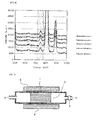
- the difference of the spectra of respective catalysts (samples) was observed by reflection spectrum measurement.
- the reflection spectrum measurement was carried out by the following method using UV-2500PC (equipped with integrating sphere option: ISR-240A) manufactured by Shimadzu Corporation.
- each sample was pressure-bonded to a sample holder for a powder sample by using a glass block and put in a position of a measurement sample (Sample) of a measurement device.
- a BaSO 4 powder was pressure-bonded to a sample holder for a powder sample by using a glass block and put in a standard sample (Reference) position of a measurement device.
- the measurement condition of the reflection spectrum was as follows:
- Table 1 shows the reflection intensity ratio I 500 /I 700 of the reflection intensity I 500 of each catalyst at 500 nm and the reflection intensity I 700 of the catalyst at 700 nm.
- the reflection intensity ratio I 500/ I 700 value is expected to have measurement dispersion of about ⁇ 0.05.
- the catalysts A to D of examples of the present invention tended to have low reflection intensity from 450 nm to 550 nm (wavelength band from blue color to green color), high reflection intensity in wavelength band of 650 nm or longer (wavelength band of red color), I 500/ I 700 of about 0.3 to 0.8, and russet-colored appearance.
- the catalysts E to G of comparative examples had high reflection intensity from 450 nm to 550 nm, I 500 /I 700 of about 0.9 to 1.1, and white or light green-colored appearance.
- the catalysts A to D of examples and the catalysts E to G of comparative examples were observed by TEM (transmission electron microscope) and the amounts of Ni forming a solid solution in the SrTiO 3 grains or SrZrO 3 grains were measured by EDX (energy dispersion x-ray spectrometry).
- TEM was carried out using HD-2300A manufactured by Hitachi High Technologies Corporation and EDX was carried out using Genesis XM4 manufactured by AMETEK Inc. at an accelerating voltage of 200 kV and a spot diameter (probe diameter) of 0.5 nm.
- FIG. 2 shows the TEM image of catalysts A and FIG. 3 , FIG. 4, and FIG. 5 respectively show the results of EDX mapping of the Ni component, Sr component, and Ti component in the same field of view as that of the TEM image in FIG. 2 .
- the peak in a range of 730 keV to 770 keV was attributed to Ni (K line) and it was confirmed that the Ni component existed also in SrTiO 3 grains.
- the number of part(s) by mole of Ni atoms to 100 parts by mole of Ti atoms was calculated from the spectrum surface area ratio of the Ti-K line and Ni-K line in the EDX spectrum data obtained in the above-mentioned manner.
- Table 1 shows the values of "the number of part(s) by mole of Ni atoms to 100 parts by mole of SrTiO 3 molecules and SrZrO 3 " obtained by 5-point EDX point analysis for each of the catalysts A to G. Since the EDX measurement has about ⁇ 0.5 atm % of measurement dispersion, it is assumed that the Ni content shown in Table 1 has measurement dispersion of at maximum about ⁇ 0.5 parts by mole.
- the catalysts A to D of examples contained the Ni component in a larger amount in SrTiO 3 or SrZrO 3 (carrier component), a perovskite compound, than the catalysts E to G of comparative examples and particularly that SrTiO 3 grains of the catalyst A contained 1.3 parts by mole or more of Ni and SrZrO 3 grains of the catalyst B contained 1.0 part by mole or more of Ni. Consequently, that the catalysts A to D of examples show russet color is supposedly attributed to that a portion of the Ni component, mixed in the catalyst source materials was taken in the crystal structure of SrTiO 3 or SrZrO 3 and formed a solid solution.
- the catalysts A to G of examples and comparative examples produced in the above-mentioned manner were used for a reforming test using carbon dioxide to investigate the properties of the respective catalysts.
- Each of the catalysts A to G of examples and comparative examples produced in the above-mentioned manner was subjected to reduction treatment by thermal treatment at 500°C/1 h in nitrogen containing 5% of hydrogen to reduce NiO to metal Ni .
- X-ray diffraction measurement on the obtained catalysts A to G was carried out after the reduction treatment to confirm that the NiO was all reduced into Ni phase (metal Ni) .
- a reaction tube 1 made of a metal and equipped with a heater 2 in the outside was filled with 5 cc of each of the already reduced hydrocarbon gas reforming catalysts (A to G) 3 produced in the above-mentioned manner.
- a back pressure valve 6 was adjusted to increase the inner pressure to 0.4 MPa and the gas flow was continued for 8 h as it was.
- the gas obtained through an outlet 5 was introduced into an analyzing apparatus to measure a gas concentration. Further, on completion of the test, the gas flow was stopped to perform cooling, and the hydrocarbon gas reforming catalyst was taken out of the reaction tube 1 to perform thermal weight measurement under air flow.
- reaction of the carbon deposited on the sample and O 2 was carried out as in the following formula (4): C + O 2 ⁇ 2CO 2 (4) so as to estimate a decrease in the sample weight as a carbon deposition amount.
- Table 2 shows the methane (CH 4 ) conversion ratio, carbon dioxide (CO 2 ) conversion ratio, the CO/H 2 ratio (molar ratio) of the gas (reformed gas) obtained in stable state on completion of the reaction, and the carbon deposition amount on completion of the 8 h test.
- the methane conversion ratio is a value showing how much part of the introduced methane was converted into other substances (mainly carbon monoxide) by the reforming reaction
- the methane conversion ratio of Table 2 is a value showing a ratio of methane converted into other substances in percentage relative to the introduced methane.
- the carbon dioxide conversion ratio is a value showing how much part of the introduced carbon dioxide was converted into other substances (mainly carbon monoxide) by the reforming reaction
- the carbon dioxide conversion ratio of Table 2 is a value showing a ratio of carbon dioxide converted into other substances in percentage relative to the introduced carbon dioxide.
- the catalysts E to G of comparative examples failing to satisfy the requirements of the present invention showed carbon deposition on their surfaces after the test.
- the carbon deposition did not result in clogging of the reaction tube in the 8 h reforming test; however, in the case the test time was prolonged, the carbon deposition amount was increased and it might finally result in difficulty of the gas flow due to the clogging of the reaction tube.
- Ni component was taken in the crystal structure of SrTiO 3 and formed a solid solution in the catalysts A to D of examples whereas no solid solution was formed in the catalysts E to G of comparative examples was supposedly attributed to the difference of their manufacturing methods.
- the catalysts E and F of Comparative Example 1 and Comparative Example 2 were produced by adding the Ni component after synthesis of SrTiO 3
- the catalyst A of Example 1 was produced by a method of synthesizing SrTiO 3 (SrTiO 3 in which Ni formed a solid solution) by thermal treatment of a mixture of NiO, SrCO 3 , and TiO 2 so as to cause reaction of SrCO 3 and TiO 2 by heating in the presence of NiO and therefore, it is supposed that a portion of NiO formed a solid solution in the crystal structure of SrTiO 3 and 1.3 parts by mole or more of Ni was taken in and formed a solid solution in the crystal structure of SrTiO 3 .
- the temperature at which the synthesis of SrTiO 3 phase started was as high as 800°C or higher and in such a high temperature, SrTiO 3 was synthesized from SrCO 3 and TiO 2 in the presence of NiO and therefore, it is supposed that a portion of NiO formed a solid solution in the crystal structure of SrTiO 3 and 1.3 parts by mole or more of the Ni component was taken in and formed a solid solution in the crystal structure of SrTiO 3 . Additionally, in the case of the thermal treatment at a temperature as low as about 500°C as in Comparative Example 3, Ni never forms a solid solution with SrTiO 3.
- the Ni content in the carrier component (SrTiO 3 grains) was more or less lowered as compared with that in the catalyst A; however, due to the same reason as that of the catalyst A, it is supposed that high carbon deposition resistance was shown as compared with that of the catalysts E to G of comparative examples. Also in the catalyst C containing a mixed carrier of SrTiO 3 and SrZrO 3 , high carbon deposition resistance was confirmed as shown in Table 2.
- the limit of the solid solution of Ni was supposed to be about 3 parts by mole to 100 parts by mole of SrTiO 3 .
- the solid solution amount of Ni was smaller than that of the catalyst A. From this fact, in the case of a catalyst using SrZrO 3 as a carrier, the limit of the solid solution of Ni was supposed to be about 2 parts by mole to 100 parts by mole of SrZrO 3 .
- a solid solution consisting of 1 to 3 parts by mole of Ni to 100 parts by mole of SrTiO 3 and a solid solution consisting of 1 to 2 parts by mole of Ni to 100 parts by mole of SrZrO 3 are expected to have high carbon deposition resistance as a hydrocarbon gas reforming catalyst.
- a mixed catalyst of both solid solutions like the catalyst C of Example 3 can also cause the same effect of restraining carbon deposition.
- a Ni component source material to be used for manufacturing a hydrocarbon gas reforming catalyst of the present invention is not limited to NiO and for example, metal Ni and Ni nitrate can be used as the source material. Even in that case, metal Ni and Ni nitrate are oxidized and converted into NiO at a temperature of less than 800°C in the firing step in atmosphere, so that the same effect as that in the case of using NiO as a source material can be caused.
- a hydrocarbon gas reforming catalyst of the present invention can be advantageously usable as a catalyst with high carbon deposition resistance in not only carbon dioxide reforming of methane but also water vapor reforming of methane and partial oxidation reaction of methane as compared with a common catalyst.
- a hydrocarbon gas reforming catalyst produced by the method of the present invention can be used stably in a range of a ratio of water vapor to methane (water vapor/methane) of 2 or lower in water vapor reforming.
- the present invention should not be limited to the above-described examples also in other points, and the specific conditions for producing a hydrocarbon gas reforming catalyst of the prevent invention and the specific conditions for reducing NiO to metal Ni may be variously applied and modified within the scope of the present invention.
- the present invention can efficiently manufacture a hydrocarbon gas reforming catalyst for efficiently producing a synthesized gas containing hydrogen and carbon monoxide from a hydrocarbon source material gas while restraining carbon deposition when the catalyst is used in any of the reforming reactions of reforming with carbon dioxide in which reforming is carried out by reaction of hydrocarbon and carbon dioxide with each other, reforming with water vapor in which reforming is carried out by reaction of hydrocarbon and water vapor with each other, combination reforming with use of both of carbon dioxide and water vapor, and reforming by partial oxidation reaction of methane.
- a hydrocarbon gas reforming catalyst of the present invention makes it possible to efficiently produce a synthesized gas containing hydrogen and carbon monoxide from a hydrocarbon source material gas while restraining carbon deposition in the case of any of the reforming reactions; carbon dioxide reforming, water vapor reforming, combination reforming with use of both of carbon dioxide and water vapor, and reforming by partial oxidation reaction of methane. Therefore, the present invention can be widely applied to the field of hydrocarbon gas reforming catalysts and the field of art related to the manufacture of a synthesized gas containing hydrogen and carbon monoxide.
Landscapes
- Chemical & Material Sciences (AREA)
- Chemical Kinetics & Catalysis (AREA)
- Engineering & Computer Science (AREA)
- Organic Chemistry (AREA)
- Materials Engineering (AREA)
- Physics & Mathematics (AREA)
- Thermal Sciences (AREA)
- Health & Medical Sciences (AREA)
- General Health & Medical Sciences (AREA)
- Combustion & Propulsion (AREA)
- Inorganic Chemistry (AREA)
- Hydrogen, Water And Hydrids (AREA)
- Catalysts (AREA)
Applications Claiming Priority (2)
| Application Number | Priority Date | Filing Date | Title |
|---|---|---|---|
| JP2009202669 | 2009-09-02 | ||
| PCT/JP2010/064680 WO2011027727A1 (ja) | 2009-09-02 | 2010-08-30 | 炭化水素系ガス改質触媒、その製造方法および、合成ガスの製造方法 |
Publications (2)
| Publication Number | Publication Date |
|---|---|
| EP2474355A1 true EP2474355A1 (de) | 2012-07-11 |
| EP2474355A4 EP2474355A4 (de) | 2014-11-05 |
Family
ID=43649264
Family Applications (1)
| Application Number | Title | Priority Date | Filing Date |
|---|---|---|---|
| EP10813676.3A Withdrawn EP2474355A4 (de) | 2009-09-02 | 2010-08-30 | Katalysator zur kohlenwasserstoffgasreformierung, verfahren zu seiner herstellung und synthesegasherstellungsverfahren |
Country Status (5)
| Country | Link |
|---|---|
| US (1) | US20120161078A1 (de) |
| EP (1) | EP2474355A4 (de) |
| JP (1) | JP5126560B2 (de) |
| CN (1) | CN102481552B (de) |
| WO (1) | WO2011027727A1 (de) |
Families Citing this family (17)
| Publication number | Priority date | Publication date | Assignee | Title |
|---|---|---|---|---|
| WO2013187436A1 (ja) * | 2012-06-13 | 2013-12-19 | 株式会社村田製作所 | 改質用触媒、その製造方法、および合成ガスの製造方法 |
| JP2014073436A (ja) * | 2012-10-03 | 2014-04-24 | Murata Mfg Co Ltd | 炭化水素改質触媒、ならびにそれを用いた炭化水素改質方法およびタール改質方法 |
| WO2014189006A1 (ja) * | 2013-05-21 | 2014-11-27 | 株式会社村田製作所 | 炭化水素系ガスの改質用触媒およびそれを用いた炭化水素系ガスの改質方法 |
| GB201310953D0 (en) * | 2013-06-19 | 2013-07-31 | Univ Keele | New catalysts |
| CA3078512A1 (en) * | 2013-07-22 | 2015-01-29 | Greyrock Technology, Llc | Process and catalyst system for the production of high quality syngas from light hydrocarbons and carbon dioxide |
| KR101457098B1 (ko) * | 2013-11-05 | 2014-11-04 | 한국과학기술연구원 | 촉매, 이를 이용한 전극 및 해당 촉매를 이용한 건식 개질 방법 |
| EP3065854A2 (de) | 2013-11-06 | 2016-09-14 | Watt Fuel Cell Corp. | Reformer mit perowskit als struktureller komponente |
| GB201321230D0 (en) * | 2013-12-02 | 2014-01-15 | Univ Keele | Catalysts |
| JP6187282B2 (ja) * | 2014-01-23 | 2017-08-30 | 株式会社村田製作所 | 炭化水素改質触媒 |
| KR101994152B1 (ko) * | 2017-09-18 | 2019-06-28 | 전남대학교산학협력단 | 탄소 침적의 감소를 위해, 금속이온이 치환된 페로브스카이트 금속산화물 촉매 및 이의 제조 방법, 그리고 이를 이용한 메탄 개질 반응 방법 |
| KR102029203B1 (ko) * | 2018-02-22 | 2019-11-08 | 부경대학교 산학협력단 | 페로브스카이트 복합체 구조의 촉매를 이용한 해조류 유래 수열 액화 원료의 수증기 개질 반응에 의한 수소의 생산 방법 |
| JP6940002B2 (ja) * | 2018-07-09 | 2021-09-22 | 株式会社村田製作所 | 炭化水素改質触媒および炭化水素改質装置 |
| WO2021111784A1 (ja) * | 2019-12-06 | 2021-06-10 | 株式会社村田製作所 | 炭化水素改質触媒および炭化水素改質装置 |
| JP7184214B2 (ja) * | 2020-01-07 | 2022-12-06 | 株式会社村田製作所 | 炭化水素改質触媒および炭化水素改質装置 |
| CN112811900B (zh) * | 2021-01-28 | 2023-04-18 | 金宏气体股份有限公司 | p-n-BaTiO3/NiO异质结压电陶瓷、其制法与自供能高效制氢中的应用 |
| CN112876241B (zh) * | 2021-01-28 | 2023-06-16 | 金宏气体股份有限公司 | p-n-SrZrO3/NiO异质结压电陶瓷、其制法与自供能高效制氢中的应用 |
| CN121588833A (zh) * | 2021-11-18 | 2026-03-03 | 株式会社Lg化学 | 用于甲烷重整的催化剂及制造其的方法 |
Family Cites Families (8)
| Publication number | Priority date | Publication date | Assignee | Title |
|---|---|---|---|---|
| JPH08231204A (ja) | 1994-12-27 | 1996-09-10 | Sekiyu Sangyo Kasseika Center | 二酸化炭素改質反応による水素及び一酸化炭素の製造法 |
| JP3638358B2 (ja) | 1995-12-20 | 2005-04-13 | 財団法人石油産業活性化センター | 二酸化炭素改質化触媒及びこれを用いた改質化法 |
| JP3864224B2 (ja) * | 2002-10-03 | 2006-12-27 | 独立行政法人産業技術総合研究所 | 水素製造用触媒及びそれを用いた水素の製造方法 |
| JP2006346598A (ja) | 2005-06-16 | 2006-12-28 | Nissan Motor Co Ltd | 水蒸気改質触媒 |
| WO2006137211A1 (ja) * | 2005-06-24 | 2006-12-28 | Murata Manufacturing Co., Ltd. | 燃料電池用改質装置 |
| EP2100662B1 (de) * | 2007-01-09 | 2014-07-09 | Murata Manufacturing Co. Ltd. | Katalysator zur reformierung von kohlendioxid und herstellungsverfahren dafür |
| CN101219908B (zh) * | 2007-09-21 | 2012-12-05 | 南京大学 | 多元金属氧化物半导体介孔材料及其合成方法 |
| EP2441517B1 (de) * | 2009-06-12 | 2022-04-13 | Murata Manufacturing Co., Ltd. | Katalysator zur kohlenwasserstoffgasreformierung, verfahren zu seiner herstellung und synthesegasherstellungsverfahren |
-
2010
- 2010-08-30 JP JP2011529893A patent/JP5126560B2/ja active Active
- 2010-08-30 EP EP10813676.3A patent/EP2474355A4/de not_active Withdrawn
- 2010-08-30 CN CN201080038360.0A patent/CN102481552B/zh active Active
- 2010-08-30 WO PCT/JP2010/064680 patent/WO2011027727A1/ja not_active Ceased
-
2012
- 2012-03-02 US US13/410,382 patent/US20120161078A1/en not_active Abandoned
Also Published As
| Publication number | Publication date |
|---|---|
| CN102481552A (zh) | 2012-05-30 |
| JP5126560B2 (ja) | 2013-01-23 |
| US20120161078A1 (en) | 2012-06-28 |
| JPWO2011027727A1 (ja) | 2013-02-04 |
| WO2011027727A1 (ja) | 2011-03-10 |
| EP2474355A4 (de) | 2014-11-05 |
| CN102481552B (zh) | 2014-03-12 |
Similar Documents
| Publication | Publication Date | Title |
|---|---|---|
| EP2474355A1 (de) | Katalysator zur kohlenwasserstoffgasreformierung, verfahren zu seiner herstellung und synthesegasherstellungsverfahren | |
| Wang et al. | Inducing synergy in bimetallic RhNi catalysts for CO2 methanation by galvanic replacement | |
| Toniolo et al. | Structural investigation of LaCoO3 and LaCoCuO3 perovskite-type oxides and the effect of Cu on coke deposition in the partial oxidation of methane | |
| Lorenzut et al. | FeMo-based catalysts for H2 production by NH3 decomposition | |
| Fu et al. | Gold–ceria catalysts for low-temperature water-gas shift reaction | |
| Sánchez-Sánchez et al. | Ethanol steam reforming over Ni/La–Al2O3 catalysts: Influence of lanthanum loading | |
| CN102802789B (zh) | 烃类气体重整用催化剂、其制造方法及合成气体的制造方法 | |
| Silva-Calpa et al. | The ZnxZr1− xO2− y solid solution on m-ZrO2: Creating O vacancies and improving the m-ZrO2 redox properties | |
| Li et al. | Hexagonal YFe1− x Pd x O3− δ: Nonperovskite Host Compounds for Pd2+ and Their Catalytic Activity for CO Oxidation | |
| Nguyen et al. | Ultrastable iridium–ceria nanopowders synthesized in one step by solution combustion for catalytic hydrogen production | |
| EP3062927B1 (de) | Temperaturregelbarer mesoporöser co oxidationskatalysator mit goldablagerung | |
| Yuan et al. | Liquid‐phase hydrogenation of cinnamaldehyde over Cu‐Au/SiO2 catalysts | |
| WO2010001690A1 (ja) | 二酸化炭素改質方法 | |
| EP1920830A1 (de) | Gruppe-VIII-Metall-und-Zeroxid/Zirkoniumoxid-Katalysatoren zur katalytischen Oxidation oder Reformierung von Kohlewasserstoffen | |
| EP3804850B1 (de) | Kohlenwasserstoffreformierungskatalysator und vorrichtung zur kohlenwasserstoffreformierung | |
| JP6725994B2 (ja) | 水蒸気改質触媒、それを用いた水蒸気改質方法、及び水蒸気改質反応装置 | |
| Ma et al. | Elevating dimethyl oxalate hydrogenation activity over core–shell Cu/SiO2@ CeO2 catalysts | |
| Reina et al. | H2 oxidation as criterion for PrOx catalyst selection: Examples based on Au–CoOx-supported systems | |
| An et al. | Controlling the metal–support interaction with steam-modified ceria to boost Pd activity towards low-temperature CO oxidation | |
| Amin et al. | An investigation on the role of ytterbium in ytterbium promoted γ-alumina-supported nickel catalysts for dry reforming of methane | |
| Wang et al. | Pseudo core-shell LaCoO3@ MgO perovskite oxides for high performance methane catalytic oxidation | |
| Torregrosa-Rivero et al. | Exploring the effect of using carbon black in the sol-gel synthesis of BaMnO3 and BaMn0. 7Cu0. 3O3 perovskite catalysts for CO oxidation | |
| Wu et al. | CexZr1− xO2 mixed oxide as OSC materials for supported Pd three-way catalysts: Flame-spray-pyrolysis vs. co-precipitation | |
| US12589381B2 (en) | Hydrocarbon reforming catalyst and hydrocarbon reforming apparatus | |
| Larina et al. | Synthesis, physicochemical and catalytic properties of Ni/PrCeZrO catalysts for water-gas shift reaction |
Legal Events
| Date | Code | Title | Description |
|---|---|---|---|
| PUAI | Public reference made under article 153(3) epc to a published international application that has entered the european phase |
Free format text: ORIGINAL CODE: 0009012 |
|
| 17P | Request for examination filed |
Effective date: 20120215 |
|
| AK | Designated contracting states |
Kind code of ref document: A1 Designated state(s): AL AT BE BG CH CY CZ DE DK EE ES FI FR GB GR HR HU IE IS IT LI LT LU LV MC MK MT NL NO PL PT RO SE SI SK SM TR |
|
| DAX | Request for extension of the european patent (deleted) | ||
| A4 | Supplementary search report drawn up and despatched |
Effective date: 20141007 |
|
| RIC1 | Information provided on ipc code assigned before grant |
Ipc: C01B 3/40 20060101ALI20140930BHEP Ipc: B01J 23/78 20060101AFI20140930BHEP |
|
| STAA | Information on the status of an ep patent application or granted ep patent |
Free format text: STATUS: REQUEST FOR EXAMINATION WAS MADE |
|
| STAA | Information on the status of an ep patent application or granted ep patent |
Free format text: STATUS: THE APPLICATION IS DEEMED TO BE WITHDRAWN |
|
| 18D | Application deemed to be withdrawn |
Effective date: 20180505 |