EP2477094A9 - Redimensionnement sélectif de cellules d'entrée de données - Google Patents
Redimensionnement sélectif de cellules d'entrée de données Download PDFInfo
- Publication number
- EP2477094A9 EP2477094A9 EP20110150884 EP11150884A EP2477094A9 EP 2477094 A9 EP2477094 A9 EP 2477094A9 EP 20110150884 EP20110150884 EP 20110150884 EP 11150884 A EP11150884 A EP 11150884A EP 2477094 A9 EP2477094 A9 EP 2477094A9
- Authority
- EP
- European Patent Office
- Prior art keywords
- input
- size
- cell
- input cell
- display
- Prior art date
- Legal status (The legal status is an assumption and is not a legal conclusion. Google has not performed a legal analysis and makes no representation as to the accuracy of the status listed.)
- Granted
Links
Images



Classifications
-
- G—PHYSICS
- G06—COMPUTING OR CALCULATING; COUNTING
- G06F—ELECTRIC DIGITAL DATA PROCESSING
- G06F3/00—Input arrangements for transferring data to be processed into a form capable of being handled by the computer; Output arrangements for transferring data from processing unit to output unit, e.g. interface arrangements
- G06F3/01—Input arrangements or combined input and output arrangements for interaction between user and computer
- G06F3/048—Interaction techniques based on graphical user interfaces [GUI]
- G06F3/0481—Interaction techniques based on graphical user interfaces [GUI] based on specific properties of the displayed interaction object or a metaphor-based environment, e.g. interaction with desktop elements like windows or icons, or assisted by a cursor's changing behaviour or appearance
-
- G—PHYSICS
- G06—COMPUTING OR CALCULATING; COUNTING
- G06F—ELECTRIC DIGITAL DATA PROCESSING
- G06F3/00—Input arrangements for transferring data to be processed into a form capable of being handled by the computer; Output arrangements for transferring data from processing unit to output unit, e.g. interface arrangements
- G06F3/01—Input arrangements or combined input and output arrangements for interaction between user and computer
- G06F3/02—Input arrangements using manually operated switches, e.g. using keyboards or dials
- G06F3/023—Arrangements for converting discrete items of information into a coded form, e.g. arrangements for interpreting keyboard generated codes as alphanumeric codes, operand codes or instruction codes
- G06F3/0233—Character input methods
-
- G—PHYSICS
- G06—COMPUTING OR CALCULATING; COUNTING
- G06F—ELECTRIC DIGITAL DATA PROCESSING
- G06F3/00—Input arrangements for transferring data to be processed into a form capable of being handled by the computer; Output arrangements for transferring data from processing unit to output unit, e.g. interface arrangements
- G06F3/01—Input arrangements or combined input and output arrangements for interaction between user and computer
- G06F3/048—Interaction techniques based on graphical user interfaces [GUI]
- G06F3/0487—Interaction techniques based on graphical user interfaces [GUI] using specific features provided by the input device, e.g. functions controlled by the rotation of a mouse with dual sensing arrangements, or of the nature of the input device, e.g. tap gestures based on pressure sensed by a digitiser
- G06F3/0488—Interaction techniques based on graphical user interfaces [GUI] using specific features provided by the input device, e.g. functions controlled by the rotation of a mouse with dual sensing arrangements, or of the nature of the input device, e.g. tap gestures based on pressure sensed by a digitiser using a touch-screen or digitiser, e.g. input of commands through traced gestures
Definitions
- the present disclosure generally relates to user interfaces for electronic devices and more particularly to user interfaces for receiving user input.
- Electronic devices such as computers and handheld devices, often present user interface displays into which users are able to enter information.
- Some user interface displays include cells or fields into which data can be entered. Examples include forms with input cells or displays of spreadsheet cells that can receive data provided by a user. Textual or numeric information is often entered into data input cells of a form by selecting a particular cell through the user interface facilities and typing information into the cell with a keyboard. These techniques for entering text or numeric data sometimes limits the usefulness of user interfaces presented on some portable electronic devices.
- Some portable electronic devices include a touch screen display that allows a user to input information by drawing on the display to input, for example, text, numbers, or even sketches of images.
- User input displays generally present data input cells with a size suitable to display characters entered with a keyboard. The size of cells on conventional user input displays can make writing directly into a data input cell using the touch screen display input capabilities difficult.
- FIG. 1 illustrates a data input cell grid user interface in accordance with one example
- FIG. 2 illustrates an expanded data input cell grid user interface, in accordance with one example
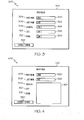
- FIG. 3 is a user input form display according to one example
- FIG. 4 illustrates an expanded cell user input form display in accordance with one example
- FIG. 5 illustrates an input cell resizing process, in accordance with one example.
- FIG. 6 is a block diagram of an electronic device and associated components in which the systems and methods disclosed herein may be implemented.
- the terms “a” or “an”, as used herein, are defined as one or more than one.
- the term plurality, as used herein, is defined as two or more than two.
- the term another, as used herein, is defined as at least a second or more.
- the terms “including” and “having,” as used herein, are defined as comprising (i.e., open language).
- the term “coupled,” as used herein, is defined as "connected,” although not necessarily directly, and not necessarily mechanically.
- the display of various examples present a multiple input cell presentation that consists of a number of displayed in put cells.
- the user input facilities of a device allow a user to indicate which one input cell of the number of displayed input cells is to be a selected input cell that the user wishes to expand.
- the one selected input cell is able to be expanded to any size.
- the one selected input cell is able to be expanded to a size that is independent of data contained within the selected cell.
- expansion of the selected input cell is not limited to expansion to a size that allows the text or other content within the selected cell to be entirely visible, but is able to be expanded to display only a greater portion of the contents of the cell or over-expanded beyond a size required to show the entire contents of the selected input cell.
- the one selected input cell is also expanded to a size that is independent of the other displayed input cells.
- the touch screen display input mechanism is able to use the area of the expanded cell as a drawing area for handwritten input.
- the expanded area makes it easier for a user to enter handwritten text, numbers, or sketches. Further processing of the handwritten input is able to perform, for example, handwriting recognition to derive machine readable data such as character codes from the handwritten text input.
- the user is then able to select that the selected input cell be reduced in size.
- the reduced size may correspond to a default input cell size or a size required to display the user provided input.
- the selected input cell is reduced in size, the user provided content is also able to be reduced in size to better fit the reduced size of the selected input cell.
- FIG. 1 illustrates a data input cell grid user interface 100 in accordance with one example.
- the data input cell grid user interface 100 includes a touch screen display input 102.
- the touch screen display input 102 is an example of a display screen that presents a grid of a number of input cells 104.
- the grid of a number input cells 104 is an example of a multiple input cell presentation.
- the touch screen display input 102 of this example displays a rectangular grid of a number of input cells 104 that are able to receive data from a user.
- Each input cell 104 may be selected by touching the touch screen display input 102, e.g., with a stylus, finger or other touch enabling device, in an area associated with the corresponding input cell 104.
- the data input cell grid user interface 100 may also include a navigation key cluster 130 that includes keys to allow a user to move a cursor in an up, down, left, or right direction.
- the navigation key cluster 130 is an example of a user interface facility that receives input from a user, such as pressing of a key within the navigation key cluster 130, to identify a selected input cell from the number of displayed input cells.
- the navigation key cluster 130 includes a select key 132 that is used to, for example, select a data input cell once a cursor has been directed to that cell by the up, down left or right direction keys of the navigation key cluster 130.
- the data input cell grid user interface 100 may include a display screen (not shown) without touch sensing capabilities used in combination with the navigation key cluster 130.
- the illustrated touch screen display input 102 of this example displays a two dimensional grid of data input cells 104.
- Each input cell is able to display data associated with the input cell as well as receive data that is to be associated with that input cell from a user.
- a user is able to select an input cell and cause the input cell to be expanded to provide a greater area of the touch screen display input 102 to the user for drawing or handwritten input.
- the illustrated two dimensional grid of data input cells 104 is a four column by five row grid. Various examples are able to display data input cells in any suitable arrangement based upon the needs of a particular application.
- the illustrated two dimensional grid of data input cells 104 has a first column 120, a second column 122, a third column 124 and a fourth column 126.
- the two dimensional grid of data input cells 104 has five rows: a first row 110, a second row 112, a third row 114, a fourth row 116, and a fifth row 118.
- Each input cell of the two dimensional grid of data input cells 104 is able to be selected either by a touching of the input cell on the touch screen display input 102 or by use of the navigation key cluster 130. Once an input cell is selected, data can be input into the selected input cell.
- the two dimensional grid of data input cells 104 contains information concerning a number of teams.
- Data in the input cells of the first column 120 indicate the team name associated with each row.
- the second column 122 indicates an ordinal identifier for each team, such as "FIRST" for "TEAM A" of the first row 110.
- the third column 124 and the fourth column 126 each contain further information regarding that row's team.
- a second input cell 140 is illustrated at the intersection of the second row 112 and the second column 122.
- the second input cell 140 has a second cell expansion icon 142 that allows a user to expand the displayed area of the second input cell to facilitate entry of handwritten data using the touch screen display input 102, as is discussed in detail below.
- Each input cell of the illustrated two dimensional grid of data input cells 104 has a respective resizing control.
- the input cells are all displayed with a normal size, i.e. an original size, and the displayed resizing control is an expansion graphical interface element in the form of an expansion icon.
- the data input cell of the first row 110 and the first column 120 which contains the text "TEAM A,” has a first expansion icon 128.
- the enlargement icons of the two dimensional grid of data input cells 104 are one example of resizing controls.
- various examples of the data input cell grid user interface 100 allow the user to expand a particular data input cell by, for example, a touching of or moving an expansion icon that is associated with or part of the data input cell.
- a user is able to tap the expansion icon or drag the expansion icon of that input cell to cause the resizing control to receive the commands to resize the selected input cell.
- the selected input cell is the input cell that is associated with the expansion icon touched or moved by the user.
- a particular input cell is expanded automatically when the user provides an input to identify that particular input cell as the input cell.
- a user of a touch screen display input 102 is able to use a touch screen gesture to indicate a command to resize the selected input cell.
- a touch screen gesture is made, for example, by moving one or more fingers in a determined manner across the touch screen display input 102.
- a number of touch screen gestures may be defined for a particular touch screen display input 102, such as to display another image, open another application and the like.
- FIG. 2 illustrates an expanded data input cell grid user interface 200, in accordance with one example.
- the expanded data input cell grid user interface 200 illustrates an expanded cell display 210 that includes an expanded second input cell 204 of the two dimensional grid of data input cells described above with regards to the data input cell grid user interface 100.
- the expanded cell display 210 is an example of a multiple input cell presentation. As depicted for the expanded data input cell grid user interface 200, the expanded cell display 210 presents an unaltered display of the first row 110 and the first column 120 of input cells.
- the expanded data input cell grid user interface 200 depicts an expanded second input cell 204, which corresponds to the second input cell 140 of the data input cell grid user interface 100.
- the expanded second input cell 204 extends horizontally: from the right side of the first column 120 to the right edge of the touch screen display input 102.
- the expanded second input cell 204 has been expanded vertically from a line corresponding to the bottom of the first row 110 to a line in the vicinity of the top of the fifth row 118.
- Below the expanded second input cell are displayed the second column 122, third column 124 and the fourth column 126 of the third row 114.
- the third row 114 is discontinuous since there is a vertical jump between the first column 120 and the second column 122 of the third row 114
- one example expanded cell display 210 preserves the display of neighboring cells of the expanded second input cell 204 in this manner to provide the context of data in surrounding cells.
- Various examples are able to select input cells to display around the expanded second input cell 204 according to various preferences or requirements of a particular user interface.
- selection of the input cell itself may cause the input cell to be expanded and the expanded cell may be restored to a normal size upon detection of a predetermined input, such as select key 132, an "Enter" key or any other designated input.
- a selected input cell may be expanded or an expanded cell may be restored to its original size through the use of touch screen gestures, e.g., swipe the screen upwards to expand, downwards to close, etc.
- an input cell is able to be expanded to use the entire area of the touch screen display input 102.
- the selected input cell of this example can be expanded to any size by using that input cell's expansion icon.
- Various embodiments are able to be configured to allow expansion of the selected input cell to any arbitrary size under the control of the user.
- Other examples allow expansion of the selected input cell to fixed expanded sizes.
- Some examples support both variable and fixed expansion sizes through the use of, for example, menu options, different icons, or similar techniques.
- the expanded second input cell 204 is expanded to a size that is independent of the data contained within that cell and is also expanded to a size that is independent of the other displayed input cells.
- the user expands the second input cell 140 in one example by a touching of or tapping on the second cell expansion icon 142, which causes the second input cell 140 to expand to a size based on, for example, available area of the touch screen display input 102 and other data desired to be displayed thereon along with the expanded second input cell 204.
- a user is able move the second cell expansion icon 142 by placing a finger or stylus on it and dragging it down, to the right, or both down and to the right in order to expand the second input cell 140 by a desired amount to cause the second input cell 140 to be a new desired size.
- cell expansion icons on non-touch screen displays by allowing the user to select the second cell expansion icon 142 without touching the display, such as by navigation key cluster 130 or a menu. Once the second cell expansion icon 142 is selected, the selecting alone may cause the second input cell 140 to expand or the user may be able to move the second cell expansion icon 142 by arrow keys or other similar user interface to cause a variable amount of expansion of the second input cell 140.
- the expanded second input cell 204 allows a user to use its expanded area of the touch screen display input 102 for handwriting, drawing, or other input using the area of the touch screen display input 102 that is defined by the expanded second input cell 204. Users in various examples are able to draw in the area of the expanded second input cell 204 by placing and moving a finger tip or a stylus in that area, or by any other suitable input technique.
- the contents of the second input cell are also expanded.
- the word contained in the second input cell 140 i.e., "SECOND” is expanded in the expanded second input cell 204 relative to the size of that displayed word in the second input cell 140.
- a user By expanding the displayed image of the data contained in the expanded second input cell 204, a user is better able to edit the contents of that input cell.
- graphical editing facilities are provided to the user to draw sketches into the expanded input cell and modify expanded representations of graphical images contained in the expanded input cell.
- the size or other characteristics of the data displayed in an expanded input cell are not changed from those displayed in the normal sized input cell.
- the expanded second input cell 204 includes a second cell restore icon 206, which is an example of a restore graphical interface element.
- the second cell restore icon 206 is similar to the second cell expansion icon 142 and allows a user to quickly restore the size of the expanded second input cell 204 to its original size.
- the second cell restore icon 206 is the same icon as the second cell expansion icon 142.
- the same icon is able to be used to resize its associated input cell by either expanding or shrinking the input cell.
- a cell resize icon which operates as either a cell expansion icon or a cell restore icon, can be used by a user placing his or her finger on the cell resize icon and dragging the cell resize icon to expand or shrink the associated input cell as desired.
- different graphic images are displayed for the second cell expansion icon 142 and the second cell restore icon 206 to indicate to the user that the respective icon is used to expand or restore the size of its associated input cell.
- One example of the different graphical images include a second cell expansion icon 142 that depicts a generally upward pointing arrow and a second cell restore icon 206 that depicts a generally downward pointing arrow.
- similar icons are used for the cell expansion icons of all cells and similar cell restore icons are also used for all displayed input cells. Activation of a cell resize icon can similarly be performed by a touching of the icon that is presented on a touch screen display.
- FIG. 3 is a user input form display 300 according to one example.
- the user input form display 300 depicts an example of a data entry form 302 into which a user inserts information.
- the data entry form 302 is an example of a multiple input cell presentation that includes a separate row for five pieces of information that a user is to provide.
- a first row 304 includes a label "FIRST NAME" and has an associated first input cell 320. In the illustrated example, the first input cell 320 has the word "JOHN" entered therein.
- a second row 306 includes a label "LAST NAME" and has an associated second input cell 322 that has the word "DOE" entered therein.
- a third row 308 has a label "ADDRESS,” a fourth row 310 has a label “CITY” and a fifth row 312 has a label “PHONE.”
- the third row 308 has an associated third input cell 324, the fourth row 310 has an associated fourth input cell 326, and the fifth row 312 has an associated fifth input cell 328.
- the data entry form 302 includes a single "expand/shrink" icon 350.
- the single "expand/shrink” icon 350 is another example of a resizing control that receives commands from a user to resize a selected input cell.
- the data entry form 302 allows a user to select an input cell, such as by tapping on the cell or using navigation keys, and the user then taps or otherwise activates, such as by the select key 132 described above, a single user interface element that is the "expand/shrink" icon 350.
- FIG. 4 illustrates an expanded cell user input form display 400 in accordance with one example.
- the expanded cell user input form display 400 includes an expanded cell data entry form 402 with an expanded third input cell 404.
- the expanded cell data entry form 402 is an example of a multiple input cell presentation.
- the expanded third input cell 404 corresponds to the third input cell 324 discussed above.
- a user is able to, for example, draw on the larger area of the expanded third input cell 404 to enter data, symbols, sketches, or combinations of those, as data into the third input cell 324.
- the third input cell 324 is part of the third row 308 which is labeled "ADDRESS.”
- a user is able to, for example, handwrite a postal address into the expanded third input cell 404.
- the expanded cell user input form display 400 is able to present graphical displays within the expanded third input cell 404 to assist the user in providing data.
- a graphical street map of a city is able to be presented in the expanded third input cell 404 and a user is able to scroll thorough the map and point to a location that corresponds to the "address" that should be entered into the third input cell 324.
- the expanded cell data entry form 402 has an expanded third input cell 404 that has an upper left corner located in the same location as the upper left corner of the third input cell 324.
- the expanded third input cell 404 is expanded such that its right side and bottom extend to near the right and bottom edge of the expanded cell data entry form 402.
- the expanded cell data entry form 402 does not modify the display of the first input cell 320, the second input cell, or any of the labels of the rows relative to their display in the user input form display 300. Preserving this information in the expanded cell user input form display 400 gives a user some context for supplying the information requested in the expanded input cell.
- the user is able to activate the "expand/shrink" icon 350 to cause the expanded third input cell 404 to be resized to its normal size, and restore the user input form display 300.
- the user touches or taps the "expand/shrink" icon 350 to cause the expanded third input cell 404 to be resized.
- the expanded cell data entry form 402 as having a an expanded third input cell 404 that is resized to allow other portions of the expanded cell data entry form 402 to also be seen on the display. Further examples expand the selected input cell to other sizes.
- the expanded third input cell 404 is able to be expanded to take the entire area of the touch screen display input.
- the "expand/shrink" icon 350 is depicted in a suitable manner to allow the user to complete data entry into the expanded cell.
- FIG. 4 Further examples are also able to allow a user to resize expanded input cells, such as the expanded third input cell 404, once the "expand/shrink" icon 350 is pressed to cause the selected input cell to expand.
- Such resizing is able to be performed through special user interface elements such as additional menus, additional touch screen features, and the like.
- FIG. 5 illustrates an input cell resizing process 500, in accordance with one example.
- the input cell resizing process 500 is performed by a processor driving a graphical user interface, such as the data input cell grid user interface 100, expanded data input cell grid user interface 200, user input form display 300, and expanded cell user input form display 400.
- the input cell resizing process 500 begins by displaying, at 502, a user interface.
- the user interface is a graphical user interface such as is described above for the data input cell grid user interface 100 and/or user input form display 300.
- the displaying is performed in one example by a touch screen input display that allows a user to touch icons on the display in order for the icon to receive a command represented by that icon.
- the process displays a multiple input cell presentation, such as are described above.
- the input cell resizing process 500 continues to determine, at 504, if input cell expansion was selected for any input cell in the display. Input cell expansion is able to be selected by a resizing control associated with an input cell receiving a command to resize the cell.
- a resizing control receiving a command includes a user's selecting and activating a cell expansion icon associated with an input cell, such as the second cell expansion icon 142 described above. If input cell expansion was not selected, the processing returns to displaying, at 502, the user interface.
- an icon or other graphical interface element that is associated with an input cell is able to be moved by a user to select expansion of an input cell.
- a user is also able to touch an icon or other graphical interface element to cause the input cell to be resized to a second size that is different than a first size.
- the first size is able to be a normal, or original, size.
- a particular input cell is expanded automatically when the user provides an input to identify that particular input cell as the selected cell.
- a user of a touch screen display input is able to use a touch screen gesture to indicate a command to resize the selected input cell.
- a touch screen gesture is made, for example, by moving one or more fingers in a determined manner across the touch screen display input.
- the processing continues by expanding, at 506, the selected input cell.
- the above described transition from the second input cell 140 to the expanded second input cell 204 in response to selecting the second cell expansion icon 142 is an example of expanding the selected input cell.
- the selected input cell is able to be indicated by being associated with an activated cell expansion icon or by other suitable selection methods.
- the processing continues by accepting, at 508, input for the selected input cell.
- input for the selected input cell As discussed above, a user may provide input to be accepted by the processing by handwriting input such as handwritten text, handwritten images, or combinations of handwritten text and handwritten images into the expanded input cell.
- the processing receives this handwritten input that is written within the selected input cell when the selected input cell is expanded.
- the processing continues by determining, at 510, if the selected input cell is released.
- a selected input cell is released when, for example, a user is finished with providing input into the input cell or if the user indicates that the input cell should be returned to its normal, or original, size.
- An input cell is able to be released by selecting and activating, for example, a cell restore icon, such as the second cell restore icon 206.
- An input cell is also able to be released by a user performing touch screen gesture. Other suitable techniques are able to indicate that the input cell is released. If the selected input cell is not released, the processing returns to accepting, at 508, input for the selected input cell.
- the received input that was provided to the selected input cell is processed, at 512, to produce derived content that is, for example, able to be better represented on an electronic display.
- Inputs provided to the input cell are able to include, for example, handwritten input including handwritten text or handwritten sketches.
- One example processes these handwritten inputs to derive, for example, machine codes such as are defined by the American Standard Code for Information Interchange (ASCII) for codes that correspond to alphanumeric characters contained in the handwritten text.
- ASCII American Standard Code for Information Interchange
- Handwritten text is also able to be processed to derive clean, well formed textual images representing the alphanumeric characters contained in the handwritten text.
- Clean, well formed characters include, for example smoothed representations of the handwritten text or stored representations of alphanumeric characters representing the characters identified within the handwritten text. Such clean, well formed characters are able to also be determined in combination with machine codes for those characters. Such processing is able to be based upon, for example, Optical Character Recognition (OCR) processing to recognize handwritten characters and convert them into a clean representation or character codes.
- OCR Optical Character Recognition
- the processing of one example further processes handwritten inputs to identify and refine hand drawn sketches, which may or may not correspond to alphanumeric characters but may also include graphical content or any type of artwork, into clean, well formed images that are able to be better presented on a computer display.
- Input provided to the input cell is also able to be at least reduced in size to better fit the restored input cell size once the input cell is returned to its normal, or original, size.
- the processing continues to resize, at 514, the input cell and its contents to the normal, pre-expanded, size. The processing then ends.
- FIG. 6 is a block diagram of an electronic device and associated components 600 in which the systems and methods disclosed herein may be implemented.
- an electronic device 652 is a wireless two-way communication device with voice and data communication capabilities.
- Such electronic devices communicate with a wireless voice or data network 650 using a suitable wireless communications protocol.
- Wireless voice communications are performed using either an analog or digital wireless communication channel.
- Data communications allow the electronic device 652 to communicate with other computer systems via the Internet.
- Examples of electronic devices that are able to incorporate the above described systems and methods include, for example, a data messaging device, a two-way pager, a cellular telephone with data messaging capabilities, a wireless Internet appliance, a tablet computing device, or a data communication device that may or may not include telephony capabilities.
- the illustrated electronic device 652 is an example electronic device that includes two-way wireless communications functions.
- Such electronic devices incorporate communication subsystem elements such as a wireless transmitter 610, a wireless receiver 612, and associated components such as one or more antenna elements 614 and 616.
- a digital signal processor (DSP) 608 performs processing to extract data from received wireless signals and to generate signals to be transmitted.
- DSP digital signal processor
- the electronic device 652 includes a microprocessor 602 that controls the overall operation of the electronic device 652.
- the microprocessor 602 interacts with the above described communications subsystem elements and also interacts with other device subsystems such as flash memory 606, random access memory (RAM) 604.
- the flash memory 606 and RAM 604 in one example contain program memory and data memory, respectively.
- the microprocessor 602 also interacts with an auxiliary input/output (I/O) device 638, a Universal Serial Bus (USB) Port 628, a display 634, a keyboard 636, a speaker 632, a microphone 630, a short-range communications subsystem 620, a power subsystem 622, and any other device subsystems.
- I/O auxiliary input/output
- USB Universal Serial Bus
- the microprocessor 602 includes a display controller that is configured to resize the display of selected input cells, as is described above.
- the keyboard 636 is further able to include a navigation key cluster 130 as described above.
- the display 634 in one example is a touch screen display input 102, as described above.
- the keyboard 636 may be a physical (“hard”) keyboard or a virtual (“soft”) keyboard implemented, for example, as key images displayed on the touch screen display input 102.
- a battery 624 is connected to a power subsystem 622 to provide power to the circuits of the electronic device 652.
- the power subsystem 622 includes power distribution circuitry for providing power to the electronic device 652 and also contains battery charging circuitry to manage recharging the battery 624.
- the power subsystem 622 includes a battery monitoring circuit that is operable to provide a status of one or more battery status indicators, such as remaining capacity, temperature, voltage, electrical current consumption, and the like, to various components of the electronic device 652.
- the USB port 628 further provides data communication between the electronic device 652 and one or more external devices. Data communication through USB port 628 enables a user to set preferences through the external device or through a software application and extends the capabilities of the device by enabling information or software exchange through direct connections between the electronic device 652 and external data sources rather than via a wireless data communication network.
- Operating system software used by the microprocessor 602 is stored in flash memory 606. Further examples are able to use a battery backed-up RAM or other non-volatile storage data elements to store operating systems, other executable programs, or both.
- the operating system software, device application software, or parts thereof, are able to be temporarily loaded into volatile data storage such as RAM 604. Data received via wireless communication signals or through wired communications are also able to be stored to RAM 604.
- a computer executable program configured to perform the input cell resizing process 500, described above, is included in a software module stored in flash memory 606.
- the microprocessor 602 in addition to its operating system functions, is able to execute software applications on the electronic device 652.
- PIM personal information manager
- Further applications may also be loaded onto the electronic device 652 through, for example, the wireless network 650, an auxiliary I/O device 638, USB port 628, short-range communications subsystem 620, or any combination of these interfaces. Such applications are then able to be installed by a user in the RAM 604 or a non-volatile store for execution by the microprocessor 602.
- a received signal such as a text message or web page download is processed by the communication subsystem, including wireless receiver 612 and wireless transmitter 610, and communicated data is provided the microprocessor 602, which is able to further process the received data for output to the display 634, or alternatively, to an auxiliary I/O device 638 or the USB port 628.
- a user of the electronic device 652 may also compose data items, such as e-mail or instant messages, using the keyboard 636, which is able to include a complete alphanumeric keyboard or a telephone-type keypad, in conjunction with the display 634 and possibly an auxiliary I/O device 638. Such composed items are then able to be transmitted over a communication network through the communication subsystem.
- voice communications For voice communications, overall operation of the electronic device 652 is substantially similar, except that received signals are generally provided to a speaker 632 and signals for transmission are generally produced by a microphone 630.
- Alternative voice or audio I/O subsystems such as a voice message recording subsystem, may also be implemented on the electronic device 652.
- voice or audio signal output is generally accomplished primarily through the speaker 632, the display 634 may also be used to provide an indication of the identity of a calling party, the duration of a voice call, or other voice call related information, for example.
- one or more particular functions associated with a subsystem circuit may be disabled, or an entire subsystem circuit may be disabled. For example, if the battery temperature is low, then voice functions may be disabled, but data communications, such as e-mail, may still be enabled over the communication subsystem.
- a short-range communications subsystem 620 is a further optional component which may provide for communication between the electronic device 652 and different systems or devices, which need not necessarily be similar devices.
- the short-range communications subsystem 620 may include an infrared device and associated circuits and components or a Radio Frequency based communication module such as one supporting Bluetooth R communications, to provide for communication with similarly-enabled systems and devices.
- a media reader 660 is able to be connected to an auxiliary I/O device 638 to allow, for example, loading computer readable program code of a computer program product into the electronic device 652 for storage into flash memory 606.
- computer readable program code includes instructions for performing the input cell resizing process 500, described above.
- a media reader 660 is an optical drive such as a CD/DVD drive, which may be used to store data to and read data from a computer readable medium or storage product such as computer readable storage media 662.
- suitable computer readable storage media include optical storage media such as a CD or DVD, magnetic media, or any other suitable data storage device.
- Media reader 660 is alternatively able to be connected to the electronic device through the USB port 628 or computer readable program code is alternatively able to be provided to the electronic device 652 through the wireless network 650.
- the present subject matter can be realized in hardware, software, or a combination of hardware and software.
- a system can be realized in a centralized fashion in one computer system, or in a distributed fashion where different elements are spread across several interconnected computer systems. Any kind of computer system - or other apparatus adapted for carrying out the methods described herein - is suitable.
- a typical combination of hardware and software could be a general purpose computer system with a computer program that, when being loaded and executed, controls the computer system such that it carries out the methods described herein.
- the present subject matter can also be embedded in a computer program product, which comprises all the features enabling the implementation of the methods described herein, and which - when loaded in a computer system - is able to carry out these methods.
- Computer program in the present context means any expression, in any language, code or notation, of a set of instructions intended to cause a system having an information processing capability to perform a particular function either directly or after either or both of the following a) conversion to another language, code or, notation; and b) reproduction in a different material form.
- Each computer system may include, inter alia, one or more computers and at least a computer readable medium allowing a computer to read data, instructions, messages or message packets, and other computer readable information from the computer readable medium.
- the computer readable medium may include computer readable storage medium embodying non-volatile memory, such as read-only memory (ROM), flash memory, disk drive memory, CD-ROM, and other permanent storage. Additionally, a computer medium may include volatile storage such as RAM, buffers, cache memory, and network circuits.
- the computer readable medium may comprise computer readable information in a transitory state medium such as a network link and/or a network interface, including a wired network or a wireless network, that allow a computer to read such computer readable information.
Landscapes
- Engineering & Computer Science (AREA)
- General Engineering & Computer Science (AREA)
- Theoretical Computer Science (AREA)
- Human Computer Interaction (AREA)
- Physics & Mathematics (AREA)
- General Physics & Mathematics (AREA)
- User Interface Of Digital Computer (AREA)
Priority Applications (2)
| Application Number | Priority Date | Filing Date | Title |
|---|---|---|---|
| EP11150884.2A EP2477094B1 (fr) | 2011-01-13 | 2011-01-13 | Redimensionnement sélectif de cellules d'entrée de données |
| CA2764093A CA2764093C (fr) | 2011-01-13 | 2012-01-13 | Redimensionnement selectif de cellules de saisie de donnees |
Applications Claiming Priority (1)
| Application Number | Priority Date | Filing Date | Title |
|---|---|---|---|
| EP11150884.2A EP2477094B1 (fr) | 2011-01-13 | 2011-01-13 | Redimensionnement sélectif de cellules d'entrée de données |
Publications (3)
| Publication Number | Publication Date |
|---|---|
| EP2477094A1 EP2477094A1 (fr) | 2012-07-18 |
| EP2477094A9 true EP2477094A9 (fr) | 2013-02-20 |
| EP2477094B1 EP2477094B1 (fr) | 2018-12-05 |
Family
ID=43708024
Family Applications (1)
| Application Number | Title | Priority Date | Filing Date |
|---|---|---|---|
| EP11150884.2A Active EP2477094B1 (fr) | 2011-01-13 | 2011-01-13 | Redimensionnement sélectif de cellules d'entrée de données |
Country Status (2)
| Country | Link |
|---|---|
| EP (1) | EP2477094B1 (fr) |
| CA (1) | CA2764093C (fr) |
Families Citing this family (4)
| Publication number | Priority date | Publication date | Assignee | Title |
|---|---|---|---|---|
| US9355086B2 (en) * | 2012-10-09 | 2016-05-31 | Microsoft Technology Licensing, Llc | User interface elements for content selection and extended content selection |
| KR102135947B1 (ko) * | 2013-08-26 | 2020-07-21 | 삼성전자주식회사 | 윈도우 영역 조정 방법 및 그에 따른 전자 장치 |
| CN104182174A (zh) * | 2014-09-09 | 2014-12-03 | 联想(北京)有限公司 | 信息处理方法和电子设备 |
| CN110263519B (zh) * | 2019-05-31 | 2023-01-17 | 联想(北京)有限公司 | 信息处理方法及电子设备 |
Family Cites Families (2)
| Publication number | Priority date | Publication date | Assignee | Title |
|---|---|---|---|---|
| WO1994010678A1 (fr) * | 1992-11-03 | 1994-05-11 | Palm Computing, Inc. | Systeme de saisie de donnees pour ordinateurs a tablette electronique |
| US20080235578A1 (en) * | 2007-03-23 | 2008-09-25 | Sony Ericsson Mobile Communications Ab | Inline editing of web page input fields using a visibly prominent field |
-
2011
- 2011-01-13 EP EP11150884.2A patent/EP2477094B1/fr active Active
-
2012
- 2012-01-13 CA CA2764093A patent/CA2764093C/fr active Active
Also Published As
| Publication number | Publication date |
|---|---|
| EP2477094B1 (fr) | 2018-12-05 |
| CA2764093A1 (fr) | 2012-07-13 |
| EP2477094A1 (fr) | 2012-07-18 |
| CA2764093C (fr) | 2016-09-20 |
Similar Documents
| Publication | Publication Date | Title |
|---|---|---|
| US8650475B2 (en) | Selective resizing of data input cells | |
| JP7606580B2 (ja) | 複数のアプリケーションウィンドウと対話するためのシステム、方法、及びユーザインタフェース | |
| US11947782B2 (en) | Device, method, and graphical user interface for manipulating workspace views | |
| US20250265409A1 (en) | Device, method, and graphical user interface for annotating text | |
| US11487426B2 (en) | Apparatus and method for cursor control and text selection and editing based on gesture-based touch inputs received in a virtual keyboard display area | |
| JP6435305B2 (ja) | 識別子のリストのナビゲート用のデバイス、方法及びグラフィカルユーザインタフェース | |
| JP6138866B2 (ja) | 文書操作のためのデバイス、方法及びグラフィカルユーザインタフェース | |
| JP6126255B2 (ja) | ソフトキーボードを操作するためのデバイス、方法及びグラフィカルユーザインタフェース | |
| US7602378B2 (en) | Method, system, and graphical user interface for selecting a soft keyboard | |
| EP2317422B1 (fr) | Terminal et procédé d'entrée de commandes dans le terminal | |
| US8525839B2 (en) | Device, method, and graphical user interface for providing digital content products | |
| US8214768B2 (en) | Method, system, and graphical user interface for viewing multiple application windows | |
| CN104756060B (zh) | 基于手势的光标控制 | |
| US20140240262A1 (en) | Apparatus and method for supporting voice service in a portable terminal for visually disabled people | |
| CA2764093C (fr) | Redimensionnement selectif de cellules de saisie de donnees | |
| EP2846244A1 (fr) | Dispositif de traitement d'informations écran tactile, procédé de commande de dispositif et programme | |
| EP2851776A1 (fr) | Dispositif de traitement d'informations écran tactile, procédé de commande de dispositif et programme |
Legal Events
| Date | Code | Title | Description |
|---|---|---|---|
| PUAI | Public reference made under article 153(3) epc to a published international application that has entered the european phase |
Free format text: ORIGINAL CODE: 0009012 |
|
| 17P | Request for examination filed |
Effective date: 20110113 |
|
| AK | Designated contracting states |
Kind code of ref document: A1 Designated state(s): AL AT BE BG CH CY CZ DE DK EE ES FI FR GB GR HR HU IE IS IT LI LT LU LV MC MK MT NL NO PL PT RO RS SE SI SK SM TR |
|
| AX | Request for extension of the european patent |
Extension state: BA ME |
|
| RAP1 | Party data changed (applicant data changed or rights of an application transferred) |
Owner name: BLACKBERRY LIMITED |
|
| RAP1 | Party data changed (applicant data changed or rights of an application transferred) |
Owner name: BLACKBERRY LIMITED |
|
| STAA | Information on the status of an ep patent application or granted ep patent |
Free format text: STATUS: EXAMINATION IS IN PROGRESS |
|
| 17Q | First examination report despatched |
Effective date: 20170921 |
|
| GRAP | Despatch of communication of intention to grant a patent |
Free format text: ORIGINAL CODE: EPIDOSNIGR1 |
|
| STAA | Information on the status of an ep patent application or granted ep patent |
Free format text: STATUS: GRANT OF PATENT IS INTENDED |
|
| INTG | Intention to grant announced |
Effective date: 20180613 |
|
| GRAS | Grant fee paid |
Free format text: ORIGINAL CODE: EPIDOSNIGR3 |
|
| GRAA | (expected) grant |
Free format text: ORIGINAL CODE: 0009210 |
|
| GRAA | (expected) grant |
Free format text: ORIGINAL CODE: 0009210 |
|
| STAA | Information on the status of an ep patent application or granted ep patent |
Free format text: STATUS: THE PATENT HAS BEEN GRANTED |
|
| AK | Designated contracting states |
Kind code of ref document: B1 Designated state(s): AL AT BE BG CH CY CZ DE DK EE ES FI FR GB GR HR HU IE IS IT LI LT LU LV MC MK MT NL NO PL PT RO RS SE SI SK SM TR |
|
| REG | Reference to a national code |
Ref country code: GB Ref legal event code: FG4D |
|
| REG | Reference to a national code |
Ref country code: CH Ref legal event code: EP |
|
| REG | Reference to a national code |
Ref country code: AT Ref legal event code: REF Ref document number: 1073869 Country of ref document: AT Kind code of ref document: T Effective date: 20181215 |
|
| REG | Reference to a national code |
Ref country code: IE Ref legal event code: FG4D |
|
| REG | Reference to a national code |
Ref country code: DE Ref legal event code: R096 Ref document number: 602011054437 Country of ref document: DE |
|
| REG | Reference to a national code |
Ref country code: NL Ref legal event code: MP Effective date: 20181205 |
|
| REG | Reference to a national code |
Ref country code: AT Ref legal event code: MK05 Ref document number: 1073869 Country of ref document: AT Kind code of ref document: T Effective date: 20181205 |
|
| REG | Reference to a national code |
Ref country code: LT Ref legal event code: MG4D |
|
| PG25 | Lapsed in a contracting state [announced via postgrant information from national office to epo] |
Ref country code: FI Free format text: LAPSE BECAUSE OF FAILURE TO SUBMIT A TRANSLATION OF THE DESCRIPTION OR TO PAY THE FEE WITHIN THE PRESCRIBED TIME-LIMIT Effective date: 20181205 Ref country code: BG Free format text: LAPSE BECAUSE OF FAILURE TO SUBMIT A TRANSLATION OF THE DESCRIPTION OR TO PAY THE FEE WITHIN THE PRESCRIBED TIME-LIMIT Effective date: 20190305 Ref country code: HR Free format text: LAPSE BECAUSE OF FAILURE TO SUBMIT A TRANSLATION OF THE DESCRIPTION OR TO PAY THE FEE WITHIN THE PRESCRIBED TIME-LIMIT Effective date: 20181205 Ref country code: LV Free format text: LAPSE BECAUSE OF FAILURE TO SUBMIT A TRANSLATION OF THE DESCRIPTION OR TO PAY THE FEE WITHIN THE PRESCRIBED TIME-LIMIT Effective date: 20181205 Ref country code: ES Free format text: LAPSE BECAUSE OF FAILURE TO SUBMIT A TRANSLATION OF THE DESCRIPTION OR TO PAY THE FEE WITHIN THE PRESCRIBED TIME-LIMIT Effective date: 20181205 Ref country code: AT Free format text: LAPSE BECAUSE OF FAILURE TO SUBMIT A TRANSLATION OF THE DESCRIPTION OR TO PAY THE FEE WITHIN THE PRESCRIBED TIME-LIMIT Effective date: 20181205 Ref country code: LT Free format text: LAPSE BECAUSE OF FAILURE TO SUBMIT A TRANSLATION OF THE DESCRIPTION OR TO PAY THE FEE WITHIN THE PRESCRIBED TIME-LIMIT Effective date: 20181205 Ref country code: NO Free format text: LAPSE BECAUSE OF FAILURE TO SUBMIT A TRANSLATION OF THE DESCRIPTION OR TO PAY THE FEE WITHIN THE PRESCRIBED TIME-LIMIT Effective date: 20190305 |
|
| PG25 | Lapsed in a contracting state [announced via postgrant information from national office to epo] |
Ref country code: GR Free format text: LAPSE BECAUSE OF FAILURE TO SUBMIT A TRANSLATION OF THE DESCRIPTION OR TO PAY THE FEE WITHIN THE PRESCRIBED TIME-LIMIT Effective date: 20190306 Ref country code: RS Free format text: LAPSE BECAUSE OF FAILURE TO SUBMIT A TRANSLATION OF THE DESCRIPTION OR TO PAY THE FEE WITHIN THE PRESCRIBED TIME-LIMIT Effective date: 20181205 Ref country code: AL Free format text: LAPSE BECAUSE OF FAILURE TO SUBMIT A TRANSLATION OF THE DESCRIPTION OR TO PAY THE FEE WITHIN THE PRESCRIBED TIME-LIMIT Effective date: 20181205 Ref country code: SE Free format text: LAPSE BECAUSE OF FAILURE TO SUBMIT A TRANSLATION OF THE DESCRIPTION OR TO PAY THE FEE WITHIN THE PRESCRIBED TIME-LIMIT Effective date: 20181205 |
|
| PG25 | Lapsed in a contracting state [announced via postgrant information from national office to epo] |
Ref country code: NL Free format text: LAPSE BECAUSE OF FAILURE TO SUBMIT A TRANSLATION OF THE DESCRIPTION OR TO PAY THE FEE WITHIN THE PRESCRIBED TIME-LIMIT Effective date: 20181205 |
|
| PG25 | Lapsed in a contracting state [announced via postgrant information from national office to epo] |
Ref country code: IT Free format text: LAPSE BECAUSE OF FAILURE TO SUBMIT A TRANSLATION OF THE DESCRIPTION OR TO PAY THE FEE WITHIN THE PRESCRIBED TIME-LIMIT Effective date: 20181205 Ref country code: CZ Free format text: LAPSE BECAUSE OF FAILURE TO SUBMIT A TRANSLATION OF THE DESCRIPTION OR TO PAY THE FEE WITHIN THE PRESCRIBED TIME-LIMIT Effective date: 20181205 Ref country code: PT Free format text: LAPSE BECAUSE OF FAILURE TO SUBMIT A TRANSLATION OF THE DESCRIPTION OR TO PAY THE FEE WITHIN THE PRESCRIBED TIME-LIMIT Effective date: 20190405 Ref country code: PL Free format text: LAPSE BECAUSE OF FAILURE TO SUBMIT A TRANSLATION OF THE DESCRIPTION OR TO PAY THE FEE WITHIN THE PRESCRIBED TIME-LIMIT Effective date: 20181205 |
|
| PG25 | Lapsed in a contracting state [announced via postgrant information from national office to epo] |
Ref country code: EE Free format text: LAPSE BECAUSE OF FAILURE TO SUBMIT A TRANSLATION OF THE DESCRIPTION OR TO PAY THE FEE WITHIN THE PRESCRIBED TIME-LIMIT Effective date: 20181205 Ref country code: RO Free format text: LAPSE BECAUSE OF FAILURE TO SUBMIT A TRANSLATION OF THE DESCRIPTION OR TO PAY THE FEE WITHIN THE PRESCRIBED TIME-LIMIT Effective date: 20181205 Ref country code: SK Free format text: LAPSE BECAUSE OF FAILURE TO SUBMIT A TRANSLATION OF THE DESCRIPTION OR TO PAY THE FEE WITHIN THE PRESCRIBED TIME-LIMIT Effective date: 20181205 Ref country code: SM Free format text: LAPSE BECAUSE OF FAILURE TO SUBMIT A TRANSLATION OF THE DESCRIPTION OR TO PAY THE FEE WITHIN THE PRESCRIBED TIME-LIMIT Effective date: 20181205 Ref country code: IS Free format text: LAPSE BECAUSE OF FAILURE TO SUBMIT A TRANSLATION OF THE DESCRIPTION OR TO PAY THE FEE WITHIN THE PRESCRIBED TIME-LIMIT Effective date: 20190405 |
|
| REG | Reference to a national code |
Ref country code: CH Ref legal event code: PL |
|
| REG | Reference to a national code |
Ref country code: DE Ref legal event code: R097 Ref document number: 602011054437 Country of ref document: DE |
|
| PG25 | Lapsed in a contracting state [announced via postgrant information from national office to epo] |
Ref country code: LU Free format text: LAPSE BECAUSE OF NON-PAYMENT OF DUE FEES Effective date: 20190113 |
|
| PLBE | No opposition filed within time limit |
Free format text: ORIGINAL CODE: 0009261 |
|
| STAA | Information on the status of an ep patent application or granted ep patent |
Free format text: STATUS: NO OPPOSITION FILED WITHIN TIME LIMIT |
|
| REG | Reference to a national code |
Ref country code: BE Ref legal event code: MM Effective date: 20190131 |
|
| REG | Reference to a national code |
Ref country code: IE Ref legal event code: MM4A |
|
| PG25 | Lapsed in a contracting state [announced via postgrant information from national office to epo] |
Ref country code: DK Free format text: LAPSE BECAUSE OF FAILURE TO SUBMIT A TRANSLATION OF THE DESCRIPTION OR TO PAY THE FEE WITHIN THE PRESCRIBED TIME-LIMIT Effective date: 20181205 Ref country code: MC Free format text: LAPSE BECAUSE OF FAILURE TO SUBMIT A TRANSLATION OF THE DESCRIPTION OR TO PAY THE FEE WITHIN THE PRESCRIBED TIME-LIMIT Effective date: 20181205 Ref country code: SI Free format text: LAPSE BECAUSE OF FAILURE TO SUBMIT A TRANSLATION OF THE DESCRIPTION OR TO PAY THE FEE WITHIN THE PRESCRIBED TIME-LIMIT Effective date: 20181205 |
|
| 26N | No opposition filed |
Effective date: 20190906 |
|
| PG25 | Lapsed in a contracting state [announced via postgrant information from national office to epo] |
Ref country code: BE Free format text: LAPSE BECAUSE OF NON-PAYMENT OF DUE FEES Effective date: 20190131 |
|
| PG25 | Lapsed in a contracting state [announced via postgrant information from national office to epo] |
Ref country code: LI Free format text: LAPSE BECAUSE OF NON-PAYMENT OF DUE FEES Effective date: 20190131 Ref country code: CH Free format text: LAPSE BECAUSE OF NON-PAYMENT OF DUE FEES Effective date: 20190131 |
|
| PG25 | Lapsed in a contracting state [announced via postgrant information from national office to epo] |
Ref country code: IE Free format text: LAPSE BECAUSE OF NON-PAYMENT OF DUE FEES Effective date: 20190113 |
|
| PG25 | Lapsed in a contracting state [announced via postgrant information from national office to epo] |
Ref country code: TR Free format text: LAPSE BECAUSE OF FAILURE TO SUBMIT A TRANSLATION OF THE DESCRIPTION OR TO PAY THE FEE WITHIN THE PRESCRIBED TIME-LIMIT Effective date: 20181205 |
|
| PG25 | Lapsed in a contracting state [announced via postgrant information from national office to epo] |
Ref country code: MT Free format text: LAPSE BECAUSE OF NON-PAYMENT OF DUE FEES Effective date: 20190113 |
|
| PG25 | Lapsed in a contracting state [announced via postgrant information from national office to epo] |
Ref country code: CY Free format text: LAPSE BECAUSE OF FAILURE TO SUBMIT A TRANSLATION OF THE DESCRIPTION OR TO PAY THE FEE WITHIN THE PRESCRIBED TIME-LIMIT Effective date: 20181205 |
|
| PG25 | Lapsed in a contracting state [announced via postgrant information from national office to epo] |
Ref country code: HU Free format text: LAPSE BECAUSE OF FAILURE TO SUBMIT A TRANSLATION OF THE DESCRIPTION OR TO PAY THE FEE WITHIN THE PRESCRIBED TIME-LIMIT; INVALID AB INITIO Effective date: 20110113 |
|
| PG25 | Lapsed in a contracting state [announced via postgrant information from national office to epo] |
Ref country code: MK Free format text: LAPSE BECAUSE OF FAILURE TO SUBMIT A TRANSLATION OF THE DESCRIPTION OR TO PAY THE FEE WITHIN THE PRESCRIBED TIME-LIMIT Effective date: 20181205 |
|
| REG | Reference to a national code |
Ref country code: DE Ref legal event code: R082 Ref document number: 602011054437 Country of ref document: DE Ref country code: DE Ref legal event code: R081 Ref document number: 602011054437 Country of ref document: DE Owner name: MALIKIE INNOVATIONS LTD., IE Free format text: FORMER OWNER: BLACKBERRY LIMITED, WATERLOO, ONTARIO, CA |
|
| REG | Reference to a national code |
Ref country code: GB Ref legal event code: 732E Free format text: REGISTERED BETWEEN 20240620 AND 20240627 |
|
| PGFP | Annual fee paid to national office [announced via postgrant information from national office to epo] |
Ref country code: GB Payment date: 20260126 Year of fee payment: 16 |
|
| PGFP | Annual fee paid to national office [announced via postgrant information from national office to epo] |
Ref country code: DE Payment date: 20260127 Year of fee payment: 16 |
|
| PGFP | Annual fee paid to national office [announced via postgrant information from national office to epo] |
Ref country code: FR Payment date: 20260126 Year of fee payment: 16 |