EP2479903B1 - Procédé et appareil pour la transmission de signal de pulsation à un niveau inferieur à celui d'une demande de signal de pulsation - Google Patents
Procédé et appareil pour la transmission de signal de pulsation à un niveau inferieur à celui d'une demande de signal de pulsation Download PDFInfo
- Publication number
- EP2479903B1 EP2479903B1 EP12164537.8A EP12164537A EP2479903B1 EP 2479903 B1 EP2479903 B1 EP 2479903B1 EP 12164537 A EP12164537 A EP 12164537A EP 2479903 B1 EP2479903 B1 EP 2479903B1
- Authority
- EP
- European Patent Office
- Prior art keywords
- different
- field unit
- request
- channel
- signal
- Prior art date
- Legal status (The legal status is an assumption and is not a legal conclusion. Google has not performed a legal analysis and makes no representation as to the accuracy of the status listed.)
- Expired - Lifetime
Links
Images



Classifications
-
- H—ELECTRICITY
- H04—ELECTRIC COMMUNICATION TECHNIQUE
- H04L—TRANSMISSION OF DIGITAL INFORMATION, e.g. TELEGRAPHIC COMMUNICATION
- H04L1/00—Arrangements for detecting or preventing errors in the information received
- H04L1/12—Arrangements for detecting or preventing errors in the information received by using return channel
- H04L1/16—Arrangements for detecting or preventing errors in the information received by using return channel in which the return channel carries supervisory signals, e.g. repetition request signals
- H04L1/1607—Details of the supervisory signal
- H04L1/1642—Formats specially adapted for sequence numbers
- H04L1/165—Variable formats
-
- H—ELECTRICITY
- H04—ELECTRIC COMMUNICATION TECHNIQUE
- H04B—TRANSMISSION
- H04B1/00—Details of transmission systems, not covered by a single one of groups H04B3/00 - H04B13/00; Details of transmission systems not characterised by the medium used for transmission
- H04B1/69—Spread spectrum techniques
- H04B1/707—Spread spectrum techniques using direct sequence modulation
-
- H—ELECTRICITY
- H04—ELECTRIC COMMUNICATION TECHNIQUE
- H04L—TRANSMISSION OF DIGITAL INFORMATION, e.g. TELEGRAPHIC COMMUNICATION
- H04L25/00—Baseband systems
- H04L25/02—Details ; arrangements for supplying electrical power along data transmission lines
- H04L25/14—Channel dividing arrangements, i.e. in which a single bit stream is divided between several baseband channels and reassembled at the receiver
-
- H—ELECTRICITY
- H04—ELECTRIC COMMUNICATION TECHNIQUE
- H04L—TRANSMISSION OF DIGITAL INFORMATION, e.g. TELEGRAPHIC COMMUNICATION
- H04L7/00—Arrangements for synchronising receiver with transmitter
- H04L7/04—Speed or phase control by synchronisation signals
- H04L7/06—Speed or phase control by synchronisation signals the synchronisation signals differing from the information signals in amplitude, polarity or frequency or length
-
- H—ELECTRICITY
- H04—ELECTRIC COMMUNICATION TECHNIQUE
- H04Q—SELECTING
- H04Q11/00—Selecting arrangements for multiplex systems
- H04Q11/04—Selecting arrangements for multiplex systems for time-division multiplexing
- H04Q11/0428—Integrated services digital network, i.e. systems for transmission of different types of digitised signals, e.g. speech, data, telecentral, television signals
-
- H—ELECTRICITY
- H04—ELECTRIC COMMUNICATION TECHNIQUE
- H04W—WIRELESS COMMUNICATION NETWORKS
- H04W28/00—Network traffic management; Network resource management
- H04W28/16—Central resource management; Negotiation of resources or communication parameters, e.g. negotiating bandwidth or QoS [Quality of Service]
- H04W28/26—Resource reservation
-
- H—ELECTRICITY
- H04—ELECTRIC COMMUNICATION TECHNIQUE
- H04W—WIRELESS COMMUNICATION NETWORKS
- H04W52/00—Power management, e.g. Transmission Power Control [TPC] or power classes
- H04W52/04—Transmission power control [TPC]
- H04W52/30—Transmission power control [TPC] using constraints in the total amount of available transmission power
- H04W52/32—TPC of broadcast or control channels
- H04W52/325—Power control of control or pilot channels
-
- H—ELECTRICITY
- H04—ELECTRIC COMMUNICATION TECHNIQUE
- H04L—TRANSMISSION OF DIGITAL INFORMATION, e.g. TELEGRAPHIC COMMUNICATION
- H04L27/00—Modulated-carrier systems
- H04L27/26—Systems using multi-frequency codes
- H04L27/2601—Multicarrier modulation systems
-
- H—ELECTRICITY
- H04—ELECTRIC COMMUNICATION TECHNIQUE
- H04Q—SELECTING
- H04Q2213/00—Indexing scheme relating to selecting arrangements in general and for multiplex systems
- H04Q2213/13098—Mobile subscriber
-
- H—ELECTRICITY
- H04—ELECTRIC COMMUNICATION TECHNIQUE
- H04Q—SELECTING
- H04Q2213/00—Indexing scheme relating to selecting arrangements in general and for multiplex systems
- H04Q2213/13202—Network termination [NT]
-
- H—ELECTRICITY
- H04—ELECTRIC COMMUNICATION TECHNIQUE
- H04Q—SELECTING
- H04Q2213/00—Indexing scheme relating to selecting arrangements in general and for multiplex systems
- H04Q2213/13204—Protocols
-
- H—ELECTRICITY
- H04—ELECTRIC COMMUNICATION TECHNIQUE
- H04Q—SELECTING
- H04Q2213/00—Indexing scheme relating to selecting arrangements in general and for multiplex systems
- H04Q2213/13209—ISDN
-
- H—ELECTRICITY
- H04—ELECTRIC COMMUNICATION TECHNIQUE
- H04Q—SELECTING
- H04Q2213/00—Indexing scheme relating to selecting arrangements in general and for multiplex systems
- H04Q2213/13216—Code signals, frame structure
-
- H—ELECTRICITY
- H04—ELECTRIC COMMUNICATION TECHNIQUE
- H04Q—SELECTING
- H04Q2213/00—Indexing scheme relating to selecting arrangements in general and for multiplex systems
- H04Q2213/1327—Release and resetting of connection
-
- H—ELECTRICITY
- H04—ELECTRIC COMMUNICATION TECHNIQUE
- H04Q—SELECTING
- H04Q2213/00—Indexing scheme relating to selecting arrangements in general and for multiplex systems
- H04Q2213/13298—Local loop systems, access network
-
- H—ELECTRICITY
- H04—ELECTRIC COMMUNICATION TECHNIQUE
- H04Q—SELECTING
- H04Q2213/00—Indexing scheme relating to selecting arrangements in general and for multiplex systems
- H04Q2213/13332—Broadband, CATV, dynamic bandwidth allocation
-
- H—ELECTRICITY
- H04—ELECTRIC COMMUNICATION TECHNIQUE
- H04Q—SELECTING
- H04Q2213/00—Indexing scheme relating to selecting arrangements in general and for multiplex systems
- H04Q2213/1336—Synchronisation
-
- H—ELECTRICITY
- H04—ELECTRIC COMMUNICATION TECHNIQUE
- H04Q—SELECTING
- H04Q2213/00—Indexing scheme relating to selecting arrangements in general and for multiplex systems
- H04Q2213/13389—LAN, internet
-
- H—ELECTRICITY
- H04—ELECTRIC COMMUNICATION TECHNIQUE
- H04W—WIRELESS COMMUNICATION NETWORKS
- H04W24/00—Supervisory, monitoring or testing arrangements
-
- H—ELECTRICITY
- H04—ELECTRIC COMMUNICATION TECHNIQUE
- H04W—WIRELESS COMMUNICATION NETWORKS
- H04W48/00—Access restriction; Network selection; Access point selection
- H04W48/08—Access restriction or access information delivery, e.g. discovery data delivery
-
- H—ELECTRICITY
- H04—ELECTRIC COMMUNICATION TECHNIQUE
- H04W—WIRELESS COMMUNICATION NETWORKS
- H04W52/00—Power management, e.g. Transmission Power Control [TPC] or power classes
- H04W52/04—Transmission power control [TPC]
- H04W52/06—TPC algorithms
- H04W52/16—Deriving transmission power values from another channel
-
- H—ELECTRICITY
- H04—ELECTRIC COMMUNICATION TECHNIQUE
- H04W—WIRELESS COMMUNICATION NETWORKS
- H04W52/00—Power management, e.g. Transmission Power Control [TPC] or power classes
- H04W52/04—Transmission power control [TPC]
- H04W52/38—TPC being performed in particular situations
- H04W52/50—TPC being performed in particular situations at the moment of starting communication in a multiple access environment
-
- H—ELECTRICITY
- H04—ELECTRIC COMMUNICATION TECHNIQUE
- H04W—WIRELESS COMMUNICATION NETWORKS
- H04W74/00—Wireless channel access
- H04W74/04—Scheduled access
-
- H—ELECTRICITY
- H04—ELECTRIC COMMUNICATION TECHNIQUE
- H04W—WIRELESS COMMUNICATION NETWORKS
- H04W74/00—Wireless channel access
- H04W74/08—Non-scheduled access, e.g. ALOHA
- H04W74/0866—Non-scheduled access, e.g. ALOHA using a dedicated channel for access
-
- H—ELECTRICITY
- H04—ELECTRIC COMMUNICATION TECHNIQUE
- H04W—WIRELESS COMMUNICATION NETWORKS
- H04W76/00—Connection management
- H04W76/10—Connection setup
-
- H—ELECTRICITY
- H04—ELECTRIC COMMUNICATION TECHNIQUE
- H04W—WIRELESS COMMUNICATION NETWORKS
- H04W76/00—Connection management
- H04W76/20—Manipulation of established connections
- H04W76/28—Discontinuous transmission [DTX]; Discontinuous reception [DRX]
-
- H—ELECTRICITY
- H04—ELECTRIC COMMUNICATION TECHNIQUE
- H04W—WIRELESS COMMUNICATION NETWORKS
- H04W8/00—Network data management
- H04W8/005—Discovery of network devices, e.g. terminals
-
- H—ELECTRICITY
- H04—ELECTRIC COMMUNICATION TECHNIQUE
- H04W—WIRELESS COMMUNICATION NETWORKS
- H04W84/00—Network topologies
- H04W84/02—Hierarchically pre-organised networks, e.g. paging networks, cellular networks, WLAN [Wireless Local Area Network] or WLL [Wireless Local Loop]
- H04W84/10—Small scale networks; Flat hierarchical networks
- H04W84/14—WLL [Wireless Local Loop]; RLL [Radio Local Loop]
-
- H—ELECTRICITY
- H04—ELECTRIC COMMUNICATION TECHNIQUE
- H04W—WIRELESS COMMUNICATION NETWORKS
- H04W88/00—Devices specially adapted for wireless communication networks, e.g. terminals, base stations or access point devices
- H04W88/02—Terminal devices
Definitions
- the data rate specified by the Telecommunication Industry Association (TLA) for IS-95 on the forward traffic channel is adjustable in increments from 1.2 kbps up to 9.6 kbps for so-called Rate Set 1, and increments from 1.8 kbps up to 14.4 kbps for Rate Set 2.
- TLA Telecommunication Industry Association
- the data rate is fixed at 4.8 kbps.
- existing wireless systems therefore typically provide a radio channel that can accommodate maximum data rate transfers of 14.4 kilobits per second (kbps) over a forward link direction.
- kbps kilobits per second
- Such a low data rate channel does not lend itself directly to transmitting data at rates of 28.8 or even 56.6 kbps that are now commonly available using inexpensive wireline modems, not to mention even higher rates such as the 128 kbps that are available with Integrated Services Digital Network (ISDN) type equipment.
- ISDN Integrated Services Digital Network
- wireline networks were known at the time when cellular systems were initially developed, for the most part, there was no provision made for such wireless systems to provide higher speed ISDN- or ADSL-grade data services over cellular network topologies.
- the multiple access is provided by the traditional Frequency Division Multiple Access (FDMA) using analog modulation on a group of radio frequency carrier signals, or by schemes that permit sharing of a radio carrier frequency using Time Division Multiple Access (TDMA), or Code Division Multiple Access (CDMA), the nature of the radio spectrum is such that it is expected to be shared. This is quite dissimilar to the traditional environment supporting data transmissions in which the wireline medium is relatively inexpensive and is not typically intended to be shared.
- FDMA Frequency Division Multiple Access
- TDMA Time Division Multiple Access
- CDMA Code Division Multiple Access
- a user of a remote client computer first specifies the address of a web page to a browser program.
- the browser program then sends the web page address data, which is usually 100 bytes or less in length, over the network to a server computer.
- the server computer responds with the content of the requested web page, which may include anywhere from 10 kilobytes to several megabytes of text, image, audio, or even video data.
- the user thereafter may spend several seconds or even several minutes reading the content of the page before downloading another web page.
- WO 97/49201 relates to a synchronous discontinuous transmission medium access control method and apparatus.
- the disclosed method shares uplinks channels between multiple terminals engaged in bursty data transmission. Terminals are assigned time slots allowing a transmitting terminals identity to be determined by the timeslot used for a transmission.
- WO 99/63682 describes a service option overlay for CDMA wireless communication in which multiple allocable subchannels may be dynamically divided between subscriber units to match the instantaneous bandwidth needs of the subscriber units.
- WO 00/57663 describes a method for a mobile station to access a base station using a randomly chosen random access channel.
- EP 0475698 relates to a communication system that performs radio channel management to reduce contribution and superfluous channel allocation between a plurality of mobile units.
- a transmission of a marker in a time slot over one channel indicates a request by the corresponding field unit to go active. That is, transmission of a marker in an assigned time slot indicates that the field unit is requesting that reverse link traffic channels be assigned to the user for transmitting a data payload from the field unit to the base station. This presumes that the field unit is presently in the standby mode.
- a field unit transmits a marker over a second channel of the pair of reverse link channels to indicate that the field unit is not requesting to be placed in the active mode. For example, the field unit does not want to transmit data on a reverse link channel. Rather, the field unit requests to remain inactive but synchronized with the base station so that the field unit can immediately go active again at any moment.
- a wireless communications system employing the principles of the present invention may improve performance of detecting the markers by having the field units transmit the markers at different power levels (e.g., 9 dB for one marker and 11 dB for the other marker), which can improve system performance.
- the difference in power levels of the markers allows the base station to identify the request markers using alternative criteria with a low probability of error, where the alternative criteria may include comparing the markers to respective energy level thresholds, monitoring occupancy of time slots, occupancy of mutually exclusive code channels, or combinations thereof.
- a request marker which is generally a high priority marker, is transmitted with higher power, which improves the probability of detection and reduces the probability of false detection of the request marker.
- the field unit provides a Heartbeat (HB) channel using a first code in a reverse link to the base station and a heartbeat-with-request (HB/RQST) channel using a second code in the reverse link.
- HB Heartbeat
- HB/RQST heartbeat-with-request
- the field unit may transmit the HB and HB/RQST channels with a difference in power levels, preferably giving the HB/RQST the higher power since it is a higher priority signal.
- CDMA Code Division Multiple Access
- OFDM Orthogonal Frequency Division Multiplexing
- an embodiment of the present invention applies to the power that is transmitted from a handset (or the target received power at a base terminal station (BTS)) for a Heartbeat signal (HB) versus a Heartbeat-with-Request signal (HBR, HB/RQST, or just the "request" signal).
- the HB and HB/RQST signals may be transmitted on a maintenance channel, which, as disclosed in U.S. Serial No. 09/775,305 , is a single code channel (out of many) on a reverse link of a CDMA communications system.
- the maintenance channel is time slotted and different users are assigned different slots.
- a field unit in that wireless communications system sends a heartbeat signal to maintain timing and/or power control as well as an indication of presence to the BTS.
- the terminal When a terminal needs an assigned reverse link channel, the terminal then transmits at least one request signal.
- the signal(s) may be modulated messages or simply coded pilot signals with no "bits".
- the detection requirement for HB is relatively low. It may only need to be detected at a rate that is fast enough to track the slew of the timing of the code channel due to physical movement of multi-path structure change resulting from Doppler in the channel.
- the power control in this case continues to work independent of detection or lack of detection.
- the power command indicates that the power was too low and that the terminal should "power up".
- One requirement in this particular embodiment, is that the detection occur often enough to allow the detector to be aligned in time to the received signal.
- the probability of detection for the request signal is preferably very high as a request signal is considered a high priority signal since a request is an urgent event. Therefore, the request signal may be sent with higher power, and the threshold at the BTS may be set differently. This results in a better probability of detection as well as a low probability of false detection.
- a different probability of detection and probability of false detection for the heartbeat signal, request signal, or any other signaled message can be employed.
- an access terminal can transmit the signals with different powers.
- Various criteria can be used by the BTS for detecting indications of a request sent on the signals. For example, in time slotted channels or mutually exclusive code channels, some slots are occupied when a request is being made versus when a request is not being made. In such a case, either a higher power, presence, or both may be used as detection criteria.
- Fig. 1 is a diagram of an example communications system 100, similar to the system described above, employing an embodiment of the present invention.
- a base station 25 with antenna tower 23 maintains wireless communications links with each of a plurality of field units 42a, 42b, 42c (collectively, field units 42) as shown.
- Such wireless links are established based upon assignment of resources on a forward link 70 and a reverse link 65 between the base station 25 and field units 42.
- Each link 65 or 70 is typically made up of several logical reverse link channels 55 and several logical forward link channels 60, respectively.
- the communications system 100 supports wireless communications between an interface 50 and a network 20.
- the network 20 is a Public Switched Telephone Network (PSTN) or computer network, such as the Internet, internet, or intranet.
- PSTN Public Switched Telephone Network
- the interface 50 is preferably coupled to a digital processing device, such as a portable computer 12, sometimes referred to as an access unit, to provide wireless access to the network 20. Consequently, the portable computer 12 has access to the network 20 based on communications over a combination of both hard-wired and wireless data links.
- the forward link channels 60 and reverse link channels 55 are defined in the communications system 100 as Code Division Multiple Access (CDMA) channels. That is, each CDMA channel is preferably defined by encoding and transmitting data over the channel with an augmented pseudo random noise (PN) code sequence. The PN coded data is then modulated onto a radio frequency carrier. This enables a receiver to decipher one CDMA channel from another knowing only the particular augmented PN code assigned for a given channel.
- each channel may occupy a 1.25 MHZ band consistent with the IS-95 CDMA standard and 1xEV-DV standard and is capable of transmitting at 38.4 kbps.
- a forward link 70 includes at least four logical forward link channels 60. As shown, this includes a Pilot Channel 60PL, Link Quality Management (LQM) channel 60L, paging channel 60PG, and multiple traffic channels 60T.
- LQM Link Quality Management
- a reverse link 65 includes at least five logical reverse link channels 55. As shown, this includes a heartbeat standby channel 55HS, heartbeat request active channel 55HRA, access channel 55A and multiple traffic channels 55T. Generally, the reverse link channels 55 are similar to the forward link channels 60 except that each reverse link traffic channel 60T can support variable data rates from 2.4 kbps to a maximum of 160 kbps.
- Data transmitted between the base station 25 and field unit 42a typically consist of encoded digital information, such as web page data. Based on the allocation of multiple traffic channels in the reverse link 65 or forward link 70, higher data transfer rates can be achieved in a particular link between the base station 25 and field unit 42a. However, since multiple field units 42 complete for bandwidth allocation, a field unit 42a may have to wait until resources are free to be assigned traffic channels to transmit a data payload.
- Fig. 2 Before discussing an example detector system ( Fig. 2 ) that can be used to distinguish a heartbeat from a heartbeat-with-request signal, a brief discussion of example signals will be discussed in reference to Figs. 3A-3C .
- a 1xEV-DV signal 160 that may be transmitted by the field unit is shown having three distinct states: a 'control hold' state 165, a 'request to go active' state 170, and a data traffic state 175.
- the signal 160 does not include a 'request to go active' indication.
- the signal 160 remains in an 'idle' or 'control hold' state, which indicates that the field unit 42a is not requesting traffic channels.
- the 'request to go active' state 170 is an indication that the field unit is requesting to transmit data on a traffic channel over a reverse link to the BTS 25.
- traffic data is transmitted by the field unit to the BTS. Following transmission of the traffic data over the reverse link, the signal 160 reverts back to the 'control hold' state 165 following a transmission of a 'data transmission complete' state (not shown).
- the signal 160 may be multiple signals, optionally coded with orthogonal or non-orthogonal codes into mutually exclusive channels.
- the 'control hold' state 165 may be transmitted on a different channel from the 'request to go active' state 170.
- the traffic data transmitted in a traffic state 175 may be on a separate channel from the other two states 165, 170.
- An example of multiple channel is discussed in reference to Figs. 3B and 3C .
- Fig. 3B is an example of an Internet code division multiple access (I-CDMA) signaling diagram that has assigned time slots for users 1, 2, 3, ..., N repeating in epoch i 177a, epoch i + 1 177b, and so forth.
- the channels are composed of the heartbeat channel 55H, request channel 55R, and traffic channels 55T.
- Each of these channels has an associated code C1, C2, C3, C4, ..., CN, which allow signals to be transmitted on mutually exclusive code channels.
- Both the transmitting and receiving systems process the information in the channels by using the codes to separate the information respectively included therein in a typical CDMA manner.
- users 1, 2, 4, 5, 6, ..., N are requesting to remain in an idle state, indicated by the presence of a signal 180 in the heartbeat channel 55H.
- User 3 is requesting to transmit data over a reverse link based on a signal 185 in the request channel 55R in the first epoch 177a.
- user 3 begins to transmit traffic data 190 in an associated traffic channel using code C5.
- Fig. 3C is a more detailed signal diagram of the 1xEV-DV signal of Fig. 3A that is used to indicate a 'request to go active' to the base station 25 from the field unit 42a.
- the lxEV-DV signal is composed of multiple signals on different logical channels: a heartbeat channel 55H and a request channel 55R.
- the heartbeat channel 55H provides continuous timing and other information (e.g., power level, synchronization, etc.) from the field unit 42a to the base station 25.
- the field unit 42a uses the request channel 55R to make a request (e.g., digital "1") of the base station 25 to request a traffic channel on the reverse link 65 for transmitting data.
- Sampling time periods 195a, 195b, ..., 195f (collectively 195) denoted by arrows indicate times or intervals at which the BTS 25 samples the time slots of the request signal 55R and, optionally, the heartbeat channel 55H to determine whether a request for a traffic channel is being made. It should be understood that the sampling may occur over the entire time slot or a subset thereof. Also, the heartbeat channel 55H and request channel 55R use mutually exclusive codes, in this particular embodiment, so the sampling is performed on their mutually exclusive code channels 55H, 55R in all or a subset of time slots.
- the base station 25 samples mutually exclusive code channels 55H, 55R in time slots designated for request indications, such as in time slots at sampling times 195b, 195d, and 195f. During these time slots, the heartbeat channel 55H is "inactive,” but the request channel 55R is "active".
- the signals in the "active" request time slots may be modulated messages or simply coded pilot signals with no "bits".
- detection may be based solely on the respective energy levels of the heartbeat and heartbeat-with-request signals in respective time slots over a given time interval or spanning several time intervals.
- the 'control hold' state 165 indication has a first energy level
- the 'request to go active' state 170 has a second energy level.
- distinguishing the two states may be a matter of measuring energy levels of the signals(s) and (i) comparing the energy levels against at least one threshold or (ii) determining that a request is present, optionally in a mutually exclusive code channel in time slots when the heartbeat signal is at a logical zero.
- the different energy levels of the indications may be provided by the duty cycle of the signals, frequency of the signals, power of the signals, signaling structure, and so forth.
- Fig. 4 provides a chart for selecting signaling requirements based on the following parameters or factors: (i) probability of detection, P(d)(x-axis), (ii) signal-to-noise ratio in decibels (y-axis), and (iii) probability of false detection, P(fd) (curves in the chart).
- This chart shows a required signal-to-noise ratio at the input terminals of a linear-rectifier detector as a function of probability of detection for a single pulse, with the false-alarm probability P(fd) as a parameter, calculated for a non fluctuating signal.
- alternative parameters or factors may be used to establish or define the transmitted power levels of the indications.
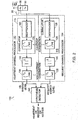
- Fig. 2 is a schematic diagram of a request detection processor 110 used to determine whether the field unit 42a has requested to send data to the BTS 25.
- the receiver Rx 35 receives signals 55, which includes the maintenance channel 55N, traffic channels 55T, access channel 55A, heartbeat standby channel 55HS, and heartbeat request active channel 55HRA.
- the reverse link channels 55 are processed such that a heartbeat channel processor 112 receives the heartbeat standby channel 55HS and a request channel processor 114 receives the Heartbeat Request Active channel 55HRA.
- the heartbeat channel processor 112 and request channel processor 114 include the same processing elements, in this particular embodiment, so a discussion of just the heartbeat channel processor 112 will be provided for brevity.
- the heartbeat channel processor 112 receives the heartbeat standby channel 55HS.
- a correlator 115 uses a despreader 120 to despread the heartbeat standby channel 55HS.
- An integrator 125 is used to coherently combine the heartbeat signal. By coherently combining the signal, an integration of I, Q and its phase causes the phase of the signal to be removed and output the power of the signal.
- a rectifier 130 i.e., absolute value of the signal squared
- rectifies the power of the signal which is then integrated by a second integrator 135 to calculate the energy of the received heartbeat signal.
- the second integrator 135 provides non-coherent combination of the signal, which is calculated over short time intervals.
- the non-coherent integration provides just magnitudes if the terminal is moving too fast, thus causing a cross-over of the 180-degree phase point, which can cause ambiguities in determining the energy of the signal in the absence of the non-coherent combination.
- the output from the heartbeat channel processor 112 is a heartbeat energy level
- the output from the request channel processor 114 is a request energy level.
- Each of these energy levels is fed to a hypothesis detector 140, which determines whether a heartbeat signal, request signal, or neither signal is in the reverse link channels 55 received by the base station 25.
- the hypothesis detector 140 includes logical functions. For example, in this particular embodiment, the hypothesis detector 140 compares a first energy level threshold against the first energy level (i.e., heartbeat energy level) and compares a second energy level threshold against the second energy level (i.e., request energy level).
- first energy level threshold against the first energy level (i.e., heartbeat energy level)
- second energy level threshold against the second energy level (i.e., request energy level).
- An example energy level threshold to compare the heartbeat energy level against is 9 dB and the request energy level threshold is 11 dB.
- the energy level thresholds may be dynamically selected, predetermined, or applied in another manner, such as based on a transmitted power level, which may be reported by the field unit to the base station over the heartbeat channel 55H, for instance.
- the first and second energy levels may be dependent on occupancy of time slots in the signaling channel(s) used by the signal 55, so the energy level thresholds can be based on an expected or specified number of "1" bits used to indicate a request to go active' or to indicate a request to remain in idle mode.
- the output of the hypothesis detector 140 may be used to change the state of the communications system. For example, if the hypothesis detector 140 determines that a 'request to go active' (i.e., send a data transmission on the reverse link) is being made by the field unit, then the hypothesis detector outputs a signal to a processor (not shown in the BTS 25) that is responsible for providing the portable computer 12 with a traffic channel 55T. In one embodiment, the BTS 25 allocates the traffic channel 55T if the detected energy level of the signal is determined to be above the second energy level threshold. Alternatively, the BTS allocates the traffic channel 55T if the hypothesis detector 140 determines that the detected energy level is below the second energy level threshold.
- the heartbeat channel processor 112, request channel processor 114, and hypothesis detector 140 may be configured or designed in a manner that monitors an occupancy of time slots used to indicate the request to change communications states.
- the detecting includes monitoring occupancy of mutually exclusive code channels, such as shown in Figs. 3B and 3C .
- a feedback loop may be employed to cause the heartbeat channel processor 112 and request channel processor 114 to be "adaptive". For example, based on the received energy level of the heartbeat channel 55H, the integration time of the integrators 125, 135 may be adjusted, and the energy level thresholds used by the hypothesis detector 140 for comparison of the energy levels of the heartbeat and request signals may also be adjusted by the feedback loop.
- Such a feedback loop may use a command or message to transfer information between the BTS and field unit that includes information regarding the power levels of the heartbeat or heartbeat-with-request signals transmitted by the field unit.
- the first communications state may be a standby communications state and the second communications state may be a payload communications state.
- the communications states may refer to other communications states, such as a request to change base stations, power control signaling, and so forth.
- the use of different energy levels in signaling as described herein is applicable to wireless, wired, or optical communications systems. In either case, the communications states may be used in voice or data communications systems.
- the second energy level may be based on a target probability of detection, false detection, or combination of both as discussed in reference to Fig. 4 .
- the field unit may transmit the request signal at a given power level or a given number of pulses per given time period to achieve a corresponding signal-to-noise ratio for a given target probability of detection, false detection, or both as discussed in reference to Fig. 4 .
- An analysis may be used to set the transmission power or number of transmitted indications, or a feedback mechanism may be employed in the communication system for causing the field unit to change its behavior so as to have the received energy levels of the indications achieve a predetermined signal-to-noise ratio, thus providing the desired probability of detection and false detection parameters.
- the duration is defined by a timer having a duration of 500ms to 2 sec or 25 to 100 sequential non-detections.
- a 90% detection probability and a 1% false detection rate is predicted by theory.
- the details associated with the detection probability in the fading environment are considered in the following discussion.
- Target_SNR RQST Target_SNR HB + 2 dB
- a Target_SNR of 9 dB for the Heartbeat message and 11 dB for the heartbeat-with-request (HB/RQST) message were chosen. These parameters yield a 15 ms detection latency on average at 20 mph with low probability of false detection.
- the above equation and result is a product of two conditions: (i) not detecting the existence of a HB while it is present and (ii) falsely detecting a HB when it is not present. This is a pessimistic bound since the additional 2 dB of transmitted power for HB/RQST versus HB is not included in the analysis.
- a condition of a false assignment can be recovered from relatively quickly as the false assignment can be detected quickly.
- three conditions are typically present.
- Third, the heartbeat message will likely be present. The probability of not detecting this condition in one frame is Pfd(RQST) 5E-3%. This should be detected within one or two frames before the channel can be re-assigned to a legitimate user. If it is assumed that detection takes two frames, the reverse capacity would be reduced by no more than 1% and is likely less as the probability of false detection for the HB/RQST is targeted at 11 dB E/Io.
- the delay to detection is 35 ms on the average between the simulation with a remote subscriber unit moving at 1 mph and at 20 mph.
- the average delay to detection is less than 20ms, with a detection threshold of 2 dB below the target SNR of 11 dB. This is possible since. the transmit (Tx) power is increased by 2 dB for the HB/RQST relative to the HB signal.
- the simulation shows that the minimum average, given 96 users in a 20 ms power control (PC) period is close to 10ms.
- the delay is expected to be better than 75ms 99% of the time.
- the simulation also shows that the addition of 2 dB of additional transmit power for the HB/RQST message increases the detection probability and reduces the detection latency to 15ms on average.
- An estimate of the co-channel total interference of a fully loaded maintenance channel is between 6 dB less than an IS-2000 fundamental channel (9600 bps Reverse Traffic Channel (R-TCH), 9600 bps Reverse Dedicated Control Channel (R-DCCH)).
Landscapes
- Engineering & Computer Science (AREA)
- Computer Networks & Wireless Communication (AREA)
- Signal Processing (AREA)
- Power Engineering (AREA)
- Quality & Reliability (AREA)
- Mobile Radio Communication Systems (AREA)
Claims (21)
- Procédé dans une unité de terrain (42) pour une attribution dynamique de canaux de trafic comprenant :- la transmission d'un signal marqueur dans un intervalle de temps attribué, le procédé étant caractérisé en ce :- que le signal marqueur indique que l'unité de terrain (42) doit devenir active et demande l'attribution de canaux de trafic pour une transmission de données à partir de l'unité de terrain (42) vers une station de base (25), cas dans lequel différents marqueurs sont indiqués par une transmission à différents niveaux de puissance, cas dans lequel un type de signal de non demande est transmis à un premier niveau de puissance et un type de signal de demande est transmis à un deuxième niveau de puissance.
- Procédé selon la revendication 1, le signal marqueur étant transmis dans un intervalle de temps attribué afin d'indiquer ladite demande.
- Procédé selon la revendication 1 ou 2, l'unité de terrain (42) sélectionnant différents signaux marqueurs en dépendance d'un état de communications requis.
- Procédé selon la revendication 3, différents signaux marqueurs étant associés à différents niveaux d'énergie.
- Procédé selon la revendication 4, les niveaux d'énergie étant sélectionnés sur la base d'une probabilité cible de détection.
- Procédé selon la revendication 3, différents signaux marqueurs étant associés à différents intervalles de temps.
- Procédé selon la revendication 3, différents signaux marqueurs étant associés à différents nombres de répétitions.
- Procédé selon la revendication 3, différents signaux marqueurs étant associés à différents canaux de code.
- Procédé selon l'une quelconque des revendications 3 à 8, différents signaux marqueurs étant multiplexés sur un canal de signalisation.
- Procédé selon l'une quelconque des revendications précédentes, l'unité de terrain (42) opérant dans un système de communications sans fil (100) à accès multiple par répartition en code, CDMA, ou à multiplexage par répartition orthogonale de la fréquence, OFDM.
- Unité de terrain (42) comprenant des moyens destinés à réaliser le procédé conformément à l'une quelconque des revendications 1 à 10.
- Procédé dans un système de communications sans fil (100) pour une attribution dynamique du trafic, le procédé étant caractérisé par les opérations consistant à :- recevoir un signal marqueur en provenance d'une unité de terrain (42) dans un intervalle de temps attribué ; et- déterminer que le signal marqueur indique que l'unité de terrain doit devenir active et demande l'attribution de canaux de trafic pour une transmission de données à partir de l'unité de terrain vers une station de base, cas dans lequel différents marqueurs sont indiqués par une transmission à différents niveaux de puissance, cas dans lequel un type de signal de non demande est transmis à un premier niveau de puissance et un type de signal de demande est transmis à un deuxième niveau de puissance.
- Procédé selon la revendication 12, la détermination étant basée sur le fait que les signaux marqueurs sont transmis dans un intervalle de temps attribué afin d'indiquer ladite demande.
- Procédé selon la revendication 12 ou 13, les différents signaux marqueurs correspondant à différents états de communications requis par l'unité de terrain (42).
- Procédé selon la revendication 14, la détermination étant basée sur le fait que les différents signaux marqueurs sont associés à différents niveaux d'énergie.
- Procédé selon la revendication 14, la détermination étant basée sur le fait que différents signaux marqueurs sont associés à différents intervalles de temps.
- Procédé selon la revendication 14, la détermination étant basée sur le fait que différents signaux marqueurs sont associés à différents nombres de répétitions
- Procédé selon la revendication 14, la détermination étant basée sur le fait que différents signaux marqueurs sont associés à différents canaux de code.
- Procédé selon l'une quelconque des revendications 14 à 18, des signaux marqueurs étant multiplexés sur un canal de signalisation.
- Procédé selon l'une quelconque des revendications précédentes, le noeud opérant dans un système de communications sans fil (100) à accès multiple par répartition en code, CDMA, ou à multiplexage par répartition orthogonale de la fréquence, OFDM.
- Noeud dans un système de communications sans fil (100) comprenant des moyens destinés à réaliser le procédé conformément à l'une quelconque des revendications 12 à 20.
Applications Claiming Priority (5)
| Application Number | Priority Date | Filing Date | Title |
|---|---|---|---|
| US29792501P | 2001-06-13 | 2001-06-13 | |
| US09/997,621 US6678260B2 (en) | 1997-12-17 | 2001-11-29 | System and method for maintaining wireless channels over a reverse link of a CDMA wireless communication system |
| US37869702P | 2002-05-07 | 2002-05-07 | |
| US10/171,080 US7221664B2 (en) | 1998-06-01 | 2002-06-12 | Transmittal of heartbeat signal at a lower level than heartbeat request |
| EP02752051.9A EP1396158B1 (fr) | 2001-06-13 | 2002-06-13 | Transmission de signal de pulsation a un niveau inferieur a celui d'une demande de signal de pulsation |
Related Parent Applications (2)
| Application Number | Title | Priority Date | Filing Date |
|---|---|---|---|
| EP02752051.9A Division EP1396158B1 (fr) | 2001-06-13 | 2002-06-13 | Transmission de signal de pulsation a un niveau inferieur a celui d'une demande de signal de pulsation |
| EP02752051.9 Division | 2002-06-13 |
Publications (2)
| Publication Number | Publication Date |
|---|---|
| EP2479903A1 EP2479903A1 (fr) | 2012-07-25 |
| EP2479903B1 true EP2479903B1 (fr) | 2016-11-16 |
Family
ID=27496941
Family Applications (2)
| Application Number | Title | Priority Date | Filing Date |
|---|---|---|---|
| EP12164537.8A Expired - Lifetime EP2479903B1 (fr) | 2001-06-13 | 2002-06-13 | Procédé et appareil pour la transmission de signal de pulsation à un niveau inferieur à celui d'une demande de signal de pulsation |
| EP02752051.9A Expired - Lifetime EP1396158B1 (fr) | 2001-06-13 | 2002-06-13 | Transmission de signal de pulsation a un niveau inferieur a celui d'une demande de signal de pulsation |
Family Applications After (1)
| Application Number | Title | Priority Date | Filing Date |
|---|---|---|---|
| EP02752051.9A Expired - Lifetime EP1396158B1 (fr) | 2001-06-13 | 2002-06-13 | Transmission de signal de pulsation a un niveau inferieur a celui d'une demande de signal de pulsation |
Country Status (11)
| Country | Link |
|---|---|
| US (2) | US7221664B2 (fr) |
| EP (2) | EP2479903B1 (fr) |
| JP (3) | JP4225892B2 (fr) |
| CN (2) | CN100534236C (fr) |
| BR (1) | BRPI0211006B1 (fr) |
| CA (2) | CA2689861C (fr) |
| IL (5) | IL159262A0 (fr) |
| MX (1) | MXPA03011587A (fr) |
| NO (1) | NO331903B1 (fr) |
| SG (1) | SG162609A1 (fr) |
| WO (1) | WO2002102095A1 (fr) |
Families Citing this family (22)
| Publication number | Priority date | Publication date | Assignee | Title |
|---|---|---|---|---|
| US6081536A (en) | 1997-06-20 | 2000-06-27 | Tantivy Communications, Inc. | Dynamic bandwidth allocation to transmit a wireless protocol across a code division multiple access (CDMA) radio link |
| US6542481B2 (en) | 1998-06-01 | 2003-04-01 | Tantivy Communications, Inc. | Dynamic bandwidth allocation for multiple access communication using session queues |
| US9525923B2 (en) | 1997-12-17 | 2016-12-20 | Intel Corporation | Multi-detection of heartbeat to reduce error probability |
| US7936728B2 (en) | 1997-12-17 | 2011-05-03 | Tantivy Communications, Inc. | System and method for maintaining timing of synchronization messages over a reverse link of a CDMA wireless communication system |
| US8175120B2 (en) | 2000-02-07 | 2012-05-08 | Ipr Licensing, Inc. | Minimal maintenance link to support synchronization |
| US7394791B2 (en) * | 1997-12-17 | 2008-07-01 | Interdigital Technology Corporation | Multi-detection of heartbeat to reduce error probability |
| US6222832B1 (en) | 1998-06-01 | 2001-04-24 | Tantivy Communications, Inc. | Fast Acquisition of traffic channels for a highly variable data rate reverse link of a CDMA wireless communication system |
| US8134980B2 (en) | 1998-06-01 | 2012-03-13 | Ipr Licensing, Inc. | Transmittal of heartbeat signal at a lower level than heartbeat request |
| US7773566B2 (en) | 1998-06-01 | 2010-08-10 | Tantivy Communications, Inc. | System and method for maintaining timing of synchronization messages over a reverse link of a CDMA wireless communication system |
| US7221664B2 (en) * | 1998-06-01 | 2007-05-22 | Interdigital Technology Corporation | Transmittal of heartbeat signal at a lower level than heartbeat request |
| US8155096B1 (en) | 2000-12-01 | 2012-04-10 | Ipr Licensing Inc. | Antenna control system and method |
| US6954448B2 (en) | 2001-02-01 | 2005-10-11 | Ipr Licensing, Inc. | Alternate channel for carrying selected message types |
| US7551663B1 (en) | 2001-02-01 | 2009-06-23 | Ipr Licensing, Inc. | Use of correlation combination to achieve channel detection |
| US7218623B1 (en) * | 2001-05-04 | 2007-05-15 | Ipr Licensing, Inc. | Coded reverse link messages for closed-loop power control of forward link control messages |
| ES2624979T3 (es) | 2001-06-13 | 2017-07-18 | Intel Corporation | Aparatos para la transmisión de una señal de latido de corazón a un nivel inferior que la solicitud de latido de corazón |
| US7965646B2 (en) * | 2004-08-11 | 2011-06-21 | Qwest Communications International Inc | Wireless code-passing system for stateful connection monitoring |
| ATE549892T1 (de) * | 2004-10-29 | 2012-03-15 | Ericsson Telefon Ab L M | Verfahren und anordnung zur leistungsregelung auf der basis gegenseitiger informationen |
| US8249540B1 (en) | 2008-08-07 | 2012-08-21 | Hypres, Inc. | Two stage radio frequency interference cancellation system and method |
| US8953464B2 (en) | 2010-05-10 | 2015-02-10 | Qualcomm Incorporated | Systems, methods, and computer program products for compensating for interference in sector transmissions |
| CN102404858B (zh) * | 2011-11-25 | 2014-04-02 | 华为技术有限公司 | 一种无线资源优化方法、装置及系统 |
| US10660045B2 (en) * | 2016-08-17 | 2020-05-19 | Telefonaktiebolaget Lm Ericsson (Publ) | Discriminating between communication apparatuses based on their transmitted power |
| US12483981B2 (en) | 2022-07-29 | 2025-11-25 | Rakuten Symphony, Inc. | Method and apparatus for network energy saving state indication |
Family Cites Families (176)
| Publication number | Priority date | Publication date | Assignee | Title |
|---|---|---|---|---|
| US3560978A (en) | 1968-11-01 | 1971-02-02 | Itt | Electronically controlled antenna system |
| US3742498A (en) | 1970-05-06 | 1973-06-26 | Itt | Synchronization and position location system |
| US3725938A (en) | 1970-10-05 | 1973-04-03 | Sperry Rand Corp | Direction finder system |
| FR2196527B1 (fr) | 1972-08-16 | 1977-01-14 | Materiel Telephonique | |
| US3950753A (en) | 1973-12-13 | 1976-04-13 | Chisholm John P | Stepped cardioid bearing system |
| US4021813A (en) | 1974-07-01 | 1977-05-03 | The United States Of America As Represented By The Secretary Of The Navy | Geometrically derived beam circular antenna array |
| US4099184A (en) | 1976-11-29 | 1978-07-04 | Motorola, Inc. | Directive antenna with reflectors and directors |
| US4107469A (en) * | 1977-02-17 | 1978-08-15 | Rockwell International Corporation | Multiplex/demultiplex apparatus |
| US4290071A (en) | 1977-12-23 | 1981-09-15 | Electrospace Systems, Inc. | Multi-band directional antenna |
| US4170766A (en) | 1978-01-27 | 1979-10-09 | Raytheon Company | Beamformer |
| US4387378A (en) | 1978-06-28 | 1983-06-07 | Harris Corporation | Antenna having electrically positionable phase center |
| US4260994A (en) | 1978-11-09 | 1981-04-07 | International Telephone And Telegraph Corporation | Antenna pattern synthesis and shaping |
| US4448155A (en) | 1982-06-03 | 1984-05-15 | Eaton Corporation | Guide for roller cam follower |
| US4625308A (en) | 1982-11-30 | 1986-11-25 | American Satellite Company | All digital IDMA dynamic channel allocated satellite communications system and method |
| US4631546A (en) | 1983-04-11 | 1986-12-23 | Rockwell International Corporation | Electronically rotated antenna apparatus |
| CA1227844A (fr) | 1983-09-07 | 1987-10-06 | Michael T.H. Hewitt | Reseau de transmission a noeud unique et a plusieurs stations de sortie |
| US4599733A (en) | 1983-09-19 | 1986-07-08 | The United States Of America As Represented By The Secretary Of The Army | Multilevel noise code mate pair generation and utilization of such codes |
| US4577316A (en) * | 1984-02-13 | 1986-03-18 | Rca Corporation | Synchronization system for a regenerative subtransponder satellite communication system |
| US4841526A (en) | 1984-05-25 | 1989-06-20 | Wilson Jon C | Data communications system |
| CA1239223A (fr) | 1984-07-02 | 1988-07-12 | Robert Milne | Antenne reseau adaptative |
| US4675863A (en) * | 1985-03-20 | 1987-06-23 | International Mobile Machines Corp. | Subscriber RF telephone system for providing multiple speech and/or data signals simultaneously over either a single or a plurality of RF channels |
| US4954950A (en) | 1986-09-17 | 1990-09-04 | International Business Machines Corporation | Terminal communications circuit |
| GB8623763D0 (en) * | 1986-10-03 | 1986-11-05 | Marconi Co Ltd | Communication system |
| US4901307A (en) | 1986-10-17 | 1990-02-13 | Qualcomm, Inc. | Spread spectrum multiple access communication system using satellite or terrestrial repeaters |
| GB2198013B (en) | 1986-11-28 | 1990-07-25 | Marconi Co Ltd | A communication system |
| US5027348A (en) * | 1989-06-30 | 1991-06-25 | Ncr Corporation | Method and apparatus for dynamic data block length adjustment |
| DE59007452D1 (de) | 1990-02-21 | 1994-11-17 | Siemens Ag | Verfahren zur Anpassung der Blocklänge bei serieller Datenübertragung, mit Messverfahren für die Übertragungsgüte und bevorzugter Anwendung des Verfahrens. |
| CN1062963C (zh) * | 1990-04-12 | 2001-03-07 | 多尔拜实验特许公司 | 用于产生高质量声音信号的解码器和编码器 |
| US5166929A (en) | 1990-06-18 | 1992-11-24 | Northern Telecom Limited | Multiple access protocol |
| US5103459B1 (en) * | 1990-06-25 | 1999-07-06 | Qualcomm Inc | System and method for generating signal waveforms in a cdma cellular telephone system |
| US5115309A (en) * | 1990-09-10 | 1992-05-19 | At&T Bell Laboratories | Method and apparatus for dynamic channel bandwidth allocation among multiple parallel video coders |
| US5276911A (en) * | 1990-11-02 | 1994-01-04 | Motorola, Inc. | Contention reducing technique for a radio frequency communication system |
| US5114375A (en) * | 1991-07-01 | 1992-05-19 | Wellhausen Brenda L | Toy apparatus |
| US5463623A (en) | 1991-07-31 | 1995-10-31 | At&T Ipm Corp. | Integrated wireless telecommunication and local area network system |
| US5282222A (en) * | 1992-03-31 | 1994-01-25 | Michel Fattouche | Method and apparatus for multiple access between transceivers in wireless communications using OFDM spread spectrum |
| DE4210305A1 (de) | 1992-03-30 | 1993-10-07 | Sel Alcatel Ag | Verfahren, Sender und Empfänger zur Informationsdatenübertragung mit veränderlichem Verkehrsaufkommen und Leitstation zur Koordinierung mehrerer solcher Sender und Empfänger |
| US5600706A (en) * | 1992-04-08 | 1997-02-04 | U S West, Inc. | Method and system for determining the position of a mobile receiver |
| GB2267627B (en) | 1992-05-27 | 1996-01-03 | Roke Manor Research | Improvements in or relating to radio communication systems |
| CA2099738C (fr) * | 1992-09-25 | 1999-01-12 | William Keith Cline | Architecture de systeme de telecommunication sans fil |
| US5325419A (en) * | 1993-01-04 | 1994-06-28 | Ameritech Corporation | Wireless digital personal communications system having voice/data/image two-way calling and intercell hand-off |
| US5617423A (en) * | 1993-01-08 | 1997-04-01 | Multi-Tech Systems, Inc. | Voice over data modem with selectable voice compression |
| FR2700471B1 (fr) * | 1993-01-21 | 1995-04-07 | Pasteur Merieux Serums Vacc | Utilisation d'anticorps monoclonaux anti-LFA-1 pour la préparation d'un médicament destiné à prévenir le rejet des greffes d'organes solides et médicaments obtenus. |
| US5412429A (en) * | 1993-03-11 | 1995-05-02 | The United States Of America As Represented By The Administrator Of The National Aeronautics And Space Administration | Picture data compression coder using subband/transform coding with a Lempel-Ziv-based coder |
| IT1270938B (it) * | 1993-05-14 | 1997-05-16 | Cselt Centro Studi Lab Telecom | Procedimento per il controllo della trasmissione su uno stesso canale di flussi informativi a velocita' variabile in sistemi di comunicazione tra mezzi mobili, e sistema utilizzante tale procedimento |
| NZ267747A (en) | 1993-06-14 | 1997-07-27 | Ericsson Telefon Ab L M | Transmission time alignment of code division multiple access system down link |
| FR2708162B1 (fr) | 1993-07-20 | 1995-09-01 | Alcatel Mobile Comm France | Procédé pour déterminer la longueur optimale d'un bloc de données dans un système de communication à accès multiple à répartition dans le temps (AMRT). |
| FI98687C (fi) | 1993-09-20 | 1997-07-25 | Nokia Telecommunications Oy | Matkaviestinjärjestelmä ja menetelmä etätyöaseman kytkemiseksi matkaviestinverkon kautta dataverkkoon |
| JP3192839B2 (ja) * | 1993-09-20 | 2001-07-30 | 富士通株式会社 | 初期送信電力の決定方法 |
| KR100323486B1 (ko) | 1993-11-01 | 2002-06-24 | 러셀 비. 밀러 | 가변비율디지탈데이타를전송하기위한방법및장치 |
| US5414728A (en) * | 1993-11-01 | 1995-05-09 | Qualcomm Incorporated | Method and apparatus for bifurcating signal transmission over in-phase and quadrature phase spread spectrum communication channels |
| US6088590A (en) | 1993-11-01 | 2000-07-11 | Omnipoint Corporation | Method and system for mobile controlled handoff and link maintenance in spread spectrum communication |
| JPH07131398A (ja) * | 1993-11-05 | 1995-05-19 | Fuji Electric Co Ltd | 特定小電力データ伝送用無線変復調装置 |
| US5446727A (en) * | 1993-11-30 | 1995-08-29 | Motorola Inc. | Method and apparatus for time aligning signals for reception in a code-division multiple access communication system |
| JP2636712B2 (ja) * | 1993-12-08 | 1997-07-30 | 日本電気株式会社 | 移動通信装置 |
| JP3260950B2 (ja) * | 1994-02-18 | 2002-02-25 | 松下電器産業株式会社 | データ通信装置 |
| US5481533A (en) * | 1994-05-12 | 1996-01-02 | Bell Communications Research, Inc. | Hybrid intra-cell TDMA/inter-cell CDMA for wireless networks |
| US5442625A (en) * | 1994-05-13 | 1995-08-15 | At&T Ipm Corp | Code division multiple access system providing variable data rate access to a user |
| AU2595595A (en) | 1994-05-19 | 1995-12-18 | Airnet Communications Corporation | System for dynamically allocating channels among base stations in a wireless communication system |
| FI964919A7 (fi) * | 1994-06-08 | 1997-02-07 | Hughes Electronics Corp | Laite ja menetelmä hybridiverkkoon pääsyä varten |
| US5586119A (en) | 1994-08-31 | 1996-12-17 | Motorola, Inc. | Method and apparatus for packet alignment in a communication system |
| US5614914A (en) * | 1994-09-06 | 1997-03-25 | Interdigital Technology Corporation | Wireless telephone distribution system with time and space diversity transmission for determining receiver location |
| GB9418780D0 (en) | 1994-09-16 | 1994-11-02 | Ionica L3 Limited | Digital telephony |
| US5585850A (en) | 1994-10-31 | 1996-12-17 | Schwaller; John | Adaptive distribution system for transmitting wideband video data over narrowband multichannel wireless communication system |
| US5577022A (en) | 1994-11-22 | 1996-11-19 | Qualcomm Incorporated | Pilot signal searching technique for a cellular communications system |
| JPH08163085A (ja) * | 1994-12-02 | 1996-06-21 | Toshiba Corp | 情報通信装置 |
| US5956332A (en) | 1994-12-09 | 1999-09-21 | Nokia Telecommunications Oy | High-speed data transmission in mobile communication networks |
| FI97187C (fi) | 1994-12-09 | 1996-10-25 | Nokia Telecommunications Oy | Suurinopeuksinen datasiirto matkaviestinverkoissa |
| US5592470A (en) | 1994-12-21 | 1997-01-07 | At&T | Broadband wireless system and network architecture providing broadband/narrowband service with optimal static and dynamic bandwidth/channel allocation |
| US5642348A (en) | 1994-12-30 | 1997-06-24 | Lucent Technologies Inc. | Access director interface for narrowband/broadband information distribution network |
| EP1545026B8 (fr) * | 1995-02-23 | 2012-07-18 | NTT DoCoMo, Inc. | Procédé de transmission à vitesse variable, et émetteur et récepteur utilisant ce procédé |
| JP3776942B2 (ja) * | 1995-03-03 | 2006-05-24 | 富士通株式会社 | 移動局装置 |
| CN1082289C (zh) | 1995-03-16 | 2002-04-03 | 东芝株式会社 | 数据通信装置及方法 |
| US5592471A (en) * | 1995-04-21 | 1997-01-07 | Cd Radio Inc. | Mobile radio receivers using time diversity to avoid service outages in multichannel broadcast transmission systems |
| MY121893A (en) | 1995-04-28 | 2006-03-31 | Qualcomm Inc | Method and apparatus for providing variable rate data in a communications system using statistical multiplexing. |
| GB9509921D0 (en) | 1995-05-17 | 1995-07-12 | Roke Manor Research | Improvements in or relating to mobile radio systems |
| US5673259A (en) | 1995-05-17 | 1997-09-30 | Qualcomm Incorporated | Random access communications channel for data services |
| US5696766A (en) * | 1995-06-02 | 1997-12-09 | Dsc Communications Corporation | Apparatus and method of synchronizing a transmitter in a subscriber terminal of a wireless telecommunications system |
| US5742595A (en) * | 1995-06-02 | 1998-04-21 | Dsc Communications Corporation | Processing CDMA signals |
| US5915216A (en) * | 1995-06-02 | 1999-06-22 | Dsc Communications Corporation | Apparatus and method of transmitting and receiving information in a wireless telecommunications system |
| US5802046A (en) | 1995-06-05 | 1998-09-01 | Omnipoint Corporation | Efficient time division duplex communication system with interleaved format and timing adjustment control |
| US5689502A (en) | 1995-06-05 | 1997-11-18 | Omnipoint Corporation | Efficient frequency division duplex communication system with interleaved format and timing adjustment control |
| US5959980A (en) | 1995-06-05 | 1999-09-28 | Omnipoint Corporation | Timing adjustment control for efficient time division duplex communication |
| US6597913B2 (en) * | 1995-06-05 | 2003-07-22 | Motorola, Inc. | Distributed dynamic channel management in cellular systems |
| US5745484A (en) * | 1995-06-05 | 1998-04-28 | Omnipoint Corporation | Efficient communication system using time division multiplexing and timing adjustment control |
| US5619492A (en) * | 1995-06-16 | 1997-04-08 | Unisys Corporation | CDMA communication system in which bit rates are dynamically allocated |
| US5742592A (en) * | 1995-09-01 | 1998-04-21 | Motorola, Inc. | Method for communicating data in a wireless communication system |
| US5784406A (en) * | 1995-06-29 | 1998-07-21 | Qualcom Incorporated | Method and apparatus for objectively characterizing communications link quality |
| US6049535A (en) | 1996-06-27 | 2000-04-11 | Interdigital Technology Corporation | Code division multiple access (CDMA) communication system |
| ZA965340B (en) | 1995-06-30 | 1997-01-27 | Interdigital Tech Corp | Code division multiple access (cdma) communication system |
| US6570865B2 (en) * | 1995-08-10 | 2003-05-27 | Hitachi, Ltd. | CDMA mobile communications system and communication method |
| JP3212238B2 (ja) * | 1995-08-10 | 2001-09-25 | 株式会社日立製作所 | 移動通信システムおよび移動端末装置 |
| EP2242321B1 (fr) * | 1995-09-20 | 2015-07-22 | Ntt Docomo, Inc. | Procédé d'accès, station mobile et station de base pour système de communication CDMA |
| US6418148B1 (en) * | 1995-10-05 | 2002-07-09 | Lucent Technologies Inc. | Burst-level resource allocation in cellular systems |
| US5734646A (en) * | 1995-10-05 | 1998-03-31 | Lucent Technologies Inc. | Code division multiple access system providing load and interference based demand assignment service to users |
| US5790551A (en) * | 1995-11-28 | 1998-08-04 | At&T Wireless Services Inc. | Packet data transmission using dynamic channel assignment |
| US5991279A (en) | 1995-12-07 | 1999-11-23 | Vistar Telecommunications Inc. | Wireless packet data distributed communications system |
| US5881060A (en) * | 1996-05-30 | 1999-03-09 | Northern Telecom Limited | Integrated cellular voice and digital packet data telecommunications systems and methods for their operation |
| FI101332B1 (fi) * | 1995-12-18 | 1998-05-29 | Nokia Telecommunications Oy | Epäjatkuvalähetys monikanavaisessa suurinopeuksisessa datasiirrossa |
| US5781583A (en) | 1996-01-19 | 1998-07-14 | Motorola, Inc. | Method and system for communication over multiple channels in a spread spectrum communication system |
| US5663958A (en) | 1996-02-22 | 1997-09-02 | Telefonaktiebolaget Lm Ericsson | Method and apparatus for dynamically selecting the length of mobile station burst communications on the reverse digital control channel |
| US6236674B1 (en) * | 1996-02-23 | 2001-05-22 | Teletransactions, Inc. | Transceiver control with sleep mode operation |
| US5790549A (en) * | 1996-02-29 | 1998-08-04 | Ericsson Inc. | Subtractive multicarrier CDMA access methods and systems |
| US5844894A (en) | 1996-02-29 | 1998-12-01 | Ericsson Inc. | Time-reuse partitioning system and methods for cellular radio telephone systems |
| US6473623B1 (en) | 1996-04-18 | 2002-10-29 | At&T Wireless Services, Inc. | Method for self-calibration of a wireless communication system |
| US6112092A (en) * | 1996-04-18 | 2000-08-29 | Lucent Technologies Inc. | Self-configurable channel assignment system and method |
| JP2968717B2 (ja) | 1996-04-25 | 1999-11-02 | 静岡日本電気株式会社 | 時分割多重伝送装置 |
| US5910945A (en) * | 1996-04-30 | 1999-06-08 | Trw Inc. | Method and apparatus for synchronizing communications in a satellite based telecommunications system |
| JPH09307569A (ja) * | 1996-05-17 | 1997-11-28 | Matsushita Electric Ind Co Ltd | Atm無線伝送装置 |
| FI103082B (fi) * | 1996-05-27 | 1999-04-15 | Nokia Telecommunications Oy | Yhteydenmuodostusmenetelmä ja radiojärjestelmä |
| US6396804B2 (en) * | 1996-05-28 | 2002-05-28 | Qualcomm Incorporated | High data rate CDMA wireless communication system |
| US5930230A (en) * | 1996-05-28 | 1999-07-27 | Qualcomm Incorporated | High data rate CDMA wireless communication system |
| US5859840A (en) * | 1996-05-31 | 1999-01-12 | Qualcomm Incorporated | Spread spectrum communication system which defines channel groups comprising selected channels that are additional to a primary channel and transmits group messages during call set up |
| US5828662A (en) * | 1996-06-19 | 1998-10-27 | Northern Telecom Limited | Medium access control scheme for data transmission on code division multiple access (CDMA) wireless systems |
| US5950131A (en) | 1996-10-29 | 1999-09-07 | Motorola, Inc. | Method and apparatus for fast pilot channel acquisition using a matched filter in a CDMA radiotelephone |
| US6222828B1 (en) * | 1996-10-30 | 2001-04-24 | Trw, Inc. | Orthogonal code division multiple access waveform format for use in satellite based cellular telecommunications |
| US6215798B1 (en) * | 1996-11-01 | 2001-04-10 | Telefonaktiebolaget Lm Ericsson (Publ) | Multi-frame synchronization for parallel channel transmissions |
| US6195362B1 (en) | 1996-11-08 | 2001-02-27 | At&T Corporation | Resource pooling system and method in communication systems |
| US6243372B1 (en) * | 1996-11-14 | 2001-06-05 | Omnipoint Corporation | Methods and apparatus for synchronization in a wireless network |
| US6263013B1 (en) * | 1996-11-21 | 2001-07-17 | Dsp Group, Inc. | Fast tracking of PN synchronization in a direct-sequence spread-spectrum digital communications system |
| EP0845877A3 (fr) * | 1996-11-28 | 2002-03-27 | Oki Electric Industry Co., Ltd. | Système de communication mobile pour effectuer un transfert d'appel avec différence de phase et signaux de synchronisation de trame corrigés |
| US5896376A (en) * | 1996-12-13 | 1999-04-20 | Ericsson Inc. | Optimal use of logical channels within a mobile telecommunications network |
| GB2320662B (en) | 1996-12-18 | 2001-06-20 | Dsc Telecom Lp | Apparatus and method of frame aligning information in a wireless telecommunications system |
| US5873043A (en) * | 1996-12-18 | 1999-02-16 | Cellemetry Llc | System for communicating messages via a forward overhead control channel |
| SE514781C2 (sv) * | 1997-01-28 | 2001-04-23 | Ericsson Telefon Ab L M | Metod och anordning i ett radiokommunikationssystem |
| GB2322041B (en) * | 1997-02-05 | 2001-09-19 | Nokia Mobile Phones Ltd | Intelligent network searching for a multi mode phone |
| US6011800A (en) * | 1997-03-26 | 2000-01-04 | Motorola, Inc. | Hierarchical resource management method, system, base station, head-end unit and subscriber unit for variable resource size communication systems |
| FR2761557B1 (fr) | 1997-03-28 | 1999-04-30 | Alsthom Cge Alcatel | Procede de transmission sur une pluralite de supports de transmission, a repartition dynamique des donnees, et emetteur et terminal correspondants |
| US5923650A (en) * | 1997-04-08 | 1999-07-13 | Qualcomm Incorporated | Method and apparatus for reverse link rate scheduling |
| US5914950A (en) * | 1997-04-08 | 1999-06-22 | Qualcomm Incorporated | Method and apparatus for reverse link rate scheduling |
| US6075792A (en) * | 1997-06-16 | 2000-06-13 | Interdigital Technology Corporation | CDMA communication system which selectively allocates bandwidth upon demand |
| US6188678B1 (en) * | 1997-08-07 | 2001-02-13 | Qualcomm Inc. | Method and apparatus for adaptive closed loop power control using open loop measurements |
| US6038450A (en) * | 1997-09-12 | 2000-03-14 | Lucent Technologies, Inc. | Soft handover system for a multiple sub-carrier communication system and method thereof |
| US6377809B1 (en) * | 1997-09-16 | 2002-04-23 | Qualcomm Incorporated | Channel structure for communication systems |
| US6389000B1 (en) * | 1997-09-16 | 2002-05-14 | Qualcomm Incorporated | Method and apparatus for transmitting and receiving high speed data in a CDMA communication system using multiple carriers |
| US6307840B1 (en) | 1997-09-19 | 2001-10-23 | Qualcomm Incorporated | Mobile station assisted timing synchronization in CDMA communication system |
| GB9721008D0 (en) * | 1997-10-03 | 1997-12-03 | Hewlett Packard Co | Power management method foruse in a wireless local area network (LAN) |
| US6567416B1 (en) * | 1997-10-14 | 2003-05-20 | Lucent Technologies Inc. | Method for access control in a multiple access system for communications networks |
| US6377548B1 (en) * | 1997-10-14 | 2002-04-23 | Lucent Technologies Inc. | Method for admitting new connections based on measured quantities in a multiple access system for communications networks |
| US6285665B1 (en) | 1997-10-14 | 2001-09-04 | Lucent Technologies Inc. | Method for establishment of the power level for uplink data transmission in a multiple access system for communications networks |
| US6469991B1 (en) | 1997-10-14 | 2002-10-22 | Lucent Technologies Inc. | Method for overload control in a multiple access system for communication networks |
| US6574211B2 (en) * | 1997-11-03 | 2003-06-03 | Qualcomm Incorporated | Method and apparatus for high rate packet data transmission |
| FI974134A7 (fi) * | 1997-11-04 | 1999-05-05 | Nokia Telecommunications Oy | Verkkoelementtien hallinta |
| US6064678A (en) * | 1997-11-07 | 2000-05-16 | Qualcomm Incorporated | Method for assigning optimal packet lengths in a variable rate communication system |
| JP3217307B2 (ja) * | 1997-11-18 | 2001-10-09 | 沖電気工業株式会社 | 無線送信装置 |
| US6262980B1 (en) * | 1997-12-02 | 2001-07-17 | At&T Corp | Dynamic resource allocation method and apparatus for broadband services in a wireless communications system |
| AU8924798A (en) | 1997-12-12 | 1999-07-05 | Thomson Licensing S.A. | Power saving protocol for tdma multi-line wireless telephone handsets |
| US7394791B2 (en) * | 1997-12-17 | 2008-07-01 | Interdigital Technology Corporation | Multi-detection of heartbeat to reduce error probability |
| US6222832B1 (en) * | 1998-06-01 | 2001-04-24 | Tantivy Communications, Inc. | Fast Acquisition of traffic channels for a highly variable data rate reverse link of a CDMA wireless communication system |
| US8175120B2 (en) * | 2000-02-07 | 2012-05-08 | Ipr Licensing, Inc. | Minimal maintenance link to support synchronization |
| US6373834B1 (en) * | 1997-12-19 | 2002-04-16 | Telefonaktiebolaget Lm Ericsson | Synchronization for cellular telecommunications network |
| GB2326524B (en) | 1997-12-23 | 1999-11-17 | United Microelectronics Corp | Method of fabricating a dynamic random access memory device |
| US6545986B1 (en) * | 1997-12-31 | 2003-04-08 | Verizon Laboratories Inc. | CDMA forward link power control |
| US6269075B1 (en) * | 1998-01-26 | 2001-07-31 | Nokia Mobile Phones Limited | Finger assignment in a CDMA rake receiver |
| US6526039B1 (en) * | 1998-02-12 | 2003-02-25 | Telefonaktiebolaget Lm Ericsson | Method and system for facilitating timing of base stations in an asynchronous CDMA mobile communications system |
| US6208871B1 (en) * | 1998-02-27 | 2001-03-27 | Motorola, Inc. | Method and apparatus for providing a time adjustment to a wireless communication system |
| US6163707A (en) | 1998-03-04 | 2000-12-19 | Northern Telecom Limited | CDMA power control error reduction via predictive filtering |
| US6353412B1 (en) * | 1998-03-17 | 2002-03-05 | Qualcomm, Incorporated | Method and apparatus for determining position location using reduced number of GPS satellites and synchronized and unsynchronized base stations |
| CA2288682C (fr) | 1998-03-26 | 2003-04-15 | Samsung Electronics Co., Ltd. | Dispositif et procede de commande de puissances d'un canal orthogonal et d'un canal quasi-orthogonal dans un systeme de telecommunications amdc |
| FI108829B (fi) | 1998-04-02 | 2002-03-28 | Nokia Corp | Menetelmä pakettiverkossa |
| US6233439B1 (en) * | 1998-04-08 | 2001-05-15 | Nortel Networks Limited | Signal to noise estimation of forward link traffic channel for fast power control |
| JPH11331131A (ja) * | 1998-05-20 | 1999-11-30 | Nec Corp | 無線伝送システム及びその伝送方法並びにその制御プログラムを記録した記録媒体 |
| US5991618A (en) | 1998-05-29 | 1999-11-23 | Motorola, Inc. | Method and system for estimating a communication mode quality in a wireless communications system |
| US7221664B2 (en) * | 1998-06-01 | 2007-05-22 | Interdigital Technology Corporation | Transmittal of heartbeat signal at a lower level than heartbeat request |
| US6504830B1 (en) * | 1998-06-15 | 2003-01-07 | Telefonaktiebolaget Lm Ericsson Publ | Method, apparatus, and system for fast base synchronization and sector identification |
| JP3450196B2 (ja) * | 1998-09-09 | 2003-09-22 | 三菱電機株式会社 | Tdma無線通信方式 |
| US6546252B1 (en) * | 1998-12-18 | 2003-04-08 | Telefonaktiebolaget Lm Ericsson (Publ) | System and method for estimating interfrequency measurements used for radio network function |
| JP2000188597A (ja) * | 1998-12-21 | 2000-07-04 | Mitsubishi Electric Corp | 多元接続方式 |
| US6058338A (en) * | 1999-02-12 | 2000-05-02 | Qualcomm Incorporated | Method and apparatus for efficient GPS assistance in a communication system |
| EP1155589A1 (fr) * | 1999-02-26 | 2001-11-21 | QUALCOMM Incorporated | Procede et systeme de transfert entre une station de base amcr asynchrone et une station de base amcr synchrone |
| JP3968191B2 (ja) | 1999-03-06 | 2007-08-29 | 松下電器産業株式会社 | 送受信装置 |
| DK1793638T3 (en) * | 1999-03-24 | 2017-03-13 | Qualcomm Inc | Multiple access reservation |
| GB2348776B (en) * | 1999-04-06 | 2003-07-09 | Motorola Ltd | A communications network and method of allocating resource thefor |
| US6965778B1 (en) | 1999-04-08 | 2005-11-15 | Ipr Licensing, Inc. | Maintenance of channel usage in a wireless communication system |
| US6196362B1 (en) * | 1999-05-13 | 2001-03-06 | Westinghouse Air Brake Company | Lock bolt with modified end cap for slack adjuster |
| EP1081977A1 (fr) * | 1999-08-31 | 2001-03-07 | TELEFONAKTIEBOLAGET L M ERICSSON (publ) | Dispositif d'abonné, moyens de commande de réseau et méthode de déclenchement des mesures d'inter-fréquence dans un système de communication mobile |
| ES2624979T3 (es) * | 2001-06-13 | 2017-07-18 | Intel Corporation | Aparatos para la transmisión de una señal de latido de corazón a un nivel inferior que la solicitud de latido de corazón |
-
2002
- 2002-06-12 US US10/171,080 patent/US7221664B2/en not_active Expired - Lifetime
- 2002-06-13 CA CA2689861A patent/CA2689861C/fr not_active Expired - Lifetime
- 2002-06-13 EP EP12164537.8A patent/EP2479903B1/fr not_active Expired - Lifetime
- 2002-06-13 EP EP02752051.9A patent/EP1396158B1/fr not_active Expired - Lifetime
- 2002-06-13 CN CNB028140524A patent/CN100534236C/zh not_active Expired - Lifetime
- 2002-06-13 CA CA2450680A patent/CA2450680C/fr not_active Expired - Lifetime
- 2002-06-13 JP JP2003504694A patent/JP4225892B2/ja not_active Expired - Fee Related
- 2002-06-13 WO PCT/US2002/018878 patent/WO2002102095A1/fr not_active Ceased
- 2002-06-13 IL IL15926202A patent/IL159262A0/xx active IP Right Grant
- 2002-06-13 MX MXPA03011587A patent/MXPA03011587A/es active IP Right Grant
- 2002-06-13 BR BRPI0211006A patent/BRPI0211006B1/pt active IP Right Grant
- 2002-06-13 SG SG200508073-4A patent/SG162609A1/en unknown
- 2002-06-13 CN CN200910132400.7A patent/CN101692744B/zh not_active Expired - Lifetime
-
2003
- 2003-12-09 IL IL159262A patent/IL159262A/en unknown
- 2003-12-12 NO NO20035560A patent/NO331903B1/no not_active IP Right Cessation
-
2006
- 2006-11-22 JP JP2006315039A patent/JP4440250B2/ja not_active Expired - Fee Related
-
2008
- 2008-06-23 IL IL192394A patent/IL192394A/en active IP Right Grant
-
2009
- 2009-09-14 IL IL200920A patent/IL200920A/en active IP Right Grant
- 2009-10-26 JP JP2009245386A patent/JP5254178B2/ja not_active Expired - Lifetime
-
2010
- 2010-07-18 IL IL207059A patent/IL207059A0/en unknown
-
2012
- 2012-03-13 US US13/418,517 patent/US8369277B2/en not_active Expired - Fee Related
Non-Patent Citations (1)
| Title |
|---|
| None * |
Also Published As
Similar Documents
| Publication | Publication Date | Title |
|---|---|---|
| US8369277B2 (en) | Signaling for wireless communications | |
| US9014118B2 (en) | Signaling for wireless communications | |
| EP2323279B1 (fr) | Unité mobile et procédé dans une unité mobile | |
| US8134980B2 (en) | Transmittal of heartbeat signal at a lower level than heartbeat request | |
| HK1061136B (en) | Transmittal of heartbeat signal at a lower level than heartbeat request | |
| CA2882928A1 (fr) | Multidetection de battements de coeur servant a reduire la probabilite d'erreurs | |
| HK1158392B (en) | Mobile unit and method implemented in a mobile unit | |
| HK1132612B (en) | A code division multiple access user device | |
| HK1132612A (en) | A code division multiple access user device |
Legal Events
| Date | Code | Title | Description |
|---|---|---|---|
| PUAI | Public reference made under article 153(3) epc to a published international application that has entered the european phase |
Free format text: ORIGINAL CODE: 0009012 |
|
| 17P | Request for examination filed |
Effective date: 20120418 |
|
| AC | Divisional application: reference to earlier application |
Ref document number: 1396158 Country of ref document: EP Kind code of ref document: P |
|
| AK | Designated contracting states |
Kind code of ref document: A1 Designated state(s): AT BE CH CY DE DK ES FI FR GB GR IE IT LI LU MC NL PT SE TR |
|
| RAP1 | Party data changed (applicant data changed or rights of an application transferred) |
Owner name: INTEL CORPORATION |
|
| GRAP | Despatch of communication of intention to grant a patent |
Free format text: ORIGINAL CODE: EPIDOSNIGR1 |
|
| INTG | Intention to grant announced |
Effective date: 20160506 |
|
| GRAJ | Information related to disapproval of communication of intention to grant by the applicant or resumption of examination proceedings by the epo deleted |
Free format text: ORIGINAL CODE: EPIDOSDIGR1 |
|
| GRAR | Information related to intention to grant a patent recorded |
Free format text: ORIGINAL CODE: EPIDOSNIGR71 |
|
| GRAS | Grant fee paid |
Free format text: ORIGINAL CODE: EPIDOSNIGR3 |
|
| GRAA | (expected) grant |
Free format text: ORIGINAL CODE: 0009210 |
|
| INTC | Intention to grant announced (deleted) | ||
| AC | Divisional application: reference to earlier application |
Ref document number: 1396158 Country of ref document: EP Kind code of ref document: P |
|
| AK | Designated contracting states |
Kind code of ref document: B1 Designated state(s): AT BE CH CY DE DK ES FI FR GB GR IE IT LI LU MC NL PT SE TR |
|
| INTG | Intention to grant announced |
Effective date: 20161010 |
|
| REG | Reference to a national code |
Ref country code: GB Ref legal event code: FG4D |
|
| REG | Reference to a national code |
Ref country code: CH Ref legal event code: EP |
|
| REG | Reference to a national code |
Ref country code: IE Ref legal event code: FG4D |
|
| REG | Reference to a national code |
Ref country code: AT Ref legal event code: REF Ref document number: 846793 Country of ref document: AT Kind code of ref document: T Effective date: 20161215 |
|
| REG | Reference to a national code |
Ref country code: DE Ref legal event code: R096 Ref document number: 60248501 Country of ref document: DE |
|
| REG | Reference to a national code |
Ref country code: NL Ref legal event code: FP |
|
| PG25 | Lapsed in a contracting state [announced via postgrant information from national office to epo] |
Ref country code: SE Free format text: LAPSE BECAUSE OF FAILURE TO SUBMIT A TRANSLATION OF THE DESCRIPTION OR TO PAY THE FEE WITHIN THE PRESCRIBED TIME-LIMIT Effective date: 20161116 |
|
| REG | Reference to a national code |
Ref country code: ES Ref legal event code: FG2A Ref document number: 2614202 Country of ref document: ES Kind code of ref document: T3 Effective date: 20170530 Ref country code: FR Ref legal event code: PLFP Year of fee payment: 16 |
|
| PG25 | Lapsed in a contracting state [announced via postgrant information from national office to epo] |
Ref country code: FI Free format text: LAPSE BECAUSE OF FAILURE TO SUBMIT A TRANSLATION OF THE DESCRIPTION OR TO PAY THE FEE WITHIN THE PRESCRIBED TIME-LIMIT Effective date: 20161116 Ref country code: PT Free format text: LAPSE BECAUSE OF FAILURE TO SUBMIT A TRANSLATION OF THE DESCRIPTION OR TO PAY THE FEE WITHIN THE PRESCRIBED TIME-LIMIT Effective date: 20170316 |
|
| PG25 | Lapsed in a contracting state [announced via postgrant information from national office to epo] |
Ref country code: DK Free format text: LAPSE BECAUSE OF FAILURE TO SUBMIT A TRANSLATION OF THE DESCRIPTION OR TO PAY THE FEE WITHIN THE PRESCRIBED TIME-LIMIT Effective date: 20161116 |
|
| REG | Reference to a national code |
Ref country code: DE Ref legal event code: R097 Ref document number: 60248501 Country of ref document: DE |
|
| PG25 | Lapsed in a contracting state [announced via postgrant information from national office to epo] |
Ref country code: BE Free format text: LAPSE BECAUSE OF FAILURE TO SUBMIT A TRANSLATION OF THE DESCRIPTION OR TO PAY THE FEE WITHIN THE PRESCRIBED TIME-LIMIT Effective date: 20161116 Ref country code: IT Free format text: LAPSE BECAUSE OF FAILURE TO SUBMIT A TRANSLATION OF THE DESCRIPTION OR TO PAY THE FEE WITHIN THE PRESCRIBED TIME-LIMIT Effective date: 20161116 |
|
| PLBE | No opposition filed within time limit |
Free format text: ORIGINAL CODE: 0009261 |
|
| STAA | Information on the status of an ep patent application or granted ep patent |
Free format text: STATUS: NO OPPOSITION FILED WITHIN TIME LIMIT |
|
| 26N | No opposition filed |
Effective date: 20170817 |
|
| PG25 | Lapsed in a contracting state [announced via postgrant information from national office to epo] |
Ref country code: MC Free format text: LAPSE BECAUSE OF FAILURE TO SUBMIT A TRANSLATION OF THE DESCRIPTION OR TO PAY THE FEE WITHIN THE PRESCRIBED TIME-LIMIT Effective date: 20161116 |
|
| REG | Reference to a national code |
Ref country code: CH Ref legal event code: PL |
|
| REG | Reference to a national code |
Ref country code: IE Ref legal event code: MM4A |
|
| PG25 | Lapsed in a contracting state [announced via postgrant information from national office to epo] |
Ref country code: CH Free format text: LAPSE BECAUSE OF NON-PAYMENT OF DUE FEES Effective date: 20170630 Ref country code: LI Free format text: LAPSE BECAUSE OF NON-PAYMENT OF DUE FEES Effective date: 20170630 Ref country code: IE Free format text: LAPSE BECAUSE OF NON-PAYMENT OF DUE FEES Effective date: 20170613 Ref country code: LU Free format text: LAPSE BECAUSE OF NON-PAYMENT OF DUE FEES Effective date: 20170613 |
|
| REG | Reference to a national code |
Ref country code: FR Ref legal event code: PLFP Year of fee payment: 17 |
|
| REG | Reference to a national code |
Ref country code: AT Ref legal event code: UEP Ref document number: 846793 Country of ref document: AT Kind code of ref document: T Effective date: 20161116 |
|
| PG25 | Lapsed in a contracting state [announced via postgrant information from national office to epo] |
Ref country code: CY Free format text: LAPSE BECAUSE OF NON-PAYMENT OF DUE FEES Effective date: 20161116 |
|
| PG25 | Lapsed in a contracting state [announced via postgrant information from national office to epo] |
Ref country code: TR Free format text: LAPSE BECAUSE OF FAILURE TO SUBMIT A TRANSLATION OF THE DESCRIPTION OR TO PAY THE FEE WITHIN THE PRESCRIBED TIME-LIMIT Effective date: 20161116 |
|
| REG | Reference to a national code |
Ref country code: ES Ref legal event code: PC2A Owner name: APPLE INC. Effective date: 20200326 |
|
| REG | Reference to a national code |
Ref country code: NL Ref legal event code: PD Owner name: APPLE INC.; US Free format text: DETAILS ASSIGNMENT: CHANGE OF OWNER(S), ASSIGNMENT; FORMER OWNER NAME: INTEL CORPORATION Effective date: 20200527 |
|
| REG | Reference to a national code |
Ref country code: DE Ref legal event code: R081 Ref document number: 60248501 Country of ref document: DE Owner name: APPLE INC., CUPERTINO, US Free format text: FORMER OWNER: INTEL CORPORATION, SANTA CLARA, CALIF., US |
|
| PGFP | Annual fee paid to national office [announced via postgrant information from national office to epo] |
Ref country code: GR Payment date: 20200513 Year of fee payment: 19 Ref country code: FR Payment date: 20200512 Year of fee payment: 19 |
|
| PGFP | Annual fee paid to national office [announced via postgrant information from national office to epo] |
Ref country code: AT Payment date: 20200526 Year of fee payment: 19 |
|
| PGFP | Annual fee paid to national office [announced via postgrant information from national office to epo] |
Ref country code: ES Payment date: 20200701 Year of fee payment: 19 |
|
| REG | Reference to a national code |
Ref country code: AT Ref legal event code: PC Ref document number: 846793 Country of ref document: AT Kind code of ref document: T Owner name: APPLE INC., US Effective date: 20201110 |
|
| PGFP | Annual fee paid to national office [announced via postgrant information from national office to epo] |
Ref country code: DE Payment date: 20210518 Year of fee payment: 20 Ref country code: NL Payment date: 20210615 Year of fee payment: 20 |
|
| PGFP | Annual fee paid to national office [announced via postgrant information from national office to epo] |
Ref country code: GB Payment date: 20210520 Year of fee payment: 20 |
|
| REG | Reference to a national code |
Ref country code: AT Ref legal event code: MM01 Ref document number: 846793 Country of ref document: AT Kind code of ref document: T Effective date: 20210613 |
|
| PG25 | Lapsed in a contracting state [announced via postgrant information from national office to epo] |
Ref country code: AT Free format text: LAPSE BECAUSE OF NON-PAYMENT OF DUE FEES Effective date: 20210613 |
|
| PG25 | Lapsed in a contracting state [announced via postgrant information from national office to epo] |
Ref country code: GR Free format text: LAPSE BECAUSE OF NON-PAYMENT OF DUE FEES Effective date: 20220105 Ref country code: FR Free format text: LAPSE BECAUSE OF NON-PAYMENT OF DUE FEES Effective date: 20210630 |
|
| REG | Reference to a national code |
Ref country code: DE Ref legal event code: R071 Ref document number: 60248501 Country of ref document: DE |
|
| REG | Reference to a national code |
Ref country code: NL Ref legal event code: MK Effective date: 20220612 |
|
| REG | Reference to a national code |
Ref country code: GB Ref legal event code: PE20 Expiry date: 20220612 |
|
| PG25 | Lapsed in a contracting state [announced via postgrant information from national office to epo] |
Ref country code: GB Free format text: LAPSE BECAUSE OF EXPIRATION OF PROTECTION Effective date: 20220612 |
|
| REG | Reference to a national code |
Ref country code: ES Ref legal event code: FD2A Effective date: 20220805 |
|
| PG25 | Lapsed in a contracting state [announced via postgrant information from national office to epo] |
Ref country code: ES Free format text: LAPSE BECAUSE OF NON-PAYMENT OF DUE FEES Effective date: 20210614 |
|
| REG | Reference to a national code |
Ref country code: GB Ref legal event code: 732E Free format text: REGISTERED BETWEEN 20250306 AND 20250312 |