EP2480563B1 - Peptides du type ligand spécifiques du cancer de la vessie - Google Patents
Peptides du type ligand spécifiques du cancer de la vessie Download PDFInfo
- Publication number
- EP2480563B1 EP2480563B1 EP10819475.4A EP10819475A EP2480563B1 EP 2480563 B1 EP2480563 B1 EP 2480563B1 EP 10819475 A EP10819475 A EP 10819475A EP 2480563 B1 EP2480563 B1 EP 2480563B1
- Authority
- EP
- European Patent Office
- Prior art keywords
- peptide
- bladder cancer
- bladder
- cells
- plz4
- Prior art date
- Legal status (The legal status is an assumption and is not a legal conclusion. Google has not performed a legal analysis and makes no representation as to the accuracy of the status listed.)
- Active
Links
Images








Classifications
-
- A—HUMAN NECESSITIES
- A61—MEDICAL OR VETERINARY SCIENCE; HYGIENE
- A61K—PREPARATIONS FOR MEDICAL, DENTAL OR TOILETRY PURPOSES
- A61K38/00—Medicinal preparations containing peptides
- A61K38/02—Peptides of undefined number of amino acids; Derivatives thereof
-
- A—HUMAN NECESSITIES
- A61—MEDICAL OR VETERINARY SCIENCE; HYGIENE
- A61K—PREPARATIONS FOR MEDICAL, DENTAL OR TOILETRY PURPOSES
- A61K9/00—Medicinal preparations characterised by special physical form
- A61K9/0012—Galenical forms characterised by the site of application
- A61K9/0019—Injectable compositions; Intramuscular, intravenous, arterial, subcutaneous administration; Compositions to be administered through the skin in an invasive manner
-
- A—HUMAN NECESSITIES
- A61—MEDICAL OR VETERINARY SCIENCE; HYGIENE
- A61K—PREPARATIONS FOR MEDICAL, DENTAL OR TOILETRY PURPOSES
- A61K38/00—Medicinal preparations containing peptides
- A61K38/04—Peptides having up to 20 amino acids in a fully defined sequence; Derivatives thereof
- A61K38/08—Peptides having 5 to 11 amino acids
-
- A—HUMAN NECESSITIES
- A61—MEDICAL OR VETERINARY SCIENCE; HYGIENE
- A61K—PREPARATIONS FOR MEDICAL, DENTAL OR TOILETRY PURPOSES
- A61K47/00—Medicinal preparations characterised by the non-active ingredients used, e.g. carriers or inert additives; Targeting or modifying agents chemically bound to the active ingredient
- A61K47/50—Medicinal preparations characterised by the non-active ingredients used, e.g. carriers or inert additives; Targeting or modifying agents chemically bound to the active ingredient the non-active ingredient being chemically bound to the active ingredient, e.g. polymer-drug conjugates
- A61K47/51—Medicinal preparations characterised by the non-active ingredients used, e.g. carriers or inert additives; Targeting or modifying agents chemically bound to the active ingredient the non-active ingredient being chemically bound to the active ingredient, e.g. polymer-drug conjugates the non-active ingredient being a modifying agent
-
- A—HUMAN NECESSITIES
- A61—MEDICAL OR VETERINARY SCIENCE; HYGIENE
- A61K—PREPARATIONS FOR MEDICAL, DENTAL OR TOILETRY PURPOSES
- A61K47/00—Medicinal preparations characterised by the non-active ingredients used, e.g. carriers or inert additives; Targeting or modifying agents chemically bound to the active ingredient
- A61K47/50—Medicinal preparations characterised by the non-active ingredients used, e.g. carriers or inert additives; Targeting or modifying agents chemically bound to the active ingredient the non-active ingredient being chemically bound to the active ingredient, e.g. polymer-drug conjugates
- A61K47/51—Medicinal preparations characterised by the non-active ingredients used, e.g. carriers or inert additives; Targeting or modifying agents chemically bound to the active ingredient the non-active ingredient being chemically bound to the active ingredient, e.g. polymer-drug conjugates the non-active ingredient being a modifying agent
- A61K47/62—Medicinal preparations characterised by the non-active ingredients used, e.g. carriers or inert additives; Targeting or modifying agents chemically bound to the active ingredient the non-active ingredient being chemically bound to the active ingredient, e.g. polymer-drug conjugates the non-active ingredient being a modifying agent the modifying agent being a protein, peptide or polyamino acid
- A61K47/64—Drug-peptide, drug-protein or drug-polyamino acid conjugates, i.e. the modifying agent being a peptide, protein or polyamino acid which is covalently bonded or complexed to a therapeutically active agent
-
- A—HUMAN NECESSITIES
- A61—MEDICAL OR VETERINARY SCIENCE; HYGIENE
- A61K—PREPARATIONS FOR MEDICAL, DENTAL OR TOILETRY PURPOSES
- A61K47/00—Medicinal preparations characterised by the non-active ingredients used, e.g. carriers or inert additives; Targeting or modifying agents chemically bound to the active ingredient
- A61K47/50—Medicinal preparations characterised by the non-active ingredients used, e.g. carriers or inert additives; Targeting or modifying agents chemically bound to the active ingredient the non-active ingredient being chemically bound to the active ingredient, e.g. polymer-drug conjugates
- A61K47/51—Medicinal preparations characterised by the non-active ingredients used, e.g. carriers or inert additives; Targeting or modifying agents chemically bound to the active ingredient the non-active ingredient being chemically bound to the active ingredient, e.g. polymer-drug conjugates the non-active ingredient being a modifying agent
- A61K47/62—Medicinal preparations characterised by the non-active ingredients used, e.g. carriers or inert additives; Targeting or modifying agents chemically bound to the active ingredient the non-active ingredient being chemically bound to the active ingredient, e.g. polymer-drug conjugates the non-active ingredient being a modifying agent the modifying agent being a protein, peptide or polyamino acid
- A61K47/66—Medicinal preparations characterised by the non-active ingredients used, e.g. carriers or inert additives; Targeting or modifying agents chemically bound to the active ingredient the non-active ingredient being chemically bound to the active ingredient, e.g. polymer-drug conjugates the non-active ingredient being a modifying agent the modifying agent being a protein, peptide or polyamino acid the modifying agent being a pre-targeting system involving a peptide or protein for targeting specific cells
-
- A—HUMAN NECESSITIES
- A61—MEDICAL OR VETERINARY SCIENCE; HYGIENE
- A61K—PREPARATIONS FOR MEDICAL, DENTAL OR TOILETRY PURPOSES
- A61K49/00—Preparations for testing in vivo
- A61K49/0002—General or multifunctional contrast agents, e.g. chelated agents
-
- A—HUMAN NECESSITIES
- A61—MEDICAL OR VETERINARY SCIENCE; HYGIENE
- A61K—PREPARATIONS FOR MEDICAL, DENTAL OR TOILETRY PURPOSES
- A61K49/00—Preparations for testing in vivo
- A61K49/001—Preparation for luminescence or biological staining
- A61K49/0013—Luminescence
- A61K49/0017—Fluorescence in vivo
- A61K49/0019—Fluorescence in vivo characterised by the fluorescent group, e.g. oligomeric, polymeric or dendritic molecules
- A61K49/0021—Fluorescence in vivo characterised by the fluorescent group, e.g. oligomeric, polymeric or dendritic molecules the fluorescent group being a small organic molecule
- A61K49/0032—Methine dyes, e.g. cyanine dyes
-
- A—HUMAN NECESSITIES
- A61—MEDICAL OR VETERINARY SCIENCE; HYGIENE
- A61K—PREPARATIONS FOR MEDICAL, DENTAL OR TOILETRY PURPOSES
- A61K49/00—Preparations for testing in vivo
- A61K49/001—Preparation for luminescence or biological staining
- A61K49/0013—Luminescence
- A61K49/0017—Fluorescence in vivo
- A61K49/005—Fluorescence in vivo characterised by the carrier molecule carrying the fluorescent agent
- A61K49/0056—Peptides, proteins, polyamino acids
-
- A—HUMAN NECESSITIES
- A61—MEDICAL OR VETERINARY SCIENCE; HYGIENE
- A61K—PREPARATIONS FOR MEDICAL, DENTAL OR TOILETRY PURPOSES
- A61K51/00—Preparations containing radioactive substances for use in therapy or testing in vivo
- A61K51/02—Preparations containing radioactive substances for use in therapy or testing in vivo characterised by the carrier, i.e. characterised by the agent or material covalently linked or complexing the radioactive nucleus
- A61K51/04—Organic compounds
- A61K51/08—Peptides, e.g. proteins, carriers being peptides, polyamino acids, proteins
- A61K51/088—Peptides, e.g. proteins, carriers being peptides, polyamino acids, proteins conjugates with carriers being peptides, polyamino acids or proteins
-
- A—HUMAN NECESSITIES
- A61—MEDICAL OR VETERINARY SCIENCE; HYGIENE
- A61K—PREPARATIONS FOR MEDICAL, DENTAL OR TOILETRY PURPOSES
- A61K9/00—Medicinal preparations characterised by special physical form
- A61K9/48—Preparations in capsules, e.g. of gelatin, of chocolate
- A61K9/50—Microcapsules having a gas, liquid or semi-solid filling; Solid microparticles or pellets surrounded by a distinct coating layer, e.g. coated microspheres, coated drug crystals
- A61K9/51—Nanocapsules; Nanoparticles
-
- A—HUMAN NECESSITIES
- A61—MEDICAL OR VETERINARY SCIENCE; HYGIENE
- A61P—SPECIFIC THERAPEUTIC ACTIVITY OF CHEMICAL COMPOUNDS OR MEDICINAL PREPARATIONS
- A61P13/00—Drugs for disorders of the urinary system
- A61P13/10—Drugs for disorders of the urinary system of the bladder
-
- A—HUMAN NECESSITIES
- A61—MEDICAL OR VETERINARY SCIENCE; HYGIENE
- A61P—SPECIFIC THERAPEUTIC ACTIVITY OF CHEMICAL COMPOUNDS OR MEDICINAL PREPARATIONS
- A61P35/00—Antineoplastic agents
-
- B—PERFORMING OPERATIONS; TRANSPORTING
- B82—NANOTECHNOLOGY
- B82Y—SPECIFIC USES OR APPLICATIONS OF NANOSTRUCTURES; MEASUREMENT OR ANALYSIS OF NANOSTRUCTURES; MANUFACTURE OR TREATMENT OF NANOSTRUCTURES
- B82Y5/00—Nanobiotechnology or nanomedicine, e.g. protein engineering or drug delivery
-
- C—CHEMISTRY; METALLURGY
- C07—ORGANIC CHEMISTRY
- C07K—PEPTIDES
- C07K7/00—Peptides having 5 to 20 amino acids in a fully defined sequence; Derivatives thereof
- C07K7/04—Linear peptides containing only normal peptide links
- C07K7/06—Linear peptides containing only normal peptide links having 5 to 11 amino acids
-
- G—PHYSICS
- G01—MEASURING; TESTING
- G01N—INVESTIGATING OR ANALYSING MATERIALS BY DETERMINING THEIR CHEMICAL OR PHYSICAL PROPERTIES
- G01N33/00—Investigating or analysing materials by specific methods not covered by groups G01N1/00 - G01N31/00
- G01N33/48—Biological material, e.g. blood, urine; Haemocytometers
- G01N33/50—Chemical analysis of biological material, e.g. blood, urine; Testing involving biospecific ligand binding methods; Immunological testing
- G01N33/53—Immunoassay; Biospecific binding assay; Materials therefor
- G01N33/575—Immunoassay; Biospecific binding assay; Materials therefor for cancer
- G01N33/57515—Immunoassay; Biospecific binding assay; Materials therefor for cancer of the breast
-
- G—PHYSICS
- G01—MEASURING; TESTING
- G01N—INVESTIGATING OR ANALYSING MATERIALS BY DETERMINING THEIR CHEMICAL OR PHYSICAL PROPERTIES
- G01N33/00—Investigating or analysing materials by specific methods not covered by groups G01N1/00 - G01N31/00
- G01N33/48—Biological material, e.g. blood, urine; Haemocytometers
- G01N33/50—Chemical analysis of biological material, e.g. blood, urine; Testing involving biospecific ligand binding methods; Immunological testing
- G01N33/53—Immunoassay; Biospecific binding assay; Materials therefor
- G01N33/575—Immunoassay; Biospecific binding assay; Materials therefor for cancer
- G01N33/5752—Immunoassay; Biospecific binding assay; Materials therefor for cancer of the lungs
-
- G—PHYSICS
- G01—MEASURING; TESTING
- G01N—INVESTIGATING OR ANALYSING MATERIALS BY DETERMINING THEIR CHEMICAL OR PHYSICAL PROPERTIES
- G01N33/00—Investigating or analysing materials by specific methods not covered by groups G01N1/00 - G01N31/00
- G01N33/48—Biological material, e.g. blood, urine; Haemocytometers
- G01N33/50—Chemical analysis of biological material, e.g. blood, urine; Testing involving biospecific ligand binding methods; Immunological testing
- G01N33/53—Immunoassay; Biospecific binding assay; Materials therefor
- G01N33/575—Immunoassay; Biospecific binding assay; Materials therefor for cancer
- G01N33/57557—Immunoassay; Biospecific binding assay; Materials therefor for cancer of other specific parts of the body, e.g. brain
-
- A—HUMAN NECESSITIES
- A61—MEDICAL OR VETERINARY SCIENCE; HYGIENE
- A61K—PREPARATIONS FOR MEDICAL, DENTAL OR TOILETRY PURPOSES
- A61K38/00—Medicinal preparations containing peptides
Definitions
- the present invention is directed to bladder cancer specific ligand peptides, comprising the amino acid sequence X 1 DGRX 5 GF (SEQ ID NO:1), and methods of their use, e.g., for imaging detection for diagnosis of bladder, tumor localization to guide transurethral resection of bladder cancer, imaging detection of bladder cancer for follow-up after the initial treatment that can replace or complement costly cystoscopy, imaging detection of metastatic bladder cancer, and targeted therapy for superficial and metastatic bladder cancer.
- Bladder cancer is the fourth most common cancer in men and ninth in women ( Jemal, et al., Cancer J Clin, (2008) 58: 71-96 ). At diagnosis, about 75% of patients are at the non-invasive stages ( Fleming, et al., AJCC (American Joint Committee on Cancer) Cancer Staging Manuel, 5th ed., 5th edition. Philadelphia: Lippincott-Raven, 1997 ). The treatment is usually by transurethral resection of bladder tumor (TURBT) followed by intravesical instillation of Bacillus Calmette-Guerin (BCG) or mitomycin C to reduce recurrence.
- TURBT transurethral resection of bladder tumor
- BCG Bacillus Calmette-Guerin
- the present invention is based, in part, on the use of combinatorial chemistry technology to develop bladder cancer-specific ligands for imaging and targeted therapy during the diagnosis, treatment and follow-up of bladder cancer.
- One-bead one-compound combinatorial peptide library technology (OBOC) ( Lam, et al., Nature, (1991) 354: 82-84, 1991 ; and Lam, et al, Chem Rev, (1997) 97: 411-448 ) was used to identify bladder cancer specific ligands.
- OBOC one-compound combinatorial peptide library technology
- ligands can be screened in parallel for specific targets (receptor, antibody, enzyme, virus and whole cell, etc). Positive beads that bear peptides specific for the targets can be identified using an enzyme-linked colorimetric assay similar to the western blot, or by the evidence of cell attachment on the bead surface ( Songyang, et al, J Biol Chem, (1995) 270: 14863-14866 ; and Liu, et al, J Am Chem Soc, (2002) 124: 7678-7680 ). Unnatural amino acids, D-amino acids or even non-peptide moieties can be incorporated in the library to make the molecules resistant to proteolysis and increase the binding affinity.
- the ligand leads identified through screening of OBOC libraries can be further optimized to generate cancer-specific ligands with high affinity and specificity ( Peng, et al, Nat Chem Biol, (2006) 2: 381-389 ).
- WO 2009/090651 relates to multimeric HLA-B2705-peptide complexes, and their use in therapy and diagnosis of cancer and autoimmune disorders.
- US2008/139479 relates to a bladder tumor-targeting peptide and use thereof.
- the claimed invention provides peptides that selectively bind to bladder cancer tissue and bind minimally to or do not bind to normal bladder tissue or non-bladder tissue.
- the scope of the invention is defined by the claims. Any subject matter described that falls outside the scope of the claims is provided for information purposes only and is not intended to form part of the invention. Accordingly, in one aspect, the invention provides a peptide as set forth in claim 1. In some embodiments, the peptide is no longer than 9 amino acids in length. In some embodiments, the peptide is no longer than 8 amino acids in length. In some embodiments, the peptide is no longer than 7 amino acids in length.
- the peptide does not bind to normal cells, including normal bladder cells.
- the invention provides a fusion protein comprising the amino acid sequence X 1 DGRX 5 GF (SEQ ID NO:1), wherein X 1 and X 5 are any amino acid and a second polypeptide (that is heterologous to the peptide).
- the second polypeptide is the Fc portion of an immunoglobulin, for example, an IgG.
- the second polypeptide is the Fc region of a human IgG1, IgG2, IgG3 and IgG4 isotype.
- the second polypeptide is a cytotoxin.
- the invention provides a polypeptide comprising the amino acid sequence X 1 DGRX 5 GF (SEQ ID NO:1), wherein X 1 and X 5 are any amino acid, wherein the polypeptide is no longer than 300 amino acids in length, for example, no longer than 250, 200, 150, 100, 75, 50 or 25 amino acids in length, and binds to bladder cancer cells.
- the invention provides a polypeptide or peptide comprising the amino acid sequence X 1 DGRX 5 GF (SEQ ID NO:1), wherein:
- X 1 is Gln, Gly or Ala (SEQ ID NO:2).
- X 5 is Met, Lys, Gly, Ala or Gly-Gly (SEQ ID NO:3).
- X 1 is Gln, Gly or Ala and X 5 is Met, Lys, Gly, Ala or Gly-Gly (SEQ ID NO:4).
- the peptide has the amino acid sequence QDGRMGF (SEQ ID NO:5). In some embodiments, the peptide has the amino acid sequence QDGRKGF (SEQ ID NO:6). In some embodiments, the peptide has the amino acid sequence QDGRK G GF (SEQ ID NO:7), wherein K G refers to a lysine residue with a glycine residue attached to its side chain. These peptides optionally may be flanked at the N-terminus and/or the C-terminus with a D-cysteine residue, and optionally may be circularized.
- the peptide does not bind to normal bladder tissue.
- the peptide binds to integrin ⁇ 5 ⁇ 3. In some embodiments, the peptide binds to integrin ⁇ 5 ⁇ 5.
- the peptide further comprises from 1 to 5 flanking amino acid residues at the amino and/or carboxyl ends, for example, 1, 2, 3, 4 or 5 amino acid residues at the amino and/or carboxyl ends. In some embodiments, the peptide further comprises from 1 to 5 flanking amino acid residues at the amino and/or carboxyl ends (SEQ ID NO:8). In some embodiments, the peptide further comprises 2 flanking amino acid residues at the amino and/or carboxyl ends (SEQ ID NO:9). In some embodiments, the peptide has the amino acid sequence cX 1 DGRX 5 GFc (SEQ ID NO:10), wherein X 1 and X 5 are any amino acid, and c is D-cysteine. In some embodiments, the peptide is circularized.
- the bladder cancer-specific peptide (or repeats thereof) can be embedded within or located within a longer polypeptide sequence, for example, a fusion sequence or another non-naturally occurring polypeptide sequence.
- the peptide is linked ( e.g ., via chemical linkage or fusion) to one or more additional polypeptides, e.g., at the amino and/or carboxyl ends.
- the peptide is linked ( e.g., via chemical linkage or fusion) to a therapeutic moiety or moieties, or a detectable label.
- the peptide is linked to a therapeutic moiety, e.g., to a cytotoxin, an anticancer agent, a radioisotope, or a Fc portion of an immunoglobulin ("Ig"), for example, an IgG.
- the peptide is linked to the Fc region of a human IgG1, IgG2, IgG3 and IgG4 isotype.
- the anticancer agent is encapsulated in a liposome.
- the peptide is linked to a detectable label, e.g., an imaging label, a bead, a dye, a fluorophore, a chemiluminscent moiety, a magnetic particle (e.g., an iron oxide particle), a metal particle ( e.g ., a gold particle), a radioisotope.
- a detectable label e.g., an imaging label, a bead, a dye, a fluorophore, a chemiluminscent moiety, a magnetic particle (e.g., an iron oxide particle), a metal particle ( e.g ., a gold particle), a radioisotope.
- a detectable label e.g., an imaging label, a bead, a dye, a fluorophore, a chemiluminscent moiety, a magnetic particle (e.g., an iron oxide particle), a metal particle (e.g .,
- the invention provides compositions comprising a bladder cancer-specific polypeptide or peptide ligand, as described herein, and a pharmaceutically acceptable carrier.
- the bladder cancer-specific peptides are formulated as a nanoparticle.
- the invention provides methods of detecting the presence of bladder cancer comprising contacting bladder cells or bladder tissue (or a tissue suspected of comprising bladder cancer metastasis) with a bladder cancer-specific peptide of the invention, and determining the binding of the peptide to the cells or tissue, wherein detecting binding of the peptide to the cells or tissue is indicative of bladder cancer, or the presence of bladder cancer metastasis.
- a bladder cancer-specific peptide are as described herein.
- the invention provides methods of detecting the presence of bladder cancer comprising contacting bladder cells in a urine sample with a bladder cancer-specific polypeptide or peptide ligand, as described herein, linked to a detectable label, and determining the binding of the peptide to the bladder cells, wherein detecting binding of the peptide to the bladder cells is indicative of bladder cancer, or the presence of bladder cancer metastasis.
- the methods further comprise concentrating the bladder cells in the urine sample.
- the bladder cancer-specific peptide is conjugated to a labeled bead.
- the bead may be labeled with a fluorescent label, a chemiluminescent label or a quantum dot label. Further embodiments of the bladder cancer-specific peptide are as described herein.
- the signal for binding of the bladder cancer-specific peptide is detectable, indicating the presence of bladder cancer. In some embodiments, the signal for binding of the bladder cancer-specific peptide is not detectable, indicating the absence of bladder cancer. In some embodiments, the signal for binding of the bladder cancer-specific peptide is above a threshold level, indicating the presence of bladder cancer. In some embodiments, the signal for binding of the bladder cancer-specific peptide is below a threshold level, indicating the absence of bladder cancer. In some embodiments, the signal for binding of the bladder cancer-specific peptide is greater than the signal for binding of the bladder cancer-specific peptide to a normal control tissue (e.g., bladder cell or bladder tissue), indicating the presence of bladder cancer.
- a normal control tissue e.g., bladder cell or bladder tissue
- the signal for binding of the bladder cancer-specific peptide is about equivalent to or less than the signal for binding of the bladder cancer-specific peptide to a normal control tissue (e.g., bladder cell or bladder tissue), indicating the absence of bladder cancer.
- a normal control tissue e.g., bladder cell or bladder tissue
- the invention provides methods of inhibiting, reducing or preventing the growth of a bladder cancer cell in a subject in need thereof, comprising contacting the bladder cancer cell or bladder tissue (or a tissue comprising bladder cancer metastasis) with a bladder cancer-specific polypeptide or peptide, as described herein, linked to a therapeutic moiety, wherein the peptide binds to bladder cancer cells and the therapeutic moiety inhibits, reduces or prevents the growth of the bladder cancer cells or kills bladder cancer cells.
- a bladder cancer-specific polypeptide or peptide as described herein.
- the bladder cancer-specific peptide ligands are also therapeutic in themselves in that they can be used to block, inhibit, reduce or prevent the growth, migration and metastasis of bladder cancer cells. Accordingly, in a related aspect, the invention provides methods of inhibiting or preventing the growth of a bladder cancer cell in a subject in need thereof, comprising contacting the bladder cancer cell or bladder tissue (or a tissue comprising bladder cancer metastasis) with a bladder cancer-specific polypeptide or peptide, as described herein, wherein the peptide binds to bladder cancer cells and blocks, inhibits, reduces or prevents the growth, migration and metastasis of the bladder cancer cells.
- the bladder cancer-specific peptide are as described herein.
- the invention provides methods for the in situ detection of bladder cancer in a tissue, comprising contacting the tissue with a bladder cancer-specific polypeptide or peptide ligand, as described herein, wherein the peptide binds to bladder cancer cells in the tissue, thereby detecting the bladder cancer cells in situ in the tissue.
- the tissue can be within the subject suspected of having or known to have bladder cancer.
- the tissue can be bladder tissue, or another tissue, e.g ., suspected of containing bladder cancer metastasis. This can be done, e.g ., for the purposes of imaging or facilitating the resection of tumor.
- the methods further comprise capturing and/or recording the image of the bladder cancer cells within the tissue, e.g ., based on detecting the binding of the bladder cancer-specific peptide ligands. In some embodiments, the methods further comprise removing, resecting or excising the bladder cancer cells from the tissue, e.g ., based on detecting the binding of the bladder cancer-specific peptide ligands.
- the bladder cancer cell or bladder tissue is in vitro .
- the peptide is contacted with a bladder cell in a urine sample.
- the bladder cancer cell or bladder tissue is in vivo , i.e . , in a subject.
- the subject is a mammal, for example, human, non-human primate or canine.
- the peptide is administered to the subject intravenously, intratumorally or intraurethrally.
- kits comprising a bladder cancer-specific ligand, as described herein.
- a "toxic moiety” is the portion of a chimeric molecule which renders the chimeric molecule cytotoxic to cells of interest.
- effector moiety or “therapeutic moiety” refers to the portion of a chimeric molecule intended to have an effect on a cell targeted by the targeting moiety (i.e., peptide ligand PLZ4) or to identify the presence of the immunoconjugate.
- chimeric molecule includes reference to a covalent linkage of an effector molecule to a bladder cancer specific peptide of the invention.
- cytotoxin typically includes reference to abrin, ricin, Pseudomonas exotoxin (PE), diphtheria toxin (DT), botulinum toxin, or modified toxins thereof.
- PE and DT are highly toxic compounds that typically bring about death through liver toxicity.
- PE and DT can be modified into a form for use as an immunotoxin by removing the native targeting component of the toxin (e.g ., domain Ia of PE or the B chain of DT) and replacing it with a different targeting moiety, such as an antibody.
- contacting includes reference to placement in direct physical association.
- polypeptide As used herein, "polypeptide”, “peptide” and “protein” are used interchangeably and include reference to a polymer of amino acid residues.
- peptide is used in its broadest sense to refer to conventional peptides (i.e. short polypeptides containing L or D-amino acids), as well as peptide equivalents, peptide analogs and peptidomimetics that retain the desired functional activity.
- Peptide equivalents can differ from conventional peptides by the replacement of one or more amino acids with related organic acids (such as PABA), amino acids or the like, or the substitution or modification of side chains or functional groups.
- amino acid polymers in which one or more amino acid residue is an artificial chemical analogue of a corresponding naturally occurring amino acid, as well as to naturally occurring amino acid polymers.
- the terms also apply to polymers containing conservative amino acid substitutions such that the protein remains functional.
- peptide equivalents are used interchangeably unless specified otherwise.
- Peptide analogs are commonly used in the pharmaceutical industry as non-peptide drugs with properties analogous to those of the template peptides. ( Fauchere, J. (1986) Adv. Drug Res. 15: 29 ; Veber and Freidinger (1985) TINS p. 392 ; and Evans et al. (1987) J. Med. Chem 30: 1229 ).
- Peptide analogs are usually developed with the aid of computerized molecular modeling. Peptide mimetics that are structurally similar to therapeutically useful peptides may be used to produce an equivalent therapeutic or prophylactic effect.
- the peptides of this invention may be produced by recognized methods, such as recombinant and synthetic methods that are well known in the art. Recombinant techniques are generally described in Sambrook, et al., Molecular Cloning: A Laboratory Manual, (3rd ed.) Vols. 1-3, Cold Spring Harbor Laboratory, (2001 ). Techniques for the synthesis of peptides are well known and include those described in Merrifield, J. Amer. Chem. Soc. 85:2149-2456 (1963 ), Atherton, et al., Solid Phase Peptide Synthesis: A Practical Approach, IRL Press (1989 ), and Merrifield, Science 232:341-347 (1986 ).
- amino acid residue or “amino acid residue” or “amino acid” includes reference to an amino acid that is incorporated into a protein, polypeptide, or peptide (collectively “peptide”).
- the amino acid can be a naturally occurring amino acid and, unless otherwise limited, can encompass known analogs of natural amino acids that can function in a similar manner as naturally occurring amino acids.
- a “conservative substitution”, when describing a protein refers to a change in the amino acid composition of the protein that does not substantially alter the protein's activity.
- “conservatively modified variations” of a particular amino acid sequence refers to amino acid substitutions of those amino acids that are not critical for protein activity or substitution of amino acids with other amino acids having similar properties (e.g., acidic, basic, positively or negatively charged, polar or non-polar, etc .) such that the substitutions of even critical amino acids do not substantially alter activity.
- Conservative substitution tables providing functionally similar amino acids are well known in the art. The following six groups in Table B each contain amino acids that are conservative substitutions for one another:
- substantially similar in the context of a peptide indicates that a peptide comprises a sequence with at least 95%, 96%, 97%, 98%, 99% sequence identity to the reference sequence over a comparison window of 7-10 amino acids. Percentage of sequence identity is determined by comparing two optimally aligned sequences over a comparison window, wherein the portion of the polynucleotide sequence in the comparison window may comprise additions or deletions ( i.e., gaps) as compared to the reference sequence (which does not comprise additions or deletions) for optimal alignment of the two sequences.
- the percentage is calculated by determining the number of positions at which the identical nucleic acid base or amino acid residue occurs in both sequences to yield the number of matched positions, dividing the number of matched positions by the total number of positions in the window of comparison and multiplying the result by 100 to yield the percentage of sequence identity.
- the term "retro-inverso peptide” refers to a peptide that typically comprises the same amino acid sequence as a peptide having L-amino acids, but whose sequence is comprised partially or entirely of D-amino acids, thus having a reversed stereochemistry from a peptide which is synthesized using L-amino acids.
- sequences are denoted from left to right, from C-terminal to N-terminal amino acid as opposed to from N-terminal to C-terminal as written or denoted in the case of L-amino acids; see infra), one obtains a retro-inverso peptide that restores the same stereochemistry for the side chains as the parent L-amino acid peptide.
- Use of retro-inverso peptide sequences minimizes enzymatic degradation and, therefore, extends biological half-life of the peptide moiety. Also, these sequences may favorably alter potential immunogenic properties of the analogous conjugates prepared from normal L-amino acid sequences.
- retro-inverso sequences are particularly useful in those applications that require or prefer orally active agents (due to resistance to enzymolysis).
- retro-inverso peptides are denoted by "ri", and are written, from left to right, from the C-terminal to the N-terminal amino acid, e.g. the opposite of typical L-peptide notation.
- the retro-inverso peptide of the present invention incorporates all D isomer amino acids.
- D-reverse peptide When the retro-inverso peptide incorporate all D isomer amino acids, it is termed a "D-reverse peptide".
- substantially pure refers to a peptide separated from proteins or other contaminants with which they are naturally associated or with which they are associated during synthesis.
- a peptide or polypeptide makes up at least 50% of the total polypeptide content of the composition containing the peptide, and in one embodiment, at least 60%, in one embodiment, at least 75%, in one embodiment at least 90%, and in one embodiment, at least 95% of the total polypeptide content.
- conjugating refers to making two polypeptides into one contiguous polypeptide molecule.
- the terms include reference to joining an antibody moiety to an effector molecule (EM).
- EM effector molecule
- the linkage can be either by chemical or recombinant means.
- Chemical means refers to a reaction between the antibody moiety and the effector molecule such that there is a covalent bond formed between the two molecules to form one molecule.
- in vivo includes reference to inside the body of the organism from which the cell was obtained.
- Ex vivo and in vitro means outside the body of the organism from which the cell was obtained.
- malignant cell or “malignancy” refers to tumors or tumor cells that are invasive and/or able to undergo metastasis, i.e., a cancerous cell.
- mammalian cells includes reference to cells derived from mammals including humans, rats, mice, guinea pigs, chimpanzees, or macaques. The cells may be cultured in vivo or in vitro .
- selectively reactive refers, with respect to an antigen, the preferential association of a ligand (here, a bladder cancer-specific peptide ligand), in whole or part, with a cell or tissue bearing that antigen and not to cells or tissues lacking that antigen. It is, of course, recognized that a certain degree of non-specific interaction may occur between a molecule and a non-target cell or tissue. Nevertheless, selective reactivity, may be distinguished as mediated through specific recognition of the antigen. Although selectively reactive ligands bind antigen, they may do so with low affinity. On the other hand, specific binding results in a much stronger association between the ligand and cells bearing the antigen than between the bound ligand and cells lacking the antigen.
- a ligand here, a bladder cancer-specific peptide ligand
- Specific binding typically results in greater than 2-fold, preferably greater than 5-fold, more preferably greater than 10-fold and most preferably greater than 100-fold increase in amount of bound ligand (per unit time) to a cell or tissue bearing the target antigen as compared to a cell or tissue lacking the target antigen.
- Specific binding to a protein under such conditions requires a ligand that is selected for its specificity for a particular protein.
- a variety of assay formats are appropriate for selecting ligands specifically immunoreactive with a particular protein. For example, solid-phase assays are routinely used to ligands that specifically bind to antigens. See Harlow & Lane, ANTIBODIES, A LABORATORY MANUAL, Cold Spring Harbor Publications, New York (1988 ), for a description of assay formats and conditions that can be used to determine specific binding reactivity.
- threshold level refers to a predetermined level of signal (here, of binding of a bladder cancer-specific peptide to a bladder cell or to bladder tissue), above which indicates binding and a positive diagnosis of bladder cancer, and below which indicates non-binding and a negative diagnosis of bladder cancer.
- the level of signal can be based on determinations from a population of individuals.
- patient for example, a human or a non-human primate, a domesticated mammal (e.g., a canine or feline), an agricultural mammal (e.g., a bovine, porcine, ovine, equine), a laboratory mammal (a mouse, rat, hamster, rabbit).
- a mammal for example, a human or a non-human primate, a domesticated mammal (e.g., a canine or feline), an agricultural mammal (e.g., a bovine, porcine, ovine, equine), a laboratory mammal (a mouse, rat, hamster, rabbit).
- a mammal for example, a human or a non-human primate, a domesticated mammal (e.g., a canine or feline), an agricultural mammal (e.g., a bovine, porcine, ovine, equine), a laboratory mammal (a mouse
- co-administer refers to the simultaneous presence of two active agents in the blood of an individual. Active agents that are co-administered can be concurrently or sequentially delivered.
- an effective amount or “amount effective to” or “therapeutically effective amount” includes reference to a dosage of a therapeutic agent sufficient to produce a desired result, such as inhibiting, reducing or preventing bladder cancer cell growth or tumor growth; promoting bladder tumor reduction or elimination; or blocking, reducing, inhibiting or preventing bladder cancer growth, migration or metastasis.
- the term "effective amount” as used in relation to pharmaceutical compositions typically refers to the amount of the active ingredient, e.g. the peptides of the invention, which are required to achieve the desired goal.
- an effective amount will be the amount required to be administered to a patient to result in treatment of the particular disorder for which treatment is sought (e.g ., bladder cancer).
- treatment of a disorder denotes the reduction or elimination of symptoms of a particular disorder.
- Effective amounts will typically vary depending upon the nature of the disorder, the peptides used, the mode of administration, and the size and health of the patient.
- the effective amount of the peptides of the invention ranges from 1 ⁇ g to 1 g of peptide for a 70 kg patient, and in one embodiment, from 1 ⁇ g to 10 mg.
- the concentration of peptide (or peptide analog) administered ranges from 0.1 ⁇ M to 10 mM, and in one embodiment, from 5 ⁇ M to 1 mM, in one embodiment, from 5 ⁇ M to 100 ⁇ M, and in one embodiment from 5 ⁇ M to 40 ⁇ M.
- treating refers to delaying the onset of, retarding or reversing the progress of, or alleviating or preventing either the disease or condition to which the term applies (e.g ., bladder cancer), or one or more symptoms of such disease or condition.
- inhibiting refers to inhibiting the growth, spread, metastasis of a tumor or cancer in a subject by a measurable amount using any method known in the art.
- the growth, progression or spread of a tumor or cancer is inhibited, reduced or decreased if the tumor burden is at least about 10%, 20%, 30%, 50%, 80%, or 100% reduced in comparison to the tumor burden prior to the co-administration of a peptide of the present invention, e.g ., as part of a chimeric molecule.
- the growth, progression or spread of a tumor or cancer is inhibited, reduced or decreased by at least about 1-fold, 2-fold, 3-fold, 4-fold, or more in comparison to the tumor burden prior to administration of the peptide.
- Non-invasive bladder cancer is ideal for targeted therapy because it is easily accessible through intravesical instillation, relatively isolated from the rest of the human body and has only a few confounding cells.
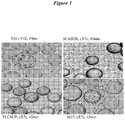
- High throughput screening of one-bead one-compound combinatorial peptide libraries was performed and the illustrative bladder cancer-specific ligand PLZ4 (the amino acid sequence: cQDGRMGFc; SEQ ID NO:12) was identified.
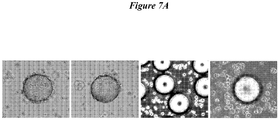
- PLZ4 can selectively bind to bladder cancer cell lines and primary bladder cancer cells from patients, but not to normal urothelial cells, normal cell mixture from bladder specimens, fibroblasts and blood cells. It can bind to all five canine bladder cancer cell lines tested.
- This ligand can bind to tumor cells treated with urine at pH 6.0, but not to cells collected from the urine of four patients actively treated with intravesical Bacillus Calmette-Guerin therapy.
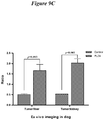
- Intravenous injection of PLZ4 linked to near-infrared dye Cy5.5 showed fluorescent uptake in mouse xenografts developed from excised human primary bladder cancer specimens.
- this ligand can be used for imaging detection and targeted therapy of bladder cancer.
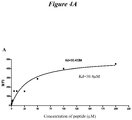
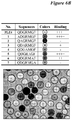
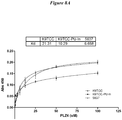
- PLZ4 binds to K562 cells expressing ⁇ v ⁇ 3 integrin, but not other integrins. Using alanine walk and a rainbow bead coding system, the amino acids important for cell binding were determined. Structural analysis indicated that there are two domains required for cell binding.
- the bladder cancer-specific peptide ligands described herein, including PLZ4 can be used, e.g., for imaging detection for diagnosis and follow-up/surveillance, and targeted therapy of bladder cancer.
- the present invention is based, in part, on bladder cancer-specific ligands, illustrated by peptide PLZ4 (cQDGRMGFc (SEQ ID NO:12), that in vitro specifically bound to human bladder transitional cell carcinoma (TCC) cell lines and bladder cancer cells from clinical patients, and in vivo , concentrated in mice at tumor xenografts developed from patient cystectomy specimens ( Zhang, et al, Urologic Oncology: Seminars and Original Investigations (2010) In press ). Moreover, preclinical studies show the potential of the bladder cancer-specific ligands for diagnostic and targeted therapeutic purposes in humans and other mammals.
- cQDGRMGFc peptide PLZ4
- TCC transitional cell carcinoma
- TCC-bearing dog serves as a spontaneous, outbred, immune-competent, large animal model for TCC in the human, and because bladder TCC is the most common urinary cancer in dogs (87% of all cases) ( Fink, et al., Cancer Res (1997) 57:1841-1845 ), it was determined that that bladder cancer-specific ligands could bind to canine bladder cancer.
- bladder cancer-specific ligands Because binding of the bladder cancer-specific ligands occurred, dogs with naturally-occurring canine bladder cancer are a relevant model for use in preclinical studies for human therapy and diagnosis ( Deborah, et al., Urologic Oncology (2000) 5:47-59 .; Dhawan, et al., Urologic Oncology (2009) 27:284-292 ), as the bladder tumors in canines possess similar histopathologic appearance, molecular features, biological behavior, and response to chemotherapy as do muscle-invasive bladder TCC in humans ( Patrick, et al., J Comp Pathol (2006) 135:190-199 . and Mutsaers, et al., J Vet Intern Med (2003) 17:136-144 ).
- the present bladder-cancer-specific ligands find use for the diagnostic and therapeutic purposes in the management of bladder cancer.
- the present invention provides peptide ligands that preferentially and specifically bind to bladder cancer tissue, and that bind minimally to or do not bind to normal bladder tissue or to non-bladder tissue.
- the bladder cancer-specific peptide ligands comprise the amino acid sequence X 1 DGRX 5 GF, wherein X 1 and X 5 are any amino acid other than cysteine ( e.g., A, D, E, F, G, H, I, K, L, M, N, P, Q, R, S, T, V, W, Y) (SEQ ID NO:1).
- the peptides are generally about 7 to 10 or 7 to 9 amino acids in length. In some embodiments, the peptide is no longer than 10 amino acids in length. In some embodiments, the peptide is no longer than 9 amino acids in length. In some embodiments, the peptide is no longer than 8 amino acids in length. In some embodiments, the peptide is no longer than 7 amino acids in length.
- the polypeptide comprises the amino acid sequence X 1 DGRX 5 GF (SEQ ID NO:1), wherein X 1 and X 5 are any amino acid, wherein the polypeptide is no longer than 300 amino acids in length, for example, no longer than 250, 200, 150, 100, 75, 50 or 25 amino acids in length, and binds to bladder cancer cells.
- polypeptide or peptide comprises the amino acid sequence X 1 DGRX 5 GF (SEQ ID NO:1), wherein:
- the peptides may have from 1 to 5 flanking L- or D-cysteine residues at the N-terminal and C-terminal ends, e.g., to allow for circularization and/or conjugation of the peptide.
- the peptide ligands can comprise the amino acid sequence CX 1 DGRX 5 GFC (SEQ ID NO:17) or cX 1 DGRX 5 GFc (SEQ ID NO:10), wherein X 1 and X 5 are any amino acid other than cysteine ( e.g., A, D, E, F, G, H, I, K, L, M, N, P, Q, R, S, T, V, W, Y) and c is D-cysteine.
- the peptide ligands are circularized.
- X 1 is Q, G or A (SEQ ID NO:2) and X 5 is any amino acid other than cysteine (e.g., A, D, E, F, G, H, I, K, L, M, N, P, Q, R, S, T, V, W, Y).
- X 1 is any amino acid other than cysteine ( e.g., A, D, E, F, G, H, I, K, L, M, N, P, Q, R, S, T, V, W, Y) and X 5 is M, K, G, A or GG (SEQ ID NO:3).
- X 1 is Q, G or A and X 5 is M, K, G, A or GG (SEQ ID NO:4).
- the bladder cancer-specific peptide ligand has the amino acid sequence QDGRMGF (SEQ ID NO:5). In some embodiments, the peptide has the amino acid sequence QDGRKGF (SEQ ID NO:6). In some embodiments, the peptide has the amino acid sequence QDGRK G GF (SEQ ID NO:7), wherein K G refers to a lysine residue with a glycine residue attached to its side chain. Additional amino acid residues can be added to either the amino and/or carboxyl terminus, for example from 1-5 amino acid residues, for example, 1, 2, 3, 4 or 5 amino acid residues. Cysteine residues can be added to the amino and carboxy terminus to allow for circularization.
- the bladder cancer-specific peptide ligand has the amino acid sequence X (1-5) X 6 DGRX 7 GFX (8-12) (SEQ ID NO:8), wherein X (1-5) and X (8-12) are any amino acid ( i.e., A, C, D, E, F, G, H, I, K, L, M, N, P, Q, R, S, T, V, W, Y); X 6 and X 7 are any amino acid other than cysteine ( i.e., A, D, E, F, G, H, I, K, L, M, N, P, Q, R, S, T, V, W, Y).
- the bladder cancer-specific peptide ligand has the amino acid sequence X 1 X 2 X 3 DGRX 4 GFX 5 X 6 (SEQ ID NO:9), wherein X 1 , X 2 , X 5 , X 6 are any amino acid ( i.e., A, C, D, E, F, G, H, I, K, L, M, N, P, Q, R, S, T, V, W, Y); X 3 and X 4 are any amino acid other than cysteine ( i.e ., A, D, E, F, G, H, I, K, L, M, N, P, Q, R, S, T, V, W, Y).
- the bladder cancer-specific peptide ligand has the amino acid sequence cX 1 DGRX 5 GFc (SEQ ID NO:10), wherein X 1 is any amino acid other than cysteine (i.e., A, D, E, F, G, H, I, K, L, M, N, P, Q, R, S, T, V, W, Y); X 5 is any amino acid other than cysteine ( i.e., A, D, E, F, G, H, I, K, L, M, N, P, Q, R, S, T, V, W, Y), and c is D-cysteine.
- X 1 is any amino acid other than cysteine (i.e., A, D, E, F, G, H, I, K, L, M, N, P, Q, R, S, T, V, W, Y)
- X 5 is any amino acid other than cysteine (i.e., A, D, E, F, G, H,
- the bladder cancer-specific peptide ligand has the amino acid sequence cQDGRKGFc (SEQ ID NO:11), wherein c is D-cysteine. In some embodiments, the bladder cancer-specific peptide ligand has the amino acid sequence cQDGRMGFc (SEQ ID NO:12), wherein c is D-cysteine. In some embodiments, the bladder cancer-specific peptide ligand has the amino acid sequence cQDGRK (G1-6) Fc (SEQ ID NO:13), wherein c is D-cysteine, wherein K( G1-6) refers to a lysine residue with one to six glycine residues attached to its side chain. In some embodiments, the bladder cancer-specific peptide ligand has the amino acid sequence CQDGRMGFC (SEQ ID NO:14). In some embodiments, the peptide is circularized.
- One or more of the amino acids in the bladder cancer-specific peptides can be D-amino acids. In some embodiments, all amino acid residues in the peptide ligands are D-amino acids. In various embodiments, the peptide ligands are partial retro-inverso or full-retro-inverso.
- the bladder cancer-specific peptides are substantially purified and/or isolated.
- Additional amino acid residues or polypeptide sequences may optionally be linked ( e.g., either via chemical linkage or fusion) to either the amino and/or carboxy termini of the peptide ligands.
- the bladder cancer-specific peptide sequences described herein can be embedded within or located within a longer polypeptide sequence, for example, a fusion sequence or another non-naturally occurring polypeptide sequence.
- the peptides are linked to the Fc portion of an immunoglobulin (e.g ., to promote antibody-dependent cellular cytotoxicity (ADCC) and/or complement-dependent cytotoxicity (CDC)) or to a cytotoxin.
- ADCC antibody-dependent cellular cytotoxicity
- CDC complement-dependent cytotoxicity
- the bladder cancer-specific peptide ligand is linked to the Fc region of an IgG antibody. In some embodiments, the bladder cancer-specific peptide ligand is linked to the Fc region of a human IgG1, IgG2, IgG3 and IgG4 isotype.
- the bladder cancer-specific peptide ligands are conjugated to a therapeutic agent.
- the therapeutic agent is a neoplastic agent.
- Illustrative neoplastic agent include without limitation alkylating agents (cisplatin, carboplatin, and oxaliplatin); anti-metabolites (purine or pyrimidine mimetics including for example azathioprine and mercaptopurine); plant alkaloids and terpenoids (vinca alkaloids and taxanes); vinca alkaloids (vincristine, vinblastine, vinorelbine, and vindesine); podophyllotoxin (including etoposide and teniposide); taxanes (paclitaxel, taxol and docetaxel); topoisomerase inhibitors (Type I inhibitors: camptothecins, irinotecan and topotecan; Type II Inhibitors: amsacrine, etoposide, etoposide phosphat
- the therapeutic agent is a cytotoxin.
- cytotoxins that find use include abrin, ricin, Pseudomonas exotoxin (PE), diphtheria toxin (DT), botulinum toxin, or modified toxins thereof. Other cytotoxins also find use.
- the bladder cancer-specific peptide ligands are conjugated to a radioactive isotope, for example, 125 I, 32 P, 14 C, 3 H, 35 S, 123 I, 11 C, 13 N, 15 O, 18 F, 82 Rb, technetium-99m (Tc-99m) or thallium-201.
- the bladder cancer-specific peptide ligands are conjugated to a magnetic particle, for example a magnetic bead or an iron oxide particle (e.g., for magnetic resonance imaging (MRI)).
- compositions Comprising Bladder Cancer-Specific Ligands
- the bladder cancer-specific peptide ligands can be prepared as a variety of pharmaceutical formulations for administration to a patient, including liquid and solid form preparations.
- compositions comprising the bladder cancer-specific peptide ligands are useful for parenteral, topical, oral, or local administration, including by aerosol or transdermally, for prophylactic and/or therapeutic treatment.
- the pharmaceutical compositions can be administered in a variety of unit dosage forms depending upon the method of administration.
- unit dosage forms suitable for oral administration include powder, tablets, pills, capsules and lozenges.
- the polypeptides and pharmaceutical compositions of this invention when administered orally, must be protected from digestion. This is typically accomplished either by complexing the polypeptide with a composition to render it resistant to acidic and enzymatic hydrolysis or by packaging the protein in an appropriately resistant carrier such as a liposome. Means of protecting proteins from digestion are well known in the art.
- compositions comprising the bladder cancer-specific peptide ligands are particularly useful for parenteral administration, such as intravenous administration or administration into a body cavity or lumen of an organ ( e.g., the bladder).
- the compositions for administration will commonly comprise a solution of the polypeptide comprising the polypeptide dissolved in a pharmaceutically acceptable carrier, preferably an aqueous carrier.
- a pharmaceutically acceptable carrier preferably an aqueous carrier.
- aqueous carriers can be used, e.g., buffered saline and the like. These solutions are sterile and generally free of undesirable matter.
- These compositions may be sterilized by conventional, well known sterilization techniques.
- compositions may contain pharmaceutically acceptable auxiliary substances as required to approximate physiological conditions such as pH adjusting and buffering agents, toxicity adjusting agents and the like, for example, sodium acetate, sodium chloride, potassium chloride, calcium chloride, sodium lactate and the like.
- concentration of polypeptide in these formulations can vary widely, and will be selected primarily based on fluid volumes, viscosities, body weight and the like in accordance with the particular mode of administration selected and the patient's needs.
- Liquid form pharmaceutical preparations can include solutions, suspensions, and emulsions, for example, water or water/propylene glycol solutions.
- Aqueous solutions suitable for oral use can be prepared by dissolving the active component in water and adding suitable colorants, flavors, stabilizers, and thickening agents as desired.
- Aqueous suspensions suitable for oral use can be made by dispersing the finely divided active component in water with viscous material, such as natural or synthetic gums, resins, methylcellulose, sodium carboxymethylcellulose, and other well-known suspending agents.
- viscous material such as natural or synthetic gums, resins, methylcellulose, sodium carboxymethylcellulose, and other well-known suspending agents.
- liquid preparations can be formulated in solution in aqueous polyethylene glycol solution.
- Transdermal administration can be performed using suitable carriers. If desired, apparatuses designed to facilitate transdermal delivery can be employed. Suitable carriers and apparatuses are well known in the art, as exemplified by U.S. Patent No
- the bladder cancer-specific peptides are formulated as a nanoparticle.
- Peptide nanoparticles and methods for their preparation are known in the art and described, e.g ., in U.S. Patent Publication No. 2006/0251726 , U.S. Patent Publication No. 2004/0126900 , U.S. Patent Publication No. 2005/0112089 , U.S. Patent Publication No. 2010/0172943 , U.S. Patent Publication No. 2010/0055189 , U.S. Patent Publication No. 2009/0306335 , U.S. Patent Publication No. 2009/0156480 , and U.S. Patent Publication No.
- liquid form preparations for oral administration.
- liquid forms include solutions, suspensions, and emulsions.
- These preparations may contain, in addition to the active component, colorants, flavors, stabilizers, buffers, artificial and natural sweeteners, dispersants, thickeners, solubilizing agents, and the like.
- the pharmaceutical formulation is preferably in unit dosage form.
- the preparation is subdivided into unit doses containing appropriate quantities of the active component.
- the unit dosage form can be a packaged preparation, the package containing discrete quantities of preparation, such as packeted tablets, capsules, and powders in vials or ampoules.
- the unit dosage form can be a capsule, tablet, cachet, or lozenge itself, or it can be the appropriate number of any of these in packaged form.
- unit dosage form refers to physically discrete units suitable as unitary dosages for human subjects and animals, each unit containing a predetermined quantity of active material calculated to produce the desired pharmaceutical effect in association with the required pharmaceutical diluent, carrier or vehicle.
- the specifications for the novel unit dosage forms of this invention are dictated by and directly dependent on (a) the unique characteristics of the active material and the particular effect to be achieved and (b) the limitations inherent in the art of compounding such an active material for use in humans and animals, as disclosed in detail in this specification, these being features of the present invention.
- a pharmaceutical formulation is administered to a patient at a therapeutically effective dose to prevent, treat, or control a disease or malignant condition, such as cancer.
- the pharmaceutical composition or medicament is administered to a patient in an amount sufficient to elicit an effective therapeutic or diagnostic response in the patient.
- An effective therapeutic or diagnostic response is a response that at least partially arrests or slows the symptoms or complications of the disease or malignant condition. An amount adequate to accomplish this is defined as "therapeutically effective dose.”
- Bladder cancer refers to any of several types of malignant growths of the urinary bladder.
- the most common type of bladder cancer begins in cells lining the inside of the bladder and is called transitional cell carcinoma (TCC) (sometimes called urothelial cell carcinoma (UCC)).
- TCC transitional cell carcinoma
- Other types of bladder cancer include squamous cell carcinoma, adenocarcinoma, sarcoma and small cell carcinoma.
- the subject has or is at risk of developing a bladder cancer, e.g ., due to genetic, lifestyle or environmental risk factors.
- the subject has or is at risk of developing a transitional cell carcinoma of the bladder tissue.
- the subject has or is at risk of developing a bladder cancer that expresses or over-expresses integrin ⁇ 5 ⁇ 3 and/or integrin ⁇ 5 ⁇ 5.
- the subject may be asymptomatic or exhibiting symptoms of bladder cancer.
- the subject may have a familial history of bladder cancer, e.g., a parent, grandparent or sibling who has been diagnosed with bladder cancer.
- the bladder cancer-specific peptide ligands can be administered to a patient to effect the inhibition, reduction, retraction or prevention of proliferation or growth of a bladder tumor or bladder cancer cell.
- the patient has a bladder cancer or a bladder tumor burden, and administration of the bladder cancer-specific peptide ligands can reverse, delay or inhibit progression of the disease.
- the patient may be in remission, or may have undergone the removal of a primary tumor, and administration of the bladder cancer-specific peptide ligands can delay, reduce, inhibit or eliminate growth of metastasis.
- the bladder cancer-specific peptide ligands described herein can be formulated into pharmaceutical formulations for administration to a patient.
- Administration of the pharmaceutical formulations can be by a variety of methods.
- Methods can include systemic administration, wherein the polypeptide or composition of polypeptides is delivered to sites in the body, including the targeted site of pharmaceutical action, via the circulatory system.
- Systemic administration includes, but is not limited to, oral, intraurethral and parenteral (i.e., other than through the alimentary tract, such as intramuscular, intravenous, intra-arterial, transdermal and subcutaneous) administration.
- administration of the bladder cancer-specific peptide ligands is local, e.g., directly into the bladder or intratumorally.
- the bladder cancer-specific peptide ligands can be administered for prophylactic and/or therapeutic treatments.
- compositions comprising the bladder cancer-specific peptide ligands are administered to a patient suffering from a bladder cancer in an amount sufficient to cure or at least partially arrest the disease and its complications.
- An amount adequate to accomplish this is defined as a "therapeutically effective dose.” Amounts effective for this use will depend upon the severity of the disease and the general state of the patient's health, and clinical studies are often done to determine the best dose for a given cancer type.
- An effective amount of the compound is that which provides either subjective relief of a symptom(s) or an objectively identifiable improvement as noted by the clinician or other qualified observer.
- compositions containing the bladder cancer-specific peptide ligands are administered to a patient not already in a disease state to prevent the onset of disease.
- Such an amount is defined to be a "prophylactically effective dose.”
- the precise amounts again depend upon the patient's state of health.
- an efficacious or effective amount of a combination of one or more polypeptides of the present invention is determined by first administering a low dose or small amount of a polypeptide or composition and then incrementally increasing the administered dose or dosages, adding a second or third medication as needed, until a desired effect of is observed in the treated subject with minimal or no toxic side effects.
- Applicable methods for determining an appropriate dose and dosing schedule for administration of a combination of the present invention are described, for example, in Goodman and Gilman's The Pharmacological Basis of Therapeutics, 11th Edition, 2006 , supra ; in a Physicians' Desk Reference (PDR), 64th Edition, 2010 ; in Remington: The Science and Practice of Pharmacy, 21st Ed., 2006 , supra ; and in Martindale: The Complete Drug Reference, Sweetman, 2005, London: Pharmaceutical Press ., and in Martindale, Martindale: The Extra Pharmacopoeia, 31st Edition., 1996, Amer Pharmaceutical Assn , each of which are hereby incorporated herein by reference.
- Exemplary doses of the pharmaceutical formulations described herein include milligram or microgram amounts of the bladder cancer-specific peptide ligands per kilogram of subject or sample weight (e.g., about 1 microgram per-kilogram to about 500 milligrams per kilogram, about 100 micrograms per kilogram to about 5 milligrams per kilogram, or about 1 microgram per kilogram to about 50 micrograms per kilogram. It is furthermore understood that appropriate doses of the bladder cancer-specific peptide ligands depend upon the potency of the composition with respect to the desired effect to be achieved.
- the bladder cancer-specific peptide ligands When the bladder cancer-specific peptide ligands are to be administered to a mammal, a physician, veterinarian, or researcher may, for example, prescribe a relatively low dose at first, subsequently increasing the dose until an appropriate response is obtained.
- the specific dose level for any particular mammal subject will depend upon a variety of factors including the activity of the specific composition employed, the age, body weight, general health, gender, and diet of the subject, the time of administration, the route of administration, the rate of excretion, any drug combination, and the degree of expression or activity to be modulated.
- the appropriate dosage of the polypeptides of the present invention will vary according to several factors, including the chosen route of administration, the formulation of the composition, patient response, the severity of the condition, the subject's weight, and the judgment of the prescribing physician.
- the dosage can be increased or decreased over time, as required by an individual patient. Usually, a patient initially is given a low dose, which is then increased to an efficacious dosage tolerable to the patient.
- bladder cancer-specific peptide ligands administered is dependent on the species of warm-blooded animal (mammal), the body weight, age, individual condition, surface area of the area to be treated and on the form of administration. The size of the dose also will be determined by the existence, nature, and extent of any adverse effects that accompany the administration of a particular compound in a particular subject.
- a unit dosage for administration to a mammal of about 50 to 70 kg may contain between about 5 and 500 mg of the active ingredient.
- a dosage of the bladder cancer-specific peptide ligands is a dosage that is sufficient to achieve the desired effect.
- Optimum dosages, toxicity, and therapeutic efficacy of compositions can further vary depending on the relative potency of individual compositions and can be determined by standard pharmaceutical procedures in cell cultures or experimental animals, for example, by determining the LD 50 (the dose lethal to 50% of the population) and the ED 50 (the dose therapeutically effective in 50% of the population).
- the dose ratio between toxic and therapeutic effects is the therapeutic index and can be expressed as the ratio, LD 50 /ED 50 .
- Compositions that exhibit large therapeutic indices are preferred. While compositions that exhibit toxic side effects can be used, care should be taken to design a delivery system that targets such compositions to the site of affected tissue to minimize potential damage to normal cells and, thereby, reduce side effects.
- the data obtained from, for example, animal studies can be used to formulate a dosage range for use in humans.
- the dosage of polypeptides of the present invention lies preferably within a range of circulating concentrations that include the ED 50 with little or no toxicity.
- the dosage can vary within this range depending upon the dosage form employed and the route of administration.
- the therapeutically effective dose can be estimated initially from cell culture assays.
- a dose can be formulated in animal models to achieve a circulating plasma concentration range that includes the IC 50 (the concentration of the test compound that achieves a half-maximal inhibition of symptoms) as determined in cell culture.
- IC 50 the concentration of the test compound that achieves a half-maximal inhibition of symptoms
- levels in plasma can be measured, for example, by high performance liquid chromatography (HPLC).
- HPLC high performance liquid chromatography
- the dose equivalent of a polypeptide or composition is from about 1 ng/kg to 100 mg/kg for a typical subject.
- a typical polypeptide composition of the present invention for intravenous administration would be about 0.1 to 10 mg/kg per patient per day. Dosages from 0.1 up to about 100 mg/kg per patient per day may be used. Actual methods for preparing administrable compositions will be known or apparent to those skilled in the art and are described in more detail in such publications as Remington: The Science and Practice of Pharmacy, 21st Ed., 2006, Lippincott Williams & Wilkins .
- a pharmaceutical formulation of the present invention is administered, e.g ., in a daily dose in the range from about 1 mg of compound per kg of subject weight (1 mg/kg) to about 1g/kg.
- the dose is a dose in the range of about 5 mg/kg to about 500 mg/kg.
- the dose is about 10 mg/kg to about 250 mg/kg.
- the dose is about 25 mg/kg to about 150 mg/kg.
- a preferred dose is about 10 mg/kg.
- Exemplary doses of the pharmaceutical formulations can include 100-500 mg daily doses as needed. Pharmaceutical formulations can be administered at a concentration of about 25 mg/mL to about 50 mg/mL. Exemplary doses of the pharmaceutical formulations can include about 50-200 mg/kg, for example, about 100 mg/kg daily doses.
- Dosing schedules can be calculated from measurements of polypeptides in the body of a subject. In general, dosage is from 1 ng to 1,000 mg per kg of body weight and may be given once or more daily, semiweekly, weekly, biweekly, semimonthly, monthly, bimonthly or yearly, as needed or appropriate. Persons of ordinary skill in the art can easily determine optimum dosages, dosing methodologies and repetition rates. One of skill in the art will be able to determine optimal dosing for administration of a polypeptide or polypeptide composition of the present invention to a human being following established protocols known in the art and the disclosure herein.
- the composition should provide a sufficient quantity of the polypeptides of this invention to effectively treat the patient.
- the dosage is administered once but may be applied periodically until either a therapeutic result is achieved or until side effects warrant discontinuation of therapy.
- the dose is sufficient to treat or ameliorate symptoms or signs of disease without producing unacceptable toxicity to the patient.
- the daily dose can be administered once per day or divided into subdoses and administered in multiple doses, e.g ., twice, three times, or four times per day.
- compositions described herein may be administered in different amounts and at different times.
- certain factors may influence the dosage and timing required to effectively treat a subject, including but not limited to the severity of the disease or malignant condition, previous treatments, the general health and/or age of the subject, and other diseases present.
- treatment of a subject with a therapeutically effective amount of a composition can include a single treatment or, preferably, can include a series of treatments.
- a pharmaceutical formulation thereof for intravenous administration would be about 0.01 to 100 mg/kg per patient per day. Dosages from 0.1 up to about 1000 mg/kg per patient per day may be used, particularly when the drug is administered to a secluded site and not into the blood stream, such as into a body cavity or into a lumen of an organ. Actual methods for preparing parenterally administrable compositions will be known or apparent to those skilled in the art and are described in more detail in such publications as Remington: The Science and Practice of Pharmacy, 21st Ed., 2006, Lippincott Williams & Wilkins .
- compositions to treat a disease or malignant condition described herein in a subject may require periodic (e.g., daily) administration that continues for a period ranging from three days to two weeks or longer.
- compositions will be administered for at least three consecutive days, often for at least five consecutive days, more often for at least ten, and sometimes for 20, 30, 40 or more consecutive days, or longer, as needed.
- consecutive daily doses are a preferred route to achieve a therapeutically effective dose
- a therapeutically beneficial effect can be achieved even if the compounds or compositions are not administered daily, so long as the administration is repeated frequently enough to maintain a therapeutically effective concentration of the composition in the subject. For example, one can administer a composition every other day, every third day, or, if higher dose ranges are employed and tolerated by the subject, once a week.
- bladder cancer-specific peptide ligands described herein can be co-administered with other agents as combination therapies.
- chemotherapeutic agents that can be co-administered with the bladder cancer-specific peptide ligands include without limitation alkylating agents (cisplatin, carboplatin, and oxaliplatin); anti-metabolites (purine or pyrimidine mimetics including for example azathioprine and mercaptopurine); plant alkaloids and terpenoids (vinca alkaloids and taxanes); vinca alkaloids (vincristine, vinblastine, vinorelbine, and vindesine); podophyllotoxin (including etoposide and teniposide); taxanes (paclitaxel, taxol and docetaxel); topoisomerase inhibitors (Type I inhibitors: camptothecins, irinotecan and topotecan; Type II Inhibitors: amsacrine, etoposide, etoposide phosphate, and teniposide); antineoplastics (dactinomycin, dox
- Radiological procedures can be administered in conjunction with radiological procedures.
- a variety of radiological procedures are available for disease treatments. Any of the procedures know by one of skill can be combined with the polypeptides of the present invention for treatment of a patient.
- Radiological procedures comprise treatment using radiation therapy to damage cellular DNA.
- the damage to the cellular DNA can be caused by a photon, electron, proton, neutron, or ion beam directly or indirectly ionizing the atoms which make up the DNA chain. Indirect ionization occurs due to the ionization of water, forming free radicals, notably hydroxyl radicals, which then subsequently damage the DNA. In the most common forms of radiation therapy, the majority of the radiation effect is through free radicals.
- Cancer cells are often undifferentiated and stem cell-like, such cells reproduce more rapidly and have a diminished ability to repair sub-lethal damage compared healthy and more differentiated cells. Further, DNA damage is inherited through cell division, leading to an accumulation of damage to the cancer cells, inducing slower reproduction and often death.
- the amount of radiation used in radiation therapy procedure is measured in gray (Gy), and varies depending on the type and stage of cancer being treated and the general state of the patient's health.
- the dosage range can also be affected by cancer type, for example, the typical curative dosage for a solid epithelial tumor ranges from 60 to 80 Gy, while the dosage for lymphoma ranges from 20 to 40 Gy.
- Preventative (adjuvant) doses can also be employed and typically range from 45 to 60 Gy administered in 1.8 to 2 Gy fractions (for breast, head and neck cancers). Many other factors are well-known and would be considered by those of skill when selecting a dose, including whether the patient is receiving other therapies (such as for example, but not limited to administration of the bladder cancer-specific peptide ligands, administration of chemotherapies and the like), patient co-morbidities, timing of radiation therapy (for example, whether radiation therapy is being administered before or after surgery), and the degree of success of any surgical procedures.
- therapies such as for example, but not limited to administration of the bladder cancer-specific peptide ligands, administration of chemotherapies and the like
- patient co-morbidities such as for example, but not limited to administration of the bladder cancer-specific peptide ligands, administration of chemotherapies and the like
- timing of radiation therapy for example, whether radiation therapy is being administered before or after surgery
- degree of success of any surgical procedures for example, whether
- Delivery parameters of a prescribed radiation dose can be determined during treatment planning by one of skill. Treatment planning can be performed on dedicated computers using specialized treatment planning software. Depending on the radiation delivery method, several angles or sources may be used to sum to the total necessary dose. Generally, a plan is devised that delivers a uniform prescription dose to the tumor and minimizes the dosage to surrounding healthy tissues.
- the bladder cancer-specific peptide ligands can be administered in conjunction with surgical removal or debulking of tumors.
- a variety of surgical procedures are available for disease treatments. Any of the procedures know by one of skill can be combined with the polypeptides of the present invention for treatment of a patient.
- Surgical procedures are the commonly categorized by urgency, type of procedure, body system involved, degree of invasiveness, and special instrumentation.
- Examples of surgical procedure can include emergency as well as scheduled procedures. Emergency surgery is surgery that must be done quickly to save life, limb, or functional capacity. Further examples of surgical procedures can include exploratory surgery, therapeutic surgery amputation, replantation, reconstructive, cosmetic, excision, transplantation or removal of an organ or body part, as well as others know in the art. Exploratory surgery can be performed to aid or confirm a diagnosis. Therapeutic surgery treats a previously diagnosed condition. Amputation involves cutting off a body part, usually a limb or digit. Replantation involves reattaching a severed body part. Reconstructive surgery involves reconstruction of an injured, mutilated, or deformed part of the body. Cosmetic surgery can done to improve the appearance of an otherwise normal structure or for repair of a structure damaged or lost due to disease.
- Excision is the cutting out of an organ, tissue, or other body part from the patient.
- Transplant surgery is the replacement of an organ or body part by insertion of another from different human (or animal) into the patient. Removing an organ or body part from a live human or animal for use in transplant is also a type of surgery.
- Minimally invasive surgery typically involves smaller outer incision(s) which are employed for insertion of miniaturized instruments within a body cavity or structure, as in laparoscopic surgery or angioplasty.
- Laser surgery involves the use of a laser for cutting tissue instead of a scalpel or similar surgical instruments.
- icrosurgery involves the use of an operating microscope for the surgeon to see small structures.
- Robotic surgery makes use of a surgical robot (such as for example the Da Vinci (Intuit Surgical, Sunnyvale, California)), to control the instrumentation under the direction of one of skill, such as for example a surgeon.
- efficacy is the capacity to produce an effect without significant toxicity.
- Efficacy indicates that the therapy provides therapeutic or prophylactic effects for a given intervention (examples of interventions can include by are not limited to administration of a pharmaceutical formulation, employment of a medical device, or employment of a surgical procedure).
- Efficacy can be measured by comparing treated to untreated individuals or by comparing the same individual before and after treatment.
- Efficacy of a treatment can be determined using a variety of methods, including pharmacological studies, diagnostic studies, predictive studies and prognostic studies. Examples of indicators of efficacy include but are not limited to inhibition of tumor cell growth and promotion of tumor cell death.
- the efficacy of an anti-cancer treatment can be assessed by a variety of methods known in the art.
- the bladder cancer-specific peptide ligands can be screened for prophylactic or therapeutic efficacy in animal models in comparison with untreated or placebo controls.
- the bladder cancer-specific peptide ligands identified by such screens can be then analyzed for the capacity to induce tumor cell death or enhanced immune system activation. For example, multiple dilutions of sera can be tested on tumor cell lines in culture and standard methods for examining cell death or inhibition of cellular growth can be employed. (See, e.g., Maniatis, et al., Molecular Cloning: A Laboratory Manual, Cold Spring Harbor Lab., New York, 1982 ; Ausubel, et al.
- the methods of the present invention provide for detecting inhibition disease in patient suffering from or susceptible to various cancers.
- a variety of methods can be used to monitor both therapeutic treatment for symptomatic patients and prophylactic treatment for asymptomatic patients.
- Monitoring methods can entail determining a baseline value of a tumor burden in a patient before administering a dosage of the bladder cancer-specific peptide ligands, and comparing this with a value for the tumor burden after treatment, respectively.
- a significant decrease i.e., greater than the typical margin of experimental error in repeat measurements of the same sample, expressed as one standard deviation from the mean of such measurements
- a positive treatment outcome i.e., that administration of the bladder cancer-specific peptide ligands has blocked or inhibited, or reduced progression of tumor growth and/or metastasis.
- treatment with the bladder cancer-specific peptide ligands is considered to be efficacious if the tumor burden in the subject being treated is reduced by at least about 10%, for example, by at least about 20%, 30%, 40% or 50%, or by completely eliminating the tumor burden, e.g ., comparing tumor burden before and after treatment in the subject.
- a control value of tumor burden (e.g ., a mean and standard deviation) is determined from a control population of individuals who have undergone treatment with the bladder cancer-specific peptide ligands. Measured values of tumor burden in a patient are compared with the control value. If the measured level in a patient is not significantly different (e.g ., more than one standard deviation) from the control value, treatment can be discontinued. If the tumor burden level in a patient is significantly above the control value, continued administration of agent is warranted.
- a patient who is not presently receiving treatment but has undergone a previous course of treatment is monitored for tumor burden to determine whether a resumption of treatment is required.
- the measured value of tumor burden in the patient can be compared with a value of tumor burden previously achieved in the patient after a previous course of treatment.
- a significant decrease in tumor burden relative to the previous measurement i.e ., greater than a typical margin of error in repeat measurements of the same sample) is an indication that treatment can be resumed.
- the value measured in a patient can be compared with a control value (mean plus standard deviation) determined in a population of patients after undergoing a course of treatment.
- the measured value in a patient can be compared with a control value in populations of prophylactically treated patients who remain free of symptoms of disease, or populations of therapeutically treated patients who show amelioration of disease characteristics.
- a significant increase in tumor burden relative to the control level i.e., more than a standard deviation is an indicator that treatment should be resumed in a patient.
- the tissue sample for analysis is typically blood, plasma, serum, mucous, tissue biopsy, tumor, ascites or cerebrospinal fluid from the patient.
- the sample can be analyzed for indication of neoplasia.
- Neoplasia or tumor burden can be detected using any method known in the art, e.g ., visual observation of a biopsy by a qualified pathologist, or other visualization techniques, e.g ., radiography, ultrasound, magnetic resonance imaging (MRI).
- the binding of the bladder cancer-specific peptide ligands find use in the detection and diagnosis of bladder cancer in a subject.
- the present bladder cancer-specific ligands can bind to integrin ⁇ 5 ⁇ 3 and integrin ⁇ 5 ⁇ 5, on the surface of a cell.
- the binding levels of the bladder cancer-specific peptide ligands can be determined on bladder tissue suspected of being cancerous. To determine whether the bladder cancer-specific peptide ligands bind to bladder tissue, a tissue biopsy of bladder tissue may be taken. In other embodiments, binding of the bladder cancer-specific peptide ligands to bladder cells in a urine sample are determined.
- bladder cancer patients who can benefit from the present method may already present with symptoms of bladder cancer.
- evidence of bladder cancer or a tumor may be present (by visual inspection or palpation, or by scanning techniques, e.g., magnetic resonance imaging (MRI) or Positron Emission Tomography (PET) scans).
- MRI magnetic resonance imaging
- PET Positron Emission Tomography
- the present diagnostic methods find use in conjunction with presently available diagnostic tests for cancer.
- the patient may already have a preliminary diagnosis of cancer, e.g., based on a serum biomarker, a urinary biomarker or a genetic analysis.
- Biomarkers that facilitate a diagnosis of bladder cancer are known in the art, and described, e.g., in Netto and Epstein, Pathology. (2010) 42(4):384-94 ; Gaston and Grossman, Methods Mol Biol. (2010) 641:303-23 ; Goebell, et al., Urologe A. (2010) 49(4):547-59 ; Mowatt, et al., Health Technol Assess. (2010) 14(4):1-331 ; Mitra and Cote, Nat Rev Urol.
- a biopsy may be justified and detection of the binding levels of the bladder cancer-specific peptide ligands or the expression levels of integrin ⁇ 5 ⁇ 3 and/or integrin ⁇ 5 ⁇ 5 in the tissue suspected of being cancerous can confirm or contradict a preliminary diagnosis of cancer.
- the patient may have a personal or familial history of bladder cancer or a cancer of another urological tissue.
- the patient may be in remission following successful therapeutic treatment of the bladder cancer.
- the patient may also have tested positive for a gene associated with increased risk of bladder cancer or the recurrence of bladder cancer.
- the biological sample from which the expression levels are measured will depend on the tissue suspected on being cancerous.
- the biological sample is from the tissue suspected of being cancerous, e.g ., bladder cells or bladder tissue.
- the biological sample is a urine sample.
- Bladder cells can slough off from bladder tissue and be expelled in urine.
- Urine cytology can be performed on a sample of voided urine or at the time of cystoscopy ("bladder washing"). Urine cytology relies on pathologic analysis of malignant cells shed into the urine during local tumor growth ( Sullivan, et al., Am J Transl Res. (2010) 2(4):412-40 ; Caraway, et al., Cancer Cytopathol. (2010) 118(4):175-83 ).
- the specimen is usually obtained via voiding or from bladder washing during an endoscopic procedure.
- Urine cytology can be used in combination with urethrocystoscopy to detect bladder cancers in persons deemed to be at high risk, particularly when urinalysis reveals clinically relevant hematuria.
- Bladder cells in a urine sample can be concentrated, e.g ., by centrifugation, and then contacted with a bladder cancer-specific peptide.
- the biological sample is from a biopsy.
- the biological sample is epithelial bladder tissue.
- the determination of the presence of bladder cancer metastasis it may be appropriate for the biological sample to be from a tissue other than bladder tissue.
- bladder cancer-specific peptide ligand binding levels in a tissue different from the tissue suspected of being cancerous, e.g ., to determine the presence of metastasis.
- the level of binding of the bladder cancer-specific peptide ligands can be measured according to methods well known in the art, and described herein.
- the level of peptide ligand binding can be detected, for example, using directly or indirectly labeled detection agents, e.g ., fluorescently, radioactively or enzymatically labeled bladder cancer-specific peptide ligands.
- directly or indirectly labeled detection agents e.g ., fluorescently, radioactively or enzymatically labeled bladder cancer-specific peptide ligands.
- the peptides can be conjugated to labeled beads, e.g ., beads that can be detected via a fluorescent label, a chemiluminescent label, a quantum dot label, or any other label known in the art.
- Assays using labeled beads are well known in the art.
- a urine sample is obtained from the subject, and cells in the sample concentrated, e.g ., by centrifugation.
- the concentrated cells from the urine sample, including bladder cells, are then contacted with a bladder cancer-specific peptide ligand, as described herein.
- the bladder cancer specific peptide ligand is added to the urine sample without first concentrating the cells.
- the cells can be concentrated after exposure to the peptide.
- the peptides can be directly labeled, e.g., by conjugation or attachment to a labeled bead.
- the bead can be labeled with a fluorophore, a chemiluminescent moiety or a quantum dot, or any other detectable label.
- Peptides conjugated to a bead facilitate detection of binding of the peptide ligands to cancer cells in the urine sample and concentration of bladder cancer cells bound to the peptide ligands. The presence of labeled cells can then be detected and quantified. For example, cells coated with beads conjugated to a bladder cancer-specific peptide ligand can be detected using a microscope or by flow cytometry.
- the bladder cancer-specific ligands are linked ( e.g., via chemical linkage or fusion) to a known epitope for antibody binding (e.g ., FLAG-tag or c-myc epitopes).
- a known epitope for antibody binding e.g ., FLAG-tag or c-myc epitopes.
- Peptide ligands alone or linked to an antibody epitope can be measured using immunoassays known in the art, including immunohistochemical staining, Western blotting, ELISA and the like with an antibody that selectively binds to antibody epitope or a fragment thereof.
- Detection of peptides using antibodies in immunoassays is known in the art (see, e.g ., Harlow & Lane, Using Antibodies: A Laboratory Manual (1998 ); Coligan, et al., eds., Current Protocols in Immunology (1991-2010 ); Goding, Monoclonal Antibodies: Principles and Practice (3rd ed. 1996 ); and Kohler & Milstein, Nature 256:495-497 (1975 ).
- Binding levels of the bladder cancer-specific peptide ligands to bladder cells or bladder tissue suspected of being cancerous can be detected using any method known in the art. Exemplary methods include flow cytometry, tissue lysate detection, Western immunoblot and immunohistochemistry.
- a bladder tissue sample e.g., a biopsy
- an antibody that specifically binds to the bladder cancer-specific peptide ligand, alone or linked to an epitope tag under conditions (i.e., time, temperature, concentration of sample) sufficient to allow specific binding.
- the tissues optionally can be fixed ( e.g., in formaldehyde) and permeabilized prior to incubation with antibody.
- the anti-peptide antibodies can be exposed to a tissue sample for about 0.5, 1.0, 1.5, 2.0, 2.5, 3.0 hours, or overnight, about 8, 10 or 12 hours, as appropriate.
- incubation time can be more or less depending on, e.g., the composition of the antigen, the dilution of the sample and the temperature for incubation. Incubations using less diluted samples and higher temperatures can be carried out for shorter periods of time. Incubations are usually carried out at room temperature (about 25°C) or at biological temperature (about 37°C), and can be carried out in a refrigerator (about 4°C). Washing to remove unbound sample before addition of a secondary antibody is carried according to known immunoassay methods.
- the bladder cancer-specific peptide ligands can be directly labeled or labeled secondary antibodies can be used to detect antibodies in a sample that have bound to the peptide ligands.
- Secondary antibodies bind to the constant or "C" regions of different classes or isotypes of immunoglobulins-IgM, IgD, IgG, IgA, and IgE.
- a secondary antibody against an IgG constant region is used in the present methods.
- Secondary antibodies against the IgG subclasses for example, IgG1, IgG2, IgG3, and IgG4, also find use in the present methods.
- Secondary antibodies can be labeled with any directly or indirectly detectable moiety, including a fluorophore (i.e ., fluoroscein, phycoerythrin, quantum dot, Luminex bead, fluorescent bead), an enzyme (i.e ., peroxidase, alkaline phosphatase), a radioisotope (e.g ., 3 H, 32 P, 125 I, 123 I, 11 C, 13 N, 15 O, 18 F, 82 Rb, technetium-99m (Tc-99m), thallium-201) or a chemiluminescent moiety.
- a fluorophore i.e ., fluoroscein, phycoerythrin, quantum dot, Luminex bead, fluorescent bead
- an enzyme i.e ., peroxidase, alkaline phosphatase
- a radioisotope e.g ., 3 H, 32 P,
- Labeling signals can be amplified using a complex of biotin and a biotin binding moiety (i.e ., avidin, streptavidin, neutravidin).
- a biotin binding moiety i.e ., avidin, streptavidin, neutravidin.
- Fluorescently labeled anti-human IgG antibodies are commercially available from Molecular Probes, Eugene, OR.
- Enzyme-labeled anti-human IgG antibodies are commercially available from Sigma-Aldrich, St. Louis, MO and Chemicon, Temecula, CA.
- the method of detection of the levels of binding of the bladder cancer-specific peptide ligands in a sample will correspond with the choice of label of the secondary antibody.
- the detectable signals i.e., blots
- tissue samples subject to immunohistochemistry can be evaluated using immunofluorescence microscopy or a scanning microscope and automated scanning software capable of detecting and quantifying fluorescent, chemiluminescent, and/or colorimetric signals. Such methods of detection are well known in the art and are described herein.
- the presence of binding or of increased binding of the bladder cancer-specific peptide ligands is indicated by a detectable signal (i.e., a blot, fluorescence, chemiluminescence, color, radioactivity) in an immunoassay or immunohistochemical assay, where the biological sample from the patient is contacted with antibody or antibody fragment that specifically binds to the peptide ligand or epitope tag.
- a detectable signal i.e., a blot, fluorescence, chemiluminescence, color, radioactivity
- Detectable signal can be compared to the signal from a normal or non-cancerous control sample from bladder tissue or bladder cells or to a threshold value.
- the presence of binding or of increased binding of the bladder cancer-specific peptide ligands is detected, and the presence or increased risk of cancer is indicated, e.g ., when the detectable signal of peptide ligand binding levels in the test sample is at least about 10%, 20%, 30%, 50%, 75% greater in comparison to the signal of peptide ligand binding levels in the normal or non-cancerous control sample or the predetermined threshold value.
- an increased binding level of the bladder cancer-specific ligand is detected, and the presence or an increased risk of cancer is indicated, when the detectable signal of bladder cancer-specific peptide ligand binding level in the test sample is at least about 1-fold, 2-fold, 3-fold, 4-fold or more, greater in comparison to the signal of bladder cancer-specific peptide ligand binding level in the normal or non-cancerous control sample or the predetermined threshold value.
- the sample and control or predetermined threshold levels are from the same tissue types.
- the bladder cancer-specific peptide ligand binding level is compared with bladder cancer-specific peptide ligand binding levels in a control tissue or control cells known to be cancerous.
- the bladder cancer-specific peptide ligand binding level in the test biological sample equivalent to or greater than the positive control sample, known to be cancerous is indicative of cancer.
- the sample and control or predetermined threshold levels are from the same tissue types (e.g ., bladder tissue).
- the bladder cancer-specific peptide ligand binding levels in the test biological sample are less than the bladder cancer-specific peptide ligand binding levels in the positive cancerous tissue control or the predetermined threshold level, then a diagnosis of cancer is generally not indicated.
- the bladder cancer-specific peptide ligand binding levels in the test biological sample are equivalent to or less than a normal or non-cancerous control or the predetermined threshold level, then a diagnosis of cancer is not indicated.
- the results of the bladder cancer-specific peptide ligand binding level determinations are recorded in a tangible medium.
- the results of the present diagnostic assays e.g., the observation of the presence or increased presence of bladder cancer-specific peptide ligand binding
- the diagnosis of whether or not the presence or an increased risk of cancer is determined can be recorded, e.g., on paper or on electronic media (e.g., audio tape, a computer disk, a CD, a flash drive, etc.).
- the methods further comprise the step of providing the diagnosis to the patient of whether or not there is the presence or an increased risk of cancer in the patient based on the results of the bladder cancer-specific peptide ligand binding level determinations.
- the methods further comprise the step of providing or recommending an appropriate course of treatment to the patient based on the results of the bladder cancer-specific peptide ligand binding level determinations.
- Methods of determining the presence of bladder cancer in a subject based on the binding of the bladder cancer-specific peptide ligands described herein to a biological sample containing bladder cells or bladder tissue can be performed in conjunction with other known methods of diagnosing bladder cancer.
- bladder cancer-specific peptide ligands described herein find use in methods of local visualization of bladder cancer, for example, during transurethral resection of bladder cancer (TURBT).
- TURBT transurethral resection of bladder cancer
- a bladder cancer-specific peptide ligand conjugated to a fluorescent dye finds use for this application.
- MRI Magnetic resonance imaging
- PET positron emission tomography
- MRI and PET or single photon emission computed tomography can be used to facilitate the detection of bladder cancer using the bladder cancer-specific peptide ligands described herein conjugated to imaging agents, for example, an iron oxide for MRI and a radioisotope for PET/SPECT (e.g ., 123 I, 11 C, 13 N, 15 O, 18 F, 82 Rb, technetium-99m (Tc-99m), thallium-201).
- an iron oxide for MRI and a radioisotope for PET/SPECT e.g 123 I, 11 C, 13 N, 15 O, 18 F, 82 Rb, technetium-99m (Tc-99m), thallium-201).
- the bladder cancer specific peptide ligands attached to an appropriate imaging agent are contacted with the tissue suspected of containing or known to contain bladder cancer cells within the subject.
- the location and extent of bladder cancer cells in the imaged tissue can be determined.
- the methods further comprise removing, resecting or excising the bladder cancer cells from the tissue, e.g., based on detecting the binding of the bladder cancer-specific peptide ligands.
- Magnetic particles conjugated to a bladder cancer-specific peptide ligand can further be used for the extraction and removal of bladder cancer cells.
- Use of magnetic nanoparticle-peptide conjugates for the in vitro and in vivo targeting and extraction of cancer cells is described, e.g., in Scarberry, et al., J Am Chem Soc (2008) 130(31):10258-10262 .
- kits comprising a bladder cancer-specific peptide ligand, as described herein.
- the embodiments of the bladder cancer-specific peptide ligand in the kits are as described herein.
- the bladder cancer-specific peptide ligand is conjugated to or attached to a labeled bead.
- kits will typically include instructional materials disclosing means of use of the bladder cancer-specific peptide ligand.
- the bladder cancer-specific ligands may be formulated for administration, and provided in one or multiple unit doses.
- the kits may also include additional components to facilitate the particular application for which the kit is designed.
- the kits may additionally include buffers and other reagents routinely used for the practice of a particular method. Such kits and appropriate contents are well known to those of skill in the art.
- OBOC libraries were synthesized on solid phase TentaGel S NH2 resin (Rapp Polymere Gmbh, Germany) by a "split-mix synthesis" method ( Lam, et al., Nature, (1991) 354: 82-84 ; Lam, et al., Chem Rev, (1997) 97: 411-448 ; and . Peng, et al., Nat Chem Biol, (2006) 2: 381-389 ).
- the peptide moiety of the peptidomimetic was synthesized by standard solid-phase peptide synthesis techniques using 9-fluorenylmethoxycarbonyl (Fmoc) chemistry and N-hydroxybenzotriazole (HOBt)/N,N'-diisopropylcarbodiimide (DIC) coupling. And, the completion of coupling was confirmed with a ninhydrin test.
- the beads were stored in 70% ethanol at 4°C until use.
- bladder cancer cell lines including 5637 (HTB-9), SCaBER, TCCSUP (HTB-5), and T24 (HTB-4) were purchased from the American Type Culture Collection (Manassas, VA). The isolation, characterization and maintenance of normal urothelial cells was previously described in detail ( Bagai, et al., J Biol Chem, (2002) 277: 23828-23837 ).
- Normal peripheral blood mononuclear cells were prepared by using the Ficoll-Paque gradient method from peripheral blood of healthy donors.
- Bladder cancer tissue obtained from cystectomy was cut into pieces, digested with collagenase at 37°C for 1-2 hours per the manufacturer's protocol, and filtered through a 40- ⁇ m strainer to make single cell suspension. Tumor cells were then isolated with Ficoll-Paque gradient method (800g, 30min at 4°C). Informed consent was obtained from each patient or healthy donor before specimens were collected.
- K9TCC, K9TCC-AxA, K9TCC-AxC, K9TCC-Nk and K9TCC-In were kindly provided by Deborah W. Knapp at Purdue University ( Dhawan, et al., Urol Oncol, (2009) 27: 284-292 ). These cells were maintained in DMEM/F12, with 10% FBS and 2mM glutamine, and incubated in 5% CO2 at 37°C.
- the beads were washed extensively with double-distilled water and phosphate-buffered saline (PBS) before screening.
- Bladder cancer cells and normal urothelial cells were detached from culture dishes with trypsin/EDTA or a Detach kit (PromoCell, Heidelberg, Germany), washed with their corresponding culture medium, resuspended at 10 6 cells/ml and incubated with OBOC beads in Petri dishes in a humidified CO2 incubator at 37°C with shaking (60 rpm). Beads bound by cells appeared as rosettes with a central bead covered by a layer(s) of cells under a microscope.
- PBS phosphate-buffered saline
- the positive beads were picked with a pipette under inverted microscope, treated with Quanidine HCl (8M, 20 min) to remove cells and proteins on beads surface, and underwent a second round of incubation with the same cells to confirm the binding. Only those beads with cell bindings at both rounds were sent for the amino acid sequencing as previously described ( Peng, et al., Nat Chem Biol, (2006) 2: 381-389 ).
- Bladder cancer cells and normal urothelial cells (2 ⁇ 10 4 cells each well) were seeded on chamber slides. When the cells grew confluent over 70%, they were washed with PBS and blocked with 3% BSA-PBS at 4°C for 1 hour, and incubated with the peptide-biotin conjugate (1 ⁇ M) for 1 h at 4°C in TBS buffer. Cells were then washed three times with TBS and incubated with FITC-Streptavidin (0.5 ⁇ g/ml) (ZYMED, South San Francisco, California). Cells were washed and examined using an inverted Olympus fluorescence microscope (20X).
- the PLZ4-CY5.5 conjugate was prepared by incubating PLZ4-biotin conjugates with streptavidin (SA)-CY5.5 (Rockland Immunochemicals, Gilbertsville, PA). One streptavidin can bind up to 4 molecules of biotin. To ensure at least one PLZ4-biotin molecule binds to SA-CY5.5, PLZ4-biotin was mixed with SA-Cy5.5 at molar ratios of 5:1 for 1 h at 4°C. The fluorescence labeling was confirmed by in vitro cell-binding assays. Athymic nude mice were purchased from Harlan Laboratories (Indianapolis, IN). All experiments were performed in compliance with institutional guidelines and according to protocols.
- Primary bladder cancer specimens were harvested from cystectomy by a pathologist after informed consent was obtained from patients. This protocol was approved by the UC Davis IRB. Primary cancer tissue was minced and incubated with collagenase at 37°C for one hour with rotation. Single cell suspension was obtained by straining through a 40 ⁇ m strainer. Some of the primary cells were incubated with OBOC beads to determine cell binding ( Figure 3 ). Primary bladder cancer cells were mixed with matrigel per manufacturer's instruction (BD Biosciences, Sparks, MD), and subcutaneously injected into one side of the shoulder of mice. Tumors measured about 0.5-1.0 cm in diameter at the time of imaging.
- mice were anesthesized using intraperitoneal injection of pentobarbital (60 mg/kg), and performed imaging using a Kodak multimodal-imaging system IS2000MM (Kodak) equipped with an excitation bandpass filter at 625 nm and an emission at 700 nm. Exposure time was 30 s per image. Images were analyzed using the imaging station IS2000MM software (Kodak, Rochester, NY). After in vivo imaging, the mice were euthanized with CO2 overdose. Tumors and other normal organs and tissues were excised and imaged with the Kodak imaging system as described above.
- IS2000MM Kodak multimodal-imaging system
- the two cyclic random peptide libraries used for screening were 7-mer cX 1 X 2 X 3 X 4 X 5 X 6 X 7 c (SEQ ID NO:15) and 5-mer c(U/Z) 5 c (SEQ ID NO:16) in which "c” represents D-cysteine, "X” for 19 natural L-amino acids except cysteine, "U” for 8 unnatural amino acids, and "Z” for 17 L-amino acids except arginine, cysteine and lysine. Each peptide contained two flanking D-cysteine residues at the amino and carboxyl ends.
- peptides were cyclized by a disulfide bond to more efficiently expose the amino acids in the middle for cell binding.
- approximately 150,000 library beads (peptides) were screened with each cell line. Beads with ligands that bound the cancer cell surface receptors became coated with cancer cells. Positive beads (i.e. beads coated with cells) were isolated and underwent a second round of screening with the same cells to eliminate false positive beads.
- PLZ4 did not bind to whole blood cells ( Figure 2E ), peripheral blood mononuclear cells (PBMC, Figure 2F ) or fibroblasts ( Figure 2G ), suggesting these confounding cells inside bladder will not affect the binding of PLZ4 to bladder cancer cells. This is consistent with the observation that PLZ4 did not bind to 10 out of 12 cell lines with different origins. PLZ4 did not bind to cells were isolated from urine specimens collected from 4 consecutive patients who had no evidence of bladder cancer but were actively treated with BCG intravesical therapy ( Figure 2H ). This suggests that PLZ4 may not bind to inflamed cells commonly seen in patients treated with BCG.
- Beads coated with PLZ4 can bind to bladder tumor cells from patients
- the cell surface molecules on established cell lines in culture may not be the same as those molecules on primary bladder cancer cells. It was assessed if PLZ4 could bind to bladder cancer cells from patients. Beads coated with PLZ4 could bind to primary bladder cancer cells from patients ( Figure 3A and B ). So far, PLZ4 could bind to cells from all 5 fresh bladder cancer specimens that were tested. In one patient, both normal tissue and bladder cancer tissue from the same cystectomy specimen were available. Beads coated with PLZ4 could bind to cells from the cancer specimen ( Figure 3B ), but not to the cells from the normal specimen of the same bladder ( Figure 3C ).
- the acidic environment in urine may change the 3-D structure of ligands and affect ligand binding.
- the cancer-specific beads could bind to 5637 TCC cancer cells in urine.
- Cells were incubated with beads in urine at pH 6.0 for 4 hours at 37°C. 4-hour incubation was used to mimic the in vivo urine retention in patients and to permit conformational changes and protease digestion.
- PLZ4 was still able to bind cells in urine ( Figure 3D ).
- PLZ4 can bind to canine bladder cancer cells
- the preclinical studies can be performed in dogs with naturally occurring bladder cancer before clinical studies in human.
- Five canine cancer cell lines have been tested.
- PLZ4-FITC complex could bind to all 5 canine bladder cancer cell lines ( Figure 3E ). There was no detectable binding when non-small cell lung cancer cell line A549cells were used or when a leukemia-specific ligand instead of PLZ4 was used in the FITC complex.
- PLZ4-FITC conjugate were generated using the same approach as that used for the PLZ4-PE conjugate, and used for staining 5637, TCCSUP, T24 and normal urothelial cells growing on chamber slides.
- streptavidin-FITC was added without biotinylated ligand.
- strong fluorescence signals could be detected with 5637, TCCSUP and T24 cells under fluorescence microscopy ( Figure 4B ). No significant binding was observed on the normal urothelial cells with the same staining condition.
- PLZ4 could be used for in vivo bladder cancer detection and targeted therapy
- in vivo optical imaging of mice with bladder cancer xenografts developed from primary bladder cancer tissues from patients who underwent cystectomy was used.
- Near-infrared fluorescent (NIRF) dye Cy5.5 allows an imaging of deeper tissues because the near-infrared light has high penetration, low tissue absorption and scattering rates.
- NIRF near-infrared fluorescent
- PLZ4-Cy5.5 conjugate 7 nmol
- Mice were imaged at 0, 1, 2, 4, 8, 16, 24 hours post inoculation.
- PLZ4-Cy5.5 uptake by tumors was much higher than that of normal tissue and the tumor area of mice receiving SA-Cy5.5 ( Figure 5A and B ), starting at 2 hr and reaching the greatest difference 4 hr after injection.
- OBOC beads bearing PLZ4 peptides on the surface were incubated with K562 cells transfected with various integrins.
- K562 cells express endogenous ⁇ 5 ⁇ 1 integrin.
- PLZ4 bound to K562 cells transfected with ⁇ 5 ⁇ 3 integrin, but not to the parental K562 cells or cells transfected other integrins ( Figure 6A ).
- Several other ligands obtained from the initial screening also contain the DGR motif.
- PLZ4 is bladder cancer-specific, suggesting that other amino acids besides DGR determine the binding specificity.
- the glycine residues (G) at the X 3 and X 6 positions are important for cell binding because replacement of one of these two amino acids significantly decreased but did not abolish the binding of the peptides to 5637 cells. Methionine at the X 5 position could be replaced to many other amino acids without compromising the binding affinity.
- the three amino acids (D, G and R) at the N-terminus together with the two amino acids (G and F) at the C-terminus determine the binding specificity. Therefore, the binding pocket may be in the clover shape: one for the N-terminal three amino acids, one for the C-terminal two amino acids and a middle pocket. So w the depth of the middle binding pocket by adding different numbers of glycine residue to the X 5 position. Two glycine residues could be added to fill in the central pocket without significant effect on cell binding ( Figure 6C ). Addition of more than 4 glycines completely abolished the binding of PLZ4 to the target cells.
- Bladder cancer-specific ligands can improve the diagnosis and management of bladder cancer.
- these ligands can be used for tumor localization.
- About 75-80% of bladder cancer cases are diagnosed at the non-invasive stages and usually treated with TURBT.
- incomplete resection can be found in about one third of cases regardless of the expertise of the urologists ( Herr, J Urol, (2005) 174: 2134-2137 .
- 5-aminolevulinic acid (ALA) combined with fluorescence cystoscopy has been used for tumor localization ( Daniltchenko, et al., J Urol, (2005) 174: 2129-2133 ).
- PLZ4 can specifically bind to bladder cancer cells, but not to normal urothelial cells, normal cells from the same bladder that contains cancer, or cells from patients who were actively treated with BCG. It is shown that FITC-conjugated PLZ4 stains bladder cancer cells, suggesting that this ligand can be used for fluorescence detection and tumor localization of non-invasive bladder cancer.
- Bladder cancer-specific ligands can be used for targeted therapy against non-invasive and advanced bladder cancer. Intravesical instillation of BCG or chemotherapy has been used to reduce the risk of bladder cancer recurrence. However, this therapy is still associated with significant risk of recurrence ( Herr, et al., J Clin Oncol, (1995) 13: 1404-1408 ; and Herr, et al., J Urol, (1989) 141: 22-29 ).
- PLZ4 can be linked to chemotherapy drugs for targeted therapy, either through intravesical instillation, or through intravenous injection.
- the bladder cancer-specific ligand PLZ4 can be used for imaging detection of non-invasive and advanced bladder cancer. Once bladder cancer has metastasized, the prognosis is poor, and cystectomy is not curative. Current imaging modalities like computed tomography (CT) and magnetic resonance imaging (MRI) are not sensitive and/or specific. While 18F-FDG-PET has been tested in clinic for staging purposes of bladder cancer, it has not been extensively used in clinic because the sensitivity and specificity are not satisfactory ( Drieskens, et al., Eur J Nucl Med Mol Imaging, (2005) 32: 1412-1417 ; and Liu, et al., Urol Int, (2006) 77: 69-75 ).
- CT computed tomography
- MRI magnetic resonance imaging
- PLZ4 can be used for detection of subcutaneous tumor xenograft similar to metastatic bladder cancer ( Figure 5 ). Only 7 nmol of the cancer-specific ligand was needed for this imaging study. Cancer-specific ligand can increase the detection specificity and sensitivity of radiographic detection, thereby replacing or supplementing the costly cystoscopy procedure for diagnosis and follow-up of bladder cancer.
- Dogs with naturally occurring bladder cancer can be an outstanding model to study before clinical trials in human.
- cancer models with tumor xenografts usually at the subcutaneously space, are used.
- this model may not reflect what is really going on in nature.
- PLZ4 bound to all five canine bladder cancer cell lines tested, suggesting that naturally occurring canine bladder cancer can be used for the preclinical studies. It was also tested and found that PLZ4 could bind to primary canine bladder cancer cells freshly resected from one canine patient. Further studies will be to conduct the preclinical studies with PLZ4 in dogs with naturally occurring canine bladder cancer.
- the binding specificity of PLZ4 is determined by DGR and some other amino acids.
- PLZ4 contains DGR.
- the reverse motif of RGD that binds to several integrin heterodimers including ⁇ 5 ⁇ 3 and ⁇ 5 ⁇ 5 ( Ruoslahti, et al., Annu Rev Cell Dev Biol, (1996) 12: 697-715 ).
- the DGR motif was the core of the binding motif in another protein that binds to Secreted Frizzled-related proteins ( Chuman, et al., Peptides, (2004) 25: 1831-1838 ).
- the (D/N)GR motif also previously identified as a low-affinity integrin binding motif, was identified on the capsid of adeno-associated virus, and is important for the viral capsid-integrin 5 ⁇ 1 interaction and cell entry ( Koivunen, et al., J Biol Chem, (1993) 268: 20205-20210, 1993 ; Koivunen, et al., J Cell Biol, (1994) 124: 373-380 ; and Asokan, et al., J Virol, (2006) 80: 8961-8969 ).
- PLZ4 does not bind to the parental K562 cells that express 5 ⁇ 1 integrin, but binds to K562 cells transfected with ⁇ 5 ⁇ 3 integrin ( Figure 6A ).
- IsoDGR also binds to ⁇ 5 ⁇ 3 in tumor vaculature ( Curnis, et al., Cancer Res, (2008) 68: 7073-7082 ).
- Several peptides contain the same DGR motif, but only PLZ4 is bladder cancer-specific.
- the alanine walk confirmed that, besides DGR, G (glycine, X 6 ) and F (phenylalanine, X 7 ) are important for cell binding. Change of these two amino acids abolishes or greatly diminishes the binding of PLZ4 to bladder cancer cells ( Figure 6B ).
- OBOC combinatorial library approach has been used to identify the PLZ4 bladder cancer-specific ligand.
- the clinical applications include tumor localization to guide TURBT, imaging detection and targeted drug delivery for non-invasive and metastatic bladder cancer.
- PLZ4 was synthesized on TentaGel S NH2 resin beads (Rapp Polymere Gmbh, Germany) ( Pegram, et al., J Clin Oncol (1998) 16:2659-2671 ), and incubated with single suspensions of five different canine carcinoma cell lines including K9TCC-PU, K9TCC-PU-AxA, K9TCC-PU-In, K9TCC-PU-AxC, and K9TCC-PU-Nk (kindly provided by Deborah Knapp at Purdue University, West Lafayette, IN, USA) at 10 6 cells/ml.
- the negative control was normal urothelial cells obtained from dogs that were euthanized due to non-bladder-related disorders.
- Human bladder cancer cell line, 5637 were served as the positive control. If PLZ4 bound to cells in suspension, then the bead surface was covered with cells. Over 95% of the bead surface was covered with 5637 and K9TCC cells ( Fig 7A-a and b , respectively). In contrast, there was no cell binding and round smooth bead surface was observed when the beads were incubated with the normal canine bladder urothelial cells ( Figure 7A-c ), or bladder cells from a dog with chronic cystitis ( Figure 7A-d ).
- PLZ4 was synthesized and covalently conjugated to biotin.
- Canine TCC cell lines were cultured on chamber slides. Normal urothelial cells from dogs were prepared with touch preparation smears in which canine normal bladder tissue were touched and lightly rubbed on the surface of slides. After fixation, the slides were incubated with PLZ4-biotin and probed with streptavidin. All five canine TCC cell lines showed diffuse cell membrane staining ( Fig 7 B: b-f), comparing to control without peptide incubation ( Figure 7B : a).
- K9TCC-PU and K9TCC-PU-In cells were seeded in 96 well plates, fixed, and incubated with increasing concentrations of PLZ4-biotin followed by avidin-HRP.
- PLZ4 exhibited binding in a dose-dependent manner against canine TCC cell lines.
- the Kd 50 values of PLZ4 for K9TCC-PU and K9TCC-PU-In were 21.31 and 10.29 ⁇ M, respectively.
- Ligand binding on the cell surface molecules may initiate cell signaling and exert biological effects on cells.
- the effect of PLZ4 on cell viability and proliferation was determined, as it may have potential clinical applications.
- K9TCC, K9TCC-PU-In and K9TCC-PU-Nk cells were seeded in 96 well plates, incubated without or with various concentrations of PLZ4 peptides. After culture with PLZ4 for 48 hours, WST-8 cell proliferation assay was performed per manufacturer's protocol (Cayman Chemical, Ann Arbor, MI, USA). There were no significant changes in cell proliferation/viability in these three cell lines cultured with different concentration of PLZ4 when compared to cells treated with PBS control ( Figure 8B ).
- TCC-PU-In cells mixed with Matrigel were implanted into 8-week-old nude mice for 3-4 weeks.
- mice were randomly selected to be injected with 100 ⁇ l (7 nmol) of pre-incubated PLZ4-biotin-streptavidin-Cy5.5 complex or streptavidin-Cy5.5 dye under anesthesia.
- Total body images were collected at 0, 1, 3, 6, and 12 hours after injection ( Fig 9a ).
- mice with tumor xenografts are most often used instead.
- mice xenograft models are radically different from naturally occurring cancer in human patients.
- the most commonly used xenograft model is subcutaneous xenografts while most human cancers, even at the very late stage, rarely metastasize to the subcutaneous space.
- PLZ4 local visualization of bladder cancer during transurethral resection of bladder cancer
- Local visualization of bladder cancer is clinically relevant since incomplete resection is seen in up to one third of cases after TURBT that contributes to the high recurrence of bladder cancer after therapy.
- Fluorescence cystoscopy with 5-Aminolevulinic acid (ALA) has been used for this purpose ( Daniltchenko, et al. J Urol (2005) 174:2129-2133 ). But nonspecific uptake of ALA by non-cancer urothelial cells, especially in inflamed bladder, preclude its wide clinical application.
- PLZ4 Another application of PLZ4 is imaging detection of bladder cancer that can supplement or decrease intrusive and costly cystoscopy.
- MicroMRI and microPET can be performed in mice. Because of the tiny size of orthotopic mouse bladder cancer models, the discriminations of sizes, numbers and locations of tumor in mice may not be at all possible and not translatable to human patients. Furthermore, because of the proximal location of bladder to external imaging device, little tissue absorption and scattering, the imaging studies in mice are not applicable to those in large animals like human patients. Both MRI and PET scans have been widely used for the diagnosis of canine malignancies.
- MRI and PET or SPECT can be used to facilitate the detection of bladder cancer using PLZ4 conjugated to imaging agents, such as iron oxide for MRI and radioisotope for PET/SPECT.
- imaging agents such as iron oxide for MRI and radioisotope for PET/SPECT.
- PLZ4 only bought to one of 12 human cell lines with different tissue/cancer origins, and did not bind to any of the confounding cells that possibly exist inside bladder such as normal urothelilal cells, whole blood, peripheral blood mononuclear cells (PBMC), fibroblasts, and vascular endothelial cells. This specific binding is useful for in vivo targeting with PLZ4 conjugates.
- PBMC peripheral blood mononuclear cells
- fibroblasts vascular endothelial cells.
- the present human bladder cancer-specific ligands can also bind to canine bladder cancer cells. Therefore, the preclinical studies of PLZ4 as a human diagnostic and therapeutic agent can be performed in dogs with naturally occurring bladder TCC.
- the human bladder cancer-specific ligands described herein, illustrated by PLZ4, also can be used in the management of canine bladder cancer.
Landscapes
- Health & Medical Sciences (AREA)
- Life Sciences & Earth Sciences (AREA)
- Chemical & Material Sciences (AREA)
- Engineering & Computer Science (AREA)
- General Health & Medical Sciences (AREA)
- Medicinal Chemistry (AREA)
- Animal Behavior & Ethology (AREA)
- Public Health (AREA)
- Veterinary Medicine (AREA)
- Epidemiology (AREA)
- Molecular Biology (AREA)
- Proteomics, Peptides & Aminoacids (AREA)
- Pharmacology & Pharmacy (AREA)
- Bioinformatics & Cheminformatics (AREA)
- Immunology (AREA)
- Biomedical Technology (AREA)
- Urology & Nephrology (AREA)
- Organic Chemistry (AREA)
- Hematology (AREA)
- Biochemistry (AREA)
- Physics & Mathematics (AREA)
- Biotechnology (AREA)
- Cell Biology (AREA)
- Nanotechnology (AREA)
- Biophysics (AREA)
- Food Science & Technology (AREA)
- Analytical Chemistry (AREA)
- General Physics & Mathematics (AREA)
- Pathology (AREA)
- Microbiology (AREA)
- Genetics & Genomics (AREA)
- Optics & Photonics (AREA)
- Crystallography & Structural Chemistry (AREA)
- Medical Informatics (AREA)
- General Engineering & Computer Science (AREA)
- Chemical Kinetics & Catalysis (AREA)
- General Chemical & Material Sciences (AREA)
- Nuclear Medicine, Radiotherapy & Molecular Imaging (AREA)
- Dermatology (AREA)
- Gastroenterology & Hepatology (AREA)
Claims (18)
- Un peptide comprenant la séquence d'acides aminés X1 DGRX5GF, dans lequel le peptide n'est pas plus long que 10 acides aminés en longueur et se lie aux cellules du cancer de la vessie, dans lequel X1 est Gln, Gly ou Ala et/ou X5 est Met, Lys, Gly ou Ala.
- Le peptide selon la revendication 1, dans lequel :i) un ou plusieurs des résidus d'acides aminés sont des acides aminés D ;ii) le peptide comprend des groupes de protection à l'une ou les deux de la terminaison N ou la terminaison C ;iii) le peptide est entièrement ou partiellement rétro-inverso ;iv) le peptide comprend 2 ou plusieurs répétitions de la séquence d'acides aminés X1 DGRX5GF (SEQ ID NO: 1) ; ouv) le peptide est circularisé.
- Le peptide selon l'une quelconque des revendications 1 à 2, dans lequel le peptide a la séquence d'acides aminés QDGRMGF (SEQ ID NO: 5) ou QDGRKGF (SEQ ID NO: 6).
- Le peptide selon l'une quelconque des revendications 1 à 3, dans lequel le peptide ne se lie pas au tissu normal de la vessie.
- Le peptide selon l'une quelconque des revendications 1 à 4, dans lequel le peptide comprend en outre entre 1 et 5 résidus d'acides aminés flanquant aux terminaisons aminées et/ou carboxyliques.
- Le peptide selon l'une quelconque des revendications 1 à 5, dans lequel le peptide comprend en outre un résidu de cystéine à la terminaison aminée et un résidu de cystéine à la terminaison carboxylique.
- Le peptide selon l'une quelconque des revendications 1 à 6, dans lequel le peptide est lié à une fraction thérapeutique, dans lequel de préférence la fraction thérapeutique est une partie Fc d'une immunoglobuline, d'une cytotoxine ou d'un agent anticancereux ; ou un marqueur détectable, dans lequel de préférence le marqueur détectable est une bille, un fluorophore, une fraction chimioluminescente, une particule magnétique, une particule métallique ou un radioisotope.
- Le peptide selon l'une quelconque des revendications 1 à 7, dans lequel le peptide est lié à un marqueur détectable.
- Le peptide selon la revendication 8, dans lequel le marqueur détectable est sélectionné parmi une bille, un fluorophore, une fraction chimioluminescente, une particule magnétique, une particule métallique ou un radioisotope.
- Le peptide selon l'une quelconque des revendications 1-9, dans lequel le peptide est formulé en une nanoparticule.
- Un procédé in vitro de détection de la présence d'un cancer de la vessie comprenant la mise en contact d'une cellule de la vessie ou d'un tissu de la vessie avec un peptide selon l'une quelconque des revendications 1-10, lié à un marqueur détectable, et la détection de la liaison du peptide à la cellule de la vessie ou au tissu de la vessie, dans lequel la détection de la liaison du peptide à la cellule de la vessie ou au tissu de la vessie indique un cancer de la vessie.
- Le procédé selon la revendication 11, dans lequel le peptide est lié à un marqueur détectable, dans lequel de préférence le marqueur détectable est sélectionné dans le groupe constitué par une bille, un fluorophore, une fraction chimioluminescente, une particule magnétique, une particule métallique ou un radioisotope.
- Le procédé selon la revendication 11, dans lequel la cellule de la vessie ou le tissu de la vessie est un échantillon d'urine.
- Le procédé selon l'une quelconque des revendications 11-13, dans lequel le peptide est un conjugué de nanoparticule magnétique-peptide.
- Le peptide selon l'une quelconque des revendications 1 à 10 pour une utilisation dans une thérapie ou pour une utilisation dans un procédé d'inhibition ou de prévention de la croissance d'une cellule du cancer de la vessie chez le sujet en ayant besoin, de préférence un mammifère, dans lequel la fraction thérapeutique inhibe ou prévient la croissance des cellules du cancer de la vessie.
- Le peptide destiné à l'utilisation selon la revendication 17, dans lequel le peptide qui est lié à the fraction thérapeutique doit être administré au sujet par voie intraveineuse, intra-tumorale, intra-urétrale ou par instillation intra-vésicale.
- L'utilisation du peptide selon l'une quelconque des revendications 1 à 10 dans la fabrication d'un médicament pour une utilisation dans un procédé d'inhibition ou de prévention de la croissance d'une cellule du cancer de la vessie chez le sujet en ayant besoin, de préférence un mammifère, dans lequel la fraction thérapeutique inhibe ou prévient la croissance des cellules du cancer de la vessie.
- L'utilisation selon la revendication 17, dans lequel le peptide qui est lié à la fraction thérapeutique doit être administré au sujet par voie intraveineuse, intra-tumorale, intra-urétrale ou par instillation intra-vésicale.
Applications Claiming Priority (2)
| Application Number | Priority Date | Filing Date | Title |
|---|---|---|---|
| US24549209P | 2009-09-24 | 2009-09-24 | |
| PCT/US2010/050037 WO2011038142A2 (fr) | 2009-09-24 | 2010-09-23 | Peptides du type ligand spécifiques du cancer de la vessie |
Publications (3)
| Publication Number | Publication Date |
|---|---|
| EP2480563A2 EP2480563A2 (fr) | 2012-08-01 |
| EP2480563A4 EP2480563A4 (fr) | 2014-04-23 |
| EP2480563B1 true EP2480563B1 (fr) | 2017-02-22 |
Family
ID=43796489
Family Applications (1)
| Application Number | Title | Priority Date | Filing Date |
|---|---|---|---|
| EP10819475.4A Active EP2480563B1 (fr) | 2009-09-24 | 2010-09-23 | Peptides du type ligand spécifiques du cancer de la vessie |
Country Status (7)
| Country | Link |
|---|---|
| US (3) | US8946379B2 (fr) |
| EP (1) | EP2480563B1 (fr) |
| JP (1) | JP5875518B2 (fr) |
| KR (1) | KR101793082B1 (fr) |
| CN (1) | CN102639555B (fr) |
| TW (1) | TWI494566B (fr) |
| WO (1) | WO2011038142A2 (fr) |
Cited By (1)
| Publication number | Priority date | Publication date | Assignee | Title |
|---|---|---|---|---|
| US10335365B2 (en) | 2009-09-24 | 2019-07-02 | The Regents ot the Univershy of California | Bladder cancer specific ligand peptides |
Families Citing this family (9)
| Publication number | Priority date | Publication date | Assignee | Title |
|---|---|---|---|---|
| DE102010060498B4 (de) * | 2010-11-11 | 2013-04-18 | Caprotec Bioanalytics Gmbh | Isolierung und funktionale Identifizierung ganzer Zellen |
| CN103764668B (zh) | 2011-07-09 | 2016-08-17 | 加利福尼亚大学董事会 | 白血病干细胞靶向配体及应用方法 |
| US9642916B2 (en) | 2012-12-12 | 2017-05-09 | The Regents Of The University Of California | Porphyrin modified telodendrimers |
| US20170049891A1 (en) * | 2015-08-17 | 2017-02-23 | Nanoco Technologies Ltd. | 5-aminolevulinic acid conjugated quantum dot nanoparticle |
| CN105920683B (zh) * | 2016-04-24 | 2019-02-01 | 河北卫崭医疗科技有限公司 | 一种用于肠胃疾病使用的能够防止细菌感染的钛钉 |
| PL238575B1 (pl) * | 2017-07-17 | 2021-09-06 | Univ Gdanski | Związek oraz jego zastosowanie do wykrywania nowotworów nabłonkowych |
| EP4598555A1 (fr) | 2022-10-06 | 2025-08-13 | Pan, Chong-xian | Administration d'une bactérie spécifique à un cancer |
| CN119909203A (zh) * | 2023-10-31 | 2025-05-02 | 厦门大学 | 一种探针及其在显像和治疗方面的应用 |
| CN117925722A (zh) * | 2023-12-02 | 2024-04-26 | 深圳市第二人民医院(深圳市转化医学研究院) | 一种用于靶向识别膀胱癌细胞的重组腺相关病毒载体及其应用 |
Family Cites Families (11)
| Publication number | Priority date | Publication date | Assignee | Title |
|---|---|---|---|---|
| WO2001072958A2 (fr) | 2000-03-28 | 2001-10-04 | Beth Israel Deaconess Medical Center | Peptides specifiques au cancer de la vessie utilises a des fins diagnostiques et therapeutiques |
| EP1272636B8 (fr) | 2000-04-04 | 2008-10-08 | University Of Rochester | Gene exprime de maniere differentielle dans le cancer du sein et de la vessie et polypeptides codes |
| GB0103424D0 (en) * | 2001-02-12 | 2001-03-28 | Chiron Spa | Gonococcus proteins |
| CN1464058A (zh) | 2002-06-28 | 2003-12-31 | 朱冰 | 一种抑瘤融合蛋白及其编码基因与应用 |
| PL2382990T3 (pl) | 2003-04-30 | 2015-04-30 | Univ Zuerich | Sposoby leczenia raka z zastosowaniem immunotoksyny |
| AU2003287040A1 (en) | 2003-10-08 | 2005-05-26 | The Regents Of The University Of California | Screening combinatorial bead libraries for cancer ligands |
| ES2388068T3 (es) * | 2004-12-23 | 2012-10-08 | Molmed Spa | Producto de conjugación |
| US7745410B2 (en) | 2006-11-06 | 2010-06-29 | Kyungpook National University Industry-Academica Cooperation Foundation | Bladder tumor-targeting peptide and use thereof |
| WO2009090651A2 (fr) * | 2008-01-15 | 2009-07-23 | Technion Research And Development Foundation Ltd. | Ligands des molécules hla-b2705 du complexe majeur d'histocompatibilité, utilisés à des fins de diagnostic et de traitement |
| JP5445969B2 (ja) | 2008-03-14 | 2014-03-19 | 学校法人北里研究所 | 膀胱癌の診断 |
| EP2480563B1 (fr) | 2009-09-24 | 2017-02-22 | The Regents of The University of California | Peptides du type ligand spécifiques du cancer de la vessie |
-
2010
- 2010-09-23 EP EP10819475.4A patent/EP2480563B1/fr active Active
- 2010-09-23 TW TW099132256A patent/TWI494566B/zh active
- 2010-09-23 CN CN201080052434.6A patent/CN102639555B/zh active Active
- 2010-09-23 KR KR1020127010557A patent/KR101793082B1/ko active Active
- 2010-09-23 JP JP2012531034A patent/JP5875518B2/ja active Active
- 2010-09-23 WO PCT/US2010/050037 patent/WO2011038142A2/fr not_active Ceased
- 2010-09-23 US US13/497,041 patent/US8946379B2/en active Active
-
2015
- 2015-01-05 US US14/589,680 patent/US9539340B2/en active Active
-
2017
- 2017-01-07 US US15/400,987 patent/US10335365B2/en active Active
Non-Patent Citations (1)
| Title |
|---|
| None * |
Cited By (1)
| Publication number | Priority date | Publication date | Assignee | Title |
|---|---|---|---|---|
| US10335365B2 (en) | 2009-09-24 | 2019-07-02 | The Regents ot the Univershy of California | Bladder cancer specific ligand peptides |
Also Published As
| Publication number | Publication date |
|---|---|
| KR20120100946A (ko) | 2012-09-12 |
| JP5875518B2 (ja) | 2016-03-02 |
| US20150190527A1 (en) | 2015-07-09 |
| US20170173174A1 (en) | 2017-06-22 |
| TW201124725A (en) | 2011-07-16 |
| US20120230994A1 (en) | 2012-09-13 |
| JP2013505941A (ja) | 2013-02-21 |
| CN102639555B (zh) | 2015-11-25 |
| EP2480563A4 (fr) | 2014-04-23 |
| EP2480563A2 (fr) | 2012-08-01 |
| US10335365B2 (en) | 2019-07-02 |
| US8946379B2 (en) | 2015-02-03 |
| KR101793082B1 (ko) | 2017-11-02 |
| CN102639555A (zh) | 2012-08-15 |
| TWI494566B (zh) | 2015-08-01 |
| US9539340B2 (en) | 2017-01-10 |
| WO2011038142A3 (fr) | 2011-08-18 |
| WO2011038142A2 (fr) | 2011-03-31 |
Similar Documents
| Publication | Publication Date | Title |
|---|---|---|
| US10335365B2 (en) | Bladder cancer specific ligand peptides | |
| US10124077B2 (en) | Plectin-1 targeted agents for detection and treatment of pancreatic ductal adenocarcinoma | |
| ES2588194T3 (es) | Detección y tratamiento de cáncer pancreático, de ovario y otros cánceres | |
| US10100083B2 (en) | Leukemia stem cell targeting ligands and methods of use | |
| BRPI0710111A2 (pt) | proteìna psarc ("sparc") e métodos de uso da mesma | |
| US7399469B2 (en) | Anti-LFL2 antibodies for the diagnosis, prognosis and treatment of cancer | |
| HK1196837A (en) | Leukemia stem cell targeting ligands and methods of use | |
| HK1196837B (en) | Leukemia stem cell targeting ligands and methods of use |
Legal Events
| Date | Code | Title | Description |
|---|---|---|---|
| PUAI | Public reference made under article 153(3) epc to a published international application that has entered the european phase |
Free format text: ORIGINAL CODE: 0009012 |
|
| 17P | Request for examination filed |
Effective date: 20120319 |
|
| AK | Designated contracting states |
Kind code of ref document: A2 Designated state(s): AL AT BE BG CH CY CZ DE DK EE ES FI FR GB GR HR HU IE IS IT LI LT LU LV MC MK MT NL NO PL PT RO SE SI SK SM TR |
|
| DAX | Request for extension of the european patent (deleted) | ||
| A4 | Supplementary search report drawn up and despatched |
Effective date: 20140321 |
|
| RIC1 | Information provided on ipc code assigned before grant |
Ipc: C07K 7/06 20060101AFI20140317BHEP Ipc: G01N 33/68 20060101ALI20140317BHEP Ipc: A61K 38/08 20060101ALI20140317BHEP Ipc: G01N 33/574 20060101ALI20140317BHEP Ipc: A61P 35/00 20060101ALI20140317BHEP Ipc: G01N 33/58 20060101ALI20140317BHEP |
|
| 17Q | First examination report despatched |
Effective date: 20150428 |
|
| GRAP | Despatch of communication of intention to grant a patent |
Free format text: ORIGINAL CODE: EPIDOSNIGR1 |
|
| INTG | Intention to grant announced |
Effective date: 20160629 |
|
| GRAS | Grant fee paid |
Free format text: ORIGINAL CODE: EPIDOSNIGR3 |
|
| GRAJ | Information related to disapproval of communication of intention to grant by the applicant or resumption of examination proceedings by the epo deleted |
Free format text: ORIGINAL CODE: EPIDOSDIGR1 |
|
| GRAL | Information related to payment of fee for publishing/printing deleted |
Free format text: ORIGINAL CODE: EPIDOSDIGR3 |
|
| GRAP | Despatch of communication of intention to grant a patent |
Free format text: ORIGINAL CODE: EPIDOSNIGR1 |
|
| INTG | Intention to grant announced |
Effective date: 20161122 |
|
| GRAA | (expected) grant |
Free format text: ORIGINAL CODE: 0009210 |
|
| AK | Designated contracting states |
Kind code of ref document: B1 Designated state(s): AL AT BE BG CH CY CZ DE DK EE ES FI FR GB GR HR HU IE IS IT LI LT LU LV MC MK MT NL NO PL PT RO SE SI SK SM TR |
|
| REG | Reference to a national code |
Ref country code: GB Ref legal event code: FG4D |
|
| REG | Reference to a national code |
Ref country code: CH Ref legal event code: EP |
|
| REG | Reference to a national code |
Ref country code: AT Ref legal event code: REF Ref document number: 869181 Country of ref document: AT Kind code of ref document: T Effective date: 20170315 |
|
| REG | Reference to a national code |
Ref country code: IE Ref legal event code: FG4D |
|
| REG | Reference to a national code |
Ref country code: DE Ref legal event code: R096 Ref document number: 602010040253 Country of ref document: DE |
|
| REG | Reference to a national code |
Ref country code: LT Ref legal event code: MG4D |
|
| REG | Reference to a national code |
Ref country code: NL Ref legal event code: MP Effective date: 20170222 |
|
| REG | Reference to a national code |
Ref country code: AT Ref legal event code: MK05 Ref document number: 869181 Country of ref document: AT Kind code of ref document: T Effective date: 20170222 |
|
| PG25 | Lapsed in a contracting state [announced via postgrant information from national office to epo] |
Ref country code: HR Free format text: LAPSE BECAUSE OF FAILURE TO SUBMIT A TRANSLATION OF THE DESCRIPTION OR TO PAY THE FEE WITHIN THE PRESCRIBED TIME-LIMIT Effective date: 20170222 Ref country code: NO Free format text: LAPSE BECAUSE OF FAILURE TO SUBMIT A TRANSLATION OF THE DESCRIPTION OR TO PAY THE FEE WITHIN THE PRESCRIBED TIME-LIMIT Effective date: 20170522 Ref country code: LT Free format text: LAPSE BECAUSE OF FAILURE TO SUBMIT A TRANSLATION OF THE DESCRIPTION OR TO PAY THE FEE WITHIN THE PRESCRIBED TIME-LIMIT Effective date: 20170222 Ref country code: FI Free format text: LAPSE BECAUSE OF FAILURE TO SUBMIT A TRANSLATION OF THE DESCRIPTION OR TO PAY THE FEE WITHIN THE PRESCRIBED TIME-LIMIT Effective date: 20170222 Ref country code: GR Free format text: LAPSE BECAUSE OF FAILURE TO SUBMIT A TRANSLATION OF THE DESCRIPTION OR TO PAY THE FEE WITHIN THE PRESCRIBED TIME-LIMIT Effective date: 20170523 |
|
| PG25 | Lapsed in a contracting state [announced via postgrant information from national office to epo] |
Ref country code: NL Free format text: LAPSE BECAUSE OF FAILURE TO SUBMIT A TRANSLATION OF THE DESCRIPTION OR TO PAY THE FEE WITHIN THE PRESCRIBED TIME-LIMIT Effective date: 20170222 Ref country code: PT Free format text: LAPSE BECAUSE OF FAILURE TO SUBMIT A TRANSLATION OF THE DESCRIPTION OR TO PAY THE FEE WITHIN THE PRESCRIBED TIME-LIMIT Effective date: 20170622 Ref country code: LV Free format text: LAPSE BECAUSE OF FAILURE TO SUBMIT A TRANSLATION OF THE DESCRIPTION OR TO PAY THE FEE WITHIN THE PRESCRIBED TIME-LIMIT Effective date: 20170222 Ref country code: BG Free format text: LAPSE BECAUSE OF FAILURE TO SUBMIT A TRANSLATION OF THE DESCRIPTION OR TO PAY THE FEE WITHIN THE PRESCRIBED TIME-LIMIT Effective date: 20170522 Ref country code: SE Free format text: LAPSE BECAUSE OF FAILURE TO SUBMIT A TRANSLATION OF THE DESCRIPTION OR TO PAY THE FEE WITHIN THE PRESCRIBED TIME-LIMIT Effective date: 20170222 Ref country code: AT Free format text: LAPSE BECAUSE OF FAILURE TO SUBMIT A TRANSLATION OF THE DESCRIPTION OR TO PAY THE FEE WITHIN THE PRESCRIBED TIME-LIMIT Effective date: 20170222 Ref country code: ES Free format text: LAPSE BECAUSE OF FAILURE TO SUBMIT A TRANSLATION OF THE DESCRIPTION OR TO PAY THE FEE WITHIN THE PRESCRIBED TIME-LIMIT Effective date: 20170222 |
|
| REG | Reference to a national code |
Ref country code: FR Ref legal event code: PLFP Year of fee payment: 8 |
|
| PG25 | Lapsed in a contracting state [announced via postgrant information from national office to epo] |
Ref country code: CZ Free format text: LAPSE BECAUSE OF FAILURE TO SUBMIT A TRANSLATION OF THE DESCRIPTION OR TO PAY THE FEE WITHIN THE PRESCRIBED TIME-LIMIT Effective date: 20170222 Ref country code: IT Free format text: LAPSE BECAUSE OF FAILURE TO SUBMIT A TRANSLATION OF THE DESCRIPTION OR TO PAY THE FEE WITHIN THE PRESCRIBED TIME-LIMIT Effective date: 20170222 Ref country code: EE Free format text: LAPSE BECAUSE OF FAILURE TO SUBMIT A TRANSLATION OF THE DESCRIPTION OR TO PAY THE FEE WITHIN THE PRESCRIBED TIME-LIMIT Effective date: 20170222 Ref country code: SK Free format text: LAPSE BECAUSE OF FAILURE TO SUBMIT A TRANSLATION OF THE DESCRIPTION OR TO PAY THE FEE WITHIN THE PRESCRIBED TIME-LIMIT Effective date: 20170222 Ref country code: RO Free format text: LAPSE BECAUSE OF FAILURE TO SUBMIT A TRANSLATION OF THE DESCRIPTION OR TO PAY THE FEE WITHIN THE PRESCRIBED TIME-LIMIT Effective date: 20170222 |
|
| REG | Reference to a national code |
Ref country code: DE Ref legal event code: R097 Ref document number: 602010040253 Country of ref document: DE |
|
| PG25 | Lapsed in a contracting state [announced via postgrant information from national office to epo] |
Ref country code: DK Free format text: LAPSE BECAUSE OF FAILURE TO SUBMIT A TRANSLATION OF THE DESCRIPTION OR TO PAY THE FEE WITHIN THE PRESCRIBED TIME-LIMIT Effective date: 20170222 Ref country code: SM Free format text: LAPSE BECAUSE OF FAILURE TO SUBMIT A TRANSLATION OF THE DESCRIPTION OR TO PAY THE FEE WITHIN THE PRESCRIBED TIME-LIMIT Effective date: 20170222 Ref country code: PL Free format text: LAPSE BECAUSE OF FAILURE TO SUBMIT A TRANSLATION OF THE DESCRIPTION OR TO PAY THE FEE WITHIN THE PRESCRIBED TIME-LIMIT Effective date: 20170222 |
|
| PLBE | No opposition filed within time limit |
Free format text: ORIGINAL CODE: 0009261 |
|
| STAA | Information on the status of an ep patent application or granted ep patent |
Free format text: STATUS: NO OPPOSITION FILED WITHIN TIME LIMIT |
|
| 26N | No opposition filed |
Effective date: 20171123 |
|
| PG25 | Lapsed in a contracting state [announced via postgrant information from national office to epo] |
Ref country code: SI Free format text: LAPSE BECAUSE OF FAILURE TO SUBMIT A TRANSLATION OF THE DESCRIPTION OR TO PAY THE FEE WITHIN THE PRESCRIBED TIME-LIMIT Effective date: 20170222 |
|
| REG | Reference to a national code |
Ref country code: CH Ref legal event code: PL |
|
| PG25 | Lapsed in a contracting state [announced via postgrant information from national office to epo] |
Ref country code: MC Free format text: LAPSE BECAUSE OF FAILURE TO SUBMIT A TRANSLATION OF THE DESCRIPTION OR TO PAY THE FEE WITHIN THE PRESCRIBED TIME-LIMIT Effective date: 20170222 |
|
| REG | Reference to a national code |
Ref country code: IE Ref legal event code: MM4A |
|
| REG | Reference to a national code |
Ref country code: BE Ref legal event code: MM Effective date: 20170930 |
|
| PG25 | Lapsed in a contracting state [announced via postgrant information from national office to epo] |
Ref country code: LU Free format text: LAPSE BECAUSE OF NON-PAYMENT OF DUE FEES Effective date: 20170923 |
|
| PG25 | Lapsed in a contracting state [announced via postgrant information from national office to epo] |
Ref country code: IE Free format text: LAPSE BECAUSE OF NON-PAYMENT OF DUE FEES Effective date: 20170923 Ref country code: CH Free format text: LAPSE BECAUSE OF NON-PAYMENT OF DUE FEES Effective date: 20170930 Ref country code: LI Free format text: LAPSE BECAUSE OF NON-PAYMENT OF DUE FEES Effective date: 20170930 |
|
| PG25 | Lapsed in a contracting state [announced via postgrant information from national office to epo] |
Ref country code: BE Free format text: LAPSE BECAUSE OF NON-PAYMENT OF DUE FEES Effective date: 20170930 |
|
| REG | Reference to a national code |
Ref country code: FR Ref legal event code: PLFP Year of fee payment: 9 |
|
| PG25 | Lapsed in a contracting state [announced via postgrant information from national office to epo] |
Ref country code: MT Free format text: LAPSE BECAUSE OF NON-PAYMENT OF DUE FEES Effective date: 20170923 |
|
| PG25 | Lapsed in a contracting state [announced via postgrant information from national office to epo] |
Ref country code: HU Free format text: LAPSE BECAUSE OF FAILURE TO SUBMIT A TRANSLATION OF THE DESCRIPTION OR TO PAY THE FEE WITHIN THE PRESCRIBED TIME-LIMIT; INVALID AB INITIO Effective date: 20100923 |
|
| PG25 | Lapsed in a contracting state [announced via postgrant information from national office to epo] |
Ref country code: CY Free format text: LAPSE BECAUSE OF NON-PAYMENT OF DUE FEES Effective date: 20170222 |
|
| PG25 | Lapsed in a contracting state [announced via postgrant information from national office to epo] |
Ref country code: MK Free format text: LAPSE BECAUSE OF FAILURE TO SUBMIT A TRANSLATION OF THE DESCRIPTION OR TO PAY THE FEE WITHIN THE PRESCRIBED TIME-LIMIT Effective date: 20170222 |
|
| PG25 | Lapsed in a contracting state [announced via postgrant information from national office to epo] |
Ref country code: TR Free format text: LAPSE BECAUSE OF FAILURE TO SUBMIT A TRANSLATION OF THE DESCRIPTION OR TO PAY THE FEE WITHIN THE PRESCRIBED TIME-LIMIT Effective date: 20170222 |
|
| PG25 | Lapsed in a contracting state [announced via postgrant information from national office to epo] |
Ref country code: AL Free format text: LAPSE BECAUSE OF FAILURE TO SUBMIT A TRANSLATION OF THE DESCRIPTION OR TO PAY THE FEE WITHIN THE PRESCRIBED TIME-LIMIT Effective date: 20170222 Ref country code: IS Free format text: LAPSE BECAUSE OF FAILURE TO SUBMIT A TRANSLATION OF THE DESCRIPTION OR TO PAY THE FEE WITHIN THE PRESCRIBED TIME-LIMIT Effective date: 20170622 |
|
| REG | Reference to a national code |
Ref country code: DE Ref legal event code: R082 Ref document number: 602010040253 Country of ref document: DE Representative=s name: HAVERKAMP PATENTANWAELTE PARTG MBB, DE |
|
| P01 | Opt-out of the competence of the unified patent court (upc) registered |
Effective date: 20230528 |
|
| PGFP | Annual fee paid to national office [announced via postgrant information from national office to epo] |
Ref country code: DE Payment date: 20250929 Year of fee payment: 16 |
|
| PGFP | Annual fee paid to national office [announced via postgrant information from national office to epo] |
Ref country code: GB Payment date: 20250929 Year of fee payment: 16 |
|
| PGFP | Annual fee paid to national office [announced via postgrant information from national office to epo] |
Ref country code: FR Payment date: 20250925 Year of fee payment: 16 |