EP2481741A1 - Compositions comprenant de la fluorescéine substantiellement pure - Google Patents
Compositions comprenant de la fluorescéine substantiellement pure Download PDFInfo
- Publication number
- EP2481741A1 EP2481741A1 EP12151467A EP12151467A EP2481741A1 EP 2481741 A1 EP2481741 A1 EP 2481741A1 EP 12151467 A EP12151467 A EP 12151467A EP 12151467 A EP12151467 A EP 12151467A EP 2481741 A1 EP2481741 A1 EP 2481741A1
- Authority
- EP
- European Patent Office
- Prior art keywords
- fluorescein
- impurity
- impurities
- composition
- substantially pure
- Prior art date
- Legal status (The legal status is an assumption and is not a legal conclusion. Google has not performed a legal analysis and makes no representation as to the accuracy of the status listed.)
- Withdrawn
Links
Images







Classifications
-
- C—CHEMISTRY; METALLURGY
- C07—ORGANIC CHEMISTRY
- C07D—HETEROCYCLIC COMPOUNDS
- C07D311/00—Heterocyclic compounds containing six-membered rings having one oxygen atom as the only hetero atom, condensed with other rings
- C07D311/02—Heterocyclic compounds containing six-membered rings having one oxygen atom as the only hetero atom, condensed with other rings ortho- or peri-condensed with carbocyclic rings or ring systems
- C07D311/78—Ring systems having three or more relevant rings
- C07D311/80—Dibenzopyrans; Hydrogenated dibenzopyrans
- C07D311/82—Xanthenes
-
- C—CHEMISTRY; METALLURGY
- C07—ORGANIC CHEMISTRY
- C07D—HETEROCYCLIC COMPOUNDS
- C07D493/00—Heterocyclic compounds containing oxygen atoms as the only ring hetero atoms in the condensed system
- C07D493/02—Heterocyclic compounds containing oxygen atoms as the only ring hetero atoms in the condensed system in which the condensed system contains two hetero rings
- C07D493/10—Spiro-condensed systems
-
- A—HUMAN NECESSITIES
- A61—MEDICAL OR VETERINARY SCIENCE; HYGIENE
- A61K—PREPARATIONS FOR MEDICAL, DENTAL OR TOILETRY PURPOSES
- A61K31/00—Medicinal preparations containing organic active ingredients
- A61K31/33—Heterocyclic compounds
- A61K31/335—Heterocyclic compounds having oxygen as the only ring hetero atom, e.g. fungichromin
- A61K31/35—Heterocyclic compounds having oxygen as the only ring hetero atom, e.g. fungichromin having six-membered rings with one oxygen as the only ring hetero atom
- A61K31/352—Heterocyclic compounds having oxygen as the only ring hetero atom, e.g. fungichromin having six-membered rings with one oxygen as the only ring hetero atom condensed with carbocyclic rings, e.g. methantheline
-
- Y—GENERAL TAGGING OF NEW TECHNOLOGICAL DEVELOPMENTS; GENERAL TAGGING OF CROSS-SECTIONAL TECHNOLOGIES SPANNING OVER SEVERAL SECTIONS OF THE IPC; TECHNICAL SUBJECTS COVERED BY FORMER USPC CROSS-REFERENCE ART COLLECTIONS [XRACs] AND DIGESTS
- Y10—TECHNICAL SUBJECTS COVERED BY FORMER USPC
- Y10T—TECHNICAL SUBJECTS COVERED BY FORMER US CLASSIFICATION
- Y10T436/00—Chemistry: analytical and immunological testing
- Y10T436/14—Heterocyclic carbon compound [i.e., O, S, N, Se, Te, as only ring hetero atom]
- Y10T436/142222—Hetero-O [e.g., ascorbic acid, etc.]
Definitions
- the present invention is directed to compositions comprising substantially pure Fluorescein, analytical methods for determining the purity of fluorescein, and a pharmaceutical compositions for use in angiography.
- Fluorescein is an orange-red compound, C 20 H 12 O 5 , that exhibits intense fluorescence in alkaline solution and is used in applications such as medicine for diagnostic purposes, in oceanography as a tracer, and as a textile dye.
- Fluorescein was first synthesized by German chemist Adolf Von Baeyer in 1871, from the petroleum derivatives resorcinol (1,3-dihydroxybenzene) and phthalic anhydride. Paul Erlich, a German bacteriologist, employed the fluorescent dye (as sodium salt fluorescein), then known as "uranin", to track the pathway of secretion of aqueous humor in the eye. This is said to be the first instance of fluorescent dye use in vivo to study physiology.
- Fluorescein angiography is an important diagnostic tool that permits study of the condition of the blood vessels of the back of the eye. These vessels are a factor in many diseases that involve the retina. Angiography is performed by injecting fluorescein into a vein in the subject's arm. Within a short time (i.e., typically from a few to several seconds), the dye travels to the vessels in the back of the eye, and a camera with special filters is employed to image the dye as it circulates in the ocular blood vessels. Through examination of the images so produced, an assessment can be made about any circulation problems, for example, vessel leakage, swelling, abnormal or new vessels, and so on.
- Fluorescein absorbs blue light, with peak absorption and excitation occurring at wavelengths between 465-490nm. Fluorescence occurs at the yellow-green wavelengths of 520-530nm. Although commonly referred to as fluorescein, the dye used in angiography is fluorescein sodium, the soluble disodium salt of fluorescein.
- the normal adult dosage of fluorescein is 500 mg injected intravenously. It is typically packaged in doses of 5 mL of a 10% solution or 2 mL of a 25% solution. Upon entering the circulatory system, approximately 80% of the dye molecules bind to serum protein. The remaining unbound or free fluorescein molecules fluoresce when excited with light of the appropriate wavelength. The dye is metabolized by the liver to form fluorescein monoglucuronide, and is ultimately eliminated through the urine within 24 to 36 hours subsequent to administration.
- German Patent No. 136498 (Friedrich et al. ) entitled “Process for Preparing Highly Purified Fluorescein for Injection Purposes” describes a process for preparing fluorescein using pyridine.
- the purified fluorescein used should ideally be: (i) free from impurities, which may be toxic and/or lack fluorescence; (ii) low in salt, which can lead to an unacceptably high osmolality or hypertonicity of the injectable fluorescein product; and (iii) low in color. Certain impurities are strongly colored. Absence of color at particular frequencies may therefore indicate the absence of such impurities. The color profile of fluorescein compositions is therefore considered a significant quality attribute and a visual marker of purity.
- a method is needed to identify and quantify very low levels of impurities that may be present in fluorescein compositions. Such a method should be able to separate, identify, and quantify those impurities which may be present.
- the present invention is directed to compositions comprising substantially pure fluorescein.
- the present invention is also directed to a pharmaceutical composition for use in angiography comprising substantially pure fluorescein, and to a method of determining the purity of a fluorescein composition.
- the highly purified fluorescein produced has a lower level of related-substance impurities than prior fluorescein compositions.
- the fluorescein produced by these new processes is also lower in color (at 590 nm) than other known compositions, providing a plainly visible maker for purity.
- the fluorescein of the present invention is also lower in sodium chloride content and therefore more easily formulated for pharmaceutical use than other known compositions.
- the processes improve on other known processes by eliminating the use of pyridine in the purification process, by not requiring the use of anhydrous solvent, by reducing the amount of acetic anhydride required to acetylate the crude fluorescein, and by improving the yield of highly purified fluorescein.
- the present invention also advances the state of the art by providing a reliable method for separating and quantifying related-substance impurities in fluorescein compositions, and for therefore determining the purity of fluorescein compositions.
- Another embodiment of the invention is directed to substantially pure fluorescein that does not contain any related-substance impurity at a concentration of greater than about 0.1% by weight; more preferably, 0.01 % by weight.
- Another embodiment of the invention is directed to substantially pure fluorescein having a color number of from about 0.015 to about 0.050 AUC.
- Another embodiment of the invention is directed to substantially pure fluorescein having a residual chloride content of less than about 0.25% by weight.
- Another embodiment of the invention is directed to substantially pure fluorescein where the total amount of substance-related impurities is less than about 0.6% by weight; preferably, less than 0.06% by weight.
- the process comprises hydrolyzing diacetylfluorescein to form fluorescein, treating the fluorescein with charcoal, filtering, adding ethanol to the filtrate, adjusting the pH using an acidic solution to form a precipitate, filtering, and washing.
- the pH level is adjusted from about 1.0 to about 2.5.
- a cooling temperature is maintained of from about 20°C to about 25°C while adjusting the pH level, and the pH level is adjusted during a period of about 2 to 4 hours.
- the invention is also directed to substantially pure fluorescein compositions produced by such processes.
- Another embodiment of the invention provides an HPLC method for quantifying the levels of fluorescein related-substance impurities.
- the method comprises obtaining a highpressure liquid chromatogram of the composition; identifying peaks in the chromatogram corresponding to related-substance impurities and taking area measurements of the peaks to determine a relative concentration thereof.
- the peaks have relative HPLC retention times of about 0.75, 1.19, 1.23, 1.68 and 1.71.
- Another embodiment provides an HPLC/MS method for identifying related-substance impurities in fluorescein.
- a preferred embodiment of the invention is directed to a pharmaceutical composition for use in angiography comprising substantially pure fluorescein; more particularly, a composition wherein the fluorescein is substantially free of pyridine.
- Another preferred embodiment of the invention is directed to a pharmaceutical composition for use in angiography comprising substantially pure fluorescein wherein the composition does not contain any substance-related impurity at a concentration of greater than about 0.1 % by weight; more preferably, 0.01 % by weight.
- Another preferred embodiment of the invention is directed to a pharmaceutical composition for use in angiography comprising substantially pure fluorescein wherein the total amount of related-substance impurities present in the composition is less than about 0.6% by weight; more preferably, less than about 0.06% by weight.
- Another preferred embodiment of the invention is directed to a pharmaceutical composition for use in angiography comprising substantially pure fluorescein wherein the fluorescein has a color number of from about 0.015 to about 0.050 AUC.
- Another preferred embodiment of the invention is directed to a pharmaceutical composition of fluorescein for use in angiography wherein the composition has a residual chloride amount of less than about 0.25% by weight.
- charcoal encompasses activated carbon agents that are effective at reducing color number.
- exemplary agents include, but are not limited to, Norit® SA Plus and Norit® SX Ultra, commercially available from supplier Univar USA, Dallas, Texas.
- Forms of charcoal capable of reducing color number can be determined through routine experimentation. (It has been determined, for example, that another commercially available form of charcoal is not effective in reducing the color number, i.e., Darco® KB.)
- color number is the absorbance of a 1.0% solution of fluorescein raw material prepared in an aqueous sodium hydroxide and sodium bicarbonate solution at pH 9.4, when measured at 590 nm.
- fluorescein drug substance and “fluorescein raw material” are used interchangeably herein.
- related-substance impurity encompasses synthetic impurities, isomers, oxidation products, dimerization products and decomposition products of fluorescein and/or fluorescein reactants. Exemplary structures of such related-substance impurities are shown in Figure 8 .
- substantially free of pyridine means that the fluorescein composition is at least 99% free of pyridine. More preferred is where the analytical purity is at least 99.9%; even further preferred is where the fluorescein composition is completely free of pyridine.
- substantially pure fluorescein refers to the total absence, or near total absence, of impurities, such as related-substance impurities.
- impurities such as related-substance impurities.
- a fluorescein composition is said to be substantially pure, there are either no detectable related-substance impurities, or if a single related-substance impurity is detected, it is present in an amount no greater than 0.1 % by weight, or if multiple related-substance impurities are detected, they are present in aggregate in an amount no greater than 0.6% by weight
- the processes produce fluorescein products with low related-substance impurity profiles. It is generally known that even purified fluorescein material may contain low levels of certain impurities, for example, resorcinol and 2-(2',4'-dihydroxybenzoyl)benzoic acid. However, it was not previously known that commercial samples of fluorescein may contain a number of impurities in addition to resorcinol and 2-(2',4'-dihydroxybenzoyl)benzoic acid. The amount of these potential impurities is reduced substantially via the processes . Such impurities are collectively referred to herein as "related-substance impurities".
- the process of purifying fluorescein begins with converting fluorescein to O,O'-diacetylfluorescein.
- acetic anhydride is used as both solvent and reagent, avoiding altogether the use of pyridine, a noxious solvent used in a prior art process.
- a mixture of fluorescein and acetic anhydride is stirred for several hours at reflux, and the resulting suspension is allowed to cool. Further cooling to freezing or just below effects full crystallization.
- the crystallized material is collected and washed first with cold acetic anhydride and then with cold acetone. The material is then resuspended in acetone with stirring and gentle heat. After cooling, the white crystalline material is collected, washed with cold acetone, and air dried, to provide high purity O,O'-diacetylfluorescein.
- the O,O'-diacetylfluorescein is converted back to fluorescein, with the formation of the sodium salt and removal of final impurities.
- the acetyl groups of O,O'-diacetylfluorescein are hydrolyzed using a caustic solution.
- O,O'-diacetylfluorescein and methanol are charged to a suitable vessel, a prepared solution of sodium hydroxide in deionized water is added, and the mixture is heated to reflux with agitation. The mixture is then cooled, filtered using a filter aid, and then washed with methanol.
- the volume of the filtrate is then reduced by vacuum distillation, water is added, and the reaction mixture is cooled.
- the pH of the reaction mixture is then adjusted to between 8.5 and 8.7.
- a suitable charcoal for example, Norit® SX Ultra is added with agitation for one hour. If necessary, the charcoaling step is repeated.
- ethanol is added to the filtrate so that a 2:1 proportion of ethanol to water is obtained. This proportion is based upon the unexpected discovery that a higher proportion of organic solvent to water in the precipitation procedure yields a lower chloride content in the fluorescein product. The experiments conducted to discern this effect are described further below.
- a diluted hydrochloric acid solution is added so that a calibrated pH range is established.
- This range is based upon the unexpected discovery that a lower pH provides a product with a more desirable color. More specifically, it was determined through experimentation that the optimum pH range of the filtrate should be between 1.0 and 2.5, and that the acidification should be conducted slowly, for example, over a time period of two to four hours, so as to avoid aggregation of the product, and with cooling. After further agitation and cooling, the fluorescein is then isolated by filtration. The product is washed with a solution of water and ethanol, and the product dried to provide an 80-90% yield of very high quality fluorescein.
- the high-purity fluorescein may be used in the preparation of fluorescein for injection. For this purpose, the fluorescein is converted to the soluble disodium salt form using sodium hydroxide, and filled into ampoules for subsequent sterilization.
- One example of the experimentation conducted to achieve the process of the invention is the calibration of the pH range at which the fluorescein product is precipitated. This pH range was adjusted from a higher to a lower range based in part on empirical observations regarding the color spectrum of the product formed. Thus, it was determined that the optimal pH range at which the fluorescein product should be precipitated in order to achieve the goal of a low color product is from about pH 1.0 to about pH 2.5.
- Table 6 shows that a change in the solvent ratio of the precipitation medium affects the amount of chloride present. In particular, increasing the ratio of ethanol to water in the precipitation medium produces a lower chloride content.
- Experiment A shows a marginal decrease in the chloride content when the volume of the water:ethanol (1:1) precipitation medium is increased from 10 volumes (reference) to 15 volumes (See Table 6).
- Experiment B compares the precipitation from water:ethanol (1:1, 10 volumes, reference) to precipitation from water:ethanol (2:1, 15 volumes). The result from the experiment is counter-intuitive in that the reference reaction having a lower water content and less volume produces a lower chloride content.
- Experiment C compares the precipitation from water:ethanol (1:1, 10 volumes, reference) to precipitation from water:ethanol (1:2, 15 volumes). The results of Experiment C show that the higher organic content precipitation medium produces lower chloride content.
- fluorescein color is sensitive to pH changes. For example, at a pH of about 3.0, the appearance of the product begins to take on a maroon hue, which is deemed to be undesirable.
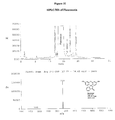
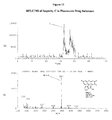
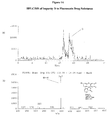
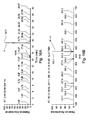
- Examples 1-8 below are provided to further illustrate certain embodiments of the invention. Representative data obtained from Examples 5, 6, 7 and/or 8 are shown in Figures 9 to 19 .
- O,O'-diacetylfluorescein (1000g) and methanol (4000 mL) were charged into a suitable reactor.
- a solution of sodium hydroxide solution (480 g, 50% caustic) was prepared in deionized water (620 mL).
- the sodium hydroxide solution was charged into the reactor containing the O,O'-diacetylfluorescein and methanol.
- the mixture was heated to reflux and agitated at reflux for 90 minutes.
- the reaction mixture was cooled to between 20°C and 25°C.
- the mixture was filtered using filter aid (100g) and followed by a wash with methanol (500 mL).
- the filtrate (5000 mL) was distilled under vacuum to a residual volume of between 1400 mL to 1700 mL and the reaction mixture was then cooled to between 20°C and 25°C.
- Deionized water (5000 mL) was added to the distillation concentrate.
- a solution of sodium hydroxide solution (56 g, 50% caustic) was prepared in deionized water (72 g).
- the freshly prepared sodium hydroxide solution (100 mL) was used to adjust the pH of the reaction to between 8.5 and 8.7.
- Norit SX Ultra (100g), filter aid (100g) and deionized water (500 mL) were charged to the reaction at room temperature and the mixture was subsequently agitated for 1 hour.
- the batch was filtered and additional Norit SX Ultra (100g) and deionized water (500 mL) was charged to the filtrate at room temperature and the mixture was subsequently agitated for 1 hour.
- the batch was filtered and was washed with deionized water (2000 mL).
- Ethanol (10000 mL) was charged to the filtrate.
- a hydrochloric acid solution was prepared by dissolving muriatic acid (32%, 820g) in deionized water (320 mL).
- the diluted acid solution was used to adjust the pH of the filtrate to between 1.0 and 2.5 while the temperature of the batch was maintained between 20°C and 25°C.
- the batch was agitated between 20°C and 25°C for 1 hour and was then isolated by filtration.
- the cake was washed with a solution of (Water for Injection : Ethanol):(3 : 1), (2 x 1000 mL).
- the product was dried to give a typical 80-90% yield
- Spectrophotometer capable of accepting 1 cm cells and scanning from 660 nm to 570 nm.
- Spectrophotometer cells (1 cm path length) of a material appropriate for wavelengths 660 nm to 570 nm, such as quartz.
- the intensity of the color of fluorescein drug substance was measured, as described below.
- the procedure was used to determine the color of a 1.0% solution of fluorescein raw material prepared in an aqueous of sodium hydroxide and sodium bicarbonate solution at pH 9.4 by measuring its absorbance at 590 nm. This value may also be referred to as the "color number".
- An increase in the absorption measurement at 590 nm corresponds to an increase in the visible color intensity of the finished drug product.
- Fluorescein (250 mg ⁇ 5 mg, accurately weighed) and sodium bicarbonate (50 mg) were weighed into a 25 mL beaker.
- Sodium hydroxide (5 ml of 1%) was added.
- the solution was warmed gently while stirring.
- Sodium hydroxide (1%, up to 1 additional mL, a total of 6.0 mL) was added until all material was dissolved and the solution clear.
- the reaction was cooled to room temperature.
- the pH was adjusted the pH to 9.4, using 1% sodium hydroxide dropwise if necessary. If pH was above 9.4, the solution was discarded and re-prepared using less sodium hydroxide.
- the solution was quantitatively transferred to a volumetric flask (25 mL) and QS to 25.0 mL with purified water. The final concentration was 10 mg/mL, or 1%.
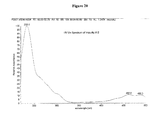
- the spectrophotometer was zeroed by establishing a blank user baseline with purified water in both the sample and reference cell cuvettes, scanning from 660 nm to 570 nm at a rate of 100 nm/min. Fluorescein solution (1%) was added to the sample cuvette. The sample solution was scanned from 660 nm to 570 nm, at a rate of 100 nm/min. The absorbance reading was recorded at 590 nm. A duplicate measurement was performed on a separate aliquot of sample. Table 1 lists typical color number results for several fluorescein raw material sample testing using this method. The results were corrected using the equation shown in Section below. Figure 3 shows a typical spectrum obtained from a fluorescein raw material sample.
- Brinkman 716 DMS Titrino Automated Titrator or equivalent Brinkman 730 Sample Changer and 759 Swing Head Autosampler or equivalent Ag Titrode electrode 5-Place analytical balance or equivalent Sonicator Hot plate Centrifuge capable of 3,000 rpm Culture tubes, 16 x 125 mm, VWR Cat # 47729-578 or equivalent White caps for 16 mm culture tubes, VWR Cat # 60828-760 or equivalent Blood serum filters, 6. x 16 mm, VWR Cat #28295-556 or equivalent
- the following method was used to quantitate residual chloride amounts in fluorescein using potentiometric silver nitrate titration, an automatic titrator and a silver electrode.
- Fluorescein raw material (2 g) was weighed into culture tubes (16 x 125 mm). Purified water (hot, 10 mL) was added. Nitric acid (1 mL) was added and all tubes were capped, shaken for 2 minutes and sonicated for 15 minutes. All tubes were centrifuged for 30 minutes ( ⁇ 3,000 rpm). The precipitant was separated from the supernatant using blood serum filters. The solution was decanted into a titration cup. The blood serum was rinsed and filtered using purified water (5 mL portions). The rinses were poured into the titration cup. The blood serum filters were removed and discarded.
- the above procedure was repeated a second time except that all tubes were capped and shaken for 1 minute, and all tubes were centrifuged for 20 minutes ( ⁇ 3,000 rpm).
- the solutions from the first and the second extracts were combined and the serum filter was rinsed with purified water.
- the combined solution was titrated with 0.10 N Ag NO 3 to its potentiometric end point.
- the titration parameters include using a wash cycle (5N ammonium hydroxide) and a rinse cycle (5N ammonium hydroxide) after each sample. A list of parameters is shown below.
- a solution of fluorescein raw material was prepared in methanol and separated from its related-substances using a high performance liquid chromatography (HPLC) system, gradient mobile phase programming, and a C-18 column.
- HPLC high performance liquid chromatography
- the related-substances were quantitated against a 1% solution of fluorescein reference standard.
- An ultraviolet HPLC detector was used to measure the peak responses at a wavelength of 280 nm.
- Mobile Phase A is 0.01M Ammonium Acetate, 10% Methanol / 90% Water, and 0.5% Acetic Acid.
- Mobile Phase B is 0.01M Ammonium Acetate, 100% Methanol; 0.5% Acetic Acid.
- the reference standard was a 0.5 mg/mL solution of fluorescein in methanol, diluted to a final concentration of 0.005 mg/mL in methanol, or 1% of the sample final theoretical concentration of 0.5 mg/mL of fluorescein prepared similarly.
- a high-performance liquid chromatography system capable of programmed gradient operation was used, with an HPLC UV/VIS detector and the ability to monitor 280 nm.
- Flow Rate 0.6 mL/min.
- the Gradient Program was as follows: Time (min) %Mobile Phase A %Mobile Phase B 0 80% 20% 60 20% 80% Column wash: 61 0% 100% 66 0% 100% Equilibration: 67 80% 20%
- Typical relative retention times (RRT), capacity factors (k'), and gradient composition at time of elution (%B) for the impurities identified in the fluorescein lots cited in this procedure using this chromatographic method are as follows: RRT k' B(%) Impurity A 0.75 11.1 43.0 Impurity D 1.19 18.2 56.5 Impurity F 1.23 18.8 57.7 Impurity H-1 1.68 26.0 71.0 Impurity H-2 1.71 26.5 72.0
- a peak in the fluorescein chromatogram may be identified as related substance A, D, F, H-1 or H-2 if the relative retention times, capacity factor and approximate mobile phase composition of the peak correspond to the related substances listed above.
- each of the relative retention time values can vary by approximately 0.02 between chromatographic systems. Modifications to the chromatographic system may also impact the values listed above.
- Impurities B, C, E and G were not identified in the four fluorescein lots assayed here, prior LC/MS analysis of Supplier A fluorescein suggests that Impurities B, C, E and G would have approximate RRT's of 1.09, 1.11, 1.20, and 1.44.
- Resorcinol is a known common impurity of fluorescein. Resorcinol is used as a starting material in the synthesis of fluorescein and is a potential degradation product. Resorcinol has been found to elute at a RRT of 0.14, k' of 2.9, and %B of 24.6 as presented above. Resorcinol may be observed to elute as an unresolved doublet on occasion. A chromatogram of fluorescein drug substance containing resorcinol is presented in Figure 7 .
- the limit of quantitation for the method was established as 0.127 ⁇ g/mL of fluorescein (0.025% of the sample preparation concentration).
- the limit of detection was determined to be 0.05 ⁇ g/mL of fluorescein (0.1% of the sample preparation concentration).
- the diluent for the sample and standard preparations are changed to permit simultaneous analysis of resorcinol and other related substance impurities.
- To prepare the diluent first dissolve 0.77g of ammonium acetate in 1000 mL of water, adjust pH to 3.9 with acetic acid, then add equal volumes of ammonium acetate buffer and methanol. After initially dissolving fluorescein in methanol at a ratio of 50 mg to 15 mL, this diluent is then used instead of methanol to dilute standards and samples as in the procedure described in Example 5, and the blank is changed as well to diluent from methanol.
- RRT relative retention times
- RRF Relative Response Factor
- Impurity RRF 1 Resorcinol 1.7 Phthalic Acid 2.6
- Impurity A 0.43
- Impurity D 1.0
- Impurity F 1.0
- Impurity H-1 1.0
- Impurity H-2 1.0
- the relative response factors for impurities D, F, H-1, and H2- have not been determined. Their relative response factors are assumed to be 1.0.
- % Related Substances Related Substance Area Standard Area x Standard Cone Sample Conc x RRF x 100 TABLE 10 HPLC Assay Results for Supplier A Fluorescein Raw Material Lot Reference Impurity A (%) Unknown at RRT 1.10 a (%) Impurity D (%) Impurity F (%) Impurity H-1 (%) Impurity H-2 (%) Unknown at RRT 1.74 (%) Total Impurity (%) A 0.1 0.03 0.05 0.2 0.1 0.1 0.03 0.7 B 0.03 ⁇ 0.025 0.03 0.05 0.05 0.06 ⁇ 0.025 0.2 C 0.05 ⁇ 0.025 0.04 0.1 0.1 0.1 0.04 0.5 D 0.04 ⁇ 0.025 0.04 0.07 0.09 0.1 0.03 0.4 a Peak at RRT 1.10 is probably Impurity B or C The limit of quantitation of the method is 0.025%.
- thermospray mass spectrum of Impurity A as shown in Figure 11(b) , produced an M+H molecular ion at m/z 259, indicating a molecular weight of 258.
- thermospray mass spectrum of Impurity B indicates an M+H molecular ion at m/z 285, suggesting a molecular weight of 284.
- a molecular weight of 284 may correspond to elemental formulas of C 15 H 8 O 6 , C 16 H 12 O 5 , or C 17 H 18 O 4 .
- a proposed structure shown for Impurity B in Figure 8 may arise from the reaction of resorcinol with succinic acid (as an impurity in the phthalic acid precursor for fluorescein).
- thermospray mass spectrum of Impurity C indicates an M+H molecular ion at m/z 347. This represents a molecular weight of 346, and corresponds to a gain of 14 mass units over fluorescein.
- thermospray mass spectrum of Impurity D as shown in Figure 14(b) , also produced an M+H molecular ion at m/z 347, which is likely an isomer of Impurity C.
- the structures proposed for Impurities C and D are tautomers of each other, both being quinine-type oxidation products of fluorescein.
- Impurity E may be a positional isomer of fluorescein.
- each ampoule seal was tested during sterilization.
- the ampoules were sterilized by autoclaving at 121°C for 20 minutes or longer depending on batch size. Inspected carefully for leaks.
- Each ampoule was individually inspected for particulate matter under optimum lighted conditions.
- the batch was brought to final weight with water for injection, and mixed for not less than 30 minutes.
- the pH was tested and adjusted with sodium hydroxide or hydrochloric acid as needed.
- the product was filled aseptically into sterile vials, with further inspection and testing according to standard operating procedures.
Landscapes
- Chemical & Material Sciences (AREA)
- Organic Chemistry (AREA)
- Health & Medical Sciences (AREA)
- Public Health (AREA)
- Medicinal Chemistry (AREA)
- Life Sciences & Earth Sciences (AREA)
- Animal Behavior & Ethology (AREA)
- General Health & Medical Sciences (AREA)
- Pharmacology & Pharmacy (AREA)
- Veterinary Medicine (AREA)
- Epidemiology (AREA)
- Heterocyclic Carbon Compounds Containing A Hetero Ring Having Oxygen Or Sulfur (AREA)
- Medicines Containing Antibodies Or Antigens For Use As Internal Diagnostic Agents (AREA)
- Investigating Or Analysing Materials By The Use Of Chemical Reactions (AREA)
- Pharmaceuticals Containing Other Organic And Inorganic Compounds (AREA)
- Investigating Or Analyzing Non-Biological Materials By The Use Of Chemical Means (AREA)
- Steroid Compounds (AREA)
Applications Claiming Priority (2)
| Application Number | Priority Date | Filing Date | Title |
|---|---|---|---|
| US86948806P | 2006-12-11 | 2006-12-11 | |
| EP07865179A EP2114953B1 (fr) | 2006-12-11 | 2007-12-04 | Procédé de préparation de fluorescéine substantiellement pure |
Related Parent Applications (1)
| Application Number | Title | Priority Date | Filing Date |
|---|---|---|---|
| EP07865179.1 Division | 2007-12-04 |
Publications (1)
| Publication Number | Publication Date |
|---|---|
| EP2481741A1 true EP2481741A1 (fr) | 2012-08-01 |
Family
ID=39327263
Family Applications (2)
| Application Number | Title | Priority Date | Filing Date |
|---|---|---|---|
| EP12151467A Withdrawn EP2481741A1 (fr) | 2006-12-11 | 2007-12-04 | Compositions comprenant de la fluorescéine substantiellement pure |
| EP07865179A Active EP2114953B1 (fr) | 2006-12-11 | 2007-12-04 | Procédé de préparation de fluorescéine substantiellement pure |
Family Applications After (1)
| Application Number | Title | Priority Date | Filing Date |
|---|---|---|---|
| EP07865179A Active EP2114953B1 (fr) | 2006-12-11 | 2007-12-04 | Procédé de préparation de fluorescéine substantiellement pure |
Country Status (16)
| Country | Link |
|---|---|
| US (1) | US7982056B2 (fr) |
| EP (2) | EP2481741A1 (fr) |
| JP (2) | JP5384363B2 (fr) |
| KR (2) | KR20090086620A (fr) |
| CN (1) | CN101605796B (fr) |
| AR (1) | AR064288A1 (fr) |
| AU (1) | AU2007333307B2 (fr) |
| BR (1) | BRPI0720088A2 (fr) |
| CA (1) | CA2671860C (fr) |
| CL (1) | CL2007003593A1 (fr) |
| ES (1) | ES2387925T3 (fr) |
| MX (1) | MX2009005679A (fr) |
| RU (1) | RU2477284C2 (fr) |
| TW (1) | TWI518089B (fr) |
| WO (1) | WO2008073764A2 (fr) |
| ZA (1) | ZA200903447B (fr) |
Families Citing this family (10)
| Publication number | Priority date | Publication date | Assignee | Title |
|---|---|---|---|---|
| AU2007333307B2 (en) * | 2006-12-11 | 2013-05-23 | Alcon Inc. | Substantially pure fluorescein |
| CN107660207B (zh) | 2015-03-10 | 2020-09-29 | 罗德科技公司 | 丁丙诺啡乙酸盐及用于制备丁丙诺啡的方法 |
| JP2017095453A (ja) * | 2015-11-12 | 2017-06-01 | 参天製薬株式会社 | 高純度フルオレセインナトリウム |
| US10293047B1 (en) | 2017-11-15 | 2019-05-21 | Paragon BioTeck, Inc. | Fluorescein and benoxinate compositions |
| CA3121477C (fr) * | 2018-11-29 | 2023-10-10 | Neena Singhal JAMES | Solutions ophtalmiques ayant un marqueur visuel pour une insertion et un retrait de lentille de contact plus surs |
| CN113461651A (zh) * | 2021-08-20 | 2021-10-01 | 山东绅联药业有限公司 | 一种高纯度荧光素的纯化方法 |
| WO2023037158A1 (fr) * | 2021-09-09 | 2023-03-16 | Macsen Drugs | Procédé de préparation de fluorescéine sodique cristalline à partir de diacétylfluorescéine ou de fluorescéine |
| CN116023389A (zh) * | 2021-10-25 | 2023-04-28 | 英格尔医药科技(上海)有限公司 | 荧光素钠的晶型a、其制备方法及其用途 |
| WO2023172587A1 (fr) * | 2022-03-07 | 2023-09-14 | Opus Life Sciences Llc | Formulations de fluorescéine et kits |
| CN117285500B (zh) * | 2022-06-17 | 2025-10-17 | 广西梧州制药(集团)股份有限公司 | 一种高纯度荧光素钠的制备方法 |
Citations (4)
| Publication number | Priority date | Publication date | Assignee | Title |
|---|---|---|---|---|
| US1965842A (en) | 1931-11-21 | 1934-07-10 | Nat Aniline & Chem Co Inc | Production of hydroxybenzenephthaleins |
| DD136498A1 (de) | 1978-05-11 | 1979-07-11 | Friedmut Friedrich | Verfahren zur herstellung von hochgereinigtem fluorescein fuer injektionszwecke |
| US5637733A (en) | 1995-09-27 | 1997-06-10 | Warner-Jenkinson Company, Inc. | Syntheses of fluorescein compounds with excess resorcinol as a solvent |
| US20060106234A1 (en) | 2002-10-29 | 2006-05-18 | Joanne Tran-Guyon | High purity phthalein derivatives and method for preparing same |
Family Cites Families (5)
| Publication number | Priority date | Publication date | Assignee | Title |
|---|---|---|---|---|
| US5188934A (en) * | 1989-11-14 | 1993-02-23 | Applied Biosystems, Inc. | 4,7-dichlorofluorescein dyes as molecular probes |
| US6162931A (en) * | 1996-04-12 | 2000-12-19 | Molecular Probes, Inc. | Fluorinated xanthene derivatives |
| DE19923168A1 (de) * | 1999-05-20 | 2000-11-23 | Roche Diagnostics Gmbh | Neue Fluoreszenzfarbstoffe und ihre Verwendung als Fluoreszenzmarker |
| RU2287007C1 (ru) * | 2005-07-28 | 2006-11-10 | Борис Маркович Болотин | Бесцветные, растворимые в воде органические люминофоры |
| AU2007333307B2 (en) * | 2006-12-11 | 2013-05-23 | Alcon Inc. | Substantially pure fluorescein |
-
2007
- 2007-12-04 AU AU2007333307A patent/AU2007333307B2/en active Active
- 2007-12-04 EP EP12151467A patent/EP2481741A1/fr not_active Withdrawn
- 2007-12-04 JP JP2009541476A patent/JP5384363B2/ja active Active
- 2007-12-04 KR KR1020097013703A patent/KR20090086620A/ko not_active Ceased
- 2007-12-04 US US11/949,922 patent/US7982056B2/en active Active
- 2007-12-04 CA CA2671860A patent/CA2671860C/fr active Active
- 2007-12-04 RU RU2009126572/04A patent/RU2477284C2/ru active
- 2007-12-04 WO PCT/US2007/086390 patent/WO2008073764A2/fr not_active Ceased
- 2007-12-04 EP EP07865179A patent/EP2114953B1/fr active Active
- 2007-12-04 ZA ZA200903447A patent/ZA200903447B/xx unknown
- 2007-12-04 ES ES07865179T patent/ES2387925T3/es active Active
- 2007-12-04 KR KR1020157000697A patent/KR101571409B1/ko active Active
- 2007-12-04 MX MX2009005679A patent/MX2009005679A/es active IP Right Grant
- 2007-12-04 BR BRPI0720088-9A2A patent/BRPI0720088A2/pt not_active Application Discontinuation
- 2007-12-04 CN CN2007800456277A patent/CN101605796B/zh active Active
- 2007-12-07 TW TW096146794A patent/TWI518089B/zh not_active IP Right Cessation
- 2007-12-11 AR ARP070105547A patent/AR064288A1/es unknown
- 2007-12-11 CL CL200703593A patent/CL2007003593A1/es unknown
-
2013
- 2013-09-05 JP JP2013183769A patent/JP2013241472A/ja not_active Withdrawn
Patent Citations (4)
| Publication number | Priority date | Publication date | Assignee | Title |
|---|---|---|---|---|
| US1965842A (en) | 1931-11-21 | 1934-07-10 | Nat Aniline & Chem Co Inc | Production of hydroxybenzenephthaleins |
| DD136498A1 (de) | 1978-05-11 | 1979-07-11 | Friedmut Friedrich | Verfahren zur herstellung von hochgereinigtem fluorescein fuer injektionszwecke |
| US5637733A (en) | 1995-09-27 | 1997-06-10 | Warner-Jenkinson Company, Inc. | Syntheses of fluorescein compounds with excess resorcinol as a solvent |
| US20060106234A1 (en) | 2002-10-29 | 2006-05-18 | Joanne Tran-Guyon | High purity phthalein derivatives and method for preparing same |
Non-Patent Citations (2)
| Title |
|---|
| RICHARD MARKUSZEWSKI AND HARVEY DIEHL: "The infrared spectra and structures of the three solid forms of fluorescein and related compounds", TALANTA, vol. 27, no. 11, 1980, pages 937 - 946, XP002505460 * |
| YANNUZI ET AL.: "Effective differences in the formulation of intravenous fluorescein and related side effects", AM. J. OPHTHAHNOL., vol. 78, no. 2, 1974, pages 217 - 221 |
Also Published As
| Publication number | Publication date |
|---|---|
| ZA200903447B (en) | 2010-08-25 |
| JP5384363B2 (ja) | 2014-01-08 |
| RU2009126572A (ru) | 2011-01-20 |
| JP2013241472A (ja) | 2013-12-05 |
| EP2114953B1 (fr) | 2012-06-06 |
| AU2007333307B2 (en) | 2013-05-23 |
| WO2008073764A3 (fr) | 2009-07-30 |
| KR20150013356A (ko) | 2015-02-04 |
| RU2477284C2 (ru) | 2013-03-10 |
| ES2387925T3 (es) | 2012-10-04 |
| CL2007003593A1 (es) | 2008-08-22 |
| TWI518089B (zh) | 2016-01-21 |
| CN101605796B (zh) | 2012-10-03 |
| EP2114953A2 (fr) | 2009-11-11 |
| US7982056B2 (en) | 2011-07-19 |
| BRPI0720088A2 (pt) | 2013-12-24 |
| AU2007333307A1 (en) | 2008-06-19 |
| KR101571409B1 (ko) | 2015-11-24 |
| CN101605796A (zh) | 2009-12-16 |
| JP2010512409A (ja) | 2010-04-22 |
| KR20090086620A (ko) | 2009-08-13 |
| US20080176930A1 (en) | 2008-07-24 |
| MX2009005679A (es) | 2009-06-08 |
| AR064288A1 (es) | 2009-03-25 |
| CA2671860A1 (fr) | 2008-06-19 |
| CA2671860C (fr) | 2016-07-12 |
| TW200838864A (en) | 2008-10-01 |
| WO2008073764A2 (fr) | 2008-06-19 |
| HK1134288A1 (en) | 2010-04-23 |
Similar Documents
| Publication | Publication Date | Title |
|---|---|---|
| EP2114953B1 (fr) | Procédé de préparation de fluorescéine substantiellement pure | |
| US6086852A (en) | In vivo stain composition, process of manufacture, and methods of use to identify dysplastic tissue | |
| EP0966957A2 (fr) | Composition pour coloration in.vivo, procédé pour sa fabrication, et méthodes pour identifier des tissus dysplasiques | |
| WO2024017404A9 (fr) | Impureté de dégradation de vert d'indocyanine, son procédé de préparation et son utilisation | |
| Hamad | A green fluorescence turn-off system for meclofenoxate determination by Cilefa Pink B dye | |
| Hamad | Facile utility of felumin, a biological dye for the first fluorimetric determination of l-tetramisole drug through an “on–off fluorescence” strategy | |
| Antakli et al. | Determination of Amoxicillin Trihydrate by Analytical Spectrophotometry | |
| HK1134288B (en) | Process for preparing substantially pure fluorescein | |
| Baeyens | Determination of pimozide in oral preparations by spectrofluorometry | |
| CN114656456B (zh) | 一种监测细胞内质网中pH值动态变化的比率型近红外荧光探针及其制备方法和用途 | |
| AU757963B2 (en) | In vivo stain composition, process of manufacture, and methods of use to identify dysplastic tissue | |
| Okwelogu et al. | Development of a simple UV assay method for artesunate in pharmaceutical formulations | |
| IT9021002A1 (it) | Agente per la prevenzione ed il trattamento dell'opacita' del cristallino. | |
| CA2250731C (fr) | Compose mordant in vivo, procede de fabrication et methodes d'identification de tissu dysplastique | |
| Attia et al. | Zinc (II)‐Chelation‐Enhanced Spectrofluorimetric Determination of Moxifloxacin: Development, Validation, Application to Eye Drops, and Greenness Assessment | |
| WO2026050410A1 (fr) | Composés fluorescents de carborhodamine bis-trifluorométhyle | |
| Mohamed et al. | Spectrophotometric Determination of Piperazine Using 3, 5-Dibromo-2-Methyl-p-Benzoquinone | |
| Sita | Quality Assessment of Antimalarial Medicines Sold in the Democratic Republic of the Congo and Phytochemical Investigations on a Congolese Ancistrocladus Liana | |
| CN116626008A (zh) | 一种基于荧光特性的异丁酸锂-l-脯氨酸盐定性和定量检测方法 | |
| HK1121807A (en) | Toluidine blue o compounds and their manufacture, analysis and use | |
| Jasmin et al. | SPECTROFLUORIMETRIC DETERMINATION OF CEPHRADINE IN COMMERCIAL FORMULATION USING ETHYLACETOACETATE FORMALDEHYDE AS FLUOROGENIC AGENT | |
| CN112697930A (zh) | 检测复方氨基酸注射液中有关物质2-磺基色氨酸的方法 | |
| Mohamed et al. | USING 3, 5-DIBROMO-2-METHYL-p-BENZOQUINONE | |
| KR20050044769A (ko) | 톨루이딘 블루 o 약물, 및 형성이상 조직의 생체내 염색및 화학요법적 치료에서의 이들의 용도 | |
| MXPA98009501A (en) | Compositions for in vivo staining, manufacturing process and methods of use to identify displasi tissues |
Legal Events
| Date | Code | Title | Description |
|---|---|---|---|
| PUAI | Public reference made under article 153(3) epc to a published international application that has entered the european phase |
Free format text: ORIGINAL CODE: 0009012 |
|
| AC | Divisional application: reference to earlier application |
Ref document number: 2114953 Country of ref document: EP Kind code of ref document: P |
|
| AK | Designated contracting states |
Kind code of ref document: A1 Designated state(s): AT BE BG CH CY CZ DE DK EE ES FI FR GB GR HU IE IS IT LI LT LU LV MC MT NL PL PT RO SE SI SK TR |
|
| 17P | Request for examination filed |
Effective date: 20130131 |
|
| 17Q | First examination report despatched |
Effective date: 20130610 |
|
| STAA | Information on the status of an ep patent application or granted ep patent |
Free format text: STATUS: THE APPLICATION IS DEEMED TO BE WITHDRAWN |
|
| 18D | Application deemed to be withdrawn |
Effective date: 20131221 |