EP2500726A1 - Procédé d'analyse de système de coagulation sanguine et dispositif d'analyse de système de coagulation sanguine - Google Patents
Procédé d'analyse de système de coagulation sanguine et dispositif d'analyse de système de coagulation sanguine Download PDFInfo
- Publication number
- EP2500726A1 EP2500726A1 EP12001027A EP12001027A EP2500726A1 EP 2500726 A1 EP2500726 A1 EP 2500726A1 EP 12001027 A EP12001027 A EP 12001027A EP 12001027 A EP12001027 A EP 12001027A EP 2500726 A1 EP2500726 A1 EP 2500726A1
- Authority
- EP
- European Patent Office
- Prior art keywords
- blood
- blood coagulation
- complex permittivity
- system analyzing
- coagulation system
- Prior art date
- Legal status (The legal status is an assumption and is not a legal conclusion. Google has not performed a legal analysis and makes no representation as to the accuracy of the status listed.)
- Granted
Links
Images



Classifications
-
- G—PHYSICS
- G01—MEASURING; TESTING
- G01N—INVESTIGATING OR ANALYSING MATERIALS BY DETERMINING THEIR CHEMICAL OR PHYSICAL PROPERTIES
- G01N33/00—Investigating or analysing materials by specific methods not covered by groups G01N1/00 - G01N31/00
- G01N33/48—Biological material, e.g. blood, urine; Haemocytometers
- G01N33/50—Chemical analysis of biological material, e.g. blood, urine; Testing involving biospecific ligand binding methods; Immunological testing
- G01N33/86—Chemical analysis of biological material, e.g. blood, urine; Testing involving biospecific ligand binding methods; Immunological testing involving blood coagulating time or factors, or their receptors
-
- G—PHYSICS
- G01—MEASURING; TESTING
- G01N—INVESTIGATING OR ANALYSING MATERIALS BY DETERMINING THEIR CHEMICAL OR PHYSICAL PROPERTIES
- G01N33/00—Investigating or analysing materials by specific methods not covered by groups G01N1/00 - G01N31/00
- G01N33/48—Biological material, e.g. blood, urine; Haemocytometers
- G01N33/483—Physical analysis of biological material
- G01N33/487—Physical analysis of biological material of liquid biological material
- G01N33/49—Blood
- G01N33/4905—Determining clotting time of blood
-
- G—PHYSICS
- G01—MEASURING; TESTING
- G01N—INVESTIGATING OR ANALYSING MATERIALS BY DETERMINING THEIR CHEMICAL OR PHYSICAL PROPERTIES
- G01N27/00—Investigating or analysing materials by the use of electric, electrochemical, or magnetic means
- G01N27/02—Investigating or analysing materials by the use of electric, electrochemical, or magnetic means by investigating impedance
- G01N27/22—Investigating or analysing materials by the use of electric, electrochemical, or magnetic means by investigating impedance by investigating capacitance
- G01N27/221—Investigating or analysing materials by the use of electric, electrochemical, or magnetic means by investigating impedance by investigating capacitance by investigating the dielectric properties
Definitions
- the present technique relates to blood coagulation system analyzing methods and blood coagulation system analyzing devices. Specifically, the present technique relates to a blood coagulation system analyzing method to acquire information relating to the blood coagulability based on a complex permittivity spectrum measured in the coagulation process of blood.
- Patients or healthy people having the risk of thrombosis are prophylactically dosed with an anti-platelet aggregation drug or an anticoagulant.
- the patients having the thrombus risk include patients with diabetes, arteriosclerosis, cancer, heart disease, and respiratory disease, perioperative patients, and patients currently taking an immunosuppressant.
- the healthy people having the thrombus risk include pregnant women and elderly people.
- the acetylsalicylic acid etc. is used as the anti-platelet aggregation drug.
- Warfarin, heparin, an activated blood coagulation factor X (Factor Xa) inhibitor, etc. is used as the anticoagulant.
- the blood coagulability test there are methods such as the prothrombin time-international normalized ratio (PT-INR) and the activated partial thromboplastin time (APTT).
- PT-INR prothrombin time-international normalized ratio
- APTT activated partial thromboplastin time
- PRP platelet rich plasma
- Patent Document 1 discloses a technique to acquire information relating to blood coagulation from the permittivity of blood, and describes a "blood coagulation system analyzing device having a pair of electrodes, an applying section that applies an alternating voltage to the pair of electrodes at a predetermined time interval, a measuring section that measures the permittivity of blood disposed between the pair of electrodes, and an analyzing section that analyzes the degree of the action of the blood coagulation system by using the permittivity of the blood measured at the time interval after the effect of an anticoagulant on the blood is released.”
- the early action of the blood coagulation system can be analyzed based on time change of the permittivity before the start timing of coagulation of the blood in terms of dynamics of viscoelasticity.
- a blood coagulation system analyzing method including acquiring information relating to the coagulability of blood based on a change generated in a complex permittivity spectrum measured in a coagulation process of the blood due to addition of a substance that activates or inactivates platelets to the blood.
- this blood coagulation system analyzing method if a platelet activating substance is used as the substance, information relating to the aggregability of the platelets included in the blood in an inactive state can be acquired based on a change generated in the complex permittivity spectrum in association with platelet activation by the substance.
- a platelet inactivating substance is used as the substance, information relating to the aggregability of the platelets included in the blood in an active state can be acquired based on a change generated in the complex permittivity spectrum in association with platelet inactivation by the substance.
- This blood coagulation system analyzing method is favorably used for evaluating drug efficacy in a subject to which an anti-platelet aggregation drug and/or an anticoagulant such as acetylsalicylic acid, warfarin, heparin, and an activated blood coagulation factor X inhibitor is administered.
- an anti-platelet aggregation drug and/or an anticoagulant such as acetylsalicylic acid, warfarin, heparin, and an activated blood coagulation factor X inhibitor is administered.
- a blood coagulation system analyzing device including an analyzing section configured to determine the coagulability of blood based on difference in a spectrum pattern between a complex permittivity spectrum measured in a coagulation process of the blood to which a substance that activates or inactivates platelets is added and a complex permittivity spectrum measured in a coagulation process of the blood to which the substance is not added.
- complex permittivity encompasses also electrical quantities equivalent to the complex permittivity.
- Examples of the electrical quantity equivalent to the complex permittivity include complex impedance, complex admittance, complex capacitance, and complex conductance. They can be converted to each other by simple electrical quantity conversion.
- measurement of the "complex permittivity” encompasses also measurement of only the real part or only the imaginary part.
- the embodiment of the present technique provides a blood coagulation system analyzing method capable of easily evaluating both blood hypercoagulability and hypocoagulability by using whole blood.
- sample blood the blood as the analysis subject (hereinafter, referred to as “sample blood”) is held in a container including electrodes for applying a voltage to the blood, and an alternating current is applied to the electrodes to measure the complex permittivity of the sample blood.
- the present procedure measurement about the sample blood is performed under a condition in which a substance that activates or inactivates the platelets is added and a condition in which the substance is not added.
- a substance that activates the platelets hereinafter, referred to as the "platelet activating agent”
- ADP adenosine diphosphate
- collagen arachidonic acid
- epinephrine adenosine diphosphate
- ristocetin thromboxane A 2 (TXA 2 )
- adrenaline etc.
- the substance that inactivates the platelets (hereinafter, referred to as the "platelet inactivating agent"), acetylsalicylic acid, GPIIb/IIIa inhibitor, phosphodiesterase inhibitor, thienopyridine derivative, prostaglandin formulation, etc. can be used.
- the platelet activating agent and the platelet inactivating agent will be referred to collectively as the “platelet activating agent etc.”
- the measurement result can be obtained as a three-dimensional complex permittivity spectrum on a coordinate whose respective coordinate axes indicate the frequency, the time, and the permittivity ( FIG. 1 ) or a two-dimensional complex permittivity spectrum on a coordinate whose respective coordinate axes indicate two selected from the frequency, the time, and the permittivity ( FIG. 2 ).
- the Z-axis in the diagram indicates the real part of the complex permittivity at each time and each frequency.
- FIG. 2 corresponds to a two-dimensional spectrum obtained by cutting out the three-dimensional spectrum shown in FIG. 1 at a frequency of 760 kHz.
- Symbol (A) in FIG. 2 shows a peak associated with rouleaux formation of red blood cells, and (B) shows a peak associated with the blood coagulation process.
- the present inventors make it clear in the above-described Patent Document 1 that the time change of the permittivity of blood reflects the coagulation process of the blood. Therefore, the complex permittivity spectrum obtained by the present procedure serves as an index quantitatively indicating the coagulability of the blood, and information relating to the coagulability of the blood, such as the coagulation time, the coagulation rate, and the coagulation intensity, can be obtained based on a change in the complex permittivity spectrum.
- the collection procedure of the sample blood is carried out in some cases.
- blood is collected from the person being tested as the analysis subject of the blood coagulation system in accordance with a normal method.
- information relating to the coagulability of the sample blood is acquired based on the complex permittivity spectrum of the sample blood measured in the measurement procedure. Specifically, first, the complex permittivity spectrum measured about the sample blood to which the platelet activating agent etc. is added is compared with the complex permittivity spectrum measured about the sample blood to which it is not added. Then, information relating to the coagulability of the sample blood is acquired based on a change in the complex permittivity spectrum generated due to the addition of the platelet activating agent etc.
- the complex permittivity spectrum measured about the sample blood to which the platelet activating agent etc. is not added will comprehensively reflect the blood coagulability involving plural factors.
- the complex permittivity spectrum comprehensively reflects blood coagulation based on the aggregability of the platelets, blood coagulation based on the coagulation effect of plasma and blood cell component, and blood coagulation due to the influence of blood sedimentation that possibly occurs in the measurement.
- the information relating to the aggregability of the platelets can be picked out and acquired from these factors by using the platelet activating agent etc.
- the analysis procedure will be specifically described below about the case of using the platelet activating agent and the case of using the platelet inactivating agent separately.
- the blood coagulation reaction is accelerated due to activation of the platelets and the blood coagulation time is shortened.
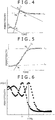
- the time (blood coagulation time) t until a spectrum peak p associated with the blood coagulation appears is shortened compared with the complex permittivity spectrum of the blood to which the platelet activating agent is not added (see FIG. 3 ).
- Symbols p 1 and t 1 indicate the spectrum peak and the blood coagulation time, respectively, when the platelet activating agent is added.
- the shortening width ⁇ t (to - t 1 ) of this blood coagulation time t information about the degree of the aggregability of the platelets included in the sample blood in the inactive state can be obtained. Specifically, if the aggregability of the inactive platelets included in the sample blood is high, the blood coagulation reaction is greatly accelerated in the sample blood in which the platelets are activated by the platelet activating agent and the blood coagulation time is also greatly shortened. If the aggregability of the inactive platelets included in the sample blood is low, the reaction rate of the blood coagulation reaction hardly changes even when the platelets are activated by the platelet activating agent and thus shortening of the blood coagulation time is also not found.
- the shortening width ⁇ t s of the blood coagulation time as the basis (reference value) is set by using blood known to have normal coagulability in advance, whether or not the aggregability of the platelets is good can be determined depending on whether the shortening width ⁇ t of the blood coagulation time of the sample blood is larger or smaller than ⁇ t s (reference value). Specifically, it can be evaluated that the aggregability of the platelets is high if the shortening width ⁇ t of the blood coagulation time of the sample blood is larger than ⁇ t s (reference value). Conversely, it can be evaluated that the aggregability of the platelets is low if the shortening width ⁇ t is smaller than ⁇ t s .
- the aggregability of the platelets can be easily evaluated based on a change in the complex permittivity spectrum due to addition of the platelet activating agent (specifically, shortening width ⁇ t of the blood coagulation time) as described above.
- the blood coagulation system analyzing method according to the embodiment of the present technique is useful for evaluating the platelet function of the patient with platelet dysfunction or thrombocytopenia.
- the change in the complex permittivity spectrum serving as an index for analysis is not particularly limited as long as it is a change in a feature extracted from the complex permittivity spectrum. Specific examples of the feature are shown below.
- Whether or not the aggregability of the platelets is good can be determined based on the reference value set in advance about the change width of these features and the width of a change generated in a feature extracted from the complex permittivity spectrum of the sample blood due to addition of the platelet activating agent.
- the specific examples of the feature include extrapolated lines drawn on the curve indicating the complex permittivity spectrum (symbols L 1 to L 4 in FIG. 4 and FIG. 5 ), the coordinates of the intersections of the extrapolated lines (symbols M 1 to M 4 ), the slopes of the extrapolated lines, the slopes of tangents drawn on the curve indicating the complex permittivity spectrum (derivative value of the permittivity), a time T giving predetermined permittivity E (e.g. maximum value, local maximum value, intermediate value), and combinations of them.
- predetermined permittivity E e.g. maximum value, local maximum value, intermediate value
- the specific examples of the feature further include a feature obtained by analyzing a three-dimensional complex permittivity spectrum as an image pattern, a feature obtained by parameter fitting with use of a function expression capable of reconfiguring the image pattern, and a feature obtained by cluster analysis with use of a large number of data among the spectrum data.
- the blood coagulation effect due to activated platelets included in the blood is suppressed, so that the coagulation reaction rate is lowered and the blood coagulation time is extended.
- the time (blood coagulation time) t until the spectrum peak p associated with the blood coagulation appears is delayed compared with the complex permittivity spectrum of the blood to which the platelet inactivating agent is not added (see FIG. 6 ).
- symbols p 0 and t 0 indicate the spectrum peak and the blood coagulation time, respectively, when the platelet inactivating agent is not added.
- Symbols p 2 and t 2 indicate the spectrum peak and the blood coagulation time, respectively, when the platelet inactivating agent is added.
- this blood coagulation time t information about the degree of the aggregability of the platelets included in the sample blood in the active state can be obtained. Specifically, if the blood coagulation time is greatly delayed due to addition of the platelet inactivating agent, it can be said that the aggregability of the platelets in the sample blood is high and a large amount of activated platelets are included in the sample blood. If the blood coagulation time hardly changes even when the platelet inactivating agent is added, it can be said that the aggregability of the platelets in the sample blood is low and activated platelets are hardly included in the sample blood.
- the delay width ⁇ t s of the blood coagulation time as the basis (reference value) is set by using blood known to have normal coagulability in advance, whether or not the aggregability of the platelets is good can be determined depending on whether the delay width ⁇ t of the blood coagulation time of the sample blood is larger or smaller than ⁇ t s (reference value). Specifically, it can be evaluated that the aggregability of the platelets is high if the delay width ⁇ t of the blood coagulation time of the sample blood is larger than ⁇ t s (reference value). Conversely, it can be evaluated that the aggregability of the platelets is low if the delay width ⁇ t is smaller than ⁇ t s .
- the aggregability of the platelets can be easily evaluated based on a change in the complex permittivity spectrum due to addition of the platelet inactivating agent (specifically, delay width ⁇ t of the blood coagulation time) in this manner.
- the blood coagulation system analyzing method according to the embodiment of the present technique is useful for evaluating the platelet function of patients with diabetes and healthy people such as pregnant women having the risk of thrombosis and investigating how much the platelets that should not be activated originally are activated.
- the change in the complex permittivity spectrum serving as an index for analysis may be any as long as it is a change in a feature extracted from the complex permittivity spectrum, and is not limited to the delay width of the blood coagulation time as with the above description.
- FIG. 7 shows the schematic configuration of a blood coagulation system analyzing device according to an embodiment of the present technique.
- the blood coagulation system analyzing device includes a sample cartridge 2 to hold blood, a pair of electrodes 11 and 12 to apply a voltage to the blood held in the sample cartridge 2, a power supply 3 to apply an AC voltage to the electrodes 11 and 12, and a measuring section 41 to measure the permittivity of the blood.
- the measuring section 41 configures a signal processing section 4 together with an analyzing section 42 to receive the output of the measurement result from the measuring section 41 and determine the coagulability of the blood.
- a drug introduction port for adding the platelet activating agent etc. to the held blood may be provided in the sample cartridge 2.
- the blood may be housed in the sample cartridge 2 after being mixed with the platelet activating agent etc. in advance.
- the power supply 3 applies the voltage from the timing when an order to start measurement is received or the timing when the power is turned on, as the start timing. Specifically, the power supply 3 applies an AC voltage having a predetermined frequency to the electrodes 11 and 12 at the set measurement interval.
- the measuring section 41 measures the complex permittivity, the frequency dispersion thereof, and so forth from the timing when an order to start measurement is received or the timing when the power is turned on, as the start timing. Specifically, for example if the permittivity is measured, the measuring section 41 measures the current or impedance between the electrodes 11 and 12 at a predetermined cycle and derives the permittivity from the measurement value. For the derivation of the permittivity, known function and relational expression showing the relationship between the current or impedance and the permittivity is used.
- the analyzing section 42 To the analyzing section 42, data indicating the derived permittivity (hereinafter, referred to also as “permittivity data") is given from the measuring section 41 at the measurement interval.
- the analyzing section 42 starts determination of the coagulability of blood and so forth in response to the permittivity data given from the measuring section 41.
- the analyzing section 42 notifies one or both of the result of the coagulability determination and so forth and the permittivity data. This notification is performed e.g. by turning the information to a graph and displaying it on a monitor or printing it on a predetermined medium.
- the analyzing section 42 executes processing of comparison between the complex permittivity spectrum measured about the sample blood to which the platelet activating agent etc. is added and the complex permittivity spectrum measured about the sample blood to which it is not added based on the permittivity data output from the measuring section 41. Furthermore, the analyzing section 42 determines the coagulability of the sample blood based on the difference in the spectrum pattern.
- the analyzing section 42 compares the complex permittivity spectrum measured about the sample blood to which the platelet activating agent etc. is added and the complex permittivity spectrum measured about the sample blood to which it is not added.
- the comparison of the spectrum pattern can be performed based on a feature extracted from the complex permittivity spectra as the comparison subjects and the difference in the spectrum pattern can be detected from the difference in this feature.
- the feature e.g. the time until the spectrum peak associated with the blood coagulation appears (blood coagulation time) is used.
- the analyzing section 42 determines whether or not the aggregability of the platelets is good depending on whether the shortening width (or delay width) ⁇ t of the blood coagulation time of the sample blood to which the platelet activating agent etc. is added is larger or smaller than the reference value ( ⁇ t s ). Specifically, the analyzing section 42 determines that the aggregability of the platelets is high if the shortening width ⁇ t of the blood coagulation time of the sample blood to which the platelet activating agent is added is larger than the reference value ( ⁇ t s ). Conversely, the analyzing section 42 determines that the aggregability of the platelets is low if the shortening width ⁇ t is smaller than the reference value ( ⁇ t s ).
- the analyzing section 42 determines that the aggregability of the platelets is high if the delay width ⁇ t of the blood coagulation time of the sample blood to which the platelet inactivating agent is added is larger than the reference value ( ⁇ t s ). Conversely, the analyzing section 42 determines that the aggregability of the platelets is low if the delay width ⁇ t is smaller than the reference value ( ⁇ t s ).
- the analyzing section 42 determines that the blood coagulability is high and notifies the result. This result can be displayed on a monitor and a predetermined medium as the risk of thrombosis.
- the analyzing section 42 determines that the aggregability of the platelets is high and determines that the blood hypercoagulability is attributed to abnormal enhancement in the aggregability of the platelets. This determination result can be displayed on a monitor and a predetermined medium as the thrombosis risk due to abnormality in the platelet function.
- the analyzing section 42 determines that the aggregability of the platelets is low and determines that the blood hypercoagulability occurs independently of the platelet function. This determination result can be displayed on a monitor and a predetermined medium as the thrombosis risk due to abnormality in a factor other than the platelet function.
- the analyzing section 42 determines that the blood coagulability is low and notifies the result. This result can be displayed on a monitor and a predetermined medium as the risk of bleeding tendency.
- the analyzing section 42 determines that the aggregability of the platelets is low and determines that the blood hypocoagulability is attributed to abnormal lowering of the aggregability of the platelets. This determination result can be displayed on a monitor and a predetermined medium as the risk of bleeding tendency due to abnormality in the platelet function.
- the analyzing section 42 determines that the aggregability of the platelets is high and determines that the blood hypocoagulability occurs independently of the platelet function. This determination result can be displayed on a monitor and a predetermined medium as the risk of bleeding tendency due to abnormality in a factor other than the platelet function.
- comparison of the spectrum pattern between the complex permittivity spectrum measured about the sample blood to which the platelet activating agent etc. is added and the complex permittivity spectrum measured about the sample blood to which it is not added is performed based on the time until the spectrum peak associated with blood coagulation appears (blood coagulation time).
- the feature for the comparison of the spectrum pattern is not particularly limited as long as it is a change in a feature extracted from the complex permittivity spectrum. Specific examples of the feature are shown below.
- the analyzing section 42 determines the coagulability of the sample blood based on the reference value retained in advance about the change width of these features and the width of a change generated in a feature extracted from the complex permittivity spectrum of the sample blood due to addition of the platelet activating agent etc.
- the specific examples of the feature include extrapolated lines drawn on the curve indicating the complex permittivity spectrum (symbols L 1 to L 4 in FIG. 4 and FIG. 5 ), the coordinates of the intersections of the extrapolated lines (symbols M 1 to M 4 ), the slopes of the extrapolated lines, the slopes of tangents drawn on the curve indicating the complex permittivity spectrum (derivative value of the permittivity), a time T giving predetermined permittivity E (e.g. maximum value, local maximum value, intermediate value), and combinations of them.
- predetermined permittivity E e.g. maximum value, local maximum value, intermediate value
- the specific examples of the feature further include a feature obtained by analyzing a three-dimensional complex permittivity spectrum as an image pattern, a feature obtained by parameter fitting with use of a function expression capable of reconfiguring the image pattern, and a feature obtained by cluster analysis with use of a large number of data among the spectrum data.
- the blood coagulation system analyzing device determines whether or not blood hypercoagulability and hypocoagulability are present and determines also whether or not they are attributed to abnormality in the platelet function. Therefore, when the risk of thrombosis is suggested, important information for determining whether to perform antiplatelet therapy or to perform anticoagulation therapy is obtained by the blood coagulation system analyzing device according to the embodiment of the present technique.
- the influence of addition of the platelet activating agent on the blood coagulability was studied by using sample blood of a healthy person and a patient with thrombocytopenia.
- the sample blood was centrifuged under a condition of 500 G and five minutes to be separated into blood cells and platelet rich plasma (PRP).
- the plasma was centrifuged under a condition of 2000 G and 30 minutes and sedimentation of the platelets was caused to obtain the platelet poor plasma (PPP).
- a calcium chloride aqueous solution was added (85 ⁇ L per 1 mL of blood) to the sample blood whose temperature was kept at 37°C and a blood coagulation reaction was started.
- the platelet activating agent (ADP) was so added as to be mixed in the calcium chloride aqueous solution (10 ⁇ M per 1 mL of blood).
- measurement was performed for 60 minutes by using an impedance analyzer (Agilent Corporation, 4294A) under the following condition: temperature was 37°C; frequency range was 40 Hz to 110 MHz; and measurement time interval was one minute.
- Measurement was performed by using a rheometer of the free damped oscillation type.
- the coagulation time was obtained by observing a change in the viscoelasticity and compared with the result by the dielectric measurement.
- FIG. 8 shows the dielectric response result of the sample blood of the healthy person to which the ADP was not added.
- FIG. 9 shows the dielectric response result of the sample blood of the healthy person to which the ADP was added.
- the real part of the complex permittivity at each time and each frequency is so shown as to be normalized by being divided by the real part of the complex permittivity at the time zero (immediately after measurement start) and each frequency.
- FIG. 10 shows the time change of the complex permittivity at a frequency of 10.7 MHz.
- Sign (-) indicates the dielectric response of the sample blood to which the ADP was not added
- sign (+) indicates the dielectric response of the sample blood to which the ADP was added.
- FIG. 11 shows the time change of the complex permittivity of the sample blood of the patient with thrombocytopenia at a frequency of 10.7 MHz.
- Sign (-) indicates the dielectric response of the sample blood to which the ADP was not added
- sign (+) indicates the dielectric response of the sample blood to which the ADP was added.
- FIG. 12 and FIG. 13 show the result of the complementary experiment by the rheometer.
- FIG. 12 shows the time change of the viscoelasticity of the sample blood of the healthy person to which the ADP was added (+) and to which it was not added (-).
- FIG. 13 shows the time change of the viscoelasticity when the ADP was added to platelet poor blood obtained by adding cleaned red blood cells to the separated platelet poor plasma (PPP) (+) and when it was not added (-).
- PPP platelet poor plasma
- the blood coagulation system analyzing method By the blood coagulation system analyzing method according to the embodiment of the present technique, whether or not blood hypercoagulability and hypocoagulability are present can be determined and whether or not they relate to the aggregability of the platelets can be determined.
- This method is useful for evaluating the thrombus risk of patients with diabetes, arteriosclerosis, cancer, heart disease, respiratory disease, and so forth, perioperative patients, patients currently taking an immunosuppressant, pregnant women, elderly people, etc. Furthermore, in prophylactic medication of an anti-platelet aggregation drug or an anticoagulant for these patients and healthy people, this method can be used also for evaluating the risk of bleeding tendency due to excessive administration.
Landscapes
- Health & Medical Sciences (AREA)
- Life Sciences & Earth Sciences (AREA)
- Engineering & Computer Science (AREA)
- Biomedical Technology (AREA)
- Hematology (AREA)
- Chemical & Material Sciences (AREA)
- Physics & Mathematics (AREA)
- Immunology (AREA)
- Molecular Biology (AREA)
- Urology & Nephrology (AREA)
- Medicinal Chemistry (AREA)
- Food Science & Technology (AREA)
- Pathology (AREA)
- Analytical Chemistry (AREA)
- Biochemistry (AREA)
- General Health & Medical Sciences (AREA)
- General Physics & Mathematics (AREA)
- Ecology (AREA)
- Biophysics (AREA)
- Biotechnology (AREA)
- Cell Biology (AREA)
- Microbiology (AREA)
- Investigating Or Analysing Biological Materials (AREA)
- Investigating Or Analyzing Materials By The Use Of Electric Means (AREA)
Priority Applications (1)
| Application Number | Priority Date | Filing Date | Title |
|---|---|---|---|
| EP17209032.6A EP3321680B1 (fr) | 2011-03-17 | 2012-02-16 | Procédé d'analyse de système de coagulation sanguine et dispositif d'analyse de système de coagulation sanguine |
Applications Claiming Priority (1)
| Application Number | Priority Date | Filing Date | Title |
|---|---|---|---|
| JP2011058810A JP5768422B2 (ja) | 2011-03-17 | 2011-03-17 | 血液凝固系解析方法および血液凝固系解析装置 |
Related Child Applications (1)
| Application Number | Title | Priority Date | Filing Date |
|---|---|---|---|
| EP17209032.6A Division EP3321680B1 (fr) | 2011-03-17 | 2012-02-16 | Procédé d'analyse de système de coagulation sanguine et dispositif d'analyse de système de coagulation sanguine |
Publications (2)
| Publication Number | Publication Date |
|---|---|
| EP2500726A1 true EP2500726A1 (fr) | 2012-09-19 |
| EP2500726B1 EP2500726B1 (fr) | 2017-12-27 |
Family
ID=45655063
Family Applications (2)
| Application Number | Title | Priority Date | Filing Date |
|---|---|---|---|
| EP17209032.6A Not-in-force EP3321680B1 (fr) | 2011-03-17 | 2012-02-16 | Procédé d'analyse de système de coagulation sanguine et dispositif d'analyse de système de coagulation sanguine |
| EP12001027.7A Not-in-force EP2500726B1 (fr) | 2011-03-17 | 2012-02-16 | Procédé d'analyse de système de coagulation sanguine et dispositif d'analyse de système de coagulation sanguine |
Family Applications Before (1)
| Application Number | Title | Priority Date | Filing Date |
|---|---|---|---|
| EP17209032.6A Not-in-force EP3321680B1 (fr) | 2011-03-17 | 2012-02-16 | Procédé d'analyse de système de coagulation sanguine et dispositif d'analyse de système de coagulation sanguine |
Country Status (4)
| Country | Link |
|---|---|
| US (2) | US8735163B2 (fr) |
| EP (2) | EP3321680B1 (fr) |
| JP (1) | JP5768422B2 (fr) |
| CN (1) | CN102680523B (fr) |
Cited By (10)
| Publication number | Priority date | Publication date | Assignee | Title |
|---|---|---|---|---|
| WO2015104785A1 (fr) * | 2014-01-07 | 2015-07-16 | Sony Corporation | Cartouche, ensemble prêt à monter comprenant une cartouche, appareil de mesure électrique et procédé de mesure électrique |
| EP2980570A4 (fr) * | 2013-03-29 | 2016-10-26 | Sony Corp | Dispositif d'évaluation d'état de sang, système d'évaluation d'état de sang, procédé d'évaluation d'état de sang et programme |
| EP2980571A4 (fr) * | 2013-03-29 | 2016-10-26 | Sony Corp | Dispositif d'analyse d'état de sang, système d'analyse d'état de sang, procédé d'analyse d'état de sang, et programme |
| EP2975388A4 (fr) * | 2013-03-15 | 2017-02-22 | Sony Corporation | Dispositif d'analyse d'état du sang, système d'analyse d'état du sang, procédé d'analyse d'état du sang et programme d'analyse d'état du sang pour réalisation de procédé sur ordinateur |
| EP3173777A4 (fr) * | 2014-07-24 | 2018-02-14 | Sony Corporation | Cartouche pour mesure électrique, dispositif de mesure électrique pour échantillon biologique, système de mesure électrique pour échantillon biologique et procédé de mesure électrique pour échantillon biologique |
| CN108603888A (zh) * | 2016-02-17 | 2018-09-28 | 索尼公司 | 血小板聚集活性分析设备、血小板聚集活性分析系统、血小板聚集活性分析程序和血小板聚集活性分析方法 |
| EP3270161A4 (fr) * | 2015-03-13 | 2018-12-19 | Sony Corporation | Échantillon devant servir à la mesure de caractéristiques électriques, procédé et dispositif de mesure associés |
| US10527605B2 (en) | 2013-03-13 | 2020-01-07 | Sony Corporation | Blood condition analyzing device, blood condition analyzing system, and blood condition analyzing program |
| US11802825B2 (en) | 2016-10-05 | 2023-10-31 | Sony Corporation | Platelet aggregation analysis method, platelet aggregation analysis device, program for analyzing platelet aggregation, and platelet aggregation analysis system |
| US11982667B2 (en) | 2018-10-25 | 2024-05-14 | Sony Corporation | Platelet aggregation capacity analyzer, analysis method, and analysis system using complex dielectric permittivity |
Families Citing this family (23)
| Publication number | Priority date | Publication date | Assignee | Title |
|---|---|---|---|---|
| JP5768422B2 (ja) * | 2011-03-17 | 2015-08-26 | ソニー株式会社 | 血液凝固系解析方法および血液凝固系解析装置 |
| JP5982976B2 (ja) | 2012-04-13 | 2016-08-31 | ソニー株式会社 | 血液凝固系解析装置、血液凝固系解析方法及びそのプログラム |
| CN104919309A (zh) * | 2013-01-18 | 2015-09-16 | 索尼公司 | 电气特性测量装置 |
| CN104937400B (zh) * | 2013-01-28 | 2018-07-03 | 索尼公司 | 用于生物样品的阻抗测量装置和用于生物样品的阻抗测量系统 |
| JP6607186B2 (ja) * | 2014-04-17 | 2019-11-20 | ソニー株式会社 | 血液状態解析装置、血液状態解析システム、血液状態解析方法及びプログラム |
| US9995701B2 (en) | 2014-06-02 | 2018-06-12 | Case Western Reserve University | Capacitive sensing apparatuses, systems and methods of making same |
| JP2016061731A (ja) * | 2014-09-19 | 2016-04-25 | ソニー株式会社 | 電気的特性測定装置及びプログラム |
| JP6563681B2 (ja) * | 2015-05-08 | 2019-08-21 | シスメックス株式会社 | 検体分析装置、血液凝固分析装置、検体分析方法、及びコンピュータプログラム |
| US11175252B2 (en) | 2016-01-15 | 2021-11-16 | Case Western Reserve University | Dielectric sensing for blood characterization |
| JP6936235B2 (ja) | 2016-01-15 | 2021-09-15 | ケース ウエスタン リザーブ ユニバーシティ | サンプル特性評価のための誘電感知 |
| EP3388838B1 (fr) | 2016-01-29 | 2022-02-16 | Sony Group Corporation | Analyse de coagulation sanguine |
| CN108603853B (zh) * | 2016-02-10 | 2022-08-09 | 索尼公司 | 电特性测量用样本、电特性测量装置和电特性测量方法 |
| WO2017169261A1 (fr) | 2016-03-29 | 2017-10-05 | ソニー株式会社 | Système d'analyse de système de coagulation sanguine, procédé d'analyse de système de coagulation sanguine, et programme d'analyse de système de coagulation sanguine |
| US20190101526A1 (en) * | 2016-03-30 | 2019-04-04 | Sony Corporation | Blood state analysis apparatus, blood state analysis system, blood state analysis method, and program |
| JP6973585B2 (ja) * | 2016-10-05 | 2021-12-01 | ソニーグループ株式会社 | 血小板凝集能解析方法、血小板凝集能解析装置、血小板凝集能解析用プログラム及び血小板凝集能解析システム |
| JP6962338B2 (ja) | 2017-01-06 | 2021-11-05 | ソニーグループ株式会社 | 血液凝固系解析装置、血液凝固系解析システム、血液凝固系解析方法、及び血液凝固系解析用プログラム、並びに、出血量予測装置、出血量予測システム、出血量予測方法、及び出血量予測用プログラム |
| JP6876911B2 (ja) * | 2017-02-21 | 2021-05-26 | ソニーグループ株式会社 | 電気的測定用カートリッジ、電気的測定装置及び電気的測定方法 |
| JP6849630B2 (ja) * | 2018-04-20 | 2021-03-24 | 日本電信電話株式会社 | 成分濃度測定装置および成分濃度測定方法 |
| CN108872615B (zh) * | 2018-04-26 | 2021-08-06 | 迪瑞医疗科技股份有限公司 | 一种耦合式凝血测试系统及方法 |
| JP7135620B2 (ja) * | 2018-09-07 | 2022-09-13 | ソニーグループ株式会社 | 血液凝固系解析装置、血液凝固系解析方法及び血液凝固系解析プログラム |
| US11774388B2 (en) | 2019-04-02 | 2023-10-03 | Case Western Reserve University | Dielectric sensing to characterize hemostatic dysfunction |
| US11408844B2 (en) | 2019-04-02 | 2022-08-09 | Case Western Reserve University | Dielectric sensing to characterize hemostatic dysfunction |
| CN120565092B (zh) * | 2025-08-01 | 2025-12-09 | 山东泰利信医疗科技有限公司 | 基于血小板控制分析仪的血小板聚集动态风险评估方法 |
Citations (3)
| Publication number | Priority date | Publication date | Assignee | Title |
|---|---|---|---|---|
| WO2005007868A2 (fr) * | 2003-07-08 | 2005-01-27 | Accumetrics, Inc. | Activation selective des plaquettes pour suivie du traitement aux antagonistes de l'adp |
| JP2010181400A (ja) | 2009-01-08 | 2010-08-19 | Sony Corp | 血液凝固系解析装置、血液凝固系解析方法及びプログラム |
| JP2011058810A (ja) | 2009-09-07 | 2011-03-24 | Konica Minolta Holdings Inc | 平行移動機構、平行移動機構の製造方法、干渉計および分光器 |
Family Cites Families (14)
| Publication number | Priority date | Publication date | Assignee | Title |
|---|---|---|---|---|
| JPS62153761A (ja) * | 1985-12-27 | 1987-07-08 | Sumitomo Bakelite Co Ltd | 血液凝固時間の測定方法 |
| RU1720386C (ru) * | 1988-07-29 | 1995-03-27 | Харьковский государственный университет | Способ определения агрегационной способности тромбоцитов |
| RU2061952C1 (ru) * | 1989-12-29 | 1996-06-10 | Харьковский государственный университет | Устройство для исследования процесса агрегации тромбоцитов |
| WO1999005312A1 (fr) * | 1997-07-23 | 1999-02-04 | Tokuyama Corporation | Procede de determination de parametres de coagulation |
| US20070243632A1 (en) * | 2003-07-08 | 2007-10-18 | Coller Barry S | Methods for measuring platelet reactivity of patients that have received drug eluting stents |
| JP2007514647A (ja) * | 2003-10-21 | 2007-06-07 | インスパイアー ファーマシューティカルズ,インコーポレイティド | テトラヒドロ−フロ[3,4−d]ジオキソール化合物並びに血小板凝集を阻害する組成物及び方法 |
| US7335648B2 (en) * | 2003-10-21 | 2008-02-26 | Inspire Pharmaceuticals, Inc. | Non-nucleotide composition and method for inhibiting platelet aggregation |
| US20080063566A1 (en) * | 2004-09-03 | 2008-03-13 | Mitsubishi Chemical Corporation | Sensor Unit and Reaction Field Cell Unit and Analyzer |
| JP4267592B2 (ja) * | 2005-05-23 | 2009-05-27 | 潤 川崎 | 抗血栓薬薬効試験法 |
| WO2006137510A1 (fr) * | 2005-06-24 | 2006-12-28 | Ono Pharmaceutical Co., Ltd. | Agent pour réduire le saignement lors de troubles cérébrovasculaires |
| EP1890155A1 (fr) * | 2006-08-17 | 2008-02-20 | F. Hoffmann-Roche AG | Méthodes et dispositifs pour déterminer la fonction des plaquettes sanguines, ainsi que pour le diagnostic des maladies reliées aux plaquettes sanguines et des maladies cardiovasculaires |
| WO2008020013A2 (fr) * | 2006-08-17 | 2008-02-21 | F. Hoffmann La-Roche Ag | Procédés et moyens de détermination de la fonction plaquettaire et diagnostic des troubles cardiovasculaires et des affections liées aux plaquettes |
| JP5549484B2 (ja) * | 2010-09-01 | 2014-07-16 | ソニー株式会社 | 液体試料の電気特性測定のためのサンプルカートリッジと装置 |
| JP5768422B2 (ja) * | 2011-03-17 | 2015-08-26 | ソニー株式会社 | 血液凝固系解析方法および血液凝固系解析装置 |
-
2011
- 2011-03-17 JP JP2011058810A patent/JP5768422B2/ja active Active
-
2012
- 2012-02-16 EP EP17209032.6A patent/EP3321680B1/fr not_active Not-in-force
- 2012-02-16 EP EP12001027.7A patent/EP2500726B1/fr not_active Not-in-force
- 2012-02-23 US US13/403,652 patent/US8735163B2/en active Active
- 2012-03-09 CN CN201210065695.2A patent/CN102680523B/zh active Active
-
2014
- 2014-03-07 US US14/201,051 patent/US8999243B2/en not_active Expired - Fee Related
Patent Citations (4)
| Publication number | Priority date | Publication date | Assignee | Title |
|---|---|---|---|---|
| WO2005007868A2 (fr) * | 2003-07-08 | 2005-01-27 | Accumetrics, Inc. | Activation selective des plaquettes pour suivie du traitement aux antagonistes de l'adp |
| JP2010181400A (ja) | 2009-01-08 | 2010-08-19 | Sony Corp | 血液凝固系解析装置、血液凝固系解析方法及びプログラム |
| EP2375244A1 (fr) * | 2009-01-08 | 2011-10-12 | Sony Corporation | Analyseur du système de coagulation sanguine, de même que procédé et programme d'analyse de système de coagulation sanguine |
| JP2011058810A (ja) | 2009-09-07 | 2011-03-24 | Konica Minolta Holdings Inc | 平行移動機構、平行移動機構の製造方法、干渉計および分光器 |
Non-Patent Citations (5)
| Title |
|---|
| CHELIDZE T: "Dielectric spectroscopy of blood", JOURNAL OF NON-CRYSTALLINE SOLIDS, NORTH-HOLLAND PHYSICS PUBLISHING. AMSTERDAM, NL, vol. 305, no. 1-3, 1 July 2002 (2002-07-01), pages 285 - 294, XP004358863, ISSN: 0022-3093, DOI: 10.1016/S0022-3093(02)01101-8 * |
| MAURER-SPUREJ E., DEVINE D. V.: "Platelet Aggregation Is Not Initiated by Platelet Shape Change", LABORATORY INVESTIGATION, vol. 81, no. 11, November 2001 (2001-11-01), Augusta, Georgia, USA, pages 1517 - 1525, XP002675393, ISSN: 0023-6837, DOI: 10.1038/labinvest.3780365 * |
| TRASK A. S., GOSSELIN R C., DIAZ J. A., DAGER W. E.: "Warfarin initiation and monitoring with clotting factors II, VII, and X", THE ANNALS OF PHARMACOTHERAPY, vol. 38, 30 December 2003 (2003-12-30), USA, pages 251 - 256, XP002675392, ISSN: 1542-6270 * |
| YOSHIHITO HAYASHI ET AL: "Dielectric Coagulometry: A New Approach To Estimate Venous Thrombosis Risk", ANALYTICAL CHEMISTRY, vol. 82, no. 23, 1 December 2010 (2010-12-01), pages 9769 - 9774, XP055026096, ISSN: 0003-2700, DOI: 10.1021/ac101927n * |
| YOSHIHITO HAYASHI ET AL: "Temporal variation of dielectric properties of preserved blood", PHYSICS IN MEDICINE AND BIOLOGY, TAYLOR AND FRANCIS LTD. LONDON, GB, vol. 53, no. 1, 7 January 2008 (2008-01-07), pages 295 - 304, XP020127324, ISSN: 0031-9155 * |
Cited By (17)
| Publication number | Priority date | Publication date | Assignee | Title |
|---|---|---|---|---|
| US10527605B2 (en) | 2013-03-13 | 2020-01-07 | Sony Corporation | Blood condition analyzing device, blood condition analyzing system, and blood condition analyzing program |
| US11630099B2 (en) | 2013-03-13 | 2023-04-18 | Sony Corporation | Blood condition analyzing device, blood condition analyzing system, and blood condition analyzing program |
| EP2975388A4 (fr) * | 2013-03-15 | 2017-02-22 | Sony Corporation | Dispositif d'analyse d'état du sang, système d'analyse d'état du sang, procédé d'analyse d'état du sang et programme d'analyse d'état du sang pour réalisation de procédé sur ordinateur |
| US10648936B2 (en) | 2013-03-15 | 2020-05-12 | Sony Corporation | Blood condition analyzing device, blood condition analyzing system, blood conditon analyzing method, and blood condition analyzing program for causing computer to execute the method |
| EP2980570A4 (fr) * | 2013-03-29 | 2016-10-26 | Sony Corp | Dispositif d'évaluation d'état de sang, système d'évaluation d'état de sang, procédé d'évaluation d'état de sang et programme |
| EP2980571A4 (fr) * | 2013-03-29 | 2016-10-26 | Sony Corp | Dispositif d'analyse d'état de sang, système d'analyse d'état de sang, procédé d'analyse d'état de sang, et programme |
| US10948478B2 (en) | 2013-03-29 | 2021-03-16 | Sony Corporation | Blood state analysis device, blood state analysis system, blood state analysis method, and program |
| CN111272820A (zh) * | 2013-03-29 | 2020-06-12 | 索尼公司 | 血液状态评估装置、血液状态评估系统以及方法 |
| US11125709B2 (en) | 2014-01-07 | 2021-09-21 | Sony Corporation | Cartridge, kit comprising cartridge, electric measuring apparatus, and electric measuring method |
| US10302584B2 (en) | 2014-01-07 | 2019-05-28 | Sony Corporation | Cartridge, kit comprising cartridge, electric measuring apparatus, and electric measuring method |
| WO2015104785A1 (fr) * | 2014-01-07 | 2015-07-16 | Sony Corporation | Cartouche, ensemble prêt à monter comprenant une cartouche, appareil de mesure électrique et procédé de mesure électrique |
| EP3173777A4 (fr) * | 2014-07-24 | 2018-02-14 | Sony Corporation | Cartouche pour mesure électrique, dispositif de mesure électrique pour échantillon biologique, système de mesure électrique pour échantillon biologique et procédé de mesure électrique pour échantillon biologique |
| EP3270161A4 (fr) * | 2015-03-13 | 2018-12-19 | Sony Corporation | Échantillon devant servir à la mesure de caractéristiques électriques, procédé et dispositif de mesure associés |
| CN108603888A (zh) * | 2016-02-17 | 2018-09-28 | 索尼公司 | 血小板聚集活性分析设备、血小板聚集活性分析系统、血小板聚集活性分析程序和血小板聚集活性分析方法 |
| CN108603888B (zh) * | 2016-02-17 | 2022-06-10 | 索尼公司 | 血小板聚集活性分析设备、分析系统、分析程序和分析方法 |
| US11802825B2 (en) | 2016-10-05 | 2023-10-31 | Sony Corporation | Platelet aggregation analysis method, platelet aggregation analysis device, program for analyzing platelet aggregation, and platelet aggregation analysis system |
| US11982667B2 (en) | 2018-10-25 | 2024-05-14 | Sony Corporation | Platelet aggregation capacity analyzer, analysis method, and analysis system using complex dielectric permittivity |
Also Published As
| Publication number | Publication date |
|---|---|
| CN102680523B (zh) | 2018-04-03 |
| CN102680523A (zh) | 2012-09-19 |
| US8999243B2 (en) | 2015-04-07 |
| US20140186217A1 (en) | 2014-07-03 |
| US8735163B2 (en) | 2014-05-27 |
| EP3321680B1 (fr) | 2020-10-28 |
| JP5768422B2 (ja) | 2015-08-26 |
| EP3321680A1 (fr) | 2018-05-16 |
| EP2500726B1 (fr) | 2017-12-27 |
| US20120238026A1 (en) | 2012-09-20 |
| JP2012194087A (ja) | 2012-10-11 |
Similar Documents
| Publication | Publication Date | Title |
|---|---|---|
| US8999243B2 (en) | Blood coagulation system analyzing method and blood coagulation system analyzing device | |
| EP2836827B1 (fr) | Analyseur de système de coagulation du sang, programme et procédé d'analyse de système de coagulation du sang | |
| JP7070641B2 (ja) | 血小板凝集能解析装置、血小板凝集能解析システム、血小板凝集能解析用プログラム及び血小板凝集能の解析方法 | |
| JP2019049561A (ja) | 血液状態解析装置、血液状態解析システム、血液状態解析方法、および該方法をコンピューターに実現させるための血液状態解析プログラム | |
| JP2015206609A (ja) | 血液状態解析装置、血液状態解析システム、血液状態解析方法、および該方法をコンピューターに実現させるための血液状態解析プログラム | |
| EP3133395B1 (fr) | Dispositif, système, procédé et programme d'analyse de l'état du sang permettant à un ordinateur de mettre en uvre ledit procédé | |
| JP7230429B2 (ja) | 血小板凝集能解析装置、血小板凝集能解析方法及び血小板凝集能解析システム | |
| JP2019060887A (ja) | 血液状態解析装置、血液状態解析システム、血液状態解析方法、および該方法をコンピューターに実現させるための血液状態解析プログラム | |
| JP6750443B2 (ja) | 血小板凝集能解析方法、血小板凝集能解析装置、血小板凝集能解析用プログラム及び血小板凝集能解析システム | |
| WO2022165405A1 (fr) | Détection capacitive pour caractérisation du sang | |
| JP6973585B2 (ja) | 血小板凝集能解析方法、血小板凝集能解析装置、血小板凝集能解析用プログラム及び血小板凝集能解析システム |
Legal Events
| Date | Code | Title | Description |
|---|---|---|---|
| PUAI | Public reference made under article 153(3) epc to a published international application that has entered the european phase |
Free format text: ORIGINAL CODE: 0009012 |
|
| 17P | Request for examination filed |
Effective date: 20120216 |
|
| AK | Designated contracting states |
Kind code of ref document: A1 Designated state(s): AL AT BE BG CH CY CZ DE DK EE ES FI FR GB GR HR HU IE IS IT LI LT LU LV MC MK MT NL NO PL PT RO RS SE SI SK SM TR |
|
| AX | Request for extension of the european patent |
Extension state: BA ME |
|
| 17Q | First examination report despatched |
Effective date: 20140721 |
|
| GRAP | Despatch of communication of intention to grant a patent |
Free format text: ORIGINAL CODE: EPIDOSNIGR1 |
|
| STAA | Information on the status of an ep patent application or granted ep patent |
Free format text: STATUS: GRANT OF PATENT IS INTENDED |
|
| INTG | Intention to grant announced |
Effective date: 20170704 |
|
| GRAS | Grant fee paid |
Free format text: ORIGINAL CODE: EPIDOSNIGR3 |
|
| GRAA | (expected) grant |
Free format text: ORIGINAL CODE: 0009210 |
|
| STAA | Information on the status of an ep patent application or granted ep patent |
Free format text: STATUS: THE PATENT HAS BEEN GRANTED |
|
| AK | Designated contracting states |
Kind code of ref document: B1 Designated state(s): AL AT BE BG CH CY CZ DE DK EE ES FI FR GB GR HR HU IE IS IT LI LT LU LV MC MK MT NL NO PL PT RO RS SE SI SK SM TR |
|
| REG | Reference to a national code |
Ref country code: GB Ref legal event code: FG4D |
|
| REG | Reference to a national code |
Ref country code: CH Ref legal event code: EP |
|
| REG | Reference to a national code |
Ref country code: AT Ref legal event code: REF Ref document number: 958731 Country of ref document: AT Kind code of ref document: T Effective date: 20180115 |
|
| REG | Reference to a national code |
Ref country code: IE Ref legal event code: FG4D |
|
| REG | Reference to a national code |
Ref country code: DE Ref legal event code: R096 Ref document number: 602012041263 Country of ref document: DE |
|
| REG | Reference to a national code |
Ref country code: FR Ref legal event code: PLFP Year of fee payment: 7 |
|
| PG25 | Lapsed in a contracting state [announced via postgrant information from national office to epo] |
Ref country code: LT Free format text: LAPSE BECAUSE OF FAILURE TO SUBMIT A TRANSLATION OF THE DESCRIPTION OR TO PAY THE FEE WITHIN THE PRESCRIBED TIME-LIMIT Effective date: 20171227 Ref country code: FI Free format text: LAPSE BECAUSE OF FAILURE TO SUBMIT A TRANSLATION OF THE DESCRIPTION OR TO PAY THE FEE WITHIN THE PRESCRIBED TIME-LIMIT Effective date: 20171227 Ref country code: NO Free format text: LAPSE BECAUSE OF FAILURE TO SUBMIT A TRANSLATION OF THE DESCRIPTION OR TO PAY THE FEE WITHIN THE PRESCRIBED TIME-LIMIT Effective date: 20180327 |
|
| REG | Reference to a national code |
Ref country code: NL Ref legal event code: MP Effective date: 20171227 |
|
| REG | Reference to a national code |
Ref country code: LT Ref legal event code: MG4D |
|
| REG | Reference to a national code |
Ref country code: AT Ref legal event code: MK05 Ref document number: 958731 Country of ref document: AT Kind code of ref document: T Effective date: 20171227 |
|
| PG25 | Lapsed in a contracting state [announced via postgrant information from national office to epo] |
Ref country code: GR Free format text: LAPSE BECAUSE OF FAILURE TO SUBMIT A TRANSLATION OF THE DESCRIPTION OR TO PAY THE FEE WITHIN THE PRESCRIBED TIME-LIMIT Effective date: 20180328 Ref country code: RS Free format text: LAPSE BECAUSE OF FAILURE TO SUBMIT A TRANSLATION OF THE DESCRIPTION OR TO PAY THE FEE WITHIN THE PRESCRIBED TIME-LIMIT Effective date: 20171227 Ref country code: BG Free format text: LAPSE BECAUSE OF FAILURE TO SUBMIT A TRANSLATION OF THE DESCRIPTION OR TO PAY THE FEE WITHIN THE PRESCRIBED TIME-LIMIT Effective date: 20180327 Ref country code: LV Free format text: LAPSE BECAUSE OF FAILURE TO SUBMIT A TRANSLATION OF THE DESCRIPTION OR TO PAY THE FEE WITHIN THE PRESCRIBED TIME-LIMIT Effective date: 20171227 Ref country code: HR Free format text: LAPSE BECAUSE OF FAILURE TO SUBMIT A TRANSLATION OF THE DESCRIPTION OR TO PAY THE FEE WITHIN THE PRESCRIBED TIME-LIMIT Effective date: 20171227 |
|
| PG25 | Lapsed in a contracting state [announced via postgrant information from national office to epo] |
Ref country code: NL Free format text: LAPSE BECAUSE OF FAILURE TO SUBMIT A TRANSLATION OF THE DESCRIPTION OR TO PAY THE FEE WITHIN THE PRESCRIBED TIME-LIMIT Effective date: 20171227 |
|
| PG25 | Lapsed in a contracting state [announced via postgrant information from national office to epo] |
Ref country code: SK Free format text: LAPSE BECAUSE OF FAILURE TO SUBMIT A TRANSLATION OF THE DESCRIPTION OR TO PAY THE FEE WITHIN THE PRESCRIBED TIME-LIMIT Effective date: 20171227 Ref country code: CY Free format text: LAPSE BECAUSE OF FAILURE TO SUBMIT A TRANSLATION OF THE DESCRIPTION OR TO PAY THE FEE WITHIN THE PRESCRIBED TIME-LIMIT Effective date: 20171227 Ref country code: EE Free format text: LAPSE BECAUSE OF FAILURE TO SUBMIT A TRANSLATION OF THE DESCRIPTION OR TO PAY THE FEE WITHIN THE PRESCRIBED TIME-LIMIT Effective date: 20171227 Ref country code: ES Free format text: LAPSE BECAUSE OF FAILURE TO SUBMIT A TRANSLATION OF THE DESCRIPTION OR TO PAY THE FEE WITHIN THE PRESCRIBED TIME-LIMIT Effective date: 20171227 Ref country code: CZ Free format text: LAPSE BECAUSE OF FAILURE TO SUBMIT A TRANSLATION OF THE DESCRIPTION OR TO PAY THE FEE WITHIN THE PRESCRIBED TIME-LIMIT Effective date: 20171227 |
|
| PG25 | Lapsed in a contracting state [announced via postgrant information from national office to epo] |
Ref country code: IS Free format text: LAPSE BECAUSE OF FAILURE TO SUBMIT A TRANSLATION OF THE DESCRIPTION OR TO PAY THE FEE WITHIN THE PRESCRIBED TIME-LIMIT Effective date: 20180427 Ref country code: AT Free format text: LAPSE BECAUSE OF FAILURE TO SUBMIT A TRANSLATION OF THE DESCRIPTION OR TO PAY THE FEE WITHIN THE PRESCRIBED TIME-LIMIT Effective date: 20171227 Ref country code: SM Free format text: LAPSE BECAUSE OF FAILURE TO SUBMIT A TRANSLATION OF THE DESCRIPTION OR TO PAY THE FEE WITHIN THE PRESCRIBED TIME-LIMIT Effective date: 20171227 Ref country code: IT Free format text: LAPSE BECAUSE OF FAILURE TO SUBMIT A TRANSLATION OF THE DESCRIPTION OR TO PAY THE FEE WITHIN THE PRESCRIBED TIME-LIMIT Effective date: 20171227 Ref country code: RO Free format text: LAPSE BECAUSE OF FAILURE TO SUBMIT A TRANSLATION OF THE DESCRIPTION OR TO PAY THE FEE WITHIN THE PRESCRIBED TIME-LIMIT Effective date: 20171227 Ref country code: PL Free format text: LAPSE BECAUSE OF FAILURE TO SUBMIT A TRANSLATION OF THE DESCRIPTION OR TO PAY THE FEE WITHIN THE PRESCRIBED TIME-LIMIT Effective date: 20171227 |
|
| REG | Reference to a national code |
Ref country code: CH Ref legal event code: PL |
|
| PG25 | Lapsed in a contracting state [announced via postgrant information from national office to epo] |
Ref country code: MC Free format text: LAPSE BECAUSE OF FAILURE TO SUBMIT A TRANSLATION OF THE DESCRIPTION OR TO PAY THE FEE WITHIN THE PRESCRIBED TIME-LIMIT Effective date: 20171227 |
|
| REG | Reference to a national code |
Ref country code: DE Ref legal event code: R097 Ref document number: 602012041263 Country of ref document: DE |
|
| PLBE | No opposition filed within time limit |
Free format text: ORIGINAL CODE: 0009261 |
|
| STAA | Information on the status of an ep patent application or granted ep patent |
Free format text: STATUS: NO OPPOSITION FILED WITHIN TIME LIMIT |
|
| REG | Reference to a national code |
Ref country code: IE Ref legal event code: MM4A |
|
| REG | Reference to a national code |
Ref country code: BE Ref legal event code: MM Effective date: 20180228 |
|
| PG25 | Lapsed in a contracting state [announced via postgrant information from national office to epo] |
Ref country code: LU Free format text: LAPSE BECAUSE OF NON-PAYMENT OF DUE FEES Effective date: 20180216 Ref country code: DK Free format text: LAPSE BECAUSE OF FAILURE TO SUBMIT A TRANSLATION OF THE DESCRIPTION OR TO PAY THE FEE WITHIN THE PRESCRIBED TIME-LIMIT Effective date: 20171227 Ref country code: CH Free format text: LAPSE BECAUSE OF NON-PAYMENT OF DUE FEES Effective date: 20180228 Ref country code: LI Free format text: LAPSE BECAUSE OF NON-PAYMENT OF DUE FEES Effective date: 20180228 |
|
| 26N | No opposition filed |
Effective date: 20180928 |
|
| PG25 | Lapsed in a contracting state [announced via postgrant information from national office to epo] |
Ref country code: IE Free format text: LAPSE BECAUSE OF NON-PAYMENT OF DUE FEES Effective date: 20180216 |
|
| PG25 | Lapsed in a contracting state [announced via postgrant information from national office to epo] |
Ref country code: BE Free format text: LAPSE BECAUSE OF NON-PAYMENT OF DUE FEES Effective date: 20180228 Ref country code: SI Free format text: LAPSE BECAUSE OF FAILURE TO SUBMIT A TRANSLATION OF THE DESCRIPTION OR TO PAY THE FEE WITHIN THE PRESCRIBED TIME-LIMIT Effective date: 20171227 |
|
| PG25 | Lapsed in a contracting state [announced via postgrant information from national office to epo] |
Ref country code: MT Free format text: LAPSE BECAUSE OF NON-PAYMENT OF DUE FEES Effective date: 20180216 |
|
| PG25 | Lapsed in a contracting state [announced via postgrant information from national office to epo] |
Ref country code: TR Free format text: LAPSE BECAUSE OF FAILURE TO SUBMIT A TRANSLATION OF THE DESCRIPTION OR TO PAY THE FEE WITHIN THE PRESCRIBED TIME-LIMIT Effective date: 20171227 |
|
| PG25 | Lapsed in a contracting state [announced via postgrant information from national office to epo] |
Ref country code: HU Free format text: LAPSE BECAUSE OF FAILURE TO SUBMIT A TRANSLATION OF THE DESCRIPTION OR TO PAY THE FEE WITHIN THE PRESCRIBED TIME-LIMIT; INVALID AB INITIO Effective date: 20120216 Ref country code: PT Free format text: LAPSE BECAUSE OF FAILURE TO SUBMIT A TRANSLATION OF THE DESCRIPTION OR TO PAY THE FEE WITHIN THE PRESCRIBED TIME-LIMIT Effective date: 20171227 |
|
| PG25 | Lapsed in a contracting state [announced via postgrant information from national office to epo] |
Ref country code: MK Free format text: LAPSE BECAUSE OF NON-PAYMENT OF DUE FEES Effective date: 20171227 Ref country code: SE Free format text: LAPSE BECAUSE OF FAILURE TO SUBMIT A TRANSLATION OF THE DESCRIPTION OR TO PAY THE FEE WITHIN THE PRESCRIBED TIME-LIMIT Effective date: 20171227 |
|
| PG25 | Lapsed in a contracting state [announced via postgrant information from national office to epo] |
Ref country code: AL Free format text: LAPSE BECAUSE OF FAILURE TO SUBMIT A TRANSLATION OF THE DESCRIPTION OR TO PAY THE FEE WITHIN THE PRESCRIBED TIME-LIMIT Effective date: 20171227 |
|
| PGFP | Annual fee paid to national office [announced via postgrant information from national office to epo] |
Ref country code: GB Payment date: 20220125 Year of fee payment: 11 Ref country code: DE Payment date: 20220119 Year of fee payment: 11 |
|
| PGFP | Annual fee paid to national office [announced via postgrant information from national office to epo] |
Ref country code: FR Payment date: 20220120 Year of fee payment: 11 |
|
| REG | Reference to a national code |
Ref country code: DE Ref legal event code: R119 Ref document number: 602012041263 Country of ref document: DE |
|
| GBPC | Gb: european patent ceased through non-payment of renewal fee |
Effective date: 20230216 |
|
| PG25 | Lapsed in a contracting state [announced via postgrant information from national office to epo] |
Ref country code: GB Free format text: LAPSE BECAUSE OF NON-PAYMENT OF DUE FEES Effective date: 20230216 |
|
| PG25 | Lapsed in a contracting state [announced via postgrant information from national office to epo] |
Ref country code: GB Free format text: LAPSE BECAUSE OF NON-PAYMENT OF DUE FEES Effective date: 20230216 Ref country code: FR Free format text: LAPSE BECAUSE OF NON-PAYMENT OF DUE FEES Effective date: 20230228 Ref country code: DE Free format text: LAPSE BECAUSE OF NON-PAYMENT OF DUE FEES Effective date: 20230901 |