EP2502987B1 - Effizientes und universelles verfahren zur neuralen differenzierung pluripotenter stammzellen - Google Patents
Effizientes und universelles verfahren zur neuralen differenzierung pluripotenter stammzellen Download PDFInfo
- Publication number
- EP2502987B1 EP2502987B1 EP10798707.5A EP10798707A EP2502987B1 EP 2502987 B1 EP2502987 B1 EP 2502987B1 EP 10798707 A EP10798707 A EP 10798707A EP 2502987 B1 EP2502987 B1 EP 2502987B1
- Authority
- EP
- European Patent Office
- Prior art keywords
- stem cells
- cells
- differentiation
- neural
- inducing
- Prior art date
- Legal status (The legal status is an assumption and is not a legal conclusion. Google has not performed a legal analysis and makes no representation as to the accuracy of the status listed.)
- Active
Links
Images










Classifications
-
- C—CHEMISTRY; METALLURGY
- C12—BIOCHEMISTRY; BEER; SPIRITS; WINE; VINEGAR; MICROBIOLOGY; ENZYMOLOGY; MUTATION OR GENETIC ENGINEERING
- C12N—MICROORGANISMS OR ENZYMES; COMPOSITIONS THEREOF; PROPAGATING, PRESERVING, OR MAINTAINING MICROORGANISMS; MUTATION OR GENETIC ENGINEERING; CULTURE MEDIA
- C12N5/00—Undifferentiated human, animal or plant cells, e.g. cell lines; Tissues; Cultivation or maintenance thereof; Culture media therefor
- C12N5/06—Animal cells or tissues; Human cells or tissues
- C12N5/0602—Vertebrate cells
-
- C—CHEMISTRY; METALLURGY
- C12—BIOCHEMISTRY; BEER; SPIRITS; WINE; VINEGAR; MICROBIOLOGY; ENZYMOLOGY; MUTATION OR GENETIC ENGINEERING
- C12N—MICROORGANISMS OR ENZYMES; COMPOSITIONS THEREOF; PROPAGATING, PRESERVING, OR MAINTAINING MICROORGANISMS; MUTATION OR GENETIC ENGINEERING; CULTURE MEDIA
- C12N5/00—Undifferentiated human, animal or plant cells, e.g. cell lines; Tissues; Cultivation or maintenance thereof; Culture media therefor
- C12N5/06—Animal cells or tissues; Human cells or tissues
- C12N5/0602—Vertebrate cells
- C12N5/0618—Cells of the nervous system
-
- A—HUMAN NECESSITIES
- A61—MEDICAL OR VETERINARY SCIENCE; HYGIENE
- A61P—SPECIFIC THERAPEUTIC ACTIVITY OF CHEMICAL COMPOUNDS OR MEDICINAL PREPARATIONS
- A61P21/00—Drugs for disorders of the muscular or neuromuscular system
-
- A—HUMAN NECESSITIES
- A61—MEDICAL OR VETERINARY SCIENCE; HYGIENE
- A61P—SPECIFIC THERAPEUTIC ACTIVITY OF CHEMICAL COMPOUNDS OR MEDICINAL PREPARATIONS
- A61P25/00—Drugs for disorders of the nervous system
- A61P25/14—Drugs for disorders of the nervous system for treating abnormal movements, e.g. chorea, dyskinesia
- A61P25/16—Anti-Parkinson drugs
-
- A—HUMAN NECESSITIES
- A61—MEDICAL OR VETERINARY SCIENCE; HYGIENE
- A61P—SPECIFIC THERAPEUTIC ACTIVITY OF CHEMICAL COMPOUNDS OR MEDICINAL PREPARATIONS
- A61P25/00—Drugs for disorders of the nervous system
- A61P25/28—Drugs for disorders of the nervous system for treating neurodegenerative disorders of the central nervous system, e.g. nootropic agents, cognition enhancers, drugs for treating Alzheimer's disease or other forms of dementia
-
- C—CHEMISTRY; METALLURGY
- C12—BIOCHEMISTRY; BEER; SPIRITS; WINE; VINEGAR; MICROBIOLOGY; ENZYMOLOGY; MUTATION OR GENETIC ENGINEERING
- C12N—MICROORGANISMS OR ENZYMES; COMPOSITIONS THEREOF; PROPAGATING, PRESERVING, OR MAINTAINING MICROORGANISMS; MUTATION OR GENETIC ENGINEERING; CULTURE MEDIA
- C12N5/00—Undifferentiated human, animal or plant cells, e.g. cell lines; Tissues; Cultivation or maintenance thereof; Culture media therefor
-
- C—CHEMISTRY; METALLURGY
- C12—BIOCHEMISTRY; BEER; SPIRITS; WINE; VINEGAR; MICROBIOLOGY; ENZYMOLOGY; MUTATION OR GENETIC ENGINEERING
- C12N—MICROORGANISMS OR ENZYMES; COMPOSITIONS THEREOF; PROPAGATING, PRESERVING, OR MAINTAINING MICROORGANISMS; MUTATION OR GENETIC ENGINEERING; CULTURE MEDIA
- C12N5/00—Undifferentiated human, animal or plant cells, e.g. cell lines; Tissues; Cultivation or maintenance thereof; Culture media therefor
- C12N5/06—Animal cells or tissues; Human cells or tissues
-
- C—CHEMISTRY; METALLURGY
- C12—BIOCHEMISTRY; BEER; SPIRITS; WINE; VINEGAR; MICROBIOLOGY; ENZYMOLOGY; MUTATION OR GENETIC ENGINEERING
- C12N—MICROORGANISMS OR ENZYMES; COMPOSITIONS THEREOF; PROPAGATING, PRESERVING, OR MAINTAINING MICROORGANISMS; MUTATION OR GENETIC ENGINEERING; CULTURE MEDIA
- C12N2501/00—Active agents used in cell culture processes, e.g. differentation
- C12N2501/10—Growth factors
- C12N2501/16—Activin; Inhibin; Mullerian inhibiting substance
Definitions
- the present invention relates to a method for inducing neural differentiation of stem cells selected from the group consisting of human embryonic stem cells (hESCs) and human induced pluripotent stem cells (hiPSCs).
- hESCs human embryonic stem cells
- hiPSCs human induced pluripotent stem cells
- the present invention relates to a method for inducing neural differentiation of stem cells by using dorsomorphin and 4-(5-benzo[1,3]dioxol-5-yl-4-pyridin-2-yl-1H-imidazol-2-yl)benzamide.
- BMPs bone morphogenetic proteins
- TGF-beta transforming growth factor-beta
- TGF-beta pathway plays a central role in diverse signal transduction pathways which regulate growth and differentiation in vertebrates and invertebrates.
- TGF-beta family is divided into two main groups: (a) BMP group, and (b) TGF-beta/Activin group.
- BMPs have been isolated as proteins inducing formation of bone and chondrocyte in a body, and then found to have many regulatory activities during morphogenesis of vertebrate and invertebrate development.
- BMPs have been identified in a variety of species including Drosophila and C. elegans ( Ducy P et al, The family of bone morphogenetic proteins. Kidney Int., 57 (6):2207-14 (2000 )).
- BMPs have been first found as proteins inducing formation of bone and cartilage in a body
- various BMPs have a biologically critical activity in various types of cells including neural cells.
- BMPs are associated with cell growth and differentiation, apoptosis, neuroectoderm and mesoderm formation, nerve system differentiation ( e.g., testis, digestive organs, kidney, lung, teeth, etc .), and right-left asymmetry ( Wozney JM et al. The bone morphogenetic protein family: multifunctional cellular regulators in the embryo and adult. Eur J Oral Sci., 106: 160-6 (1998 )).
- Activin/Nodal (TGF- ⁇ superfamily member) signaling pathway is essential to retain pluripotency in human embryonic stem cells and mouse epiblast stem cells. In addition, Activin/Nodal signaling pathway is important to develop mesoderm in vertebrates.
- Stem cells are a generic name for undifferentiated cells of a stage before differentiation toward each cell consisting of tissue, and then differentiated into specific cells by specific differentiation stimuli. Compared to cell division-arrested differentiated cells, stem cells have proliferation (expansion) characteristics capable of producing self-renewal cells via cell division, and may be also differentiated into other lineages by environmental or differential stimuli due to differentiation potential into specific cells by differentiation stimuli, suggesting that stem cells have plasticity to differentiation.
- stem cells have been enormously focused on cell therapeutics. Practically, there have been actively executed many studies for stem cells as cell therapeutics for treating numerous neurological diseases caused by neuron damages.
- cranial nerve diseases have been supposed as the most suitable target for cell transplantation treatment than other diseases in the senses that cells externally transplanted are expected to be long-term survival since cranial nerve tissue exhibits almost no immunorejection unlike other tissues.
- stem cells for treating a disorder such as stroke, Alzheimer's disease, Parkinson's disease, demyelinating disease and spinal cordinjury ( Isacon O, Deacon T, Trends. Neurosci., 10: 477-482 (1997 ); Studer et al., Nat. Neurosci., 1: 290-295 (1998 )).
- WO 2005/003320 discloses a method for neural differentiation of stem cells, and in more detail, a method for inducing stem cells to differentiate into neural cells comprising the steps of: (a) culturing the stem cells with basic fibroblast growth factor; (b) culturing the cells of the step (a) with fibroblast growth factor 8 and Sonic Hedgehog; (c) culturing the cells of the step (b) with brain-derived neurotrophic factor; and d) co-culturing the cells of the step (c) with astrocytes.
- WO 2004/093812 discloses that a novel class of compounds having particular formula functions as potent inducers of neurogenesis in embryonic stem cells.
- WO 2004/05308 discloses a method for preparing dopaminergic cells by interrupting TGF- ⁇ signaling pathway in stem cells.
- Chambers et al. (2009) describes neural conversion of human ES and iPS cells by dual inhibition of SMAD signaling ( Chambers et al. (2009) "Highly efficient neural conversion of human ES and iPS cells by dual inhibition of SMAD signaling.” Nat Biotechnol; 27(3):275-80 ).
- the present inventors have made intensive studies to develop a method for effectively inducing differentiation of pluripotent stem cells into neural precursor cells in highly efficient manner. As results, we have discovered a method to minimize intricate probability that other cell lineages and undifferentiated cells are contained in cells differentiated from stem cells and to induce directed neural differentiation of stem cells for reducing teratoma development capable of being caused by transplantation.
- a method for inducing neural differentiation of stem cells selected from the group consisting of human embryonic stem cells (hESCs) and human induced pluripotent stem cells (hiPSCs), comprising the steps of: (a) inhibiting BMP (bone morphogenetic protein) and Activin/Nodal signaling pathway in the stem cells using dorsomorphin and 4-(5-benzo[1,3]dioxol-5-yl-4-pyridin-2-yl-1H-imidazol-2-yl)benzamide; and (b) culturing the stem cells.
- BMP bone morphogenetic protein
- Activin/Nodal signaling pathway in the stem cells using dorsomorphin and 4-(5-benzo[1,3]dioxol-5-yl-4-pyridin-2-yl-1H-imidazol-2-yl)benzamide
- a use of dorsomorphin and 4-(5-benzo[1,3]dioxol-5-yl-4-pyridin-2-yl-1H-imidazol-2-yl)benzamide for manufacturing a composition for inducing neural differentiation of stem cells selected from the group of human embryonic stem cells (hESCs) and human induced pluripotent stem cells (hiPSCs).
- hESCs human embryonic stem cells
- hiPSCs human induced pluripotent stem cells
- the present inventors have made intensive studies to develop a method for effectively inducing differentiation of pluripotent stem cells into neural precursor cells in highly efficient manner. As results, we have discovered a method to minimize intricate probability that other cell lineages and undifferentiated cells are contained in cells differentiated from stem cells and to induce a directed neural differentiation of stem cells for reducing teratoma development capable of being caused by transplantation.
- the term "directed neural differentiation of stem cells” used herein includes not only a complete differentiation of stem cells into specific cells but also neural precursor cells to be formed in an intermediate stage before complete differentiation.
- the method of the present invention for inducing a directed differentiation of stem cells not only contributes to a complete differentiation of stem cells into specific cells in an effective manner, but also has much higher efficiency on formation of neural precursor from stem cells.
- the method described herein to form neural precursors using inhibition of BMP and Activin/Nodal signaling pathway has no technical limitation and may be used together with conventional methods to differentiate neural precursor in a highly efficient manner.
- the stem cells capable of being differentiated by the present invention are selected from the group consisting of human embryonic stem cells (hESCs) and human induced pluripotent stem cells (hiPSCs), and cells to which the present invention may be applied have properties of stem cells: (a) undifferentiation; (b) potential for indefinite proliferation; and (c) differentiation capacity into specific cells.
- Stem cells include embryonic stem cells and induced pluripotent stem cells.
- induced pluripotent stem cells used herein refers to one type of pluripotent stem cells artificially derived from non-pluripotent cells (e.g., somatic cells) by insertion of a specific gene.
- the induced pluripotent stem cells are equivalent to pluripotent stem cells (e.g., embryonic stem cells), given that the induced pluripotent stem cells have the characteristics of: (a) stem cell gene and protein expression; (b) chromosome methylation; (c) doubling time; (d) embryo formation; (e) teratoma formation; (f) viable chimera formation; (g) hybridoma; and (h) differentiation.
- pluripotent stem cells e.g., embryonic stem cells
- the induced pluripotent stem cells have the characteristics of: (a) stem cell gene and protein expression; (b) chromosome methylation; (c) doubling time; (d) embryo formation; (e) teratoma formation; (f) viable chimera formation; (g) hybridoma; and (h) differentiation.
- BMP and Activin/Nodal signaling pathway is blocked for neural differentiation of stem cells.
- a substance to block BMP signaling pathway includes various BMP signaling pathway inhibitors known to those ordinarily skilled in the art.
- the term "an an inhibitor to BMP signaling pathway” used herein refers to a substance which inhibits preferably BMP in itself or binding of BMP to a BMP receptor.
- the BMP signaling pathway inhibitor utilized in the present invention includes dorsomorphin.
- a suitable concentration of dorsomorphin is in a range of preferably 1-20 ⁇ M, more preferably 3-10 ⁇ M, and most preferably, 4-6 ⁇ M.
- a substance to inhibit Activin/Nodal signaling pathway can include various Activin/Nodal signaling pathway inhibitors known to those skilled in the art.
- Activin/Nodal signaling pathway used herein refers to Activin signaling pathway and/or Nodal signaling pathway.
- an an inhibitor to Activin/Nodal signaling pathway used herein means a substance which inhibits preferably Activin/Nodal in itself or binding of Activin/Nodal to a Activin/Nodal receptor.
- the Activin/Nodal signaling pathway inhibitor utilized in the present invention is 4-(5-benzo[1,3]dioxol-5-yl-4-pyridin-2-yl-1H-imidazol-2-yl)benzamide.
- the above-mentioned compound treatment is more efficient than protein treatment.
- a suitable concentration of 4-(5-benzo[1,3]dioxol-5-yl-4-pyridin-2-yl-1H-imidazol-2-yl)benzamide is in a range of preferably 1-50 ⁇ M, more preferably 5-30 ⁇ M, much more preferably 8-20 ⁇ M, and most preferably, 9-11 ⁇ M.
- the compound represented by the formula 1 may be interchangeably used with SB431542.
- the step (a) is performed by culturing the stem cells during embryogenesis or a culture process of formed embryos, and further includes the step in which the embryos in which a neuroectoderm is highly developed by the step (a) are formed.
- the step (b) to culture further includes the steps of: (b-1) proliferating neural precursor cells by culturing in the presence of bFGF (basic fibroblast growth factor) the embryos in which the neuroectoderm is highly developed; (b-2) inducing dopamine precursor cells by culturing the neural precursor cells in the presence of Sonic hedgehog (Shh) and FGF 8 (fibroblast growth factor 8); and (b-3) forming dopaminergic neurons by culturing the dopamine precursor cells in the presence of glial-derived neurotrophic growth factor (GDNF), brain-derived neurotrophic factor (BDNF) and ascorbic acid.
- GDNF glial-derived neurotrophic growth factor
- BDNF brain-derived neurotrophic factor
- the concentration of bFGF added in the step to proliferate the neural precursors is utilized in a range of 5-100 ng/ml, more preferably 10-50 ng/ml, much more preferably 15-30 ng/ml, and most preferably, 19-21 ng/ml.
- the concentration of Sonic hedgehog added in the step to proliferate the dopaminergic precursors is utilized in a range of 50-500 ng/ml, more preferably 100-300 ng/ml, much more preferably 150-250 ng/ml, and most preferably, 190-210 ng/ml.
- the concentration of FGF8 added in the step to proliferate the dopaminergic precursors is utilized in a range of preferably 10-300 ng/ml, more preferably 50-100 ng/ml, much more preferably 80-150 ng/ml, and most preferably, 90-110 ng/ml.
- the concentration of BDNF added in the step to form the dopaminergic neurons is utilized in a range of 5-100 ng/ml, more preferably 10-80 ng/ml, much more preferably 15-50 ng/ml, and most preferably, 19-21 ng/ml.
- the concentration of GDNF added in the step to form the dopaminergic neurons is utilized in a range of 5-100 ng/ml, more preferably 10-80 ng/ml, much more preferably 15-50 ng/ml, and most preferably, 19-21 ng/ml.
- the concentration of GDNF added in the step to form the dopaminergic neurons is utilized in a range of preferably 50-500 ng/ml, more preferably 100-300 ng/ml, much more preferably 150-250 ng/ml, and most preferably, 190-210 ng/ml.
- the expression of SoX1, Pax6 and Nestin are much highly increased in the neural differentiation of stem cells in the present invention compare to those treated without dorsomorphine and 4-(5-benzo[1,3]dioxol-5-yl-4-pyridin-2-yl-1H-imidazol-2-yl)benzamide.
- the expression of Id1, Id3, GCM1 and GATA2 are significantly reduced in the neural differentiation of stem cells in the present invention compare to those treated without dorsomorphine and 4-(5-benzo[1,3]dioxol-5-yl-4-pyridin-2-yl-1H-imidazol-2-yl)benzamide.
- stem cells e.g., embryonic stem cells and induced pluripotent stem cells
- Neural cells obtained by the present invention may be applied to treat neurodegenerative disorders, for example including Alzheimer's disease, Huntington's disease, Parkinson's disease, demyelinating disease and amyotrophic lateral sclerosis.
- hESC (not illustrative of the claimed subject-matter) and hiPSC Culture
- hESC cell lines were grown on the layer of mitotically-arrested mouse embryonic fibroblasts (MEFs; MCTT, Seoul), except SNU-hES3 and SNU-hES16 cell lines which were cultured on STO (ATCC, Manassas, USA) feeder cells. hESC colonies were transferred onto a fresh feeder layer in every 5-7 days by mechanical passaging as previously described [1].
- Three human iPSCs, dH1f-iPS2-2, MSC-iPS2-3, and BJ1-iPS12 [2] were from Dr. George Daley's lab at Harvard Medical School and cultured in the same condition as hESCs (See, Nature, 451 (7175): 141-6 (2008 ); Nat Protoc., 3 (7): 1180-6 (2008 )).
- EB (embryoid bodies) formation from hESCs and hiPSCs colonies was initiated by detaching the colonies from feeder cells by treatment of 2 mg/ml of type IV collagenase (Invitrogen, USA) for 30 min and transferring the colonies to petri-dish containing normal hESC culture medium without bFGF (EB medium).
- DM dorsomorphin
- SB431542 Calbiochem, San Diego, CA, USA
- neural precursor cells formed in EBs were expanded in suspension culture in N2 medium (DMEM-F12 & 1 ⁇ N2 supplement, Invitrogen) containing bFGF (20 ng/ml, Invitrogen) for additional 8-10 days with changing of medium every other day.
- N2 medium DMEM-F12 & 1 ⁇ N2 supplement, Invitrogen
- bFGF 20 ng/ml, Invitrogen
- DA precursor cells were cultured for 8 days in N2 medium supplemented with N2 medium containing 500 ng/ml of Sonic hedgehog (Shh; R&D Systems, Minneapolis, MN, USA) and 100 ng/ml of FGF8 (fibroblast growth factor 8; R&D Systems).
- N2 medium 500 ng/ml of Sonic hedgehog (Shh; R&D Systems, Minneapolis, MN, USA) and 100 ng/ml of FGF8 (fibroblast growth factor 8; R&D Systems).
- FGF8 fibroblast growth factor 8; R&D Systems
- DA precursor cells were performed in DMEM/F12 media supplemented with 1 ⁇ N2, 20 ng/ml glial-derived neurotrophic factor (GDNF; R&D Systems), 20 ng/ml brain-derived neurotrophic factor (BDNF; R&D Systems) and 200 ⁇ M ascorbic acid (Sigma).
- GDNF glial-derived neurotrophic factor
- BDNF brain-derived neurotrophic factor
- EBs were cultured in suspension for 4 days in EB medium with and without 5 ⁇ M DM and 5-10 ⁇ M SB431542, and then cultured on Matrigel-coated dish in N2 media supplemented with 20 ng/ml bFGF for additional 6 days. Samples were analyzed by colony counting, immunocytochemistry and qRT-PCR.
- EBs were fixed in 4% para-formaldehyde/PBS solution for 10 min. EBs were also fixed in the same fixative for 1 hr, cryoprotected with 20% sucrose, frozen in O.C.T. compound (Tissue Tek, Torrance, USA), and sectioned at 10 ⁇ m thickness with a cryostat. The sections were permeabilized with 0.1% Triton X-100/PBS (for intracellular markers), blocked with 5% normal donkey serum (Calbiochem, CA, USA) for 1 hr at room temperature, and then treated with primary antibodies at 4°C overnight.
- Triton X-100/PBS for intracellular markers
- RNAs were extracted using a Easy-Spin® total RNA purification kit (iNtRON Biotechnology, Seoul, Korea) according to the manufacturer's instructions and then 1 ⁇ g of the total RNAs were reverse transcribed with Power cDNA synthesis kit (iNtRON Biotechnology).
- qRT-PCR was performed using SYBR Premix Ex TaqTM (Takara Bio Inc, Shiga, Japan) and the reaction was carried out using the My-iQ or CFX96 Real-Time System (Bio-Rad, Hercules, CA, USA) under the following conditions; (step 1) 1 min at 95°C; (step 2) 40 cycles of 20 sec at 95°C, 20 sec at 63°C, and 20 sec at 72°C; (step 3) final extension for 1 min at 72°C.
- Expression values (Ct values) of specific marker genes were collected and normalized according to those of ⁇ -actin. Then, the normalized expression levels of the markers were compared between chemical-treated samples and vehicle-treated control samples according to the ⁇ Ct method [4].
- hPSCs i.e., hESCs and human iPSCs
- hESCs and human iPSCs i.e., hESCs and human iPSCs
- 3 human iPSC lines derived from different somatic cell types also retained their own potential to be differentiated into specific cell lineages ( Fig.1 ).
- EBs embryoid bodies
- BMP bone morphogenetic protein
- DM dorsomorphin
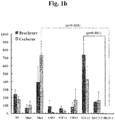
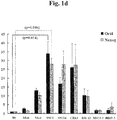
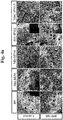
- EBs were cultured in spontaneous differentiation medium containing DM (1 and 5 ⁇ M) for 10 days and expression of representative markers of three germ layers as well as undifferentiated hESCs was examined by quantitative RT-PCR (qRT-PCR) and immunocytochemistry ( Figs. 1 ).
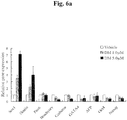
- DM-treatment during EB formation significantly enhanced the expression of neural markers (Sox1 and nestin) dose-dependently, while markers for mesoderm (Brachyury, Cerberus), endoderm (alpha-fetoprotein (AFP), GATA4) and undifferentiated hESCs (Oct4 and Nanog) were reduced ( Figs. 1a-1d ). However, some endodermal (i.e., AFP) and undifferentiated cell markers (i.e., Oct4 and SSEA4), were still detected ( Figs. 1b-1d ). These results implies that blocking BMP pathway alone is not enough to produce highly pure population of neural cells that has minimal contamination of endodermal, mesodermal, and remnant undifferentiated cells.
- DM and SB431542 could direct the fates of both hESC and iPSC lines toward neural lineage, irrespective of their innate differentiation propensity.
- EBs generated from 9 hPSC lines (6 hESC lines (not illustrative of the claimed subject-matter) and 3 human iPSC lines) were treated with both DM (5 ⁇ M) and SB431542 (10 ⁇ M) during spontaneous differentiation process.
- DM 5 ⁇ M
- SB431542 (10 ⁇ M) during spontaneous differentiation process.
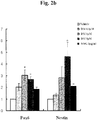
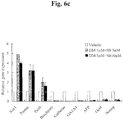
- Our qRT-PCR analyses demonstrated that treatment with DM and SB431542 significantly enhanced neural induction with concomitant reduction of cells of other lineages ( Fig. 2a ).
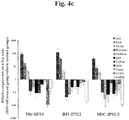
- DM and SB431542 also augmented neural cell generation when used with a direct differentiation protocol that had designed to induce neural differentiation from hESCs13 ( Fig. 4 ) [17].
- the neural precursors generated in our experiments were shown to retain the multipotency to become neurons, astrocytes, and oligodendrocytes ( Fig. 8 ).
- hPSCs with a variety of differentiation propensity can be differentiated efficiently into neural lineage by modulation of BMP and Activin/Nodal pathways.
- modulation of signaling pathways may be able to overcome the innate differentiation potential of hESCs and human iPSCs. This would simplify the need to generate multiple independent iPSC lines from patients in need of cell replacement therapy.
Landscapes
- Health & Medical Sciences (AREA)
- Engineering & Computer Science (AREA)
- Biomedical Technology (AREA)
- Life Sciences & Earth Sciences (AREA)
- Bioinformatics & Cheminformatics (AREA)
- Chemical & Material Sciences (AREA)
- Organic Chemistry (AREA)
- Zoology (AREA)
- Wood Science & Technology (AREA)
- Genetics & Genomics (AREA)
- Biotechnology (AREA)
- General Health & Medical Sciences (AREA)
- Neurology (AREA)
- Neurosurgery (AREA)
- Microbiology (AREA)
- Cell Biology (AREA)
- General Engineering & Computer Science (AREA)
- Biochemistry (AREA)
- Medicinal Chemistry (AREA)
- Chemical Kinetics & Catalysis (AREA)
- Pharmacology & Pharmacy (AREA)
- Nuclear Medicine, Radiotherapy & Molecular Imaging (AREA)
- Veterinary Medicine (AREA)
- Animal Behavior & Ethology (AREA)
- General Chemical & Material Sciences (AREA)
- Public Health (AREA)
- Psychology (AREA)
- Hospice & Palliative Care (AREA)
- Psychiatry (AREA)
- Orthopedic Medicine & Surgery (AREA)
- Physical Education & Sports Medicine (AREA)
- Micro-Organisms Or Cultivation Processes Thereof (AREA)
- Medicines Containing Material From Animals Or Micro-Organisms (AREA)
Claims (5)
- Verfahren zum Induzieren der neuralen Differenzierung von Stammzellen, die aus der Gruppe ausgewählt sind, die aus menschlichen embryonalen Stammzellen (hESCs) und menschlichen induzierten pluripotenten Stammzellen (hiPSCs) besteht, umfassend die Schritte:(a) Hemmen von BMP (knochenmorphogenetischem Protein) und des Activin/Nodal-Signalwegs in den Stammzellen unter Verwendung von Dorsomorphin und 4-(5-Benzo[1,3]Dioxol-5-yl-4-Pyridin-2-yl-1H-Imidazol-2-yl)Benzamid; und(b) Kultivieren der Stammzellen.
- Verfahren nach Anspruch 1, wobei der Schritt (b) ferner die Schritte umfasst: (b-1) Proliferieren neuraler Vorläuferzellen durch Kultivieren der in Schritt (a) erhaltenen Stammzellen, bei denen das Neuroektoderm hochentwickelt ist, in Gegenwart von bFGF (basischem Fibroblasten-Wachstumsfaktor); (b-2) Induzieren von dopaminergen Vorläuferzellen durch Kultivieren der neuralen Vorläuferzellen in Gegenwart von Sonic Hedgehog (Shh) und FGF 8 (Fibroblasten-Wachstumsfaktor 8); und (b-3) Bilden von dopaminergen Neuronen durch Kultivieren der dopaminergen Vorläuferzellen in Gegenwart des Glial-abgeleiteten neurotrophen Wachstumsfaktors (GDNF), des vom Gehirn stammenden neurotrophen Faktors (BDNF) und Ascorbinsäure.
- Verfahren nach Anspruch 1, wobei die Expression von SoX1, Pax6 und Nestin in den Stammzellen von Schritt (b) sehr viel höher ist verglichen mit jenen, die ohne Dorsomorphin und 4-(5-Benzo[1,3]Dioxol-5-yl-4-Pyridin -2-yl-1H-Imidazol-2-yl)Benzamid behandelt wurden.
- Verfahren nach Anspruch 1, wobei die Expression von Id1, Id3, GCM1 und GATA2 in den Stammzellen von Schritt (b) signifikant reduziert ist verglichen mit jenen, die ohne Dorsomorphin und 4-(5-Benzo[1,3]Dioxol-5-yl-4-Pyridin-2-yl-1H-lmidazol-2-yl)Benzamid behandelt wurden.
- Verwendung von Dorsomorphin und 4-(5-Benzo[1,3]Dioxol-5-yl-4-Pyridin-2-yl-1H-lmidazol-2-yl)Benzamid zur Herstellung einer Zusammensetzung zum Induzieren der neuralen Differenzierung von Stammzellen, die aus der Gruppe ausgewählt sind, die aus menschlichen embryonalen Stammzellen (hESCs) und menschlichen induzierten pluripotenten Stammzellen (hiPSCs) besteht.
Applications Claiming Priority (2)
| Application Number | Priority Date | Filing Date | Title |
|---|---|---|---|
| KR1020090107235A KR101168053B1 (ko) | 2009-11-06 | 2009-11-06 | 효율적이고 보편적인 전분화능 줄기세포의 신경세포 분화 유도방법 |
| PCT/KR2010/005892 WO2011055899A2 (ko) | 2009-11-06 | 2010-08-31 | 효율적이고 보편적인 전분화능 줄기세포의 신경세포 분화 유도방법 |
Publications (3)
| Publication Number | Publication Date |
|---|---|
| EP2502987A2 EP2502987A2 (de) | 2012-09-26 |
| EP2502987A4 EP2502987A4 (de) | 2014-04-30 |
| EP2502987B1 true EP2502987B1 (de) | 2018-05-16 |
Family
ID=43970487
Family Applications (1)
| Application Number | Title | Priority Date | Filing Date |
|---|---|---|---|
| EP10798707.5A Active EP2502987B1 (de) | 2009-11-06 | 2010-08-31 | Effizientes und universelles verfahren zur neuralen differenzierung pluripotenter stammzellen |
Country Status (6)
| Country | Link |
|---|---|
| US (1) | US8551783B2 (de) |
| EP (1) | EP2502987B1 (de) |
| JP (1) | JP5756019B2 (de) |
| KR (1) | KR101168053B1 (de) |
| ES (1) | ES2683745T3 (de) |
| WO (1) | WO2011055899A2 (de) |
Families Citing this family (18)
| Publication number | Priority date | Publication date | Assignee | Title |
|---|---|---|---|---|
| WO2010096496A2 (en) | 2009-02-17 | 2010-08-26 | Memorial Sloan-Kettering Cancer Center | Methods of neural conversion of human embryonic stem cells |
| KR101331034B1 (ko) * | 2011-06-09 | 2013-11-19 | 연세대학교 산학협력단 | 미분화 줄기세포로부터 중뇌특이적 도파민 신경세포의 제조 방법 |
| EP3693455A1 (de) | 2011-11-04 | 2020-08-12 | Memorial Sloan-Kettering Cancer Center | Mittelhirn-dopamin (da)-neuronen für transplantation |
| TWI493034B (zh) * | 2011-12-14 | 2015-07-21 | Nat Univ Chung Hsing | Neuronal epithelial cells differentiated by universal stem cells and the medium used and their differentiation methods |
| WO2013163228A1 (en) * | 2012-04-24 | 2013-10-31 | International Stem Cell Corporation | Derivation of neural stem cells and dopaminergic neurons from human pluripotent stem cells |
| EP3498824A1 (de) | 2013-04-26 | 2019-06-19 | Memorial Sloan-Kettering Cancer Center | Durch gezielte differenzierung pluripotenter und multipotenter zellen hergestellte kortikale interneuronen und andere neuronale zellen |
| AU2014316100B2 (en) | 2013-09-05 | 2020-11-05 | Eisai R&D Management Co., Ltd. | New method for inducing dopamine-producing neural precursor cells |
| US8916339B1 (en) | 2013-10-31 | 2014-12-23 | Vivex Biomedical, Inc. | Spinal cord tissue dehydrated and micronized |
| US10174288B2 (en) | 2013-12-11 | 2019-01-08 | Korea Advanced Institute Of Science And Technology | Induced pluripotent stem cell model for cardiofaciocutaneous syndrome and uses thereof |
| EP3097186B1 (de) | 2014-01-21 | 2019-05-08 | The Medical College of Wisconsin, Inc. | Verfahren zur selektiven hemmung pluripotenter stammzellen |
| KR101490829B1 (ko) * | 2014-01-28 | 2015-02-09 | 한국과학기술원 | 누난 증후군의 유도-만능 줄기세포 모델 및 이의 용도 |
| CN103875922B (zh) * | 2014-04-09 | 2016-04-13 | 吉林大学 | 一种复合益生菌微生态饲用添加剂及其制备方法 |
| US9402869B1 (en) | 2015-03-27 | 2016-08-02 | Vivex Biomedical, Inc. | Treated neural tissue composition |
| JP7011260B2 (ja) | 2016-04-22 | 2022-02-10 | 国立大学法人京都大学 | ドーパミン産生神経前駆細胞の製造方法 |
| KR102392133B1 (ko) * | 2019-09-25 | 2022-04-29 | (주) 에스바이오메딕스 | 줄기세포로부터 도파민 신경전구세포 분화 유도 방법 |
| WO2021060637A1 (ko) * | 2019-09-25 | 2021-04-01 | (주) 에스바이오메딕스 | 줄기세포로부터 도파민 신경전구세포 분화 유도 방법 |
| CN114729323B (zh) * | 2019-11-22 | 2024-09-17 | 诺和诺德股份有限公司 | 旋转聚集的神经微球及其应用 |
| CN115125210B (zh) * | 2022-08-31 | 2022-12-02 | 华科星河(北京)生物科技有限公司 | 从iPSC诱导的腰骶段脊髓神经干细胞的培养基与方法 |
Family Cites Families (12)
| Publication number | Priority date | Publication date | Assignee | Title |
|---|---|---|---|---|
| ES2456066T3 (es) | 2002-07-08 | 2014-04-21 | Corixa Corporation | Procesos para la producción de fosfato de aminoalquil glucosaminida e inmunoefectores disacáridos, e intermedios para ello |
| US7253166B2 (en) | 2003-04-22 | 2007-08-07 | Irm Llc | 6-phenyl-7H-pyrrolo[2,3-d]pyrimidine compounds that induce neuronal differentiation in embryonic stem cells |
| WO2005003320A2 (en) | 2003-07-02 | 2005-01-13 | Regents Of The University Of Minnesota | Neuronal differentiation of stem cells |
| KR20060115351A (ko) * | 2003-08-29 | 2006-11-08 | 위스콘신 얼럼나이 리서어치 화운데이션 | 영장류 배아 줄기 세포 기원의 신경 줄기 세포, 운동 뉴런및 도파민 뉴런의 시험관내 분화 방법 |
| AU2004278634B2 (en) * | 2003-10-03 | 2009-10-01 | Keiichi Fukuda | Method of inducing the differentiation of stem cells into cardiomyocytes |
| WO2007123391A1 (en) * | 2006-04-20 | 2007-11-01 | Academisch Ziekenhuis Leiden | Therapeutic intervention in a genetic disease in an individual by modifying expression of an aberrantly expressed gene. |
| GB0622394D0 (en) * | 2006-11-09 | 2006-12-20 | Univ Cambridge Tech | Differentiation of pluripotent cells |
| JP2008125448A (ja) * | 2006-11-21 | 2008-06-05 | Osaka Univ | セロトニン神経の作製方法 |
| WO2009110215A1 (ja) * | 2008-03-03 | 2009-09-11 | 独立行政法人 科学技術振興機構 | 繊毛細胞の分化誘導方法 |
| JPWO2009148170A1 (ja) * | 2008-06-06 | 2011-11-04 | 独立行政法人理化学研究所 | 幹細胞の培養方法 |
| ES2633935T3 (es) * | 2008-12-05 | 2017-09-26 | Inserm - Institut National De La Santé Et De La Recherche Médicale | Método y medio para la diferenciación neural de células pluripotentes |
| WO2010096496A2 (en) * | 2009-02-17 | 2010-08-26 | Memorial Sloan-Kettering Cancer Center | Methods of neural conversion of human embryonic stem cells |
-
2009
- 2009-11-06 KR KR1020090107235A patent/KR101168053B1/ko active Active
-
2010
- 2010-08-31 EP EP10798707.5A patent/EP2502987B1/de active Active
- 2010-08-31 WO PCT/KR2010/005892 patent/WO2011055899A2/ko not_active Ceased
- 2010-08-31 ES ES10798707.5T patent/ES2683745T3/es active Active
- 2010-08-31 US US13/054,692 patent/US8551783B2/en active Active
- 2010-08-31 JP JP2011539458A patent/JP5756019B2/ja active Active
Non-Patent Citations (3)
| Title |
|---|
| DAE-SUNG KIM ET AL: "Robust Enhancement of Neural Differentiation from Human ES and iPS Cells Regardless of their Innate Difference in Differentiation Propensity", STEM CELL REVIEWS AND REPORTS, vol. 6, no. 2, 1 June 2010 (2010-06-01), pages 270 - 281, XP055007831, ISSN: 1550-8943, DOI: 10.1007/s12015-010-9138-1 * |
| TAMMY CHANG ET AL: "Brief Report: Phenotypic Rescue of Induced Pluripotent Stem Cell-Derived Motoneurons of a Spinal Muscular Atrophy Patient", STEM CELLS., vol. 29, no. 12, 16 December 2011 (2011-12-16), US, pages 2090 - 2093, XP055328302, ISSN: 1066-5099, DOI: 10.1002/stem.749 * |
| YICHEN SHI ET AL: "Directed differentiation of human pluripotent stem cells to cerebral cortex neurons and neural networks", NATURE PROTOCOLS, vol. 7, no. 10, 13 September 2012 (2012-09-13), GB, pages 1836 - 1846, XP055328305, ISSN: 1754-2189, DOI: 10.1038/nprot.2012.116 * |
Also Published As
| Publication number | Publication date |
|---|---|
| ES2683745T3 (es) | 2018-09-27 |
| US8551783B2 (en) | 2013-10-08 |
| KR101168053B1 (ko) | 2012-07-24 |
| US20110217774A1 (en) | 2011-09-08 |
| JP5756019B2 (ja) | 2015-07-29 |
| KR20110050310A (ko) | 2011-05-13 |
| WO2011055899A2 (ko) | 2011-05-12 |
| EP2502987A2 (de) | 2012-09-26 |
| WO2011055899A3 (ko) | 2011-07-21 |
| JP2012501194A (ja) | 2012-01-19 |
| EP2502987A4 (de) | 2014-04-30 |
Similar Documents
| Publication | Publication Date | Title |
|---|---|---|
| EP2502987B1 (de) | Effizientes und universelles verfahren zur neuralen differenzierung pluripotenter stammzellen | |
| JP7736875B2 (ja) | ヒト胚性幹細胞の侵害受容器分化のための方法およびその使用 | |
| US11591567B2 (en) | Specification of functional cranial placode derivatives from human pluripotent stem cells | |
| EP2356218B1 (de) | Verfahren und medium zur neuralen differenzierung von pluripotenten zellen | |
| CA3143449C (en) | In vitro production of medial ganglionic eminence precursor cells | |
| WO2019170766A1 (en) | Compositions and methods for efficent amplification of retinal progenitors cells | |
| AU2023216812A1 (en) | Method of nociceptor differentiation of human embryonic stem cells and uses thereof | |
| EP4547825A1 (de) | Verbesserung der neuronalen differenzierung von neuralen vorläuferzellen des ventralen mittelhirns | |
| EP4317418A1 (de) | Verfahren zur herstellung somatischer ovarialzellenähnlicher zellen und verfahren zur induktion der differenzierung pluripotenter primatenstammzellen in somatische ovarialzellenähnliche zellen | |
| JP2023500255A (ja) | ミュラー細胞および細胞製品の生産のための方法 | |
| US12618044B2 (en) | Specification of functional cranial placode derivatives from human pluripotent stem cells | |
| US10160951B2 (en) | Stem cells from the mammalian neural plate | |
| KR20260032533A (ko) | 세포 재프로그래밍 | |
| HK40015687B (en) | Method of nociceptor differentiantion of human embryonic stem cells and uses thereof |
Legal Events
| Date | Code | Title | Description |
|---|---|---|---|
| PUAI | Public reference made under article 153(3) epc to a published international application that has entered the european phase |
Free format text: ORIGINAL CODE: 0009012 |
|
| 17P | Request for examination filed |
Effective date: 20110118 |
|
| AK | Designated contracting states |
Kind code of ref document: A2 Designated state(s): AL AT BE BG CH CY CZ DE DK EE ES FI FR GB GR HR HU IE IS IT LI LT LU LV MC MK MT NL NO PL PT RO SE SI SK SM TR |
|
| DAX | Request for extension of the european patent (deleted) | ||
| R17P | Request for examination filed (corrected) |
Effective date: 20110118 |
|
| A4 | Supplementary search report drawn up and despatched |
Effective date: 20140401 |
|
| RIC1 | Information provided on ipc code assigned before grant |
Ipc: C12N 5/02 20060101ALI20140326BHEP Ipc: C12N 5/07 20100101ALI20140326BHEP Ipc: C12N 5/079 20100101ALI20140326BHEP Ipc: C12N 5/071 20100101AFI20140326BHEP |
|
| 17Q | First examination report despatched |
Effective date: 20150915 |
|
| RAP1 | Party data changed (applicant data changed or rights of an application transferred) |
Owner name: S-BIOMEDICS |
|
| GRAP | Despatch of communication of intention to grant a patent |
Free format text: ORIGINAL CODE: EPIDOSNIGR1 |
|
| INTG | Intention to grant announced |
Effective date: 20171122 |
|
| GRAS | Grant fee paid |
Free format text: ORIGINAL CODE: EPIDOSNIGR3 |
|
| GRAA | (expected) grant |
Free format text: ORIGINAL CODE: 0009210 |
|
| AK | Designated contracting states |
Kind code of ref document: B1 Designated state(s): AL AT BE BG CH CY CZ DE DK EE ES FI FR GB GR HR HU IE IS IT LI LT LU LV MC MK MT NL NO PL PT RO SE SI SK SM TR |
|
| REG | Reference to a national code |
Ref country code: GB Ref legal event code: FG4D |
|
| REG | Reference to a national code |
Ref country code: CH Ref legal event code: EP |
|
| REG | Reference to a national code |
Ref country code: IE Ref legal event code: FG4D |
|
| REG | Reference to a national code |
Ref country code: DE Ref legal event code: R096 Ref document number: 602010050673 Country of ref document: DE |
|
| REG | Reference to a national code |
Ref country code: AT Ref legal event code: REF Ref document number: 999588 Country of ref document: AT Kind code of ref document: T Effective date: 20180615 |
|
| REG | Reference to a national code |
Ref country code: SE Ref legal event code: TRGR |
|
| REG | Reference to a national code |
Ref country code: NL Ref legal event code: FP |
|
| REG | Reference to a national code |
Ref country code: FR Ref legal event code: PLFP Year of fee payment: 9 |
|
| REG | Reference to a national code |
Ref country code: ES Ref legal event code: FG2A Ref document number: 2683745 Country of ref document: ES Kind code of ref document: T3 Effective date: 20180927 |
|
| REG | Reference to a national code |
Ref country code: LT Ref legal event code: MG4D |
|
| PG25 | Lapsed in a contracting state [announced via postgrant information from national office to epo] |
Ref country code: LT Free format text: LAPSE BECAUSE OF FAILURE TO SUBMIT A TRANSLATION OF THE DESCRIPTION OR TO PAY THE FEE WITHIN THE PRESCRIBED TIME-LIMIT Effective date: 20180516 Ref country code: FI Free format text: LAPSE BECAUSE OF FAILURE TO SUBMIT A TRANSLATION OF THE DESCRIPTION OR TO PAY THE FEE WITHIN THE PRESCRIBED TIME-LIMIT Effective date: 20180516 Ref country code: NO Free format text: LAPSE BECAUSE OF FAILURE TO SUBMIT A TRANSLATION OF THE DESCRIPTION OR TO PAY THE FEE WITHIN THE PRESCRIBED TIME-LIMIT Effective date: 20180816 Ref country code: BG Free format text: LAPSE BECAUSE OF FAILURE TO SUBMIT A TRANSLATION OF THE DESCRIPTION OR TO PAY THE FEE WITHIN THE PRESCRIBED TIME-LIMIT Effective date: 20180816 |
|
| PG25 | Lapsed in a contracting state [announced via postgrant information from national office to epo] |
Ref country code: LV Free format text: LAPSE BECAUSE OF FAILURE TO SUBMIT A TRANSLATION OF THE DESCRIPTION OR TO PAY THE FEE WITHIN THE PRESCRIBED TIME-LIMIT Effective date: 20180516 Ref country code: HR Free format text: LAPSE BECAUSE OF FAILURE TO SUBMIT A TRANSLATION OF THE DESCRIPTION OR TO PAY THE FEE WITHIN THE PRESCRIBED TIME-LIMIT Effective date: 20180516 |
|
| REG | Reference to a national code |
Ref country code: AT Ref legal event code: MK05 Ref document number: 999588 Country of ref document: AT Kind code of ref document: T Effective date: 20180516 |
|
| REG | Reference to a national code |
Ref country code: GR Ref legal event code: EP Ref document number: 20180402170 Country of ref document: GR Effective date: 20190109 |
|
| PG25 | Lapsed in a contracting state [announced via postgrant information from national office to epo] |
Ref country code: SK Free format text: LAPSE BECAUSE OF FAILURE TO SUBMIT A TRANSLATION OF THE DESCRIPTION OR TO PAY THE FEE WITHIN THE PRESCRIBED TIME-LIMIT Effective date: 20180516 Ref country code: EE Free format text: LAPSE BECAUSE OF FAILURE TO SUBMIT A TRANSLATION OF THE DESCRIPTION OR TO PAY THE FEE WITHIN THE PRESCRIBED TIME-LIMIT Effective date: 20180516 Ref country code: PL Free format text: LAPSE BECAUSE OF FAILURE TO SUBMIT A TRANSLATION OF THE DESCRIPTION OR TO PAY THE FEE WITHIN THE PRESCRIBED TIME-LIMIT Effective date: 20180516 Ref country code: AT Free format text: LAPSE BECAUSE OF FAILURE TO SUBMIT A TRANSLATION OF THE DESCRIPTION OR TO PAY THE FEE WITHIN THE PRESCRIBED TIME-LIMIT Effective date: 20180516 Ref country code: DK Free format text: LAPSE BECAUSE OF FAILURE TO SUBMIT A TRANSLATION OF THE DESCRIPTION OR TO PAY THE FEE WITHIN THE PRESCRIBED TIME-LIMIT Effective date: 20180516 Ref country code: CZ Free format text: LAPSE BECAUSE OF FAILURE TO SUBMIT A TRANSLATION OF THE DESCRIPTION OR TO PAY THE FEE WITHIN THE PRESCRIBED TIME-LIMIT Effective date: 20180516 Ref country code: RO Free format text: LAPSE BECAUSE OF FAILURE TO SUBMIT A TRANSLATION OF THE DESCRIPTION OR TO PAY THE FEE WITHIN THE PRESCRIBED TIME-LIMIT Effective date: 20180516 |
|
| REG | Reference to a national code |
Ref country code: DE Ref legal event code: R097 Ref document number: 602010050673 Country of ref document: DE |
|
| PG25 | Lapsed in a contracting state [announced via postgrant information from national office to epo] |
Ref country code: SM Free format text: LAPSE BECAUSE OF FAILURE TO SUBMIT A TRANSLATION OF THE DESCRIPTION OR TO PAY THE FEE WITHIN THE PRESCRIBED TIME-LIMIT Effective date: 20180516 |
|
| PLBE | No opposition filed within time limit |
Free format text: ORIGINAL CODE: 0009261 |
|
| STAA | Information on the status of an ep patent application or granted ep patent |
Free format text: STATUS: NO OPPOSITION FILED WITHIN TIME LIMIT |
|
| PG25 | Lapsed in a contracting state [announced via postgrant information from national office to epo] |
Ref country code: MC Free format text: LAPSE BECAUSE OF FAILURE TO SUBMIT A TRANSLATION OF THE DESCRIPTION OR TO PAY THE FEE WITHIN THE PRESCRIBED TIME-LIMIT Effective date: 20180516 |
|
| 26N | No opposition filed |
Effective date: 20190219 |
|
| PG25 | Lapsed in a contracting state [announced via postgrant information from national office to epo] |
Ref country code: LU Free format text: LAPSE BECAUSE OF NON-PAYMENT OF DUE FEES Effective date: 20180831 |
|
| PG25 | Lapsed in a contracting state [announced via postgrant information from national office to epo] |
Ref country code: SI Free format text: LAPSE BECAUSE OF FAILURE TO SUBMIT A TRANSLATION OF THE DESCRIPTION OR TO PAY THE FEE WITHIN THE PRESCRIBED TIME-LIMIT Effective date: 20180516 |
|
| PG25 | Lapsed in a contracting state [announced via postgrant information from national office to epo] |
Ref country code: AL Free format text: LAPSE BECAUSE OF FAILURE TO SUBMIT A TRANSLATION OF THE DESCRIPTION OR TO PAY THE FEE WITHIN THE PRESCRIBED TIME-LIMIT Effective date: 20180516 |
|
| PG25 | Lapsed in a contracting state [announced via postgrant information from national office to epo] |
Ref country code: MT Free format text: LAPSE BECAUSE OF NON-PAYMENT OF DUE FEES Effective date: 20180831 |
|
| PG25 | Lapsed in a contracting state [announced via postgrant information from national office to epo] |
Ref country code: PT Free format text: LAPSE BECAUSE OF FAILURE TO SUBMIT A TRANSLATION OF THE DESCRIPTION OR TO PAY THE FEE WITHIN THE PRESCRIBED TIME-LIMIT Effective date: 20180516 Ref country code: HU Free format text: LAPSE BECAUSE OF FAILURE TO SUBMIT A TRANSLATION OF THE DESCRIPTION OR TO PAY THE FEE WITHIN THE PRESCRIBED TIME-LIMIT; INVALID AB INITIO Effective date: 20100831 |
|
| PG25 | Lapsed in a contracting state [announced via postgrant information from national office to epo] |
Ref country code: CY Free format text: LAPSE BECAUSE OF FAILURE TO SUBMIT A TRANSLATION OF THE DESCRIPTION OR TO PAY THE FEE WITHIN THE PRESCRIBED TIME-LIMIT Effective date: 20180516 Ref country code: IE Free format text: LAPSE BECAUSE OF NON-PAYMENT OF DUE FEES Effective date: 20180831 Ref country code: MK Free format text: LAPSE BECAUSE OF NON-PAYMENT OF DUE FEES Effective date: 20180516 |
|
| PG25 | Lapsed in a contracting state [announced via postgrant information from national office to epo] |
Ref country code: IS Free format text: LAPSE BECAUSE OF FAILURE TO SUBMIT A TRANSLATION OF THE DESCRIPTION OR TO PAY THE FEE WITHIN THE PRESCRIBED TIME-LIMIT Effective date: 20180916 |
|
| P01 | Opt-out of the competence of the unified patent court (upc) registered |
Effective date: 20230528 |
|
| PGFP | Annual fee paid to national office [announced via postgrant information from national office to epo] |
Ref country code: NL Payment date: 20250724 Year of fee payment: 16 |
|
| PGFP | Annual fee paid to national office [announced via postgrant information from national office to epo] |
Ref country code: ES Payment date: 20250902 Year of fee payment: 16 |
|
| PGFP | Annual fee paid to national office [announced via postgrant information from national office to epo] |
Ref country code: DE Payment date: 20250716 Year of fee payment: 16 |
|
| PGFP | Annual fee paid to national office [announced via postgrant information from national office to epo] |
Ref country code: GR Payment date: 20250725 Year of fee payment: 16 |
|
| PGFP | Annual fee paid to national office [announced via postgrant information from national office to epo] |
Ref country code: TR Payment date: 20250829 Year of fee payment: 16 Ref country code: IT Payment date: 20250728 Year of fee payment: 16 |
|
| PGFP | Annual fee paid to national office [announced via postgrant information from national office to epo] |
Ref country code: BE Payment date: 20250716 Year of fee payment: 16 Ref country code: GB Payment date: 20250717 Year of fee payment: 16 |
|
| PGFP | Annual fee paid to national office [announced via postgrant information from national office to epo] |
Ref country code: FR Payment date: 20250721 Year of fee payment: 16 |
|
| PGFP | Annual fee paid to national office [announced via postgrant information from national office to epo] |
Ref country code: CH Payment date: 20250901 Year of fee payment: 16 Ref country code: SE Payment date: 20250728 Year of fee payment: 16 |