EP2506116A1 - Benachrichtigungssystem mit reduziertem stromverbrauch sowie endgerät, verfahren und programm dafür - Google Patents
Benachrichtigungssystem mit reduziertem stromverbrauch sowie endgerät, verfahren und programm dafür Download PDFInfo
- Publication number
- EP2506116A1 EP2506116A1 EP10832789A EP10832789A EP2506116A1 EP 2506116 A1 EP2506116 A1 EP 2506116A1 EP 10832789 A EP10832789 A EP 10832789A EP 10832789 A EP10832789 A EP 10832789A EP 2506116 A1 EP2506116 A1 EP 2506116A1
- Authority
- EP
- European Patent Office
- Prior art keywords
- power saving
- setting value
- usage time
- judgment
- terminal device
- Prior art date
- Legal status (The legal status is an assumption and is not a legal conclusion. Google has not performed a legal analysis and makes no representation as to the accuracy of the status listed.)
- Withdrawn
Links
Images




Classifications
-
- G—PHYSICS
- G06—COMPUTING OR CALCULATING; COUNTING
- G06F—ELECTRIC DIGITAL DATA PROCESSING
- G06F1/00—Details not covered by groups G06F3/00 - G06F13/00 and G06F21/00
- G06F1/26—Power supply means, e.g. regulation thereof
- G06F1/32—Means for saving power
- G06F1/3203—Power management, i.e. event-based initiation of a power-saving mode
-
- G—PHYSICS
- G06—COMPUTING OR CALCULATING; COUNTING
- G06F—ELECTRIC DIGITAL DATA PROCESSING
- G06F1/00—Details not covered by groups G06F3/00 - G06F13/00 and G06F21/00
- G06F1/26—Power supply means, e.g. regulation thereof
- G06F1/32—Means for saving power
- G06F1/3203—Power management, i.e. event-based initiation of a power-saving mode
- G06F1/3206—Monitoring of events, devices or parameters that trigger a change in power modality
-
- H—ELECTRICITY
- H04—ELECTRIC COMMUNICATION TECHNIQUE
- H04W—WIRELESS COMMUNICATION NETWORKS
- H04W52/00—Power management, e.g. Transmission Power Control [TPC] or power classes
- H04W52/02—Power saving arrangements
- H04W52/0209—Power saving arrangements in terminal devices
- H04W52/0251—Power saving arrangements in terminal devices using monitoring of local events, e.g. events related to user activity
- H04W52/0258—Power saving arrangements in terminal devices using monitoring of local events, e.g. events related to user activity controlling an operation mode according to history or models of usage information, e.g. activity schedule or time of day
-
- Y—GENERAL TAGGING OF NEW TECHNOLOGICAL DEVELOPMENTS; GENERAL TAGGING OF CROSS-SECTIONAL TECHNOLOGIES SPANNING OVER SEVERAL SECTIONS OF THE IPC; TECHNICAL SUBJECTS COVERED BY FORMER USPC CROSS-REFERENCE ART COLLECTIONS [XRACs] AND DIGESTS
- Y02—TECHNOLOGIES OR APPLICATIONS FOR MITIGATION OR ADAPTATION AGAINST CLIMATE CHANGE
- Y02D—CLIMATE CHANGE MITIGATION TECHNOLOGIES IN INFORMATION AND COMMUNICATION TECHNOLOGIES [ICT], I.E. INFORMATION AND COMMUNICATION TECHNOLOGIES AIMING AT THE REDUCTION OF THEIR OWN ENERGY USE
- Y02D30/00—Reducing energy consumption in communication networks
- Y02D30/70—Reducing energy consumption in communication networks in wireless communication networks
Definitions
- the present invention relates to a power saving notification system for supporting electric power saving of a terminal device, a terminal device, a power saving notification method, and a power saving notification program.
- Patent Document 1 has described a system which generates an advice message for appropriate operation of electric instruments in a house based on the operating status of the electric instruments and notifies the user of the advice message.
- Patent Document 1 JP-A-2008-136334
- a power saving notification system in accordance with the present invention comprises: power saving possibility judgment means which judges whether electric power saving is possible in a prescribed function of a terminal device compared to a current setting value of the function or not based on operation history information on the terminal device; and notification means which notifies the user of the result of the judgment when the power saving possibility judgment means judges that electric power saving is possible.
- a terminal device in accordance with the present invention comprises: power saving possibility judgment means which judges whether electric power saving is possible in a prescribed function of the terminal device compared to a current setting value of the function or not based on operation history information; and notification means which notifies the user of the result of the judgment when the power saving possibility judgment means judges that electric power saving is possible.
- a power saving notification method in accordance with the present invention comprises: judging whether electric power saving is possible in a prescribed function of a terminal device compared to a current setting value of the function or not based on operation history information on the terminal device; and notifying the user of the result of the judgment when electric power saving is judged to be possible.
- a power saving notification program in accordance with the present invention causes a computer to execute: a power saving possibility judgment process of judging whether electric power saving is possible in a prescribed function of a terminal device compared to a current setting value of the function or not based on operation history information on the terminal device; and a notification process of notifying the user of the result of the judgment when electric power saving is judged to be possible in the power saving possibility judgment process.
- the present invention provides a terminal device having a function of determining setting values that are more capable of achieving electric power saving than the current setting values (setting values currently set by the user) based on history records (logs) of operations performed by the user in a prescribed period and notifying the user of the setting values.
- the present invention enables the terminal device to prompt the user to change the setting values to those more capable of achieving electric power saving. Thus, even when the user remains unconscious of the setting values leading to electric power saving in the daily use of the terminal device, it becomes possible to let the user notice a method for extending the duration of the battery.
- the terminal device notifies the user of only setting items allowing for electric power saving that are related to the operations recorded in the user's operation history records based on the operation history records stored in the terminal device. Therefore, even after the user has changed setting values to those capable of achieving electric power saving according to the notification, the user can use a new application, etc. (used by the user for the first time) with no restrictions on the displaying, operations, etc.
- Two methods are assumed as means for letting the user check the setting values capable of achieving electric power saving: automatic notification from the terminal device to the user after the elapse of a prescribed time period (step S21 shown in FIG. 4 ) and manual checking from the user's side (step S22 shown in FIG. 4 ).
- FIG. 1 is a functional block diagram showing an example of the functional configuration of a power saving notification system in accordance with the present invention.
- the power saving notification system comprises input means 1, operation history/setting information storage means 2, usage time calculation means 3, power saving effect calculation means 4, power saving possibility judgment means 5, notification means 6, display control means 7, and setting change means 8.
- This exemplary embodiment will be described below by taking an example of a terminal device employing the power saving notification system.
- the terminal device is implemented by a cellular phone, a PHS (Personal Handy-phone System) terminal, a personal computer, etc.
- PHS Personal Handy-phone System
- the input means 1 is implemented, specifically, by an input device such as a keyboard and a mouse.
- the input means 1 has a function of inputting data according to the operations by the user.
- the operation history/setting information storage means 2 is implemented, specifically, by a storage device such as a magnetic disk device, an optical disk device or a memory.
- the operation history/setting information storage means 2 stores history records (logs) about the user operations on the terminal device, setting information on each function, etc.
- the information stored in the operation history/setting information storage means 2 will be described in more detail later in an explanation of a specific example.
- the usage time calculation means 3 is implemented, specifically, by a CPU of an information processing device operating according to a program.
- the usage time calculation means 3 has a function of calculating the usage time of each function.
- the usage time calculation means 3 stores the time at which the user started using a prescribed function (start time) in a storage unit and calculates the usage time upon the ending of the usage by comparing the present time with the stored time.
- the usage time calculation means 3 stores the calculated usage time of each function in the operation history/setting information storage means 2.
- the usage time calculation means 3 adds the calculated usage time to the usage time of the function stored in the operation history/setting information storage means 2 and thereby stores the sum as the cumulative usage time.
- the power saving effect calculation means 4 is implemented, specifically, by a CPU of an information processing device operating according to a program.
- the power saving effect calculation means 4 has a function of calculating power saving effect of each setting value of each function.
- the power saving effect calculation means 4 also has a function of storing data representing the calculated power saving effect in the operation history/setting information storage means 2. For example, the power saving effect calculation means 4 calculates the power saving effect based on the usage time of each function stored in the operation history/setting information storage means 2 and electric power consumption per unit time which has previously been determined for each setting value of each function.
- the power saving possibility judgment means 5 is implemented, specifically, by a CPU of an information processing device operating according to a program.
- the power saving possibility judgment means 5 judges whether electric power saving is possible or not based on the power saving effect calculated by the power saving effect calculation means 4.
- the notification means 6 is implemented, specifically, by a CPU of an information processing device operating according to a program.
- the notification means 6 has a function of notifying the user that electric power saving is possible based on the result of the judgment by the power saving possibility judgment means 5. For example, in order to notify the user of the judgment result, the notification means 6 requests the display control means 7 to display prescribed information.
- the display control means 7 is implemented, specifically, by a CPU of an information processing device operating according to a program.
- the display control means 7 has a function of controlling a display unit to make the unit display the prescribed information.
- the setting change means 8 is implemented, specifically, by a CPU of an information processing device operating according to a program.
- the setting change means 8 has a function of changing the setting information of each function based on the data inputted by the input means 1.
- the setting change means 8 has a function of updating the setting information of each function stored in the operation history/setting information storage means 2.
- FIG. 2 is a table showing an example of data stored in the terminal device. Specifically, the operation history/setting information storage means 2 of the terminal device stores the data shown in FIG. 2 .
- the operation history/setting information storage means 2 stores data P1 - P7.
- the data P1 represents each function of the terminal device available to the user.
- the functions of the terminal device may include a music playback function and an image display function, for example.
- the data P2 represents the usage time of each function by the user.
- the data P3 represents the names of setting items related to each function and leading to electric power saving.
- the data P4 represents a setting value that is the most capable of achieving electric power saving among various setting values of each setting item indicated by the data P3.
- the data P5 represents the current setting values of each function.
- the data P6 represents all the setting values that can be set for each setting item indicated by the data P3 (i.e., settable values) and a power saving possibility rate when the setting value of each setting item is changed from the current setting value (data P5) to each of the settable values.
- the data P7 represents whether or not each of the settable values should be regarded as an object of the notification to the user as a setting item allowing for electric power saving.
- the data P1, P3 and P4 are fixed values in this exemplary embodiment.
- the data P2, P5, P6 and P7 are variables that vary depending on the status of usage by the user and the settings.
- the values are calculated and updated by the usage time calculation means 3.
- the values are updated by the setting change means 8.
- the power saving possibility rates are calculated and updated by the power saving effect calculation means 4.
- the values are updated based on the result of the judgment by the power saving possibility judgment means 5.
- the data P1, P3 and P4 (fixed values) are assumed to be previously stored in the operation history/setting information storage means 2.
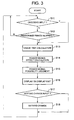
- FIG. 3 is a flow chart showing an example of a process executed by the power saving notification system.
- the usage time calculation means 3 calculates the usage time (P2) of each function (P1) (step S13). For example, the usage time calculation means 3 calculates the cumulative usage time of each function from usage history information on each function stored in the storage unit.
- the power saving effect calculation means 4 calculates the power saving possibility rate (POWER SAVING POSSIBILITY RATE in P6) for each setting value (ALL SETTING VALUES in P6) of each function based on the usage time (P2) calculated by the usage time calculation means 3 (step S14).
- the power saving effect calculation means 4 calculates an expected power consumption for each setting value of a function based on the usage time of the function and the electric power consumption per unit time (previously determined for each setting value of the function) and then calculates the power saving possibility rate for each setting value by comparing the calculated expected power consumption with the expected power consumption at the current setting value.
- the process is not restricted to the above processing order. For example, it is also possible to execute the steps S13 and S14 with different timing (before the user operation, before a prescribed period, etc.) and thereby update the information stored in the operation history/setting information storage means 2.
- the power saving possibility judgment means 5 judges whether electric power saving is possible or not in each function (step S15). A concrete method of the judgment will be explained later.
- the notification means 6 executes a process of notifying the user that electric power saving is possible based on the result of the judgment by the power saving possibility judgment means 5.
- the notification means 6 requests the display control means 7 to display the judgment result.
- the display control means 7 executes control so that a list of settings allowing for electric power saving based on the judgment result is displayed on the display unit.
- the notification means 6 requests the display control means 7 to display a prescribed alarm, for example.
- the display control means 7 executes control so that the prescribed alarm (e.g., blinking icon) is displayed on the display unit.
- the terminal device is capable of notifying the user that there exists a setting item allowing for electric power saving.
- the display control means 7 executes control so that the list of settings allowing for electric power saving based on the judgment result is displayed on the display unit.
- the setting change means 8 changes the settings of the functions according to the operation by the user (step S18). Further, the setting change means 8 updates the current setting values (P5) stored in the operation history/setting information storage means 2 with the changed setting values.
- the setting change means 8 may also be configured to automatically change the settings of multiple items collectively in response to one operation by the user.
- Condition 1 "The usage time (P2 in FIG. 2 ) of the function is not 0".
- Condition 2 "The setting value that is the most capable of achieving electric power saving (P4 in FIG. 2 ) does not coincide with the current setting value (P5 in FIG. 2 ).
- the condition 1 is a condition necessary for avoiding functional restriction for electric power saving, etc. (which is caused by a setting change) in regard to functions that have never been used.
- the condition 2 is a condition necessary for extracting only items having room for electric power saving. The condition 2 is employed since it is unnecessary to prompt the user to make a setting change if the current setting value is already the setting value most capable of achieving electric power saving.
- the power saving possibility judgment means 5 judges that the items "SETTING A-a”, “SETTING A-b” and “SETTING B-a” allow for electric power saving.
- FIG. 4 is an explanatory drawing showing an example of the screen transition in the power saving notification system.
- the terminal device displays the names of setting items, for which the data P7 in FIG. 2 (representing whether or not each setting item should be regarded as an object of the notification as a setting item allowing for electric power saving) has been set as "OBJECT", on the display unit as the list of power-savable settings.
- the terminal device displays data representing the power saving possibility rates from the current setting value (P6 in FIG. 2 ) as guidance (step S23 in FIG. 4 ) in order to clearly show the user how much power saving effect each setting value of the setting item has.
- the terminal device displays the setting values selectable for the selected item on the display unit (step S24 in FIG. 4 ).
- the power saving notification system calculates the power saving possibility rate based on the operation history records of the user and thereby judges whether electric power saving is possible or not in regard to each setting value of each function.
- the power saving notification system notifies the user of the fact. Therefore, the following effects are achieved by this exemplary embodiment:
- the terminal device Even when the user is using the terminal device in his/her daily life without being aware of the status of the current setting values, the terminal device notifies the user of the setting items allowing for electric power saving. This makes it possible to let the user recognize the existence of a method for extending the duration (operating time) of the battery and prompt the user to make a setting change.
- the terminal device When the power saving mode is ON, due to the functional restrictions for electric power saving, the terminal device can keep on being used without exhibiting excellent functions and entertainment of recent terminal devices to the user for a long time. As a countermeasure against this problem, the terminal device notifies the user of the power-savable settings (settings allowing for electric power saving) related to the operations by the user based on the user's operation history records stored in the terminal device. Therefore, even after making a setting change, the user can use a new application, etc. (used by the user for the first time) with no restrictions on the displaying, operations, etc.
- the user can check and recognize which setting has the power saving effect of the setting change on the user's own initiative.
- FIG. 5 is a block diagram showing an example of the minimum configuration of the power saving notification system.
- the power saving notification system comprises power saving possibility judgment means 5 and notification means 6 as its minimum configuration components.
- the power saving possibility judgment means 5 judges whether electric power saving is possible in each function of a terminal device compared to a current setting value of the function or not based on operation history information on the terminal device.
- the notification means 6 notifies the user of the result of the judgment when the power saving possibility judgment means 5 judges that electric power saving is possible.
- a power saving notification system comprising: power saving possibility judgment means (implemented by the power saving possibility judgment means 5, for example) which judges whether electric power saving is possible in a prescribed function of a terminal device (e.g., P1 shown in FIG. 2 ) compared to a current setting value of the function (e.g., P5 shown in FIG. 2 ) or not based on operation history information on the terminal device (stored in the operation history/setting information storage means 2, for example); and notification means (implemented by the notification means 6 and the display control means 7, for example) which notifies the user of the result of the judgment when the power saving possibility judgment means judges that electric power saving is possible (e.g., P7 shown in FIG. 2 ).
- power saving possibility judgment means implemented by the power saving possibility judgment means 5, for example
- the power saving notification system may comprise: usage time calculation means (implemented by the usage time calculation means 3, for example) which calculates usage time of the prescribed function (e.g., P2 shown in FIG. 2 ) based on the operation history information; and power saving effect calculation means which calculates the degree of power saving (e.g., P6 (POWER SAVING POSSIBILITY RATE) shown in FIG. 2 ) of each setting value settable in the prescribed function (e.g., P6 (ALL SETTING VALUES) shown in FIG. 2 ) in comparison with the current setting value based on the usage time calculated by the usage time calculation means.
- the power saving possibility judgment means may be configured to make the judgment on whether electric power saving is possible in the prescribed function compared to the current setting value or not based on the degree of power saving calculated by the power saving effect calculation means.
- the power saving effect calculation means may be configured to calculate expected power consumption for each setting value of the prescribed function based on the usage time calculated by the usage time calculation means and power consumption per unit time previously determined for each setting value and then calculate the degree of power saving of each setting value by comparing the calculated expected power consumption with the expected power consumption at the current setting value.
- the notification means may be configured to notify the user of the degree of power saving of each setting value calculated by the power saving effect calculation means (e.g., the step S23 shown in FIG. 4 ) together with the result of the judgment.
- the power saving possibility judgment means may be configured to judge that electric power saving is possible in regard to the prescribed function on condition that the usage time calculated by the usage time calculation means is not 0 (e.g., the condition 1).
- the power saving possibility judgment means may be configured to judge that electric power saving is possible in regard to the prescribed function on condition that a setting value having the highest degree of power saving as the result of the calculation by the power saving effect calculation means differs from the current setting value of the function (e.g., the condition 2).
- the notification means may be configured to notify the user of the result of the judgment at prescribed periods (e.g., the step S21 shown in FIG. 4 ) or according to an operation by the user (e.g., the step S22 shown in FIG. 4 ).
- the present invention is applicable to the purpose of saving the electric power in terminal devices.
Landscapes
- Engineering & Computer Science (AREA)
- Theoretical Computer Science (AREA)
- Physics & Mathematics (AREA)
- General Engineering & Computer Science (AREA)
- General Physics & Mathematics (AREA)
- Computer Networks & Wireless Communication (AREA)
- Signal Processing (AREA)
- Power Sources (AREA)
- Management, Administration, Business Operations System, And Electronic Commerce (AREA)
- Telephone Function (AREA)
- Supply And Distribution Of Alternating Current (AREA)
Applications Claiming Priority (2)
| Application Number | Priority Date | Filing Date | Title |
|---|---|---|---|
| JP2009269863A JP5440128B2 (ja) | 2009-11-27 | 2009-11-27 | 節電通知システム、端末装置、方法及びプログラム |
| PCT/JP2010/005971 WO2011064933A1 (ja) | 2009-11-27 | 2010-10-05 | 節電通知システム、端末装置、方法及びプログラム |
Publications (1)
| Publication Number | Publication Date |
|---|---|
| EP2506116A1 true EP2506116A1 (de) | 2012-10-03 |
Family
ID=44066048
Family Applications (1)
| Application Number | Title | Priority Date | Filing Date |
|---|---|---|---|
| EP10832789A Withdrawn EP2506116A1 (de) | 2009-11-27 | 2010-10-05 | Benachrichtigungssystem mit reduziertem stromverbrauch sowie endgerät, verfahren und programm dafür |
Country Status (5)
| Country | Link |
|---|---|
| US (1) | US20120233480A1 (de) |
| EP (1) | EP2506116A1 (de) |
| JP (1) | JP5440128B2 (de) |
| CN (1) | CN102640079B (de) |
| WO (1) | WO2011064933A1 (de) |
Families Citing this family (33)
| Publication number | Priority date | Publication date | Assignee | Title |
|---|---|---|---|---|
| JP2826800B2 (ja) * | 1994-08-02 | 1998-11-18 | 康頼 角元 | 三面鏡 |
| JP5127962B2 (ja) * | 2011-06-29 | 2013-01-23 | 株式会社東芝 | 情報処理装置および動作制御方法 |
| CN103092088A (zh) * | 2011-11-03 | 2013-05-08 | 达能科技股份有限公司 | 电器待机节电信息收集系统及方法 |
| CN103167185B (zh) * | 2011-12-09 | 2015-09-02 | 网秦无限(北京)科技有限公司 | 电池节能方法和系统 |
| CN105511586B (zh) * | 2011-12-21 | 2019-04-23 | 英特尔公司 | 在计算设备上促进电量延长服务的机制 |
| DE112011106095B4 (de) * | 2011-12-21 | 2025-06-18 | Tahoe Research, Ltd. | Mechanismus zum Ermöglichen eines Energieausdehnungsdienstes bei Computergeräten |
| CN103999015B (zh) | 2011-12-21 | 2017-02-08 | 英特尔公司 | 在计算设备上促进电量延长服务的机制 |
| JP6113538B2 (ja) * | 2012-03-23 | 2017-04-12 | 株式会社東芝 | 制御装置、制御方法、プログラムおよび半導体装置 |
| US10176633B2 (en) | 2012-06-05 | 2019-01-08 | Apple Inc. | Integrated mapping and navigation application |
| US9997069B2 (en) | 2012-06-05 | 2018-06-12 | Apple Inc. | Context-aware voice guidance |
| US8965696B2 (en) | 2012-06-05 | 2015-02-24 | Apple Inc. | Providing navigation instructions while operating navigation application in background |
| US9482296B2 (en) | 2012-06-05 | 2016-11-01 | Apple Inc. | Rendering road signs during navigation |
| US9886794B2 (en) | 2012-06-05 | 2018-02-06 | Apple Inc. | Problem reporting in maps |
| US9418672B2 (en) | 2012-06-05 | 2016-08-16 | Apple Inc. | Navigation application with adaptive instruction text |
| US20130321400A1 (en) | 2012-06-05 | 2013-12-05 | Apple Inc. | 3D Map Views for 3D Maps |
| US10156455B2 (en) | 2012-06-05 | 2018-12-18 | Apple Inc. | Context-aware voice guidance |
| JP5901479B2 (ja) * | 2012-09-13 | 2016-04-13 | シャープ株式会社 | 携帯情報端末、その制御方法及び携帯情報端末用のコンピュータプログラム |
| JP6009925B2 (ja) * | 2012-12-13 | 2016-10-19 | 株式会社東芝 | 電子機器および機器システム |
| KR102194795B1 (ko) | 2013-08-29 | 2020-12-23 | 삼성전자주식회사 | 전력 제어를 위한 전자 장치 및 방법 |
| JP6247066B2 (ja) * | 2013-09-27 | 2017-12-13 | 京セラ株式会社 | 電子機器、電力消費管理方法及び電力消費管理プログラム |
| CN104615415B (zh) * | 2013-11-04 | 2019-02-05 | 联想(北京)有限公司 | 一种信息处理方法及电子设备 |
| KR102143871B1 (ko) | 2014-04-22 | 2020-08-12 | 삼성전자 주식회사 | 전자장치의 전원 제어장치 및 방법 |
| JP6347998B2 (ja) * | 2014-06-24 | 2018-06-27 | Kddi株式会社 | 監視装置、端末装置、通信システムおよび監視プログラム |
| JP6404702B2 (ja) * | 2014-12-16 | 2018-10-10 | Kddi株式会社 | ソフトウェア決定装置、端末装置、ソフトウェア決定方法、ソフトウェア決定プログラムおよび通信システム |
| US9954991B2 (en) * | 2014-12-31 | 2018-04-24 | Xiaomi Inc. | Status notification method and device |
| US9978018B2 (en) * | 2015-04-22 | 2018-05-22 | Aeris Communications, Inc. | Method and system for optimizing execution of user commands in relation to power management |
| EP3285468B1 (de) | 2015-05-08 | 2020-11-18 | Huawei Technologies Co., Ltd. | Verfahren zur konfiguration von einstellungsinformationen, endgerät und server |
| CN106557146B (zh) * | 2015-09-28 | 2019-08-27 | 北京金山安全软件有限公司 | 一种省电方法、装置及终端 |
| CN105653008B (zh) * | 2015-12-29 | 2019-12-03 | 北京金山安全软件有限公司 | 一种夜间休眠消息提示方法、装置及电子设备 |
| KR102408649B1 (ko) | 2016-02-19 | 2022-06-15 | 삼성전자주식회사 | 환경 설정 방법 및 장치 |
| CN106292363A (zh) * | 2016-08-18 | 2017-01-04 | 卢志旭 | 一种智能节电系统 |
| CN109586927A (zh) * | 2017-09-28 | 2019-04-05 | 北京同步科技有限公司 | 一种用于信息发布系统的节电装置及其节电控制方法 |
| WO2023154091A1 (en) * | 2022-02-09 | 2023-08-17 | Microsoft Technology Licensing, Llc. | Sustainability-aware device configuration visibility and management |
Family Cites Families (16)
| Publication number | Priority date | Publication date | Assignee | Title |
|---|---|---|---|---|
| JP3819166B2 (ja) * | 1998-11-27 | 2006-09-06 | ヒタチグローバルストレージテクノロジーズネザーランドビーブイ | 消費エネルギー低減方法 |
| JP2001285543A (ja) * | 2000-03-31 | 2001-10-12 | Minolta Co Ltd | 複合型画像処理装置 |
| JP3600556B2 (ja) * | 2001-06-29 | 2004-12-15 | 株式会社東芝 | 情報処理装置 |
| JP2003195988A (ja) * | 2001-12-25 | 2003-07-11 | Sharp Corp | 消費電力管理装置およびその方法 |
| US6710578B1 (en) * | 2002-08-27 | 2004-03-23 | Motorola, Inc. | Power resource management in a portable communication device |
| KR20040081301A (ko) * | 2003-03-10 | 2004-09-21 | 마츠시타 덴끼 산교 가부시키가이샤 | 전력 절약 연산 장치 및 그 방법, 및 전력 절약 연산프로그램 및 그 프로그램 제품 |
| JP2005018231A (ja) * | 2003-06-24 | 2005-01-20 | Seiko Epson Corp | 文書閲覧端末、消費電力制御方法及び消費電力制御プログラム |
| JP2007048219A (ja) * | 2005-08-12 | 2007-02-22 | Fujitsu Ltd | 消費電力管理システム |
| JP4785524B2 (ja) * | 2005-12-27 | 2011-10-05 | シャープ株式会社 | 電子機器及びその省電力設定方法 |
| JP4601631B2 (ja) | 2006-10-23 | 2010-12-22 | 三菱電機株式会社 | 電気機器管理システム |
| JP5231869B2 (ja) * | 2007-07-02 | 2013-07-10 | パナソニック株式会社 | 情報処理装置 |
| JP2009251548A (ja) * | 2008-04-11 | 2009-10-29 | Mitsubishi Electric Corp | 液晶表示装置およびその節電消費電力表示方法 |
| JP5073574B2 (ja) | 2008-05-08 | 2012-11-14 | 紀伊産業株式会社 | 固形化粧料の製造方法 |
| WO2009138953A1 (en) * | 2008-05-13 | 2009-11-19 | Nxp B.V. | Power manager and method for managing power |
| US8386816B2 (en) * | 2008-10-30 | 2013-02-26 | Nokia Corporation | Methods, apparatuses, and computer program products for reducing power consumption in computing devices |
| US8539256B2 (en) * | 2009-02-10 | 2013-09-17 | International Business Machines Corporation | Optimizing power consumption and performance in a hybrid computer environment |
-
2009
- 2009-11-27 JP JP2009269863A patent/JP5440128B2/ja not_active Expired - Fee Related
-
2010
- 2010-10-05 US US13/509,165 patent/US20120233480A1/en not_active Abandoned
- 2010-10-05 EP EP10832789A patent/EP2506116A1/de not_active Withdrawn
- 2010-10-05 WO PCT/JP2010/005971 patent/WO2011064933A1/ja not_active Ceased
- 2010-10-05 CN CN201080053928.6A patent/CN102640079B/zh not_active Expired - Fee Related
Non-Patent Citations (1)
| Title |
|---|
| See references of WO2011064933A1 * |
Also Published As
| Publication number | Publication date |
|---|---|
| JP2011113349A (ja) | 2011-06-09 |
| CN102640079A (zh) | 2012-08-15 |
| CN102640079B (zh) | 2015-11-25 |
| JP5440128B2 (ja) | 2014-03-12 |
| US20120233480A1 (en) | 2012-09-13 |
| WO2011064933A1 (ja) | 2011-06-03 |
Similar Documents
| Publication | Publication Date | Title |
|---|---|---|
| EP2506116A1 (de) | Benachrichtigungssystem mit reduziertem stromverbrauch sowie endgerät, verfahren und programm dafür | |
| EP1574024B1 (de) | Gerät und verfahren zur versorgung eines anwenders mit information | |
| CN108491065B (zh) | 便携式电子设备和在其中操作的方法 | |
| CN103518170B (zh) | 便携式电子设备中的省电的应用更新 | |
| EP2608500B1 (de) | Mobiles Endgerät und Steuerungsverfahren dafür | |
| EP2631789A1 (de) | Vorrichtung und Verfahren zum Gruppieren von Anwendungsprogrammordnern in einer elektronischen Vorrichtung | |
| US20140179377A1 (en) | Mobile electronic device having program notification function and program notification method thereof | |
| US20180232114A1 (en) | Electronic device and method for controlling notification output from same | |
| US20120042257A1 (en) | Updating application data after anticipating imminent use | |
| KR20130105235A (ko) | 중앙 집중식 애플리케이션 알림을 위한 방법 및 장치 | |
| CN107302633B (zh) | 应用控制方法、装置、存储介质以及电子设备 | |
| US20120252426A1 (en) | Electronic device and scheduling control computer program | |
| CN102647515B (zh) | 一种终端状态显示的控制方法及装置 | |
| CN102890628A (zh) | 目标对象的显示方法和装置 | |
| JP5605846B2 (ja) | 携帯端末及びその動作方法 | |
| JP2006302144A (ja) | 携帯端末、携帯端末の制御方法及びプログラム | |
| JP4997445B2 (ja) | 情報端末装置、及び、プログラム | |
| JP2010252087A (ja) | 携帯機器、充電警告方法及び充電警告プログラム | |
| JP4991110B2 (ja) | スケジュール表示システム及び方法並びにスケジュール表示用プログラム | |
| JP2015026120A (ja) | 情報処理装置、サーバ装置、アプリケーションプログラムの管理方法、およびプログラム | |
| KR20070068810A (ko) | 이동통신 단말기 및 그 메뉴 설정 방법 | |
| JP2012165442A (ja) | 情報端末装置、及び、プログラム | |
| JP5084943B2 (ja) | 電子機器および電子機器における通知方法 | |
| JP2013062607A (ja) | 携帯端末、機能制限方法およびプログラム | |
| HK1087869B (en) | An apparatus and a method for providing information to a user |
Legal Events
| Date | Code | Title | Description |
|---|---|---|---|
| PUAI | Public reference made under article 153(3) epc to a published international application that has entered the european phase |
Free format text: ORIGINAL CODE: 0009012 |
|
| 17P | Request for examination filed |
Effective date: 20120606 |
|
| AK | Designated contracting states |
Kind code of ref document: A1 Designated state(s): AL AT BE BG CH CY CZ DE DK EE ES FI FR GB GR HR HU IE IS IT LI LT LU LV MC MK MT NL NO PL PT RO RS SE SI SK SM TR |
|
| DAX | Request for extension of the european patent (deleted) | ||
| STAA | Information on the status of an ep patent application or granted ep patent |
Free format text: STATUS: THE APPLICATION IS DEEMED TO BE WITHDRAWN |
|
| 18D | Application deemed to be withdrawn |
Effective date: 20160503 |