EP2508501A2 - Procédés et systèmes de production d'acides dicarboxyliques - Google Patents
Procédés et systèmes de production d'acides dicarboxyliques Download PDFInfo
- Publication number
- EP2508501A2 EP2508501A2 EP12163285A EP12163285A EP2508501A2 EP 2508501 A2 EP2508501 A2 EP 2508501A2 EP 12163285 A EP12163285 A EP 12163285A EP 12163285 A EP12163285 A EP 12163285A EP 2508501 A2 EP2508501 A2 EP 2508501A2
- Authority
- EP
- European Patent Office
- Prior art keywords
- containing solution
- mxs
- mgs
- water
- solid
- Prior art date
- Legal status (The legal status is an assumption and is not a legal conclusion. Google has not performed a legal analysis and makes no representation as to the accuracy of the status listed.)
- Withdrawn
Links
- 238000000034 method Methods 0.000 title claims abstract description 87
- 150000001991 dicarboxylic acids Chemical class 0.000 title description 4
- 238000002425 crystallisation Methods 0.000 claims abstract description 50
- 230000008025 crystallization Effects 0.000 claims abstract description 50
- 238000001816 cooling Methods 0.000 claims abstract description 46
- 238000000855 fermentation Methods 0.000 claims abstract description 46
- 230000004151 fermentation Effects 0.000 claims abstract description 46
- 238000001704 evaporation Methods 0.000 claims abstract description 37
- 238000005341 cation exchange Methods 0.000 claims abstract description 36
- 238000006243 chemical reaction Methods 0.000 claims abstract description 34
- 238000000909 electrodialysis Methods 0.000 claims abstract description 33
- 238000005349 anion exchange Methods 0.000 claims abstract description 30
- QGZKDVFQNNGYKY-UHFFFAOYSA-N Ammonia Chemical compound N QGZKDVFQNNGYKY-UHFFFAOYSA-N 0.000 claims description 147
- XLYOFNOQVPJJNP-UHFFFAOYSA-N water Substances O XLYOFNOQVPJJNP-UHFFFAOYSA-N 0.000 claims description 93
- 239000011347 resin Substances 0.000 claims description 78
- 229920005989 resin Polymers 0.000 claims description 78
- ZWEHNKRNPOVVGH-UHFFFAOYSA-N 2-Butanone Chemical compound CCC(C)=O ZWEHNKRNPOVVGH-UHFFFAOYSA-N 0.000 claims description 72
- 239000007787 solid Substances 0.000 claims description 61
- OKUCEQDKBKYEJY-UHFFFAOYSA-N tert-butyl 3-(methylamino)pyrrolidine-1-carboxylate Chemical compound CNC1CCN(C(=O)OC(C)(C)C)C1 OKUCEQDKBKYEJY-UHFFFAOYSA-N 0.000 claims description 58
- 229910021529 ammonia Inorganic materials 0.000 claims description 47
- 239000007788 liquid Substances 0.000 claims description 46
- YXFVVABEGXRONW-UHFFFAOYSA-N Toluene Chemical compound CC1=CC=CC=C1 YXFVVABEGXRONW-UHFFFAOYSA-N 0.000 claims description 36
- VLKZOEOYAKHREP-UHFFFAOYSA-N n-Hexane Chemical compound CCCCCC VLKZOEOYAKHREP-UHFFFAOYSA-N 0.000 claims description 36
- IMNFDUFMRHMDMM-UHFFFAOYSA-N N-Heptane Chemical compound CCCCCCC IMNFDUFMRHMDMM-UHFFFAOYSA-N 0.000 claims description 24
- SECXISVLQFMRJM-UHFFFAOYSA-N N-Methylpyrrolidone Chemical compound CN1CCCC1=O SECXISVLQFMRJM-UHFFFAOYSA-N 0.000 claims description 24
- 239000002202 Polyethylene glycol Substances 0.000 claims description 24
- UAEPNZWRGJTJPN-UHFFFAOYSA-N methylcyclohexane Chemical compound CC1CCCCC1 UAEPNZWRGJTJPN-UHFFFAOYSA-N 0.000 claims description 24
- 229920001223 polyethylene glycol Polymers 0.000 claims description 24
- 239000002904 solvent Substances 0.000 claims description 24
- 125000000129 anionic group Chemical group 0.000 claims description 22
- 125000002091 cationic group Chemical group 0.000 claims description 22
- 229910000069 nitrogen hydride Inorganic materials 0.000 claims description 22
- 238000005185 salting out Methods 0.000 claims description 22
- KZNICNPSHKQLFF-UHFFFAOYSA-N succinimide Chemical compound O=C1CCC(=O)N1 KZNICNPSHKQLFF-UHFFFAOYSA-N 0.000 claims description 16
- COBPKKZHLDDMTB-UHFFFAOYSA-N 2-[2-(2-butoxyethoxy)ethoxy]ethanol Chemical compound CCCCOCCOCCOCCO COBPKKZHLDDMTB-UHFFFAOYSA-N 0.000 claims description 12
- YEJRWHAVMIAJKC-UHFFFAOYSA-N 4-Butyrolactone Chemical compound O=C1CCCO1 YEJRWHAVMIAJKC-UHFFFAOYSA-N 0.000 claims description 12
- XDTMQSROBMDMFD-UHFFFAOYSA-N Cyclohexane Chemical compound C1CCCCC1 XDTMQSROBMDMFD-UHFFFAOYSA-N 0.000 claims description 12
- NTIZESTWPVYFNL-UHFFFAOYSA-N Methyl isobutyl ketone Chemical compound CC(C)CC(C)=O NTIZESTWPVYFNL-UHFFFAOYSA-N 0.000 claims description 12
- UIHCLUNTQKBZGK-UHFFFAOYSA-N Methyl isobutyl ketone Natural products CCC(C)C(C)=O UIHCLUNTQKBZGK-UHFFFAOYSA-N 0.000 claims description 12
- CTQNGGLPUBDAKN-UHFFFAOYSA-N O-Xylene Chemical compound CC1=CC=CC=C1C CTQNGGLPUBDAKN-UHFFFAOYSA-N 0.000 claims description 12
- 150000001408 amides Chemical class 0.000 claims description 12
- SBZXBUIDTXKZTM-UHFFFAOYSA-N diglyme Chemical compound COCCOCCOC SBZXBUIDTXKZTM-UHFFFAOYSA-N 0.000 claims description 12
- 150000002170 ethers Chemical class 0.000 claims description 12
- GYNNXHKOJHMOHS-UHFFFAOYSA-N methyl-cycloheptane Natural products CC1CCCCCC1 GYNNXHKOJHMOHS-UHFFFAOYSA-N 0.000 claims description 12
- 150000003457 sulfones Chemical class 0.000 claims description 12
- 150000003462 sulfoxides Chemical class 0.000 claims description 12
- ZUHZGEOKBKGPSW-UHFFFAOYSA-N tetraglyme Chemical compound COCCOCCOCCOCCOC ZUHZGEOKBKGPSW-UHFFFAOYSA-N 0.000 claims description 12
- YFNKIDBQEZZDLK-UHFFFAOYSA-N triglyme Chemical compound COCCOCCOCCOC YFNKIDBQEZZDLK-UHFFFAOYSA-N 0.000 claims description 12
- 239000008096 xylene Substances 0.000 claims description 12
- SNCZNSNPXMPCGN-UHFFFAOYSA-N butanediamide Chemical compound NC(=O)CCC(N)=O SNCZNSNPXMPCGN-UHFFFAOYSA-N 0.000 claims description 8
- JDVPQXZIJDEHAN-UHFFFAOYSA-N succinamic acid Chemical compound NC(=O)CCC(O)=O JDVPQXZIJDEHAN-UHFFFAOYSA-N 0.000 claims description 8
- 229960002317 succinimide Drugs 0.000 claims description 8
- CVOQYKPWIVSMDC-UHFFFAOYSA-L dipotassium;butanedioate Chemical compound [K+].[K+].[O-]C(=O)CCC([O-])=O CVOQYKPWIVSMDC-UHFFFAOYSA-L 0.000 claims description 6
- KZQSXALQTHVPDQ-UHFFFAOYSA-M sodium;butanedioate;hydron Chemical compound [Na+].OC(=O)CCC([O-])=O KZQSXALQTHVPDQ-UHFFFAOYSA-M 0.000 claims description 5
- ZBALFGIGLVIXBV-UHFFFAOYSA-N azane;butanedioic acid Chemical compound [NH4+].OC(=O)CCC([O-])=O ZBALFGIGLVIXBV-UHFFFAOYSA-N 0.000 claims description 4
- PWARIDJUMWYDTK-UHFFFAOYSA-M potassium;butanedioate;hydron Chemical compound [K+].OC(=O)CCC([O-])=O PWARIDJUMWYDTK-UHFFFAOYSA-M 0.000 claims description 4
- GWNNEESLGDFXNP-UHFFFAOYSA-N 2-[1-(4-chlorobenzoyl)-5-methoxy-2-methylindol-3-yl]-n-[2-[[5-(dimethylamino)naphthalen-1-yl]sulfonylamino]ethyl]acetamide Chemical compound CC1=C(CC(=O)NCCNS(=O)(=O)C=2C3=CC=CC(=C3C=CC=2)N(C)C)C2=CC(OC)=CC=C2N1C(=O)C1=CC=C(Cl)C=C1 GWNNEESLGDFXNP-UHFFFAOYSA-N 0.000 claims description 2
- CKLJMWTZIZZHCS-UWTATZPHSA-N D-aspartic acid Chemical compound OC(=O)[C@H](N)CC(O)=O CKLJMWTZIZZHCS-UWTATZPHSA-N 0.000 claims 1
- KDYFGRWQOYBRFD-UHFFFAOYSA-N succinic acid Chemical compound OC(=O)CCC(O)=O KDYFGRWQOYBRFD-UHFFFAOYSA-N 0.000 abstract description 143
- 239000001384 succinic acid Substances 0.000 abstract description 133
- HFVMEOPYDLEHBR-UHFFFAOYSA-N (2-fluorophenyl)-phenylmethanol Chemical compound C=1C=CC=C(F)C=1C(O)C1=CC=CC=C1 HFVMEOPYDLEHBR-UHFFFAOYSA-N 0.000 abstract description 126
- 239000002253 acid Substances 0.000 abstract description 61
- NHJPVZLSLOHJDM-UHFFFAOYSA-N azane;butanedioic acid Chemical compound [NH4+].[NH4+].[O-]C(=O)CCC([O-])=O NHJPVZLSLOHJDM-UHFFFAOYSA-N 0.000 abstract description 33
- 239000012528 membrane Substances 0.000 abstract description 19
- 230000008020 evaporation Effects 0.000 abstract description 15
- 239000000243 solution Substances 0.000 description 136
- WNLRTRBMVRJNCN-UHFFFAOYSA-N adipic acid Chemical compound OC(=O)CCCCC(O)=O WNLRTRBMVRJNCN-UHFFFAOYSA-N 0.000 description 114
- 239000001361 adipic acid Substances 0.000 description 57
- 235000011037 adipic acid Nutrition 0.000 description 57
- 239000002585 base Substances 0.000 description 46
- 235000010633 broth Nutrition 0.000 description 37
- QXNFATVALXHNRJ-UHFFFAOYSA-L magnesium;hexanedioate Chemical compound [Mg+2].[O-]C(=O)CCCCC([O-])=O QXNFATVALXHNRJ-UHFFFAOYSA-L 0.000 description 35
- 239000000047 product Substances 0.000 description 27
- 150000003839 salts Chemical class 0.000 description 19
- ZRSKSQHEOZFGLJ-UHFFFAOYSA-N ammonium adipate Chemical compound [NH4+].[NH4+].[O-]C(=O)CCCCC([O-])=O ZRSKSQHEOZFGLJ-UHFFFAOYSA-N 0.000 description 17
- 235000019293 ammonium adipate Nutrition 0.000 description 17
- 238000005342 ion exchange Methods 0.000 description 16
- QTBSBXVTEAMEQO-UHFFFAOYSA-N Acetic acid Chemical compound CC(O)=O QTBSBXVTEAMEQO-UHFFFAOYSA-N 0.000 description 15
- 150000001768 cations Chemical class 0.000 description 15
- NLXLAEXVIDQMFP-UHFFFAOYSA-N Ammonium chloride Substances [NH4+].[Cl-] NLXLAEXVIDQMFP-UHFFFAOYSA-N 0.000 description 13
- 239000002699 waste material Substances 0.000 description 13
- HEMHJVSKTPXQMS-UHFFFAOYSA-M Sodium hydroxide Chemical compound [OH-].[Na+] HEMHJVSKTPXQMS-UHFFFAOYSA-M 0.000 description 12
- QAOWNCQODCNURD-UHFFFAOYSA-N Sulfuric acid Chemical compound OS(O)(=O)=O QAOWNCQODCNURD-UHFFFAOYSA-N 0.000 description 11
- 238000004519 manufacturing process Methods 0.000 description 11
- 238000000746 purification Methods 0.000 description 11
- 239000011734 sodium Substances 0.000 description 11
- FKNQFGJONOIPTF-UHFFFAOYSA-N Sodium cation Chemical compound [Na+] FKNQFGJONOIPTF-UHFFFAOYSA-N 0.000 description 10
- 150000001450 anions Chemical class 0.000 description 10
- 239000000463 material Substances 0.000 description 10
- VHUUQVKOLVNVRT-UHFFFAOYSA-N Ammonium hydroxide Chemical compound [NH4+].[OH-] VHUUQVKOLVNVRT-UHFFFAOYSA-N 0.000 description 9
- 150000007513 acids Chemical class 0.000 description 9
- RATMLZHGSYTFBL-UHFFFAOYSA-N azanium;6-hydroxy-6-oxohexanoate Chemical compound N.OC(=O)CCCCC(O)=O RATMLZHGSYTFBL-UHFFFAOYSA-N 0.000 description 9
- 239000006227 byproduct Substances 0.000 description 9
- -1 for example Chemical class 0.000 description 9
- 229910001415 sodium ion Inorganic materials 0.000 description 9
- GOGGIOPQLKEIGC-UHFFFAOYSA-M sodium;hexanedioate;hydron Chemical compound [Na+].OC(=O)CCCCC([O-])=O GOGGIOPQLKEIGC-UHFFFAOYSA-M 0.000 description 8
- VEXZGXHMUGYJMC-UHFFFAOYSA-N Hydrochloric acid Chemical compound Cl VEXZGXHMUGYJMC-UHFFFAOYSA-N 0.000 description 7
- 239000000203 mixture Substances 0.000 description 7
- 230000008929 regeneration Effects 0.000 description 7
- 238000011069 regeneration method Methods 0.000 description 7
- WQZGKKKJIJFFOK-GASJEMHNSA-N Glucose Natural products OC[C@H]1OC(O)[C@H](O)[C@@H](O)[C@@H]1O WQZGKKKJIJFFOK-GASJEMHNSA-N 0.000 description 6
- 239000007864 aqueous solution Substances 0.000 description 6
- 239000008103 glucose Substances 0.000 description 6
- ZDQYSKICYIVCPN-UHFFFAOYSA-L sodium succinate (anhydrous) Chemical compound [Na+].[Na+].[O-]C(=O)CCC([O-])=O ZDQYSKICYIVCPN-UHFFFAOYSA-L 0.000 description 6
- 235000011054 acetic acid Nutrition 0.000 description 5
- 235000019270 ammonium chloride Nutrition 0.000 description 5
- 238000009295 crossflow filtration Methods 0.000 description 5
- 239000013078 crystal Substances 0.000 description 5
- 239000012535 impurity Substances 0.000 description 5
- 229910052500 inorganic mineral Inorganic materials 0.000 description 5
- 239000011707 mineral Substances 0.000 description 5
- 230000020477 pH reduction Effects 0.000 description 5
- GVNWZKBFMFUVNX-UHFFFAOYSA-N Adipamide Chemical compound NC(=O)CCCCC(N)=O GVNWZKBFMFUVNX-UHFFFAOYSA-N 0.000 description 4
- QGZKDVFQNNGYKY-UHFFFAOYSA-O Ammonium Chemical compound [NH4+] QGZKDVFQNNGYKY-UHFFFAOYSA-O 0.000 description 4
- BVKZGUZCCUSVTD-UHFFFAOYSA-M Bicarbonate Chemical group OC([O-])=O BVKZGUZCCUSVTD-UHFFFAOYSA-M 0.000 description 4
- OKTJSMMVPCPJKN-UHFFFAOYSA-N Carbon Chemical compound [C] OKTJSMMVPCPJKN-UHFFFAOYSA-N 0.000 description 4
- DGAQECJNVWCQMB-PUAWFVPOSA-M Ilexoside XXIX Chemical compound C[C@@H]1CC[C@@]2(CC[C@@]3(C(=CC[C@H]4[C@]3(CC[C@@H]5[C@@]4(CC[C@@H](C5(C)C)OS(=O)(=O)[O-])C)C)[C@@H]2[C@]1(C)O)C)C(=O)O[C@H]6[C@@H]([C@H]([C@@H]([C@H](O6)CO)O)O)O.[Na+] DGAQECJNVWCQMB-PUAWFVPOSA-M 0.000 description 4
- 241000183024 Populus tremula Species 0.000 description 4
- NOIZJQMZRULFFO-UHFFFAOYSA-N adipamic acid Chemical compound NC(=O)CCCCC(O)=O NOIZJQMZRULFFO-UHFFFAOYSA-N 0.000 description 4
- 235000011114 ammonium hydroxide Nutrition 0.000 description 4
- OSNDUYDDOHEKEE-UHFFFAOYSA-N azepane-2,7-dione Chemical compound O=C1CCCCC(=O)N1 OSNDUYDDOHEKEE-UHFFFAOYSA-N 0.000 description 4
- 239000011324 bead Substances 0.000 description 4
- 239000012141 concentrate Substances 0.000 description 4
- 238000010586 diagram Methods 0.000 description 4
- 239000011777 magnesium Substances 0.000 description 4
- 239000012266 salt solution Substances 0.000 description 4
- 229910052708 sodium Inorganic materials 0.000 description 4
- KDYFGRWQOYBRFD-UHFFFAOYSA-L succinate(2-) Chemical compound [O-]C(=O)CCC([O-])=O KDYFGRWQOYBRFD-UHFFFAOYSA-L 0.000 description 4
- NWUYHJFMYQTDRP-UHFFFAOYSA-N 1,2-bis(ethenyl)benzene;1-ethenyl-2-ethylbenzene;styrene Chemical compound C=CC1=CC=CC=C1.CCC1=CC=CC=C1C=C.C=CC1=CC=CC=C1C=C NWUYHJFMYQTDRP-UHFFFAOYSA-N 0.000 description 3
- CURLTUGMZLYLDI-UHFFFAOYSA-N Carbon dioxide Chemical compound O=C=O CURLTUGMZLYLDI-UHFFFAOYSA-N 0.000 description 3
- 241000588724 Escherichia coli Species 0.000 description 3
- BFNBIHQBYMNNAN-UHFFFAOYSA-N ammonium sulfate Chemical compound N.N.OS(O)(=O)=O BFNBIHQBYMNNAN-UHFFFAOYSA-N 0.000 description 3
- 229910052921 ammonium sulfate Inorganic materials 0.000 description 3
- 239000003729 cation exchange resin Substances 0.000 description 3
- 238000013461 design Methods 0.000 description 3
- 229940087594 dipotassium adipate Drugs 0.000 description 3
- 238000005516 engineering process Methods 0.000 description 3
- 238000002474 experimental method Methods 0.000 description 3
- 239000012467 final product Substances 0.000 description 3
- 238000005259 measurement Methods 0.000 description 3
- 244000005700 microbiome Species 0.000 description 3
- 239000012452 mother liquor Substances 0.000 description 3
- 230000003472 neutralizing effect Effects 0.000 description 3
- 150000007524 organic acids Chemical class 0.000 description 3
- GCHCGDFZHOEXMP-UHFFFAOYSA-L potassium adipate Chemical compound [K+].[K+].[O-]C(=O)CCCCC([O-])=O GCHCGDFZHOEXMP-UHFFFAOYSA-L 0.000 description 3
- WXRGTYANXHSUOX-UHFFFAOYSA-M potassium;hexanedioate;hydron Chemical compound [K+].OC(=O)CCCCC([O-])=O WXRGTYANXHSUOX-UHFFFAOYSA-M 0.000 description 3
- 239000002994 raw material Substances 0.000 description 3
- 239000012465 retentate Substances 0.000 description 3
- KYKFCSHPTAVNJD-UHFFFAOYSA-L sodium adipate Chemical compound [Na+].[Na+].[O-]C(=O)CCCCC([O-])=O KYKFCSHPTAVNJD-UHFFFAOYSA-L 0.000 description 3
- 235000011049 sodium adipate Nutrition 0.000 description 3
- 229940074404 sodium succinate Drugs 0.000 description 3
- CSCPPACGZOOCGX-UHFFFAOYSA-N Acetone Chemical compound CC(C)=O CSCPPACGZOOCGX-UHFFFAOYSA-N 0.000 description 2
- ATRRKUHOCOJYRX-UHFFFAOYSA-N Ammonium bicarbonate Chemical group [NH4+].OC([O-])=O ATRRKUHOCOJYRX-UHFFFAOYSA-N 0.000 description 2
- 229910000013 Ammonium bicarbonate Inorganic materials 0.000 description 2
- VEXZGXHMUGYJMC-UHFFFAOYSA-M Chloride anion Chemical compound [Cl-] VEXZGXHMUGYJMC-UHFFFAOYSA-M 0.000 description 2
- LYCAIKOWRPUZTN-UHFFFAOYSA-N Ethylene glycol Chemical compound OCCO LYCAIKOWRPUZTN-UHFFFAOYSA-N 0.000 description 2
- VZCYOOQTPOCHFL-OWOJBTEDSA-N Fumaric acid Chemical compound OC(=O)\C=C\C(O)=O VZCYOOQTPOCHFL-OWOJBTEDSA-N 0.000 description 2
- QAOWNCQODCNURD-UHFFFAOYSA-L Sulfate Chemical compound [O-]S([O-])(=O)=O QAOWNCQODCNURD-UHFFFAOYSA-L 0.000 description 2
- 235000012538 ammonium bicarbonate Nutrition 0.000 description 2
- BIGPRXCJEDHCLP-UHFFFAOYSA-N ammonium bisulfate Chemical compound [NH4+].OS([O-])(=O)=O BIGPRXCJEDHCLP-UHFFFAOYSA-N 0.000 description 2
- 239000001099 ammonium carbonate Substances 0.000 description 2
- 230000008901 benefit Effects 0.000 description 2
- 229910052799 carbon Inorganic materials 0.000 description 2
- 150000001735 carboxylic acids Chemical class 0.000 description 2
- 238000011109 contamination Methods 0.000 description 2
- 238000011143 downstream manufacturing Methods 0.000 description 2
- 238000001035 drying Methods 0.000 description 2
- 230000000694 effects Effects 0.000 description 2
- 239000012530 fluid Substances 0.000 description 2
- 239000012458 free base Substances 0.000 description 2
- 150000002500 ions Chemical class 0.000 description 2
- BDAGIHXWWSANSR-UHFFFAOYSA-N methanoic acid Natural products OC=O BDAGIHXWWSANSR-UHFFFAOYSA-N 0.000 description 2
- 230000000813 microbial effect Effects 0.000 description 2
- 238000001728 nano-filtration Methods 0.000 description 2
- 235000015097 nutrients Nutrition 0.000 description 2
- 235000005985 organic acids Nutrition 0.000 description 2
- 102000004169 proteins and genes Human genes 0.000 description 2
- 108090000623 proteins and genes Proteins 0.000 description 2
- 238000004064 recycling Methods 0.000 description 2
- 238000001223 reverse osmosis Methods 0.000 description 2
- 241000894007 species Species 0.000 description 2
- 235000000346 sugar Nutrition 0.000 description 2
- 230000007704 transition Effects 0.000 description 2
- 238000010977 unit operation Methods 0.000 description 2
- 238000011144 upstream manufacturing Methods 0.000 description 2
- BJEPYKJPYRNKOW-REOHCLBHSA-N (S)-malic acid Chemical compound OC(=O)[C@@H](O)CC(O)=O BJEPYKJPYRNKOW-REOHCLBHSA-N 0.000 description 1
- OSWFIVFLDKOXQC-UHFFFAOYSA-N 4-(3-methoxyphenyl)aniline Chemical compound COC1=CC=CC(C=2C=CC(N)=CC=2)=C1 OSWFIVFLDKOXQC-UHFFFAOYSA-N 0.000 description 1
- USFZMSVCRYTOJT-UHFFFAOYSA-N Ammonium acetate Chemical compound N.CC(O)=O USFZMSVCRYTOJT-UHFFFAOYSA-N 0.000 description 1
- 239000005695 Ammonium acetate Substances 0.000 description 1
- FYYHWMGAXLPEAU-UHFFFAOYSA-N Magnesium Chemical compound [Mg] FYYHWMGAXLPEAU-UHFFFAOYSA-N 0.000 description 1
- ZLMJMSJWJFRBEC-UHFFFAOYSA-N Potassium Chemical compound [K] ZLMJMSJWJFRBEC-UHFFFAOYSA-N 0.000 description 1
- 240000008042 Zea mays Species 0.000 description 1
- 235000005824 Zea mays ssp. parviglumis Nutrition 0.000 description 1
- 235000002017 Zea mays subsp mays Nutrition 0.000 description 1
- 238000005273 aeration Methods 0.000 description 1
- BJEPYKJPYRNKOW-UHFFFAOYSA-N alpha-hydroxysuccinic acid Natural products OC(=O)C(O)CC(O)=O BJEPYKJPYRNKOW-UHFFFAOYSA-N 0.000 description 1
- 150000001412 amines Chemical class 0.000 description 1
- 229940043376 ammonium acetate Drugs 0.000 description 1
- 235000019257 ammonium acetate Nutrition 0.000 description 1
- 239000000908 ammonium hydroxide Substances 0.000 description 1
- 235000011130 ammonium sulphate Nutrition 0.000 description 1
- 239000003957 anion exchange resin Substances 0.000 description 1
- 235000011089 carbon dioxide Nutrition 0.000 description 1
- BVKZGUZCCUSVTD-UHFFFAOYSA-N carbonic acid Chemical group OC(O)=O BVKZGUZCCUSVTD-UHFFFAOYSA-N 0.000 description 1
- 229920001429 chelating resin Polymers 0.000 description 1
- 239000013626 chemical specie Substances 0.000 description 1
- 238000005352 clarification Methods 0.000 description 1
- 238000005345 coagulation Methods 0.000 description 1
- 230000015271 coagulation Effects 0.000 description 1
- 239000000470 constituent Substances 0.000 description 1
- 235000005822 corn Nutrition 0.000 description 1
- 238000005336 cracking Methods 0.000 description 1
- 230000003247 decreasing effect Effects 0.000 description 1
- 238000002242 deionisation method Methods 0.000 description 1
- 238000001514 detection method Methods 0.000 description 1
- 238000011026 diafiltration Methods 0.000 description 1
- 230000007613 environmental effect Effects 0.000 description 1
- 239000012527 feed solution Substances 0.000 description 1
- 238000001914 filtration Methods 0.000 description 1
- 235000019253 formic acid Nutrition 0.000 description 1
- 239000001530 fumaric acid Substances 0.000 description 1
- 235000011087 fumaric acid Nutrition 0.000 description 1
- WGCNASOHLSPBMP-UHFFFAOYSA-N hydroxyacetaldehyde Natural products OCC=O WGCNASOHLSPBMP-UHFFFAOYSA-N 0.000 description 1
- 238000011068 loading method Methods 0.000 description 1
- 229910052749 magnesium Inorganic materials 0.000 description 1
- QWDJLDTYWNBUKE-UHFFFAOYSA-L magnesium bicarbonate Chemical group [Mg+2].OC([O-])=O.OC([O-])=O QWDJLDTYWNBUKE-UHFFFAOYSA-L 0.000 description 1
- 239000001630 malic acid Substances 0.000 description 1
- 235000011090 malic acid Nutrition 0.000 description 1
- 238000002844 melting Methods 0.000 description 1
- 230000008018 melting Effects 0.000 description 1
- 229910052751 metal Inorganic materials 0.000 description 1
- 239000002184 metal Substances 0.000 description 1
- 238000001471 micro-filtration Methods 0.000 description 1
- 238000004806 packaging method and process Methods 0.000 description 1
- 230000002572 peristaltic effect Effects 0.000 description 1
- 239000003208 petroleum Substances 0.000 description 1
- 125000002467 phosphate group Chemical class [H]OP(=O)(O[H])O[*] 0.000 description 1
- 239000011591 potassium Substances 0.000 description 1
- 229910052700 potassium Inorganic materials 0.000 description 1
- 238000001556 precipitation Methods 0.000 description 1
- 230000002028 premature Effects 0.000 description 1
- 238000002360 preparation method Methods 0.000 description 1
- 238000000926 separation method Methods 0.000 description 1
- 238000007873 sieving Methods 0.000 description 1
- 159000000000 sodium salts Chemical class 0.000 description 1
- 239000007858 starting material Substances 0.000 description 1
- 239000000126 substance Substances 0.000 description 1
- 150000003890 succinate salts Chemical class 0.000 description 1
- KDYFGRWQOYBRFD-UHFFFAOYSA-M succinate(1-) Chemical compound OC(=O)CCC([O-])=O KDYFGRWQOYBRFD-UHFFFAOYSA-M 0.000 description 1
- 150000008163 sugars Chemical class 0.000 description 1
- 239000006228 supernatant Substances 0.000 description 1
- VZCYOOQTPOCHFL-UHFFFAOYSA-N trans-butenedioic acid Natural products OC(=O)C=CC(O)=O VZCYOOQTPOCHFL-UHFFFAOYSA-N 0.000 description 1
Images


Classifications
-
- C—CHEMISTRY; METALLURGY
- C07—ORGANIC CHEMISTRY
- C07C—ACYCLIC OR CARBOCYCLIC COMPOUNDS
- C07C51/00—Preparation of carboxylic acids or their salts, halides or anhydrides
- C07C51/42—Separation; Purification; Stabilisation; Use of additives
- C07C51/43—Separation; Purification; Stabilisation; Use of additives by change of the physical state, e.g. crystallisation
-
- C—CHEMISTRY; METALLURGY
- C07—ORGANIC CHEMISTRY
- C07C—ACYCLIC OR CARBOCYCLIC COMPOUNDS
- C07C51/00—Preparation of carboxylic acids or their salts, halides or anhydrides
- C07C51/02—Preparation of carboxylic acids or their salts, halides or anhydrides from salts of carboxylic acids
Definitions
- This invention relates to processes and systems for producing dicarboxylic acids such as, for example, succinic acid (SA) from fermentation derived solutions containing salts of SA and adipic acid (AA) from fermentation derived solutions containing salts of AA.
- SA succinic acid
- AA adipic acid
- Certain carbonaceous products of sugar fermentation are seen as replacements for petroleum-derived materials for use as feed stocks for the manufacture of carbon-containing chemicals.
- Such products include SA and AA. It would accordingly be desirable to have processes and systems for producing substantially pure SA and AA from fermentation broths containing salts of SA and AA, respectively.
- SA can be produced by microorganisms using fermentable carbon sources such as sugars as starting materials.
- succinate producing microorganisms substantially neutralize the fermentation broth to maintain an appropriate pH for maximum growth, conversion and productivity.
- the pH of the fermentation broth is maintained at or near a pH of 7 by introduction of NH 3 or NH 4 + into the broth, thereby converting SA to diammonium succinate (DAS).
- DAS is converted to SA to derive SA from the fermentation broth.
- Similar methods apply for conversion of diammonium adipate (DAA) to AA.
- the pH of the fermentation broth can be maintained at a desired pH by introduction of sodium, potassium, or magnesium bases or mixtures thereof, including mixtures with ammonium bases.
- bases causes the SA or AA to convert to other salts of SA or AA.
- Other bases may include K + , Na + and Mg +2 , for example.
- MgS magnesium succinate
- Mg(HS) 2 magnesium bis(hydrogen succinate)
- the invention provides a number of methods of producing SA. Those methods include but are not limited to at least the following.
- the invention provides fermentation derived DXS-containing solutions, where DXS comprises at least some DAS and, optionally, at least one of disodium succinate (DNaS) or dipotassium succinate (DKS), distilling/evaporating the DXS-containing solution to form an overhead that comprises water and ammonia and a liquid bottoms that comprises MXS, where MXS is at least one of monoammonium succinate (MAS), monosodium succinate (MNaS) or monopotassium succinate (MKS), and at least some DXS, crystallizing the MXS into a solid from the DXS-containing solution by cooling/evaporative/antisolvent crystallization, dissolving the MXS solid in water, converting the MXS to a SA containing solution by at least one of electrodialysis, anion exchange using a cationic resin, and cation exchange using an anionic resin, and crystallizing by cooling/evaporative crystallization the SA from the SA containing solution generated during conversion of the
- the invention also provides a method of producing SA including providing a fermentation derived DAS-containing solution comprising DAS and magnesium succinate (MgS), distilling/evaporating the DAS-containing solution to form an overhead that comprises water and ammonia, and a liquid bottoms that comprises MgS, crystallizing the MgS into a solid from the DAS-containing solution by cooling/evaporative/antisolvent crystallization, dissolving the MgS solid in water, converting the MgS to an SA-containing solution by at least one of anion exchange using a cationic resin, and cation exchange using an anionic resin, and crystallizing by cooling/evaporative crystallization the SA from the SA containing solution generated during conversion of the MgS to SA.
- MgS DAS and magnesium succinate
- the invention further provides a method of producing SA including providing a fermentation derived MXS-containing solution, where MXS comprises at least one of MAS, MNaS or MKS, optionally, adding at least one of SA, NH 3 , NH 4 + , Na + , and K + to the broth to preferably maintain the pH of the broth below 6, distilling/evaporating the MXS-containing solution to form an overhead that comprises water and, optionally, ammonia, and a liquid bottoms that comprises MXS, crystallizing the MXS into a solid from the MXS-containing solution by cooling/evaporative/antisolvent crystallization, dissolving the MXS solid in water, converting the MXS to an SA-containing solution by at least one of electrodialysis, anion exchange using a cationic resin, and cation exchange using an anionic resin, and crystallizing by cooling/evaporative crystallization the SA from the SA containing solution generated during conversion of the MXS to SA.
- MXS comprises
- the invention yet provides a method of producing SA including providing a fermentation derived MgS-containing solution, adding at least one of SA, NH 3 , NH 4 + , and Mg +2 to the broth to preferably maintain the pH of the broth below 6, distilling/evaporating the MgS-containing solution to form an overhead that comprises water and, optionally, ammonia, and a liquid bottoms that comprises MgS, crystallizing the MgS into a solid from the MgS-containing solution by cooling/evaporative/antisolvent crystallization, dissolving the MgS solid in water, converting the MgS to an SA-containing solution by at least one of anion exchange using a cationic resin, and cation exchange using an anionic resin, and crystallizing by cooling/evaporative crystallization the SA from the SA containing solution generated during conversion of the MgS to SA.
- the invention also provides fermentation derived DXA-containing solutions, where DXA comprises at least some DAA and, optionally, at least one of disodium adipate (DNaA) or dipotassium adipate (DKA), distilling/evaporating the DXA-containing solution to form an overhead that comprises water and ammonia and a liquid bottoms that comprises MXA, where MXA is at least one of monoammonium adipate (MAA), monosodium adipate (MNaA) or monopotassium adipate (MKA), and at least some DXA, crystallizing the MXA into a solid from the DXA-containing solution by cooling/evaporative/antisolvent crystallization, dissolving the MXA solid in water, converting the MXA to a AA containing solution by at least one of electrodialysis, anion exchange using a cationic resin, and cation exchange using an anionic resin, and crystallizing by cooling/evaporative crystallization
- the invention also provides a method of producing AA including providing a fermentation derived DAA-containing solution comprising DAA and magnesium adipate (MgA), distilling/evaporating the DAA-containing solution to form an overhead that comprises water and ammonia, and a liquid bottoms that comprises MgA and at least some DAA, crystallizing the MgA into a solid from the DAA-containing solution by cooling/evaporative/antisolvent crystallization, dissolving the MgA solid in water, converting the MgA to an AA containing solution by at least one of electrodialysis, anion exchange using a cationic resin, and cation exchange using an anionic resin, and crystallizing by cooling/evaporative crystallization the AA from the AA containing solution generated during conversion of the MgA to AA.
- MgA magnesium adipate
- the invention further provides a method of producing AA including providing a fermentation derived MXA-containing solution, where MXA comprises at least one of MAA, MNaA or MKA, optionally, adding at least one of AA, NH 3 , NH 4 + , Na + , and K + to the broth to preferably maintain the pH of the broth below 6, distilling/evaporating the MXA-containing solution to form an overhead that comprises water and, optionally, ammonia, and a liquid bottoms that comprises MXA, crystallizing the MXA into a solid from the MXA-containing solution by cooling/evaporative/antisolvent crystallization, dissolving the MXA solid in water, converting the MXA to an AA-containing solution by at least one of electrodialysis, anion exchange using a cationic resin, and cation exchange using an anionic resin, and crystallizing by cooling/evaporative crystallization the AA from the AA containing solution generated during conversion of the MXA to AA.
- the invention yet provides a method of producing AA including providing a fermentation derived MgA-containing solution, adding at least one of AA, NH 3 , NH 4 + , and Mg +2 to the broth to preferably maintain the pH of the broth below 6, distilling/evaporating the MgA-containing solution to form an overhead that comprises water and, optionally, ammonia, and a liquid bottoms that comprises MgA, crystallizing the MgA into a solid from the MgA-containing solution by cooling/evaporative/antisolvent crystallization, dissolving the MgA solid in water, converting the MgA to an AA-containing solution by at least one of electrodialysis, anion exchange using a cationic resin, and cation exchange using an anionic resin, and crystallizing by cooling/evaporative crystallization the AA from the AA containing solution generated during conversion of the MgA to AA.
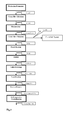
- Fig. 1 is a block flow diagram illustrating one of our previous methods for producing SA from a DAS-containing fermentation broth.
- Fig. 2 is a block flow diagram illustrating a process for converting a DAS- containing fermentation broth to MAS and further converting the MAS to SA using electrodialysis, wherein ammonia is shown as a base used for neutralizing the fermentation.
- Fig. 3 is a block flow diagram illustrating a process for converting a DAS- containing fermentation broth to MAS and further converting the MAS to SA by anion exchange using cationic resins, wherein ammonia is shown as a base used for neutralizing the fermentation.
- Fig. 4 is a block flow diagram illustrating a process for converting a DAS- containing fermentation broth to MAS and further converting the MAS to SA by cation exchange using anionic resins, wherein ammonia is shown as the base used for neutralizing the fermentation.
- a first aspect of the invention relates to a method of producing fermentation derived DXS-containing solutions, where DXS comprises at least some DAS and, optionally, at least one of disodium succinate (DNaS) or dipotassium succinate (DKS), distilling/evaporating the DXS-containing solution to form an overhead that comprises water and ammonia and a liquid bottoms that comprises MXS, where MXS is at least one of monoammonium succinate (MAS), monosodium succinate (MNaS) or monopotassium succinate (MKS), and at least some DXS, crystallizing the MXS into a solid from the DXS-containing solution by cooling/evaporative/antisolvent crystallization, dissolving the MXS solid in water, converting the MXS to a SA containing solution by at least one of electrodialysis, anion exchange using a cationic resin, and cation exchange using an anionic resin, and crystallizing by cooling/evaporative crystallization the SA
- distilling the DXS-containing solution is carried out in the presence of an ammonia separating solvent which is at least one selected from the group consisting of diglyme, triglyme, tetraglyme, sulfoxides, amides, sulfones, polyethyleneglycol (PEG), gamma butyrolactone (GBL), butoxytriglycol, N-methylpyrolidone (NMP), ethers, and methyl ethyl ketone (MEK) or in the presence of a water azeotroping solvent which is at least one selected from the group consisting of toluene, xylene, methylcyclohexane, methyl isobutyl ketone, hexane, cyclohexane and heptane.
- an ammonia separating solvent which is at least one selected from the group consisting of diglyme, triglyme, tetraglyme, sulfoxides, amides,
- the method can further comprise removing water from the liquid bottoms to increase concentration of MXS in the liquid bottoms.
- the MXS solid is preferably substantially free, in particular completely free, of DXS, succinamic acid, succinamide and succinimide.
- the invention refers to a method of producing SA including providing a fermentation derived DAS-containing solution comprising DAS and magnesium succinate (MgS), distilling/evaporating the DAS-containing solution to form an overhead that comprises water and ammonia, and a liquid bottoms that comprises MgS, crystallizing the MgS into a solid from the DAS-containing solution by cooling/evaporative/antisolvent crystallization, dissolving the MgS solid in water, converting the MgS to an SA-containing solution by at least one of anion exchange using a cationic resin, and cation exchange using an anionic resin, and crystallizing by cooling/evaporative crystallization the SA from the SA containing solution generated during conversion of the MgS to SA.
- MgS DAS and magnesium succinate
- distilling the DAS-containing solution is carried out in the presence of an ammonia separating solvent which is at least one selected from the group consisting of diglyme, triglyme, tetraglyme, sulfoxides, amides, sulfones, polyethyleneglycol (PEG), gamma butyrolactone (GBL), butoxytriglycol, N-methylpyrolidone (NMP), ethers, and methyl ethyl ketone (MEK) or in the presence of a water azeotroping solvent which is at least one selected from the group consisting of toluene, xylene, methylcyclohexane, methyl isobutyl ketone, hexane, cyclohexane and heptane.
- an ammonia separating solvent which is at least one selected from the group consisting of diglyme, triglyme, tetraglyme, sulfoxides, amides, s
- the method can further comprise removing water from the liquid bottoms to increase concentration of MgS in the liquid bottoms.
- the MgS is substantially free, in particular completely free, of DAS, succinamic acid, succinamide and succinimide.
- the invention pertains to a method of producing SA including providing a fermentation derived MXS-containing solution, where MXS comprises at least one of MAS, MNaS or MKS, optionally, adding at least one of SA, NH 3 , NH 4 + , Na + , and K + to the broth to preferably maintain the pH of the broth below 6, distilling/evaporating the MXS-containing solution to form an overhead that comprises water and, optionally, ammonia, and a liquid bottoms that comprises MXS, crystallizing the MXS into a solid from the MXS-containing solution by cooling/evaporative/antisolvent crystallization, dissolving the MXS solid in water, converting the MXS to an SA-containing solution by at least one of electrodialysis, anion exchange using a cationic resin, and cation exchange using an anionic resin, and crystallizing by cooling/evaporative crystallization the SA from the SA containing solution generated during conversion of the MXS to SA.
- distilling the MXS-containing solution is carried out in the presence of an ammonia separating solvent which is at least one selected from the group consisting of diglyme, triglyme, tetraglyme, sulfoxides, amides, sulfones, polyethyleneglycol (PEG), gamma butyrolactone (GBL), butoxytriglycol, N-methylpyrolidone (NMP), ethers, and methyl ethyl ketone (MEK) or in the presence of a water azeotroping solvent which is at least one selected from the group consisting of toluene, xylene, methylcyclohexane, methyl isobutyl ketone, hexane, cyclohexane and heptane.
- an ammonia separating solvent which is at least one selected from the group consisting of diglyme, triglyme, tetraglyme, sulfoxides, amides,
- the method can further comprise removing water from the liquid bottoms to increase concentration of MXS in the liquid bottoms.
- the solid MXS is substantially free, in particular completely free, of succinamic acid, succinamide and succinimide.
- the invention encompasses a method of producing SA including providing a fermentation derived MgS-containing solution, adding at least one of SA, NH 3 , NH 4 + , and Mg +2 to the broth to preferably maintain the pH of the broth below 6, distilling/evaporating the MgS-containing solution to form an overhead that comprises water and, optionally, ammonia, and a liquid bottoms that comprises MgS, crystallizing the MgS into a solid from the MgS-containing solution by cooling/evaporative/antisolvent crystallization, dissolving the MgS solid in water, converting the MgS to an SA-containing solution by at least one of anion exchange using a cationic resin, and cation exchange using an anionic resin, and crystallizing by cooling/evaporative crystallization the SA from the SA containing solution generated during conversion of the MgS to SA.
- distilling the MgS-containing solution is carried out in the presence of an ammonia separating solvent which is at least one selected from the group consisting of diglyme, triglyme, tetraglyme, sulfoxides, amides, sulfones, polyethyleneglycol (PEG), gamma butyrolactone (GBL), butoxytriglycol, N-methylpyrolidone (NMP), ethers, and methyl ethyl ketone (MEK) or in the presence of a water azeotroping solvent which is at least one selected from the group consisting of toluene, xylene, methylcyclohexane, methyl isobutyl ketone, hexane, cyclohexane and heptane.
- an ammonia separating solvent which is at least one selected from the group consisting of diglyme, triglyme, tetraglyme, sulfoxides, amides,
- the method can further comprise removing water from the liquid bottoms to increase concentration of MgS in the liquid bottoms.
- the MgS solid is substantially free, in particular completely free, of succinamic acid, succinamide and succinimide.
- the invention relates to a method of producing fermentation derived DXA-containing solutions, where DXA comprises at least some DAA and, optionally, at least one of disodium adipate (DNaA) or dipotassium adipate (DKA), distilling/evaporating the DXA-containing solution to form an overhead that comprises water and ammonia and a liquid bottoms that comprises MXA, where MXA is at least one of monoammonium adipate (MAA), monosodium adipate (MNaA) or monopotassium adipate (MKA), and at least some DXA, crystallizing the MXA into a solid from the DXA-containing solution by cooling/evaporative/antisolvent crystallization, dissolving the MXA solid in water, converting the MXA to a AA containing solution by at least one of electrodialysis, anion exchange using a cationic resin, and cation exchange using an anionic resin, and crystal
- distilling the DXA-containing solution is carried out in the presence of an ammonia separating solvent which is at least one selected from the group consisting of diglyme, triglyme, tetraglyme, sulfoxides, amides, sulfones, polyethyleneglycol (PEG), gamma butyrolactone (GBL), butoxytriglycol, N-methylpyrolidone (NMP), ethers, and methyl ethyl ketone (MEK) or in the presence of a water azeotroping solvent which is at least one selected from the group consisting of toluene, xylene, methylcyclohexane, methyl isobutyl ketone, hexane, cyclohexane and heptane.
- an ammonia separating solvent which is at least one selected from the group consisting of diglyme, triglyme, tetraglyme, sulfoxides, amides,
- the method can further comprise removing water from the liquid bottoms to increase concentration of MXA in the liquid bottoms.
- the MXA solid is substantially free, in particular completely free, of DXA, adipamic acid, adipamide and adipimide.
- the invention refers to a method of producing AA including providing a fermentation derived DAA-containing solution comprising DAA and magnesium adipate (MgA), distilling/evaporating the DAA-containing solution to form an overhead that comprises water and ammonia, and a liquid bottoms that comprises MgA and at least some DAA, crystallizing the MgA into a solid from the DAA-containing solution by cooling/evaporative/antisolvent crystallization, dissolving the MgA solid in water, converting the MgA to an AA containing solution by at least one of electrodialysis, anion exchange using a cationic resin, and cation exchange using an anionic resin, and crystallizing by cooling/evaporative crystallization the AA from the AA containing solution generated during conversion of the MgA to AA.
- MgA magnesium adipate
- distilling the broth and/or the DAA-containing solution is carried out in the presence of an ammonia separating solvent which is at least one selected from the group consisting of diglyme, triglyme, tetraglyme, sulfoxides, amides, sulfones, polyethyleneglycol (PEG), gamma butyrolactone (GBL), butoxytriglycol, N-methylpyrolidone (NMP), ethers, and methyl ethyl ketone (MEK) or in the presence of a water azeotroping solvent which is at least one selected from the group consisting of toluene, xylene, methylcyclohexane, methyl isobutyl ketone, hexane, cyclohexane and heptane.
- an ammonia separating solvent which is at least one selected from the group consisting of diglyme, triglyme, tetraglyme, sulfoxides,
- the method can further comprise removing water from the liquid bottoms to increase concentration of MgA in the liquid bottoms.
- the MgA solid is substantially free, in particular completely free, of DAA, adipamic acid, adipamide and adipimide.
- the invention pertains to a method of producing AA including providing a fermentation derived MXA-containing solution, where MXA comprises at least one of MAA, MNaA or MKA, optionally, adding at least one of AA, NH 3 , NH 4 + , Na + , and K + to the broth to preferably maintain the pH of the broth below 6, distilling/evaporating the MXA-containing solution to form an overhead that comprises water and, optionally, ammonia, and a liquid bottoms that comprises MXA, crystallizing the MXA into a solid from the MXA-containing solution by cooling/evaporative/antisolvent crystallization, dissolving the MXA solid in water, converting the MXA to an AA-containing solution by at least one of electrodialysis, anion exchange using a cationic resin, and cation exchange using an anionic resin, and crystallizing by cooling/evaporative crystallization the AA from the AA containing solution generated during conversion of the M
- distilling the MXA-containing solution is carried out in the presence of an ammonia separating solvent which is at least one selected from the group consisting of diglyme, triglyme, tetraglyme, sulfoxides, amides, sulfones, polyethyleneglycol (PEG), gamma butyrolactone (GBL), butoxytriglycol, N-methylpyrolidone (NMP), ethers, and methyl ethyl ketone (MEK) or in the presence of a water azeotroping solvent which is at least one selected from the group consisting of toluene, xylene, methylcyclohexane, methyl isobutyl ketone, hexane, cyclohexane and heptane.
- an ammonia separating solvent which is at least one selected from the group consisting of diglyme, triglyme, tetraglyme, sulfoxides, amides,
- the method can further comprise removing water from the liquid bottoms to increase concentration of MXA in the liquid bottoms.
- the MXA solid is substantially free, in particular completely free, of adipamic acid, adipamide and adipimide.
- the invention encompasses a method of producing AA including providing a fermentation derived MgA-containing solution, adding at least one of AA, NH 3 , NH 4 + , and Mg +2 to the broth to preferably maintain the pH of the broth below 6, distilling/evaporating the MgA-containing solution to form an overhead that comprises water and, optionally, ammonia, and a liquid bottoms that comprises MgA, crystallizing the MgA into a solid from the MgA-containing solution by cooling/evaporative/antisolvent crystallization, dissolving the MgA solid in water, converting the MgA to an AA-containing solution by at least one of electrodialysis, anion exchange using a cationic resin, and cation exchange using an anionic resin, and crystallizing by cooling/evaporative crystallization the AA from the AA containing solution generated during conversion of the MgA to AA.
- distilling the broth and/or the MgA-containing solution is carried out in the presence of an ammonia separating solvent which is at least one selected from the group consisting of diglyme, triglyme, tetraglyme, sulfoxides, amides, sulfones, polyethyleneglycol (PEG), gamma butyrolactone (GBL), butoxytriglycol, N-methylpyrolidone (NMP), ethers, and methyl ethyl ketone (MEK) or in the presence of a water azeotroping solvent which is at least one selected from the group consisting of toluene, xylene, methylcyclohexane, methyl isobutyl ketone, hexane, cyclohexane and heptane.
- an ammonia separating solvent which is at least one selected from the group consisting of diglyme, triglyme, tetraglyme, sulfoxides,
- the method can further comprise removing water from the liquid bottoms to increase concentration of MgA in the liquid bottoms.
- the MgA solid is substantially free, in particular completely free, of adipamic acid, adipamide and adipimide.
- the invention relates to a method of producing fermentation derived DXS-containing solutions, where DXS comprises at least some DAS and, optionally, at least one of disodium succinate (DNaS) or dipotassium succinate (DKS), distilling/evaporating the DXS-containing solution to form an overhead that comprises water and ammonia and a liquid bottoms that comprises MXS, where MXS is at least one of monoammonium succinate (MAS), monosodium succinate (MNaS) or monopotassium succinate (MKS), and at least some DXS, crystallizing the MXS into a solid from the DXS-containing solution by cooling/evaporative/antisolvent crystallization, dissolving the MXS solid in water, converting the MXS to a SA containing solution by the addition of a strong acid, optionally concentrating the SA containing solution, and crystallizing by cooling/evaporative crystallization the SA from the SA containing solution.
- DXS comprises at least some DAS
- the strong acid is H 2 SO 4 or HCl.
- the invention relates to a method of producing fermentation derived DXA-containing solutions, where DXA comprises at least some DAA and, optionally, at least one of disodium adipate (DNaA) or dipotassium adipate (DKA), distilling/evaporating the DXA-containing solution to form an overhead that comprises water and ammonia and a liquid bottoms that comprises MXA, where MXA is at least one of monoammonium adipate (MAA), monosodium adipate (MNaA) or monopotassium adipate (MKA), and at least some DXA, crystallizing the MXA into a solid from the DXA-containing solution by cooling/evaporative/antisolvent crystallization, dissolving the MXA solid in water, converting the MXA to a AA containing solution by the addition of a strong acid, optionally concentrating the AA containing solution, and crystallizing by cooling/evaporative crystallization the AA from the AA
- the strong acid is H 2 SO 4 or HCl.
- Methods for conversion of MAS, MAA, MXS and/or MXA to SA or AA, respectively, include electrodialysis, anion exchange, and cation exchange, and combinations thereof.
- electrodialysis anion exchange
- cation exchange cation exchange
- the availability of MXS in solid form and its reconstitution in water enables providing a high quality feed to electrodialysis, anion exchange, and/or cation exchange for the conversion of MXS to SA.
- High quality of MXS feed means that it is highly reproducible, highly pure, and highly concentrated. The high quality enables attainment of substantially higher operational efficiency from electrodialysis, anion exchange, and/or cation exchange operations that can be used for the conversion of MXS to SA.
- MAS or MXS can be converted to SA by the addition of strong mineral acids such as H 2 SO 4 , HCl, or the like.
- this method typically consumes a molar excess of the mineral acid and consequently generates a molar excess of the conjugate salt.
- SA can be crystallized from the salt solution.
- multiple crystallization steps may be required to obtain highly pure SA.
- the invention provides methods for converting DAS and DXS to SA using MAS/MXS as a high quality intermediate.
- One challenge in developing integrated downstream purification technology for fermentation-derived products is the design considerations for process variability, particularly in batch-to-batch methods. Such variability is introduced into processes due to the use of cheap nutrient sources such as corn steep liquor (CSL).
- CSL corn steep liquor
- the composition of CSL varies from season to season, geography to geography, and production batch to batch leading to wide variations in constituents and compositions. This can be problematic in the efficient production of SA.
- the downstream purification technology implemented in that process may include two cross-flow filtration methods using microfiltration membranes, decalcification, electrodialysis, cation exchange, cross-flow filtration using nanofiltration membranes, and reverse osmosis to convert, isolate and purify SA. It was found that the process can be overwhelmed by the concentration of impurities and batch-to-batch variability of raw materials and fermentation/bioconversion. Although the process is functionally sound and operational, the process involves significant efforts to keep the equipment working efficiently. Examples include multiple regenerations of ion exchange columns, multiple clean-in-place cycles for membranes, multiple steam-in-place cycles for membranes and the like.
- DXS where DXS may be DNaS when a Na base is used, DKS when a K base is used, DMgS when a Mg base is used, or DAS when an ammonia (NH 4 + or NH 3 ) base is used.
- the DXS is converted to SA to derive SA from the fermentation broth.
- DAS or DXS can be converted to the corresponding half-acid half-salt of SA using the processes disclosed in Published US Application No. 20110237831 the subject matter of which is incorporated herein by reference.
- US '831 teaches that the DXS can be converted to MXS to derive MXS from the fermentation broth, where MXS may be MNaS when a Na base is used, MKS when a K base is used, MMgS when a Mg base is used, or MAS when an ammonia (NH 4 + or NH 3 ) base is used.
- MXS can be crystallized and reconstituted in water to provide a high quality feed for conversion to SA using several methods.
- MAS/MXS the half acid and half salt of SA
- DAS/DXS the half acid and half salt of SA
- MAS/MXS is reconstituted in water to provide a high quality feedstock for downstream conversion steps such as electrodialysis and ion exchange.
- the high quality MAS/MXS feedstock - highly reproducible, high concentration, high purity - enables highly efficient operation of downstream steps.
- MAS/MXS crystallization modulates transport of impurities and process disturbances introduced by upstream batch-to-batch variability in feedstocks and fermentation/bioconversion.
- MAS/MXS crystallization substantially prevents transport of byproduct acids (typically disposed as waste) through the downstream conversion steps such as electrodialysis and ion exchange. Therefore, energy and material are not spent to convert the salts of byproduct acids to their acid forms. Typically, these byproduct acids are disposed as waste. In our methods disclosed herein, where MAS/MXS is isolated in crystalline form as an intermediate, the byproduct acids are disposed of prior to expending energy and material for their conversion. This leads to substantial economic advantages.
- This step grows the E. coli production culture to convert glucose to SA.
- the vessel and connected process and utility pipes Prior to the production cycle, the vessel and connected process and utility pipes should be cleaned and steamed in place to minimize impact from microbial contamination.
- the following raw materials may preferably be provided as one example:
- the production culture may be grown aerobically to a concentration of about 10 - about 30 g/L over about 6 - about 11 hours and the growth rate may be controlled by fed-batch addition of glucose.
- the pH may be controlled at about 6.7 and the temperature may be controlled from about 37 to about 40°C. Subsequently, the culture may be directly transferred to a Bioconverter.
- This step uses the E . coli culture to convert glucose to SA.
- the vessel and connected process and utility pipes may be cleaned in place to minimize impact from microbial contamination.
- the following raw materials may preferably be provided as one example:
- Bioconversion of glucose to SA using the culture may be conducted over about 20 - about 40 hours to produce about 40 - about 120 g/L of SA.
- the pH may be controlled at about 6.7 leading to the production of DAS.
- the temperature may be controlled at about 37°C.
- the pressure may be controlled at about 0 - about 3.7 psig.
- the unclarified DAS containing broth may be transferred to a set of centrifuges for clarification.
- This step separates the DAS containing broth from the E. coli culture in preparation for downstream processing.
- the centrifuges may be cleaned in place prior to each batch per manufacturer recommendations.
- a set of three centrifuges may be used with a design concentration factor of, for example, 40x.
- the concentrate may be about 20 wt% solids and can run through an in-line steam sterilizer to deactivate the culture. Subsequently, the deactivated culture may be transported to a landfill or transported for incineration. Other methods such as cross flow filtration may be used for clarifying broth.
- the clarified DAS containing broth is transferred to the Reactive Evaporation step.
- This step converts DAS to MAS and concentrates the MAS containing broth for crystallization of MAS.
- DAS may be converted to MAS by partial thermal deammoniation (about 50%).
- the reactive evaporation may be conducted at about 135°C and about 50 psig leading to rapid deammoniation and concentration.
- the bottom product is an aqueous solution of MAS (MAS containing broth) concentrated by about 2x, for example, and may be continuously transferred to the MAS Evaporative Crystallization step.
- the overhead product may have about 50 wt% each of the fed ammonia and water, which may be held in a tank for recycling.
- This step crystallizes MAS. This is a primary purification step.
- Crystallization of MAS may be conducted in a three-stage continuous crystallization system where the stages are operated at about 0 - 60°C, about 0 - 40°C, and about 0 - 20°C, for example. Other numbers of stages may be used, as needed. Crystallization will provide about 85 - 95 wt% yield as MAS and the balance about 5 - 15 wt% of MAS contained in the crystallization mother liquor can be purged as an aqueous waste.
- Crystalline MAS is recovered as about 85-95 wt% solids and transferred to Step 6.
- This step converts MAS to SA.
- Crystalline MAS may be dissolved in Reverse Osmosis water (RO Water) at about 10 - about 60 wt% concentration and is used as the feed for the EDBM step.
- the acid compartment of a EDBM unit operation can produce SA at about 10 - about 50 wt% in aqueous solution.
- the base compartment of the EDBM unit operation can produce ammonia at about 2 - about 10 wt%.
- the conversion may be conducted at about 35 - about 100°C and around ambient pressure.
- a small amount of a highly conductive cation such as Na + is added to the base compartment to provide conductivity.
- a molar ratio NH 4 + :Na + of about 9:1 is sufficient for efficient operation.
- the conductivity of the base compartment can be provided by the sodium cation itself.
- the about 10 - about 50 wt% SA solution may be transferred to the SA Evaporative Crystallization step or, optionally, to any other purification stages prior to evaporation and crystallization.
- These purification stages may include cation exchange to reduce mineral or metal cations, anion exchange to reduce mineral anions, activated carbon treatment to reduce color, cross flow filtration with nanofiltration membranes to reduce soluble oligomers, etc.
- the about 2 - about 10 wt% ammonia solution may be transferred to an ammonia stripper to recover a concentrated ammonia condensate.
- the concentrated ammonia condensate may be mixed with the ammonia solution recovered from the Reactive Evaporation step to produce an ammonia solution for recycling to the Bioconverter.
- the EDBM step can be conducted in three compartment configuration with three membrane types: cation, anion, and bipolar.
- the feed may be a salt and results in three products - depleted salty feed, free acid, and free base.
- This design was typically only economical for use with salts of strong acid and a strong base. This is because the conductivity of a weak acid or a weak base is too low for use in essentially pure form in one or both of the compartments.
- the three-compartment EDBM can then provide both purification and acidification of the feed stream.
- economic implementation of three-compartment EDBM is enabled for salts of strong bases with weak acids.
- An example is DNaS.
- implementation of three-compartment EDBM is enabled for salts of weak bases with weak acids.
- An example is DAS.
- EDBM can also be in two compartment mode with just two membrane types: cation and bipolar.
- the feed may be a salt and results in two products - the first product is an acidified salty feed side rich in free organic acid and contains some residual salt, and the second product is free base, such as about 2 - 10% NaOH, for example.
- EDBM can also be a two compartment mode with just two membrane types: Anion and bipolar.
- An example is the separation of ammonium chloride.
- the feed may be a salt and results in two products - the first product is basic salty feed side rich in NH 4 OH and can contain some residual salt, and the second product is free acid such as about 5% HCL, for example.
- economics are improved for a two-compartment EDBM enabled for salts of strong bases with weak acids.
- An example is MNaS.
- implementation of two-compartment EDBM with cation membranes is enabled for salts of weak bases with weak acids.
- An examples is MAS.
- electrodialysis can be a four compartment electrodialysis unit with alternating cation and anion membranes.
- feed streams for example, an aqueous MAS or MNaS containing stream and an aqueous free acid such as HCl, acetic acid or the like.
- feed materials are decomposed and there are two resultant products - free SA and the ammonium or sodium salt of the feed free acid, for example, ammonium acetate or ammonium chloride.
- Operation of an electrodialysis stack balances the conductivity on the feed, acid and base cells to avoid local excess current flow and other operational problems. This is achieved by control during a batch run between concentration factors to control the amount of water in different streams. In a continuous mode, achieving this control is more difficult, but those skilled in the art can achieve such balance.
- This step converts MAS to SA.
- anion exchange uses a resin bed and ion exchange beads such as IRA-93 strong base anion resin although others may be used.
- the anion exchanger may also be in a flat sheet membrane ion exchanger, or it may be an immiscible liquid amine exchanger.
- the process fluid containing MAS contacts the anion resin that may be in a OH-hydroxide form or a HCO 3 - bicarbonate form.
- the effluent is ammonium bicarbonate. This effluent is then used for feed to the fermentation, where the CO 2 is used by the organism and the ammonia is used for pH control.
- the effluent is ammonium hydroxide and can be used for pH control.
- the resin is then loaded with succinate ions that are eluted.
- a strong acid such as H 2 SO 4 , HCl or the like may be used and the sulfate, chloride or the like becomes bound to the resin and the free SA displaced.
- the resulting SA solution may be transferred to the evaporation and crystallization stages or, optionally, to any other purification stages prior to evaporation and crystallization.
- the resin is then loaded with sulfate, chloride ions or the like that are eluted.
- a base such as NH 4 HCO 3 , NH 4 OH or the like is used for regeneration and ammonium sulfate, ammonium chloride or the like waste is generated and the resin returned to the bicarbonate (or hydroxide) form.
- Anion exchange using cation resin can also be used to remove residual impurity anions such as PO4-.
- a base such as NH 4 HCO 3 , NH 4 OH, NaOH or the like is used and phosphate salt waste is generated and the resin returned to the bicarbonate (or hydroxide) form.
- This step converts MAS to SA.
- a free acid is generated by treating the solution with a cation exchange process.
- cation exchange uses a resin bed and ion exchange beads such as Dowex50W-X8 or Amberlite IR120-H + or the like, in the free acid form.
- a strong acid cation exchange resin is used inasmuch as a weak acid cation exchange resin has very little effective capacity below about pH 5.5.
- the strong acid cation exchanger may also be in a flat sheet membrane ion exchanger, or it may be an immiscible liquid strong acid cation exchanger.
- the process fluid containing MAS contacts the cation resin that may be in a H-hydrogen form.
- the effluent is a solution of SA as NH 4 + carried with MAS is exchanged for the H + on the resin.
- the SA solution may be transferred to the evaporation and crystallization stages or, optionally, to other purification stages.
- the resin is then loaded with NH 4 + that is eluted.
- a strong acid such as H 2 SO 4 or the like is used and the H + from H 2 SO 4 becomes bound to the resin and the NH 4 + displaced producing a (NH 4 ) 2 SO 4 solution.
- the resin is then regenerated and ready for the next production cycle.
- the (NH 4 ) 2 SO 4 solution is disposed of.
- SA aqueous solution For each mole of MAS feed, about 0.7 mole of H 2 SO 4 is used and there is one product (SA aqueous solution) and one effluent streams (waste salt solution).
- This step concentrates and crystallizes SA. This is a secondary purification step.
- Evaporation and crystallization of SA may be conducted in multi-stage continuous evaporation and crystallization systems, for example, where the evaporation stages may be operated at about 80°C, and about 40°C, while the crystallization stages may be operated at about 40°C, and about 20°C. Other numbers of stages and operating conditions may be used as needed.
- the crystallization can provide about 90 - about 95 wt% yield as SA and the balance about 5 - about 10 wt% of SA contained in the crystallization mother liquor may be recycled to the reactive evaporation step.
- Crystalline SA may be recovered as about 90 wt% solids and transferred to the solids handling operations including drying, sieving, and packaging.
- a three compartment EDBM system may include: (1) feed compartment (feed and retentate), (2) acid compartment, and (3) base compartment.
- a purified MAS solution is fed to the feed compartment to begin the process.
- the feed Upon application of an appropriate voltage across the compartments, the feed is depleted of succinate anions and NH 4 + .
- the resulting solution is collected as the retentate.
- the succinate anion combines with H + to form SA and in the base compartment NH 4 + combines with water to form NH 3 .
- Table 1 shows the material balance and stream properties resulting from an Aspen-Plus program: Table 1 FEED PRODUCTS RETENTATE ACID BASE Succinate (g/L) 118 113.1 163.94 0 NH 4 + (wt%) 1.78 1.57% 0 0.08% NH 3 (wt%) 0 0 0 7.84% Conductivity (mS/cm) 75.1 47.8 3.69 5.62 Temperature (C) 60 60 60 60 60 60 pH 4.52 4.44 2.08 14.79
- the base compartment and the acid compartment have low conductivities.
- the low base side conductivities can be overcome by adding some sodium hydroxide to the base product.
- the base side product may be then recycled over a stripping column to recover ammonia.
- the acid concentrate, SA also has low conductivity - this can be increased by adding some sodium succinate to the acid side.
- the sodium may be subsequently removed by an ion exchange finishing step. This three compartment mode of operation provides purification of the SA as well as acidification.
- additional MAS can be added to maintain the feed side conductivity.
- Additional MAS can be added to the feed side to hold the feed side concentration at about 10% to about 15% for the duration of the run.
- successive batches of dry MAS of about 10 kg each can be added as long as impurities in the MAS do not affect the membranes.
- a two compartment EDBM system may include: (1) acid compartment, and (2) base compartment.
- a purified MAS solution is fed to the acid compartment to begin the process.
- the feed is depleted of NH 4 + .
- the resulting solution is rich in the acid form of SA and collected as the product stream.
- NH 4 + combines with water to form NH 3 .
- Table 2 shows the material balance and stream properties resulting from an Aspen program: Table 2 PRODUCTS FEED BASE ACID Concentration Succinates g / L 118.01 - 132.81 Concentration NH 4 + (wt%) 1.8% 0.1% 1.0% Concentration NH 3 (wt%) 0.0% 7.8% 0.0% pH (ASPEN) 4.49 14.5 3.98 Conductivity, CALC, mS/cm 77.61 7.22 54.94 Temperature deg C 40 40 40 40 40
- the base compartment has a low conductivity.
- the low base side conductivity can be overcome by adding some sodium hydroxide to base product. The base side product is then recycled over a stripping column to recover ammonia.
- a substantially purified MXS containing solution was fed to the acid compartment to begin the process. Upon application of an appropriate voltage across the compartments, the feed is depleted of NH 4 + and Na. The resulting solution is rich in the acid form of SA and collected as the product stream.
- the initial conductivity of the acid compartment was 65 mS/cm and the final conductivity was 5.5 mS/cm.
- NH 4 + and Na combines with water to form NH 3 and Na containing base solution. The experiment was conducted at 50 °C.
- Table 3 shows initial and final composition for the acid compartment solution.
- Table 3 Measurement Units Acid Compartment Initial Feed Acid Compartment Final Product Total [kg] 47.8 44.2 Succinic Acid [mg/mL] 145.229 135.096 Acetic Acid [mg/mL] ⁇ 0.5 ⁇ 0.5 Na [ppm] 1369 264 NH4 [ppm] 17219 655
- the table shows that the ammonium and sodium levels decreased by about 96.5% and 80%, respectively, with a yield of ⁇ 86% succinic acid. The majority of the succinic acid losses were attributed to residual product within the ED stack piping and acid holding tank.
- a MAS that contains at least about 5% sodium succinate or potassium succinate are used. This reduces the need for adding sodium ion to control conductivity in various steps.
- the strong base anion exchange resin is a solid bead.
- An aqueous MAS solution is pumped (21.02 kgmol/hour of MAS and 1077 kgmol/hour water), optionally through heat exchange to adjust the temperature to a condition suitable for good ion exchange kinetics and low bed pressure drop, to the ion exchange system.
- the ion exchange system includes four resin beds, where at a given moment the beds are in the following operating modes, but not in any particular order:
- the system produces three stream: (1) the product SA stream (mainly SA and is approximately at a pH of 2.17 and is about 11% wt SA in solution at 60°C), (2) a NH 4 HCO 3 stream for recycle to the fermentation section of the process, and (3) a waste solution comprising ammonium chloride.
- the product SA stream mainly SA and is approximately at a pH of 2.17 and is about 11% wt SA in solution at 60°C
- a NH 4 HCO 3 stream for recycle to the fermentation section of the process
- a waste solution comprising ammonium chloride.
- Table 4 shows the material balance and stream properties resulting from an Aspen program: Table 4 FEED ACID SALT RECYCLE SALT WASTE Mole Flow kmol/hr WATER 1,077 1,094 4,000 4,000.00 SUCCINIC 3.99 17.01 - - HSUC - 13.04 3.96 - - SUC - 3.99 0.05 - - HCO 3 - - 25.00 - H 3 O + 0.01 4.00 4.00 NH 4 + 21.06 4.06 21.00 21.00 CL - 0 0 - 25 Total Flow kg/hr 22,249 22,266 74,041 73,402 Temperature C 60.00 60.00 60.00 60.00 Pressure kPa 250.00 101.33 101.33 101.33
- Operation can not be performed at higher temperatures with standard anion resins, but newer resins may allow higher temperatures.
- the strong acid cation exchange resin is a solid bead.
- An aqueous MAS solution is pumped (21.02 kgmol/hour of MAS and 1077 kgmol/hour water), optionally through heat exchange to adjust the temperature to a condition suitable for good ion exchange kinetics and low bed pressure drop, to the ion exchange system.
- the ion exchange system includes three resin beds, where at a given moment the beds are in the following operating modes, but not in any particular order:
- the system produces two stream: (1) the product SA stream (mainly SA and is approximately at a pH of 2.17 and is about 11% wt SA in solution at 60°C), and (2) a waste solution comprising NH 4 HSO 4 .
- Table 5 shows the material balance and stream properties resulting from an Aspen program: Table 5 FEED Solution PRODUCT Solution SULFURIC ACID FEED WASTE SALT SOLUTION Mole Flow kmol/hr WATER 1,077 1,098 4,000 4,000 NH 3 0.00 0.00 - 0.00 SUCCINIC 3.99 20.83 - - HSUC - 13.04 0.19 - - SUC - 3.99 0.00 - - H 3 O + 0.00 0.13 25.00 4.00 NH 4 + 21.06 0.06 - 21.00 HSO 4 - - - 25.00 25.00 Temperature C 60.00 60.00 60.00 60.00 Pressure kPa 250.00 101.33 101.33 101.33 PH 4.40 2.17 0.47 1.60
- Operation can be performed at higher temperatures if desired, but lower temperatures will require operation at lower concentrations of succinic acid to avoid precipitation.
- a cation column was loaded with 5.9kg XA2023Na resin which was 16 equivalents.
- the MXS containing solution (Acid Compartment Final Product from Example 3) was passed through the column at 4BV/hr (bed volumes) using a peristaltic pump in a upflow mode. The solution was maintained at 50 °C during the experiments. After passing all the acid through the column, a 2.3L water wash was used to remove any residual acid from the column. Regeneration involved 19L 1N HCl followed by 15L water wash. Results can be seen in table 6.
- Example 3 the mostly acidified acid compartment final product from Example 3 was used demonstrating that the mostly acidifies acid product can be substantially acidified using cation exchange.
- the example shows about a 94% reduction in sodium and about a 87% reduction in ammonium leading to further acidification by cation exchange.
- cation exchange can be used prior to partial acidification using electrodialysis to achieve the desired final acidification.
- a MAS that contains at least about 5% sodium succinate or potassium succinate are used. This reduces the need for adding sodium ion to control conductivity in various steps.
- MNaS, MKS, or mixtures thereof are used as the feed.
- SA that has been substantially acidified using a combination of bipolar membrane electrodialysis (two compartment) and cation exchange with anion resin is concentrated and crystallized.
- the evaporation set up consisted of a 60°C concentration vessel equipped with a hot water system to provide heat for evaporation and a vacuum system consisting of a cooled condenser (glycol/water at 4°C), an acetone/dry ice trap, and a vacuum pump.
- a condensate collector was also attached to the condenser.
- the concentrated SA solution was cooled to 4 °C for crystallization of SA by adding the solution in a stirred vessel placed in an environmental chamber.
- the crystals were harvested by filtration giving 5.1 kg wet crystals.
- About 1 kg of wet crystals were removed to be tested for a drying method while the remaining 4.1 kg was dried to ultimately give 3 kg dry crystals with a moisture content of 0.276 wt%.
- About 8.15kg of mother liquor was recovered while 1.30 kg of water wash was used.
- Table 7 The data are presented in Table 7.
Landscapes
- Chemical & Material Sciences (AREA)
- Organic Chemistry (AREA)
- Engineering & Computer Science (AREA)
- Oil, Petroleum & Natural Gas (AREA)
- Crystallography & Structural Chemistry (AREA)
- Organic Low-Molecular-Weight Compounds And Preparation Thereof (AREA)
- Separation Using Semi-Permeable Membranes (AREA)
- Preparation Of Compounds By Using Micro-Organisms (AREA)
Applications Claiming Priority (2)
| Application Number | Priority Date | Filing Date | Title |
|---|---|---|---|
| US201161471930P | 2011-04-05 | 2011-04-05 | |
| US13/437,160 US20120259138A1 (en) | 2011-04-05 | 2012-04-02 | Methods and systems of producing dicarboxylic acids |
Publications (2)
| Publication Number | Publication Date |
|---|---|
| EP2508501A2 true EP2508501A2 (fr) | 2012-10-10 |
| EP2508501A3 EP2508501A3 (fr) | 2013-04-17 |
Family
ID=45937047
Family Applications (1)
| Application Number | Title | Priority Date | Filing Date |
|---|---|---|---|
| EP12163285.5A Withdrawn EP2508501A3 (fr) | 2011-04-05 | 2012-04-05 | Procédés et systèmes de production d'acides dicarboxyliques |
Country Status (4)
| Country | Link |
|---|---|
| US (1) | US20120259138A1 (fr) |
| EP (1) | EP2508501A3 (fr) |
| CA (1) | CA2774341A1 (fr) |
| WO (1) | WO2012138642A1 (fr) |
Cited By (2)
| Publication number | Priority date | Publication date | Assignee | Title |
|---|---|---|---|---|
| CN104131040A (zh) * | 2014-07-28 | 2014-11-05 | 南京工业大学 | 一种微生物发酵生产琥珀酸二钠的方法 |
| WO2016087408A1 (fr) | 2014-12-02 | 2016-06-09 | Roquette Freres | Procédé de fabrication d'acide succinique à partir d'un bouillon de fermentation par nanofiltration pour purifier une liqueur mère recyclée |
Families Citing this family (1)
| Publication number | Priority date | Publication date | Assignee | Title |
|---|---|---|---|---|
| EP2666763B1 (fr) * | 2012-05-24 | 2014-12-31 | Purac Biochem B.V. | Récupération d'acide carboxylique à partir d'un mélange de carboxylate de magnésium |
Citations (3)
| Publication number | Priority date | Publication date | Assignee | Title |
|---|---|---|---|---|
| JPH02283289A (ja) * | 1989-03-17 | 1990-11-20 | Michigan Biotechnol Inst | コハク酸の製造及び精製方法 |
| US6284904B1 (en) * | 1998-03-02 | 2001-09-04 | Michigan Biotechnology Institute | Purification of organic acids using anion exchange chromatography |
| US20110237831A1 (en) | 2010-03-26 | 2011-09-29 | Bioamber S.A.S. | Processes for producing monoammonium succinate from fermentation broths containing diammonium succinate, monoammonium succinate and/or succinic acid, and conversion of monoammonium succinate to succinic acid |
Family Cites Families (7)
| Publication number | Priority date | Publication date | Assignee | Title |
|---|---|---|---|---|
| JP2005139156A (ja) * | 2003-11-10 | 2005-06-02 | Mitsubishi Chemicals Corp | コハク酸モノアンモニウム塩の製造法 |
| EP1831163B1 (fr) * | 2004-12-21 | 2012-09-26 | Basf Se | Procede pour produire des pyrrolidones a partir de succinates issus de bouillons de fermentation |
| JP5365824B2 (ja) * | 2006-03-23 | 2013-12-11 | 独立行政法人産業技術総合研究所 | コハク酸ジアルキルの製造方法および1,4−ブタンジオールの製造方法 |
| JP5333213B2 (ja) * | 2007-05-18 | 2013-11-06 | 味の素株式会社 | コハク酸およびコハク酸アンモニウム溶液の製造方法 |
| US8865438B2 (en) * | 2008-12-02 | 2014-10-21 | Purac Biochem B.V. | Process for the preparation of a monovalent succinate salt |
| KR20200038334A (ko) * | 2009-05-07 | 2020-04-10 | 게노마티카 인코포레이티드 | 아디페이트, 헥사메틸렌디아민 및 6-아미노카프로산의 생합성을 위한 미생물 및 방법 |
| EP2360137B1 (fr) * | 2010-02-12 | 2013-08-07 | PURAC Biochem BV | Procédé de fabrication d'acide succinique |
-
2012
- 2012-04-02 US US13/437,160 patent/US20120259138A1/en not_active Abandoned
- 2012-04-03 WO PCT/US2012/031979 patent/WO2012138642A1/fr not_active Ceased
- 2012-04-04 CA CA2774341A patent/CA2774341A1/fr not_active Abandoned
- 2012-04-05 EP EP12163285.5A patent/EP2508501A3/fr not_active Withdrawn
Patent Citations (3)
| Publication number | Priority date | Publication date | Assignee | Title |
|---|---|---|---|---|
| JPH02283289A (ja) * | 1989-03-17 | 1990-11-20 | Michigan Biotechnol Inst | コハク酸の製造及び精製方法 |
| US6284904B1 (en) * | 1998-03-02 | 2001-09-04 | Michigan Biotechnology Institute | Purification of organic acids using anion exchange chromatography |
| US20110237831A1 (en) | 2010-03-26 | 2011-09-29 | Bioamber S.A.S. | Processes for producing monoammonium succinate from fermentation broths containing diammonium succinate, monoammonium succinate and/or succinic acid, and conversion of monoammonium succinate to succinic acid |
Cited By (3)
| Publication number | Priority date | Publication date | Assignee | Title |
|---|---|---|---|---|
| CN104131040A (zh) * | 2014-07-28 | 2014-11-05 | 南京工业大学 | 一种微生物发酵生产琥珀酸二钠的方法 |
| WO2016087408A1 (fr) | 2014-12-02 | 2016-06-09 | Roquette Freres | Procédé de fabrication d'acide succinique à partir d'un bouillon de fermentation par nanofiltration pour purifier une liqueur mère recyclée |
| US10189767B2 (en) | 2014-12-02 | 2019-01-29 | Dsm Ip Assets B.V. | Process for manufacturing succinic acid from a fermentation broth using nano filtration to purify recycled mother liquor |
Also Published As
| Publication number | Publication date |
|---|---|
| WO2012138642A1 (fr) | 2012-10-11 |
| EP2508501A3 (fr) | 2013-04-17 |
| CA2774341A1 (fr) | 2012-10-05 |
| US20120259138A1 (en) | 2012-10-11 |
Similar Documents
| Publication | Publication Date | Title |
|---|---|---|
| US5766439A (en) | Production and recovery of organic acids | |
| JP6223681B2 (ja) | 乳酸を製造する方法 | |
| EP2360137B1 (fr) | Procédé de fabrication d'acide succinique | |
| US9422220B2 (en) | Method for purifying carboxylic acids from fermentation broths | |
| CN102918017B (zh) | 从含有琥珀酸二铵、琥珀酸一铵和/或琥珀酸的发酵液制备琥珀酸一铵的方法及琥珀酸一铵到琥珀酸的转化 | |
| JPH0330685A (ja) | コハク酸の発酵および精製法 | |
| CN102858731A (zh) | 用于从含有琥珀酸二铵的发酵液制备琥珀酸的方法 | |
| US20180290961A1 (en) | Method and system for obtaining a carboxylic acid which is produced in a fermentation process | |
| EP4377287B1 (fr) | Procédé de fabrication d'acide lactique | |
| EP2749649B1 (fr) | Procédé de séparation et de purification de 1,4-diaminobutane à partir de solution fermentée | |
| US20120259138A1 (en) | Methods and systems of producing dicarboxylic acids | |
| CN107250093B (zh) | 由发酵培养液使用纳滤纯化回收的母液来制造琥珀酸的方法 | |
| HK1174896A (en) | Methods and systems of producing dicarboxylic acids | |
| CN117776899A (zh) | 一种从含有琥珀酸镁的发酵液中纯化琥珀酸的方法 |
Legal Events
| Date | Code | Title | Description |
|---|---|---|---|
| PUAI | Public reference made under article 153(3) epc to a published international application that has entered the european phase |
Free format text: ORIGINAL CODE: 0009012 |
|
| AK | Designated contracting states |
Kind code of ref document: A2 Designated state(s): AL AT BE BG CH CY CZ DE DK EE ES FI FR GB GR HR HU IE IS IT LI LT LU LV MC MK MT NL NO PL PT RO RS SE SI SK SM TR |
|
| AX | Request for extension of the european patent |
Extension state: BA ME |
|
| PUAL | Search report despatched |
Free format text: ORIGINAL CODE: 0009013 |
|
| AK | Designated contracting states |
Kind code of ref document: A3 Designated state(s): AL AT BE BG CH CY CZ DE DK EE ES FI FR GB GR HR HU IE IS IT LI LT LU LV MC MK MT NL NO PL PT RO RS SE SI SK SM TR |
|
| AX | Request for extension of the european patent |
Extension state: BA ME |
|
| RIC1 | Information provided on ipc code assigned before grant |
Ipc: C07C 51/02 20060101AFI20130308BHEP Ipc: C07C 51/44 20060101ALI20130308BHEP Ipc: C07C 51/46 20060101ALI20130308BHEP Ipc: C07C 55/10 20060101ALI20130308BHEP Ipc: C07C 51/41 20060101ALI20130308BHEP |
|
| REG | Reference to a national code |
Ref country code: HK Ref legal event code: DE Ref document number: 1174896 Country of ref document: HK |
|
| 111Z | Information provided on other rights and legal means of execution |
Free format text: AL AT BE BG CH CY CZ DE DK EE ES FI FR GB GR HR HU IE IS IT LT LU LV MC MK MT NL NO PL PT RO RS SE SI SK SM TR Effective date: 20130909 |
|
| 17P | Request for examination filed |
Effective date: 20131017 |
|
| RBV | Designated contracting states (corrected) |
Designated state(s): AL AT BE BG CH CY CZ DE DK EE ES FI FR GB GR HR HU IE IS IT LI LT LU LV MC MK MT NL NO PL PT RO RS SE SI SK SM TR |
|
| 17Q | First examination report despatched |
Effective date: 20140822 |
|
| STAA | Information on the status of an ep patent application or granted ep patent |
Free format text: STATUS: THE APPLICATION IS DEEMED TO BE WITHDRAWN |
|
| 18D | Application deemed to be withdrawn |
Effective date: 20141101 |
|
| REG | Reference to a national code |
Ref country code: HK Ref legal event code: WD Ref document number: 1174896 Country of ref document: HK |