EP2513063B1 - Procédé de fabrication de dérivés d'acide carbonique de 1-alkyl-/1-aryl-5-pyrazol - Google Patents
Procédé de fabrication de dérivés d'acide carbonique de 1-alkyl-/1-aryl-5-pyrazol Download PDFInfo
- Publication number
- EP2513063B1 EP2513063B1 EP10787791.2A EP10787791A EP2513063B1 EP 2513063 B1 EP2513063 B1 EP 2513063B1 EP 10787791 A EP10787791 A EP 10787791A EP 2513063 B1 EP2513063 B1 EP 2513063B1
- Authority
- EP
- European Patent Office
- Prior art keywords
- formula
- alkyl
- compounds
- halogen
- preparation
- Prior art date
- Legal status (The legal status is an assumption and is not a legal conclusion. Google has not performed a legal analysis and makes no representation as to the accuracy of the status listed.)
- Active
Links
- 0 *Cc1n[n](*)c(C(*)=O)c1 Chemical compound *Cc1n[n](*)c(C(*)=O)c1 0.000 description 4
Classifications
-
- C—CHEMISTRY; METALLURGY
- C07—ORGANIC CHEMISTRY
- C07D—HETEROCYCLIC COMPOUNDS
- C07D231/00—Heterocyclic compounds containing 1,2-diazole or hydrogenated 1,2-diazole rings
- C07D231/02—Heterocyclic compounds containing 1,2-diazole or hydrogenated 1,2-diazole rings not condensed with other rings
- C07D231/10—Heterocyclic compounds containing 1,2-diazole or hydrogenated 1,2-diazole rings not condensed with other rings having two or three double bonds between ring members or between ring members and non-ring members
- C07D231/14—Heterocyclic compounds containing 1,2-diazole or hydrogenated 1,2-diazole rings not condensed with other rings having two or three double bonds between ring members or between ring members and non-ring members with hetero atoms or with carbon atoms having three bonds to hetero atoms with at the most one bond to halogen, e.g. ester or nitrile radicals, directly attached to ring carbon atoms
-
- A—HUMAN NECESSITIES
- A01—AGRICULTURE; FORESTRY; ANIMAL HUSBANDRY; HUNTING; TRAPPING; FISHING
- A01N—PRESERVATION OF BODIES OF HUMANS OR ANIMALS OR PLANTS OR PARTS THEREOF; BIOCIDES, e.g. AS DISINFECTANTS, AS PESTICIDES OR AS HERBICIDES; PEST REPELLANTS OR ATTRACTANTS; PLANT GROWTH REGULATORS
- A01N43/00—Biocides, pest repellants or attractants, or plant growth regulators containing heterocyclic compounds
- A01N43/48—Biocides, pest repellants or attractants, or plant growth regulators containing heterocyclic compounds having rings with two nitrogen atoms as the only ring hetero atoms
-
- C—CHEMISTRY; METALLURGY
- C07—ORGANIC CHEMISTRY
- C07D—HETEROCYCLIC COMPOUNDS
- C07D231/00—Heterocyclic compounds containing 1,2-diazole or hydrogenated 1,2-diazole rings
- C07D231/02—Heterocyclic compounds containing 1,2-diazole or hydrogenated 1,2-diazole rings not condensed with other rings
- C07D231/10—Heterocyclic compounds containing 1,2-diazole or hydrogenated 1,2-diazole rings not condensed with other rings having two or three double bonds between ring members or between ring members and non-ring members
- C07D231/14—Heterocyclic compounds containing 1,2-diazole or hydrogenated 1,2-diazole rings not condensed with other rings having two or three double bonds between ring members or between ring members and non-ring members with hetero atoms or with carbon atoms having three bonds to hetero atoms with at the most one bond to halogen, e.g. ester or nitrile radicals, directly attached to ring carbon atoms
- C07D231/18—One oxygen or sulfur atom
- C07D231/20—One oxygen atom attached in position 3 or 5
- C07D231/22—One oxygen atom attached in position 3 or 5 with aryl radicals attached to ring nitrogen atoms
-
- C—CHEMISTRY; METALLURGY
- C07—ORGANIC CHEMISTRY
- C07D—HETEROCYCLIC COMPOUNDS
- C07D317/00—Heterocyclic compounds containing five-membered rings having two oxygen atoms as the only ring hetero atoms
- C07D317/08—Heterocyclic compounds containing five-membered rings having two oxygen atoms as the only ring hetero atoms having the hetero atoms in positions 1 and 3
- C07D317/10—Heterocyclic compounds containing five-membered rings having two oxygen atoms as the only ring hetero atoms having the hetero atoms in positions 1 and 3 not condensed with other rings
- C07D317/14—Heterocyclic compounds containing five-membered rings having two oxygen atoms as the only ring hetero atoms having the hetero atoms in positions 1 and 3 not condensed with other rings with substituted hydrocarbon radicals attached to ring carbon atoms
- C07D317/30—Radicals substituted by carbon atoms having three bonds to hetero atoms with at the most one bond to halogen, e.g. ester or nitrile radicals
-
- C—CHEMISTRY; METALLURGY
- C07—ORGANIC CHEMISTRY
- C07D—HETEROCYCLIC COMPOUNDS
- C07D401/00—Heterocyclic compounds containing two or more hetero rings, having nitrogen atoms as the only ring hetero atoms, at least one ring being a six-membered ring with only one nitrogen atom
- C07D401/02—Heterocyclic compounds containing two or more hetero rings, having nitrogen atoms as the only ring hetero atoms, at least one ring being a six-membered ring with only one nitrogen atom containing two hetero rings
- C07D401/04—Heterocyclic compounds containing two or more hetero rings, having nitrogen atoms as the only ring hetero atoms, at least one ring being a six-membered ring with only one nitrogen atom containing two hetero rings directly linked by a ring-member-to-ring-member bond
Definitions
- the present invention relates to a process for the preparation of 1-alkyl- or 1-aryl-substituted 5-pyrazolecarboxylic acid derivatives comprising the reaction of substituted 1,3-dioxolanes and 1,4-dioxanes with alkyl- or arylhydrazines to give 1-alkyl- or 1-one -Aryl-substituted dihydro-1H-pyrazoles, their further reaction with elimination of water to 1-alkyl- or 1-aryl-substituted pyrazoles and their further processing to 5-pyrazolecarboxylic acid derivatives.
- 1-Alkyl- / 1-aryl-substituted pyrazoles and 1-H-pyrazoles are valuable intermediates for the preparation of anthranilic acid amides which can be used as insecticides.
- the object of the present invention is therefore to provide novel, economical processes for the preparation of 1-alkyl- / 1-aryl-substituted 5-pyrazolecarboxylic acid derivatives which carry a further substituent (CH 2 -R 2 ) in the pyrazole ring in the 3-position.
- the method should not have the disadvantages described above and should be distinguished by a particularly good and easy to carry out process control on an industrial scale.
- the method according to the invention is characterized by a very short synthesis route, high regioselectivity in the formation of the pyrazole ring, favorable raw materials, such as 2,2-dimethyl-4-methylene-1,3-dioxolanes, 4-methylene-1,3-dioxolanes , Acid chlorides and alkyl or arylhydrazines, as well as by a particularly good and easy to carry out process control on an industrial scale.
- R 1 , R 2 , R 4 , R 5 , R 6 , A, n have the meanings given above.
- halogens includes those elements selected from the group consisting of fluorine, chlorine, bromine and iodine, with fluorine, chlorine and bromine being preferred and fluorine and chlorine being particularly preferred preferably used.
- Substituted groups may be monosubstituted or polysubstituted, with multiple substituents the substituents may be the same or different.
- Alkyl groups (haloalkyl groups) substituted with one or more halogen atoms (-X) are for example selected from trifluoromethyl (CF 3 ), difluoromethyl (CHF 2 ), CCl 3 , CFCl 2 , CF 3 CH 2 , ClCH 2 , CF 3 CCl. 2
- Alkyl groups are in the context of the present invention, unless otherwise defined, linear or branched hydrocarbon groups.
- alkyl and C 1 -C 12 -alkyl includes, for example, the meanings methyl, ethyl, n-, iso-propyl, n-, iso-, sec- and t-butyl, n-pentyl, n-hexyl, 1,3 Dimethylbutyl, 3,3-dimethylbutyl, n-heptyl, n-nonyl, n-decyl, n-undecyl, n-dodecyl.
- Cycloalkyl groups are in the context of the present invention, unless otherwise defined, annular saturated hydrocarbon groups.
- Aryl radicals in the context of the present invention are aromatic hydrocarbon radicals which may have one, two or more heteroatoms selected from O, N, P and S and may optionally be substituted by further groups ,
- Arylalkyl groups and arylalkoxy groups are in the context of the present invention, unless otherwise defined, substituted by aryl groups alkyl or alkoxy groups which may have an alkylene chain.
- arylalkyl includes, for example, the meanings benzyl and phenylethyl; the definition of arylalkoxy is for example the meaning of benzyloxy.
- Alkylaryl groups (alkaryl groups) and alkylaryloxy groups are in the context of the present invention, unless otherwise defined, substituted by alkyl groups aryl groups, or aryloxy groups which may have a C 1-8 alkylene chain and in the aryl or aryloxy skeleton one or more heteroatoms selected from O, N, P and S.
- the compounds according to the invention can be present as mixtures of various possible isomeric forms, in particular of stereoisomers, such as, for example, E and Z, threo and erythro, as well as optical isomers, but optionally also of tautomers. Both the E and the Z isomers, as well as the threo and erythro, as well as the optical isomers, any mixtures of these isomers, as well as the possible tautomeric forms disclosed and claimed.
- stereoisomers such as, for example, E and Z, threo and erythro, as well as optical isomers
- Suitable hydrazines according to the invention are methylhydrazine, ethylhydrazine, 3-chloro-2-hydrazinopyridine, phenylhydrazine, o- and p-chlorophenylhydrazine, o- and p-methylphenylhydrazine, nitrophenylhydrazines. These compounds are commercially available.
- the implementation of the process step (1) according to the invention is preferably carried out within a temperature range from -20 ° C to + 100 ° C, more preferably at temperatures from -10 ° C to +80 ° C., particularly preferably 20 to 60 ° C.
- the process step (1) according to the invention is generally carried out under normal pressure. Alternatively, however, it is also possible to work in vacuo to remove ketone formed in the process from the reaction mixture.
- the reaction time is not critical and can be chosen in a range between a few and several hours depending on the substrate, the batch size and the temperature.
- 1 mol of the substituted 1,3-dioxolanes or 1,4-dioxanes of the formula (II) is used with 0.8 mol to 2 mol, preferably 0.9 mol to 1.7 mol, particularly preferably with 1.0-1.2 mol.
- alkyl or Arylhydrazins of the formula (III) is used with 0.8 mol to 2 mol, preferably 0.9 mol to 1.7 mol, particularly preferably with 1.0-1.2 mol.
- Suitable solvents are, for example, aliphatic, alicyclic or aromatic hydrocarbons, such as petroleum ether, n-hexane, n-heptane, cyclohexane, methylcyclohexane, benzene, toluene, xylene or decalin, and halogenated hydrocarbons, such as chlorobenzene, dichlorobenzene, dichloromethane, chloroform, carbon tetrachloride , Dichloroethane or trichloroethane, ethers, such as Diethyl ether, diisopropyl ether, methyl tert-butyl ether, methyl tert-amyl ether, dioxane, tetrahydrofuran, 1,2-dimethoxyethane, 1,2-diethoxyethane or anisole; Nitriles, such as acetonitrile, propionitrile, n- or iso-butyroni
- the compounds of the general formula (VII) show the same reactivity when carrying out this embodiment of the process according to the invention. Depending on the polarity and acidity of the solvent and the temperature, different forms of the compounds of the general formula (VII) are present.
- the process step (1a) according to the invention is preferably carried out within a temperature range from -20.degree. C. to + 100.degree. C., more preferably at temperatures from -10.degree. C. to +80.degree. C., particularly preferably at + 20.degree. C. to 60.degree ,
- dioxolanes of the general formula (II-1) react with ammonia even at 0 ° C within a few minutes to the alkyl 4-amino-5-hydroxy-2-oxopent-3-enoate.Für for the reaction of dioxolanes of the formula (II- 1) with water is required for several hours at room temperature.
- the process step (1a) according to the invention is generally carried out under normal pressure. It is particularly advantageous to work in vacuo, whereby the formed ketone of the general formula (VIII) is removed from the mixture.
- reaction time is not critical and can be chosen in a range of a few minutes to several hours, depending on substrate, batch size and temperature.
- the isolation of the compounds of the formula VII a is carried out by filtration, for example, for solids such
- Suitable solvents are for example aliphatic, alicyclic or aromatic hydrocarbons, such as petroleum ether, n-hexane, n-heptane, cyclohexane, methylcyclohexane, benzene, toluene, xylene or decalin, and halogenated hydrocarbons, such as chlorobenzene, dichlorobenzene, dichloromethane, chloroform, carbon tetrachloride , Dichloroethane or trichloroethane, ethers, such as diethyl ether, diisopropyl ether, methyl tert-butyl ether, methyl tert-amyl ether, dioxane, tetrahydrofuran, 1,2-dimethoxyethane, 1,2-diethoxyethane or anisole; Nitriles, such as acetonitrile, propionitrile, n- or iso-butyronitrile
- the compounds of the formula (VII) formed in step 1a are reacted with alkyl or arylhydrazines of the formula (III). in which R 4 , R 5 , R 6 , A and L have the meanings given above.
- the process step (1b) according to the invention is preferably carried out within a temperature range from -20 ° C to + 100 ° C, preferably at temperatures of -10 ° C to +80 ° C, more preferably at temperatures of + 20 ° C to +60 ° C.
- the process step (1b) according to the invention is generally carried out under atmospheric pressure. Alternatively, however, it is also possible to work in a vacuum,
- reaction time is not critical and can be chosen in a range between a few and several hours, depending on the batch size and temperature.
- the reaction can be accelerated by the addition of acids.
- Suitable acids are HCl, H 2 SO 4 , CF 3 COOH, trifluoromethanesulfonic acid, p-toluenesulfonic acid, methanesulfonic acid.
- the acid is used in amounts of 0.2 to 2 mol, preferably 0.5 to 1.1 mol, based on the compound of the formula (VII).
- Suitable solvents are, for example, aliphatic, alicyclic or aromatic hydrocarbons, e.g. Petroleum ether, n-hexane, n-heptane, cyclohexane, methylcyclohexane, benzene, toluene, xylene or decalin, and halogenated hydrocarbons, e.g.
- the formed 1-alkyl- / 1-aryl-substituted dihydro-1H-pyrazoles of the formula (IV) can be used without prior work-up in the subsequent step (2 or 2a) in which dehydration takes place.
- the compounds of formula (IV) can be isolated by suitable workup steps and optionally further purification. Only at a later time then water can be split off.
- the compounds of the formula (IV) formed in step 1 are converted to 1-alkyl- or 1-aryl-substituted pyrazoles of the formula (V) with elimination of water (cf., step 2 in scheme (I)) , in which A, R 2 , R 6 have the meanings given above.
- reagents are suitable for the dehydration: HCl, H 2 SO 4 , CF 3 COOH, trifluoromethanesulfonic acid, pivaloyl chloride, PCl 5 , POCl 3 , P 4 O 10 , polyphosphoric acid, SOCl 2 , (CH 3 CO) 2 O, (CF 3 CO) 2 O, oxalyl chloride, methanesulfonic acid, p-toluenesulfonic acid, phosgene and diphosgene, methanesulfonyl chloride (MesCl), SiO 2 .
- HCl (CF 3 CO) 2 O
- MesCl thionyl chloride
- acetic anhydride oxalyl chloride
- phosgene P 4 O 10 .
- the implementation of the process step (2) according to the invention is preferably carried out within a temperature range from -20 ° C to + 180 ° C, more preferably at temperatures from -10 ° C to +150 ° C.
- the process step (2) according to the invention is generally carried out under normal pressure. Alternatively, however, it is also possible to work in vacuo or under overpressure (e.g., reaction with phosgene).
- reaction time is not critical and can be chosen in a range of a few minutes to several hours, depending on the batch size and temperature.
- 1 mol of the compound of the formula (IV) is reacted with 1 mol to 3 mol, preferably 1.5 mol to 2.5 mol, particularly preferably 1.8 to 2.5 mol, of the dehydrating agent.
- Suitable solvents are for example aliphatic, alicyclic or aromatic hydrocarbons, such as petroleum ether, n-hexane, n-heptane, cyclohexane, methylcyclohexane, benzene, toluene, xylene or decalin, and halogenated hydrocarbons, such as chlorobenzene, dichlorobenzene, dichloromethane, chloroform, carbon tetrachloride , Dichloroethane or trichloroethane, ethers, such as diethyl ether, diisopropyl ether, methyl tert-butyl ether, methyl tert-amyl ether, dioxane, tetrahydrofuran, 1,2-dimethoxyethane, 1,2-diethoxyethane or anisole; Nitriles, such as acetonitrile, propionitrile, n- or iso-butyronitrile
- Alcohols such as methanol, ethanol, isopropanol Particularly preferably used methanol, methyl tert-butyl ether, toluene, xylene, dichloroethane, dichloromethane, chlorobenzene, cyclohexane or methylcyclohexane, most preferably methanol, toluene, xylene, THF, CH 2 Cl 2 , dichloroethane , Methyl tert-butyl ether, acetonitrile. It is also possible to carry out the reaction without solvent, for example in bulk.
- the aromatization can be carried out under basic conditions (see step (2a) in scheme (I)) to obtain the compound of formula (I) in which R 1 and R 2 are OH in one step only.
- Suitable bases are such as LiOH, NaOH, KOH or CsOH.
- the 1-alkyl- / 1-aryl-substituted-pyrazoles of the formula (V) are converted directly to the compound of the formula (I) (compare step 3 in scheme (I)).
- R 1 , R 2 , A, R 6 have the meanings given above.
- the transformations in the R 6 and / or in the R 2 group are carried out.
- the reaction is usually carried out under acidic or basic conditions. Preference is given to mineral acids, for example H 2 SO 4 , HCl, HSO 3 Cl, HF, HBr, HI, H 3 PO 4 or organic acids, for example CF 3 COOH, p-toluenesulfonic acid, methanesulfonic acid, trifluoromethanesulfonic acid.
- the reaction can be accelerated by the addition of catalysts such as FeCl 3 , AlCl 3 , BF 3 , SbCl 3 , NaH 2 PO 4 .
- the reaction can also be carried out only in water without addition of acid.
- Basic hydrolysis takes place in the presence of organic bases such as trialkylamines, alkylpyridines, phosphazenes and 1,8-diazabicyclo [5.4.0] undecene (DBU), inorganic bases such as, alkali metal hydroxides such as lithium, sodium or potassium hydroxide, alkali metal carbonates such as Na 2 CO 3 , K 2 CO 3 and acetates such as NaOAc, KOAc, LiOAc, and - alcoholates such as NaOMe, NaOEt, NaOt-Bu, KOt-Bu.
- organic bases such as trialkylamines, alkylpyridines, phosphazenes and 1,8-diazabicyclo [5.4.0] undecene (DBU)
- inorganic bases such as, alkali metal hydroxides such as lithium, sodium or potassium hydroxide, alkali metal carbonates such as Na 2 CO 3 , K 2 CO 3 and acetates such as NaOAc, KOAc, LiOA
- the implementation of the process step (3) according to the invention is preferably carried out within a temperature range of 20 ° C to + 150 ° C, more preferably at temperatures of 30 ° C to +110 ° C.
- the process step (3) according to the invention is generally carried out under normal pressure. Alternatively, however, it is also possible to work in vacuo or under excess pressure (eg reaction in an autoclave with aqueous HCl, or with methanol).
- the reaction time can be chosen in a range between 1 hour and several hours, depending on the batch size and temperature.
- the alcohol is used as a reagent and as a solvent at the same time.
- the reaction step 3 can be carried out in bulk or in a solvent.
- the reaction is carried out in a solvent.
- Suitable solvents are for example selected from the group consisting of water, aliphatic and aromatic hydrocarbons, such as n-hexane, benzene or toluene, which may be substituted by fluorine and chlorine atoms, such as methylene chloride, dichloroethane, fluorobenzene, chlorobenzene or dichlorobenzene; Ethers, such as diethyl ether, diphenyl ether, methyl tert-butyl ether, isopropyl ethyl ether, dioxane, diglyme, dimethyl glycol, dimethoxyethane (DME) or THF; Nitriles such as methylnitrile, butylnitrile or phenylnitrile; Amides are suitable dimethylformamide (DMF) or N-methylpyrollidone (NMP) or mixture
- Examples 1, 2, 10, 11 illustrate the preparation of pyrazole compounds of Formula IV (Step 1).
- Examples 7, 12, 13 illustrate step 2.
- Examples 3,5,6 illustrate step 2a.
- Example 9 illustrates step 3.
- Methyl 1- (3-chloropyridin-2-yl) -5-hydroxy-3- (hydroxymethyl) -4,5-dihydro-1H-pyrazole-5-carboxylate (28.5 g, 0.1 mol) was dissolved in 100 ml CH 3 CN dissolved and the solution heated to 70 ° C. (26 g, 0.22 mol) of SOCl 2 was slowly added dropwise at this temperature. The mixture was stirred for 1 hr. At 70 ° C and concentrated in vacuo. 27.6% (92%) of the product was obtained as a viscous brown oil of 95% purity.
- preparation examples, 14, 15, 16 and 17 illustrate the preparation of intermediates of the formula (VII), (step 1a) of the further embodiment of the method according to the invention, examples 18, 19, 20 and 21 the preparation of pyrazole compounds of the formula (IV ) (Step 1b).
- Methyl 1- (3-chloropyridin-2-yl) -5-hydroxy-3- (hydroxymethyl) -4,5-dihydro-1H-pyrazole-5-carboxylate.
Landscapes
- Chemical & Material Sciences (AREA)
- Organic Chemistry (AREA)
- Life Sciences & Earth Sciences (AREA)
- Dentistry (AREA)
- Wood Science & Technology (AREA)
- Plant Pathology (AREA)
- Health & Medical Sciences (AREA)
- Engineering & Computer Science (AREA)
- Agronomy & Crop Science (AREA)
- General Health & Medical Sciences (AREA)
- Pest Control & Pesticides (AREA)
- Zoology (AREA)
- Environmental Sciences (AREA)
- Plural Heterocyclic Compounds (AREA)
- Pharmaceuticals Containing Other Organic And Inorganic Compounds (AREA)
- Organic Low-Molecular-Weight Compounds And Preparation Thereof (AREA)
- Low-Molecular Organic Synthesis Reactions Using Catalysts (AREA)
Claims (15)
- Procédé pour la préparation de dérivés d'acide 5-pyrazolecarboxylique 1-alkyle-/1-aryle-substitués de formule générale (I)
 R1 représente le groupe hydroxy, un atome d'halogène, un groupe alcoxy, aryloxy,R2 représente le groupe hydroxy, un atome d'halogène, un groupe alcoxy, aryloxy, O-(C=O)alkyle, O-(C=O)O-alkyle, O(C=O)halogénoalkyle, OSO2-alkyle, OSO2-halogénoalkyle, OSO2-aryle,A représente un groupe alkyle ou représente le groupe
 R3 représente un atome d'halogène, CN, NO2, un groupe alkyle, cycloalkyle, halogénoalkyle, halogénocycloalkyle, alcoxy, halogénoalcoxy, alkylamino, dialkylamino, cycloalkylamino,Z représente CH, N,caractérisé en ce qu'on fait réagir des 1,4-dioxanes et 1,3-dioxolanes substitués de formule (II)
 R4, R5 représentent, indépendamment l'un de l'autre, un atome d'hydrogène, un groupe alkyle, aryle, arylalkyle, alcoxy,R4, R5 en outre peuvent former un cycle saturé à 4, 5 ou 6 chaînons, éventuellement substitué, qui peut comporter 1-2 hétéroatomes choisis dans la série N, S, O,R6 représente un groupe trihalogénométhyle, (C=O)O-alkyle, (C=O)O-halogénoalkyle,n représente 0 ou 1,avec des alkyl- ou arylhydrazines de formule (III)
A-NHNH2 (III),
dans laquelle A représente un groupe alkyle ou le groupe R3 représente un atome d'halogène, CN, NO2, un groupe alkyle, cycloalkyle, halogénoalkyle, halogénocycloalkyle, alcoxy, halogénoalcoxy, alkylamino, dialkylamino, cycloalkylamino,Z représente CH, N,pour aboutir à des dihydro-1H-pyrazoles 1-alkyle-/ 1-aryle substitués de formule (IV),
éventuellement on convertit encore ces derniers, sans isolement préalable, avec élimination d'eau, en pyrazoles 1-alkyle-/1-aryle-substitués de formule (V)
on convertit ces composés de formule générale (V),
en dérivés d'acide pyrazolecarboxylique de formule (I),
- Procédé pour la préparation de composés de formule (I) selon la revendication 1, dans lequelR1 représente le groupe hydroxy, un atome d'halogène, un groupe alcoxy en C1-C6,R2 représente le groupe hydroxy, un atome d'halogène, un groupe O-(C=O) alkyle (C1-C6), OSO2-alkyle(C1-C6), OSO2-halogénoalkyle (C1-C6),A représente un groupe alkyle en C1-C4 ou représente le groupe
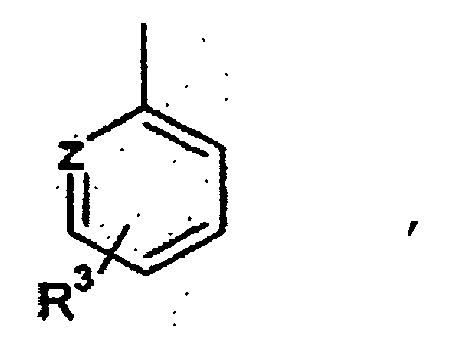 R3 représente un atome d'halogène, CN, NO2, un groupe alkyle en C1-C6, halogénoalkyle(C1-C6), alcoxy (C1-C6) halogénoalcoxy(C1-C6),Z représente N.
 - Procédé pour la préparation de composés de formule (I) selon l'une quelconque des revendications 1 et 2, dans lequelR1 représente le groupe hydroxy, un atome d'halogène, un groupe alcoxy en C1-C4,R2 représente le groupe hydroxy, un atome d' halogène, le groupe O-(C=O)CH3,A représente le groupe
 R3 représente un atome de chlore,Z représente N.
 - Procédé pour la préparation de composés de formule (I) selon l'une quelconque des revendications 1 à 3, caractérisé en ce que n représente 0.
- Procédé pour la préparation de composés de formule (I) selon l'une quelconque des revendications 1 à 4, caractérisé en ce qu'on fait réagir des composés de formule (II)

d'abord avec des composés nucléophiles de formule (VI)
H2L (VI), dans laquelle L représente O, NH ou NR7,
R7 représente un groupe alkyle,
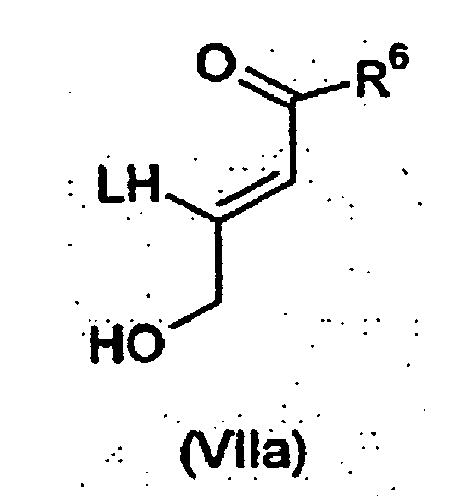
pour aboutir à des aminohydroxyoxopenténoates ou des hydroxy-2,4-dioxopentanoates de formule (VII), qui peuvent être présents sous forme de deux formes tautomères (VIIa) et (VIIb) et peuvent former un cycle de formule (VIIc), (VIId),
A-NHNH2 (III),
dans laquelle A a les significations indiquées plus haut,
pour aboutir à des dihydro-1H-pyrazoles 1-alkyle-/ 1-aryle substitués de formule (IV)
- Procédé pour la préparation de composés de formule (I) selon l'une quelconque des revendications 1 à 6, caractérisé en ce que l'exécution de l'étape (1) du procédé s'effectue dans une plage de température de -20 °C à +100 °C.
- Procédé pour la préparation de composés de formule (I) selon l'une quelconque des revendications 1 à 4, caractérisé en ce qu'on fait réagir 1 mole d'un composé de formule (II) avec 0,8 mole à 2 moles d'une alkyl- ou arylhydrazine de formule (III).
- Procédé pour la préparation de composés de formule (I) selon l'une quelconque des revendications 1 à 7, caractérisé en ce
qu'on convertit les composés de formule (IV), avec addition d'une base, directement en les composés de formule (I),
R1 et R2 représentant le groupe hydroxy, R6 représentant un groupe (C=O)O-alkyle, et
R3, R4, R5, A et Z ayant la signification selon la revendication 1. - Procédé pour la préparation de composés de formule (I) selon la revendication 8, caractérisé en ce que la base est choisie dans le groupe constitué par LiOH, NaOH, KOH et CsOH et on utilise comme solvant des alcools ou l'eau.
- Procédé pour la préparation de composés de formule (I) selon l'une quelconque des revendications 1 à 7, caractérisé en ce que l'exécution de l'étape (3) du procédé a lieu dans une plage de température de 20 °C à +150 °C.
- Procédé pour la préparation de composés de formule (I) selon l'une quelconque des revendications 1 à 7 ou 10, caractérisé en ce que l'exécution de l'étape (3) du procédé a lieu dans des conditions acides avec des acides minéraux ou organiques ou dans des conditions basiques avec des bases organiques ou inorganiques.
- Procédé pour la préparation de composés de formule (I) selon l'une quelconque des revendications 1 à 7, caractérisé en ce que l'exécution de l'étape (3) du procédé a lieu avec un alcool ou des associations d'alcool/HCl, alcool/FeCl3, alcool/H2SO4 ou alcool/ alcoolate.
- Procédé pour la préparation de composés de formule (I) selon l'une quelconque des revendications 1 à 7, caractérisé en ce
qu'on convertit les composés de formule (IV), avec addition d'un acide (HCl), directement en les composés de formule (I),
R1 représentant un groupe (C=O)O-alkyle, R2 représentant le groupe hydroxy et R6 représentant un groupe (C=O)O-alkyle, et
R3, R4, R5, A et Z ayant la signification selon la revendication 1. - Composés de formule (IV)

- Composés de formule générale (VII), qui peuvent se trouver sous forme de deux formes tautomères (VIIa) et (VIIb) et peuvent former un cycle de formule (VIIc), (VIId),


Priority Applications (1)
| Application Number | Priority Date | Filing Date | Title |
|---|---|---|---|
| EP10787791.2A EP2513063B1 (fr) | 2009-12-15 | 2010-12-10 | Procédé de fabrication de dérivés d'acide carbonique de 1-alkyl-/1-aryl-5-pyrazol |
Applications Claiming Priority (3)
| Application Number | Priority Date | Filing Date | Title |
|---|---|---|---|
| EP09179299 | 2009-12-15 | ||
| PCT/EP2010/069385 WO2011073101A1 (fr) | 2009-12-15 | 2010-12-10 | Procédé de préparation de dérivés d'acide 1-alkyl-/1-aryl-5-pyrazolocarboxylique |
| EP10787791.2A EP2513063B1 (fr) | 2009-12-15 | 2010-12-10 | Procédé de fabrication de dérivés d'acide carbonique de 1-alkyl-/1-aryl-5-pyrazol |
Publications (2)
| Publication Number | Publication Date |
|---|---|
| EP2513063A1 EP2513063A1 (fr) | 2012-10-24 |
| EP2513063B1 true EP2513063B1 (fr) | 2013-11-06 |
Family
ID=41569911
Family Applications (1)
| Application Number | Title | Priority Date | Filing Date |
|---|---|---|---|
| EP10787791.2A Active EP2513063B1 (fr) | 2009-12-15 | 2010-12-10 | Procédé de fabrication de dérivés d'acide carbonique de 1-alkyl-/1-aryl-5-pyrazol |
Country Status (12)
| Country | Link |
|---|---|
| US (1) | US8586753B2 (fr) |
| EP (1) | EP2513063B1 (fr) |
| JP (1) | JP5753856B2 (fr) |
| KR (1) | KR101758201B1 (fr) |
| CN (1) | CN102753531B (fr) |
| BR (1) | BR112012014683B1 (fr) |
| DK (1) | DK2513063T3 (fr) |
| ES (1) | ES2437923T3 (fr) |
| IL (1) | IL220211A (fr) |
| MX (1) | MX2012006723A (fr) |
| TW (1) | TWI504590B (fr) |
| WO (1) | WO2011073101A1 (fr) |
Families Citing this family (13)
| Publication number | Priority date | Publication date | Assignee | Title |
|---|---|---|---|---|
| JP5753855B2 (ja) * | 2009-12-15 | 2015-07-22 | バイエル・クロップサイエンス・アーゲーBayer Cropscience Ag | 新規ジオキソラン及びジオキサン誘導体並びにそれらを製造する方法 |
| MX2014000318A (es) | 2011-07-08 | 2014-02-19 | Bayer Ip Gmbh | Procedimiento de preparacion de derivados de diamida del acido antranilico sustituidos con tetrazol mediante la reaccion de acidos de pirazol con esteres antranilicos. |
| MX349771B (es) | 2011-08-26 | 2017-08-10 | Bayer Ip Gmbh | Procedimiento para preparar derivados de diamida de acido antranilico sustituida con tetrazol haciendo reaccionar benzoxazinonas con aminas. |
| CN109689629B (zh) * | 2016-09-21 | 2022-11-29 | 拜耳作物科学股份公司 | 制备3-氟烷基-5-吡唑羧酸酯和3-氟烷基-5-吡唑羧酸的方法 |
| WO2019224678A1 (fr) | 2018-05-21 | 2019-11-28 | Pi Industries Ltd. | Nouveau procédé de préparation de diamides anthraniliques |
| MX2021000226A (es) | 2018-07-20 | 2021-03-31 | Pi Industries Ltd | Nuevo proceso para la preparacion de diamidas antranilicas. |
| CN116134023A (zh) * | 2020-07-23 | 2023-05-16 | 拜耳公司 | 制备氨基呋喃的方法 |
| US20240010626A1 (en) * | 2020-10-06 | 2024-01-11 | Bayer Aktiengesellschaft | Method for producing carbonylaminofurans |
| EP4376616A1 (fr) | 2021-07-27 | 2024-06-05 | Syngenta Crop Protection AG | Procédé de lutte contre des nuisibles résistants au diamide et composés associés |
| US20240308988A1 (en) | 2021-08-05 | 2024-09-19 | Syngenta Crop Protection Ag | Method For Controlling Diamide Resistant Pests and Compounds Therefor |
| WO2023110710A1 (fr) | 2021-12-13 | 2023-06-22 | Syngenta Crop Protection Ag | Procédé de lutte contre des nuisibles résistants au diamide et composés associés |
| EP4197333A1 (fr) | 2021-12-15 | 2023-06-21 | Syngenta Crop Protection AG | Procédé de lutte contre les parasites résistants aux diamides et composés correspondants |
| WO2024133426A1 (fr) | 2022-12-21 | 2024-06-27 | Syngenta Crop Protection Ag | Procédé de lutte contre des nuisibles résistants au diamide et composés associés |
Family Cites Families (9)
| Publication number | Priority date | Publication date | Assignee | Title |
|---|---|---|---|---|
| TW438796B (en) * | 1996-05-15 | 2001-06-07 | Hoffmann La Roche | 2,4-diaminopyrimidine derivatives, the manufacture process thereof, and the antibiotically-active pharmaceutical composition containing the same |
| KR20010013977A (ko) | 1997-06-19 | 2001-02-26 | 블레어 큐. 퍼거슨 | 중성 p1 특이성 기를 갖는 인자 xa의 억제제 |
| TWI327566B (en) * | 2001-08-13 | 2010-07-21 | Du Pont | Novel substituted ihydro 3-halo-1h-pyrazole-5-carboxylates,their preparation and use |
| DE60236600D1 (de) | 2001-08-13 | 2010-07-15 | Du Pont | Substituierte 1h-dihydropyrazole, ihre herstellung und verwendung |
| SI1599463T1 (sl) * | 2003-01-28 | 2013-10-30 | E.I. Du Pont De Nemours And Company | Ciano antranilamidni insekticidi |
| TW200526588A (en) * | 2003-11-17 | 2005-08-16 | Smithkline Beecham Corp | Chemical compounds |
| DE102006032168A1 (de) | 2006-06-13 | 2007-12-20 | Bayer Cropscience Ag | Anthranilsäurediamid-Derivate mit heteroaromatischen Substituenten |
| EP2243777A1 (fr) * | 2009-04-03 | 2010-10-27 | Bayer CropScience AG | Procédé de fabrication de pyrazoles substitués par pyridile |
| JP5753855B2 (ja) * | 2009-12-15 | 2015-07-22 | バイエル・クロップサイエンス・アーゲーBayer Cropscience Ag | 新規ジオキソラン及びジオキサン誘導体並びにそれらを製造する方法 |
-
2010
- 2010-12-10 KR KR1020127018392A patent/KR101758201B1/ko active Active
- 2010-12-10 EP EP10787791.2A patent/EP2513063B1/fr active Active
- 2010-12-10 DK DK10787791.2T patent/DK2513063T3/da active
- 2010-12-10 MX MX2012006723A patent/MX2012006723A/es active IP Right Grant
- 2010-12-10 WO PCT/EP2010/069385 patent/WO2011073101A1/fr not_active Ceased
- 2010-12-10 ES ES10787791.2T patent/ES2437923T3/es active Active
- 2010-12-10 CN CN201080063459.6A patent/CN102753531B/zh active Active
- 2010-12-10 JP JP2012543631A patent/JP5753856B2/ja active Active
- 2010-12-10 BR BR112012014683-1A patent/BR112012014683B1/pt active IP Right Grant
- 2010-12-14 TW TW099143604A patent/TWI504590B/zh active
- 2010-12-15 US US12/969,145 patent/US8586753B2/en active Active
-
2012
- 2012-06-06 IL IL220211A patent/IL220211A/en active IP Right Grant
Also Published As
| Publication number | Publication date |
|---|---|
| KR20120096078A (ko) | 2012-08-29 |
| TW201144288A (en) | 2011-12-16 |
| CN102753531A (zh) | 2012-10-24 |
| US20110152532A1 (en) | 2011-06-23 |
| JP2013513635A (ja) | 2013-04-22 |
| CN102753531B (zh) | 2015-07-01 |
| EP2513063A1 (fr) | 2012-10-24 |
| IL220211A (en) | 2016-02-29 |
| TWI504590B (zh) | 2015-10-21 |
| BR112012014683A2 (pt) | 2015-09-15 |
| ES2437923T3 (es) | 2014-01-15 |
| DK2513063T3 (da) | 2014-01-06 |
| IL220211A0 (en) | 2012-07-31 |
| MX2012006723A (es) | 2012-06-28 |
| KR101758201B1 (ko) | 2017-07-14 |
| BR112012014683B1 (pt) | 2017-11-07 |
| WO2011073101A1 (fr) | 2011-06-23 |
| US8586753B2 (en) | 2013-11-19 |
| JP5753856B2 (ja) | 2015-07-22 |
Similar Documents
| Publication | Publication Date | Title |
|---|---|---|
| EP2513063B1 (fr) | Procédé de fabrication de dérivés d'acide carbonique de 1-alkyl-/1-aryl-5-pyrazol | |
| EP0595130B1 (fr) | N-phénylacétaminonitriles et leur utilisation comme intermédiaires dans la synthèse de 3-aryl-pyrrolidine-2,4-diones ayant une activité herbicide et insecticide | |
| DE102006039909A1 (de) | Verfahren zum Herstellen von 3-Dihalomethyl-pyrazol-4-carbonsäurederivaten | |
| EP2456760B1 (fr) | Procédé de fabrication de pyrazoles substitués par de l'aryle | |
| EP2414345B1 (fr) | Procédé de fabrication de pyrazoles substitués par pyridile | |
| EP2623496A1 (fr) | Procédé de fabrication de dérivés d'acide 3,5-bis(fluoralkyl)-pyrazol-4 carbonique et 3,5-bis(fluoralkyl)-pyrazoles | |
| EP0776889A1 (fr) | Procédé pour la préparation de 1,3-diméthyl-5-fluoro-pyrazol-4-carboxanilides | |
| EP2456747B1 (fr) | Procédé de fabrication des alkoxyénones et énaminocétones | |
| EP2513082B1 (fr) | Nouveaux dérivés de dioxolane et de dioxane et leur procédé de fabrication | |
| EP0726258A1 (fr) | Procédé et produits intermédiaires pour la préparation de triazolinones | |
| EP0709367B1 (fr) | Procédé pour la préparation d'amides carboxyliques N-alkényle | |
| WO2014187774A1 (fr) | Procédé de production de dérivés de 3,5-bis(fluoroalkyl)pyrazole | |
| EP0371361B1 (fr) | Procédé de préparation de 4-chlorpyrazoles | |
| WO2024038036A1 (fr) | Réaction d'élimination pour la préparation d'alcènes substitués | |
| EP0703225B1 (fr) | Procédé pour la préparation d'alcoxytriazolinones | |
| EP1021431B1 (fr) | Procede de preparation de benzofuranones eventuellement substituees | |
| EP0703226B1 (fr) | Procédé pour la préparation d'alcoxytriazolinones | |
| DE4001600C1 (en) | Pyrazole carboxylic acid derivs. prepn. - by reacting azo-carboxylic acid cpd. with an enol-ether and aromatising | |
| DE3004695A1 (de) | Verfahren zur herstellung von trifluormethylphenyl-oxyphenyl-ethern | |
| DE3742822A1 (de) | Verfahren zur herstellung von 5-amino-l-phenyl-4-nitro-pyrazolen | |
| WO1996012707A1 (fr) | 2-chloro-n-[1-(2,6-dichloro-4-difluoromethyl-phenyl)-1h-pyrazol-5-yl]-propanamide et son procede de fabrication | |
| DE3742612A1 (de) | Verfahren zur herstellung von 4-substituierten 3-methyl-1-aryl-5-amino-pyrazolen | |
| EP1358164A1 (fr) | Procede de production de 1-alkyl-3-aryl-5-difluoromethoxy-1h-pyrazoles |
Legal Events
| Date | Code | Title | Description |
|---|---|---|---|
| PUAI | Public reference made under article 153(3) epc to a published international application that has entered the european phase |
Free format text: ORIGINAL CODE: 0009012 |
|
| 17P | Request for examination filed |
Effective date: 20120716 |
|
| AK | Designated contracting states |
Kind code of ref document: A1 Designated state(s): AL AT BE BG CH CY CZ DE DK EE ES FI FR GB GR HR HU IE IS IT LI LT LU LV MC MK MT NL NO PL PT RO RS SE SI SK SM TR |
|
| DAX | Request for extension of the european patent (deleted) | ||
| GRAP | Despatch of communication of intention to grant a patent |
Free format text: ORIGINAL CODE: EPIDOSNIGR1 |
|
| INTG | Intention to grant announced |
Effective date: 20130531 |
|
| GRAS | Grant fee paid |
Free format text: ORIGINAL CODE: EPIDOSNIGR3 |
|
| GRAA | (expected) grant |
Free format text: ORIGINAL CODE: 0009210 |
|
| AK | Designated contracting states |
Kind code of ref document: B1 Designated state(s): AL AT BE BG CH CY CZ DE DK EE ES FI FR GB GR HR HU IE IS IT LI LT LU LV MC MK MT NL NO PL PT RO RS SE SI SK SM TR |
|
| REG | Reference to a national code |
Ref country code: GB Ref legal event code: FG4D Free format text: NOT ENGLISH |
|
| REG | Reference to a national code |
Ref country code: CH Ref legal event code: EP |
|
| REG | Reference to a national code |
Ref country code: AT Ref legal event code: REF Ref document number: 639389 Country of ref document: AT Kind code of ref document: T Effective date: 20131215 |
|
| REG | Reference to a national code |
Ref country code: IE Ref legal event code: FG4D Free format text: LANGUAGE OF EP DOCUMENT: GERMAN |
|
| REG | Reference to a national code |
Ref country code: NL Ref legal event code: T3 |
|
| REG | Reference to a national code |
Ref country code: DE Ref legal event code: R096 Ref document number: 502010005338 Country of ref document: DE Effective date: 20140102 |
|
| REG | Reference to a national code |
Ref country code: DK Ref legal event code: T3 Effective date: 20131217 |
|
| REG | Reference to a national code |
Ref country code: ES Ref legal event code: FG2A Ref document number: 2437923 Country of ref document: ES Kind code of ref document: T3 Effective date: 20140115 |
|
| REG | Reference to a national code |
Ref country code: LT Ref legal event code: MG4D |
|
| PG25 | Lapsed in a contracting state [announced via postgrant information from national office to epo] |
Ref country code: HR Free format text: LAPSE BECAUSE OF FAILURE TO SUBMIT A TRANSLATION OF THE DESCRIPTION OR TO PAY THE FEE WITHIN THE PRESCRIBED TIME-LIMIT Effective date: 20131106 Ref country code: SE Free format text: LAPSE BECAUSE OF FAILURE TO SUBMIT A TRANSLATION OF THE DESCRIPTION OR TO PAY THE FEE WITHIN THE PRESCRIBED TIME-LIMIT Effective date: 20131106 Ref country code: LT Free format text: LAPSE BECAUSE OF FAILURE TO SUBMIT A TRANSLATION OF THE DESCRIPTION OR TO PAY THE FEE WITHIN THE PRESCRIBED TIME-LIMIT Effective date: 20131106 Ref country code: NO Free format text: LAPSE BECAUSE OF FAILURE TO SUBMIT A TRANSLATION OF THE DESCRIPTION OR TO PAY THE FEE WITHIN THE PRESCRIBED TIME-LIMIT Effective date: 20140206 Ref country code: IS Free format text: LAPSE BECAUSE OF FAILURE TO SUBMIT A TRANSLATION OF THE DESCRIPTION OR TO PAY THE FEE WITHIN THE PRESCRIBED TIME-LIMIT Effective date: 20140306 |
|
| PG25 | Lapsed in a contracting state [announced via postgrant information from national office to epo] |
Ref country code: LV Free format text: LAPSE BECAUSE OF FAILURE TO SUBMIT A TRANSLATION OF THE DESCRIPTION OR TO PAY THE FEE WITHIN THE PRESCRIBED TIME-LIMIT Effective date: 20131106 Ref country code: RS Free format text: LAPSE BECAUSE OF FAILURE TO SUBMIT A TRANSLATION OF THE DESCRIPTION OR TO PAY THE FEE WITHIN THE PRESCRIBED TIME-LIMIT Effective date: 20131106 |
|
| PG25 | Lapsed in a contracting state [announced via postgrant information from national office to epo] |
Ref country code: PT Free format text: LAPSE BECAUSE OF FAILURE TO SUBMIT A TRANSLATION OF THE DESCRIPTION OR TO PAY THE FEE WITHIN THE PRESCRIBED TIME-LIMIT Effective date: 20140306 |
|
| PG25 | Lapsed in a contracting state [announced via postgrant information from national office to epo] |
Ref country code: EE Free format text: LAPSE BECAUSE OF FAILURE TO SUBMIT A TRANSLATION OF THE DESCRIPTION OR TO PAY THE FEE WITHIN THE PRESCRIBED TIME-LIMIT Effective date: 20131106 |
|
| REG | Reference to a national code |
Ref country code: DE Ref legal event code: R097 Ref document number: 502010005338 Country of ref document: DE |
|
| PG25 | Lapsed in a contracting state [announced via postgrant information from national office to epo] |
Ref country code: PL Free format text: LAPSE BECAUSE OF FAILURE TO SUBMIT A TRANSLATION OF THE DESCRIPTION OR TO PAY THE FEE WITHIN THE PRESCRIBED TIME-LIMIT Effective date: 20131106 Ref country code: CZ Free format text: LAPSE BECAUSE OF FAILURE TO SUBMIT A TRANSLATION OF THE DESCRIPTION OR TO PAY THE FEE WITHIN THE PRESCRIBED TIME-LIMIT Effective date: 20131106 Ref country code: RO Free format text: LAPSE BECAUSE OF FAILURE TO SUBMIT A TRANSLATION OF THE DESCRIPTION OR TO PAY THE FEE WITHIN THE PRESCRIBED TIME-LIMIT Effective date: 20131106 Ref country code: SK Free format text: LAPSE BECAUSE OF FAILURE TO SUBMIT A TRANSLATION OF THE DESCRIPTION OR TO PAY THE FEE WITHIN THE PRESCRIBED TIME-LIMIT Effective date: 20131106 |
|
| PLBE | No opposition filed within time limit |
Free format text: ORIGINAL CODE: 0009261 |
|
| STAA | Information on the status of an ep patent application or granted ep patent |
Free format text: STATUS: NO OPPOSITION FILED WITHIN TIME LIMIT |
|
| REG | Reference to a national code |
Ref country code: IE Ref legal event code: MM4A |
|
| 26N | No opposition filed |
Effective date: 20140807 |
|
| PG25 | Lapsed in a contracting state [announced via postgrant information from national office to epo] |
Ref country code: IE Free format text: LAPSE BECAUSE OF NON-PAYMENT OF DUE FEES Effective date: 20131210 |
|
| REG | Reference to a national code |
Ref country code: DE Ref legal event code: R097 Ref document number: 502010005338 Country of ref document: DE Effective date: 20140807 |
|
| PG25 | Lapsed in a contracting state [announced via postgrant information from national office to epo] |
Ref country code: SI Free format text: LAPSE BECAUSE OF FAILURE TO SUBMIT A TRANSLATION OF THE DESCRIPTION OR TO PAY THE FEE WITHIN THE PRESCRIBED TIME-LIMIT Effective date: 20131106 |
|
| PG25 | Lapsed in a contracting state [announced via postgrant information from national office to epo] |
Ref country code: MC Free format text: LAPSE BECAUSE OF FAILURE TO SUBMIT A TRANSLATION OF THE DESCRIPTION OR TO PAY THE FEE WITHIN THE PRESCRIBED TIME-LIMIT Effective date: 20131106 |
|
| PG25 | Lapsed in a contracting state [announced via postgrant information from national office to epo] |
Ref country code: SM Free format text: LAPSE BECAUSE OF FAILURE TO SUBMIT A TRANSLATION OF THE DESCRIPTION OR TO PAY THE FEE WITHIN THE PRESCRIBED TIME-LIMIT Effective date: 20131106 |
|
| PG25 | Lapsed in a contracting state [announced via postgrant information from national office to epo] |
Ref country code: CY Free format text: LAPSE BECAUSE OF FAILURE TO SUBMIT A TRANSLATION OF THE DESCRIPTION OR TO PAY THE FEE WITHIN THE PRESCRIBED TIME-LIMIT Effective date: 20131106 |
|
| PG25 | Lapsed in a contracting state [announced via postgrant information from national office to epo] |
Ref country code: MK Free format text: LAPSE BECAUSE OF FAILURE TO SUBMIT A TRANSLATION OF THE DESCRIPTION OR TO PAY THE FEE WITHIN THE PRESCRIBED TIME-LIMIT Effective date: 20131106 Ref country code: LU Free format text: LAPSE BECAUSE OF NON-PAYMENT OF DUE FEES Effective date: 20131210 Ref country code: HU Free format text: LAPSE BECAUSE OF FAILURE TO SUBMIT A TRANSLATION OF THE DESCRIPTION OR TO PAY THE FEE WITHIN THE PRESCRIBED TIME-LIMIT; INVALID AB INITIO Effective date: 20101210 Ref country code: BG Free format text: LAPSE BECAUSE OF FAILURE TO SUBMIT A TRANSLATION OF THE DESCRIPTION OR TO PAY THE FEE WITHIN THE PRESCRIBED TIME-LIMIT Effective date: 20131106 |
|
| PG25 | Lapsed in a contracting state [announced via postgrant information from national office to epo] |
Ref country code: MT Free format text: LAPSE BECAUSE OF FAILURE TO SUBMIT A TRANSLATION OF THE DESCRIPTION OR TO PAY THE FEE WITHIN THE PRESCRIBED TIME-LIMIT Effective date: 20131106 Ref country code: GR Free format text: LAPSE BECAUSE OF NON-PAYMENT OF DUE FEES Effective date: 20131106 |
|
| REG | Reference to a national code |
Ref country code: FR Ref legal event code: PLFP Year of fee payment: 6 |
|
| PG25 | Lapsed in a contracting state [announced via postgrant information from national office to epo] |
Ref country code: GR Free format text: LAPSE BECAUSE OF FAILURE TO SUBMIT A TRANSLATION OF THE DESCRIPTION OR TO PAY THE FEE WITHIN THE PRESCRIBED TIME-LIMIT Effective date: 20140207 |
|
| PG25 | Lapsed in a contracting state [announced via postgrant information from national office to epo] |
Ref country code: TR Free format text: LAPSE BECAUSE OF FAILURE TO SUBMIT A TRANSLATION OF THE DESCRIPTION OR TO PAY THE FEE WITHIN THE PRESCRIBED TIME-LIMIT Effective date: 20131106 |
|
| REG | Reference to a national code |
Ref country code: FR Ref legal event code: PLFP Year of fee payment: 7 |
|
| REG | Reference to a national code |
Ref country code: FR Ref legal event code: PLFP Year of fee payment: 8 |
|
| PG25 | Lapsed in a contracting state [announced via postgrant information from national office to epo] |
Ref country code: AL Free format text: LAPSE BECAUSE OF FAILURE TO SUBMIT A TRANSLATION OF THE DESCRIPTION OR TO PAY THE FEE WITHIN THE PRESCRIBED TIME-LIMIT Effective date: 20131106 |
|
| PGFP | Annual fee paid to national office [announced via postgrant information from national office to epo] |
Ref country code: AT Payment date: 20221125 Year of fee payment: 13 |
|
| P01 | Opt-out of the competence of the unified patent court (upc) registered |
Effective date: 20230507 |
|
| REG | Reference to a national code |
Ref country code: AT Ref legal event code: MM01 Ref document number: 639389 Country of ref document: AT Kind code of ref document: T Effective date: 20231210 |
|
| PG25 | Lapsed in a contracting state [announced via postgrant information from national office to epo] |
Ref country code: AT Free format text: LAPSE BECAUSE OF NON-PAYMENT OF DUE FEES Effective date: 20231210 |
|
| PG25 | Lapsed in a contracting state [announced via postgrant information from national office to epo] |
Ref country code: AT Free format text: LAPSE BECAUSE OF NON-PAYMENT OF DUE FEES Effective date: 20231210 |
|
| PGFP | Annual fee paid to national office [announced via postgrant information from national office to epo] |
Ref country code: CH Payment date: 20250101 Year of fee payment: 15 |
|
| PGFP | Annual fee paid to national office [announced via postgrant information from national office to epo] |
Ref country code: NL Payment date: 20251126 Year of fee payment: 16 |
|
| REG | Reference to a national code |
Ref country code: CH Ref legal event code: U11 Free format text: ST27 STATUS EVENT CODE: U-0-0-U10-U11 (AS PROVIDED BY THE NATIONAL OFFICE) Effective date: 20260101 |
|
| PGFP | Annual fee paid to national office [announced via postgrant information from national office to epo] |
Ref country code: DE Payment date: 20251119 Year of fee payment: 16 |
|
| PGFP | Annual fee paid to national office [announced via postgrant information from national office to epo] |
Ref country code: GB Payment date: 20251120 Year of fee payment: 16 |
|
| PGFP | Annual fee paid to national office [announced via postgrant information from national office to epo] |
Ref country code: FI Payment date: 20251211 Year of fee payment: 16 Ref country code: DK Payment date: 20251212 Year of fee payment: 16 Ref country code: IT Payment date: 20251126 Year of fee payment: 16 |
|
| PGFP | Annual fee paid to national office [announced via postgrant information from national office to epo] |
Ref country code: FR Payment date: 20251124 Year of fee payment: 16 |
|
| PGFP | Annual fee paid to national office [announced via postgrant information from national office to epo] |
Ref country code: BE Payment date: 20251127 Year of fee payment: 16 |
|
| PGFP | Annual fee paid to national office [announced via postgrant information from national office to epo] |
Ref country code: ES Payment date: 20260114 Year of fee payment: 16 |