EP2517703A1 - Rétention de carnitine - Google Patents
Rétention de carnitine Download PDFInfo
- Publication number
- EP2517703A1 EP2517703A1 EP12166463A EP12166463A EP2517703A1 EP 2517703 A1 EP2517703 A1 EP 2517703A1 EP 12166463 A EP12166463 A EP 12166463A EP 12166463 A EP12166463 A EP 12166463A EP 2517703 A1 EP2517703 A1 EP 2517703A1
- Authority
- EP
- European Patent Office
- Prior art keywords
- carnitine
- agent
- carbohydrate
- substance
- composition
- Prior art date
- Legal status (The legal status is an assumption and is not a legal conclusion. Google has not performed a legal analysis and makes no representation as to the accuracy of the status listed.)
- Withdrawn
Links
- 229960004203 carnitine Drugs 0.000 title claims abstract description 221
- 230000014759 maintenance of location Effects 0.000 title claims abstract description 30
- PHIQHXFUZVPYII-ZCFIWIBFSA-O (R)-carnitinium Chemical compound C[N+](C)(C)C[C@H](O)CC(O)=O PHIQHXFUZVPYII-ZCFIWIBFSA-O 0.000 title claims abstract 23
- NOESYZHRGYRDHS-UHFFFAOYSA-N insulin Chemical compound N1C(=O)C(NC(=O)C(CCC(N)=O)NC(=O)C(CCC(O)=O)NC(=O)C(C(C)C)NC(=O)C(NC(=O)CN)C(C)CC)CSSCC(C(NC(CO)C(=O)NC(CC(C)C)C(=O)NC(CC=2C=CC(O)=CC=2)C(=O)NC(CCC(N)=O)C(=O)NC(CC(C)C)C(=O)NC(CCC(O)=O)C(=O)NC(CC(N)=O)C(=O)NC(CC=2C=CC(O)=CC=2)C(=O)NC(CSSCC(NC(=O)C(C(C)C)NC(=O)C(CC(C)C)NC(=O)C(CC=2C=CC(O)=CC=2)NC(=O)C(CC(C)C)NC(=O)C(C)NC(=O)C(CCC(O)=O)NC(=O)C(C(C)C)NC(=O)C(CC(C)C)NC(=O)C(CC=2NC=NC=2)NC(=O)C(CO)NC(=O)CNC2=O)C(=O)NCC(=O)NC(CCC(O)=O)C(=O)NC(CCCNC(N)=N)C(=O)NCC(=O)NC(CC=3C=CC=CC=3)C(=O)NC(CC=3C=CC=CC=3)C(=O)NC(CC=3C=CC(O)=CC=3)C(=O)NC(C(C)O)C(=O)N3C(CCC3)C(=O)NC(CCCCN)C(=O)NC(C)C(O)=O)C(=O)NC(CC(N)=O)C(O)=O)=O)NC(=O)C(C(C)CC)NC(=O)C(CO)NC(=O)C(C(C)O)NC(=O)C1CSSCC2NC(=O)C(CC(C)C)NC(=O)C(NC(=O)C(CCC(N)=O)NC(=O)C(CC(N)=O)NC(=O)C(NC(=O)C(N)CC=1C=CC=CC=1)C(C)C)CC1=CN=CN1 NOESYZHRGYRDHS-UHFFFAOYSA-N 0.000 claims abstract description 158
- 239000003795 chemical substances by application Substances 0.000 claims abstract description 99
- 102000004877 Insulin Human genes 0.000 claims abstract description 79
- 108090001061 Insulin Proteins 0.000 claims abstract description 79
- 229940125396 insulin Drugs 0.000 claims abstract description 79
- 239000000126 substance Substances 0.000 claims abstract description 73
- 239000000203 mixture Substances 0.000 claims abstract description 58
- 210000004369 blood Anatomy 0.000 claims abstract description 39
- 239000008280 blood Substances 0.000 claims abstract description 39
- 230000000694 effects Effects 0.000 claims abstract description 37
- 102000014914 Carrier Proteins Human genes 0.000 claims abstract description 11
- 108010078791 Carrier Proteins Proteins 0.000 claims abstract description 11
- 150000001720 carbohydrates Chemical class 0.000 claims description 61
- 235000014633 carbohydrates Nutrition 0.000 claims description 61
- 238000000034 method Methods 0.000 claims description 56
- 210000001519 tissue Anatomy 0.000 claims description 53
- 235000015872 dietary supplement Nutrition 0.000 claims description 29
- 230000037406 food intake Effects 0.000 claims description 17
- 241001465754 Metazoa Species 0.000 claims description 16
- WQZGKKKJIJFFOK-GASJEMHNSA-N Glucose Natural products OC[C@H]1OC(O)[C@H](O)[C@@H](O)[C@@H]1O WQZGKKKJIJFFOK-GASJEMHNSA-N 0.000 claims description 14
- 239000008103 glucose Substances 0.000 claims description 14
- 239000011734 sodium Substances 0.000 claims description 13
- DGAQECJNVWCQMB-PUAWFVPOSA-M Ilexoside XXIX Chemical compound C[C@@H]1CC[C@@]2(CC[C@@]3(C(=CC[C@H]4[C@]3(CC[C@@H]5[C@@]4(CC[C@@H](C5(C)C)OS(=O)(=O)[O-])C)C)[C@@H]2[C@]1(C)O)C)C(=O)O[C@H]6[C@@H]([C@H]([C@@H]([C@H](O6)CO)O)O)O.[Na+] DGAQECJNVWCQMB-PUAWFVPOSA-M 0.000 claims description 12
- 230000001419 dependent effect Effects 0.000 claims description 12
- 229910052708 sodium Inorganic materials 0.000 claims description 12
- 210000004027 cell Anatomy 0.000 claims description 11
- 235000021309 simple sugar Nutrition 0.000 claims description 11
- 229930091371 Fructose Natural products 0.000 claims description 9
- 239000005715 Fructose Substances 0.000 claims description 9
- RFSUNEUAIZKAJO-ARQDHWQXSA-N Fructose Chemical compound OC[C@H]1O[C@](O)(CO)[C@@H](O)[C@@H]1O RFSUNEUAIZKAJO-ARQDHWQXSA-N 0.000 claims description 9
- CZMRCDWAGMRECN-UGDNZRGBSA-N Sucrose Chemical compound O[C@H]1[C@H](O)[C@@H](CO)O[C@@]1(CO)O[C@@H]1[C@H](O)[C@@H](O)[C@H](O)[C@@H](CO)O1 CZMRCDWAGMRECN-UGDNZRGBSA-N 0.000 claims description 9
- 229930006000 Sucrose Natural products 0.000 claims description 9
- 238000004519 manufacturing process Methods 0.000 claims description 9
- 239000000243 solution Substances 0.000 claims description 9
- 239000005720 sucrose Substances 0.000 claims description 9
- 150000001413 amino acids Chemical class 0.000 claims description 7
- 239000003814 drug Substances 0.000 claims description 7
- 102000004169 proteins and genes Human genes 0.000 claims description 7
- 108090000623 proteins and genes Proteins 0.000 claims description 7
- WQZGKKKJIJFFOK-VFUOTHLCSA-N beta-D-glucose Chemical compound OC[C@H]1O[C@@H](O)[C@H](O)[C@@H](O)[C@@H]1O WQZGKKKJIJFFOK-VFUOTHLCSA-N 0.000 claims description 6
- 210000003292 kidney cell Anatomy 0.000 claims description 5
- 210000005229 liver cell Anatomy 0.000 claims description 5
- 210000002363 skeletal muscle cell Anatomy 0.000 claims description 5
- 239000007864 aqueous solution Substances 0.000 claims description 4
- 150000002303 glucose derivatives Chemical class 0.000 claims description 4
- 230000003914 insulin secretion Effects 0.000 claims description 3
- 230000000638 stimulation Effects 0.000 claims description 3
- 108091006112 ATPases Proteins 0.000 abstract description 10
- 102000057290 Adenosine Triphosphatases Human genes 0.000 abstract description 10
- BITYAPCSNKJESK-UHFFFAOYSA-N potassiosodium Chemical compound [Na].[K] BITYAPCSNKJESK-UHFFFAOYSA-N 0.000 abstract description 10
- PHIQHXFUZVPYII-ZCFIWIBFSA-N (R)-carnitine Chemical compound C[N+](C)(C)C[C@H](O)CC([O-])=O PHIQHXFUZVPYII-ZCFIWIBFSA-N 0.000 description 243
- 238000001802 infusion Methods 0.000 description 38
- 210000003205 muscle Anatomy 0.000 description 24
- 238000001990 intravenous administration Methods 0.000 description 16
- 210000002966 serum Anatomy 0.000 description 13
- MEFKEPWMEQBLKI-AIRLBKTGSA-O S-adenosyl-L-methionine Chemical compound O[C@@H]1[C@H](O)[C@@H](C[S+](CC[C@H]([NH3+])C([O-])=O)C)O[C@H]1N1C2=NC=NC(N)=C2N=C1 MEFKEPWMEQBLKI-AIRLBKTGSA-O 0.000 description 12
- 230000032258 transport Effects 0.000 description 11
- ZSLZBFCDCINBPY-ZSJPKINUSA-N acetyl-CoA Chemical compound O[C@@H]1[C@H](OP(O)(O)=O)[C@@H](COP(O)(=O)OP(O)(=O)OCC(C)(C)[C@@H](O)C(=O)NCCC(=O)NCCSC(=O)C)O[C@H]1N1C2=NC=NC(N)=C2N=C1 ZSLZBFCDCINBPY-ZSJPKINUSA-N 0.000 description 10
- 210000002027 skeletal muscle Anatomy 0.000 description 9
- HEDRZPFGACZZDS-UHFFFAOYSA-N Chloroform Chemical compound ClC(Cl)Cl HEDRZPFGACZZDS-UHFFFAOYSA-N 0.000 description 8
- 238000011282 treatment Methods 0.000 description 8
- 210000002700 urine Anatomy 0.000 description 6
- 108010066477 Carnitine O-acetyltransferase Proteins 0.000 description 5
- 102100036357 Carnitine O-acetyltransferase Human genes 0.000 description 5
- OKKJLVBELUTLKV-UHFFFAOYSA-N Methanol Chemical compound OC OKKJLVBELUTLKV-UHFFFAOYSA-N 0.000 description 5
- 230000009469 supplementation Effects 0.000 description 5
- 238000012360 testing method Methods 0.000 description 5
- 230000002485 urinary effect Effects 0.000 description 5
- XLYOFNOQVPJJNP-UHFFFAOYSA-N water Substances O XLYOFNOQVPJJNP-UHFFFAOYSA-N 0.000 description 5
- IJGRMHOSHXDMSA-UHFFFAOYSA-N Atomic nitrogen Chemical compound N#N IJGRMHOSHXDMSA-UHFFFAOYSA-N 0.000 description 4
- RDHQFKQIGNGIED-MRVPVSSYSA-N O-acetyl-L-carnitine Chemical compound CC(=O)O[C@H](CC([O-])=O)C[N+](C)(C)C RDHQFKQIGNGIED-MRVPVSSYSA-N 0.000 description 4
- 238000005119 centrifugation Methods 0.000 description 4
- 239000011521 glass Substances 0.000 description 4
- 235000000346 sugar Nutrition 0.000 description 4
- 210000003462 vein Anatomy 0.000 description 4
- 125000000218 acetic acid group Chemical group C(C)(=O)* 0.000 description 3
- 125000002252 acyl group Chemical group 0.000 description 3
- 235000014113 dietary fatty acids Nutrition 0.000 description 3
- 238000006073 displacement reaction Methods 0.000 description 3
- 230000029142 excretion Effects 0.000 description 3
- 229930195729 fatty acid Natural products 0.000 description 3
- 239000000194 fatty acid Substances 0.000 description 3
- 150000004665 fatty acids Chemical class 0.000 description 3
- 239000007788 liquid Substances 0.000 description 3
- 230000004060 metabolic process Effects 0.000 description 3
- 229910001369 Brass Inorganic materials 0.000 description 2
- LFQSCWFLJHTTHZ-UHFFFAOYSA-N Ethanol Chemical compound CCO LFQSCWFLJHTTHZ-UHFFFAOYSA-N 0.000 description 2
- HTTJABKRGRZYRN-UHFFFAOYSA-N Heparin Chemical compound OC1C(NC(=O)C)C(O)OC(COS(O)(=O)=O)C1OC1C(OS(O)(=O)=O)C(O)C(OC2C(C(OS(O)(=O)=O)C(OC3C(C(O)C(O)C(O3)C(O)=O)OS(O)(=O)=O)C(CO)O2)NS(O)(=O)=O)C(C(O)=O)O1 HTTJABKRGRZYRN-UHFFFAOYSA-N 0.000 description 2
- KFZMGEQAYNKOFK-UHFFFAOYSA-N Isopropanol Chemical compound CC(C)O KFZMGEQAYNKOFK-UHFFFAOYSA-N 0.000 description 2
- WHXSMMKQMYFTQS-UHFFFAOYSA-N Lithium Chemical compound [Li] WHXSMMKQMYFTQS-UHFFFAOYSA-N 0.000 description 2
- FAPWRFPIFSIZLT-UHFFFAOYSA-M Sodium chloride Chemical compound [Na+].[Cl-] FAPWRFPIFSIZLT-UHFFFAOYSA-M 0.000 description 2
- 238000009825 accumulation Methods 0.000 description 2
- 229940100228 acetyl coenzyme a Drugs 0.000 description 2
- 238000004458 analytical method Methods 0.000 description 2
- 239000010951 brass Substances 0.000 description 2
- 238000006243 chemical reaction Methods 0.000 description 2
- 238000011067 equilibration Methods 0.000 description 2
- 230000003203 everyday effect Effects 0.000 description 2
- 238000002474 experimental method Methods 0.000 description 2
- 229960002897 heparin Drugs 0.000 description 2
- 229920000669 heparin Polymers 0.000 description 2
- 238000011534 incubation Methods 0.000 description 2
- 229910052744 lithium Inorganic materials 0.000 description 2
- 235000013372 meat Nutrition 0.000 description 2
- 229910052757 nitrogen Inorganic materials 0.000 description 2
- 230000003647 oxidation Effects 0.000 description 2
- 238000007254 oxidation reaction Methods 0.000 description 2
- 238000007427 paired t-test Methods 0.000 description 2
- 239000008188 pellet Substances 0.000 description 2
- 230000036470 plasma concentration Effects 0.000 description 2
- 229920001467 poly(styrenesulfonates) Polymers 0.000 description 2
- 230000002829 reductive effect Effects 0.000 description 2
- 230000004044 response Effects 0.000 description 2
- ZSLZBFCDCINBPY-YHBLMJDYSA-N s-[2-[3-[[(2r)-4-[[[(2r,3s,4r,5r)-5-(6-aminopurin-9-yl)-4-hydroxy-3-phosphonooxyoxolan-2-yl]methoxy-hydroxyphosphoryl]oxy-hydroxyphosphoryl]oxy-2-hydroxy-3,3-dimethylbutanoyl]amino]propanoylamino]ethyl] ethanethioate Chemical compound O[C@@H]1[C@H](OP(O)(O)=O)[C@@H](COP(O)(=O)OP(O)(=O)OCC(C)(C)[C@@H](O)C(=O)NCCC(=O)NCCS[14C](=O)C)O[C@H]1N1C2=NC=NC(N)=C2N=C1 ZSLZBFCDCINBPY-YHBLMJDYSA-N 0.000 description 2
- 239000011780 sodium chloride Substances 0.000 description 2
- 230000004936 stimulating effect Effects 0.000 description 2
- 239000006228 supernatant Substances 0.000 description 2
- MGSRCZKZVOBKFT-UHFFFAOYSA-N thymol Chemical compound CC(C)C1=CC=C(C)C=C1O MGSRCZKZVOBKFT-UHFFFAOYSA-N 0.000 description 2
- 238000007492 two-way ANOVA Methods 0.000 description 2
- 238000010792 warming Methods 0.000 description 2
- 206010058892 Carnitine deficiency Diseases 0.000 description 1
- RGJOEKWQDUBAIZ-IBOSZNHHSA-N CoASH Chemical compound O[C@@H]1[C@H](OP(O)(O)=O)[C@@H](COP(O)(=O)OP(O)(=O)OCC(C)(C)[C@@H](O)C(=O)NCCC(=O)NCCS)O[C@H]1N1C2=NC=NC(N)=C2N=C1 RGJOEKWQDUBAIZ-IBOSZNHHSA-N 0.000 description 1
- 241000282412 Homo Species 0.000 description 1
- JVTAAEKCZFNVCJ-UHFFFAOYSA-M Lactate Chemical compound CC(O)C([O-])=O JVTAAEKCZFNVCJ-UHFFFAOYSA-M 0.000 description 1
- 206010049565 Muscle fatigue Diseases 0.000 description 1
- 241001272996 Polyphylla fullo Species 0.000 description 1
- 239000005844 Thymol Substances 0.000 description 1
- 230000004913 activation Effects 0.000 description 1
- YAJCHEVQCOHZDC-QMMNLEPNSA-N actrapid Chemical compound C([C@@H](C(=O)N[C@@H](CC(C)C)C(=O)N[C@H]1CSSC[C@H]2C(=O)N[C@H](C(=O)N[C@@H](CO)C(=O)N[C@H](C(=O)N[C@@H](C(N[C@@H](CO)C(=O)N[C@@H](CC(C)C)C(=O)N[C@@H](CC=3C=CC(O)=CC=3)C(=O)N[C@@H](CCC(N)=O)C(=O)N[C@@H](CC(C)C)C(=O)N[C@@H](CCC(O)=O)C(=O)N[C@@H](CC(N)=O)C(=O)N[C@@H](CC=3C=CC(O)=CC=3)C(=O)N[C@@H](CSSC[C@H](NC(=O)[C@H](C(C)C)NC(=O)[C@H](CC(C)C)NC(=O)[C@H](CC=3C=CC(O)=CC=3)NC(=O)[C@H](CC(C)C)NC(=O)[C@H](C)NC(=O)[C@H](CCC(O)=O)NC(=O)[C@H](C(C)C)NC(=O)[C@H](CC(C)C)NC(=O)[C@H](CC=3N=CNC=3)NC(=O)[C@H](CO)NC(=O)CNC1=O)C(=O)NCC(=O)N[C@@H](CCC(O)=O)C(=O)N[C@@H](CCCNC(N)=N)C(=O)NCC(=O)N[C@@H](CC=1C=CC=CC=1)C(=O)N[C@@H](CC=1C=CC=CC=1)C(=O)N[C@@H](CC=1C=CC(O)=CC=1)C(=O)N[C@@H]([C@H](C)O)C(=O)N1[C@@H](CCC1)C(=O)N[C@@H](CCCCN)C(=O)N[C@@H]([C@H](C)O)C(O)=O)C(=O)N[C@@H](CC(N)=O)C(O)=O)=O)CSSC[C@@H](C(N2)=O)NC(=O)[C@H](CCC(N)=O)NC(=O)[C@H](CCC(O)=O)NC(=O)[C@H](C(C)C)NC(=O)[C@@H](NC(=O)CN)[C@H](C)CC)[C@H](C)CC)[C@H](C)O)NC(=O)[C@H](CCC(N)=O)NC(=O)[C@@H](NC(=O)[C@@H](NC(=O)[C@@H](N)CC=1C=CC=CC=1)C(C)C)C(N)=O)C1=CNC=N1 YAJCHEVQCOHZDC-QMMNLEPNSA-N 0.000 description 1
- 230000010933 acylation Effects 0.000 description 1
- 238000005917 acylation reaction Methods 0.000 description 1
- 238000000540 analysis of variance Methods 0.000 description 1
- 239000003957 anion exchange resin Substances 0.000 description 1
- 125000000837 carbohydrate group Chemical group 0.000 description 1
- 238000006555 catalytic reaction Methods 0.000 description 1
- 230000008859 change Effects 0.000 description 1
- RGJOEKWQDUBAIZ-UHFFFAOYSA-N coenzime A Natural products OC1C(OP(O)(O)=O)C(COP(O)(=O)OP(O)(=O)OCC(C)(C)C(O)C(=O)NCCC(=O)NCCS)OC1N1C2=NC=NC(N)=C2N=C1 RGJOEKWQDUBAIZ-UHFFFAOYSA-N 0.000 description 1
- 230000002860 competitive effect Effects 0.000 description 1
- UFULAYFCSOUIOV-UHFFFAOYSA-N cysteamine Chemical compound NCCS UFULAYFCSOUIOV-UHFFFAOYSA-N 0.000 description 1
- 235000013365 dairy product Nutrition 0.000 description 1
- 238000013461 design Methods 0.000 description 1
- 235000005911 diet Nutrition 0.000 description 1
- 230000037213 diet Effects 0.000 description 1
- 239000007938 effervescent tablet Substances 0.000 description 1
- 238000007824 enzymatic assay Methods 0.000 description 1
- 230000001610 euglycemic effect Effects 0.000 description 1
- 238000001704 evaporation Methods 0.000 description 1
- 230000008020 evaporation Effects 0.000 description 1
- 239000012530 fluid Substances 0.000 description 1
- 230000004907 flux Effects 0.000 description 1
- 235000013305 food Nutrition 0.000 description 1
- 210000000245 forearm Anatomy 0.000 description 1
- 230000024924 glomerular filtration Effects 0.000 description 1
- 229960001031 glucose Drugs 0.000 description 1
- 230000001771 impaired effect Effects 0.000 description 1
- 230000002401 inhibitory effect Effects 0.000 description 1
- 238000002347 injection Methods 0.000 description 1
- 239000007924 injection Substances 0.000 description 1
- 230000031891 intestinal absorption Effects 0.000 description 1
- 210000003734 kidney Anatomy 0.000 description 1
- 230000037356 lipid metabolism Effects 0.000 description 1
- 210000005228 liver tissue Anatomy 0.000 description 1
- 230000002503 metabolic effect Effects 0.000 description 1
- 230000004048 modification Effects 0.000 description 1
- 238000012986 modification Methods 0.000 description 1
- 238000001964 muscle biopsy Methods 0.000 description 1
- 230000003387 muscular Effects 0.000 description 1
- 210000004165 myocardium Anatomy 0.000 description 1
- 230000036284 oxygen consumption Effects 0.000 description 1
- 239000008363 phosphate buffer Substances 0.000 description 1
- 229920003023 plastic Polymers 0.000 description 1
- 239000000843 powder Substances 0.000 description 1
- 230000002028 premature Effects 0.000 description 1
- 238000002360 preparation method Methods 0.000 description 1
- 239000003755 preservative agent Substances 0.000 description 1
- 230000002335 preservative effect Effects 0.000 description 1
- 210000003314 quadriceps muscle Anatomy 0.000 description 1
- 230000009103 reabsorption Effects 0.000 description 1
- 235000015504 ready meals Nutrition 0.000 description 1
- 230000008060 renal absorption Effects 0.000 description 1
- 210000005084 renal tissue Anatomy 0.000 description 1
- 239000011347 resin Substances 0.000 description 1
- 229920005989 resin Polymers 0.000 description 1
- 230000000284 resting effect Effects 0.000 description 1
- 230000002441 reversible effect Effects 0.000 description 1
- 230000028327 secretion Effects 0.000 description 1
- 159000000000 sodium salts Chemical class 0.000 description 1
- 239000012086 standard solution Substances 0.000 description 1
- 238000012109 statistical procedure Methods 0.000 description 1
- 150000008163 sugars Chemical class 0.000 description 1
- 208000016505 systemic primary carnitine deficiency disease Diseases 0.000 description 1
- 239000003826 tablet Substances 0.000 description 1
- 229960000790 thymol Drugs 0.000 description 1
Images




Classifications
-
- A—HUMAN NECESSITIES
- A61—MEDICAL OR VETERINARY SCIENCE; HYGIENE
- A61K—PREPARATIONS FOR MEDICAL, DENTAL OR TOILETRY PURPOSES
- A61K31/00—Medicinal preparations containing organic active ingredients
- A61K31/70—Carbohydrates; Sugars; Derivatives thereof
- A61K31/7004—Monosaccharides having only carbon, hydrogen and oxygen atoms
-
- A—HUMAN NECESSITIES
- A61—MEDICAL OR VETERINARY SCIENCE; HYGIENE
- A61K—PREPARATIONS FOR MEDICAL, DENTAL OR TOILETRY PURPOSES
- A61K31/00—Medicinal preparations containing organic active ingredients
- A61K31/185—Acids; Anhydrides, halides or salts thereof, e.g. sulfur acids, imidic, hydrazonic or hydroximic acids
- A61K31/205—Amine addition salts of organic acids; Inner quaternary ammonium salts, e.g. betaine, carnitine
-
- A—HUMAN NECESSITIES
- A23—FOODS OR FOODSTUFFS; TREATMENT THEREOF, NOT COVERED BY OTHER CLASSES
- A23L—FOODS, FOODSTUFFS OR NON-ALCOHOLIC BEVERAGES, NOT OTHERWISE PROVIDED FOR; PREPARATION OR TREATMENT THEREOF
- A23L33/00—Modifying nutritive qualities of foods; Dietetic products; Preparation or treatment thereof
- A23L33/10—Modifying nutritive qualities of foods; Dietetic products; Preparation or treatment thereof using additives
- A23L33/17—Amino acids, peptides or proteins
- A23L33/175—Amino acids
-
- A—HUMAN NECESSITIES
- A61—MEDICAL OR VETERINARY SCIENCE; HYGIENE
- A61K—PREPARATIONS FOR MEDICAL, DENTAL OR TOILETRY PURPOSES
- A61K45/00—Medicinal preparations containing active ingredients not provided for in groups A61K31/00 - A61K41/00
- A61K45/06—Mixtures of active ingredients without chemical characterisation, e.g. antiphlogistics and cardiaca
Definitions
- This invention relates to carnitine retention in biological tissue. More particularly, but not exclusively, the invention relates to compositions and methods of increasing carnitine retention in the animal and/or human body.
- carnitine is essential in muscle metabolism and function.
- the muscle store of carnitine is important for energy production in muscle. If the store of carnitine declines, the function of the muscle can be impaired. Indeed, patients with muscle carnitine deficiency experience premature fatigue and weakness.
- compositions for influencing carnitine retention in biological tissue comprising a carnitine substance and an agent to increase sodium-potassium ATPase pump activity in the tissue.
- the invention further provides a composition for influencing carnitine transport into biological tissue, the composition comprising a carnitine substance to increase blood/plasma carnitine concentration and an agent to increase the activity of a carnitine transport protein.
- compositions for increasing carnitine retention in the animal and/or human body comprising a carnitine substance and an agent to increase blood/plasma insulin concentration.
- the invention also provides a method of influencing carnitine retention in biological tissue, in particular tissue of the animal and/or human body, the method comprising administering to the tissue a carnitine substance and an agent operable to increase sodium-potassium ATPase pump activity in the tissue.
- the invention further provides a method of increasing carnitine retention in the animal and/or human body, the method comprising administering to the body a carnitine substance and an agent to increase blood/plasma insulin concentration.
- the invention still further provides a method of influencing carnitine transport into biological tissue, the method comprising administering to the body a carnitine substance to increase blood/plasma carnitine concentration and an agent to increase the activity of a carnitine transport protein.
- the method increases carnitine retention in the tissue by increasing the transportation of the carnitine substance, or a derivative thereof into tissue cells.
- transportation is increased by stimulation of a sodium dependent transport protein and substantially simultaneously increasing blood/plasma carnitine concentration.
- the agent is operable to increase sodium dependent carnitine uptake into tissue cells, in particular skeletal muscle, liver and/or kidney cells.
- the agent may be operable to increase insulin activity in the tissue, desirably by increasing the amount of insulin in the blood/plasma.
- the agent may comprise carbohydrate or an active derivative thereof.
- the agent may comprise amino acid and/or protein,
- the method involves oral administration and desirably ingestion of the carnitine substance and agent, desirably but not necessarily simultaneously.
- a food supplement comprising a carnitine substance and an agent as described in any of the preceding paragraphs.
- the invention further provides a composition for use in the manufacture of a medicament for influencing carnitine retention in biological tissue, the composition comprising a carnitine substance and an agent to increase sodium-potassium ATPase pump activity in the tissue.
- the invention also provides a composition for use in the manufacture of medicament for influencing carnitine transport into biological tissue, the composition comprising a carnitine substance to increase blood/plasma carnitine concentration and an agent to increase the activity of a carnitine transport protein.
- compositions for use in the manufacture of a medicament to influence carnitine retention in the animal and/or human body comprising a carnitine substance and an agent to stimulate insulin release and activity in the body.
- the invention also relates to the use of a carnitine substance and an agent as described in any of the preceding paragraphs for influencing carnitine retention in human and/or animal tissue.
- Carnitine is also provided for use in a method substantially as described in any of the paragraphs above.
- a kit comprising a carnitine substance and an agent substantially as described in any of the paragraphs above.
- a carnitine substance for use in administration to the human and/or animal body with an agent as described in any of the paragraphs above.
- the carnitine substance comprises one or more of carnitine, a functional equivalent of carnitine, an active derivative of carnitine or carnitine analogue.
- a preferred embodiment may comprise one or more of L-carnitine, a functional equivalent of L-carnitine, an active derivative of L-carnitine or an analogue thereof.
- the agent is a carbohydrate or a derivative of a carbohydrate.
- the carbohydrate is preferably a simple carbohydrate, which may be a simple sugar.
- the carbohydrate comprises glucose, but other sugars can be used, for example sucrose or fructose.
- the amount by weight of carbohydrate is administered to one unit of carnitine substance.
- the amount by weight of carbohydrate is administered to one unit of carnitine substance.
- at least 0.25g of the carnitine substance is administered, preferably with at least 2.5g of the agent.
- substantially 0.25g of the carnitine substance is administered desirably with between substantially 2.5g and 37.5g of the agent, preferably between substantially 2.5g and 23.75g, and more preferably between substantially 2.5g and 10g of the agent.
- substantially 3g of the carnitine substance is administered, desirably with between substantially 30g to 450g of the agent, preferably between substantially 230g and 285g, and more preferably between 30g and 120g of the agent.
- substantially 0.25g to 3 g of the carnitine substance is administered, desirably with a total of between substantially 2.5g to 450 g of the agent, preferably between substantially 2.5g and 285g, and more preferably between substantially 2.5g and 120g of the agent.
- the agent may be administered to achieve substantially simultaneous elevation of insulin and carnitine concentrations in the blood/plasma.
- the composition may be provided in a solution which may be an aqueous solution.
- the invention provides a composition, methodology and uses of a composition to influence carnitine retention in tissue such as muscle, liver and kidney tissue in the animal and/or human body which comprise a carnitine substance and an agent to increase blood/plasma insulin concentration with a view to increasing sodium-potassium ATPase pump activity in tissue, and thereby sodium dependent carnitine transport.
- the carnitine substance comprises one or more of L-carnitine, a functional equivalent of L-carnitine, an active derivative of L-carnitine or an analogue thereof.
- the agent can be anything which acts to increase insulin concentration, including amino acids and protein.
- the agent is a carbohydrate such as a sugar, for example glucose which acts to stimulate insulin production in the body.
- the study protocol utilised a blind crossover design where subjects acted as their own controls. Following an overnight fast, subjects reported to the laboratory on two occasions, separated by a 2 week “wash out” period to ensure similar basal muscle carnitine concentrations among experimental treatments.
- Subjects abstained from the consumption of meat, dairy produce, alcohol, and strenuous exercise 24 hours before each visit and for a 24 hour period after the consumption of the carnitine solution. It was essential that subjects had a minimal intake of carnitine in their diet during this period; therefore, food was supplied to the subjects as a ready-made meal, free from carnitine.
- Urine was collected in 5 litre bottles, containing 5 ml of 10% thymol/isopropanol preservative, for 24 h following the consumption of the carnitine drink and returned to the laboratory the following morning where a final blood sample was taken. The 24 h volume was recorded and 5 ml aliquots were removed and stored at -20°C to be analysed for free and total carnitine concentrations at a later date.
- the method used for the determination of carnitine is based on the carnitine acetyltransferase (CAT) catalysed reaction:
- Radioenzymatic analysis of carnitine was carried out by adding twenty-five ⁇ l phosphate buffer (1 M, pH 6.5), 25 ⁇ l acetyl-CoA (300 ⁇ M), 10 ⁇ l NEM (40 mM), and 25 ⁇ l ( 14 C]acetyl-CoA (4 ⁇ M) to each tube.
- Carnitine acetyltransferase (CAT) diluted 1:10 was then defrosted and 20 ⁇ l were added to each sample at 20 s intervals.
- each tube was transferred to a column of Dowex 1X8 contained in a Pasteur pipette at 20 s intervals using an automatic pipette (Microlab 1000, Hamilton, Bonaduz, Switzerland).
- the pipette aspirated each 240 ⁇ l sample with a 10 ⁇ l air gap, mixed with 250 ⁇ l water (Millipor) and then voided the solution into the top of column.
- the tube was then washed with 250 ⁇ l water (Millipor), which were then aspirated, mixed with 250 ⁇ l water (Millipor) and voided into the same column.
- the effluent was collected into 20 ml vials and mixed with 10 ml scintillation fluid. ⁇ -radioactivity of each of the vials was counted for 3 min.
- a two-way ANOVA time and treatment effects, SPSS version 10, USA was performed to detect differences in plasma carnitine and serum insulin.
- a Student's paired t-test was used to locate differences in 24 h urinary carnitine content and area under plasma time curved between treatments.
- the total area under the plasma carnitine-time curve was calculated using KaleidaGraph (version 3.51, Synergy Software, USA). Statistical significance was declared at P ⁇ 0.05, and all the values are means ⁇ SE.
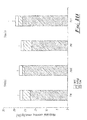
- Fig. 2 shows a graph of urinary total carnitine (TC), free carnitine (FC) and acylcarnitine (AC) excretion in mg over a period of 24 hours following an oral dose of 3.01 g of L-carnitine ingestion with control (CON) and carbohydrate (CHO).
- Fig. 3 shows a plot of plasma total carnitine concentration measured over 7 hours following an oral dose of 3.01 g L-carnitine with Control ( ⁇ ) and carbohydrate ( ⁇ ).
- Fig. 4 shows a plot of the area under the plasma-time curves (AUC) for total carnitine (TC), free carnitine (FC) and acylcarnitine (AC) measured over a 7 hour period following an oral dose of 3.01 g L-carnitine with Control (CON) and carbohydrate (CHO).
- AUC area under the plasma-time curves
- Insulin increases carnitine retention most probably by increasing sodium-potassium ATPase pump activity and, thus, sodium dependent transport of carnitine into cells (particularly skeletal and cardiac muscle). Insulin may also enable more FC to be available to tissues by 1) inhibiting acylation of supplemented L-carnitine and/or 2) by stimulating carnitine retention by reabsorption by the kidney.
- the study protocol was as follows.
- This hand was kept in a hand-warming unit (air temperature 55°C) to arterialise the venous drainage of the hand and a saline drip was attached to keep the cannula patent.
- a second cannula was placed in an antecubital vein in the non-dominant forearm for the infusion of insulin and glucose and a third cannula was inserted into an antecubital vein in the opposite arm for infusion of L-carnitine.
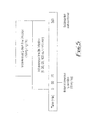
- a bolus dose of 15mg - kg -1 L-L-carnitine was administered intravenously over a 10 min period in order to achieve a plasma concentration of - 500 ⁇ mol/1. This was followed by a constant infusion at 10mg . kg -1 . h -1 for the next 290 min to maintain a supraphysiological steady steady state plasma carnitine concentration.
- t 360 both insulin and L-carnitine infusions were stopped and subjects were free to leave the laboratory once their blood glucose levels had stabilised.
- euglycaemia was maintained throughout insulin infusion by means of simultaneous infusion of a 20% glucose solution.
- 1 ml of arterialized venous (a-v) blood was obtained every 5min to determine blood glucose concentration on-line (YSI 2300 STATplus, YSI, Yellow Springs, OH).
- 5 ml of a-v blood were obtained every half hour (and at 80 min) for 6 h. Two ml of this blood were collected into lithium heparin containers and, after centrifugation (14,000 rpm for 2 min), the plasma was removed and immediately frozen in liquid nitrogen.
- a two-way ANOVA time and treatment effects, GraphPad Prism version 3, GraphPad Software, Inc., USA was performed to detect differences in plasma carnitine and serum insulin concentrations. If significance was achieved, a repeated measure ANOVA (GraphPad Prism version 3, GraphPad Software, Inc., USA) was used to locate differences between treatments at each time point. Statistical significance was declared at P ⁇ 0.05, and all values presented represent mean ⁇ standard error (SE).
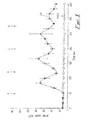
- Plasma total carnitine (TC) concentration before and throughout the 300 min of 60 mM L-carnitine infusion during each fo the four euglycaemic insulin clamps (5, 30, 55, and 105 mU . m -2 . min -1 ) is shown in Fig. 7 .
- the basal plasma TC concentration was similar across experimental groups, (i.e. 47.7 ⁇ 0.6 ⁇ mol / 1).
- the 10 min bolus L-carnitine infusion (15 mg - kg -1 ) markedly increased plasma TC concentration to 545.5 ⁇ 16.4, 546.8 ⁇ 20.7, 559.4 ⁇ 41.2, and 509.7 ⁇ 17.4 ⁇ mol/1 during each of the insulin clamps (5, 30, 55 and 105 mU . m -2 . min -1 , respectively).
- Fig. 7 shows the plasma total carnitine concentrations during 6 h intravenous insulin infusions of 5( ⁇ ), 30 ( ⁇ ), 55 ( ⁇ ), and 105 (•) mU . m -2 . min -1 combined with a 5 h intravenous 60 mM L-carnitine infusion. Values are means ⁇ SE expressed in ⁇ mol/l.
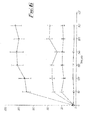
- Fig. 8 shows the plasma carnitine data for only the 5 and 105 mU . m -2 . min -1 doses. As can be seen, plasma carnitine concentration was siginificantly lower during the final two hours of infusion at the highest dose.
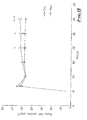
- the study protocol was as follows. Subjects reported to the laboratory in the morning after an overnight fast and underwent exactly the same experimental procedures as described in the previous Example II study protocol. However, on this occasion two, as opposed to four, euglycaemic insulin clamps (5 and 105 mU . m -2 . min -1 ) were performed in a randomised order, and each was seprated by 2 weeks. Each clamp was maintained for 6 hours and a muscle biopsy sample was obtained from the quadriceps muscle group in the basal state (prior) to infusion of carnitine and glucose and insulin) and after 6 hrs of infusion.
- Fig. 9 shows the plasma total carnitine concentrations during 6 h intravenous insulin infusions of 5 ( ⁇ ) and 105 (•) 105 mU . m -2 . min -1 combined with a 5 h intravenous 60 mM L-carnitine infusion. Values are means ⁇ SE expressed in ⁇ mol /1. Statistical differences between treatments: ** p ⁇ 0.01, *** P ⁇ 0.001.
- Fig. 10 shows muscle acyl, acetyl and free carnitine concentrations (sum equals muscle total carnitine concentration) pre and post 6 h intravenous insulin infusions of 5 and 105 (•) mU . m -2 . min -1 combined with a 5 h intravenous 60 mM L-carnitine infusion. Values are means ⁇ SE expressed in ⁇ mol / 1. Statistical differences between treatments: * p ⁇ 0.05.
- the lowest insulin infusion rate (equivalent to fasting insulin concentration) had no effect on muscle carnitine accumulation. However, the highest infusion rate resulted in a significant increase in muscle total carnitine concentration.
- compositions may be administered in any convenient form such as tablet, powder, pellet or the like and otherwise than by ingestion, such as injection.
- agent such as carbohydrate
- the invention can be used to increase carnitine retention in animal as well as human bodies, and in whole bodies, tissues or cells derived therefrom.
- the invention also provides a kit comprising a carnitine substance and an agent such as a carbohydrate, as described above.
Landscapes
- Health & Medical Sciences (AREA)
- Life Sciences & Earth Sciences (AREA)
- Chemical & Material Sciences (AREA)
- Medicinal Chemistry (AREA)
- Veterinary Medicine (AREA)
- Public Health (AREA)
- General Health & Medical Sciences (AREA)
- Animal Behavior & Ethology (AREA)
- Epidemiology (AREA)
- Pharmacology & Pharmacy (AREA)
- Nutrition Science (AREA)
- Polymers & Plastics (AREA)
- Food Science & Technology (AREA)
- Engineering & Computer Science (AREA)
- Mycology (AREA)
- Proteomics, Peptides & Aminoacids (AREA)
- Molecular Biology (AREA)
- Acyclic And Carbocyclic Compounds In Medicinal Compositions (AREA)
- Pharmaceuticals Containing Other Organic And Inorganic Compounds (AREA)
Applications Claiming Priority (2)
| Application Number | Priority Date | Filing Date | Title |
|---|---|---|---|
| GBGB0306394.8A GB0306394D0 (en) | 2003-03-20 | 2003-03-20 | Carnitine retention |
| EP04722325A EP1603552A1 (fr) | 2003-03-20 | 2004-03-22 | Retention de la carnitine |
Related Parent Applications (1)
| Application Number | Title | Priority Date | Filing Date |
|---|---|---|---|
| EP04722325.0 Division | 2004-03-22 |
Publications (1)
| Publication Number | Publication Date |
|---|---|
| EP2517703A1 true EP2517703A1 (fr) | 2012-10-31 |
Family
ID=9955155
Family Applications (2)
| Application Number | Title | Priority Date | Filing Date |
|---|---|---|---|
| EP12166463A Withdrawn EP2517703A1 (fr) | 2003-03-20 | 2004-03-22 | Rétention de carnitine |
| EP04722325A Withdrawn EP1603552A1 (fr) | 2003-03-20 | 2004-03-22 | Retention de la carnitine |
Family Applications After (1)
| Application Number | Title | Priority Date | Filing Date |
|---|---|---|---|
| EP04722325A Withdrawn EP1603552A1 (fr) | 2003-03-20 | 2004-03-22 | Retention de la carnitine |
Country Status (6)
| Country | Link |
|---|---|
| US (2) | US9662344B2 (fr) |
| EP (2) | EP2517703A1 (fr) |
| AU (1) | AU2004222508B2 (fr) |
| CA (1) | CA2519253C (fr) |
| GB (1) | GB0306394D0 (fr) |
| WO (1) | WO2004082674A1 (fr) |
Families Citing this family (2)
| Publication number | Priority date | Publication date | Assignee | Title |
|---|---|---|---|---|
| US8283327B2 (en) | 2005-03-19 | 2012-10-09 | Kneller Bruce W | Palatinose for enhancing dietary supplement and pharmaceutical delivery |
| GB201304112D0 (en) * | 2013-03-07 | 2013-04-24 | Univ Nottingham | Modulation of energy expenditure |
Citations (7)
| Publication number | Priority date | Publication date | Assignee | Title |
|---|---|---|---|---|
| FR2574254A1 (fr) | 1984-12-10 | 1986-06-13 | Boehringer Biochemia Srl | Compositions dietetiques |
| US5108767A (en) | 1991-06-10 | 1992-04-28 | Abbott Laboratories | Liquid nutritional product for persons receiving renal dialysis |
| US5397786A (en) | 1993-01-08 | 1995-03-14 | Simone; Charles B. | Rehydration drink |
| EP0680945A2 (fr) * | 1994-05-02 | 1995-11-08 | Omeara (Proprietary) Limited | Amino acide, carnithine et magnésium supplémentation |
| WO2001021208A1 (fr) | 1999-09-23 | 2001-03-29 | Juvenon Corporation | Supplement nutritionnel fournissant une energie et une endurance accrues |
| WO2001082928A1 (fr) | 2000-05-01 | 2001-11-08 | Accera, Inc. | Utilisation de triglycerides de chaine moyenne pour traiter et prevenir la maladie d'alzheimer et d'autres maladies provoquees par un metabolisme neuronal diminue |
| WO2001095915A1 (fr) * | 2000-06-14 | 2001-12-20 | Sigma-Tau Healthscience S.P.A. | Supplement alimentaire renforçant le metabolisme de la tonicite musculaire, a base de carnitine d'alcanoyle et de ribose |
Family Cites Families (11)
| Publication number | Priority date | Publication date | Assignee | Title |
|---|---|---|---|---|
| US1878145A (en) * | 1929-08-21 | 1932-09-20 | Alfred L Holven | Recovery of sucrose from cane molasses |
| IT1120033B (it) * | 1979-10-05 | 1986-03-19 | Sigma Tau Ind Farmaceuti | Composizione farmaceutica comprendente-carnitina adatta per l'alimentazione parenterale |
| US4321323A (en) * | 1980-06-18 | 1982-03-23 | Standard Brands Incorporated | Carbohydrate process |
| US4687782A (en) * | 1984-12-10 | 1987-08-18 | Nutri-Fuels Systems, Inc. | Nutritional composition for enhancing skeletal muscle adaptation to exercise training |
| IT1177384B (it) * | 1984-12-12 | 1987-08-26 | Boeehringer Biochemia Robin Sp | Prodotti dietetici granulari a base di amminoacidi e procedimento per la loro preparazione |
| JPS62198621A (ja) * | 1986-02-24 | 1987-09-02 | Kanebo Ltd | 制癌補助剤 |
| DE4415624A1 (de) * | 1994-05-04 | 1995-11-09 | Basf Ag | Verfahren zur Herstellung von strahlungshärtbaren Acrylaten |
| US5985339A (en) * | 1996-11-22 | 1999-11-16 | Kamarei; A. Reza | Refrigeration-shelf-stable ready-to-drink complete nutritional compositions and products |
| KR100255039B1 (ko) * | 1997-07-28 | 2000-05-01 | 박영구 | L-카르니틴의제조방법 |
| ES2320103T3 (es) * | 2001-06-26 | 2009-05-19 | L'oreal | Composiciones que comprenden un compuesto de baja solubilidad y un derivado lipofilo de acido aminado, utilizaciones y procedimientos correspondientes. |
| US20130034630A1 (en) * | 2011-08-05 | 2013-02-07 | Bruce Ransom | Reload energy gel for athletes and active adults |
-
2003
- 2003-03-20 GB GBGB0306394.8A patent/GB0306394D0/en not_active Ceased
-
2004
- 2004-03-22 AU AU2004222508A patent/AU2004222508B2/en not_active Ceased
- 2004-03-22 EP EP12166463A patent/EP2517703A1/fr not_active Withdrawn
- 2004-03-22 US US10/549,384 patent/US9662344B2/en not_active Expired - Fee Related
- 2004-03-22 WO PCT/GB2004/001256 patent/WO2004082674A1/fr not_active Ceased
- 2004-03-22 CA CA2519253A patent/CA2519253C/fr not_active Expired - Fee Related
- 2004-03-22 EP EP04722325A patent/EP1603552A1/fr not_active Withdrawn
-
2014
- 2014-07-28 US US14/444,151 patent/US20140378397A1/en not_active Abandoned
Patent Citations (7)
| Publication number | Priority date | Publication date | Assignee | Title |
|---|---|---|---|---|
| FR2574254A1 (fr) | 1984-12-10 | 1986-06-13 | Boehringer Biochemia Srl | Compositions dietetiques |
| US5108767A (en) | 1991-06-10 | 1992-04-28 | Abbott Laboratories | Liquid nutritional product for persons receiving renal dialysis |
| US5397786A (en) | 1993-01-08 | 1995-03-14 | Simone; Charles B. | Rehydration drink |
| EP0680945A2 (fr) * | 1994-05-02 | 1995-11-08 | Omeara (Proprietary) Limited | Amino acide, carnithine et magnésium supplémentation |
| WO2001021208A1 (fr) | 1999-09-23 | 2001-03-29 | Juvenon Corporation | Supplement nutritionnel fournissant une energie et une endurance accrues |
| WO2001082928A1 (fr) | 2000-05-01 | 2001-11-08 | Accera, Inc. | Utilisation de triglycerides de chaine moyenne pour traiter et prevenir la maladie d'alzheimer et d'autres maladies provoquees par un metabolisme neuronal diminue |
| WO2001095915A1 (fr) * | 2000-06-14 | 2001-12-20 | Sigma-Tau Healthscience S.P.A. | Supplement alimentaire renforçant le metabolisme de la tonicite musculaire, a base de carnitine d'alcanoyle et de ribose |
Non-Patent Citations (7)
| Title |
|---|
| BOHLES H ET AL: "Improved N-retention during L-carnitine-supplemented total parenteral nutrition.", JPEN. JOURNAL OF PARENTERAL AND ENTERAL NUTRITION. 1984 JAN-FEB, vol. 8, no. 1, January 1984 (1984-01-01), pages 9 - 13, XP008032205, ISSN: 0148-6071 * |
| GREENWOOD R H ET AL: "Effects of L-carnitine on nitrogen retention and blood metabolites of growing steers and performance of finishing steers.", JOURNAL OF ANIMAL SCIENCE. JAN 2001, vol. 79, no. 1, January 2001 (2001-01-01), pages 254 - 260, XP002286196, ISSN: 0021-8812 * |
| GROSS C J ET AL: "Effect of development and nutritional state on the uptake, metabolism and release of free and acetyl-L-carnitine by the rodent small intestine.", BIOCHIMICA ET BIOPHYSICA ACTA. 3 NOV 1993, vol. 1170, no. 3, 3 November 1993 (1993-11-03), pages 265 - 274, XP008032228, ISSN: 0006-3002 * |
| LACOUNT D W ET AL: "Dose response of dairy cows to abomasal administration of four amounts of L-carnitine.", April 1996, JOURNAL OF DAIRY SCIENCE. APR 1996, VOL. 79, NR. 4, PAGE(S) 591 - 602, ISSN: 0022-0302, XP002286407 * |
| LACOUNT D W ET AL: "Responses of dairy cows during early lactation to ruminal or abomasal administration of L-carnitine.", August 1995, JOURNAL OF DAIRY SCIENCE. AUG 1995, VOL. 78, NR. 8, PAGE(S) 1824 - 1836, ISSN: 0022-0302, XP002286406 * |
| LACOUNT D W ET AL: "Ruminal degradation and dose response of dairy cows to dietary L-carnitine.", February 1996, JOURNAL OF DAIRY SCIENCE. FEB 1996, VOL. 79, NR. 2, PAGE(S) 260 - 269, ISSN: 0022-0302, XP002286408 * |
| TAMIR I. ET AL: "Effects of a single oral load of medium-chain triglyceride on serum lipid and insulin levels in man", JOURNAL OF LIPID RESEARCH, vol. 9, 1968, pages 661 - 666, XP003030795 |
Also Published As
| Publication number | Publication date |
|---|---|
| CA2519253C (fr) | 2012-10-16 |
| EP1603552A1 (fr) | 2005-12-14 |
| US20060240075A1 (en) | 2006-10-26 |
| GB0306394D0 (en) | 2003-04-23 |
| US9662344B2 (en) | 2017-05-30 |
| WO2004082674A1 (fr) | 2004-09-30 |
| US20140378397A1 (en) | 2014-12-25 |
| AU2004222508A1 (en) | 2004-09-30 |
| WO2004082674A9 (fr) | 2004-12-23 |
| CA2519253A1 (fr) | 2004-09-30 |
| AU2004222508B2 (en) | 2010-07-15 |
Similar Documents
| Publication | Publication Date | Title |
|---|---|---|
| Beelen et al. | Protein coingestion stimulates muscle protein synthesis during resistance-type exercise | |
| Tallaksen et al. | Kinetics of thiamin and thiamin phosphate esters in human blood, plasma and urine after 50 mg intravenously or orally | |
| Fukagawa et al. | Insulin-mediated reduction of whole body protein breakdown. Dose-response effects on leucine metabolism in postabsorptive men. | |
| Stephens et al. | Insulin stimulates L‐carnitine accumulation in human skeletal muscle | |
| Luzi et al. | Leucine metabolism in IDDM: role of insulin and substrate availability | |
| EP1087779B1 (fr) | Compositions permettant d'accroitre l'energie in vivo | |
| EP2512236B1 (fr) | Procédé amélioré permettant d'administrer du bêta-hydroxy-bêta-méthylbutyrate (hmb) | |
| CA2521987C (fr) | Methodes et compositions pouvant augmenter la capacite de travail anaerobie dans des tissus | |
| Assan et al. | Phenformin-induced lactic acidosis in diabetic patients | |
| Beelen et al. | Impact of protein coingestion on muscle protein synthesis during continuous endurance type exercise | |
| Abumrad et al. | Disposal of alpha-ketoisocaproate: roles of liver, gut, and kidneys | |
| WO2020264412A1 (fr) | Compositions pour la supplémentation en créatine chez des personnes ne répondant pas à la créatine | |
| Slow et al. | Betaine analogues alter homocysteine metabolism in rats | |
| US20140378397A1 (en) | Carnitine Retention | |
| WO1998006278A1 (fr) | Procedes et compositions accroissant la capacite de travail anaerobie des tissus | |
| JP2006507268A (ja) | アルコール代謝の促進 | |
| Schauder | Pharmacokinetic and metabolic interrelationships among branched-chain keto and amino acids in humans | |
| Mora-Rodriguez et al. | High-Intensity Intervallic Exercise (HIIE) Is Superior to Isocaloric Moderate-Intensity Continuous Exercise (MICE) at Reducing Postprandial Hyperglycemia | |
| Song Chen et al. | Impact of enteral and parenteral nutrition on hepatic and muscle glucose metabolism | |
| Dalton et al. | Metabolism of orally administered branched-chain α-keto acids. | |
| JP6833726B2 (ja) | 運動能力を高める組成物および方法 | |
| US20090312237A1 (en) | Regulating fat and carbohydrate oxidation in muscle tissue comprising controlling garnitine content in muscle | |
| Okita et al. | Effects of branched-chain α-keto acids on plasma amino acid concentrations in carbon tetrachloride-intoxicated rats | |
| EP1745789A1 (fr) | Compositions contenants ribose pour élever l'energie in vivo | |
| Schauder et al. | Oral administration of α-ketoisovaleric acid or valine in humans: Blood kinetics and biochemical effects |
Legal Events
| Date | Code | Title | Description |
|---|---|---|---|
| PUAI | Public reference made under article 153(3) epc to a published international application that has entered the european phase |
Free format text: ORIGINAL CODE: 0009012 |
|
| AC | Divisional application: reference to earlier application |
Ref document number: 1603552 Country of ref document: EP Kind code of ref document: P |
|
| AK | Designated contracting states |
Kind code of ref document: A1 Designated state(s): AT BE BG CH CY CZ DE DK EE ES FI FR GB GR HU IE IT LI LU MC NL PL PT RO SE SI SK TR |
|
| TPAC | Observations filed by third parties |
Free format text: ORIGINAL CODE: EPIDOSNTIPA |
|
| 17P | Request for examination filed |
Effective date: 20130430 |
|
| 17Q | First examination report despatched |
Effective date: 20140102 |
|
| STAA | Information on the status of an ep patent application or granted ep patent |
Free format text: STATUS: THE APPLICATION IS DEEMED TO BE WITHDRAWN |
|
| 18D | Application deemed to be withdrawn |
Effective date: 20171003 |