EP2532687A2 - Catalyseurs à base de metallocènes pontés - Google Patents
Catalyseurs à base de metallocènes pontés Download PDFInfo
- Publication number
- EP2532687A2 EP2532687A2 EP11169600A EP11169600A EP2532687A2 EP 2532687 A2 EP2532687 A2 EP 2532687A2 EP 11169600 A EP11169600 A EP 11169600A EP 11169600 A EP11169600 A EP 11169600A EP 2532687 A2 EP2532687 A2 EP 2532687A2
- Authority
- EP
- European Patent Office
- Prior art keywords
- group
- catalyst
- groups
- independently
- hydrocarbyl
- Prior art date
- Legal status (The legal status is an assumption and is not a legal conclusion. Google has not performed a legal analysis and makes no representation as to the accuracy of the status listed.)
- Withdrawn
Links
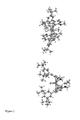
- 0 CC1C(*C2C(**)c3cccc(-c4cc(C(C)(C)C)cc(C(C)(C)C)c4)c3CC2C)c2cccc(-c3cc(C(C)(C)C)cc(C(C)(C)C)c3)c2C1 Chemical compound CC1C(*C2C(**)c3cccc(-c4cc(C(C)(C)C)cc(C(C)(C)C)c4)c3CC2C)c2cccc(-c3cc(C(C)(C)C)cc(C(C)(C)C)c3)c2C1 0.000 description 2
Images
Classifications
-
- C—CHEMISTRY; METALLURGY
- C08—ORGANIC MACROMOLECULAR COMPOUNDS; THEIR PREPARATION OR CHEMICAL WORKING-UP; COMPOSITIONS BASED THEREON
- C08F—MACROMOLECULAR COMPOUNDS OBTAINED BY REACTIONS ONLY INVOLVING CARBON-TO-CARBON UNSATURATED BONDS
- C08F10/00—Homopolymers and copolymers of unsaturated aliphatic hydrocarbons having only one carbon-to-carbon double bond
-
- C—CHEMISTRY; METALLURGY
- C07—ORGANIC CHEMISTRY
- C07F—ACYCLIC, CARBOCYCLIC OR HETEROCYCLIC COMPOUNDS CONTAINING ELEMENTS OTHER THAN CARBON, HYDROGEN, HALOGEN, OXYGEN, NITROGEN, SULFUR, SELENIUM OR TELLURIUM
- C07F17/00—Metallocenes
-
- C—CHEMISTRY; METALLURGY
- C08—ORGANIC MACROMOLECULAR COMPOUNDS; THEIR PREPARATION OR CHEMICAL WORKING-UP; COMPOSITIONS BASED THEREON
- C08F—MACROMOLECULAR COMPOUNDS OBTAINED BY REACTIONS ONLY INVOLVING CARBON-TO-CARBON UNSATURATED BONDS
- C08F110/00—Homopolymers of unsaturated aliphatic hydrocarbons having only one carbon-to-carbon double bond
- C08F110/04—Monomers containing three or four carbon atoms
- C08F110/06—Propene
-
- C—CHEMISTRY; METALLURGY
- C08—ORGANIC MACROMOLECULAR COMPOUNDS; THEIR PREPARATION OR CHEMICAL WORKING-UP; COMPOSITIONS BASED THEREON
- C08F—MACROMOLECULAR COMPOUNDS OBTAINED BY REACTIONS ONLY INVOLVING CARBON-TO-CARBON UNSATURATED BONDS
- C08F4/00—Polymerisation catalysts
- C08F4/42—Metals; Metal hydrides; Metallo-organic compounds; Use thereof as catalyst precursors
- C08F4/44—Metals; Metal hydrides; Metallo-organic compounds; Use thereof as catalyst precursors selected from light metals, zinc, cadmium, mercury, copper, silver, gold, boron, gallium, indium, thallium, rare earths or actinides
- C08F4/60—Metals; Metal hydrides; Metallo-organic compounds; Use thereof as catalyst precursors selected from light metals, zinc, cadmium, mercury, copper, silver, gold, boron, gallium, indium, thallium, rare earths or actinides together with refractory metals, iron group metals, platinum group metals, manganese, rhenium technetium or compounds thereof
- C08F4/62—Refractory metals or compounds thereof
- C08F4/64—Titanium, zirconium, hafnium or compounds thereof
- C08F4/659—Component covered by group C08F4/64 containing a transition metal-carbon bond
- C08F4/65908—Component covered by group C08F4/64 containing a transition metal-carbon bond in combination with an ionising compound other than alumoxane, e.g. (C6F5)4B-X+
-
- C—CHEMISTRY; METALLURGY
- C08—ORGANIC MACROMOLECULAR COMPOUNDS; THEIR PREPARATION OR CHEMICAL WORKING-UP; COMPOSITIONS BASED THEREON
- C08F—MACROMOLECULAR COMPOUNDS OBTAINED BY REACTIONS ONLY INVOLVING CARBON-TO-CARBON UNSATURATED BONDS
- C08F4/00—Polymerisation catalysts
- C08F4/42—Metals; Metal hydrides; Metallo-organic compounds; Use thereof as catalyst precursors
- C08F4/44—Metals; Metal hydrides; Metallo-organic compounds; Use thereof as catalyst precursors selected from light metals, zinc, cadmium, mercury, copper, silver, gold, boron, gallium, indium, thallium, rare earths or actinides
- C08F4/60—Metals; Metal hydrides; Metallo-organic compounds; Use thereof as catalyst precursors selected from light metals, zinc, cadmium, mercury, copper, silver, gold, boron, gallium, indium, thallium, rare earths or actinides together with refractory metals, iron group metals, platinum group metals, manganese, rhenium technetium or compounds thereof
- C08F4/62—Refractory metals or compounds thereof
- C08F4/64—Titanium, zirconium, hafnium or compounds thereof
- C08F4/659—Component covered by group C08F4/64 containing a transition metal-carbon bond
- C08F4/65912—Component covered by group C08F4/64 containing a transition metal-carbon bond in combination with an organoaluminium compound
Definitions
- This invention relates to new bisindenyl ligands, complexes thereof and catalysts comprising those complexes.
- the invention relates to racemic C2-symmetric metallocene catalysts containing such bisindenyl ligands, as well as the use of such new bisindenyl metallocene catalysts for the production of isotactic polypropylene with very high molecular weight, very high isotacticity and very high melting point even at industrially relevant polymerization temperatures.
- Metallocene catalysts have been used to manufacture polyolefins for many years. Countless academic and patent publications describe the use of these catalysts in olefin polymerisation. Metallocenes are now used industrially and polyethylenes and polypropylenes in particular are often produced using cyclopentadienyl based catalyst systems with different substitution patterns.
- isotactic polypropylene iPP
- Tm melting point
- the Ziegler-Natta catalyst systems known in the literature can produce iPP with high molecular weights together with moderate to high isotacticities and melting points (Tm).
- Tm isotacticities and melting points (measured by standard DSC methods) of non-nucleated iPPs are in the range of 160 to 165°C.
- rac-Et(2,4,7-Me 3 Ind) 2 ZrCl 2 can produce isotactic polypropylene with a molecular weight of 1,900,000 g/mol and a melting point of 168°C.
- a polymerization temperature of -30 °C is necessary.
- the melting point of the resulting polypropylene decreases to 158 °C.
- a polymerization temperature of -30°C is however far too low for polypropylene manufacturing in commercial plants, which need to be operated above 60°C.
- this same metallocene yields low molecular weight polypropylenes with relatively low melting point.
- rac-Et(2,4,7-Me 3 Ind) 2 ZrCl 2 /MAO yields a polypropylene of molecular weight of only 30,600 with a melting point of only 145°C.
- metallocene catalysts when used under industrially relevant polymerization conditions, produce iPP having melting points which are lower than the melting points of Zielger Natta iPP, and even the best metallocene catalysts produce iPP with melting points of less than 160°C.
- no metallocene catalysts can produce iPP having both high melting point and high molecular weight at polymerisation temperatures above 60 °C.
- the catalysts of the invention comprise an aryl group at the 4-position and substituents at the 2 and 7 positions. Similar metallocenes are known in the art. In organometallics, vol 11, No. 6, 1992 , some bisindenyl zirconium complexes are described in which methyl groups are present at the 4 and 7 positions of the indenyl ring.
- WO2002/02576 rac-dimethylsilanediylbis[2-methyl-4-(3,5-di-tert-butylphenyl)indenyl]hafnium metallocenes are mentioned.
- WO02/02575 also describes 3,5-substituted bis indenyl ligands with a silafluorendiyl bridging group.
- These metallocene catalysts activated with MAO or a borate, on a silica support, at polymerisation temperatures of 60 or 70°C, give iPP with Tm between 156 and 159 °C. This melting point is lower than that obtained with the metallocenes of the invention.
- Metallocenes having a 2,4,7-substitution pattern on indenyls are also known. As discussed above, rac-Et(2,4,7-Me 3 Ind) 2 ZrCl 2 gives iPP with low molecular weight, relatively low Tm when employed at normal temperature.
- EP-A-1209165 describes rac-Me 2 Si(2,7-Me 2 -4-iPrInd) 2 ZrCl 2 and rac-Ph 2 Si(2,7-Me 2 -4-iPrInd) 2 ZrCl 2 . Both metallocenes give iPP with low melting points of 147 and 148 °C even when used at the relatively low polymerisation temperature of 50°C.
- WO2009/054831 describes zirconocenes with a 2-methyl-4,7-aryl substitution pattern, such as rac-Me 2 Si[2-Me-4,7-(4-tBuPh) 2 Ind] 2 ZrCl 2 .
- the melting points of the homopolymers are still quite low, being in all cases below 150°C despite the relatively low polymerization temperature of 65°C.
- the present inventors sought a new catalyst system capable of producing, inter alia, isotactic polypropylene with high melting points, high isotacticity and high molecular weights.
- the invention provides a catalyst comprising a complex of formula (I) wherein M is zirconium or hafnium; each X is a sigma ligand; L is a divalent bridge selected from -R' 2 C-, -R' 2 C-CR' 2 -, -R' 2 Si-, -R' 2 Si-SiR' 2 -, -R' 2 Ge-, wherein each R' is independently a hydrogen atom, C1-C20-hydrocarbyl, tri(C1-C20-alkyl)silyl, C6-C20-aryl, C7-C20-arylalkyl or C7-C20-alkylaryl; each R 2 is independently a C1-C20 hydrocarbyl radical optionally containing one or more heteroatoms from groups 14-16; each R 5 is independently hydrogen or an aliphatic C1-20 hydrocarbyl group optionally containing one or more heteroatoms from groups 14-16; each R 6 is
- the catalyst of the invention can be used in non-supported form or in solid form,
- the catalyst of the invention may be used as a homogeneous catalyst or heterogeneous catalyst.
- the catalyst of the invention in solid form preferably in solid particulate form can be either supported on an external carrier material, like silica or alumina, or, in a particularly preferred embodiment, is free from an external carrier, however still being in solid form.
- an external carrier material like silica or alumina
- the solid catalyst is obtainable by a process in which
- the invention provides a process for the manufacture of a catalyst as hereinbefore defined comprising obtaining a complex of formula (I) and a cocatalyst as hereinbefore described; forming a liquid/liquid emulsion system, which comprises a solution of catalyst components (i) and (ii) dispersed in a solvent, and solidifying said dispersed droplets to form solid particles.
- the invention provides the use in olefin polymerisation of a catalyst as hereinbefore defined, especially for the formation of a polyolefin, especially a polyethylene or polypropylene, such as isotactic polypropylene.
- the invention provides a process for the polymerisation of at least one olefin comprising reacting said at least one olefin with a catalyst as hereinbefore described, especially for the formation of isotactic polypropylene.
- the invention provides a process for producing an isotactic polypropylene with a melting point of at least 160°C comprising polymerising propylene in the presence of the catalyst as hereinbefore defined, especially wherein M is Hf and the cocatalyst is a borate.
- the invention provides a polypropylene homopolymer having a Mw/Mn of less than 4, a Mw of more than 250,000 and at least 50 wt% of the components thereof have a lamellar thickness of 24 nm or more when measured using SIST.
- the catalyst does not contain an external support, such as an inorganic support, for example, silica or alumina, or an organic polymeric support material.
- C 1-20 hydrocarbyl group therefore includes C 1-20 alkyl, C 2-20 alkenyl, C 2-20 alkynyl, C 3-20 cycloalkyl, C 3-20 cycloalkenyl, C 6-20 aryl groups, C 7-20 alkylaryl groups or C 7-20 arylalkyl groups or of course mixtures of these groups such as cycloalkyl substituted by alkyl.
- Linear and branched hydrocarbyl groups cannot contain cyclic units.
- Aliphatic hydrocarbyl groups cannot contain aryl rings.
- preferred C 1-20 hydrocarbyl groups are C 1-20 alkyl, C 4-20 cycloalkyl, C 5-20 cycloalkyl-alkyl groups, C 7-20 alkylaryl groups, C 7-20 arylalkyl groups or C 6-20 aryl groups, especially C 1-10 alkyl groups, C 6-10 aryl groups, or C 7-12 arylalkyl groups, e.g. C 1-8 alkyl groups.
- Most especially preferred hydrocarbyl groups are methyl, ethyl, propyl, isopropyl, tertbutyl, isobutyl, C 5-6 -cycloalkyl, cyclohexylmethyl, phenyl or benzyl.
- halo includes fluoro, chloro, bromo and iodo groups, especially chloro groups, when relating to the complex definition.
- the oxidation state of the metal ion is governed primarily by the nature of the metal ion in question and the stability of the individual oxidation states of each metal ion.
- the metal ion M is coordinated by ligands X so as to satisfy the valency of the metal ion and to fill its available coordination sites.
- ligands X can vary greatly.
- Catalyst activity is defined in this application to be the amount of polymer produced/g catalyst/h.
- Catalyst metal activity is defined here to be the amount of polymer produced/g Metal/h.
- productivity is also sometimes used to indicate the catalyst activity although herein it designates the amount of polymer produced per unit weight of catalyst.
- the two multicyclic ligands making up the complexes of the invention are preferably identical and hence the complexes of the invention may be symmetrical.
- the complexes of the invention are preferably in their racemic form. It is a feature of the invention, that the process described in detail below for the formation of the complexes of the invention gives rise to complexes predominantly in their rac form. There is low or very low meso form of the complexes formed, e.g. less than 20 wt% thereof.
- M is preferably Hf.
- Each X is preferably a hydrogen atom, a halogen atom, a R, OR, OSO 2 CF 3 , OCOR, SR, NR 2 or PR 2 group wherein R is a linear or branched, cyclic or acyclic, C1-C20-alkyl, C2-C20 alkenyl, C2-C20 alkynyl, C6-C20-aryl, C7-C20-alkylaryl or C7-C20-arylalkyl radical; optionally containing heteroatoms belonging to groups 14-16.
- R is preferably a C 1-6 alkyl, phenyl or benzyl group.
- each X is independently a hydrogen atom, a halogen atom, C 1-6 -alkoxy group or an R group, e.g. preferably a C 1-6 -alkyl, phenyl or benzyl group. Most preferably X is chlorine or a methyl radical. Preferably both X groups are the same.
- L is preferably a bridge comprising a heteroatom, such as silicon or, germanium, e.g. -SiR 8 2 -, wherein each R 8 is independently C1-C20-alkyl, C6-C20-aryl or tri(C1-C20-alkyl)silyl-residue, such as trimethylsilyl. More preferably R 8 is C 1-6- alkyl, especially methyl. Most preferably, L is a dimethylsilyl or diethylsilyl bridge. It may also be an ethylene bridge.
- R 2 is preferably a C1-10 hydrocarbyl group such as C1-6-hydrocarbyl group. More preferably it is a linear or branched C1-20 alkyl group. More preferably it is a linear or branched C1-6 alkyl group, especially linear C1-6 alkyl group such as methyl or ethyl.
- the R 2 group can be interrupted by one or more heteroatoms, such as 1 or 2 heteroatoms, e.g. one heteroatom, selected from groups 14 to 16 of the periodic table.
- a heteroatom is preferably O, N or S, especially O. More preferably however the R 2 group is free from heteroatoms. Most especially R 2 is methyl.
- the Ar group is preferably a C6-20 aryl group such as a phenyl group or naphthyl group. Whilst the Ar group can be a heteroaryl group, such as carbazolyl, it is preferable that Ar is not a heteroaryl group.
- the Ar group can be unsubstituted but is preferably substituted by one or more groups R 1 , more preferably by two R 1 groups, especially in positions 3 and 5 of the aryl ring bound to the indenyl ligand.
- R 1 is preferably a C1-20 hydrocarbyl group, such as a C1-20 alkyl group.
- R 1 groups can be the same or different, preferably the same. More preferably, R 1 is a C2-10 alkyl group such as C3-8 alkyl group. Highly preferred groups are tert butyl groups. It is preferred if the group R 1 is bulky, i.e. is branched. Branching might be alpha or beta to the Ar ring. Branched C3-8 alkyl groups are also favoured therefore.
- two R 1 groups on adjacent carbon atoms taken together can form a fused 5 or 6 membered non aromatic ring with the Ar group, said ring being itself optionally substituted with one or more groups R 4 .
- Such a ring might form a tetrahydroindenyl group with the Ar ring or a tetrahydronaphthyl group.
- R 4 group there is preferably only 1 such group. It is preferably a C1-10 alkyl group.
- R 1 groups there are two R 1 groups present on the Ar group. Where there are two R 1 groups present, the groups are preferably both meta to the link to the indenyl ring (3,5-positions).
- Each R 5 is preferably hydrogen or a C1-10 alkyl group, such as methyl. Ideally R 5 is hydrogen.
- Each R 6 is preferably hydrogen or a C1-10 alkyl group, such as methyl. Ideally R 6 is hydrogen.
- R 5 and R 6 group on adjacent carbon atoms can be taken together to form a 5 membered unsubstituted saturated carbon ring. That ring is preferably unsubstituted.
- the R 7 group contains at least two non hydrogen atoms. It cannot therefore be methyl. It must contain two carbon atoms or one or more carbon atoms and at least one heteroatom.
- R 7 is preferably an aliphatic C2-10 hydrocarbyl group such as a C2-10 alkyl group or more preferably is an aliphatic C1-10 hydrocarbyl group containing at least one heteroatom from groups 14 to 16 of the periodic table, such as at least one N, O or S atom. That atom should be in the backbone of the hydrocarbyl group (and if N may carry an H atom).
- R 7 is -ZR 3 .
- Z is O or S, preferably O. It is highly preferred therefore if the 7-position substituent is OR 3 .
- R 3 is preferably an aliphatic C1-10 hydrocarbyl group, especially a C1-10 alkyl group, more especially a branched C3-10 alkyl group Most especially R 3 is a C1-6 alkyl group, such as a linear C1-6 alkyl group. Ideally it is methyl or ethyl.
- Preferred complexes of the invention are of formula (IIa) wherein M is zirconium or hafnium; each X is a sigma ligand, preferably each X is independently a hydrogen atom, a halogen atom, C 1-6 -alkoxy group, C 1-6 -alkyl, phenyl or benzyl group; L is a divalent bridge selected from -R' 2 C-, -R' 2 C-CR' 2 -, -R' 2 Si-, -R' 2 Si-SiR' 2 -, -R' 2 Ge-, wherein each R' is independently a hydrogen atom, C1-C20-hydrocarbyl, tri(C1-C20-alkyl)silyl, C6-C20-aryl, C7-C20-arylalkyl or C7-C20-alkylaryl; each R 2 is a C1-10 hydrocarbyl group; each R 5 is hydrogen or a C1-10
- each R 1 is a C1-20 hydrocarbyl group.
- M is zirconium or hafnium; each X is a sigma ligand, preferably each X is independently a hydrogen atom, a halogen atom, C 1-6 -alkoxy group, C 1-6 -alkyl, phenyl or benzyl group; L is a divalent bridge selected from -R' 2 C-, -R' 2 C-CR' 2 -, -R' 2 Si-, -R' 2 Si-SiR' 2 -, -R' 2 Ge-, wherein each R' is independently a hydrogen atom, C1-C20-hydrocarbyl, tri(C1-C20-alkyl)silyl, C6-C20-aryl, C7-C20-arylalkyl or C7-C20-alkylaryl; each R 3 is an
- the invention provides a complex of formula (IV) wherein L, M and X are as hereinbefore defined (e.g. in formula (III); R 1 is C1-6 alkyl; and R 3 is C1-6 alkyl.
- the complex of the invention is of formula (V) wherein X is as hereinbefore defined (e.g. halide or methyl); R 1 is C1-6 alkyl; and R 3 is C1-6 alkyl.
- Highly preferred complexes of the invention are 1-Zr: rac-Me2Si[2-Me-4(3,5- t Bu 2 Ph)-7-OMe-Ind] 2 ZrCl 2 .
- 1-Hf rac-Me 2 Si[2-Me-4(3,5- t Bu 2 Ph)-7-OMe-Ind] 2 HfCl 2 .
- ligands required to form the complexes and hence catalysts of the invention can be synthesised by any process and the skilled organic chemist would be able to devise various synthetic protocols for the manufacture of the necessary ligand materials.
- the presence of bulky groups on the aryl group on the 4-position of the indenyl ring ensures the desired regioselectivity during the silylation step at position 1.
- the aryl group at the 4-position should carry at least two substituents, in particular substituents such as methyl, iso-propyl, neopentyl, tert-butyl or phenyl.
- such bulky substituents are in the 3,5-positions of the 4-aryl substituent. Ideally they are tert-butyl groups.
- the invention provides a process for the production of a bridged ligand of formula (VI) wherein the dotted line represents a double bond present between carbon atoms 1 and 2 or 2 and 3; comprising reacting a compound of formula (VII) wherein the dotted line represents a double bond present between carbon atoms 1 and 2 or 2 and 3; R 2 and R 7 are as hereinbefore defined (e.g. in formula (I)), n is 1 to 4 and R 1 represents a C1-20 hydrocarbyl group; especially branched C3-20 alkyl group; first with a base or nucleophile, then with a compound LG-L-LG, where L is as hereinbefore defined (e.g. in formula (I) and LG represents a leaving group.
- the double bond is located between atoms 1 and 2 in all rings or between atoms 2 and 3 in all rings. It may be of course, that a mixture of double bond isomers exists.
- Suitable leaving groups are well known in the art and include halides, mesylates, tosylates and so on.
- LCl 2 is preferred, especially SiMe 2 Cl 2 .
- the invention provides ligands carrying an alkoxy group at the 7-position of the ring.
- the present inventors have devised a simple strategy for preparing such a compound.
- the preferred synthesis route involves a two step reaction to an indanone precursor. It is highly preferred therefore if the synthesis of the ligands and hence complexes of the invention involves a compound of formula (VIII) where R 2 is as hereinbefore defined (e.g. in formula (I)) and LG is a leaving group, especially a halide such as bromide.
- R 2 is as hereinbefore defined (e.g. in formula (I)
- LG is a leaving group, especially a halide such as bromide.
- the formation of compound (I) or (VI) further comprises a step in which the precursor (VIII) is formed.
- compound (VIII) can be reacted with a variety of compounds to introduce the R 3 substituent onto the molecule.
- reaction with a methyl halide introduces a methoxy group at the 7-position and so on.
- the intermediate is thus a further preferred compound in the synthetic scheme.
- the formation of compound (I) or (VI) further comprises a step in which the precursor (IX) is formed.
- the Ar group can be introduced using aromatic substitution chemistry or using Suzuki chemistry as described in the scheme above.
- the chemicals used in the process of the invention are not expensive and moisture is less decisive than in prior art synthetic routes.
- We have noted above how the presence of bulky groups at the 4-position enhances regioselectivity.
- the 7-substituent plays an important role too. The additional sterical hindrance leads predominantly to the rac form of the complex resulting in a much easier work-up procedure. In combination with our ability to manipulate the substituents in the 4- and 7-positions, this leads to superior control of the complex structure.
- the presence of an alkoxy substituent at the 7-position substantially reduces the solubility of the rac isomer in light aliphatic hydrocarbons such as pentane or hexane. This further allows the possibility of separating the rac-form of the complex from the impurities by washing with aliphatic solvents. This is an important feature of the invention. It has been difficult in the prior art to separate meso and rac isomers of these fairly bulky metallocene ligands. It is most surprising that the presence of the 7-position group changes the solubility of the rac isomer relative to the meso isomer by such an extent that it becomes possible to separate these two using their different solubilities.
- Cocatalysts comprising one or more compounds of Group 13 metals, like organoaluminium compounds or borates used to activate metallocene catalysts are suitable for use in this invention.
- Boron based cocatalysts of interest include those of formula BY 3 wherein Y is the same or different and is a hydrogen atom, an alkyl group of from 1 to about 20 carbon atoms, an aryl group of from 6 to about 15 carbon atoms, alkylaryl, arylalkyl, haloalkyl or haloaryl each having from 1 to 10 carbon atoms in the alkyl radical and from 6-20 carbon atoms in the aryl radical or fluorine, chlorine, bromine or iodine.
- Preferred options are trifluoroborane, triphenylborane, tris(4-fluorophenyl)borane, tris(3,5- difluorophenyl)borane, tris(4-fluoromethylphenyl)borane, tris(2,4,6-trifluorophenyl)borane, tris(penta-fluorophenyl)borane, tris(tolyl)borane, tris(3,5-dimethyl-phenyl)borane, tris(3,5- difluorophenyl)borane and/or tris (3,4,5-trifluorophenyl)borane.
- borates are used, i.e. compounds containing a borate 3+ ion.
- Such ionic cocatalysts preferably contain a non-coordinating anion such as tetrakis(pentafluorophenyl)borate and tetraphenylborate.
- Suitable counterions are protonated amine or aniline derivatives such as methylammonium, anilinium, dimethylammonium, diethylammonium, N- methylanilinium, diphenylammonium, N,N-dimethylanilinium, trimethylammonium, triethylammonium, tri-n-butylammonium, methyldiphenylammonium, pyridinium, p-bromo-N,N- dimethylanilinium or p-nitro-N,N-dimethylanilinium.
- Preferred ionic compounds which can be used according to the present invention include: triethylammoniumtetra(phenyl)borate, tributylammoniumtetra(phenyl)borate, trimethylammoniumtetra(tolyl)borate, tributylammoniumtetra(tolyl)borate, tributylammoniumtetra(pentafluorophenyl)borate, tripropylammoniumtetra(dimethylphenyl)borate, tributylammoniumtetra(trifluoromethylphenyl)borate, tributylammoniumtetra(4-fluorophenyl)borate, N,N- dimethylcyclohexylammoniumtetrakis(pentafluorophenyl)borate, N,N- dimethylbenzylammoniumtetrakis(pentafluorophenyl)borate, N,N- di
- triphenylcarbeniumtetrakis(pentafluorophenyl) borate N,N- dimethylcyclohexylammoniumtetrakis(pentafluorophenyl)borate or N5N- dimethylbenzylammoniumtetrakis(pentafluorophenyl)borate.
- the metallocene complex of the present invention can be used in combination with a suitable cocatalyst as a catalyst for the polymerization of olefins, e.g. in a solvent such as toluene or an aliphatic hydrocarbon, (i.e. for polymerization in solution), as it is well known in the art.
- a suitable cocatalyst as a catalyst for the polymerization of olefins, e.g. in a solvent such as toluene or an aliphatic hydrocarbon, (i.e. for polymerization in solution), as it is well known in the art.
- a suitable cocatalyst as a catalyst for the polymerization of olefins, e.g. in a solvent such as toluene or an aliphatic hydrocarbon, (i.e. for polymerization in solution), as it is well known in the art.
- polymerization of olefins, especially propylene takes
- the catalyst of the invention can be used in supported or unsupported form. It is preferred if a supported catalyst is used, as is well known in the art.
- the particulate support material used is preferably an organic or inorganic material, such as silica, alumina or zirconia or a mixed oxide such as silica-alumina, in particular silica, alumina or silica-alumina.
- the use of a silica support is preferred. The skilled man is aware of the procedures required to support a metallocene catalyst.
- the support is a porous material so that the complex may be loaded into the pores of the support, e.g. using a process analogous to those described in WO94/14856 (Mobil), WO95/12622 (Borealis) and WO2006/097497 .
- the particle size is not critical but is preferably in the range 5 to 200 ⁇ m, more preferably 20 to 80 ⁇ m. The use of these supports is routine in the art.
- a catalyst can be prepared in solution, for example in an aromatic solvent like toluene, by contacting the metallocene (as a solid or as a solution) with the cocatalyst, for example methylaluminoxane or a borane or a borate salt previously dissolved in an aromatic solvent, or can be prepared by sequentially adding the dissolved catalyst components to the polymerization medium.
- an aromatic solvent like toluene
- the metallocene (when X differs from alkyl or hydrogen) is prereacted with an aluminum alkyl, in a ratio metal/aluminum of from 1:1 up to 1:500, preferably from 1:1 up to 1:250, and then combined with a solution of the borane or borate cocatalyst dissolved in an aromatic solvent, either in a separate vessel or directly into the polymerization reactor.
- Preferred metal/boron ratios are between 1:1 and 1:100, more preferably 1:1 to 1:10.
- no external carrier is used but the catalyst is still presented in solid particulate form.
- no external support material such as inert organic or inorganic carrier, such as for example silica as described above is employed..
- a liquid/liquid emulsion system is used.
- the process involves forming dispersing catalyst components (i) and (ii) in a solvent, and solidifying said dispersed droplets to form solid particles.
- the method involves preparing a solution of one or more catalyst components; dispersing said solution in an solvent to form an emulsion in which said one or more catalyst components are present in the droplets of the dispersed phase; immobilising the catalyst components in the dispersed droplets, in the absence of an external particulate porous support, to form solid particles comprising the said catalyst, and optionally recovering said particles.
- This process enables the manufacture of active catalyst particles with improved morphology, e.g. with a predetermined spherical shape, surface properties and particle size and without using any added external porous support material, such as an inorganic oxide, e.g. silica.
- preparing a solution of one or more catalyst components is meant that the catalyst forming compounds may be combined in one solution which is dispersed to the immiscible solvent, or, alternatively, at least two separate catalyst solutions for each part of the catalyst forming compounds may be prepared, which are then dispersed successively to the solvent.
- At least two separate solutions for each or part of said catalyst may be prepared, which are then dispersed successively to the immiscible solvent.
- a solution of the complex comprising the transition metal compound and the cocatalyst is combined with the solvent to form an emulsion wherein that inert solvent forms the continuous liquid phase and the solution comprising the catalyst components forms the dispersed phase (discontinuous phase) in the form of dispersed droplets.
- the droplets are then solidified to form solid catalyst particles, and the solid particles are separated from the liquid and optionally washed and/or dried.
- the solvent forming the continuous phase may be immiscible to the catalyst solution at least at the conditions (e. g. temperatures) used during the dispersing step.
- miscible with the catalyst solution means that the solvent (continuous phase) is fully immiscible or partly immiscible i.e. not fully miscible with the dispersed phase solution.
- aromatic hydrocarbons examples include toluene, benzene, ethylbenzene, propylbenzene, butylbenzene and xylene.
- Toluene is a preferred solvent.
- the solution may comprise one or more solvents. Such a solvent can thus be used to facilitate the emulsion formation, and usually does not form part of the solidified particles, but e.g. is removed after the solidification step together with the continuous phase.
- the surfactant precursor has a terminal functionality as defined above.
- the compound reacting with such surfactant precursor is preferably contained in the catalyst solution and may be a further additive or one or more of the catalyst forming compounds.
- Such compound is e.g. a compound of group 13 (e.g. MAO and/or an aluminium alkyl compound and/or a transition metal compound).
- a surfactant precursor is used, it is preferably first reacted with a compound of the catalyst solution before the addition of the transition metal compound.
- a compound of the catalyst solution e.g. a highly fluorinated C1-n (suitably C4-30-or C5-15) alcohol (e.g. highly fluorinated heptanol, octanol or nonanol), oxide (e.g. propenoxide) or acrylate ester is reacted with a cocatalyst to form the "actual" surfactant. Then, an additional amount of cocatalyst and the transition metal compound is added to said solution and the obtained solution is dispersed to the solvent forming the continuous phase.
- the "actual” surfactant solution may be prepared before the dispersing step or in the dispersed system. If said solution is made before the dispersing step, then the prepared "actual” surfactant solution and the transition metal solution may be dispersed successively (e. g. the surfactant solution first) to the immiscible solvent, or be combined together before the dispersing step.
- the solidification of the catalyst component(s) in the dispersed droplets can be effected in various ways, e.g. by causing or accelerating the formation of said solid catalyst forming reaction products of the compounds present in the droplets. This can be effected, depending on the used compounds and/or the desired solidification rate, with or without an external stimulus, such as a temperature change of the system.
- the solidification is effected after the emulsion system is formed by subjecting the system to an external stimulus, such as a temperature change. Temperature differences of e.g. 5 to 100°C, such as 10 to 100°C, or 20 to 90°C, such as 50 to 90°C.
- the emulsion system may be subjected to a rapid temperature change to cause a fast solidification in the dispersed system.
- the dispersed phase may e. g. be subjected to an immediate (within milliseconds to few seconds) temperature change in order to achieve an instant solidification of the component (s) within the droplets.
- the appropriate temperature change i. e. an increase or a decrease in the temperature of an emulsion system, required for the desired solidification rate of the components cannot be limited to any specific range, but naturally depends on the emulsion system, i. a. on the used compounds and the concentrations/ratios thereof, as well as on the used solvents, and is chosen accordingly. It is also evident that any techniques may be used to provide sufficient heating or cooling effect to the dispersed system to cause the desired solidification.
- the heating or cooling effect is obtained by bringing the emulsion system with a certain temperature to an inert receiving medium with significantly different temperature, e. g. as stated above, whereby said temperature change of the emulsion system is sufficient to cause the rapid solidification of the droplets.
- the receiving medium can be gaseous, e. g. air, or a liquid, preferably a solvent, or a mixture of two or more solvents, wherein the catalyst component (s) is (are) immiscible and which is inert in relation to the catalyst component (s).
- the receiving medium comprises the same immiscible solvent used as the continuous phase in the first emulsion formation step.
- Said solvents can be used alone or as a mixture with other solvents, such as aliphatic or aromatic hydrocarbons, such as alkanes.
- a fluorinated solvent as the receiving medium is used, which may be the same as the continuous phase in the emulsion formation, e. g. perfluorinated hydrocarbon.
- the temperature difference may be effected by gradual heating of the emulsion system, e. g. up to 10°C per minute, preferably 0.5 to 6°C per minute and more preferably in 1 to 5°C per minute.
- the solvents may preferably be removed and optionally the solids are washed with a wash solution, which can be any solvent or mixture of solvents such as those defined above and/or used in the art, preferably a hydrocarbon, such as pentane, hexane or heptane, suitably heptane.
- a wash solution which can be any solvent or mixture of solvents such as those defined above and/or used in the art, preferably a hydrocarbon, such as pentane, hexane or heptane, suitably heptane.
- the washed catalyst can be dried or it can be slurried into an oil and used as a catalyst-oil slurry in polymerisation process.
- the olefin polymerized using the catalyst of the invention is preferably propylene or a higher alpha-olefin. It may also be ethylene or a mixture of ethylene and an ⁇ -olefin. Alternatively, it may also be mixture of alpha olefins, for example C 2 - 20 olefins, e.g. ethylene, propylene, 1-butene, 1-hexene, 4-methyl-1-pentene, 1-octene etc.
- the olefins polymerized in the method of the invention may include any compound which includes unsaturated polymerizable groups.
- unsaturated compounds such as C 6-20 olefins (including cyclic and polycyclic olefins (e.g. norbornene)), and polyenes, especially C 4-20 dienes, may be included in a comonomer mixture with lower olefins, e.g. C 2-5 ⁇ -olefins.
- Diolefins i.e. dienes
- dienes include ⁇ , ⁇ linear dienes such as 1,5-hexadiene, 1,6-heptadiene, 1,8-nonadiene, 1,9-decadiene, etc.
- comonomers to propylene are preferably used ethylene, or higher olefins, e.g. C4-C12 olefins, like 1-butene, 1-hexene, 1-octene or any mixtures thereof, preferably ethylene. It is especially preferred if the copolymer is a propylene ethylene random copolymer.
- the ethylene content in such a polymer may be up to 50 wt%, e.g. 0.5 to 20 wt%.
- a combination of slurry (or bulk) and at least one gas phase reactor is often preferred, particularly with the reactor order being slurry (or bulk) then one or more gas phase reactors.
- reaction temperature will generally be in the range 60 to 110°C (e.g. 60-90°C)
- reactor pressure will generally be in the range 5 to 80 bar (e.g. 20-60 bar)
- residence time will generally be in the range 0.1 to 5 hours (e.g. 0.3 to 2 hours).
- the monomer is usually used as reaction medium.
- the reaction temperature used will generally be in the range 60 to 115°C (e.g. 70 to 110°C)
- the reactor pressure will generally be in the range 10 to 25 bar
- the residence time will generally be 0,5 to 8 hours (e.g. 0,5 to 4 hours).
- the gas used will be the monomer optionally as mixture with a nonreactive gas such as nitrogen or propane.
- the process can contain any additional polymerisation steps, like prepolymerisation step, and any further after reactor handling steps as known in the art.
- an aliphatic or aromatic solvent can be used to dissolve the monomer and the polymer, and the polymerization temperature will generally be in the range 80 to 200°C (e.g. 90 to 150°C)
- the quantity of catalyst used will depend upon the nature of the catalyst, the reactor types and conditions and the properties desired for the polymer product.
- hydrogen can be used for controlling the molecular weight of the polymer.
- the claimed catalysts enable the formation of polymers with remarkably high melting points and with remarkably high molecular weight. These features can be achieved at commercially interesting polymerisation temperatures, e.g. 60°C or more. It is a preferred feature of the invention that the catalysts of the invention are used to polymerise propylene at a temperature of at least 60°C, preferably at least 65°C, such as at least 70°C.
- the Mw of the polymers made using the catalysts of the invention may exceed 200,000, preferably at least 250,000, e.g. at least 350,000. Values of more than 500,000 have also been achieved. Mw/Mn values are generally low, e.g. less than 4, such as less than 3.5 or even less than 3.
- Melting points can be 155°C or more, such as 157°C or more, preferably 159°C or more, especially 160°C or more. Melting points of 163°C or more such as 165°C or more, preferably 168°C or more, even 170°C or more have been achieved. These properties can be achieved due to the very low content of 2,1,-regioerrors, e.g. less than 0.25% of such errors.
- polymerisation temperature and melting point that is isotacticity. Whilst melting points drop as polymerisation temperatures increase, values remain high with the catalysts of the invention. Melting points as high as 170 °C can be obtained using the hafnocene complex of the present invention, and the suitable polymerization conditions. It is also quite remarkable that the catalysts formed by activating the complexes of the present invention with methylalumoxane produce isotactic polypropylenes whose melting point is independent from the polymerization temperature up to at least 85 °C.
- the SIST (Stepwise Isothermal Segregation Technique) is used for annealing polyolefin samples and measuring the melting enthalpies and temperatures of the annealed samples by DSC.
- the sample is first molten and then crystallized isothermally, taking the sample stepwise and gradually to lower temperatures.
- the DSC melting curve of the annealed samples shows several resolved peaks during the melting instead of one or two broad peaks in normal DSC.
- structural (composition distribution) and morphological studies (lamellar thickness) of polyolefins can be made.
- the propylene polymers of the present invention possess a remarkable SIST profile.
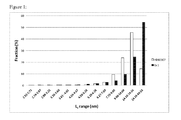
- polymers made using the catalyst of the invention can possess 50 wt% or more of a fraction having a lamellular thickness of at least 24 nm.
- the polymers made using the catalyst of the invention can possess 50 wt% or more of a fraction melting above 170°C.
- the propylene polymers made using the catalysts of the invention therefore form a still yet further aspect of the invention.
- the invention provides a polypropylene homopolymer having a Mw/Mn of less than 4, a Mw of more than 250,000 and at least 50 wt% of the components therefore have a lamellar thickness of 24 nm or more when measured using SIST.
- the invention provides a polypropylene homopolymer having a Mw/Mn of less than 4, a Mw of more than 250,000 and at least 50 wt% of the components therefore melt at a temperature of at least 170°C when measured using (SIST Stepwise Isothermal Segregation Technique).
- the polymers of the invention also possess excellent thermal stability as shown by DMTA (Dinamic-Mechanical Thermal Analysis).
- G' at 120°C can be 10% or more, such as 20% or more higher than typically achieved for isotactic polypropylene. This indicates a higher mechanical stability of the polypropylenes of the present invention at the higher temperatures.
- Values therefore of 150 MPa or more, such as 160 MPa or more, preferably 170MPa or more can be achieved, for example, at temperatures as high as 120°C.
- the polymers made by the catalysts of the invention are useful in all kinds of end articles such as pipes, films (cast, blown or BOPP films, such as for example BOPP for capacitor film), fibers, moulded articles (e.g. injection moulded, blow moulded, rotomoulded articles), extrusion coatings and so on.
- end articles such as pipes, films (cast, blown or BOPP films, such as for example BOPP for capacitor film), fibers, moulded articles (e.g. injection moulded, blow moulded, rotomoulded articles), extrusion coatings and so on.
- Thermo Elemental IRIS Advantage XUV Inductively Coupled Plasma - Atomic Excitation Spectrometer (ICP-AES) which was calibrated immediately before analysis using a blank (a solution of 5 % HNO 3 , 3 % HF in DI water), a low standard (10 ppm Al in a solution of 5 % HNO 3 , 3 % HF in DI water), a high standard (50 ppm Al, 20 ppm Zr in a solution of 5 % HNO 3 , 3 % HF in DI water) and a quality control sample (20 ppm Al, 10 ppm Zr in a solution of 5 % HNO 3 , 3 % HF in DI water).
- ICP-AES Thermo Elemental IRIS Advantage XUV Inductively Coupled Plasma - Atomic Excitation Spectrometer
- C is the concentration in ppm, related to % content by a factor of 10,000
- R is the reported value from the ICP-AES
- V is the total volume of dilution in ml
- M is the original mass of sample in g
- the melting points (T m ) were determined on a DSC200 TA instrument, by placing a 5-7 mg polymer sample,into a closed DSC aluminum pan, heating the sample from - 10 °C to 210 °C at 10 °C/min, holding for 5 min at 210 °C, cooling from 210 °C to - 10 °C, holding for 5 min at -10 °C, heating from -10 °C to 210 °C at 10 °C/min.
- the reported values are those determined from the second heating scan.
- the sample was cooled down with 80°C/min to -10°C and the melting curve was obtained by heating the cooled sample at a heating rate of 10°C/min up to 200°C. All measurements were performed in a nitrogen atmosphere.
- the melt enthalpy is recorded as function of temperature and evaluated through measuring the melt enthalpy of fractions melting within temperature intervals of 10°C in the range from 50 to 200°C.
- T m T° m ⁇ 1 - 2 ⁇ ⁇ e / ⁇ H° m ⁇ L c
- T° m the equilibrium melting point, T° m , the specific surface energy, ⁇ e , and enthalpy of melting, ⁇ H° m , are constants
- L c the lamellar thickness
- T m the melting temperature of the lamellae. Values of constants used are: T° m /K 457 ⁇ e /J/m 2 49.6x10 -3 ⁇ H° m /J/m 3 134 x 10 6
- the tacticity distribution at the pentad level and regioerrors were determined from the quantitative 13 C ⁇ 1 H ⁇ NMR spectra after basic assignment as in: V. Busico and R. Cipullo, Progress in Polymer Science, 2001, 26, 443-533 , and based on the method described in: C. De Rosa, F. Auriemma, M. Paolillo, L. Resconi, I. Camurati, Macromolecules 2005, 38(22), 9143-9154 .
- Quantification of the pentad distribution was done through integration of the methyl region in the 13 C ⁇ 1 H ⁇ spectra and when applicable corrected for any sites not related to the stereo sequences of interest, e. g. regio errors.
- the metallocene rac-dimethylsilanediylbis[2-methyl-4-phenyl)-indenyl]zirconium dichloride (2-Zr) was a commercial sample from Catalytica Advanced Technologies and used as received as comparative metallocene.
- propylene feed was started through the same H2 feeding line in order to ensure that all the hydrogen would be fed into the reactor.
- the propylene feed was left open, and the monomer consumption was compensated by keeping the total pressure in the reactor constant (5 barg).
- the experiment was continued for 22 min until a degree of polymerisation of 1.1 g/g was reached.
- the reactor was then taken back inside the glovebox before opening and the content was poured into a glass vessel.
- the perfluoro-1,3-dimethylcyclohexane was evaporated until a constant weight was obtained to yield a pre-polymerised pink catalyst.
- the degree of prepolymerisation was determined gravimetrically.
- Table 2a - 2d The results are summarized in Tables 2a - 2d.
- Table 2b Non supported Borate activated
- comparison examples polymer characterization
- Table 2c Non supported Borate activated, inventive examples 1-8: polymerization results Example metallocene ⁇ mol Polym.
- T m although decreasing with increasing T p , remains always at high values.
- Activities of 1-Zr are higher than activities from 1-Hf; melting points of iPP from 1-Zr are lower than those from 1-Hf, but still high compared to metallocene catalysts known in the art.
- the polymerisations were performed in a 5 L reactor. 200 ⁇ l of triethylaluminum was fed as a scavenger in 5 mL of dry and degassed pentane. The desired amount of hydrogen was then loaded (measured in mmol) and 1100 g of liquid propylene was fed into the reactor. The temperature was set to 30 °C. The desired amount of catalyst in 5mL of hexadecafluoro-1,3-dimethylcyclohexane was then flushed into the reactor with a nitrogen overpressure and temperature raised to 70 °C or to 85 °C over a period of 15 minutes. The polymerisation was stopped by venting the reactor and flushing with nitrogen before the polymer was collected. Polymerisation conditions and results are disclosed in Table 3.
- the hafnocene of the present invention provides polypropylenes of high melting point even when the polymerization temperature is very high, e.g. 85°C.
- a stirred autoclave (double helix stirrer) with a volume of 21.2 dm 3 containing ⁇ 0.4 bar-g of propylene is filled with additional 5.43 kg propylene.
- pre-polymerized catalyst 1p (degree of polymerisation 1.1) is contacted with 5 ml perfluoro-1,3-dimethylcyclohexane under N 2 -pressure for 60 sec and flushed into the reactor with 246 g propylene. After that the stirring speed is increased to 350 rpm. Hydrogen is added and the reactor is heated to the polymerization temperature. At the end of the polymerization time, the reaction is stopped by adding 5 ml methanol, cooling the reactor and flashing the volatile ingredients.
- the PP of example 1 has most of its components melting above 170°C. Those components have a lamella thickness of more than 24 nm.
- the PP samples have been analyzed using a DMTA test in torsion mode with reduced sample dimension (between 0.1 and 0.3g). The results from the reduced dimension compared well with the results from the standard dimension.
Landscapes
- Chemical & Material Sciences (AREA)
- Organic Chemistry (AREA)
- Health & Medical Sciences (AREA)
- Chemical Kinetics & Catalysis (AREA)
- Medicinal Chemistry (AREA)
- Polymers & Plastics (AREA)
- Transition And Organic Metals Composition Catalysts For Addition Polymerization (AREA)
Priority Applications (1)
| Application Number | Priority Date | Filing Date | Title |
|---|---|---|---|
| EP11169600.1A EP2532687A3 (fr) | 2011-06-10 | 2011-06-10 | Catalyseurs à base de metallocènes pontés |
Applications Claiming Priority (1)
| Application Number | Priority Date | Filing Date | Title |
|---|---|---|---|
| EP11169600.1A EP2532687A3 (fr) | 2011-06-10 | 2011-06-10 | Catalyseurs à base de metallocènes pontés |
Publications (2)
| Publication Number | Publication Date |
|---|---|
| EP2532687A2 true EP2532687A2 (fr) | 2012-12-12 |
| EP2532687A3 EP2532687A3 (fr) | 2013-04-10 |
Family
ID=44545469
Family Applications (1)
| Application Number | Title | Priority Date | Filing Date |
|---|---|---|---|
| EP11169600.1A Withdrawn EP2532687A3 (fr) | 2011-06-10 | 2011-06-10 | Catalyseurs à base de metallocènes pontés |
Country Status (1)
| Country | Link |
|---|---|
| EP (1) | EP2532687A3 (fr) |
Cited By (68)
| Publication number | Priority date | Publication date | Assignee | Title |
|---|---|---|---|---|
| EP2746301A1 (fr) * | 2012-12-21 | 2014-06-25 | Borealis AG | Catalyseur |
| WO2014096171A1 (fr) * | 2012-12-21 | 2014-06-26 | Borealis Ag | Catalyseur |
| US8937137B2 (en) | 2013-03-13 | 2015-01-20 | Exxonmobil Chemical Patents Inc. | Diphenylamine salan catalyst |
| US8952114B2 (en) | 2012-08-03 | 2015-02-10 | Exxonmobil Chemical Patents Inc. | Halogenated catalysts comprising Salan ligands |
| US8957172B2 (en) | 2012-08-03 | 2015-02-17 | Exxonmobil Chemical Patents Inc. | Nonsymmetric catalysts comprising salan ligands |
| US8957171B2 (en) | 2012-08-03 | 2015-02-17 | Exxonmobil Chemical Patents Inc. | Catalysts comprising salan ligands |
| US9045568B2 (en) | 2012-08-03 | 2015-06-02 | Exxonmobil Chemical Patents Inc. | Vinyl terminated polyethylene with long chain branching |
| CN104870461A (zh) * | 2012-12-21 | 2015-08-26 | 博里利斯股份公司 | 催化剂 |
| US9120879B2 (en) | 2012-11-02 | 2015-09-01 | Exxonmobil Chemical Patents Inc. | Supported Salan catalysts |
| US9150676B2 (en) | 2013-06-20 | 2015-10-06 | Exxonmobil Chemical Patents Inc. | Thio-salalen catalyst |
| EP2933276A1 (fr) | 2014-04-17 | 2015-10-21 | Borealis AG | Système de catalyseur amélioré de production de copolymères de polyéthylène dans un processus de polymérisation en solution à température élevée |
| EP2933275A1 (fr) | 2014-04-17 | 2015-10-21 | Borealis AG | Nouveau système de catalyseur pour la production de copolymères de polyéthylène dans un processus de polymérisation en solution à température élevée |
| EP2933277A1 (fr) * | 2014-04-17 | 2015-10-21 | Borealis AG | Nouveau système de catalyseur pour la production de copolymères de polyéthylène dans un processus de polymérisation en solution à température élevée |
| US9193813B2 (en) | 2014-03-31 | 2015-11-24 | Exxonmobil Chemical Patents Inc. | Phenylene-bridged salalen catalysts |
| US9200099B2 (en) | 2013-06-20 | 2015-12-01 | Exxonmobil Chemical Patents Inc. | Salenol catalyst |
| US9200100B2 (en) | 2013-06-20 | 2015-12-01 | Exxonmobil Chemical Patents Inc. | Long-bridged salen catalyst |
| EP2995631A1 (fr) | 2014-09-12 | 2016-03-16 | Borealis AG | Procédé de production de copolymères greffés à un squelette de polyoléfine |
| US9290589B2 (en) | 2013-12-13 | 2016-03-22 | Exxonmobil Chemical Patents Inc. | Cyclopentadienyl-substituted salan catalysts |
| US9365661B2 (en) | 2012-08-03 | 2016-06-14 | Exxonmobil Chemical Patents Inc. | Polyalphaolefins prepared using modified salan catalyst compounds |
| US9382349B2 (en) | 2012-08-03 | 2016-07-05 | Exxonmobil Chemical Patents Inc. | Polyalphaolefins prepared using modified Salan catalyst compounds |
| WO2017011073A1 (fr) * | 2015-07-15 | 2017-01-19 | Exxonmobil Chemical Patents Inc. | Composés catalyseurs métallocènes de type bis-indényle substitué comprenant un pont -si-si- |
| US9587053B2 (en) | 2013-09-30 | 2017-03-07 | Lg Chem, Ltd. | Preparation method of a propylene-1-butene copolymer and a propylene-1-butene copolymer obtained therefrom |
| US9637602B2 (en) | 2013-12-18 | 2017-05-02 | Borealis Ag | BOPP film with improved stiffness/toughness balance |
| US9670347B2 (en) | 2013-08-14 | 2017-06-06 | Borealis Ag | Propylene composition with improved impact resistance at low temperature |
| US9670293B2 (en) | 2013-10-29 | 2017-06-06 | Borealis Ag | Solid single site catalysts with high polymerisation activity |
| KR20170073465A (ko) * | 2015-12-18 | 2017-06-28 | 주식회사 엘지화학 | 전이 금속 화합물, 이를 포함하는 촉매 조성물 및 이를 이용한 올레핀 중합체의 제조 방법 |
| US9708481B2 (en) | 2013-10-24 | 2017-07-18 | Borealis Ag | Blow molded article based on bimodal random copolymer |
| US9751962B2 (en) | 2013-11-22 | 2017-09-05 | Borealis Ag | Low emission propylene homopolymer with high melt flow |
| EP2729479B1 (fr) | 2011-07-08 | 2017-09-06 | Borealis AG | Catalyseurs |
| US9777142B2 (en) | 2013-08-21 | 2017-10-03 | Borealis Ag | High flow polyolefin composition with high stiffness and toughness |
| US9802394B2 (en) | 2013-10-11 | 2017-10-31 | Borealis Ag | Machine direction oriented film for labels |
| EP3241611A1 (fr) | 2016-05-02 | 2017-11-08 | Borealis AG | Procédé d'alimentation d'un catalyseur de polymérisation |
| US9828698B2 (en) | 2013-12-04 | 2017-11-28 | Borealis Ag | Phthalate-free PP homopolymers for meltblown fibers |
| WO2017220724A1 (fr) | 2016-06-23 | 2017-12-28 | Borealis Ag | Procédé de désactivation d'un catalyseur |
| US9890275B2 (en) | 2013-08-21 | 2018-02-13 | Borealis Ag | High flow polyolefin composition with high stiffness and toughness |
| WO2018091653A1 (fr) | 2016-11-18 | 2018-05-24 | Borealis Ag | Catalyseur |
| US9988410B2 (en) | 2015-07-15 | 2018-06-05 | Exxonmobil Chemical Patents Inc. | Substituted bis indenyl metallocene catalyst compounds comprising-Si—Si-bridge |
| US10030109B2 (en) | 2014-02-14 | 2018-07-24 | Borealis Ag | Polypropylene composite |
| US10040930B2 (en) | 2013-09-27 | 2018-08-07 | Abu Dhabi Polymers Co. Ltd (Borouge) Llc. | Polymer composition with high XS, high Tm suitable for BOPP processing |
| US10100186B2 (en) | 2014-02-06 | 2018-10-16 | Borealis Ag | Soft and transparent impact copolymers |
| US10100185B2 (en) | 2014-02-06 | 2018-10-16 | Borealis Ag | Soft copolymers with high impact strength |
| US10167355B2 (en) | 2014-04-17 | 2019-01-01 | Borealis Ag | Catalyst system for producing polyethylene copolymers in a high temperature solution polymerization process |
| US10227427B2 (en) | 2014-01-17 | 2019-03-12 | Borealis Ag | Process for preparing propylene/1-butene copolymers |
| WO2019122016A1 (fr) | 2017-12-21 | 2019-06-27 | Borealis Ag | Procédé de préparation de catalyseur solide |
| US10450451B2 (en) | 2014-05-20 | 2019-10-22 | Borealis Ag | Polypropylene composition for automotive interior applications |
| US10519259B2 (en) | 2013-10-24 | 2019-12-31 | Borealis Ag | Low melting PP homopolymer with high content of regioerrors and high molecular weight |
| WO2020109452A1 (fr) | 2018-11-30 | 2020-06-04 | Borealis Ag | Procédé de lavage |
| US11279781B2 (en) | 2016-12-15 | 2022-03-22 | Borealis Ag | Catalyst system for producing polyethylene copolymers in a high temperature solution polymerization process |
| US11352376B2 (en) | 2016-11-18 | 2022-06-07 | Borealis Ag | Catalysts |
| US11447580B2 (en) | 2017-12-27 | 2022-09-20 | Borealis Ag | Ziegler-Natta catalyst and preparation thereof |
| US11466104B1 (en) | 2022-02-01 | 2022-10-11 | Chevron Phillips Chemical Company Lp | Ethylene polymerization processes and reactor systems for the production of multimodal polymers using combinations of a loop reactor and a fluidized bed reactor |
| US11530280B2 (en) | 2016-12-15 | 2022-12-20 | Borealis Ag | Catalyst system for producing polyethylene copolymers in a high temperature solution polymerization process |
| US11542346B2 (en) | 2018-03-19 | 2023-01-03 | Borealis Ag | Catalysts for olefin polymerization |
| US11643427B2 (en) | 2018-06-28 | 2023-05-09 | Borealis Ag | Catalysts |
| CN116710516A (zh) * | 2021-01-21 | 2023-09-05 | 博里利斯股份公司 | 具有改进的过滤性能的驻极体熔喷网 |
| US11753486B2 (en) | 2017-12-28 | 2023-09-12 | Borealis Ag | Catalyst and preparation thereof |
| US11807655B2 (en) | 2016-12-29 | 2023-11-07 | Borealis Ag | Catalysts |
| EP4389776A1 (fr) | 2022-12-20 | 2024-06-26 | Borealis AG | Procédé |
| EP4389783A1 (fr) | 2022-12-20 | 2024-06-26 | Borealis AG | Procédé de transition de catalyseur |
| WO2024133044A1 (fr) | 2022-12-23 | 2024-06-27 | Borealis Ag | Procédé de production d'un homo- ou d'un copolymère de polypropylène |
| WO2024133046A1 (fr) | 2022-12-23 | 2024-06-27 | Borealis Ag | Processus de production d'un copolymère de polypropylène |
| WO2024133045A1 (fr) | 2022-12-23 | 2024-06-27 | Borealis Ag | Procédé de production d'un homopolymère de polypropylène à haute fluidité |
| WO2025003435A1 (fr) | 2023-06-30 | 2025-01-02 | Borealis Ag | Procédé |
| WO2025219533A1 (fr) | 2024-04-18 | 2025-10-23 | Borealis Gmbh | Processus de préparation d'un homopolymère de propylène |
| WO2025219537A1 (fr) | 2024-04-18 | 2025-10-23 | Borealis Gmbh | Procédé de polymérisation de propylène à conditions de prépolymérisation optimisées |
| EP4722225A1 (fr) * | 2024-10-01 | 2026-04-08 | TotalEnergies OneTech | Synthèse de dichlorure de rac-dimethylénébis(2-méthyl-4-[3',5'-di-t-butylphényl!indényl) zirconium, intermédiaires et utilisations associées |
| US12617881B2 (en) | 2020-10-08 | 2026-05-05 | Lg Chem, Ltd. | Metallocene compound, catalyst composition comprising the same, and method for preparing olefin polymer using the same |
| WO2026115017A1 (fr) | 2024-11-27 | 2026-06-04 | Borealis Gmbh | Procédé de polymérisation d'éthylène |
Citations (10)
| Publication number | Priority date | Publication date | Assignee | Title |
|---|---|---|---|---|
| WO1994014856A1 (fr) | 1992-12-28 | 1994-07-07 | Mobil Oil Corporation | Procede de production d'un materiau porteur |
| WO1995012622A1 (fr) | 1993-11-05 | 1995-05-11 | Borealis Holding A/S | Catalyseur de polymerisation d'olefines sur support, sa preparation et son utilisation |
| WO2002002576A1 (fr) | 2000-06-30 | 2002-01-10 | Exxonmobil Chemical Patents Inc. | Composes bis (indenyle) metallocenes pontes |
| WO2002002575A1 (fr) | 2000-06-30 | 2002-01-10 | Exxonmobil Chemical Patents, Inc. | Metallocenes a ligand ponte 4-phenyl-indenyle pour polymerisation d'olefine |
| EP1209165A2 (fr) | 1993-06-07 | 2002-05-29 | Mitsui Chemicals, Inc. | Nouveau composé de métal de transition utilisable comme catalyseur de polymérisation |
| WO2003051934A2 (fr) | 2001-12-19 | 2003-06-26 | Borealis Technology Oy | Production de catalyseurs de polymerisation d'olefines |
| WO2006069733A1 (fr) | 2004-12-31 | 2006-07-06 | Borealis Technology Oy | Procede |
| WO2006097497A1 (fr) | 2005-03-18 | 2006-09-21 | Basell Polyolefine Gmbh | Composes de type metallocene |
| US7405261B2 (en) | 2002-12-06 | 2008-07-29 | Basell Polyolefine Gmbh | Organometallic transition metal compound, biscyclopentadienyl ligand system, catalyst system and process for preparing polyolefins |
| WO2009054831A1 (fr) | 2007-10-25 | 2009-04-30 | Novolen Technology Holdings, C.V. | Synthèse racémosélective de composés d'ansa-métallocène, composés d'ansa-métallocène, catalyseurs les comprenant, procédé de production d'un polymère d'oléfine utilisant ces catalyseurs, et homo et co-polymères d'oléfines |
Family Cites Families (2)
| Publication number | Priority date | Publication date | Assignee | Title |
|---|---|---|---|---|
| JP3907859B2 (ja) * | 1999-02-08 | 2007-04-18 | 三井化学株式会社 | プロピレン系樹脂組成物およびその成形体 |
| DE10257332A1 (de) * | 2002-12-06 | 2004-06-24 | Basell Polyolefine Gmbh | Organoübergangsmetallverbindung, Biscyclopentadienylligandsystem, Katalysatorsystem und Verfahren zur Herstellung von Polyolefinen |
-
2011
- 2011-06-10 EP EP11169600.1A patent/EP2532687A3/fr not_active Withdrawn
Patent Citations (10)
| Publication number | Priority date | Publication date | Assignee | Title |
|---|---|---|---|---|
| WO1994014856A1 (fr) | 1992-12-28 | 1994-07-07 | Mobil Oil Corporation | Procede de production d'un materiau porteur |
| EP1209165A2 (fr) | 1993-06-07 | 2002-05-29 | Mitsui Chemicals, Inc. | Nouveau composé de métal de transition utilisable comme catalyseur de polymérisation |
| WO1995012622A1 (fr) | 1993-11-05 | 1995-05-11 | Borealis Holding A/S | Catalyseur de polymerisation d'olefines sur support, sa preparation et son utilisation |
| WO2002002576A1 (fr) | 2000-06-30 | 2002-01-10 | Exxonmobil Chemical Patents Inc. | Composes bis (indenyle) metallocenes pontes |
| WO2002002575A1 (fr) | 2000-06-30 | 2002-01-10 | Exxonmobil Chemical Patents, Inc. | Metallocenes a ligand ponte 4-phenyl-indenyle pour polymerisation d'olefine |
| WO2003051934A2 (fr) | 2001-12-19 | 2003-06-26 | Borealis Technology Oy | Production de catalyseurs de polymerisation d'olefines |
| US7405261B2 (en) | 2002-12-06 | 2008-07-29 | Basell Polyolefine Gmbh | Organometallic transition metal compound, biscyclopentadienyl ligand system, catalyst system and process for preparing polyolefins |
| WO2006069733A1 (fr) | 2004-12-31 | 2006-07-06 | Borealis Technology Oy | Procede |
| WO2006097497A1 (fr) | 2005-03-18 | 2006-09-21 | Basell Polyolefine Gmbh | Composes de type metallocene |
| WO2009054831A1 (fr) | 2007-10-25 | 2009-04-30 | Novolen Technology Holdings, C.V. | Synthèse racémosélective de composés d'ansa-métallocène, composés d'ansa-métallocène, catalyseurs les comprenant, procédé de production d'un polymère d'oléfine utilisant ces catalyseurs, et homo et co-polymères d'oléfines |
Non-Patent Citations (7)
| Title |
|---|
| A. ENDERS, G. MAAS, CHEMIE IN UNSERER ZEIT, vol. 34, no. 6, 2000 |
| C. DE ROSA, F. AURIEMMA, M. PAOLILLO, L. RESCONI, I. CAMURATI, MACROMOLECULES, vol. 38, no. 22, 2005, pages 9143 - 9154 |
| CHIEN, J. C. W., TSAI, W.-M., RAUSCH, M. D., J. AM. CHEM. SOC., vol. 113, 1991, pages 8570 |
| COULSON, D. R., INORG. SYNTH., vol. 13, 1972, pages 121 - 124 |
| ORGANOMETALLICS, vol. 11, no. 6, 1992 |
| PIERANDREA LO NOSTRO: "Advances in Colloid and Interface Science", vol. 56, 1995, ELSEVIER SCIENCE, pages: 245 - 287 |
| V. BUSICO, R. CIPULLO, PROGRESS IN POLYMER SCIENCE, vol. 26, 2001, pages 443 - 533 |
Cited By (103)
| Publication number | Priority date | Publication date | Assignee | Title |
|---|---|---|---|---|
| EP2729479B1 (fr) | 2011-07-08 | 2017-09-06 | Borealis AG | Catalyseurs |
| US9464148B2 (en) | 2012-08-03 | 2016-10-11 | Exxonmobil Chemical Patents Inc. | Vinyl terminated polyethylene with long chain branching |
| US9382349B2 (en) | 2012-08-03 | 2016-07-05 | Exxonmobil Chemical Patents Inc. | Polyalphaolefins prepared using modified Salan catalyst compounds |
| US8952114B2 (en) | 2012-08-03 | 2015-02-10 | Exxonmobil Chemical Patents Inc. | Halogenated catalysts comprising Salan ligands |
| US8957172B2 (en) | 2012-08-03 | 2015-02-17 | Exxonmobil Chemical Patents Inc. | Nonsymmetric catalysts comprising salan ligands |
| US8957171B2 (en) | 2012-08-03 | 2015-02-17 | Exxonmobil Chemical Patents Inc. | Catalysts comprising salan ligands |
| US9045568B2 (en) | 2012-08-03 | 2015-06-02 | Exxonmobil Chemical Patents Inc. | Vinyl terminated polyethylene with long chain branching |
| US9365661B2 (en) | 2012-08-03 | 2016-06-14 | Exxonmobil Chemical Patents Inc. | Polyalphaolefins prepared using modified salan catalyst compounds |
| US9120879B2 (en) | 2012-11-02 | 2015-09-01 | Exxonmobil Chemical Patents Inc. | Supported Salan catalysts |
| US9556287B2 (en) | 2012-11-02 | 2017-01-31 | Exxonmobil Chemical Patents Inc. | Vinyl terminated macromonomers |
| CN104870461A (zh) * | 2012-12-21 | 2015-08-26 | 博里利斯股份公司 | 催化剂 |
| US9469699B2 (en) | 2012-12-21 | 2016-10-18 | Borealis Ag | Catalysts |
| KR20150102042A (ko) * | 2012-12-21 | 2015-09-04 | 보레알리스 아게 | 촉매 |
| KR20150103053A (ko) * | 2012-12-21 | 2015-09-09 | 보레알리스 아게 | 촉매 |
| CN104918948A (zh) * | 2012-12-21 | 2015-09-16 | 博里利斯股份公司 | 催化剂 |
| EP3301098A1 (fr) | 2012-12-21 | 2018-04-04 | Borealis AG | Catalyseur |
| EP3301098B1 (fr) * | 2012-12-21 | 2020-02-19 | Borealis AG | Procédé de preparation d'un ligand pour un catalyseur |
| WO2014096166A1 (fr) * | 2012-12-21 | 2014-06-26 | Borealis Ag | Catalyseurs |
| US9598516B2 (en) | 2012-12-21 | 2017-03-21 | Borealis Ag | Catalyst |
| CN104870462B (zh) * | 2012-12-21 | 2018-04-10 | 博里利斯股份公司 | 催化剂 |
| US9598517B2 (en) | 2012-12-21 | 2017-03-21 | Borealis Ag | Catalysts |
| WO2014096171A1 (fr) * | 2012-12-21 | 2014-06-26 | Borealis Ag | Catalyseur |
| JP2016501952A (ja) * | 2012-12-21 | 2016-01-21 | ボレアリス エージー | 触媒 |
| JP2016501953A (ja) * | 2012-12-21 | 2016-01-21 | ボレアリス エージー | 触媒 |
| EP2746301A1 (fr) * | 2012-12-21 | 2014-06-25 | Borealis AG | Catalyseur |
| JP2016504452A (ja) * | 2012-12-21 | 2016-02-12 | ボレアリス エージー | 触媒 |
| US9988323B2 (en) | 2012-12-21 | 2018-06-05 | Borealis Ag | Catalyst |
| CN104918948B (zh) * | 2012-12-21 | 2018-09-18 | 博里利斯股份公司 | 催化剂 |
| WO2014096282A1 (fr) | 2012-12-21 | 2014-06-26 | Borealis Ag | Catalyseur |
| CN104870492A (zh) * | 2012-12-21 | 2015-08-26 | 博里利斯股份公司 | 催化剂 |
| US8937137B2 (en) | 2013-03-13 | 2015-01-20 | Exxonmobil Chemical Patents Inc. | Diphenylamine salan catalyst |
| US9200100B2 (en) | 2013-06-20 | 2015-12-01 | Exxonmobil Chemical Patents Inc. | Long-bridged salen catalyst |
| US9200099B2 (en) | 2013-06-20 | 2015-12-01 | Exxonmobil Chemical Patents Inc. | Salenol catalyst |
| US9150676B2 (en) | 2013-06-20 | 2015-10-06 | Exxonmobil Chemical Patents Inc. | Thio-salalen catalyst |
| US9670347B2 (en) | 2013-08-14 | 2017-06-06 | Borealis Ag | Propylene composition with improved impact resistance at low temperature |
| US9777142B2 (en) | 2013-08-21 | 2017-10-03 | Borealis Ag | High flow polyolefin composition with high stiffness and toughness |
| US9890275B2 (en) | 2013-08-21 | 2018-02-13 | Borealis Ag | High flow polyolefin composition with high stiffness and toughness |
| US10040930B2 (en) | 2013-09-27 | 2018-08-07 | Abu Dhabi Polymers Co. Ltd (Borouge) Llc. | Polymer composition with high XS, high Tm suitable for BOPP processing |
| US9587053B2 (en) | 2013-09-30 | 2017-03-07 | Lg Chem, Ltd. | Preparation method of a propylene-1-butene copolymer and a propylene-1-butene copolymer obtained therefrom |
| US9802394B2 (en) | 2013-10-11 | 2017-10-31 | Borealis Ag | Machine direction oriented film for labels |
| US9708481B2 (en) | 2013-10-24 | 2017-07-18 | Borealis Ag | Blow molded article based on bimodal random copolymer |
| US10519259B2 (en) | 2013-10-24 | 2019-12-31 | Borealis Ag | Low melting PP homopolymer with high content of regioerrors and high molecular weight |
| US9670293B2 (en) | 2013-10-29 | 2017-06-06 | Borealis Ag | Solid single site catalysts with high polymerisation activity |
| US9751962B2 (en) | 2013-11-22 | 2017-09-05 | Borealis Ag | Low emission propylene homopolymer with high melt flow |
| US9828698B2 (en) | 2013-12-04 | 2017-11-28 | Borealis Ag | Phthalate-free PP homopolymers for meltblown fibers |
| US9290589B2 (en) | 2013-12-13 | 2016-03-22 | Exxonmobil Chemical Patents Inc. | Cyclopentadienyl-substituted salan catalysts |
| US9637602B2 (en) | 2013-12-18 | 2017-05-02 | Borealis Ag | BOPP film with improved stiffness/toughness balance |
| US10227427B2 (en) | 2014-01-17 | 2019-03-12 | Borealis Ag | Process for preparing propylene/1-butene copolymers |
| US10100186B2 (en) | 2014-02-06 | 2018-10-16 | Borealis Ag | Soft and transparent impact copolymers |
| US10100185B2 (en) | 2014-02-06 | 2018-10-16 | Borealis Ag | Soft copolymers with high impact strength |
| US10030109B2 (en) | 2014-02-14 | 2018-07-24 | Borealis Ag | Polypropylene composite |
| US9193813B2 (en) | 2014-03-31 | 2015-11-24 | Exxonmobil Chemical Patents Inc. | Phenylene-bridged salalen catalysts |
| WO2015158791A3 (fr) * | 2014-04-17 | 2016-01-28 | Borealis Ag | Nouveau système de catalyseur pour la production de copolymères de polyéthylène dans un procédé de polymérisation en solution à haute température |
| EP2933275A1 (fr) | 2014-04-17 | 2015-10-21 | Borealis AG | Nouveau système de catalyseur pour la production de copolymères de polyéthylène dans un processus de polymérisation en solution à température élevée |
| EP3131935B1 (fr) * | 2014-04-17 | 2020-06-03 | Borealis AG | Nouveau système de catalyseur pour la production de copolymères de polyéthylène dans un procédé de polymérisation en solution à haute température |
| EP2933276A1 (fr) | 2014-04-17 | 2015-10-21 | Borealis AG | Système de catalyseur amélioré de production de copolymères de polyéthylène dans un processus de polymérisation en solution à température élevée |
| US10301411B2 (en) | 2014-04-17 | 2019-05-28 | Borealis Ag | Catalyst system for producing polyethylene copolymers in a high temperature solution polymerization process |
| EP2933277A1 (fr) * | 2014-04-17 | 2015-10-21 | Borealis AG | Nouveau système de catalyseur pour la production de copolymères de polyéthylène dans un processus de polymérisation en solution à température élevée |
| US10167355B2 (en) | 2014-04-17 | 2019-01-01 | Borealis Ag | Catalyst system for producing polyethylene copolymers in a high temperature solution polymerization process |
| US10450451B2 (en) | 2014-05-20 | 2019-10-22 | Borealis Ag | Polypropylene composition for automotive interior applications |
| US10392460B2 (en) | 2014-09-12 | 2019-08-27 | Borealis Ag | Process for producing graft copolymers on polyolefin backbone |
| WO2016038177A1 (fr) | 2014-09-12 | 2016-03-17 | Borealis Ag | Procédé de production de copolymères greffés sur un squelette de polyoléfine |
| EP2995631A1 (fr) | 2014-09-12 | 2016-03-16 | Borealis AG | Procédé de production de copolymères greffés à un squelette de polyoléfine |
| WO2017011073A1 (fr) * | 2015-07-15 | 2017-01-19 | Exxonmobil Chemical Patents Inc. | Composés catalyseurs métallocènes de type bis-indényle substitué comprenant un pont -si-si- |
| US9988410B2 (en) | 2015-07-15 | 2018-06-05 | Exxonmobil Chemical Patents Inc. | Substituted bis indenyl metallocene catalyst compounds comprising-Si—Si-bridge |
| KR20170073465A (ko) * | 2015-12-18 | 2017-06-28 | 주식회사 엘지화학 | 전이 금속 화합물, 이를 포함하는 촉매 조성물 및 이를 이용한 올레핀 중합체의 제조 방법 |
| EP3241611A1 (fr) | 2016-05-02 | 2017-11-08 | Borealis AG | Procédé d'alimentation d'un catalyseur de polymérisation |
| WO2017191054A1 (fr) | 2016-05-02 | 2017-11-09 | Borealis Ag | Procédé d'alimentation de catalyseur de polymérisation |
| US10946357B2 (en) | 2016-05-02 | 2021-03-16 | Borealis Ag | Process for feeding a polymerisation catalyst |
| WO2017220724A1 (fr) | 2016-06-23 | 2017-12-28 | Borealis Ag | Procédé de désactivation d'un catalyseur |
| US10982019B2 (en) | 2016-06-23 | 2021-04-20 | Borealis Ag | Process for catalyst deactivation |
| WO2018091653A1 (fr) | 2016-11-18 | 2018-05-24 | Borealis Ag | Catalyseur |
| US11352376B2 (en) | 2016-11-18 | 2022-06-07 | Borealis Ag | Catalysts |
| US11639399B2 (en) | 2016-12-15 | 2023-05-02 | Borealis Ag | Catalyst system for producing polyethylene copolymers in a high temperature solution polymerization process |
| US11530280B2 (en) | 2016-12-15 | 2022-12-20 | Borealis Ag | Catalyst system for producing polyethylene copolymers in a high temperature solution polymerization process |
| US11279781B2 (en) | 2016-12-15 | 2022-03-22 | Borealis Ag | Catalyst system for producing polyethylene copolymers in a high temperature solution polymerization process |
| US11807655B2 (en) | 2016-12-29 | 2023-11-07 | Borealis Ag | Catalysts |
| US11384170B2 (en) | 2017-12-21 | 2022-07-12 | Borealis Ag | Process for the preparation of solid catalyst |
| WO2019122016A1 (fr) | 2017-12-21 | 2019-06-27 | Borealis Ag | Procédé de préparation de catalyseur solide |
| US11447580B2 (en) | 2017-12-27 | 2022-09-20 | Borealis Ag | Ziegler-Natta catalyst and preparation thereof |
| US12104001B2 (en) | 2017-12-28 | 2024-10-01 | Borealis Ag | Catalyst and preparation thereof |
| US11753486B2 (en) | 2017-12-28 | 2023-09-12 | Borealis Ag | Catalyst and preparation thereof |
| US11542346B2 (en) | 2018-03-19 | 2023-01-03 | Borealis Ag | Catalysts for olefin polymerization |
| US11643427B2 (en) | 2018-06-28 | 2023-05-09 | Borealis Ag | Catalysts |
| WO2020109452A1 (fr) | 2018-11-30 | 2020-06-04 | Borealis Ag | Procédé de lavage |
| US12146019B2 (en) | 2018-11-30 | 2024-11-19 | Borealis Ag | Washing process |
| US12617881B2 (en) | 2020-10-08 | 2026-05-05 | Lg Chem, Ltd. | Metallocene compound, catalyst composition comprising the same, and method for preparing olefin polymer using the same |
| CN116710516A (zh) * | 2021-01-21 | 2023-09-05 | 博里利斯股份公司 | 具有改进的过滤性能的驻极体熔喷网 |
| US11767378B2 (en) | 2022-02-01 | 2023-09-26 | Chevron Phillips Chemical Company Lp | Ethylene polymerization processes and reactor systems for the production of multimodal polymers using combinations of a loop reactor and a fluidized bed reactor |
| US11466104B1 (en) | 2022-02-01 | 2022-10-11 | Chevron Phillips Chemical Company Lp | Ethylene polymerization processes and reactor systems for the production of multimodal polymers using combinations of a loop reactor and a fluidized bed reactor |
| US11845814B2 (en) | 2022-02-01 | 2023-12-19 | Chevron Phillips Chemical Company Lp | Ethylene polymerization processes and reactor systems for the production of multimodal polymers using combinations of a loop reactor and a fluidized bed reactor |
| EP4389776A1 (fr) | 2022-12-20 | 2024-06-26 | Borealis AG | Procédé |
| WO2024133340A1 (fr) | 2022-12-20 | 2024-06-27 | Borealis Ag | Processus |
| EP4389783A1 (fr) | 2022-12-20 | 2024-06-26 | Borealis AG | Procédé de transition de catalyseur |
| WO2024133592A1 (fr) | 2022-12-20 | 2024-06-27 | Borealis Ag | Processus de transition de catalyseur |
| WO2024133046A1 (fr) | 2022-12-23 | 2024-06-27 | Borealis Ag | Processus de production d'un copolymère de polypropylène |
| WO2024133045A1 (fr) | 2022-12-23 | 2024-06-27 | Borealis Ag | Procédé de production d'un homopolymère de polypropylène à haute fluidité |
| WO2024133044A1 (fr) | 2022-12-23 | 2024-06-27 | Borealis Ag | Procédé de production d'un homo- ou d'un copolymère de polypropylène |
| WO2025003435A1 (fr) | 2023-06-30 | 2025-01-02 | Borealis Ag | Procédé |
| WO2025219533A1 (fr) | 2024-04-18 | 2025-10-23 | Borealis Gmbh | Processus de préparation d'un homopolymère de propylène |
| WO2025219537A1 (fr) | 2024-04-18 | 2025-10-23 | Borealis Gmbh | Procédé de polymérisation de propylène à conditions de prépolymérisation optimisées |
| EP4722225A1 (fr) * | 2024-10-01 | 2026-04-08 | TotalEnergies OneTech | Synthèse de dichlorure de rac-dimethylénébis(2-méthyl-4-[3',5'-di-t-butylphényl!indényl) zirconium, intermédiaires et utilisations associées |
| WO2026115017A1 (fr) | 2024-11-27 | 2026-06-04 | Borealis Gmbh | Procédé de polymérisation d'éthylène |
Also Published As
| Publication number | Publication date |
|---|---|
| EP2532687A3 (fr) | 2013-04-10 |
Similar Documents
| Publication | Publication Date | Title |
|---|---|---|
| US9988323B2 (en) | Catalyst | |
| EP2729479B1 (fr) | Catalyseurs | |
| EP3541823B1 (fr) | Catalyseurs | |
| US9469699B2 (en) | Catalysts | |
| EP2402353B1 (fr) | Métallocènes des métaux de groupe 4 comme catalyseurs pour la polymérisation d'oléfines | |
| JP5578473B2 (ja) | アンサ−メタロセン化合物のラセモ選択的合成、アンサ−メタロセン化合物、それを含む触媒、触媒の使用によってオレフィンポリマーを製造するプロセス、ならびにホモポリマーおよびコポリマー | |
| CA2888387C (fr) | Procede de polymerisation et catalyseur | |
| US20200131284A1 (en) | Process for the preparing heterophasic propylene copolymers | |
| CA2888385A1 (fr) | Catalyseur |
Legal Events
| Date | Code | Title | Description |
|---|---|---|---|
| PUAI | Public reference made under article 153(3) epc to a published international application that has entered the european phase |
Free format text: ORIGINAL CODE: 0009012 |
|
| AK | Designated contracting states |
Kind code of ref document: A2 Designated state(s): AL AT BE BG CH CY CZ DE DK EE ES FI FR GB GR HR HU IE IS IT LI LT LU LV MC MK MT NL NO PL PT RO RS SE SI SK SM TR |
|
| AX | Request for extension of the european patent |
Extension state: BA ME |
|
| PUAL | Search report despatched |
Free format text: ORIGINAL CODE: 0009013 |
|
| AK | Designated contracting states |
Kind code of ref document: A3 Designated state(s): AL AT BE BG CH CY CZ DE DK EE ES FI FR GB GR HR HU IE IS IT LI LT LU LV MC MK MT NL NO PL PT RO RS SE SI SK SM TR |
|
| AX | Request for extension of the european patent |
Extension state: BA ME |
|
| RIC1 | Information provided on ipc code assigned before grant |
Ipc: C07F 17/00 20060101ALI20130307BHEP Ipc: C08F 4/6592 20060101ALI20130307BHEP Ipc: C08F 10/00 20060101AFI20130307BHEP |
|
| 17P | Request for examination filed |
Effective date: 20131008 |
|
| RBV | Designated contracting states (corrected) |
Designated state(s): AL AT BE BG CH CY CZ DE DK EE ES FI FR GB GR HR HU IE IS IT LI LT LU LV MC MK MT NL NO PL PT RO RS SE SI SK SM TR |
|
| 17Q | First examination report despatched |
Effective date: 20160623 |
|
| GRAP | Despatch of communication of intention to grant a patent |
Free format text: ORIGINAL CODE: EPIDOSNIGR1 |
|
| INTG | Intention to grant announced |
Effective date: 20170207 |
|
| STAA | Information on the status of an ep patent application or granted ep patent |
Free format text: STATUS: THE APPLICATION IS DEEMED TO BE WITHDRAWN |
|
| 18D | Application deemed to be withdrawn |
Effective date: 20170620 |