EP3301098B1 - Procédé de preparation d'un ligand pour un catalyseur - Google Patents
Procédé de preparation d'un ligand pour un catalyseur Download PDFInfo
- Publication number
- EP3301098B1 EP3301098B1 EP17195336.7A EP17195336A EP3301098B1 EP 3301098 B1 EP3301098 B1 EP 3301098B1 EP 17195336 A EP17195336 A EP 17195336A EP 3301098 B1 EP3301098 B1 EP 3301098B1
- Authority
- EP
- European Patent Office
- Prior art keywords
- nmr
- mixture
- solution
- catalyst
- cdcl
- Prior art date
- Legal status (The legal status is an assumption and is not a legal conclusion. Google has not performed a legal analysis and makes no representation as to the accuracy of the status listed.)
- Active
Links
- 0 *CC**(CCCC1)=CCCC1(C(*)C(c1cc(*)c2)IC3c4cc(*)cc(-c5cc(*)cc(*)c5)c4CC3*)c1c2-c1cc(*)cc(*)c1 Chemical compound *CC**(CCCC1)=CCCC1(C(*)C(c1cc(*)c2)IC3c4cc(*)cc(-c5cc(*)cc(*)c5)c4CC3*)c1c2-c1cc(*)cc(*)c1 0.000 description 3
- ALCJNENGQSXOQF-UHFFFAOYSA-N CC(C)C(c1cc(Br)c(C)cc1)=O Chemical compound CC(C)C(c1cc(Br)c(C)cc1)=O ALCJNENGQSXOQF-UHFFFAOYSA-N 0.000 description 2
- XTLPUHXEMODGKY-UHFFFAOYSA-N CC(C)CC(C(CC1C)=CC1OC)[Br]=C Chemical compound CC(C)CC(C(CC1C)=CC1OC)[Br]=C XTLPUHXEMODGKY-UHFFFAOYSA-N 0.000 description 1
- SWJJFHNTZSIDIW-IOTIRUCGSA-N CC(C)[C@@H](C1)[C@@H](C)CC(CC2C)=C1C2OC Chemical compound CC(C)[C@@H](C1)[C@@H](C)CC(CC2C)=C1C2OC SWJJFHNTZSIDIW-IOTIRUCGSA-N 0.000 description 1
- OZTXLPPODRQYOS-UHFFFAOYSA-N CC(C)c(cc(c(CC1C)c2C1O)[Br]=C)c2[Br]=C Chemical compound CC(C)c(cc(c(CC1C)c2C1O)[Br]=C)c2[Br]=C OZTXLPPODRQYOS-UHFFFAOYSA-N 0.000 description 1
- NPZHLXRWPCOUBK-UHFFFAOYSA-N CC(C)c1cc(Br)c(CC(C)C2OC)c2c1Br Chemical compound CC(C)c1cc(Br)c(CC(C)C2OC)c2c1Br NPZHLXRWPCOUBK-UHFFFAOYSA-N 0.000 description 1
- IXFXLGKMVQCQNW-UHFFFAOYSA-N CC(C)c1cc([Br]=C)c(CC(C)C2OC)c2c1[Br]=C Chemical compound CC(C)c1cc([Br]=C)c(CC(C)C2OC)c2c1[Br]=C IXFXLGKMVQCQNW-UHFFFAOYSA-N 0.000 description 1
- HMMJMDWGCVGCCK-UHFFFAOYSA-N CC(CCC1)C1OC Chemical compound CC(CCC1)C1OC HMMJMDWGCVGCCK-UHFFFAOYSA-N 0.000 description 1
Classifications
-
- C—CHEMISTRY; METALLURGY
- C07—ORGANIC CHEMISTRY
- C07C—ACYCLIC OR CARBOCYCLIC COMPOUNDS
- C07C1/00—Preparation of hydrocarbons from one or more compounds, none of them being a hydrocarbon
- C07C1/32—Preparation of hydrocarbons from one or more compounds, none of them being a hydrocarbon starting from compounds containing hetero-atoms other than or in addition to oxygen or halogen
- C07C1/325—Preparation of hydrocarbons from one or more compounds, none of them being a hydrocarbon starting from compounds containing hetero-atoms other than or in addition to oxygen or halogen the hetero-atom being a metal atom
- C07C1/326—Preparation of hydrocarbons from one or more compounds, none of them being a hydrocarbon starting from compounds containing hetero-atoms other than or in addition to oxygen or halogen the hetero-atom being a metal atom the hetero-atom being a magnesium atom
-
- C—CHEMISTRY; METALLURGY
- C07—ORGANIC CHEMISTRY
- C07F—ACYCLIC, CARBOCYCLIC OR HETEROCYCLIC COMPOUNDS CONTAINING ELEMENTS OTHER THAN CARBON, HYDROGEN, HALOGEN, OXYGEN, NITROGEN, SULFUR, SELENIUM OR TELLURIUM
- C07F17/00—Metallocenes
-
- C—CHEMISTRY; METALLURGY
- C07—ORGANIC CHEMISTRY
- C07C—ACYCLIC OR CARBOCYCLIC COMPOUNDS
- C07C1/00—Preparation of hydrocarbons from one or more compounds, none of them being a hydrocarbon
- C07C1/20—Preparation of hydrocarbons from one or more compounds, none of them being a hydrocarbon starting from organic compounds containing only oxygen atoms as heteroatoms
-
- C—CHEMISTRY; METALLURGY
- C07—ORGANIC CHEMISTRY
- C07C—ACYCLIC OR CARBOCYCLIC COMPOUNDS
- C07C41/00—Preparation of ethers; Preparation of compounds having groups, groups or groups
- C07C41/01—Preparation of ethers
- C07C41/18—Preparation of ethers by reactions not forming ether-oxygen bonds
- C07C41/30—Preparation of ethers by reactions not forming ether-oxygen bonds by increasing the number of carbon atoms, e.g. by oligomerisation
-
- C—CHEMISTRY; METALLURGY
- C07—ORGANIC CHEMISTRY
- C07F—ACYCLIC, CARBOCYCLIC OR HETEROCYCLIC COMPOUNDS CONTAINING ELEMENTS OTHER THAN CARBON, HYDROGEN, HALOGEN, OXYGEN, NITROGEN, SULFUR, SELENIUM OR TELLURIUM
- C07F7/00—Compounds containing elements of Groups 4 or 14 of the Periodic Table
- C07F7/02—Silicon compounds
- C07F7/08—Compounds having one or more C—Si linkages
- C07F7/0803—Compounds with Si-C or Si-Si linkages
- C07F7/0805—Compounds with Si-C or Si-Si linkages comprising only Si, C or H atoms
-
- C—CHEMISTRY; METALLURGY
- C07—ORGANIC CHEMISTRY
- C07F—ACYCLIC, CARBOCYCLIC OR HETEROCYCLIC COMPOUNDS CONTAINING ELEMENTS OTHER THAN CARBON, HYDROGEN, HALOGEN, OXYGEN, NITROGEN, SULFUR, SELENIUM OR TELLURIUM
- C07F7/00—Compounds containing elements of Groups 4 or 14 of the Periodic Table
- C07F7/02—Silicon compounds
- C07F7/08—Compounds having one or more C—Si linkages
- C07F7/0803—Compounds with Si-C or Si-Si linkages
- C07F7/081—Compounds with Si-C or Si-Si linkages comprising at least one atom selected from the elements N, O, halogen, S, Se or Te
-
- C—CHEMISTRY; METALLURGY
- C08—ORGANIC MACROMOLECULAR COMPOUNDS; THEIR PREPARATION OR CHEMICAL WORKING-UP; COMPOSITIONS BASED THEREON
- C08F—MACROMOLECULAR COMPOUNDS OBTAINED BY REACTIONS ONLY INVOLVING CARBON-TO-CARBON UNSATURATED BONDS
- C08F10/00—Homopolymers and copolymers of unsaturated aliphatic hydrocarbons having only one carbon-to-carbon double bond
- C08F10/04—Monomers containing three or four carbon atoms
- C08F10/06—Propene
-
- C—CHEMISTRY; METALLURGY
- C08—ORGANIC MACROMOLECULAR COMPOUNDS; THEIR PREPARATION OR CHEMICAL WORKING-UP; COMPOSITIONS BASED THEREON
- C08F—MACROMOLECULAR COMPOUNDS OBTAINED BY REACTIONS ONLY INVOLVING CARBON-TO-CARBON UNSATURATED BONDS
- C08F110/00—Homopolymers of unsaturated aliphatic hydrocarbons having only one carbon-to-carbon double bond
- C08F110/04—Monomers containing three or four carbon atoms
- C08F110/06—Propene
-
- C—CHEMISTRY; METALLURGY
- C08—ORGANIC MACROMOLECULAR COMPOUNDS; THEIR PREPARATION OR CHEMICAL WORKING-UP; COMPOSITIONS BASED THEREON
- C08F—MACROMOLECULAR COMPOUNDS OBTAINED BY REACTIONS ONLY INVOLVING CARBON-TO-CARBON UNSATURATED BONDS
- C08F4/00—Polymerisation catalysts
- C08F4/02—Carriers therefor
-
- C—CHEMISTRY; METALLURGY
- C08—ORGANIC MACROMOLECULAR COMPOUNDS; THEIR PREPARATION OR CHEMICAL WORKING-UP; COMPOSITIONS BASED THEREON
- C08F—MACROMOLECULAR COMPOUNDS OBTAINED BY REACTIONS ONLY INVOLVING CARBON-TO-CARBON UNSATURATED BONDS
- C08F4/00—Polymerisation catalysts
- C08F4/42—Metals; Metal hydrides; Metallo-organic compounds; Use thereof as catalyst precursors
- C08F4/44—Metals; Metal hydrides; Metallo-organic compounds; Use thereof as catalyst precursors selected from light metals, zinc, cadmium, mercury, copper, silver, gold, boron, gallium, indium, thallium, rare earths or actinides
- C08F4/60—Metals; Metal hydrides; Metallo-organic compounds; Use thereof as catalyst precursors selected from light metals, zinc, cadmium, mercury, copper, silver, gold, boron, gallium, indium, thallium, rare earths or actinides together with refractory metals, iron group metals, platinum group metals, manganese, rhenium technetium or compounds thereof
- C08F4/62—Refractory metals or compounds thereof
- C08F4/64—Titanium, zirconium, hafnium or compounds thereof
- C08F4/659—Component covered by group C08F4/64 containing a transition metal-carbon bond
- C08F4/6592—Component covered by group C08F4/64 containing a transition metal-carbon bond containing at least one cyclopentadienyl ring, condensed or not, e.g. an indenyl or a fluorenyl ring
- C08F4/65922—Component covered by group C08F4/64 containing a transition metal-carbon bond containing at least one cyclopentadienyl ring, condensed or not, e.g. an indenyl or a fluorenyl ring containing at least two cyclopentadienyl rings, fused or not
- C08F4/65927—Component covered by group C08F4/64 containing a transition metal-carbon bond containing at least one cyclopentadienyl ring, condensed or not, e.g. an indenyl or a fluorenyl ring containing at least two cyclopentadienyl rings, fused or not two cyclopentadienyl rings being mutually bridged
-
- C—CHEMISTRY; METALLURGY
- C07—ORGANIC CHEMISTRY
- C07C—ACYCLIC OR CARBOCYCLIC COMPOUNDS
- C07C2531/00—Catalysts comprising hydrides, coordination complexes or organic compounds
- C07C2531/02—Catalysts comprising hydrides, coordination complexes or organic compounds containing organic compounds or metal hydrides
- C07C2531/04—Catalysts comprising hydrides, coordination complexes or organic compounds containing organic compounds or metal hydrides containing carboxylic acids or their salts
-
- C—CHEMISTRY; METALLURGY
- C07—ORGANIC CHEMISTRY
- C07C—ACYCLIC OR CARBOCYCLIC COMPOUNDS
- C07C2531/00—Catalysts comprising hydrides, coordination complexes or organic compounds
- C07C2531/16—Catalysts comprising hydrides, coordination complexes or organic compounds containing coordination complexes
- C07C2531/18—Catalysts comprising hydrides, coordination complexes or organic compounds containing coordination complexes containing nitrogen, phosphorus, arsenic or antimony
-
- C—CHEMISTRY; METALLURGY
- C07—ORGANIC CHEMISTRY
- C07C—ACYCLIC OR CARBOCYCLIC COMPOUNDS
- C07C2531/00—Catalysts comprising hydrides, coordination complexes or organic compounds
- C07C2531/16—Catalysts comprising hydrides, coordination complexes or organic compounds containing coordination complexes
- C07C2531/24—Phosphines
-
- C—CHEMISTRY; METALLURGY
- C07—ORGANIC CHEMISTRY
- C07C—ACYCLIC OR CARBOCYCLIC COMPOUNDS
- C07C2602/00—Systems containing two condensed rings
- C07C2602/02—Systems containing two condensed rings the rings having only two atoms in common
- C07C2602/14—All rings being cycloaliphatic
- C07C2602/24—All rings being cycloaliphatic the ring system containing nine carbon atoms, e.g. perhydroindane
-
- C—CHEMISTRY; METALLURGY
- C08—ORGANIC MACROMOLECULAR COMPOUNDS; THEIR PREPARATION OR CHEMICAL WORKING-UP; COMPOSITIONS BASED THEREON
- C08F—MACROMOLECULAR COMPOUNDS OBTAINED BY REACTIONS ONLY INVOLVING CARBON-TO-CARBON UNSATURATED BONDS
- C08F4/00—Polymerisation catalysts
- C08F4/42—Metals; Metal hydrides; Metallo-organic compounds; Use thereof as catalyst precursors
- C08F4/44—Metals; Metal hydrides; Metallo-organic compounds; Use thereof as catalyst precursors selected from light metals, zinc, cadmium, mercury, copper, silver, gold, boron, gallium, indium, thallium, rare earths or actinides
- C08F4/60—Metals; Metal hydrides; Metallo-organic compounds; Use thereof as catalyst precursors selected from light metals, zinc, cadmium, mercury, copper, silver, gold, boron, gallium, indium, thallium, rare earths or actinides together with refractory metals, iron group metals, platinum group metals, manganese, rhenium technetium or compounds thereof
- C08F4/62—Refractory metals or compounds thereof
- C08F4/64—Titanium, zirconium, hafnium or compounds thereof
- C08F4/659—Component covered by group C08F4/64 containing a transition metal-carbon bond
- C08F4/65912—Component covered by group C08F4/64 containing a transition metal-carbon bond in combination with an organoaluminium compound
-
- C—CHEMISTRY; METALLURGY
- C08—ORGANIC MACROMOLECULAR COMPOUNDS; THEIR PREPARATION OR CHEMICAL WORKING-UP; COMPOSITIONS BASED THEREON
- C08F—MACROMOLECULAR COMPOUNDS OBTAINED BY REACTIONS ONLY INVOLVING CARBON-TO-CARBON UNSATURATED BONDS
- C08F4/00—Polymerisation catalysts
- C08F4/42—Metals; Metal hydrides; Metallo-organic compounds; Use thereof as catalyst precursors
- C08F4/44—Metals; Metal hydrides; Metallo-organic compounds; Use thereof as catalyst precursors selected from light metals, zinc, cadmium, mercury, copper, silver, gold, boron, gallium, indium, thallium, rare earths or actinides
- C08F4/60—Metals; Metal hydrides; Metallo-organic compounds; Use thereof as catalyst precursors selected from light metals, zinc, cadmium, mercury, copper, silver, gold, boron, gallium, indium, thallium, rare earths or actinides together with refractory metals, iron group metals, platinum group metals, manganese, rhenium technetium or compounds thereof
- C08F4/62—Refractory metals or compounds thereof
- C08F4/64—Titanium, zirconium, hafnium or compounds thereof
- C08F4/659—Component covered by group C08F4/64 containing a transition metal-carbon bond
- C08F4/65916—Component covered by group C08F4/64 containing a transition metal-carbon bond supported on a carrier, e.g. silica, MgCl2, polymer
Definitions
- This invention relates to a process for preparing ligands suitable for use in bisindenyl catalysts, in particular, solid particulate racemic symmetrical metallocene catalysts containing such bisindenyl ligands.
- Bisindenyl metallocene catalysts containing the ligands can be used for the production of polypropylene at excellent catalyst activities to give polypropylene with high molecular weight, and high melting point even at industrially relevant polymerization temperatures.
- Metallocene catalysts have been used to manufacture polyolefins for many years. Countless academic and patent publications describe the use of these catalysts in olefin polymerisation. Metallocenes are now used industrially and polyethylenes and polypropylenes in particular are often produced using cyclopentadienyl based catalyst systems with different substitution patterns.
- isotactic polypropylene iPP
- Tm melting point
- the Ziegler-Natta catalyst systems known in the literature can produce iPP with high molecular weights together with moderate to high isotacticities and melting temperatures (Tm).
- Tm isotacticities and melting temperatures (measured by standard DSC methods) of non-nucleated iPPs are in the range of 160 to 165 °C.
- rac-Et(2,4,7-Me 3 Ind) 2 ZrCl 2 can produce isotactic polypropylene with a molecular weight of 1,900,000 g/mol and a melting point of 168 °C ( Deng Macromolecules, 1996, 29, 6371 ).
- a polymerization temperature of -30 °C is necessary.
- the melting point of the resulting polypropylene decreases to 158 °C.
- a polymerization temperature of -30 °C is however, far too low for polypropylene manufacturing in commercial plants, which need to be operated above 60 °C. When used at industrially useful polymerization temperatures, this same metallocene yields low molecular weight polypropylenes with relatively low melting point.
- rac-Et(2,4,7-Me 3 Ind) 2 ZrCl 2 /MAO yields a polypropylene of molecular weight of only 30,600 with a melting point of only 145 °C ( EP537686 ).
- Higher melting point polymers can be made using dimethylsilyl bis (2-methyl-4-(1-naphthyl)indenyl ZrCl 2 ( Spaleck Organometallics, 1994, 13, 954 ).
- EP-A-1070729 exemplifies a variety of 2,4-disubstituted metallocenes although melting points are not discussed.
- metallocenes above have been used in non-supported form however, i.e. typically in solution polymerisation.
- a catalyst support such as silica
- the melting point of the polymer reduces.
- WO2009/054831 describes zirconocenes with a 2-methyl-4,7-aryl substitution pattern, such as rac-Me 2 Si[2-Me-4,7-(4-tBuPh) 2 Ind] 2 ZrCl 2 .
- the melting points of the homopolymers are still quite low, being in all cases below 150 °C despite the relatively low polymerization temperature of 65 °C.
- the present applicant has developed an alternative to conventional inorganic supports.
- the inventors proposed an alternative form of catalyst which is provided in solid form but does not require a conventional external carrier material such as silica.
- the invention is based on the finding that a homogeneous catalyst system containing an organometallic compound of a transition metal can be converted, in a controlled way, to solid, uniform catalyst particles by first forming a liquid/liquid emulsion system, which comprises as the dispersed phase, said solution of the homogeneous catalyst system, and as the continuous phase a solvent immiscible therewith, and then solidifying said dispersed droplets to form solid particles comprising the said catalyst.
- Some supported metallocene or metallocenes in solid form made using the techniques of WO03/051934 are also known. Metallocenes with a 3,5-di-tert-butylphenyl substituent on the 4-position of indene are known.
- WO02/02576 describes conventionally supported metallocenes such as rac-Me 2 Si[2-Me-4-(3,5-tBu 2 Ph)Ind] 2 ZrCl 2 . These metallocene catalysts, activated with MAO or a borate, on a silica support, at a polymerisation temperature of 60 or 70 °C, give iPP with Tm between 156 and 159 °C.
- the metallocene rac-9-silafluorenyl-9,9-[2-Me-4-(3,5-tBu 2 Ph)Ind] 2 ZrCl 2 also gives high melting point iPP and are described in WO02/02575 .
- metallocene catalysts when used under industrially relevant polymerization conditions, produce iPP having melting points which are lower than the melting points of Ziegler Natta iPP, and even the best metallocene catalysts produce iPP with melting points of less than 160 °C.
- few metallocene catalysts can produce iPP having both high melting point and high molecular weight at polymerisation temperatures above 60 °C with good catalyst activity.
- the catalysts comprise a bridged bisindenyl metallocene complex with a substituted aryl group at the 4-position of an indenyl ligand, a non hydrogen substituent at the 2-position of the ring and a substituent at the 6-position of the ring.
- the 3, 5 and 7 positions are unsubstituted.
- metallocene catalysts for polypropylene is the relative low melting of the homopolymer.
- Several families of bridged bisindenyl metallocene catalysts with the proper substitution pattern have been developed to produce high molecular weight, highly isotactic polypropylene.
- the increased melting point is obtained at the expense of activity, or catalyst cost, or both.
- the present inventors sought a new catalyst system capable of producing, inter alia, isotactic polypropylene with high melting points, e.g. 152 °C or more, high isotacticity and high molecular weights without compromising catalyst activity at commercially relevant temperatures.
- catalysts should offer high activities and high molecular weight at high melting points.
- the inventors have devised a new process for making ligands for use in such a catalyst.
- the invention provides a process for the preparation of a compound of formula (A'): comprising at least the steps of:
- the catalyst does not contain an external support, such as an inorganic support, for example, silica or alumina, or an organic polymeric support material, onto which catalyst components are loaded.
- an external support such as an inorganic support, for example, silica or alumina, or an organic polymeric support material, onto which catalyst components are loaded.
- a compound of formula (A') can be used to form bis indenyl complexes.
- Complexes can comprise zirconium or hafnium as the metal centre.
- Highly preferred complexes are: Rac -dimethylsilanediylbis[2-methyl-4-(3,5-di- tert -butylphenyl)-6-isopropyl-inden-1-yl]zirconium dichloride (I-mc3) or their Hf analogues.
- the first step of this "one-pot" sequence is a Ni-catalyzed Kumada coupling, where the bromine atom in the indene 6-membered ring gets substituted with a di(tert-butyl)phenyl moiety).
- an acid-catalyzed elimination using a dean-stark apparatus is used.
- TsOH can be used as an acid catalyst and toluene can be employed to remove water/methanol azeotropically.
- Cocatalysts comprising an organometallic compound of Group 13 metal, like organoaluminium compounds used to activate metallocene catalysts are suitable for use in this invention.
- the catalysts may be used with other cocatalysts, e.g. boron compounds.
- boron based cocatalysts it is normal to preactivate the complex by reaction thereof with an aluminium alkyl compound, such as TIBA. This procedure is well known and any suitable aluminium alkyl, e.g. Al(C 1-6 -alkyl) 3 . can be used.
- aluminoxanes especially MAO
- the metallocene complex can be used in combination with a suitable cocatalyst as a catalyst for the polymerization of olefins, e.g. in a solvent such as toluene or an aliphatic hydrocarbon, (i.e. for polymerization in solution), as it is well known in the art.
- a suitable cocatalyst as a catalyst for the polymerization of olefins, e.g. in a solvent such as toluene or an aliphatic hydrocarbon, (i.e. for polymerization in solution), as it is well known in the art.
- a suitable cocatalyst as a catalyst for the polymerization of olefins, e.g. in a solvent such as toluene or an aliphatic hydrocarbon, (i.e. for polymerization in solution), as it is well known in the art.
- polymerization of olefins, especially propylene takes place in the con
- the catalyst is preferably in solid particulate form but unsupported, i.e. no external carrier is used. In order to provide the catalyst in solid form but without using an external carrier, it is preferred if a liquid liquid emulsion system is used.
- the process involves forming dispersing catalyst components (i) and (ii) in a solvent, and solidifying said dispersed droplets to form solid particles.
- the method involves preparing a solution of one or more catalyst components; dispersing said solution in an solvent to form an emulsion in which said one or more catalyst components are present in the droplets of the dispersed phase; immobilising the catalyst components in the dispersed droplets, in the absence of an external particulate porous support, to form solid particles comprising the said catalyst, and optionally recovering said particles.
- This process enables the manufacture of active catalyst particles with improved morphology, e.g. with a predetermined spherical shape and particle size and without using any added external porous support material, such as an inorganic oxide, e.g. silica. Also desirable surface properties can be obtained.
- preparing a solution of one or more catalyst components is meant that the catalyst forming compounds may be combined in one solution which is dispersed to the immiscible solvent, or, alternatively, at least two separate catalyst solutions for each part of the catalyst forming compounds may be prepared, which are then dispersed successively to the solvent.
- At least two separate solutions for each or part of said catalyst may be prepared, which are then dispersed successively to the immiscible solvent.
- a solution of the complex comprising the transition metal compound and the cocatalyst is combined with the solvent to form an emulsion wherein that inert solvent forms the continuous liquid phase and the solution comprising the catalyst components forms the dispersed phase (discontinuous phase) in the form of dispersed droplets.
- the droplets are then solidified to form solid catalyst particles, and the solid particles are separated from the liquid and optionally washed and/or dried.
- the solvent forming the continuous phase may be immiscible to the catalyst solution at least at the conditions (e.g. temperatures) used during the dispersing step.
- miscible with the catalyst solution means that the solvent (continuous phase) is fully immiscible or partly immiscible i.e. not fully miscible with the dispersed phase solution.
- said solvent is inert in relation to the compounds of the catalyst system to be produced.
- Full disclosure of the necessary process can be found in WO03/051934 which is herein incorporated by reference.
- the inert solvent must be chemically inert at least at the conditions (e.g. temperature) used during the dispersing step.
- the solvent of said continuous phase does not contain dissolved therein any significant amounts of catalyst forming compounds.
- the solid particles of the catalyst are formed in the droplets from the compounds which originate from the dispersed phase (i.e. are provided to the emulsion in a solution dispersed into the continuous phase).
- immobilisation and solidification are used herein interchangeably for the same purpose, i.e. for forming free flowing solid catalyst particles in the absence of an external porous particulate carrier, such as silica.
- the solidification happens thus within the droplets.
- Said step can be effected in various ways as disclosed in said WO03/051934
- solidification is caused by an external stimulus to the emulsion system such as a temperature change to cause the solidification.
- the catalyst component(s) remain “fixed” within the formed solid particles. It is also possible that one or more of the catalyst components may take part in the solidification/immobilisation reaction.
- the particle size of the catalyst particles of the invention can be controlled by the size of the droplets in the solution, and spherical particles with a uniform particle size distribution can be obtained.
- the invention is also industrially advantageous, since it enables the preparation of the solid particles to be carried out as a one-pot procedure. Continuous or semicontinuous processes are also possible for producing the catalyst.
- the olefin polymerized using the catalyst is preferably propylene or a higher alpha-olefin or a mixture of ethylene and an ⁇ -olefin or a mixture of alpha olefins, for example C 2-20 olefins, e.g. ethylene, propylene, 1-butene, 1-hexene, 4-methyl-1-pentene, 1-octene etc.
- the olefins polymerized in the method of the invention may include any compound which includes unsaturated polymerizable groups.
- unsaturated compounds such as C 6-20 olefins (including cyclic and polycyclic olefins (e.g.
- polyenes especially C 4-20 dienes
- polyenes especially C 4-20 dienes
- diolefins i.e. dienes
- dienes include ⁇ , ⁇ linear dienes such as 1,5-hexadiene, 1,6-heptadiene, 1,8-nonadiene, 1,9-decadiene, etc.
- the catalysts are particularly suited for use in the manufacture of polypropylene polymers, especially isotactic polypropylene.
- the catalysts enable the formation of polymers with remarkably high melting temperatures, Tm and with remarkably high molecular weight. These features can be achieved at commercially interesting polymerisation temperatures, e.g. 60 °C or more. It is a preferred feature of the invention that the catalysts of the invention are used to polymerise propylene at a temperature of at least 60 °C, preferably at least 65 °C, such as at least 70 °C. It is also notable that catalysts of the present invention produce polymers with high melting temperatures, such as above 156 °C with clearly higher activity of the catalyst compared to catalysts of the prior art.
- the catalysts of the invention enable the formation of high molecular weight polypropylene which also possess high isotacticity.
- Isotacticity is measured by 13C NMR or also by DSC.
- isotacticity can be higher than 99.1 % mm when measured by 13C NMR.
- the high isotacticity of the polypropylene homopolymers means a melting point (Tm) higher than 150 °C, preferably higher than 152 °C, even more preferably higher than 155 °C.
- the molecular weight of the polypropylene can be at least 300,000, preferably at least 400,000, especially at least 500,000.
- the molecular weight of the formed polymer is dependent on the amount of hydrogen employed, as is well known in the art.
- the polymers made by the catalysts are useful in all kinds of end articles such as pipes, films (cast, blown and BOPP films), fibers, moulded articles (e.g. injection moulded, blow moulded, rotomoulded articles), extrusion coatings and so on.
- Film applications, such as those requiring BOPP (bi-oriented polypropylene) film, especially for capacitors are favoured.
- MAO was purchased from Albermarle and used as a 30 wt-% solution in toluene.
- the mixture of perfluoroalkylethyl acrylate esters (CAS 65605-70-1) used as the surfactant was purchased from the Cytonix corporation, dried over activated molecular sieves (2 times) and degassed by argon bubbling prior to use.
- Perfluoro-1,3-dimethylcyclohexane (PFC, CAS 335-27-3) was dried over activated molecular sieves (2 times) and degassed by argon bubbling prior to use.
- Triethylaluminum was purchased from Crompton and used in pure form. Hydrogen is provided by AGA and purified before use. Propylene is provided by Borealis and adequately purified before use.
- the elemental analysis of a catalyst was performed by taking a solid sample of mass, M, cooling over dry ice. Samples were diluted up to a known volume, V, by dissolving in nitric acid (HNO3, 65 %, 5 % of V) and freshly deionised (DI) water (5 % of V). The solution was then added to hydrofluoric acid (HF, 40 %, 3 % of V), diluted with DI water up to the final volume, V, and left to stabilise for two hours.
- nitric acid HNO3, 65 %, 5 % of V
- DI deionised
- Thermo Elemental iCAP 6300 Inductively Coupled Plasma - Optical Emmision Spectrometer (ICP-OES) which was calibrated using a blank (a solution of 5 % HNO3, 3 % HF in DI water), and 6 standards of 0.5 ppm, 1 ppm, 10 ppm, 50 ppm, 100 ppm and 300 ppm of Al, with 0.5 ppm, 1 ppm, 5 ppm, 20 ppm, 50 ppm and 100 ppm of Hf and Zr in solutions of 5 % HNO3, 3 % HF in DI water.
- ICP-OES Inductively Coupled Plasma - Optical Emmision Spectrometer
- a quality control sample (20 ppm Al, 5 ppm Hf, Zr in a solution of 5 % HNO3, 3 % HF in DI water) is run to confirm the reslope.
- the QC sample is also run after every 5th sample and at the end of a scheduled analysis set.
- hafnium was monitored using the 282.022 nm and 339.980 nm lines and the content for zirconium using 339.198 nm line.
- the content of aluminium was monitored via the 167.079 nm line, when Al concentration in ICP sample was between 0-10 ppm (calibrated only to 100 ppm) and via the 396.152 nm line for Al concentrations above 10 ppm.
- the reported values are an average of three successive aliquots taken from the same sample and are related back to the original catalyst by inputting the original mass of sample and the dilution volume into the software.
- Melting temperature T m and crystallization temperature T c were measured on approx. 5 mg samples with a Mettler-Toledo 822e differential scanning calorimeter (DSC), according to ISO 11357-3 in a heat/cool/heat cycle with a scan rate of 10 °C/min in the temperature range of +23 to +225 °C under a nitrogen flow rate of 50 ml min -1 . Melting and crystallization temperatures were taken as the endotherm and exotherm peaks, respectively in the second heating and in the cooling step. Calibration of the instrument was performed with H 2 0, Lead, Tin, Indium, according to ISO 11357-1.
- the melt flow rate is determined according to ISO 1133 and is indicated in g/10 min.
- the MFR is an indication of the flowability, and hence the processability, of the molten polymer. The higher the melt flow rate, the lower the viscosity of the polymer.
- the MFR is determined at 230 °C and may be determined at different loadings such as 2.16 kg (MFR 2 ) or 21.6 kg (MFR 21 ).
- V i For a constant elution volume interval ⁇ V i , where A i , and M i are the chromatographic peak slice area and polyolefin molecular weight (MW), respectively associated with the elution volume, V i , where N is equal to the number of data points obtained from the chromatogram between the integration limits.
- a high temperature GPC instrument equipped with either infrared (IR) detector (IR4 or IR5 from PolymerChar (Valencia, Spain) or differential refractometer (RI) from Agilent Technologies, equipped with 3 x Agilent-PLgel Olexis and 1x Agilent-PLgel Olexis Guard columns was used.
- IR infrared
- RI differential refractometer
- TAB 1,2,4-trichlorobenzene
- the chromatographic system was operated at 160 °C and at a constant flow rate of 1 mL/min. 200 ⁇ L of sample solution was injected per analysis. Data collection was performed using either Agilent Cirrus software version 3.3 or PolymerChar GPC-IR control software.
- the column set was calibrated using universal calibration (according to ISO 16014-2:2003) with 19 narrow MWD polystyrene (PS) standards in the range of 0,5 kg/mol to 11 500 kg/mol.
- PS polystyrene
- the PS standards were dissolved at room temperature over several hours.
- a third order polynomial fit was used to fit the calibration data.
- Quantitative nuclear-magnetic resonance (NMR) spectroscopy was used to quantify the isotacticity and content of regio-defects of the polypropylene homopolymers.
- Quantitative 13 C ⁇ 1 H ⁇ NMR spectra recorded in the solution-state using a Bruker Advance III 400 NMR spectrometer operating at 400.15 and 100.62 MHz for 1 H and 13 C respectively. All spectra were recorded using a 13 C optimised 10 mm selective excitation probehead at 125 °C using nitrogen gas for all pneumatics. Approximately 200 mg of material was dissolved in 1,2-tetrachloroethane- d 2 (TCE- d 2 ).
- the tacticity distribution was quantified through integration of the methyl region between 23.6 and 19.7 ppm correcting for any sites not related to the stereo sequences of interest ( Busico, V., Cipullo, R., Prog. Polym. Sci. 26 (2001) 443 ; Busico, V., Cipullo, R., Monaco, G., Vacatello, M., Segre, A.L., Macromolecules 30 (1997) 6251 ).
- Characteristic signals corresponding to regio irregular propene insertion were observed ( Resconi, L., Cavallo, L., Fait, A., Piemontesi, F., Chem. Rev. 2000, 100, 1253 ).
- the presence of secondary inserted propene in the form of 2,1 erythro regio defects was indicated by the presence of the two methyl signals at 17.7 and 17.2 ppm and confirmed by the presence of other characteristic signals.
- the metallocene rac-dimethylsilylenebis(2-methyl-4-(3,5 -di-tert-butylphenyl)-inden-1-yl)zirconium dichloride has been synthesized as described in European Patent Application No. 12199251.5 .
- the metallocene rac-dimethylsilylenebis(2-methyl-4-(3,5-di-tert-butylphenyl)-7-methoxy-inden-1-yl)zirconium dichloride has been synthesized as described in EP-A-2532687 .
- the organic layer was separated, and the aqueous layer was extracted with 3 x 400 ml of dichloromethane.
- the combined organic extract was washed with aqueous K 2 CO 3 , dried over K 2 CO 3 , passed through a short pad of silica gel 60 (40-63 ⁇ m), and then evaporated to dryness.
- the resultant dark-red oily liquid was distilled under vacuum: a broad-boiling fraction with b.p. 140-200 °C/6 mm Hg was collected to give 357 g of crude product. This crude product was dissolved in 1200 ml of hot hexane, and the formed solution was kept in a -30 °C freezer over 2 days.
- the polymerisations were performed in a 5 L reactor. 200 ⁇ l of triethylaluminum was fed as a scavenger in 5 mL of dry and degassed pentane. The desired amount of hydrogen was then loaded (measured in mmol) and 1100 g of liquid propylene was fed into the reactor.
- Table 4 summarises the important results herein succinctly.
- Table 4 MC/ catalyst Polymerisation example Activity (kg-PP/g-cat/h) Activity (kg-PP/g-Zr/h) Mw (kg/mol) M w /M n Tm (°C) C-mc1/ CE1 CP5 18.2 5051 302 2.4 157.5 C-mc2 CE2 CP1 5.5 1480 347 2.0 159.4 I-mc3/ IE3 IP8 26.4 7997 324 2.5 156.3 * with 7-methoxy
- MAO was purchased from Albermarle and used as a 30 wt-% solution in toluene.
- the mixture of perfluoroalkylethyl acrylate esters ( CAS 65605-70-1 ) used as the surfactant was purchased from the Cytonix corporation, dried over activated molecular sieves (2 times) and degassed by argon bubbling prior to use.
- Perfluoro-1,3-dimethylcyclohexane (PFC, CAS 335-27-3 ) was dried over activated molecular sieves (2 times) and degassed by argon bubbling prior to use.
- Triethylaluminum was purchased from Crompton and used in pure form. Hydrogen is provided by AGA and purified before use. Propylene is provided by Borealis and adequately purified before use.
- IPr(HCl) Bis(2,6-diisopropylphenyl)imidazolium chloride, i.e. IPr(HCl), and (IPr)NiCl 2 (PPh 3 ) were synthesized as described in [ Schumann, L. Beilstein J. Org. Chem. 2007, 3, 1 ] and [ Matsubara, K.; Ueno, K.; Shibata, Y. Organometallics 2006, 25, 3422 ], respectively.
- the elemental analysis of a catalyst was performed by taking a solid sample of mass, M, cooling over dry ice. Samples were diluted up to a known volume, V, by dissolving in nitric acid (HNO3, 65 %, 5 % of V) and freshly deionised (DI) water (5 % of V). The solution was then added to hydrofluoric acid (HF, 40 %, 3 % of V), diluted with DI water up to the final volume, V, and left to stabilise for two hours.
- nitric acid HNO3, 65 %, 5 % of V
- DI deionised
- Thermo Elemental iCAP 6300 Inductively Coupled Plasma - Optical Emmision Spectrometer (ICP-OES) which was calibrated using a blank (a solution of 5 % HNO3, 3 % HF in DI water), and 6 standards of 0.5 ppm, 1 ppm, 10 ppm, 50 ppm, 100 ppm and 300 ppm of Al, with 0.5 ppm, 1 ppm, 5 ppm, 20 ppm, 50 ppm and 100 ppm of Hf and Zr in solutions of 5 % HNO3, 3 % HF in DI water.
- ICP-OES Inductively Coupled Plasma - Optical Emmision Spectrometer
- a quality control sample (20 ppm Al, 5 ppm Hf, Zr in a solution of 5 % HNO3, 3 % HF in DI water) is run to confirm the reslope.
- the QC sample is also run after every 5th sample and at the end of a scheduled analysis set.
- hafnium was monitored using the 282.022 nm and 339.980 nm lines and the content for zirconium using 339.198 nm line.
- the content of aluminium was monitored via the 167.079 nm line, when Al concentration in ICP sample was between 0-10 ppm (calibrated only to 100 ppm) and via the 396.152 nm line for Al concentrations above 10 ppm.
- the reported values are an average of three successive aliquots taken from the same sample and are related back to the original catalyst by inputting the original mass of sample and the dilution volume into the software.
- Melting temperature T m and crystallization temperature T c were measured on approx. 5 mg samples with a Mettler-Toledo 822e differential scanning calorimeter (DSC), according to ISO 11357-3 in a heat/cool/heat cycle with a scan rate of 10 °C/min in the temperature range of +23 to +225 °C under a nitrogen flow rate of 50 ml min -1 . Melting and crystallization temperatures were taken as the endotherm and exotherm peaks, respectively in the second heating and in the cooling step. Calibration of the instrument was performed with H 2 0, Lead, Tin, Indium, according to ISO 11357-1.
- the melt flow rate is determined according to ISO 1133 and is indicated in g/10 min.
- the MFR is an indication of the flowability, and hence the processability, of the molten polymer. The higher the melt flow rate, the lower the viscosity of the polymer.
- the MFR is determined at 230 °C and may be determined at different loadings such as 2.16 kg (MFR 2 ) or 21.6 kg (MFR 21 ).
- V i For a constant elution volume interval ⁇ V i , where A i , and M i are the chromatographic peak slice area and polyolefin molecular weight (MW), respectively associated with the elution volume, V i , where N is equal to the number of data points obtained from the chromatogram between the integration limits.
- a high temperature GPC instrument equipped with either infrared (IR) detector (IR4 or IR5 from PolymerChar (Valencia, Spain) or differential refractometer (RI) from Agilent Technologies, equipped with 3 x Agilent-PLgel Olexis and 1x Agilent-PLgel Olexis Guard columns was used.
- IR infrared
- RI differential refractometer
- TAB 1,2,4-trichlorobenzene
- the chromatographic system was operated at 160 °C and at a constant flow rate of 1 mL/min. 200 ⁇ L of sample solution was injected per analysis. Data collection was performed using either Agilent Cirrus software version 3.3 or PolymerChar GPC-IR control software.
- the column set was calibrated using universal calibration (according to ISO 16014-2:2003) with 19 narrow MWD polystyrene (PS) standards in the range of 0,5 kg/mol to 11 500 kg/mol.
- PS polystyrene
- the PS standards were dissolved at room temperature over several hours.
- a third order polynomial fit was used to fit the calibration data.
- Quantitative nuclear-magnetic resonance (NMR) spectroscopy was used to quantify the isotacticity and content of regio-defects of the polypropylene homopolymers.
- Quantitative 13 C ⁇ 1 H ⁇ NMR spectra recorded in the solution-state using a Bruker Advance III 400 NMR spectrometer operating at 400.15 and 100.62 MHz for 1 H and 13 C respectively. All spectra were recorded using a 13 C optimised 10 mm selective excitation probehead at 125 °C using nitrogen gas for all pneumatics. Approximately 200 mg of material was dissolved in 1,2-tetrachloroethane- d 2 (TCE- d 2 ).
- the tacticity distribution was quantified through integration of the methyl region between 23.6 and 19.7 ppm correcting for any sites not related to the stereo sequences of interest ( Busico, V., Cipullo, R., Prog. Polym. Sci. 26 (2001) 443 ; Busico, V., Cipullo, R., Monaco, G., Vacatello, M., Segre, A.L., Macromolecules 30 (1997) 6251 ).
- Characteristic signals corresponding to regio irregular propene insertion were observed ( Resconi, L., Cavallo, L., Fait, A., Piemontesi, F., Chem. Rev. 2000, 100, 1253 ).
- the presence of secondary inserted propene in the form of 2,1 erythro regio defects was indicated by the presence of the two methyl signals at 17.7 and 17.2 ppm and confirmed by the presence of other characteristic signals.
- the metallocene rac-dimethylsilylenebis(2-methyl-4-(3,5 -di-tert-butylphenyl)-inden-1-yl)zirconium dichloride has been synthesized as described in European Patent Application No. 12199251.5 .
- the metallocene rac-dimethylsilylenebis(2-methyl-4-(3,5-di-tert-butylphenyl)-7-methoxy-inden-1-yl)zirconium dichloride has been synthesized as described in EP-A-2532687 .
- the obtained white solid was dissolved in 800 ml of DMSO and 132 g (2.35 mol) of KOH and 163 g (1.15 mol) of MeI were added to it. This mixture was stirred for 5 h at ambient temperature. The solution was decanted from an excess of KOH, the latter was additionally washed with 3 x 350 ml of dichloromethane. The combined organic extract was washed with 3000 ml of water. The organic layer was separated, and the aqueous layer was extracted with 3 x 300 ml of dichloromethane. The combined organic extract was washed with 7 x 1500 ml of water, dried over Na2SO4, and then evaporated to dryness.
- the resulting white solid was immediately dissolved in 370 ml of DMSO, and 45 g (802 mmol, 4.64 eq.) of KOH and 55.5 g (391 mmol, 2.26 eq.) of MeI were added. The formed mixture was stirred overnight at room temperature, then the solution was decanted from an excess of KOH, the latter was washed with 3 x 150 ml of dichloromethane, and 1500 ml of water was added to the combined extract. The organic layer was separated, and the aqueous layer was extracted with 2 x 150 ml of dichloromethane. The combined organic extract was washed with 3 x 1000 ml of water, dried over K 2 CO 3 , and evaporated to dryness.
- the organic layer was separated, and the aqueous layer was extracted with 3 x 400 ml of dichloromethane.
- the combined organic extract was washed with aqueous K 2 CO 3 , dried over K 2 CO 3 , passed through a short pad of silica gel 60 (40-63 ⁇ m), and then evaporated to dryness.
- the resultant dark-red oily liquid was distilled under vacuum: a broad-boiling fraction with b.p. 140-200 °C/6 mm Hg was collected to give 357 g of crude product. This crude product was dissolved in 1200 ml of hot hexane, and the formed solution was kept in a -30 °C freezer over 2 days.
- the resulting yellowish oil was immediately dissolved in 450 ml of DMSO, then 104 g (1.86 mol, 4 eq.) of KOH and 132 g (0.930 mol, 2 eq.) of iodomethane were added. The obtained mixture was stirred for 5 h at ambient temperature, and then 2 L of water was added. The organic layer was separated, and the aqueous layer was extracted with 3 x 100 ml of dichloromethane. The combined organic extract was additionally washed with 5 x 1000 ml of water, dried over Na 2 SO 4 , and then evaporated to dryness.
- THF THF was distilled off in a rotary evaporator, and then 500 ml of dichloromethane and 500 ml of 1 M HCl were added to the residue.
- the organic layer was separated, and the aqueous layer was extracted with 150 ml of dichloromethane.
- the combined organic extract was evaporated to dryness to give a greenish-yellow oil.
- a mixture of this product, 1.5 g of TsOH, and 600 ml of toluene was refluxed using Dean-Stark head for 15 min. The obtained mixture was washed by 200 ml of 10% aqueous NaHCO 3 .
- the organic layer was separated, and the aqueous layer was extracted with 150 ml of dichloromethane.
- Table 1 summarises the 6-position substituents in the examples: Metallocene R 6 C-mc1 H C-mc2 H * I-mc1 methyl I-mc2 ethyl I-mc3 iso -propyl I-mc4 neo -pentyl * with 7-methoxy,
- the polymerisations were performed in a 5 L reactor. 200 ⁇ l of triethylaluminum was fed as a scavenger in 5 mL of dry and degassed pentane. The desired amount of hydrogen was then loaded (measured in mmol) and 1100 g of liquid propylene was fed into the reactor.
- Table 4 summarises the important results herein succinctly.
- Table 4 MC/ catalyst R 6 Polymerisation example Activity (kg-PP/g-cat/h) Activity (kg-PP/g-Zr/h) Mw (kg/mol) M w /M n Tm (°C) C-mc1/ CE1 - CP5 18.2 5051 302 2.4 157.5 C-mc2 CE2 - * CP1 5.5 1480 347 2.0 159.4 I-mc1/ IE1 methyl IP2 43.7 11509 289 2.5 156.7 I-mc2/ IE2 ethyl IP5 39.8 9244 329 2.3 157.5 I-mc3/ IE3 iso- propyl IP8 26.4 7997 324 2.5 156.3 I-mc4/ IE4 neo- pentyl IP11 33.3 8771 344 2.4 156.0 * with 7-methoxy
Landscapes
- Chemical & Material Sciences (AREA)
- Organic Chemistry (AREA)
- Chemical Kinetics & Catalysis (AREA)
- Health & Medical Sciences (AREA)
- Medicinal Chemistry (AREA)
- Polymers & Plastics (AREA)
- Engineering & Computer Science (AREA)
- Materials Engineering (AREA)
- Crystallography & Structural Chemistry (AREA)
- Transition And Organic Metals Composition Catalysts For Addition Polymerization (AREA)
- Addition Polymer Or Copolymer, Post-Treatments, Or Chemical Modifications (AREA)
Claims (1)
- Procédé de préparation d'un composé de formule (A') :
 a) faire réagir un composé de formule (B")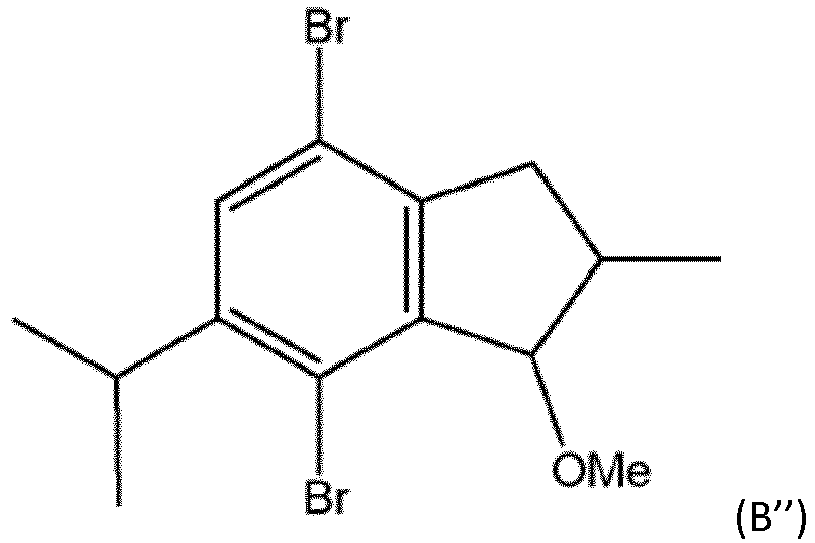
 b) faire réagir le composé de formule (C") avec un composé (D')

Applications Claiming Priority (3)
| Application Number | Priority Date | Filing Date | Title |
|---|---|---|---|
| EP12199251 | 2012-12-21 | ||
| PCT/EP2013/077531 WO2014096282A1 (fr) | 2012-12-21 | 2013-12-19 | Catalyseur |
| EP13811231.3A EP2935296B1 (fr) | 2012-12-21 | 2013-12-19 | Catalyseur |
Related Parent Applications (2)
| Application Number | Title | Priority Date | Filing Date |
|---|---|---|---|
| EP13811231.3A Division EP2935296B1 (fr) | 2012-12-21 | 2013-12-19 | Catalyseur |
| EP13811231.3A Division-Into EP2935296B1 (fr) | 2012-12-21 | 2013-12-19 | Catalyseur |
Publications (2)
| Publication Number | Publication Date |
|---|---|
| EP3301098A1 EP3301098A1 (fr) | 2018-04-04 |
| EP3301098B1 true EP3301098B1 (fr) | 2020-02-19 |
Family
ID=47552824
Family Applications (3)
| Application Number | Title | Priority Date | Filing Date |
|---|---|---|---|
| EP17195336.7A Active EP3301098B1 (fr) | 2012-12-21 | 2013-12-19 | Procédé de preparation d'un ligand pour un catalyseur |
| EP13811231.3A Not-in-force EP2935296B1 (fr) | 2012-12-21 | 2013-12-19 | Catalyseur |
| EP13811217.2A Not-in-force EP2935295B1 (fr) | 2012-12-21 | 2013-12-19 | Catalyseur |
Family Applications After (2)
| Application Number | Title | Priority Date | Filing Date |
|---|---|---|---|
| EP13811231.3A Not-in-force EP2935296B1 (fr) | 2012-12-21 | 2013-12-19 | Catalyseur |
| EP13811217.2A Not-in-force EP2935295B1 (fr) | 2012-12-21 | 2013-12-19 | Catalyseur |
Country Status (5)
| Country | Link |
|---|---|
| US (3) | US20150329653A1 (fr) |
| EP (3) | EP3301098B1 (fr) |
| JP (2) | JP6193398B2 (fr) |
| CN (2) | CN104870462B (fr) |
| WO (2) | WO2014096282A1 (fr) |
Families Citing this family (26)
| Publication number | Priority date | Publication date | Assignee | Title |
|---|---|---|---|---|
| EP2746301B1 (fr) | 2012-12-21 | 2018-05-30 | Borealis AG | Catalyseur |
| EP2746289B1 (fr) * | 2012-12-21 | 2017-09-27 | Borealis AG | Catalyseurs |
| JP6193398B2 (ja) * | 2012-12-21 | 2017-09-06 | ボレアリス エージー | 触媒 |
| WO2017060820A1 (fr) * | 2015-10-08 | 2017-04-13 | Mylan Laboratories Limited | Procédé de préparation de velpatasvir |
| JP7296691B2 (ja) * | 2016-02-16 | 2023-06-23 | 三井化学株式会社 | 遷移金属化合物、オレフィン重合用触媒およびオレフィン重合体の製造方法 |
| CN105732563B (zh) * | 2016-03-23 | 2018-08-28 | 江苏苏利精细化工股份有限公司 | 一种合成9-溴-3-(2-溴乙酰基)-10,11-二氢-5H-二苯并[c,g]色烯-8(9h)-酮的新方法 |
| EP3487928A1 (fr) * | 2016-07-25 | 2019-05-29 | ExxonMobil Chemical Patents Inc. | Compositions de polypropylène bimodales et leur procédé de fabrication |
| US11020333B2 (en) | 2016-08-15 | 2021-06-01 | Givaudan S.A. | Organic compounds |
| KR102505086B1 (ko) | 2016-11-18 | 2023-02-28 | 보레알리스 아게 | 촉매 |
| US11530280B2 (en) | 2016-12-15 | 2022-12-20 | Borealis Ag | Catalyst system for producing polyethylene copolymers in a high temperature solution polymerization process |
| KR102534541B1 (ko) | 2016-12-15 | 2023-05-18 | 보레알리스 아게 | 고온 용액 중합 공정으로 폴리에틸렌 공중합체를 제조하기 위한 촉매 시스템 |
| EP3562831B1 (fr) | 2016-12-29 | 2021-10-20 | Borealis AG | Catalyseurs |
| WO2018130638A1 (fr) * | 2017-01-13 | 2018-07-19 | Total Research & Technology Feluy | Polypropylènes purs et compositions de polypropylène pour le moulage |
| US10807998B2 (en) | 2017-01-13 | 2020-10-20 | Exxonmobil Chemical Patents Inc. | Bridged bis(indenyl) transitional metal complexes, production, and use thereof |
| CN110770264B (zh) | 2017-07-07 | 2022-10-14 | 博里利斯股份公司 | 制备多相丙烯共聚物的方法 |
| KR102412130B1 (ko) * | 2017-12-26 | 2022-06-23 | 주식회사 엘지화학 | 담지 메탈로센 촉매의 제조방법 및 이로부터 제조된 촉매를 이용하는 폴리프로필렌의 제조방법 |
| EP3768735B1 (fr) | 2018-03-19 | 2021-12-29 | Borealis AG | Catalyseurs pour la polymerisation d'olefins |
| CN108517235B (zh) * | 2018-04-29 | 2021-09-17 | 段宝荣 | 一种木屑生物质燃料及其制备方法 |
| EP3567060A1 (fr) | 2018-05-09 | 2019-11-13 | Borealis AG | Procédé de préparation de copolymères de propylène hétérophasique |
| WO2019238428A1 (fr) * | 2018-06-14 | 2019-12-19 | Borealis Ag | Procédé destiné à polymériser une oléfine dans un réacteur en phase gazeuse à homogénéité thermique améliorée |
| CN112424241B (zh) | 2018-06-28 | 2023-06-06 | 博里利斯股份公司 | 催化剂 |
| CN110922512A (zh) * | 2018-09-19 | 2020-03-27 | 杭州双安科技有限公司 | 烯烃聚合用催化剂组分、其制备方法和应用 |
| KR102431339B1 (ko) * | 2018-12-10 | 2022-08-10 | 주식회사 엘지화학 | 폴리에틸렌 및 이의 염소화 폴리에틸렌 |
| JP7555972B2 (ja) | 2019-05-29 | 2024-09-25 | ボレアリス エージー | 触媒系 |
| JP2020196689A (ja) * | 2019-06-04 | 2020-12-10 | 株式会社神鋼環境ソリューション | 有機ナトリウム化合物と有機塩化物とのカップリング方法 |
| ES3037772T3 (en) | 2019-09-25 | 2025-10-07 | Borealis Gmbh | Catalysts |
Citations (1)
| Publication number | Priority date | Publication date | Assignee | Title |
|---|---|---|---|---|
| EP2532687A2 (fr) * | 2011-06-10 | 2012-12-12 | Borealis AG | Catalyseurs à base de metallocènes pontés |
Family Cites Families (32)
| Publication number | Priority date | Publication date | Assignee | Title |
|---|---|---|---|---|
| ATE286918T1 (de) | 1991-10-15 | 2005-01-15 | Basell Polyolefine Gmbh | Verfahren zur herstellung eines olefinpolymers unter verwendung von metallocenen mit speziell substituierten indenylliganden |
| EP0629632B2 (fr) | 1993-06-07 | 2015-01-21 | Mitsui Chemicals, Inc. | Polypropylène |
| US6787618B1 (en) | 1995-12-01 | 2004-09-07 | Basell Polypropylen Gmbh | Metallocene compound and high molecular weight copolymers of propylene and olefins having two or four to thirty-two carbon atoms |
| DE19544828A1 (de) | 1995-12-01 | 1997-06-05 | Hoechst Ag | Hochmolekulare Copolymere |
| AU782996B2 (en) | 1999-12-23 | 2005-09-15 | Basell Polyolefine Gmbh | Transition metal compound, ligand system, catalyst system and the use of the latter for the polymerisation and copolymerisation of olefins |
| ATE260289T1 (de) | 2000-06-30 | 2004-03-15 | Exxonmobil Chem Patents Inc | Verbrückte bisindenyl substituierte metallocen- verbindungen |
| WO2002002576A1 (fr) | 2000-06-30 | 2002-01-10 | Exxonmobil Chemical Patents Inc. | Composes bis (indenyle) metallocenes pontes |
| EP1313747B1 (fr) * | 2000-08-29 | 2005-04-20 | Basell Polyolefine GmbH | Procede de production de systemes ligands pontes par des alkyles et composes de metaux transitoires |
| US7141637B2 (en) | 2001-11-30 | 2006-11-28 | Basell Polyolefine Gmbh | Metallocene compounds and process for the preparation of propylene polymers |
| DE10158656A1 (de) | 2001-11-30 | 2003-06-26 | Basell Polyolefine Gmbh | Organoübergangsmetallverbindung, Biscyclopentadienylligandsystem, Katalysatorsystem und Verfahren zur Herstellung von Polyolefinen |
| EP1323747A1 (fr) * | 2001-12-19 | 2003-07-02 | Borealis Technology Oy | Procédé pour la préparation des catalyseurs pour la polymérisation oléfinique |
| JP2006512410A (ja) | 2002-12-06 | 2006-04-13 | バーゼル、ポリオレフィン、ゲゼルシャフト、ミット、ベシュレンクテル、ハフツング | 有機金属遷移金属化合物、ビスシクロペンタジエニル配位子を有する化合物、触媒組成物、及びこれらを用いたポリオレフィンの製造法 |
| US20060252637A1 (en) | 2003-05-28 | 2006-11-09 | Basell Polyolefine Gmbh | Bisindenyl zirconium complexes for use in the polymerization of olefins |
| KR20060133960A (ko) | 2003-09-11 | 2006-12-27 | 바젤 폴리올레핀 게엠베하 | 헤테로페이스 프로필렌 공중합체의 제조를 위한 다단계공정 |
| DE10358082A1 (de) | 2003-12-10 | 2005-07-14 | Basell Polyolefine Gmbh | Organübergangsmetallverbindung, Bscyclopentadienyligandsystem, Katalysatorsystem und Hertellung von Polyolefinen |
| US7285608B2 (en) | 2004-04-21 | 2007-10-23 | Novolen Technology Holdings C.V. | Metallocene ligands, metallocene compounds and metallocene catalysts, their synthesis and their use for the polymerization of olefins |
| EA012018B1 (ru) | 2004-12-31 | 2009-06-30 | Бореалис Текнолоджи Ой | Способ получения катализатора полимеризации олефинов |
| US7910783B2 (en) | 2005-12-14 | 2011-03-22 | Exxonmobil Chemical Patents Inc. | Preparation of substituted bridged indenyl and related ligands |
| JP2009530341A (ja) * | 2006-03-17 | 2009-08-27 | バーゼル・ポリオレフィン・ゲーエムベーハー | メタロセン化合物類 |
| WO2007116034A1 (fr) | 2006-04-12 | 2007-10-18 | Basell Polyolefine Gmbh | Composes de metallocene |
| KR20090017608A (ko) | 2006-05-18 | 2009-02-18 | 코닌클리케 필립스 일렉트로닉스 엔.브이. | 상부 가열수단이 상대적으로 작은 수평 토스트 장치 |
| US8299287B2 (en) | 2007-10-25 | 2012-10-30 | Lammus Novolen Technology GmbH | Metallocene compounds, catalysts comprising them, process for producing an olefin polymer by use of the catalysts, and olefin homo- and copolymers |
| EP2235071A2 (fr) | 2007-10-25 | 2010-10-06 | Novolen Technology Holdings, C.V. | Composés métallocènes, catalyseurs les comportant, procédé de fabrication d'un polymère d'oléfine à l'aide des catalyseurs et homopolymères et copolymères d'oléfines |
| KR101278336B1 (ko) | 2007-10-25 | 2013-06-25 | 루머스 노보렌 테크놀로지 게엠베하 | 안사-메탈로센 화합물의 라세모선택적 합성, 안사-메탈로센 화합물, 이를 포함하는 촉매, 그 촉매를 이용한 올레핀 폴리머 제조 공정, 그리고 올레핀 호모- 및 코폴리머 |
| CN103254513B (zh) * | 2007-12-20 | 2015-08-26 | 埃克森美孚研究工程公司 | 全同立构聚丙烯和乙烯-丙烯共聚物的共混物 |
| JP4625517B2 (ja) | 2008-10-27 | 2011-02-02 | 富士フイルム株式会社 | 3次元表示装置および方法並びにプログラム |
| ES2535323T3 (es) | 2009-12-22 | 2015-05-08 | Borealis Ag | Preparación de catalizadores de sitio único |
| GB2476497A (en) | 2009-12-23 | 2011-06-29 | Bombardier Transp Gmbh | Transferring electromagnetic energy to a vehicle |
| EP2535372B1 (fr) | 2011-06-15 | 2016-09-14 | Borealis AG | Mélange en réacteur in situ d'un polypropylène nucléé catalysé par Ziegler-Natta et d'un polypropylène catalysé par métallocène |
| JP6193398B2 (ja) | 2012-12-21 | 2017-09-06 | ボレアリス エージー | 触媒 |
| EP2746289B1 (fr) | 2012-12-21 | 2017-09-27 | Borealis AG | Catalyseurs |
| EP2746301B1 (fr) | 2012-12-21 | 2018-05-30 | Borealis AG | Catalyseur |
-
2013
- 2013-12-19 JP JP2015548607A patent/JP6193398B2/ja not_active Expired - Fee Related
- 2013-12-19 EP EP17195336.7A patent/EP3301098B1/fr active Active
- 2013-12-19 WO PCT/EP2013/077531 patent/WO2014096282A1/fr not_active Ceased
- 2013-12-19 JP JP2015548566A patent/JP6184517B2/ja not_active Expired - Fee Related
- 2013-12-19 CN CN201380067649.9A patent/CN104870462B/zh not_active Expired - Fee Related
- 2013-12-19 EP EP13811231.3A patent/EP2935296B1/fr not_active Not-in-force
- 2013-12-19 US US14/654,413 patent/US20150329653A1/en not_active Abandoned
- 2013-12-19 US US14/654,401 patent/US9598516B2/en not_active Expired - Fee Related
- 2013-12-19 WO PCT/EP2013/077344 patent/WO2014096171A1/fr not_active Ceased
- 2013-12-19 CN CN201380067625.3A patent/CN104918948B/zh not_active Expired - Fee Related
- 2013-12-19 EP EP13811217.2A patent/EP2935295B1/fr not_active Not-in-force
-
2017
- 2017-02-01 US US15/421,760 patent/US9988323B2/en active Active
Patent Citations (1)
| Publication number | Priority date | Publication date | Assignee | Title |
|---|---|---|---|---|
| EP2532687A2 (fr) * | 2011-06-10 | 2012-12-12 | Borealis AG | Catalyseurs à base de metallocènes pontés |
Also Published As
| Publication number | Publication date |
|---|---|
| CN104918948B (zh) | 2018-09-18 |
| WO2014096282A1 (fr) | 2014-06-26 |
| EP3301098A1 (fr) | 2018-04-04 |
| WO2014096171A1 (fr) | 2014-06-26 |
| JP2016504452A (ja) | 2016-02-12 |
| JP6184517B2 (ja) | 2017-08-23 |
| JP2016501953A (ja) | 2016-01-21 |
| US20150344595A1 (en) | 2015-12-03 |
| US9988323B2 (en) | 2018-06-05 |
| JP6193398B2 (ja) | 2017-09-06 |
| EP2935296A1 (fr) | 2015-10-28 |
| CN104918948A (zh) | 2015-09-16 |
| EP2935295A1 (fr) | 2015-10-28 |
| EP2935296B1 (fr) | 2017-11-15 |
| US20150329653A1 (en) | 2015-11-19 |
| CN104870462A (zh) | 2015-08-26 |
| US9598516B2 (en) | 2017-03-21 |
| EP2935295B1 (fr) | 2018-02-07 |
| US20170137343A1 (en) | 2017-05-18 |
| CN104870462B (zh) | 2018-04-10 |
Similar Documents
| Publication | Publication Date | Title |
|---|---|---|
| EP3301098B1 (fr) | Procédé de preparation d'un ligand pour un catalyseur | |
| EP2746289B1 (fr) | Catalyseurs | |
| EP2402353B1 (fr) | Métallocènes des métaux de groupe 4 comme catalyseurs pour la polymérisation d'oléfines | |
| EP2402354B1 (fr) | Procédé de polymérisation d'oléfines utilisant des métallocènes des métaux de groupe 4 comme catalyseurs | |
| EP2746301B1 (fr) | Catalyseur | |
| KR20190095956A (ko) | 촉매 | |
| WO2012084961A1 (fr) | Catalyseurs métallocènes pontés | |
| EP3649162B1 (fr) | Procédé de préparation de copolymères de propylène hétérophasique |
Legal Events
| Date | Code | Title | Description |
|---|---|---|---|
| PUAI | Public reference made under article 153(3) epc to a published international application that has entered the european phase |
Free format text: ORIGINAL CODE: 0009012 |
|
| STAA | Information on the status of an ep patent application or granted ep patent |
Free format text: STATUS: THE APPLICATION HAS BEEN PUBLISHED |
|
| AC | Divisional application: reference to earlier application |
Ref document number: 2935296 Country of ref document: EP Kind code of ref document: P |
|
| AK | Designated contracting states |
Kind code of ref document: A1 Designated state(s): AL AT BE BG CH CY CZ DE DK EE ES FI FR GB GR HR HU IE IS IT LI LT LU LV MC MK MT NL NO PL PT RO RS SE SI SK SM TR |
|
| STAA | Information on the status of an ep patent application or granted ep patent |
Free format text: STATUS: REQUEST FOR EXAMINATION WAS MADE |
|
| 17P | Request for examination filed |
Effective date: 20181004 |
|
| RBV | Designated contracting states (corrected) |
Designated state(s): AL AT BE BG CH CY CZ DE DK EE ES FI FR GB GR HR HU IE IS IT LI LT LU LV MC MK MT NL NO PL PT RO RS SE SI SK SM TR |
|
| GRAP | Despatch of communication of intention to grant a patent |
Free format text: ORIGINAL CODE: EPIDOSNIGR1 |
|
| STAA | Information on the status of an ep patent application or granted ep patent |
Free format text: STATUS: GRANT OF PATENT IS INTENDED |
|
| INTG | Intention to grant announced |
Effective date: 20190830 |
|
| GRAS | Grant fee paid |
Free format text: ORIGINAL CODE: EPIDOSNIGR3 |
|
| GRAA | (expected) grant |
Free format text: ORIGINAL CODE: 0009210 |
|
| STAA | Information on the status of an ep patent application or granted ep patent |
Free format text: STATUS: THE PATENT HAS BEEN GRANTED |
|
| AC | Divisional application: reference to earlier application |
Ref document number: 2935296 Country of ref document: EP Kind code of ref document: P |
|
| AK | Designated contracting states |
Kind code of ref document: B1 Designated state(s): AL AT BE BG CH CY CZ DE DK EE ES FI FR GB GR HR HU IE IS IT LI LT LU LV MC MK MT NL NO PL PT RO RS SE SI SK SM TR |
|
| REG | Reference to a national code |
Ref country code: CH Ref legal event code: EP |
|
| REG | Reference to a national code |
Ref country code: DE Ref legal event code: R096 Ref document number: 602013066095 Country of ref document: DE |
|
| REG | Reference to a national code |
Ref country code: AT Ref legal event code: REF Ref document number: 1234857 Country of ref document: AT Kind code of ref document: T Effective date: 20200315 |
|
| REG | Reference to a national code |
Ref country code: IE Ref legal event code: FG4D |
|
| REG | Reference to a national code |
Ref country code: NL Ref legal event code: MP Effective date: 20200219 |
|
| PG25 | Lapsed in a contracting state [announced via postgrant information from national office to epo] |
Ref country code: RS Free format text: LAPSE BECAUSE OF FAILURE TO SUBMIT A TRANSLATION OF THE DESCRIPTION OR TO PAY THE FEE WITHIN THE PRESCRIBED TIME-LIMIT Effective date: 20200219 Ref country code: FI Free format text: LAPSE BECAUSE OF FAILURE TO SUBMIT A TRANSLATION OF THE DESCRIPTION OR TO PAY THE FEE WITHIN THE PRESCRIBED TIME-LIMIT Effective date: 20200219 Ref country code: NO Free format text: LAPSE BECAUSE OF FAILURE TO SUBMIT A TRANSLATION OF THE DESCRIPTION OR TO PAY THE FEE WITHIN THE PRESCRIBED TIME-LIMIT Effective date: 20200519 |
|
| REG | Reference to a national code |
Ref country code: LT Ref legal event code: MG4D |
|
| PG25 | Lapsed in a contracting state [announced via postgrant information from national office to epo] |
Ref country code: HR Free format text: LAPSE BECAUSE OF FAILURE TO SUBMIT A TRANSLATION OF THE DESCRIPTION OR TO PAY THE FEE WITHIN THE PRESCRIBED TIME-LIMIT Effective date: 20200219 Ref country code: GR Free format text: LAPSE BECAUSE OF FAILURE TO SUBMIT A TRANSLATION OF THE DESCRIPTION OR TO PAY THE FEE WITHIN THE PRESCRIBED TIME-LIMIT Effective date: 20200520 Ref country code: BG Free format text: LAPSE BECAUSE OF FAILURE TO SUBMIT A TRANSLATION OF THE DESCRIPTION OR TO PAY THE FEE WITHIN THE PRESCRIBED TIME-LIMIT Effective date: 20200519 Ref country code: LV Free format text: LAPSE BECAUSE OF FAILURE TO SUBMIT A TRANSLATION OF THE DESCRIPTION OR TO PAY THE FEE WITHIN THE PRESCRIBED TIME-LIMIT Effective date: 20200219 Ref country code: SE Free format text: LAPSE BECAUSE OF FAILURE TO SUBMIT A TRANSLATION OF THE DESCRIPTION OR TO PAY THE FEE WITHIN THE PRESCRIBED TIME-LIMIT Effective date: 20200219 Ref country code: IS Free format text: LAPSE BECAUSE OF FAILURE TO SUBMIT A TRANSLATION OF THE DESCRIPTION OR TO PAY THE FEE WITHIN THE PRESCRIBED TIME-LIMIT Effective date: 20200619 |
|
| PG25 | Lapsed in a contracting state [announced via postgrant information from national office to epo] |
Ref country code: NL Free format text: LAPSE BECAUSE OF FAILURE TO SUBMIT A TRANSLATION OF THE DESCRIPTION OR TO PAY THE FEE WITHIN THE PRESCRIBED TIME-LIMIT Effective date: 20200219 |
|
| PG25 | Lapsed in a contracting state [announced via postgrant information from national office to epo] |
Ref country code: PT Free format text: LAPSE BECAUSE OF FAILURE TO SUBMIT A TRANSLATION OF THE DESCRIPTION OR TO PAY THE FEE WITHIN THE PRESCRIBED TIME-LIMIT Effective date: 20200712 Ref country code: CZ Free format text: LAPSE BECAUSE OF FAILURE TO SUBMIT A TRANSLATION OF THE DESCRIPTION OR TO PAY THE FEE WITHIN THE PRESCRIBED TIME-LIMIT Effective date: 20200219 Ref country code: SK Free format text: LAPSE BECAUSE OF FAILURE TO SUBMIT A TRANSLATION OF THE DESCRIPTION OR TO PAY THE FEE WITHIN THE PRESCRIBED TIME-LIMIT Effective date: 20200219 Ref country code: RO Free format text: LAPSE BECAUSE OF FAILURE TO SUBMIT A TRANSLATION OF THE DESCRIPTION OR TO PAY THE FEE WITHIN THE PRESCRIBED TIME-LIMIT Effective date: 20200219 Ref country code: SM Free format text: LAPSE BECAUSE OF FAILURE TO SUBMIT A TRANSLATION OF THE DESCRIPTION OR TO PAY THE FEE WITHIN THE PRESCRIBED TIME-LIMIT Effective date: 20200219 Ref country code: EE Free format text: LAPSE BECAUSE OF FAILURE TO SUBMIT A TRANSLATION OF THE DESCRIPTION OR TO PAY THE FEE WITHIN THE PRESCRIBED TIME-LIMIT Effective date: 20200219 Ref country code: DK Free format text: LAPSE BECAUSE OF FAILURE TO SUBMIT A TRANSLATION OF THE DESCRIPTION OR TO PAY THE FEE WITHIN THE PRESCRIBED TIME-LIMIT Effective date: 20200219 Ref country code: ES Free format text: LAPSE BECAUSE OF FAILURE TO SUBMIT A TRANSLATION OF THE DESCRIPTION OR TO PAY THE FEE WITHIN THE PRESCRIBED TIME-LIMIT Effective date: 20200219 Ref country code: LT Free format text: LAPSE BECAUSE OF FAILURE TO SUBMIT A TRANSLATION OF THE DESCRIPTION OR TO PAY THE FEE WITHIN THE PRESCRIBED TIME-LIMIT Effective date: 20200219 |
|
| REG | Reference to a national code |
Ref country code: AT Ref legal event code: MK05 Ref document number: 1234857 Country of ref document: AT Kind code of ref document: T Effective date: 20200219 |
|
| REG | Reference to a national code |
Ref country code: DE Ref legal event code: R097 Ref document number: 602013066095 Country of ref document: DE |
|
| PLBE | No opposition filed within time limit |
Free format text: ORIGINAL CODE: 0009261 |
|
| STAA | Information on the status of an ep patent application or granted ep patent |
Free format text: STATUS: NO OPPOSITION FILED WITHIN TIME LIMIT |
|
| 26N | No opposition filed |
Effective date: 20201120 |
|
| PG25 | Lapsed in a contracting state [announced via postgrant information from national office to epo] |
Ref country code: AT Free format text: LAPSE BECAUSE OF FAILURE TO SUBMIT A TRANSLATION OF THE DESCRIPTION OR TO PAY THE FEE WITHIN THE PRESCRIBED TIME-LIMIT Effective date: 20200219 Ref country code: IT Free format text: LAPSE BECAUSE OF FAILURE TO SUBMIT A TRANSLATION OF THE DESCRIPTION OR TO PAY THE FEE WITHIN THE PRESCRIBED TIME-LIMIT Effective date: 20200219 |
|
| PG25 | Lapsed in a contracting state [announced via postgrant information from national office to epo] |
Ref country code: PL Free format text: LAPSE BECAUSE OF FAILURE TO SUBMIT A TRANSLATION OF THE DESCRIPTION OR TO PAY THE FEE WITHIN THE PRESCRIBED TIME-LIMIT Effective date: 20200219 Ref country code: SI Free format text: LAPSE BECAUSE OF FAILURE TO SUBMIT A TRANSLATION OF THE DESCRIPTION OR TO PAY THE FEE WITHIN THE PRESCRIBED TIME-LIMIT Effective date: 20200219 |
|
| REG | Reference to a national code |
Ref country code: CH Ref legal event code: PL |
|
| GBPC | Gb: european patent ceased through non-payment of renewal fee |
Effective date: 20201219 |
|
| PG25 | Lapsed in a contracting state [announced via postgrant information from national office to epo] |
Ref country code: MC Free format text: LAPSE BECAUSE OF FAILURE TO SUBMIT A TRANSLATION OF THE DESCRIPTION OR TO PAY THE FEE WITHIN THE PRESCRIBED TIME-LIMIT Effective date: 20200219 |
|
| PG25 | Lapsed in a contracting state [announced via postgrant information from national office to epo] |
Ref country code: FR Free format text: LAPSE BECAUSE OF NON-PAYMENT OF DUE FEES Effective date: 20201231 Ref country code: IE Free format text: LAPSE BECAUSE OF NON-PAYMENT OF DUE FEES Effective date: 20201219 Ref country code: LU Free format text: LAPSE BECAUSE OF NON-PAYMENT OF DUE FEES Effective date: 20201219 |
|
| PG25 | Lapsed in a contracting state [announced via postgrant information from national office to epo] |
Ref country code: LI Free format text: LAPSE BECAUSE OF NON-PAYMENT OF DUE FEES Effective date: 20201231 Ref country code: GB Free format text: LAPSE BECAUSE OF NON-PAYMENT OF DUE FEES Effective date: 20201219 Ref country code: CH Free format text: LAPSE BECAUSE OF NON-PAYMENT OF DUE FEES Effective date: 20201231 |
|
| PG25 | Lapsed in a contracting state [announced via postgrant information from national office to epo] |
Ref country code: TR Free format text: LAPSE BECAUSE OF FAILURE TO SUBMIT A TRANSLATION OF THE DESCRIPTION OR TO PAY THE FEE WITHIN THE PRESCRIBED TIME-LIMIT Effective date: 20200219 Ref country code: MT Free format text: LAPSE BECAUSE OF FAILURE TO SUBMIT A TRANSLATION OF THE DESCRIPTION OR TO PAY THE FEE WITHIN THE PRESCRIBED TIME-LIMIT Effective date: 20200219 Ref country code: CY Free format text: LAPSE BECAUSE OF FAILURE TO SUBMIT A TRANSLATION OF THE DESCRIPTION OR TO PAY THE FEE WITHIN THE PRESCRIBED TIME-LIMIT Effective date: 20200219 |
|
| PG25 | Lapsed in a contracting state [announced via postgrant information from national office to epo] |
Ref country code: MK Free format text: LAPSE BECAUSE OF FAILURE TO SUBMIT A TRANSLATION OF THE DESCRIPTION OR TO PAY THE FEE WITHIN THE PRESCRIBED TIME-LIMIT Effective date: 20200219 Ref country code: AL Free format text: LAPSE BECAUSE OF FAILURE TO SUBMIT A TRANSLATION OF THE DESCRIPTION OR TO PAY THE FEE WITHIN THE PRESCRIBED TIME-LIMIT Effective date: 20200219 |
|
| P01 | Opt-out of the competence of the unified patent court (upc) registered |
Effective date: 20230602 |
|
| PGFP | Annual fee paid to national office [announced via postgrant information from national office to epo] |
Ref country code: DE Payment date: 20231214 Year of fee payment: 11 |
|
| PGFP | Annual fee paid to national office [announced via postgrant information from national office to epo] |
Ref country code: BE Payment date: 20231220 Year of fee payment: 11 |
|
| REG | Reference to a national code |
Ref country code: DE Ref legal event code: R119 Ref document number: 602013066095 Country of ref document: DE |
|
| REG | Reference to a national code |
Ref country code: BE Ref legal event code: MM Effective date: 20241231 |
|
| PG25 | Lapsed in a contracting state [announced via postgrant information from national office to epo] |
Ref country code: DE Free format text: LAPSE BECAUSE OF NON-PAYMENT OF DUE FEES Effective date: 20250701 |
|
| PG25 | Lapsed in a contracting state [announced via postgrant information from national office to epo] |
Ref country code: BE Free format text: LAPSE BECAUSE OF NON-PAYMENT OF DUE FEES Effective date: 20241231 |