EP2536736B1 - Herstellung von 6'-o-sialyllactose und zwischenprodukten davon - Google Patents
Herstellung von 6'-o-sialyllactose und zwischenprodukten davon Download PDFInfo
- Publication number
- EP2536736B1 EP2536736B1 EP11744297.0A EP11744297A EP2536736B1 EP 2536736 B1 EP2536736 B1 EP 2536736B1 EP 11744297 A EP11744297 A EP 11744297A EP 2536736 B1 EP2536736 B1 EP 2536736B1
- Authority
- EP
- European Patent Office
- Prior art keywords
- general formula
- sialyllactose
- salt
- ppm
- compound
- Prior art date
- Legal status (The legal status is an assumption and is not a legal conclusion. Google has not performed a legal analysis and makes no representation as to the accuracy of the status listed.)
- Not-in-force
Links
- 0 C[C@@](C(*)*1*)OC(C*)[C@]1O[C@@](C(*)C1*)OC(CO[C@@](C2)(C(OC)=O)OC([C@@]([C@@](CO)O)O)[C@](*)C2O)[C@@]1O Chemical compound C[C@@](C(*)*1*)OC(C*)[C@]1O[C@@](C(*)C1*)OC(CO[C@@](C2)(C(OC)=O)OC([C@@]([C@@](CO)O)O)[C@](*)C2O)[C@@]1O 0.000 description 8
Classifications
-
- A—HUMAN NECESSITIES
- A23—FOODS OR FOODSTUFFS; TREATMENT THEREOF, NOT COVERED BY OTHER CLASSES
- A23L—FOODS, FOODSTUFFS OR NON-ALCOHOLIC BEVERAGES, NOT OTHERWISE PROVIDED FOR; PREPARATION OR TREATMENT THEREOF
- A23L33/00—Modifying nutritive qualities of foods; Dietetic products; Preparation or treatment thereof
- A23L33/20—Reducing nutritive value; Dietetic products with reduced nutritive value
- A23L33/21—Addition of substantially indigestible substances, e.g. dietary fibres
-
- A—HUMAN NECESSITIES
- A23—FOODS OR FOODSTUFFS; TREATMENT THEREOF, NOT COVERED BY OTHER CLASSES
- A23L—FOODS, FOODSTUFFS OR NON-ALCOHOLIC BEVERAGES, NOT OTHERWISE PROVIDED FOR; PREPARATION OR TREATMENT THEREOF
- A23L33/00—Modifying nutritive qualities of foods; Dietetic products; Preparation or treatment thereof
- A23L33/10—Modifying nutritive qualities of foods; Dietetic products; Preparation or treatment thereof using additives
-
- A—HUMAN NECESSITIES
- A61—MEDICAL OR VETERINARY SCIENCE; HYGIENE
- A61K—PREPARATIONS FOR MEDICAL, DENTAL OR TOILETRY PURPOSES
- A61K31/00—Medicinal preparations containing organic active ingredients
- A61K31/70—Carbohydrates; Sugars; Derivatives thereof
- A61K31/702—Oligosaccharides, i.e. having three to five saccharide radicals attached to each other by glycosidic linkages
-
- A—HUMAN NECESSITIES
- A61—MEDICAL OR VETERINARY SCIENCE; HYGIENE
- A61P—SPECIFIC THERAPEUTIC ACTIVITY OF CHEMICAL COMPOUNDS OR MEDICINAL PREPARATIONS
- A61P25/00—Drugs for disorders of the nervous system
- A61P25/28—Drugs for disorders of the nervous system for treating neurodegenerative disorders of the central nervous system, e.g. nootropic agents, cognition enhancers, drugs for treating Alzheimer's disease or other forms of dementia
-
- A—HUMAN NECESSITIES
- A61—MEDICAL OR VETERINARY SCIENCE; HYGIENE
- A61P—SPECIFIC THERAPEUTIC ACTIVITY OF CHEMICAL COMPOUNDS OR MEDICINAL PREPARATIONS
- A61P3/00—Drugs for disorders of the metabolism
- A61P3/02—Nutrients, e.g. vitamins, minerals
-
- A—HUMAN NECESSITIES
- A61—MEDICAL OR VETERINARY SCIENCE; HYGIENE
- A61P—SPECIFIC THERAPEUTIC ACTIVITY OF CHEMICAL COMPOUNDS OR MEDICINAL PREPARATIONS
- A61P31/00—Antiinfectives, i.e. antibiotics, antiseptics, chemotherapeutics
- A61P31/04—Antibacterial agents
-
- A—HUMAN NECESSITIES
- A61—MEDICAL OR VETERINARY SCIENCE; HYGIENE
- A61P—SPECIFIC THERAPEUTIC ACTIVITY OF CHEMICAL COMPOUNDS OR MEDICINAL PREPARATIONS
- A61P31/00—Antiinfectives, i.e. antibiotics, antiseptics, chemotherapeutics
- A61P31/12—Antivirals
-
- A—HUMAN NECESSITIES
- A61—MEDICAL OR VETERINARY SCIENCE; HYGIENE
- A61P—SPECIFIC THERAPEUTIC ACTIVITY OF CHEMICAL COMPOUNDS OR MEDICINAL PREPARATIONS
- A61P37/00—Drugs for immunological or allergic disorders
- A61P37/02—Immunomodulators
-
- C—CHEMISTRY; METALLURGY
- C07—ORGANIC CHEMISTRY
- C07H—SUGARS; DERIVATIVES THEREOF; NUCLEOSIDES; NUCLEOTIDES; NUCLEIC ACIDS
- C07H1/00—Processes for the preparation of sugar derivatives
-
- C—CHEMISTRY; METALLURGY
- C07—ORGANIC CHEMISTRY
- C07H—SUGARS; DERIVATIVES THEREOF; NUCLEOSIDES; NUCLEOTIDES; NUCLEIC ACIDS
- C07H13/00—Compounds containing saccharide radicals esterified by carbonic acid or derivatives thereof, or by organic acids, e.g. phosphonic acids
- C07H13/02—Compounds containing saccharide radicals esterified by carbonic acid or derivatives thereof, or by organic acids, e.g. phosphonic acids by carboxylic acids
- C07H13/04—Compounds containing saccharide radicals esterified by carbonic acid or derivatives thereof, or by organic acids, e.g. phosphonic acids by carboxylic acids having the esterifying carboxyl radicals attached to acyclic carbon atoms
-
- C—CHEMISTRY; METALLURGY
- C07—ORGANIC CHEMISTRY
- C07H—SUGARS; DERIVATIVES THEREOF; NUCLEOSIDES; NUCLEOTIDES; NUCLEIC ACIDS
- C07H15/00—Compounds containing hydrocarbon or substituted hydrocarbon radicals directly attached to hetero atoms of saccharide radicals
- C07H15/18—Acyclic radicals, substituted by carbocyclic rings
-
- C—CHEMISTRY; METALLURGY
- C07—ORGANIC CHEMISTRY
- C07H—SUGARS; DERIVATIVES THEREOF; NUCLEOSIDES; NUCLEOTIDES; NUCLEIC ACIDS
- C07H3/00—Compounds containing only hydrogen atoms and saccharide radicals having only carbon, hydrogen, and oxygen atoms
- C07H3/06—Oligosaccharides, i.e. having three to five saccharide radicals attached to each other by glycosidic linkages
Definitions
- the present invention provides a method for the preparation of oligosaccharides and derivatives thereof, especially in large scale.
- human milk oligosaccharides During the past decades the interest for preparation and commercialisation of human milk oligosaccharides has been increasing steadily. The importance of human milk oligosaccharides is directly linked to their unique biological activities such as antibacterial, antiviral, immune system and cognitive development enhancing activities [1].
- Sialylated human milk oligosaccharides such as disialyllacto- N -tetraose, 3'- O -sialyl-3- O- fucosyllactose, 6'- O -sialyllactose, 3'- O -sialyllactose, 6'- O -sialylated-lacto- N -neotetraose, 3'- O -sialylated-lacto- N -tetraose etc. are major components of human milk.
- sialic acid residue is always linked to the terminal 3'- O - and/or 6'- O - position(s) of D-galactose or to 6- O- positions of non terminal sugar residues via ⁇ -glycosidic linkages.
- sialylated human milk oligosaccharides have not been possible by using isolation, biotechnology and synthetic methodologies.
- the chemical synthesis of sialylated human milk oligosaccharides is one of the most challenging fields of carbohydrate chemistry due to the nature of sialic acid donors themselves.
- stereoselective glycosylations are achieved via neighbouring group participations but the lack of a substituent at C-3 position of sialic acid prevents such an option.
- stereoselective sialylation has to be achieved via careful selection of a sialic acid donor - acceptor match, kinetic and solvent effects.
- the presence of the carboxylic moiety at the anomeric position of sialic acid also creates unfavoured steric and electronic effects for stereoselective ⁇ -sialylations.
- the strong electron withdrawing effect of the carboxylic group initiates potential side reactions during the glycosylation via ⁇ -elimination.
- sialylated oligosaccharides can be demonstrated via reviewing the background art of one of the simplest sialylated human milk oligosaccharides called 6'- O -sialyllactose (6'-SL, O -( N -acetyl- ⁇ -neuraminosyl)-(2 ⁇ 6)- O - ⁇ -D-galactopyranosyl-(1 ⁇ 4)-D-glucose, Scheme 1).
- 6'- O -Sialyllactose is one of the sialylated human milk oligosaccharides found in high concentration in mother's milk.
- 6'- O -sialyllactose has been synthesised by chemical [2], enzymatic [3] and biotechnological [4] methodologies or it has been isolated from natural sources [5]. However, these methodologies have not been attractive for scale-up due to lack of efficient purification methodologies, use of expensive and toxic reagents and the involvements of many synthetic steps.
- biotechnological methodologies are also described using genetically modified bacteria, yeast or other micro organisms [4]. Such methodologies have serious drawbacks in regulatory processes due to limiting commercialisation opportunities.
- the present invention represents the first commercial approach suitable for industrial manufacture of 6'- O -sialyllactose and other sialylated bioactive oligosaccharides.
- the successful strategy is based upon the introduction of novel sialic acid donor-acceptor pairs, novel sialic acid donors, novel diol-type lactose acceptors, relevant crystalline intermediates, the use of cheap and non-toxic activators and robust purification methodologies.
- the present invention relates to a method for the preparation of 6'- O -sialyllactose or a salt thereof, comprising the steps of:
- alkyl either alone or when attached to another atom or group, means a linear or branched hydrocarbon group with 1-6 carbon atoms, like methyl, ethyl, n -propyl, i -propyl, n -butyl, i -butyl, s -butyl, t -butyl, etc.
- Cycloalkyl means cyclic hydrocarbon residue with 3-6 carbon atoms like cyclopropyl, cyclobutyl, cyclopentyl and cyclohexyl.
- aryl refers to homoaromatic groups like phenyl or naphthyl.
- aryl means phenyl.
- R may be H, alkyl or aryl, like formyl, acetyl, propionyl, butyryl, pivaloyl, benzoyl, etc.
- the alkyl and aryl residues both may be substituted.
- substituted means that the group in question is substituted with a group which modifies the general chemical characteristics of the chain or ring.
- the substituents can be used to modify characteristics of the molecule as a whole, such as stability, solubility, and ability to form crystals.
- the person skilled in the art will be aware of other suitable substituents of a similar size and charge characteristics, which could be used as alternatives in a given situation.
- alkyl More generally in connection with the terms “alkyl”, “cycloalkyl”, “aryl” and “acyl” the term “optionally substituted” is intended to mean that the group in question may be substituted one or several times, preferably 1-5 times, more preferably 1-3 times with group(s) selected from the group consisting of alkyl (only for cycloalkyl, aryl and aromatic acyl), hydroxy, alkoxy (i.e.
- alkyl-oxy ), carboxy, oxo (forming a keto or aldehyde functionality), alkoxycarbonyl, alkylcarbonyl, formyl, aryl, aryloxycarbonyl, aryloxy, arylamino, arylcarbonyl, amino, mono- and dialkylamino, carbamoyl, mono- and dialkyl-aminocarbonyl, alkylcarbonylamino, cyano, alkanoyloxy, nitro, alkylthio and halogen (F, Cl, Br, I).
- protecting group that is removable by catalytic hydrogenation refers to groups whose C-O bond is cleaved by addition of hydrogen in the presence of catalytic amounts of palladium, Raney nickel or another appropriate metal catalyst known for use in hydrogenolysis, resulting in the regeneration of the OH group.
- Such protecting groups are well known to the skilled man and are thoroughly discussed [7].
- Suitable protecting groups include benzyl, diphenylmethyl (benzhydryl), 1-naphthylmethyl, 2-naphthylmethyl or triphenylmethyl (trityl) groups, each of which may be optionally substituted by one or more groups selected from: alkyl, alkoxy, phenyl, amino, acylamino, alkylamino, dialkylamino, nitro, carboxyl, alkoxycarbonyl, carbamoyl, N -alkylcarbamoyl, N,N -dialkylcarbamoyl, azido, halogenalkyl or halogen.
- substitution if present, is on the aromatic ring(s).
- Particularly preferred protecting groups are benzyl or 1-naphthylmethyl groups, both are optionally substituted with one or more groups selected from phenyl, alkyl or halogen. More preferably, the protecting group is selected from unsubstituted benzyl, unsubstituted 1-naphthylmethyl, 4-chlorobenzyl and 4-methylbenzyl.
- These particularly preferred and more preferable protecting groups have the advantage that the by-products of the hydrogenolysis are exclusively toluene, 1-methylnaphthalene, or substituted toluene or 1-methylnaphthalene derivatives. Such by-products can easily be removed even in multi ton scales from water soluble oligosaccharide products via evaporation and/or extraction processes.
- the present invention relates to a method for the preparation of 6'- O -sialyllactose or a salt thereof, comprising the steps of:
- step c) compounds of general formula 1 or salts thereof are treated to deprotect them anomerically thus 6'- O -sialyllactose or salts thereof can be obtained.
- 6'-SL or salts thereof can be produced by subjecting a compound of general formula 1 or salts thereof to catalytic reduction when R 1 is -OR 2 , wherein R 2 is a group removable by catalytic hydrogenation.
- R 1 represents -OR 2 , wherein R 2 is a group removable by catalytic hydrogenation, that is optionally substituted benzyl, diphenylmethyl (benzhydryl), 1-naphthylmethyl, 2-naphthylmethyl or triphenylmethyl (trityl) groups, whose removal typically takes place in a protic solvent or in a mixture of protic solvents.
- a protic solvent may be selected from a group consisting of water, acetic acid or C 1 -C 6 alcohol.
- protic solvents with one or more proper aprotic organic solvents miscible partially or fully with the protic solvent(s) (such as THF, dioxane, ethyl acetate, acetone, etc.) may also be applied.
- water, one or more C 1 -C 6 alcohols or a mixture of water and one or more C 1 -C 6 alcohols are preferably used as solvent system. Solutions containing the carbohydrate derivatives in any concentration or suspensions of the carbohydrate derivatives with the solvent(s) used are also applicable.
- the reaction mixture is stirred at 10-100 °C temperature range, preferably between 20-60 °C in hydrogen atmosphere of 1-50 bar in the presence of a catalyst such as palladium, Raney nickel or any other appropriate metal catalyst, preferably palladium on charcoal or palladium black, until reaching the completion of the reaction.
- Catalyst metal concentrations generally range from 0.1 % to 10 % based on the weight of carbohydrate. Preferably, the catalyst concentrations range from 0.15 % to 5 %, more preferably 0.25 % to 2.25 %.
- Transfer hydrogenation may also be performed, when the hydrogen is generated in situ from cyclohexene, cyclohexadiene, formic acid or ammonium formate.
- organic or inorganic bases/acids and/or basic and/or acidic ion exchange resins can also be used to improve the kinetics of the hydrogenolysis.
- the use of basic substances is especially preferred when halogen substituents are present on the substituted benzyl moieties of the precursors.
- Preferred organic bases are including but not limited to triethylamine, diisopropyl ethylamine, ammonia, ammonium carbamate, diethylamine, etc.
- Preferred organic/inorganic acids are including but not limited to formic acid, acetic acid, propionic acid, chloroacetic acid, dichloroacetic acid, triflouroacetic acid, HCl, HBr, etc.
- 6'-SL and salts thereof can be isolated from the reaction mixture using conventional work-up procedures in crystalline, amorphous solid, syrupy form or concentrated aqueous solution.
- 6'- O -sialyllactose is obtained in the abovementioned reactions, it is converted to a salt thereof, and if desired, a salt of 6'- O -sialyllactose is converted to another salt of 6'- O- sialyllactose.
- R 1 in a compound of general formula 1 is -OR 2 , which R 2 is a group removable by catalytic hydrogenation, preferably selected from benzyl, 4-methylbenzyl, 4-chlorobenzyl and 1-naphthylmethyl.
- step b) in compounds according to general formula 2B all of the functional groups are protected expect for 4'-OH, which protective groups are frequently used in carbohydrate chemistry.
- the protecting groups can be removed either successively giving rise to partially protected trisaccharides (vide infra) and at last compounds of general formula 1 or salts thereof or in one step leading to directly compounds of general formula 1 or salts thereof. All combination of deprotection steps as used herein can be performed in any order, thus selecting the proper conditions needed to remove them as well as conducting deprotection steps in succession fall under the skilled person's competence.
- base catalyzed transesterification deprotection means a reaction, where the acyl protective groups from hydroxyls are removed in an alcohol solvent such as methanol, ethanol, propanol, t -butanol, etc. in the presence of an alcoholate like NaOMe, NaOEt, KO t Bu, etc. at 20-100 °C temperatures.
- the alcohol and the alcoholate should be matched.
- co-solvent as toluene or xylene might be beneficial in order to control particle size of the product and to avoid gel formations. Under this condition only O -acyls can be readily deprotected and when R 8 is -NAc 2 one of the acetyl is also removed.
- the Q group may be transesterified.
- catalytic amount of NaOMe is used in methanol (Zemplén de- O -acylation).
- the term "basic hydrolysis” generally means base catalyzed hydrolysis in water, alcohol or water-organic solvent mixtures, in homogeneous or heterogeneous reaction conditions at temperatures varying from 0-100 °C.
- the base of choice is generally a strong base, e.g. LiOH, NaOH, KOH, Ba(OH) 2 , K 2 CO 3 , basic ion exchange resins, tetraalkylammonium hydroxides, etc.
- the bases can be used in the form of an aqueous solution as well. This condition affects O -acyls, when Q is ester it is also hydrolyzed and when R 8 is -NAc 2 one of the acetyl is also removed.
- the base is NaOH and the solvent is methanol.
- Optional acidification intends to mean that an acidification step can be performed when the acid form of compounds of general formula 1 is needed after base catalyzed transesterification deprotection or basic hydrolysis.
- Optional salt formation means that a compound of general formula 1 in acidic form, if needed, is converted into its salt different to that formed after base catalyzed transesterification deprotection or basic hydrolysis.
- a salt of a compound of general formula 1 means an associated ion pair consists of the negatively charged acid residue of compound of general formula 1 and a cation in any stoichiometric proportion.
- Cations as used in the present context, can be atoms or molecules with positive charge. The cation may be inorganic as well as organic cation.
- Preferred inorganic cations are ammonium ion, alkali metal, alkali earth metal and transition metal ions, more preferably Na + , K + , Ca 2+ , Mg 2+ , Ba 2+ , Fe 2+ , Zn 2+ , Mn 2+ and Cu 2+ , most preferably K + , Ca 2+ , Mg 2+ , Ba 2+ , Fe 2+ and Zn 2+ .
- Basic organic compounds in positively charged form may be relevant organic cations.
- Such preferred positively charged organic molecules are diethyl amine, triethyl amine, diisopropyl ethyl amine, ethanolamine, diethanolamine, triethanolamine, imidazol, piperidine, piperazine, morpholin, benzyl amine, ethylene diamine, meglumin, pyrrolidine, choline, tris-(hydroxymethyl)-methyl amine, N-(2-hydroxyethyl)-pyrrolidine, N-(2-hydroxyethyl)-piperidine, N-(2-hydroxyethyl)-piperazine, N-(2-hydroxyethyl)-morpholine, L-arginine, L-lysine, oligopeptides having L-arginine or L-lysine unit or oligopeptides having free amino group on N -terminal, etc., all in protonated form.
- An inorganic and organic salt of compound of general formula 1 can be obtained from a compound of general formula 1 in acidic form.
- the pH of the solution of the free acid in alcohol or alcohol/water is adjusted to 8,5-11 with a base; if the base is an inorganic one, it can be selected from alkali metal, alkali earth metal and transition metal hydroxides, carbonates and bicarbonates.
- the mixture is then diluted with alcohol and concentrated in vacuo.
- the slurry obtained is then filtered and washed with alcohol.
- Compounds of general formula 2C can be obtained in a delicate way from compounds of compounds 2B.
- the present inventors recognized that the acetyl groups in the sialic acid residue (R 5 is acetyl) can be selectively removed when the lactose portion is protected by acyls different form acetyl (R 4 is optionally substituted acyl provided that acetyl is excluded) due to the higher reactivity of acetyls towards acidic transesterification than other acyls.
- the deprotection step can be carried out in a C 1-6 alcohol or mixture of C 1-6 alcohols, preferably methanol and ethanol in the presence of an acid, generally a protic acid selected from but not limited to acetic acid, trifluoroacetic acid, HCl, formic acid, sulphuric acid, perchloric acid, oxalic acid, p -toluenesulfonic acid, benzenesulfonic acid, cation exchange resins, etc., preferably strong inorganic acid which may be present in from catalytic amount to excess.
- the hydrolysis may be conducted at temperatures between 0 and 20 °C, preferably at 5-10 °C until TLC shows complete or nearly complete reaction which takes from about 2 hours to 3 days depending on temperature, concentration and pH.
- -OR 2 is in ⁇
- R 2 is benzyl, 4-methylbenzyl, 4-chlorobenzyl and 1-naphthylmethyl
- R 4 is selected from isobutyryl, pivaloyl and optionally substituted benzoyl, preferably benzoyl and the acid catalyst of the selective acidic deprotection is sulphuric acid.
- the coupling of the lactose acceptor of general formula 3 with the sialyl donor of general formula 4 can be carried out an aprotic solvent or in a mixture of aprotic solvents in the presence of an activator (promoter or catalyst) so as to lead to the desired glycosylated product.
- the new interglycosidic linkage is formed by the nucleophilic displacement of the leaving group X of donor according to general formula 4 with the 6'-OH group of acceptor according to general formula 3.
- Other functional groups in both participating reactants have to be masked with protecting groups. Particular care has to be taken with regard to the stereoselectivity.
- the stereochemical outcome may be affected by different factors like the presence or absence of a participating group at the ring carbon adjacent to the anomeric centre of the donor, the nature of the leaving group X, solvent effect, nature of the protective groups on both the donor and acceptor, nature of the promoters or catalysts, temperature, pressure, steric interactions between the donor and acceptor, and like.
- sialic acid derivatives an array of anomeric activation for glycosylation is developed and available to a skilled person engaged in sialic acid chemistry.
- glycosyl halides (X means F, Cl, Br, I) are frequently used in glycosylation reaction because of their easy accessibility and satisfactory reactivity. Typically, anomeric halides follow the reactivity order F ⁇ Cl ⁇ Br ⁇ I for nucleophilic displacement.
- the glycosylation reactions are generally promoted by heavy metal ion, mainly mercury or silver, and Lewis acids.
- Catalytic amount of Lewis acid such as trimethylsilyl triflate or BF 3 -etherate, promotes the coupling.
- Thioglycosides (X denotes alkylthio- or phenylthio-group) can be activated by thiofilic promoters such as mercury(II) salts, Br 2 , I 2 , NBS, NIS, triflic acid, triflate salts, BF 3 -etherate, trimethylsilyl triflate, dimethyl-methlythio sulphonium triflate, phenylselenyl triflate, iodonium dicollidine perchlorate, tetrabutylammonium iodide or mixtures thereof, in condensation reactions, preferably by Br 2 , NBS or NIS.
- thiofilic promoters such as mercury(II) salts, Br 2 , I 2 , NBS, NIS, triflic acid, triflate salts, BF 3 -etherate, trimethylsilyl triflate, dimethyl-methlythio sulphonium triflate,
- Glycosyl phosphite donors (X is -O-P-(O-[alkyl or benzyl]) 2 ), can be promoted with NBS, NIS, TMSOTf, TfOH, Tf 2 O, ZnCl 2 , BF 3 ⁇ OEt 2 , LiClO 4 , DTBPI, Bu 4 NI, AgClO 4 , LiClO 4 , Sn(OTf) 2 or mixtures thereof, preferably TMSOTf.
- Glycosyl acetates (X represents -OAc) in glycosylation reaction are first subjected to electrophilic activation providing a reactive intermediate, then treated with the nucleophilic OH-acceptor.
- Typical activators of choice are Bronsted acids (such as TsOH, HClO 4 , sulfamic acid), Lewis acids (such as ZnCl 2 , SnCl 4 , triflate salts, BF 3 -etherate, trityl perchlorate, AlCl 3 , triflic anhydride) and their mixtures.
- a group of compounds of general formula 4, which is characterized by general formula 4A wherein R 5 is acetyl, Q is -COO-Me and R 7 is substituted benzyl, are employed in the coupling reactions.
- the reaction runs in aprotic solvent, preferably in dichloromethane, THF, toluene, acetonitrile or in mixtures thereof, more preferably in dichloromethane/acetonitrile mixture, at temperatures between -78 - 0 °C, in the presence of promoter like NBS, NIS, TMSOTf, TfOH, Tf 2 O, ZnCl 2 , BF 3 ⁇ OEt 2 , LiClO 4 , DTBPI, Bu 4 NI, AgClO 4 , LiClO 4 , Sn(OTf) 2 or mixtures thereof, preferably TMSOTf.
- aprotic solvent preferably in dichloromethane, THF, toluene, acetonitrile
- the donor and acceptor are dissolved in the solvent mixture of THF/DCM in ratios 1:1 to 1:5 and temperature is kept between -40 °C to -10 °C.
- a promoter of choice including but limited to TMSOTf, TfOH, BF 3 ⁇ Et 2 O, DTPI, tetrabutylammonium iodide, etc. is added and the reaction is stirred until it reaches completion.
- the donor and acceptor are dissolved in the solvent mixture of CH 3 CN/DCM in ratios 1:1.7 to 1:5 and temperature is kept between -40 °C to -30 °C.
- a promoter of choice is added including but limited to TMSOTf, TfOH, BF 3 ⁇ Et 2 O, DTPI, tetrabutylammonium iodide, etc. and the reaction is stirred till it reaches completion.
- the donor and acceptor are dissolved in the solvent mixture of Tol/CH 3 CN/DCM preferably in a ratio 1:1:1 and temperature is kept between -40 °C to -20 °C.
- a promoter of choice is added including but limited to TMSOTf, TfOH, BF 3 ⁇ Et 2 O, DTPI, tetrabutylammonium iodide, etc. and the reaction is stirred till it reaches completion.
- R 5 is acetyl
- R 7 is 4-chlorobenzyl or 4-bromobenzyl
- Q is -COOMe
- the glycosylation is carried out in aprotic solvent(s) like chloroform, dichloromethane, toluene, dioxane, THF, acetonitrile or mixture thereof, preferably chloroform or dichloromethane, under the activation of NIS, NBS, Br 2 , triflic acid, silver triflate, BF 3 -etherate or mixture thereof.
- aprotic solvent(s) like chloroform, dichloromethane, toluene, dioxane, THF, acetonitrile or mixture thereof, preferably chloroform or dichloromethane, under the activation of NIS, NBS, Br 2 , triflic acid, silver triflate, BF 3 -etherate or mixture thereof.
- R 5 is acetyl
- R 6 is selected from ethyl, isopropyl, t -butyl, benzyl and cyclohexyl
- Q is -COOMe
- a further preferred embodiment relates to the use of compounds of general formula 4C in the sialylation reaction wherein R 5 is acetyl, and Q is -COO-Me.
- the glycosylation is carried out in aprotic solvent(s) like chloroform, dichloromethane, toluene, dioxane, THF, acetonitrile or mixture thereof, preferably chloroform or dichloromethane, under the activation of Bronsted or Lewis acid.
- aprotic solvent(s) like chloroform, dichloromethane, toluene, dioxane, THF, acetonitrile or mixture thereof, preferably chloroform or dichloromethane, under the activation of Bronsted or Lewis acid.
- a compound of general formula 4C wherein R 5 is acetyl and Q is -COOMe is the preferred donor of choice.
- R 5 is acetyl, and Q is -COOMe.
- the synthesis of compounds according to general formula 2B comprises the use of compounds of the general formula 3A (which correspond to compounds of general formula 3)
- -OR 2 is in ⁇
- R 2 is selected from benzyl, 4-methylbenzyl, 4-chlorobenzyl and 1-naphthylmethyl
- R 4 is selected from isobutyryl, pivaloyl and benzoyl.
- 6'- O -Sialyllactose and several 6'- O -sialyllactose intermediates in acidic form have limited chemical stability in aqueous solution due to the high acidity of the sialic acid structural motif and to the low hydrolytic stability of the ⁇ - O -sialyl linkage.
- 6'- O- sialyllactose decomposes in aqueous solution at room temperature into sialic acid and lactose by autocatalysis.
- the low acid stability of sialyllactose itself in aqueous solutions is the major obstacle of isolation, and of enzymatic or chemical technologies targeting the preparation of 6'- O -sialyllactose.
- 6'- O -sialyllactose is not crystalline preventing the development of efficient purification methodologies required for the preparation of high quality 6'- O -sialyllactose product.
- the present invention gives rise to new salts of 6'- O -sialyllactose.
- salt of 6'- O- sialyllactose means an associated ion pair consists of the negatively charged acid residue of 6'- O -sialyllactose and a cation in any stoichiometric proportion.
- Cations as used in the present context are atoms or molecules with positive charge. The cation may be inorganic as well as organic cation.
- Preferred inorganic cations are ammonium ion, alkali metal, alkali earth metal and transition metal ions, more preferably Na + , K + , Ca 2+ , Mg 2+ , Ba 2+ , Fe 2+ , Zn 2+ , Mn 2+ and Cu 2+ , most preferably K + , Ca 2+ , Mg 2+ , Ba 2+ , Fe 2+ and Zn 2+ .
- Basic organic compounds in positively charged form may be relevant organic cations.
- Such preferred positively charged counterparts are diethyl amine, triethyl amine, diisopropyl ethyl amine, ethanolamine, diethanolamine, triethanolamine, imidazol, piperidine, piperazine, morpholin, benzyl amine, ethylene diamine, meglumin, pyrrolidine, choline, tris-(hydroxymethyl)-methyl amine, N-(2-hydroxyethyl)-pyrrolidine, N-(2-hydroxyethyl)-piperidine, N-(2-hydroxyethyl)-piperazine, N-(2-hydroxyethyl)-morpholine, L-arginine, L-lysine, oligopeptides having L-arginine or L-lysine unit or oligopeptides having free amino group on N -terminal, etc., all in protonated form.
- Such salt formations can be used to modify characteristics of the complex molecule as a whole, such as stability, compatibility to excipients
- Compound A as organic base comprises preferably amine-type bases like diethyl amine, triethyl amine, diisopropyl ethyl amine, ethanolamine, diethanolamine, triethanolamine, imidazol, piperidine, piperazine, morpholine, benzyl amine, ethylene diamine, meglumin, pyrrolidine, choline, tris-(hydroxymethyl)-methyl amine, N-(2-hydroxyethyl)-pyrrolidine, N-(2-hydroxyethyl)-piperidine, N-(2-hydroxyethyl)-piperazine, N-(2-hydroxyethyl)-morpholine, L-arginine, L-lysine, oligopeptides having L-arginine or L-lysine unit or oligopeptides having free amino group on N -terminal, etc. These bases are in protonated form when associated with 6'-SL.
- the especially preferred organic amines are selected from diethyl
- Inorganic and organic salts of 6'-SL can be obtained from acidic 6'-SL.
- the pH of the solution of the free acid in alcohol or alcohol/water is adjusted to 8,5-11 with the selected base; if the base is an inorganic one it can be chosen from metal hydroxides, carbonates and bicarbonates.
- the mixture is then diluted with alcohol and concentrated in vacuo.
- the slurry obtained is then filtered and washed with alcohol.
- an inorganic or organic salt a compounds of general formula 1 wherein R 1 is -OR 2 , which R 2 is a group removable by catalytic hydrogenation (see above) is subjected to catalytic hydrogenolysis to give rise to the corresponding inorganic or organic salt of 6'-SL.
- novel 6'- O -sialyllactose salts may be crystalline, they can be considered as sole chemical entities such as ⁇ - or ⁇ -anomers or even an anomeric mixture thereof. They might exist in anhydrous, hydrated as well as solvated forms.
- novel 6'-SL salts can be isolated as amorphous solid, syrup or concentrated aqueous solution as well.
- 6'- O -Sialyllactose and sialylated human milk oligosaccharides are of great importance which is directly linked to their unique biological activities such as antibacterial, antiviral, immune system and cognitive development enhancing activities.
- Sialylated human milk oligosaccharides including 6'-SL, optionally in combination with other sialic acid and/or N-acetyllactosamine and/or fucose containing human milk oligosaccharides are found to act as prebiotics in the human intestinal system helping to develop and maintain the intestinal flora.
- 6'-SL Zn 2+ salt and/or 6'-SL organic salts are suitable for pharmaceutical and nutritional use.
- the present invention gives rise to pharmaceutical composition
- pharmaceutical composition comprising 6'-SL Zn 2+ salt and/or 6'-SL organic salts as active ingredient and one or more pharmaceutically acceptable carriers including but not limited to additives, adjuvants, excipients and diluents (water, gelatine, talc, sugars, starch, gum arabic, vegetable gums, vegetable oils, polyalkylene glycols, flavouring agents, preservatives, stabilizers, emulsifying agents, lubricants, colorants, fillers, wetting agents, etc.).
- Suitable carriers are described in the most recent edition of Remington's Pharmaceutical Sciences, a standard reference text in the field.
- the dosage form for administration includes, for example, tablets, powders, granules, pills, suspensions, emulsions, infusions, capsules, syrups, injections, liquids, elixirs, extracts and tincture.
- 6'-SL Zn 2+ salt and/or 6'-SL organic salts are used for the preparation of pharmaceutical compositions.
- Pharmaceutical compositions can be manufacture by means of any usual manner known in the art, e.g. described in the most recent edition of Remington's Pharmaceutical Sciences, a standard reference text in the field.
- nutritional formulations comprising one or more 6'-SL salts selected form 6'-SL Zn 2+ salt and/or 6'-SL organic salts such as foods, drinks or feeds.
- the nutritional formulation may contain edible micronutrients, vitamins and minerals as well. The amounts of such ingredient may vary depending on whether the formulation is intended for use with normal, healthy infants, children, adults or subjects having specialized needs (e.g. suffering from metabolic disorders).
- Micronutrients include for example edible oils, fats or fatty acids (such as coconut oil, soy-bean oil, monoglycerides, diglycerides, palm olein, sunflower oil, fish oil, linoleic acid, linolenic acid etc.), carbohydrates (such as glucose, fructose, sucrose, maltodextrin, starch, hydrolized cornstarch, etc.) and proteins from casein, soy-bean, whey or skim milk, or hydrolysates of these proteins, but protein from other source (either intact or hydrolysed) may be used as well.
- edible oils such as coconut oil, soy-bean oil, monoglycerides, diglycerides, palm olein, sunflower oil, fish oil, linoleic acid, linolenic acid etc.
- carbohydrates such as glucose, fructose, sucrose, maltodextrin, starch, hydrolized cornstarch, etc.
- Vitamins may be chosen from the group consisting of vitamin A, B1, B2, B5, B6, B12, C, D, E, H, K, folic acid, inositol and nicotinic acid.
- the nutritional formula may contain the following minerals and trace elements: Ca, P, K, Na, Cl, Mg, Mn, Fe, Cu, Zn, Se, Cr or I.
- the nutritional formulation is an infant formula.
- Infant formula means a foodstuff intended for particular nutritional use by infants during the first 4-6 months of life and satisfying by itself the nutritional requirements of infants. It may contain one or more probiotic Bifidobacterium species, prebiotics such as fructooligosaccharides and galactooligosaccharides, proteins from casein, soy-bean, whey or skim milk, carbohydrates such as lactose, saccharose, maltodextrin, starch or mixtures thereof, lipids (e.g. palm olein, sunflower oil, safflower oil) and vitamins and minerals essential in a daily diet.
- the infant formula may contain 6'-SL Zn 2+ salt and/or 6'-SL organic salts in a total amount of 0.1-3.0 g/100 g formula.
- the nutritional formulation may be a food supplement including 6'-SL Zn 2+ salt and/or 6'-SL organic salts.
- the food supplement may comprise one or more probiotics in an amount sufficient to achieve the desired effect in an individual, preferably in children and adults.
- the food supplement may also contain vitamins, minerals, trace elements and other micronutritients as well.
- the food supplement may be for example in the form of tablets, capsules, pastilles or a liquid.
- the supplement may contain conventional additives selected from but not limited to binders, coatings, emulsifiers, solubilising agents, encapsulating agents, film forming agents, adsorbents, carriers, fillers, dispersing agents, wetting agents, jellifying agents, gel forming agents, etc.
- the daily dose of 6'-SL Zn 2+ salt and/or 6'-SL organic salts ranges from 0.1 to 3.0 g.
- the food supplement is digestive health functional food as the administration of 6'-SL Zn 2+ salt and/or 6'-SL organic salts provides a beneficial effect on digestive health.
- Digestive health functional food is a processed food used with intention enhance and preserve digestive health by 6'-SL Zn 2+ salt and/or 6'-SL organic salts as physiologically functional ingredient or component in forms of tablet, capsule, powder, etc.
- Different terms such as dietary supplement, nutraceutical, designed food, health product may also be used to refer to functional food.
- 6'-SL Zn 2+ salt and/or 6'-SL organic salts are used for the preparation of nutritional formulation including foods, drinks and feeds, preferably infant formulas, food supplements and digestive health functional food.
- the nutritional formulation may be prepared in any usual manner.
- novel derivatives characterized by general formulae 1A and 1B can be considered as sole chemical entities such as either ⁇ or ⁇ anomers, preferably the ⁇ anomer, or even an anomeric mixture of ⁇ and ⁇ isomers.
- Novel 6'-SL intermediates of general formulae 1A and 1B can be characterized as crystalline solids, oils, syrups, precipitated amorphous material or spray dried products, preferably as crystalline solids. If crystalline, compounds of general formulae 1A and 1B might exist either in anhydrous or in hydrated crystalline forms by incorporating one or several molecules of water into their crystal structures.
- novel compounds characterized by general formulae 1A and 1B might exist as crystalline substances incorporating ligands such as organic molecules and/or ions into their crystal structures.
- a compound of general formula 1B as salt means an associated ion pair consists of the negatively charged acid residue of a compound of general formula 1B and a cation in any stoichiometric proportion.
- the cation may be K + , Ca 2+ , Mg 2+ , Ba 2+ , Fe 2+ , Zn 2+ , Mn 2+ and Cu 2+ , most preferably K + , Ca 2+ , Mg 2+ , Ba 2+ , Fe 2+ and Zn 2+ .
- Basic organic compounds in positively charged form may be relevant organic cations as well.
- Such preferred positively charged organic molecules are diethyl amine, triethyl amine, diisopropyl ethyl amine, ethanolamine, diethanolamine, triethanolamine, imidazol, piperidine, piperazine, morpholin, benzyl amine, ethylene diamine, meglumin, pyrrolidine, choline, tris-(hydroxymethyl)-methyl amine, N-(2-hydroxyethyl)-pyrrolidine, N-(2-hydroxyethyl)-piperidine, N-(2-hydroxyethyl)-piperazine, N-(2-hydroxyethyl)-morpholine, L-arginine, L-lysine, oligopeptides having L-arginine or L-lysine unit or oligopeptides having free amino group on N -terminal, etc., all in protonated form.
- a preferred embodiment relates to compounds of general formula 1B wherein R 2 is benzyl, - OR 2 is in ⁇ and the salt is selected from the Zn 2+ salt and organic salts, and the organic salt is preferably selected from ethanolammonium, diethyl ammonium, tris-(hydroxymethyl)-methyl ammonium and choline salt.
- Novel compounds of general formulae 1A and 1B provided by the present invention can be used for the preparation of 6'-SL itself and other 6'-SL derivatives by using chemical/enzymatic methodologies known in the Art. Novel compounds of general formulae 1A and 1B can also be used as advanced precursors/intermediates for the production/preparation of numerous human milk oligosaccharides. Novel compounds of general formulae 1A and 1B can also be considered as valuable intermediates for the synthesis of complex oligosaccharides/glycoconjugates suitable for therapeutic/nutritional use.
- the present invention utilizes compounds of general formula 4A wherein R 5 is acetyl, Q is -COO-Me and R 7 is substituted benzyl.
- R 5 is acetyl
- Q is -COOCH 3
- R 7 is substituted benzyl, preferably substituted by chloro or bromo in position 4.
- Compounds of general formula 4A can be considered as crystalline materials in ⁇ -anomeric form. They are stable, can be stored for longer period of time without significant decomposition, can be easily activated in glycosylation reactions and shows excellent ⁇ -selectivity. As their unsubstituted benzyl phosphite counterparts are known not to be solid, compounds of general formula 4A has obviously advantageous applicability in sialylation reactions.
- the present invention utilizes compounds of general formula 4A in the synthesis of sialooligosaccharides, preferably sialylated human milk oligosaccharides.
- sialylated HMOs are e.g. 6'-sialyllactose, 3'-sialyllactose, 3'-sialyl-3-fucosyllactose, disialyllacto- N- tetraose, disialyl monofucosyllacto- N -hexaose, sialyllacto- N -tetraose a, sialyllacto- N -tetraose b, sialyllacto- N -tetraose c, sialyllacto- N -fucopentaose II, monofucosyl monosialyllacto- N- hexaose I, monosialyllact
- the present invention also relates to the production of compounds of general formula 4A (Scheme 3.).
- the readily available sialic acid derivatives according to general formula 9 are phosphitylated either by directly with (R 7 O) 2 PY, in which Y is halogen or dialkylamino group, in the presence of tertiary amine, preferably Et 3 N, in aprotic solvent, preferably dichloromethane, or in two consecutive steps: first adding PCl 3 then R 7 OH (R 7 is substituted benzyl, preferably halo- or methylbenzyl).
- a tertiary amine base is needed to neutralize the hydrochloric acid formed: in the first step imidazole, in the second step Et 3 N are the preferred base.
- the solvent used is selected from aprotic solvents, preferably dichloromethane is the solvent of choice.
- the present invention also utilizes compounds of general formula 4B
- Compounds of general formula 4B can be considered as crystalline materials in ⁇ -anomeric form. They are stable, can be stored for longer period of time without significant decomposition, can be easily activated in glycosylation reactions and shows excellent ⁇ -selectivity. As their analogues such as methyl, phenyl or 4-methylphenyl thioglycoside are known not to be solid, compounds of general formula 4B has obviously advantageous applicability in sialylation reactions.
- the present invention utilizes compounds of general formula 4B in the synthesis of sialooligosaccharides, preferably sialylated human milk oligosaccharides.
- sialylated HMOs are e.g. 6'-sialyllactose, 3'-sialyllactose, 3'-sialyl-3-fucosyllactose, disialyllacto- N- tetraose, disialyl monofucosyllacto- N -hexaose, sialyllacto- N -tetraose a, sialyllacto- N -tetraose b, sialyllacto- N -tetraose c, sialyllacto- N -fucopentaose II, monofucosyl monosialyllacto- N- hexaose I, monosialyllact
- the present invention relates to also the production of compounds of general formula 4B.
- Sialic acid ester or tetra- O -acetyl sialic acid ester can be acetylated with isopropenyl acetate is the presence of acid, preferably tosic acid, at elevated temperature.
- Activated alkylthio derivatives like trimethylsilyl-SR 6 can be also applied.
- tetraacetyl sialyl chloride can be coupled with R 6 SH in the presence of base and the resulting thioglycoside can be subsequently N-acetylated with isopropenyl acetate (Scheme 4.).
- the present invention utilizes compounds of general formula 4C for use as sialyl donor wherein R 5 is acetyl and Q is -COOMe.
- Compounds of general formula 4C can be considered as crystalline materials in ⁇ -anomeric form. They are stable, can be stored for longer period of time without significant decomposition, can be easily activated in glycosylation reactions and shows excellent ⁇ -selectivity.
- the present invention utilizes compounds of general formula 4C in the synthesis of sialooligosaccharides, preferably sialylated human milk oligosaccharides.
- sialooligosaccharides preferably sialylated human milk oligosaccharides.
- sialooligosaccharides preferably sialylated human milk oligosaccharides.
- sialylated HMOs are e.g.
- Compounds of general formula 3A are novel, crystalline, they can be considered as sole chemical entities such as ⁇ - or ⁇ -anomers or even an anomeric mixture thereof, preferably in ⁇ -anomer. They might exist in anhydrous, hydrated as well as solvated forms.
- -OR 2 is in ⁇
- R 2 is selected from benzyl, 4-methylbenzyl, 4-chlorobenzyl and 1-naphthylmethyl
- R 4 is selected from isobutyryl, pivaloyl and benzoyl.
- acetyl groups are inconvenient protective groups when compounds of general formula 3A act as glycosyl acceptor in sialylation reactions. Under the conditions of coupling acetyl migration always occurred to give complex mixture containing substances with similar physical characteristics which compounds can be separated only by lengthy and/or sophisticated and/or laborious techniques, e.g. chromatography. Choosing bulkier acyl protective group that don't tend or tend less to migrate results in an acceptor whose coupling product is formed almost exclusively in glycosylation, making the work-up procedure and isolation process of the desired compounds simpler, quick, powerful and cost-effective, e.g. by crystallization, which is one of the paramount concerns in large scale preparation or industrial process.
- Another aspect of the present invention is to prepare glycosyl acceptor derivatives characterized by general formula 3A above (Scheme 5.).
- the starting O -lactoside can be easily formed by Fischer glycosylation (lactose treated with the corresponding alcohol in the presence of acid catalysts).
- the acylation can be performed with acyl halides, anhydrides, active esters etc.
- a typical benzyl ether formation runs by adding the appropriate benzyl halogenide (chloride, bromide or iodide) and NaH or powdered KOH or NaOH in an inert organic aprotic solvent like THF, dioxane, DMF, etc., even the reagent benzyl halogenide can be used as solvent.
- Phase-transfer catalysis conditions can be also applied in benzylation, the organic phase solvent is selected from the group of aromatic hydrocarbons (toluene, benzene, xylols) and basic aqueous solution, preferably 50 % NaOH or KOH solution is used as aqueous phase.
- Quaternary ammonium or phosphonium salts, or crown ethers can be added as catalyst, preferably TBAI. Removal of the acetal or ketal type protecting group from compounds of general formula 8 by acidic hydrolysis results in compounds of general formula 3A.
- benzaldehyde-dimethylacetal is the reagent for protecting 4',6'-positions.
- pivaloyl and optionally substituted benzoyl groups are favoured.
- organic acids e.g.
- alkanoic acids, sulfonic acids) and H + form ion exchange resin are given preference as acid catalyst, preferably p-toluenesulfonic acid, and among the solvents alcohols, aromatic hydrocarbons, chlorinated alkanes or mixtures thereof are favourable, preferably DCM, methanol or mixtures thereof.
- the compounds of general formula 3A defined above can be used for preparing 6'-SL.
- Compounds of general formula 3A as acceptor reacts readily with any suitable sialyl donor giving rise to protected 6'-SL intermediates according to general formula 2 above, which can then be transformed into 6'-SL and salts thereof by means of deprotective manipulations as described above.
- the organic phase was concentrated to an oil and kept in the fridge until next day.
- the residue was dissolved in 15 L of t BuOMe and washed with water (3 x 7 L); the organic phase was the evaporated.
- the residue was dissolved in i-Pr 2 O (5 L) and the turbid solution turned into a solid after.
- the slurry was filtered off, the solid was washed with i-Pr 2 O (2x1.5L) and dried in the vacuum oven. (2.65 Kg with 95% purity).
- the starting pentaol (650 g, 1.16 mol), pyridine (3.25 1) and DMAP (7.1 g, 58 mmol) were loaded to the reactor and the PivCl (1.3 1, 10.6 mol) was added in one hour, the mixture was warmed up to 95 °C and stirred for 15 hours.
- the reaction mixture was cooled to 60 °C, 4.63 1 MeOH was added, and the mixture was stirred in room temperature for 1,5 hours.
- the solid was filtrated, washed two times with 1.5 1 MeOH, dried on open air for one night and in vacuum for three days.
- R 2 benzyl
- R 4 benzoyl
- R 2 benzyl
- R 4 pivaloyl
- R 2 benzyl
- R 4 4-methylbenzoyl
- R 2 4-chlorobenzyl
- R 4 pivaloyl
- R 2 1-naphthylmethyl
- R 4 pivaloyl
- R 2 4-methylbenzyl
- R 4 pivaloyl
- Inorganic and organic salts of 6'-SL or 6'-SL glycosides were obtained from acidic 6'-SL or 6'-SL glycosides.
- the pH of the acid in alcohol or alcohol/water was adjusted to 8,5-11 with an organic base selected from ethanolamine, diethylamine, tris-(hydroxymethyl)-methyl amine base and choline hydroxide or with an inorganic base selected from metal hydroxide, carbonate and bicarbonate.
- the mixture was then diluted with alcohol and concentrated in vacuo.
- the slurry obtained was then filtered and washed with alcohol.
Landscapes
- Chemical & Material Sciences (AREA)
- Health & Medical Sciences (AREA)
- Life Sciences & Earth Sciences (AREA)
- Organic Chemistry (AREA)
- Engineering & Computer Science (AREA)
- General Health & Medical Sciences (AREA)
- Molecular Biology (AREA)
- Biotechnology (AREA)
- Biochemistry (AREA)
- Genetics & Genomics (AREA)
- Medicinal Chemistry (AREA)
- Animal Behavior & Ethology (AREA)
- Public Health (AREA)
- Veterinary Medicine (AREA)
- Pharmacology & Pharmacy (AREA)
- General Chemical & Material Sciences (AREA)
- Chemical Kinetics & Catalysis (AREA)
- Nutrition Science (AREA)
- Nuclear Medicine, Radiotherapy & Molecular Imaging (AREA)
- Polymers & Plastics (AREA)
- Food Science & Technology (AREA)
- Bioinformatics & Cheminformatics (AREA)
- Mycology (AREA)
- Epidemiology (AREA)
- Immunology (AREA)
- Neurosurgery (AREA)
- Oncology (AREA)
- Biomedical Technology (AREA)
- Communicable Diseases (AREA)
- Neurology (AREA)
- Hospice & Palliative Care (AREA)
- Psychiatry (AREA)
- Diabetes (AREA)
- Virology (AREA)
- Hematology (AREA)
- Obesity (AREA)
- Pharmaceuticals Containing Other Organic And Inorganic Compounds (AREA)
- Saccharide Compounds (AREA)
- Organic Low-Molecular-Weight Compounds And Preparation Thereof (AREA)
- Coloring Foods And Improving Nutritive Qualities (AREA)
Claims (6)
- Ein Verfahren zur Herstellung von 6'-O-Sialyllactose oder eines Salz davon, umfassend die Schritte:a) Reaktion eines Akzeptors mit der allgemeinen Formel 3
 wobei R1 -OR2 ist, wobei R2 eine Gruppe ist, die durch katalytische Hydrierung entfernbar ist,R4 wahlweise substituiertes Acyl ist, mit der Maßgabe, dass Acetyl ausgeschlossen ist,mit einem Donor mit der allgemeinen Formel 4
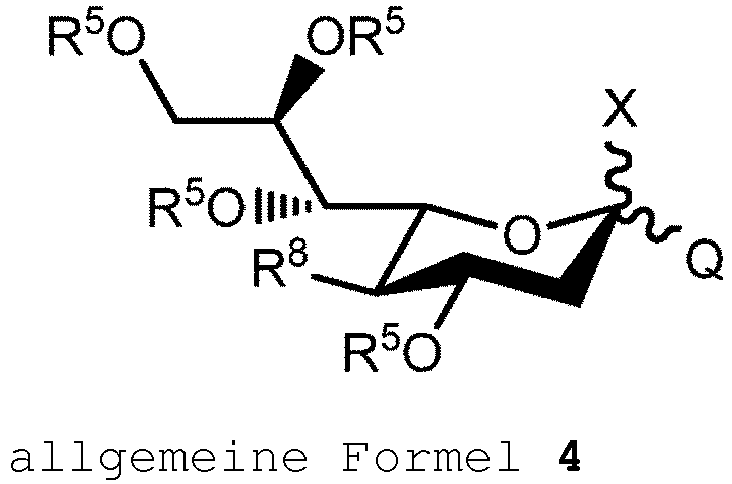 wobei R5 Acetyl ist,R8 aus -NHAc und -NAc2 ausgewählt ist,Q COO-CH3 ist undX eine Abgangsgruppe ist,um eine Verbindung mit der allgemeinen Formel 2B zu gewinnen
 b) die Verbindung 2B wird selektiver saurer Entschützung unterworfen, um eine Verbindung mit der allgemeinen Formel 2C zu ergeben
gefolgt vona) basenkatalysierter Umesterungsreaktion, gefolgt von basischer Hydrolyse, wahlfreier Ansäuerung und wahlfreier Salzbildung, oderb) basischer Hydrolyse, wahlfreier Ansäuerung und wahlfreier Salzbildungum eine Verbindung mit der allgemeinen Formel 1 oder Salze davon zu ergeben c) nachfolgend Umwandeln der Verbindung mit der allgemeinen Formel 1 oder Salze davon in 6'-O-Sialyllactose oder Salze davon.
 - Das Verfahren nach Anspruch 1, wobei eine Verbindung mit der allgemeinen Formel 1 oder ein Salz davon katalytischer Reduktion unterworfen wird und, wenn 6'-O-Sialyllactose erhalten ist, es wahlweise in ein Salz davon umgewandelt wird, wobei das Salz von 6'-O-Sialyllactose wahlweise in ein anderes Salz von 6'-O-Sialyllactose umgewandelt wird.
- Das Verfahren nach einem von Anspruch 1 und 2, wobei R2 aus Benzyl, 4-Methylbenzyl, 4-Chlorbenzyl und 1-Naphthylmethyl ausgewählt wird.
- Das Verfahren nach einem von Anspruch 1 bis 3, wobei die selektive saure Entschützung in Gegenwart von Schwefelsäure an der Verbindung mit der allgemeinen Formel 2B durchgeführt wird, wobei -OR2 in β ist, R2 aus Benzyl, 4-Methylbenzyl, 4-Chlorbenzyl und 1-Naphthylmethyl ausgewählt wird und R4 aus Isobutyryl, Pivaloyl und wahlweise substituiertem Benzoyl ausgewählt wird.
- Das Verfahren nach einem von Anspruch 1 bis 4, wobei R4 Benzoyl ist.
- Das Verfahren nach einem von Anspruch 1 bis 5, wobei in dem Verfahren die Glykosylierungsreaktion die Benutzung eines Donors mit der allgemeinen Formel 4A, 4B oder 4C,
 wobei R5 Acetyl ist,R6 aus C2-6-Alkyl, C3-6-Cycloalkyl und wahlweise substituiertem Benzyl ausgewählt wird,R7 substituiertes Benzyl ist undQ -COO-CH3 ist,und eines Akzeptors mit der allgemeinen Formel 3A umfasst
 wobei R2 eine Gruppe ist, die durch katalytische Hydrierung entfernbar ist, undR4 wahlweise substituiertes Acyl ist, mit der Maßgabe, dass Acetyl ausgeschlossen ist.
Applications Claiming Priority (2)
| Application Number | Priority Date | Filing Date | Title |
|---|---|---|---|
| DKPA201070061 | 2010-02-19 | ||
| PCT/DK2011/050052 WO2011100979A1 (en) | 2010-02-19 | 2011-02-21 | Production of 6'-o-sialyllactose and intermediates |
Publications (3)
| Publication Number | Publication Date |
|---|---|
| EP2536736A1 EP2536736A1 (de) | 2012-12-26 |
| EP2536736A4 EP2536736A4 (de) | 2013-10-30 |
| EP2536736B1 true EP2536736B1 (de) | 2017-08-16 |
Family
ID=44482455
Family Applications (1)
| Application Number | Title | Priority Date | Filing Date |
|---|---|---|---|
| EP11744297.0A Not-in-force EP2536736B1 (de) | 2010-02-19 | 2011-02-21 | Herstellung von 6'-o-sialyllactose und zwischenprodukten davon |
Country Status (12)
| Country | Link |
|---|---|
| US (1) | US9237764B2 (de) |
| EP (1) | EP2536736B1 (de) |
| JP (1) | JP2013519694A (de) |
| KR (1) | KR20120138772A (de) |
| CN (1) | CN102822186A (de) |
| AU (1) | AU2011217614A1 (de) |
| BR (1) | BR112012020791A2 (de) |
| CA (1) | CA2789821A1 (de) |
| IL (1) | IL220907A0 (de) |
| MX (1) | MX2012009306A (de) |
| RU (1) | RU2012140011A (de) |
| WO (1) | WO2011100979A1 (de) |
Families Citing this family (46)
| Publication number | Priority date | Publication date | Assignee | Title |
|---|---|---|---|---|
| AU2011278236A1 (en) * | 2010-07-16 | 2013-02-07 | Glycom A/S | Derivatization of oligosaccharides |
| EP2859112A4 (de) | 2012-06-08 | 2015-10-28 | Glycom As | Verfahren zur herstellung von oligosacchariden und oligosaccharidglykosiden durch fermentation |
| DE202013012829U1 (de) | 2012-06-14 | 2020-03-04 | Glycom A/S | Verbesserung der Stabilität und Reinheit sowie Erhöhung der Bioverfügbarkeit von menschlichen Milch-Oligosacchariden oder Vorläufern oder Mischungen davon |
| GB201306689D0 (en) | 2013-04-12 | 2013-05-29 | Glycom As | Synthesis of sialylated/fucosylated human milk oligosaccharides |
| GB201306687D0 (en) * | 2013-04-12 | 2013-05-29 | Glycom As | Synthesis of sialylated/fucosylated oligosaccharides |
| WO2015032413A1 (en) | 2013-09-06 | 2015-03-12 | Glycom A/S | Fermentative production of oligosaccharides |
| CN107249611A (zh) | 2014-10-24 | 2017-10-13 | 进化生物系统股份有限公司 | 活化的双歧杆菌及其应用方法 |
| PL3209673T5 (pl) | 2014-10-24 | 2023-10-23 | Glycom A/S | Mieszaniny hmo |
| US11040049B2 (en) | 2014-10-29 | 2021-06-22 | Glycom A/S | Composition comprising HMSs/HMOs and use thereof |
| US11040050B2 (en) | 2014-10-29 | 2021-06-22 | Glycom A/S | Composition comprising HMSs/HMOs and use thereof |
| EP3212197A4 (de) | 2014-10-29 | 2018-07-11 | Glycom A/S | Synthetische zusammensetzung und verfahren zur behandlung von reizdarmsyndrom |
| EP3229812A4 (de) | 2014-12-08 | 2018-10-03 | Glycom A/S | Synthetische zusammensetzung zur behandlung von stoffwechselerkrankungen |
| US10881674B2 (en) | 2014-12-08 | 2021-01-05 | Glycom A/S | Synthetic composition for treating metabolic disorders |
| US10835544B2 (en) | 2014-12-08 | 2020-11-17 | Glycom A/S | Synthetic composition for regulating satiety |
| US10987368B2 (en) | 2014-12-08 | 2021-04-27 | Glycom A/S | Synthetic composition for preventing or treating CVD |
| CN107614511B (zh) | 2015-06-09 | 2020-10-23 | 格礼卡姆股份公司 | 6’-SL、LNnT和LST c的三元混合物 |
| ES2886951T3 (es) | 2015-09-14 | 2021-12-21 | Glycom As | Composición para su uso en la modulación de la microbiota |
| US10745432B2 (en) | 2015-11-18 | 2020-08-18 | Kyowa Hakko Bio Co., Ltd. | Crystal of 6′-sialyllactose sodium salt, and process for producing same |
| EP3389668A4 (de) | 2015-12-15 | 2019-08-21 | Glycom A/S | Mischung aus hmos |
| WO2017144062A1 (en) | 2016-02-24 | 2017-08-31 | Glycom A/S | Synthetic composition for microbiota modulation |
| ES2991621T3 (es) | 2016-03-07 | 2024-12-04 | Glycom As | Separación de oligosacáridos de caldo de fermentación |
| US11224605B2 (en) | 2016-05-19 | 2022-01-18 | Glycom A/S | Synthetic composition |
| EP3474861A4 (de) | 2016-06-24 | 2020-04-15 | Glycom A/S | Zusammensetzungen mit hmos, deren herstellung und verwendung zur prävention und/oder behandlung von viralen und/oder bakteriellen infektionen |
| CN106496290B (zh) * | 2016-10-09 | 2019-01-18 | 济南山目生物医药科技有限公司 | 一种唾液酸供体的制备方法 |
| CN113425732A (zh) | 2017-01-23 | 2021-09-24 | 库比奥尼有限公司 | 一种含有唾液酸乳糖或其盐作为有效成分的用于预防或治疗退行性关节炎的组合物 |
| WO2018155995A1 (ko) * | 2017-02-27 | 2018-08-30 | 한국생명공학연구원 | 시아릴락토오스를 유효성분으로 포함하는 항균용 조성물 |
| WO2018157900A1 (en) | 2017-03-01 | 2018-09-07 | Glycom A/S | Synthetic composition for microbiota modulation |
| EP3634429A4 (de) | 2017-05-09 | 2020-11-04 | Glycom A/S | Synthetische zusammensetzung zur mikrobiotamodulation |
| WO2018215961A1 (en) | 2017-05-24 | 2018-11-29 | Glycom A/S | Synthetic composition comprising oligosaccharides and its use in medical treatment. |
| WO2018215960A1 (en) | 2017-05-24 | 2018-11-29 | Glycom A/S | Synthetic composition comprising one or more human milk oligosaccharides (hmos) |
| US11524019B2 (en) | 2017-08-21 | 2022-12-13 | Glycom A/S | Synthetic composition for reducing allergy symptoms |
| EP3456836A1 (de) | 2017-09-13 | 2019-03-20 | Glycom A/S | Abtrennung von sialylierten oligosacchariden aus der fermentationsbrühe |
| CN111526879A (zh) | 2017-11-02 | 2020-08-11 | 格礼卡姆股份公司 | 用于减少或预防疲劳和/或改善注意力或专注力的一种或多种hmo |
| EP3716984B1 (de) | 2017-11-30 | 2024-03-20 | Glycom A/S | Gemisch von hmos zur behandlung von weizensensitivität |
| SG11202004659QA (en) * | 2017-12-08 | 2020-06-29 | Jennewein Biotechnologie Gmbh | Spray-dried sialyllactose |
| WO2019123316A1 (en) | 2017-12-22 | 2019-06-27 | Glycom A/S | Composition comprising hmos for preventing or reducing nociception |
| US20220010267A1 (en) | 2018-05-30 | 2022-01-13 | Evolve Biosystems, Inc. | Compostions and method of use for h5 competent bifidobacterium longum subsp. infantis |
| US11554131B2 (en) | 2018-05-31 | 2023-01-17 | Glycom A/S | Mixture of HMOs for treating autoimmune diseases |
| CN113194960A (zh) | 2018-12-19 | 2021-07-30 | 格礼卡姆股份公司 | 用于治疗使用低fodmap饮食的人的组合物和方法 |
| WO2021122103A1 (de) * | 2019-12-18 | 2021-06-24 | Basf Se | Verfahren zur reduktion des säuregehaltes in humanen milcholigosacchariden |
| EP4121706A4 (de) * | 2020-03-20 | 2024-03-20 | Glycom A/S | Verfahren zur bereitstellung eines festen hmo-produkts und dadurch erhaltene feste hmo-produkte |
| CA3193370A1 (en) | 2020-10-16 | 2022-04-21 | Carine Blanchard | Nutritional composition comprising human milk oligosaccharides |
| JP2023547175A (ja) | 2020-11-10 | 2023-11-09 | ソシエテ・デ・プロデュイ・ネスレ・エス・アー | 栄養組成物 |
| DK181061B1 (en) | 2021-03-12 | 2022-10-31 | Glycom As | Purification of sialooligosaccharides |
| AU2024288910A1 (en) | 2023-07-06 | 2026-01-08 | Societe Des Produits Nestle S.A. | Combination for dietary management of gut health |
| DK202430320A1 (en) | 2024-06-13 | 2026-01-07 | Dsm Ip Assets Bv | Synthesis of branched chain oligosaccharides |
Family Cites Families (8)
| Publication number | Priority date | Publication date | Assignee | Title |
|---|---|---|---|---|
| US4990603A (en) | 1986-07-04 | 1991-02-05 | Mect Corporation | Sialic acid derivatives and process therefor |
| KR100555161B1 (ko) | 1996-09-17 | 2006-11-30 | 교와 핫꼬 고교 가부시끼가이샤 | 당뉴클레오티드류및복합당질의제조법 |
| FR2796082B1 (fr) | 1999-07-07 | 2003-06-27 | Centre Nat Rech Scient | Procede de production d'oligosaccharides |
| US6288222B1 (en) | 2000-02-16 | 2001-09-11 | Neose Technologies, Inc. | Method of filtration of a dairy stream |
| US6623954B1 (en) | 2002-05-28 | 2003-09-23 | Neose Technologies, Inc. | Process for removal of phosphorous from a dairy stream |
| CA2641842A1 (en) * | 2006-02-10 | 2007-08-16 | Nestec S.A. | Oligosaccharide mixture |
| NL2001377C2 (nl) * | 2008-03-14 | 2009-09-15 | Friesland Brands Bv | Werkwijze voor het isoleren van siaalzuur bevattende oligosachariden, alsmede de hiermee verkrijgbare siaalzuur bevattende oligosachariden bevatttende samenstellingen. |
| IT1394503B1 (it) * | 2009-04-06 | 2012-07-05 | Inalco Spa | Sali di 6'-sialillattosio e processo per la loro sintesi e per la sintesi di altri alfa-sialiloligosaccaridi. |
-
2011
- 2011-02-21 WO PCT/DK2011/050052 patent/WO2011100979A1/en not_active Ceased
- 2011-02-21 RU RU2012140011/04A patent/RU2012140011A/ru not_active Application Discontinuation
- 2011-02-21 CN CN2011800133506A patent/CN102822186A/zh active Pending
- 2011-02-21 JP JP2012553182A patent/JP2013519694A/ja not_active Withdrawn
- 2011-02-21 AU AU2011217614A patent/AU2011217614A1/en not_active Abandoned
- 2011-02-21 US US13/579,738 patent/US9237764B2/en not_active Expired - Fee Related
- 2011-02-21 MX MX2012009306A patent/MX2012009306A/es not_active Application Discontinuation
- 2011-02-21 EP EP11744297.0A patent/EP2536736B1/de not_active Not-in-force
- 2011-02-21 KR KR1020127024289A patent/KR20120138772A/ko not_active Withdrawn
- 2011-02-21 CA CA2789821A patent/CA2789821A1/en not_active Abandoned
- 2011-02-21 BR BR112012020791A patent/BR112012020791A2/pt not_active Application Discontinuation
-
2012
- 2012-07-12 IL IL220907A patent/IL220907A0/en unknown
Non-Patent Citations (1)
| Title |
|---|
| None * |
Also Published As
| Publication number | Publication date |
|---|---|
| BR112012020791A2 (pt) | 2016-05-03 |
| JP2013519694A (ja) | 2013-05-30 |
| MX2012009306A (es) | 2012-09-12 |
| US20130035481A1 (en) | 2013-02-07 |
| KR20120138772A (ko) | 2012-12-26 |
| AU2011217614A1 (en) | 2012-08-02 |
| CN102822186A (zh) | 2012-12-12 |
| EP2536736A4 (de) | 2013-10-30 |
| RU2012140011A (ru) | 2014-03-27 |
| CA2789821A1 (en) | 2011-08-25 |
| EP2536736A1 (de) | 2012-12-26 |
| WO2011100979A1 (en) | 2011-08-25 |
| IL220907A0 (en) | 2012-09-24 |
| US9237764B2 (en) | 2016-01-19 |
Similar Documents
| Publication | Publication Date | Title |
|---|---|---|
| EP2536736B1 (de) | Herstellung von 6'-o-sialyllactose und zwischenprodukten davon | |
| EP3241836B1 (de) | Polymorph eines tetrasaccharidhaltigen n-acetyllactosamins | |
| EP2417144B1 (de) | Synthese von 2'-o-fucosyllactose | |
| WO2012113405A1 (en) | Catalytic hydrogenolysis of a composition of a mixture of oligosaccharide precursors and uses thereof | |
| EP3227309B1 (de) | Kristalline difucosyllactose | |
| EP2593465A1 (de) | Derivatisierung von oligosacchariden | |
| WO2013091660A1 (en) | A method for obtaining crystalline lacto-n-tetraose and lacto-n-neotetraose precursors and mixtures thereof | |
| WO2013139344A1 (en) | Synthesis of the trisaccharide 3-o-fucosyllactose and intermediates thereof | |
| HK1246302B (en) | Polymorph of a tetrasaccharide containing nacetyl-lactosamine |
Legal Events
| Date | Code | Title | Description |
|---|---|---|---|
| PUAI | Public reference made under article 153(3) epc to a published international application that has entered the european phase |
Free format text: ORIGINAL CODE: 0009012 |
|
| 17P | Request for examination filed |
Effective date: 20120919 |
|
| AK | Designated contracting states |
Kind code of ref document: A1 Designated state(s): AL AT BE BG CH CY CZ DE DK EE ES FI FR GB GR HR HU IE IS IT LI LT LU LV MC MK MT NL NO PL PT RO RS SE SI SK SM TR |
|
| DAX | Request for extension of the european patent (deleted) | ||
| A4 | Supplementary search report drawn up and despatched |
Effective date: 20130930 |
|
| RIC1 | Information provided on ipc code assigned before grant |
Ipc: C07H 13/04 20060101ALI20130924BHEP Ipc: A23L 1/308 20060101ALI20130924BHEP Ipc: A61K 31/702 20060101ALI20130924BHEP Ipc: C07H 1/00 20060101AFI20130924BHEP Ipc: C07H 3/06 20060101ALI20130924BHEP Ipc: A23L 1/09 20060101ALI20130924BHEP Ipc: C07H 15/18 20060101ALI20130924BHEP |
|
| 17Q | First examination report despatched |
Effective date: 20150618 |
|
| RIC1 | Information provided on ipc code assigned before grant |
Ipc: A61K 31/702 20060101ALI20160113BHEP Ipc: C07H 15/18 20060101ALI20160113BHEP Ipc: C07H 13/04 20060101ALI20160113BHEP Ipc: C07H 3/06 20060101ALI20160113BHEP Ipc: C07H 1/00 20060101AFI20160113BHEP |
|
| RAP1 | Party data changed (applicant data changed or rights of an application transferred) |
Owner name: GLYCOM A/S |
|
| GRAP | Despatch of communication of intention to grant a patent |
Free format text: ORIGINAL CODE: EPIDOSNIGR1 |
|
| STAA | Information on the status of an ep patent application or granted ep patent |
Free format text: STATUS: GRANT OF PATENT IS INTENDED |
|
| RIC1 | Information provided on ipc code assigned before grant |
Ipc: C07H 13/04 20060101ALI20170202BHEP Ipc: C07H 15/18 20060101ALI20170202BHEP Ipc: C07H 1/00 20060101AFI20170202BHEP |
|
| INTG | Intention to grant announced |
Effective date: 20170224 |
|
| GRAS | Grant fee paid |
Free format text: ORIGINAL CODE: EPIDOSNIGR3 |
|
| GRAA | (expected) grant |
Free format text: ORIGINAL CODE: 0009210 |
|
| STAA | Information on the status of an ep patent application or granted ep patent |
Free format text: STATUS: THE PATENT HAS BEEN GRANTED |
|
| AK | Designated contracting states |
Kind code of ref document: B1 Designated state(s): AL AT BE BG CH CY CZ DE DK EE ES FI FR GB GR HR HU IE IS IT LI LT LU LV MC MK MT NL NO PL PT RO RS SE SI SK SM TR |
|
| REG | Reference to a national code |
Ref country code: GB Ref legal event code: FG4D |
|
| REG | Reference to a national code |
Ref country code: CH Ref legal event code: EP |
|
| REG | Reference to a national code |
Ref country code: IE Ref legal event code: FG4D |
|
| REG | Reference to a national code |
Ref country code: AT Ref legal event code: REF Ref document number: 918915 Country of ref document: AT Kind code of ref document: T Effective date: 20170915 |
|
| REG | Reference to a national code |
Ref country code: DE Ref legal event code: R096 Ref document number: 602011040628 Country of ref document: DE |
|
| REG | Reference to a national code |
Ref country code: NL Ref legal event code: MP Effective date: 20170816 |
|
| REG | Reference to a national code |
Ref country code: LT Ref legal event code: MG4D |
|
| REG | Reference to a national code |
Ref country code: AT Ref legal event code: MK05 Ref document number: 918915 Country of ref document: AT Kind code of ref document: T Effective date: 20170816 |
|
| PG25 | Lapsed in a contracting state [announced via postgrant information from national office to epo] |
Ref country code: SE Free format text: LAPSE BECAUSE OF FAILURE TO SUBMIT A TRANSLATION OF THE DESCRIPTION OR TO PAY THE FEE WITHIN THE PRESCRIBED TIME-LIMIT Effective date: 20170816 Ref country code: AT Free format text: LAPSE BECAUSE OF FAILURE TO SUBMIT A TRANSLATION OF THE DESCRIPTION OR TO PAY THE FEE WITHIN THE PRESCRIBED TIME-LIMIT Effective date: 20170816 Ref country code: NO Free format text: LAPSE BECAUSE OF FAILURE TO SUBMIT A TRANSLATION OF THE DESCRIPTION OR TO PAY THE FEE WITHIN THE PRESCRIBED TIME-LIMIT Effective date: 20171116 Ref country code: FI Free format text: LAPSE BECAUSE OF FAILURE TO SUBMIT A TRANSLATION OF THE DESCRIPTION OR TO PAY THE FEE WITHIN THE PRESCRIBED TIME-LIMIT Effective date: 20170816 Ref country code: LT Free format text: LAPSE BECAUSE OF FAILURE TO SUBMIT A TRANSLATION OF THE DESCRIPTION OR TO PAY THE FEE WITHIN THE PRESCRIBED TIME-LIMIT Effective date: 20170816 Ref country code: NL Free format text: LAPSE BECAUSE OF FAILURE TO SUBMIT A TRANSLATION OF THE DESCRIPTION OR TO PAY THE FEE WITHIN THE PRESCRIBED TIME-LIMIT Effective date: 20170816 |
|
| PG25 | Lapsed in a contracting state [announced via postgrant information from national office to epo] |
Ref country code: PL Free format text: LAPSE BECAUSE OF FAILURE TO SUBMIT A TRANSLATION OF THE DESCRIPTION OR TO PAY THE FEE WITHIN THE PRESCRIBED TIME-LIMIT Effective date: 20170816 Ref country code: GR Free format text: LAPSE BECAUSE OF FAILURE TO SUBMIT A TRANSLATION OF THE DESCRIPTION OR TO PAY THE FEE WITHIN THE PRESCRIBED TIME-LIMIT Effective date: 20171117 Ref country code: IS Free format text: LAPSE BECAUSE OF FAILURE TO SUBMIT A TRANSLATION OF THE DESCRIPTION OR TO PAY THE FEE WITHIN THE PRESCRIBED TIME-LIMIT Effective date: 20171216 Ref country code: RS Free format text: LAPSE BECAUSE OF FAILURE TO SUBMIT A TRANSLATION OF THE DESCRIPTION OR TO PAY THE FEE WITHIN THE PRESCRIBED TIME-LIMIT Effective date: 20170816 Ref country code: ES Free format text: LAPSE BECAUSE OF FAILURE TO SUBMIT A TRANSLATION OF THE DESCRIPTION OR TO PAY THE FEE WITHIN THE PRESCRIBED TIME-LIMIT Effective date: 20170816 Ref country code: LV Free format text: LAPSE BECAUSE OF FAILURE TO SUBMIT A TRANSLATION OF THE DESCRIPTION OR TO PAY THE FEE WITHIN THE PRESCRIBED TIME-LIMIT Effective date: 20170816 Ref country code: BG Free format text: LAPSE BECAUSE OF FAILURE TO SUBMIT A TRANSLATION OF THE DESCRIPTION OR TO PAY THE FEE WITHIN THE PRESCRIBED TIME-LIMIT Effective date: 20171116 |
|
| REG | Reference to a national code |
Ref country code: FR Ref legal event code: PLFP Year of fee payment: 8 |
|
| PG25 | Lapsed in a contracting state [announced via postgrant information from national office to epo] |
Ref country code: CZ Free format text: LAPSE BECAUSE OF FAILURE TO SUBMIT A TRANSLATION OF THE DESCRIPTION OR TO PAY THE FEE WITHIN THE PRESCRIBED TIME-LIMIT Effective date: 20170816 Ref country code: DK Free format text: LAPSE BECAUSE OF FAILURE TO SUBMIT A TRANSLATION OF THE DESCRIPTION OR TO PAY THE FEE WITHIN THE PRESCRIBED TIME-LIMIT Effective date: 20170816 Ref country code: RO Free format text: LAPSE BECAUSE OF FAILURE TO SUBMIT A TRANSLATION OF THE DESCRIPTION OR TO PAY THE FEE WITHIN THE PRESCRIBED TIME-LIMIT Effective date: 20170816 |
|
| REG | Reference to a national code |
Ref country code: DE Ref legal event code: R097 Ref document number: 602011040628 Country of ref document: DE |
|
| PG25 | Lapsed in a contracting state [announced via postgrant information from national office to epo] |
Ref country code: SM Free format text: LAPSE BECAUSE OF FAILURE TO SUBMIT A TRANSLATION OF THE DESCRIPTION OR TO PAY THE FEE WITHIN THE PRESCRIBED TIME-LIMIT Effective date: 20170816 Ref country code: SK Free format text: LAPSE BECAUSE OF FAILURE TO SUBMIT A TRANSLATION OF THE DESCRIPTION OR TO PAY THE FEE WITHIN THE PRESCRIBED TIME-LIMIT Effective date: 20170816 Ref country code: EE Free format text: LAPSE BECAUSE OF FAILURE TO SUBMIT A TRANSLATION OF THE DESCRIPTION OR TO PAY THE FEE WITHIN THE PRESCRIBED TIME-LIMIT Effective date: 20170816 Ref country code: IT Free format text: LAPSE BECAUSE OF FAILURE TO SUBMIT A TRANSLATION OF THE DESCRIPTION OR TO PAY THE FEE WITHIN THE PRESCRIBED TIME-LIMIT Effective date: 20170816 |
|
| PLBE | No opposition filed within time limit |
Free format text: ORIGINAL CODE: 0009261 |
|
| STAA | Information on the status of an ep patent application or granted ep patent |
Free format text: STATUS: NO OPPOSITION FILED WITHIN TIME LIMIT |
|
| 26N | No opposition filed |
Effective date: 20180517 |
|
| PGFP | Annual fee paid to national office [announced via postgrant information from national office to epo] |
Ref country code: DE Payment date: 20180427 Year of fee payment: 8 |
|
| PG25 | Lapsed in a contracting state [announced via postgrant information from national office to epo] |
Ref country code: SI Free format text: LAPSE BECAUSE OF FAILURE TO SUBMIT A TRANSLATION OF THE DESCRIPTION OR TO PAY THE FEE WITHIN THE PRESCRIBED TIME-LIMIT Effective date: 20170816 |
|
| PGFP | Annual fee paid to national office [announced via postgrant information from national office to epo] |
Ref country code: FR Payment date: 20180425 Year of fee payment: 8 |
|
| REG | Reference to a national code |
Ref country code: CH Ref legal event code: PL |
|
| PG25 | Lapsed in a contracting state [announced via postgrant information from national office to epo] |
Ref country code: MC Free format text: LAPSE BECAUSE OF FAILURE TO SUBMIT A TRANSLATION OF THE DESCRIPTION OR TO PAY THE FEE WITHIN THE PRESCRIBED TIME-LIMIT Effective date: 20170816 |
|
| PGFP | Annual fee paid to national office [announced via postgrant information from national office to epo] |
Ref country code: GB Payment date: 20180427 Year of fee payment: 8 |
|
| REG | Reference to a national code |
Ref country code: IE Ref legal event code: MM4A |
|
| REG | Reference to a national code |
Ref country code: BE Ref legal event code: MM Effective date: 20180228 |
|
| PG25 | Lapsed in a contracting state [announced via postgrant information from national office to epo] |
Ref country code: CH Free format text: LAPSE BECAUSE OF NON-PAYMENT OF DUE FEES Effective date: 20180228 Ref country code: LU Free format text: LAPSE BECAUSE OF NON-PAYMENT OF DUE FEES Effective date: 20180221 Ref country code: LI Free format text: LAPSE BECAUSE OF NON-PAYMENT OF DUE FEES Effective date: 20180228 |
|
| PG25 | Lapsed in a contracting state [announced via postgrant information from national office to epo] |
Ref country code: IE Free format text: LAPSE BECAUSE OF NON-PAYMENT OF DUE FEES Effective date: 20180221 |
|
| PG25 | Lapsed in a contracting state [announced via postgrant information from national office to epo] |
Ref country code: BE Free format text: LAPSE BECAUSE OF NON-PAYMENT OF DUE FEES Effective date: 20180228 |
|
| REG | Reference to a national code |
Ref country code: DE Ref legal event code: R119 Ref document number: 602011040628 Country of ref document: DE |
|
| GBPC | Gb: european patent ceased through non-payment of renewal fee |
Effective date: 20190221 |
|
| PG25 | Lapsed in a contracting state [announced via postgrant information from national office to epo] |
Ref country code: MT Free format text: LAPSE BECAUSE OF NON-PAYMENT OF DUE FEES Effective date: 20180221 Ref country code: GB Free format text: LAPSE BECAUSE OF NON-PAYMENT OF DUE FEES Effective date: 20190221 Ref country code: DE Free format text: LAPSE BECAUSE OF NON-PAYMENT OF DUE FEES Effective date: 20190903 |
|
| PG25 | Lapsed in a contracting state [announced via postgrant information from national office to epo] |
Ref country code: FR Free format text: LAPSE BECAUSE OF NON-PAYMENT OF DUE FEES Effective date: 20190228 |
|
| PG25 | Lapsed in a contracting state [announced via postgrant information from national office to epo] |
Ref country code: TR Free format text: LAPSE BECAUSE OF FAILURE TO SUBMIT A TRANSLATION OF THE DESCRIPTION OR TO PAY THE FEE WITHIN THE PRESCRIBED TIME-LIMIT Effective date: 20170816 |
|
| PG25 | Lapsed in a contracting state [announced via postgrant information from national office to epo] |
Ref country code: PT Free format text: LAPSE BECAUSE OF FAILURE TO SUBMIT A TRANSLATION OF THE DESCRIPTION OR TO PAY THE FEE WITHIN THE PRESCRIBED TIME-LIMIT Effective date: 20170816 Ref country code: HU Free format text: LAPSE BECAUSE OF FAILURE TO SUBMIT A TRANSLATION OF THE DESCRIPTION OR TO PAY THE FEE WITHIN THE PRESCRIBED TIME-LIMIT; INVALID AB INITIO Effective date: 20110221 |
|
| PG25 | Lapsed in a contracting state [announced via postgrant information from national office to epo] |
Ref country code: HR Free format text: LAPSE BECAUSE OF FAILURE TO SUBMIT A TRANSLATION OF THE DESCRIPTION OR TO PAY THE FEE WITHIN THE PRESCRIBED TIME-LIMIT Effective date: 20170816 Ref country code: CY Free format text: LAPSE BECAUSE OF FAILURE TO SUBMIT A TRANSLATION OF THE DESCRIPTION OR TO PAY THE FEE WITHIN THE PRESCRIBED TIME-LIMIT Effective date: 20170816 Ref country code: MK Free format text: LAPSE BECAUSE OF NON-PAYMENT OF DUE FEES Effective date: 20170816 |
|
| PG25 | Lapsed in a contracting state [announced via postgrant information from national office to epo] |
Ref country code: AL Free format text: LAPSE BECAUSE OF FAILURE TO SUBMIT A TRANSLATION OF THE DESCRIPTION OR TO PAY THE FEE WITHIN THE PRESCRIBED TIME-LIMIT Effective date: 20170816 |