EP2545193B1 - Verfahren und vorrichtung zur aufbereitung von flugstaub - Google Patents
Verfahren und vorrichtung zur aufbereitung von flugstaub Download PDFInfo
- Publication number
- EP2545193B1 EP2545193B1 EP11718252.7A EP11718252A EP2545193B1 EP 2545193 B1 EP2545193 B1 EP 2545193B1 EP 11718252 A EP11718252 A EP 11718252A EP 2545193 B1 EP2545193 B1 EP 2545193B1
- Authority
- EP
- European Patent Office
- Prior art keywords
- treatment
- carried out
- flue dusts
- sulfur
- dusts
- Prior art date
- Legal status (The legal status is an assumption and is not a legal conclusion. Google has not performed a legal analysis and makes no representation as to the accuracy of the status listed.)
- Revoked
Links
Images
Classifications
-
- C—CHEMISTRY; METALLURGY
- C22—METALLURGY; FERROUS OR NON-FERROUS ALLOYS; TREATMENT OF ALLOYS OR NON-FERROUS METALS
- C22B—PRODUCTION AND REFINING OF METALS; PRETREATMENT OF RAW MATERIALS
- C22B7/00—Working up raw materials other than ores, e.g. scrap, to produce non-ferrous metals and compounds thereof; Methods of a general interest or applied to the winning of more than two metals
- C22B7/02—Working-up flue dust
-
- C—CHEMISTRY; METALLURGY
- C22—METALLURGY; FERROUS OR NON-FERROUS ALLOYS; TREATMENT OF ALLOYS OR NON-FERROUS METALS
- C22B—PRODUCTION AND REFINING OF METALS; PRETREATMENT OF RAW MATERIALS
- C22B30/00—Obtaining antimony, arsenic or bismuth
- C22B30/04—Obtaining arsenic
-
- F—MECHANICAL ENGINEERING; LIGHTING; HEATING; WEAPONS; BLASTING
- F27—FURNACES; KILNS; OVENS; RETORTS
- F27D—DETAILS OR ACCESSORIES OF FURNACES, KILNS, OVENS OR RETORTS, IN SO FAR AS THEY ARE OF KINDS OCCURRING IN MORE THAN ONE KIND OF FURNACE
- F27D17/00—Arrangements for using waste heat; Arrangements for using, or disposing of, waste gases
- F27D17/20—Arrangements for treatment or cleaning of waste gases
- F27D17/22—Arrangements for treatment or cleaning of waste gases for removing solid constituents
- F27D17/25—Arrangements for treatment or cleaning of waste gases for removing solid constituents using cyclones
-
- Y—GENERAL TAGGING OF NEW TECHNOLOGICAL DEVELOPMENTS; GENERAL TAGGING OF CROSS-SECTIONAL TECHNOLOGIES SPANNING OVER SEVERAL SECTIONS OF THE IPC; TECHNICAL SUBJECTS COVERED BY FORMER USPC CROSS-REFERENCE ART COLLECTIONS [XRACs] AND DIGESTS
- Y02—TECHNOLOGIES OR APPLICATIONS FOR MITIGATION OR ADAPTATION AGAINST CLIMATE CHANGE
- Y02P—CLIMATE CHANGE MITIGATION TECHNOLOGIES IN THE PRODUCTION OR PROCESSING OF GOODS
- Y02P10/00—Technologies related to metal processing
- Y02P10/20—Recycling
Definitions
- the invention relates to a method for the treatment of airborne dusts resulting from the smelting of copper ores, the airborne dusts are heated after an addition of sulfur and / or at least one sulfur compound and volatile constituents are separated and the heated dusts are heated in an inert atmosphere and the treatment of aerial dusts is carried out as a continuous process, with a pryrometallurgical treatment the flue dust takes place and in which an exhaust gas treatment for the separation of volatile components, namely arsenic sulfur compounds takes place.
- sulphidic flotation products When smelting copper ores, concentrates in the form of sulphidic flotation products are typically used as starting material. These flotation products contain approximately one third of copper, one third iron and one third sulfur. In low concentrations, a variety of other chemical elements are also included, such as arsenic, bismuth, cadmium and lead. These minor elements are distributed according to their chemical equilibrium in the existing process conditions on the stone, slag and exhaust gas phase. The exhaust gas phase contains gas and flue dust.
- a portion of the iron is separated from the copper concentrate by selective oxidation.
- the oxidized iron is bound by the addition of sand in a liquid slag phase. Due to these high temperatures, part of the volatile chemical compounds is discharged with the exhaust gas.
- the exhaust treatment is carried out in a waste heat boiler and an electric gas cleaning.
- the particles formed by recondensation and entrained particles form the so-called fly ash. Therein, the volatile elements are present in a higher concentration than in the starting product of the concentrate mixture.
- the object of the present invention is therefore to improve a method of the type mentioned in the introduction in such a way that the proportion of undesired volatile compounds in aerosols is reduced more effectively.
- This object is achieved in that the treatment of flue dust is carried out in the fluidized bed process.
- sulfur or sulfur containing compounds e.g., copper ore concentrate
- the heating is carried out in an inert atmosphere and that the treatment of the fly ash is carried out as a continuous process.
- a device of the aforementioned type is used that the proportion of volatile constituents in aerosols is reduced more effectively.
- the thermal treatment device is coupled to a supply device for providing an inert atmosphere such that a continuous operation is realized, that a pryrometallurgical treatment of the fly ash takes place and that an exhaust treatment for the separation of volatile components takes place.
- sulfur or sulfur containing compounds e.g., copper ore concentrate
- the heating is carried out in an inert atmosphere and that the treatment of the fly ash is carried out as a continuous process.
- the method according to the invention it is possible to remove unwanted chemical elements from the flue dusts or to at least considerably reduce their proportion.
- the formation of SO 2 -containing exhaust gases is avoided or at least substantially reduced. Therefore, the exhaust gases do not have to be treated separately like the high-SO2-containing metallurgical exhaust gases, for example one Liquefaction of SO2 or conversion to sulfuric acid.
- the sulfur does not precipitate in the form of SO2 but elementally or in sulfidic compounds.
- an exhaust gas treatment for example in the form of a double / contact plant for sulfuric acid, the required investment costs can be significantly reduced. Further advantages are an increase in throughput in the process of copper production and in support of the use of more complex ore concentrates, since enrichment in the process is prevented or significantly reduced by the treatment according to the invention of the fly-dusts.
- the present invention offers the possibility to separate and enrich in a solid various elements that adversely affect the quality of the products in copper production.
- a typical process is carried out such that arsenic or an arsenic-sulfur compound is discharged as a volatile constituent with the exhaust gas and deposited in the downstream exhaust gas purification as a solid or in the wash water.
- a simple process implementation is also achieved by the treatment of the flue dust is carried out at ambient pressure.
- the removal of the volatile constituents is assisted by carrying out the treatment of the fly-dusts under reduced pressure, for example at 200 mbar to 400 mbar.
- An acceleration of the thermal processes in the treatment of the fly ash during the thermal treatment can be done by the treatment of the fly ash is carried out at overpressure.
- a typical process area is defined by the temperature being at least temporarily in the range of 500 ° C to 1000 ° C during the heating of the fly ash. Preferred is a range of 650 ° C to 950 ° C.
- the aim is that a proportion of sulfur dioxide in the exhaust gas is on average at most 5 percent by volume. Preferably on average at most 2%.
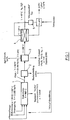
- FIG. 1 shows the use of a rotary kiln (1), which performs a treatment of the supplied material at a temperature of about 900 ° C.
- the substances supplied here are on the one hand copper concentrate and on the other hand separated flue dust.
- the dust is separated in the area of a cyclone (2).
- the treatment in the rotary kiln (1) takes place in an inert atmosphere.
- nitrogen is used for this purpose.
- a typical amount of nitrogen feed is 15,000 Nm 3 per hour.
- the roasting temperature of 900 ° C represents only a preferred temperature. Typically, a temperature in the interval of 650 ° C to 950 ° C can be realized.
- the residence time of the mixture in the rotary kiln (1) is typically 1 to 4 hours.
- a separator (3) is arranged, in which an arsenic-containing solid is obtained. Exhaust gases from the separator (3) are fed to a secondary separator (4).
- the secondary separator (4) is provided with a heat exchanger (5) for energy recovery, in order to reduce the temperature of the final exhaust gas to about 40 ° C in order to use the energy in question.
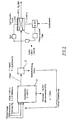
- FIG. 2 shows a modification of the concept according to FIG. 1 ,
- a fluidized bed system (6) is used.
- the separator (3) and the secondary separator (4) are combined to form a single-stage separator (7).
- the heat exchanger (5) By using the heat exchanger (5), a suitable reduction of the temperature of the final exhaust gas can also take place in this concept.
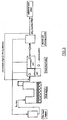
- FIG. 3 generally illustrates the handling and removal of fly ash in copper production.
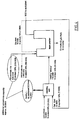
- FIG. 4 illustrates a sulfur balance in a comparison of the prior art and the inventive process concept in a selected throughput example.
- the deposition and treatment of the flue dust according to the invention takes place as a continuous Process. Likewise, a preferred process execution takes place at ambient pressure. However, it is also possible to carry out process runs under reduced pressure or overpressure depending on the specific application requirements.
- the treatment according to the invention of the fly-dusts in an inert atmosphere takes into account in particular that arsenic or other substances to be removed in the fly-ash are typically present in a different form than in the underlying concentrate.
- arsenic may be present in the concentrate as enargite, tennantite, arsenopyrite or arsenic sulphide
- in aerosols the arsenic is typically present as arsenic oxide, arsenic sulphide, iron or copper arsenate.
- the inert atmosphere in the process of roasting allows a significant reduction in the SO 2 content in the exhaust gas.
- the aim here is a corresponding proportion below 5%, preferably below 2%, in each case as a volume fraction.
- it is also intended to carry out an oxidation of the exhaust gas or of portions of the exhaust gas.
Landscapes
- Engineering & Computer Science (AREA)
- Chemical & Material Sciences (AREA)
- Mechanical Engineering (AREA)
- Materials Engineering (AREA)
- Organic Chemistry (AREA)
- Manufacturing & Machinery (AREA)
- Metallurgy (AREA)
- Environmental & Geological Engineering (AREA)
- Life Sciences & Earth Sciences (AREA)
- Geology (AREA)
- General Life Sciences & Earth Sciences (AREA)
- General Engineering & Computer Science (AREA)
- Manufacture And Refinement Of Metals (AREA)
- Processing Of Solid Wastes (AREA)
- Battery Electrode And Active Subsutance (AREA)
- Waste-Gas Treatment And Other Accessory Devices For Furnaces (AREA)
Description
- Die Erfindung betrifft ein Verfahren zur Aufbereitung von bei der Verhüttung von Kupfererzen entstehenden Flugstäube, be i dem die Flugstäube nach einer Zugabe von Schwefel und/oder mindestens einer Schwefelverbindung erhitzt und flüchtige Bestandteile abgeschieden werden und bei dem das Erhitzen der Flugstäube in einer inerten Atmosphäre durchgeführt wird und die Behandlung der Flugstäube als kontinuierlicher Prozess durchgeführt wird, wobei eine pryrometallurgische Behandlung der Flugstäube erfolgt und bei dem eine Abgasbehandlung zur Abscheidung von flüchtigen Bestandteilen, nämlich Arsen-Schwefelverbindungen erfolgt.
- Bei der Verhüttung von Kupfererzen werden typischerweise Konzentrate in Form von sulfidischen Flotationsprodukten als Ausgangsstoff verwendet. Diese Flotationsprodukte enthalten etwa zu einem Drittel Kupfer, zu einem weiteren Drittel Eisen und zu einem letzten Drittel Schwefel. In geringen Konzentrationen sind darüber hinaus eine Vielzahl weiterer chemischer Elemente enthalten, beispielsweise Arsen, Wismut, Cadmium und Blei. Diese Nebenelemente verteilen sich nach deren chemischen Gleichgewichten bei den vorhandenen Prozessbedingungen auf die Stein-, Schlacken- und Abgasphase. Die Abgasphase enthält Gas und Flugstaub.
- In einem ersten Verarbeitungsschritt wird aus dem Kupferkonzentrat ein Teil des Eisens durch selektive Oxidation abgetrennt. Bei einer Temperatur von etwa 1200°C wird das oxidierte Eisen durch Zugabe von Sand in einer flüssigen Schlackenphase gebunden. Aufgrund dieser hohen Temperaturen wird ein Teil der flüchtigen chemischen Verbindungen mit dem Abgas ausgetragen. Aus Gründen des Umweltschutzes und zur Energierückgewinnung erfolgt die Abgasbehand lung in einem Abhitzekessel und einer elektrischen Gasreinigung. Die durch Rekondensation gebildeten Partikel sowie mitgerissene Partikel bilden den sogenannten Flugstaub. Darin liegen die flüchtigen Elemente in einer höheren Konzentration als im Ausgangsprodukt der Konzentratmischung vor.
- In der
SU 773 111 A1 - Aus der Veröffentlichung "Shen et al. , A feasibility study of recycling of manganese furnace dust" ist ebenfalls ein Verfahren zur Behandlung von Flugstäuben bekannt. Die Flugstäube werden erhitzt.
- In der
US 2006/130611 A1 wird eine Staubreinigung unter Zugabe von Wasser beschrieben. - Aus der
JP 2008169477 A - Aus der Veröffentlichung Parra, R. und Parada, R: "Minor element control by flue dust treatment in cooper smelting", Global Symposium on Recycling, Waste Treatment and Clean Technology, October 12-15, 2008, Cancun Mexico ist es bereits bekannt, Flugstäube aus der Kupferproduktion zu behandeln. Den Stäuben wird hierbei Schwefel bzw. Kupfersulfid beigemischt. Die Verfahrensdurchführung erfolgt als pyrometallurgischer Prozess.
- Da in Flugstäuben erhebliche Mengen an Kupfer enthalten sind, wird angestrebt, die Flugstäube erneut dem Verhüttungsprozess zuzuführen. Da hierbei auch eine Rückführung der flüchtigen Elemente erfolgt, kommt es ohne geeignete Gegenmaßnahmen zu einer Anreicherung der Nebenelemente im Prozess.
- Eine Aufbereitung von Flugstäuben wird bereits in der
US 5 234 669 beschrieben. Eine Anreicherung unerwünschter chemischer Elemente im Prozess kann gemäß dem in dieser Veröffentlichung beschriebenen Verfahren aber nicht verhindert werden. - Aufgabe der vorliegenden Erfindung ist es daher, ein Verfahren der einleitend genannten Art derart zu verbessern, dass der Anteil unerwünschter flüchtiger Verbindungen in Flugstäuben effektiver vermindert wird.
- Diese Aufgabe wird erfindungsgemäß dadurch gelöst, dass die Aufbereitung der Flugstäube im Wirbelschichtverfahren erfolgt.
- Es ist auch zu bemerken, dass den Flugstäuben Schwefel oder Schwefelhaltige Verbindungen (z.B. Kupfererzkonzentrat) hinzugefügt werden und dass das Erhitzen in einer inerten Atmosphäre durchgeführt wird, und dass die Behandlung der Flugstäube als kontinuierlicher Prozess durchgeführt wird.
- Weitere wird eine Vorrichtung der einleitend genannten Art verwendet dass der Anteil flüchtiger Bestandteile in Flugstäuben effektiver vermindert wird.
- Die Einrichtung zur thermischen Behandlung ist mit einer Versorgungseinrichtung zur Bereitstellung einer inerten Atmosphäre gekoppelt, dass ein kontinuierlicher Betrieb realisiert ist, dass eine pryrometallurgische Behandlung der Flugstäube erfolgt und dass eine Abgasbehand lung zur Abscheidung von f lücht igen Bestandteilen erfolgt.
- Es ist auch zu bemerken, dass den Flugstäuben Schwefel oder Schwefelhaltige Verbindungen (z.B. Kupfererzkonzentrat) hinzugefügt werden und dass das Erhitzen in einer inerten Atmosphäre durchgeführt wird, und dass die Behandlung der Flugstäube als kontinuierlicher Prozess durchgeführt wird.
- Unter Verwendung des erfindungsgemäßen Verfahrens ist es möglich, unerwünschte chemische Elemente aus den Flugstäuben zu entfernen bzw. deren Anteil zumindest erheblich zu reduzieren. Erfindungsgemäß wird das Entstehen von SO2-haltigen Abgasen vermieden bzw. zumindest wesentlich reduziert. Die Abgase müssen deshalb nicht gesondert wie die hoch-SO2-haltigen Hüttenabgase behandelt werden, um beispielsweise eine Verflüssigung des SO2 oder eine Umwandlung in Schwefelsäure vorzunehmen.
- Erfindungsgemäß entstehen geringere Abgasmengen als bei herkömmlichen Verfahren und Vorrichtungen. Durch die Verwendung der inerten Atmosphäre fällt der Schwefel nicht in Form von SO2 sondern elementar oder in sulfidischen Verbindungen an. Durch die Vermeidung einer Abgasbehandlung, beispielsweise in Form einer Doppel-/Kontaktanlage zur Schwefelsäuregewinnung, können die erforderlichen Investitionskosten deutlich vermindert werden. Weitere Vorteile liegen in einer Durchsatzsteigerung im Prozess der Kupferherstellung und in der Unterstützung einer Verwendung von komlexeren Erzkonzentraten, da durch die erfindungsgemäße Behandlung der Flugstäube eine Anreicherung im Prozess verhindert bzw. deutlich reduziert wird.
- Die vorliegende Erfindung bietet die Möglichkeit, verschiedene Elemente, die die Qualität der Produkte bei der Kupferherstellung negativ beeinflussen, zu separieren und in einem Feststoff anzureichern.
- Ein typischer Prozeßablauf erfolgt derart, dass Arsen oder eine Arsen-Schwefelverbindung als flüchtiger Bestandteil mit dem Abgas ausgetragen und in der nachgeschalteten Abgasreinigung als Feststoff oder im Waschwasser abgeschieden wird.
- Eine einfache Prozeßdurchführung wird dadurch unterstützt, dass die Behandlung der Flugstäube als kontinuierlicher Prozess durchgeführt werden kann.
- Gemäß einer anderen Prozeßvariante ist aber auch daran gedacht, dass die Behandlung der Flugstäube als diskontinuierlicher Prozess durchgeführt wird.
- Eine einfache Prozeßdurchführung wird ebenfalls dadurch erreicht, dass die Behandlung der Flugstäube bei Umgebungsdruck durchgeführt wird.
- Die Entfernung der flüchtigen Bestandteile wird dadurch unterstützt, dass die Behandlung der Flugstäube bei Unterdruck durchgeführt wird, beispielsweise bei 200 mbar bis 400 mbar.
- Eine Beschleunigung der thermischen Prozesse bei der Behandlung der Flugstäube während der thermischen Behandlung kann dadurch erfolgen, dass die Behandlung der Flugstäube bei Überdruck durchgeführt wird.
- Ein typischer Prozeßbereich wird dadurch definiert, dass die Temperatur während der Erhitzung der Flugstäube mindestens zeitweilig im Bereich von 500°C bis 1.000°C liegt. Bevorzugt ist ein Bereich von 650°C bis 950°C.
- Gemäß einer bevorzugten Ausführungsform ist angestrebt, dass ein Anteil von Schwefeldioxid im Abgas im Mittel höchstens 5 Volumenprozent beträgt. Bevorzugt im Mittel höchstens 2%.
- In den Zeichnungen sind folgende Beispiele schematisch dargestellt. Es zeigen:
- Fig. 1
- ein Anlagenkonzept zur pyrometallurgischen Behandlung von Flugstäuben im Drehrohrofen mit zweistufiger Abgasbehandlung, (nicht erfindungsgemäß),
- Fig. 2
- ein verfahrenskonzept zur pyrometallurgischen Behandlung von Flugstäuben im Wirbelschichtverfahren mit einstufiger Abgasbehandlung,
- Fig. 3
- ein Schema zur Flugstaubabführung und
- Fig. 4
- eine Schwefelbilanz zur Gegenüberstellung des Standes der Technik sowie des erfindungsgemäßen Verfahrens.
-
Figur 1 zeigt die Verwendung eines Drehrohrofens (1), der eine Behandlung des zugeführten Materials bei einer Temperatur von etwa 900°C durchführt. Die zugeführten Stoffe sind hierbei zum einen Kupferkonzentrat und zum anderen abgeschiedene Flugstäube. Die Staubabscheidung erfolgt im Bereich eines Zyklons (2). - Die Behandlung im Drehrohrofen (1) erfolgt in einer inerten Atmosphäre. Typischerweise wird hierzu Stickstoff verwendet. Bei einer Zufuhr der Konzenzrat-Flugstaub-Mischung mit einem Massenstrom von 300 t pro Tag beträgt eine typische Menge der Zufuhr an Stickstoff 15.000 Nm3 pro Stunde. Die dem Zyklon (2) zugeführte Abgasmenge beträgt bei einem derartigen Durchsatz typischerweise 20.000 Nm3 pro Stunde bei einer Abgastemperatur von etwa 900°C. (Nm3 = Norm-Kubikmeter)
- Alternativ zur Verwendung von Stickstoff als Inertgas können auch andere Gase verwendet werden. Beispielsweise ist an die Verwendung von Argon gedacht. Die Rösttemperatur von 900°C stellt lediglich eine bevorzugte Temperatur dar. Typischerweise ist eine Temperatur im Intervall von 650°C bis 950°C realisierbar. Dem Drehrohrofen (1) werden die Flugstäube und das frische Konzentrat in einem Mischungsverhältnis von Konzentrat/Flugstäuben typischerweise im Intervall von 1:3 bis 1:1 zugeführt. Die Verweilzeit der Mischung im Drehrohrofen (1) beträgt typischerweise 1 bis 4 Stunden.
- Im Anschluss an den Zyklon (2) ist ein Abscheider (3) angeordnet, in dem ein arsenhaltiger Feststoff anfällt. Abgase des Abscheiders (3) werden einem Sekundärabscheider (4) zugeführt. Der Sekundärabscheider (4) ist zur Energierückgewinnung mit einem Wärmetauscher (5) versehen, um die Temperatur des finalen Abgases auf etwa 40°C zu reduzieren, um die betreffende Energie zu nutzen.
- Sämtliche in
Figur 1 eingetragenen Werte der Prozeßparameter sind lediglich beispielhaft und können in erheblichen Breiten variiert werden. Es erfolgt hierbei eine Anpassung an die konkreten Anwendungsanforderungen, die Durchsatzmengen sowie die Beschaffenheit der Ausgangsprodukte. -
Figur 2 zeigt eine Abwandlung vom Konzept gemäßFigur 1 . Statt des Drehrohrofens (1) wird hier eine wirbelschichtanlage (6) verwendet. Der Abscheider (3) und der Sekundärabscheider (4) sind hierbei zu einem einstufigen Abscheider (7) zusammengefaßt. Unter Verwendung des Wärmetauschers (5) kann auch bei diesem Konzept eine geeignete Reduktion der Temperatur des finalen Abgases erfolgen. -
Figur 3 veranschaulicht generell die Handhabung und Abführung des Flugstaubes bei der Kupferproduktion. -
Figur 4 veranschaulicht eine Schwefelbilanz bei einer Gegenüberstellung des Standes der Technik und des erfindungsgemäßen Verfahrenskonzeptes bei einem ausgewählten Durchsatzbeispiel. - Die erfindungsgemäße Abscheidung sowie Behandlung der Flugstäube erfolgt als kontinuierlicher Prozess. Ebenfalls erfolgt eine bevorzugte Prozeßdurchführung bei Umgebungsdruck. Anwendbar sind aber auch Prozeßdurchführungen bei Unterdruck oder bei Überdruck in Abhängigkeit von den konkreten Anwendungsanforderungen.
- Die erfindungsgemäße Behandlung der Flugstäube in einer inerten Atmosphäre berücksichtigt insbesondere, dass Arsen oder andere zu entfernende Substanzen im Flugstaub typischerweise in einer anderen Form als im zu Grunde liegenden Konzentrat vorliegen. Typisch sind bei einem Vergleich der entsprechenden Anteile in den Flugstäuben und im Konzentrat andere Verteilungskoeffizienten sowie andere chemische Bindungen. Beispielsweise kann das Arsen im Konzentrat als Enargit, Tennantit, Arsenopyrit oder Arsensulfid vorliegen, in Flugstäuben liegt das Arsen typischerweise als Arsenoxid, Arsensulfid, Eisen- oder Kupferarsenat vor.
- Die inerte Atmosphäre beim Vorgang des Röstens ermöglicht eine deutliche Absenkung des SO2-Gehaltes im Abgas. Angestrebt ist hierbei ein entsprechender Anteil unterhalb von 5%, bevorzugt unterhalb von 2%, jeweils als Volumenanteil. Optional ist aber auch daran gedacht, doch eine Oxidierung des Abgases bzw. von Anteilen des Abgases durchzuführen.
Claims (6)
- Verfahren zur Aufbereitung von bei der Verhüttung von Kupfererzen entstehenden Flugstäuben, bei dem die Flugstäube nach einer Zugabe von Schwefel und/oder mindestens einer Schwefelverbindung erhitzt und flüchtige Bestandteile abgeschieden werden und bei dem das Erhitzen der Flugstäube in einer inerten Atmosphäre durchgeführt wird und die Behandlung der Flugstäube als kontinuierlicher Prozess durchgeführt wird, wobei eine pryrometallurgische Behandlung der Flugstäube erfolgt und bei dem eine Abgasbehandlung zur Abscheidung von f lücht igen Bestandteilen, näml ich Arsen-Schwefelverbindungen erfolgt, dadurch gekennzeichnet, dass die Aufbereitung der Flugstäube im Wirbelschichtverfahren erfolgt.
- Verfahren nach Anspruch 1, dadurch gekennzeichnet, dass Arsen elementar oder in Form von Arsen-Schwefelverbindungen verf lücht igt und anschließend abgesch ieden wird.
- Verfahren nach einem der Ansprüche 1 oder 2, dadurch gekennzeichnet, dass die Behandlung der Flugstäube bei Umgebungsdruck durchgeführt wird.
- Verfahren nach einem der Ansprüche 1 oder 2, dadurch gekennzeichnet, dass die Behandlung der Flugstäube bei Unterdruck durchgeführt wird.
- Verfahren nach einem der Ansprüche 1 oder 2, dadurch gekennzeichnet, dass die Behandlung der Flugstäube bei Überdruck durchgeführt wird.
- Verfahren nach einem der Ansprüche 1 bis 5, dadurch gekennzeichnet, dass ein Anteil von Schwefeldioxid im Abgas im Mittel höchstens 5 Volumenprozent beträgt.
Priority Applications (3)
| Application Number | Priority Date | Filing Date | Title |
|---|---|---|---|
| RS20160727A RS55112B1 (sr) | 2010-03-10 | 2011-02-18 | Postupak i postrojenje za obradu leteće prašine |
| PL16000841T PL3064601T3 (pl) | 2010-03-10 | 2011-02-18 | Sposób i urządzenie do obróbki pyłu piecowego |
| EP16000841.3A EP3064601B1 (de) | 2010-03-10 | 2011-02-18 | Verfahren und vorrichtung zur behandlung von flugstaub |
Applications Claiming Priority (2)
| Application Number | Priority Date | Filing Date | Title |
|---|---|---|---|
| DE201010011242 DE102010011242A1 (de) | 2010-03-10 | 2010-03-10 | Verfahren und Vorrichtung zur Behandlung von Flugstaub |
| PCT/DE2011/000164 WO2011110148A1 (de) | 2010-03-10 | 2011-02-18 | Verfahren und vorrichtung zur aufbereitung von flugstaub |
Related Child Applications (2)
| Application Number | Title | Priority Date | Filing Date |
|---|---|---|---|
| EP16000841.3A Division-Into EP3064601B1 (de) | 2010-03-10 | 2011-02-18 | Verfahren und vorrichtung zur behandlung von flugstaub |
| EP16000841.3A Division EP3064601B1 (de) | 2010-03-10 | 2011-02-18 | Verfahren und vorrichtung zur behandlung von flugstaub |
Publications (2)
| Publication Number | Publication Date |
|---|---|
| EP2545193A1 EP2545193A1 (de) | 2013-01-16 |
| EP2545193B1 true EP2545193B1 (de) | 2016-06-01 |
Family
ID=44069944
Family Applications (2)
| Application Number | Title | Priority Date | Filing Date |
|---|---|---|---|
| EP11718252.7A Revoked EP2545193B1 (de) | 2010-03-10 | 2011-02-18 | Verfahren und vorrichtung zur aufbereitung von flugstaub |
| EP16000841.3A Revoked EP3064601B1 (de) | 2010-03-10 | 2011-02-18 | Verfahren und vorrichtung zur behandlung von flugstaub |
Family Applications After (1)
| Application Number | Title | Priority Date | Filing Date |
|---|---|---|---|
| EP16000841.3A Revoked EP3064601B1 (de) | 2010-03-10 | 2011-02-18 | Verfahren und vorrichtung zur behandlung von flugstaub |
Country Status (11)
| Country | Link |
|---|---|
| US (2) | US20130047788A1 (de) |
| EP (2) | EP2545193B1 (de) |
| BR (1) | BR112012022636A2 (de) |
| CA (1) | CA2792380C (de) |
| CL (1) | CL2012002484A1 (de) |
| DE (1) | DE102010011242A1 (de) |
| ES (2) | ES2584379T3 (de) |
| PE (1) | PE20130951A1 (de) |
| PL (2) | PL2545193T3 (de) |
| RS (2) | RS63185B1 (de) |
| WO (1) | WO2011110148A1 (de) |
Families Citing this family (4)
| Publication number | Priority date | Publication date | Assignee | Title |
|---|---|---|---|---|
| DE102010011242A1 (de) | 2010-03-10 | 2011-09-15 | Aurubis Ag | Verfahren und Vorrichtung zur Behandlung von Flugstaub |
| CN105593387A (zh) | 2013-10-02 | 2016-05-18 | 奥图泰(芬兰)公司 | 从烟道粉尘中脱砷和/或锑的方法 |
| CN104294053B (zh) * | 2014-11-01 | 2016-05-11 | 中南大学 | 一种从含砷烟尘还原挥发分离砷的方法 |
| CN111519044A (zh) * | 2020-05-19 | 2020-08-11 | 福州大学 | 一种利用砷酸钠化学还原制备单质砷的方法 |
Citations (10)
| Publication number | Priority date | Publication date | Assignee | Title |
|---|---|---|---|---|
| SU773111A1 (ru) | 1979-04-02 | 1980-10-23 | Химико-Металлургический Институт Ан Казахской Сср | Способ удалени мышь ка из пылей свинцово-цинкового производства |
| AT382227B (de) | 1985-04-30 | 1987-01-26 | Simmering Graz Pauker Ag | Verfahren und vorrichtung zur verbrennung von festen, fluessigen, gasfoermigen oder pastoesen brennstoffen in einem wirbelschichtofen |
| US4808221A (en) | 1987-08-25 | 1989-02-28 | Asarco Incorporated | Process for the recovery and separation of arsenic from antimony |
| US5234669A (en) * | 1991-08-08 | 1993-08-10 | Idaho Research Foundation, Inc. | Recovery of non-ferrous metals from smelter flue dusts and sludges |
| DE4109136C2 (de) | 1990-03-20 | 1994-01-13 | Kuettner Gmbh & Co Kg Dr | Verfahren und Vorrichtung zum Aufbereiten schadstoffbelasteter Abfallstoffe |
| WO2006042898A1 (en) | 2004-10-22 | 2006-04-27 | Outokumpu Technology Oyj | A process for reprocessing oxidic by-products containing arsenic |
| US20060130611A1 (en) | 2004-12-17 | 2006-06-22 | Recovery Technology, Lp | Process for de-oiling steelmaking sludges and wastewater streams |
| WO2006119861A1 (de) * | 2005-05-06 | 2006-11-16 | Bayer Industry Services Gmbh & Co. Ohg | Verfahren zur rückgewinnung von metallen aus abfällen und anderen materialien mit organischen bestandteilen |
| JP2008169477A (ja) | 2006-12-12 | 2008-07-24 | Godo Shigen Sangyo Kk | 非鉄金属製錬残渣からの金属回収方法 |
| WO2008149683A1 (ja) * | 2007-06-04 | 2008-12-11 | Sumitomo Heavy Industries, Ltd. | 還元処理装置及び還元処理方法 |
Family Cites Families (14)
| Publication number | Priority date | Publication date | Assignee | Title |
|---|---|---|---|---|
| DE823938C (de) * | 1949-10-21 | 1951-12-06 | Metallgesellschaft Ag | Verfahren zum Aufarbeiten von Aluminiumschrott |
| US4470845A (en) * | 1983-01-05 | 1984-09-11 | Newmont Mining Corporation | Continuous process for copper smelting and converting in a single furnace by oxygen injection |
| IN164687B (de) * | 1984-08-16 | 1989-05-13 | Voest Alpine Ag | |
| CA1245460A (en) * | 1985-03-20 | 1988-11-29 | Carlos M. Diaz | Oxidizing process for sulfidic copper material |
| PH25777A (en) * | 1989-02-15 | 1991-10-18 | Philippine Associated Smelting | Process for removing impurities from the flue dust |
| JPH04183828A (ja) * | 1990-11-20 | 1992-06-30 | Mitsubishi Materials Corp | 銅の製錬方法 |
| US5616168A (en) * | 1994-02-28 | 1997-04-01 | Kennecott Utah Copper Corporation | Hydrometallurgical processing of impurity streams generated during the pyrometallurgy of copper |
| US5556447A (en) * | 1995-01-23 | 1996-09-17 | Physical Sciences, Inc. | Process for treating metal-contaminated materials |
| US6034985A (en) * | 1998-11-02 | 2000-03-07 | Bremer Siegfried M. K. | Remelting method for recognition and recovery of noble metals and rare earths |
| DE10338752B9 (de) * | 2003-08-23 | 2006-06-29 | Forschungszentrum Karlsruhe Gmbh | Verfahren und Vorrichtung zur Reduzierung von polyhalogenierten Verbindungen in Verbrennungsanlagen |
| US20090308205A1 (en) * | 2006-04-24 | 2009-12-17 | Rodney James Dry | Direct smelting plant with waste heat recovery unit |
| DE102006027243B4 (de) * | 2006-06-09 | 2016-12-01 | Jörg Krüger | Verfahren und Vorrichtung zur Reduzierung halogen-salzinduzierter Korrosionen und Dioxin- sowie Furanemissionen in Verbrennungsanlagen |
| JP5188296B2 (ja) * | 2007-07-13 | 2013-04-24 | Dowaメタルマイン株式会社 | 銅砒素化合物の処理方法 |
| DE102010011242A1 (de) | 2010-03-10 | 2011-09-15 | Aurubis Ag | Verfahren und Vorrichtung zur Behandlung von Flugstaub |
-
2010
- 2010-03-10 DE DE201010011242 patent/DE102010011242A1/de not_active Ceased
-
2011
- 2011-02-18 PL PL11718252.7T patent/PL2545193T3/pl unknown
- 2011-02-18 BR BR112012022636A patent/BR112012022636A2/pt not_active IP Right Cessation
- 2011-02-18 EP EP11718252.7A patent/EP2545193B1/de not_active Revoked
- 2011-02-18 EP EP16000841.3A patent/EP3064601B1/de not_active Revoked
- 2011-02-18 WO PCT/DE2011/000164 patent/WO2011110148A1/de not_active Ceased
- 2011-02-18 PL PL16000841T patent/PL3064601T3/pl unknown
- 2011-02-18 ES ES11718252.7T patent/ES2584379T3/es active Active
- 2011-02-18 CA CA2792380A patent/CA2792380C/en active Active
- 2011-02-18 ES ES16000841T patent/ES2913325T3/es active Active
- 2011-02-18 RS RS20220437A patent/RS63185B1/sr unknown
- 2011-02-18 US US13/583,832 patent/US20130047788A1/en not_active Abandoned
- 2011-02-18 RS RS20160727A patent/RS55112B1/sr unknown
- 2011-02-18 PE PE2012001537A patent/PE20130951A1/es active IP Right Grant
-
2012
- 2012-09-07 CL CL2012002484A patent/CL2012002484A1/es unknown
-
2017
- 2017-09-25 US US15/714,476 patent/US20180016659A1/en not_active Abandoned
Patent Citations (10)
| Publication number | Priority date | Publication date | Assignee | Title |
|---|---|---|---|---|
| SU773111A1 (ru) | 1979-04-02 | 1980-10-23 | Химико-Металлургический Институт Ан Казахской Сср | Способ удалени мышь ка из пылей свинцово-цинкового производства |
| AT382227B (de) | 1985-04-30 | 1987-01-26 | Simmering Graz Pauker Ag | Verfahren und vorrichtung zur verbrennung von festen, fluessigen, gasfoermigen oder pastoesen brennstoffen in einem wirbelschichtofen |
| US4808221A (en) | 1987-08-25 | 1989-02-28 | Asarco Incorporated | Process for the recovery and separation of arsenic from antimony |
| DE4109136C2 (de) | 1990-03-20 | 1994-01-13 | Kuettner Gmbh & Co Kg Dr | Verfahren und Vorrichtung zum Aufbereiten schadstoffbelasteter Abfallstoffe |
| US5234669A (en) * | 1991-08-08 | 1993-08-10 | Idaho Research Foundation, Inc. | Recovery of non-ferrous metals from smelter flue dusts and sludges |
| WO2006042898A1 (en) | 2004-10-22 | 2006-04-27 | Outokumpu Technology Oyj | A process for reprocessing oxidic by-products containing arsenic |
| US20060130611A1 (en) | 2004-12-17 | 2006-06-22 | Recovery Technology, Lp | Process for de-oiling steelmaking sludges and wastewater streams |
| WO2006119861A1 (de) * | 2005-05-06 | 2006-11-16 | Bayer Industry Services Gmbh & Co. Ohg | Verfahren zur rückgewinnung von metallen aus abfällen und anderen materialien mit organischen bestandteilen |
| JP2008169477A (ja) | 2006-12-12 | 2008-07-24 | Godo Shigen Sangyo Kk | 非鉄金属製錬残渣からの金属回収方法 |
| WO2008149683A1 (ja) * | 2007-06-04 | 2008-12-11 | Sumitomo Heavy Industries, Ltd. | 還元処理装置及び還元処理方法 |
Non-Patent Citations (4)
| Title |
|---|
| G. MININNI ET AL.: "Partitioning of Cr, Cu, Pb and Zn in sewage sludge in- cineration by rotary kiln and fluidized bed furnaces", WATER SCIENCE AND TECHNOLOGY, vol. 41, no. 8, 2000, pages 61 - 68, XP055361047 |
| MULLINGER ET AL., INDUSTRIAL AND PROCESS FURNACES PRINCIPLES, DESIGN AND OPERATION, 2008, pages 5, 6, XP055361044 |
| PARRA, R. ET AL.: "Minor element control by flue dust treatment in copper smelting", GLOBAL SYMPOSIUM ON RECYCLING, WASTE TREATMENT AND CLEAN TECHNOLOGY, 12 October 2008 (2008-10-12), Cancun, Mexico, XP003033582 |
| SHEN, R. ET AL.: "A feasibilty study of recycling of manganese furnace dust", INFACON XI PROCEEDINGS, 18 February 2007 (2007-02-18), pages 507 - 519, XP002640256 |
Also Published As
| Publication number | Publication date |
|---|---|
| RS63185B1 (sr) | 2022-06-30 |
| EP2545193A1 (de) | 2013-01-16 |
| BR112012022636A2 (pt) | 2017-10-17 |
| ES2584379T3 (es) | 2016-09-27 |
| US20180016659A1 (en) | 2018-01-18 |
| PL3064601T3 (pl) | 2022-07-04 |
| WO2011110148A1 (de) | 2011-09-15 |
| EP3064601B1 (de) | 2022-03-02 |
| DE102010011242A1 (de) | 2011-09-15 |
| CA2792380A1 (en) | 2011-09-15 |
| RS55112B1 (sr) | 2016-12-30 |
| PL2545193T3 (pl) | 2016-12-30 |
| CA2792380C (en) | 2019-01-15 |
| EP3064601A1 (de) | 2016-09-07 |
| ES2913325T3 (es) | 2022-06-01 |
| US20130047788A1 (en) | 2013-02-28 |
| CL2012002484A1 (es) | 2013-05-17 |
| PE20130951A1 (es) | 2013-10-02 |
Similar Documents
| Publication | Publication Date | Title |
|---|---|---|
| DE69225993T2 (de) | Verfahren zur Behandlung von Erz mit rückgewinnbaren Metallwertstoffen einschliesslich arsenhaltiger Komponenten | |
| DE69027437T2 (de) | Verhüttung metallurgischer abfallstoffe enthaltend eisenbestandteile und toxische elemente | |
| EP2545193B1 (de) | Verfahren und vorrichtung zur aufbereitung von flugstaub | |
| WO2008074805A1 (de) | Verfahren zur gewinnung von kupfer und edelmetallen aus kupfereisensulfidischen erzen oder erzkonzentraten | |
| EP3931490B1 (de) | Verfahren zur aschebehandlung | |
| JPS5852683B2 (ja) | ガスノセンタクテキセイセイホウホウ | |
| DE3701764A1 (de) | Verfahren zum abscheiden von gasfoermigem metallischem quecksilber aus gasen | |
| EP2229246A2 (de) | Verfahren zur behandlung von flugasche | |
| EP0299340B1 (de) | Verfahren zur Entfernung von Schwermetallverbindungen aus dem Filterstaub von Müllverbrennungsanlagen, Rauchgasentstaubunbs- und Gasreinigungsanlagen | |
| WO2011076995A1 (en) | Method for utilising sulphur-containing waste generated in leaching of sulphide concentrates | |
| DE2953581C2 (de) | Verfahren zur Aufbereitung eines pyrithaltigen Polymetallrohstoffes | |
| WO2008074806A1 (de) | Verfahren zur gewinnung von kupfer aus kupferhaltigen arsenosulfidischen und/oder antimonsulfidischen erzen oder erzkonzentraten | |
| US4292283A (en) | Method for the recovery of zinc | |
| US11519053B2 (en) | Method for the treatment of iron-containing sludge | |
| US20180282839A1 (en) | Method and system for metal recovery from arsenical bearing sulfides ores | |
| EP0266597B1 (de) | Verfahren zur Entfernung von metallischen Bestandteilen aus bei der elektrothermischen Herstellung von gelbem Phosphor anfallenden Stäuben | |
| DE102018108860B3 (de) | Verfahren, Anlage sowie Goldgewinnungsanlage zur Verbesserung der Ausbeute bei der Goldgewinnung durch Sorptionslaugungsverfahren | |
| EP2981628A1 (de) | Verfahren und anlage zur eisengewinnung aus kiesabbrand | |
| JPS59502144A (ja) | 二酸化硫黄および水銀を含有するガスから純硫酸および高品位水銀生成物を製造する方法 | |
| DE3227063A1 (de) | Verfahren und anlage zur separierung von arsen bei metallurgischen prozessen, insbesondere zur entfernung von arsen aus arsenhaltigen abgasen | |
| DE19609286A1 (de) | Verfahren zum Behandeln sulfidischer, goldhaltiger Erze | |
| DE3615437A1 (de) | Verfahren zur gewinnung von molybdaentrioxid aus verunreinigten rohstoffen | |
| DE954740C (de) | Verfahren und Vorrichtung zur chlorierenden Aufarbeitung eisen- und buntmetallhaltiger sulfidischer Erze | |
| DE4005026A1 (de) | Verfahren zur gewinnung von edelmetallen aus antimonverbindungen | |
| DE2618630A1 (de) | Verfahren zur zinkgewinnung |
Legal Events
| Date | Code | Title | Description |
|---|---|---|---|
| PUAI | Public reference made under article 153(3) epc to a published international application that has entered the european phase |
Free format text: ORIGINAL CODE: 0009012 |
|
| 17P | Request for examination filed |
Effective date: 20120829 |
|
| AK | Designated contracting states |
Kind code of ref document: A1 Designated state(s): AL AT BE BG CH CY CZ DE DK EE ES FI FR GB GR HR HU IE IS IT LI LT LU LV MC MK MT NL NO PL PT RO RS SE SI SK SM TR |
|
| DAX | Request for extension of the european patent (deleted) | ||
| 17Q | First examination report despatched |
Effective date: 20131122 |
|
| TPAC | Observations filed by third parties |
Free format text: ORIGINAL CODE: EPIDOSNTIPA |
|
| GRAP | Despatch of communication of intention to grant a patent |
Free format text: ORIGINAL CODE: EPIDOSNIGR1 |
|
| INTG | Intention to grant announced |
Effective date: 20160126 |
|
| GRAS | Grant fee paid |
Free format text: ORIGINAL CODE: EPIDOSNIGR3 |
|
| GRAA | (expected) grant |
Free format text: ORIGINAL CODE: 0009210 |
|
| AK | Designated contracting states |
Kind code of ref document: B1 Designated state(s): AL AT BE BG CH CY CZ DE DK EE ES FI FR GB GR HR HU IE IS IT LI LT LU LV MC MK MT NL NO PL PT RO RS SE SI SK SM TR |
|
| REG | Reference to a national code |
Ref country code: GB Ref legal event code: FG4D Free format text: NOT ENGLISH |
|
| REG | Reference to a national code |
Ref country code: AT Ref legal event code: REF Ref document number: 803928 Country of ref document: AT Kind code of ref document: T Effective date: 20160615 Ref country code: CH Ref legal event code: EP |
|
| REG | Reference to a national code |
Ref country code: IE Ref legal event code: FG4D Free format text: LANGUAGE OF EP DOCUMENT: GERMAN |
|
| REG | Reference to a national code |
Ref country code: DE Ref legal event code: R096 Ref document number: 502011009877 Country of ref document: DE |
|
| REG | Reference to a national code |
Ref country code: LT Ref legal event code: MG4D |
|
| REG | Reference to a national code |
Ref country code: SE Ref legal event code: TRGR Ref country code: ES Ref legal event code: FG2A Ref document number: 2584379 Country of ref document: ES Kind code of ref document: T3 Effective date: 20160927 |
|
| REG | Reference to a national code |
Ref country code: NL Ref legal event code: MP Effective date: 20160601 |
|
| PG25 | Lapsed in a contracting state [announced via postgrant information from national office to epo] |
Ref country code: LT Free format text: LAPSE BECAUSE OF FAILURE TO SUBMIT A TRANSLATION OF THE DESCRIPTION OR TO PAY THE FEE WITHIN THE PRESCRIBED TIME-LIMIT Effective date: 20160601 Ref country code: NO Free format text: LAPSE BECAUSE OF FAILURE TO SUBMIT A TRANSLATION OF THE DESCRIPTION OR TO PAY THE FEE WITHIN THE PRESCRIBED TIME-LIMIT Effective date: 20160901 |
|
| PG25 | Lapsed in a contracting state [announced via postgrant information from national office to epo] |
Ref country code: NL Free format text: LAPSE BECAUSE OF FAILURE TO SUBMIT A TRANSLATION OF THE DESCRIPTION OR TO PAY THE FEE WITHIN THE PRESCRIBED TIME-LIMIT Effective date: 20160601 Ref country code: GR Free format text: LAPSE BECAUSE OF FAILURE TO SUBMIT A TRANSLATION OF THE DESCRIPTION OR TO PAY THE FEE WITHIN THE PRESCRIBED TIME-LIMIT Effective date: 20160902 Ref country code: LV Free format text: LAPSE BECAUSE OF FAILURE TO SUBMIT A TRANSLATION OF THE DESCRIPTION OR TO PAY THE FEE WITHIN THE PRESCRIBED TIME-LIMIT Effective date: 20160601 Ref country code: HR Free format text: LAPSE BECAUSE OF FAILURE TO SUBMIT A TRANSLATION OF THE DESCRIPTION OR TO PAY THE FEE WITHIN THE PRESCRIBED TIME-LIMIT Effective date: 20160601 |
|
| PG25 | Lapsed in a contracting state [announced via postgrant information from national office to epo] |
Ref country code: SK Free format text: LAPSE BECAUSE OF FAILURE TO SUBMIT A TRANSLATION OF THE DESCRIPTION OR TO PAY THE FEE WITHIN THE PRESCRIBED TIME-LIMIT Effective date: 20160601 Ref country code: RO Free format text: LAPSE BECAUSE OF FAILURE TO SUBMIT A TRANSLATION OF THE DESCRIPTION OR TO PAY THE FEE WITHIN THE PRESCRIBED TIME-LIMIT Effective date: 20160601 Ref country code: CZ Free format text: LAPSE BECAUSE OF FAILURE TO SUBMIT A TRANSLATION OF THE DESCRIPTION OR TO PAY THE FEE WITHIN THE PRESCRIBED TIME-LIMIT Effective date: 20160601 Ref country code: IS Free format text: LAPSE BECAUSE OF FAILURE TO SUBMIT A TRANSLATION OF THE DESCRIPTION OR TO PAY THE FEE WITHIN THE PRESCRIBED TIME-LIMIT Effective date: 20161001 Ref country code: EE Free format text: LAPSE BECAUSE OF FAILURE TO SUBMIT A TRANSLATION OF THE DESCRIPTION OR TO PAY THE FEE WITHIN THE PRESCRIBED TIME-LIMIT Effective date: 20160601 |
|
| REG | Reference to a national code |
Ref country code: FR Ref legal event code: PLFP Year of fee payment: 7 |
|
| PG25 | Lapsed in a contracting state [announced via postgrant information from national office to epo] |
Ref country code: PT Free format text: LAPSE BECAUSE OF FAILURE TO SUBMIT A TRANSLATION OF THE DESCRIPTION OR TO PAY THE FEE WITHIN THE PRESCRIBED TIME-LIMIT Effective date: 20161003 Ref country code: SM Free format text: LAPSE BECAUSE OF FAILURE TO SUBMIT A TRANSLATION OF THE DESCRIPTION OR TO PAY THE FEE WITHIN THE PRESCRIBED TIME-LIMIT Effective date: 20160601 |
|
| REG | Reference to a national code |
Ref country code: DE Ref legal event code: R026 Ref document number: 502011009877 Country of ref document: DE |
|
| PLBI | Opposition filed |
Free format text: ORIGINAL CODE: 0009260 |
|
| PLAX | Notice of opposition and request to file observation + time limit sent |
Free format text: ORIGINAL CODE: EPIDOSNOBS2 |
|
| 26 | Opposition filed |
Opponent name: OUTOTEC (FINLAND) OY Effective date: 20170301 |
|
| PG25 | Lapsed in a contracting state [announced via postgrant information from national office to epo] |
Ref country code: SI Free format text: LAPSE BECAUSE OF FAILURE TO SUBMIT A TRANSLATION OF THE DESCRIPTION OR TO PAY THE FEE WITHIN THE PRESCRIBED TIME-LIMIT Effective date: 20160601 Ref country code: DK Free format text: LAPSE BECAUSE OF FAILURE TO SUBMIT A TRANSLATION OF THE DESCRIPTION OR TO PAY THE FEE WITHIN THE PRESCRIBED TIME-LIMIT Effective date: 20160601 |
|
| PLBB | Reply of patent proprietor to notice(s) of opposition received |
Free format text: ORIGINAL CODE: EPIDOSNOBS3 |
|
| PG25 | Lapsed in a contracting state [announced via postgrant information from national office to epo] |
Ref country code: MC Free format text: LAPSE BECAUSE OF FAILURE TO SUBMIT A TRANSLATION OF THE DESCRIPTION OR TO PAY THE FEE WITHIN THE PRESCRIBED TIME-LIMIT Effective date: 20160601 |
|
| REG | Reference to a national code |
Ref country code: CH Ref legal event code: PL |
|
| PG25 | Lapsed in a contracting state [announced via postgrant information from national office to epo] |
Ref country code: CH Free format text: LAPSE BECAUSE OF NON-PAYMENT OF DUE FEES Effective date: 20170228 Ref country code: LI Free format text: LAPSE BECAUSE OF NON-PAYMENT OF DUE FEES Effective date: 20170228 |
|
| REG | Reference to a national code |
Ref country code: IE Ref legal event code: MM4A |
|
| PG25 | Lapsed in a contracting state [announced via postgrant information from national office to epo] |
Ref country code: LU Free format text: LAPSE BECAUSE OF NON-PAYMENT OF DUE FEES Effective date: 20170218 |
|
| REG | Reference to a national code |
Ref country code: FR Ref legal event code: PLFP Year of fee payment: 8 |
|
| PG25 | Lapsed in a contracting state [announced via postgrant information from national office to epo] |
Ref country code: IE Free format text: LAPSE BECAUSE OF NON-PAYMENT OF DUE FEES Effective date: 20170218 |
|
| PLAB | Opposition data, opponent's data or that of the opponent's representative modified |
Free format text: ORIGINAL CODE: 0009299OPPO |
|
| R26 | Opposition filed (corrected) |
Opponent name: OUTOTEC (FINLAND) OY Effective date: 20170301 |
|
| RDAF | Communication despatched that patent is revoked |
Free format text: ORIGINAL CODE: EPIDOSNREV1 |
|
| STAA | Information on the status of an ep patent application or granted ep patent |
Free format text: STATUS: THE PATENT HAS BEEN GRANTED |
|
| APBM | Appeal reference recorded |
Free format text: ORIGINAL CODE: EPIDOSNREFNO |
|
| APBP | Date of receipt of notice of appeal recorded |
Free format text: ORIGINAL CODE: EPIDOSNNOA2O |
|
| PG25 | Lapsed in a contracting state [announced via postgrant information from national office to epo] |
Ref country code: MT Free format text: LAPSE BECAUSE OF FAILURE TO SUBMIT A TRANSLATION OF THE DESCRIPTION OR TO PAY THE FEE WITHIN THE PRESCRIBED TIME-LIMIT Effective date: 20160601 |
|
| APAH | Appeal reference modified |
Free format text: ORIGINAL CODE: EPIDOSCREFNO |
|
| PG25 | Lapsed in a contracting state [announced via postgrant information from national office to epo] |
Ref country code: AL Free format text: LAPSE BECAUSE OF FAILURE TO SUBMIT A TRANSLATION OF THE DESCRIPTION OR TO PAY THE FEE WITHIN THE PRESCRIBED TIME-LIMIT Effective date: 20160601 |
|
| APBQ | Date of receipt of statement of grounds of appeal recorded |
Free format text: ORIGINAL CODE: EPIDOSNNOA3O |
|
| PG25 | Lapsed in a contracting state [announced via postgrant information from national office to epo] |
Ref country code: HU Free format text: LAPSE BECAUSE OF FAILURE TO SUBMIT A TRANSLATION OF THE DESCRIPTION OR TO PAY THE FEE WITHIN THE PRESCRIBED TIME-LIMIT; INVALID AB INITIO Effective date: 20110218 |
|
| PG25 | Lapsed in a contracting state [announced via postgrant information from national office to epo] |
Ref country code: CY Free format text: LAPSE BECAUSE OF NON-PAYMENT OF DUE FEES Effective date: 20160601 |
|
| PG25 | Lapsed in a contracting state [announced via postgrant information from national office to epo] |
Ref country code: MK Free format text: LAPSE BECAUSE OF FAILURE TO SUBMIT A TRANSLATION OF THE DESCRIPTION OR TO PAY THE FEE WITHIN THE PRESCRIBED TIME-LIMIT Effective date: 20160601 |
|
| PG25 | Lapsed in a contracting state [announced via postgrant information from national office to epo] |
Ref country code: TR Free format text: LAPSE BECAUSE OF FAILURE TO SUBMIT A TRANSLATION OF THE DESCRIPTION OR TO PAY THE FEE WITHIN THE PRESCRIBED TIME-LIMIT Effective date: 20160601 |
|
| PGFP | Annual fee paid to national office [announced via postgrant information from national office to epo] |
Ref country code: FR Payment date: 20210225 Year of fee payment: 11 Ref country code: FI Payment date: 20210218 Year of fee payment: 11 Ref country code: IT Payment date: 20210222 Year of fee payment: 11 |
|
| PGFP | Annual fee paid to national office [announced via postgrant information from national office to epo] |
Ref country code: BG Payment date: 20210218 Year of fee payment: 11 Ref country code: AT Payment date: 20210218 Year of fee payment: 11 Ref country code: BE Payment date: 20210217 Year of fee payment: 11 Ref country code: RS Payment date: 20210205 Year of fee payment: 11 Ref country code: SE Payment date: 20210217 Year of fee payment: 11 Ref country code: DE Payment date: 20210217 Year of fee payment: 11 Ref country code: GB Payment date: 20210219 Year of fee payment: 11 Ref country code: PL Payment date: 20210205 Year of fee payment: 11 |
|
| REG | Reference to a national code |
Ref country code: DE Ref legal event code: R103 Ref document number: 502011009877 Country of ref document: DE Ref country code: DE Ref legal event code: R064 Ref document number: 502011009877 Country of ref document: DE |
|
| APBU | Appeal procedure closed |
Free format text: ORIGINAL CODE: EPIDOSNNOA9O |
|
| RDAG | Patent revoked |
Free format text: ORIGINAL CODE: 0009271 |
|
| STAA | Information on the status of an ep patent application or granted ep patent |
Free format text: STATUS: PATENT REVOKED |
|
| PGFP | Annual fee paid to national office [announced via postgrant information from national office to epo] |
Ref country code: ES Payment date: 20210422 Year of fee payment: 11 |
|
| REG | Reference to a national code |
Ref country code: FI Ref legal event code: MGE |
|
| 27W | Patent revoked |
Effective date: 20210729 |
|
| GBPR | Gb: patent revoked under art. 102 of the ep convention designating the uk as contracting state |
Effective date: 20210729 |
|
| REG | Reference to a national code |
Ref country code: AT Ref legal event code: MA03 Ref document number: 803928 Country of ref document: AT Kind code of ref document: T Effective date: 20210729 |
|
| REG | Reference to a national code |
Ref country code: SE Ref legal event code: ECNC |
|
| PG25 | Lapsed in a contracting state [announced via postgrant information from national office to epo] |
Ref country code: RS Free format text: THE PATENT HAS BEEN ANNULLED BY A DECISION OF A NATIONAL AUTHORITY; INVALID AB INITIO Effective date: 20110218 |
|
| PG25 | Lapsed in a contracting state [announced via postgrant information from national office to epo] |
Ref country code: RS Free format text: THE PATENT HAS BEEN ANNULLED BY A DECISION OF A NATIONAL AUTHORITY; INVALID AB INITIO Effective date: 20110218 |