EP2568687A2 - Fernzugriffssystem, elektronische Vorrichtung und Verfahren zum Verarbeiten eines Fernzugriffs - Google Patents
Fernzugriffssystem, elektronische Vorrichtung und Verfahren zum Verarbeiten eines Fernzugriffs Download PDFInfo
- Publication number
- EP2568687A2 EP2568687A2 EP12157215A EP12157215A EP2568687A2 EP 2568687 A2 EP2568687 A2 EP 2568687A2 EP 12157215 A EP12157215 A EP 12157215A EP 12157215 A EP12157215 A EP 12157215A EP 2568687 A2 EP2568687 A2 EP 2568687A2
- Authority
- EP
- European Patent Office
- Prior art keywords
- command
- remote
- response
- storage device
- local
- Prior art date
- Legal status (The legal status is an assumption and is not a legal conclusion. Google has not performed a legal analysis and makes no representation as to the accuracy of the status listed.)
- Withdrawn
Links
- 238000000034 method Methods 0.000 title claims abstract description 13
- 230000004044 response Effects 0.000 claims abstract description 113
- 230000008569 process Effects 0.000 claims abstract description 6
- 238000004891 communication Methods 0.000 claims description 30
- 238000010586 diagram Methods 0.000 description 22
- 230000005540 biological transmission Effects 0.000 description 11
- 230000006870 function Effects 0.000 description 6
- 230000007246 mechanism Effects 0.000 description 4
- 230000008859 change Effects 0.000 description 3
- 238000006243 chemical reaction Methods 0.000 description 2
- 230000006386 memory function Effects 0.000 description 2
- 230000009467 reduction Effects 0.000 description 1
Images






Classifications
-
- H—ELECTRICITY
- H04—ELECTRIC COMMUNICATION TECHNIQUE
- H04L—TRANSMISSION OF DIGITAL INFORMATION, e.g. TELEGRAPHIC COMMUNICATION
- H04L67/00—Network arrangements or protocols for supporting network services or applications
- H04L67/01—Protocols
- H04L67/02—Protocols based on web technology, e.g. hypertext transfer protocol [HTTP]
- H04L67/025—Protocols based on web technology, e.g. hypertext transfer protocol [HTTP] for remote control or remote monitoring of applications
-
- H—ELECTRICITY
- H04—ELECTRIC COMMUNICATION TECHNIQUE
- H04L—TRANSMISSION OF DIGITAL INFORMATION, e.g. TELEGRAPHIC COMMUNICATION
- H04L67/00—Network arrangements or protocols for supporting network services or applications
- H04L67/01—Protocols
- H04L67/12—Protocols specially adapted for proprietary or special-purpose networking environments, e.g. medical networks, sensor networks, networks in vehicles or remote metering networks
- H04L67/125—Protocols specially adapted for proprietary or special-purpose networking environments, e.g. medical networks, sensor networks, networks in vehicles or remote metering networks involving control of end-device applications over a network
Definitions
- Embodiments described herein relate generally to a remote access technique, in which a storage device which is controlled by a first electronic apparatus is operated by remote control from a second electronic apparatus through the first electronic apparatus.
- wireless LANs Local Area Networks
- HDD Hard Disk Drive
- DVD Digital Versatile Disc
- HDD/DVD recorders and printers include a slot to store a portable medium such as an SD card (Registered Trademark) or the like. Therefore, there are increasing demands for remote control of portable media which are stored in HDD/DVD recorders and printers by wireless communication from a personal computer or the like.
- SD card Registered Trademark
- communication between a plurality of household electrical appliances adopts a half duplex system or a communication system based on the same, regardless of wired or wireless communication.
- many portable media include a full-duplex interface.
- a portable medium which includes a full-duplex interface
- another household electrical appliance which performs half-duplex communication
- communication between a plurality of household electrical appliances that is, processing of the half-duplex communication part of the former is preferably minor processing which does not require the user to be conscious of matching the former with the full-duplex communication part of the latter.
- some portable media can additionally have new functions. Therefore, even if commands which are processed in the full-duplex communication part of the latter are increased with the addition of new functions, it is preferable that the system can be operated without changing the processing of the half-duplex communication part of the former.
- an electronic apparatus includes a remote command transmitting/receiving module and a command processing module.
- the remote command transmitting/receiving module is configured to receive a remote command of a second protocol from another electronic apparatus and to transmit a response to the remote command to the other electronic apparatus.
- the remote command is issued for transmitting a local command of a first protocol to be issued to a storage device, and includes command type information indicating a type of the local command.
- the command processing module is configured to issue one or more local commands comprising the local command transmitted from the other electronic apparatus by the remote command to the storage device, and to transmit a first response from the storage device to the other electronic apparatus by storing the first response into a second response to the remote command, which is to be transmitted by the remote command transmitting/receiving module, in accordance with a process specified by the command type information in the remote command received by the remote command transmitting/receiving module from the other electronic apparatus.
- FIG. 1 is an exemplary block diagram of a schematic configuration of a remote access system according to the first embodiment.
- the remote access system of the present embodiment broadly includes a remote host 1, a local host 2 and a portable device 3.
- the remote host 1 is, for example, a personal computer.
- the local host 2 is, for example, an HDD/DVD recorder.
- the portable device 3 is, for example, an SD card (Registered Trademark), and detachably stored in a slot which is provided in the local host 2.
- SD card Registered Trademark
- the local host 2 directly controls the portable device 3 through a host controller 25.
- the portable device 3 which is stored in, for example, the slot provided in the local host 2 is connected with the host controller 25 through physical transmission paths of a command/response port and a data port. Therefore, a first protocol (full duplex) which includes commands, responses, and a data transmission/reception system that are designed based on the data line structure in which the command/response port and the data port differ is applied to communication between the host controller 25 and the portable device 3.
- power supply and clocks are supplied from the local host 2 to the portable device 3 by using another transmission path.
- the remote host 1 and the local host 2 are connected to each other by wired or wireless communication means.
- Each of the remote host 1 and the local host 2 includes a remote command transmission/reception module (14, 21), as an interface for connection by the wired or wireless communication means.
- a second protocol half duplex
- communications which are performed when the portable device 3 is operated by remote control from the remote host 1 through the local host 2 include both a half-duplex communication part, to which the second protocol is applied, and a full-duplex communication part, to which the first protocol is applied. Therefore, the remote access system of the present embodiment realizes a remote access function of operating the portable device 3 by remote control from the remote host 1 through the local host 2, as a mechanism with excellent convenience and expansion. This point will be explained in detail hereinafter.
- the first protocol (which includes commands, responses, and data transmission/reception system that are designed based on the data line structure in which the command/response port and the data port differ) described above includes four commands types, that is, br, bcr, ac, and adtc, as illustrated in FIG. 2 .
- the type “br” is defined as “Broadcast commands, no response”
- the type “bcr” is defined as “Broad commands with response”
- the type "ac” is defined as “Addressed (point-to-point) commands”
- the type “adtc” is defined as "Addressed (point-to-point) data transfer commands”.
- the first protocol includes eight response types of r1 r1b, r2, r3, r4, r5, r6, and r7, as illustrated in FIG. 3 .
- the type “r1” is defined as “Normal Response Commands
- the type “r1b” is defined as “Normal Response command with busy”
- the type “r2” is defined as “CID, CSD register”
- the type “r3” is defined as “OCR register”
- the type “r4" is defined as "IO_SEND_OP_COND response”
- the type "r5" is defined as "IO_RW_DIRECT response”
- the type "r6” is defined as “Published RCA response”
- the type “r7” is defined as "Card interface condition”.
- a data format and a data size are defined for each response type.
- accesses to the portable device 3 from a remote environment are classified into the following three systems.
- the above system (1) corresponds to the command types of br, bcr, and ac.
- the above system (2) corresponds to the cases where the host device writes data in the command type of adtc.
- the above system (3) corresponds to the cases where the host device reads out data in the command type of adtc.
- the remote host 1 When the remote host 1 operates the portable device 3 by remote control through the local host 2, the remote host 1 transmits a command of the first protocol (local command), which is issued for the portable device 3, to the local host 2 as a command (remote command) of the second protocol.
- the local command is formed of a command number and an argument.
- the remote host 1 transmits the command, the remote host 1 also transmits a command type of the local command as header information of the remote command.
- the local host 2 determines to which of the three systems (1) to (3) the transmitted local command belongs, and issues one or more local commands which include the transmitted local command to the portable device 3, in accordance with a process that corresponds to the determined system.
- the remote host 1 In addition to the command type, the remote host 1 also transmits a response type, which indicates the type of a response which is expected to be received for the local command from the portable device 3, as header information of the remote command to the local host 2. As described above, since a data size is defined for each of the response types, the local host 2 secures a storage region to store the response from the portable device 3, based on the transmitted response type. In addition, the local host 2 can recognize the timing of the response, based on the response type.
- a command generator 12 When an application program 11 which operates on the remote host 1 performs control of the portable device 3, a command generator 12 generates a command to control the portable device 3.
- the command generated by the command generator 12 is converted into a remote command by a remote command generator 13, according to the generated command.
- the command type and the response type are assigned to the remote command as header information.
- the remote command obtained by conversion is transmitted to the local host 2 by a remote command transmitter/receiver 14.
- the local host 2 receives the remote command from the remote host 1 by a remote command transmitter/receiver 21, and transfers the remote command to a command header interpreter 22.
- the command header interpreter 22 interprets the header of the remote command received by the remote command transmitter/receiver 21.
- the command header interpreter 22 transmits a command type, which is interpreted from the remote command header, and the remote command to a local command generator 24, and transmits a response type which is interpreted from the remote command header to a response interpreter 23.
- the local command generator 24 generates a group of commands to control the portable device 3, from the command type and the remote command received from the command header interpreter 22.
- the local command generator 24 issues the generated commands to the portable device 3 through a host controller 25, in accordance with a process that corresponds to one of the above systems (1) to (3), which is identified based on the command type received from the command header interpreter 22.
- a result of execution in the portable device 3 is returned to the host controller 25, and checked in the response interpreter 23.
- the response interpreter 23 transmits the result to the remote command transmitter/receiver 21. Thereby, the result is transmitted to the remote host 1.
- the response is interpreted by a response interpreter 15, and lastly the application program 11 is notified of an execution result.
- the modules of the remote host 1 and the local host 2 in the remote access system of the present embodiment perform the above basic operation.
- FIG. 4 is an exemplary diagram illustrating a no-data command execution sequence.
- the remote host 1 transmits a command type, a command number, an argument, and a response type to the local host 2 (a1 of FIG. 4 ).
- the received command type is a no-data command type (br, bcr, ac)
- the local host 2 transmits the received command number and the argument to the portable device 3 (a2 and a3 of FIG. 4 ).
- the local host 2 transmits a response which is returned from the portable device 3 to the remote host 1 (a4 to a6 of FIG. 4 ).
- the local host 2 transmits a response with empty response data to the remote host 1.
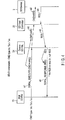
- FIG. 5 is an exemplary diagram illustrating a data-out command execution sequence.
- the remote host 1 transmits a command type, a command number, an argument, a response type, and data to the local host 2 (b1 of FIG. 5 ).
- the received command type is a data-out command type (adtc)
- the local host 2 transmits the received command number and the argument to the portable device 3 first (b2, b3 of FIG. 5 ).
- the local host 2 transmits the received data to the portable device 3 (b6, b7 of FIG. 5 ).
- the local host 2 When transmission of the received data to the portable device 3 is finished, the local host 2 automatically issues a CMD 13, which is a stop command (b8, b9 of. FIG. 5 ). The local host 2 checks by the CMD 13 that transmission of the data has been finished and there is no error (b10, b11 of FIG. 5 ), and transmits a response of the executed command to the remote host 1 (b12 of FIG. 5 ).
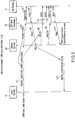
- FIG. 6 is an exemplary diagram illustrating a data-in command execution sequence.
- the remote host 1 transmits a command type, a command number, an argument, and a response type to the local host 2 (c1 of FIG. 6 ).
- the received command type is a data-in command type (adtc)
- the local host 2 transmits the received command number and the argument to the portable device 3 first (c2, c3 of FIG. 6 ).
- the local host 2 receives a response which is returned from the portable device 3 (c4, c5 of FIG. 6 ).
- the local host 2 finishes receiving the response from the portable device 3 (c6, c7 of FIG.
- the local host 2 automatically issues a CMD 13, which is a stop command (c8, c9 of FIG. 6 ).
- the local host 2 checks by the CMD 13 that reception of the data has been finished and there is no error (c10, c11 of FIG. 6 ), and transmits a response of the executed command and the received data to the remote host 1 (c12 of FIG. 6 ).
- the command type and the response type are transmitted from the remote host 1 to the local host 2, simultaneously with the command (command number and argument).
- the local host 2 recognizes the command execution sequence, the response timing, and the size, based on the transmitted command type and the response type.
- it is possible to reduce the volume of communication between the remote host 1 and the local host 2.
- no additional mount is necessary when the commands correspond to one of the above systems (1) to (3).
- the command and the data are transmitted together from the remote host 1 to the local host 2, and thereby exchange of protocol information on a wireless section can be reduced, when the remote host 1 is connected to the local host 2 by wireless communication.
- the response and the data are transmitted together from the local host 2 to the remote host 1, and thereby exchange of protocol information on a wireless section can be reduced.
- a remote access system of the present embodiment further includes a mechanism of automatically executing the proper command between a local host 2 and the portable device 3, by setting a flag in a header of a remote command for transmitting the specific command from the remote host 2 to the local host 2, to omit transmission and reception of commands and responses in a half-duplex communication part being the former part in order to realize reduction in protocol overhead.
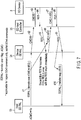
- FIG. 7 is an exemplary diagram illustrating a command execution sequence in the case where an AMCD flag is turned on.
- a remote host 1 sets the ACMD flag on (d1 of FIG. 7 ).
- the local host 2 issues a CMD 55 to the portable device 3, before the designated command (d2, d3 of FIG. 7 ).
- the local host 2 issues the transmitted command to the portable device 3 (d6, d7 of FIG. 7 ).
- the local host 2 transmits a response which is returned from the portable device 3 for the transmitted command to the remote host 1 (d8 to d10 of FIG. 7 ).
- FIG. 8 is an exemplary diagram illustrating a command execution sequence in the case where a trans flag is turned on.
- Commands of the portable device 3 include commands which are to be issued when the portable device 3 is in a "trans" state.
- the portable device 3 is in a "stby” state when a command of this type is to be issued, it is necessary to issue a CMD 7 to change the portable device 3 from the "stby” state to the "trans” state, before the command.
- the remote host 7. sets a trans flag on (e1 of FIG. 8 ).
- the local host 2 Since the local host 2 checks whether the portable device 3 is in the "stby” state or the "trans" state, when the trans flag is on and the portable device 3 is in the "stby” state, the local host 2 issues a CMD 7 and changes the portable device 3 to the "trans" state (e2, e3 of FIG. 8 ). When a response to the CMD 7 is returned from the portable device 3 (e4, e5 of FIG. 8 ), the local host 2 issues the transmitted command to the portable device 3 (e6, e7 of FIG. 8 ). As a matter of course, it is unnecessary to issue CMD 7 when the portable device 3 is in the "trans" state from the first. The local host 2 transmits a response which is returned from the portable device 3 to the transmitted command to the remote host 1 (e8 to e10 of FIG. 8 ).
- FIG. 9 is an exemplary diagram illustrating a command execution sequence in the case where a stby flag is turned on.
- Commands of the portable device 3 include commands which are to be issued when the portable device 3 is in the "stby” state.
- the portable device 3 is in the "trans” state when a command of this type is to be issued, it is necessary to issue a CMD 7 to change the portable device 3 from the "trans” state to the "stby” state, before the command.
- the CMD 7 is a command to change the portable device 3 from the stby state to the trans state, and vice versa.
- the remote host 1 sets a stby flag on (f1 of FIG. 9 ).
- the local host 2 Since the local host 2 checks whether the portable device 3 is in the "stby” state or the "trans” state, when the stby flag is on and the portable device 3 is in the "trans” state, the local host 2 issues a CMD 7 and changes the portable device 3 to the "stby" state (f2, f3 of FIG- 9). When a response to the CMD 7 is returned from the portable device 3 (f4, f5 of FIG. 9 ), the local host 2 issues the transmitted command to the portable device 3 (f6, f7 of FIG. 9 ). As a matter of course, it is unnecessary to issue CMD 7 when the portable device 3 is in the "stby” state from the first. The local host 2 transmits a response which is returned from the portable device 3 to the transmitted command to the remote host 1 (f8 to f10 of FIG. 9 ) .
- FIG. 10 is an exemplary diagram illustrating a command execution sequence in the case where a STOP flag is turned on.
- a CMD 12 which is a transmission stop command is issued at the end. Therefore, for example, when a command to perform a plurality of blocks of data writing is transmitted to the local host 2, the remote host 1 sets a STOP flag on (g1 of FIG. 10 ).
- the local host 2 transmits the received command number and the argument to the portable device 3 first (g2, g3 of FIG. 10 ).
- the local host 2 transmits the received data to the portable device 3 (g6, g7 of FIG. 10 ).
- the local host 2 automatically issues CMD 12 which is a transmission stop command, when the local host 2 finishes transmitting the received data to the portable device 3 (g8, g9 of FIG. 10 ).
- the local host 2 transmits a response to the executed command to the remote host 1 (g12 of FIG. 10 ).
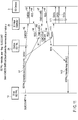
- FIG. 11 is an exemplary diagram illustrating a command execution sequence in the case where a BLKCOUNT flag is turned on.
- a CMD 18 or a CMD 25 is of the data-out command type, and is a command for notifying the portable device 3 of the data size in advance by a CMD 23.
- the remote host 1 transmits these commands to the local host 2, the remote host 1 sets the BLKCOUNT flag on (h1 of FIG. 11 ).
- the local host 2 issues a CMD 23 to notify the portable device 3 in advance of the data size of data transmitted from the remote host 1 (h2, h3 of FIG. 11 ).
- the local host 2 issues the CMD 18 or the CMD 25, which is the transmitted command, to the portable device 3 (h6, h7 of FIG. 11 ).
- the local host 2 transmits the received data to the portable device 3 (h10, h11 of FIG. 11 ).
- the local host 2 finishes transmitting the received data to the portable device 3, the local host 2 transmits a response to the executed command to the remote host 1 (h12 of FIG. 11 ).
- the remote access system of the present embodiment communication between the remote host 1 and the local host 2 is omitted for a command (which includes no argument or can be estimated from an argument of the transmitted command) which is required before or after a specific command, by setting a flag in the header of a communication packet between the remote host 1 and the local host 2.
- the remote access system realizes execution of the command automatically and at a proper time between the local host 2 and the portable device 3.
- FIG. 12 is an exemplary block diagram illustrating a schematic configuration of a remote access system according to the third embodiment.
- a host controller 25 of a local host 2 deals with two connection interfaces (an SD bus and a OHS-II bus).
- a command is packetized in a Command Token Format
- a response is packetized in a Response Token Format.
- both a command and a response are packetized in a UHS-II Packet Format.
- the local commands are classified into the three systems, and thereby the volume of communication between the remote host 1 and the local host 2 is reduced.
- the remote access function of operating a storage device which is controlled by a first electronic apparatus from a second electronic apparatus by remote control through the first electronic apparatus can be realized as a mechanism with excellent convenience and expansion.
- the portable devices of the first embodiment to third embodiment are stated as being SD cards (Registered Trademark), the portable devices include a memory card which has a memory function, an IO card which has a communication function, and a combo card which has both the memory function and the communication function, as the portable device including the first protocol.
- the portable device may not be portable, but may be a medium which is contained in the electronic apparatus and includes the first protocol.
Landscapes
- Engineering & Computer Science (AREA)
- Computer Networks & Wireless Communication (AREA)
- Signal Processing (AREA)
- Health & Medical Sciences (AREA)
- Computing Systems (AREA)
- General Health & Medical Sciences (AREA)
- Medical Informatics (AREA)
- Computer And Data Communications (AREA)
- Selective Calling Equipment (AREA)
Applications Claiming Priority (1)
| Application Number | Priority Date | Filing Date | Title |
|---|---|---|---|
| JP2011195020A JP5209096B2 (ja) | 2011-09-07 | 2011-09-07 | リモートアクセスシステム、電子機器およびリモートアクセス処理方法 |
Publications (1)
| Publication Number | Publication Date |
|---|---|
| EP2568687A2 true EP2568687A2 (de) | 2013-03-13 |
Family
ID=45771702
Family Applications (1)
| Application Number | Title | Priority Date | Filing Date |
|---|---|---|---|
| EP12157215A Withdrawn EP2568687A2 (de) | 2011-09-07 | 2012-02-28 | Fernzugriffssystem, elektronische Vorrichtung und Verfahren zum Verarbeiten eines Fernzugriffs |
Country Status (3)
| Country | Link |
|---|---|
| US (1) | US9037629B2 (de) |
| EP (1) | EP2568687A2 (de) |
| JP (1) | JP5209096B2 (de) |
Families Citing this family (4)
| Publication number | Priority date | Publication date | Assignee | Title |
|---|---|---|---|---|
| KR101958902B1 (ko) * | 2011-09-30 | 2019-07-03 | 삼성전자주식회사 | 전자기기들의 그룹 제어 방법 및 그를 위한 전자기기 관리 시스템 |
| US9529344B1 (en) * | 2013-03-15 | 2016-12-27 | SmartThings, Inc. | Device-type handlers for remote control and monitoring of devices through a data network |
| JP5730969B2 (ja) * | 2013-09-10 | 2015-06-10 | 日本電信電話株式会社 | セキュアデバイス管理システム、サーバ、端末装置、及びセキュアデバイス管理方法 |
| JP6022076B2 (ja) * | 2013-10-15 | 2016-11-09 | 株式会社東芝 | 電子機器および通信制御方法 |
Family Cites Families (18)
| Publication number | Priority date | Publication date | Assignee | Title |
|---|---|---|---|---|
| JPH01213736A (ja) * | 1988-02-22 | 1989-08-28 | Nec Home Electron Ltd | コマンド変換機能付ホストアダプタ |
| JPH07160446A (ja) * | 1993-12-10 | 1995-06-23 | Ricoh Co Ltd | プリンタ |
| JPH0816504A (ja) * | 1994-07-01 | 1996-01-19 | Hitachi Ltd | チャネルコマンド変換制御方式 |
| JPH1185406A (ja) * | 1997-09-09 | 1999-03-30 | Toshiba Corp | タイムスロット生成装置 |
| US20030018828A1 (en) | 2001-06-29 | 2003-01-23 | International Business Machines Corporation | Infiniband mixed semantic ethernet I/O path |
| JP2004020976A (ja) * | 2002-06-18 | 2004-01-22 | Hitachi Ltd | 映像表示装置 |
| EP1593098B2 (de) * | 2003-01-31 | 2010-09-15 | Panasonic Corporation | Halbleiterspeicherkarte und programm zu ihrer steuerung |
| JP2005216116A (ja) * | 2004-01-30 | 2005-08-11 | Sony Corp | 情報処理システムおよび方法、情報処理装置および方法、並びに、プログラム |
| US8059805B2 (en) | 2005-06-30 | 2011-11-15 | Emc Corporation | Enhanced services provided using communication redirection and processing |
| US7571269B2 (en) | 2005-08-25 | 2009-08-04 | Silicon Image, Inc. | Covert channel for conveying supplemental messages in a protocol-defined link for a system of storage devices |
| CN103744790B (zh) | 2005-08-25 | 2017-05-10 | 美国莱迪思半导体公司 | 智能可缩放存储切换架构 |
| US7644198B2 (en) * | 2005-10-07 | 2010-01-05 | International Business Machines Corporation | DMAC translation mechanism |
| JP2007207089A (ja) * | 2006-02-03 | 2007-08-16 | Seiko Epson Corp | 外部記憶装置コントローラおよびプログラム |
| JP4555926B2 (ja) * | 2007-02-01 | 2010-10-06 | サイレックス・テクノロジー株式会社 | スキャナ自動接続プログラム |
| JP2008310532A (ja) * | 2007-06-13 | 2008-12-25 | Vision Arts Kk | コマンド実行方法及びミドルデバイス |
| KR20090067649A (ko) * | 2007-12-21 | 2009-06-25 | 삼성전자주식회사 | 보안 저장 장치를 갖는 메모리 시스템 및 그것의 보안 영역관리 방법 |
| JP4727705B2 (ja) * | 2008-10-31 | 2011-07-20 | 株式会社日立製作所 | 階層型ストレージシステム |
| JP2010257094A (ja) * | 2009-04-23 | 2010-11-11 | Hitachi Ltd | 階層ストレージ管理システムにおける移動候補ファイルの抽出方法 |
-
2011
- 2011-09-07 JP JP2011195020A patent/JP5209096B2/ja not_active Expired - Fee Related
-
2012
- 2012-02-28 EP EP12157215A patent/EP2568687A2/de not_active Withdrawn
- 2012-04-05 US US13/440,873 patent/US9037629B2/en active Active
Non-Patent Citations (1)
| Title |
|---|
| None |
Also Published As
| Publication number | Publication date |
|---|---|
| JP2013058018A (ja) | 2013-03-28 |
| JP5209096B2 (ja) | 2013-06-12 |
| US9037629B2 (en) | 2015-05-19 |
| US20130060830A1 (en) | 2013-03-07 |
Similar Documents
| Publication | Publication Date | Title |
|---|---|---|
| US10261930B2 (en) | System, device and method for transmitting signals between different communication interfaces | |
| JP4843747B2 (ja) | スレーブ装置間での直接データ転送 | |
| US20020156952A1 (en) | Communication control apparatus, communication system and communication control method | |
| EP0859323B1 (de) | Vorrichtung, System und Verfahren zur Datenübertragung und Vorrichtung zur Bildverarbeitung | |
| EP0859327B1 (de) | Vorrichtung, System und Verfahren zur Datenübertragung und Vorrichtung zur Bildverarbeitung | |
| JP5044254B2 (ja) | ユニバーサル・シリアル・バスに基づくpcフラッシュディスクのためのアーキテクチャ | |
| US8856388B2 (en) | Method and apparatus for connecting USB devices to a computer | |
| CN101282224A (zh) | 通信适配器及通信适配器的数据传输方法 | |
| CN113626360B (zh) | 一种低速mipi观测式soc芯片及其运行方法 | |
| EP1750401A1 (de) | UBS 1.1 über eine Hochgeschwindigkeitsleitung | |
| EP2568687A2 (de) | Fernzugriffssystem, elektronische Vorrichtung und Verfahren zum Verarbeiten eines Fernzugriffs | |
| KR20020087859A (ko) | 데이터 전송 제어 장치, 전자 기기 및 데이터 전송 제어방법 | |
| US20080288698A1 (en) | Card reader controlling apparatus based on secure digital protocol | |
| JP2002016613A (ja) | 電子機器、電子機器システムおよび通信制御方法 | |
| EP1033657B1 (de) | Paketübertragungsvorrichtung mit Verwaltungsmittel zur Packungsetikettenverwaltung | |
| US20130054847A1 (en) | Semiconductor chip and semiconductor system comprising same | |
| US6675236B2 (en) | Field bus interface board | |
| US9052841B2 (en) | Electronic device and data transfer method | |
| US20070073824A1 (en) | Apparatus and method for acquiring identification information when a bus reset occurs | |
| CN101127607A (zh) | 网络适配器 | |
| JP5458193B2 (ja) | 電子機器およびリモートアクセス処理方法 | |
| JP2007088775A (ja) | 無線通信システム、無線通信装置及び方法 | |
| CN109753461B (zh) | 一种dma设备及数据传输的方法 | |
| JP2019020851A (ja) | デバイス制御装置、デバイス制御方法、およびプログラム | |
| CN107786852A (zh) | 一种潜水器用高速大容量数据传输与存储系统 |
Legal Events
| Date | Code | Title | Description |
|---|---|---|---|
| PUAI | Public reference made under article 153(3) epc to a published international application that has entered the european phase |
Free format text: ORIGINAL CODE: 0009012 |
|
| 17P | Request for examination filed |
Effective date: 20120228 |
|
| AK | Designated contracting states |
Kind code of ref document: A2 Designated state(s): AL AT BE BG CH CY CZ DE DK EE ES FI FR GB GR HR HU IE IS IT LI LT LU LV MC MK MT NL NO PL PT RO RS SE SI SK SM TR |
|
| AX | Request for extension of the european patent |
Extension state: BA ME |
|
| STAA | Information on the status of an ep patent application or granted ep patent |
Free format text: STATUS: THE APPLICATION HAS BEEN WITHDRAWN |
|
| 18W | Application withdrawn |
Effective date: 20150424 |