EP2573475B1 - Als Induktionsgerät ausgebildetes lufttechnisches Gerät sowie Verfahren zum Betreiben des Geräts - Google Patents
Als Induktionsgerät ausgebildetes lufttechnisches Gerät sowie Verfahren zum Betreiben des Geräts Download PDFInfo
- Publication number
- EP2573475B1 EP2573475B1 EP12005778.1A EP12005778A EP2573475B1 EP 2573475 B1 EP2573475 B1 EP 2573475B1 EP 12005778 A EP12005778 A EP 12005778A EP 2573475 B1 EP2573475 B1 EP 2573475B1
- Authority
- EP
- European Patent Office
- Prior art keywords
- induction
- air
- nozzles
- group
- same
- Prior art date
- Legal status (The legal status is an assumption and is not a legal conclusion. Google has not performed a legal analysis and makes no representation as to the accuracy of the status listed.)
- Active
Links
Images

Classifications
-
- F—MECHANICAL ENGINEERING; LIGHTING; HEATING; WEAPONS; BLASTING
- F24—HEATING; RANGES; VENTILATING
- F24F—AIR-CONDITIONING; AIR-HUMIDIFICATION; VENTILATION; USE OF AIR CURRENTS FOR SCREENING
- F24F1/00—Room units for air-conditioning, e.g. separate or self-contained units or units receiving primary air from a central station
- F24F1/01—Room units for air-conditioning, e.g. separate or self-contained units or units receiving primary air from a central station in which secondary air is induced by injector action of the primary air
-
- F—MECHANICAL ENGINEERING; LIGHTING; HEATING; WEAPONS; BLASTING
- F24—HEATING; RANGES; VENTILATING
- F24F—AIR-CONDITIONING; AIR-HUMIDIFICATION; VENTILATION; USE OF AIR CURRENTS FOR SCREENING
- F24F13/00—Details common to, or for air-conditioning, air-humidification, ventilation or use of air currents for screening
- F24F13/26—Arrangements for air-circulation by means of induction, e.g. by fluid coupling or thermal effect
-
- F—MECHANICAL ENGINEERING; LIGHTING; HEATING; WEAPONS; BLASTING
- F24—HEATING; RANGES; VENTILATING
- F24F—AIR-CONDITIONING; AIR-HUMIDIFICATION; VENTILATION; USE OF AIR CURRENTS FOR SCREENING
- F24F13/00—Details common to, or for air-conditioning, air-humidification, ventilation or use of air currents for screening
- F24F13/02—Ducting arrangements
- F24F13/06—Outlets for directing or distributing air into rooms or spaces, e.g. ceiling air diffuser
- F24F2013/0612—Induction nozzles without swirl means
Definitions
- the invention relates to a ventilation device designed as an induction device, with a plurality of induction nozzles operated with air, in particular with primary air.
- An induction device of the type mentioned is known.
- an induction effect is generated, which means that air, in particular secondary air, is sucked in and mixed with the air blown out of the induction nozzles.
- This mixed air is then preferably used to ventilate a room in a building or the like. If the air sucked in by the induction effect flows through a heat exchanger and/or the mixed air flows through a heat exchanger, the room can be air-conditioned.
- the well-known induction device has several induction nozzles arranged side by side, each of which emits an induction air jet, so that a correspondingly wide zone unfolds an induction effect due to the juxtaposition of the induction nozzles, with the result that, for example, a heat exchanger over its entire width for the passage of secondary air can be used.
- the known induction device has induction nozzles with a relatively large cross section. The result is a relatively high sound pressure level when the known ventilation device is in operation.
- the disclosure document DE 590879C relates to a device for ventilating interior spaces, with air entering the space to be ventilated from nozzles of different sizes.
- the nozzles are arranged in a matrix-like manner at equal distances from one another.
- This publication shows the features of the preamble of claim 1.
- the disclosure document DE 198 26 566 relates to a further device for ventilating a room, in which several induction nozzle arrangements are provided for generating individual jets.
- the object of the invention is to provide an induction device of the type mentioned at the outset that operates relatively quietly with a high induction power.
- the individual induction nozzles of the device according to the invention are preferably designed to be smaller, ie with a smaller cross section.
- the merged induction air jet of a group of induction nozzles according to the invention produces the same or at least approximately the same induction effect as compared to the known induction nozzle of the known device with a larger cross section.
- the sound pressure level of the grouped induction nozzles is lower, so that an induction device is created as a result of the invention, which compared to the known devices with correspondingly comparable Parameters of the conveyed air volume, in particular primary air volume, and at the same pressure of the air that acts on the nozzles, in particular primary air pressure, achieves the same or approximately the same induction effect at a lower sound pressure level.
- the induction nozzles of each group have a smaller distance from one another than the distance between adjacent groups.
- the air jets of the induction nozzles of each group combine to form only one induction air jet, but the induction air jets of the individual groups preferably do not combine.
- each of the groups has three induction nozzles.
- groups of three are formed.
- the induction nozzles of each group are arranged spatially in relation to one another.
- the induction nozzles of each group can lie in a straight line, being positioned in such a direction that the air jets can combine to form the induction air jet, or - as mentioned above - it is provided that they are spatially arranged in relation to one another, e.g. three Induction nozzles are provided in a triangular arrangement, with the result that the air jets then also merge.
- the induction nozzles of a group blow out in the same direction or it is alternatively provided that the blow-out directions of the induction nozzles of a group are different, in particular converge towards one another, although a spatial arrangement of the induction nozzles can be provided.
- the distance between adjacent outlet openings of induction nozzles of the same group is dimension D
- the respective distance between the outlet openings and the associated merging point of the associated air jets is dimension H
- H 1 until 5 ⁇ D .
- the merging point is one to five times as far away from the outlet openings of the associated induction nozzle as the distance from adjacent, associated induction nozzles, with the distance D extending from the center of an induction nozzle to the center of an adjacent induction nozzle.
- a development of the invention provides that the exit angle of the air jet of each induction nozzle of the same group is in the range from 10° to 30°, in particular has a size of 20°.
- At least one induction nozzle of the induction nozzles of at least one group can be opened or closed.
- the arrangement is preferably made in such a way that not all induction nozzles in a group can be opened or closed, but only one or more, but not all, so that a certain induction effect remains and the induction air jet is also generated by merging, i.e. at least two induction nozzles of the same group remain open.
- the "opening or closing" mentioned can also be carried out with intermediate values, ie only a partial one Opening or partial closing.
- a development of the invention provides that the induction nozzle to be opened or closed is further away from a heat exchanger of the induction device than the other induction nozzles of the same group.
- the "other" induction nozzles of the same group are those that cannot be opened or closed. Since—as mentioned—the ventilation device has a heat exchanger that regulates the temperature of the air sucked in by induction, in particular secondary air, the distance of an induction nozzle from the heat exchanger affects the heating or cooling result. In this respect, it is advantageous if an induction nozzle to be closed is further away from the heat exchanger, since the other induction nozzles in this group are then correspondingly closer to the heat exchanger.
- the induction nozzle is opened or closed by means of a slide which interacts with the outlet opening of the induction nozzle.
- This slide can be adjusted automatically, for example, by means of a slide drive. Additionally or alternatively, manual adjustment of the slider is also possible.
- the slide With a control edge, the slide more or less covers the cross section of the outlet opening or releases it or closes it completely.
- the displacement direction of the slide runs transversely, in particular at right angles, to the outflow direction of the air from the induction nozzle.
- the invention also relates to a method for operating a ventilation device designed as an induction device with the features of claim 7, as described above, with several induction nozzles operated with air, in particular with primary air, from which air jets emerge, the air jets of several, one Group or a group forming induction nozzles are formed such that they merge into or into only one induction air jet with each other.
- the method preferably provides for the air jets, which are preferably of the same type and/or preferably of the same size, to be formed from induction nozzles in the same group in such a way that the induction effect of the induction air jet formed is as great or almost as great as the induction effect of a fictitious, single, cross-sectional size, one Fictitious air jet blowing out induction nozzle at the same volume flow of induction air jet of the induction nozzles of this group and fictitious air jet and at the same air pressure, in particular primary air pressure, with which the induction nozzles and the fictitious induction nozzle are supplied.
- the air jets of induction nozzles of the same group which are preferably of the same type and/or preferably of the same size, are formed in such a way that the sound pressure level of these induction nozzles - when a certain conveyed air quantity flows through, in particular primary air quantity - is less than or at most the same as the sound pressure level of one fictitious, single, cross-sectional size induction nozzle blowing out a fictitious air jet with the same conveyed air volume, in particular primary air volume, and with the same volume flow of induction air jet of the induction nozzles of this group and fictitious air jet and/or with the same induction effect of induction air jet and fictitious air jet.
- the induction nozzles according to the invention which have a smaller cross section and are arranged in groups, are compared with a single induction nozzle of the prior art which has a larger cross section and which has a ejects air jet, referred to herein as "fictitious air jet”.
- fictitious air jet a single induction nozzle of the prior art which has a larger cross section and which has a ejects air jet
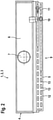
- the figure 1 shows - in longitudinal section - a ventilation device 1, which is designed as an induction device 2, preferably as a ceiling installation device 3. It serves to ventilate and/or air-condition a room in a building or the like.
- a ventilation device 1 which is designed as an induction device 2, preferably as a ceiling installation device 3. It serves to ventilate and/or air-condition a room in a building or the like.
- the device 1 has a housing 4, in which a downwardly open heat exchanger 5, ie not covered by the housing 4 there, is arranged lying. Furthermore, an air distribution box 6 is arranged in the housing 4, which is air-technically connected to a primary air connection piece 7. Opposite the air distribution box 6 is an air outlet 8. Below the heat exchanger 5 is an air inlet 9.
- the heat exchanger 5 has medium connection pieces 10 and 11 in order to be able to conduct a medium, for example warm water or cold water, through the heat exchanger 5.
- the heat exchanger 5 has a multiplicity of heat exchange fins 12, of which—for the sake of simplicity—only heat exchange fins 12 located in a small zone are distinguished, the remaining heat exchange fins 12 are only indicated in a box-like manner.
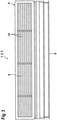
- the figure 2 clarifies the ventilation device 1 in rear view. It can be seen that the air distribution box 6 extends over the entire width of the device and that the primary air connection piece 7 is preferably designed as a round pipe piece.
- the heat exchanger 5 lets in figure 2 Recognize heat exchange tubes 13, which are connected to the medium connection pieces 10 and 11.
- the figure 3 shows that the air outlet 8 extends essentially over the entire width of the ventilation device 1 and can be provided with air-guiding fins 14 .
- the air distribution box 6 has a wall 15 which lies opposite the air outlet 8 and on which induction nozzles 16 are arranged, in particular formed.
- air in particular primary air
- primary air which is preferably supplied by an air control center in the building or the like via an air distribution network
- This air referred to below as primary air
- This air exits the induction nozzles 16 and generates an induction effect, which means that secondary air, in particular room air, is sucked in through the air inlet 9, which passes through the heat exchanger 5 and is temperature-treated in the process, and then into a mixing chamber 17 gets inside the housing 4, where it is mixed with the primary air emerging from the primary air nozzles 16, the mixed air thus formed being blown through the air outlet 8 into the room.
- the arrow 18 indicates the primary air
- Arrow 19 indicates the secondary air
- arrow 20 indicates the mixed air or supply air.
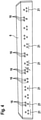
- the figure 4 makes it clear that the mentioned induction nozzles 16 are grouped on the air distribution box 6 .
- Three primary air nozzles 16 each lying on an imaginary triangle form a group 21.
- a large number of groups, thirteen groups 12 in the exemplary embodiment, are arranged at a distance from one another over the length of the air distribution box 6, with the distance between the individual groups 21 being greater than the distance between the Induction nozzles 16 within each group 21 from each other.
- the arrangement of the induction nozzles 16 of each group 21 is spatial, i.e. they are not on a straight line but are arranged on an imaginary triangle, with adjacent groups alternating in the triangular configuration, with either an induction nozzle 16 at the top and two induction nozzles 16 are below, or two induction nozzles 16 are above and one induction nozzle 16 is below.
- the invention assumes that with the same total volume flow and constant admission pressure, different induction nozzle arrangements can be present, namely a few large conventional nozzles (prior art) or many smaller induction nozzles 16, as is the case with the invention.
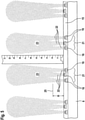
- many small nozzles are now distributed evenly over the air distribution box 6, but grouped together in such a way that each group 21 of correspondingly small induction nozzles 16 each form only one induction air jet 23, i.e. their air jets 22 merge with this induction air jet 23, the merged induction air jet 23 developing an induction effect that corresponds to that of a larger, known nozzle.
- the sum of the flow noise of the small induction nozzles 16 of several groups 21 is lower than the sum of the flow noise of the large nozzles known from the prior art, the number of which corresponds to the number of groups 21.
- An insertion loss, ie a reduction in the channel noise radiating through, is also more favorable with the smaller induction nozzles 16 according to the invention.
- the positive acoustic properties of the smaller induction nozzles 16 according to the invention come into effect and there is also a positive induction effect that corresponds to the favorable induction effect of large nozzles, in that the smaller induction nozzles 16 are grouped according to the invention, so that the air jets 22 emerging from them form a common one Air jet, namely merge into the mentioned induction air jet 23, so that the effect of this induction air jet 23 corresponds to the effect of a jet from a large nozzle with regard to induction.
- the geometry and arrangement of the individual induction nozzles 16 according to the invention depends on the nozzle size, the primary pressure, the volume flow and the injector length. However, if the person skilled in the art knows the procedure according to the invention, he can he can achieve optimal values through simple experiments.
- the arrangement of the nozzles is as they are from the figure 4 emerges, namely a tripartite grouping provided.
- the upper induction nozzles 16 can be opened or closed. Accordingly, according to figure 4 either one upper induction nozzle 16 per group 21 or two upper induction nozzles are closed, depending on which group is considered.
- the arrangement is preferably such that the opening and closing takes place by means of a slide 26 ( figure 1 ), which is slidably mounted with appropriate means and in the representation of figure 1 takes an open position.
- the slide 26 can be moved back and forth according to the double arrow 27 .
- a motorized device can be provided for this purpose, or it can be moved manually. If the slider 26 is pushed down, it covers the outlet openings 24 of the upper induction nozzles 16 so that no more air jets 22 can exit there.
- the lower row of induction nozzles 16 is not, as in figure 4 once have one and once two induction nozzles 16 per group 21, but there are always at least two induction nozzles 16 present, so that even when the upper row of induction nozzles 16 is covered, an air jet combination can take place.
- the induction nozzles 16 of the upper row are not completely closed, but only partially. In such a case, it is then also permissible that the bottom row in a group 21 only an induction nozzle 16 has.
Landscapes
- Engineering & Computer Science (AREA)
- Chemical & Material Sciences (AREA)
- Combustion & Propulsion (AREA)
- Mechanical Engineering (AREA)
- General Engineering & Computer Science (AREA)
- Jet Pumps And Other Pumps (AREA)
- Ventilation (AREA)
Description
- Die Erfindung betrifft ein als Induktionsgerät ausgebildetes lufttechnisches Gerät, mit mehreren, mit Luft, insbesondere mit Primärluft, betriebenen Induktionsdüsen.
- Ein Induktionsgerät der eingangs genannten Art ist bekannt. Durch das Betreiben der Induktionsdüsen mit Luft wird eine Induktionswirkung erzeugt, die dazu führt, dass Luft, insbesondere Sekundärluft angesaugt und mit der aus den Induktionsdüsen ausgeblasenen Luft gemischt wird. Diese Mischluft dient dann vorzugsweise der Belüftung eines Raumes eines Gebäudes oder dergleichen. Sofern die durch die Induktionswirkung angesaugte Luft einen Wärmetauscher durchströmt und/oder die Mischluft einen Wärmetauscher durchströmt, kann eine Klimatisierung des Raumes erfolgen. Das bekannte Induktionsgerät weist mehrere, nebeneinander angeordnete Induktionsdüsen auf, die jeweils für sich einen Induktionsluftstrahl ausstoßen, sodass eine entsprechend breite Zone durch die Nebeneinanderanordnung der Induktionsdüsen eine Induktionswirkung entfaltet, mit der Folge, dass beispielsweise ein Wärmetauscher über seine gesamte Breite für den Durchtritt von Sekundärluft genutzt werden kann. Um eine gute Induktionswirkung zu erzielen, weist das bekannte Induktionsgerät Induktionsdüsen mit relativ großem Querschnitt auf. Die Folge ist ein relativ hoher Schalldruckpegel beim Betrieb des bekannten lufttechnischen Geräts.
- Die Offenlegungsschrift
DE 590879 C betrifft eine Einrichtung zur Belüftung von Innenräumen, wobei Luft aus unterschiedlich großen Düsen in den zu belüftenden Raum eintritt. Die Düsen liegen matrixartig gleich beabstandet zueinander. Diese Offenlegungsschrift zeigt die Merkmale des Oberbegriffs von Anspruch 1. - Die Offenlegungsschrift
DE 198 26 566 betrifft eine weitere Vorrichtung zum Belüften eines Raumes, bei der zur Erzeugung von Einzelstrahlen jeweils mehrere Induktions-Düsenanordnungen vorgesehen sind. - Der Erfindung liegt die Aufgabe zugrunde, ein Induktionsgerät der eingangs genannten Art zu schaffen, das bei hoher Induktionsleistung relativ geräuscharm arbeitet.
- Diese Aufgabe wird erfindungsgemäß durch die Merkmale des Anspruchs 1, bzw. die Merkmale des Anspruchs 7 gelöst.
- Gegenüber den bei dem bekannten lufttechnischen Gerät verwendeten Induktionsdüsen sind die einzelnen Induktionsdüsen des erfindungsgemäßen Geräts vorzugsweise kleiner ausgebildet, das heißt mit kleinerem Querschnitt. Der verschmolzene Induktionsluftstrahl einer Gruppe von erfindungsgemäßen Induktionsdüsen erbringt jedoch gegenüber der bekannten, querschnittsgrößeren Induktionsdüse des bekannten Geräts dieselbe oder mindestens etwa dieselbe Induktionswirkung. Dabei stellt sich jedoch heraus, dass der Schalldruckpegel der gruppierten Induktionsdüsen niedriger ist, dass also aufgrund der Erfindung ein Induktionsgerät geschaffen wird, das gegenüber den bekannten Geräten bei entsprechend vergleichbaren Parametern der geförderten Luftmenge, insbesondere Primärluftmenge, und bei gleichem Druck der Luft, die die Düsen beaufschlagt, insbesondere Primärluftdruck, dieselbe oder etwa dieselbe Induktionswirkung bei geringerem Schalldruckpegel erzielt.
- Erfindungsgemäß ist vorgesehen, dass die Induktionsdüsen jeder Gruppe einen kleineren Abstand zueinander aufweisen, als der Abstand zwischen benachbarten Gruppen. Die Luftstrahlen der Induktionsdüsen jeder Gruppe vereinigen sich zu jeweils nur einem Induktionsluftstrahl, wobei sich die Induktionsluftstrahle der einzelnen Gruppen jedoch vorzugsweise nicht vereinigen.
- Erfindungsgemäß ist vorgesehen, dass jede der Gruppen drei Induktionsdüsen aufweist. Insofern werden Dreiergruppen gebildet.
- Ferner ist es vorteilhaft, wenn die Induktionsdüsen jeder Gruppe räumlich zueinander angeordnet sind. Die Induktionsdüsen jeder Gruppe können auf einer Geraden liegen, wobei sie von der Richtung her derart positioniert sind, dass sich die Luftstrahlen zu dem Induktionsluftstrahl vereinigen können oder es ist - wie vorstehend erwähnt - vorgesehen, dass sie räumlich zueinander angeordnet sind, also beispielsweise bei drei Induktionsdüsen eine Dreiecksanordnung vorgesehen ist, mit der Folge, dass dann ebenfalls das Verschmelzen der Luftstrahlen erfolgt. Letzteres ist auch möglich, wenn die Induktionsdüsen einer Gruppe in dieselbe Richtung ausblasen oder es ist alternativ vorgesehen, dass die Ausblasrichtungen der Induktionsdüsen einer Gruppe unterschiedlich sind, insbesondere zueinander konvergieren, wobei dennoch eine räumliche Anordnung der Induktionsdüsen vorgesehen sein kann.
- Erfindungsgemäß ist vorgesehen, dass der Abstand von benachbarten Auslassöffnungen von Induktionsdüsen derselben Gruppe das Maß D aufweist, dass der jeweilige Abstand der Auslassöffnungen bis zu dem zugehörigen Verschmelzungspunkt der zugehörigen Luftstrahlen das Maß H aufweist, und dass die folgende Beziehung gilt:

- Der Verschmelzungspunkt liegt von den Auslassöffnungen der zugehörigen Induktionsdüsen also einmal bis fünfmal soweit entfernt wie der Abstand von benachbarten, zugehörigen Induktionsdüsen, wobei der Abstand D von Mitte einer Induktionsdüse bis zur Mitte einer benachbarten Induktionsdüse reicht.
- Eine Weiterbildung der Erfindung sieht vor, dass der Austrittswinkel des Luftstrahls jeder Induktionsdüse derselben Gruppe im Bereich von 10° bis 30° liegt, insbesondere eine Größe von 20° aufweist.
- Ferner ist es vorteilhaft, wenn zumindest eine Induktionsdüse der Induktionsdüsen mindestens einer Gruppe geöffnet beziehungsweise geschlossen werden kann. Auf diese Art und Weise lässt sich der Volumenstrom des zugehörigen, verschmolzenen Induktionsluftstrahls beeinflussen und damit auch die Größe der Induktionswirkung steuern. Die Anordnung ist vorzugsweise derart getroffen, dass nicht alle Induktionsdüsen einer Gruppe geöffnet beziehungsweise geschlossen werden können, sondern nur eine oder mehrere, jedoch nicht alle, sodass eine gewisse Induktionswirkung verbleibt und auch der Induktionsluftstrahl durch Verschmelzen erzeugt wird, das heißt, mindestens zwei Induktionsdüsen derselben Gruppe bleiben geöffnet. Das erwähnte "Öffnen beziehungsweise Verschließen" kann auch mit Zwischenwerten durchgeführt werden, also nur ein teilweises Öffnen beziehungsweise teilweises Schließen. Im letzteren Falle ist es dann auch denkbar, dass alle Induktionsdüsen einer Gruppe dementsprechend geöffnet beziehungsweise geschlossen werden können, da dann die im Volumenstrom reduzierten Luftstrahlen bei einem Teilverschließen sich dennoch zu einem Induktionsluftstrahl vereinigen. Bei einem Teilverschließen ist es auch denkbar, dass nur eine der Induktionsdüsen einer Gruppe vollständig geöffnet bleibt, da sich dessen Luftstrahl mit dem Teilluftstrahl der teilverschlossenen Induktionsdüse vereinigt.
- Eine Weiterbildung der Erfindung sieht vor, dass die zu öffnende beziehungsweise zu verschließende Induktionsdüse weiter entfernt zu einem Wärmetauscher des Induktionsgeräts liegt als die anderen Induktionsdüsen derselben Gruppe. Unter den "anderen" Induktionsdüsen derselben Gruppe sind diejenigen zu verstehen, die nicht geöffnet beziehungsweise geschlossen werden können. Da - wie erwähnt - das lufttechnische Gerät einen Wärmetauscher aufweist, der eine Temperierung der durch Induktionswirkung angesaugten Luft, insbesondere Sekundärluft, vornimmt, hat die Entfernung einer Induktionsdüse zum Wärmetauscher Einfluss auf das Heiz- beziehungsweise Kühlergebnis. Insofern ist es vorteilhaft, wenn eine zu verschließende Induktionsdüse weiter entfernt zum Wärmetauscher liegt, da dann die anderen Induktionsdüsen dieser Gruppe dem Wärmetauscher entsprechend näher liegen.
- Nach einer Weiterbildung der Erfindung ist vorgesehen, dass das Öffnen beziehungsweise Verschließen der Induktionsdüse mittels eines Schiebers erfolgt, der mit der Auslassöffnung der Induktionsdüse zusammenwirkt. Dieser Schieber kann beispielsweise mittels eines Schieberantriebs automatisch verstellt werden. Zusätzlich oder alternativ ist auch eine manuelle Verstellung des Schiebers möglich. Der Schieber deckt mit einer Steuerkante den Querschnitt der Auslassöffnung mehr oder weniger ab beziehungsweise gibt diesen frei oder verschließt ihn vollständig. Die Verschieberichtung des Schiebers verläuft quer, insbesondere rechtwinklig, zu der Ausströmrichtung der Luft aus der Induktionsdüse.
- Die Erfindung betrifft ferner ein Verfahren zum Betreiben eines als Induktionsgerät ausgebildeten lufttechnischen Geräts mit den Merkmalen des Anspruchs 7, wie vorstehend beschrieben, mit mehreren, mit Luft, insbesondere mit Primärluft, betriebenen Induktionsdüsen, aus denen Luftstrahlen austreten, wobei die Luftstrahlen von mehreren, eine Gruppe oder jeweils eine Gruppe bildenden Induktionsdüsen derart ausgebildet werden, dass sie zu oder jeweils zu nur einem Induktionsluftstrahl miteinander verschmelzen.
- Vorzugweise ist bei dem Verfahren vorgesehen, dass die vorzugsweise gleichartig und/oder vorzugsweise gleichgroß ausgebildeten Luftstrahlen von Induktionsdüsen derselben Gruppe derart ausgebildet werden, dass die Induktionswirkung des gebildeten Induktionsluftstrahls ebenso groß oder nahezu ebenso groß ist wie die Induktionswirkung einer fiktiven, einzigen, querschnittsgroßen, einen Fiktivluftstrahl ausblasenden Induktionsdüse bei gleichem Volumenstrom von Induktionsluftstrahl der Induktionsdüsen dieser Gruppe und Fiktivluftstrahl und bei gleichem Luftdruck, insbesondere Primärluftdruck, mit dem die Induktionsdüsen und die fiktive Induktionsdüse versorgt werden. Vorstehend wird also ein Vergleich gezogen zwischen einer erfindungsgemäßen Gruppe von Induktionsdüsen und einer aus dem Stand der Technik bekannten Induktionsdüse, die hier als fiktive Induktionsdüse bezeichnet ist und die querschnittsgrößer ausgestaltet ist als die einzelnen Induktionsdüsen der Erfindung. Bei einem Vergleich der einer Gruppe angehörenden Induktionsdüsen der Erfindung und der fiktiven Induktionsdüse des Standes der Technik stellt sich unter Berücksichtigung der vorstehend erwähnten Parameter, wie beispielsweise Luftdruck zum Betreiben der Düsen und Volumenstrom, heraus, dass eine ebensogroße oder nahezu ebenso
- große Induktionswirkung bei der Erfindung wie bei dem Stand der Technik erzielt wird.
- Ferner ist es vorteilhaft, wenn die vorzugsweise gleichartig und/oder vorzugsweise gleichgroß ausgebildeten Luftstrahlen von Induktionsdüsen derselben Gruppe derart ausgebildet werden, dass der Schalldruckpegel dieser Induktionsdüsen - beim Durchströmen einer bestimmten geförderten Luftmenge, insbesondere Primärluftmenge - kleiner oder maximal gleichgroß ist, wie der Schalldruckpegel einer fiktiven, einzigen, querschnittsgroßen, einen Fiktivluftstrahl ausblasenden Induktionsdüse bei der gleichen geförderten Luftmenge, insbesondere Primärluftmenge, und bei gleichem Volumenstrom von Induktionsluftstrahl der Induktionsdüsen dieser Gruppe und Fiktivluftstrahl und/oder bei gleicher Induktionswirkung von Induktionsluftstrahl und Fiktivluftstrahl. Auch hier wird also - wie im vorstehenden Absatz - ein Vergleich der Erfindung mit dem Stand der Technik durchgeführt und die erfindungsgemäßen, im Querschnitt kleineren Induktionsdüsen, die gruppiert angeordnet sind, verglichen mit einer im Querschnitt größeren, einzigen Induktionsdüse des Standes der Technik, die einen Luftstrahl ausstößt, der hier als "Fiktivluftstrahl" bezeichnet ist. Es stellt sich heraus, dass unter Berücksichtigung vergleichbarer Parameter, wie Volumenstrom, geförderter Luftmenge und/oder Induktionswirkung der Schalldruckpegel bei der erfindungsgemäßen Ausgestaltung kleiner oder maximal gleichgroß ist, wie bei dem Stand der Technik. Insbesondere hat sich herausgestellt, dass ein niedriger Schalldruckpegel vorliegt.
- Die Zeichnungen veranschaulichen die Erfindung anhand eines Ausführungsbeispiels, und zwar zeigt:
- Figur 1
- einen Längsschnitt durch ein als Induktionsgerät ausgebildetes lufttechnisches Gerät,
- Figur 2
- eine Rückansicht auf das Gerät der
Figur 1 , - Figur 3
- eine Vorderansicht des Geräts der
Figur 1 , - Figur 4
- einen Luftverteilkasten mit daran ausgebildeten Induktionsdüsen des Geräts der
Figur 1 , und - Figur 5
- ein Strömungsbild der Induktionsdüsen gemäß
Figur 4 . - Die
Figur 1 zeigt - im Längsschnitt - ein lufttechnisches Gerät 1, das als Induktionsgerät 2, bevorzugt als Deckeneinbaugerät 3 ausgebildet ist. Es dient dazu, einen Raum eines Gebäudes oder dergleichen zu belüften und/oder klimatisieren. - Das Gerät 1 weist ein Gehäuse 4 auf, in dem ein nach unten offener, also dort nicht vom Gehäuse 4 abgedeckter Wärmetauscher 5 liegend angeordnet ist. Ferner ist in dem Gehäuse 4 ein Luftverteilkasten 6 angeordnet, der mit einem Primärluftanschlussstutzen 7 lufttechnisch verbunden ist. In Gegenüberlage zum Luftverteilkasten 6 liegt ein Luftauslass 8. Unterhalb des Wärmetauschers 5 befindet sich ein Lufteinlass 9. Der Wärmetauscher 5 weist Mediumanschlussstutzen 10 und 11 auf, um ein Medium, beispielsweise warmes Wasser oder kaltes Wasser, durch den Wärmetauscher 5 leiten zu können. Der Wärmetauscher 5 besitzt eine Vielzahl von Wärmetauschlamellen 12, von denen - der Einfachheit halber - nur in einer kleinen Zone liegende Wärmetauschlamellen 12 ausgezeichnet sind, die übrigen Wärmetauschlamellen 12 werden nur kastenartig angedeutet.
- Die
Figur 2 verdeutlicht das lufttechnische Gerät 1 in Ansicht von hinten. Es ist erkennbar, dass sich der Luftverteilkasten 6 über die gesamte Breite des Gerätes erstreckt und dass der Primärluftanschlussstutzen 7 vorzugsweise als Rundrohrstutzen ausgebildet ist. Der Wärmetauscher 5 lässt inFigur 2 Wärmetauschrohre 13 erkennen, die an die Mediumanschlussstutzen 10 und 11 angeschlossen sind. - Die
Figur 3 zeigt, dass sich der Luftauslass 8 im Wesentlichen über die gesamte Breite des lufttechnischen Geräts 1 erstreckt und mit Luftleitlamellen 14 versehen sein kann. - Der Luftverteilkasten 6 weist eine Wand 15 auf, die in Gegenüberlage zum Luftauslass 8 liegt und an der Induktionsdüsen 16 angeordnet, insbesondere ausgebildet sind.
- Im Betrieb des erfindungsgemäßen lufttechnischen Geräts wird Luft, insbesondere Primärluft, die vorzugsweise von einer Luftzentrale des Gebäudes oder dergleichen über ein Luftverteilnetz geliefert wird, über den Primärluftanschlussstutzen 7 in den Luftverteilkasten 6 eingebracht. Diese Luft, nachstehend Primärluft genannt, tritt aus den Induktionsdüsen 16 aus und erzeugt eine Induktionswirkung, die dazu führt, dass durch den Lufteinlass 9 Sekundärluft, insbesondere Raumluft, angesaugt wird, die den Wärmetauscher 5 durchsetzt und dabei temperaturbehandelt wird und anschließend in einen Mischraum 17 im Innern des Gehäuses 4 gelangt, dort mit der aus den Primärluftdüsen 16 ausgetretenen Primärluft vermischt wird, wobei die so gebildete Mischluft durch den Luftauslass 8 in den Raum eingeblasen wird. In der
Figur 1 deutet der Pfeil 18 die Primärluft, der Pfeil 19 die Sekundärluft und der Pfeil 20 die Mischluft oder Zuluft an. - Die
Figur 4 verdeutlicht, dass die erwähnten Induktionsdüsen 16 gruppiert am Luftverteilkasten 6 ausgebildet sind. Jeweils drei, auf einem gedachten Dreieck liegende Primärluftdüsen 16 bilden eine Gruppe 21. Eine Vielzahl von Gruppen, im Ausführungsbeispiel dreizehn Gruppen 12 sind über die Länge des Luftverteilkastens 6 beabstandet zueinander angeordnet, wobei der Abstand der einzelnen Gruppen 21 voneinander größer ist als der Abstand der Induktionsdüsen 16 innerhalb einer jeden Gruppe 21 voneinander. - Der
Figur 4 ist zu entnehmen, dass die Anordnung der Induktionsdüsen 16 jeder Gruppe 21 räumlich vorgesehen ist, das heißt, sie liegen nicht auf einer Geraden, sondern sie sind auf einem gedachten Dreieck angeordnet, wobei benachbarte Gruppen in der Dreiecksausgestaltung alternieren, indem entweder eine Induktionsdüse 16 oben und zwei Induktionsdüsen 16 unten liegen oder zwei Induktionsdüsen 16 oben und eine Induktionsdüse 16 unten liegen. - Erfindungsgemäß ist nun von Bedeutung, dass aus den Induktionsdüsen 16 austretende Luftstrahlen 22 einer Gruppe 21 zu nur einem Induktionsluftstrahl 23 verschmelzen. Dieses Verschmelzen erfolgt schon im geringen Abstand zu den Auslassöffnungen 24 (
Figur 1 ) der Induktionsdüsen 16. Zur Verdeutlichtung ist inFigur 5 ein Maßstab eingeblendet, der zeigt, dass die einzelnen Luftstrahlen 22 - ausgehend von den Auslassöffnungen 24 der Induktionsdüsen 16 - nur eine Freistrahllänge von 20 bis 30 mm aufweisen, wobei die einzelnen Induktionsdüsen 16 der Gruppe 21 einen Abstand von rund 20 mm, insbesondere 18 mm, zueinander aufweisen. Der Abstand der Düsen voneinander bemisst sich von Mitte Düse zu Mitte Düse. Wird der jeweilige Abstand von benachbarten Auslassöffnungen 24 von Induktionsdüsen 16 mit dem Maß D bezeichnet (Figur 4 ) und wird der jeweilige Abstand der Luftauslassöffnungen 24 zu dem zugehörigen Verschmelzungspunkt 25 der zugehörigen Luftstrahlen 22 mit dem Maß H bezeichnet, so gilt die Beziehung:
- Die Erfindung geht davon aus, dass bei gleichem Gesamtvolumenstrom und konstantem Vordruck unterschiedliche Induktionsdüsenanordnungen vorliegen können, nämlich wenige große herkömmliche Düsen (Stand der Technik) oder viele kleinere Induktionsdüsen 16, so wie letzteres bei der Erfindung der Fall ist. Es werden jedoch nun nicht anstelle von den bekannten, wenigen großen Düsen viele kleine Düsen gleichmäßig über den Luftverteilkasten 6 verteilt angeordnet, sondern gruppiert, derart, dass jede Gruppe 21 von entsprechend kleinen Induktionsdüsen 16 jeweils nur einen Induktionsluftstrahl 23 bilden, also deren Luftstrahlen 22 zu diesem Induktionsluftstrahl 23 verschmelzen, wobei der verschmolzene Induktionsluftstrahl 23 etwa eine Induktionswirkung entfaltet, der dem einer größeren, bekannten Düse entspricht. Aufgrund der Erfindung ist die Summe des Strömungsrauschens der kleinen Induktionsdüsen 16 mehrerer Gruppen 21 geringer als die Summe des Strömungsrauschens der aus dem Stand der Technik bekannten großen Düsen, deren Anzahl der Anzahl der Gruppen 21 entspricht. Auch eine Einfügungsdämpfung, das heißt eine Minderung des durchstrahlenden Kanalgeräusches, ist bei den erfindungsgemäßen kleineren Induktionsdüsen 16 günstiger.
- Ferner ist im Hinblick auf die erwähnten, zum Stand der Technik gehörenden großen Induktionsdüsen anzumerken, dass sie auf einer bestimmten Gehäusebreite mehr Sekundärluft induzieren, als eine größere Anzahl gleichmäßig verteilte kleine Induktionsdüsen, das heißt, die größeren Düsen induzieren eine größere Kühl/Heizleistung an einem vorgeschalteten Wärmetauscher. Die vorstehend aufgeführten Vor- und Nachteile im Hinblick auf kleinere als auch größere Induktionsdüsen werden erfindungsgemäß im Hinblick auf lediglich vorteilhafte Wirkungen gebündelt, indem mehrere Induktionsdüsen 16 (mit entsprechend kleinem Querschnitt) gruppiert werden. Damit kommen die positiven akustischen Eigenschaften der kleineren, erfindungsgemäßen Induktionsdüsen 16 zur Wirkung und es ergibt sich auch eine positive Induktionswirkung, die der günstigen Induktionswirkung großer Düsen entspricht, indem erfindungsgemäß die kleineren Induktionsdüsen 16 gruppiert werden, sodass die aus ihnen austretenden Luftstrahlen 22 zu einem gemeinsamen Luftstrahl, nämlich zu dem erwähnten Induktionsluftstrahl 23 verschmelzen, sodass die Wirkung dieses Induktionsluftstrahls 23 der Wirkung eines Strahls einer großen Düse im Hinblick auf die Induktion entspricht.
- Die Geometrie und Anordnung der einzelnen erfindungsgemäßen Induktionsdüsen 16 hängt von der Düsengröße, dem Primärdruck, dem Volumenstrom und von der Injektorlänge ab. Kennt der Durchschnittsfachmann jedoch das erfindungsgemäße Vorgehen, so kann er durch einfache Versuche optimale Werte erzielen.
- Gemäß der Erfindung ist bei Bei- Düsendrücken von 100 bis 300 Pa die Anordnung der Düsen, so wie sie aus der
Figur 4 hervorgeht, nämlich eine Dreiergruppierung, vorgesehen. - Gemäß einer bevorzugten Ausführungsform der Erfindung ist gemäß
Figur 1 vorgesehen, dass die oberen Induktionsdüsen 16 geöffnet beziehungsweise verschlossen werden können. Demzufolge werden gemäßFigur 4 pro Gruppe 21 entweder eine obere Induktionsdüse 16 oder es werden zwei obere Induktionsdüsen geschlossen, je nach dem, welche Gruppe man betrachtet. Die Anordnung ist vorzugsweise derart getroffen, dass das Öffnen und Schließen mittels eines Schiebers 26 erfolgt (Figur 1 ), der mit entsprechenden Mitteln verschieblich gelagert ist und in der Darstellung derFigur 1 eine Offenstellung einnimmt. Der Schieber 26 lässt sich gemäß Doppelpfeil 27 hin- und herverlagern. Hierfür kann eine motorische Einrichtung vorgesehen sein oder es ist eine manuelle Verschiebbarkeit gegeben. Wird der Schieber 26 nach unten geschoben, so deckt er die Auslassöffnungen 24 der oberen Induktionsdüsen 16 ab, sodass dort keine Luftstrahlen 22 mehr austreten können. Bei dieser Ausführungsform ist allerdings vorgesehen, dass die untere Reihe der Induktionsdüsen 16 nicht wie inFigur 4 einmal eine und einmal zwei Induktionsdüsen 16 je Gruppe 21 aufweisen, sondern es sich dort stets mindestens zwei Induktionsdüsen 16 vorhanden, damit auch bei abgedeckter oberer Reihe der Induktionsdüsen 16 eine Luftstrahlvereinigung stattfinden kann. Alternativ kann vorgesehen sein, dass die Induktionsdüsen 16 der oberen Reihe nicht vollständig geschlossen werden, sondern nur teilweise. In einem solchen Falle ist es dann auch zulässig, dass die untere Reihe in einer Gruppe 21 nur eine Induktionsdüse 16 aufweist. Durch das Verschließen und Öffnen beziehungsweise teilweise Verschließen der Auslassöffnungen 24 der entsprechenden Induktionsdüsen 16 lässt sich die Induktionswirkung und damit die Kühl-/ oder Heizleistung des lufttechnischen Geräts 1 steuern beziehungsweise regeln.
Claims (9)
- Als Induktionsgerät ausgebildetes, ein Gehäuse (4) aufweisendes lufttechnisches Gerät, mit mehreren, mit Luft, insbesondere mit Primärluft, betriebenen Induktionsdüsen, wobei die Induktionsdüsen (16) gruppiert ausgebildet und/oder angeordnet sind, dadurch gekennzeichnet, dass die Gruppierung derart ist, dass aus den Induktionsdüsen (16) einer Gruppe (21) oder einer jeden der Gruppen (21) austretende Luftstrahlen (22) zu oder jeweils zu nur einem Induktionsluftstrahl (23) innerhalb des Gehäuses (4) verschmelzen, wobei jede der Gruppen (21) drei Induktionsdüsen (16) aufweist, wobei die Induktionsdüsen (16) jeder Gruppe (21) einen kleineren Abstand zueinander aufweisen, als der Abstand zwischen benachbarten Gruppen (21) und wobei der jeweilige Abstand von benachbarten Auslassöffnungen (24) von Induktionsdüsen (16) derselben Gruppe (21) das Maß D aufweist, dass der jeweilige Abstand der Auslassöffnungen (24) bis zu dem zugehörigen Verschmelzungspunkt (25) der zugehörigen Luftstrahlen (22) das Maß H aufweist, und dass die folgende Beziehung bei Düsendrücken von 100 bis 300 Pa gilt:

- Lufttechnisches Gerät nach Anspruch 1, dadurch gekennzeichnet, dass die Induktionsdüsen (16) jeder Gruppe (21) räumlich zueinander angeordnet sind.
- Lufttechnisches Gerät nach einem der vorhergehenden Ansprüche, dadurch gekennzeichnet, dass der Austrittswinkel des Luftstrahls jeder Induktionsdüse derselben Gruppe (21) im Bereich von 10° bis 30° liegt, insbesondere eine Größe von 20° aufweist.
- Lufttechnisches Gerät nach einem der vorhergehenden Ansprüche, dadurch gekennzeichnet, dass zumindest eine Induktionsdüse (16) der Induktionsdüsen (16) mindestens einer Gruppe (21) geöffnet beziehungsweise geschlossen werden kann.
- Lufttechnisches Gerät nach dem vorhergehenden Anspruch, dadurch gekennzeichnet, dass die zu öffnende beziehungsweise zu verschließende Induktionsdüse (16) weiter entfernt zu einem Wärmetauscher (5) des Induktionsgeräts (2) liegt als die anderen Induktionsdüsen (16) derselben Gruppe (21).
- Lufttechnisches Gerät nach einem der vorhergehenden An-Ansprüche 4 oder 5, dadurch gekennzeichnet, dass das Öffnen beziehungsweise Verschließen der Induktionsdüse (16) mittels eines Schiebers (26) erfolgt, der mit der Auslassöffnung (24) der Induktionsdüse (16) zusammenwirkt.
- Verfahren zum Betreiben eines als Induktionsgerät ausgebildeten lufttechnischen Geräts, nach einem oder mehreren der vorhergehenden Ansprüche, mit mehreren, mit Luft, insbesondere mit Primärluft, betriebenen Induktionsdüsen, aus denen Luftstrahlen austreten, dadurch gekennzeichnet, dass die Luftstrahlen (22) von mehreren, eine Gruppe (21) oder jeweils eine Gruppe (21) bildenden Induktionsdüsen (16) derart ausgebildet werden, dass sie zu oder jeweils zu nur einem Induktionsluftstrahl (23) miteinander verschmelzen.
- Verfahren nach Anspruch 7, dadurch gekennzeichnet, dass die vorzugsweise gleichartig und/oder vorzugsweise gleichgroß ausgebildeten Luftstrahlen (22) derselben Gruppe (21) von Induktionsdüsen (16) derart ausgebildet werden, dass die Induktionswirkung des gebildeten Induktionsluftstrahls (23) ebenso groß oder nahezu eben so groß ist, wie die Induktionswirkung einer fiktiven, einzigen, querschnittsgroßen, einen Fiktivluftstrahl ausblasenden Induktionsdüse bei gleichem Volumenstrom von Induktionsluftstrahl (23) dieser Gruppe (21) von Induktionsdüsen (16) und Fiktivluftstrahl und bei gleichem Luftdruck, insbesondere Primärluftdruck, mit dem die Induktionsdüsen (16) und die fiktive Induktionsdüse versorgt werden.
- Verfahren nach einem der Ansprüche 7 und 8, dadurch gekennzeichnet, dass die vorzugsweise gleichartig und/oder vorzugsweise gleichgroß ausgebildeten Luftstrahlen (22) derselben Gruppe (21) von Induktionsdüsen (16) derart ausgebildet werden, dass der Schalldruckpegel dieser Induktionsdüsen (16) - beim Durchströmen einer bestimmten geförderten Luftmenge, insbesondere Primärluftmenge - kleiner oder maximal gleichgroß ist, wie der Schalldruckpegel einer fiktiven, einzigen, querschnittsgroßen, einen Fiktivluftstrahl ausblasenden Induktionsdüse bei der gleichen geförderten Luftmenge, insbesondere Primärluftmenge, und bei gleichem Volumenstrom von Induktionsluftstrahl (23) dieser Gruppe (21) von Induktionsdüsen (16) und Fiktivluftstrahl und/oder bei gleicher Induktionswirkung von Induktionsluftstrahl (23) und Fiktivluftstrahl.
Applications Claiming Priority (1)
| Application Number | Priority Date | Filing Date | Title |
|---|---|---|---|
| DE102011114335A DE102011114335A1 (de) | 2011-09-21 | 2011-09-21 | Als Induktionsgerät ausgebildetes lufttechnisches Gerät sowie Verfahren zum Betreiben des Geräts |
Publications (3)
| Publication Number | Publication Date |
|---|---|
| EP2573475A2 EP2573475A2 (de) | 2013-03-27 |
| EP2573475A3 EP2573475A3 (de) | 2014-06-25 |
| EP2573475B1 true EP2573475B1 (de) | 2022-01-26 |
Family
ID=46727073
Family Applications (1)
| Application Number | Title | Priority Date | Filing Date |
|---|---|---|---|
| EP12005778.1A Active EP2573475B1 (de) | 2011-09-21 | 2012-08-09 | Als Induktionsgerät ausgebildetes lufttechnisches Gerät sowie Verfahren zum Betreiben des Geräts |
Country Status (2)
| Country | Link |
|---|---|
| EP (1) | EP2573475B1 (de) |
| DE (1) | DE102011114335A1 (de) |
Families Citing this family (4)
| Publication number | Priority date | Publication date | Assignee | Title |
|---|---|---|---|---|
| KR20160108513A (ko) * | 2014-01-16 | 2016-09-19 | 데시칸트 로터즈 인터내셔널 프라이빗 리미티드 | 증가된 공기 유도율을 가지는 유도급기 단말유니트 및 증가된 공기 유도율을 제공하는 방법 |
| BR112016016613B1 (pt) * | 2014-01-16 | 2023-03-28 | Desiccant Rotors International Private Ltd. | Dispositivos em terminal de suprimento de indução de ar |
| US20210302062A1 (en) * | 2020-03-31 | 2021-09-30 | Tecspec, LLC | Induction unit |
| CN112665010B (zh) * | 2021-01-11 | 2024-11-12 | 西安建筑科技大学 | 一种送风装置 |
Family Cites Families (5)
| Publication number | Priority date | Publication date | Assignee | Title |
|---|---|---|---|---|
| DE590879C (de) * | 1932-01-20 | 1934-01-12 | Lufttechnische G M B H | Einrichtung zur Belueftung von Innenraeumen jeder Art |
| NL96866C (de) * | 1954-05-26 | |||
| GB1519770A (en) * | 1974-12-02 | 1978-08-02 | Casaire Ltd | Air conditioning |
| DE19826566C2 (de) * | 1998-06-15 | 2003-05-15 | Ltg Holding Gmbh | Verfahren und Vorrichtung zum Belüften eines Raumes |
| DE10010119A1 (de) * | 2000-03-03 | 2001-09-13 | Krantz Tkt Gmbh | Verfahren und Vorrichtung zur Belüftung und Temperierung eines Raumes |
-
2011
- 2011-09-21 DE DE102011114335A patent/DE102011114335A1/de not_active Ceased
-
2012
- 2012-08-09 EP EP12005778.1A patent/EP2573475B1/de active Active
Also Published As
| Publication number | Publication date |
|---|---|
| DE102011114335A1 (de) | 2013-03-21 |
| EP2573475A3 (de) | 2014-06-25 |
| EP2573475A2 (de) | 2013-03-27 |
Similar Documents
| Publication | Publication Date | Title |
|---|---|---|
| DE10157408B4 (de) | Zuluftvorrichtung | |
| DE102015110559A1 (de) | Luftverteilungssystem für die dritte und/oder vierte Zone eines Drei- oder Vierzonen-Kraftfahrzeugklimagerätes | |
| EP2573475B1 (de) | Als Induktionsgerät ausgebildetes lufttechnisches Gerät sowie Verfahren zum Betreiben des Geräts | |
| EP3327366B1 (de) | Luftauslass zum temperieren eines raumes | |
| DE102016116351A1 (de) | Luftausströmer | |
| DE102008021015A1 (de) | Vorrichtung zur Mischung von gasförmigen Medien und zum Absperren eines Querschnitts | |
| DE603198C (de) | Einrichtung zur Belueftung und Heizung von Innenraeumen jeder Art | |
| DE102017218343A1 (de) | Verfahren zur verteilung von luftventilation in einem fahrzeug | |
| DE102008016238A1 (de) | Lüftdüse | |
| DE2851046A1 (de) | Luftauslassvorrichtung fuer raumklimatisierungs- und belueftungsanlagen | |
| DE2328186C2 (de) | Induktionsgerät | |
| DE10261036A1 (de) | Klimagehäuse | |
| EP3702684B1 (de) | Klimatisierung von räumen mit quellluftzuführung und temperierung | |
| DE102008031220A1 (de) | Hybridkühlturm | |
| DE202011004136U1 (de) | Vorrichtung zum Belüften, Heizen und/oder Kühlen eines Raumes | |
| EP3587943B1 (de) | Vorrichtung zur belüftung und temperierung eines raums eines gebäudes | |
| DE102013111244A1 (de) | Luftauslass | |
| EP3477212B1 (de) | Luftverteilvorrichtung sowie verfahren zur belüftung eines raumes | |
| DE19626884A1 (de) | Luftauslaß | |
| EP1553363B1 (de) | Heiz- bzw. Kühlkörper-Verteileranordnung | |
| DE202011106082U1 (de) | Als Induktionsgerät ausgebildetes lufttechnisches Gerät | |
| DE102012107542A1 (de) | Vorrichtung zur Aufteilung eines Luftstroms sowie damit ausgestattete Trocknungsanlage | |
| DE202011108466U1 (de) | Luftzuführvorrichtung zur Raumbelüftung | |
| DE102004034210B4 (de) | Verfahren und Vorrichtung zur Belüftung und Temperierung | |
| DE4010134A1 (de) | Luftzufuehrungsvorrichtung fuer die raumklimatisierung |
Legal Events
| Date | Code | Title | Description |
|---|---|---|---|
| PUAI | Public reference made under article 153(3) epc to a published international application that has entered the european phase |
Free format text: ORIGINAL CODE: 0009012 |
|
| AK | Designated contracting states |
Kind code of ref document: A2 Designated state(s): AL AT BE BG CH CY CZ DE DK EE ES FI FR GB GR HR HU IE IS IT LI LT LU LV MC MK MT NL NO PL PT RO RS SE SI SK SM TR |
|
| AX | Request for extension of the european patent |
Extension state: BA ME |
|
| PUAL | Search report despatched |
Free format text: ORIGINAL CODE: 0009013 |
|
| AK | Designated contracting states |
Kind code of ref document: A3 Designated state(s): AL AT BE BG CH CY CZ DE DK EE ES FI FR GB GR HR HU IE IS IT LI LT LU LV MC MK MT NL NO PL PT RO RS SE SI SK SM TR |
|
| AX | Request for extension of the european patent |
Extension state: BA ME |
|
| RIC1 | Information provided on ipc code assigned before grant |
Ipc: F24F 1/01 20110101AFI20140521BHEP Ipc: F24F 13/06 20060101ALI20140521BHEP Ipc: F24F 13/26 20060101ALI20140521BHEP |
|
| 17P | Request for examination filed |
Effective date: 20140903 |
|
| RBV | Designated contracting states (corrected) |
Designated state(s): AL AT BE BG CH CY CZ DE DK EE ES FI FR GB GR HR HU IE IS IT LI LT LU LV MC MK MT NL NO PL PT RO RS SE SI SK SM TR |
|
| STAA | Information on the status of an ep patent application or granted ep patent |
Free format text: STATUS: EXAMINATION IS IN PROGRESS |
|
| 17Q | First examination report despatched |
Effective date: 20180215 |
|
| GRAP | Despatch of communication of intention to grant a patent |
Free format text: ORIGINAL CODE: EPIDOSNIGR1 |
|
| STAA | Information on the status of an ep patent application or granted ep patent |
Free format text: STATUS: GRANT OF PATENT IS INTENDED |
|
| INTG | Intention to grant announced |
Effective date: 20210901 |
|
| GRAS | Grant fee paid |
Free format text: ORIGINAL CODE: EPIDOSNIGR3 |
|
| GRAA | (expected) grant |
Free format text: ORIGINAL CODE: 0009210 |
|
| STAA | Information on the status of an ep patent application or granted ep patent |
Free format text: STATUS: THE PATENT HAS BEEN GRANTED |
|
| AK | Designated contracting states |
Kind code of ref document: B1 Designated state(s): AL AT BE BG CH CY CZ DE DK EE ES FI FR GB GR HR HU IE IS IT LI LT LU LV MC MK MT NL NO PL PT RO RS SE SI SK SM TR |
|
| REG | Reference to a national code |
Ref country code: GB Ref legal event code: FG4D Free format text: NOT ENGLISH |
|
| REG | Reference to a national code |
Ref country code: CH Ref legal event code: EP |
|
| REG | Reference to a national code |
Ref country code: AT Ref legal event code: REF Ref document number: 1465564 Country of ref document: AT Kind code of ref document: T Effective date: 20220215 |
|
| REG | Reference to a national code |
Ref country code: IE Ref legal event code: FG4D Free format text: LANGUAGE OF EP DOCUMENT: GERMAN |
|
| REG | Reference to a national code |
Ref country code: DE Ref legal event code: R096 Ref document number: 502012016977 Country of ref document: DE |
|
| REG | Reference to a national code |
Ref country code: NL Ref legal event code: FP |
|
| REG | Reference to a national code |
Ref country code: LT Ref legal event code: MG9D |
|
| PG25 | Lapsed in a contracting state [announced via postgrant information from national office to epo] |
Ref country code: SE Free format text: LAPSE BECAUSE OF FAILURE TO SUBMIT A TRANSLATION OF THE DESCRIPTION OR TO PAY THE FEE WITHIN THE PRESCRIBED TIME-LIMIT Effective date: 20220126 Ref country code: RS Free format text: LAPSE BECAUSE OF FAILURE TO SUBMIT A TRANSLATION OF THE DESCRIPTION OR TO PAY THE FEE WITHIN THE PRESCRIBED TIME-LIMIT Effective date: 20220126 Ref country code: PT Free format text: LAPSE BECAUSE OF FAILURE TO SUBMIT A TRANSLATION OF THE DESCRIPTION OR TO PAY THE FEE WITHIN THE PRESCRIBED TIME-LIMIT Effective date: 20220526 Ref country code: NO Free format text: LAPSE BECAUSE OF FAILURE TO SUBMIT A TRANSLATION OF THE DESCRIPTION OR TO PAY THE FEE WITHIN THE PRESCRIBED TIME-LIMIT Effective date: 20220426 Ref country code: LT Free format text: LAPSE BECAUSE OF FAILURE TO SUBMIT A TRANSLATION OF THE DESCRIPTION OR TO PAY THE FEE WITHIN THE PRESCRIBED TIME-LIMIT Effective date: 20220126 Ref country code: HR Free format text: LAPSE BECAUSE OF FAILURE TO SUBMIT A TRANSLATION OF THE DESCRIPTION OR TO PAY THE FEE WITHIN THE PRESCRIBED TIME-LIMIT Effective date: 20220126 Ref country code: ES Free format text: LAPSE BECAUSE OF FAILURE TO SUBMIT A TRANSLATION OF THE DESCRIPTION OR TO PAY THE FEE WITHIN THE PRESCRIBED TIME-LIMIT Effective date: 20220126 Ref country code: BG Free format text: LAPSE BECAUSE OF FAILURE TO SUBMIT A TRANSLATION OF THE DESCRIPTION OR TO PAY THE FEE WITHIN THE PRESCRIBED TIME-LIMIT Effective date: 20220426 |
|
| PG25 | Lapsed in a contracting state [announced via postgrant information from national office to epo] |
Ref country code: PL Free format text: LAPSE BECAUSE OF FAILURE TO SUBMIT A TRANSLATION OF THE DESCRIPTION OR TO PAY THE FEE WITHIN THE PRESCRIBED TIME-LIMIT Effective date: 20220126 Ref country code: LV Free format text: LAPSE BECAUSE OF FAILURE TO SUBMIT A TRANSLATION OF THE DESCRIPTION OR TO PAY THE FEE WITHIN THE PRESCRIBED TIME-LIMIT Effective date: 20220126 Ref country code: GR Free format text: LAPSE BECAUSE OF FAILURE TO SUBMIT A TRANSLATION OF THE DESCRIPTION OR TO PAY THE FEE WITHIN THE PRESCRIBED TIME-LIMIT Effective date: 20220427 Ref country code: FI Free format text: LAPSE BECAUSE OF FAILURE TO SUBMIT A TRANSLATION OF THE DESCRIPTION OR TO PAY THE FEE WITHIN THE PRESCRIBED TIME-LIMIT Effective date: 20220126 |
|
| PG25 | Lapsed in a contracting state [announced via postgrant information from national office to epo] |
Ref country code: IS Free format text: LAPSE BECAUSE OF FAILURE TO SUBMIT A TRANSLATION OF THE DESCRIPTION OR TO PAY THE FEE WITHIN THE PRESCRIBED TIME-LIMIT Effective date: 20220526 |
|
| REG | Reference to a national code |
Ref country code: DE Ref legal event code: R097 Ref document number: 502012016977 Country of ref document: DE |
|
| PG25 | Lapsed in a contracting state [announced via postgrant information from national office to epo] |
Ref country code: SM Free format text: LAPSE BECAUSE OF FAILURE TO SUBMIT A TRANSLATION OF THE DESCRIPTION OR TO PAY THE FEE WITHIN THE PRESCRIBED TIME-LIMIT Effective date: 20220126 Ref country code: SK Free format text: LAPSE BECAUSE OF FAILURE TO SUBMIT A TRANSLATION OF THE DESCRIPTION OR TO PAY THE FEE WITHIN THE PRESCRIBED TIME-LIMIT Effective date: 20220126 Ref country code: RO Free format text: LAPSE BECAUSE OF FAILURE TO SUBMIT A TRANSLATION OF THE DESCRIPTION OR TO PAY THE FEE WITHIN THE PRESCRIBED TIME-LIMIT Effective date: 20220126 Ref country code: EE Free format text: LAPSE BECAUSE OF FAILURE TO SUBMIT A TRANSLATION OF THE DESCRIPTION OR TO PAY THE FEE WITHIN THE PRESCRIBED TIME-LIMIT Effective date: 20220126 Ref country code: DK Free format text: LAPSE BECAUSE OF FAILURE TO SUBMIT A TRANSLATION OF THE DESCRIPTION OR TO PAY THE FEE WITHIN THE PRESCRIBED TIME-LIMIT Effective date: 20220126 Ref country code: CZ Free format text: LAPSE BECAUSE OF FAILURE TO SUBMIT A TRANSLATION OF THE DESCRIPTION OR TO PAY THE FEE WITHIN THE PRESCRIBED TIME-LIMIT Effective date: 20220126 |
|
| PG25 | Lapsed in a contracting state [announced via postgrant information from national office to epo] |
Ref country code: AL Free format text: LAPSE BECAUSE OF FAILURE TO SUBMIT A TRANSLATION OF THE DESCRIPTION OR TO PAY THE FEE WITHIN THE PRESCRIBED TIME-LIMIT Effective date: 20220126 |
|
| PLBE | No opposition filed within time limit |
Free format text: ORIGINAL CODE: 0009261 |
|
| STAA | Information on the status of an ep patent application or granted ep patent |
Free format text: STATUS: NO OPPOSITION FILED WITHIN TIME LIMIT |
|
| 26N | No opposition filed |
Effective date: 20221027 |
|
| PG25 | Lapsed in a contracting state [announced via postgrant information from national office to epo] |
Ref country code: SI Free format text: LAPSE BECAUSE OF FAILURE TO SUBMIT A TRANSLATION OF THE DESCRIPTION OR TO PAY THE FEE WITHIN THE PRESCRIBED TIME-LIMIT Effective date: 20220126 |
|
| PG25 | Lapsed in a contracting state [announced via postgrant information from national office to epo] |
Ref country code: MC Free format text: LAPSE BECAUSE OF FAILURE TO SUBMIT A TRANSLATION OF THE DESCRIPTION OR TO PAY THE FEE WITHIN THE PRESCRIBED TIME-LIMIT Effective date: 20220126 |
|
| PG25 | Lapsed in a contracting state [announced via postgrant information from national office to epo] |
Ref country code: IE Free format text: LAPSE BECAUSE OF NON-PAYMENT OF DUE FEES Effective date: 20220809 |
|
| PG25 | Lapsed in a contracting state [announced via postgrant information from national office to epo] |
Ref country code: HU Free format text: LAPSE BECAUSE OF FAILURE TO SUBMIT A TRANSLATION OF THE DESCRIPTION OR TO PAY THE FEE WITHIN THE PRESCRIBED TIME-LIMIT; INVALID AB INITIO Effective date: 20120809 |
|
| PG25 | Lapsed in a contracting state [announced via postgrant information from national office to epo] |
Ref country code: CY Free format text: LAPSE BECAUSE OF FAILURE TO SUBMIT A TRANSLATION OF THE DESCRIPTION OR TO PAY THE FEE WITHIN THE PRESCRIBED TIME-LIMIT Effective date: 20220126 |
|
| PG25 | Lapsed in a contracting state [announced via postgrant information from national office to epo] |
Ref country code: MK Free format text: LAPSE BECAUSE OF FAILURE TO SUBMIT A TRANSLATION OF THE DESCRIPTION OR TO PAY THE FEE WITHIN THE PRESCRIBED TIME-LIMIT Effective date: 20220126 |
|
| PG25 | Lapsed in a contracting state [announced via postgrant information from national office to epo] |
Ref country code: TR Free format text: LAPSE BECAUSE OF FAILURE TO SUBMIT A TRANSLATION OF THE DESCRIPTION OR TO PAY THE FEE WITHIN THE PRESCRIBED TIME-LIMIT Effective date: 20220126 |
|
| PG25 | Lapsed in a contracting state [announced via postgrant information from national office to epo] |
Ref country code: MT Free format text: LAPSE BECAUSE OF FAILURE TO SUBMIT A TRANSLATION OF THE DESCRIPTION OR TO PAY THE FEE WITHIN THE PRESCRIBED TIME-LIMIT Effective date: 20220126 |
|
| PGFP | Annual fee paid to national office [announced via postgrant information from national office to epo] |
Ref country code: NL Payment date: 20250821 Year of fee payment: 14 Ref country code: LU Payment date: 20250822 Year of fee payment: 14 |
|
| PGFP | Annual fee paid to national office [announced via postgrant information from national office to epo] |
Ref country code: DE Payment date: 20250822 Year of fee payment: 14 |
|
| PGFP | Annual fee paid to national office [announced via postgrant information from national office to epo] |
Ref country code: IT Payment date: 20250820 Year of fee payment: 14 |
|
| PGFP | Annual fee paid to national office [announced via postgrant information from national office to epo] |
Ref country code: BE Payment date: 20250820 Year of fee payment: 14 Ref country code: GB Payment date: 20250821 Year of fee payment: 14 |
|
| PGFP | Annual fee paid to national office [announced via postgrant information from national office to epo] |
Ref country code: AT Payment date: 20250821 Year of fee payment: 14 Ref country code: FR Payment date: 20250829 Year of fee payment: 14 |
|
| PGFP | Annual fee paid to national office [announced via postgrant information from national office to epo] |
Ref country code: CH Payment date: 20250901 Year of fee payment: 14 |