EP2576794B1 - Procédé de production de protéines à partir de champignons filamenteux - Google Patents
Procédé de production de protéines à partir de champignons filamenteux Download PDFInfo
- Publication number
- EP2576794B1 EP2576794B1 EP11726860.7A EP11726860A EP2576794B1 EP 2576794 B1 EP2576794 B1 EP 2576794B1 EP 11726860 A EP11726860 A EP 11726860A EP 2576794 B1 EP2576794 B1 EP 2576794B1
- Authority
- EP
- European Patent Office
- Prior art keywords
- gene
- host
- proteins
- protein
- production
- Prior art date
- Legal status (The legal status is an assumption and is not a legal conclusion. Google has not performed a legal analysis and makes no representation as to the accuracy of the status listed.)
- Not-in-force
Links
- 108090000623 proteins and genes Proteins 0.000 title claims description 386
- 102000004169 proteins and genes Human genes 0.000 title claims description 156
- 238000004519 manufacturing process Methods 0.000 title claims description 104
- 241000233866 Fungi Species 0.000 title claims description 62
- 230000000694 effects Effects 0.000 claims description 104
- 102000004190 Enzymes Human genes 0.000 claims description 59
- 108090000790 Enzymes Proteins 0.000 claims description 59
- 229940088598 enzyme Drugs 0.000 claims description 59
- 108010002430 hemicellulase Proteins 0.000 claims description 57
- 108010059892 Cellulase Proteins 0.000 claims description 51
- 229940106157 cellulase Drugs 0.000 claims description 49
- 238000000034 method Methods 0.000 claims description 42
- 230000014616 translation Effects 0.000 claims description 41
- 229940059442 hemicellulase Drugs 0.000 claims description 31
- 241000223259 Trichoderma Species 0.000 claims description 25
- 108010084185 Cellulases Proteins 0.000 claims description 20
- 102000005575 Cellulases Human genes 0.000 claims description 20
- 230000001965 increasing effect Effects 0.000 claims description 19
- 230000002950 deficient Effects 0.000 claims description 17
- 230000015556 catabolic process Effects 0.000 claims description 13
- 238000006731 degradation reaction Methods 0.000 claims description 13
- 239000012978 lignocellulosic material Substances 0.000 claims description 13
- 230000004048 modification Effects 0.000 claims description 13
- 238000012986 modification Methods 0.000 claims description 13
- 239000002773 nucleotide Substances 0.000 claims description 12
- 125000003729 nucleotide group Chemical group 0.000 claims description 12
- 241000228212 Aspergillus Species 0.000 claims description 11
- 230000003247 decreasing effect Effects 0.000 claims description 9
- 239000000203 mixture Substances 0.000 claims description 9
- UHPMCKVQTMMPCG-UHFFFAOYSA-N 5,8-dihydroxy-2-methoxy-6-methyl-7-(2-oxopropyl)naphthalene-1,4-dione Chemical compound CC1=C(CC(C)=O)C(O)=C2C(=O)C(OC)=CC(=O)C2=C1O UHPMCKVQTMMPCG-UHFFFAOYSA-N 0.000 claims description 8
- 241000123346 Chrysosporium Species 0.000 claims description 8
- 241000223218 Fusarium Species 0.000 claims description 8
- 241000221960 Neurospora Species 0.000 claims description 8
- 241000228143 Penicillium Species 0.000 claims description 8
- 241000222385 Phanerochaete Species 0.000 claims description 8
- 241000228341 Talaromyces Species 0.000 claims description 8
- 230000000593 degrading effect Effects 0.000 claims description 8
- 108010059820 Polygalacturonase Proteins 0.000 claims description 7
- 108010093305 exopolygalacturonase Proteins 0.000 claims description 7
- 102000007056 Recombinant Fusion Proteins Human genes 0.000 claims description 6
- 108010008281 Recombinant Fusion Proteins Proteins 0.000 claims description 6
- 230000001295 genetical effect Effects 0.000 claims description 6
- 108010062085 ligninase Proteins 0.000 claims description 6
- 108091026890 Coding region Proteins 0.000 claims description 5
- 108010011619 6-Phytase Proteins 0.000 claims description 4
- 108091005804 Peptidases Proteins 0.000 claims description 4
- 102000035195 Peptidases Human genes 0.000 claims description 4
- 239000004365 Protease Substances 0.000 claims description 4
- 230000003625 amylolytic effect Effects 0.000 claims description 4
- 108010051210 beta-Fructofuranosidase Proteins 0.000 claims description 4
- 235000011073 invertase Nutrition 0.000 claims description 4
- 108700019535 Phosphoprotein Phosphatases Proteins 0.000 claims description 3
- 102000045595 Phosphoprotein Phosphatases Human genes 0.000 claims description 3
- 241000499912 Trichoderma reesei Species 0.000 description 33
- 239000000758 substrate Substances 0.000 description 29
- 230000002538 fungal effect Effects 0.000 description 25
- 230000006698 induction Effects 0.000 description 25
- 230000014509 gene expression Effects 0.000 description 21
- 101710098247 Exoglucanase 1 Proteins 0.000 description 20
- 230000002018 overexpression Effects 0.000 description 20
- PRTGXBPFDYMIJH-KSFLKEQHSA-N 7-[(2s,3r,4r,5s,6r)-3,4-dihydroxy-6-(hydroxymethyl)-5-[(2s,3r,4s,5r,6r)-3,4,5-trihydroxy-6-(hydroxymethyl)oxan-2-yl]oxyoxan-2-yl]oxy-4-methylchromen-2-one Chemical compound O([C@@H]1[C@@H](CO)O[C@H]([C@@H]([C@H]1O)O)OC1=CC=2OC(=O)C=C(C=2C=C1)C)[C@@H]1O[C@H](CO)[C@H](O)[C@H](O)[C@H]1O PRTGXBPFDYMIJH-KSFLKEQHSA-N 0.000 description 19
- 101000899859 Acetivibrio thermocellus (strain ATCC 27405 / DSM 1237 / JCM 9322 / NBRC 103400 / NCIMB 10682 / NRRL B-4536 / VPI 7372) Endoglucanase 1 Proteins 0.000 description 19
- 108700005075 Regulator Genes Proteins 0.000 description 17
- 239000000047 product Substances 0.000 description 17
- 230000003301 hydrolyzing effect Effects 0.000 description 16
- 239000002028 Biomass Substances 0.000 description 15
- 238000012239 gene modification Methods 0.000 description 14
- 238000004458 analytical method Methods 0.000 description 13
- 230000005017 genetic modification Effects 0.000 description 13
- 235000013617 genetically modified food Nutrition 0.000 description 13
- 241000218657 Picea Species 0.000 description 12
- 241000209140 Triticum Species 0.000 description 12
- 235000021307 Triticum Nutrition 0.000 description 12
- 241000894007 species Species 0.000 description 12
- HIWPGCMGAMJNRG-ACCAVRKYSA-N Sophorose Natural products O([C@H]1[C@@H](O)[C@@H](O)[C@@H](CO)O[C@H]1O)[C@H]1[C@H](O)[C@@H](O)[C@@H](O)[C@@H](CO)O1 HIWPGCMGAMJNRG-ACCAVRKYSA-N 0.000 description 11
- HIWPGCMGAMJNRG-UHFFFAOYSA-N beta-sophorose Natural products OC1C(O)C(CO)OC(O)C1OC1C(O)C(O)C(O)C(CO)O1 HIWPGCMGAMJNRG-UHFFFAOYSA-N 0.000 description 11
- 230000001939 inductive effect Effects 0.000 description 11
- PZDOWFGHCNHPQD-VNNZMYODSA-N sophorose Chemical compound OC[C@@H](O)[C@@H](O)[C@H](O)[C@H](C=O)O[C@@H]1O[C@H](CO)[C@@H](O)[C@H](O)[C@H]1O PZDOWFGHCNHPQD-VNNZMYODSA-N 0.000 description 11
- 229920001221 xylan Polymers 0.000 description 11
- 150000004823 xylans Chemical class 0.000 description 11
- 108050001049 Extracellular proteins Proteins 0.000 description 10
- 108020004414 DNA Proteins 0.000 description 9
- 239000002609 medium Substances 0.000 description 9
- 230000001105 regulatory effect Effects 0.000 description 8
- 101710121765 Endo-1,4-beta-xylanase Proteins 0.000 description 7
- 241000355691 Trichoderma reesei QM9414 Species 0.000 description 7
- 230000001516 effect on protein Effects 0.000 description 7
- 238000002493 microarray Methods 0.000 description 7
- 241000223195 Fusarium graminearum Species 0.000 description 6
- 101001017764 Homo sapiens Lipopolysaccharide-responsive and beige-like anchor protein Proteins 0.000 description 6
- 101000586271 Solea senegalensis Osteocalcin 1 Proteins 0.000 description 6
- 108091023040 Transcription factor Proteins 0.000 description 6
- 102000040945 Transcription factor Human genes 0.000 description 6
- 150000001413 amino acids Chemical class 0.000 description 6
- 238000003556 assay Methods 0.000 description 6
- 238000002474 experimental method Methods 0.000 description 6
- 108091006104 gene-regulatory proteins Proteins 0.000 description 6
- 102000034356 gene-regulatory proteins Human genes 0.000 description 6
- 238000005259 measurement Methods 0.000 description 6
- 102000037983 regulatory factors Human genes 0.000 description 6
- 108091008025 regulatory factors Proteins 0.000 description 6
- 239000010902 straw Substances 0.000 description 6
- 239000001913 cellulose Substances 0.000 description 5
- 229920002678 cellulose Polymers 0.000 description 5
- 238000012217 deletion Methods 0.000 description 5
- 230000037430 deletion Effects 0.000 description 5
- 230000002255 enzymatic effect Effects 0.000 description 5
- 239000001963 growth medium Substances 0.000 description 5
- 230000002779 inactivation Effects 0.000 description 5
- 238000010208 microarray analysis Methods 0.000 description 5
- 239000013612 plasmid Substances 0.000 description 5
- 239000000126 substance Substances 0.000 description 5
- 241001225321 Aspergillus fumigatus Species 0.000 description 4
- 235000018185 Betula X alpestris Nutrition 0.000 description 4
- 235000018212 Betula X uliginosa Nutrition 0.000 description 4
- 108010077544 Chromatin Proteins 0.000 description 4
- 108010060309 Glucuronidase Proteins 0.000 description 4
- 102000053187 Glucuronidase Human genes 0.000 description 4
- 108010033040 Histones Proteins 0.000 description 4
- 102000001253 Protein Kinase Human genes 0.000 description 4
- FAPWRFPIFSIZLT-UHFFFAOYSA-M Sodium chloride Chemical compound [Na+].[Cl-] FAPWRFPIFSIZLT-UHFFFAOYSA-M 0.000 description 4
- 230000033228 biological regulation Effects 0.000 description 4
- 239000006227 byproduct Substances 0.000 description 4
- 210000003483 chromatin Anatomy 0.000 description 4
- 108010038658 exo-1,4-beta-D-xylosidase Proteins 0.000 description 4
- 239000012634 fragment Substances 0.000 description 4
- 239000011159 matrix material Substances 0.000 description 4
- 108060006633 protein kinase Proteins 0.000 description 4
- 238000006467 substitution reaction Methods 0.000 description 4
- 230000002103 transcriptional effect Effects 0.000 description 4
- 230000009466 transformation Effects 0.000 description 4
- 108091032973 (ribonucleotides)n+m Proteins 0.000 description 3
- 101100049989 Aspergillus niger xlnB gene Proteins 0.000 description 3
- 101710195294 Beta-galactosidase 1 Proteins 0.000 description 3
- 101100489917 Caenorhabditis elegans abf-1 gene Proteins 0.000 description 3
- GUBGYTABKSRVRQ-CUHNMECISA-N D-Cellobiose Chemical compound O[C@@H]1[C@@H](O)[C@H](O)[C@@H](CO)O[C@H]1O[C@@H]1[C@@H](CO)OC(O)[C@H](O)[C@H]1O GUBGYTABKSRVRQ-CUHNMECISA-N 0.000 description 3
- WQZGKKKJIJFFOK-GASJEMHNSA-N Glucose Natural products OC[C@H]1OC(O)[C@H](O)[C@@H](O)[C@@H]1O WQZGKKKJIJFFOK-GASJEMHNSA-N 0.000 description 3
- GUBGYTABKSRVRQ-QKKXKWKRSA-N Lactose Natural products OC[C@H]1O[C@@H](O[C@H]2[C@H](O)[C@@H](O)C(O)O[C@@H]2CO)[C@H](O)[C@@H](O)[C@H]1O GUBGYTABKSRVRQ-QKKXKWKRSA-N 0.000 description 3
- 101100283946 Neurospora crassa (strain ATCC 24698 / 74-OR23-1A / CBS 708.71 / DSM 1257 / FGSC 987) gtr-1 gene Proteins 0.000 description 3
- 238000002123 RNA extraction Methods 0.000 description 3
- 229940091771 aspergillus fumigatus Drugs 0.000 description 3
- 230000009286 beneficial effect Effects 0.000 description 3
- 230000015572 biosynthetic process Effects 0.000 description 3
- 101150089280 cip2 gene Proteins 0.000 description 3
- 239000012228 culture supernatant Substances 0.000 description 3
- 108010091371 endoglucanase 1 Proteins 0.000 description 3
- 239000008103 glucose Substances 0.000 description 3
- 239000008101 lactose Substances 0.000 description 3
- 239000000463 material Substances 0.000 description 3
- 229930014626 natural product Natural products 0.000 description 3
- 150000007523 nucleic acids Chemical group 0.000 description 3
- 239000000523 sample Substances 0.000 description 3
- 238000012360 testing method Methods 0.000 description 3
- 238000005406 washing Methods 0.000 description 3
- 101150041186 xyn2 gene Proteins 0.000 description 3
- IJGRMHOSHXDMSA-UHFFFAOYSA-N Atomic nitrogen Chemical compound N#N IJGRMHOSHXDMSA-UHFFFAOYSA-N 0.000 description 2
- UXVMQQNJUSDDNG-UHFFFAOYSA-L Calcium chloride Chemical compound [Cl-].[Cl-].[Ca+2] UXVMQQNJUSDDNG-UHFFFAOYSA-L 0.000 description 2
- OKTJSMMVPCPJKN-UHFFFAOYSA-N Carbon Chemical compound [C] OKTJSMMVPCPJKN-UHFFFAOYSA-N 0.000 description 2
- 108010008885 Cellulose 1,4-beta-Cellobiosidase Proteins 0.000 description 2
- 229910021580 Cobalt(II) chloride Inorganic materials 0.000 description 2
- FBPFZTCFMRRESA-FSIIMWSLSA-N D-Glucitol Natural products OC[C@H](O)[C@H](O)[C@@H](O)[C@H](O)CO FBPFZTCFMRRESA-FSIIMWSLSA-N 0.000 description 2
- ZHNUHDYFZUAESO-UHFFFAOYSA-N Formamide Chemical compound NC=O ZHNUHDYFZUAESO-UHFFFAOYSA-N 0.000 description 2
- 239000007836 KH2PO4 Substances 0.000 description 2
- 108091028043 Nucleic acid sequence Proteins 0.000 description 2
- 108091034117 Oligonucleotide Proteins 0.000 description 2
- 238000012408 PCR amplification Methods 0.000 description 2
- 241000024277 Trichoderma reesei QM6a Species 0.000 description 2
- 230000009471 action Effects 0.000 description 2
- 108090000637 alpha-Amylases Proteins 0.000 description 2
- BFNBIHQBYMNNAN-UHFFFAOYSA-N ammonium sulfate Chemical compound N.N.OS(O)(=O)=O BFNBIHQBYMNNAN-UHFFFAOYSA-N 0.000 description 2
- 229910052921 ammonium sulfate Inorganic materials 0.000 description 2
- 230000003321 amplification Effects 0.000 description 2
- 101150100570 bglA gene Proteins 0.000 description 2
- 210000004899 c-terminal region Anatomy 0.000 description 2
- 239000001110 calcium chloride Substances 0.000 description 2
- 229910001628 calcium chloride Inorganic materials 0.000 description 2
- 229910052799 carbon Inorganic materials 0.000 description 2
- 210000004027 cell Anatomy 0.000 description 2
- 230000001413 cellular effect Effects 0.000 description 2
- 238000006243 chemical reaction Methods 0.000 description 2
- 238000010276 construction Methods 0.000 description 2
- 238000012786 cultivation procedure Methods 0.000 description 2
- 230000001461 cytolytic effect Effects 0.000 description 2
- 238000013461 design Methods 0.000 description 2
- 238000011143 downstream manufacturing Methods 0.000 description 2
- 101150066032 egl-1 gene Proteins 0.000 description 2
- 238000004880 explosion Methods 0.000 description 2
- 238000009396 hybridization Methods 0.000 description 2
- 238000003780 insertion Methods 0.000 description 2
- 230000037431 insertion Effects 0.000 description 2
- SURQXAFEQWPFPV-UHFFFAOYSA-L iron(2+) sulfate heptahydrate Chemical compound O.O.O.O.O.O.O.[Fe+2].[O-]S([O-])(=O)=O SURQXAFEQWPFPV-UHFFFAOYSA-L 0.000 description 2
- 239000003446 ligand Substances 0.000 description 2
- WRUGWIBCXHJTDG-UHFFFAOYSA-L magnesium sulfate heptahydrate Chemical compound O.O.O.O.O.O.O.[Mg+2].[O-]S([O-])(=O)=O WRUGWIBCXHJTDG-UHFFFAOYSA-L 0.000 description 2
- 101150026430 manA gene Proteins 0.000 description 2
- 239000003550 marker Substances 0.000 description 2
- 238000012544 monitoring process Methods 0.000 description 2
- 229910000402 monopotassium phosphate Inorganic materials 0.000 description 2
- 238000003199 nucleic acid amplification method Methods 0.000 description 2
- 108020004707 nucleic acids Proteins 0.000 description 2
- 102000039446 nucleic acids Human genes 0.000 description 2
- 235000015097 nutrients Nutrition 0.000 description 2
- 239000001814 pectin Substances 0.000 description 2
- 229920001277 pectin Polymers 0.000 description 2
- 235000010987 pectin Nutrition 0.000 description 2
- GNSKLFRGEWLPPA-UHFFFAOYSA-M potassium dihydrogen phosphate Chemical compound [K+].OP(O)([O-])=O GNSKLFRGEWLPPA-UHFFFAOYSA-M 0.000 description 2
- 238000002731 protein assay Methods 0.000 description 2
- 230000009467 reduction Effects 0.000 description 2
- 238000012552 review Methods 0.000 description 2
- 238000005070 sampling Methods 0.000 description 2
- 239000011780 sodium chloride Substances 0.000 description 2
- 239000000600 sorbitol Substances 0.000 description 2
- 239000004458 spent grain Substances 0.000 description 2
- 108091008023 transcriptional regulators Proteins 0.000 description 2
- RZLVQBNCHSJZPX-UHFFFAOYSA-L zinc sulfate heptahydrate Chemical compound O.O.O.O.O.O.O.[Zn+2].[O-]S([O-])(=O)=O RZLVQBNCHSJZPX-UHFFFAOYSA-L 0.000 description 2
- QRBLKGHRWFGINE-UGWAGOLRSA-N 2-[2-[2-[[2-[[4-[[2-[[6-amino-2-[3-amino-1-[(2,3-diamino-3-oxopropyl)amino]-3-oxopropyl]-5-methylpyrimidine-4-carbonyl]amino]-3-[(2r,3s,4s,5s,6s)-3-[(2s,3r,4r,5s)-4-carbamoyl-3,4,5-trihydroxy-6-(hydroxymethyl)oxan-2-yl]oxy-4,5-dihydroxy-6-(hydroxymethyl)- Chemical compound N=1C(C=2SC=C(N=2)C(N)=O)CSC=1CCNC(=O)C(C(C)=O)NC(=O)C(C)C(O)C(C)NC(=O)C(C(O[C@H]1[C@@]([C@@H](O)[C@H](O)[C@H](CO)O1)(C)O[C@H]1[C@@H]([C@](O)([C@@H](O)C(CO)O1)C(N)=O)O)C=1NC=NC=1)NC(=O)C1=NC(C(CC(N)=O)NCC(N)C(N)=O)=NC(N)=C1C QRBLKGHRWFGINE-UGWAGOLRSA-N 0.000 description 1
- PSGQCCSGKGJLRL-UHFFFAOYSA-N 4-methyl-2h-chromen-2-one Chemical group C1=CC=CC2=C1OC(=O)C=C2C PSGQCCSGKGJLRL-UHFFFAOYSA-N 0.000 description 1
- 102000053723 Angiotensin-converting enzyme 2 Human genes 0.000 description 1
- 108090000975 Angiotensin-converting enzyme 2 Proteins 0.000 description 1
- 241000351920 Aspergillus nidulans Species 0.000 description 1
- 241000316927 Aspergillus nidulans FGSC A4 Species 0.000 description 1
- 241000228245 Aspergillus niger Species 0.000 description 1
- 241001465318 Aspergillus terreus Species 0.000 description 1
- 241000972773 Aulopiformes Species 0.000 description 1
- 229920002498 Beta-glucan Polymers 0.000 description 1
- 102100032487 Beta-mannosidase Human genes 0.000 description 1
- 108010006654 Bleomycin Proteins 0.000 description 1
- 241000950446 Chaetomium globosum CBS 148.51 Species 0.000 description 1
- 101000709520 Chlamydia trachomatis serovar L2 (strain 434/Bu / ATCC VR-902B) Atypical response regulator protein ChxR Proteins 0.000 description 1
- 241000196324 Embryophyta Species 0.000 description 1
- 241000206602 Eukaryota Species 0.000 description 1
- 101710088566 Flagellar hook-associated protein 2 Proteins 0.000 description 1
- 241000333045 Fusarium graminearum PH-1 Species 0.000 description 1
- 102100022624 Glucoamylase Human genes 0.000 description 1
- 108050008938 Glucoamylases Proteins 0.000 description 1
- 102000005744 Glycoside Hydrolases Human genes 0.000 description 1
- 108010031186 Glycoside Hydrolases Proteins 0.000 description 1
- 229920002488 Hemicellulose Polymers 0.000 description 1
- 229920000663 Hydroxyethyl cellulose Polymers 0.000 description 1
- 239000004354 Hydroxyethyl cellulose Substances 0.000 description 1
- 108091092195 Intron Proteins 0.000 description 1
- 108010029541 Laccase Proteins 0.000 description 1
- 108010054320 Lignin peroxidase Proteins 0.000 description 1
- 102000004317 Lyases Human genes 0.000 description 1
- 108090000856 Lyases Proteins 0.000 description 1
- 108010059896 Manganese peroxidase Proteins 0.000 description 1
- 102000005741 Metalloproteases Human genes 0.000 description 1
- 108010006035 Metalloproteases Proteins 0.000 description 1
- 241000221961 Neurospora crassa Species 0.000 description 1
- 102100034408 Nuclear transcription factor Y subunit alpha Human genes 0.000 description 1
- 241000228150 Penicillium chrysogenum Species 0.000 description 1
- LTQCLFMNABRKSH-UHFFFAOYSA-N Phleomycin Natural products N=1C(C=2SC=C(N=2)C(N)=O)CSC=1CCNC(=O)C(C(O)C)NC(=O)C(C)C(O)C(C)NC(=O)C(C(OC1C(C(O)C(O)C(CO)O1)OC1C(C(OC(N)=O)C(O)C(CO)O1)O)C=1NC=NC=1)NC(=O)C1=NC(C(CC(N)=O)NCC(N)C(N)=O)=NC(N)=C1C LTQCLFMNABRKSH-UHFFFAOYSA-N 0.000 description 1
- 108010035235 Phleomycins Proteins 0.000 description 1
- 108090000608 Phosphoric Monoester Hydrolases Proteins 0.000 description 1
- 102000004160 Phosphoric Monoester Hydrolases Human genes 0.000 description 1
- 229920000297 Rayon Polymers 0.000 description 1
- MTCFGRXMJLQNBG-UHFFFAOYSA-N Serine Natural products OCC(N)C(O)=O MTCFGRXMJLQNBG-UHFFFAOYSA-N 0.000 description 1
- 108091081024 Start codon Proteins 0.000 description 1
- 241000452385 Trichoderma reesei RUT C-30 Species 0.000 description 1
- 108010093941 acetylxylan esterase Proteins 0.000 description 1
- 239000002253 acid Substances 0.000 description 1
- 230000002378 acidificating effect Effects 0.000 description 1
- 102000004139 alpha-Amylases Human genes 0.000 description 1
- 108010084650 alpha-N-arabinofuranosidase Proteins 0.000 description 1
- WQZGKKKJIJFFOK-VFUOTHLCSA-N beta-D-glucose Chemical compound OC[C@H]1O[C@@H](O)[C@H](O)[C@@H](O)[C@@H]1O WQZGKKKJIJFFOK-VFUOTHLCSA-N 0.000 description 1
- 108010047754 beta-Glucosidase Proteins 0.000 description 1
- 102000006995 beta-Glucosidase Human genes 0.000 description 1
- 108010055059 beta-Mannosidase Proteins 0.000 description 1
- 239000002551 biofuel Substances 0.000 description 1
- 229920001222 biopolymer Polymers 0.000 description 1
- 229960001561 bleomycin Drugs 0.000 description 1
- OYVAGSVQBOHSSS-UAPAGMARSA-O bleomycin A2 Chemical compound N([C@H](C(=O)N[C@H](C)[C@@H](O)[C@H](C)C(=O)N[C@@H]([C@H](O)C)C(=O)NCCC=1SC=C(N=1)C=1SC=C(N=1)C(=O)NCCC[S+](C)C)[C@@H](O[C@H]1[C@H]([C@@H](O)[C@H](O)[C@H](CO)O1)O[C@@H]1[C@H]([C@@H](OC(N)=O)[C@H](O)[C@@H](CO)O1)O)C=1N=CNC=1)C(=O)C1=NC([C@H](CC(N)=O)NC[C@H](N)C(N)=O)=NC(N)=C1C OYVAGSVQBOHSSS-UAPAGMARSA-O 0.000 description 1
- 244000309464 bull Species 0.000 description 1
- 150000001720 carbohydrates Chemical class 0.000 description 1
- 235000014633 carbohydrates Nutrition 0.000 description 1
- 101150052795 cbh-1 gene Proteins 0.000 description 1
- 101150102092 ccdB gene Proteins 0.000 description 1
- 230000036755 cellular response Effects 0.000 description 1
- 108010080434 cephalosporin-C deacetylase Proteins 0.000 description 1
- 230000008859 change Effects 0.000 description 1
- 239000003153 chemical reaction reagent Substances 0.000 description 1
- 230000004186 co-expression Effects 0.000 description 1
- 230000002301 combined effect Effects 0.000 description 1
- 239000002299 complementary DNA Substances 0.000 description 1
- 238000012258 culturing Methods 0.000 description 1
- 108010032220 cyclomaltodextrinase Proteins 0.000 description 1
- 230000007812 deficiency Effects 0.000 description 1
- 238000001514 detection method Methods 0.000 description 1
- 229960000633 dextran sulfate Drugs 0.000 description 1
- 238000001035 drying Methods 0.000 description 1
- 230000007613 environmental effect Effects 0.000 description 1
- 238000003028 enzyme activity measurement method Methods 0.000 description 1
- 238000001952 enzyme assay Methods 0.000 description 1
- 238000010195 expression analysis Methods 0.000 description 1
- 239000013604 expression vector Substances 0.000 description 1
- 238000001914 filtration Methods 0.000 description 1
- 239000007850 fluorescent dye Substances 0.000 description 1
- 238000001215 fluorescent labelling Methods 0.000 description 1
- 235000013305 food Nutrition 0.000 description 1
- 238000001502 gel electrophoresis Methods 0.000 description 1
- 238000010353 genetic engineering Methods 0.000 description 1
- 238000003144 genetic modification method Methods 0.000 description 1
- 229930182470 glycoside Natural products 0.000 description 1
- 150000002338 glycosides Chemical class 0.000 description 1
- 230000002209 hydrophobic effect Effects 0.000 description 1
- 235000019447 hydroxyethyl cellulose Nutrition 0.000 description 1
- 230000006872 improvement Effects 0.000 description 1
- 238000011534 incubation Methods 0.000 description 1
- 239000000411 inducer Substances 0.000 description 1
- 238000009776 industrial production Methods 0.000 description 1
- 239000002198 insoluble material Substances 0.000 description 1
- 230000010354 integration Effects 0.000 description 1
- 230000003993 interaction Effects 0.000 description 1
- 238000002955 isolation Methods 0.000 description 1
- 239000007788 liquid Substances 0.000 description 1
- 230000000873 masking effect Effects 0.000 description 1
- 238000004949 mass spectrometry Methods 0.000 description 1
- 238000002715 modification method Methods 0.000 description 1
- 229910052757 nitrogen Inorganic materials 0.000 description 1
- 238000001139 pH measurement Methods 0.000 description 1
- 108020004410 pectinesterase Proteins 0.000 description 1
- 239000013600 plasmid vector Substances 0.000 description 1
- 230000004952 protein activity Effects 0.000 description 1
- 230000009145 protein modification Effects 0.000 description 1
- 238000000746 purification Methods 0.000 description 1
- 238000003259 recombinant expression Methods 0.000 description 1
- 230000022532 regulation of transcription, DNA-dependent Effects 0.000 description 1
- 230000008844 regulatory mechanism Effects 0.000 description 1
- 230000004044 response Effects 0.000 description 1
- 235000019515 salmon Nutrition 0.000 description 1
- 230000028327 secretion Effects 0.000 description 1
- 239000001509 sodium citrate Substances 0.000 description 1
- 239000001488 sodium phosphate Substances 0.000 description 1
- 229910000162 sodium phosphate Inorganic materials 0.000 description 1
- 239000013589 supplement Substances 0.000 description 1
- 239000004753 textile Substances 0.000 description 1
- 238000013518 transcription Methods 0.000 description 1
- 230000035897 transcription Effects 0.000 description 1
- 238000012085 transcriptional profiling Methods 0.000 description 1
- 238000011222 transcriptome analysis Methods 0.000 description 1
- 230000001131 transforming effect Effects 0.000 description 1
- HRXKRNGNAMMEHJ-UHFFFAOYSA-K trisodium citrate Chemical compound [Na+].[Na+].[Na+].[O-]C(=O)CC(O)(CC([O-])=O)C([O-])=O HRXKRNGNAMMEHJ-UHFFFAOYSA-K 0.000 description 1
- 229940038773 trisodium citrate Drugs 0.000 description 1
- RYFMWSXOAZQYPI-UHFFFAOYSA-K trisodium phosphate Chemical compound [Na+].[Na+].[Na+].[O-]P([O-])([O-])=O RYFMWSXOAZQYPI-UHFFFAOYSA-K 0.000 description 1
- 230000004906 unfolded protein response Effects 0.000 description 1
- 239000013598 vector Substances 0.000 description 1
Images











Classifications
-
- C—CHEMISTRY; METALLURGY
- C12—BIOCHEMISTRY; BEER; SPIRITS; WINE; VINEGAR; MICROBIOLOGY; ENZYMOLOGY; MUTATION OR GENETIC ENGINEERING
- C12N—MICROORGANISMS OR ENZYMES; COMPOSITIONS THEREOF; PROPAGATING, PRESERVING, OR MAINTAINING MICROORGANISMS; MUTATION OR GENETIC ENGINEERING; CULTURE MEDIA
- C12N15/00—Mutation or genetic engineering; DNA or RNA concerning genetic engineering, vectors, e.g. plasmids, or their isolation, preparation or purification; Use of hosts therefor
- C12N15/09—Recombinant DNA-technology
- C12N15/63—Introduction of foreign genetic material using vectors; Vectors; Use of hosts therefor; Regulation of expression
- C12N15/79—Vectors or expression systems specially adapted for eukaryotic hosts
- C12N15/80—Vectors or expression systems specially adapted for eukaryotic hosts for fungi
-
- C—CHEMISTRY; METALLURGY
- C07—ORGANIC CHEMISTRY
- C07K—PEPTIDES
- C07K14/00—Peptides having more than 20 amino acids; Gastrins; Somatostatins; Melanotropins; Derivatives thereof
- C07K14/37—Peptides having more than 20 amino acids; Gastrins; Somatostatins; Melanotropins; Derivatives thereof from fungi
-
- C—CHEMISTRY; METALLURGY
- C12—BIOCHEMISTRY; BEER; SPIRITS; WINE; VINEGAR; MICROBIOLOGY; ENZYMOLOGY; MUTATION OR GENETIC ENGINEERING
- C12N—MICROORGANISMS OR ENZYMES; COMPOSITIONS THEREOF; PROPAGATING, PRESERVING, OR MAINTAINING MICROORGANISMS; MUTATION OR GENETIC ENGINEERING; CULTURE MEDIA
- C12N9/00—Enzymes; Proenzymes; Compositions thereof; Processes for preparing, activating, inhibiting, separating or purifying enzymes
- C12N9/14—Hydrolases (3)
- C12N9/16—Hydrolases (3) acting on ester bonds (3.1)
-
- C—CHEMISTRY; METALLURGY
- C12—BIOCHEMISTRY; BEER; SPIRITS; WINE; VINEGAR; MICROBIOLOGY; ENZYMOLOGY; MUTATION OR GENETIC ENGINEERING
- C12N—MICROORGANISMS OR ENZYMES; COMPOSITIONS THEREOF; PROPAGATING, PRESERVING, OR MAINTAINING MICROORGANISMS; MUTATION OR GENETIC ENGINEERING; CULTURE MEDIA
- C12N9/00—Enzymes; Proenzymes; Compositions thereof; Processes for preparing, activating, inhibiting, separating or purifying enzymes
- C12N9/14—Hydrolases (3)
- C12N9/24—Hydrolases (3) acting on glycosyl compounds (3.2)
- C12N9/2402—Hydrolases (3) acting on glycosyl compounds (3.2) hydrolysing O- and S- glycosyl compounds (3.2.1)
- C12N9/2405—Glucanases
- C12N9/2434—Glucanases acting on beta-1,4-glucosidic bonds
- C12N9/2437—Cellulases (3.2.1.4; 3.2.1.74; 3.2.1.91; 3.2.1.150)
-
- C—CHEMISTRY; METALLURGY
- C12—BIOCHEMISTRY; BEER; SPIRITS; WINE; VINEGAR; MICROBIOLOGY; ENZYMOLOGY; MUTATION OR GENETIC ENGINEERING
- C12N—MICROORGANISMS OR ENZYMES; COMPOSITIONS THEREOF; PROPAGATING, PRESERVING, OR MAINTAINING MICROORGANISMS; MUTATION OR GENETIC ENGINEERING; CULTURE MEDIA
- C12N9/00—Enzymes; Proenzymes; Compositions thereof; Processes for preparing, activating, inhibiting, separating or purifying enzymes
- C12N9/14—Hydrolases (3)
- C12N9/24—Hydrolases (3) acting on glycosyl compounds (3.2)
- C12N9/2402—Hydrolases (3) acting on glycosyl compounds (3.2) hydrolysing O- and S- glycosyl compounds (3.2.1)
- C12N9/2477—Hemicellulases not provided in a preceding group
-
- C—CHEMISTRY; METALLURGY
- C12—BIOCHEMISTRY; BEER; SPIRITS; WINE; VINEGAR; MICROBIOLOGY; ENZYMOLOGY; MUTATION OR GENETIC ENGINEERING
- C12P—FERMENTATION OR ENZYME-USING PROCESSES TO SYNTHESISE A DESIRED CHEMICAL COMPOUND OR COMPOSITION OR TO SEPARATE OPTICAL ISOMERS FROM A RACEMIC MIXTURE
- C12P1/00—Preparation of compounds or compositions, not provided for in groups C12P3/00 - C12P39/00, by using microorganisms or enzymes
- C12P1/02—Preparation of compounds or compositions, not provided for in groups C12P3/00 - C12P39/00, by using microorganisms or enzymes by using fungi
-
- C—CHEMISTRY; METALLURGY
- C12—BIOCHEMISTRY; BEER; SPIRITS; WINE; VINEGAR; MICROBIOLOGY; ENZYMOLOGY; MUTATION OR GENETIC ENGINEERING
- C12P—FERMENTATION OR ENZYME-USING PROCESSES TO SYNTHESISE A DESIRED CHEMICAL COMPOUND OR COMPOSITION OR TO SEPARATE OPTICAL ISOMERS FROM A RACEMIC MIXTURE
- C12P21/00—Preparation of peptides or proteins
-
- Y—GENERAL TAGGING OF NEW TECHNOLOGICAL DEVELOPMENTS; GENERAL TAGGING OF CROSS-SECTIONAL TECHNOLOGIES SPANNING OVER SEVERAL SECTIONS OF THE IPC; TECHNICAL SUBJECTS COVERED BY FORMER USPC CROSS-REFERENCE ART COLLECTIONS [XRACs] AND DIGESTS
- Y02—TECHNOLOGIES OR APPLICATIONS FOR MITIGATION OR ADAPTATION AGAINST CLIMATE CHANGE
- Y02P—CLIMATE CHANGE MITIGATION TECHNOLOGIES IN THE PRODUCTION OR PROCESSING OF GOODS
- Y02P20/00—Technologies relating to chemical industry
- Y02P20/50—Improvements relating to the production of bulk chemicals
- Y02P20/52—Improvements relating to the production of bulk chemicals using catalysts, e.g. selective catalysts
Definitions
- the present invention relates to a method for genetically modifying a filamentous fungus host for improved protein production.
- the invention relates also to providing a genetically modified filamentous fungus host for improved protein production, in particular a Trichoderma host.
- the present invention relates to a method for improved production or for producing an improved composition of proteins in filamentous fungus host.
- the proteins may be endogenous proteins, such as hydrolytic enzymes, or heterologous proteins.
- biopolymer degrading hydrolytic enzymes such as cellulases, hemicellulases, ligninases and pectinases have received attention because of their potential applications in food, feed, textile, and pulp and paper industries.
- Industrial filamentous fungi production strains in particular Aspergillus and Trichoderma strains, can produce high amounts of extracellular enzymes. These fungi are easy and inexpensive to grow in large bioreactors and they possess good secretion capacity capable of carrying out similar type of protein modifications as occurs in many higher eukaryotes.
- hypersecreting strains and strong promoters such as cellulase promoters, make filamentous fungi hosts also potential for heterologous protein production.
- One object of the invention is to provide a method for genetically modifying a filamentous fungus host for improved protein production. Characteristic features of said method are set forth in claim 1.
- Another object of the present invention is to provide genetically modified filamentous fungus host. Characteristic features of said host are set forth in claim 5.
- One further object of the invention is to provide a method for improved protein production or for producing improved composition of proteins in filamentous fungi. Characteristic features of said method are set forth in claim 8.
- the invention provides a method for increasing the production of a set of proteins, typically secreted proteins, or proteins produced under the control of promoters of genes encoding secreted proteins.
- the invention provides a method for reducing the production of a set of proteins, typically secreted proteins in order to modify the pattern of produced proteins or reduction of the production of unwanted side-products when producing e.g. heterologous proteins.
- the host can be selected from the group comprising Trichoderma, Aspergillus, Fusarium, Neurospora, Talaromyces, Phanerochaete, Chrysosporium and Penicillium.
- the filamentous fungus host is a Trichoderma host.
- the increased production by the genetically modified strains may be detected either as higher maximal production level during the cultivation as compared to the production level of the parental strain or by higher production level at any of time points of the cultivation resulting in faster production process as compared to the parental strain.
- filamentous fungi hosts can be constructed to be deficient for gene tre108381 (SEQ ID NO: 1) or a combination of said gene with specific genes or by overexpressing said gene or a combination said gene with specific genes, or by modifying the genes otherwise to alter the amount or activity of the protein product of the gene.
- the invention provides a method for producing an improved composition of proteins in a filamentous fungus host, which comprises genetically modifying a filamentous fungus host as described above, and growing (cultivating) the modified filamentous fungus host under suitable culture conditions for protein production.
- the produced protein product may be an endogenous enzyme.
- suitable enzymes are hydrolytic enzymes, in particular cellulases, hemicellulases, cellulose or hemicelluloses side- chain cleaving enzymes, lignocellulose degrading enzymes, in particular pectinases and ligninases; amylolytic enzymes; proteases; invertases; phytases and phosphatases and hydrophobins.
- the protein may be a heterologous or recombinant protein produced under the regulation of the promoter of a gene that is affected by the genetical modification of the host such as cellulase or hemicellulase promoter.
- the invention provides a genetically modified filamentous fungus host.
- the host may be selected from the group comprising Trichoderma, Aspergillus, Fusarium, Neurospora, Talaromyces, Phanerochaete, Chrysosporium and Penicillium. More specifically the host may be a Trichoderma host.
- the fungus host can be genetically modified to express the regulatory gene more or less abundantly or to produce more or less active regulatory protein from the gene.
- the genetic modification can include deletion, overexpression, or any other genetic modification to alter expression strength of the gene or the activity of the product of the gene. The genetical modifications result in a desired effect on the produced protein pattern by the fungal production host.
- Corresponding genetic modifications can be done also in other filamentous fungi, in order to modify protein production properties of the host, by modifying the corresponding homologous genes.
- the corresponding genes from other fungal species can be introduced, as such or in a modified form, to other fungal species to get the desired effect on protein production in the other organism.
- the present invention relates to improved production of various proteins in filamentous fungi.
- the invention is based on the finding of regulatory factor which affects the production of various proteins, in particular cellulase, hemicellulase or other proteins involved in the degradation of lignocellulosic material.
- cellulases such as cellobiohydrolases, endoglucanases and ⁇ -glucosidases; and hemicellulases, such as xylanases, mannases, ⁇ -xylosidases; and side chain cleaving enzymes, such as arabinosidases, glucuronidases, acetyl xylan esterases; and other lignocellulose degrading enzymes, in particular pectinases, such as endo- and exopolygalacturonases, pectin esterases, pectin and pectin acid lyase; and ligninases, such as lignin peroxidases, Mn peroxidases, laccases; amylolytic enzymes, such as ⁇ -amylases, glucoamylases, pullulanases, cyclodextrinases; hydropho
- Described herein are methods used in modifying filamentous fungi hosts, such as Trichoderma, Aspergillus, Fusarium, Neurospora, Talaromyces, Phanerochaete, Chrysosporium and Penicillium.
- the sequence preferably comprises a sequence domain characteristic for genes encoding regulatory proteins, such as transcription factors, other transcriptional regulators, protein kinases, proteins involved in histone modification or chromatin remodelling, or the genes are preferably coregulated with cellulase or hemicellulase genes in the genome of a filamentous fungus host.
- “Making deficient of a gene” means either a genetic modification of the fungus host to delete or truncate a specific gene (here in particular a regulating gene) or a genetic modification of the fungus host resulting in reduced or lacking expression of the gene or reduced or lacking activity of the gene product by any suitable method.
- activation is meant a genetic modification (usually deletion) resulting in complete loss of activity of a gene product.)
- the effect of the genetic modification of a specific gene on protein production can be studied by determining for example a specific enzyme activity, determining the amount of total protein, or determining the amount of specific endogenous or heterologous protein produced.
- “Overexpression of a gene” (here in particular a regulating gene) can be carried out for example by introducing into a fungus host an additional copy or copies of a specific gene, or expressing the gene under another promoter resulting in increased expression of the gene, or otherwise genetifically modifying the fungus host so that either the gene is more abundantly expressed or the the activity of the gene product is increased.
- the effect of overexpression of a gene on protein production can be studied by culturing the modified host under conditions suitable for protein production.
- the effect on the production of an endogenous protein or proteins can be studied by determining for example a specific enzyme activity, determining the amount of total protein, or determining the amount of specific endogenous or heterologous protein produced.
- a regulatory gene is meant here a gene whose function has an effect on production of proteins by the fungal host. "Overexpression of the gene” (as described above) or “making deficient of a gene” (as described above) has an effect on protein production by the fungus.
- the gene can encode for example a transcription factor, other transcriptional regulator, a protein kinase, a protein involved in histone modification or chromatin remodelling, or other regulatory protein.
- inducing substrates are meant here substrates capable of inducing the production of hydrolytic enzymes or lignocelluloses degrading enzymes, such as cellulase or hemicellulase, other protein involved in the degradation of lignocellulosic material, or other proteins, typically secreted proteins or proteins produced using promoters of genes encoding secreted proteins.
- substrates such as Avicel ®, pretreated wheat straw, pretreated spruce, lactose, spent grain extract or sophorose, or other plant derived carbon sources, can be used.
- Pretreatment of spruce and wheat can be carried out by using steam explosion and washing the treated material. The fibrous fraction of the material can be used for the induction.
- suitable culture conditions for protein production is meant here any culture conditions suitable for producing a desired protein or a combination of desired proteins.
- Conditions for producing hydrolytic enzymes or lignocelluloses degrading enzymes, such as cellulase or hemicellulase, other protein involved in the degradation of lignocellulosic material or for many secreted or other proteins, are well known for a person skilled in the art.
- improved production may mean improved production of a desired enzyme or other protein.
- a filamentous fungus host may be constructed to be deficient in a specific regulatory gene or genes, or may be constructed to overexpress a specific other regulatory gene or genes in order to improve the protein production.
- improved production is here meant in one aspect increased amount of protein produced.
- the protein may be produced into the culture medium or into the host cell, preferably into the culture medium.
- Increased production may be detected for example as higher maximal level of protein or enzymatic acitivity, such as cellulase or hemicellulase activity, or total extracellular protein produced as compared to the parent host.
- improved protein production may be detected as a higher level of produced enzymatic activity or protein produced at any time point of cultivation which results in higher production level at earlier stages in cultivation and thus in faster production process as compared to parent host strain.
- Improved production may mean also increased production of secreted protein or enzymatic activity per biomass amount in the culture.
- Protein production by a lower amount of biomass is beneficial due to easier down stream-processing of the protein product and reduced consumption of nutrients during the production process.
- a desired effect of the genetic manipulation of the production strain is lowered viscosity of the production culture due to e.g. lowered biomass amount in the production process or due to other properties of the strain.
- Cellulase and hemicellulase activities can be measured using a variety of methods using different substrates (for examples of the methods, see: Zhang Y.H., Hong J., Ye X. , Cellulase assays, Methods Mol. Biol., (2009), 581:213-231 ; Sharrock K.R.,Cellulase assay methods: a review, J. Biochem.
- total MULac activity Methods for measuring the combined activity of CBHI, EGI and ⁇ -glucosidase (referred here as “total MULac” activity), as well as the separate activities of the enzymes, using MULac as substrate have been described (Bailey and Tähtiharju, 2003; Collen et al., 2005; van Tilbeurgh et al., 1982, 1985, 1988).
- Other substrates often used for cellulase activity measurements include e.g. CMC cellulose, hydroxyethylcellulose and filter paper.
- the hemicellulase activity can be measured e.g. as activity against the birch xylan substrate (Bailey et al., 1992, Bailey M. J.
- Improved CBHI activity may be detected by higher production level of enzyme activity against MULac substrate using a method modified for analysis of CBHI activity.
- Improved EGI activity may be detected by higher production level of enzyme activity against MULac substrate and especially by higher activity against MULac substrate under conditions measuring specifically the activity of EGI.
- the increased hemicellulase production may be detected by higher production level of enzyme activity against birch xylan substrate.
- the protein can be an endogenous protein, in particular a cellulase, hemicellulase or other protein involved in the degradation of lignocellulosic material. More specifically the protein can be a cellulase or hemicellulase.
- the protein may be any protein which is produced under the promoter of the affected endogenous genes.
- the protein may be produced for example under various cellulase or hemicellulase gene promoters, such as promoters or genes encoding CBHI, EGI or XYNI.
- Improved protein production may mean altered content of the proteins produced by the fungus host, and production of a desired protein or a protein mixture.
- a filamentous fungus host may be constructed to be deficient in a specific regulatory gene or genes, or may be constructed to overexpress a specific other regulatory gene or genes in order to alter the protein production compared to the parental host.
- endogenous proteins proteins which are natural products of a filamentous fungus host.
- heterologous protein is meant a protein that is not a natural product of the fungal species.
- recombinant proteins are meant here proteins that are not natural products of a filamentous fungus or that are produced by a non-natural construction in a filamentous fungus.
- DNA sequences encoding desired homologous or heterologous proteins may be transferred by a suitable method to a host.
- secretable protein or secreted protein is meant here a protein that is secretable or secreted outside of the host cell to the culture medium.
- reduced protein production protein production which is at least 3%, preferably at least 5%, more preferably at least 10%, still more preferably at least 20%, still more preferably at least 30% or most preferably at least50 % lower than protein production by using the parent fungal host strain which has not been genetically modified.
- increased protein production protein production which is a least 3%, preferably at least 5 %, more preferably at least 10 %, still more preferably at least 20%, still more preferably at least 30% or most preferably at least 50% better than protein production by using the parent fungal host strain which has not been genetically modified.
- genes may increase or decrease the enzyme production, or they may increase the production of some enzyme activities and decrease other enzyme activities.
- Genetical modification of a filamentous fungus host means here any genetic modification method by which a filamentous fungus host is modified to overexpress a specific regulatory gene or to gain modified properties of the gene or genes and/or to be deficient of the gene or genes,
- thermophilic fungus Talaromyces sp. CL240 based on the use of phleomycin resistance as a dominant selectable marker.Mol Gen Genet. 1992 Sep;234(3):489-93 .
- gene is meant here in particular a gene or genes encoding regulatory proteins, such as transcription factors, other transcriptional regulators, protein kinases, proteins involved in histone modification or chromatin remodelling, or genes located near cellulase or hemicellulase genes (co-expressed) in the genome of a filamentous fungus host.
- the genes have been selected by using the method as described herein.
- the function of the genes has been exemplified in Trichoderma, in particular in T. reesei which show the effect of these genes in protein production. Modification of the genes in other filamentous fungi, in particular Aspergillus will be useful for improved protein production.
- the “gene” according to the present invention is a Trichoderma gene tre108381 (SEQ ID NO:1) or a coding region thereof. Within the scope of the present invention are also nucleotide sequences hybridizing under stringent conditions to said gene. We describe also fragments, derivatives or other nucleotide sequencesof said genes hybridizing under stringent conditions to said genes or said homologues.
- the “gene” may be isolated, which means that it is isolated from its natural components.
- the “gene” may be partly or completely synthetic. Also derivatives of said gene, which refers to nucleic acid sequences comprising deletions, substitutions, insertions or other modifications compared to said gene, but having the same or equivalent function as said gene, are described here.
- a “fungal host” denotes here any fungal host strains selected or genetically modified to produce or not to produce efficiently a desired product and is useful for protein production for e.g. analytical, medical or industrial use.
- a fungal host is in particular "a fungal production host” that is suitable for industrial production of certain protein products.
- the host strain is preferably a recombinant strain modified by gene technological means to efficiently produce a product of interest.
- the fungal host may belong for example to Trichoderma, Aspergillus, Fusarium, Neurospora, Talaromyces, Phanerochaete, Chrysosporium or Penicillium genera. Typically the host is Trichoderma or Aspergillus host.
- the "closest homologue of a Trichoderma gene" in other species of filamentous fungi means here a gene that has the highest percentage of identical nucleotides with the Trichoderma gene of all the genes of the organism; or a gene whose protein product has the highest percentage of identical amino acids with the protein product encoded by the Trichoderma gene of all the gene products of the organism.
- the sequence identity of homologous regulatory genes in different organisms is typically very low. Typically, the sites binding either to DNA or other protein factors involved in the regulation event share homology, but the intervening sequences between these sites may not be conserved. Therefore the total % of sequence identity of homologous regulatory genes in different organisms remains relatively low.
- the percentage of sequence identity in the aligned nucleotide sequence can be used as a measure to identify the closest homologue of the gene in the other organism; thus a likely functional counterpart of the gene in the other organism.
- a specific "gene” is here represented by a specific sequence (SEQ ID NO)".
- SEQ ID NO The effect of the gene has been shown by using the sequence of a specific SEQ ID NO (which is here a Trichoderma sequence).
- the sequence may comprise additional sequence in front of and/or after the coding region of the gene.
- the closest homologue from another filamentous fungus could be used.
- stringent conditions refer here to an overnight incubation at 42 degree C in a solution comprising 50% formamide, 5x SSC (750 mM NaCl, 75 mM trisodium citrate), 50 mM sodium phosphate (pH 7.6), 5x Denhardt's solution, 10% dextran sulfate, and 20 ⁇ g/ml denatured, sheared salmon sperm DNA, followed by washing the filters in 0.1 x SSC at about 65 degree C.
- 5x SSC 750 mM NaCl, 75 mM trisodium citrate
- 50 mM sodium phosphate pH 7.6
- 5x Denhardt's solution 10% dextran sulfate
- 20 ⁇ g/ml denatured, sheared salmon sperm DNA followed by washing the filters in 0.1 x SSC at about 65 degree C.
- the cultures of the strains modified for the regulatory genes can be analysed for the produced protein pattern more in detail using a broader set of enzyme activity measurements specific for different enzymes.
- the produced protein pattern can be analysed using 2D gel electrophoresis followed by identification of the proteins by mass spectrometry.
- the 2D gel analysis can reveal also quantitative differences in the produced protein patterns between the cultures of the different strains. This information can reveal specific sets of produced proteins that are affected by the specific genetic modification.
- additional genetically modified strains can be constructed to be able to analyse the effects of both the overexpression and the deficiency (typically deletion) of the gene, and by these means to reveal the target genes and proteins whose function is affected by the modification of the gene, and to demonstrate the effect of the specific gene modification on the produced protein pattern.
- These genetically modified strains can also be subjected to transcriptional profiling in order to elucidate the effect of the genetic modification on the gene expression levels and to reveal target genes affected by the modification.
- transcriptional profiling in order to elucidate the effect of the genetic modification on the gene expression levels and to reveal target genes affected by the modification.
- the information of the effects of the genetic modification on the produced protein pattern from the enzyme assays and 2D gel analysis of the culture supernatants) as well as information on the transcriptional responses caused by the genetic modification, and the target genes for the regulatory events it is possible to modify the protein production properties and efficiency, as well as the composition of the protein mixture produced into the culture medium in a defined way.
- the improvement in protein production process can mean either increased production of all the secreted proteins, or improved production of a specific set of proteins, or reduced production of unwanted products, or a faster or shorter production process for the protein, or a production process with less consumption of nutrients for other products than proteins (e.g. for biomass, or unwanted side-products), or better physico-chemical properties protein producing unit (e.g. less viscose cultivation, better morphology of the production host), or better downstream processing properties of cultivation and the protein product, or better physico-chemical quality of the product.
- genes to be made deficient in the production host include one more of the genes tre108381 (SEQ ID NO:1), tre81972 SEQ ID NO:2), tre62244 (SEQ ID NO:3), tre76677 (SEQ ID NO:4), and tre47317 (SEQ ID NO:5) Table 1); or the closest homologue of at least one of said genes in Trichoderma, Aspergillus, Fusarium, Neurospora, Talaromyces, Phanerochaete, Chrysosporium or Penicillium; or a fragment or derivative of any of said genes or other sequence hybridizing under stringent conditions to at least one
- Cellulase acitivity can be measured e.g. as enzymatic activity against the substrate, 4-methylumbelliferyl-p-D-lactoside (MULac).
- MULac 4-methylumbelliferyl-p-D-lactoside
- Methods for measuring the combined activity of CBHI, EGI and (3-glucosidase (referred here as "total MULac” activity), as well as the separate activities of the enzymes, using MULac as substrate have been described by Bailey and Tähtiharju,2003; Collen et al., 2005; van Tilbeurgh et al., 1982, 1985, 1988.
- the hemicellulase activity can be measured e.g. as activity against the birch xylan substrate (Bailey et al., 1992, Bailey M.
- gene tre108381 (SEQ ID NO:1) and optionally one or more of genes tre81972 SEQ ID NO:2), tre62244 (SEQ ID NO:3), still more preferably either one or both of genes tre108381 (SEQ ID NO:1) and/or tre81972 SEQ ID NO:2), are made deficient in a fungus host.
- Gene encompasses here also the closest homologue of at least one of said sequences in Aspergillus, Fusarium, Neurospora, Talaromyces, Phanerochaete, Chrysosporium or Penicillium; or a fragment or derivative of said genes or other nucleotide sequence hybridizing under stringent conditions to at least one of said sequences or said homologues.
- Table 1 Gene tre108381 (SEQ ID NO:1) relates to the invention whereas other genes are described for comparison. Plasmid T. reesei gene strain pMH24 tre47317 24-1 pMH13 tre62244 13-6 pMH26 tre76677 26-4 pMH8 tre108381 8-11 pMH37 tre81972 37-18
- the corresponding genes may also be made deficient as described above, also in other filamentous fungi hosts.
- genes can be made deficient and/or overexpressed in a fungus hosts to get a combined effect of the genes on protein production properties of the fungus host.
- Overexpression of one or more of the genes can be used to decrease production of the cellulase and hemicellulase activities or other proteins, typically secreted proteins or proteins produced using promoters of genes encoding secreted proteins.
- overexpression of one or more of the genes can be used to reduce the amount of unwanted side-products to be produced or to modify the protein pattern produced.
- genetical modification of a fungus host by making deficient or overexpressing gene tre108381 (SEQ ID NO:1) or a coding region of the gene.
- sequences hybridizing under stringent conditions to gene tre108381 are within the scope of protection of the present invention. Also use of sequences hybridizing under stringent conditions to Trichoderma genes or their closest homologues in other filamentous fungus hosts are described.
- gene is meant also the closest homologue of the gene or sequences hybridizing into said gene or said homologue as herein described.
- gene is in the following text meant also any derivative or modified form comprising deletions, substitutions, insertions or other genetic modifications, but having the same or equivalentic function as the said "gene”.
- Gene tre108381 (SEQ ID NO:1) relates to the invention whereas other genes are described for comparison.
- Gene ID IPR00113 Fungal transcriptional regulatory protein, N-terminal IPR00721 9, Fungal specific transcription factor IPR00125 1, Cellular retinaldehydebinding/triple function, C-terminal IPR00827 3, Cellular retinaldehydebinding/triple function, C-terminal tre108381 pMH 8 x tre81972 pM H37 x x tre62244 pM H 13 x x tre76677 pM H 26 x x tre47317 pM H 24 x
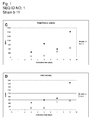
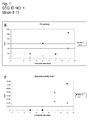
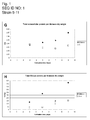
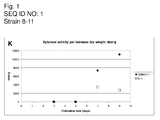
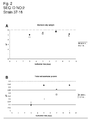
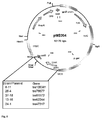
- gene tre108381 ( Fig. 1 ), represented by SEQ ID NO:1, was exemplified by constructing strain T. reesei 8-11 overexpressing the gene.
- the overexpression of the gene had a negative effect on protein production.
- the overexpression strain 8-11 produced less total extracellular protein, less cellulase activity (measured as total MULac, CBHI or EGI activity) or hemicellulase activity (measured as activity on xylan substrate) as compared to the cultures of the parental starin.
- Inactivation of the gene 108381 is expected to remove the negative effect on protein production, and inactivation of the gene is expected to result in improved production of cellulases, hemicellulases, other secreted proteins, or heterologous proteins produced under cellulase or hemicellulase gene promoters.
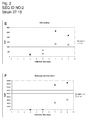
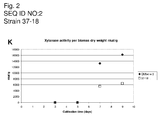
- gene tre81972 ( Fig. 2 ), represented by SEQ ID NO:2, provided here for comparison, was exemplified by constructing strain T. reesei 37-18 overexpressing the gene.
- the overexpression of the gene had a negative effect on protein production.
- the overexpression strain 37-18 produced less total extracellular protein, less cellulase activity (measured as total MULac or CBHI activity or especially as EGI activity) and hemicellulase activity (measured as activity on xylan substrate).
- Inactivation of the gene tre81972 is expected to remove the negative effect on protein production, and inactivation of the gene is expected result in improved production of cellulases, hemicellulases, other secreted proteins, or heterologous proteins produced under cellulase or hemicellulase gene promoters.
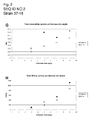
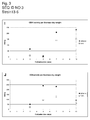
- gene tre62244 ( Fig. 3 ), represented by SEQ ID NO:3, provided here for comparison, was exemplified by constructing strain T. reesei 13-6 overexpressing the gene.
- the overexpression had negative effect on production of cellulases and hemicellulases.
- the overexpression strain 13-6 produced less cellulase activity (measured as total MULac activity or CBHI or EGI activity) and hemicellulase activity (measured as activity on xylan substrate) as compared to the parent host strain.
- the total amount of extracellular protein produced by the strain was not lower than that of the parent host strain until the final stage of the cultivation.
- strain 13-6 produced increased amount of some other proteins than the cellulases, CBHI, EGI or BGL, or enzymes active on the xylan substrate.
- Gene tre62244 should be deleted in order to enhance cellulase or hemicellulase production or heterologous protein production under cellulase or hemicellulase gene promoters. However, overexpression of the gene 62244 may be beneficial for production of other secreted proteins than the cellulases, CBHI, EGI or BGL, enzymes active on the xylan substrate.
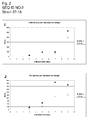
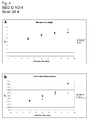
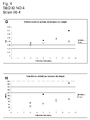
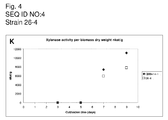
- gene tre76677 ( Fig. 4 ), represented by SEQ ID NO:4, provided here for comparison, was exemplified by constructing strain T. reesei 26-4 overexpressing the gene.
- the overexpression of this gene had a negative effect on production of secreted proteins.
- Overexpression of the gene caused decreased production of cellulase activity, measured as total MULac, CBHI or EGI activity, decreased production of hemicellulase activity, measured as xylanase activity, as well decreased production of total extracellular protein.
- the maximal level of the proteins and enzyme activities produced were lower in the cultures of the strain overexpressing the gene tre76677 as compared to the cultures of the parent host.
- the gene tre76677 should be deleted to remove the negative effect on protein production, including cellulase and hemicellulase production or production of other secreted proteins or heterologous protein production under promoters of cellulase or hemicellulase genes.
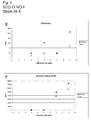
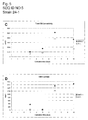
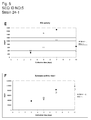
- gene tre47317 ( Fig. 5 ), represented by SEQ ID NO:5, provided here for comparison, was exemplified by constructing strain T. reesei 24-1 overexpressing the gene.
- the overexpression of the gene had negative effect on production of secreted proteins.
- the cultures of the strain 24-1 produced less cellulase activity, measured as total MULac, CBHI or EGI activity, as well as hemicellulase activity, measured as xylanase activity, as compared to the cultures of the parent host.
- the production of total extracellular protein did not show significant decrease in the strain 24-1 cultures as compared to the parent host.
- the gene tre47317 should be deleted in order to enhance cellulase or hemicellulase production or heterologous protein production under cellulase and hemicellulase gene promoters. Overexpression of the gene tre47317 is expected toenhance production of other proteins than CBHI, EGI or BGL or the enzymes active on the xylan substrate.
- the gene should be deleted also to reduce carbon consumption for biomass production.
- the effect of the genes as described herein has been exemplified by overexpressing them in Trichoderma.
- the strain was T. reesei QM9414 (ATCC 26921), which is generally available to the public.
- Total Mulac is measured as enzyme activity against Mulac substrate measuring activities of CBHI, EGI, and BGL.
- EGI has been measured as enzyme activity against Mulac in the presence of glucose, to inhibit BGLI, and cellobiose, to inhibit the activity of CBHI.
- CBHI has been measured as enzyme activity against Mulac obtained by subtracting the activity measured in the presence of glucose and cellobiose from the activity measured in the presence of glucose and in the absence of cellobiose.
- Trichoderma reesei Rut-C30 (ATCC56765) was cultivated in shake flasks in medium containing 7.6 g/l (NH 4 ) 2 SO 4 , 15.0 g/l KH 2 PO 4 , 2.4mM MgSO 4 .7H 2 O, 4.1mM CaCl 2 .H 2 O, 3.7 mg/l CoCl 2 , 5 mg/l FeSO 4 .7H 2 O, 1.4 mg/l ZnSO 4 .7H 2 O, 1.6 mg/l MnSO 4 .7H 2 O, and 10 g/l sorbitol. pH of the medium was adjusted to 4.8 by addition of KOH.
- the cultures were inoculated with 8 x 10 7 spores/ 200ml medium and grown for 4 days in conical flasks at 28°C with shaking at 250 rpm.
- the cultures were combined and aliquots of the combined culture transferred to flasks containing inducing medium (200ml of the culture per 90 ml of the inducing medium).
- the composition of the inducing medium was as described above except for containing 2 g/l sorbitol and supplemented either with Avicel cellulose, pretreated wheat straw, pretreated spruce or sophorose. Uninduced control cultures were treated similarly except that no supplement was used in the inducing medium.
- the concentrations of the inducing substances were 1% (w/v) of Avicel, wheat or spruce or 0.7 mM sophorose. Pretreatment of spruce and wheat straw was done using steam explosion, followed by washing steps. The fibrous fraction of the material was used for the induction.
- Samples for analysis of biomass production, pH of the culture supernatant, and for RNA isolation were collected at different time points during the pre-cultivation step as well as from the combined culture before induction. After addition of the inducing substances the cultures were sampled for pH measurement and RNA isolation; biomass formation was measured only from separate uninduced control flasks reserved for the purpose. The sampling time points of the induced cultures were 0h, 6h, 17h, and 41 h after the onset of induction. Biomass dry weight was measured by filtering and drying mycelium samples at 105°C to constant weight (24 h).
- RNA isolation mycelium samples of 50 ml were filtered, washed with equal volume of 0.7% (w/v) NaCl, frozen immediately in liquid nitrogen, and stored at -80°C.
- Total RNA was isolated using the TrizolTM Reagent (Gibco BRL) essentially according to manufacturer's instructions, and purified further by column purification (Qiagen, manufacturer's instructions).
- cDNA was synthesised from the purified RNA, followed by fluorescent labelling and expression microarray analysis using custom oligonucleotide microarrays by Roche NimbleGen, Inc. The design for the microarray probes and slides was done according to T. reesei genome version v2.0 (http://genome.jgi-psf.org/Trire2/Trire2.home.html)
- transcription levels of a set of known genes encoding hydrolytic enzymes were analysed using TRAC method.
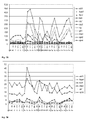
- the relative expression levels are shown for abf1 (arabinofuranosidase 1), bga1 (beta-galactosidase 1), bgl1 (beta-glucosidae 1), bxl1 (beta-xylosidase 1), cip1 (cellulose-binding), cip2 () egl1 (endoglucanase 1), glr1 (glucuronidase 1), man1, xyn2 and xyn4.
- the cultures induced either with Avicel, sophorose, pretreated wheat straw or pretreated spruce were subjected to microarray expression analysis.
- the time points 0h, 6h, 17, and 41 h of the uninduced and sophorose induced cultures were used for the analysis, and the time points 0h, 6h and 17h were selected for the Avicel, wheat and spruce induced cultures.
- the microarray analysis was done using custom oligonucleotide microarrays by Roche NimbleGen, Inc.
- the design for the microarray probes and slides was done according to T. reesei genome version v2.0 (http://genome.jgi-psf.org/Trire2/Trire2.home.html).
- Raw microarray data was analysed using R and the Bioconductor packages Oligo, Limma and Mfuzz.
- the selected genes had a significantly higher expression at least in three of the inducing conditions studied as compared to the unincuced cultures at the same time point, or that the expression profile of the genes was similar to the expression profiles of known hemicellulase or cellulase genes (according to M fuzz clustering of the expression data).
- the selected genes with their corresponding protein identity number, predicted functional prediction based on the sequence domains, and information on their induction in the presence of different inducing substances at different time points of the induction experiment are listed in Table 3.
- the information provided on the genes include the ID number according to JGI genome version 2.0 (http://genome.jgi-psf.org/Trire2/Trire2.home.html), predicted function of the gene based on the sequence data, and data on induction of the gene in the presence of different inducers (Avicel, pretreated wheat straw, pretreated spruce or sophorose) at different induction time points.
- inducers Avicel, pretreated wheat straw, pretreated spruce or sophorose
- Statistically significant induction higher expression level as compared to the uniniduced control cultures at the same time point
- Statistically significant induction (higher expression level as compared to the uniniduced control cultures at the same time point) in the Avicel, Spruce, Wheat or Sophorose induced cultures at the time points 0h, 6h, 17h, or 41 h is indicated by "1", and statistically significant reduction in the expression level by "-1”.
- Table 3 The induced genes encoding putative regulatory factors and selected
- the primers used for amplification of the genes from T. reesei QM6a (CBS383.78) genome were as follows:
- the general component of the oligo was followed by gene specific sequence corresponding to the 5'end of the gene.
- the 3'end primer contained four 5'terminal G's, 25nt attB2 site (ACCACTTTGTACAAGAAAGCTGGGT) (SEQ ID NO:8) and the nucleotides CTTA followed by the gene specific sequence corresponding to the 3 'end of the gene.
- the gene specific part of the primers were designed based on the ORF prediction in the genome version v2.0 (http://genome.jgi-psf.org/Trire2/Trire2.home.html), or in some cases, as indicated below,according to the genome version v1.2 (http://genome.jgi-psf.org/trire1/trire1.home.html)
- the primers used for amplification of the genes using genomic T. reesei DNA as a template were the following:
- Example 5 Construction of T. reesei strains overexpressing the regulatory genes selected based on the transcriptome data from the induction experiment on Avicel, wheat, spruce or sophorose containing media.
- the genes encoding putative regulatory factors co-expressed with known cellulase or hemicellulase genes were amplified by PCR from the Trichoderma genome (T. reesei QM6a; CBS383.78) and cloned into an expression vector which was then transformed into T. reesei QM9414.
- the transformants were selected based on function of the AmdS selection marker gene present in the expression cassette, transformants were purified from colonies originating from single spores, and the integration of the expression cassette into the genome was confirmed by PCR amplification of the cassette.
- Schematic view of the plasmids used for transformation is shown in Fig 8 .
- Example 6 Cultivation of the T . reesei strains overexpressing the putative regulatory factors, and analysis of the cultures for growth and protein production
- the modified strains overexpressing genes encoding the putative regulatory factors were cultivated in shake flasks on medium containing 7.6 g/l (NH 4 ) 2 SO 4 , 15.0 g/l KH 2 PO 4 , 2.4mM MgSO 4 .7H 2 O, 4.1mM CaCl 2 .H 2 O, 3.7 mg/l CoCl 2 , 5 mg/l FeSO 4 .7H 2 O, 1.4 mg/l ZnSO 4 .7H 2 O, 1.6 mg/l MnSO 4 .7H 2 O and supplemented with 4% lactose and 2% spent grain extract.
- the cultures were analysed for growth and protein production, including assays for cellulase and hemicellulase activity.
- MULac 4-methylumbelliferyl- ⁇ -D-lactoside
- the MULac can be used for measurement of combined activities of CBHI, EGI and BGL in T. reesei cultures (Bailey and Tähtiharju,2003; Collen et al., 2005; van Tilbeurgh et al., 1982, 1985, 1988.
- MULac substrate can used also to measure the activities of CBHI and EGI specifically (Bailey and Tähtiharju,2003; Collen et al., 2005; van Tilbeurgh et al., 1982, 1985, 1988).
- the closest homologue of a gene in another fungal species can be identified e.g. based on homology searches against genome databases using programs such as Blast (http://blast.ncbi.nlm.nih.gov/Blast.cgi).
- the homology searches can be done using either the nucleotide sequence of the gene or the amino acid sequence of the translated gene as a query.
- Information on the closest homologue of the gene can be obtained in any organism with a sequenced genome. Complete genome sequences are available for homology searches for a multitude of fungal species, and the number of fully sequenced fungal organisms is still increasing.
- the translated sequences of the ORFs of the T. reesei genes tre81972, tre62244, 47317, 108381 and tre76677 were subjected to BLASTP homology search using protein sequence databases of a set of fungal species.
- Gene tre108381 relates to the embodiment according to the invention whereas other genes and embodiments are provided for comparison.
- the translated sequences of the T. reesei ORFs were according to JGI (Joint Genome Institute; http://genome.jgi-psf.org/Trire2/Trire2.home.html).
- Table 4 shows examples of the closest homologues of the T. reesei genes in other fungal species obtained by the BLAST search, the closest homologue of tre81972 in G. zeae, tre62244 in A. fumugatus, tre47317 in G. zeae, tre108381 in G. zeae and tre76677 in A. fumigatus. Table 4. Examples of the closest homologues of the T. reesei genes in selected fungal species based on the BLAST search. Gene tre108381 (SEQ ID NO:1) relates to the invention whereas other genes are described for comparison.
Landscapes
- Life Sciences & Earth Sciences (AREA)
- Chemical & Material Sciences (AREA)
- Health & Medical Sciences (AREA)
- Organic Chemistry (AREA)
- Genetics & Genomics (AREA)
- Engineering & Computer Science (AREA)
- Wood Science & Technology (AREA)
- Zoology (AREA)
- Bioinformatics & Cheminformatics (AREA)
- Biotechnology (AREA)
- General Engineering & Computer Science (AREA)
- General Health & Medical Sciences (AREA)
- Biochemistry (AREA)
- Molecular Biology (AREA)
- Microbiology (AREA)
- Biomedical Technology (AREA)
- Medicinal Chemistry (AREA)
- Mycology (AREA)
- Biophysics (AREA)
- Chemical Kinetics & Catalysis (AREA)
- General Chemical & Material Sciences (AREA)
- Physics & Mathematics (AREA)
- Plant Pathology (AREA)
- Gastroenterology & Hepatology (AREA)
- Proteomics, Peptides & Aminoacids (AREA)
- Micro-Organisms Or Cultivation Processes Thereof (AREA)
- Enzymes And Modification Thereof (AREA)
- Preparation Of Compounds By Using Micro-Organisms (AREA)
Claims (12)
- Procédé de modification génétique d'un champignon filamenteux hôte pour une production améliorée de protéine, qui comprend la modification génétique d'un champignon filamenteux hôte pour qu'il soit déficient pour le gène tre108381 (SEQ ID NO : 1), avec une quantité réduite ou nulle ou avec une activité réduite ou nulle, ou pour qu'il surexprime le gène tre108381 (SEQ ID NO : 1), à une quantité ou activité accrue ; ou une région codante du gène ou autre séquence nucléotidique s'hybridant dans des conditions stringentes au dit gène, ledit hôte étant capable d'une production accrue ou réduite de cellulase, d'hémicellulase, d'autres protéines impliquées dans la dégradation de matériau lignocellulosique et/ou d'autres protéines comparé à la souche parent.
- Procédé selon la revendication 1, dans lequel le procédé comprend le fait qu'un champignon filamenteux hôte est génétiquement modifié pour être déficient pour le gène tre108381 (SEQ ID NO : 1) ; ou une région codante du gène ou autre séquence nucléotidique s'hybridant dans des conditions stringentes au dit gène, ledit hôte étant capable de production accrue de cellulase, d'hémicellulase, d'autres protéines impliquées dans la dégradation de matériau lignocellulosique et/ou d'autres protéines comparé à la souche parent.
- Procédé selon la revendication 1, dans lequel le procédé comprend le fait qu'un champignon filamenteux hôte est génétiquement modifié pour surexprimer le gène tre108381 (SEQ ID NO : 1) ; ou une région codante du gène ou autre séquence nucléotidique s'hybridant dans des conditions stringentes au dit gène, ledit hôte étant capable de production réduite de cellulase, d'hémicellulase, d'autres protéines impliquées dans la dégradation de matériau lignocellulosique et/ou d'autres protéines comparé à la souche parent.
- Procédé selon l'une quelconque des revendications 1 à 2, dans lequel l'hôte est sélectionné dans le groupe comprenant Trichoderma, Aspergillus, Fusarium, Neurospora, Talaromyces, Phanerochaete, Chrysosporium et Penicillium.
- Champignon filamenteux hôte génétiquement modifié pour être déficient pour le gène tre108381 (SEQ ID NO : 1) ou pour surexprimer ledit gène ; ou une région codante du gène ou autre séquence nucléotidique s'hybridant dans des conditions stringentes au dit gène, ledit hôte étant capable d'une production accrue ou réduite de cellulases, d'hémicellulases, d'autres protéines impliquées dans la dégradation de matériau lignocellulosique et/ou d'autres protéines comparé à la souche parent.
- Hôte selon la revendication 5, dans lequel le champignon filamenteux hôte est génétiquement modifié pour être déficient pour le gène tre108381 (SEQ ID NO : 1) ; ou une région codante du gène ou autre séquence nucléotidique s'hybridant dans des conditions stringentes au dit gène, ledit hôte étant capable d'une production accrue de cellulase, d'hémicellulase, d'autres protéines impliquées dans la dégradation de matériau lignocellulosique et/ou d'autres protéines comparé à la souche parent.
- Hôte selon la revendication 5, dans lequel le champignon filamenteux hôte est génétiquement modifié pour surexprimer le gène tre108381 (SEQ ID NO :1) ; ou une région codante du gène ou autre séquence nucléotidique s'hybridant dans des conditions stringentes au dit gène, ledit hôte étant capable d'une production réduite de cellulase, d'hémicellulase, d'autres protéines impliquées dans la dégradation de matériau lignocellulosique et/ou d'autres protéines comparé à la souche parent.
- Procédé de production améliorée ou de production d'une composition améliorée de protéines dans un champignon filamenteux hôte, qui comprend la culture du champignon filamenteux hôte modifié selon les revendications 5 à 7, dans des conditions de culture appropriées pour la production de protéines.
- Procédé selon la revendication 8, dans lequel la protéine est sélectionnée dans le groupe comprenant des cellulases, des hémicellulases, des enzymes de clivage de chaîne latérale, des enzymes de dégradation de la lignocellulose, des pectinases, des ligninases ; des enzymes amylolytiques ; des protéases ; des invertases ; des phytases, des phosphatases, et des hydrophobines.
- Procédé selon la revendication 8 ou 9, dans lequel la protéine est une protéine hétérologue ou recombinante exprimée sous le promoteur de l'une quelconque des protéines dont la production est affectée par la modification génétique de l'hôte.
- Procédé selon la revendication 10, dans lequel la protéine hétérologue ou recombinante est exprimée sous le promoteur d'un gène codant pour une cellulase, une hémicellulase, une autre protéine impliquée dans la dégradation de matériau lignocellulosique ou une autre protéine sécrétée.
- Procédé selon la revendication 10 ou 11, dans lequel la protéine hétérologue ou recombinante est exprimée sous le promoteur d'un gène codant pour une protéine sélectionnée dans le groupe comprenant des cellulases, des hémicellulases, des enzymes de clivage de chaîne latérale, des enzymes de dégradation de la lignocellulose, des pectinases, des ligninases ; des enzymes amylolytiques ; des protéases ; des invertases ; des phytases, des phosphatases, et des hydrophobines.
Applications Claiming Priority (2)
| Application Number | Priority Date | Filing Date | Title |
|---|---|---|---|
| FI20105634A FI20105634A0 (fi) | 2010-06-04 | 2010-06-04 | Proteiinien parannettu tuotto rihmamaisilla sienillä |
| PCT/FI2011/050498 WO2011151515A2 (fr) | 2010-06-04 | 2011-05-30 | Procédé de production de protéines à partir de champignons filamenteux |
Publications (2)
| Publication Number | Publication Date |
|---|---|
| EP2576794A2 EP2576794A2 (fr) | 2013-04-10 |
| EP2576794B1 true EP2576794B1 (fr) | 2016-11-30 |
Family
ID=42308091
Family Applications (1)
| Application Number | Title | Priority Date | Filing Date |
|---|---|---|---|
| EP11726860.7A Not-in-force EP2576794B1 (fr) | 2010-06-04 | 2011-05-30 | Procédé de production de protéines à partir de champignons filamenteux |
Country Status (5)
| Country | Link |
|---|---|
| US (1) | US9499826B2 (fr) |
| EP (1) | EP2576794B1 (fr) |
| DK (1) | DK2576794T3 (fr) |
| FI (1) | FI20105634A0 (fr) |
| WO (1) | WO2011151515A2 (fr) |
Families Citing this family (5)
| Publication number | Priority date | Publication date | Assignee | Title |
|---|---|---|---|---|
| JP6612548B2 (ja) * | 2015-07-29 | 2019-11-27 | 花王株式会社 | 糸状菌変異株及びその利用 |
| FR3046180B1 (fr) * | 2015-12-28 | 2018-09-21 | IFP Energies Nouvelles | Souches mutantes de trichoderma reesei |
| CN117716039A (zh) | 2021-07-19 | 2024-03-15 | 丹尼斯科美国公司 | 用于增强真菌细胞中的蛋白质产生的组合物和方法 |
| JP2024542623A (ja) | 2021-12-01 | 2024-11-15 | ダニスコ・ユーエス・インク | 真菌細胞におけるタンパク質生産を増強するための組成物及び方法 |
| FR3155537A1 (fr) * | 2023-11-22 | 2025-05-23 | IFP Energies Nouvelles | Souche de champignon hyperproductrice de proteines |
Family Cites Families (6)
| Publication number | Priority date | Publication date | Assignee | Title |
|---|---|---|---|---|
| CA2403842C (fr) | 2000-03-24 | 2012-09-25 | Genencor International, Inc. | Production accrue de proteines secretees par des cellules eucaryotes recombinantes |
| CN101094919B (zh) | 2004-10-12 | 2014-09-03 | 帝斯曼知识产权资产管理有限公司 | 在生产多肽的方法中有用的真菌转录活化因子 |
| US8216844B2 (en) * | 2006-08-29 | 2012-07-10 | Danisco Us Inc. | Compositions and methods for improved protein production |
| WO2008156605A1 (fr) * | 2007-06-15 | 2008-12-24 | Danisco Us, Inc., Genencor Division | Sélection de souches fongiques utiles |
| WO2010034686A1 (fr) * | 2008-09-24 | 2010-04-01 | Dsm Ip Assets B.V. | Production de statine améliorée |
| BRPI0921438B1 (pt) * | 2008-11-03 | 2018-11-27 | Iogen Energy Corp | processos de fermentação para produção de mistura de celulase |
-
2010
- 2010-06-04 FI FI20105634A patent/FI20105634A0/fi not_active Application Discontinuation
-
2011
- 2011-05-30 US US13/701,933 patent/US9499826B2/en not_active Expired - Fee Related
- 2011-05-30 WO PCT/FI2011/050498 patent/WO2011151515A2/fr not_active Ceased
- 2011-05-30 DK DK11726860.7T patent/DK2576794T3/en active
- 2011-05-30 EP EP11726860.7A patent/EP2576794B1/fr not_active Not-in-force
Also Published As
| Publication number | Publication date |
|---|---|
| US9499826B2 (en) | 2016-11-22 |
| US20130244276A1 (en) | 2013-09-19 |
| EP2576794A2 (fr) | 2013-04-10 |
| FI20105634A0 (fi) | 2010-06-04 |
| WO2011151515A2 (fr) | 2011-12-08 |
| WO2011151515A3 (fr) | 2012-03-08 |
| DK2576794T3 (en) | 2017-03-06 |
Similar Documents
| Publication | Publication Date | Title |
|---|---|---|
| US9695430B2 (en) | Method for improved protein production in filamentous fungi | |
| Aro et al. | ACEII, a novel transcriptional activator involved in regulation of cellulase and xylanase genes of Trichoderma reesei | |
| EP2576792B1 (fr) | Procédé de production de protéines à partir de champignons filamenteux | |
| CN102482665B (zh) | 具有β-葡糖苷酶活性的新蛋白质及其用途 | |
| JP2011234729A (ja) | 糸状菌の分野における新規発現調節配列および発現産物 | |
| EP4092128A1 (fr) | Facteur régulant l'efficacité d'expression de protéine de trichoderma reesei, et son procédé de régulation et son utilisation | |
| CN103987838A (zh) | 真菌细胞和发酵方法 | |
| WO2017093450A1 (fr) | Procédé de production de protéines chez des champignons filamenteux ayant une activité clr2 réduite | |
| EP2576794B1 (fr) | Procédé de production de protéines à partir de champignons filamenteux | |
| EP3259364B1 (fr) | Procédés de régulation de la production de protéases | |
| WO2017093451A1 (fr) | Procédé de production de protéines chez des champignons filamenteux ayant une activité clr1 réduite | |
| US10072267B2 (en) | Fungal high-level protein production system | |
| EP2397491A1 (fr) | LeaA de Trichoderma reesei | |
| JP2022513649A (ja) | 修飾された糸状菌宿主細胞 | |
| CN109415749A (zh) | 在木霉属中生产发酵产物的方法 | |
| Wei et al. | Molecular cloning and characterization of two major endoglucanases from Penicillium decumbens | |
| KR20240110854A (ko) | 진균 세포에서의 향상된 단백질 생산을 위한 조성물 및 방법 | |
| US20210024969A1 (en) | Mutant Beta-Glucosidase |
Legal Events
| Date | Code | Title | Description |
|---|---|---|---|
| PUAI | Public reference made under article 153(3) epc to a published international application that has entered the european phase |
Free format text: ORIGINAL CODE: 0009012 |
|
| 17P | Request for examination filed |
Effective date: 20130102 |
|
| AK | Designated contracting states |
Kind code of ref document: A2 Designated state(s): AL AT BE BG CH CY CZ DE DK EE ES FI FR GB GR HR HU IE IS IT LI LT LU LV MC MK MT NL NO PL PT RO RS SE SI SK SM TR |
|
| DAX | Request for extension of the european patent (deleted) | ||
| 17Q | First examination report despatched |
Effective date: 20140324 |
|
| GRAP | Despatch of communication of intention to grant a patent |
Free format text: ORIGINAL CODE: EPIDOSNIGR1 |
|
| INTG | Intention to grant announced |
Effective date: 20160428 |
|
| GRAS | Grant fee paid |
Free format text: ORIGINAL CODE: EPIDOSNIGR3 |
|
| GRAA | (expected) grant |
Free format text: ORIGINAL CODE: 0009210 |
|
| AK | Designated contracting states |
Kind code of ref document: B1 Designated state(s): AL AT BE BG CH CY CZ DE DK EE ES FI FR GB GR HR HU IE IS IT LI LT LU LV MC MK MT NL NO PL PT RO RS SE SI SK SM TR |
|
| RAP1 | Party data changed (applicant data changed or rights of an application transferred) |
Owner name: TEKNOLOGIAN TUTKIMUSKESKUS VTT OY |
|
| REG | Reference to a national code |
Ref country code: CH Ref legal event code: EP Ref country code: GB Ref legal event code: FG4D |
|
| REG | Reference to a national code |
Ref country code: AT Ref legal event code: REF Ref document number: 849838 Country of ref document: AT Kind code of ref document: T Effective date: 20161215 |
|
| REG | Reference to a national code |
Ref country code: IE Ref legal event code: FG4D |
|
| REG | Reference to a national code |
Ref country code: DE Ref legal event code: R096 Ref document number: 602011032907 Country of ref document: DE |
|
| REG | Reference to a national code |
Ref country code: NL Ref legal event code: FP |
|
| PG25 | Lapsed in a contracting state [announced via postgrant information from national office to epo] |
Ref country code: LV Free format text: LAPSE BECAUSE OF FAILURE TO SUBMIT A TRANSLATION OF THE DESCRIPTION OR TO PAY THE FEE WITHIN THE PRESCRIBED TIME-LIMIT Effective date: 20161130 |
|
| REG | Reference to a national code |
Ref country code: DK Ref legal event code: T3 Effective date: 20170303 |
|
| REG | Reference to a national code |
Ref country code: LT Ref legal event code: MG4D |
|
| REG | Reference to a national code |
Ref country code: AT Ref legal event code: MK05 Ref document number: 849838 Country of ref document: AT Kind code of ref document: T Effective date: 20161130 |
|
| PG25 | Lapsed in a contracting state [announced via postgrant information from national office to epo] |
Ref country code: GR Free format text: LAPSE BECAUSE OF FAILURE TO SUBMIT A TRANSLATION OF THE DESCRIPTION OR TO PAY THE FEE WITHIN THE PRESCRIBED TIME-LIMIT Effective date: 20170301 Ref country code: SE Free format text: LAPSE BECAUSE OF FAILURE TO SUBMIT A TRANSLATION OF THE DESCRIPTION OR TO PAY THE FEE WITHIN THE PRESCRIBED TIME-LIMIT Effective date: 20161130 Ref country code: LT Free format text: LAPSE BECAUSE OF FAILURE TO SUBMIT A TRANSLATION OF THE DESCRIPTION OR TO PAY THE FEE WITHIN THE PRESCRIBED TIME-LIMIT Effective date: 20161130 Ref country code: NO Free format text: LAPSE BECAUSE OF FAILURE TO SUBMIT A TRANSLATION OF THE DESCRIPTION OR TO PAY THE FEE WITHIN THE PRESCRIBED TIME-LIMIT Effective date: 20170228 |
|
| REG | Reference to a national code |
Ref country code: FR Ref legal event code: PLFP Year of fee payment: 7 |
|
| PG25 | Lapsed in a contracting state [announced via postgrant information from national office to epo] |
Ref country code: PL Free format text: LAPSE BECAUSE OF FAILURE TO SUBMIT A TRANSLATION OF THE DESCRIPTION OR TO PAY THE FEE WITHIN THE PRESCRIBED TIME-LIMIT Effective date: 20161130 Ref country code: RS Free format text: LAPSE BECAUSE OF FAILURE TO SUBMIT A TRANSLATION OF THE DESCRIPTION OR TO PAY THE FEE WITHIN THE PRESCRIBED TIME-LIMIT Effective date: 20161130 Ref country code: PT Free format text: LAPSE BECAUSE OF FAILURE TO SUBMIT A TRANSLATION OF THE DESCRIPTION OR TO PAY THE FEE WITHIN THE PRESCRIBED TIME-LIMIT Effective date: 20170330 Ref country code: HR Free format text: LAPSE BECAUSE OF FAILURE TO SUBMIT A TRANSLATION OF THE DESCRIPTION OR TO PAY THE FEE WITHIN THE PRESCRIBED TIME-LIMIT Effective date: 20161130 Ref country code: ES Free format text: LAPSE BECAUSE OF FAILURE TO SUBMIT A TRANSLATION OF THE DESCRIPTION OR TO PAY THE FEE WITHIN THE PRESCRIBED TIME-LIMIT Effective date: 20161130 Ref country code: AT Free format text: LAPSE BECAUSE OF FAILURE TO SUBMIT A TRANSLATION OF THE DESCRIPTION OR TO PAY THE FEE WITHIN THE PRESCRIBED TIME-LIMIT Effective date: 20161130 Ref country code: FI Free format text: LAPSE BECAUSE OF FAILURE TO SUBMIT A TRANSLATION OF THE DESCRIPTION OR TO PAY THE FEE WITHIN THE PRESCRIBED TIME-LIMIT Effective date: 20161130 |
|
| PG25 | Lapsed in a contracting state [announced via postgrant information from national office to epo] |
Ref country code: CZ Free format text: LAPSE BECAUSE OF FAILURE TO SUBMIT A TRANSLATION OF THE DESCRIPTION OR TO PAY THE FEE WITHIN THE PRESCRIBED TIME-LIMIT Effective date: 20161130 Ref country code: RO Free format text: LAPSE BECAUSE OF FAILURE TO SUBMIT A TRANSLATION OF THE DESCRIPTION OR TO PAY THE FEE WITHIN THE PRESCRIBED TIME-LIMIT Effective date: 20161130 Ref country code: EE Free format text: LAPSE BECAUSE OF FAILURE TO SUBMIT A TRANSLATION OF THE DESCRIPTION OR TO PAY THE FEE WITHIN THE PRESCRIBED TIME-LIMIT Effective date: 20161130 Ref country code: SK Free format text: LAPSE BECAUSE OF FAILURE TO SUBMIT A TRANSLATION OF THE DESCRIPTION OR TO PAY THE FEE WITHIN THE PRESCRIBED TIME-LIMIT Effective date: 20161130 |
|
| PG25 | Lapsed in a contracting state [announced via postgrant information from national office to epo] |
Ref country code: IT Free format text: LAPSE BECAUSE OF FAILURE TO SUBMIT A TRANSLATION OF THE DESCRIPTION OR TO PAY THE FEE WITHIN THE PRESCRIBED TIME-LIMIT Effective date: 20161130 Ref country code: LU Free format text: LAPSE BECAUSE OF NON-PAYMENT OF DUE FEES Effective date: 20170531 Ref country code: BG Free format text: LAPSE BECAUSE OF FAILURE TO SUBMIT A TRANSLATION OF THE DESCRIPTION OR TO PAY THE FEE WITHIN THE PRESCRIBED TIME-LIMIT Effective date: 20170228 Ref country code: SM Free format text: LAPSE BECAUSE OF FAILURE TO SUBMIT A TRANSLATION OF THE DESCRIPTION OR TO PAY THE FEE WITHIN THE PRESCRIBED TIME-LIMIT Effective date: 20161130 Ref country code: BE Free format text: LAPSE BECAUSE OF FAILURE TO SUBMIT A TRANSLATION OF THE DESCRIPTION OR TO PAY THE FEE WITHIN THE PRESCRIBED TIME-LIMIT Effective date: 20161130 |
|
| REG | Reference to a national code |
Ref country code: DE Ref legal event code: R097 Ref document number: 602011032907 Country of ref document: DE |
|
| PLBE | No opposition filed within time limit |
Free format text: ORIGINAL CODE: 0009261 |
|
| STAA | Information on the status of an ep patent application or granted ep patent |
Free format text: STATUS: NO OPPOSITION FILED WITHIN TIME LIMIT |
|
| 26N | No opposition filed |
Effective date: 20170831 |
|
| PG25 | Lapsed in a contracting state [announced via postgrant information from national office to epo] |
Ref country code: SI Free format text: LAPSE BECAUSE OF FAILURE TO SUBMIT A TRANSLATION OF THE DESCRIPTION OR TO PAY THE FEE WITHIN THE PRESCRIBED TIME-LIMIT Effective date: 20161130 |
|
| REG | Reference to a national code |
Ref country code: CH Ref legal event code: PL |
|
| PG25 | Lapsed in a contracting state [announced via postgrant information from national office to epo] |
Ref country code: MC Free format text: LAPSE BECAUSE OF FAILURE TO SUBMIT A TRANSLATION OF THE DESCRIPTION OR TO PAY THE FEE WITHIN THE PRESCRIBED TIME-LIMIT Effective date: 20161130 |
|
| REG | Reference to a national code |
Ref country code: IE Ref legal event code: MM4A |
|
| PG25 | Lapsed in a contracting state [announced via postgrant information from national office to epo] |
Ref country code: LI Free format text: LAPSE BECAUSE OF NON-PAYMENT OF DUE FEES Effective date: 20170531 Ref country code: CH Free format text: LAPSE BECAUSE OF NON-PAYMENT OF DUE FEES Effective date: 20170531 |
|
| PG25 | Lapsed in a contracting state [announced via postgrant information from national office to epo] |
Ref country code: LU Free format text: LAPSE BECAUSE OF NON-PAYMENT OF DUE FEES Effective date: 20170530 |
|
| PG25 | Lapsed in a contracting state [announced via postgrant information from national office to epo] |
Ref country code: IE Free format text: LAPSE BECAUSE OF NON-PAYMENT OF DUE FEES Effective date: 20170530 |
|
| REG | Reference to a national code |
Ref country code: FR Ref legal event code: PLFP Year of fee payment: 8 |
|
| PG25 | Lapsed in a contracting state [announced via postgrant information from national office to epo] |
Ref country code: MT Free format text: LAPSE BECAUSE OF NON-PAYMENT OF DUE FEES Effective date: 20170530 |
|
| PG25 | Lapsed in a contracting state [announced via postgrant information from national office to epo] |
Ref country code: HU Free format text: LAPSE BECAUSE OF FAILURE TO SUBMIT A TRANSLATION OF THE DESCRIPTION OR TO PAY THE FEE WITHIN THE PRESCRIBED TIME-LIMIT; INVALID AB INITIO Effective date: 20110530 |
|
| PG25 | Lapsed in a contracting state [announced via postgrant information from national office to epo] |
Ref country code: CY Free format text: LAPSE BECAUSE OF NON-PAYMENT OF DUE FEES Effective date: 20161130 |
|
| PG25 | Lapsed in a contracting state [announced via postgrant information from national office to epo] |
Ref country code: MK Free format text: LAPSE BECAUSE OF FAILURE TO SUBMIT A TRANSLATION OF THE DESCRIPTION OR TO PAY THE FEE WITHIN THE PRESCRIBED TIME-LIMIT Effective date: 20161130 |
|
| PG25 | Lapsed in a contracting state [announced via postgrant information from national office to epo] |
Ref country code: TR Free format text: LAPSE BECAUSE OF FAILURE TO SUBMIT A TRANSLATION OF THE DESCRIPTION OR TO PAY THE FEE WITHIN THE PRESCRIBED TIME-LIMIT Effective date: 20161130 |
|
| PG25 | Lapsed in a contracting state [announced via postgrant information from national office to epo] |
Ref country code: AL Free format text: LAPSE BECAUSE OF FAILURE TO SUBMIT A TRANSLATION OF THE DESCRIPTION OR TO PAY THE FEE WITHIN THE PRESCRIBED TIME-LIMIT Effective date: 20161130 Ref country code: IS Free format text: LAPSE BECAUSE OF FAILURE TO SUBMIT A TRANSLATION OF THE DESCRIPTION OR TO PAY THE FEE WITHIN THE PRESCRIBED TIME-LIMIT Effective date: 20170330 |
|
| PGFP | Annual fee paid to national office [announced via postgrant information from national office to epo] |
Ref country code: NL Payment date: 20200527 Year of fee payment: 10 Ref country code: DE Payment date: 20200520 Year of fee payment: 10 Ref country code: DK Payment date: 20200527 Year of fee payment: 10 Ref country code: FR Payment date: 20200522 Year of fee payment: 10 |
|
| PGFP | Annual fee paid to national office [announced via postgrant information from national office to epo] |
Ref country code: GB Payment date: 20200603 Year of fee payment: 10 |
|
| REG | Reference to a national code |
Ref country code: DE Ref legal event code: R119 Ref document number: 602011032907 Country of ref document: DE |
|
| REG | Reference to a national code |
Ref country code: DK Ref legal event code: EBP Effective date: 20210531 |
|
| REG | Reference to a national code |
Ref country code: NL Ref legal event code: MM Effective date: 20210601 |
|
| GBPC | Gb: european patent ceased through non-payment of renewal fee |
Effective date: 20210530 |
|
| PG25 | Lapsed in a contracting state [announced via postgrant information from national office to epo] |
Ref country code: GB Free format text: LAPSE BECAUSE OF NON-PAYMENT OF DUE FEES Effective date: 20210530 Ref country code: DK Free format text: LAPSE BECAUSE OF NON-PAYMENT OF DUE FEES Effective date: 20210531 Ref country code: DE Free format text: LAPSE BECAUSE OF NON-PAYMENT OF DUE FEES Effective date: 20211201 |
|
| PG25 | Lapsed in a contracting state [announced via postgrant information from national office to epo] |
Ref country code: NL Free format text: LAPSE BECAUSE OF NON-PAYMENT OF DUE FEES Effective date: 20210601 Ref country code: FR Free format text: LAPSE BECAUSE OF NON-PAYMENT OF DUE FEES Effective date: 20210531 |