EP2581673B2 - Procédé destiné à la commande d'une installation de chauffage et commande de chauffage - Google Patents
Procédé destiné à la commande d'une installation de chauffage et commande de chauffage Download PDFInfo
- Publication number
- EP2581673B2 EP2581673B2 EP12186859.0A EP12186859A EP2581673B2 EP 2581673 B2 EP2581673 B2 EP 2581673B2 EP 12186859 A EP12186859 A EP 12186859A EP 2581673 B2 EP2581673 B2 EP 2581673B2
- Authority
- EP
- European Patent Office
- Prior art keywords
- heating
- temperature
- values
- representative
- heating surfaces
- Prior art date
- Legal status (The legal status is an assumption and is not a legal conclusion. Google has not performed a legal analysis and makes no representation as to the accuracy of the status listed.)
- Active
Links
Images
Classifications
-
- F—MECHANICAL ENGINEERING; LIGHTING; HEATING; WEAPONS; BLASTING
- F24—HEATING; RANGES; VENTILATING
- F24D—DOMESTIC- OR SPACE-HEATING SYSTEMS, e.g. CENTRAL HEATING SYSTEMS; DOMESTIC HOT-WATER SUPPLY SYSTEMS; ELEMENTS OR COMPONENTS THEREFOR
- F24D19/00—Details
- F24D19/10—Arrangement or mounting of control or safety devices
- F24D19/1006—Arrangement or mounting of control or safety devices for water heating systems
- F24D19/1009—Arrangement or mounting of control or safety devices for water heating systems for central heating
-
- F—MECHANICAL ENGINEERING; LIGHTING; HEATING; WEAPONS; BLASTING
- F24—HEATING; RANGES; VENTILATING
- F24D—DOMESTIC- OR SPACE-HEATING SYSTEMS, e.g. CENTRAL HEATING SYSTEMS; DOMESTIC HOT-WATER SUPPLY SYSTEMS; ELEMENTS OR COMPONENTS THEREFOR
- F24D3/00—Hot-water central heating systems
- F24D3/02—Hot-water central heating systems with forced circulation, e.g. by pumps
-
- G—PHYSICS
- G05—CONTROLLING; REGULATING
- G05D—SYSTEMS FOR CONTROLLING OR REGULATING NON-ELECTRIC VARIABLES
- G05D23/00—Control of temperature
- G05D23/19—Control of temperature characterised by the use of electric means
- G05D23/1927—Control of temperature characterised by the use of electric means using a plurality of sensors
- G05D23/193—Control of temperature characterised by the use of electric means using a plurality of sensors sensing the temperaure in different places in thermal relationship with one or more spaces
- G05D23/1932—Control of temperature characterised by the use of electric means using a plurality of sensors sensing the temperaure in different places in thermal relationship with one or more spaces to control the temperature of a plurality of spaces
- G05D23/1934—Control of temperature characterised by the use of electric means using a plurality of sensors sensing the temperaure in different places in thermal relationship with one or more spaces to control the temperature of a plurality of spaces each space being provided with one sensor acting on one or more control means
-
- Y—GENERAL TAGGING OF NEW TECHNOLOGICAL DEVELOPMENTS; GENERAL TAGGING OF CROSS-SECTIONAL TECHNOLOGIES SPANNING OVER SEVERAL SECTIONS OF THE IPC; TECHNICAL SUBJECTS COVERED BY FORMER USPC CROSS-REFERENCE ART COLLECTIONS [XRACs] AND DIGESTS
- Y02—TECHNOLOGIES OR APPLICATIONS FOR MITIGATION OR ADAPTATION AGAINST CLIMATE CHANGE
- Y02B—CLIMATE CHANGE MITIGATION TECHNOLOGIES RELATED TO BUILDINGS, e.g. HOUSING, HOUSE APPLIANCES OR RELATED END-USER APPLICATIONS
- Y02B30/00—Energy efficient heating, ventilation or air conditioning [HVAC]
- Y02B30/70—Efficient control or regulation technologies, e.g. for control of refrigerant flow, motor or heating
Definitions
- the invention relates to a method for controlling a heating system.
- the invention also relates to a heating control for carrying out this method.
- the standard for "correct" heating behavior is generally the energetically optimized provision of a medium-humid room climate with a required temperature between 20 and 21 ° C in the entire living area.
- energetically optimized means that the excess temperatures of the heating surfaces are kept as low as possible with maximum volume throughput, in order to minimize losses in heat generation and heat transfer as far as possible. Ventilation of heat - especially with stronger regulation-related cyclical fluctuations in the interior temperature - should be reduced to a necessary level.
- Corresponding scenarios serve as a benchmark for assessing energy saving potential.
- the heating systems and controls commonly used today enable the provision of an energetically optimized room climate, but are limited in many ways:
- a uniform temperature requirement is assumed in all living areas. Only technical-energetic parameters are taken into account.
- the building is only viewed as an integral whole. (Individual) outside temperature sensors are often not representative enough for the relevant heat flows that can occur in the building. Heating and ventilation behavior and the underlying needs of the users are ignored. Thermal time constants of the rooms and their interaction with other temporary energy inputs (solar radiation, etc.) are not shown.
- a radiator heating power reserve is determined from temperatures measured for each of the radiators.
- a heating circuit heating capacity reserve is determined as a control variable by means of weighted averaging or application of fuzzy logic.
- a target heating power reserve is specified as the target value for the heating circuit heating power reserve.
- a reference or correction variable for the effect on the heating circuit is determined in order to create an optimized heating control. The setpoint of the flow temperature and / or the mass flow is used as the reference variable.
- the WO 03/052536 A2 discloses a method and a device for adapting the heat output in heating systems by means of a heat output control of the heating system by varying the flow temperature and / or mass flow.
- a supply state adaptation module is provided, whereby a heating circuit or building supply state that takes into account the heat demand of the rooms is compared as a control variable with a predefinable setpoint for the heating circuit or building supply state and a setpoint and / or correction value for the heat output control is determined therefrom will.
- the space supply conditions are divided into over and undersupply conditions and averaged separately, weighted.
- the room supply conditions are evaluated with a fuzzy membership function, and the control variable heating circuit or building supply condition is calculated by subsequent fuzzy inference formation and defuzzification using a focus method.
- the system deviation between a predefinable setpoint for the heating circuit or building supply state and the determined value of the heating circuit or building supply state is used as the setpoint for heat output control -or mass flow setpoint determined.
- the object of the invention is to create an efficient heating control that is better tailored to the individual needs of the user.
- Representative values here are either the heating surface or heating medium temperature, the room temperature and the (relative) heat emission itself, or values that are directly related to these variables and allow clear conclusions to be drawn about these variables.
- the invention is based on the following knowledge: It is mostly overlooked that - even with energy-conscious apartment users - it is difficult to reconcile the actual heating behavior corresponding to the physical state of mind with the specifications mentioned above. Many people appreciate temperature contrasts within their living area. Bedrooms, study rooms and children's rooms are preferred as cool to cold areas, while bathrooms are often overheated. People apparently prefer a few warm areas in the living area where they can warm up physically. The heating surfaces in these warm areas typically require temperatures of no less than 40 to 50 ° C in order to trigger the said comfort effect. In those rooms in which the users stay longer, however, there is also more frequent ventilation because the CO 2 enrichment caused by the presence of people means there is a need for "fresh air".
- only the representative values of the priority heating surfaces are used for setting the parameters.
- the values of the other heating surfaces are not taken into account for the reasons mentioned above, which simplifies the evaluation and there is no need to weight the heating surfaces.
- the selection of the group of priority heating surfaces is preferably based on fuzzy logic.
- the blurring or uncertainties that are taken into account enable a more flexible qualification of the heating surfaces that better corresponds to the real circumstances.
- an averaged heat emission from the heating surfaces is taken into account as an essential criterion.
- those heating surfaces are included in particular that are responsible for more than half, more preferably more than two thirds of the total heat output of all heating surfaces of the heating circuit.
- a minimum room temperature is determined from the recorded representative values with regard to those rooms in which the primary heating surfaces are located, and the flow temperature and / or the flow volumes and / or the boiler heating intervals are only used within a regular operating period of the heating system reduced to such an extent that the minimum room temperature can be reached and maintained at any time during this operating period.
- a regular operating period should be understood as based on normal use of the property in question, which is e.g. B. excludes longer absences of the user.
- the representative values for the heat output relate to the relative heat output of a heating surface in relation to all heating surfaces of the heating circuit or at least to all priority heating surfaces of the heating circuit. This can easily be calculated from the display progress of the heating cost allocators involved.
- thermosensors which are integrated into the device for detecting the values representative of the heat output, in particular an electronic heat cost allocator, is advantageous and cost-effective. Since temperature sensors for recording the heating surface temperature and the room temperature are mandatory in conventional electronic heat cost allocators that work according to the two-sensor measuring method, upgrading or additional installation of sensors is not necessary.
- additional sensors can be provided which detect representative values for a wall temperature, wall humidity, ceiling temperature and / or ceiling humidity, as well as means for transmitting the recorded values to the control unit. This additional information can then be meaningfully incorporated into the control of the heating system.
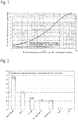
- the priority heating surfaces include those 20% of the heating surfaces that deliver the highest heat emissions of all the heating surfaces of the heating circuit and together account for about two thirds of the total heat output.
- the primary heating surfaces are usually located in the few places where users prefer to stay and thus play an essential role in their perception of the living environment. This relationship is supported by the diagram in Figure 2 shown percentage energy consumption in different living rooms. According to this, around 80% of the heat is emitted in living rooms, kitchens and bathrooms.
- the heating system is controlled depending on the actual demand in the residential area preferred by the users, i.e. H. selected rooms with high energy consumption, preferably living rooms, bathrooms and kitchens. At least in these rooms, electronic heat cost allocators are installed on the heating surfaces, which have extended software and, if necessary, hardware functionality.
- the electronic heat cost allocators regularly transmit the room temperature and the heating surface temperature, measured by the inherent heating surface sensor or room sensor of the electronic heating cost allocator, as well as the relative heat output (display progress of the electronic heating cost allocator) for the respective heating surface directly or indirectly to a control unit of the heating control.
- a wall temperature in particular a relatively cold wall
- a ceiling temperature and / or humidity for example detected by a sensor arranged in a smoke alarm device
- the values are averaged and evaluated over specified time intervals, for example one hour.
- the heating control uses a fuzzy logic concept to select the priority heating surfaces that make up the substantial proportion of the heat emitted.
- the relevant heating surfaces are included through a software-based selection of the heating surfaces that emit the highest amount of heat deliver.
- the heating control first learns the typical number and typical room temperatures of the heating surfaces from the transmitted values.
- An essential decision criterion for the definition of a heating surface as a priority heating surface is a certain average minimum energy consumption share.
- the selection of the priority heating surfaces from the majority of the heating surfaces of a heating circuit can also be hardware-based, in that only the living rooms and bathrooms (possibly also the kitchens) of a property are equipped with function-extended electronic heat cost allocators and / or other sensors. If the priority heating surfaces are not (primarily) selected by the heating control itself, but manually using hardware or software equipment, the following factor can also be taken into account: Kitchens contain other active heat sources (stove, oven, etc.) People are operated. The amount of heating energy allocated to the kitchens is therefore slightly below average compared to their share in the existing building. It can therefore be sufficient if the control algorithm for the heating system relates exclusively to the heating surfaces in living rooms and bathrooms, i.e. H. only these heating surfaces are qualified as priority. Such a selection is also supported by the fact that the users are more sensitive in the areas mentioned, since they are more sensitive to cold when they are sedentary (in the living room) and undressed (in the bathroom).
- the information made available to the heating control about the fractional partial call for the required heating energy is used for the optimal relative reduction of the heat provided by the heating system and transported in the heating circuit, making substantial use of the possible heating medium mass flow.
- the flow temperature is lowered, the flow volumes are increased, boiler heating intervals are reduced (with return flow control by the system). Waste heat and transfer losses, in particular in the area of the boiler system and in the non-preferred living area, are kept to a minimum.
- the heating control never regulates below a guaranteed comfortable temperature for a priority heating surface with a corresponding flow temperature.
- the heating surface temperatures reached on the priority heating surfaces are compared. In the event of strong negative deviations in the flow temperature on a few priority heating surfaces, it is concluded that the hydraulic balance is poor or that the respective heating surface is overdimensioned.
- the heating control regulates the supply temperature according to the supply requirement of the priority heating surfaces so that the gradient heating surface temperature-room temperature can be maintained with moderate utilization with regard to the heating medium volume flow.
- the relative demand is therefore not based on the consumption of all priority heating surfaces based on a temperature gradient heating surface temperature of -20 ° C, but based on the aforementioned gradient.
- the system also recognizes the temporary "non-operation" of otherwise priority heating surfaces and can therefore reduce the total heating output accordingly if users are absent for a longer period.
Landscapes
- Engineering & Computer Science (AREA)
- Physics & Mathematics (AREA)
- General Engineering & Computer Science (AREA)
- Thermal Sciences (AREA)
- Chemical & Material Sciences (AREA)
- Combustion & Propulsion (AREA)
- Mechanical Engineering (AREA)
- General Physics & Mathematics (AREA)
- Automation & Control Theory (AREA)
- Remote Sensing (AREA)
- Steam Or Hot-Water Central Heating Systems (AREA)
- Air Conditioning Control Device (AREA)
- Domestic Hot-Water Supply Systems And Details Of Heating Systems (AREA)
Claims (9)
- Procédé de commande d'une installation de chauffage qui comporte un circuit de chauffage présentant une pluralité de surfaces de chauffage qui sont agencées dans différentes pièces d'un appartement ou d'un bien foncier et qui sont traversées par un milieu chauffant, comprenant les étapes suivantes :- la sélection d'un groupe de surfaces de chauffage prioritaires parmi la pluralité de surfaces de chauffage, les 20% des surfaces de chauffage étant inclues dans le choix des surfaces de chauffage prioritaires qui, parmi l'ensemble des surfaces de chauffage du circuit de chauffage, fournissent les dégagements de chaleur les plus élevés et qui ensemble sont responsables d'environ deux tiers du dégagement de chaleur total de l'ensemble des surfaces de chauffage du circuit de chauffage ;- la saisie répétée de valeurs représentatives au moins pour la température de surface de chauffage ou de milieu chauffant, la température ambiante et le dégagement de chaleur pour chacune des surfaces de chauffage prioritaires, les valeurs représentatives étant soit la température de surface de chauffage ou de milieu chauffant, la température ambiante et le dégagement de chaleur (relatif) lui-même, soit des valeurs qui sont directement en relation avec ces grandeurs et qui permettent des conclusions univoques concernant ces grandeurs ; et- le réglage d'au moins l'un des paramètres suivants de l'installation de chauffage sur la base des valeurs représentatives saisies : température aller du milieu chauffant, volumes d'écoulement, intervalles de chauffage de chaudière.
- Procédé selon la revendication 1, caractérisé en ce que seuls les valeurs représentatives des surfaces de chauffage prioritaires sont prises en compte pour le réglage des paramètres.
- Procédé selon la revendication 1 ou 2, caractérisé en ce que la sélection du groupe de surfaces de chauffage prioritaires est basée sur une logique floue.
- Procédé selon l'une des revendications précédentes, caractérisé en ce que lors de la sélection du groupe de surfaces de chauffage prioritaires, un dégagement de chaleur moyen des surfaces de chauffage est pris en compte.
- Procédé selon l'une des revendications précédentes, caractérisé en ce que concernant les pièces dans lesquelles se trouvent les surfaces de chauffage prioritaires, une température ambiante minimum est déterminée à partir des valeurs représentatives saisies et la température aller et/ou les volumes d'écoulement et/ou les intervalles de chauffage de chaudière sont abaissés dans une période de fonctionnement réglementaire de l'installation de chauffage uniquement jusqu'à ce qu'il soit à tout moment possible d'atteindre et de maintenir la température ambiante minimum dans cette période de fonctionnement.
- Commande de chauffage pour l'exécution du procédé selon l'une des revendications précédentes, comportant :une unité de commande pour le réglage d'au moins l'un des paramètres suivants de l'installation de chauffage : température aller, volumes d'écoulement, intervalles de chauffage de chaudière ;des capteurs de température pour la saisie des valeurs représentatives des températures de surface de chauffage ou de milieu chauffant ;des capteurs de température pour la saisie des valeurs représentatives des températures ambiantes ;des dispositifs pour la saisie des valeurs représentatives du dégagement de chaleur ; etdes moyens pour la transmission des valeurs représentatives saisies à l'unité de commande.
- Commande de chauffage selon la revendication 6, caractérisée en ce que les dispositifs pour la saisie des valeurs représentatives du dégagement de chaleur sont des répartiteurs de frais de chauffage électroniques.
- Commande de chauffage selon la revendication 6 ou 7, caractérisée en ce que les capteurs de température sont intégrés au dispositif de saisie des valeurs représentatives du dégagement de chaleur au moins pour certaines des surfaces de chauffage.
- Commande de chauffage selon l'une des revendications 6 à 8, caractérisée par des capteurs additionnels qui saisissent des valeurs représentatives d'au moins l'une des grandeurs suivantes : température de paroi, humidité de paroi, température de plafond, humidité de plafond ; ainsi que par des moyens de transmission des valeurs saisies à l'unité de commande.
Priority Applications (1)
| Application Number | Priority Date | Filing Date | Title |
|---|---|---|---|
| PL12186859.0T PL2581673T5 (pl) | 2011-10-14 | 2012-10-01 | Sposób sterowania instalacją grzewczą i sterowanie ogrzewaniem |
Applications Claiming Priority (1)
| Application Number | Priority Date | Filing Date | Title |
|---|---|---|---|
| DE102011116179A DE102011116179A1 (de) | 2011-10-14 | 2011-10-14 | Verfahren zur Steuerung einer Heizungsanlage und Heizungssteuerung |
Publications (4)
| Publication Number | Publication Date |
|---|---|
| EP2581673A2 EP2581673A2 (fr) | 2013-04-17 |
| EP2581673A3 EP2581673A3 (fr) | 2016-04-27 |
| EP2581673B1 EP2581673B1 (fr) | 2017-11-29 |
| EP2581673B2 true EP2581673B2 (fr) | 2021-07-21 |
Family
ID=47263008
Family Applications (1)
| Application Number | Title | Priority Date | Filing Date |
|---|---|---|---|
| EP12186859.0A Active EP2581673B2 (fr) | 2011-10-14 | 2012-10-01 | Procédé destiné à la commande d'une installation de chauffage et commande de chauffage |
Country Status (3)
| Country | Link |
|---|---|
| EP (1) | EP2581673B2 (fr) |
| DE (1) | DE102011116179A1 (fr) |
| PL (1) | PL2581673T5 (fr) |
Families Citing this family (1)
| Publication number | Priority date | Publication date | Assignee | Title |
|---|---|---|---|---|
| DE102019202440A1 (de) | 2019-02-22 | 2020-08-27 | Siemens Aktiengesellschaft | Verfahren zur Ermittlung eines thermischen Verbrauches eines Energiesystems, Energiemanagementsystem sowie Energiesystem |
Citations (4)
| Publication number | Priority date | Publication date | Assignee | Title |
|---|---|---|---|---|
| DE3103911A1 (de) † | 1981-02-05 | 1982-09-02 | Bauunternehmung Lorenz Kesting, Hoch-, Tief-, Stahlbeton- und Industriebau, 4670 Lünen | Vorrichtung zur beheizung von insbesondere wohnraeumen |
| EP1645928A1 (fr) † | 2004-10-07 | 2006-04-12 | Techem Energy Services GmbH | Procédé de détermination de l'état d'alimentation d'une surface chauffante et régulateur d'état d'alimentation |
| EP1884845A1 (fr) † | 2006-07-28 | 2008-02-06 | Techem Energy Services GmbH | Régulateur de l'état d'alimentation et de la puissance calorifique ainsi qu'interface associée |
| EP2182297A2 (fr) † | 2008-10-30 | 2010-05-05 | Techem Energy Services GmbH | Procédé et dispositif d'adaptation orientée vers le besoin en chaleur de la température d'entrée d'une installation de chauffage |
Family Cites Families (2)
| Publication number | Priority date | Publication date | Assignee | Title |
|---|---|---|---|---|
| AU2002361140A1 (en) * | 2001-12-19 | 2003-06-30 | Techem Development Gmbh | Method and device for adapting the thermal output in heating installations |
| DE102007029631A1 (de) * | 2007-06-26 | 2009-01-02 | Techem Energy Services Gmbh | Verfahren und Vorrichtung zur Einstellung der Heizleistungsreserve |
-
2011
- 2011-10-14 DE DE102011116179A patent/DE102011116179A1/de not_active Withdrawn
-
2012
- 2012-10-01 PL PL12186859.0T patent/PL2581673T5/pl unknown
- 2012-10-01 EP EP12186859.0A patent/EP2581673B2/fr active Active
Patent Citations (4)
| Publication number | Priority date | Publication date | Assignee | Title |
|---|---|---|---|---|
| DE3103911A1 (de) † | 1981-02-05 | 1982-09-02 | Bauunternehmung Lorenz Kesting, Hoch-, Tief-, Stahlbeton- und Industriebau, 4670 Lünen | Vorrichtung zur beheizung von insbesondere wohnraeumen |
| EP1645928A1 (fr) † | 2004-10-07 | 2006-04-12 | Techem Energy Services GmbH | Procédé de détermination de l'état d'alimentation d'une surface chauffante et régulateur d'état d'alimentation |
| EP1884845A1 (fr) † | 2006-07-28 | 2008-02-06 | Techem Energy Services GmbH | Régulateur de l'état d'alimentation et de la puissance calorifique ainsi qu'interface associée |
| EP2182297A2 (fr) † | 2008-10-30 | 2010-05-05 | Techem Energy Services GmbH | Procédé et dispositif d'adaptation orientée vers le besoin en chaleur de la température d'entrée d'une installation de chauffage |
Non-Patent Citations (3)
| Title |
|---|
| ARNE KAHLER, JOCHEN OHL: "Heizenergieeinsparung mit Vorlauftemperaturadaption", HLH - LÜFTUNG / KLIMA / HEIZUNG / SANITÄR GEBÄUDETECHNIK, vol. 7/8, 1 January 2008 (2008-01-01), pages 1 - 8, XP055519127 † |
| BAUMGARTH S.: "REGELUNGSSTRATEGIEN FUR EINZELRAUMREGELUNG.", AUTOMATISIERUNGSTECHNISCHE PRAXIS - ATP., OLDENBOURG INDUSTRIEVERLAG, MUNCHEN., DE, vol. 37., no. 01., 1 January 1995 (1995-01-01), DE, pages 29 - 35., XP000481536, ISSN: 0178-2320 † |
| D. PFANNENSTIEL: "Einsatz adaptiver und fuzzy-basierter Regelungsstrategien in der Heizungstechnik", ATP - AUTOMATISIERUNGSTECHNISCHE PRAXIS, vol. 37, no. 1, 1995, pages 42 - 49, XP000481538 † |
Also Published As
| Publication number | Publication date |
|---|---|
| PL2581673T5 (pl) | 2024-02-05 |
| EP2581673A3 (fr) | 2016-04-27 |
| DE102011116179A1 (de) | 2013-04-18 |
| EP2581673A2 (fr) | 2013-04-17 |
| PL2581673T3 (pl) | 2018-05-30 |
| EP2581673B1 (fr) | 2017-11-29 |
Similar Documents
| Publication | Publication Date | Title |
|---|---|---|
| EP3593055B1 (fr) | Procédé pour faire fonctionner une installation de chauffage | |
| DE102012002941B4 (de) | Verfahren zum Betrieb einer Heizungs- oder Kühlanlage sowie Heizungs- und Kühlanlage | |
| DE102010053211B4 (de) | Verfahren zum Betreiben und Einstellen der Wärmekurve eines Heizungssystems | |
| DE102014103668A1 (de) | Verfahren zum Betrieb einer Heiz- und/oder Kühlanlage | |
| DE102007030492B4 (de) | Gebäudemodellbasiertes prädiktives Verfahren zur Generierung und Weitergabe von Informationen über Auswirkungen von Sollwert-Änderungen | |
| EP3059652B1 (fr) | Dispositif de commande et installation de regulation de temperature ambiante | |
| DE202012012915U1 (de) | Heiz- und/oder Kühlanlage | |
| EP1933220B1 (fr) | Procédé de détermination de l'état d'alimentation d'un circuit de chauffage ou d'un bâtiment et régulateur d'état d'alimentation | |
| DE102014102275B4 (de) | Verfahren zur Regelung einer Heizungs- und/oder Klimaanlage und Heizungs- und/oder Klimaanlage hierzu | |
| DE102010006455B4 (de) | Verfahren, Steuereinrichtung und -system zur Be-und Entlüftung eines Gesamtraums mit mehreren Teilräumen, insbesondere eines eine Wohneinheit bildenden Gesamtraums | |
| DE19747592A1 (de) | Verfahren zur Regelung einer Heizungsanlage | |
| EP1640669B1 (fr) | Appareil de chauffage de locaux | |
| EP2420748A2 (fr) | Procédé et système d'exécution d'une égalisation hydraulique dans un système de chauffage | |
| DE102008040436A1 (de) | Verfahren zum Ermitteln einer Sollvorlauftemperatur für eine Regelung einer Warmwasserheizung eines Gebäudes | |
| DE102017218139A1 (de) | Verfahren zum Betreiben einer Heizungsanlage | |
| EP2581673B1 (fr) | Procédé destiné à la commande d'une installation de chauffage et commande de chauffage | |
| DE102012208994A1 (de) | Vorrichtung zum Regeln der Raumtemperatur | |
| DE202024106432U1 (de) | Raumtemperatur-Regelung der Warmwasser-Fußbodenheizung als Input-Regelung | |
| EP3062026B1 (fr) | Systeme de regulation de la temperature | |
| EP1003089A1 (fr) | Régulation en fonction de la demande pour un dispositif de transfert de chaleur | |
| DE102021209288A1 (de) | Verfahren zum Steuern eines Heizungssystems, Heizungssysteme und Steuervorrichtungen zum Steuern eines Heizungssystems | |
| DE102013101568A1 (de) | Regelungssystem für eine Heizung sowie Verfahren zur Heizungsregelung | |
| DE102017116199B4 (de) | Regelungsvorrichtung und Regelungsverfahren | |
| DE102018220432A1 (de) | Verfahren zum Betreiben eines Lüftungssystems | |
| DE102005027056B4 (de) | Steuerung einer Klimaanlage |
Legal Events
| Date | Code | Title | Description |
|---|---|---|---|
| PUAI | Public reference made under article 153(3) epc to a published international application that has entered the european phase |
Free format text: ORIGINAL CODE: 0009012 |
|
| AK | Designated contracting states |
Kind code of ref document: A2 Designated state(s): AL AT BE BG CH CY CZ DE DK EE ES FI FR GB GR HR HU IE IS IT LI LT LU LV MC MK MT NL NO PL PT RO RS SE SI SK SM TR |
|
| AX | Request for extension of the european patent |
Extension state: BA ME |
|
| PUAL | Search report despatched |
Free format text: ORIGINAL CODE: 0009013 |
|
| AK | Designated contracting states |
Kind code of ref document: A3 Designated state(s): AL AT BE BG CH CY CZ DE DK EE ES FI FR GB GR HR HU IE IS IT LI LT LU LV MC MK MT NL NO PL PT RO RS SE SI SK SM TR |
|
| AX | Request for extension of the european patent |
Extension state: BA ME |
|
| RIC1 | Information provided on ipc code assigned before grant |
Ipc: F24D 19/10 20060101AFI20160321BHEP Ipc: G05D 23/00 20060101ALI20160321BHEP |
|
| STAA | Information on the status of an ep patent application or granted ep patent |
Free format text: STATUS: REQUEST FOR EXAMINATION WAS MADE |
|
| 17P | Request for examination filed |
Effective date: 20161024 |
|
| RBV | Designated contracting states (corrected) |
Designated state(s): AL AT BE BG CH CY CZ DE DK EE ES FI FR GB GR HR HU IE IS IT LI LT LU LV MC MK MT NL NO PL PT RO RS SE SI SK SM TR |
|
| GRAP | Despatch of communication of intention to grant a patent |
Free format text: ORIGINAL CODE: EPIDOSNIGR1 |
|
| STAA | Information on the status of an ep patent application or granted ep patent |
Free format text: STATUS: GRANT OF PATENT IS INTENDED |
|
| RIC1 | Information provided on ipc code assigned before grant |
Ipc: F24D 19/10 20060101AFI20170510BHEP Ipc: G05D 23/00 20060101ALI20170510BHEP Ipc: G05D 23/19 20060101ALI20170510BHEP |
|
| INTG | Intention to grant announced |
Effective date: 20170609 |
|
| GRAS | Grant fee paid |
Free format text: ORIGINAL CODE: EPIDOSNIGR3 |
|
| GRAA | (expected) grant |
Free format text: ORIGINAL CODE: 0009210 |
|
| STAA | Information on the status of an ep patent application or granted ep patent |
Free format text: STATUS: THE PATENT HAS BEEN GRANTED |
|
| AK | Designated contracting states |
Kind code of ref document: B1 Designated state(s): AL AT BE BG CH CY CZ DE DK EE ES FI FR GB GR HR HU IE IS IT LI LT LU LV MC MK MT NL NO PL PT RO RS SE SI SK SM TR |
|
| REG | Reference to a national code |
Ref country code: CH Ref legal event code: EP |
|
| REG | Reference to a national code |
Ref country code: AT Ref legal event code: REF Ref document number: 950742 Country of ref document: AT Kind code of ref document: T Effective date: 20171215 |
|
| REG | Reference to a national code |
Ref country code: IE Ref legal event code: FG4D Free format text: LANGUAGE OF EP DOCUMENT: GERMAN |
|
| REG | Reference to a national code |
Ref country code: DE Ref legal event code: R096 Ref document number: 502012011721 Country of ref document: DE |
|
| REG | Reference to a national code |
Ref country code: NL Ref legal event code: MP Effective date: 20171129 |
|
| REG | Reference to a national code |
Ref country code: LT Ref legal event code: MG4D |
|
| PG25 | Lapsed in a contracting state [announced via postgrant information from national office to epo] |
Ref country code: NO Free format text: LAPSE BECAUSE OF FAILURE TO SUBMIT A TRANSLATION OF THE DESCRIPTION OR TO PAY THE FEE WITHIN THE PRESCRIBED TIME-LIMIT Effective date: 20180228 Ref country code: ES Free format text: LAPSE BECAUSE OF FAILURE TO SUBMIT A TRANSLATION OF THE DESCRIPTION OR TO PAY THE FEE WITHIN THE PRESCRIBED TIME-LIMIT Effective date: 20171129 Ref country code: SE Free format text: LAPSE BECAUSE OF FAILURE TO SUBMIT A TRANSLATION OF THE DESCRIPTION OR TO PAY THE FEE WITHIN THE PRESCRIBED TIME-LIMIT Effective date: 20171129 Ref country code: LT Free format text: LAPSE BECAUSE OF FAILURE TO SUBMIT A TRANSLATION OF THE DESCRIPTION OR TO PAY THE FEE WITHIN THE PRESCRIBED TIME-LIMIT Effective date: 20171129 Ref country code: FI Free format text: LAPSE BECAUSE OF FAILURE TO SUBMIT A TRANSLATION OF THE DESCRIPTION OR TO PAY THE FEE WITHIN THE PRESCRIBED TIME-LIMIT Effective date: 20171129 |
|
| PG25 | Lapsed in a contracting state [announced via postgrant information from national office to epo] |
Ref country code: BG Free format text: LAPSE BECAUSE OF FAILURE TO SUBMIT A TRANSLATION OF THE DESCRIPTION OR TO PAY THE FEE WITHIN THE PRESCRIBED TIME-LIMIT Effective date: 20180228 Ref country code: RS Free format text: LAPSE BECAUSE OF FAILURE TO SUBMIT A TRANSLATION OF THE DESCRIPTION OR TO PAY THE FEE WITHIN THE PRESCRIBED TIME-LIMIT Effective date: 20171129 Ref country code: LV Free format text: LAPSE BECAUSE OF FAILURE TO SUBMIT A TRANSLATION OF THE DESCRIPTION OR TO PAY THE FEE WITHIN THE PRESCRIBED TIME-LIMIT Effective date: 20171129 Ref country code: HR Free format text: LAPSE BECAUSE OF FAILURE TO SUBMIT A TRANSLATION OF THE DESCRIPTION OR TO PAY THE FEE WITHIN THE PRESCRIBED TIME-LIMIT Effective date: 20171129 Ref country code: GR Free format text: LAPSE BECAUSE OF FAILURE TO SUBMIT A TRANSLATION OF THE DESCRIPTION OR TO PAY THE FEE WITHIN THE PRESCRIBED TIME-LIMIT Effective date: 20180301 |
|
| PG25 | Lapsed in a contracting state [announced via postgrant information from national office to epo] |
Ref country code: NL Free format text: LAPSE BECAUSE OF FAILURE TO SUBMIT A TRANSLATION OF THE DESCRIPTION OR TO PAY THE FEE WITHIN THE PRESCRIBED TIME-LIMIT Effective date: 20171129 |
|
| PG25 | Lapsed in a contracting state [announced via postgrant information from national office to epo] |
Ref country code: SK Free format text: LAPSE BECAUSE OF FAILURE TO SUBMIT A TRANSLATION OF THE DESCRIPTION OR TO PAY THE FEE WITHIN THE PRESCRIBED TIME-LIMIT Effective date: 20171129 Ref country code: EE Free format text: LAPSE BECAUSE OF FAILURE TO SUBMIT A TRANSLATION OF THE DESCRIPTION OR TO PAY THE FEE WITHIN THE PRESCRIBED TIME-LIMIT Effective date: 20171129 Ref country code: CY Free format text: LAPSE BECAUSE OF FAILURE TO SUBMIT A TRANSLATION OF THE DESCRIPTION OR TO PAY THE FEE WITHIN THE PRESCRIBED TIME-LIMIT Effective date: 20171129 Ref country code: DK Free format text: LAPSE BECAUSE OF FAILURE TO SUBMIT A TRANSLATION OF THE DESCRIPTION OR TO PAY THE FEE WITHIN THE PRESCRIBED TIME-LIMIT Effective date: 20171129 Ref country code: CZ Free format text: LAPSE BECAUSE OF FAILURE TO SUBMIT A TRANSLATION OF THE DESCRIPTION OR TO PAY THE FEE WITHIN THE PRESCRIBED TIME-LIMIT Effective date: 20171129 |
|
| REG | Reference to a national code |
Ref country code: DE Ref legal event code: R026 Ref document number: 502012011721 Country of ref document: DE |
|
| PG25 | Lapsed in a contracting state [announced via postgrant information from national office to epo] |
Ref country code: IT Free format text: LAPSE BECAUSE OF FAILURE TO SUBMIT A TRANSLATION OF THE DESCRIPTION OR TO PAY THE FEE WITHIN THE PRESCRIBED TIME-LIMIT Effective date: 20171129 Ref country code: SM Free format text: LAPSE BECAUSE OF FAILURE TO SUBMIT A TRANSLATION OF THE DESCRIPTION OR TO PAY THE FEE WITHIN THE PRESCRIBED TIME-LIMIT Effective date: 20171129 Ref country code: RO Free format text: LAPSE BECAUSE OF FAILURE TO SUBMIT A TRANSLATION OF THE DESCRIPTION OR TO PAY THE FEE WITHIN THE PRESCRIBED TIME-LIMIT Effective date: 20171129 |
|
| PLBI | Opposition filed |
Free format text: ORIGINAL CODE: 0009260 |
|
| PLAX | Notice of opposition and request to file observation + time limit sent |
Free format text: ORIGINAL CODE: EPIDOSNOBS2 |
|
| PG25 | Lapsed in a contracting state [announced via postgrant information from national office to epo] |
Ref country code: MT Free format text: LAPSE BECAUSE OF FAILURE TO SUBMIT A TRANSLATION OF THE DESCRIPTION OR TO PAY THE FEE WITHIN THE PRESCRIBED TIME-LIMIT Effective date: 20171129 |
|
| 26 | Opposition filed |
Opponent name: TECHEM ENERGY SERVICES GMBH Effective date: 20180829 |
|
| PG25 | Lapsed in a contracting state [announced via postgrant information from national office to epo] |
Ref country code: SI Free format text: LAPSE BECAUSE OF FAILURE TO SUBMIT A TRANSLATION OF THE DESCRIPTION OR TO PAY THE FEE WITHIN THE PRESCRIBED TIME-LIMIT Effective date: 20171129 |
|
| PLBB | Reply of patent proprietor to notice(s) of opposition received |
Free format text: ORIGINAL CODE: EPIDOSNOBS3 |
|
| RAP2 | Party data changed (patent owner data changed or rights of a patent transferred) |
Owner name: METRONA UNION GMBH |
|
| REG | Reference to a national code |
Ref country code: DE Ref legal event code: R082 Ref document number: 502012011721 Country of ref document: DE Representative=s name: PRINZ & PARTNER MBB PATENTANWAELTE RECHTSANWAE, DE Ref country code: DE Ref legal event code: R081 Ref document number: 502012011721 Country of ref document: DE Owner name: METRONA UNION GMBH, DE Free format text: FORMER OWNER: METRONA WAERMEMESSER UNION GMBH, 81379 MUENCHEN, DE |
|
| REG | Reference to a national code |
Ref country code: CH Ref legal event code: PL |
|
| GBPC | Gb: european patent ceased through non-payment of renewal fee |
Effective date: 20181001 |
|
| REG | Reference to a national code |
Ref country code: BE Ref legal event code: MM Effective date: 20181031 |
|
| PG25 | Lapsed in a contracting state [announced via postgrant information from national office to epo] |
Ref country code: LU Free format text: LAPSE BECAUSE OF NON-PAYMENT OF DUE FEES Effective date: 20181001 Ref country code: MC Free format text: LAPSE BECAUSE OF FAILURE TO SUBMIT A TRANSLATION OF THE DESCRIPTION OR TO PAY THE FEE WITHIN THE PRESCRIBED TIME-LIMIT Effective date: 20171129 |
|
| REG | Reference to a national code |
Ref country code: IE Ref legal event code: MM4A |
|
| PG25 | Lapsed in a contracting state [announced via postgrant information from national office to epo] |
Ref country code: CH Free format text: LAPSE BECAUSE OF NON-PAYMENT OF DUE FEES Effective date: 20181031 Ref country code: LI Free format text: LAPSE BECAUSE OF NON-PAYMENT OF DUE FEES Effective date: 20181031 Ref country code: BE Free format text: LAPSE BECAUSE OF NON-PAYMENT OF DUE FEES Effective date: 20181031 |
|
| PG25 | Lapsed in a contracting state [announced via postgrant information from national office to epo] |
Ref country code: GB Free format text: LAPSE BECAUSE OF NON-PAYMENT OF DUE FEES Effective date: 20181001 Ref country code: IE Free format text: LAPSE BECAUSE OF NON-PAYMENT OF DUE FEES Effective date: 20181001 Ref country code: FR Free format text: LAPSE BECAUSE OF NON-PAYMENT OF DUE FEES Effective date: 20181031 |
|
| REG | Reference to a national code |
Ref country code: AT Ref legal event code: MM01 Ref document number: 950742 Country of ref document: AT Kind code of ref document: T Effective date: 20181001 |
|
| PG25 | Lapsed in a contracting state [announced via postgrant information from national office to epo] |
Ref country code: AT Free format text: LAPSE BECAUSE OF NON-PAYMENT OF DUE FEES Effective date: 20181001 |
|
| PG25 | Lapsed in a contracting state [announced via postgrant information from national office to epo] |
Ref country code: TR Free format text: LAPSE BECAUSE OF FAILURE TO SUBMIT A TRANSLATION OF THE DESCRIPTION OR TO PAY THE FEE WITHIN THE PRESCRIBED TIME-LIMIT Effective date: 20171129 |
|
| PG25 | Lapsed in a contracting state [announced via postgrant information from national office to epo] |
Ref country code: PT Free format text: LAPSE BECAUSE OF FAILURE TO SUBMIT A TRANSLATION OF THE DESCRIPTION OR TO PAY THE FEE WITHIN THE PRESCRIBED TIME-LIMIT Effective date: 20171129 |
|
| PG25 | Lapsed in a contracting state [announced via postgrant information from national office to epo] |
Ref country code: HU Free format text: LAPSE BECAUSE OF FAILURE TO SUBMIT A TRANSLATION OF THE DESCRIPTION OR TO PAY THE FEE WITHIN THE PRESCRIBED TIME-LIMIT; INVALID AB INITIO Effective date: 20121001 Ref country code: MK Free format text: LAPSE BECAUSE OF NON-PAYMENT OF DUE FEES Effective date: 20171129 |
|
| PG25 | Lapsed in a contracting state [announced via postgrant information from national office to epo] |
Ref country code: AL Free format text: LAPSE BECAUSE OF FAILURE TO SUBMIT A TRANSLATION OF THE DESCRIPTION OR TO PAY THE FEE WITHIN THE PRESCRIBED TIME-LIMIT Effective date: 20171129 Ref country code: IS Free format text: LAPSE BECAUSE OF FAILURE TO SUBMIT A TRANSLATION OF THE DESCRIPTION OR TO PAY THE FEE WITHIN THE PRESCRIBED TIME-LIMIT Effective date: 20180329 |
|
| APBM | Appeal reference recorded |
Free format text: ORIGINAL CODE: EPIDOSNREFNO |
|
| APBP | Date of receipt of notice of appeal recorded |
Free format text: ORIGINAL CODE: EPIDOSNNOA2O |
|
| APAH | Appeal reference modified |
Free format text: ORIGINAL CODE: EPIDOSCREFNO |
|
| APBU | Appeal procedure closed |
Free format text: ORIGINAL CODE: EPIDOSNNOA9O |
|
| PUAH | Patent maintained in amended form |
Free format text: ORIGINAL CODE: 0009272 |
|
| STAA | Information on the status of an ep patent application or granted ep patent |
Free format text: STATUS: PATENT MAINTAINED AS AMENDED |
|
| 27A | Patent maintained in amended form |
Effective date: 20210721 |
|
| AK | Designated contracting states |
Kind code of ref document: B2 Designated state(s): AL AT BE BG CH CY CZ DE DK EE ES FI FR GB GR HR HU IE IS IT LI LT LU LV MC MK MT NL NO PL PT RO RS SE SI SK SM TR |
|
| REG | Reference to a national code |
Ref country code: DE Ref legal event code: R102 Ref document number: 502012011721 Country of ref document: DE |
|
| PGFP | Annual fee paid to national office [announced via postgrant information from national office to epo] |
Ref country code: PL Payment date: 20250919 Year of fee payment: 14 |
|
| PGFP | Annual fee paid to national office [announced via postgrant information from national office to epo] |
Ref country code: DE Payment date: 20250825 Year of fee payment: 14 |