EP2585436B1 - Procédé de préparation de 4-hydroxypyridines - Google Patents
Procédé de préparation de 4-hydroxypyridines Download PDFInfo
- Publication number
- EP2585436B1 EP2585436B1 EP11797708.2A EP11797708A EP2585436B1 EP 2585436 B1 EP2585436 B1 EP 2585436B1 EP 11797708 A EP11797708 A EP 11797708A EP 2585436 B1 EP2585436 B1 EP 2585436B1
- Authority
- EP
- European Patent Office
- Prior art keywords
- alkyl
- haloalkyl
- hydrogen
- ccl
- compound
- Prior art date
- Legal status (The legal status is an assumption and is not a legal conclusion. Google has not performed a legal analysis and makes no representation as to the accuracy of the status listed.)
- Active
Links
- 0 *c1c(*)nc(*)c(*)c1O Chemical compound *c1c(*)nc(*)c(*)c1O 0.000 description 1
Classifications
-
- C—CHEMISTRY; METALLURGY
- C07—ORGANIC CHEMISTRY
- C07D—HETEROCYCLIC COMPOUNDS
- C07D213/00—Heterocyclic compounds containing six-membered rings, not condensed with other rings, with one nitrogen atom as the only ring hetero atom and three or more double bonds between ring members or between ring members and non-ring members
- C07D213/02—Heterocyclic compounds containing six-membered rings, not condensed with other rings, with one nitrogen atom as the only ring hetero atom and three or more double bonds between ring members or between ring members and non-ring members having three double bonds between ring members or between ring members and non-ring members
- C07D213/04—Heterocyclic compounds containing six-membered rings, not condensed with other rings, with one nitrogen atom as the only ring hetero atom and three or more double bonds between ring members or between ring members and non-ring members having three double bonds between ring members or between ring members and non-ring members having no bond between the ring nitrogen atom and a non-ring member or having only hydrogen or carbon atoms directly attached to the ring nitrogen atom
- C07D213/60—Heterocyclic compounds containing six-membered rings, not condensed with other rings, with one nitrogen atom as the only ring hetero atom and three or more double bonds between ring members or between ring members and non-ring members having three double bonds between ring members or between ring members and non-ring members having no bond between the ring nitrogen atom and a non-ring member or having only hydrogen or carbon atoms directly attached to the ring nitrogen atom with hetero atoms or with carbon atoms having three bonds to hetero atoms with at the most one bond to halogen, e.g. ester or nitrile radicals, directly attached to ring carbon atoms
- C07D213/62—Oxygen or sulfur atoms
- C07D213/63—One oxygen atom
- C07D213/68—One oxygen atom attached in position 4
-
- C—CHEMISTRY; METALLURGY
- C07—ORGANIC CHEMISTRY
- C07D—HETEROCYCLIC COMPOUNDS
- C07D213/00—Heterocyclic compounds containing six-membered rings, not condensed with other rings, with one nitrogen atom as the only ring hetero atom and three or more double bonds between ring members or between ring members and non-ring members
- C07D213/02—Heterocyclic compounds containing six-membered rings, not condensed with other rings, with one nitrogen atom as the only ring hetero atom and three or more double bonds between ring members or between ring members and non-ring members having three double bonds between ring members or between ring members and non-ring members
- C07D213/04—Heterocyclic compounds containing six-membered rings, not condensed with other rings, with one nitrogen atom as the only ring hetero atom and three or more double bonds between ring members or between ring members and non-ring members having three double bonds between ring members or between ring members and non-ring members having no bond between the ring nitrogen atom and a non-ring member or having only hydrogen or carbon atoms directly attached to the ring nitrogen atom
- C07D213/06—Heterocyclic compounds containing six-membered rings, not condensed with other rings, with one nitrogen atom as the only ring hetero atom and three or more double bonds between ring members or between ring members and non-ring members having three double bonds between ring members or between ring members and non-ring members having no bond between the ring nitrogen atom and a non-ring member or having only hydrogen or carbon atoms directly attached to the ring nitrogen atom containing only hydrogen and carbon atoms in addition to the ring nitrogen atom
- C07D213/08—Preparation by ring-closure
-
- C—CHEMISTRY; METALLURGY
- C07—ORGANIC CHEMISTRY
- C07D—HETEROCYCLIC COMPOUNDS
- C07D213/00—Heterocyclic compounds containing six-membered rings, not condensed with other rings, with one nitrogen atom as the only ring hetero atom and three or more double bonds between ring members or between ring members and non-ring members
- C07D213/02—Heterocyclic compounds containing six-membered rings, not condensed with other rings, with one nitrogen atom as the only ring hetero atom and three or more double bonds between ring members or between ring members and non-ring members having three double bonds between ring members or between ring members and non-ring members
- C07D213/04—Heterocyclic compounds containing six-membered rings, not condensed with other rings, with one nitrogen atom as the only ring hetero atom and three or more double bonds between ring members or between ring members and non-ring members having three double bonds between ring members or between ring members and non-ring members having no bond between the ring nitrogen atom and a non-ring member or having only hydrogen or carbon atoms directly attached to the ring nitrogen atom
- C07D213/60—Heterocyclic compounds containing six-membered rings, not condensed with other rings, with one nitrogen atom as the only ring hetero atom and three or more double bonds between ring members or between ring members and non-ring members having three double bonds between ring members or between ring members and non-ring members having no bond between the ring nitrogen atom and a non-ring member or having only hydrogen or carbon atoms directly attached to the ring nitrogen atom with hetero atoms or with carbon atoms having three bonds to hetero atoms with at the most one bond to halogen, e.g. ester or nitrile radicals, directly attached to ring carbon atoms
- C07D213/61—Halogen atoms or nitro radicals
Definitions
- the present invention relates to a process for preparing 4-hydroxypyridines.
- the same group describes the synthesis of 2-pyridyl substituted 4H-pyran-4-ones en route to caerulomycins, the metabolites produced by Streptomyces caeruleus ( Tetrahedron 66 (2010), 29, 5432-34 ).
- WO 2008/074474 describes a multistep process for preparing O-modified 4-hydroxypyridine derivatives, that includes reacting 1,3-diketones with ammonia followed by N-acylation of the resulting ⁇ , ⁇ -unsaturated ⁇ -aminoketones with carboxylic acid halides or anhydrides and then ring formation by intramolecular aldol condensation giving substituted 4-hydroxypyridines in about 50 to 60% yield over 3 steps.
- the present invention seeks to make available a synthesis for preparing substituted 4-hydroxypyridines that starts from readily available starting materials and that can be carried out very economically with high yields.
- the invention relates to a process for preparing 4-hydroxypyridines of formula I wherein
- halogen denotes fluorine, chlorine, bromine or iodine, especially fluorine, chlorine or bromine.
- C 1 -C 4 -alkyl denotes a linear or branched alkyl radical comprising from 1 to 4 carbon atoms, such as methyl, ethyl, propyl, 1-methylethyl (isopropyl), butyl, 1-methylpropyl (sec-butyl), 2-methylpropyl (isobutyl) or 1,1-dimethylethyl (tert-butyl).
- C 1 -C 4 -haloalkyl denotes straight-chain or branched alkyl groups having from 1 to 4 carbon atoms, where some or all of the hydrogen atoms of these groups have been replaced by halogen atoms.
- Examples thereof are chloromethyl, bromomethyl, dichloromethyl, trichloromethyl, fluoromethyl, difluoromethyl, trifluoromethyl, chlorofluoromethyl, dichlorofluoromethyl, chlorodifluoromethyl, 1-chloroethyl, 1-bromoethyl, 1-fluoroethyl, 2-fluoroethyl, 2,2-difluoroethyl, 2,2,2-trifluoroethyl, 2-chloro-2-fluoroethyl, 2-chloro-2,2-difluoroethyl, 2,2-dichloro-2-fluoroethyl, 2,2,2-trichloroethyl, pentafluoroethyl, 3,3,3-trifluoroprop-1-yl, 1,1,1-trifluoroprop-2-yl, 3,3,3-trichloroprop-1-yl, heptafluoroisopropyl, 1-chlorobut
- C 1 -C 4 -perhaloalkyl denotes straight-chain or branched alkyl groups having from 1 to 4 carbon atoms, where all of the hydrogen atoms of these groups have been replaced by halogen atoms. Examples thereof are trifluoromethyl, trichloromethyl, pentafluoroethyl, heptafluoropropyl and the like.
- C 1 -C 4 -alkoxy denotes straight-chain or branched saturated alkyl groups comprising from 1 to 4 carbon atoms, which are bonded via an oxygen atom.
- Examples of C 1 -C 4 -alkoxy are methoxy, ethoxy, n-propoxy, 1-methylethoxy (isopropoxy), n-butoxy, 1-methylpropoxy (sec-butoxy), 2-methylpropoxy (isobutoxy) and 1,1-dimethylethoxy (tert-butoxy).
- aryl denotes carbocyclic aromatic radicals having from 6 to 14 carbon atoms. Examples thereof comprise phenyl, naphthyl, fluorenyl, azulenyl, anthracenyl and phenanthrenyl.
- Aryl is preferably phenyl or naphthyl, and especially phenyl.
- heteroaryl denotes aromatic radicals having from 1 to 4 heteroatoms which are selected from O, N and S. Examples thereof are 5- and 6-membered hetaryl radicals having 1, 2, 3 or 4 heteroatoms selected from O, S and N, such as pyrrolyl, furanyl, thienyl, pyrazolyl, imidazolyl, oxazolyl, isoxazolyl, thiazolyl, isothiazolyl, triazolyl, tetrazolyl, pyridyl, pyrazinyl, pyridazinyl, pyrimidyl and triazinyl.
- R 1 is preferably hydrogen, C 1 -C 4 -alkyl, or C 1 -C 4 -haloalkyl.
- R 1 is more preferably C 1 -C 4 -perhaloalkyl, more preferably C 1 -C 2 -perhaloalkyl, e.g. trifluoromethyl or pentafluoroethyl, in particular trifluoromethyl.
- R 2 , R 3 , R 4 are preferably hydrogen, C 1 -C 4 -alkyl or C 1 -C 4 -haloalkyl, in particular hydrogen.
- X is preferably C 1 -C 4 -alkoxy, more preferably methoxy or ethoxy.
- Y is preferably chlorine or C 1 -C 4 -alkoxy, more preferably C 1 -C 4 -alkoxy, in particular methoxy or ethoxy.
- R 3 and R 4 preferably may also not form a carbo- or heterocyclic ring together with the carbon atoms to which they are attached; and more preferably may be, independently of each other, hydrogen, C 1 -C 4 -alkyl, C 1 -C 4 -haloalkyl, NR 5 R 6 or aryl, where the aryl group is unsubstituted or substituted by 1, 2, 3 or 4 substituents which are selected from halogen, C 1 -C 4 -alkyl, C 1 -C 4 -haloalkyl, C 1 -C 4 -alkoxy and C 1 -C 4 -haloalkoxy; wherein R 5 and R 6 are as defined above; or even more preferably R 3 and R 4 may be hydrogen or C 1 -C 4 alkyl.
- Particularly preferred embodiments relate to the preparation of compounds I, wherein compounds I carry one of the following combinations of the radicals R 1 , R 2 , R 3 and R 4 as defined in Table P below. These embodiments refer also to the definition of the same substituents in compounds II, IIIa and IIIb, where applicable.
- reaction vessels customary for such reactions such as a stirred reactor.
- the reaction is configurable not only in a batchwise manner but also in a continuous or semicontinuous manner.
- the particular reactions will be performed under atmospheric pressure.
- the reactions can also be performed under reduced or elevated pressure.
- steps a), b) and c) are preferably carried out without isolating any intermediate compound. More preferably, steps a), b) and c) are carried out in a single reaction vessel.
- suitable bases are alkali metal methylates or alkali metal ethylates, e.g. lithium, sodium and potassium methylate and also lithium, sodium or potassium ethylate.
- the base is sodium methylate or sodium ethylate, in particular sodium methylate.
- the base is dissolved in a monohydric C 1 -C 4 -alcohol, preferably ethanol or methanol, even more preferably methanol.
- the base sodium methylate dissolved in methanol is particularly preferred. It is believed that alkali metal methylates have a suitable basicity to enable the reaction between the compound II and the compound IIIa or IIIb but also avoid unwanted side reactions and ensure the high yield of the desired product of formula I.
- step a) of the process of the invention compounds II are preferably mixed with a compound IIIa.
- step a) the compound II, the compound IIIa or IIIb and the base can be contacted with one another in different sequences.
- step a) can be carried out either in a solvent or in bulk.
- a solvent that serves to dissolve the base Preferably, a solution of the base in a suitable solvent is added to the mixture of the compound II and the compound IIIa or IIIb.
- Suitable solvents depend on the selection of the base.
- useful organic solvents include amides such as dimethylformamide or N-methylpyrrolidone, mono- or polyhydric alcohols such as monohydric C 1 -C 4 -alcohols, e.g. methanol, ethanol, n-propanol, isopropanol, n-butanol, s-butanol or tert-butanol, ethylene glycol or trifluoroethanol, or mixtures of these organic solvents with one another.
- Monohydric C 1 -C 4 -alcohols are more preferred, in particular methanol.
- the solvents are used in degassed form (i.e. especially freed of oxygen).
- the degassing of solvents is known and can be effected, for example, by single or multiple freezing of the solvent, thawing under reduced pressure (to remove the gas dissolved/dispersed in the solvent) and compensating with an inert gas, such as nitrogen or argon.
- the solvent can be treated with ultrasound.
- the relative amounts of compound II and of compound IIIa or IIIb can be subject to variation, but in practice, about equimolar amounts are used or a slight molar excess of the compound II is used.
- a molar ratio of the compound II, relative to the compound IIIa or IIIb, in the range of from 0.7 to 3.0 is generally suitable, with a molar ratio of from 1.0 to 2.0 being preferred.
- a molar ratio of the base, relative to compound IIIa or IIIb, in the range of from 1.0 to 3.0 is generally suitable, with a molar ratio of from 1.0 to 1.5 being preferred.
- the reaction in step a) may be carried out in a wide temperature range, typically from -20 °C to 150 °C.
- a practical temperature range is from 35 to 85 °C.
- a preferred temperature range is from 40 to 70 °C, for example about 60 °C.
- the first reaction period is not particularly limited and, typically, is in the range of from 10 minutes to 24 hours, preferably from 15 minutes to 1 hour. In general, the first reaction period is at least 30 seconds.
- the reaction mixture is treated with at least one acid.
- the reaction mixture and the acid can be contacted with one another in different sequences.
- Acids are taken to mean Bronsted acids and their aqueous solutions.
- Preferred Bronsted acids are mineral acids, such as hydrohalic acids, sulfur acids, nitric acid, phosphorus acids, boric acid or oxy-halogen acids, in particular HCl, HBr, HI, HF, H 2 SO 4 , methanesulfonic acid, KHSO 4 , HNO 3 , HClO 4 , H 3 PO 4 and H 3 BO 3 or nonhalogenated or halogenated C 1 -C 22 alkanecarboxylic acids, i.e.
- halogens such as F, Cl or Br
- formic acid acetic acid, trifluoroacetic acid, propionic acid, butyric acid, citric acid, oxalic acid, hexanoic acid, octanoic acid, decanoic acid (capric acid), dodecanoic acid (lauric acid), hexadecanoic acid (palmitic acid) or octadecanoic acid (stearic acid).
- nonoxidizing acids preference is given to nonoxidizing acids.
- Addition of an aqueous acid solution is generally preferred.
- the amount of the Bronsted acid in the aqueous solution when use is made of mineral acids is preferably from 5 to 80% by weight, particularly preferably from 10 to 50% by weight.
- HCl, H 2 SO 4 , formic acid and acetic acid are preferred due to their availability, HCl and H 2 SO 4 being particularly preferred.
- a molar amount of the acid is used that is in excess relative to the amount of base used in step a).
- a molar ratio of the acid, relative to the amounte of base used in step a), in the range of from 1.5 to 4.0 is generally suitable, with a molar ratio of from 1.5 to 3.0 being preferred.
- the acid serves to cyclize the condensation product of compound II and compound IIIa or IIIb to form a 4-hydroxypyranone of formula IV wherein R 1 , R 2 , R 3 , and R 4 are as defined above.
- the compound IV is converted in situ to a 4-hydroxypyridine compound I rather than being isolated.
- the reaction in step b) may be carried out in a wide temperature range, typically from -20 °C to 150 °C.
- a practical temperature range is from 35 to 85 °C.
- a preferred temperature range is from 40 to 70 °C, for example about 60 °C.
- the second reaction period is not particularly limited and, typically, is in the range of from 30 minutes to 24 hours, preferably from 1 hour to 5 hours. In preferred embodiments, the second reaction period is not longer than 2.5 hours.
- the reaction mixture is treated with at least one ammonia source.
- the reaction mixture and the ammonia source can be contacted with one another in different sequences. However, it has generally been found to be advantageous to initially charge the reaction mixture, and to add the ammonia source.
- the ammonia source is suitably selected from ammonia, such as an aqueous ammonia solution or gaseous ammonia, ammonium halides, such as ammonium chloride or ammonium bromide, ammonium carboxylates, such as ammonium formate or ammonium acetate, and ammonium sulfate. Due to its ready availability, aqueous ammonia solution is preferred. The aqueous ammonia solution usually has a strength of 10 to 40 % by weight. Alternatively, gaseous ammonia can be used as ammonia source. Gaseous ammonia is added to the reaction mixture either by passing it directly into the reaction mixture or by passing it into the gas phase above the reaction mixture.
- ammonia such as an aqueous ammonia solution or gaseous ammonia
- ammonium halides such as ammonium chloride or ammonium bromide
- ammonium carboxylates such as ammonium formate or ammonium acetate
- a solvent is added to the reaction mixture prior to the addition of the ammonia source.
- a solvent is added to the reaction mixture prior to the addition of the ammonia source.
- an aqueous acid solution is added to the reaction mixture and prior to the addition of the ammonia source, a water immiscible solvent is added to the reaction mixture to form a biphasic reaction mixture.
- Suitable water immiscible solvents include carboxylic esters, e.g. ethyl acetate, propyl acetate or ethyl propionate, open-chain ethers such as diethyl ether, dipropyl ether, dibutyl ether, methyl isobutyl ether and methyl tert-butyl ether (MTBE), aliphatic hydrocarbons such as pentane, hexane, heptane and octane, and petroleum ether, halogenated aliphatic hydrocarbons such as methylene chloride, trichloromethane, dichloroethane and trichloroethane, cycloaliphatic hydrocarbons such as cyclopentane and cyclohexane, and aromatic hydrocarbons such as toluene, the xylenes, chlorobenzene, dichlorobenzenes and mesitylene.
- carboxylic esters
- phase transfer catalysts are sufficiently well known to those skilled in the art and comprise, for example, charged systems such as organic ammonium salts, for example tetra(C 1 -C 18 -alkyl)ammonium chlorides or bromides, such as tetramethylammonium chloride or bromide, tetrabutylammonium chloride or bromide, hexadecyltriniethylammonium chloride or bromide, octadecyltrimethylammonium chloride or bromide, methyltrihexylammonium chloride or bromide, methyltrioctylammonium chloride or bromide or benzyltrimethylammonium hydroxide (Triton B), and also tetra-(C 1 -C 18 -alkyl)phosphonium chlorides or bromides such as tetraphenylphospho
- the reaction in step c) may be carried out in a wide temperature range, typically from -20 °C to 150 °C.
- a practical temperature range is from 15 to 85 °C.
- a preferred temperature range is from 20 to 70 °C.
- the reaction period after addition of the ammonia source is not particularly limited and, typically, is in the range of from 30 minutes to 24 hours, preferably from 1 hour to 5 hours.
- reaction mixture obtained is worked up and the compound I is isolated in a customary manner, for example by an aqueous, extractive workup, by removing the solvent, for example under reduced pressure, or by a combination of these measures. Further purification can be effected, for example, by crystallization, distillation or by chromatography.
- the 4-hydroxypyridine compound I may be treated with a chlorinating agent to yield a 4-chloropyridine according to formula V wherein R 1 , R 2 , R 3 , and R 4 are as defined above.
- Suitable chlorinating agents include inorganic or organic acid chlorides, such as, for example, phosphorus (III) chloride, phosphorus (V) chloride, phosphoryl chloride (phosphorus oxychloride), sulfuryl chloride, thionyl chloride and phosgene, with thionyl chloride and phosphoryl chloride being preferred.
- inorganic or organic acid chlorides such as, for example, phosphorus (III) chloride, phosphorus (V) chloride, phosphoryl chloride (phosphorus oxychloride), sulfuryl chloride, thionyl chloride and phosgene, with thionyl chloride and phosphoryl chloride being preferred.
- Treatment with the chlorinating agent can be carried out either in bulk without addition of a diluent or in the presence of a suitable diluent.
- Suitable diluents include aliphatic, alicyclic or aromatic, optionally halogenated hydrocarbons, such as, for example, benzene, toluene, xylenes, chlorobenzene, dichlorobenzenes, petroleum ether, hexane, cyclohexane, methylcyclohexane, dichloromethane, chloroform, tetrachloromethane, and dimethylformamide (DMF), or their mixtures and in particular toluene and 1,2-dichlorobenzene.
- DMF dimethylformamide
- Treatment with the chlorinating agent can optionally be carried out in the presence of a suitable reaction auxiliary.
- a suitable reaction auxiliary Those possible are tertiary amines, such as triethylamine, N,N-dimethylaniline, pyridine or 4-dimethylamino-pyridine, and also catalytic amounts of formamides, such as DMF or N,N-dibutylformamide, or metal halides such as magnesium chloride or lithium chloride.
- reaction temperatures can be varied within a relatively wide range.
- the reaction is carried out at temperatures from 0 °C to 200 °C, preferably from 10 °C to 180 °C, in particular from 30 °C to 120 °C.
- Example 1 (not part of the invention): A methanol solution of sodium methylate (90 g, 30 % by weight, 0.5 mol) was dissolved in 50 ml of N-methylpyrrolidone (NMP). 4-Methoxy-3-buten-2-one (10.2 g, 0.1 mol) and methyl perfluoro-propionate (21.4 g, 0.12 mol) were added dropwise and the mixture was strirred for further 48 hours at room temperature. Then, the reaction mixture was hydrolysed with water and the pH adjusted to 4 with hydrochloric acid (conc.). The product was extracted with methyl tert-butylether (MTBE), washed twice with water. After concentration of the organic phase, 19 g of the crude product containing 2-perfluoroethylpyran-4-one were obtained (HPLC purity 82 %, yield: 73 %).
- NMP N-methylpyrrolidone
- 4-Methoxy-3-buten-2-one (10.2 g,
- Example 2 (not part of the invention): A methanol solution of sodium methylate (16.2 g, 30 % by weight, 0.09 mol) was dissolved in 50 ml of NMP. 4-Methoxy-3-buten-2-one (6.3 g, 0.06 mol) and methyl 2,2,3,3-tetrafluoroproprionate (12.09 g, 0.08 mol) were added dropwise and the mixture was strirred for further 48 hours at room temperature. Then, the reaction mixture was hydrolysed with water and the pH adjusted to 4 with hydrochloric acid (conc.). The product was extracted with MTBE, washed twice with water. After concentration of the organic phase, 6.3 g of the crude product containing 2-(2,2,3,3-tetrafluoroethyl)-pyran-4-one were obtained (HPLC purity 96 %, yield: 51 %).
- Example 3 (not part of the invention): A methanol solution of sodium methylate (11.3 g, 30 % by weight, 0.06 mol) was dissolved in 50 ml of NMP. 4-Methoxy-3-buten-2-one (4.2 g, 0.04 mol) and ethyl 2,2-difluoroproprionate (7.0 g, 0.05 mol) were added dropwise and the mixture was strirred for further 48 hours at room temperature. Then, the reaction mixture was hydrolysed with water and the pH adjusted to 4 with hydrochloric acid (conc.). The product was extracted with MTBE, washed twice with water. After concentration of the organic phase, 4.0 g of the crude product containing 2-(2,2-difluoroethyl)-pyran-4-one were obtained (HPLC purity 92 %, yield: 57 %).
- Example 4 (not part of the invention): A methanol solution of sodium methylate (19.7 g, 30 % by weight, 0.11 mol) was dissolved in 30 ml of NMP. 4-Methoxy-3-buten-2-one (2.2 g, 0.02 mol) and methyl 2,2,3,3-tetrafluoro-3-methoxy-proprionate (5.01 g, 0.03 mol) were added dropwise and the mixture was strirred for further 48 hours at room temperature. Then, the reaction mixture was hydrolysed with water and the pH adjusted to 4 with hydrochloric acid (conc.). The product was extracted with MTBE, washed twice with water.
- Example 5 (not part of the invention): A methanol solution of sodium methylate (36.9 g, 30 % by weight, 0.2 mol) was dissolved in 150 ml of NMP. 4-Methoxy-3-buten-2-one (13.6 g, 0.14 mol) and ethyl perfluorobuyrate (39.5 g, 0.16 mol) were added dropwise and the mixture was strirred for further 48 hours at room temperature. Then, the reaction mixture was hydrolysed with water and the pH adjusted to 4 with hydrochloric acid (conc.). The product was extracted with MTBE, washed twice with water. After concentration of the organic phase, 13 g of the crude product containing 2-perfluoropropylpyran-4-one were obtained (HPLC purity 93 %, yield: 33 %).
- Example 6 4,4-Dimethoxybutanone (20.0 g, 0.13 mol) and ethyl trifluoroacetate (28.7 g, 0.2 mol) were charged in a three neck flask. A methanol solution of sodium methylate (30 % by weight, 38 ml, 0.2 mol) was added within 0.5 hours and the mixture was strirred for further 0.5 hours at 60 °C. Then, hydrochloric acid (10 % by weight, 146 ml, 0.400 mol) was added. The reaction mixture turned dark red. The reaction mixture was stirred for about 2.5 hours at 60 to 40 °C.
- aqueous ammonia 25 % by weight, 45.3 ml, 0.67 mol was added within 10 minutes at 40 to 50 °C and the mixture was stirred for about 18 hours at 50 to 22 °C.
- Example 7 4-Hydroxy-2-trifluoromethylpyridine (6.4 g, 39 mmol) was dissolved in 1,2-dichlorobenzene (64 g). Thionylchloride (23.2 g, 195 mmol) and DMF (10 drops) were added to the reaction mixture which was then heated to 70 to 80°C. After about 2 hours the reaction was completed and excess thionyl chloride was removed at an elevated temperature. The desired product was distilled under reduced pressure (50°C, 15 mbar) to yield 4-chloro-2-trifluoromethyl-pyridine (6.5 g, 36 mmol, yield: 92 %). If required, remaining DMF was removed using an aqueous work-up.
Landscapes
- Chemical & Material Sciences (AREA)
- Organic Chemistry (AREA)
- Pyridine Compounds (AREA)
- Organic Low-Molecular-Weight Compounds And Preparation Thereof (AREA)
Claims (14)
- Procédé de préparation de 4-hydroxypyridines de formule I

R1 est hydrogène, C1-C4-alkyle, C1-C4-halogénoalkyle, aryle ou hétéroaryle, où les deux radicaux venant d'être mentionnés sont non substitués ou substitués par 1, 2, 3 ou 4 substituants qui sont choisis parmi halogène, C1-C4-alkyle, C1-C4-halogénoalkyle, C1-C4-alcoxy et C1-C4-halogénoalcoxy ;
R2, R3 et R4 sont indépendamment hydrogène, C1-C4-alkyle, C1-C4-halogénoalkyle, NR5R6 ou aryle, où aryle est non substitué ou substitué par 1, 2, 3 ou 4 substituants qui sont choisis parmi halogène, C1-C4-alkyle, C1-C4-halogénoalkyle, C1-C4-alcoxy et C1-C4-halogénoalcoxy ;
ou les radicaux R3 et R4, conjointement avec les atomes de carbone auxquels ils sont fixés, forment un cycle carbocyclique de 3, 4, 5, 6 ou 7 chaînons saturé, partiellement insaturé ou totalement insaturé ou un cycle hétérocyclique de 3, 4, 5, 6 ou 7 chaînons saturé, partiellement insaturé ou totalement insaturé contenant 1, 2 ou 3 hétéroatomes choisis parmi 0, S et N comme chaînons, où le cycle carbocyclique ou hétérocyclique est non substitué ou substitué par 1, 2, 3 ou 4 substituants choisis parmi halogène, C1-C4-alkyle, C1-C4-halogénoalkyle, C1-C4-alcoxy et C1-C4-halogénoalcoxy ;
R5 est hydrogène, C1-C4-alkyle ou C1-C4-halogénoalkyle ;
R6 est hydrogène, C1-C4-alkyle, C1-C4-halogénoalkyle, phényle et phényl-C1-C4-alkyle ;
ou R5 et R6 forment ensemble un pont C4- ou C5-alkylène linéaire ou un groupement -CH2CH2OCH2CH2- ou -CH2CH2NR7CH2CH2- ; et
R7 est hydrogène ou C1-C4-alkyle ;
le procédé comprenant :a) le mélange d'un composé de formule II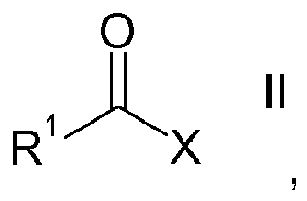
X est halogène ou C1-C4-alcoxy ;
avec un composé de formule IIIa
Y est indépendamment halogène ou C1-C4-alcoxy ;
ou les deux radicaux Y dans un composé de formule IIIa forment ensemble un groupement -O-(CH2)n-O-, où le motif alcanediyle -(CH2)n- est non substitué ou substitué par 1, 2 ou 3 substituants choisis parmi halogène et C1-C4-alkyle ; et
n vaut 2, 3 ou 4 ;
et au moins une base choisie parmi les méthylates de métaux alcalins et les éthylates de métaux alcalins, pour former un mélange réactionnel ;b) après une première période de réaction, le mélange réactionnel est traité par au moins un acide ; etc) après une deuxième période de réaction, le mélange réactionnel est traité par au moins une source d'ammoniac. - Procédé selon la revendication 1, dans lequel la base est choisie parmi les méthylates de métaux alcalins.
- Procédé selon la revendication 2, dans lequel la base est le méthylate de sodium.
- Procédé selon l'une quelconque des revendications 1 à 3, dans lequel la base est solubilisée dans un alcool monohydrique en C1-C4.
- Procédé selon la revendication 4, dans lequel l'alcool monohydrique en C1-C4 est le méthanol.
- Procédé selon l'une quelconque des revendications 1 à 5, dans lequel les étapes a), b) et c) sont effectuées sans isolement d'un quelconque composé intermédiaire.
- Procédé selon l'une quelconque des revendications 1 à 6, dans lequel l'acide est choisi parmi les acides minéraux.
- Procédé selon l'une quelconque des revendications 1 à 7, dans lequel la source d'ammoniac est choisie parmi une solution d'ammoniaque, les halogénures d'ammonium, les carboxylates d'ammonium et le sulfate d'ammonium.
- Procédé selon l'une quelconque des revendications 1 à 8, dans lequel R1 est hydrogène, C1-C4-alkyle ou C1-C4-halogénoalkyle.
- Procédé selon la revendication 9, dans lequel R1 est C1-C4-perhalogénoalkyle.
- Procédé selon l'une quelconque des revendications 1 à 10, dans lequel R2, R3 et R4 sont hydrogène, C1-C4-alkyle ou C1-C4-halogénoalkyle.
- Procédé selon la revendication 11, dans lequel R2, R3 et R4 sont hydrogène.
- Procédé selon l'une quelconque des revendications 1 à 12, comprenant en outre le traitement du composé I par un agent de chloration pour conduire à une 4-chloropyridine de formule V

- Procédé selon la revendication 13, dans lequel l'agent de chloration est le chlorure de thionyle ou le chlorure de phosphoryle.
Priority Applications (1)
| Application Number | Priority Date | Filing Date | Title |
|---|---|---|---|
| EP11797708.2A EP2585436B1 (fr) | 2010-06-22 | 2011-06-20 | Procédé de préparation de 4-hydroxypyridines |
Applications Claiming Priority (4)
| Application Number | Priority Date | Filing Date | Title |
|---|---|---|---|
| US35712810P | 2010-06-22 | 2010-06-22 | |
| EP10166877 | 2010-06-22 | ||
| EP11797708.2A EP2585436B1 (fr) | 2010-06-22 | 2011-06-20 | Procédé de préparation de 4-hydroxypyridines |
| PCT/IB2011/052681 WO2011161612A1 (fr) | 2010-06-22 | 2011-06-20 | Procédé de préparation de 4-hydroxypyridines |
Publications (3)
| Publication Number | Publication Date |
|---|---|
| EP2585436A1 EP2585436A1 (fr) | 2013-05-01 |
| EP2585436A4 EP2585436A4 (fr) | 2014-04-23 |
| EP2585436B1 true EP2585436B1 (fr) | 2015-03-18 |
Family
ID=45370915
Family Applications (1)
| Application Number | Title | Priority Date | Filing Date |
|---|---|---|---|
| EP11797708.2A Active EP2585436B1 (fr) | 2010-06-22 | 2011-06-20 | Procédé de préparation de 4-hydroxypyridines |
Country Status (8)
| Country | Link |
|---|---|
| US (1) | US8716487B2 (fr) |
| EP (1) | EP2585436B1 (fr) |
| JP (1) | JP5984801B2 (fr) |
| CN (1) | CN102947270B (fr) |
| BR (1) | BR112012032671A2 (fr) |
| ES (1) | ES2539379T3 (fr) |
| MX (1) | MX2012014796A (fr) |
| WO (1) | WO2011161612A1 (fr) |
Families Citing this family (9)
| Publication number | Priority date | Publication date | Assignee | Title |
|---|---|---|---|---|
| CN103664761A (zh) * | 2013-12-06 | 2014-03-26 | 常熟市联创化学有限公司 | 一种4-吡啶酚的制备方法 |
| DK3548466T3 (da) | 2016-12-01 | 2022-04-19 | Syngenta Participations Ag | Fremgangsmåde til fremstilling af et mellemprodukt af pesticidaktive heterocykliske derivater med svovlindeholdende substituenter |
| TWI795381B (zh) | 2016-12-21 | 2023-03-11 | 比利時商健生藥品公司 | 作為malt1抑制劑之吡唑衍生物 |
| MD3762368T2 (ro) | 2018-03-08 | 2022-07-31 | Incyte Corp | Compuși diol aminopirazină ca inhibitori ai PI3K-Y |
| US11046658B2 (en) | 2018-07-02 | 2021-06-29 | Incyte Corporation | Aminopyrazine derivatives as PI3K-γ inhibitors |
| WO2020169736A1 (fr) | 2019-02-22 | 2020-08-27 | Janssen Pharmaceutica Nv | Forme cristalline du monohydrate de 1-(1-oxo-1,2-dihydroisoquinoléin-5-yl)-5-(trifluorométhyl)-n-(2-(trifluorométhyl)pyridin-4-yl)-1h-pyrazole-4-carboxamide |
| MA55593A (fr) | 2019-04-11 | 2022-02-16 | Janssen Pharmaceutica Nv | Cycles pyridine contenant des dérivés servant d'inhibiteurs de malt1 |
| TW202517614A (zh) | 2023-07-12 | 2025-05-01 | 瑞士商先正達農作物保護股份公司 | 2-(三氟甲基)吡啶-4-胺的合成 |
| CN116925023B (zh) * | 2023-07-18 | 2025-11-21 | 江苏桐孚高新材料有限公司 | 2-全氟烷基-4h-吡喃-4-酮衍生物的改进合成方法 |
Family Cites Families (7)
| Publication number | Priority date | Publication date | Assignee | Title |
|---|---|---|---|---|
| JPS6059236B2 (ja) * | 1977-07-06 | 1985-12-24 | 日清製粉株式会社 | γ−ピロン誘導体、その製造方法およびそれらの化合物からなる農業用薬剤 |
| JPS58170758A (ja) * | 1983-03-14 | 1983-10-07 | Nisshin Flour Milling Co Ltd | γ−ピリドン誘導体 |
| FR2650825B1 (fr) * | 1989-08-11 | 1991-12-06 | Isochem Sa | Nouvelle pyranone, procede pour sa preparation, son application a la preparation d'une nouvelle pyridinone et son procede de preparation |
| US5625069A (en) * | 1996-07-22 | 1997-04-29 | Development Center For Biotechnology | Process for preparing 2-cyano-3,5-dimethyl-4-methoxypyridine |
| CN100383123C (zh) | 2004-03-12 | 2008-04-23 | 南通市东昌化工有限公司 | 4-羟基吡啶的生产方法 |
| DE102006059710A1 (de) * | 2006-12-18 | 2008-06-19 | Freie Universität Berlin | Substituierte 4-Hydroxypyridine |
| EP2700630B1 (fr) | 2008-06-25 | 2018-03-21 | Basf Se | Procédé de fabrication de biphényles substitués |
-
2011
- 2011-06-20 ES ES11797708.2T patent/ES2539379T3/es active Active
- 2011-06-20 CN CN201180031044.5A patent/CN102947270B/zh not_active Expired - Fee Related
- 2011-06-20 EP EP11797708.2A patent/EP2585436B1/fr active Active
- 2011-06-20 US US13/805,567 patent/US8716487B2/en not_active Expired - Fee Related
- 2011-06-20 JP JP2013516014A patent/JP5984801B2/ja not_active Expired - Fee Related
- 2011-06-20 MX MX2012014796A patent/MX2012014796A/es active IP Right Grant
- 2011-06-20 WO PCT/IB2011/052681 patent/WO2011161612A1/fr not_active Ceased
- 2011-06-20 BR BR112012032671A patent/BR112012032671A2/pt not_active IP Right Cessation
Also Published As
| Publication number | Publication date |
|---|---|
| JP2013530984A (ja) | 2013-08-01 |
| ES2539379T3 (es) | 2015-06-30 |
| MX2012014796A (es) | 2013-04-03 |
| US8716487B2 (en) | 2014-05-06 |
| US20130096312A1 (en) | 2013-04-18 |
| CN102947270B (zh) | 2015-04-08 |
| JP5984801B2 (ja) | 2016-09-06 |
| CN102947270A (zh) | 2013-02-27 |
| EP2585436A1 (fr) | 2013-05-01 |
| WO2011161612A1 (fr) | 2011-12-29 |
| BR112012032671A2 (pt) | 2015-09-15 |
| EP2585436A4 (fr) | 2014-04-23 |
Similar Documents
| Publication | Publication Date | Title |
|---|---|---|
| US8716487B2 (en) | Process for preparing 4-hydroxypyridines | |
| IL292210B2 (en) | An efficient process for the synthesis of 2-amino-5-chloro-n,3-dimethylbenzamide | |
| NZ555538A (en) | Method for preparation of organofluoro compounds in alcohol solvents | |
| IL300154A (en) | A measurable synthetic product of psilocin and psilocybin | |
| IL310699B1 (en) | Thr-beta receptor agonist compound and preparation method and use thereof | |
| IL294551B1 (en) | Method for preparing 5-bromo-2-(3-chloro-pyridin-2-yl)-2h-pyralose-3-carboxylic acid | |
| US7884202B2 (en) | Nucleobase having perfluoroalkyl group and process for producing the same | |
| IL322449A (en) | Synthesis of Bruton tyrosine kinase inhibitor | |
| IL320441A (en) | Processes for preparing ag-10, its intermediates, and salts thereof | |
| IL225808A (en) | Sesquihydrate of 1-{(2s)-2-amino-4-[2,4-bis(trifluoromethyl)-5,8-di-hydropyrido[3,4-d]pyrimidin-7(6h)-yl]-4-oxobutyl}-5,5-difluoro-piperidin-2-one tartrate, process for its preparation and pharmaceutical compositions comprising it for treating diabetes and obesity | |
| IL292429A (en) | An improved process for the preparation of aminopyrimidine derivatives | |
| IL278229B1 (en) | A method for the production of 5,5-di-converted-5,4- dihydroisoxazole | |
| IL319273A (en) | A series of bridged nitrogen-containing heterocyclic compounds and a method for their preparation | |
| IL296532A (en) | Crystal forms of farnesoid x receptor agonist | |
| IL292389A (en) | A method for the preparation of aryl 2-tetrazol-2-yl ketone with improved selectivity | |
| IL288899B1 (en) | Methods for producing dihydroisoxazole and its derivatives | |
| IL225520A (en) | Annotated 4- (methylamino phenoxy) pyridine-3-ram-benzamide for cancer treatment | |
| IL294706A (en) | Method for preparing 5-bromo-2-(3-chloro-pyridin-2-yl)-2h-pyralose-3-carboxylic acid | |
| IL291941A (en) | Methods for the preparation of 5-bromo-2-(3-chloro-pyridin-2-yl)-2h-pyrazole-3-carboxylic acid | |
| IL317715A (en) | Method for producing a sulfone derivative using haloacetic acid | |
| IL306095A (en) | Compound, endothelin-A receptor antagonist, and pharmaceutical preparation | |
| IL279070B2 (en) | A method for the production of diarylpyridine derivatives | |
| IL312831A (en) | A method for the preparation of a triazolopyrimidine derivative | |
| IL275295B (en) | Method for producing quinolin-4(1h)-one derivative | |
| IL297522A (en) | Synthesis of vinylic intermediates |
Legal Events
| Date | Code | Title | Description |
|---|---|---|---|
| PUAI | Public reference made under article 153(3) epc to a published international application that has entered the european phase |
Free format text: ORIGINAL CODE: 0009012 |
|
| 17P | Request for examination filed |
Effective date: 20130122 |
|
| AK | Designated contracting states |
Kind code of ref document: A1 Designated state(s): AL AT BE BG CH CY CZ DE DK EE ES FI FR GB GR HR HU IE IS IT LI LT LU LV MC MK MT NL NO PL PT RO RS SE SI SK SM TR |
|
| DAX | Request for extension of the european patent (deleted) | ||
| A4 | Supplementary search report drawn up and despatched |
Effective date: 20140320 |
|
| RIC1 | Information provided on ipc code assigned before grant |
Ipc: C07D 213/68 20060101AFI20140314BHEP Ipc: C07D 213/61 20060101ALI20140314BHEP |
|
| REG | Reference to a national code |
Ref country code: DE Ref legal event code: R079 Ref document number: 602011014899 Country of ref document: DE Free format text: PREVIOUS MAIN CLASS: C07D0213680000 Ipc: C07D0213080000 |
|
| GRAP | Despatch of communication of intention to grant a patent |
Free format text: ORIGINAL CODE: EPIDOSNIGR1 |
|
| RIC1 | Information provided on ipc code assigned before grant |
Ipc: C07D 213/08 20060101AFI20141024BHEP Ipc: C07D 213/61 20060101ALI20141024BHEP Ipc: C07D 213/68 20060101ALI20141024BHEP |
|
| INTG | Intention to grant announced |
Effective date: 20141120 |
|
| GRAS | Grant fee paid |
Free format text: ORIGINAL CODE: EPIDOSNIGR3 |
|
| GRAA | (expected) grant |
Free format text: ORIGINAL CODE: 0009210 |
|
| AK | Designated contracting states |
Kind code of ref document: B1 Designated state(s): AL AT BE BG CH CY CZ DE DK EE ES FI FR GB GR HR HU IE IS IT LI LT LU LV MC MK MT NL NO PL PT RO RS SE SI SK SM TR |
|
| REG | Reference to a national code |
Ref country code: GB Ref legal event code: FG4D |
|
| REG | Reference to a national code |
Ref country code: CH Ref legal event code: EP |
|
| REG | Reference to a national code |
Ref country code: IE Ref legal event code: FG4D |
|
| REG | Reference to a national code |
Ref country code: AT Ref legal event code: REF Ref document number: 716469 Country of ref document: AT Kind code of ref document: T Effective date: 20150415 |
|
| REG | Reference to a national code |
Ref country code: DE Ref legal event code: R096 Ref document number: 602011014899 Country of ref document: DE Effective date: 20150430 |
|
| REG | Reference to a national code |
Ref country code: ES Ref legal event code: FG2A Ref document number: 2539379 Country of ref document: ES Kind code of ref document: T3 Effective date: 20150630 |
|
| REG | Reference to a national code |
Ref country code: NL Ref legal event code: VDEP Effective date: 20150318 |
|
| REG | Reference to a national code |
Ref country code: NL Ref legal event code: VDEP Effective date: 20150318 |
|
| PG25 | Lapsed in a contracting state [announced via postgrant information from national office to epo] |
Ref country code: SE Free format text: LAPSE BECAUSE OF FAILURE TO SUBMIT A TRANSLATION OF THE DESCRIPTION OR TO PAY THE FEE WITHIN THE PRESCRIBED TIME-LIMIT Effective date: 20150318 Ref country code: NO Free format text: LAPSE BECAUSE OF FAILURE TO SUBMIT A TRANSLATION OF THE DESCRIPTION OR TO PAY THE FEE WITHIN THE PRESCRIBED TIME-LIMIT Effective date: 20150618 Ref country code: HR Free format text: LAPSE BECAUSE OF FAILURE TO SUBMIT A TRANSLATION OF THE DESCRIPTION OR TO PAY THE FEE WITHIN THE PRESCRIBED TIME-LIMIT Effective date: 20150318 Ref country code: FI Free format text: LAPSE BECAUSE OF FAILURE TO SUBMIT A TRANSLATION OF THE DESCRIPTION OR TO PAY THE FEE WITHIN THE PRESCRIBED TIME-LIMIT Effective date: 20150318 Ref country code: LT Free format text: LAPSE BECAUSE OF FAILURE TO SUBMIT A TRANSLATION OF THE DESCRIPTION OR TO PAY THE FEE WITHIN THE PRESCRIBED TIME-LIMIT Effective date: 20150318 |
|
| REG | Reference to a national code |
Ref country code: AT Ref legal event code: MK05 Ref document number: 716469 Country of ref document: AT Kind code of ref document: T Effective date: 20150318 |
|
| REG | Reference to a national code |
Ref country code: LT Ref legal event code: MG4D |
|
| PG25 | Lapsed in a contracting state [announced via postgrant information from national office to epo] |
Ref country code: LV Free format text: LAPSE BECAUSE OF FAILURE TO SUBMIT A TRANSLATION OF THE DESCRIPTION OR TO PAY THE FEE WITHIN THE PRESCRIBED TIME-LIMIT Effective date: 20150318 Ref country code: GR Free format text: LAPSE BECAUSE OF FAILURE TO SUBMIT A TRANSLATION OF THE DESCRIPTION OR TO PAY THE FEE WITHIN THE PRESCRIBED TIME-LIMIT Effective date: 20150619 Ref country code: RS Free format text: LAPSE BECAUSE OF FAILURE TO SUBMIT A TRANSLATION OF THE DESCRIPTION OR TO PAY THE FEE WITHIN THE PRESCRIBED TIME-LIMIT Effective date: 20150318 |
|
| PG25 | Lapsed in a contracting state [announced via postgrant information from national office to epo] |
Ref country code: NL Free format text: LAPSE BECAUSE OF FAILURE TO SUBMIT A TRANSLATION OF THE DESCRIPTION OR TO PAY THE FEE WITHIN THE PRESCRIBED TIME-LIMIT Effective date: 20150318 |
|
| PG25 | Lapsed in a contracting state [announced via postgrant information from national office to epo] |
Ref country code: CZ Free format text: LAPSE BECAUSE OF FAILURE TO SUBMIT A TRANSLATION OF THE DESCRIPTION OR TO PAY THE FEE WITHIN THE PRESCRIBED TIME-LIMIT Effective date: 20150318 Ref country code: SK Free format text: LAPSE BECAUSE OF FAILURE TO SUBMIT A TRANSLATION OF THE DESCRIPTION OR TO PAY THE FEE WITHIN THE PRESCRIBED TIME-LIMIT Effective date: 20150318 Ref country code: PT Free format text: LAPSE BECAUSE OF FAILURE TO SUBMIT A TRANSLATION OF THE DESCRIPTION OR TO PAY THE FEE WITHIN THE PRESCRIBED TIME-LIMIT Effective date: 20150720 Ref country code: RO Free format text: LAPSE BECAUSE OF FAILURE TO SUBMIT A TRANSLATION OF THE DESCRIPTION OR TO PAY THE FEE WITHIN THE PRESCRIBED TIME-LIMIT Effective date: 20150318 Ref country code: EE Free format text: LAPSE BECAUSE OF FAILURE TO SUBMIT A TRANSLATION OF THE DESCRIPTION OR TO PAY THE FEE WITHIN THE PRESCRIBED TIME-LIMIT Effective date: 20150318 |
|
| PG25 | Lapsed in a contracting state [announced via postgrant information from national office to epo] |
Ref country code: AT Free format text: LAPSE BECAUSE OF FAILURE TO SUBMIT A TRANSLATION OF THE DESCRIPTION OR TO PAY THE FEE WITHIN THE PRESCRIBED TIME-LIMIT Effective date: 20150318 Ref country code: PL Free format text: LAPSE BECAUSE OF FAILURE TO SUBMIT A TRANSLATION OF THE DESCRIPTION OR TO PAY THE FEE WITHIN THE PRESCRIBED TIME-LIMIT Effective date: 20150318 Ref country code: IS Free format text: LAPSE BECAUSE OF FAILURE TO SUBMIT A TRANSLATION OF THE DESCRIPTION OR TO PAY THE FEE WITHIN THE PRESCRIBED TIME-LIMIT Effective date: 20150718 |
|
| REG | Reference to a national code |
Ref country code: DE Ref legal event code: R097 Ref document number: 602011014899 Country of ref document: DE |
|
| PLBE | No opposition filed within time limit |
Free format text: ORIGINAL CODE: 0009261 |
|
| STAA | Information on the status of an ep patent application or granted ep patent |
Free format text: STATUS: NO OPPOSITION FILED WITHIN TIME LIMIT |
|
| PG25 | Lapsed in a contracting state [announced via postgrant information from national office to epo] |
Ref country code: MC Free format text: LAPSE BECAUSE OF FAILURE TO SUBMIT A TRANSLATION OF THE DESCRIPTION OR TO PAY THE FEE WITHIN THE PRESCRIBED TIME-LIMIT Effective date: 20150318 Ref country code: DK Free format text: LAPSE BECAUSE OF FAILURE TO SUBMIT A TRANSLATION OF THE DESCRIPTION OR TO PAY THE FEE WITHIN THE PRESCRIBED TIME-LIMIT Effective date: 20150318 |
|
| 26N | No opposition filed |
Effective date: 20151221 |
|
| PG25 | Lapsed in a contracting state [announced via postgrant information from national office to epo] |
Ref country code: LU Free format text: LAPSE BECAUSE OF FAILURE TO SUBMIT A TRANSLATION OF THE DESCRIPTION OR TO PAY THE FEE WITHIN THE PRESCRIBED TIME-LIMIT Effective date: 20150620 Ref country code: SI Free format text: LAPSE BECAUSE OF FAILURE TO SUBMIT A TRANSLATION OF THE DESCRIPTION OR TO PAY THE FEE WITHIN THE PRESCRIBED TIME-LIMIT Effective date: 20150318 |
|
| REG | Reference to a national code |
Ref country code: IE Ref legal event code: MM4A |
|
| PG25 | Lapsed in a contracting state [announced via postgrant information from national office to epo] |
Ref country code: IE Free format text: LAPSE BECAUSE OF NON-PAYMENT OF DUE FEES Effective date: 20150620 |
|
| REG | Reference to a national code |
Ref country code: FR Ref legal event code: PLFP Year of fee payment: 6 |
|
| PG25 | Lapsed in a contracting state [announced via postgrant information from national office to epo] |
Ref country code: BE Free format text: LAPSE BECAUSE OF FAILURE TO SUBMIT A TRANSLATION OF THE DESCRIPTION OR TO PAY THE FEE WITHIN THE PRESCRIBED TIME-LIMIT Effective date: 20150318 |
|
| PG25 | Lapsed in a contracting state [announced via postgrant information from national office to epo] |
Ref country code: MT Free format text: LAPSE BECAUSE OF FAILURE TO SUBMIT A TRANSLATION OF THE DESCRIPTION OR TO PAY THE FEE WITHIN THE PRESCRIBED TIME-LIMIT Effective date: 20150318 |
|
| PG25 | Lapsed in a contracting state [announced via postgrant information from national office to epo] |
Ref country code: BG Free format text: LAPSE BECAUSE OF FAILURE TO SUBMIT A TRANSLATION OF THE DESCRIPTION OR TO PAY THE FEE WITHIN THE PRESCRIBED TIME-LIMIT Effective date: 20150318 Ref country code: SM Free format text: LAPSE BECAUSE OF FAILURE TO SUBMIT A TRANSLATION OF THE DESCRIPTION OR TO PAY THE FEE WITHIN THE PRESCRIBED TIME-LIMIT Effective date: 20150318 Ref country code: HU Free format text: LAPSE BECAUSE OF FAILURE TO SUBMIT A TRANSLATION OF THE DESCRIPTION OR TO PAY THE FEE WITHIN THE PRESCRIBED TIME-LIMIT; INVALID AB INITIO Effective date: 20110620 |
|
| PG25 | Lapsed in a contracting state [announced via postgrant information from national office to epo] |
Ref country code: CY Free format text: LAPSE BECAUSE OF FAILURE TO SUBMIT A TRANSLATION OF THE DESCRIPTION OR TO PAY THE FEE WITHIN THE PRESCRIBED TIME-LIMIT Effective date: 20150318 |
|
| REG | Reference to a national code |
Ref country code: FR Ref legal event code: PLFP Year of fee payment: 7 |
|
| PG25 | Lapsed in a contracting state [announced via postgrant information from national office to epo] |
Ref country code: TR Free format text: LAPSE BECAUSE OF FAILURE TO SUBMIT A TRANSLATION OF THE DESCRIPTION OR TO PAY THE FEE WITHIN THE PRESCRIBED TIME-LIMIT Effective date: 20150318 |
|
| REG | Reference to a national code |
Ref country code: FR Ref legal event code: PLFP Year of fee payment: 8 |
|
| PG25 | Lapsed in a contracting state [announced via postgrant information from national office to epo] |
Ref country code: MK Free format text: LAPSE BECAUSE OF FAILURE TO SUBMIT A TRANSLATION OF THE DESCRIPTION OR TO PAY THE FEE WITHIN THE PRESCRIBED TIME-LIMIT Effective date: 20150318 |
|
| PGFP | Annual fee paid to national office [announced via postgrant information from national office to epo] |
Ref country code: FR Payment date: 20180626 Year of fee payment: 8 |
|
| PG25 | Lapsed in a contracting state [announced via postgrant information from national office to epo] |
Ref country code: AL Free format text: LAPSE BECAUSE OF FAILURE TO SUBMIT A TRANSLATION OF THE DESCRIPTION OR TO PAY THE FEE WITHIN THE PRESCRIBED TIME-LIMIT Effective date: 20150318 |
|
| PGFP | Annual fee paid to national office [announced via postgrant information from national office to epo] |
Ref country code: DE Payment date: 20180831 Year of fee payment: 8 Ref country code: ES Payment date: 20180723 Year of fee payment: 8 Ref country code: IT Payment date: 20180622 Year of fee payment: 8 Ref country code: GB Payment date: 20180629 Year of fee payment: 8 |
|
| REG | Reference to a national code |
Ref country code: DE Ref legal event code: R119 Ref document number: 602011014899 Country of ref document: DE |
|
| GBPC | Gb: european patent ceased through non-payment of renewal fee |
Effective date: 20190620 |
|
| PG25 | Lapsed in a contracting state [announced via postgrant information from national office to epo] |
Ref country code: GB Free format text: LAPSE BECAUSE OF NON-PAYMENT OF DUE FEES Effective date: 20190620 Ref country code: IT Free format text: LAPSE BECAUSE OF NON-PAYMENT OF DUE FEES Effective date: 20190620 Ref country code: DE Free format text: LAPSE BECAUSE OF NON-PAYMENT OF DUE FEES Effective date: 20200101 |
|
| PG25 | Lapsed in a contracting state [announced via postgrant information from national office to epo] |
Ref country code: FR Free format text: LAPSE BECAUSE OF NON-PAYMENT OF DUE FEES Effective date: 20190630 |
|
| REG | Reference to a national code |
Ref country code: ES Ref legal event code: FD2A Effective date: 20201028 |
|
| PG25 | Lapsed in a contracting state [announced via postgrant information from national office to epo] |
Ref country code: ES Free format text: LAPSE BECAUSE OF NON-PAYMENT OF DUE FEES Effective date: 20190621 |
|
| P01 | Opt-out of the competence of the unified patent court (upc) registered |
Effective date: 20230404 |
|
| PGFP | Annual fee paid to national office [announced via postgrant information from national office to epo] |
Ref country code: CH Payment date: 20240701 Year of fee payment: 14 |
|
| REG | Reference to a national code |
Ref country code: CH Ref legal event code: H13 Free format text: ST27 STATUS EVENT CODE: U-0-0-H10-H13 (AS PROVIDED BY THE NATIONAL OFFICE) Effective date: 20260127 |
|
| PG25 | Lapsed in a contracting state [announced via postgrant information from national office to epo] |
Ref country code: CH Free format text: LAPSE BECAUSE OF NON-PAYMENT OF DUE FEES Effective date: 20250630 |