EP2587497A2 - Shielding apparatus and wireless power transmission apparatus - Google Patents
Shielding apparatus and wireless power transmission apparatus Download PDFInfo
- Publication number
- EP2587497A2 EP2587497A2 EP12188604.8A EP12188604A EP2587497A2 EP 2587497 A2 EP2587497 A2 EP 2587497A2 EP 12188604 A EP12188604 A EP 12188604A EP 2587497 A2 EP2587497 A2 EP 2587497A2
- Authority
- EP
- European Patent Office
- Prior art keywords
- shielding
- shielding unit
- magnetic field
- permeability
- wireless power
- Prior art date
- Legal status (The legal status is an assumption and is not a legal conclusion. Google has not performed a legal analysis and makes no representation as to the accuracy of the status listed.)
- Granted
Links
Images


Classifications
-
- H—ELECTRICITY
- H01—ELECTRIC ELEMENTS
- H01F—MAGNETS; INDUCTANCES; TRANSFORMERS; SELECTION OF MATERIALS FOR THEIR MAGNETIC PROPERTIES
- H01F38/00—Adaptations of transformers or inductances for specific applications or functions
- H01F38/14—Inductive couplings
-
- H—ELECTRICITY
- H01—ELECTRIC ELEMENTS
- H01F—MAGNETS; INDUCTANCES; TRANSFORMERS; SELECTION OF MATERIALS FOR THEIR MAGNETIC PROPERTIES
- H01F27/00—Details of transformers or inductances, in general
- H01F27/34—Special means for preventing or reducing unwanted electric or magnetic effects, e.g. no-load losses, reactive currents, harmonics, oscillations, leakage fields
- H01F27/36—Electric or magnetic shields or screens
- H01F27/361—Electric or magnetic shields or screens made of combinations of electrically conductive material and ferromagnetic material
-
- H—ELECTRICITY
- H01—ELECTRIC ELEMENTS
- H01F—MAGNETS; INDUCTANCES; TRANSFORMERS; SELECTION OF MATERIALS FOR THEIR MAGNETIC PROPERTIES
- H01F27/00—Details of transformers or inductances, in general
- H01F27/34—Special means for preventing or reducing unwanted electric or magnetic effects, e.g. no-load losses, reactive currents, harmonics, oscillations, leakage fields
- H01F27/36—Electric or magnetic shields or screens
- H01F27/366—Electric or magnetic shields or screens made of ferromagnetic material
-
- H—ELECTRICITY
- H02—GENERATION; CONVERSION OR DISTRIBUTION OF ELECTRIC POWER
- H02J—ELECTRIC POWER NETWORKS; CIRCUIT ARRANGEMENTS OR SYSTEMS FOR SUPPLYING OR DISTRIBUTING ELECTRIC POWER; SYSTEMS FOR STORING ELECTRIC ENERGY
- H02J50/00—Circuit arrangements or systems for wireless supply or distribution of electric power
- H02J50/005—Mechanical details of housing or structure aiming to accommodate the power transfer means, e.g. mechanical integration of coils, antennas or transducers into emitting or receiving devices
-
- H—ELECTRICITY
- H02—GENERATION; CONVERSION OR DISTRIBUTION OF ELECTRIC POWER
- H02J—ELECTRIC POWER NETWORKS; CIRCUIT ARRANGEMENTS OR SYSTEMS FOR SUPPLYING OR DISTRIBUTING ELECTRIC POWER; SYSTEMS FOR STORING ELECTRIC ENERGY
- H02J50/00—Circuit arrangements or systems for wireless supply or distribution of electric power
- H02J50/10—Circuit arrangements or systems for wireless supply or distribution of electric power using inductive coupling
- H02J50/12—Circuit arrangements or systems for wireless supply or distribution of electric power using inductive coupling of the resonant type
-
- H—ELECTRICITY
- H02—GENERATION; CONVERSION OR DISTRIBUTION OF ELECTRIC POWER
- H02J—ELECTRIC POWER NETWORKS; CIRCUIT ARRANGEMENTS OR SYSTEMS FOR SUPPLYING OR DISTRIBUTING ELECTRIC POWER; SYSTEMS FOR STORING ELECTRIC ENERGY
- H02J50/00—Circuit arrangements or systems for wireless supply or distribution of electric power
- H02J50/70—Circuit arrangements or systems for wireless supply or distribution of electric power involving the reduction of electric, magnetic or electromagnetic leakage fields
-
- H—ELECTRICITY
- H02—GENERATION; CONVERSION OR DISTRIBUTION OF ELECTRIC POWER
- H02J—ELECTRIC POWER NETWORKS; CIRCUIT ARRANGEMENTS OR SYSTEMS FOR SUPPLYING OR DISTRIBUTING ELECTRIC POWER; SYSTEMS FOR STORING ELECTRIC ENERGY
- H02J50/00—Circuit arrangements or systems for wireless supply or distribution of electric power
- H02J50/80—Circuit arrangements or systems for wireless supply or distribution of electric power involving the exchange of data, concerning supply or distribution of electric power, between transmitting devices and receiving devices
-
- H—ELECTRICITY
- H04—ELECTRIC COMMUNICATION TECHNIQUE
- H04B—TRANSMISSION
- H04B5/00—Near-field transmission systems, e.g. inductive or capacitive transmission systems
- H04B5/20—Near-field transmission systems, e.g. inductive or capacitive transmission systems characterised by the transmission technique; characterised by the transmission medium
- H04B5/24—Inductive coupling
- H04B5/26—Inductive coupling using coils
-
- H—ELECTRICITY
- H04—ELECTRIC COMMUNICATION TECHNIQUE
- H04B—TRANSMISSION
- H04B5/00—Near-field transmission systems, e.g. inductive or capacitive transmission systems
- H04B5/70—Near-field transmission systems, e.g. inductive or capacitive transmission systems specially adapted for specific purposes
- H04B5/79—Near-field transmission systems, e.g. inductive or capacitive transmission systems specially adapted for specific purposes for data transfer in combination with power transfer
-
- H—ELECTRICITY
- H01—ELECTRIC ELEMENTS
- H01F—MAGNETS; INDUCTANCES; TRANSFORMERS; SELECTION OF MATERIALS FOR THEIR MAGNETIC PROPERTIES
- H01F3/00—Cores, Yokes, or armatures
- H01F3/10—Composite arrangements of magnetic circuits
- H01F2003/106—Magnetic circuits using combinations of different magnetic materials
Definitions
- the disclosure relates to a shielding apparatus and a wireless power transmission apparatus.
- the disclosure relates to a wireless power transmission technology capable of improving power transmission efficiency and minimizing the quantity of a magnetic field to be leaked to the outside.
- a wireless power transmission or a wireless energy transfer refers to a technology of wirelessly transferring electric energy to desired devices.
- an electric motor or a transformer employing the principle of electromagnetic induction has been extensively used and then a method for transmitting electrical energy by irradiating electromagnetic waves, such as radio waves or lasers, has been suggested.
- electromagnetic waves such as radio waves or lasers
- electrical toothbrushes or electrical razors which are frequently used in daily life, are charged based on the principle of electromagnetic induction.
- the long-distance transmission using the magnetic induction, the resonance and the short-wavelength radio frequency has been used as the wireless energy transfer method.
- a wireless power transmission system based on resonance transmits electrical signals formed at transmitter and receiver sides through a coil in wireless, a user can easily charge an electronic device such as a portable device with electricity.
- another device may erroneously operate due to an electromagnetic wave generated from the transmitter.
- the electromagnetic wave which is exposed to a human body, may exert a harmful influence on the health of the human body.
- the disclosure provides a shielding apparatus, capable of improving the power transmission efficiency between a wireless power transmission apparatus and a wireless power reception apparatus, and the wireless power transmission apparatus.
- the disclosure provides a shielding apparatus, capable of preventing another device from erroneously operating, and minimizing the quantity of a magnetic field to be leaked to the outside so that the situation of leaking the magnetic field harmful to a human body can be prevented, and a wireless power transmission apparatus.
- a shielding apparatus included in a wireless power transmission apparatus for transmitting power to a wireless power reception apparatus in wireless which includes a first shielding unit changing a transmission path of a portion of a magnetic field generated from a transmission coil of the wireless power transmission apparatus, and shielding the portion of the magnetic field which has passed through the first shielding unit.
- the second shielding unit is placed on the first shielding unit.
- a real component value of permeability of the first shielding unit is greater than an imaginary component value of the permeability of the first shielding unit, and an imaginary component value of permeability of the second shielding unit is greater than a real component value of the permeability of the second shielding unit.
- a wireless power transmission apparatus for transmitting power to a wireless power reception apparatus in wireless.
- the wireless power transmission apparatus includes a transmission unit receiving power from a power source and transferring a magnetic field generated from a transmission coil to a reception coil of the wireless power reception apparatus through a non-radiation method, and a shielding device including a first shielding unit changing a transmission path of a portion of the magnetic field generated from the transmission coil, and a second shielding unit placed on the first shielding unit and shielding a portion of a magnetic field which has passed through the first shielding unit.
- a real component value of permeability of the first shielding unit is greater than an imaginary component value of the permeability of the first shielding unit, and an imaginary component value of permeability of the second shielding unit is greater than a real component value of the permeability of the second shielding unit.
- a shielding apparatus included in a transmission apparatus communicating with a reception apparatus by using a magnetic field.
- the shielding apparatus includes a first shielding unit changing a transmission path of a portion of a magnetic field generated from the transmission apparatus, and a second shielding unit placed on the first shielding unit and shielding the portion of the magnetic field which has passed through the first shielding unit.
- a real component value of permeability of the first shielding unit is greater than an imaginary component value of the permeability of the first shielding unit
- an imaginary component value of permeability of the second shielding unit is greater than a real component value of the permeability of the second shielding unit.
- the radiation quantity of an electromagnetic field to be leaked to the outside in the wireless power transmission process can be reduced, thereby preventing another device from erroneously operating and minimizing a harmful influence exerted on a human body.
- the power efficiency can be maximized by changing the transmission path of a magnetic field through a shielding apparatus.
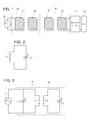
- FIG. 1 is a view showing a wireless power transmission system according to one embodiment of the disclosure
- FIG. 2 is a circuit diagram showing an equivalent circuit of a transmission induction coil according to one embodiment of the disclosure
- FIG. 3 is a circuit diagram showing an equivalent circuit of a power source and a transmission unit according to one embodiment of the disclosure
- FIG. 4 is a circuit diagram showing an equivalent circuit of a reception resonant coil, a reception induction coil, a smoothing circuit, and a load according to one embodiment of the disclosure
- FIG. 5 is a block diagram showing a shielding apparatus according to one embodiment of the disclosure.
- FIG. 6 is a view showing the structure of the wireless power transmission system employing a wireless power transmission apparatus according to one embodiment of the disclosure.
- FIG. 7 is a graph showing the variation in real and imaginary component values of a permeability of a shielding member according to the use frequencies for wireless power transmission.
- FIG. 1 is a view showing a wireless power transmission system according to the embodiment of the disclosure.
- the power generated from a power source 10 is provided to a power transmitting unit 20, such that the power transmitting unit 20 transmits the power using resonance to a power receiving unit 30, which is resonant with the power transmitting unit 20 and has the same resonant frequency value as that of the power transmitting unit 20.
- the power transferred to the power receiving unit 30 is transferred via a rectifier circuit 40 to a load 50.
- the load 50 may be a battery or a predetermined apparatus which needs power.
- the power source 10 is an AC power source for supplying AC power of a predetermined frequency.
- the power transmitting unit 20 includes a transmission induction coil 21 and a transmission resonant coil 22.
- the transmission induction coil 21 is connected to the power source 10, such that AC current flows through the transmission induction coil 21.
- AC current flows through the transmission induction coil 21
- AC current is induced to the transmission resonant coil 22 physically spaced apart from the transmission induction coil 21 due to electromagnetic induction.
- the power transferred to the transmission resonant coil 22 is transmitted using resonance to the power receiving unit 30 which forms a resonance circuit with the power transmitting unit 20.
- the power can be transmitted between two LC circuits, which are impedance-matched with each other, due to resonance.
- the power transmission method using the resonance can transmit the power farther than the power transmission method using the electromagnetic induction with the higher power transmission efficiency.
- the power receiving unit 30 includes a reception resonant coil 31 and a reception induction coil 32.
- the power transmitted from the transmission resonant coil unit 22 is received at the reception resonant coil 31, so that the AC current flows through the reception resonant coil 31.
- the power transmitted to the reception resonant coil 31 is transferred by electromagnetic induction to the reception induction coil 32.
- the power transferred to the reception induction coil 32 is rectified by the rectifier circuit 40 and then transferred to the load 50.
- FIG. 2 is an equivalent circuit diagram of the transmission induction coil 21 according to the embodiment of the disclosure.
- the transmission induction coil 21 may include an inductor L1 and a capacitor C1, and form a circuit having a suitable inductance value and a suitable capacitance value.
- the capacitor C1 may be a variable capacitor.
- the impedance matching can be performed by adjusting a variable capacitor.
- equivalent circuits of the transmission resonant coil 22, the reception resonant coil 31, and the reception induction coil 32 may be equal to that shown in FIG. 2 .
- FIG. 3 is an equivalent circuit diagram of the power source 10 and the power transmitting unit 20 according to the embodiment of the disclosure.
- each of the transmission resonance coil 21 and the transmission resonance coil 22 may include an inductor L1 or L2 and a capacitor C1 or C2 having a predetermined inductance value and a predetermined capacitance value, respectively.
- FIG. 4 is an equivalent circuit diagram of the reception resonant coil 31, the reception induction coil 32, the smoothing circuit 40 and the load 50 according to the embodiment of the disclosure.
- each of the transmission resonant coil 31 and the reception induction coil 32 may include an inductor L3 or L4 and a capacitor C3 or C4 having a predetermined inductance value and a predetermined capacitance value, respectively.
- the smoothing circuit 40 may include a diode D1 and a smoothing capacitor C5 to convert AC power into DC power to be output.
- the load 50 is denoted as a 1.3 V DC power source, the load 50 may be a battery or other devices requiring DC power.
- FIG. 5 is a block diagram showing a shielding apparatus 60 according to one embodiment of the disclosure.
- the shielding apparatus 60 includes first and second shielding units 61 and 62.
- the shielding apparatus 60 is applicable to both of wireless power transmission methods using electromagnetic induction and resonance.
- the shielding apparatus 60 can change the transmission path of a portion of a magnetic field, which is transmitted from the wireless power transmission apparatus 100 to the wireless power reception apparatus 200, or can shield a portion of the magnetic field to be leaked to the outside.
- the first shielding unit 61 can change the transmission path of a portion of the magnetic field produced from the transmission resonance coil 22 of the wireless power transmission apparatus 100.
- the first shielding unit 61 changes the transmission path of the portion of the magnetic field produced from the transmission resonance coil 22 to the wireless power reception apparatus 200, so that the great quantity of the magnetic field can be transmitted to the wireless power reception apparatus 200. In other words, the power transmission efficiency between the wireless power transmission apparatus 100 and the wireless reception apparatus 200 can be increased due to the first shielding unit 61.
- the second shielding unit 62 can shield the magnetic field, which has been produced from the transmission resonance coil 22 and has passed through the first shielding unit 61, from being leaked to the outside.
- the second shielding unit 62 absorbs a portion of the magnetic field, which has passed through the first shielding unit 61, and converts the magnetic field into thermal energy, thereby preventing the magnetic field from being leaked to the outside. If the quantity of a magnetic field to be leaked to the outside is reduced, the magnetic field harmful to the human body is not exposed to the human body.
- the first and second shielding units 61 and 62 include difference types of magnetic substances.
- the first and second shielding units 61 and 62 may include spinel, hexa, sandust, and permalloy magnetic substances.
- the first shielding unit 61 may include the spinel magnetic substance
- the second shielding unit 62 may include the hexa magnetic substance.
- the first shielding unit 61 is not limited to the spinel magnetic substance, but the first shielding unit 61 may include the hexa magnetic substance or the garnet magnetic substance.
- the second shielding unit 62 may include the spinel magnetic substance.
- Table 1 shows composition formulas of the spinel, garnet, and hexa magnetic substances.
- Me* refers at least one selected from the group consisting of cobalt (Co), nickel (Ni), zinc (Zn), copper (C), and manganese (Mn), and R* refers to yttrium (Y) elements.
- the sandust magnetic substance includes the combination of iron (Fe), silicon (Si), and aluminum (Al), and the compositional ratios of the elements are 84%, 10%, and 6%, respectively.
- the permalloy magnetic substance includes the composition of iron (Fe) and nickel (Ni), and the compositional ratios of the elements are 90% and 10%, respectively.
- the first and second shielding units 61 and 62 may have different permeability values.
- the permeability refers to the quantity representing the magnetic property of a material, and, that is, the ratio of the intensity of the magnetic field under a vacuum state to the magnetic flux density produced when the material is magnetized under the influence of the magnetic field.
- the permeability ⁇ 1 of the first shielding unit 61 can be expressed through a complex number having a real component and an imaginary component as shown in Equation 1.
- ⁇ ⁇ 1 ⁇ ⁇ 11 + j ⁇ ⁇ 12
- the real component ⁇ 11 of the permeability ⁇ 1 of the first shielding unit 61 may represent the extent to change (guide) the direction of the magnetic field came into the first shielding unit 61. In other words, as the value of the real component ⁇ 11 is increased, the direction of the magnetic field came into the first shielding unit 61 may be much more changed. As the value of the real component ⁇ 11 is reduced, the direction of the magnetic field came into the first shielding unit 61 may be less changed.
- the imaginary component ⁇ 12 of the permeability ⁇ 1 of the first shielding unit 61 may represent the extent to absorb the magnetic field came into the first shielding unit 61 and convert the magnetic field into thermal energy.
- the great quantity of the magnetic field came into the first shielding unit 61 may be converted into thermal energy to be discharged to the outside.
- the value of the imaginary component ⁇ 12 is reduced, the slight quantity of the magnetic field came into the first shielding unit 61 may be converted into thermal energy to be discharged to the outside.
- the real component ⁇ 11 of the permeability ⁇ 1 of the first shielding unit 61 may be greater than the imaginary component ⁇ 12 of the permeability ⁇ 1 of the first shielding unit 61.
- the first shielding unit 61 mainly performs a function of changing the direction of the magnetic field rather than a function of minimizing the quantity of the magnetic field to be discharged to the outside.
- the real component ⁇ 11 of the permeability ⁇ 1 may be greater than the imaginary component ⁇ 12.
- the ratio of the real component ⁇ 11 of the permeability ⁇ 1 of the first shielding unit 61 to the imaginary component ⁇ 12 of the permeability ⁇ 1 may be in the range from 10:1 to 1000:1.
- the preferable ratio of the real component ⁇ 11 of the permeability ⁇ 1 of the first shielding unit 61 to the imaginary component ⁇ 12 of the permeability ⁇ 1 is at least 10:1, the first shielding unit 61 may more perform a function of changing the transmission path of the magnetic field rather than a function of absorbing the magnetic field and converting the magnetic field into heat to be discharged.
- the first shielding unit 61 may not smoothly change the transmission path of the magnetic field, which is came into the first shielding unit 61, toward the wireless power reception apparatus.
- the first shielding unit 61 may not perform an intrinsic function thereof at the frequency band used for the wireless power transmission due to the characteristic that the permeability of the magnetic material included in the first shielding unit 61 varies according to the frequencies.
- the real component ⁇ 11 of the permeability ⁇ 1 and the imaginary component ⁇ 12 of the permeability ⁇ 1 may have values of about 30 to about 5000 due to the characteristic of materials included in the shielding material.
- the real component ⁇ 21 of the permeability ⁇ 2 of the second shielding unit 62 and the imaginary component ⁇ 22 of the permeability ⁇ 2 may have values of about 30 to about 5000 due to the characteristic of materials included in the shielding material.
- the permeability ⁇ 2 of the second shielding unit 62 may be expressed through the complexity number having real and imaginary components as shown in Equation 2.
- ⁇ ⁇ 2 ⁇ ⁇ 21 + j ⁇ ⁇ 22.
- the real component ⁇ 21 of the permeability ⁇ 2 of the second shielding unit 62 may represent the extent to change (guide) the direction of the magnetic field came into the second shielding unit 62. In other words, as the value of the real component ⁇ 21 is increased, the direction of the magnetic field came into the second shielding unit 62 may be much more changed. As the value of the real component ⁇ 21 is reduced, the direction of the magnetic field came into the second shielding unit 62 may be less changed.
- the imaginary component ⁇ 22 of the permeability ⁇ 2 of the second shielding unit 62 may represent the extent to absorb the magnetic field came into the second shielding unit 62 and convert the magnetic field into thermal energy.
- the great quantity of the magnetic field came into the second shielding unit 62 may be converted into thermal energy to be discharged to the outside.
- the slight quantity of the magnetic field came into the second shielding unit 62 may be converted into thermal energy to be discharged to the outside.
- the imaginary component ⁇ 22 of the permeability ⁇ 2 of the second shielding unit 62 may be greater than the real component ⁇ 21.
- the ratio of the imaginary component ⁇ 22 and the real component ⁇ 21 of the permeability ⁇ 2 of the second shielding unit 62 may be in the range from 1:1 to 10:1. Since the second shielding unit 62 mainly performs a function of minimizing the quantity of the magnetic field to be leaked to the outside rather than the function of changing the direction of the magnetic field, the imaginary component ⁇ 22 of the permeability ⁇ 2 must be greater than the real component ⁇ 21 of the permeability ⁇ 2.
- the second shielding unit 62 may not perform the intrinsic function thereof at the frequency band used for the wireless power transmission due to the characteristic that the permeability of the magnetic material included in the second shielding unit 62 varies according the frequencies.
- the first shielding unit 61 may be bonded to the second shielding unit 62 through a mechanical method such as a compression method or an adhesion method.
- the first and second shielding units 61 and 62 are bonded to each other by preparing the thin plates of the first and second shielding units 61 and 62 in a predetermined form by using a compressor at the room temperature.
- the first and second shielding units 61 and 62 adheres to each other by using the adhesive strength between the interfacial surfaces of the first and second shielding units 61 and 62.
- the first and second shielding units 61 and 62 may be bonded to each other through a thin film deposition method.
- the thin film deposition method is a method in which metal or compound is heated and evaporated under the vacuum state so that the vapor is coated on the surface of a matter in the form of a thin film.
- the thin film deposition method is classified into a physical vapor deposition (PVD) method or a chemical vapor deposition (CVD) method.
- the shielding apparatus 60 may be used in relation to wireless power transmission as described above, the shielding apparatus 60 is applicable to a communication method such as a radio-frequency identification (RFID) method, a near field communication (NFC) method, or a keyless entry method.
- RFID radio-frequency identification
- NFC near field communication
- a transmission apparatus employing the communication method such as the RFID method, the NFC method, or the keyless entry method is used instead of the wireless power transmission apparatus 100.
- FIG. 6 is a view showing the structure of the wireless power transmission system employing the wireless power transmission apparatus according to one embodiment of the disclosure.
- the wireless power transmission system may include the wireless power transmission apparatus 100 and the wireless power reception apparatus 200.
- the wireless power transmission apparatus 100 may include the power transmitting unit 20 and the shielding apparatus 60.
- the power transmitting unit 20 may include the transmission induction coil 21, the transmission resonance coil 22, and a capacitor. The detail thereof has been already described with reference to FIG. 1 .
- the power transmitting unit 20 receives power from the power source 10 to transmit the magnetic field, which is generated from the transmission resonance coil 22, to the reception resonance coil 31 of the wireless power reception apparatus 200 through a non-radiation method.
- the shielding unit 60 includes the first and second shielding units 61 and 62.
- the first shielding unit 61 can change the transmission path of a portion of a magnetic field transmitted from the wireless power transmission apparatus 100 to the wireless power reception apparatus 200, and the second shielding unit 62 can shield a portion of the magnetic field passing through the first shielding unit 61 and exposed to the outside.
- the first shielding unit 61 may include silver representing permeability ⁇ 1 having the real component value ⁇ 11 greater than the imaginary component value ⁇ 12. According to the embodiment, the ratio of the real component ⁇ 11 to the imaginary component ⁇ 12 may be at least 100:1.
- the second shielding unit 62 can shield the magnetic field which has been generated from the transmission resonance coil 22 and has passed through the first shielding unit 61.
- the second shielding unit 62 absorbs a portion of the magnetic field, which has passed through the first shielding unit 61, and converts the portion of the magnetic field into thermal energy, so that the magnetic field can be prevented from being leaked to the outside.
- the second shielding unit 62 may include a material representing permeability ⁇ 2 having the imaginary component value ⁇ 22 greater than the real component value ⁇ 21.
- the first shielding unit 61 can transmit a greater amount of power to the wireless power reception apparatus 200 by changing the direction of the magnetic field generated from the transmission resonance coil 22.
- the second shielding unit 62 absorbs a portion of the magnetic field, which has passed through the first shielding unit 61 and discharges the absorbed of the magnetic field as thermal energy, thereby minimizing the quantity of the magnetic field to be leaked to the outside. If the quantity of the magnetic field to be leaked to the outside is minimized, another device can be prevented from erroneously operating and the harmful magnetic field can be prevented from being exposed to the human body.
- the shielding unit 60 having a multi-layer structure increases the power transmission efficiency to the wireless power reception apparatus 200 while minimizing the quantity of the magnetic field to be leaked to the outside.
- the shielding unit 60 is installed in a transmission apparatus communicating with a reception apparatus using a magnetic field in addition to the wireless power transmission technology, thereby increasing the power transmission efficiency while minimizing the quantity of the magnetic field to be leaked to the outside.
- FIG. 7 is a graph showing the variation in real and imaginary component values of permeability of a shielding material according to the use frequencies for wireless power transmission.
- FIG. 7 is a graph showing the variation characteristic of the permeability of typical ferrites according to the use frequencies for the wireless power transmission.
- the real and imaginary components ⁇ 1 and ⁇ 2 of the permeability ⁇ of the shielding material are varied according to the variation of the use frequency for the wireless power transmission.
- the use frequency is determined, the real and imaginary components of the permeability according to the determined use frequency are determined. Accordingly, a shielding unit employing the shielding material is determined as described with reference to FIG. 5 .
- the shielding material may constitute the second shielding unit 61 for absorbing the magnetic field to discharge heat.
- the curves of the real and imaginary components ⁇ 1 and ⁇ 2 may have various forms according to the materials used as a shielding material. Accordingly, a user can design the shielding unit 60 by selecting a desirable shielding material according to the use frequency.
Landscapes
- Engineering & Computer Science (AREA)
- Power Engineering (AREA)
- Computer Networks & Wireless Communication (AREA)
- Signal Processing (AREA)
- Physics & Mathematics (AREA)
- Electromagnetism (AREA)
- Shielding Devices Or Components To Electric Or Magnetic Fields (AREA)
- Charge And Discharge Circuits For Batteries Or The Like (AREA)
- Hard Magnetic Materials (AREA)
- Soft Magnetic Materials (AREA)
- Near-Field Transmission Systems (AREA)
Abstract
Description
- The disclosure relates to a shielding apparatus and a wireless power transmission apparatus. The disclosure relates to a wireless power transmission technology capable of improving power transmission efficiency and minimizing the quantity of a magnetic field to be leaked to the outside.
- A wireless power transmission or a wireless energy transfer refers to a technology of wirelessly transferring electric energy to desired devices. In the 1800's, an electric motor or a transformer employing the principle of electromagnetic induction has been extensively used and then a method for transmitting electrical energy by irradiating electromagnetic waves, such as radio waves or lasers, has been suggested. Actually, electrical toothbrushes or electrical razors, which are frequently used in daily life, are charged based on the principle of electromagnetic induction. Until now, the long-distance transmission using the magnetic induction, the resonance and the short-wavelength radio frequency has been used as the wireless energy transfer method.
- Recently, among the wireless power transmission technologies, an energy transfer method using resonance has been extensively used.
- Since a wireless power transmission system based on resonance transmits electrical signals formed at transmitter and receiver sides through a coil in wireless, a user can easily charge an electronic device such as a portable device with electricity.
- However, according to the energy transfer method employing resonance, another device may erroneously operate due to an electromagnetic wave generated from the transmitter. The electromagnetic wave, which is exposed to a human body, may exert a harmful influence on the health of the human body.
- The disclosure provides a shielding apparatus, capable of improving the power transmission efficiency between a wireless power transmission apparatus and a wireless power reception apparatus, and the wireless power transmission apparatus.
- The disclosure provides a shielding apparatus, capable of preventing another device from erroneously operating, and minimizing the quantity of a magnetic field to be leaked to the outside so that the situation of leaking the magnetic field harmful to a human body can be prevented, and a wireless power transmission apparatus.
- According to the embodiment, there is provided a shielding apparatus included in a wireless power transmission apparatus for transmitting power to a wireless power reception apparatus in wireless, which includes a first shielding unit changing a transmission path of a portion of a magnetic field generated from a transmission coil of the wireless power transmission apparatus, and shielding the portion of the magnetic field which has passed through the first shielding unit. The second shielding unit is placed on the first shielding unit. A real component value of permeability of the first shielding unit is greater than an imaginary component value of the permeability of the first shielding unit, and an imaginary component value of permeability of the second shielding unit is greater than a real component value of the permeability of the second shielding unit.
- According to the embodiment, there is provided a wireless power transmission apparatus for transmitting power to a wireless power reception apparatus in wireless. The wireless power transmission apparatus includes a transmission unit receiving power from a power source and transferring a magnetic field generated from a transmission coil to a reception coil of the wireless power reception apparatus through a non-radiation method, and a shielding device including a first shielding unit changing a transmission path of a portion of the magnetic field generated from the transmission coil, and a second shielding unit placed on the first shielding unit and shielding a portion of a magnetic field which has passed through the first shielding unit. A real component value of permeability of the first shielding unit is greater than an imaginary component value of the permeability of the first shielding unit, and an imaginary component value of permeability of the second shielding unit is greater than a real component value of the permeability of the second shielding unit.
- According to the embodiment, there is provided a shielding apparatus included in a transmission apparatus communicating with a reception apparatus by using a magnetic field. The shielding apparatus includes a first shielding unit changing a transmission path of a portion of a magnetic field generated from the transmission apparatus, and a second shielding unit placed on the first shielding unit and shielding the portion of the magnetic field which has passed through the first shielding unit. A real component value of permeability of the first shielding unit is greater than an imaginary component value of the permeability of the first shielding unit, and an imaginary component value of permeability of the second shielding unit is greater than a real component value of the permeability of the second shielding unit.
- As described above, the embodiment of the disclosure has following effects.
- First, the radiation quantity of an electromagnetic field to be leaked to the outside in the wireless power transmission process can be reduced, thereby preventing another device from erroneously operating and minimizing a harmful influence exerted on a human body.
- Second, the power efficiency can be maximized by changing the transmission path of a magnetic field through a shielding apparatus.
-
FIG. 1 is a view showing a wireless power transmission system according to one embodiment of the disclosure; -
FIG. 2 is a circuit diagram showing an equivalent circuit of a transmission induction coil according to one embodiment of the disclosure; -
FIG. 3 is a circuit diagram showing an equivalent circuit of a power source and a transmission unit according to one embodiment of the disclosure; -
FIG. 4 is a circuit diagram showing an equivalent circuit of a reception resonant coil, a reception induction coil, a smoothing circuit, and a load according to one embodiment of the disclosure; -
FIG. 5 is a block diagram showing a shielding apparatus according to one embodiment of the disclosure; -
FIG. 6 is a view showing the structure of the wireless power transmission system employing a wireless power transmission apparatus according to one embodiment of the disclosure; and -
FIG. 7 is a graph showing the variation in real and imaginary component values of a permeability of a shielding member according to the use frequencies for wireless power transmission. - Terms and words used in the specification and the claims shall not be interpreted as commonly-used dictionary meanings, but shall be interpreted as to be relevant to the technical scope of the invention based on the fact that the inventor may property define the concept of the terms to explain the invention in best ways.
- Therefore, the embodiments and the configurations depicted in the drawings are illustrative purposes only and do not represent all technical scopes of the embodiments, so it should be understood that various equivalents and modifications may exist at the time of filing this application.
-
FIG. 1 is a view showing a wireless power transmission system according to the embodiment of the disclosure. - The power generated from a
power source 10 is provided to a power transmitting unit 20, such that the power transmitting unit 20 transmits the power using resonance to apower receiving unit 30, which is resonant with the power transmitting unit 20 and has the same resonant frequency value as that of the power transmitting unit 20. The power transferred to thepower receiving unit 30 is transferred via arectifier circuit 40 to aload 50. Theload 50 may be a battery or a predetermined apparatus which needs power. - In detail, the
power source 10 is an AC power source for supplying AC power of a predetermined frequency. - The power transmitting unit 20 includes a
transmission induction coil 21 and a transmissionresonant coil 22. Thetransmission induction coil 21 is connected to thepower source 10, such that AC current flows through thetransmission induction coil 21. When AC current flows through thetransmission induction coil 21, AC current is induced to the transmissionresonant coil 22 physically spaced apart from thetransmission induction coil 21 due to electromagnetic induction. The power transferred to thetransmission resonant coil 22 is transmitted using resonance to thepower receiving unit 30 which forms a resonance circuit with the power transmitting unit 20. - The power can be transmitted between two LC circuits, which are impedance-matched with each other, due to resonance. The power transmission method using the resonance can transmit the power farther than the power transmission method using the electromagnetic induction with the higher power transmission efficiency.
- The
power receiving unit 30 includes a receptionresonant coil 31 and areception induction coil 32. The power transmitted from the transmissionresonant coil unit 22 is received at the receptionresonant coil 31, so that the AC current flows through the receptionresonant coil 31. The power transmitted to the receptionresonant coil 31 is transferred by electromagnetic induction to thereception induction coil 32. The power transferred to thereception induction coil 32 is rectified by therectifier circuit 40 and then transferred to theload 50. -
FIG. 2 is an equivalent circuit diagram of thetransmission induction coil 21 according to the embodiment of the disclosure. As shown inFIG. 2 , thetransmission induction coil 21 may include an inductor L1 and a capacitor C1, and form a circuit having a suitable inductance value and a suitable capacitance value. The capacitor C1 may be a variable capacitor. The impedance matching can be performed by adjusting a variable capacitor. Meanwhile, equivalent circuits of the transmissionresonant coil 22, the receptionresonant coil 31, and thereception induction coil 32 may be equal to that shown inFIG. 2 . -
FIG. 3 is an equivalent circuit diagram of thepower source 10 and the power transmitting unit 20 according to the embodiment of the disclosure. As shown inFIG. 3 , each of thetransmission resonance coil 21 and thetransmission resonance coil 22 may include an inductor L1 or L2 and a capacitor C1 or C2 having a predetermined inductance value and a predetermined capacitance value, respectively. -
FIG. 4 is an equivalent circuit diagram of the receptionresonant coil 31, thereception induction coil 32, thesmoothing circuit 40 and theload 50 according to the embodiment of the disclosure. - As shown in
FIG. 4 , each of the transmissionresonant coil 31 and thereception induction coil 32 may include an inductor L3 or L4 and a capacitor C3 or C4 having a predetermined inductance value and a predetermined capacitance value, respectively. Thesmoothing circuit 40 may include a diode D1 and a smoothing capacitor C5 to convert AC power into DC power to be output. Although theload 50 is denoted as a 1.3 V DC power source, theload 50 may be a battery or other devices requiring DC power. -
FIG. 5 is a block diagram showing ashielding apparatus 60 according to one embodiment of the disclosure. - Referring to
FIG. 5 , theshielding apparatus 60 includes first andsecond shielding units - The shielding
apparatus 60 according to one embodiment of the disclosure is applicable to both of wireless power transmission methods using electromagnetic induction and resonance. - The shielding
apparatus 60 can change the transmission path of a portion of a magnetic field, which is transmitted from the wirelesspower transmission apparatus 100 to the wireless power reception apparatus 200, or can shield a portion of the magnetic field to be leaked to the outside. - The
first shielding unit 61 can change the transmission path of a portion of the magnetic field produced from thetransmission resonance coil 22 of the wirelesspower transmission apparatus 100. - The
first shielding unit 61 changes the transmission path of the portion of the magnetic field produced from thetransmission resonance coil 22 to the wireless power reception apparatus 200, so that the great quantity of the magnetic field can be transmitted to the wireless power reception apparatus 200. In other words, the power transmission efficiency between the wirelesspower transmission apparatus 100 and the wireless reception apparatus 200 can be increased due to thefirst shielding unit 61. - The
second shielding unit 62 can shield the magnetic field, which has been produced from thetransmission resonance coil 22 and has passed through thefirst shielding unit 61, from being leaked to the outside. In other words, thesecond shielding unit 62 absorbs a portion of the magnetic field, which has passed through thefirst shielding unit 61, and converts the magnetic field into thermal energy, thereby preventing the magnetic field from being leaked to the outside. If the quantity of a magnetic field to be leaked to the outside is reduced, the magnetic field harmful to the human body is not exposed to the human body. - The first and
second shielding units - The first and
second shielding units first shielding unit 61 may include the spinel magnetic substance, and thesecond shielding unit 62 may include the hexa magnetic substance. However, thefirst shielding unit 61 is not limited to the spinel magnetic substance, but thefirst shielding unit 61 may include the hexa magnetic substance or the garnet magnetic substance. In this case, thesecond shielding unit 62 may include the spinel magnetic substance. - Table 1 shows composition formulas of the spinel, garnet, and hexa magnetic substances.
-
Table 1 Classification according to types Composition Spinel Me*Fe2O2 Garnet R3*Fe6O12 M type BaFe12O19 Hexa W type BaMe2Fe16O27 Y type Ba2Me2Fe12O22 Z type Ba3Me2Fe24O41 - In table 1, Me* refers at least one selected from the group consisting of cobalt (Co), nickel (Ni), zinc (Zn), copper (C), and manganese (Mn), and R* refers to yttrium (Y) elements.
- The sandust magnetic substance includes the combination of iron (Fe), silicon (Si), and aluminum (Al), and the compositional ratios of the elements are 84%, 10%, and 6%, respectively.
- The permalloy magnetic substance includes the composition of iron (Fe) and nickel (Ni), and the compositional ratios of the elements are 90% and 10%, respectively.
- The first and
second shielding units - In this case, the permeability refers to the quantity representing the magnetic property of a material, and, that is, the ratio of the intensity of the magnetic field under a vacuum state to the magnetic flux density produced when the material is magnetized under the influence of the magnetic field. The permeability µ1 of the
first shielding unit 61 can be expressed through a complex number having a real component and an imaginary component as shown in Equation 1. -

- The real component µ11 of the permeability µ1 of the
first shielding unit 61 may represent the extent to change (guide) the direction of the magnetic field came into thefirst shielding unit 61. In other words, as the value of the real component µ11 is increased, the direction of the magnetic field came into thefirst shielding unit 61 may be much more changed. As the value of the real component µ11 is reduced, the direction of the magnetic field came into thefirst shielding unit 61 may be less changed. - The imaginary component µ12 of the permeability µ1 of the
first shielding unit 61 may represent the extent to absorb the magnetic field came into thefirst shielding unit 61 and convert the magnetic field into thermal energy. In other words, as the value of the imaginary component µ12 is increased, the great quantity of the magnetic field came into thefirst shielding unit 61 may be converted into thermal energy to be discharged to the outside. As the value of the imaginary component µ12 is reduced, the slight quantity of the magnetic field came into thefirst shielding unit 61 may be converted into thermal energy to be discharged to the outside. - According to one embodiment, the real component µ11 of the permeability µ1 of the
first shielding unit 61 may be greater than the imaginary component µ12 of the permeability µ1 of thefirst shielding unit 61. In other words, thefirst shielding unit 61 mainly performs a function of changing the direction of the magnetic field rather than a function of minimizing the quantity of the magnetic field to be discharged to the outside. Accordingly, the real component µ11 of the permeability µ1 may be greater than the imaginary component µ12. - Preferably, the ratio of the real component µ11 of the permeability µ1 of the
first shielding unit 61 to the imaginary component µ12 of the permeability µ1 may be in the range from 10:1 to 1000:1. When the preferable ratio of the real component µ11 of the permeability µ1 of thefirst shielding unit 61 to the imaginary component µ12 of the permeability µ1 is at least 10:1, thefirst shielding unit 61 may more perform a function of changing the transmission path of the magnetic field rather than a function of absorbing the magnetic field and converting the magnetic field into heat to be discharged. In other words, if the ratio of the real component µ11 of the permeability µ1 of thefirst shielding unit 61 to the imaginary component µ12 of the permeability µ1 is less than 10:1, thefirst shielding unit 61 may not smoothly change the transmission path of the magnetic field, which is came into thefirst shielding unit 61, toward the wireless power reception apparatus. - In addition, regarding that the ratio of the real component µ11 of the permeability µ1 to the imaginary component µ12 of the permeability µ1 is preferably 1000:1 or less, if the ratio of the real component µ11 of the permeability µ1 to the imaginary component µ12 of the permeability µ1 is 1000:1 or above, the
first shielding unit 61 may not perform an intrinsic function thereof at the frequency band used for the wireless power transmission due to the characteristic that the permeability of the magnetic material included in thefirst shielding unit 61 varies according to the frequencies. - According to one embodiment, the real component µ11 of the permeability µ1 and the imaginary component µ12 of the permeability µ1 may have values of about 30 to about 5000 due to the characteristic of materials included in the shielding material. Similarly, the real component µ21 of the permeability µ2 of the
second shielding unit 62 and the imaginary component µ22 of the permeability µ2 may have values of about 30 to about 5000 due to the characteristic of materials included in the shielding material. - In addition, the permeability µ2 of the
second shielding unit 62 may be expressed through the complexity number having real and imaginary components as shown in Equation 2. -

- The real component µ21 of the permeability µ2 of the
second shielding unit 62 may represent the extent to change (guide) the direction of the magnetic field came into thesecond shielding unit 62. In other words, as the value of the real component µ21 is increased, the direction of the magnetic field came into thesecond shielding unit 62 may be much more changed. As the value of the real component µ21 is reduced, the direction of the magnetic field came into thesecond shielding unit 62 may be less changed. - The imaginary component µ22 of the permeability µ2 of the
second shielding unit 62 may represent the extent to absorb the magnetic field came into thesecond shielding unit 62 and convert the magnetic field into thermal energy. In other words, as the value of the imaginary component µ22 is increased, the great quantity of the magnetic field came into thesecond shielding unit 62 may be converted into thermal energy to be discharged to the outside. As the value of the imaginary component µ22 is reduced, the slight quantity of the magnetic field came into thesecond shielding unit 62 may be converted into thermal energy to be discharged to the outside. - The imaginary component µ22 of the permeability µ2 of the
second shielding unit 62 may be greater than the real component µ21. Preferably, the ratio of the imaginary component µ22 and the real component µ21 of the permeability µ2 of thesecond shielding unit 62 may be in the range from 1:1 to 10:1. Since thesecond shielding unit 62 mainly performs a function of minimizing the quantity of the magnetic field to be leaked to the outside rather than the function of changing the direction of the magnetic field, the imaginary component µ22 of the permeability µ2 must be greater than the real component µ21 of the permeability µ2. If the ratio of the imaginary component µ22 and the real component µ21 of the permeability µ2 of thesecond shielding unit 62 exceeds 10: 1, thesecond shielding unit 62 may not perform the intrinsic function thereof at the frequency band used for the wireless power transmission due to the characteristic that the permeability of the magnetic material included in thesecond shielding unit 62 varies according the frequencies. - The
first shielding unit 61 may be bonded to thesecond shielding unit 62 through a mechanical method such as a compression method or an adhesion method. - According to the compression method, the first and
second shielding units second shielding units second shielding units second shielding units - The first and
second shielding units - The thin film deposition method is a method in which metal or compound is heated and evaporated under the vacuum state so that the vapor is coated on the surface of a matter in the form of a thin film. The thin film deposition method is classified into a physical vapor deposition (PVD) method or a chemical vapor deposition (CVD) method.
- Since the PVD method or the CVD method is generally known in the art, the details thereof will be omitted.
- Although the
shielding apparatus 60 may be used in relation to wireless power transmission as described above, the shieldingapparatus 60 is applicable to a communication method such as a radio-frequency identification (RFID) method, a near field communication (NFC) method, or a keyless entry method. - In this case, a transmission apparatus employing the communication method such as the RFID method, the NFC method, or the keyless entry method is used instead of the wireless
power transmission apparatus 100. -
FIG. 6 is a view showing the structure of the wireless power transmission system employing the wireless power transmission apparatus according to one embodiment of the disclosure. - The wireless power transmission system may include the wireless
power transmission apparatus 100 and the wireless power reception apparatus 200. - The wireless
power transmission apparatus 100 may include the power transmitting unit 20 and the shieldingapparatus 60. - The power transmitting unit 20 may include the
transmission induction coil 21, thetransmission resonance coil 22, and a capacitor. The detail thereof has been already described with reference toFIG. 1 . - The power transmitting unit 20 receives power from the
power source 10 to transmit the magnetic field, which is generated from thetransmission resonance coil 22, to thereception resonance coil 31 of the wireless power reception apparatus 200 through a non-radiation method. - The shielding
unit 60 includes the first andsecond shielding units first shielding unit 61 can change the transmission path of a portion of a magnetic field transmitted from the wirelesspower transmission apparatus 100 to the wireless power reception apparatus 200, and thesecond shielding unit 62 can shield a portion of the magnetic field passing through thefirst shielding unit 61 and exposed to the outside. - Referring to the magnetic flux line of
FIG. 6 , a portion of the magnetic field generated from thetransmission resonance coil 22 does not completely pass through thefirst shielding unit 61, but is directed toward the wireless power reception apparatus 200 by thefirst shielding unit 61. To this end, thefirst shielding unit 61 may include silver representing permeability µ1 having the real component value µ11 greater than the imaginary component value µ12. According to the embodiment, the ratio of the real component µ11 to the imaginary component µ12 may be at least 100:1. - Referring to the magnetic flux line of
FIG. 6 , a portion of the magnetic field passing through thefirst shielding unit 61 is absorbed by thesecond shielding unit 61. - In other words, the
second shielding unit 62 can shield the magnetic field which has been generated from thetransmission resonance coil 22 and has passed through thefirst shielding unit 61. In more detail, thesecond shielding unit 62 absorbs a portion of the magnetic field, which has passed through thefirst shielding unit 61, and converts the portion of the magnetic field into thermal energy, so that the magnetic field can be prevented from being leaked to the outside. To this end, thesecond shielding unit 62 may include a material representing permeability µ2 having the imaginary component value µ22 greater than the real component value µ21. - As described above, the
first shielding unit 61 can transmit a greater amount of power to the wireless power reception apparatus 200 by changing the direction of the magnetic field generated from thetransmission resonance coil 22. - In addition, the
second shielding unit 62 absorbs a portion of the magnetic field, which has passed through thefirst shielding unit 61 and discharges the absorbed of the magnetic field as thermal energy, thereby minimizing the quantity of the magnetic field to be leaked to the outside. If the quantity of the magnetic field to be leaked to the outside is minimized, another device can be prevented from erroneously operating and the harmful magnetic field can be prevented from being exposed to the human body. - In other words, according to the embodiment of the disclosure, the shielding
unit 60 having a multi-layer structure increases the power transmission efficiency to the wireless power reception apparatus 200 while minimizing the quantity of the magnetic field to be leaked to the outside. - The shielding
unit 60 according to the embodiment of the disclosure is installed in a transmission apparatus communicating with a reception apparatus using a magnetic field in addition to the wireless power transmission technology, thereby increasing the power transmission efficiency while minimizing the quantity of the magnetic field to be leaked to the outside. -
FIG. 7 is a graph showing the variation in real and imaginary component values of permeability of a shielding material according to the use frequencies for wireless power transmission. -
FIG. 7 is a graph showing the variation characteristic of the permeability of typical ferrites according to the use frequencies for the wireless power transmission. - Referring to
FIG. 7 , the real and imaginary components µ1 and µ2 of the permeability µ of the shielding material are varied according to the variation of the use frequency for the wireless power transmission. In other words, if the use frequency is determined, the real and imaginary components of the permeability according to the determined use frequency are determined. Accordingly, a shielding unit employing the shielding material is determined as described with reference toFIG. 5 . - For example, if the use frequency for the wireless power transmission is 0.1 MHz, the real component µ1 is about 20, and the imaginary component µ2 is about 2000, so that the imaginary component is 100 times greater than the real component. In this case, the shielding material may constitute the
second shielding unit 61 for absorbing the magnetic field to discharge heat. - In the graph of
FIG. 7 , the curves of the real and imaginary components µ1 and µ2 may have various forms according to the materials used as a shielding material. Accordingly, a user can design theshielding unit 60 by selecting a desirable shielding material according to the use frequency. - Although the exemplary embodiments of the present invention have been described, it is understood that the present invention should not be limited to these exemplary embodiments but various changes and modifications can be made by one ordinary skilled in the art within the spirit and scope of the present invention as hereinafter claimed.
Claims (15)
- A shielding apparatus included in a wireless power transmission apparatus for wirelessly transmitting power to a wireless power reception apparatus, the shielding apparatus comprising:a first shielding unit changing a transmission path of a portion of a magnetic field generated from a transmission coil of the wireless power transmission apparatus; anda second shielding unit shielding the portion of the magnetic field which has passed through the first shielding unit,wherein the second shielding is placed on the first shielding unit,wherein a real component value of permeability of the first shielding unit is greater than an imaginary component value of the permeability of the first shielding unit, and an imaginary component value of permeability of the second shielding unit is greater than a real component value of the permeability of the second shielding unit.
- The shielding apparatus of claim 1, wherein the first shielding unit transmits the portion of the magnetic field to the wireless power reception apparatus by changing the transmission path of the portion of the magnetic field, wherein the second shielding unit absorbs the portion of the magnetic field which has passed through the first shielding unit to discharge the magnetic field as heat.
- The shielding apparatus of claim 1, wherein the real component value of each permeability represents an extent to change the transmission path of the magnetic field, and the imaginary component value of each permeability represents an extent to absorb the portion of the magnetic field which has passed through the first shielding unit to discharge the magnetic field as heat.
- The shielding apparatus of claim 1, wherein the real component value of the permeability of the first shielding unit is in a range of 10 times to 1000 times greater than the imaginary component value of the permeability of the first shielding unit, and the imaginary component value of the permeability of the second shielding unit is in a range of one time to 10 times greater than the real component value of the permeability of the second shielding unit.
- The shielding apparatus of claim 1, wherein the first shielding unit and the second shielding unit include different types of magnetic substances.
- The shielding apparatus of claim 5, wherein the first and second shielding units include one of spinel, hexa, sandust, and permalloy magnetic substances.
- The shielding apparatus of claim 1, wherein the first and second shielding units are bonded to each other through a compression method or an adhesive method.
- The shielding apparatus of claim 1, wherein the first and second shielding units are bonded to each other through a thin film deposition method.
- A wireless power transmission apparatus for transmitting power to a wireless power reception apparatus in wireless, the wireless power transmission apparatus comprising:a transmission unit receiving power from a power source and transferring a magnetic field generated from a transmission coil to a reception coil of the wireless power reception apparatus through a non-radiation method; anda shielding device including a first shielding unit changing a transmission path of a portion of the magnetic field generated from the transmission coil, and a second shielding unit is placed on the first shielding unit and shielding the portion of the magnetic field which has passed through the first shielding unit,wherein a real component value of permeability of the first shielding unit is greater than an imaginary component value of the permeability of the first shielding unit, and an imaginary component value of permeability of the second shielding unit is greater than a real component value of the permeability of the second shielding unit.
- The wireless power transmission apparatus of claim 9, wherein the first shielding unit transmits the portion of the magnetic field to the wireless power reception apparatus by changing the transmission path of the portion of the magnetic field, wherein the second shielding unit absorbs the portion of the magnetic field which has passed through the first shielding unit to discharge the magnetic field as heat.
- The wireless power transmission apparatus of claim 9, wherein the real component value of each permeability represents an extent to change the transmission path of the magnetic field generated from the transmission coil, and the imaginary component value of each permeability represents an extent to absorb the portion of the magnetic field which has passed through the first shielding unit to discharge the magnetic field as heat.
- The wireless power transmission apparatus of claim 9, wherein the transmission unit transmits the power to the wireless power reception apparatus by using electromagnetic induction.
- The wireless power transmission apparatus of claim 9, wherein the transmission unit transmits the power to the wireless power reception apparatus by using reactance.
- A shielding apparatus included in a transmission apparatus communicating with a reception apparatus by using a magnetic field, the shielding apparatus comprising:a first shielding unit changing a transmission path of a portion of a magnetic field generated from the transmission apparatus; anda second shielding unit placed on the first shielding unit and shielding the portion of the magnetic field which has passed through the first shielding unit,wherein a real component value of permeability of the first shielding unit is greater than an imaginary component value of the permeability of the first shielding unit, and an imaginary component value of permeability of the second shielding unit is greater than a real component value of the permeability of the second shielding unit.
- The shielding apparatus of claim 14, wherein the transmission apparatus communicates with the reception apparatus by using at least one of an radio-frequency identification method, an near field communication method, and a keyless entry method.
Applications Claiming Priority (1)
| Application Number | Priority Date | Filing Date | Title |
|---|---|---|---|
| KR1020110108960A KR101209979B1 (en) | 2011-10-24 | 2011-10-24 | Apparatus for shielding and apparatus for transmissing wireless power |
Publications (3)
| Publication Number | Publication Date |
|---|---|
| EP2587497A2 true EP2587497A2 (en) | 2013-05-01 |
| EP2587497A3 EP2587497A3 (en) | 2014-05-07 |
| EP2587497B1 EP2587497B1 (en) | 2019-01-09 |
Family
ID=47146178
Family Applications (1)
| Application Number | Title | Priority Date | Filing Date |
|---|---|---|---|
| EP12188604.8A Active EP2587497B1 (en) | 2011-10-24 | 2012-10-16 | Shielding apparatus and wireless power transmission apparatus |
Country Status (6)
| Country | Link |
|---|---|
| US (1) | US9595381B2 (en) |
| EP (1) | EP2587497B1 (en) |
| JP (2) | JP2013094049A (en) |
| KR (1) | KR101209979B1 (en) |
| CN (1) | CN103068212B (en) |
| TW (1) | TWI552477B (en) |
Cited By (2)
| Publication number | Priority date | Publication date | Assignee | Title |
|---|---|---|---|---|
| WO2014137902A1 (en) * | 2013-03-08 | 2014-09-12 | Qualcomm Incorporated | Coupled discrete inductor with flux concentration using high permeable material |
| TWI572150B (en) * | 2014-10-20 | 2017-02-21 | 財團法人資訊工業策進會 | Signal emission apparatus, signal generating system and signal power adjusting method |
Families Citing this family (13)
| Publication number | Priority date | Publication date | Assignee | Title |
|---|---|---|---|---|
| JP2013192391A (en) | 2012-03-14 | 2013-09-26 | Sony Corp | Detecting apparatus, power receiving apparatus, power transmitting apparatus, and contactless power supply system |
| DE102013226226A1 (en) | 2012-12-21 | 2014-06-26 | Robert Bosch Gmbh | Induktivladespulenvorrichtung |
| US9819228B2 (en) * | 2013-03-01 | 2017-11-14 | Qualcomm Incorporated | Active and adaptive field cancellation for wireless power systems |
| KR102190820B1 (en) | 2014-01-22 | 2020-12-14 | 엘지이노텍 주식회사 | Wireless charging borad and wireless charging device |
| KR101656260B1 (en) | 2015-01-05 | 2016-09-09 | 주식회사 아모센스 | Shielding unit for a wireless charging and wireless charging module having the same |
| CN105101767B (en) * | 2015-07-02 | 2019-04-09 | 宁波微鹅电子科技有限公司 | Electromagnetic armouring structure and power transfer with electromagnetic armouring structure |
| CN105050372B (en) * | 2015-09-09 | 2019-05-17 | 宁波微鹅电子科技有限公司 | An electromagnetic shielding layer and a wireless power transmission device having the electromagnetic shielding layer |
| KR20170092238A (en) * | 2016-02-03 | 2017-08-11 | 엘지이노텍 주식회사 | Magnetic Shielding Block and Wireless Power Receiver Produced Therefrom |
| US20180091000A1 (en) | 2016-09-23 | 2018-03-29 | Apple Inc. | Multi-layer transmitter coil arrangement for wireless charging mats |
| WO2019190091A1 (en) * | 2018-03-28 | 2019-10-03 | 엘지이노텍 주식회사 | Wireless charging device with wireless communication coil |
| CN112051460B (en) * | 2019-06-06 | 2023-06-13 | 南瑞集团有限公司 | An electromagnetic safety assessment method for a wireless charging system |
| KR20210119183A (en) * | 2020-03-24 | 2021-10-05 | 주식회사 아모센스 | Magnetic field shielding sheet for receiving antenna and wireless power receiving module including the same |
| DE102022209454A1 (en) * | 2021-09-17 | 2023-03-23 | Apple Inc. | ELECTROSTATIC SHIELDING FOR WIRELESS SYSTEMS |
Family Cites Families (34)
| Publication number | Priority date | Publication date | Assignee | Title |
|---|---|---|---|---|
| US5223849A (en) * | 1986-11-25 | 1993-06-29 | Chomerics, Inc. | Broadband electromagnetic energy absorber |
| JPH043401U (en) * | 1990-04-24 | 1992-01-13 | ||
| JPH0935927A (en) | 1995-07-20 | 1997-02-07 | Tokin Corp | Composite magnetic material and electromagnetic interference suppressor using the same |
| JP3948784B2 (en) | 1997-05-12 | 2007-07-25 | 北川工業株式会社 | Electromagnetic attenuation member |
| GB2360138A (en) * | 2000-03-06 | 2001-09-12 | Marconi Caswell Ltd | Screens for RF magnetic flux |
| GB2360137A (en) * | 2000-03-06 | 2001-09-12 | Marconi Caswell Ltd | Guides for RF magnetic flux |
| JP2002198850A (en) * | 2000-12-27 | 2002-07-12 | Sony Corp | Mobile phone |
| JP4281858B2 (en) | 2002-03-29 | 2009-06-17 | ソニー株式会社 | Magnetic film |
| EP1547222B1 (en) * | 2002-06-10 | 2018-10-03 | City University of Hong Kong | Planar inductive battery charger |
| JP2005327245A (en) * | 2004-12-24 | 2005-11-24 | Nitta Ind Corp | Magnetic shield sheet for tag and tag |
| JP2006245950A (en) * | 2005-03-02 | 2006-09-14 | Sony Corp | Magnetic core member, method of manufacturing magnetic core member, antenna module, and portable information terminal including the same |
| JP3754446B2 (en) | 2005-08-04 | 2006-03-15 | ニッタ株式会社 | Magnetic shield sheet and communication device |
| JP2007201113A (en) * | 2006-01-26 | 2007-08-09 | Yokohama Rubber Co Ltd:The | High intensity wave absorber |
| JP2007295558A (en) * | 2006-03-31 | 2007-11-08 | Nitta Ind Corp | Antenna communication improving sheet and electronic device |
| JP5118394B2 (en) | 2007-06-20 | 2013-01-16 | パナソニック株式会社 | Non-contact power transmission equipment |
| JP4605192B2 (en) * | 2007-07-20 | 2011-01-05 | セイコーエプソン株式会社 | Coil unit and electronic equipment |
| JP2009076513A (en) * | 2007-09-19 | 2009-04-09 | Yoshi Takaishi | Shield structure for planar coil |
| JP5332185B2 (en) | 2007-11-16 | 2013-11-06 | ソニー株式会社 | Magnetic powder manufacturing method, magnetic sheet manufacturing method, and antenna module manufacturing method |
| CA2715918A1 (en) * | 2008-02-22 | 2009-08-27 | Access Business Group International Llc | Magnetic positioning for inductive coupling |
| CN101971452B (en) * | 2008-03-13 | 2014-06-04 | 捷通国际有限公司 | Inductive Power System with Multiple Coil Primary |
| KR101094253B1 (en) | 2008-04-28 | 2011-12-19 | 정춘길 | Non-contact power receier, non-contact power trasmitter related to the same and non-contact power transmitting and receiving system |
| US20110050164A1 (en) * | 2008-05-07 | 2011-03-03 | Afshin Partovi | System and methods for inductive charging, and improvements and uses thereof |
| JP2010072957A (en) | 2008-09-18 | 2010-04-02 | Daido Steel Co Ltd | Rfid tag |
| JP5274989B2 (en) * | 2008-11-12 | 2013-08-28 | 昭和飛行機工業株式会社 | Non-contact power feeding device |
| CN101486262A (en) * | 2009-02-20 | 2009-07-22 | 华中科技大学 | Thin film material for inhibiting electromagnetic noise |
| JP5431774B2 (en) * | 2009-04-14 | 2014-03-05 | 富士通テン株式会社 | Wireless power transmission apparatus and wireless power transmission method |
| JP5372610B2 (en) | 2009-06-08 | 2013-12-18 | Necトーキン株式会社 | Non-contact power transmission device |
| CN201533482U (en) * | 2009-11-18 | 2010-07-21 | 中国人民解放军理工大学工程兵工程学院 | Electromagnetic shielding composite board |
| WO2011074091A1 (en) * | 2009-12-17 | 2011-06-23 | トヨタ自動車株式会社 | Shield and vehicle whereupon same is mounted |
| KR101706693B1 (en) * | 2009-12-30 | 2017-02-14 | 삼성전자주식회사 | Wireless power transmission apparatus using near field focusing |
| JP5211088B2 (en) | 2010-02-12 | 2013-06-12 | トヨタ自動車株式会社 | Power feeding device and vehicle power feeding system |
| JP5659504B2 (en) | 2010-03-02 | 2015-01-28 | 富士通株式会社 | Electromagnetic wave characteristic improvement sheet |
| JP5644521B2 (en) * | 2011-01-14 | 2014-12-24 | ソニー株式会社 | Signal transmission device and electronic device |
| KR101451964B1 (en) * | 2012-06-04 | 2014-10-23 | 주식회사 아모센스 | Magnetic Shielding Sheet for Digitizer, Manufacturing Method thereof, and Portable Terminal Equipment Using the Same |
-
2011
- 2011-10-24 KR KR1020110108960A patent/KR101209979B1/en not_active Expired - Fee Related
-
2012
- 2012-10-12 TW TW101137779A patent/TWI552477B/en not_active IP Right Cessation
- 2012-10-16 EP EP12188604.8A patent/EP2587497B1/en active Active
- 2012-10-18 JP JP2012230481A patent/JP2013094049A/en active Pending
- 2012-10-24 CN CN201210408846.XA patent/CN103068212B/en not_active Expired - Fee Related
- 2012-10-24 US US13/659,008 patent/US9595381B2/en active Active - Reinstated
-
2015
- 2015-04-16 JP JP2015084536A patent/JP5960317B2/en not_active Expired - Fee Related
Non-Patent Citations (1)
| Title |
|---|
| None |
Cited By (2)
| Publication number | Priority date | Publication date | Assignee | Title |
|---|---|---|---|---|
| WO2014137902A1 (en) * | 2013-03-08 | 2014-09-12 | Qualcomm Incorporated | Coupled discrete inductor with flux concentration using high permeable material |
| TWI572150B (en) * | 2014-10-20 | 2017-02-21 | 財團法人資訊工業策進會 | Signal emission apparatus, signal generating system and signal power adjusting method |
Also Published As
| Publication number | Publication date |
|---|---|
| JP2013094049A (en) | 2013-05-16 |
| JP5960317B2 (en) | 2016-08-02 |
| TWI552477B (en) | 2016-10-01 |
| TW201322583A (en) | 2013-06-01 |
| US9595381B2 (en) | 2017-03-14 |
| EP2587497B1 (en) | 2019-01-09 |
| JP2015173593A (en) | 2015-10-01 |
| CN103068212B (en) | 2017-07-07 |
| EP2587497A3 (en) | 2014-05-07 |
| CN103068212A (en) | 2013-04-24 |
| US20130099589A1 (en) | 2013-04-25 |
| KR101209979B1 (en) | 2012-12-07 |
Similar Documents
| Publication | Publication Date | Title |
|---|---|---|
| US9595381B2 (en) | Shielding apparatus and wireless power transmission apparatus | |
| US11025070B2 (en) | Device having a multimode antenna with at least one conductive wire with a plurality of turns | |
| US11205849B2 (en) | Multi-coil antenna structure with tunable inductance | |
| US11955809B2 (en) | Single structure multi mode antenna for wireless power transmission incorporating a selection circuit | |
| US9362985B2 (en) | Portable apparatus and feed system | |
| US10636563B2 (en) | Method of fabricating a single structure multi mode antenna for wireless power transmission using magnetic field coupling | |
| US9941743B2 (en) | Single structure multi mode antenna having a unitary body construction for wireless power transmission using magnetic field coupling | |
| US9960628B2 (en) | Single structure multi mode antenna having a single layer structure with coils on opposing sides for wireless power transmission using magnetic field coupling | |
| US9941590B2 (en) | Single structure multi mode antenna for wireless power transmission using magnetic field coupling having magnetic shielding | |
| EP3404793B1 (en) | Wireless power transmitting apparatus | |
| US9960629B2 (en) | Method of operating a single structure multi mode antenna for wireless power transmission using magnetic field coupling | |
| CN108140476B (en) | Combined antenna module and portable electronic device including the same | |
| US20170040691A1 (en) | Single structure multi mode antenna for wireless power transmission using magnetic field coupling having an internal switch circuit | |
| US9941729B2 (en) | Single layer multi mode antenna for wireless power transmission using magnetic field coupling | |
| EP2582064B1 (en) | Wireless power repeater | |
| US10692648B2 (en) | Magnetic field shielding structure and mobile device including the magnetic field structure | |
| KR102742227B1 (en) | Magnetic sheet and wireless power receiving apparatus including the same | |
| TW201433009A (en) | Soft magnetic layer, receiving antenna, and wireless power receiving apparatus comprising the same | |
| KR20180132739A (en) | Noise suppression assembly | |
| CN108028125A (en) | Combined antenna module and the portable electron device for including it | |
| KR101856564B1 (en) | Combo antenna module and mobile electronic device having the same |
Legal Events
| Date | Code | Title | Description |
|---|---|---|---|
| PUAI | Public reference made under article 153(3) epc to a published international application that has entered the european phase |
Free format text: ORIGINAL CODE: 0009012 |
|
| AK | Designated contracting states |
Kind code of ref document: A2 Designated state(s): AL AT BE BG CH CY CZ DE DK EE ES FI FR GB GR HR HU IE IS IT LI LT LU LV MC MK MT NL NO PL PT RO RS SE SI SK SM TR |
|
| AX | Request for extension of the european patent |
Extension state: BA ME |
|
| PUAL | Search report despatched |
Free format text: ORIGINAL CODE: 0009013 |
|
| AK | Designated contracting states |
Kind code of ref document: A3 Designated state(s): AL AT BE BG CH CY CZ DE DK EE ES FI FR GB GR HR HU IE IS IT LI LT LU LV MC MK MT NL NO PL PT RO RS SE SI SK SM TR |
|
| AX | Request for extension of the european patent |
Extension state: BA ME |
|
| RIC1 | Information provided on ipc code assigned before grant |
Ipc: H01F 27/36 20060101ALI20140328BHEP Ipc: H01F 38/14 20060101AFI20140328BHEP Ipc: H02J 5/00 20060101ALI20140328BHEP Ipc: H04B 5/00 20060101ALI20140328BHEP Ipc: H05K 9/00 20060101ALI20140328BHEP Ipc: H02J 7/02 20060101ALI20140328BHEP |
|
| 17P | Request for examination filed |
Effective date: 20140930 |
|
| RBV | Designated contracting states (corrected) |
Designated state(s): AL AT BE BG CH CY CZ DE DK EE ES FI FR GB GR HR HU IE IS IT LI LT LU LV MC MK MT NL NO PL PT RO RS SE SI SK SM TR |
|
| STAA | Information on the status of an ep patent application or granted ep patent |
Free format text: STATUS: EXAMINATION IS IN PROGRESS |
|
| 17Q | First examination report despatched |
Effective date: 20170215 |
|
| RAP1 | Party data changed (applicant data changed or rights of an application transferred) |
Owner name: LG INNOTEK CO., LTD. |
|
| GRAP | Despatch of communication of intention to grant a patent |
Free format text: ORIGINAL CODE: EPIDOSNIGR1 |
|
| STAA | Information on the status of an ep patent application or granted ep patent |
Free format text: STATUS: GRANT OF PATENT IS INTENDED |
|
| INTG | Intention to grant announced |
Effective date: 20180727 |
|
| GRAS | Grant fee paid |
Free format text: ORIGINAL CODE: EPIDOSNIGR3 |
|
| GRAA | (expected) grant |
Free format text: ORIGINAL CODE: 0009210 |
|
| STAA | Information on the status of an ep patent application or granted ep patent |
Free format text: STATUS: THE PATENT HAS BEEN GRANTED |
|
| AK | Designated contracting states |
Kind code of ref document: B1 Designated state(s): AL AT BE BG CH CY CZ DE DK EE ES FI FR GB GR HR HU IE IS IT LI LT LU LV MC MK MT NL NO PL PT RO RS SE SI SK SM TR |
|
| REG | Reference to a national code |
Ref country code: GB Ref legal event code: FG4D |
|
| REG | Reference to a national code |
Ref country code: CH Ref legal event code: EP Ref country code: AT Ref legal event code: REF Ref document number: 1088341 Country of ref document: AT Kind code of ref document: T Effective date: 20190115 |
|
| REG | Reference to a national code |
Ref country code: DE Ref legal event code: R096 Ref document number: 602012055632 Country of ref document: DE |
|
| REG | Reference to a national code |
Ref country code: IE Ref legal event code: FG4D |
|
| REG | Reference to a national code |
Ref country code: NL Ref legal event code: MP Effective date: 20190109 |
|
| REG | Reference to a national code |
Ref country code: LT Ref legal event code: MG4D |
|
| PG25 | Lapsed in a contracting state [announced via postgrant information from national office to epo] |
Ref country code: NL Free format text: LAPSE BECAUSE OF FAILURE TO SUBMIT A TRANSLATION OF THE DESCRIPTION OR TO PAY THE FEE WITHIN THE PRESCRIBED TIME-LIMIT Effective date: 20190109 |
|
| REG | Reference to a national code |
Ref country code: AT Ref legal event code: MK05 Ref document number: 1088341 Country of ref document: AT Kind code of ref document: T Effective date: 20190109 |
|
| PG25 | Lapsed in a contracting state [announced via postgrant information from national office to epo] |
Ref country code: PL Free format text: LAPSE BECAUSE OF FAILURE TO SUBMIT A TRANSLATION OF THE DESCRIPTION OR TO PAY THE FEE WITHIN THE PRESCRIBED TIME-LIMIT Effective date: 20190109 Ref country code: FI Free format text: LAPSE BECAUSE OF FAILURE TO SUBMIT A TRANSLATION OF THE DESCRIPTION OR TO PAY THE FEE WITHIN THE PRESCRIBED TIME-LIMIT Effective date: 20190109 Ref country code: LT Free format text: LAPSE BECAUSE OF FAILURE TO SUBMIT A TRANSLATION OF THE DESCRIPTION OR TO PAY THE FEE WITHIN THE PRESCRIBED TIME-LIMIT Effective date: 20190109 Ref country code: SE Free format text: LAPSE BECAUSE OF FAILURE TO SUBMIT A TRANSLATION OF THE DESCRIPTION OR TO PAY THE FEE WITHIN THE PRESCRIBED TIME-LIMIT Effective date: 20190109 Ref country code: PT Free format text: LAPSE BECAUSE OF FAILURE TO SUBMIT A TRANSLATION OF THE DESCRIPTION OR TO PAY THE FEE WITHIN THE PRESCRIBED TIME-LIMIT Effective date: 20190509 Ref country code: NO Free format text: LAPSE BECAUSE OF FAILURE TO SUBMIT A TRANSLATION OF THE DESCRIPTION OR TO PAY THE FEE WITHIN THE PRESCRIBED TIME-LIMIT Effective date: 20190409 Ref country code: ES Free format text: LAPSE BECAUSE OF FAILURE TO SUBMIT A TRANSLATION OF THE DESCRIPTION OR TO PAY THE FEE WITHIN THE PRESCRIBED TIME-LIMIT Effective date: 20190109 |
|
| PG25 | Lapsed in a contracting state [announced via postgrant information from national office to epo] |
Ref country code: GR Free format text: LAPSE BECAUSE OF FAILURE TO SUBMIT A TRANSLATION OF THE DESCRIPTION OR TO PAY THE FEE WITHIN THE PRESCRIBED TIME-LIMIT Effective date: 20190410 Ref country code: BG Free format text: LAPSE BECAUSE OF FAILURE TO SUBMIT A TRANSLATION OF THE DESCRIPTION OR TO PAY THE FEE WITHIN THE PRESCRIBED TIME-LIMIT Effective date: 20190409 Ref country code: RS Free format text: LAPSE BECAUSE OF FAILURE TO SUBMIT A TRANSLATION OF THE DESCRIPTION OR TO PAY THE FEE WITHIN THE PRESCRIBED TIME-LIMIT Effective date: 20190109 Ref country code: LV Free format text: LAPSE BECAUSE OF FAILURE TO SUBMIT A TRANSLATION OF THE DESCRIPTION OR TO PAY THE FEE WITHIN THE PRESCRIBED TIME-LIMIT Effective date: 20190109 Ref country code: IS Free format text: LAPSE BECAUSE OF FAILURE TO SUBMIT A TRANSLATION OF THE DESCRIPTION OR TO PAY THE FEE WITHIN THE PRESCRIBED TIME-LIMIT Effective date: 20190509 Ref country code: HR Free format text: LAPSE BECAUSE OF FAILURE TO SUBMIT A TRANSLATION OF THE DESCRIPTION OR TO PAY THE FEE WITHIN THE PRESCRIBED TIME-LIMIT Effective date: 20190109 |
|
| REG | Reference to a national code |
Ref country code: DE Ref legal event code: R097 Ref document number: 602012055632 Country of ref document: DE |
|
| PG25 | Lapsed in a contracting state [announced via postgrant information from national office to epo] |
Ref country code: AL Free format text: LAPSE BECAUSE OF FAILURE TO SUBMIT A TRANSLATION OF THE DESCRIPTION OR TO PAY THE FEE WITHIN THE PRESCRIBED TIME-LIMIT Effective date: 20190109 Ref country code: AT Free format text: LAPSE BECAUSE OF FAILURE TO SUBMIT A TRANSLATION OF THE DESCRIPTION OR TO PAY THE FEE WITHIN THE PRESCRIBED TIME-LIMIT Effective date: 20190109 Ref country code: DK Free format text: LAPSE BECAUSE OF FAILURE TO SUBMIT A TRANSLATION OF THE DESCRIPTION OR TO PAY THE FEE WITHIN THE PRESCRIBED TIME-LIMIT Effective date: 20190109 Ref country code: IT Free format text: LAPSE BECAUSE OF FAILURE TO SUBMIT A TRANSLATION OF THE DESCRIPTION OR TO PAY THE FEE WITHIN THE PRESCRIBED TIME-LIMIT Effective date: 20190109 Ref country code: SK Free format text: LAPSE BECAUSE OF FAILURE TO SUBMIT A TRANSLATION OF THE DESCRIPTION OR TO PAY THE FEE WITHIN THE PRESCRIBED TIME-LIMIT Effective date: 20190109 Ref country code: EE Free format text: LAPSE BECAUSE OF FAILURE TO SUBMIT A TRANSLATION OF THE DESCRIPTION OR TO PAY THE FEE WITHIN THE PRESCRIBED TIME-LIMIT Effective date: 20190109 Ref country code: CZ Free format text: LAPSE BECAUSE OF FAILURE TO SUBMIT A TRANSLATION OF THE DESCRIPTION OR TO PAY THE FEE WITHIN THE PRESCRIBED TIME-LIMIT Effective date: 20190109 Ref country code: RO Free format text: LAPSE BECAUSE OF FAILURE TO SUBMIT A TRANSLATION OF THE DESCRIPTION OR TO PAY THE FEE WITHIN THE PRESCRIBED TIME-LIMIT Effective date: 20190109 |
|
| PLBE | No opposition filed within time limit |
Free format text: ORIGINAL CODE: 0009261 |
|
| STAA | Information on the status of an ep patent application or granted ep patent |
Free format text: STATUS: NO OPPOSITION FILED WITHIN TIME LIMIT |
|
| PG25 | Lapsed in a contracting state [announced via postgrant information from national office to epo] |
Ref country code: SM Free format text: LAPSE BECAUSE OF FAILURE TO SUBMIT A TRANSLATION OF THE DESCRIPTION OR TO PAY THE FEE WITHIN THE PRESCRIBED TIME-LIMIT Effective date: 20190109 |
|
| 26N | No opposition filed |
Effective date: 20191010 |
|
| PG25 | Lapsed in a contracting state [announced via postgrant information from national office to epo] |
Ref country code: SI Free format text: LAPSE BECAUSE OF FAILURE TO SUBMIT A TRANSLATION OF THE DESCRIPTION OR TO PAY THE FEE WITHIN THE PRESCRIBED TIME-LIMIT Effective date: 20190109 |
|
| PG25 | Lapsed in a contracting state [announced via postgrant information from national office to epo] |
Ref country code: TR Free format text: LAPSE BECAUSE OF FAILURE TO SUBMIT A TRANSLATION OF THE DESCRIPTION OR TO PAY THE FEE WITHIN THE PRESCRIBED TIME-LIMIT Effective date: 20190109 |
|
| PG25 | Lapsed in a contracting state [announced via postgrant information from national office to epo] |
Ref country code: MC Free format text: LAPSE BECAUSE OF FAILURE TO SUBMIT A TRANSLATION OF THE DESCRIPTION OR TO PAY THE FEE WITHIN THE PRESCRIBED TIME-LIMIT Effective date: 20190109 |
|
| REG | Reference to a national code |
Ref country code: CH Ref legal event code: PL |
|
| PG25 | Lapsed in a contracting state [announced via postgrant information from national office to epo] |
Ref country code: LU Free format text: LAPSE BECAUSE OF NON-PAYMENT OF DUE FEES Effective date: 20191016 Ref country code: LI Free format text: LAPSE BECAUSE OF NON-PAYMENT OF DUE FEES Effective date: 20191031 Ref country code: CH Free format text: LAPSE BECAUSE OF NON-PAYMENT OF DUE FEES Effective date: 20191031 |
|
| REG | Reference to a national code |
Ref country code: BE Ref legal event code: MM Effective date: 20191031 |
|
| PG25 | Lapsed in a contracting state [announced via postgrant information from national office to epo] |
Ref country code: BE Free format text: LAPSE BECAUSE OF NON-PAYMENT OF DUE FEES Effective date: 20191031 |
|
| GBPC | Gb: european patent ceased through non-payment of renewal fee |
Effective date: 20191016 |
|
| PG25 | Lapsed in a contracting state [announced via postgrant information from national office to epo] |
Ref country code: IE Free format text: LAPSE BECAUSE OF NON-PAYMENT OF DUE FEES Effective date: 20191016 Ref country code: GB Free format text: LAPSE BECAUSE OF NON-PAYMENT OF DUE FEES Effective date: 20191016 Ref country code: FR Free format text: LAPSE BECAUSE OF NON-PAYMENT OF DUE FEES Effective date: 20191031 |
|
| REG | Reference to a national code |
Ref country code: DE Ref legal event code: R082 Ref document number: 602012055632 Country of ref document: DE Representative=s name: PETERREINS SCHLEY PATENT- UND RECHTSANWAELTE P, DE |
|
| REG | Reference to a national code |
Ref country code: DE Ref legal event code: R081 Ref document number: 602012055632 Country of ref document: DE Owner name: NERA INNOVATIONS LTD., IE Free format text: FORMER OWNER: LG INNOTEK CO., LTD., SEOUL, KR Ref country code: DE Ref legal event code: R082 Ref document number: 602012055632 Country of ref document: DE Representative=s name: PETERREINS SCHLEY PATENT- UND RECHTSANWAELTE P, DE Ref country code: DE Ref legal event code: R081 Ref document number: 602012055632 Country of ref document: DE Owner name: SCRAMOGE TECHNOLOGY LIMITED, IE Free format text: FORMER OWNER: LG INNOTEK CO., LTD., SEOUL, KR |
|
| PG25 | Lapsed in a contracting state [announced via postgrant information from national office to epo] |
Ref country code: CY Free format text: LAPSE BECAUSE OF FAILURE TO SUBMIT A TRANSLATION OF THE DESCRIPTION OR TO PAY THE FEE WITHIN THE PRESCRIBED TIME-LIMIT Effective date: 20190109 |
|
| PG25 | Lapsed in a contracting state [announced via postgrant information from national office to epo] |
Ref country code: HU Free format text: LAPSE BECAUSE OF FAILURE TO SUBMIT A TRANSLATION OF THE DESCRIPTION OR TO PAY THE FEE WITHIN THE PRESCRIBED TIME-LIMIT; INVALID AB INITIO Effective date: 20121016 Ref country code: MT Free format text: LAPSE BECAUSE OF FAILURE TO SUBMIT A TRANSLATION OF THE DESCRIPTION OR TO PAY THE FEE WITHIN THE PRESCRIBED TIME-LIMIT Effective date: 20190109 |
|
| PG25 | Lapsed in a contracting state [announced via postgrant information from national office to epo] |
Ref country code: MK Free format text: LAPSE BECAUSE OF FAILURE TO SUBMIT A TRANSLATION OF THE DESCRIPTION OR TO PAY THE FEE WITHIN THE PRESCRIBED TIME-LIMIT Effective date: 20190109 |
|
| REG | Reference to a national code |
Ref country code: DE Ref legal event code: R081 Ref document number: 602012055632 Country of ref document: DE Owner name: NERA INNOVATIONS LTD., IE Free format text: FORMER OWNER: SCRAMOGE TECHNOLOGY LIMITED, DUBLIN, IE |
|
| PGFP | Annual fee paid to national office [announced via postgrant information from national office to epo] |
Ref country code: DE Payment date: 20250919 Year of fee payment: 14 |