EP2595433B1 - Verfahren und System für netzwerkzentrierte Entdeckung von Anschlusspunkten an das Netzwerk für mobile Vorrichtungen in Netzwerken mit mehreren Zugangspunkten - Google Patents
Verfahren und System für netzwerkzentrierte Entdeckung von Anschlusspunkten an das Netzwerk für mobile Vorrichtungen in Netzwerken mit mehreren Zugangspunkten Download PDFInfo
- Publication number
- EP2595433B1 EP2595433B1 EP11189906.8A EP11189906A EP2595433B1 EP 2595433 B1 EP2595433 B1 EP 2595433B1 EP 11189906 A EP11189906 A EP 11189906A EP 2595433 B1 EP2595433 B1 EP 2595433B1
- Authority
- EP
- European Patent Office
- Prior art keywords
- mobile device
- access points
- identifier
- access point
- blacklist
- Prior art date
- Legal status (The legal status is an assumption and is not a legal conclusion. Google has not performed a legal analysis and makes no representation as to the accuracy of the status listed.)
- Active
Links
Images
Classifications
-
- H—ELECTRICITY
- H04—ELECTRIC COMMUNICATION TECHNIQUE
- H04W—WIRELESS COMMUNICATION NETWORKS
- H04W48/00—Access restriction; Network selection; Access point selection
- H04W48/02—Access restriction performed under specific conditions
-
- H—ELECTRICITY
- H04—ELECTRIC COMMUNICATION TECHNIQUE
- H04W—WIRELESS COMMUNICATION NETWORKS
- H04W48/00—Access restriction; Network selection; Access point selection
- H04W48/16—Discovering, processing access restriction or access information
-
- H—ELECTRICITY
- H04—ELECTRIC COMMUNICATION TECHNIQUE
- H04W—WIRELESS COMMUNICATION NETWORKS
- H04W84/00—Network topologies
- H04W84/02—Hierarchically pre-organised networks, e.g. paging networks, cellular networks, WLAN [Wireless Local Area Network] or WLL [Wireless Local Loop]
- H04W84/10—Small scale networks; Flat hierarchical networks
- H04W84/12—WLAN [Wireless Local Area Networks]
Definitions
- the present invention relates to a method for of discovering surrounding access points of a legacy mobile device within a network which can be used to connect a mobile node to communicate for example to the Internet.
- WLAN Wireless Local Area Networks
- LAN/MAN Local and Metropolitan Area Network
- IEEE 802 the Institute of Electrical and Electronics Engineers
- IEEE 802.11 the Institute of Electrical and Electronics Engineers
- IEEE 802.11b [1] Since the deployment of IEEE 802.11b [1] standard users changed their behaviour to get access to networks and particularly to the Internet. Whereas before the rapid growth of WLAN, users usually connected to the Internet by means of cable connections, nowadays, users often connect to the Internet via WLAN. Due to some standards of IEEE 802.11, e.g. IEEE 802.11g and IEEE 802.11n, problems with bandwidth performance within WLAN have been significantly reduced. Moreover, nearly every mobile device is equipped with wireless network interfaces such that the demand of consuming services on mobile devices has extensively increased also while users are on the move.
- WLAN access points can lead to frequent handovers in the case that the user is moving.
- handover processes can lead to connection interruptions and on the other hand side it is in general not possible to control to which access point the mobile device establishes upcoming connections using the basic IEEE 802.11 standard.
- a prominent example is the IEEE 802.21 standard [2] which provides an "Information Service” as central control entity to obtain useful network data, e.g. "list of neighboring networks”.
- the central control entity located in the network needs to have information about possible target access points to which a mobile device could be handed off.
- legacy IEEE 802.11 mobile devices do generally not have mechanisms providing information about surrounding access points to the network.
- the need for installing additional software on the mobile devices significantly reduces applicability and spread of according solutions.
- the additional software to be installed on the mobile device has to be adapted to a plurality of computer platforms which causes a comparably high effort in view of development as well as maintenance and support of the additional software.
- the installation of additional software can be relevant in view of safety such that it is often undesired and/or inadmissible by the user or a network administrator.
- US 2008/0320108 A1 relates to techniques for enhancing the throughput capacity available to client devices, such as mobile computing devices connected to a wireless local area network (WLAN) using central management techniques.
- client devices such as mobile computing devices connected to a wireless local area network (WLAN) using central management techniques.
- WLAN wireless local area network
- EP 2 278 834 A1 relates to a method for transferring data between a client and a server in a telecommunication network, as well as a system, a server, a client and a node as well as to the implementation of methods for authentication of a client trying to connect to a server via a telecommunication network
- the gist of the invention is the following: A method of discovering surrounding access points of a legacy mobile device within an IEEE 802.11 network is provided wherein the mobile device has a wireless network interface, the network comprises a plurality of wireless access points and a blacklist is implemented for each of the plurality of access points.
- the method comprises: providing a control entity being connected to each of the plurality of access points; recording an identifier of the mobile device in the blacklist of each of the plurality of access points; the mobile device transmitting a request for access to each of the of the plurality of access points wherein the request comprises the identifier of the mobile device; each of the plurality of the access points rejecting the request of the mobile device and transmitting information about the rejection to the control entity wherein the rejection information comprises the identifier of the mobile device; and the control entity adapting the blacklist of each of the plurality of access points using the rejection information.
- the term "access point” in the context of the invention particularly relates to a component or device that allows wireless devices to connect to a network usually using a standard such as, e.g. Wi-Fi or the like.
- legacy access points often security mechanisms are implemented such as data encryption, e.g. Wi-Fi Protected Access (WPA), WPA-Pre-Shared Key (WPA-PSK), Wi-Fi Protected Access II (WPA2) or Wired Equivalent Privacy (WEP), authentication, e.g. IEEE 802.1x/RADIUS, access control, e.g. by means of blacklists, or the like.
- WPA Wi-Fi Protected Access
- WPA-PSK WPA-Pre-Shared Key
- WPA2 Wi-Fi Protected Access II
- WEP Wired Equivalent Privacy
- authentication e.g. IEEE 802.1x/RADIUS
- access control e.g. by means of blacklists, or the like.
- legacy relates to methods, technologies, systems or computer programs that are
- blacklist in the context of the invention relates to a data collection such as a list used within an access control mechanism that allows access except for members of the blacklist or the list of denied accesses.
- access points have an individual blacklist, e.g. stored in a memory of the access point, which is valid for the respective access point only.
- the method according to the invention is also suitable for other implementations of blacklists such as centralized blacklists or the like.
- the blacklists of each of the access points can be generated and updated in various different ways. For example, they can be initially generated by a network administrator or by the control entity such as, e.g. described below.
- the request for access transmitted by the mobile device can particularly be an Association-Request-Frame and the information about the rejection sent by the access point to the mobile device can particularly be a Disassociation-Frame.
- the control entity can particularly be an accordingly arranged computer such as a server computer, a workstation computer, a desktop computer, a laptop computer or the like. It can be connected to the access points via any suitable network connection such as a Local Area Network (LAN) connection, e.g. Ethernet, Wide Area Network (WAN) connection, combinations thereof or similar.
- LAN Local Area Network
- WAN Wide Area Network
- the wireless network interface of the mobile device can particularly comprise a hardware component which is wirelessly connectable to networks such as a wireless network interface controller, wireless network interface card, wireless network adapter or WLAN adapter.
- the network gets information about access points being reachable by the mobile terminal e.g. in order to identify a possible target access point for handover.
- the method according to the invention allows for an efficient discovering of surrounding access points of legacy mobile terminals and in some embodiments also of legacy access points. This means that no specific adaptation of mobile devices and/or access points is necessary.
- recording of the identifier of the mobile device in each blacklist of the plurality of access points comprises establishing a connection between the mobile device and an initial access point of the access points via the wireless network interface of the mobile device; the initial access point transmitting an identifier of the mobile device to the control entity; and the control entity transmitting the identifier of the mobile device to each of the plurality of access points and initiating recording of the identifier of the mobile device in each blacklist of the plurality of access points.
- the transmission of the identifier of the mobile device from the access point to the control entity can be established by transmitting an assoc_inf (association information) message comprising the identifier of the mobile device to the control entity.
- an automatic recording allows for an automatic creation of a neighbouring list comprising all access points reachable by the mobile device.
- neighbour access point lists can also be used to determine a location of the mobile device using known triangulation mechanisms.
- the mobile device transmits a request for access comprising the identifier of the mobile device to each access point of the plurality of access points which is reachable by the wireless network interface of the mobile device; each reachable access point rejecting the request of the mobile device and transmitting information about the rejection comprising the identifier of the mobile device to the control entity; and the control entity establishing a data collection about the reachable access points of the mobile device.
- the term "reachable" in this context relates to access points to which the mobile device is capable of establishing a sufficient wireless connection. Reachability of the access points inter alia depends on the involved radio frequencies, shape and orientation of antennas, interfering objects and the like.
- the data collection can be a list of neighbouring access points, e.g. stored in a database of the control entity. Such data collection can provide basis for network based handover decisions or localisation within access management of the mobile device within the network. As mentioned above such neighbour access point lists can also be used to determine a location of the mobile device.
- adapting the blacklist of each of the access points comprises removing the identifier of the mobile device from the blacklist of a selected access point of the plurality of access points wherein the selected access point is evaluated according to a predefined mechanism.
- the predefined mechanism which can be implemented in the control entity can take into account various aspects which are important for managing the access of mobile devices within the network such a performance, bandwidth, signal strength, utilization of the access points and the like.
- adapting the blacklist of each of the access points preferably comprises recording the identifier of the mobile device in the blacklist of the selected access point and removing the identifier from the blacklist for a further selected access point of the plurality of access points wherein the further selected access point is evaluated according to the predefined mechanism.
- a database is provided in the control entity and the control entity at least partially stores the rejection information in the database.
- a database allows for conveniently establishing data collections such as a neighbouring list of the mobile device which can form a basis for the access management within the network as described above and below.
- the identifier such as the MAC address of the mobile device can be used as the key field for the database in the central entity storing information about access points to which the mobile device with this identifier has been associated or has tried to perform a connection or new association.
- the rejection information further comprises an identifier of the at least one access point, signal strength of the mobile device at the at least one access point, capability of the at least one access point, available resources at the at least one access point or any combination thereof.
- an identifier of the at least one access point e.g., signal strength of the mobile device at the at least one access point, capability of the at least one access point, available resources at the at least one access point or any combination thereof.
- such additional information within the rejection information can improve efficiency of the network access management.
- the wireless network interface of the mobile device and the access points are arranged to communicate based on IEEE 802.11.
- IEEE 802.11 in this context relates to a collection of standards for implementing WLAN computer communication usually in 2.4 and 5 GHz frequency bands which standards provide the basis for at least partial wireless networks such as Wi-Fi wireless networks. These standards are created and maintained by the Local and Metropolitan Area Network (LAN/MAN) Standards Committee (IEEE 802) of the Institute of Electrical and Electronics Engineers (IEEE). If the control entity is connected to the access points by means of a LAN connection, communication can be based on IEEE 802.3.
- IEEE 802.3 in this context relates to a collection of standards for wired network or Ethernet created and maintained by the same committee. In this way, legacy access points and mobile devices using standard communication technologies such as widespread IEEE 802 standards can conveniently be integrated within the method according to the invention.
- the identifier of the mobile device is the Media Access Control (MAC) address of the wireless network interface of the mobile device.
- MAC address in this context relates to a unique identifier assigned to network interfaces for communications on a physical network segment which are used for numerous network technologies and most IEEE 802 network technologies including Ethernet.
- MAC addresses can, e.g. be assigned by a manufacturer of a network interface card and be stored in its hardware such as the card's read-only memory.
- a further aspect of the invention relates to a computer program having computer executable program code being arranged to implement the method described above when being executed.
- a computer program allows for an efficient and convenient implementation and deployment of the method according to the invention.
- the code means preferably are arranged to implement the control entity on a computer when being executed.
- control entity having a processing unit such as a Central Processing Unit (CPU), a network interface such connectable to a plurality of blacklist comprising access points within a network, a memory unit and a database arranged in the memory unit.
- the control entity is arranged for managing wireless access of a mobile device having a wireless network interface within the network. It comprises a mobile device identifier recorder arranged to record an identifier of the mobile device in the blacklist of each of the plurality of access points; and a blacklist adapter arranged to adapt the blacklist of each of the access points using rejection information transmitted by at least one access point of the plurality of access points wherein the rejection information comprises the identifier of the mobile device.
- control entity can particularly be a computer such as a server computer, a workstation computer, a desktop computer or a laptop computer.
- a control entity allows for an efficient implementation of the method according to the invention providing the effects and advantages described above and below.
- the mobile device identifier recorder preferably is arranged to record the identifier of the mobile device in each blacklist of the plurality of access points by comprising a connection establisher arranged to establish a connection between the mobile device and an initial access point of the plurality of access points via the wireless network interface of the mobile device; and a mobile device identifier transmitter arranged for transmitting the identifier of the mobile device to each of the plurality of access points after the initial access point has transmitted the identifier of the mobile device and initiating recording of the identifier of the mobile device in each blacklist of the plurality of access points.
- control entity comprises a reachable access point data collection establisher arranged to establish a data collection about reachable access points of the mobile device after information about a rejection comprising the identifier of the mobile device of each access point of the plurality of access points which is reachable by the wireless network interface of the mobile device is transmitted to the control entity.
- the blacklist adapter preferably is arranged to adapt the blacklist of each of the access points by removing the identifier of the mobile device from the blacklist of a selected access point of the plurality of access points wherein the selected access point is evaluated according to a predefined mechanism.
- the blacklist adapter preferably is arranged to adapt the blacklist of each of the access points by recording the identifier of the mobile device in the blacklist of the selected access point and removing the identifier from the blacklist for a further selected access point of the plurality of access points wherein the further selected access point is evaluated according to the predefined mechanism.
- the database of the control entity is arranged to at least partially store the rejection information.
- a new method and system for a network-centric discovery of neighbouring access points of legacy mobile devices in IEEE 802.11 based networks can be provided.
- the network can be able to identify possible target access points to which a mobile device can connect to.
- the method can exploit association/disassociation processes defined by the IEEE 802.11 standard mentioned above wherein no extensions of the software or hardware are required on the mobile device side.
- the identification of mobile devices as well as access points can conveniently be based on MAC addresses of the WLAN interfaces.
- Every mobile device has to finish successfully the association procedure by exchanging Association-Request-Frame / Association-Response-Frame between the mobile device and the access point. If an access point does not want to accept the association of a station, it has the possibility to answer to the Association-Request-Frame with a disassociation-frame. Disassociation-frames can also be used by an access point to inform an already associated mobile device about the deletion from association list of the access point. An established WLAN link between the mobile device and access point is then broken.
- the mobile device In case the mobile device receives a Disassociation-Frame, the mobile device usually will search for alternative access points of the same network in its neighbourhood. If another access point is found, the mobile device will again try to connect to the found access point by sending an Association-Request-Frame.
- this behaviour can be exploited to implement a network-centric neighbour access point discovery in which a list of neighbouring access points of a mobile device is maintained by a central control entity.
- These neighbour access point lists can serve as the basis for network based handover decisions or localisation.
- an association-request of this mobile device can be rejected by answering with a Disassociation-Frame. If the identifier of the mobile device is added to the blacklist when the mobile device is already connected to the access point the association is deleted and the mobile device can be informed about this by sending Disassociation-Frame to the mobile device from the access point.
- an access point of the plurality of access points has accepted an association-request, rejected an association-request or has deleted an active association of a mobile device, it can send this information to the central control entity.
- Main information submitted to the control entity is the identifier such as the MAC address of the mobile device.
- further information can be transmitted, e.g. channel quality information, traffic demand of the mobile device, access point ID, etc. If a mobile device is added to the blacklist of all access points within a network, the control entity will receive information from all access points to which the mobile device wanted to associate to. Hence, the control entity learns about neighbouring access points of the mobile device.
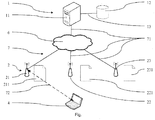
- the embodiment of the Fig. comprises a plurality of access points 2 wherein it is understood that the invention is not restricted with regard to the number of access points.
- the plurality of access points 2 has a first access point 21 with a first blacklist 211 stored in its memory, a second access point 22 with a second blacklist 221 stored in its memory and a third access point 23 with a third blacklist 231 stored in its memory.
- a blacklist 211, 221, 231 is implemented for each of the plurality of access points 2.
- the embodiment shown in the Fig. further comprises a control entity 1 with a computer 11, a database 12 and a local database connection 13.
- the computer 11, the database 12 and the local database connection 13 can be arranged in many ways commonly known to the skilled person.
- the computer 11 can be arranged as a workstation computer having the database 12 implemented on an internal hard disk which is connected via an internal bus as database connection 13.
- the computer 11 and the database 12 within the control entity 1 are arranged in order to perform the procedures and approaches described herein below, wherein for that purpose a computer program is executed on the computer 11.
- the plurality of access points 2 and the computer 11 of the control entity 1 are interconnected using wires via a common network infrastructure 6.
- each of the computer 11 of the control entity 1, the first access point 21, the second access point 22 and the third access point 23 are connected to the common network infrastructure 6 via wired connections 71.
- the common network infrastructure 6 can be any infrastructure suitable to interconnect the control entity 1 and the access points 2.
- the common network infrastructure 6 can be a switch, a switching hub or a multilayer switch, e.g. as a multi-port network bridge processing and routing data.
- the embodiment shown in the Fig. comprises a mobile device 4 having a wireless network interface.
- the mobile device 4 can be any suitable mobile computing device such as a laptop, a tablet computer, a smartphone, a personal digital assistant or the like wherein the mobile device 4 of the Fig. is a laptop computer.
- the mobile device 4 is connected via its wireless network interface and wireless network connection 72 to the first access point 21.
- the wireless network connection 72 and the wired network connections 71 together form connections 7 of the network.
- the first access point 21 informs the control entity 1 about a successful association of the mobile device 4. This is done by sending an assoc_inf message from the first access point 1 to the control entity 1.
- Information within the assoc_inf message comprises the Media Access Control address (MAC address) of the wireless network interface of the mobile device 4 as identifier of the mobile device 4 and an ID of the first access point 21 as an identifier of the first access point 21.
- MAC address Media Access Control address
- the control entity 1 adds this information into a neighbour_table implemented in its local database 12.
- the control entity 1 For handover execution or similar things, it can be required or useful that the control entity 1 is aware of all access points 2 within the network seen or reachable by the mobile device 4. In that case the control entity 1 initiates a neighbour access point discovery by sending a BL_add (blacklist add) message to all access points 2 with the MAC address of the mobile device 4 telling the access points 2 to add this MAC address into their blacklists 211, 221, 231. As the mobile device is currently connected to the first access point 21 in the situation shown in the Fig., the first access point 21 will clear the association by sending a Disassociation-Frame to the mobile device 4. After that the mobile device usually will start to scan for other access points 2 within the same network, e.g. the network having the same Extended Service Set IDentification (ESSID).
- ESSID Extended Service Set IDentification
- the mobile device 4 finds the second access point 22 and initiates the association procedure with the second access point 22.
- the MAC address of mobile device 4 is in the blacklist 221 of the second access point 22 as well it will reject the association-request and will inform the control entity 1 about the rejected association by sending an assoc_inf message to the control entity 1.
- Information within the assoc_inf message comprises the MAC address of the mobile device 4 as identifier of the mobile device 4 and an ID of the second access point 22 as an identifier of the second access point 22.
- the association reject message it will again start the scanning procedure to search for further access points 2 within the same network.
- the mobile device 4 will find the third access point 23 and will again initiate the association procedure. As the MAC address of the mobile device 4 is also on the blacklist 231 of the third access point 23, the third access point 23 will also reject the association and will inform the control entity 1 by sending an assoc_inf message to the control entity 1.
- the discovery procedure can then be considered to be finished using different suitable approaches, such as, e.g. after a timeout.
- the control entity 1 When the discovery procedure is finished the control entity 1 has a list of all neighbouring access points 2 to which the mobile device 4 could potentially setup a connection. Based on this table for instance a connectivity manager within the control entity 1 can decide to handover the mobile device 4 to an other access point 2, e.g. in order to increase the network performance in terms of load balancing or to decrease energy consumption by switching off selected access points 2.
- the assoc_info messages comprises additional information such as, e.g. signal quality, amount of connected mobile devices, etc. Possible decisions to initiate handover process to one of found access points 2 and handover execution can be performed according to known respective procedures as predefined mechanisms.
- the list of neighbouring access points 2 created by the control entity 1 can also be used to estimate the location of the mobile device 4.
- a computer program may be stored/distributed on a suitable medium, such as an optical storage medium or a solid-state medium supplied together with or as part of other hardware, but may also be distributed in other forms, such as via the Internet or other wired or wireless telecommunication systems.
- a computer program can be a computer program product stored on a computer readable medium which computer program product can have computer executable program code adapted to be executed to implement a specific method, such as the method according to the invention. Any reference signs in the claims should not be construed as limiting the scope. The invention is defined by the claims.
Landscapes
- Engineering & Computer Science (AREA)
- Computer Security & Cryptography (AREA)
- Computer Networks & Wireless Communication (AREA)
- Signal Processing (AREA)
- Mobile Radio Communication Systems (AREA)
Claims (13)
- Verfahren zum Entdecken umgebender Zugangspunkte einer mobilen Altvorrichtung (4) innerhalb eines Netzwerks, wobei die mobile Vorrichtung (4) eine drahtlose Netzwerkschnittstelle aufweist, das Netzwerk mehrere drahtlose Zugangspunkte (2) aufweist und eine schwarze Liste (211, 221, 231) für jeden der mehreren Zugangspunkte (2) implementiert ist, wobei das Verfahren aufweist:Bereitstellen einer Steuerentität (1), die mit jedem der mehreren Zugangspunkte (2) verbunden ist;Herstellen einer Verbindung zwischen der mobilen Vorrichtung (4) und einem anfänglichen Zugangspunkt (21, 22, 23) der Zugangspunkte (2) über die drahtlose Netzwerkschnittstelle der mobilen Vorrichtung (4);Übertragen durch den anfänglichen Zugangspunkt (21, 22, 23) einer Kennung der mobilen Vorrichtung (4) an die Steuerentität (1);Übertragen durch die Steuerentität (1) einer Nachricht zur Hinzufügung zur schwarzen Liste an jeden der mehreren Zugangspunkte (2), wobei die Nachricht zur Hinzufügung zur schwarzen Liste die Kennung der mobilen Vorrichtung (4) und eine Anzeige aufweist, die Kennung der mobilen Vorrichtung (4) in die jeweilige schwarze Liste (211, 221, 231) von jedem der mehreren Zugangspunkte (2) hinzuzufügen;Senden durch den anfänglichen Zugangspunkt (21, 22, 23) einer Trennungsnachricht an die mobile Vorrichtung (4) zum Löschen der Verbindung mit der mobilen Vorrichtung (4);Übertragen durch die mobile Vorrichtung (4) einer Anforderung nach einem Zugriff auf einen anderen Zugangspunkt (21, 22, 23) der mehreren Zugangspunkte (2), wobei die Anforderung die Kennung der mobilen Vorrichtung (4) aufweist;Zurückweisen durch den einen anderen Zugangspunkt (21, 22, 23) der Anforderung der mobilen Vorrichtung (4) und Übertragen von Informationen über die Zurückweisung an die Steuerentität (1), wobei die Zurückweisungsinformationen die Kennung der mobilen Vorrichtung (4) und eine Kennung des anderen Zugangspunkts (21, 22, 23) aufweisen;Wiederholen durch die mobile Vorrichtung des Schritts der Übertragung einer Anforderung an einen anderen Zugangspunkt (21, 22, 23), bis die mobile Vorrichtung (4) eine Zugriffsanforderung an jeden der mehreren Zugangspunkte (2) gesendet hat und/oder nachdem eine Zeitüberschreitung abgelaufen ist,wobei die drahtlose Netzwerkschnittstelle der mobilen Vorrichtung (4) und die Zugangspunkte (2) eingerichtet sind, beruhend auf IEEE 802.11 zu kommunizieren.
- Verfahren nach Anspruch 1, wobei
die mobile Vorrichtung (4) eine Anforderung nach einem Zugriff, die die Kennung der mobilen Vorrichtung (4) aufweist, an jeden Zugangspunkt (21, 22, 23) der mehreren Zugangspunkte (2) überträgt, der durch die drahtlose Netzwerkschnittstelle der mobilen Vorrichtung (4) erreichbar ist;
jeder erreichbare Zugangspunkt (21, 22, 23) die Anforderung der mobilen Vorrichtung (4) zurückweist und Informationen über die Zurückweisung, die die Kennung der mobilen Vorrichtung (4) aufweisen, an die Steuerentität überträgt; und
die Steuerentität (1) eine Datensammlung über die erreichbaren Zugangspunkte (2) der mobilen Vorrichtung (4) herstellt. - Verfahren nach einem der vorhergehenden Ansprüche, wobei die Anpassung der schwarzen Liste (211, 221, 231) von jedem der Zugangspunkte (2) das Entfernen der Kennung der mobilen Vorrichtung (4) aus der schwarzen Liste (211, 221, 231) eines ausgewählten Zugangspunkts (21, 22, 23) der mehreren Zugangspunkte (2) aufweist, wobei der ausgewählte Zugangspunkt (21, 22, 23) gemäß einem vordefinierten Mechanismus bewertet wird.
- Verfahren nach Anspruch 3, wobei die Anpassung der schwarzen Liste (211, 221, 231) von jedem der Zugangspunkte (2) das Aufzeichnen der Kennung der mobilen Vorrichtung (4) in der schwarzen Liste (211, 221, 231) des ausgewählten Zugangspunkts (21, 22, 23) und das Entfernen der Kennung aus der schwarze Liste (211, 221, 231) für einen weiteren ausgewählten Zugangspunkt (21, 22, 23) der mehreren Zugangspunkte (2) aufweist, wobei der weitere ausgewählte Zugangspunkt (21, 22, 23) gemäß dem vordefinierten Mechanismus bewertet wird.
- Verfahren nach einem der vorhergehenden Ansprüche, wobei eine Datenbank (12) in der Steuerentität (1) vorgesehen ist und die Steuerentität (1) die Zurückweisungsinformationen mindestens teilweise in der Datenbank (12) speichert.
- Verfahren nach einem der vorhergehenden Ansprüche, wobei die Zurückweisungsinformationen ferner eine Kennung des mindestens einen Zugangspunkts, die Signalstärke der mobilen Vorrichtung (4) an dem mindestens einen Zugangspunkt, die Fähigkeit des mindestens einen Zugangspunkts (21, 22, 23), die verfügbaren Ressourcen an dem mindestens einen Zugangspunkt (21, 22, 23) oder jede Kombination davon aufweisen.
- Verfahren nach einem der vorhergehenden Ansprüche, wobei die Kennung der mobilen Vorrichtung (4) die Medienzugriffs-Steuerungsadresse der drahtlosen Netzwerkschnittstelle der mobilen Vorrichtung (4) ist.
- Computerprogramm mit computerausführbaren Programmcodemitteln, wobei die Codemittel eingerichtet sind, die Verfahrensschritte, die durch die Steuerentität (1) nach den Ansprüchen 1 bis 7 ausgeführt werden, auf einem Computer zu implementieren, wenn sie ausgeführt werden.
- Steuerentität (1) mit einer Verarbeitungseinheit, einer Netzwerkschnittstelle, die mit mehreren Zugangspunkte (2) verbindbar ist, die jeweils eine jeweilige schwarze Liste innerhalb eines Netzwerks aufweisen, einer Speichereinheit und einer Datenbank (12), die in der Speichereinheit angeordnet ist, wobei die Steuerentität (1) zum Verwalten eines drahtlosen Zugriffs einer mobilen Vorrichtung (4) mit einer drahtlosen Netzwerkschnittstelle innerhalb des Netzwerks eingerichtet ist, wobei die Steuerentität (1) aufweist eine Einheit zur Aufzeichnung einer Kennung der mobilen Vorrichtung, die eingerichtet ist, eine Kennung der mobilen Vorrichtung (4) in der schwarze Liste (211, 221, 231) von jedem der mehreren Zugangspunkte (2) aufzuzeichnen; und
eine Einheit zur Anpassung der schwarzen Liste, die eingerichtet ist, die schwarze Liste (211, 221, 231) von jedem der Zugangspunkte (2) unter Verwendung von Zurückweisungsinformationen anzupassen, die durch mindestens einen Zugangspunkt (21, 22, 23) der mehreren Zugangspunkte (2) übertragen werden, wobei die Zurückweisungsinformationen die Kennung der mobilen Vorrichtung (4) aufweisen,
wobei die Einheit zur Aufzeichnung der Kennung der mobilen Vorrichtung eingerichtet ist, die Kennung der mobilen Vorrichtung (4) in jeder schwarzen Liste (211, 221, 231) der mehreren Zugangspunkte (2) aufzuzeichnen, indem sie aufweist:eine Verbindungsherstellungseinheit, die eingerichtet ist, Informationen über eine erfolgreiche Verbindung zwischen der mobilen Vorrichtung (4) und einem anfänglichen Zugangspunkt (21, 22, 23) der mehreren Zugangspunkte (2) über die drahtlose Netzwerkschnittstelle der mobilen Vorrichtung (4) zu empfangen; undeine Einheit zur Übertragung der Kennung der mobilen Vorrichtung, die eingerichtet ist, die Kennung der mobilen Vorrichtung (4) an jeden der mehreren Zugangspunkte (2) zu übertragen, nachdem der anfängliche Zugangspunkt (21, 22, 23) die Kennung der mobilen Vorrichtung (4) übertragen hat, und die Aufzeichnung der Kennung der mobilen Vorrichtung (4) in jeder schwarzen Liste (211, 221, 231) der mehreren Zugangspunkte (2) zu initiieren,wobei die drahtlose Netzwerkschnittstelle der mobilen Vorrichtung (4) und die Zugangspunkte (2) eingerichtet sind, beruhend auf IEEE 802.11 zu kommunizieren. - Steuerentität (1) nach Anspruch 9, die aufweist
eine Einheit zur Herstellung einer Datensammlung erreichbarer Zugangspunkte, die eingerichtet ist, eine Datensammlung über erreichbare Zugangspunkte (21, 22, 23) der mobilen Vorrichtung (4) herzustellen, nachdem Informationen über eine Zurückweisung, die die Kennung der mobilen Vorrichtung (4) aufweisen, jedes Zugangspunkts (21, 22, 23) der mehreren Zugangspunkte (2), der durch die drahtlose Netzwerkschnittstelle der mobilen Vorrichtung (4) erreichbar ist, an die Steuerentität übertragen worden sind. - Steuerentität (1) nach einem der Ansprüche 9 oder 10, wobei die Einheit zur Anpassung der schwarzen Liste eingerichtet ist, die schwarze Liste (211, 221, 231) von jedem der Zugangspunkte (2) durch Entfernen der Kennung der mobilen Vorrichtung (4) aus der schwarzen Liste (211, 221, 231) eines ausgewählten Zugangspunkts (21, 22, 23) der mehreren Zugangspunkte (2) anzupassen, wobei der ausgewählte Zugangspunkt (21, 22, 23) gemäß einem vordefinierten Mechanismus bewertet wird.
- Steuerentität (1) nach Anspruch 11, wobei die Einheit zur Anpassung der schwarzen Liste eingerichtet ist, die schwarze Liste (211, 221, 231) von jedem der Zugangspunkte durch Aufzeichnen der Kennung der mobilen Vorrichtung (4) in der schwarzen Liste (211, 221, 231) des ausgewählten Zugangspunkts (21, 22, 23) und Entfernen der Kennung aus der schwarzen Liste (211, 221, 231) für einen weiteren ausgewählten Zugangspunkt (21, 22, 23) der mehreren Zugangspunkte (2) anzupassen, wobei der weitere ausgewählte Zugangspunkt (21, 22, 23) gemäß dem vordefinierten Mechanismus bewertet wird.
- Steuerentität (1) nach einem der Ansprüche 9 bis 12, wobei die Datenbank der Steuerentität (1) eingerichtet ist, mindestens teilweise die Zurückweisungsinformationen zu speichern.
Priority Applications (1)
| Application Number | Priority Date | Filing Date | Title |
|---|---|---|---|
| EP11189906.8A EP2595433B1 (de) | 2011-11-21 | 2011-11-21 | Verfahren und System für netzwerkzentrierte Entdeckung von Anschlusspunkten an das Netzwerk für mobile Vorrichtungen in Netzwerken mit mehreren Zugangspunkten |
Applications Claiming Priority (1)
| Application Number | Priority Date | Filing Date | Title |
|---|---|---|---|
| EP11189906.8A EP2595433B1 (de) | 2011-11-21 | 2011-11-21 | Verfahren und System für netzwerkzentrierte Entdeckung von Anschlusspunkten an das Netzwerk für mobile Vorrichtungen in Netzwerken mit mehreren Zugangspunkten |
Publications (2)
| Publication Number | Publication Date |
|---|---|
| EP2595433A1 EP2595433A1 (de) | 2013-05-22 |
| EP2595433B1 true EP2595433B1 (de) | 2021-06-02 |
Family
ID=45044386
Family Applications (1)
| Application Number | Title | Priority Date | Filing Date |
|---|---|---|---|
| EP11189906.8A Active EP2595433B1 (de) | 2011-11-21 | 2011-11-21 | Verfahren und System für netzwerkzentrierte Entdeckung von Anschlusspunkten an das Netzwerk für mobile Vorrichtungen in Netzwerken mit mehreren Zugangspunkten |
Country Status (1)
| Country | Link |
|---|---|
| EP (1) | EP2595433B1 (de) |
Families Citing this family (4)
| Publication number | Priority date | Publication date | Assignee | Title |
|---|---|---|---|---|
| CN104053195B (zh) * | 2014-06-30 | 2018-03-27 | 京信通信系统(中国)有限公司 | 一种确定黑名单列表成员的方法及装置 |
| CN104333890A (zh) | 2014-10-17 | 2015-02-04 | 小米科技有限责任公司 | 信号传输的控制方法及装置、电子设备 |
| EP3035741A1 (de) | 2014-12-17 | 2016-06-22 | Thomson Licensing | Steuerung der Erfahrungsqualität von WLAN-Benutzer in einer Mehrfachzugangspunktumgebung |
| US9913193B2 (en) | 2015-02-20 | 2018-03-06 | Qualcomm Incorporated | Access point steering |
Family Cites Families (3)
| Publication number | Priority date | Publication date | Assignee | Title |
|---|---|---|---|---|
| US7480264B1 (en) * | 2005-02-10 | 2009-01-20 | Sonicwall, Inc. | Centralized wireless LAN load balancing |
| US20080320108A1 (en) * | 2007-06-20 | 2008-12-25 | Microsoft Corporation | Management Policies For Dense Wireless Access Point Infrastructures in Wireless Local Area Networks |
| EP2278834A1 (de) * | 2009-06-30 | 2011-01-26 | Alcatel Lucent | Verfahren zur Übertragung von Daten zwischen einem Client und einem Server in einem Telekommunikationsnetzwerk, sowie System, Server, Client und Knoten |
-
2011
- 2011-11-21 EP EP11189906.8A patent/EP2595433B1/de active Active
Non-Patent Citations (1)
| Title |
|---|
| None * |
Also Published As
| Publication number | Publication date |
|---|---|
| EP2595433A1 (de) | 2013-05-22 |
Similar Documents
| Publication | Publication Date | Title |
|---|---|---|
| EP2804422B1 (de) | Verkehrsentlastung an einem kleinen Zellzugriffspunkt | |
| US8848677B2 (en) | Method and apparatus for peer-to-peer connection using wireless local area network (LAN) in mobile communication terminal | |
| US9762389B2 (en) | Moderation of network and access point selection in an IEEE 802.11 communication system | |
| JP4570655B2 (ja) | 無線ネットワークにおけるmacレイヤハンドオフレイテンシを低減するための方法及びシステム | |
| US7602746B2 (en) | Method for optimized layer 2 roaming and policy enforcement in a wireless environment | |
| CN101690337B (zh) | 管理无线局域网中的密集的无线接入点基础结构 | |
| EP2036380B1 (de) | Netzwerkauswahl | |
| US20080020801A1 (en) | Managing Wireless Base Stations Using A Distributed Virtual Base Station Manager | |
| CN114828115B (zh) | 用于引导站的方法、接入点和系统 | |
| EP2127236B1 (de) | Pan-implementierung in einem infrastrukturnetz | |
| US11678254B2 (en) | Utilizing blacklist steering to prevent rejection of BSS transition management (BTM) steering | |
| WO2008107766A2 (en) | Neighbor network advertisement | |
| JP2007067745A (ja) | 無線端末、管理装置、無線lanの制御方法、無線lanシステム | |
| EP2595433B1 (de) | Verfahren und System für netzwerkzentrierte Entdeckung von Anschlusspunkten an das Netzwerk für mobile Vorrichtungen in Netzwerken mit mehreren Zugangspunkten | |
| CN116723495A (zh) | 一种无线局域网的漫游方法及系统 | |
| CN1996909A (zh) | 一种无线局域网中基于静态位置信息的负载均衡方法 | |
| CN105991711B (zh) | 一种通信方法、终端及相关设备 | |
| US8027303B2 (en) | Wireless communication system | |
| EP2533573A1 (de) | Verfahren und System zur netzwerkzentrischen Steuerung von Netzwerk-Konnektivität für mobile Endgeräte in IEEE 802.11-basierte Netzwerken | |
| EP1686819B1 (de) | Ein mobiles Kommunikationssystem | |
| JP2006222549A (ja) | 無線lanシステムにおけるローミング方法および無線lanシステム | |
| US9319960B2 (en) | Establishing mobile connectivity conditions for mobile subscriber units in a wireless communication networks | |
| CN101243628B (zh) | 用于无线通信系统的业务传输路径重新配置方法 | |
| JP2021040202A (ja) | 無線中継装置、通信システム、および制御方法 | |
| EP2733968A1 (de) | Entdeckung der Nähe von Mehrfachnetzwerkendgeräten |
Legal Events
| Date | Code | Title | Description |
|---|---|---|---|
| PUAI | Public reference made under article 153(3) epc to a published international application that has entered the european phase |
Free format text: ORIGINAL CODE: 0009012 |
|
| AK | Designated contracting states |
Kind code of ref document: A1 Designated state(s): AL AT BE BG CH CY CZ DE DK EE ES FI FR GB GR HR HU IE IS IT LI LT LU LV MC MK MT NL NO PL PT RO RS SE SI SK SM TR |
|
| AX | Request for extension of the european patent |
Extension state: BA ME |
|
| 17P | Request for examination filed |
Effective date: 20131118 |
|
| RBV | Designated contracting states (corrected) |
Designated state(s): AL AT BE BG CH CY CZ DE DK EE ES FI FR GB GR HR HU IE IS IT LI LT LU LV MC MK MT NL NO PL PT RO RS SE SI SK SM TR |
|
| STAA | Information on the status of an ep patent application or granted ep patent |
Free format text: STATUS: EXAMINATION IS IN PROGRESS |
|
| 17Q | First examination report despatched |
Effective date: 20171009 |
|
| GRAP | Despatch of communication of intention to grant a patent |
Free format text: ORIGINAL CODE: EPIDOSNIGR1 |
|
| STAA | Information on the status of an ep patent application or granted ep patent |
Free format text: STATUS: GRANT OF PATENT IS INTENDED |
|
| RIC1 | Information provided on ipc code assigned before grant |
Ipc: H04W 48/02 20090101AFI20210125BHEP Ipc: H04W 84/12 20090101ALN20210125BHEP Ipc: H04W 48/16 20090101ALN20210125BHEP |
|
| INTG | Intention to grant announced |
Effective date: 20210209 |
|
| RIN1 | Information on inventor provided before grant (corrected) |
Inventor name: ROOS, ANDREAS Inventor name: SIVCHENKO, DIMITRY Inventor name: BAYER, NICO |
|
| GRAS | Grant fee paid |
Free format text: ORIGINAL CODE: EPIDOSNIGR3 |
|
| GRAA | (expected) grant |
Free format text: ORIGINAL CODE: 0009210 |
|
| STAA | Information on the status of an ep patent application or granted ep patent |
Free format text: STATUS: THE PATENT HAS BEEN GRANTED |
|
| RIN1 | Information on inventor provided before grant (corrected) |
Inventor name: BAYER, NICO Inventor name: ROOS, ANDREAS Inventor name: SIVCHENKO, DIMITRY |
|
| REG | Reference to a national code |
Ref country code: CH Ref legal event code: EP |
|
| AK | Designated contracting states |
Kind code of ref document: B1 Designated state(s): AL AT BE BG CH CY CZ DE DK EE ES FI FR GB GR HR HU IE IS IT LI LT LU LV MC MK MT NL NO PL PT RO RS SE SI SK SM TR |
|
| REG | Reference to a national code |
Ref country code: GB Ref legal event code: FG4D |
|
| REG | Reference to a national code |
Ref country code: AT Ref legal event code: REF Ref document number: 1399631 Country of ref document: AT Kind code of ref document: T Effective date: 20210615 |
|
| REG | Reference to a national code |
Ref country code: DE Ref legal event code: R096 Ref document number: 602011071067 Country of ref document: DE |
|
| REG | Reference to a national code |
Ref country code: IE Ref legal event code: FG4D |
|
| REG | Reference to a national code |
Ref country code: LT Ref legal event code: MG9D |
|
| PG25 | Lapsed in a contracting state [announced via postgrant information from national office to epo] |
Ref country code: LT Free format text: LAPSE BECAUSE OF FAILURE TO SUBMIT A TRANSLATION OF THE DESCRIPTION OR TO PAY THE FEE WITHIN THE PRESCRIBED TIME-LIMIT Effective date: 20210602 Ref country code: FI Free format text: LAPSE BECAUSE OF FAILURE TO SUBMIT A TRANSLATION OF THE DESCRIPTION OR TO PAY THE FEE WITHIN THE PRESCRIBED TIME-LIMIT Effective date: 20210602 Ref country code: BG Free format text: LAPSE BECAUSE OF FAILURE TO SUBMIT A TRANSLATION OF THE DESCRIPTION OR TO PAY THE FEE WITHIN THE PRESCRIBED TIME-LIMIT Effective date: 20210902 Ref country code: HR Free format text: LAPSE BECAUSE OF FAILURE TO SUBMIT A TRANSLATION OF THE DESCRIPTION OR TO PAY THE FEE WITHIN THE PRESCRIBED TIME-LIMIT Effective date: 20210602 |
|
| REG | Reference to a national code |
Ref country code: NL Ref legal event code: MP Effective date: 20210602 |
|
| REG | Reference to a national code |
Ref country code: AT Ref legal event code: MK05 Ref document number: 1399631 Country of ref document: AT Kind code of ref document: T Effective date: 20210602 |
|
| PG25 | Lapsed in a contracting state [announced via postgrant information from national office to epo] |
Ref country code: GR Free format text: LAPSE BECAUSE OF FAILURE TO SUBMIT A TRANSLATION OF THE DESCRIPTION OR TO PAY THE FEE WITHIN THE PRESCRIBED TIME-LIMIT Effective date: 20210903 Ref country code: LV Free format text: LAPSE BECAUSE OF FAILURE TO SUBMIT A TRANSLATION OF THE DESCRIPTION OR TO PAY THE FEE WITHIN THE PRESCRIBED TIME-LIMIT Effective date: 20210602 Ref country code: SE Free format text: LAPSE BECAUSE OF FAILURE TO SUBMIT A TRANSLATION OF THE DESCRIPTION OR TO PAY THE FEE WITHIN THE PRESCRIBED TIME-LIMIT Effective date: 20210602 Ref country code: RS Free format text: LAPSE BECAUSE OF FAILURE TO SUBMIT A TRANSLATION OF THE DESCRIPTION OR TO PAY THE FEE WITHIN THE PRESCRIBED TIME-LIMIT Effective date: 20210602 Ref country code: NO Free format text: LAPSE BECAUSE OF FAILURE TO SUBMIT A TRANSLATION OF THE DESCRIPTION OR TO PAY THE FEE WITHIN THE PRESCRIBED TIME-LIMIT Effective date: 20210902 Ref country code: PL Free format text: LAPSE BECAUSE OF FAILURE TO SUBMIT A TRANSLATION OF THE DESCRIPTION OR TO PAY THE FEE WITHIN THE PRESCRIBED TIME-LIMIT Effective date: 20210602 |
|
| PG25 | Lapsed in a contracting state [announced via postgrant information from national office to epo] |
Ref country code: NL Free format text: LAPSE BECAUSE OF FAILURE TO SUBMIT A TRANSLATION OF THE DESCRIPTION OR TO PAY THE FEE WITHIN THE PRESCRIBED TIME-LIMIT Effective date: 20210602 Ref country code: PT Free format text: LAPSE BECAUSE OF FAILURE TO SUBMIT A TRANSLATION OF THE DESCRIPTION OR TO PAY THE FEE WITHIN THE PRESCRIBED TIME-LIMIT Effective date: 20211004 Ref country code: RO Free format text: LAPSE BECAUSE OF FAILURE TO SUBMIT A TRANSLATION OF THE DESCRIPTION OR TO PAY THE FEE WITHIN THE PRESCRIBED TIME-LIMIT Effective date: 20210602 Ref country code: ES Free format text: LAPSE BECAUSE OF FAILURE TO SUBMIT A TRANSLATION OF THE DESCRIPTION OR TO PAY THE FEE WITHIN THE PRESCRIBED TIME-LIMIT Effective date: 20210602 Ref country code: AT Free format text: LAPSE BECAUSE OF FAILURE TO SUBMIT A TRANSLATION OF THE DESCRIPTION OR TO PAY THE FEE WITHIN THE PRESCRIBED TIME-LIMIT Effective date: 20210602 Ref country code: EE Free format text: LAPSE BECAUSE OF FAILURE TO SUBMIT A TRANSLATION OF THE DESCRIPTION OR TO PAY THE FEE WITHIN THE PRESCRIBED TIME-LIMIT Effective date: 20210602 Ref country code: CZ Free format text: LAPSE BECAUSE OF FAILURE TO SUBMIT A TRANSLATION OF THE DESCRIPTION OR TO PAY THE FEE WITHIN THE PRESCRIBED TIME-LIMIT Effective date: 20210602 Ref country code: SM Free format text: LAPSE BECAUSE OF FAILURE TO SUBMIT A TRANSLATION OF THE DESCRIPTION OR TO PAY THE FEE WITHIN THE PRESCRIBED TIME-LIMIT Effective date: 20210602 Ref country code: SK Free format text: LAPSE BECAUSE OF FAILURE TO SUBMIT A TRANSLATION OF THE DESCRIPTION OR TO PAY THE FEE WITHIN THE PRESCRIBED TIME-LIMIT Effective date: 20210602 |
|
| REG | Reference to a national code |
Ref country code: DE Ref legal event code: R097 Ref document number: 602011071067 Country of ref document: DE |
|
| PLBE | No opposition filed within time limit |
Free format text: ORIGINAL CODE: 0009261 |
|
| STAA | Information on the status of an ep patent application or granted ep patent |
Free format text: STATUS: NO OPPOSITION FILED WITHIN TIME LIMIT |
|
| PG25 | Lapsed in a contracting state [announced via postgrant information from national office to epo] |
Ref country code: DK Free format text: LAPSE BECAUSE OF FAILURE TO SUBMIT A TRANSLATION OF THE DESCRIPTION OR TO PAY THE FEE WITHIN THE PRESCRIBED TIME-LIMIT Effective date: 20210602 |
|
| 26N | No opposition filed |
Effective date: 20220303 |
|
| PG25 | Lapsed in a contracting state [announced via postgrant information from national office to epo] |
Ref country code: AL Free format text: LAPSE BECAUSE OF FAILURE TO SUBMIT A TRANSLATION OF THE DESCRIPTION OR TO PAY THE FEE WITHIN THE PRESCRIBED TIME-LIMIT Effective date: 20210602 |
|
| PG25 | Lapsed in a contracting state [announced via postgrant information from national office to epo] |
Ref country code: MC Free format text: LAPSE BECAUSE OF FAILURE TO SUBMIT A TRANSLATION OF THE DESCRIPTION OR TO PAY THE FEE WITHIN THE PRESCRIBED TIME-LIMIT Effective date: 20210602 |
|
| REG | Reference to a national code |
Ref country code: CH Ref legal event code: PL |
|
| PG25 | Lapsed in a contracting state [announced via postgrant information from national office to epo] |
Ref country code: LU Free format text: LAPSE BECAUSE OF NON-PAYMENT OF DUE FEES Effective date: 20211121 Ref country code: IT Free format text: LAPSE BECAUSE OF FAILURE TO SUBMIT A TRANSLATION OF THE DESCRIPTION OR TO PAY THE FEE WITHIN THE PRESCRIBED TIME-LIMIT Effective date: 20210602 Ref country code: BE Free format text: LAPSE BECAUSE OF NON-PAYMENT OF DUE FEES Effective date: 20211130 |
|
| REG | Reference to a national code |
Ref country code: BE Ref legal event code: MM Effective date: 20211130 |
|
| PG25 | Lapsed in a contracting state [announced via postgrant information from national office to epo] |
Ref country code: LI Free format text: LAPSE BECAUSE OF NON-PAYMENT OF DUE FEES Effective date: 20211130 Ref country code: CH Free format text: LAPSE BECAUSE OF NON-PAYMENT OF DUE FEES Effective date: 20211130 |
|
| PG25 | Lapsed in a contracting state [announced via postgrant information from national office to epo] |
Ref country code: IE Free format text: LAPSE BECAUSE OF NON-PAYMENT OF DUE FEES Effective date: 20211121 |
|
| PG25 | Lapsed in a contracting state [announced via postgrant information from national office to epo] |
Ref country code: HU Free format text: LAPSE BECAUSE OF FAILURE TO SUBMIT A TRANSLATION OF THE DESCRIPTION OR TO PAY THE FEE WITHIN THE PRESCRIBED TIME-LIMIT; INVALID AB INITIO Effective date: 20111121 Ref country code: CY Free format text: LAPSE BECAUSE OF FAILURE TO SUBMIT A TRANSLATION OF THE DESCRIPTION OR TO PAY THE FEE WITHIN THE PRESCRIBED TIME-LIMIT Effective date: 20210602 |
|
| PG25 | Lapsed in a contracting state [announced via postgrant information from national office to epo] |
Ref country code: MK Free format text: LAPSE BECAUSE OF FAILURE TO SUBMIT A TRANSLATION OF THE DESCRIPTION OR TO PAY THE FEE WITHIN THE PRESCRIBED TIME-LIMIT Effective date: 20210602 |
|
| PG25 | Lapsed in a contracting state [announced via postgrant information from national office to epo] |
Ref country code: MT Free format text: LAPSE BECAUSE OF FAILURE TO SUBMIT A TRANSLATION OF THE DESCRIPTION OR TO PAY THE FEE WITHIN THE PRESCRIBED TIME-LIMIT Effective date: 20210602 |
|
| PG25 | Lapsed in a contracting state [announced via postgrant information from national office to epo] |
Ref country code: TR Free format text: LAPSE BECAUSE OF FAILURE TO SUBMIT A TRANSLATION OF THE DESCRIPTION OR TO PAY THE FEE WITHIN THE PRESCRIBED TIME-LIMIT Effective date: 20210602 |
|
| PGFP | Annual fee paid to national office [announced via postgrant information from national office to epo] |
Ref country code: DE Payment date: 20251118 Year of fee payment: 15 |
|
| PGFP | Annual fee paid to national office [announced via postgrant information from national office to epo] |
Ref country code: GB Payment date: 20251120 Year of fee payment: 15 |
|
| PGFP | Annual fee paid to national office [announced via postgrant information from national office to epo] |
Ref country code: FR Payment date: 20251125 Year of fee payment: 15 |