EP2596128B1 - Biologische klassierschaltungen mit mehrfacheingabe für zellen - Google Patents
Biologische klassierschaltungen mit mehrfacheingabe für zellen Download PDFInfo
- Publication number
- EP2596128B1 EP2596128B1 EP20110746063 EP11746063A EP2596128B1 EP 2596128 B1 EP2596128 B1 EP 2596128B1 EP 20110746063 EP20110746063 EP 20110746063 EP 11746063 A EP11746063 A EP 11746063A EP 2596128 B1 EP2596128 B1 EP 2596128B1
- Authority
- EP
- European Patent Office
- Prior art keywords
- bba
- seq
- promoter
- input
- sequence
- Prior art date
- Legal status (The legal status is an assumption and is not a legal conclusion. Google has not performed a legal analysis and makes no representation as to the accuracy of the status listed.)
- Active
Links
Images








Classifications
-
- C—CHEMISTRY; METALLURGY
- C12—BIOCHEMISTRY; BEER; SPIRITS; WINE; VINEGAR; MICROBIOLOGY; ENZYMOLOGY; MUTATION OR GENETIC ENGINEERING
- C12Q—MEASURING OR TESTING PROCESSES INVOLVING ENZYMES, NUCLEIC ACIDS OR MICROORGANISMS; COMPOSITIONS OR TEST PAPERS THEREFOR; PROCESSES OF PREPARING SUCH COMPOSITIONS; CONDITION-RESPONSIVE CONTROL IN MICROBIOLOGICAL OR ENZYMOLOGICAL PROCESSES
- C12Q1/00—Measuring or testing processes involving enzymes, nucleic acids or microorganisms; Compositions therefor; Processes of preparing such compositions
- C12Q1/68—Measuring or testing processes involving enzymes, nucleic acids or microorganisms; Compositions therefor; Processes of preparing such compositions involving nucleic acids
- C12Q1/6876—Nucleic acid products used in the analysis of nucleic acids, e.g. primers or probes
- C12Q1/6883—Nucleic acid products used in the analysis of nucleic acids, e.g. primers or probes for diseases caused by alterations of genetic material
- C12Q1/6886—Nucleic acid products used in the analysis of nucleic acids, e.g. primers or probes for diseases caused by alterations of genetic material for cancer
-
- G—PHYSICS
- G16—INFORMATION AND COMMUNICATION TECHNOLOGY [ICT] SPECIALLY ADAPTED FOR SPECIFIC APPLICATION FIELDS
- G16B—BIOINFORMATICS, i.e. INFORMATION AND COMMUNICATION TECHNOLOGY [ICT] SPECIALLY ADAPTED FOR GENETIC OR PROTEIN-RELATED DATA PROCESSING IN COMPUTATIONAL MOLECULAR BIOLOGY
- G16B40/00—ICT specially adapted for biostatistics; ICT specially adapted for bioinformatics-related machine learning or data mining, e.g. knowledge discovery or pattern finding
- G16B40/20—Supervised data analysis
-
- C—CHEMISTRY; METALLURGY
- C12—BIOCHEMISTRY; BEER; SPIRITS; WINE; VINEGAR; MICROBIOLOGY; ENZYMOLOGY; MUTATION OR GENETIC ENGINEERING
- C12N—MICROORGANISMS OR ENZYMES; COMPOSITIONS THEREOF; PROPAGATING, PRESERVING, OR MAINTAINING MICROORGANISMS; MUTATION OR GENETIC ENGINEERING; CULTURE MEDIA
- C12N15/00—Mutation or genetic engineering; DNA or RNA concerning genetic engineering, vectors, e.g. plasmids, or their isolation, preparation or purification; Use of hosts therefor
- C12N15/09—Recombinant DNA-technology
- C12N15/11—DNA or RNA fragments; Modified forms thereof; Non-coding nucleic acids having a biological activity
- C12N15/111—General methods applicable to biologically active non-coding nucleic acids
-
- C—CHEMISTRY; METALLURGY
- C12—BIOCHEMISTRY; BEER; SPIRITS; WINE; VINEGAR; MICROBIOLOGY; ENZYMOLOGY; MUTATION OR GENETIC ENGINEERING
- C12N—MICROORGANISMS OR ENZYMES; COMPOSITIONS THEREOF; PROPAGATING, PRESERVING, OR MAINTAINING MICROORGANISMS; MUTATION OR GENETIC ENGINEERING; CULTURE MEDIA
- C12N15/00—Mutation or genetic engineering; DNA or RNA concerning genetic engineering, vectors, e.g. plasmids, or their isolation, preparation or purification; Use of hosts therefor
- C12N15/09—Recombinant DNA-technology
- C12N15/63—Introduction of foreign genetic material using vectors; Vectors; Use of hosts therefor; Regulation of expression
-
- C—CHEMISTRY; METALLURGY
- C12—BIOCHEMISTRY; BEER; SPIRITS; WINE; VINEGAR; MICROBIOLOGY; ENZYMOLOGY; MUTATION OR GENETIC ENGINEERING
- C12Q—MEASURING OR TESTING PROCESSES INVOLVING ENZYMES, NUCLEIC ACIDS OR MICROORGANISMS; COMPOSITIONS OR TEST PAPERS THEREFOR; PROCESSES OF PREPARING SUCH COMPOSITIONS; CONDITION-RESPONSIVE CONTROL IN MICROBIOLOGICAL OR ENZYMOLOGICAL PROCESSES
- C12Q1/00—Measuring or testing processes involving enzymes, nucleic acids or microorganisms; Compositions therefor; Processes of preparing such compositions
- C12Q1/68—Measuring or testing processes involving enzymes, nucleic acids or microorganisms; Compositions therefor; Processes of preparing such compositions involving nucleic acids
- C12Q1/6897—Measuring or testing processes involving enzymes, nucleic acids or microorganisms; Compositions therefor; Processes of preparing such compositions involving nucleic acids involving reporter genes operably linked to promoters
-
- G—PHYSICS
- G16—INFORMATION AND COMMUNICATION TECHNOLOGY [ICT] SPECIALLY ADAPTED FOR SPECIFIC APPLICATION FIELDS
- G16B—BIOINFORMATICS, i.e. INFORMATION AND COMMUNICATION TECHNOLOGY [ICT] SPECIALLY ADAPTED FOR GENETIC OR PROTEIN-RELATED DATA PROCESSING IN COMPUTATIONAL MOLECULAR BIOLOGY
- G16B25/00—ICT specially adapted for hybridisation; ICT specially adapted for gene or protein expression
- G16B25/10—Gene or protein expression profiling; Expression-ratio estimation or normalisation
-
- G—PHYSICS
- G16—INFORMATION AND COMMUNICATION TECHNOLOGY [ICT] SPECIALLY ADAPTED FOR SPECIFIC APPLICATION FIELDS
- G16B—BIOINFORMATICS, i.e. INFORMATION AND COMMUNICATION TECHNOLOGY [ICT] SPECIALLY ADAPTED FOR GENETIC OR PROTEIN-RELATED DATA PROCESSING IN COMPUTATIONAL MOLECULAR BIOLOGY
- G16B25/00—ICT specially adapted for hybridisation; ICT specially adapted for gene or protein expression
-
- G—PHYSICS
- G16—INFORMATION AND COMMUNICATION TECHNOLOGY [ICT] SPECIALLY ADAPTED FOR SPECIFIC APPLICATION FIELDS
- G16B—BIOINFORMATICS, i.e. INFORMATION AND COMMUNICATION TECHNOLOGY [ICT] SPECIALLY ADAPTED FOR GENETIC OR PROTEIN-RELATED DATA PROCESSING IN COMPUTATIONAL MOLECULAR BIOLOGY
- G16B40/00—ICT specially adapted for biostatistics; ICT specially adapted for bioinformatics-related machine learning or data mining, e.g. knowledge discovery or pattern finding
Definitions
- the present invention relates to multi-input engineered genetic circuits for classifying cells.
- An important feature of biological pathways is their two-way interaction with the cellular environment in which they operate. Such interaction usually involves (1) sensing of relevant input conditions in the cell, (2) processing those inputs to determine whether and which action to take; and (3) producing a biologically-active output to actuate a physiological effect in the cell.
- Some engineered analogues of natural pathways with sensing, computational and actuation functionalities (1 , 2) have been developed that can augment endogenous processes and enable rational manipulation and control ofbiological systems.
- WO 2008/134593 discloses promoters operably linked to a repressor sequence encoding a repressor protein and a microRNA target sequence.
- the repressor is specific (i.e. it has operator sites) in the repressible promoter which is operably linked to a dsRed output sequence. This system can be used for the classification of the status of a cell based on its miRNA expression.
- Described herein are multi-input biological classifier circuits and methods of use thereof developed for processing molecular information in mammalian cells. These classifier circuits use transcriptional and posttranscriptional regulation in order to classify the status of a cell, i.e ., determine whether a cell is in a specific state of interest.
- the biological classifier circuits described herein implement this task by interrogating the state of the cell through simultaneous assessment of multiple inputs, such as the expression levels of a subset of predefined markers, for example, endogenous, mature microRNAs.
- the classifier circuits described herein are designed to 'compute' whether the expression profile of the markers matches a pre-determined reference profile that characterizes the specific cell state that the classifier circuits are intended to detect.
- the classifier circuits produce a biological response, such as expression of a reporter molecule.
- biological circuits are termed herein as 'classifiers' because they classify individual cells into a number of categories based on processing a multitude of inputs indicative of the cells' internal states, in a manner similar to current practices for characterizing bulk tissue (e.g., biopsy samples) using gene array analysis and computer algorithms (31).
- the biological classifier circuits described herein can be used in a variety of applications, such as those requiring precise classification and identification of cell types.
- described herein are biological classifier circuits for use as therapeutic agents, for example, in highly precise and selective cancer therapy.
- Many mainstream and experimental drugs exhibit a degree of selectivity toward cancer cells by relying on individual cancer markers (32).
- cancer cells exhibit a complex set of conditions deviating from the normal state of their progenitor tissue (33, 34), and using a single marker to distinguish them from healthy cells is rarely sufficient and often results in harmful side-effects (35).
- sensing and integration of information from multiple markers by a therapeutic agent is crucial for creating next-generation treatments, and for use in a variety of applications, which can include, but are not limited to identification, sorting, or targeting of stem cells from heterogenous populations of differentiated cells; identification, sorting, or targeting of specific cell types for the treatments of various diseases, such as cancer; identification, sorting, targeting, or detection of cell types at various developmental stages; drug screening assays; and identification, sorting, targeting, or detection of cell types in experimental models to be used in tracking therapuetic treatment responses to a drug or other molecule, such as during a tumor treatment.
- an exemplary biological classifier circuit tested in human cell culture that acts as a programmed therapeutic agent that, via identification and processing of a combination of input markers, selectively identifies and triggers apoptosis in a cancer cell line, but not in healthy cells.
- high-input detector modules for classifying a cell status based on detecting whether an input microRNA is expressed at a specific level or higher than a reference level.
- Such high-input detector modules comprise an inducible promoter sequence operably linked to: (i) a repressor sequence, which encodes a repressor product, and (ii) a sequence which encodes one or more microRNA target sequences, such that the one or more microRNA target sequences comprise target sequences of the one or more input microRNAs the module is designed to detect.
- such high-input detector modules can further comprise a repressible promoter sequence operably linked to an output sequence encoding an ouput product, wherein the repressor product is specific for the repressible promoter sequence.
- the high-input detector module can further comprise one or more regulatory units.
- regulatory units comprise a constitutive or inducible promoter sequence operably linked to: (i) a sequence that encodes for a transcriptional activator product, and (ii) a sequence encoding one or more microRNA target sequences, such that the transcriptional activator product activates the inducible promoter sequence operably linked to the repressor sequence and the sequence encoding the one or more microRNA target sequences.
- the sequences encoding one or more microRNA target sequences are the same throughout all the units and components of the high-input detector module, i.e., each unit and component of the high-input detector module detects the same input microRNA(s).
- the inducible promoter of a second regulatory unit is activated by the transcriptional activator encoded by a first regulatory unit, such that the repressor product of the high-input detector module is expressed only when the transcriptional activator of the second regulatory unit is expressed following activation by the transcriptional activator encoded by the first regulatory unit.
- sequences encoding one or more microRNA target sequences are the same throughout all the units and components of the high-input detector module, i.e., each unit and component of the high-input detector module detects the same input microRNA(s).
- multiple-input biological classifier circuits for classifying a cell status, based on detecting in parallel an expression pattern of a subset of at least two different input microRNAs, each of which is expressed at a specific level or higher than a reference level, such that the biological classifier circuit circuit comprises at least two high-input detector modules as described herein.
- multiple-input biological classifier circuits for classifying a cell status based on detecting in parallel an expression pattern of a subset of at least three different input microRNAs, each of which is expressed at a lower level than a reference expression level.
- the biological classifier circuit comprises one or more low-input detector modules for detecting the at least three input microRNAs expressed at a lower level than a reference expression level
- the low-input detector module comprises a constitutive or repressible promoter sequence operably linked to: (i) an output sequence that encodes an output product, and (ii) a sequence encoding at least one microRNA target sequence specific for the at least one of the at least three input microRNA having a lower expression level than a reference expression level; and where expression of the output product classifies a cell status.
- multiple-input biological classifier circuits for classifying a cell status based on detecting in parallel an expression pattern of a subset of at least two different input microRNAs, where the biological classifier circuit comprises at least two input detector modules.
- expression of at least two different input microRNAs are detected by at least two types of input detector modules, such that at least one of the at least two different input microRNAs has a lower expression level than a reference expression level, and at least one of the at least two different input microRNAs has a higher expression level than a reference expression level.
- one of the at least two input detector modules is designated a low-input detector module, for detecting the at least one input microRNA expressed at a lower level than a reference expression level.
- Such low-input detector modules comprise a repressible promoter sequence operably linked to: (i) an output sequence, which encodes an output product, and (ii) a sequence encoding at least one microRNA target sequence specific for the at least one input microRNA having a lower expression level than a reference expression level.
- one of the at least two input detector modules is designated a high-input detector module for detecting the at least one input microRNA expressed at a higher level than a reference expression level.
- Such high-input detector module comprise a constitutive or inducible promoter sequence operably linked to (i) a repressor sequence that encodes for a repressor product, and (ii) a sequence encoding for a microRNA target sequence specific for the at least one input microRNA having a higher expression level than a reference expression level.
- the repressor product represses the repressible promoter of the low-input detector module.
- each microRNA target sequence encoded by the low-input detector module(s) and the high-input detector module(s) is different from each other, and expression of the output product classifies a cell status.
- multiple-input biological classifier circuits are provided for classifying a cell status based on detecting in parallel an expression pattern of a subset of at least three different input microRNAs.
- expression of at least three different input microRNAs are detected by at least two input detector modules, such that expression at least one of the three different input microRNAs has a lower expression level than a reference expression level, at least one of the at least three different input microRNAs has a higher expression level than a reference expression level, and wherein one or more of the at least three different input microRNAs has a different expression level (higher or lower) than a reference expression level.
- one of the at least two input detector modules is designated a low-input detector module for detecting each of the different input microRNAs expressed at a lower level than a reference expression level.
- the low-input detector modules can comprise a repressible promoter sequence operably linked to: (i) an output sequence that encodes an output product and (ii) a sequence encoding one or more microRNA target sequences specific for each of the different input microRNAs having a lower expression level than a reference expression level to be detected.
- the high-input detector modules can comprise a promoter sequence operably linked to (i) a repressor sequence that encodes for a repressor product and (ii) a sequence encoding a microRNA target sequence, where the microRNA target sequence is specific for one of the different input microRNAs having a higher expression level than a reference expression level, and such that the repressor product represses the repressible promoter of the low-input detector module.
- each microRNA target sequence encoded by the low-input detector module(s) and the high-input detector module(s) is different from each other, and expression of the output product classifies a cell status.
- the repressor protein encoded by the high-input detectors are the same, while in other such circuits the repressor protein can be different.
- the promoter sequence operably linked to (i) a repressor sequence and (ii) a sequence encoding a microRNA target sequence, of any of the high-input detector modules can be an inducible promoter.
- such inducible promoters of the high-input detector modules can be activated by a transcriptional activator.
- the high-input detector module can further comprise one or more regulatory units.
- regulatory units comprise a constitutive or inducible promoter sequence operably linked to: (i) a sequence that encodes for a transcriptional activator product, and (ii) a sequence encoding one or more microRNA target sequences, such that the transcriptional activator product activates the inducible promoter sequence operably linked to the repressor sequence and the sequence encoding the one or more microRNA target sequences.
- the transcriptional activator encoded by the regulatory unit induces transcription from the promoter sequence operably linked to (i) the repressor sequence and (ii) the sequence encoding the microRNA target sequence of the at least one high-input detector module of the classifier circuit.
- the sequences encoding one or more microRNA target sequences are the same throughout all the units and components of the high-input detector module, i.e., each unit and component of the high-input detector module detects the same input microRNA(s).
- the inducible promoter of a second regulatory unit is activated by the transcriptional activator encoded by a first regulatory unit, such that the repressor product of the high-input detector module is expressed only when the transcriptional activator of the second regulatory unit is expressed following activation by the transcriptional activator encoded by the first regulatory unit.
- At least three, at least four, at least five, at least six, at least seven, at least eight, at least nine, at least 10, at least 11, at least 12, at least 13, at least 14, at least 15, at least 16, at least 17, at least 18, at least 19, or at least 20 different input microRNAs are detected by the multiple-input classifier circuit.
- the at least two detector modules comprise at least two, at least three, at least four, at least five, at least six, at least seven, at least eight, at least nine, at least 10, at least 11, at least 12, at least 13, at least 14, at least 15, at least 16, at least 17, at least 18, or at least 19 different high-input detector modules.
- the output sequence of the circuit encoded by a low-input.module comprises at least two, at least three, at least four, at least five, at least six, at least seven, at least eight, at least nine, at least 10, at least 11, at least 12, at least 13, at least 14, at least 15, at least 16, at least 17, at least 18, at least 19, or at least 20 different microRNA target sequences.
- no target microRNA target sequences are linked to the sequence encoding the output product.
- the repressor sequence of at least one high-input detector module further comprises a sequence encoding a microRNA, such that the microRNA is different from each of the different microRNA inputs detected by the modules of the circuit, and such that the output sequence of the circuit, present in a low-input detector module or in a high-input detector module, further comprises a microRNA target sequence for the microRNA.
- the output product is a reporter protein, a transcriptional activator, a transcriptional repressor, a pro-apoptotic protein, a lytic protein, an enzyme, a cytokine, or a cell-surface receptor.
- the repressor sequence of at least one high-input detector module further comprises a sequence encoding for a protein or agent that is a functional or physiological inhibitor of the output product of the multiple-input biological classifier circuit.
- compositions comprising one or more high-input detector modules and a pharmaceutically acceptable compound.
- compositions comprising one or more multiple-input biological classifier circuits and a pharmaceutically acceptable compound.
- the multiple-input biological classifier circuits described herein are provided for use in identifying a specific target cell, or a cell population in a population of heterogenous cells.
- the multiple-input biological classifier circuit can be introduced to the heterogenous population of cells us ng one or more vectors comprising the sequences encoding for the components of the circuits.
- the one or more vectors is a lentiviral vector or lentiviral particle.
- the cell or population of heterogenous cells is a mammalian cell or a population of heterogenous mammalian cells.
- methods for identifying a cell or population of cells based on an expression pattern of at least three different input microRNAs. Such methods comprise introducing any of the high-input detector modu les or multiple-input biological classifier circuits descri bed herein into a cell or population of cells, such that expression of an output product by the cell identifies the cell or population of cells.
- the cell or population of cells is in vitro, ex vivo, or in vivo.
- Such methods comprise administering to a subject in need thereof an effective amount of one or more of any of the high-input detector modules or multiple-input biological classifier circuits described herein, wherein expression of one or more output products is indicative that the subject has the disease or condition.
- the disease or condition can be a cancer, a proliferative disorder, a metabolic disorder, a neurological disorder, an immunological disorder, or an infection.
- Described herein are methods for treating a disease or condition in a subject in need thereof. Such methods comprise administering to a subject in need thereof an effective amount of one or more of any of the high-input detector modules or multiple-input biological classifier circuits described herein, such that one or more of the output products is a therapeutic agent.
- the disease or condition can be a cancer, a proliferative disorder, a metabolic disorder, a neurological disorder, an immunological disorder, or an infection.
- multiple-input biological classifier circuits are provided for use in d iagnosi ng a disease or condition in a subject in need thereof, such that expression of one or more output products produced by the multiple-input biological classifier circuit is indicative that the subject has the disease or condition.
- the disease or condition is a cancer, proliferative disorder, metabolic disorder, neurological disorder, immunological disorder, or infection.
- multiple-input biological classifier circuits for use in treating a disease or condition in a subject in need thereof, such that one or more output products produced by the multiple-input biological classifier circuit is a therapeutic agent.
- the therapeutic agent is a drug or small molecule that causes cell death or inhibition of cell proliferation.
- the disease or condition is a cancer, proliferative disorder, metabolic disorder, neurological disorder, immunological disorder, or infection.
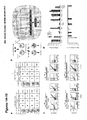
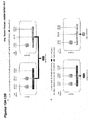
- Figures 1A-1D show a schematic operation of a cell type classifier.
- Figure 1A shows multi-input logic used to selectively identify a specific cell type.
- Figure 1B depicts a schematic representation of a HeLa-specific classifier circuit.
- Figure 1C shows experimental confirmation of various reporter construct knock-downs by corresponding microRNA markers identified by our bioinformatics analysis in HeLa, HEK293 , and MCF7 cell lines. Scatter plots show flow cytometry data measured at 48 hours post-transfection.
- Figure 1D depicts the overall knock-down efficiency by the microRNA biomarkers in different cell lines (top). The bars show mean ⁇ SD of DsRed/AmCyan values from three independent replicates. The corresponding published microRNA cloning frequencies are shown below, indicating the desired inverse relationship between those frequencies and DsRed reporter levels.
- Figures 2A-2F depict the schematics of a classifier circuit.
- Figure 2A shows an abstract network diagram for sensing HeLa-low microRNA, whereby an output is directly targeted for degradation by the marker.
- Figure 2B depicts a detailed circuit diagram for sensing HeLa-low markers. Output mRNA is knocked down by a corresponding marker via a target sequence fused in this mRNA 3'-UTR. DNA and RNA species are indicated.
- Figure 2C shows a coherent type 2 feed-forward motif for sensing HeLa-high microRNAs that enables output expression by down-regulating a repressor ( i.e., 'double-inversion' module).
- Figure 2D depicts a detailed circuit diagram for a HeLa-high marker sensor.
- Figure 2E depicts a representative schematic of a complete classifier circuit. For simplicity, four adjacent microRNA target sites are shown as a wider box and DNA and RNA species are lumped together as in Figure 2D . Two double inversion modules for HeLa high markers are shown and rtTA crosstalk is indicated with dotted lines. The logic computed by this classifier circuit is shown.
- Figure 2F depicts how, in some embodiments, the circuit of Figure 2E can be modified to result in apoptotic output production.
- Figures 3A-3B depict extensive validation of a classifier circuit's logic operation.
- Figure 3A shows that four versions of the circuit with specific microRNA regulatory links interrupted (denoted by stars) can be used to emulate the various combinations of microRNA input levels.
- Figure 3B shows output values measured for all 32 input combinations (Tables 52-54 describe the constructs and experimental conditions).
- the images are overlays of DsRed and AmCyan channels taken ⁇ 48 h post-transfection.
- the bar charts show mean ⁇ SD of normalized DsRed intensity obtained from three independent replicates measured by fluorescence-activated cell sorting (FACS) ⁇ 48 h post-transfection.
- FACS fluorescence-activated cell sorting
- Figure 4 depicts an optimized sensor configuration for HeLa-high markers. Detailed implementation showing individual DNA and RNA species and a mechanism of operation are shown. The inset depicts a simplified network diagram of a sensing process.
- Figures 5A-5E show that a classifier circuit can be used to distinguish and specifically kill HeLa cells. Plasmids encoding the circuits and transfection protocols are listed in Tables 55 and 56. Fluorescent reporter assays are shown in Figures 5A and 5B.
- Figure 5A shows schematics of the circuits and controls. O1, CAGop-driven DsRed with target sites for HeLa-low microRNAs (miRs-HeLa-low). 02, CAGop-driven DsRed without microRNA target sites.
- R1 CAGop-driven DsRed constitutively repressed by rtTA-activated LacI and engineered intronic miR-FF4 with HeLa-low targets.
- R2 similar to R1 but without the HeLa-low targets.
- FIG. 5B shows experimental results from a classifier circuit used to distinguish and kill HeLa cells.
- the cells were also transfected with marker CAG-AmCyan.
- the constructs used in each case are indicated on the X-axis. Each bar represents the mean ⁇ SD of DsRed/AmCyan value with three independent replicates measured by FACS 48 h post-transfection. All values are normalized to constitutive output level (O1) in HeLa cells. Representative images of the cell culture obtained in these experiments are overlays of the DsRed and AmCyan channels captured 48 h post-transfection. The constructs used are indicated above the images.
- FIGS 5C and 5D show apoptosis assays in HeLa (5C) and HEK293 (5D) cell lines.
- a complete apoptosis-inducing classifier circuit ('Circuit', Figure 2F ) was co-transfected with the AmCyan marker to determine cell survival due to selective hBax activation.
- Each bar in the charts represents the mean ⁇ SD of the percentage of AmCyan + cells with three independent replicates measured by FACS 4 days post transfection.
- the histograms compare gated AmCyan + populations obtained in FACS measurements from pooled replicas after examining equal number of events in the different pools.
- Figure 5E shows a comparison of circuit killing efficiency for two cell lines.
- Figures 6A-6B show fluorescent reporter assays and killing experiments in cell mixtures. Transfection protocols are listed in Table 57.
- Figure 6A shows fluorescent reporter assays. The scheme on the left illustrates experimental set-up and data analysis. The histograms on the right show contribution of the two cell types, HeLa and HEK-Cerulean, to the DsRed + cell population. The inset shows the fraction of DsRed + cells either transfected with the circuit or with constitutively-repressed output, relative to the constitutively expressed output for each cell type.
- Figure 6B shows apoptotic assays in a cell mixture. The scheme at the top of the panel illustrates experimental set-up and data analysis.
- the scatter plots at the bottom show the contributions of the HeLa-EYFP and HEK293-Cerulean cells to the DsRed + cell population considered to be surviving cells.
- the bar chart shows the fraction of surviving cells either transfected with the circuit or with the constitutively-expressed hBax, relative to the number of DsRed + cells measured without hBax for each cell type.
- Figure 7 depicts initial marker screening. Expression histograms for the top 12 HeLa microRNAs, ranked in descending order according to their cloning frequency (CF). Expression levels in HeLa cells are indicated by an arrow in each histogram. Horizontal axes show cloning frequency in percent units.
- Figures 8A-8G depict a circuit performance analysis and profile determination.
- Figure 8A shows a simplified dose response of an output to changing concentrations of a repressor in a HeLa-high marker sensor.
- Figure 8B depicts a fit of the data shown in Figure 9A to an exponential output restoration function. The lower and upper bounds of the output amplitude ( O OFF and O ON ) as well as the theoretical upper limit on output intensity ( O s ) are shown.
- Figure 8C shows a dose response of a repressor concentration to changing microRNA input levels. Lower and upper bounds of the repressor concentration are shown.
- Figure 8D is a contour plot of the mapping between two hypothetical HeLa-high markers A and B and the output of a two-input circuit that uses them as inputs.
- Marker concentrations are normalized to their levels in HeLa cells denoted as A HeLa and B HeLa that result in 99% output repression relief.
- Figure 8E depicts plots showing predicted output levels in different cell lines from different combinations of microRNA markers relative to the output in HeLa cells. Each marker sensor is assumed to be tuned to relieve 99% output repression in HeLa cells by its cognate input marker. The numbers on the axes are given in cloning frequency (CF) units. Each dot represents one cell type and the contour lines show input combinations that result in 20% output compared to HeLa cells. Dots above the contour line are cell types that generate more than 20% of HeLa output and they represent 'false-positive' cell types for this specific circuit configuration.
- CF cloning frequency
- Figure 8F shows an analysis of additional microRNA markers not expressed in HeLa cells but highly expressed in cells that can be misidentified based on the profile composed of only miR-21 and miR-17-30a HeLa-high markers.
- the heat map shows the cloning frequency of selected HeLa-low markers, with blue and red colors indicating low and high CF values, respectively.
- Figure 8G depicts simulated output levels in different cell types using a full classifier. From left to right, output levels histogram for a complete set of markers using sensor parameters defined in the text; output levels histogram with the 99% repression relief values for HeLa-high marker sensors doubled compared to their default values; output levels histogram when the 99% repression relief values for the HeLa-high marker sensors are half of the default values.
- Figures 9A-9C show optimization of sensors for highly expressed markers.
- Transcriptional activator rtTA and repressor LacI are fused to indicated targets for either exogenous siRNA-FF5 or endogenous microRNAs.
- FF5 target for siRNA-FF5
- T21 target for miR-21
- T17-30a targets for miR-17 and 30a.
- Left panels show the schematics of different sensor variants.
- Charts on the right show quantitative results measured by FACS 48 h post-transfection.
- Figure 9A shows an effect of a coherent feed-forward motif on sensor performance in response to exogenous siRNA-FF5.
- Each bar represents the mean ⁇ SD of DsRed/AmCyan value with three independent replicates.
- Figure 9B shows an effect of LacI dose on sensor performance for highly-expressed endogenous microRNA markers. Each bar represents the mean ⁇ SD of DsRed/AmCyan value obtained from three independent replicates.
- Figure 9C shows an effect of rtTA dosage on the performance of sensors for highly-expressed endogenous microRNA markers.
- Figure 10 shows a representative circuit optimization with engineered intronic microRNA miR-FF4. Transfection protocol is described in Table 58.
- Table 58 Four versions of the circuit ( Figure 2E ), with specific microRNA regulatory links interrupted (denoted as "-") or functional (denoted as "+”), are used to emulate four different combinations of input levels for two HeLa-high microRNA markers ( Figure 3A ).
- the bar charts show mean ⁇ SD of DsRed/AmCyan values from three independent replicates measured by FACS ⁇ 48 h post-transfection.
- the ON:OFF ratio is calculated by dividing the DsRed/AmCyan ratio of the ON state (the last category) by the value in the OFF state (the first three categories).
- the images are overlays of DsRed and AmCyan channels taken ⁇ 48 h post-transfection.
- Figure 11 shows an operation of partially-assembled circuits in HeLa, HEK293 and MCF7 cell lines.
- Transfection protocol is described in Table 58.
- ON State no repression of DsRed output
- OFF state constitutive repression on DsRed output
- T17-30a only sensor for miR-17-30a is used
- T21 only sensor for miR-2 1 is used
- T1 41 only sensor for miR- 141 is used
- "+" represents a combination of sensors.
- the bar charts show mean ⁇ SD of DsRed/AmCyan values from three independent replicates measured by FACS ⁇ 48 h posttransfection. All DsRed/AmCyan values are normalized to that of HeLa cells at the ON state. Images are overlays of DsRed and AmCyan channels taken ⁇ 48 h post-transfection.
- Figure 12 shows a separation of HEK-Cerulean cells from HeLa cells using Cerulean fluorescent channel.
- the histograms on the left show contributions of the two cell types, HeLa and HEK-Cerulean to Cerulean-negative (Cerulean - ) and Cerulean-positive (Cerulean + ) cells.
- the chart on the right show the relative percentage of HeLa and HEK-Cerulean in Cerulean - and Cerulean + cells respectively.
- Figures 13A-13B show an exemplary parallel operation of classifier circuits.
- Figure 13A depicts three hypothetical microRNA markers A1, A2 and A3 that are used to determine a specific cell state A.
- Hypothetical microRNA markers B1, B2 and B3 are used to determine specific cell state B.
- Cells in state A or B e.g. two different phases in cancer development, are both intended targets for a multi-purpose therapeutic agent.
- Two classifier circuits A and B operating in parallel with no crosstalk between them are used to identify cell types A and B, respectively.
- RA1 and RA2 are 'double-inversion' modules in Circuit A;
- RB1 is the 'double-inversion' module in Circuit B.
- Figure 13B shows output proteins A and B represent two different therapeutic agents for type A and B cells, respectively. Outputs A and B are controlled by circuits A and B that detect profiles characterizing type A and type B cells, respectively.
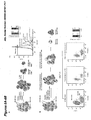
- Figures 14A-14C show exemplary operational decisions that can be executed by a multi-input biological classifier circuit comprising an embodiment of a "kill and rescue" output module as described herein.
- Figure 14A shows a schematic flow diagram of high-level operation of a multi-input biological classifier circuit. Different outcomes are shown depending on whether the cell is a stem cell (elimination required) or a differentiated cell (rescue required). The cells that do not receive the classifier circuit will be eliminated due to the presence of antibiotic in the cell culture medium. The outcomes that result depending on the cell type and on whether the cell is transfected or not is summarized.
- Figure 14B depicts molecular implementation of the schematic shown in Figure 14A .
- the "kill and rescue" output module shown controls a fusion protein that is cleaved to generate a killer protein hBax and a repressor cI-Krab.
- the repressor inhibits expression of an antibiotic resistance gene.
- the classifier positively identifies a cell as a stem cell, the fusion protein is expressed at a high level, inducing cell death, and inhibiting resistance. If the classifier makes a negative decision, neither the apoptotic protein nor the repressor of the antibiotic resistance is expressed. Therefore, the antibiotic resistance gene permits those cells to survive in selective medium.
- Figure 14C depicts a schematic of a full multi-input biological classifier circuit that identified six input microRNAs that comprises a kill and rescue output module.
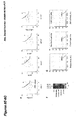
- FIG. 15 shows experimental confirmation of microRNA markers in various cell lines.
- Transiently-transfected bidirectional constructs include DsRed reporter with fused microRNA targets (four tandem repeats of the same target fully complementary to the corresponding mature microRNA sequences), and an internal reference reporter AmCyan. Schematics diagrams for bidirectional reporters are shown in the left panel. Transfection experiments were performed with Effectene transfection reagent for all cell lines except for SH-SY5Y and T47D.
- FACS data for HEK293, HeLa and MCF7 cells were measured at 48 hours post-transfection with BD LSRII flow analyzers using a filter set for AmCyan (405 nm Laser, 460 nm Longpass filter, 480/40 emission filter and PMT 225 V) and a filter set for DsRed (561 nm Laser, 585/20 emission filter and PMT 210 V).
- AmCyan 405 nm Laser, 460 nm Longpass filter, 480/40 emission filter and PMT 225 V
- DsRed 561 nm Laser, 585/20 emission filter and PMT 210 V
- FACS data for SKBR3, DAOY, SH-SY5Y and BE(2)-C were measured at 48 hours post-transfection with BD LSRII flow analyzers using a filter set for AmCyan (405 nm Laser, 510/50 emission filter and PMT 230 V) and a filter set for DsRed (561 nm laser, 610/20 emission filter and PMT 230 V). Scatter plots of raw FACS data are shown in the right panel.
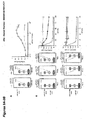
- Figures 16A-16E demonstrate operation of circuits in variant cells.
- CAG-AmCyan was co-transfected in all cases as an internal control.
- Figure 16A depicts schematics of a complete circuit (C1), partially-assembled circuits (P17-30a, P21, R1, C2 and O1) and controls (02 and R2).
- Figure 16B shows results from transfection experiments performed with Effectene transfection reagent.
- the high-input detector modules and multi-input biological classifier circuits and systems described herein integrate sophisticated sensing, information processing, and actuation in living cells and permit new directions in basic biology, biotechnology and medicine.
- the multi-input biological classifier circuits described herein comprise synthetic, scaleable transcriptional/post-transcriptional regulatory circuits that are designed to interrogate the status of a cell by simultaneously sensing expression levels of multiple endogenous inputs, such as microRNAs.
- the classifier circuits then compute whether to trigger a desired output or response if the expression levels match a pre-determined profile of interest.
- the circuits decribed herein can selectively identify a specific cell population expressing a profile of interest and output a desired response based on the simultaneous interrogation of a multitude of inputs.
- a profile of interest that a biological classifier is designed to identify can be based on selecting a small, non-redundant set of inputs that together generate a unique and robust molecular signature for a specific cell type.
- the classifier circuits described herein are designed to identify molecular signatures or profiles that comprise both high and low/absent inputs using Boolean logic, such as AND-like, OR-like, NOT-like operations, or any combination thereof.
- Boolean logic such as AND-like, OR-like, NOT-like operations, or any combination thereof.
- a molecular profile to be identified can comprise two different microRNAs that are highly expressed, and three different microRNAs that are low/absent.
- Such biological classifier circuits can be used, for example, to selectively identify and destroy cancer cells using specific microRNA expression profiles as inputs.
- multi-input biological classifier circuits and methods of use thereof for the detection of and discrimination between multiple ( i.e .,at least two) inputs.
- These multi-input biological classifier circuits use transcriptional and posttranscriptional regulation mechanisms in modular components, such as high-input detector modules, in order to classify the status of a cell, i.e., determine whether a cell is in a specific state of interest defined by a specific subset of two or more markers that serve as inputs for the circuit.
- the biological classifier circuits described herein implement this task by interrogating the state of the cell through simultaneous assessment of a predefined subset of multiple inputs by modular components using Boolean-like logic, such as AND-like, OR-like, and NOT-like operations.
- Boolean-like logic such as AND-like, OR-like, and NOT-like operations.
- such circuits can implement a multi-input AND-like logic function, where all inputs must be present at their defined levels simultaneously, in order to identify or classify a cell.
- such circuits can implement a multi-input logic function, comprising AND-like, OR-like, or NOT-like operations, or any combination thereof, in order to identify or classify a cell. Examples of such inputs include endogenous mature microRNAs or transcription factors.
- a multiple-input biological classifier circuit classifies a cell's status based on an expression pattern of a subset of at least two different microRNAs.
- Such a biological classifier circuit comprises at least two input detector modules, which detect expression of at least two different microRNAs.
- a multiple-input biological classifier circuit detects at least three, at least four, at least five, at least six, at least seven, at least eight, at least nine, at least ten, at least eleven, at least twelve, at least thirteen, at least fourteen, at least fifteen, at least sixteen, at least seventeen, at least eighteen, at least nineteen, at least twenty, or more, different microRNAs present in a cell or cellular system.
- input detector modules comprising different components, such as promoter sequences, transcriptional activator sequences, transcriptional repressor sequences, microRNA target sequences, and output sequences, to be used as modular components in the biological classifier circuits described herein.
- Such detector or sensor modules are used to link, for example, intracellular, endogenous microRNA activity to the expression level of an output protein, such as a pharmaceutical agent or a molecule that inpacts cellular activities.
- output protein such as a pharmaceutical agent or a molecule that inpacts cellular activities.
- Specific combinations of these input detectors are used to implement molecular Boolean logic comprising AND-like, OR-like, NOT-like, or any combination thereof, Boolean operations, such that the circuit expresses a specific output protein only when all Boolean conditions are satisfied.
- such input detector modules can be designed such that the biological classifier circuits essentially convert analog input signals into reliable, digital output(s).
- an input detector module can be designated as a "low input detector module", for detecting microRNAs inputs expressed at low levels within a cell, or a “high-input detector module,” for detecting microRNAs inputs expressed at high levels within a cell.
- a low input detector module for detecting microRNAs inputs expressed at low levels within a cell
- a high-input detector module for detecting microRNAs inputs expressed at high levels within a cell.
- the biological classifier circuits described herein can be designed to produce a specific output product, such as a reporter molecule, in response to detecting an appropriate expression profile within a cell or cellular system.
- a biological classifier circuit produces an output and classifies a cell only when all the conditions of the circuit are met, i.e., the cell or cellular system is a true positive.
- These circuits can be further modified to incorporate components or modules that prevent or minimize misclassification of cells, i.e ., expression of an output product when a specific microRNA profile is not detected.
- the output level of a biological classifier circuit is at least two, at least three, at least four, at least five, at least six, at least seven, at least eight, at least nine, at least ten, at least eleven, at least twelve, at least thirteen, at least fourteen, at least fifteen, at least twenty, at least twenty five, at least fifty, at least 100X, at least 1000X greater in a cell expressing the appropriate combination of inputs as opposed to a cell not expressing the appropriate combination of inputs.
- a biological classifier circuit classifies a cell or cellular system correctly and expresses an output product in a cell or cellular system that matches a specific reference profile, then the cell or cellular system is considered to be a "true positive.”
- a biological classifier circuit classifies a cell or cellular system correctly and does not express an output product in a cell or cellular system that does not match a specific reference profile, then the cell or cellular system is considered to be a "true negative.”
- the term “false positive” refers to a cell or cellular system which is classified by a biological classifier circuit as expressing a specific reference profile, i.e ., an output product is expressed, when it does not express or match the specific reference profile.
- the term "false negative” refers to a cell or cellular system which is classified by a biological classifier circuit as not expressing a specific reference profile, i.e., an output product is not expressed, when it does express or match the specific reference profile.
- high-input detector modules for use in classifying one or more inputs, such as microRNAs, that are expressed at a specific level or higher in a cell or cellular system in comparison to a reference level.
- a “high-input detector module,” also referred to herein as a “double-inversion sensor module,” comprises a constitutive or inducible promoter sequence operably linked to: (i) a repressor sequence that encodes a repressor product, and (ii) one or more microRNA target sequences, such that the one or more microRNA target sequences comprise target sequences of the one or more input microRNAs the high-input module is designed to detect.
- the one or more microRNA target sequences are preferably after the 3' end of the sequence encoding the repressor product.
- the one or more microRNA target sequences can be before the 5' end of the sequence encoding the repressor product, in an intronic region within the sequence encoding the repressor product, or within the coding region of the sequence encoding the repressor product.
- a high-input detector module is designed to be "OFF," i.e., not express the repressor output product, when one or more input, endogenous, mature microRNAs that is/are intended to be expressed at a specific level or higher than a reference level is/are detected in a cell or cellular system.
- a high-input detector module is designed to be "ON," i.e ., express the repressor output product, when one or more input, endogenous, mature microRNAs that is/are intended to be expressed at a specific level or higher than a reference level is not/are not detected in a cell or cellular system.
- the constitutive or inducible promoter drives transcription of the repressor sequence, resulting in an RNA sequence comprising the repressor sequence RNA and the one or more microRNA target sequences.
- RNA sequence comprising the repressor sequence RNA and the one or more microRNA target sequences.
- the input microRNA(s) that recognize(s) or is/are specific for the microRNA target sequence(s) is/are present at a specified level or higher, than when the repressor sequence is transcribed to a repressor RNA and the one or more microRNA target sequences, the input microRNA(s) bind(s) its cognate microRNA target sequence(s) and prevent(s) translation of the repressor product.
- production of a repressor product by the high-input detector module in such embodiments is regulated at a post-transcriptional level.
- the high-input detector module further comprises an inducible promoter sequence operably linked to an output sequence encoding an output product, such as a reporter output or an apoptosis inducing protein.
- the inducible promoter sequence is repressed by the repressor product encoded by the high-input detector module, such that when the module is "ON" and produces the repressor product, the output product is not transcribed, i.e ., the production of the output product by the high-input detector module in such aspects is regulated at the transcriptional level. Conversely, when the module is "OFF" and does not produce the repressor product, the output product is transcribed.
- the repressor product is expressed, and prevents expression of the ouput product.
- the repressor product of a high-input module is specific for the repressible promoter of a low-input module as described herein, such that production of an output product is regulated by both a high-input module and a low-input module.
- expression of the repressor product of a high-input detector module is further regulated at the transcriptional level.
- the high-input detector modules described herein can further comprise one or more regulatory units.
- regulatory units comprise a constitutive or inducible promoter sequence operably linked to: (i) a sequence that encodes for a transcriptional activator product, and (ii) a sequence encoding one or more microRNA target sequences, such that the transcriptional activator product activates the inducible promoter sequence operably linked to the repressor sequence and the sequence encoding the one or more microRNA target sequences of the high-inout module.
- the promoter sequence operably linked to: (i) a repressor sequence that encodes a repressor product, and (ii) one or more microRNA target sequences is an inducible promoter that is induced by one or more transcriptional activators encoded by the regulatory units of the high-input module.
- the inducible promoter of a second regulatory unit is activated by the transcriptional activator encoded by a first regulatory unit, such that the repressor product of the high-input detector module is expressed only when the transcriptional activator of the second regulatory unit is expressed following activation by the transcriptional activator encoded by the first regulatory unit.
- sequences encoding one or more microRNA target sequences are the same throughout all the units and components of the high-input detector module, i.e., each unit and component of the high-input detector module detects the same input microRNA(s).
- the inducible promoter driving expression of the repressor sequence and the one or more microRNA target sequences comprises a tetracycline response element (TRE).
- TRE tetracycline response element
- the one or more microRNA target sequences attached or linked to the transcriptional activator sequence, and the one or more microRNA target sequences attached or linked to the repressor sequence is/are the same, such that the presence of a cognate input endogenous microRNA(s) at a specific level or higher than a reference level(s) in a cell prevents translation of both the transcriptional activator and the repressor product, by binding to its/their cognate microRNA target sequences.
- expression of the repressor product of a high-input detector module is regulated at both the transcriptional level (i.e ., requires binding of the transcriptional activator to the promoter driving the repressor product sequence for transcription of mRNA) and at the post-transcriptional level (i.e ., binding of the microRNA(s) expressed at the required level(s) to its microRNA target sequence(s) upon transcription of the repressor sequence, prevents translation of the repressor mRNA to repressor protein).
- a "low-input detector module” comprises a repressible promoter sequence operably linked to an output sequence that encodes an output product, and at least one microRNA target sequence.
- the at least one microRNA target sequence is preferably after the 3' end of the output sequence encoding the output product.
- the at least one microRNA target sequence can be before the 5' end of the sequence encoding the output product, in an intronic region within the sequence encoding the output product, or within the coding region of the sequence encoding the output product.
- transcription from the repressible promoter results in an output mRNA sequence directly fused at its 3' end with the at least one microRNA target sequence.
- a low-input detector module is designed to be "OFF," i.e ., not express the output product, when an input, endogenous, mature microRNA that is intended to be low or absent in a cell in comparison to a reference level is detected. Accordingly, the output sequence encodes at least one microRNA target sequence that the at least one microRNA intended to be absent or low in a cell specifically recognizes or is cognate for.
- a low-input detector module comprises an output sequence encoding an output product and two different microRNA target sequences.
- a low-input detector module comprises at least one microRNA target sequence to compute the absence or low level of at least one microRNA to generate a response or output.
- a low-input detector module comprises a sequence encoding at least two, at least three, at least four, at least five, at least six, at least seven, at least eight, at least nine, at least ten, at least eleven, at least twelve, at least thirteen, at least fourteen, at least fifteen, at least sixteen, at least seventeen, at least eighteen, at least nineteen, at least twenty, or more, different microRNA target sequences.
- multi-input biological classifier circuits and methods of use thereof for the detection of and discrimination between multiple (i.e., at least two) inputs.
- These multi-input biological classifier circuits use transcriptional and posttranscriptional regulation mechanisms encoded in modular components, such as high-input or low-input detector modules, and components thereof, such as regulatory units, in order to classify the status of a cell, i.e., identify whether a cell is in a specific state of interest as determined by a specific subset of two or more markers that serve as inputs for the circuit.
- the biological classifier circuits described herein implement this task by interrogating the state of the cell through simultaneous assessment of a predefined subset of multiple inputs by modular components, such as high-input or low-input detector modules that use Boolean-like logic (i.e ., AND-like, OR-like, and NOT-like operations).
- modular components such as high-input or low-input detector modules that use Boolean-like logic (i.e ., AND-like, OR-like, and NOT-like operations).
- a biological classifier circuit comprises at least one, at least two, at least three, at least four, at least five, at least six, at least seven, at least eight, at least nine, at least ten, at least eleven, at least twelve, at least thirteen, at least fourteen, at least fifteen, at least sixteen, at least seventeen, at least eighteen, at least nineteen, at least twenty, or more, different high-input detector modules, wherein each high-input detector module encodes a different microRNA target sequence or microRNA target sequence.
- each microRNA target sequence encoded by a low-input detector module is different from each microRNA target sequence encoded by each high-input detector module in a biological classifier circuit.
- a biological classifier circuit can comprise one low-input detector module comprising three different microRNA target sequences, and four different high-input detector modules, each comprising a different microRNA target sequence from each other, and from each of the microRNA target sequences of the low-input module.
- each high-input detector module in a biological classifier circuit comprising only high-input detector modules encodes for the same repressor product.
- different high-input detector modules in a biological classifier circuit encode for different repressor products.
- the same or different repressor products of one or more high-input detector modules are all specific for the repressible promoter operably linked to the sequence encoding the output product of a high-input detector module in a biological classifier circuit comprising only high-input modules, and thus prevent transcription of the output product by the circuit.
- repressor product will be produced by at least one of the high-input detector modules, and repress transcription from the repressible promoter of the high-input detector module encoding for the output product, and prevent generation of the output product of the biological classifier circuit.
- a a biological classifier circuit comprises at least one, at least two, at least three, at least four, at least five, at least six, at least seven, at least eight, at least nine, at least ten, at least eleven, at least twelve, at least thirteen, at least fourteen, at least fifteen, at least sixteen, at least seventeen, at least eighteen, at least nineteen, at least twenty, or more, different high-input detector modules, wherein each high-input detector module encodes a different microRNA target sequence, and no low-input modules are included in the circuit.
- the biological classifier circuit is designed to detect only microRNA inputs that are at a specific level or higher than a reference level, and no microRNA inputs that are absent.
- At least one high-input module further comprises an inducible promoter sequence operably linked to an output sequence encoding an output product, such as a reporter output or an apoptosis inducing protein.
- the inducible promoter sequence is repressed by the repressor product encoded by the at least one high-input detector module, such that when the module is "ON" and produces the repressor product, the output product is not transcribed, i.e ., the production of the output product by the high-input detector module in such aspects is regulated at the transcriptional level.
- the output product is transcribed.
- the input microRNA that recognized the at least one microRNA target sequence is not expressed at the specific level or higher than the reference level, the repressor product is expressed, and prevents expression of the ouput product.
- each high-input detector module, in a biological classifier circuit comprising both high- and low-input detector modules encodes for the same repressor product.
- different high-input detector modules in a biological classifier circuit encode for different repressor products.
- the same or different repressor products of one or more high-input detector modules are all specific for the repressible promoter of the low-input detector module in a biological classifier circuit, or the promoter sequence of the output product of the at least one high-input detector module in a biological classifier circuit comprising only high-input detector modules, and thus prevent transcription of the output product by the low-input detector module or the at least one high-input detector module.
- repressor product will be produced by at least one of the high-input detector modules, and repress transcription from the repressible promoter of the low-input detector module and prevent generation of the output product of the biological classifier circuit.
- a a biological classifier circuit comprises at least one, at least two, at least three, at least four, at least five, at least six, at least seven, at least eight, at least nine, at least ten, at least eleven, at least twelve, at least thirteen, at least fourteen, at least fifteen, at least sixteen, at least seventeen, at least eighteen, at least nineteen, at least twenty, or more, different detector modules, wherein each detector module encodes a different microRNA target sequence, and at least one low-input module and at least one high-input module are included in the circuit.
- each microRNA target sequence of a low- or high-input detector module is present as two or more multiple, tandem repeats in a sequence. Varying the number of copies or repeats of a microRNA target sequence in a module or classifier circuit adds further flexibility and sensitivity to the amount of input microRNA required to inhibit translation of a given RNA sequence. For example, in a low-input sensor, each microRNA target sequence attached to or linked to the 5' end of the sequence encoding the output product can be present in two or more tandem copies, such as four tandem microRNA target sequence repeats.
- a microRNA target sequence is present as at least two tandem repeats, at least three tandem repeats, at least four tandem repeats, at least five tandem repeats, at least six tandem repeats, at least seven tandem repeats, at least eight tandem repeats, at least nine tandem repeats, or at least ten tandem repeats.
- the number of tandem repeats of a specific microRNA target sequence present in a sequence encoding a transcriptional activator in a high-input detector module is the same as the number of tandem repeats of the specific microRNA target sequence present in the sequence encoding the repressor of that same high-input module.
- additional modules, units, components and parts can be added to the biological classifier circuits described herein in order to improve, for example, the sensitivity and the fidelity of a biological classifier circuit.
- Selectivity of a circuit i.e ., expression of an output product only in cells expressing the appropriate input profile, or the degree of false-positive outputs, for example, increases as the number of input factors that the circuit must detect increases.
- the level of repressor protein increases, which prevents transcription of the output product from the promoter of the low-input detector module, which makes it more difficult for a circuit to mis-classify a cell or cellular system.
- the sequence encoding the repressor product of a high-input module of a biological classifier circuit can further comprise a sequence encoding an intronic microRNA sequence.
- the encoded microRNA is not any of the microRNA inputs being detected by the biological classifier circuit.
- the sequence encoding the output product of the low-input module of a biological classifier circuit, or the at least one high-input module of a biological classifier circuit comprising only high-input modules further comprises a microRNA target sequence specific for the intronic microRNA encoded by the high-input module.
- synethesis of the output product is being regulated at both the transcriptional level (by the repressor protein) and at the post-transcriptional level (by the microRNA encoded by the circuit).
- Examples of biological classifier circuits according to the present invention comprising such additional components can be found at Figure 4 and Figure 10 , and in the Examples section.
- the high-input detector modules can further comprise one or more regulatory units.
- Scuh regulatory units comprise a constitutive or inducible promoter sequence operably linked to: (i) a sequence that encodes for a transcriptional activator product, and (ii) a sequence encoding one or more microRNA target sequences, such that the transcriptional activator product activates the inducible promoter sequence operably linked to the repressor sequence and the sequence encoding the one or more microRNA target sequences of the high-input module of the classifier circuit.
- the promoter sequence of the high-input module is an inducible promoter that is induced by one or more transcriptional activators encoded by the regulatory units of the high-input module.
- the inducible promoter of a second regulatory unit is activated by the transcriptional activator encoded by a first regulatory unit, such that the repressor product of the high-input detector module is expressed only when the transcriptional activator of the second regulatory unit is expressed following activation by the transcriptional activator encoded by the first regulatory unit.
- the sequences encoding one or more microRNA target sequences are the same throughout all the units and components of the high-input detector module, i.e., each unit and component of the high-input detector module detects the same input microRNA(s).
- an output product can, in addition, be regulated by expression of a known physiological or functional inhibitor of the output product by the circuit.
- sequences encoding such inhibitors can be included in at least one high-input detector modules, such that at least one high-input module further comprises an inducible promoter operably linked to a sequence encoding a repressor, an output product inhibitor, and one or more microRNA target sequences. Accordingly, transcription from the promoter results in an RNA sequence for the repressor, output product inhibitor, and the microRNA target sequence. In the absence of the cognate microRNA for the microRNA target sequence, translation of the sequence produces the repressor that prevents transcription of the output product, and the output product inhibitor that functionally inhibits the output product.
- actuation of the circuit via expression of the output product can designed to be regulated at the transcriptional, post-transcriptional, and functional (post-translational) levels by the high-input detector module.
- the biological classifier circuits described herein can be used in various combinations and can be designed to incorporate sensors for additional input types, such as transcription factors, to effect other Boolean-like operations in a cells. For example, expressing two biological classifier circuits that each detect a unique expression profile in a call can be used to effectively achieve an OR-like Boolean operation, i.e., if a cell expresses either of two expression profiles satisfying an AND-like operation, an output product is generated.
- An exemplary logic operation for such a parallel circuit design could be: (miRNA-A AND miRNA-B AND miRNA-C) AND (NOT miRNA-D AND NOT miRNA-E) OR (miRNA-F AND miRNA-G AND miRNA-H) AND (NOT miRNA-I AND NOT miRNA-J).
- two or more biological classifier circuits can be operated in parallel in order to classify, discriminate or distinguish, for example, multiple cell types within a heterogenous population, such as two distinct cell populations in a larger cell population or tissue preparation, using combinations of OR-like and AND-like Boolean operations.
- the biological classifier circuits operating in parallel can be designed so that there is no cross talk between the circuits.
- An exemplary depiction of such a parallel set-up is shown in Figure 13 .
- each circuit upon detection of an appropriate expression profile, each circuit produces a different output product.
- each circuit upon detection of an appropriate expression profile, each circuit produces the same output product, such as a therapeutic agent..
- the biological classifier circuits, detector modules, and uses thereof described herein utilize, in part, endogenous expression of multiple, mature microRNAs as inputs.
- the modules and circuits are designed to incorporate cognate microRNA target sequences that are specific for the mature, endogenous microRNAs being detected.
- references and resources such as programs and databases found on the World Wide Web, that can be used for obtaining information on microRNAs and their expression patterns, as well as information in regard to cognate microRNA sequences and their properties.
- Mature microRNAs are short, highly conserved, endogenous non-coding regulatory RNAs (18 to 24 nucleotides in length), expressed from longer transcripts (termed “pre-microRNAs”) encoded in animal, plant and virus genomes, as well as in single-celled eukaryotes. Endogenous miRNAs found in genomes regulate the expression of target genes by binding to complementary sites, termed herein as "microRNA target sequences," in the mRNA transcripts of target genes to cause translational repression and/or transcript degradation. miRNAs have been implicated in processes and pathways such as development, cell proliferation, apoptosis, metabolism and morphogenesis, and in diseases including cancer ( S.
- a microRNA target sequence refers to transcription of the DNA sequence that encodes the microRNA target sequence to RNA.
- expression of a microRNA target sequence is operably linked to or driven by a promoter sequence.
- a microRNA target sequence comprises part of another sequence that is operably linked to a promoter sequence, such as a sequence encoding an output product or a repressor product, and is said to be linked to, attached to, or fused to, the sequence encoding the output product or a repressor product.
- microRNA and their targets interact in animals and plants is different in certain aspects. Translational repression is thought to be the primary mechanism in animals, with transcript degradation the dominant mechanism for plant target transcripts. The difference in mechanisms lies in the fact that plant miRNA exhibits perfect or nearly perfect base pairing with the target but in the case of animals, the pairing is rather imperfect. Also, miRNAs in plants bind to their targets within coding regions cleaving at single sites whereas most of the miRNA binding sites in animals are in the 3' untranslated regions (UTR). In animals, functional miRNA:miRNA target sequence duplexes are found to be more variable in structure and they contain only short complementary sequence stretches, interrupted by gaps and mismatches.
- miRNA target sequence interactions In animal miRNA: miRNA target sequence interactions, multiplicity (one miRNA targeting more than one gene) and cooperation (one gene targeted by several miRNAs) are very common but rare in the case of plants. All these make the approaches in miRNA target prediction in plants and animals different in details ( V. Chandra et al., "MTar: a computational microRNA target prediction architecture for human transcriptome.” BMC Bioinformatics 2010, 11 (Suppl 1):S2 ).
- the miRNA target sequence needs enough complementarities in either the 3' end or in the 5' end for its binding to a miRNA.
- miRNA target sequence target duplex the miRNA target sequence can be divided into three main classes. They are the 5' dominant seed site targets (5' seed-only), the 5' dominant canonical seed site targets (5' dominant) and the 3' complementary seed site targets (3' canonical).
- the 5' dominant canonical targets possess high complementarities in 5' end and a few complementary pairs in 3' end.
- the 5' dominant seed-only targets possess high complementarities in 5' end (of the miRNA) and only a very few or no complementary pairs in 3' end.
- the seed-only sites have a perfect base pairing to the seed portion of 5' end of the miRNA and limited base pairing to 3' end of the miRNA.
- the 3' complimentary targets have high complementarities in 3' end and insufficient pairings in 5' end.
- the seed region of the miRNA is a consecutive stretch of seven or eight nucleotides at 5' end.
- the 3' complementary sites have an extensive base pairing to 3' end of the miRNA that compensate for imperfection or a shorter stretch of base pairing to a seed portion of the miRNA. All of these site types are used to mediate regulation by miRNAs and show that the 3' complimentary class of target site is used to discriminate among individual members of miRNA families in vivo.
- a genome-wide statistical analysis shows that on an average one miRNA has approximately 100 evolutionarily conserved target sites, indicating that miRNAs regulate a large fraction of protein-coding genes.
- miRNA databases include miRNAs for human, Caenorhabditis elegans, D. melanogaster, Danio rerio (zebrafish), Gallus gallus (chicken), and Arabidopsis thaliana. miRNAs are even present in simple multicellular organisms, such as poriferans (sponges) and cnidarians (starlet sea anemone). Many of the bilaterian animal miRNAs are phylogenetically conserved; 55% of C. elegans miRNAs have homologues in humans, which indicates that miRNAs have had important roles throughout animal evolution.
- miRNAs useful for designing the modules and circuits described herein can be found at a variety of databases as known by one of skill in the art, such as those described at " miRBase: tools for microRNA genomics.” Nuc. Acid. Res., 2007: 36 (Database Issue), D154-D158 ; " miRBase: microRNA sequences, targets and gene nomenclature.” Nuc. Acid. Res., 2006 34 (Database Issue):D140-D144 ; and " The microRNA Registry.” Nuc. Acid. Res., 2004 32 (Database Issue):D109-D111 ), which are incorporated herein in their entirety by reference.
- a microRNA target sequence can be an engineered microRNA target sequence, such as one having full sequence complementarity to an input microRNA of interest.
- a number of computational tools are available for animal and plant miRNA target sequence identification. Most of these approaches are based on evolutionary conservation and the presence of miRNA target sites in 3' UTRs of target mRNAs and their relatively better complementarities to 5' end of miRNAs.
- miRU an automated plant miRNA target prediction server.: Nucleic Acids Res 2005, 33:W701-W704 ) can be used for rapid prediction of miRNA target sequences in plants where perfect complementarities of miRNA and miRNA target sequences are found.
- Target prediction in animal transcriptomes can call for more complex algorithms due to the imperfect complementarities of miRNA: mRNA pairs.
- Databases, computational programs, and references for use in predicting and obtaining miRNA target sequences for animal cells that can be used in the biological classifier circuits and methods of their use described herein, include, but are not limited to: (i) PicTar ( Grun D et al., "microRNA target predictions across seven Drosophila species and comparison to mammalian targets.” PLoS Comput Biol 2005, 1:e13 .; Krek et al., "Combinatorial microRNA target predictions.” Nat Genet 2005, 37:495-500 .; Lall S, et al., "A genome-wide map of conserved microRNA targets in C.
- TargetSanS a modified version of TargetScan, omits multiple sites in each target and further filters the targets using thermodynamic stability criterion.
- This modified method more than 5300 human genes and their microRNA target sequences have been predicted as possible targets of miRNAs ( Lewis B et al., "Conserved Seed Pairing, Often Flanked by Adenosines, Indicates that Thousands of Human Genes are microRNA Targets.” Cell 2005, 120:15-20 ). The false positive rate varies between 22% to 31%.
- MiRanda John B et al. "Human MicroRNA Targets.” PLoS Biol 2004, 2:e363; Enright AJ et al.
- MicroRNA Targets in Drosophila Genome Biol 2003, 5:R1 .; Betel D et al., "The microRNA.org resource: targets and expression.” Nucleic Acids Res 2008, 36:D149-D153 ), a target prediction tool, relies on the evolutionary relationships between miRNAs and their targets. This tool ' focuses on sequence matching of miRNA: miRNA target sequences, by estimating energy of physical interaction.
- the miRanda algorithm works by scanning for miRNA complementary pairs in the 3' UTR of an mRNA. Using this software, a large number of miRNA target sequences have been identified including protein-coding genes in Homo sapiens. The false positive rate was estimated to be 24%.
- DIANA-microT Kiriakidou M et al., "A combined computational-experimental approach predicts human microRNA targets.” Genes Dev 2004, 18:1165-1178 ) is a method based on the rules of single miRNA: mRNA pairing. It predicts targets which contain a single complementary site based on binding energies.
- MiTarget algorithm Kim S et al., "MiTarget: miRNA target gene prediction using an SVM.” BMC Bioinformatics 2006, 7:441 ) combines thermodynamics based processing of RNA: RNA duplex interactions with the sequence analysis to predict miRNA target sequences.
- RNAhybrid is another computer program for predicting miRNA targets based on complementarities between miRNA and 3' UTR of coding sequence ( Rehmsmeier M et al., "Fast and Effective prediction of microRNA/target duplexes.” RNA 2004, 10:1507-1517 .
- MovingTarget Burgler C and Macdonald PM, "Prediction and verification of microRNA targets by Moving Targets, a highly adaptable prediction method.” BMC Bioinformatics 2005, 6:88 ) is a program used to detect miRNA target sequences satisfying a set of biological constraints.
- MicroTar Thadani R and Tammi MT; "MicroTar: Predicting microRNA targets from RNA duplexes.”
- BMC Bioinformatics 2006, 7(Suppl 5):S20 is a program that has been used to detect target sites in C.elegans, Drosophila and mouse by target complementarities and thermodynamic data.
- This algorithm uses predicted free energies of unbounded mRNA and putative mRNA:miRNA hetero dimers, implicitly addressing the accessibility of the mRNA 3' UTR. This software is able to predict both conserved and non-conserved targets.
- MTar can identify all known three types of miRNA targets (5' seed-only, 5' dominant, and 3' canonical). MTar uses all these features and also takes into consideration the structural and positional features of miRNA: microRNA target sequences. The method predicts the three types of targets with a prominent accuracy (92.8%), sensitivity (94.5%) and specificity (90.5%). The false positive rate of MTar is 9.5% for MFE ⁇ -17.0 Kcal/mol ( V. Chandra et al., "MTar: a computational microRNA target prediction architecture for human transcriptome.” BMC Bioinformatics 2010, 11 (Suppl 1):S2 ).
- promoter sequences for use in the multi-input biological classifier circuits, and component low- and high- input detector modules.
- the promoters used in the multi-input biological classifier circuits and low- and high-input detector modules drive expression of an operably linked output sequence or repressor sequence, and one or more microRNA target sequences.
- promoter refers to any nucleic acid sequence that regulates the expression of another nucleic acid sequence by driving transcription of the nucleic acid sequence, which can be a heterologous target gene, encoding a protein or an RNA. Promoters can be constitutive, inducible, activateable, repressible, tissue-specific, or any combination thereof.
- a promoter is a control region of a nucleic acid sequence at which initiation and rate of transcription of the remainder of a nucleic acid sequence are controlled.
- a promoter can also contain genetic elements at which regulatory proteins and molecules can bind, such as RNA polymerase and other transcription factors.
- a promoter can drive the expression of a transcription factor that regulates the expression of the promoter itself, or that of another promoter used in another modular component described herein.
- a promoter can be said to drive expression or drive transcription of the nucleic acid sequence that it regulates.
- the phrases "operably linked”, “operatively positioned,” “operatively linked,” “under control,” and “under transcriptional control” indicate that a promoter is in a correct functional location and/or orientation in relation to a nucleic acid sequence it regulates to control transcriptional initiation and/or expression of that sequence.
- An "inverted promoter” is a promoter in which the nucleic acid sequence is in the reverse orientation, such that what was the coding strand is now the non-coding strand, and vice versa.
- a promoter can or cannot be used in conjunction with an "enhancer", which refers to a cis-acting regulatory sequence involved in the transcriptional activation of a nucleic acid sequence downstream of the promoter.
- the enhancer can be located at any functional location before or after the promoter, and/or the encoded nucleic acid.
- a promoter for use in the biological classifier circuits described herein can also be "bidirectional," wherein such promoters can initiate transcription of operably linked sequences in both directions.
- a promoter can be one naturally associated with a gene or sequence, as can be obtained by isolating the 5' non-coding sequences located upstream of the coding segment and/or exon of a given gene or sequence. Such a promoter can be referred to as "endogenous.”
- an enhancer can be one naturally associated with a nucleic acid sequence, located either downstream or upstream of that sequence.
- a coding nucleic acid segment under the control of a recombinant or heterologous promoter, which refers to a promoter that is not normally associated with the encoded nucleic acid sequence in its natural environment.
- a recombinant or heterologous enhancer refers to an enhancer not normally associated with a nucleic acid sequence in its natural environment.
- promoters or enhancers can include promoters or enhancers of other genes; promoters or enhancers isolated from any other prokaryotic, viral, or eukaryotic cell; and synthetic promoters or enhancers that are not "naturally occurring", i.e., contain different elements of different transcriptional regulatory regions, and/or mutations that alter expression through methods of genetic engineering that are known in the art.
- sequences can be produced using recombinant cloning and/or nucleic acid amplification technology, including PCR, in connection with the biological classifier circuits and modules described herein (see U.S. Pat. No. 4,683,202 , U.S. Pat. No.
- control sequences that direct transcription and/or expression of sequences within non-nuclear organelles such as mitochondria, chloroplasts, and the like, can be employed as well.
- an “inducible promoter” is one that is characterized by initiating or enhancing transcriptional activity when in the presence of, influenced by, or contacted by an inducer or inducing agent.
- An “inducer” or “inducing agent” can be endogenous, or a normally exogenous compound or protein that is administered in such a way as to be active in inducing transcriptional activity from the inducible promoter.
- the inducer or inducing agent i.e., a chemical, a compound or a protein
- an inducer can itself be the result of transcription or expression of a nucleic acid sequence (i.e., an inducer can be a transcriptional repressor protein, such as LacI), which itself can be under the control of an inducible promoter.
- an inducible promoter is induced in the absence of certain agents, such as a repressor.
- the inducible promoter drives transcription of an operably linked sequence except when the repressor is present.
- inducible promoters include but are not limited to, tetracycline, metallothionine, ecdysone, mammalian viruses (e.g ., the adenovirus late promoter; and the mouse mammary tumor virus long terminal repeat (MMTV-LTR)) and other steroid-responsive promoters, rapamycin responsive promoters and the like.
- mammalian viruses e.g ., the adenovirus late promoter; and the mouse mammary tumor virus long terminal repeat (MMTV-LTR)
- MMTV-LTR mouse mammary tumor virus long terminal repeat
- Inducible promoters useful in the biological classifier circuits, methods of use, and systems described herein are capable of functioning in both prokaryotic and eukaryotic host organisms.
- mammalian inducible promoters are included, although inducible promoters from other organisms, as well as synthetic promoters designed to function in a prokaryotic or eukaryotic host can be used.
- One important functional characteristic of the inducible promoters described herein is their ultimate inducibility by exposure to an externally applied inducer, such as an environmental inducer.
- Appropriate environmental inducers include exposure to heat (i.e., thermal pulses or constant heat exposure), various steroidal compounds, divalent cations (including Cu 2+ and Zn 2+ ), galactose, tetracycline or doxycycline, IPTG (isopropyl- ⁇ -D thiogalactoside), as well as other naturally occurring and synthetic inducing agents and gratuitous inducers.
- heat i.e., thermal pulses or constant heat exposure
- various steroidal compounds including Cu 2+ and Zn 2+
- galactose tetracycline or doxycycline
- IPTG isopropyl- ⁇ -D thiogalactoside
- the promoters for use in the biological classifier circuits and low- and high-input modules described herein encompass the inducibility of a prokaryotic or eukaryotic promoter by, in part, either of two mechanisms.
- the biological classifier circuits and their component low- and high-input modules comprise suitable inducible promoters that can be dependent upon transcriptional activators that, in turn, are reliant upon an environmental inducer.
- the inducible promoters can be repressed by a transcriptional repressor which itself is rendered inactive by an environmental inducer, such as the product of a sequence driven by another promoter.
- an inducible promoter can be either one that is induced by an inducing agent that positively activates a transcriptional activator, or one which is derepressed by an inducing agent that negatively regulates a transcriptional repressor.
- an inducible promoter can be either one that is induced by an inducing agent that positively activates a transcriptional activator, or one which is derepressed by an inducing agent that negatively regulates a transcriptional repressor.
- Inducible promoters that are useful in the biological classifier circuits and methods of use described herein include those controlled by the action of latent transcriptional activators that are subject to induction by the action of environmental inducing agents.
- Some non-limiting examples include the copper-inducible promoters of the yeast genes CUP1, CRS5, and SOD1 that are subject to copper-dependent activation by the yeast ACE1 transcriptional activator (see e.g. Strain and Culotta, 1996; Hottiger et al., 1994; Lapinskas et al ., 1993; and Gralla et al ., 1991).
- the copper inducible promoter of the yeast gene CTT1 (encoding cytosolic catalase T), which operates independently of the ACE1 transcriptional activator (Lapinskas et al ., 1993), can be utilized.
- the copper concentrations required for effective induction of these genes are suitably low so as to be tolerated by most cell systems, including yeast and Drosophila cells.
- other naturally occurring inducible promoters can be used in the present invention including: steroid inducible gene promoters (see e.g. Oligino et al. (1998) Gene Ther. 5: 491-6 ); galactose inducible promoters from yeast (see e.g.
- Inducible promoters useful in the biological classifier circuits and methods of use disclosed herein also include those that are repressed by "transcriptional repressors" that are subject to inactivation by the action of environmental, external agents, or the product of another gene. Such inducible promoters can also be termed “repressible promoters” where it is required to distinguish between other types of promoters in a given module or component of a biological classifier circuit described herein. Examples include prokaryotic repressors that can transcriptionally repress eukaryotic promoters that have been engineered to incorporate appropriate repressor-binding operator sequences. In some embodiments, repressors for use in the circuits described herein are sensitive to inactivation by physiologically benign agent.
- a lac repressor protein is used to control the expression of a promoter sequence that has been engineered to contain a lacO operator sequence
- treatment of the host cell with IPTG will cause the dissociation of the lac repressor from the engineered promoter containing a lacO operator sequence and allow transcription to occur.
- a tet repressor is used to control the expression of a promoter sequence that has been engineered to contain a tetO operator sequence
- treatment of the host cell with tetracycline or doxycycline will cause the dissociation of the tet repressor from the engineered promoter and allow transcription of the sequence downstream of the engineered promoter to occur.
- An inducible promoter useful in the methods and systems as disclosed herein can be induced by one or more physiological conditions, such as changes in pH, temperature, radiation, osmotic pressure, saline gradients, cell surface binding, and the concentration of one or more extrinsic or intrinsic inducing agents.
- the extrinsic inducer or inducing agent can comprise amino acids and amino acid analogs, saccharides and polysaccharides, nucleic acids, protein transcriptional activators and repressors, cytokines, toxins, petroleum-based compounds, metal containing compounds, salts, ions, enzyme substrate analogs, hormones, and combinations thereof.
- the inducible promoter is activated or repressed in response to a change of an environmental condition, such as the change in concentration of a chemical, metal, temperature, radiation, nutrient or change in pH.
- an inducible promoter useful in the methods and systems as disclosed herein can be a phage inducible promoter, nutrient inducible promoter, temperature inducible promoter, radiation inducible promoter, metal inducible promoter, hormone inducible promoter, steroid inducible promoter, and/or hybrids and combinations thereof.
- Promoters that are inducible by ionizing radiation can be used in certain embodiments, where gene expression is induced locally in a cell by exposure to ionizing radiation such as UV or x-rays.
- Radiation inducible promoters include the non-limiting examples of fos promoter, c-jun promoter or at least one CArG domain of an Egr-1 promoter.
- Further non-limiting examples of inducible promoters include promoters from genes such as cytochrome P450 genes, inducible heat shock protein genes, metallothionein genes, hormone-inducible genes, such as the estrogen gene promoter, and such.
- an inducible promoter useful in the methods and systems as described herein can be Zn 2+ metallothionein promoter, metallothionein-1 promoter, human metallothionein IIA promoter, lac promoter, lacO promoter, mouse mammary tumor virus early promoter, mouse mammary tumor virus LTR promoter, triose dehydrogenase promoter, herpes simplex virus thymidine kinase promoter, simian virus 40 early promoter or retroviral myeloproliferative sarcoma virus promoter.
- inducible promoters also include mammalian probasin promoter, lactalbumin promoter, GRP78 promoter, or the bacterial tetracycline- inducible promoter.
- Other examples include phorbol ester, adenovirus E1A element, interferon, and serum inducible promoters.
- Inducible promoters useful in the modules and biological classifier circuits as described herein for in vivo uses can include those responsive to biologically compatible agents, such as those that are usually encountered in defined animal tissues or cells.
- biologically compatible agents such as those that are usually encountered in defined animal tissues or cells.
- An example is the human PAI-1 promoter, which is inducible by tumor necrosis factor.
- Further suitable examples include cytochrome P450 gene promoters, inducible by various toxins and other agents; heat shock protein genes, inducible by various stresses; hormone-inducible genes, such as the estrogen gene promoter, and such.
- an inducer or repressor results in a switch between the "on” or “off” states of the transcription of the operably linked heterologous target gene.
- the "on” state refers to a promoter operably linked to a nucleic acid sequence, refers to the state when the promoter is actively driving transcription of the operably linked nucleic acid sequence, i.e., the linked nucleic acid sequence is expressed.
- Several small molecule ligands have been shown to mediate regulated gene expressions, either in tissue culture cells and/or in transgenic animal models.
- prokaryotic elements associated with the tetracycline resistance (tet) operon a system in which the tet repressor protein is fused with polypeptides known to modulate transcription in mammalian cells.
- the fusion protein is then directed to specific sites by the positioning of the tet operator sequence.
- the tet repressor has been fused to a transactivator (VP16) and targeted to a tet operator sequence positioned upstream from the promoter of a selected gene (Gussen et al ., 1992; Kim et al ., 1995; Hennighausen et al ., 1995).
- the tet repressor portion of the fusion protein binds to the operator thereby targeting the VP16 activator to the specific site where the induction of transcription is desired.
- An alternative approach has been to fuse the tet repressor to the KRAB repressor domain and target this protein to an operator placed several hundred base pairs upstream of a gene. Using this system, it has been found that the chimeric protein, but not the tet repressor alone, is capable of producing a 10 to 15-fold suppression of CMV-regulated gene expression (Deuschle et al ., 1995).
- LacR Lac repressor
- a repressible promoter useful in the modules and biological classifier circuits described herein is the Lac repressor (lacR)/operator/inducer system of E . coli that has been used to regulate gene expression by three different approaches: (1) prevention of transcription initiation by properly placed lac operators at promoter sites (Hu and Davidson, 1987; Brown et al ., 1987; Figge et al ., 1988; Fuerst et al ., 1989; Deuschle et al ., 1989; (2) blockage of transcribing RNA polymerase II during elongation by a LacR/operator complex (Deuschle et al.
- lacR Lac repressor
- a lacR-VP16 variant is used that binds to lac operators in the presence of IPTG, which can be enhanced by increasing the temperature of the cells (Baim et al. (1991), cited supra).
- components of the Lac system are utilized.
- a lac operator (LacO) can be operably linked to tissue specific promoter, and control the transcription and expression of the heterologous target gene and another repressor protein, such as the TetR. Accordingly, the expression of the heterologous target gene is inversely regulated as compared to the expression or presence of Lac repressor in the system.
- TetR Tet repressor
- tetO tet operator sequences in the absence of tetracycline or doxycycline and represses gene transcription
- TetR Tet repressor
- tetO tet operator sequences in the absence of tetracycline or doxycycline and represses gene transcription
- the Tet repressor system is similarly utilized in the biological classifier circuits and low- and high-input detector modules described herein.
- a temperature- or heat-inducible gene regulatory system can also be used in the circuits and modules described herein, such as the exemplary TIGR system comprising a cold-inducible transactivator in the form of a fusion protein having a heat shock responsive regulator, rheA, fused to the VP16 transactivator (Weber et al,. 2003a).
- the promoter responsive to this fusion thermosensor comprises a rheO element operably linked to a minimal promoter, such as the minimal version of the human cytomegalovirus immediate early promoter.
- the cold-inducible transactivator transactivates the exemplary rheO-CMVmin promoter, permitting expression of the target gene.
- the cold-inducible transactivator no longer transactivates the rheO promoter.
- Any such heat-inducible or heat-regulated promoter can be used in accordance with the circuits and methods described herein, including but not limited to a heat-responsive element in a heat shock gene (e.g ., hsp20-30, hsp27, hsp40, hsp60, hsp70, and hsp90). See Easton et al. (2000) Cell Stress Chaperones 5(4):276-290 ; Csermely et al.
- inducible promoters useful in the biological classifier circuits described herein include the erythromycin-resistance regulon from E. coli, having repressible (E off ) and inducible (E on ) systems responsive to macrolide antibiotics, such as erythromycin, clarithromycin, and roxithromycin (Weber et al ., 2002).
- the E off system utilizes an erythromycin-dependent transactivator, wherein providing a macrolide antibiotic represses transgene expression.
- the binding of the repressor to the operator results in repression of transgene expression.
- gene expression is induced.
- Pip pristinamycin-induced protein
- Streptomyces coelicolor a Pip (pristinamycin-induced protein) repressor encoded by the streptogramin resistance operon of Streptomyces coelicolor, wherein the systems are responsive to streptogramin-type antibiotics (such as, for example, pristinamycin, virginiamycin, and Synercid).
- the Pip DNA-binding domain is fused to a VP16 transactivation domain or to the KRAB silencing domain, for example.
- the presence or absence of, for example, pristinamycin regulates the PipON and PipOFF systems in their respective manners, as described therein.
- a promoter expression system useful for the modules and biological classifier circuits described herein utilizes a quorum-sensing (referring to particular prokaryotic molecule communication systems having diffusible signal molecules that prevent binding of a repressor to an operator site, resulting in derepression of a target regulon) system.
- a quorum-sensing referring to particular prokaryotic molecule communication systems having diffusible signal molecules that prevent binding of a repressor to an operator site, resulting in derepression of a target regulon
- Weber et al. (2003b) employ a fusion protein comprising the Streptomyces coelicolor quorum-sending receptor to a transactivating domain that regulates a chimeric promoter having a respective operator that the fusion protein binds.
- the expression is fine-tuned with non-toxic butyrolactones, such as SCB1 and MP133.
- multiregulated, multigene gene expression systems that are functionally compatible with one another are utilized in the modules and biological classifier circuits described herein (see, for example, Kramer et al. (2003)).
- the macrolide-responsive erythromycin resistance regulon system is used in conjunction with a streptogramin (PIP)-regulated and tetracycline-regulated expression systems.
- PIP streptogramin
- the mortalin promoter is induced by low doses of ionizing radiation ( Sadekova (1997) Int J Radiat Biol 72(6):653-660 ), the hsp27 promoter is activated by 17- ⁇ -estradiol and estrogen receptor agonists ( Porter et al. (2001) J MoI Endocrinol 26(1):31-42 ), the HLA-G promoter is induced by arsenite, hsp promoters can be activated by photodynamic therapy ( Luna et al. (2000) Cancer Res 60(6): 1637-1 644 ).
- a suitable promoter can incorporate factors such as tissue-specific activation.
- hsp70 is transcriptionally impaired in stressed neuroblastoma cells (Drujan & De Maio (1999) 12(6):443-448) and the mortalin promoter is up-regulated in human brain tumors ( Takano et al. (1997) Exp Cell Res 237(1):38-45 ).
- a promoter employed in methods described herein can show selective up-regulation in tumor cells as described, for example, for mortalin ( Takano et al. (1997) Exp Cell Res 237(1):38-45 ), hsp27 and calreticulin ( Szewczenko-Pawlikowski et al. (1997) MoI Cell Biochem 177(1-2): 145-1 52 ; Yu et al.
- the inducible promoter comprises an Anhydrotetracycline (aTc)-inducible promoter as provided in PLtetO-1 (Pubmed Nucleotide# U66309) with the sequence comprising:
- the inducible promoter is an arabinose-inducible promoter P BAD comprising the sequence:
- the inducible promoter is an isopropyl ⁇ -D-1-thiogalactopyranoside (IPTG) inducible promoter.
- IPTG-inducible promoter comprises the P TAC sequence found in the vector encoded by PubMed Accession ID #EU546824.
- the IPTG-inducible promoter sequence comprises the P Trc-2 sequence:
- the IPTG-inducible promoter comprises the P Trc-2 sequence found in the vector encoded by PubMed Accession ID #EU546816.
- the IPTG-inducible promoter comprises the P LlacO-1 sequence:
- the IPTG-inducible promoter comprises the P AllacO-1 sequence:
- the IPTG-inducible promoter comprises the P lac/ara-1 sequence
- the inducible promoter sequence comprises the P Ls1con sequence:
- promoters that are useful for use in the low- and high-input detector modules and biological classifier circuits described herein are provided in Tables 1-36.
- Table 1 Examples of Constitutive E . coli ⁇ 70 Promoters Name Description Promoter Sequence BBa_I14018 SEQ ID NO: 8 P(Bla) ... gtttatacataggcgagtactctgttatgg BBa_I14033 SEQ ID NO: 9 P(Cat) ... agaggttccaaclttcaccataatgaaaca BBa_I14034 SEQ ID NO: 10 P(Kat) ...
- taaacaactaacggacaattctacctaaca BBa_I732021 SEQ ID NO: 11 Template for Building Primer Family Member ... acatcaagccaaattaaacaggattaacac BBa_I742126 SEQ ID NO: 12 Reverse lambda cI-regulated promoter ... gaggtaaaatagtcaacacgcacggtgtta BBa_J01006 SEQ ID NO: 13 Key Promoter absorbs 3 ... caggccggaataactccctataatgcgcca BBa_J23100 SEQ ID NO: 14 constitutive promoter family member ...
- ggctagctcagtcctaggtacagtgctagc BBa_J23101 SEQ ID NO: 15 constitutive promoter family member ... agctagctcagtcctaggtattatgctagc BBa_J23102 SEQ ID NO: 16 constitutive promoter family member ... agctagctcagtcctaggtactgtgctagc BBa_J23103 SEQ ID NO: 17 constitutive promoter family member ... agctagctcagtcctagggattatgctagc BBa_J23104 SEQ ID NO: 18 constitutive promoter family member ...
- agctagctcagtcctaggtattgtgctagc BBa_J23105 SEQ ID NO: 19 constitutive promoter family member ... ggctagctcagtcctaggtactatgctagc BBa_J23106 SEQ ID NO: 20 constitutive promoter family member ... ggctagctcagtcctaggtatagtgctagc BBa_J23107 SEQ ID NO: 21 constitutive promoter family member ... ggctagctcagccctaggtattatgctagc BBa_J23108 SEQ ID NO: 22 constitutive promoter family member ...
- agctagctcagtcctaggtataatgctagc BBa_J23109 SEQ ID NO: 23 constitutive promoter family member ... agctagctcagtcctagggactgtgctagc BBa_J23110 SEQ ID NO: 24 constitutive promoter family member ... ggctagctcagtcctaggtacaatgctagc BBa_J23111 SEQ ID NO: 25 constitutive promoter family member ... ggctagctcagtcctaggtatagtgctagc BBa_J23112 SEQ ID NO: 26 constitutive promoter family member ...
- agctagctcagtcctagggattatgctagc BBa_J23113 SEQ ID NO: 27 constitutive promoter family member ... ggctagctcagtcctagggattatgctagc BBa_J23114 SEQ ID NO: 28 constitutive promoter family member ... ggctagctcagtcctaggtacaatgctagc BBa_J23115 SEQ ID NO: 29 constitutive promoter family member ... agctagctcagcccttggtacaatgctagc BBa_J23116 SEQ ID NO: 30 constitutive promoter family member ...
- agctagctcagtcctagggactatgctagc BBa_J23117 SEQ ID NO: 31 constitutive promoter family member ... agctagctcagtcctagggattgtgctagc BBa_J23118 SEQ ID NO: 32 constitutive promoter family member ... ggctagctcagtcctaggtattgtgctagc BBa_J23119 SEQ ID NO: 33 constitutive promoter family member ... agctagctcagtcctaggtataatgctagc BBa_J23150 SEQ ID NO: 34 1bp mutant from J23107 ...
- ggctagctcagtcctaggtattatgctagc BBa_J23151 SEQ ID NO: 35 1bp mutant from J23114 ... ggctagctcagtcctaggtacaatgctagc BBa_J44002
- SEQ ID NO: 36 pBAD reverse ... aaagtgtgacgccgtgcaaataatcaatgt BBa_J48104
- NikR promoter a protein of the ribbon helix-helix family of transcription factors that repress expre ...
- ggctagctcagtcctaggtacagtgctagc BBa_K292001 SEQ ID NO: 60 Double terminator + Constitutive promoter + Strong RBS ... tgctagctactagagattaaagaggagaaa BBa_M13101 SEQ ID NO: 61 M13K07 gene I promoter ... cctgtttttatgttattctctctgtaaagg BBa_M13102 SEQ ID NO: 62 M13K07 gene II promoter ... aaatatttgcttatacaatcttcctgtttt BBa_M13103 SEQ ID NO: 63 M13K07 gene III promoter ...
- gctgataaaccgatacaattaaaggctcct BBa_M13104 SEQ ID NO: 64 M13K07 gene IV promoter ... ctcttctcagcgtcttaatctaagctatcg BBa_M13105 SEQ ID NO: 65 M13K07 gene V promoter ... atgagccagttcttaaaatcgcataaggta BBa_M13106 SEQ ID NO: 66 M13K07 gene VI promoter ... ctattgattgtgacaaaataaacttattcc BBa_M13108 SEQ ID NO: 67 M13K07 gene VIII promoter ...
- acaaacacacaaatacacacactaaattaata BBa_I766556 SEQ ID NO: 121 pAdh (Strong) Promoter ... ccaagcatacaatcaactatctcatataca BBa_I766557 SEQ ID NO: 122 pSte5 (Weak) Promoter ... gatacaggatacagcggaaacaacttttaa BBa_J63005 SEQ ID NO: 123 yeast ADH1 promoter ... tttcaagctataccaagcatacaatcaact BBa_K105027 SEQ ID NO: 124 cyc100 minimal promoter ...
- cctttgcagcataaattactatacuctat BBa_K105028 SEQ ID NO: 125 cyc70 minimal promoter ...
- cctttgcagcataaattactatacttctat BBa_K105029 SEQ ID NO: 126 cyc43 minimal promoter ...
- cctttgcagcataaattactatacttctat BBa_K105030 SEQ ID NO: 127 cyc28 minimal promoter ...
- cctttgcagcataaattactatacttctat BBa_K105031 SEQ ID NO: 128 cyc16 minimal promoter ...
- agtgtgtggaattgtgagcggataacaatt BBa_I176101 SEQ ID NO: 143 CinR, CinL and glucose controlled promoter ... acatcttaaaagttttagtatcatattcgt BBa_J06403 SEQ ID NO: 144 RhIR promoter repressible by CI ... tacgcaagaaaatggtttgttatagtcgaa BBa_J64000 SEQ ID NO: 145 rhlI promoter ... atcctctttagtcttcccctcatgtgtg BBa_J64010 SEQ ID NO: 146 lasI promoter ...
- acaccgtgcgtgttgatatagtcgaataaa BBa_K091117 SEQ ID NO: 150 pLas promoter ... aaaattatgaaatttgtataaattcttcag BBa_K091143 SEQ ID NO: 151 pLas/cI Hybrid Promoter ... ggttcttttggtacctctggcggtgataa BBa_K091146 SEQ ID NO: 152 pLas/Lux Hybrid Promoter ... tgtaggatcgtacaggtataaattcttcag BBa_K091156 SEQ ID NO: 153 pLux ...
- caccttcgggtgggcctttctgcgtttata BBa_R0061 SEQ ID NO: 160 Promoter (HSL-mediated luxR repressor) ttgacacctgtaggatcgtacaggtataat BBa_R0062 SEQ ID NO: 161 Promoter (luxR & HSL regulated -- lux pR) ... caagaaatggtttgttatagtcgaataaa BBa_R0063 SEQ ID NO: 162 Promoter (luxR & HSL regulated -- lux pL) ...
- ggccgcgggttcttttggtacacgaaagc BBa_R1062 SEQ ID NO: 166 Promoter, Standard (luxR and HSL regulated -- lux pR) ... aagaaaatggtttgttgatactcgaataaa Table 13: Examples of Metal Inducible Promoters Name Description Promoter Sequence BBa_I721001 SEQ ID NO: 167 Lead Promoter ... gaaaaccttgtcaatgaagagcgatctatg BBa_I731004 SEQ ID NO: 168 FecA promoter ...
- ttctcgttcgactcatagctgaacacaaca BBa_I760005 SEQ ID NO: 169 Cu-sensitive promoter atgacaaaattgtcat BBa_I765000 SEQ ID NO: 170 Fe promoter ... accaatgctgggaacggccagggcacctaa BBa_I765007 SEQ ID NO: 171 Fe and UV promoters ... ctgaaagcgcataccgctatggagggggtt BBa_J3902 SEQ ID NO: 172 PrFe (PI + PII rus operon) ...
- T7 Promoters Name Description Promoter Sequence BBa_I712074 SEQ ID NO: 173 T7 promoter (strong promoter from T7 bacteriophage) ...
- gagtcgtattaatacgactcactatagggg BBa_K113011 SEQ ID NO: 179 more overlapping T7 promoter ... agtgagtcgtactacgactcactatagggg BBa_K113012 SEQ ID NO: 180 weaken overlapping T7 promoter ...
- T7 promoter (lacI repressible) ... ataggggaattgtgagcggataacaattcc BBa_R0186 SEQ ID NO: 188 T7 promoter (lacI repressible) ... ataggggaattgtgagcggataacaattcc BBa_R0187 SEQ ID NO: 189 T7 promoter (lacI repressible) ...
- ttgtgagcggataacaagatactgagcaca BBa_K086018 SEQ ID NO: 194 modified Lutz-Bujard LacO promoter, with alternative sigma factor ⁇ 24 ... ttgtgagcggataacaattctgaagaacaa BBa_K086019 SEQ ID NO: 195 modified Lutz-Bujard LacO promoter, with alternative sigma factor ⁇ 24 ... ttgtgagcggataacaattctgataaaaca BBa_K086020 SEQ ID NO: 196 modified Lutz-Bujard LacO promoter, with alternative sigma factor ⁇ 24 ...
- gtgtgagcgagtaacgacgaaaatcttgca BBa_K086024 SEQ ID NO: 200 modified Lutz-Bujard LacO promoter, with alternative sigma factor ⁇ 28 ...
- tttgagcgagtaacagccgaaaatcttgca BBa_K086025 SEQ ID NO: 201 modified Lutz-Bujard LacO promoter, with alternative sigma factor ⁇ 28 ...
- ttgtgagcgagtgacaccattaagtacgta BBa_K086028 SEQ ID NO: 204 modified Lutz-Bujard LacO promoter, with alternative sigma factor ⁇ 32 ... ttgtgagcgagtaacaccattaagtacgta BBa_K086029
- SEQ ID NO: 205 modified Lutz-Bujard LacO promoter, with alternative sigma factor ⁇ 32 ... ttgtgagcgagtaacaccattaagtacgta BBa_K086030
- cagtgagcgagtaacaactacgctgtttta BBa_K086031 SEQ ID NO: 207 modified Lutz-Bujard LacO promoter, with alternative sigma factor ⁇ 38 ... cagtgagcgagtaacaactacgctgtttta BBa_K086032 SEQ ID NO: 208 modified Lutz-Bujard LacO promoter, with alternative sigma factor ⁇ 38 ... atgtgagcggataacactataattaataga BBa_K086033 SEQ ID NO: 209 modified Lutz-Bujard LacO promoter, with alternative sigma factor ⁇ 38 ...
- Atgtgagcggataacactataattaataga Table 16 Examples of Logic Promoters Name Description Promoter Sequence BBa_I732200 SEQ ID NO: 210 NOT Gate Promoter Family Member (D001O1wt1) ... gaattgtgagcggataacaattggatccgg BBa_I732201 SEQ ID NO: 211 NOT Gate Promoter Family Member (D001O11) ... ggaat tgtgagcgc tc acaattggatccgg BBa_I732202 SEQ ID NO: 212 NOT Gate Promoter Family Member (D001O22) ...
- ggaattgtaagcgcttacaattggatccgg BBa_I732203 SEQ ID NO: 213 NOT Gate Promoter Family Member (D001O33) ... ggaattgtaaacgtttacaattggatccgg BBa_I732204 SEQ ID NO: 214 NOT Gate Promoter Family Member (D001O44) ... ggaattgtgaacgttcacaattggatccgg BBa_I732205 SEQ ID NO: 215 NOT Gate Promoter Family Member (D001O55) ...
- ggaattttgagcgctcaaaattggatccgg BBa_I732206 SEQ ID NO: 216 NOT Gate Promoter Family Member (D001O66) ... ggaattatgagcgctcataattggatccgg BBa_I732207 SEQ ID NO: 217 NOT Gate Promoter Family Member (D001O77) ... gggacgactgtatacagtcgtcggatccgg BBa_I732270 SEQ ID NO: 218 Promoter Family Member with Hybrid Operator (D001O12) ...
- ggaattgtgagcgcttacaattggatccgg BBa_I732271 SEQ ID NO: 219 Promoter Family Member with Hybrid Operator (D001O16) ... ggaattgtgagcgctcataattggatccgg BBa_I732272 SEQ ID NO: 220 Promoter Family Member with Hybrid Operator (D001O17) ... ggaattgtgagctacagtcgtcggatccgg BBa_I732273 SEQ ID NO: 221 Promoter Family Member with Hybrid Operator (D001O21) ...
- ggaattgtaagcgctcacaattggatccgg BBa_I732274 SEQ ID NO: 222 Promoter Family Member with Hybrid Operator (D001O24) ... ggaattgtaagcgttcacaattggatccgg BBa_I732275 SEQ ID NO: 223 Promoter Family Member with Hybrid Operator (D001O26) ... ggaattgtaagcgctcataattggatccgg BBa_I732276 SEQ ID NO: 224 Promoter Family Member with Hybrid Operator (D001O27) ...
- ggaattgtaagctacagtcgtcggatccgg BBa_I732277 SEQ ID NO: 225 Promoter Family Member with Hybrid Operator (D001O46) ... ggaattgtgaacgctcataattggatccgg BBa_I732278 SEQ ID NO: 226 Promoter Family Member with Hybrid Operator (D001O47) ... ggaattgtgaactacagtcgtcggatccgg BBa_I732279 SEQ ID NO: 227 Promoter Family Member with Hybrid Operator (D001O61) ...
- ggaattgtgaacgctcataattggatccgg BBa_I732304 SEQ ID NO: 231 NAND Candidate (U073O22D001O47) ... ggaattgtgaactacagtcgtcggatccgg BBa_I732305 SEQ ID NO: 232 NAND Candidate (U073O22DO59O46) ... taaattgtgaacgctcataattggatccgg BBa_I732306 SEQ ID NO: 233 NAND Candidate (U073O11D002O22) ...
- gccaaattaaacaggattaacaggatccgg BBa_I732401 SEQ ID NO: 237
- Promoter Family Member U097O11+D062NUL
- gccaaattaaacaggattaacaggatccgg BBa_I732402 SEQ ID NO: 238
- Promoter Family Member U085O11+D062NUL
- gccaaattaaacaggattaacaggatccgg BBa_I732403 SEQ ID NO: 239
- Promoter Family Member U073O11+D062NUL) ...
- gccaaattaaacaggattaacaggatccgg BBa_I732404 SEQ ID NO: 240 Promoter Family Member (U061O11+D062NUL) ... gccaaattaaacaggattaacaggatccgg BBa_I732405 SEQ ID NO: 241 Promoter Family Member (U049O11+D062NUL) ... gccaaattaaacaggattaacaggatccgg BBa_I732406 SEQ ID NO: 242 Promoter Family Member (U037O11+D062NUL) ...
- gtaattgtaagcgcttacaattggatccgg BBa_I732410 SEQ ID NO: 246 Promoter Family Member (U097NUL+D038022) ... tcaattgtaagcgcttacaattggatccgg BBa_I732411 SEQ ID NO: 247 Promoter Family Member (U097NUL+D050O22) ... aaaattgtaagcgcttacaattggatccgg BBa_I732412 SEQ ID NO: 248 Promoter Family Member (U097NUL+D062O22) ...
- gtaattgtaagcgcttacaattggatccgg BBa_I732416 SEQ ID NO: 252 Promoter Family Member (U097O11+D038O22) ... tcaattgtaagcgcttacaattggatccgg BBa_I732417 SEQ ID NO: 253 Promoter Family Member (U097O11+D050O22) ... aaaattgtaagcgcttacaattggatccgg BBa_I732418 SEQ ID NO: 254 Promoter Family Member (U097O11+D062O22) ...
- gtaattgtaagcgcttacaattggatccgg BBa_I732422 SEQ ID NO: 258 Promoter Family Member (U085O11+D038O22) ... tcaattgtaagcgcttacaattggatccgg BBa_I732423 SEQ ID NO: 259 Promoter Family Member (U085O11+D050O22) ... aaaattgtaagcgcttacaattggatccgg BBa_I732424 SEQ ID NO: 260 Promoter Family Member (U085O11+D062O22) ...
- gtaattgtaagcgcttacaattggatccgg BBa_I732428 SEQ ID NO: 264 Promoter Family Member (U073O11+D038O22) ... tcaattgtaagcgcttacaattggatccgg BBa_I732429 SEQ ID NO: 265 Promoter Family Member (U073O11+D050O22) ... aaaattgtaagcgcttacaattggatccgg BBa_I732430 SEQ ID NO: 266 Promoter Family Member (U073O11+D062O22) ...
- caaattgtaagcgcttacaattggatccgg BBa_I732431 SEQ ID NO: 267 Promoter Family Member (U061O11+D002O22) ... gaaattgtaagcgcttacaattggatccgg BBa_I732432 SEQ ID NO: 268 Promoter Family Member (U061O11+D014O22) ... taaattgtaagcgcttacaattggatccgg BBa_I732433 SEQ ID NO: 269 Promoter Family Member (U061O11+D026O22) ...
- gtaattgtaagcgcttacaattggatccgg BBa_I732434 SEQ ID NO: 270 Promoter Family Member (U061O11+D038O22) ... tcaattgtaagcgcttacaattggatccgg BBa_I732435 SEQ ID NO: 271 Promoter Family Member (U061O11+D050O22) ... aaaattgtaagcgcttacaattggatccgg BBa_I732436 SEQ ID NO: 272 Promoter Family Member (U061O11+D062O22) ...
- gtaattgtaagcgcttacaattggatccgg BBa_I732440 SEQ ID NO: 276 Promoter Family Member (U049O11+D038O22) ... tcaattgtaagcgcttacaattggatccgg BBa_I732441 SEQ ID NO: 277 Promoter Family Member (U049O11+D050O22) ... aaaattgtaagcgcttacaattggatccgg BBa_I732442 SEQ ID NO: 278 Promoter Family Member (U049O11+D062O22) ...
- caaattgtaagcgcttacaattggatccgg BBa_I732443 SEQ ID NO: 279 Promoter Family Member (U037O11+D002O22) ... gaaattgtaagcgcttacaattggatccgg BBa_I732444 SEQ ID NO: 280 Promoter Family Member (U037O11+D014O22) ... taaattgtaagcgcttacaattggatccgg BBa_I732445 SEQ ID NO: 281 Promoter Family Member (U037O11+D026O22) ...
- gtaattgtaagcgcttacaattggatccgg BBa_I732446 SEQ ID NO: 282 Promoter Family Member (U037O11+D038O22) ... tcaattgtaagcgcttacaattggatccgg BBa_I732447 SEQ ID NO: 283 Promoter Family Member (U037O11+D050O22) ... aaaattgtaagcgcttacaattggatccgg BBa_I732448 SEQ ID NO: 284 Promoter Family Member (U037O11+D062O22) ...
- gcaaaataaaatggaatgatgaaactgggt BBa_I741020 SEQ ID NO: 307 promoter to xylF without CRP and several binding sites for xylR ... gttacgtttatcgcggtgattgttacttat BBa_I741021
- SEQ ID NO: 308 promoter to xylA without CRP and several binding sites for xylR ... atttcacactgctattgagataattcacaa BBa_I746104
- agattgtactaaatcgtataatgacagtga BBa_I746360 SEQ ID NO: 310 PF promoter from P2 phage ... gacatctccggcgcaactgaaaataccact BBa_I746361 SEQ ID NO: 311 PO promoter from P2 phage ... gaggatgcgcatcgtcgggaaactgatgcc BBa_I746362 SEQ ID NO: 312 PP promoter from P2 phage ... catccgggactgatggcggaggatgcgcat BBa_I746363 SEQ ID NO: 313 PV promoter from P2 phage ...
- gtgttgatgcttttatcaccgccagtggta BBa_I751502 SEQ ID NO: 317 plux-lac hybrid promoter ... agtgtgtggaattgtgagcggataacaatt BBa_I760005 SEQ ID NO: 318 Cu-sensitive promoter atgacaaaattgtcat BBa_I761011 SEQ ID NO: 319 CinR, CinL and glucose controlled promoter ... acatcttaaaagttttagtatcatattcgt BBa_I765001 SEQ ID NO: 320 UV promoter ...
- ctgaaagcgcataccgctatggagggggtt BBa_I765007 SEQ ID NO: 321 Fe and UV promoters .
- ctgaaagcgcataccgctatggagggggtt BBa_J01005 SEQ ID NO: 322
- pspoIIE promoter (spo0A J01004, positive)
- Maltose specific promoter ...
- aatatttcctcattttccacagtgaagtga BBa_J06403 SEQ ID NO: 324 RhIR promoter repressible by CI .. tacgcaagaaaatggtttgttatagtcgaa BBa_J07007 SEQ ID NO: 325 ctx promoter ... atttaattgtttigatcaattattttttctg BBa_J13210 SEQ ID NO: 326 pOmpR dependent POPS producer ... attattctgcatttttggggagaatggact BBa_J15502 SEQ ID NO: 327 copA promoter ...
- Atcctcctttagtcttcccctcatgtgtg BBa_J64010 SEQ ID NO: 336 lasI promoter ... taaaattatgaaatttgcataaattcttca BBa_J64712 SEQ ID NO: 337 LasR/LasI Inducible & RHLR/RHLI repressible Promoter ... gaaatctggcagtttttggtacacgaaagc BBa_J64800 SEQ ID NO: 338 RHLR/RHLI Inducible & LasR/LasI repressible Promoter ...
- gttacgtttatcgcggtgattgttacttat BBa_K100002 SEQ ID NO: 348 Edited Xylose Regulated BiDirectional Operator 2 ... gttacgtttatcgcggtgattgttacttat BBa_K112118 SEQ ID NO: 349 rrnB P1 promoter ... ataaatgcttgactctgtagcgggaaggcg BBa_K112320 SEQ ID NO: 350 ⁇ ftsAZpromoter> ⁇ in BBb format ...
- aaaactggtagtaggactggagattggtac BBa_K112322 SEQ ID NO: 351 (Pdps) in BBb format .. gggacacaaacatcaagaggatatgagatt BBa_K112402 SEQ ID NO: 352 promoter for FabA gene - Membrane Damage and Ultrasound Sensitive ... gtcaaaatgaccgaaacgggtggtaacttc BBa_K112405 SEQ ID NO: 353 Promoter for CadA and CadB genes ...
- agtaatcttatcgccagtttggtctggtca BBa_K112406 SEQ ID NO: 354 cadC promoter ... agtaatcttatcgccagtttggtctggtca BBa_K112701 SEQ ID NO: 355 hns promoter ... aattctgaacaacatccgtactcttcgtgc BBa_K112900 SEQ ID NO: 356 Pbad ...
- aaacgttagtttgaatggaaagatgcctgc BBa_K116603 SEQ ID NO: 360 pRE promoter from ⁇ phage ... tttgcacgaaccatatgtaagtatttcctt BBa_K117002 SEQ ID NO: 361 LsrA promoter (indirectly activated by AI-2) ... taacacttatttaattaaaaagaggagaaa BBa_K118011 SEQ ID NO: 362 PcstA (glucose-repressible promoter) ...
- Hybrid promoter HSL-LuxR activated, P22 C2 repressed ... tagtttataatttaagtgttctttaatttc BBa_K180000 SEQ ID NO: 367 Hybrid promoter (trp & lac regulated -- tac pR) ... cgagcacttcaccaacaaggaccatagcat BBa_K180002 SEQ ID NO: 368 lac pR testing plasmid (GFP) ...
- caccttcgggtgggcctttctgcgtttata ' BBa_K180003 SEQ ID NO: 369 PTAC testing plasmid (GFP) - basic ... catggcatggatgaactatacaaataataa BBa_K180004 SEQ ID NO: 370 Game of Life - Primary plasmid ... caccttcgggtgggcctttctgcgttttata BBa_K180005 SEQ ID NO: 371 GoL - Primary plasmid (part 1)/RPS - Paper primary plasmid (part 1) (LuxR generator] ...
- Promoter Sequence BBa_K112400 SEQ ID NO: 394 Promoter for grpE gene - Heat Shock and Ultrasound Sensitive ... ataataagcgaagttagcgagatgaatgcg Table 20: Examples of Positively regulated E. coli ⁇ 54 promoters Name Description Promoter Sequence BBa_J64979 SEQ ID NO: 395 glnAp2 ... agttggcacagatttcgctttatcttttttt Table 21: Examples of Positively regulated B.
- subtilis ⁇ A promoters Name Description Promoter Sequence BBa_R0062 SEQ ID NO: 396 Promoter (luxR & HSL regulated-lux pR) ... caagaaatggtttgttatagtcgaataaa BBa_R0065 SEQ ID NO: 397 Promoter (lambda cI and luxR regulated -- hybrid) ... gtgttgactattttacctctggcggtgata BBa_R0071 SEQ ID NO: 398 Promoter (RhlR & C4-HSL regulated) ...
- gttagctttcgaattggctaaaaagtgttc BBa_R0078 SEQ ID NO: 399 Promoter (cinR and HSL regulated) ... ccattctgctttccacgaacttgaaaacgc BBa_R0079 SEQ ID NO: 400 Promoter (LasR & PAI regulated) ... ggccgcgggttcttttggtacacgaaagc BBa_R0080 SEQ ID NO: 401 Promoter (AraC regulated) ...
- ttttatcgcaactctctactgtttctccat BBa_R0082 SEQ ID NO: 402 Promoter (OmpR, positive) .. attattctgcatttttggggagaatggact BBa_R0083 SEQ ID NO: 403 Promoter (OmpR, positive) ... attattctgcatttttggggagaatggact BBa_R0084 SEQ ID NO: 404 Promoter (OmpR, positive) ...
- aacgttagtttgaatggaaagatgcctgca BBa_R1062 SEQ ID NO: 405 Promoter, Standard (luxR and HSL regulated -- lux pR) ... aagaaaatggtttgttgatactcgaataaa Table 22: Examples of Miscellaneous Prokaryotic Induced Promoters Name Description Promoter Sequence BBa_J64001 SEQ ID NO: 406 psicA from Salmonella ... aacgcagtcgttaagttctacaaagtcggt BBa_J64750 SEQ ID NO: 407 SPI-1 TTSS secretion-linked promoter from Salmonella ...
- gagtaaccaaaaccaaaacagatttcaacc BBa_K106699 SEQ ID NO: 414 Gal1 Promoter ... aaagtaagaatttttgaaaattcaatataa BBa_K165041 SEQ ID NO: 415 Zif268-HIV binding sites + TEF constitutive yeast promoter ... atacggtcaacgaactataattaactaaac BBa_K165034 SEQ ID NO: 416 Zif268-HIV bs + LexA bs + mCYC promoter ...
- cacaaatacacacactaaattaataactag BBa_K165031 SEQ ID NO: 417 mCYC promoter plus LexA binding sites ... cacaaatacacacactaaattaataactag BBa_K165030 SEQ ID NO: 418 mCYC promoter plus Zif268-HIV binding sites ... cacaaatacacacactaaattaataactag BBa_K165001 SEQ ID NO: 419 pGAL1 + w/XhoI sites ...
- Atcttcatacaacaataactaccaacctta BBa_K110006 SEQ ID NO: 423
- Alpha-Cell Promoter MF(ALPHA)1 ... tttcatacacaatataaacgattaaaagaa BBa_K110005 SEQ ID NO: 424
- Alpha-Cell Promoter MF(ALPHA)2 ... aaattccagtaaattcacatattggagaaa BBa_K110004 SEQ ID NO: 425
- coli ⁇ 70 promoters Name Description Promoter Sequence BBa_I1051 SEQ ID NO: 433 Lux cassette right promoter ... tgttatagtcgaatacctctggcggtgata BBa_I12001 SEQ ID NO: 434 Promoter (PRM+) ... gatttaacgtatcagcacaaaaagaaacc BBa_I12006 SEQ ID NO: 435 Modified lamdba Prm promoter (repressed by 434 cI) ...
- actctgtcaatgatagagtggattcaaaaa BBa_I14015 SEQ ID NO: 439 P(Las) TetO ... ttttggtacactccctatcagtgatagaga BBa_I14016 SEQ ID NO: 440 P(Las) CIO ... ctttttggtacactacctctggcggtgata BBa_I14032 SEQ ID NO: 441 promoter P(Lac) IQ ... aaacctttcgcggtatggcatgatagcgcc BBa_I714889 SEQ ID NO: 442 OR21 of PR and PRM ...
- tattttacctctggcggtgataatggttgc BBa_I714924 SEQ ID NO: 443 RecA_DlexO_DLacOl ... actctcggcatggacgagctgtacaagtaa BBa_I715003 SEQ ID NO: 444 hybrid pLac with UV5 mutation ... ttgtgagcggataacaatatgttgagcaca BBa_I718018 SEQ ID NO: 445 dapAp promoter ... cattgagacacttgtttgcacagaggatgg BBa_I731004 SEQ ID NO: 446 FecA promoter ...
- ttctcgttcgactcatagctgaacacaaca BBa_I732200 SEQ ID NO: 447 NOT Gate Promoter Family Member (D001O1wt1) ... gaattgtgagcggataacaattggatccgg BBa_I732201 SEQ ID NO: 448 NOT Gate Promoter Family Member (D001O11) ... ggaattgtgagcgctcacaattggatccgg BBa_I732202 SEQ ID NO: 449 NOT Gate Promoter Family Member (D001O22) ...
- ggaattgtaagcgcttacaattggatccgg BBa_I732203 SEQ ID NO: 450 NOT Gate Promoter Family Member (D001O33) ... ggaattgtaaacgtttacaattggatccgg BBa_I732204 SEQ ID NO: 451 NOT Gate Promoter Family Member (D001O44) ... ggaattgtgaacgttcacaattggatccgg BBa_I732205 SEQ ID NO: 452 NOT Gate Promoter Family Member (D001O55) ...
- ggaattgtgagcgcttacaattggatccgg BBa_I732271 SEQ ID NO: 456 Promoter Family Member with Hybrid Operator (D001O16) ... ggaattgtgagcgctcataattggatccgg BBa_I732272 SEQ ID NO: 457 Promoter Family Member with Hybrid Operator (D001O17) ... ggaattgtgagctacagtcgtcggatccgg BBa_I732273 SEQ ID NO: 458 Promoter Family Member with Hybrid Operator (D001O21) ...
- ggaattgtaagcgctcacaattggatccgg BBa_I732274 SEQ ID NO: 459 Promoter Family Member with Hybrid Operator (D001O24) ... ggaattgtaagcgttcacaattggatccgg BBa_I732275 SEQ ID NO: 460 Promoter Family Member with Hybrid Operator (D001O26) ... ggaattgtaagcgctcataattggatccgg BBa_I732276 SEQ ID NO: 461 Promoter Family Member with Hybrid Operator (D001O27) ...
- ggaattgtaagctacagtcgtcggatccgg BBa_I732277 SEQ ID NO: 462 Promoter Family Member with Hybrid Operator (D001O46) ... ggaattgtgaacgctcataattggatccgg BBa_I732278 SEQ ID NO: 463 Promoter Family Member with Hybrid Operator (D001O47) ... ggaattgtgaactacagtcgtcggatccgg BBa_I732279 SEQ ID NO: 464 Promoter Family Member with Hybrid Operator (D001O61) ...
- gaaattgtaagcgcttacaattggatccgg BBa_I732351 SEQ ID NO: 471 NOR Candidate (U037O11D002O22) ... gaaattgtaagcgcttacaattggatccgg BBa_I732352 SEQ ID NO: 472 NOR Candidate (U035O44D001O22) ... ggaattgtaagcgcttacaattggatccgg BBa_I732400 SEQ ID NO: 473 Promoter Family Member (U097NUL+D062NUL) ...
- gccaaattaaacaggattaacaggatccgg BBa_I732401 SEQ ID NO: 474 Promoter Family Member (U097O11+D062NUL) ... gccaaattaaacaggattaacaggatccgg BBa_I732402 SEQ ID NO: 475 Promoter Family Member (U085O11+D062NUL) ... gccaaattaaacaggattaacaggatccgg BBa_I732403 SEQ ID NO: 476 Promoter Family Member (U073O11+D062NUL) ...
- gccaaattaaacaggattaacaggatccgg BBa_I732404 SEQ ID NO: 477 Promoter Family Member (U061O11+D062NUL) ... gccaaattaaacaggattaacaggatccgg BBa_I732405 SEQ ID NO: 478 Promoter Family Member (U049O11+D062NUL) ... gccaaattaaacaggattaacaggatccgg BBa_I732406 SEQ ID NO: 479 Promoter Family Member (U037O11+D062NUL) ...
- gccaaattaaacaggattaacaggatccgg BBa_I732407 SEQ ID NO: 480 Promoter Family Member (U097NUL+D002O22) ... gaaattgtaagcgcttacaattggatccgg BBa_I732408 SEQ ID NO: 481 Promoter Family Member (U097NUL+D014O22) .. taaattgtaagcgcttacaattggatccgg BBa_I732409 SEQ ID NO: 482 Promoter Family Member (U097NUL+D026O22) ...
- gtaattgtaagcgcttacaattggatccgg BBa_I732410 SEQ ID NO: 483 Promoter Family Member (U097NUL+D038O22) ... tcaattgtaagcgcttacaattggatccgg BBa_I732411 SEQ ID NO: 484 Promoter Family Member (U097NUL+D050O22) ... aaaattgtaagcgcttacaattggatccgg BBa_I732412 SEQ ID NO: 485 Promoter Family Member (U097NUL+D062O22) ...
- gtaattgtaagcgcttacaattggatccgg BBa_I732416 SEQ ID NO: 489 Promoter Family Member (U097O11+D038O22) ... tcaattgtaagcgcttacaattggatccgg BBa_I732417 SEQ ID NO: 490 Promoter Family Member (U097O11+D050O22) ... aaaattgtaagcgcttacaattggatccgg BBa_I732418 SEQ ID NO: 491 Promoter Family Member (U097O11+D062O22) ...
- gtaattgtaagcgcttacaattggatccgg BBa_I732422 SEQ ID NO: 495 Promoter Family Member (U085O11+D038O22) ... tcaattgtaagcgcttacaattggatccgg BBa_I732423 SEQ ID NO: 496 Promoter Family Member (U085O11+D050O22) ... aaaattgtaagcgcttacaattggatccgg BBa_I732424 SEQ ID NO: 497 Promoter Family Member (U085O11+D062O22) ...
- gtaattgtaagcgcttacaattggatccgg BBa_I732428 SEQ ID NO: 501 Promoter Family Member (U073O11+D038O22) ... tcaattgtaagcgcttacaattggatccgg BBa_I732429 SEQ ID NO: 502 Promoter Family Member (U073O11+D050O22) ... aaaattgtaagcgcttacaattggatccgg BBa_I732430 SEQ ID NO: 503 Promoter Family Member (U073O11+D062O22) Family Member ...
- caaattgtaagcgcttacaattggatccgg BBa_I732431 SEQ ID NO: 504 Promoter Family Member (U061O11+D002O22) ... gaaattgtaagcgcttacaattggatccgg BBa_I732432 SEQ ID NO: 505 Promoter Family Member (U061O11+D014O22) ... taaattgtaagcgcttacaattggatccgg BBa_I732433 - SEQ ID NO: 506 Promoter Family Member (U061O11+D026O22) ...
- gtaattgtaagcgcttacaattggatccgg BBa_I732434 SEQ ID NO: 507 Promoter Family Member (U061O11+D038O22) ... tcaattgtaagcgcttacaattggatccgg BBa_I732435 SEQ ID NO: 508 Promoter Family Member (U061O11+D050O22) ... aaaattgtaagcgcttacaattggatccgg BBa_I732436 SEQ ID NO: 509 Promoter Family Member (U061O11+D062O22) ...
- gtaattgtaagcgcttacaattggatccgg BBa_I732440 SEQ ID NO: 513 Promoter Family Member (U049O11+D038O22) ... tcaattgtaagcgcttacaattggatccgg BBa_I732441 SEQ ID NO: 514 Promoter Family Member (U049O11+D050O22) ... aaaattgtaagcgcttacaattggatccgg BBa_I732442 SEQ ID NO: 515 Promoter Family Member (U049O11+D062O22) ...
- caaattgtaagcgcttacaattggatccgg BBa_I732443 SEQ ID NO: 516 Promoter Family Member (U037O11+D002O22) ... gaaattgtaagcgcttacaattggatccgg BBa_I732444 SEQ ID NO: 517 Promoter Family Member (U037O11+D014O22) ... taaattgtaagcgcttacaattggatccgg BBa_I732445 SEQ ID NO: 518 Promoter Family Member (U037O11+D026O22) ...
- gtaattgtaagcgcttacaattggatccgg BBa_I732446 SEQ ID NO: 519 Promoter Family Member (U037O11+D038O22) ... tcaattgtaagcgcttacaattggatccgg BBa_I732447 SEQ ID NO: 520 Promoter Family Member (U037O11+D050O22) ... aaaattgtaagcgcttacaattggatccgg BBa_I732448 SEQ ID NO: 521 Promoter Family Member (U037O11+D062O22) ...
- gttctttaattatttaagtgttctttaatt BBa_I739104 SEQ ID NO: 528 Double Promoter (LuxR/HSL, positive / P22 cII, negative) ... gttctttaattatttaagtgttctttaatt BBa_I739105 SEQ ID NO: 529 Double Promoter (LuxR/HSL, positive / cI, negative) ...
- cgtgcgtgttgataacaccgtgcgtgttga BBa_I739106 SEQ ID NO: 530 Double Promoter (TetR, negative / P22 cII, negative) ... gtgttctttaatatttaagtgttctttaat BBa_I739107 SEQ ID NO: 531 Double Promoter (cI, negative / LacI, negative) ... ggaattgtgagcggataacaatttcacaca BBa_I746665 SEQ ID NO: 532 Pspac-hy promoter ...
- tgtgtgtaattgtgagcggataacaattaa BBa_I751500 SEQ ID NO: 533 pcI (for positive control of pcI-lux hybrid promoter) ... ttttacctctggcggtgaraatggttgcag BBa_I751501 SEQ ID NO: 534 plux-cI hybrid promoter ... gtgttgatgcttttatcaccgccagtggta BBa_I751502 SEQ ID NO: 535 plux-lac hybrid promoter ...
- agtgtgtggaattgtgagcggataacaatt BBa_I756014 SEQ ID NO: 536 LexAoperator-MajorLatePromoter ... agggggtgggggcgcgttggcgcgccacac BBa_I761011 SEQ ID NO: 537 CinR, CinL and glucose controlled promoter ... acatcttaaaagttttagtatcatattcgt BBa_J05209 SEQ ID NO: 538 Modified Pr Promoter ..
- ggctcgtatgttgtgtcgaccgagctgcgc BBa_J54016 SEQ ID NO: 549 promoter_lacq aaacctttcgcggtatggcatgatagcgcc BBa_J54120 SEQ ID NO: 550 EmrR_regulated promoter ... atttgtcactgtcgttactatatcggctgc BBa_J54130 SEQ ID NO: 551 BetI_regulated promoter ... gtccaatcaataaccgcttttaatagataaa BBa_J56012 SEQ ID NO: 552 Invertible sequence of dna includes Ptrc promoter ...
- actttattatcaataagttaaatcggtacc BBa_J64065 SEQ ID NO: 553 cI repressed promoter ... gtgttgactattttacctctggcggtgata BBa_J64067 SEQ ID NO: 554 LuxR+3OC6HSL independent R0065 ... gtgttgactattttacctctggcggtgata BBa_J64068 SEQ ID NO: 555 increased strength R0051 ... atacctctggcggtgatatataatggttgc BBa_J64069 SEQ ID NO: 556 R0065 with lux box deleted ...
- gtgttgactattttacctctggcggtgata BBa_J64712 SEQ ID NO: 557 LasR/LasI Inducible & RHLR/RHLI repressible Promoter ... gaaatctggcagtttttggtacacgaaagc BBa_J64800 SEQ ID NO: 558 RHLR/RHLI Inducible & LasR/LasI repressible Promoter ... tgccagttctggcaggtctaaaaagtgttc BBa_J64981 SEQ ID NO: 559 OmpR-P strong binding, regulatory region for Team Challenge03-2007 ...
- agcgctcacaattttaatacgactcactata BBa_J64987 SEQ ID NO: 560 LacI Consensus Binding Site in sigma 70 binding region ... taataattgtgagcgctcacaattttgaca BBa_J72005 SEQ ID NO: 561 ⁇ Ptet ⁇ promoter in BBb ... atccctatcagtgatagagatactgagcac BBa_K086017 SEQ ID NO: 562 unmodified Lutz-Bujard LacO promoter ...
- ggaattgtgagcggataacaatttcacaca BBa_K091105 SEQ ID NO: 566 pTet/Mnt Hybrid Promoter ...agaactgtaatccctatcagtgatagagat BBa_K091106 SEQ ID NO: 567 LsrA/cI hybrid promoter ... tgttgatttatctaacaccgtgcgtgttga BBa_K091107 SEQ ID NO: 568 pLux/cI Hybrid Promoter ...
- acaccgtgcgtgttgatatagtcgaataaa BBa_K091110 SEQ ID NO: 569 LacI Promoter ... cctttcgcggtatggcatgatagcgcccgg BBa_K091111 SEQ ID NO: 570 LacIQ promoter ... cctttcgcggtatggcatgatagcgcccgg BBa_K091112 SEQ ID NO: 571 pLacIQ1 promoter ... cctttcgcggtatggcatgatagcgccgg BBa_K091143 SEQ ID NO: 572 pLas/cI Hybrid Promoter ...
- AraC and TetR promoter (hybrid) ... aacaaaaaaacggatcctctagttgcggcc BBa_K112118 SEQ ID NO: 584 rrnB P1 promoter ... ataaatgcttgactctgtagcgggaaggcg BBa_K112318 SEQ ID NO: 585 ⁇ bolA promoter> ⁇ in BBb format ...
- Atttcatgatgatacgtgagcggatagaag BBa_K112401 Promoter for recA gene - SOS and Ultrasound Sensitive ... caaacagaaagcgttggcggcagcactggg BBa_K112402 SEQ ID NO: 587 promoter for FabA gene - Membrane Damage and Ultrasound Sensitive ... gtcaaaatgaccgaaacgggtggtaacttc BBa_K112405 SEQ ID NO: 588 Promoter for CadA and CadB genes ...
- agtaatcttatcgccagtttggtctggtca BBa_K112406 SEQ ID NO: 589 cadC promoter ... agtaatcuatcgccagtttggtctggtca BBa_K112701 SEQ ID NO: 590 hns promoter ... aattctgaacaacatccgtactcttcgtgc BBa_K112708 SEQ ID NO: 591 PfhuA ... tttacgttatcattcactttacatcagagt BBa_K113009 SEQ ID NO: 592 pBad/araC ...
- gtttctccatacccgttttttttgggctagc BBa_K116001 SEQ ID NO: 593 nhaA promoter that can be regulated by pH and nhaR protein.
- ... cgatctattcacctgaaagagaaataaaaa BBa_K116500 SEQ ID NO: 594 OmpF promoter that is activated or repressed by OmpR according to osmolarity.
- ... aaacgttagtttgaatggaaagatgcctgc BBa_K119002 SEQ ID NO: 595 RcnR operator (represses RcnA) ...
- Attgccgaattaatactaagaattattatc BBa_K121011 SEQ ID NO: 596 promoter (lacI regulated) ... acaggaaacagctatgaccatgattacgcc BBa_K121014 SEQ ID NO: 597 promoter (lambda cI regulated) ... actggcggttataatgagcacatcagcagg BBa_K137046 SEQ ID NO: 598 150 bp inverted tetR promoter ...
- ttagcgacttgatgctcttgatcttccaat BBa_K137050 SEQ ID NO: 602 650 bp inverted tetR promoter ... acatctaaaacttttagcgttattacgtaa BBa_K137051 SEQ ID NO: 603 850 bp inverted tetR promoter ... ttccgacctcattaagcagctctaatgcgc BBa_K137124 SEQ ID NO: 604 LacI-repressed promoter A81 ...
- aataactctgatagtgctagtgtagatctc BBa_K266006 SEQ ID NO: 615 PAI+LasR -> LasI+GFP & AI+LuxR --I LasI+GFP ... caccttcgggtgggcctttctgcgtttata BBa_K266007 SEQ ID NO: 616 Complex QS -> LuxI & LasI circuit ... caccttcgggtgggcctttctgcgtttata BBa_K266008 SEQ ID NO: 617 J23100 + Lac inverter ...
- ggaattgtgagcggataacaatttcacaca BBa_R0010 SEQ ID NO: 622 promoter (lacI regulated) ... ggaattgtgagcggataacaatttcacaca BBa_R0011 SEQ ID NO: 623 Promoter (lacI regulated, lambda pL hybrid) ... ttgtgagcggataacaagatactgagcaca BBa_R0040 SEQ ID NO: 624 TetR repressible promoter ...
- Atccctatcagtgatagagatactgagcac BBa_R0050 SEQ ID NO: 625 Promoter (HK022 cI regulated) ... ccgtcataatatgaaccataagttcaccac BBa_R0051 SEQ ID NO: 626 promoter (lambda cI regulated) ... tattttacctctggcggtgataatggttgc BBa_R0052 SEQ ID NO: 627 Promoter (434 cI regulated) ...
- cacgcaaaacttgcgacaaacaataggtaa BBa_R0065 SEQ ID NO: 631 Promoter (lambda cI and luxR regulated -- hybrid) ... gtgttgactattttacctctggcggtgata BBa_R0073 SEQ ID NO: 632 Promoter (Mnt regulated) ... tagatctcctatagtgagtcgtattaattt BBa_R0074 SEQ ID NO: 633 Promoter (PenI regulated) ...
- tactttcaaagactacatttgtaagatttg BBa_R0075 SEQ ID NO: 634 Promoter (TP901 cI regulated) ... cataaagttcatgaaacgtgaactgaaatt BBa_R1050 SEQ ID NO: 635 Promoter, Standard (HK022 cI regulated) ... ccgtgatactatgaaccataagttcaccac BBa_R1051 SEQ ID NO: 636 Promoter, Standard (lambda cI regulated) ...
- acttagattcataaatttgagagaggagtt BBa_R2110 SEQ ID NO: 644 Promoter with operator site for C2003 ... ggttagattcataaatttgagagaggagtt BBa_R2111 SEQ ID NO: 645 Promoter with operator site for C2003 ... acttagattcataaatttgagagaggagtt BBa_R2112 SEQ ID NO: 646 Promoter with operator site for C2003 ... aattagattcataaatttgagagaggagtt BBa_R2113 SEQ ID NO: 647 Promoter with operator site for C2003 ...
- acttagattcataaatttgagagaggagtt BBa_R2114 Promoter with operator site for C2003 ... atttagattcataaatttgagagaggagtt BBa_R2201 SEQ ID NO: 649 C2006-repressible promoter ... cacgcgcgtgggaatgttataatacgtcag BBa_S04209 SEQ ID NO: 650 R0051:Q04121:B0034:C0079:B 0015 ... actgagcacatactagagaaagaggagaaa Table 26: Examples of Negatively regulated (repressible) E.
- Promoter Sequence BBa_K086030 SEQ ID NO: 651 modified Lutz-Bujard LacO promoter, with alternative sigma factor ⁇ 38 ... cagtgagcgagtaacaactacgctgtttta BBa_K086031 SEQ ID NO: 652 modified Lutz-Bujard LacO promoter, with alternative sigma factor ⁇ 38 ... cagtgagcgagtaacaactacgctgtttta BBa_K086032 SEQ ID NO: 653 modified Lutz-Bujard LacO promoter, with alternative sigma factor ⁇ 38 ...
- coli ⁇ 32 promoters Name Description Promoter Sequence BBa_K086026 SEQ ID NO: 656 modified Lutz-Bujard LacO promoter, with alternative sigma factor ⁇ 32 ... ttgtgagcgagtggcaccattaagtacgta BBa_K086027 SEQ ID NO: 657 modified Lutz-Bujard LacO promoter, with alternative sigma factor ⁇ 32 .... ttgtgagcgagtgacaccattaagtacgta BBa_K086028 SEQ ID NO: 658 modified Lutz-Bujard LacO promoter, with alternative sigma factor ⁇ 32 ...
- ttgtgagcgagtaacaccattaagtacgta BBa_K086029 SEQ ID NO: 659 modified Lutz-Bujard LacO promoter, with alternative sigma factor ⁇ 32 ... ttgtgagcgagtaacaccattaagtacgta Table 28: Examples of Negatively regulated (repressible) E. coli ⁇ 54 promoters Name Description Promoter Sequence BBa_J64979 SEQ ID NO: 660 glnAp2 ... agttggcacagatttcgctttatcttttttt Table 29: Examples of Repressible B.
- subtilis ⁇ A promoters Name Description Promoter Sequence BBa_K090501 SEQ ID NO: 661 Gram-Positive IPTG-Inducible Promoter ... tggaattgtgagcggataacaattaagctt BBa_K143014 SEQ ID NO: 662 Promoter Xyl for B.subtilis ... agtttgtttaaacaacaaactaataggtga BBa_K143015 SEQ ID NO: 663 Promoter hyper-spank for B. subtilis ...
- aatgtgtgtaattgtgagcggataacaatt Table 30 Examples of T7 Repressible Promoters Name Description Promoter Sequence BBa_R0184 SEQ ID NO: 664 T7 promoter (lacI repressible) ... ataggggaattgtgagcggataacaattcc BBa_R0185 SEQ ID NO: 665 T7 promoter (lacI repressible) ... ataggggaattgtgagcggataacaattcc BBa_R0186 SEQ ID NO: 666 T7 promoter (lacI repressible) ...
- Attgtttgtgtattttagactagtctgcag BBa_I756020 SEQ ID NO: 676 Tet Operator in SV-40 intron ... attgtttgtgtattttagactagtctgcag BBa_I756021 SEQ ID NO: 677 CMV promoter with Lambda Operator ... ttagtgaaccgtcagatcactagtctgcag Table 33: Examples of Combination Inducible & Repressible E. coli Promoters Name Description Promoter Sequence BBa_I1051 SEQ ID NO: 678 Lux cassette right promoter ...
- gccaaattaaacaggattaacaggatccgg BBa_I732401 SEQ ID NO: 695 Promoter Family Member (U097O11+D062NUL) gccaaattaaacaggattaacaggatccgg BBa_I732402 SEQ ID NO: 696 Promoter Family Member (U085O11+D062NUL) ... gccaaattaaacaggattaacaggatccgg BBa_I732403 SEQ ID NO: 697 Promoter Family Member (U073O11+D062NUL) ...
- gccaaattaaacaggattaacaggatccgg BBa_I732404 SEQ ID NO: 698 Promoter Family Member (U061O11+D062NUL) ... gccaaattaaacaggattaacaggatccgg BBa_I732405 SEQ ID NO: 699 Promoter Family Member (U049O11+D062NUL) ... gccaaattaaacaggattaacaggatccgg BBa_I732406 SEQ ID NO: 700 Promoter Family Member(U037O11+D062NUL) ...
- gccaaattaaacaggattaacaggatccgg BBa_I732407 SEQ ID NO: 701 Promoter Family Member (U097NUL+D002O22) ... gaaattgtaagcgcttacaattggatccgg BBa_I732408 SEQ ID NO: 702 Promoter Family Member (U097NUL+D014O22) ... taaattgtaagcgcttacaattggatccgg BBa_I732409 SEQ ID NO: 703 Promoter Family Member (U097NUL+D026O22) ...
- gtaattgtaagcgcttacaattggatccgg BBa_I732410 SEQ ID NO: 704 Promoter Family Member (U097NUL+D038O22) ... tcaattgtaagcgcttacaattggatccgg BBa_I732411 SEQ ID NO: 705 Promoter Family Member (U097NUL+D050O22) ... aaaattgtaagcgcttacaattggatccgg BBa_I732412 SEQ ID NO: 706 Promoter Family Member (U097NUL+D062O22) ...
- gtaattgtaagcgcttacaattggatccgg BBa_I732416 SEQ ID NO: 710 Promoter Family Member (U097O11+D038O22) ... tcaattgtaagcgcttacaattggatccgg BBa_I732417 SEQ ID NO: 711 Promoter Family Member (U097O11+D050O22) ... aaaattgtaagcgcttacaattggatccgg BBa_I732418 SEQ ID NO: 712 Promoter Family Member (U097O11+D062O22) ...
- gtaattgtaagcgcttacaattggatccgg BBa_I732422 SEQ ID NO: 716 Promoter Family Member (U085O11+D038O22) tcaattgtaagcgcttacaattggatccgg BBa_I732423 SEQ ID NO: 717 Promoter Family Member (U085O11+D050O22) ... aaaattgtaagcgcttacaattggatccgg BBa_I732424 SEQ ID NO: 718 Promoter Family Member (U085O11+D062O22) ...
- gtaattgtaagcgcttacaattggatccgg BBa_I732428 SEQ ID NO: 722 Promoter Family Member (U073O11+D038O22) ... tcaattgtaagcgcttacaattggatccgg BBa_I732429 SEQ ID NO: 723 Promoter Family Member (U073O11+D050O22) ... aaaattgtaagcgcttacaattggatccgg BBa_I732430 SEQ ID NO: 724 Promoter Family Member (U073O11+D062O22) ...
- caaattgtaagcgcttacaattggatccgg BBa_I732431 SEQ ID NO: 725 Promoter Family Member (U061O11+D002O22) ... gaaattgtaagcgcttacaattggatccgg BBa_I732432 SEQ ID NO: 726 Promoter Family Member (U061O11+D014O22) ... taaattgtaagcgcttacaattggatccgg BBa_I732433 SEQ ID NO: 727 Promoter Family Member (U061O11+D026O22) ...
- gtaattgtaagcgcttacaattggatccgg BBa_I732434 SEQ ID NO: 728 Promoter Family Member(U061O11+D038O22) ... tcaattgtaagcgcttacaattggatccgg BBa_I732435 SEQ ID NO: 729 Promoter Family Member (U061O11+D050O22) ... aaaattgtaagcgcttacaattggatccgg BBa_I732436 SEQ ID NO: 730 Promoter Family Member (U061O11+D062O22) ...
- gtaattgtaagcgcttacaattggatccgg BBa_I732440 SEQ ID NO: 734 Promoter Family Member (U049O11+D038O22) ... tcaattgtaagcgcttacaattggatccgg BBa_I732441 SEQ ID NO: 735 Promoter Family Member (U049O11+D050O22) ... aaaattgtaagcgcttacaattggatccgg BBa_I732442 SEQ ID NO: 736 Promoter Family Member (U049O11+D062O22) ...
- gtaattgtaagcgcttacaattggatccgg BBa_I732446 SEQ ID NO: 740 Promoter Family Member (U037O11+D038O22) ... tcaattgtaagcgcttacaattggatccgg BBa_I732447 SEQ ID NO: 741 Promoter Family Member (U037O11+D050O22) ... aaaattgtaagcgcttacaattggatccgg BBa_I732448 SEQ ID NO: 742 Promoter Family Member (U037O11+D062O22) ...
- gttctttaattatttaagtgttctttaatt BBa_I739105 SEQ ID NO: 749 Double Promoter (LuxR/HSL, positive / cI, negative) ... cgtgcgtgttgataacaccgtgcgtgttga BBa_I739106 SEQ ID NO: 750 Double Promoter (TetR, negative / P22 cII, negative) ... gtgttcttttaatattttaagtgttctttaat BBa_I739107 SEQ ID NO: 751 Double Promoter (cI, negative / LacI, negative) ...
- ggaattgtgagcggataacaatttcacacacacacaca BBa_K091101 SEQ ID NO: 768 pTet_Lac hybrid promoter ggaattgtgagcggataacaatttcacaca BBa_K091104 SEQ ID NO: 769 pLac/Mnt Hybrid Promoter ggaattgtgagcggataacaatttcacaca ... BBa_K091105 SEQ ID NO: 770 pTet/Mnt Hybrid Promoter ...
- gtcaaaatgaccgaaacgggtggtaacttc BBa_K112405 SEQ ID NO: 786 Promoter for CadA and CadB genes ... agtaatcttatcgccagtttggtctggtca BBa_K112406 SEQ ID NO: 787 cadC promoter ... agtaatcttatcgccagtttggtctggtca BBa_K112701 SEQ ID NO: 788 hns promoter ...
- nhaA promoter that can be regulated by pH and nhaR protein.
- nhaA promoter that can be regulated by pH and nhaR protein.
- OmpF promoter that is activated or repressed by OmpR according to osmolarity.
- aaacgttagtttgaatggaaagatgcctgc BBa_K121011 SEQ ID NO: 791 promoter (lacI regulated) ...
- aataactctgatagtgctagtgtagatctc BBa_K266006 SEQ ID NO: 798 PAI+LasR -> LasI+GFP & AI+LuxR --I LasI+GFP ... caccttcgggtgggcctttctgcgtttata BBa_K266007 SEQ ID NO: 799 Complex QS -> LuxI & LasI circuit ... caccttcgggtgggcctttctgcgtttata BBa_R0065 SEQ ID NO: 800 Promoter (lambda cI and luxR regulated -- hybrid) ...
- gtgttgactattttacctctggcggtgata Table 34 Examples of Combination Inducible & Repressible Miscellaneous Prokaryotic Promoters Name Description Promoter Sequence BBa_K125100 SEQ ID NO: 801 nir promoter from Synechocystis sp. PCC6803 ... cgaaacgggaaccctatattgatctctact Table 35 : Examples of Combination Inducible & Repressible Miscellaneous Yeast Promoters Name Description Promoter Sequence BBa_I766200 SEQ ID NO: 802 pSte2 ...
- gaggggacggctccggcccggggccggag BBa_J05217 SEQ ID NO: 809 Regulator for R2-YAP7 ... ggggcgagggctccggcccggggccggag BBa_J05218 SEQ ID NO: 810 Regulator for R4-cMaf ... gaggggacggccccgcctccggaggcgggggggggggggggg
- a variety of biological output gene and output product nucleic acid sequences are provided for use in the various low- and high-input detector modules and biological classifier circuits described herein.
- the biological outputs, or output products, as described herein refer to products of nucleic acid sequences that can be used as markers of specific states of the low- and high-input detector modules and biological classifier circuits described herein.
- An output nucleic acid sequence can encode for a protein or RNA that is used to track or identify the state of the cell upon,receiving a specific combination of inputs, as detected by the biological classifier circuits described herein. Such output products can be used to distinguish between various states of a cell or a population of cells, such as a heterogenous population.
- Representative output products for use with the biological classifier circuits and low- and high-input detector modules described herein include, but are not limited to, reporter proteins, transcriptional repressors, transcriptional activators, selection markers, enzymes, receptor proteins, ligand proteins, RNAs, riboswitches, or short-hairpin RNAs.
- an output gene product of a biological classifier circuit or a component high- or low-input module thereof is a "reporter output.”
- reporters refer to proteins or molecules that can be used to produce a measurable signal such as fluorescence, color, or luminescence.
- Reporter protein coding sequences encode proteins whose presence in the cell or organism is readily observed. For example, fluorescent proteins cause a cell to fluoresce when excited with light of a particular wavelength, luciferases cause a cell to catalyze a reaction that produces light, and enzymes such as ⁇ -galactosidase convert a substrate to a colored product.
- reporters are used as output products to identify those cells in a population of cells expressing a specific microRNA expression profile that a biological classifier circuit is designed to detect. In some embodiments, reporters are used to quantify the strength or activity of the signal received by the modules or biological classifier circuits described herein. In some embodiments, reporters can be fused in-frame to other protein coding sequences to identify where a protein is located in a cell or organism.
- microscopy can be a useful technique for obtaining both spatial and temporal information on reporter activity, particularly at the single cell level.
- flow cytometers can be used for measuring the distribution in reporter activity across a large population of cells.
- plate readers can be used for taking population average measurements of many different samples over time.
- instruments that combine such various functions can be used, such as multiplex plate readers designed for flow cytometers, and combination microscopy and flow cytometric instruments.
- Fluorescent proteins are convenient ways to visualize or quantify the output of a module or biological classifier circuit. Fluorescence can be readily quantified using a microscope, plate reader or flow cytometer equipped to excite the fluorescent protein with the appropriate wavelength of light. Since several different fluorescent proteins are available, multiple gene expression measurements can be made in parallel. Non-limiting examples of fluorescent proteins useful for the e biological classifier circuits described herein are provided in Table 37. Table 37: Examples of Fluorescent Protein Reporters Name Protein Description Tag Emission Excitation Length BBa_E0030 EYFP enhanced yellow fluorescent protein derived from A. victoria GFP None 527 514 723 BBa_E0020 ECFP engineered cyan fluorescent protein derived from A.
- Luminescence can be readily quantified using a plate reader or luminescence counter. Luciferases can be used as output gene products for various embodiments described herein, for example, in samples where background fluorescence might result in an ability to distinguish between cells expressing an output and those that do not, because cells tend to have little to no background luminescence in the absence of a luciferase. Non-limiting examples of luciferases are provided in Table 38.
- enzymes that produce colored substrates can be quantified using spectrophotometers or other instruments that can take absorbance measurements including plate readers. Like luciferases, enzymes like ⁇ -galactosidase tend to amplify low signals. Table 39: Examples of Enzymes that Produce Colored Substrates Name Protein Description Length BBa_I732006 lacZ alpha fragment 234 BBa_I732005 lacZ (encoding beta-galactosidase, full-length) 3075 BBa_K147002 xylE 924
- Another reporter output product for use in the different aspects described herein includes: Table 40: Examples of Other Reporter Genes Name Protein Description Length BBa_K157004 Fluoresceine-A-binding 522
- the output product of a given low- or high-input module or biological classifier circuit is itself a transcriptional activator or repressor, the production of which by a module or circuit can provide additional input signals to subsequent or additional modules or biological classifier circuits.
- the output product encoded by a high-input detector module can be a transcriptional repressor that prevents transcription from a low-input detector module of a biological classifier circuit.
- Transcriptional regulators either activate or repress transcription from cognate promoters.
- Transcriptional activators typically bind nearby to transcriptional promoters and recruit RNA polymerase to directly initiate transcription.
- Transcriptional repressors bind to transcriptional promoters and sterically hinder transcriptional initiation by RNA polymerase.
- Some transcriptional regulators serve as either an activator or a repressor depending on where it binds and cellular conditions. Examples of transcriptional regulators for use as output products in the classifier circuits and high- and low-input modules described herein are provided in Table 41. Table 41: Examples of Transcriptional Regulators Name Protein Description Tag Direction Uniprot Length BBa_C0079 lasR-LVA lasR activator from P.
- aeruginosa PA3477 (+LVA) LVA Forward P54292 762 BBa_C0080 araC araC arabinose operon regulatory protein (repressor/activator) from E. coli (+LVA) LVA Forward P0A9E0 915 BBa_C0171 rhIR rhlR repressor/activator from P. aeruginosa PA3477 (no LVA) None Forward P54292 729 BBa_K108021 Fis 297
- nucleic acid sequences encoding selection markers are used as output product sequences.
- Selection markers refer to output products that confer a selective advantage or disadvantage to a biological unit, such as a cell or cellular system.
- a common type of prokaryotic selection marker is one that confers resistance to a particular antibiotic.
- cells that carry the selection marker can grow in media despite the presence of antibiotic.
- most plasmids contain antibiotic selection markers so that it is ensured that the plasmid is maintained during cell replication and division, as cells that lose a copy of the plasmid will soon either die or fail to grow in media supplemented with antibiotic.
- a second common type of selection marker often termed a positive selection marker, includes those selection markers that are toxic to the cell. Positive selection markers are frequently used during cloning to select against cells transformed with the cloning vector and ensure that only cells transformed with a plasmid containing the insert. Examples of selection markers for use as output products are provided in Table 42. Table 42: Examples of Selection Markers Name Protein Description Tag Direction UniProt KEGG Length BBa_T9150 PyrF orotidine 5 None Forward P08244 eco:b1281; 741 BBa_J31002 AadA-bkw kanamycin resistance backwards (KanB) [cf.
- BBa_J23012 & BBa_J31003 P0AG05 none 816 BBa_J31003 AadA2 kanamycin resistance forward (KanF) [cf. BBa_J23012 & BBa_J31002] P0AG05 none 816 BBa_J31004 CAT-bkw chloramphenicol acetyltransferase (backwards, CmB) [cf. BBa_J31005] P62577 none 660 BBa_J31006 TetA(C)-bkw tetracycline resistance protein TetA(C) (backwards) [cf.
- BBa_J31007 P02981 1191 BBa_J31005 CAT chloramphenicol acetyltransferase (forwards, CmF) [cf. BBa_J31004] P62577 none 660 BBa_J31007 TetA(C) tetracycline resistance protein TetA(C) (forward), [cf. BBa_J31006] P02981 1191 BBa_K145151 ccdB coding region 306 BBa_K143031 Aad9 Spectinomycin Resistance Gene 771 BBa_K156011 aadA (streptomycin 3'-adenyltransferase) 789
- An output sequence can encode an enzyme for use in different embodiments of the low- and high-input modules and biological classifier circuits described herein.
- an enzyme output is used as a response to a particular set of inputs.
- a biological classifier circuit can encode as an output product an enzyme that can degrade or otherwise destroy specific products produced by the cell.
- output product sequences encode "biosynthetic enzymes” that catalyze the conversion of substrates to products.
- biosynthetic enzymes can be combined together along with or within the modules and biological classifier circuits described herein to construct pathways that produce or degrade useful chemicals and materials, in response to specific signals. These combinations of enzymes can reconstitute either natural or synthetic biosynthetic pathways. These enzymes have applications in specialty chemicals, biofuels, and bioremediation. Descriptions of enzymes useful for the modules and biological classifier circuits described herein are described herein.
- N-Acyl Homoserine lactones are a class of signaling molecules involved in bacterial quorum sensing.
- Table 43 Examples of AHLs Name Protein Description Direction Uniprot KEGG E.C.
- Isoprenoids also known as terpenoids
- terpenoids are a large and highly diverse class of natural organic chemicals with many functions in plant primary and secondary metabolism. Most are multicyclic structures that differ from one another not only in functional groups but also in their basic carbon skeletons. Isoprenoids are synthesized from common prenyl diphosphate precursors through the action of terpene synthases and terpene-modifying enzymes such as cytochrome P450 monooxygenases. Plant terpenoids are used extensively for their aromatic qualities. They play a role in traditional herbal remedies and are under investigation for antibacterial, antineoplastic, and other pharmaceutical functions. Much effort has been directed toward their production in microbial hosts.
- Odorants are volatile compounds that have an aroma detectable by the olfactory system. Odorant enzymes convert a substrate to an odorant product. Exemplary odorant enzymes are described in Table 45. Table 45: Examples of Odorant Enzymes Name Protein Description Uniprot KEGG E.C.
- Bisphenol A is a toxin that has been shown to leech from certain types of plastic. Studies have shown this chemical to have detrimental effects in animal studies and is very likely to be harmful to humans as well.
- the following exemplary bisphenol A degradation protein coding sequences are from Sphingomonas bisphenolicum and can aid in the remediation of bisphenol A contamination.
- Table 48 Examples of Bisphenol A Biosynthesis Enzymes Name Description Length BBa_K123001 BisdB 1284 BBa_K123000 BisdA 330
- miscellaneous enzymes for use in the invention are provided in Table 49.
- enzymes of use in the modules and biological classifier circuits described herein include enzymes that phosphorylate or dephosphorylate either small molecules or other proteins, and enzymes that methylate or demethylate other proteins or DNA.
- Table 50 Examples of Phosphorylation and Methylation-Related Enzymes Name Protein Description Direction Uniprot KEGG E.C.
- receptors tend to have three domains: an extracellular domain for binding ligands such as proteins, peptides or small molecules, a transmembrane domain, and an intracellular or cytoplasmic domain which frequently can participate in some sort of signal transduction event such as phosphorylation.
- transporter, channel, or pump gene sequences are used as output product genes.
- Transporters are membrane proteins responsible for transport of substances across the cell membrane. Channels are made up of proteins that form transmembrane pores through which selected ions can diffuse.
- Pumps are membrane proteins that can move substances against their gradients in an energy-dependent process known as active transport.
- nucleic acid sequences encoding proteins and protein domains whose primary purpose is to bind other proteins, ions, small molecules, and other ligands are used.
- Exemplary receptors, ligands, and lytic proteins are listed in Table 51.
- Table 51 Examples of Receptors, Ligands, and Lytic Proteins Name Protein Description Tag Direction UniProt Length BBa_J07009 ToxR toxicity-gene activator from Vibrio cholerae None Forward P15795 630 BBa_K133063 (TIR)TLR3 453 BBa_K133064 (TIR)TLR9 585 BBa_K133065 (TMTIR)TLR3 600 BBa_K133069 (TMTIR)TLR3stop 603 BBa_K133067 (TMTIR)TLR4 621 BBa_K133060 (TMTIR)TLR9 645 BBa_K209400 AarI B-C part, hM4D 1434 BBa_K209401 Aarl B-C part, Rsl.3 1407 BBa_I712002 CCR5 1059 BBa_I712003 CCR5-NUb 1194 BBa_I712010 CD4 sequence without signal peptid
- coli outer membrane 2208 BBa_I765002 ExbB membrane spanning protein in TonB-ExbB-ExbD complex [ Escherichia coli K12] 735 BBa_I765003 TonB ferric siderophore transport system, periplasmic binding protein TonB [ Pseudomonas entomophila 735 BBa_K090000 Glutamate gated K+ channel 1194 BBa_K284000 Lactate Permease from Kluyveromyces lactis 1873 BBa_K284997 Deletar este 1069 BBa_J22101 Lac Y gene 1288 BBa_K079015 LacY transporter protein from E.
- the high-input detector modules and biological classifier circuits described herein are useful for identifying and classifying and discriminating between complex phenotypes in cellular systems, such as prokaryotic, eukaryotic (animal or plant), or synthetic cells, as well as in non-cellular systems, including test tubes, viruses and phages.
- the novel biological classifier circuits described herein can be used to elicit targeted responses in cellular and non-cellular systems, such as the ability to discriminate, identify, mark, target, and/or destroy cells expressing specific complex phenotypes, by identifying and responding to specific input profiles.
- the biological classifier circuits described herein and cells e.g ., transiently modified cells, transfected cells, or permanently modified cells
- the biological classifier circuits described herein and cells have a wide variety of applications, including ones in which the cells are used outside of an organism ( ex vivo or in vitro ), and ones in which the cells are used within an organism ( in vivo) , e.g ., in a patient.
- Exemplary applications in which compositions comprising the biological classifier circuits and high- and low-input modules, as well as cells comprising such circuits and modules, can be used are detailed herein and in the following Examples.
- a high-input detector module or a biological classifier circuit for use in a cellular system, such as a heterogenous population of mammalian cells, to identify a specific cell type endogenously expressing a distinct microRNA expression profile or pattern, where the microRNA expression profile or pattern is based on the expression or lack of expression of a combination of at least two microRNAs.
- a method for identifying a specific cell type based on the expression pattern of at least two unique, endogenous microRNAs.
- the method is based on the expression pattern of at least three unique, endogenous microRNAs.
- the method is based on the expression pattern of at least four unique, endogenous microRNAs.
- the method is based on the expression pattern of at least five unique, endogenous microRNAs.
- the method is based on the expression pattern of at least six unique, endogenous microRNAs.
- the method is based on the expression pattern of at least seven unique, endogenous microRNAs.
- the method is based on the expression pattern of at least eight unique, endogenous microRNAs.
- the method is based on the expression pattern of at least nine unique, endogenous microRNAs. In one embodiment, the method is based on the expression pattern of at least ten unique, endogenous microRNAs. In one embodiment, the method is based on the expression pattern of at least eleven unique, endogenous microRNAs. In one embodiment, the method is based on the expression pattern of at least twelve unique, endogenous microRNAs. In one embodiment, the method is based on the expression pattern of at least thirteen unique, endogenous microRNAs. In one embodiment, the method is based on the expression pattern of at least fourteen unique, endogenous microRNAs. In one embodiment, the method is based on the expression pattern of at least fifteen unique, endogenous microRNAs.
- the method is based on the expression pattern of at least sixteen unique, endogenous microRNAs. In one embodiment, the method is based on the expression pattern of at least seventeen unique, endogenous microRNAs. In one embodiment, the method is based on the expression pattern of at least eighteen unique, endogenous microRNAs. In one embodiment, the method is based on the expression pattern of at least nineteen unique, endogenous microRNAs.
- the method is based on the expression pattern of at least twenty unique, endogenous microRNAs. In some embodiments, the method is based on the expression pattern of at least 20-25, at least 25-30, at least 30-35, at least 35-40, at least 4-45, at least 45-50, at least 50-55, ,at least 55-60, at least 60-65, at least 65-70, at least 70-75 unique, endogenous microRNAs. Accordingly, in some embodiments of the aspects described herein, a method is provided for identifying a specific cell type based on the expression pattern of at least 2, 3, 4, 5, 6, 7, 8, 9, 10...13...17...23...32...41...55...69...75 or more endogenous microRNAs in a cellular or non-cellular system.
- Such methods comprise introducing a biological classifier circuit comprising at least one low-input and at least one high-input detector modules, or only low-input modules, or only high-input modules, that can detect a specific microRNA profile, into a cellular or non-cellular system for use in identifying an endogenous microRNA expression pattern.
- the endogenous microRNA is a mature microRNA, as is understood by one of skill in the art, and as described herein.
- a biological classifier circuit comprises an output product involved in the cell cycle for use in a cellular system.
- the output product can be a protein, toxin, or other agent that causes cell death, such that those cells within the cellular system that express the specific microRNA profile the classifier circuit is designed to detect are killed or undergo apoptosis.
- a high-input detector module or a biological classifier circuit is coupled to the cell cycle can be useful in diagnostic or therapeutic applications, such as in therapies for cancer or other proliferative disorders.
- the high-input detector modules and biological classifier circuits described herein can be used in a number of diagnostic and therapeutic applications and methods.
- the biological classifier circuits can be used in a method for detecting specific microRNA profiles associated with disorders such as, but not limited to, cancer, immunological disorders (e.g., autoimmune diseases), neuronal disorders, cardiovascular disorders, metabolic disorders, or infections.
- disorders such as, but not limited to, cancer, immunological disorders (e.g., autoimmune diseases), neuronal disorders, cardiovascular disorders, metabolic disorders, or infections.
- immunological disorders e.g., autoimmune diseases
- neuronal disorders e.g., cardiovascular disorders, metabolic disorders, or infections.
- One advantage of the biological classifier circuits described herein in such applications is the ability to identify and target individual cells with precision based on internal molecular cues.
- the biological classifier circuits can be used in a method for detectingor identifying cells within a heterogenous population, such as identifying cells having cancerous potential, such as teratoma cells, in a population of stem cells, such as induced pluripotent stem cells.
- high-input detector modules or biological classifier circuits are introduced into individual cells as a diagnostic molecular probe to identify a specific cell population, in applications such as disease detection or surgical guidance.
- the high-input detector modules or biological classifier circuits Upon detecting a particular microRNA expression profile, the high-input detector modules or biological classifier circuits produce a detectable output, such as a reporter, that can be used to discriminate, and select or isolate those cells having the particular microRNA expression profile.
- a high-input detector module or biological classifier circuit is being used as a means of labeling or identifying cells.
- a biological classifier circuit that is specific (i.e., expresses an output product) for a microRNA profile characteristic of a particular cancer type can be introduced into one or more cells from a biopsy from a subject.
- the output product can be a fluorescent protein or a enzyme capable of performing a detectable reaction (e.g ., ⁇ -galactosidase, alkaline phosphatase, or horseradish peroxidase).
- a detectable reaction e.g ., ⁇ -galactosidase, alkaline phosphatase, or horseradish peroxidase.
- detectable outputs can also be useful in treatment of the cancer, by, for example, aiding in precise surgical removal of the cancer or targeted chemotherapy.
- the high-input detector modules and biological classifier circuits can be used to identify specific cell populations for isolation, such as different immune cell types, or cells at different stages of differentiation. For example, upon introduction of biological classifier circuits into a cell population, those cells within the population that express a particular microRNA profile can be isolated away from non-labeled cells based on expression of a particular output product by the circuit.
- a particular output product can be a fluorescent molecule, to allow isolation of the cell using fluorescent cell sorting.
- the output product is a cell-surface receptor normally not expressed by any cells in that population which can be used for isolating the cells, using, for example, a antibody specific to that marker.
- a therapy can then be applied in a separate step that will target only the labeled or isolated cells.
- a sample comprising the labeled cells or tissues can be imaged in order to determine the localization of the "labeled" cells; e.g., to guide surgery or radiation therapy.
- the high-input detector modules and biological classifier circuits described herein can be used to identify and select for cells at various stages of differentiation, such as within a stem cell population.
- a biological classifier circuit can be introduced into a stem cell and produce one or more outputs indicative of different stages of differentiation, in response to a specific microRNA profile indicative of a specific differentiation state.
- Tumorigenicity is a safety concern associated with the ultimate in vivo use of stem cell therapies involving human embryonic stem cells or induced pluripotent stem cells, as undifferentiated stem cells have the potential to form teratomas and have tumorigenic potential. It is important to ensure that when stem cells are differentiated into a desired cell type, no undifferentiated or improperly differentiated cells remain either in vivo, if the differentiation is induced in vivo, or in the cell population prior to stem cell therapy and transplantation.
- a biological classifier circuit that is specific for a microRNA profile characteristic of a stem cell is introduced into a population of cells, such as a population of cells differentiated from a stem cell population, such as an induced pluripotent stem cell population, to identify the cells having the microRNA profile characteristic or indicative or a stem cell within the heterogenous population of cells ( Suhet et al. "Human embryonic stem cells express a unique set of microRNAs.” Dev. Biol. 2004, 270: 488-498 , and Landgrafet et al. "A mammalian microRNA expression Atlas based on small RNA Library Sequencing.” Cell. 2007, 129:1401-1414 ).
- the high-input detector modules or biological classifier circuits described herein can further comprise a constitutive promoter operably linked to a sequence that encodes a protein providing resistance to a selection marker, for example, an antibiotic resistance gene.
- an output product encoded by such a high-input detector module or biological classifier circuit can comprise a protein or molecule that inihibts or targets the protein providing resistance to the selection marker.
- any cell not transfected with the high- input detector module or classifier circuit will be killed or die due to lack of the appropriate resistance product.
- those transfected cells expressing the microRNA expression profile the biological classifier circuit is specific for will be killed or die due to expression of the output product and inhibition of the transfected resistance molecule.
- An in vivo cell or tissue system comprising the high-input detector modules or biological classifier circuits described herein can be administered to a subject.
- a method can comprise the following steps: 1) identifying a tissue or cell type of interest and providing a molecular microRNA signature as an indicator for the cell or tissue type; 2) constructing a biological classifier circuit that detects this specific signature; and 3) administering the components or the biological classifier circuit into a subject.
- the administration involves transient delivery, or stable incorporation into the subject's genome.
- the cell or tissue system comprising the high-input detector modules and biological classifier circuits described herein can be used as a direct therapeutic modality, or as a combination diagnosticic-therapeutic modality for a variety of disorders in which discrimination between different cells type is important, for e.g .. cancer or other proliferative disorders, metabolic disorders, neurological disorders, immunological disorders, or infections, such as viral, bacterial, or parasitic infections.
- Such methods includes the step of deli vering to at least one cell in a subject in need thereof any of the biological classifier circuits described herein, wherein one or more outputs is a therapeutic useful in treating, or ameliorating one or more symptoms of the subject in need thereof.
- a biological classifier circuit upon detecting the appropriate microRNA profile, triggers the release of a therapeutic agent as the output, such as a protein, an siRNA, an shRNA, a miRNA, a small molecule, or any of the outputs described herein.
- a protein output can be a reporter such as luciferase, luciferin, green fluorescence protein (GFP), red fluorescence protein (RFP), DsRed, ZsYellow, or an enzyme (e.g .. beta-galactosidase, horseradish peroxidase, alkaline phosphatase, or chloramphenicol acetyl transferase (CAT).
- the output protein can be a selectable marker (e.g ., a chemical resistance gene) such as aminoglycoside phosphotransferase (APT) or multidrug resistance protein (MDR).
- APT aminoglycoside phosphotransferase
- MDR multidrug resistance protein
- the output protein can also be a pharmaceutical agent (that is an agent with therapeutic ability) or a moiety that triggers the availability of a pharmace tical agent.
- the pharmaceutical agent can be, e.g ., a small molecule, a protein, or an siRNA (or shRNA).
- the high-input detector modules and biological classifier circuits can be used for local or systemic delivery of one or more therapeutic agents.
- a biological classifier circuit can be introduced (transfected) into cells.
- Systemic delivery of one or more therapeutic agents by a classifier circuit can involve; e.g. , introducing the circuit into cells, e.g. , healthy and/or diseased cells, wherein production and systemic release of one or more therapeutic agents by the classifier circuit is triggered by detection of the appropriate microRNA profile.
- a biological classifier circuit can be deli vered to a cancer cell, or a heterogenous population of cells comprising cancer cells, wherein the circuit comprises one or more low- and high-input detector mod u les that can detect and respond to a specific microRNA expression signature or profile characteristic of the cancer cells.
- Such biological classifier circuits can be designed so that one or more output products of the classifier circuits can modulate a cellular pathway or activity of the cell.
- the alteration in cellular activity can cause or alter apoptotic cell death, replication ( e.g ., DNA or cellular replication), cell differentiation, or cell migration.
- apoptosis can be the result of the expression of a classifier circuit output such as a death receptor (e.g.
- FasR or TNFR death receptor ligand
- death receptor ligand e.g., FasL or TNF
- a caspase e.g., caspase 3 or caspase 9
- cytochrome-c e.g., a BH3-containing proapoptotic protein (e.g., BAX, BAD, BID, or BIM), or apoptosis inducing factor (AIF)
- Growth arrest can be the result of a circuit output such as p2 1, p19ARF, p53, or RB protein. Additional non-limiting examples of outputs for use with the circuits have been described herein and in the Examples section.
- a biological classifier circuit can be constructed comprising low-input and high-input modules that detects the expression of a total of six distinct microRNAs, wherein 3 microRNAs (expressed at high levels) are detected using two high-input modules, and 3 microRNAs (expressed at low levels) are detected using one low-input module.
- the biological classifier circuit can further comprise a constitutive promoter driving a reporter protein, such as AmCyan, so that all transfected cells can be identified.
- each high-input module can further comprise a constitutive promoter operably linked to a sequence encoding a transcriptional activator, such as rtTA, and a microRNA target sequence for one of the high microRNAs, wherein the transcriptional activator and another agent, such as doxycycline, induces transcription from the inducible promoter, driving expression of the repressor protein, such as LacI.
- the sequence encoding the repressor high-input module can further comprise an intronic microRNA sequence, such as miR-FF4, that targets a microRNA target sequence in the sequence encoding the output product in the low-input detector module.
- the additional microRNA target sequence in the output product sequence acts as an additional means to prevent output product leakiness of the biological classifier circuit, by adding a post-transcriptional repression mechanism, in addition to the transcriptional repression mediated by LacI.
- the output product of the biological classifier circuit can comprise a pro-apoptotic gene, such as hBax, such that any cell, such as HeLa cell, expressing the biological classifier circuit undergoes apoptosis.
- an additional layer of regulation can be added to prevent leakiness of the output product (e.g ., hBax), by further engineering the circuit to add a sequence encoding a functional inhibitor of the output product to the sequence encoding the repressor protein and microRNA target sequences in each high-input module.
- the output product e.g ., hBax
- Bcl2 was used to further minimize leakiness of hBax expression.
- a biological classifier circuit that detects a specific microRNA profile characteristic of a pro-inflammatory response can be introduced into a anatomical site having, suspected of having, or at risk of developing, a pro-inflammatory response (e.g., a joint affected by rheumatoid arthritis).
- a pro-inflammatory response e.g., a joint affected by rheumatoid arthritis.
- Such circuits could produce anti-inflammatory cytokine outputs (e.g., IL-4, IL-6, IL-10, IL-11, or IL-13).
- the high-input detector modules and the biological classifier circuits can trigger the production of one or more siRNA (or shRNA) therapeutic agents.
- siRNA or shRNA
- the biological classifier circuit can trigger the production of one or more siRNAs specific for the mRNA encoding the aberrant protein, thereby ablating its translation.
- a biological classifier circuit that detects a unique microRNA profile characteristic of a virally infects cell can have as an output product an RNA molecule, such as an siRNA (or shRNA), that interferes with viral viability or propagation within the host cell.
- the high-input detector modules and biological classifier circuits described herein can be used therapeutically to promote, e.g., tissue regeneration, localized production of a secreted protein, and certain types of immune-like responses.
- administration of the biological classifier circuits or component input detector modules thereof, or vectors comprising nucleic acid sequences encoding the biological classifier circuits or component input detector modules thereof can include formulation into pharmaceutical compositions or pharmaceutical formulations for parenteral administration, e.g., intravenous; mucosal, e.g., intranasal; ocular, or other mode of administration.
- parenteral administration e.g., intravenous; mucosal, e.g., intranasal; ocular, or other mode of administration.
- the biological classifier circuits or component input detector modules thereof, or vectors comprising nucleic acid sequences encoding the biological classifier circuits or component input detector modules thereof described herein can be administered along with any pharmaceutically acceptable carrier compound, material, or composition which results in an effective treatment in the subject.
- a pharmaceutical formulation for use in the methods described herein can comprise a biological classifier circuit or component input.detector module thereof, or one or more vectors comprising nucleic acid sequences encoding the biological classifier circuit or component input detector module thereof as described herein in combination with one or more pharmaceutically acceptable ingredients.
- phrases "pharmaceutically acceptable” refers to those compounds, materials, compositions, and/or dosage forms which are, within the scope of sound medical judgment, suitable for use in contact with the tissues of human beings and animals without excessive toxicity, irritation, allergic response, or other problem or complication, commensurate with a reasonable benefit/risk ratio.
- pharmaceutically acceptable carrier means a pharmaceutically acceptable material, composition or vehicle, such as a liquid or solid filler, diluent, excipient, solvent, media, encapsulating material, manufacturing aid (e.g., lubricant, talc magnesium, calcium or zinc stearate, or steric acid), or solvent encapsulating material, involved in maintaining the stability, solubility, or activity of, a biological classifier circuit or component input detector module thereof, or vectors comprising nucleic acid sequences encoding the biological classifier circuits or component input detector modules thereof.
- Each carrier must be “acceptable” in the sense of being compatible with the other ingredients of the formulation and not injurious to the patient.
- excipient "carrier”, “pharmaceutically acceptable carrier” or the like are used interchangeably herein.
- the biological classifier circuits or component input detector modules thereof, or vectors comprising nucleic acid sequences encoding the biological classifier circuits or component input detector modules thereof, described herein can be specially formulated for administration of the compound to a subject in solid, liquid or gel form, including those adapted for the following: (1) parenteral administration, for example, by subcutaneous, intramuscular, intravenous or epidural injection as, for example, a sterile solution or suspension, or sustained-release formulation; (2) topical application, for example, as a cream, ointment, or a controlled-release patch or spray applied to the skin; (3) intravaginally or intrarectally, for example, as a pessary, cream or foam; (4) ocularly; (5) transdermally; (6) transmucosally; or (79) nasally.
- parenteral administration for example, by subcutaneous, intramuscular, intravenous or epidural injection as, for example, a sterile solution or suspension, or sustained-release formulation
- topical application
- biological classifier circuits or component input detector modules thereof can be implanted into a patient or injected using a drug delivery system. See, for example, Urquhart, et al., Ann. Rev. Pharmacol. Toxicol. 24: 199-236 (1984 ); Lewis, ed. "Controlled Release of Pesticides and Pharmaceuticals” (Plenum Press, New York, 1981 ); U.S. Pat. No. 3,773,919 ; and U.S. Pat. No. 35 3,270,960 .
- Therapeutic formulations of the biological classifier circuits or component input detector modules thereof, or vectors comprising nucleic acid sequences encoding the biological classifier circuits or component input detector modules thereof described herein can be prepared for storage by mixing a biological classifier circuit or component input detector modules thereof, or vectors comprising nucleic acid sequences encoding the biological classifier circuit or component input detector modules thereof, having the desired degree of purity with optional pharmaceutically acceptable carriers, excipients or stabilizers ( Remington's Pharmaceutical Sciences 16th edition, Osol, A. Ed. (1980 )), in the form of lyophilized formulations or aqueous solutions.
- Acceptable carriers, excipients, or stabilizers are nontoxic to recipients at the dosages and concentrations employed, and include buffers such as phosphate, citrate, and other organic acids; antioxidants including ascorbic acid and methionine; preservatives (such as octadecyldimethylbenzyl ammonium chloride; hexamethonium chloride; benzalkonium chloride, benzethonium chloride; phenol, butyl or benzyl alcohol; alkyl parabens such as methyl or propyl paraben; catechol; resorcinol; cyclohexanol; 3-pentanol; and m-cresol); low molecular weight (less than about 10 residues) polypeptides; proteins, such as serum albumin, gelatin, or immunoglobulins; hydrophilic polymers such as polyvinylpyrrolidone; amino acids such as glycine, glutamine, asparagine, histidine,
- Zn-protein complexes Zn-protein complexes
- non-ionic surfactants such as TWEENTM, PLURONICSTMor polyethylene glycol (PEG).
- TWEENTM TWEENTM
- PLURONICSTM polyethylene glycol
- PEG polyethylene glycol
- the formulations comprising the compositions described herein contain a pharmaceutically acceptable salt, typically, e.g ., sodium chloride, and preferably at about physiological concentrations.
- the formulations described herein can contain a pharmaceutically acceptable preservative.
- the preservative concentration ranges from 0.1 to 2.0%, typically v/v.
- Suitable preservatives include those known in the pharmaceutical arts. Benzyl alcohol, phenol, m-cresol, methylparaben, and propylparaben are examples of preservatives.
- the formulations described herein can include a pharmaceutically acceptable surfactant at a concentration of 0.005 to 0.02%.
- the high-input detector modules and biological classifier circuits described herein can be used to report on or classify the physiological state of a cell in drug screening experiments.
- one or more biological classifier circuits specific for different molecular signatures indicative of specific cell states such as a microRNA expression profile
- Such cells can then be tested with various drug and drug combinations to identify those cells in which the specific profile the circuit is designed to detect is altered or modified.
- multiple biological classifier circuits can be introduced in parallel, in order to interrogate multiple pathways simultaneously.
- the biological classifier circuits described herein can be used to monitor the pharmacokinetics of a compound, such as a small molecule compound or a therapeutic protein (e.g ., an antibody, a growth factor, chemokine, or cytokine).
- a compound such as a small molecule compound or a therapeutic protein (e.g ., an antibody, a growth factor, chemokine, or cytokine).
- Such biological classifier circuits could be useful for determining (i) the permeability of a compound (e.g. , permeability of a compound through a cell membrane) or (ii) the stability (half-life or clearance) of a compound in a cell.
- the cell can also be introduced into an animal model (e.g., a rodent model, a canine model, or a non-human primate model), e.g., to test for the half-life of clearance of a compound from the blood of the animal.
- an animal model e.g., a rodent model, a canine model, or a non-human primate model
- kits can be provided as a kit, e.g., a package that includes one or more containers.
- each component, or genetic material encoding it can be provided in a different container.
- two or more components are combined in a container.
- kits are useful for any of the diagnostic, therapeutic, or protein production modalities described herein.
- biological classifier circuits or detector modular components thereof can be provided as a functional part of a kit to identify individual cells with certain complex molecular signatures/phenotypes.
- in vivo refers to assays or processes that occur in or within an organism, such as a multicellular animal. In some of the aspects described herein, a method or use can be said to occur “in vivo” when a unicellular organism, such as a bacteria, is used.
- ex vivo refers to methods and uses that are performed using a living cell with an intact membrane that is outside of the body of a multicellular animal or plant, e.g ., explants, cultured cells, including primary cells and cell lines, transformed cell lines, and extracted tissue or cells, including blood cells, among others.
- in vitro refers to assays and methods that do not require the presence of a cell with an intact membrane, such as cellular extracts, and can refer to the introducing a biological classifier circuit in a non-cellular system, such as a media not comprising cells or cellular systems, such as cellular extracts.
- a cell for use with the biological classifier circuits described herein can be any cell or host cell.
- a “cell” or “cellular system” is the basic structural and functional unit of all known independently living organisms. It is the smallest unit of life that is classified as a living thing, and is often called the building block of life. Some organisms, such as most bacteria, are unicellular (consist of a single cell). Other organisms, such as humans, are multicellular.
- a “prokaryotic cell” can comprise a cell envelope and a cytoplasmic region that contains the cell genome (DNA) and ribosomes and various sorts of inclusions.
- the cell is a eukaryotic cell, preferably a mammalian cell.
- a eukaryotic cell comprises membrane-bound compartments in which specific metabolic activities take place, such as a nucleus.
- the cell or cellular system is an artificial or synthetic cell.
- an "artificial cell” or a “synthetic cell” is a minimal cell formed from artificial parts that can do many things a natural cell can do, such as transcribe and translate proteins and generate ATP.
- Cells of use in the various aspects described herein upon transformation or transfection with the biological classifier circuits described herein include any cell that is capable of supporting the activation and expression of the biological classifier circuits.
- a cell can be from any organism or multi-cell organism.
- eukaryotic cells that can be useful in aspects described herein include eukaryotic cells selected from, e.g., mammalian, insect, yeast, or plant cells.
- the molecular circuits described herein can be introduced into a variety of cells including, e.g., fungal, plant, or animal (nematode, insect, plant, bird, reptile, or mammal (e.g., a mouse, rat, rabbit, hamster, gerbil, dog, cat, goat, pig, cow, horse, whale, monkey, or human)).
- the cells can be primary cells, immortalized cells, stem cells, or transformed cells.
- the cells comprise stem cells.
- Expression vectors for the components of the biological classifier circuit will generally have a promoter and/or an enhancer suitable for expression in a particular host cell of interest.
- the present invention contemplates the use of any such vertebrate cells for the biological classifier circuits, including, but not limited to, reproductive cells including sperm, ova and embryonic cells, and non-reproductive cells, such as kidney, lung, spleen, lymphoid, cardiac, gastric, intestinal, pancreatic, muscle, bone, neural, brain, and epithelial cells.
- reproductive cells including sperm, ova and embryonic cells
- non-reproductive cells such as kidney, lung, spleen, lymphoid, cardiac, gastric, intestinal, pancreatic, muscle, bone, neural, brain, and epithelial cells.
- stem cells is used in a broad sense and includes traditional stem cells, progenitor cells, preprogenitor cells, reserve cells, and the like.
- stem cell or “progenitor cell” are used interchangeably herein, and refer to an undifferentiated cell which is capable of proliferation and giving rise to more progenitor cells having the ability to generate a large number of mother cells that can in turn give rise to differentiated, or differentiable daughter cells.
- Stem cells for use with the biological classifier circuits and the methods described herein can be obtained from endogenous sources such as cord blood, or can be generated using in vitro or ex vivo techniques as known to one of skill in the art.
- a stem cell can be an induced pluripotent stem cell (iPS cell).
- the daughter cells themselves can be induced to proliferate and produce progeny that subsequently differentiate into one or more mature cell types, while also retaining one or more cells with parental developmental potential.
- the term "stem cell” refers then, to a cell with the capacity or potential, under particular circumstances, to differentiate to a more specialized or differentiated phenotype, and which retains the capacity, under certain circumstances, to proliferate without substantially differentiating.
- the term progenitor or stem cell refers to a generalized mother cell whose descendants (progeny) specialize, often in different directions, by differentiation, e.g., by acquiring completely individual characters, as occurs in progressive diversification of embryonic cells and tissues.
- Cellular differentiation is a complex process typically occurring through many cell divisions.
- a differentiated cell can derive from a multipotent cell which itself is derived from a multipotent cell, and so on. While each of these multipotent cells can be considered stem cells, the range of cell types each can give rise to can vary considerably.
- Some differentiated cells also have the capacity to give rise to cells of greater developmental potential. Such capacity can be natural or can be induced artificially upon treatment with various factors.
- stem cells are also "multipotent” because they can produce progeny of more than one distinct cell type, but this is not required for “stem-ness.”
- Self-renewal is the other classical part of the stem cell definition, and it is essential as used in this document. In theory, self-renewal can occur by either of two major mechanisms. Stem cells can divide asymmetrically, with one daughter retaining the stem state and the other daughter expressing some distinct other specific function and phenotype. Alternatively, some of the stem cells in a population can divide symmetrically into two stems, thus maintaining some stem cells in the population as a whole, while other cells in the population give rise to differentiated progeny only. Formally, it is possible that cells that begin as stem cells might proceed toward a differentiated phenotype, but then "reverse” and re-express the stem cell phenotype, a term often referred to as "dedifferentiation".
- Exemplary stem cells include, but are not limited to, embryonic stem cells, adult stem cells, pluripotent stem cells, induced pluripotent stem cells (iPS cells), neural stem cells, liver stem cells, muscle stem cells, muscle precursor stem cells, endothelial progenitor cells, bone marrow stem cells, chondrogenic stem cells, lymphoid stem cells, mesenchymal stem cells, hematopoietic stem cells, central nervous system stem cells, peripheral nervous system stem cells, and the like.
- iPS cells induced pluripotent stem cells
- neural stem cells include, but are not limited to, embryonic stem cells, adult stem cells, pluripotent stem cells, induced pluripotent stem cells (iPS cells), neural stem cells, liver stem cells, muscle stem cells, muscle precursor stem cells, endothelial progenitor cells, bone marrow stem cells, chondrogenic stem cells, lymphoid stem cells, mesenchymal stem cells, hematopoietic stem cells, central nervous system stem cells, peripheral
- stem cells including method for isolating and culturing them, can be found in, among other places, Embryonic Stem Cells, Methods and Protocols, Turksen, ed., Humana Press, 2002 ; Weisman et al., Annu. Rev. Cell. Dev. Biol. 17:387 403 ; Pittinger et al., Science, 284:143 47, 1999 ; Animal Cell Culture, Masters, ed., Oxford University Press, 2000 ; Jackson et al., PNAS 96(25):14482 86, 1999 ; Zuk et al., Tissue Engineering, 7:211 228, 2001 ("Zuk et al.
- totipotent As indicated above, there are different levels or classes of cells falling under the general definition of a “stem cell.” These are “totipotent,” “pluripotent” and “multipotent” stem cells.
- the term “totipotency” or “totipotent” refers to a cell with the degree of differentiation describing a capacity to make all of the cells in the adult body as well as the extra-embryonic tissues including the placenta.
- the fertilized egg zygote
- blastomeres the early cleaved cells
- pluripotent refers to a cell with the capacity, under different conditions, to differentiate to cell types characteristic of all three germ cell layers: endoderm (gut tissue), mesoderm (including blood, muscle, and vessels), and ectoderm (such as skin and nerve).
- Pluripotent cells are characterized primarily by their ability to differentiate to all three germ layers, using, for example, a nude mouse teratoma formation assay. Pluripotency is also evidenced by the expression of embryonic stem (ES) cell markers, although the preferred test for pluripotency is the demonstration of the capacity to differentiate into cells of each of the three germ layers.
- ES embryonic stem
- a pluripotent cell is an undifferentiated cell.
- multipotent when used in reference to a “multipotent cell” refers to a cell that is able to differentiate into some but not all of the cells derived from all three germ layers. Thus, a multipotent cell is a partially differentiated cell. Multipotent cells are well known in the art, and examples of muiltipotent cells include adult stem cells, such as for example, hematopoietic stem cells and neural stem cells. Multipotent means a stem cell can form many types of cells in a given lineage, but not cells of other lineages.
- a multipotent blood stem cell such as a “hematopoietic stem cells” refers to all stem cells or progenitor cells found inter alia in bone marrow and peripheral blood that are capable of differentiating into any of the specific types of hematopoietic or blood cells, such as erythrocytes, lymphocytes, macrophages and megakaryocytes.
- multipotency refers to a cell with the degree of developmental versatility that is less than totipotent and Pluripotent.
- differentiated In the context of cell ontogeny, the adjectives "differentiated”, or “differentiating” are relative terms.
- the term “differentiation” in the present context means the formation of cells expressing markers known to be associated with cells that are more specialized and closer to becoming terminally differentiated cells incapable of further differentiation.
- the pathway along which cells progress from a less committed cell, to a cell that is increasingly committed to a particular cell type, and eventually to a terminally differentiated cell is referred to as progressive differentiation or progressive commitment.
- Cell which are more specialized e.g ., have begun to progress along a path of progressive differentiation
- partially differentiated Cell which are more specialized (e.g ., have begun to progress along a path of progressive differentiation) but not yet terminally differentiated are referred to as partially differentiated.
- Differentiation is a developmental process whereby cells assume a specialized phenotype, e.g., acquire one or more characteristics or functions distinct from other cell types.
- the differentiated phenotype refers to a cell phenotype that is at the mature endpoint in some developmental pathway (a so called terminally differentiated cell).
- terminally differentiated cell In many, but not all tissues, the process of differentiation is coupled with exit from the cell cycle. In these cases, the terminally differentiated cells lose or greatly restrict their capacity to proliferate.
- the terms “differentiation” or “differentiated” refer to cells that are more specialized in their fate or function than at a previous point in their development, and includes both cells that are terminally differentiated and cells that, although not terminally differentiated, are more specialized than at a previous point in their development.
- the development of a cell from an uncommitted cell (for example, a stem cell), to a cell with an increasing degree of commitment to a particular differentiated cell type, and finally to a terminally differentiated cell is known as progressive differentiation or progressive commitment.
- a cell that is "differentiated” relative to a progenitor cell has one or more phenotypic differences relative to that progenitor cell. Phenotypic differences include, but are not limited to morphologic differences and differences in gene expression and biological activity, including not only the presence or absence of an expressed marker, but also differences in the amount of a marker and differences in the co-expression patterns of a set of markers.
- biological sample refers to a cell or population of cells or a quantity of tissue or fluid from a subject. Most often, the sample has been removed from a subject, but the term “biological sample” can also refer to cells or tissue analyzed in vivo, i.e. without removal from the subject. Often, a “biological sample” will contain cells from the animal, but the term can also refer to non-cellular biological material.
- disease refers to any alternation in state of the body or of some of the organs, interrupting or disturbing the performance of the functions and/or causing symptoms such as discomfort, dysfunction, distress, or even death to the person afflicted or those in contact with a person.
- a disease or disorder can also related to a distemper, ailing, ailment, malady, disorder, sickness, illness, complaint, interdisposition, affection.
- a disease and disorder includes but is not limited to any condition manifested as one or more physical and/or psychological symptoms for which treatment is desirable, and includes previously and newly identified diseases and other disorders.
- the cells for use with the biological classifier circuits described herein are bacterial cells.
- bacteria as used herein is intended to encompass all variants of bacteria, for example, prokaryotic organisms and cyanobacteria.
- the bacterial cells are gram-negative cells and in alternative embodiments, the bacterial cells are gram-positive cells.
- species of bacterial cells useful for engineering with the biological classifier circuits described herein include, without limitation, cells from Escherichia coli, Bacillus subtilis, Salmonella typhimurium and various species of Pseudomonas, Streptomyces , and Staphylococcus.
- bacterial cells that can be genetically engineered for use with the biological classifier circuits described herein include, but are not limited to, cells from Yersinia spp., Escherchia spp., Klebsiella spp., Bordetella spp., Neisseria spp., Aeromonas spp., Franciesella spp., Corynebacterium spp., Citrobacter spp., Chlamydia spp., Hemophilus spp., Brucella spp., Mycobacterium spp., Legionella spp., Rhodococcus spp., Pseudomonas spp., Helicobacter spp., Salmonella spp., Vibrio spp., Bacillus spp., and Erysipelothrix spp.
- the bacterial cells are E.coli cells.
- organisms from which cells can be transformed or transfected with the biological classifier circuits described herein include, but are not limited to the following: Staphylococcus atreus, Bacillus subtilis, Clostridium butyricum, Brevibacterium lactofermentum, Streptococcus agalactiae, Lactococcus lactis, Leuconostoc lactis, Streptomyces, Actinobacillus actinobycetemcomitans, Bacteroides, cyanobacteria, Escherichia coli, Helobacter pylori, Selnomonas ruminatium, Shigella sonnei.
- Zymomonas mobilis Mycoplasma mycoides, or Treponema denticola, Bacillus thuringiensis, Staphylococcus lugdunensis, Leuconostoc oenos, Corynebacterium xerosis, Lactobacillus planta rum, Streptococcus faecalis, Bacillus coagulans, Bacillus ceretus, Bacillus popillae, Synechocystis strain PCC6803, Bacillus liquefaciens, Pyrococcus abyssi, Selenomonas nominantium, Lactobacillus hilgardii, Streptococcus ferus, Lactobacillus pentosus, Bacteroides fragilis, Staphylococcus epidermidis, Staphylococcus epidermidis , Zymomonas mobilis, Streptomyces phaechromogenes, Streptomyces ghan
- biological classifier circuits can be introduced into a non-cellular system such as a virus or phage, by direct integration of the biological classifier circuit nucleic acid, for example, into the viral genome.
- a virus for use with the biological classifier circuits described herein can be a dsDNA virus (e.g. Adenoviruses, Herpesviruses, Poxviruses), a ssDNA viruses ((+)sense DNA) ( e.g. Parvoviruses ); a dsRNA virus ( e.g. Reoviruses ); a (+)ssRNA viruses ((+)sense RNA) (e.g.
- Picornaviruses Togaviruses ); (-)ssRNA virus ((-)sense RNA) (e.g. Orthomyxoviruses, Rhabdoviruses ); a ssRNA-Reverse Transcriptase viruses ((+)sense RNA with DNA intermediate in life-cycle) (e.g. Retroviruses ); or a dsDNA- Reverse Transcriptase virus (e.g. Hepadnaviruses).
- (-)ssRNA virus ((-)sense RNA) (e.g. Orthomyxoviruses, Rhabdoviruses ); a ssRNA-Reverse Transcriptase viruses ((+)sense RNA with DNA intermediate in life-cycle) (e.g. Retroviruses ); or a dsDNA- Reverse Transcriptase virus (e.g. Hepadnaviruses).
- (-)ssRNA virus ((-)sense RNA) (e
- Viruses can also include plant viruses and bacteriophages or phages.
- phage families that can be used with the biological classifier circuits described herein include, but are not limited to, Myoviridae (T4-like viruses; P1-like viruses; P2-like viruses; Mu-like viruses; SPO1-like viruses; ⁇ H-like viruses ); Siphoviridae ⁇ -like viruses (T1-like viruses; T5-like viruses; c2-like viruses; L5-like viruses; ⁇ M1-like viruses; ⁇ C31-like viruses; N15-like viruses); Podoviridae (T7-like viruses; ⁇ 29-like viruses; P22-like viruses; N4-like viruses); Tectiviridae (Tectivirus); Corticoviridoe ( Corticovirus ); Lipothrixviridae ( Alphalipothrixvirus, Betalipothrixvirus, Gammalipothrixvirus, Deltalipothrixvirus ); Plasmavirida
- the biological classifier circuits are introduced into a cellular or non-cellular system using a vector or plasmid.
- vector is used interchangeably with “plasmid” to refer to a nucleic acid molecule capable of transporting another nucleic acid to which it has been linked.
- vectors capable of directing the expression of genes and/or nucleic acid sequence to which they are operatively linked are referred to herein as "expression vectors.”
- expression vectors of utility in the methods and biological classifier circuits described herein are often in the form of "plasmids,” which refer to circular double stranded DNA loops which, in their vector form are not bound to the chromosome.
- all components of a given biological classifier circuit can be encoded in a single vector.
- a lentiviral vector can be constructed, which contains all components necessary for a functional biological classifier circuit as described herein.
- individual components e.g., a low-input detector modules and one or more high-input detector modules
- viral vectors can be used in different embodiments described herein, for example, but not limited to, plasmids, episomes, bacteriophages or viral vectors, and such vectors can integrate into the host's genome or replicate autonomously in the particular cellular system used.
- Viral vector include, but are not limited to, retroviral vectors, such as lentiviral vectors or gammaretroviral vectors, adenoviral vectors, and baculoviral vectors.
- retroviral vectors such as lentiviral vectors or gammaretroviral vectors, adenoviral vectors, and baculoviral vectors.
- lentiviral vectors comprising the nucleic acid sequences encoding the high- and low-input modules and biological classifier circuits described herein are used.
- a lentiviral vector can be used in the form of lentiviral particles.
- Expression vectors comprise expression vectors for stable or transient expression encoding the DNA.
- a vector can be either a self replicating extrachromosomal vector or a vector which integrates into a host genome.
- One type of vector is a genomic integrated vector, or "integrated vector", which can become integrated into the chromosomal DNA or RNA of a host cell, cellular system, or non-cellular system.
- the nucleic acid sequence or sequences encoding the biological classifier circuits and component input detector modules described herein integrates into the chromosomal DNA or RNA of a host cell, cellular system, or non-cellular system along with components of the vector sequence.
- the nucleic acid sequence encoding a biological classifier circuit and component input detector modules directly integrates into chromosomal DNA or RNA of a host cell, cellular system, or non-cellular system, in the absence of any components of the vector by which it was introduced.
- the nucleic acid sequence encoding the biological classifier circuits and component input detector modules can be integrated using targeted insertions, such as knock-in technologies or homologous recombination techniques, or by non-targeted insertions, such as gene trapping techniques or non-homologous recombination.
- the number of copies of a biological classifier circuits and component input detector modules that integrate into the chromosomal DNA or RNA of a cellular or non-cellular system can impact the fidelity of expression and detection, and thus it is preferred that only one copy is integrated per cellular system. Accordingly, in some embodiments of the aspects described herein, only one copy of a biological classifier circuits and its component input detector modules is integrated in the chromosomal DNA or RNA of a cellular or non-cellular system. In some embodiments, the number of copies is less than 10, less than 9, less than 8, less than 7, less than 6, less than 5, less than 4, less than 3, or less than 2.
- vectors for use in the methods and biological classifier circuits described herein is an episomal vector, i.e., a nucleic acid capable of extra-chromosomal replication.
- plasmids or vectors can include plasmid sequences from bacteria, viruses or phages.
- vectors include chromosomal, episomal and virus-derived vectors e.g ., vectors derived from bacterial plasmids, bacteriophages, yeast episomes, yeast chromosomal elements, and viruses, vectors derived from combinations thereof, such as those derived from plasmid and bacteriophage genetic elements, cosmids and phagemids.
- a vector can be a plasmid, bacteriophage, bacterial artificial chromosome (BAC) or yeast artificial chromosome (YAC).
- a vector can be a single or double-stranded DNA, RNA, or phage vector.
- the biological classifier circuits and component input detector modules are introduced into a cellular system using a BAC vector.
- the vectors comprising the biological classifier circuits and component input detector modules described herein can be "introduced" into cells as polynucleotides, preferably DNA, by techniques well-known in the art for introducing DNA and RNA into cells.
- transduction refers to any method whereby a nucleic acid sequence is introduced into a cell, e.g., by transfection, lipofection, electroporation, biolistics, passive uptake, lipid:nucleic acid complexes, viral vector transduction, injection, contacting with naked DNA, gene gun, and the like.
- the vectors, in the case of phage and viral vectors can also be introduced into cells as packaged or encapsidated virus by well-known techniques for infection and transduction.
- Viral vectors can be replication competent or replication defective. In the latter case, viral propagation generally occurs only in complementing host cells.
- the biological classifier circuits and component input detector modules are introduced into a cell using other mechanisms known to one of skill in the art, such as a liposome, microspheres, gene gun, fusion proteins, such as a fusion of an antibody moiety with a nucleic acid binding moiety, or other such delivery vehicle.
- the biological classifier circuits and component input detector modules or the vectors comprising the biological classifier circuits described herein can be introduced into a cell using any method known to one of skill in the art.
- transformation refers to the introduction of genetic material (e.g ., a vector comprising a biological classifier circuit) comprising one or more modules or biological classifier circuits described herein into a cell, tissue or organism. Transformation of a cell can be stable or transient.
- transient transformation or “transiently transformed” refers to the introduction of one or more transgenes into a cell in the absence of integration of the transgene into the host cell's genome.
- Transient transformation can be detected by, for example, enzyme linked immunosorbent assay (ELISA), which detects the presence of a polypeptide encoded by one or more of the transgenes.
- a biological classifier circuit can further comprise a constitutive promoter operably linked to a second output product, such as a reporter protein. Expression of that reporter protein indicates that a cell has been transformed or transfected with the biological classifier circuit, and is hence being interrogated by the circuit for the presence of the appropriate microRNA profile.
- transient transformation can be detected by detecting the activity of the protein encoded by the transgene.
- the term "transient transformant" refers to a cell which has transiently incorporated one or more transgenes.
- stable transformation refers to the introduction and integration of one or more transgenes into the genome of a cell or cellular system, preferably resulting in chromosomal integration and stable heritability through meiosis.
- Stable transformation of a cell can be detected by Southern blot hybridization of genomic DNA of the cell with nucleic acid sequences, which are capable of binding to one or more of the transgenes.
- stable transformation of a cell can also be detected by the polymerase chain reaction of genomic DNA of the cell to amplify transgene sequences.
- stable transformant refers to a cell or cellular, which has stably integrated one or more transgenes into the genomic DNA.
- a stable transformant is distinguished from a transient transformant in that, whereas genomic DNA from the stable transformant contains one or more transgenes, genomic DNA from the transient transformant does not contain a transgene. Transformation also includes introduction of genetic material into plant cells in the form of plant viral vectors involving epichromosomal replication and gene expression, which can exhibit variable properties with respect to meiotic stability. Transformed cells, tissues, or plants are understood to encompass not only the end product of a transformation process, but also transgenic progeny thereof.
- nucleic acids and “nucleotides” refer to naturally occurring or synthetic or artificial nucleic acid or nucleotides.
- nucleic acids and “nucleotides” comprise deoxyribonucleotides or ribonucleotides or any nucleotide analogue and polymers or hybrids thereof in either single- or doublestranded, sense or antisense form.
- nucleic acid can be used for the same purpose as a given nucleic acid.
- a nucleic acid also encompasses substantially identical nucleic acids and complements thereof.
- Nucleotide analogues include nucleotides having modifications in the chemical structure of the base, sugar and/or phosphate, including, but not limited to, 5-position pyrimidine modifications, 8-position purine modifications, modifications at cytosine exocyclic amines, substitution of 5-bromo-uracil, and the like; and 2'-position sugar modifications, including but not limited to, sugar-modified ribonucleotides in which the 2'-OH is replaced by a group selected from H, OR, R, halo, SH, SR, NH2, NHR, NR2, or CN.
- shRNAs also can comprise non-natural elements such as non-natural bases, e.g ., ionosin and xanthine, non-natural sugars, e.g., 2'-methoxy ribose, or non-natural phosphodiester linkages, e.g., methylphosphonates, phosphorothioates and peptides.
- non-natural bases e.g ., ionosin and xanthine
- non-natural sugars e.g., 2'-methoxy ribose
- non-natural phosphodiester linkages e.g., methylphosphonates, phosphorothioates and peptides.
- nucleic acid sequence or “oligonucleotide” or “polynucleotide” are used interchangeably herein and refers to at least two nucleotides covalently linked together.
- nucleic acid sequence is also used inter-changeably herein with “gene”, “cDNA”, and “mRNA”.
- the depiction of a single nucleic acid sequence also defines the sequence of the complementary nucleic acid sequence.
- a nucleic acid sequence also encompasses the complementary strand of a depicted single strand.
- nucleic acid sequence refers to a single or double-stranded polymer of deoxyribonucleotide or ribonucleotide bases read from the 5'-to the 3'-end.
- Nucleic acid sequence also refers to a consecutive list of abbreviations, letters, characters or words, which represent nucleotides. Nucleic acid sequences can be single stranded or double stranded, or can contain portions of both double stranded and single stranded sequence.
- the nucleic acid sequence can be DNA, both genomic and cDNA, RNA, or a hybrid, where the nucleic acid sequence can contain combinations of deoxyribo- and ribo- nucleotides, and combinations of bases including uracil, adenine, thymine, cytosine, guanine, inosine, xanthine hypoxanthine, isocytosine and isoguanine. Nucleic acid sequences can be obtained by chemical synthesis methods or by recombinant methods.
- a nucleic acid sequence will generally contain phosphodiester bonds, although nucleic acid analogs can be included that can have at least one different linkage, e.g., phosphoramidate, phosphorothioate, phosphorodithioate, or O-methylphosphoroamidite linkages and peptide nucleic acid backbones and linkages in the nucleic acid sequence.
- Other analog nucleic acids include those with positive backbones; non-ionic backbones, and non-ribose backbones, including those described in U.S. Pat. Nos. 5, 235,033 and 5,034,506 , which are incorporated by reference.
- Nucleic acid sequences containing one or more non-naturally occurring or modified nucleotides are also included within one definition of nucleic acid sequences.
- the modified nucleotide analog can be located for example at the 5'-end and/or the 3'-end of the nucleic acid sequence.
- Representative examples of nucleotide analogs can be selected from sugar- or backbone-modified ribonucleotides. It should be noted, however, that also nucleobase- modified ribonucleotides, i.e . ribonucleotides, containing a non naturally occurring nucleobase instead of a naturally occurring nucleobase such as uridines or cytidines modified at the 5-position, e.g.
- the 2' OH- group can be replaced by a group selected from H. OR, R. halo, SH, SR, NH2, NHR, NR2 or CN, wherein R is C- C6 alkyl, alkenyl or alkynyl and halo is F.
- Modifications of the ribose-phosphate backbone can be done for a variety of reasons, e.g ., to increase the stability and half- life of such molecules in physiological environments or as probes on a biochip.
- Mixtures of naturally occurring nucleic acids and analogs can be used; alternatively, mixtures of different nucleic acid analogs, and mixtures of naturally occurring nucleic acids and analogs can be used.
- Nucleic acid sequences include but are not limited to, nucleic acid sequence encoding proteins, for example that act as reporters, transcriptional repressors, antisense molecules, ribozymes, small inhibitory nucleic acid sequences, for example but not limited to RNAi, shRNAi, siRNA, micro RNAi (mRNAi), antisense oligonucleotides etc.
- oligonucleotide refers to an oligomer or polymer of ribonucleic acid (RNA) or deoxyribonucleic acid (DNA) or mimetics thereof, as well as oligonucleotides having non-naturally-occurring portions which function similarly. Such modified or substituted oligonucleotides are often preferred over native forms because of desirable properties such as, for example, enhanced cellular uptake, enhanced affinity for nucleic acid target and increased stability in the presence of nucleases.
- An oligonucleotide preferably includes two or more nucleomonomers covalently coupled to each other by linkages (e.g ., phosphodiesters) or substitute linkages.
- the term "substantially complementary”, when used herein with respect to a nucleotide sequence in relation to a reference or target nucleotide sequence means a nucleotide sequence having a percentage of identity between the substantially complementary nucleotide sequence and the exact complementary sequence of said reference or target nucleotide sequence of at least 60%, at least 70%, at least 80% or 85%, at least 90%, at least 93%, at least 95% or 96%, at least 97% or 98%, at least 99% or 100% (the later being equivalent to the term "identical” in this context).
- identity is assessed over a length of at least 10 nucleotides, or at least 11, 12, 13, 14, 15, 16, 17, 18, 19, 20, 21, 22 or up to 50 nucleotides of the entire length of the nucleic acid sequence to said reference sequence (if not specified otherwise below). Sequence comparisons are carried out using default GAP analysis with the University of Wisconsin GCG, SEQWEB application of GAP, based on the algorithm of Needleman and Wunsch ( Needleman and Wunsch (1970) J MoI. Biol. 48: 443-453 ; as defined above).
- a nucleotide sequence "substantially complementary" to a reference nucleotide sequence hybridizes to the reference nucleotide sequence under low stringency conditions, preferably medium stringency conditions, most preferably high stringency conditions (as defined above).
- the term "substantially identical”, when used herein with respect to a nucleotide sequence, means a nucleotide sequence corresponding to a reference or target nucleotide sequence, wherein the percentage of identity between the substantially identical nucleotide sequence and the reference or target nucleotide sequence is at least 60%, at least 70%, at least 80% or 85%, at least 90%, at least 93%, at least 95% or 96%, at least 97% or 98%, at least 99% or 100% (the later being equivalent to the term "identical” in this context).
- identity is assessed over a length of 10-22 nucleotides, such as at least 10, 11, 12, 13, 14, 15, 16, 17, 18, 19, 20, 21, 22 or up to 50 nucleotides of a nucleic acid sequence to said reference sequence (if not specified otherwise below). Sequence comparisons are carried out using default GAP analysis with the University of Wisconsin GCG, SEQWEB application of GAP, based on the algorithm of Needleman and Wunsch ( Needleman and Wunsch (1970) J Mol. Biol. 48: 443-453 ; as defined above). A nucleotide sequence that is "substantially identical" to a reference nucleotide sequence hybridizes to the exact complementary sequence of the reference nucleotide sequence (i.e.
- homolog has the same biological activity as the protein encoded by the specific nucleotide.
- substantially non-identical refers to a nucleotide sequence that does not hybridize to the nucleic acid sequence under stringent conditions.
- the term “gene” refers to a nucleic acid sequence comprising an open reading frame encoding a polypeptide, including both exon and (optionally) intron sequences.
- a “gene” refers to coding sequence of a gene product, as well as non-coding regions of the gene product, including 5'UTR and 3'UTR regions, introns and the promoter of the gene product. These definitions generally refer to a single-stranded molecule, but in specific embodiments will also encompass an additional strand that is partially, substantially or fully complementary to the single-stranded molecule.
- a nucleic acid sequence can encompass a double-stranded molecule or a double-stranded molecule that comprises one or more complementary strand(s) or "complement(s)" of a particular sequence comprising a molecule.
- a single stranded nucleic acid can be denoted by the prefix "ss”, a double stranded nucleic acid by the prefix "ds”, and a triple stranded nucleic acid by the prefix "ts.”
- operably linked are to be understood as meaning, for example, the sequential arrangement of a regulatory element (e.g. a promoter) with a nucleic acid sequence to be expressed and, if appropriate, further regulatory elements (such as, e.g ., a terminator) in such a way that each of the regulatory elements can fulfill its intended function to allow, modify, facilitate or otherwise influence expression of the linked nucleic acid sequence.
- a regulatory element e.g. a promoter
- further regulatory elements such as, e.g ., a terminator
- each of the regulatory elements can fulfill its intended function to allow, modify, facilitate or otherwise influence expression of the linked nucleic acid sequence.
- the expression can result depending on the arrangement of the nucleic acid sequences in relation to sense or antisense RNA. To this end, direct linkage in the chemical sense is not necessarily required.
- Genetic control sequences such as, for example, enhancer sequences, can also exert their function on the target sequence from positions which are further away, or indeed from other DNA molecules.
- arrangements are those in which the nucleic acid sequence to be expressed recombinantly is positioned behind the sequence acting as promoter, so that the two sequences are linked covalently to each other.
- the distance between the promoter sequence and the nucleic acid sequence to be expressed recombinantly can be any distance, and in some embodiments is less than 200 base pairs, especially less than 100 base pairs, less than 50 base pairs.
- the nucleic acid sequence to be transcribed is located behind the promoter in such a way that the transcription start is identical with the desired beginning of the chimeric RNA described herein.
- Operable linkage, and an expression construct can be generated by means of customary recombination and cloning techniques as described ( e.g., in Maniatis T, Fritsch EF and Sambrook J (1989) Molecular Cloning: A Laboratory Manual, 2nd Ed., Cold Spring Harbor Laboratory, Cold Spring Harbor (NY ); Silhavy et al. (1984) Experiments with Gene Fusions, Cold Spring Harbor Laboratory, Cold Spring Harbor (NY ); Ausubel et al. (1987) Current Protocols in Molecular Biology, Greene Publishing Assoc and Wiley Interscience ; Gelvin et al. (Eds) (1990) Plant Molecular Biology Manual; Kluwer Academic Publisher, Dordrecht, The Netherlands ).
- sequences can also be positioned between the two sequences.
- the insertion of sequences can also lead to the expression of fusion proteins, or serves as ribosome binding sites.
- the expression construct consisting of a linkage of promoter and nucleic acid sequence to be expressed, can exist in a vector integrated form and be inserted into a plant genome, for example by transformation.
- promoter refers to a DNA sequence which when operatively linked to a nucleotide sequence of interest is capable of controlling the transcription of the nucleotide sequence of interest into mRNA.
- a promoter is typically, though not necessarily, located 5' ( i.e., upstream) of a nucleotide sequence of interest (e.g., proximal to the transcriptional start site of a structural gene) whose transcription into mRNA it controls, and provides a site for specific binding by RNA polymerase and other transcription factors for initiation of transcription.
- a polynucleotide sequence is "heterologous to" an organism or a second polynucleotide sequence if it originates from a foreign species, or, if from the same species, is modified from its original form.
- a promoter operably linked to a heterologous coding sequence refers to a coding sequence from a species different from that from which the promoter was derived, or, if from the same species, a coding sequence which is not naturally associated with the promoter (e.g. a genetically engineered coding sequence or an allele from a different ecotype or variety).
- Suitable promoters can be derived from genes of the host cells where expression should occur or from pathogens for the host cells (e.g ., tissue promoters or pathogens like viruses).
- a promoter is an "inducible promoter", as defined herein, then the rate of transcription is modified in response to an inducing agent or inducer. In contrast, the rate of transcription is not regulated by an inducer if the promoter is a constitutive promoter.
- constitutive when made in reference to a promoter means that the promoter is capable of directing transcription of an operably linked nucleic acid sequence in the absence of a stimulus (e.g., heat shock, chemicals, agents, light, etc.). Typically, constitutive promoters are capable of directing expression of a nucleic acid sequence in substantially any cell and any tissue.
- the term "regulateable” or “inducible” promoter referred to herein is one which is capable of directing a level of transcription of an operably linked nucleic acid sequence in the presence of a stimulus (e.g ., heat shock, chemicals, light, agent etc.) which is different from the level of transcription of the operably linked nucleic acid sequence in the absence of the stimulus.
- a stimulus e.g ., heat shock, chemicals, light, agent etc.
- a promoter can be regulated in a tissue-specific or tissue preferred manner such that it is only active in transcribing the associated coding region in a specific tissue type(s).
- tissue specific refers to a promoter that is capable of directing selective expression of a nucleotide sequence of interest to a specific type of tissue (e.g., liver) in the relative absence of expression of the same nucleotide sequence of interest in a different type of tissue (e.g ., kidney).
- Tissue specificity of a promoter can be evaluated by, for example, operably linking a reporter gene to the promoter sequence to generate a reporter construct, introducing the reporter construct into the genome of an organism, e.g.
- an animal model such that the reporter construct is integrated into every tissue of the resulting transgenic animal, and detecting the expression of the reporter gene (e.g., detecting mRNA, protein, or the activity of a protein encoded by the reporter gene) in different tissues of the transgenic animal.
- the detection of a greater level of expression of the reporter gene in one or more tissues relative to the level of expression of the reporter gene in other tissues shows that the promoter is specific for the tissues in which greater levels of expression are detected.
- cell type specific refers to a promoter, which is capable of directing selective expression of a nucleotide sequence of interest in a specific type of cell in the relative absence of expression of the same nucleotide sequence of interest in a different type of cell within the same tissue.
- cell type specific when applied to a promoter also means a promoter capable of promoting selective expression of a nucleotide sequence of interest in a region within a single tissue. Cell type specificity of a promoter can be assessed using methods well known in the art, e.g., GUS activity staining or immunohistochemical staining.
- minimal promoter refers to the minimal nucleic acid sequence comprising a promoter element while also maintaining a functional promoter.
- a minimal promoter can comprise an inducible, constitutive or tissue-specific promoter.
- expression refers to the biosynthesis of a gene product, preferably to the transcription and/or translation of a nucleotide sequence, for example an endogenous gene or a heterologous gene, in a cell.
- a nucleotide sequence for example an endogenous gene or a heterologous gene
- expression involves transcription of the heterologous nucleic acid sequence into mRNA and, optionally, the subsequent translation of mRNA into one or more polypeptides.
- Expression also refers to biosynthesis of a microRNA or RNAi molecule, which refers to expression and transcription of an RNAi agent such as siRNA, shRNA, and antisense DNA but does not require translation to polypeptide sequences.
- nucleic acid construct and “nucleic acid construct” as used herein are synonyms and refer to a nucleic acid sequence capable of directing the expression of a particular nucleotide sequence, such as the heterologous target gene sequence in an appropriate host cell (e.g., a prokaryotic cell, eukaryotic cell, or mammalian cell). If translation of the desired heterologous target gene is required, it also typically comprises sequences required for proper translation of the nucleotide sequence.
- the coding region can code for a protein of interest but can also code for a functional RNA of interest, for example, microRNA, microRNA target sequence, antisense RNA, dsRNA, or a nontranslated RNA, in the sense or antisense direction.
- the nucleic acid construct as disclosed herein can be chimeric, meaning that at least one of its components is heterologous with respect to at least one of its other components.
- leakiness or “leaky” as used in reference to "promoter leakiness” refers to some level of expression of the nucleic acid sequence which is operatively linked to the promoter, even when the promoter is not intended to result in expression of the nucleic acid sequence (i.e., when the promoter is in the "off" state, a background level of expression of the nucleic acid sequence which is operatively linked to such promoter exists).
- a leaky promoter is where some level of the nucleic acid sequence expression (which is operatively linked to the Tet-on promoter) still occurs in the absence of the inducer agent, tetracycline.
- tissue-specific promoters typically have approximately 10%-30% or 10-20% unintended or background nucleic acid sequence expression when the promoter is not active, for example, the background of leakiness of nucleic acid sequence expression is about 10%-20% or about 10-30%.
- a "leaky promoter" is one in which expression of the nucleic acid sequence occurs in tissue where a tissue-specific promoter is not active, i.e. expression occurs in a non-specific tissue.
- kidney-specific promoter As an example; if at least some level of the nucleic acid sequence expression occurs in at least one tissue other than the kidney, where the nucleic acid sequence is operably linked to a kidney specific promoter, the kidney specific promoter would be considered a leaky promoter
- enhancer refers to a cis-acting regulatory sequence involved in the transcriptional activation of a nucleic acid sequence.
- An enhancer can function in either orientation and can be upstream or downstream of the promoter.
- gene product(s) is used to refer to include RNA transcribed from a gene, or a polypeptide encoded by a gene or translated from RNA.
- a protein and/or peptide or fragment thereof can be any protein of interest, for example, but not limited to; mutated proteins; therapeutic proteins; truncated proteins, wherein the protein is normally absent or expressed at lower levels in the cell.
- Proteins can also be selected from a group comprising; mutated proteins, genetically engineered proteins, peptides, synthetic peptides, recombinant proteins, chimeric proteins, antibodies, midibodies, tribodies, humanized proteins, humanized antibodies, chimeric antibodies, modified proteins and fragments thereof.
- nucleic acid construct refers to a nucleic acid at least partly created by recombinant methods.
- DNA construct refers to a polynucleotide construct consisting of deoxyribonucleotides.
- the construct can be single or double stranded.
- the construct can be circular or linear. A person of ordinary skill in the art is familiar with a variety of ways to obtain arid generate a DNA construct.
- Constructs can be prepared by means of customary recombination and cloning techniques as are described, for example, in Maniatis T, Fritsch EF and Sambrook J (1989) Molecular Cloning: A Laboratory Manual, 2nd Ed., Cold Spring Harbor Laboratory, Cold Spring Harbor (NY ); Silhavy et al. (1984) Experiments with Gene Fusions, Cold Spring Harbor Laboratory, Cold Spring Harbor (NY ); Ausubel et al. (1987) Current Protocols in Molecular Biology, Greene Publishing Assoc and Wiley Interscience ; Gelvin et al. (Eds) (1990) Plant Molecular Biology Manual; Kluwer Academic Pub-lisher, Dordrecht, The Netherlands .
- polypeptide peptide
- oligopeptide polypeptide
- gene product polypeptide
- expression product protein
- subject refers to any living organism from which a biological sample, such as a cell sample, can be obtained.
- the term includes, but is not limited to, humans; non-human primates, such as chimpanzees and other apes and monkey species; farm animals such as cattle, sheep, pigs, goats and horses, domestic subjects such as dogs and cats, laboratory animals including rodents such as mice, rats and guinea pigs, and the like.
- the term does not denote a particular age or sex. Thus, adult and newborn subjects, as well as fetuses, whether male or female, are intended to be covered.
- subject is also intended to include living organisms susceptible to conditions or diseases caused or contributed bacteria, pathogens, disease states or conditions as generally disclosed, but not limited to, throughout this specification. Examples of subjects include humans, dogs, cats, cows, goats, and mice.
- microRNA or protein generally means an increase in the expression level or activity of the microRNA or protein by a statically significant amount relative to a reference level, state or condition.
- a "higher” or “increased”, expression of a microRNA means a statistically significant increase of at least about 50% as compared to a reference level or state, including an increase of at least about 60%, at least about 70%, at least about 80%, at least about 90%, at least about 100% or more, including, for example at least 2-fold, at least 3-fold, at least 4-fold, at least 5-fold, at least 6-fold, at least 7-fold, at least 8-fold, at least 9-fold, at least 10-fold, at least 20-fold, at least 30-fold, at least 40-fold, at least 50-fold, at least 60-fold, at least 70-fold, at least 80-fold, at least 90-fold, at least 100-fold, at least 500-fold, at least 1000-fold increase or greater of the level of expression of the microRNA relative to the reference level.
- lower means a decrease by at least 50% as compared to a reference level, for example a decrease by at least about 60%, or at least about 70%, or at least about 80%, or at least about 90%, or at least about 95%, or up to and including a 100% decrease ( i.e. absent level as compared to a reference sample), or any decrease between 50-100% as compared to a reference level.
- the term “ comprising” means that other elements can also be present in addition to the defined elements presented.
- the use of “comprising” indicates inclusion rather than limitation. Accordingly, the terms “comprising” means “including principally, but not necessary solely”. Furthermore, variation of the word “comprising”, such as “comprise” and “comprises”, have correspondingly the same meanings.
- the term “consisting essentially of” means “including principally, but not necessary solely at least one", and as such, is intended to mean a “selection of one or more, and in any combination”. Stated another way, the term “consisting essentially of' means that an element can be added, subtracted or substituted without materially affecting the novel characteristics described herein.
- compositions, methods, and respective components thereof, described herein are intended to be exclusive of any element not deemed an essential element to the component, composition or method ("consisting of').
- a biological classifier circuit that comprises a repressor sequence and a microRNA target sequence encompasses both the repressor sequence and a microRNA target sequence of a larger sequence.
- a composition that comprises elements A and B also encompasses a composition consisting of A, B and C.
- the engineered biological systems described herein which integrate sophisticated sensing, information processing, and actuation in living cells, are useful for new directions in basic biology, biotechnology and medicine.
- the complexity of the cellular environment requires elaborate sensory and information processing capabilities in individual cells.
- a multiple-input biological classifier circuit that, in some embodiments, can act as a programmable therapeutic agent that operates in individual cells, diagnose a complex cellular condition, and selectively trigger a therapeutic response using molecular tools analogous to disease profiling arrays and computer algorithms.
- This programmable therapeutic agent comprises a synthetic, scalable transcriptional/posttranscriptional regulatory circuit - a 'classifier circuit' - designed to sense expression levels of a customizable set of endogenous microRNAs and to compute whether to trigger a response if the expression levels match a pre-determined profile of interest.
- the classifier circuits described heren can identify and selectively destroys cancer cells, such as HeLa cancer cells when using a HeLa-specific microRNA expression profile as a point of reference.
- the approaches described herein will enable highly-precise cancer treatments with little collateral damage, as well as be useful for numerous other applications that benefit from accurate single- cell in-vivo identification of highly-complex cell states.
- a salient feature of biological path ways is their two-way interaction with the cellular environment in which they operate. Such interaction usually involves (1) sensing ofrelevant input conditions in the cell, (2) 'computing' or processing those inputs to determine whether and which action to take; and (3) producing a biologically-active output to actuate a physiological effect in the cell.
- Engineered analogues of natural pathways with elaborate sensing, computational and actuation functionalities ( 1 , 2) can augment endogenous processes and enable rational manipulation and control of biological systems for the benefit of basic biological exploration, biotechnology and medical intervention.
- Reporter constructs (3) that transduce cellular inputs into a detectable output, and tissue-specific transgenes controlled transcriptionally and/or posttranscriptionally (4-6) represent important first steps toward this goal.
- the discipline of synthetic biology builds on these efforts to create innovative and generally-applicable approaches to molecular sensing, signal integration and actuation, and promises a quantum leap in the complexity and sophistication of engineered biological systems by placing their construction on a rigorous engineering foundation.
- Synthetic circuits have already demonstrated basic programmable dynamic behavior in cells (oscillators (7-10), memory (11-14), spatial patterns (15), cascades (16) and pulse generators (17)), digital and analog computations (18-20), and complex biosynthetic pathways (21), but the interaction of these circuits with the cellular context has been limited (22, 23) .
- molecular network prototypes have demonstrated sophisticated sensing, computation and actuation (24-28) in cell-free environments, anticipating the benefits of embedding similar networks in cells.
- multi-input, genetic classifier circuits that use both transcriptional and posttranscriptional regulation in order to determine, for example, whether a cell of unknown origin is in a specific state of interest.
- the circuits implement this task by interrogating the state of the host cell through simultaneous assessment of the expression levels of multiple different endogenous mature microRNAs-important regulators and indicators of specific cellular states (30). In some examples, six different microRNAs were used. The circuit 'computes' whether the expression profile of the, for example, six microRNAs matches a pre-determined reference profile that characterizes a cell state that the classifier circuit is intended to detect and if so, produces a biological response.
- this circuit a 'classifier' because it classifies individual cells into a number of categories based on the cells' internal state, in a manner similar to current practices for characterizing bulk tissue (e.g., biopsy samples) using gene array analysis and computer algorithms (31) .
- RNA and protein components of the circuits described herein are expressed from exogenously introduced genes to form a functional network in cells.
- the functional network is designed to perform a biochemical computation with a pre-defined set of inputs, such as endogenous mature microRNAs.
- the elementary task of this computation is to determine whether, for example, the microRNA expression profile, i.e. a combination of microRNA expression levels, of a given cell matches a profile of interest, resulting in either 'match' (True) or 'no match' (False) outcome.
- a positive match classified a cell as a HeLa cancer cell and the circuit generated an output, such as a fluorescent reporter for circuit characterization or an apoptotic protein to trigger biological actuation.
- a microRNA profile for the cell type of interest can be identified by bioinformatics analysis and experimental confirmation.
- a reference profile for use with the classifier circuits described herein comprises a small number of microRNA markers that are highly expressed in the cell type of interest, but typically not in other cells, together with a few microRNA markers that are not expressed in the cell type of interest but are often highly expressed in others ( Figure 1A ). The goal is to identify a small, non-redundant set of markers that generates a unique and robust molecular signature for a specific cell type.
- Sensors for HeLa-low markers comprise short micoRNA target sequences directly fused to mRNA of the output gene (4 , 29).
- the sensors for detecting low-marker expression efficiently knock down output protein expression when microRNA level is high, but the knock-down is weak and the output level is high when the microRNA is present at low levels typical of HeLa cells.
- the AND-type logic behavior of the classifier circuits described herein is achieved by fine tuning sensor responses to their cognate microRNA inputs and by properly integrating the sensors in the classifier circuit.
- Output expression is programmed to trigger actuation only in cells with HeLa-high markers present at or above their levels in HeLa cells and HeLa-low markers present at or below their levels in HeLa cells.
- Construction of a circuit involves, in part,: (a) determination of a reference profile; (b) construction, testing and optimization of sensors for individual markers of the profile; (c) assembly and fine-tuning of an integrated logic network; and (d) fine-tuning an output response and actuation. Accordingly, as described herein, we first set out to determine whether there exists a small set of markers expessed at 'high' and 'low' levels that can be used to distinguish HeLa cancer cell line from healthy cells and tissues (but not necessarily other cancer cell lines) (37, 38) using the microRNA Atlas database (39).
- HeLa-high markers miR-21, miR-17-30a
- HeLa-low markers miR-141, miR-142(3p), miR-146a
- This profile corresponds to a high level circuit wiring diagram shown in Figure 1B and the following abstract logic: miR-21 AND miR-17-30a AND NOT(miR-141) AND NOT(miR-142(3p)) AND NOT(miR-146a)
- a classifier circuit based on this profile generates at least a 7-fold output increase in HeLa cells relative to the closest other cell type USSC-7d (unrestricted somatic stem cells cultured for 7 days), and on average about 350-fold increase relative to the rest of'the cells.
- This analysis takes into account the analog intermediate input values observed in all cell types considered.
- the separation of the classifier output in HeLa compared to all other cells can be optimized further with additional sensor fine-tuning ( Figure 8G ).
- MCF7 cells were used as a model of non-cancer MCF10 cells that are difficult to transfect, because expression levels of the HeLa profile microRNA markers in MCF10 cells are similar to those in MCF7 cells.
- Our fluorescent reporters were fused to appropriate microRNA targets to measure knock-down efficiencies.
- the exemplary HeLa cell classifier described herein uses two sensors for HeLa-high inputs miR-21 and a combination of miR-17 and 30a, and three sensors for HeLa-low inputs miR-141, 142(3p) and 146a.
- the sensors for HeLa-low markers are implemented by fusing four tandem repeats (5) of the corresponding target sites directly into the 3' -UTR of the output driven by a constitutive promoter ( Figures 2A and 2B ).
- a minimal module comprises a microRNA-targeted transcriptional repressor and an output-driving promoter efficiently controlled by this repressor.
- siRNA-targeted transcriptional repressor LacI in combination with LacI-controlled promoter CAGop (29) (chimeric promoter CAG (40) harboring two Lac operator binding sites) and measured ON:OFF ratios of ⁇ 2-4 fold. These proved insufficient for our purposes.
- rtTA reverse tetracycline-controlled transactivator
- rtTA and LacI mRNAs are fused with microRNA targets for the HeLa-high markers.
- constitutively expressed rtTA induces LacI via the rtTA-controlled tetracycline responsive element promoter (pTRE); LacI in turn represses the output.
- pTRE tetracycline responsive element promoter
- Highly-expressed microRNA reduces the level of rtTA, greatly weakening LacI expression, and also targets LacI directly reducing its level even further and relieving repression of the CAGop-driven output ( Figure 2D ).
- This sensor optimization resulted in an ON:OFF ratio of - 8-10 fold in both 'double-inversion' modules ( Figure 9 ).
- a multi-input classifier circuit can selectively trigger useful biological actuation, such as induction of apoptosis by human Bcl-2-associated X protein hBax (45).
- useful biological actuation such as induction of apoptosis by human Bcl-2-associated X protein hBax (45).
- Programmed apoptotic actuation was tested in HeLa and HEK293 but not in MCF7 cells that proved resistant to hBax using our cell killing protocol.
- constitutively-expressed AmCyan fluorescent protein driven by CAG promoter and the apoptosis-inducing classifier circuit ( Figure 2F ) were co-transfected into cells.
- the fraction of cells expressing the AmCyan in this experiment would range between the fraction of AmCyan + cells measured in a separate experiment using a circuit without hBax (indicating no apoptosis), and zero in the case of fully-efficient apoptosis.
- hBax in a control experiment constitutively expressed hBax reduces the number of AmCyan + cells to ⁇ 25% (HeLa) and - 23% (HEK293) of the number measured in the absence of hBax 4 days post-transfection.
- the apoptosis-inducing classifier circuit inflicts almost the same degree of cell death in HeLa cells but causes little cell death in HEK293 cells, indicating highly-selective actuation ( Figures 5C and 5D ). Based on comparison of cell death when regulated by the classifier to cell death under constitutive hBax, we observe roughly 92% HeLa cells killing efficiency and 14% undesired HEK293 cell death ( Figure 5E ).
- the DsRed + population consists predominantly of HeLa cells as expected. Repression of the output by mutant 'double-inversion' modules that are insensitive to HeLa-high microRNA markers results in substantial but not full reduction in the numbers of DsRed + cells from both HeLa and HEK293 origin, representing a baseline for mis-identifying cells due to leaky expression under maximal output repression.
- the classifier circuit's selectivity can be approximated by its ability to induce DsRed above this leaky expression.
- CAG-driven DsRed was co-transfected with the apoptosis-inducing classifier circuit to co-cultured HEK293- Cerulean and HeLa-EYFP cells ( Figure 6B ).
- the DsRed + population comprises of roughly the same number of HeLa-EYFP and HEK293- Cerulean cells.
- constitutive expression of hBax results in significant reduction in both numbers.
- the classifier circuit with hBax results in significant apoptosis of HeLa-EYFP cells but not of HEK293-Cerulean cells. While the results confirm that programmed apoptosis operates correctly in the cell mixture, the observed degree of false-positive cell death as well as false-negative cell survival warrants continuing circuit and DNA delivery optimization, e.g., using lentiviruses.
- the examples described herein demonstrate engineered synthetic biological networks that diagnose complex intracellular conditions and execute programmed biological actuation by sensing and computing with multiple endogenous signals.
- the classifier circuits can incorporate components and features to eliminate false-positives and false-negatives, increase the efficiency of programmed apoptosis, and ensure uniform operation of the circuit in noisy environments across different cell lines and tissue types.
- the circuit design framework itself can be expanded, in some embodiments, by developing sensors for non-microRNA markers, such as transcription factors, scaling-up the computation to implement a "cocktail" approach to address heterogeneous cancer populations ( Figure 13 ), and by including additional controls for actuation timing and intensity.
- microRNA regulation complexities that include fan-out control of multiple genes by the same microRNA, fan-in control of a gene by multiple microRNAs ( 46 ), and complex feedback and feed-forward interactions between microRNA and transcription factors ( 47 ).
- MicroRNAs were also identified as key players in complex regulatory networks ( 48, 49 ) and as stabilizing regulators of cell fate ( 50 ).
- Our circuits implement such regulatory modalities in a synthetic context, confirming by construction that microRNA can be integrated with transcriptional regulation in a complex fashion.
- Figure 1 shows a schematic operation of a cell type classifier.
- Figure 1A shows multi-input logic used to selectively identify a specific cell type.
- Three hypothetical microRNA markers A, B and C are expressed at different levels in different cell types. Only cells with high expression of markers A and B and low expression of C represent a specific type of cancer, i.e., when the logic formula A AND B AND NOT(C) is satisfied.
- Figure 1B depicts a schematic representation of a HeLa-specific classifier circuit. Synthetic transcriptional/posttranscriptional regulatory circuits (rectangles) were created that implement logic integration of multiple microRNA markers and programmed actuation. These circuits are delivered into heterogeneous populations of cells comprising both healthy and HeLa cells.
- the circuit operates separately in each cell and determines whether the cell is HeLa based on a HeLa-specific microRNA expression profile. If the profiles match, the cell is targeted for apoptosis. Otherwise, the cell is classified as 'healthy' and is not affected.
- the circuit senses the levels of six endogenous input microRNAs and combines transcriptional and posttranscriptional regulation to control output protein expression (e.g. , hBax) based on those levels. Both miR-21 and the sum of miR-17 and 30a concentrations (miR-17-30a) must be present at high levels and markers miR-141, 142(3p) and 146a must not be present for high hBax protein expression. Lines with bars indicate down-regulation.
- R1 and R2 represent intermediate circuit elements needed to invert microRNA activity.
- the entire network implements a multi-input AND logic function (where all inputs must be present at their prescribed levels simultaneously) for identification and selective killing of HeLa cells.
- Figure 1C shows experimental confirmation of various reporter construct knock-downs by corresponding microRNA markers identified by our bioinformatics analysis in HeLa, HEK293, and MCF7 cell lines.
- Transiently-transfected bidirectional constructs include DsRed reporter with fused microRNA targets (four tandem repeats of the same target fully complementary to the corresponding mature microRNA sequences), and an internal reference reporter AmCyan. Scatter plots show flow cytometry data measured at 48 hours post-transfection.
- Figure 1D depicts the overall knock-down efficiency by the microRNA biomarkers in different cell lines (top).
- the bars show mean ⁇ SD of DsRed/AmCyan values from three independent replicates.
- the corresponding published microRNA cloning frequencies are shown below, indicating the desired inverse relationship between those frequencies and DsRed reporter levels.
- Figure 2 depicts the schematics of a classifier circuit.
- Figure 2A shows an abstract network diagram for sensing HeLa-low microRNA, whereby an output is directly targeted for degradation by the marker.
- Figure 2B depicts a detailed circuit diagram for sensing HeLa-low markers. Output mRNA is knocked down by a corresponding marker via a target sequence fused in this mRNA 3'-UTR. DNA and RNA species are indicated.
- Figure 2C shows a coherent type 2 feed-forward motif for sensing HeLa-high microRNAs that enables output expression by down-regulating a repressor (i.e., 'double-inversion' module). The microRNA effect was amplified by targeting a repressor R and an auxiliary activator Act that regulates repressor expression.
- FIG. 2D depicts a detailed circuit diagram for a HeLa-high marker sensor.
- DNA and RNA species are lumped together, with transcriptional regulation occurring at the DNA level and posttranscriptional regulation by microRNAs occurring at the mRNA level, respectively.
- the genes, their promoters and microRNA targets used in module construction are indicated.
- Figure 2E depicts a representative schematic of a complete classifier circuit. For simplicity, four adjacent microRNA target sites are shown as a wider box and DNA and RNA species are lumped together as in Figure 2D . Two double inversion modules for HeLa high markers are shown and rtTA crosstalk is indicated with dotted lines. Sensors for HeLa-low markers are fused in tandem into the 3'-UTR of the output gene. The logic computed by this classifier circuit is shown.
- Figure 2F depicts how, in some embodiments, the circuit of Figure 2E can be modified to result in apoptotic output production.
- DsRed output is replaced with a gene for hBax protein, and LacI protein in the double-inversion modules is co-translated with an hBax inhibitor bcl2 using a 2A linker (only one LacI construct is shown).
- hBax and bcl2 are in some embodiments counter-regulated by the circuit such that residual hBax in the OFF state is inhibited by highly-expressed bcl2, implementing an additional safety mechanism.
- Figure 3 depicts extensive validation of a classifier circuit's logic operation.
- Figure 3A shows that four versions of the circuit with specific microRNA regulatory links interrupted (denoted by stars) can be used to emulate the various combinations of microRNA input levels. Specifically, in order to emulate low miR-21 and miR-17-30a levels, the target sites for both those markers were eliminated from the circuit, resulting in a modified configuration denoted as T17-30a (-) T21 (-). Target elimination disrupts RNAi even with highly-expressed markers, and therefore is equivalent to including the correct targets in the circuit but with markers not expressed. The other three base cases for HeLa-high markers are also shown, indicating which links were interrupted in the circuit variants.
- FIG. 3B shows output values measured for all 32 input combinations (Tables 53 and 54 describe the constructs and experimental conditions).
- DsRed fluorescent protein is the output and AmCyan protein serves as a transfection marker.
- the images are overlays of DsRed and AmCyan channels taken ⁇ 48 h posttransfection.
- the bar charts show mean ⁇ SD of normalized DsRed intensity obtained from three independent replicates measured by fluorescence-activated cell sorting (FACS) - 48 h post-transfection.
- Figure 4 depicts an optimized sensor configuration for HeLa-high markers.
- rtTA activates expression of a LacI-miR-FF4 pre-mRNA that is spliced to produce LacI mRNA further translated into LacI repressor, and miR-FF4 microRNA that target the output transcriptionally and posttranscriptionally, respectively.
- HeLa-high marker miR-X targets rtTA and LacI mRNA but not the intron-encoded miR-FF4.
- the inset depicts a simplified network diagram of a sensing process.
- Figure 5 shows that a classifier circuit can be used to distinguish and specifically kill HeLa cells. Plasmids encoding the circuits and transfection protocols are provided in the tables. Fluorescent reporter assays are shown in Figures 5A and 5B.
- Figure 5A shows schematics of the circuits and controls. O1, CAGop-driven DsRed with target sites for HeLa-low microRNAs (miRs-HeLa-low). O2, CAGop-driven DsRed without microRNA target sites. R1, CAGop-driven DsRed constitutively repressed by rtTA-activated LacI and engineered intronic miR-FF4 with HeLa-low targets. R2, similar to R1 but without the HeLa-low targets. C1, full classifier circuit.
- FIG. 5B shows experimental results from a classifier circuit used to distinguish and kill HeLa cells.
- the cells were also transfected with marker CAG-AmCyan.
- the constructs used in each case are indicated on the X-axis. Each bar represents the mean ⁇ SD of DsRed/AmCyan value with three independent replicates measured by FACS 48 h post-transfection. All values are normalized to constitutive output level (O1) in HeLa cells.
- FIG. 5C and 5D show apoptosis assays in HeLa (5C) and HEK293 ( 5D ) cell lines.
- the CAG-AmCyan transfection marker indicates cell survival.
- AmCyan + fraction the percentage of AmCyan-positive cells gated using untransfected cells as a reference, was measured 4 days post-transfection by FACS. The percentage of AmCyan + cells in the absence of cell death ('No cell death') was measured by co- ransfecting the cells with constitutive DsRed-expressing control (O1).
- the number of AmCyan + cells surviving after maximal induction of hBax was measured by co-transfecting an hBax-expressing version of O1 ('hBax-Tgts').
- a complete apoptosis-inducing classifier circuit ('Circuit', Figure 2F ) was co-transfected with the AmCyan marker to determine cell survival due to selective hBax activation.
- Each bar in the charts represents the mean ⁇ SD of the percentage of AmCyan + cells with three independent replicates measured by FACS 4 days post transfection.
- the histograms compare gated AmCyan + populations obtained in FACS measurements from pooled replicas after examining equal number of events in the different pools.
- Figure 5E shows a comparison of circuit killing efficiency for two cell lines.
- Figure 6 shows fluorescent reporter assays and killing experiments in cell mixtures. Transfection protocols are listed in Table 57.
- Figure 6A shows fluorescent reporter assays. The scheme on the left illustrates experimental set-up and data analysis. The histograms on the right show contribution of the two cell types, HeLa and HEK-Cerulean, to the DsRed + cell population. The inset shows the fraction of DsRed + cells either transfected with the circuit or with constitutively-repressed output, relative to the constitutively expressed output for each cell type.
- the classifier circuit used here is able to identify most transfected HeLa cells in the mixture, while most transfected HEK293 cells are not classified as HeLa (especially after normalizing to fully-repressed DsRed transfection).
- Figure 6B shows apoptotic assays in a cell mixture.
- the scheme at the top of the panel illustrates experimental set-up and data analysis.
- the scatter plots at the bottom show the contributions of the HeLa-EYFP and HEK293-Cerulean cells to the DsRed + cell population considered to be surviving cells.
- the bar chart shows the fraction of surviving cells either transfected with the circuit or with the constitutively-expressed hBax, relative to the number of DsRed + cells measured without hBax for each cell type.
- the classifier circuit is almost as efficient in killing HeLa cells as constitutive hBax expression, while at the same time the HEK293 cell population survives transfection by apoptosis-inducing classifier much better than the HeLa cell population.
- siRNA-FF5 exhibits somewhat high output leakage O OFF in the absence of input and fails to fully relieve repression for saturating input.
- two sensor modules converge at the expression of transcriptional protein repressor LacI and posttranscriptional microRNA repressor miR-FF4 (whose combination is denoted as 'repressor' from here on, Figure 2E and Figure 4 ), and generate a combined repressor level in the absence of both HeLa-high markers that is double the amount needed for full repression.
- a single input marker present at intermediate levels in non-HeLa cells can reduce the contribution of its corresponding module to the combined repressor level, but an increase in circuit output will only be observed when repressor level decreases below the amount needed for full repression, or R SAT .
- R SAT the amount needed for full repression
- the first three diagrams examine marker pairs miR21/miR-30a, miR-21/let-7f1 and miR-21/miR-17.
- miR-17 results in a small number of false-positive cell classifications, but we reasoned that its low absolute expression level can require overly challenging sensor optimization.
- the four cell types with high classifier output using a combination of miR-21 and miR-17- 30a are MCF10 cells, pancreatic islets and differentiated and undifferentiated Moins podocytes.
- HeLa-high markers miR-21, miR-17-30a
- HeLa-low markers miR-141, miR-142(3p), miR-146a
- a logic function miR-21 AND miR-17-30a AND NOT(miR-141) AND NOT(miR-142(3p)) AND NOT(miR-146a)
- PNK polynucleotide kinase
- T4 DNA ligase T4 DNA ligase
- Klenow DNA polymerase Klenow in what follows
- Oligonucleotides were made by Integrated DNA Technologies. Doxycycline was purchased from Clontech. siRNA-FF5 was designed to target a firefly luciferase gene (53), and RNA mimics of the human microRNAs miR-141, miR-142-3p and miR-146a were purchased from Dharmacon RNAi Technologies. Silencer Negative Control siRNA (Ambion) was used as a control that does not target any transcript used in this study.
- oligonucleotides When required, equal molar amounts of oligonucleotides were annealed in 1 ⁇ PNK buffer by heating to 95 °C and gradually cooling down (- 1 °C per min) to 37 °C, and then 1 ⁇ M of annealed product was phosphorylated by 0.5 unit/ ⁇ L PNK in presence of 0.5 mM ATP (Invitrogen).
- pAmCyan-TRE-DsRed2 was cloned by sequentially inserting the DsRed-containing fragment amplified with 5'-TTTGAATTCACCGGTCGCCACCATGGCC-3'(SEQ ID NO: 811) and 5'-TTTTCCGGACTACAGGAACAGGTGGTGG-3' (SEQ ID NO: 812) from RNAi-Ready pSIREN-DNR-DsRed Express DNA template and digested using EcoRI and BspEI, and the AmCyan-containing fragment amplified with 5'-TTTGCTAGCACCGGTCGCCACCATGGC-3' (SEQ ID NO: 813), 5'- TTTGCGGCCGCTTAGAAGGGCACCACGGAG-3' (SEQ ID NO: 814) from pAmCyan-C1 DNA template and subcloned using NheI and NotI into pTRE-tight-BI.
- pAmCyan-TRE-DsRed-FF5 containing 4 repeats of 22-nt mock target FF5 based on firefly luciferase gene (53) in 3'-UTR of DsRed gene, was constructed using a modified cloning protocol.
- pAmCyan-TRE-DsRed-T21 harboring 4 repeats of miR-21 targets in 3'-UTR of DsRed gene, was made by inserting the ligated product of two pairs of pre-annealed oligonuleotides (5'-GGCCGCAAATCAACATCAGTCTGATAAGCTATCAACATCAGTCTGATAAG-3' (SEQ ID NO: 819) annealed with 5'-TGATAGCTTATCAGACTGATGTTGATAGCTTATCAGACTGATGTTGATTTGC-3' (SEQ ID NO: 820) and 5' -CTATCAACATCAGTCTGATAAGCTATCAACATCAGTCTGATAAGCTAA-3 '(SEQ ID NO: 821) annealed with 5'-AGCTITAGCTTATCAGACTGATGTTGATAGCTTATCAGACTGATGT-3' (SEQ ID NO: 822) into pAmCyan-TRE-DsRed using NotI and HindIII.
- pDsRed-TRE-AmCyan-T17 that contains 4 repeats of miR-17 targets
- pDsRed-TRE-AmCyan-T30a that has 4 repeats of miR-30a targets in 3'-UTR of AmCyan gene
- pDsRed-TRE-AmCyan-T17-T30a was made by replacing the AmCyan in pDsRed TRE-AmCyan-T30a with AmCyan-T17 from pDsRed-TRE-AmCyan-T17 using EcoRI and BgIII,
- AmCyan-TRE-DsRed-T17-T30a was made by replacing the entire DsRed-TREAmCyan fragment in pDsRed-TRE-AmCyan-T17-T30a with AmCyan-TRE-DsRed fragment obtained from pAmCyan-TRE-DsRed2 using BspEI and NotI to digest both the recipient and the donor vectors.
- pAmCyan-TRE-DsRed-T141 with 4 repeats of miR-141 targets in 3'-UTR of DsRed gene was produced by inserting the ligated product of two pairs of pre-annealed oligonuleotides (5-GGCCGCTAAACCATCTTTACCAGACAGTGTTACCATCTTTACCAGACAGTGTTA3' (SEQ ID NO: 831) annealed with 5'-AGATGGTAACACTGTCTGGTAAAGATGGTAACACTGTCTGGTAAAGATGGTTTAGC3' (SEQ ID NO: 832) and 5'-CCATCTTTACCAGACAGTGTTACCATCTTTACCAGACAGTGTTAAT-3' (SEQ ID NO: 833) annealed with 5'-CGATTAACACTGTCTGGTAAAGATGGTAACACTGTCTGGTAA-3' (SEQ ID NO: 834))
- pAmCyan-TRE-DsRed-T142(3p) with 4 repeats of miR-142(3p) targets in 3'-UTR of DsRed gene was produced by inserting the ligated product of two pairs of pre-annealed oligonuleotides (5'-CGATTCCATAAAGTAGGAAACACTACATCCATAAAGTAGGAAACACTA-3' (SEQ ID NO: 835) annealed with 5' -TGGATGTAGTGTTTCCTACT1TATGGATGTAGTGTTTCCTACTTTATGGAAT-3' (SEQ ID NO: 836) and 5 '-CATCCATAAAGTAGGAAACACTACATCCATAAAGTAGGAAACACTACAA-3' (SEQ ID NO: 837) annealed with 5' -AGCTTTGTAGTGTTTCCTACTTTATGGATGTAGTGTTTCCTACTTTA3' (SEQ ID NO: 838)) into pAmCyan-TRE-DsRed using Cla
- pAmCyan-TRE-DsRed-T146a with 4 repeats of miR-146a targets in 3'-UTR of DsRed gene was prepared by inserting the ligated product of two pairs of preannealed oligonuleotides (5'-AGCTTAACCCATGGAATTCAGTTCTCAAACCCATGGAATTCAGTTCTCAAAC (SEQ ID NO: 839) - annealed with 5'-CCATGGGTTTGAGAACTGAATTCCATGGGTTTGAGAACTGAATTCCATGGGTTA-3' (SEQ ID NO: 840) and 5'-CCATGGAATTCAGTTCTCAAACCCATGGAATTCAGTTCTCAG-3' (SEQ ID NO: 841) annealed with 5' TCGACTGAGAACTGAATTCCATGGGTTTGAGAACTGAATT-3' (SEQ ID NO: 842)) into pAmCyanTRE DsRed using HindIII and SalI.
- pAmCyan-TRE-DsRed-T141-T142(3p) was produced by replacing the DsRed in pAmCyan-TRE-DsRed-T1 42(3p) with DsRed-T1 41 from pAmCyan-TRE-DsRed-T141 using Nhel and ClaI.
- pAmCyan-TRE-DsRed-T141-T142(3p)-T146a was prepared by replacing the DsRed in pAmCyan-TRE-DsRed-T146a with DsRed-T141-T142(3p) from pAmCyan-TRE-DsRedT141-T142(3p) using NheI and HindIII.
- pTET-ON-Advanced that contains rtTA activator driven by CMV promoter was purchased from Clontech.
- pAmCyan-TRE-rtTA was produced by amplifying the rtTA fragment from the pTETON-Advanced DNA template with 5' -TTGCTAGCACCATGTCTAGACTGGACAAG-3' (SEQ ID NO: 843) and 5'-TTTGCGGCCGCTTACCCGGGGAGCATG-3' (SEQ ID NO: 844), and then cloning it into pAmCyan-TREDsRed using NheI and NotI.
- prtTA-TRE-DsRed was produced by amplifying,the rtTA fragment from the pTETON-Advanced DNA template with 5'-TTTGAATTCACCATGTCTAGACTGGACAAG-3' (SEQ ID NO: 845) and 5'-TTTAGATCTTTACCCGGGGAGCATGTCAAG-3' (SEQ ID NO: 846), and then cloning it into pAmCyanTRE-DsRed using EcoRI and BglII.
- pAmCyan-TRE-LacI was prepared by amplifying LacI from CMV-LacI-FF4x33 DNA template with 5'-TTGCTAGCGAGGTACCCTCCCAC-3' (SEQ ID NO: 847) and 5'-TTTGCGGCCGCTCAAACCTTCCTCTTCTTC-3' (SEQ ID NO: 848), and then cloning it into pAmCyan- TREDsRed using NheI and NotI.
- pDsRed-TRE-LacI was prepared by amplifying LacI from CMV-LacI-FF4x33 DNA template with 5'-TTTGAATTCGAGGTACCCTCCCACCATG-3' (SEQ ID NO: 849) and 5'-TTTAGATCTTCAAACCTTCCTCTTCTTCTTAGG-3' (SEQ ID NO: 850), and then cloning it into pAmCyanTRE-DsRed using EcoRI and BglII.
- pAmCyan-TRE-rtTA-FF5 was prepared by subcloning the 4 repeats of the mock target FF5 from pAmCyan-TRE-DsRed-FF5 using NotI and PciI into pAmCyan-TRE-rtTA.
- pAmCyan-TRE-rtTA-T21 was prepared by subcloning the 4 repeats of the miR-21 target T21 from pAmCyan-TRE-DsRed-T21 into pAmCyan-TRE-rtTA using NotI and PciI.
- pAmCyan-TRE-LacI-FF5 was prepared by subcloning the 4 repeats of the mock target FF5 from pAmCyan-TRE-DsRed-FF5 using NotI and PciI into pAmCyan-TRE-LacI.
- pAmCyan-TRE-LacI-T21 was prepared by subcloning the 4 repeats of the miR-21 target T21 from pAmCyan-TRE-DsRed-T21 into pAmCyan-TRE-LacI.
- pCMV-rtTA-FF5 was made by subcloning rtTA-FF5 fragment from pAmCyan-TRErtTA-FF5 into pAmCyan-C1 (Clontech) using NheI and HindIII.
- pCMV-rtTA-T21 was made by subcloning the rtTA-T21 fragment from pAmCyan TRE-rtTA-T21 into pAmCyan-C1 using NheI and HindIII.
- pTRE-LacI-FF5 was prepared by self-ligation of a pAmCyan-TRE-LacI-FF5 vector digested with EcoRI and BglII followed by filling sticky ends with Klenow in the presence of 50 .tM dNTPs and gel purification.
- pTRE-LacI-T21 was prepared by self-ligation of a pAmCyan-TRE-LacI-T21 vector digested with EcoRI and BglII followed by filling sticky ends with Klenow in the presence of 50 .tM dNTPs and gel purification.
- pCMV-C1 was made by deleting AmCyan in pAmCyan-C1 with NheI and HindIII followed by filling sticky ends with Klenow and circulization.
- pCMV - rtTA - T17 - T30a was made according to the following steps.
- pDsRed-TREAmCyan- T17-T30a was digested with BspEI, sticky ends were filled with Klenow, digested again with EcoRI and gel-purified as the vector backbone.
- prtTA-TRE-DsRed was digested with BglII, sticky ends were filled with Klenow, digested again with EcoRI and rtTA containing fragment was gel-purified to serve as an insert.
- the insert was cloned into the above vector backbone using T4 ligase.
- the resulting construct was digested with AscI, sticky ends were filled with Klenow, digested again with EcoRI and the DNA fragment containing rtTA-T17-30a was gel-purified to serve as an insert.
- pCMV-C1 was digested with BamHI followed by filling sticky ends with Klenow, then digested again by EcoRI and gel-purified as backbone.
- the rtTA-T17- 30a insert was cloned into the above vector backbone with T4 ligase.
- pTRE-LacI-T17-T30a was made according to the following steps. pDsRed-TREAmCyan-T17-T30a was digested with BspEI, sticky ends were filled with Klenow, digested again with EcoRI and the large band was gel-purified to serve as the vector backbone. pDsRedTRE-LacI was digested with BglII, sticky ends were with Klenow, digested again by EcoRI and the LacI containing band was gel-purified as the insert. The insert was cloned into the above vector backbone using T4 ligase. DsRed was removed from pDsRed-TRE-LacI using NheI and HindIII followed by filling sticky ends with Klenow, and the vector backbone was self-ligated using T4 ligase.
- Neo-FF6 in pCAGopNeo-FF6 was replaced with ZsYellow from pZsYellow-C1 (Clontech) using NheI and MluI enzymes, making pCAGop-ZsYellow.
- DsRed from pAmCyan-TRE-DsRed was subcloned into pCAGop-ZsYellow using NheI and HindIII enzymes, producing pCAGop-DsRed.
- pCAGop - DsRed - FF5 was prepared by inserting DsRed-FF5 from pAmCyan-TREDsRed-FFS into pCAGop-DsRed using NheI and HindIII enzymes.
- pCAGop-DsRed-T141-T142(3p)-T146a was prepared according to the following steps.
- pCAGop - DsRed - FF5 was digested with HindIII, sticky ends were filled with Klenow, digested again withNheI and the large band was gel-purified as the vector backbone.
- pAmCyan-TREDsRed-T141-T142(3p)-T146a was digested by SalI, sticky ends were filled with Kleno and digested again by NheI. DsRed-containing band was gel-purified to serve as the insert.
- the insert was cloned into the above vector backbone using T4 ligase.
- pCAG-DsRed-FF5 containing DsRed-FF5 driven by CAG promoter was made by first subcloning the CAGop promoter containing LacO sites in the 5'-UTR downstream of the CAG promoter into a cloning vector pUBI-linker-NOS containing the f1 filamentous phage origin of replication (56) , producing pCAGop. Then two LacO sites in 5'-UTR downstream of the CAG promoter in pCAGop were deleted using 5'- GAAGCGCGCGGCGGGCGGGAGTCGAGTCGCTGCGTTGCCTTCGCC-3' (SEQ ID NO: 851) as described (57) , resulting in pCAG. Lastly, CAGop promoter in pCAGop-DsRed-FF5 was replaced with the CAG promoter from pCAG using PacI and NheI, producing the desired construct pCAG-DsRedFF5.
- pCAG-AmCyan reference construct was made by replacing DsRed-FF5 in pCAGDsRed-FF5 with AmCyan in pAmCyan-TRE-DsRed2 using NheI and HindIII.
- pCMV-Brainbow-1.1 containing EYFP and Cerulean (58) was purchased from Addgene.
- pCAG-EYFP was produced, first, by digesting pCMV-Brainbow- 1.1 with BamHI and gel-purification of the 1 140-bp DNA fragment containing EYFP.
- EYFP was PCR-amplified using the above gel-purified DNA template using primers 5'-TTTGCTAGCTTACCGGTCGCCACCATGGTGAGCAAG-3' (SEQ ID NO: 852) and 5'-TTAAAGCTTTGCGGCCGCTTACTTGTACAGCTCGTCCATGCCG-3' (SEQ ID NO: 853), and used to replace DsRed-FF5 in pCAG-DsRed-FF5 by using NheI and HindIII.
- pTRE-LacI-T17-T30a-miR-FF4 a LacI repressor gene fused with a microRNAcontaining intron
- pRheoAmCyan-miR-FF4 534 as the DNA template with 5' TTTGGCGCGCCGAGGTGAGTATGTGCTCGC-3' (SEQ ID NO: 854 ) and 5'- TTTTCTAGACCCTGAGGAAAAAAAAGGAAACAATTG-3' (SEQ ID NO: 855), and then subcloning the amplicon downstream of LacI-T17-T30a using AscI and XbaI.
- pTRE-LacI-FF5-miR-FF4 and pTRE-LacI-T21-miR-FF4 were prepared similarly by amplifying the miR-FF4-containing intron from pRheo-AmCyan-miR-FF4 using 5'-TTTAAGCTTGAGGTGAGTATGTGCTCGCTTCG-3' (SEQ ID NO: 856) and 5'-TTTGTCGACCCCTGAGGAAAAAAAAGGAAACAATTG-3' (SEQ ID NO: 857), and then subcloning the PCR product into pTRE - LacI - FF5 and pTRE-LacI-T21 respectively using HindIII and SalI.
- pCAGop-DsRed-FF5-FF4 and pCAGop-DsRed-T141-T142(3p)-T146a-FF4 were made by subcloning a pair of annealed oligos (5'-CCCGCTTGAAGTCTTTAATTAAACCGCTTGAAGTCTTTAATTAAACCGTTGAAGTCTTTAATTAAAC-3' (SEQ ID NO: 858) and 5'-CCGGGTTTAATTAAAGACTTCAAGCGGTTTAATTAAAGACTTCAAGCGGTTTAATTA AAGACTTCAAGCGGGGTAC-3' (SEQ ID NO: 859)) containing three repeats of FF4 target (53) into pCAGopDsRed-FF5 and pCAGop-DsRed-T141-T142(3p)-T146a respectively using KpnI and XmaI.
- pCAGop-DsRed-T141-FF4 was made by replacing DsRed-FF5 in pCAGop-DsRed-FF5-FF4 with DsRed-T141 from pAmCyan-TRE-DsRed-T141 using NheI and HindIII.
- Plasmid DNA constructs for hBax-induced apoptosis Plasmid DNA constructs for hBax-induced apoptosis
- phBax-C3-EGFP that contains human Bax gene (NM_13 87761) (59) was purchased from Addgene.
- pAmCyan-TRE-hBax-T141-T142(3p)-T146a was prepared by PCR amplification of the hBax fragment from phBax-C3-EGFP using 5'- TTTGCTAGCCGCCACCATGGACGGGTCCGGG-3' (SEQ ID NO: 860) and 5'- TTTGCGGCCGCTCAGCCCATCTTCTTCCAG-3' (SEQ ID NO: 861) and replacing the DsRed fragment in pAmCyan-TRE-DsRed-T141-T142(3p)-T146a with this PCR product using NheI and NotI.
- pCAGop-hBax-T141-T142(3p)-T146a-FF4 was digested with HindIII, and the sticky ends were filled by Klenow in the presence of 50 ⁇ M dNTPs, digested by NheI and the larger band was gel-purified as the vector backbone for cloning.
- pAmCyan-TRE-hBax-T141-T142(3p)-T146a was digested by NheI and EcoRV, and the hBax containing band was gel-purified to serve as an insert. The insert was cloned into the above vector backbone using T4 DNA ligase.
- pCAGop-hBax-FF5-FF4 was prepared according to the following steps. pCAGop-hBax-T141-T142(3p)-T146a-FF4 was digested by NotI and the larger band was gel-purified. The purified fragment was dephosphorylated using shrimp alkaline phosphatase and gel-purified as the vector backbone. pCAGop-DsRed-FF5-FF4 was digested by NotI and FF5-FF4 containing fragment was gel-purified to serve as an insert. The insert was cloned into the above vector backbone using T4 ligase.
- Plasmid DNA pCMV6- XL4-Bcl2 (SC 125546) containing the full-length Bcl2 cDNA (NM_000633.2) was purchased from OriGene Technologies.
- pAmCyan-TRE-DsRed-T17-T30a was digested with NheI and HindIII, and the sticky ends were filled with Klenow in the presence of 50 ⁇ M dNTP. Then the larger band was gel-purified and self-ligated with T4 DNA ligase, giving pTRE-DsRed-T17- T30a.
- LacI was PCR-amplified using the primers 5'-TTTGAATTCGCTAGCATGAAACCAGTAACGTTATACG-3' (SEQ ID NO: 862) and 5'-TTTTCCGGATTAAAGCTTTTGCGGCCGCTTACTAGTAACCTTCCTCTTCTTCTTCTTAG-3' (SEQ ID NO: 863) from pTRE-LacI-FF5 DNA template, and then subcloned into pTRE-DsRed-T17-T30a using EcoRI and BspEI, producing pTRE-LacI-linker-T17-T30a.
- the stop codon of the LacI is deleted and replaced with a linker containing restriction enzyme sites (SpeI-NotI-HindIIIBspEI) downstream of LacI coding sequence.
- Bcl2 was amplified using the primers 5'-TTTACTAGTGGATCTGGCGCCACCAACTTCTCTCTGCTGAAGCAGGCCGGCGACGTGAGGAG AACCCAGGCCCAATGGCGCACGCTGGGAGAACAG-3' (SEQ IDNO: 864) and 5'-TTTGCGGCCGCTCACTTGTGGCCCAGATAGGCACCC-3' (SEQ ID NO: 865) from pCMV6-XL4-Bcl2 DNA template.
- the gel-purified PCR product that harbours a P2A tag 10 upstream of Bcl2 was inserted into pTRE-LacI-linker-T17-T30a using NotI and SpeI, producing pTRE-LacI-2A-Bcl2-T17- T30a.
- pTRE-LacI-2A-Bcl2-T21-miR-FF4 LacI in pTRE-LacI-T21-miR-FF4 was replaced with LacI-2A-Bcl2 using NheI and NotI.
- the lentiviral plasmid pFUGW1 1 contains human polyubiquitin promoter-C (UbC), the EGFP gene, and WPRE (woodchuck hepatitis virus posttranscriptional regulatory element).
- UbC human polyubiquitin promoter-C
- WPRE woodchuck hepatitis virus posttranscriptional regulatory element
- pFUGW was modified in the following way: UbC promoter was replaced with human elongation factor 1 alpha promoter hEF1a from pLV-hEF1a-IRES2- Puro (a gift from Sairam Subramanian), using PacI and BamHI; UbC promoter driving expression of blasticidin resistance gene was cloned downstream of EGFP using EcoRI.
- EYFP and Cerulean genes were PCR-amplified using the gel-purified DNA fragments of digested pCMV-Brainbow- 1.1 with XmnI and primers (5'-TCATTAGGATCCACCGGTCGCCACCATG-3' (SEQ ID NO: 866) and 5'-TCATTATGTACAGCTCGTCCATGCCGAGAG-3' (SEQ ID NO: 867)). Then EYFP and Cerulean were inserted into pFHGUBW using BamHI and BsrGI, producing pFHYUBW and pFHCUBW, respectively.
- ⁇ 8 ⁇ 10 5 HEK293 cells in 3 mL of DMEM complete media were plated into gelatin-coated 60 mm dishes (Corning Incorporated) and grown for - 24 h. Then cells were co-transfected with the expression vector (pFHYUBW or pFHCUBW), the packaging plasmid pCMV-dR8.2 (Addgene) and the envelope plasmid pCMV-VSV-G (Addgene), as described (61) using Superfect reagent (Qiagen) by following manufacturer's protocol.
- Media containing viral particles produced from transfected HEK293 cells were harvested ⁇ 48 h post-transfection and filtered through a 0.45-3L syringe filter. 1.5 mL of the filtrate and 10 3g/mL of polybrene (Millipore) were added to ⁇ 20% confluent HEK293 or HeLa in 12-well plate seeded 24 h prior transfection. After 48 h, Blasticidin (InvivoGen) was added into media to a final concentration of 10 3g/mL and the cells were grown for another 6 days.
- Fluorescent-activated cell sorting (FACS) analysis confirmed stable integration of the desired genes (- 80% of HEK293-Cerulean cells were Cerulean positive and - 95% of HeLa-EYFP cells were EYFP positive (data not shown)).
- FACS Fluorescent-activated cell sorting
- HEK293-Cerulean cells were sorted on a Beckman Coulter MoFlo Legacy equipped with a Coherent Innova 170 C Spectrum laser tuned to 457 nm for the excitation wavelength with a 530/40 bandpass filter in FL-6.
- the top 10% of Cerulean positive HEK293-Cerulean cells were collected in 1 ⁇ PBS (Invitrogen), and centrifuged at 250 g for 5 min. Cells were resuspended in DMEM complete media and plated into collagen-coated 12-well plate (Becton Dickinson Labware) and grew at 37 °C, 100% humidity and 5% CO2.
- HEK293 (293-H) cell line was purchased from Invitrogen. HeLa (CCL.2) and MCF7 (HTB-22) cell lines were originally obtained from ATCC. HEK293 and HeLa cells were cultured in DMEM complete media (Dulbecco's modified Eagle's medium (DMEM), 0.045 units/mL of penicillin and 0.045 ⁇ g/mL streptomycin and 10% FBS (Invitrogen)) at 37 °C, 100% humidity and 5% CO2.
- DMEM complete media Dulbecco's modified Eagle's medium (DMEM), 0.045 units/mL of penicillin and 0.045 ⁇ g/mL streptomycin and 10% FBS (Invitrogen)
- MCF7 cells were grown in high-glucose-DMEM complete media (high glucose Dulbecco's modified eagle medium (DMEM, 4.5 g'L D-glucose, no phenol red), 0.045 units/mL of penicillin and 0.045 ⁇ g/mL streptomycin and 10% FBS (Invitrogen)) at 37 °C, 100% humidity and 5% CO2.
- high-glucose-DMEM complete media high glucose Dulbecco's modified eagle medium (DMEM, 4.5 g'L D-glucose, no phenol red)
- penicillin and 0.045 ⁇ g/mL streptomycin and 10% FBS (Invitrogen) at 37 °C, 100% humidity and 5% CO2.
- Effectene transfection reagent (Qiagen) was used in transfection experiments as described in the manual with certain optimizations.
- ⁇ 8 ⁇ 10 4 HEK293 cells or ⁇ 1.5 ⁇ 10 5 HeLa cells in 1 mL of DMEM complete media, or ⁇ 8 ⁇ 10 4 MCF7 cells in 1 mL of high-glucose-DMEM complete media were seeded into each well of 12-well uncoated glass-bottom (MatTek) plates and grown for ⁇ 24 h.
- ⁇ 2.5 ⁇ 10 4 HEK293 -Cerulean cells were mixed with - 7.5 ⁇ 10 4 HeLa cells (experiments described in Fig.
- pUBI-linker-NOS (56) that contains a maize ubiquitin promoter (UBI) followed by a NOS terminator with no protein-coding sequences between UBI and NOS was used to ensure an equal amount of plasmid DNAs. Then 2.4 ⁇ L Enhancer and 6 ⁇ L Effectene (Qiagen) were sequentially added to each sample mixture as described in the manual, followed by adding 400 ⁇ L DMEM complete media (for transfection experiments with HEK293, HeLa cells or mixtures) or high-glucose-DMEM complete media (for transfection experiments with MCF7 cells). Doxycycline was added to each well to a final concentration of 1 ⁇ g/mL.
- ⁇ 25% of the cells were plated again in 1 mL fresh DMEM complete media (for HEK293, HeLa cells or mixtures) or high-glucose-DMEM complete media (for MCF7 cells), plus 1 ⁇ g/mL doxycycline, and incubated for another 2 days before the analysis.
- the cells were prepared as described for FACS analysis (53) .
- Table 52 for Figure 1 The amount of plasmid DNAs and/or small RNAs used to obtain the data presented in the figures are listed in the following tables: Table 52 for Figure 1 ; Tables 53 and 54 for Figure 3 ; Tables 55 and 56 for Figure 5 ; T able 57 for Figure 6 ; T able 58 for Figure 10 ; and Table 59 for Figure 11 .
- BD LSRII flow analyzer (BD Biosciences) was used for FACS measurements.
- EYFP was measured using a 488 nm Laser, a 505 nm Longpass filter and a 530/30 emission filter with a PMT 220 V.
- AmCyan and Cerulean were measured with a 405 nm Laser, a 460 nm Longpass filter and a 480/40 emission filter using PMT 225 V.
- DsRed was measured using 561 nm laser and a 585/20 emission filter with a PMT 210 V.
- the numbers of cell events collected by BD LSRII flow analyzer were - 1 ⁇ 10 5 for HEK293, ⁇ 1 ⁇ 10 5 for HeLa, and - 3 ⁇ 10 4 for MCF7. Data were analyzed using FloJo software (FlowJo LLC).
- Ave(DsRed) and Ave(AmCyan) are the average intensity of DsRed-positive cells and AmCyan-positive cells, respectively, and Freq(DsRed) and Freq(AmCyan) are the frequency of DsRed-positive cells and the frequency of AmCyan-positive cells among all cells collected, respectively.
- This ratio therefore represents the total DsRed signal from the sample normalized by the internal transfection marker to account for sample-to-sample variability.
- the DsRed/AmCyan value for each sample obtained with a given cell line was normalized to the DsRed/AmCyan value in the positive control sample in the same cell line in which both DsRed and AmCyan were constitutively expressed, resulting in a scale from zero to one for all experimental samples for different cell lines.
- the percentage of classified HEK293 or HeLa cells in the 'constitutively-active hBax' sample and the 'hBax controlled by the classifier' sample was normalized to that of classified HEK293 or HeLa cells in the 'no hBax output' sample respectively.
- Figure 7 depicts initial marker screening. Expression histograms for the top 12 HeLa microRNAs, ranked in descending order according to their cloning frequency (CF). Expression levels in HeLa cells are indicated by a red arrow in each histogram. Horizontal axes show cloning frequency in percent units.
- Figure 8 depicts a circuit performance analysis and profile determination.
- Figure 8A shows simplified dose response of an output to changing concentrations of a repressor in a HeLa-high marker sensor.
- Figure 8B depicts a fit of the data shown in Figure 9A to an exponential output restoration function. The lower and upper bounds of the output amplitude ( O OFF and O ON ) as well as the theoretical upper limit on output intensity (O s ) are shown.
- Figure 8C shows a dose response of a repressor concentration to changing microRNA input levels. Lower and upper bounds of the repressor concentration are shown.
- Figure 8D is a contour plot of the mapping between two hypothetical HeLa-high markers A and B and the output of a two-input circuit that uses them as inputs.
- Marker concentrations are normalized to their levels in HeLa cells denoted as A HeLa and B HeLa that result in 99% output repression relief.
- Figure 8E depicts plots showing predicted output levels in different cell lines from different combinations of microRNA markers relative to the output in HeLa cells. Each marker sensor is assumed to be tuned to relieve 99% output repression in HeLa cells by its cognate input marker. The numbers on the axes are given in cloning frequency (CF) units. Each dot represents one cell type and the contour lines show input combinations that result in 20% output compared to HeLa cells (red dots). Dots above the contour line are cell types that generate more than 20% of HeLa output and they represent 'false-positive' cell types for this specific circuit configuration.
- CF cloning frequency
- Figure 8F shows an analysis of additional microRNA markers not expressed in HeLa cells but highly expressed in cells that can be misidentified based on the profile composed of only miR-21 and miR-17-30a HeLa-high markers.
- the heat map shows the cloning frequency of selected HeLa-low markers, with blue and red colors indicating low and high CF values, respectively.
- Figure 8G depicts simulated output levels in different cell types using a full classifier. From left to right, output levels histogram for a complete set of markers using sensor parameters defined in the text; output levels histogram with the 99% repression relief values for HeLa-high marker sensors doubled compared to their default values; output levels histogram when the 99% repression relief values for the HeLa-high marker sensors are half of the default values.
- FIG. 9 shows optimization of sensors for highly expressed markers.
- Transcriptional activator rtTA and repressor LacI are fused to indicated targets for either exogenous siRNA-FF5 or endogenous microRNAs.
- FF5 target for siRNA-FF5 (blue wave line); T21, target for miR-21 (green wave line); T17-30a, targets for miR-17 and 30a (red wave line).
- rtTA isdriven by a constitutive CMV promoter.
- LacI is driven by pTRE promoter that is induced by rtTA plus 1 ⁇ g/mL doxycycline.
- DsRed output is driven by CAGop promoter that is repressed by LacI.
- FIG. 9A shows an effect of a coherent feed-forward motif on sensor performance in response to exogenous siRNA-FF5.
- ⁇ 100 ng pCAGop-dsRed-FF5 was co-transfected with rtTA and LacI fused with indicated targets and increasing amount of siRNA-FF5 into HEK293 cells.
- Silencer Negative Control siRNA was used to ensure equal molar amount of siRNA used in each sample.
- FIG. 9B shows an effect of LacI dose on sensor performance for highly-expressed endogenous microRNA markers. - 100 ng pCAGop-DsRed was co-transfected with 50 ng rtTA and increasing amount of LacI fused with indicated targets into HeLa cells. Each bar represents the mean ⁇ SD of DsRed/AmCyan value obtained from three independent replicates.
- Figure 9C shows an effect of rtTA dosage on the performance of sensors for highly-expressed endogenous microRNA markers. - 100 ng pCAGop-DsRed was transfected into HeLa cells with increasing amount of rtTA and 50 ng LacI fused with indicated targets.
- Figure 10 shows a circuit optimization with engineered intronic microRNA miR-FF4. Transfection protocol is described in Table 58.
- Table 58 Four versions of the circuit ( Figure 2E ), with specific microRNA regulatory links interrupted (denoted as "-") or functional (denoted as "+”), are used to emulate four different combinations of input levels for two HeLa-high microRNA markers ( Figure 3A ). Each variant is tested with or without engineered miR-FF4 regulation ( Figure 4 ).
- the output is DsRed fluorescent protein and the CAG-driven AmCyan serves as a transfection reference.
- the bar charts show mean ⁇ SD of DsRed/AmCyan values from three independent replicates measured by FACS - 48 h post-transfection.
- the ON:OFF ratio is calculated by dividing the DsRed/AmCyan ratio of the ON state (the last category) by the value in the OFF state (the first three categories).
- the images are overlays of DsRed and AmCyan channels taken - 48 h post-transfection.
- FIG 11 shows an operation of partially-assembled circuits in HeLa, HEK293 and MCF7 cell lines Transfection protocol is described in Table 59.
- the output is DsRed fluorescent protein and the protein AmCyan driven by constitutive CAG promoter serves as a transfection reference.
- ON State no repression of DsRed output;
- OFF state constitutive repression on DsRed output;
- T17-30a only sensor for miR-17-30a is used;
- T21 only sensor for miR-2 1 is used;
- T1 41 only sensor for miR- 141 is used;
- "+" represents a combination of sensors.
- Sensors for miR-21 and miR17-30a contain engineered miR-FF4 regulation (shown in Figure 4 ).
- the bar charts show mean ⁇ SD of DsRed/AmCyan values from three independent replicates measured by FACS ⁇ 48 h posttransfection. All DsRed/AmCyan values are normalized to that of HeLa cells at the ON state. Images are overlays of DsRed and AmCyan channels taken ⁇ 48 h post-transfection.
- FIG 11 shows a separation of HEK-Cerulean cells from HeLa cells using Cerulean fluorescent channel.
- HEKCerulean and HeLa cells are grown separately in DMEM complete media.
- Raw data of 10 5 events for both HeLa cells and HEK-Cerulean cells are obtained by FACS and used for analysis.
- the histograms on the left show contributions of the two cell types, HeLa (green line) and HEK-Cerulean (blue line) to Cerulean-negative (Cerulean - ) and Cerulean-positive (Cerulean + ) cells.
- the chart on the right show the relative percentage of HeLa (green bar) and HEK-Cerulean (blue bar) in Cerulean - and Cerulean + cells respectively.
- Figure 13 shows an exemplary parallel operation of classifier circuits.
- Figure 13A depicts three hypothetical microRNA markers A1, A2 and A3 that are used to determine a specific cell state A.
- Hypothetical microRNA markers B1, B2 and B3 are used to determine specific cell state B.
- Cells in state A or B e.g. two different phases in cancer development, are both intended targets for a multipurpose therapeutic agent.
- Two classifier circuits A and B operating in parallel with no crosstalk between them are used to identify cell types A and B, respectively.
- RA1 and RA2 are 'double-inversion' modules in Circuit A; RB1 is the 'double-inversion' module in Circuit B.
- Figure 13B shows output proteins A and B represent two different therapeutic agents for type A and B cells, respectively.
- Outputs A and B are controlled by circuits A and B that detect profiles characterizing type A and type B cells, respectively.
- Output A is high for cells of type A that have high expression of markers A1 and A2 and low expression of A3; output B is high when the cells are of type B with high expression of marker B1 and low expression of B2 and B3.
- HeLa and a number of control cell lines were chosen for experimental tests. Most of the control cells are cancer cell lines that were used as a proxy for healthy cells with comparable marker levels.
- DsRed DsRed-Express fluorescent reporter
- Optimized sensors were incorporated with the miR-FF4 synthetic microRNA in one embodiment of a classifier circuit and the.complete circuit analyzed ( Figure 16A , "C1" circuit) to determine how well it distinguishes between HeLa and other cell lines. It was observed that the fluorescent output was at least 5-fold higher in HeLa than in six other cell lines and 1.8-fold higher than that in BE(2)-C cells ( Figures 16B , 16C, 16D and 16E ). Partial circuits ( Figure 16A , "P17-30a”, “P21”, “R1", “C2” and “O1") that only respond to subsets of microRNA markers behaved as expected ( Figure 16B , 16C, 16D and 16E ), further validating our mechanistic model.
- T17-30a (-) T21 (-) T17-30a (i-) T21 (-) T17-30a (-) T21 (i-) T17-30a (i-) T21 (i-) pCAGop-DsRed-T1 41-T1 42(3p)-T1 46a pCAGop-DsRed-T1 41-T1 42(3p)-T1 46a pCAGop-DsRed-T1 41-T1 42(3p)-T1 46a pCAGop-DsRed-T1 41-T1 42(3p)-T1 46a pCAGop-DsRed-T1 41-T1 42(3p)-T1 46a pCAGop-DsRed-T1 41-T1 42(3p)-T1 46a pCMV-rtTA-FF5 pCMV-rtTA-FF5 pCMV-rtTA-FF5 pCMV-rt
- Circuit with DsRed output fused to targets for unexpressed miRs (C1) Circuit with DsRed output without the targets for unexpressed miRs (C2) Apoptosis-inducing circuit pCAGop-DsRed-T1 41-T1 42(3p)-T1 46a-FF4 pCAGop-DsRed-FF5-FF4 pCAGop-hBax-T1 41-T1 42(3p)-T1 46a-FF4 pCMV-rtTA-T1 7-T30a pCMV-rtTA-T1 7-T30a pCMV-rtTA-T1 7-T30a pTRE-LacI-T1 7-T30a-miR-FF4 pTRE-LacI-T1 7-T30a-miR-FF4 pTRE-LacI-T1 7-T30a-miR-FF4 pTRE-LacI-2A-B
Landscapes
- Health & Medical Sciences (AREA)
- Life Sciences & Earth Sciences (AREA)
- Engineering & Computer Science (AREA)
- Genetics & Genomics (AREA)
- Chemical & Material Sciences (AREA)
- Organic Chemistry (AREA)
- Bioinformatics & Cheminformatics (AREA)
- Biotechnology (AREA)
- Physics & Mathematics (AREA)
- Wood Science & Technology (AREA)
- Zoology (AREA)
- Biomedical Technology (AREA)
- General Engineering & Computer Science (AREA)
- Biophysics (AREA)
- General Health & Medical Sciences (AREA)
- Molecular Biology (AREA)
- Proteomics, Peptides & Aminoacids (AREA)
- Biochemistry (AREA)
- Microbiology (AREA)
- Medical Informatics (AREA)
- Immunology (AREA)
- Analytical Chemistry (AREA)
- Plant Pathology (AREA)
- Evolutionary Biology (AREA)
- Data Mining & Analysis (AREA)
- Bioinformatics & Computational Biology (AREA)
- Spectroscopy & Molecular Physics (AREA)
- Theoretical Computer Science (AREA)
- Pathology (AREA)
- Computer Vision & Pattern Recognition (AREA)
- Bioethics (AREA)
- Artificial Intelligence (AREA)
- Databases & Information Systems (AREA)
- Epidemiology (AREA)
- Software Systems (AREA)
- Evolutionary Computation (AREA)
- Public Health (AREA)
- Hospice & Palliative Care (AREA)
- Oncology (AREA)
- Measuring Or Testing Involving Enzymes Or Micro-Organisms (AREA)
Claims (14)
- Ein Hocheingangsdetektormodul zum Klassifizieren eines Zellstatus, basierend auf dem Nachweis, ob eine Eingangs-microRNA auf einem spezifischen Niveau oder höher als ein Referenzniveau exprimiert wird, wobei dieses Hocheingangsdetektormodul Folgendes umfasst:a) eine induzierbare Promotorsequenz die funktionell verknüpft ist mit:i) einer Repressorsequenz, die ein Repressorprodukt kodiert undii) einer Sequenz, die eine oder mehrere microRNA Zielsequenzen kodiert, wobei die Sequenz, welche eine oder mehrere microRNA Zielsequenzen kodiert, die Zielsequenz der einen oder mehreren Eingangs-microRNAs ist, für deren Nachweis das Modul ausgelegt ist; undb) eine hemmbare Promotorsequenz, die funktionell mit einer Ausgabe-Sequenz verknüpft ist, welche ein Ausgabe-Produkt kodiert,wobei das Repressorprodukt aus a) für die hemmbare Promotorsequenz von b) spezifisch ist, undc) eine oder mehrere Regeleinheiten, umfassend eine konstitutive oder induzierbare Promotorsequenz, die funktionell verknüpft ist mit:wobei das transkriptionelle Aktivatorprodukt aus c) die funktionell mit der Repressorsequenz verknüpfte und induzierbare Promotorsequenz aus a) und die Sequenz aktiviert, welche die eine oder mehrere microRNA Zielsequenzen des Hocheingangsmoduls kodiert.i) einer Sequenz, die ein transkriptionelles Aktivatorprodukt kodiert, undii) einer Sequenz, die eine oder mehrere microRNA Zielsequenzen kodiert, wobei die Sequenz, welche eine oder mehrere microRNA Zielsequenzen kodiert, die Zielsequenz der einen oder mehreren Eingangs-microRNAs ist, für deren Nachweis das Modul ausgelegt ist; und
- Das Hocheingangsdetektormodul von Anspruch 1, wobei das transkriptionelle Aktivatorprodukt die induzierbare Promotorsequenz aktiviert, die funktionell verknüpft ist miti) einer Sequenz, die ein transkriptionelles Aktivatorprodukt kodiert, undii) einer Sequenz, die eine oder mehrere microRNA Zielsequenzen der einen oder mehreren Regeleinheiten kodiert.
- Ein biologischer Klassierschaltkreis mit Mehrfacheingang zum Klassifizieren eines Zell-status, basierend auf dem parallelen Nachweis eines Expressionsmusters einer Untergruppe von mindestens zwei unterschiedlichen Eingangs-microRNAs, welche beide auf einem spezifischen Niveau oder höher als ein Referenzniveau exprimiert werden, wobei der biologische Klassierschaltkreis mindestens zwei Hocheingangsdetektormodule aus einem der Ansprüche 1 oder 2 umfasst.
- Ein biologischer Klassierschaltkreis mit Mehrfacheingang zum Klassifizieren eines Zell-status, basierend auf dem parallelen Nachweis eines Expressionsmusters einer Untergruppe von mindestens zwei unterschiedlichen Eingangs-microRNAs, wobei der biologische Klassierschaltkreis Folgendes umfasst:mindestens zwei Eingangsdetektormodule, wobei die Expression von mindestens zwei unterschiedlichen Eingangs-microRNAs durch die mindestens zwei Arten von Eingangsdetektormodulen nachgewiesen wird, wobei mindestens eine der mindestens zwei unterschiedlichen Eingangs-microRNAs ein tieferes Expressionsniveau als ein Referenzniveau aufweist, und mindestens eine der mindestens zwei unterschiedlichen Eingangs-microRNAs ein höheres Expressionsniveau als ein Referenzniveau aufweist, und wobei:a) eines der mindestens zwei Eingangsdetektormodule ein Niedrigeingangsdetektormodul zum Nachweis der wenigstens einen Niedrigeingangs-microRNA ist, die auf einem tieferen Expressionsniveau als ein Referenzniveau exprimiert wird, wobei das Niedrigeingangsdetektormodul eine hemmbare Promotorsequenz umfasst, welche funktionell verknüpft ist mit:i) einer Ausgabesequenz, die ein Ausgabeprodukt kodiert, undii) einer Sequenz, die wenigstens eine microRNA Zielsequenz kodiert, welche spezifisch ist für die wenigstens eine Eingangs-microRNA, die ein tieferes Expressionsniveau als ein Referenzniveau aufweist, undb) eines der mindestens zwei Eingangsdetektormodule ein Hocheingangsdetektormodul nach Anspruch 1 oder 2 zum Nachweis der wenigstens einen Eingangs-microRNA ist, welche ein höheres Expressionsniveau als ein Referenzniveau aufweist, wobei das Hocheingangsdetektormodul eine induzierbare Promotorsequenz umfasst, welche funktionell verknüpft ist mit:i) einer Repressorsequenz, die ein Repressorprodukt kodiert, undii) einer Sequenz, die wenigstens eine microRNA Zielsequenz kodiert, die spezifisch ist für die wenigstens eine Eingangs-microRNA, die ein höheres Expressionsniveau als ein Referenzniveau aufweist,wobei das Repressorprodukt den hemmbaren Promotor des Niedrigeingangsdetektormoduls unterdrückt;wobei jede der wenigstens einen microRNA Zielsequenzen eines jeden Niedrigeingangsdetektormoduls verschieden ist von jeder microRNA Zielsequenz von jedem Hocheingangsdetektormodul, und wobei die Expression des Ausgabeprodukts einen Zellstatus klassifiziert.
- Ein biologischer Klassierschaltkreis mit Mehrfacheingang zum Klassifizieren eines Zellstatus, basierend auf dem parallelen Nachweis eines Expressionsmusters einer Untergruppe von mindestens drei unterschiedlichen Eingangs-microRNAs, wobei der biologische Klassierschaltkreis umfasst:mindestens zwei Hocheingangsdetektormodule, wobei die Expression von mindestens drei verschiedenen Eingangs-microRNAs durch die mindestens zwei Arten von Hocheingangsdetektormodulen nachgewiesen wird, wobei mindestens eine der mindestens drei verschiedenen Eingangs-microRNAs ein tieferes Expressionsniveau als ein Referenzniveau aufweist, mindestens eine der mindestens drei verschiedenen Eingangs-microRNAs ein höheres Expressionsniveau als ein Referenzniveau aufweist, und wobei eine dritte oder weitere der mindestens drei verschiedenen Eingangs-microRNAs ein unterschiedliches Expressionsniveau als ein Referenzniveau aufweist, und wobeia) eines der mindestens zwei Eingangsdetektormodule ein Niedrigeingangsdetektormodul zum Nachweis jeder der verschiedenen Eingangs-microRNAs ist, die auf einem tieferen Expressionsniveau als ein Referenzniveau exprimiert werden, wobei das Niedrigeingangsdetektormodul eine hemmbare Promotorsequenz umfasst, welche funktionell verknüpft ist mit:i) einer Ausgabesequenz, die ein Ausgabeprodukt kodiert, undii) einer Sequenz, die eine oder mehrere microRNA Zielsequenzen kodiert, welche spezifisch sind für jede der verschiedenen Eingangs-microRNAs, die ein tieferes Expressionsniveau als ein Referenzniveau aufweisen, undb) eines der mindestens zwei Eingangsdetektormodule ein Hocheingangsdetektormodul nach Anspruch 1 oder 2 zum Nachweis einer der unterschiedlichen Eingangs-microRNAs ist, welche ein höheres Expressionsniveau als ein Referenzniveau aufweisen, wobei das Hocheingangsdetektormodul eine Promotorsequenz umfasst, welche funktionell verknüpft ist mit:i) einer Repressorsequenz, die ein Repressorprodukt kodiert, undii) einer Sequenz, die eine oder mehrere microRNA Zielsequenzen kodiert, wobei diese eine oder mehreren microRNA Zielsequenzen spezifisch sind für eine der verschiedenen Eingangs-microRNAs, die ein höheres Expressionsniveau als ein Referenzniveau aufweisen, undwobei das Repressorprodukt den hemmbaren Promotor des Niedrigeingangsdetektormoduls unterdrückt;wobei jede der einen oder mehreren microRNA Zielsequenzen des Niedrigeingangsdetektormoduls unterschiedlich ist von jeder microRNA Zielsequenz von jedem Hocheingangsdetektormodul, und wobei die Expression des Ausgabeprodukts einen Zellstatus klassifiziert.
- Der biologische Klassierschaltkreis mit Mehrfacheingang nach einem der vorhergehenden Ansprüche, wobei das transkriptionelle Aktivatorprodukt die induzierbare Promotorsequenz aktiviert, die funktionell verknüpft ist mit: i) einer Sequenz, die ein transkriptionelles Aktivatorprodukt kodiert, und ii) einer Sequenz, die eine oder mehrere microRNA Zielsequenzen einer oder mehrerer Regeleinheiten kodiert.
- Der biologische Klassierschaltkreis mit Mehrfacheingang nach einem der Ansprüche 3 bis 6, wobei die Repressorsequenz von wenigstens einem Hocheingangsdetektormodul zusätzlich eine microRNA-kodierende Sequenz umfasst, wobei sich diese microRNA von jeder der unterschiedlichen vom Schaltkreis detektierten microRNA Eingänge unterscheidet, und wobei die Ausgabesequenz des wenigstens einen Niedrigeingangsdetektormoduls zusätzlich eine microRNA Zielsequenz für die microRNA umfasst.
- Der biologische Klassierschaltkreis mit Mehrfacheingang nach einem der Ansprüche 3 bis 7, wobei das Ausgabeprodukt ein Reporterprotein, ein transkriptioneller Aktivator, ein transkriptioneller Repressor, ein pro-apoptotisches Protein, ein lytisches Protein, ein Enzym, ein Zytokin oder ein Zelloberflächenrezeptor ist.
- Der biologische Klassierschaltkreis mit Mehrfacheingang nach einem der Ansprüche 3 bis 8, wobei die Repressorsequenz von wenigstens einem Hocheingangsdetektormodul zusätzlich eine Sequenz umfasst, die ein Protein oder ein Agens kodiert, das ein funktioneller oder physiologischer Inhibitor des Ausgabeprodukts des biologischen Klassierschaltkreises mit Mehrfacheingang ist.
- Eine pharmazeutische Zusammensetzung umfassend ein Hocheingangsdetektormodul nach einem der Ansprüche 1 und 2, oder ein biologischer Klassierschaltkreis mit Mehrfacheingang nach einem der Ansprüche 3 bis 9 und eine pharmazeutisch geeignete Verbindung.
- Der biologische Klassierschaltkreis mit Mehrfacheingang nach einem der Ansprüche 3 bis 9 zur Verwendung in der Identifikation einer spezifischen Zielzelle oder -zellpopulation in einer heterogenen Zellpopulation, wobeii) der biologische Klassierschaltkreis mit Mehrfacheingang vorzugsweise in die heterogene Zellpopulation mittels einem oder mehreren Vektoren eingeführt wird,ii) der eine oder die mehreren Vektoren vorzugsweise ein Lentivirusvektor oder Lentiviruspartikel ist,iii) die Zelle oder Zellpopulation vorzugsweise eine Säugetierzelle oder eine Population von Säugetierzellen ist.
- Ein Verfahren zur Identifikation einer Zelle oder einer Zellpopulation in vitro, ex vivo oder in vivo, basierend auf einem Expressionsmuster von mindestens drei unterschiedlichen Eingangs-microRNAs, wobei das Verfahren das Einführen eines biologischen Klassierschaltkreises mit Mehrfacheingang nach einem der Ansprüche 3 bis 9 in eine Zelle oder Zellpopulation umfasst, wobei die Expression eines Ausgabeprodukts durch die Zelle diese oder die Zellpopulation identifiziert.
- Ein biologischer Klassierschaltkreis mit Mehrfacheingabe nach einem der Ansprüche 3 bis 9 zur Verwendung in der Diagnose einer Krankheit oder eines Zustands, vorzugsweise einer Krankheit oder eines Zustands ausgewählt aus der Gruppe bestehend aus Krebs, proliferative Störung, metabolische Störung, neurologische Störung, immunologische Störung oder Infektion in einem Patienten, wobei die Expression eines oder mehrerer Ausgabeprodukte, die durch den biologischen Klassierschaltkreis mit Mehrfacheingabe produziert werden, indikativ dafür ist, dass der Patient diese Krankheit oder Störung hat.
- Ein biologischer Klassierschaltkreis mit Mehrfacheingabe nach einem der Ansprüche 3 bis 9 zur Verwendung bei der Behandlung einer Krankheit oder eines Zustands, vorzugsweise einer Krankheit oder eines Zustands ausgewählt aus der Gruppe bestehend aus Krebs, proliferative Störung, metabolische Störung, neurologische Störung, immunologische Störung oder Infektion in einem Patienten, wobei eines oder mehrere Ausgabeprodukte, die durch den biologischen Klassierschaltkreis mit Mehrfacheingabe produziert werden, ein therapeutisches Mittel ist, vorzugsweise ein therapeutisches Mittel, das Zelltod oder Inhibierung der Proliferation bewirkt.
Applications Claiming Priority (2)
| Application Number | Priority Date | Filing Date | Title |
|---|---|---|---|
| US36678710P | 2010-07-22 | 2010-07-22 | |
| PCT/US2011/045038 WO2012012739A2 (en) | 2010-07-22 | 2011-07-22 | Multiple input biologic classifier circuits for cells |
Publications (2)
| Publication Number | Publication Date |
|---|---|
| EP2596128A2 EP2596128A2 (de) | 2013-05-29 |
| EP2596128B1 true EP2596128B1 (de) | 2015-04-22 |
Family
ID=44504211
Family Applications (1)
| Application Number | Title | Priority Date | Filing Date |
|---|---|---|---|
| EP20110746063 Active EP2596128B1 (de) | 2010-07-22 | 2011-07-22 | Biologische klassierschaltungen mit mehrfacheingabe für zellen |
Country Status (6)
| Country | Link |
|---|---|
| US (1) | US9458509B2 (de) |
| EP (1) | EP2596128B1 (de) |
| AU (1) | AU2011280958B2 (de) |
| CA (1) | CA2805915C (de) |
| NZ (1) | NZ605438A (de) |
| WO (1) | WO2012012739A2 (de) |
Cited By (1)
| Publication number | Priority date | Publication date | Assignee | Title |
|---|---|---|---|---|
| KR20180113469A (ko) * | 2017-04-06 | 2018-10-16 | 포항공과대학교 산학협력단 | 무항생제 플라스미드 유지 시스템에서 플라스미드 카피 수의 정량적 조절 방법 |
Families Citing this family (24)
| Publication number | Priority date | Publication date | Assignee | Title |
|---|---|---|---|---|
| WO2015017852A1 (en) * | 2013-08-02 | 2015-02-05 | International Park Of Creativity | Biological devices and methods of use thereof for the study and control of alzheimer's disease |
| ES2861899T3 (es) * | 2014-06-05 | 2021-10-06 | Eth Zuerich | Sistema de biosensor celular de baja fuga |
| WO2015185551A1 (en) * | 2014-06-05 | 2015-12-10 | Eth Zurich | SCREENING ASSAY FOR IDENTIFYING miRNA-SPECIFIC DRUG COMPOUNDS |
| US11351271B2 (en) | 2014-09-08 | 2022-06-07 | Massachusetts Institute Of Technology | RNA-based logic circuits with RNA binding proteins, aptamers and small molecules |
| GB201420218D0 (en) * | 2014-11-13 | 2014-12-31 | Cambridge Entpr Ltd | A method of screening for modulation of cell signalling pathways |
| US10188750B1 (en) | 2015-10-23 | 2019-01-29 | University Of South Florida | Self-replicating cell selective gene delivery compositions, methods, and uses thereof |
| AU2017250265B2 (en) * | 2016-04-12 | 2023-08-17 | CarryGenes Bioengineering | Methods for creating synthetic chromosomes having gene regulatory systems and uses thereof |
| CA3036710A1 (en) * | 2016-09-16 | 2018-03-22 | Icahn School Of Medicine At Mount Sinai | Cell-specific expression of modrna |
| US11359247B2 (en) * | 2017-07-31 | 2022-06-14 | Massachusetts Institute Of Technology | High performance multi-input microRNA sensors and uses thereof |
| WO2019027414A1 (en) | 2017-07-31 | 2019-02-07 | Massachusetts Institute Of Technology | HIGH PERFORMANCE MULTIPLE INPUT MICRO-RNA DETECTORS AND USES THEREOF |
| CN110117614A (zh) * | 2018-02-05 | 2019-08-13 | 复旦大学 | 一种单输入多输出的基因回路、表达载体和宿主细胞及其应用 |
| WO2020028612A1 (en) * | 2018-08-01 | 2020-02-06 | Massachusetts Institute Of Technology | Rna-based regulatory technologies for mirna sensors |
| WO2020028609A1 (en) | 2018-08-01 | 2020-02-06 | Massachusetts Institute Of Technology | Phosphorylation-based mirna sensor |
| CA3113325A1 (en) | 2018-10-11 | 2020-04-16 | Eidgenossische Technische Hochschule Zurich | A method to treat disease using a nucleic acid vector encoding a highly compact multi-input logic gate |
| WO2020091958A1 (en) * | 2018-11-01 | 2020-05-07 | Onconetics Pharmaceuticals, Inc. | Multi-component vector systems, methods of making, and uses thereof |
| CN109402155A (zh) * | 2018-11-12 | 2019-03-01 | 川北医学院 | 一种双控延迟裂解性质粒及其构建方法与应用 |
| CN110564657A (zh) * | 2019-08-27 | 2019-12-13 | 北京理工大学 | 一种用于乳腺癌早期检测的微生物传感器及其检测系统 |
| US11492622B2 (en) | 2019-09-26 | 2022-11-08 | Massachusetts Institute Of Technology | MicroRNA-based logic gates and uses thereof |
| US20220059196A1 (en) * | 2020-08-24 | 2022-02-24 | Peptilogics, Inc. | Artificial intelligence engine for generating candidate drugs using experimental validation and peptide drug optimization |
| GB202013466D0 (en) * | 2020-08-27 | 2020-10-14 | Inst De Medicina Molecular Joaeo Lobo Antunes | Genetic construct |
| JP2023548385A (ja) * | 2020-11-09 | 2023-11-16 | イーティーエッチ チューリッヒ | 細胞内のネットワークを制御するための発現システム及びその方法、並びに該発現システムを含む細胞 |
| EP3995577A1 (de) * | 2020-11-09 | 2022-05-11 | ETH Zurich | Expressionssystem und verfahren zur steuerung eines netzwerks in einer zelle und zelle mit dem expressionssystem |
| WO2022120019A2 (en) * | 2020-12-02 | 2022-06-09 | Massachusetts Institute Of Technology | A tunable phosphorylation-based feedback controller of mammalian gene expression |
| US20220298509A1 (en) * | 2021-03-22 | 2022-09-22 | Massachusetts Institute Of Technology | Multi-input mirna sensing with constitutive erns to regulate multi-output gene expression in mammalian cells |
Family Cites Families (13)
| Publication number | Priority date | Publication date | Assignee | Title |
|---|---|---|---|---|
| US3270960A (en) | 1964-09-11 | 1966-09-06 | Sperry Rand Corp | Fluid sensor |
| US3773919A (en) | 1969-10-23 | 1973-11-20 | Du Pont | Polylactide-drug mixtures |
| US5235033A (en) | 1985-03-15 | 1993-08-10 | Anti-Gene Development Group | Alpha-morpholino ribonucleoside derivatives and polymers thereof |
| US5034506A (en) | 1985-03-15 | 1991-07-23 | Anti-Gene Development Group | Uncharged morpholino-based polymers having achiral intersubunit linkages |
| US4683202A (en) | 1985-03-28 | 1987-07-28 | Cetus Corporation | Process for amplifying nucleic acid sequences |
| US4963489A (en) | 1987-04-14 | 1990-10-16 | Marrow-Tech, Inc. | Three-dimensional cell and tissue culture system |
| AU4543193A (en) | 1992-06-22 | 1994-01-24 | Henry E. Young | Scar inhibitory factor and use thereof |
| US5672346A (en) | 1992-07-27 | 1997-09-30 | Indiana University Foundation | Human stem cell compositions and methods |
| ES2157225T3 (es) | 1992-10-09 | 2001-08-16 | Advanced Tissue Sciences Inc | Celulas hepaticas de reserva. |
| ES2434840T3 (es) | 1995-07-27 | 2013-12-17 | Genentech, Inc. | Formulación de proteína liofilizada isotónica estable |
| US5928906A (en) | 1996-05-09 | 1999-07-27 | Sequenom, Inc. | Process for direct sequencing during template amplification |
| US5972650A (en) | 1997-06-26 | 1999-10-26 | Brigham And Women's Hospital | Tetracycline repressor regulated mammalian cell transcription and viral replication switch |
| WO2008134593A1 (en) * | 2007-04-25 | 2008-11-06 | President And Fellows Of Harvard College | Molecular circuits |
-
2011
- 2011-07-22 WO PCT/US2011/045038 patent/WO2012012739A2/en not_active Ceased
- 2011-07-22 US US13/811,126 patent/US9458509B2/en active Active
- 2011-07-22 NZ NZ605438A patent/NZ605438A/en unknown
- 2011-07-22 CA CA2805915A patent/CA2805915C/en active Active
- 2011-07-22 AU AU2011280958A patent/AU2011280958B2/en active Active
- 2011-07-22 EP EP20110746063 patent/EP2596128B1/de active Active
Cited By (2)
| Publication number | Priority date | Publication date | Assignee | Title |
|---|---|---|---|---|
| KR20180113469A (ko) * | 2017-04-06 | 2018-10-16 | 포항공과대학교 산학협력단 | 무항생제 플라스미드 유지 시스템에서 플라스미드 카피 수의 정량적 조절 방법 |
| KR102050870B1 (ko) | 2017-04-06 | 2019-12-02 | 포항공과대학교 산학협력단 | 무항생제 플라스미드 유지 시스템에서 플라스미드 카피 수의 정량적 조절 방법 |
Also Published As
| Publication number | Publication date |
|---|---|
| WO2012012739A2 (en) | 2012-01-26 |
| AU2011280958B2 (en) | 2014-10-09 |
| EP2596128A2 (de) | 2013-05-29 |
| NZ605438A (en) | 2015-02-27 |
| CA2805915C (en) | 2017-01-24 |
| US20130202532A1 (en) | 2013-08-08 |
| US9458509B2 (en) | 2016-10-04 |
| CA2805915A1 (en) | 2012-01-26 |
| WO2012012739A3 (en) | 2012-05-10 |
| AU2011280958A1 (en) | 2013-01-24 |
Similar Documents
| Publication | Publication Date | Title |
|---|---|---|
| EP2596128B1 (de) | Biologische klassierschaltungen mit mehrfacheingabe für zellen | |
| He et al. | Protein language models-assisted optimization of a uracil-N-glycosylase variant enables programmable T-to-G and T-to-C base editing | |
| US10465187B2 (en) | Integrated system for programmable DNA methylation | |
| Melnikov et al. | Systematic dissection and optimization of inducible enhancers in human cells using a massively parallel reporter assay | |
| Marquardt et al. | A chromatin-based mechanism for limiting divergent noncoding transcription | |
| US20240384258A1 (en) | Methods for high-resolution genome-wide functional dissection of transcriptional regulatory regions | |
| Wongsurawat et al. | Rapid sequencing of multiple RNA viruses in their native form | |
| US11030531B2 (en) | DNA recombinase circuits for logical control of gene expression | |
| US9624554B2 (en) | Modular nucleic acid-based circuits for counters, binary operations, memory, and logic | |
| US20150087055A1 (en) | Analog and mixed-signal computation and circuits in living cells | |
| Gritsenko et al. | Sequence features of viral and human Internal Ribosome Entry Sites predictive of their activity | |
| Shin et al. | Rare variation in non-coding regions with evolutionary signatures contributes to autism spectrum disorder risk | |
| Oliveros et al. | Systematic characterization of regulatory variants of blood pressure genes | |
| França et al. | Drug-induced adaptation along a resistance continuum in cancer cells | |
| Scherer et al. | Somatic epimutations enable single-cell lineage tracing in native hematopoiesis across the murine and human lifespan | |
| CN110004234A (zh) | 鸡抗沙门氏菌感染相关的miRNA及其应用 | |
| Haag et al. | Systematic perturbation screens identify regulators of inflammatory macrophage states and a role for TNF mRNA m6A modification | |
| US20200017883A1 (en) | Compositions and methods for studying the tat gene | |
| Zirak et al. | Revealing the grammar of small RNA secretion using interpretable machine learning | |
| Cole et al. | A chimeric viral platform for directed evolution in mammalian cells | |
| Jost et al. | Titrating gene expression with series of systematically compromised CRISPR guide RNAs | |
| Ho et al. | Yeast goes viral: probing SARS-CoV-2 biology using S. cerevisiae | |
| Yang et al. | OR7A10 GPCR engineering boosts CAR-NK therapy against solid tumours | |
| Koire et al. | Repurposed transcriptomic data reveal small viral RNA produced by influenza virus during infection in mice | |
| Dupas et al. | Splice isoform-perturbation coupled to single cell transcriptome profiling reveals functions of microexons in neurogenesis and autism-linked pathways |
Legal Events
| Date | Code | Title | Description |
|---|---|---|---|
| PUAI | Public reference made under article 153(3) epc to a published international application that has entered the european phase |
Free format text: ORIGINAL CODE: 0009012 |
|
| 17P | Request for examination filed |
Effective date: 20130220 |
|
| AK | Designated contracting states |
Kind code of ref document: A2 Designated state(s): AL AT BE BG CH CY CZ DE DK EE ES FI FR GB GR HR HU IE IS IT LI LT LU LV MC MK MT NL NO PL PT RO RS SE SI SK SM TR |
|
| DAX | Request for extension of the european patent (deleted) | ||
| 17Q | First examination report despatched |
Effective date: 20131107 |
|
| GRAP | Despatch of communication of intention to grant a patent |
Free format text: ORIGINAL CODE: EPIDOSNIGR1 |
|
| INTG | Intention to grant announced |
Effective date: 20141215 |
|
| GRAS | Grant fee paid |
Free format text: ORIGINAL CODE: EPIDOSNIGR3 |
|
| GRAA | (expected) grant |
Free format text: ORIGINAL CODE: 0009210 |
|
| AK | Designated contracting states |
Kind code of ref document: B1 Designated state(s): AL AT BE BG CH CY CZ DE DK EE ES FI FR GB GR HR HU IE IS IT LI LT LU LV MC MK MT NL NO PL PT RO RS SE SI SK SM TR |
|
| REG | Reference to a national code |
Ref country code: GB Ref legal event code: FG4D |
|
| REG | Reference to a national code |
Ref country code: CH Ref legal event code: NV Representative=s name: KASCHE AND PARTNER AG, CH Ref country code: CH Ref legal event code: EP |
|
| REG | Reference to a national code |
Ref country code: AT Ref legal event code: REF Ref document number: 723288 Country of ref document: AT Kind code of ref document: T Effective date: 20150515 |
|
| REG | Reference to a national code |
Ref country code: IE Ref legal event code: FG4D |
|
| REG | Reference to a national code |
Ref country code: DE Ref legal event code: R096 Ref document number: 602011015942 Country of ref document: DE Effective date: 20150603 |
|
| REG | Reference to a national code |
Ref country code: NL Ref legal event code: VDEP Effective date: 20150422 |
|
| REG | Reference to a national code |
Ref country code: AT Ref legal event code: MK05 Ref document number: 723288 Country of ref document: AT Kind code of ref document: T Effective date: 20150422 |
|
| REG | Reference to a national code |
Ref country code: LT Ref legal event code: MG4D |
|
| PG25 | Lapsed in a contracting state [announced via postgrant information from national office to epo] |
Ref country code: NL Free format text: LAPSE BECAUSE OF FAILURE TO SUBMIT A TRANSLATION OF THE DESCRIPTION OR TO PAY THE FEE WITHIN THE PRESCRIBED TIME-LIMIT Effective date: 20150422 |
|
| PG25 | Lapsed in a contracting state [announced via postgrant information from national office to epo] |
Ref country code: FI Free format text: LAPSE BECAUSE OF FAILURE TO SUBMIT A TRANSLATION OF THE DESCRIPTION OR TO PAY THE FEE WITHIN THE PRESCRIBED TIME-LIMIT Effective date: 20150422 Ref country code: ES Free format text: LAPSE BECAUSE OF FAILURE TO SUBMIT A TRANSLATION OF THE DESCRIPTION OR TO PAY THE FEE WITHIN THE PRESCRIBED TIME-LIMIT Effective date: 20150422 Ref country code: PT Free format text: LAPSE BECAUSE OF FAILURE TO SUBMIT A TRANSLATION OF THE DESCRIPTION OR TO PAY THE FEE WITHIN THE PRESCRIBED TIME-LIMIT Effective date: 20150824 Ref country code: NO Free format text: LAPSE BECAUSE OF FAILURE TO SUBMIT A TRANSLATION OF THE DESCRIPTION OR TO PAY THE FEE WITHIN THE PRESCRIBED TIME-LIMIT Effective date: 20150722 Ref country code: HR Free format text: LAPSE BECAUSE OF FAILURE TO SUBMIT A TRANSLATION OF THE DESCRIPTION OR TO PAY THE FEE WITHIN THE PRESCRIBED TIME-LIMIT Effective date: 20150422 Ref country code: LT Free format text: LAPSE BECAUSE OF FAILURE TO SUBMIT A TRANSLATION OF THE DESCRIPTION OR TO PAY THE FEE WITHIN THE PRESCRIBED TIME-LIMIT Effective date: 20150422 |
|
| PG25 | Lapsed in a contracting state [announced via postgrant information from national office to epo] |
Ref country code: GR Free format text: LAPSE BECAUSE OF FAILURE TO SUBMIT A TRANSLATION OF THE DESCRIPTION OR TO PAY THE FEE WITHIN THE PRESCRIBED TIME-LIMIT Effective date: 20150723 Ref country code: AT Free format text: LAPSE BECAUSE OF FAILURE TO SUBMIT A TRANSLATION OF THE DESCRIPTION OR TO PAY THE FEE WITHIN THE PRESCRIBED TIME-LIMIT Effective date: 20150422 Ref country code: LV Free format text: LAPSE BECAUSE OF FAILURE TO SUBMIT A TRANSLATION OF THE DESCRIPTION OR TO PAY THE FEE WITHIN THE PRESCRIBED TIME-LIMIT Effective date: 20150422 Ref country code: IS Free format text: LAPSE BECAUSE OF FAILURE TO SUBMIT A TRANSLATION OF THE DESCRIPTION OR TO PAY THE FEE WITHIN THE PRESCRIBED TIME-LIMIT Effective date: 20150822 Ref country code: RS Free format text: LAPSE BECAUSE OF FAILURE TO SUBMIT A TRANSLATION OF THE DESCRIPTION OR TO PAY THE FEE WITHIN THE PRESCRIBED TIME-LIMIT Effective date: 20150422 |
|
| REG | Reference to a national code |
Ref country code: DE Ref legal event code: R097 Ref document number: 602011015942 Country of ref document: DE |
|
| PG25 | Lapsed in a contracting state [announced via postgrant information from national office to epo] |
Ref country code: EE Free format text: LAPSE BECAUSE OF FAILURE TO SUBMIT A TRANSLATION OF THE DESCRIPTION OR TO PAY THE FEE WITHIN THE PRESCRIBED TIME-LIMIT Effective date: 20150422 Ref country code: DK Free format text: LAPSE BECAUSE OF FAILURE TO SUBMIT A TRANSLATION OF THE DESCRIPTION OR TO PAY THE FEE WITHIN THE PRESCRIBED TIME-LIMIT Effective date: 20150422 |
|
| PLBE | No opposition filed within time limit |
Free format text: ORIGINAL CODE: 0009261 |
|
| STAA | Information on the status of an ep patent application or granted ep patent |
Free format text: STATUS: NO OPPOSITION FILED WITHIN TIME LIMIT |
|
| PG25 | Lapsed in a contracting state [announced via postgrant information from national office to epo] |
Ref country code: PL Free format text: LAPSE BECAUSE OF FAILURE TO SUBMIT A TRANSLATION OF THE DESCRIPTION OR TO PAY THE FEE WITHIN THE PRESCRIBED TIME-LIMIT Effective date: 20150422 Ref country code: RO Free format text: LAPSE BECAUSE OF NON-PAYMENT OF DUE FEES Effective date: 20150422 Ref country code: CZ Free format text: LAPSE BECAUSE OF FAILURE TO SUBMIT A TRANSLATION OF THE DESCRIPTION OR TO PAY THE FEE WITHIN THE PRESCRIBED TIME-LIMIT Effective date: 20150422 Ref country code: SK Free format text: LAPSE BECAUSE OF FAILURE TO SUBMIT A TRANSLATION OF THE DESCRIPTION OR TO PAY THE FEE WITHIN THE PRESCRIBED TIME-LIMIT Effective date: 20150422 Ref country code: MC Free format text: LAPSE BECAUSE OF FAILURE TO SUBMIT A TRANSLATION OF THE DESCRIPTION OR TO PAY THE FEE WITHIN THE PRESCRIBED TIME-LIMIT Effective date: 20150422 |
|
| 26N | No opposition filed |
Effective date: 20160125 |
|
| PG25 | Lapsed in a contracting state [announced via postgrant information from national office to epo] |
Ref country code: LU Free format text: LAPSE BECAUSE OF FAILURE TO SUBMIT A TRANSLATION OF THE DESCRIPTION OR TO PAY THE FEE WITHIN THE PRESCRIBED TIME-LIMIT Effective date: 20150722 |
|
| REG | Reference to a national code |
Ref country code: IE Ref legal event code: MM4A |
|
| PG25 | Lapsed in a contracting state [announced via postgrant information from national office to epo] |
Ref country code: IT Free format text: LAPSE BECAUSE OF FAILURE TO SUBMIT A TRANSLATION OF THE DESCRIPTION OR TO PAY THE FEE WITHIN THE PRESCRIBED TIME-LIMIT Effective date: 20150422 |
|
| PG25 | Lapsed in a contracting state [announced via postgrant information from national office to epo] |
Ref country code: SI Free format text: LAPSE BECAUSE OF FAILURE TO SUBMIT A TRANSLATION OF THE DESCRIPTION OR TO PAY THE FEE WITHIN THE PRESCRIBED TIME-LIMIT Effective date: 20150422 |
|
| REG | Reference to a national code |
Ref country code: FR Ref legal event code: PLFP Year of fee payment: 6 |
|
| PG25 | Lapsed in a contracting state [announced via postgrant information from national office to epo] |
Ref country code: IE Free format text: LAPSE BECAUSE OF NON-PAYMENT OF DUE FEES Effective date: 20150722 |
|
| PG25 | Lapsed in a contracting state [announced via postgrant information from national office to epo] |
Ref country code: BE Free format text: LAPSE BECAUSE OF FAILURE TO SUBMIT A TRANSLATION OF THE DESCRIPTION OR TO PAY THE FEE WITHIN THE PRESCRIBED TIME-LIMIT Effective date: 20150422 |
|
| PG25 | Lapsed in a contracting state [announced via postgrant information from national office to epo] |
Ref country code: MT Free format text: LAPSE BECAUSE OF FAILURE TO SUBMIT A TRANSLATION OF THE DESCRIPTION OR TO PAY THE FEE WITHIN THE PRESCRIBED TIME-LIMIT Effective date: 20150422 |
|
| PG25 | Lapsed in a contracting state [announced via postgrant information from national office to epo] |
Ref country code: BG Free format text: LAPSE BECAUSE OF FAILURE TO SUBMIT A TRANSLATION OF THE DESCRIPTION OR TO PAY THE FEE WITHIN THE PRESCRIBED TIME-LIMIT Effective date: 20150422 Ref country code: HU Free format text: LAPSE BECAUSE OF FAILURE TO SUBMIT A TRANSLATION OF THE DESCRIPTION OR TO PAY THE FEE WITHIN THE PRESCRIBED TIME-LIMIT; INVALID AB INITIO Effective date: 20110722 Ref country code: SM Free format text: LAPSE BECAUSE OF FAILURE TO SUBMIT A TRANSLATION OF THE DESCRIPTION OR TO PAY THE FEE WITHIN THE PRESCRIBED TIME-LIMIT Effective date: 20150422 |
|
| PG25 | Lapsed in a contracting state [announced via postgrant information from national office to epo] |
Ref country code: SE Free format text: LAPSE BECAUSE OF FAILURE TO SUBMIT A TRANSLATION OF THE DESCRIPTION OR TO PAY THE FEE WITHIN THE PRESCRIBED TIME-LIMIT Effective date: 20150422 Ref country code: CY Free format text: LAPSE BECAUSE OF FAILURE TO SUBMIT A TRANSLATION OF THE DESCRIPTION OR TO PAY THE FEE WITHIN THE PRESCRIBED TIME-LIMIT Effective date: 20150422 |
|
| REG | Reference to a national code |
Ref country code: FR Ref legal event code: PLFP Year of fee payment: 7 |
|
| PG25 | Lapsed in a contracting state [announced via postgrant information from national office to epo] |
Ref country code: TR Free format text: LAPSE BECAUSE OF FAILURE TO SUBMIT A TRANSLATION OF THE DESCRIPTION OR TO PAY THE FEE WITHIN THE PRESCRIBED TIME-LIMIT Effective date: 20150422 |
|
| PG25 | Lapsed in a contracting state [announced via postgrant information from national office to epo] |
Ref country code: MK Free format text: LAPSE BECAUSE OF FAILURE TO SUBMIT A TRANSLATION OF THE DESCRIPTION OR TO PAY THE FEE WITHIN THE PRESCRIBED TIME-LIMIT Effective date: 20150422 |
|
| REG | Reference to a national code |
Ref country code: FR Ref legal event code: PLFP Year of fee payment: 8 |
|
| PG25 | Lapsed in a contracting state [announced via postgrant information from national office to epo] |
Ref country code: AL Free format text: LAPSE BECAUSE OF FAILURE TO SUBMIT A TRANSLATION OF THE DESCRIPTION OR TO PAY THE FEE WITHIN THE PRESCRIBED TIME-LIMIT Effective date: 20150422 |
|
| P01 | Opt-out of the competence of the unified patent court (upc) registered |
Effective date: 20230816 |
|
| PGFP | Annual fee paid to national office [announced via postgrant information from national office to epo] |
Ref country code: DE Payment date: 20250720 Year of fee payment: 15 |
|
| PGFP | Annual fee paid to national office [announced via postgrant information from national office to epo] |
Ref country code: GB Payment date: 20250707 Year of fee payment: 15 |
|
| PGFP | Annual fee paid to national office [announced via postgrant information from national office to epo] |
Ref country code: FR Payment date: 20250703 Year of fee payment: 15 |
|
| PGFP | Annual fee paid to national office [announced via postgrant information from national office to epo] |
Ref country code: CH Payment date: 20250801 Year of fee payment: 15 |
|
| REG | Reference to a national code |
Ref country code: CH Ref legal event code: R17 Free format text: ST27 STATUS EVENT CODE: U-0-0-R10-R17 (AS PROVIDED BY THE NATIONAL OFFICE) Effective date: 20251212 |