EP2597154A1 - LCMV-GP-VSV-Pseudotypvektoren und tumorinfiltrierende Virusproduzentenzellen zur Therapie von Tumoren - Google Patents
LCMV-GP-VSV-Pseudotypvektoren und tumorinfiltrierende Virusproduzentenzellen zur Therapie von Tumoren Download PDFInfo
- Publication number
- EP2597154A1 EP2597154A1 EP13153949.6A EP13153949A EP2597154A1 EP 2597154 A1 EP2597154 A1 EP 2597154A1 EP 13153949 A EP13153949 A EP 13153949A EP 2597154 A1 EP2597154 A1 EP 2597154A1
- Authority
- EP
- European Patent Office
- Prior art keywords
- vsv
- lcmv
- cell
- vector
- protein
- Prior art date
- Legal status (The legal status is an assumption and is not a legal conclusion. Google has not performed a legal analysis and makes no representation as to the accuracy of the status listed.)
- Granted
Links
Images


Classifications
-
- C—CHEMISTRY; METALLURGY
- C12—BIOCHEMISTRY; BEER; SPIRITS; WINE; VINEGAR; MICROBIOLOGY; ENZYMOLOGY; MUTATION OR GENETIC ENGINEERING
- C12N—MICROORGANISMS OR ENZYMES; COMPOSITIONS THEREOF; PROPAGATING, PRESERVING, OR MAINTAINING MICROORGANISMS; MUTATION OR GENETIC ENGINEERING; CULTURE MEDIA
- C12N15/00—Mutation or genetic engineering; DNA or RNA concerning genetic engineering, vectors, e.g. plasmids, or their isolation, preparation or purification; Use of hosts therefor
- C12N15/09—Recombinant DNA-technology
- C12N15/63—Introduction of foreign genetic material using vectors; Vectors; Use of hosts therefor; Regulation of expression
- C12N15/79—Vectors or expression systems specially adapted for eukaryotic hosts
- C12N15/85—Vectors or expression systems specially adapted for eukaryotic hosts for animal cells
- C12N15/86—Viral vectors
-
- A—HUMAN NECESSITIES
- A61—MEDICAL OR VETERINARY SCIENCE; HYGIENE
- A61K—PREPARATIONS FOR MEDICAL, DENTAL OR TOILETRY PURPOSES
- A61K48/00—Medicinal preparations containing genetic material which is inserted into cells of the living body to treat genetic diseases; Gene therapy
- A61K48/005—Medicinal preparations containing genetic material which is inserted into cells of the living body to treat genetic diseases; Gene therapy characterised by an aspect of the 'active' part of the composition delivered, i.e. the nucleic acid delivered
-
- A—HUMAN NECESSITIES
- A61—MEDICAL OR VETERINARY SCIENCE; HYGIENE
- A61P—SPECIFIC THERAPEUTIC ACTIVITY OF CHEMICAL COMPOUNDS OR MEDICINAL PREPARATIONS
- A61P35/00—Antineoplastic agents
-
- C—CHEMISTRY; METALLURGY
- C07—ORGANIC CHEMISTRY
- C07K—PEPTIDES
- C07K14/00—Peptides having more than 20 amino acids; Gastrins; Somatostatins; Melanotropins; Derivatives thereof
- C07K14/005—Peptides having more than 20 amino acids; Gastrins; Somatostatins; Melanotropins; Derivatives thereof from viruses
-
- C—CHEMISTRY; METALLURGY
- C07—ORGANIC CHEMISTRY
- C07K—PEPTIDES
- C07K14/00—Peptides having more than 20 amino acids; Gastrins; Somatostatins; Melanotropins; Derivatives thereof
- C07K14/435—Peptides having more than 20 amino acids; Gastrins; Somatostatins; Melanotropins; Derivatives thereof from animals; from humans
- C07K14/52—Cytokines; Lymphokines; Interferons
-
- C—CHEMISTRY; METALLURGY
- C07—ORGANIC CHEMISTRY
- C07K—PEPTIDES
- C07K14/00—Peptides having more than 20 amino acids; Gastrins; Somatostatins; Melanotropins; Derivatives thereof
- C07K14/435—Peptides having more than 20 amino acids; Gastrins; Somatostatins; Melanotropins; Derivatives thereof from animals; from humans
- C07K14/52—Cytokines; Lymphokines; Interferons
- C07K14/54—Interleukins [IL]
- C07K14/5434—IL-12
-
- C—CHEMISTRY; METALLURGY
- C12—BIOCHEMISTRY; BEER; SPIRITS; WINE; VINEGAR; MICROBIOLOGY; ENZYMOLOGY; MUTATION OR GENETIC ENGINEERING
- C12N—MICROORGANISMS OR ENZYMES; COMPOSITIONS THEREOF; PROPAGATING, PRESERVING, OR MAINTAINING MICROORGANISMS; MUTATION OR GENETIC ENGINEERING; CULTURE MEDIA
- C12N9/00—Enzymes; Proenzymes; Compositions thereof; Processes for preparing, activating, inhibiting, separating or purifying enzymes
- C12N9/10—Transferases (2.)
- C12N9/12—Transferases (2.) transferring phosphorus containing groups, e.g. kinases (2.7)
- C12N9/1205—Phosphotransferases with an alcohol group as acceptor (2.7.1), e.g. protein kinases
- C12N9/1211—Thymidine kinase (2.7.1.21)
-
- C—CHEMISTRY; METALLURGY
- C12—BIOCHEMISTRY; BEER; SPIRITS; WINE; VINEGAR; MICROBIOLOGY; ENZYMOLOGY; MUTATION OR GENETIC ENGINEERING
- C12Y—ENZYMES
- C12Y207/00—Transferases transferring phosphorus-containing groups (2.7)
- C12Y207/01—Phosphotransferases with an alcohol group as acceptor (2.7.1)
- C12Y207/01021—Thymidine kinase (2.7.1.21)
-
- C—CHEMISTRY; METALLURGY
- C12—BIOCHEMISTRY; BEER; SPIRITS; WINE; VINEGAR; MICROBIOLOGY; ENZYMOLOGY; MUTATION OR GENETIC ENGINEERING
- C12N—MICROORGANISMS OR ENZYMES; COMPOSITIONS THEREOF; PROPAGATING, PRESERVING, OR MAINTAINING MICROORGANISMS; MUTATION OR GENETIC ENGINEERING; CULTURE MEDIA
- C12N2760/00—MICROORGANISMS OR ENZYMES; COMPOSITIONS THEREOF; PROPAGATING, PRESERVING, OR MAINTAINING MICROORGANISMS; MUTATION OR GENETIC ENGINEERING; CULTURE MEDIA ssRNA viruses negative-sense
- C12N2760/00011—Details
- C12N2760/10011—Arenaviridae
- C12N2760/10022—New viral proteins or individual genes, new structural or functional aspects of known viral proteins or genes
-
- C—CHEMISTRY; METALLURGY
- C12—BIOCHEMISTRY; BEER; SPIRITS; WINE; VINEGAR; MICROBIOLOGY; ENZYMOLOGY; MUTATION OR GENETIC ENGINEERING
- C12N—MICROORGANISMS OR ENZYMES; COMPOSITIONS THEREOF; PROPAGATING, PRESERVING, OR MAINTAINING MICROORGANISMS; MUTATION OR GENETIC ENGINEERING; CULTURE MEDIA
- C12N2760/00—MICROORGANISMS OR ENZYMES; COMPOSITIONS THEREOF; PROPAGATING, PRESERVING, OR MAINTAINING MICROORGANISMS; MUTATION OR GENETIC ENGINEERING; CULTURE MEDIA ssRNA viruses negative-sense
- C12N2760/00011—Details
- C12N2760/10011—Arenaviridae
- C12N2760/10023—Virus like particles [VLP]
-
- C—CHEMISTRY; METALLURGY
- C12—BIOCHEMISTRY; BEER; SPIRITS; WINE; VINEGAR; MICROBIOLOGY; ENZYMOLOGY; MUTATION OR GENETIC ENGINEERING
- C12N—MICROORGANISMS OR ENZYMES; COMPOSITIONS THEREOF; PROPAGATING, PRESERVING, OR MAINTAINING MICROORGANISMS; MUTATION OR GENETIC ENGINEERING; CULTURE MEDIA
- C12N2760/00—MICROORGANISMS OR ENZYMES; COMPOSITIONS THEREOF; PROPAGATING, PRESERVING, OR MAINTAINING MICROORGANISMS; MUTATION OR GENETIC ENGINEERING; CULTURE MEDIA ssRNA viruses negative-sense
- C12N2760/00011—Details
- C12N2760/10011—Arenaviridae
- C12N2760/10032—Use of virus as therapeutic agent, other than vaccine, e.g. as cytolytic agent
-
- C—CHEMISTRY; METALLURGY
- C12—BIOCHEMISTRY; BEER; SPIRITS; WINE; VINEGAR; MICROBIOLOGY; ENZYMOLOGY; MUTATION OR GENETIC ENGINEERING
- C12N—MICROORGANISMS OR ENZYMES; COMPOSITIONS THEREOF; PROPAGATING, PRESERVING, OR MAINTAINING MICROORGANISMS; MUTATION OR GENETIC ENGINEERING; CULTURE MEDIA
- C12N2760/00—MICROORGANISMS OR ENZYMES; COMPOSITIONS THEREOF; PROPAGATING, PRESERVING, OR MAINTAINING MICROORGANISMS; MUTATION OR GENETIC ENGINEERING; CULTURE MEDIA ssRNA viruses negative-sense
- C12N2760/00011—Details
- C12N2760/10011—Arenaviridae
- C12N2760/10033—Use of viral protein as therapeutic agent other than vaccine, e.g. apoptosis inducing or anti-inflammatory
-
- C—CHEMISTRY; METALLURGY
- C12—BIOCHEMISTRY; BEER; SPIRITS; WINE; VINEGAR; MICROBIOLOGY; ENZYMOLOGY; MUTATION OR GENETIC ENGINEERING
- C12N—MICROORGANISMS OR ENZYMES; COMPOSITIONS THEREOF; PROPAGATING, PRESERVING, OR MAINTAINING MICROORGANISMS; MUTATION OR GENETIC ENGINEERING; CULTURE MEDIA
- C12N2760/00—MICROORGANISMS OR ENZYMES; COMPOSITIONS THEREOF; PROPAGATING, PRESERVING, OR MAINTAINING MICROORGANISMS; MUTATION OR GENETIC ENGINEERING; CULTURE MEDIA ssRNA viruses negative-sense
- C12N2760/00011—Details
- C12N2760/10011—Arenaviridae
- C12N2760/10041—Use of virus, viral particle or viral elements as a vector
- C12N2760/10044—Chimeric viral vector comprising heterologous viral elements for production of another viral vector
-
- C—CHEMISTRY; METALLURGY
- C12—BIOCHEMISTRY; BEER; SPIRITS; WINE; VINEGAR; MICROBIOLOGY; ENZYMOLOGY; MUTATION OR GENETIC ENGINEERING
- C12N—MICROORGANISMS OR ENZYMES; COMPOSITIONS THEREOF; PROPAGATING, PRESERVING, OR MAINTAINING MICROORGANISMS; MUTATION OR GENETIC ENGINEERING; CULTURE MEDIA
- C12N2760/00—MICROORGANISMS OR ENZYMES; COMPOSITIONS THEREOF; PROPAGATING, PRESERVING, OR MAINTAINING MICROORGANISMS; MUTATION OR GENETIC ENGINEERING; CULTURE MEDIA ssRNA viruses negative-sense
- C12N2760/00011—Details
- C12N2760/10011—Arenaviridae
- C12N2760/10041—Use of virus, viral particle or viral elements as a vector
- C12N2760/10045—Special targeting system for viral vectors
-
- C—CHEMISTRY; METALLURGY
- C12—BIOCHEMISTRY; BEER; SPIRITS; WINE; VINEGAR; MICROBIOLOGY; ENZYMOLOGY; MUTATION OR GENETIC ENGINEERING
- C12N—MICROORGANISMS OR ENZYMES; COMPOSITIONS THEREOF; PROPAGATING, PRESERVING, OR MAINTAINING MICROORGANISMS; MUTATION OR GENETIC ENGINEERING; CULTURE MEDIA
- C12N2760/00—MICROORGANISMS OR ENZYMES; COMPOSITIONS THEREOF; PROPAGATING, PRESERVING, OR MAINTAINING MICROORGANISMS; MUTATION OR GENETIC ENGINEERING; CULTURE MEDIA ssRNA viruses negative-sense
- C12N2760/00011—Details
- C12N2760/10011—Arenaviridae
- C12N2760/10111—Deltavirus, e.g. hepatitis delta virus
- C12N2760/10122—New viral proteins or individual genes, new structural or functional aspects of known viral proteins or genes
-
- C—CHEMISTRY; METALLURGY
- C12—BIOCHEMISTRY; BEER; SPIRITS; WINE; VINEGAR; MICROBIOLOGY; ENZYMOLOGY; MUTATION OR GENETIC ENGINEERING
- C12N—MICROORGANISMS OR ENZYMES; COMPOSITIONS THEREOF; PROPAGATING, PRESERVING, OR MAINTAINING MICROORGANISMS; MUTATION OR GENETIC ENGINEERING; CULTURE MEDIA
- C12N2760/00—MICROORGANISMS OR ENZYMES; COMPOSITIONS THEREOF; PROPAGATING, PRESERVING, OR MAINTAINING MICROORGANISMS; MUTATION OR GENETIC ENGINEERING; CULTURE MEDIA ssRNA viruses negative-sense
- C12N2760/00011—Details
- C12N2760/20011—Rhabdoviridae
- C12N2760/20211—Vesiculovirus, e.g. vesicular stomatitis Indiana virus
- C12N2760/20222—New viral proteins or individual genes, new structural or functional aspects of known viral proteins or genes
-
- C—CHEMISTRY; METALLURGY
- C12—BIOCHEMISTRY; BEER; SPIRITS; WINE; VINEGAR; MICROBIOLOGY; ENZYMOLOGY; MUTATION OR GENETIC ENGINEERING
- C12N—MICROORGANISMS OR ENZYMES; COMPOSITIONS THEREOF; PROPAGATING, PRESERVING, OR MAINTAINING MICROORGANISMS; MUTATION OR GENETIC ENGINEERING; CULTURE MEDIA
- C12N2760/00—MICROORGANISMS OR ENZYMES; COMPOSITIONS THEREOF; PROPAGATING, PRESERVING, OR MAINTAINING MICROORGANISMS; MUTATION OR GENETIC ENGINEERING; CULTURE MEDIA ssRNA viruses negative-sense
- C12N2760/00011—Details
- C12N2760/20011—Rhabdoviridae
- C12N2760/20211—Vesiculovirus, e.g. vesicular stomatitis Indiana virus
- C12N2760/20223—Virus like particles [VLP]
-
- C—CHEMISTRY; METALLURGY
- C12—BIOCHEMISTRY; BEER; SPIRITS; WINE; VINEGAR; MICROBIOLOGY; ENZYMOLOGY; MUTATION OR GENETIC ENGINEERING
- C12N—MICROORGANISMS OR ENZYMES; COMPOSITIONS THEREOF; PROPAGATING, PRESERVING, OR MAINTAINING MICROORGANISMS; MUTATION OR GENETIC ENGINEERING; CULTURE MEDIA
- C12N2760/00—MICROORGANISMS OR ENZYMES; COMPOSITIONS THEREOF; PROPAGATING, PRESERVING, OR MAINTAINING MICROORGANISMS; MUTATION OR GENETIC ENGINEERING; CULTURE MEDIA ssRNA viruses negative-sense
- C12N2760/00011—Details
- C12N2760/20011—Rhabdoviridae
- C12N2760/20211—Vesiculovirus, e.g. vesicular stomatitis Indiana virus
- C12N2760/20241—Use of virus, viral particle or viral elements as a vector
-
- C—CHEMISTRY; METALLURGY
- C12—BIOCHEMISTRY; BEER; SPIRITS; WINE; VINEGAR; MICROBIOLOGY; ENZYMOLOGY; MUTATION OR GENETIC ENGINEERING
- C12N—MICROORGANISMS OR ENZYMES; COMPOSITIONS THEREOF; PROPAGATING, PRESERVING, OR MAINTAINING MICROORGANISMS; MUTATION OR GENETIC ENGINEERING; CULTURE MEDIA
- C12N2760/00—MICROORGANISMS OR ENZYMES; COMPOSITIONS THEREOF; PROPAGATING, PRESERVING, OR MAINTAINING MICROORGANISMS; MUTATION OR GENETIC ENGINEERING; CULTURE MEDIA ssRNA viruses negative-sense
- C12N2760/00011—Details
- C12N2760/20011—Rhabdoviridae
- C12N2760/20211—Vesiculovirus, e.g. vesicular stomatitis Indiana virus
- C12N2760/20241—Use of virus, viral particle or viral elements as a vector
- C12N2760/20243—Use of virus, viral particle or viral elements as a vector viral genome or elements thereof as genetic vector
-
- C—CHEMISTRY; METALLURGY
- C12—BIOCHEMISTRY; BEER; SPIRITS; WINE; VINEGAR; MICROBIOLOGY; ENZYMOLOGY; MUTATION OR GENETIC ENGINEERING
- C12N—MICROORGANISMS OR ENZYMES; COMPOSITIONS THEREOF; PROPAGATING, PRESERVING, OR MAINTAINING MICROORGANISMS; MUTATION OR GENETIC ENGINEERING; CULTURE MEDIA
- C12N2760/00—MICROORGANISMS OR ENZYMES; COMPOSITIONS THEREOF; PROPAGATING, PRESERVING, OR MAINTAINING MICROORGANISMS; MUTATION OR GENETIC ENGINEERING; CULTURE MEDIA ssRNA viruses negative-sense
- C12N2760/00011—Details
- C12N2760/20011—Rhabdoviridae
- C12N2760/20211—Vesiculovirus, e.g. vesicular stomatitis Indiana virus
- C12N2760/20241—Use of virus, viral particle or viral elements as a vector
- C12N2760/20245—Special targeting system for viral vectors
-
- C—CHEMISTRY; METALLURGY
- C12—BIOCHEMISTRY; BEER; SPIRITS; WINE; VINEGAR; MICROBIOLOGY; ENZYMOLOGY; MUTATION OR GENETIC ENGINEERING
- C12N—MICROORGANISMS OR ENZYMES; COMPOSITIONS THEREOF; PROPAGATING, PRESERVING, OR MAINTAINING MICROORGANISMS; MUTATION OR GENETIC ENGINEERING; CULTURE MEDIA
- C12N2760/00—MICROORGANISMS OR ENZYMES; COMPOSITIONS THEREOF; PROPAGATING, PRESERVING, OR MAINTAINING MICROORGANISMS; MUTATION OR GENETIC ENGINEERING; CULTURE MEDIA ssRNA viruses negative-sense
- C12N2760/00011—Details
- C12N2760/20011—Rhabdoviridae
- C12N2760/20211—Vesiculovirus, e.g. vesicular stomatitis Indiana virus
- C12N2760/20251—Methods of production or purification of viral material
- C12N2760/20252—Methods of production or purification of viral material relating to complementing cells and packaging systems for producing virus or viral particles
-
- C—CHEMISTRY; METALLURGY
- C12—BIOCHEMISTRY; BEER; SPIRITS; WINE; VINEGAR; MICROBIOLOGY; ENZYMOLOGY; MUTATION OR GENETIC ENGINEERING
- C12N—MICROORGANISMS OR ENZYMES; COMPOSITIONS THEREOF; PROPAGATING, PRESERVING, OR MAINTAINING MICROORGANISMS; MUTATION OR GENETIC ENGINEERING; CULTURE MEDIA
- C12N2810/00—Vectors comprising a targeting moiety
- C12N2810/50—Vectors comprising as targeting moiety peptide derived from defined protein
- C12N2810/60—Vectors comprising as targeting moiety peptide derived from defined protein from viruses
- C12N2810/6072—Vectors comprising as targeting moiety peptide derived from defined protein from viruses negative strand RNA viruses
Definitions
- the present invention relates to vesicular stomatitis virus (VSV) -derived recombinant viruses and viral vectors containing a gene encoding the glycoprotein GP of lymphocytic choriomeningitis virus (LCMV), packaging cells producing GP-LCMV pseudotyped VSV virions, and use said virions and packaging cells for the preparation of a pharmaceutical composition for the treatment of solid tumors.
- VSV vesicular stomatitis virus
- LCMV lymphocytic choriomeningitis virus
- Malignant gliomas are tumors of neuroepithelial origin and are cytologically subdivided into ependymomas, oligodendrogliomas, oligo-astrocytomas, astrocytomas and glioblastomas. Diffuse infiltrating astrocytomas (WHO grade II-IV) make up the largest group of intracranial tumors, accounting for over 60%. As a grading scheme for astrocytomas, the 2001 revised WHO classification has largely prevailed. According to the WHO, brain tumors are assigned 4 degrees of malignancy by histological criteria (Kleihues and Cavenee, 2000). The prognosis of diffusely infiltrating astrocytomas is generally poor.
- the molecular pathogenesis of tumors is a complex process based on mutations of different genes responsible for the control of the cell cycle. Mutations in the tumor suppressor gene p53 are the most frequently detected changes in human tumors and are responsible for the development of low-grade astrocytomas as well as for the progression to secondary glioblastoma. By contrast, primary glioblastomas rarely have p53 mutations. Another gene, which indicates a malignancy tendency of diffuse astrocytomas, is suspected on the long arm of chromosome 19. Other genes frequently altered in glioblastomas include the oncogenic MDM2 and MDM4 and the tumor suppressor gene p14ARF, which are involved in p53-dependent control of the cell cycle (Dai and Holland, 2001).
- Amplification of the EGF receptor gene is observed in 30-40% of the primary glioblastomas and is thus the most frequently amplified oncogene in this tumor group (Holland, 2001).
- the majority of malignant gliomas respond poorly to chemo- or radiotherapy. The reason for this is in Mutations of cell cycle-associated genes, which are also involved in the regulation of apoptosis.
- Prominent examples of oncolytic viruses in the therapy of glioblastoma are the attenuated HSV variants G207 and 1716 and the adenovirus ONYX-015.
- a serious objection to the use of oncolytic HSV to treat CNS tumors is its strong replication in normal brain cells, which can lead to life-threatening encephalitis.
- the HSV variant 1716 was generated, which replicates selectively in rapidly proliferating cells of the CNS, but not in postmitotic neurons. This significantly reduced the neurotoxicity of HSV.
- Treatment of experimental gliomas in rat and mouse with HSV 1716 selectively destroyed tumor cells while leaving surrounding brain tissue intact.
- ONYX-015 is another oncolytic virus that has been developed for glioblastoma therapy. By a deletion in the E1B gene, this adenovirus should selectively lyse cells with defective p53.
- VSV is a coated negative-strand virus whose host range includes rodents and livestock. Human infections are rare and usually asymptomatic. Due to the very low seroprevalence in the population, impairment of therapy efficacy by VSV-neutralizing antibodies is not to be expected. The infection and the cytoplasmic replication of VSV take place independently of the cell cycle, so that dividing-active and resting cells are equally infected. The efficient and preferential lysis of neoplastic cells by VSV is related to the most defective interferon signaling pathway and the concomitant preferential viral replication in these cells (Wollmann et al., 2007).
- VSV tumor cells with defects in the genes Myc, Ras or p53 also support the proliferation of VSV (Barber, 2004).
- the tumor specificity of VSV has been further optimized in recent years by the production of recombinant viruses.
- the main focus is on variants with mutation in the M protein ( ⁇ M51).
- This variant is unable to inhibit the interferon response in healthy cells, thereby inhibiting replication of the virus in such cells.
- the virus can replicate and thus be selectively oncolytically active.
- VSV ⁇ M51 showed a safe and efficient oncolysis of human gliomas in the mouse model (Lun et al., 2006).
- VSV-G is cytotoxic, both in the producer cells and in the surrounding healthy tissue, which has hitherto hindered widespread use of such VSV-G pseudotypes in the clinic.
- lymphocytic choriomeningitis virus (LCMV) glycoprotein GP serves as viral envelope protein (Miletic et al., 1999; Beyer et al., 2002; EP 1 006 196 ).
- LCMV-GP pseudotypes preferentially transduce glioma cells (Miletic et al., 2004, Miletic et al., 2007).
- VSV-G pseudotypes in particular transduced neurons, whereas gene transfer into glioma cells was less efficient than with LCMV-GP pseudotypes. Individual infiltrating tumor cells could also be efficiently transduced by LCMV-GP pseudotypes.
- 90% of the rats could be cured by intratumoral injection of LCMV-GP pseudotyped lentivores (Miletic et al., 2007b).
- the vectors used encoded the thymidine kinase (TK) of the herpes simplex virus, thereby converting ganciclovir into a cytotoxic triphosphate compound in the transduced but also surrounding cells.
- TK thymidine kinase
- the inventors examined the therapeutic efficacy of TK-expressing precursor cells in the rat glioma model.
- the result of this study was that destruction of the tumor occurred in 70% of the rats due to the bystander effect between precursor and tumor cell alone (Miletic et al., 2007).
- the intratumoral localization of progenitor cells could be confirmed by imaging techniques. Histological brain slices from treated, symptom-free rats had a scar with pronounced scar tissue at the site of the tumor, indicating that gene therapy successfully eliminated the tumor in the animals. Thanks to the strong expansion potential of these precursor cells, a genetic modification with subsequent selection of individual packaging cell clones is possible.
- a progenitor cell-based packaging cell for gamma-retroviral LCMV-GP pseudotypes was developed. These packaging cells consistently produced retroviral vectors with a titer of 1-7x10E3 TU / ml. The titers remained stable over several weeks and after repeated freezing and thawing of the cells (Fischer et al., 2007).
- the object of the present invention is therefore to develop a highly potent oncolytic viral gene transfer system for therapeutic genes for the treatment of highly malignant brain tumors such as gliomas and other solid tumors.
- the invention therefore relates to a vesicular stomatitis virus (VSV) pseudotype vector which contains a gene coding for a glycoprotein GP of the lymphocytic choriomeningitis virus (LCMV) and no functional gene for coat protein G of the VSV.
- LCMV-GP may be the glycoprotein GP-1 or GP-2 of the LCMV.
- the envelope protein G of the VSV is replaced by GP of the LCMV (LCMV-GP).
- the vector lacks at least one gene selected from the group of genes N, L, P and M of the VSV encoding genes n, l, p and m .
- the VSV M protein contains mutations that reduce the cytopathicity of the VSV.
- cytopathogenicity of VSV-reducing mutations are amino acid changes in the 37 PSAP 40 region of the M protein as well as mutations M33A, M51A, V221F, S226R or their combination.
- the VSV-LCMV-GP pseudotype vector contains at least one therapeutically applicable transgene.
- the transgene may be a suicide gene or an immunostimulatory gene.
- suicide genes are Genes encoding thymidine kinase of the herpes simplex virus (HSV-TK), cytosine deaminase, FKBP-FAS or FKBP-caspase9.
- immunostimulatory genes are genes that code for cytokines IL-2, IL-4, IL-12, neutralizing anti-TGFbeta or Flt3L.
- the VSV-LCMV-GP pseudotype vector contains a marker gene.
- the marker gene may be LacZ, an antibiotic resistance gene or a gene coding for fluorescent protein (GFP, RFP, GGP, etc.).
- the invention furthermore relates to a VSV-LCMV-GP pseudotype vector system which comprises at least two complementarily replicating (kr) VSV vectors, wherein a vector of the vector system contains a gene gp coding for LCMV-GP, the vector system also being suitable for N, l P and m protein of the VSV n-coding genes, l, p and m and contains no functional gene for envelope protein G of the VSV, wherein each vector of the vector system is one of the gp n, l, p and m genes ( "complementing Gene ”) is absent, and wherein the missing gene is present on another vector of the vector system.
- complementing genes are m and gp .
- the M protein of the VSV-LCMV-GP pseudotype vector system contains the cytopathogenicity of VSV-reducing mutations, as outlined above.
- the VSV-LCMV-GP pseudotype vector system contains at least one therapeutically applicable transgene and / or a marker gene, as shown above.
- the transgene / marker gene can be located on any vector of the vector system.
- Another object of the invention is a LCMV-GP pseudotyped VSV virion containing a GP protein of LCMV as an envelope protein.
- Another object of the invention is a virus producer cell which produces a LCMV-GP pseudotyped VSV virion.
- virus producer cell is an adult stem cell.
- the adult stem cell may be a multipotent adult progenitor cell (MAPC), a neural stem cell (NSC), a mesenchymal stem cell (MSC) or a group derived from MSC BM-TIC cell may be (bone m arrow derived tumor i nfiltrating c ell).
- the virus producer cell contains one or more expression cassettes for the expression of genes selected from the group consisting of N, L, P and M proteins of the VSV encoding genes n , l, p and m and one for LCMV -GP glycoprotein-encoding gene gp.
- the virus producer cell further contains a gene transfer vector for packaging into a LCMV-GP pseudotyped VSV virion.
- the gene transfer vector contains a therapeutically applicable transgene and / or a marker gene, as shown above.
- Another object of the invention is an in vitro method for transfer of a transgene into a cell, wherein the cell is transduced with a LCMV-GP pseudotyped VSV virion, wherein the virion contains a transgene.
- Another object of the invention is an in vitro method of transferring a transgene into a cell comprising contacting the cell with a virus producer cell producing a LCMV-GP pseudotyped VSV virion, said virion containing a transgene.
- the cell is a tumor cell, for example a glioma cell.
- Another object of the invention is the use of a VSV-LCMV-GP pseudotype vector or a VSV-LCMV-GP pseudotype vector system of the invention for the preparation of a pharmaceutical composition for the treatment of a solid tumor.
- Another object of the invention is the use of a LCMV-GP pseudotyped VSV virion of the invention for the preparation of a pharmaceutical composition for the therapy of a solid tumor.
- Another object of the invention is the use of a virus producer cell of the invention for the preparation of a pharmaceutical composition for the treatment of a solid tumor.
- a brain tumor in particular a glioma, is preferred.
- At least two virus producer cells are used to prepare a pharmaceutical composition for solid tumor therapy, wherein a first virus producer cell comprises a first vector of the VSV LCMV GP pseudotype vector system and a second packaging cell a second vector of the VSV LCMV GP pseudotype vector system contains.
- the invention further provides a pharmaceutical composition
- a pharmaceutical composition comprising a VSV-LCMV-GP pseudotype vector, a VSV-LCMV-GP pseudotype vector system, a LCMV-GP pseudotyped VSV virion, or a virus producer cell encoding a LCMV-GP pseudotyped VSV vector. Virion produces, contains.
- the composition may also contain suitable adjuvants and / or carriers.
- the invention relates to recombinant vesicular stomatitis viruses (VSV) and VSV vectors.
- the VSV genome contains five genes 1, m, n, p and g which are essential for the propagation of the virus and encode the proteins L, M, N, P and G.
- N is a nucleoprotein that packs the VSV genomic RNA; only as an RNA-protein complex can the VSV genome be replicated.
- L and P together form a polymerase complex that replicates the VSV genome and transcribes the VSV mRNA.
- M is a matrix protein that forms a kind of kit between lipid envelope and nucleocapsid in the virus particle and is important for the particle sprouting on the cell membrane.
- G is the envelope protein that is incorporated into the viral envelope and is essential for infectivity of the virus.
- the subject matter of the invention is a VSV-LCMV-GP pseudotype vector and a LCMV-GP pseudotyped VSV virion.
- the vector of the invention contains a gp gene coding for the GP protein of the LCMV instead of the G gene coding for the G protein of the VSV .
- the virus / virion of the invention contains an LCMV-GP protein as Coat protein.
- the GP protein may be GP1 or GP2.
- the invention includes GP proteins from various LCMV strains.
- LCMV-GP variants of LCMV wild type or LCMV strains LCMV-WE, LCMV-WE-HPI, LCMV-WE-HPIopt can be derived ( WO 2006/008074 ).
- VSV vectors have a particularly great therapeutic potential.
- VSV-LCMV-GP pseudotype vector lies in a significantly reduced toxicity of the LCMV-GP pseudotyped VSV viruses against healthy brain cells, ie neurons.
- the neurotoxicity of VSV is due to the G protein of VSV (Shinosaki et al., 2005). Actually, VSV-G pseudotypes preferentially infect normal neurons. Because for all For applications of oncolytic VSV to neurotrophic dose limiting, the use of the vector of the invention is of great benefit in all tumors.
- the VSV-LCMV-GP pseudotype vector of the present invention has increased specificity for brain tumor cells derived from the glioma-specific tropism of the LCMV-GP glycoprotein used and from the selective transcription / replication of VSV in tumor cells.
- the LCMV-GP coat protein has a special tropism for glioblastoma cells.
- the vector according to the invention can also be used successfully in other tumors outside the CNS, since there too the neurotoxicity of VSV is dose-limiting, in particular with systemic administration.
- the invention includes both replication-deficient and replication-competent viruses.
- the latter have an additional advantage, since a high transduction rate can be achieved by the use of replicable viruses.
- replication-capable oncolytic viral vectors are more efficient than replication-incompetent vectors.
- a vector system which ensures replication, oncolysis and production VSV viruses only take place in cells that have been infected by at least two replication-deficient but complementary vectors.
- the invention thus relates to a VSV-LCMV-GP pseudotype vector system containing at least two complementary VSV vectors.
- Such complementary replicating (kr) VSV vectors may spread conditionally within the tumor tissue, increasing the efficiency of gene transfer and oncolysis.
- the vector system of the present invention enables the production of oncolytic VSV-LCMV-GP pseudotype vectors with limited augmentability for gene delivery in gliomas and other solid tumors.
- the principle of the vector system according to the invention is that on each vector of the system one of the essential genes m, n, l and p of the VSV or gp of the LCMV is missing, but which is present on another vector of the system.
- the LCMV-GP-encoding gene gp as well as any additional genes such as therapeutic and / or marker genes can be present on any vector of the system.
- the vector system may consist of two vectors, as in FIG. 5 is shown.
- a first vector contains GP of the LCMV instead of G of the VSV and a deletion of the p-protein coding gene p.
- a second vector also contains no VSV-G, but expresses the P-protein of the VSV.
- Each vector expresses the nucleoprotein (N) and polymerase (L) of the VSV as well as a less cytopathogenic variant of the M protein (M ncp ).
- the first vector also carries the marker gene rfp, while the second vector carries the suicide gene HSV-TK and the marker gene gfp.
- both vectors can contain a therapeutic gene, wherein the first vector contains, for example, Flt3L or IL-12 and the second vector contains, for example, HSV-TK .
- VSV-LCMV-GP pseudotype vectors and vector systems based thereon can therefore be further improved, in addition to their inherent oncolysis properties, by the introduction of suicide genes and / or immunostimulatory genes.
- suicide proteins are thymidine kinase of Herpex Simplex Virus (HSV-TK), cytosine deaminase, FKBP-FAS, FKBP-caspase9.
- immunostimulatory proteins are cytokines such as IL-2, IL-4, IL-12 and Flt3L, neutralizing anti-TGFbeta.
- Insertions of up to 4.5 kb genes are tolerated by the VSV genome, so that it would even be possible to combine two or more therapeutic genes (e.g., HSV TK + cytokine) on a VSV genome.
- the gene products also act on uninfected tumor cells by means of a so-called bystander effect.
- Injected viral vectors penetrate from the puncture site only a few millimeters into the tumor tissue.
- tumor infiltrating virus producer cells are used which migrate specifically in the tumor and thus release the virus at a site remote from the injection site.
- Virus producer cells include both classical packaging cells for the production of virions from replication-incompetent vectors and producer cells for the production of virions from viable vectors.
- Packaging cells usually contain one or more plasmids for the expression of essential genes which are to be packaged on the respective one Vector is missing and / or necessary for the production of virions.
- NSC neuronal
- MSC mesenchymal stem cells
- BM-TIC bone m arrow derived tumor i nfiltrating cells
- the invention therefore relates to virus producer cells which produce oncolytic VSV-LCMV-GP pseudotype vectors.
- it is tumor-infiltrating producer cells which release the said vectors during their migration in the tumor.
- Preference is given to adult stem cells, in particular neuronal (NSC) and mesenchymal stem cells (MSC).
- NSC neuronal
- MSC mesenchymal stem cells
- MSC-derived BM-TIC cells are particularly preferred.
- VSV-LCMV-GP pseudotype vectors of the invention An obstacle to the production of a rhabdoviral virus producer cell is the cytopathogenicity of proteins M and G.
- the G protein of VSV is characterized by the glioma-specific and non-cytotoxic glycoprotein of LCMV only the M protein is a problem.
- a non-cytopathogenic variant of the M protein can be used.
- the virus producer cells according to the invention and accordingly also the VSV-LCMV-GP pseudotype vectors produced by them can accordingly contain a mutated M protein-encoding gene.
- This variant of the vector is selectively oncolytic for tumor cells, while non-toxic to healthy cells.
- Preference is given to M variants with amino acid exchange in the 37 PSAP 40 region of the M protein or with single (M51R) or multiple (V221F and S226R; M33A and M51A) mutations outside the PSAP region of the M protein.
- M variants with amino acid exchange in the 37 PSAP 40 region of the M protein or with single (M51R) or multiple (V221F and S226R; M33A and M51A) mutations outside the PSAP region of the M protein.
- Particularly preferred is an M protein containing mutations M33A, M51R, V221F and S226R.
- the M variant can be stably transfected with a viral interferon antagonist.
- the invention also provides an in vitro method for gene transfer wherein an LCMV-GP-VSV pseudotype vector or LCMV-GP-VSV pseudotype vector system containing a transgene is introduced into a cell directly or by means of viral producer cells (packaging cells) according to the invention becomes.
- viral producer cells packaging cells
- the invention also provides an in vitro method for gene transfer wherein an LCMV-GP-VSV pseudotype vector or LCMV-GP-VSV pseudotype vector system containing a transgene is introduced into a cell directly or by means of viral producer cells (packaging cells) according to the invention becomes.
- at least two packaging cells are used, each producing one of the (replication-incompetent) kr vectors. Only cells that are infected with all vectors of the kr vector system and therefore contain all the essential viral genes, the production of VSV viruses takes place.
- the invention also relates to the use of vectors and virus producer cells of the invention as medicaments in therapeutic methods.
- the vectors and virus producer cells according to the invention are used for the therapy of solid tumors.
- the therapeutic effect is due both to the oncolytic properties of recombinant vectors and viruses as well as by the use of therapeutic genes.
- Solid tumors may be brain tumor, liver tumor, in particular hepatocellular carcinoma, lung tumor, in particular bronchial carcinoma, and colon tumor, in particular colon carcinoma.
- Preferred tumors are brain tumors, for example a glioma, in particular ependymoma, oligodendroglioma, oligoastrocytoma, astrocytoma, glioblastoma, or a medulloblastoma.
- the invention further provides a pharmaceutical composition containing the vector / virion / virus producer cell of the invention and optionally additives such as carriers and excipients.
- tumor infiltrating virus producer cells that continuously release vectors are formulated for direct implantation into the tumors.
- Example 1 Transduction of glioma cells by LCMV-GP pseudotyped vectors
- FIG. 1 shows that the transduced cells produced LCMV-GP pseudotyped VSV vectors, with pseudotyptites varying between 2-7 x 10E5 TU / ml, depending on the type of cell used.
- FIG. 2 shows that the glioma cell lines were efficiently transduced by LCMV GP pseudotyped VSV vectors.
- Example 2 Packaging VSV-LCMV-GP pseudotype vectors in multipotent progenitor cells
- BM-TIC bone m arrow d erived t umor i nfiltrating c ells
- LCMV-GP expressing BM-TIC were transduced with the defective VSV-GFP vector.
- FIG. 3 shows that VSV-LCMV-GP pseudotypes can also be produced in BM-TIC. However, the titers are lower than, for example, with BHK-21 GP cells (see FIG. 1 ).
- a high transduction rate can be achieved with viable viruses.
- retroviruses Trajcevski et al., 2004
- various flaviviruses Riepl & Mandl, 2007
- retroviruses Trajcevski et al., 2004
- flaviviruses Riepl & Mandl, 2007
- the principle of such systems is to divide the viral genome down to two incomplete replicons. Infectious viruses are formed only if one and the same cell is infected with both vectors and only by this coinfection contains all the necessary components for packaging the virus genome.
- Figure 4 shows an example of the complementary vectors of the vector system according to the invention.
- the first vector lacks the phosphoprotein P.
- the vector encodes the red fluorescent protein (rfp) instead of P.
- rfp red fluorescent protein
- the missing P-function is complemented upon co-infection of the cell by the second vector.
- this alone is not capable of reproduction because it lacks the essential coat protein VSV-G. With the help of this vector therapeutic genes are applied.
- RNA viruses such as the VSV require, in addition to the viral RNA genome, at least viral nucleoprotein (N) and viral polymerase (L) to turn an infectious virus from cloned viral cDNAs Generate Virion.
- the recombinant VSV production system is based on the cytoplasmic expression of viral (+) RNA and viral proteins N, P and L using T7 RNA polymerase constitutively expressed in BSR T7 / 5 cells.
- genomic constructs are used together with the expression plasmids for N, P and L and additionally for VSV-G in the case of vector b) ( FIG.
- the titres can be considerably increased.
- a BHK-21 cell line the stable GP expressed, established.
- a BHK-21 cell line expressing the P protein was established.
- BHK-21 cells are co-infected with both vectors and the replication and thus the formation of new vectors by serial passage of the culture supernatant on native BHK-21 examined. These experiments are repeated with different glioblastoma cell lines (G44, G62, U87), which are cultivated as monolayer but also as spheroids.
- Tumor spheroids are three-dimensional, organoid cell aggregates that better reflect the nature and heterogeneity of tumors than monolayer cultures. At the edge of the cell aggregate, the dividing tumor cells lie loose, while deeper cells no longer divide and necrotic areas develop (Carlson et al., 1984). The sh Georg e experiments shed light on the intratumoral transduction efficiency, the propagation kinetics and the oncolytic effect of the kr VSV-LCMV-GP pseudotype vector system. These spheroids thus enable an initial optimization of the system, without having to carry out animal experiments. A possible toxicity of the kr LCMV-GP pseudotyped VSV vectors, the therapeutic efficacy of oncolysis and the fate of the virus after tumor elimination are investigated in the animal model (see Example 6).
- the viral RNA polymerase has no recombinase activity and there are no cellular recombinases in the cytoplasm, so that the recombination between two negative-strand RNA viruses can only come about by a template change of RNA polymerase. However, this is an extremely rare event (Finke & Conzelmann, 2005, Spann et al., 2003). The emergence of a Recombinant, replication-capable VSV represents a security risk and will be reviewed.
- viral RNA is isolated from the culture supernatant of co-infected cells at different times and examined with a transgene-specific (eg gfp) probe in Northern blot. If RNA species with "excess length" are detectable, the viruses are plaque purified from the supernatant and examined by standard methods for their infectivity and then characterized molecular biological.
- Migratory VSV-LCMV-GP producer cells are established for kr VSV vectors and replication-incompetent VSV-LCMV-GP vectors.
- the VSV M protein has two key roles in the VSV cycle: first, as a structural component of the virion, it is essential for the assembly and budding of viruses. On the other hand, it contributes significantly to the viral pathogenesis through its host shut-off activity of host protein synthesis and induction of apoptosis.
- An important function of M in this context is the inhibition of nucleocytoplasmic transport of IFN mRNA. This suppresses the cell's first defense mechanism against viral infections.
- M protein Because of this strong cytotoxic effect, it is not possible to express the M protein in cell lines in the longer term. However, several mutations in the M protein are known that lead to the attenuation of the virus. Thus, Irie and coworkers were able to show that amino acid exchanges in the so-called 37 PSAP 40 region of the M protein produced a VSV mutant with greatly reduced cytopathogenicity (Irie et al., 2007). As further demonstrated in mouse experiments, M variants are with simple (M51R) or multiple
- V221F and S226R; M33A and M51A mutations outside the PSAP region also strongly attenuated (Desforges et al., 2001, Jayakar and Whitt, 2002). These viruses are unable to suppress the release of IFN- ⁇ / ⁇ , thus inducing an antiviral status that protects the animals from infection. In tumors that often have defects in the IFN system, however, these viruses can multiply and lyse the tumor. For safety reasons, such attenuated variants are of particular importance for gene therapy because they preferentially replicate in tumor cells.
- the inventors have also cloned a non-cytopathogenic variant of the M protein (M ncp ) which contains the mentioned mutations M33A, M51R, V221F and S226R and is no longer able to suppress the synthesis of IFN- ⁇ .
- M ncp non-cytopathogenic variant of the M protein
- This variant replicates on IFN-incompetent cells as efficiently as the parent virus, but is attenuated on IFN-competent cells.
- a viral interferon antagonist Haller et al., 2006.
- the antiviral MxA protein is to be expressed via a Tet-inducible promoter.
- Retroviral vectors with Tet-inducible promoter are known (Löw et al., 2006).
- the Tet-responsive element (tTA) is also introduced into the BM-TIC via a retroviral vector.
- MxA is an interferon-induced GTPase with antiviral activity against RNA viruses (Pavlovic et al., 1992, Stäheli and Pavlovic, 1991). It is cytoplasmic in the form of large oligomers, is not toxic and inhibits the replication of VSV via a hitherto unclear mechanism.
- LCMV-GP expressing BM-TIC are transduced with the Tet-regulated MxA and the tTa vector and then infected with the VSV vectors. As long as the antibiotic is present in the medium, the cells are resistant to productive infection with VSV (LCMV-GP) by the MxA. Only during the in vivo application, the antibiotic is removed and it comes gradually to viral replication and the production of VSV (LCMV-GP).
- MxA is very stable with a half-life of two days
- the mutant MxA (L612K) is alternatively used.
- MxA (L612K) inhibits the infection of VSV with the same effectiveness as the wild-type protein, but is unable to form oligomers. As a result, it is destabilized and has a short half-life of only two hours (Janzen et al., 2000).
- a suicide gene can be used as a therapeutic gene according to the invention.
- An example of this is the thymidine kinase of the herpes simplex virus (HSV-TK), which has the most experience in the clinic. Constitutive expression of HSV-TK results in packaging cells and transduced tumor cells at the end of therapy safely eliminated so that there is no danger of mitotically active packaging cells.
- HSV-TK herpes simplex virus
- an immunomodulatory gene can be used.
- cytokines especially IL-12 and Flt3L.
- IL-12 is naturally secreted by antigen presenting cells such as dendritic cells, macrophages and B cells, and mediates a strong, Th1-based antitumoral immune response. It promotes the growth and differentiation of naive T cells into Th1 cells and thus counteracts a glioma-induced suppression of T cell proliferation and IFNgamma production.
- IL-12 enhances the cytotoxic activity of natural killer and CD8 + cells and also has anti-angiogenic activity (Majewski et al., 1996).
- the cytokine Flt3L is essential for the proliferation and differentiation of antigen-presenting dendritic cells and thus appears particularly well suited for a gene therapy approach.
- Sumia and colleagues (2004) were able to post i.c. Tranduction of glioma in the rat / mouse with the Flt3L gene observed a strong local influx of dendritic cells. 70% of the treated rats showed regression of the tumors and survived.
- TK suicide gene
- glioma cell lines and BM-TIC are transduced and the concentration of the cytokines in the supernatant is checked by ELISA. If physiologically relevant quantities are produced, then the concentration of the vectors is carried out by ultracentrifugation.
- the vectors are first used for the transduction of spheroids and their ability to "bystander killing" examined here. Thereafter, the vector supernatants are sent together with the prepared packaging cells to our cooperation partner in Bergen.
- in vivo testing is carried out in the syngeneic rat glioma model. The survival rate of treated rats after ganciclovir administration is evaluated. In parallel, the therapeutic efficacy of immunotherapy in the absence of TK is being investigated.
- the vector combination 6) provides information about the effectiveness of oncolysis. Tumor size and thus the success of therapy are monitored by MRI and PET (Miletic et al., 2007). The effect of the immunomodulatory genes is evaluated by means of immunohistochemical methods for the detection of infiltrate cells. As described in the following section, the therapeutic approach is also examined in the human facial model.
- Example 6 Testing of the therapeutic principle of action in two glial models
- VSV vectors are first characterized in vitro and then tested for their effectiveness in the animal model. Two particularly meaningful rat models are used for this purpose.
- the human glioma model is ideal for studying suicide gene therapy as well as for investigating viral oncolysis.
- LCMV-GP complementary replicating VSV
- the migration ability of the BM-TIC producer cells and the infectivity of the produced VSV vectors are examined.
- the cells are loaded with a green dye, while the released vectors encode rfp.
- This approach allows a simple fluorescence-based discrimination between BM-TIC and transduced tumor cells.
- the packaging cells and also the concentrated vector supernatants are to be injected into established 9L tumors.
- the vectors should contain an immunostimulatory gene in combination with TK.
- Ganciclovir administration is started a few days after the stereotactic application of the vectors or packaging cells.
- Some of the experimental animals receive vectors only with TK and serve to evaluate the therapeutic efficacy of the immunomodulatory component in the vector.
- the effectiveness of the individual therapy concepts should be assessed on the basis of tumor size using imaging techniques (MRI; PET). Part of the brains of immunotherapy rats are used to characterize the immune status.
- MHC molecules The expression of MHC molecules and the distribution of T cells, granulocytes, macrophages and microglial cells are investigated by means of immunohistochemical methods on frozen sections.
- the ic infiltrate cells are flow cytometrically in terms of their number and phenotypic composition analyzed.
- the formulation with the best therapeutic result is adapted for the treatment of human gliomas. Such a prototype could then be transferred directly into preclinical safety investigations, and after the establishment of the corresponding GMP production procedures, to clinical testing.
Landscapes
- Health & Medical Sciences (AREA)
- Life Sciences & Earth Sciences (AREA)
- Chemical & Material Sciences (AREA)
- Organic Chemistry (AREA)
- Genetics & Genomics (AREA)
- Zoology (AREA)
- Engineering & Computer Science (AREA)
- General Health & Medical Sciences (AREA)
- Molecular Biology (AREA)
- Biochemistry (AREA)
- Wood Science & Technology (AREA)
- Bioinformatics & Cheminformatics (AREA)
- Medicinal Chemistry (AREA)
- General Engineering & Computer Science (AREA)
- Biotechnology (AREA)
- Biophysics (AREA)
- Biomedical Technology (AREA)
- Proteomics, Peptides & Aminoacids (AREA)
- Gastroenterology & Hepatology (AREA)
- Microbiology (AREA)
- Toxicology (AREA)
- Virology (AREA)
- Plant Pathology (AREA)
- Physics & Mathematics (AREA)
- Pharmacology & Pharmacy (AREA)
- Animal Behavior & Ethology (AREA)
- Public Health (AREA)
- Veterinary Medicine (AREA)
- Epidemiology (AREA)
- General Chemical & Material Sciences (AREA)
- Nuclear Medicine, Radiotherapy & Molecular Imaging (AREA)
- Chemical Kinetics & Catalysis (AREA)
- Medicines Containing Material From Animals Or Micro-Organisms (AREA)
- Micro-Organisms Or Cultivation Processes Thereof (AREA)
- Medicines That Contain Protein Lipid Enzymes And Other Medicines (AREA)
Abstract
Description
- Die vorliegende Erfindung betrifft vom Virus der vesikulären Stomatitis (VSV) abgeleitete rekombinante Viren und virale Vektoren, die ein für das Glykoprotein GP des Lymphozytären Choriomeningitisvirus (LCMV) kodierendes Gen enthalten, Verpackungszellen, die GP-LCMV-pseudotypisierte VSV-Virionen produzieren sowie die Verwendung der genannten Virionen und Verpackungszellen zur Herstellung einer pharmazeutischen Zusammensetzung zur Therapie solider Tumoren.
- Maligne Gliome, die größte Gruppe primär intrakranieller Hirntumoren, stellen ein bisher ungelöstes therapeutisches Problem dar. Obwohl durch intensive Grundlagenforschung das Verständnis der Biologie dieser Tumoren gewachsen ist, sind klinischer Verlauf und Prognose weiterhin sehr schlecht.
- Maligne Gliome sind Tumore neuroepithelialen Ursprungs und werden zytologisch in Ependymome, Oligodendrogliome, Oligo-Astrozytome, Astrozytome und Glioblastome unterteilt. Diffus infiltrierende Astrozytome (WHO Grad II-IV) bilden mit einem Anteil von über 60% die größte Gruppe intrakranieller Tumore. Als Gradierungsschema für Astrozytome hat sich die 2001 revidierte WHO-Klassifikation weitestgehend durchgesetzt. Nach der WHO werden hirneigene Tumoren mittels histologischer Kriterien 4 Malignitätsgraden zugeordnet (Kleihues and Cavenee, 2000). Die Prognose diffus infiltrierender Astrozytome ist im allgemeinen schlecht. Sie ist zum einen abhängig von dem Malignitätsgrad, zum anderen von der Lokalisation des Tumors und dem Therapieverfahren. Mittlere Überlebenszeiten sind für Patienten mit einem Astrozytom WHO-Grad II mehr als 5 Jahre, mit einem Astrozytom WHO-Grad III 2 bis 5 Jahre und mit einem Astrozytom-Glioblastom des WHO-Grades IV (=Glioblastom) weniger als 1 Jahr.
- Die molekulare Pathogenese von Tumoren ist ein komplexer Prozess und beruht auf Mutationen von verschiedenen Genen, die für die Steuerung des Zellzyklus verantwortlich sind. Mutationen im Tumor-Suppressorgen p53 sind die häufigsten nachgewiesenen Veränderungen bei humanen Tumoren und sind mitverantwortlich sowohl für die Entstehung von niedriggradigen Astrozytomen als auch für die Progression zum sekundären Glioblastom. Primär entstandene Glioblastome weisen dagegen nur sehr selten p53-Mutationen auf. Ein weiteres Gen, das eine Malignisierungstendenz von diffusen Astrozytomen anzeigt, wird auf dem langen Arm von Chromosom 19 vermutet. Weitere bei Glioblastomen häufig veränderte Gene sind die Onkogene MDM2 und MDM4 sowie das Tumorsuppressorgen p14ARF, die an der p53-abhängigen Kontrolle des Zellzyklus involviert sind (Dai and Holland, 2001). Eine Amplifikation des EGF-Rezeptor-Gens wird bei 30-40% der primären Glioblastome beobachtet und ist somit das am häufigsten amplifizierte Onkogen bei dieser Tumorgruppe (Holland, 2001). Der überwiegende Anteil maligner Gliome spricht schlecht auf eine Chemo- oder Radiotherapie an. Der Grund hierfür wird in Mutationen von Zellzyklus-assoziierten Genen vermutet, die auch an der Regulierung der Apoptose beteiligt sind.
- Effektivere Therapieverfahren für maligne Gliome sind dringend erforderlich, da von den bestehenden Therapieverfahren, wie der Chemo- oder Strahlentherapie, keine wesentlichen Verbesserungen für die Prognose der Erkrankung mehr erwartet werden. Die Gentherapie des Glioblastoms bietet dagegen vielversprechende Möglichkeiten, die es zu nutzen gilt. Eine Vielzahl verschiedener, sehr wirksamer Gene wurde zu diesem Zweck entwickelt. Zu den meisten liegen auch tierexperimentelle Daten vor (Shir und Levitzki, 2001). Diese therapeutischen Gene lassen sich vier verschiedenen Wirkprinzipien zuordnen:
- (i) Das Genprodukt von so genannten Suizidgenen wandelt Vorläufer-Substanzen in zytotoxische Moleküle um. Ein Beispiel ist die Thymidinkinase (TK) des Herpes Simples Virus (HSV) in Verbindung mit der Gabe von Ganciclovir. Von besonderem Vorteil ist, dass das toxische Ganciclovirtriphosphat in benachbarte Zellen diffundiert, wodurch es zu einem "bystander" Effekt kommt. Die Aktivität dieses Enzyms konnte in den letzten Jahren noch weiter erhöht werden. HSV TK ist derzeit eine sehr effiziente Möglichkeit Tumorzellen, aber auch implantierte Vektorproduzentenzellen, zu eliminieren.
- (ii) Die Expression immunstimulierender Zytokine, wie dem IL-4, im Tumor kann die natürliche Abwehr gegen die Tumorzellen stimulieren.
- (iii) Die Sekretion von anti-angiogenetischen Proteinen, wie dem Endostatin, führt zu einem Mangel an Blutgefäßen und damit der Nährstoffversorgung in dem sehr stoffwechselaktiven Tumorgewebe. Der Tumor wird quasi "ausgehungert".
- (iv) Schließlich wurden eine Reihe von Genen beschrieben, die in die Signaltransduktion oder den Zellzyklus der Tumorzelle eingreifen, um das ungehemmte Wachstum dieser Zellen zu inhibieren. Allerdings sind die Anwendungsmöglichkeiten dieser Gene in der Klinik begrenzt, da diese Gene nur in der genmodifizierten Zelle selbst wirken und keinen "bystander"' Effekt wie die zuerst genannten Wirkprinzipien ausüben. Dies bedeutet, dass um einen therapeutischen Effekt zu erzielen, praktisch alle malignen Zellen genetisch modifiziert werden müssten, was auch mit idealen Vektorsystemen aussichtslos ist.
- Durch die Vielzahl der vorhandenen, sehr effektiven Wirkprinzipien ist die wichtigste Voraussetzung für eine erfolgreiche Gentherapie des Glioblastoms geschaffen. Ein bisher nicht gelöstes Problem stellt allerdings der bislang ineffiziente Gentransfer und eine mangelnde Expression des therapeutischen Gens in den Zielzellen dar. Dies ist auch der Grund warum, trotz der Vielzahl effizienter therapeutischer Gene, die Gentherapie des Glioblastoms in der Klinik scheiterte.
- Der Vorteil des viralen Gentransfers gegenüber physikochemischen Transfektionsverfahren besteht in der höheren Gentransferrate und der längerfristigen Expression der Gene, da die Viren besonders effiziente Mechanismen entwickelt haben, um ihr Genom in Zellen einzuführen und zu exprimieren. Als onkolytische Viren (OV) werden derzeit vor allem replikationskompetente Viren eingesetzt, unter anderem Herpes-Simplex Virus (HSV), Adenoviren (Ad), Newcastle Disease Virus (NDV), Reoviren und das Virus der vesikulären Stomatitis (VSV). Für eine optimale Virotherapie des Glioblastoms sollten OV folgende Merkmale aufweisen:
- (i) sie sollten einen tumorspezifischen Tropismus haben, wodurch die Virusreplikation und Zelllyse auf das Tumorgewebe beschränkt bleibt. Diese Eigenschaft kann durch Modifikation der viralen Hülle oder durch die Verwendung von tumorspezifischen Promotoren verstärkt werden. Da man davon ausgeht, dass sich nur ein kleiner Teil der Gliomzellen während der Behandlung teilen, sind Viren, die sowohl ruhende als auch proliferierende Zellen infizieren, von Vorteil.
- (ii) Aus sicherheitsrelevanten Gesichtspunkten heraus sind für die klinische Anwendung Viren mit hoher genetischer Stabilität und einer geringen Toxizität außerhalb des Tumorgewebes besonders geeignet. Dies ermöglicht hohe Virustiter und eine Aufreinigung der Vektoren unter GMP-Bedingungen. Idealerweise sollte das OV für den Menschen apathogen sein und eine geringe Durchseuchungsrate in der Bevölkerung aufweisen. Eine bereits vorhandene Immunität würde zur vorzeitigen Neutralisation des Virus führen und damit eine effiziente Therapie verhindern.
- Prominente Beispiele für onkolytische Viren in der Therapie des Glioblastoms sind die attenuierten HSV Varianten G207 und 1716 und das Adenovirus ONYX-015. Ein ernstzunehmender Einwand für die Verwendung von onkolytischem HSV zur Behandlung von ZNS Tumoren ist seine starke Replikation in normalen Gehirnzellen, wodurch es zu einer lebensbedrohlichen Enzephalitis kommen kann. Zudem besteht neben einer potentiellen Persistenz, die Möglichkeit einer Reaktivierung von latentem HSV. Durch Deletion mehrerer Gene wurde die HSV Variante 1716 generiert, die selektiv in schnell proliferierenden Zellen des ZNS, aber nicht in postmitotischen Neuronen repliziert. Dadurch konnte die Neurotoxizität von HSV signifikant reduziert werden. Die Behandlung von experimentellen Gliomen in der Ratte und in der Maus mit HSV 1716 führte zur selektiven Zerstörung von Tumorzellen, während umgebendes Hirngewebe unverletzt blieb. ONYX-015 ist ein weiteres onkolytisches Virus, welches für die Glioblastomtherapie entwickelt wurde. Durch eine Deletion im E1B-Gen soll dieses Adenovirus Zellen mit defektem p53 selektiv lysieren.
- Sowohl die onkolytischen HSV als auch ONYX-015 wurden bereits klinisch für die Behandlung von Gliomen getestet. Beide attenuierten onkolytischen Viren wiesen in klinischen Phase I/II Studien eine ausreichende Sicherheit auf. Unabhängig davon, ob man die Viren intratumoral oder in die Resektionshöhle injizierte, wurde die Behandlung gut vertragen und es konnten keine schwerwiegenden Nebenwirkungen beobachtet werden. Allerdings waren die cytolytischen Effekte nur von transienter Natur, stets gefolgt von einem Rezidiv (Cutter et al., 2006). Da in der Regel die Proliferationsrate von Gliomen die Amplifikationsrate und somit die Ausbreitungswelle der Viren übersteigt, ist die Vernichtung von Gliomen allein durch Onkolyse fraglich. Vielmehr ist für eine effiziente Behandlung die Kombination mehrerer Wirkprinzipien erforderlich. Durch Verwendung von Suizid- oder immunmodulatorischen Genen in OV konnte in präklinischen Untersuchungen eine synergistische Wirkung demonstriert werden (Tyminski et al., 2005; Fukuhara et al., 2005).
- Neben den oben erwähnten DNA Viren, sind onkolytische RNA Viren ebenfalls in der Entwicklung. VSV ist ein umhülltes Negativ-Strang-Virus dessen Wirtsspektrum Nager und Nutztiere umfasst. Infektionen von Menschen sind selten und verlaufen meist asymptomatisch. Aufgrund der sehr geringen Seroprävalenz in der Bevölkerung ist eine Beeinträchtigung der Therapieeffizienz durch VSV-neutralisierende Antikörper nicht zu erwarten. Die Infektion und die zytoplasmatische Replikation von VSV finden unabhängig vom Zellzyklus statt, so dass teilungsaktive und ruhende Zellen gleichermaßen infiziert werden. Die effiziente und präferentielle Lyse von neoplastischen Zellen durch VSV hängt mit dem meist defekten Interferonsignalweg und der damit einhergehenden präferentiellen viralen Replikation in diesen Zellen zusammen (Wollmann et al., 2007). Auch konnte gezeigt werden, dass unabhängig von der zellulären Immunantwort, Tumorzellen mit Defekten in den Genen Myc, Ras oder p53 ebenfalls die Vermehrung von VSV unterstützen (Barber, 2004). Die Tumorspezifität von VSV konnte in den letzten Jahren durch die Herstellung rekombinanter Viren weiter optimiert werden. Das Hauptaugenmerk liegt dabei bei Varianten mit Mutation im M Protein (ΔM51). Diese Variante ist nicht in der Lage, die Interferonantwort in gesunden Zellen zu unterbinden, wodurch eine Replikation des Virus in solchen Zellen gehemmt wird. In Tumorzellen, mit defekter IFN-Antwort, kann das Virus replizieren und somit selektiv onkolytisch aktiv sein. Selbst nach systemischer Applikation zeigte VSVΔM51 eine sichere und effiziente Onkolyse von humanen Gliomen im Mausmodell (Lun et al., 2006).
- Die Applikation von viralen Vektoren direkt in das Gehirn erfordert eine hohe Selektivität für Tumorzellen und ist nur in relativ kleinen Volumina möglich. Ein effizienter Gentransfer kann daher nur mit sehr hoch konzentrierten Vektorpräparationen (>108/ml), die einen ausgeprägten Tropismus für Gliomzellen ausweisen, erreicht werden. Bei gammaretro- und lentiviralen Vektoren können durch den Einbau eines nicht retroviralen Hüllproteins Vektortropismus und Vektorstabilität beeinflusst werden. Häufig wird das retrovirale Hüllprotein gegen das stabilere G-Protein von VSV ausgetauscht. Ein Problem dieser sogenannten Pseudotypvektoren ist, dass VSV-G zelltoxisch ist, und zwar sowohl in den Produzentenzellen als auch für das umliegende, gesunde Gewebe, was einem breiten Einsatz solcher VSV-G-Pseudotypen in der Klinik bisher im Wege stand.
- Die Erfinder haben bereits einen retroviralen Vektortyp entwickelt, der einen effizienten Gentransfer in gliale Zellen des ZNS erlaubt. In diesem neuen Vektortyp dient das Glykoprotein GP des Lymphozytären Choriomeningitisvirus (LCMV) als virales Hüllprotein (Miletic et al., 1999; Beyer et al., 2002;
EP 1 006 196 ). In vergleichenden in vitro und in vivo Tropismusstudien konnte gezeigt werden, dass LCMV-GP Pseudotypen präferentiell Gliomzellen transduzieren (Miletic et al., 2004; Miletic et al., 2007). Im Gegensatz dazu, wurden durch VSV-G-Pseudotypen insbesondere Neuronen transduziert, während der Gentransfer in Gliomzellen weniger effizient war als mit LCMV-GP-Pseudotypen. Auch einzelne infiltrierende Tumorzellen konnten durch LCMV-GP-Pseudotypen effizient transduziert werden. Im Rattengliom Modell konnten 90% der Ratten durch die intratumorale Injektion LCMV-GP pseudotypisierter Lentivektoren geheilt werden (Miletic et al., 2007b). Die verwendeten Vektoren kodierten für die Thymidinkinase (TK) des Herpes Simplex Virus, wodurch in den transduzierten, aber auch umliegenden Zellen, Ganciclovir in eine zelltoxische Triphosphatverbindung umgewandelt wird. - Ausschlaggebend für den Therapieerfolg ist nicht nur der selektive Gentransfer in Gliome, sondern auch eine effiziente Vektorverteilung im gesamten Tumor. Die Erfinder haben daher tumorinfiltrierender Verpackungszellen, die im gesamten Tumor pseudotypisierte Vektoren freisetzen sollen, entwickelt (
WO 2006/008074 ). Ein vielversprechender Zelltyp mit migratorischen Fähigkeiten ist die multipotente adulte Vorläuferzelle, die aus dem Knochenmark isoliert werden kann (Jiang et al., 2002). In Transplantationsexperimenten wurde mit Hilfe des Rattengliommodells das Migrationsverhalten dieser Zellen untersucht. Dabei konnte gezeigt werden, dass die Vorläuferzellen effizient die Tumormasse durchdrangen, aber nicht umliegendes gesundes Gehirngewebe infiltrierten (Fischer et al., 2007). Gängige Zelllinien wie 3T3 Mausfibroblasten, Rat-1 Rattenfibroblasten oder humane 293T zeigten keine Tumorinfiltration. Vielmehr waren diese Zellen lokal auf die Injektionsstelle, oder auf die nähere Umgebung beschränkt und zeigten keine gliomspezifische Migration. - In einer weiteren Studie untersuchten die Erfinder die therapeutische Wirksamkeit von TK-exprimierenden Vorläuferzellen im Rattengliommodell. Das Ergebnis dieser Studie war, dass es alleine aufgrund des "bystander effects" zwischen Vorläufer- und Tumorzelle zur Zerstörung des Tumors in 70% der Ratten kam (Miletic et al., 2007). Zudem konnte die intratumorale Lokalisation der Vorläuferzellen mittels bildgebender Verfahren bestätigt werden. Histologische Gehirnschnitte von behandelten, symptomfreien Ratten wiesen an der Stelle des Tumors eine Aushöhlung mit ausgeprägtem Narbengewebe auf, ein Hinweis darauf, dass durch die Gentherapie der Tumor in den Tieren erfolgreich eliminiert wurde. Dank des starken Expansionspotentials dieser Vorläuferzellen ist eine genetisch Modifikation mit anschließender Selektion einzelner Verpackungszellklone möglich. Es wurde eine Vorläuferzell-basierte Verpackungszelle für gammaretrovirale LCMV-GP Pseudotypen entwickelt. Diese Verpackungszellen produzierten konstant retrovirale Vektoren mit einem Titer von 1-7x10E3 TU/ml. Die Titer blieben stabil über mehrere Wochen und nach mehrmaligem Einfrieren und Auftauen der Zellen (Fischer et al., 2007).
- Der ineffiziente Gentransfer in vivo und nicht der Mangel an therapeutisch effektiven Genen steht derzeit einer erfolgreichen Gentherapie des Glioblastoms entgegen. Die bisher bekannten Vektoren zur Gentherapie und der onkolytischen Virotherapie von Gliomen sind aus verschiedenen Gründen nicht optimal. Die Effizienz, Spezifität und Sicherheit bisheriger Gentransferverfahren soll soweit gesteigert werden, dass ein therapeutisch effektiver Gentransfer im Patienten möglich wird.
- Die Aufgabe der vorliegenden Erfindung ist daher ein hochpotentes onkolytisches virales Gentransfersystem für therapeutische Gene zur Therapie hochmaligner Hirntumore wie Gliome und anderer solider Tumoren zu entwickeln.
- Gegenstand der Erfindung ist daher ein Vesikular Stomatitis Virus (VSV)-Pseudotypvektor, welcher ein für ein Glykoprotein GP des Lymphozytären Choriomeningitisvirus (LCMV) kodierendes Gen und kein funktionsfähiges Gen für Hüllprotein G des VSV enthält. LCMV-GP kann das Glycoprotein GP-1 oder GP-2 des LCMV sein.
- Nach einem weiteren Merkmal ist im VSV-LCMV-GP-Pseudotypvektor das Hüllprotein G des VSV durch GP des LCMV (LCMV-GP) ersetzt.
- Nach einem weiteren Merkmal fehlt auf dem Vektor mindestens ein aus der Gruppe von für N-, L- P- und M-Protein des VSV kodierenden Gene n, l, p und m ausgewähltes Gen.
- Nach einem weiteren Merkmal enthält das M-Protein des VSV Mutationen, die die Zytopathogenität des VSV reduzieren. Beispiele für die Zytopathogenität des VSV reduzierende Mutationen sind Aminosäureaustausche in der 37PSAP40 Region des M-Proteins sowie Mutationen M33A, M51A, V221F, S226R oder deren Kombination.
- Nach einem weiteren Merkmal enthält der VSV-LCMV-GP-Pseudotypvektor mindestens ein therapeutisch anwendbares Transgen. Das Transgen kann ein Suizidgen oder ein immunstimulatorisches Gen sein. Beispiele für Suizidgene sind Gene, die für Thymidinkinase des Herpes-Simplex-Virus (HSV-TK), Cytosin-Deaminase, FKBP-FAS oder FKBP-caspase9 kodieren. Beispiele für immunstimulatorische Gene sind Gene, die für Cytokine IL-2, IL-4, IL-12, neutralisierendes anti-TGFbeta oder Flt3L kodieren.
- Nach einem weiteren Merkmal enthält der VSV-LCMV-GP-Pseudotypvektor ein Markergen. Das Markergen kann LacZ, ein Antibiotikaresistenzgen oder ein für Fluoreszenzprotein (GFP, RFP, GGP usw.) kodierendes Gen sein.
- Gegenstand der Erfindung ist ferner ein VSV-LCMV-GP-Pseudotypvektorsystem, welches mindestens zwei komplementierend replizierende (kr) VSV-Vektoren umfasst, wobei ein Vektor des Vektorsystems ein für LCMV-GP kodierendes Gen gp enthält, wobei das Vektorsystem ferner für N-, L- P- und M-Protein des VSV kodierende Gene n, l, p und m und kein funktionsfähiges Gen für Hüllprotein G des VSV enthält, wobei jedem Vektor des Vektorsystems eins der gp, n, l, p und m Gene ("komplementierendes Gen") fehlt, und wobei das fehlende Gen auf einem anderen Vektor des Vektorsystems vorhanden ist. Bevorzugt als komplementierende Gene sind m und gp.
- Nach einem weiteren Merkmal enthält das M-Protein des VSV-LCMV-GP-Pseudotypvektorsystems die Zytopathogenität des VSV reduzierende Mutationen, wie oben dargestellt.
- Nach einem weiteren Merkmal enthält das VSV-LCMV-GP-Pseudotypvektorsystem mindestens ein therapeutisch anwendbares Transgen und/oder ein Markergen, wie oben dargestellt. Das Transgen/Markergen kann sich auf einem beliebigen Vektor des Vektorsystems befinden.
- Ein weiterer Gegenstand der Erfindung ist ein mit LCMV-GP pseudotypisiertes VSV-Virion, welches ein GP-Protein des LCMV als Hüllprotein enthält.
- Ein weiterer Gegenstand der Erfindung ist eine Virusproduzentenzelle, welche ein mit LCMV-GP pseudotypisiertes VSV-Virion produziert.
- Nach einem weiteren Merkmal ist Virusproduzentenzelle eine adulte Stammzelle. Die adulte Stammzelle kann eine multipotente adulte Progenitorzelle (MAPC), eine neuronale Stammzelle (NSC), eine mesenchymale Stammzelle (MSC) oder eine von MSC abgeleitete BM-TIC Zelle (bone marrow derived tumor infiltrating cell) sein.
- Nach einem weiteren Merkmal enthält die Virusproduzentenzelle eine oder mehrere Expressionskassetten für die Expression von Genen ausgewählt aus der Gruppe bestehend aus für N-, L-, P- und M-Proteine des VSV kodierenden Gene n, l, p und m sowie einem für LCMV-GP-Glykoprotein kodierenden Gen gp.
- Nach einem weiteren Merkmal enthält die Virusproduzentenzelle ferner einen Gentransfervektor zur Verpackung in ein mit LCMV-GP pseudotypisiertes VSV-Virion.
- Nach einem weiteren Merkmal enthält der Gentransfervektor ein therapeutisch anwendbares Transgen und/oder ein Markergen, wie oben dargestellt.
- Ein weiterer Gegenstand der Erfindung ist ein in vitro Verfahren zum Transfer eines Transgens in eine Zelle, bei dem man die Zelle mit einem mit LCMV-GP pseudotypisierten VSV-Virion transduziert, wobei das Virion ein Transgen enthält.
- Ein weiterer Gegenstand der Erfindung ist ein in vitro Verfahren zum Transfer eines Transgens in eine Zelle, bei dem man die Zelle mit einer Virusproduzentenzelle kontaktiert, welche ein mit LCMV-GP pseudotypisiertes VSV-Virion produziert, wobei das Virion ein Transgen enthält.
- Es ist bevorzugt, dass die Zelle eine Tumorzelle, zum Beispiel eine Gliomzelle, ist.
- Ein weiterer Gegenstand der Erfindung ist die Verwendung eines VSV-LCMV-GP-Pseudotypvektors oder eines VSV-LCMV-GP-Pseudotypvektorsystems der Erfindung zur Herstellung einer pharmazeutischen Zusammensetzung zur Therapie eines soliden Tumors.
- Ein weiterer Gegenstand der Erfindung ist die Verwendung eines mit LCMV-GP pseudotypisierten VSV-Virions der Erfindung zur Herstellung einer pharmazeutischen Zusammensetzung zur Therapie eines soliden Tumors.
- Ein weiterer Gegenstand der Erfindung ist die Verwendung einer Virusproduzentenzelle der Erfindung zur Herstellung einer pharmazeutischen Zusammensetzung zur Therapie eines soliden Tumors. Bevorzugt ist ein Hirntumor, insbesondere ein Gliom.
- Nach einem weiteren Merkmal werden mindestens zwei Virusproduzentenzellen zur Herstellung einer pharmazeutischen Zusammensetzung zur Therapie eines soliden Tumors verwendet, wobei eine erste Virusproduzentenzelle einen ersten Vektor des VSV-LCMV-GP-Pseudotypvektorsystems und eine zweite Verpackungszelle einen zweiten Vektor des VSV-LCMV-GP-Pseudotypvektorsystems enthält.
- Gegenstand der Erfindung ist ferner eine pharmazeutische Zusammensetzung, welche einen VSV-LCMV-GP-Pseudotypvektor, ein VSV-LCMV-GP-Pseudotypvektorsystem, ein mit LCMV-GP pseudotypisiertes VSV-Virion oder eine Virusproduzentenzelle, welche ein mit LCMV-GP pseudotypisiertes VSV-Virion produziert, enthält. Die Zusammensetzung kann auch geeignete Hilfsstoffe und/oder Träger enthalten.
-
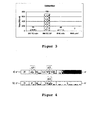
- Figur 1:
- Pseudotypisierung von VSVgfp ncp-ΔG-Vektoren durch LCMV GP
- Figur 2:
- Transduktion von Gliomzelllinien mit VSV (LCMV GP) Vektoren
- Figur 3:
- Pseudotypisierung von VSVgfp ncp-ΔG-Vektoren durch LCMV GP in BM-TIC
- Figur 4:
- Schematische Darstellung des kr VSV (LCMV-GP) Vektorsystems. a) Einer der Vektoren enthält rfp anstelle des Phosphoproteins P und LCMV-GP anstelle des VSV-G. b) Der komplementierende Vektor kodiert für das in a) fehlende P-Protein, enthält aber anstelle eines viralen Glykoproteins beispielsweise die Thymidinkinase (TK) des Herpes Simplex Virus als therapeutisches Gen. Beide Vektoren enthalten ein modifiziertes M-Gen (Mncp).
- Figur 5:
- Schematische Darstellung der viralen Vektoren. In den optimierten Vektor soll anstelle des P-Proteins das therapeutische Gen kloniert werden. Neben den immunmodulatorischen Genen (IL-12, Flt3L) enthält der zweite Vektor zusätzlich die Thymidinkinase von HSV.
- Die Erfindung bezieht sich auf rekombinante Vesikular Stomatitis Viren (VSV) und VSV-Vektoren. Das VSV-Genom enthält fünf für die Vermehrung des Virus essentielle Gene 1, m, n, p und g, die für die Proteine L, M, N, P und G kodieren. N ist ein Nukleoprotein, das die VSV genomische RNA verpackt; nur als RNA-Protein-Komplex kann das VSV-Genom repliziert werden. L und P bilden zusammen einen Polymerasekomplex, der das VSV-Genom repliziert und die VSV mRNA transkribiert. M ist ein Matrixprotein, das im Viruspartikel eine Art Kit zwischen Lipidhülle und Nukleokapsid bildet und für die Partikelsprossung an der Zellmembran wichtig ist. G ist das Hüllprotein, das in virale Hülle eingebaut wird und für Infektiosität des Virus essentiell ist.
- Gegenstand der Erfindung ist ein VSV-LCMV-GP-Pseudotypvektor und ein mit LCMV-GP pseudotypisiertes VSV-Virion. Der Vektor der Erfindung enthält ein für das GP-Protein des LCMV kodierendes Gen gp anstatt des für das G-Protein des VSV kodierenden Gens g. Dementsprechend enthält das Virus/Virion der Erfindung ein LCMV-GP-Protein als Hüllprotein. Das GP-Protein kann GP1 oder GP2 sein. Die Erfindung schließt GP-Proteine aus verschiedenen LCMV-Stämmen ein. Insbesondere können sich LCMV-GP-Varianten von LCMV-Wildtyp oder LCMV-Stämmen LCMV-WE, LCMV-WE-HPI, LCMV-WE-HPIopt ableiten (
WO 2006/008074 ). - Vektoren, die auf dem Virus der vesikulären Stomatitis beruhen, haben mehrere Vorzüge gegenüber retroviralen Vektoren:
- (i) VSV-Vektoren sind onkolytisch und haben im Vergleich zu anderen onkolytischen, viralen Vektoren eine besonders hohe onkolytische Aktivität.
- (ii) VSV-Vektoren replizieren präferentiell in Tumorzellen und haben im Vergleich zu anderen onkolytischen, viralen Vektoren eine besonders hohe Replikationsfähigkeit.
- (iii) VSV-Vektoren infizieren teilungsaktive als auch ruhende Tumorzellen.
- (iv) VSV-Vektoren induzieren eine starke angeborene (innate), humorale und zelluläre Immunantwort.
- (v) VSV-Vektoren replizieren rein zytoplasmatisch, können also als RNA-Viren weder ins Wirtszellgenom integrieren noch zu replikationskompetenten Viren rekombinieren.
- (vi) VSV-Vektoren sind einfach zu verpacken.
- (vii) Das VSV-Glykoprotein ist gegen ein fremdes Hüllprotein austauschbar. Beispiele für Glykoproteine, die bisher in die VSV-Hülle eingebaut wurden, sind: HIVgp160 (Owens and Rose 1993), HCVE1/E2 (Tani. et al., 2007), SARS S (Ge et al., 2006) und Lassa GP (Garbutt et al., 2004).
- Zusammengenommen haben die VSV-Vektoren ein besonders großes therapeutisches Potential.
- Ein weiterer Vorteil des erfindungsgemäßen VSV-LCMV-GP-Pseudotypvektors liegt in einer erheblich reduzierten Toxizität der mit LCMV-GP pseudotypisierten VSV-Viren gegenüber gesunden Hirnzellen, d.h. Neuronen. Die Neurotoxizität des VSV ist auf das G-Protein des VSV zurückzuführen (Shinosaki et al., 2005). Eigentlich infizieren VSV-G Pseudotypen bevorzugt normale Neuronen. Da für alle Anwendungen von onkolytischem VSV der Neurotropismus dosislimitierend ist, ist die Verwendung des erfindungsgemäßen Vektors bei allen Tumoren von großem Vorteil.
- Außerdem hat der erfindungsgemäße VSV-LCMV-GP-Pseudotypvektor eine erhöhte Spezifität für Hirntumorzellen, die sich vom gliomspezifischen Tropismus des verwendeten LCMV-GP-Glykoproteins und von der selektiven Transkription/Replikation von VSV in Tumorzellen ableitet. Im Gegensatz zu VSV-G weist das LCMV-GP Hüllprotein einen besonderen Tropismus für Glioblastomzellen auf. Allerdings kann der erfindungsgemäße Vektor auch bei anderen Tumoren außerhalb des ZNS erfolgreich angewendet werden, da auch dort die Neurotoxizität von VSV, insbesondere bei systemischer Applikation, dosislimitierend ist.
- Mit LCMV-GP pseudotypisierte Vektoren haben drei entscheidende Eigenschaften, die nicht pseudotypisierte Vektoren nicht haben, nämlich:
- (i) Das LCMV-GP ist nicht zelltoxisch.
- (ii) Die LCMV-GP Pseudotypvektoren lassen sich ohne Verlust der Infektiosität durch Ultrazentrifugation konzentrieren.
- (iii) Die LCMV-GP Pseudotypvektoren zeigen einen bevorzugten Tropismus für gliale Zellen, während Neuronen ineffizient infiziert werden.
- Die Erfindung schließt sowohl replikationsdefiziente als auch replikationskompetente Viren ein. Die letzteren weisen einen zusätzlichen Vorteil auf, da durch die Verwendung vermehrungsfähiger Viren eine hohe Transduktionsrate erreicht werden kann. Insofern sind replikationsfähige onkolytische virale Vektoren effizienter als replikationsinkompetente Vektoren.
- Zu Erhöhung der Sicherheit bei der Verwendung replikationsfähiger Viren in therapeutischen Einsetzen wird ein Vektorsystem zur Verfügung gestellt, welches gewährleistet, dass Replikation, Onkolyse und die Produktion der VSV-Viren nur in Zellen stattfindet, die durch mindestens zwei replikationsdefiziente, aber sich ergänzende Vektoren infiziert wurden.
- Gegenstand der Erfindung ist somit ein VSV-LCMV-GP-Pseudotypvektorsystem, das mindestens zwei sich komplementierende VSV-Vektoren enthält. Solche komplementierend replizierende (kr) VSV-Vektoren können sich bedingt innerhalb des Tumorgewebes ausbreiten, was die Effizienz des Gentransfers und der Onkolyse steigert. Somit ermöglicht das erfindungsgemäße Vektorsystem die Herstellung onkolytischer VSV-LCMV-GP-Pseudotypvektoren mit begrenzter Vermehrungsfähigkeit zur Genübertragung in Gliomen und anderen soliden Tumoren.
- Das Prinzip des erfindungsgemäßen Vektorsystems besteht darin, dass auf jedem Vektor des Systems eins der essentiellen Gene m, n, l und p des VSV oder gp des LCMV fehlt, welches aber auf einem anderen Vektor des Systems vorhanden ist. Das für LCMV-GP kodierende Gen gp sowie eventuelle zusätzliche Gene wie Therapie- und/oder Markergene können auf jedem beliebigen Vektor des Systems vorliegen.
- Es sind verschiedene Variante des erfindurigsgemäßen Vektorsystem möglich. Zum Beispiel kann das Vektorsystem aus zwei Vektoren bestehen, wie in
Figur 5 dargestellt ist. Ein erster Vektor enthält GP des LCMV anstelle von G des VSV und eine Deletion des für P-Protein kodierenden Gens p. Ein zweiter Vektor enthält ebenfalls kein VSV-G, exprimiert aber das P-Protein des VSV. Jeder Vektor exprimiert Nukleoprotein (N) und Polymerase (L) des VSV sowie eine weniger zytopathogene Variante des M-Proteins (Mncp). Der erste Vektor trägt außerdem das Markergen rfp, während der zweite Vektor das Suizidgen HSV-TK und das Markergen gfp. In den in Figur 6 dargestellten Varianten können beide Vektoren ein therapeutisches Gen enthalten, wobei der erste Vektor z.B. Flt3L oder IL-12 und der zweite Vektor z.B. HSV-TK enthält. - Zur Therapie des Glioblastoms werden bislang verschiedene Konzepte verfolgt: (i) die Übertragung von Suizidgenen, (ii) die Aufhebung der glioblastombedingten Immunsuppression anhand immunstimulatorischer Gene und mittels zytokinbasierender Immuntherapie, (iii) die Übertragung von Faktoren, die der tumorinduzierten Angiogenese entgegenwirken, (iv) die Anwendung von Zellzyklusmodulatoren und (v) die Induktion von Apoptose. Für erfindungsgemäße Zwecke kommen vor allem die drei erstgenannten Ansätze (i-iii) in Betracht.
- Die erfindungsgemäßen VSV-LCMV-GP-Pseudotypvektoren und darauf basierenden Vektorsysteme können daher zusätzlich zu ihren inhärenten Onkolyse-Eigenschaften durch das Einbringen von Suizidgenen oder/und immunstimulatorischen Genen weiter verbessert werden. Beispiele für Suizidproteine sind Thymidinkinase des Herpex Simplex Virus (HSV-TK), cytosine deaminase, FKBP-FAS, FKBP-caspase9. Beispiele für immunstimulatorische Proteine sind Cytokine wie IL-2, IL-4, IL-12 sowie Flt3L, neutralizing anti-TGFbeta. Insertionen von bis zu 4,5 kb großen Genen werden vom VSV-Genom toleriert, sodass es sogar möglich wäre, zwei oder mehr therapeutische Gene (z.B. HSV-TK + Zytokin) auf einem VSV-Genom zu vereinen. Außerdem wirken die Genprodukte auch auf nicht infizierte Tumorzellen mittels eines sogenannten Bystander-Effekts.
- Injizierte, virale Vektoren dringen von der Einstichstelle nur wenige Millimeter in das Tumorgewebe ein. Zur Optimierung der Vektordistribution und zur gezielten Zerstörung des Tumors werden tumorinfiltrierende Virusproduzentenzellen verwendet, die spezifisch im Tumor migrieren und so die Viren an von der Injektionsstelle entfernter Stelle freisetzen.
- Virusproduzentenzellen im Sinne der Erfindung schließen sowohl klassische Verpackungszellen zur Produktion von Virionen aus replikationsunfähigen Vektoren als auch Produzentenzellen zur Produktion von Virionen aus vermehrungsfähigen Vektoren ein. Verpackungszellen enthalten üblicherweise eine oder mehreren Plasmiden zur Expression von essentiellen Genen, welche auf dem jeweiligen zu verpackenden Vektor fehlen und/oder zur Produktion von Virionen notwendig sind.
- In bisherigen Studien wurden zwar Verpackungszellen zur Übertragung viraler Vektoren verwendet, es handelte sich hierbei jedoch hauptsächlich um Fibroblasten, die im Tumor nicht migrieren (Short et al., 1990, Culver et al., 1992). Adulte Stammzellen, insbesondere neuronale (NSC) und mesenchymale Stammzellen (MSC), hingegen haben ein hohes migratorisches Potential. Sie bleiben auf das Tumorgewebe beschränkt, wodurch ein sehr effizienter aber auch spezifischer Gentransfer in das Tumorgewebe erreicht wird. Allerdings haben diese Stammzellen die begrenzte Passagierbarkeit in vitro.
- Eine Subpopulation adulter mesenchymaler Stammzellen, sogenannte BM-TIC (bone marrow derived tumor infiltrating cells), infiltrieren nach Injektion in experimentell induzierte Gliome den gesamten Tumor und verfolgen darüber hinaus einzelne, von der Tumormasse abgelegene Tumorzellen (Miletic et al., 2007). BM-TIC werden aus adultem Knochenmark isoliert, haben ein hohes Expansionspotential und können als migrierende Produzentenzellen für MLV (Fischer et al., 2007) und VSV-Vektoren verwendet werden.
- Gegenstand der Erfindung sind daher Virusproduzentenzellen, die onkolytische VSV-LCMV-GP-Pseudotypvektoren produzieren. Insbesondere sind es tumorinfiltrierende Produzentenzellen, welche während ihrer Migration im Tumor die genannten Vektoren freisetzen. Bevorzugt sind adulte Stammzellen, insbesondere neuronale (NSC) und mesenchymale Stammzellen (MSC). Besonders bevorzugt sind von MSC abgeleitete BM-TIC Zellen.
- Ein Hindernis für die Herstellung einer rhabdoviralen Virusproduzentenzelle stellt die Zytopathogenität der Proteine M und G dar. Da in erfindungsgemäßen VSV-LCMV-GP-Pseudotypvektoren das G Protein des VSV durch das gliomspezifische und nicht zytotoxische Glykoprotein des LCMV ersetzt wird, stellt allein das M-Protein ein Problem dar. Zur Reduzierung der Toxizität des M-Proteins in der VSV-Produzentenzelllinie kann eine nicht zytopathogene Variante des M Proteins verwendet werden.
- Die erfindungsgemäßen Virusproduzentenzellen und dementsprechend auch die von diesen produzierten VSV-LCMV-GP-Pseudotypvektoren können dementsprechend ein für mutiertes M-Protein kodierenden Gen enthalten. Diese Vektorvariante ist selektiv onkolytisch für Tumorzellen, während sie für gesunde Zellen nicht toxisch ist. Bevorzugt sind M-Varianten mit Aminosäurenaustausch in der 37PSAP40 Region des M-Proteins oder mit einfacher (M51R) oder mehrfachen (V221F und S226R; M33A und M51A) Mutationen außerhalb der PSAP Region des M-Proteins. Besonderes bevorzugt ist ein M-Protein mit Mutationen M33A, M51R, V221F und S226R enthält. Um eine effiziente Virusproduktion in Verpackungszellen zu gewährleisten, kann die M-Variante mit einem viralen Interferonantagonisten stabil transfiziert werden.
- Außerdem ist Gegenstand der Erfindung ein in vitro Verfahren zum Gentransfer, wobei ein LCMV-GP-VSV-Pseudotypvektor oder LCMV-GP-VSV-Pseudotypvektorsystem, der/das ein Transgen enthält, in eine Zelle direkt oder mit Hilfe erfindungsgemäßer Virusproduzentenzellen (Verpackungszellen) eingeführt wird. Im Fall der Verwendung eines kr Vektorsystems mit mindestens zwei Vektoren werden mindestens zwei Verpackungszellen eingesetzt, die jeweils einen der (replikationsunfähigen) kr Vektoren produzieren. Nur Zellen, die mit allen Vektoren des kr Vektorsystems infiziert sind und dementsprechend alle essentiellen viralen Gene enthalten, findet die Produktion von VSV-Viren statt.
- Die Erfindung bezieht sich außerdem auf die Verwendung von erfindungsgemäßen Vektoren und Virusproduzentenzellen als Medikamente in therapeutischen Verfahren. Insbesondere werden die erfindungsgemäßen Vektoren und Virusproduzentenzellen für die Therapie solider Tumoren eingesetzt. Der therapeutische Effekt wird sowohl durch die onkolytischen Eigenschaften der rekombinanten Vektoren und Viren als auch durch den Einsatz therapeutischer Gene bewirkt.
- Solide Tumoren können Hirntumor, Lebertumor, insbesondere hepatozelluläres Karzinom, Lungentumor, insbesondere Bronchialkarzinom, und Darmtumor, insbesondere Kolonkarzinom, sein. Bevorzugte Tumore sind Hirntumore, zum Beispiel ein Gliom, insbesondere Ependymom, Oligodendrogliom, Oligoastrozytom, Astrozytom, Glioblastom, oder ein Medulloblastom.
- Gegenstand der Erfindung ist weiter eine pharmazeutische Zusammensetzung, die den Vektor/das Virion/die Virusproduzentenzelle der Erfindung und eventuell Zusätze wie Träger- und Hilfsstoffe enthält.
- Um die virale Onkolyse und die Übertragungseffizienz der therapeutischen Gene zu erhöhen, werden tumorinfiltrierende Virusproduzentenzellen, die kontinuierlich Vektoren freisetzen, zur direkten Implantation in die Tumoren formuliert.
- Die Erfindung wird anhand folgender Beispiele erläutert.
- Mit defekten VSV-Vektoren, die GFP aber kein virales Hüllprotein kodieren (VSVgfp-ncp-ΔG), wurden BHK-21 und Vero-Zellen transduziert, die wiederum stabil das GP von LCMV exprimieren. 1x10⁵ Zellen (BHK-21, -GP, Vero, -GP) wurden pro 24well Vertiefung ausgesät und vier Stunden später mit einer MOI=5 mit VSVgfp-ncp-ΔG-Vektoren transduziert. 24 Stunden später wurde der Kulturüberstand gesammelt und der Titer mittels FACS Analyse der GFP-Expression in BHK21 bestimmt.
Figur 1 zeigt, dass die transduzierten Zellen LCMV-GP pseudotypisierte VSV-Vektoren produzierten, wobei je nach verwendetem Zelltyp die Pseudotyptiter zwischen 2-7 x10E5 TU/ml variierten. - Da die Pseudotypen für den Gentransfer in Gliome genutzt werden sollen, wurde die Transduktionseffizienz der Vektoren bei verschiedenen Gliomzelllinien untersucht. Zwei humane Gliomzelllinien (U87, G44) und eine Rattengliomzelllinie (9L) wurden getestet. Als Kontrolle dienten erneut BHK-21 Zellen. 1x10⁵ Zellen pro 24well Vertiefung wurden ausgesät und vier Stunden später mit einer MOI=0,3 (Titration auf BHK21) mit VSV-LCMV-GP-Pseudotypvektoren transduziert. 24 Stunden später wurde der Prozentsatz GFP-exprimierender Zellen durch FACS Analyse bestimmt und der Titer daraus errechnet.
Figur 2 zeigt, dass die Gliomzelllinien effizient durch LCMV-GPpseudotypisierte VSV-Vektoren transduziert wurden. - Die Erfinder haben bereits gezeigt, dass Stammzelle, die nach dem Protokoll von C. Verfaillie isoliert wurden (Jiang et al., 2002), tumorinfiltrierende Eigenschaften besitzen. Da nur ihr Migrations- aber nicht ihr Differenzierungspotential untersucht wurde, wurden diese Zellen BM-TIC (bone marrow derived tumor infiltrating cells) genannt. Zur Testung der Verpackungsfähigkeit von BM-TIC für VSV-Vektoren wurden LCMV-GP exprimierende BM-TIC mit dem defekten VSV-GFP-Vektor transduziert. 1x10⁵ Zellen (BM-TIC, -GP, BHK-21) wurden pro 24well Vertiefung ausgesät und vier Stunden später mit einer MOI=5 mit VSVgfp-ncp-AG-Vektoren transduziert. 24 Stunden später wurde der Kulturüberstand gesammelt und auf BHK-21 Zellen titriert.
Figur 3 zeigt, dass VSV-LCMV-GP-Pseudotypen auch in BM-TIC herstellbar sind. Allerdings sind die Titer geringer als beispielsweise mit BHK-21 GP Zellen (sieheFigur 1 ). - Eine hohe Transduktionsrate lässt sich mit vermehrungsfähigen Viren erreichen. Um die Gentransferrate in Gliome zu erhöhen, aber gleichzeitig ein hohes Maß an Sicherheit zu gewährleisten, wurde ein begrenzt replikationsfähiges VSV-Pseudotypvektorsystem etabliert. Für Retroviren (Trajcevski et al., 2004) und verschiedene Flaviviren (Riepl & Mandl, 2007) sind solche Replikationssysteme mit komplementär defekten Viren beschrieben worden. Das Prinzip solcher Systeme besteht darin, das virale Genom auf zwei inkomplette Replikons aufzuteilen. Infektiöse Viren werden nur gebildet, wenn ein und dieselbe Zelle mit beiden Vektoren infiziert ist und erst durch diese Koinfektion alle notwendigen Komponenten zum Verpacken des Virusgenoms enthält.
-
Abbildung 4 zeigt ein Beispiel der sich ergänzenden Vektoren des erfindungsgemäßen Vektorsystems. Für eine effiziente Replikation und Verpackung fehlt dem ersten Vektor das Phosphoprotein P. Um den viralen Titer dieser Vektoren einfacher bestimmen zu können, kodiert der Vektor anstelle von P das rotfluoreszierende Protein (rfp). Die fehlende P-Funktion wird bei Koinfektion der Zelle durch den zweiten Vektor komplementiert. Dieser ist jedoch alleine nicht vermehrungsfähig, da ihm das essentielle Hüllprotein VSV-G fehlt. Mit Hilfe dieses Vektors werden therapeutische Gene appliziert. - Während allein die genomische RNA von Plusstrang-RNA-Viren infektiös ist, benötigen Negativstrang-RNA-Viren wie das VSV neben dem viralen RNA-Genom noch mindestens virales Nucleoprotein (N) und virale Polymerase (L), um aus klonierten viralen cDNAs ein infektiöses Virion zu generieren. Das System zur Herstellung rekombinanter VSV basiert auf der zytoplasmatischen Expression von viraler (+)RNA und den viralen Proteinen N, P und L mit Hilfe der T7-RNA-Polymerase, die konstitutiv in BSR T7/5 Zellen exprimiert wird. Um die gewünschten Vektoren herzustellen, werden genomische Konstrukte zusammen mit den Expressionsplasmiden für N, P und L und zusätzlich für VSV-G im Fall von Vektor b) (
Figur 4 ) in die BSR T7/5 kotransfiziert. Durch Passagieren der so gewonnenen Viren auf Zellen, die die fehlende Komponente in trans exprimieren, kann man die Titer beachtlich erhöhen. Für den LCMV-GP defizienten Vektor wurde eine BHK-21-Zelllinie, die stabil GP exprimiert, etabliert. Für den P defizienten Vektor wurde eine BHK-21-Zelllinie, die das P-Protein exprimiert, etabliert. - Nach Charakterisierung der einzelnen Vektoren hinsichtlich ihres Titers und ihrer Transduktionseffizienz wird die Ausbreitung der Vektoren in vitro untersucht. Dazu werden BHK-21-Zellen mit beiden Vektoren koinfiziert und die Replikation und somit die Entstehung neuer Vektoren durch serielle Passage des Kulturüberstandes auf nativen BHK-21 untersucht. Diese Experimente werden mit verschiedenen Glioblastomzelllinien (G44, G62, U87) wiederholt, die als Monolayer aber auch als Sphäroide kultiviert werden.
- Tumorsphäroide sind dreidimensionale, organoide Zellverbände, die Beschaffenheit und Heterogenität von Tumoren besser widerspiegeln als Monolayerkulturen. Am Rande des Zellaggregates liegen die teilungsaktiven Tumorzellen im losen Verband, während tieferliegende Zellen sich nicht mehr teilen und es hier auch zur Ausbildung nekrotischer Areale kommt (Carlson et al., 1984). Die Shpäroidexperimente geben über die intratumorale Transduktionseffizienz, die Ausbreitungkinetik und die onkolytische Wirkung des kr VSV-LCMV-GP-Pseudotypvektorsystems Aufschluss. Diese Spheroide ermöglichen somit eine initiale Optimierung des Systems, ohne Tierversuche durchführen zu müssen. Eine mögliche Toxizität der kr LCMV-GPpseudotypisierten VSV-Vektoren, die therapeutische Wirksamkeit der Onkolyse und der Verbleib der Viren nach Tumorelimination werden im Tiermodell untersucht (siehe Beispiel 6).
- Die virale RNA-Polymerase verfügt über keine Rekombinaseaktivität und es befinden sich auch keine zellulären Rekombinasen im Zytoplasma, so dass die Rekombination zwischen zwei Negativstrang-RNA-Viren nur durch einen Matrizenwechsel der RNA-Polymerase zustande kommen kann. Dies ist jedoch ein äußerst seltenes Ereignis (Finke & Conzelmann, 2005; Spann et al., 2003). Die Entstehung eines rekombinanten, replikationsfähigen VSV stellt ein Sicherheitsrisiko dar und wird überprüft. Dabei wird zu unterschiedlichen Zeitpunkten virale RNA aus dem Kulturüberstand koinfizierter Zellen isoliert und mit einer transgenspezifischen (z.B. gfp) Sonde im Northernblot untersucht. Sollten RNA Spezies mit "Überlänge" nachweisbar sein, werden die Viren aus dem Überstand plaquegereinigt und mittels Standardverfahren auf ihre Infektiosität untersucht und anschließend molekularbiologisch charakterisiert.
- Migrierende VSV-LCMV-GP-Produzentenzellen werden für kr VSV-Vektoren und für replikationsinkompetente VSV-LCMV-GP-Vektoren etabliert.
- Das VSV M-Protein hat zwei wesentliche Aufgaben im VSV-Zyklus: Zum einen ist es als strukturelle Komponente des Virions für den Zusammenbau und die Sprossung der Viren essentiell. Zum anderen trägt es durch seine "host shut-off" Aktivität der Wirts-Proteinsynthese und durch Induktion der Apoptose wesentlich zur viralen Pathogenese bei. Eine wichtige Funktion von M ist in diesem Zusammenhang die Hemmung des nucleozytoplasmatischen Transports von IFN mRNA. Dadurch wird der erste Abwehrmechanismus der Zelle gegen virale Infektionen unterdrückt.
- Aufgrund dieser stark zytotoxischen Wirkung, ist es nicht möglich das M-Protein längerfristig in Zelllinien zu exprimieren. Es sind jedoch mehrere Mutationen im M-Protein bekannt, die zur Attenuierung des Virus führen. So konnten Irie und Mitarbeiter zeigen, dass durch Aminosäureaustausche in der sogenannten 37PSAP40 Region des M-Proteins eine VSV Mutante mit stark verringerter Zytopathogenität entstand (Irie et al., 2007). Wie ferner in Mausexperimenten gezeigt werden konnte, sind M-Varianten mit einfacher (M51R) oder mehrfachen
- (V221F und S226R; M33A und M51A) Mutationen außerhalb der PSAP Region ebenfalls stark attenuiert (Desforges et al., 2001; Jayakar und Whitt, 2002). Diese Viren sind nicht in der Lage, die Ausschüttung von IFN-a/ß zu unterdrücken, induzieren also einen antiviralen Status, der die Tiere vor einer Infektion schützt. In Tumoren, die häufig Defekte im IFN-System aufweisen, können diese Viren sich jedoch vermehren und den Tumor lysieren. Solche attenuierten Varianten sind aus sicherheitstechnischen Gründen für die Gentherapie von besonderer Bedeutung, da sie präferentiell in Tumorzellen replizieren.
- Die Erfinder haben ebenfalls eine nicht zytopathogene Variante des M-Proteins kloniert (Mncp), die die genannten Mutationen M33A, M51R, V221F und S226R enthält und nicht mehr in der Lage ist, die Synthese von IFN-β zu unterdrücken. Diese Variante repliziert ähnlich effizient wie das Elternvirus auf IFN-inkompetenten Zellen, ist aber auf IFN-kompetenten Zellen attenuiert. Um eine effiziente Virusproduktion in den BM-TIC zu gewährleisten, wird diese mit einem viralen Interferonantagonisten (Haller et al., 2006) stabil transfiziert.
- Da aufgrund des gliomspezifischen Tropismus der VSV-LCMV-GP-Pseudotypen hauptsächlich Tumorzellen transduziert werden, kann alternativ auch mit M-Varianten gearbeitet werden, die noch eine gewisse Zytopathogenität zeigen. Um die toxischen Effekte in den BM-TIC gering zu halten, soll in den Zellen das antivirale MxA Protein über einen Tet-induzierbaren Promotor exprimiert werden. Retrovirale Vektoren mit Tet-induzierbarem Promotor sind bekannt (Löw et al., 2006). Das Tet-responsive Element (tTA) wird ebenfalls über einen retroviralen Vektor in die BM-TIC eingebracht. MxA ist eine interferoninduzierte GTPase mit antiviraler Aktivität gegenüber RNA Viren (Pavlovic et al., 1992; Stäheli und Pavlovic, 1991). Es liegt zytoplasmatisch in Form großer Oligomere vor, ist nicht toxisch und inhibiert über einen bislang ungeklärten Mechanismus die Replikation von VSV. LCMV-GP exprimierende BM-TIC werden mit dem Tet-regulierten MxA und dem tTa Vektor transduziert und anschließend mit den VSV-Vektoren infiziert. Solange das Antibiotikum im Medium vorhanden ist, sind die Zellen durch das MxA resistent gegenüber einer produktiven Infektion mit VSV(LCMV-GP). Erst während der in vivo Anwendung wird das Antibiotikum entfernt und es kommt allmählich zur viralen Replikation und zur Produktion von VSV(LCMV-GP). Da MxA mit einer Halbwertszeit von zwei Tagen sehr stabil ist, wird alternativ die Mutante MxA(L612K) verwendet. MxA(L612K) hemmt mit gleicher Effektivität die Infektion von VSV wie das Wildtypprotein, ist aber nicht in der Lage Oligomere auszubilden. Hierdurch ist es destabilisiert und verfügt über eine kurze Halbwertzeit von nur zwei Stunden (Janzen et al., 2000).
- Beide Produzentenzellen, sowohl BM-TIC, die Vektoren mit nicht zytopathogenem M produzieren als auch BM-TIC, die durch MxA Expression vor VSV-bedingter Lyse geschützt sind, werden wie folgt charakterisiert:
- (i) Es werden die Vektortiter und die Dauer der Vektororoduktion ermittelt.
- (ii) Es wird analysiert, welchen Einfluss das Wegfrieren und Auftauen der Zellen auf den Vektortiter hat.
- (iii) Es wird zunächst im Sphäroidmodell und anschließend im Tiermodell analysiert, ob die Zellen noch tumorinfiltrative Eigenschaften haben und welche Transduktionseffizienzen im Tumorgewebe erreicht werden.
- (iv) Der produzierte Vektorüberstand wird auf das Vorhandensein replikationsfähiger VSV untersucht.
- Als therapeutisches Gen gemäß der Erfindung kann ein Suizidgen benutzt werden. Beispiel dafür ist die Thymidinkinase des Herpes Simplex Virus (HSV-TK), mit der die meiste Erfahrung in der Klinik vorliegt. Durch die konstitutive Expression der HSV-TK lassen sich am Ende der Therapie Verpackungszellen und transduzierte Tumorzellen sicher eliminieren, so dass keine Gefahr von mitotisch aktiven Verpackungszellen ausgehen kann.
- Zur Immuntherapie maligner Gliome, d. h. zur Verstärkung der schwach ausgeprägten lokalen Immunantwort im Gehirn, kann ein immunmodulatorisches Gen eingesetzt werden. Beispiele dafür sind Zytokine, insbesondere IL-12 und Flt3L. Nach Antigenstimulation wird IL-12 natürlicher Weise durch Antigenpräsentierende Zellen, wie dendritische Zellen, Makrophagen und B-Zellen sekretiert und vermittelt eine starke, Th1-basierte antitumorale Immunantwort. Es fördert das Wachstum und die Differenzierung naiver T-Zellen zu Th1-Zellen und wirkt somit einer gliominduzierten Suppression der T-Zellproliferation und IFNgamma Produktion entgegen. IL-12 verstärkt die zytotoxische Aktivität natürlicher Killer- und CD8+-Zellen und besitzt zudem eine anti-angiogenische Aktivität (Majewski et al., 1996). In mehreren Tiermodellen konnte bereits die Effektivität einer IL-12 vermittelten Immunantwort gegen Gliome eindrucksvoll demonstriert werden (Toda et al., 1998; Kikuchi et al., 1999). Das Zytokin Flt3L ist essentiell für die Proliferation und Differenzierung von Antigen-präsentierenden dendritischen Zellen und erscheint somit für einen Gentherapieansatz besonders gut geeignet. Sumia und Kollegen (2004) konnten nach i.c. Tranduktion von Gliomen in der Ratte/Maus mit dem Flt3L Gen einen starken lokalen Influx von dendritischen Zellen beobachten. 70% der behandelten Ratten zeigten eine Regression der Tumore und überlebten.
- Die Kombination eines Zytokins mit einem Suizidgen (TK) bietet nicht nur maximale Sicherheit sondern gestattet dank des "bystander effects" eine erfolgreiche Therapie bei nur geringer Transduktionseffizienz. Dieser Ansatz vereint drei Wirkprinzipien, nämlich virale Onkolyse, Suizidgen-induzierte Apoptose und lokale Immunstimulation, um die Effizienz der Gentherapie des Glioblastoms zu erhöhen.
- Zunächst werden IL-12 und Flt3L in die VSV-Vektoren kloniert. IL-12 ist speziesspezifisch aktiv, sodass für die Testung im Rattengliommodell das murine IL-12 verwendet werden muss. Humanes und murines Flt3L sind dagegen zu über 70% homolog und in beiden Spezies kreuzreaktiv. Die immunstimulatorischen Gene werden an die Position des p-Gens kloniert, während TKgfp bzw. gfp auf dem zweiten Vektor das VSV-G-Gen ersetzt. Folgende Genkombinationen werden in die beiden Vektoren des kr VSV-LCMV-GP-Pseudotypvektorsystems kloniert (
Figur 5 ): - 1) Vektor a=IL12 bzw. Flt3L + Vektor b= TKgfp (oder TK)
- 2) Vektor a-IL12 bzw. Flt3L + Vektor b= gfp
- 3) Vektor a=IL12 bzw. Flt3L + Vektor b= leer
- 4) Vektor a=leer + Vektor b= TKgfp (oder TK)
- 5) Vektor a=leer + Vektor b= gfp
- 6) Vektor a=leer + Vektor b= leer
- Nach der Klonierung werden Gliomazellinien und BM-TIC transduziert und die Konzentration der im Überstand befindlichen Zytokine im ELISA überprüft. Werden physiologisch relevante Mengen produziert, dann erfolgt die Aufkonzentrierung der Vektoren über Ultrazentrifugation. Die Vektoren werden zunächst zur Transduktion von Sphäroiden benutzt und hier deren Fähigkeit zum "bystander killing" untersucht. Hiernach werden die Vektorüberstände zusammen mit den vorbereiteten Verpackungszellen an unseren Kooperationspartner nach Bergen geschickt. Hier erfolgt die in vivo Testung im syngenen Rattengliommodell. Es wird die Überlebensrate der behandelten Ratten nach Ganciclovirgabe evaluiert. Parallel wird die therapeutische Wirksamkeit der Immuntherapie in Abwesenheit von TK untersucht. Die Vektorkombination 6) gibt Auskunft über die Effektivität der Onkolyse. Tumorgröße und somit der Therapieerfolg werden über MRI und PET beobachtet (Miletic et al., 2007). Die Wirkung der immunmodulatorischen Gene wird anhand immunhistochemischer Methoden zum Nachweis von Infiltratzellen bewertet. Wie im folgenden Abschnitt beschrieben wird der Therapieansatz auch im Humangliommodell untersucht.
- Die rekombinanten VSV-Vektoren werden zunächst in vitro charakterisiert und anschließend im Tiermodell auf ihre Wirksamkeit untersucht. Dazu werden zwei besonders aussagekräftige Rattenmodelle eingesetzt.
- Ein syngenes 9L Rattengliommodell wird zur Untersuchung immunologischer Aspekte bzw. die Durchführung immuntherapeutischer Verfahren benutzt. Dazu werden Gliomzelllinien der Ratte in die Hirne von Fisher-Ratten implantiert, die daraufhin nach einigen Tagen Tumoren entwickeln. 9L Gliosarkomzellen, die aus Fischer-Ratten isoliert wurden, dienen hierbei als Tumorzelllinien. In die so induzierten Tumoren werden dann die unterschiedlichen Vektoren bzw. Zelllinien stereotaktisch injiziert. Dieses Rattenmodel weist die folgenden Charakteristika auf:
- (i) Es stellt ein gut reproduzierbares System mit einer geringen interindividuellen Varianz dar.
- (ii) Die Tumoren weisen ähnliche Charakteristika wie humane Gliome auf, wie z.B. das invasive und aggressive Wachstumsverhalten sowie die Produktion von TGFß2 als immunsuppressiven Faktor.
- (iii) Das System erlaubt im Gegensatz zum SCID/Nacktmausmodell oder zum Ratten-Xenograft-Modell die Untersuchung immunologischer Aspekte bzw. die Testung immuntherapeutischer Verfahren.
- Ein humanes Gliommodell in Nacktratten wird zur Testung der onkolytischen Aktivität der erfindungsgemäßen Vektoren und Zellen gegenüber humanen Gliomzellen eingesetzt. Das Ratten-Xenograft-Modell imitiert die unterschiedlichen Wachstumscharakteristika humaner Gliome. Hier wird für die Tumoretablierung keine definierte Glioblastomzelllinie, sondern primäres Tumormaterial aus Patienten verwendet, wodurch es gelingt, die Heterogenität innerhalb humaner Gliome zu imitieren (Sakariassen et al., 2006). Durch die serielle Passage von humanen Gliomen in Nacktratten können unterschiedliche Phasen der malignen Tumorentwicklung abgebildet und der Therapieerfolg untersucht werden. Das humane Gliommodell ist hervorragend zur Untersuchung von Therapieansätzen geeignet, da es folgende Charakteristika aufweist:
- (i) Die Tumoren weisen ähnliche Charakteristika wie humane Gliome auf, wie z.B. das invasive und aggressive Wachstumsverhalten. Es werden keine Gliomzelllinien, sondern primäres Patientenmaterial zur Etablierung der Tumoren verwendet.
- (ii) Durch die serielle Passage der Tumoren können unterschiedliche Phasen der malignen Tumorentwicklung abgebildet und der Therapieerfolg untersucht werden. Tumore der ersten Generation wachsen langsam, hoch invasiv und weisen eine geringe Neurovaskularisierung auf. Durch Passagen entwickelt sich ein stark vaskularisierter Phänotyp mit starker Proliferation und verringerter Invasion.
- (iii) Der zelluläre Phänotyp hoch invasiver, nicht angiogener Gliome ähnelt dem von Tumorstammzellen. Daher ermöglicht dieses Tiermodell die Testung der therapeutischen Wirksamkeit unseres Konzepts auf die Stammzellkomponente des humanen GBM.
- Zwei Kategorien von Tumoren können unterschieden werden:
- (i) Frühe Tumoren mit einem langsamen, hoch invasiven Wachstumsverhalten. Diese Tumore haben nur eine geringe Gefäßneubildung.
- (ii) Späte, stark durchblutete und schnell wachsende Tumoren. Dieser Phänotyp zeigt geringere Invasion.
- Das humane Gliommodell eignet sich hervorragend zur Untersuchung einer Suizidgentherapie als auch zur Untersuchung der viralen Onkolyse. Es bestehen jedoch bislang keine Tiermodelle fürs humane Glioblastom, die zur Analyse der immuntherapeutischen Wirksamkeit von gentherapeutischen Verfahren herangezogen werden können.
- Der Therapieerfolg wird mittels bildgebender Verfahren und schließlich mit histologischen Techniken analysiert und evaluiert. Zunächst wird die Wirkweise der sich ergänzend replizierenden VSV(LCMV-GP) Pseudotypen durch intratumorale Injektion aufkonzentrierter Vektorüberstände im Rattengliommodell untersucht. Die Transduktionseffizienz und die Verteilung der gfp-kodierenden Vektoren innerhalb der Tumore werden nach einigen Tagen anhand einer fluoreszenzmikroskopischen Analyse von Gefrierschnitten untersucht. Ferner werden Onkolyse und die Einwanderung von Immunzellen immunhistochemisch beurteilt. Zur Ergänzung wird die Wirksamkeit auch im Tiermodell für das humane Glioblastom untersucht.
- Im gleichen Modell wird die Migrationsfähigkeit der BM-TIC Produzentenzellen und die Infektiosität der produzierten VSV-Vektoren untersucht. Hierfür werden die Zellen mit einem grünen Farbstoff beladen, während die freigesetzten Vektoren für rfp kodieren. Diese Vorgehensweise ermöglicht eine einfache fluoreszenzbasierte Unterscheidung zwischen BM-TIC und transduzierten Tumorzellen.
- Schließlich wird die therapeutische Effizienz der einzelnen Transgen-kodierenden Pseudotypen verglichen. Dazu sollen die Verpackungszellen und parallel auch die aufkonzentrierten Vektorüberstände in etablierte 9L-Tumoren injiziert werden. Die Vektoren sollen ein immunstimulatorisches Gen in Kombination mit TK enthalten. Einige Tage nach der stereotaktischen Applikation der Vektoren bzw. der Verpackungszellen wird mit der Ganciclovirgabe begonnen. Einige der Versuchstiere erhalten Vektoren nur mit TK und dienen zur Evaluierung der therapeutischen Effizienz der immunmodulatorischen Komponente im Vektor. Nach Abschluss der Behandlung soll die Effektivität der einzelnen Therapiekonzepte anhand der Tumorgröße mit bildgebenden Verfahren (MRI; PET) bewertet werden. Ein Teil der Gehirne von immuntherapierten Ratten wird zur Charakterisierung des Immunstatus verwendet. Die Expression von MHC-Molekülen und die Verteilung von T-Zellen, Granulozyten, Makrophagen und Mikrogliazellen werden mittels immunhistochemischer Methoden an den Gefrierschnitten untersucht. Zusätzlich werden die i.c. Infiltratzellen durchflusszytometrisch hinsichtlich ihrer Zahl und phänotypischen Zusammensetzung analysiert. Die Formulierung mit dem besten therapeutischen Ergebnis wird für die Behandlung humaner Gliome adaptiert. Ein solcher Prototyp könnte dann direkt in präklinische Sicherheitsuntersuchungen, und nach der Etablierten der entsprechenden Verfahren zu GMP-Produktion, in die klinische Testung überführt werden.
-
- 1. Barber GN. Vesicular stomatitis virus as an oncolytic vector. Viral Immunol. 2004;17(4):516-27
- 2. Beyer WR, Westphal M, Ostertag W, von Laer D. Oncoretrovirus and lentivirus vectors pseudotyped with lymphocytic choriomeningitis virus glycoprotein: generation, concentration, and broad host range (2002). J Virol. 76:1488-95
- 3. Carlsson J, Yuhas JM. Liquid-overlay culture of cellular spheroids. Recent Results Cancer Res. 1984; 95:1-23
- 4. Culver KW, Ram Z, Wallbridge S, Ishii H, Oldfield EH, Blaese RM. In vivo gene transfer with retroviral vectorproducer cells for treatment of experimental brain tumors. Science. 1992 Jun 12;256(5063):1550-2
- 5. Cutter JL, Kurozumi K, Chiocca EA, Kaur B. Gene therapeutics: the future of brain tumor therapy? Expert Review of Anticancer Therapy; 2006, 6(7): 1053-1064
- 6. Dai C, Holland EC. Glioma models. Biochim Biophys Acta. 2001 Aug 31;1551(1): M19-27
- 7. Desforges M, Charron J, Berard S, Beausoleil S, Stojdl DF, Despars G, Laverdiere B, Bell JC, Talbot PJ, Stanners CP, Poliquin L. Different host-cell shutoff strategies related to the matrix protein lead to persistence of vesicular stomatitis virus mutants on fibroblast cells. Virus Res. 2001 Jul;76(1):87-102
- 8. Finke S, Conzelmann KK. Recombinant rhabdoviruses: vectors for vaccine development and gene therapy. Curr Top Microbiol Immunol. 2005;292:165-200
- 9. Fischer YH, Miletic H, Giroglou T, Litwak S, Stenzel W, Neumann H, von Laer D. A retroviral packaging cell line for pseudotype vectors based on glioma-infiltrating progenitor cells (2007) Journal of Gene Medicine 9:335-344
- 10. Fukuhara H, Martuza RL, Rabkin SD, Ito Y, Todo T. Oncolytic herpes simplex virus vector g47delta in combination with androgen ablation for the treatment of human prostate adenocarcinoma. Clin Cancer Res. 2005 Nov 1;11(21):7886-90
- 11. Garbutt M, Liebscher R, Wahl-Jensen V, Jones S, Moller P, Wagner R, Volchkov V, Klenk HD, Feldmann H, Stroher U. Properties of replication-competent vesicular stomatitis virus vectors expressing glycoproteins of filoviruses and arenaviruses. J Virol. 2004 May; 78(10): 5458-65
- 12. Ge J, Wen Z, Wang X, Hu S, Liu Y, Kong X, Chen H, Bu Z. Generating vesicular stomatitis virus pseudotype bearing the severe acute respiratory syndrome coronavirus spike envelope glycoprotein for rapid and safe neutralization test or cell-entry assay. Ann N Y Acad Sci. 2006 Oct;1081:246-8
- 13. Irie T, Carnero E, Okumura A, Garcia-Sastre A, Harty RN. Modifications of the PSAP region of the matrix protein lead to attenuation of vesicular stomatitis virus in vitro and in vivo. J Gen Virol. 2007 Sep;88(Pt 9):2559-67
- 14. Hanika A, Larisch B, Steinmann E, Schwegmann-Wessels C, Herrler G, Zimmer G. Use of influenza C virus glycoprotein HEF for generation of vesicular stomatitis virus pseudotypes. J Gen Virol. 2005 May;86(Pt 5):1455-65
- 15. Haller O, Kochs G, Weber F. The interferon response circuit: induction and suppression by pathogenic viruses. Virology. 2006 Jan 5;344(1):119-30
- 16. Holland EC. Gliomagenesis: genetic alterations and mouse models. Nat Rev Genet. 2001 Feb;2(2):120-9
- 17. Janzen C, Kochs G, Haller O. A Monomeric GTPase-Negative MxA Mutant with Antiviral Activity. J Virol 2000 Sept., 74(17):8202-8206
- 18. Jayakar HR, Whitt MA. Identification of two additional translation products from the matrix (M) gene that contribute to vesicular stomatitis virus cytopathology. J Virol. 2002 Aug;76(16):8011-8
- 19. Jiang Y, Jahagirdar BN, Reinhardt RL, Schwartz RE, Keene CD, Ortiz-Gonzalez XR, Reyes M, Lenvik T, Lund T, Blackstad M, Du J, Aldrich S, Lisberg A, Low WC, Largaespada DA, Verfaillie CM. (2002) Pluripotency of mesenchymal stem cells derived from adult marrow. Nature 418:41-9
- 20. Kikuchi, T., Joki, T., Akasaki, Y., Abe, T, Ohno, T. (1999) Cancer Lett. 135, 47-51
- 21. Kleihues, P. and Cavenee, W.K. World Health Organization Classification of Tumours- Pathology and Genetics, Tumours of the Nervous system. 2000 (International Agency for Research on cancer, Lyon)
- 22. Loew R, Vigna E, Lindemann D, Naldini L, Bujard H. Retroviral vectors containing Tet-controlled bidirectional transcription units for simultaneous regulation of two gene activities. JMol GenMed 2006, 2(1), 107-118
- 23. Lun X, Senger DL, Alain T, Oprea A, Parato K, Stojdl D, Lichty B, Power A, Johnston RN, Hamilton M, Parney I, Bell JC, Forsyth PA. Effects of intravenously administered recombinant vesicular stomatitis virus (VSV(deltaM51)) on multifocal and invasive gliomas. J Natl Cancer Inst. 2006 Nov 1;98(21):1546-57
- 24. Majewski, S., Marczak, M., Szmurlo, A., Jablonska, S. & Bollag, W. (1996) J. Invest. Dermatol. 106, 1114-1118
- 25. Miletic H, Bruns M, Tsiakas K, Vogt B, Rezai R, Baum C, Kuhlke K, Cosset FL, Ostertag W, Lother H, von Laer D (1999) Retroviral vectors pseudotyped with lymphocytic choriomeningitis virus. J. Virol. 73:6114-6
- 26. Miletic H, Fischer YH, Neumann H, Hans V, Stenzel W, Giroglou T, Hermann M, Deckert M, Von Laer D. (2004). Selective transduction of malignant glioma by lentiviral vectors pseudotyped with lymphocytic choriomeningitis virus glycoproteins. Hum Gene Ther.15: 1091-100
- 27. Miletic H, Fischer YH, Litwak S, Giroglou T, Waerzeggers Y, Winkeler A, Li H, Himmelreich U, Lange C, Stenzel W, Deckert M, Neumann H, Jacobs AH, von Laer D. Bystander Killing of Malignant Glioma by Bone Marrow-Derived Tumor Infiltrating Progenitor Cells Expressing a Suicide Gene (2007). Molecular Therapy 15:1373-1381
- 28. Miletic H, Fischer YH, Giroglou T; Rueger MA, Winkeler A, Li H, Himmelreich U, Stenzel W, Jacobs AH, von Laer D. Normal brain cells contribute to the bystander effect in suicide gene therapy of malignant glioma. (2007b) Jorurnal of Clinical Cancer Research, in press
- 29. Owens RJ, Rose JK. Cytoplasmic domain requirement for incorporation of a foreign envelope protein into vesicular stomatitis virus. J Virol. 1993 Jan;67(1):360-5
- 30. Pavlovic J, Haller O, Staeheli P. Human and mouse Mx proteins inhibit different steps of the influenza virus multiplication cycle. J Virol. 1992 Apr;66(4):2564-9
- 31. Riepl C, Mandl C. Two non-infectious flaviviruses can form an infectious alliance. Nürnberg, 2007. Poster at the annual Meeiting of the Gesellschaft für Virologie
- 32. Sakariassen PO, Prestegarden L, Wang J, Skaftnesmo KO, Mahesparan R, Molthoff C, Sminia P, Sundlisaeter E, Misra A, Tysnes BB, Chekenya M, Peters H, Lende G, Kalland KH, Oyan AM, Petersen K, Jonassen I, van der Kogel A, Feuerstein BG, Terzis AJ, Bjerkvig R, Enger PO. Angiogenesis-independent tumor growth mediated by stemlike cancer cells. Proc Natl Acad Sci U S A. 2006 Oct 31;103(44) :16466-71
- 33. Shinosaki K, Ebert O, Suriawinata A, Thung SN, Woo SL. Prophylactic alpha interferon treatment increases the therapeutic index of oncolytic vesicular stomatitis virus virotherapy for edvanced hepatocellular carcinoma in immune-competent rats. J Virol. 2005 Nov;79(21):13705-13
- 34. Shir A, Levitzki A. Gene therapy for glioblastoma: future perspective for delivery systems and molecular targets. Cell Mol Neubiol. 2001 Dec; 21: 645-60
- 35. Short MP, Choi BC, Lee JK, Malick A, Breakefield XO, Martuza RL. Gene delivery to glioma cells in rat brain by grafting of a retrovirus packaging cell line. J Neurosci Res. 1990 Nov;27(3):427-39
- 36. Staeheli P, Pavlovic J. Inhibition of vesicular stomatitis virus mRNA synthesis by human MxA protein. J Virol. 1991 Aug;65(8):4498-501
- 37. Sumia A, Curtin JF, Zirger JM, Xiong W, King GD, Barcia C, Liu C, Puntell M, Goverdhana S, Lowenstein PR, Castro MG. Inflammatory and Anti-glioma Effects of an Adenovirus Expressing Human Soluble Fms-like Tyrosine Kinase 3 Ligand (hsFlt3L): Treatment with hsFlt3L Inhibits Intracranial Glioma Progression. Molecular Therapy (2004) 10, 1071-1084
- 38. Tani H, Komoda Y, Matsuo E, Suzuki K, Hamamoto I, Yamashita T, Moriishi K, Fujiyama K, Kanto T, Hayashi N, Owsianka A, Patel AH, Whitt MA, Matsuura Y. Replication-competent recombinant vesicular stomatitis virus encoding hepatitis C virus envelope proteins. J Virol. 2007 Aug;81(16):8601-12. Epub 2007 Jun 6
- 39. Toda, M., Martuza, R. L., Kojima, H. & Rabkin, S. D. (1998) J. Immunol. 160, 4457-4464
- 40. Trajcevski S, Solly SK, Frisen C, Trenado A, Cosset FL, Klatzmann D. Characterization of a semi-replicative gene delivery system allowing propagation of complementary defective retroviral vectors. J Gene Med. 2005 Mar;7(3):276-87
- 41. Tyminski E, Leroy S, Terada K, Finkelstein DM, Hyatt JL, Danks MK, Potter PM, Saeki Y, Chiocca EA. Brain tumor oncolysis with replication-conditional herpes simplex virus type 1 expressing the prodrug-activating genes, CYP2B1 and secreted human intestinal carboxylesterase, in combination with cyclophosphamide and irinotecan. Cancer Res. 2005 Aug 1; 65(15):6850-7
- 42. Wollmann G, Robek MD, van den Pol AN. Variable deficiencies in the interferon response enhance susceptibility to vesicular stomatitis virus oncolytic actions in glioblastoma cells but not in normal human glial cells. J Virol. 2007 Feb;81(3):1479-91
- 43. Zimmer G, Conzelmann KK, Herrler G. Cleavage at the furin consensus sequence RAR/KR(109) and presence of the intervening peptide of the respiratory syncytial virus fusion protein are dispensable for virus replication in cell culture. J Virol. 2002 Sep;76(18):9218-24
- Des Weiteren beinhaltet die vorliegende Erfindung folgendes:
- 1. VSV-LCMV-GP-Pseudotypvektor, dadurch gekennzeichnet, dass er ein für ein Glykoprotein GP des lymphozytären Choriomeningitisvirus (LCMV) kodierendes Gen und kein funktionsfähiges Gen für Hüllprotein G des VSV enthält.
- 2. Der VSV-LCMV-GP-Pseudotypvektor nach Gegenstand 1, dadurch gekennzeichnet, dass das Hüllprotein G des VSV durch BP des LCMV ersetzt ist.
- 3. Der VSV-LCMV-GP-Pseudotypvektor nach Gegenstand 1 oder 2, dadurch gekennzeichnet, dass das M-Protein des VSV Mutationen enthält, die die Zytopathogenität des VSV reduzieren.
- 4. Der VSV-LCMV-GP-Pseudotypvektor nach einem der Gegenstände 1 bis 3, dadurch gekennzeichnet, dass er mindestens ein Transgen enthält.
- 5. Der VSV-LCMV-GP-Pseudotypvektor nach Gegenstand 4, dadurch gekennzeichnet, dass das Transgen für ein Suizidprotein, ein immunstimulatorisches Protein oder ein Markerprotein kodiert.
- 6. Der VSV-LCMV-GP-Pseudotypvektor nach Gegenstand 5, dadurch gekennzeichnet, dass das Suizidprotein Thymidinkinase des Herpes-Simplex-Virus (HSV-TK), Cytosin-Deaminase, FKBP-FAS oder FKBP-caspase9 ist.
- 7. Der VSV-LCMV-GP-Pseudotypvektor nach Gegenstand 5, dadurch gekennzeichnet, dass das immunstimulatorische Protein IL-2, IL-4, IL-12, neutralisierendes anti-TGFbeta oder Flt3L ist.
- 8. VSV-LCMV-GP-Pseudotypvektorsystem, dadurch gekennzeichnet, dass es mindestens zwei komplementierend replizierende VSV-Vektoren umfasst, wobei es für N-, L-P- und M-Protein des VSV kodierende Gene n, l, p und m, ein für LCMV-GP kodierendes Gen gp und kein funktionsfähiges für G-Protein des VSV kodierendes Gen enthält und wobei auf jedem Vektor des Systems eins der Gene n, l, p, m und gp fehlt und wobei das fehlende Gen auf einem anderen Vektor des Vektorsystems vorhanden ist.
- 9. Das VSV-LCMV-GP-Pseudotypvektorsystem nach Gegenstand 8, dadurch gekennzeichnet, dass das M-Protein des VSV mindestens eine die Zytopathogenität des VSV reduzierende Mutation enthält.
- 10. Das VSV-LCMV-GP-Pseudotypvektorsystem nach Gegenstand 8 oder 9, dadurch gekennzeichnet, dass es mindestens ein Transgen enthält.
- 11. Pseudotypisiertes VSV-Virion, dadurch gekennzeichnet, dass es ein GP-Protein des LCMV als Hüllprotein enthält.
- 12. Virusproduzentenzelle, dadurch gekennzeichnet, dass sie ein pseudotypisiertes VSV-Virion nach Gegenstand 11 produziert.
- 13. Die Virusproduzentenzelle nach Gegenstand 12, dadurch gekennzeichnet, dass sie eine adulte Stammzelle ist.
- 14. Die Virusproduzentenzelle nach Gegenstände 12 oder 13, dadurch gekennzeichnet, dass die adulte Stammzelle eine multipotente adulte Progenitorzelle (MAPC), eine neuronale Stammzelle (NSC), eine mesenchymale Stammzelle (MSC) oder eine BM-TIC Zelle (bone marrow derived tumor infiltrating cell) ist.
- 15. Die Virusproduzentenzelle nach einem der Gegenstände 12 bis 14, dadurch gekennzeichnet, dass sie eine oder mehrere Expressionskassetten für die Expression mindestens eines der Gene aus der Gruppe bestehend aus für N-, L-, P- und M-Proteine des VSV kodierenden Genen n, l, p und m sowie einem für LCMV-GP-Glykoprotein kodierenden Gen gp enthält.
- 16. Die Virusproduzentenzelle nach einem der Gegenstände 12 bis 15, dadurch gekennzeichnet, dass sie einen Gentransfervektor zur Verpackung in ein mit LCMV-GP pseudotypisiertes VSV-Virion enthält, wobei der Gentransfervektor ein Transgen enthält.
- 17. Die Virusproduzentenzelle nach Gegenstand 16, dadurch gekennzeichnet, dass das Transgen ein für ein Suizidprotein, ein immunstimulatorisches Protein und/oder ein Markerprotein kodierendes Gen ist.
- 18. Verfahren zum Transfer eines Transgens in eine Zelle in vitro, dadurch gekennzeichnet, dass man die Zelle mit einem pseudotypisierten VSV-Virion nach Gegenstand 11 transduziert, wobei das Virion ein Transgen enthält.
- 19. Verfahren zum Transfer eines Transgens in eine Zelle in vitro, dadurch gekennzeichnet, dass man die Zelle mit einer Virusproduzentenzelle nach Gegenstände 16 oder 17 kontaktiert.
- 20. Das Verfahren nach Gegenstand 18 oder 19, dadurch gekennzeichnet, dass die Zelle eine Tumorzellen ist.
- 21. Verwendung eines VSV-LCMV-GP-Pseudotypvektors nach einem der Gegenstände 1 bis 7, eines VSV-LCMV-GP-Pseudotypvektorsystems nach einem der Gegenstände 8 bis 10, eines pseudotypisierten VSV-Virions nach Gegenstand 11 oder einer Virusproduzentenzelle nach einem der Gegenstände 12 bis 17 zur Herstellung einer pharmazeutischen Zusammensetzung zur Therapie eines soliden Tumors.
- 22. Die Verwendung nach Gegenstand 21, dadurch gekennzeichnet, dass der Tumor ein Hirntumor ist.
- 23. Die Verwendung nach Gegenstand 22, dadurch gekennzeichnet, dass der Tumor ein maligner Hirntumor ist.
- 24. Pharmazeutische Zusammensetzung, dadurch gekennzeichnet, dass sie einen VSV-LCMV-GP-Pseudotypvektor nach einem der Gegenstände 1 bis 7, ein VSV-LCMV-GP-Pseudotypvektorsystem nach einem der Gegenstände 8 bis 10, ein pseudotypisiertes VSV-Virion nach Gegenstand 11 oder eine Virusproduzentenzelle nach einem der Gegenstände 12 bis 17 enthält.
Claims (26)
- VSV-LCMV-GP-Pseudotypvektor, wobei der Pseudotypvektor ein für ein Glykoprotein GP eines lymphozytären Choriomeningitisvirus (LCMV) kodierendes Gen und kein funktionsfähiges Gen für Hüllprotein G des VSV enthält und wobei der Pseudotypvektor einen Tropismus für gliale Zellen aufweist.
- Der VSV-LCMV-GP-Pseudotypvektor nach Anspruch 1, wobei das Hüllprotein G des VSV durch GP des LCMV ersetzt ist.
- Der VSV-LCMV-GP-Pseudotypvektor nach einem der Ansprüche 1 oder 2, wobei das Glykoprotein GP des LCMV einen Tropismus für Glioblastomzellen besitzt.
- Der VSV-LCMV-GP-Pseudotypvektor nach einem der Ansprüche 1 bis 3, wobei der LCMV ausgewählt ist aus der Gruppe, die aus LCMV-WE, LCMV-WE-HPI und LCMV-WE-HPIopt besteht.
- Der VSV-LCMV-GP-Pseudotypvektor nach einem der Ansprüche 1 bis 4, wobei das M-Protein des VSV Mutationen enthält, die die Zytopathogenität des VSV reduzieren.
- Der VSV-LCMV-GP-Pseudotypvektor nach einem der Ansprüche 1 bis 5, wobei der Pseudotypvektor mindestens ein Transgen enthält.
- Der VSV-LCMV-GP-Pseudotypvektor nach Anspruch 6, wobei das Transgen für ein Suizidprotein, ein immunstimulatorisches Protein oder ein Markerprotein kodiert.
- Der VSV-LCMV-GP-Pseudotypvektor nach Anspruch 7, wobei das Suizidprotein Thymidinkinase des Herpes-Simplex-Virus (HSV-TK), Cytosin-Deaminase, FKBP-FAS oder FKBP-caspase9 ist.
- Der VSV-LCMV-GP-Pseudotypvektor nach Anspruch 8, wobei das immunstimulatorische Protein IL-2, IL-4, IL-12, neutralisierendes anti-TGFbeta oder Flt3L ist.
- VSV-LCMV-GP-Pseudotypvektorsystem, wobei das Pseudotypvektorsystem mindestens zwei komplementierend replizierende VSV-Vektoren umfasst, wobei es für N-, L-P- und M-Protein des VSV kodierende Gene n, 1, p und m, ein LCMV-GP kodierendes Gen gp und kein funktionsfähiges Gen für G-Protein des VSV kodierendes Gen enthält und wobei auf jedem Vektor des Systems eins der Gene n, l, p, m und gp fehlt und wobei das fehlende Gen auf einem anderen Vektor des Vektorsystems vorhanden ist und wobei der LCMV ausgewählt ist aus der Gruppe LCMV-WE, LCMV-WE-HPI und LCMV-WE-HPIopt.
- Das VSV-LCMV-GP-Pseudotypvektorsystem nach Anspruch 10, wobei das M-Protein des VSV mindestens eine die Zytopathogenität des VSV reduzierende Mutation enthält.
- Das VSV-LCMV-GP-Pseudotypvektorsystem nach Anspruch 10 oder 11, wobei das Pseudotypvektorsystem mindestens ein Transgen enthält.
- Pseudotypisiertes VSV-Virion, wobei das VSV-Virion ein GP-Protein eines LCMV ausgewählt aus der Gruppe LCMV-WE, LCMV-WE-HPI und LCMV-WE-HPIopt als Hüllprotein enthält.
- Virusproduzentenzelle, wobei die Virusproduzentenzelle ein pseudotypisiertes VSV-Virion nach Anspruch 13 produziert.
- Die Virusproduzentenzelle nach Anspruch 14, wobei die Virusproduzentenzelle eine adulte Stammzelle ist.
- Die Virusproduzentenzelle nach Anspruch 15, wobei die adulte Stammzelle eine multipotente adulte Progenitorzelle (MAPC), eine neuronale Stammzelle (NSC), eine mesenchymale Stammzelle (MSC) oder eine BM-TIC Zelle (bone marrow derived tumor infiltrating cell) ist.
- Die Virusproduzentenzelle nach einem der Ansprüche 14 bis 16, wobei die Virusproduzentenzelle eine oder mehrere Expressionskassetten für die Expression mindestens eines der Gene aus der Gruppe bestehend aus für N-, L-, P- und M-Proteine des VSV kodierenden Genen n, l, p und m sowie einem für LCMV-GP-Glykoprotein kodierenden Gen gp enthält.
- Die Virusproduzentenzelle nach einem der Ansprüche 14 bis 17, wobei die Virusproduzentenzelle einen Gentransfervektor zur Verpackung in ein mit LCMV-GP pseudotypisiertes VSV-Virion enthält, wobei der Gentransfervektor ein Transgen enthält.
- Die Virusproduzentenzelle nach Anspruch 18, wobei das Transgen ein für ein Suizidprotein, ein immunstimulatorisches Protein und/oder ein Markerprotein kodierendes Gen ist.
- Verfahren zum Transfer eines Transgens in eine Zelle in vitro, wobei man die Zelle mit einem pseudotypisierten VSV-Virion nach Anspruch 13 transduziert, wobei das Virion ein Transgen enthält.
- Verfahren zum Transfer eines Transgens in eine Zelle in vitro, wobei man die Zelle mit einer Virusproduzentenzelle nach Anspruch 18 oder 19 kontaktiert.
- Das Verfahren nach Anspruch 20 oder 21, wobei die Zelle eine Tumorzelle ist.
- Verwendung eines VSV-LCMV-GP-Pseudotypvektors nach einem der Ansprüche 1 bis 9, eines VSV-LCMV-GP-Pseudotypvektorsystems nach einem der Ansprüche 10 bis 12, eines pseudotypisierten VSV-Virions nach Anspruch 13 oder einer Virusproduzentenzelle nach einem der Ansprüche 14 bis 19 zur Herstellung einer pharmazeutischen Zusammensetzung zur Therapie eines soliden Tumors.
- Die Verwendung nach Anspruch 23, wobei der Tumor ein Hirntumor ist.
- Die Verwendung nach Anspruch 24, wobei der Tumor ein maligner Hirntumor ist.
- Pharmazeutische Zusammensetzung, wobei die pharmazeutische Zusammensetzung einen VSV-LCMV-GP-Pseudotypvektor nach einem der Ansprüche 1 bis 9, ein VSV-LCMV-GP-Pseudotypvektorsystem nach einem der Ansprüche 10 bis 12, ein pseudotypisiertes VSV-Virion nach Anspruch 13 oder eine Virusproduzentenzelle nach einem der Ansprüche 14 bis 19 enthält.
Applications Claiming Priority (2)
| Application Number | Priority Date | Filing Date | Title |
|---|---|---|---|
| DE102008050860A DE102008050860A1 (de) | 2008-10-08 | 2008-10-08 | LCMV-GP-VSV-Pseudotypvektoren und tumorinfiltrierende Virenproduzentenzellen zur Therapie von Tumoren |
| EP09748225.1A EP2350295B1 (de) | 2008-10-08 | 2009-10-08 | Lcmv-gp-vsv-pseudotypvektoren und tumorinfiltrierende virenproduzentenzellen zur therapie von tumoren |
Related Parent Applications (2)
| Application Number | Title | Priority Date | Filing Date |
|---|---|---|---|
| EP09748225.1 Division | 2009-10-08 | ||
| EP09748225.1A Division EP2350295B1 (de) | 2008-10-08 | 2009-10-08 | Lcmv-gp-vsv-pseudotypvektoren und tumorinfiltrierende virenproduzentenzellen zur therapie von tumoren |
Publications (2)
| Publication Number | Publication Date |
|---|---|
| EP2597154A1 true EP2597154A1 (de) | 2013-05-29 |
| EP2597154B1 EP2597154B1 (de) | 2014-09-03 |
Family
ID=41666744
Family Applications (2)
| Application Number | Title | Priority Date | Filing Date |
|---|---|---|---|
| EP13153949.6A Active EP2597154B1 (de) | 2008-10-08 | 2009-10-08 | LCMV-GP-VSV-Pseudotypvektoren und tumorinfiltrierende Virusproduzentenzellen zur Therapie von Tumoren |
| EP09748225.1A Active EP2350295B1 (de) | 2008-10-08 | 2009-10-08 | Lcmv-gp-vsv-pseudotypvektoren und tumorinfiltrierende virenproduzentenzellen zur therapie von tumoren |
Family Applications After (1)
| Application Number | Title | Priority Date | Filing Date |
|---|---|---|---|
| EP09748225.1A Active EP2350295B1 (de) | 2008-10-08 | 2009-10-08 | Lcmv-gp-vsv-pseudotypvektoren und tumorinfiltrierende virenproduzentenzellen zur therapie von tumoren |
Country Status (9)
| Country | Link |
|---|---|
| US (2) | US9650649B2 (de) |
| EP (2) | EP2597154B1 (de) |
| JP (1) | JP4910077B2 (de) |
| CN (1) | CN102224248B (de) |
| CA (1) | CA2739963C (de) |
| DE (1) | DE102008050860A1 (de) |
| ES (2) | ES2424026T3 (de) |
| PT (2) | PT2597154E (de) |
| WO (1) | WO2010040526A1 (de) |
Families Citing this family (38)
| Publication number | Priority date | Publication date | Assignee | Title |
|---|---|---|---|---|
| DE102008050860A1 (de) | 2008-10-08 | 2010-04-15 | Dorothee Von Laer | LCMV-GP-VSV-Pseudotypvektoren und tumorinfiltrierende Virenproduzentenzellen zur Therapie von Tumoren |
| US10265357B2 (en) | 2008-10-08 | 2019-04-23 | Viratherapeutics Gmbh | Compositions, methods and uses for treating solid tumors using LCMV-GP-VSV pseudotype vectors |
| WO2011070440A2 (en) | 2009-12-10 | 2011-06-16 | Ottawa Hospital Research Institute | Oncolytic rhabdovirus |
| US9364532B2 (en) | 2011-06-08 | 2016-06-14 | Children's Hospital Of Eastern Ontario Research Institute Inc. | Compositions and methods for glioblastoma treatment |
| US20150307559A1 (en) * | 2012-12-12 | 2015-10-29 | Children's Hospital Of Eastern Ontario Research Intitute Inc. | Compositions and methods for the treatment of brain cancers |
| JP2016513115A (ja) | 2013-02-21 | 2016-05-12 | チルドレンズ ホスピタル オブ イースタン オンタリオ リサーチ インスティチュート インコーポレイテッド | ワクチン組成物 |
| US9388430B2 (en) | 2013-09-06 | 2016-07-12 | President And Fellows Of Harvard College | Cas9-recombinase fusion proteins and uses thereof |
| US9340799B2 (en) | 2013-09-06 | 2016-05-17 | President And Fellows Of Harvard College | MRNA-sensing switchable gRNAs |
| WO2015077714A1 (en) | 2013-11-22 | 2015-05-28 | Yale University | Chimeric vsv virus compositions and methods of use thereof for treatment of cancer |
| EP3458576A4 (de) * | 2016-05-19 | 2020-03-25 | Turnstone Limited Partnership | Pseudotypisierte onkolytische rhabdoviren und deren verwendung in der kombinationstherapie |
| EP3246410A1 (de) * | 2016-05-19 | 2017-11-22 | Klinikum rechts der Isar der Technischen Universität München | Vsv/ndv-hybridviren zur onkolytischen therapie von krebs |
| US11898179B2 (en) | 2017-03-09 | 2024-02-13 | President And Fellows Of Harvard College | Suppression of pain by gene editing |
| EP3592381A1 (de) | 2017-03-09 | 2020-01-15 | President and Fellows of Harvard College | Krebsimpfstoff |
| CN111801345A (zh) | 2017-07-28 | 2020-10-20 | 哈佛大学的校长及成员们 | 使用噬菌体辅助连续进化(pace)的进化碱基编辑器的方法和组合物 |
| EP3820495A4 (de) | 2018-07-09 | 2022-07-20 | The Broad Institute Inc. | Rna-programmierbare epigenetische rna-modifikatoren und deren verwendungen |
| CN113348244B (zh) | 2018-11-23 | 2026-03-20 | 维拉治疗有限公司 | Vsv嵌合载体 |
| EP3669893A1 (de) * | 2018-12-20 | 2020-06-24 | Universidad Autónoma de Madrid | Behandlung von p53 mutierten / modifizierten krebsformen mit parvovirus |
| US12351837B2 (en) | 2019-01-23 | 2025-07-08 | The Broad Institute, Inc. | Supernegatively charged proteins and uses thereof |
| TW202600150A (zh) | 2019-01-25 | 2026-01-01 | 德商百靈佳殷格翰國際股份有限公司 | 編碼ccl21之重組棒狀病毒 |
| EP3942043A2 (de) | 2019-03-19 | 2022-01-26 | The Broad Institute, Inc. | Verfahren und zusammensetzungen zur editierung von nukleotidsequenzen |
| WO2020214842A1 (en) | 2019-04-17 | 2020-10-22 | The Broad Institute, Inc. | Adenine base editors with reduced off-target effects |
| CN114258398A (zh) | 2019-06-13 | 2022-03-29 | 总医院公司 | 工程化的人内源性病毒样颗粒及使用其递送至细胞的方法 |
| JP2022537268A (ja) | 2019-06-21 | 2022-08-25 | ベーリンガー インゲルハイム インターナショナル ゲゼルシャフト ミット ベシュレンクテル ハフツング | Rnaウイルスの複製と遺伝子発現を制御する新たな仕組み |
| WO2021211704A1 (en) * | 2020-04-14 | 2021-10-21 | Washington University | Sars cov-2 vaccines and high throughput screening assays based on vesicular stomatitis virus vectors |
| CA3180665A1 (en) | 2020-05-19 | 2021-11-25 | Boehringer Ingelheim International Gmbh | Binding molecules for the treatment of cancer |
| PH12022553281A1 (en) | 2020-06-03 | 2024-02-19 | Boehringer Ingelheim Int | Recombinant rhabdovirus encoding for a cd80 extracellular domain fc-fusion protein |
| JP7612827B2 (ja) | 2020-07-10 | 2025-01-14 | ベーリンガー インゲルハイム インターナショナル ゲゼルシャフト ミット ベシュレンクテル ハフツング | 細胞培養物から精製されたラブドウイルスを製造するための方法 |
| CN116670154A (zh) | 2020-07-24 | 2023-08-29 | 总医院公司 | 增强的病毒样颗粒及使用其递送至细胞的方法 |
| EP4210734A1 (de) | 2020-09-14 | 2023-07-19 | Boehringer Ingelheim International GmbH | Heterologe prime-boost-vakzine |
| WO2023281047A1 (en) | 2021-07-09 | 2023-01-12 | Boehringer Ingelheim International Gmbh | Vsv rescue |
| CN119709649A (zh) * | 2022-01-26 | 2025-03-28 | 上海荣瑞医药科技有限公司 | 溶瘤病毒及其应用 |
| EP4493209A1 (de) | 2022-03-16 | 2025-01-22 | Boehringer Ingelheim International GmbH | Tumorantigene, verbindungen mit den tumorantigenen kras, tpx2 oder aurka und verwendungen davon |
| CN121002071A (zh) | 2023-01-20 | 2025-11-21 | 勃林格殷格翰国际有限公司 | IL-12 Fc融合蛋白 |
| AU2024273703A1 (en) | 2023-05-17 | 2025-10-30 | Boehringer Ingelheim International Gmbh | Formulations to stabilize virus-based therapeutics |
| US20240382541A1 (en) | 2023-05-17 | 2024-11-21 | Boehringer Ingelheim International Gmbh | Formulations to stabilize virus-based therapeutics |
| TW202544251A (zh) | 2023-12-19 | 2025-11-16 | 德商百靈佳殷格翰國際股份有限公司 | 編碼gasdermin重組棒狀病毒 |
| WO2025257278A1 (en) | 2024-06-12 | 2025-12-18 | Boehringer Ingelheim International Gmbh | Immunogenic sequences |
| US20260125459A1 (en) | 2024-10-15 | 2026-05-07 | Boehringer Ingelheim International Gmbh | Macrophage depletion and vesicular stomatitis virus for treatment of cancer |
Citations (3)
| Publication number | Priority date | Publication date | Assignee | Title |
|---|---|---|---|---|
| EP1006196A2 (de) | 1998-11-26 | 2000-06-07 | Heinrich-Pette-Institut | Retrovirale, mit LCMV-Glykoprotein pseudotypisierte Hybrid-Vektoren |
| WO2003005964A2 (en) * | 2001-07-11 | 2003-01-23 | University Of Miami | Recombinant vsv for the treatment of tumor cells |
| WO2006008074A1 (de) | 2004-07-16 | 2006-01-26 | Chemotherapeutisches Forschungsinstitut Georg-Speyer-Haus | Gentherapie solider tumore durch retrovirale, mit arenavirus-glykoprotein pseudotypisierte vektoren |
Family Cites Families (5)
| Publication number | Priority date | Publication date | Assignee | Title |
|---|---|---|---|---|
| US7153510B1 (en) * | 1995-05-04 | 2006-12-26 | Yale University | Recombinant vesiculoviruses and their uses |
| DE60041210D1 (de) * | 1999-09-17 | 2009-02-05 | Wellstat Biologics Corp | Onkolytisches Virus |
| US7135339B2 (en) * | 2003-11-20 | 2006-11-14 | University Of Iowa Research Foundation | Methods for producing and using in vivo pseudotyped retroviruses using envelope glycoproteins from lymphocytic choriomeningitis virus (LCMV) |
| DE102008050860A1 (de) | 2008-10-08 | 2010-04-15 | Dorothee Von Laer | LCMV-GP-VSV-Pseudotypvektoren und tumorinfiltrierende Virenproduzentenzellen zur Therapie von Tumoren |
| US10265357B2 (en) | 2008-10-08 | 2019-04-23 | Viratherapeutics Gmbh | Compositions, methods and uses for treating solid tumors using LCMV-GP-VSV pseudotype vectors |
-
2008
- 2008-10-08 DE DE102008050860A patent/DE102008050860A1/de not_active Ceased
-
2009
- 2009-10-08 ES ES09748225T patent/ES2424026T3/es active Active
- 2009-10-08 EP EP13153949.6A patent/EP2597154B1/de active Active
- 2009-10-08 WO PCT/EP2009/007230 patent/WO2010040526A1/de not_active Ceased
- 2009-10-08 CN CN200980146679.2A patent/CN102224248B/zh active Active
- 2009-10-08 ES ES13153949.6T patent/ES2523294T3/es active Active
- 2009-10-08 US US13/123,175 patent/US9650649B2/en active Active
- 2009-10-08 PT PT131539496T patent/PT2597154E/pt unknown
- 2009-10-08 EP EP09748225.1A patent/EP2350295B1/de active Active
- 2009-10-08 JP JP2011530417A patent/JP4910077B2/ja active Active
- 2009-10-08 PT PT97482251T patent/PT2350295E/pt unknown
- 2009-10-08 CA CA2739963A patent/CA2739963C/en active Active
-
2017
- 2017-04-07 US US15/482,430 patent/US9963718B2/en active Active
Patent Citations (3)
| Publication number | Priority date | Publication date | Assignee | Title |
|---|---|---|---|---|
| EP1006196A2 (de) | 1998-11-26 | 2000-06-07 | Heinrich-Pette-Institut | Retrovirale, mit LCMV-Glykoprotein pseudotypisierte Hybrid-Vektoren |
| WO2003005964A2 (en) * | 2001-07-11 | 2003-01-23 | University Of Miami | Recombinant vsv for the treatment of tumor cells |
| WO2006008074A1 (de) | 2004-07-16 | 2006-01-26 | Chemotherapeutisches Forschungsinstitut Georg-Speyer-Haus | Gentherapie solider tumore durch retrovirale, mit arenavirus-glykoprotein pseudotypisierte vektoren |
Non-Patent Citations (48)
| Title |
|---|
| AHMED MARYAM ET AL: "Immune response in the absence of neurovirulence in mice infected with m protein mutant vesicular stomatitis virus.", JOURNAL OF VIROLOGY SEP 2008, vol. 82, no. 18, September 2008 (2008-09-01), pages 9273 - 9277, XP002569285, ISSN: 1098-5514 * |
| BARBER GN.: "Vesicular stomatitis virus as an oncolytic vector", VIRAL IMMUNOL., vol. 17, no. 4, 2004, pages 516 - 27, XP002579706 |
| BEYER W R ET AL: "Recombinant expression of lymphocytic choriomeningitis virus strain WE glycoproteins: a single amino acid makes the difference", JOURNAL OF VIROLOGY, THE AMERICAN SOCIETY FOR MICROBIOLOGY, US, vol. 75, no. 2, 1 January 2001 (2001-01-01), pages 1061 - 1064, XP002347069, ISSN: 0022-538X, DOI: 10.1128/JVI.75.2.1061-1064.2001 * |
| BEYER WR; WESTPHAL M; OSTERTAG W; VON LAER D: "Oncoretrovirus and lentivirus vectors pseudotyped with lymphocytic choriomeningitis virus glycoprotein: generation, concentration, and broad host range", J VIROL., vol. 76, 2002, pages 1488 - 95, XP002323020 |
| CARLSSON J; YUHAS JM: "Liquid-overlay culture of cellular spheroids", RECENT RESULTS CANCER RES., vol. 95, 1984, pages 1 - 23 |
| CULVER KW; RAM Z; WALLBRIDGE S; ISHII H; OLDFIELD EH; BLAESE RM: "In vivo gene transfer with retroviral vectorproducer cells for treatment of experimental brain tumors", SCIENCE, vol. 256, no. 5063, 12 June 1992 (1992-06-12), pages 1550 - 2 |
| CUTTER JL; KUROZUMI K; CHIOCCA EA; KAUR B: "Gene therapeutics: the future of brain tumor therapy?", EXPERT REVIEW OF ANTICANCER THERAPY, vol. 6, no. 7, 2006, pages 1053 - 1064 |
| DAI C; HOLLAND EC: "Glioma models", BIOCHIM BIOPHYS ACTA, vol. 1551, no. 1, 31 August 2001 (2001-08-31), pages M19 - 27, XP004319641, DOI: doi:10.1016/S0304-419X(01)00027-0 |
| DESFORGES M; CHARRON J; BERARD S; BEAUSOLEIL S; STOJDL DF; DESPARS G; LAVERDIERE B; BELL JC; TALBOT PJ; STANNERS CP: "Different host-cell shutoff strategies related to the matrix protein lead to persistence of vesicular stomatitis virus mutants on fibroblast cells", VIRUS RES., vol. 76, no. 1, July 2001 (2001-07-01), pages 87 - 102, XP002287308, DOI: doi:10.1016/S0168-1702(01)00251-9 |
| FINKE S; CONZELMANN KK: "Recombinant rhabdoviruses: vectors for vaccine development and gene therapy", CURR TOP MICROBIOL IMMUNOL, vol. 292, 2005, pages 165 - 200, Retrieved from the Internet <URL:Curr Top Microbiol Immunol> |
| FISCHER YH; MILETIC H; GIROGLOU T; LITWAK S; STENZEL W; NEUMANN H; VON LAER D: "A retroviral packaging cell line for pseudotype vectors based on glioma-infiltrating progenitor cells", JOURNAL OF GENE MEDICINE, vol. 9, 2007, pages 335 - 344, XP009129737, DOI: doi:10.1002/jgm.1032 |
| FISCHER YVONNE HEIDEMARIE ET AL: "A retroviral packaging cell line for pseudotype vectors based on glioma-infiltrating progenitor cells.", THE JOURNAL OF GENE MEDICINE, vol. 9, no. 5, May 2007 (2007-05-01), pages 335 - 344, XP009129737, ISSN: 1099-498X * |
| FUKUHARA H; MARTUZA RL; RABKIN SD; ITO Y; TODO T: "Oncolytic herpes simplex virus vector g47delta in combination with androgen ablation for the treatment of human prostate adenocarcinoma", CLIN CANCER RES., vol. LL, no. 21, 1 November 2005 (2005-11-01), pages 7886 - 90 |
| GARBUTT M; LIEBSCHER R; WAHL-JENSEN V; JONES S; MOLLER P; WAGNER R; VOLCHKOV V; KLENK HD; FELDMANN H; STROHER U: "Properties of replication-competent vesicular stomatitis virus vectors expressing glycoproteins of filoviruses and arenaviruses", J VIROL., vol. 78, no. 10, May 2004 (2004-05-01), pages 5458 - 65, XP002527147, DOI: doi:10.1128/JVI.78.10.5458-5465.2004 |
| GE J; WEN Z; WANG X; HU S; LIU Y; KONG X; CHEN H; BU Z: "Generating vesicular stomatitis virus pseudotype bearing the severe acute respiratory syndrome coronavirus spike envelope glycoprotein for rapid and safe neutralization test or cell-entry assay", ANN N Y ACAD SCI., vol. 1081, October 2006 (2006-10-01), pages 246 - 8 |
| HALLER 0; KOCHS G; WEBER F: "The interferon response circuit: induction and suppression by pathogenic viruses", VIROLOGY, vol. 344, no. 1, 5 January 2006 (2006-01-05), pages 119 - 30, XP005216943, DOI: doi:10.1016/j.virol.2005.09.024 |
| HANIKA A; LARISCH B; STEINMANN E; SCHWEGMANN-WESSELS C; ERRLER G; ZIMMER G: "Use of influenza C virus glycoprotein HEF for generation of vesicular stomatitis virus pseudotypes", J GEN VIROL., vol. 86, May 2005 (2005-05-01), pages 1455 - 65 |
| HOLLAND EC: "Gliomagenesis: genetic alterations and mouse models", NAT REV GENET., vol. 2, no. 2, February 2001 (2001-02-01), pages 120 - 9 |
| IRIE T; CARNERO E; OKUMURA A; GARCIA-SASTRE A; HARTY RN: "Modifications of the PSAP region of the matrix protein lead to attenuation of vesicular stomatitis virus in vitro and in vivo", J GEN VIROL., vol. 88, September 2007 (2007-09-01), pages 2559 - 67, XP002569284, DOI: doi:10.1099/vir.0.83096-0 |
| IRIE TAKASHI ET AL: "Modifications of the PSAP region of the matrix protein lead to attenuation of vesicular stomatitis virus in vitro and in vivo.", THE JOURNAL OF GENERAL VIROLOGY, vol. 88, no. Pt 9, September 2007 (2007-09-01), pages 2559 - 2567, XP002569284, ISSN: 0022-1317 * |
| JANZEN C; KOCHS G; HALLER 0: "A Monomeric GTPase-Negative MxA Mutant with Antiviral Activity", J VIROL, vol. 74, no. 17, September 2000 (2000-09-01), pages 8202 - 8206 |
| JAYAKAR HR; WHITT MA: "Identification of two additional translation products from the matrix (M) gene that contribute to vesicular stomatitis virus cytopathology", J VIROL., vol. 76, no. 16, August 2002 (2002-08-01), pages 8011 - 8, XP002976937, DOI: doi:10.1128/JVI.76.16.8011-8018.2002 |
| JIANG Y; JAHAGIRDAR BN; REINHARDT RL; SCHWARTZ RE; KEENE CD; ORTIZ-GONZALEZ XR; REYES M; LENVIK T; LUND T; BLACKSTAD M: "Pluripotency of mesenchymal stem cells derived from adult marrow", NATURE, vol. 418, 2002, pages 41 - 9, XP002559664, DOI: doi:10.1038/nature00870 |
| KIKUCHI, T.; JOKI, T.; AKASAKI, Y.; ABE, T; OHNO, T, CANCER LETT., vol. 135, 1999, pages 47 - 51 |
| KLEIHUES, P.; CAVENEE, W.K.: "World Health Organization Classification of Tumours- Pathology and Genetics, Tumours of the Nervous system", 2000, INTERNATIONAL AGENCY FOR RESEARCH ON CANCER, LYON |
| LOEW R; VIGNA E; LINDEMANN D; NALDINI T.; BUJARD H: "Retroviral vectors containing Tet-controlled bidirectional transcription units for simultaneous regulation of two gene activities", JMOL GENMED, vol. 2, no. 1, 2006, pages 107 - 118 |
| LUN X; SENGER DL; ALAIN T; OPREA A; PARATO K; STOJDL D; LICHTY B; POWER A; JOHNSTON RN; HAMILTON M: "Effects of intravenously administered recombinant vesicular stomatitis virus (VSV(deltaM51)) on multifocal and invasive gliomas", J NATL CANCER INST., vol. 98, no. 21, 1 November 2006 (2006-11-01), pages 1546 - 57, XP008147677, DOI: doi:10.1093/jnci/djj413 |
| MAJEWSKI, S.; MARCZAK, M.; SZMURLO, A.; JABLONSKA, S.; BOLLAG, W., J. INVEST. DERMATOL., vol. 106, 1996, pages 1114 - 1118 |
| MILETIC H; BRUNS M; TSIAKAS K; VOGT B; REZAI R; BAUM C; KUHLKE K; COSSET FL; OSTERTAG W; LOTHER H: "Retroviral vectors pseudotyped with lymphocytic choriomeningitis virus", J. VIROL., vol. 73, 1999, pages 6114 - 6, XP002135674 |
| MILETIC H; FISCHER YH; GIROGLOU T; RUEGER MA; WINKELER A; LI H; HIMMELREICH U; STENZEL W; JACOBS AH; VON LAER D: "Normal brain cells contribute to the bystander effect in suicide gene therapy of malignant glioma", JORURNAL OF CLINICAL CANCER RESEARCH, 2007 |
| MILETIC H; FISCHER YH; LITWAK S; GIROGLOU T; WAERZEGGERS Y; WINKELER A; LI H; HIMMELREICH U; LANGE C; STENZEL W: "Bystander Killing of Malignant Glioma by Bone Marrow-Derived Tumor Infiltrating Progenitor Cells Expressing a Suicide Gene", MOLECULAR THERAPY, vol. 15, 2007, pages 1373 - 1381, XP002589918 |
| MILETIC H; FISCHER YH; NEUMANN H; HANS; STENZEL W; GIROGLOU T; HERMANN M; DECKERT M; VON LAER D: "Selective transduction of malignant glioma by lentiviral vectors pseudotyped with lymphocytic choriomeningitis virus glycoproteins", HUM GENE THER., vol. 15, 2004, pages 1091 - 100, XP002347071, DOI: doi:10.1089/hum.2004.15.1091 |
| MUIK ALEXANDER ET AL: "Pseudotyping vesicular stomatitis virus with lymphocytic choriomeningitis virus glycoproteins enhances infectivity for glioma cells and minimizes neurotropism.", JOURNAL OF VIROLOGY, vol. 85, no. 11, June 2011 (2011-06-01), pages 5679 - 5684, XP002695439, ISSN: 1098-5514 * |
| OWENS RJ; ROSE JK: "Cytoplasmic domain requirement for incorporation of a foreign envelope protein into vesicular stomatitis virus", J VIROL., vol. 67, no. 1, January 1993 (1993-01-01), pages 360 - 5, XP000644672 |
| PAVLOVIC J; HALLER O; STAEHELI P: "Human and mouse Mx proteins inhibit different steps of the influenza virus multiplication cycle", J VIROL., vol. 66, no. 4, April 1992 (1992-04-01), pages 2564 - 9 |
| RIEPL C; MANDL C: "Two non-infectious flaviviruses can form an infectious alliance", NÜRNBERG, 2007. POSTER AT THE ANNUAL MEEITING OF THE GESELLSCHAFT FÜR VIROLOGIE, 2007 |
| SAKARIASSEN PO; PRESTEGARDEN L; WANG J; SKAFTNESMO KO; MAHESPARAN R; MOLTHOFF C; SMINIA P; SUNDLISAETER E; MISRA A; TYSNES BB: "Angiogenesis-independent tumor growth mediated by stemlike cancer cells", PROC NATL ACAD SCI U S A., vol. 103, no. 44, 31 October 2006 (2006-10-31), pages 16466 - 71 |
| SHINOSAKI K; EBERT 0; SURIAWINATA A; THUNG SN; WOO SL: "Prophylactic alpha interferon treatment increases the therapeutic index of oncolytic vesicular stomatitis virus virotherapy for edvanced hepatocellular carcinoma in immune-competent rats", J VIROL., vol. 79, no. 21, November 2005 (2005-11-01), pages 13705 - 13 |
| SHIR A; LEVITZKI A: "Gene therapy for glioblastoma: future perspective for delivery systems and molecular targets", CELL MOL NEUBIOL., vol. 21, December 2001 (2001-12-01), pages 645 - 60 |
| SHORT MP; CHOI BC; LEE JK; MALICK A; BREAKEFIELD XO; MARTUZA RL: "Gene delivery to glioma cells in rat brain by grafting of a retrovirus packaging cell line", J NEUROSCI RES., vol. 27, no. 3, November 1990 (1990-11-01), pages 427 - 39, XP002045619, DOI: doi:10.1002/jnr.490270322 |
| STAEHELI P; PAVLOVIC J: "Inhibition of vesicular stomatitis virus mRNA synthesis by human MxA protein", J VIROL., vol. 65, no. 8, August 1991 (1991-08-01), pages 4498 - 501 |
| SUMIA A; CURTIN JF; ZIRGER JM; XIONG W; KING GD; BARCIA C; LIU C; PUNTELL M; GOVERDHANA S; LOWENSTEIN PR: "Inflammatory and Anti-glioma Effects of an Adenovirus Expressing Human Soluble Fms-like Tyrosine Kinase 3 Ligand (hsFlt3L): Treatment with hsFlt3L Inhibits Intracranial Glioma Progression", MOLECULAR THERAPY, vol. 10, 2004, pages 1071 - 1084 |
| TANI H; KOMODA Y; MATSUO E; SUZUKI K; HAMAMOTO I; YAMASHITA T; MORIISHI K; FUJIYAMA K; KANTO T; HAYASHI N: "Replication-competent recombinant vesicular stomatitis virus encoding hepatitis C virus envelope proteins", J VIROL. 2007 AUG, vol. 81, no. 16, 6 June 2007 (2007-06-06), pages 8601 - 12 |
| TODA, M.; MARTUZA, R. L.; KOJIMA, H.; RABKIN, S. D., J. IMMUNOL., vol. 160, 1998, pages 4457 - 4464 |
| TRAJCEVSKI S; SOLLY SK; FRISEN C; TRENADO A; COSSET FL; KLATZMANN D: "Characterization of a semi-replicative gene delivery system allowing propagation of complementary defective retroviral vectors", J GENE MED., vol. 7, no. 3, March 2005 (2005-03-01), pages 276 - 87 |
| TYMINSKI E; LEROY S; TERADA K; FINKELSTEIN DM; HYATT JL; DANKS MK; POTTER PM; SAEKI Y; CHIOCCA EA: "Brain tumor oncolysis with replication-conditional herpes simplex virus type 1 expressing the prodrug-activating genes, CYP2B1 and secreted human intestinal carboxylesterase, in combination with cyclophosphamide and irinotecan", CANCER RES., vol. 65, no. 15, 1 August 2005 (2005-08-01), pages 6850 - 7 |
| WOLLMANN G; ROBEK MD; VAN DEN POL AN: "Variable deficiencies in the interferon response enhance susceptibility to vesicular stomatitis virus oncolytic actions in glioblastoma cells but not in normal human glial cells", J VIROL., vol. 81, no. 3, February 2007 (2007-02-01), pages 1479 - 91, XP002579705, DOI: doi:10.1128/JVI.01861-06 |
| ZIMMER G; CONZELMANN KK; HERRLER G: "Cleavage at the furin consensus sequence RAR/KR(109) and presence of the intervening peptide of the respiratory syncytial virus fusion protein are dispensable for .virus replication in cell culture", J VIROL., vol. 76, no. 18, September 2002 (2002-09-01), pages 9218 - 24, XP009002025 |
Also Published As
| Publication number | Publication date |
|---|---|
| EP2350295B1 (de) | 2013-05-15 |
| CA2739963A1 (en) | 2010-04-15 |
| US9963718B2 (en) | 2018-05-08 |
| JP4910077B2 (ja) | 2012-04-04 |
| PT2350295E (pt) | 2013-08-05 |
| CA2739963C (en) | 2012-04-03 |
| JP2012504944A (ja) | 2012-03-01 |
| EP2350295A1 (de) | 2011-08-03 |
| DE102008050860A1 (de) | 2010-04-15 |
| WO2010040526A1 (de) | 2010-04-15 |
| ES2424026T3 (es) | 2013-09-26 |
| US9650649B2 (en) | 2017-05-16 |
| ES2523294T3 (es) | 2014-11-24 |
| US20170211096A1 (en) | 2017-07-27 |
| US20110250188A1 (en) | 2011-10-13 |
| CN102224248A (zh) | 2011-10-19 |
| CN102224248B (zh) | 2014-01-15 |
| PT2597154E (pt) | 2014-10-30 |
| WO2010040526A8 (de) | 2011-05-19 |
| EP2597154B1 (de) | 2014-09-03 |
Similar Documents
| Publication | Publication Date | Title |
|---|---|---|
| EP2597154B1 (de) | LCMV-GP-VSV-Pseudotypvektoren und tumorinfiltrierende Virusproduzentenzellen zur Therapie von Tumoren | |
| DE69634904T2 (de) | Negativstrand rna virus mit selbständiger replikationsaktivität | |
| DE69330774T2 (de) | Cytokin expremierender defekter rekombinanter adenovirus in der verwendung bei der antitumoralen behandlung | |
| CN111278972B (zh) | 用于细胞遗传修饰的非整合型dna载体 | |
| DE69634300T2 (de) | Gentherapie mit hilfe von schaf-adenoviralen vektoren | |
| DE69706593T2 (de) | Verwendung von Plasmiden zur Herstellung eines Impfstoffs bei Mensch und Tier | |
| DE60023600T2 (de) | Replizierende retrovirale Konstrukte, ihre Herstellung und Verwendungen für den Gentransfer | |
| US10265357B2 (en) | Compositions, methods and uses for treating solid tumors using LCMV-GP-VSV pseudotype vectors | |
| US9555067B2 (en) | Replication-competent vesicular stomatitis viruses | |
| DE102004034461B4 (de) | Gentherapie solider Tumore durch retrovirale, mit Arenavirus-Glykoprotein pseudotypisierte Vektoren | |
| DE69716581T2 (de) | Retroviraler vektor und dessen verwendung in gentherapie | |
| DE60036929T2 (de) | Gentherapeutika | |
| US20250034568A1 (en) | Constructs comprising tandem microrna-adapted short hairpin rna (shmir) for increasing fetal hemoglobin | |
| DE102010018961B4 (de) | Genetisch modifiziertes Paramyxovirus zur Behandlung von Tumorerkrankungen | |
| JPH08501210A (ja) | 遺伝子産物の持続的放出のための筋芽細胞の利用 | |
| Mani et al. | Study on Genetically Engineered Vesicular Stomatitis Virus for the Application of Treating Malignant Diseases using Gene Therapy | |
| DE19709512A1 (de) | Verfahren für die Herstellung von attenuierten lebenden, rekombinanten Influenza A-Viren mit inkorporierten fremden Glykoproteinen zur Verwendung als nasal/orale Vakzinen und als genetische Vektorsysteme | |
| DE19620687A1 (de) | Neuer adenoviraler Vektor für den Transfer humaner Gene in vivo | |
| EP4407025A2 (de) | Adenovirus mit modifiziertem adenovirus-hexon-protein | |
| EP1428886A1 (de) | Verbesserte retrovirale Vektoren für die Gentherapie | |
| DE19503082A1 (de) | Gegenstand und Verfahren zur bevorzugt transienten Expression und möglichen Translation spezifischer RNA im cytoplasmatischen Bereich höherer eukaryontischer Zellen | |
| JP2006501829A (ja) | Hoxで誘導される増殖を制限する遺伝子をブロックする幹細胞増殖因子およびその方法 | |
| AU2024343620A1 (en) | Versatile hsv-1 pre-vector | |
| O’Shea | Viral pathogens as therapeutic delivery vehicles | |
| Hoyt et al. | Application of phiC31 for Gene Therapy in Mouse Hematopoietic Stem Cells |
Legal Events
| Date | Code | Title | Description |
|---|---|---|---|
| PUAI | Public reference made under article 153(3) epc to a published international application that has entered the european phase |
Free format text: ORIGINAL CODE: 0009012 |
|
| AC | Divisional application: reference to earlier application |
Ref document number: 2350295 Country of ref document: EP Kind code of ref document: P |
|
| AK | Designated contracting states |
Kind code of ref document: A1 Designated state(s): AT BE BG CH CY CZ DE DK EE ES FI FR GB GR HR HU IE IS IT LI LT LU LV MC MK MT NL NO PL PT RO SE SI SK SM TR |
|
| RAP1 | Party data changed (applicant data changed or rights of an application transferred) |
Owner name: VIRATHERAPEUTICS GMBH |
|
| 17P | Request for examination filed |
Effective date: 20131016 |
|
| RBV | Designated contracting states (corrected) |
Designated state(s): AT BE BG CH CY CZ DE DK EE ES FI FR GB GR HR HU IE IS IT LI LT LU LV MC MK MT NL NO PL PT RO SE SI SK SM TR |
|
| GRAP | Despatch of communication of intention to grant a patent |
Free format text: ORIGINAL CODE: EPIDOSNIGR1 |
|
| INTG | Intention to grant announced |
Effective date: 20140120 |
|
| GRAP | Despatch of communication of intention to grant a patent |
Free format text: ORIGINAL CODE: EPIDOSNIGR1 |
|
| INTG | Intention to grant announced |
Effective date: 20140425 |
|
| GRAS | Grant fee paid |
Free format text: ORIGINAL CODE: EPIDOSNIGR3 |
|
| GRAA | (expected) grant |
Free format text: ORIGINAL CODE: 0009210 |
|
| AC | Divisional application: reference to earlier application |
Ref document number: 2350295 Country of ref document: EP Kind code of ref document: P |
|
| AK | Designated contracting states |
Kind code of ref document: B1 Designated state(s): AT BE BG CH CY CZ DE DK EE ES FI FR GB GR HR HU IE IS IT LI LT LU LV MC MK MT NL NO PL PT RO SE SI SK SM TR |
|
| REG | Reference to a national code |
Ref country code: GB Ref legal event code: FG4D Free format text: NOT ENGLISH |
|
| REG | Reference to a national code |
Ref country code: CH Ref legal event code: EP Ref country code: AT Ref legal event code: REF Ref document number: 685641 Country of ref document: AT Kind code of ref document: T Effective date: 20140915 |
|
| REG | Reference to a national code |
Ref country code: IE Ref legal event code: FG4D Free format text: LANGUAGE OF EP DOCUMENT: GERMAN |
|
| REG | Reference to a national code |
Ref country code: SE Ref legal event code: TRGR |
|
| REG | Reference to a national code |
Ref country code: DE Ref legal event code: R096 Ref document number: 502009009918 Country of ref document: DE Effective date: 20141016 |
|
| REG | Reference to a national code |
Ref country code: NL Ref legal event code: T3 |
|
| REG | Reference to a national code |
Ref country code: PT Ref legal event code: SC4A Free format text: AVAILABILITY OF NATIONAL TRANSLATION Effective date: 20141022 |
|
| REG | Reference to a national code |
Ref country code: ES Ref legal event code: FG2A Ref document number: 2523294 Country of ref document: ES Kind code of ref document: T3 Effective date: 20141124 |
|
| REG | Reference to a national code |
Ref country code: CH Ref legal event code: NV Representative=s name: VOSSIUS AND PARTNER, CH |
|
| PG25 | Lapsed in a contracting state [announced via postgrant information from national office to epo] |
Ref country code: LT Free format text: LAPSE BECAUSE OF FAILURE TO SUBMIT A TRANSLATION OF THE DESCRIPTION OR TO PAY THE FEE WITHIN THE PRESCRIBED TIME-LIMIT Effective date: 20140903 Ref country code: NO Free format text: LAPSE BECAUSE OF FAILURE TO SUBMIT A TRANSLATION OF THE DESCRIPTION OR TO PAY THE FEE WITHIN THE PRESCRIBED TIME-LIMIT Effective date: 20141203 Ref country code: GR Free format text: LAPSE BECAUSE OF FAILURE TO SUBMIT A TRANSLATION OF THE DESCRIPTION OR TO PAY THE FEE WITHIN THE PRESCRIBED TIME-LIMIT Effective date: 20141204 |
|
| REG | Reference to a national code |
Ref country code: LT Ref legal event code: MG4D |
|
| PG25 | Lapsed in a contracting state [announced via postgrant information from national office to epo] |
Ref country code: HR Free format text: LAPSE BECAUSE OF FAILURE TO SUBMIT A TRANSLATION OF THE DESCRIPTION OR TO PAY THE FEE WITHIN THE PRESCRIBED TIME-LIMIT Effective date: 20140903 Ref country code: CY Free format text: LAPSE BECAUSE OF FAILURE TO SUBMIT A TRANSLATION OF THE DESCRIPTION OR TO PAY THE FEE WITHIN THE PRESCRIBED TIME-LIMIT Effective date: 20140903 Ref country code: LV Free format text: LAPSE BECAUSE OF FAILURE TO SUBMIT A TRANSLATION OF THE DESCRIPTION OR TO PAY THE FEE WITHIN THE PRESCRIBED TIME-LIMIT Effective date: 20140903 |
|
| PG25 | Lapsed in a contracting state [announced via postgrant information from national office to epo] |
Ref country code: SK Free format text: LAPSE BECAUSE OF FAILURE TO SUBMIT A TRANSLATION OF THE DESCRIPTION OR TO PAY THE FEE WITHIN THE PRESCRIBED TIME-LIMIT Effective date: 20140903 Ref country code: RO Free format text: LAPSE BECAUSE OF FAILURE TO SUBMIT A TRANSLATION OF THE DESCRIPTION OR TO PAY THE FEE WITHIN THE PRESCRIBED TIME-LIMIT Effective date: 20140903 Ref country code: EE Free format text: LAPSE BECAUSE OF FAILURE TO SUBMIT A TRANSLATION OF THE DESCRIPTION OR TO PAY THE FEE WITHIN THE PRESCRIBED TIME-LIMIT Effective date: 20140903 Ref country code: CZ Free format text: LAPSE BECAUSE OF FAILURE TO SUBMIT A TRANSLATION OF THE DESCRIPTION OR TO PAY THE FEE WITHIN THE PRESCRIBED TIME-LIMIT Effective date: 20140903 Ref country code: IS Free format text: LAPSE BECAUSE OF FAILURE TO SUBMIT A TRANSLATION OF THE DESCRIPTION OR TO PAY THE FEE WITHIN THE PRESCRIBED TIME-LIMIT Effective date: 20150103 |
|
| REG | Reference to a national code |
Ref country code: HU Ref legal event code: AG4A Ref document number: E022442 Country of ref document: HU |
|
| PG25 | Lapsed in a contracting state [announced via postgrant information from national office to epo] |
Ref country code: PL Free format text: LAPSE BECAUSE OF FAILURE TO SUBMIT A TRANSLATION OF THE DESCRIPTION OR TO PAY THE FEE WITHIN THE PRESCRIBED TIME-LIMIT Effective date: 20140903 |
|
| REG | Reference to a national code |
Ref country code: DE Ref legal event code: R097 Ref document number: 502009009918 Country of ref document: DE |
|
| PG25 | Lapsed in a contracting state [announced via postgrant information from national office to epo] |
Ref country code: MC Free format text: LAPSE BECAUSE OF FAILURE TO SUBMIT A TRANSLATION OF THE DESCRIPTION OR TO PAY THE FEE WITHIN THE PRESCRIBED TIME-LIMIT Effective date: 20140903 |
|
| PLBE | No opposition filed within time limit |
Free format text: ORIGINAL CODE: 0009261 |
|
| STAA | Information on the status of an ep patent application or granted ep patent |
Free format text: STATUS: NO OPPOSITION FILED WITHIN TIME LIMIT |
|
| REG | Reference to a national code |
Ref country code: IE Ref legal event code: MM4A |
|
| PG25 | Lapsed in a contracting state [announced via postgrant information from national office to epo] |
Ref country code: DK Free format text: LAPSE BECAUSE OF FAILURE TO SUBMIT A TRANSLATION OF THE DESCRIPTION OR TO PAY THE FEE WITHIN THE PRESCRIBED TIME-LIMIT Effective date: 20140903 |
|
| 26N | No opposition filed |
Effective date: 20150604 |
|
| REG | Reference to a national code |
Ref country code: FR Ref legal event code: PLFP Year of fee payment: 7 |
|
| PG25 | Lapsed in a contracting state [announced via postgrant information from national office to epo] |
Ref country code: IE Free format text: LAPSE BECAUSE OF NON-PAYMENT OF DUE FEES Effective date: 20141008 |
|
| PG25 | Lapsed in a contracting state [announced via postgrant information from national office to epo] |
Ref country code: SI Free format text: LAPSE BECAUSE OF FAILURE TO SUBMIT A TRANSLATION OF THE DESCRIPTION OR TO PAY THE FEE WITHIN THE PRESCRIBED TIME-LIMIT Effective date: 20140903 |
|
| PG25 | Lapsed in a contracting state [announced via postgrant information from national office to epo] |
Ref country code: SM Free format text: LAPSE BECAUSE OF FAILURE TO SUBMIT A TRANSLATION OF THE DESCRIPTION OR TO PAY THE FEE WITHIN THE PRESCRIBED TIME-LIMIT Effective date: 20140903 |
|
| PG25 | Lapsed in a contracting state [announced via postgrant information from national office to epo] |
Ref country code: BG Free format text: LAPSE BECAUSE OF FAILURE TO SUBMIT A TRANSLATION OF THE DESCRIPTION OR TO PAY THE FEE WITHIN THE PRESCRIBED TIME-LIMIT Effective date: 20140903 |
|
| REG | Reference to a national code |
Ref country code: CH Ref legal event code: PFA Owner name: VIRATHERAPEUTICS GMBH, AT Free format text: FORMER OWNER: VIRATHERAPEUTICS GMBH, AT |
|
| PG25 | Lapsed in a contracting state [announced via postgrant information from national office to epo] |
Ref country code: MT Free format text: LAPSE BECAUSE OF FAILURE TO SUBMIT A TRANSLATION OF THE DESCRIPTION OR TO PAY THE FEE WITHIN THE PRESCRIBED TIME-LIMIT Effective date: 20140903 Ref country code: LU Free format text: LAPSE BECAUSE OF NON-PAYMENT OF DUE FEES Effective date: 20141008 Ref country code: TR Free format text: LAPSE BECAUSE OF FAILURE TO SUBMIT A TRANSLATION OF THE DESCRIPTION OR TO PAY THE FEE WITHIN THE PRESCRIBED TIME-LIMIT Effective date: 20140903 |
|
| REG | Reference to a national code |
Ref country code: FR Ref legal event code: PLFP Year of fee payment: 8 |
|
| REG | Reference to a national code |
Ref country code: FR Ref legal event code: PLFP Year of fee payment: 9 |
|
| PG25 | Lapsed in a contracting state [announced via postgrant information from national office to epo] |
Ref country code: MK Free format text: LAPSE BECAUSE OF FAILURE TO SUBMIT A TRANSLATION OF THE DESCRIPTION OR TO PAY THE FEE WITHIN THE PRESCRIBED TIME-LIMIT Effective date: 20140903 |
|
| REG | Reference to a national code |
Ref country code: FR Ref legal event code: PLFP Year of fee payment: 10 |
|
| REG | Reference to a national code |
Ref country code: DE Ref legal event code: R082 Ref document number: 502009009918 Country of ref document: DE Representative=s name: VOSSIUS & PARTNER PATENTANWAELTE RECHTSANWAELT, DE Ref country code: DE Ref legal event code: R081 Ref document number: 502009009918 Country of ref document: DE Owner name: VIRATHERAPEUTICS GMBH, AT Free format text: FORMER OWNER: VIRATHERAPEUTICS GMBH, INNSBRUCK, AT |
|
| REG | Reference to a national code |
Ref country code: CH Ref legal event code: PCOW Free format text: NEW ADDRESS: BUNDESSTRASSE 27, 6063 RUM (AT) |
|
| REG | Reference to a national code |
Ref country code: HU Ref legal event code: HC9C Owner name: VIRATHERAPEUTICS GMBH, AT Free format text: FORMER OWNER(S): VIRATHERAPEUTICS GMBH, AT |
|
| P01 | Opt-out of the competence of the unified patent court (upc) registered |
Effective date: 20230418 |
|
| PGFP | Annual fee paid to national office [announced via postgrant information from national office to epo] |
Ref country code: PT Payment date: 20250925 Year of fee payment: 17 |
|
| REG | Reference to a national code |
Ref country code: CH Ref legal event code: U11 Free format text: ST27 STATUS EVENT CODE: U-0-0-U10-U11 (AS PROVIDED BY THE NATIONAL OFFICE) Effective date: 20251101 |
|
| PGFP | Annual fee paid to national office [announced via postgrant information from national office to epo] |
Ref country code: HU Payment date: 20251027 Year of fee payment: 17 |
|
| PGFP | Annual fee paid to national office [announced via postgrant information from national office to epo] |
Ref country code: NL Payment date: 20251021 Year of fee payment: 17 |
|
| PGFP | Annual fee paid to national office [announced via postgrant information from national office to epo] |
Ref country code: DE Payment date: 20251021 Year of fee payment: 17 |
|
| PGFP | Annual fee paid to national office [announced via postgrant information from national office to epo] |
Ref country code: GB Payment date: 20251022 Year of fee payment: 17 |
|
| PGFP | Annual fee paid to national office [announced via postgrant information from national office to epo] |
Ref country code: AT Payment date: 20251022 Year of fee payment: 17 |
|
| PGFP | Annual fee paid to national office [announced via postgrant information from national office to epo] |
Ref country code: IT Payment date: 20251024 Year of fee payment: 17 Ref country code: FI Payment date: 20251028 Year of fee payment: 17 |
|
| PGFP | Annual fee paid to national office [announced via postgrant information from national office to epo] |
Ref country code: FR Payment date: 20251030 Year of fee payment: 17 |
|
| PGFP | Annual fee paid to national office [announced via postgrant information from national office to epo] |
Ref country code: BE Payment date: 20251021 Year of fee payment: 17 |
|
| PGFP | Annual fee paid to national office [announced via postgrant information from national office to epo] |
Ref country code: CH Payment date: 20251101 Year of fee payment: 17 Ref country code: SE Payment date: 20251021 Year of fee payment: 17 |
|
| PGFP | Annual fee paid to national office [announced via postgrant information from national office to epo] |
Ref country code: ES Payment date: 20251210 Year of fee payment: 17 |