EP2597154A1 - Vecteurs pseudotypés LCMV-GP-VSV et cellules hôtes de production de virus pour infiltration dans les tumeurs aux fins de traitement des tumeurs - Google Patents
Vecteurs pseudotypés LCMV-GP-VSV et cellules hôtes de production de virus pour infiltration dans les tumeurs aux fins de traitement des tumeurs Download PDFInfo
- Publication number
- EP2597154A1 EP2597154A1 EP13153949.6A EP13153949A EP2597154A1 EP 2597154 A1 EP2597154 A1 EP 2597154A1 EP 13153949 A EP13153949 A EP 13153949A EP 2597154 A1 EP2597154 A1 EP 2597154A1
- Authority
- EP
- European Patent Office
- Prior art keywords
- vsv
- lcmv
- cell
- vector
- protein
- Prior art date
- Legal status (The legal status is an assumption and is not a legal conclusion. Google has not performed a legal analysis and makes no representation as to the accuracy of the status listed.)
- Granted
Links
Images
Classifications
-
- C—CHEMISTRY; METALLURGY
- C12—BIOCHEMISTRY; BEER; SPIRITS; WINE; VINEGAR; MICROBIOLOGY; ENZYMOLOGY; MUTATION OR GENETIC ENGINEERING
- C12N—MICROORGANISMS OR ENZYMES; COMPOSITIONS THEREOF; PROPAGATING, PRESERVING, OR MAINTAINING MICROORGANISMS; MUTATION OR GENETIC ENGINEERING; CULTURE MEDIA
- C12N15/00—Mutation or genetic engineering; DNA or RNA concerning genetic engineering, vectors, e.g. plasmids, or their isolation, preparation or purification; Use of hosts therefor
- C12N15/09—Recombinant DNA-technology
- C12N15/63—Introduction of foreign genetic material using vectors; Vectors; Use of hosts therefor; Regulation of expression
- C12N15/79—Vectors or expression systems specially adapted for eukaryotic hosts
- C12N15/85—Vectors or expression systems specially adapted for eukaryotic hosts for animal cells
- C12N15/86—Viral vectors
-
- A—HUMAN NECESSITIES
- A61—MEDICAL OR VETERINARY SCIENCE; HYGIENE
- A61K—PREPARATIONS FOR MEDICAL, DENTAL OR TOILETRY PURPOSES
- A61K48/00—Medicinal preparations containing genetic material which is inserted into cells of the living body to treat genetic diseases; Gene therapy
- A61K48/005—Medicinal preparations containing genetic material which is inserted into cells of the living body to treat genetic diseases; Gene therapy characterised by an aspect of the 'active' part of the composition delivered, i.e. the nucleic acid delivered
-
- A—HUMAN NECESSITIES
- A61—MEDICAL OR VETERINARY SCIENCE; HYGIENE
- A61P—SPECIFIC THERAPEUTIC ACTIVITY OF CHEMICAL COMPOUNDS OR MEDICINAL PREPARATIONS
- A61P35/00—Antineoplastic agents
-
- C—CHEMISTRY; METALLURGY
- C07—ORGANIC CHEMISTRY
- C07K—PEPTIDES
- C07K14/00—Peptides having more than 20 amino acids; Gastrins; Somatostatins; Melanotropins; Derivatives thereof
- C07K14/005—Peptides having more than 20 amino acids; Gastrins; Somatostatins; Melanotropins; Derivatives thereof from viruses
-
- C—CHEMISTRY; METALLURGY
- C07—ORGANIC CHEMISTRY
- C07K—PEPTIDES
- C07K14/00—Peptides having more than 20 amino acids; Gastrins; Somatostatins; Melanotropins; Derivatives thereof
- C07K14/435—Peptides having more than 20 amino acids; Gastrins; Somatostatins; Melanotropins; Derivatives thereof from animals; from humans
- C07K14/52—Cytokines; Lymphokines; Interferons
- C07K14/54—Interleukins [IL]
- C07K14/5434—IL-12
-
- C—CHEMISTRY; METALLURGY
- C12—BIOCHEMISTRY; BEER; SPIRITS; WINE; VINEGAR; MICROBIOLOGY; ENZYMOLOGY; MUTATION OR GENETIC ENGINEERING
- C12N—MICROORGANISMS OR ENZYMES; COMPOSITIONS THEREOF; PROPAGATING, PRESERVING, OR MAINTAINING MICROORGANISMS; MUTATION OR GENETIC ENGINEERING; CULTURE MEDIA
- C12N9/00—Enzymes; Proenzymes; Compositions thereof; Processes for preparing, activating, inhibiting, separating or purifying enzymes
- C12N9/10—Transferases (2.)
- C12N9/12—Transferases (2.) transferring phosphorus containing groups, e.g. kinases (2.7)
- C12N9/1205—Phosphotransferases with an alcohol group as acceptor (2.7.1), e.g. protein kinases
- C12N9/1211—Thymidine kinase (2.7.1.21)
-
- C—CHEMISTRY; METALLURGY
- C12—BIOCHEMISTRY; BEER; SPIRITS; WINE; VINEGAR; MICROBIOLOGY; ENZYMOLOGY; MUTATION OR GENETIC ENGINEERING
- C12Y—ENZYMES
- C12Y207/00—Transferases transferring phosphorus-containing groups (2.7)
- C12Y207/01—Phosphotransferases with an alcohol group as acceptor (2.7.1)
- C12Y207/01021—Thymidine kinase (2.7.1.21)
-
- C—CHEMISTRY; METALLURGY
- C12—BIOCHEMISTRY; BEER; SPIRITS; WINE; VINEGAR; MICROBIOLOGY; ENZYMOLOGY; MUTATION OR GENETIC ENGINEERING
- C12N—MICROORGANISMS OR ENZYMES; COMPOSITIONS THEREOF; PROPAGATING, PRESERVING, OR MAINTAINING MICROORGANISMS; MUTATION OR GENETIC ENGINEERING; CULTURE MEDIA
- C12N2760/00—MICROORGANISMS OR ENZYMES; COMPOSITIONS THEREOF; PROPAGATING, PRESERVING, OR MAINTAINING MICROORGANISMS; MUTATION OR GENETIC ENGINEERING; CULTURE MEDIA ssRNA viruses negative-sense
- C12N2760/00011—Details
- C12N2760/10011—Arenaviridae
- C12N2760/10022—New viral proteins or individual genes, new structural or functional aspects of known viral proteins or genes
-
- C—CHEMISTRY; METALLURGY
- C12—BIOCHEMISTRY; BEER; SPIRITS; WINE; VINEGAR; MICROBIOLOGY; ENZYMOLOGY; MUTATION OR GENETIC ENGINEERING
- C12N—MICROORGANISMS OR ENZYMES; COMPOSITIONS THEREOF; PROPAGATING, PRESERVING, OR MAINTAINING MICROORGANISMS; MUTATION OR GENETIC ENGINEERING; CULTURE MEDIA
- C12N2760/00—MICROORGANISMS OR ENZYMES; COMPOSITIONS THEREOF; PROPAGATING, PRESERVING, OR MAINTAINING MICROORGANISMS; MUTATION OR GENETIC ENGINEERING; CULTURE MEDIA ssRNA viruses negative-sense
- C12N2760/00011—Details
- C12N2760/10011—Arenaviridae
- C12N2760/10023—Virus like particles [VLP]
-
- C—CHEMISTRY; METALLURGY
- C12—BIOCHEMISTRY; BEER; SPIRITS; WINE; VINEGAR; MICROBIOLOGY; ENZYMOLOGY; MUTATION OR GENETIC ENGINEERING
- C12N—MICROORGANISMS OR ENZYMES; COMPOSITIONS THEREOF; PROPAGATING, PRESERVING, OR MAINTAINING MICROORGANISMS; MUTATION OR GENETIC ENGINEERING; CULTURE MEDIA
- C12N2760/00—MICROORGANISMS OR ENZYMES; COMPOSITIONS THEREOF; PROPAGATING, PRESERVING, OR MAINTAINING MICROORGANISMS; MUTATION OR GENETIC ENGINEERING; CULTURE MEDIA ssRNA viruses negative-sense
- C12N2760/00011—Details
- C12N2760/10011—Arenaviridae
- C12N2760/10032—Use of virus as therapeutic agent, other than vaccine, e.g. as cytolytic agent
-
- C—CHEMISTRY; METALLURGY
- C12—BIOCHEMISTRY; BEER; SPIRITS; WINE; VINEGAR; MICROBIOLOGY; ENZYMOLOGY; MUTATION OR GENETIC ENGINEERING
- C12N—MICROORGANISMS OR ENZYMES; COMPOSITIONS THEREOF; PROPAGATING, PRESERVING, OR MAINTAINING MICROORGANISMS; MUTATION OR GENETIC ENGINEERING; CULTURE MEDIA
- C12N2760/00—MICROORGANISMS OR ENZYMES; COMPOSITIONS THEREOF; PROPAGATING, PRESERVING, OR MAINTAINING MICROORGANISMS; MUTATION OR GENETIC ENGINEERING; CULTURE MEDIA ssRNA viruses negative-sense
- C12N2760/00011—Details
- C12N2760/10011—Arenaviridae
- C12N2760/10033—Use of viral protein as therapeutic agent other than vaccine, e.g. apoptosis inducing or anti-inflammatory
-
- C—CHEMISTRY; METALLURGY
- C12—BIOCHEMISTRY; BEER; SPIRITS; WINE; VINEGAR; MICROBIOLOGY; ENZYMOLOGY; MUTATION OR GENETIC ENGINEERING
- C12N—MICROORGANISMS OR ENZYMES; COMPOSITIONS THEREOF; PROPAGATING, PRESERVING, OR MAINTAINING MICROORGANISMS; MUTATION OR GENETIC ENGINEERING; CULTURE MEDIA
- C12N2760/00—MICROORGANISMS OR ENZYMES; COMPOSITIONS THEREOF; PROPAGATING, PRESERVING, OR MAINTAINING MICROORGANISMS; MUTATION OR GENETIC ENGINEERING; CULTURE MEDIA ssRNA viruses negative-sense
- C12N2760/00011—Details
- C12N2760/10011—Arenaviridae
- C12N2760/10041—Use of virus, viral particle or viral elements as a vector
- C12N2760/10044—Chimeric viral vector comprising heterologous viral elements for production of another viral vector
-
- C—CHEMISTRY; METALLURGY
- C12—BIOCHEMISTRY; BEER; SPIRITS; WINE; VINEGAR; MICROBIOLOGY; ENZYMOLOGY; MUTATION OR GENETIC ENGINEERING
- C12N—MICROORGANISMS OR ENZYMES; COMPOSITIONS THEREOF; PROPAGATING, PRESERVING, OR MAINTAINING MICROORGANISMS; MUTATION OR GENETIC ENGINEERING; CULTURE MEDIA
- C12N2760/00—MICROORGANISMS OR ENZYMES; COMPOSITIONS THEREOF; PROPAGATING, PRESERVING, OR MAINTAINING MICROORGANISMS; MUTATION OR GENETIC ENGINEERING; CULTURE MEDIA ssRNA viruses negative-sense
- C12N2760/00011—Details
- C12N2760/10011—Arenaviridae
- C12N2760/10041—Use of virus, viral particle or viral elements as a vector
- C12N2760/10045—Special targeting system for viral vectors
-
- C—CHEMISTRY; METALLURGY
- C12—BIOCHEMISTRY; BEER; SPIRITS; WINE; VINEGAR; MICROBIOLOGY; ENZYMOLOGY; MUTATION OR GENETIC ENGINEERING
- C12N—MICROORGANISMS OR ENZYMES; COMPOSITIONS THEREOF; PROPAGATING, PRESERVING, OR MAINTAINING MICROORGANISMS; MUTATION OR GENETIC ENGINEERING; CULTURE MEDIA
- C12N2760/00—MICROORGANISMS OR ENZYMES; COMPOSITIONS THEREOF; PROPAGATING, PRESERVING, OR MAINTAINING MICROORGANISMS; MUTATION OR GENETIC ENGINEERING; CULTURE MEDIA ssRNA viruses negative-sense
- C12N2760/00011—Details
- C12N2760/10011—Arenaviridae
- C12N2760/10111—Deltavirus, e.g. hepatitis delta virus
- C12N2760/10122—New viral proteins or individual genes, new structural or functional aspects of known viral proteins or genes
-
- C—CHEMISTRY; METALLURGY
- C12—BIOCHEMISTRY; BEER; SPIRITS; WINE; VINEGAR; MICROBIOLOGY; ENZYMOLOGY; MUTATION OR GENETIC ENGINEERING
- C12N—MICROORGANISMS OR ENZYMES; COMPOSITIONS THEREOF; PROPAGATING, PRESERVING, OR MAINTAINING MICROORGANISMS; MUTATION OR GENETIC ENGINEERING; CULTURE MEDIA
- C12N2760/00—MICROORGANISMS OR ENZYMES; COMPOSITIONS THEREOF; PROPAGATING, PRESERVING, OR MAINTAINING MICROORGANISMS; MUTATION OR GENETIC ENGINEERING; CULTURE MEDIA ssRNA viruses negative-sense
- C12N2760/00011—Details
- C12N2760/20011—Rhabdoviridae
- C12N2760/20211—Vesiculovirus, e.g. vesicular stomatitis Indiana virus
- C12N2760/20222—New viral proteins or individual genes, new structural or functional aspects of known viral proteins or genes
-
- C—CHEMISTRY; METALLURGY
- C12—BIOCHEMISTRY; BEER; SPIRITS; WINE; VINEGAR; MICROBIOLOGY; ENZYMOLOGY; MUTATION OR GENETIC ENGINEERING
- C12N—MICROORGANISMS OR ENZYMES; COMPOSITIONS THEREOF; PROPAGATING, PRESERVING, OR MAINTAINING MICROORGANISMS; MUTATION OR GENETIC ENGINEERING; CULTURE MEDIA
- C12N2760/00—MICROORGANISMS OR ENZYMES; COMPOSITIONS THEREOF; PROPAGATING, PRESERVING, OR MAINTAINING MICROORGANISMS; MUTATION OR GENETIC ENGINEERING; CULTURE MEDIA ssRNA viruses negative-sense
- C12N2760/00011—Details
- C12N2760/20011—Rhabdoviridae
- C12N2760/20211—Vesiculovirus, e.g. vesicular stomatitis Indiana virus
- C12N2760/20223—Virus like particles [VLP]
-
- C—CHEMISTRY; METALLURGY
- C12—BIOCHEMISTRY; BEER; SPIRITS; WINE; VINEGAR; MICROBIOLOGY; ENZYMOLOGY; MUTATION OR GENETIC ENGINEERING
- C12N—MICROORGANISMS OR ENZYMES; COMPOSITIONS THEREOF; PROPAGATING, PRESERVING, OR MAINTAINING MICROORGANISMS; MUTATION OR GENETIC ENGINEERING; CULTURE MEDIA
- C12N2760/00—MICROORGANISMS OR ENZYMES; COMPOSITIONS THEREOF; PROPAGATING, PRESERVING, OR MAINTAINING MICROORGANISMS; MUTATION OR GENETIC ENGINEERING; CULTURE MEDIA ssRNA viruses negative-sense
- C12N2760/00011—Details
- C12N2760/20011—Rhabdoviridae
- C12N2760/20211—Vesiculovirus, e.g. vesicular stomatitis Indiana virus
- C12N2760/20241—Use of virus, viral particle or viral elements as a vector
- C12N2760/20243—Use of virus, viral particle or viral elements as a vector viral genome or elements thereof as genetic vector
-
- C—CHEMISTRY; METALLURGY
- C12—BIOCHEMISTRY; BEER; SPIRITS; WINE; VINEGAR; MICROBIOLOGY; ENZYMOLOGY; MUTATION OR GENETIC ENGINEERING
- C12N—MICROORGANISMS OR ENZYMES; COMPOSITIONS THEREOF; PROPAGATING, PRESERVING, OR MAINTAINING MICROORGANISMS; MUTATION OR GENETIC ENGINEERING; CULTURE MEDIA
- C12N2760/00—MICROORGANISMS OR ENZYMES; COMPOSITIONS THEREOF; PROPAGATING, PRESERVING, OR MAINTAINING MICROORGANISMS; MUTATION OR GENETIC ENGINEERING; CULTURE MEDIA ssRNA viruses negative-sense
- C12N2760/00011—Details
- C12N2760/20011—Rhabdoviridae
- C12N2760/20211—Vesiculovirus, e.g. vesicular stomatitis Indiana virus
- C12N2760/20241—Use of virus, viral particle or viral elements as a vector
- C12N2760/20245—Special targeting system for viral vectors
-
- C—CHEMISTRY; METALLURGY
- C12—BIOCHEMISTRY; BEER; SPIRITS; WINE; VINEGAR; MICROBIOLOGY; ENZYMOLOGY; MUTATION OR GENETIC ENGINEERING
- C12N—MICROORGANISMS OR ENZYMES; COMPOSITIONS THEREOF; PROPAGATING, PRESERVING, OR MAINTAINING MICROORGANISMS; MUTATION OR GENETIC ENGINEERING; CULTURE MEDIA
- C12N2760/00—MICROORGANISMS OR ENZYMES; COMPOSITIONS THEREOF; PROPAGATING, PRESERVING, OR MAINTAINING MICROORGANISMS; MUTATION OR GENETIC ENGINEERING; CULTURE MEDIA ssRNA viruses negative-sense
- C12N2760/00011—Details
- C12N2760/20011—Rhabdoviridae
- C12N2760/20211—Vesiculovirus, e.g. vesicular stomatitis Indiana virus
- C12N2760/20251—Methods of production or purification of viral material
- C12N2760/20252—Methods of production or purification of viral material relating to complementing cells and packaging systems for producing virus or viral particles
-
- C—CHEMISTRY; METALLURGY
- C12—BIOCHEMISTRY; BEER; SPIRITS; WINE; VINEGAR; MICROBIOLOGY; ENZYMOLOGY; MUTATION OR GENETIC ENGINEERING
- C12N—MICROORGANISMS OR ENZYMES; COMPOSITIONS THEREOF; PROPAGATING, PRESERVING, OR MAINTAINING MICROORGANISMS; MUTATION OR GENETIC ENGINEERING; CULTURE MEDIA
- C12N2810/00—Vectors comprising a targeting moiety
- C12N2810/50—Vectors comprising as targeting moiety peptide derived from defined protein
- C12N2810/60—Vectors comprising as targeting moiety peptide derived from defined protein from viruses
- C12N2810/6072—Vectors comprising as targeting moiety peptide derived from defined protein from viruses negative strand RNA viruses
Definitions
- the present invention relates to vesicular stomatitis virus (VSV) -derived recombinant viruses and viral vectors containing a gene encoding the glycoprotein GP of lymphocytic choriomeningitis virus (LCMV), packaging cells producing GP-LCMV pseudotyped VSV virions, and use said virions and packaging cells for the preparation of a pharmaceutical composition for the treatment of solid tumors.
- VSV vesicular stomatitis virus
- LCMV lymphocytic choriomeningitis virus
- Malignant gliomas are tumors of neuroepithelial origin and are cytologically subdivided into ependymomas, oligodendrogliomas, oligo-astrocytomas, astrocytomas and glioblastomas. Diffuse infiltrating astrocytomas (WHO grade II-IV) make up the largest group of intracranial tumors, accounting for over 60%. As a grading scheme for astrocytomas, the 2001 revised WHO classification has largely prevailed. According to the WHO, brain tumors are assigned 4 degrees of malignancy by histological criteria (Kleihues and Cavenee, 2000). The prognosis of diffusely infiltrating astrocytomas is generally poor.
- the molecular pathogenesis of tumors is a complex process based on mutations of different genes responsible for the control of the cell cycle. Mutations in the tumor suppressor gene p53 are the most frequently detected changes in human tumors and are responsible for the development of low-grade astrocytomas as well as for the progression to secondary glioblastoma. By contrast, primary glioblastomas rarely have p53 mutations. Another gene, which indicates a malignancy tendency of diffuse astrocytomas, is suspected on the long arm of chromosome 19. Other genes frequently altered in glioblastomas include the oncogenic MDM2 and MDM4 and the tumor suppressor gene p14ARF, which are involved in p53-dependent control of the cell cycle (Dai and Holland, 2001).
- Amplification of the EGF receptor gene is observed in 30-40% of the primary glioblastomas and is thus the most frequently amplified oncogene in this tumor group (Holland, 2001).
- the majority of malignant gliomas respond poorly to chemo- or radiotherapy. The reason for this is in Mutations of cell cycle-associated genes, which are also involved in the regulation of apoptosis.
- Prominent examples of oncolytic viruses in the therapy of glioblastoma are the attenuated HSV variants G207 and 1716 and the adenovirus ONYX-015.
- a serious objection to the use of oncolytic HSV to treat CNS tumors is its strong replication in normal brain cells, which can lead to life-threatening encephalitis.
- the HSV variant 1716 was generated, which replicates selectively in rapidly proliferating cells of the CNS, but not in postmitotic neurons. This significantly reduced the neurotoxicity of HSV.
- Treatment of experimental gliomas in rat and mouse with HSV 1716 selectively destroyed tumor cells while leaving surrounding brain tissue intact.
- ONYX-015 is another oncolytic virus that has been developed for glioblastoma therapy. By a deletion in the E1B gene, this adenovirus should selectively lyse cells with defective p53.
- VSV is a coated negative-strand virus whose host range includes rodents and livestock. Human infections are rare and usually asymptomatic. Due to the very low seroprevalence in the population, impairment of therapy efficacy by VSV-neutralizing antibodies is not to be expected. The infection and the cytoplasmic replication of VSV take place independently of the cell cycle, so that dividing-active and resting cells are equally infected. The efficient and preferential lysis of neoplastic cells by VSV is related to the most defective interferon signaling pathway and the concomitant preferential viral replication in these cells (Wollmann et al., 2007).
- VSV tumor cells with defects in the genes Myc, Ras or p53 also support the proliferation of VSV (Barber, 2004).
- the tumor specificity of VSV has been further optimized in recent years by the production of recombinant viruses.
- the main focus is on variants with mutation in the M protein ( ⁇ M51).
- This variant is unable to inhibit the interferon response in healthy cells, thereby inhibiting replication of the virus in such cells.
- the virus can replicate and thus be selectively oncolytically active.
- VSV ⁇ M51 showed a safe and efficient oncolysis of human gliomas in the mouse model (Lun et al., 2006).
- VSV-G is cytotoxic, both in the producer cells and in the surrounding healthy tissue, which has hitherto hindered widespread use of such VSV-G pseudotypes in the clinic.
- lymphocytic choriomeningitis virus (LCMV) glycoprotein GP serves as viral envelope protein (Miletic et al., 1999; Beyer et al., 2002; EP 1 006 196 ).
- LCMV-GP pseudotypes preferentially transduce glioma cells (Miletic et al., 2004, Miletic et al., 2007).
- VSV-G pseudotypes in particular transduced neurons, whereas gene transfer into glioma cells was less efficient than with LCMV-GP pseudotypes. Individual infiltrating tumor cells could also be efficiently transduced by LCMV-GP pseudotypes.
- 90% of the rats could be cured by intratumoral injection of LCMV-GP pseudotyped lentivores (Miletic et al., 2007b).
- the vectors used encoded the thymidine kinase (TK) of the herpes simplex virus, thereby converting ganciclovir into a cytotoxic triphosphate compound in the transduced but also surrounding cells.
- TK thymidine kinase
- the inventors examined the therapeutic efficacy of TK-expressing precursor cells in the rat glioma model.
- the result of this study was that destruction of the tumor occurred in 70% of the rats due to the bystander effect between precursor and tumor cell alone (Miletic et al., 2007).
- the intratumoral localization of progenitor cells could be confirmed by imaging techniques. Histological brain slices from treated, symptom-free rats had a scar with pronounced scar tissue at the site of the tumor, indicating that gene therapy successfully eliminated the tumor in the animals. Thanks to the strong expansion potential of these precursor cells, a genetic modification with subsequent selection of individual packaging cell clones is possible.
- a progenitor cell-based packaging cell for gamma-retroviral LCMV-GP pseudotypes was developed. These packaging cells consistently produced retroviral vectors with a titer of 1-7x10E3 TU / ml. The titers remained stable over several weeks and after repeated freezing and thawing of the cells (Fischer et al., 2007).
- the object of the present invention is therefore to develop a highly potent oncolytic viral gene transfer system for therapeutic genes for the treatment of highly malignant brain tumors such as gliomas and other solid tumors.
- the invention therefore relates to a vesicular stomatitis virus (VSV) pseudotype vector which contains a gene coding for a glycoprotein GP of the lymphocytic choriomeningitis virus (LCMV) and no functional gene for coat protein G of the VSV.
- LCMV-GP may be the glycoprotein GP-1 or GP-2 of the LCMV.
- the envelope protein G of the VSV is replaced by GP of the LCMV (LCMV-GP).
- the vector lacks at least one gene selected from the group of genes N, L, P and M of the VSV encoding genes n, l, p and m .
- the VSV M protein contains mutations that reduce the cytopathicity of the VSV.
- cytopathogenicity of VSV-reducing mutations are amino acid changes in the 37 PSAP 40 region of the M protein as well as mutations M33A, M51A, V221F, S226R or their combination.
- the VSV-LCMV-GP pseudotype vector contains at least one therapeutically applicable transgene.
- the transgene may be a suicide gene or an immunostimulatory gene.
- suicide genes are Genes encoding thymidine kinase of the herpes simplex virus (HSV-TK), cytosine deaminase, FKBP-FAS or FKBP-caspase9.
- immunostimulatory genes are genes that code for cytokines IL-2, IL-4, IL-12, neutralizing anti-TGFbeta or Flt3L.
- the VSV-LCMV-GP pseudotype vector contains a marker gene.
- the marker gene may be LacZ, an antibiotic resistance gene or a gene coding for fluorescent protein (GFP, RFP, GGP, etc.).
- the invention furthermore relates to a VSV-LCMV-GP pseudotype vector system which comprises at least two complementarily replicating (kr) VSV vectors, wherein a vector of the vector system contains a gene gp coding for LCMV-GP, the vector system also being suitable for N, l P and m protein of the VSV n-coding genes, l, p and m and contains no functional gene for envelope protein G of the VSV, wherein each vector of the vector system is one of the gp n, l, p and m genes ( "complementing Gene ”) is absent, and wherein the missing gene is present on another vector of the vector system.
- complementing genes are m and gp .
- the M protein of the VSV-LCMV-GP pseudotype vector system contains the cytopathogenicity of VSV-reducing mutations, as outlined above.
- the VSV-LCMV-GP pseudotype vector system contains at least one therapeutically applicable transgene and / or a marker gene, as shown above.
- the transgene / marker gene can be located on any vector of the vector system.
- Another object of the invention is a LCMV-GP pseudotyped VSV virion containing a GP protein of LCMV as an envelope protein.
- Another object of the invention is a virus producer cell which produces a LCMV-GP pseudotyped VSV virion.
- virus producer cell is an adult stem cell.
- the adult stem cell may be a multipotent adult progenitor cell (MAPC), a neural stem cell (NSC), a mesenchymal stem cell (MSC) or a group derived from MSC BM-TIC cell may be (bone m arrow derived tumor i nfiltrating c ell).
- the virus producer cell contains one or more expression cassettes for the expression of genes selected from the group consisting of N, L, P and M proteins of the VSV encoding genes n , l, p and m and one for LCMV -GP glycoprotein-encoding gene gp.
- the virus producer cell further contains a gene transfer vector for packaging into a LCMV-GP pseudotyped VSV virion.
- the gene transfer vector contains a therapeutically applicable transgene and / or a marker gene, as shown above.
- Another object of the invention is an in vitro method for transfer of a transgene into a cell, wherein the cell is transduced with a LCMV-GP pseudotyped VSV virion, wherein the virion contains a transgene.
- Another object of the invention is an in vitro method of transferring a transgene into a cell comprising contacting the cell with a virus producer cell producing a LCMV-GP pseudotyped VSV virion, said virion containing a transgene.
- the cell is a tumor cell, for example a glioma cell.
- Another object of the invention is the use of a VSV-LCMV-GP pseudotype vector or a VSV-LCMV-GP pseudotype vector system of the invention for the preparation of a pharmaceutical composition for the treatment of a solid tumor.
- Another object of the invention is the use of a LCMV-GP pseudotyped VSV virion of the invention for the preparation of a pharmaceutical composition for the therapy of a solid tumor.
- Another object of the invention is the use of a virus producer cell of the invention for the preparation of a pharmaceutical composition for the treatment of a solid tumor.
- a brain tumor in particular a glioma, is preferred.
- At least two virus producer cells are used to prepare a pharmaceutical composition for solid tumor therapy, wherein a first virus producer cell comprises a first vector of the VSV LCMV GP pseudotype vector system and a second packaging cell a second vector of the VSV LCMV GP pseudotype vector system contains.
- the invention further provides a pharmaceutical composition
- a pharmaceutical composition comprising a VSV-LCMV-GP pseudotype vector, a VSV-LCMV-GP pseudotype vector system, a LCMV-GP pseudotyped VSV virion, or a virus producer cell encoding a LCMV-GP pseudotyped VSV vector. Virion produces, contains.
- the composition may also contain suitable adjuvants and / or carriers.
- the invention relates to recombinant vesicular stomatitis viruses (VSV) and VSV vectors.
- the VSV genome contains five genes 1, m, n, p and g which are essential for the propagation of the virus and encode the proteins L, M, N, P and G.
- N is a nucleoprotein that packs the VSV genomic RNA; only as an RNA-protein complex can the VSV genome be replicated.
- L and P together form a polymerase complex that replicates the VSV genome and transcribes the VSV mRNA.
- M is a matrix protein that forms a kind of kit between lipid envelope and nucleocapsid in the virus particle and is important for the particle sprouting on the cell membrane.
- G is the envelope protein that is incorporated into the viral envelope and is essential for infectivity of the virus.
- the subject matter of the invention is a VSV-LCMV-GP pseudotype vector and a LCMV-GP pseudotyped VSV virion.
- the vector of the invention contains a gp gene coding for the GP protein of the LCMV instead of the G gene coding for the G protein of the VSV .
- the virus / virion of the invention contains an LCMV-GP protein as Coat protein.
- the GP protein may be GP1 or GP2.
- the invention includes GP proteins from various LCMV strains.
- LCMV-GP variants of LCMV wild type or LCMV strains LCMV-WE, LCMV-WE-HPI, LCMV-WE-HPIopt can be derived ( WO 2006/008074 ).
- VSV vectors have a particularly great therapeutic potential.
- VSV-LCMV-GP pseudotype vector lies in a significantly reduced toxicity of the LCMV-GP pseudotyped VSV viruses against healthy brain cells, ie neurons.
- the neurotoxicity of VSV is due to the G protein of VSV (Shinosaki et al., 2005). Actually, VSV-G pseudotypes preferentially infect normal neurons. Because for all For applications of oncolytic VSV to neurotrophic dose limiting, the use of the vector of the invention is of great benefit in all tumors.
- the VSV-LCMV-GP pseudotype vector of the present invention has increased specificity for brain tumor cells derived from the glioma-specific tropism of the LCMV-GP glycoprotein used and from the selective transcription / replication of VSV in tumor cells.
- the LCMV-GP coat protein has a special tropism for glioblastoma cells.
- the vector according to the invention can also be used successfully in other tumors outside the CNS, since there too the neurotoxicity of VSV is dose-limiting, in particular with systemic administration.
- the invention includes both replication-deficient and replication-competent viruses.
- the latter have an additional advantage, since a high transduction rate can be achieved by the use of replicable viruses.
- replication-capable oncolytic viral vectors are more efficient than replication-incompetent vectors.
- a vector system which ensures replication, oncolysis and production VSV viruses only take place in cells that have been infected by at least two replication-deficient but complementary vectors.
- the invention thus relates to a VSV-LCMV-GP pseudotype vector system containing at least two complementary VSV vectors.
- Such complementary replicating (kr) VSV vectors may spread conditionally within the tumor tissue, increasing the efficiency of gene transfer and oncolysis.
- the vector system of the present invention enables the production of oncolytic VSV-LCMV-GP pseudotype vectors with limited augmentability for gene delivery in gliomas and other solid tumors.
- the principle of the vector system according to the invention is that on each vector of the system one of the essential genes m, n, l and p of the VSV or gp of the LCMV is missing, but which is present on another vector of the system.
- the LCMV-GP-encoding gene gp as well as any additional genes such as therapeutic and / or marker genes can be present on any vector of the system.
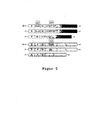
- the vector system may consist of two vectors, as in FIG. 5 is shown.
- a first vector contains GP of the LCMV instead of G of the VSV and a deletion of the p-protein coding gene p.
- a second vector also contains no VSV-G, but expresses the P-protein of the VSV.
- Each vector expresses the nucleoprotein (N) and polymerase (L) of the VSV as well as a less cytopathogenic variant of the M protein (M ncp ).
- the first vector also carries the marker gene rfp, while the second vector carries the suicide gene HSV-TK and the marker gene gfp.
- both vectors can contain a therapeutic gene, wherein the first vector contains, for example, Flt3L or IL-12 and the second vector contains, for example, HSV-TK .
- VSV-LCMV-GP pseudotype vectors and vector systems based thereon can therefore be further improved, in addition to their inherent oncolysis properties, by the introduction of suicide genes and / or immunostimulatory genes.
- suicide proteins are thymidine kinase of Herpex Simplex Virus (HSV-TK), cytosine deaminase, FKBP-FAS, FKBP-caspase9.
- immunostimulatory proteins are cytokines such as IL-2, IL-4, IL-12 and Flt3L, neutralizing anti-TGFbeta.
- Insertions of up to 4.5 kb genes are tolerated by the VSV genome, so that it would even be possible to combine two or more therapeutic genes (e.g., HSV TK + cytokine) on a VSV genome.
- the gene products also act on uninfected tumor cells by means of a so-called bystander effect.
- Injected viral vectors penetrate from the puncture site only a few millimeters into the tumor tissue.
- tumor infiltrating virus producer cells are used which migrate specifically in the tumor and thus release the virus at a site remote from the injection site.
- Virus producer cells include both classical packaging cells for the production of virions from replication-incompetent vectors and producer cells for the production of virions from viable vectors.
- Packaging cells usually contain one or more plasmids for the expression of essential genes which are to be packaged on the respective one Vector is missing and / or necessary for the production of virions.
- NSC neuronal
- MSC mesenchymal stem cells
- BM-TIC bone m arrow derived tumor i nfiltrating cells
- the invention therefore relates to virus producer cells which produce oncolytic VSV-LCMV-GP pseudotype vectors.
- it is tumor-infiltrating producer cells which release the said vectors during their migration in the tumor.
- Preference is given to adult stem cells, in particular neuronal (NSC) and mesenchymal stem cells (MSC).
- NSC neuronal
- MSC mesenchymal stem cells
- MSC-derived BM-TIC cells are particularly preferred.
- VSV-LCMV-GP pseudotype vectors of the invention An obstacle to the production of a rhabdoviral virus producer cell is the cytopathogenicity of proteins M and G.
- the G protein of VSV is characterized by the glioma-specific and non-cytotoxic glycoprotein of LCMV only the M protein is a problem.
- a non-cytopathogenic variant of the M protein can be used.
- the virus producer cells according to the invention and accordingly also the VSV-LCMV-GP pseudotype vectors produced by them can accordingly contain a mutated M protein-encoding gene.
- This variant of the vector is selectively oncolytic for tumor cells, while non-toxic to healthy cells.
- Preference is given to M variants with amino acid exchange in the 37 PSAP 40 region of the M protein or with single (M51R) or multiple (V221F and S226R; M33A and M51A) mutations outside the PSAP region of the M protein.
- M variants with amino acid exchange in the 37 PSAP 40 region of the M protein or with single (M51R) or multiple (V221F and S226R; M33A and M51A) mutations outside the PSAP region of the M protein.
- Particularly preferred is an M protein containing mutations M33A, M51R, V221F and S226R.
- the M variant can be stably transfected with a viral interferon antagonist.
- the invention also provides an in vitro method for gene transfer wherein an LCMV-GP-VSV pseudotype vector or LCMV-GP-VSV pseudotype vector system containing a transgene is introduced into a cell directly or by means of viral producer cells (packaging cells) according to the invention becomes.
- viral producer cells packaging cells
- the invention also provides an in vitro method for gene transfer wherein an LCMV-GP-VSV pseudotype vector or LCMV-GP-VSV pseudotype vector system containing a transgene is introduced into a cell directly or by means of viral producer cells (packaging cells) according to the invention becomes.
- at least two packaging cells are used, each producing one of the (replication-incompetent) kr vectors. Only cells that are infected with all vectors of the kr vector system and therefore contain all the essential viral genes, the production of VSV viruses takes place.
- the invention also relates to the use of vectors and virus producer cells of the invention as medicaments in therapeutic methods.
- the vectors and virus producer cells according to the invention are used for the therapy of solid tumors.
- the therapeutic effect is due both to the oncolytic properties of recombinant vectors and viruses as well as by the use of therapeutic genes.
- Solid tumors may be brain tumor, liver tumor, in particular hepatocellular carcinoma, lung tumor, in particular bronchial carcinoma, and colon tumor, in particular colon carcinoma.
- Preferred tumors are brain tumors, for example a glioma, in particular ependymoma, oligodendroglioma, oligoastrocytoma, astrocytoma, glioblastoma, or a medulloblastoma.
- the invention further provides a pharmaceutical composition containing the vector / virion / virus producer cell of the invention and optionally additives such as carriers and excipients.
- tumor infiltrating virus producer cells that continuously release vectors are formulated for direct implantation into the tumors.
- Example 1 Transduction of glioma cells by LCMV-GP pseudotyped vectors
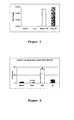
- FIG. 1 shows that the transduced cells produced LCMV-GP pseudotyped VSV vectors, with pseudotyptites varying between 2-7 x 10E5 TU / ml, depending on the type of cell used.
- FIG. 2 shows that the glioma cell lines were efficiently transduced by LCMV GP pseudotyped VSV vectors.
- Example 2 Packaging VSV-LCMV-GP pseudotype vectors in multipotent progenitor cells
- BM-TIC bone m arrow d erived t umor i nfiltrating c ells
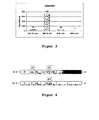
- LCMV-GP expressing BM-TIC were transduced with the defective VSV-GFP vector.
- FIG. 3 shows that VSV-LCMV-GP pseudotypes can also be produced in BM-TIC. However, the titers are lower than, for example, with BHK-21 GP cells (see FIG. 1 ).
- a high transduction rate can be achieved with viable viruses.
- retroviruses Trajcevski et al., 2004
- various flaviviruses Riepl & Mandl, 2007
- retroviruses Trajcevski et al., 2004
- flaviviruses Riepl & Mandl, 2007
- the principle of such systems is to divide the viral genome down to two incomplete replicons. Infectious viruses are formed only if one and the same cell is infected with both vectors and only by this coinfection contains all the necessary components for packaging the virus genome.
- Figure 4 shows an example of the complementary vectors of the vector system according to the invention.
- the first vector lacks the phosphoprotein P.
- the vector encodes the red fluorescent protein (rfp) instead of P.
- rfp red fluorescent protein
- the missing P-function is complemented upon co-infection of the cell by the second vector.
- this alone is not capable of reproduction because it lacks the essential coat protein VSV-G. With the help of this vector therapeutic genes are applied.
- RNA viruses such as the VSV require, in addition to the viral RNA genome, at least viral nucleoprotein (N) and viral polymerase (L) to turn an infectious virus from cloned viral cDNAs Generate Virion.
- the recombinant VSV production system is based on the cytoplasmic expression of viral (+) RNA and viral proteins N, P and L using T7 RNA polymerase constitutively expressed in BSR T7 / 5 cells.
- genomic constructs are used together with the expression plasmids for N, P and L and additionally for VSV-G in the case of vector b) ( FIG.
- the titres can be considerably increased.
- a BHK-21 cell line the stable GP expressed, established.
- a BHK-21 cell line expressing the P protein was established.
- BHK-21 cells are co-infected with both vectors and the replication and thus the formation of new vectors by serial passage of the culture supernatant on native BHK-21 examined. These experiments are repeated with different glioblastoma cell lines (G44, G62, U87), which are cultivated as monolayer but also as spheroids.
- Tumor spheroids are three-dimensional, organoid cell aggregates that better reflect the nature and heterogeneity of tumors than monolayer cultures. At the edge of the cell aggregate, the dividing tumor cells lie loose, while deeper cells no longer divide and necrotic areas develop (Carlson et al., 1984). The sh Georg e experiments shed light on the intratumoral transduction efficiency, the propagation kinetics and the oncolytic effect of the kr VSV-LCMV-GP pseudotype vector system. These spheroids thus enable an initial optimization of the system, without having to carry out animal experiments. A possible toxicity of the kr LCMV-GP pseudotyped VSV vectors, the therapeutic efficacy of oncolysis and the fate of the virus after tumor elimination are investigated in the animal model (see Example 6).
- the viral RNA polymerase has no recombinase activity and there are no cellular recombinases in the cytoplasm, so that the recombination between two negative-strand RNA viruses can only come about by a template change of RNA polymerase. However, this is an extremely rare event (Finke & Conzelmann, 2005, Spann et al., 2003). The emergence of a Recombinant, replication-capable VSV represents a security risk and will be reviewed.
- viral RNA is isolated from the culture supernatant of co-infected cells at different times and examined with a transgene-specific (eg gfp) probe in Northern blot. If RNA species with "excess length" are detectable, the viruses are plaque purified from the supernatant and examined by standard methods for their infectivity and then characterized molecular biological.
- Migratory VSV-LCMV-GP producer cells are established for kr VSV vectors and replication-incompetent VSV-LCMV-GP vectors.
- the VSV M protein has two key roles in the VSV cycle: first, as a structural component of the virion, it is essential for the assembly and budding of viruses. On the other hand, it contributes significantly to the viral pathogenesis through its host shut-off activity of host protein synthesis and induction of apoptosis.
- An important function of M in this context is the inhibition of nucleocytoplasmic transport of IFN mRNA. This suppresses the cell's first defense mechanism against viral infections.
- M protein Because of this strong cytotoxic effect, it is not possible to express the M protein in cell lines in the longer term. However, several mutations in the M protein are known that lead to the attenuation of the virus. Thus, Irie and coworkers were able to show that amino acid exchanges in the so-called 37 PSAP 40 region of the M protein produced a VSV mutant with greatly reduced cytopathogenicity (Irie et al., 2007). As further demonstrated in mouse experiments, M variants are with simple (M51R) or multiple
- V221F and S226R; M33A and M51A mutations outside the PSAP region also strongly attenuated (Desforges et al., 2001, Jayakar and Whitt, 2002). These viruses are unable to suppress the release of IFN- ⁇ / ⁇ , thus inducing an antiviral status that protects the animals from infection. In tumors that often have defects in the IFN system, however, these viruses can multiply and lyse the tumor. For safety reasons, such attenuated variants are of particular importance for gene therapy because they preferentially replicate in tumor cells.
- the inventors have also cloned a non-cytopathogenic variant of the M protein (M ncp ) which contains the mentioned mutations M33A, M51R, V221F and S226R and is no longer able to suppress the synthesis of IFN- ⁇ .
- M ncp non-cytopathogenic variant of the M protein
- This variant replicates on IFN-incompetent cells as efficiently as the parent virus, but is attenuated on IFN-competent cells.
- a viral interferon antagonist Haller et al., 2006.
- the antiviral MxA protein is to be expressed via a Tet-inducible promoter.
- Retroviral vectors with Tet-inducible promoter are known (Löw et al., 2006).
- the Tet-responsive element (tTA) is also introduced into the BM-TIC via a retroviral vector.
- MxA is an interferon-induced GTPase with antiviral activity against RNA viruses (Pavlovic et al., 1992, Stäheli and Pavlovic, 1991). It is cytoplasmic in the form of large oligomers, is not toxic and inhibits the replication of VSV via a hitherto unclear mechanism.
- LCMV-GP expressing BM-TIC are transduced with the Tet-regulated MxA and the tTa vector and then infected with the VSV vectors. As long as the antibiotic is present in the medium, the cells are resistant to productive infection with VSV (LCMV-GP) by the MxA. Only during the in vivo application, the antibiotic is removed and it comes gradually to viral replication and the production of VSV (LCMV-GP).
- MxA is very stable with a half-life of two days
- the mutant MxA (L612K) is alternatively used.
- MxA (L612K) inhibits the infection of VSV with the same effectiveness as the wild-type protein, but is unable to form oligomers. As a result, it is destabilized and has a short half-life of only two hours (Janzen et al., 2000).
- a suicide gene can be used as a therapeutic gene according to the invention.
- An example of this is the thymidine kinase of the herpes simplex virus (HSV-TK), which has the most experience in the clinic. Constitutive expression of HSV-TK results in packaging cells and transduced tumor cells at the end of therapy safely eliminated so that there is no danger of mitotically active packaging cells.
- HSV-TK herpes simplex virus
- an immunomodulatory gene can be used.
- cytokines especially IL-12 and Flt3L.
- IL-12 is naturally secreted by antigen presenting cells such as dendritic cells, macrophages and B cells, and mediates a strong, Th1-based antitumoral immune response. It promotes the growth and differentiation of naive T cells into Th1 cells and thus counteracts a glioma-induced suppression of T cell proliferation and IFNgamma production.
- IL-12 enhances the cytotoxic activity of natural killer and CD8 + cells and also has anti-angiogenic activity (Majewski et al., 1996).
- the cytokine Flt3L is essential for the proliferation and differentiation of antigen-presenting dendritic cells and thus appears particularly well suited for a gene therapy approach.
- Sumia and colleagues (2004) were able to post i.c. Tranduction of glioma in the rat / mouse with the Flt3L gene observed a strong local influx of dendritic cells. 70% of the treated rats showed regression of the tumors and survived.
- TK suicide gene
- glioma cell lines and BM-TIC are transduced and the concentration of the cytokines in the supernatant is checked by ELISA. If physiologically relevant quantities are produced, then the concentration of the vectors is carried out by ultracentrifugation.
- the vectors are first used for the transduction of spheroids and their ability to "bystander killing" examined here. Thereafter, the vector supernatants are sent together with the prepared packaging cells to our cooperation partner in Bergen.
- in vivo testing is carried out in the syngeneic rat glioma model. The survival rate of treated rats after ganciclovir administration is evaluated. In parallel, the therapeutic efficacy of immunotherapy in the absence of TK is being investigated.
- the vector combination 6) provides information about the effectiveness of oncolysis. Tumor size and thus the success of therapy are monitored by MRI and PET (Miletic et al., 2007). The effect of the immunomodulatory genes is evaluated by means of immunohistochemical methods for the detection of infiltrate cells. As described in the following section, the therapeutic approach is also examined in the human facial model.
- Example 6 Testing of the therapeutic principle of action in two glial models
- VSV vectors are first characterized in vitro and then tested for their effectiveness in the animal model. Two particularly meaningful rat models are used for this purpose.
- the human glioma model is ideal for studying suicide gene therapy as well as for investigating viral oncolysis.
- LCMV-GP complementary replicating VSV
- the migration ability of the BM-TIC producer cells and the infectivity of the produced VSV vectors are examined.
- the cells are loaded with a green dye, while the released vectors encode rfp.
- This approach allows a simple fluorescence-based discrimination between BM-TIC and transduced tumor cells.
- the packaging cells and also the concentrated vector supernatants are to be injected into established 9L tumors.
- the vectors should contain an immunostimulatory gene in combination with TK.
- Ganciclovir administration is started a few days after the stereotactic application of the vectors or packaging cells.
- Some of the experimental animals receive vectors only with TK and serve to evaluate the therapeutic efficacy of the immunomodulatory component in the vector.
- the effectiveness of the individual therapy concepts should be assessed on the basis of tumor size using imaging techniques (MRI; PET). Part of the brains of immunotherapy rats are used to characterize the immune status.
- MHC molecules The expression of MHC molecules and the distribution of T cells, granulocytes, macrophages and microglial cells are investigated by means of immunohistochemical methods on frozen sections.
- the ic infiltrate cells are flow cytometrically in terms of their number and phenotypic composition analyzed.
- the formulation with the best therapeutic result is adapted for the treatment of human gliomas. Such a prototype could then be transferred directly into preclinical safety investigations, and after the establishment of the corresponding GMP production procedures, to clinical testing.
Landscapes
- Health & Medical Sciences (AREA)
- Life Sciences & Earth Sciences (AREA)
- Chemical & Material Sciences (AREA)
- Organic Chemistry (AREA)
- Genetics & Genomics (AREA)
- Zoology (AREA)
- Engineering & Computer Science (AREA)
- General Health & Medical Sciences (AREA)
- Molecular Biology (AREA)
- Biochemistry (AREA)
- Bioinformatics & Cheminformatics (AREA)
- Wood Science & Technology (AREA)
- Medicinal Chemistry (AREA)
- General Engineering & Computer Science (AREA)
- Biotechnology (AREA)
- Biophysics (AREA)
- Biomedical Technology (AREA)
- Gastroenterology & Hepatology (AREA)
- Proteomics, Peptides & Aminoacids (AREA)
- Microbiology (AREA)
- Toxicology (AREA)
- Virology (AREA)
- Physics & Mathematics (AREA)
- Plant Pathology (AREA)
- Animal Behavior & Ethology (AREA)
- Public Health (AREA)
- Veterinary Medicine (AREA)
- Pharmacology & Pharmacy (AREA)
- Epidemiology (AREA)
- Chemical Kinetics & Catalysis (AREA)
- General Chemical & Material Sciences (AREA)
- Nuclear Medicine, Radiotherapy & Molecular Imaging (AREA)
- Medicines Containing Material From Animals Or Micro-Organisms (AREA)
- Micro-Organisms Or Cultivation Processes Thereof (AREA)
- Medicines That Contain Protein Lipid Enzymes And Other Medicines (AREA)
Applications Claiming Priority (2)
| Application Number | Priority Date | Filing Date | Title |
|---|---|---|---|
| DE102008050860A DE102008050860A1 (de) | 2008-10-08 | 2008-10-08 | LCMV-GP-VSV-Pseudotypvektoren und tumorinfiltrierende Virenproduzentenzellen zur Therapie von Tumoren |
| EP09748225.1A EP2350295B1 (fr) | 2008-10-08 | 2009-10-08 | Vecteurs pseudotypés lcmv-gp-vsv et cellules hôtes de production de virus pour infiltration dans les tumeurs aux fins de traitement des tumeurs |
Related Parent Applications (2)
| Application Number | Title | Priority Date | Filing Date |
|---|---|---|---|
| EP09748225.1A Division EP2350295B1 (fr) | 2008-10-08 | 2009-10-08 | Vecteurs pseudotypés lcmv-gp-vsv et cellules hôtes de production de virus pour infiltration dans les tumeurs aux fins de traitement des tumeurs |
| EP09748225.1 Division | 2009-10-08 |
Publications (2)
| Publication Number | Publication Date |
|---|---|
| EP2597154A1 true EP2597154A1 (fr) | 2013-05-29 |
| EP2597154B1 EP2597154B1 (fr) | 2014-09-03 |
Family
ID=41666744
Family Applications (2)
| Application Number | Title | Priority Date | Filing Date |
|---|---|---|---|
| EP09748225.1A Active EP2350295B1 (fr) | 2008-10-08 | 2009-10-08 | Vecteurs pseudotypés lcmv-gp-vsv et cellules hôtes de production de virus pour infiltration dans les tumeurs aux fins de traitement des tumeurs |
| EP13153949.6A Active EP2597154B1 (fr) | 2008-10-08 | 2009-10-08 | Vecteurs pseudotypés LCMV-GP-VSV et cellules hôtes de production de virus pour infiltration dans les tumeurs aux fins de traitement des tumeurs |
Family Applications Before (1)
| Application Number | Title | Priority Date | Filing Date |
|---|---|---|---|
| EP09748225.1A Active EP2350295B1 (fr) | 2008-10-08 | 2009-10-08 | Vecteurs pseudotypés lcmv-gp-vsv et cellules hôtes de production de virus pour infiltration dans les tumeurs aux fins de traitement des tumeurs |
Country Status (9)
| Country | Link |
|---|---|
| US (2) | US9650649B2 (fr) |
| EP (2) | EP2350295B1 (fr) |
| JP (1) | JP4910077B2 (fr) |
| CN (1) | CN102224248B (fr) |
| CA (1) | CA2739963C (fr) |
| DE (1) | DE102008050860A1 (fr) |
| ES (2) | ES2523294T3 (fr) |
| PT (2) | PT2350295E (fr) |
| WO (1) | WO2010040526A1 (fr) |
Families Citing this family (39)
| Publication number | Priority date | Publication date | Assignee | Title |
|---|---|---|---|---|
| US10265357B2 (en) | 2008-10-08 | 2019-04-23 | Viratherapeutics Gmbh | Compositions, methods and uses for treating solid tumors using LCMV-GP-VSV pseudotype vectors |
| DE102008050860A1 (de) | 2008-10-08 | 2010-04-15 | Dorothee Von Laer | LCMV-GP-VSV-Pseudotypvektoren und tumorinfiltrierende Virenproduzentenzellen zur Therapie von Tumoren |
| WO2011070440A2 (fr) | 2009-12-10 | 2011-06-16 | Ottawa Hospital Research Institute | Rhabdovirus oncolitique |
| EP2718427B1 (fr) | 2011-06-08 | 2017-01-11 | Children's Hospital of Eastern Ontario Research Institute Inc. | Compositions pour le traitement du glioblastome |
| JP6162818B2 (ja) * | 2012-12-12 | 2017-07-12 | チルドレンズ ホスピタル オブ イースタン オンタリオ リサーチ インスティチュート インコーポレイテッド | 脳癌の治療のための組成物及び方法 |
| RU2019107976A (ru) | 2013-02-21 | 2019-08-23 | Тёрнстоун Лимитед Партнершип | Композиция вакцины |
| US9340799B2 (en) | 2013-09-06 | 2016-05-17 | President And Fellows Of Harvard College | MRNA-sensing switchable gRNAs |
| US9322037B2 (en) | 2013-09-06 | 2016-04-26 | President And Fellows Of Harvard College | Cas9-FokI fusion proteins and uses thereof |
| WO2015077714A1 (fr) | 2013-11-22 | 2015-05-28 | Yale University | Compositions de virus vsv chimérique et procédés pour les utiliser pour le traitement du cancer |
| EP3246410A1 (fr) * | 2016-05-19 | 2017-11-22 | Klinikum rechts der Isar der Technischen Universität München | Virus hybride vsv/vmn pour la thérapie du cancer oncolytique |
| CN109415706A (zh) * | 2016-05-19 | 2019-03-01 | 图恩斯通有限合伙公司 | 假型化的溶瘤弹状病毒及其在组合治疗中的应用 |
| KR20240007715A (ko) | 2016-10-14 | 2024-01-16 | 프레지던트 앤드 펠로우즈 오브 하바드 칼리지 | 핵염기 에디터의 aav 전달 |
| KR20190123328A (ko) | 2017-03-09 | 2019-10-31 | 프레지던트 앤드 펠로우즈 오브 하바드 칼리지 | 암 백신 |
| WO2018165504A1 (fr) | 2017-03-09 | 2018-09-13 | President And Fellows Of Harvard College | Suppression de la douleur par édition de gène |
| EP3658573A1 (fr) | 2017-07-28 | 2020-06-03 | President and Fellows of Harvard College | Procédés et compositions pour l'évolution d'éditeurs de bases à l'aide d'une évolution continue assistée par phage (pace) |
| EP3820495A4 (fr) | 2018-07-09 | 2022-07-20 | The Broad Institute Inc. | Modificateurs d'arn épigénétiques programmables par arn et leurs utilisations |
| WO2020104694A1 (fr) | 2018-11-23 | 2020-05-28 | Vira Therapeutics Gmbh | Vecteurs chimériques du vsv |
| EP3669893A1 (fr) * | 2018-12-20 | 2020-06-24 | Universidad Autónoma de Madrid | Traitement de formes de cancer p53 muté/ modifiees avec le parvovirus |
| US12351837B2 (en) | 2019-01-23 | 2025-07-08 | The Broad Institute, Inc. | Supernegatively charged proteins and uses thereof |
| TW202600150A (zh) * | 2019-01-25 | 2026-01-01 | 德商百靈佳殷格翰國際股份有限公司 | 編碼ccl21之重組棒狀病毒 |
| WO2020191241A1 (fr) | 2019-03-19 | 2020-09-24 | The Broad Institute, Inc. | Procédés et compositions pour l'édition de séquences nucléotidiques |
| WO2020214842A1 (fr) | 2019-04-17 | 2020-10-22 | The Broad Institute, Inc. | Éditeurs de base d'adénine présentant des effets hors cible réduits |
| US20220259617A1 (en) | 2019-06-13 | 2022-08-18 | The General Hospital Corporation | Engineered human-endogenous virus-like particles and methods of use thereof for delivery to cells |
| US20220228172A1 (en) | 2019-06-21 | 2022-07-21 | Boehringer Ingelheim International Gmbh | Novel Mechanism to Control RNA Virus Replication and Gene Expression |
| WO2021211704A1 (fr) * | 2020-04-14 | 2021-10-21 | Washington University | Vaccins contre le sars-cov-2 et essais de criblage à haut rendement basés sur des vecteurs de virus de la stomatite vésiculaire |
| JP2023504675A (ja) | 2020-05-19 | 2023-02-06 | ベーリンガー インゲルハイム インターナショナル ゲゼルシャフト ミット ベシュレンクテル ハフツング | ガンの処置のための結合分子 |
| BR112022023753A2 (pt) | 2020-06-03 | 2022-12-20 | Boehringer Ingelheim Int | Rhabdovírus recombinante que codifica para uma proteína de fusão fc de domínio extracelular cd80 |
| BR112022025251A2 (pt) | 2020-07-10 | 2023-01-17 | Boehringer Ingelheim Int | Processo para produzir rabdovírus purificado a partir de cultura celular |
| BR112023001272A2 (pt) | 2020-07-24 | 2023-04-04 | Massachusetts Gen Hospital | Partículas semelhantes a vírus aprimoradas e métodos de uso das mesmas para entrega às células |
| KR20230069956A (ko) | 2020-09-14 | 2023-05-19 | 베링거 인겔하임 인터내셔날 게엠베하 | 이종 프라임 부스트 백신 |
| EP4367225A1 (fr) | 2021-07-09 | 2024-05-15 | Boehringer Ingelheim International Gmbh | Sauvetage de vsv |
| CN114540316B (zh) * | 2022-01-26 | 2025-01-03 | 上海荣瑞医药科技有限公司 | 溶瘤病毒及其应用 |
| AR128799A1 (es) | 2022-03-16 | 2024-06-12 | Boehringer Ingelheim Int | Antígenos tumorales, compuestos que comprenden los antígenos tumorales y usos de los mismos |
| WO2024153768A1 (fr) | 2023-01-20 | 2024-07-25 | Boehringer Ingelheim International Gmbh | Protéines de fusion d'il-12 fc |
| EP4712947A1 (fr) | 2023-05-17 | 2026-03-25 | Boehringer Ingelheim International GmbH | Formulations pour stabiliser des agents thérapeutiques à base de virus |
| WO2024236132A1 (fr) | 2023-05-17 | 2024-11-21 | Boehringer Ingelheim International Gmbh | Formulations pour stabiliser des agents thérapeutiques à base de virus |
| AR134752A1 (es) | 2023-12-19 | 2026-04-01 | Boehringer Ingelheim Int | Rabdovirus recombinante que codifica una gasdermina |
| WO2025257278A1 (fr) | 2024-06-12 | 2025-12-18 | Boehringer Ingelheim International Gmbh | Séquences immunogènes |
| US20260125459A1 (en) | 2024-10-15 | 2026-05-07 | Boehringer Ingelheim International Gmbh | Macrophage depletion and vesicular stomatitis virus for treatment of cancer |
Citations (3)
| Publication number | Priority date | Publication date | Assignee | Title |
|---|---|---|---|---|
| EP1006196A2 (fr) | 1998-11-26 | 2000-06-07 | Heinrich-Pette-Institut | Vecteurs hybrides retroviraux pseudotypés avec une glycoprotéine de LCMV |
| WO2003005964A2 (fr) * | 2001-07-11 | 2003-01-23 | University Of Miami | Vsv recombinant pour le traitement de cellules tumorales |
| WO2006008074A1 (fr) | 2004-07-16 | 2006-01-26 | Chemotherapeutisches Forschungsinstitut Georg-Speyer-Haus | Therapie genique de tumeurs solides par vecteurs retroviraux pseudotypes a arenavirus-glycoproteine |
Family Cites Families (5)
| Publication number | Priority date | Publication date | Assignee | Title |
|---|---|---|---|---|
| US7153510B1 (en) * | 1995-05-04 | 2006-12-26 | Yale University | Recombinant vesiculoviruses and their uses |
| AU782402B2 (en) * | 1999-09-17 | 2005-07-28 | Wellstat Biologics Corporation | Oncolytic virus |
| US7135339B2 (en) * | 2003-11-20 | 2006-11-14 | University Of Iowa Research Foundation | Methods for producing and using in vivo pseudotyped retroviruses using envelope glycoproteins from lymphocytic choriomeningitis virus (LCMV) |
| DE102008050860A1 (de) | 2008-10-08 | 2010-04-15 | Dorothee Von Laer | LCMV-GP-VSV-Pseudotypvektoren und tumorinfiltrierende Virenproduzentenzellen zur Therapie von Tumoren |
| US10265357B2 (en) | 2008-10-08 | 2019-04-23 | Viratherapeutics Gmbh | Compositions, methods and uses for treating solid tumors using LCMV-GP-VSV pseudotype vectors |
-
2008
- 2008-10-08 DE DE102008050860A patent/DE102008050860A1/de not_active Ceased
-
2009
- 2009-10-08 PT PT97482251T patent/PT2350295E/pt unknown
- 2009-10-08 JP JP2011530417A patent/JP4910077B2/ja active Active
- 2009-10-08 WO PCT/EP2009/007230 patent/WO2010040526A1/fr not_active Ceased
- 2009-10-08 ES ES13153949.6T patent/ES2523294T3/es active Active
- 2009-10-08 US US13/123,175 patent/US9650649B2/en active Active
- 2009-10-08 CN CN200980146679.2A patent/CN102224248B/zh active Active
- 2009-10-08 ES ES09748225T patent/ES2424026T3/es active Active
- 2009-10-08 EP EP09748225.1A patent/EP2350295B1/fr active Active
- 2009-10-08 PT PT131539496T patent/PT2597154E/pt unknown
- 2009-10-08 CA CA2739963A patent/CA2739963C/fr active Active
- 2009-10-08 EP EP13153949.6A patent/EP2597154B1/fr active Active
-
2017
- 2017-04-07 US US15/482,430 patent/US9963718B2/en active Active
Patent Citations (3)
| Publication number | Priority date | Publication date | Assignee | Title |
|---|---|---|---|---|
| EP1006196A2 (fr) | 1998-11-26 | 2000-06-07 | Heinrich-Pette-Institut | Vecteurs hybrides retroviraux pseudotypés avec une glycoprotéine de LCMV |
| WO2003005964A2 (fr) * | 2001-07-11 | 2003-01-23 | University Of Miami | Vsv recombinant pour le traitement de cellules tumorales |
| WO2006008074A1 (fr) | 2004-07-16 | 2006-01-26 | Chemotherapeutisches Forschungsinstitut Georg-Speyer-Haus | Therapie genique de tumeurs solides par vecteurs retroviraux pseudotypes a arenavirus-glycoproteine |
Non-Patent Citations (48)
| Title |
|---|
| AHMED MARYAM ET AL: "Immune response in the absence of neurovirulence in mice infected with m protein mutant vesicular stomatitis virus.", JOURNAL OF VIROLOGY SEP 2008, vol. 82, no. 18, September 2008 (2008-09-01), pages 9273 - 9277, XP002569285, ISSN: 1098-5514 * |
| BARBER GN.: "Vesicular stomatitis virus as an oncolytic vector", VIRAL IMMUNOL., vol. 17, no. 4, 2004, pages 516 - 27, XP002579706 |
| BEYER W R ET AL: "Recombinant expression of lymphocytic choriomeningitis virus strain WE glycoproteins: a single amino acid makes the difference", JOURNAL OF VIROLOGY, THE AMERICAN SOCIETY FOR MICROBIOLOGY, US, vol. 75, no. 2, 1 January 2001 (2001-01-01), pages 1061 - 1064, XP002347069, ISSN: 0022-538X, DOI: 10.1128/JVI.75.2.1061-1064.2001 * |
| BEYER WR; WESTPHAL M; OSTERTAG W; VON LAER D: "Oncoretrovirus and lentivirus vectors pseudotyped with lymphocytic choriomeningitis virus glycoprotein: generation, concentration, and broad host range", J VIROL., vol. 76, 2002, pages 1488 - 95, XP002323020 |
| CARLSSON J; YUHAS JM: "Liquid-overlay culture of cellular spheroids", RECENT RESULTS CANCER RES., vol. 95, 1984, pages 1 - 23 |
| CULVER KW; RAM Z; WALLBRIDGE S; ISHII H; OLDFIELD EH; BLAESE RM: "In vivo gene transfer with retroviral vectorproducer cells for treatment of experimental brain tumors", SCIENCE, vol. 256, no. 5063, 12 June 1992 (1992-06-12), pages 1550 - 2 |
| CUTTER JL; KUROZUMI K; CHIOCCA EA; KAUR B: "Gene therapeutics: the future of brain tumor therapy?", EXPERT REVIEW OF ANTICANCER THERAPY, vol. 6, no. 7, 2006, pages 1053 - 1064 |
| DAI C; HOLLAND EC: "Glioma models", BIOCHIM BIOPHYS ACTA, vol. 1551, no. 1, 31 August 2001 (2001-08-31), pages M19 - 27, XP004319641, DOI: doi:10.1016/S0304-419X(01)00027-0 |
| DESFORGES M; CHARRON J; BERARD S; BEAUSOLEIL S; STOJDL DF; DESPARS G; LAVERDIERE B; BELL JC; TALBOT PJ; STANNERS CP: "Different host-cell shutoff strategies related to the matrix protein lead to persistence of vesicular stomatitis virus mutants on fibroblast cells", VIRUS RES., vol. 76, no. 1, July 2001 (2001-07-01), pages 87 - 102, XP002287308, DOI: doi:10.1016/S0168-1702(01)00251-9 |
| FINKE S; CONZELMANN KK: "Recombinant rhabdoviruses: vectors for vaccine development and gene therapy", CURR TOP MICROBIOL IMMUNOL, vol. 292, 2005, pages 165 - 200, Retrieved from the Internet <URL:Curr Top Microbiol Immunol> |
| FISCHER YH; MILETIC H; GIROGLOU T; LITWAK S; STENZEL W; NEUMANN H; VON LAER D: "A retroviral packaging cell line for pseudotype vectors based on glioma-infiltrating progenitor cells", JOURNAL OF GENE MEDICINE, vol. 9, 2007, pages 335 - 344, XP009129737, DOI: doi:10.1002/jgm.1032 |
| FISCHER YVONNE HEIDEMARIE ET AL: "A retroviral packaging cell line for pseudotype vectors based on glioma-infiltrating progenitor cells.", THE JOURNAL OF GENE MEDICINE, vol. 9, no. 5, May 2007 (2007-05-01), pages 335 - 344, XP009129737, ISSN: 1099-498X * |
| FUKUHARA H; MARTUZA RL; RABKIN SD; ITO Y; TODO T: "Oncolytic herpes simplex virus vector g47delta in combination with androgen ablation for the treatment of human prostate adenocarcinoma", CLIN CANCER RES., vol. LL, no. 21, 1 November 2005 (2005-11-01), pages 7886 - 90 |
| GARBUTT M; LIEBSCHER R; WAHL-JENSEN V; JONES S; MOLLER P; WAGNER R; VOLCHKOV V; KLENK HD; FELDMANN H; STROHER U: "Properties of replication-competent vesicular stomatitis virus vectors expressing glycoproteins of filoviruses and arenaviruses", J VIROL., vol. 78, no. 10, May 2004 (2004-05-01), pages 5458 - 65, XP002527147, DOI: doi:10.1128/JVI.78.10.5458-5465.2004 |
| GE J; WEN Z; WANG X; HU S; LIU Y; KONG X; CHEN H; BU Z: "Generating vesicular stomatitis virus pseudotype bearing the severe acute respiratory syndrome coronavirus spike envelope glycoprotein for rapid and safe neutralization test or cell-entry assay", ANN N Y ACAD SCI., vol. 1081, October 2006 (2006-10-01), pages 246 - 8 |
| HALLER 0; KOCHS G; WEBER F: "The interferon response circuit: induction and suppression by pathogenic viruses", VIROLOGY, vol. 344, no. 1, 5 January 2006 (2006-01-05), pages 119 - 30, XP005216943, DOI: doi:10.1016/j.virol.2005.09.024 |
| HANIKA A; LARISCH B; STEINMANN E; SCHWEGMANN-WESSELS C; ERRLER G; ZIMMER G: "Use of influenza C virus glycoprotein HEF for generation of vesicular stomatitis virus pseudotypes", J GEN VIROL., vol. 86, May 2005 (2005-05-01), pages 1455 - 65 |
| HOLLAND EC: "Gliomagenesis: genetic alterations and mouse models", NAT REV GENET., vol. 2, no. 2, February 2001 (2001-02-01), pages 120 - 9 |
| IRIE T; CARNERO E; OKUMURA A; GARCIA-SASTRE A; HARTY RN: "Modifications of the PSAP region of the matrix protein lead to attenuation of vesicular stomatitis virus in vitro and in vivo", J GEN VIROL., vol. 88, September 2007 (2007-09-01), pages 2559 - 67, XP002569284, DOI: doi:10.1099/vir.0.83096-0 |
| IRIE TAKASHI ET AL: "Modifications of the PSAP region of the matrix protein lead to attenuation of vesicular stomatitis virus in vitro and in vivo.", THE JOURNAL OF GENERAL VIROLOGY, vol. 88, no. Pt 9, September 2007 (2007-09-01), pages 2559 - 2567, XP002569284, ISSN: 0022-1317 * |
| JANZEN C; KOCHS G; HALLER 0: "A Monomeric GTPase-Negative MxA Mutant with Antiviral Activity", J VIROL, vol. 74, no. 17, September 2000 (2000-09-01), pages 8202 - 8206 |
| JAYAKAR HR; WHITT MA: "Identification of two additional translation products from the matrix (M) gene that contribute to vesicular stomatitis virus cytopathology", J VIROL., vol. 76, no. 16, August 2002 (2002-08-01), pages 8011 - 8, XP002976937, DOI: doi:10.1128/JVI.76.16.8011-8018.2002 |
| JIANG Y; JAHAGIRDAR BN; REINHARDT RL; SCHWARTZ RE; KEENE CD; ORTIZ-GONZALEZ XR; REYES M; LENVIK T; LUND T; BLACKSTAD M: "Pluripotency of mesenchymal stem cells derived from adult marrow", NATURE, vol. 418, 2002, pages 41 - 9, XP002559664, DOI: doi:10.1038/nature00870 |
| KIKUCHI, T.; JOKI, T.; AKASAKI, Y.; ABE, T; OHNO, T, CANCER LETT., vol. 135, 1999, pages 47 - 51 |
| KLEIHUES, P.; CAVENEE, W.K.: "World Health Organization Classification of Tumours- Pathology and Genetics, Tumours of the Nervous system", 2000, INTERNATIONAL AGENCY FOR RESEARCH ON CANCER, LYON |
| LOEW R; VIGNA E; LINDEMANN D; NALDINI T.; BUJARD H: "Retroviral vectors containing Tet-controlled bidirectional transcription units for simultaneous regulation of two gene activities", JMOL GENMED, vol. 2, no. 1, 2006, pages 107 - 118 |
| LUN X; SENGER DL; ALAIN T; OPREA A; PARATO K; STOJDL D; LICHTY B; POWER A; JOHNSTON RN; HAMILTON M: "Effects of intravenously administered recombinant vesicular stomatitis virus (VSV(deltaM51)) on multifocal and invasive gliomas", J NATL CANCER INST., vol. 98, no. 21, 1 November 2006 (2006-11-01), pages 1546 - 57, XP008147677, DOI: doi:10.1093/jnci/djj413 |
| MAJEWSKI, S.; MARCZAK, M.; SZMURLO, A.; JABLONSKA, S.; BOLLAG, W., J. INVEST. DERMATOL., vol. 106, 1996, pages 1114 - 1118 |
| MILETIC H; BRUNS M; TSIAKAS K; VOGT B; REZAI R; BAUM C; KUHLKE K; COSSET FL; OSTERTAG W; LOTHER H: "Retroviral vectors pseudotyped with lymphocytic choriomeningitis virus", J. VIROL., vol. 73, 1999, pages 6114 - 6, XP002135674 |
| MILETIC H; FISCHER YH; GIROGLOU T; RUEGER MA; WINKELER A; LI H; HIMMELREICH U; STENZEL W; JACOBS AH; VON LAER D: "Normal brain cells contribute to the bystander effect in suicide gene therapy of malignant glioma", JORURNAL OF CLINICAL CANCER RESEARCH, 2007 |
| MILETIC H; FISCHER YH; LITWAK S; GIROGLOU T; WAERZEGGERS Y; WINKELER A; LI H; HIMMELREICH U; LANGE C; STENZEL W: "Bystander Killing of Malignant Glioma by Bone Marrow-Derived Tumor Infiltrating Progenitor Cells Expressing a Suicide Gene", MOLECULAR THERAPY, vol. 15, 2007, pages 1373 - 1381, XP002589918 |
| MILETIC H; FISCHER YH; NEUMANN H; HANS; STENZEL W; GIROGLOU T; HERMANN M; DECKERT M; VON LAER D: "Selective transduction of malignant glioma by lentiviral vectors pseudotyped with lymphocytic choriomeningitis virus glycoproteins", HUM GENE THER., vol. 15, 2004, pages 1091 - 100, XP002347071, DOI: doi:10.1089/hum.2004.15.1091 |
| MUIK ALEXANDER ET AL: "Pseudotyping vesicular stomatitis virus with lymphocytic choriomeningitis virus glycoproteins enhances infectivity for glioma cells and minimizes neurotropism.", JOURNAL OF VIROLOGY, vol. 85, no. 11, June 2011 (2011-06-01), pages 5679 - 5684, XP002695439, ISSN: 1098-5514 * |
| OWENS RJ; ROSE JK: "Cytoplasmic domain requirement for incorporation of a foreign envelope protein into vesicular stomatitis virus", J VIROL., vol. 67, no. 1, January 1993 (1993-01-01), pages 360 - 5, XP000644672 |
| PAVLOVIC J; HALLER O; STAEHELI P: "Human and mouse Mx proteins inhibit different steps of the influenza virus multiplication cycle", J VIROL., vol. 66, no. 4, April 1992 (1992-04-01), pages 2564 - 9 |
| RIEPL C; MANDL C: "Two non-infectious flaviviruses can form an infectious alliance", NÜRNBERG, 2007. POSTER AT THE ANNUAL MEEITING OF THE GESELLSCHAFT FÜR VIROLOGIE, 2007 |
| SAKARIASSEN PO; PRESTEGARDEN L; WANG J; SKAFTNESMO KO; MAHESPARAN R; MOLTHOFF C; SMINIA P; SUNDLISAETER E; MISRA A; TYSNES BB: "Angiogenesis-independent tumor growth mediated by stemlike cancer cells", PROC NATL ACAD SCI U S A., vol. 103, no. 44, 31 October 2006 (2006-10-31), pages 16466 - 71 |
| SHINOSAKI K; EBERT 0; SURIAWINATA A; THUNG SN; WOO SL: "Prophylactic alpha interferon treatment increases the therapeutic index of oncolytic vesicular stomatitis virus virotherapy for edvanced hepatocellular carcinoma in immune-competent rats", J VIROL., vol. 79, no. 21, November 2005 (2005-11-01), pages 13705 - 13 |
| SHIR A; LEVITZKI A: "Gene therapy for glioblastoma: future perspective for delivery systems and molecular targets", CELL MOL NEUBIOL., vol. 21, December 2001 (2001-12-01), pages 645 - 60 |
| SHORT MP; CHOI BC; LEE JK; MALICK A; BREAKEFIELD XO; MARTUZA RL: "Gene delivery to glioma cells in rat brain by grafting of a retrovirus packaging cell line", J NEUROSCI RES., vol. 27, no. 3, November 1990 (1990-11-01), pages 427 - 39, XP002045619, DOI: doi:10.1002/jnr.490270322 |
| STAEHELI P; PAVLOVIC J: "Inhibition of vesicular stomatitis virus mRNA synthesis by human MxA protein", J VIROL., vol. 65, no. 8, August 1991 (1991-08-01), pages 4498 - 501 |
| SUMIA A; CURTIN JF; ZIRGER JM; XIONG W; KING GD; BARCIA C; LIU C; PUNTELL M; GOVERDHANA S; LOWENSTEIN PR: "Inflammatory and Anti-glioma Effects of an Adenovirus Expressing Human Soluble Fms-like Tyrosine Kinase 3 Ligand (hsFlt3L): Treatment with hsFlt3L Inhibits Intracranial Glioma Progression", MOLECULAR THERAPY, vol. 10, 2004, pages 1071 - 1084 |
| TANI H; KOMODA Y; MATSUO E; SUZUKI K; HAMAMOTO I; YAMASHITA T; MORIISHI K; FUJIYAMA K; KANTO T; HAYASHI N: "Replication-competent recombinant vesicular stomatitis virus encoding hepatitis C virus envelope proteins", J VIROL. 2007 AUG, vol. 81, no. 16, 6 June 2007 (2007-06-06), pages 8601 - 12 |
| TODA, M.; MARTUZA, R. L.; KOJIMA, H.; RABKIN, S. D., J. IMMUNOL., vol. 160, 1998, pages 4457 - 4464 |
| TRAJCEVSKI S; SOLLY SK; FRISEN C; TRENADO A; COSSET FL; KLATZMANN D: "Characterization of a semi-replicative gene delivery system allowing propagation of complementary defective retroviral vectors", J GENE MED., vol. 7, no. 3, March 2005 (2005-03-01), pages 276 - 87 |
| TYMINSKI E; LEROY S; TERADA K; FINKELSTEIN DM; HYATT JL; DANKS MK; POTTER PM; SAEKI Y; CHIOCCA EA: "Brain tumor oncolysis with replication-conditional herpes simplex virus type 1 expressing the prodrug-activating genes, CYP2B1 and secreted human intestinal carboxylesterase, in combination with cyclophosphamide and irinotecan", CANCER RES., vol. 65, no. 15, 1 August 2005 (2005-08-01), pages 6850 - 7 |
| WOLLMANN G; ROBEK MD; VAN DEN POL AN: "Variable deficiencies in the interferon response enhance susceptibility to vesicular stomatitis virus oncolytic actions in glioblastoma cells but not in normal human glial cells", J VIROL., vol. 81, no. 3, February 2007 (2007-02-01), pages 1479 - 91, XP002579705, DOI: doi:10.1128/JVI.01861-06 |
| ZIMMER G; CONZELMANN KK; HERRLER G: "Cleavage at the furin consensus sequence RAR/KR(109) and presence of the intervening peptide of the respiratory syncytial virus fusion protein are dispensable for .virus replication in cell culture", J VIROL., vol. 76, no. 18, September 2002 (2002-09-01), pages 9218 - 24, XP009002025 |
Also Published As
| Publication number | Publication date |
|---|---|
| CN102224248B (zh) | 2014-01-15 |
| WO2010040526A1 (fr) | 2010-04-15 |
| PT2597154E (pt) | 2014-10-30 |
| JP4910077B2 (ja) | 2012-04-04 |
| CN102224248A (zh) | 2011-10-19 |
| EP2350295B1 (fr) | 2013-05-15 |
| US9650649B2 (en) | 2017-05-16 |
| WO2010040526A8 (fr) | 2011-05-19 |
| DE102008050860A1 (de) | 2010-04-15 |
| US9963718B2 (en) | 2018-05-08 |
| CA2739963A1 (fr) | 2010-04-15 |
| US20170211096A1 (en) | 2017-07-27 |
| ES2523294T3 (es) | 2014-11-24 |
| US20110250188A1 (en) | 2011-10-13 |
| EP2597154B1 (fr) | 2014-09-03 |
| CA2739963C (fr) | 2012-04-03 |
| EP2350295A1 (fr) | 2011-08-03 |
| ES2424026T3 (es) | 2013-09-26 |
| JP2012504944A (ja) | 2012-03-01 |
| PT2350295E (pt) | 2013-08-05 |
Similar Documents
| Publication | Publication Date | Title |
|---|---|---|
| EP2597154B1 (fr) | Vecteurs pseudotypés LCMV-GP-VSV et cellules hôtes de production de virus pour infiltration dans les tumeurs aux fins de traitement des tumeurs | |
| DE69634904T2 (de) | Negativstrand rna virus mit selbständiger replikationsaktivität | |
| DE69330774T2 (de) | Cytokin expremierender defekter rekombinanter adenovirus in der verwendung bei der antitumoralen behandlung | |
| CN111278972B (zh) | 用于细胞遗传修饰的非整合型dna载体 | |
| DE69634300T2 (de) | Gentherapie mit hilfe von schaf-adenoviralen vektoren | |
| DE60023600T2 (de) | Replizierende retrovirale Konstrukte, ihre Herstellung und Verwendungen für den Gentransfer | |
| DE69706593T2 (de) | Verwendung von Plasmiden zur Herstellung eines Impfstoffs bei Mensch und Tier | |
| US10265357B2 (en) | Compositions, methods and uses for treating solid tumors using LCMV-GP-VSV pseudotype vectors | |
| US9555067B2 (en) | Replication-competent vesicular stomatitis viruses | |
| DE102004034461B4 (de) | Gentherapie solider Tumore durch retrovirale, mit Arenavirus-Glykoprotein pseudotypisierte Vektoren | |
| US20250034568A1 (en) | Constructs comprising tandem microrna-adapted short hairpin rna (shmir) for increasing fetal hemoglobin | |
| DE69716581T2 (de) | Retroviraler vektor und dessen verwendung in gentherapie | |
| DE60036929T2 (de) | Gentherapeutika | |
| DE102010018961B4 (de) | Genetisch modifiziertes Paramyxovirus zur Behandlung von Tumorerkrankungen | |
| JPH08501210A (ja) | 遺伝子産物の持続的放出のための筋芽細胞の利用 | |
| Mani et al. | Study on Genetically Engineered Vesicular Stomatitis Virus for the Application of Treating Malignant Diseases using Gene Therapy | |
| DE19709512A1 (de) | Verfahren für die Herstellung von attenuierten lebenden, rekombinanten Influenza A-Viren mit inkorporierten fremden Glykoproteinen zur Verwendung als nasal/orale Vakzinen und als genetische Vektorsysteme | |
| DE19620687A1 (de) | Neuer adenoviraler Vektor für den Transfer humaner Gene in vivo | |
| EP4407025A2 (fr) | Adénovirus comprenant une protéine hexon d'adénovirus modifié | |
| EP1428886A1 (fr) | Vecteurs rétroviraux améliorés pour la thérapie génique | |
| DE19503082A1 (de) | Gegenstand und Verfahren zur bevorzugt transienten Expression und möglichen Translation spezifischer RNA im cytoplasmatischen Bereich höherer eukaryontischer Zellen | |
| JP2006501829A (ja) | Hoxで誘導される増殖を制限する遺伝子をブロックする幹細胞増殖因子およびその方法 | |
| WO2025061347A1 (fr) | Pré-vecteur de vhs-1 polyvalent | |
| O’Shea | Viral pathogens as therapeutic delivery vehicles | |
| Hoyt et al. | Application of phiC31 for Gene Therapy in Mouse Hematopoietic Stem Cells |
Legal Events
| Date | Code | Title | Description |
|---|---|---|---|
| PUAI | Public reference made under article 153(3) epc to a published international application that has entered the european phase |
Free format text: ORIGINAL CODE: 0009012 |
|
| AC | Divisional application: reference to earlier application |
Ref document number: 2350295 Country of ref document: EP Kind code of ref document: P |
|
| AK | Designated contracting states |
Kind code of ref document: A1 Designated state(s): AT BE BG CH CY CZ DE DK EE ES FI FR GB GR HR HU IE IS IT LI LT LU LV MC MK MT NL NO PL PT RO SE SI SK SM TR |
|
| RAP1 | Party data changed (applicant data changed or rights of an application transferred) |
Owner name: VIRATHERAPEUTICS GMBH |
|
| 17P | Request for examination filed |
Effective date: 20131016 |
|
| RBV | Designated contracting states (corrected) |
Designated state(s): AT BE BG CH CY CZ DE DK EE ES FI FR GB GR HR HU IE IS IT LI LT LU LV MC MK MT NL NO PL PT RO SE SI SK SM TR |
|
| GRAP | Despatch of communication of intention to grant a patent |
Free format text: ORIGINAL CODE: EPIDOSNIGR1 |
|
| INTG | Intention to grant announced |
Effective date: 20140120 |
|
| GRAP | Despatch of communication of intention to grant a patent |
Free format text: ORIGINAL CODE: EPIDOSNIGR1 |
|
| INTG | Intention to grant announced |
Effective date: 20140425 |
|
| GRAS | Grant fee paid |
Free format text: ORIGINAL CODE: EPIDOSNIGR3 |
|
| GRAA | (expected) grant |
Free format text: ORIGINAL CODE: 0009210 |
|
| AC | Divisional application: reference to earlier application |
Ref document number: 2350295 Country of ref document: EP Kind code of ref document: P |
|
| AK | Designated contracting states |
Kind code of ref document: B1 Designated state(s): AT BE BG CH CY CZ DE DK EE ES FI FR GB GR HR HU IE IS IT LI LT LU LV MC MK MT NL NO PL PT RO SE SI SK SM TR |
|
| REG | Reference to a national code |
Ref country code: GB Ref legal event code: FG4D Free format text: NOT ENGLISH |
|
| REG | Reference to a national code |
Ref country code: CH Ref legal event code: EP Ref country code: AT Ref legal event code: REF Ref document number: 685641 Country of ref document: AT Kind code of ref document: T Effective date: 20140915 |
|
| REG | Reference to a national code |
Ref country code: IE Ref legal event code: FG4D Free format text: LANGUAGE OF EP DOCUMENT: GERMAN |
|
| REG | Reference to a national code |
Ref country code: SE Ref legal event code: TRGR |
|
| REG | Reference to a national code |
Ref country code: DE Ref legal event code: R096 Ref document number: 502009009918 Country of ref document: DE Effective date: 20141016 |
|
| REG | Reference to a national code |
Ref country code: NL Ref legal event code: T3 |
|
| REG | Reference to a national code |
Ref country code: PT Ref legal event code: SC4A Free format text: AVAILABILITY OF NATIONAL TRANSLATION Effective date: 20141022 |
|
| REG | Reference to a national code |
Ref country code: ES Ref legal event code: FG2A Ref document number: 2523294 Country of ref document: ES Kind code of ref document: T3 Effective date: 20141124 |
|
| REG | Reference to a national code |
Ref country code: CH Ref legal event code: NV Representative=s name: VOSSIUS AND PARTNER, CH |
|
| PG25 | Lapsed in a contracting state [announced via postgrant information from national office to epo] |
Ref country code: LT Free format text: LAPSE BECAUSE OF FAILURE TO SUBMIT A TRANSLATION OF THE DESCRIPTION OR TO PAY THE FEE WITHIN THE PRESCRIBED TIME-LIMIT Effective date: 20140903 Ref country code: NO Free format text: LAPSE BECAUSE OF FAILURE TO SUBMIT A TRANSLATION OF THE DESCRIPTION OR TO PAY THE FEE WITHIN THE PRESCRIBED TIME-LIMIT Effective date: 20141203 Ref country code: GR Free format text: LAPSE BECAUSE OF FAILURE TO SUBMIT A TRANSLATION OF THE DESCRIPTION OR TO PAY THE FEE WITHIN THE PRESCRIBED TIME-LIMIT Effective date: 20141204 |
|
| REG | Reference to a national code |
Ref country code: LT Ref legal event code: MG4D |
|
| PG25 | Lapsed in a contracting state [announced via postgrant information from national office to epo] |
Ref country code: HR Free format text: LAPSE BECAUSE OF FAILURE TO SUBMIT A TRANSLATION OF THE DESCRIPTION OR TO PAY THE FEE WITHIN THE PRESCRIBED TIME-LIMIT Effective date: 20140903 Ref country code: CY Free format text: LAPSE BECAUSE OF FAILURE TO SUBMIT A TRANSLATION OF THE DESCRIPTION OR TO PAY THE FEE WITHIN THE PRESCRIBED TIME-LIMIT Effective date: 20140903 Ref country code: LV Free format text: LAPSE BECAUSE OF FAILURE TO SUBMIT A TRANSLATION OF THE DESCRIPTION OR TO PAY THE FEE WITHIN THE PRESCRIBED TIME-LIMIT Effective date: 20140903 |
|
| PG25 | Lapsed in a contracting state [announced via postgrant information from national office to epo] |
Ref country code: SK Free format text: LAPSE BECAUSE OF FAILURE TO SUBMIT A TRANSLATION OF THE DESCRIPTION OR TO PAY THE FEE WITHIN THE PRESCRIBED TIME-LIMIT Effective date: 20140903 Ref country code: RO Free format text: LAPSE BECAUSE OF FAILURE TO SUBMIT A TRANSLATION OF THE DESCRIPTION OR TO PAY THE FEE WITHIN THE PRESCRIBED TIME-LIMIT Effective date: 20140903 Ref country code: EE Free format text: LAPSE BECAUSE OF FAILURE TO SUBMIT A TRANSLATION OF THE DESCRIPTION OR TO PAY THE FEE WITHIN THE PRESCRIBED TIME-LIMIT Effective date: 20140903 Ref country code: CZ Free format text: LAPSE BECAUSE OF FAILURE TO SUBMIT A TRANSLATION OF THE DESCRIPTION OR TO PAY THE FEE WITHIN THE PRESCRIBED TIME-LIMIT Effective date: 20140903 Ref country code: IS Free format text: LAPSE BECAUSE OF FAILURE TO SUBMIT A TRANSLATION OF THE DESCRIPTION OR TO PAY THE FEE WITHIN THE PRESCRIBED TIME-LIMIT Effective date: 20150103 |
|
| REG | Reference to a national code |
Ref country code: HU Ref legal event code: AG4A Ref document number: E022442 Country of ref document: HU |
|
| PG25 | Lapsed in a contracting state [announced via postgrant information from national office to epo] |
Ref country code: PL Free format text: LAPSE BECAUSE OF FAILURE TO SUBMIT A TRANSLATION OF THE DESCRIPTION OR TO PAY THE FEE WITHIN THE PRESCRIBED TIME-LIMIT Effective date: 20140903 |
|
| REG | Reference to a national code |
Ref country code: DE Ref legal event code: R097 Ref document number: 502009009918 Country of ref document: DE |
|
| PG25 | Lapsed in a contracting state [announced via postgrant information from national office to epo] |
Ref country code: MC Free format text: LAPSE BECAUSE OF FAILURE TO SUBMIT A TRANSLATION OF THE DESCRIPTION OR TO PAY THE FEE WITHIN THE PRESCRIBED TIME-LIMIT Effective date: 20140903 |
|
| PLBE | No opposition filed within time limit |
Free format text: ORIGINAL CODE: 0009261 |
|
| STAA | Information on the status of an ep patent application or granted ep patent |
Free format text: STATUS: NO OPPOSITION FILED WITHIN TIME LIMIT |
|
| REG | Reference to a national code |
Ref country code: IE Ref legal event code: MM4A |
|
| PG25 | Lapsed in a contracting state [announced via postgrant information from national office to epo] |
Ref country code: DK Free format text: LAPSE BECAUSE OF FAILURE TO SUBMIT A TRANSLATION OF THE DESCRIPTION OR TO PAY THE FEE WITHIN THE PRESCRIBED TIME-LIMIT Effective date: 20140903 |
|
| 26N | No opposition filed |
Effective date: 20150604 |
|
| REG | Reference to a national code |
Ref country code: FR Ref legal event code: PLFP Year of fee payment: 7 |
|
| PG25 | Lapsed in a contracting state [announced via postgrant information from national office to epo] |
Ref country code: IE Free format text: LAPSE BECAUSE OF NON-PAYMENT OF DUE FEES Effective date: 20141008 |
|
| PG25 | Lapsed in a contracting state [announced via postgrant information from national office to epo] |
Ref country code: SI Free format text: LAPSE BECAUSE OF FAILURE TO SUBMIT A TRANSLATION OF THE DESCRIPTION OR TO PAY THE FEE WITHIN THE PRESCRIBED TIME-LIMIT Effective date: 20140903 |
|
| PG25 | Lapsed in a contracting state [announced via postgrant information from national office to epo] |
Ref country code: SM Free format text: LAPSE BECAUSE OF FAILURE TO SUBMIT A TRANSLATION OF THE DESCRIPTION OR TO PAY THE FEE WITHIN THE PRESCRIBED TIME-LIMIT Effective date: 20140903 |
|
| PG25 | Lapsed in a contracting state [announced via postgrant information from national office to epo] |
Ref country code: BG Free format text: LAPSE BECAUSE OF FAILURE TO SUBMIT A TRANSLATION OF THE DESCRIPTION OR TO PAY THE FEE WITHIN THE PRESCRIBED TIME-LIMIT Effective date: 20140903 |
|
| REG | Reference to a national code |
Ref country code: CH Ref legal event code: PFA Owner name: VIRATHERAPEUTICS GMBH, AT Free format text: FORMER OWNER: VIRATHERAPEUTICS GMBH, AT |
|
| PG25 | Lapsed in a contracting state [announced via postgrant information from national office to epo] |
Ref country code: MT Free format text: LAPSE BECAUSE OF FAILURE TO SUBMIT A TRANSLATION OF THE DESCRIPTION OR TO PAY THE FEE WITHIN THE PRESCRIBED TIME-LIMIT Effective date: 20140903 Ref country code: LU Free format text: LAPSE BECAUSE OF NON-PAYMENT OF DUE FEES Effective date: 20141008 Ref country code: TR Free format text: LAPSE BECAUSE OF FAILURE TO SUBMIT A TRANSLATION OF THE DESCRIPTION OR TO PAY THE FEE WITHIN THE PRESCRIBED TIME-LIMIT Effective date: 20140903 |
|
| REG | Reference to a national code |
Ref country code: FR Ref legal event code: PLFP Year of fee payment: 8 |
|
| REG | Reference to a national code |
Ref country code: FR Ref legal event code: PLFP Year of fee payment: 9 |
|
| PG25 | Lapsed in a contracting state [announced via postgrant information from national office to epo] |
Ref country code: MK Free format text: LAPSE BECAUSE OF FAILURE TO SUBMIT A TRANSLATION OF THE DESCRIPTION OR TO PAY THE FEE WITHIN THE PRESCRIBED TIME-LIMIT Effective date: 20140903 |
|
| REG | Reference to a national code |
Ref country code: FR Ref legal event code: PLFP Year of fee payment: 10 |
|
| REG | Reference to a national code |
Ref country code: DE Ref legal event code: R082 Ref document number: 502009009918 Country of ref document: DE Representative=s name: VOSSIUS & PARTNER PATENTANWAELTE RECHTSANWAELT, DE Ref country code: DE Ref legal event code: R081 Ref document number: 502009009918 Country of ref document: DE Owner name: VIRATHERAPEUTICS GMBH, AT Free format text: FORMER OWNER: VIRATHERAPEUTICS GMBH, INNSBRUCK, AT |
|
| REG | Reference to a national code |
Ref country code: CH Ref legal event code: PCOW Free format text: NEW ADDRESS: BUNDESSTRASSE 27, 6063 RUM (AT) |
|
| REG | Reference to a national code |
Ref country code: HU Ref legal event code: HC9C Owner name: VIRATHERAPEUTICS GMBH, AT Free format text: FORMER OWNER(S): VIRATHERAPEUTICS GMBH, AT |
|
| P01 | Opt-out of the competence of the unified patent court (upc) registered |
Effective date: 20230418 |
|
| PGFP | Annual fee paid to national office [announced via postgrant information from national office to epo] |
Ref country code: PT Payment date: 20250925 Year of fee payment: 17 |
|
| REG | Reference to a national code |
Ref country code: CH Ref legal event code: U11 Free format text: ST27 STATUS EVENT CODE: U-0-0-U10-U11 (AS PROVIDED BY THE NATIONAL OFFICE) Effective date: 20251101 |
|
| PGFP | Annual fee paid to national office [announced via postgrant information from national office to epo] |
Ref country code: HU Payment date: 20251027 Year of fee payment: 17 |
|
| PGFP | Annual fee paid to national office [announced via postgrant information from national office to epo] |
Ref country code: NL Payment date: 20251021 Year of fee payment: 17 |
|
| PGFP | Annual fee paid to national office [announced via postgrant information from national office to epo] |
Ref country code: DE Payment date: 20251021 Year of fee payment: 17 |
|
| PGFP | Annual fee paid to national office [announced via postgrant information from national office to epo] |
Ref country code: GB Payment date: 20251022 Year of fee payment: 17 |
|
| PGFP | Annual fee paid to national office [announced via postgrant information from national office to epo] |
Ref country code: AT Payment date: 20251022 Year of fee payment: 17 |
|
| PGFP | Annual fee paid to national office [announced via postgrant information from national office to epo] |
Ref country code: IT Payment date: 20251024 Year of fee payment: 17 Ref country code: FI Payment date: 20251028 Year of fee payment: 17 |
|
| PGFP | Annual fee paid to national office [announced via postgrant information from national office to epo] |
Ref country code: FR Payment date: 20251030 Year of fee payment: 17 |
|
| PGFP | Annual fee paid to national office [announced via postgrant information from national office to epo] |
Ref country code: BE Payment date: 20251021 Year of fee payment: 17 |
|
| PGFP | Annual fee paid to national office [announced via postgrant information from national office to epo] |
Ref country code: CH Payment date: 20251101 Year of fee payment: 17 Ref country code: SE Payment date: 20251021 Year of fee payment: 17 |
|
| PGFP | Annual fee paid to national office [announced via postgrant information from national office to epo] |
Ref country code: ES Payment date: 20251210 Year of fee payment: 17 |