EP2599896B1 - Procédé de dépôt galvanique d'au moins un métal ou un semi-conducteur et dispositif à cet effet - Google Patents
Procédé de dépôt galvanique d'au moins un métal ou un semi-conducteur et dispositif à cet effet Download PDFInfo
- Publication number
- EP2599896B1 EP2599896B1 EP12191555.7A EP12191555A EP2599896B1 EP 2599896 B1 EP2599896 B1 EP 2599896B1 EP 12191555 A EP12191555 A EP 12191555A EP 2599896 B1 EP2599896 B1 EP 2599896B1
- Authority
- EP
- European Patent Office
- Prior art keywords
- organic liquid
- electrolyte
- metal
- process according
- layer thickness
- Prior art date
- Legal status (The legal status is an assumption and is not a legal conclusion. Google has not performed a legal analysis and makes no representation as to the accuracy of the status listed.)
- Active
Links
Images
Classifications
-
- C—CHEMISTRY; METALLURGY
- C25—ELECTROLYTIC OR ELECTROPHORETIC PROCESSES; APPARATUS THEREFOR
- C25D—PROCESSES FOR THE ELECTROLYTIC OR ELECTROPHORETIC PRODUCTION OF COATINGS; ELECTROFORMING; APPARATUS THEREFOR
- C25D3/00—Electroplating: Baths therefor
- C25D3/66—Electroplating: Baths therefor from melts
- C25D3/665—Electroplating: Baths therefor from melts from ionic liquids
-
- C—CHEMISTRY; METALLURGY
- C25—ELECTROLYTIC OR ELECTROPHORETIC PROCESSES; APPARATUS THEREFOR
- C25D—PROCESSES FOR THE ELECTROLYTIC OR ELECTROPHORETIC PRODUCTION OF COATINGS; ELECTROFORMING; APPARATUS THEREFOR
- C25D21/00—Processes for servicing or operating cells for electrolytic coating
- C25D21/11—Use of protective surface layers on electrolytic baths
-
- C—CHEMISTRY; METALLURGY
- C25—ELECTROLYTIC OR ELECTROPHORETIC PROCESSES; APPARATUS THEREFOR
- C25D—PROCESSES FOR THE ELECTROLYTIC OR ELECTROPHORETIC PRODUCTION OF COATINGS; ELECTROFORMING; APPARATUS THEREFOR
- C25D3/00—Electroplating: Baths therefor
- C25D3/02—Electroplating: Baths therefor from solutions
- C25D3/42—Electroplating: Baths therefor from solutions of light metals
- C25D3/44—Aluminium
Definitions
- the invention relates to a method for the galvanic deposition of at least one metal or semiconductor on a substrate to be coated in a galvanic cell with an anode, a cathode and, if desired, a reference electrode, which are immersed in an electrolyte, the metal or semiconductor used for the coating being the electrolyte is added and / or used in the form of the anode, the substrate to be coated is connected as a cathode and the electrolyte is selected from ionic liquids and a potential is applied at such a level that the metal or semiconductor on the Substrate surface is electrodeposited.
- the electrochemical metal deposition of base metals is known from the prior art, that is to say such metals with a more negative normal potential than hydrogen.
- the Hall-Heroult process is used for the galvanic deposition of aluminum.
- this method is unsuitable for coating materials with aluminum, since the aluminum reduction takes place at temperatures of around 1000 ° C, namely the bath temperature of the electrolyte cryolite (Na 3 AlF 6 ) / aluminum oxide (Al 2 O 3 ).
- aluminum is obtained in a liquid state.
- the non-aqueous electrolyte baths also contain organic solvents that are highly flammable and volatile.
- electrolyte baths are often hygroscopic and therefore difficult to handle.
- the starting materials used for electroplating in the form of organic metal compounds are often pyrophoric, i.e. they react in air with spontaneous combustion and show extremely violent reactions when they come into contact with water. This fact, in combination with the highly flammable solvents used, represents a high risk potential.
- aluminum can be deposited under an inert atmosphere from a binary aluminum chloride / alkali metal chloride mixture, the alkali metal chlorides being selected from those of sodium, lithium or mixtures of potassium and sodium chlorides.
- bromides or iodides can also be used.
- Such a procedure is for example off J. Fransaer, E. Leunis, T. Herato, JP Celis, J. Appl. Electrochem. 32 (2002) 123-128 known. With this procedure, however, it is sometimes felt to be disadvantageous that the above-described electrolytes are highly corrosive.
- aluminum chloride has a comparatively high vapor pressure. At the required temperatures, this can easily lead to explosions.
- Another disadvantage is that the high temperatures required by the process promote the formation of intermetallic compounds between the aluminum to be deposited and the substrate surface. These layers are often brittle and thus impair the adhesion of the aluminum layer to the metal substrate.
- the EP 0 339 536 A1 and the WO 2010/106072 A2 describes methods and devices for the electrochemical coating of substrate surfaces with aluminum, in which a solution or suspension of aluminum trihalide in an ionic liquid and an organic solvent is used as the electrolyte.
- the DE 10 2011 007 559 A1 further teaches a person skilled in the art that the ionic liquid and the nonionic agent are immiscible and exist in separate phases.
- the WO 2011/064556 A2 discloses that ionic liquids can be protected from air by coating them with a layer of a liquid alkane.
- the US 2849349 A disclosed that an electrolyte through Overlaying with paraffin oil can be protected against the effects of air.
- the object of the present invention was therefore to provide an improved method for the electrochemical deposition of base metals such as aluminum and the like, which does not have to be carried out under inert gas conditions and furthermore leads to uniform and well-adhering galvanic layers.
- a protective gas atmosphere can be completely dispensed with if the ionic liquid or the electrolyte is covered with an organic liquid.
- the organic liquid is expediently chosen so that it is not subject to any electrochemical reactions under the electrolysis conditions or that these are of minor importance.
- the layer thickness of organic liquid applied to the electrolyte is set to a thickness of at least 2 mm or more, preferably at least 5 mm, more preferably at least 10 mm. This can ensure that as little moisture or oxygen as possible can diffuse through the organic liquid layer to the electrolyte during the duration of the electrochemical metal deposition process.
- the electrolyte can also be subjected to movement by stirring or pumping, without breakthroughs being formed on the surface through the protective layer of the organic liquid. Mixing or moving the electrolyte can be advantageous in order to counteract the formation of concentration inhomogeneities of dissolved metal ions in the electrolyte.
- the metal layers that can be produced with the method according to the invention are also distinguished by good adhesion to a large number of usable Cathode materials.
- high-gloss layers can be produced without additives such as brighteners or the like having to be added to the electrolyte.
- the electrolyte is covered with an organic liquid.
- an organic liquid This does not mean the physical state of the substance in question at room temperature, but rather at the respective temperature of the electrolyte.
- a paraffin with a melting point of 60 ° C. is regarded as an organic liquid if the process is operated at a temperature higher than this melting point, for example at 80 ° C.
- the organic liquid is preferably liquid at 25.degree. C., preferably at 20.degree. C., particularly preferably at a temperature of ⁇ 15.degree.
- the metal or the semiconductor used for the coating can be added to the electrolyte and / or used in the form of the anode.
- the use of metal salts in galvanic processes is well known.
- all anhydrous salts of the metal to be coated can be used in the process according to the invention.
- Corresponding organometallic compounds or mixtures of anhydrous salts and organometallic compounds can also be used.
- the anode can consist of a passive electrode material, that is to say one that is not itself subject to any electrochemical reactions under the selected potential conditions.
- electrodes made of graphite or precious metals such as platinum or gold can be used for this purpose.
- the anode can also consist of or contain the metal to be coated.
- the anode material takes an active part in the electrochemical processes in that the material of the anode is oxidized and passes into the electrolyte. In other words, the anode is consumed in this process, with the dissolved metal in turn being deposited on the cathode surface. So an anode made of pure aluminum is subject, for example, to the following anodic partial reaction: Al 0 solid ⁇ Al 3+ dissolved + 3 e -
- the organic liquid expediently has a lower density than the electrolyte so that the organic liquid floats on the electrolyte and can thus protect it from the ingress of air and / or moisture.
- the density of the organic liquid at 25 ° C. is preferably at most 1 g / cm 3 , preferably at most 0.9 g / cm 3 , particularly preferably at most 0.85 g / cm 3 .
- the organic liquid is selected from hydrocarbon compounds which have no Zerewitinoff-active H atoms, the organic liquid being selected in particular from linear, branched or cyclic alkanes or alkenes, or aromatic hydrocarbon compounds.
- a Zerewitinoff-active H atom is understood to mean an acidic H atom or "active" H atom. Such can be determined in a manner known per se by reactivity with a corresponding Grignard reagent.
- the amount of Zerewitinoff-active H atoms is typically determined by the methane release that is released when the substance to be tested reacts with methyl magnesium bromide (CH 3 -MgBr) according to the following reaction equation: CH 3 -MgBr + ROH ⁇ CH 4 + Mg (OR) Br
- Zerewitinoff-active H atoms typically come from CH acidic organic groups, -OH, -SH, -NH 2 or - NHR with R as the organic residue and - COOH.
- the organic liquid is selected from aromatic hydrocarbon compounds with 6 to 30 carbon atoms, aliphatic hydrocarbon compounds with 9 to 30 carbon atoms, in particular from alkanes or alkenes.
- Particularly suitable are linear hydrocarbon compounds with 9 to 15 carbon atoms, in particular with 10 to 15 carbon atoms, or mixtures thereof.
- the aforementioned linear hydrocarbon compounds are saturated or monounsaturated. These are, for example, n-nonane, n-decane, n-undecane, n-dodecane, n-tridecane, n-tetradecane, n-pentadecane and n-pentadecene. Of these, n-decane is particularly preferred.
- Sinarol is a C 14 - C 19 hydrocarbon mixture with a boiling range of 250 ° C - 330 ° C.
- aromatic organic liquids examples include toluene, xylene, trimethylbenzene (mesitylene, hemllitol and / or pseudocumene). All of the aforementioned organic liquids can also be used as mixtures.
- the organic liquid mixes with water as little as possible. In this way it can be ensured that the organic liquid used for the layering represents a particularly effective diffusion barrier against water. It is advantageous if the organic liquid has a Kow value (n-octanol-water partition coefficient) of> 1.0, in particular of ⁇ 2.0. Solvents with a Kow value of 4.0, in particular of 5.0 or of 6.0, are particularly preferred.
- Solvents with a Kow value of 5.0 are, for example, n-nonane, n-decane, n-undecane, n-dodecane, n-tridecane, n-tetradecane, n-pentadecane and the corresponding alkenes, in particular n-pentadecene.
- Ionic liquids are a group of solvents which, in contrast to traditional organic or aqueous solvents, are made up of anions and cations.
- ionic liquids are typically built up from an organic cation, which is often formed by alkylation of a Connection is obtained.
- These can be selected from imidazoles, pyrazoles, thiazoles, isothiazoles, azathiazoles, oxothiazoles, oxazines, oxazolines, oxazaboroles, dithiozenes, triazoles, selenozoles, oxaphospholes, pyrroles, boroles, furans, thiophenes, phospholes, pentazoles, indolines, isoxazoles, indolines, oxazoles , Isotriazoles, tetrazoles, benzofurans, dibenzofurans, benzothiophenes, dibenzothiophenes, thiadiazoles, pyridines, pyrimidines, pyrazines, pyridazines, piperazines, piperidines, morpholones, pyrans, anolines, phthalazines, quinaoxalines, and combinations thereof.
- the anionic part of the ionic liquid can be composed of inorganic or organic anions. Typical examples are halides, BX 4 - , PF 6 - , AsF 6 - , SbF 6 - , NO 2 - , NO 3 - , SO 4 2- , BR 4 - , substituted or unsubstituted carboranes, substituted or unsubstituted metallocarboranes, phosphates , Phosphites, polyoxometalates, substituted or unsubstituted carboxylates such as acetate, triflates and non-coordinating anions.
- halides BX 4 - , PF 6 - , AsF 6 - , SbF 6 - , NO 2 - , NO 3 - , SO 4 2- , BR 4 - , substituted or unsubstituted carboranes, substituted or unsubstituted metallocarboranes, phosphates
- X can independently represent fluoride, chloride, bromide or iodide and R independently hydrogen, alkyl, substituted alkyl, cycloalkyl, substituted cycloalkyl, heteroalkyl, heterocycloalkyl, substituted heterocycloalkyl, aryl, substituted aryl, heteroaryl, substituted heteroaryl, alkoxy-aryloxy , Acyl, silyl, boryl, phosphino, amino, thio, or seleno.
- a suitable compound is, for example, 1-ethyl-3-methyl-imidazole chloride.
- ionic liquids are particularly suitable for the process according to the invention because they have good electrical conductivity.
- compounds or salts of the metal or semiconductor to be deposited are readily soluble in these ionic liquids.
- metals, semiconductors or any mixtures or alloys thereof can be electrically chemically deposited.
- the method according to the invention is in principle not limited to base metals, but is just as suitable for noble metals such as copper, gold, silver, platinum, palladium or the like.
- noble metals such as copper, gold, silver, platinum, palladium or the like.
- the metal, the semiconductor or the alloy used for the coating can be selected from comparatively base metals.
- base metals are understood to mean in particular those which have a more negative normal potential than hydrogen in the electrochemical series in acidic solution, the normal potential being in particular 1.0 V or less, preferably -1.1 V or less, especially preferably -1.5 V or less.
- the advantage of the method according to the invention is that the electrolyte used does not contain any protic solvent, so that no hydrogenium ions can be reduced to hydrogen at the cathode. The hydrogen reduction would otherwise prevent the latter as a competitive reaction to the metal deposition, if the normal potential of the metal deposition is at more negative values than the hydrogen deposition and this potential difference is not compensated by a possible underpotential deposition of the metal on the respective substrate or by a hydrogen overvoltage.
- the metal is aluminum or an aluminum alloy.
- a large number of possible substances can be used as the substrate in the process according to the invention. These can be selected from conductors, semiconductors and also insulators. In the case of insulators it is of course necessary to provide them with an electrically conductive surface beforehand in order to be able to use them as cathodes. A graphite or metal coating, for example with copper or zinc, can be used for this in a manner known per se. Insulators that can be used are, for example, glasses such as borosilicate glasses, quartz glass and the like, but also plastics such as polycarbonate (PC), polystyrene (PS), polyvinyl chloride (PVC) or polymethyl methacrylate (PMMA), to name just a few examples.
- PC polycarbonate
- PS polystyrene
- PVC polyvinyl chloride
- PMMA polymethyl methacrylate
- the process according to the invention can be operated over a wide temperature range of the electrolyte.
- the electrolyte temperature can be kept at a temperature of 0 to 100.degree. C., in particular at a temperature of 20 to 80.degree. C., during the deposition.
- the electrolyte temperature and the organic liquid used for overlaying are coordinated with one another in such a way that the electrolyte temperature does not come too close to the boiling point of the organic liquid. So it is advisable to choose the electrolyte temperature in particular at least 60 ° C lower than the boiling point of the organic liquid. This difference is preferably at least 80.degree. C., more preferably at least 100.degree.
- Another object of the present invention relates to a device for the galvanic deposition of at least one metal or semiconductor on a substrate to be coated, comprising a galvanic cell with an anode, a cathode and, if desired, a reference electrode and an electrolyte container in which the electrodes can be immersed, and a voltage source with which a potential can be applied at such a level that the metal or the semiconductor can be electrodeposited on the substrate surface by the induced current, the device being characterized in that the device has a device for overlaying the electrolyte with an organic liquid.
- the device for overlaying comprises a metering device for the organic liquid.
- a control device with which a uniform layer thickness of organic liquid can be ensured.
- This control device can determine the layer thickness of the organic liquid via optical sensors and, if necessary, if the layer falls below a predeterminable minimum layer thickness, meter in additional organic liquid in order to restore the desired layer thickness.
- Another object of the present invention is the use an organic liquid for covering an electrolyte containing an ionic liquid in a method for the galvanic deposition of at least one metal or semiconductor on a substrate to be coated in a galvanic cell.
- an electrolyte was produced by mixing 0.6 mol of anhydrous aluminum chloride and 0.4 mol of 1-ethyl-3-methyl-imidazole chloride by mixing in a vessel inside a glove box filled with argon. Through the The exothermic heat generated during the mixing resulted in the liquid electrolyte within a few minutes. The electrolyte was then covered with a 1 cm thick layer of n-decane. The container with the coated electrolyte could then be removed from the glove box for further use.
- an anode made of pure aluminum, a cathode made of steel and a wire made of pure aluminum as a reference electrode were inserted in a 3-electrode arrangement and connected to a computer-controlled potentiostat (Wenking PGS 95).
- the use of a protective gas atmosphere was not necessary due to the inventive overlay of n-decane.
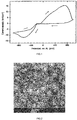
- a cyclic voltammogram was recorded in the aforementioned arrangement to determine the deposition potential.
- This in Fig. 1 The cyclic voltammogram (CV) shown was recorded in the range from -1.0 to +1.0 V vs. Al with a forward and reverse feed rate of 10 mV / s.
- the metal deposition begins at around -200 mV vs. AI, the maximum current density being set at -650 mV.
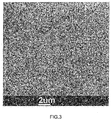
- a cathode made of steel was immersed in the above-mentioned manner in a 3-electrode arrangement in the electrolyte as described above and subjected to cathodic aluminum deposition for a period of 3600 seconds at various static cathodic potentials.
- Potentials of -400 mV and -600 mV vs. Al were set on the potentiostat in order to investigate the potential dependence of the grain sizes of the deposited aluminum.
- the aluminum layers produced with the method according to the invention adhere well to the substrate, with high-gloss aluminum layers being able to be produced without further additives to the electrolyte at lower deposition potentials.
Landscapes
- Chemical & Material Sciences (AREA)
- Engineering & Computer Science (AREA)
- Chemical Kinetics & Catalysis (AREA)
- Electrochemistry (AREA)
- Materials Engineering (AREA)
- Metallurgy (AREA)
- Organic Chemistry (AREA)
- Electrolytic Production Of Metals (AREA)
- Paints Or Removers (AREA)
- Electroplating Methods And Accessories (AREA)
- Electroplating And Plating Baths Therefor (AREA)
Claims (14)
- Procédé de séparation galvanique au moins d'un métal ou semi-conducteur sur un substrat à revêtir dans une cellule galvanique avec une anode, une cathode et éventuellement une électrode de référence qui est immergée dans un électrolyte, le métal ou semi-conducteur utilisé pour le revêtement étant ajouté à l'électrolyte et/ou utilisé comme sous forme d'anode, le substrat à revêtir étant monté comme cathode, l'électrolyte étant sélectionné parmi des liquides ioniques et un potentiel étant créé à un niveau tel que le métal ou le semi-conducteur à la surface du substrat est séparé galvaniquement par le courant induit,
caractérisé en ce que• l'électrolyte est recouvert d'un liquide organique, l'épaisseur de couche de liquide organique étant au moins de 2 mm, et• avec un dispositif de dosage du liquide organique pour le revêtement, qui est équipé d'un appareil de contrôle permettant d'assurer une épaisseur de couche régulière de liquide organique, une épaisseur de couche régulière de liquide organique étant assurée par le fait que l'épaisseur de couche de liquide organique est déterminée par l'appareil de contrôle au moyen de capteurs optiques et, le cas échéant, si une épaisseur de couche minimale prédéfinie n'est pas atteinte, un dosage de liquide organique est ajouté afin de rétablir l'épaisseur de couche souhaitée, et• l'électrolyte est soumis à un mouvement par agitation ou transvasement par pompage sans engendrer à la surface une formation de percées à travers la couche protectrice de liquide organique,• l'on peut, de ce fait, complètement renoncer à une atmosphère inerte et la formation d'inhomogénéités de concentrations sur des ions de métal dissous dans l'électrolyte est contrée. - Procédé conformément à la revendication 1, caractérisé en ce que le liquide ionique est sélectionné parmi des liquides qui présentent un cation organique et un anion inorganique ou organique,• le cation organique étant en particulier sélectionné dans un produit d'alkylation d'imidazoles, pyrazoles, thiazoles, isothiazoles, azathiazoles, oxothiazoles, oxazines, oxazolines, oxazaboroles, dithiozoles, triazoles, selenozoles, oxaphospholes, pyrroles, boroles, furanes, thiophènes, phospholes, pentazoles, indoles, indolines, oxazoles, isoxazoles, isotriazoles, tétrazoles, benzofuranes, dibenzofuranes, benzothiophènes, dibenzothiophènes, thiadiazoles, pyridines, pyrimidines, pyrazines, pyridazines, pipérazines, pipéridines, morpholones, pyranes, anolines, phthalazines, quinazolines, quinoxalines et des combinaisons de ces composés,• et l'anion inorganique ou organique étant en particulier sélectionné dans le groupe comprenant des halogénures, BX4 -, PF6 -, ASF6 -, SbF6 -, NO2 -, NO3 -, SO4 2-, BR4 -, carboranes substitués ou non substitués, métallocarboranes substitués ou non substitués, phosphates, phosphites, polyoxométalates, carboxylates substitués ou non substitués, comme l'acétate, les triflates et des anions non coordinants, ou des combinaisons de ces composés, X représentant indépendamment le fluorure, le chlorure, le bromure ou l'iodure et R représentant indépendamment l'hydrogène, l'alkyle, l'alkyle substitué, le cycloalkyle, le cycloalkyle substitué, l'hétéroalkyle, l'hétérocycloalkyle, l'hétérocycloalkyle substitué, l'aryle, l'aryle substitué, l'hétéroaryle, l'hétéroaryle substitué, l'alkoxy-aryloxy, l'acyle, le silyle, le boryle, les composés phosphino, amino, thio ou seleno.
- Procédé conformément à l'une des revendications précédentes, caractérisé en ce que le liquide organique est sélectionné parmi des composés hydrocarbonés qui ne présentent aucun atome H actif selon Zerewitinoff, en particulier parmi des alcanes ou alcènes linéaires, ramifiés ou cycliques, ou des composés hydrocarbonés aromatiques.
- Procédé conformément à la revendication 3, caractérisé en ce que les composés hydrocarbonés présentent 5 atomes de carbone ou plus et sont en particulier sélectionnés parmi des alcanes linéaires ou ramifiés présentant au moins 10 atomes de carbone, préférablement 10 à 18 atomes de carbone.
- Procédé conformément à l'une des revendications précédentes, caractérisé en ce que le liquide organique présente un coefficient de partage n-octanol/eau de Kow > 1,0, en particulier de Kow ≥ 2,0.
- Procédé conformément à l'une des revendications précédentes, caractérisé en ce que le métal ou le semi-conducteur est un alliage.
- Procédé conformément à l'une des revendications précédentes, caractérisé en ce que le métal, le semi-conducteur ou l'alliage utilisé pour le revêtement est sélectionné parmi des éléments qui présentent un potentiel normal plus négatif que l'hydrogène dans l'ordre de tension électrochimique en solution acide, le potentiel normal s'élevant en particulier à -1,0 V ou moins, préférablement -1,1 V ou moins, en particulier préférablement -1,5 V ou moins.
- Procédé conformément à l'une des revendications précédentes, caractérisé en ce que le métal est l'aluminium ou un alliage d'aluminium.
- Procédé conformément à l'une des revendications précédentes, caractérisé en ce que le substrat est sélectionné parmi des conducteurs, semiconducteurs et isolants, le substrat étant éventuellement doté d'un revêtement conducteur.
- Procédé conformément à la revendication 9, caractérisé en ce que le substrat est un isolant qui est doté d'une surface électriquement conductrice pour pouvoir être utilisé comme cathode et le revêtement électriquement conducteur étant un revêtement en graphite ou en métal.
- Procédé conformément à la revendication 10, caractérisé en ce que l'isolant est du verre borosilicate, du verre de quartz, des matières plastiques, du polycarbonate, du polystyrène, du chlorure de polyvinyle ou du polyméthacrylate de méthyle.
- Procédé conformément à l'une des revendications précédentes, caractérisé en ce que l'électrolyte est maintenu, pendant la séparation, à une température de 0 à 100°C, en particulier à une température de 20 à 80°C.
- Procédé conformément à l'une des revendications précédentes, caractérisé en ce que l'épaisseur de couche de liquide organique s'élève au moins à 5 mm, en particulier au moins à 10 mm.
- Dispositif pour la séparation galvanique au moins d'un métal ou semi-conducteur sur un substrat à revêtir, comprenant une cellule galvanique avec une anode, une cathode et éventuellement une électrode de référence ainsi qu'un réservoir d'électrolyte, dans lequel les électrodes peuvent être immergées, ainsi qu'une source de tension permettant de créer un potentiel à un niveau tel que le métal ou le semi-conducteur à la surface du substrat est séparé galvaniquement par le courant induit,
caractérisé en ce que• le dispositif comprend un appareil de dosage pour le revêtement de l'électrolyte avec un liquide organique,• le dispositif est équipé d'un appareil de contrôle permettant d'assurer une épaisseur de couche régulière de liquide organique et en ce que cet appareil de contrôle détermine l'épaisseur de couche de liquide organique au moyen de capteurs optiques et, le cas échéant, si une épaisseur de couche minimale prédéfinie n'est pas atteinte, ajoute un dosage de liquide organique pour rétablir l'épaisseur de couche souhaitée.
Applications Claiming Priority (1)
| Application Number | Priority Date | Filing Date | Title |
|---|---|---|---|
| DE102011055911A DE102011055911B3 (de) | 2011-12-01 | 2011-12-01 | Verfahren zur galvanischen Abscheidung wenigstens eines Metalls oder Halbleiters |
Publications (3)
| Publication Number | Publication Date |
|---|---|
| EP2599896A2 EP2599896A2 (fr) | 2013-06-05 |
| EP2599896A3 EP2599896A3 (fr) | 2014-01-22 |
| EP2599896B1 true EP2599896B1 (fr) | 2021-05-26 |
Family
ID=47140634
Family Applications (1)
| Application Number | Title | Priority Date | Filing Date |
|---|---|---|---|
| EP12191555.7A Active EP2599896B1 (fr) | 2011-12-01 | 2012-11-07 | Procédé de dépôt galvanique d'au moins un métal ou un semi-conducteur et dispositif à cet effet |
Country Status (2)
| Country | Link |
|---|---|
| EP (1) | EP2599896B1 (fr) |
| DE (1) | DE102011055911B3 (fr) |
Families Citing this family (3)
| Publication number | Priority date | Publication date | Assignee | Title |
|---|---|---|---|---|
| EP2891730A4 (fr) * | 2012-08-31 | 2016-05-18 | Hitachi Ltd | Procédé de dépôt électrolytique non aqueux et appareil de dépôt électrolytique non aqueux |
| WO2014136235A1 (fr) * | 2013-03-07 | 2014-09-12 | 株式会社日立製作所 | Procédé pour la formation de film de revêtement d'aluminure sur une base |
| US10214823B2 (en) * | 2013-03-15 | 2019-02-26 | United Technnologies Corporation | Bimetallic zincating processing for enhanced adhesion of aluminum on aluminum alloys |
Family Cites Families (7)
| Publication number | Priority date | Publication date | Assignee | Title |
|---|---|---|---|---|
| BE540052A (fr) * | 1955-06-13 | |||
| DE2260191C3 (de) * | 1972-12-08 | 1979-04-19 | Siemens Ag, 1000 Berlin Und 8000 Muenchen | Verfahren zur Vorbereitung von Werkstücken aus elektrisch leitfähigen Materialien, insbesondere Metall für die galvanische Beschichtung |
| DE2901586A1 (de) * | 1979-01-17 | 1980-07-31 | Montblanc Simplo Gmbh | Aluminierzelle |
| JP2662635B2 (ja) * | 1988-04-26 | 1997-10-15 | 日新製鋼株式会社 | 電気アルミニウムめっき浴およびその浴によるめっき方法 |
| WO2010106072A2 (fr) * | 2009-03-18 | 2010-09-23 | Basf Se | Électrolyte et additifs tensio-actifs pour le dépôt galvanique de couches d'aluminium lisses et compactes à partir de liquides ioniques |
| GB0920590D0 (en) * | 2009-11-25 | 2010-01-06 | Univ Leicester | New ionic liquids |
| DE102011007559A1 (de) * | 2010-04-19 | 2011-10-20 | Basf Se | Verfahren zur Herstellung von Elektrolyten für die Aluminiumabscheidung |
-
2011
- 2011-12-01 DE DE102011055911A patent/DE102011055911B3/de active Active
-
2012
- 2012-11-07 EP EP12191555.7A patent/EP2599896B1/fr active Active
Non-Patent Citations (1)
| Title |
|---|
| None * |
Also Published As
| Publication number | Publication date |
|---|---|
| DE102011055911B3 (de) | 2012-11-29 |
| EP2599896A2 (fr) | 2013-06-05 |
| EP2599896A3 (fr) | 2014-01-22 |
Similar Documents
| Publication | Publication Date | Title |
|---|---|---|
| Liu et al. | Electrochemical behavior of La (III) on the zinc-coated W electrode in LiCl-KCl eutectic | |
| DE10108893C5 (de) | Verfahren zur Herstellung von Metallen und deren Legierungen | |
| DE1047450B (de) | Elektrolyt zur elektrolytischen Abscheidung von Aluminium | |
| EP2419551A2 (fr) | Électrolyte et additifs tensio-actifs pour le dépôt galvanique de couches d'aluminium lisses et compactes à partir de liquides ioniques | |
| DE1217077B (de) | Verfahren und Vorrichtung zur Herstellung von Silicium oder Germanium hoher Reinheit durch Schmelzflusselektrolyse | |
| DE102011055911B3 (de) | Verfahren zur galvanischen Abscheidung wenigstens eines Metalls oder Halbleiters | |
| Mascia et al. | Electrochemical deposition of Cu and Nb from pyrrolidinium based ionic liquid | |
| DE3047636A1 (de) | Kathode, verfahren zu ihrer herstellung, ihre verwendung und elektrolysezelle | |
| DE3586135T2 (de) | Kryo-elektroplattieren. | |
| DE1671181B1 (de) | Verfahren zum beschichten eines substrates mit einer siliziumcarbid schucht | |
| DE112015003017T5 (de) | Aluminium-Plattierungslösung, Verfahren zur Herstellung eines Aluminiumfilms und poröses Aluminiumobjekt | |
| DE1621056A1 (de) | Verfahren zum Aufbringen eines UEberzugs aus einer Manganverbindung auf Metallkoerper | |
| DE2843147C2 (de) | Verfahren zum Elektrolysieren eines geschmolzenen Chlorids | |
| DE2322159C3 (de) | Verfahren zur Herstellung eines geschmolzenen Behandlungsbades zur Erzeugung einer Vanadin-, Niob- oder Tantalcarbidschicht auf der Oberfläche von mindestens 0,05 Gewichtsprozent Kohlenstoff enthaltenden Werkstücken aus Eisen, Eisenlegierungen oder Sintercarbid | |
| WO2006053362A2 (fr) | Procede pour le depot de couches a partir de liquides ioniques | |
| Mais et al. | Electrochemical deposition of Cu and Ta from pyrrolidinium based ionic liquid | |
| DE2131672A1 (de) | Verfahren zum galvanischen Plattieren mit Aluminium | |
| DE112018002512T5 (de) | Aluminium-Plattierfilm und Verfahren zur Herstellung eines Aluminium-Plattierfilms | |
| DE1281411B (de) | Verfahren zur schmelzelektrolytischen Herstellung von im wesentlichen reinen Elementen und Verbindungen mit stark orientierter, anisotroper Kristallstruktur | |
| DE102011007559A1 (de) | Verfahren zur Herstellung von Elektrolyten für die Aluminiumabscheidung | |
| DE1483347A1 (de) | Verfahren zum elektrolytischen Abscheiden von Metallen | |
| DE2424126A1 (de) | Bipolare elektroden | |
| Mais | Electrodeposition of Nb, Ta, Zr and Cu from ionic liquid for nanocomposites preparation | |
| DE10035280B4 (de) | Aprotische Elektrolytmischung | |
| DE2818285A1 (de) | Verfahren zur herstellung von polykristallinem metall-beta-aluminiumoxid |
Legal Events
| Date | Code | Title | Description |
|---|---|---|---|
| PUAI | Public reference made under article 153(3) epc to a published international application that has entered the european phase |
Free format text: ORIGINAL CODE: 0009012 |
|
| AK | Designated contracting states |
Kind code of ref document: A2 Designated state(s): AL AT BE BG CH CY CZ DE DK EE ES FI FR GB GR HR HU IE IS IT LI LT LU LV MC MK MT NL NO PL PT RO RS SE SI SK SM TR |
|
| AX | Request for extension of the european patent |
Extension state: BA ME |
|
| PUAL | Search report despatched |
Free format text: ORIGINAL CODE: 0009013 |
|
| AK | Designated contracting states |
Kind code of ref document: A3 Designated state(s): AL AT BE BG CH CY CZ DE DK EE ES FI FR GB GR HR HU IE IS IT LI LT LU LV MC MK MT NL NO PL PT RO RS SE SI SK SM TR |
|
| AX | Request for extension of the european patent |
Extension state: BA ME |
|
| RIC1 | Information provided on ipc code assigned before grant |
Ipc: C25D 3/44 20060101ALI20131219BHEP Ipc: C25D 3/66 20060101AFI20131219BHEP Ipc: C25D 21/11 20060101ALI20131219BHEP |
|
| 17P | Request for examination filed |
Effective date: 20140721 |
|
| RBV | Designated contracting states (corrected) |
Designated state(s): AL AT BE BG CH CY CZ DE DK EE ES FI FR GB GR HR HU IE IS IT LI LT LU LV MC MK MT NL NO PL PT RO RS SE SI SK SM TR |
|
| STAA | Information on the status of an ep patent application or granted ep patent |
Free format text: STATUS: EXAMINATION IS IN PROGRESS |
|
| 17Q | First examination report despatched |
Effective date: 20171127 |
|
| GRAP | Despatch of communication of intention to grant a patent |
Free format text: ORIGINAL CODE: EPIDOSNIGR1 |
|
| STAA | Information on the status of an ep patent application or granted ep patent |
Free format text: STATUS: GRANT OF PATENT IS INTENDED |
|
| INTG | Intention to grant announced |
Effective date: 20201215 |
|
| GRAS | Grant fee paid |
Free format text: ORIGINAL CODE: EPIDOSNIGR3 |
|
| GRAA | (expected) grant |
Free format text: ORIGINAL CODE: 0009210 |
|
| STAA | Information on the status of an ep patent application or granted ep patent |
Free format text: STATUS: THE PATENT HAS BEEN GRANTED |
|
| AK | Designated contracting states |
Kind code of ref document: B1 Designated state(s): AL AT BE BG CH CY CZ DE DK EE ES FI FR GB GR HR HU IE IS IT LI LT LU LV MC MK MT NL NO PL PT RO RS SE SI SK SM TR |
|
| REG | Reference to a national code |
Ref country code: GB Ref legal event code: FG4D Free format text: NOT ENGLISH |
|
| REG | Reference to a national code |
Ref country code: CH Ref legal event code: EP |
|
| REG | Reference to a national code |
Ref country code: AT Ref legal event code: REF Ref document number: 1396308 Country of ref document: AT Kind code of ref document: T Effective date: 20210615 |
|
| REG | Reference to a national code |
Ref country code: DE Ref legal event code: R096 Ref document number: 502012016767 Country of ref document: DE |
|
| REG | Reference to a national code |
Ref country code: IE Ref legal event code: FG4D Free format text: LANGUAGE OF EP DOCUMENT: GERMAN |
|
| REG | Reference to a national code |
Ref country code: LT Ref legal event code: MG9D |
|
| PG25 | Lapsed in a contracting state [announced via postgrant information from national office to epo] |
Ref country code: BG Free format text: LAPSE BECAUSE OF FAILURE TO SUBMIT A TRANSLATION OF THE DESCRIPTION OR TO PAY THE FEE WITHIN THE PRESCRIBED TIME-LIMIT Effective date: 20210826 Ref country code: HR Free format text: LAPSE BECAUSE OF FAILURE TO SUBMIT A TRANSLATION OF THE DESCRIPTION OR TO PAY THE FEE WITHIN THE PRESCRIBED TIME-LIMIT Effective date: 20210526 Ref country code: LT Free format text: LAPSE BECAUSE OF FAILURE TO SUBMIT A TRANSLATION OF THE DESCRIPTION OR TO PAY THE FEE WITHIN THE PRESCRIBED TIME-LIMIT Effective date: 20210526 Ref country code: FI Free format text: LAPSE BECAUSE OF FAILURE TO SUBMIT A TRANSLATION OF THE DESCRIPTION OR TO PAY THE FEE WITHIN THE PRESCRIBED TIME-LIMIT Effective date: 20210526 |
|
| REG | Reference to a national code |
Ref country code: NL Ref legal event code: MP Effective date: 20210526 |
|
| PG25 | Lapsed in a contracting state [announced via postgrant information from national office to epo] |
Ref country code: PL Free format text: LAPSE BECAUSE OF FAILURE TO SUBMIT A TRANSLATION OF THE DESCRIPTION OR TO PAY THE FEE WITHIN THE PRESCRIBED TIME-LIMIT Effective date: 20210526 Ref country code: NO Free format text: LAPSE BECAUSE OF FAILURE TO SUBMIT A TRANSLATION OF THE DESCRIPTION OR TO PAY THE FEE WITHIN THE PRESCRIBED TIME-LIMIT Effective date: 20210826 Ref country code: PT Free format text: LAPSE BECAUSE OF FAILURE TO SUBMIT A TRANSLATION OF THE DESCRIPTION OR TO PAY THE FEE WITHIN THE PRESCRIBED TIME-LIMIT Effective date: 20210927 Ref country code: GR Free format text: LAPSE BECAUSE OF FAILURE TO SUBMIT A TRANSLATION OF THE DESCRIPTION OR TO PAY THE FEE WITHIN THE PRESCRIBED TIME-LIMIT Effective date: 20210827 Ref country code: LV Free format text: LAPSE BECAUSE OF FAILURE TO SUBMIT A TRANSLATION OF THE DESCRIPTION OR TO PAY THE FEE WITHIN THE PRESCRIBED TIME-LIMIT Effective date: 20210526 Ref country code: IS Free format text: LAPSE BECAUSE OF FAILURE TO SUBMIT A TRANSLATION OF THE DESCRIPTION OR TO PAY THE FEE WITHIN THE PRESCRIBED TIME-LIMIT Effective date: 20210926 Ref country code: SE Free format text: LAPSE BECAUSE OF FAILURE TO SUBMIT A TRANSLATION OF THE DESCRIPTION OR TO PAY THE FEE WITHIN THE PRESCRIBED TIME-LIMIT Effective date: 20210526 Ref country code: RS Free format text: LAPSE BECAUSE OF FAILURE TO SUBMIT A TRANSLATION OF THE DESCRIPTION OR TO PAY THE FEE WITHIN THE PRESCRIBED TIME-LIMIT Effective date: 20210526 |
|
| PG25 | Lapsed in a contracting state [announced via postgrant information from national office to epo] |
Ref country code: NL Free format text: LAPSE BECAUSE OF FAILURE TO SUBMIT A TRANSLATION OF THE DESCRIPTION OR TO PAY THE FEE WITHIN THE PRESCRIBED TIME-LIMIT Effective date: 20210526 |
|
| PG25 | Lapsed in a contracting state [announced via postgrant information from national office to epo] |
Ref country code: SK Free format text: LAPSE BECAUSE OF FAILURE TO SUBMIT A TRANSLATION OF THE DESCRIPTION OR TO PAY THE FEE WITHIN THE PRESCRIBED TIME-LIMIT Effective date: 20210526 Ref country code: SM Free format text: LAPSE BECAUSE OF FAILURE TO SUBMIT A TRANSLATION OF THE DESCRIPTION OR TO PAY THE FEE WITHIN THE PRESCRIBED TIME-LIMIT Effective date: 20210526 Ref country code: DK Free format text: LAPSE BECAUSE OF FAILURE TO SUBMIT A TRANSLATION OF THE DESCRIPTION OR TO PAY THE FEE WITHIN THE PRESCRIBED TIME-LIMIT Effective date: 20210526 Ref country code: EE Free format text: LAPSE BECAUSE OF FAILURE TO SUBMIT A TRANSLATION OF THE DESCRIPTION OR TO PAY THE FEE WITHIN THE PRESCRIBED TIME-LIMIT Effective date: 20210526 Ref country code: CZ Free format text: LAPSE BECAUSE OF FAILURE TO SUBMIT A TRANSLATION OF THE DESCRIPTION OR TO PAY THE FEE WITHIN THE PRESCRIBED TIME-LIMIT Effective date: 20210526 Ref country code: RO Free format text: LAPSE BECAUSE OF FAILURE TO SUBMIT A TRANSLATION OF THE DESCRIPTION OR TO PAY THE FEE WITHIN THE PRESCRIBED TIME-LIMIT Effective date: 20210526 Ref country code: ES Free format text: LAPSE BECAUSE OF FAILURE TO SUBMIT A TRANSLATION OF THE DESCRIPTION OR TO PAY THE FEE WITHIN THE PRESCRIBED TIME-LIMIT Effective date: 20210526 |
|
| REG | Reference to a national code |
Ref country code: DE Ref legal event code: R097 Ref document number: 502012016767 Country of ref document: DE |
|
| PLBE | No opposition filed within time limit |
Free format text: ORIGINAL CODE: 0009261 |
|
| STAA | Information on the status of an ep patent application or granted ep patent |
Free format text: STATUS: NO OPPOSITION FILED WITHIN TIME LIMIT |
|
| 26N | No opposition filed |
Effective date: 20220301 |
|
| PG25 | Lapsed in a contracting state [announced via postgrant information from national office to epo] |
Ref country code: IS Free format text: LAPSE BECAUSE OF FAILURE TO SUBMIT A TRANSLATION OF THE DESCRIPTION OR TO PAY THE FEE WITHIN THE PRESCRIBED TIME-LIMIT Effective date: 20210926 Ref country code: AL Free format text: LAPSE BECAUSE OF FAILURE TO SUBMIT A TRANSLATION OF THE DESCRIPTION OR TO PAY THE FEE WITHIN THE PRESCRIBED TIME-LIMIT Effective date: 20210526 |
|
| PG25 | Lapsed in a contracting state [announced via postgrant information from national office to epo] |
Ref country code: MC Free format text: LAPSE BECAUSE OF FAILURE TO SUBMIT A TRANSLATION OF THE DESCRIPTION OR TO PAY THE FEE WITHIN THE PRESCRIBED TIME-LIMIT Effective date: 20210526 |
|
| REG | Reference to a national code |
Ref country code: CH Ref legal event code: PL |
|
| PG25 | Lapsed in a contracting state [announced via postgrant information from national office to epo] |
Ref country code: LU Free format text: LAPSE BECAUSE OF NON-PAYMENT OF DUE FEES Effective date: 20211107 Ref country code: IT Free format text: LAPSE BECAUSE OF FAILURE TO SUBMIT A TRANSLATION OF THE DESCRIPTION OR TO PAY THE FEE WITHIN THE PRESCRIBED TIME-LIMIT Effective date: 20210526 Ref country code: BE Free format text: LAPSE BECAUSE OF NON-PAYMENT OF DUE FEES Effective date: 20211130 |
|
| REG | Reference to a national code |
Ref country code: BE Ref legal event code: MM Effective date: 20211130 |
|
| PG25 | Lapsed in a contracting state [announced via postgrant information from national office to epo] |
Ref country code: LI Free format text: LAPSE BECAUSE OF NON-PAYMENT OF DUE FEES Effective date: 20211130 Ref country code: CH Free format text: LAPSE BECAUSE OF NON-PAYMENT OF DUE FEES Effective date: 20211130 |
|
| PG25 | Lapsed in a contracting state [announced via postgrant information from national office to epo] |
Ref country code: IE Free format text: LAPSE BECAUSE OF NON-PAYMENT OF DUE FEES Effective date: 20211107 |
|
| REG | Reference to a national code |
Ref country code: AT Ref legal event code: MM01 Ref document number: 1396308 Country of ref document: AT Kind code of ref document: T Effective date: 20211107 |
|
| PG25 | Lapsed in a contracting state [announced via postgrant information from national office to epo] |
Ref country code: AT Free format text: LAPSE BECAUSE OF NON-PAYMENT OF DUE FEES Effective date: 20211107 |
|
| PG25 | Lapsed in a contracting state [announced via postgrant information from national office to epo] |
Ref country code: HU Free format text: LAPSE BECAUSE OF FAILURE TO SUBMIT A TRANSLATION OF THE DESCRIPTION OR TO PAY THE FEE WITHIN THE PRESCRIBED TIME-LIMIT; INVALID AB INITIO Effective date: 20121107 Ref country code: CY Free format text: LAPSE BECAUSE OF FAILURE TO SUBMIT A TRANSLATION OF THE DESCRIPTION OR TO PAY THE FEE WITHIN THE PRESCRIBED TIME-LIMIT Effective date: 20210526 |
|
| PG25 | Lapsed in a contracting state [announced via postgrant information from national office to epo] |
Ref country code: MK Free format text: LAPSE BECAUSE OF FAILURE TO SUBMIT A TRANSLATION OF THE DESCRIPTION OR TO PAY THE FEE WITHIN THE PRESCRIBED TIME-LIMIT Effective date: 20210526 |
|
| PG25 | Lapsed in a contracting state [announced via postgrant information from national office to epo] |
Ref country code: TR Free format text: LAPSE BECAUSE OF FAILURE TO SUBMIT A TRANSLATION OF THE DESCRIPTION OR TO PAY THE FEE WITHIN THE PRESCRIBED TIME-LIMIT Effective date: 20210526 |
|
| REG | Reference to a national code |
Ref country code: DE Ref legal event code: R084 Ref document number: 502012016767 Country of ref document: DE |
|
| PG25 | Lapsed in a contracting state [announced via postgrant information from national office to epo] |
Ref country code: MT Free format text: LAPSE BECAUSE OF FAILURE TO SUBMIT A TRANSLATION OF THE DESCRIPTION OR TO PAY THE FEE WITHIN THE PRESCRIBED TIME-LIMIT Effective date: 20210526 |
|
| REG | Reference to a national code |
Ref country code: DE Ref legal event code: R082 Ref document number: 502012016767 Country of ref document: DE Representative=s name: KOELLNER, MALTE, DR., DE Ref country code: DE Ref legal event code: R082 Ref document number: 502012016767 Country of ref document: DE Representative=s name: KOELLNER, MALTE, DIPL.-PHYS. DR.RER.NAT., DE |
|
| PGFP | Annual fee paid to national office [announced via postgrant information from national office to epo] |
Ref country code: DE Payment date: 20250924 Year of fee payment: 14 |
|
| PGFP | Annual fee paid to national office [announced via postgrant information from national office to epo] |
Ref country code: GB Payment date: 20251024 Year of fee payment: 14 |
|
| PGFP | Annual fee paid to national office [announced via postgrant information from national office to epo] |
Ref country code: FR Payment date: 20251125 Year of fee payment: 14 |