EP2608190B1 - Système, dispositif, procédé et programme de partage de secrets et procéde de tri de secrets - Google Patents
Système, dispositif, procédé et programme de partage de secrets et procéde de tri de secrets Download PDFInfo
- Publication number
- EP2608190B1 EP2608190B1 EP11830624.0A EP11830624A EP2608190B1 EP 2608190 B1 EP2608190 B1 EP 2608190B1 EP 11830624 A EP11830624 A EP 11830624A EP 2608190 B1 EP2608190 B1 EP 2608190B1
- Authority
- EP
- European Patent Office
- Prior art keywords
- secret sharing
- sharing apparatus
- fragments
- fragment
- value
- Prior art date
- Legal status (The legal status is an assumption and is not a legal conclusion. Google has not performed a legal analysis and makes no representation as to the accuracy of the status listed.)
- Active
Links
Images





Classifications
-
- H—ELECTRICITY
- H04—ELECTRIC COMMUNICATION TECHNIQUE
- H04L—TRANSMISSION OF DIGITAL INFORMATION, e.g. TELEGRAPHIC COMMUNICATION
- H04L9/00—Cryptographic mechanisms or cryptographic arrangements for secret or secure communications; Network security protocols
- H04L9/08—Key distribution or management, e.g. generation, sharing or updating, of cryptographic keys or passwords
- H04L9/0816—Key establishment, i.e. cryptographic processes or cryptographic protocols whereby a shared secret becomes available to two or more parties, for subsequent use
- H04L9/085—Secret sharing or secret splitting, e.g. threshold schemes
-
- H—ELECTRICITY
- H04—ELECTRIC COMMUNICATION TECHNIQUE
- H04L—TRANSMISSION OF DIGITAL INFORMATION, e.g. TELEGRAPHIC COMMUNICATION
- H04L9/00—Cryptographic mechanisms or cryptographic arrangements for secret or secure communications; Network security protocols
- H04L9/08—Key distribution or management, e.g. generation, sharing or updating, of cryptographic keys or passwords
- H04L9/0891—Revocation or update of secret information, e.g. encryption key update or rekeying
-
- H—ELECTRICITY
- H04—ELECTRIC COMMUNICATION TECHNIQUE
- H04L—TRANSMISSION OF DIGITAL INFORMATION, e.g. TELEGRAPHIC COMMUNICATION
- H04L2209/00—Additional information or applications relating to cryptographic mechanisms or cryptographic arrangements for secret or secure communication H04L9/00
- H04L2209/42—Anonymization, e.g. involving pseudonyms
Definitions
- the present invention generally relates to an encryption application.
- it relates to a secret sharing system, a secret sharing apparatus, a secret sharing method, a secret sorting method and a secret sharing program for performing a functional calculation without disclosing input data.
- Non-patent literature 1 Koji Chida, Dai Ikarashi, Katsumi Takahashi, "Efficient 3-Party Secure Function Evaluation and Its Application", 48-th IPSJ SIG Technical Report, CSEC, pp.1 - 7, March 4, 2010 .
- An object of the present invention is to provide a secure computation technique of outputting data that cannot be associated with a plurality of pieces of input data.
- the present invention relates to a secret sharing.
- a secret sharing system in general, in a (k, n) secret sharing, a secret sharing system has two parameters k and n and divides a value to be concealed into n fragments in such a manner that gathering less than k of the n fragments does not lead to leakage of information concerning the original value but gathering k or more of the n fragments permits reconstruction of the original value.
- a secret sharing system according to the present invention comprises N secret sharing apparatuses R 1 , ..., and R N .
- N represents an integer equal to or greater than 3
- n represents an integer equal to or greater than 1 and equal to or smaller than N
- M represents an integer equal to or greater than 1
- m represents an integer equal to or greater than 1 and equal to or smaller than M
- K represents an integer equal to or greater than 2
- k represents an integer equal to or greater than 1 and equal to or smaller than K
- numeric values A 1 (1) , ..., A K (1) ..., A 1 (M) , ..., and A K (M) are K ⁇ M numeric values whose fragments are recorded in the secret sharing apparatuses in a distributed manner
- numeric values A K (1) , ..., and A K (M) are a group of k-th numeric values associated with each other
- a kn (m) is a fragment of the numeric value A k (m) recorded in an n-th secret sharing apparatus.
- the secret sharing system comprises selection means, fragment replacement means and reshare means.
- the selection means selects a number, equal to or greater than 2 and smaller than N, of secret sharing apparatuses.
- the fragment replacement means generates a bijection ⁇ of ⁇ 1, ..., K ⁇ ⁇ ⁇ 1, ..., K ⁇ among the selected secret sharing apparatuses and designates fragments a ⁇ (k)i (1) , ..., and a ⁇ (k)i (M) of a group of ⁇ (k)-th numeric values associated with each other recorded in a selected secret sharing apparatus R i (i represents an identification number that indicates a selected secret sharing apparatus) as fragments of a group of k-th numeric values associated with each other.
- the reshare means performs reshare of the fragments a ⁇ (k)i (1) ..., and a ⁇ (k)i (M) of numeric values A ⁇ (k) (1) , ..., and A ⁇ (k) (M) that are used as replacements by said fragment replacement means to determine new fragments b k1 (1) ..., b kN (1) , ..., b k1 (M) , ..., and b kN (M) (this process will be referred to as a reshare, hereinafter).
- the same bijection ⁇ can be used to replace the fragments of the numeric values of the group of numeric values associated with each other.
- the secret sharing system can further comprise initial information distribution means, initial multiplication means, checking distribution means, checking multiplication means and tamper detection means.
- the initial information distribution means determines fragments p 1n , ..., and p Kn of each of K numeric values P 1 , ..., and P K that are not known to any of the secret sharing apparatuses R 1 , ..., and R N by a secure computation and records the fragments p 1n , ..., and p Kn in a secret sharing apparatus R n .
- a k (m) a k ⁇ (m) + a k ⁇ (m) + a k ⁇ (m) of a group of k-th numeric values associated with each other are (a k ⁇ (m) , a k ⁇ (m) ), (a k ⁇ (m) , a k ⁇ (m) ) and (a k ⁇ (m) , a k ⁇ (m) ) (a combination ( ⁇ , ⁇ , ⁇ ) is any of combinations (1, 2, 3), (2, 3, 1) and (3, 1, 2)).
- Each secret sharing apparatus can comprise a fragment replacement part, a first random number generation part, a second random number generation part, a first calculation part, a second calculation part, a third calculation part and a fragment update part. If the secret sharing apparatus is selected as the first secret sharing apparatus or the second secret sharing apparatus, the fragment replacement part generates a bijection of ⁇ 1, ..., K ⁇ ⁇ ⁇ 1, ..., K ⁇ and designates fragments of the numeric values of a group of ⁇ (k)-th numeric values associated with each other as fragments of the numeric values of the group of k-th numeric values associated with each other.
- the first random number generation part If the secret sharing apparatus is the first secret sharing apparatus, the first random number generation part generates random numbers b k31 (1) , ..., and b k31 (M) for reshare of the fragments of the numeric values of the group of k-th numeric values associated with each other resulting from the designation and transmits the random numbers b k31 (1) , ..., and b k31 (M) to the third secret sharing apparatus.
- the second random number generation part If the secret sharing apparatus is the second secret sharing apparatus, the second random number generation part generates random numbers b k23 (1) , ..., and b k23 (M) for reshare of the fragments of the numeric values of the group of k-th numeric values associated with each other and transmits the random numbers b k23 (1) , ..., and b k23 (M) to the third secret sharing apparatus.
- the fragment update part designates (b k31 (m) , b k12 (m) ) as a fragment b k1 (m) if the secret sharing apparatus is the first secret sharing apparatus, designates (b k12 (m) , b k23 (m) ) as a fragment b k2 (m) if the secret sharing apparatus is the second secret sharing apparatus, and designates (b k23 (m) , b k31 (m) as a fragment b k3 (m) if the secret sharing apparatus is the third secret sharing apparatus.
- the fragment replacement parts of all the secret sharing apparatuses form the fragment replacement means of the secret sharing system.
- the first random number generation part, the second random number generation part, the first calculation part, the second calculation part, the third calculation part and the fragment update part form the reshare means of the secret sharing system.
- any secret sharing apparatus that is not selected by the fragment replacement part does not know the bijection ⁇ and therefore cannot know the association between the numeric values A 1 (1) , ..., A K (1) , ..., A 1 (M) , ..., and A K (M) and the numeric values B 1 (1) , ..., B K (1) , ..., B 1 (M) , ..., and B K (M) .
- a sorting algorithm based on comparison such as quick sort, can be achieved by a secure computation without increasing the number of comparisons.
- numeric values A 1 (1) , ..., A K (1) ..., A 1 (M) , ..., A K (M) are K ⁇ M numeric values whose fragments are to be distributed among and recorded in secret sharing apparatuses
- the numeric values A k (1) , ..., and A k (M) are associated to form a k-th numeric value group
- a fragment of a numeric value A k (m) to be recorded in an n-th secret sharing apparatus is denoted by a kn (m) .
- Fig. 1 shows an example of a functional configuration of a secret sharing system according to the first embodiment.
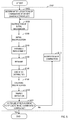
- Fig. 2 shows a flow of a secret sharing process performed by the secret sharing system according to the first embodiment.
- the secret sharing system according to this embodiment comprises N secret sharing apparatuses 100 1 , ..., and 100 N and selection means 105 connected to a network 1000 (N represents an integer equal to or greater than 3, and n represents an integer equal to or greater than 1 and equal to or smaller than N).
- a 1 , ..., and A K are K numeric values whose fragments are to be distributed among and recorded in the secret sharing apparatuses 100 n (K represents an integer equal to or greater than 2), a numeric value A k is a k-th numeric value (k represents an integer equal to or greater than 1 and equal to or smaller than K), and a kn represents a k-th fragment to be recorded in the secret sharing apparatus 100 n .
- the numeric values A 1 , ..., and A K are a group of numeric values to be concealed, for example, a group of numeric values to be sorted.
- the group of numeric values to be sorted can be a group of numeric values A k each representing the annual income of a particular person.
- the selection means 105 may be provided in any of the secret sharing apparatuses or provided as a separate apparatus.
- the secret sharing system comprises the selection means, fragment replacement means and reshare means.
- the secret sharing apparatus l00 n comprises at least a fragment replacement part 110 n , a reshare part 120 n and a recording part 190 n .
- the recording part 190 n records fragments a 1n , ..., and a Kn , for example.
- the recording part 190 n also records information concerning what number fragment of the numeric value A k is the fragment a kn recorded in itself.
- the selection means 105 selects a number, smaller than N, of secret sharing apparatuses (S105). For example, if the secret sharing requires N' of the N fragments to reconstruct the numeric value, it is enough that the fragment replacement means selects a number, equal to or greater than N' and smaller than N, secret sharing apparatuses.
- the fragment replacement means comprises at least fragment replacement parts 110 1 , ..., and 110 N .
- a bijection ⁇ of ⁇ 1, ..., K ⁇ ⁇ ⁇ 1, ..., K ⁇ is generated among fragment replacement parts 110 i of secret sharing apparatuses 100 i (i represents the identification number of the selected secret sharing apparatus) selected by the selection means 105, and a fragment a ⁇ (k)i recorded in a recording part 190i of the selected secret sharing apparatus 100 i is designated as the k-th fragment (S110).
- the bijection ⁇ may be a mapping of numbers 1 to K randomly rearranged.
- the bijection ⁇ is desirably a uniformly randomly rearranged mapping and can be generated by Fisher-Yates shuffle (Reference Literature 1: Richard Durstenfeld, "Algorithm 235: Random permutation", Communications of the ACM archive, Volume 7, Issue 7, 1964 ), for example.
- the bijection ⁇ may be generated among the selected secret sharing apparatuses 100 i or may be generated by one of the selected secret sharing apparatuses 100 i and shared among the selected secret sharing apparatuses 100 i .
- the reshare means comprises at least reshare parts 120 1 , ..., 120 N .
- each secret sharing apparatus 100 n records not only the fragment b kn but also information that the k-th fragment b kn recorded in itself is a fragment of the numeric value B k . Furthermore, if the numeric values B 1 , ..., and B K are regarded as new numeric values A 1 , ..., and A K , and the combination of the secret sharing apparatuses selected by the fragment replacement means is modified, the process described above can be repeated (S111 and S 112).
- the secret sharing system shuffles the fragments among a limited number of secret sharing apparatuses. Therefore, the secret sharing apparatus that are not selected by the fragment replacement means do not know the bijection ⁇ and therefore the association between the numeric values A 1 , ..., and A k and the numeric values B 1 , ..., B k . In other words, if one wants to conceal the association between the numeric values A 1 , ..., and A K and the numeric values B 1 , ..., and B K from a particular secret sharing apparatus, the secret sharing apparatuses to be selected can determined so that the fragment replacement means does not select that secret sharing apparatus.
- the above process is repeated by modifying the combination of the secret sharing apparatuses selected by the fragment replacement means so that every secret sharing apparatus has experience of not being selected at least once, the numeric values B 1 , ..., and B K that cannot be associated with the numeric values A 1 , ..., and A K by all the secret sharing apparatuses can be obtained.
- the reshare method involves the update method disclosed in Section 3.3 of Reference Literature 2 ( Amir Herzberg, Stanislaw Jarecki, Hugo Krawczyk, and Moti Yung, "Proactive secret sharing or: How to cope with perpetual leakage", In Don Coppersmith, editor, CRYPTO 1995, volume 963 of LNCS, pages 339-352. Springer, 1995 ) and the regeneration method disclosed in Section 6.1 of Reference Literature 3 (Haiyun Luo and Songwu Lu, "Ubiquitous and robust authentication services for ad hoc wireless networks", In UCLA-CSD-TR-200030, 2000).
- New fragments are generated among the secret sharing apparatuses selected by the selection means 105 according to the update method disclosed in Reference Literature 2, and then, new fragments for the secret sharing apparatuses that are not selected by the selection means 105 are generated according to the regeneration method disclosed in Reference Literature 3.
- the selection means 105 has selected N' secret sharing apparatuses. It is further assumed that i and j represent numbers that identify the selected secret sharing apparatuses (any of the N' numbers selected from among 1 to N) and are not equal to each other (j ⁇ i). It is further assumed that values z 1 , ..., and z N are predetermined values and shared among all the secret sharing apparatuses.
- the process can be sped up. More specifically, the steps (1), (2) and (5) can be first performed, then the steps (3) and (6) can be performed at the same time, and then the steps (4), (7) and (8) can be performed.
- Fig. 3 shows a flow of a process of sorting numeric values in the secret sharing system according to the first embodiment.
- the secret sharing apparatus 100 n further comprises a comparison part 210 n and an exchange part 220 n .
- Comparison parts 210 1 , ..., and 210 N select two numeric values and compare the two numeric values in terms of magnitude by a secure computation (S210).
- exchange parts 220 1 , ... and 220 N exchange fragments of zero sets, one set or a plurality of sets of numeric values (S220). Then, until the sorting process is completed for all the numeric values, Steps S210 and S220 (required processings such as comparison, exchange and combination modification) are repeated (S211, S212).
- the result of the comparison in Step S210 is information required for all the secret sharing apparatuses to perform the subsequent processing, and therefore all the secret sharing apparatuses know the information. However, since all the secret sharing apparatuses process the new numeric values A 1 , ..., and A K that cannot be associated with the initial numeric values A 1 , ..., and A K due to the processing of Step S101, the information concerning the initial numeric values A 1 , ..., and A K does not leak.
- the comparison result is also information that is available by calculation from the output of sorting process, which is public information. Therefore, in the whole protocol according to this embodiment, disclosing the comparison result does not mean leaking more information than required.
- the quick sort algorithm shown in Fig. 4 can be applied to the operations involved in sorting (Steps S210, S220, S211 and S212).
- the processing of comparing A[i] and A[j] is performed by concealing the values of A[i] and A[j], and the comparison result is public.
- the number of comparisons is the same as in the case of the original quick sort and is O(N ⁇ logN) on average.
- this embodiment can be applied to a sorting algorithm comprising a processing of comparing numeric values in terms of magnitude and a processing of exchanging two elements of an array.
- the sorting algorithm comprising comparison and element exchange can be achieved by secure computation without increasing the number of comparisons.
- M represents an integer equal to or greater than 1
- m represents an integer equal to or greater than 1 and equal to or smaller than M.
- the elements of the vectors A (1) , ..., and A (M) are associated with each other.
- a k (1) , ..., and A k (M) are a group of k-th numeric values associated with each other.
- the secret sharing system is configured as shown in Fig. 1 , and the flow of the secret sharing process is as shown in Fig. 2 .
- the secret sharing apparatus 100 n comprises at least the fragment replacement part 110 n , the reshare part 120 n and the recording part 190 n .
- the components are configured as described below and perform the processings described below.
- the recording part 190 n records fragments a 1n (1) , ..., a Kn (1) , ..., a 1n (M) , ..., and a Kn (M) , for example.
- the recording part 190 n also records information concerning what number fragment of the numeric value A k is the fragment a kn recorded in itself.
- the selection means 105 selects a number, smaller than N, of secret sharing apparatuses (S105). For example, if the secret sharing requires N' of the N fragments to reconstruct the numeric value, it is enough that the fragment replacement means selects a number, equal to or greater than N' and smaller than N, secret sharing apparatuses. This processing is the same as that described above.
- the fragment replacement means comprises at least fragment replacement parts 110 1 , ..., and 110 N .
- a bijection ⁇ of ⁇ 1, ..., K ⁇ ⁇ ⁇ 1, ..., K ⁇ is generated among fragment replacement parts 110 i of secret sharing apparatuses 100 i (i represents the identification number of the selected secret sharing apparatus) selected by the selection means 105, and fragments a ⁇ (k)i (1) , ..., and a ⁇ (k)i (M) recorded in the recording part 190i of the selected secret sharing apparatus 100 i is designated as fragments of the group of k-th numeric values associated with each other (S110).
- the reshare means comprises at least reshare parts 120 1 , ..., 120 N .
- the reshare means performs reshare of the fragments a ⁇ (k)i (1) , ..., and a ⁇ (k)i (M) (fragments a ⁇ (k)i (1) , ..., and a ⁇ (k)i (M) are the k-th replaced fragments) of the group of numeric values A ⁇ (k) (1) , ..., and A ⁇ (k) (M) that are replacements used by the fragment replacement means to determine new fragments b k1 (1) , ..., b kN (1) , ..., b k1 (M) , ..., and b kN (M) , and assumes the fragments b k1 (1) , ..., b kN (1) , ..., b k1 (M) , ..., and b kN (M) as fragments of numeric values B k
- each secret sharing apparatus 100 n records not only the fragment b kn (m) but also information that the k-th fragment b kn (m) recorded in itself is a fragment of the numeric value B k (m) .
- numeric values B 1 (1) , ..., B K (1) , ..., B 1 (M) , ..., and B K (m) are regarded as new numeric values A 1 (1) , ..., A K (1) , ..., A 1 (M) , ..., and A K (M) , and the combination of the secret sharing apparatuses selected by the fragment replacement means is modified, the process described above can be repeated (S111 and S 112).
- random replacement in the column direction can be performed by regarding each row as one element (a group of numeric values associated with each other) in secret sharing of data in the form of a table, for example.
- a secret sharing system is configured as shown in Fig. 1 .
- a secret sharing apparatus 100 n according to this embodiment further comprises the components shown by dotted lines.
- Fig. 5 shows a flow of a secret sharing process performed by the secret sharing system according to the second embodiment.
- the secret sharing system according to this embodiment comprises N secret sharing apparatuses 100 1 , ..., and 100 N and selection means 105 connected to a network 1000 (N represents an integer equal to or greater than 3, and n represents an integer equal to or greater than 1 and equal to or smaller than N).
- a 1 , ..., and A K are K numeric values whose fragments are to be distributed among and recorded in the secret sharing apparatuses 100 n (K represents an integer equal to or greater than 2), a numeric value A k is a k-th numeric value (k represents an integer equal to or greater than 1 and equal to or smaller than K), and a kn represents a k-th fragment to be recorded in the secret sharing apparatus 100 n .
- the secret sharing system comprises the selection means 105, initial information distribution means, initial multiplication means, fragment replacement means, reshare means, checking distribution means, checking multiplication means, and tamper detection means.
- the secret sharing apparatus 100 n comprises an initial information distribution part 130 n , an initial multiplication part 140 n , a fragment replacement part 110 n , a reshare part 120 n , a checking distribution part 150 n , a checking multiplication part 160 n , a tamper detection part 170 n , and a recording part 190 n .
- the recording part 190 n records fragments a 1n , ..., a Kn , for example.
- the recording part 190 n also records information concerning what number fragment of the numeric value A k is the fragment a kn recorded in itself.
- the selection means 105 is the same as that according to the first embodiment.
- the initial information distribution means comprises initial information distribution parts 130 1 , ..., and 130 N .
- the initial information distribution part 130 1 of the secure computation apparatus 100 i selected by the selection means 105 determines fragments p 11 , ..., p K1 , ..., P 1n , ..., p Kn , ..., P 1N , ..., and p KN of K numeric values P 1 , ..., and P K that are not known to all the secret sharing apparatuses 100 1 , ..., and 100 N , and the fragments p 1n , ..., and p Kn are recorded in the secret sharing apparatus 100 n (S130).
- two or more secret sharing apparatuses are chosen from among the secret sharing apparatuses selected by the selection means 105. Then, based on the values generated by the chosen secret sharing apparatuses, fragments of the values that are not known to any apparatuses can be generated. For example, two secret sharing apparatuses 100 i and 100 j are chosen (i ⁇ j), and fragments of the numeric value generated by the secret sharing apparatus 100 i and fragments of the numeric value generated by the secret sharing apparatus 100 j are recorded in a distributed manner. Then, the sum of the two numeric values is determined by a secure computation, and the fragments are recorded in a distributed manner so that the result of the secure computation is concealed. Then, the fragments of the numeric values that are not known to all the secret sharing apparatuses can be recorded in a distributed manner. Although two secure computation apparatuses are chosen in this example, more than two secure computation apparatuses can also be chosen.
- the initial multiplication means comprises initial multiplication parts 140 1 , ..., and 140 N .
- the fragment replacement means and the reshare means are the same as those according to the first embodiment.
- the checking distribution means comprises checking distribution parts 150 1 , ..., and 150 N .
- S150 secret sharing apparatuses
- two secure computation apparatuses are chosen in this example, more than two secure computation apparatuses can also be chosen as in Step S130.
- the checking multiplication means comprises checking multiplication parts 160 1 , ..., and 160 N .
- the tamper detection means comprises tamper detection parts 170 1 , ..., and 170 N .
- the secret sharing system according to the second embodiment has the same effects as the secret sharing system according to the first embodiment and can check whether an illegal operation to transmit a tampered value to other secret sharing apparatuses has occurred in the course of a process of concealing the association between the numeric values A 1 , ..., and A K and the numeric values B 1 , ..., and B K .
- the secret sharing apparatus 100 n further comprises a comparison part 210 n and an exchange part 220 n .
- the specific sorting process is the same as that according to the first embodiment.
- the number of the secret sharing apparatuses is N (N represents an integer equal to or greater than 3).
- N represents an integer equal to or greater than 3
- the number of the secret sharing apparatuses that form the secret sharing system is limited to 3 for more specific description.
- Fig. 6 shows an example of a functional configuration of a secret sharing system according to the third embodiment.
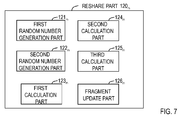
- Fig 7 shows an example of a specific configuration of a reshare part according to the third embodiment.
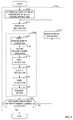
- Fig. 8 shows a flow of a secret sharing process performed by the secret sharing system according to the third embodiment.
- the secret sharing system according to this embodiment comprises 3 secret sharing apparatuses 100 ⁇ , 100 ⁇ , and 100 ⁇ and selection means 105.
- the selection means 105 may be provided in any of the secret sharing apparatuses or provided as a separate apparatus.
- the secret sharing system comprises the selection means 105, fragment replacement means and reshare means.
- Each secret sharing apparatus 100 n comprises a fragment replacement part 110 n , a reshare part 120 n and a recording part 190 n (n represents any of ⁇ , ⁇ and ⁇ ).
- the recording part 190 n records fragments of numeric values A 1 , ..., and A K , for example.
- the selection means 105 selects two secret sharing apparatuses. And one of the secret sharing apparatuses selected by the selection means 105 is designated as a first secret sharing apparatus 100 1 , the other is designated as a second secret sharing apparatus 100 2 , and the secret sharing apparatus that is not selected is designated as a third secret sharing apparatus 100 3 (S105).
- the fragment replacement means comprises at least fragment replacement parts 110 ⁇ , 100 ⁇ and 100 ⁇ .
- the fragment replacement means generates a bijection ⁇ of ⁇ 1, ..., K ⁇ ⁇ ⁇ 1, ..., K ⁇ in the first secret sharing apparatus 100 1 or the second secret sharing apparatus 100 2 , designates a fragment a ⁇ (k)1 recorded in the first secret sharing apparatus 100 1 as the k-th fragment, and designates a fragment a ⁇ (k)2 recorded in the second secret sharing apparatus 100 2 as the k-th fragment (S110).
- the bijection ⁇ may be a mapping of numbers 1 to K randomly rearranged.
- the bijection ⁇ is desirably a uniformly randomly rearranged mapping and can be generated by Fisher-Yates shuffle, for example.
- the reshare means comprises at least reshare parts 120 ⁇ , 120 ⁇ and 120 ⁇ .
- the reshare part 120 n comprises a first random number generation part 121 n , a second random number generation part 122 n , a first calculation part 123 n , a second calculation part 124 n , a third calculation part 125 n and a fragment update part 126 n .
- a first random number generation part 121 1 of the first secret sharing apparatus 100 1 generates a random value b k31 for reshare of the k-th fragment and transmits the value to the third secret sharing apparatus 100 3 (S121).
- a second random number generation part 122 2 of the second secret sharing apparatus 100 2 generates a random value b k23 for reshare of the k-th fragment and transmits the value to the third secret sharing apparatus 100 3 (S 122).
- a fragment update part 126 1 of the first secret sharing apparatus 100 1 designates (b k31 , b k12 ) as a fragment b k1
- a fragment update part 126 2 of the second secret sharing apparatus 100 2 designates (b k12 , b k23 ) as a fragment b k2
- a fragment update part 126 3 of the third secret sharing apparatus 100 3 designates (b k23 , b k31 ) as a fragment b k3 (S126).
- the recording part 190 n of each secret sharing apparatus 100 n records not only the fragment b kn but also information that the k-th fragment b kn recorded in itself is a fragment of the numeric value B k .
- the fragments b k1 , b k2 and b k3 are fragments of the numeric value B k . That is, Steps S121 to S125 correspond to Step S120.
- the process described above can be repeated (S111 and S112). Furthermore, if the above process is repeated by modifying the combination of the secret sharing apparatuses selected by the fragment replacement part so that every secret sharing apparatus has experience of not being selected at least once, the numeric values B 1 , ..., and B K that cannot be associated with the numeric values A 1 , ..., and A K by all the secret sharing apparatuses can be obtained.
- every secret sharing apparatus can have experience of not being selected at least once if the combinations of the secret sharing apparatuses selected by the fragment replacement means are ⁇ 100 ⁇ , 100 ⁇ ⁇ , ⁇ 100 ⁇ , 100 ⁇ ⁇ and ⁇ 100 ⁇ , 100 ⁇ ⁇ .
- the secret sharing system according to the third embodiment has the same effects as the secret sharing system according to the first embodiment.
- the secret sharing apparatus 100 n further comprises a comparison part 210 n and an exchange part 220 n .
- the specific sorting process is the same as that according to the first embodiment.
- a k (m) a k ⁇ (m) + a k ⁇ (m) + a k ⁇ (m) (k represents an integer equal to or greater than 1 and equal to or smaller than K, m represents an integer equal to or greater than 1 and equal to or smaller than M, and ( ⁇ , ⁇ , ⁇ ) is any of (1, 2, 3), (2, 3, 1) and (3, 1, 2)), and three fragments are denoted as a k ⁇ (m) , a k ⁇ (m) ), (a k ⁇ (m) , a k ⁇ (m) ), and (a k ⁇ (m) , a k ⁇ (m) ).
- the secret sharing system comprises the selection means 105, the fragment replacement means and the reshare means.
- the secret sharing apparatus 100 n comprises at least the fragment replacement part 110 n , the reshare part 120 n and the recording part 190 n (n represents any of ⁇ , ⁇ and ⁇ ).
- the components are configured as described below and perform the processings described below.
- the recording part 190 n records fragments a 1n (1) , ..., a Kn (1) , ..., a 1n (M) , ..., and a Kn (M) , for example.
- the recording part 190 n also records information concerning what number fragment of the numeric value A k is the fragment a kn recorded in itself.
- the selection means 105 selects two secret sharing apparatuses. And one of the secret sharing apparatuses selected by the selection means 105 is designated as a first secret sharing apparatus 100 1 , the other is designated as a second secret sharing apparatus 100 2 , and the secret sharing apparatus that is not selected is designated as a third secret sharing apparatus 100 3 (S105).
- the fragment replacement means comprises at least the fragment replacement parts 110 ⁇ , 100 ⁇ and 100 ⁇ .
- the fragment replacement means generates a bijection ⁇ of ⁇ 1, ..., K ⁇ ⁇ ⁇ 1, ..., K ⁇ in the first secret sharing apparatus 100 1 or the second secret sharing apparatus 100 2 , designates fragments a ⁇ (k)1 (1 ) , ..., and a ⁇ (k)1 (M) recorded in the first secret sharing apparatus 100 1 as fragments of the group of the k-th numeric values associated with each other and designates fragments a ⁇ (k)2 (1) , ..., and a ⁇ (k)2 (M) recorded in the second secret sharing apparatus 100 2 as fragments of the group of the k-th numeric values associated with each other (S110).
- the reshare means comprises at least reshare parts 120 ⁇ , 120 ⁇ and 120 ⁇ .
- the reshare part 120 n comprises the first random number generation part 121 n , the second random number generation part 122 n , the first calculation part 123 n , the second calculation part 124 n , the third calculation part 125 n and the fragment update part 126 n .
- the first random number generation part 121 1 of the first secret sharing apparatus 100 1 generates random values b k31 (1) , ..., and b k31 (M) for reshare of the fragments of the group of k-th numeric values associated with each other and transmits the values b k31 (1) , ..., and b k31 (M) to the third secret sharing apparatus 100 3 (S121).
- the second random number generation part 122 2 of the second secret sharing apparatus 100 2 generates random values b k23 (1) , ..., and b k23 (M) for reshare of the fragments of the group of k-th numeric values associated with each other and transmits the values b k23 (1) , ..., and b k23 (M) to the third secret sharing apparatus 100 3 (S122).
- the fragment update part 126 1 of the first secret sharing apparatus 100 1 designates (b k31 (m) , b k12 (m) ) as a fragment b k1 (m)
- the fragment update part 126 2 of the second secret sharing apparatus 100 2 designates (b k12 (m) , b k23 (m) ) as a fragment b k2 (m)
- the fragment update part 126 3 of the third secret sharing apparatus 100 3 designates (b k23 (m) , b k31 (m) ) as a fragment b k3 (m) (S126).
- each secret sharing apparatus 100 n records not only the fragment b kn (m) but also information that the k-th fragment b kn (m) recorded in itself is a fragment of the numeric value B k (m) .
- the fragments b k1 (m) , b k2 (m) , and b k3 (m) are fragments of the numeric value B k (m) . That is, Steps S121 to S126 correspond to Step S120.
- numeric values B 1 (1) , ..., B K (1) , ..., B 1 (M) , ..., and B K (M) are regarded as new numeric values A 1 (1) , ..., A K (1) , ..., A 1 (M) , ..., and A K (M) , and the combination of the secret sharing apparatuses selected by the fragment replacement means is modified, the process described above can be repeated (S111 and S 112).
- random replacement in the column direction can be performed by regarding each row as one element (a group of numeric values associated with each other) in secret sharing of data in the form of a table, for example.
- the number of the secret sharing apparatuses that form the secret sharing system is limited to 3 for more specific description.
- the fourth embodiment described below concerns an example in which an illegal operation detection function is provided as in the second embodiment.
- a configuration of a secret sharing system according to the fourth embodiment is also shown in Fig. 6 .
- a secret sharing apparatus 100 n according to this embodiment additionally comprises the components shown by dotted lines.
- Fig. 9 shows a specific structure of a tamper detection part.
- Fig. 10 shows a flow of a secret sharing process performed by the secret sharing system according to the fourth embodiment.
- the secret sharing system according to this embodiment comprises 3 secret sharing apparatuses 100 ⁇ , 100 ⁇ , and 100 ⁇ and selection means 105 connected to a network 1000.
- the secret sharing system comprises the selection means 105, initial information distribution means, initial multiplication means, fragment replacement means, reshare means, checking distribution means, checking multiplication means and tamper detection means.
- the secret sharing apparatus 100 n comprises an initial information distribution part 130 n , an initial multiplication part 140 n , a fragment replacement part 110 n , a reshare part 120 n , a checking distribution part 150 n , a checking multiplication part 160 n , a tamper detection part 170 n and a recording part 190 n (n represents any of ⁇ , ⁇ and ⁇ ).
- the recording part 190 n records fragments of numeric values A 1 , ..., and A K , for example.
- the selection means 105 selects two secret sharing apparatuses. And one of the secret sharing apparatuses selected by the selection means 105 is designated as a first secret sharing apparatus 100 1 , the other is designated as a second secret sharing apparatus 100 2 , and the secret sharing apparatus that is not selected is designated as a third secret sharing apparatus 100 3 (S105).
- the initial information distribution means comprises initial information distribution parts 130 ⁇ , 130 ⁇ and 130 ⁇ .
- the initial information distribution parts 130 ⁇ , 130 ⁇ and 130 ⁇ determine a fragment p kn of each of K numeric values P 1 , ..., and P K that are not known to any of the secret sharing apparatuses 100 ⁇ , 100 ⁇ and 100 ⁇ by a secure computation, and the fragment p kn is recorded in the secret sharing apparatus 100 n (S130).
- the first secret sharing apparatus 100 1 generates K random values R (1) 1 , ..., and R (1) K
- the second secret sharing apparatus 100 2 generates K random values R (2) 1 , ..., and R (2) K .
- fragments of a numeric value that is not known to all the secret sharing apparatuses 100 ⁇ , 100 ⁇ and 100 ⁇ can be recorded in a distributed manner.
- the initial multiplication means comprises initial multiplication parts 140 ⁇ , 140 ⁇ and 140 ⁇ .
- the fragment replacement means and the reshare means are the same as those according to the third embodiment.
- the fragment replacement means and the reshare means serve to record fragments b k1 , b k2 , and b k3 in the secret sharing apparatuses 100 ⁇ , 100 ⁇ and 100 ⁇ as fragments of a numeric value B k .
- the checking distribution means comprises checking distribution parts 150 ⁇ , 150 ⁇ and 150 ⁇ .
- the checking multiplication means comprises checking multiplication parts 160 ⁇ , 160 ⁇ and 160 ⁇ .
- the tamper detection means comprises tamper detection parts 170 ⁇ , 170 ⁇ and 170 ⁇ .
- the tamper detection part 170 n comprises a third random number generation part 171 n , a fourth random number generation part 172 n , a fourth calculation part 173 n , a fifth calculation part 174 n , a first check part 175 n , a sixth calculation part 176 n , a seventh calculation part 177 n and a second check part 178 n .
- the tamper detection means performs a processing as described below depending on which of the first secret sharing apparatus 100 1 , the second secret sharing apparatus 100 2 and the secret sharing apparatus 100 3 the secret sharing apparatuses 100 ⁇ , 100 ⁇ and 100 ⁇ operate as.
- a third random number generation part 171 1 of the first secret sharing apparatus 100 1 generates a random number u k and transmits the random number to the second secret sharing apparatus 100 2 (S171).
- a fourth random number generation part 172 2 of the second secret sharing apparatus 100 2 generates a random number v k and transmits the random number v k to the first secret sharing apparatus 100 1 (S172).
- the secret sharing system according to the fourth embodiment has the same effects as the secret sharing apparatus according to the third embodiment and can check whether an illegal operation to transmit a tampered value to other secret sharing apparatuses has not occurred in the course of a process of concealing the association between the numeric values A 1 , ..., and A K and the numeric values B 1 , ..., and B K .
- the secret sharing apparatus 100 n further comprises a comparison part 210 n and an exchange part 220 n .
- the specific sorting process is the same as that according to the first embodiment.
- fragments of a numeric value A recorded in the secret sharing apparatuses 100 ⁇ , 100 ⁇ and 100 ⁇ in a distributed manner are denoted as (a ⁇ , a ⁇ ), (a ⁇ , a ⁇ ), and (a ⁇ , a ⁇ )
- fragments of a numeric value B recorded in the secret sharing apparatuses 100 ⁇ , 100 ⁇ and 100 ⁇ in a distributed manner are denoted as (b ⁇ , b ⁇ ), (b ⁇ , b ⁇ ), and (b ⁇ , b ⁇ )
- fragments of a numeric value C recorded in the secret sharing apparatuses 100 ⁇ , 100 ⁇ and 100 ⁇ in a distributed manner are denoted as (c ⁇ , c ⁇ ), (c ⁇ , c ⁇ ), and (c ⁇ , c ⁇ ).
- the program that describes the specific processings can be recorded in a computer-readable recording medium.
- the computer-readable recording medium may be any type of recording medium, such as a magnetic recording device, an optical disk, a magneto-optical recording medium and a semiconductor memory.
- the program may be distributed by selling, transferring or lending a portable recording medium, such as a DVD and a CD-ROM, in which the program is recorded, for example.
- the program may be distributed by storing the program in a storage device in a server computer and transferring the program from the server computer to other computers via a network.
- the computer that executes the program first temporarily stores, in a storage device thereof, the program recorded in a portable recording medium or transferred from a server computer, for example. Then, when performing the processings, the computer reads the program from the storage device and performs the processings according to the read program.
- the computer may read the program directly from the portable recording medium and perform the processings according to the program.
- the computer may perform the processings according to the program each time the computer receives the program transferred from the server computer.
- the processings described above may be performed on an application service provider (ASP) basis, in which the server computer does not transmit the program to the computer, and the processings are implemented only through execution instruction and result acquisition.
- the programs according to the embodiments of the present invention include a quasi-program, which is information to be processed by a computer (such as data that is not a direct instruction to a computer but has a property that defines the processings performed by the computer).
- a predetermined program is executed on a computer to implement the apparatus according to the present invention in the embodiments described above, at least part of the specific processing may be implemented by hardware.
Landscapes
- Engineering & Computer Science (AREA)
- Computer Security & Cryptography (AREA)
- Computer Networks & Wireless Communication (AREA)
- Signal Processing (AREA)
- Storage Device Security (AREA)
Claims (14)
- Système de partage de secret comprenant N appareils de partage de secret,
dans lequel on suppose que N représente un nombre entier supérieur ou égal à 3, n représente un nombre entier supérieur ou égal à 1 et inférieur ou égal à N, M représente un nombre entier supérieur ou égal à 1, m représente un nombre entier supérieur ou égal à 1 et inférieur ou égal à M, K représente un nombre entier supérieur ou égal à 2, k représente un nombre entier supérieur ou égal à 1 et inférieur ou égal à K, des valeurs numériques A1 (1),..., AK (1),..., A1 (M),..., et AK (M) sont K × M valeurs numériques dont les fragments sont enregistrés dans les appareils de partage de secret de manière distribuée, des valeurs numériques AK (1),..., et Ak (M) sont un groupe de k-ièmes valeurs numériques associées les unes aux autres, akn (m) est un fragment d'une valeur numérique Ak (m) enregistré dans un n-ième appareil de partage de secret, et i représente un nombre entier supérieur ou égal à 1 et inférieur ou égal à N qui indique des appareils de partage de secret sélectionnés parmi les N appareils de partage de secret, et
chaque appareil de partage de secret (100n) comprend une partie de remplacement de fragment (110n) et une partie de repartage (120n), et
le système de partage de secret comprenant :un moyen de sélection (105) prévu dans l'un des appareils de partage de secret ou fourni en tant qu'appareil séparé adapté pour sélectionner un nombre, supérieur ou égal à 2 et inférieur à N, d'appareils de partage de secret ;un moyen de remplacement de fragment comprenant toutes les parties de remplacement de fragment (1101, ..., 110N) adapté pour générer une bijection π de {1, ..., K} → {1, ..., K} parmi les appareils de partage de secret sélectionnés par ledit moyen de sélection et pour désigner des fragments aπ(k)i (1),..., et aπ(k)i (M) d'un groupe de π(k)-ièmes valeurs numériques associées les unes aux autres enregistrés dans un i-ième appareil de partage de secret sélectionné en tant que fragments d'un groupe de k-ièmes valeurs numériques associées les unes aux autres ; etun moyen de repartage comprenant toutes les parties de repartage (1201,..., 120N) adapté pour effectuer un repartage des fragments aπ(k)i (1),..., et aπ(k)i (M) des valeurs numériques Aπ(k) (1),..., et Aπ(k) (M) qui sont utilisés en tant que remplacements par ledit moyen de remplacement de fragment pour déterminer de nouveaux fragments bk1 (1),..., bkN (1),..., bk1 (M),..., et bkN (M) et pour désigner les fragments bk1 (1),..., bkN (1),..., bk1 (M),..., et bkN (M) en tant que fragments de valeurs numériques Bk (1),..., et Bk (M). - Système de partage de secret selon la revendication 1, dans lequel M = 1.
- Système de partage de secret selon la revendication 2, dans lequel chaque appareil de partage de secret (100n) comprend en outre une partie de distribution d'informations initiales (130n), une partie de multiplication initiale (140n), une partie de distribution de vérification (150n), une partie de multiplication de vérification (160n), et une partie de détection de fraude (170n), et
le système de partage de secret comprenant en outre :un moyen de distribution d'informations initiales comprenant toutes les parties de distribution d'informations initiales (1301,..., 130N) adapté pour déterminer un fragment de chacune des K valeurs numériques P1, ..., et PK qui ne sont pas connues de l'un des N appareils de partage de secret par un calcul sécurisé et pour enregistrer des fragments p1n,..., et pKn dans un n-ième appareil de partage de secret ;un moyen de multiplication initiale comprenant toutes les parties de multiplication initiale (1401,..., 140N) adapté pour déterminer des fragments sk1,..., et skN d'une valeur numérique Sk qui satisfait une relation telle que Sk = Pk × Ak (1) pour les N appareils de partage de secret par un calcul sécurisé et pour enregistrer les fragments sk1,..., et skN dans les N appareils de partage de secret de manière distribuée ;un moyen de distribution de vérification comprenant toutes les parties de distribution de vérification (1501,..., 150N) adapté pour générer des fragments qk1,..., et qkN d'une valeur numérique Qk qui satisfait une relation telle que Qk = Pπ(k) pour k = 1 à K par un calcul sécurisé et pour enregistrer les fragments qk1,..., et qkN dans les N appareils de partage de secret de manière distribuée ;un moyen de multiplication de vérification comprenant toutes les parties de multiplication de vérification (1601,..., 160N) adapté pour déterminer des fragments tk1,..., et tkN d'une valeur numérique Tk qui satisfait une relation telle que Tk = Qk x Bk (1) pour les N appareils de partage de secret par un calcul sécurisé et pour enregistrer les fragments tk1,..., et tkN dans les N appareils de partage de secret de manière distribuée ; etun moyen de détection de fraude comprenant toutes les parties de détection de fraude (1701,..., 170N) adapté pour vérifier si une relation telle que Tk = Sπ(k) est valable ou non pour k = 1 à K. - Système de partage de secret selon la revendication 1, dans lequel on suppose que N = 3, une combinaison (α, β, γ) est l'une des combinaisons (1, 2, 3), (2, 3, 1) et (3, 1, 2), trois fragments de la valeur numérique Ak (m) = akαβ (m) + akβγ (m) + akγα (m) sont (akγα (m), akαβ (m)), (akαβ (m), akβγ (m)) et (akβγ (m), akγα (m)), et lesdits trois fragments sont enregistrés dans trois appareils de partage de secret de manière distribuée,
ledit moyen de sélection étant adapté pour sélectionner deux appareils de partage de secret, l'un des appareils de partage de secret sélectionnés étant désigné en tant que premier appareil de partage de secret, l'autre des appareils de partage de secret sélectionnés étant désigné en tant que deuxième appareil de partage de secret, et l'appareil de partage de secret qui n'est pas sélectionné étant désigné en tant que troisième appareil de partage de secret,
ledit moyen de remplacement de fragment étant adapté pour désigner un fragment de la valeur numérique Ak (m) enregistré dans le premier appareil de partage de secret en tant que fragment ak1 (m) = (ak31 (m), ak12 (m)), pour désigner un fragment de la valeur numérique Ak (m) enregistré dans le deuxième appareil de partage de secret en tant que fragment ak2 (m) = (ak12 (m), ak23 (m)), pour désigner un fragment de la valeur numérique Ak (m) enregistré dans le troisième appareil de partage de secret en tant que fragment ak3 (m) = (ak23 (m), ak31 (m)), pour générer la bijection π de {1,..., K} → {1,..., K} dans le premier appareil de partage de secret ou le deuxième appareil de partage de secret, pour désigner des fragments aπ(k)1 (1),..., et aπ(k)1 (M) du groupe de π(k)-ièmes valeurs numériques associées les unes aux autres enregistrés dans le premier appareil de partage de secret en tant que fragments du groupe de k-ièmes valeurs numériques associées les unes aux autres, et pour désigner des fragments aπ(k)2 (1),..., et aπ(k)2 (M) d'un groupe de n(k)-ièmes valeurs numériques associées les unes aux autres enregistrés dans le deuxième appareil de partage de secret en tant que fragments du groupe de k-ièmes valeurs numériques associées les unes aux autres,
chacune desdites parties de repartage (120n) comprend :une première partie de génération de nombres aléatoires (121n) adaptée pour générer des nombres aléatoires bk31 (1),..., et bk31 (M) pour le repartage des fragments du groupe de k-ièmes valeurs numériques associées les unes aux autres et pour transmettre les nombres aléatoires bk31 (1),..., et bk31 (M) au troisième appareil de partage de secret si l'appareil de partage de secret est le premier appareil de partage de secret,une deuxième partie de génération de nombres aléatoires (122n) adaptée pour générer des nombres aléatoires bk23 (1),..., et bk23 (M) pour le repartage des fragments du groupe de k-ièmes valeurs numériques associées les unes aux autres et pour transmettre les nombres aléatoires bk23 (1),..., et bk23 (M) au troisième appareil de partage de secret si l'appareil de partage de secret est le deuxième appareil de partage de secret,une première partie de calcul (123n) adaptée pour calculer une valeur xk (m) selon xk (m) = bk31 (m) - aπ(k)31 (m) pour m = 1 à M pour le repartage des fragments du groupe de k-ièmes valeurs numériques associées les unes aux autres et pour transmettre les valeurs xk (1),..., et xk (M) au deuxième appareil de partage de secret si l'appareil de partage de secret est le premier appareil de partage de secret,une deuxième partie de calcul (124n) adaptée pour calculer une valeur yk (m) selon yk (m) = bk23 (m) - aπ(k)23 (m) pour m = 1 à M pour le repartage des fragments du groupe de k-ièmes valeurs numériques associées les unes aux autres et pour transmettre les valeurs yk (1),..., et yk (M) au premier appareil de partage de secret si l'appareil de partage de secret est le deuxième appareil de partage de secret,une troisième partie de calcul (125n) adaptée pour calculer une valeur bk12 (m) selon bk12 (m) = aπ(k)12 (m) - xk (m) - yk (m) pour m = 1 à M pour le repartage des fragments du groupe de k-ièmes valeurs numériques associées les unes aux autres si l'appareil de partage de secret est le premier ou le deuxième appareil de partage de secret, etune partie de mise à jour de fragment (126n) adaptée pour désigner (bk31 (m), bk12 (m)) en tant que fragment bk1 (m) si l'appareil de partage de secret est le premier appareil de partage de secret, pour désigner (bk12 (m), bk23 (m)) en tant que fragment bk2 (m) si l'appareil de partage de secret est le deuxième appareil de partage de secret, et pour désigner (bk23 (m), bk31 (m) en tant que fragment bk3 (m) si l'appareil de partage de secret est le troisième appareil de partage de secret, etchacun desdits appareils de partage de secret enregistre les fragments bk1 (m), bk2 (m), et bk3 (m) en tant que fragments de la valeur numérique Bk (m). - Système de partage de secret selon la revendication 4, dans lequel M = 1.
- Système de partage de secret selon la revendication 5, comprenant en outre :un moyen de distribution d'informations initiales (1301, 1302, 1303) adapté pour générer K valeurs aléatoires R(1) 1,..., et R(1) K dans le premier appareil de partage de secret, pour générer K valeurs aléatoires R(2) 1,..., et R(2) K dans le deuxième appareil de partage de secret, pour enregistrer des fragments (r(1) k31, r(1) k12), (r(1) k12, r(1) k23), et (r(1)k23, r(1) k31) de la valeur R(1) k et des fragments (r(2) k31, r(2) k12), (r(2) k12, r(2) k23), et (r(2) k23, r(2) k31) de la valeur R(2) k dans lesdits trois appareils de partage de secret de manière à partager des secrets, pour déterminer des fragments (pk31, pk12), (pk12, pk23), et (pk23, pk31) d'une valeur numérique Pk qui satisfait une relation telle que Pk = R(1) k + R(2) k par un calcul sécurisé dans lesdits trois appareils de partage de secret, et pour enregistrer les fragments (pk31, Pk12), (Pk12, Pk23), et (pk23, pk31) dans lesdits trois appareils de partage de secret de manière distribuée;un moyen de multiplication initiale (1401, 1402, 1403) adapté pour déterminer des fragments (sk31, sk12), (sk12, Sk23), et (sk23, sk31) d'une valeur Sk qui satisfait une relation telle que Sk = Pk × Ak (1) par un calcul sécurisé dans lesdits trois appareils de partage de secret et pour enregistrer les fragments (sk31, sk12), (sk12, sk23), et (sk23, sk31) dans lesdits trois appareils de partage de secret de manière distribuée ;un moyen de distribution de vérification (1501, 1502, 1503) adapté pour enregistrer d'autres fragments (r'(1) π(k)31, r'(1) π(k)12), (r'(1) π(k)12, r'(1) π(k)23), et (r'(1) π(k)23, r'(1) π(k)31) de ladite valeur numérique R(1) π(k) et d'autres fragments (r'(2) π(k)31, r'(2) π(k)12), (r'(2) π(k)12, r'(2) π(k)23), et (r'(2) π(k)23, r'(2) π(k)31), de ladite valeur numérique R(2) π(k) dans lesdits trois appareils de partage de secret de manière distribuée, pour déterminer des fragments (qk31, qk12), (qk12, qk23), et (qk23, qk31) d'une valeur numérique Qk qui satisfait une relation telle que Qk = R(1) π(k) + R(2) π(k) par un calcul sécurisé en utilisant les autres fragments dans lesdits trois appareils de partage de secret, et pour enregistrer les fragments (qk31, qk12), (qk12, qk23), et (qk23, qk31) dans lesdits trois appareils de partage de secret de manière distribuée ; etun moyen de multiplication de vérification (1601, 1602, 1603) adapté pour déterminer des fragments (tk31, tk12), (tk12, tk23), et (tk23, tk31) d'une valeur numérique Tk qui satisfait une relation telle que Tk = Qk × Bk (1) par un calcul sécurisé dans lesdits trois appareils de partage de secret et pour enregistrer les fragments (tk31, tk12), (tk12, tk23), et (tk23, tk31) dans lesdits trois appareils de partage de secret de manière distribuée,dans lequel des fragments enregistrés dans le premier appareil de partage de secret sont sk1 = (sk31, sk12) et tk1 = (tk31, tk12) des fragments enregistrés dans le deuxième appareil de partage de secret sont sk2 = (sk12, sk23) et tk2 = (tk12, tk23), et des fragments enregistrés dans le troisième appareil de partage de secret sont sk3 = (sk23, sk31) et tk3 = (tk23, tk31),chaque appareil de partage de secret (100n) comprend en outre :une troisième partie de génération de nombres aléatoires (171n) adaptée pour générer un nombre aléatoire uk et pour transmettre le nombre aléatoire uk au deuxième appareil de partage de secret si l'appareil de partage de secret est le premier appareil de partage de secret,une quatrième partie de génération de nombres aléatoires (172n) adaptée pour générer un nombre aléatoire vk et pour transmettre le nombre aléatoire vk au premier appareil de partage de secret si l'appareil de partage de secret est le deuxième appareil de partage de secret,une quatrième partie de calcul (173n) adaptée pour calculer une valeur dk selon dk = Sπ(k)12 - tk12 - uk - vk et pour transmettre la valeur dk au troisième appareil de partage de secret si l'appareil de partage de secret est le premier appareil de partage de secret,une cinquième partie de calcul (174n) adaptée pour calculer une valeur ek selon ek = Sπ(k)12 - tk12 - uk - vk et pour transmettre la valeur ek au troisième appareil de partage de secret si l'appareil de partage de secret est le deuxième appareil de partage de secret,une première partie de vérification (175n) adaptée pour vérifier si une relation telle que dk = ek est valable ou non et pour mettre fin à un traitement si la relation n'est pas valable si l'appareil de partage de secret est le troisième appareil de partage de secret,une sixième partie de calcul (176n) adaptée pour calculer une valeur fk selon fk = sn(k)31 - tk31 + uk et pour transmettre la valeur fk au troisième appareil de partage de secret si l'appareil de partage de secret est le premier appareil de partage de secret,une septième partie de calcul (177n) adaptée pour calculer une valeur gk selon gk = Sπ(k)23 - tk23 + vk et pour transmettre la valeur gk au troisième appareil de partage de secret si l'appareil de partage de secret est le deuxième appareil de partage de secret, etune deuxième partie de vérification (178n) adaptée pour vérifier si une relation telle que fk + gk + dk = 0 est valable ou non et pour mettre fin à un traitement si la relation n'est pas valable si l'appareil de partage de secret est le troisième appareil de partage de secret.
- Appareil de partage de secret (100n) dans un système de partage de secret selon la revendication 4, dans lequel on suppose qu'un fragment d'une valeur numérique Ak (m) à enregistrer est ak1 (m) = (ak31 (m), ak12 (m)) si l'appareil de partage de secret est sélectionné en tant que premier appareil de partage de secret, un fragment de la valeur numérique Ak (m) à enregistrer est ak2 (m) = (ak12 (m), ak23 (m)) si l'appareil de partage de secret est sélectionné en tant que deuxième appareil de partage de secret, et un fragment de la valeur numérique Ak (m) à enregistrer est ak3 (m) = (ak23 (m), ak31 (m)) si l'appareil de partage de secret est sélectionné en tant que troisième appareil de partage de secret,
ladite partie de remplacement de fragment (110n), pour le moyen de remplacement de fragment, étant adaptée pour générer une bijection π de {1, ..., K} → {1, ..., K} et pour désigner un fragment d'un groupe de π(k)-ièmes valeurs numériques associées les unes aux autres en tant que fragment d'un groupe de k-ièmes valeurs numériques associées les unes aux autres si l'appareil de partage de secret est sélectionné en tant que premier appareil de partage de secret ou deuxième appareil de partage de secret. - Appareil de partage de secret selon la revendication 7, dans lequel M = 1.
- Procédé de partage de secret, dans lequel on suppose que K représente un nombre entier supérieur ou égal à 2, k représente un nombre entier supérieur ou égal à 1 et inférieur ou égal à K, M représente un nombre entier supérieur ou égal à 1, m représente un nombre entier supérieur ou égal à 1 et inférieur ou égal à M, A1 (1), ..., AK (1), ..., A1 (M), ..., et AK (M) sont K × M valeurs numériques, une combinaison (α, β, γ) est l'une des combinaisons (1, 2, 3), (2, 3, 1) et (3, 1, 2), trois fragments de la valeur numérique Ak (m) = akαβ (m) + akβγ (m) + akγα (m) sont (akγα (m), akαβ (m)), (akαβ (m), akβγ (m)) et akβγ (m), akγα (m)), un groupe de k-ièmes valeurs numériques associées les unes aux autres est formé par Ak (1), ..., et Ak (M), et trois appareils de partage de secret dans lesquels lesdits fragments sont enregistrés de manière distribuée sont utilisés, et
le procédé de partage de secret comprenant :une étape de sélection (S105, S111, S112) qui consiste à sélectionner deux appareils de partage de secret, l'un des appareils de partage de secret sélectionnés étant désigné en tant que premier appareil de partage de secret, l'autre des appareils de partage de secret sélectionnés étant désigné en tant que deuxième appareil de partage de secret, et l'appareil de partage de secret qui n'est pas sélectionné étant désigné en tant que troisième appareil de partage de secret ;une étape de remplacement de fragment (S110) qui consiste à désigner un fragment de la valeur numérique Ak (m) enregistré dans le premier appareil de partage de secret en tant que fragment ak1 (m) = (ak31 (m), ak12 (m)), à désigner un fragment de la valeur numérique Ak (m) enregistré dans le deuxième appareil de partage de secret en tant que fragment ak2 (m) = (ak12 (m), ak23 (m)), à désigner un fragment de la valeur numérique Ak (m) enregistré dans le troisième appareil de partage de secret en tant que fragment ak3 (m) = (ak23 (m), ak31 (m)), à générer une bijection π de {1, ..., K} → {1, ..., K} dans le premier appareil de partage de secret ou le deuxième appareil de partage de secret, à désigner des fragments aπ(k)1 (1), ..., et aπ(k)1 (M), d'un groupe de n(k)-ièmes valeurs numériques associées les unes aux autres enregistrés dans le premier appareil de partage de secret en tant que fragments du groupe de k-ièmes valeurs numériques associées les unes aux autres, et à désigner des fragments aπ(k)2 (1), ..., et aπ(k)2 (M), d'un groupe de n(k)-ièmes valeurs numériques associées les unes aux autres enregistrés dans le deuxième appareil de partage de secret en tant que fragments du groupe de k-ièmes valeurs numériques associées les unes aux autres ;une première étape de génération de nombres aléatoires (S121) dans laquelle le premier appareil de partage de secret génère des nombres aléatoires bk31 (1), ..., et bk31 (M) pour le repartage des fragments du groupe de k-ièmes valeurs numériques associée les unes aux autres et transmet les nombres aléatoires bk31 (1), ..., et bk31 (M) au troisième appareil de partage de secret ;une deuxième étape de génération de nombres aléatoires (S122) dans laquelle le deuxième appareil de partage de secret génère des nombres aléatoires bk23 (1), ..., et bk23 (M) pour le repartage des fragments du groupe de k-ièmes valeurs numériques associées les unes aux autres et transmet les nombres aléatoires bk23 (1), ..., et bk23 (M) au troisième appareil de partage de secret ;une première étape de calcul (S123) dans laquelle le premier appareil de partage de secret calcule une valeur xk (m) selon xk (m) = bk31 (m) - aπ(k)31 (m) pour m = 1 à M pour le repartage des fragments du groupe de k-ièmes valeurs numériques associées les unes aux autres et transmet les valeurs xk (1), ..., et xk (M) au deuxième appareil de partage de secret ;une deuxième étape de calcul (S124) dans laquelle le deuxième appareil de partage de secret calcule une valeur yk (m) selon yk (m) = bk23 (m) - aπ(k)23 (m) pour m = 1 à M pour le repartage des fragments du groupe de k-ièmes valeurs numériques associées les unes aux autres et transmet les valeurs yk (1) ..., et yk (M) au premier appareil de partage de secret ;une troisième étape de calcul (S125) dans laquelle le premier appareil de partage de secret et le deuxième appareil de partage de secret calculent une valeur bk12 (m) selon bk12 (m) = aπ(k)12 (m) - xk (m) - yk (m) pour m = 1 à M pour le repartage des fragments du groupe de k-ièmes valeurs numériques associées les unes aux autres ; etune étape de mise à jour de fragment (S126) dans laquelle le premier appareil de partage de secret désigne (bk31 (m), (bk12 (m)), en tant que fragment (bk1 (m), le deuxième appareil de partage de secret désigne (bk12 (m), bk23 (m)) en tant que fragment bk2 (m), et le troisième appareil de partage de secret désigne (bk23 (m), bk31 (m)) en tant que fragment bk3 (m). - Procédé de partage de secret selon la revendication 9, dans lequel M = 1.
- Procédé de partage de secret selon la revendication 10, comprenant en outre :une étape de distribution d'informations initiales (S130) dans laquelle le premier appareil de partage de secret génère K valeurs aléatoires R(1) 1, ..., et R(1) k, le deuxième appareil de partage de secret génère K valeurs aléatoires R(2) 1, ..., et R(2) K, lesdits trois appareils de partage de secret enregistrent des fragments (r(1) k31, r(1) k12), (r(1) k12, r(1) k23), et (r(1) k23, r(1) k31) de la valeur R(1) k et des fragments (r(2) k31, r(2) k12), (r(2) k12, r(2) k23), et (r(2) k23, r(2) k31) de la valeur R(2) k de manière à partager des secrets, et lesdits trois appareils de partage de secret déterminent des fragments (pk31, pk12), (pk12, pk23), et (pk23, pk31) d'une valeur numérique Pk qui satisfait une relation telle que Pk = R(1) k + R(2) k par un calcul sécurisé et enregistrent les fragments de manière distribuée ;une étape de multiplication initiale (S140) dans laquelle lesdits trois appareils de partage de secret déterminent des fragments (sk31, sk12), (sk12, sk23), et (sk23, sk31) d'une valeur Sk qui satisfait une relation telle que Sk = Pk × Ak (1) par un calcul sécurisé et enregistrent les fragments (sk31, sk12), (sk12, sk23), et (sk23, sk31) de manière distribuée ;une étape de mise à jour de partage de secret (S120) dans laquelle lesdits trois appareils de partage de secret enregistrent des fragments bk1, bk2 et bk3 obtenus par le procédé de partage de secret selon la revendication 10 en tant que fragments d'une valeur numérique Bk (1);une étape de distribution de vérification (S150) dans laquelle d'autres fragments (r' (1) π(k)31, r'(1) π(k)12), (r'(1) π(k)12, r'(1) π(k)23), et (r'(1) π(k)23, r'(1) π(k)31) de ladite valeur numérique R(1) π(k) et d'autres fragments (r'(2) π(k)31, r'(2) π(k)12), (r'(2) π(k)31, r'(2) π(k)23), et (r'(2) π(k)23, r'(2) π(k)31), de ladite valeur numérique R(2) π(k), sont enregistrés dans lesdits trois appareils de partage de secret de manière distribuée, lesdits trois appareils de partage de secret déterminent des fragments (qk31, qk12), (qk12, qk23), et (qk23, qk31) d'une valeur numérique Qk qui satisfait une relation telle que Qk = R(1) π(k) + R(2) π(k) par un calcul sécurisé en utilisant les autres fragments et enregistrent les fragments (qk31, qk12), (qk12, qk23), et (qk23, qk31) de manière distribuée ; etune étape de multiplication de vérification (S160) dans laquelle lesdits trois appareils de partage de secret déterminent des fragments (tk31, tk12), (tk12, tk23), et (tk23, tk31) d'une valeur numérique Tk qui satisfait une relation telle que Tk = Qk × Bk (1) par un calcul sécurisé et enregistrent les fragments (tk31, tk12), (tk12, tk23), et (tk23, tk31) de manière distribuée,dans lequel des fragments enregistrés dans le premier appareil de partage de secret sont sk1 = (sk31, sk12) et tk1 = (tk31, tk12), des fragments enregistrés dans le deuxième appareil de partage de secret sont sk2 = (sk12, sk23) et tk2 = (tk12, tk23) et des fragments enregistrés dans le troisième appareil de partage de secret sont sk3 = (sk23, sk31) et tk3 = (tk23, tk31), etle procédé de partage de secret comprenant en outre :une troisième étape de génération de nombres aléatoires (S171) dans laquelle le premier appareil de partage de secret génère un nombre aléatoire uk et transmet le nombre aléatoire uk au deuxième appareil de partage de secret ;un quatrième étape de génération de nombres aléatoires (S172) dans laquelle le deuxième appareil de partage de secret génère un nombre aléatoire vk et transmet le nombre aléatoire vk au premier appareil de partage de secret ;une quatrième étape de calcul (S173) dans laquelle le premier appareil de partage de secret calcule une valeur dk selon dk = Sπ(k)12 - tk12 - uk - vk et transmet la valeur dk au troisième appareil de partage de secret ;une cinquième étape de calcul (S174) dans laquelle le deuxième appareil de partage secret calcule une valeur ek selon ek = sπ(k)12 - tk12 - uk - vk et transmet la valeur ek au troisième appareil de partage de secret ;une première étape de vérification (S175) dans laquelle le troisième appareil de partage de secret vérifie si une relation telle que dk = ek est valable ou non et met fin à un traitement si la relation n'est pas valable ;une sixième étape de calcul (S176) dans laquelle le premier appareil de partage de secret calcule une valeur fk selon fk = sπ(k)31 - tk31 + uk et transmet la valeur fk au troisième appareil de partage de secret ;une septième étape de calcul (S177) dans laquelle le deuxième appareil de partage de secret calcule une valeur gk selon gk = Sπ(k)23 - tk23 + vk et transmet la valeur gk au troisième appareil de partage de secret ; etune deuxième étape de vérification (S178) dans laquelle le troisième appareil de partage de secret vérifie si une relation telle que fk + gk + dk = 0 est valable ou non, et met fin à un traitement si la relation n'est pas valable.
- Procédé de partage de secret selon l'une des revendications 9 à 11, dans lequel les fragments bk1 (m), bk2 (m), et bk3 (m) obtenus dans ladite étape de mise à jour de fragment sont considérés comme de nouveaux fragments ak1 (m), ak2 (m), et ak3 (m), et
ledit procédé de partage de secret étant répété jusqu'à ce que lesdits appareils de partage de secret soient sélectionnés dans toutes les combinaisons prédéterminées dans ladite étape de remplacement de fragment. - Procédé de tri de secrets qui utilise un procédé de partage de secret selon la revendication 12, comprenant :toutes les étapes de la revendication 12,une étape de comparaison (S210) dans laquelle trois appareils de partage de secret sélectionnent deux valeurs numériques parmi une pluralité de valeurs numériques dont les fragments sont enregistrés de manière distribuée par le procédé de partage de secret selon la revendication 12 et comparent les deux valeurs numériques en termes de grandeur par un calcul sécurisé ; etune étape d'échange (S220) dans laquelle chaque appareil de partage de secret échange des fragments des valeurs numériques sur la base d'un résultat de ladite étape de comparaison.
- Programme de partage de secret qui amène un ordinateur à fonctionner en tant qu'appareil de partage de secret dans un système de partage de secret selon la revendication 7 ou 8.
Applications Claiming Priority (3)
| Application Number | Priority Date | Filing Date | Title |
|---|---|---|---|
| JP2010226553 | 2010-10-06 | ||
| JP2011192844 | 2011-09-05 | ||
| PCT/JP2011/072770 WO2012046692A1 (fr) | 2010-10-06 | 2011-10-03 | Système, dispositif et procédé de distribution de secrets, procédé de tri de secrets, programme de distribution de secrets |
Publications (3)
| Publication Number | Publication Date |
|---|---|
| EP2608190A1 EP2608190A1 (fr) | 2013-06-26 |
| EP2608190A4 EP2608190A4 (fr) | 2014-10-01 |
| EP2608190B1 true EP2608190B1 (fr) | 2016-05-11 |
Family
ID=45927688
Family Applications (1)
| Application Number | Title | Priority Date | Filing Date |
|---|---|---|---|
| EP11830624.0A Active EP2608190B1 (fr) | 2010-10-06 | 2011-10-03 | Système, dispositif, procédé et programme de partage de secrets et procéde de tri de secrets |
Country Status (5)
| Country | Link |
|---|---|
| US (1) | US8989391B2 (fr) |
| EP (1) | EP2608190B1 (fr) |
| JP (1) | JP5411994B2 (fr) |
| CN (1) | CN103141056B (fr) |
| WO (1) | WO2012046692A1 (fr) |
Families Citing this family (24)
| Publication number | Priority date | Publication date | Assignee | Title |
|---|---|---|---|---|
| WO2012102203A1 (fr) * | 2011-01-24 | 2012-08-02 | 日本電信電話株式会社 | Procédé de calcul de produit-somme confidentiel, système de calcul de produit-somme confidentiel, appareil de calcul, et programme pour ce procédé |
| JP6011775B2 (ja) * | 2012-04-23 | 2016-10-19 | パナソニックIpマネジメント株式会社 | 分散装置、復元装置、分散方法、復元方法及び分散復元システム |
| EP2947642B1 (fr) * | 2013-01-17 | 2017-09-06 | Nippon Telegraph and Telephone Corporation | Système de calcul sécurisé, dispositif informatique, procédé de calcul sécurisé et programme |
| EP3096310B1 (fr) * | 2014-01-17 | 2018-08-01 | Nippon Telegraph And Telephone Corporation | Procèdè de calcul secret, systéme de calcul secret, dispositif de permutation alèatoire et programme |
| WO2015107951A1 (fr) * | 2014-01-17 | 2015-07-23 | 日本電信電話株式会社 | Procédé de calcul sécurisé, système de calcul sécurisé, dispositif de tri, et programme |
| WO2015114947A1 (fr) * | 2014-01-28 | 2015-08-06 | 日本電信電話株式会社 | Procédé de calcul secret, système de calcul secret, serveur de calcul secret, terminal requérant d'inscription, terminal d'utilisateur et programme |
| JP5860556B1 (ja) * | 2015-02-06 | 2016-02-16 | 日本電信電話株式会社 | 不整合検知方法、不整合検知システム、不整合検知装置、およびプログラム |
| JP5968484B1 (ja) * | 2015-03-18 | 2016-08-10 | 日本電信電話株式会社 | シェア復旧システム、シェア復旧方法、およびプログラム |
| JP5957126B1 (ja) * | 2015-06-24 | 2016-07-27 | 日本電信電話株式会社 | 秘密計算装置、秘密計算方法、およびプログラム |
| CN105204782B (zh) * | 2015-10-13 | 2018-12-11 | 中国联合网络通信集团有限公司 | 一种实现数据存储的方法及装置 |
| SG11201805542TA (en) * | 2016-02-23 | 2018-09-27 | Nchain Holdings Ltd | Secure multiparty loss resistant storage and transfer of cryptographic keys for blockchain based systems in conjunction with a wallet management system |
| CN109478381B (zh) * | 2016-07-06 | 2021-12-14 | 日本电信电话株式会社 | 秘密计算系统、秘密计算装置、秘密计算方法以及程序 |
| WO2018034079A1 (fr) * | 2016-08-18 | 2018-02-22 | 日本電気株式会社 | Système de calcul secret, procédé de calcul secret, dispositif de calcul secret, dispositif de génération d'informations distribuées, procédés associés et programme |
| WO2019009180A1 (fr) * | 2017-07-05 | 2019-01-10 | 日本電信電話株式会社 | Système informatique sécurisé, dispositif informatique sécurisé, procédé informatique sécurisé, programme et support d'enregistrement |
| US11514192B2 (en) * | 2017-09-21 | 2022-11-29 | Nippon Telegraph And Telephone Corporation | Secure reading apparatus, secure writing apparatus, method thereof, and program for reading and writing data in a sequence without revealing an access position |
| CN111183469B (zh) * | 2017-10-13 | 2023-02-28 | 日本电信电话株式会社 | 隐匿分类系统以及方法 |
| CN111902854B (zh) * | 2018-03-26 | 2023-08-01 | 日本电信电话株式会社 | 秘密重复排除滤波器生成系统、秘密重复排除系统、它们的方法、秘密计算装置以及记录介质 |
| JP6973629B2 (ja) * | 2018-04-20 | 2021-12-01 | 日本電信電話株式会社 | 秘密集約順位システム、秘密計算装置、秘密集約順位方法、およびプログラム |
| US11281493B2 (en) | 2018-05-30 | 2022-03-22 | Texas Instruments Incorporated | Real-time context specific task manager for multi-core communication and control system |
| US12143420B2 (en) | 2019-11-28 | 2024-11-12 | Nec Corporation | Shuffling shares among nodes to detect incorrectness or frauds |
| US12160506B2 (en) | 2019-11-28 | 2024-12-03 | Nec Corporation | Shuffling shares among nodes to detect incorrectness or frauds |
| AU2020472388B2 (en) * | 2020-10-16 | 2024-02-15 | Ntt, Inc. | Secure computation system, secure computation apparatus, secure computation method, and program |
| CN114153808B (zh) * | 2022-02-09 | 2022-05-10 | 支付宝(杭州)信息技术有限公司 | 一种基于秘密分享的排序方法和系统 |
| CN114282255B (zh) * | 2022-03-04 | 2022-05-31 | 支付宝(杭州)信息技术有限公司 | 一种基于秘密分享的排序序列合并方法和系统 |
Family Cites Families (10)
| Publication number | Priority date | Publication date | Assignee | Title |
|---|---|---|---|---|
| US6263436B1 (en) * | 1996-12-17 | 2001-07-17 | At&T Corp. | Method and apparatus for simultaneous electronic exchange using a semi-trusted third party |
| CA2369304A1 (fr) * | 2002-01-30 | 2003-07-30 | Cloakware Corporation | Protocole permettant de cacher des cles cryptographiques privees |
| JP4602675B2 (ja) * | 2004-02-10 | 2010-12-22 | エヌ・ティ・ティ・コミュニケーションズ株式会社 | 機密情報管理システム、機密情報管理方法、および機密情報管理プログラム、並びに機密情報管理システム用端末プログラム |
| WO2005076518A1 (fr) * | 2004-02-10 | 2005-08-18 | Ntt Communications Corporation | Mecanisme de gestion d'information secrete base sur un mecanisme de partage de secret |
| JP4708713B2 (ja) * | 2004-02-10 | 2011-06-22 | エヌ・ティ・ティ・コミュニケーションズ株式会社 | 機密情報管理システム、機密情報管理方法、および機密情報管理プログラム |
| JP2007300157A (ja) * | 2006-04-27 | 2007-11-15 | Toshiba Corp | 秘密分散システム、装置及びプログラム |
| WO2008048713A2 (fr) * | 2006-05-05 | 2008-04-24 | President And Fellows Of Harvard College | Pratiques d'enchères confidentielles, dont l'exactitude et la fiabilité peuvent être verifiées |
| EP2122530A2 (fr) * | 2006-12-15 | 2009-11-25 | Hans Martin Boesgaard Sørensen | Authentification de données numériques |
| US8930660B2 (en) * | 2007-02-16 | 2015-01-06 | Panasonic Corporation | Shared information distributing device, holding device, certificate authority device, and system |
| US8457305B2 (en) * | 2009-11-13 | 2013-06-04 | Microsoft Corporation | Generating genus 2 curves from invariants |
-
2011
- 2011-10-03 JP JP2012537700A patent/JP5411994B2/ja active Active
- 2011-10-03 EP EP11830624.0A patent/EP2608190B1/fr active Active
- 2011-10-03 CN CN201180047430.3A patent/CN103141056B/zh active Active
- 2011-10-03 WO PCT/JP2011/072770 patent/WO2012046692A1/fr not_active Ceased
- 2011-10-03 US US13/876,110 patent/US8989391B2/en active Active
Also Published As
| Publication number | Publication date |
|---|---|
| CN103141056A (zh) | 2013-06-05 |
| US20130182836A1 (en) | 2013-07-18 |
| EP2608190A4 (fr) | 2014-10-01 |
| CN103141056B (zh) | 2015-08-26 |
| EP2608190A1 (fr) | 2013-06-26 |
| JP5411994B2 (ja) | 2014-02-12 |
| JPWO2012046692A1 (ja) | 2014-02-24 |
| WO2012046692A1 (fr) | 2012-04-12 |
| US8989391B2 (en) | 2015-03-24 |
Similar Documents
| Publication | Publication Date | Title |
|---|---|---|
| EP2608190B1 (fr) | Système, dispositif, procédé et programme de partage de secrets et procéde de tri de secrets | |
| EP2879324B1 (fr) | Système de partage de secrets, appareil de distribution de données, appareil de transformation de données distribuées, procédé de partage de secrets et programme | |
| EP3096309B1 (fr) | Procédé de calcul sécurisé, système de calcul sécurisé, dispositif de tri, et programme | |
| EP3057078B1 (fr) | Dispositif de transfert de quotients secrets, procédé de transfert de quotients secrets, et programme | |
| Jorstad et al. | Cryptographic algorithm metrics | |
| US11349648B2 (en) | Pre-calculation device, method, computer-readable recording medium, vector multiplication device, and method | |
| JP5944841B2 (ja) | 秘密分散システム、データ分散装置、分散データ保有装置、秘密分散方法、およびプログラム | |
| CN107210006A (zh) | 不一致检测方法、不一致检测系统、不一致检测装置以及程序 | |
| EP2947814A1 (fr) | Dispositif de détection de falsification, procédé de détection de falsification et programme | |
| JP2012154968A (ja) | セキュア集合関数システム、秘密集合関数装置、セキュア集合関数処理方法、セキュア集合関数プログラム | |
| KR20180110550A (ko) | 부채널 분석 방지를 위한 화이트박스 암호 방법 및 장치 | |
| Kim et al. | New reversible data hiding scheme for encrypted images using lattices | |
| US20210157955A1 (en) | Bit decomposition secure computation apparatus, bit combining secure computation apparatus, method and program | |
| JP5689845B2 (ja) | 秘密計算装置、秘密計算方法、およびプログラム | |
| Albab et al. | Batched differentially private information retrieval | |
| Ahmad et al. | A secure network communication protocol based on text to barcode encryption algorithm | |
| JP5972181B2 (ja) | 改ざん検知装置、改ざん検知方法、およびプログラム | |
| JP2014137516A (ja) | 分散管理装置、復元装置、パーティ装置、およびプログラム | |
| JP5670366B2 (ja) | 匿名データ提供システム、匿名データ装置、それらが実行する方法、およびプログラム | |
| JPWO2018216512A1 (ja) | 秘密改ざん検知システム、秘密改ざん検知装置、秘密改ざん検知方法、およびプログラム | |
| CN114676452A (zh) | 一种数据安全存储方法和装置 | |
| Bhavsar et al. | Secure Encryption Model for Sensitive Data from Text Files | |
| WO2021059417A1 (fr) | Système de calcul et procédé de calcul | |
| Manulis | Applied Cryptography and Network Security Workshops: ACNS 2025 Satellite Workshops: AIHWS, AIoTS, QSHC, SCI, PrivCrypt, SPIQE, SiMLA, and CIMSS 2025, Munich, Germany, June 23–26, 2025, Revised Selected Papers, Part II | |
| Li et al. | EoTMP: Efficient Over-Threshold Multi-Party Private Set Intersection |
Legal Events
| Date | Code | Title | Description |
|---|---|---|---|
| PUAI | Public reference made under article 153(3) epc to a published international application that has entered the european phase |
Free format text: ORIGINAL CODE: 0009012 |
|
| 17P | Request for examination filed |
Effective date: 20130320 |
|
| AK | Designated contracting states |
Kind code of ref document: A1 Designated state(s): AL AT BE BG CH CY CZ DE DK EE ES FI FR GB GR HR HU IE IS IT LI LT LU LV MC MK MT NL NO PL PT RO RS SE SI SK SM TR |
|
| DAX | Request for extension of the european patent (deleted) | ||
| REG | Reference to a national code |
Ref country code: DE Ref legal event code: R079 Ref document number: 602011026586 Country of ref document: DE Free format text: PREVIOUS MAIN CLASS: G09C0001000000 Ipc: H04L0009080000 |
|
| A4 | Supplementary search report drawn up and despatched |
Effective date: 20140901 |
|
| RIC1 | Information provided on ipc code assigned before grant |
Ipc: H04L 9/08 20060101AFI20140826BHEP |
|
| 17Q | First examination report despatched |
Effective date: 20150428 |
|
| GRAP | Despatch of communication of intention to grant a patent |
Free format text: ORIGINAL CODE: EPIDOSNIGR1 |
|
| INTG | Intention to grant announced |
Effective date: 20151222 |
|
| GRAS | Grant fee paid |
Free format text: ORIGINAL CODE: EPIDOSNIGR3 |
|
| GRAA | (expected) grant |
Free format text: ORIGINAL CODE: 0009210 |
|
| RAP1 | Party data changed (applicant data changed or rights of an application transferred) |
Owner name: NIPPON TELEGRAPH AND TELEPHONE CORPORATION |
|
| RIN1 | Information on inventor provided before grant (corrected) |
Inventor name: HAMADA, KOKI Inventor name: IKARASHI, DAI Inventor name: CHIDA, KOJI Inventor name: TAKAHASHI, KATSUMI |
|
| AK | Designated contracting states |
Kind code of ref document: B1 Designated state(s): AL AT BE BG CH CY CZ DE DK EE ES FI FR GB GR HR HU IE IS IT LI LT LU LV MC MK MT NL NO PL PT RO RS SE SI SK SM TR |
|
| REG | Reference to a national code |
Ref country code: GB Ref legal event code: FG4D |
|
| REG | Reference to a national code |
Ref country code: CH Ref legal event code: EP |
|
| REG | Reference to a national code |
Ref country code: AT Ref legal event code: REF Ref document number: 799404 Country of ref document: AT Kind code of ref document: T Effective date: 20160515 |
|
| REG | Reference to a national code |
Ref country code: IE Ref legal event code: FG4D |
|
| REG | Reference to a national code |
Ref country code: DE Ref legal event code: R096 Ref document number: 602011026586 Country of ref document: DE |
|
| REG | Reference to a national code |
Ref country code: FR Ref legal event code: PLFP Year of fee payment: 6 |
|
| REG | Reference to a national code |
Ref country code: LT Ref legal event code: MG4D |
|
| REG | Reference to a national code |
Ref country code: NL Ref legal event code: MP Effective date: 20160511 |
|
| PG25 | Lapsed in a contracting state [announced via postgrant information from national office to epo] |
Ref country code: NO Free format text: LAPSE BECAUSE OF FAILURE TO SUBMIT A TRANSLATION OF THE DESCRIPTION OR TO PAY THE FEE WITHIN THE PRESCRIBED TIME-LIMIT Effective date: 20160811 Ref country code: FI Free format text: LAPSE BECAUSE OF FAILURE TO SUBMIT A TRANSLATION OF THE DESCRIPTION OR TO PAY THE FEE WITHIN THE PRESCRIBED TIME-LIMIT Effective date: 20160511 Ref country code: LT Free format text: LAPSE BECAUSE OF FAILURE TO SUBMIT A TRANSLATION OF THE DESCRIPTION OR TO PAY THE FEE WITHIN THE PRESCRIBED TIME-LIMIT Effective date: 20160511 Ref country code: NL Free format text: LAPSE BECAUSE OF FAILURE TO SUBMIT A TRANSLATION OF THE DESCRIPTION OR TO PAY THE FEE WITHIN THE PRESCRIBED TIME-LIMIT Effective date: 20160511 |
|
| REG | Reference to a national code |
Ref country code: AT Ref legal event code: MK05 Ref document number: 799404 Country of ref document: AT Kind code of ref document: T Effective date: 20160511 |
|
| PG25 | Lapsed in a contracting state [announced via postgrant information from national office to epo] |
Ref country code: HR Free format text: LAPSE BECAUSE OF FAILURE TO SUBMIT A TRANSLATION OF THE DESCRIPTION OR TO PAY THE FEE WITHIN THE PRESCRIBED TIME-LIMIT Effective date: 20160511 Ref country code: GR Free format text: LAPSE BECAUSE OF FAILURE TO SUBMIT A TRANSLATION OF THE DESCRIPTION OR TO PAY THE FEE WITHIN THE PRESCRIBED TIME-LIMIT Effective date: 20160812 Ref country code: PT Free format text: LAPSE BECAUSE OF FAILURE TO SUBMIT A TRANSLATION OF THE DESCRIPTION OR TO PAY THE FEE WITHIN THE PRESCRIBED TIME-LIMIT Effective date: 20160912 Ref country code: RS Free format text: LAPSE BECAUSE OF FAILURE TO SUBMIT A TRANSLATION OF THE DESCRIPTION OR TO PAY THE FEE WITHIN THE PRESCRIBED TIME-LIMIT Effective date: 20160511 Ref country code: SE Free format text: LAPSE BECAUSE OF FAILURE TO SUBMIT A TRANSLATION OF THE DESCRIPTION OR TO PAY THE FEE WITHIN THE PRESCRIBED TIME-LIMIT Effective date: 20160511 Ref country code: ES Free format text: LAPSE BECAUSE OF FAILURE TO SUBMIT A TRANSLATION OF THE DESCRIPTION OR TO PAY THE FEE WITHIN THE PRESCRIBED TIME-LIMIT Effective date: 20160511 Ref country code: LV Free format text: LAPSE BECAUSE OF FAILURE TO SUBMIT A TRANSLATION OF THE DESCRIPTION OR TO PAY THE FEE WITHIN THE PRESCRIBED TIME-LIMIT Effective date: 20160511 |
|
| PG25 | Lapsed in a contracting state [announced via postgrant information from national office to epo] |
Ref country code: IT Free format text: LAPSE BECAUSE OF FAILURE TO SUBMIT A TRANSLATION OF THE DESCRIPTION OR TO PAY THE FEE WITHIN THE PRESCRIBED TIME-LIMIT Effective date: 20160511 |
|
| PG25 | Lapsed in a contracting state [announced via postgrant information from national office to epo] |
Ref country code: CZ Free format text: LAPSE BECAUSE OF FAILURE TO SUBMIT A TRANSLATION OF THE DESCRIPTION OR TO PAY THE FEE WITHIN THE PRESCRIBED TIME-LIMIT Effective date: 20160511 Ref country code: SK Free format text: LAPSE BECAUSE OF FAILURE TO SUBMIT A TRANSLATION OF THE DESCRIPTION OR TO PAY THE FEE WITHIN THE PRESCRIBED TIME-LIMIT Effective date: 20160511 Ref country code: RO Free format text: LAPSE BECAUSE OF FAILURE TO SUBMIT A TRANSLATION OF THE DESCRIPTION OR TO PAY THE FEE WITHIN THE PRESCRIBED TIME-LIMIT Effective date: 20160511 Ref country code: DK Free format text: LAPSE BECAUSE OF FAILURE TO SUBMIT A TRANSLATION OF THE DESCRIPTION OR TO PAY THE FEE WITHIN THE PRESCRIBED TIME-LIMIT Effective date: 20160511 Ref country code: EE Free format text: LAPSE BECAUSE OF FAILURE TO SUBMIT A TRANSLATION OF THE DESCRIPTION OR TO PAY THE FEE WITHIN THE PRESCRIBED TIME-LIMIT Effective date: 20160511 |
|
| REG | Reference to a national code |
Ref country code: DE Ref legal event code: R097 Ref document number: 602011026586 Country of ref document: DE |
|
| PG25 | Lapsed in a contracting state [announced via postgrant information from national office to epo] |
Ref country code: PL Free format text: LAPSE BECAUSE OF FAILURE TO SUBMIT A TRANSLATION OF THE DESCRIPTION OR TO PAY THE FEE WITHIN THE PRESCRIBED TIME-LIMIT Effective date: 20160511 Ref country code: BE Free format text: LAPSE BECAUSE OF FAILURE TO SUBMIT A TRANSLATION OF THE DESCRIPTION OR TO PAY THE FEE WITHIN THE PRESCRIBED TIME-LIMIT Effective date: 20160511 Ref country code: SM Free format text: LAPSE BECAUSE OF FAILURE TO SUBMIT A TRANSLATION OF THE DESCRIPTION OR TO PAY THE FEE WITHIN THE PRESCRIBED TIME-LIMIT Effective date: 20160511 Ref country code: AT Free format text: LAPSE BECAUSE OF FAILURE TO SUBMIT A TRANSLATION OF THE DESCRIPTION OR TO PAY THE FEE WITHIN THE PRESCRIBED TIME-LIMIT Effective date: 20160511 |
|
| PLBE | No opposition filed within time limit |
Free format text: ORIGINAL CODE: 0009261 |
|
| STAA | Information on the status of an ep patent application or granted ep patent |
Free format text: STATUS: NO OPPOSITION FILED WITHIN TIME LIMIT |
|
| 26N | No opposition filed |
Effective date: 20170214 |
|
| PG25 | Lapsed in a contracting state [announced via postgrant information from national office to epo] |
Ref country code: SI Free format text: LAPSE BECAUSE OF FAILURE TO SUBMIT A TRANSLATION OF THE DESCRIPTION OR TO PAY THE FEE WITHIN THE PRESCRIBED TIME-LIMIT Effective date: 20160511 |
|
| REG | Reference to a national code |
Ref country code: CH Ref legal event code: PL |
|
| PG25 | Lapsed in a contracting state [announced via postgrant information from national office to epo] |
Ref country code: MC Free format text: LAPSE BECAUSE OF FAILURE TO SUBMIT A TRANSLATION OF THE DESCRIPTION OR TO PAY THE FEE WITHIN THE PRESCRIBED TIME-LIMIT Effective date: 20160511 |
|
| REG | Reference to a national code |
Ref country code: IE Ref legal event code: MM4A |
|
| PG25 | Lapsed in a contracting state [announced via postgrant information from national office to epo] |
Ref country code: CH Free format text: LAPSE BECAUSE OF NON-PAYMENT OF DUE FEES Effective date: 20161031 Ref country code: LI Free format text: LAPSE BECAUSE OF NON-PAYMENT OF DUE FEES Effective date: 20161031 |
|
| PG25 | Lapsed in a contracting state [announced via postgrant information from national office to epo] |
Ref country code: LU Free format text: LAPSE BECAUSE OF NON-PAYMENT OF DUE FEES Effective date: 20161003 |
|
| REG | Reference to a national code |
Ref country code: FR Ref legal event code: PLFP Year of fee payment: 7 |
|
| PG25 | Lapsed in a contracting state [announced via postgrant information from national office to epo] |
Ref country code: IE Free format text: LAPSE BECAUSE OF NON-PAYMENT OF DUE FEES Effective date: 20161003 |
|
| PG25 | Lapsed in a contracting state [announced via postgrant information from national office to epo] |
Ref country code: CY Free format text: LAPSE BECAUSE OF FAILURE TO SUBMIT A TRANSLATION OF THE DESCRIPTION OR TO PAY THE FEE WITHIN THE PRESCRIBED TIME-LIMIT Effective date: 20160511 Ref country code: HU Free format text: LAPSE BECAUSE OF FAILURE TO SUBMIT A TRANSLATION OF THE DESCRIPTION OR TO PAY THE FEE WITHIN THE PRESCRIBED TIME-LIMIT; INVALID AB INITIO Effective date: 20111003 |
|
| PG25 | Lapsed in a contracting state [announced via postgrant information from national office to epo] |
Ref country code: MK Free format text: LAPSE BECAUSE OF FAILURE TO SUBMIT A TRANSLATION OF THE DESCRIPTION OR TO PAY THE FEE WITHIN THE PRESCRIBED TIME-LIMIT Effective date: 20160511 Ref country code: IS Free format text: LAPSE BECAUSE OF FAILURE TO SUBMIT A TRANSLATION OF THE DESCRIPTION OR TO PAY THE FEE WITHIN THE PRESCRIBED TIME-LIMIT Effective date: 20160511 Ref country code: TR Free format text: LAPSE BECAUSE OF FAILURE TO SUBMIT A TRANSLATION OF THE DESCRIPTION OR TO PAY THE FEE WITHIN THE PRESCRIBED TIME-LIMIT Effective date: 20160511 Ref country code: MT Free format text: LAPSE BECAUSE OF NON-PAYMENT OF DUE FEES Effective date: 20161031 |
|
| PG25 | Lapsed in a contracting state [announced via postgrant information from national office to epo] |
Ref country code: BG Free format text: LAPSE BECAUSE OF FAILURE TO SUBMIT A TRANSLATION OF THE DESCRIPTION OR TO PAY THE FEE WITHIN THE PRESCRIBED TIME-LIMIT Effective date: 20160511 |
|
| REG | Reference to a national code |
Ref country code: FR Ref legal event code: PLFP Year of fee payment: 8 |
|
| PG25 | Lapsed in a contracting state [announced via postgrant information from national office to epo] |
Ref country code: AL Free format text: LAPSE BECAUSE OF FAILURE TO SUBMIT A TRANSLATION OF THE DESCRIPTION OR TO PAY THE FEE WITHIN THE PRESCRIBED TIME-LIMIT Effective date: 20160511 |
|
| PGFP | Annual fee paid to national office [announced via postgrant information from national office to epo] |
Ref country code: DE Payment date: 20251021 Year of fee payment: 15 |
|
| PGFP | Annual fee paid to national office [announced via postgrant information from national office to epo] |
Ref country code: GB Payment date: 20251022 Year of fee payment: 15 |
|
| PGFP | Annual fee paid to national office [announced via postgrant information from national office to epo] |
Ref country code: FR Payment date: 20251030 Year of fee payment: 15 |
|
| REG | Reference to a national code |
Ref country code: DE Ref legal event code: R081 Ref document number: 602011026586 Country of ref document: DE Owner name: NTT, INC., JP Free format text: FORMER OWNER: NIPPON TELEGRAPH AND TELEPHONE CORP., TOKIO/TOKYO, JP Ref country code: DE Ref legal event code: R082 Ref document number: 602011026586 Country of ref document: DE Representative=s name: DENNEMEYER & ASSOCIATES RECHTSANWALTSGESELLSCH, DE |