EP2630972A2 - Polysialylation N-terminale - Google Patents
Polysialylation N-terminale Download PDFInfo
- Publication number
- EP2630972A2 EP2630972A2 EP13163525.2A EP13163525A EP2630972A2 EP 2630972 A2 EP2630972 A2 EP 2630972A2 EP 13163525 A EP13163525 A EP 13163525A EP 2630972 A2 EP2630972 A2 EP 2630972A2
- Authority
- EP
- European Patent Office
- Prior art keywords
- insulin
- polysaccharide
- protein
- composition according
- cao
- Prior art date
- Legal status (The legal status is an assumption and is not a legal conclusion. Google has not performed a legal analysis and makes no representation as to the accuracy of the status listed.)
- Granted
Links
- 0 *C(*C1)C(C=O)OC1(C(O)=O)O* Chemical compound *C(*C1)C(C=O)OC1(C(O)=O)O* 0.000 description 3
Images






Classifications
-
- A—HUMAN NECESSITIES
- A61—MEDICAL OR VETERINARY SCIENCE; HYGIENE
- A61K—PREPARATIONS FOR MEDICAL, DENTAL OR TOILETRY PURPOSES
- A61K47/00—Medicinal preparations characterised by the non-active ingredients used, e.g. carriers or inert additives; Targeting or modifying agents chemically bound to the active ingredient
- A61K47/50—Medicinal preparations characterised by the non-active ingredients used, e.g. carriers or inert additives; Targeting or modifying agents chemically bound to the active ingredient the non-active ingredient being chemically bound to the active ingredient, e.g. polymer-drug conjugates
-
- A—HUMAN NECESSITIES
- A61—MEDICAL OR VETERINARY SCIENCE; HYGIENE
- A61K—PREPARATIONS FOR MEDICAL, DENTAL OR TOILETRY PURPOSES
- A61K47/00—Medicinal preparations characterised by the non-active ingredients used, e.g. carriers or inert additives; Targeting or modifying agents chemically bound to the active ingredient
- A61K47/50—Medicinal preparations characterised by the non-active ingredients used, e.g. carriers or inert additives; Targeting or modifying agents chemically bound to the active ingredient the non-active ingredient being chemically bound to the active ingredient, e.g. polymer-drug conjugates
- A61K47/51—Medicinal preparations characterised by the non-active ingredients used, e.g. carriers or inert additives; Targeting or modifying agents chemically bound to the active ingredient the non-active ingredient being chemically bound to the active ingredient, e.g. polymer-drug conjugates the non-active ingredient being a modifying agent
- A61K47/56—Medicinal preparations characterised by the non-active ingredients used, e.g. carriers or inert additives; Targeting or modifying agents chemically bound to the active ingredient the non-active ingredient being chemically bound to the active ingredient, e.g. polymer-drug conjugates the non-active ingredient being a modifying agent the modifying agent being an organic macromolecular compound, e.g. an oligomeric, polymeric or dendrimeric molecule
- A61K47/61—Medicinal preparations characterised by the non-active ingredients used, e.g. carriers or inert additives; Targeting or modifying agents chemically bound to the active ingredient the non-active ingredient being chemically bound to the active ingredient, e.g. polymer-drug conjugates the non-active ingredient being a modifying agent the modifying agent being an organic macromolecular compound, e.g. an oligomeric, polymeric or dendrimeric molecule the organic macromolecular compound being a polysaccharide or a derivative thereof
-
- A—HUMAN NECESSITIES
- A61—MEDICAL OR VETERINARY SCIENCE; HYGIENE
- A61K—PREPARATIONS FOR MEDICAL, DENTAL OR TOILETRY PURPOSES
- A61K38/00—Medicinal preparations containing peptides
- A61K38/16—Peptides having more than 20 amino acids; Gastrins; Somatostatins; Melanotropins; Derivatives thereof
- A61K38/17—Peptides having more than 20 amino acids; Gastrins; Somatostatins; Melanotropins; Derivatives thereof from animals; from humans
- A61K38/18—Growth factors; Growth regulators
- A61K38/1816—Erythropoietin [EPO]
-
- A—HUMAN NECESSITIES
- A61—MEDICAL OR VETERINARY SCIENCE; HYGIENE
- A61K—PREPARATIONS FOR MEDICAL, DENTAL OR TOILETRY PURPOSES
- A61K38/00—Medicinal preparations containing peptides
- A61K38/16—Peptides having more than 20 amino acids; Gastrins; Somatostatins; Melanotropins; Derivatives thereof
- A61K38/17—Peptides having more than 20 amino acids; Gastrins; Somatostatins; Melanotropins; Derivatives thereof from animals; from humans
- A61K38/19—Cytokines; Lymphokines; Interferons
- A61K38/193—Colony stimulating factors [CSF]
-
- A—HUMAN NECESSITIES
- A61—MEDICAL OR VETERINARY SCIENCE; HYGIENE
- A61K—PREPARATIONS FOR MEDICAL, DENTAL OR TOILETRY PURPOSES
- A61K38/00—Medicinal preparations containing peptides
- A61K38/16—Peptides having more than 20 amino acids; Gastrins; Somatostatins; Melanotropins; Derivatives thereof
- A61K38/17—Peptides having more than 20 amino acids; Gastrins; Somatostatins; Melanotropins; Derivatives thereof from animals; from humans
- A61K38/22—Hormones
- A61K38/28—Insulins
-
- A—HUMAN NECESSITIES
- A61—MEDICAL OR VETERINARY SCIENCE; HYGIENE
- A61K—PREPARATIONS FOR MEDICAL, DENTAL OR TOILETRY PURPOSES
- A61K38/00—Medicinal preparations containing peptides
- A61K38/16—Peptides having more than 20 amino acids; Gastrins; Somatostatins; Melanotropins; Derivatives thereof
- A61K38/43—Enzymes; Proenzymes; Derivatives thereof
- A61K38/46—Hydrolases (3)
- A61K38/465—Hydrolases (3) acting on ester bonds (3.1), e.g. lipases, ribonucleases
-
- A—HUMAN NECESSITIES
- A61—MEDICAL OR VETERINARY SCIENCE; HYGIENE
- A61K—PREPARATIONS FOR MEDICAL, DENTAL OR TOILETRY PURPOSES
- A61K47/00—Medicinal preparations characterised by the non-active ingredients used, e.g. carriers or inert additives; Targeting or modifying agents chemically bound to the active ingredient
- A61K47/06—Organic compounds, e.g. natural or synthetic hydrocarbons, polyolefins, mineral oil, petrolatum or ozokerite
- A61K47/08—Organic compounds, e.g. natural or synthetic hydrocarbons, polyolefins, mineral oil, petrolatum or ozokerite containing oxygen, e.g. ethers, acetals, ketones, quinones, aldehydes, peroxides
- A61K47/10—Alcohols; Phenols; Salts thereof, e.g. glycerol; Polyethylene glycols [PEG]; Poloxamers; PEG/POE alkyl ethers
-
- A—HUMAN NECESSITIES
- A61—MEDICAL OR VETERINARY SCIENCE; HYGIENE
- A61P—SPECIFIC THERAPEUTIC ACTIVITY OF CHEMICAL COMPOUNDS OR MEDICINAL PREPARATIONS
- A61P11/00—Drugs for disorders of the respiratory system
-
- A—HUMAN NECESSITIES
- A61—MEDICAL OR VETERINARY SCIENCE; HYGIENE
- A61P—SPECIFIC THERAPEUTIC ACTIVITY OF CHEMICAL COMPOUNDS OR MEDICINAL PREPARATIONS
- A61P13/00—Drugs for disorders of the urinary system
- A61P13/12—Drugs for disorders of the urinary system of the kidneys
-
- A—HUMAN NECESSITIES
- A61—MEDICAL OR VETERINARY SCIENCE; HYGIENE
- A61P—SPECIFIC THERAPEUTIC ACTIVITY OF CHEMICAL COMPOUNDS OR MEDICINAL PREPARATIONS
- A61P3/00—Drugs for disorders of the metabolism
- A61P3/04—Anorexiants; Antiobesity agents
-
- A—HUMAN NECESSITIES
- A61—MEDICAL OR VETERINARY SCIENCE; HYGIENE
- A61P—SPECIFIC THERAPEUTIC ACTIVITY OF CHEMICAL COMPOUNDS OR MEDICINAL PREPARATIONS
- A61P3/00—Drugs for disorders of the metabolism
- A61P3/08—Drugs for disorders of the metabolism for glucose homeostasis
- A61P3/10—Drugs for disorders of the metabolism for glucose homeostasis for hyperglycaemia, e.g. antidiabetics
-
- A—HUMAN NECESSITIES
- A61—MEDICAL OR VETERINARY SCIENCE; HYGIENE
- A61P—SPECIFIC THERAPEUTIC ACTIVITY OF CHEMICAL COMPOUNDS OR MEDICINAL PREPARATIONS
- A61P35/00—Antineoplastic agents
-
- A—HUMAN NECESSITIES
- A61—MEDICAL OR VETERINARY SCIENCE; HYGIENE
- A61P—SPECIFIC THERAPEUTIC ACTIVITY OF CHEMICAL COMPOUNDS OR MEDICINAL PREPARATIONS
- A61P37/00—Drugs for immunological or allergic disorders
- A61P37/02—Immunomodulators
- A61P37/06—Immunosuppressants, e.g. drugs for graft rejection
-
- A—HUMAN NECESSITIES
- A61—MEDICAL OR VETERINARY SCIENCE; HYGIENE
- A61P—SPECIFIC THERAPEUTIC ACTIVITY OF CHEMICAL COMPOUNDS OR MEDICINAL PREPARATIONS
- A61P43/00—Drugs for specific purposes, not provided for in groups A61P1/00-A61P41/00
-
- A—HUMAN NECESSITIES
- A61—MEDICAL OR VETERINARY SCIENCE; HYGIENE
- A61P—SPECIFIC THERAPEUTIC ACTIVITY OF CHEMICAL COMPOUNDS OR MEDICINAL PREPARATIONS
- A61P5/00—Drugs for disorders of the endocrine system
- A61P5/06—Drugs for disorders of the endocrine system of the anterior pituitary hormones, e.g. TSH, ACTH, FSH, LH, PRL, GH
-
- A—HUMAN NECESSITIES
- A61—MEDICAL OR VETERINARY SCIENCE; HYGIENE
- A61P—SPECIFIC THERAPEUTIC ACTIVITY OF CHEMICAL COMPOUNDS OR MEDICINAL PREPARATIONS
- A61P5/00—Drugs for disorders of the endocrine system
- A61P5/48—Drugs for disorders of the endocrine system of the pancreatic hormones
- A61P5/50—Drugs for disorders of the endocrine system of the pancreatic hormones for increasing or potentiating the activity of insulin
-
- A—HUMAN NECESSITIES
- A61—MEDICAL OR VETERINARY SCIENCE; HYGIENE
- A61P—SPECIFIC THERAPEUTIC ACTIVITY OF CHEMICAL COMPOUNDS OR MEDICINAL PREPARATIONS
- A61P7/00—Drugs for disorders of the blood or the extracellular fluid
-
- A—HUMAN NECESSITIES
- A61—MEDICAL OR VETERINARY SCIENCE; HYGIENE
- A61P—SPECIFIC THERAPEUTIC ACTIVITY OF CHEMICAL COMPOUNDS OR MEDICINAL PREPARATIONS
- A61P7/00—Drugs for disorders of the blood or the extracellular fluid
- A61P7/06—Antianaemics
-
- C—CHEMISTRY; METALLURGY
- C07—ORGANIC CHEMISTRY
- C07K—PEPTIDES
- C07K14/00—Peptides having more than 20 amino acids; Gastrins; Somatostatins; Melanotropins; Derivatives thereof
- C07K14/435—Peptides having more than 20 amino acids; Gastrins; Somatostatins; Melanotropins; Derivatives thereof from animals; from humans
- C07K14/475—Growth factors; Growth regulators
- C07K14/505—Erythropoietin [EPO]
-
- C—CHEMISTRY; METALLURGY
- C07—ORGANIC CHEMISTRY
- C07K—PEPTIDES
- C07K14/00—Peptides having more than 20 amino acids; Gastrins; Somatostatins; Melanotropins; Derivatives thereof
- C07K14/435—Peptides having more than 20 amino acids; Gastrins; Somatostatins; Melanotropins; Derivatives thereof from animals; from humans
- C07K14/52—Cytokines; Lymphokines; Interferons
-
- C—CHEMISTRY; METALLURGY
- C07—ORGANIC CHEMISTRY
- C07K—PEPTIDES
- C07K14/00—Peptides having more than 20 amino acids; Gastrins; Somatostatins; Melanotropins; Derivatives thereof
- C07K14/435—Peptides having more than 20 amino acids; Gastrins; Somatostatins; Melanotropins; Derivatives thereof from animals; from humans
- C07K14/52—Cytokines; Lymphokines; Interferons
- C07K14/53—Colony-stimulating factor [CSF]
- C07K14/535—Granulocyte CSF; Granulocyte-macrophage CSF
-
- C—CHEMISTRY; METALLURGY
- C07—ORGANIC CHEMISTRY
- C07K—PEPTIDES
- C07K14/00—Peptides having more than 20 amino acids; Gastrins; Somatostatins; Melanotropins; Derivatives thereof
- C07K14/435—Peptides having more than 20 amino acids; Gastrins; Somatostatins; Melanotropins; Derivatives thereof from animals; from humans
- C07K14/575—Hormones
-
- C—CHEMISTRY; METALLURGY
- C12—BIOCHEMISTRY; BEER; SPIRITS; WINE; VINEGAR; MICROBIOLOGY; ENZYMOLOGY; MUTATION OR GENETIC ENGINEERING
- C12N—MICROORGANISMS OR ENZYMES; COMPOSITIONS THEREOF; PROPAGATING, PRESERVING, OR MAINTAINING MICROORGANISMS; MUTATION OR GENETIC ENGINEERING; CULTURE MEDIA
- C12N9/00—Enzymes; Proenzymes; Compositions thereof; Processes for preparing, activating, inhibiting, separating or purifying enzymes
- C12N9/14—Hydrolases (3)
- C12N9/16—Hydrolases (3) acting on ester bonds (3.1)
- C12N9/22—Ribonucleases [RNase]; Deoxyribonucleases [DNase]
-
- C—CHEMISTRY; METALLURGY
- C12—BIOCHEMISTRY; BEER; SPIRITS; WINE; VINEGAR; MICROBIOLOGY; ENZYMOLOGY; MUTATION OR GENETIC ENGINEERING
- C12Y—ENZYMES
- C12Y301/00—Hydrolases acting on ester bonds (3.1)
- C12Y301/21—Endodeoxyribonucleases producing 5'-phosphomonoesters (3.1.21)
- C12Y301/21001—Deoxyribonuclease I (3.1.21.1)
-
- A—HUMAN NECESSITIES
- A61—MEDICAL OR VETERINARY SCIENCE; HYGIENE
- A61K—PREPARATIONS FOR MEDICAL, DENTAL OR TOILETRY PURPOSES
- A61K38/00—Medicinal preparations containing peptides
-
- Y—GENERAL TAGGING OF NEW TECHNOLOGICAL DEVELOPMENTS; GENERAL TAGGING OF CROSS-SECTIONAL TECHNOLOGIES SPANNING OVER SEVERAL SECTIONS OF THE IPC; TECHNICAL SUBJECTS COVERED BY FORMER USPC CROSS-REFERENCE ART COLLECTIONS [XRACs] AND DIGESTS
- Y02—TECHNOLOGIES OR APPLICATIONS FOR MITIGATION OR ADAPTATION AGAINST CLIMATE CHANGE
- Y02A—TECHNOLOGIES FOR ADAPTATION TO CLIMATE CHANGE
- Y02A50/00—TECHNOLOGIES FOR ADAPTATION TO CLIMATE CHANGE in human health protection, e.g. against extreme weather
- Y02A50/30—Against vector-borne diseases, e.g. mosquito-borne, fly-borne, tick-borne or waterborne diseases whose impact is exacerbated by climate change
Definitions
- the present invention relates to novel polysaccharide derivatives of insulin and methods for producing such derivatives.
- the derivatives are useful for improving the stability, pharmacokinetics and pharmacodynamics of insulin.
- Diabetes is a disorder of carbohydrate metabolism and results from insufficient production of, or reduced sensitivity to, insulin.
- Insulin is synthesized in the beta cells of the islets of Langerhans of the pancreas and is necessary for normal utilization of glucose by most cells in the body. In persons with diabetes, the normal ability to use glucose is inhibited, thereby increasing blood sugar levels (hyperglycemia).
- Type I insulin-dependent diabetes mellitus
- IDDM insulin-dependent diabetes mellitus
- IDDM juvenile onset diabetes
- IDDM insulin is not secreted by the pancreas and must be provided from an external source.
- Type II adult-onset diabetes can ordinarily be controlled by diet although in some advanced cases insulin is required.
- the insulin molecule consists of two chains of amino acids linked by disulfide bonds (mw 5804).
- the [beta]-cells of the pancreatic islets secrete a single chain precursor of insulin, known as proinsulin.
- Proteolysis of proinsulin results in removal of four basic amino acids (numbers 31, 32, 64 and 65 in the proinsulin chain: Arg, Arg, Lys, Arg respectively) and the connecting ("C”) polypeptide.
- the A chain has glycine at the amino terminus
- the B chain has phenylalanine at the amino terminus.
- Insulin may exist as a monomer, dimer or a hexamer formed from three of the dimers. The hexamer is coordinated with two Zn 2+ atoms. Biological activity resides in the monomer. Although until recently bovine and porcine insulin were used almost exclusively to treat diabetes in humans, numerous variations in insulin between species are known. Porcine insulin is most similar to human insulin, from which it differs only in having an alanine rather than threonine residue at the B-chain C-terminus. Despite these differences most mammalian insulin has comparable specific activity. Until recently animal extracts provided all insulin used for treatment of the disease. The advent of recombinant technology allows commercial scale manufacture of human insulin (e.g., Humulin(TM) insulin, commercially available from Eli Lilly and Company, Indianapolis, Ind.).
- human insulin e.g., Humulin(TM) insulin, commercially available from Eli Lilly and Company, Indianapolis, Ind.
- PEG-insulin (Nektar Therapeutics).
- PEG is a neutral, water-soluble, nontoxic polymer comprising any number of repeating units of ethylene oxide. PEGylation is designed to increase the size of the active molecule and ultimately improve drug performance by optimising pharmacokinetics, increasing bloavailability, and decreasing immunogenicity and dosing frequency.
- the design and development of PEG-insulin is described further in WO2004091494 .
- Obermeier et al. (Canadian Patent No. 1,156,217 ) describe synthesis of PEG-insulin conjugates specifically modified at residue PheB1.
- the basis of their invention involves protecting the reactive amines at residues GlyA1 and LysB29 with tert-butyloxycarbonyl (t-boc) or methylsulfonylethyloxycarbonyl (Msc) groups in organic solvents (e.g., DMF, DMSO, pyridine, etc.) under alkaline conditions.
- organic solvents e.g., DMF, DMSO, pyridine, etc.
- N.sup..alpha.A1, N.sup..epsilon.B29-bis-protected-insulin species was isolated by conventional chromatographic techniques. Following isolation, the pure N.sup..alpha.A1, N.sup..epsilon.B29-bis-protected-insulin was reacted with an activated (e.g., acid chloride or isocyanate) PEG derivative with subsequent removal of the protecting groups using techniques common to peptide chemistry.
- activated PEG derivative e.g., acid chloride or isocyanate
- PEG-insulin preparations (Caliceti et al., 1999; Uchio et al., 1999; Hinds et al., 2002 are either: 1) centered on the basic three-step protection/conjugation/deprotection schemes outlined above, 2) result in non-specific modification of the insulin molecule, or 3) do not produce the most effective conjugates, namely, PEG-B1-insulins.
- Liu et al. (U.S. Pat. No. 6,323,311 B1 ) describe a useful method for the synthesis of PEG-B1-insulin conjugates.
- This method is an extension of the Obermeier three-step protection/conjugation/deprotection scheme, but does not require the isolation of reaction intermediates between steps (i.e., one-pot synthesis).
- the insulin is protected at residues GlyA1 and LysB29, immediately reacted with PEG, and subsequently deprotected before any isolation of species.
- the inventors claim that their one-pot reaction may yield up to 50% of the correct positional isomer (i.e. PEG-B1-insulin) and 30% unreacted insulin that can be recycled for subsequent derivatization.
- the invention in US2007083006 addresses the shortcomings of prior art methods for PEGylating insulins by providing a method for the simple preparation of highly pure insulin derivatives specifically PEGylated at the N-terminus of insulin's B-chain (PheB1) in a single-step.
- the present method employs specific conditions of pH control, use of a metal ion chelator and addition of organic solvent to enhance the relative reactivity of the PheB1 amino terminus to where it becomes the predominant site of PEGylation.
- polysialic acids particularly those of the alpha-2,8 linked homopolymeric polysialic acid
- Polysialic acid derivatisation gives rise to dramatic improvements in circulating half-life for a number of therapeutic proteins including catalase and asparaginase, and also allows such proteins to be used in the face of pre-existing antibodies raised as an undesirable (and sometimes inevitable) consequence of prior exposure to the therapeutic protein [Fernandes and Gregoriadis, 1996, 1997].
- the alpha- 2,8 linked polysialic acid offers an attractive alternative to PEG, being an immunologically invisible biodegradable polymer which is naturally part of the human body, and which degrades, via tissue neuraminidases, to sialic acid, a non-toxic saccharide.
- the inventors have described in previous publications, for instance in Biochimica et Biophysica Acta (2003), the synthesis of polysialylated insulin.
- 22kDa and 39kDa colominic acid are oxidised and reacted with amino groups of recombinant human insulin.
- the polydispersity of the CAs used is 1.33 and 1.40, which is too large for therapeutic use.
- Unintentional by-products may be generated during the conventional conjugation reactions described above by reaction of the colominic acid with side chains of amino acids, for instance. These may be sufficient to be troublesome in the manufacture of chemically defined conjugates required by regulatory authorities for therapeutic use in man and animals.
- composition comprising a population of polysaccharide derivatives of a protein, wherein the protein is insulin or an insulin-like protein and the polysaccharide is anionic and comprises between 2 and 125 saccharide units, and wherein the population consists substantially only of N-terminal derivatives of the protein.
- insulin-like protein we mean a protein which has an activity equivalent to that of insulin. Insulin typically decreases blood glucose concentration. It also increases cell permeability to monosacchorides, amino acids and fatty acids, and accelerates glycolysis, the pentose phosphate cycle, and glycogen synthesis in the liver.
- the insulin-like protein has at least 35% more preferably at least 50% of the activity of human insulin derived from Swissprot accession number P01308.
- Mutants of insulin which have the requisite activity may also be used.
- An "insulin-like" protein may also be referred to as an "insulin-homologue". Whether two sequences are homologous is routinely calculated using a percentage similarity or identity, terms that are well known in the art. Sequences should be compared to SEQ I.D. No. 1 which is the unprocessed precursor of human insulin. Residues 25-54 correspond to the insulin B chain and residues 90-110 correspond to the insulin A chain. Homologue sequences may also be compared to the active form of human insulin.
- Homologues preferably have 50% or greater similarity or identity at the nucleic acid or amino acid level, more preferably 60%, 70%, 80% or greater, more preferably 90% or greater, such as 95% or 99% identity or similarity at the nucleic acid or amino acid level.
- the insulin may be natural, i.e. derived from a human or animal, or synthetic, for instance made by a recombinant method.
- insulin comprises two peptide chains.
- the insulin is derivatised with the polysaccharide at the N-terminus of its B chain.
- population we mean that there is more than one polysaccharide derivative in the composition.
- the derivatives may comprises the same or different numbers of saccharide units.
- the polydispersity of the polysaccharide in the composition is less than 1.3, more preferably less than 1.1.
- substantially all of the proteins are derivatised at the N-terminal only. Since there are two peptide chains in insulin there are two N terminal units. Preferably at least 85%, more preferably at least 90%, most preferably at least 95% of the B chains in the population are derivatised at the N-terminus with anionic polysaccharide. The N-terminus of the A chains need not be derivatised.
- the degree of derivatisation at the N-terminus may be determined using standard techniques in the art, such as peptide mapping or Edman Degradation.
- the polysaccharide has at least 2, more preferably at least 5, most preferably at least 10, for instance at least 50 saccharide units.
- the anionic polysaccharide is preferably selected from polysialic acid, heparin, hyaluronic acid and chondroitin sulphate.
- the polysaccharide is polysialic acid and consists substantially only of sialic acid units.
- the polysaccharide may have units other than sialic acid in the molecule.
- sialic acid units may alternate with other saccharide units.
- the polysaccharide consists substantially of units of sialic acid.
- the polysaccharide has a terminal sialic acid group, and as detailed above, is more preferably a polysialic acid, that is a polysaccharide comprising at least 2 sialic acid units joined to one another through ⁇ -2-8 or ⁇ -2-9 linkages.
- a suitable polysialic acid has a weight average molecular weight in the range 2 to 100 kDa, preferably in the range 1 to 35 kDa.
- the most preferred polysialic acid has a molecular weight in the range of 10-20kDa, typically about 14kDa.
- the polysialic acid is derived from a bacterial source, for instance polysaccharide B of E. coli Kl, N. meningitidis, Maraxella liquefaciens or Pasteurella aeruginosa or K92 polysaccharide from E. coli K92 strain. It is most preferably colominic acid from E. coli K1.
- the anionic polysaccharide, preferably polysialic acid may be in the form of a salt or the free acid. It may be in a hydrolysed form, such that the molecular weight has been reduced following recovery from a bacterial source.
- the polysaccharide, preferably polysialic acid may be material having a wide spread of molecular weights such as having a polydispersity of more than 1.3, for instance as much as 2 or more.
- the polydispersity of molecular weight is less than 1.3 or 1.2, preferably less than 1.1, for instance as low as 1.01.
- the compound of this invention is a polysialic acid derivative of insulin and comprises 2-125 sialic acid units. More typically, the compound comprises 10-80 sialic acid units, preferably 20-60 sialic acid units, most preferably 40-50 sialic acid units.
- the polysaccharide derivatives in the first aspect of this invention may be covalently-linked conjugates between the N-terminus of insulin and an anionic polysaccharide.
- Other means of association between the polysaccharide and the insulin include electrostatic attraction.
- covalent bonding is preferred.
- the covalent linkage may be an amide linkage between a carboxyl group and an amine group.
- Another linkage by which the insulin could be covalently bonded to the polysaccharide is via a Schiff base. Suitable groups for conjugating to amines are described further in WO 2006/016168 .
- the polysaccharide may be a naturally occurring polysaccharide, or a derivative of a naturally occurring polysaccharide, for instance, a polysaccharide which has been derivatised by a reaction of one or more active groups on the saccharide residues, or which has been covalently linked to a derivatising group at the end of the polysaccharide chain.
- the polysaccharide may be linked to the insulin via either its reducing or non-reducing terminal unit.
- the polysaccharide may be linked to the insulin via its reducing and non-reducing terminal unit. This means that one polysaccharide chain may be linked to two insulin proteins, i.e. be derivatised at both its reducing and non-reducing end.
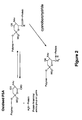
- the polysaccharide may be linked to the insulin peptide directly, i.e. as shown in Figures 1 and 2 , or via a linker.
- Suitable linkers are derived from N-maleimide, vinylsulphone, N-iodoacetamide, orthopyridyl or N-hydroxysuccinimide-containing reagents.
- the linker may also be blostable or biodegradable and comprise, for instance, a polypeptide or a synthetic oligomer.
- the linker may be derived from a bifunctional moiety, as further described in WO 2005/016973 .
- a suitable bifunctional reagent is, for instance, Bis-NHS.
- the reagent may have general formula Z-R 1 -Z wherein each Z is a functional group and may be the same or different and R 1 is a bifunctional organic radical.
- R 1 is selected from the group consisting of alkanediyl, arylene, alkarylene, heteroarylene and alkylheteroarylene, any of which may substituted and/or interrupted by carbonyl, ester, sulfide, ether, amide and/or amine linkages. Particularly preferred is C 3 -C 6 alkanediyl.
- R 1 corresponds to the appropriate portion of the suitable bifunctional reagent
- a preferred polysaccharide derivative is of general formula (I) wherein m is at least one;
- the insulin is linked to the non-reducing end of the polysaccharide.
- the terminal polysaccharide unit is a sialic acid unit.
- the other saccharide units in the polysaccharide are represented by GlyO and may be the same or different. Suitable saccharide units include heparin, hyaluronic acid or chondroitin sulphate.
- the group L is a bond.
- the group L may alternatively be derived from an N-maleimide, vinylsulphone, N-iodoacetamide, orthopyridyl or N-hydroxysuccinimide containing reagent.
- the reagent may have general formula Z-R 1 -Z as defined above.
- L is typically a group
- compositions as defined above which is a pharmaceutical composition and further comprises one or more pharmaceutically acceptable excipients.
- the pharmaceutical composition may be in the form of an aqueous suspension.
- Aqueous suspensions contain the novel compounds in admixture with excipients suitable for the manufacture of aqueous suspensions.
- the pharmaceutical compositions may be in the form of a sterile injectable aqueous or homogeneous suspension. This suspension may be formulated according to the known art using suitable dispersing or wetting agents and suspending agents.
- compositions may be administered orally, intravenously, intraperitoneally, intramuscularly, subcutaneously, intranasally, intradermally, topically or intratracheally for human or veterinary use.
- compositions may further comprise a formulation additive.
- formulation additive we mean an excipient which is capable of stabilising the insulin either internally or externally, as described in Wang et al (1999).
- the excipient may be a stabiliser, a solubilser or a metal ion.
- Suitable examples of formulation additives include one or more buffers, stabilisers, surfactants, salts, polymers, metal ions, sugars, polyols or amino acids. These may be used alone or in combination.
- Stabilisers typically act by destabilisation of the denatured state of a protein leading to increased Gibbs free energy change for unfolding of the protein.
- the stabiliser is preferably a sugar or a polyol, for example sucrose, sorbitol, trehalose, glycerol, mannitol, lactose and ethylene glycol.
- a stabilising buffer is sodium phosphate.
- the solubiliser is preferably a surfactant, preferably a non-ionic surfactant.
- Suitable examples include Tween 80, Tween 20, Tween 40, Pluoronic F68, Brij 35 and Triton X100.
- the metal ion is preferably divalent. Suitable metal ions include Zn2+, Ni 2+ , Co 2+ , Sr 2+ , Cu 2+ , Ca 2+ , Mg 2+ and Fe 2+ .
- the formulation additive may also be a polymer selected from PSA, PEG or hydroxy-beta-cyclodextrin.
- Preservatives such as m-Cresol may also be used.
- Suitable amino acids and amino acid derivatives for use as the formulation additive include histidine, glycine, other similar amino acids and sodium aspartate.
- a further aspect of the invention is a compound as described above for use in therapy.
- phase "chemically reacted substantially only at the N-terminal amine” means that in a population of derivatives at least 85%, more preferably at least 90%, most preferably at least 95% of the protein is derivatised only at its N-terminal amine. Preferably, this is at the N-terminal amine of the B chain of insulin.
- the polysaccharide may also react with a modified form of insulin.
- one or more groups on the insulin may have undergone a chemical transformation, for instance, by reduction or oxidation.
- a reactive carbonyl may be generated in the place of the terminal amino group of insulin using oxidation conditions, for instance.
- Suitable polysaccharides for use in the method of this invention are as described previously for the novel compositions.
- the compounds of the invention may be manufactured by any of the suitable methods described in the prior art. For example, a typical method is described to our previous patent application WO 92/22331 .
- the anionic polysaccharide has been activated before derivatisation to insulin. It may, for instance, have a reactive aldehyde group and the derivatisation reaction may be carried out under reducing conditions.
- the reactive aldehyde group may be produced by controlled oxidation of a hydroxyl group of the polysaccharide. Most preferably this reactive aldehyde is generated in a preliminary step, in which the polysaccharide is reacted under controlled oxidation conditions, for instance using sodium periodate, in aqueous solution.
- the oxidation is a chemical oxidation, although enzymes which are capable of carrying out this step may also be used.
- the reactive aldehyde group may be at the non-reducing end or reducing end of the polysaccharide.
- the insulin typically the N-terminus, may then react with the reactive aldehyde group to produce an adduct which, when reduced, produces the N-terminal derivative of insulin.
- the activation of the polysaccharide should preferably be carried out under conditions such that there is substantially no mid-chain cleavage of the backbone of the polysaccharide, that is substantially no molecular weight reduction.
- the oxidant is suitably perrhuthenate, or, preferably, periodate. Oxidation may be carried out with periodate at a concentration in the range 1 mM to 1M, at a pH in the range 3 to 10, a temperature in the range 0 to 60°C for a time in the range 1 min to 48 hours.
- Suitable reduction conditions for the derivatisation reaction may utilise hydrogen with catalysts or, preferably hydrides, such as borohydrides. These may be immobilised such as Amberlite (trade mark)-supported borohydride. Preferably alkali metal hydrides such as sodium borohydride is used as the reducing agent, at a concentration in the range 1 ⁇ M to 0.1 M, a pH in the range 4 to 10, a temperature in the range 0 to 60°C and a period in the range 1 min to 72 hours. The reaction conditions are selected such that pendant carboxyl groups on the starting material are not reduced.
- Other suitable reducing agents are cyanoborohydride under acidic conditions, e.g. polymer supported cyanoborohydride or alkali metal cyanoborohydride, L-ascorbic acid, sodium metabisulphite, L-selectride, triacetoxyborohydride etc.
- activated derivatives of polysaccharides may have utility in the present invention, including those with pendant functional groups such as NHS, as described in our earlier patent application WO 06/00540 .
- the reactive aldehyde is at the reducing end of the polysaccharide and the non-reducing end has been passivated such that it does not react with pendant groups on the insulin.
- WO 2005/016973 describes polysialic acid derivatives that are useful for conjugation to proteins, particularly those which have free sulfhydryl drugs.
- the polysialic acid compound is reacted with a heterobifunctional reagent to introduce a pendant functional group for site-specific conjugation to sulfhydryl groups.
- the anionic polysaccharides used in the present invention may also be derivatised with a heterobifunctional reagent in this manner.
- the polysaccharide may be derivatised before it reacts with insulin.
- the polysaccharide may react with a bifunctional reagent.
- the polysaccharide may be subjected to a preliminary reaction step, in which a group selected from a primary amine group, a secondary amine group and a hydrazine is formed on the terminal saccharide, which is preferably sialic acid, followed by a reaction step in which this is reacted with a bifunctional reagent to form a reaction-intermediate, as further described in WO 2006/016168 .
- the intermediate may then react with the insulin or insulin-like peptide.
- the bifunctional reagent may have general formula Z-R 1 -Z, as defined previously.
- the derivatisation reaction should be carried out in a first aqueous solution of acidic pH, and the resultant polysaccharide derivative should then be purified in a second aqueous solution of higher pH than the first aqueous solution.
- acidic pH we mean a pH less than 7.
- the pH of the first aqueous solution is in the range 4.0-6.5, preferably 4.0-6.0 and the pH of the second aqueous solution is in the range of 6.5-9.0, preferably 6.5-8.5 or 6.5-8.0.
- the low pH of the derivatisation reaction promotes selective derivatisation at the N-terminus of the protein rather than at any mid-chain sites.
- formulation additives promotes the formation of a selective, stable, polysaccharide insulin-derivative.
- the formulation additive may be selected from one or more buffers, stabilisers, surfactants, salts, polymers, metal ions, sugars, polyols or amino acids. These may be added to the reaction medium, or alternatively may be added to the final product composition, as a stabiliser.
- the formulation additive is sorbitol, trehalose or sucrose.
- the formulation additive is a non-ionic surfactant.
- the formulation additive may alternatively be a polymer selected from PSA, PEG or hydroxy-beta-cyclodextrin.
- the formulation additive is a divalent metal ion. Preferred divalent metal ions include Zn 2+ , Ni 2+ , Co 2+ , Sr 2+ or Fe 2+ .
- the formulation additive may be a buffer.
- the formulation additive is a buffer, it is sodium phosphate or sodium acetate.
- the purification of the polysaccharide derivative in the method of the present invention may be carried out using a variety of methods known in the art.
- suitable purification methods include HIC (hydrophobic interaction chromotography), SEC (size exclusion chromotography), HPLC (high performance liquid chromotography), and IEC (ion exchange chromotography).
- a population of polysialic acids having a wide molecular weight distribution may be fractionated into fractions with lower polydispersities, i.e. into fractions with differing average molecular weights.
- Fractionation is preferably performed by anion exchange chromatography, using for elution a suitable basic buffer, as described in our earlier patent applications WO 2005/016794 and WO 2005/03149 .
- the fractionation method is suitable for a polysaccharide starting material as well as to the derivatives.
- the techinique may thus be applied before or after the essential process steps of this invention.
- the resultant polysaccharide derivative of insulin has a polydispersity of less than 1.1
- the derivatisation of insulin in accordance with this invention results in increased half life, improved stability, reduced immunogenicity, and/or control of solubility and hence bioavailability and the pharmacokinetic properties of insulin.
- the new method is of particular value for creation of a monopolysialylated-insulin conjugates.
- the oxidised colominic acid (CAO) was dialysed (3.5KDa molecular weight cut off dialysis tubing) extensively (24 h) against a 0.01% ammonium carbonate buffer (pH 7.4) at 4°C. Ultrafiltration (over molecular weight cut off 3.5kDa) was used to concentrate the CAO solution from the dialysis tubing. Following concentration to required volume, the filterate was lyophilized and stored at -40°C until further use. Alternatively, CAO was recovered from the reaction mixture by precipitation (twice) with ethanol.
- the degree (quantitative) of CA oxidation was measured with a method [Park and Johnson, 1949] based on the reduction of ferricyanide ions in alkaline solution to ferric ferrocyanide (Persian blue), which is then measured at 630nm. In this instance, glucose was used as a standard.
- Colominic acid samples were dissolved in NaNO3 (0.2M), CH3CN (10%; 5mg/ml) and were chromatographed on over 2x GMPWXL columns with detection by refractive index (GPC system: VE1121 GPC solvent pump, VE3580 RI detector and collation with Trisec 3 software (Viscotek Europe Ltd). Samples (5mg/ml) were filtered over 0.45 ⁇ m nylon membrane and run at 0.7cm/min with 0.2M NaNO3 and CH3CN (10%) as the mobile phase.
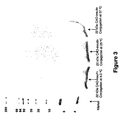
- PSA is an acid labile polymer and is stable for weeks around neutral pH ( Fig. 3 ).
- the results in Fig. 3 show that at pH 6.0 and 7.4 CAO is stable for 8 days, at pH 5.0 there is slow degradation (after 48 hours 92% of initial MW), and at pH 4.0 there is slow degradation (after 48 hours 70% of initial MW).
- Polysialic acid is highly hydrophilic whereas PEG is an ampiphilic molecule in nature.
- CAO CAO was solubilised in 10 mM NaOAc, pH 6.0 gently vortexed the mixture until all the CAO has dissolved and then either filtered into a new container to remove any aggregated/precipitated material.
- Required amount of insulin protein solution was added to the CAO solution to give a 7.5 molar excess (small scale) and 5 (large scale) of CAO and gently mixed by keeping the reaction mixture on a gentle shaker at 4 ⁇ 1°C.
- 100 mg/ml NaCNBH3 solution was added in order to have 8 mg/ml in the final reaction mixture, gently mixed and pH of the final reaction mixture was checked, if necessary adjusted the pH to 6.0 with 0.5 M NaOH/HCl at 4 ⁇ 1°C.
- HIC HisTrap Butyl FF
- Prepare loading solution by diluting the insulin reaction mixture with minimum volume using concentrated (NH 4 ) 2 SO 4 (e.g. 3 M), 20mM Na 2 HPO 4 (pH 7.4) to give a concentration of 0.8 M (NH 4 ) 2 SO 4 in the loading solution.
- HIC buffer B 20 mM sodium phosphate + 0.8 M (NH4)2SO4, pH 7.4).
- Product with HIC buffer A (10 mM sodium phosphate buffer, pH 7.4) (rate 5 ml/min) was eluted and collected the fractions (1 column volume fraction; 6 column volume) and label (E1-Ex).
- HIC fractions containing protein fractions are washed with IEC buffer A (20 mM phosphate buffer, pH 7.4). To remove ammonium sulphate if any in Vivaspin 20(MW: 5 Kd). Check pH and adjust if required to pH 7.4. Load on the IEC column previously equilibrated with IEC buffer A. A gradient system was applied in the following manner:
- the IEC fractions containing the purified conjugate are combined, washed to remove salt with buffer change of PBS buffer. Adjust pH after removing salt to 7.4. The solution is then concentrated at 4 ⁇ 1°C and the protein concentration analysed by UV spectroscopy (280nm). Conjugates were sterile filtered and samples taken for activity assay and for characterisation by SDS-PAGE and SE-HPLC. If required an aliquot was removed for a protein assay and CA assay. The remainder was stored at 4 ⁇ 1°C until further use and studied for physical stability by SE-HPLC.
- 14 kDa CAO required amount of 14 kDa CAO was weighed out. 14 kDa CAO was solubilised in 10 mM phosphate buffer, pH 6.0 (20% volume of the final reaction volume was used here), gently vortexed the mixture until all the 14 kDa CAO has dissolved and then either filtered into a new container to remove any aggregated/precipitated material. Required amount of insulin protein solution was added to the 14 kDa CAO solution to give a 7.5 molar excess (small scale) and 5 (large scale) of 14 kDa CAO and gently mixed by keeping the reaction mixture on a gentle shaker at 4 ⁇ 1°C.
- HIC HIC was used.
- Prepare loading solution by diluting the insulin reaction mixture with minimum volume using concentrated (NH 4 ) 2 SO 4 e.g. 3 M), 20mM Na 2 HPO 4 , (pH 7.4) to give a concentration of 0.8 M (NH4) 2 SO 4 in the loading solution.
- HIC fractions containing protein fractions are washed with IEC buffer A (20 mM phosphate buffer, pH 7.4). To remove ammonium sulphate if any in Vivaspin 20(MW: 5 Kd). Check pH and adjust if required to pH 7.4. Load on the IEC column previously equilibrated with IEC buffer A. The gradient system was applied in the following manner:
- the IEC fractions containing the purified conjugate are combined, washed to remove salt with buffer change of PBS buffer. The pH is adjusted after removing salt to 7.4. The solution is then concentrated at 4 ⁇ 1°C and the protein concentration analysed by UV spectroscopy (280nm). Conjugate were sterile filtered and samples taken for activity assay and for characterisation by SDS-PAGE and SE-HPLC. If required an aliquot was removed for a protein assay and CA assay. The remainder was stored at 4 ⁇ 1°C until further use and studied for physical stability by SE-HPLC.
- Novex® IEF gel was used to determine differences in insulin and CAO-insulin conjugate isoelectric points. Samples was dissolved to a concentration of 0.5 mg/ml. 5 ul sample was diluted with 5 ul Novex IEF Sample Buffer pH 3-10 and then loaded the protein sample on the gel.
- mice The in vivo efficacy of insulin formulations was studied in female mice CD-1, 7-8 weeks old, 0.3 IU of protein dose (same activity) was injected in mice subcutaneously. Animals were divided into seven groups of four insulin formulations were given to each animal of each group in the following manner; insulin (0.3 IU/mouse), Lantus (Aventis) insulin-PSA conjugate (14 KDa), PBS, one drop of blood was taken from each animal and was measured blood glucose by ACCU-CHEK Active (Roche Diagnostics).
- Colominic acid is a linear alpha-2.8-linked homopolymer of N-acetylneuraminic acid (Neu5Ac) residues was used. Exposure of colominic acids to oxidation was carried out for 15 min using 20 mM periodate at room temperature. The integrity of the internal alpha-2.8 linked Neu5Ac residues post periodate treatment was analysed by gel permeation chromatography and the chromatographs obtained for the oxidised (CAO), material was compared with that of native CA. It was found that oxidized and native CA exhibit almost identical elution profiles, with no evidence that the successive oxidation step give rise to significant fragmentation of the polymer chain.
- CAO oxidised
- Quantitative measurement of the oxidation state of CA was performed by ferricyanide ion reduction in alkaline solution to ferrocyanide (Prussian Blue) [Park and Johnson, 1949] using glucose as a standard. It shows that the oxidized colominic acid was found to have a greater than stoichiometric (>100%) amount of reducing agent, i.e. 112 mol % of apparent aldehyde content comprising the combined reducing power of the reducing end hemiketal and the introduced aldehyde (at the other end).
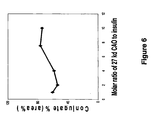
- Table 1 shows the effect of molar ratio on polysialylation.
- Table 1 shows the effect of molar ratio on polysialylation.
- Table 2 shows a T-Test (statistical analysis, paired-test) of different chain CAO-insulin conjugates in vivo efficiency.
- Table 2. Time (minutes) 0.0 32.0 64.5 99.4 170.8 230.2 303.3 358.0 1354.9 13 kDa CAO-insulin ** *** *** 21kDa CAO-insulin *** *** * 27 kDa CAO-insulin ** *** ** ** ** 32kDa CAO-insulin *** *** * insulin *** *** *** *** *** Asterisks indicate probability level of the difference between groups against the Tris buffer: *P ⁇ 0.05, **P ⁇ 0.01, ***P ⁇ 0.001 Table 3.
- Monodisperse CAO-insulin can be successfully conjugated and highly pure conjugates were purified by scale-up HIC and IEC.
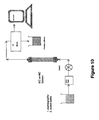
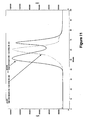
- the purification efficiency was improved from the IEC and HIC combination set-up with preparative HPLC instrument as demonstrated in Figure 10 .
- CA colominic acid conjugates of insulin in an N-terminally selective manner by conducting the reaction at a reduced pH (pH 6.0) and at 4 ⁇ 1°C
- HIC hydrophobic interaction chromatography
- IEC ion-exchange chromatography
- the low pH was used to favour selective derivatisation at the N-terminus of insulin's B-chain (PheB1), and also in order to minimise aggregation of insulin during the reaction.
- Isoelectric focusing (IEF) gels of 13 Kda and 27 Kda CAO-insulin conjugates in Figure 13 show the conjugate of polysialylated insulin has no fixed isoelectric point (pl).
- Insulin conjugates used in the in vivo efficiency showed superior in vivo efficacy (prolongation) and blunt (peak less profile) as compared to insulin.
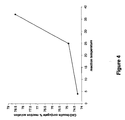
- the prolongation of the blood glucose reducing ability of the conjugates was proportional to chain length of polymer used in the formulation as seen in Figure 14 .
- PSA conjugates were found to be active in the in vitro activity assay. In vivo efficacy study shows that PSA-insulin conjugates are vastly superior to insulin.
Landscapes
- Health & Medical Sciences (AREA)
- Life Sciences & Earth Sciences (AREA)
- Chemical & Material Sciences (AREA)
- General Health & Medical Sciences (AREA)
- Organic Chemistry (AREA)
- Medicinal Chemistry (AREA)
- Engineering & Computer Science (AREA)
- Bioinformatics & Cheminformatics (AREA)
- Pharmacology & Pharmacy (AREA)
- Veterinary Medicine (AREA)
- Public Health (AREA)
- Animal Behavior & Ethology (AREA)
- Zoology (AREA)
- Gastroenterology & Hepatology (AREA)
- Proteomics, Peptides & Aminoacids (AREA)
- Immunology (AREA)
- General Chemical & Material Sciences (AREA)
- Chemical Kinetics & Catalysis (AREA)
- Genetics & Genomics (AREA)
- Epidemiology (AREA)
- Nuclear Medicine, Radiotherapy & Molecular Imaging (AREA)
- Diabetes (AREA)
- Molecular Biology (AREA)
- Biochemistry (AREA)
- Wood Science & Technology (AREA)
- Biophysics (AREA)
- Toxicology (AREA)
- Endocrinology (AREA)
- General Engineering & Computer Science (AREA)
- Hematology (AREA)
- Biomedical Technology (AREA)
- Microbiology (AREA)
- Biotechnology (AREA)
- Obesity (AREA)
- Transplantation (AREA)
- Emergency Medicine (AREA)
- Pulmonology (AREA)
- Child & Adolescent Psychology (AREA)
- Urology & Nephrology (AREA)
- Oil, Petroleum & Natural Gas (AREA)
Priority Applications (2)
| Application Number | Priority Date | Filing Date | Title |
|---|---|---|---|
| EP13163525.2A EP2630972B1 (fr) | 2006-07-25 | 2007-07-25 | Polysialylation N-terminale |
| EP17188428.1A EP3299033A1 (fr) | 2006-07-25 | 2007-07-25 | Polysialylation n-terminale |
Applications Claiming Priority (3)
| Application Number | Priority Date | Filing Date | Title |
|---|---|---|---|
| EP06117830 | 2006-07-25 | ||
| EP13163525.2A EP2630972B1 (fr) | 2006-07-25 | 2007-07-25 | Polysialylation N-terminale |
| EP07789051.5A EP2043693B1 (fr) | 2006-07-25 | 2007-07-25 | Dérivation n-terminale de l'insuline avec de l'acide polysialique |
Related Parent Applications (3)
| Application Number | Title | Priority Date | Filing Date |
|---|---|---|---|
| EP07789051.5 Division | 2007-07-25 | ||
| EP07789051.5A Division EP2043693B1 (fr) | 2006-07-25 | 2007-07-25 | Dérivation n-terminale de l'insuline avec de l'acide polysialique |
| EP07789051.5A Division-Into EP2043693B1 (fr) | 2006-07-25 | 2007-07-25 | Dérivation n-terminale de l'insuline avec de l'acide polysialique |
Related Child Applications (1)
| Application Number | Title | Priority Date | Filing Date |
|---|---|---|---|
| EP17188428.1A Division EP3299033A1 (fr) | 2006-07-25 | 2007-07-25 | Polysialylation n-terminale |
Publications (3)
| Publication Number | Publication Date |
|---|---|
| EP2630972A2 true EP2630972A2 (fr) | 2013-08-28 |
| EP2630972A3 EP2630972A3 (fr) | 2013-10-16 |
| EP2630972B1 EP2630972B1 (fr) | 2017-08-30 |
Family
ID=37397314
Family Applications (6)
| Application Number | Title | Priority Date | Filing Date |
|---|---|---|---|
| EP07766363.1A Not-in-force EP2043692B1 (fr) | 2006-07-25 | 2007-07-25 | Dérivés polysaccharides de l'érythropoïétine |
| EP13163525.2A Not-in-force EP2630972B1 (fr) | 2006-07-25 | 2007-07-25 | Polysialylation N-terminale |
| EP07766361.5A Not-in-force EP2043616B1 (fr) | 2006-07-25 | 2007-07-25 | Couplage d'acide polysialique à l'extrémité n-terminale de protéines |
| EP17188428.1A Withdrawn EP3299033A1 (fr) | 2006-07-25 | 2007-07-25 | Polysialylation n-terminale |
| EP07789047A Not-in-force EP2041167B1 (fr) | 2006-07-25 | 2007-07-25 | Dérivatisation du facteur de stimulation des colonies de granulocytes |
| EP07789051.5A Not-in-force EP2043693B1 (fr) | 2006-07-25 | 2007-07-25 | Dérivation n-terminale de l'insuline avec de l'acide polysialique |
Family Applications Before (1)
| Application Number | Title | Priority Date | Filing Date |
|---|---|---|---|
| EP07766363.1A Not-in-force EP2043692B1 (fr) | 2006-07-25 | 2007-07-25 | Dérivés polysaccharides de l'érythropoïétine |
Family Applications After (4)
| Application Number | Title | Priority Date | Filing Date |
|---|---|---|---|
| EP07766361.5A Not-in-force EP2043616B1 (fr) | 2006-07-25 | 2007-07-25 | Couplage d'acide polysialique à l'extrémité n-terminale de protéines |
| EP17188428.1A Withdrawn EP3299033A1 (fr) | 2006-07-25 | 2007-07-25 | Polysialylation n-terminale |
| EP07789047A Not-in-force EP2041167B1 (fr) | 2006-07-25 | 2007-07-25 | Dérivatisation du facteur de stimulation des colonies de granulocytes |
| EP07789051.5A Not-in-force EP2043693B1 (fr) | 2006-07-25 | 2007-07-25 | Dérivation n-terminale de l'insuline avec de l'acide polysialique |
Country Status (10)
| Country | Link |
|---|---|
| US (22) | US8394921B2 (fr) |
| EP (6) | EP2043692B1 (fr) |
| JP (14) | JP2009544680A (fr) |
| KR (1) | KR101400105B1 (fr) |
| CN (2) | CN103169984B (fr) |
| AT (1) | ATE467642T1 (fr) |
| DE (1) | DE602007006492D1 (fr) |
| ES (5) | ES2581902T3 (fr) |
| RU (1) | RU2432175C2 (fr) |
| WO (4) | WO2008012525A1 (fr) |
Families Citing this family (39)
| Publication number | Priority date | Publication date | Assignee | Title |
|---|---|---|---|---|
| JP2007501888A (ja) | 2003-08-12 | 2007-02-01 | リポクセン テクノロジーズ リミテッド | ポリシアル酸誘導体 |
| RU2333223C2 (ru) | 2003-08-12 | 2008-09-10 | Лайпоксен Текнолоджиз Лимитед | Альдегидные производные сиаловой кислоты, способы их получения, конъюгаты альдегидных производных сиаловой кислоты и фармацевтическая композиция на их основе |
| EP2043692B1 (fr) | 2006-07-25 | 2016-05-18 | Lipoxen Technologies Limited | Dérivés polysaccharides de l'érythropoïétine |
| AU2007333049B2 (en) | 2006-12-15 | 2014-02-20 | Takeda Pharmaceutical Company Limited | Factor VIIa-(poly)sialic acid conjugate having prolonged in vivo half-life |
| ES2375314T3 (es) | 2007-02-28 | 2012-02-28 | Lipoxen Technologies Limited | Reducción de endotoxina en ácidos polisiálicos. |
| EP2192924B1 (fr) | 2007-08-20 | 2017-10-11 | Protalix Ltd. | Conjugués de protéines contenant un saccharide et leurs utilisations |
| RU2391354C1 (ru) * | 2008-10-15 | 2010-06-10 | Учреждение Российской академии наук Институт биоорганической химии им. академиков М.М. Шемякина и Ю.А. Овчинникова РАН, Российская Федерация, от имени которой выступает Федеральное агентство по науке и инновациям | Комплекс биологически активного рекомбинантного белка с полисиаловой кислотой |
| RU2472806C1 (ru) * | 2008-10-20 | 2013-01-20 | Юсв Лимитед | Усовершенствованный способ пегилирования белков |
| WO2010051335A1 (fr) * | 2008-10-31 | 2010-05-06 | Amgen Inc. | Matériels et procédés associés à la mobilisation de cellules souches par le facteur de croissance hématopoïétique g-csf polypégylé |
| WO2010088286A1 (fr) | 2009-01-28 | 2010-08-05 | Smartcells, Inc. | Conjugués synthétiques et leurs utilisations |
| BRPI1007457A2 (pt) | 2009-01-28 | 2015-08-25 | Smartcells Inc | Conjungado, formulação de liberação prolongada, e, sistema de distribuição de bomba. |
| CA2750223A1 (fr) | 2009-01-28 | 2010-08-05 | Smartcells, Inc. | Materiaux a liberation controlee declenchee de facon exogene et leurs utilisations |
| JP2012516342A (ja) | 2009-01-28 | 2012-07-19 | スマートセルズ・インコーポレイテツド | 結晶性インスリン複合体 |
| EP2408470A4 (fr) | 2009-03-20 | 2012-08-29 | Smartcells Inc | Conjugués d'insulines non déposées solubles et leurs utilisations |
| CA2754950A1 (fr) | 2009-03-20 | 2010-09-23 | Smartcells, Inc. | Conjugues fonctionnalises aux extremites et leurs utilisations |
| US8637640B2 (en) | 2009-07-27 | 2014-01-28 | Baxter International Inc. | Blood coagulation protein conjugates |
| WO2011012850A2 (fr) | 2009-07-27 | 2011-02-03 | Lipoxen Technologies Limited | Glyco-polysialylation de protéines de coagulation non sanguine |
| RU2744370C2 (ru) * | 2009-07-27 | 2021-03-05 | Баксалта Инкорпорейтед | Конъюгаты белков свертывания крови |
| US8809501B2 (en) | 2009-07-27 | 2014-08-19 | Baxter International Inc. | Nucleophilic catalysts for oxime linkage |
| US8642737B2 (en) | 2010-07-26 | 2014-02-04 | Baxter International Inc. | Nucleophilic catalysts for oxime linkage |
| US9194011B2 (en) | 2009-11-17 | 2015-11-24 | Protalix Ltd. | Stabilized alpha-galactosidase and uses thereof |
| CN101787117B (zh) * | 2010-02-08 | 2012-05-23 | 江南大学 | 聚乙二醇-聚唾液酸嵌段共聚物的制备方法及应用 |
| NZ603399A (en) | 2010-05-17 | 2014-09-26 | Cebix Inc | Pegylated c-peptide |
| WO2011156242A2 (fr) * | 2010-06-11 | 2011-12-15 | Lpath, Inc. | Conception d'anticorps anti-lysophospholipide amélioré à l'aide de structures d'anticorps |
| US9074015B2 (en) | 2010-07-28 | 2015-07-07 | Smartcells, Inc. | Recombinantly expressed insulin polypeptides and uses thereof |
| EP2598170A4 (fr) | 2010-07-28 | 2016-07-06 | Smartcells Inc | Conjugués médicaments-ligands, leur synthèse et intermédiaires correspondants |
| US9068013B2 (en) | 2010-07-28 | 2015-06-30 | Smart Cells, Inc. | Recombinant lectins, binding-site modified lectins and uses thereof |
| RS60129B1 (sr) | 2011-01-20 | 2020-05-29 | Protalix Ltd | Kompozicije alfa-galaktozidaze |
| WO2013075117A2 (fr) | 2011-11-17 | 2013-05-23 | John Wahren | Peptide c pegylé |
| AU2014329567B2 (en) | 2013-10-04 | 2019-07-25 | Merck Sharp & Dohme Corp. | Glucose-responsive insulin conjugates |
| WO2015130963A2 (fr) | 2014-02-27 | 2015-09-03 | Xenetic Biosciences, Inc. | Compositions et méthodes d'administration au cerveau de protéine insuline ou insulinoïde |
| JP2019218265A (ja) * | 2016-09-14 | 2019-12-26 | 生化学工業株式会社 | ペプチドの血中滞留性を増強させる方法 |
| WO2018197545A1 (fr) * | 2017-04-25 | 2018-11-01 | Lipoxen Technologies Limited | Procédés de traitement de myélomes multiples exprimant des niveaux élevés de récepteur d'epo à l'aide de psa-epo |
| US20190083636A1 (en) * | 2017-04-25 | 2019-03-21 | Lipoxen Technologies Limited | Methods of treating diseases related to net formation with parenteral administration of polysialylated dnase i |
| US20220023430A1 (en) * | 2018-11-13 | 2022-01-27 | Lipoxen Technologies Limited | Glycopolysialylation of blinatumomab |
| JP2022519586A (ja) * | 2019-02-04 | 2022-03-24 | ゼネティック バイオサイエンシーズ インコーポレイテッド | 糖ポリシアル酸化治療用タンパク質を使用する方法 |
| JP7579815B2 (ja) | 2019-07-08 | 2024-11-08 | ジーアイ イノベーション, インコーポレイテッド | 高シアル酸含量を有し、IgE Fc受容体のアルファサブユニットの細胞外ドメインを含むポリペプチド二量体及び同ポリペプチド二量体を含む医薬組成物 |
| CN116249552A (zh) * | 2020-08-11 | 2023-06-09 | 隆延生物科技(上海)有限公司 | 一种液体制剂及其应用 |
| CN114966021B (zh) * | 2022-05-19 | 2025-03-04 | 山东博科生物产业有限公司 | 一种稳定的脂蛋白相关磷脂酶a2测定试剂盒 |
Citations (13)
| Publication number | Priority date | Publication date | Assignee | Title |
|---|---|---|---|---|
| US4179337A (en) | 1973-07-20 | 1979-12-18 | Davis Frank F | Non-immunogenic polypeptides |
| CA1156217A (fr) | 1979-07-27 | 1983-11-01 | Rainer Obermeier | Derives de l'insuline et procede de preparation |
| WO1992022331A1 (fr) | 1991-06-06 | 1992-12-23 | The School Of Pharmacy | Compositions pharmaceutiques |
| US5846951A (en) | 1991-06-06 | 1998-12-08 | The School Of Pharmacy, University Of London | Pharmaceutical compositions |
| WO2001087922A2 (fr) | 2000-05-16 | 2001-11-22 | Lipoxen Technologies Limited | Derivatisation de proteines |
| US6323311B1 (en) | 1999-09-22 | 2001-11-27 | University Of Utah Research Foundation | Synthesis of insulin derivatives |
| WO2004091494A2 (fr) | 2003-04-11 | 2004-10-28 | Pr Pharmaceuticals Inc. | Procede de preparation de conjugues de proteines specifiques de site |
| WO2005003149A1 (fr) | 2003-07-03 | 2005-01-13 | Cipla Limited | Methode pour preparer un finasteride de forme i |
| WO2005016974A1 (fr) | 2003-08-12 | 2005-02-24 | Lipoxen Technologies Limited | Derive d'acide sialique destine a la derivatisation et a la conjugaison proteinique |
| WO2005016973A1 (fr) | 2003-08-12 | 2005-02-24 | Lipoxen Technologies Limited | Derives d'acide polysialique |
| WO2005016794A2 (fr) | 2003-08-05 | 2005-02-24 | Dematic Corp. | Commande transversale a cylindre motorise |
| WO2006000540A1 (fr) | 2004-06-23 | 2006-01-05 | Endress+Hauser Flowtec Ag | Transducteur du type transducteur de vibrations |
| WO2006016168A2 (fr) | 2004-08-12 | 2006-02-16 | Lipoxen Technologies Limited | Dérivés d’acide sialique |
Family Cites Families (42)
| Publication number | Priority date | Publication date | Assignee | Title |
|---|---|---|---|---|
| US5308617A (en) * | 1988-08-10 | 1994-05-03 | Halzyme Ltd. | Protein heparin conjugates |
| US7217689B1 (en) * | 1989-10-13 | 2007-05-15 | Amgen Inc. | Glycosylation analogs of erythropoietin |
| AU646822B2 (en) | 1989-10-13 | 1994-03-10 | Kirin-Amgen Inc. | Erythropoietin isoforms |
| DK0550108T3 (da) | 1991-12-30 | 1999-01-04 | Akzo Nobel Nv | Thyreoaktiv sammensætning med langvarig frigivelse |
| JP2747967B2 (ja) * | 1993-07-23 | 1998-05-06 | 雪印乳業株式会社 | シアル酸粉末 |
| US20030053982A1 (en) | 1994-09-26 | 2003-03-20 | Kinstler Olaf B. | N-terminally chemically modified protein compositions and methods |
| US5824784A (en) | 1994-10-12 | 1998-10-20 | Amgen Inc. | N-terminally chemically modified protein compositions and methods |
| JP4335435B2 (ja) * | 1997-08-05 | 2009-09-30 | バイオニケ ライフ サイエンシーズ インコーポレイテッド | 細胞増殖および細胞死を調節する組成物および方法 |
| AU2794199A (en) | 1998-02-26 | 1999-09-15 | Robertas Bunevicius | Thyroid hormone replacement using sustained release triiodothyronine |
| RU2141531C1 (ru) * | 1999-05-26 | 1999-11-20 | Российское акционерное общество открытого типа "Биопрепарат" | Способ получения рекомбинантного инсулина человека |
| AU2001263506A1 (en) | 2000-05-18 | 2001-11-26 | Massachusetts Institute Of Technology | Encapsulating a toxic core within a non-toxic region in an oral dosage form |
| US7118737B2 (en) * | 2000-09-08 | 2006-10-10 | Amylin Pharmaceuticals, Inc. | Polymer-modified synthetic proteins |
| ATE421535T1 (de) | 2000-10-16 | 2009-02-15 | Chugai Pharmaceutical Co Ltd | Peg-modifiziertes erythropoietin |
| CA2431964C (fr) | 2000-12-20 | 2013-09-10 | F. Hoffmann-La Roche Ag | Conjugues d'erythropoietine (pep) et de polyethylene glycol (peg) |
| KR100401296B1 (ko) | 2000-12-27 | 2003-10-11 | 드림바이오젠 주식회사 | 수식물질에 의해 수식된 단백질 변이체 및 이것의 제조방법 |
| US7125843B2 (en) * | 2001-10-19 | 2006-10-24 | Neose Technologies, Inc. | Glycoconjugates including more than one peptide |
| EP2042196B1 (fr) * | 2001-10-10 | 2016-07-13 | ratiopharm GmbH | Remodelage et glycoconjugation de facteur stimulant les colonies de granulocytes (G-CSF) |
| AU2002351746A1 (en) | 2001-12-21 | 2003-07-15 | Maxygen Aps | Erythropoietin conjugates |
| ITPD20010302A1 (it) | 2001-12-28 | 2003-06-28 | Bbs Riva Spa | Dispositivo idraulico per pompare e / p intercettare metallo allo stato fuso |
| US6763226B1 (en) | 2002-07-31 | 2004-07-13 | Computer Science Central, Inc. | Multifunctional world wide walkie talkie, a tri-frequency cellular-satellite wireless instant messenger computer and network for establishing global wireless volp quality of service (qos) communications, unified messaging, and video conferencing via the internet |
| MXPA05002594A (es) * | 2002-09-11 | 2005-05-27 | Fresenius Kabi Gmbh | Derivados de polipeptidos con hidroxialquilalmidon, especialmente derivados de eritropoyetina con hidroxialquilalmidon. |
| ES2214166T1 (es) * | 2002-09-11 | 2004-09-16 | Fresenius Kabi Deutschland Gmbh | Polipeptidos has-ilados, especialmente, eriptropoyetina has-ilada. |
| JPWO2004101619A1 (ja) | 2003-05-15 | 2006-10-26 | 塩野義製薬株式会社 | 機能的糖ペプチドの合理的設計および合成 |
| US7074755B2 (en) | 2003-05-17 | 2006-07-11 | Centocor, Inc. | Erythropoietin conjugate compounds with extended half-lives |
| CA2844154C (fr) | 2003-08-06 | 2016-12-20 | The Government Of The United States Of America, As Represented By The Secretary, Department Of Health And Human Services | Vaccins conjugues polysaccharide-proteine |
| AU2004262921B2 (en) | 2003-08-08 | 2010-05-13 | Octapharma Ag | Conjugates of hydroxyalkyl starch and G-CSF |
| US7405198B2 (en) * | 2003-11-24 | 2008-07-29 | Neose Technologies, Inc. | Glycopegylated erythropoietin |
| US7956032B2 (en) | 2003-12-03 | 2011-06-07 | Novo Nordisk A/S | Glycopegylated granulocyte colony stimulating factor |
| WO2005055946A2 (fr) | 2003-12-03 | 2005-06-23 | Neose Technologies, Inc. | Facteur de stimulation de colonies de granulocytes glycopegyle |
| AR048035A1 (es) * | 2004-03-11 | 2006-03-22 | Fresenius Kabi De Gmbh | Conjugados de almidon de hidroxialquilo y una proteina, preparados por aminacion reductora |
| FR2868071B1 (fr) * | 2004-03-26 | 2006-06-09 | Biomerieux Sa | Reactifs de marquage, procedes de synthese de tels reactifs et procedes de detection de molecules biologiques |
| WO2006014148A2 (fr) | 2004-08-04 | 2006-02-09 | Sergey Alexandrovich Orlov | Procede permettant d'organiser un processus de jeu a action intermittente |
| GB2416993A (en) | 2004-08-11 | 2006-02-15 | Dinesh Verma | Opthalmic prosthesis |
| EP1789454B1 (fr) | 2004-08-12 | 2017-07-05 | Lipoxen Technologies Limited | Fractionnement de polysaccharide chargé |
| US9029331B2 (en) * | 2005-01-10 | 2015-05-12 | Novo Nordisk A/S | Glycopegylated granulocyte colony stimulating factor |
| TWI376234B (en) * | 2005-02-01 | 2012-11-11 | Msd Oss Bv | Conjugates of a polypeptide and an oligosaccharide |
| JP2008531764A (ja) | 2005-02-23 | 2008-08-14 | リポクセン テクノロジーズ リミテッド | タンパク質の誘導体化及び結合のための活性化シアル酸誘導体 |
| JP3989936B2 (ja) * | 2005-04-07 | 2007-10-10 | 進 須永 | 抗腫瘍剤及び新規dnアーゼ |
| WO2007047922A2 (fr) | 2005-10-19 | 2007-04-26 | Smartcells, Inc. | Conjugues polymeres-medicaments |
| EP2043692B1 (fr) * | 2006-07-25 | 2016-05-18 | Lipoxen Technologies Limited | Dérivés polysaccharides de l'érythropoïétine |
| WO2011007865A1 (fr) | 2009-07-16 | 2011-01-20 | 花王株式会社 | Agent pour linhibition de laugmentation du taux dinsuline postprandiale dans le sang |
| UY34346A (es) | 2011-09-26 | 2013-04-30 | Novartis Ag | Proteínas de fusión para tratar trastornos metabólicos |
-
2007
- 2007-07-25 EP EP07766363.1A patent/EP2043692B1/fr not_active Not-in-force
- 2007-07-25 EP EP13163525.2A patent/EP2630972B1/fr not_active Not-in-force
- 2007-07-25 ES ES07789051.5T patent/ES2581902T3/es active Active
- 2007-07-25 JP JP2009521342A patent/JP2009544680A/ja active Pending
- 2007-07-25 US US12/375,012 patent/US8394921B2/en not_active Expired - Fee Related
- 2007-07-25 DE DE602007006492T patent/DE602007006492D1/de active Active
- 2007-07-25 ES ES07766363.1T patent/ES2581983T3/es active Active
- 2007-07-25 KR KR1020097003805A patent/KR101400105B1/ko not_active Expired - Fee Related
- 2007-07-25 CN CN201310022631.9A patent/CN103169984B/zh not_active Expired - Fee Related
- 2007-07-25 US US12/375,008 patent/US8299026B2/en active Active
- 2007-07-25 WO PCT/GB2007/002816 patent/WO2008012525A1/fr not_active Ceased
- 2007-07-25 ES ES13163525.2T patent/ES2647528T3/es active Active
- 2007-07-25 AT AT07789047T patent/ATE467642T1/de not_active IP Right Cessation
- 2007-07-25 CN CN2007800337418A patent/CN101511391B/zh not_active Expired - Fee Related
- 2007-07-25 EP EP07766361.5A patent/EP2043616B1/fr not_active Not-in-force
- 2007-07-25 US US12/375,010 patent/US10300144B2/en active Active
- 2007-07-25 JP JP2009521343A patent/JP2009544681A/ja active Pending
- 2007-07-25 EP EP17188428.1A patent/EP3299033A1/fr not_active Withdrawn
- 2007-07-25 EP EP07789047A patent/EP2041167B1/fr not_active Not-in-force
- 2007-07-25 ES ES07766361.5T patent/ES2569066T3/es active Active
- 2007-07-25 WO PCT/GB2007/002839 patent/WO2008012540A1/fr not_active Ceased
- 2007-07-25 ES ES07789047T patent/ES2344670T3/es active Active
- 2007-07-25 WO PCT/GB2007/002821 patent/WO2008012528A1/fr not_active Ceased
- 2007-07-25 JP JP2009521336A patent/JP5419689B2/ja not_active Expired - Fee Related
- 2007-07-25 US US12/375,006 patent/US8299015B2/en active Active
- 2007-07-25 EP EP07789051.5A patent/EP2043693B1/fr not_active Not-in-force
- 2007-07-25 WO PCT/GB2007/002841 patent/WO2008012542A2/fr not_active Ceased
- 2007-07-25 JP JP2009521337A patent/JP5096466B2/ja not_active Expired - Fee Related
- 2007-07-25 RU RU2009105696/15A patent/RU2432175C2/ru active
-
2012
- 2012-09-19 JP JP2012205475A patent/JP5586669B2/ja not_active Expired - Fee Related
- 2012-10-05 US US13/646,605 patent/US8796207B2/en active Active
- 2012-10-05 US US13/646,584 patent/US9040478B2/en active Active
- 2012-12-28 JP JP2012287324A patent/JP5542195B2/ja not_active Expired - Fee Related
-
2013
- 2013-02-08 JP JP2013022825A patent/JP5420091B2/ja not_active Expired - Fee Related
- 2013-03-11 US US13/794,692 patent/US8981050B2/en active Active
- 2013-08-01 JP JP2013160269A patent/JP5941440B2/ja not_active Expired - Fee Related
-
2014
- 2014-02-13 JP JP2014025061A patent/JP6165079B2/ja not_active Expired - Fee Related
- 2014-06-24 US US14/313,897 patent/US8946406B2/en not_active Expired - Fee Related
- 2014-06-24 US US14/313,888 patent/US9266936B2/en active Active
- 2014-06-24 US US14/313,870 patent/US8933026B2/en active Active
- 2014-07-29 JP JP2014154037A patent/JP5912152B2/ja not_active Expired - Fee Related
- 2014-12-05 US US14/561,991 patent/US9234020B2/en active Active
-
2015
- 2015-02-04 US US14/614,406 patent/US9492556B2/en active Active
- 2015-04-01 JP JP2015075148A patent/JP6055506B2/ja not_active Expired - Fee Related
- 2015-04-17 US US14/689,627 patent/US9492557B2/en active Active
- 2015-05-22 US US14/720,700 patent/US9474805B2/en active Active
-
2016
- 2016-01-19 US US15/001,135 patent/US9579393B2/en not_active Expired - Fee Related
- 2016-01-19 US US15/001,144 patent/US9549990B2/en active Active
- 2016-02-05 JP JP2016020557A patent/JP6243456B2/ja not_active Expired - Fee Related
- 2016-07-29 JP JP2016149090A patent/JP6203342B2/ja not_active Expired - Fee Related
- 2016-10-03 US US15/284,426 patent/US20170080054A1/en not_active Abandoned
- 2016-11-15 US US15/352,466 patent/US9789163B2/en not_active Expired - Fee Related
-
2017
- 2017-01-12 US US15/404,896 patent/US20170119893A1/en not_active Abandoned
- 2017-08-18 JP JP2017157728A patent/JP6581157B2/ja not_active Expired - Fee Related
- 2017-11-13 US US15/811,050 patent/US20180289823A1/en not_active Abandoned
-
2019
- 2019-03-27 US US16/367,226 patent/US20190216938A1/en not_active Abandoned
-
2022
- 2022-01-14 US US17/576,821 patent/US20220133898A1/en not_active Abandoned
Patent Citations (14)
| Publication number | Priority date | Publication date | Assignee | Title |
|---|---|---|---|---|
| US4179337A (en) | 1973-07-20 | 1979-12-18 | Davis Frank F | Non-immunogenic polypeptides |
| CA1156217A (fr) | 1979-07-27 | 1983-11-01 | Rainer Obermeier | Derives de l'insuline et procede de preparation |
| WO1992022331A1 (fr) | 1991-06-06 | 1992-12-23 | The School Of Pharmacy | Compositions pharmaceutiques |
| US5846951A (en) | 1991-06-06 | 1998-12-08 | The School Of Pharmacy, University Of London | Pharmaceutical compositions |
| US6323311B1 (en) | 1999-09-22 | 2001-11-27 | University Of Utah Research Foundation | Synthesis of insulin derivatives |
| WO2001087922A2 (fr) | 2000-05-16 | 2001-11-22 | Lipoxen Technologies Limited | Derivatisation de proteines |
| WO2004091494A2 (fr) | 2003-04-11 | 2004-10-28 | Pr Pharmaceuticals Inc. | Procede de preparation de conjugues de proteines specifiques de site |
| US20070083006A1 (en) | 2003-04-11 | 2007-04-12 | Pr Pharmaceuticals, Inc. | Method for preparation of site-specific protein conjugates |
| WO2005003149A1 (fr) | 2003-07-03 | 2005-01-13 | Cipla Limited | Methode pour preparer un finasteride de forme i |
| WO2005016794A2 (fr) | 2003-08-05 | 2005-02-24 | Dematic Corp. | Commande transversale a cylindre motorise |
| WO2005016974A1 (fr) | 2003-08-12 | 2005-02-24 | Lipoxen Technologies Limited | Derive d'acide sialique destine a la derivatisation et a la conjugaison proteinique |
| WO2005016973A1 (fr) | 2003-08-12 | 2005-02-24 | Lipoxen Technologies Limited | Derives d'acide polysialique |
| WO2006000540A1 (fr) | 2004-06-23 | 2006-01-05 | Endress+Hauser Flowtec Ag | Transducteur du type transducteur de vibrations |
| WO2006016168A2 (fr) | 2004-08-12 | 2006-02-16 | Lipoxen Technologies Limited | Dérivés d’acide sialique |
Non-Patent Citations (15)
| Title |
|---|
| BIOCHIMICA ET BIOPHYSICA ACTA, 2003 |
| CALICETI P: "mprovement of the physicochemical and biopharmaceutical properties of insulin by poly(ethyleneglycol) conjugation", STP PHARMA SCIENCES, vol. 9, 1999, pages 107 - 113 |
| EHRAT M.; LUISI P.L.: "Synthesis and spectroscopic characterization of insulin derivatives containing one or two poly(ethylene oxide) chains at specific positions", BIOPOLYMERS, vol. 22, 1983, pages 569 - 573 |
| FERNANDES, A.I.; GREGORIADIS, G.: "Polysialylated asparaginase: preparation, activity and pharmacokinetics", BIOCHIMICA ET BIOPHYSICA ACTA, vol. 1341, 1997, pages 26 - 34 |
| FERNANDES, A.I.; GREGORIADIS, G.: "Synthesis, characterization and properties of polysialylated catalase", BIOCHIMICA ET BIOPHYSICA ACTA, vol. 1293, 1996, pages 92 - 96 |
| GEIGER ET AL.: "nsulin: Chemistry, Structure, and Function of Insulin and Related Hormones", 1980, WALTER DE GRUYTER & CO., pages: 409 - 415 |
| GREGORIADIS, G.; MCCORMACK, B.; WANG, Z.; 1-IFELY, R.: "Polysialic acids: potential in drug delivery", FEBS LETTERS, vol. 315, 1993, pages 271 - 276 |
| HINDS K.D.; KIM S.W., ADVANCED DRUG DELIVERY REVIEWS, vol. 54, 2002, pages 505 - 530 |
| HINDS K; KOH J.J; JOSS L.; LIU F.; BAUDYS M; KIM, S.W.: "Synthesis and Characterization of Poly(ethylene glycol)-Insulin Conjugates", BIOCONJUGATE CHEM., vol. 11, 2000, pages 195 - 201 |
| JAIN, S. ET AL.: "Polysialylated insulin: synthesis, characteristaion and biological activity in vivo", BIOCHIMICA ET BIOPHYSICA ACTA, vol. 1662, 2003, pages 42 - 49 |
| PARK, J.T.; JOHNSON, M.J.: "A submicrodetermination of glucose", JOURNAL OF BIOLOGICAL CHEMISTRY, vol. 181, 1949, pages 149 - 151 |
| SHRINER, R. L.; FUSON, R.D.C.; CURTIN, D.Y.; MORILL, T.C.: "The Systematic Identification of Organic Compounds", 1980, WILEY |
| SVENNERHOLM, L.: "Quantitative estimation of sialic acid II: A colorimetric resorcinol- hydrochloric acid method", BIOCHIMCA ET BIOPHYSICA ACTA, vol. 24, 1957, pages 604 - 611 |
| UCHIO, T.; BAUDYS, M.; LIU, F.; SONG, S.C.; KIM, S.W.: "Site-specific insulin conjugates with enhanced stability and extended action profile.", ADVANCED DRUG DELIVERY REVIEWS, vol. 35, 1999, pages 289 - 306 |
| WANG, W.: "Instability, stabilization, and formulation of liquid protein pharmaceuticals", INTERNATIONAL JOURNAL OF PHARMACEUTICS, vol. 185, 1999, pages 129 - 188 |
Also Published As
Similar Documents
| Publication | Publication Date | Title |
|---|---|---|
| US20220133898A1 (en) | Derivatisation of Insulin with Polysaccharides | |
| Class et al. | Patent application title: Derivatisation of Erythropoietin (EPO) | |
| Class et al. | Patent application title: Derivatisation of Erythropoietin (EPO) Inventors: Sanjay Jain (London, GB) Peter Laing (London, GB) Gregory Gregoriadis (London, GB) Norbert Oskar Rumpf (London, GB) Norbert Oskar Rumpf (London, GB) Assignees: Lipoxen Technologies Limited | |
| Class et al. | Patent application title: DERIVATISATION OF GRANULOCYTE COLONY-STIMULATING FACTOR Inventors: Sanjay Jain (London, GB) Peter Laing (London, GB) Gregory Gregoriadis (London, GB) Assignees: Lipoxen Technologies Limited |
Legal Events
| Date | Code | Title | Description |
|---|---|---|---|
| PUAI | Public reference made under article 153(3) epc to a published international application that has entered the european phase |
Free format text: ORIGINAL CODE: 0009012 |
|
| AC | Divisional application: reference to earlier application |
Ref document number: 2043693 Country of ref document: EP Kind code of ref document: P |
|
| AK | Designated contracting states |
Kind code of ref document: A2 Designated state(s): AT BE BG CH CY CZ DE DK EE ES FI FR GB GR HU IE IS IT LI LT LU LV MC MT NL PL PT RO SE SI SK TR |
|
| PUAL | Search report despatched |
Free format text: ORIGINAL CODE: 0009013 |
|
| AK | Designated contracting states |
Kind code of ref document: A3 Designated state(s): AT BE BG CH CY CZ DE DK EE ES FI FR GB GR HU IE IS IT LI LT LU LV MC MT NL PL PT RO SE SI SK TR |
|
| RIC1 | Information provided on ipc code assigned before grant |
Ipc: A61K 47/48 20060101AFI20130910BHEP Ipc: A61K 38/00 20060101ALI20130910BHEP Ipc: C07K 14/535 20060101ALI20130910BHEP |
|
| 17P | Request for examination filed |
Effective date: 20140416 |
|
| RBV | Designated contracting states (corrected) |
Designated state(s): AT BE BG CH CY CZ DE DK EE ES FI FR GB GR HU IE IS IT LI LT LU LV MC MT NL PL PT RO SE SI SK TR |
|
| REG | Reference to a national code |
Ref country code: DE Ref legal event code: R079 Ref document number: 602007052235 Country of ref document: DE Free format text: PREVIOUS MAIN CLASS: A61K0047480000 Ipc: A61K0047610000 |
|
| GRAP | Despatch of communication of intention to grant a patent |
Free format text: ORIGINAL CODE: EPIDOSNIGR1 |
|
| STAA | Information on the status of an ep patent application or granted ep patent |
Free format text: STATUS: GRANT OF PATENT IS INTENDED |
|
| RIC1 | Information provided on ipc code assigned before grant |
Ipc: A61K 38/00 20060101ALI20170303BHEP Ipc: C07K 14/535 20060101ALI20170303BHEP Ipc: C07K 14/62 20060101ALI20170303BHEP Ipc: A61K 47/61 20170101AFI20170303BHEP |
|
| INTG | Intention to grant announced |
Effective date: 20170323 |
|
| GRAS | Grant fee paid |
Free format text: ORIGINAL CODE: EPIDOSNIGR3 |
|
| GRAA | (expected) grant |
Free format text: ORIGINAL CODE: 0009210 |
|
| STAA | Information on the status of an ep patent application or granted ep patent |
Free format text: STATUS: THE PATENT HAS BEEN GRANTED |
|
| AC | Divisional application: reference to earlier application |
Ref document number: 2043693 Country of ref document: EP Kind code of ref document: P |
|
| AK | Designated contracting states |
Kind code of ref document: B1 Designated state(s): AT BE BG CH CY CZ DE DK EE ES FI FR GB GR HU IE IS IT LI LT LU LV MC MT NL PL PT RO SE SI SK TR |
|
| REG | Reference to a national code |
Ref country code: GB Ref legal event code: FG4D |
|
| REG | Reference to a national code |
Ref country code: CH Ref legal event code: EP |
|
| REG | Reference to a national code |
Ref country code: AT Ref legal event code: REF Ref document number: 922923 Country of ref document: AT Kind code of ref document: T Effective date: 20170915 |
|
| REG | Reference to a national code |
Ref country code: IE Ref legal event code: FG4D |
|
| REG | Reference to a national code |
Ref country code: DE Ref legal event code: R096 Ref document number: 602007052235 Country of ref document: DE |
|
| REG | Reference to a national code |
Ref country code: ES Ref legal event code: FG2A Ref document number: 2647528 Country of ref document: ES Kind code of ref document: T3 Effective date: 20171222 |
|
| REG | Reference to a national code |
Ref country code: NL Ref legal event code: MP Effective date: 20170830 |
|
| REG | Reference to a national code |
Ref country code: LT Ref legal event code: MG4D |
|
| REG | Reference to a national code |
Ref country code: AT Ref legal event code: MK05 Ref document number: 922923 Country of ref document: AT Kind code of ref document: T Effective date: 20170830 |
|
| PG25 | Lapsed in a contracting state [announced via postgrant information from national office to epo] |
Ref country code: AT Free format text: LAPSE BECAUSE OF FAILURE TO SUBMIT A TRANSLATION OF THE DESCRIPTION OR TO PAY THE FEE WITHIN THE PRESCRIBED TIME-LIMIT Effective date: 20170830 Ref country code: FI Free format text: LAPSE BECAUSE OF FAILURE TO SUBMIT A TRANSLATION OF THE DESCRIPTION OR TO PAY THE FEE WITHIN THE PRESCRIBED TIME-LIMIT Effective date: 20170830 Ref country code: LT Free format text: LAPSE BECAUSE OF FAILURE TO SUBMIT A TRANSLATION OF THE DESCRIPTION OR TO PAY THE FEE WITHIN THE PRESCRIBED TIME-LIMIT Effective date: 20170830 Ref country code: SE Free format text: LAPSE BECAUSE OF FAILURE TO SUBMIT A TRANSLATION OF THE DESCRIPTION OR TO PAY THE FEE WITHIN THE PRESCRIBED TIME-LIMIT Effective date: 20170830 |
|
| PG25 | Lapsed in a contracting state [announced via postgrant information from national office to epo] |
Ref country code: LV Free format text: LAPSE BECAUSE OF FAILURE TO SUBMIT A TRANSLATION OF THE DESCRIPTION OR TO PAY THE FEE WITHIN THE PRESCRIBED TIME-LIMIT Effective date: 20170830 Ref country code: IS Free format text: LAPSE BECAUSE OF FAILURE TO SUBMIT A TRANSLATION OF THE DESCRIPTION OR TO PAY THE FEE WITHIN THE PRESCRIBED TIME-LIMIT Effective date: 20171230 Ref country code: BG Free format text: LAPSE BECAUSE OF FAILURE TO SUBMIT A TRANSLATION OF THE DESCRIPTION OR TO PAY THE FEE WITHIN THE PRESCRIBED TIME-LIMIT Effective date: 20171130 Ref country code: GR Free format text: LAPSE BECAUSE OF FAILURE TO SUBMIT A TRANSLATION OF THE DESCRIPTION OR TO PAY THE FEE WITHIN THE PRESCRIBED TIME-LIMIT Effective date: 20171201 |
|
| PG25 | Lapsed in a contracting state [announced via postgrant information from national office to epo] |
Ref country code: NL Free format text: LAPSE BECAUSE OF FAILURE TO SUBMIT A TRANSLATION OF THE DESCRIPTION OR TO PAY THE FEE WITHIN THE PRESCRIBED TIME-LIMIT Effective date: 20170830 |
|
| PG25 | Lapsed in a contracting state [announced via postgrant information from national office to epo] |
Ref country code: DK Free format text: LAPSE BECAUSE OF FAILURE TO SUBMIT A TRANSLATION OF THE DESCRIPTION OR TO PAY THE FEE WITHIN THE PRESCRIBED TIME-LIMIT Effective date: 20170830 Ref country code: CZ Free format text: LAPSE BECAUSE OF FAILURE TO SUBMIT A TRANSLATION OF THE DESCRIPTION OR TO PAY THE FEE WITHIN THE PRESCRIBED TIME-LIMIT Effective date: 20170830 Ref country code: RO Free format text: LAPSE BECAUSE OF FAILURE TO SUBMIT A TRANSLATION OF THE DESCRIPTION OR TO PAY THE FEE WITHIN THE PRESCRIBED TIME-LIMIT Effective date: 20170830 Ref country code: PL Free format text: LAPSE BECAUSE OF FAILURE TO SUBMIT A TRANSLATION OF THE DESCRIPTION OR TO PAY THE FEE WITHIN THE PRESCRIBED TIME-LIMIT Effective date: 20170830 |
|
| PG25 | Lapsed in a contracting state [announced via postgrant information from national office to epo] |
Ref country code: EE Free format text: LAPSE BECAUSE OF FAILURE TO SUBMIT A TRANSLATION OF THE DESCRIPTION OR TO PAY THE FEE WITHIN THE PRESCRIBED TIME-LIMIT Effective date: 20170830 Ref country code: SK Free format text: LAPSE BECAUSE OF FAILURE TO SUBMIT A TRANSLATION OF THE DESCRIPTION OR TO PAY THE FEE WITHIN THE PRESCRIBED TIME-LIMIT Effective date: 20170830 |
|
| REG | Reference to a national code |
Ref country code: DE Ref legal event code: R097 Ref document number: 602007052235 Country of ref document: DE |
|
| PLBE | No opposition filed within time limit |
Free format text: ORIGINAL CODE: 0009261 |
|
| STAA | Information on the status of an ep patent application or granted ep patent |
Free format text: STATUS: NO OPPOSITION FILED WITHIN TIME LIMIT |
|
| REG | Reference to a national code |
Ref country code: FR Ref legal event code: PLFP Year of fee payment: 12 |
|
| 26N | No opposition filed |
Effective date: 20180531 |
|
| PG25 | Lapsed in a contracting state [announced via postgrant information from national office to epo] |
Ref country code: SI Free format text: LAPSE BECAUSE OF FAILURE TO SUBMIT A TRANSLATION OF THE DESCRIPTION OR TO PAY THE FEE WITHIN THE PRESCRIBED TIME-LIMIT Effective date: 20170830 |
|
| REG | Reference to a national code |
Ref country code: CH Ref legal event code: PL |
|
| PG25 | Lapsed in a contracting state [announced via postgrant information from national office to epo] |
Ref country code: LU Free format text: LAPSE BECAUSE OF NON-PAYMENT OF DUE FEES Effective date: 20180725 Ref country code: MC Free format text: LAPSE BECAUSE OF FAILURE TO SUBMIT A TRANSLATION OF THE DESCRIPTION OR TO PAY THE FEE WITHIN THE PRESCRIBED TIME-LIMIT Effective date: 20170830 |
|
| REG | Reference to a national code |
Ref country code: BE Ref legal event code: MM Effective date: 20180731 |
|
| REG | Reference to a national code |
Ref country code: IE Ref legal event code: MM4A |
|
| PG25 | Lapsed in a contracting state [announced via postgrant information from national office to epo] |
Ref country code: CH Free format text: LAPSE BECAUSE OF NON-PAYMENT OF DUE FEES Effective date: 20180731 Ref country code: IE Free format text: LAPSE BECAUSE OF NON-PAYMENT OF DUE FEES Effective date: 20180725 Ref country code: LI Free format text: LAPSE BECAUSE OF NON-PAYMENT OF DUE FEES Effective date: 20180731 |
|
| PG25 | Lapsed in a contracting state [announced via postgrant information from national office to epo] |
Ref country code: BE Free format text: LAPSE BECAUSE OF NON-PAYMENT OF DUE FEES Effective date: 20180731 |
|
| PG25 | Lapsed in a contracting state [announced via postgrant information from national office to epo] |
Ref country code: MT Free format text: LAPSE BECAUSE OF NON-PAYMENT OF DUE FEES Effective date: 20180725 |
|
| PG25 | Lapsed in a contracting state [announced via postgrant information from national office to epo] |
Ref country code: TR Free format text: LAPSE BECAUSE OF FAILURE TO SUBMIT A TRANSLATION OF THE DESCRIPTION OR TO PAY THE FEE WITHIN THE PRESCRIBED TIME-LIMIT Effective date: 20170830 |
|
| PG25 | Lapsed in a contracting state [announced via postgrant information from national office to epo] |
Ref country code: HU Free format text: LAPSE BECAUSE OF FAILURE TO SUBMIT A TRANSLATION OF THE DESCRIPTION OR TO PAY THE FEE WITHIN THE PRESCRIBED TIME-LIMIT; INVALID AB INITIO Effective date: 20070725 Ref country code: PT Free format text: LAPSE BECAUSE OF FAILURE TO SUBMIT A TRANSLATION OF THE DESCRIPTION OR TO PAY THE FEE WITHIN THE PRESCRIBED TIME-LIMIT Effective date: 20170830 |
|
| PG25 | Lapsed in a contracting state [announced via postgrant information from national office to epo] |
Ref country code: CY Free format text: LAPSE BECAUSE OF FAILURE TO SUBMIT A TRANSLATION OF THE DESCRIPTION OR TO PAY THE FEE WITHIN THE PRESCRIBED TIME-LIMIT Effective date: 20170830 |
|
| PGFP | Annual fee paid to national office [announced via postgrant information from national office to epo] |
Ref country code: FR Payment date: 20200611 Year of fee payment: 14 |
|
| PGFP | Annual fee paid to national office [announced via postgrant information from national office to epo] |
Ref country code: ES Payment date: 20200803 Year of fee payment: 14 Ref country code: GB Payment date: 20200716 Year of fee payment: 14 Ref country code: DE Payment date: 20200714 Year of fee payment: 14 |
|
| PGFP | Annual fee paid to national office [announced via postgrant information from national office to epo] |
Ref country code: IT Payment date: 20200610 Year of fee payment: 14 |
|
| REG | Reference to a national code |
Ref country code: DE Ref legal event code: R119 Ref document number: 602007052235 Country of ref document: DE |
|
| GBPC | Gb: european patent ceased through non-payment of renewal fee |
Effective date: 20210725 |
|
| PG25 | Lapsed in a contracting state [announced via postgrant information from national office to epo] |
Ref country code: GB Free format text: LAPSE BECAUSE OF NON-PAYMENT OF DUE FEES Effective date: 20210725 Ref country code: DE Free format text: LAPSE BECAUSE OF NON-PAYMENT OF DUE FEES Effective date: 20220201 |
|
| PG25 | Lapsed in a contracting state [announced via postgrant information from national office to epo] |
Ref country code: FR Free format text: LAPSE BECAUSE OF NON-PAYMENT OF DUE FEES Effective date: 20210731 |
|
| PG25 | Lapsed in a contracting state [announced via postgrant information from national office to epo] |
Ref country code: IT Free format text: LAPSE BECAUSE OF NON-PAYMENT OF DUE FEES Effective date: 20210725 |
|
| REG | Reference to a national code |
Ref country code: ES Ref legal event code: FD2A Effective date: 20220928 |
|
| PG25 | Lapsed in a contracting state [announced via postgrant information from national office to epo] |
Ref country code: ES Free format text: LAPSE BECAUSE OF NON-PAYMENT OF DUE FEES Effective date: 20210726 |