EP2631248A2 - Traitement de tumeurs à l'aide d'un anticorps anti-L1 spécifique - Google Patents
Traitement de tumeurs à l'aide d'un anticorps anti-L1 spécifique Download PDFInfo
- Publication number
- EP2631248A2 EP2631248A2 EP13000027.6A EP13000027A EP2631248A2 EP 2631248 A2 EP2631248 A2 EP 2631248A2 EP 13000027 A EP13000027 A EP 13000027A EP 2631248 A2 EP2631248 A2 EP 2631248A2
- Authority
- EP
- European Patent Office
- Prior art keywords
- binding
- antibody
- binding molecule
- treatment
- molecule capable
- Prior art date
- Legal status (The legal status is an assumption and is not a legal conclusion. Google has not performed a legal analysis and makes no representation as to the accuracy of the status listed.)
- Granted
Links
Images












Classifications
-
- C—CHEMISTRY; METALLURGY
- C07—ORGANIC CHEMISTRY
- C07K—PEPTIDES
- C07K16/00—Immunoglobulins [IG], e.g. monoclonal or polyclonal antibodies
- C07K16/18—Immunoglobulins [IG], e.g. monoclonal or polyclonal antibodies against material from animals or humans
- C07K16/28—Immunoglobulins [IG], e.g. monoclonal or polyclonal antibodies against material from animals or humans against receptors, cell surface antigens or cell surface determinants
- C07K16/2803—Immunoglobulins [IG], e.g. monoclonal or polyclonal antibodies against material from animals or humans against receptors, cell surface antigens or cell surface determinants against the immunoglobulin superfamily
-
- A—HUMAN NECESSITIES
- A61—MEDICAL OR VETERINARY SCIENCE; HYGIENE
- A61K—PREPARATIONS FOR MEDICAL, DENTAL OR TOILETRY PURPOSES
- A61K39/00—Medicinal preparations containing antigens or antibodies
- A61K39/395—Antibodies; Immunoglobulins; Immune serum, e.g. antilymphocytic serum
- A61K39/39533—Antibodies; Immunoglobulins; Immune serum, e.g. antilymphocytic serum against materials from animals
- A61K39/39558—Antibodies; Immunoglobulins; Immune serum, e.g. antilymphocytic serum against materials from animals against tumor tissues, cells, antigens
-
- A—HUMAN NECESSITIES
- A61—MEDICAL OR VETERINARY SCIENCE; HYGIENE
- A61K—PREPARATIONS FOR MEDICAL, DENTAL OR TOILETRY PURPOSES
- A61K45/00—Medicinal preparations containing active ingredients not provided for in groups A61K31/00 - A61K41/00
- A61K45/06—Mixtures of active ingredients without chemical characterisation, e.g. antiphlogistics and cardiaca
-
- A—HUMAN NECESSITIES
- A61—MEDICAL OR VETERINARY SCIENCE; HYGIENE
- A61N—ELECTROTHERAPY; MAGNETOTHERAPY; RADIATION THERAPY; ULTRASOUND THERAPY
- A61N5/00—Radiation therapy
- A61N5/02—Radiation therapy using microwaves
-
- A—HUMAN NECESSITIES
- A61—MEDICAL OR VETERINARY SCIENCE; HYGIENE
- A61N—ELECTROTHERAPY; MAGNETOTHERAPY; RADIATION THERAPY; ULTRASOUND THERAPY
- A61N5/00—Radiation therapy
- A61N5/06—Radiation therapy using light
- A61N5/0613—Apparatus adapted for a specific treatment
-
- A—HUMAN NECESSITIES
- A61—MEDICAL OR VETERINARY SCIENCE; HYGIENE
- A61N—ELECTROTHERAPY; MAGNETOTHERAPY; RADIATION THERAPY; ULTRASOUND THERAPY
- A61N5/00—Radiation therapy
- A61N5/10—X-ray therapy; Gamma-ray therapy; Particle-irradiation therapy
-
- A—HUMAN NECESSITIES
- A61—MEDICAL OR VETERINARY SCIENCE; HYGIENE
- A61P—SPECIFIC THERAPEUTIC ACTIVITY OF CHEMICAL COMPOUNDS OR MEDICINAL PREPARATIONS
- A61P1/00—Drugs for disorders of the alimentary tract or the digestive system
- A61P1/04—Drugs for disorders of the alimentary tract or the digestive system for ulcers, gastritis or reflux esophagitis, e.g. antacids, inhibitors of acid secretion, mucosal protectants
-
- A—HUMAN NECESSITIES
- A61—MEDICAL OR VETERINARY SCIENCE; HYGIENE
- A61P—SPECIFIC THERAPEUTIC ACTIVITY OF CHEMICAL COMPOUNDS OR MEDICINAL PREPARATIONS
- A61P1/00—Drugs for disorders of the alimentary tract or the digestive system
- A61P1/16—Drugs for disorders of the alimentary tract or the digestive system for liver or gallbladder disorders, e.g. hepatoprotective agents, cholagogues, litholytics
-
- A—HUMAN NECESSITIES
- A61—MEDICAL OR VETERINARY SCIENCE; HYGIENE
- A61P—SPECIFIC THERAPEUTIC ACTIVITY OF CHEMICAL COMPOUNDS OR MEDICINAL PREPARATIONS
- A61P1/00—Drugs for disorders of the alimentary tract or the digestive system
- A61P1/18—Drugs for disorders of the alimentary tract or the digestive system for pancreatic disorders, e.g. pancreatic enzymes
-
- A—HUMAN NECESSITIES
- A61—MEDICAL OR VETERINARY SCIENCE; HYGIENE
- A61P—SPECIFIC THERAPEUTIC ACTIVITY OF CHEMICAL COMPOUNDS OR MEDICINAL PREPARATIONS
- A61P11/00—Drugs for disorders of the respiratory system
-
- A—HUMAN NECESSITIES
- A61—MEDICAL OR VETERINARY SCIENCE; HYGIENE
- A61P—SPECIFIC THERAPEUTIC ACTIVITY OF CHEMICAL COMPOUNDS OR MEDICINAL PREPARATIONS
- A61P13/00—Drugs for disorders of the urinary system
- A61P13/08—Drugs for disorders of the urinary system of the prostate
-
- A—HUMAN NECESSITIES
- A61—MEDICAL OR VETERINARY SCIENCE; HYGIENE
- A61P—SPECIFIC THERAPEUTIC ACTIVITY OF CHEMICAL COMPOUNDS OR MEDICINAL PREPARATIONS
- A61P13/00—Drugs for disorders of the urinary system
- A61P13/12—Drugs for disorders of the urinary system of the kidneys
-
- A—HUMAN NECESSITIES
- A61—MEDICAL OR VETERINARY SCIENCE; HYGIENE
- A61P—SPECIFIC THERAPEUTIC ACTIVITY OF CHEMICAL COMPOUNDS OR MEDICINAL PREPARATIONS
- A61P15/00—Drugs for genital or sexual disorders; Contraceptives
-
- A—HUMAN NECESSITIES
- A61—MEDICAL OR VETERINARY SCIENCE; HYGIENE
- A61P—SPECIFIC THERAPEUTIC ACTIVITY OF CHEMICAL COMPOUNDS OR MEDICINAL PREPARATIONS
- A61P17/00—Drugs for dermatological disorders
-
- A—HUMAN NECESSITIES
- A61—MEDICAL OR VETERINARY SCIENCE; HYGIENE
- A61P—SPECIFIC THERAPEUTIC ACTIVITY OF CHEMICAL COMPOUNDS OR MEDICINAL PREPARATIONS
- A61P25/00—Drugs for disorders of the nervous system
-
- A—HUMAN NECESSITIES
- A61—MEDICAL OR VETERINARY SCIENCE; HYGIENE
- A61P—SPECIFIC THERAPEUTIC ACTIVITY OF CHEMICAL COMPOUNDS OR MEDICINAL PREPARATIONS
- A61P35/00—Antineoplastic agents
-
- G—PHYSICS
- G01—MEASURING; TESTING
- G01N—INVESTIGATING OR ANALYSING MATERIALS BY DETERMINING THEIR CHEMICAL OR PHYSICAL PROPERTIES
- G01N33/00—Investigating or analysing materials by specific methods not covered by groups G01N1/00 - G01N31/00
- G01N33/48—Biological material, e.g. blood, urine; Haemocytometers
- G01N33/50—Chemical analysis of biological material, e.g. blood, urine; Testing involving biospecific ligand binding methods; Immunological testing
- G01N33/53—Immunoassay; Biospecific binding assay; Materials therefor
- G01N33/575—Immunoassay; Biospecific binding assay; Materials therefor for cancer
- G01N33/5758—Immunoassay; Biospecific binding assay; Materials therefor for cancer involving compounds serving as markers for tumours, cancers or neoplasias, e.g. cellular determinants, receptors, heat shock/stress proteins, A-protein, oligosaccharides or metabolites
- G01N33/5759—Immunoassay; Biospecific binding assay; Materials therefor for cancer involving compounds serving as markers for tumours, cancers or neoplasias, e.g. cellular determinants, receptors, heat shock/stress proteins, A-protein, oligosaccharides or metabolites involving compounds localised on the membrane of tumour or cancer cells
-
- A—HUMAN NECESSITIES
- A61—MEDICAL OR VETERINARY SCIENCE; HYGIENE
- A61K—PREPARATIONS FOR MEDICAL, DENTAL OR TOILETRY PURPOSES
- A61K39/00—Medicinal preparations containing antigens or antibodies
- A61K2039/505—Medicinal preparations containing antigens or antibodies comprising antibodies
-
- A—HUMAN NECESSITIES
- A61—MEDICAL OR VETERINARY SCIENCE; HYGIENE
- A61N—ELECTROTHERAPY; MAGNETOTHERAPY; RADIATION THERAPY; ULTRASOUND THERAPY
- A61N5/00—Radiation therapy
- A61N5/06—Radiation therapy using light
- A61N2005/0658—Radiation therapy using light characterised by the wavelength of light used
- A61N2005/0661—Radiation therapy using light characterised by the wavelength of light used ultraviolet
-
- A—HUMAN NECESSITIES
- A61—MEDICAL OR VETERINARY SCIENCE; HYGIENE
- A61N—ELECTROTHERAPY; MAGNETOTHERAPY; RADIATION THERAPY; ULTRASOUND THERAPY
- A61N5/00—Radiation therapy
- A61N5/10—X-ray therapy; Gamma-ray therapy; Particle-irradiation therapy
- A61N2005/1085—X-ray therapy; Gamma-ray therapy; Particle-irradiation therapy characterised by the type of particles applied to the patient
- A61N2005/1087—Ions; Protons
-
- A—HUMAN NECESSITIES
- A61—MEDICAL OR VETERINARY SCIENCE; HYGIENE
- A61N—ELECTROTHERAPY; MAGNETOTHERAPY; RADIATION THERAPY; ULTRASOUND THERAPY
- A61N5/00—Radiation therapy
- A61N5/10—X-ray therapy; Gamma-ray therapy; Particle-irradiation therapy
- A61N2005/1085—X-ray therapy; Gamma-ray therapy; Particle-irradiation therapy characterised by the type of particles applied to the patient
- A61N2005/1089—Electrons
-
- C—CHEMISTRY; METALLURGY
- C07—ORGANIC CHEMISTRY
- C07K—PEPTIDES
- C07K2317/00—Immunoglobulins specific features
- C07K2317/20—Immunoglobulins specific features characterized by taxonomic origin
- C07K2317/24—Immunoglobulins specific features characterized by taxonomic origin containing regions, domains or residues from different species, e.g. chimeric, humanized or veneered
-
- C—CHEMISTRY; METALLURGY
- C07—ORGANIC CHEMISTRY
- C07K—PEPTIDES
- C07K2317/00—Immunoglobulins specific features
- C07K2317/40—Immunoglobulins specific features characterized by post-translational modification
- C07K2317/41—Glycosylation, sialylation, or fucosylation
-
- C—CHEMISTRY; METALLURGY
- C07—ORGANIC CHEMISTRY
- C07K—PEPTIDES
- C07K2317/00—Immunoglobulins specific features
- C07K2317/60—Immunoglobulins specific features characterized by non-natural combinations of immunoglobulin fragments
- C07K2317/62—Immunoglobulins specific features characterized by non-natural combinations of immunoglobulin fragments comprising only variable region components
- C07K2317/622—Single chain antibody (scFv)
-
- C—CHEMISTRY; METALLURGY
- C07—ORGANIC CHEMISTRY
- C07K—PEPTIDES
- C07K2317/00—Immunoglobulins specific features
- C07K2317/70—Immunoglobulins specific features characterized by effect upon binding to a cell or to an antigen
- C07K2317/73—Inducing cell death, e.g. apoptosis, necrosis or inhibition of cell proliferation
-
- C—CHEMISTRY; METALLURGY
- C07—ORGANIC CHEMISTRY
- C07K—PEPTIDES
- C07K2317/00—Immunoglobulins specific features
- C07K2317/70—Immunoglobulins specific features characterized by effect upon binding to a cell or to an antigen
- C07K2317/76—Antagonist effect on antigen, e.g. neutralization or inhibition of binding
-
- C—CHEMISTRY; METALLURGY
- C07—ORGANIC CHEMISTRY
- C07K—PEPTIDES
- C07K2317/00—Immunoglobulins specific features
- C07K2317/90—Immunoglobulins specific features characterized by (pharmaco)kinetic aspects or by stability of the immunoglobulin
- C07K2317/92—Affinity (KD), association rate (Ka), dissociation rate (Kd) or EC50 value
-
- C—CHEMISTRY; METALLURGY
- C07—ORGANIC CHEMISTRY
- C07K—PEPTIDES
- C07K2319/00—Fusion polypeptide
- C07K2319/30—Non-immunoglobulin-derived peptide or protein having an immunoglobulin constant or Fc region, or a fragment thereof, attached thereto
Definitions
- the present invention relates to the treatment of tumors by the use of a specific anti-L1 antibody.
- L1 is a type I membrane glycoprotein of 200 to 230 kDa structurally belonging to the Ig superfamily ( Moos M, Tacke R, Scherer H, Teplow D, Fruh K, Schachner M. Neural adhesion molecule L1 as a member of the immunoglobulin superfamily with binding domains similar to fibronectin. Nature 1988; 334:701-3 ). L1 plays a crucial role in axon guidance and cell migration in developing nervous system ( Hortsch M. Structural and functional evolution of the L1 family: are four adhesion molecules better than one? Mol Cell Neurosci 2000; 15:1-10 ., Schachner M. Neural recognition molecules and synaptic plasticity.
- L1 expression in the progression of human carcinomas. L1 expression was found on different tumors including lung cancer ( Katayama M, Iwamatsu A, Masutani H, Furuke K, Takeda K, Wada H, et al. Expression of neural cell adhesion molecule L1 in human lung cancer cell lines. Cell Struct Funct 1997;22:511-6 ), gliomas ( Senner V, Kismann E, Puttmann S, Hoess N, Baur I, Paulus W. L1 expressed by glioma cells promotes adhesion but not migration.
- anti-L1 antibodies for the treatment of ovarian and endometrial tumors (cf. WO 02/04952 , WO 06/013051 and Arlt MJ, Novak-Hofer I, Gast D, Gschwend V, Moldenhauer G, Grunberg J, et al. Efficient inhibition of intra-peritoneal tumor growth and dissemination of human ovarian carcinoma cells in nude mice by anti-L1-cell adhesion molecule monoclonal antibody treatment. Cancer Res 2006;66:936-43 ).
- various anti-L1 antibodies are known (e.g.
- mAb 14.10 Huszar M, Moldenhauer G, Gschwend V, Ben-Arie A, Altevogt P, Fogel M: Expression profile analysis in multiple human tumors identifies L1 (CD171) as a molecular marker for differential diagnosis and targeted therapy.
- Hum Pathol 37:1000-1008, 2006 mab chCE7: Meli ML, Carrel F, Waibel R, Amstutz H, Crompton N, Jaussi R, Moch H, Schubiger PA, Novak-Hofer I: Anti-neuroblastoma antibody chCE7 binds to an isoform of L1-CAM present in renal carcinoma cells.
- mAb UJ127.11 Patel K, Kiely F, Phimister E, Melino G, Rathjen F, Kemshead JT: The 200/220 kDa antigen recognized by monoclonal antibody (MAb) UJ127.11 on neural tissues and tumors is the human L1 adhesion molecule.
- Hybridoma 10:481-491, 1991 mAb 5G3: Wolff JM, Frank R, Mujoo K, Spiro RC, Reisfeld RA, Rathjen FG: A human brain glycoprotein related to the mouse cell adhesion molecule L1. J Biol Chem 263:11943-11947, 1988 ).
- the present invention relates in one aspect to an anti-L1 monoclonal antibody which is capable of binding to the same L1 epitope recognized by the monoclonal antibody 9.3, produced by the hybridoma cell deposited under DSMZ ACC2841.
- the monoclonal antibody 9.3 produced by the hybridoma cell deposited under DSMZ ACC2841, has improved anti-tumor capacities (see examples). Especially, the monoclonal antibody 9.3 has the best ability to inhibit tumor growth and invasion of tumor cells of all antibodies tested. Furthermore, the monoclonal antibody 9.3 seems to abolish chemoresistance to a greater extend than the antibody 11A tested in WO 2008/046529 (see example 13).
- monoclonal antibodies and the production of monoclonal antibodies belongs to the state of the art and is also described in the references cited in the Materials and Methods section of the examples.
- monoclonal antibodies can, for example, be prepared in accordance with the known method of Winter & Milstein ( Winter, G. & Milstein, C. (1991) Nature, 349, 293-299 ).
- An alternative to preparing monoclonal antibody-secreting hybridomas a monoclonal antibody directed against a polypeptide of the invention can be identified and isolated by screening a recombinant combinatorial immunoglobulin library (e.g., an antibody phage display library) with the polypeptide of interest.
- a recombinant combinatorial immunoglobulin library e.g., an antibody phage display library
- Kits for generating and screening phage display libraries are commercially available (e.g., the Pharmacia Recombinant Phage Antibody System, Catalog No. 27-9400-01; and the Stratagene SurfZAP Phage Display Kit, Catalog No. 240612). Additionally, examples of methods and reagents particularly amenable for use in generating and screening antibody display library can be found in, for example, U.S. Patent No.
- the invention relates to all monoclonal antibodies recognizing the same epitope as the antibody 9.3.
- Methods for determining the epitope of a given antibody include the preparation of synthetic linear peptides of a given region of interest and the subsequent testing whether the antibody binds to said peptides (see Epitope Mapping, A practical approach, Oxford University Press 2001, Editors: Olwyn Westwood and Frank Hay ).
- the epitope of the antibody 9.3 is with the first immunoglobulin-like domain of L1. Therefore also the epitope of the monoclonal antibody of the invention is preferably within the first immunoglobulin-like domain of L1.
- the invention in another aspect, relates to an anti-L1 monoclonal antibody, having the same capacity to inhibit tumor growth as the monoclonal antibody 9.3, produced by the hybridoma cell deposited under DSMZ ACC2841.
- This capacity can be tested by using the same tumor growth assay as described in the Example1, section 1.3.9.
- “the same capacity” means that the monoclonal antibody has a tumor growth inhibiting capacity which does not differ more than 5 % from the tumor growth inhibiting capacity of the monoclonal antibody 9.3.
- this antibody of the invention also inhibits L1 dimerization, as it has been shown for the antibody 5G3 (see above).
- the invention relates to an anti-L1 monoclonal antibody, characterized in that at least one of its complementarity determining regions (CDRs)
- Such a monoclonal antibody of the invention can, e.g. be produced by CDR grafting or by recombinant production of the antibody.
- Such methods are known in the art (see e.g. Queen, U.S. Patent No. 5,585,089 and Winter, U.S: 5,225,539 , Cabilly U.S. 4,816,567 ).
- the inventions also relates to an anti-L1 monoclonal antibody, characterized in that at least one of its complementarity determining regions (CDRs)
- the invention relates to a monoclonal antibody, produced by the hybridoma cell deposited under DSMZ ACC2841.
- This hybridoma cell has been deposited with the Deutsche Sammlung für Mikroorganismen und Zellen on April 25, 2007 under the Budapest Treaty.
- the invention relates to a humanized antibody based on the monoclonal antibody of the invention as described above.
- Humanized antibodies are antibody molecules from non-human species having one or more complementarily determining regions (CDRs) from the non-human species and a framework region (FR) from a human immunoglobulin molecule.
- CDRs complementarily determining regions
- FR framework region
- Such chimeric and humanized monoclonal antibodies can be produced by recombinant DNA techniques known in the art.
- nucleic acid sequences encoding human variable heavy chains and variable light chains may be altered by replacing one or more CDR sequnces of the human (acceptor) sequence by sequence encoding the respective CDR in the mouse antibody sequence (donor sequence).
- the human acceptor sequence may comprise FR derived from different genes.
- the humanized antibody of the invention has at least one non-human CDR and human framework region (FR) residues.
- Sequences encoding full length antibodies can be subsequently obtained by joining the rendered variable heavy and variable light chain sequences to human constant heavy chain and constant light chain regions.
- Preferred human constant light chain sequences include kappa and lambda constant light chain sequences.
- Preferred human constant heavy chain sequences include IgG1, IgG2 and sequences encoding IgG1 mutants which have rendered immune-stimulating properties. Such mutants may have a reduced ability to activate complement and/or antibody dependent cellular cytotoxicity and are described in US 5,624,821 ; WO 99/58572 , US 6,737,056 .
- An especially preferred constant heavy chain is an IgG1 comprising the substitutions E233P, L234V, L235A, A327G, A330S, P331S and a deletion of residue 236.
- the full length antibody comprises an IgA, IgD, IgE, IgM, IgY or IgW sequence.
- Suitable human donor sequences can be determined by sequence comparison of the peptide sequences encoded by the mouse donor sequences to a group of human sequences, preferably to sequences encoded by human germ line immunoglobulin genes or mature antibody genes.
- a human sequence with a high sequence homology, preferably with the highest homology determined may serve as the acceptor sequence for the humanization process.
- heavy chain residues 31-35, 50-58 and 95-102 and residues 6, 23, 24, and 49 in the human acceptor sequence are altered to correspond to the respective residues of the mouse sequence (Adair, U.S. 5,859,205 ).
- altered human acceptor antibody variable domain sequences may also be rendered to encode one or more amino acids (according to the Kabat numbering system) of position 4, 35, 38, 43, 44, 46, 58, 62, 64, 65, 66, 67, 68, 69, 73, 85, 98 of the light variable region and 2, 4, 36, 39, 43, 45, 69, 70, 74, 75, 76, 78, 92 of the heavy variable region corresponding to the mouse donor sequence (Carter and Presta, U.S. 6,407,213 )
- sequences of the CDRs may be altered, preferably by exchanges leading to a conservative amino acid exchange.
- manipulations may result in alterations in the FR as well as the CDR regions and include exchanges, deletions and insertion of residues.
- the alterations may be induced by random or directed mutagenesis.
- An antibody phage display system as described before, may be employed for the selection of mutants with desired and/or improved properties
- the invention in another aspect relates to a human antibody capable of recognizing the same epitope as the antibody 9.3.
- Methods for generating human antibodies are known in the art. These methods employ for example mice in which the endogenous immunoglobuline genes have been partially or completely inactivated and human immunoglobuline loci were introduced. Upon immunization with an immunogenic epitope, these mice are capable of producing human antibodies ( U.S. 5,545,807 ; 5,545,806 ; 5,569,825 ; 5,589,369 ; 5,591,669 ; 5,625,126 ; 5,633,425 ; 5,661,016 )
- the humanized antibody of the invention comprises the sequence of L1_9.3hu or L1_9.3hu3 as shown in Figure 8 a) and b) .
- the invention relates to a binding molecule comprising
- the invention relates to a binding molecule comprising
- a binding molecule is a molecule capable of binding L1.
- the binding molecule is an immunoglobulin comprising molecule, i.e. comprises at least one Ig domain.
- the binding molecule of the invention is selected from the group consisting of single chain antibodies (e.g. scFv, multimers of scFv like diabodies, triabodies or tetrabodies, antibody fragments (e.g. Fab), tandabs, flexibodies, bispecific antibodies, and chimeric antibodies.
- single chain antibodies e.g. scFv, multimers of scFv like diabodies, triabodies or tetrabodies, antibody fragments (e.g. Fab), tandabs, flexibodies, bispecific antibodies, and chimeric antibodies.
- scFv and multimers thereof, tandabs, diabodies and flexibodies are standard antibody formats known in the art, e.g. from WO 88/1649 , WO 93/11161 , WO 99/57150 and EP1293514B1 .
- single chain Fv the two antigen binding variable regions of the light and heavy chain (VH Fv and VL Fv) of an antibody are artificially connected by a linker peptide, designated as single chain variable fragment or single chain antibody ( Bird, et al. (1988) Science 242:423-426 ; Orlandi, et al (1989) Proc Natl Acad Sci USA 86:3833-3837 ; Clarkson et al., Nature 352: 624-628 (1991 )).
- the antigen binding site is made up of the variable domains of light and heavy chains of a monoclonal antibody.
- diabodies are scFv with two binding specificities and can either be monospecific and bivalent or bispecific and bivalent.
- Tandabs and flexibodies are further antibody formats which are e.g. defined in US2007031436 and EP1293514 , respectively.
- Antibody fragments that contain the idiotypes of the protein can be generated by techniques known in the art.
- such fragments include, but are not limited to, the F(ab')2 fragment which can be produced by pepsin digestion of the antibody molecule; the Fab' fragment that can be generated by reducing the disulfide bridges of the F(ab')2 fragment; the Fab fragment that can be generated by treating the antibody molecular with papain and a reducing agent; and Fv fragments.
- a chimeric antibody is a molecule in which different portions are derived from different animal species, such as those having a variable region derived from a murine mAb and a human immunoglobulin constant region. (See, e.g., Cabilly et al., U.S. Patent No. 4,816,567 ; and Boss et al., U.S. Patent No. 4,816,397 ).
- bifunctional, or bispecific, antibodies have antigen binding sites of different specificities.
- Various forms of bispecific antibodies have been produced. These include BSIgG, which are IgG molecules comprising two distinct heavy chains and two distinct light chains that are secreted by so-called “hybrid hybridomas", and heteroantibody conjugates produced by the chemical conjugation of antibodies or antibody fragments of different specificities ( Segal DM, Weiner GJ, Weiner LM. Bispecific antibodies in cancer therapy. Current Opin. Immunol. 11:558-562, 1999 , Van Spriel AB, Van Ojik HH, Van de Winkel JGJ. Immunotherapeutic perspective for bispecific antibodies. Immunology Today 21:391-397, 2000 ).
- Bispecific antibodies have been generated to deliver cells, cytotoxins, or drugs to specific sites.
- An important use has been to deliver host cytotoxic cells, such as natural killer or cytotoxic T cells, to specific cellular targets.
- Another important use has been to deliver cytotoxic proteins to specific cellular targets.
- Another important use has been to deliver anti-cancer non-protein drugs to specific cellular targets ( J. Corvalan, W. Smith, V. Gore, Intl. J. Cancer Suppl.
- bispecific antibodies have been prepared by chemical cross-linking ( M. Brennan et al., Science 229:81 (1985 )), disulfide exchange, or the production of hybrid-hybridomas (quadromas).
- Quadromas are constructed by fusing hybridomas that secrete two different types of antibodies against two different antigens ( Kurokawa, T. et al., Biotechnology 7.1163 (1989 )).
- the antibody or binding molecule of the invention is linked to an active substance, preferably a toxin, a nanoparticle, a cytokine, or a radionucleotide.
- an active substance preferably a toxin, a nanoparticle, a cytokine, or a radionucleotide.
- Such antibody conjugates are known in the art ( Wu AM, Senter PD. Arming antibodies: prospects and challenges for immunoconjugates. Nature Biotechnol. 23:1137-1146, 2005 , Pastan I, Hassan R, FitzGerald DJ, Kreitman RJ. Immunotoxin treatment of cancer. Annu. Rev. Med. 58:221-237, 2007 , WO 90/12592 , WO 2007/030642 , WO 2004/067038 , WO 2004/003183 , US 2005/0074426 , WO 94/04189 ).
- the antibody or binding molecule of the invention binds L1 with an affinity (KD) of at least 10 -8 , preferably of at least 10 -9 , more preferably of at least 10 -10 or 10 -11 .
- the antibody of the invention does not significantly bind to other members of the L1-protein family as for example CHL1 (close homolog of L1, accession number NM_006614), NrCAM (Neuronal cell adhesion protein, accession number NM_001037132 or NM_005010) and/or NFASC (Neurofascin, accession number NM_015090).
- the antibody binds the other members of the L1-family with an at least 100-fold lower affinity, more preferably at least 1000-fold lower affinity compared to the affinity for L1.
- the affinity of the antibody for the different proteins can be determined for example by measuring the binding affinity to recombinant proteins as described in example 6.
- the binding of the antibody to the different L1 family members of the L1-family may also be determined by expressing said proteins on CHO cells and measuring the antibody binding by FACS analysis as described in Example 1.2 and Example 7.
- the antibody does not significantly increase the release of cytokines, e. g. tumour necrosis factor-alpha or interferon gamma.
- cytokines e. g. tumour necrosis factor-alpha or interferon gamma.
- the release is not increased by more than 30%, more preferably not more than 20% and most preferably not more than 10%.
- the release of cytokines can be tested as described in Example 8.
- the concentration of cytokines can be determined in the blood of an animal before and after the administration of the antibody.
- the cytokine concentration may be determined by an ELISA assay or other methods known in the art.
- the antibody does not significantly induce T-cell proliferation or inhibit T-cell proliferation.
- the effect of an antibody on T-cell proliferation can be determined as described in Example 9.
- the invention further relates to a binding molecule which is capable of binding to the same L1 epitope recognized by the monoclonal antibody 9.3, produced by the hybridoma cell deposited under DSMZ ACC2841.
- a binding molecule which is capable of binding to the same L1 epitope recognized by the monoclonal antibody 9.3, produced by the hybridoma cell deposited under DSMZ ACC2841.
- the same embodiments defined with respect to the structure of the binding molecule described above also apply to this binding molecule of the invention.
- the binding of the antibody to the epitope is not significantly increased or decreased by the glycosylation state of the L1 protein.
- the influence of the glycosylation state on the antibody binding can be determined as described in Example 10.
- the invention relates to a hybridoma cell that produces the monoclonal antibody of the invention.
- the invention relates to the hybridoma cell deposited under DSMZ ACC2841.
- the monoclonal antibody or binding molecule of the invention is especially suitable for the treatment of tumorigenic diseases.
- the invention relates to the use of the antibody of the invention or the binding molecule of the invention for the preparation of a medicament for the treatment of a tumorigenic disease.
- the invention also relates to a method for treating a tumorigenic disease, wherein an antibody or binding molecule of the invention is administered to a subject in an effective amount to treat said disease.
- an antibody or binding molecule of the invention is administered to a subject in an effective amount to treat said disease.
- the present invention relates to the use of the antibody of the invention or the binding molecule of the invention for sensitizing tumor cells in a patient for the treatment with a chemotherapeutic drug or with radiotherapy.
- This aspect of the present invention is especially useful in cases where the tumor cells are at least partially resistant to chemotherapy or to radiotherapy.
- the cells to be sensitized are at least partially resistant to the treatment with said chemotherapeutic drug or to radiotherapy.
- the term "sensitizing" is to be understood that after the treatment with the anti L1 antibody or binding molecule of the invention, the tumor cells are more susceptible to the treatment with a chemotherapeutic drug or with radiotherapy than before said treatment.
- This can e.g. be tested by isolating tumor cells from the patient and testing in vitro whether the treatment with said antibody or binding molecule of the invention results in a sensitization of the cells. This test can be performed as described in reference ( Sebens Müerkoster et al., Oncogene. 2007 Apr 26;26(19):2759-68, Epub 2006 Nov 6 ).
- the cells, before the administration of the anti L1 antibody or binding molecule of the invention were not susceptible to the treatment or only susceptible to an extend that the treatment with a chemotherapeutic drug or with radiotherapy would not result in the desired therapeutic effect.
- the susceptibility is increased by at least 20 %, more preferably by at least 40 % and even more preferably by at least 100 %.
- chemotherapeutic drugs can be used in the methods or uses of the invention. These compounds fall into several different categories, including, for example, alkylating agents, antineoplastic antibiotics, antimetabolites, and natural source derivatives.
- alkylating agents examples include busulfan, caroplatin, carmustine, chlorambucil, cisplatin, cyclophosphamide (i.e., cytoxan), dacarbazine, ifosfamide, lomustine, mecholarethamine, melphalan, procarbazine, streptozocin, and thiotepa.
- antineoplastic antibiotics include bleomycin, dactinomycin, daunorubicin, doxorubicin, idarubicin, mitomycin (e.g., mitomycin C), mitoxantrone, pentostatin, and plicamycin.
- antimetabolites include fluorodeoxyuridine, cladribine, cytarabine, floxuridine, fludarabine, flurouracil (e.g., 5-fluorouracil (5FU)), gemcitabine, hydroxyurea, mercaptopurine, methotrexate, and thioguanine.
- natural source derivatives include docetaxel, etoposide, irinotecan, taxanes (e.g. paclitaxel), teniposide, topotecan, vinblastine, vincristine, vinorelbine, prednisone, and tamoxifen.
- chemotherapeutic agents that can be used in the invention include asparaginase and mitotane.
- C2 ceramide can be used.
- the chemotherapeutic drug is selected from the group consisting of actinomycin-D, mitomycin C, cisplatin, doxorubicin, etoposide, verapamil, podophyllotoxin, 5-FU, taxans such as paclitaxel, and carboplatin.
- the term "radiotherapy” refers to each radiation therapy which is commonly used to treat tumors cells.
- this therapy include ⁇ -rays, X-rays, microwaves, UV radiation as well as the direct delivery of radio-isotopes to or next to tumor cells (brachytherapy).
- the object of this aspect of the invention is to sensitize tumor cells for the treatment with a chemotherapeutic drug or with radiotherapy. Consequently, in a preferred embodiment, after the sensitization with the anti L1 antibody or binding molecule of the invention, the patient is further treated with said chemotherapeutic drug or with said radiotherapy.
- the tumor cells or the tumorigenic disease are of a type selected from the group consisting of astrocytoma, oligodendroglioma, meningioma, neurofibroma, glioblastoma, ependymoma, Schwannoma, neurofibrosarcoma, medulloblastoma, melanoma, pancreatic cancer, prostate carcinoma, head and neck cancer, breast cancer, lung cancer, ovarian cancer, endometrial cancer, renal cancer, neuroblastomas, squamous cell carcinomas, medulloblastomas, hepatoma, colon cancer, and mesothelioma and epidermoid carcinoma.
- the tumor cells are from an epithelial tumor or the tumorigenic disease is an epithelial tumor, preferably wherein the epithelial tumor is pancreatic cancer, colon cancer, ovarian cancer or endometrial cancer.
- the antibody does not induce neuronal side effects when administered in a therapeutically effective amount.
- the anti-L1 antibody or binding molecule are used for the preparation of a pharmaceutical composition.
- the pharmaceutical compositions of the present invention comprise a therapeutically effective amount of a therapeutic, and a pharmaceutically acceptable carrier.
- pharmaceutically acceptable means approved by a regulatory agency of the Federal or a state government or listed in the U.S. Pharmacopeia or other generally recognized pharmacopeia for use in animals, and more particularly, in humans.
- carrier refers to a diluent, adjuvant, excipient, or vehicle with which the therapeutic is administered.
- Such pharmaceutical carriers can be sterile liquids, such as water and oils, including those of petroleum, animal, vegetable or synthetic origin, including but not limited to peanut oil, soybean oil, mineral oil, sesame oil and the like.
- Water is a preferred carrier when the pharmaceutical composition is administered orally.
- Saline and aqueous dextrose are preferred carriers when the pharmaceutical composition is administered intravenously.
- Saline solutions and aqueous dextrose and glycerol solutions are preferably employed as liquid carriers for injectable solutions.
- Suitable pharmaceutical excipients include starch, glucose, lactose, sucrose, gelatin, malt, rice, flour, chalk, silica gel, sodium stearate, glycerol monostearate, talc, sodium chloride, dried skim milk, glycerol, propylene, glycol, water, ethanol and the like.
- the composition if desired, can also contain minor amounts of wetting or emulsifying agents, or pH buffering agents.
- compositions can take the form of solutions, suspensions, emulsions, tablets, pills, capsules, powders, sustained-release formulations and the like.
- the composition can be formulated as a suppository, with traditional binders and carriers such as triglycerides.
- Oral formulation can include standard carriers such as pharmaceutical grades of mannitol, lactose, starch, magnesium stearate, sodium saccharine, cellulose, magnesium carbonate, etc. Examples of suitable pharmaceutical carriers are described in "Remington's Pharmaceutical Sciences" by E.W. Martin.
- Such compositions will contain a therapeutically effective amount of the therapeutic, preferably in purified form, together with a suitable amount of carrier so as to provide the form for proper administration to the patient.
- the formulation should suit the mode of administration.
- the composition is formulated, in accordance with routine procedures, as a pharmaceutical composition adapted for intravenous administration to human beings.
- compositions for intravenous administration are solutions in sterile isotonic aqueous buffer.
- the composition may also include a solubilizing agent and a local anesthetic such as lidocaine to ease pain at the site of the injection.
- the ingredients are supplied either separately or mixed together in unit dosage form, for example, as a dry lyophilized powder or water-free concentrate in a hermetically sealed container such as an ampoule or sachette indicating the quantity of active agent.
- composition is to be administered by infusion, it can be dispensed with an infusion bottle containing sterile pharmaceutical grade water or saline.
- an ampoule of sterile water or saline for injection can be provided so that the ingredients may be mixed prior to administration.
- the therapeutics of the invention can be formulated as neutral or salt forms.
- Pharmaceutically acceptable salts include those formed with free carboxyl groups such as those derived from hydrochloric, phosphoric, acetic, oxalic, tartaric acids, etc., those formed with free amine groups such as those derived from isopropylamine, triethylamine, 2-ethylamino ethanol, histidine, procaine, etc., and those derived from sodium, potassium, ammonium, calcium, and ferric hydroxides, etc..
- the amount of the therapeutic of the invention, which will be effective in the treatment of a particular disorder or condition will depend on the nature of the disorder or condition, and can be determined by standard clinical techniques. In addition, in vitro assays may optionally be employed to help identify optimal dosage ranges. The precise dose to be employed in the formulation will also depend on the route of administration, and the seriousness of the disease or disorder, and should be decided according to the judgment of the practitioner and each patient's circumstances. However, suitable dosage ranges for intravenous administration are generally about 20-500 micrograms of active compound per kilogram body weight. Suitable dosage ranges for intranasal administration are generally about 0.01 pg/kg body weight to 1 mg/kg body weight.
- Effective doses may be extrapolated from dose-response curves derived from in vitro or animal model test systems.
- suppositories may contain active ingredient in the range of 0.5% to 10% by weight; oral formulations preferably contain 10% to 95% active ingredient.
- a therapeutic of the invention e.g., encapsulation in liposomes, microparticles, and microcapsules: use of recombinant cells capable of expressing the therapeutic, use of receptor-mediated endocytosis (e.g., Wu and Wu, 1987, J. Biol. Chem. 262:4429-4432 ); construction of a therapeutic nucleic acid as part of a retroviral or other vector, etc..
- Methods of introduction include but are not limited to intradermal, intramuscular, intraperitoneal, intravenous, subcutaneous, intranasal, epidural, and oral routes.
- the compounds may be administered by any convenient route, for example by infusion, by bolus injection, by absorption through epithelial or mucocutaneous linings (e.g., oral, rectal and intestinal mucosa, etc.), and may be administered together with other biologically active agents. Administration can be systemic or local. In addition, it may be desirable to introduce the pharmaceutical compositions of the invention into the central nervous system by any suitable route, including intraventricular and intrathecal injection; intraventricular injection may be facilitated by an intraventricular catheter, for example, attached to a reservoir, such as an Ommaya reservoir. Pulmonary administration can also be employed, e.g., by use of an inhaler or nebulizer, and formulation with an aerosolizing agent.
- compositions of the invention may be desirable to administer locally to the area in need of treatment.
- This may be achieved by, for example, and not by way of limitation, local infusion during surgery, topical application, e.g., in conjunction with a wound dressing after surgery, by injection, by means of a catheter, by means of a suppository, or by means of an implant, said implant being of a porous, non-porous, or gelatinous material, including membranes, such as sialastic membranes, or fibers.
- administration can be by direct injection at the site (or former site) of a malignant tumor or neoplastic or pre-neoplastic tissue.
- the therapeutic can be delivered in a vesicle, in particular a liposome ( Langer, 1990, Science 249:1527-1533 ), more particular a cationic liposome ( WO 98/40052 ).
- the therapeutic can be delivered via a controlled release system.
- a pump may be used (Langer, supra).
- a controlled release system can be placed in proximity of the therapeutic target, thus requiring only a fraction of the systemic dose.
- the invention also includes a method for sensitizing tumor cells in a patient for the treatment with a chemotherapeutic drug or with radiotherapy, comprising administering to the patient an efficient amount of an anti-L1 antibody or binding molecule of the invention. All embodiments described above also apply to this method of the invention.
- the term "effective amount" means that a given molecule or compound is administered in an amount sufficient to obtain a desired therapeutic effect.
- two compounds are administered in a therapeutic effective amount, this includes that one or each of the compounds is administered in a subtherapeutic amount, i.e. that the amount of each compound on its own is not sufficient to provide a therapeutic effect, but that the combination of the compounds results in the desired therapeutic effect.
- each of the compounds on its own is administered in a therapeutically effective amount.
- the invention relates to the use of the anti-L1 antibody or binding molecule of the invention for the preparation of a medicament for the treatment of tumor cells in a patient previously treated with a chemotherapeutic drug or with radiotherapy.
- the term "previously treated” may include patients which have already been treated with a chemotherapeutic drug or with radiotherapy in the course of a separated regimen which has taken place e.g. within the last six or eight months.
- tumor treatment with chemotherapeutic drugs or radiotherapy it is in most cases observed that after an initial response of the tumor to such therapy (tumor mass reduction or stabilization of the disease) the tumors start to progress again. Such progression usually starts upon weeks or months after such therapy. Typically these tumors are then resistant to further treatment with the previously applied chemotherapeutic drug and other treatment modalities are wanted. As described above it has been found that such resistant tumors express L1 and therefore become a target for anti-L1 antibodies.
- the term "previously treated” preferably means that the patient previously received such treatment, such treatment showed an initial effect and - at the time of therapy with the anti-L1 antibody or the binding molecule the tumor is progressing again.
- the term "previously treated” may also be seen in a context where the L1 anti-L1 antibody or the binding molecule and the chemotherapeutic drug or radiotherapy are used within the same regimen, meaning that the treatments are given within one treatment schedule.
- in one treatment schedule means that the treatment are applied at the same time, one after another or intermittently, but - in contrast to above - time distances between the individual treatments are short (within one week or within 2-4 days) and, if a treatment success is seen, one does not wait for tumor progression before the next treatment is applied.
- the invention includes the case where a patient is treated with a chemotherapeutic drug or with radiotherapy and subsequently, preferably within one week or less and more preferably within 2-4 days, a treatment with the anti-L1 antibody or the binding molecule of the invention is started.
- a treatment with the anti-L1 antibody or the binding molecule of the invention is started.
- several cycles of chemotherapy or radiotherapy on one side and treatment with the anti-L1 antibody or the binding molecule are made, with intervals of preferably one week or less and more preferably within 2-4 days.
- the patient is at least partially resistant to the treatment with said chemotherapeutic drug or with radiotherapy, an effect often observed in the course of said treatment types (see above).
- the invention relates to the use of the anti-L1 antibody or the binding molecule of the invention for the preparation of a medicament for the treatment of tumor cells in a patient at least partially resistant to treatment with a given chemotherapeutic drug or with radiotherapy.
- the term "resistant to treatment” means that the respective tumor cell does not react to the treatment with a chemotherapeutic drug or with radiotherapy in a complete manner. Rather, with respect to this tumor cell, treatment with said chemotherapeutic drug or radiotherapy is rather ineffective or even shows no effects.
- the invention relates to the use of the anti-L1 antibody or the binding molecule of the invention for the preparation of a medicament for the treatment of a tumorigenic disease, wherein the anti-L1 antibody or the binding molecule is administered in combination with a chemotherapeutic drug or with radiotherapy, preferably wherein the chemotherapeutic drug or the radiotherapy is administered prior to the anti-L1 antibody or binding molecule of the invention.
- the term "treatment of tumorigenic disease” includes both the killing of tumor cells, the reduction of the proliferation of tumor cells (e.g. by at least 30 %, at least 50 % or at least 90 %) as well as the complete inhibition of the proliferation of tumor cells. Furthermore, this term includes the prevention of a tumorigenic disease, e.g. by killing of cells that may or a prone to become a tumor cell in the future as well as the formation of metastases.
- the term "in combination with” includes any combined administration of the anti-L1 antibody or the binding molecule and the chemotherapeutic drug of radiotherapy. This may include the simultaneous application of the drugs or radiotherapy or, preferably, a separate administration. In case that a separate administration is envisaged, one would preferably ensure that a significant period of time would not expire between the time of delivery, such that the the anti-L1 antibody or the binding molecule and the chemotherapeutic drug or radiotherapy would still be able to exert an advantageously combined effect on the cell. In such instances, it is preferred that one would contact the cell with both agents within about one week, preferably within about 4 days, more preferably within about 12-36 hours of each other.
- this aspect of the invention also encompasses treatment regimens where an the anti-L1 antibody or the binding molecule is administered in combination with the chemotherapeutic drug or radiotherapy in various treatment cycles wherein each cycle may be separated by a period of time without treatment which may last e.g. for two weeks and wherein each cycle may involve the repeated administration of the anti-L1 antibody or the binding molecule and/or the chemotherapeutic drug or radiotherapy.
- treatment cycle may encompass the treatment with a chemotherapeutic drug or with radiotherapy, followed by e.g. the twice application of the anti-L1 antibody or the binding molecule within 2 days.
- the skilled person will understand that the individual therapy to be applied will depend on the e.g. physical conditions of the patient or on the severity of the disease and will therefore have to be adjusted on a case to case basis.
- the anti-L1 antibody or the binding molecule is administered prior to the chemotherapeutic drug or the radiotherapy.
- the invention also relates to a method for treating tumor cells in a patient previously treated with a chemotherapeutic drug or with radiotherapy, comprising administering to the patient a therapeutically effective amount of the anti-L1 antibody or binding molecule of the invention. Furthermore, the invention relates to a method for treating tumor cells in a patient at least partially resistant to treatment with a given chemotherapeutic drug or with radiotherapy, comprising administering to the patient a therapeutically effective amount of the anti-L1 antibody or binding molecule of the invention.
- the invention relates to a method for treating tumor cells in a patient, comprising administering to the patient a therapeutically effective amount of the anti-L1 antibody or binding molecule of the invention in combination with a chemotherapeutic drug or with radiotherapy. Furthermore, Furthermore, the invention relates to a method for treating tumor cells in a patient, comprising administering to the patient a therapeutically effective amount of the anti-L1 antibody or binding molecule of the invention.
- the antibody of the invention may also be used in a method for a diagnostic method to determine the level of the L1 protein in body tissues or fluids.
- the invention also relates to the antibody or the binding molecule of the invention for use as a medicament for the treatment of a tumorigenic disease or for sensitizing of tumor cells in a patient for the treatment with a chemotherapeutic drug or with radiotherapy.
- said use exhibits further the features as defined for the uses of the invention.
- the invention also relates to pharmaceutical compositions comprising the antibody or binding molecule of the invention.
- pharmaceutical compositions comprising the antibody or binding molecule of the invention.
- all embodiments described above also apply.
- L1 adhesion molecule is a transmembrane cell adhesion molecule involved in cell migration and axon guidance in the developing nervous system. L1 is also over-expressed in ovarian and endometrial carcinomas. Here L1 expression is associated with poor prognosis. In carcinoma cell lines, L1 over-expression augments cell motility, tumor growth in mice and induces expression of Erk-dependent genes. Here we show that treatment with antibodies to L1 abrogates Erk-activation, blocks cell invasion to matrigel and decreases tumor growth in nude mice. In cells treated with L1 antibodies the induction of Erk-dependent genes such as HOX A9, ⁇ 3 integrin and IER 3 are reversed in vitro and in vivo.
- L1-9.3 is the best therapeutic antibody of all tested L1 antibodies.
- L1-9.3 showed the best results concerning the invasive phenotype or therapeutic effect on tumor growth.
- L1-9.3 binds to the first Ig-like domain of L1 and can block the L1-L1 homophilic binding. The blocking of homophilic binding was only observed with L1-9.3.
- L1-9.3 is superior in therapy as it combines two functions: it blocks erk activation and interferes with the binding function of L1.
- the staining pattern for the OVMz and the SKOV3ip cells was different for the antibodies.
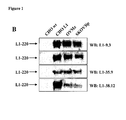
- the L1-9.3 antibody showed bright staining of both ovarian carcinoma cell lines OVMz and SKOV3ip, whereas the L1-14.10 showed a very weak staining ( Fig. 1A ).
- the two L1 antibodies L1-35.9 and L1-38.12 could not bind to the endogenous L1 of these cells ( Fig. 1A ).
- no staining for L1 could be observed in CHO cells which we used as negative control. All new antibodies detected the fullength L1 in CHO-L1, OVMz and SKOV3ip cell lysates by Western blot analysis.
- the L1-negative CHO cells served again as negative control.
- L1-9.3 could also influence the gene expression profile of SKOV3ip cells in vivo similar to that observed in vitro.
- mRNA from residual tumors of L1-9.3 treated mice or IgG control treated mice were isolated and subjected to qRT-PCR analysis.
- L1-9.3 treatment led to significant regulation of L1-dependent genes as demonstrated for HOXA9, ⁇ 3 integrin and IER 3 ( Fig. 4C ).
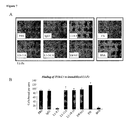
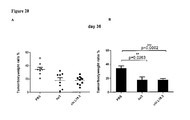
- SKOV3ip- lacZ cells were injected into the peritoneal cavity of female nude mice 2 days before the onset of therapy. Biweekly i.p. treatments were done using the 10 mg/kg antibody concentration. Control mice were treated with PBS or HEA125 (anti EpCAM) as a control antibody (biweekly 10 mg/kg i.p.). In all anti-L1 mAb treatment groups, a substantial decrease in the amount of tumor mass was visible compared with PBS or the control antibody HEA-125 ( Fig. 5 ).
- L1-Fc fusion proteins An important factor for the characterization of novel L1 antibodies is to examine their binding sites in L1. Therefore, we constructed a variety of L1-Fc fusion proteins covering different parts of the molecule. PCR products were amplified coding different length of L1 ectodomain regions. These constructs were cloned into the pIg vector, and expressed as Fc-fusion proteins. After purification, products were used for Western blot analysis. For comparing the results, we analyzed other recombinant L1 protein fragments (obtained from Ricardo Gouveia, Oeiras, Portugal). L1-9.3 was found to bind to first Ig domain of L1 ( Fig. 6 ). L1-14.10 binds in the third Ig domain whereas L1-11A binds between the FN3-5 site ( Fig. 6 ).
- the human ovarian carcinoma cell lines SKOV3ip (kindly provided by Ellen Vitetta, University of Texas, Dallas, TX) and OVMz were grown in DMEM (Biochrom, Berlin, Germany) with 10% FCS under cell culture conditions (5% CO 2 , 95% relative humidity, 37°C).
- DMEM Biochrom, Berlin, Germany
- FCS cell culture conditions
- the SKOV3ip cells were stably transduced with a /acZ-encoding retroviral vector (GeneSuppressor Retroviral System, Biocarta, Hamburg, Germany).
- the chinese hamster ovary cell line CHO stably expressing human L1 (-hL1) were established by transfection with superfect (Stratagene, Heidelberg, Germany) and selection for L1 expression with mAb L1-11A and magnetic beads (Myltenyi Biotec, Bergisch Gladbach, Germany) or sorting with FACS Calibur. All cells were cultivated in DMEM supplemented with 10% FCS at 37°C, 5% CO 2 and 100% humidity. Human L1 encoding plasmids and J558-L1 cells were obtained from Dr. Vance Lemmon (University of Miami, Miami, FL, USA).
- HEA-125 a mouse IgG1 directed against EpCAM, was described before and binds to all human adenocarcinomas (Moldenhauer et al., 1987). Monoclonal antibody L1-14.10 (Huszar et al., 2006), L1-9.3, L1-35.9 and L1-38.12 were obtained after immunization of mice with human L1-Fc protein comprising the ectodomain of L1 (Oleszewski et al., 1999). Goat anti-mouse IgG was affinity purified and absorbed to human serum proteins (Zymed Laboratories, Inc., San Francisco, CA).
- cells were grown on coverslips, treated for 10 min with pervanadate and fixed for 20 min with 4% paraformaldehyde/PBS at room temperature. Cells were washed in PBS and permeabilized with 0.1% NP-40 in PBS containing 5% goat serum for 15 min at room temperature. Cells were then incubated for 1 hour with first antibody (phospho-specific Erk1/2). After 3 washing steps with PBS cells were incubated 30 min in the dark to a second Alexa488-conjugated goat anti-mouse IgG. After washing the cells twice with PBS, stained cells were mounted on glass slides and examined with an epifluorescence microscope (Axioplan-2; Zeiss, Oberkochem).
- Tumor cell invasion in vitro was determined in a double-filter assay as described previously in Erkell et al. (1988). Briefly, a Matrigel was layered between two filters, a lower 5 ⁇ m pore nitrocellulose filter and an upper 8 ⁇ m pore polycarbonate filter. Following incubation of 10 5 cells with the filter sandwich for 20 h in 1 ml medium, the sandwich was fixed and the filters separated and stained with DAPI. Cells present in the gel on the lower filter were counted, and cell invasion was expressed as the ration of the cell number on the lower filter to the total number of cells present on both filters.
- qPCR For qPCR the cDNA was purified on Microspin G-50 columns (GE Healthcare, Ober, Germany) and quantitated by NanoDrop spectrophotometer (ND-1000. Kisker-Biotechnology, Steinfurt, Germany). Primers for qPCR were designed with the DNA Star Program and were produced by MWG (Ebersberg, Germany). ⁇ -actin was used as an internal standard. The PCR reaction was performed with the SYBRgreen mastermix (Applied biosystems, Darmstadt, Germany).
- Antibody treatments started from day 3 after tumor cell injection to give the tumor cells time to attach to the inner side of the abdominal wall and the surfaces of the i.p. organs.
- autopsy day 38
- ascites was sampled from all mice and the volume was determined. All i.p. organs (including tumor mass), the abdominal wall, and the diaphragm were removed, stained with ß-galactosidase substrate (X-gal; Roche-Diagnostics, Penzberg, Germany), photographed, and weighed.
- the relative tumor burden in each mouse was calculated by dividing tumor mass weight by total situs weight.
- the genes of human v-kappa 1 (hum ⁇ 1), and variable heavy chain family III (humIII) were utilised as the acceptor sequences.
- the numbering system used herein for these genes is adopted from Wu and Kabat ( Kabat, E. A, Wu, T. T., Perry, HM, Gottesman, KS and Foeller, C (1992) Sequences of proteins of immunological interest, Diane Books Publishing company ).
- the murine L1_9.3 antibody light and heavy chain amino acid sequences were aligned against the amino acid sequences of the hum ⁇ 1 light chain and the humIII heavy chain respectively.
- L1_9.3Hu and L1_9.3Hu3 Two humanized L1_9.3 antibodies (L1_9.3Hu and L1_9.3Hu3) were generated by replacing the six CDRs of the human antibody with the corresponding CDRs from the murine L1_9.3 antibody.
- scFv single-chain variable fragment
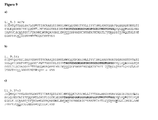
- the antibody light chain and heavy chain DNA sequences used to construct the humanized antibodies are provided in Figures 8a and 8b respectively.
- Figures 9a - 9c provide the amino acid sequences of the murine L1_9.3 scFv and the humanized L1_9.3Hu and L1_9.3Hu3 scFvs respectively.
- Periplasmic expressed of scFvs is beneficial for a number of reasons. Firstly, such scFvs leak into the bacterial supernatant and from there can conveniently be assayed for binding to their cognate antigen (The L1 cancer antigen in this case). Second, periplasmic expression allows for purification of soluble active scFvs.
- the primer sequences are shown below.
- the PCR products were run on a 1.6% agarose gel and bands of the correct size excised and purified.
- the PCR products were double digested with Nco1 and Not1 restriction enzymes under standard conditions followed by re-purification.
- the PCR products were ligated into an IPTG inducible periplasmic expression vector which contained:
- the ligated vectors were transformed into E. coli TG1 cells and plated on of 2xTY agar (Bacto Trypton 16g/L, yeast extract 10g/L, 15g/L bactoagar and NaCl 5g/L) supplemented with 100 ⁇ g/ml ampicillin and 2% glucose.
- 2xTY agar Bacto Trypton 16g/L, yeast extract 10g/L, 15g/L bactoagar and NaCl 5g/L
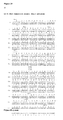
- the DNA and amino acid sequences of the expressed portions of L1_9.3, L1-9.3Hu and L1_9.3Hu3 scFv constructs are shown in Figures 10a , 10b and 10c respectively.
- polypeptides expressed by these vectors include the human antibody c kappa constant region fused to the C termini of the scFvs. These c kappa constant chain containing constructs are referred to herein as single chain antibodies.
- L1_9.3, L1_9.3Hu, and L1_9Hu3, (24 clones in total) were picked into separate wells of a 96 well plate containing 300 ⁇ l of 2xTY (Bacto Trypton 16g/L, yeast extract 10g/L and NaCl 5g/L) supplemented with 100 ⁇ g/ml ampicillin and 2% glucose. Each well has a 1 ml volume.
- the cultures were grown with shaking (200rpm) at 37°C until the cultures reached an OD 600 of approximately 0.5.
- the 96 well plates were then spun down at 3200 rpm for 10 min and the supernatant was aspirated and discarded.
- the bacterial pellets were resuspended in fresh 2XTY 400 ⁇ l supplemented with 100 ⁇ g/ml ampicillin and 1mM IPTG to induce expression of the single chain antibodies. The cultures were shaken at 200rpm overnight at 25°C.
- This ELISA assay was carried out in order to confirm that the humanisation process had not lead to a loss of antibody binding to the L1 cancer antigen and to identify which of the clones picked correctly expressed the single chain antibody constructs.
- Three rows of a 96 well plate were coated with 100 ⁇ l L1 antigen comprising the extracellolar domain of the L1 protein fused to an Fc fragment (5 ⁇ g/ml) in PBS for 1 hr at room temperature.
- a further three rows were coated with streptavidin (5 ⁇ g/ml) in PBS as a control.
- the wells were washed three times with 370 ⁇ l of PBS and blocked with 3% milk powder in PBS for 1 hr at room temperature. 50 ⁇ l of each overnight bacterial supernatant was mixed with 50 ⁇ l of 6% milk powder in PBS for 1 hour.
- the blocked ELISA plate was washed twice with PBS as described above and the blocked supernatants containing single chain antibody were added and incubated for 1 hp at room temperature.
- the 96 well plate was washed four times with PBS 0.1% tween followed by the addition of 100 ⁇ l of anti-human kappa light chains bound and free antibody HRP conjugate (Sigma A7164) 1:5000 dilution in PBS 1% BSA. The conjugate was incubated for 1 hr at room temperature followed by five washes with PBS 0.1%tween.
- the ELISA was developed by the addition of TMB 2-Component Microwell Peroxidase Substrate Kit (Kirkegaard and Perry Laboratories Inc., USA) according to the manufacturer's protocol. An image of the ELISA plate is shown in Figure 4 . At least four L1 binding clones have been observed for each of three single chain antibody versions. These L1 binding single chain antibody clones do not bind to streptavidin.
- Figure 11 shows the binding of the L1_9.3, L1-9.3Hu and L1_9.3Hu3 scFvs to the human L1 cancer antigen.
- Rows A, B and C are coated with L1 and rows D, E and F are coated with streptavidin.
- the blue colour in the wells indicates binding of the individual scFv to the L1 on the plate.
- the lack of colour in the streptavidin coated rows shows that the single chain antibodies are specifically binding to L1.
- Mouse antibody L1-9.3 and humanised antibody L1-hu3 were assayed by Biacore analysis (Biacore AB, Uppsala, Sweden) to determine binding kinetics.
- a BIAcore CM5 sensor chip was activated with EDC/NHS and purified recombinant L1-Fc extracellular fragment (515 ⁇ g/ml in PBS) was coupled to the CM5 sensor chip to between 200 and 3000RU. The remaining active sites were blocked by ethanolamine/HCl .Antibody binding was measured by adding antibody at concentrations from 6 to 3333nM at a flow rate of 10ul/min using the Kinject function. The chip was regenerated with 10mM Glycine pH2.0 with 500mM NaCl to remove the bound antibodies.
- Table 2 The humanized variant L1-hu3 displays a similar high target affinity as the parent antibody L1-9.3.
- PBMC peripheral blood mononuclear cells
- Cultured OVMZ tumor cells were harvested by trypsination. 1 x 10 5 cells/well (75 ⁇ l) were seeded into FACS tubes. Dilutions of L1-9.3 mAb were prepared in culture medium with 10mM EDTA and 75 ⁇ l/well of L1-mAb dilution were added, to PBMCs and OVMZ cells to result in final concentrations between 6.6x10 -13 to 6.6x10 -8 Mol. Subsequently cells were incubated over night ( ⁇ 24h) at 37°C / 5% CO2 in an incubator.
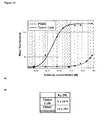
- L1-9.3 mAb displays a strongly reduced affinity to L1 on PBMC compared to tumor L1.
- L1-9.3 binding to PBMC was detected in the nanomolar range (dashed line), while binding to tumor cells could be observed at picomolar concentrations (solid line).
- K D were estimated from the regression curves using the concentration at half-maximal binding. K D of L1-9.3 on PBMC was at least 400-fold lower than on tumor cells.
- PBMC peripheral blood mononuclear cells
- PBMC peripheral blood mononuclear cells
- BD CBA-Cytokin-Flex-Sets
- cytokine levels are depicted in Figure 14 .
- L1-9.3 did not significantly increase the TNF or IFN-gamma release by PBMCs.
- PBMC peripheral blood mononuclear cells
- 1x10 5 cells per well were seeded in flat bottom 96 well plates.
- 100 ⁇ l medium containing either L1-9.3 mAb (20 ⁇ g/ml) and OKT3 (ebioscience, 75ng/ml) or L1-9.3 mAb (20 ⁇ g/ml) or OKT3 (75ng/ml) was added in triplicates. After 1h, the latter two were supplemented with OKT3 or L1-9.3, respectively.
- PBMC with or without L1-9.3 were incubated in absence of OKT3. Following an incubation for 24h at 37°C, 5%CO 2 T cell proliferation was assessed using a BrdU incorporation assay (Roche) according to manufacturers information.
- SKOV3ip cells were seeded in a 10 cm petri dish and incubated for 24h at 37°C, 5% CO 2 . After 24h, cells were washed with PBS and lysed with 500 ⁇ l M-PER reagent (Pierce) according to the protocol described in the Seize Classic Mammalian Immunoprecipitation Kit (Pierce). SkOv3ip cell lysate were deglycosylated as described in the Enzymatic CarboRelease Kit (QA_Bio). Briefly, 2.5 ⁇ l denaturation solution was added to 35 ⁇ l of cell lysate. The sample was incubated in a thermoblock at 100°C for 5min and then chilled on ice.
- Triton-X and 1 ⁇ l of each glycosidase contained in the Enzymatic CarboRelease Kit (QA_Bio) (PGNase F, O-Glycosidase, Sialidase, ß-Galactosidase, Glucoaminidase) were added according to manufacturers protocol followed by an incubation at 37°C for 3h. Glycosylated and deglycosylated were subjected to SDS PAGE and subsequent Western blotting. Western blots were incubated with different L1 antibodies in dependence of their staining performance.
- the tested anti L1 antibodies can be divided into three classes in respect to their glycosylation-dependency: First class (unaffected by glycosylation): L1-9.3. Second class (binding in WB was negatively affected by deglycosylation): 11A, 14.10, OV52.24 and OV549.20. Third class (binding in WB was positively affected by deglycosylation): 35.9 and 38.12.
- a female rabbit (White Himalayan) was twice injected with L1-9.3 (0h, 24h) via the intravenous application route at a dose of 10 mg/kg.
- 1 control animal received a comparable volume of PBS. Animals were necropsied 72 h after the first application. Organs were fixed in 4% buffered formalin and embedded in paraffin. Histological slides were prepared and immunehistochemistry was performed. Tissue sections of the L1-9.3-treated and control animal were stained with an anti-mouse antibody to detect binding of L1-9.3 after intravenous application. Signals were visualized by DAB (Sigma).
- FIG. 17 shows the in vivo binding of intravenously applied L1-9.3 to collecting ducts of the kidney.
- In vivo binding was only detectable using the amplification system CSA ( Fig. 17A ), while by using the conventional ABC-method, no signal was visible ( Fig. 17B ).
- L1-9.3 was detected in a range of 30-300 pmol in the tissue (L1-9.3 concentration is presumably higher than 5 ng/ml and below 50 ng/ml).
- Negative control did not show staining, thus, unspecific staining can be excluded (Fig. Figure 17C ).
- the staining pattern of in vivo bound L1-9.3 corresponds to the L1 expression pattern in the kidney when directly staining tissue sections with L1-9.3 ( Fig. 17D ). It can be concluded that intravenously administered L1-9.3 antibody is able to extravasate to peripheral tissue.
- SKOV3ip pcDNA3.1Luciferase cells were injected into immundeficient mice 24h before starting the therapy.
- Humanized antibodies 300 ⁇ g or PBS were injected three times per week intraperitoneally.
- mice were imaged once weekly using the Xenogen IVIS 200 System. Mice were anesthetised and injected with Luciferin D, followed by detecting the light emission which is produced during luciferase activity of the tumor cells. During the time course we detected a slower tumor growth in the group of mice treated with humanized mAb compared to the control. At day 33 the last imaging data were taken.
Landscapes
- Health & Medical Sciences (AREA)
- Life Sciences & Earth Sciences (AREA)
- Chemical & Material Sciences (AREA)
- Engineering & Computer Science (AREA)
- General Health & Medical Sciences (AREA)
- Medicinal Chemistry (AREA)
- Veterinary Medicine (AREA)
- Public Health (AREA)
- Animal Behavior & Ethology (AREA)
- Organic Chemistry (AREA)
- Nuclear Medicine, Radiotherapy & Molecular Imaging (AREA)
- Pharmacology & Pharmacy (AREA)
- Biomedical Technology (AREA)
- Immunology (AREA)
- Bioinformatics & Cheminformatics (AREA)
- General Chemical & Material Sciences (AREA)
- Chemical Kinetics & Catalysis (AREA)
- Pathology (AREA)
- Molecular Biology (AREA)
- Urology & Nephrology (AREA)
- Radiology & Medical Imaging (AREA)
- Biochemistry (AREA)
- Epidemiology (AREA)
- Biophysics (AREA)
- Genetics & Genomics (AREA)
- Microbiology (AREA)
- Proteomics, Peptides & Aminoacids (AREA)
- Hematology (AREA)
- Oncology (AREA)
- Mycology (AREA)
- Cell Biology (AREA)
- Gastroenterology & Hepatology (AREA)
- Endocrinology (AREA)
- Pulmonology (AREA)
- General Physics & Mathematics (AREA)
- Dermatology (AREA)
- Reproductive Health (AREA)
- Physics & Mathematics (AREA)
- Food Science & Technology (AREA)
- Neurosurgery (AREA)
Priority Applications (3)
| Application Number | Priority Date | Filing Date | Title |
|---|---|---|---|
| SI200831916T SI2631248T1 (en) | 2007-06-15 | 2008-06-13 | Treatment of tumors using specific anti-L1 antibody |
| PL13000027T PL2631248T3 (pl) | 2007-06-15 | 2008-06-13 | Leczenie nowotworów z użyciem specyficznego przeciwciała anty-L1 |
| HRP20180192TT HRP20180192T1 (hr) | 2007-06-15 | 2018-02-01 | Liječenje tumora specifičnim protutijelom protiv l1 |
Applications Claiming Priority (2)
| Application Number | Priority Date | Filing Date | Title |
|---|---|---|---|
| US94435907P | 2007-06-15 | 2007-06-15 | |
| EP08759230.9A EP2170956B1 (fr) | 2007-06-15 | 2008-06-13 | Traitement de tumeurs à l'aide d'un anticorps anti-l1 spécifique |
Related Parent Applications (2)
| Application Number | Title | Priority Date | Filing Date |
|---|---|---|---|
| EP08759230.9A Division EP2170956B1 (fr) | 2007-06-15 | 2008-06-13 | Traitement de tumeurs à l'aide d'un anticorps anti-l1 spécifique |
| EP08759230.9A Division-Into EP2170956B1 (fr) | 2007-06-15 | 2008-06-13 | Traitement de tumeurs à l'aide d'un anticorps anti-l1 spécifique |
Publications (4)
| Publication Number | Publication Date |
|---|---|
| EP2631248A2 true EP2631248A2 (fr) | 2013-08-28 |
| EP2631248A3 EP2631248A3 (fr) | 2013-10-23 |
| EP2631248B1 EP2631248B1 (fr) | 2017-11-15 |
| EP2631248B9 EP2631248B9 (fr) | 2018-05-23 |
Family
ID=39862994
Family Applications (2)
| Application Number | Title | Priority Date | Filing Date |
|---|---|---|---|
| EP13000027.6A Not-in-force EP2631248B9 (fr) | 2007-06-15 | 2008-06-13 | Traitement de tumeurs à l'aide d'un anticorps anti-L1 spécifique |
| EP08759230.9A Not-in-force EP2170956B1 (fr) | 2007-06-15 | 2008-06-13 | Traitement de tumeurs à l'aide d'un anticorps anti-l1 spécifique |
Family Applications After (1)
| Application Number | Title | Priority Date | Filing Date |
|---|---|---|---|
| EP08759230.9A Not-in-force EP2170956B1 (fr) | 2007-06-15 | 2008-06-13 | Traitement de tumeurs à l'aide d'un anticorps anti-l1 spécifique |
Country Status (16)
| Country | Link |
|---|---|
| US (3) | US8138313B2 (fr) |
| EP (2) | EP2631248B9 (fr) |
| JP (2) | JP5921066B2 (fr) |
| CA (2) | CA2958672A1 (fr) |
| CY (2) | CY1115960T1 (fr) |
| DK (2) | DK2631248T3 (fr) |
| ES (2) | ES2528167T3 (fr) |
| HR (2) | HRP20150007T8 (fr) |
| HU (1) | HUE036490T2 (fr) |
| LT (1) | LT2631248T (fr) |
| NO (1) | NO2631248T3 (fr) |
| PL (2) | PL2170956T3 (fr) |
| PT (2) | PT2631248T (fr) |
| SI (2) | SI2631248T1 (fr) |
| TW (1) | TWI478939B (fr) |
| WO (1) | WO2008151819A2 (fr) |
Families Citing this family (14)
| Publication number | Priority date | Publication date | Assignee | Title |
|---|---|---|---|---|
| AU2008201871A1 (en) * | 2008-04-16 | 2009-11-26 | Deutsches Krebsforschungszentrum Stiftung Des Oeffentlichen Rechts | Inhibition of angiogenesis and tumor metastasis |
| KR20100060351A (ko) * | 2008-11-27 | 2010-06-07 | 한국생명공학연구원 | L1cam의 활성 또는 발현을 억제하는 물질 및 항암제를포함하는 항암용 조성물 |
| WO2012058627A2 (fr) * | 2010-10-29 | 2012-05-03 | Miqin Zhang | Système de nanoparticules préciblées et procédé de marquage de particules biologiques |
| WO2014077648A1 (fr) | 2012-11-16 | 2014-05-22 | 강원대학교산학협력단 | Anticorps se liant spécifiquement à la protéine l1cam humaine et murine, et son utilisation |
| EP3200822B1 (fr) * | 2014-09-30 | 2021-04-14 | Deutsches Krebsforschungszentrum, Stiftung des öffentlichen Rechts | Molécules, notamment des anticorp, se liant à l1cam (cd171) |
| KR20190036553A (ko) | 2016-08-02 | 2019-04-04 | 메모리얼 슬로안 케터링 캔서 센터 | 전이성 암의 치료 및 전이성 질환에 대한 모델 시스템 |
| EP3720882A4 (fr) | 2017-12-05 | 2021-10-27 | The Medical Research, Infrastructure and Health Services Fund of the Tel Aviv Medical Center | Lymphocytes t comprenant deux récepteurs antigéniques chimériques différents et leurs utilisations |
| CN110540590B (zh) | 2018-05-29 | 2023-08-18 | 康诺亚生物医药科技(成都)有限公司 | 一种自免疫抑制物的开发和应用 |
| WO2020003210A1 (fr) | 2018-06-29 | 2020-01-02 | Kangwon National University University-Industry Cooperation Foundation | Anticorps anti-l1cam et leurs utilisations |
| EP3868783A4 (fr) | 2018-10-19 | 2022-01-19 | Cartexell Inc. | Anticorps anti-l1cam ou fragment de liaison à l'antigène de celui-ci, et récepteur antigénique chimérique le comprenant |
| WO2020243616A1 (fr) * | 2019-05-31 | 2020-12-03 | Seattle Children's Hospital D/B/A Seattle Children's Research Institute | Anticorps activant la e-cadhérine et leurs utilisations |
| CA3262904A1 (fr) | 2022-09-21 | 2024-03-28 | Elthera Ag | Nouvelles molécules de liaison se liant à la l1cam |
| EP4615580A1 (fr) * | 2022-11-09 | 2025-09-17 | CIS Biopharma AG | Anticorps anti-l1-cam et leurs utilisations pour des applications de diagnostic et thérapeutiques |
| CN121941710A (zh) | 2023-09-27 | 2026-04-28 | 艾尔瑟拉股份有限公司 | 用于治疗血液恶性肿瘤疾病的l1cam结合分子 |
Family Cites Families (51)
| Publication number | Priority date | Publication date | Assignee | Title |
|---|---|---|---|---|
| GB8308235D0 (en) * | 1983-03-25 | 1983-05-05 | Celltech Ltd | Polypeptides |
| US4816567A (en) * | 1983-04-08 | 1989-03-28 | Genentech, Inc. | Recombinant immunoglobin preparations |
| US5225539A (en) * | 1986-03-27 | 1993-07-06 | Medical Research Council | Recombinant altered antibodies and methods of making altered antibodies |
| EP0281604B1 (fr) | 1986-09-02 | 1993-03-31 | Enzon Labs Inc. | Molecules de liaison de chaines de polypeptide simples |
| JP3101690B2 (ja) * | 1987-03-18 | 2000-10-23 | エス・ビィ・2・インコーポレイテッド | 変性抗体の、または変性抗体に関する改良 |
| EP0436597B1 (fr) | 1988-09-02 | 1997-04-02 | Protein Engineering Corporation | Production et selection de proteines de liaison diversifiees de recombinaison |
| US5223409A (en) * | 1988-09-02 | 1993-06-29 | Protein Engineering Corp. | Directed evolution of novel binding proteins |
| GB8823869D0 (en) * | 1988-10-12 | 1988-11-16 | Medical Res Council | Production of antibodies |
| EP0368684B2 (fr) * | 1988-11-11 | 2004-09-29 | Medical Research Council | Clonage de séquences d'immunoglobulines de domaines variables. |
| US5175384A (en) * | 1988-12-05 | 1992-12-29 | Genpharm International | Transgenic mice depleted in mature t-cells and methods for making transgenic mice |
| US5530101A (en) * | 1988-12-28 | 1996-06-25 | Protein Design Labs, Inc. | Humanized immunoglobulins |
| ES2091824T3 (es) | 1989-04-21 | 1996-11-16 | Us Health | Proteina recombinante de fusion toxina anticuerpo. |
| US5859205A (en) * | 1989-12-21 | 1999-01-12 | Celltech Limited | Humanised antibodies |
| US5427908A (en) | 1990-05-01 | 1995-06-27 | Affymax Technologies N.V. | Recombinant library screening methods |
| IE911922A1 (en) | 1990-06-07 | 1991-12-18 | Scripps Clinic Res | Apo ai polypeptides, diagnostic methods and systems for¹quantifying apo ai, and therapeutic methods |
| GB9015198D0 (en) | 1990-07-10 | 1990-08-29 | Brien Caroline J O | Binding substance |
| DK0585287T3 (da) | 1990-07-10 | 2000-04-17 | Cambridge Antibody Tech | Fremgangsmåde til fremstilling af specifikke bindingsparelementer |
| US5545806A (en) * | 1990-08-29 | 1996-08-13 | Genpharm International, Inc. | Ransgenic non-human animals for producing heterologous antibodies |
| US5661016A (en) * | 1990-08-29 | 1997-08-26 | Genpharm International Inc. | Transgenic non-human animals capable of producing heterologous antibodies of various isotypes |
| US5633425A (en) * | 1990-08-29 | 1997-05-27 | Genpharm International, Inc. | Transgenic non-human animals capable of producing heterologous antibodies |
| US5625126A (en) * | 1990-08-29 | 1997-04-29 | Genpharm International, Inc. | Transgenic non-human animals for producing heterologous antibodies |
| ATE158021T1 (de) * | 1990-08-29 | 1997-09-15 | Genpharm Int | Produktion und nützung nicht-menschliche transgentiere zur produktion heterologe antikörper |
| US6300129B1 (en) | 1990-08-29 | 2001-10-09 | Genpharm International | Transgenic non-human animals for producing heterologous antibodies |
| CA2095633C (fr) | 1990-12-03 | 2003-02-04 | Lisa J. Garrard | Methode d'enrichissement de proteines variantes aux proprietes liantes alterees |
| EP1820858B1 (fr) | 1991-03-01 | 2009-08-12 | Dyax Corporation | Protéine chimère comprenant des micro-protéines dotées de deux liaisons disulfure ou plus et ses modes de réalisation |
| ATE414768T1 (de) | 1991-04-10 | 2008-12-15 | Scripps Research Inst | Bibliotheken heterodimerer rezeptoren mittels phagemiden |
| EP1400536A1 (fr) | 1991-06-14 | 2004-03-24 | Genentech Inc. | Procédé pour fabriquer des anticorps humanisés |
| DE4122599C2 (de) | 1991-07-08 | 1993-11-11 | Deutsches Krebsforsch | Phagemid zum Screenen von Antikörpern |
| EP0605522B1 (fr) | 1991-09-23 | 1999-06-23 | Medical Research Council | Méthodes de production d'anticorps humanisés |
| ATE207080T1 (de) | 1991-11-25 | 2001-11-15 | Enzon Inc | Multivalente antigen-bindende proteine |
| WO1993016177A1 (fr) * | 1992-02-11 | 1993-08-19 | Cell Genesys, Inc. | Homogeneisation de ciblages de genes |
| AU4953693A (en) | 1992-08-25 | 1994-03-15 | Medac Gesellschaft Fur Klinische Spezialpraparate Mbh | Antibody/radioisotope conjugate for tumor diagnosis and/or therapy |
| US6811779B2 (en) * | 1994-02-10 | 2004-11-02 | Imclone Systems Incorporated | Methods for reducing tumor growth with VEGF receptor antibody combined with radiation and chemotherapy |
| US6114507A (en) * | 1995-06-30 | 2000-09-05 | Mochida Pharmaceutical Co., Ltd. | Anti-Fas ligand antibody and assay method using the anti-Fas ligand antibody |
| US5837283A (en) | 1997-03-12 | 1998-11-17 | The Regents Of The University Of California | Cationic lipid compositions targeting angiogenic endothelial cells |
| DE19819846B4 (de) * | 1998-05-05 | 2016-11-24 | Deutsches Krebsforschungszentrum Stiftung des öffentlichen Rechts | Multivalente Antikörper-Konstrukte |
| GB9809951D0 (en) | 1998-05-08 | 1998-07-08 | Univ Cambridge Tech | Binding molecules |
| PT1974747E (pt) * | 1998-08-11 | 2012-09-05 | Biogen Idec Inc | Terapias de combinação para linfomas de células b compreendendo a administração de anticorpo anti-cd20 |
| US6737056B1 (en) * | 1999-01-15 | 2004-05-18 | Genentech, Inc. | Polypeptide variants with altered effector function |
| EP1172654B1 (fr) | 2000-07-10 | 2007-10-31 | Deutsches Krebsforschungszentrum Stiftung des öffentlichen Rechts | Méthode de diagnostique de tumeurs ovariennes et endométriales basée sur la détection de la molécule d'adhésion L1 |
| EP1293514B1 (fr) | 2001-09-14 | 2006-11-29 | Affimed Therapeutics AG | Multimères d'anticorps Fv monocaténaires en tandem |
| GB0209893D0 (en) * | 2002-04-30 | 2002-06-05 | Molmed Spa | Conjugate |
| KR100470535B1 (ko) | 2002-06-27 | 2005-02-22 | 재단법인서울대학교산학협력재단 | 유피에이 항체 부착 이뮤노리포좀 |
| US20040115206A1 (en) * | 2002-10-24 | 2004-06-17 | Thomas Primiano | Antibody-mediated induction of tumor cell death |
| US20040202666A1 (en) | 2003-01-24 | 2004-10-14 | Immunomedics, Inc. | Anti-cancer anthracycline drug-antibody conjugates |
| GB0306618D0 (en) | 2003-03-22 | 2003-04-30 | Univ Newcastle | Antibody |
| EP1623995A1 (fr) | 2004-08-06 | 2006-02-08 | Deutsches Krebsforschungszentrum Stiftung des öffentlichen Rechts | Inhibiteurs de L1 et ADAM10 pour la traitement de carcinomes |
| EP1928912A4 (fr) | 2005-09-07 | 2010-02-24 | Medimmune Inc | Anticorps anti-recepteur eph conjugues a des toxines |
| WO2007114550A1 (fr) * | 2006-04-03 | 2007-10-11 | Korea Research Institute Of Bioscience And Biotechnology | Nouvel anticorps monoclonal spécifique de la protéine l1cam, hybridome produisant celui-ci et méthode de production associé |
| CA2661669C (fr) * | 2006-08-23 | 2017-02-14 | Korea Research Institute Of Bioscience And Biotechnology | Composition pharmaceutique pour le traitement de cholangiocarcinome, procede d'inhibition de croissance ou d'invasion de cholangiocarcinome, et procede de traitement de cholangiocarcinome |
| AU2007221863A1 (en) | 2006-10-16 | 2008-05-01 | Deutsches Krebsforschungszentrum Stiftung Des Offenftlichen Rechts | Treatment of chemotherapy -or radiothereapy-resistant tumors |
-
2008
- 2008-06-13 LT LTEP13000027.6T patent/LT2631248T/lt unknown
- 2008-06-13 SI SI200831916T patent/SI2631248T1/en unknown
- 2008-06-13 HU HUE13000027A patent/HUE036490T2/hu unknown
- 2008-06-13 TW TW097122231A patent/TWI478939B/zh not_active IP Right Cessation
- 2008-06-13 US US12/139,006 patent/US8138313B2/en not_active Expired - Fee Related
- 2008-06-13 EP EP13000027.6A patent/EP2631248B9/fr not_active Not-in-force
- 2008-06-13 SI SI200831362T patent/SI2170956T1/sl unknown
- 2008-06-13 ES ES08759230.9T patent/ES2528167T3/es active Active
- 2008-06-13 JP JP2010511542A patent/JP5921066B2/ja not_active Expired - Fee Related
- 2008-06-13 PL PL08759230T patent/PL2170956T3/pl unknown
- 2008-06-13 DK DK13000027.6T patent/DK2631248T3/en active
- 2008-06-13 PT PT130000276T patent/PT2631248T/pt unknown
- 2008-06-13 NO NO13000027A patent/NO2631248T3/no unknown
- 2008-06-13 PL PL13000027T patent/PL2631248T3/pl unknown
- 2008-06-13 DK DK08759230.9T patent/DK2170956T3/en active
- 2008-06-13 CA CA2958672A patent/CA2958672A1/fr not_active Abandoned
- 2008-06-13 WO PCT/EP2008/004773 patent/WO2008151819A2/fr not_active Ceased
- 2008-06-13 ES ES13000027.6T patent/ES2658342T3/es active Active
- 2008-06-13 HR HRP20150007TT patent/HRP20150007T8/hr unknown
- 2008-06-13 PT PT87592309T patent/PT2170956E/pt unknown
- 2008-06-13 CA CA2691075A patent/CA2691075C/fr not_active Expired - Fee Related
- 2008-06-13 EP EP08759230.9A patent/EP2170956B1/fr not_active Not-in-force
-
2012
- 2012-02-06 US US13/367,178 patent/US8580258B2/en not_active Expired - Fee Related
-
2013
- 2013-10-03 US US14/045,019 patent/US9260521B2/en not_active Expired - Fee Related
-
2014
- 2014-10-01 JP JP2014202878A patent/JP6042395B2/ja not_active Expired - Fee Related
-
2015
- 2015-01-22 CY CY20151100066T patent/CY1115960T1/el unknown
-
2018
- 2018-02-01 HR HRP20180192TT patent/HRP20180192T1/hr unknown
- 2018-02-05 CY CY20181100143T patent/CY1119890T1/el unknown
Also Published As
Similar Documents
| Publication | Publication Date | Title |
|---|---|---|
| EP2631248B9 (fr) | Traitement de tumeurs à l'aide d'un anticorps anti-L1 spécifique | |
| CN101939336B (zh) | Axl抗体 | |
| JP7520848B2 (ja) | 癌および他の疾患の治療のための、クローディン18.2に特異的な結合分子、その組成物および方法 | |
| CN103917562B (zh) | 抗-ErbB3抗体及其用途 | |
| BR112021003559A2 (pt) | anticorpo biespecífico, molécula de ácido nucleico isolada, vetor, célula hospedeira, método para preparar o anticorpo biespecífico, conjugado, kit, uso do anticorpo biespecífico e composição farmacêutica | |
| AU2016233495A2 (en) | Anti-PDL1 antibodies, activatable anti-PDL1 antibodies, and methods of use thereof | |
| US20260022178A1 (en) | Anti-cd94 antibody and use thereof | |
| US20240228658A1 (en) | Anti-5t4 antibodies and uses thereof | |
| KR20250084976A (ko) | 항cd16a 항체 및 이의 적용 | |
| WO2024088388A1 (fr) | Conjugués ligand-médicament cytotoxique et leurs utilisations pharmaceutiques | |
| AU2022267362A1 (en) | Anti-siglec compositions and uses thereof | |
| EP3448420B1 (fr) | Anticorps anti-notch3 | |
| WO2024131835A1 (fr) | Conjugués ligand-médicament cytotoxique et leurs utilisations pharmaceutiques | |
| CN114685674B (zh) | 一种抗体融合蛋白及其应用 | |
| CN119101159A (zh) | 抗tim-3单克隆抗体及其制备方法和应用 | |
| CN120239709A (zh) | 抗体、其抗原结合片段及其药物用途 | |
| HK1147275B (en) | Axl antibodies |
Legal Events
| Date | Code | Title | Description |
|---|---|---|---|
| PUAI | Public reference made under article 153(3) epc to a published international application that has entered the european phase |
Free format text: ORIGINAL CODE: 0009012 |
|
| AC | Divisional application: reference to earlier application |
Ref document number: 2170956 Country of ref document: EP Kind code of ref document: P |
|
| AK | Designated contracting states |
Kind code of ref document: A2 Designated state(s): AT BE BG CH CY CZ DE DK EE ES FI FR GB GR HR HU IE IS IT LI LT LU LV MC MT NL NO PL PT RO SE SI SK TR |
|
| PUAL | Search report despatched |
Free format text: ORIGINAL CODE: 0009013 |
|
| RIN1 | Information on inventor provided before grant (corrected) |
Inventor name: ALTEVOGT, PETER Inventor name: MOLDENHAUER, GERHARD Inventor name: MOEBIUS, ULRICH Inventor name: BAERREITER, SILKE Inventor name: SCHAEFER, HEINER, PROF. DR. Inventor name: LUETTGAU, SANDRA Inventor name: LI, YI Inventor name: KELM, DANIELA Inventor name: KRUEGER, ACHIM Inventor name: BREITLING, FRANK Inventor name: SEBENS, SUSANNE, PROF. DR. |
|
| AK | Designated contracting states |
Kind code of ref document: A3 Designated state(s): AT BE BG CH CY CZ DE DK EE ES FI FR GB GR HR HU IE IS IT LI LT LU LV MC MT NL NO PL PT RO SE SI SK TR |
|
| RIC1 | Information provided on ipc code assigned before grant |
Ipc: C07K 16/28 20060101AFI20130918BHEP |
|
| 17P | Request for examination filed |
Effective date: 20140227 |
|
| RBV | Designated contracting states (corrected) |
Designated state(s): AT BE BG CH CY CZ DE DK EE ES FI FR GB GR HR HU IE IS IT LI LT LU LV MC MT NL NO PL PT RO SE SI SK TR |
|
| 17Q | First examination report despatched |
Effective date: 20140605 |
|
| RIN1 | Information on inventor provided before grant (corrected) |
Inventor name: LUETTGAU, SANDRA Inventor name: BREITLING, FRANK Inventor name: MOEBIUS, ULRICH Inventor name: KELM, DANIELA Inventor name: SEBENS, SUSANNE, PROF. DR. Inventor name: SCHAEFER, HEINER, PROF. DR. Inventor name: LI, YI Inventor name: MOLDENHAUER, GERHARD Inventor name: ALTEVOGT, PETER Inventor name: BAERREITER, SILKE Inventor name: KRUEGER, ACHIM |
|
| RAP1 | Party data changed (applicant data changed or rights of an application transferred) |
Owner name: DEUTSCHES KREBSFORSCHUNGSZENTRUM, STIFTUNG DES OEF Owner name: MEDIGENE AG |
|
| GRAP | Despatch of communication of intention to grant a patent |
Free format text: ORIGINAL CODE: EPIDOSNIGR1 |
|
| STAA | Information on the status of an ep patent application or granted ep patent |
Free format text: STATUS: GRANT OF PATENT IS INTENDED |
|
| RIC1 | Information provided on ipc code assigned before grant |
Ipc: A61K 39/00 20060101ALI20170221BHEP Ipc: A61N 5/02 20060101ALI20170221BHEP Ipc: A61N 5/06 20060101ALI20170221BHEP Ipc: A61K 39/395 20060101ALI20170221BHEP Ipc: C07K 16/28 20060101AFI20170221BHEP |
|
| RAP1 | Party data changed (applicant data changed or rights of an application transferred) |
Owner name: DEUTSCHES KREBSFORSCHUNGSZENTRUM STIFTUNG DES OEFF Owner name: MEDIGENE AG |
|
| RIN1 | Information on inventor provided before grant (corrected) |
Inventor name: MOLDENHAUER, GERHARD Inventor name: LUETTGAU, SANDRA Inventor name: BAERREITER, SILKE Inventor name: SEBENS, SUSANNE, PROF. DR. Inventor name: BREITLING, FRANK Inventor name: MOEBIUS, ULRICH Inventor name: LI, YI Inventor name: ALTEVOGT, PETER Inventor name: KELM, DANIELA Inventor name: SCHAEFER, HEINER, PROF. DR. Inventor name: KRUEGER, ACHIM |
|
| INTG | Intention to grant announced |
Effective date: 20170315 |
|
| GRAS | Grant fee paid |
Free format text: ORIGINAL CODE: EPIDOSNIGR3 |
|
| GRAJ | Information related to disapproval of communication of intention to grant by the applicant or resumption of examination proceedings by the epo deleted |
Free format text: ORIGINAL CODE: EPIDOSDIGR1 |
|
| GRAL | Information related to payment of fee for publishing/printing deleted |
Free format text: ORIGINAL CODE: EPIDOSDIGR3 |
|
| STAA | Information on the status of an ep patent application or granted ep patent |
Free format text: STATUS: EXAMINATION IS IN PROGRESS |
|
| GRAR | Information related to intention to grant a patent recorded |
Free format text: ORIGINAL CODE: EPIDOSNIGR71 |
|
| INTC | Intention to grant announced (deleted) | ||
| STAA | Information on the status of an ep patent application or granted ep patent |
Free format text: STATUS: GRANT OF PATENT IS INTENDED |
|
| GRAJ | Information related to disapproval of communication of intention to grant by the applicant or resumption of examination proceedings by the epo deleted |
Free format text: ORIGINAL CODE: EPIDOSDIGR1 |
|
| GRAL | Information related to payment of fee for publishing/printing deleted |
Free format text: ORIGINAL CODE: EPIDOSDIGR3 |
|
| STAA | Information on the status of an ep patent application or granted ep patent |
Free format text: STATUS: EXAMINATION IS IN PROGRESS |
|
| GRAR | Information related to intention to grant a patent recorded |
Free format text: ORIGINAL CODE: EPIDOSNIGR71 |
|
| STAA | Information on the status of an ep patent application or granted ep patent |
Free format text: STATUS: GRANT OF PATENT IS INTENDED |
|
| INTG | Intention to grant announced |
Effective date: 20170906 |
|
| GRAA | (expected) grant |
Free format text: ORIGINAL CODE: 0009210 |
|
| STAA | Information on the status of an ep patent application or granted ep patent |
Free format text: STATUS: THE PATENT HAS BEEN GRANTED |
|
| INTC | Intention to grant announced (deleted) | ||
| INTG | Intention to grant announced |
Effective date: 20171004 |
|
| AC | Divisional application: reference to earlier application |
Ref document number: 2170956 Country of ref document: EP Kind code of ref document: P |
|
| AK | Designated contracting states |
Kind code of ref document: B1 Designated state(s): AT BE BG CH CY CZ DE DK EE ES FI FR GB GR HR HU IE IS IT LI LT LU LV MC MT NL NO PL PT RO SE SI SK TR |
|
| REG | Reference to a national code |
Ref country code: CH Ref legal event code: EP Ref country code: GB Ref legal event code: FG4D Ref country code: AT Ref legal event code: REF Ref document number: 946197 Country of ref document: AT Kind code of ref document: T Effective date: 20171115 |
|
| REG | Reference to a national code |
Ref country code: IE Ref legal event code: FG4D |
|
| REG | Reference to a national code |
Ref country code: DE Ref legal event code: R096 Ref document number: 602008053013 Country of ref document: DE |
|
| REG | Reference to a national code |
Ref country code: DE Ref legal event code: R082 Ref document number: 602008053013 Country of ref document: DE Representative=s name: PATENTANWAELTE ISENBRUCK BOESL HOERSCHLER LLP, DE Ref country code: DE Ref legal event code: R082 Ref document number: 602008053013 Country of ref document: DE Representative=s name: PATENTANWAELTE ISENBRUCK BOESL HOERSCHLER PART, DE |
|
| REG | Reference to a national code |
Ref country code: HR Ref legal event code: TUEP Ref document number: P20180192 Country of ref document: HR |
|
| REG | Reference to a national code |
Ref country code: DK Ref legal event code: T3 Effective date: 20180206 |
|
| REG | Reference to a national code |
Ref country code: PT Ref legal event code: SC4A Ref document number: 2631248 Country of ref document: PT Date of ref document: 20180215 Kind code of ref document: T Free format text: AVAILABILITY OF NATIONAL TRANSLATION Effective date: 20180207 |
|
| REG | Reference to a national code |
Ref country code: NL Ref legal event code: FP |
|
| REG | Reference to a national code |
Ref country code: SE Ref legal event code: TRGR |
|
| REG | Reference to a national code |
Ref country code: ES Ref legal event code: FG2A Ref document number: 2658342 Country of ref document: ES Kind code of ref document: T3 Effective date: 20180309 |
|
| REG | Reference to a national code |
Ref country code: HR Ref legal event code: T1PR Ref document number: P20180192 Country of ref document: HR |
|
| REG | Reference to a national code |
Ref country code: EE Ref legal event code: FG4A Ref document number: E015080 Country of ref document: EE Effective date: 20180206 Ref country code: NO Ref legal event code: T2 Effective date: 20171115 |
|
| REG | Reference to a national code |
Ref country code: SK Ref legal event code: T3 Ref document number: E 26670 Country of ref document: SK |
|
| REG | Reference to a national code |
Ref country code: GR Ref legal event code: EP Ref document number: 20180400397 Country of ref document: GR Effective date: 20180627 |
|
| REG | Reference to a national code |
Ref country code: HU Ref legal event code: AG4A Ref document number: E036490 Country of ref document: HU |
|
| REG | Reference to a national code |
Ref country code: DE Ref legal event code: R097 Ref document number: 602008053013 Country of ref document: DE |
|
| PLBE | No opposition filed within time limit |
Free format text: ORIGINAL CODE: 0009261 |
|
| STAA | Information on the status of an ep patent application or granted ep patent |
Free format text: STATUS: NO OPPOSITION FILED WITHIN TIME LIMIT |
|
| 26N | No opposition filed |
Effective date: 20180817 |
|
| REG | Reference to a national code |
Ref country code: HR Ref legal event code: PBON Ref document number: P20180192 Country of ref document: HR Effective date: 20180613 |
|
| REG | Reference to a national code |
Ref country code: DE Ref legal event code: R119 Ref document number: 602008053013 Country of ref document: DE |
|
| REG | Reference to a national code |
Ref country code: LT Ref legal event code: MM4D Effective date: 20180613 |
|
| REG | Reference to a national code |
Ref country code: EE Ref legal event code: MM4A Ref document number: E015080 Country of ref document: EE Effective date: 20180630 |
|
| REG | Reference to a national code |
Ref country code: DK Ref legal event code: EBP Effective date: 20180630 |
|
| REG | Reference to a national code |
Ref country code: NO Ref legal event code: MMEP |
|
| REG | Reference to a national code |
Ref country code: SE Ref legal event code: EUG |
|
| PG25 | Lapsed in a contracting state [announced via postgrant information from national office to epo] |
Ref country code: CZ Free format text: LAPSE BECAUSE OF NON-PAYMENT OF DUE FEES Effective date: 20180613 Ref country code: SE Free format text: LAPSE BECAUSE OF NON-PAYMENT OF DUE FEES Effective date: 20180614 Ref country code: RO Free format text: LAPSE BECAUSE OF NON-PAYMENT OF DUE FEES Effective date: 20171115 Ref country code: LT Free format text: LAPSE BECAUSE OF NON-PAYMENT OF DUE FEES Effective date: 20180613 Ref country code: CY Free format text: LAPSE BECAUSE OF NON-PAYMENT OF DUE FEES Effective date: 20180613 Ref country code: FI Free format text: LAPSE BECAUSE OF NON-PAYMENT OF DUE FEES Effective date: 20180613 |
|
| REG | Reference to a national code |
Ref country code: CH Ref legal event code: PL |
|
| REG | Reference to a national code |
Ref country code: NL Ref legal event code: MM Effective date: 20180701 |
|
| GBPC | Gb: european patent ceased through non-payment of renewal fee |
Effective date: 20180613 |
|
| PG25 | Lapsed in a contracting state [announced via postgrant information from national office to epo] |
Ref country code: LV Free format text: LAPSE BECAUSE OF NON-PAYMENT OF DUE FEES Effective date: 20180613 |
|
| REG | Reference to a national code |
Ref country code: SK Ref legal event code: MM4A Ref document number: E 26670 Country of ref document: SK Effective date: 20180613 |
|
| REG | Reference to a national code |
Ref country code: BE Ref legal event code: MM Effective date: 20180630 |
|
| REG | Reference to a national code |
Ref country code: IE Ref legal event code: MM4A |
|
| PG25 | Lapsed in a contracting state [announced via postgrant information from national office to epo] |
Ref country code: NL Free format text: LAPSE BECAUSE OF NON-PAYMENT OF DUE FEES Effective date: 20180701 Ref country code: LU Free format text: LAPSE BECAUSE OF NON-PAYMENT OF DUE FEES Effective date: 20180613 Ref country code: MC Free format text: LAPSE BECAUSE OF FAILURE TO SUBMIT A TRANSLATION OF THE DESCRIPTION OR TO PAY THE FEE WITHIN THE PRESCRIBED TIME-LIMIT Effective date: 20171115 |
|
| REG | Reference to a national code |
Ref country code: SI Ref legal event code: KO00 Effective date: 20190215 |
|
| PG25 | Lapsed in a contracting state [announced via postgrant information from national office to epo] |
Ref country code: HR Free format text: LAPSE BECAUSE OF NON-PAYMENT OF DUE FEES Effective date: 20180613 Ref country code: IT Free format text: LAPSE BECAUSE OF NON-PAYMENT OF DUE FEES Effective date: 20180613 Ref country code: HU Free format text: LAPSE BECAUSE OF NON-PAYMENT OF DUE FEES Effective date: 20180614 Ref country code: DE Free format text: LAPSE BECAUSE OF NON-PAYMENT OF DUE FEES Effective date: 20190101 Ref country code: CH Free format text: LAPSE BECAUSE OF NON-PAYMENT OF DUE FEES Effective date: 20180630 Ref country code: LI Free format text: LAPSE BECAUSE OF NON-PAYMENT OF DUE FEES Effective date: 20180630 Ref country code: FR Free format text: LAPSE BECAUSE OF NON-PAYMENT OF DUE FEES Effective date: 20180630 Ref country code: IE Free format text: LAPSE BECAUSE OF NON-PAYMENT OF DUE FEES Effective date: 20180613 Ref country code: NO Free format text: LAPSE BECAUSE OF NON-PAYMENT OF DUE FEES Effective date: 20180630 Ref country code: EE Free format text: LAPSE BECAUSE OF NON-PAYMENT OF DUE FEES Effective date: 20180630 Ref country code: GB Free format text: LAPSE BECAUSE OF NON-PAYMENT OF DUE FEES Effective date: 20180613 |
|
| PG25 | Lapsed in a contracting state [announced via postgrant information from national office to epo] |
Ref country code: SI Free format text: LAPSE BECAUSE OF NON-PAYMENT OF DUE FEES Effective date: 20180614 Ref country code: PT Free format text: LAPSE BECAUSE OF NON-PAYMENT OF DUE FEES Effective date: 20190313 Ref country code: BE Free format text: LAPSE BECAUSE OF NON-PAYMENT OF DUE FEES Effective date: 20180630 Ref country code: GR Free format text: LAPSE BECAUSE OF NON-PAYMENT OF DUE FEES Effective date: 20190107 Ref country code: SK Free format text: LAPSE BECAUSE OF NON-PAYMENT OF DUE FEES Effective date: 20180613 |
|
| PG25 | Lapsed in a contracting state [announced via postgrant information from national office to epo] |
Ref country code: DK Free format text: LAPSE BECAUSE OF NON-PAYMENT OF DUE FEES Effective date: 20180630 |
|
| REG | Reference to a national code |
Ref country code: AT Ref legal event code: MM01 Ref document number: 946197 Country of ref document: AT Kind code of ref document: T Effective date: 20180613 |
|
| PG25 | Lapsed in a contracting state [announced via postgrant information from national office to epo] |
Ref country code: BG Free format text: LAPSE BECAUSE OF NON-PAYMENT OF DUE FEES Effective date: 20190430 |
|
| REG | Reference to a national code |
Ref country code: ES Ref legal event code: FD2A Effective date: 20190916 |
|
| PG25 | Lapsed in a contracting state [announced via postgrant information from national office to epo] |
Ref country code: ES Free format text: LAPSE BECAUSE OF NON-PAYMENT OF DUE FEES Effective date: 20180614 |
|
| PG25 | Lapsed in a contracting state [announced via postgrant information from national office to epo] |
Ref country code: AT Free format text: LAPSE BECAUSE OF NON-PAYMENT OF DUE FEES Effective date: 20180613 |
|
| PG25 | Lapsed in a contracting state [announced via postgrant information from national office to epo] |
Ref country code: MT Free format text: LAPSE BECAUSE OF NON-PAYMENT OF DUE FEES Effective date: 20180613 |
|
| PG25 | Lapsed in a contracting state [announced via postgrant information from national office to epo] |
Ref country code: PL Free format text: LAPSE BECAUSE OF NON-PAYMENT OF DUE FEES Effective date: 20180613 |
|
| REG | Reference to a national code |
Ref country code: AT Ref legal event code: UEP Ref document number: 946197 Country of ref document: AT Kind code of ref document: T Effective date: 20171115 |
|
| PG25 | Lapsed in a contracting state [announced via postgrant information from national office to epo] |
Ref country code: IS Free format text: LAPSE BECAUSE OF FAILURE TO SUBMIT A TRANSLATION OF THE DESCRIPTION OR TO PAY THE FEE WITHIN THE PRESCRIBED TIME-LIMIT Effective date: 20180315 |
|
| PG25 | Lapsed in a contracting state [announced via postgrant information from national office to epo] |
Ref country code: TR Free format text: LAPSE BECAUSE OF NON-PAYMENT OF DUE FEES Effective date: 20180613 |