EP2644032A2 - Gyoza surgelés et réfrigérés avec agent de brunissement et son procédé de production - Google Patents
Gyoza surgelés et réfrigérés avec agent de brunissement et son procédé de production Download PDFInfo
- Publication number
- EP2644032A2 EP2644032A2 EP13160856.4A EP13160856A EP2644032A2 EP 2644032 A2 EP2644032 A2 EP 2644032A2 EP 13160856 A EP13160856 A EP 13160856A EP 2644032 A2 EP2644032 A2 EP 2644032A2
- Authority
- EP
- European Patent Office
- Prior art keywords
- gyoza
- browning agent
- frozen
- browning
- refrigerated
- Prior art date
- Legal status (The legal status is an assumption and is not a legal conclusion. Google has not performed a legal analysis and makes no representation as to the accuracy of the status listed.)
- Granted
Links
Images

Classifications
-
- A—HUMAN NECESSITIES
- A23—FOODS OR FOODSTUFFS; TREATMENT THEREOF, NOT COVERED BY OTHER CLASSES
- A23L—FOODS, FOODSTUFFS OR NON-ALCOHOLIC BEVERAGES, NOT OTHERWISE PROVIDED FOR; PREPARATION OR TREATMENT THEREOF
- A23L7/00—Cereal-derived products; Malt products; Preparation or treatment thereof
- A23L7/10—Cereal-derived products
- A23L7/109—Types of pasta, e.g. macaroni or noodles
-
- A—HUMAN NECESSITIES
- A23—FOODS OR FOODSTUFFS; TREATMENT THEREOF, NOT COVERED BY OTHER CLASSES
- A23L—FOODS, FOODSTUFFS OR NON-ALCOHOLIC BEVERAGES, NOT OTHERWISE PROVIDED FOR; PREPARATION OR TREATMENT THEREOF
- A23L5/00—Preparation or treatment of foods or foodstuffs, in general; Food or foodstuffs obtained thereby; Materials therefor
- A23L5/40—Colouring or decolouring of foods
- A23L5/41—Retaining or modifying natural colour by use of additives, e.g. optical brighteners
-
- A—HUMAN NECESSITIES
- A23—FOODS OR FOODSTUFFS; TREATMENT THEREOF, NOT COVERED BY OTHER CLASSES
- A23L—FOODS, FOODSTUFFS OR NON-ALCOHOLIC BEVERAGES, NOT OTHERWISE PROVIDED FOR; PREPARATION OR TREATMENT THEREOF
- A23L7/00—Cereal-derived products; Malt products; Preparation or treatment thereof
- A23L7/10—Cereal-derived products
- A23L7/109—Types of pasta, e.g. macaroni or noodles
- A23L7/11—Filled, stuffed or multilayered pasta
-
- A—HUMAN NECESSITIES
- A23—FOODS OR FOODSTUFFS; TREATMENT THEREOF, NOT COVERED BY OTHER CLASSES
- A23L—FOODS, FOODSTUFFS OR NON-ALCOHOLIC BEVERAGES, NOT OTHERWISE PROVIDED FOR; PREPARATION OR TREATMENT THEREOF
- A23L7/00—Cereal-derived products; Malt products; Preparation or treatment thereof
- A23L7/10—Cereal-derived products
- A23L7/109—Types of pasta, e.g. macaroni or noodles
- A23L7/111—Semi-moist pasta, i.e. containing about 20% of moist; Moist packaged or frozen pasta; Pasta fried or pre-fried in a non-aqueous frying medium, e.g. oil; Packaged pasta to be cooked directly in the package
Definitions
- the present invention relates to frozen gyoza and refrigerated gyoza with a browning agent, and a method for producing the same.
- Patent Document 1 a method for producing gyoza, which enables anybody to cook a large amount of gyoza easily, and also achieves uniform browning of a surface to be browned of gyoza and enables the production of gyoza having a texture and a savory flavor close to those immediately after cooking by attaching an emulsion having a specific composition to a surface to be browned of gyoza, followed by steam-baking, was developed (Patent Document 1). Further, a study of the composition of the emulsion to be attached was further advanced, and a technique for preventing individual gyoza dumplings from being out of position during transportation, etc. were also developed (Patent Document 2).
- An object of the invention is to provide frozen or refrigerated gyoza with a browning agent, which reduces burnt debris generated when cooking the gyoza by steam-baking, prevents the occurrence of an unbaked portion of the browning agent, and also has a browned surface with a favorable texture regardless of the composition of the browning agent, and also to provide a method for producing the same.
- the present inventors analyzed the structure of a browning agent of frozen gyoza after steam-heating, and as a result, they found that the net-like structure of the browning agent and the quality of the gyoza are associated with each other. Further, they found that by preparing the browning agent using the number of connection points in the net-like structure per unit area (mm 2 ) (a structure value A) of the fine net-like structure seen in a frozen section of the browning agent and the sum of the lengths of center lines of structural bodies of the net-like structure per unit area (mm 2 ) (a structure value B) as indices, the quality of frozen gyoza can be significantly improved.
- the invention is based on these findings.
- frozen or refrigerated gyoza having an improved quality can be produced by preparing a browning agent using a net-like structure of the browning agent formed on the gyoza as an index.
- the frozen gyoza and refrigerated gyoza with a browning agent of the invention are frozen gyoza and refrigerated gyoza with a browning agent, which reduce burnt debris generated when cooking the gyoza by steam-baking, prevent the occurrence of an unbaked portion of the browning agent, and also form a browned surface with a favorable texture when cooking the gyoza by steam-baking, and therefore have a high quality.
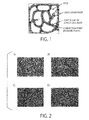
- a browning agent attached to a gyoza main body forms a net-like structure (see Fig. 1 ), and also found that by preparing frozen gyoza such that the browning agent forms a specific net-like structure, the quality of frozen gyoza can be improved (in other words, burnt debris generated when cooking the gyoza by steam-baking can be reduced, the occurrence of an unbaked portion of the browning agent can be prevented, and a browned surface with a favorable texture when cooking the gyoza by steam-baking can be formed).
- the method for producing frozen or refrigerated gyoza with a browning agent of the invention is characterized in that a browning agent is prepared using the net-like structure of the browning agent formed on a surface of frozen or refrigerated gyoza as an index.
- the number of connection points in the net-like structure per unit area (mm 2 ) of the net-like structure (a structure value A) and the sum of the lengths of center lines of structural bodies of the net-like structure per unit area (mm 2 ) (a structure value B) can be exemplified.
- the structure value A corresponds to the number of connection points (bonding points) per unit area (points/mm 2 ) in Fig. 1
- the structure value B corresponds to the sum of the lengths (mm) of center lines of structural bodies per unit area in Fig. 1 .
- the structure value A and/or the structure value B to a specific value, the quality of frozen or refrigerated gyoza can be improved.
- the net-like structure of the browning agent can be observed, for example, as follows. First, the browning agent formed on the gyoza main body is transformed into a frozen state, and the frozen browning agent is cut into a section with an appropriate size (for example, 1 cm square). Then, the section is fixed by being impregnated with a fixative solution (for example, a Ufix solution manufactured by Sakura Finetek Co., Ltd.) whose temperature is adjusted to -25°C. Thereafter, the fixed frozen section is degreased by being immersed in hexane at -25°C. Subsequently, the degreased section is immersed in a 10% sucrose solution at 4°C, and then immersed in a 20% sucrose solution.
- a fixative solution for example, a Ufix solution manufactured by Sakura Finetek Co., Ltd.
- the sucrose solution to be used at this time preferably contains a 1% iodine solution for coloring.
- the section is embedded in 4% carboxymethyl cellulose, frozen at -25°C, and then cut into a section with a thickness of 20 ⁇ m using a microtome. After the thus obtained section is air-dried on a slide glass, the observation of the section can be performed using a light microscope.
- the structure values A and B which can be used as the indices in the invention can be obtained by, for example, scanning an enlarged image of the frozen section obtained by a light microscope into a computer, and analyzing the scanned image by the computer, followed by calculation. Prior to the analysis, it is preferred to binarize the image scanned into the computer to black and white, and the binarized parameters can be appropriately set by those skilled in the art. In addition, after the binarization, processing such as noise removal can be further performed.
- the structure values A and B may be obtained by an image analysis using trabecular bone structure analysis software.
- the trabecular bone structure analysis software any software may be used as long as it is a commercially available one, however, for example, the structure values A and B can be obtained using an algorithm of 2-D bone analysis of the trabecular bone structure analysis according to the manufacturer's manual.
- the algorithm of 2-D bone analysis of the trabecular bone structure analysis an algorithm based on the node-strut method ( Uchiyama et al., "Method for Evaluating Trabecular Structure in Bone Tissue Morphometry", J. Jpn. Soc. Bone Morphom., vol. 4, pp. 83-89, 1994 ) can be used.
- the browning agent in the production method of the invention, by preparing the browning agent so as to form a browning agent which has a structure value A (points/mm 2 ) in a range of from 20 to 90 (preferably in a range of from 20 to 80, more preferably from 22 to 70) when the thickness of a section of the browning agent is set to 20 ⁇ m, the quality of frozen or refrigerated gyoza can be improved.
- the structure value A can be calculated from a frozen section of the browning agent as described above.
- the browning agent in the production method of the invention, by preparing the browning agent so as to form a browning agent which has a structure value B (mm/mm 2 ) of 30 or less (preferably in a range of from 5 to 30, more preferably from 8 to 30) when the thickness of a section of the browning agent is set to 20 ⁇ m, the quality of frozen or refrigerated gyoza can be improved.
- the structure value B can be calculated from a frozen section of the browning agent as described above.
- the browning agent can be prepared using both of the structure values A and B of the browning agent when the thickness of a section of the browning agent is set to 20 ⁇ m as indices. Therefore, according to the invention, a method for producing frozen or refrigerated gyoza with a browning agent, characterized in that a browning agent is prepared so as to form a browning agent which has a structure value A of from 20 to 90 when the thickness of a section of the browning agent is set to 20 ⁇ m and has a structure value B of 30 or less when the thickness of a section of the browning agent is set to 20 ⁇ m is provided. According to this method, the quality of the produced frozen or refrigerated gyoza can be further more improved.
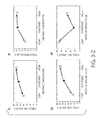
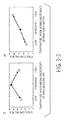
- the present inventors found that by changing the preparation conditions for the browning agent, the structure values A and B can be controlled and also the quality of frozen gyoza can be improved (see Figs. 4 ). Therefore, in the production method of the invention, the production conditions are determined by changing the preparation conditions for the browning agent using the structure values A and B of the browning agent as indices, and frozen or refrigerated gyoza having an improved quality can be produced.
- Examples of the preparation conditions which can be changed include a stirring intensity (a stirring speed and a stirring time) when mixing the ingredients of the browning agent, a temperature when mixing the ingredients of the browning agent, the ratio of water to oil to be used as the ingredients of the browning agent, the ratio of the amount of a starch in the ingredients of the browning agent, and steam-heating conditions (a heating temperature and a heating time) after integrating the browning agent and uncooked gyoza with each other.
- a stirring intensity a stirring speed and a stirring time
- a temperature when mixing the ingredients of the browning agent
- the ratio of water to oil to be used as the ingredients of the browning agent the ratio of the amount of a starch in the ingredients of the browning agent
- steam-heating conditions a heating temperature and a heating time
- the structure value A in the case where the structure value A is lower than the numerical range serving as the index, the structure value A can be increased by increasing the stirring intensity, increasing the ratio of water to oil, and/or increasing the heating temperature. Further, in the case where the structure value A is higher than the numerical range serving as the index, the structure value A can be decreased by decreasing the stirring intensity, increasing the heating time, decreasing the heating temperature, decreasing the ratio of water to oil, and/or decreasing or increasing the temperature when mixing the ingredients of the browning agent. Further, in the case where the structure value B is higher than the numerical range serving as the index, the structure value B can be decreased by decreasing the stirring intensity when mixing the ingredients of the browning agent, decreasing the temperature when mixing, decreasing the amount of a starch, decreasing the heating temperature, and/or decreasing the heating time.
- the structure value B can be increased by increasing the stirring intensity when mixing the ingredients of the browning agent, increasing the temperature when mixing, and/or decreasing the ratio of water to oil.
- the preparation method for the browning agent such as the composition of the browning agent, the stirring conditions and the temperature conditions when preparing the browning agent, and the steam-heating conditions (the heating temperature and the heating time) after integrating the browning agent and uncooked gyoza with each other, frozen or refrigerated gyoza on which the browning agent having predetermined structure values A and B has been formed can be produced.
- the production method of the invention may further include a step selected from the group consisting of:
- the production method of the invention can be performed according to a common method for producing frozen gyoza with a browning agent or a common method for producing refrigerated gyoza with a browning agent except that the browning agent is prepared using the net-like structure of the browning agent as an index.
- uncooked gyoza to which a browning agent for example, a batter
- a browning agent for example, a batter
- the analysis may be performed after the browning agent is obtained from the frozen gyoza after quick-freezing, or after the browning agent is obtained from the gyoza before quick-freezing, and then transformed into a frozen section.
- the method for producing refrigerated gyoza of the invention for example, uncooked gyoza to which a browning agent (for example, a batter) has been attached is steam-heated, and then quickly refrigerated, whereby refrigerated gyoza with a browning agent can be produced.
- a browning agent for example, a batter
- the analysis can be performed after the browning agent is obtained from the produced refrigerated gyoza, and then transformed into a frozen section.
- the term "gyoza” is not particularly limited and is used in the sense of including a food obtained by wrapping a filling containing ground pork, minced Chinese cabbage, minced Welsh onion, minced ginger, seasonings, etc., which are mixed with one another, with a dough piece obtained by kneading a cereal flour such as wheat flour to prepare a dough and molding the dough into a disk-shaped piece, followed by heating.
- a cereal flour such as wheat flour
- Specific examples of the "gyoza” include wild boar gyoza (pork gyoza), chicken gyoza, beef gyoza, mutton gyoza, fish gyoza, shrimp gyoza, and dessert gyoza.
- freeze gyoza refers to gyoza in the frozen form obtained by processing so that gyoza can be simply cooked.
- the frozen gyoza can be cooked by, for example, steam-baking using water and if necessary, a small amount of oil.
- the term "refrigerated gyoza” is used in the sense of including “chilled gyoza”, and refers to gyoza in the refrigerated form obtained by processing so that gyoza can be simply cooked.
- the refrigerated gyoza can be cooked by, for example, steam-baking using water and if necessary a small amount of oil in the same manner as the frozen gyoza.
- the "browning agent" formed on a surface of gyoza constitutes a portion of the frozen or refrigerated gyoza of the invention, and in the case where the frozen or refrigerated gyoza is cooked by steam-baking in a frying pan or a hot plate, the browning agent forms a browned surface suitable for baked gyoza on a surface of the gyoza, and also forms a "crispy edge" around the gyoza. That is, by forming the browning agent on a surface of gyoza, the crisp texture of the browned surface and the savory texture when cooking the gyoza can be improved, and also the appearance thereof can be improved.
- the method for attaching the browning agent to gyoza is not particularly limited, however, for example, a method in which gyoza is dipped in the browning agent, a method in which the browning agent is applied to gyoza using a brush or a roller, a method in which the browning agent is applied to gyoza using a sprayer, or the like can be used.
- the method in which gyoza is dipped in the browning agent can be performed by arranging gyoza dumplings in a tray and pouring the browning agent on the bottom of the tray, or by arranging gyoza dumplings in a tray in which the browning agent has been poured.
- the browning agent can be formed on the surface to be browned of the gyoza, and the texture of the browned surface of the gyoza can be further more improved.
- one side of the gyoza is coated with 0.0001 to 0.0040 g/mm 2 , preferably from 0.0001 to 0.0020 g/mm 2 , more preferably from 0.0001 to 0.0010 g/mm 2 , of the browning agent.
- the gyoza has a coating of browning agent in an amount of 0.1 to 30 % by weight, preferably 1 to 10 % by weight, based on the amount of the gyoza having the browning agent.
- a portion of the gyoza has a coating of browning agent having a thickness of 0.1 to 4.0 mm, preferably 0.1 to 2.0 mm, more preferably 0.1 to 1.0 mm.
- a batter can be exemplified, and for example, a material containing water, a starch, and a protein, and if necessary, a cooking oil, an emulsifier, and/or a seasoning can be used as the "batter".
- the batter may be an emulsified batter, and for example, a material containing water, a cooking oil, an emulsifier, a starch, and a protein, and if necessary, a seasoning can be used as the "emulsified batter".
- the ingredients of the batter are mixed and stirred to obtain a batter liquid.
- the obtained batter liquid is attached to a surface of gyoza, and if necessary steam-heating is performed, whereby frozen or refrigerated gyoza with a browning agent can be produced.
- the browning agent formed on a surface of gyoza can be made to have predetermined structure values A and B, and therefore, from these points of view, the composition of the batter or the preparation conditions therefor may be determined.
- Water to be used in the batter can be blended in an amount of from 10 to 99% by weight, preferably from 30 to 90% by weight based on the amount of the batter.
- the cooking oil which can be used in the batter is not particularly limited as long as it is an edible oil, however, examples thereof include canola oil, soybean oil, corn oil, safflower oil, lard, shortening, butter, and palm oil.
- the cooking oil can be blended in an amount of from 0 to 90% by weight, preferably from 0 to 60% by weight based on the amount of the batter.
- the browning agent formed on a surface of gyoza can be made to have predetermined structure values A and B, and therefore, from these points of view, the amount of the cooking oil to be used in the batter may be determined.
- the emulsifier which can be used in the batter is not particularly limited as long as it is edible, however, examples thereof include lecithin, a propylene glycol fatty acid ester, monoglycerol, and a sugar ester.
- the emulsifier can be blended in an amount of from 0.01 to 10% by weight, preferably from 0.1 to 2% by weight based on the amount of the batter.
- a cereal flour is preferably used, and examples thereof include wheat flour, corn flour, barley flour, buckwheat flour, potato flour, soybean flour, red bean flour, barnyard grass flour, foxtail millet flour, and proso millet flour, and particularly, rice flour is more preferably used.
- a starch such as tapioca starch, high-amylose starch, potato starch, corn starch, or waxy corn starch, a pregelatinized starch, and a processed starch such as an oxidized starch can also be used.
- the starch can be blended in an amount of from 0 to 70% by weight based on the amount of the batter.
- the starch is sometimes added when the strength of the browned surface of gyoza is increased, and in order to ensure an appropriate viscosity on the browned surface, more preferably, the starch can be blended in an amount of from 1 to 30% by weight based on the amount of the batter.
- the protein which can be used in the batter is not particularly limited as long as it is an edible protein, however, for example, egg white, plasma powder, purified fish protein, purified soybean protein, erythrocyte powder, purified wheat protein, cell protein, milk protein, or gelatin can be used, preferably egg white, plasma powder, purified fish protein, purified soybean protein, or erythrocyte powder, each of which has adhesiveness, is used, and more preferably egg white is used.
- the protein can be blended in an amount of from 0 to 20% by weight, preferably from 0.3 to 3% by weight based on the amount of the batter.
- the seasoning which can be used in the batter is not particularly limited, however, a seasoning which facilitates the browning of the surface or a seasoning which provides a savory flavor when being baked can be used, and examples thereof include soy sauce, mirin (sweet sake), lactose, miso (fermented soybean paste), and Worcestershire sauce.
- the seasoning can be blended in an amount of from 0 to 30% by weight, preferably from 0.1 to 5% by weight based on the amount of the batter.
- the blending ratio (weight ratio) of the constituent components can be set to 10 to 99% : 0 to 90% : 0.01 to 10% : 0 to 70% : 0 to 20%, preferably 30 to 90% : 0 to 60% : 0.1 to 2% : 1 to 30% : 0.3 to 3%.
- the blending ratio (weight ratio) of the constituent components can be set to 10 to 99% : 0 to 90% : 0.01 to 10% : 0 to 70% : 0 to 20% : 0 to 30%, preferably 30 to 90% : 0 to 60% : 0.1 to 2% : 1 to 30% : 0.3 to 3% : 0.1 to 5%.
- the frozen gyoza of the invention may be produced by performing quick-freezing after browning a surface.
- the quick-freezing may be performed using, for example, a spiral freezer.
- the produced frozen gyoza is preferably stored at -5°C or lower, and from the viewpoint of prevention of decrease in quality, it is preferably stored at -18°C or lower.
- the refrigerated gyoza of the invention may be produced by performing quick-refrigeration after browning a surface.
- the quick-refrigeration can be performed using, for example, a vacuum refrigerating machine, an air-cooled refrigerating machine, or a water-cooled refrigerating machine.
- the quick-refrigeration may also be performed by refrigeration to 10°C or lower according to a conventional method.
- the produced refrigerated gyoza is preferably stored at 5°C or lower.
- frozen or refrigerated gyoza with a browning agent characterized in that the number of connection points in a net-like structure per unit area (mm 2 ) (a structure value A) of a browning agent when the thickness of a section of the browning agent is set to 20 ⁇ m is from 20 to 90, and the sum of the lengths of center lines of structural bodies of the net-like structure per unit area (mm 2 ) (a structure value B) of the browning agent when the thickness of a section of the browning agent is set to 20 ⁇ m is 30 mm or less, is provided.
- the frozen or refrigerated gyoza with a browning agent of the invention is unprecedented frozen or refrigerated gyoza with a browning agent having a high quality in the points that burnt debris generated when cooking the gyoza by steam-baking is reduced, the occurrence of an unbaked portion of the browning agent is prevented, and also a browned surface with a favorable texture is formed when cooking the gyoza by steam-baking.
- the structure value A of the browning agent when the thickness of a section of the browning agent is set to 20 ⁇ m is preferably in a range of from 20 to 80, more preferably from 22 to 70, and/or the structure value B of the browning agent when the thickness of a section of the browning agent is set to 20 ⁇ m is preferably in a range of from 5 to 30, more preferably from 8 to 30.
- the measurement of the structure values A and B of the net-like structure can be performed according to the measurement method described with respect to the production method of the invention.
- the "browning agent" constituting the frozen or refrigerated gyoza with a browning agent of the invention one described with respect to the production method of the invention can be used. Further, the frozen or refrigerated gyoza with a browning agent of the invention can be produced according to the production method of the invention, however, the method is not limited thereto.
- Example 1 Relationship among Composition of Browning Agent and Quality of Gyoza and Structure of Browned Surface
- the ingredients of the composition shown in Table 1 were stirred at 6400 rpm for 4 minutes using ULTRA-TURRAX T50 Basic (manufactured by IKA-Werke GmbH & Co. KG), whereby an emulsified batter liquid (a browning agent liquid) was obtained.
- the obtained emulsified batter liquid was poured in a tray for gyoza in an amount of 2 g per gyoza dumpling. In this tray, meat gyoza (manufactured by Ajinomoto Frozen Foods Co., Inc.) was placed, and steam-heating was performed at 90°C for 9 minutes. Then, the steamed gyoza was quickly frozen immediately thereafter, whereby frozen gyoza with a browning agent was prepared.
- the frozen gyoza obtained in the above (2) was arranged on a hot plate set at 240°C. Then, a lid was put on the plate and the gyoza was steam-baked for 4 minutes. After completion of steam-baking, in order to evaluate the degree of baking, (evaluation of steam-baking), the "amount of an unbaked portion of the browning agent" and the “amount of burnt debris of the browning agent" remaining on the hot plate were evaluated. Further, a sensory evaluation for the "texture when eating" was also performed.
- the evaluation criteria of each evaluation item were set as shown in Table 2. The scores in Table 2 were set stepwise in each evaluation item such that 5 is the best score and as the score decreases and approaches 1, the rating decreases.
- the browning agent of the gyoza after the steam-heating treatment obtained in the above (2) was frozen, cut into a section with a size of 1 cm x 1 cm, and then, fixed for 24 hours in a Ufix solution (manufactured by Sakura Finetek Co., Ltd.) at -25°C. Then, the fixed browning agent was degreased by being immersed in 100% hexane at -25°C for 18 hours.
- the degreased browning agent was added to a solution containing 10% sucrose and a 1% iodine solution at 4°C and immersed therein for 18 hours, so that the replacement of the sugar solution in the browning agent and the staining of the starch therein were performed.
- the browning agent was immersed in a solution containing 15% sucrose and a 1% iodine solution at 4°C for 8 hours, and then, immersed in a 20% sucrose solution at 4°C for 18 hours.
- the browning agent was embedded in 4% carboxymethyl cellulose and frozen at -25°C, and then, a frozen section with a thickness of 20 ⁇ m was prepared using a microtome.
- the frozen section of the browning agent prepared in the above (4) was air-dried on a slide glass.
- the frozen section was observed using a light microscope (at a magnification of 40 times), and an image thereof was taken.
- the image analysis of the frozen section was performed using 3D-BON trabecular bone structure analysis software (manufactured by Ratoc System Engineering Co., Ltd.) and applying 2-D bone analysis of the trabecular bone structure analysis according to a given manual. Specifically, first, the obtained image was subjected to Binarize Auto LW, followed by fine adjustment, thereby binarizing the image.
- the noise was removed from the structure portion of the browning agent under the conditions of "2D Ero” ⁇ "Ers Sml 50 ⁇ m” ⁇ "2D Dil”.
- the frozen section of the browning agent was analyzed under the conditions of NdNd effective length (1.500 x thickness) and NdTm effective length (2.000 x thickness), and the following parameters were evaluated as the indices of the structure of the browned surface of gyoza.
- Structure value A the number (points/mm 2 ) of connection points (bonding points) in the net-like structure per unit area (mm 2 )
- Structure value B the sum (mm/mm 2 ) of the lengths of center lines of structural bodies of the net-like structure per unit area (mm 2 )
- Example 2 Relationship among Type of Starch to be Used in Browning Agent and Quality of Gyoza and Structure of Browned Surface
- Example 2 the preparation of frozen gyoza with a browning agent, the evaluation of steam-baking, the sensory evaluation, the preparation of a frozen section of the browning agent, and the observation and image analysis of the frozen section were performed using the same compositions and methods as in Example 1 except that Roadster (manufactured by Nihon Shokuhin Kako Co., Ltd.), which is a hygrothermally treated high-amylose corn starch, was used as the starch in the browning agent.
- Roadster manufactured by Nihon Shokuhin Kako Co., Ltd.
- Example 3 Relationship among Type of Starch to be Used in Browning Agent and Quality of Gyoza and Structure of Browned Surface
- Experimental group 21 MD starch (waxy corn starch, manufactured by Nihon Shokuhin Kako Co., Ltd.)
- Experimental group 22 Corn starch (manufactured by Nihon Shokuhin Kako Co., Ltd.)
- Experimental group 23 Non-glutinous rice flour (manufactured by Gunmaseifun Flour Milling Co., Ltd.)
- Experimental group 24 Stabilose K (oxidized starch, manufactured by Matsutani Chemical Industry Co., Ltd.)
- Experimental group 25 Potato starch manufactured by Matsutani Chemical Industry Co., Ltd.)
- the structure value A was 20 or more and the structure value B was 30 or less, and for both of the evaluation of steam-baking and the sensory evaluation, a high score of 4 or more was obtained. Meanwhile, in the experimental group 22, the structure value A was 20 or less, and the score of the evaluation of steam-baking resulted in 3 or less.
- Example 2 an effect of a method for preparing the browning agent on the quality of gyoza was examined. Specifically, in this Example, the preparation of frozen gyoza with a browning agent, the evaluation of steam-baking, the sensory evaluation, the preparation of a frozen section of the browning agent, and the observation and image analysis of the frozen section were performed in the same manner as in Example 1 except that the composition of the browning agent and the stirring conditions were changed.
- the ingredients shown in each of the experimental groups in Table 8 were used, and the stirring conditions when preparing the browning agent were set as shown in Table 8.
- the stirring of the ingredients of the browning agent was performed using ULTRA-TURRAX T50 Basic (manufactured by IKA-Werke GmbH & Co. KG), and the stirring conditions were set in two ways: “strong” (10,000 rpm, 5 minutes) and “medium” (6,400 rpm, 4 minutes).
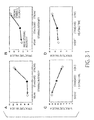
- the structure value A was significantly changed. Specifically, it was found that by increasing the stirring intensity, the structure value A tended to be increased, in other words, the number of connection points (bonding points) of the net-like structure of the browning agent tended to be increased. For example, by comparing Fig. 2A (the experimental group 26) and Fig. 2B (the experimental group 27), it is found that in the experimental group 27, the structure value A is significantly increased by increasing the stirring intensity. Further, by comparing Fig. 2C (the experimental group 30) and Fig. 2D (the experimental group 23), it is found that in the experimental group 23, the structure value A is significantly decreased by decreasing the stirring intensity.
- the structure value A of the frozen section of the browning agent is preferably 20 or more and 90 or less, and the structure value B is preferably 30 or less.
- Example 3 the preparation of frozen gyoza with a browning agent, the evaluation of steam-baking, the sensory evaluation, the preparation of a frozen section of the browning agent, and the observation and image analysis of the frozen section were performed in the same manner as in Example 3 except that the experimental group 22 in Example 3 was used as a control, and the stirring conditions for the browning agent and the steaming conditions for gyoza were changed.
- the stirring conditions for the browning agent and the steaming conditions for gyoza were set as shown in Table 10.
- the stirring of the ingredients of the browning agent was performed using ULTRA-TURRAX T50 Basic (manufactured by IKA-Werke GmbH & Co. KG), and the mixing by hand was performed using a whisk.
- [Table 10] Stirring conditions Steaming conditions Experimental group 22 6,400 rpm, 4 minutes 90°C, 9 minutes Experimental group 31 Mixing by hand (whisk), 3 minutes 65°C, 5 minutes Experimental group 32 10,000 rpm, 5 minutes 95°C, 15 minutes
- the stirring intensity was higher than in the experimental group 22 (under the conditions that the structure value A was increased), however, by using the steaming conditions which were set to higher than in the experimental group 22 (under the conditions that the structure value A was decreased), the structure values A and B of the structure of the browned surface of gyoza were adjusted so that the structure value A was 20 or more and 90 or less and the structure value B was 30 or less.
- a score of 4 or more was obtained for both of the evaluation of steam-baking and the sensory evaluation.
- frozen gyoza with a browning agent was prepared in the same manner as in Example 1 except that the composition of the browning agent was changed as shown in Table 12 (an experimental group 33). Further, the preparation of a frozen section of the browning agent and the observation and image analysis of the frozen section were performed in the same manner as in Example 1. The structure of the browning agent of the obtained gyoza was analyzed, and it was found that the structure value A was 27.66 and the structure value B was 13.35.
- the preparation of frozen gyoza with a browning agent, the preparation of a frozen section of the browning agent, and the observation and image analysis of the frozen section were performed in the same manner as in the experimental group 33, however, an examination was made as to how the structure values A and B of the frozen section of the browning agent of the obtained frozen gyoza varied in the case where only the stirring conditions when preparing the browning agent was changed ( Figs. 3A and 3B ), in the case where only the steam-heating time for gyoza was changed ( Figs. 3C and 3D ), in the case where only the steam-heating temperature for gyoza was changed ( Figs.
- the structure of the frozen section of the browning agent can be controlled, and as a result, the quality of gyoza can be improved.
Landscapes
- Health & Medical Sciences (AREA)
- Nutrition Science (AREA)
- Life Sciences & Earth Sciences (AREA)
- Chemical & Material Sciences (AREA)
- Engineering & Computer Science (AREA)
- Food Science & Technology (AREA)
- Polymers & Plastics (AREA)
- Seeds, Soups, And Other Foods (AREA)
- Meat, Egg Or Seafood Products (AREA)
- Food Preservation Except Freezing, Refrigeration, And Drying (AREA)
- Freezing, Cooling And Drying Of Foods (AREA)
Applications Claiming Priority (1)
| Application Number | Priority Date | Filing Date | Title |
|---|---|---|---|
| JP2012082022 | 2012-03-30 |
Publications (3)
| Publication Number | Publication Date |
|---|---|
| EP2644032A2 true EP2644032A2 (fr) | 2013-10-02 |
| EP2644032A3 EP2644032A3 (fr) | 2017-06-21 |
| EP2644032B1 EP2644032B1 (fr) | 2019-11-20 |
Family
ID=47997118
Family Applications (1)
| Application Number | Title | Priority Date | Filing Date |
|---|---|---|---|
| EP13160856.4A Active EP2644032B1 (fr) | 2012-03-30 | 2013-03-25 | Gyoza surgelés et réfrigérés avec agent de brunissement et son procédé de production |
Country Status (4)
| Country | Link |
|---|---|
| US (1) | US20130259981A1 (fr) |
| EP (1) | EP2644032B1 (fr) |
| JP (1) | JP6119358B2 (fr) |
| ES (1) | ES2768384T3 (fr) |
Cited By (1)
| Publication number | Priority date | Publication date | Assignee | Title |
|---|---|---|---|---|
| EP3815549A4 (fr) * | 2018-06-29 | 2022-03-23 | Ajinomoto Co., Inc. | Gyoza congelé et son procédé de production |
Families Citing this family (9)
| Publication number | Priority date | Publication date | Assignee | Title |
|---|---|---|---|---|
| JP6402626B2 (ja) * | 2012-07-02 | 2018-10-10 | 味の素株式会社 | 冷凍餃子及びその製造方法 |
| JP6646963B2 (ja) * | 2015-07-27 | 2020-02-14 | 月島食品工業株式会社 | 冷凍餃子用油脂組成物、冷凍連結餃子の製造方法、冷凍連結餃子、及び焼き餃子の製造方法 |
| JP2019041634A (ja) * | 2017-08-31 | 2019-03-22 | 株式会社J−オイルミルズ | 焼き餃子羽用組成物 |
| JP7282479B2 (ja) * | 2017-08-31 | 2023-05-29 | 株式会社J-オイルミルズ | 焼き餃子羽用組成物 |
| JP6947679B2 (ja) * | 2018-03-30 | 2021-10-13 | ヤンマーパワーテクノロジー株式会社 | 冷凍食品及びその製造方法並びに冷凍焼け防止剤 |
| JP7227734B2 (ja) * | 2018-11-05 | 2023-02-22 | テーブルマーク株式会社 | 餃子の羽根形成用組成物及び羽根付き餃子の製造方法 |
| US12053008B2 (en) * | 2020-11-13 | 2024-08-06 | Ajinomoto Co., Inc. | Microwavable frozen dumplings and methods thereof |
| US20230189850A1 (en) * | 2021-12-22 | 2023-06-22 | Ajinomoto Co., Inc. | Microwavable frozen steamed dumplings and methods thereof |
| JP7215618B1 (ja) | 2022-02-25 | 2023-01-31 | 味の素株式会社 | 焼き餃子羽根形成用組成物 |
Family Cites Families (10)
| Publication number | Priority date | Publication date | Assignee | Title |
|---|---|---|---|---|
| JP2850690B2 (ja) * | 1993-02-19 | 1999-01-27 | 味の素株式会社 | 焼きギョウザの製造法 |
| JPH1156313A (ja) * | 1997-08-22 | 1999-03-02 | Tenshinno Ie:Kk | 餃子用トレー並びにこれを用いた餃子の製造方法 |
| JP2002306140A (ja) * | 2001-04-12 | 2002-10-22 | Honen Corp | 焼き餃子の製造法 |
| JP4374883B2 (ja) * | 2002-04-19 | 2009-12-02 | 味の素株式会社 | 電子レンジ調理用冷凍焼き餃子 |
| JP4483268B2 (ja) * | 2003-11-07 | 2010-06-16 | 味の素株式会社 | 乳化バッター付き冷凍の連結餃子 |
| JP4861889B2 (ja) * | 2006-05-02 | 2012-01-25 | 松谷化学工業株式会社 | 羽根つき餃子及びその製造法 |
| JP4787137B2 (ja) * | 2006-11-17 | 2011-10-05 | 株式会社ニチレイフーズ | 食品の製造方法 |
| JP4912413B2 (ja) * | 2006-12-27 | 2012-04-11 | 株式会社日清製粉グループ本社 | 加工食品またはその製造原料の組織構造画像の形成方法 |
| CN101411343B (zh) * | 2007-10-19 | 2012-06-27 | 安琪酵母股份有限公司 | 速冻面食改良剂,含有其的面粉、速冻饺子、面条、馄饨 |
| JP5005559B2 (ja) * | 2008-01-15 | 2012-08-22 | 日本たばこ産業株式会社 | 羽根付き餃子及びその製造方法 |
-
2013
- 2013-03-15 US US13/835,245 patent/US20130259981A1/en not_active Abandoned
- 2013-03-25 EP EP13160856.4A patent/EP2644032B1/fr active Active
- 2013-03-25 ES ES13160856T patent/ES2768384T3/es active Active
- 2013-03-26 JP JP2013063430A patent/JP6119358B2/ja active Active
Cited By (1)
| Publication number | Priority date | Publication date | Assignee | Title |
|---|---|---|---|---|
| EP3815549A4 (fr) * | 2018-06-29 | 2022-03-23 | Ajinomoto Co., Inc. | Gyoza congelé et son procédé de production |
Also Published As
| Publication number | Publication date |
|---|---|
| JP6119358B2 (ja) | 2017-04-26 |
| EP2644032B1 (fr) | 2019-11-20 |
| EP2644032A3 (fr) | 2017-06-21 |
| ES2768384T3 (es) | 2020-06-22 |
| US20130259981A1 (en) | 2013-10-03 |
| JP2013226129A (ja) | 2013-11-07 |
Similar Documents
| Publication | Publication Date | Title |
|---|---|---|
| EP2644032B1 (fr) | Gyoza surgelés et réfrigérés avec agent de brunissement et son procédé de production | |
| TWI887271B (zh) | 組成物 | |
| JP5843314B2 (ja) | たこ焼き又はお好み焼き粉ミックス | |
| WO2016184506A1 (fr) | Nouilles et pâte pour nouilles contenant une farine de microalgues | |
| WO2013181524A2 (fr) | Enrobages cuits au four et procédés d'application sur des produits alimentaires | |
| JP7046799B2 (ja) | 揚げ物衣用ミックス | |
| JP2001231517A (ja) | カレー風味のペースト状組成物 | |
| JP7578617B2 (ja) | 油ちょう食品用ミックス及びそれを用いた油ちょう食品の製造方法並びに油ちょう食品の食感改良方法 | |
| JPH10327787A (ja) | パン粉 | |
| JP6698781B2 (ja) | 冷凍餃子製造方法 | |
| JP7132863B2 (ja) | ウニ風味ソース | |
| KR101521609B1 (ko) | 곡물분말을 함유한 오븐 베이킹 커틀릿 조리용 빵가루 조성물 및 이를 이용한 오븐 베이킹 커틀릿과 그 조리방법 | |
| JP7058227B2 (ja) | パン粉ミックス | |
| JP6990970B2 (ja) | フライ用油脂組成物 | |
| JP6698782B2 (ja) | 冷凍餃子製造方法 | |
| JP2004041072A (ja) | フライ食品の製造方法 | |
| JP2013176335A (ja) | 調理用食品素材 | |
| JP6762730B2 (ja) | たこ焼粉、及びたこ焼の製造方法 | |
| JP7229229B2 (ja) | 小麦粉含有生地焼成食品及びその製造方法並びに小麦粉含有生地 | |
| JP3268912B2 (ja) | クリームコロッケの具 | |
| JP2000270796A (ja) | 麺皮類食品の製造方法 | |
| JP2018130041A (ja) | デンプン含有食品用添加剤 | |
| JPH08228730A (ja) | フライ食品用の具材 | |
| KR101689158B1 (ko) | 짜장 바게트 버거 및 이의 제조방법 | |
| JPH08289767A (ja) | 春 巻 |
Legal Events
| Date | Code | Title | Description |
|---|---|---|---|
| PUAI | Public reference made under article 153(3) epc to a published international application that has entered the european phase |
Free format text: ORIGINAL CODE: 0009012 |
|
| AK | Designated contracting states |
Kind code of ref document: A2 Designated state(s): AL AT BE BG CH CY CZ DE DK EE ES FI FR GB GR HR HU IE IS IT LI LT LU LV MC MK MT NL NO PL PT RO RS SE SI SK SM TR |
|
| AX | Request for extension of the european patent |
Extension state: BA ME |
|
| PUAL | Search report despatched |
Free format text: ORIGINAL CODE: 0009013 |
|
| AK | Designated contracting states |
Kind code of ref document: A3 Designated state(s): AL AT BE BG CH CY CZ DE DK EE ES FI FR GB GR HR HU IE IS IT LI LT LU LV MC MK MT NL NO PL PT RO RS SE SI SK SM TR |
|
| AX | Request for extension of the european patent |
Extension state: BA ME |
|
| RIC1 | Information provided on ipc code assigned before grant |
Ipc: A23L 1/27 00000000ALI20170517BHEP Ipc: A23L 1/16 00000000AFI20170517BHEP |
|
| STAA | Information on the status of an ep patent application or granted ep patent |
Free format text: STATUS: REQUEST FOR EXAMINATION WAS MADE |
|
| 17P | Request for examination filed |
Effective date: 20171221 |
|
| RBV | Designated contracting states (corrected) |
Designated state(s): AL AT BE BG CH CY CZ DE DK EE ES FI FR GB GR HR HU IE IS IT LI LT LU LV MC MK MT NL NO PL PT RO RS SE SI SK SM TR |
|
| STAA | Information on the status of an ep patent application or granted ep patent |
Free format text: STATUS: EXAMINATION IS IN PROGRESS |
|
| 17Q | First examination report despatched |
Effective date: 20180528 |
|
| REG | Reference to a national code |
Ref country code: DE Ref legal event code: R079 Ref document number: 602013063024 Country of ref document: DE Free format text: PREVIOUS MAIN CLASS: A21D0013000000 Ipc: A23L0007109000 |
|
| GRAP | Despatch of communication of intention to grant a patent |
Free format text: ORIGINAL CODE: EPIDOSNIGR1 |
|
| STAA | Information on the status of an ep patent application or granted ep patent |
Free format text: STATUS: GRANT OF PATENT IS INTENDED |
|
| RIC1 | Information provided on ipc code assigned before grant |
Ipc: A23L 5/41 20160101ALI20190509BHEP Ipc: A23L 7/109 20160101AFI20190509BHEP |
|
| INTG | Intention to grant announced |
Effective date: 20190605 |
|
| GRAS | Grant fee paid |
Free format text: ORIGINAL CODE: EPIDOSNIGR3 |
|
| GRAA | (expected) grant |
Free format text: ORIGINAL CODE: 0009210 |
|
| STAA | Information on the status of an ep patent application or granted ep patent |
Free format text: STATUS: THE PATENT HAS BEEN GRANTED |
|
| RAP1 | Party data changed (applicant data changed or rights of an application transferred) |
Owner name: AJINOMOTO CO., INC. |
|
| AK | Designated contracting states |
Kind code of ref document: B1 Designated state(s): AL AT BE BG CH CY CZ DE DK EE ES FI FR GB GR HR HU IE IS IT LI LT LU LV MC MK MT NL NO PL PT RO RS SE SI SK SM TR |
|
| REG | Reference to a national code |
Ref country code: GB Ref legal event code: FG4D |
|
| REG | Reference to a national code |
Ref country code: CH Ref legal event code: EP |
|
| REG | Reference to a national code |
Ref country code: DE Ref legal event code: R096 Ref document number: 602013063024 Country of ref document: DE |
|
| REG | Reference to a national code |
Ref country code: IE Ref legal event code: FG4D |
|
| REG | Reference to a national code |
Ref country code: AT Ref legal event code: REF Ref document number: 1203135 Country of ref document: AT Kind code of ref document: T Effective date: 20191215 |
|
| REG | Reference to a national code |
Ref country code: NL Ref legal event code: FP |
|
| REG | Reference to a national code |
Ref country code: LT Ref legal event code: MG4D |
|
| PG25 | Lapsed in a contracting state [announced via postgrant information from national office to epo] |
Ref country code: GR Free format text: LAPSE BECAUSE OF FAILURE TO SUBMIT A TRANSLATION OF THE DESCRIPTION OR TO PAY THE FEE WITHIN THE PRESCRIBED TIME-LIMIT Effective date: 20200221 Ref country code: LT Free format text: LAPSE BECAUSE OF FAILURE TO SUBMIT A TRANSLATION OF THE DESCRIPTION OR TO PAY THE FEE WITHIN THE PRESCRIBED TIME-LIMIT Effective date: 20191120 Ref country code: NO Free format text: LAPSE BECAUSE OF FAILURE TO SUBMIT A TRANSLATION OF THE DESCRIPTION OR TO PAY THE FEE WITHIN THE PRESCRIBED TIME-LIMIT Effective date: 20200220 Ref country code: SE Free format text: LAPSE BECAUSE OF FAILURE TO SUBMIT A TRANSLATION OF THE DESCRIPTION OR TO PAY THE FEE WITHIN THE PRESCRIBED TIME-LIMIT Effective date: 20191120 Ref country code: LV Free format text: LAPSE BECAUSE OF FAILURE TO SUBMIT A TRANSLATION OF THE DESCRIPTION OR TO PAY THE FEE WITHIN THE PRESCRIBED TIME-LIMIT Effective date: 20191120 Ref country code: FI Free format text: LAPSE BECAUSE OF FAILURE TO SUBMIT A TRANSLATION OF THE DESCRIPTION OR TO PAY THE FEE WITHIN THE PRESCRIBED TIME-LIMIT Effective date: 20191120 Ref country code: BG Free format text: LAPSE BECAUSE OF FAILURE TO SUBMIT A TRANSLATION OF THE DESCRIPTION OR TO PAY THE FEE WITHIN THE PRESCRIBED TIME-LIMIT Effective date: 20200220 |
|
| PG25 | Lapsed in a contracting state [announced via postgrant information from national office to epo] |
Ref country code: RS Free format text: LAPSE BECAUSE OF FAILURE TO SUBMIT A TRANSLATION OF THE DESCRIPTION OR TO PAY THE FEE WITHIN THE PRESCRIBED TIME-LIMIT Effective date: 20191120 Ref country code: IS Free format text: LAPSE BECAUSE OF FAILURE TO SUBMIT A TRANSLATION OF THE DESCRIPTION OR TO PAY THE FEE WITHIN THE PRESCRIBED TIME-LIMIT Effective date: 20200320 Ref country code: HR Free format text: LAPSE BECAUSE OF FAILURE TO SUBMIT A TRANSLATION OF THE DESCRIPTION OR TO PAY THE FEE WITHIN THE PRESCRIBED TIME-LIMIT Effective date: 20191120 |
|
| REG | Reference to a national code |
Ref country code: ES Ref legal event code: FG2A Ref document number: 2768384 Country of ref document: ES Kind code of ref document: T3 Effective date: 20200622 |
|
| PG25 | Lapsed in a contracting state [announced via postgrant information from national office to epo] |
Ref country code: AL Free format text: LAPSE BECAUSE OF FAILURE TO SUBMIT A TRANSLATION OF THE DESCRIPTION OR TO PAY THE FEE WITHIN THE PRESCRIBED TIME-LIMIT Effective date: 20191120 |
|
| PG25 | Lapsed in a contracting state [announced via postgrant information from national office to epo] |
Ref country code: PT Free format text: LAPSE BECAUSE OF FAILURE TO SUBMIT A TRANSLATION OF THE DESCRIPTION OR TO PAY THE FEE WITHIN THE PRESCRIBED TIME-LIMIT Effective date: 20200412 Ref country code: EE Free format text: LAPSE BECAUSE OF FAILURE TO SUBMIT A TRANSLATION OF THE DESCRIPTION OR TO PAY THE FEE WITHIN THE PRESCRIBED TIME-LIMIT Effective date: 20191120 Ref country code: DK Free format text: LAPSE BECAUSE OF FAILURE TO SUBMIT A TRANSLATION OF THE DESCRIPTION OR TO PAY THE FEE WITHIN THE PRESCRIBED TIME-LIMIT Effective date: 20191120 Ref country code: RO Free format text: LAPSE BECAUSE OF FAILURE TO SUBMIT A TRANSLATION OF THE DESCRIPTION OR TO PAY THE FEE WITHIN THE PRESCRIBED TIME-LIMIT Effective date: 20191120 Ref country code: CZ Free format text: LAPSE BECAUSE OF FAILURE TO SUBMIT A TRANSLATION OF THE DESCRIPTION OR TO PAY THE FEE WITHIN THE PRESCRIBED TIME-LIMIT Effective date: 20191120 |
|
| REG | Reference to a national code |
Ref country code: AT Ref legal event code: MK05 Ref document number: 1203135 Country of ref document: AT Kind code of ref document: T Effective date: 20191120 |
|
| REG | Reference to a national code |
Ref country code: DE Ref legal event code: R097 Ref document number: 602013063024 Country of ref document: DE |
|
| PG25 | Lapsed in a contracting state [announced via postgrant information from national office to epo] |
Ref country code: SM Free format text: LAPSE BECAUSE OF FAILURE TO SUBMIT A TRANSLATION OF THE DESCRIPTION OR TO PAY THE FEE WITHIN THE PRESCRIBED TIME-LIMIT Effective date: 20191120 Ref country code: SK Free format text: LAPSE BECAUSE OF FAILURE TO SUBMIT A TRANSLATION OF THE DESCRIPTION OR TO PAY THE FEE WITHIN THE PRESCRIBED TIME-LIMIT Effective date: 20191120 |
|
| PLBE | No opposition filed within time limit |
Free format text: ORIGINAL CODE: 0009261 |
|
| STAA | Information on the status of an ep patent application or granted ep patent |
Free format text: STATUS: NO OPPOSITION FILED WITHIN TIME LIMIT |
|
| 26N | No opposition filed |
Effective date: 20200821 |
|
| PG25 | Lapsed in a contracting state [announced via postgrant information from national office to epo] |
Ref country code: MC Free format text: LAPSE BECAUSE OF FAILURE TO SUBMIT A TRANSLATION OF THE DESCRIPTION OR TO PAY THE FEE WITHIN THE PRESCRIBED TIME-LIMIT Effective date: 20191120 |
|
| REG | Reference to a national code |
Ref country code: CH Ref legal event code: PL |
|
| PG25 | Lapsed in a contracting state [announced via postgrant information from national office to epo] |
Ref country code: SI Free format text: LAPSE BECAUSE OF FAILURE TO SUBMIT A TRANSLATION OF THE DESCRIPTION OR TO PAY THE FEE WITHIN THE PRESCRIBED TIME-LIMIT Effective date: 20191120 Ref country code: PL Free format text: LAPSE BECAUSE OF FAILURE TO SUBMIT A TRANSLATION OF THE DESCRIPTION OR TO PAY THE FEE WITHIN THE PRESCRIBED TIME-LIMIT Effective date: 20191120 Ref country code: AT Free format text: LAPSE BECAUSE OF FAILURE TO SUBMIT A TRANSLATION OF THE DESCRIPTION OR TO PAY THE FEE WITHIN THE PRESCRIBED TIME-LIMIT Effective date: 20191120 |
|
| REG | Reference to a national code |
Ref country code: BE Ref legal event code: MM Effective date: 20200331 |
|
| PG25 | Lapsed in a contracting state [announced via postgrant information from national office to epo] |
Ref country code: LU Free format text: LAPSE BECAUSE OF NON-PAYMENT OF DUE FEES Effective date: 20200325 |
|
| PG25 | Lapsed in a contracting state [announced via postgrant information from national office to epo] |
Ref country code: IE Free format text: LAPSE BECAUSE OF NON-PAYMENT OF DUE FEES Effective date: 20200325 Ref country code: IT Free format text: LAPSE BECAUSE OF FAILURE TO SUBMIT A TRANSLATION OF THE DESCRIPTION OR TO PAY THE FEE WITHIN THE PRESCRIBED TIME-LIMIT Effective date: 20191120 Ref country code: CH Free format text: LAPSE BECAUSE OF NON-PAYMENT OF DUE FEES Effective date: 20200331 Ref country code: LI Free format text: LAPSE BECAUSE OF NON-PAYMENT OF DUE FEES Effective date: 20200331 |
|
| PG25 | Lapsed in a contracting state [announced via postgrant information from national office to epo] |
Ref country code: BE Free format text: LAPSE BECAUSE OF NON-PAYMENT OF DUE FEES Effective date: 20200331 |
|
| PG25 | Lapsed in a contracting state [announced via postgrant information from national office to epo] |
Ref country code: TR Free format text: LAPSE BECAUSE OF FAILURE TO SUBMIT A TRANSLATION OF THE DESCRIPTION OR TO PAY THE FEE WITHIN THE PRESCRIBED TIME-LIMIT Effective date: 20191120 Ref country code: MT Free format text: LAPSE BECAUSE OF FAILURE TO SUBMIT A TRANSLATION OF THE DESCRIPTION OR TO PAY THE FEE WITHIN THE PRESCRIBED TIME-LIMIT Effective date: 20191120 Ref country code: CY Free format text: LAPSE BECAUSE OF FAILURE TO SUBMIT A TRANSLATION OF THE DESCRIPTION OR TO PAY THE FEE WITHIN THE PRESCRIBED TIME-LIMIT Effective date: 20191120 |
|
| PG25 | Lapsed in a contracting state [announced via postgrant information from national office to epo] |
Ref country code: MK Free format text: LAPSE BECAUSE OF FAILURE TO SUBMIT A TRANSLATION OF THE DESCRIPTION OR TO PAY THE FEE WITHIN THE PRESCRIBED TIME-LIMIT Effective date: 20191120 |
|
| P01 | Opt-out of the competence of the unified patent court (upc) registered |
Effective date: 20230512 |
|
| PGFP | Annual fee paid to national office [announced via postgrant information from national office to epo] |
Ref country code: ES Payment date: 20250403 Year of fee payment: 13 |
|
| PGFP | Annual fee paid to national office [announced via postgrant information from national office to epo] |
Ref country code: NL Payment date: 20260213 Year of fee payment: 14 |
|
| PGFP | Annual fee paid to national office [announced via postgrant information from national office to epo] |
Ref country code: GB Payment date: 20260202 Year of fee payment: 14 |
|
| PGFP | Annual fee paid to national office [announced via postgrant information from national office to epo] |
Ref country code: DE Payment date: 20260128 Year of fee payment: 14 |
|
| PGFP | Annual fee paid to national office [announced via postgrant information from national office to epo] |
Ref country code: FR Payment date: 20260209 Year of fee payment: 14 |