EP2646823B1 - Procédé d'identification d'un risque élevé de mortalité pour un patient en hémodialyse - Google Patents
Procédé d'identification d'un risque élevé de mortalité pour un patient en hémodialyse Download PDFInfo
- Publication number
- EP2646823B1 EP2646823B1 EP11845234.1A EP11845234A EP2646823B1 EP 2646823 B1 EP2646823 B1 EP 2646823B1 EP 11845234 A EP11845234 A EP 11845234A EP 2646823 B1 EP2646823 B1 EP 2646823B1
- Authority
- EP
- European Patent Office
- Prior art keywords
- death
- rate
- change
- patient
- patients
- Prior art date
- Legal status (The legal status is an assumption and is not a legal conclusion. Google has not performed a legal analysis and makes no representation as to the accuracy of the status listed.)
- Active
Links
Images






Classifications
-
- G—PHYSICS
- G01—MEASURING; TESTING
- G01N—INVESTIGATING OR ANALYSING MATERIALS BY DETERMINING THEIR CHEMICAL OR PHYSICAL PROPERTIES
- G01N33/00—Investigating or analysing materials by specific methods not covered by groups G01N1/00 - G01N31/00
- G01N33/48—Biological material, e.g. blood, urine; Haemocytometers
- G01N33/50—Chemical analysis of biological material, e.g. blood, urine; Testing involving biospecific ligand binding methods; Immunological testing
- G01N33/5005—Chemical analysis of biological material, e.g. blood, urine; Testing involving biospecific ligand binding methods; Immunological testing involving human or animal cells
- G01N33/5091—Chemical analysis of biological material, e.g. blood, urine; Testing involving biospecific ligand binding methods; Immunological testing involving human or animal cells for testing the pathological state of an organism
-
- G—PHYSICS
- G01—MEASURING; TESTING
- G01N—INVESTIGATING OR ANALYSING MATERIALS BY DETERMINING THEIR CHEMICAL OR PHYSICAL PROPERTIES
- G01N33/00—Investigating or analysing materials by specific methods not covered by groups G01N1/00 - G01N31/00
- G01N33/48—Biological material, e.g. blood, urine; Haemocytometers
- G01N33/50—Chemical analysis of biological material, e.g. blood, urine; Testing involving biospecific ligand binding methods; Immunological testing
- G01N33/68—Chemical analysis of biological material, e.g. blood, urine; Testing involving biospecific ligand binding methods; Immunological testing involving proteins, peptides or amino acids
- G01N33/6893—Chemical analysis of biological material, e.g. blood, urine; Testing involving biospecific ligand binding methods; Immunological testing involving proteins, peptides or amino acids related to diseases not provided for elsewhere
-
- G—PHYSICS
- G01—MEASURING; TESTING
- G01N—INVESTIGATING OR ANALYSING MATERIALS BY DETERMINING THEIR CHEMICAL OR PHYSICAL PROPERTIES
- G01N2800/00—Detection or diagnosis of diseases
- G01N2800/34—Genitourinary disorders
- G01N2800/347—Renal failures; Glomerular diseases; Tubulointerstitial diseases, e.g. nephritic syndrome, glomerulonephritis; Renovascular diseases, e.g. renal artery occlusion, nephropathy
-
- G—PHYSICS
- G01—MEASURING; TESTING
- G01N—INVESTIGATING OR ANALYSING MATERIALS BY DETERMINING THEIR CHEMICAL OR PHYSICAL PROPERTIES
- G01N2800/00—Detection or diagnosis of diseases
- G01N2800/56—Staging of a disease; Further complications associated with the disease
-
- Y—GENERAL TAGGING OF NEW TECHNOLOGICAL DEVELOPMENTS; GENERAL TAGGING OF CROSS-SECTIONAL TECHNOLOGIES SPANNING OVER SEVERAL SECTIONS OF THE IPC; TECHNICAL SUBJECTS COVERED BY FORMER USPC CROSS-REFERENCE ART COLLECTIONS [XRACs] AND DIGESTS
- Y10—TECHNICAL SUBJECTS COVERED BY FORMER USPC
- Y10T—TECHNICAL SUBJECTS COVERED BY FORMER US CLASSIFICATION
- Y10T436/00—Chemistry: analytical and immunological testing
- Y10T436/14—Heterocyclic carbon compound [i.e., O, S, N, Se, Te, as only ring hetero atom]
- Y10T436/145555—Hetero-N
- Y10T436/147777—Plural nitrogen in the same ring [e.g., barbituates, creatinine, etc.]
-
- Y—GENERAL TAGGING OF NEW TECHNOLOGICAL DEVELOPMENTS; GENERAL TAGGING OF CROSS-SECTIONAL TECHNOLOGIES SPANNING OVER SEVERAL SECTIONS OF THE IPC; TECHNICAL SUBJECTS COVERED BY FORMER USPC CROSS-REFERENCE ART COLLECTIONS [XRACs] AND DIGESTS
- Y10—TECHNICAL SUBJECTS COVERED BY FORMER USPC
- Y10T—TECHNICAL SUBJECTS COVERED BY FORMER US CLASSIFICATION
- Y10T436/00—Chemistry: analytical and immunological testing
- Y10T436/16—Phosphorus containing
- Y10T436/166666—Phosphorus containing of inorganic phosphorus compound in body fluid
Definitions
- the present invention is directed to a method of identifying a patient undergoing periodic hemodialysis treatments at increased risk for death.
- the method includes determining periodically while the patient is undergoing hemodialysis treatments, and identifying a patient as having an increased risk for death if the patient has a significant change in the rate of change of at least one of these clinical or biochemical parameters.
- a significant change can be determined by using a statistical method, or defined as a change from a steady level to an increase or decrease, or a change in character of the rate of change of the parameter. Identifying the patient as having an increased risk of death is accomplished within a sufficient lead time to allow for a therapeutic intervention to decrease the patient's risk of death, followed by a suitable therapeutic intervention.
- the present invention is also directed to a method of identifying an increased mortality risk factor for a patient undergoing periodic hemodialysis treatment.
- the method includes analyzing data of deceased patients that were previously undergoing periodic hemodialysis treatments by performing a longitudinal analysis backwards in time of changes in a clinical or biochemical parameter of the patients, and identifying a significant change in the rate of decline or the rate of increase of one or more clinical or biochemical parameters before death of the patients.
- the methods of this invention enable physicians and/or other health-care professionals to initiate timely diagnostic and therapeutic interventions to hemodialysis patients at increased risk of death and thereby reduce mortality of such patients.
- the present invention is directed to a method of identifying a patient at increased risk for death when the patient is undergoing periodic hemodialysis treatments.
- the method includes determining at least one of the patient's clinical or biochemical parameters associated with an increased risk of death, consisting of serum potassium concentration at periodic hemodialysis treatments.
- the patient is identified as having an increased risk for death if the patient has a significant change in the rate of change of at least one of these clinical or biochemical parameters.
- a significant change can be determined by using a statistical method, such as using Student's t as the test statistic (e.g ., p ⁇ 0.05), or defined as a change from a steady level (e.g ., no significant deviation form an average of the measured levels) to an increase or decrease, or a change in character (e.g., a change from increase to decrease or vice versa, or a change from a steady level to increase or decrease) in the rate of change of the at least one clinical or biochemical parameter.
- the measurement of at least one of these clinical or biochemical parameters includes the measurement of any combination of them.
- a determination that the rate of change of a clinical or biochemical parameter of the patient has changed character is employed to identify a patient at increased risk of death.
- the method is applied to a patient that is undergoing periodic hemodialysis treatments.
- periodic hemodialysis treatments are performed several days apart, for example, three times per week.
- the time period between treatments is not necessarily constant, however, because, for example, the patient can receive treatment after a shorter time period since the last treatment if the patient needs to shed excess fluid.
- the time period between treatments can be longer because of, for example, missed treatments or an illness acquired since the last treatment.
- the methods of this invention apply to human patients that are undergoing hemodialysis treatment.
- the hemodialysis treatment of the patient is a treatment that replaces or supplements the normal function of the kidneys of a patient, due to the patient having a disease or condition that affects kidney function such as, for example, renal insufficiency, renal failure, or kidney disease.
- the measurements of the aforementioned clinical or biochemical parameters can be performed either before or after each hemodialysis treatment, or both, or only performed after a certain time period, or at every certain number of treatments, or at irregular intervals.
- the measurement of systolic blood pressure is usually taken before each treatment, but can also be taken after each treatment, or both before and after each treatment.
- the measurement of serum albumin concentration level is usually taken once a month, but can also be taken more often.
- the measurement of body weight is usually taken before each treatment, but can also be taken after each treatment.
- the measurement of body temperature is preferentially taken before each treatment, but can also be taken after each treatment.
- the measurements of the patient's clinical and biochemical parameters could also be taken between hemodialysis treatments.
- LMMs linear mixed effects models
- individual patient effects can be separated from population effects by treating the individual effects as random, while the population effects are regarded as fixed; the full model combines the random and the fixed effects.
- a powerful result is that subject response trajectories can be estimated in addition to the population response trajectory. In this application, a random intercept model was used.
- each subject has a distinct level of response which persists over time.
- the patient serves as his or her own control insofar as the dynamics between observed time periods are compared.
- BIC Bayesian information criterion
- this measure rewards a model with higher explanatory power, while penalizing for the inclusion of additional parameters.
- the data were fit by linear spline functions, because these simple parametric curves can provide a parsimonious description of longitudinal trends. See D. Ruppert, M. P. Wand, and R. J. Carroll, Semiparametric Regression, (2003 ).
- Linear spline functions with a knot point at 12 weeks before death were employed for systolic blood pressure, body weight, and body temperature.
- a knot point is the point in time where two spline functions intersect. The choice of the location for the knot point is important with this kind of analysis.
- the knot point (12 weeks before death) was chosen by separating the data into two sets for processing, one data set including all the data up to 12 weeks before death, and the other data set including the data from 12 weeks before death to the patient's demise.
- the knot point (12 weeks before death) was chosen for the following reasons: (a) based on pilot descriptive data analysis which revealed an accelerated deterioration of body weight in the 12 weeks preceding death, and (b) because it was deemed that a lead time of 12 weeks was probably sufficient to intervene in many patients.
- the time point chosen as the knot point generally depends on the clinical or biochemical parameter being analyzed, to provide sufficient time for an effective diagnostic or therapeutic patient intervention.
- the knot point was chosen at 3 months for the other clinical or biochemical parameters discussed below, because the measurements of those parameters are typically obtained at one month intervals.
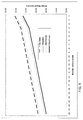
- FIG. 1 the results for post-dialysis body weight, typically measured in kg, are shown for the data set.
- FIG. 2 the results for serum albumin concentration levels, typically measured in g/dL, are shown for the data set.
- the four groups of dialysis patients showed an increase in the rate of decline of serum albumin levels in the final 3 months of life, from about 0.008 g/dL/month to over about 0.08 g/dL/month. Therefore, in this study, for serum albumin levels, the rate of decrease increased by a factor of about 10 in the final 3 months of life.
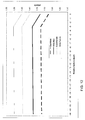
- FIG. 3 in a separate study of 1,799 hemodialysis patients, it was found that the average pre-dialysis systolic blood pressure of patients, typically measured in mmHg, showed an increase in the rate of decrease in the final 12 weeks of life, from about 0.16 mmHg/week to about 0.56 mmHg/week. Therefore, in this study, for pre-dialysis systolic blood pressure, the rate of decrease increased by a factor of about 3 in the final 12 weeks of life.
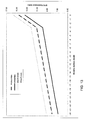
- FIG. 4 in another study of hemodialysis patients over 60 years old at death, it was found that the pre-dialysis body temperature of patients, typically measured in °C, showed an increase in the rate of decline in the final 12 weeks of life, from about 0.00017 °C/week to about 0.0012 °C/week. Therefore, in this study, for body temperature, the rate of decrease increased by a factor of about 7 in the final 12 weeks of life.
- FIG. 5 in another study of hemodialysis patients, it was found that the serum bicarbonate concentration levels of patients, typically measured in mmol/L, showed an increase in the rate of increase in the final 3 months of life, from about 0.040 mmol/L/month to about 0.101 mmol/L/month. Therefore, in this study, for serum bicarbonate level, the rate of increase increased by a factor of over 2 in the final 3 months of life.
- Bicarbonate is a crucial component of the body's acid-base metabolism. Higher bicarbonate concentration levels may point toward a metabolic alkalosis, which could be caused by reduced ingestion of protein.
- FIG. 6 it was found that the serum potassium concentration levels of patients, typically measured in mmol/L, showed a change in the rate of change in the final 3 months of life, from an increase of about 0.003 mmol/L/month to a decrease of about 0.033 mmol/L/month. Therefore, in this study, for serum potassium concentration level, the rate of change altered character (from increase to decrease) in the final 3 months of life. Potassium is crucial for the electrical potential of cells. A decrease in potassium concentration is seen with poor nutrition and with metabolic alkalosis.
- FIG. 7 it was found that the serum calcium concentration levels of patients, typically measured in g/dL, showed a change in the rate of change in the final 3 months of life, from a steady level to a significant decrease of about 0.049 g/dL/month. Therefore, in this study, for serum calcium concentration level, the rate of change significantly increased in the final 3 months of life. Calcium is an essential component for muscle contraction. A decrease in total calcium concentration is seen with a decrease in serum albumin concentration levels.
- hemoglobin (Hgb) concentration levels of patients typically measured in g/dL, showed a change in the rate of decrease in the final 3 months of life, from a decrease of about 0.014 g/dL/month to a decrease of about 0.123 g/dL/month. Therefore, in this study, for hemoglobin concentration level, the rate of decrease increased by a factor of about 8 in the final 3 months of life.
- Hemoglobin concentration levels describe the degree of anemia. A decrease in hemoglobin concentration level is associated with inflammation, bleeding, or iron deficiency.
- the neutrophil to lymphocyte ratio of patients a dimensionless number, showed a change in the rate of increase in the final 3 months of life, from a increase of about 0.042 per month to a increase of about 0.381 per month. Therefore, in this study, for neutrophil to lymphocyte ratio, the rate of increase increased by a factor of about 9 in the final 3 months of life.
- the neutrophil to lymphocyte ratio increases with inflammation.
- FIG. 11 it was found that the enPCR of patients, typically measured in g/kg body weight/day, showed a change in the rate of decrease in the final 3 months of life, from a decrease of about 0.003 per month to a decrease of about 0.023 per month. Therefore, in this study, for enPCR, the rate of decrease increased by a factor of about 7 in the final 3 months of life.
- the enPCR is an estimate of daily protein intake.
- the eKdrt/V of patients a dimensionless number, showed a change in the rate of decrease in the final 3 months of life, from a steady level to a decrease of about 0.017 per month. Therefore, in this study, for eKdrt/V, the rate of decrease significantly increased in the final 3 months of life.
- the eKdrt/V is a measure of the clearance of urea and other low-molecular weight unbound solutes, taking the dialytic and renal component into account.
- EPO resistance index of patients typically measured in U/kg body weight per week, showed a change in the rate of increase in the final 3 months of life, from an increase of about 0.145 per month to an increase of about 1.169 per month. Therefore, in this study, for EPO resistance index, the rate of increase increased by a factor of about 8 in the final 3 months of life.
- a high EPO resistance index is an indication of inflammation.
- TSAT transferrin saturation index
- FIG. 15 it was found that the serum ferritin concentration levels of patients, typically measured in ng/mL, showed a change in the rate of increase in the final 3 months of life, from an increase of about 7.018 ng/mL/month to an increase of about 77.162 ng/mL/month. Therefore, in this study, for ferritin concentration level, the rate of increase increased by a factor of about 11 in the final 3 months of life. A high serum ferritin concentration level is indicative of inflammation.
- FIG. 16 it was found that the serum creatinine concentration levels of patients, typically measured in mg/dL, showed a change in the rate of decrease in the final 3 months of life, from a decrease of about 0.010 mg/dL/month to a decrease of about 0.215 mg/dL/month. Therefore, in this study, for serum creatinine concentration level, the rate of decrease increased by a factor of about 21 in the final 3 months of life. A decrease in serum creatinine concentration level is indicative of a loss of muscle mass.
- FIG. 17 it was found that the platelet count of patients, typically measured in 1000 per ⁇ L of blood, showed a change in the rate of increase in the final 3 months of life, from an increase of about 0.030 per month to an increase of about 4.361 per month. Therefore, in this study, for platelet count, the rate of increase increased by a factor of about 145 in the final 3 months of life. An increase in platelet count is seen in inflammation.
- Aspartat-Aminotransferase (AST) level of patients typically measured in U/L, showed a change in the rate of increase in the final 3 months of life, from an increase of about 0.007 per month to an increase of about 1.585 per month. Therefore, in this study, for Aspartat-Aminotransferase level, the rate of increase increased by a factor of about 226 in the final 3 months of life. An increase in Aspartat-Aminotransferase level is seen in liver and muscle disorders.
- ALT Alanin-Aminotransferase
- cardiovascular domain examples include the diastolic and mean blood pressure, and the pulse pressure (systolic blood pressure minus diastolic blood pressure) and heart rate.
- inflammatory domain examples include the IL-6 level, and the C-reactive protein level.
- anthropometric domain examples include body mass index and body composition indices.
- An "alert" level notifying a physician that a patient is at increased risk of death, can be established by detecting a substantial change in the rate of decline or the rate of increase of at least one of the clinical and biochemical parameters discussed above, or any combinations of them.
- the substantial change that triggers a physician notification can a substantial change in the same direction, that is, a substantial increase in the rate of increase or a substantial decline in the rate of decline, or, alternatively, a substantial change in the opposite direction (e.g., a decrease in the serum potassium concentration level, or an increase in the Alanin-Aminotransferase level).
- certain diagnostic procedures can be triggered. These includes, but are not limited to: 1) the taking of a thorough history and physical examination with the specific aim to search for cardiovascular, inflammatory, and infectious conditions, 2) blood tests, including C-reactive protein (CRP), albumin, red and white cell blood counts, troponin, blood cultures, 3) echocardiogram, electrocardiogram, 4) chest x-ray, 5) imaging, in particular ultrasound, computer tomography and /or magnetic resonance imaging, 6) endoscopy, and 7) bacterial cultures and swabs.
- CRP C-reactive protein
- cardiovascular disease especially congestive heart failure (CHF) and coronary artery disease (CAD)
- inflammation especially inflammation, and infection.
- therapeutic interventions include but are not limited to: strict volume control, which includes avoidance of intradialytic administration of sodium and sodium loading via the dialysate, dietary salt intake below 6 g/day, increased dialysis frequency, drug therapy (angiotensin converting enzyme inhibitors (ACEI), angiotensin receptor blockers (ARB), beta blockers (BB)), lipid lowering drugs, replacement of deficient hormones, valve repair, and percutaneous transluminal coronary angioplasty.
- strict volume control which includes avoidance of intradialytic administration of sodium and sodium loading via the dialysate, dietary salt intake below 6 g/day, increased dialysis frequency
- drug therapy angiotensin converting enzyme inhibitors (ACEI), angiotensin receptor blockers (ARB), beta blockers (BB)
- lipid lowering drugs replacement of deficient hormones, valve repair, and percutaneous transluminal coronary angioplasty.
- therapeutic interventions include but are not limited to: removal of in-dwelling lines and catheters, therapy with anti-inflammatory drugs, broad spectrum antibiotic therapy, treatment of periodontal disease, and removal of rejected transplants and non-functioning vascular access.
- therapeutic interventions include but are not limited to: antibiotic therapy, mechanical and chemical debridement, and removal of in-dwelling lines and catheters.
- therapeutic interventions can include but are not limited to intradialytic parenteral nutrition and oral supplements.
Landscapes
- Health & Medical Sciences (AREA)
- Life Sciences & Earth Sciences (AREA)
- Engineering & Computer Science (AREA)
- Immunology (AREA)
- Molecular Biology (AREA)
- Chemical & Material Sciences (AREA)
- Biomedical Technology (AREA)
- Urology & Nephrology (AREA)
- Hematology (AREA)
- Cell Biology (AREA)
- Analytical Chemistry (AREA)
- Biotechnology (AREA)
- Pathology (AREA)
- Food Science & Technology (AREA)
- Medicinal Chemistry (AREA)
- Physics & Mathematics (AREA)
- Microbiology (AREA)
- Biochemistry (AREA)
- General Health & Medical Sciences (AREA)
- General Physics & Mathematics (AREA)
- Proteomics, Peptides & Aminoacids (AREA)
- Physiology (AREA)
- Tropical Medicine & Parasitology (AREA)
- External Artificial Organs (AREA)
Claims (5)
- Procédé ex vivo pour identifier si un patient subissant des traitements d'hémodialyse périodique présente un risque accru de décès, qui comprend :a) la détermination du niveau de concentration sérique de potassium pendant que le patient subit des traitements d'hémodialyse ; etb) l'identification du patient comme présentant un risque accru de décès si le patient manifeste un changement significatif du taux de variation de la concentration sérique de potassium.
- Procédé selon la revendication 1, dans lequel un changement significatif est un changement d'un niveau stable à une augmentation ou à une diminution du taux de variation du niveau de la concentration sérique de potassium.
- Procédé selon la revendication 1, dans lequel un changement significatif est un changement des caractéristiques du taux de variation du niveau de la concentration sérique de potassium.
- Procédé selon l'une quelconque des revendications précédentes, dans lequel l'identification du patient comme présentant un risque accru de décès a lieu dans un délai suffisant qui permet une intervention thérapeutique ayant pour but de diminuer le risque de décès du patient.
- Procédé selon l'une quelconque des revendications précédentes, dans lequel un changement significatif est déterminé par utilisation d'une méthode statistique.
Applications Claiming Priority (2)
| Application Number | Priority Date | Filing Date | Title |
|---|---|---|---|
| US41908910P | 2010-12-02 | 2010-12-02 | |
| PCT/US2011/062774 WO2012075222A2 (fr) | 2010-12-02 | 2011-12-01 | Procédé d'identification d'un risque élevé de mortalité pour un patient en hémodialyse |
Publications (4)
| Publication Number | Publication Date |
|---|---|
| EP2646823A2 EP2646823A2 (fr) | 2013-10-09 |
| EP2646823A4 EP2646823A4 (fr) | 2015-09-16 |
| EP2646823B1 true EP2646823B1 (fr) | 2016-10-26 |
| EP2646823B9 EP2646823B9 (fr) | 2017-02-22 |
Family
ID=46172558
Family Applications (1)
| Application Number | Title | Priority Date | Filing Date |
|---|---|---|---|
| EP11845234.1A Active EP2646823B9 (fr) | 2010-12-02 | 2011-12-01 | Procédé d'identification d'un risque élevé de mortalité pour un patient en hémodialyse |
Country Status (3)
| Country | Link |
|---|---|
| US (1) | US10203321B2 (fr) |
| EP (1) | EP2646823B9 (fr) |
| WO (1) | WO2012075222A2 (fr) |
Families Citing this family (4)
| Publication number | Priority date | Publication date | Assignee | Title |
|---|---|---|---|---|
| US9883799B2 (en) | 2008-10-16 | 2018-02-06 | Fresenius Medical Care Holdings, Inc. | Method of identifying when a patient undergoing hemodialysis is at increased risk of death |
| EP2646823B9 (fr) | 2010-12-02 | 2017-02-22 | Fresenius Medical Care Holdings, Inc. | Procédé d'identification d'un risque élevé de mortalité pour un patient en hémodialyse |
| ES2655795T3 (es) * | 2014-04-04 | 2018-02-21 | Winfried März | Aproximación de biomarcador múltiple para predicción de mortalidad en pacientes de diálisis |
| WO2019236579A1 (fr) * | 2018-06-05 | 2019-12-12 | Fresenius Medical Care Holdings, Inc. | Systèmes et méthodes d'identification de comorbidités |
Family Cites Families (26)
| Publication number | Priority date | Publication date | Assignee | Title |
|---|---|---|---|---|
| US4957115A (en) | 1988-03-25 | 1990-09-18 | New England Medical Center Hosp. | Device for determining the probability of death of cardiac patients |
| US6059724A (en) | 1997-02-14 | 2000-05-09 | Biosignal, Inc. | System for predicting future health |
| US6821249B2 (en) | 1999-03-08 | 2004-11-23 | Board Of Regents, The University Of Texas | Temperature monitoring of congestive heart failure patients as an indicator of worsening condition |
| US6454707B1 (en) | 1999-03-08 | 2002-09-24 | Samuel W. Casscells, III | Method and apparatus for predicting mortality in congestive heart failure patients |
| US20030083901A1 (en) | 2001-06-22 | 2003-05-01 | Bosch Juan P. | Process for providing dialysis and other treatments |
| US6645153B2 (en) | 2002-02-07 | 2003-11-11 | Pacesetter, Inc. | System and method for evaluating risk of mortality due to congestive heart failure using physiologic sensors |
| US20030208106A1 (en) | 2002-05-03 | 2003-11-06 | Cortex Biophysik Gmbh | Method of cardiac risk assessment |
| GB0329288D0 (en) * | 2003-12-18 | 2004-01-21 | Inverness Medical Switzerland | Monitoring method and apparatus |
| US20090265190A1 (en) | 2003-12-23 | 2009-10-22 | Ashley Thomas R | System for classification and assessment of preferred risks |
| US8082136B2 (en) | 2004-02-24 | 2011-12-20 | Aspen Technology, Inc. | Computer method and system for predicting physical properties using a conceptual segment model |
| US8060190B2 (en) | 2004-09-13 | 2011-11-15 | Gambro Lundia Ab | Detection of drastic blood pressure changes |
| JP4726045B2 (ja) | 2005-04-08 | 2011-07-20 | 日機装株式会社 | 血液透析装置 |
| JP5158830B2 (ja) | 2005-06-22 | 2013-03-06 | 日機装株式会社 | 透析治療装置 |
| US20070179815A1 (en) | 2006-01-20 | 2007-08-02 | Heartscreen America, Inc. | Medical screening system and method |
| US20070244724A1 (en) | 2006-04-13 | 2007-10-18 | Pendergast John W | Case based outcome prediction in a real-time monitoring system |
| DK2848938T3 (da) | 2006-04-24 | 2017-11-13 | Critical Care Diagnostics Inc | Evaluering af effektiviteten af en behandling hos et individ baseret på st2- niveauer |
| WO2007142968A2 (fr) | 2006-05-30 | 2007-12-13 | The University Of North Carolina At Chapel Hill | Procédés, systèmes et produits de programme informatique pour l'évaluation d'un patient dans une unité de soins intensifs en pediatrie |
| WO2008110279A1 (fr) * | 2007-03-12 | 2008-09-18 | Bayer Cropscience Ag | Dihalogénophénoxyphénylamidines et leur utilisation comme fongicides |
| US8180717B2 (en) | 2007-03-20 | 2012-05-15 | President And Fellows Of Harvard College | System for estimating a distribution of message content categories in source data |
| EP2194847A1 (fr) | 2007-09-14 | 2010-06-16 | Corventis, Inc. | Dispositif adhérent avec de multiples capteurs physiologiques |
| US20100151463A1 (en) | 2008-09-05 | 2010-06-17 | Baehner Frederick L | Method for Determining the Likelihood of Response to HER2 Inhibitors |
| US9883799B2 (en) * | 2008-10-16 | 2018-02-06 | Fresenius Medical Care Holdings, Inc. | Method of identifying when a patient undergoing hemodialysis is at increased risk of death |
| US20100099958A1 (en) | 2008-10-16 | 2010-04-22 | Fresenius Medical Care Holdings Inc. | Method of identifying when a patient undergoing hemodialysis is at increased risk of death |
| WO2010124269A1 (fr) * | 2009-04-24 | 2010-10-28 | National Center For Genome Resources | Procédé de diagnostic d'une sepsie et d'un risque de décès |
| EP2561457B1 (fr) | 2010-04-23 | 2018-11-14 | Fresenius Medical Care Holdings, Inc. | Système et procédé d'identification du fait qu'un patient soumis à l'hémodialyse présente un risque accru de mort selon un modèle de régression logistique |
| EP2646823B9 (fr) | 2010-12-02 | 2017-02-22 | Fresenius Medical Care Holdings, Inc. | Procédé d'identification d'un risque élevé de mortalité pour un patient en hémodialyse |
-
2011
- 2011-12-01 EP EP11845234.1A patent/EP2646823B9/fr active Active
- 2011-12-01 US US13/989,370 patent/US10203321B2/en active Active
- 2011-12-01 WO PCT/US2011/062774 patent/WO2012075222A2/fr not_active Ceased
Also Published As
| Publication number | Publication date |
|---|---|
| US20130244263A1 (en) | 2013-09-19 |
| WO2012075222A2 (fr) | 2012-06-07 |
| WO2012075222A3 (fr) | 2014-04-10 |
| EP2646823B9 (fr) | 2017-02-22 |
| EP2646823A2 (fr) | 2013-10-09 |
| EP2646823A4 (fr) | 2015-09-16 |
| US10203321B2 (en) | 2019-02-12 |
Similar Documents
| Publication | Publication Date | Title |
|---|---|---|
| US9883799B2 (en) | Method of identifying when a patient undergoing hemodialysis is at increased risk of death | |
| Pandey et al. | Biomarker-based risk prediction of incident heart failure in pre-diabetes and diabetes | |
| Mittman et al. | Serum fructosamine versus glycosylated hemoglobin as an index of glycemic control, hospitalization, and infection in diabetic hemodialysis patients | |
| Chen et al. | Prognosis of patients on extracorporeal membrane oxygenation: the impact of acute kidney injury on mortality | |
| Turkmen et al. | The relationship between neutrophil‐to‐lymphocyte ratio and vascular calcification in end‐stage renal disease patients | |
| Chen et al. | Does periodontitis reflect inflammation and malnutrition status in hemodialysis patients? | |
| Hong et al. | Associations between laboratory parameters and outcome of paraquat poisoning | |
| US20100099958A1 (en) | Method of identifying when a patient undergoing hemodialysis is at increased risk of death | |
| Tarapan et al. | High sensitivity Troponin-I levels in asymptomatic hemodialysis patients | |
| EP2646823B1 (fr) | Procédé d'identification d'un risque élevé de mortalité pour un patient en hémodialyse | |
| Shimamoto et al. | Association of the nutritional risk index for Japanese hemodialysis patients with long-term mortality: The Q-Cohort Study | |
| Jung et al. | Haemoglobin levels as a predictor for the occurrence of future cardiovascular events in adults–Sex-dependent results from the EPIC trial | |
| Ledoux et al. | Cystatin C blood level as a risk factor for death after heart surgery | |
| Sezer et al. | Factors associated with peak oxygen uptake in hemodialysis patients awaiting renal transplantation | |
| Yu et al. | Clinical and laboratory correlates of QTc duration in adult and pediatric sickle cell disease | |
| Chaiwat et al. | Incidence of and risk factors for acute respiratory distress syndrome in patients admitted to surgical intensive care units: The multicenter Thai university-Based surgical intensive care unit (THAI-SICU) study | |
| Gan et al. | [Retracted] Therapeutic Effect of Continuous Blood Purification Combined with Humanized Nursing in Patients with Severe Sepsis | |
| Damanik et al. | Organ failure of patients using ventilator based on the sequence organ failure assessment score (SOFA) admitted in Intensive Care Unit | |
| Carvalho et al. | Pharmacological treatment of hypoactive delirium in critically ill patients: a systematic review | |
| Mambatta et al. | Evaluation of iron status in patients with end stage renal disease | |
| Masaki et al. | Human serum albumin levels and cardiovascular risk factors in elderly Japanese-American men: the Honolulu Heart Program | |
| Arif et al. | FVC, FEV1 and FEV1/FVC% in type-1 diabetic male and their relationships with HbA1c | |
| Li et al. | Phosphate Supplementation and Target Serum Levels in Sepsis: Impact on Patient Outcomes | |
| Taniguchi et al. | Spontaneous breathing trial reduces mechanical ventilation weaning when compared with SmartCare™ ventilation | |
| Pio-Abreu et al. | Oral Fludrocortisone Test for Salt‐Sensitive Screening in Hypertensive Patients: A Randomized Crossover Trial |
Legal Events
| Date | Code | Title | Description |
|---|---|---|---|
| PUAI | Public reference made under article 153(3) epc to a published international application that has entered the european phase |
Free format text: ORIGINAL CODE: 0009012 |
|
| 17P | Request for examination filed |
Effective date: 20130530 |
|
| AK | Designated contracting states |
Kind code of ref document: A2 Designated state(s): AL AT BE BG CH CY CZ DE DK EE ES FI FR GB GR HR HU IE IS IT LI LT LU LV MC MK MT NL NO PL PT RO RS SE SI SK SM TR |
|
| RIN1 | Information on inventor provided before grant (corrected) |
Inventor name: LEVIN, NATHAN, W. Inventor name: KOTANKO, PETER Inventor name: USVYAT, LEN Inventor name: THIJSSEN, STEPHAN |
|
| DAX | Request for extension of the european patent (deleted) | ||
| R17D | Deferred search report published (corrected) |
Effective date: 20140410 |
|
| RIC1 | Information provided on ipc code assigned before grant |
Ipc: A61B 5/00 20060101AFI20141202BHEP |
|
| RIC1 | Information provided on ipc code assigned before grant |
Ipc: G01N 33/50 20060101ALI20150422BHEP Ipc: G01N 33/68 20060101AFI20150422BHEP |
|
| REG | Reference to a national code |
Ref country code: DE Ref legal event code: R079 Ref document number: 602011031764 Country of ref document: DE Free format text: PREVIOUS MAIN CLASS: G01N0033530000 Ipc: G01N0033680000 |
|
| A4 | Supplementary search report drawn up and despatched |
Effective date: 20150814 |
|
| RIC1 | Information provided on ipc code assigned before grant |
Ipc: G01N 33/50 20060101ALI20150810BHEP Ipc: G01N 33/68 20060101AFI20150810BHEP |
|
| GRAP | Despatch of communication of intention to grant a patent |
Free format text: ORIGINAL CODE: EPIDOSNIGR1 |
|
| INTG | Intention to grant announced |
Effective date: 20160520 |
|
| GRAS | Grant fee paid |
Free format text: ORIGINAL CODE: EPIDOSNIGR3 |
|
| GRAA | (expected) grant |
Free format text: ORIGINAL CODE: 0009210 |
|
| AK | Designated contracting states |
Kind code of ref document: B1 Designated state(s): AL AT BE BG CH CY CZ DE DK EE ES FI FR GB GR HR HU IE IS IT LI LT LU LV MC MK MT NL NO PL PT RO RS SE SI SK SM TR |
|
| REG | Reference to a national code |
Ref country code: GB Ref legal event code: FG4D |
|
| REG | Reference to a national code |
Ref country code: CH Ref legal event code: EP |
|
| REG | Reference to a national code |
Ref country code: AT Ref legal event code: REF Ref document number: 840391 Country of ref document: AT Kind code of ref document: T Effective date: 20161115 |
|
| REG | Reference to a national code |
Ref country code: IE Ref legal event code: FG4D |
|
| REG | Reference to a national code |
Ref country code: FR Ref legal event code: PLFP Year of fee payment: 6 |
|
| REG | Reference to a national code |
Ref country code: DE Ref legal event code: R096 Ref document number: 602011031764 Country of ref document: DE |
|
| REG | Reference to a national code |
Ref country code: SE Ref legal event code: TRGR |
|
| REG | Reference to a national code |
Ref country code: LT Ref legal event code: MG4D |
|
| PG25 | Lapsed in a contracting state [announced via postgrant information from national office to epo] |
Ref country code: LV Free format text: LAPSE BECAUSE OF FAILURE TO SUBMIT A TRANSLATION OF THE DESCRIPTION OR TO PAY THE FEE WITHIN THE PRESCRIBED TIME-LIMIT Effective date: 20161026 |
|
| REG | Reference to a national code |
Ref country code: NL Ref legal event code: MP Effective date: 20161026 |
|
| REG | Reference to a national code |
Ref country code: AT Ref legal event code: MK05 Ref document number: 840391 Country of ref document: AT Kind code of ref document: T Effective date: 20161026 |
|
| PG25 | Lapsed in a contracting state [announced via postgrant information from national office to epo] |
Ref country code: NO Free format text: LAPSE BECAUSE OF FAILURE TO SUBMIT A TRANSLATION OF THE DESCRIPTION OR TO PAY THE FEE WITHIN THE PRESCRIBED TIME-LIMIT Effective date: 20170126 Ref country code: GR Free format text: LAPSE BECAUSE OF FAILURE TO SUBMIT A TRANSLATION OF THE DESCRIPTION OR TO PAY THE FEE WITHIN THE PRESCRIBED TIME-LIMIT Effective date: 20170127 Ref country code: LT Free format text: LAPSE BECAUSE OF FAILURE TO SUBMIT A TRANSLATION OF THE DESCRIPTION OR TO PAY THE FEE WITHIN THE PRESCRIBED TIME-LIMIT Effective date: 20161026 |
|
| PG25 | Lapsed in a contracting state [announced via postgrant information from national office to epo] |
Ref country code: PT Free format text: LAPSE BECAUSE OF FAILURE TO SUBMIT A TRANSLATION OF THE DESCRIPTION OR TO PAY THE FEE WITHIN THE PRESCRIBED TIME-LIMIT Effective date: 20170227 Ref country code: IS Free format text: LAPSE BECAUSE OF FAILURE TO SUBMIT A TRANSLATION OF THE DESCRIPTION OR TO PAY THE FEE WITHIN THE PRESCRIBED TIME-LIMIT Effective date: 20170226 Ref country code: HR Free format text: LAPSE BECAUSE OF FAILURE TO SUBMIT A TRANSLATION OF THE DESCRIPTION OR TO PAY THE FEE WITHIN THE PRESCRIBED TIME-LIMIT Effective date: 20161026 Ref country code: PL Free format text: LAPSE BECAUSE OF FAILURE TO SUBMIT A TRANSLATION OF THE DESCRIPTION OR TO PAY THE FEE WITHIN THE PRESCRIBED TIME-LIMIT Effective date: 20161026 Ref country code: FI Free format text: LAPSE BECAUSE OF FAILURE TO SUBMIT A TRANSLATION OF THE DESCRIPTION OR TO PAY THE FEE WITHIN THE PRESCRIBED TIME-LIMIT Effective date: 20161026 Ref country code: BE Free format text: LAPSE BECAUSE OF FAILURE TO SUBMIT A TRANSLATION OF THE DESCRIPTION OR TO PAY THE FEE WITHIN THE PRESCRIBED TIME-LIMIT Effective date: 20161026 Ref country code: RS Free format text: LAPSE BECAUSE OF FAILURE TO SUBMIT A TRANSLATION OF THE DESCRIPTION OR TO PAY THE FEE WITHIN THE PRESCRIBED TIME-LIMIT Effective date: 20161026 Ref country code: AT Free format text: LAPSE BECAUSE OF FAILURE TO SUBMIT A TRANSLATION OF THE DESCRIPTION OR TO PAY THE FEE WITHIN THE PRESCRIBED TIME-LIMIT Effective date: 20161026 Ref country code: ES Free format text: LAPSE BECAUSE OF FAILURE TO SUBMIT A TRANSLATION OF THE DESCRIPTION OR TO PAY THE FEE WITHIN THE PRESCRIBED TIME-LIMIT Effective date: 20161026 Ref country code: NL Free format text: LAPSE BECAUSE OF FAILURE TO SUBMIT A TRANSLATION OF THE DESCRIPTION OR TO PAY THE FEE WITHIN THE PRESCRIBED TIME-LIMIT Effective date: 20161026 |
|
| REG | Reference to a national code |
Ref country code: DE Ref legal event code: R097 Ref document number: 602011031764 Country of ref document: DE |
|
| PG25 | Lapsed in a contracting state [announced via postgrant information from national office to epo] |
Ref country code: CZ Free format text: LAPSE BECAUSE OF FAILURE TO SUBMIT A TRANSLATION OF THE DESCRIPTION OR TO PAY THE FEE WITHIN THE PRESCRIBED TIME-LIMIT Effective date: 20161026 Ref country code: RO Free format text: LAPSE BECAUSE OF FAILURE TO SUBMIT A TRANSLATION OF THE DESCRIPTION OR TO PAY THE FEE WITHIN THE PRESCRIBED TIME-LIMIT Effective date: 20161026 Ref country code: SK Free format text: LAPSE BECAUSE OF FAILURE TO SUBMIT A TRANSLATION OF THE DESCRIPTION OR TO PAY THE FEE WITHIN THE PRESCRIBED TIME-LIMIT Effective date: 20161026 Ref country code: DK Free format text: LAPSE BECAUSE OF FAILURE TO SUBMIT A TRANSLATION OF THE DESCRIPTION OR TO PAY THE FEE WITHIN THE PRESCRIBED TIME-LIMIT Effective date: 20161026 Ref country code: EE Free format text: LAPSE BECAUSE OF FAILURE TO SUBMIT A TRANSLATION OF THE DESCRIPTION OR TO PAY THE FEE WITHIN THE PRESCRIBED TIME-LIMIT Effective date: 20161026 |
|
| REG | Reference to a national code |
Ref country code: CH Ref legal event code: PL |
|
| PG25 | Lapsed in a contracting state [announced via postgrant information from national office to epo] |
Ref country code: SM Free format text: LAPSE BECAUSE OF FAILURE TO SUBMIT A TRANSLATION OF THE DESCRIPTION OR TO PAY THE FEE WITHIN THE PRESCRIBED TIME-LIMIT Effective date: 20161026 Ref country code: BG Free format text: LAPSE BECAUSE OF FAILURE TO SUBMIT A TRANSLATION OF THE DESCRIPTION OR TO PAY THE FEE WITHIN THE PRESCRIBED TIME-LIMIT Effective date: 20170126 |
|
| PLBE | No opposition filed within time limit |
Free format text: ORIGINAL CODE: 0009261 |
|
| STAA | Information on the status of an ep patent application or granted ep patent |
Free format text: STATUS: NO OPPOSITION FILED WITHIN TIME LIMIT |
|
| PG25 | Lapsed in a contracting state [announced via postgrant information from national office to epo] |
Ref country code: MC Free format text: LAPSE BECAUSE OF FAILURE TO SUBMIT A TRANSLATION OF THE DESCRIPTION OR TO PAY THE FEE WITHIN THE PRESCRIBED TIME-LIMIT Effective date: 20161026 |
|
| 26N | No opposition filed |
Effective date: 20170727 |
|
| REG | Reference to a national code |
Ref country code: IE Ref legal event code: MM4A |
|
| PG25 | Lapsed in a contracting state [announced via postgrant information from national office to epo] |
Ref country code: LU Free format text: LAPSE BECAUSE OF NON-PAYMENT OF DUE FEES Effective date: 20161201 Ref country code: LI Free format text: LAPSE BECAUSE OF NON-PAYMENT OF DUE FEES Effective date: 20161231 Ref country code: CH Free format text: LAPSE BECAUSE OF NON-PAYMENT OF DUE FEES Effective date: 20161231 |
|
| REG | Reference to a national code |
Ref country code: FR Ref legal event code: PLFP Year of fee payment: 7 |
|
| PG25 | Lapsed in a contracting state [announced via postgrant information from national office to epo] |
Ref country code: IE Free format text: LAPSE BECAUSE OF NON-PAYMENT OF DUE FEES Effective date: 20161201 Ref country code: SI Free format text: LAPSE BECAUSE OF FAILURE TO SUBMIT A TRANSLATION OF THE DESCRIPTION OR TO PAY THE FEE WITHIN THE PRESCRIBED TIME-LIMIT Effective date: 20161026 |
|
| PG25 | Lapsed in a contracting state [announced via postgrant information from national office to epo] |
Ref country code: CY Free format text: LAPSE BECAUSE OF FAILURE TO SUBMIT A TRANSLATION OF THE DESCRIPTION OR TO PAY THE FEE WITHIN THE PRESCRIBED TIME-LIMIT Effective date: 20161026 Ref country code: HU Free format text: LAPSE BECAUSE OF FAILURE TO SUBMIT A TRANSLATION OF THE DESCRIPTION OR TO PAY THE FEE WITHIN THE PRESCRIBED TIME-LIMIT; INVALID AB INITIO Effective date: 20111201 |
|
| PG25 | Lapsed in a contracting state [announced via postgrant information from national office to epo] |
Ref country code: MK Free format text: LAPSE BECAUSE OF FAILURE TO SUBMIT A TRANSLATION OF THE DESCRIPTION OR TO PAY THE FEE WITHIN THE PRESCRIBED TIME-LIMIT Effective date: 20161026 |
|
| PG25 | Lapsed in a contracting state [announced via postgrant information from national office to epo] |
Ref country code: MT Free format text: LAPSE BECAUSE OF NON-PAYMENT OF DUE FEES Effective date: 20161201 |
|
| PG25 | Lapsed in a contracting state [announced via postgrant information from national office to epo] |
Ref country code: TR Free format text: LAPSE BECAUSE OF FAILURE TO SUBMIT A TRANSLATION OF THE DESCRIPTION OR TO PAY THE FEE WITHIN THE PRESCRIBED TIME-LIMIT Effective date: 20161026 |
|
| PG25 | Lapsed in a contracting state [announced via postgrant information from national office to epo] |
Ref country code: AL Free format text: LAPSE BECAUSE OF FAILURE TO SUBMIT A TRANSLATION OF THE DESCRIPTION OR TO PAY THE FEE WITHIN THE PRESCRIBED TIME-LIMIT Effective date: 20161026 |
|
| PGFP | Annual fee paid to national office [announced via postgrant information from national office to epo] |
Ref country code: SE Payment date: 20201124 Year of fee payment: 10 |
|
| REG | Reference to a national code |
Ref country code: DE Ref legal event code: R082 Ref document number: 602011031764 Country of ref document: DE |
|
| REG | Reference to a national code |
Ref country code: SE Ref legal event code: EUG |
|
| PG25 | Lapsed in a contracting state [announced via postgrant information from national office to epo] |
Ref country code: SE Free format text: LAPSE BECAUSE OF NON-PAYMENT OF DUE FEES Effective date: 20211202 |
|
| P01 | Opt-out of the competence of the unified patent court (upc) registered |
Effective date: 20230602 |
|
| PGFP | Annual fee paid to national office [announced via postgrant information from national office to epo] |
Ref country code: DE Payment date: 20251126 Year of fee payment: 15 |
|
| PGFP | Annual fee paid to national office [announced via postgrant information from national office to epo] |
Ref country code: GB Payment date: 20251120 Year of fee payment: 15 |
|
| PGFP | Annual fee paid to national office [announced via postgrant information from national office to epo] |
Ref country code: IT Payment date: 20251119 Year of fee payment: 15 |
|
| PGFP | Annual fee paid to national office [announced via postgrant information from national office to epo] |
Ref country code: FR Payment date: 20251120 Year of fee payment: 15 |