EP2650366A2 - Meganucleases concues rationnellement possedant une specificité sequence modifiée et une affinité de liaison pour l'ADN - Google Patents
Meganucleases concues rationnellement possedant une specificité sequence modifiée et une affinité de liaison pour l'ADN Download PDFInfo
- Publication number
- EP2650366A2 EP2650366A2 EP13164585.5A EP13164585A EP2650366A2 EP 2650366 A2 EP2650366 A2 EP 2650366A2 EP 13164585 A EP13164585 A EP 13164585A EP 2650366 A2 EP2650366 A2 EP 2650366A2
- Authority
- EP
- European Patent Office
- Prior art keywords
- meganuclease
- sequence
- seq
- cell
- recognition sequence
- Prior art date
- Legal status (The legal status is an assumption and is not a legal conclusion. Google has not performed a legal analysis and makes no representation as to the accuracy of the status listed.)
- Granted
Links
Images


Classifications
-
- C—CHEMISTRY; METALLURGY
- C12—BIOCHEMISTRY; BEER; SPIRITS; WINE; VINEGAR; MICROBIOLOGY; ENZYMOLOGY; MUTATION OR GENETIC ENGINEERING
- C12N—MICROORGANISMS OR ENZYMES; COMPOSITIONS THEREOF; PROPAGATING, PRESERVING, OR MAINTAINING MICROORGANISMS; MUTATION OR GENETIC ENGINEERING; CULTURE MEDIA
- C12N9/00—Enzymes; Proenzymes; Compositions thereof; Processes for preparing, activating, inhibiting, separating or purifying enzymes
- C12N9/14—Hydrolases (3)
- C12N9/16—Hydrolases (3) acting on ester bonds (3.1)
- C12N9/22—Ribonucleases [RNase]; Deoxyribonucleases [DNase]
-
- A—HUMAN NECESSITIES
- A61—MEDICAL OR VETERINARY SCIENCE; HYGIENE
- A61K—PREPARATIONS FOR MEDICAL, DENTAL OR TOILETRY PURPOSES
- A61K38/00—Medicinal preparations containing peptides
- A61K38/16—Peptides having more than 20 amino acids; Gastrins; Somatostatins; Melanotropins; Derivatives thereof
- A61K38/43—Enzymes; Proenzymes; Derivatives thereof
- A61K38/46—Hydrolases (3)
- A61K38/465—Hydrolases (3) acting on ester bonds (3.1), e.g. lipases, ribonucleases
-
- A—HUMAN NECESSITIES
- A61—MEDICAL OR VETERINARY SCIENCE; HYGIENE
- A61P—SPECIFIC THERAPEUTIC ACTIVITY OF CHEMICAL COMPOUNDS OR MEDICINAL PREPARATIONS
- A61P3/00—Drugs for disorders of the metabolism
-
- A—HUMAN NECESSITIES
- A61—MEDICAL OR VETERINARY SCIENCE; HYGIENE
- A61P—SPECIFIC THERAPEUTIC ACTIVITY OF CHEMICAL COMPOUNDS OR MEDICINAL PREPARATIONS
- A61P31/00—Antiinfectives, i.e. antibiotics, antiseptics, chemotherapeutics
-
- A—HUMAN NECESSITIES
- A61—MEDICAL OR VETERINARY SCIENCE; HYGIENE
- A61P—SPECIFIC THERAPEUTIC ACTIVITY OF CHEMICAL COMPOUNDS OR MEDICINAL PREPARATIONS
- A61P31/00—Antiinfectives, i.e. antibiotics, antiseptics, chemotherapeutics
- A61P31/12—Antivirals
-
- A—HUMAN NECESSITIES
- A61—MEDICAL OR VETERINARY SCIENCE; HYGIENE
- A61P—SPECIFIC THERAPEUTIC ACTIVITY OF CHEMICAL COMPOUNDS OR MEDICINAL PREPARATIONS
- A61P43/00—Drugs for specific purposes, not provided for in groups A61P1/00-A61P41/00
-
- C—CHEMISTRY; METALLURGY
- C12—BIOCHEMISTRY; BEER; SPIRITS; WINE; VINEGAR; MICROBIOLOGY; ENZYMOLOGY; MUTATION OR GENETIC ENGINEERING
- C12N—MICROORGANISMS OR ENZYMES; COMPOSITIONS THEREOF; PROPAGATING, PRESERVING, OR MAINTAINING MICROORGANISMS; MUTATION OR GENETIC ENGINEERING; CULTURE MEDIA
- C12N15/00—Mutation or genetic engineering; DNA or RNA concerning genetic engineering, vectors, e.g. plasmids, or their isolation, preparation or purification; Use of hosts therefor
- C12N15/09—Recombinant DNA-technology
- C12N15/63—Introduction of foreign genetic material using vectors; Vectors; Use of hosts therefor; Regulation of expression
- C12N15/79—Vectors or expression systems specially adapted for eukaryotic hosts
- C12N15/82—Vectors or expression systems specially adapted for eukaryotic hosts for plant cells, e.g. plant artificial chromosomes (PACs)
- C12N15/8201—Methods for introducing genetic material into plant cells, e.g. DNA, RNA, stable or transient incorporation, tissue culture methods adapted for transformation
- C12N15/8213—Targeted insertion of genes into the plant genome by homologous recombination
-
- C—CHEMISTRY; METALLURGY
- C12—BIOCHEMISTRY; BEER; SPIRITS; WINE; VINEGAR; MICROBIOLOGY; ENZYMOLOGY; MUTATION OR GENETIC ENGINEERING
- C12N—MICROORGANISMS OR ENZYMES; COMPOSITIONS THEREOF; PROPAGATING, PRESERVING, OR MAINTAINING MICROORGANISMS; MUTATION OR GENETIC ENGINEERING; CULTURE MEDIA
- C12N15/00—Mutation or genetic engineering; DNA or RNA concerning genetic engineering, vectors, e.g. plasmids, or their isolation, preparation or purification; Use of hosts therefor
- C12N15/09—Recombinant DNA-technology
- C12N15/87—Introduction of foreign genetic material using processes not otherwise provided for, e.g. co-transformation
- C12N15/90—Stable introduction of foreign DNA into chromosome
- C12N15/902—Stable introduction of foreign DNA into chromosome using homologous recombination
-
- C—CHEMISTRY; METALLURGY
- C12—BIOCHEMISTRY; BEER; SPIRITS; WINE; VINEGAR; MICROBIOLOGY; ENZYMOLOGY; MUTATION OR GENETIC ENGINEERING
- C12N—MICROORGANISMS OR ENZYMES; COMPOSITIONS THEREOF; PROPAGATING, PRESERVING, OR MAINTAINING MICROORGANISMS; MUTATION OR GENETIC ENGINEERING; CULTURE MEDIA
- C12N15/00—Mutation or genetic engineering; DNA or RNA concerning genetic engineering, vectors, e.g. plasmids, or their isolation, preparation or purification; Use of hosts therefor
- C12N15/09—Recombinant DNA-technology
- C12N15/87—Introduction of foreign genetic material using processes not otherwise provided for, e.g. co-transformation
- C12N15/90—Stable introduction of foreign DNA into chromosome
- C12N15/902—Stable introduction of foreign DNA into chromosome using homologous recombination
- C12N15/905—Stable introduction of foreign DNA into chromosome using homologous recombination in yeast
-
- C—CHEMISTRY; METALLURGY
- C12—BIOCHEMISTRY; BEER; SPIRITS; WINE; VINEGAR; MICROBIOLOGY; ENZYMOLOGY; MUTATION OR GENETIC ENGINEERING
- C12N—MICROORGANISMS OR ENZYMES; COMPOSITIONS THEREOF; PROPAGATING, PRESERVING, OR MAINTAINING MICROORGANISMS; MUTATION OR GENETIC ENGINEERING; CULTURE MEDIA
- C12N15/00—Mutation or genetic engineering; DNA or RNA concerning genetic engineering, vectors, e.g. plasmids, or their isolation, preparation or purification; Use of hosts therefor
- C12N15/09—Recombinant DNA-technology
- C12N15/87—Introduction of foreign genetic material using processes not otherwise provided for, e.g. co-transformation
- C12N15/90—Stable introduction of foreign DNA into chromosome
- C12N15/902—Stable introduction of foreign DNA into chromosome using homologous recombination
- C12N15/907—Stable introduction of foreign DNA into chromosome using homologous recombination in mammalian cells
-
- A—HUMAN NECESSITIES
- A61—MEDICAL OR VETERINARY SCIENCE; HYGIENE
- A61K—PREPARATIONS FOR MEDICAL, DENTAL OR TOILETRY PURPOSES
- A61K48/00—Medicinal preparations containing genetic material which is inserted into cells of the living body to treat genetic diseases; Gene therapy
Definitions
- the invention relates to the field of molecular biology and recombinant nucleic acid technology.
- the invention relates to rationally-designed, non-naturally-occurring meganucleases with altered DNA recognition sequence specificity and/or altered affinity.
- the invention also relates to methods of producing such meganucleases, and methods of producing recombinant nucleic acids and organisms using such meganucleases.
- Genome engineering requires the ability to insert, delete, substitute and otherwise manipulate specific genetic sequences within a genome, and has numerous therapeutic and biotechnological applications.
- the development of effective means for genome modification remains a major goal in gene therapy, agrotechnology, and synthetic biology ( Porteus et al. (2005), Nat. Biotechnol. 23: 967-73 ; Tzfira et al. (2005), Trends Biotechnol. 23: 567-9 ; McDaniel et al. (2005), Curr. Opin. Biotechnol. 16: 476-83 ).
- a common method for inserting or modifying a DNA sequence involves introducing a transgenic DNA sequence flanked by sequences homologous to the genomic target and selecting or screening for a successful homologous recombination event. Recombination with the transgenic DNA occurs rarely but can be stimulated by a double-stranded break in the genomic DNA at the target site. Numerous methods have been employed to create DNA double-stranded breaks, including irradiation and chemical treatments. Although these methods efficiently stimulate recombination, the double-stranded breaks are randomly dispersed in the genome, which can be highly mutagenic and toxic. At present, the inability to target gene modifications to unique sites within a chromosomal background is a major impediment to successful genome engineering.
- One approach to achieving this goal is stimulating homologous recombination at a double-stranded break in a target locus using a nuclease with specificity for a sequence that is sufficiently large to be present at only a single site within the genome (see, e.g., Porteus et al. (2005), Nat. Biotechnol. 23: 967-73 ).
- the effectiveness of this strategy has been demonstrated in a variety of organisms using chimeric fusions between an engineered zinc finger DNA-binding domain and the non-specific nuclease domain of the FokI restriction enzyme ( Porteus (2006), Mol Ther 13: 438-46 ; Wright et al. (2005), Plant J.
- a group of naturally-occurring nucleases which recognize 15-40 base-pair cleavage sites commonly found in the genomes of plants and fungi may provide a less toxic genome engineering alternative.
- Such "meganucleases” or “homing endonucleases” are frequently associated with parasitic DNA elements, such as group 1 self-splicing introns and inteins. They naturally promote homologous recombination or gene insertion at specific locations in the host genome by producing a double-stranded break in the chromosome, which recruits the cellular DNA-repair machinery ( Stoddard (2006), Q. Rev. Biophys. 38: 49-95 ).
- LAGLIDADG Meganucleases are commonly grouped into four families: the LAGLIDADG family, the GIY-YIG family, the His-Cys box family and the HNH family. These families are characterized by structural motifs, which affect catalytic activity and recognition sequence. For instance, members of the LAGLIDADG family are characterized by having either one or two copies of the conserved LAGLIDADG motif (see Chevalier et al. (2001), Nucleic Acids Res. 29(18): 3757-3774 ). The LAGLIDADG meganucleases with a single copy of the LAGLIDADG motif fonn homodimers, whereas members with two copies of the LAGLIDADG motif are found as monomers.
- the GIY-YIG family members have a GIY-YIG module, which is 70-100 residues long and includes four or five conserved sequence motifs with four invariant residues, two of which are required for activity (see Van Roey et al. (2002), Nature Struct. Biol. 9: 806-811 ).
- the His-Cys box meganucleases are characterized by a highly conserved series of histidines and cysteines over a region encompassing several hundred amino acid residues (see Chevalier et al. (2001), Nucleic Acids Res. 29(18): 3757-3774 ).
- the members are defined by motifs containing two pairs of conserved histidines surrounded by asparagine residues (see Chevalier et al. (2001), Nucleic Acids Res. 29(18): 3757-3774 ).
- the four families of meganucleases are widely separated from one another with respect to conserved structural elements and, consequently, DNA recognition sequence specificity and catalytic activity.
- the meganuclease I-CreI from Chlamydomonas reinhardtii is a member of the LAGLIDADG family which recognizes and cuts a 22 base-pair recognition sequence in the chloroplast chromosome, and which presents an attractive target for meganuclease redesign.
- the wild-type enzyme is a homodimer in which each monomer makes direct contacts with 9 base pairs in the full-length recognition sequence. Genetic selection techniques have been used to identify mutations in I-CreI that alter base preference at a single position in this recognition sequence ( Sussman et al, (2004), J. Mol. Biol. 342: 31-41 ; Chames et al. (2005), Nucleic Acids Res.
- the I-CreI protein-DNA interface contains nine amino acids that contact the DNA bases directly and at least an additional five positions that can form potential contacts in modified interfaces. The size of this interface imposes a combinatorial complexity that is unlikely to be sampled adequately in sequence libraries constructed to select for enzymes with drastically altered cleavage sites.
- nucleases that will facilitate precise modification of a genome.
- techniques for generating nucleases with pre-determined, rationally-designed recognition sequences that will allow manipulation of genetic sequences at specific genetic loci and for techniques utilizing such nucleases to genetically engineer organisms with precise sequence modifications.
- the present invention is based, in part, upon the identification and characterization of specific amino acid residues in the LAGLIDADG family of meganucleases that make contacts with DNA bases and the DNA backbone when the meganucleases associate with a double-stranded DNA recognition sequence, and thereby affect the specificity and activity of the enzymes.
- This discovery has been used, as described in detail below, to identify amino acid substitutions which can alter the recognition sequence specificity and/or DNA-binding affinity of the meganucleases, and to rationally design and develop meganucleases that can recognize a desired DNA sequence that naturally-occurring meganucleases do not recognize.
- the invention also provides methods that use such meganucleases to produce recombinant nucleic acids and organisms by utilizing the meganucleases to cause recombination of a desired genetic sequence at a limited number of loci within the genome of the organism, for gene therapy, for treatment of pathogenic infections, and for in vitro applications in diagnostics and research.
- the invention provides recombinant meganucleases having altered specificity for at least one recognition sequence half-site relative to a wild-type I-CreI meganuclease, in which the meganuclease includes a polypeptide having at least 85% sequence similarity to residues 2-153 of the wild-type I-CreI meganuclease of SEQ ID NO: 1, but in which the recombinant meganuclease has specificity for a recognition sequence half-site which differs by at least one base pair from a half-site within an I-CreI meganuclease recognition sequence selected from SEQ ID NO: 2, SEQ ID NO: 3, SEQ ID NO: 4 and SEQ ID NO: 5, and in which the recombinant meganuclease includes at least one modification listed in Table 1 which is not an excluded modification found in the prior art.
- the invention provides recombinant meganucleases having altered specificity for at least one recognition sequence half-site relative to a wild-type I-MsoI meganuclease, in which the meganuclease includes a polypeptide having at least 85% sequence similarity to residues 6-160 of the I-MsoI meganuclease of SEQ ID NO: 6, but in which the recombinant meganuclease has specificity for a recognition sequence half-site which differs by at least one base pair from a half-site within an I-MsoI meganuclease recognition sequence selected from SEQ ID NO: 7 and SEQ ID NO: 8, and in which the recombinant meganuclease includes at least one modification listed in Table 2 which is not an excluded modification found in the prior art.
- the invention provides recombinant meganucleases having altered specificity for a recognition sequence relative to a wild-type I-SceI meganuclease, in which the meganuclease includes a polypeptide having at least 85% sequence similarity to residues 3-186 of the I-SceI meganuclease of SEQ ID NO: 9, but in which the recombinant meganuclease has specificity for a recognition sequence which differs by at least one base pair from an I-SceI meganuclease recognition sequence of SEQ ID NO: 10 and SEQ ID NO: 11, and in which the recombinant meganuclease includes at least one modification listed in Table 3 which is not an excluded modification found in the prior art.
- the invention provides recombinant meganucleases having altered specificity for at least one recognition sequence half-site relative to a wild-type I-CeuI meganuclease, in which the meganuclease includes a polypeptide having at least 85% sequence similarity to residues 5-211 of the I-CeuI meganuclease of SEQ ID NO: 12, but in which the recombinant meganuclease has specificity for a recognition sequence half-site which differs by at least one base pair from a half-site within an I-CeuI meganuclease recognition sequence selected from SEQ ID NO: 13 and SEQ ID NO: 14, and in which the recombinant meganuclease includes at least one modification listed in Table 4 which is not an excluded modification found in the prior art.
- the meganucleases of the invention can include one, two, three or more of the modifications which have been disclosed herein in order to affect the sequence specificity of the recombinant meganucleases at one, two, three or more positions within the recognition sequence.
- the meganucleases can include only the novel modifications disclosed herein, or can include the novel modifications disclosed herein in combination with modifications found in the prior art. Specifically excluded, however, are recombinant meganucleases comprising only the modifications of the prior art.
- the invention provides for recombinant meganucleases with altered binding affinity for double-stranded DNA which is not sequence-specific. This is accomplished by modifications of the meganuclease residues which make contacts with the backbone of the double-stranded DNA recognition sequence. The modifications can increase or decrease the binding affinity and, consequently, can increase or decrease the overall activity of the enzyme. Moreover, increases/decreases in binding and activity have been found to causes decreases/increases in sequence specificity. Thus, the invention provides a means for altering sequence specificity generally by altering DNA-binding affinity.
- the invention provides for recombinant meganucleases having altered binding affinity for double-stranded DNA relative to a wild-type I-CreI meganuclease, in which the meganuclease includes a polypeptide having at least 85% sequence similarity to residues 2-153 of the I-CreI meganuclease of SEQ ID NO: 1, and in which the DNA-binding affinity has been either (1) increased by at least one modification corresponding to a substitution selected from (a) substitution of E80, D137, I81, L112, P29, V64 or Y66 with H, N, Q, S, T, K or R, or (b) substitution of T46, T140 or T143 with K or R; or, conversely, (2) decreased by at least one modification corresponding to a substitution selected from (a) substitution of K34, K48, R51, K82, K116 or K139 with H, N, Q, S, T, D or E, or (b) substitution of I
- the invention provides for recombinant meganucleases having altered binding affinity for double-stranded DNA relative to a wild-type I-MsoI meganuclease, in which the meganuclease includes a polypeptide having at least 85% sequence similarity to residues 6-160 of the I-MsoI meganuclease of SEQ ID NO: 6, and in which the DNA-binding affinity has been either (1) increased by at least one modification corresponding to a substitution selected from(a) substitution of E147,185, G86 or Y118 with H, N, Q, S, T, K or R, or (b) substitution of Q41, N70, S87, T88, H89, Q122, Q139, S150 or N152 with K or R; or, conversely, (2) decreased by at least one modification corresponding to a substitution selected from (a) substitution of K36, R51, K123, K143 or R144 with H, N, Q, S, T, D or E, or (
- the invention provides for recombinant meganucleases having altered binding affinity for double-stranded DNA relative to a wild-type I-SceI meganuclease, in which the meganuclease includes a polypeptide having at least 85% sequence similarity to residues 3-186 of the I-SceI meganuclease of SEQ ID NO: 9, and in which the DNA-binding affinity has been either (1) increased by at least one modification corresponding to a substitution selected from (a) substitution of D201, L19, L80, L92, Y151, Y188, I191, Y199 or Y222 with H, N, Q, S, T, K or R, or (b) substitution of N15, N17, S81, H84, N94, N120, T156, N157, S159, N163, Q165, S166, N194 or S202 with K or R; or, conversely, (2) decreased by at least one modification corresponding to a substitution selected from (a)
- the invention provides for recombinant meganucleases having altered binding affinity for double-stranded DNA relative to a wild-type I-CeuI meganuclease, in which the meganuclease includes a polypeptide having at least 85% sequence similarity to residues 5-211 of the I-CeuI meganuclease of SEQ ID NO: 12, and in which the DNA-binding affinity has been either (1) increased by at least one modification corresponding to a substitution selected from (a) substitution of D25 or D128 with H, N, Q, S, T, K or R, or (b) substitution of S68, N70, H94, S117, N120, N129 or H172 with K or R; or, conversely, (2) decreased by at least one modification corresponding to a substitution selected from (a) substitution of K21, K28, K31, R112, R114 or R130 with H, N, Q, S, T, D or E, or (b) substitution of S68, N
- the meganucleases of the invention can include one, two, three or more of the modifications of backbone contact residues which have been disclosed herein in order to affect DNA-binding affinity.
- these modifications affecting DNA-binding affinity can be combined with one or more of the novel modifications of the base contact residues described above which alter the sequence specificity of the recombinant meganucleases at specific positions within the recognition sequence, or with the prior art modifications described above, or with a combination of the novel modifications and prior art modifications.
- recombinant meganucleases can be rationally-designed with desired specificity and activity. For example, increases in DNA-binding affinity can be designed which may offset losses in affinity resulting from designed changes to base contact residues, or decreases in affinity can be designed which may also decrease sequence specificity and broaden the set of recognition sequences for an enzyme.
- the invention provides for rationally-designed meganuclease monomers with altered affinity for homo- or heterodimer formation.
- the affinity for dimer formation can be measured with the same monomer (i.e ., homodimer formation) or with a different monomer ( i.e ., heterodimer formation) such as a reference wild-type meganuclease.
- These recombinant meganucleases have modifications to the amino acid residues which are present at the protein-protein interface between monomers in a meganuclease dimer. The modifications can be used to promote heterodimer formation and create meganucleases with non-palindromic recognition sequences.
- the invention provides recombinant meganuclease monomers having altered affinity for dimer formation with a reference meganuclease monomer, in which the recombinant monomer includes a polypeptide having at least 85% sequence similarity to residues 2-153 of the I-CreI meganuclease of SEQ ID NO: 1, but in which affinity for dimer formation has been altered by at least one modification corresponding to a substitution selected from (a) substitution of K7, K57 or K96 with D or E, or (b) substitution of E8 or E61 with K or R.
- the invention also provides recombinant meganuclease heterodimers including (1) a first polypeptide having at least 85% sequence similarity to residues 2-153 of the I-CreI meganuclease of SEQ ID NO: 1, but in which affinity for dimer formation has been altered by at least one modification corresponding to a substitution selected from (a) substitution of K7, K57 or K96 with D or E, and (2) a second polypeptide having at least 85% sequence similarity to residues 2-153 of the I-CreI meganuclease of SEQ ID NO: 1, but i which affinity for dimer formation has been altered by at least one modification corresponding to a substitution selected from (b) substitution of E8 or E61 with K or R.
- recombinant meganuclease heterodimers including (1) a first polypeptide having at least 85% sequence similarity to residues 2-153 of the I-CreI meganuclease of SEQ ID NO: 1, but in which affinity for dimer formation
- the invention provides recombinant meganuclease monomers having altered affinity for dimer formation with a reference meganuclease monomer, in which the recombinant monomer includes a polypeptide having at least 85% sequence similarity to residues 6-160 of the I-MsoI meganuclease of SEQ ID NO: 6, but in which affinity for dimer formation has been altered by at least one modification corresponding to a substitution selected from (a) substitution of R302 with D or E, or (b) substitution of D20, E11 or Q64 with K or R.
- the invention also provides recombinant meganuclease heterodimers including (1) a first polypeptide having at least 85% sequence similarity to residues 6-160 of the I-MsoI meganuclease of SEQ ID NO: 6, but in which affinity for dimer formation has been altered by at least one modification corresponding to a substitution selected from (a) substitution of R302 with D or E, and (2) a second polypeptide having at least 85% sequence similarity to residues 6-160 of the I-MsoI meganuclease of SEQ ID NO: 6, but in which affinity for dimer formation has been altered by at least one modification corresponding to a substitution selected from (b) substitution of D20, E11 or Q64 with K or R.
- the invention provides recombinant meganuclease monomers having altered affinity for dimer formation with a reference meganuclease monomer, in which the recombinant monomer includes a polypeptide having at least 85% sequence similarity to residues 5-211 of the I-CeuI meganuclease of SEQ ID NO: 12, but in which affinity for dimer formation has been altered by at least one modification corresponding to a substitution selected from (a) substitution of R93 with D or E, or (b) substitution of E152 with K or R.
- the invention also provides recombinant meganuclease heterodimers including (1) a first polypeptide having at least 85% sequence similarity to residues 5-211 of the I-CeuI meganuclease of SEQ ID NO: 12, but in which affinity for dimer formation has been altered by at least one modification corresponding to a substitution selected from (a) substitution of R93 with D or E, and (2) a second polypeptide having at least 85% sequence similarity to residues 5-211 of the I-CeuI meganuclease of SEQ ID NO: 12, but in which affinity for dimer formation has been altered by at least one modification corresponding to a substitution selected from (b) substitution of E152 with K or R.
- recombinant meganuclease heterodimers including (1) a first polypeptide having at least 85% sequence similarity to residues 5-211 of the I-CeuI meganuclease of SEQ ID NO: 12, but in which affinity for dimer formation has been altered by at least one
- the recombinant meganuclease monomers or heterodimers with altered affinity for dimer formation can also include one, two, three or more of the modifications of base contact residues described above; one, two, three or more of the modifications of backbone contact residues described above; or combinations of both.
- the base contacts of a monomer can be modified to alter sequence specificity
- the backbone contacts of a monomer can be modified to alter DNA-binding affinity
- the protein-protein interface can be modified to affect dimer formation.
- Such a recombinant monomer can be combined with a similarly modified monomer to produce a rationally-designed meganuclease heterodimer with desired sequence specificity and activity.
- the invention provides for various methods of use for the rationally-designed meganucleases described and enabled herein. These methods include producing genetically-modified cells and organisms, treating diseases by gene therapy, treating pathogen infections, and using the recombinant meganucleases for in vitro applications for diagnostics and research.
- the invention provides methods for producing a genetically-modified eukaryotic cell including an exogenous sequence of interest inserted in a chromosome, by transfecting the cell with (i) a first nucleic acid sequence encoding a meganuclease of the invention, and (ii) a second nucleic acid sequence including said sequence of interest, wherein the meganuclease produces a cleavage site in the chromosome and the sequence of interest is inserted into the chromosome at the cleavage site either by homologous recombination or non-homologous end-joining.
- the invention provides methods for producing a genetically-modified eukaryotic cell including an exogenous sequence of interest inserted in a chromosome, by introducing a meganuclease protein of the invention into the cell, and transfecting the cell with a nucleic acid including the sequence of interest, wherein the meganuclease produces a cleavage site in the chromosome and the sequence of interest is inserted into the chromosome at the cleavage site either by homologous recombination or non-homologous end-joining.
- the invention provides methods for producing a genetically-modified eukaryotic cell by disrupting a target sequence in a chromosome, by transfecting the cell with a nucleic acid encoding a meganuclease of the invention, wherein the meganuclease produces a cleavage site in the chromosome and the target sequence is disrupted by non-homologous end-joining at the cleavage site.
- the invention provides methods of producing a genetically-modified organism by producing a genetically-modified eukaryotic cell according to the methods described above, and growing the genetically-modified eukaryotic cell to produce the genetically-modified organism.
- the eukaryotic cell can be selected from a gamete, a zygote, a blastocyst cell, an embryonic stem cell, and a protoplast cell.
- the invention provides methods for treating a disease by gene therapy in a eukaryote, by transfecting at least one cell of the eukaryote with one or more nucleic acids including (i) a first nucleic acid sequence encoding a meganuclease of the invention, and (ii) a second nucleic acid sequence including a sequence of interest, wherein the meganuclease produces a cleavage site in the chromosome and the sequence of interest is inserted into the chromosome by homologous recombination or non-homologous end-joining, and insertion of the sequence of interest provides gene therapy for the disease.
- nucleic acids including (i) a first nucleic acid sequence encoding a meganuclease of the invention, and (ii) a second nucleic acid sequence including a sequence of interest, wherein the meganuclease produces a cleavage site in the chromosome and the sequence of interest
- the invention provides methods for treating a disease by gene therapy in a eukaryote, by introducing a meganuclease protein of the invention into at least one cell of the eukaryote, and transfecting the cell with a nucleic acid including a sequence of interest, wherein the meganuclease produces a cleavage site in the chromosome and the sequence of interest is inserted into the chromosome at the cleavage site by homologous recombination or non-homologous end-joining, and insertion of the sequence of interest provides gene therapy for the disease.
- the invention provides methods for treating a disease by gene therapy in a eukaryote by disrupting a target sequence in a chromosome of the eukaryotic, by transfecting at least one cell of the eukaryote with a nucleic acid encoding a meganuclease of the invention, wherein the meganuclease produces a cleavage site in the chromosome and the target sequence is disrupted by non-homologous end-joining at the cleavage site, wherein disruption of the target sequence provides the gene therapy for the disease.
- the invention provides methods for treating a viral or prokaryotic pathogen infection in a eukaryotic host by disrupting a target sequence in a genome of the pathogen, by transfecting at least one infected cell of the host with a nucleic acid encoding a meganuclease of the invention, wherein the meganuclease produces a cleavage site in the genome and the target sequence is disrupted by either (1) non-homologous end-joining at the cleavage site or (2) by homologous recombination with a second nucleic acid, and wherein disruption of the target sequence provides treatment for the infection.
- the invention provides methods for rationally-designing recombinant meganucleases having altered specificity for at least one base position of a recognition sequence, by (1) determining at least a portion of a three-dimensional structure of a reference meganuclease-DNA complex; (2) identifying amino acid residues forming a base contact surface at the base position; (3) determining a distance between a ⁇ -carbon of at least a first residue of the contact surface and at least a first base at the base position; and (4) identifying an amino acid substitution to promote the desired change by either (a) for a first residue which is ⁇ 6 ⁇ from the first base, selecting a substitution from Group 1 and/or Group 2 which is a member of an appropriate one of Group G, Group C, Group T or Group A; or (b) for a first residue which is > 6 ⁇ from said first base, selecting a substitution from Group 2 and/or Group 3 which is a member of an appropriate one of Group G, Group C, Group T or Group A, where
- the invention provides methods for rationally-designing a recombinant meganuclease having increased DNA-binding affinity, by (1) determining at least a portion of a three-dimensional structure of a reference meganuclease-DNA complex; (2) identifying amino acid contact residues forming a backbone contact surface; and (3) identifying an amino acid substitution to increase the DNA-binding affinity by (a) for a contact residue having a negatively-charged or hydrophobic side chain, selecting a substitution having an uncharged/polar or positively-charged side chain; or (b) for a contact residue having an uncharged/polar side chain, selecting a substitution having a positively-charged side chain.
- the invention also provides methods for rationally-designing a recombinant meganuclease having decreased DNA-binding affinity, by (1) determining at least a portion of a three-dimensional structure of a reference meganuclease-DNA complex; (2) identifying amino acid contact residues forming a backbone contact surface; (3) identifying an amino acid substitution to decrease the DNA-binding affinity by (a) for a contact residue having a positively-charged side chain, selecting a substitution having an uncharged/polar or negatively-charged side chain; or (b) for a contact residue having an hydrophobic or uncharged/polar side chain, selecting a substitution having a negatively-charged side chain.
- Figure 1 (A) illustrates the interactions between the I-CreI homodimer and its naturally-occurring double-stranded recognition sequence, based upon crystallographic data.
- This schematic representation depicts the recognition sequence (SEQ ID NO: 2 and SEQ ID NO: 3), shown as unwound for illustration purposes only, bound by the homodimer, shown as two ovals.
- the bases of each DNA half-site are numbered -1 through -9, and the amino acid residues of I-CreI which form the recognition surface are indicated by one-letter amino acid designations and numbers indicating residue position.
- Solid black lines hydrogen bonds to DNA bases.
- Dashed lines amino acid positions that form additional contacts in enzyme designs but do not contact the DNA in the wild-type complex.
- Arrows residues that interact with the DNA backbone and influence cleavage activity.
- Figure 1(B) illustrates the wild-type contacts between the A-T base pair at position -4 of the cleavage half-site on the right side of Figure 1(A) . Specifically, the residue Q26 is shown to interact with the A base. Residue I77 is in proximity to the base pair but not specifically interacting.
- Figure 1(C) illustrates the interactions between a rationally-designed variant of the I-CreI meganuclease in which residue I77 has been modified to E77.
- a G-C base pair is preferred at position -4.
- the interaction between Q26 and the G base is mediated by a water molecule, as has been observed crystallographically for the cleavage half-site on the left side of Figure 1 (A) .
- Figure 1(D) illustrates the interactions between a rationally-designed variant of the I-CreI meganuclease in which residue Q26 has been modified to E26 and residue I77 has been modified to R77. As a result of this change, a C-G base pair is preferred at position -4.
- Figure 1(E) illustrates the interactions between a rationally-designed variant of the I-CreI meganuclease in which residue Q26 has been modified to A26 and residue 177 has been modified to Q77. As a result of this change, a T-A base pair is preferred at position -4.
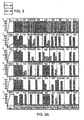
- Figure 2(A) shows a comparison of one recognition sequence for each of the wild type I-CreI meganuclease (WT) and 11 rationally-designed meganuclease heterodimers of the invention. Bases that are conserved relative to the WT recognition sequence are shaded. The 9 bp half-sites are bolded.
- WT wild-type (SEQ ID NO: 4); CF: ⁇ F508 allele of the human CFTR gene responsible for most cases of cystic fibrosis (SEQ ID NO: 25); MYD: the human DM kinase gene associated with myotonic dystrophy (SEQ ID NO: 27); CCR: the human CCR5 gene (a major HIV co-receptor) (SEQ ID NO: 26); ACH: the human FGFR3 gene correlated with achondroplasia (SEQ ID NO: 23); TAT: the HIV-1 TAT/REV gene (SEQ ID NO: 15); HSV: the HSV-1 UL36 gene (SEQ ID NO: 28); LAM: the bacteriophage ⁇ p05 gene (SEQ ID NO: 22); POX: the Variola (smallpox) virus gp009 gene (SEQ ID NO: 30); URA: the Saccharomyces cerevisiae URA3 gene (SEQ ID NO: 36); GLA: the Arabi
- Figure 2(B) illustrates the results of incubation of each of wild-type I-CreI (WT) and 11 rationally-designed meganuclease heterodimers with plasmids harboring the recognition sites for all 12 enzymes for 6 hours at 37°C. Percent cleavage is indicated in each box.
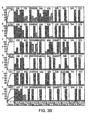
- Figure 3 illustrates cleavage patterns of wild-type and rationally-designed I-CreI homodimers.
- A wild type I-CreI.
- B I-CreI K116D.
- C-L rationally-designed meganucleases of the invention. Enzymes were incubated with a set of plasmids harboring palindromes of the intended cleavage half-site the 27 corresponding single-base pair variations. Bar graphs show fractional cleavage (F) in 4 hours at 37°C. Black bars: expected cleavage patterns based on Table 1. Gray bars: DNA sites that deviate from expected cleavage patterns. White circles indicate bases in the intended recognition site. Also shown are cleavage time-courses over two hours.
- the open circle time-course plots in C and L correspond to cleavage by the CCR1 and BRP2 enzymes lacking the E80Q mutation.
- the cleavage sites correspond to the 5' (left column) and 3' (right column) half-sites for the heterodimeric enzymes described in Fig. 2(A) .
- the present invention is based, in part, upon the identification and characterization of specific amino acids in the LAGLIDADG family of meganucleases that make specific contacts with DNA bases and non-specific contacts with the DNA backbone when the meganucleases associate with a double-stranded DNA recognition sequence, and which thereby affect the recognition sequence specificity and DNA-binding affinity of the enzymes.
- the invention provides rationally-designed meganucleases in which residues at the interface between the monomers associated to form a dimer have been modified in order to promote heterodimer formation.
- the invention provides uses for the rationally-designed meganucleases in the production of recombinant cells and organisms, as well as in gene therapy, anti-pathogen, anti-cancer, and in vitro applications, as disclosed herein.
- the invention provides methods for generating rationally-designed LAGLIDADG meganucleases containing altered amino acid residues at sites within the meganuclease that are responsible for (1) sequence-specific binding to individual bases in the double-stranded DNA recognition sequence, or (2) non-sequence-specific binding to the phosphodiester backbone of a double-stranded DNA molecule.
- enzyme activity is correlated to DNA-binding affinity, however, altering the amino acids involved in binding to the DNA recognition sequence can alter not only the specificity of the meganuclease through specific base pair interactions, but also the activity of the meganuclease by increasing or decreasing overall binding affinity for the double-stranded DNA.
- altering the amino acids involved in binding to the DNA backbone can alter not only the activity of the enzyme, but also the degree of specificity or degeneracy of binding to the recognition sequence by increasing or decreasing overall binding affinity for the double-stranded DNA.
- the methods of rationally-designing meganucleases include the identification of the amino acids responsible for DNA recognition/binding, and the application of a series of rules for selecting appropriate amino acid changes.
- the rules include both steric considerations relating to the distances in a meganuclease-DNA complex between the amino acid side chains of the meganuclease and the bases in the sense and anti-sense strands of the DNA, and considerations relating to the non-covalent chemical interactions between functional groups of the amino acid side chains and the desired DNA base at the relevant position.
- the invention provides rationally-designed meganucleases in which monomers differing by at least one amino acid position are dimerized to form heterodimers.
- both monomers are rationally-designed to form a heterodimer which recognizes a non-palindromic recognition sequence.
- a mixture of two different monomers can result in up to three active forms of meganuclease dimer: the two homodimers and the heterodimer.
- amino acid residues are altered at the interfaces at which monomers can interact to form dimers, in order to increase or decrease the likelihood of formation of homodimers or heterodimers.
- the invention provide methods for rationally designing LAGLIDADG meganucleases containing amino acid changes that alter the specificity and/or activity of the enzymes.
- the invention provides the rationally-designed meganucleases resulting from these methods.
- the invention provides methods that use such rationally-designed meganucleases to produce recombinant nucleic acids and organisms in which a desired DNA sequence or genetic locus within the genome of an organism is modified by the insertion, deletion, substitution or other manipulation of DNA sequences.
- the invention provides methods for reducing the survival of pathogens or cancer cells using rationally-designed meganucleases which have pathogen-specific or cancer-specific recognition sequences.
- meganuclease refers to an endonuclease that binds double-stranded DNA at a recognition sequence that is greater than 12 base pairs.
- Naturally-occurring meganucleases can be monomeric (e.g., I-SceI) or dimeric (e.g., I-CreI).
- the term meganuclease, as used herein, can be used to refer to monomeric meganucleases, dimeric meganucleases, or to the monomers which associate to form a dimeric meganuclease.
- the term "homing endonuclease" is synonymous with the term “meganuclease.”
- LAGLIDADG meganuclease refers either to meganucleases including a single LAGLIDADG motif, which are naturally dimeric, or to meganucleases including two LAGLIDADG motifs, which are naturally monomeric.
- the term "mono-LAGLIDADG meganuclease” is used herein to refer to meganucleases including a single LAGLIDADG motif
- the term "di-LAGLIDADG meganuclease” is used herein to refer to meganucleases including two LAGLIDADG motifs, when it is necessary to distinguish between the two.
- Each of the two structural domains of a di-LAGLIDADG meganuclease which includes a LAGLIDADG motif can be referred to as a LAGLIDADG subunit.
- rationally-designed means non-naturally occurring and/or genetically engineered.
- the rationally-designed meganucleases of the invention differ from wild-type or naturally-occurring meganucleases in their amino acid sequence or primary structure, and may also differ in their secondary, tertiary or quaternary structure.
- the rationally-designed meganucleases of the invention also differ from wild-type or naturally-occurring meganucleases in recognition sequence-specificity and/or activity.
- the term “recombinant” means having an altered amino acid sequence as a result of the application of genetic engineering techniques to nucleic acids which encode the protein, and cells or organisms which express the protein.
- nucleic acid means having an altered nucleic acid sequence as a result of the application of genetic engineering techniques.
- Genetic engineering techniques include, but are not limited to, PCR and DNA cloning technologies; transfection, transformation and other gene transfer technologies; homologous recombination; site-directed mutagenesis; and gene fusion.
- a protein having an amino acid sequence identical to a naturally-occurring protein, but produced by cloning and expression in a heterologous host is not considered recombinant.
- modification means any insertion, deletion or substitution of an amino acid residue in the recombinant sequence relative to a reference sequence (e.g., a wild-type).
- the term “genetically-modified” refers to a cell or organism in which, or in an ancestor of which, a genomic DNA sequence has been deliberately modified by recombinant technology. As used herein, the term “genetically-modified” encompasses the term "transgenic.”
- wild-type refers to any naturally-occurring form of a meganuclease.
- wild-type is not intended to mean the most common allelic variant of the enzyme in nature but, rather, any allelic variant found in nature. Wild-type meganucleases are distinguished from recombinant or non-naturally-occurring meganucleases.
- the term "recognition sequence half-site” or simply “half site” means a nucleic acid sequence in a double-stranded DNA molecule which is recognized by a monomer of a mono-LAGLIDADG meganuclease or by one LAGLIDADG subunit of a di-LAGLIDADG meganuclease.
- the term "recognition sequence” refers to a pair of half-sites which is bound and cleaved by either a mono-LAGLIDADG meganuclease dimer or a di-LAGLIDADG meganuclease monomer.
- the two half-sites may or may not be separated by base pairs that are not specifically recognized by the enzyme.
- the recognition sequence half-site of each monomer spans 9 base pairs, and the two half-sites are separated by four base pairs which are not recognized specifically but which constitute the actual cleavage site (which has a 4 base pair overhang).
- the combined recognition sequences of the I-CreI, I-MsoI and I-CeuI meganuclease dimers normally span 22 base pairs, including two 9 base pair half-sites flanking a 4 base pair cleavage site.
- the base pairs of each half-site are designated - 9 through -1, with the -9 position being most distal from the cleavage site and the -1 position being adjacent to the 4 central base pairs, which are designated N 1 -N 4 .
- each half-site which is oriented 5' to 3' in the direction from -9 to -1 (i.e., towards the cleavage site), is designated the "sense” strand and the opposite strand is designated the "antisense strand", although neither strand may encode protein.
- the "sense" strand of one half-site is the antisense strand of the other half-site. See, for example, Figure 1(A) .
- the recognition sequence is an approximately 18 bp non-palindromic sequence, and there are no central base pairs which are not specifically recognized.
- one of the two strands is referred to as the "sense” strand and the other the "antisense” strand, although neither strand may encode protein.
- the term "specificity" means the ability of a meganuclease to recognize and cleave double-stranded DNA molecules only at a particular sequence of base pairs referred to as the recognition sequence, or only at a particular set of recognition sequences.
- the set of recognition sequences will share certain conserved positions or sequence motifs, but may be degenerate at one or more positions.
- a highly-specific meganuclease is capable of cleaving only one or a very few recognition sequences. Specificity can be determined in a cleavage assay as described in Example 1.
- a meganuclease has "altered" specificity if it binds to and cleaves a recognition sequence which is not bound to and cleaved by a reference meganuclease (e.g., a wild-type) or if the rate of cleavage of a recognition sequence is increased or decreased by a statistically significant ( p ⁇ 0.05) amount relative to a reference meganuclease.
- a reference meganuclease e.g., a wild-type
- degeneracy means the opposite of "specificity.”
- a highly-degenerate meganuclease is capable of cleaving a large number of divergent recognition sequences.
- a meganuclease can have sequence degeneracy at a single position within a half-site or at multiple, even all, positions within a half-site.
- sequence degeneracy can result from (i) the inability of any amino acid in the DNA-binding domain of a meganuclease to make a specific contact with any base at one or more positions in the recognition sequence, (ii) the ability of one or more amino acids in the DNA-binding domain of a meganuclease to make specific contacts with more than one base at one or more positions in the recognition sequence, and/or (iii) sufficient non-specific DNA binding affinity for activity.
- a "completely" degenerate position can be occupied by any of the four bases and can be designated with an "N" in a half-site.
- a “partially” degenerate position can be occupied by two or three of the four bases (e.g ., either purine (Pu), either pyrimidine (Py), or not G).
- DNA-binding affinity or "binding affinity” means the tendency of a meganuclease to non-covalently associate with a reference DNA molecule ( e.g. , a recognition sequence or an arbitrary sequence). Binding affinity is measured by a dissociation constant, K D (e.g ., the K D of I-CreI for the WT recognition sequence is approximately 0.1 nM).
- a meganuclease has "altered" binding affinity if the K D of the recombinant meganuclease for a reference recognition sequence is increased or decreased by a statistically significant ( p ⁇ 0.05) amount relative to a reference meganuclease.
- affinity for dimer formation means the tendency of a meganuclease monomer to non-covalently associate with a reference meganuclease monomer.
- the affinity for dimer formation can be measured with the same monomer (i.e ., homodimer formation) or with a different monomer ( i.e. , heterodimer formation) such as a reference wild-type meganuclease. Binding affinity is measured by a dissociation constant, K D .
- a meganuclease has "altered" affinity for dimer formation if the K D of the recombinant meganuclease monomer for a reference meganuclease monomer is increased or decreased by a statistically significant ( p ⁇ 0.05) amount relative to a reference meganuclease monomer.
- palindromic refers to a recognition sequence consisting of inverted repeats of identical half-sites. In this case, however, the palindromic sequence need not be palindromic with respect to the four central base pairs, which are not contacted by the enzyme. In the case of dimeric meganucleases, palindromic DNA sequences are recognized by homodimers in which the two monomers make contacts with identical half-sites.
- the term "pseudo-palindromic” refers to a recognition sequence consisting of inverted repeats of non-identical or imperfectly palindromic half-sites.
- the pseudo-palindromic sequence not only need not be palindromic with respect to the four central base pairs, but also can deviate from a palindromic sequence between the two half-sites.
- Pseudo-palindromic DNA sequences are typical of the natural DNA sites recognized by wild-type homodimeric meganucleases in which two identical enzyme monomers make contacts with different half-sites.
- non-palindromic refers to a recognition sequence composed of two unrelated half-sites of a meganuclease.
- the non-palindromic sequence need not be palindromic with respect to either the four central base pairs or the two monomer half-sites.
- Non-palindromic DNA sequences are recognized by either di-LAGLIDADG meganucleases, highly degenerate mono-LAGLIDADG meganucleases (e.g., I-CeuI) or by heterodimers of mono-LAGLIDADG meganuclease monomers that recognize non-identical half-sites.
- the term "activity" refers to the rate at which a meganuclease of the invention cleaves a particular recognition sequence. Such activity is a measurable enzymatic reaction, involving the hydrolysis of phosphodiester bonds of double-stranded DNA.
- the activity of a meganuclease acting on a particular DNA substrate is affected by the affinity or avidity of the meganuclease for that particular DNA substrate which is, in turn, affected by both sequence-specific and non-sequence-specific interactions with the DNA.
- homologous recombination refers to the natural, cellular process in which a double-stranded DNA-break is repaired using a homologous DNA sequence as the repair template (see, e.g. Cahill et al. (2006), Front. Biosci. 11:1958-1976 ).
- the homologous DNA sequence may be an endogenous chromosomal sequence or an exogenous nucleic acid that was delivered to the cell.
- a rationally-designed meganuclease is used to cleave a recognition sequence within a target sequence and an exogenous nucleic acid with homology to or substantial sequence similarity with the target sequence is delivered into the cell and used as a template for repair by homologous recombination.
- the DNA sequence of the exogenous nucleic acid which may differ significantly from the target sequence, is thereby incorporated into the chromosomal sequence.
- the process of homologous recombination occurs primarily in eukaryotic organisms.
- the term "homology” is used herein as equivalent to "sequence similarity" and is not intended to require identity by descent or phylogenetic relatedness.
- non-homologous end-joining refers to the natural, cellular process in which a double-stranded DNA-break is repaired by the direct joining of two non-homologous DNA segments (see, e.g. Cahill et al. (2006), Front. Biosci. 11:1958-1976 ). DNA repair by non-homologous end-joining is error-prone and frequently results in the untemplated addition or deletion of DNA sequences at the site of repair.
- a rationally-designed meganuclease can be used to produce a double-stranded break at a meganuclease recognition sequence within a target sequence to disrupt a gene ( e.g., by introducing base insertions, base deletions, or frameshift mutations) by non-homologous end-joining.
- an exogenous nucleic acid lacking homology to or substantial sequence similarity with the target sequence may be captured at the site of a meganuclease-stimulated double-stranded DNA break by non-homologous end-joining (see, e.g. Salomon, et al. (1998), EMBO J. 17:6086-6095 ).
- the process of non-homologous end-joining occurs in both eukaryotes and prokaryotes such as bacteria.
- sequence of interest means any nucleic acid sequence, whether it codes for a protein, RNA, or regulatory element (e.g., an enhancer, silencer, or promoter sequence), that can be inserted into a genome or used to replace a genomic DNA sequence using a meganuclease protein.
- Sequences of interest can have heterologous DNA sequences that allow for tagging a protein or RNA that is expressed from the sequence of interest.
- a protein can be tagged with tags including, but not limited to, an epitope (e.g. , c-myc, FLAG) or other ligand (e.g., poly-His).
- a sequence of interest can encode a fusion protein, according to techniques known in the art (see, e.g., Ausubel et al., Current Protocols in Molecular Biology, Wiley 1999 ).
- the sequence of interest is flanked by a DNA sequence that is recognized by the recombinant meganuclease for cleavage.
- the flanking sequences are cleaved allowing for proper insertion of the sequence of interest into genomic recognition sequences cleaved by the recombinant meganuclease.
- the entire sequence of interest is homologous to or has substantial sequence similarity with the a target sequence in the genome such that homologous recombination effectively replaces the target sequence with the sequence of interest.
- the sequence of interest is flanked by DNA sequences with homology to or substantial sequence similarity with the target sequence such that homologous recombination inserts the sequence of interest within the genome at the locus of the target sequence.
- the sequence of interest is substantially identical to the target sequence except for mutations or other modifications in the meganuclease recognition sequence such that the meganuclease can not cleave the target sequence after it has been modified by the sequence of interest.
- percentage similarity and “sequence similarity” refer to a measure of the degree of similarity of two sequences based upon an alignment of the sequences which maximizes similarity between aligned amino acid residues or nucleotides, and which is a function of the number of identical or similar residues or nucleotides, the number of total residues or nucleotides, and the presence and length of gaps in the sequence alignment.
- a variety of algorithms and computer programs are available for determining sequence similarity using standard parameters.
- sequence similarity is measured using the BLASTp program for amino acid sequences and the BLASTn program for nucleic acid sequences, both of which are available through the National Center for Biotechnology Information (www.ncbi.nlm.nih.gov/), and are described in, for example, Altschul et al. (1990), J. Mol. Biol. 215:403 -410 ; Gish and States (1993), Nature Genet. 3:266-272 ; Madden et al. (1996), Meth. Enzymol. 266:131-141 ; Altschul et al. (1997), Nucleic Acids Res. 25:33 89-3402 ); Zhang et al. (2000), J. Comput. Biol.
- the term "corresponding to” is used to indicate that a specified modification in the first protein is a substitution of the same amino acid residue as in the modification in the second protein, and that the amino acid position of the modification in the first proteins corresponds to or aligns with the amino acid position of the modification in the second protein when the two proteins are subjected to standard sequence alignments ( e.g., using the BLASTp program).
- the modification of residue "X” to amino acid "A” in the first protein will correspond to the modification of residue "Y” to amino acid "A” in the second protein if residues X and Y correspond to each other in a sequence alignment, and despite the fact that X and Y may be different numbers.
- variable As used herein, the recitation of a numerical range for a variable is intended to convey that the invention may be practiced with the variable equal to any of the values within that range. Thus, for a variable which is inherently discrete, the variable can be equal to any integer value within the numerical range, including the end-points of the range. Similarly, for a variable which is inherently continuous, the variable can be equal to any real value within the numerical range, including the end-points of the range.
- a variable which is described as having values between 0 and 2 can take the values 0, 1 or 2 if the variable is inherently discrete, and can take the values 0.0, 0.1, 0.01, 0.001, or any other real values ⁇ 0 and ⁇ 2 if the variable is inherently continuous.
- recombinant meganucleases are rationally-designed by first predicting amino acid substitutions that can alter base preference at each position in the half-site. These substitutions can be experimentally validated individually or in combinations to produce meganucleases with the desired cleavage specificity.
- amino acid substitutions that can cause a desired change in base preference are predicted by determining the amino acid side chains of a reference meganuclease (e.g., a wild-type meganuclease, or a non-naturally-occurring reference meganuclease) that are able to participate in making contacts with the nucleic acid bases of the meganuclease's DNA recognition sequence and the DNA phosphodiester backbone, and the spatial and chemical nature of those contacts.
- a reference meganuclease e.g., a wild-type meganuclease, or a non-naturally-occurring reference meganuclease
- These amino acids include but are not limited to side chains involved in contacting the reference DNA half-site.
- this determination requires having knowledge of the structure of the complex between the meganuclease and its double-stranded DNA recognition sequence, or knowledge of the structure of a highly similar complex (e.g., between the same meganuclease and an alternative DNA recognition sequence, or between an allelic or phylogenetic variant of the meganuclease and its DNA recognition sequence).
- Three-dimensional structures, as described by atomic coordinates data, of a polypeptide or complex of two or more polypeptides can be obtained in several ways.
- protein structure determinations can be made using techniques including, but not limited to, X-ray crystallography, NMR, and mass spectrometry.
- Another approach is to analyze databases of existing structural co-ordinates for the meganuclease of interest or a related meganuclease.
- Such structural data is often available from databases in the form of three-dimensional coordinates. Often this data is accessible through online databases (e.g ., the RCSB Protein Data Bank at www.rcsb.org/pdb).
- Structural information can be obtained experimentally by analyzing the diffraction patterns of, for example, X-rays or electrons, created by regular two- or three-dimensional arrays ( e.g ., crystals) of proteins or protein complexes. Computational methods are used to transform the diffraction data into three-dimensional atomic coordinates in space. For example, the field of X-ray crystallography has been used to generate three-dimensional structural information on many protein-DNA complexes, including meganucleases (see, e.g., Chevalier et al. (2001), Nucleic Acids Res. 29(18): 3757-3774 ).
- Nuclear Magnetic Resonance also has been used to determine inter-atomic distances of molecules in solution.
- Multi-dimensional NMR methods combined with computational methods have succeeded in determining the atomic coordinates of polypeptides of increasing size (see, e.g ., Tzakos et al. (2006), Annu. Rev. Biophys. Biomol. Struct. 35:19-42 .).
- computational modeling can be used by applying algorithms based on the known primary structures and, when available, secondary, tertiary and/or quaternary structures of the protein/DNA, as well as the known physiochemical nature of the amino acid side chains, nucleic acid bases, and bond interactions. Such methods can optionally include iterative approaches, or experimentally-derived constraints.
- An example of such computational software is the CNS program described in Adams et al. (1999), Acta Crystallogr. D. Biol. Crystallogr. 55 (Pt 1): 181-90 .
- a variety of other computational programs have been developed that predict the spatial arrangement of amino acids in a protein structure and predict the interaction of the amino acid side chains of the protein with various target molecules (see, e.g., U.S. Pat. No. 6,988,041 ).
- computational models are used to identify specific amino acid residues that specifically interact with DNA nucleic acid bases and/or facilitate non-specific phosphodiester backbone interactions.
- computer models of the totality of the potential meganuclease-DNA interaction can be produced using a suitable software program, including, but not limited to, MOLSCRIPTTM 2.0 (Avatar Software AB, Sweden), the graphical display program O ( Jones et. al. (1991), Acta Crystallography, A47: 110 ), the graphical display program GRASPTM ( Nicholls et al.
- PROTEINS Structure, Function and Genetics 11 (4): 281ff
- INSIGHTTM graphical display program INSIGHTTM
- Computer hardware suitable for producing, viewing and manipulating three-dimensional structural representations of protein-DNA complexes are commercially available and well known in the art (e.g ., Silicon Graphics Workstation, Silicon Graphics, Inc., Mountainview, CA).
- interactions between a meganuclease and its double-stranded DNA recognition sequences can be resolved using methods known in the art.
- a representation, or model, of the three dimensional structure of a multicomponent complex structure, for which a crystal has been produced can be determined using techniques which include molecular replacement or SIR/MIR (single/multiple isomorphous replacement) (see, e.g ., Brunger (1997), Meth. Enzym. 276: 558-580 ; Navaza and Saludjian (1997), Meth. Enzym. 276: 581-594 ; Tong and Rossmann (1997), Meth. Enzym. 276: 594-611 ; and Bentley (1997), Meth.
- SIR/MIR single/multiple isomorphous replacement
- Enzym. 276: 611-619 can be performed using a software program, such as AMoRe/Mosflm ( Navaza (1994), Acta Cryst. A50: 157-163 ; CCP4 (1994), Acta Cryst. D50: 760-763 ) or XPLOR (see, Brünger et al. (1992), X-PLOR Version 3.1. A System for X-ray Crystallography and NMR, Yale University Press, New Haven, CT ).
- AMoRe/Mosflm Navaza (1994), Acta Cryst. A50: 157-163 ; CCP4 (1994), Acta Cryst. D50: 760-763
- XPLOR see, Brünger et al. (1992), X-PLOR Version 3.1. A System for X-ray Crystallography and NMR, Yale University Press, New Haven, CT ).
- amino acid side chain interactions with a particular base or DNA phosphodiester backbone.
- Chemical interactions used to determine appropriate amino acid substitutions include, but are not limited to, van der Waals forces, steric hindrance, ionic bonding, hydrogen bonding, and hydrophobic interactions.
- Amino acid substitutions can be selected which either favor or disfavor specific interactions of the meganuclease with a particular base in a potential recognition sequence half-site in order to increase or decrease specificity for that sequence and, to some degree, overall binding affinity and activity.
- amino acid substitutions can be selected which either increase or decrease binding affinity for the phosphodiester backbone of double-stranded DNA in order to increase or decrease overall activity and, to some degree, to decrease or increase specificity.
- a three-dimensional structure of a meganuclease-DNA complex is determined and a "contact surface" is defined for each base-pair in a DNA recognition sequence half-site.
- the contact surface comprises those amino acids in the enzyme with ⁇ -carbons less than 9.0 ⁇ from a major groove hydrogen-bond donor or acceptor on either base in the pair, and with side chains oriented toward the DNA, irrespective of whether the residues make base contacts in the wild-type meganuclease-DNA complex.
- residues can be excluded if the residues do not make contact in the wild-type meganuclease-DNA complex, or residues can be included or excluded at the discretion of the designer to alter the number or identity of the residues considered.
- the contact surfaces were limited to the amino acid positions that actually interact in the wild-type enzyme-DNA complex.
- the contact surfaces were defined to contain additional amino acid positions that are not involved in wild-type contacts but which could potentially contact a base if substituted with a different amino acid.
- a recognition sequence half-site is typically represented with respect to only one strand of DNA
- meganucleases bind in the major groove of double-stranded DNA, and make contact with nucleic acid bases on both strands.
- the designations of "sense” and “antisense” strands are completely arbitrary with respect to meganuclease binding and recognition. Sequence specificity at a position can be achieved either through interactions with one member of a base pair, or by a combination of interactions with both members of a base-pair.
- residues are selected which are sufficiently close to contact the sense strand at position X and which favor the presence of an A, and/or residues are selected which are sufficiently close to contact the antisense strand at position X and which favor the presence of a T.
- a residue is considered sufficiently close if the ⁇ -carbon of the residue is within 9 ⁇ of the closest atom of the relevant base.
- an amino acid with a ⁇ -carbon within 9 ⁇ of the DNA sense strand but greater than 9 ⁇ from the antisense strand is considered for potential interactions with only the sense strand.
- an amino acid with a ⁇ -carbon within 9 ⁇ of the DNA antisense strand but greater than 9 ⁇ from the sense strand is considered for potential interactions with only the antisense strand.
- Amino acids with ⁇ -carbons that are within 9 ⁇ of both DNA strands are considered for potential interactions with either strand.
- potential amino acid substitutions are selected based on their predicted ability to interact favorably with one or more of the four DNA bases.
- the selection process is based upon two primary criteria: (i) the size of the amino acid side chains, which will affect their steric interactions with different nucleic acid bases, and (ii) the chemical nature of the amino acid side chains, which will affect their electrostatic and bonding interactions with the different nucleic acid bases.
- amino acids with shorter and/or smaller side chains can be selected if an amino acid ⁇ -carbon in a contact surface is ⁇ 6 ⁇ from a base
- amino acids with longer and/or larger side chains can be selected if an amino acid ⁇ -carbon in a contact surface is >6 ⁇ from a base
- Amino acids with side chains that are intermediate in size can be selected if an amino acid ⁇ -carbon in a contact surface is 5-8 A from a base.
- the amino acids with relatively shorter and smaller side chains can be assigned to Group 1, including glycine (G), alanine (A), serine (S), threonine (T), cysteine (C), valine (V), leucine (L), isoleucine (I), aspartate (D), asparagine (N) and proline (P).
- G glycine
- A alanine
- S serine
- T threonine
- V valine
- L leucine
- I isoleucine
- D aspartate
- N asparagine
- proline proline
- Proline is expected to be used less frequently because of its relative inflexibility.
- glycine is expected to be used less frequently because it introduces unwanted flexibility in the peptide backbone and its very small size reduces the likelihood of effective contacts when it replaces a larger residue.
- glycine can be used in some instances for promoting a degenerate position.
- the amino acids with side chains of relatively intermediate length and size can be assigned to Group 2, including lysine (K), methionine (M), arginine (R), glutamate (E) and glutamine (Q).
- the amino acids with relatively longer and/or larger side chains can be assigned to Group 3, including lysine (K), methionine (M), arginine (R), histidine (H), phenylalanine (F), tyrosine (Y), and tryptophan (W). Tryptophan, however, is expected to be used less frequently because of its relative inflexibility.
- the different amino acids are evaluated for their potential interactions with the different nucleic acid bases (e.g., van der Waals forces, ionic bonding, hydrogen bonding, and hydrophobic interactions) and residues are selected which either favor or disfavor specific interactions of the meganuclease with a particular base at a particular position in the double-stranded DNA recognition sequence half-site.
- residues are selected which either favor or disfavor specific interactions of the meganuclease with a particular base at a particular position in the double-stranded DNA recognition sequence half-site.
- residues which favor the presence of two or more bases, or residues which disfavor one or more bases can be achieved by sterically hindering a pyrimidine at a sense or antisense position.
- G bases Recognition of guanine (G) bases is achieved using amino acids with basic side chains that form hydrogen bonds to N7 and 06 of the base. Cytosine (C) specificity is conferred by negatively-charged side chains which interact unfavorably with the major groove electronegative groups present on all bases except C. Thymine (T) recognition is rationally-designed using hydrophobic and van der Waals interactions between hydrophobic side chains and the major groove methyl group on the base. Finally, adenine (A) bases are recognized using the carboxamide side chains Asn and Gln or the hydroxyl side chain of Tyr through a pair of hydrogen bonds to N7 and N6 of the base.
- His can be used to confer specificity for a purine base (A or G) by donating a hydrogen bond to N7.
- each amino acid residue can be assigned to one or more different groups corresponding to the different bases they favor (i.e., G, C, T or A).
- Group G includes arginine (R), lysine (K) and histidine (H);
- Group C includes aspartate (D) and glutamate (E);
- Group T includes alanine (A), valine (V), leucine (L), isoleucine (I), cysteine (C), threonine (T), methionine (M) and phenylalanine (F); and
- Group A includes asparagine (N), glutamine (N), tyrosine (Y) and histidine (H).
- histidine appears in both Group G and Group A; that serine (S) is not included in any group but may be used to favor a degenerate position; and that proline, glycine, and tryptophan are not included in any particular group because of predominant steric considerations.
- More than one such residue comprising the contact surface can be selected for analysis and modification and, in some embodiments, each such residue is analyzed and multiple residues are modified.
- the distance between the ⁇ -carbon of a residue included in the contact surface and each of the two bases of the base pair at position X can be determined and, if the residue is within 9 ⁇ of both bases, then different substitutions can be made to affect the two bases of the pair (e.g ., a residue from Group I to affect a proximal base on one strand, or a residue from Group 3 to affect a distal base on the other strand).
- a combination of residue substitutions capable of interacting with both bases in a pair can affect the specificity (e.g ., a residue from the T Group contacting the sense strand combined with a residue from the A Group contacting the antisense strand to select for T/A).
- multiple alternative modifications of the residues can be validated either empirically (e.g ., by producing the recombinant meganuclease and testing its sequence recognition) or computationally ( e.g ., by computer modeling of the meganuclease-DNA complex of the modified enzyme) to choose amongst alternatives.
- non-random or site-directed mutagenesis techniques are used to create specific sequence modifications.
- Non-limiting examples of non-random mutagenesis techniques include overlapping primer PCR (see, e.g ., Wang et al. (2006), Nucleic Acids Res. 34(2): 517-527 ), site-directed mutagenesis (see, e.g ., U.S. Pat. No. 7,041,814 ), cassette mutagenesis (see, e.g., U.S. Pat. No. 7,041,814 ), and the manufacturer's protocol for the Altered Sites® II Mutagenesis Systems kit commercially available from Promega Biosciences, Inc. (San Luis Obispo, CA).
- the recognition and cleavage of a specific DNA sequence by a rationally-designed meganuclease can be assayed by any method known by one skilled in the art (see, e.g., U.S. Pat. Pub. No. 2006/0078552 ).
- the determination of meganuclease cleavage is determined by in vitro cleavage assays.
- Such assays use in vitro cleavage of a polynucleotide substrate comprising the intended recognition sequence of the assayed meganuclease and, in certain embodiments, variations of the intended recognition sequence in which one or more bases in one or both half-sites have been changed to a different base.
- the polynucleotide substrate is a double-stranded DNA molecule comprising a target site which has been synthesized and cloned into a vector.
- the polynucleotide substrate can be linear or circular, and typically comprises only one recognition sequence.
- the meganuclease is incubated with the polynucleotide substrate under appropriate conditions, and the resulting polynucleotides are analyzed by known methods for identifying cleavage products ( e.g ,, electrophoresis or chromatography). If there is a single recognition sequence in a linear, double-strand DNA substrate, the meganuclease activity is detected by the appearance of two bands (products) and the disappearance of the initial full-length substrate band. In one embodiment, meganuclease activity can be assayed as described in, for example, Wang et al. (1997), Nucleic Acid Res., 25: 3767-3776 .
- the cleavage pattern of the meganuclease is determined using in vivo cleavage assays (see, e.g., U.S. Pat. Pub. No. 2006/0078552 ).
- the in vivo test is a single-strand annealing recombination test (SSA). This kind of test is known to those of skill in the art ( Rudin et al. (1989), Genetics 122: 519-534 ; Fishman-Lobell et al. (1992), Science 258: 480-4 ).
- substitutions can be made to domains of the meganuclease enzymes other than those involved in DNA recognition and binding without complete loss of activity.
- Substitutions can be conservative substitutions of similar amino acid residues at structurally or functionally constrained positions, or can be non-conservative substitutions at positions which are less structurally or functionally constrained.
- Such substitutions, insertions and deletions can be identified by one of ordinary skill in the art by routine experimentation without undue effort.
- the recombinant meganucleases of the invention include proteins having anywhere from 85% to 99% sequence similarity (e.g ., 85%, 87.5%, 90%, 92.5%, 95%, 97.5%, 99%) to a reference meganuclease sequence.
- sequence similarity e.g ., 85%, 87.5%, 90%, 92.5%, 95%, 97.5%, 99%
- residues 2-153 of SEQ ID NO: 1 for I-CreI residues 6-160 of SEQ ID NO: 6 for I-MsoI, residues 3-186 of SEQ ID NO: 9 for I-SceI, and residues 5-211 of SEQ ID NO: 12 for I-CeuI.
- the LAGLIDADG meganuclease family is composed of more than 200 members from a diverse phylogenetic group of host organisms. All members of this family have one or two copies of a highly conserved LAGLIDADG motif along with other structural motifs involved in cleavage of specific DNA sequences. Enzymes that have a single copy of the LAGLIDADG motif (i.e., mono-LAGLIDADG meganucleases) function as dimers, whereas the enzymes that have two copies of this motif (i.e ., di-LAGLIDADG meganucleases) function as monomers.
- LAGLIDADG family members recognize and cleave relatively long sequences (> 12bp), leaving four nucleotide 3' overhangs. These enzymes also share a number of structural motifs in addition to the LAGLIDADG motif, including a similar arrangement of anti-parallel ⁇ -strands at the protein-DNA interface. Amino acids within these conserved structural motifs are responsible for interacting with the DNA bases to confer recognition sequence specificity..
- the overall structural similarity between some members of the family e.g., I-CreI, I-MsoI, I-SceI and I-CeuI has been elucidated by X-ray crystallography.
- the members of this family can be modified at particular amino acids within such structural motifs to change the over-all activity or sequence-specificity of the enzymes, and corresponding modifications can reasonable be expected to have similar results in other family members. See, generally, Chevalier et al. (2001), Nucleic Acid Res. 29(18): 3757-3774 ).
- the present invention relates to rationally-designed meganucleases which are based upon or derived from the I-CreI meganuclease of Chlamydomonas reinhardtii.
- the wild-type amino acid sequence of the I-CreI meganuclease is shown in SEQ ID NO: 1, which corresponds to Genbank Accession # PO5725.
- Two recognition sequence half sites of the wild-type I-CreI meganuclease from crystal structure PDB # 1BP7 are shown below: Note that this natural recognition sequence is not perfectly palindromic, even outside the central four base pairs. The two recognition sequence half-sites are shown in bold on their respective sense strands.
- Wild-type I-CreI also recognizes and cuts the following perfectly palindromic (except for the central N 1 -N 4 bases) sequence:
- the palindromic sequence of SEQ ID NO: 4 and SEQ ID NO: 5 is considered to be a better substrate for the wild-type I-CreI because the enzyme binds this site with higher affinity and cleaves it more efficiently than the natural DNA sequence.
- this palindromic sequence cleaved by wild-type I-CreI is referred to as "WT" (see, e.g., Figure 2(A) ).
- WT this palindromic sequence cleaved by wild-type I-CreI is referred to as "WT" (see, e.g., Figure 2(A) ).
- the two recognition sequence half-sites are shown in bold on their respective sense strands.
- Figure 1(A) depicts the interactions of a wild-type I-CreI meganuclease homodimer with a double-stranded DNA recognition sequence
- Figures 1(B) shows the specific interactions between amino acid residues of the enzyme and bases at the -4 position of one half-site for a wild-type enzyme and one wild-type recognition sequence
- Figures 1(C)-(E) show the specific interactions between amino acid residues of the enzyme and bases at the -4 position of one half-site for three rationally-designed meganucleases of the invention with altered specificity at position -4 of the half-site.
- the base preference at any specified base position of the half-site can be rationally altered to each of the other three base pairs using the methods disclosed herein.
- the wild type recognition surface at the specified base position is determined (e.g., by analyzing meganuclease-DNA complex co-crystal structures; or by computer modeling of the meganuclease-DNA complexes).
- Second, existing and potential contact residues are determined based on the distances between the ⁇ -carbons of the surrounding amino acid positions and the nucleic acid bases on each DNA strand at the specified base position.
- the I-CreI wild type meganuclease-DNA contact residues at position -4 involve a glutamine at position 26 which hydrogen bonds to an A base on the antisense DNA strand.
- Residue 77 was also identified as potentially being able to contact the -4 base on the DNA sense strand.
- the ⁇ -carbon of residue 26 is 5.9 ⁇ away from N7 of the A base on the antisense DNA strand, and the ⁇ -carbon of residue 77 is 7.15 ⁇ away from the C5-methyl of the T on the sense strand.
- a C on the sense strand could hydrogen bond with a glutamic acid at position 77 and a G on the antisense strand could bond with glutamine at position 26 (mediated by a water molecule, as observed in the wild-type I-CreI crystal structure) (see Fig 1(C) ); a G on the sense strand could hydrogen bond with an arginine at position 77 and a C on the antisense strand could hydrogen bond with a glutamic acid at position 26 (see Fig 1(D) ); an A on the sense strand could hydrogen bond with a glutamine at position 77 and a T on the antisense strand could form hydrophobic contacts with an alanine at position 26 (see Fig.
- the wild-type contact, Q26 can be substituted (e.g., with a serine residue) to reduce or remove its influence on specificity.
- complementary mutations at positions 26 and 77 can be combined to specify a particular base pair (e.g., A26 specifies a T on the antisense strand and Q77 specifies an A on the sense strand ( Fig. 1(E) ).
- the present invention relates to rationally-designed meganucleases which are based upon or derived from the I-MsoI meganuclease of Monomastix sp.
- the wild-type amino acid sequence of the I-MsoI meganuclease is shown in SEQ ID NO: 6, which corresponds to Genbank Accession # AAL34387.
- Two recognition sequence half-sites of the wild-type I-MsoI meganuclease from crystal structure PDB # 1M5X are shown below: Note that the recognition sequence is not perfectly palindromic, even outside the central four base pairs. The two recognition sequence half-sites are shown in bold on their respective sense strands.
- the present invention relates to rationally-designed meganucleases which are based upon or derived from the I-SceI meganuclease of Saccharomyces cerevisiae.
- the wild-type amino acid sequence of the I-SceI meganuclease is shown in SEQ ID NO: 9, which corresponds to Genbank Accession # CAA09843.
- the recognition sequence of the wild-type I-SceI meganuclease from crystal structure PDB # 1R7M is shown below: Sense 5'-T T A C C C T G T T A T C C C T A G-3' SEQ ID NO: 10 Antisense 3'-A A T G G G A C A A T A G G G A T C-5' SEQ ID NO: 11 Position 1 2 3 4 5 6 7 8 9 10 11 12 13 14 15 16 17 18 Note that the recognition sequence is non-palindromic and there are not four base pairs separating half sites.
- the present invention relates to rationally-designed meganucleases which are based upon or derived from the I-CeuI meganuclease of Chlamydomonas eugametos.
- the wild-type amino acid sequence of the I-CeuI meganuclease is shown in SEQ ID NO: 12, which corresponds to Genbank Accession # P32761.
- Two recognition sequence half sites of the wild-type I-CeuI meganuclease from crystal structure PDB # 2EX5 are shown below: Note that the recognition sequence is non-palindromic, even outside the central four base pairs, despite the fact that I-CeuI is a homodimer, due to the natural degeneracy in the I-CeuI recognition interface ( Spiegel et al. (2006), Structure 14:869-80 ). The two recognition sequence half-sites are shown in bold on their respective sense strands.
- the present invention is not intended to embrace certain recombinant meganucleases which have been described in the prior art, and which have been developed by alternative methods. These excluded meganucleases include those described by Arnould et al. (2006), J. Mol. BioL 355: 443-58 ; Sussman et al. (2004), J. Mol. Biol. 342: 31-41 ; Chames et al. (2005), Nucleic Acids Res. 33: e178 ; Seligman et al. (2002), Nucleic Acids Res. 30: 3870-9 ; and Ashworth et al.
- the present invention relates to rationally-designed meganucleases which are produced by combining two or more amino acid modifications as described in sections 2.2.1-2.2.4 above, in order to alter half-site preference at two or more positions in a DNA recognition sequence half-site.
- the enzyme DJI was derived from I-CreI by incorporating the modifications R30/E38 (which favor C at position -7), R40 (which favors G at position -6), R42 (which favors at G at position -5), and N32 (which favors complete degeneracy at position -9).
- the rationally-designed DJI meganuclease invariantly recognizes C -7 G -6 G -5 compared to the wild-type preference for A -7 A -6 C -5 , and has increased tolerance for A at position -9.
- the ability to combine residue substitutions that affect different base positions is due in part to the modular nature of the LAGLIDADG meganucleases.
- a majority of the base contacts in the LAGLIDADG recognition interfaces are made by individual amino acid side chains, and the interface is relatively free of interconnectivity or hydrogen bonding networks between side chains that interact with adjacent bases. This generally allows manipulation of residues that interact with one base position without affecting side chain interactions at adjacent bases.
- the additive nature of the mutations listed in sections 2.2.1-2.2.4 above is also a direct result of the method used to identify these mutations. The method predicts side chain substitutions that interact directly with a single base. Interconnectivity or hydrogen bonding networks between side chains is generally avoided to maintain the independence of the substitutions within the recognition interface.
- Combinations of amino substitutions can be used to rationally alter the specificity of a wild-type meganuclease (or a previously modified meganuclease) from an original recognition sequence to a desired recognition sequence which may be present in a nucleic acid of interest (e.g., a genome).
- Figure 2A shows the "sense" strand of the I-CreI meganuclease recognition sequence WT (SEQ ID NO: 4) as well as a number of other sequences for which a rationally-designed meganuclease would be useful. conserveed bases between the WT recognition sequence and the desired recognition sequence are shaded.
- recombinant meganucleases based on the I-CreI meganuclease can be rationally-designed for each of these desired recognition sequences, as well as any others, by suitable amino acid substitutions as described herein.
- the DNA-binding affinity of the recombinant meganucleases of the invention can be modulated by altering certain amino acids that form the contact surface with the phosphodiester backbone of DNA.
- the contact surface comprises those amino acids in the enzyme with ⁇ -carbon less than 9 A from the DNA backbone, and with side chains oriented toward the DNA, irrespective of whether the residues make contacts with the DNA backbone in the wild-type meganuclease-DNA complex.
- DNA-binding is a necessary precursor to enzyme activity
- increases/decreases in DNA-binding affinity have been shown to cause increases/decreases, respectively, in enzyme activity.
- increases/decreases in DNA-binding affinity also have been shown to cause decreases/increases in the meganuclease sequence-specificity. Therefore, both activity and specificity can be modulated by modifying the phosphodiester backbone contacts.
- the glutamic acid at position 80 in the I-CreI meganuclease is altered to either a lysine or a glutamine to increase activity.
- the tyrosine at position 66 of I-CreI is changed to arginine or lysine, which increases the activity of the meganuclease.
- enzyme activity is decreased by changing the lysine at position 34 of I-CreI to aspartic acid, changing the tyrosine at position 66 to aspartic acid, and/or changing the lysine at position 116 to aspartic acid.
- the activities of the recombinant meganucleases can be modulated such that the recombinant enzyme has anywhere from no activity to very high activity with respect to a particular recognition sequence.
- the DJ1 recombinant meganuclease when carrying glutamic acid mutation at position 26 loses activity completely.
- the combination of the glutamic acid substitution at position 26 and a glutamine substitution at position 80 creates a recombinant meganuclease with high specificity and activity toward a guanine at -4 within the recognition sequence half-site (see Figure 1(D) ).
- amino acids at various positions in proximity to the phosphodiester DNA backbone can be changed to simultaneously affect both meganuclease activity and specificity.
- This "tuning" of the enzyme specificity and activity is accomplished by increasing or decreasing the number of contacts made by amino acids with the phosphodiester backbone.
- a variety of contacts with the phosphodiester backbone can be facilitated by amino acid side chains.
- ionic bonds, salt bridges, hydrogen bonds, and steric hindrance affect the association of amino acid side chains with the phosphodiester backbone.
- alteration of the lysine at position 116 to an aspartic acid removes a salt bridge between nucleic acid base pairs at positions -8 and -9, reducing the rate of enzyme cleavage but increasing the specificity.
- the invention provides meganucleases which are heterodimers formed by the association of two monomers, one of which may be a wild-type and one or both of which may be a non-naturally-occurring or recombinant form.
- wild-type I-CreI meganuclease is normally a homodimer composed of two monomers that each bind to one half-site in the pseudo-palindromic recognition sequence.
- a heterodimeric recombinant meganuclease can be produced by combining two meganucleases that recognize different half-sites, for example by co-expressing the two meganucleases in a cell or by mixing two meganucleases in solution.
- heterodimers can be favored over the formation of homodimers by altering amino acids on each of the two monomers that affect their association into dimers.
- certain amino acids at the interface of the two monomers are altered from negatively-charged amino acids (D or E) to positively- charged amino acids (K or R) on a first monomer and from positively- charged amino acids to negatively-charged amino acids on a second monomer (Table 6).
- D or E negatively-charged amino acids
- K or R positively- charged amino acids
- Table 6 For example, in the case of meganucleases derived from I-CreI, lysines at positions 7 and 57 are mutated to glutamic acids in the first monomer and glutamic acids at positions 8 and 61 are mutated to lysines in the second monomer.
- the result of this process is a pair of monomers in which the first monomer has an excess of positively-charged residues at the dimer interface and the second monomer has an excess of negatively-charged residues at the dimer interface.
- the first and second monomer will, therefore, associate preferentially over their identical monomer pairs due to the electrostatic interactions between the altered amino acids at the interface.
- amino acids at the interface of the two monomers can be altered to sterically hinder homodimer formation.
- amino acids in the dimer interface of one monomer are substituted with larger or bulkier residues that will sterically prevent the homodimer.
- Amino acids in the dimer interface of the second monomer optionally can be substituted with smaller residues to compensate for the bulkier residues in the first monomer and remove any clashes in the heterodimer, or can be unmodified.
- an ionic bridge or hydrogen bond can be buried in the hydrophobic core of a heterodimeric interface.
- a hydrophobic residue on one monomer at the core of the interface can be substituted with a positively charged residue.
- a hydrophobic residue on the second monomer, that interacts in the wild type homodimer with the hydrophobic residue substituted in the first monomer can be substituted with a negatively charged residue.
- the two substituted residues can form an ionic bridge or hydrogen bond.
- the electrostatic repulsion of an unsatisfied charge buried in a hydrophobic interface should disfavor homodimer formation.
- each monomer of the heterodimer can have different amino acids substituted in the DNA recognition region such that each has a different DNA half-site and the combined dimeric DNA recognition sequence is non-palindromic.
- aspects of the present invention further provide methods for producing recombinant, transgenic or otherwise genetically-modified cells and organisms using rationally-designed meganucleases.
- recombinant meganucleases are developed to specifically cause a double-stranded break at a single site or at relatively few sites in the genomic DNA of a cell or an organism to allow for precise insertion(s) of a sequence of interest by homologous recombination.
- recombinant meganucleases are developed to specifically cause a double-stranded break at a single site or at relatively few sites in the genomic DNA of a cell or an organism to either (a) allow for rare insertion(s) of a sequence of interest by non-homologous end-joining or (b) allow for the disruption of the target sequence by non-homologous end-joining.
- insertion means the ligation of a sequence of interest into a chromosome such that the sequence of interest is integrated into the chromosome.
- an inserted sequence can replace an endogenous sequence, such that the original DNA is replaced by exogenous DNA of equal length, but with an altered nucleotide sequence.
- an inserted sequence can include more or fewer bases than the sequence it replaces.
- the recombinant organisms include, but are not limited to, monocot plant species such as rice, wheat, corn (maize) and rye, and dicot species such as legumes (e.g ., kidney beans, soybeans, lentils, peanuts, peas), alfalfa, clover, tobacco and Arabidopsis species.
- the recombinant organisms can include, but are not limited to, animals such as humans and non-human primates, horses, cows, goats, pigs, sheep, dogs, cats, guinea pigs, rats, mice, lizards, fish and insects such as Drosophila species.
- the organism is a fungus such as a Candida, Neurospora or Saccharomyces species.
- the methods of the invention involve the introduction of a sequence of interest into a cell such as a germ cell or stem cell that can become a mature recombinant organism or allow the resultant genetically-modified organism to give rise to progeny carrying the inserted sequence of interest in its genome.
- Meganuclease proteins can be delivered into cells to cleave genomic DNA, which allows for homologous recombination or non-homologous end-joining at the cleavage site with a sequence of interest, by a variety of different mechanisms known in the art.
- the recombinant meganuclease protein can introduced into a cell by techniques including, but not limited to, microinjection or liposome transfections (see, e.g ., LipofectamineTM, Invitrogen Corp., Carlsbad, CA).
- the liposome formulation can be used to facilitate lipid bilayer fusion with a target cell, thereby allowing the contents of the liposome or proteins associated with its surface to be brought into the cell.
- the enzyme can be fused to an appropriate uptake peptide such as that from the HIV TAT protein to direct cellular uptake (see, e.g., Hudecz et al. (2005), Med. Res. Rev. 25: 679-736 ).
- gene sequences encoding the meganuclease protein are inserted into a vector and transfected into a eukaryotic cell using techniques known in the art (see, e.g., Ausubel et. al., Current Protocols in Molecular Biology, Wiley 1999 ).
- the sequence of interest can be introduced in the same vector, a different vector, or by other means known in the art.
- Non-limiting examples of vectors for DNA transfection include virus vectors, plasmids, cosmids, and YAC vectors.
- Transfection of DNA sequences can be accomplished by a variety of methods known to those of skill in the art. For instance, liposomes and immunoliposomes are used to deliver DNA sequences to cells (see, e.g ., Lasic et al. (1995), Science 267: 1275-76 ).
- viruses can be utilized to introduce vectors into cells (see, e.g., U.S. Pat. No: 7,037,492 ).
- transfection strategies can be utilized such that the vectors are introduced as naked DNA (see, e.g ., Rui et al. (2002), Life Sci. 71(15): 1771-8 ).
- a genetically-modified plant is produced, which contains the sequence of interest inserted into the genome.
- the genetically-modified plant is produced by transfecting the plant cell with DNA sequences corresponding to the recombinant meganuclease and the sequence of interest, which may or may not be flanked by the meganuclease recognition sequences and/or sequences substantially identical to the target sequence.
- the genetically-modified plant is produced by transfecting the plant cell with DNA sequences corresponding to the recombinant meganuclease only, such that cleavage promotes non-homologous end-joining and disrupts the target sequence containing the recognition sequence.
- the meganuclease sequences are under the control of regulatory sequences that allow for expression of the meganuclease in the host plant cells.
- regulatory sequences include, but are not limited to, constitutive plant promoters such as the NOS promoter, chemically-inducible gene promoters such as the dexamethasone-inducible promoter (see, e.g., Gremillon et al. (2004), Plant J. 37:218-228 ), and plant tissue specific promoters such as the LGC1 promoter (see, e.g., Singh et al. (2003), FEBS Lett. 542:47-52 ).
- Suitable methods for introducing DNA into plant cells include virtually any method by which DNA can be introduced into a cell, including but not limited to Agrobacterium infection, PEG-mediated transformation of protoplasts ( Omirulleh et al. (1993), Plant Molecular Biology, 21:415-428 ), desiccation/inhibition-mediated DNA uptake, electroporation, agitation with silicon carbide fibers, ballistic injection or microprojectile bombardment, and the like.
- a genetically-modified animal is produced using a recombinant meganuclease.
- the nucleic acid sequences can be introduced into a germ cell or a cell that will eventually become a transgenic organism.
- the cell is a fertilized egg, and exogenous DNA molecules can be injected into the pro-nucleus of the fertilized egg. The micro-injected eggs are then transferred into the oviducts of pseudopregnant foster mothers and allowed to develop.
- the recombinant meganuclease is expressed in the fertilized egg (e.g., under the control of a constitutive promoter, such as 3-phosphoglycerate kinase), and facilitates homologous recombination of the sequence of interest into one or a few discrete sites in the genome.
- a constitutive promoter such as 3-phosphoglycerate kinase
- the genetically-modified animals can be obtained by utilizing recombinant embryonic stem (“ES”) cells for the generation of the transgenics, as described by Gossler et al. (1986), Proc. Natl. Acad. Sci. USA 83:9065 9069 .
- a recombinant mammalian expression vector is capable of directing tissue-specific expression of the nucleic acid preferentially in a particular cell type.
- Tissue-specific regulatory elements are known in the art.
- suitable tissue-specific promoters include the albumin promoter (liver-specific; Pinkert et al. (1987), Genes Dev. 1: 268-277 ), lymphoid-specific promoters ( Calame and Eaton (1988), Adv. Immunol. 43: 235-275 ), in particular promoters of T cell receptors ( Winoto and Baltimore (1989), EMBO J. 8: 729-733 ) and immunoglobulins ( Banerji et al.
- neuron-specific promoters e.g., the neurofilament promoter; Byrne and Ruddle (1989), Proc. Natl. Acad. Sci. USA 86: 5473-5477 ), pancreas-specific promoters ( Edlund et al. (1985), Science 230: 912-916 ), and mammary gland-specific promoters (e.g., milk whey promoter; U.S. Pat. No. 4,873,316 and European Pat. Pub. EP 0 264 166 ). Developmentally-regulated promoters are also encompassed, e.g.
- a rationally-designed meganuclease may be tagged with a peptide epitope (e.g ., an HA, FLAG, or Myc epitope) to monitor expression levels or localization.
- the meganuclease may be fused to a subcellular localization signal such as a nuclear-localization signal (e.g ., the nuclear localization signal from SV40) or chloroplast or mitochondrial localization signals.
- the meganuclease may be fused to a nuclear export signal to localize it to the cytoplasm.
- the meganuclease may also be fused to an unrelated protein or protein domain such as a protein that stimulates DNA-repair or homologous recombination (e.g., recA, RAD51, RAD52, RAD54, RAD57 or BRCA2).
- an unrelated protein or protein domain such as a protein that stimulates DNA-repair or homologous recombination (e.g., recA, RAD51, RAD52, RAD54, RAD57 or BRCA2).
- gene therapy means therapeutic treatments that comprise introducing into a patient a functional copy of at least one gene, or gene regulatory sequence such as a promoter, enhancer, or silencer to replace a gene or gene regulatory region that is defective in its structure and/or function.
- gene therapy can also refer to modifications made to a deleterious gene or regulatory element (e.g ., oncogenes) that reduce or eliminate expression of the gene.
- Gene therapy can be performed to treat congenital conditions, conditions resulting from mutations or damage to specific genetic loci over the life of the patient, or conditions resulting from infectious organisms.
- dysfunctional genes are replaced or disabled by the insertion of exogenous nucleic acid sequences into a region of the genome affecting gene expression.
- the recombinant meganuclease is targeted to a particular sequence in the region of the genome to be modified so as to alleviate the condition.
- the sequence can be a region within an exon, intron, promoter, or other regulatory region that is causing dysfunctional expression of the gene.
- disfunctional expression means aberrant expression of a gene product either by the cell producing too little of the gene product, too much of the gene product, or producing a gene product that has a different function such as lacking the necessary function or having more than the necessary function.
- Exogenous nucleic acid sequences inserted into the modified region can be used to provide "repaired" sequences that normalize the gene. Gene repair can be accomplished by the introduction of proper gene sequences into the gene allowing for proper function to be reestablished.
- the nucleic acid sequence to be inserted can be the entire coding sequence for a protein or, in certain embodiments, a fragment of the gene comprising only the region to be repaired.
- the nucleic acid sequence to be inserted comprises a promoter sequence or other regulatory elements such that mutations causing abnormal expression or regulation are repaired.
- the nucleic acid sequence to be inserted contains the appropriate translation stop codon lacking in a mutated gene.
- the nucleic acid sequence can also have sequences for stopping transcription in a recombinant gene lacking appropriate transcriptional stop signals.
- the nucleic acid sequences can eliminate gene function altogether by disrupting the regulatory sequence of the gene or providing a silencer to eliminate gene function.
- the exogenous nucleic acid sequence provides a translation stop codon to prevent expression of the gene product.
- the exogenous nucleic acid sequences provide transcription stop element to prevent expression of a full length RNA molecule.
- gene function is disrupted directly by the meganuclease by introducing base insertions, base deletions, and/or frameshift mutations through non-homologous end-joining.
- Such targeting of therapeutics prevents healthy cells from being targeted by the therapeutics. This increases the efficacy of the treatment, while decreasing the potentially adverse effects that the treatment could have on healthy cells.
- nucleic acids are delivered to the cells by way of viruses with particular viral genes inactivated to prevent reproduction of the virus.
- viruses can be altered so that it is capable only of delivery and maintenance within a target cell, but does not retain the ability to replicate within the target cell or tissue.
- One or more DNA sequences can be introduced to the altered viral genome, so as to produce a viral genome that acts like a vector, and may or may not be inserted into a host genome and subsequently expressed.
- certain embodiments include employing a retroviral vector such as, but not limited to, the MFG or pLJ vectors.
- An MFG vector is a simplified Moloney murine leukemia virus vector (MoMLV) in which the DNA sequences encoding the pol and env proteins have been deleted to render it replication defective.
- a pLJ retroviral vector is also a form of the MoMLV (see, e.g., Korman et al. (1987), Proc. Nat'l Acad. Sci., 84:2150-2154 ).
- a recombinant adenovirus or adeno-associated virus can be used as a delivery vector.
- the delivery of recombinant meganuclease protein and/or recombinant meganuclease gene sequences to a target cell is accomplished by the use of liposomes.
- liposomes containing nucleic acid and/or protein cargo is known in the art (see, e.g., Lasic et al. (1995), Science 267: 1275-76 ).
- Immunoliposomes incorporate antibodies against cell-associated antigens into liposomes, and can delivery DNA sequences for the meganuclease or the meganuclease itself to specific cell types (see, e.g., Lasic et al. (1995), Science 267: 1275-76 ; Young et al.
- liposomes are used to deliver the sequences of interest as well as the recombinant meganuclease protein or recombinant meganuclease gene sequences.
- Pathogenic organisms include viruses such as, but not limited to, herpes simplex virus 1, herpes simplex virus 2, human immunodeficiency virus 1, human immunodeficiency virus 2, variola virus, polio virus, Epstein-Barr virus, and human papilloma virus and bacterial organisms such as, but not limited to, Bacillus anthracis, Haemophilus species, Pneumococcus species, Staphylococcus aureus, Streptococcus species, methicillin-resistant Staphylococcus aureus, and Mycoplasma tuberculosis.
- Pathogenic organisms also include fungal organisms such as, but not limited to, Candida, Blastomyces, Cryptococcus, and Histoplasma species.
- a rationally-designed meganuclease can be targeted to a recognition sequence within the pathogen genome, e.g., to a gene or regulatory element that is essential for growth, reproduction, or toxicity of the pathogen.
- the recognition sequence may be in a bacterial plasmid.
- Meganuclease-mediated cleavage of a recognition sequence in a pathogen genome can stimulate mutation within a targeted, essential gene in the form of an insertion, deletion or frameshift, by stimulating non-homologous end-joining.
- cleavage of a bacterial plasmid can result in loss of the plasmid along with any genes encoded on it, such as toxin genes (e.g., B.
- the meganuclease may be delivered to the infected patient, animal, or plant in either protein or nucleic acid form using techniques that are common in the art.
- the meganuclease gene may be incorporated into a bacteriophage genome for delivery to pathogenic bacteria.
- aspects of the invention also provide therapeutics for the treatment of certain forms of cancer.
- human viruses are often associated with tumor formation (e.g., Epstein-Barr Virus and nasopharyngeal carcinomas; Human Papilloma Virus and cervical cancer) inactivation of these viral pathogens may prevent cancer development or progression.
- double-stranded breaks targeted to the genomes of these tumor-associated viruses using rationally-designed meganucleases may be used to trigger apoptosis through the DNA damage response pathway. In this manner, it may be possible to selectively induce apoptosis in tumor cells harboring the viral genome.
- aspects of the invention also provide tools for in vitro molecular biology research and development. It is common in the art to use site-specific endonucleases (e.g., restriction enzymes) for the isolation, cloning, and manipulation of nucleic acids such as plasmids, PCR products, BAC sequences, YAC sequences, viruses, and genomic sequences from eukaryotic and prokaryotic organisms (see, e.g., Ausubel et al., Current Protocols in Molecular Biology, Wiley 1999 ). Thus, in some embodiments, a rationally-designed meganuclease may be used to manipulate nucleic acid sequences in vitro.
- site-specific endonucleases e.g., restriction enzymes
- rationally-designed meganucleases recognizing a pair of recognition sequences within the same DNA molecule can be used to isolate the intervening DNA segment for subsequent manipulation such as ligation into a bacterial plasmid, BAC, or YAC.
- this invention provides tools for the identification of pathogenic genes and organisms.
- rationally-designed meganucleases can be used to cleave recognition sites corresponding to polymorphic genetic regions correlated to disease to distinguish disease-causing alleles from healthy alleles (e.g., a rationally-designed meganuclease which recognizes the ⁇ F-508 allele of the human CFTR gene, see example 4).
- DNA sequences isolated from a human patient or other organism are digested with a rationally-designed meganuclease, possibly in conjunction with additional site-specific nucleases, and the resulting DNA fragment pattern is analyzed by gel electrophoresis, capillary electrophoresis, mass spectrometry, or other methods known in the art.
- This fragmentation pattern and, specifically, the presence or absence of cleavage by the rationally-designed meganuclease indicates the genotype of the organism by revealing whether or not the recognition sequence is present in the genome.
- a rationally-designed meganuclease is targeted to a polymorphic region in the genome of a pathogenic virus, fungus, or bacterium and used to identify the organism.
- the rationally-designed meganuclease cleaves a recognition sequence that is unique to the pathogen (e.g., the spacer region between the 16S and 23S rRNA genes in a bacterium; see, e.g., van der Giessen et al.
- Microbiology 140:1103-1108 can be used to distinguish the pathogen from other closely-related organisms following endonuclease digest of the genome and subsequent analysis of the fragmentation pattern by electrophoresis, mass spectrometry, or other methods known in the art.
- the invention provides rationally-designed DNA-binding proteins that lack endonuclease cleavage activity.
- the catalytic activity of a rationally-designed meganuclease can be eliminated by mutating amino acids involved in catalysis (e.g., the mutation of Q47 to E in I-CreI, see Chevalier et al. (2001), Biochemistry. 43:14015-14026 ); the mutation of D44 or D 145 to N in I-SceI; the mutation of E66 to Q in I-CeuI; the mutation of D22 to N in I-MsoI).
- the inactivated meganuclease can then be fused to an effector domain from another protein including, but not limited to, a transcription activator (e.g., the GAL4 transactivation domain or the VP16 transactivation domain), a transcription repressor (e.g., the KRAB domain from the Kruppel protein), a DNA methylase domain (e.g., M.CviPI or M.SssI), or a histone acetyltransferase domain (e.g., HDAC1 or HDAC2).
- a transcription activator e.g., the GAL4 transactivation domain or the VP16 transactivation domain
- a transcription repressor e.g., the KRAB domain from the Kruppel protein
- a DNA methylase domain e.g., M.CviPI or M.SssI
- a histone acetyltransferase domain e.g., HDAC1 or
- TAT1 and TAT2 were designed to bind the half-sites 5'-GAAGAGCTC-3' (SEQ ID NO: 16) and 5'-TGACTGTTC-3' (SEQ ID NO: 17), respectively, using the following base contacts (non-WT contacts are in bold): TAT1: Position -9 -8 -7 -6 -5 -4 -3 -2 -1 Base G A A G A G C T C Contact Residues S32 Y33 N30/ Q38 R40 K28 S26/ R77 K24/ Y68 Q44 R70 TAT2: Position -9 -8 -7 -6 -5 -4 -3 -2 -1 Base T G A C T G T T C Contact Residues C32 R33 N30/ Q38
- the two enzymes were cloned, expressed in E. coli, and assayed for enzyme activity against the corresponding DNA recognition sequence as described below. In both cases, the rationally-designed meganucleases were found to be inactive. A second generation of each was then produced in which E80 was mutated to Q to improve contacts with the DNA backbone. The second generation TAT2 enzyme was found to be active against its intended recognition sequence while the second generation TAT1 enzyme remained inactive. Visual inspection of the wild-type I-CreI co-crystal structure suggested that TAT1 was inactive due to a steric clash between R40 and K28.
- TAT1 variants were produced in which K28 was mutated to an amino acid with a smaller side chain (A, S, T, or C) while maintaining the Q80 mutation.
- these enzymes were produced in E. coli and assayed, the TAT1 variants with S28 and T28 were both found to be active against the intended recognition sequence while maintaining the desired base preference at position -7.
- Mutations for the redesigned I-CreI enzymes were introduced using mutagenic primers in an overlapping PCR strategy. Recombinant DNA fragments of I-CreI generated in a primary PCR were joined in a secondary PCR to produce full-length recombinant nucleic acids. All recombinant I-CreI constructs were cloned into pET21a vectors with a six histidine tag fused at the 3' end of the gene for purification (Novagen Corp., San Diego, CA). All nucleic acid sequences were confirmed using Sanger Dideoxynucleotide sequencing (see Sanger et al. (1977), Proc. Natl. Acad. Sci. USA. 74(12): 5463-7 ).
- Wild-type I-CreI and all engineered meganucleases were expressed and purified using the following method.
- the constructs cloned into a pET21a vector were transformed into chemically competent BL21 (DE3) pLysS, and plated on standard 2xYT plates containing 200 ⁇ g/ml carbanicillin. Following overnight growth, transformed bacterial colonies were scraped from the plates and used to inoculate 50 ml of 2XYT broth. Cells were grown at 37°C with shaking until they reached an optical density of 0.9 at a wavelength of 600 nm. The growth temperature was then reduced from 37°C to 22°C.
- Protein expression was induced by the addition of 1mM IPTG, and the cells were incubated with agitation for two and a half hours. Cells were then pelleted by centrifugation for 10 min. at 6000 xg. Pellets were resuspended in 1ml binding buffer (20 mM Tris-HCL, pH 8.0, 500 mM NaCl, 10 mM imidazole) by vortexing. The cells were then disrupted with 12 pulses of sonication at 50% power and the cell debris was pelleted by centrifugation for 15 min. at 14,000 xg. Cell supernatants were diluted in 4 ml binding buffer and loaded onto a 200 ⁇ l nickel-charged metal-chelating Sepharose column (Pharmacia).
- the column was subsequently washed with 4 ml wash buffer (20 mM Tris-HCl, pH 8.0, 500 mM NaCl, 60 mM imidazole) and with 0.2 ml elution buffer (20 mM Tris-HCl, pH 8.0, 500 mM NaCl, 400 mM imidazole).
- Meganuclease enzymes were eluted with an additional 0.6 ml of elution buffer and concentrated to 50-130 ⁇ l using Vivospin disposable concentrators (ISC, Inc., Kaysville, UT).
- the enzymes were exchanged into SA buffer (25 mM Tris-HCL, pH 8.0, 100 mM NaCl, 5 mM MgCl 2 , 5mM EDTA) for assays and storage using Zeba spin desalting columns (Pierce Biotechnology, Inc., Rockford, IL).
- SA buffer 25 mM Tris-HCL, pH 8.0, 100 mM NaCl, 5 mM MgCl 2 , 5mM EDTA
- SA buffer 25 mM Tris-HCL, pH 8.0, 100 mM NaCl, 5 mM MgCl 2 , 5mM EDTA
- SA buffer 25 mM Tris-HCL, pH 8.0, 100 mM NaCl, 5 mM MgCl 2 , 5mM EDTA
- the enzyme concentration was determined by absorbance at 280 nm using an extinction coefficient of 23,590 M -1 cm -1 . Purity and molecular weight of the enzymes
- Heterodimeric enzymes were produced either by purifying the two proteins independently, and mixing them in vitro or by constructing an artificial operon for tandem expression of the two proteins in E. coli.
- the purified meganucleases were mixed 1:1 in solution and pre-incubated at 42°C for 20 minutes prior to the addition of DNA substrate.
- the two genes were cloned sequentially into the pET-21a expression vector using NdeI / EcoRI and EcoRI / HindIII.
- the first gene in the operon ends with two stop codons to prevent read-through errors during transcription.
- a 12-base pair nucleic acid spacer and a Shine-Dalgarno sequence from the pET21 vector separated the first and second genes in the artificial operon.
- the enzyme digests contained 5 ⁇ l 0.05 ⁇ M DNA substrate, 2.5 ⁇ l 5 ⁇ M recombinant I-CreI meganuclease, 9.5 ⁇ l SA buffer, and 0.5 ⁇ l XmnI, ScaI, or BpmI.
- Digests were incubated at either 37°C, or 42°C for certain meganuclease enzymes, for four hours.
- Digests were stopped by adding 0.3 mg/ml Proteinase K and 0.5% SDS, and incubated for one hour at 37°C. Digests were analyzed on 1.5% agarose and visualized by ethidium bromide staining.
- TAT1 and TAT2 meganucleases recognized DNA sequences that were distinct from the wild-type meganuclease recognition sequence ( Fig. 2(B) ).
- the wild-type I-CreI meganuclease cleaves the WT recognition sequence, but cuts neither the intended sequence for TAT1 nor the intended sequence for TAT2.
- TAT1 and TAT2 likewise, cut their intended recognition sequences but not the wild-type sequence.
- the meganucleases were then evaluated for half-site preference and overall specificity ( Fig 3 ). Wild-type I-CreI was found to be highly tolerant of single-base-pair substitutions in its natural half-site.
- TAT1 and TAT2 were found to be highly-specific and completely intolerant of base substitutions at positions -1, -2, -3, -6, and -8 in the case of TAT1, and positions -1, -2, and -6 in the case of TAT2.
- the meganucleases CCR1 and BRP2 were designed to cleave the half-sites 5'-AACCCTCTC-3' (SEQ ID NO: 18) and 5'-CTCCGGGTC-3' (SEQ ID NO: 19), respectively.
- Both enzymes were expressed in E. coli, purified, and assayed as in Example 1. Both first generation enzymes were found to cleave their intended recognition sequences with rates that were considerably below that of wild-type I-CreI with its natural recognition sequence. To alleviate this loss in activity, the DNA-binding affinity of CCR1 and BRP2 was increased by mutating E80 to Q in both enzymes. These second-generation versions of CCR1 and BRP2 were found to cleave their intended recognition sequences with substantially increased catalytic rates.
- Wild-type I-CreI was found to be highly-tolerant of substitutions to its half-site ( Fig. 3(A) ).
- the lysine at position 116 of the enzyme which normally makes a salt-bridge with a phosphate in the DNA backbone, was mutated to aspartic acid to reduce DNA-binding affinity.
- This rationally-designed enzyme was found to cleave the wild-type recognition sequence with substantially reduced activity but the recombinant enzyme was considerably more specific than wild-type.
- the half-site preference of the K116D variant was evaluated as in Example 1 and the enzyme was found to be entirely intolerant of deviation from its natural half-site at positions -1, -2, and -3, and displayed at least partial base preference at the remaining 6 positions in the half-site ( Fig. 3(B) ).
- LAM1 and LAM2 Two meganucleases, LAM1 and LAM2, were designed to cleave the half-sites 5'-TGCGGTGTC-3' (SEQ ID NO: 20) and 5'-CAGGCTGTC-3' (SEQ ID NO: 21), respectively.
- the heterodimer of these two enzymes was expected to recognize the DNA sequence 5'-TGCGGTGTCCGGCGACAGCCTG-3' (SEQ ID NO: 22) found in the bacteriophage ⁇ p05 gene.
- LAM1 Position -9 -8 -7 -6 -5 -4 -3 -2 -1 Base T G C G G T G T C Contact Residues C32 R33 R30/ E38 D28/ R40 R42 Q26 R68 Q44 R70 LAM2: Position -9 -8 -7 -6 -5 -4 -3 -2 -1 Base C A G G C T G T C Contact Residues S32 Y33 E30/ R38 R40 K28/ E42 Q26 R68 Q44 R70
- LAM1 and LAM 2 were cloned, expressed in E. coli, and purified individually as described in Example 1. The two enzymes were then mixed 1:1 and incubated at 42°C for 20 minutes to allow them to exchange subunits and re-equilibrate. The resulting enzyme solution, expected to be a mixture of LAM1 homodimer, LAM2 homodimer, and LAM1/LAM2 heterodimer, was incubated with three different recognition sequences corresponding to the perfect palindrome of the LAM1 half-site, the perfect palindrome of the LAM2 half-site, and the non-palindromic hybrid site found in the bacteriophage ⁇ genome.
- the purified LAM1 enzyme alone cuts the LAM1 palindromic site, but neither the LAM2 palindromic site, nor the LAM1/LAM2 hybrid site.
- the purified LAM2 enzyme alone cuts the LAM2 palindromic site but neither the LAM1 palindromic site nor the LAM1/LAM2 hybrid site.
- the 1:1 mixture of LAM1 and LAM2 cleaves all three DNA sites. Cleavage of the LAM1/LAM2 hybrid site indicates that two distinct redesigned meganucleases can be mixed in solution to form a heterodimeric enzyme capable of cleaving a non-palindromic DNA site.
- LAM1 enzyme For applications requiring the cleavage of non-palindromic DNA sites, it is desirable to promote the formation of enzyme heterodimers while minimizing the formation of homodimers that recognize and cleave different (palindromic) DNA sites.
- variants of the LAM1 enzyme were produced in which lysines at positions 7, 57, and 96 were changed to glutamic acids. This enzyme was then co-expressed and purified as in above with a variant of LAM2 in which glutamic acids at positions 8 and 61 were changed to lysine. In this case, formation of the LAM1 homodimer was expected to be reduced due to electrostatic repulsion between E7, E57, and E96 in one monomer and E8 and E61 in the other monomer.
- LAM1/LAM2 heterodimer was expected to be favored due to electrostatic attraction between E7, E57, and E96 in LAM1 and K8 and K61 in LAM2.
- the LAM1/LAM2 hybrid site was found to be cleaved preferentially over the two palindromic sites, indicating that substitutions in the meganuclease protein-protein interface can drive the preferential formation of heterodimers.
- a rationally-designed meganuclease heterodimer (ACH1/ACH2) can be produced that cleaves the sequence 5'-CTGGGAGTCTCAGGACAGCCTG-3' (SEQ ID NO: 23) in the human FGFR3 gene, mutations in which cause achondroplasia.
- a meganuclease was designed based on the I-CreI meganuclease, as described above, with the following contact residues and recognition sequence half-sites: ACH1: Position -9 -8 -7 -6 -5 -4 -3 -2 -1 Base C T G G G A G T C Contact Residues D32 C33 E30/ R38 R40/ D28 R42 A26/ Q77 R68 Q44 R70 ACH2: Position -9 -8 -7 -6 -5 -4 -3 -2 -1 Base C A G G C T G T C Contact Residues D32 Y33 E30/ R38 R40 K28/ E42 Q26 R68 Q44 R70
- HGH1/HGH2 A rationally-designed meganuclease heterodimer (HGH1/HGH2) can be produced that cleaves the sequence 5'-CCAGGTGTCTCTGGACTCCTCC-3' (SEQ ID NO: 24) in the promoter of the Human Growth Hormone gene.
- a meganuclease was designed based on the I-CreI meganuclease, as described above, with the following contact residues and recognition sequence half-sites: HGH1: Position -9 -8 -7 -6 -5 -4 -3 -2 -1 Base C C A G G T G T C Contact Residues D32 C33 N30/ Q38 R40/ D28 R42 Q26 R68 Q44 R70 HGH2: Position -9 -8 -7 -6 -5 -4 -3 -2 -1 Base G G A G G A G T C Contact Residues K32 R33 N30/ Q38 R40/ D28 R42 A26 R68 Q44 R70
- a rationally-designed meganuclease heterodimer (CF1/CF2) can be produced that cleaves the sequence 5'-GAAAATATCATTGGTGTTTCCT-3' (SEQ ID NO: 25) in the ⁇ F508 allele of the human CFTR gene.
- a meganuclease was designed based on the I-CreI meganuclease, as described above, with the following contact residues and recognition sequence half-sites: CF1: Position -9 -8 -7 -6 -5 -4 -3 -2 -1 Base G A A A A T A T C Contact Residues S32 Y33 N30/ Q38 Q40 K28 Q26 H68/ C24 Q44 R70 CF2: Position -9 -8 -7 -6 -5 -4 -3 -2 -1 Base A G G A A A C A C Contact Residues N32 R33 E30/ R38 Q40 K28 A26 Y68/ C24 T44 R70
- CCR1/CCR2 A rationally-designed meganuclease heterodimer (CCR1/CCR2) can be produced that cleaves the sequence 5'-AACCCTCTCCAGTGAGATGCCT-3' (SEQ ID NO: 26) in the human CCR5 gene (an HIV co-receptor).
- a meganuclease was designed based on the I-CreI meganuclease, as described above, with the following contact residues and recognition sequence half-sites: CCR1: Position -9 -8 -7 -6 -5 -4 -3 -2 -1 Base A A C C C T C T C Contact Residues N32 Y33 R30/ E38 E40/ R28 E42 Q26 Y68/ K24 Q44 R70 CCR2: Position -9 -8 -7 -6 -5 -4 -3 -2 -1 Base A G G C A T C T C Contact Residues N32 R33 E30/ R38 E40 K28 Q26 Y68/ K24 Q44 R70
- a rationally-designed meganuclease heterodimer (MYD1/MYD2) can be produced that cleaves the sequence 5'-GACCTCGTCCTCCGACTCGCTG-3' (SEQ ID NO: 27) in the 3' untranslated region of the human DM kinase gene.
- a meganuclease was designed based on the I-CreI meganuclease, as described above, with the following contact residues and recognition sequence half-sites: MYD1: Position -9 -8 -7 -6 -5 -4 -3 -2 -1 Base G A C C T C G T C Contact Residues S32 Y33 R30/ E38 E40/ R28 K66 Q26/ E77 R68 Q44 R70 MYD1: Position -9 -8 -7 -6 -5 -4 -3 -2 -1 Base C A G C G A G T C Contact Residues S32 Y33 E30/ R38 E40/ R28 R42 A26 Q77 R68 Q44 R70
- a rationally-designed meganuclease heterodimer (HSV1/HSV2) can be produced that cleaves the sequence 5'-CTCGATGTCGGACGACACGGCA-3' (SEQ ID NO: 28) in the UL36 gene of Herpes Simplex Virus-1 and Herpes Simplex Virus-2.
- a meganuclease was designed based on the I-CreI meganuclease, as described above, with the following contact residues and recognition sequence half-sites: HSV1: Position -9 -8 -7 -6 -5 -4 -3 -2 -1 Base C T C G A T G T C Contact Residues S32 C33 R30/ E38 R40/ Q42/ K28 Q26 R68 Q44 R70 HSV2: Position -9 -8 -7 -6 -5 -4 -3 -2 -1 Base T G C C G T G T C Contact Residues C32 R33 R30/ E38 E40/ R28 R42 Q26 R68 Q44 R70
- a rationally-designed meganuclease heterodimer (ANT1/ANT2) can be produced that cleaves the sequence 5'-ACAAGTGTCTATGGACAGTTTA-3' (SEQ ID NO: 29) in the Bacillus anthracis genome.
- a meganuclease was designed based on the I-CreI meganuclease, as described above, with the following contact residues and recognition sequence half-sites: ANT1: Position -9 -8 -7 -6 -5 -4 -3 -2 -1 Base A C A A G T G T C Contact Residues N32 C33 N30/ Q38 Q40/ A28 R42 026 R68 Q44 R70 ANT2: Position -9 -8 -7 -6 -5 -4 -3 -2 -1 Base T A A A C T G T C Contact Residues C32 Y33 N30/ Q38 Q40 E42 Q26 R68 Q44 R70
- a rationally-designed meganuclease heterodimer (POX1/POX2) can be produced that cleaves the sequence 5'-AAAACTGTCAAATGACATCGCA-3' (SEQ ID NO: 30) in the Variola (smallpox) virus gp009 gene.
- a meganuclease was designed based on the I-CreI meganuclease, as described above, with the following contact residues and recognition sequence half-sites: POX1: Position -9 -8 -7 -6 -5 -4 -3 -2 -1 Base A A A A C T G T C Contact Residues N32 C33 N30/ Q38 Q40 K28 Q26 R68 Q44 R70 POX2: Position -9 -8 -7 -6 -5 -4 -3 -2 -1 Base T G C G A T G T C Contact Residues C32 R33 R30/ E38 R40 C28/ Q42 Q26 R68 Q44 R70
- EBB1/EBB1 A rationally-designed meganuclease homodimer (EBB1/EBB1) can be produced that cleaves the pseudo-palindromic sequence 5'-CGGGGTCTCGTGCGAGGCCTCC-3' (SEQ ID NO: 31) in the Epstein-Barr Virus BALF2 gene.
- a meganuclease was designed based on the I-CreI meganuclease, as described above, with the following contact residues and recognition sequence half-sites: EBB1: Position -9 -8 -7 -6 -5 -4 -3 -2 -1 Base C G G G G T C T C Contact Residues S32 R33 D30/ Q38 R40/ D28 R42 Q26 Y68/ K24 Q44 R70 EBB1: Position -9 -8 -7 -6 -5 -4 -3 -2 -1 Base G G A G G C C T C Contact Residues S32 R33 D30/ Q38 R40/ D28 R42 Q26 Y68/ K24 Q44 R70
- GLA1/GLA2 A rationally-designed meganuclease heterodimer (GLA1/GLA2) can be produced that cleaves the sequence 5'-CACTAACTCGTATGAGTCGGTG-3' (SEQ ID NO: 32) in the Arabidopsis thalianna GL2 gene.
- a meganuclease was designed based on the I-CreI meganuclease, as described above, with the following contact residues and recognition sequence half-sites:
- GLA1 Position -9 -8 -7 -6 -5 -4 -3 -2 -1 Base C
- a C T A A C T C Contact Residues S32 Y33 R30/ E38 S40/ C79 K28 A26/ Q77 Y68/ K24 Q44 R70
- GLA2 Position -9 -8 -7 -6 -5 -4 -3 -2 -1 Base C
- BRP1/BRP2 A rationally-designed meganuclease heterodimer (BRP1/BRP2) can be produced that cleaves the sequence 5'-TGCCTCCTCTAGAGACCCGGAG-3' (SEQ ID NO: 33) in the Arabidopsis thalianna BP1 gene.
- a meganuclease was designed based on the I-CreI meganuclease, as described above, with the following contact residues and recognition sequence half-sites: BRP1: Position -9 -8 -7 -6 -5 -4 -3 -2 -1 Base T G C C T C C T C Contact Residues C32 R33 R30/ E38 R28/ E40 K66 Q26/ E77 Y68/ K24 Q44 R70 BRP2: Position -9 -8 -7 -6 -5 -4 -3 -2 -1 Base C T C C G G G T C Contact Residues S32 C33 R30/ E38 E40/ R28 R42 S26 R77 R68 Q44 R70
- a rationally-designed meganuclease heterodimer (MGC1/MGC2) can be produced that cleaves the sequence 5'-TAAAATCTCTAAGGTCTGTGCA-3' (SEQ ID NO: 34) in the Nicotiana tabacum Magnesium Chelatase gene.
- a meganuclease was designed based on the I-CreI meganuclease, as described above, with the following contact residues and recognition sequence half-sites: MGC1: Position -9 -8 -7 -6 -5 -4 -3 -2 -1 Base T A A A T C T C Contact Residues C32 Y33 N30/ Q38 Q40/ K28 Q26 Y68/ K24 Q44 R70 MGC2: Position -9 -8 -7 -6 -5 -4 -3 -2 -1 Base T G C A C A G A C Contact Residues S32 R33 R30/ E38 Q40 K28 A26 Q77 R68 T44 R70
- a rationally-designed meganuclease heterodimer (CYP/HGH2) can be produced that cleaves the sequence 5'-CAAGAATTCAAGCGAGCATTAA-3' (SEQ ID NO: 35) in the Nicotiana tabacum CYP82E4 gene.
- a meganuclease was designed based on the I-CreI meganuclease, as described above, with the following contact residues and recognition sequence half-sites: CYP: Position -9 -8 -7 -6 -5 -4 -3 -2 -1 Base C A A G A A T T C Contact Residues D32 Y33 N30/ Q38 R40/ K28 Q77/ A26 Y68 Q44 R70 HGH2: Position -9 -8 -7 -6 -5 -4 -3 -2 -1 Base T T A A T G C T C Contact Residues S32 C33 N30/ Q38 Q40 K66 R77/ S26 Y68 K24 Q44 R70
- a rationally-designed meganuclease heterodimer (URA1/URA2) can be produced that cleaves the sequence 5'-TTAGATGACAAGGGAGACGCAT-3' (SEQ ID NO: 36) in the Saccharomyces cerevisiae URA3 gene.
- a meganuclease was designed based on the I-CreI meganuclease, as described above, with the following contact residues and recognition sequence half-sites: URA1: Position -9 -8 -7 -6 -5 -4 -3 -2 -1 Base T T A G A T G A C Contact Residues S32 C33 N30/ Q38 R40 K28 Q26 R68 T44 R70 URA2: Position -9 -8 -7 -6 -5 -4 -3 -2 -1 Base A T G C G T C T C Contact Residues N32 C33 E30/R38 E40/R28 R42 Q26 Y68/K24 Q44 R70
- each rationally-designed meganucleases outlined above in this Example were cloned, expressed in E. coli, and purified as in Example 1. Each purified meganuclease was then mixed 1:1 with its corresponding heterodimerization partner (e.g., ACH1 with ACH2, HGH1 with HGH2, etc.) and incubated with a linearized DNA substrate containing the intended non-palindromic DNA recognition sequence for each meganuclease heterodimer. As shown in Figure 3 , each rationally-designed meganuclease heterodimer cleaves its intended DNA site.
- heterodimerization partner e.g., ACH1 with ACH2, HGH1 with HGH2, etc.
Landscapes
- Health & Medical Sciences (AREA)
- Life Sciences & Earth Sciences (AREA)
- Genetics & Genomics (AREA)
- Engineering & Computer Science (AREA)
- Chemical & Material Sciences (AREA)
- Bioinformatics & Cheminformatics (AREA)
- Organic Chemistry (AREA)
- Zoology (AREA)
- Wood Science & Technology (AREA)
- General Health & Medical Sciences (AREA)
- Biotechnology (AREA)
- Biomedical Technology (AREA)
- Molecular Biology (AREA)
- General Engineering & Computer Science (AREA)
- Medicinal Chemistry (AREA)
- Biochemistry (AREA)
- Microbiology (AREA)
- Animal Behavior & Ethology (AREA)
- Veterinary Medicine (AREA)
- Public Health (AREA)
- Pharmacology & Pharmacy (AREA)
- Physics & Mathematics (AREA)
- Biophysics (AREA)
- Plant Pathology (AREA)
- Mycology (AREA)
- Nuclear Medicine, Radiotherapy & Molecular Imaging (AREA)
- General Chemical & Material Sciences (AREA)
- Chemical Kinetics & Catalysis (AREA)
- Cell Biology (AREA)
- Proteomics, Peptides & Aminoacids (AREA)
- Epidemiology (AREA)
- Immunology (AREA)
- Gastroenterology & Hepatology (AREA)
- Communicable Diseases (AREA)
- Oncology (AREA)
- Hematology (AREA)
- Diabetes (AREA)
- Obesity (AREA)
- Virology (AREA)
- Enzymes And Modification Thereof (AREA)
Priority Applications (3)
| Application Number | Priority Date | Filing Date | Title |
|---|---|---|---|
| DK17161899.4T DK3246403T3 (da) | 2005-10-18 | 2006-10-18 | Rationelt designede meganucleaser med ændret sekvens-specificitet og dna-bindende affinitet |
| EP20190719.3A EP3795682A3 (fr) | 2005-10-18 | 2006-10-18 | Meganucleases concues rationnellement possedant une specificité sequence modifiée et une affinité de liaison pour l'adn |
| EP17161899.4A EP3246403B1 (fr) | 2005-10-18 | 2006-10-18 | Meganucleases concues rationnellement possedant une specificité sequence modifiée et une affinité de liaison pour l'adn |
Applications Claiming Priority (2)
| Application Number | Priority Date | Filing Date | Title |
|---|---|---|---|
| US72751205P | 2005-10-18 | 2005-10-18 | |
| EP06826293.0A EP1945762B1 (fr) | 2005-10-18 | 2006-10-18 | Meganucleases conçues rationnellement possedant une specificite sequence modifiee et une affinite de liaison pour l'adn |
Related Parent Applications (2)
| Application Number | Title | Priority Date | Filing Date |
|---|---|---|---|
| EP06826293.0A Division EP1945762B1 (fr) | 2005-10-18 | 2006-10-18 | Meganucleases conçues rationnellement possedant une specificite sequence modifiee et une affinite de liaison pour l'adn |
| EP06826293.0 Division | 2006-10-18 |
Related Child Applications (2)
| Application Number | Title | Priority Date | Filing Date |
|---|---|---|---|
| EP20190719.3A Division EP3795682A3 (fr) | 2005-10-18 | 2006-10-18 | Meganucleases concues rationnellement possedant une specificité sequence modifiée et une affinité de liaison pour l'adn |
| EP17161899.4A Division EP3246403B1 (fr) | 2005-10-18 | 2006-10-18 | Meganucleases concues rationnellement possedant une specificité sequence modifiée et une affinité de liaison pour l'adn |
Publications (3)
| Publication Number | Publication Date |
|---|---|
| EP2650366A2 true EP2650366A2 (fr) | 2013-10-16 |
| EP2650366A3 EP2650366A3 (fr) | 2014-02-12 |
| EP2650366B1 EP2650366B1 (fr) | 2017-03-22 |
Family
ID=37963286
Family Applications (13)
| Application Number | Title | Priority Date | Filing Date |
|---|---|---|---|
| EP13164585.5A Active EP2650366B1 (fr) | 2005-10-18 | 2006-10-18 | Meganucleases concues rationnellement possedant une specificité sequence modifiée et une affinité de liaison pour l'ADN |
| EP13164628.3A Active EP2628794B1 (fr) | 2005-10-18 | 2006-10-18 | Méganucléases concues rationnellement possedant une specificité de séquence modifiée et une affinité de liaison pour l'ADN |
| EP10191885A Withdrawn EP2327774A3 (fr) | 2005-10-18 | 2006-10-18 | Méganucléases conçues rationnellement possédant une spécificité de séquence modifiée et une affinité de liaison modifiée pour L'ADN |
| EP13164564.0A Active EP2650365B1 (fr) | 2005-10-18 | 2006-10-18 | Meganucleases concues rationnellement possedant une specificité sequence modifiée et une affinité de liaison pour l'ADN |
| EP10191888A Active EP2357226B1 (fr) | 2005-10-18 | 2006-10-18 | Méganucléases conçues rationnellement possédant une spécificité de séquence modifiée et une affinité de liaison modifiée pour L'ADN |
| EP10191904.1A Active EP2360244B1 (fr) | 2005-10-18 | 2006-10-18 | Méganucléases conçues rationnellement possédant une spécificité de séquence modifiée et une affinité de liaison modifiée pour L'ADN |
| EP12162075.1A Active EP2484758B1 (fr) | 2005-10-18 | 2006-10-18 | Méganucleases concues rationnellement possédant une spécificité de séquence et une affinité de liaison pour l'ADN modifiées |
| EP10191915A Withdrawn EP2341135A3 (fr) | 2005-10-18 | 2006-10-18 | Méganucléases conçues rationnellement possédant une spécificité de séquence modifiée et une affinité de liaison modifiée pour L'ADN |
| EP10191923A Withdrawn EP2368981A3 (fr) | 2005-10-18 | 2006-10-18 | Méganucléases conçues rationnellement possédant une spécificité de séquence modifiée et une affinité de liaison modifiée pour L'ADN |
| EP06826293.0A Active EP1945762B1 (fr) | 2005-10-18 | 2006-10-18 | Meganucleases conçues rationnellement possedant une specificite sequence modifiee et une affinite de liaison pour l'adn |
| EP17161899.4A Active EP3246403B1 (fr) | 2005-10-18 | 2006-10-18 | Meganucleases concues rationnellement possedant une specificité sequence modifiée et une affinité de liaison pour l'adn |
| EP13164623.4A Active EP2662442B1 (fr) | 2005-10-18 | 2006-10-18 | Meganucléases conçues rationnellement possédant une specificité séquence modifiée et une affinité de liaison pour l'ADN |
| EP20190719.3A Pending EP3795682A3 (fr) | 2005-10-18 | 2006-10-18 | Meganucleases concues rationnellement possedant une specificité sequence modifiée et une affinité de liaison pour l'adn |
Family Applications After (12)
| Application Number | Title | Priority Date | Filing Date |
|---|---|---|---|
| EP13164628.3A Active EP2628794B1 (fr) | 2005-10-18 | 2006-10-18 | Méganucléases concues rationnellement possedant une specificité de séquence modifiée et une affinité de liaison pour l'ADN |
| EP10191885A Withdrawn EP2327774A3 (fr) | 2005-10-18 | 2006-10-18 | Méganucléases conçues rationnellement possédant une spécificité de séquence modifiée et une affinité de liaison modifiée pour L'ADN |
| EP13164564.0A Active EP2650365B1 (fr) | 2005-10-18 | 2006-10-18 | Meganucleases concues rationnellement possedant une specificité sequence modifiée et une affinité de liaison pour l'ADN |
| EP10191888A Active EP2357226B1 (fr) | 2005-10-18 | 2006-10-18 | Méganucléases conçues rationnellement possédant une spécificité de séquence modifiée et une affinité de liaison modifiée pour L'ADN |
| EP10191904.1A Active EP2360244B1 (fr) | 2005-10-18 | 2006-10-18 | Méganucléases conçues rationnellement possédant une spécificité de séquence modifiée et une affinité de liaison modifiée pour L'ADN |
| EP12162075.1A Active EP2484758B1 (fr) | 2005-10-18 | 2006-10-18 | Méganucleases concues rationnellement possédant une spécificité de séquence et une affinité de liaison pour l'ADN modifiées |
| EP10191915A Withdrawn EP2341135A3 (fr) | 2005-10-18 | 2006-10-18 | Méganucléases conçues rationnellement possédant une spécificité de séquence modifiée et une affinité de liaison modifiée pour L'ADN |
| EP10191923A Withdrawn EP2368981A3 (fr) | 2005-10-18 | 2006-10-18 | Méganucléases conçues rationnellement possédant une spécificité de séquence modifiée et une affinité de liaison modifiée pour L'ADN |
| EP06826293.0A Active EP1945762B1 (fr) | 2005-10-18 | 2006-10-18 | Meganucleases conçues rationnellement possedant une specificite sequence modifiee et une affinite de liaison pour l'adn |
| EP17161899.4A Active EP3246403B1 (fr) | 2005-10-18 | 2006-10-18 | Meganucleases concues rationnellement possedant une specificité sequence modifiée et une affinité de liaison pour l'adn |
| EP13164623.4A Active EP2662442B1 (fr) | 2005-10-18 | 2006-10-18 | Meganucléases conçues rationnellement possédant une specificité séquence modifiée et une affinité de liaison pour l'ADN |
| EP20190719.3A Pending EP3795682A3 (fr) | 2005-10-18 | 2006-10-18 | Meganucleases concues rationnellement possedant une specificité sequence modifiée et une affinité de liaison pour l'adn |
Country Status (9)
| Country | Link |
|---|---|
| US (21) | US8021867B2 (fr) |
| EP (13) | EP2650366B1 (fr) |
| JP (10) | JP5937292B2 (fr) |
| AT (1) | ATE549401T1 (fr) |
| AU (1) | AU2006304668B2 (fr) |
| CA (3) | CA2891996A1 (fr) |
| DK (9) | DK2628794T3 (fr) |
| ES (9) | ES2602184T3 (fr) |
| WO (1) | WO2007047859A2 (fr) |
Families Citing this family (511)
| Publication number | Priority date | Publication date | Assignee | Title |
|---|---|---|---|---|
| WO2009095742A1 (fr) | 2008-01-31 | 2009-08-06 | Cellectis | Nouvelle méganucléase à chaîne unique dérivée de l'i-crei et ses utilisations |
| AU2003215869B2 (en) † | 2002-03-15 | 2008-04-24 | Cellectis | Hybrid and single chain meganucleases and use thereof |
| AU2004208031B2 (en) * | 2003-01-28 | 2009-10-08 | Cellectis | Use of meganucleases for inducing homologous recombination ex vivo and in toto in vertebrate somatic tissues and application thereof. |
| AU2006224248B2 (en) * | 2005-03-15 | 2011-01-06 | Cellectis | I-Crei meganuclease variants with modified specificity, method of preparation and uses thereof |
| WO2007060495A1 (fr) † | 2005-10-25 | 2007-05-31 | Cellectis | Variants de l'endonuclease homing i-crei a nouvelle specificite de clivage et leur utilisation |
| ES2465996T3 (es) * | 2006-05-25 | 2014-06-09 | Sangamo Biosciences, Inc. | Métodos y composiciones para la inactivación genética |
| WO2008093152A1 (fr) * | 2007-02-01 | 2008-08-07 | Cellectis | Meganucleases heterodimeres obligatoires et leurs utilisations |
| US20100086533A1 (en) * | 2007-02-19 | 2010-04-08 | Cellectis | Laglidadg homing endonuclease variants having novel substrate specificity and use thereof |
| AU2008258782B2 (en) | 2007-06-05 | 2013-09-19 | Bayer Cropscience Ag | Methods and means for exact replacement of target DNA in eukaryotic organisms |
| JP2010530872A (ja) * | 2007-06-22 | 2010-09-16 | サイドース・エルエルシー | Tween80を含まないドセタキセル可溶化製剤 |
| BRPI0816750A2 (pt) | 2007-06-29 | 2015-09-29 | Pioneer Hi Bred Int | métodos para alterar o genoma de uma célula de planta monocotiledônea e para modificar uma sequência alvo genômica endógena específica e planta de milho |
| WO2009013559A1 (fr) * | 2007-07-23 | 2009-01-29 | Cellectis | Variants de méganucléase clivant une séquence cible d'adn à partir du gène bêta de l'hémoglobine humaine et ses utilisations |
| WO2009019528A1 (fr) * | 2007-08-03 | 2009-02-12 | Cellectis | Variants de méganucléases clivant une séquence cible d'adn provenant du gène de la chaine gamma du récepteur d'interleukine-2 humain et ses utilisations |
| US8563314B2 (en) | 2007-09-27 | 2013-10-22 | Sangamo Biosciences, Inc. | Methods and compositions for modulating PD1 |
| EP2188384B1 (fr) * | 2007-09-27 | 2015-07-15 | Sangamo BioSciences, Inc. | Identification in vivo rapide de nucléases biologiquement actives |
| US11235026B2 (en) | 2007-09-27 | 2022-02-01 | Sangamo Therapeutics, Inc. | Methods and compositions for modulating PD1 |
| EP2215223B1 (fr) | 2007-10-31 | 2013-05-01 | Precision Biosciences, Inc. | Méganucléases monocaténaires conçues rationnellement contenant des séquences de reconnaissance non palindromiques |
| EP2225371A1 (fr) * | 2007-11-28 | 2010-09-08 | Cellectis | Variants d'endonucléase homing i<i>-msoi</i>ayant une nouvelle spécificité de substrat et leur utilisation |
| EP2215252A4 (fr) * | 2007-12-07 | 2011-01-26 | Prec Biosciences Inc | Méganucléases conçues rationnellement avec des séquences d'identification trouvées dans des régions hypersensibles à l'adnase du génome humain |
| CL2009000440A1 (es) | 2008-02-29 | 2010-11-12 | Monsanto Technology Llc | Polinucleotidos que comprende un promotor de actina de arroz truncado ligado operativamente al gen cspb, cromosoma de maiz que comprende dicho policleotido, procedimiemto para la generacion de especies vegetales resisentes a la sequia, y alimento basado en semillas de dichas especies vegetales. |
| WO2009114321A2 (fr) * | 2008-03-11 | 2009-09-17 | Precision Biosciencs, Inc. | Méganucléases rationnellement conçues pour modification par génie génétique du génome du maïs |
| US20100071083A1 (en) * | 2008-03-12 | 2010-03-18 | Smith James J | Temperature-dependent meganuclease activity |
| JP2011518555A (ja) | 2008-04-14 | 2011-06-30 | サンガモ バイオサイエンシーズ, インコーポレイテッド | 標的組込みのための線形ドナーコンストラクト |
| AU2009241351A1 (en) * | 2008-04-28 | 2009-11-05 | Precision Biosciences, Inc. | Fusion molecules of rationally-designed DNA-binding proteins and effector domains |
| DK2313498T3 (en) | 2008-07-14 | 2017-05-22 | Prec Biosciences Inc | RECOGNITION SEQUENCES FOR I-CREI-DERIVED MECHANUCLEASES AND APPLICATIONS THEREOF |
| AU2009283194B2 (en) | 2008-08-22 | 2014-10-16 | Sangamo Therapeutics, Inc. | Methods and compositions for targeted single-stranded cleavage and targeted integration |
| AR074783A1 (es) * | 2008-12-17 | 2011-02-09 | Dow Agrosciences Llc | Metodos y composiciones para expresar uno o mas productos de un acido nucleico exogeno integrado al locus zp15 de una celula vegetal |
| AU2010211057B2 (en) | 2009-02-04 | 2014-12-18 | Sangamo Therapeutics, Inc. | Methods and compositions for treating neuropathies |
| WO2010093966A2 (fr) * | 2009-02-12 | 2010-08-19 | Fred Hutchinson Cancer Research Center | Génération d'une enzyme de césure de l'adn stimulant la conversion d'un gène spécifique d'un site à partir d'une endonucléase de ciblage |
| WO2010107493A2 (fr) | 2009-03-20 | 2010-09-23 | Sangamo Biosciences, Inc. | Modification de cxcr4 en utilisant des protéines à doigt de zinc modifiées |
| WO2010122367A2 (fr) * | 2009-04-21 | 2010-10-28 | Cellectis | Variants de méganucléases coupant l'insertion génomique d'un virus et applications associées |
| US8772008B2 (en) | 2009-05-18 | 2014-07-08 | Sangamo Biosciences, Inc. | Methods and compositions for increasing nuclease activity |
| US20120171191A1 (en) * | 2009-05-26 | 2012-07-05 | Cellectis | Meganuclease variants cleaving the genome of a pathogenic non-integrating virus and uses thereof |
| WO2010136841A2 (fr) * | 2009-05-26 | 2010-12-02 | Cellectis | Variants de méganucléase clivant le génome d'un virus à intégration non génomique et leurs utilisations |
| WO2011002503A1 (fr) | 2009-06-30 | 2011-01-06 | Sangamo Biosciences, Inc. | Criblage rapide de nucléases biologiquement actives et isolement de cellules modifiées par nucléases |
| CA2769262C (fr) | 2009-07-28 | 2019-04-30 | Sangamo Biosciences, Inc. | Procedes et compositions de traitement de troubles de repetition tri-nucleotidique |
| ES2550202T3 (es) * | 2009-08-03 | 2015-11-05 | Recombinetics, Inc. | Métodos y composiciones para la modificación dirigida de genes |
| EP3156504B1 (fr) * | 2009-08-11 | 2018-10-31 | Sangamo Therapeutics, Inc. | Organismes homozygotes destinés à une modification ciblée |
| KR101813981B1 (ko) | 2009-10-22 | 2018-01-04 | 다우 아그로사이언시즈 엘엘씨 | 지방산 생합성에 포함된 식물 유전자를 표적하는 조작된 징크 핑거 단백질 |
| EP2319872A1 (fr) | 2009-11-04 | 2011-05-11 | BASF Plant Science GmbH | Amidon de type amylopectine avec stabilité de rétrogradation améliorée |
| JP2013511979A (ja) | 2009-11-27 | 2013-04-11 | ビーエーエスエフ プラント サイエンス カンパニー ゲーエムベーハー | キメラエンドヌクレアーゼおよびその使用 |
| EP2504429B1 (fr) * | 2009-11-27 | 2016-04-20 | BASF Plant Science Company GmbH | Endonucléases chimériques et utilisations de celles-ci |
| DE112010004582T5 (de) | 2009-11-27 | 2012-11-29 | Basf Plant Science Company Gmbh | Optimierte Endonukleasen und Anwendungen davon |
| US8704041B2 (en) * | 2009-12-30 | 2014-04-22 | Pioneer Hi Bred International Inc | Methods and compositions for targeted polynucleotide modification |
| US20110203012A1 (en) * | 2010-01-21 | 2011-08-18 | Dotson Stanton B | Methods and compositions for use of directed recombination in plant breeding |
| JP2013518602A (ja) | 2010-02-09 | 2013-05-23 | サンガモ バイオサイエンシーズ, インコーポレイテッド | 部分的に一本鎖のドナー分子による標的化ゲノム改変 |
| EP2539445B1 (fr) * | 2010-02-26 | 2018-03-21 | Cellectis | Utilisation d'endonucléases pour insérer des transgènes dans des locus safe harbor |
| WO2011117249A1 (fr) | 2010-03-22 | 2011-09-29 | Philip Morris Products S.A. | Modification d'activité enzymatique dans des plantes |
| PL2566972T3 (pl) | 2010-05-03 | 2020-06-29 | Sangamo Therapeutics, Inc. | Kompozycje do wiązania modułów z motywem palca cynkowego |
| EP3156062A1 (fr) | 2010-05-17 | 2017-04-19 | Sangamo BioSciences, Inc. | Nouvelles protéines à liaison adn et leurs utilisations |
| CN103119169B (zh) * | 2010-06-09 | 2018-11-20 | 拜尔作物科学公司 | 植物基因组改造中常用的在核苷酸序列上修饰植物基因组的方法和工具 |
| WO2011154158A1 (fr) | 2010-06-09 | 2011-12-15 | Bayer Bioscience N.V. | Procédés et moyens pour modifier un génome végétal au niveau d'une séquence nucléotidique habituellement utilisée dans l'ingénierie des génomes végétaux |
| CA3157027A1 (fr) | 2010-07-21 | 2012-01-26 | Sangamo Therapeutics, Inc. | Methodes et compositions destinees a la modification d'un gene recepteurde lymphocyte t |
| AU2011287293B2 (en) * | 2010-08-02 | 2015-02-26 | Cellectis S.A. | Method for targeted genomic events in algae |
| EP3511420B1 (fr) | 2010-09-27 | 2021-04-07 | Sangamo Therapeutics, Inc. | Compositions pour l'inhibition de l'entrée de virus dans des cellules |
| AR084844A1 (es) | 2011-01-14 | 2013-06-26 | Jones Jeffrey B | Arboles de citricos con resistencia a cancro de los citricos |
| EP2689019A2 (fr) | 2011-03-23 | 2014-01-29 | Pioneer Hi-Bred International Inc. | Procédés de production d'un locus complexe de caractéristique transgénique |
| WO2012138901A1 (fr) * | 2011-04-05 | 2012-10-11 | Cellectis Sa | Procédé pour l'amélioration de l'efficacité d'endonucléases à coupure rare et ses utilisations |
| EP2704554B1 (fr) | 2011-05-02 | 2019-04-10 | The Board of Regents of the University of Nebraska | Plantes présentant des propriétés utiles et procédés associés |
| EP2535416A1 (fr) | 2011-05-24 | 2012-12-19 | BASF Plant Science Company GmbH | Développement d'une pomme de terre résistante au phytophthora avec rendement amélioré |
| ES2713529T3 (es) | 2011-06-01 | 2019-05-22 | Prec Biosciences Inc | Procedimientos y productos para la producción de líneas celulares de mamífero modificadas con transgenes amplificados |
| ES2657825T3 (es) | 2011-06-06 | 2018-03-07 | Bayer Cropscience Nv | Métodos y medios para modificar el genoma de una planta en un sitio preseleccionado |
| US9758796B2 (en) | 2011-06-10 | 2017-09-12 | Basf Plant Science Company Gmbh | Nuclease fusion protein and uses thereof |
| AR086995A1 (es) | 2011-06-21 | 2014-02-05 | Pioneer Hi Bred Int | Metodos y composiciones para producir plantas con esterilidad masculina |
| US20130097734A1 (en) | 2011-07-12 | 2013-04-18 | Two Blades Foundation | Late blight resistance genes |
| US9161995B2 (en) | 2011-07-25 | 2015-10-20 | Sangamo Biosciences, Inc. | Methods and compositions for alteration of a cystic fibrosis transmembrane conductance regulator (CFTR) gene |
| AU2012299691B2 (en) | 2011-08-22 | 2015-01-29 | BASF Agricultural Solutions Seed US LLC | Methods and means to modify a plant genome |
| AU2013204310C1 (en) * | 2011-08-22 | 2015-12-10 | BASF Agricultural Solutions Seed US LLC | Methods and means to modify a plant genome |
| US9150847B2 (en) | 2011-09-21 | 2015-10-06 | Sangamo Biosciences, Inc. | Methods and compositions for regulation of transgene expression |
| US8895264B2 (en) | 2011-10-27 | 2014-11-25 | Sangamo Biosciences, Inc. | Methods and compositions for modification of the HPRT locus |
| EP2612918A1 (fr) | 2012-01-06 | 2013-07-10 | BASF Plant Science Company GmbH | Recombinaison in planta |
| WO2013109754A1 (fr) | 2012-01-17 | 2013-07-25 | Pioneer Hi-Bred International, Inc. | Facteurs de transcription végétaux, promoteurs et utilisations de ces derniers |
| BR112014018294B1 (pt) | 2012-01-26 | 2022-01-11 | Norfolk Plant Sciences, Ltd | Método para produzir uma planta, cassete de expressão, e, célula bacteriana |
| NZ629427A (en) | 2012-02-29 | 2016-04-29 | Sangamo Biosciences Inc | Methods and compositions for treating huntington’s disease |
| WO2013136274A1 (fr) | 2012-03-13 | 2013-09-19 | University Of Guelph | Promoteur myb55 et son utilisation |
| WO2013136273A2 (fr) | 2012-03-13 | 2013-09-19 | University Of Guelph | Procédés permettant d'améliorer la tolérance au stress thermique et la teneur en acides aminés chez les plantes |
| CA2871008C (fr) | 2012-04-23 | 2022-11-22 | Bayer Cropscience Nv | Ingenierie genomique ciblee dans des plantes |
| JP6352250B2 (ja) | 2012-05-02 | 2018-07-04 | ダウ アグロサイエンシィズ エルエルシー | リンゴ酸デヒドロゲナーゼの標的改変 |
| BR112014027468A2 (pt) * | 2012-05-04 | 2017-06-27 | Du Pont | polinucleotídeo isolado ou recombinante, construção de dna recombinante, célula, planta, explante vegetal, semente transgênica, polipeptídeo isolado, composição, métodos de produção de meganuclease, de introdução de rompimento e de integração de um polinucleotídeo. |
| JP6559063B2 (ja) | 2012-05-07 | 2019-08-14 | サンガモ セラピューティクス, インコーポレイテッド | 導入遺伝子のヌクレアーゼ媒介標的化組み込みのための方法および組成物 |
| EP2872154B1 (fr) | 2012-07-11 | 2017-05-31 | Sangamo BioSciences, Inc. | Procédés et compositions pour la délivrance d'agents biologiques |
| CA2875618C (fr) | 2012-07-11 | 2021-04-27 | Sangamo Biosciences, Inc. | Methodes et compositions pour le traitement de maladies lysosomales |
| DK2890780T3 (da) | 2012-08-29 | 2020-09-21 | Sangamo Therapeutics Inc | Fremgangsmåder og sammensætninger til behandling af en genetisk tilstand |
| EP3763810A3 (fr) | 2012-10-10 | 2021-07-14 | Sangamo Therapeutics, Inc. | Composés de modification de cellules t et leurs utilisations |
| AU2013352156B2 (en) | 2012-11-27 | 2018-12-06 | Children's Medical Center Corporation | Targeting BCL11A distal regulatory elements for fetal hemoglobin reinduction |
| US20140173783A1 (en) | 2012-12-13 | 2014-06-19 | Dow Agrosciences Llc | Precision gene targeting to a particular locus in maize |
| EP2958996B1 (fr) * | 2013-02-25 | 2019-10-16 | Sangamo Therapeutics, Inc. | Méthodes et compositions pour améliorer une disruption génique à médiation nucléase |
| JP6392315B2 (ja) | 2013-03-14 | 2018-09-19 | イミュソフト コーポレーション | インビトロでのメモリーb細胞分化方法およびvsv−g偽型ウイルスベクターを用いる形質導入方法 |
| AU2014247151A1 (en) | 2013-04-02 | 2015-10-08 | Bayer Cropscience Nv | Targeted genome engineering in eukaryotes |
| RU2723130C2 (ru) | 2013-04-05 | 2020-06-08 | ДАУ АГРОСАЙЕНСИЗ ЭлЭлСи | Способы и композиции для встраивания экзогенной последовательности в геном растений |
| US20160143256A1 (en) | 2013-07-10 | 2016-05-26 | Joseph A. MAJZOUB | Mrap2 knockouts |
| CA3221516A1 (fr) | 2013-08-22 | 2015-02-26 | E. I. Du Pont De Nemours And Company | Modification du genome des plantes a l'aide de systemes d'arn de guida /endonuclease cas et leurs procedes d'utilisation |
| CA2920899C (fr) | 2013-08-28 | 2023-02-28 | Sangamo Biosciences, Inc. | Compositions de liaison de domaines de liaison a l'adn et de domaines de clivage |
| WO2015033343A1 (fr) | 2013-09-03 | 2015-03-12 | Yissum Research Development Company Of The Hebrew University Of Jerusalem Ltd. | Compositions et procédés utilisables en vue de l'expression de polypeptides recombinés |
| US10767188B2 (en) | 2013-09-25 | 2020-09-08 | Nutech Ventures | Methods and compositions for obtaining useful plant traits |
| KR20150037550A (ko) * | 2013-09-30 | 2015-04-08 | 주식회사 엘지화학 | 국지적으로 편광 해소 영역을 갖는 편광판 및 그 제조 방법 |
| CN110713995B (zh) | 2013-10-17 | 2023-08-01 | 桑格摩生物科学股份有限公司 | 用于核酸酶介导的基因组工程改造的递送方法和组合物 |
| CA2926078C (fr) | 2013-10-17 | 2021-11-16 | Sangamo Biosciences, Inc. | Procedes d'apport et compositions pour ingenierie genomique a mediation par des nucleases dans des cellules souches hematopoietiques |
| MX358066B (es) | 2013-11-04 | 2018-08-03 | Dow Agrosciences Llc | Óptimos loci de soya. |
| BR102014027442B1 (pt) | 2013-11-04 | 2022-09-27 | Dow Agrosciences Llc | Molécula de ácido nucleico recombinante, uso de uma planta de milho, parte de planta de milho ou célula de planta de milho compreendendo a mesma e método para produzir uma célula vegetal transgênica compreendendo um dna de interesse |
| KR102269769B1 (ko) | 2013-11-04 | 2021-06-28 | 코르테바 애그리사이언스 엘엘씨 | 최적 메이즈 유전자좌 |
| AU2014346424B2 (en) | 2013-11-11 | 2020-09-17 | Sangamo Therapeutics, Inc. | Methods and compositions for treating Huntington's Disease |
| HUE056436T2 (hu) | 2013-11-13 | 2022-02-28 | Childrens Medical Center | Nukleáz közvetítette génexpresszió-szabályozás |
| ES2813367T3 (es) | 2013-12-09 | 2021-03-23 | Sangamo Therapeutics Inc | Métodos y composiciones para ingeniería genómica |
| AU2014368892B2 (en) | 2013-12-20 | 2019-06-13 | Fred Hutchinson Cancer Center | Tagged chimeric effector molecules and receptors thereof |
| US20170166920A1 (en) | 2014-01-30 | 2017-06-15 | Two Blades Foundation | Plants with enhanced resistance to phytophthora |
| HUE051232T2 (hu) | 2014-02-03 | 2021-03-01 | Sangamo Therapeutics Inc | Béta-talasszémia kezelésére szolgáló eljárások és készítmények |
| AU2015218576B2 (en) | 2014-02-24 | 2020-02-27 | Sangamo Therapeutics, Inc. | Methods and compositions for nuclease-mediated targeted integration |
| TW201538518A (zh) | 2014-02-28 | 2015-10-16 | Dow Agrosciences Llc | 藉由嵌合基因調控元件所賦予之根部特異性表現 |
| AU2015229299A1 (en) | 2014-03-12 | 2016-09-22 | Precision Biosciences, Inc. | Dystrophin gene exon deletion using engineered nucleases |
| JP6594891B2 (ja) | 2014-03-18 | 2019-10-23 | サンガモ セラピューティクス, インコーポレイテッド | ジンクフィンガータンパク質発現を調節するための方法および組成物 |
| GB201407852D0 (en) | 2014-05-02 | 2014-06-18 | Iontas Ltd | Preparation of libraries od protein variants expressed in eukaryotic cells and use for selecting binding molecules |
| WO2015171603A1 (fr) | 2014-05-06 | 2015-11-12 | Two Blades Foundation | Procédés de production de plantes présentant une résistance accrue aux oomycètes pathogènes |
| CN106413760B (zh) | 2014-05-08 | 2020-01-14 | 桑格摩生物科学股份有限公司 | 用于治疗亨廷顿病的方法和组合物 |
| DE102014209264B8 (de) * | 2014-05-15 | 2017-01-12 | Olympus Winter & Ibe Gmbh | Hochfrequenz-Chirurgiegerät |
| KR20170005494A (ko) * | 2014-05-30 | 2017-01-13 | 더 보드 어브 트러스티스 어브 더 리랜드 스탠포드 주니어 유니버시티 | 잠복 바이러스 감염에 대한 치료제를 전달하는 조성물 및 방법 |
| CN106687594A (zh) | 2014-07-11 | 2017-05-17 | 纳幕尔杜邦公司 | 用于产生对草甘膦除草剂具有抗性的植物的组合物和方法 |
| US9616090B2 (en) | 2014-07-30 | 2017-04-11 | Sangamo Biosciences, Inc. | Gene correction of SCID-related genes in hematopoietic stem and progenitor cells |
| HUE055583T2 (hu) | 2014-09-16 | 2021-12-28 | Sangamo Therapeutics Inc | Eljárások és készítmények nukleáz által közvetített genommódosításhoz és -javításhoz hematopoetikus õssejtekben |
| IL287561B2 (en) | 2014-10-01 | 2024-03-01 | Massachusetts Gen Hospital | Methods for increasing efficiency of nuclease-induced homology-directed repair |
| US20170327834A1 (en) | 2014-12-15 | 2017-11-16 | Syngenta Participations Ag | Pesticidal microrna carriers and use thereof |
| EP3237624B1 (fr) | 2014-12-23 | 2020-01-29 | Syngenta Participations AG | Procédés et compositions d'identification et d'enrichissement pour des cellules contenant des modifications génomiques spécifiques à un site |
| HK1246690A1 (zh) | 2015-01-21 | 2018-09-14 | Sangamo Therapeutics, Inc. | 用於鉴定高度特异性核酸酶的方法和组合物 |
| WO2016157175A1 (fr) | 2015-03-27 | 2016-10-06 | Yeda Research And Development Co. Ltd. | Méthodes de traitement des maladies des motoneureones |
| WO2016161446A1 (fr) | 2015-04-03 | 2016-10-06 | Dana-Farber Cancer Institute, Inc. | Composition et procédés de correction génomique de cellules b |
| EP3283633A2 (fr) | 2015-04-15 | 2018-02-21 | Dow AgroSciences LLC | Promoteur végétal pour l'expression d'un transgène |
| BR112017021703B1 (pt) | 2015-04-15 | 2023-11-28 | Corteva Agriscience Llc | Promotor de planta para expressão de transgene |
| US11491342B2 (en) | 2015-07-01 | 2022-11-08 | Btl Medical Solutions A.S. | Magnetic stimulation methods and devices for therapeutic treatments |
| WO2016176652A2 (fr) | 2015-04-29 | 2016-11-03 | Fred Hutchinson Cancer Research Center | Cellules souches modifiées et leurs utilisations |
| ES2905181T3 (es) * | 2015-05-01 | 2022-04-07 | Prec Biosciences Inc | Deleción precisa de secuencias cromosómicas in vivo |
| ES2835861T5 (en) | 2015-05-08 | 2025-02-18 | Childrens Medical Ct Corp | Targeting bcl11a enhancer functional regions for fetal hemoglobin reinduction |
| EP3294892B1 (fr) | 2015-05-09 | 2020-11-25 | Two Blades Foundation | Gène de résistance au mildiou de solanum americanum et procédés d'utilisation |
| WO2016181393A1 (fr) | 2015-05-11 | 2016-11-17 | Yeda Research And Development Co. Ltd. | Inhibiteurs de citrine pour le traitement du cancer |
| CA2985816A1 (fr) | 2015-05-15 | 2016-11-24 | The General Hospital Corporation | Anticorps antagonistes de la superfamille du recepteur du facteur de necrose anti-tumoral |
| EP3298131B1 (fr) | 2015-05-20 | 2023-04-26 | The Regents of The University of California | Procédé pour générer des cellules dendritiques humaines pour l'immunothérapie |
| EP3310369B1 (fr) | 2015-06-19 | 2022-05-04 | Precision Biosciences, Inc. | Vecteurs viraux à limitation automatique codant pour des nucléases |
| EP3313420B1 (fr) | 2015-06-25 | 2024-03-13 | The Children's Medical Center Corporation | Procédés et compositions se rapportant à l'expansion, l'enrichissement et la conservation de cellules souches hématopoïétiques |
| CN108024544B (zh) | 2015-07-13 | 2022-04-29 | 桑格摩生物治疗股份有限公司 | 用于核酸酶介导的基因组工程化的递送方法及组合物 |
| WO2017024407A1 (fr) | 2015-08-11 | 2017-02-16 | The Royal Institution For The Advancement Of Learning/Mcgill University | Antagonistes peptidiques du tgf-bêta |
| US11214800B2 (en) | 2015-08-18 | 2022-01-04 | The Broad Institute, Inc. | Methods and compositions for altering function and structure of chromatin loops and/or domains |
| US10603363B2 (en) | 2015-09-08 | 2020-03-31 | Precision Biosciences, Inc. | Treatment of retinitis pigmentosa using engineered meganucleases |
| TW201718861A (zh) | 2015-09-22 | 2017-06-01 | 道禮責任有限公司 | 用於轉殖基因表現之植物啟動子及3’utr |
| TW201718862A (zh) | 2015-09-22 | 2017-06-01 | Dow Agrosciences Llc | 用於轉殖基因表現之植物啟動子及3’utr |
| EP4108255A1 (fr) | 2015-10-05 | 2022-12-28 | Precision Biosciences, Inc. | Cellules génétiquement modifiées comprenant un gène modifié de région constante alpha de récepteur de lymphocytes t humains |
| ES2883116T3 (es) | 2015-10-05 | 2021-12-07 | Prec Biosciences Inc | Meganucleasas diseñadas con secuencias de reconocimiento encontradas en el gen de la región constante alfa del receptor de células T humanas |
| WO2017062790A1 (fr) | 2015-10-09 | 2017-04-13 | Two Blades Foundation | Récepteurs de protéine de choc froid et procédés d'utilisation |
| CN108473997B (zh) | 2015-10-22 | 2022-04-12 | 美国陶氏益农公司 | 用于转基因表达的植物启动子 |
| MX2018005274A (es) | 2015-10-30 | 2019-09-19 | The Regents Of The Universtiy Of California | Metodos para la generacion de celulas-t a partir de celulas madre y metodos inmunoterapeuticos que utilizan las celulas-t. |
| WO2017079428A1 (fr) | 2015-11-04 | 2017-05-11 | President And Fellows Of Harvard College | Modification germinale spécifique de site |
| US20170121726A1 (en) | 2015-11-04 | 2017-05-04 | Dow Agrosciences Llc | Plant promoter for transgene expression |
| JP2018532415A (ja) | 2015-11-06 | 2018-11-08 | ザ ジャクソン ラボラトリー | 大きなゲノムdnaノックインおよびその使用 |
| CA3005878A1 (fr) | 2015-11-19 | 2017-05-26 | The Brigham And Women's Hospital, Inc. | Heterodimeres dans l'immunite de l'interleukine 12b (p40) de type antigene lymphocytaire cd5 (cd5l) |
| ES2983043T3 (es) | 2015-12-18 | 2024-10-21 | Sangamo Therapeutics Inc | Alteración dirigida del receptor de células T |
| AU2016374253B2 (en) | 2015-12-18 | 2021-10-21 | Sangamo Therapeutics, Inc. | Targeted disruption of the MHC cell receptor |
| CA3009637A1 (fr) | 2015-12-23 | 2017-06-29 | Precision Biosciences, Inc. | Meganucleases genetiquement modifiees comportant des sequences de reconnaissance que l'on trouve dans le gene de la microglobuline beta-2 humaine |
| WO2017118985A1 (fr) | 2016-01-06 | 2017-07-13 | Yeda Research And Development Co. Ltd. | Compositions et méthodes pour le traitement d'affections malignes, autoimmunes et inflammatoires |
| MX2018008345A (es) | 2016-01-11 | 2018-12-06 | Univ Leland Stanford Junior | Proteínas quiméricas y métodos de inmunoterapia. |
| IL304088A (en) | 2016-01-11 | 2023-08-01 | Univ Leland Stanford Junior | Systems containing chimeric proteins and their uses for controlling gene expression |
| US11839195B2 (en) | 2016-01-21 | 2023-12-12 | The State Of Israel, Ministry Of Agriculture & Rural Development, Agricultural Research Organization (Aro) (Volcani Center) | Parthenocarpic tomato plants with loss of function mutation in an AGL6 gene and methods of producing same |
| WO2017130205A1 (fr) | 2016-01-31 | 2017-08-03 | Hadasit Medical Research Services And Development Ltd. | Populations de cellules souches pluripotentes ayant une composition de chromosomes sexuels non identiques et leurs utilisations |
| CN109069568B (zh) | 2016-02-02 | 2023-07-07 | 桑格摩生物治疗股份有限公司 | 用于连接dna结合结构域和切割结构域的组合物 |
| US20190046497A1 (en) | 2016-02-14 | 2019-02-14 | Yeda Research And Development Co., Ltd. | Methods of modulating protein exocytosis and uses of same in therapy |
| US11674952B2 (en) | 2016-02-24 | 2023-06-13 | The Rockefeller University | Embryonic cell-based therapeutic candidate screening systems, models for Huntington's Disease and uses thereof |
| WO2017153982A1 (fr) | 2016-03-06 | 2017-09-14 | Yeda Research And Development Co. Ltd. | Procédé de modulation de la myélinisation |
| WO2017161001A1 (fr) | 2016-03-15 | 2017-09-21 | Children's Medical Center Corporation | Procédés et compositions concernant l'expansion de cellules souches hématopoïétiques |
| NZ745936A (en) | 2016-04-27 | 2020-02-28 | Univ Puerto Rico | 1,5-disubstituted 1,2,3-triazoles are inhibitors of rac/cdc42 gtpases |
| EP3452583B1 (fr) | 2016-05-03 | 2021-10-27 | Precision Biosciences, Inc. | Nucléases modifiées utiles pour le traitement de l'hémophilie a |
| US11021713B2 (en) | 2016-05-25 | 2021-06-01 | Cargill, Incorporated | Engineered nucleases to generate deletion mutants in plants |
| WO2017202715A1 (fr) | 2016-05-26 | 2017-11-30 | Nunhems B.V. | Plantes produisant des fruits sans graines |
| EP3472342A1 (fr) | 2016-06-19 | 2019-04-24 | Yissum Research Development Company of the Hebrew University of Jerusalem Ltd. | Criblage de la résistance à la chimiothérapie dans des cellules haploïdes humaines |
| BR112018076811A2 (pt) | 2016-06-22 | 2019-08-27 | Univ North Carolina State | métodos, usos, construção ou vetor, célula, planta, material de propagação de planta, folha colhida, folha processada, produto de planta, produto de tabaco, extrato de planta e artigo de fumar |
| KR20190031306A (ko) | 2016-07-21 | 2019-03-25 | 맥스시티 인코포레이티드 | 게놈 dna를 변경하기 위한 방법 및 조성물 |
| IL247368A0 (en) | 2016-08-18 | 2016-11-30 | Yeda Res & Dev | Diagnostic and therapeutic uses of exosomes |
| IL300783B2 (en) | 2016-08-24 | 2026-03-01 | Sangamo Therapeutics Inc | Engineered nucleases with target-specific zinc fingers |
| US20190225974A1 (en) | 2016-09-23 | 2019-07-25 | BASF Agricultural Solutions Seed US LLC | Targeted genome optimization in plants |
| MX2019003176A (es) | 2016-09-23 | 2019-07-04 | Hutchinson Fred Cancer Res | Receptores de linfocitos t (tcr) especificos del antigeno menor de histocompatibilidad (h) ah-1 y sus usos. |
| WO2018064208A1 (fr) | 2016-09-28 | 2018-04-05 | The Broad Institute, Inc. | Criblage systématique et cartographie d'éléments régulateurs dans des régions non codantes du génome, ainsi que procédés, compositions et applications associés |
| US10400246B2 (en) | 2016-10-03 | 2019-09-03 | Dow Agrosciences Llc | Plant promoter for transgene expression |
| WO2018067265A1 (fr) | 2016-10-03 | 2018-04-12 | Dow Agrosciences Llc | Promoteur de plantes pour l'expression transgénique |
| AU2017338846B2 (en) | 2016-10-04 | 2020-09-24 | Precision Biosciences, Inc. | Co-stimulatory domains for use in genetically-modified cells |
| FI3526323T3 (fi) | 2016-10-14 | 2023-06-06 | Prec Biosciences Inc | Hepatiitti B -viruksen genomissa oleville tunnistussekvensseille spesifisiä muokattuja meganukleaaseja |
| WO2018073393A2 (fr) | 2016-10-19 | 2018-04-26 | Cellectis | Cellules allogéniques modifiées par une nucléase d'effecteur tal (talen) appropriées pour une thérapie |
| CN110022904B (zh) | 2016-10-20 | 2024-04-19 | 桑格摩生物治疗股份有限公司 | 用于治疗法布里病的方法和组合物 |
| WO2018076335A1 (fr) | 2016-10-31 | 2018-05-03 | Institute Of Genetics And Developmental Biology, Chinese Academy Of Sciences | Compositions et procédés pour améliorer la tolérance au stress abiotique |
| US11020492B2 (en) | 2016-10-31 | 2021-06-01 | Sangamo Therapeutics, Inc. | Gene correction of SCID-related genes in hematopoietic stem and progenitor cells |
| WO2018089386A1 (fr) | 2016-11-11 | 2018-05-17 | The Broad Institute, Inc. | Modulation de la différenciation, du maintien et/ou de la fonction de cellules épithéliales intestinales par l'action des lymphocytes t |
| CA3046199A1 (fr) | 2016-12-08 | 2018-06-14 | Case Western Reserve University | Procedes et compositions pour ameliorer la production de myeline fonctionnelle |
| US20200124615A1 (en) | 2016-12-29 | 2020-04-23 | Ukko Inc. | Methods for identifying and de-epitoping allergenic polypeptides |
| EP3595708A4 (fr) | 2017-03-15 | 2020-12-16 | Fred Hutchinson Cancer Research Center | Tcr spécifiques de mage-a1 à haute affinité et leurs utilisations |
| WO2018175924A1 (fr) | 2017-03-24 | 2018-09-27 | The Broad Institute, Inc. | Procédés et compositions pour réguler les réponses inflammatoires des cellules lymphoïdes innées |
| US11963966B2 (en) | 2017-03-31 | 2024-04-23 | Dana-Farber Cancer Institute, Inc. | Compositions and methods for treating ovarian tumors |
| AU2018253115B2 (en) | 2017-04-12 | 2022-08-11 | Edigene Biotechnology, Inc. | Aryl hydrocarbon receptor antagonists and uses thereof |
| WO2018191520A1 (fr) | 2017-04-12 | 2018-10-18 | The Broad Institute, Inc. | Ionocytes des glandes respiratoires et sudoripares |
| US20200071773A1 (en) | 2017-04-12 | 2020-03-05 | Massachusetts Eye And Ear Infirmary | Tumor signature for metastasis, compositions of matter methods of use thereof |
| WO2018191558A1 (fr) | 2017-04-12 | 2018-10-18 | The Broad Institute, Inc. | Modulation de la différenciation, de la maintenance et/ou de la fonction de cellules épithéliales par l'action de lymphocytes t, et marqueurs et méthodes d'utilisation associées |
| AU2018254576B2 (en) * | 2017-04-21 | 2022-12-22 | Precision Biosciences, Inc. | Engineered meganucleases specific for recognition sequences in the PCSK9 gene |
| US12208140B2 (en) | 2017-04-21 | 2025-01-28 | The Broad Institute, Inc. | Targeted delivery to beta cells |
| US20200190541A1 (en) | 2017-04-28 | 2020-06-18 | Precision Biosciences, Inc. | Methods for reducing dna-induced cytotoxicity and enhancing gene editing in primary cells |
| ES2981244T3 (es) | 2017-04-28 | 2024-10-07 | Acuitas Therapeutics Inc | Novedosas formulaciones de nanopartículas de lípidos de carbonilo y lípidos para la administración de ácidos nucleicos |
| US11655275B2 (en) | 2017-05-03 | 2023-05-23 | Sangamo Therapeutics, Inc. | Methods and compositions for modification of a cystic fibrosis transmembrane conductance regulator (CFTR) gene |
| WO2018204777A2 (fr) | 2017-05-05 | 2018-11-08 | The Broad Institute, Inc. | Procédés d'identification et de modification d'arninc associés à des génotypes et des phénotypes cibles |
| IL252151A0 (en) | 2017-05-07 | 2017-07-31 | Fainzilber Michael | Treatment of stress disorders |
| CA3062698A1 (fr) | 2017-05-08 | 2018-11-15 | Precision Biosciences, Inc. | Molecules d'acide nucleique codant pour un recepteur d'antigene modifie et molecule d'acide nucleique inhibitrice et leurs methodes d'utilisation |
| WO2018209324A2 (fr) | 2017-05-11 | 2018-11-15 | The Broad Institute, Inc. | Procédés et compositions d'utilisation de sous-types de lymphocytes infiltrant les tumeurs cd8 + et leurs signatures géniques |
| CA3064000A1 (fr) | 2017-05-24 | 2018-11-29 | Effector Therapeutics, Inc. | Methodes et compositions d'immunotherapie cellulaire |
| GB201708662D0 (en) | 2017-05-31 | 2017-07-12 | Tropic Biosciences Uk Ltd | Compositions and methods for increasing shelf-life of banana |
| WO2018220582A1 (fr) | 2017-05-31 | 2018-12-06 | Tropic Biosciences UK Limited | Méthodes de sélection de cellules comprenant des événements d'édition de génome |
| GB201708665D0 (en) | 2017-05-31 | 2017-07-12 | Tropic Biosciences Uk Ltd | Compositions and methods for increasing extractability of solids from coffee beans |
| WO2018224861A1 (fr) | 2017-06-07 | 2018-12-13 | International Rice Research Institute | Augmentation de la production de semences hybrides par un taux de croisement plus élevé chez des plantes graminacées stériles cytoplasmiques et matériaux et procédés associés |
| WO2018232195A1 (fr) | 2017-06-14 | 2018-12-20 | The Broad Institute, Inc. | Compositions et procédés ciblant le composant 3 du complément pour inhiber la croissance tumorale |
| WO2018237107A1 (fr) | 2017-06-23 | 2018-12-27 | University Of Kentucky Research Foundation | Procédé |
| CA3064601A1 (fr) | 2017-06-26 | 2019-01-03 | President And Fellows Of Harvard College | Compositions a base de crispr/cas-adenine desaminase, systemes et procedes d'edition ciblee d'acides nucleiques |
| CN111278276B (zh) | 2017-06-28 | 2023-05-26 | 美国陶氏益农公司 | 用于转基因表达的植物启动子 |
| JP2020529834A (ja) | 2017-06-30 | 2020-10-15 | プレシジョン バイオサイエンシズ,インク. | T細胞受容体アルファ遺伝子の改変されたイントロンを含む遺伝子改変t細胞 |
| US12049643B2 (en) | 2017-07-14 | 2024-07-30 | The Broad Institute, Inc. | Methods and compositions for modulating cytotoxic lymphocyte activity |
| US12105089B2 (en) | 2017-07-17 | 2024-10-01 | The Broad Institute, Inc. | Cell atlas of the healthy and ulcerative colitis human colon |
| IL253642A0 (en) | 2017-07-24 | 2017-09-28 | Seger Rony | Combined treatment for cancer |
| EP3661354A1 (fr) | 2017-07-31 | 2020-06-10 | R. J. Reynolds Tobacco Company | Procédés et compositions pour l'édition de gènes à base de virus dans des plantes |
| US10430138B2 (en) * | 2017-08-10 | 2019-10-01 | Canon Kabushiki Kaisha | Communication apparatus |
| US12398191B2 (en) | 2017-08-11 | 2025-08-26 | Fred Hutchinson Cancer Center | BRAF-specific TCRs and uses thereof |
| WO2019038771A1 (fr) | 2017-08-23 | 2019-02-28 | Technion Research & Development Foundation Limited | Compositions et procédés d'amélioration de la tolérance à l'alcool dans la levure |
| CA3071661A1 (fr) | 2017-09-06 | 2019-03-14 | Fred Hutchinson Cancer Research Center | Recepteurs chimeriques specifiques d'etiquette strep et utilisations de ceux-ci |
| WO2019051135A1 (fr) | 2017-09-06 | 2019-03-14 | Fred Hutchinson Cancer Research Center | Méthodes pour améliorer une thérapie cellulaire adoptive |
| CA3075956A1 (fr) | 2017-09-19 | 2019-03-28 | The State Of Israel, Ministry Of Agriculture & Rural Development, Agricultural Research Organization (Aro) (Volcani Center) | Oiseaux a edition de genome |
| SG11202002481RA (en) | 2017-09-19 | 2020-04-29 | Tropic Biosciences Uk Ltd | Modifying the specificity of non-coding rna molecules for silencing gene expression in eukaryotic cells |
| US20200239544A1 (en) | 2017-10-03 | 2020-07-30 | Precision Biosciences, Inc. | Modified epidermal growth factor receptor peptides for use in genetically-modified cells |
| WO2019071054A1 (fr) | 2017-10-04 | 2019-04-11 | The Broad Institute, Inc. | Procédés et compositions permettant de modifier la fonction et la structure de boucles et/ou de domaines de chromatine |
| EP3697435A1 (fr) | 2017-10-20 | 2020-08-26 | Fred Hutchinson Cancer Research Center | Compositions et procédés d'immunothérapie ciblant tigit et/ou cd112r ou comprenant la surexpression de cd226 |
| US11701391B2 (en) | 2017-10-24 | 2023-07-18 | Dalia ELANI | Methods of treating an ischemic disease |
| US11225670B2 (en) | 2017-10-30 | 2022-01-18 | Corteva Agriscience Llc | Plant promoter for transgene expression |
| US20190343885A1 (en) | 2017-10-31 | 2019-11-14 | Magenta Therapeutics Inc. | Compositions and methods for hematopoietic stem and progenitor cell transplant therapy |
| JP7412341B2 (ja) | 2017-10-31 | 2024-01-12 | エディジーン バイオテクノロジー インコーポレイテッド | 造血幹細胞および前駆細胞の増幅のための組成物および方法 |
| US20200299658A1 (en) | 2017-11-01 | 2020-09-24 | Precision Biosciences, Inc. | Engineered nucleases that target human and canine factor viii genes as a treatment for hemophilia a |
| BR112020008568A2 (pt) | 2017-11-09 | 2020-10-06 | Sangamo Therapeutics, Inc. | modificação genética de gene de proteína contendo sh2 indutível por citoquina (cish) |
| WO2019094955A1 (fr) | 2017-11-13 | 2019-05-16 | The Broad Institute, Inc. | Méthodes et compositions pour cibler des programmes oncogènes et de développement dans les gliomes h3k27m |
| EP3710039A4 (fr) | 2017-11-13 | 2021-08-04 | The Broad Institute, Inc. | Méthodes et compositions de traitement du cancer par ciblage de la voie clec2d-klrb1 |
| US12221720B2 (en) | 2017-11-13 | 2025-02-11 | The Broad Institute, Inc. | Methods for determining spatial and temporal gene expression dynamics during adult neurogenesis in single cells |
| IL255664A0 (en) | 2017-11-14 | 2017-12-31 | Shachar Idit | Hematopoietic stem cells with enhanced properties |
| WO2019108619A1 (fr) | 2017-11-28 | 2019-06-06 | Two Blades Foundation | Procédés et compositions pour améliorer la résistance des plantes aux maladies |
| WO2019109047A1 (fr) | 2017-12-01 | 2019-06-06 | Fred Hutchinson Cancer Research Center | Protéines de liaison spécifiques à 5t4 et leurs utilisations |
| EP3707640A1 (fr) | 2017-12-03 | 2020-09-16 | Seedx Technologies Inc. | Systèmes et procédés de tri de graines |
| US11503757B2 (en) | 2017-12-03 | 2022-11-22 | Seedx Technologies Inc. | Systems and methods for sorting of seeds |
| EP3707642A1 (fr) | 2017-12-03 | 2020-09-16 | Seedx Technologies Inc. | Systèmes et procédés de tri de graines |
| CN111712262A (zh) | 2017-12-06 | 2020-09-25 | 美真达治疗公司 | 用于动员造血干细胞和祖细胞的给药方案 |
| AU2019205262A1 (en) | 2018-01-03 | 2020-07-23 | Magenta Therapeutics Inc. | Compositions and methods for the expansion of hematopoietic stem and progenitor cells and treatment of inherited metabolic disorders |
| US11994512B2 (en) | 2018-01-04 | 2024-05-28 | Massachusetts Institute Of Technology | Single-cell genomic methods to generate ex vivo cell systems that recapitulate in vivo biology with improved fidelity |
| WO2019140278A1 (fr) | 2018-01-11 | 2019-07-18 | Fred Hutchinson Cancer Research Center | Immunothérapie ciblant des antigènes du facteur de liaison du noyau |
| EP3737226A1 (fr) | 2018-01-12 | 2020-11-18 | Two Blades Foundation | Gènes de résistance à la rouille noire et procédés d'utilisation |
| US20200362366A1 (en) | 2018-01-12 | 2020-11-19 | Basf Se | Gene underlying the number of spikelets per spike qtl in wheat on chromosome 7a |
| EP3749368A1 (fr) | 2018-02-08 | 2020-12-16 | Yeda Research and Development Co. Ltd | Procédés d'identification et d'utilisation d'agents pour traiter des maladies associées à un dysfonctionnement de la barrière intestinale |
| EP3759130A1 (fr) | 2018-02-26 | 2021-01-06 | Fred Hutchinson Cancer Research Center | Compositions et méthodes pour immunothérapie cellulaire |
| CN111936617A (zh) | 2018-03-16 | 2020-11-13 | 益缪索夫特公司 | 经遗传工程化以分泌卵泡抑素的b细胞以及使用所述b细胞来治疗卵泡抑素相关的疾病、病况、病症及增强肌肉生长和力量的方法 |
| IT201800004253A1 (it) | 2018-04-05 | 2019-10-05 | Composizioni e metodi per il trattamento della tachicardia ventricolare polimorfa catecolaminergica dominante ereditaria. | |
| TW201945388A (zh) | 2018-04-12 | 2019-12-01 | 美商精密生物科學公司 | 對b型肝炎病毒基因體中之識別序列具有特異性之最佳化之經工程化巨核酸酶 |
| JP7304888B2 (ja) | 2018-04-12 | 2023-07-07 | プレシジョン バイオサイエンシズ,インク. | ヒトt細胞受容体アルファ定常領域遺伝子に特異性を有する最適化された操作されたヌクレアーゼ |
| EP3781685A1 (fr) | 2018-04-18 | 2021-02-24 | B.R.A.I.N. Biotechnology Research and Information Network AG | Enrichissement en cellules soumises a l'édition génomique |
| DK3560330T3 (da) | 2018-04-24 | 2022-07-11 | Kws Saat Se & Co Kgaa | Planter med forbedret fordøjelighed og markørhaplotyper |
| US11957695B2 (en) | 2018-04-26 | 2024-04-16 | The Broad Institute, Inc. | Methods and compositions targeting glucocorticoid signaling for modulating immune responses |
| WO2019210268A2 (fr) | 2018-04-27 | 2019-10-31 | The Broad Institute, Inc. | Protéomique basée sur le séquençage |
| GB201807192D0 (en) | 2018-05-01 | 2018-06-13 | Tropic Biosciences Uk Ltd | Compositions and methods for reducing caffeine content in coffee beans |
| WO2019213660A2 (fr) | 2018-05-04 | 2019-11-07 | The Broad Institute, Inc. | Compositions et procédés de modulation de la signalisation du cgrp pour réguler les réponses inflammatoires des cellules lymphoïdes innées |
| US11690921B2 (en) | 2018-05-18 | 2023-07-04 | Sangamo Therapeutics, Inc. | Delivery of target specific nucleases |
| US20210371932A1 (en) | 2018-06-01 | 2021-12-02 | Massachusetts Institute Of Technology | Methods and compositions for detecting and modulating microenvironment gene signatures from the csf of metastasis patients |
| CN112566931A (zh) | 2018-06-13 | 2021-03-26 | 儿童医疗中心有限公司 | 涉及用于抗体发现和/或优化的高通量模型的方法和组合物 |
| US12036240B2 (en) | 2018-06-14 | 2024-07-16 | The Broad Institute, Inc. | Compositions and methods targeting complement component 3 for inhibiting tumor growth |
| US11291176B2 (en) | 2018-06-15 | 2022-04-05 | Nunhems B.V. | Seedless watermelon plants comprising modifications in an ABC transporter gene |
| US11873322B2 (en) | 2018-06-25 | 2024-01-16 | Yeda Research And Development Co. Ltd. | Systems and methods for increasing efficiency of genome editing |
| US20210292381A1 (en) | 2018-07-04 | 2021-09-23 | Ukko Inc. | Methods of de-epitoping wheat proteins and use of same for the treatment of celiac disease |
| CN112823011B (zh) | 2018-07-09 | 2026-05-08 | 加利福尼亚大学董事会 | 基于t细胞的免疫疗法的基因靶标 |
| WO2020018964A1 (fr) | 2018-07-20 | 2020-01-23 | Fred Hutchinson Cancer Research Center | Compositions et procédés pour réguler l'expression de récepteurs spécifiques à l'antigène |
| GB201812603D0 (en) | 2018-08-02 | 2018-09-19 | British American Tobacco Investments Ltd | Method |
| US12421507B2 (en) | 2018-08-20 | 2025-09-23 | The Broad Institute, Inc. | Methods and compositions for optochemical control of CRISPR-CAS9 |
| KR20210049119A (ko) | 2018-08-22 | 2021-05-04 | 프레드 헛친슨 켄서 리서치 센터 | Kras 또는 her2 항원을 표적으로 하는 면역요법 |
| BR112021003830A2 (pt) | 2018-08-28 | 2021-07-20 | Fred Hutchinson Cancer Research Center | métodos e composições para terapia celular t adotiva incorporando sinalização notch induzida |
| KR20210071976A (ko) | 2018-09-04 | 2021-06-16 | 마젠타 테라퓨틱스 인코포레이티드 | 아릴 하이드로카본 수용체 길항제 및 사용 방법 |
| AU2019344927A1 (en) | 2018-09-18 | 2021-04-01 | Sangamo Therapeutics, Inc. | Programmed cell death 1 (PD1) specific nucleases |
| EP3852813A4 (fr) | 2018-09-18 | 2022-06-22 | VNV Newco Inc. | Capsides à base d'arc et leurs utilisations |
| US20210403907A1 (en) | 2018-09-18 | 2021-12-30 | Vnv Newco Inc. | Arc-based capsids and uses thereof |
| IL281615B2 (en) | 2018-09-21 | 2026-01-01 | Acuitas Therapeutics Inc | Systems and methods for producing lipid nanoparticles and liposomes |
| US20240165232A1 (en) | 2018-09-24 | 2024-05-23 | Fred Hutchinson Cancer Research Center | Chimeric receptor proteins and uses thereof |
| CN113226333A (zh) | 2018-10-02 | 2021-08-06 | 桑格摩生物治疗股份有限公司 | 用于调控Tau蛋白的方法和组合物 |
| US20220411783A1 (en) | 2018-10-12 | 2022-12-29 | The Broad Institute, Inc. | Method for extracting nuclei or whole cells from formalin-fixed paraffin-embedded tissues |
| WO2020081730A2 (fr) | 2018-10-16 | 2020-04-23 | Massachusetts Institute Of Technology | Méthodes et compositions pour moduler un microenvironnement |
| US12583816B2 (en) | 2018-10-18 | 2026-03-24 | Acuitas Therapeutics, Inc. | Lipids for lipid nanoparticle delivery of active agents |
| IL262658A (en) | 2018-10-28 | 2020-04-30 | Memorial Sloan Kettering Cancer Center | Prevention of age related clonal hematopoiesis and diseases associated therewith |
| GB201817971D0 (en) | 2018-11-02 | 2018-12-19 | British American Tobacco Investments Ltd | Method |
| US12165743B2 (en) | 2018-11-09 | 2024-12-10 | The Broad Institute, Inc. | Compressed sensing for screening and tissue imaging |
| US12402610B2 (en) | 2018-11-09 | 2025-09-02 | The Broad Institute, Inc. | Methods and compositions for modulating innate lymphoid cell pathogenic effectors |
| KR20210102231A (ko) | 2018-11-09 | 2021-08-19 | 프레드 헛친슨 켄서 리서치 센터 | 메소텔린에 특이적인 t 세포 수용체 및 면역요법에서의 그의 용도 |
| GB201818715D0 (en) | 2018-11-16 | 2019-01-02 | British American Tobacco Investments Ltd | Method |
| AU2019406778A1 (en) | 2018-12-17 | 2021-07-22 | Massachusetts Institute Of Technology | Crispr-associated transposase systems and methods of use thereof |
| US20220090047A1 (en) | 2018-12-21 | 2022-03-24 | Precision Biosciences, Inc. | Genetic modification of the hydroxyacid oxidase 1 gene for treatment of primary hyperoxaluria |
| CN113166776A (zh) | 2019-01-04 | 2021-07-23 | 嘉吉公司 | 用于在植物中产生突变的工程化核酸酶 |
| US11739156B2 (en) | 2019-01-06 | 2023-08-29 | The Broad Institute, Inc. Massachusetts Institute of Technology | Methods and compositions for overcoming immunosuppression |
| JP7523449B2 (ja) | 2019-01-11 | 2024-07-26 | アクイタス セラピューティクス インコーポレイテッド | 活性剤の脂質ナノ粒子送達のための脂質 |
| GB201900940D0 (en) | 2019-01-23 | 2019-03-13 | British American Tobacco Investments Ltd | Method |
| US11857641B2 (en) | 2019-02-06 | 2024-01-02 | Sangamo Therapeutics, Inc. | Method for the treatment of mucopolysaccharidosis type I |
| US20230053540A1 (en) | 2019-02-19 | 2023-02-23 | Massachusetts Institute Of Technology | Treatment of liver injury |
| GB2596461B (en) | 2019-02-20 | 2023-09-27 | Fred Hutchinson Cancer Center | Binding proteins specific for RAS neoantigens and uses thereof |
| WO2020170240A1 (fr) | 2019-02-21 | 2020-08-27 | Yissum Research Development Company Of The Hebrew University Of Jerusalem Ltd. | Procédé de réduction d'une néphrotoxicité induite par des médicaments |
| US12215382B2 (en) | 2019-03-01 | 2025-02-04 | The General Hospital Corporation | Liver protective MARC variants and uses thereof |
| EA202192430A1 (ru) | 2019-03-05 | 2022-02-11 | Те Стейт Оф Израэл, Министри Оф Эгрикалчер Энд Рурал Дивелопмент, Эгрикалчарал Рисёрч Органайзейшн (Аро) (Волкани Сентер) | Птицы с отредактированным геномом |
| WO2020185796A1 (fr) | 2019-03-11 | 2020-09-17 | Fred Hutchinson Cancer Research Center | Récepteurs de lymphocytes t wt1 à haute avidité et leurs utilisations |
| WO2020186101A1 (fr) | 2019-03-12 | 2020-09-17 | The Broad Institute, Inc. | Procédés de détection, compositions et méthodes de modulation des cellules de sarcome synovial |
| WO2020186237A1 (fr) | 2019-03-13 | 2020-09-17 | The Broad Institute, Inc. | Progéniteurs microgliaux pour la régénération de la microglie fonctionnelle dans le système nerveux central et leurs utilisations thérapeutiques |
| EP3937969A1 (fr) | 2019-03-14 | 2022-01-19 | The Broad Institute, Inc. | Compositions et procédés de modulation de la signalisation du cgrp pour réguler des cellules lymphoïdes innées intestinales |
| GB201903521D0 (en) | 2019-03-14 | 2019-05-01 | Tropic Biosciences Uk Ltd | No title |
| GB201903519D0 (en) | 2019-03-14 | 2019-05-01 | Tropic Biosciences Uk Ltd | Introducing silencing activity to dysfunctional rna molecules and modifying their specificity against a gene of interest |
| GB201903520D0 (en) | 2019-03-14 | 2019-05-01 | Tropic Biosciences Uk Ltd | Modifying the specificity of non-coding rna molecules for silencing genes in eukaryotic cells |
| EP3942023A1 (fr) | 2019-03-18 | 2022-01-26 | The Broad Institute, Inc. | Compositions et méthodes de modulation de régulateurs métaboliques de pathogénicité de lymphocytes t |
| US20220152148A1 (en) | 2019-03-18 | 2022-05-19 | The Broad Institute, Inc. | Modulation of type 2 immunity by targeting clec-2 signaling |
| US20200316116A1 (en) | 2019-04-02 | 2020-10-08 | Sangamo Therapeutics, Inc. | Method for the treatment of beta-thalassemia |
| WO2020206248A1 (fr) | 2019-04-03 | 2020-10-08 | Precision Biosciences, Inc. | Cellules immunitaires génétiquement modifiées comprenant un arnsh adapté au microarn (shrnamir) |
| US20220204994A1 (en) | 2019-04-05 | 2022-06-30 | Precision Biosciences, Inc. | Methods of preparing populations of genetically-modified immune cells |
| PH12021552554A1 (en) | 2019-04-23 | 2022-07-04 | Sangamo Therapeutics Inc | Modulators of chromosome 9 open reading frame 72 gene expression and uses thereof |
| KR20220005555A (ko) | 2019-05-07 | 2022-01-13 | 프리시젼 바이오사이언시스 인코포레이티드 | 인식 서열에 대한 조작된 메가뉴클레아제의 최적화 |
| US20220243287A1 (en) | 2019-05-13 | 2022-08-04 | KWS SAAT SE & Co. KGaA | Drought tolerance in corn |
| GB201906768D0 (en) | 2019-05-14 | 2019-06-26 | British American Tobacco Investments Ltd | Method |
| US20220249701A1 (en) | 2019-05-14 | 2022-08-11 | The Broad Institute, Inc. | Compositions and methods for targeting multinucleated cells |
| AR118995A1 (es) | 2019-05-25 | 2021-11-17 | Kws Saat Se & Co Kgaa | Mejorador de la inducción de haploides |
| WO2020243371A1 (fr) | 2019-05-28 | 2020-12-03 | Massachusetts Institute Of Technology | Procédés et compositions pour la modulation de réponses immunitaires |
| US20220243178A1 (en) | 2019-05-31 | 2022-08-04 | The Broad Institute, Inc. | Methods for treating metabolic disorders by targeting adcy5 |
| CN114258398A (zh) | 2019-06-13 | 2022-03-29 | 总医院公司 | 工程化的人内源性病毒样颗粒及使用其递送至细胞的方法 |
| BR112021026248A2 (pt) | 2019-06-27 | 2022-03-03 | Two Blades Found | Molécula de ácido nucleico isolada que codifica uma proteína atrlp23 engenheirada, proteína atrlp23 engenheirada, cassete de expressão, vetor, célula hospedeira, planta ou célula vegetal, métodos para fazer uma proteína atrlp23 engenheirada, para fazer uma molécula de ácido nucleico que codifica uma proteína atrlp23 engenheirada e para intensificar a resistência de uma planta |
| GB201909563D0 (en) | 2019-07-03 | 2019-08-14 | British American Tobacco Investments Ltd | Method |
| GB201909562D0 (en) | 2019-07-03 | 2019-08-14 | British American Tobacco Investments Ltd | Method |
| US12552844B2 (en) | 2019-07-04 | 2026-02-17 | Ukko Inc. | De-epitoped alpha gliadin and use of same for the management of celiac disease and gluten sensitivity |
| WO2021011348A1 (fr) | 2019-07-12 | 2021-01-21 | The Regents Of The University Of California | Plantes présentant une résistance améliorée à des agents pathogènes bactériens |
| WO2021009692A1 (fr) | 2019-07-15 | 2021-01-21 | Medimmune Limited | Systèmes tripartites pour la dimérisation de protéines et procédés d'utilisation |
| IL268111A (en) | 2019-07-16 | 2021-01-31 | Fainzilber Michael | Methods of treating pain |
| WO2021016608A1 (fr) | 2019-07-25 | 2021-01-28 | Precision Biosciences, Inc. | Compositions et procédés d'empilement séquentiel de séquences d'acides nucléiques dans un locus génomique |
| WO2021022043A2 (fr) | 2019-07-30 | 2021-02-04 | Pairwise Plants Services, Inc. | Régulateurs morphogéniques et leurs procédés d'utilisation |
| WO2021019536A1 (fr) | 2019-07-30 | 2021-02-04 | The State Of Israel, Ministry Of Agriculture & Rural Development, Agricultural Research Organization (Aro) (Volcani Center) | Méthodes de régulation de la synthèse de cannabinoïdes chez la plante ou dans des cellules et plantes et cellules ainsi produites |
| WO2021022223A1 (fr) | 2019-08-01 | 2021-02-04 | Sana Biotechnology, Inc. | Cellules exprimant dux4 et utilisations associées |
| EP3772542A1 (fr) | 2019-08-07 | 2021-02-10 | KWS SAAT SE & Co. KGaA | Modification de variation génétique dans des cultures par modulation de la protéine du point de contrôle de pachytène 2 |
| WO2021030627A1 (fr) | 2019-08-13 | 2021-02-18 | The General Hospital Corporation | Procédés de prédiction de résultats d'inhibition de point de contrôle et traitement associés |
| US12421557B2 (en) | 2019-08-16 | 2025-09-23 | The Broad Institute, Inc. | Methods for predicting outcomes and treating colorectal cancer using a cell atlas |
| AU2020333851A1 (en) | 2019-08-20 | 2022-03-31 | Precision Biosciences, Inc. | Lymphodepletion dosing regimens for cellular immunotherapies |
| AU2020334064A1 (en) | 2019-08-20 | 2022-03-03 | Fred Hutchinson Cancer Center | T-cell immunotherapy specific for WT-1 |
| WO2021035170A1 (fr) | 2019-08-21 | 2021-02-25 | Precision Biosciences, Inc. | Compositions et procédés de reprogrammation tcr à l'aide de protéines de fusion |
| JP7728747B2 (ja) | 2019-08-23 | 2025-08-25 | サナ バイオテクノロジー,インコーポレイテッド | Cd24発現細胞およびそれらの用途 |
| WO2021041922A1 (fr) | 2019-08-30 | 2021-03-04 | The Broad Institute, Inc. | Systèmes de transposase mu associés à crispr |
| US20220324928A1 (en) | 2019-10-02 | 2022-10-13 | Sangamo Therapeutics, Inc. | Zinc Finger Protein Transcription Factors for Repressing Alpha-Synuclein Expression |
| US20230002459A1 (en) | 2019-10-02 | 2023-01-05 | Sangamo Therapeutics, Inc. | Zinc Finger Protein Transcription Factors for Treatment of Prion Disease |
| US11981922B2 (en) | 2019-10-03 | 2024-05-14 | Dana-Farber Cancer Institute, Inc. | Methods and compositions for the modulation of cell interactions and signaling in the tumor microenvironment |
| US12195725B2 (en) | 2019-10-03 | 2025-01-14 | Dana-Farber Cancer Institute, Inc. | Compositions and methods for modulating and detecting tissue specific TH17 cell pathogenicity |
| US11793787B2 (en) | 2019-10-07 | 2023-10-24 | The Broad Institute, Inc. | Methods and compositions for enhancing anti-tumor immunity by targeting steroidogenesis |
| WO2021074367A1 (fr) | 2019-10-17 | 2021-04-22 | KWS SAAT SE & Co. KGaA | Amélioration de la résistance aux maladies des cultures par la régulation à la baisse de gènes répresseurs |
| US11844800B2 (en) | 2019-10-30 | 2023-12-19 | Massachusetts Institute Of Technology | Methods and compositions for predicting and preventing relapse of acute lymphoblastic leukemia |
| WO2021087305A1 (fr) | 2019-10-30 | 2021-05-06 | Precision Biosciences, Inc. | Récepteurs antigéniques chimériques cd20 et procédés d'utilisation en immunothérapie |
| IL270306A (en) | 2019-10-30 | 2021-05-31 | Yeda Res & Dev | Prevention and treatment of pre-myeloid and myeloid malignancies |
| WO2021087406A1 (fr) | 2019-11-01 | 2021-05-06 | Magenta Therapeutics, Inc. | Schémas posologiques pour la mobilisation de cellules souches et progénitrices hématopoïétiques |
| WO2021100034A1 (fr) | 2019-11-19 | 2021-05-27 | Protalix Ltd. | Élimination de constructions à partir de cellules transformées |
| US12241830B2 (en) | 2019-12-06 | 2025-03-04 | Broad Institute, Inc. | Living biosensors |
| EP4069285A1 (fr) | 2019-12-06 | 2022-10-12 | Precision BioSciences, Inc. | Méthodes d'immunothérapie anticancéreuse utilisant des régimes de lymphodéplétion et des lymphocytes car-t allogéniques cd19, cd20 ou bcma |
| ES3022990T3 (en) | 2019-12-06 | 2025-05-29 | Prec Biosciences Inc | Optimized engineered meganucleases having specificity for a recognition sequence in the hepatitis b virus genome |
| EP3835309A1 (fr) | 2019-12-13 | 2021-06-16 | KWS SAAT SE & Co. KGaA | Procédé d'augmentation de la tolérance au froid ou au gel dans un usine |
| IL271656A (en) | 2019-12-22 | 2021-06-30 | Yeda Res & Dev | System and methods for identifying cells that have undergone genome editing |
| US20230026352A1 (en) | 2019-12-26 | 2023-01-26 | Figene, Llc | Suppression of interleukin-17 production and inhibition of th17 cell generation by fibroblasts and products thereof |
| US12165747B2 (en) | 2020-01-23 | 2024-12-10 | The Broad Institute, Inc. | Molecular spatial mapping of metastatic tumor microenvironment |
| WO2021152587A1 (fr) | 2020-01-30 | 2021-08-05 | Yeda Research And Development Co. Ltd. | Traitement d'une maladie hépatique aiguë à l'aide d'inhibiteurs de tlr-mik |
| WO2021158915A1 (fr) | 2020-02-06 | 2021-08-12 | Precision Biosciences, Inc. | Compositions de virus adéno-associé recombinant ainsi que leurs méthodes de production et d'utilisation |
| BR112022019060A2 (pt) | 2020-03-25 | 2022-11-29 | Sana Biotechnology Inc | Células neurais hipoimunogênicas para o tratamento de distúrbios e condições neurológicas |
| CN115697044A (zh) | 2020-03-31 | 2023-02-03 | 艾洛生物系统有限公司 | 西瓜和其他葫芦科中内源罗汉果苷途径基因的调控 |
| BR112022020546A2 (pt) | 2020-04-09 | 2022-12-20 | Reynolds Tobacco Co R | Método |
| MX2022013493A (es) | 2020-04-27 | 2023-02-22 | Magenta Therapeutics Inc | Metodos y composiciones para transducir celulas madre y progenitoras hematopoyeticas in vivo. |
| CN115803435A (zh) | 2020-05-06 | 2023-03-14 | 塞勒克提斯公司 | 用于在细胞基因组中靶向插入外源序列的方法 |
| US12534744B2 (en) | 2020-05-06 | 2026-01-27 | Cellectis S.A. | Methods to genetically modify cells for delivery of therapeutic proteins |
| WO2021231259A1 (fr) | 2020-05-11 | 2021-11-18 | Precision Biosciences, Inc. | Vecteurs viraux autolimités codant pour des nucléases |
| US12595469B2 (en) | 2020-05-12 | 2026-04-07 | Precision Biosciences, Inc. | Treatment of retinitis pigmentosa using improved engineered meganucleases |
| CA3177407A1 (fr) | 2020-05-12 | 2021-11-18 | James M. Wilson | Compositions pour la reduction specifique a des drg d'expression transgenique |
| US20230190871A1 (en) | 2020-05-20 | 2023-06-22 | Sana Biotechnology, Inc. | Methods and compositions for treatment of viral infections |
| WO2021239986A1 (fr) | 2020-05-29 | 2021-12-02 | KWS SAAT SE & Co. KGaA | Induction d'haploïdes végétaux |
| JP7798855B2 (ja) | 2020-07-16 | 2026-01-14 | アクイタス セラピューティクス インコーポレイテッド | 脂質ナノ粒子に使用するためのカチオン性脂質 |
| CN116670154A (zh) | 2020-07-24 | 2023-08-29 | 总医院公司 | 增强的病毒样颗粒及使用其递送至细胞的方法 |
| AU2021321586A1 (en) | 2020-08-07 | 2023-03-16 | Dana-Farber Cancer Institute, Inc. | Therapeutic targeting of phosphate dysregulation in cancer via the XPR1:KIDINS220 protein complex |
| US20260028412A1 (en) | 2020-08-10 | 2026-01-29 | Precision Biosciences, Inc. | Antibodies and fragments specific for b-cell maturation antigen and uses thereof |
| IL300516A (en) | 2020-08-13 | 2023-04-01 | Sana Biotechnology Inc | Methods for treating susceptible patients with hypoimmunogenic cells, and related methods and compounds |
| US20230309480A1 (en) | 2020-08-18 | 2023-10-05 | International Rice Research Institute | Methods of increasing outcrossing rates in gramineae |
| WO2022040582A1 (fr) | 2020-08-21 | 2022-02-24 | Precision Biosciences, Inc. | Méganucléases modifiées ayant une spécificité pour une séquence de reconnaissance du gène transthyrétine |
| EP4501951A3 (fr) | 2020-08-25 | 2025-04-30 | Kite Pharma, Inc. | Lymphocytes t à fonctionnalité améliorée |
| CN116724053A (zh) | 2020-09-24 | 2023-09-08 | 弗雷德哈钦森癌症中心 | 靶向sox2抗原的免疫治疗 |
| WO2022066973A1 (fr) | 2020-09-24 | 2022-03-31 | Fred Hutchinson Cancer Research Center | Immunothérapie ciblant les antigènes pbk ou oip5 |
| KR20230074519A (ko) | 2020-09-25 | 2023-05-30 | 상가모 테라퓨틱스, 인코포레이티드 | 핵염기 편집을 위한 아연 핑거 융합 단백질 |
| WO2022074646A1 (fr) | 2020-10-05 | 2022-04-14 | Protalix Ltd. | Cellules végétales inactivées de type dicer |
| TW202222841A (zh) | 2020-10-06 | 2022-06-16 | 福瑞德哈金森腫瘤研究中心 | 用於治療表現mage-a1之疾病的組成物及方法 |
| WO2022076547A1 (fr) | 2020-10-07 | 2022-04-14 | Precision Biosciences, Inc. | Compositions de nanoparticules lipidiques |
| EP4228637A1 (fr) | 2020-10-15 | 2023-08-23 | Yeda Research and Development Co. Ltd | Méthode de traitement des cancers myéloïdes |
| US20240060079A1 (en) | 2020-10-23 | 2024-02-22 | Elo Life Systems | Methods for producing vanilla plants with improved flavor and agronomic production |
| CA3196499A1 (fr) | 2020-10-29 | 2022-05-05 | James M. Wilson | Capsides de vaa et compositions les contenant |
| IL302733B2 (en) | 2020-11-12 | 2025-05-01 | Prec Biosciences Inc | Engineered nucleases with specificity for recognition sequences in the dystrophin gene |
| WO2022115498A1 (fr) | 2020-11-26 | 2022-06-02 | Ukko Inc. | Sous-unité de gluténine modifiée à poids moléculaire élevé et ses utilisations |
| WO2022132836A2 (fr) | 2020-12-14 | 2022-06-23 | Fred Hutchinson Cancer Research Center | Compositions et méthodes pour l'immunothérapie cellulaire |
| IL279559A (en) | 2020-12-17 | 2022-07-01 | Yeda Res & Dev | Controlling ubiquitination of mlkl for treatment of disease |
| CA3200509A1 (fr) | 2020-12-31 | 2022-07-07 | Sonja SCHREPFER | Methodes et compositions pour moduler une activite de car-t |
| US20240299585A1 (en) | 2021-01-08 | 2024-09-12 | Precision Biosciences, Inc. | Engineered meganucleases having specificity for a recognition sequence in the hydroxyacid oxidase 1 gene |
| EP4284823A1 (fr) | 2021-01-28 | 2023-12-06 | Precision BioSciences, Inc. | Modulation de la signalisation du tgf bêta dans des cellules eucaryotes génétiquement modifiées |
| WO2022174232A2 (fr) | 2021-02-09 | 2022-08-18 | The Regents Of The University Of California | Régulateurs immunitaires impliqués dans la défense contre des maladies des plantes provoquées par des espèces de liberibacter |
| EP4308694A1 (fr) | 2021-03-16 | 2024-01-24 | Magenta Therapeutics, Inc. | Schémas posologiques pour la mobilisation des cellules souches hématopoïétiques en vue d'une greffe de cellules souches chez les patients atteints de myélome multiple |
| EP4736838A2 (fr) | 2021-04-22 | 2026-05-06 | Precision Biosciences, Inc. | Méganucléases modifiées ciblant des génomes mitochondriaux humains |
| JP2024517655A (ja) * | 2021-04-22 | 2024-04-23 | プレシジョン バイオサイエンシズ,インク. | ヒトのミトコンドリアゲノムを標的とする操作されたメガヌクレアーゼ |
| WO2022226316A1 (fr) | 2021-04-22 | 2022-10-27 | Precision Biosciences, Inc. | Compositions et procédés pour générer des plantes mâles stériles |
| AR125467A1 (es) | 2021-04-27 | 2023-07-19 | Univ Pennsylvania | Cápsides de virus adenoasociados derivados de porcinos y usos de los estos |
| US20240316006A1 (en) | 2021-05-10 | 2024-09-26 | Yissum Research Development Company Of The Hebrew University Of Jerusalem Ltd. | Pharmaceutical compositions for treating neurological conditions |
| EP4336997A1 (fr) | 2021-05-11 | 2024-03-20 | Two Blades Foundation | Procédés de préparation d'une banque de gènes de résistance aux maladies de plantes pour un test fonctionnel de résistance aux maladies |
| JP2024519895A (ja) | 2021-05-18 | 2024-05-21 | 賽斯尓▲チン▼生物技術(上海)有限公司 | 細胞を修飾する方法 |
| BR112023024434A2 (pt) | 2021-05-27 | 2024-02-20 | Sana Biotechnology Inc | Células hipoimunogênicas que compreendem hla-e ou hla-g geneticamente modificadas |
| US20240287535A1 (en) | 2021-07-02 | 2024-08-29 | Tropic Biosciences UK Limited | Delay or prevention of browning in banana fruit |
| EP4370544A2 (fr) | 2021-07-14 | 2024-05-22 | Sana Biotechnology, Inc. | Expression modifiée d'antigènes liés au chromosome y dans des cellules hypo-immunogènes |
| US20250250319A1 (en) | 2021-07-15 | 2025-08-07 | Fred Hutchinson Cancer Center | Chimeric transmembrane polypeptides comprising a tgf beta receptor extracellular domain, a transmembrane domain and an interleukin receptor 2 intracellular signalling domain and its use in therapy |
| CA3221517A1 (fr) | 2021-07-30 | 2023-02-02 | Monika KLOIBER-MAITZ | Plantes presentant une digestibilite et des haplotypes marqueurs ameliores |
| US20250114452A1 (en) | 2021-08-04 | 2025-04-10 | The Regents Of The University Of Colorado, A Body Corporate | Lat activating chimeric antigen receptor t cells and methods of use thereof |
| IL310716A (en) | 2021-08-10 | 2024-04-01 | Gamida Cell Ltd | Engineered nk cells, methods of their production and uses thereof |
| WO2023019226A1 (fr) | 2021-08-11 | 2023-02-16 | Sana Biotechnology, Inc. | Cellules génétiquement modifiées pour une thérapie cellulaire allogénique |
| MX2024001443A (es) | 2021-08-11 | 2024-05-15 | Sana Biotechnology Inc | Sistemas inducibles para alterar la expresión génica en células hipoinmunógenas. |
| AU2022325955A1 (en) | 2021-08-11 | 2024-02-08 | Sana Biotechnology, Inc. | Genetically modified cells for allogeneic cell therapy to reduce instant blood mediated inflammatory reactions |
| JP2024531234A (ja) | 2021-08-11 | 2024-08-29 | サナ バイオテクノロジー,インコーポレイテッド | 同種異系細胞療法のための遺伝子改変された初代細胞 |
| JP2024534771A (ja) | 2021-08-11 | 2024-09-26 | サナ バイオテクノロジー,インコーポレイテッド | 補体媒介性炎症反応を低減するための同種異系細胞療法のための遺伝子改変細胞 |
| GB202112866D0 (en) | 2021-09-09 | 2021-10-27 | Tropic Biosciences Uk Ltd | Resistance to fusarium wilt in a banana |
| GB202112865D0 (en) | 2021-09-09 | 2021-10-27 | Tropic Biosciences Uk Ltd | Resistance to black sigatoka disease in banana |
| WO2023056269A1 (fr) | 2021-09-30 | 2023-04-06 | Two Blades Foundation | Gènes de résistance aux maladies des plantes dirigés contre la rouille noire et procédés d'utilisation |
| WO2023064872A1 (fr) | 2021-10-14 | 2023-04-20 | Precision Biosciences, Inc. | Associations de lymphocytes t car anti-bcma et d'inhibiteurs de gamma secrétase |
| US20240408235A1 (en) | 2021-10-19 | 2024-12-12 | Precision Biosciences, Inc. | Gene editing methods for treating alpha-1 antitrypsin (aat) deficiency |
| EP4419660A2 (fr) | 2021-10-19 | 2024-08-28 | Precision BioSciences, Inc. | Procédés d'édition de gène pour traiter une déficience en alpha-1 antitrypsine (aat) |
| US20250313861A1 (en) | 2021-10-22 | 2025-10-09 | Sana Biotechnology, Inc. | Methods of engineering allogeneic t cells with a transgene in a tcr locus and associated compositions and methods |
| EP4426832A1 (fr) | 2021-11-03 | 2024-09-11 | The J. David Gladstone Institutes, A Testamentary Trust Established under The Will of J. David Gladstone | Édition précise du génome à l'aide de rétrons |
| WO2023081767A1 (fr) | 2021-11-05 | 2023-05-11 | Precision Biosciences, Inc. | Procédés d'immunothérapie |
| EP4430206A1 (fr) | 2021-11-10 | 2024-09-18 | Encodia, Inc. | Procédés de codage de macromolécules dans des cellules individuelles |
| WO2023087019A2 (fr) | 2021-11-15 | 2023-05-19 | The Trustees Of The University Of Pennsylvania | Compositions pour la réduction spécifique de drg de l'expression de transgènes |
| US20250009800A1 (en) | 2021-11-16 | 2025-01-09 | Precision Biosciences, Inc. | Methods for cancer immunotherapy |
| US20240408236A1 (en) | 2021-11-26 | 2024-12-12 | Epigenic Therapeutics, Inc. | Method of modulating pcsk9 and uses thereof |
| CA3239381A1 (fr) | 2021-12-03 | 2023-06-08 | David R. Liu | Compositions et methodes pour administration in vivo efficace |
| CA3242402A1 (fr) | 2021-12-16 | 2023-06-22 | Acuitas Therapeutics, Inc. | Lipides destines a etre utilises dans des formulations de nanoparticules lipidiques |
| AU2022413848A1 (en) | 2021-12-17 | 2024-06-27 | Tropic Biosciences UK Limited | Modified agrobacteria for editing plants |
| US20250361528A1 (en) | 2021-12-22 | 2025-11-27 | Sangamo Therapeutics, Inc. | Novel zinc finger fusion proteins for nucleobase editing |
| MX2024007528A (es) | 2021-12-23 | 2024-08-30 | Sana Biotechnology Inc | Linfocitos t del receptor de antígeno quimérico (car) para el tratamiento de enfermedades autoinmunitarias y métodos asociados. |
| CA3246480A1 (fr) | 2022-01-07 | 2023-07-13 | Precision Biosciences, Inc. | Polynucléotides optimisés pour l'expression de protéines |
| WO2023141602A2 (fr) | 2022-01-21 | 2023-07-27 | Renagade Therapeutics Management Inc. | Rétrons modifiés et méthodes d'utilisation |
| EP4472407A1 (fr) | 2022-02-03 | 2024-12-11 | Nicoventures Trading Limited | Procédé de modulation de la teneur en alcaloïdes dans des plantes de tabac |
| US20250137006A1 (en) | 2022-02-03 | 2025-05-01 | Nicoventures Trading Limited | Method of modulating alkaloid content in tobacco plants |
| AU2023215671B2 (en) | 2022-02-04 | 2026-04-23 | Nicoventures Trading Limited | Method of modulating alkaloid content in tobacco plants |
| US20250302953A1 (en) | 2022-02-14 | 2025-10-02 | Sana Biotechnology, Inc. | Methods of treating patients exhibiting a prior failed therapy with hypoimmunogenic cells |
| JP2025508720A (ja) | 2022-02-17 | 2025-04-10 | サナ バイオテクノロジー,インコーポレイテッド | 遺伝子操作されたcd47タンパク質及びその使用関連出願の相互参照 |
| WO2023161178A1 (fr) | 2022-02-22 | 2023-08-31 | Ecole Polytechnique Federale De Lausanne (Epfl) | Super-enzymes cgas pour immunothérapie cancéreuse |
| US20250101382A1 (en) | 2022-03-11 | 2025-03-27 | Sana Biotechnology, Inc. | Genetically modified cells and compositions and uses thereof |
| CA3255225A1 (fr) | 2022-04-04 | 2023-10-12 | The Regents Of The University Of California | Compositions et procédés de complémentation génétique |
| GB202205148D0 (en) | 2022-04-07 | 2022-05-25 | Nicoventures Trading Ltd | Method |
| GB202205149D0 (en) | 2022-04-07 | 2022-05-25 | Nicoventures Trading Ltd | Method |
| GB202205562D0 (en) | 2022-04-14 | 2022-06-01 | Nicoventures Trading Ltd | Method |
| GB202205561D0 (en) | 2022-04-14 | 2022-06-01 | Nicoventures Trading Ltd | Method |
| GB202206109D0 (en) | 2022-04-27 | 2022-06-08 | Nicoventures Trading Ltd | Method |
| GB202206107D0 (en) | 2022-04-27 | 2022-06-08 | Nicoventures Trading Ltd | Method |
| WO2023215725A1 (fr) | 2022-05-02 | 2023-11-09 | Fred Hutchinson Cancer Center | Compositions et méthodes pour l'immunothérapie cellulaire |
| WO2023215498A2 (fr) | 2022-05-05 | 2023-11-09 | Modernatx, Inc. | Compositions et procédés pour un antagonisme de cd28 |
| EP4522203A1 (fr) | 2022-05-09 | 2025-03-19 | Synteny Therapeutics, Inc. | Érythroparvovirus à capside modifiée pour thérapie génique |
| EP4522210A1 (fr) | 2022-05-09 | 2025-03-19 | Synteny Therapeutics, Inc. | Érythroparvovirus à génome modifié pour thérapie génique |
| WO2023220035A1 (fr) | 2022-05-09 | 2023-11-16 | Synteny Therapeutics, Inc. | Compositions d'érythroparvovirus et méthodes de thérapie genique |
| CN120303407A (zh) | 2022-05-17 | 2025-07-11 | 恩维洛普治疗有限责任公司 | 用于有效体内递送的组合物和方法 |
| EP4278891A1 (fr) | 2022-05-20 | 2023-11-22 | KWS SAAT SE & Co. KGaA | Résistance à l'hernie des crucifères et marqueurs chez les brassicacées |
| US20260021205A1 (en) | 2022-07-15 | 2026-01-22 | The Trustees Of The University Of Pennsylvania | Recombinant aav having aav clade d and clade e capsids and compositions containing same |
| WO2024037461A1 (fr) | 2022-08-16 | 2024-02-22 | 赛斯尔擎生物技术(上海)有限公司 | Cellule immunitaire modifiée et son procédé de préparation |
| US20260055426A1 (en) | 2022-08-19 | 2026-02-26 | Generation Bio Co. | CLEAVABLE CLOSED-ENDED DNA (ceDNA) AND METHODS OF USE THEREOF |
| WO2024044723A1 (fr) | 2022-08-25 | 2024-02-29 | Renagade Therapeutics Management Inc. | Rétrons modifiés et méthodes d'utilisation |
| US20250386788A1 (en) | 2022-08-26 | 2025-12-25 | KWS SAAT SE & Co. KGaA | Use of paired genes in hybrid breeding |
| WO2024056902A2 (fr) | 2022-09-16 | 2024-03-21 | Christopher Shaw | Compositions et méthodes de traitement de maladies neurologiques |
| CA3265701A1 (fr) | 2022-10-11 | 2024-04-18 | KWS SAAT SE & Co. KGaA | Résistance au virus et aux insectes et marqueurs dans l'orge |
| WO2024097639A1 (fr) | 2022-10-31 | 2024-05-10 | Modernatx, Inc. | Anticorps se liant à hsa et protéines de liaison et leurs utilisations |
| CN120239706A (zh) | 2022-11-07 | 2025-07-01 | 先正达农作物保护股份公司 | 改变大豆植物开花时间和/或成熟的基因及其用途 |
| WO2024118866A1 (fr) | 2022-12-01 | 2024-06-06 | Modernatx, Inc. | Anticorps spécifiques au gpc3, domaines de liaison, protéines associées et leurs utilisations |
| WO2024124044A1 (fr) | 2022-12-07 | 2024-06-13 | The Brigham And Women’S Hospital, Inc. | Compositions et procédés ciblant sat1 pour améliorer l'immunité antitumorale pendant la progression d'une tumeur |
| AU2023392154A1 (en) | 2022-12-14 | 2025-06-26 | King's College London | Compositions and methods for treating neurological diseases |
| WO2024148167A1 (fr) | 2023-01-05 | 2024-07-11 | Precision Biosciences, Inc. | Méganucléases modifiées optimisées ayant une spécificité pour le gène à région constante alpha du récepteur des lymphocytes t humain |
| WO2024151541A1 (fr) | 2023-01-09 | 2024-07-18 | Sana Biotechnology, Inc. | Souris auto-immune présentant un diabète de type 1 |
| GB202300905D0 (en) | 2023-01-20 | 2023-03-08 | Nicoventures Trading Ltd | Method |
| WO2024161022A2 (fr) | 2023-02-03 | 2024-08-08 | King's College London | Compositions et méthodes de traitement de maladies neurologiques |
| CN120641566A (zh) | 2023-02-06 | 2025-09-12 | 蓝岩治疗有限公司 | 降解决定子融合蛋白及其产生方法和用途 |
| GB202303077D0 (en) | 2023-03-02 | 2023-04-19 | Univ Oslo | Brassica plants with improved seed retention |
| WO2024192141A1 (fr) | 2023-03-13 | 2024-09-19 | Dana-Farber Cancer Institute, Inc. | Traitement de cancers présentant un état de cellule mésenchymateuse résistant aux médicaments |
| US12383615B2 (en) | 2023-03-23 | 2025-08-12 | Carbon Biosciences, Inc. | Protoparvovirus compositions comprising a protoparvovirus variant VP1 capsid polypeptide and related methods |
| GB202305021D0 (en) | 2023-04-04 | 2023-05-17 | Tropic Biosciences Uk Ltd | Methods for generating breaks in a genome |
| WO2024216116A1 (fr) | 2023-04-14 | 2024-10-17 | Precision Biosciences, Inc. | Cassettes d'expression spécifiques des muscles |
| KR20260010765A (ko) | 2023-04-14 | 2026-01-21 | 프리시젼 바이오사이언시스 인코포레이티드 | 근육-특이적 발현 카세트 |
| WO2024226838A2 (fr) | 2023-04-25 | 2024-10-31 | The Brigham And Women's Hospital, Inc. | Traitement de maladies auto-immunes à état pathogène des lymphocytes t |
| AU2024264889A1 (en) | 2023-05-03 | 2025-11-13 | Sana Biotechnology, Inc. | Methods of dosing and administration of engineered islet cells |
| WO2024236547A1 (fr) | 2023-05-18 | 2024-11-21 | Inceptor Bio, Llc | Cellules phagocytaires modifiées exprimant des récepteurs antigéniques chimériques comprenant un domaine co-stimulateur de médiateur d'entrée du virus de l'herpès (hvem) et utilisations associées |
| CN121604968A (zh) | 2023-05-22 | 2026-03-03 | 萨那生物科技公司 | 递送胰岛细胞的方法及相关方法 |
| EP4477069A1 (fr) | 2023-06-16 | 2024-12-18 | Max-Planck-Gesellschaft zur Förderung der Wissenschaften e.V. | Formation de gamète clonal non réduit et conception de génome polyploïde dans les solanacées |
| WO2024261102A1 (fr) | 2023-06-22 | 2024-12-26 | Ecole Polytechnique Federale De Lausanne (Epfl) | Ubiquitine ligase crl5spsb3 ciblant la cgas nucléaire aux fins d'une dégradation |
| WO2024261323A1 (fr) | 2023-06-23 | 2024-12-26 | Astrazeneca Ab | Commutateurs moléculaires |
| TW202515898A (zh) | 2023-06-30 | 2025-04-16 | 日商武田藥品工業股份有限公司 | Htt抑制物及其用途 |
| EP4743480A1 (fr) | 2023-07-15 | 2026-05-20 | Two Blades Found | Gène résistant au polérovirus à large spectre |
| WO2025046513A1 (fr) | 2023-08-29 | 2025-03-06 | Inceptor Bio, Llc | Procédés de fabrication de cellules d'origine myéloïde à partir de cellules souches hématopoïétiques et compositions et utilisations associées |
| WO2025049788A1 (fr) | 2023-08-29 | 2025-03-06 | The Broad Institute, Inc. | Cribles génétiques optiques de circuits transcriptionnels intracellulaires et intercellulaires avec perturb-fish |
| WO2025054540A1 (fr) | 2023-09-08 | 2025-03-13 | Iovance Biotherapeutics, Inc. | Procédés d'édition génique à l'aide de nucléases programmables |
| WO2025059215A1 (fr) | 2023-09-12 | 2025-03-20 | Aadigen, Llc | Méthodes et compositions pour traiter ou prévenir le cancer |
| WO2025081123A1 (fr) | 2023-10-12 | 2025-04-17 | Fred Hutchinson Cancer Center | Procédés et compositions pour améliorer l'immunothérapie des lymphocytes t |
| WO2025083169A1 (fr) | 2023-10-17 | 2025-04-24 | Tenpoint Therapeutics Limited | Combinaison d'un inhibiteur de vegf et d'un inhibiteur de la voie du complément pour le traitement de troubles oculaires |
| WO2025101820A1 (fr) | 2023-11-08 | 2025-05-15 | Fred Hutchinson Cancer Center | Compositions et méthodes pour l'immunothérapie cellulaire |
| WO2025101946A1 (fr) | 2023-11-08 | 2025-05-15 | Precision Biosciences, Inc. | Lieurs polypeptidiques destinés à être utilisés dans des méganucléases modifiées |
| WO2025126153A2 (fr) | 2023-12-14 | 2025-06-19 | Aviadobio Ltd. | Compositions et méthodes de traitement de maladies neurologiques à médiation par sod1 |
| WO2025129120A2 (fr) | 2023-12-15 | 2025-06-19 | Port Therapeutics, Inc. | Utilisation de bio-commutateurs thermiques pour le traitement de maladies auto-immunes |
| WO2025129158A1 (fr) | 2023-12-15 | 2025-06-19 | The Broad Institute, Inc. | Vésicules d'administration contenant des polypeptides arc modifiés et leurs utilisations |
| WO2025147573A2 (fr) | 2024-01-05 | 2025-07-10 | Immusoft Corporation | Lymphocytes b modifiés exprimant le glp-1 pour le traitement d'une maladie métabolique |
| WO2025233894A1 (fr) | 2024-05-09 | 2025-11-13 | University Of Miami | Méganucléases modifiées ciblant des génomes mitochondriaux humains |
| WO2025245169A1 (fr) | 2024-05-21 | 2025-11-27 | Fred Hutchinson Cancer Center | Cellules d'immunothérapie dotées d'une charge utile ciblant le collagène |
| WO2026009227A1 (fr) | 2024-07-04 | 2026-01-08 | Yeda Research And Development Co. Ltd. | Compositions pour la régulation à la baisse de zeb2 dans des macrophages et leurs utilisations |
| WO2026028165A1 (fr) | 2024-08-01 | 2026-02-05 | Precision Biosciences, Inc. | Méganucléases modifiées ayant une spécificité pour les séquences de reconnaissance dans le gène c9orf72 |
| WO2026047626A1 (fr) | 2024-08-30 | 2026-03-05 | Inceptor Bio, Llc | Compositions et méthodes impliquant des cellules immunitaires modifiées pour se lier à des anticorps bispécifiques destinés à être utilisés en thérapie cellulaire |
| WO2026078579A1 (fr) | 2024-10-08 | 2026-04-16 | Precision Biosciences, Inc. | Procédés et compositions pour le traitement d'états liés au virus de l'hépatite b |
| WO2026083328A1 (fr) | 2024-10-18 | 2026-04-23 | Precision Biosciences, Inc. | Édition de bases au niveau des séquences nucléotidiques par l'utilisation de la réparation guidée par homologie |
| WO2026083329A1 (fr) | 2024-10-18 | 2026-04-23 | Precision Biosciences, Inc. | Procédés de réparation et de remplacement dirigés par homologie initiée par nucléase et compositions et utilisations associées |
Family Cites Families (42)
| Publication number | Priority date | Publication date | Assignee | Title |
|---|---|---|---|---|
| ATE141646T1 (de) | 1986-04-09 | 1996-09-15 | Genzyme Corp | Genetisch transformierte tiere, die ein gewünschtes protein in milch absondern |
| US4873316A (en) | 1987-06-23 | 1989-10-10 | Biogen, Inc. | Isolation of exogenous recombinant proteins from the milk of transgenic mammals |
| US6156304A (en) | 1990-12-20 | 2000-12-05 | University Of Pittsburgh Of The Commonwealth System Of Higher Education | Gene transfer for studying and treating a connective tissue of a mammalian host |
| US5384253A (en) | 1990-12-28 | 1995-01-24 | Dekalb Genetics Corporation | Genetic transformation of maize cells by electroporation of cells pretreated with pectin degrading enzymes |
| WO1993004169A1 (fr) | 1991-08-20 | 1993-03-04 | Genpharm International, Inc. | Ciblage de genes dans des cellules animales au moyen de produits de synthese d'adn isogeniques |
| US5792640A (en) | 1992-04-03 | 1998-08-11 | The Johns Hopkins University | General method to clone hybrid restriction endonucleases using lig gene |
| US5436150A (en) | 1992-04-03 | 1995-07-25 | The Johns Hopkins University | Functional domains in flavobacterium okeanokoities (foki) restriction endonuclease |
| US5792632A (en) * | 1992-05-05 | 1998-08-11 | Institut Pasteur | Nucleotide sequence encoding the enzyme I-SceI and the uses thereof |
| US5474896A (en) | 1992-05-05 | 1995-12-12 | Institut Pasteur | Nucleotide sequence encoding the enzyme I-SceI and the uses thereof |
| US6395959B1 (en) | 1992-05-05 | 2002-05-28 | Institut Pasteur | Nucleotide sequence encoding the enzyme I SceI and the use thereof |
| US5997861A (en) | 1994-10-31 | 1999-12-07 | Burstein Laboratories, Inc. | Antiviral supramolecules containing target-binding molecules and therapeutic molecules bound to spectrin |
| US5830729A (en) | 1996-04-18 | 1998-11-03 | Institut Pasteur | I Sce I-induced gene replacement and gene conversion in embryonic stem cells |
| US6265196B1 (en) | 1996-05-07 | 2001-07-24 | Johns Hopkins University | Methods for inactivating target DNA and for detecting conformational change in a nucleic acid |
| US6056973A (en) | 1996-10-11 | 2000-05-02 | Sequus Pharmaceuticals, Inc. | Therapeutic liposome composition and method of preparation |
| US6060082A (en) | 1997-04-18 | 2000-05-09 | Massachusetts Institute Of Technology | Polymerized liposomes targeted to M cells and useful for oral or mucosal drug delivery |
| US7041814B1 (en) | 1998-02-18 | 2006-05-09 | Genome Therapeutics Corporation | Nucleic acid and amino acid sequences relating to Enterobacter cloacae for diagnostics and therapeutics |
| WO2000046385A1 (fr) | 1999-02-03 | 2000-08-10 | The Children's Medical Center Corporation | Reparation genetique par excision in vivo d'adn de ciblage |
| JP2002535995A (ja) | 1999-02-03 | 2002-10-29 | ザ チルドレンズ メディカル センター コーポレイション | 染色体標的部位での二本鎖dna切断の誘導を含む遺伝子修復 |
| US6794136B1 (en) | 2000-11-20 | 2004-09-21 | Sangamo Biosciences, Inc. | Iterative optimization in the design of binding proteins |
| US6511676B1 (en) | 1999-11-05 | 2003-01-28 | Teni Boulikas | Therapy for human cancers using cisplatin and other drugs or genes encapsulated into liposomes |
| US6593308B2 (en) | 1999-12-03 | 2003-07-15 | The Regents Of The University Of California | Targeted drug delivery with a hyaluronan ligand |
| AU2001233099A1 (en) | 2000-01-31 | 2001-08-07 | Pharmacia And Upjohn Company | Crystallization and structure determination of staphylococcus aureus nad synthetase |
| DE10131786A1 (de) | 2001-07-04 | 2003-01-16 | Sungene Gmbh & Co Kgaa | Rekombinationssysteme und Verfahren zum Entfernen von Nukleinsäuresequenzen aus dem Genom eukaryotischer Organismen |
| US7314712B2 (en) | 2001-07-27 | 2008-01-01 | The United States Of America As Represented By The Secretary Of The Department Of Health And Human Services | Systems for in vivo site-directed mutagenesis using oligonucleotides |
| AU2003251286B2 (en) | 2002-01-23 | 2007-08-16 | The University Of Utah Research Foundation | Targeted chromosomal mutagenesis using zinc finger nucleases |
| AU2003215869B2 (en) | 2002-03-15 | 2008-04-24 | Cellectis | Hybrid and single chain meganucleases and use thereof |
| DE10226316B4 (de) * | 2002-06-10 | 2004-10-28 | Siemens Ag | Verfahren zum Einrichten eines Zusatzdientes in einem Mobilfunknetz |
| JP2006502748A (ja) | 2002-09-05 | 2006-01-26 | カリフォルニア インスティテュート オブ テクノロジー | 遺伝子ターゲッティングを誘発するキメラヌクレアーゼの使用方法 |
| AU2003290518A1 (en) | 2002-09-06 | 2004-04-23 | Fred Hutchinson Cancer Research Center | Methods and compositions concerning designed highly-specific nucleic acid binding proteins |
| US7285699B2 (en) | 2002-10-07 | 2007-10-23 | Stowers Institute For Medical Research | Ends-out gene targeting method |
| US20030175968A1 (en) | 2002-10-30 | 2003-09-18 | Golic Kent G. | Gene targeting method |
| AU2004208031B2 (en) | 2003-01-28 | 2009-10-08 | Cellectis | Use of meganucleases for inducing homologous recombination ex vivo and in toto in vertebrate somatic tissues and application thereof. |
| US7888121B2 (en) | 2003-08-08 | 2011-02-15 | Sangamo Biosciences, Inc. | Methods and compositions for targeted cleavage and recombination |
| ATE514782T1 (de) | 2003-11-18 | 2011-07-15 | Bayer Bioscience Nv | Verbesserte gezielte dna insertion in pflanzen |
| EP1591521A1 (fr) | 2004-04-30 | 2005-11-02 | Cellectis | Dérivés de I-Dmo I ayant une activité améliorée à 37degrés C et leur utilisation |
| AU2006224248B2 (en) * | 2005-03-15 | 2011-01-06 | Cellectis | I-Crei meganuclease variants with modified specificity, method of preparation and uses thereof |
| WO2007034262A1 (fr) | 2005-09-19 | 2007-03-29 | Cellectis | Méganucléases hétérodimériques et leur utilisation |
| WO2006097784A1 (fr) * | 2005-03-15 | 2006-09-21 | Cellectis | Variants de meganuclease i-crei presentant une specificite modifiee, leur procede de preparation, et leurs utilisations |
| WO2007060495A1 (fr) | 2005-10-25 | 2007-05-31 | Cellectis | Variants de l'endonuclease homing i-crei a nouvelle specificite de clivage et leur utilisation |
| WO2007049095A1 (fr) | 2005-10-25 | 2007-05-03 | Cellectis | Variants d'endonuclease de liaison a laglidadg comprenant des mutations dans deux sous-domaines fonctionnels et leur utilisation |
| WO2007093836A1 (fr) | 2006-02-13 | 2007-08-23 | Cellectis | Variants de méganucléases coupant une séquence d'adn cible d'un gène xp et leurs utilisations |
| WO2008010009A1 (fr) | 2006-07-18 | 2008-01-24 | Cellectis | Variants de méganucléase clivant une séquence d'adn cible provenant d'un gène rag et leurs utilisations |
-
2006
- 2006-10-18 EP EP13164585.5A patent/EP2650366B1/fr active Active
- 2006-10-18 EP EP13164628.3A patent/EP2628794B1/fr active Active
- 2006-10-18 WO PCT/US2006/040919 patent/WO2007047859A2/fr not_active Ceased
- 2006-10-18 ES ES13164564.0T patent/ES2602184T3/es active Active
- 2006-10-18 ES ES06826293T patent/ES2425022T3/es active Active
- 2006-10-18 DK DK13164628.3T patent/DK2628794T3/en active
- 2006-10-18 EP EP10191885A patent/EP2327774A3/fr not_active Withdrawn
- 2006-10-18 ES ES10191904.1T patent/ES2533370T3/es active Active
- 2006-10-18 ES ES13164623.4T patent/ES2539616T3/es active Active
- 2006-10-18 EP EP13164564.0A patent/EP2650365B1/fr active Active
- 2006-10-18 EP EP10191888A patent/EP2357226B1/fr active Active
- 2006-10-18 DK DK06826293.0T patent/DK1945762T3/da active
- 2006-10-18 AU AU2006304668A patent/AU2006304668B2/en active Active
- 2006-10-18 EP EP10191904.1A patent/EP2360244B1/fr active Active
- 2006-10-18 US US11/583,368 patent/US8021867B2/en active Active
- 2006-10-18 EP EP12162075.1A patent/EP2484758B1/fr active Active
- 2006-10-18 DK DK13164585.5T patent/DK2650366T3/en active
- 2006-10-18 EP EP10191915A patent/EP2341135A3/fr not_active Withdrawn
- 2006-10-18 DK DK13164623.4T patent/DK2662442T3/en active
- 2006-10-18 EP EP10191923A patent/EP2368981A3/fr not_active Withdrawn
- 2006-10-18 EP EP06826293.0A patent/EP1945762B1/fr active Active
- 2006-10-18 ES ES13164585.5T patent/ES2626025T3/es active Active
- 2006-10-18 DK DK17161899.4T patent/DK3246403T3/da active
- 2006-10-18 CA CA2891996A patent/CA2891996A1/fr active Pending
- 2006-10-18 ES ES13164628.3T patent/ES2582091T3/es active Active
- 2006-10-18 ES ES17161899T patent/ES2829549T3/es active Active
- 2006-10-18 EP EP17161899.4A patent/EP3246403B1/fr active Active
- 2006-10-18 DK DK10191888.6T patent/DK2357226T3/da active
- 2006-10-18 JP JP2008536805A patent/JP5937292B2/ja active Active
- 2006-10-18 DK DK10191904T patent/DK2360244T3/en active
- 2006-10-18 DK DK12162075.1T patent/DK2484758T3/da active
- 2006-10-18 CA CA3055968A patent/CA3055968A1/fr active Pending
- 2006-10-18 EP EP13164623.4A patent/EP2662442B1/fr active Active
- 2006-10-18 ES ES10191888T patent/ES2384440T3/es active Active
- 2006-10-18 CA CA2626262A patent/CA2626262C/fr active Active
- 2006-10-18 EP EP20190719.3A patent/EP3795682A3/fr active Pending
- 2006-10-18 AT AT10191888T patent/ATE549401T1/de active
- 2006-10-18 ES ES12162075.1T patent/ES2440801T3/es active Active
- 2006-10-18 DK DK13164564.0T patent/DK2650365T3/en active
-
2011
- 2011-09-01 US US13/223,852 patent/US20120030783A1/en not_active Abandoned
- 2011-09-26 US US13/245,596 patent/US8119381B2/en active Active
- 2011-09-26 US US13/245,607 patent/US8119361B2/en active Active
- 2011-09-26 US US13/245,650 patent/US8143015B2/en active Active
- 2011-09-27 US US13/246,270 patent/US8129134B2/en active Active
- 2011-09-27 US US13/246,355 patent/US8133697B2/en active Active
- 2011-09-27 US US13/246,346 patent/US8163514B2/en active Active
- 2011-09-27 US US13/246,263 patent/US8143016B2/en active Active
- 2011-09-27 US US13/246,376 patent/US8148098B2/en active Active
- 2011-09-27 US US13/246,380 patent/US8124369B2/en active Active
- 2011-12-01 US US13/308,666 patent/US20120070877A1/en not_active Abandoned
-
2012
- 2012-04-26 US US13/457,041 patent/US8304222B1/en active Active
- 2012-05-14 JP JP2012110691A patent/JP6148437B2/ja active Active
- 2012-06-01 JP JP2012125663A patent/JP6050611B2/ja active Active
- 2012-06-25 US US13/532,190 patent/US8377674B2/en active Active
-
2013
- 2013-04-11 US US13/861,106 patent/US20130227720A1/en not_active Abandoned
-
2014
- 2014-08-19 US US14/463,059 patent/US20150135345A1/en not_active Abandoned
-
2016
- 2016-08-30 JP JP2016167826A patent/JP2017048179A/ja active Pending
-
2017
- 2017-03-11 US US15/456,518 patent/US20170335299A1/en not_active Abandoned
- 2017-09-15 JP JP2017177739A patent/JP2018039808A/ja active Pending
-
2018
- 2018-12-28 JP JP2018246447A patent/JP2019077698A/ja active Pending
-
2019
- 2019-09-13 US US16/570,623 patent/US20200109383A1/en not_active Abandoned
-
2020
- 2020-11-27 JP JP2020196767A patent/JP2021054830A/ja active Pending
-
2021
- 2021-03-23 US US17/210,219 patent/US20210284980A1/en not_active Abandoned
-
2022
- 2022-02-08 JP JP2022017853A patent/JP2022070928A/ja active Pending
-
2023
- 2023-09-13 JP JP2023148314A patent/JP2024001024A/ja active Pending
- 2023-09-22 US US18/472,881 patent/US20240228994A9/en not_active Abandoned
-
2025
- 2025-01-17 US US19/030,897 patent/US20250388884A1/en active Pending
- 2025-07-31 JP JP2025128308A patent/JP2025176009A/ja active Pending
Also Published As
Similar Documents
| Publication | Publication Date | Title |
|---|---|---|
| US20250388884A1 (en) | Rationally-designed meganucleases with altered sequence specificity and dna-binding affinity | |
| CA2703079A1 (fr) | Meganucleases concues rationnellement avec des sequences d'identification trouvees dans des regions hypersensibles a l'adnase du genome humain |
Legal Events
| Date | Code | Title | Description |
|---|---|---|---|
| PUAI | Public reference made under article 153(3) epc to a published international application that has entered the european phase |
Free format text: ORIGINAL CODE: 0009012 |
|
| AC | Divisional application: reference to earlier application |
Ref document number: 1945762 Country of ref document: EP Kind code of ref document: P |
|
| AK | Designated contracting states |
Kind code of ref document: A2 Designated state(s): AT BE BG CH CY CZ DE DK EE ES FI FR GB GR HU IE IS IT LI LT LU LV MC NL PL PT RO SE SI SK TR |
|
| PUAL | Search report despatched |
Free format text: ORIGINAL CODE: 0009013 |
|
| AK | Designated contracting states |
Kind code of ref document: A3 Designated state(s): AT BE BG CH CY CZ DE DK EE ES FI FR GB GR HU IE IS IT LI LT LU LV MC NL PL PT RO SE SI SK TR |
|
| RIC1 | Information provided on ipc code assigned before grant |
Ipc: C12N 9/22 20060101AFI20140108BHEP Ipc: C12N 15/90 20060101ALI20140108BHEP |
|
| 17P | Request for examination filed |
Effective date: 20140808 |
|
| RBV | Designated contracting states (corrected) |
Designated state(s): AT BE BG CH CY CZ DE DK EE ES FI FR GB GR HU IE IS IT LI LT LU LV MC NL PL PT RO SE SI SK TR |
|
| 17Q | First examination report despatched |
Effective date: 20150305 |
|
| GRAP | Despatch of communication of intention to grant a patent |
Free format text: ORIGINAL CODE: EPIDOSNIGR1 |
|
| STAA | Information on the status of an ep patent application or granted ep patent |
Free format text: STATUS: GRANT OF PATENT IS INTENDED |
|
| INTG | Intention to grant announced |
Effective date: 20161123 |
|
| GRAS | Grant fee paid |
Free format text: ORIGINAL CODE: EPIDOSNIGR3 |
|
| GRAA | (expected) grant |
Free format text: ORIGINAL CODE: 0009210 |
|
| STAA | Information on the status of an ep patent application or granted ep patent |
Free format text: STATUS: THE PATENT HAS BEEN GRANTED |
|
| AC | Divisional application: reference to earlier application |
Ref document number: 1945762 Country of ref document: EP Kind code of ref document: P |
|
| AK | Designated contracting states |
Kind code of ref document: B1 Designated state(s): AT BE BG CH CY CZ DE DK EE ES FI FR GB GR HU IE IS IT LI LT LU LV MC NL PL PT RO SE SI SK TR |
|
| REG | Reference to a national code |
Ref country code: GB Ref legal event code: FG4D |
|
| REG | Reference to a national code |
Ref country code: CH Ref legal event code: EP |
|
| REG | Reference to a national code |
Ref country code: AT Ref legal event code: REF Ref document number: 877803 Country of ref document: AT Kind code of ref document: T Effective date: 20170415 |
|
| REG | Reference to a national code |
Ref country code: IE Ref legal event code: FG4D |
|
| REG | Reference to a national code |
Ref country code: DE Ref legal event code: R096 Ref document number: 602006052072 Country of ref document: DE |
|
| REG | Reference to a national code |
Ref country code: CH Ref legal event code: NV Representative=s name: PATENTANWALT MATTHIAS W. SCHAEFER, CH |
|
| REG | Reference to a national code |
Ref country code: SE Ref legal event code: TRGR |
|
| REG | Reference to a national code |
Ref country code: NL Ref legal event code: FP |
|
| REG | Reference to a national code |
Ref country code: DK Ref legal event code: T3 Effective date: 20170705 |
|
| REG | Reference to a national code |
Ref country code: ES Ref legal event code: FG2A Ref document number: 2626025 Country of ref document: ES Kind code of ref document: T3 Effective date: 20170721 |
|
| PG25 | Lapsed in a contracting state [announced via postgrant information from national office to epo] |
Ref country code: LT Free format text: LAPSE BECAUSE OF FAILURE TO SUBMIT A TRANSLATION OF THE DESCRIPTION OR TO PAY THE FEE WITHIN THE PRESCRIBED TIME-LIMIT Effective date: 20170322 Ref country code: GR Free format text: LAPSE BECAUSE OF FAILURE TO SUBMIT A TRANSLATION OF THE DESCRIPTION OR TO PAY THE FEE WITHIN THE PRESCRIBED TIME-LIMIT Effective date: 20170623 |
|
| REG | Reference to a national code |
Ref country code: LT Ref legal event code: MG4D |
|
| PG25 | Lapsed in a contracting state [announced via postgrant information from national office to epo] |
Ref country code: BG Free format text: LAPSE BECAUSE OF FAILURE TO SUBMIT A TRANSLATION OF THE DESCRIPTION OR TO PAY THE FEE WITHIN THE PRESCRIBED TIME-LIMIT Effective date: 20170622 Ref country code: LV Free format text: LAPSE BECAUSE OF FAILURE TO SUBMIT A TRANSLATION OF THE DESCRIPTION OR TO PAY THE FEE WITHIN THE PRESCRIBED TIME-LIMIT Effective date: 20170322 |
|
| PG25 | Lapsed in a contracting state [announced via postgrant information from national office to epo] |
Ref country code: SK Free format text: LAPSE BECAUSE OF FAILURE TO SUBMIT A TRANSLATION OF THE DESCRIPTION OR TO PAY THE FEE WITHIN THE PRESCRIBED TIME-LIMIT Effective date: 20170322 Ref country code: RO Free format text: LAPSE BECAUSE OF FAILURE TO SUBMIT A TRANSLATION OF THE DESCRIPTION OR TO PAY THE FEE WITHIN THE PRESCRIBED TIME-LIMIT Effective date: 20170322 Ref country code: CZ Free format text: LAPSE BECAUSE OF FAILURE TO SUBMIT A TRANSLATION OF THE DESCRIPTION OR TO PAY THE FEE WITHIN THE PRESCRIBED TIME-LIMIT Effective date: 20170322 Ref country code: EE Free format text: LAPSE BECAUSE OF FAILURE TO SUBMIT A TRANSLATION OF THE DESCRIPTION OR TO PAY THE FEE WITHIN THE PRESCRIBED TIME-LIMIT Effective date: 20170322 |
|
| REG | Reference to a national code |
Ref country code: FR Ref legal event code: PLFP Year of fee payment: 12 |
|
| PG25 | Lapsed in a contracting state [announced via postgrant information from national office to epo] |
Ref country code: IS Free format text: LAPSE BECAUSE OF FAILURE TO SUBMIT A TRANSLATION OF THE DESCRIPTION OR TO PAY THE FEE WITHIN THE PRESCRIBED TIME-LIMIT Effective date: 20170722 Ref country code: PL Free format text: LAPSE BECAUSE OF FAILURE TO SUBMIT A TRANSLATION OF THE DESCRIPTION OR TO PAY THE FEE WITHIN THE PRESCRIBED TIME-LIMIT Effective date: 20170322 Ref country code: PT Free format text: LAPSE BECAUSE OF FAILURE TO SUBMIT A TRANSLATION OF THE DESCRIPTION OR TO PAY THE FEE WITHIN THE PRESCRIBED TIME-LIMIT Effective date: 20170724 |
|
| REG | Reference to a national code |
Ref country code: FR Ref legal event code: PLFP Year of fee payment: 12 |
|
| REG | Reference to a national code |
Ref country code: DE Ref legal event code: R097 Ref document number: 602006052072 Country of ref document: DE |
|
| PLBE | No opposition filed within time limit |
Free format text: ORIGINAL CODE: 0009261 |
|
| STAA | Information on the status of an ep patent application or granted ep patent |
Free format text: STATUS: NO OPPOSITION FILED WITHIN TIME LIMIT |
|
| 26N | No opposition filed |
Effective date: 20180102 |
|
| PG25 | Lapsed in a contracting state [announced via postgrant information from national office to epo] |
Ref country code: SI Free format text: LAPSE BECAUSE OF FAILURE TO SUBMIT A TRANSLATION OF THE DESCRIPTION OR TO PAY THE FEE WITHIN THE PRESCRIBED TIME-LIMIT Effective date: 20170322 |
|
| PGFP | Annual fee paid to national office [announced via postgrant information from national office to epo] |
Ref country code: IT Payment date: 20171026 Year of fee payment: 12 |
|
| REG | Reference to a national code |
Ref country code: CH Ref legal event code: PCAR Free format text: NEW ADDRESS: SPLUEGENSTRASSE 10, 8002 ZUERICH (CH) |
|
| PG25 | Lapsed in a contracting state [announced via postgrant information from national office to epo] |
Ref country code: MC Free format text: LAPSE BECAUSE OF FAILURE TO SUBMIT A TRANSLATION OF THE DESCRIPTION OR TO PAY THE FEE WITHIN THE PRESCRIBED TIME-LIMIT Effective date: 20170322 |
|
| PG25 | Lapsed in a contracting state [announced via postgrant information from national office to epo] |
Ref country code: LU Free format text: LAPSE BECAUSE OF NON-PAYMENT OF DUE FEES Effective date: 20171018 |
|
| REG | Reference to a national code |
Ref country code: FR Ref legal event code: PLFP Year of fee payment: 13 |
|
| PG25 | Lapsed in a contracting state [announced via postgrant information from national office to epo] |
Ref country code: HU Free format text: LAPSE BECAUSE OF FAILURE TO SUBMIT A TRANSLATION OF THE DESCRIPTION OR TO PAY THE FEE WITHIN THE PRESCRIBED TIME-LIMIT; INVALID AB INITIO Effective date: 20061018 |
|
| PG25 | Lapsed in a contracting state [announced via postgrant information from national office to epo] |
Ref country code: CY Free format text: LAPSE BECAUSE OF NON-PAYMENT OF DUE FEES Effective date: 20170322 Ref country code: IT Free format text: LAPSE BECAUSE OF NON-PAYMENT OF DUE FEES Effective date: 20181018 |
|
| PG25 | Lapsed in a contracting state [announced via postgrant information from national office to epo] |
Ref country code: TR Free format text: LAPSE BECAUSE OF FAILURE TO SUBMIT A TRANSLATION OF THE DESCRIPTION OR TO PAY THE FEE WITHIN THE PRESCRIBED TIME-LIMIT Effective date: 20170322 |
|
| REG | Reference to a national code |
Ref country code: AT Ref legal event code: UEP Ref document number: 877803 Country of ref document: AT Kind code of ref document: T Effective date: 20170322 |
|
| PGFP | Annual fee paid to national office [announced via postgrant information from national office to epo] |
Ref country code: NL Payment date: 20241024 Year of fee payment: 19 |
|
| PGFP | Annual fee paid to national office [announced via postgrant information from national office to epo] |
Ref country code: DE Payment date: 20241029 Year of fee payment: 19 |
|
| PGFP | Annual fee paid to national office [announced via postgrant information from national office to epo] |
Ref country code: DK Payment date: 20241024 Year of fee payment: 19 |
|
| PGFP | Annual fee paid to national office [announced via postgrant information from national office to epo] |
Ref country code: FI Payment date: 20241029 Year of fee payment: 19 Ref country code: BE Payment date: 20241022 Year of fee payment: 19 |
|
| PGFP | Annual fee paid to national office [announced via postgrant information from national office to epo] |
Ref country code: GB Payment date: 20241030 Year of fee payment: 19 |
|
| PGFP | Annual fee paid to national office [announced via postgrant information from national office to epo] |
Ref country code: FR Payment date: 20241029 Year of fee payment: 19 Ref country code: AT Payment date: 20241030 Year of fee payment: 19 |
|
| PGFP | Annual fee paid to national office [announced via postgrant information from national office to epo] |
Ref country code: IE Payment date: 20241024 Year of fee payment: 19 |
|
| PGFP | Annual fee paid to national office [announced via postgrant information from national office to epo] |
Ref country code: ES Payment date: 20241106 Year of fee payment: 19 |
|
| PGFP | Annual fee paid to national office [announced via postgrant information from national office to epo] |
Ref country code: SE Payment date: 20241024 Year of fee payment: 19 |
|
| PGFP | Annual fee paid to national office [announced via postgrant information from national office to epo] |
Ref country code: CH Payment date: 20241101 Year of fee payment: 19 |