EP2658086A1 - Kontaktlose stromzufuhrvorrichtung und kontaktloses stromzufuhrverfahren - Google Patents
Kontaktlose stromzufuhrvorrichtung und kontaktloses stromzufuhrverfahren Download PDFInfo
- Publication number
- EP2658086A1 EP2658086A1 EP12739803.0A EP12739803A EP2658086A1 EP 2658086 A1 EP2658086 A1 EP 2658086A1 EP 12739803 A EP12739803 A EP 12739803A EP 2658086 A1 EP2658086 A1 EP 2658086A1
- Authority
- EP
- European Patent Office
- Prior art keywords
- electric power
- primary coil
- high frequency
- moving body
- secondary coil
- Prior art date
- Legal status (The legal status is an assumption and is not a legal conclusion. Google has not performed a legal analysis and makes no representation as to the accuracy of the status listed.)
- Withdrawn
Links
Images


Classifications
-
- B—PERFORMING OPERATIONS; TRANSPORTING
- B60—VEHICLES IN GENERAL
- B60L—PROPULSION OF ELECTRICALLY-PROPELLED VEHICLES; SUPPLYING ELECTRIC POWER FOR AUXILIARY EQUIPMENT OF ELECTRICALLY-PROPELLED VEHICLES; ELECTRODYNAMIC BRAKE SYSTEMS FOR VEHICLES IN GENERAL; MAGNETIC SUSPENSION OR LEVITATION FOR VEHICLES; MONITORING OPERATING VARIABLES OF ELECTRICALLY-PROPELLED VEHICLES; ELECTRIC SAFETY DEVICES FOR ELECTRICALLY-PROPELLED VEHICLES
- B60L53/00—Methods of charging batteries, specially adapted for electric vehicles; Charging stations or on-board charging equipment therefor; Exchange of energy storage elements in electric vehicles
- B60L53/10—Methods of charging batteries, specially adapted for electric vehicles; Charging stations or on-board charging equipment therefor; Exchange of energy storage elements in electric vehicles characterised by the energy transfer between the charging station and the vehicle
- B60L53/12—Inductive energy transfer
- B60L53/126—Methods for pairing a vehicle and a charging station, e.g. establishing a one-to-one relation between a wireless power transmitter and a wireless power receiver
-
- B—PERFORMING OPERATIONS; TRANSPORTING
- B60—VEHICLES IN GENERAL
- B60L—PROPULSION OF ELECTRICALLY-PROPELLED VEHICLES; SUPPLYING ELECTRIC POWER FOR AUXILIARY EQUIPMENT OF ELECTRICALLY-PROPELLED VEHICLES; ELECTRODYNAMIC BRAKE SYSTEMS FOR VEHICLES IN GENERAL; MAGNETIC SUSPENSION OR LEVITATION FOR VEHICLES; MONITORING OPERATING VARIABLES OF ELECTRICALLY-PROPELLED VEHICLES; ELECTRIC SAFETY DEVICES FOR ELECTRICALLY-PROPELLED VEHICLES
- B60L53/00—Methods of charging batteries, specially adapted for electric vehicles; Charging stations or on-board charging equipment therefor; Exchange of energy storage elements in electric vehicles
- B60L53/20—Methods of charging batteries, specially adapted for electric vehicles; Charging stations or on-board charging equipment therefor; Exchange of energy storage elements in electric vehicles characterised by converters located in the vehicle
-
- B—PERFORMING OPERATIONS; TRANSPORTING
- B60—VEHICLES IN GENERAL
- B60L—PROPULSION OF ELECTRICALLY-PROPELLED VEHICLES; SUPPLYING ELECTRIC POWER FOR AUXILIARY EQUIPMENT OF ELECTRICALLY-PROPELLED VEHICLES; ELECTRODYNAMIC BRAKE SYSTEMS FOR VEHICLES IN GENERAL; MAGNETIC SUSPENSION OR LEVITATION FOR VEHICLES; MONITORING OPERATING VARIABLES OF ELECTRICALLY-PROPELLED VEHICLES; ELECTRIC SAFETY DEVICES FOR ELECTRICALLY-PROPELLED VEHICLES
- B60L53/00—Methods of charging batteries, specially adapted for electric vehicles; Charging stations or on-board charging equipment therefor; Exchange of energy storage elements in electric vehicles
- B60L53/30—Constructional details of charging stations
- B60L53/35—Means for automatic or assisted adjustment of the relative position of charging devices and vehicles
- B60L53/36—Means for automatic or assisted adjustment of the relative position of charging devices and vehicles by positioning the vehicle
-
- B—PERFORMING OPERATIONS; TRANSPORTING
- B60—VEHICLES IN GENERAL
- B60L—PROPULSION OF ELECTRICALLY-PROPELLED VEHICLES; SUPPLYING ELECTRIC POWER FOR AUXILIARY EQUIPMENT OF ELECTRICALLY-PROPELLED VEHICLES; ELECTRODYNAMIC BRAKE SYSTEMS FOR VEHICLES IN GENERAL; MAGNETIC SUSPENSION OR LEVITATION FOR VEHICLES; MONITORING OPERATING VARIABLES OF ELECTRICALLY-PROPELLED VEHICLES; ELECTRIC SAFETY DEVICES FOR ELECTRICALLY-PROPELLED VEHICLES
- B60L53/00—Methods of charging batteries, specially adapted for electric vehicles; Charging stations or on-board charging equipment therefor; Exchange of energy storage elements in electric vehicles
- B60L53/30—Constructional details of charging stations
- B60L53/35—Means for automatic or assisted adjustment of the relative position of charging devices and vehicles
- B60L53/38—Means for automatic or assisted adjustment of the relative position of charging devices and vehicles specially adapted for charging by inductive energy transfer
-
- H—ELECTRICITY
- H02—GENERATION; CONVERSION OR DISTRIBUTION OF ELECTRIC POWER
- H02J—ELECTRIC POWER NETWORKS; CIRCUIT ARRANGEMENTS OR SYSTEMS FOR SUPPLYING OR DISTRIBUTING ELECTRIC POWER; SYSTEMS FOR STORING ELECTRIC ENERGY
- H02J50/00—Circuit arrangements or systems for wireless supply or distribution of electric power
- H02J50/10—Circuit arrangements or systems for wireless supply or distribution of electric power using inductive coupling
- H02J50/12—Circuit arrangements or systems for wireless supply or distribution of electric power using inductive coupling of the resonant type
-
- H—ELECTRICITY
- H01—ELECTRIC ELEMENTS
- H01F—MAGNETS; INDUCTANCES; TRANSFORMERS; SELECTION OF MATERIALS FOR THEIR MAGNETIC PROPERTIES
- H01F21/00—Variable inductances or transformers of the signal type
- H01F21/02—Variable inductances or transformers of the signal type continuously variable, e.g. variometers
-
- H—ELECTRICITY
- H01—ELECTRIC ELEMENTS
- H01F—MAGNETS; INDUCTANCES; TRANSFORMERS; SELECTION OF MATERIALS FOR THEIR MAGNETIC PROPERTIES
- H01F29/00—Variable transformers or inductances not covered by group H01F21/00
-
- H—ELECTRICITY
- H02—GENERATION; CONVERSION OR DISTRIBUTION OF ELECTRIC POWER
- H02J—ELECTRIC POWER NETWORKS; CIRCUIT ARRANGEMENTS OR SYSTEMS FOR SUPPLYING OR DISTRIBUTING ELECTRIC POWER; SYSTEMS FOR STORING ELECTRIC ENERGY
- H02J2105/00—Networks for supplying or distributing electric power characterised by their spatial reach or by the load
- H02J2105/30—Networks for supplying or distributing electric power characterised by their spatial reach or by the load the load networks being external to vehicles, i.e. exchanging power with vehicles
- H02J2105/33—Networks for supplying or distributing electric power characterised by their spatial reach or by the load the load networks being external to vehicles, i.e. exchanging power with vehicles exchanging power with road vehicles
- H02J2105/37—Networks for supplying or distributing electric power characterised by their spatial reach or by the load the load networks being external to vehicles, i.e. exchanging power with vehicles exchanging power with road vehicles exchanging power with electric vehicles [EV] or with hybrid electric vehicles [HEV]
-
- H—ELECTRICITY
- H02—GENERATION; CONVERSION OR DISTRIBUTION OF ELECTRIC POWER
- H02J—ELECTRIC POWER NETWORKS; CIRCUIT ARRANGEMENTS OR SYSTEMS FOR SUPPLYING OR DISTRIBUTING ELECTRIC POWER; SYSTEMS FOR STORING ELECTRIC ENERGY
- H02J7/00—Circuit arrangements for charging or discharging batteries or for supplying loads from batteries
- H02J7/90—Regulation of charging or discharging current or voltage
- H02J7/933—Regulation of charging or discharging current or voltage the cycle being controlled or terminated in response to electric parameters
-
- Y—GENERAL TAGGING OF NEW TECHNOLOGICAL DEVELOPMENTS; GENERAL TAGGING OF CROSS-SECTIONAL TECHNOLOGIES SPANNING OVER SEVERAL SECTIONS OF THE IPC; TECHNICAL SUBJECTS COVERED BY FORMER USPC CROSS-REFERENCE ART COLLECTIONS [XRACs] AND DIGESTS
- Y02—TECHNOLOGIES OR APPLICATIONS FOR MITIGATION OR ADAPTATION AGAINST CLIMATE CHANGE
- Y02T—CLIMATE CHANGE MITIGATION TECHNOLOGIES RELATED TO TRANSPORTATION
- Y02T10/00—Road transport of goods or passengers
- Y02T10/60—Other road transportation technologies with climate change mitigation effect
- Y02T10/70—Energy storage systems for electromobility, e.g. batteries
-
- Y—GENERAL TAGGING OF NEW TECHNOLOGICAL DEVELOPMENTS; GENERAL TAGGING OF CROSS-SECTIONAL TECHNOLOGIES SPANNING OVER SEVERAL SECTIONS OF THE IPC; TECHNICAL SUBJECTS COVERED BY FORMER USPC CROSS-REFERENCE ART COLLECTIONS [XRACs] AND DIGESTS
- Y02—TECHNOLOGIES OR APPLICATIONS FOR MITIGATION OR ADAPTATION AGAINST CLIMATE CHANGE
- Y02T—CLIMATE CHANGE MITIGATION TECHNOLOGIES RELATED TO TRANSPORTATION
- Y02T10/00—Road transport of goods or passengers
- Y02T10/60—Other road transportation technologies with climate change mitigation effect
- Y02T10/7072—Electromobility specific charging systems or methods for batteries, ultracapacitors, supercapacitors or double-layer capacitors
-
- Y—GENERAL TAGGING OF NEW TECHNOLOGICAL DEVELOPMENTS; GENERAL TAGGING OF CROSS-SECTIONAL TECHNOLOGIES SPANNING OVER SEVERAL SECTIONS OF THE IPC; TECHNICAL SUBJECTS COVERED BY FORMER USPC CROSS-REFERENCE ART COLLECTIONS [XRACs] AND DIGESTS
- Y02—TECHNOLOGIES OR APPLICATIONS FOR MITIGATION OR ADAPTATION AGAINST CLIMATE CHANGE
- Y02T—CLIMATE CHANGE MITIGATION TECHNOLOGIES RELATED TO TRANSPORTATION
- Y02T90/00—Enabling technologies or technologies with a potential or indirect contribution to GHG emissions mitigation
- Y02T90/10—Technologies relating to charging of electric vehicles
- Y02T90/12—Electric charging stations
-
- Y—GENERAL TAGGING OF NEW TECHNOLOGICAL DEVELOPMENTS; GENERAL TAGGING OF CROSS-SECTIONAL TECHNOLOGIES SPANNING OVER SEVERAL SECTIONS OF THE IPC; TECHNICAL SUBJECTS COVERED BY FORMER USPC CROSS-REFERENCE ART COLLECTIONS [XRACs] AND DIGESTS
- Y02—TECHNOLOGIES OR APPLICATIONS FOR MITIGATION OR ADAPTATION AGAINST CLIMATE CHANGE
- Y02T—CLIMATE CHANGE MITIGATION TECHNOLOGIES RELATED TO TRANSPORTATION
- Y02T90/00—Enabling technologies or technologies with a potential or indirect contribution to GHG emissions mitigation
- Y02T90/10—Technologies relating to charging of electric vehicles
- Y02T90/14—Plug-in electric vehicles
-
- Y—GENERAL TAGGING OF NEW TECHNOLOGICAL DEVELOPMENTS; GENERAL TAGGING OF CROSS-SECTIONAL TECHNOLOGIES SPANNING OVER SEVERAL SECTIONS OF THE IPC; TECHNICAL SUBJECTS COVERED BY FORMER USPC CROSS-REFERENCE ART COLLECTIONS [XRACs] AND DIGESTS
- Y02—TECHNOLOGIES OR APPLICATIONS FOR MITIGATION OR ADAPTATION AGAINST CLIMATE CHANGE
- Y02T—CLIMATE CHANGE MITIGATION TECHNOLOGIES RELATED TO TRANSPORTATION
- Y02T90/00—Enabling technologies or technologies with a potential or indirect contribution to GHG emissions mitigation
- Y02T90/10—Technologies relating to charging of electric vehicles
- Y02T90/16—Information or communication technologies improving the operation of electric vehicles
Definitions
- the present invention relates to a technology for feeding, without physical contact, an electric power to a storage battery mounted on a moving body from an electric power source outside of the moving body.
- These electric vehicles have each an electric motor that generates a vehicle driving power and a rechargeable power storage battery that stores an electric power fed to the electric motor.
- the power storage batteries that are small in size and light in weight to be mounted in the electric vehicle are not large in storage capacity. Accordingly, users of the electric vehicles have to recharge the batteries at frequent intervals. Furthermore, for the recharging, the users have to handle a heavy charging cable, which is a troublesome work to the users.
- Non-Patent Document-1 A resonance method proposed by Non-Patent Document-1 mentioned below is able to effectively transfer an electric power for a remarkably long distance and thus the resonance method is collecting a lot of attention in recent years.
- Non-Patent Document-2 a wireless power feeding using self-resonant frequency via magnetic resonant coupling is described in Non-Patent Document-2 mentioned below, and power feeding apparatus of wireless type are described in Patent Documents-1, 2 and 3 mentioned below.
- the resonant frequency is detected by measuring impedance.
- the measuring of the impedance is carried out by scanning the frequency, and as a result, detecting of the resonant frequency is made through so-called scanning frequency intervals.
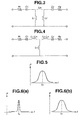
- Fig. 5 shows a relationship between a receiving electric power and a frequency of a high frequency supplying electric power
- the value of "Q" is high and the resonance is made within a very short frequency range, and thus, in order to derive a resonant frequency "f ⁇ ” by using such method, it is necessary to use a very fine scanning frequency intervals and thus such method is not realistic.
- the frequency detected is not the resonant frequency "f ⁇ "
- the present invention is provided to solve the above-mentioned problems, and aims to provide a wireless power transfer device and/or method that is able to carry out a high efficiency electric power transfer without a wireless communication.
- a contactless power feeding apparatus as defined in Claim 1 which includes a secondary coil magnetically coupled with a primary coil outside of a moving body with the work of resonance of a magnetic field and constructed to receive an electric power from the primary coil, a rectifier for rectifying the electric power received by the secondary coil, a rechargeable power storage battery for storing therein the electric power rectified by the rectifier, an electric motor mounted on the moving body for driving the moving body upon receiving the electric power from the rechargeable power storage battery, which is characterized in that the primary coil is magnetically coupled with the secondary coil with the work of resonance of a magnetic field and constructed to feed the secondary coil with a high frequency electric power; a high frequency electric power driver is provided for converting the electric power outside of the moving body to a high frequency electric power that can be supplied to the moving body upon resonance of the magnetic field, the converted electric power being supplied to the primary coil; a calculation means is provided for estimating, from supplying current and voltage of the high frequency electric power driver, equivalent
- a contactless power feeding apparatus defined in Claim 2 is based on the apparatus of Claim 1, which is further characterized in that the control means estimates, from the equivalent circuit parameters estimated by the calculation means, the receiving electric power of the secondary coil which varies in accordance with the supplying electric power, and controls the frequency of the high frequency electric power driver in such a manner as to cause the estimated receiving electric power to show the maximum value.
- a contactless power feeding apparatus defined in Claim 3 is based on the apparatus of Claim 1, which is further characterized in that the control means estimates, from the equivalent circuit parameters estimated by the calculation means, the receiving electric power of the secondary coil in accordance with at least one of the capacitance and inductance of the primary coil, and adjusts a resonant frequency of the primary coil by varying at least one of the capacitance and inductance of the primary coil in such a manner as to cause the estimated receiving electric power to show the maximum value.
- a contactless power feeding method defined in Claim 4 is a method for feeding an electric power to a moving body in a transformation system, the system including a primary coil provided outside of the moving body, a secondary coil magnetically coupled with the primary coil with the work of resonance of a magnetic field and constructed to receive an electric power from the primary coil, a rectifier for rectifying the electric power received by the secondary coil, a rechargeable power storage battery for storing therein the electric power rectified by the rectifier, an electric motor mounted on the moving body for driving the moving body upon receiving the electric power from the rechargeable power storage battery, the method being characterized by having an electric power supplying step in which a high frequency electric power driver converts the electric power outside of the moving body to a high frequency electric power that can be supplied to the moving body upon resonance of the magnetic field, and feeds the converted high frequency electric power to the primary coil while varying a frequency of the converted high frequency electric power; an equivalent circuit parameter estimating step in which a calculation means estimates, from the supplying current and voltage of the high frequency electric power driver under operation
- a contactless power feeding method defined in Claim 5 is based on the method of Claim 4, which is further characterized in that the receiving electric power estimating step estimates, from the equivalent circuit parameters estimated by the equivalent circuit parameter estimating step, the receiving electric power of the secondary coil in accordance with the supplying electric power; and the controlling step controls the frequency of the high frequency electric power driver in such a manner as to cause the estimated receiving electric power to show the maximum value.
- a contactless power feeding method defined in Claim 6 is based on the method of Claim 4, which is further characterized in that the receiving electric power estimating step estimates, from the equivalent circuit parameters estimated by the equivalent circuit parameter estimating step, the receiving electric power of the secondary coil in accordance with at least one of the capacitance and inductance of the primary coil; and the controlling step adjusts a resonant frequency of the primary coil by varying at least one of the capacitance and inductance of the primary coil in such a manner as to cause the estimated receiving electric power to show the maximum value.
- a power receiving part of the moving body in a contactless power feeding to a moving body with the work of resonance of magnetic field, a power receiving part of the moving body can be made in the smallest size and thus cost can be reduced, and it is unnecessary for a moving body and a power feeding apparatus to have a same communication system, and the present invention can be easily applicable to any type of moving body. Furthermore, it is possible to carry out an electric power feeding from a power feeding apparatus to a moving body under the maximum receiving electric power without the work of a wireless communication, and thus, a high efficiency electric power transfer can be carried out.
- both detection of a receiving electric power by the side of a moving body such as an electric vehicle and transmission of the receiving condition of the electric power through a wireless communication are not necessary, both the electric vehicle and power transfer device can be made simple in construction and thus reduction in cost is achieved.
- the present invention can be easily applied to various types of electric vehicle (moving body).
- wireless communication is not carried out, and thus a high efficiency electric power transfer can be obtained in which feeding of the electric power from the power transfer device to the moving body starts under a condition wherein the receiving electric power shows the maximum value.
- the present invention is not limited to such described embodiments.
- the invention is practically applied to a moving body, such as an electric vehicle of a type that can be fed with an electric power from an external power source without physical contact.
- Fig. 1 shows a block diagram of a first embodiment.
- denoted by numeral 100 is a power feeding apparatus that feeds, without physical contact, a moving body 200, for example an electric vehicle, with an electric power.
- the power feeding apparatus 100 comprises an alternating-current power supply 110 consisting of a system power supply, a high frequency power driver 120, a calculation device 130 as calculating means, a primary coil 140 arranged in a ground near a surface of the ground on which the moving body 200 is placed, and a control device 150 as controlling means.
- a secondary coil 210 On the moving body 200, there are mounted a secondary coil 210, a rectifier 220, a rechargeable power storage battery 230 and an electric motor 240 that drives the moving body 200 by using the electric power stored by the rechargeable power storage battery 230.
- the high frequency power driver 120 of the power feeding apparatus 100 converts, by causing a magnetic field to resonate, the electric power from the alternating-current power supply 110 to a high frequency electric power that can transfer from the primary coil 140 to the secondary coil 210 of the moving body 200. That is, the converted high frequency electric power is supplied to the primary coil 140.
- the primary coil 140 and the secondary coil 210 of the moving body 200 are magnetically coupled, and thus the electric power can transfer from the power feeding apparatus 100 to the moving body 200.
- the calculation device 130 estimates equivalent circuit parameters for the electric power transfer from the primary coil 140 to the secondary coil 210 through the resonance method.
- the control device 150 Based on the equivalent circuit parameters estimated by the calculation device 130, the control device 150 derives a relationship between a frequency of the supplying electric power of the primary coil 140 and an estimated value of the receiving electric power of the secondary coil 210. And, the frequency of the high frequency power driver 120 is so controlled as to cause the estimated receiving electric power to show the maximum value.
- the secondary coil 210 is arranged in a body lower portion of the moving body 200 and functions to output the electric power received to the rectifier 220.
- the rectifier 220 rectifies the high frequency AC electric power received from the secondary coil 210 and outputs the rectified electric power to the rechargeable power storage battery 230.
- an electric power can be supplied to the moving body 200 without physical contact from the electric power source placed outside of the moving body, and the electric power can be stored in the rechargeable power storage battery 230.
- an electric power transfer through a resonance method can be represented by an equivalent circuit as shown in Fig. 3 wherein an inductance, a stray capacitance and an internal resistance of the primary coil 140 are shown by L1, C1 and R1 respectively, and an inductance, a stray capacitance and an internal resistance of the secondary coil 210 are shown by L2, C2 and R2 respectively (refer to Non-Patent Document-2 for example).
- Lm indicates a mutual inductance between the two coils.
- Lm is represented in the following.
- the frequency (viz., frequency "f" of the supplying high frequency electric power) of the high frequency electric power supplied to the primary coil 140 and the electric power (viz., receiving electric power "P") supplied to the secondary coil 210 have such a relationship as shown in Fig. 5 . That is, the electric power supplied shows the maximum value at a resonance frequency "f0" of the two coils.
- FIGs. 6(a) and 6(b) A relationship between the frequency "f" of the supplying high frequency electric power and the receiving electric power "P" supplied to the secondary coil 210 is depicted by Figs. 6(a) and 6(b) in which Fig. 6(a) shows a case in which the coupling coefficient "k” is small and Fig. 6(b) shows a case in which the coupling coefficient "k” is large. It is known that when the coupling coefficient "k” becomes small, the spectrum space (or frequency width) that can send the maximum electric power becomes small (refer to Non-Patent Document-2).
- the resonance frequency "0" is varied in accordance with a variation of the capacitance and inductance of the primary coil. Furthermore, the coupling coefficient "k” is varied mainly by characteristics of respective cores of the primary and secondary coils a positional relation between the two coils.
- the power feeding apparatus 100 of the present invention at first, by feeding a small electric power to the primary coil 140 to induce an electric power transfer from the primary coil 140 to the secondary coil 210, equivalent circuit parameters for the primary and secondary coils 140 and 210 (viz., inductance L1,stray capacitance C1, internal resistance R1, inductance L2, stray capacitance C2, internal resistance R2, mutual inductance Lm of the equivalent circuit shown in Fig. 4 ) are estimated, and then, a large electric power is fed to the primary coil 140 to induce an electric power transfer from the primary coil 140 to the secondary coil 210, and then, the rechargeable power storage battery 230 starts to store the electric power fed from the secondary coil 210.
- equivalent circuit parameters for the primary and secondary coils 140 and 210 viz., inductance L1,stray capacitance C1, internal resistance R1, inductance L2, stray capacitance C2, internal resistance R2, mutual inductance Lm of the equivalent circuit shown in Fig. 4 ) are estimated, and then, a large electric power
- the electric power transfer is carried out with a small electric power from the primary coil 140 to the secondary coil 210 while varying, within a change permissible range, the frequency of the high frequency electric power outputted from the high frequency power driver 120.
- the inductance L1,stray capacitance C1 and internal resistance R1 of the equivalent circuit shown in Fig. 4 are parameters of the power feeding apparatus 100. These parameters are previously obtained by calculation of constants of the circuit, simulation and/or test runs of the moving body and those data are held for example by the calculation device 130.
- the inductance L1, stray capacitance C1 and internal resistance R1 that are held by the calculation device and the inductance L2, stray capacitance C2, internal resistance R2 and mutual inductance Lm (viz., parameters of the equivalent circuit of Fig. 4 ) that are estimated by the calculation device are sent to the control device 150.
- control device 150 by processing the parameters of the equivalent circuit that have been sent thereto, a receiving electric power fed to the secondary coil 210 in accordance with the frequency is estimated, and a relationship between the frequency "f" of the high frequency supplying electric power and the estimated value "Pes" of the receiving electric power, such as one as shown in Fig. 7 , is obtained.
- the high frequency power driver 120 is controlled and then charging is started. With this step, feeding of the electric power to the secondary coil 210 becomes possible under a condition wherein without the aid of a wireless communication the receiving electric power shows the maximum value, and thus, a high efficiency electric power transfer is possible.
- Fig. 2 shows a block diagram of a second embodiment, in which same elements or portions as those in Fig. 1 are denoted by the same numerals.
- a moving body 200 in the second embodiment has the same construction as the moving body 200 of the first embodiment.
- Denoted by numeral 300 is a power feeding apparatus of the second embodiment. Differences from the power feeding apparatus 100 of Fig. 1 are as follows. That is, in place of the control device 150 that controls the high frequency power driver 120 in accordance with the equivalent circuit parameters estimated by the calculation device 130, there is employed an adjusting device 160 that has such functions as to change the capacitance and inductance of the primary coil 140, estimate the receiving electric power of the secondary coil 210 that varies in accordance with at least one of the capacitance and inductance of the primary coil 140, and adjust the resonant frequency of the primary coil 140 by changing at least one of the capacitance and inductance of the primary coil 140 in a manner as to cause the estimated receiving electric power to show the maximum value. Others are the same as those of Fig. 1 .
- the electric power transfer is carried out by the adjusting device 160 with a small electric power from the primary coil 140 to the secondary coil 210 while varying, within a change permissible range, at least one of the capacitance (C1) and inductance (L1) of the primary coil 140.
- the inductance L1, stray capacitance C1 and internal resistance R1 of the equivalent circuit shown in Fig. 4 are parameters of the power feeding apparatus 100. These parameters are previously obtained by calculation of constants of the circuit, simulation and/or test runs of the moving body and those data are held for example by the calculation device 130.
- the inductance L1, stray capacitance C1 and internal resistance R1 that are held by the calculation device and the inductance L2, stray capacitance C2, internal resistance R2 and mutual inductance Lm (viz., parameters of the equivalent circuit of Fig. 4 ) that are estimated by the calculation device are sent to the adjusting device 160.
- a receiving electric power fed to the secondary coil 210 in accordance with the frequency is estimated, and a relationship between the capacitance of the primary coil and the estimated value "Pes" of the receiving electric power, such as one as shown in Fig. 8 and/or a relationship between the inductance "L” of the primary coil and the estimated value “Pes” of the receiving electric power, such as one as shown in Fig. 9 is obtained.
- the capacitance C0 or Inductance L0 of the primary coil 140 is changed to cause the estimated value "Pes" to show the maximum, and charging to the rechargeable power storage battery 230 is started.
- feeding of the electric power from the alternating-current power supply 110 to the secondary coil 210 becomes possible under a condition wherein without the aid of a wireless communication the receiving electric power shows the maximum value, and thus, a high efficiency electric power transfer is possible.
- the application of the present invention is not limited to the electric vehicle. That is, the present invention is applicable to other moving bodies as long as the bodies can receive electric power without physical contact.
- the power supply outside of the moving body is not limited to the AC power supply. That is, the invention may be used in an environment in which an electric power from a direct-current power supply is converted to a high frequency electric power.
Landscapes
- Engineering & Computer Science (AREA)
- Power Engineering (AREA)
- Transportation (AREA)
- Mechanical Engineering (AREA)
- Computer Networks & Wireless Communication (AREA)
- Charge And Discharge Circuits For Batteries Or The Like (AREA)
- Current-Collector Devices For Electrically Propelled Vehicles (AREA)
- Electric Propulsion And Braking For Vehicles (AREA)
Applications Claiming Priority (2)
| Application Number | Priority Date | Filing Date | Title |
|---|---|---|---|
| JP2011013067A JP5732870B2 (ja) | 2011-01-25 | 2011-01-25 | 非接触給電装置および非接触給電方法 |
| PCT/JP2012/051534 WO2012102302A1 (ja) | 2011-01-25 | 2012-01-25 | 非接触給電装置および非接触給電方法 |
Publications (2)
| Publication Number | Publication Date |
|---|---|
| EP2658086A1 true EP2658086A1 (de) | 2013-10-30 |
| EP2658086A4 EP2658086A4 (de) | 2014-11-19 |
Family
ID=46580867
Family Applications (1)
| Application Number | Title | Priority Date | Filing Date |
|---|---|---|---|
| EP12739803.0A Withdrawn EP2658086A4 (de) | 2011-01-25 | 2012-01-25 | Kontaktlose stromzufuhrvorrichtung und kontaktloses stromzufuhrverfahren |
Country Status (5)
| Country | Link |
|---|---|
| US (1) | US9096138B2 (de) |
| EP (1) | EP2658086A4 (de) |
| JP (1) | JP5732870B2 (de) |
| CN (1) | CN103339823B (de) |
| WO (1) | WO2012102302A1 (de) |
Families Citing this family (11)
| Publication number | Priority date | Publication date | Assignee | Title |
|---|---|---|---|---|
| KR102113853B1 (ko) * | 2013-07-17 | 2020-06-03 | 삼성전자주식회사 | 커플링 영역 검출 방법 및 장치 |
| WO2015182097A1 (ja) * | 2014-05-27 | 2015-12-03 | パナソニックIpマネジメント株式会社 | 非接触給電装置およびそれを用いた非接触給電システム |
| WO2016147663A1 (ja) * | 2015-03-19 | 2016-09-22 | パナソニックIpマネジメント株式会社 | 非接触給電装置及び非接触給電システム |
| US10418863B1 (en) | 2015-09-28 | 2019-09-17 | Apple Inc. | Charging system |
| CN106379190B (zh) * | 2016-11-03 | 2019-03-22 | 中国科学院电工研究所 | 一种负载自适应的电动汽车无线充电系统 |
| CN110692176A (zh) * | 2017-06-02 | 2020-01-14 | 日本电产株式会社 | 输电装置、无线电力传输系统以及控制装置 |
| JP6798953B2 (ja) * | 2017-09-05 | 2020-12-09 | 本田技研工業株式会社 | 電力供給システム |
| JP6803818B2 (ja) * | 2017-09-05 | 2020-12-23 | 本田技研工業株式会社 | 電力供給システム |
| CN108382242B (zh) * | 2018-03-15 | 2020-09-08 | 美澳视界(厦门)智能科技有限公司 | 电动汽车无线快速充电方法 |
| JP6930953B2 (ja) * | 2018-09-10 | 2021-09-01 | 株式会社東芝 | 送電装置および受電装置 |
| EP3988022A4 (de) * | 2019-06-21 | 2023-07-26 | UNIST (Ulsan National Institute of Science and Technology) | Resonatoranordnung für biometrische erfassung und biosensor mit verwendung von elektromagnetischen wellen |
Family Cites Families (16)
| Publication number | Priority date | Publication date | Assignee | Title |
|---|---|---|---|---|
| JP4453741B2 (ja) * | 2007-10-25 | 2010-04-21 | トヨタ自動車株式会社 | 電動車両および車両用給電装置 |
| CA2715916A1 (en) * | 2008-02-22 | 2009-08-27 | David W. Baarman | Inductive power supply system with battery type detection |
| JP4488090B2 (ja) * | 2008-06-09 | 2010-06-23 | トヨタ自動車株式会社 | 車両および車両の制御方法 |
| CN102171777A (zh) * | 2008-10-02 | 2011-08-31 | 丰田自动车株式会社 | 自谐振线圈、非接触电力传输装置以及车辆 |
| JP2010136464A (ja) * | 2008-12-02 | 2010-06-17 | Casio Computer Co Ltd | 電力伝送装置および電力伝送方法 |
| JP2010193598A (ja) * | 2009-02-17 | 2010-09-02 | Nippon Soken Inc | 非接触給電設備および非接触給電システム |
| JP5585098B2 (ja) * | 2009-03-06 | 2014-09-10 | 日産自動車株式会社 | 非接触電力供給装置及び方法 |
| JP5621203B2 (ja) * | 2009-03-30 | 2014-11-12 | 富士通株式会社 | 無線電力供給システム、無線電力供給方法 |
| JP4865001B2 (ja) * | 2009-04-13 | 2012-02-01 | 株式会社日本自動車部品総合研究所 | 非接触給電設備、非接触受電装置および非接触給電システム |
| JP5387201B2 (ja) * | 2009-07-23 | 2014-01-15 | ソニー株式会社 | 非接触給電システム、非接触中継装置、非接触受電装置および非接触給電方法 |
| KR101423406B1 (ko) * | 2009-11-18 | 2014-07-24 | 가부시끼가이샤 도시바 | 무선 전력 전송 장치 |
| JP5016069B2 (ja) * | 2010-01-12 | 2012-09-05 | トヨタ自動車株式会社 | 電力伝送システムおよび車両用給電装置 |
| JP5146488B2 (ja) * | 2010-05-26 | 2013-02-20 | トヨタ自動車株式会社 | 給電システムおよび車両 |
| US9552920B2 (en) * | 2010-07-28 | 2017-01-24 | General Electric Company | Contactless power transfer system |
| KR101842308B1 (ko) * | 2010-10-29 | 2018-03-26 | 퀄컴 인코포레이티드 | 커플링된 기생 공진기들을 통한 무선 에너지 전송 |
| JP2012143117A (ja) * | 2011-01-06 | 2012-07-26 | Toyota Industries Corp | 非接触電力伝送装置 |
-
2011
- 2011-01-25 JP JP2011013067A patent/JP5732870B2/ja not_active Expired - Fee Related
-
2012
- 2012-01-25 WO PCT/JP2012/051534 patent/WO2012102302A1/ja not_active Ceased
- 2012-01-25 CN CN201280006385.1A patent/CN103339823B/zh not_active Expired - Fee Related
- 2012-01-25 US US13/981,519 patent/US9096138B2/en not_active Expired - Fee Related
- 2012-01-25 EP EP12739803.0A patent/EP2658086A4/de not_active Withdrawn
Also Published As
| Publication number | Publication date |
|---|---|
| JP5732870B2 (ja) | 2015-06-10 |
| CN103339823B (zh) | 2016-05-18 |
| CN103339823A (zh) | 2013-10-02 |
| US20130335017A1 (en) | 2013-12-19 |
| EP2658086A4 (de) | 2014-11-19 |
| US9096138B2 (en) | 2015-08-04 |
| JP2012157127A (ja) | 2012-08-16 |
| WO2012102302A1 (ja) | 2012-08-02 |
Similar Documents
| Publication | Publication Date | Title |
|---|---|---|
| EP2658086A1 (de) | Kontaktlose stromzufuhrvorrichtung und kontaktloses stromzufuhrverfahren | |
| KR101318848B1 (ko) | 비접촉 급전 설비, 차량 및 비접촉 급전 시스템의 제어 방법 | |
| EP2555377B1 (de) | Kontaktlose stromzufuhrvorrichtung und kontaktloses stromzufuhrverfahren | |
| US9270138B2 (en) | Electric power transmission system | |
| US9281119B2 (en) | Three-coil topology for wireless power transfer | |
| US8519569B2 (en) | Wireless power supply system and wireless power supply method | |
| US9634733B2 (en) | Contactless power feeding system, vehicle, power feeding facility and method of controlling contactless power feeding system | |
| US9142986B2 (en) | Coil unit, non-contact power transmitting apparatus, non-contact power receiving apparatus, vehicle, and non-contact power supply system | |
| EP2713475B1 (de) | Drahtloser Stromübertrager und Verfahren zur Steuerung der Leistung davon | |
| US8994326B2 (en) | Resonance-type non-contact power supply system | |
| CN102396131B (zh) | 非接触供电设备、非接触受电装置以及非接触供电系统 | |
| EP2824797A1 (de) | Kraftübertragungssystem | |
| US10787085B2 (en) | Vehicle, power transmission device, and power feeding system | |
| WO2014041410A2 (en) | Vehicle and contactless power supply system | |
| JP2011166992A (ja) | 給電装置 | |
| CN104170209A (zh) | 电力输送系统 | |
| CN104025422A (zh) | 非接触受电装置、非接触送电装置以及非接触送电受电系统 | |
| EP2765681B1 (de) | Energieempfangsvorrichtung, fahrzeug damit und leistungsübertragungssystem | |
| CN103460555A (zh) | 电力传输系统 | |
| Kobayashi et al. | Sensorless vehicle detection using voltage pulses in dynamic wireless power transfer system | |
| EP2761634B1 (de) | Drahtloser stromverstärker und drahtloser stromsender | |
| JP2013132141A (ja) | 電力伝送システム | |
| CN204145034U (zh) | 非接触式充电装置及agv的电池充电系统 | |
| JP2013157944A (ja) | アンテナ | |
| CN205070561U (zh) | 一种无线充电泊位及无线充电系统 |
Legal Events
| Date | Code | Title | Description |
|---|---|---|---|
| PUAI | Public reference made under article 153(3) epc to a published international application that has entered the european phase |
Free format text: ORIGINAL CODE: 0009012 |
|
| 17P | Request for examination filed |
Effective date: 20130725 |
|
| AK | Designated contracting states |
Kind code of ref document: A1 Designated state(s): AL AT BE BG CH CY CZ DE DK EE ES FI FR GB GR HR HU IE IS IT LI LT LU LV MC MK MT NL NO PL PT RO RS SE SI SK SM TR |
|
| DAX | Request for extension of the european patent (deleted) | ||
| A4 | Supplementary search report drawn up and despatched |
Effective date: 20141021 |
|
| RIC1 | Information provided on ipc code assigned before grant |
Ipc: H02J 17/00 20060101AFI20141015BHEP Ipc: H02J 5/00 20060101ALI20141015BHEP Ipc: B60L 11/18 20060101ALI20141015BHEP Ipc: H02J 7/00 20060101ALI20141015BHEP Ipc: H02J 7/02 20060101ALI20141015BHEP |
|
| 17Q | First examination report despatched |
Effective date: 20160205 |
|
| STAA | Information on the status of an ep patent application or granted ep patent |
Free format text: STATUS: THE APPLICATION IS DEEMED TO BE WITHDRAWN |
|
| 18D | Application deemed to be withdrawn |
Effective date: 20160616 |