EP2667443A1 - Électrolyte pour dispositif électrochimique, procédé de fabrication de celui-ci et dispositif électrochimique l'utilisant - Google Patents
Électrolyte pour dispositif électrochimique, procédé de fabrication de celui-ci et dispositif électrochimique l'utilisant Download PDFInfo
- Publication number
- EP2667443A1 EP2667443A1 EP11856563.9A EP11856563A EP2667443A1 EP 2667443 A1 EP2667443 A1 EP 2667443A1 EP 11856563 A EP11856563 A EP 11856563A EP 2667443 A1 EP2667443 A1 EP 2667443A1
- Authority
- EP
- European Patent Office
- Prior art keywords
- polyethylene glycol
- electrolyte
- solid electrolyte
- linear polymer
- functional group
- Prior art date
- Legal status (The legal status is an assumption and is not a legal conclusion. Google has not performed a legal analysis and makes no representation as to the accuracy of the status listed.)
- Granted
Links
Images
Classifications
-
- H—ELECTRICITY
- H01—ELECTRIC ELEMENTS
- H01M—PROCESSES OR MEANS, e.g. BATTERIES, FOR THE DIRECT CONVERSION OF CHEMICAL ENERGY INTO ELECTRICAL ENERGY
- H01M10/00—Secondary cells; Manufacture thereof
- H01M10/05—Accumulators with non-aqueous electrolyte
- H01M10/056—Accumulators with non-aqueous electrolyte characterised by the materials used as electrolytes, e.g. mixed inorganic/organic electrolytes
- H01M10/0564—Accumulators with non-aqueous electrolyte characterised by the materials used as electrolytes, e.g. mixed inorganic/organic electrolytes the electrolyte being constituted of organic materials only
- H01M10/0565—Polymeric materials, e.g. gel-type or solid-type
-
- C—CHEMISTRY; METALLURGY
- C08—ORGANIC MACROMOLECULAR COMPOUNDS; THEIR PREPARATION OR CHEMICAL WORKING-UP; COMPOSITIONS BASED THEREON
- C08J—WORKING-UP; GENERAL PROCESSES OF COMPOUNDING; AFTER-TREATMENT NOT COVERED BY SUBCLASSES C08B, C08C, C08F, C08G or C08H
- C08J5/00—Manufacture of articles or shaped materials containing macromolecular substances
- C08J5/20—Manufacture of shaped structures of ion-exchange resins
- C08J5/22—Films, membranes or diaphragms
-
- C—CHEMISTRY; METALLURGY
- C08—ORGANIC MACROMOLECULAR COMPOUNDS; THEIR PREPARATION OR CHEMICAL WORKING-UP; COMPOSITIONS BASED THEREON
- C08J—WORKING-UP; GENERAL PROCESSES OF COMPOUNDING; AFTER-TREATMENT NOT COVERED BY SUBCLASSES C08B, C08C, C08F, C08G or C08H
- C08J5/00—Manufacture of articles or shaped materials containing macromolecular substances
- C08J5/20—Manufacture of shaped structures of ion-exchange resins
- C08J5/22—Films, membranes or diaphragms
- C08J5/2206—Films, membranes or diaphragms based on organic and/or inorganic macromolecular compounds
- C08J5/2275—Heterogeneous membranes
-
- H—ELECTRICITY
- H01—ELECTRIC ELEMENTS
- H01M—PROCESSES OR MEANS, e.g. BATTERIES, FOR THE DIRECT CONVERSION OF CHEMICAL ENERGY INTO ELECTRICAL ENERGY
- H01M10/00—Secondary cells; Manufacture thereof
- H01M10/05—Accumulators with non-aqueous electrolyte
- H01M10/052—Li-accumulators
-
- H—ELECTRICITY
- H01—ELECTRIC ELEMENTS
- H01M—PROCESSES OR MEANS, e.g. BATTERIES, FOR THE DIRECT CONVERSION OF CHEMICAL ENERGY INTO ELECTRICAL ENERGY
- H01M10/00—Secondary cells; Manufacture thereof
- H01M10/05—Accumulators with non-aqueous electrolyte
- H01M10/056—Accumulators with non-aqueous electrolyte characterised by the materials used as electrolytes, e.g. mixed inorganic/organic electrolytes
- H01M10/0564—Accumulators with non-aqueous electrolyte characterised by the materials used as electrolytes, e.g. mixed inorganic/organic electrolytes the electrolyte being constituted of organic materials only
- H01M10/0566—Liquid materials
- H01M10/0569—Liquid materials characterised by the solvents
-
- C—CHEMISTRY; METALLURGY
- C08—ORGANIC MACROMOLECULAR COMPOUNDS; THEIR PREPARATION OR CHEMICAL WORKING-UP; COMPOSITIONS BASED THEREON
- C08J—WORKING-UP; GENERAL PROCESSES OF COMPOUNDING; AFTER-TREATMENT NOT COVERED BY SUBCLASSES C08B, C08C, C08F, C08G or C08H
- C08J2323/00—Characterised by the use of homopolymers or copolymers of unsaturated aliphatic hydrocarbons having only one carbon-to-carbon double bond; Derivatives of such polymers
- C08J2323/02—Characterised by the use of homopolymers or copolymers of unsaturated aliphatic hydrocarbons having only one carbon-to-carbon double bond; Derivatives of such polymers not modified by chemical after treatment
- C08J2323/04—Homopolymers or copolymers of ethene
- C08J2323/06—Polyethene
-
- Y—GENERAL TAGGING OF NEW TECHNOLOGICAL DEVELOPMENTS; GENERAL TAGGING OF CROSS-SECTIONAL TECHNOLOGIES SPANNING OVER SEVERAL SECTIONS OF THE IPC; TECHNICAL SUBJECTS COVERED BY FORMER USPC CROSS-REFERENCE ART COLLECTIONS [XRACs] AND DIGESTS
- Y02—TECHNOLOGIES OR APPLICATIONS FOR MITIGATION OR ADAPTATION AGAINST CLIMATE CHANGE
- Y02E—REDUCTION OF GREENHOUSE GAS [GHG] EMISSIONS, RELATED TO ENERGY GENERATION, TRANSMISSION OR DISTRIBUTION
- Y02E60/00—Enabling technologies; Technologies with a potential or indirect contribution to GHG emissions mitigation
- Y02E60/10—Energy storage using batteries
Definitions
- the present disclosure relates to an electrolyte for an electrochemical device, a method for preparing the electrolyte, and an electrochemical device including the electrolyte. More specifically, the present disclosure relates to a plastic crystal matrix electrolyte.
- Secondary batteries are representative electrochemical devices in which external electrical energy converted into chemical energy is stored and created into electricity when necessary. Secondary batteries are also called “rechargeable batteries,” because they are capable of repeated charge and discharge. Lead-acid batteries, nickel cadmium (NiCd) batteries, nickel metal hydride (NiMH) batteries, lithium ion batteries and lithium ion polymer batteries are frequently used as secondary batteries. Secondary batteries offer economic and environmental advantages over primary batteries that are disposed of after energy stored therein has been exhausted.
- Secondary batteries are currently used in applications where low power is needed, for example, devices for assisting in the starting of car engines, portable devices, instruments and uninterrupted power supply systems.
- Recent developments in wireless communication technologies have led to the popularization of portable devices and have brought about a tendency to connect many kinds of existing devices to wireless networks. Under such circumstances, demand for secondary batteries is growing explosively.
- Hybrid automobiles and electric automobiles have been put into practical use for the purpose of preventing environmental pollution.
- These next-generation automobiles reduce costs and weight and increase their life span by employing technologies based on secondary batteries.
- secondary batteries are cylindrical, prismatic or pouch type in shape depending on the fabrication process thereof. That is, a secondary battery is typically fabricated by inserting an electrode assembly composed of an anode, a cathode and a separator into a cylindrical or prismatic metal can or a pouch-type case made of an aluminum laminate sheet, and injecting an electrolyte into the electrode assembly. Accordingly, the cylindrical, prismatic or pouch-type secondary battery requires a certain space for assembly, which is an obstacle to the development of various types of portable devices. Thus, there is a need for a novel type of secondary battery whose shape is easy to change, and particularly, an electrolyte suitable for use in the secondary battery that has high ionic conductivity without any risk of leakage.
- Ionically conductive organic electrolytes in the form of liquids in which salts are dissolved in non-aqueous organic solvents have predominantly been used in conventional electrochemical devices based on electrochemical reactions.
- the use of such electrolytes in the form of liquids causes degradation of electrode materials, increases the possibility of evaporation of organic solvents, and poses safety problems, such as fire resulting from high surrounding temperatures and increased battery temperatures.
- safety problems such as fire resulting from high surrounding temperatures and increased battery temperatures.
- polymer electrolytes have been proposed, such as gel polymer electrolytes and solid polymer electrolytes.
- Korean Unexamined Patent Publication No. 2008-33421 discloses an electrolyte using a plastic crystal matrix instead of a liquid organic solvent.
- the electrolyte exhibits ionic conductivity comparable to that of a liquid electrolyte.
- the electrolyte exhibits very poor mechanical properties due to its flowability similar to that of liquid.
- a separator is required to prevent short circuits in a battery using the electrolyte.
- the introduction of linear polymer matrices, such as polyethylene oxide is considered to improve the mechanical strength of plastic crystal matrix electrolytes. In these cases as well, the electrolytes do not possess mechanical properties sufficient to negate the need for separators. Drying is necessary to remove solvents used to dissolve the linear polymers, rendering the process complicated.
- the present disclosure is designed to solve the problems of the prior art, and therefore it is an object of the present disclosure to provide a plastic crystal matrix electrolyte that has high ionic conductivity and can ensure mechanical strength, and a method for preparing the electrolyte.
- an electrolyte for an electrochemical device including a composite of a plastic crystal matrix electrolyte doped with an ionic salt and a crosslinked polymer structure having a linear polymer as a side chain chemically bonded thereto wherein the linear polymer has a weight average molecular weight of 100 to 5,000 and one functional group.
- the composite may further include a linear polymer having no functional group.
- the electrolyte of the present disclosure may include 40 to 90% by weight of the plastic crystal matrix electrolyte doped with an ionic salt.
- the plastic crystal matrix there may be used, for example, succinonitrile.
- the ionic salt is preferably a lithium salt.
- lithium salts suitable for use as the ionic salt include lithium bis(trifluoromethanesulfonyl)imide, lithium bis(perfluoroethylsulfonyl)imide and lithium tetrafluoroborate.
- linear polymer having a weight average molecular weight of 100 to 5,000 and one functional group there may be used, for example, polyethylene glycol methacrylate, polyethylene glycol acrylate, polyethylene glycol methyl ether acrylate or polyethylene glycol methyl ether methacrylate.
- the crosslinked polymer structure may be a polymer of a monomer having two or more functional groups.
- the monomer having two or more functional groups there may be used, for example, trimethylolpropane ethoxylate triacrylate, polyethylene glycol dimethacrylate, polyethylene glycol diacrylate, divinyl benzene, polyester dimethacrylate, divinyl ether, trimethylolpropane trimethacrylate or ethoxylated bisphenol A dimethacrylate.
- linear polymer having no functional group that is optionally included in the electrolyte of the present disclosure there may be used, for example, polyethylene oxide, polypropylene oxide, polyoxymethylene, polydimethylsiloxane, polyacrylonitrile, polymethyl methacrylate, polyvinyl chloride, polyvinylidene fluoride, polyvinylidene fluoride-co-hexafluoropropylene, polyethyleneimine, poly(p-phenylene terephthalamide), poly(methoxy polyethylene glycol methacrylate) and poly(2-methoxyethyl glycidyl ether).
- polyethylene oxide polypropylene oxide
- polyoxymethylene polydimethylsiloxane
- polyacrylonitrile polymethyl methacrylate
- polyvinyl chloride polyvinylidene fluoride
- polyvinylidene fluoride-co-hexafluoropropylene polyethyleneimine
- a method for preparing the electrolyte including: mixing a plastic crystal matrix electrolyte doped with an ionic salt, a monomer having two or more functional groups, and a linear polymer having a weight average molecular weight of 100 to 5,000 and one functional group to prepare a solution; and polymerizing the monomer in the solution.
- the electrolyte of the present disclosure has high ionic conductivity comparable to that of a liquid electrolyte due to the use of the plastic crystal, and high mechanical strength comparable to that of a solid electrolyte due to the introduction of the crosslinked polymer structure.
- the method of the present disclosure does not essentially require the use of a solvent, eliminating the need for drying. Therefore, the electrolyte of the present disclosure can be prepared in a simple manner.
- the electrolyte of the present disclosure is suitable for use in a cable-type battery whose shape is easy to change due to its high ionic conductivity and high mechanical strength comparable to that of a solid electrolyte.
- the present disclosure provides an electrolyte for an electrochemical device, including a composite of a plastic crystal matrix electrolyte doped with an ionic salt and a crosslinked polymer structure having a linear polymer with a weight average molecular weight of 100 to 5,000 as a side chain chemically bonded thereto.
- the electrolyte of the present disclosure serves as a medium that transports lithium ions between a cathode and an anode.
- the plastic crystal is a compound whose molecules or ions exhibit rotational disorder but whose center of gravity occupies a position aligned in the crystal lattice structure.
- the rotational phase of the plastic crystal is generally created by a solid-to-solid transition at a temperature not higher than the melting point.
- the plastic crystal exhibits plastic properties, mechanical flowability and high conductivity.
- doping with an ionic salt leads to high ionic conductivity, making the plastic crystal suitable for use in an electrolyte for a secondary battery.
- flowability of the plastic crystal matrix electrolyte is disadvantageous in terms of mechanical properties.
- the crosslinked polymer structure to which a linear polymer having a weight average molecular weight of 100 to 5,000 and one functional group as a side chain is chemically bonded, is introduced into the plastic crystal matrix electrolyte.
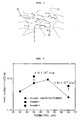
- FIG. 1 A solid electrolyte according to an embodiment of the present disclosure is schematically illustrated in FIG. 1 .
- a crosslinked polymer structure 10 has a three-dimensional structure due to chemical bonding between molecular chains thereof, unlike linear polymers. This three-dimensional structure compensates for the flowability of a plastic crystal matrix electrolyte.
- the electrolyte of the present disclosure is not softened even when heat is applied thereto, ensuring thermal stability.
- the crosslinked polymer structure 10 has a linear polymer having a weight average molecular weight of 100 to 5,000 and one functional group as a side chain chemically bonded thereto.
- the linear polymer 20 having a weight average molecular weight of 100 to 5,000 as a side chain brings about effective and easy hopping of lithium ions migrating via the hopping mechanism to impart ionic conductivity to the crosslinked polymer structure. That is, the introduction of the linear polymer 20 having a weight average molecular weight of 100 to 5,000 improves the chain mobility of the crosslinked polymer structure, which further facilitates the migration of ions, contributing to improvement of ionic conductivity.
- linear polymer 20 having a weight average molecular weight of 100 to 5, 000 and one functional group
- the electrolyte of the present disclosure is a composite of a plastic crystal matrix electrolyte doped with an ionic salt and the crosslinked polymer structure having the linear polymer as a side chain chemically bonded thereto.
- the composite may be prepared by homogeneously mixing a monomer having two or more crosslinkable functional groups and a plastic crystal matrix electrolyte doped with an ionic salt, and polymerizing the monomer to form the crosslinked polymer structure.
- the crosslinked polymer structure contributes to an improvement in the mechanical properties of the electrolyte to impart the electrolyte with mechanical properties comparable to that of a solid electrolyte.
- the uniform distribution of the plastic crystal matrix electrolyte increases the ionic conductivity of the electrolyte.
- the electrolyte of the present disclosure may be a composite which further includes a linear polymer 30 having no functional group. Due to high mobility of the linear polymer chain 30, the electrolyte including the optional linear polymer is more flexible and has higher ionic conductivity than the composite including only the crosslinked polymer structure 10. It should be interpreted to mean that the composite may include a branched polymer in addition to the linear polymer 30.
- linear polymer there may be used, for example, polyethylene oxide, polypropylene oxide, polyoxymethylene, polydimethylsiloxane, polyacrylonitrile, polymethyl methacrylate, polyvinyl chloride, polyvinylidene fluoride, polyvinylidene fluoride-co-hexafluoropropylene, polyethyleneimine or poly(p-phenylene terephthalamide).
- branched polymers that can be combined with the linear polymer include poly(methoxy polyethylene glycol methacrylate) and poly(2-methoxyethyl glycidyl ether).
- the solid electrolyte of the present disclosure may include 40 to 90% by weight of the plastic crystal matrix electrolyte doped with an ionic salt.
- the crosslinked polymer structure is preferably a polymer of a monomer having two or more functional groups.
- the monomer having two or more functional groups is intended to include not only monomers but also polymers with a low degree of polymerization consisting of 2 to 20 repeating units.
- the kind of the monomer having two or more functional groups is not limited, and examples thereof include trimethylolpropane ethoxylate triacrylate, polyethylene glycol dimethacrylate, polyethylene glycol diacrylate, divinyl benzene, polyester dimethacrylate, divinyl ether, trimethylolpropane, trimethylolpropane trimethacrylate and ethoxylated bisphenol A dimethacrylate.
- the ionic salt doped into the plastic crystal matrix electrolyte is preferably a lithium salt.
- lithium salts suitable for use as the ionic salt include lithium bis(trifluoromethanesulfonyl)imide, lithium bis(perfluoroethylsulfonyl)imide and lithium tetrafluoroborate.
- the effects of the present disclosure can be further enhanced when polyethylene glycol methacrylate, polyethylene glycol dimethacrylate and polyethylene oxide having similar chemical structures are used.
- the present disclosure also provides a method for preparing an electrolyte including a composite of a plastic crystal matrix electrolyte doped with an ionic salt and a crosslinked polymer structure having a linear polymer as a side chain chemically bonded thereto wherein the linear polymer has a weight average molecular weight of 100 to 5,000 and one functional group.
- the method of the present disclosure is carried out as follows.
- a plastic crystal matrix electrolyte doped with an ionic salt, a monomer having two or more functional groups, and a linear polymer having a weight average molecular weight of 100 to 5,000 and one functional group are mixed to prepare a solution (step S1).
- an ionic salt, a plastic crystal matrix, a linear polymer having a weight average molecular weight of 100 to 5,000 and one functional group, and a monomer having two or more crosslinkable functional groups may be mixed to prepare a solution.
- a monomer having two or more crosslinkable functional groups may be mixed to prepare a solution.
- the monomer having two or more crosslinkable functional groups is intended to include not only monomers but also polymers with a low degree of polymerization consisting of 2 to 20 repeating units.
- the monomer may be selected from above-mentioned monomers.
- the plastic crystal matrix electrolyte and the ionic salt may also be selected from those mentioned above.
- the ionic salt may be used in an amount of 0.1 to 3 moles per mole of the plastic crystal matrix.
- a solvent may be added during mixing. In this case, drying is additionally needed to remove the solvent. However, the use of the solvent is not necessarily required.
- a photoinitiator such as benzoin, may optionally be added to polymerize the monomer.
- the solution may further include a linear polymer having no functional group.
- the linear polymer does not participate in polymerization due to the absence of any functional group and is thus not bonded to the crosslinked structure.
- the monomer having two or more functional groups is polymerized in the solution to prepare the solid electrolyte (step S2).
- the monomer may be polymerized by UV irradiation.
- the presence of two or more functional groups in the monomer allows the polymer to have a three-dimensional crosslinked structure.
- the linear polymer having a weight average molecular weight of 100 to 5,000 and one functional group is chemically bonded as a side chain to the crosslinked structure through the functional group.
- the present disclosure also provides an electrochemical device including a cathode, an anode and the solid electrolyte.
- the electrochemical device of the present disclosure includes all devices in which electrochemical reactions occur. Specific examples of such devices include all kinds of primary batteries, secondary batteries, fuel cells, solar cells, and capacitors such as supercapacitors. Particularly preferred are lithium secondary batteries, including lithium metal secondary batteries, lithium ion secondary batteries, lithium polymer secondary batteries and lithium ion polymer secondary batteries.
- the solid electrolyte of the present disclosure is injected into an electrode assembly consisting of a cathode, an anode and a separator interposed between the electrodes to fabricate a lithium secondary battery.
- the cathode, the anode and the separator constituting the electrode assembly may be those commonly used in the fabrication of lithium secondary batteries.
- the electrolyte of the present disclosure in the form of a solid may replace the separator.
- the cathode active material is preferably a lithium-containing transition metal oxide.
- anode active material there can be used a carbon material, lithium metal, silicon or tin capable of intercalating/de intercalating lithium ions.
- a metal oxide whose potential for lithium is less than 2 V, such as TiO 2 or SnO 2 may also be used as the anode active material.
- the use of a carbon material is preferred.
- the carbon material may be one having low crystallinity or high crystallinity. Representative examples of suitable low-crystallinity carbon materials include soft carbon and hard carbon.
- the anode may include a binding agent.
- the binding agent may be selected from various kinds of binder polymers, such as vinylidene fluoride-hexafluoropropylene copolymers (PVDF-co-HFP), polyvinylidene fluoride, polyacrylonitrile and polymethyl methacrylate.
- the separator may be a porous polymer film commonly used in the art.
- materials for the porous polymer film include polyolefin polymers, such as ethylene homopolymers, propylene homopolymers, ethylene/butane copolymers, ethylene/hexane copolymers and ethylene/methacrylate copolymers.
- the separator may be a laminate of two or more porous polymer films.
- the separator may be a porous non-woven fabric. Examples of materials for the porous non-woven fabric include, but are not limited to, high melting-point glass fiber and polyethylene terephthalate fiber.
- the shape of the lithium secondary battery according to the present disclosure is not particularly limited.
- the lithium secondary battery of the present disclosure may have a cylindrical or prismatic shape depending on the shape of a can it employs.
- the lithium secondary battery of the present disclosure may be of pouch or coin type.
- a cable type having a linear structure, such as a wire, is also possible.
- PEGDMA polyethylene glycol dimethacrylate
- Electrolyte membranes were produced in the same manner as in Comparative Example 3, except that succinonitrile, polyethylene oxide and polyethylene glycol dimethacrylate were mixed in different ratios.
- Test Example 1 Measurement of ionic conductivity
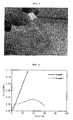
- the electrolytes of Examples 1-2 and Comparative Examples 2-5 having different compositions of the crosslinked polymer structures were measured for ionic conductivity. The results are shown in FIG. 2 .
- the ionic conductivities of the electrolytes prepared in Examples 1 and 2 were higher than those of the electrolytes prepared in Comparative Examples 2 and 4, respectively, confirming that the presence of PEGMA in the crosslinked polymer structures led to a marked improvement in ionic conductivity.
- the tensile strengths of the electrolytes prepared in Examples 1-2 were measured at a speed of 50 mm/min and the results are shown in FIG. 4 .
- the electrolyte prepared in Comparative Example 1 was incapable of forming a solid film ( FIG. 3 ), revealing its very poor mechanical properties.
- the plastic crystal matrix electrolytes in which the crosslinked polymer structure networks were formed showed greatly improved physical properties compared to the pure polymer crystal matrix, suggesting that batteries including the electrolytes have little danger of short circuits and disconnection even when an external force is applied thereto.
Landscapes
- Chemical & Material Sciences (AREA)
- Manufacturing & Machinery (AREA)
- Engineering & Computer Science (AREA)
- Chemical Kinetics & Catalysis (AREA)
- General Chemical & Material Sciences (AREA)
- Electrochemistry (AREA)
- Inorganic Chemistry (AREA)
- General Physics & Mathematics (AREA)
- Physics & Mathematics (AREA)
- Condensed Matter Physics & Semiconductors (AREA)
- Dispersion Chemistry (AREA)
- Materials Engineering (AREA)
- Health & Medical Sciences (AREA)
- Medicinal Chemistry (AREA)
- Polymers & Plastics (AREA)
- Organic Chemistry (AREA)
- Secondary Cells (AREA)
- Conductive Materials (AREA)
- Compositions Of Macromolecular Compounds (AREA)
Applications Claiming Priority (2)
| Application Number | Priority Date | Filing Date | Title |
|---|---|---|---|
| KR1020110006006A KR101351897B1 (ko) | 2011-01-20 | 2011-01-20 | 전기화학소자용 전해질, 그 제조방법 및 이를 구비한 전기화학소자 |
| PCT/KR2011/008023 WO2012099321A1 (fr) | 2011-01-20 | 2011-10-26 | Électrolyte pour dispositif électrochimique, procédé de fabrication de celui-ci et dispositif électrochimique l'utilisant |
Publications (3)
| Publication Number | Publication Date |
|---|---|
| EP2667443A1 true EP2667443A1 (fr) | 2013-11-27 |
| EP2667443A4 EP2667443A4 (fr) | 2014-10-29 |
| EP2667443B1 EP2667443B1 (fr) | 2016-08-31 |
Family
ID=46515916
Family Applications (1)
| Application Number | Title | Priority Date | Filing Date |
|---|---|---|---|
| EP11856563.9A Active EP2667443B1 (fr) | 2011-01-20 | 2011-10-26 | Électrolyte pour dispositif électrochimique, procédé de fabrication de celui-ci et dispositif électrochimique l'utilisant |
Country Status (6)
| Country | Link |
|---|---|
| US (1) | US8852815B2 (fr) |
| EP (1) | EP2667443B1 (fr) |
| JP (1) | JP5653539B2 (fr) |
| KR (1) | KR101351897B1 (fr) |
| CN (1) | CN103329332B (fr) |
| WO (1) | WO2012099321A1 (fr) |
Cited By (1)
| Publication number | Priority date | Publication date | Assignee | Title |
|---|---|---|---|---|
| WO2021128539A1 (fr) * | 2019-12-25 | 2021-07-01 | 中国科学院青岛生物能源与过程研究所 | Électrolyte polymère entièrement solide de polyoxyméthylène préparé par polymérisation par ouverture de cycle in situ et son utilisation |
Families Citing this family (34)
| Publication number | Priority date | Publication date | Assignee | Title |
|---|---|---|---|---|
| KR101422726B1 (ko) * | 2012-10-10 | 2014-07-28 | 한국화학연구원 | 코어-쉘 구조의 가소제를 함유하는 고체 고분자 전해질 조성물 |
| KR101625707B1 (ko) | 2012-12-21 | 2016-06-14 | 주식회사 엘지화학 | 전기화학소자용 고체 전해질 및 이를 구비한 전기화학소자 |
| KR101576277B1 (ko) * | 2013-06-13 | 2015-12-09 | 국립대학법인 울산과학기술대학교 산학협력단 | 전해질-전극 합체, 이의 제조 방법, 및 이를 포함하는 전기 화학 소자 |
| CN104752760B (zh) * | 2013-12-31 | 2017-10-31 | 比亚迪股份有限公司 | 一种多孔自交联型凝胶聚合物电解质、该电解质的制备方法及其在锂离子电池中的应用 |
| US10002719B2 (en) * | 2014-04-21 | 2018-06-19 | Lg Chem, Ltd. | Separator having binder layer, and electrochemical device comprising the separator and method of preparing the separator |
| CN106797048B (zh) * | 2014-10-02 | 2019-05-21 | 株式会社Lg化学 | 凝胶聚合物电解质和包括该凝胶聚合物电解质的锂二次电池 |
| US10476104B2 (en) | 2014-10-02 | 2019-11-12 | Lg Chem, Ltd. | Gel polymer electrolyte and lithium secondary battery comprising the same |
| KR101648465B1 (ko) | 2015-02-17 | 2016-08-16 | 주식회사 제낙스 | 겔 고분자 전해질, 이의 제조 방법 및 이를 포함하는 전기화학 소자 |
| FR3040550B1 (fr) * | 2015-08-25 | 2017-08-11 | Commissariat Energie Atomique | Batterie au lithium-ion gelifiee |
| JP6694133B2 (ja) * | 2016-03-01 | 2020-05-13 | 富士通株式会社 | 全固体電池 |
| CN105789695B (zh) * | 2016-05-17 | 2018-08-31 | 中国科学院化学研究所 | 一种复合聚合物电解质及其在电池负极保护中的应用 |
| KR102314040B1 (ko) | 2016-08-22 | 2021-10-18 | 삼성에스디아이 주식회사 | 리튬금속전지용 전해질 및 이를 포함하는 리튬금속전지 |
| KR101892170B1 (ko) * | 2016-11-08 | 2018-08-27 | 울산과학기술원 | 전기화학 소자용 보호막, 이의 제조 방법 및 및 이를 포함하는 전기화학 소자 |
| CN107681193A (zh) * | 2017-09-29 | 2018-02-09 | 清华大学 | 固体电解质及其制备方法、电池 |
| KR102486394B1 (ko) | 2018-01-08 | 2023-01-09 | 삼성전자주식회사 | 고분자 전해질, 고분자, 전기화학 디바이스, 및 고분자 제조 방법 |
| CN108346822A (zh) * | 2018-02-08 | 2018-07-31 | 广东猛狮新能源科技股份有限公司 | 一种3d网络有机-无机杂化全固态电解质的制备方法 |
| KR102617867B1 (ko) | 2018-07-09 | 2023-12-22 | 주식회사 엘지에너지솔루션 | 고체 전해질, 이의 제조방법, 및 이를 포함하는 전고체 전지 |
| KR102510295B1 (ko) * | 2018-08-31 | 2023-03-15 | 주식회사 엘지에너지솔루션 | 고체 전해질, 이의 제조방법, 및 이를 포함하는 전고체 전지 |
| JP7378216B2 (ja) * | 2019-03-29 | 2023-11-13 | 日本ケミコン株式会社 | 固体電解質及び蓄電デバイス |
| CN113508446B (zh) * | 2019-03-29 | 2022-09-27 | 日本贵弥功株式会社 | 固体电解质、蓄电设备及固体电解质的制造方法 |
| CN110265559B (zh) * | 2019-06-11 | 2021-08-27 | 南京邮电大学 | 一种发光电化学池及其制备方法 |
| KR102394800B1 (ko) * | 2020-02-03 | 2022-05-06 | 서울대학교산학협력단 | 가교 고분자 전해질 겔 및 이를 포함하는 배터리 |
| CN111326789B (zh) * | 2020-03-09 | 2021-08-13 | 天津中电新能源研究院有限公司 | 一种半互穿网络阻燃固态锂离子电解质、固态锂电池及制备方法 |
| CN111276739A (zh) * | 2020-03-26 | 2020-06-12 | 华中科技大学 | 一种半互穿聚合物电解质的原位制备方法及其应用 |
| JP7722379B2 (ja) | 2020-09-04 | 2025-08-13 | 日本ケミコン株式会社 | 電気二重層キャパシタ |
| CN112993396B (zh) * | 2021-05-10 | 2021-08-13 | 中国人民解放军国防科技大学 | 聚合物固态电解质膜及其制备方法和全固态电池 |
| CN113471530B (zh) * | 2021-07-28 | 2022-10-25 | 西安交通大学 | 一种无机粘土阵列的制备方法及应用 |
| CN114171784B (zh) * | 2021-11-19 | 2023-02-07 | 吉林省东驰新能源科技有限公司 | 一种一体化固态电解质-正极组件及其制备方法和应用 |
| CN115745798B (zh) * | 2022-11-03 | 2023-06-06 | 江汉大学 | 聚二氧戊烷基三维交联聚合物电解质及制备方法与应用 |
| US12266758B2 (en) | 2022-11-23 | 2025-04-01 | Toyota Motor Engineering & Manufacturing North America, Inc. | Polymer electrolyte for a solid state battery |
| WO2024249183A1 (fr) * | 2023-05-26 | 2024-12-05 | Energy Exploration Technologies, Inc. | Compositions et procédés pour cellules électrochimiques à semi-conducteurs |
| CN121753165A (zh) * | 2023-08-29 | 2026-03-27 | 日油株式会社 | 固体电解质用改性材以及蓄电装置 |
| KR20260011498A (ko) * | 2024-07-16 | 2026-01-23 | 코오롱인더스트리 주식회사 | 고체 고분자 전해질 복합 조성물, 이로부터 형성된 고체 고분자 전해질 및 이를 포함하는 이차 전지 |
| CN119742440B (zh) * | 2024-12-26 | 2025-10-10 | 大连理工大学 | 一种含有动态侧链的凝胶聚合物电解质的制备方法及其应用 |
Family Cites Families (12)
| Publication number | Priority date | Publication date | Assignee | Title |
|---|---|---|---|---|
| KR19980040038A (ko) * | 1996-11-28 | 1998-08-17 | 김광호 | 고분자 고체 전해질 및 이를 채용하고 있는 리튬 2차전지 |
| KR19980057628A (ko) * | 1996-12-30 | 1998-09-25 | 김광호 | 고분자 고체 전해질 및 이를 채용하고 있는 리튬 2차전지 |
| JP2001093575A (ja) | 1999-09-24 | 2001-04-06 | Oji Paper Co Ltd | ポリマー電池用ゲル電解質 |
| JP4020296B2 (ja) * | 2000-12-21 | 2007-12-12 | キヤノン株式会社 | イオン伝導構造体、二次電池及びそれらの製造方法 |
| JP2004134172A (ja) * | 2002-10-09 | 2004-04-30 | Hitachi Chem Co Ltd | 高分子電解質及びそれを用いた電池 |
| KR20080033421A (ko) | 2005-07-29 | 2008-04-16 | 내셔날 리서치 카운실 오브 캐나다 | 리튬계 전기화학 장치 내의 플라스틱 결정 전해질 |
| JP2007106875A (ja) * | 2005-10-13 | 2007-04-26 | Nitto Denko Corp | (メタ)アクリルポリマーとその製造方法ならびにそれを用いた高分子固体電解質および電気化学素子 |
| US8258344B2 (en) | 2006-12-28 | 2012-09-04 | National Institute Of Advanced Industrial Science And Technology | Plastic crystal |
| JP2008204858A (ja) * | 2007-02-21 | 2008-09-04 | Nitto Denko Corp | 電極一体型高分子電解質膜とこれを用いた電気化学素子 |
| CA2686890C (fr) | 2007-05-11 | 2015-10-20 | National Research Council Of Canada | Electrolyte cristal plastique ayant une large fenetre de potentiel |
| EP2581979B1 (fr) | 2010-06-14 | 2016-09-14 | LG Chem, Ltd. | Électrolyte pour dispositif électrochimique, procédé de fabrication de celui-ci et dispositif électrochimique le comprenant |
| KR101311494B1 (ko) * | 2010-06-14 | 2013-09-25 | 주식회사 엘지화학 | 전기화학소자용 전해질, 그 제조방법 및 이를 구비한 전기화학소자 |
-
2011
- 2011-01-20 KR KR1020110006006A patent/KR101351897B1/ko active Active
- 2011-10-26 JP JP2013550379A patent/JP5653539B2/ja active Active
- 2011-10-26 CN CN201180065551.0A patent/CN103329332B/zh active Active
- 2011-10-26 EP EP11856563.9A patent/EP2667443B1/fr active Active
- 2011-10-26 WO PCT/KR2011/008023 patent/WO2012099321A1/fr not_active Ceased
-
2013
- 2013-07-08 US US13/936,967 patent/US8852815B2/en active Active
Non-Patent Citations (3)
| Title |
|---|
| FAN L Z ET AL: "Enhanced ionic conductivities in composite polymer electrolytes by using succinonitrile as a plasticizer", SOLID STATE IONICS, NORTH HOLLAND PUB. COMPANY. AMSTERDAM; NL, NL, vol. 179, no. 27-32, 30 September 2008 (2008-09-30), pages 1772-1775, XP023521381, ISSN: 0167-2738, DOI: 10.1016/J.SSI.2008.01.035 [retrieved on 2008-03-07] * |
| M. PATEL ET AL.: "A crosslinked "polymer-gel" rechargeable lithium-ion battery electrrolyte from free radical polymerization using nonionic plastic crystalline electrolyte medium", ENERGY ENVIRON. SCI, vol. 4, 10 December 2010 (2010-12-10), pages 429-432, XP002729730, DOI: 10.1039/c0ee00294a * |
| See also references of WO2012099321A1 * |
Cited By (1)
| Publication number | Priority date | Publication date | Assignee | Title |
|---|---|---|---|---|
| WO2021128539A1 (fr) * | 2019-12-25 | 2021-07-01 | 中国科学院青岛生物能源与过程研究所 | Électrolyte polymère entièrement solide de polyoxyméthylène préparé par polymérisation par ouverture de cycle in situ et son utilisation |
Also Published As
| Publication number | Publication date |
|---|---|
| WO2012099321A1 (fr) | 2012-07-26 |
| US20130295466A1 (en) | 2013-11-07 |
| KR20120084572A (ko) | 2012-07-30 |
| JP2014504788A (ja) | 2014-02-24 |
| CN103329332A (zh) | 2013-09-25 |
| EP2667443A4 (fr) | 2014-10-29 |
| US8852815B2 (en) | 2014-10-07 |
| JP5653539B2 (ja) | 2015-01-14 |
| EP2667443B1 (fr) | 2016-08-31 |
| CN103329332B (zh) | 2015-11-25 |
| KR101351897B1 (ko) | 2014-01-17 |
Similar Documents
| Publication | Publication Date | Title |
|---|---|---|
| US8852815B2 (en) | Electrolyte for electrochemical device, method for preparing the same and electrochemical device including the same | |
| US8945777B2 (en) | Electrolyte for electrochemical device, method for preparing the electrolyte and electrochemical device including the electrolyte | |
| EP2581979B1 (fr) | Électrolyte pour dispositif électrochimique, procédé de fabrication de celui-ci et dispositif électrochimique le comprenant | |
| KR102424995B1 (ko) | 전고체 전지용 복합 고체 전해질 막 및 이를 포함하는 전고체 전지 | |
| CN112514132B (zh) | 复合电解质膜和包含该复合电解质膜的全固态电池 | |
| KR102070381B1 (ko) | 고분자 전해질 및 이를 포함하는 리튬 이차전지 | |
| KR101625707B1 (ko) | 전기화학소자용 고체 전해질 및 이를 구비한 전기화학소자 | |
| KR20210112924A (ko) | 리튬금속전지용 복합전해질, 그 제조방법 및 이를 포함하는 리튬금속전지 | |
| KR20160150603A (ko) | 세퍼레이터 및 이를 포함하는 리튬 전지 | |
| KR101323153B1 (ko) | 신규 구조 전극조립체 및 이를 이용한 이차전지 | |
| KR20260021936A (ko) | 이차 전지의 제조 방법 |
Legal Events
| Date | Code | Title | Description |
|---|---|---|---|
| PUAI | Public reference made under article 153(3) epc to a published international application that has entered the european phase |
Free format text: ORIGINAL CODE: 0009012 |
|
| 17P | Request for examination filed |
Effective date: 20130704 |
|
| AK | Designated contracting states |
Kind code of ref document: A1 Designated state(s): AL AT BE BG CH CY CZ DE DK EE ES FI FR GB GR HR HU IE IS IT LI LT LU LV MC MK MT NL NO PL PT RO RS SE SI SK SM TR |
|
| DAX | Request for extension of the european patent (deleted) | ||
| RIC1 | Information provided on ipc code assigned before grant |
Ipc: C08J 5/22 20060101ALI20140918BHEP Ipc: H01M 10/052 20100101ALI20140918BHEP Ipc: H01M 10/0569 20100101ALI20140918BHEP Ipc: H01M 10/0565 20100101AFI20140918BHEP |
|
| A4 | Supplementary search report drawn up and despatched |
Effective date: 20140929 |
|
| 17Q | First examination report despatched |
Effective date: 20150914 |
|
| GRAP | Despatch of communication of intention to grant a patent |
Free format text: ORIGINAL CODE: EPIDOSNIGR1 |
|
| INTG | Intention to grant announced |
Effective date: 20160429 |
|
| GRAS | Grant fee paid |
Free format text: ORIGINAL CODE: EPIDOSNIGR3 |
|
| GRAA | (expected) grant |
Free format text: ORIGINAL CODE: 0009210 |
|
| AK | Designated contracting states |
Kind code of ref document: B1 Designated state(s): AL AT BE BG CH CY CZ DE DK EE ES FI FR GB GR HR HU IE IS IT LI LT LU LV MC MK MT NL NO PL PT RO RS SE SI SK SM TR |
|
| REG | Reference to a national code |
Ref country code: CH Ref legal event code: EP Ref country code: GB Ref legal event code: FG4D |
|
| REG | Reference to a national code |
Ref country code: IE Ref legal event code: FG4D |
|
| REG | Reference to a national code |
Ref country code: FR Ref legal event code: PLFP Year of fee payment: 6 |
|
| REG | Reference to a national code |
Ref country code: AT Ref legal event code: REF Ref document number: 825683 Country of ref document: AT Kind code of ref document: T Effective date: 20161015 |
|
| REG | Reference to a national code |
Ref country code: DE Ref legal event code: R096 Ref document number: 602011029970 Country of ref document: DE |
|
| REG | Reference to a national code |
Ref country code: LT Ref legal event code: MG4D |
|
| REG | Reference to a national code |
Ref country code: NL Ref legal event code: MP Effective date: 20160831 |
|
| REG | Reference to a national code |
Ref country code: AT Ref legal event code: MK05 Ref document number: 825683 Country of ref document: AT Kind code of ref document: T Effective date: 20160831 |
|
| PG25 | Lapsed in a contracting state [announced via postgrant information from national office to epo] |
Ref country code: NO Free format text: LAPSE BECAUSE OF FAILURE TO SUBMIT A TRANSLATION OF THE DESCRIPTION OR TO PAY THE FEE WITHIN THE PRESCRIBED TIME-LIMIT Effective date: 20161130 Ref country code: RS Free format text: LAPSE BECAUSE OF FAILURE TO SUBMIT A TRANSLATION OF THE DESCRIPTION OR TO PAY THE FEE WITHIN THE PRESCRIBED TIME-LIMIT Effective date: 20160831 Ref country code: LT Free format text: LAPSE BECAUSE OF FAILURE TO SUBMIT A TRANSLATION OF THE DESCRIPTION OR TO PAY THE FEE WITHIN THE PRESCRIBED TIME-LIMIT Effective date: 20160831 Ref country code: HR Free format text: LAPSE BECAUSE OF FAILURE TO SUBMIT A TRANSLATION OF THE DESCRIPTION OR TO PAY THE FEE WITHIN THE PRESCRIBED TIME-LIMIT Effective date: 20160831 Ref country code: FI Free format text: LAPSE BECAUSE OF FAILURE TO SUBMIT A TRANSLATION OF THE DESCRIPTION OR TO PAY THE FEE WITHIN THE PRESCRIBED TIME-LIMIT Effective date: 20160831 |
|
| PG25 | Lapsed in a contracting state [announced via postgrant information from national office to epo] |
Ref country code: NL Free format text: LAPSE BECAUSE OF FAILURE TO SUBMIT A TRANSLATION OF THE DESCRIPTION OR TO PAY THE FEE WITHIN THE PRESCRIBED TIME-LIMIT Effective date: 20160831 Ref country code: GR Free format text: LAPSE BECAUSE OF FAILURE TO SUBMIT A TRANSLATION OF THE DESCRIPTION OR TO PAY THE FEE WITHIN THE PRESCRIBED TIME-LIMIT Effective date: 20161201 Ref country code: AT Free format text: LAPSE BECAUSE OF FAILURE TO SUBMIT A TRANSLATION OF THE DESCRIPTION OR TO PAY THE FEE WITHIN THE PRESCRIBED TIME-LIMIT Effective date: 20160831 Ref country code: LV Free format text: LAPSE BECAUSE OF FAILURE TO SUBMIT A TRANSLATION OF THE DESCRIPTION OR TO PAY THE FEE WITHIN THE PRESCRIBED TIME-LIMIT Effective date: 20160831 Ref country code: ES Free format text: LAPSE BECAUSE OF FAILURE TO SUBMIT A TRANSLATION OF THE DESCRIPTION OR TO PAY THE FEE WITHIN THE PRESCRIBED TIME-LIMIT Effective date: 20160831 Ref country code: SE Free format text: LAPSE BECAUSE OF FAILURE TO SUBMIT A TRANSLATION OF THE DESCRIPTION OR TO PAY THE FEE WITHIN THE PRESCRIBED TIME-LIMIT Effective date: 20160831 Ref country code: BE Free format text: LAPSE BECAUSE OF NON-PAYMENT OF DUE FEES Effective date: 20161031 |
|
| PG25 | Lapsed in a contracting state [announced via postgrant information from national office to epo] |
Ref country code: RO Free format text: LAPSE BECAUSE OF FAILURE TO SUBMIT A TRANSLATION OF THE DESCRIPTION OR TO PAY THE FEE WITHIN THE PRESCRIBED TIME-LIMIT Effective date: 20160831 Ref country code: EE Free format text: LAPSE BECAUSE OF FAILURE TO SUBMIT A TRANSLATION OF THE DESCRIPTION OR TO PAY THE FEE WITHIN THE PRESCRIBED TIME-LIMIT Effective date: 20160831 |
|
| PG25 | Lapsed in a contracting state [announced via postgrant information from national office to epo] |
Ref country code: SK Free format text: LAPSE BECAUSE OF FAILURE TO SUBMIT A TRANSLATION OF THE DESCRIPTION OR TO PAY THE FEE WITHIN THE PRESCRIBED TIME-LIMIT Effective date: 20160831 Ref country code: BE Free format text: LAPSE BECAUSE OF FAILURE TO SUBMIT A TRANSLATION OF THE DESCRIPTION OR TO PAY THE FEE WITHIN THE PRESCRIBED TIME-LIMIT Effective date: 20160831 Ref country code: CZ Free format text: LAPSE BECAUSE OF FAILURE TO SUBMIT A TRANSLATION OF THE DESCRIPTION OR TO PAY THE FEE WITHIN THE PRESCRIBED TIME-LIMIT Effective date: 20160831 Ref country code: PL Free format text: LAPSE BECAUSE OF FAILURE TO SUBMIT A TRANSLATION OF THE DESCRIPTION OR TO PAY THE FEE WITHIN THE PRESCRIBED TIME-LIMIT Effective date: 20160831 Ref country code: PT Free format text: LAPSE BECAUSE OF FAILURE TO SUBMIT A TRANSLATION OF THE DESCRIPTION OR TO PAY THE FEE WITHIN THE PRESCRIBED TIME-LIMIT Effective date: 20170102 Ref country code: DK Free format text: LAPSE BECAUSE OF FAILURE TO SUBMIT A TRANSLATION OF THE DESCRIPTION OR TO PAY THE FEE WITHIN THE PRESCRIBED TIME-LIMIT Effective date: 20160831 Ref country code: BG Free format text: LAPSE BECAUSE OF FAILURE TO SUBMIT A TRANSLATION OF THE DESCRIPTION OR TO PAY THE FEE WITHIN THE PRESCRIBED TIME-LIMIT Effective date: 20161130 Ref country code: SM Free format text: LAPSE BECAUSE OF FAILURE TO SUBMIT A TRANSLATION OF THE DESCRIPTION OR TO PAY THE FEE WITHIN THE PRESCRIBED TIME-LIMIT Effective date: 20160831 |
|
| REG | Reference to a national code |
Ref country code: CH Ref legal event code: PL |
|
| REG | Reference to a national code |
Ref country code: DE Ref legal event code: R097 Ref document number: 602011029970 Country of ref document: DE |
|
| PG25 | Lapsed in a contracting state [announced via postgrant information from national office to epo] |
Ref country code: IT Free format text: LAPSE BECAUSE OF FAILURE TO SUBMIT A TRANSLATION OF THE DESCRIPTION OR TO PAY THE FEE WITHIN THE PRESCRIBED TIME-LIMIT Effective date: 20160831 |
|
| PLBE | No opposition filed within time limit |
Free format text: ORIGINAL CODE: 0009261 |
|
| STAA | Information on the status of an ep patent application or granted ep patent |
Free format text: STATUS: NO OPPOSITION FILED WITHIN TIME LIMIT |
|
| REG | Reference to a national code |
Ref country code: IE Ref legal event code: MM4A |
|
| PG25 | Lapsed in a contracting state [announced via postgrant information from national office to epo] |
Ref country code: CH Free format text: LAPSE BECAUSE OF NON-PAYMENT OF DUE FEES Effective date: 20161031 Ref country code: LI Free format text: LAPSE BECAUSE OF NON-PAYMENT OF DUE FEES Effective date: 20161031 |
|
| 26N | No opposition filed |
Effective date: 20170601 |
|
| PG25 | Lapsed in a contracting state [announced via postgrant information from national office to epo] |
Ref country code: LU Free format text: LAPSE BECAUSE OF NON-PAYMENT OF DUE FEES Effective date: 20161026 Ref country code: SI Free format text: LAPSE BECAUSE OF FAILURE TO SUBMIT A TRANSLATION OF THE DESCRIPTION OR TO PAY THE FEE WITHIN THE PRESCRIBED TIME-LIMIT Effective date: 20160831 |
|
| REG | Reference to a national code |
Ref country code: FR Ref legal event code: PLFP Year of fee payment: 7 |
|
| PG25 | Lapsed in a contracting state [announced via postgrant information from national office to epo] |
Ref country code: IE Free format text: LAPSE BECAUSE OF NON-PAYMENT OF DUE FEES Effective date: 20161026 |
|
| PG25 | Lapsed in a contracting state [announced via postgrant information from national office to epo] |
Ref country code: CY Free format text: LAPSE BECAUSE OF FAILURE TO SUBMIT A TRANSLATION OF THE DESCRIPTION OR TO PAY THE FEE WITHIN THE PRESCRIBED TIME-LIMIT Effective date: 20160831 Ref country code: HU Free format text: LAPSE BECAUSE OF FAILURE TO SUBMIT A TRANSLATION OF THE DESCRIPTION OR TO PAY THE FEE WITHIN THE PRESCRIBED TIME-LIMIT; INVALID AB INITIO Effective date: 20111026 |
|
| PG25 | Lapsed in a contracting state [announced via postgrant information from national office to epo] |
Ref country code: MT Free format text: LAPSE BECAUSE OF NON-PAYMENT OF DUE FEES Effective date: 20161031 Ref country code: MC Free format text: LAPSE BECAUSE OF FAILURE TO SUBMIT A TRANSLATION OF THE DESCRIPTION OR TO PAY THE FEE WITHIN THE PRESCRIBED TIME-LIMIT Effective date: 20160831 Ref country code: MK Free format text: LAPSE BECAUSE OF FAILURE TO SUBMIT A TRANSLATION OF THE DESCRIPTION OR TO PAY THE FEE WITHIN THE PRESCRIBED TIME-LIMIT Effective date: 20160831 Ref country code: IS Free format text: LAPSE BECAUSE OF FAILURE TO SUBMIT A TRANSLATION OF THE DESCRIPTION OR TO PAY THE FEE WITHIN THE PRESCRIBED TIME-LIMIT Effective date: 20160831 |
|
| REG | Reference to a national code |
Ref country code: FR Ref legal event code: PLFP Year of fee payment: 8 |
|
| PG25 | Lapsed in a contracting state [announced via postgrant information from national office to epo] |
Ref country code: AL Free format text: LAPSE BECAUSE OF FAILURE TO SUBMIT A TRANSLATION OF THE DESCRIPTION OR TO PAY THE FEE WITHIN THE PRESCRIBED TIME-LIMIT Effective date: 20160831 Ref country code: TR Free format text: LAPSE BECAUSE OF FAILURE TO SUBMIT A TRANSLATION OF THE DESCRIPTION OR TO PAY THE FEE WITHIN THE PRESCRIBED TIME-LIMIT Effective date: 20160831 |
|
| REG | Reference to a national code |
Ref country code: DE Ref legal event code: R081 Ref document number: 602011029970 Country of ref document: DE Owner name: LG ENERGY SOLUTION LTD., KR Free format text: FORMER OWNER: LG CHEM. LTD., SEOUL/SOUL, KR Ref country code: DE Ref legal event code: R082 Ref document number: 602011029970 Country of ref document: DE Representative=s name: BOEHMERT & BOEHMERT ANWALTSPARTNERSCHAFT MBB -, DE Ref country code: DE Ref legal event code: R081 Ref document number: 602011029970 Country of ref document: DE Owner name: LG ENERGY SOLUTION, LTD., KR Free format text: FORMER OWNER: LG CHEM. LTD., SEOUL/SOUL, KR |
|
| P01 | Opt-out of the competence of the unified patent court (upc) registered |
Effective date: 20230323 |
|
| REG | Reference to a national code |
Ref country code: GB Ref legal event code: 732E Free format text: REGISTERED BETWEEN 20230824 AND 20230831 |
|
| REG | Reference to a national code |
Ref country code: DE Ref legal event code: R081 Ref document number: 602011029970 Country of ref document: DE Owner name: LG ENERGY SOLUTION, LTD., KR Free format text: FORMER OWNER: LG ENERGY SOLUTION LTD., SEOUL, KR |
|
| PGFP | Annual fee paid to national office [announced via postgrant information from national office to epo] |
Ref country code: GB Payment date: 20250922 Year of fee payment: 15 |
|
| PGFP | Annual fee paid to national office [announced via postgrant information from national office to epo] |
Ref country code: FR Payment date: 20250925 Year of fee payment: 15 |
|
| PGFP | Annual fee paid to national office [announced via postgrant information from national office to epo] |
Ref country code: DE Payment date: 20250922 Year of fee payment: 15 |