EP2667541A1 - Orchestration de services de connectivité - Google Patents
Orchestration de services de connectivité Download PDFInfo
- Publication number
- EP2667541A1 EP2667541A1 EP20120305571 EP12305571A EP2667541A1 EP 2667541 A1 EP2667541 A1 EP 2667541A1 EP 20120305571 EP20120305571 EP 20120305571 EP 12305571 A EP12305571 A EP 12305571A EP 2667541 A1 EP2667541 A1 EP 2667541A1
- Authority
- EP
- European Patent Office
- Prior art keywords
- service
- network
- connectivity
- connectivity services
- services
- Prior art date
- Legal status (The legal status is an assumption and is not a legal conclusion. Google has not performed a legal analysis and makes no representation as to the accuracy of the status listed.)
- Granted
Links
- 238000000034 method Methods 0.000 claims abstract description 27
- 230000008569 process Effects 0.000 claims abstract description 8
- 238000012545 processing Methods 0.000 claims abstract description 3
- 230000004913 activation Effects 0.000 claims description 17
- 230000006870 function Effects 0.000 description 17
- 238000007726 management method Methods 0.000 description 17
- 238000001994 activation Methods 0.000 description 15
- 230000005540 biological transmission Effects 0.000 description 6
- 238000010586 diagram Methods 0.000 description 4
- 238000013459 approach Methods 0.000 description 3
- 230000000875 corresponding effect Effects 0.000 description 3
- 238000013500 data storage Methods 0.000 description 3
- 230000000694 effects Effects 0.000 description 3
- 230000003993 interaction Effects 0.000 description 3
- 230000015654 memory Effects 0.000 description 3
- 230000004044 response Effects 0.000 description 3
- 230000009286 beneficial effect Effects 0.000 description 2
- 230000002596 correlated effect Effects 0.000 description 2
- 230000009849 deactivation Effects 0.000 description 2
- 230000003111 delayed effect Effects 0.000 description 2
- 208000018910 keratinopathic ichthyosis Diseases 0.000 description 2
- 238000012423 maintenance Methods 0.000 description 2
- 239000000203 mixture Substances 0.000 description 2
- 238000012544 monitoring process Methods 0.000 description 2
- 230000003068 static effect Effects 0.000 description 2
- 239000002699 waste material Substances 0.000 description 2
- MWRWFPQBGSZWNV-UHFFFAOYSA-N Dinitrosopentamethylenetetramine Chemical compound C1N2CN(N=O)CN1CN(N=O)C2 MWRWFPQBGSZWNV-UHFFFAOYSA-N 0.000 description 1
- 230000003044 adaptive effect Effects 0.000 description 1
- 230000008901 benefit Effects 0.000 description 1
- 229940112112 capex Drugs 0.000 description 1
- 230000008094 contradictory effect Effects 0.000 description 1
- 230000001276 controlling effect Effects 0.000 description 1
- 230000001934 delay Effects 0.000 description 1
- 230000005611 electricity Effects 0.000 description 1
- 238000005516 engineering process Methods 0.000 description 1
- 239000000835 fiber Substances 0.000 description 1
- 238000001914 filtration Methods 0.000 description 1
- FEBLZLNTKCEFIT-VSXGLTOVSA-N fluocinolone acetonide Chemical compound C1([C@@H](F)C2)=CC(=O)C=C[C@]1(C)[C@]1(F)[C@@H]2[C@@H]2C[C@H]3OC(C)(C)O[C@@]3(C(=O)CO)[C@@]2(C)C[C@@H]1O FEBLZLNTKCEFIT-VSXGLTOVSA-N 0.000 description 1
- 238000009472 formulation Methods 0.000 description 1
- 238000007689 inspection Methods 0.000 description 1
- 230000002452 interceptive effect Effects 0.000 description 1
- 230000004048 modification Effects 0.000 description 1
- 238000012986 modification Methods 0.000 description 1
- 230000008520 organization Effects 0.000 description 1
- 238000013439 planning Methods 0.000 description 1
- 238000011084 recovery Methods 0.000 description 1
- 238000013468 resource allocation Methods 0.000 description 1
- 238000012163 sequencing technique Methods 0.000 description 1
- 238000012546 transfer Methods 0.000 description 1
- 230000007704 transition Effects 0.000 description 1
- 238000013519 translation Methods 0.000 description 1
- 238000013024 troubleshooting Methods 0.000 description 1
- 238000010200 validation analysis Methods 0.000 description 1
- 230000003442 weekly effect Effects 0.000 description 1
Images


Classifications
-
- H—ELECTRICITY
- H04—ELECTRIC COMMUNICATION TECHNIQUE
- H04L—TRANSMISSION OF DIGITAL INFORMATION, e.g. TELEGRAPHIC COMMUNICATION
- H04L41/00—Arrangements for maintenance, administration or management of data switching networks, e.g. of packet switching networks
- H04L41/08—Configuration management of networks or network elements
- H04L41/0896—Bandwidth or capacity management, i.e. automatically increasing or decreasing capacities
-
- H—ELECTRICITY
- H04—ELECTRIC COMMUNICATION TECHNIQUE
- H04L—TRANSMISSION OF DIGITAL INFORMATION, e.g. TELEGRAPHIC COMMUNICATION
- H04L12/00—Data switching networks
- H04L12/28—Data switching networks characterised by path configuration, e.g. LAN [Local Area Networks] or WAN [Wide Area Networks]
- H04L12/46—Interconnection of networks
- H04L12/4633—Interconnection of networks using encapsulation techniques, e.g. tunneling
-
- H—ELECTRICITY
- H04—ELECTRIC COMMUNICATION TECHNIQUE
- H04L—TRANSMISSION OF DIGITAL INFORMATION, e.g. TELEGRAPHIC COMMUNICATION
- H04L12/00—Data switching networks
- H04L12/28—Data switching networks characterised by path configuration, e.g. LAN [Local Area Networks] or WAN [Wide Area Networks]
- H04L12/46—Interconnection of networks
- H04L12/4641—Virtual LANs, VLANs, e.g. virtual private networks [VPN]
-
- H—ELECTRICITY
- H04—ELECTRIC COMMUNICATION TECHNIQUE
- H04L—TRANSMISSION OF DIGITAL INFORMATION, e.g. TELEGRAPHIC COMMUNICATION
- H04L41/00—Arrangements for maintenance, administration or management of data switching networks, e.g. of packet switching networks
- H04L41/02—Standardisation; Integration
-
- H—ELECTRICITY
- H04—ELECTRIC COMMUNICATION TECHNIQUE
- H04L—TRANSMISSION OF DIGITAL INFORMATION, e.g. TELEGRAPHIC COMMUNICATION
- H04L41/00—Arrangements for maintenance, administration or management of data switching networks, e.g. of packet switching networks
- H04L41/04—Network management architectures or arrangements
- H04L41/052—Network management architectures or arrangements using standardised network management architectures, e.g. telecommunication management network [TMN] or unified network management architecture [UNMA]
-
- H—ELECTRICITY
- H04—ELECTRIC COMMUNICATION TECHNIQUE
- H04L—TRANSMISSION OF DIGITAL INFORMATION, e.g. TELEGRAPHIC COMMUNICATION
- H04L41/00—Arrangements for maintenance, administration or management of data switching networks, e.g. of packet switching networks
- H04L41/50—Network service management, e.g. ensuring proper service fulfilment according to agreements
- H04L41/5041—Network service management, e.g. ensuring proper service fulfilment according to agreements characterised by the time relationship between creation and deployment of a service
- H04L41/5051—Service on demand, e.g. definition and deployment of services in real time
-
- H—ELECTRICITY
- H04—ELECTRIC COMMUNICATION TECHNIQUE
- H04L—TRANSMISSION OF DIGITAL INFORMATION, e.g. TELEGRAPHIC COMMUNICATION
- H04L41/00—Arrangements for maintenance, administration or management of data switching networks, e.g. of packet switching networks
- H04L41/50—Network service management, e.g. ensuring proper service fulfilment according to agreements
- H04L41/5041—Network service management, e.g. ensuring proper service fulfilment according to agreements characterised by the time relationship between creation and deployment of a service
- H04L41/5054—Automatic deployment of services triggered by the service manager, e.g. service implementation by automatic configuration of network components
-
- H—ELECTRICITY
- H04—ELECTRIC COMMUNICATION TECHNIQUE
- H04L—TRANSMISSION OF DIGITAL INFORMATION, e.g. TELEGRAPHIC COMMUNICATION
- H04L41/00—Arrangements for maintenance, administration or management of data switching networks, e.g. of packet switching networks
- H04L41/50—Network service management, e.g. ensuring proper service fulfilment according to agreements
- H04L41/5077—Network service management, e.g. ensuring proper service fulfilment according to agreements wherein the managed service relates to simple transport services, i.e. providing only network infrastructure
-
- H—ELECTRICITY
- H04—ELECTRIC COMMUNICATION TECHNIQUE
- H04L—TRANSMISSION OF DIGITAL INFORMATION, e.g. TELEGRAPHIC COMMUNICATION
- H04L67/00—Network arrangements or protocols for supporting network services or applications
- H04L67/14—Session management
- H04L67/148—Migration or transfer of sessions
-
- H—ELECTRICITY
- H04—ELECTRIC COMMUNICATION TECHNIQUE
- H04L—TRANSMISSION OF DIGITAL INFORMATION, e.g. TELEGRAPHIC COMMUNICATION
- H04L41/00—Arrangements for maintenance, administration or management of data switching networks, e.g. of packet switching networks
- H04L41/08—Configuration management of networks or network elements
- H04L41/0895—Configuration of virtualised networks or elements, e.g. virtualised network function or OpenFlow elements
-
- H—ELECTRICITY
- H04—ELECTRIC COMMUNICATION TECHNIQUE
- H04L—TRANSMISSION OF DIGITAL INFORMATION, e.g. TELEGRAPHIC COMMUNICATION
- H04L41/00—Arrangements for maintenance, administration or management of data switching networks, e.g. of packet switching networks
- H04L41/40—Arrangements for maintenance, administration or management of data switching networks, e.g. of packet switching networks using virtualisation of network functions or resources, e.g. SDN or NFV entities
Definitions
- the present invention relates to an apparatus and method for implementing connectivity services on a network.
- Connectivity services such as a VPN (virtual private network) tunnel configuration or a VM (virtual machine) configuration
- a VPN tunnel guarantees to its owner a predetermined bandwidth or quality of service over a predetermined network path.
- VPN tunnels are mainly used by companies who want to have a constant and reliable connection between for example a remote company datacenter and the company headquarters. If no VPN tunnel is configured, such company would depend on best effort internet for the connection between headquarters and remote datacenter, and thereby depend on the availability of bandwidth on the public network with its ups and downs.
- a predetermined bandwidth is reserved for the company, as if a virtual tunnel is created that can only be used by that company.
- a VM can be configured to provide a predetermined service such as data storage, computing, providing software or other service.
- VM's are configured in a network often as part of a server system to remotely perform tasks and deliver services to a user.
- a drawback of the existing connectivity services is that it prevents optimal usage of the network. For example considering a VPN tunnel, after configuration, it is available to a user, the bandwidth is reserved for the user. Another user requiring a similar service must also request a VPN tunnel, and two tunnels are installed. In a real-life network, particularly when using VM services (each VM typically having a different network address), millions of such VPN tunnels should be created to respond to each request. This could in theory again result in collision between VPN tunnels, namely a predetermined bandwidth is guaranteed for each tunnel. Therefore in configuring the network by the network operator, worst case scenarios are used (all VPN tunnels are maximally used) to dimension the routers and connection lines. In practice however, rarely all VPN tunnels are used in the same time. The above-described approach thereby results in an over-dimensioned network, whereby the network is consequently not optimally used. This results in a VPN network connection being substantially more expensive than best effort internet for an owner.
- An embodiment of the present invention provides a network service orchestrator operationally connected to a network management system, the network service orchestrator comprising a connectivity services database comprising information representing multiple connectivity services configured on a network managed by the network management system, the network service orchestrator further comprising input means for receiving a service order, processing means configured to process an orchestrator algorithm to select a set of connectivity services out of said multiple connectivity services based on said service order, and a signal generator for generating and transmitting a signal to assign/deassign the selected set of connectivity services in the network to the service order.
- the invention can be applied in existing networks, where connectivity services might already been configured.
- Storing information representing configured connectivity services in a database has as a result that the network service orchestrator has full overview regarding the connectivity services that are assigned/deassigned in a network. This allows to process an incoming service order in a minimum of time.
- the network service orchestrator provides in a dynamic way of implementing connectivity services by providing the possibility and means for assigning and deassigning connectivity services to a service order. Thereby, a VPN tunnel not used by a (first user) service can be deassigned from that service and can be assigned to another (second user) service. Thereby VPN tunnels, VM configurations and other services can be more optimally used by flexibly assigning the services to a service order instead of statically creating (and demolishing) a new connectivity service for each service order.
- the signal comprises instructions to the network management system to assign/deassign connectivity services to the service order.
- the signals are transmitted through the network via the network management system to instruct the network nodes in the network and/or the service order requestor to assign/deassign connectivity services.
- the instructions to assign/deassign comprise at least a Quality of Service parameter.
- the service order comprises at least an activation time interval and a service duration
- the orchestrator algorithm is adapted for time-based scheduled selection of the set of connectivity services.
- the activation time interval and service duration provides the network service orchestrator with a powerful tool to maintain performance of the network and avoid collision in the sense of a VPN tunnels being used by multiple services. Namely the activation time interval gives the network service orchestrator the possibility to shift the effective starting point, which allows to organize different service orders over time.
- An embodiment of the invention further relates to a method for orchestrating connectivity services in a network, comprising the steps of:
- the method according to the invention allows to efficiently and optimally use a network because not-used connectivity services can be deassigned from the non-used service and connected to another service.
- a connectivity service can be assigned to a service to provide to its owner the requested service.
- the connectivity services comprise at least one of VPN tunnel configurations and VM configurations.
- the service order comprises an activation time interval and a service duration
- the step of selecting comprises time-based scheduled selection of said set.
- Time-based scheduling can be applied by the skilled person implementing this invention to avoid network overload.
- one connectivity service requiring VPN tunnel X can be delayed to avoid collision with another service which is currently using the VPN tunnel X.
- the activation time interval and service duration, comprised in the service order allow the network orchestrator to schedule requested services over time.
- the method comprises the further step of updating the database based on the generated signal.
- updating keeps the database up-to-date.
- the network orchestrator can by scanning or searching the database retrieve all information regarding connectivity services to make an accurate selection.
- the selection can be made in a relatively short period of time.
- IaaS Infrastructure as a Service
- a datacenter hosts servers that are virtualized to provide VM (Virtual Machine) access to enterprises customers.
- VM Virtual Machine
- Cloud computing is a way of accessing computing resources (including storage) as a service, i.e. via VM, rather than accessing computing resources from local servers, whereby shared resources, software, and information are provided to the users as a utility (like the electricity grid) over a network, typically the Internet for Public Cloud or a dedicated VPN (Virtual Private Network) configured on the enterprise Network with dedicated VMs configured on the enterprise datacenters for Private Cloud.
- a utility like the electricity grid
- a network typically the Internet for Public Cloud or a dedicated VPN (Virtual Private Network) configured on the enterprise Network with dedicated VMs configured on the enterprise datacenters for Private Cloud.
- VPN Virtual Private Network
- a VPN service as defined by Telecom service providers typically contains a full suite of functions to support enterprise users including: (i) control and management (service provisioning, modification, monitoring), (ii) quality and performance parameter of service (QoS: Quality of Service), (iii) operation, administration, and maintenance (OAM), (iv) troubleshooting (v) billing and statistics (accounting), (vi) security, (vii) filtering and (deep) packet inspection (DPI).
- QoS Quality of Service
- OAM operation, administration, and maintenance
- DPI filtering and (deep) packet inspection
- the existing Telecom network based Cloud service management technologies do not address the concerns (listed previously) of enterprises that want to access cloud services issued from external datacenters.
- public cloud applications are accessed and launched by enterprises independently of the underlying network configurations in place on the Telecom network infrastructure; and on the other hand, private cloud applications are associated to configurations of an enterprise network which is static, i.e. the network configuration (for Internet services or VPN services) is in place whether or not the cloud application (VM) is accessed/used by the users of the enterprise.
- the network is not efficiently used because while these VPN tunnels are statically implemented, they are often only successively used thereby reserving a lot of bandwidth on the network and only using a small part of it.
- VPN services deployed over MPLS-controlled networks for enterprises are very expensive compared to best-effort connectivity services.
- the cost of delivering VPN services to enterprise users is 20 to 100 times the cost of providing best-effort internet.
- Connectivity service provisioning processes can be automated. The problem is that these processes are intrinsically associated to the configurations of the network elements to support them. Moreover, those connectivity services are not automatically related to the QoS parameters of the specific connectivity required by distributed applications. The provisioning of these connectivity services is done by configuring the ports and controlling the connections on each device involved. The connectivity services implemented are not correlated with the dynamic connectivity needs of the distributed and virtualized application.
- Network management system software that supports a Telecom operator to deploy connectivity services by automatically configuring the ports/interfaces, and connections in the nodes involved.
- a connectivity service provisioned over the network is statically configured and is currently not aware or related of the use of an identified cloud application.
- Some network services can be provisioned and then configured for a small number of specific cloud applications.
- a Telecom network service provider can provide connectivity services for hundreds or thousands of cloud applications.
- Today, the solution for operators is to dimension the QoS of each connectivity service part of an IaaS for the worst case of the list of the cloud applications deployed. The consequence is that the capacity of the network infrastructure is never efficiently used, which is opposite to Operators' goals.
- the related pricing for these private connectivity services is very high as previously mentioned, so Customers are deterred from using such services.
- the benefits of lower costs and higher utilization in datacenters obtained through application/storage virtualization and "cloudification" are yet to be transposed at the network and service connectivity level.
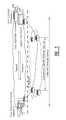
- Figure 1 illustrates an existing network whereby the upper part of the figure illustrates the VPN tunnels configured on the network and the lower part of the figure illustrates the remaining available network resources (all network resources minus the resources dedicated to the VPN tunnels). Because of the static nature of the VPN tunnels, there is not interaction between user and network. Consequently the network cannot adapt to the needs of the user.
- Cloud services such as IaaS are composed of one or several services that are connectivity services delivered by Telecom network service providers, as well as computing, storage and/or software applications (collectively referred to as VM: Virtual Machine) delivered by datacenter service providers.
- VM Virtual Machine
- each IaaS component requires to be allocated over reserved resources (VPN tunnels) of an infrastructure to be executed.
- the reserved resources of a transported network are controlled by MPLS (IP, ATM, Frame Relay) or GMPLS (TDM, Wavelength, Fiber/Port).
- Each IaaS component is allocated over a reserved resource during a defined time interval, which has a start time and an end time.
- the invention provides in a centralized network service orchestrator function that coordinates the real-time activation of a predefined set of VPN services (which are configured on the network) based on the Service Orders issued from connectivity service requesters (for example the cloud application workflows).
- Each pre-defined VPN tunnel is configured on the Telecom network infrastructure, meaning the network resources (routers, ports and interfaces) are identified, their capability checked and explicitly reserved (allocated to the requested service) during the defined time interval. Also, no network resources are allocated for a VPN service if it is not activated during a defined time interval.
- VPN and VM services are not configured on the fly, but allocated on the fly, to Service Orders.
- VPN and VM services may be allocated and deallocated by the orchestrator, and it will be clear that this operation requires a significantly shorter period of time than dynamic configuration of similar services. Therefore, the proposed approach provides elasticity by resorting to time-based scheduled allocation of a predefined pool of VPN and VM resources, which may be active or inactive, but are not defined and configured dynamically. On a different timescale (greater than a day, probably weekly or monthly), the pool itself can evolve to adapt to longer-term or recurring trends.
- automatic configuring/releasing from connectivity services is compatible with the invention when managing the pool of connectivity services. Pool resources which haven't been used for a long time can be removed from the pool, while if there is a surge or a trend increase in Service Orders, the orchestrator could decide to extend the pool by configuring new connection services in the network.
- the orchestration function manages the activation of each VPN service in correlation with the execution of one or several VMs participating in the workflow of a Cloud Application.
- the invoked VPN services neither know nor need to know that they are involved with the correlated VMs in a Cloud application workflow.
- These VPN services activated and provisioned over Telecom networks and VM services activated and provisioned over Datacenters are integrated in the execution of a Cloud application workflow.
- the centralized orchestrator function is aware of the activation time interval of each VPN service, and of the explicit definitions of operations and the invocation sequences of the different VMs related to the allocated VPN services.
- the network service orchestrator function composes VPN services with VM services to get a specific Cloud service in which a Cloud application can be executed.
- Each VPN service element is described in a language to allow its composition with one or several VM service elements.
- the network service orchestrator preferably manages VPN services as well.
- the network service orchestrator processes a sequence of Service Orders (each of which specifies certain connectivity requirements) that arrive over time.
- the network service orchestrator first selects a sub-set of connectivity services from its connectivity services database comprising information representing the connectivity services implemented in the network (also referred to as service inventory database).
- an orchestration algorithm utilizes the inventoried connectivity services available efficiently, while being able to operate fast enough to keep up with the Service Order incoming rate issued from the executions of the different cloud applications and maximizing the utilization rate of each inventoried connectivity services in the connectivity service inventory data-base.
- a Service Order is processed in order to minimize, on average, the time that a connectivity service is associated to a Service Order from start time to the service completion.
- a Service Order is created from a cloud application; it is a structure that contains several parameters. Each parameter can be explicitly given a value by the cloud application. When some Parameters are not given a value, the connectivity service orchestrator can infer them, using rules defined by Cloud Service Provider.
- a Connectivity Service Order state is either Open or Closed. In case of Closed state, it can be either Completed or Aborted. In case the Service Order is Aborted, it can be Aborted by the media Cloud Application, or Aborted by the Network Management System (NMS).
- NMS Network Management System
- the Service Order can be either Running or Not_Running. In case it is not running, the Service Order can be either Suspended or Not_started, and in the former case it can be suspended by the Network Orchestrator or suspended by Media Cloud Application.
- the connectivity Service Order When the connectivity Service Order is Closed-Completed, the related connectivity services associated with this Service Order should be in one of the allowable states with respect to the particular service request associated with the order.
- Service Order For example, if the Service Order is associated with an activation command, then all the connectivity services associated with the Service Order should be in the Active state. If the Service Order (Closed-Completed) is associated with a modify request, then the connectivity services must be in the same state as before the request was made.
- the connectivity Service Order When the connectivity Service Order is Closed-Aborted-By_Cloud_Application, at the time the Service Order is aborted, the associated connectivity services may be in any state. Typically, the connectivity service will be eventually terminated and then released by the network orchestrator.
- the connectivity Service Order When the connectivity Service Order is Closed-Aborted-By NMS, at the time the Service Order is aborted, the associated connectivity services may be in any state. Typically, the connectivity services will eventually be released by the network orchestrator to become available in service inventory database (CS-DB).
- CS-DB service inventory database
- the connectivity Service Order is Open-Not_Running-Suspended-Awaiting_Input
- the connectivity services can be in any state with the possible exception of Terminated.
- the network service orchestrator is waiting for additional information from the Cloud Application to complete the Service Order.
- the connectivity service can be any state (Reserved, Provisioned or Activated) with the exception of Terminated state.
- the connectivity services can be in any state (Reserved, Provisioned or Activated) with the exception of Terminated.
- the orchestration algorithm instantiates one connectivity service during the time interval expressed in the Service Order (this time interval is defined from the workflow execution time of the cloud application).
- orchestration algorithm is one of following:
- each of these orchestration algorithms selects a connectivity service by optimizing the transmission response time and the network resource costs. Then, the orchestrator interacts with Network Management System (NMS) to activate and to deactivate or allocate and deallocate each connectivity service or allocate and deallocate each connectivity service to the ordered service.
- NMS Network Management System
- this embodiment of the invention provides a way for dynamically orchestrating the configuration changes of the connectivity services for private companies over transport network infrastructure in accordance with the access of the cloud applications.
- a cloud application session requires the enterprise user to be connected to one or several datacenters following a defined workflow.
- This workflow is used to define the infrastructure as services (IaaS), and therefore, orchestration is automated by allocation of VPN services and tying them to the allocation or activation of VM services together at the time when the cloud application is executed, i.e. used by the enterprise.
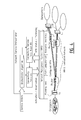
- Figure 2 shows a situation similar to figure 1 , but implementing an embodiment of the invention.
- interaction between user and the network is made possible so that the network can adapt to the specific needs of the user at a moment of time (moment of request or a later moment upon choice of the user via the parameter 'start time'; see below).
- VPN tunnel configurations and VM configurations (shown at the upper part of the figure) are still present in the network, but can be allocated and deallocated by the network service orchestrator. If the user does not use a VPN service, it can be deallocated so that the network (lower part of the figure) can allocate the VPN tunnel to another service, possibly requested by another user. This allows optimal use of the network which lowers costs for the user.
- Such configuration allows to allocate VPN tunnels and VM configurations over time to successive service orders to connect a different user via a dedicated predefined pool of VPN tunnels to different VMs.
- the cost of the network resources is preferably charged to the cloud application according to the utilized resources of the connectivity service by the time.
- Those utilized network resources include the list of routers involved and their transmission interface capabilities (e.g. 1 Gbit/s, 10 Gbit/s, 100 Gbit/s, etc.).
- the cost model can be defined according to a charging strategy defined by the Telecom network operator.
- a cost model should be beneficial for both the Operator and the Customers: Customers can get lower prices for their applications (which is the main goal of virtualization) but retain an expected level of network QoS, while Operators can increase their network utilization for Cloud Applications (which means a lower CAPEX, and also a lower OPEX due to automation), and provide a differentiating offer, which translates in increased revenue.
- a TV broadcaster is considered that has to transmit (inter)national-scale programs for a given period of time (e.g. Soccer World Cup, NFL Super Bowl, Olympic games, National election, or others).
- the workflow of the media cloud application is described along this defined period of time corresponding to transmission activities.
- the workflow is broken into several activities. Each of these activities of the cloud application requires to be served by accessing Telecom or Datacenter infrastructures as Services.
- the Service Orders for these infrastructures as Services are allocated either to VPN services delivered from Telecom network infrastructures or to VM services delivered from Datacenter infrastructures.
- a Service Order is issued.
- the parameters of the Service Order for connectivity services are processed by the network service orchestrator function.
- the list of the parameters specific to connectivity services are used by the network orchestration function for selecting the most suitable available connectivity service according the implemented orchestration function.
- a Service Order used as an entry for network orchestrator preferably includes one or a combination of the following parameters:
- the utilized network resources are charged by the Telecom network operator according to a cost model function of the number of routers involved and the performance capability (e.g. transmission rate) of each interface used.
- the strategy of the orchestration algorithm is to tune the amount of the network resources to be used by the connectivity services of the media cloud application such that the response time of the connectivity service is minimal and the costs of the network resource configurations are compliant with the media cloud application.
- the FFCS algorithm allocates an arriving Service Order in one connectivity service available of the service inventory database. If there is more than one connectivity service available, the selection of the connectivity service to be allocated by the FFCS algorithm for the Service Order is done in Round-Robin manner.
- the LUCS algorithm allocates an arriving Service Order in one available connectivity service after looking for each connectivity service registered in the service inventory data-base.
- the algorithm selects an available connectivity service with latest time after which there is no Service Order allocated and considering that the Service Order is going to be allocated before its Validity expires. As before, if there is no connectivity service released before the Validity of the Service Order, it is discarded.
- LUCS algorithm reduces the duration of the vacant-times, then reducing the waste of connectivity service allocations, and maximizing the utilization of the network resources used for the configuration of each connectivity service.
- the LUCS-VF algorithm improves LUCS algorithm by allowing allocating a Service Order in one of the vacant times of the connectivity services whenever it is possible. If more than one vacant time can fit the Service Order, the connectivity service having the vacant time starting the latest is allocated.
- the complexity of this algorithm is much more important than LUCS because it must keep updating in memory all the vacant-times of the connectivity services registered in the service inventory database (it is common that the number of vacancies in one connectivity service is several thousands).
- binary heap tree data structure is proposed to quickly find the most suitable vacant time (see Binary tree arbitration system and method, US Patent application 2003/0188065A1 ). With such an efficient data organization, the implementation of that algorithm variant for the network orchestrator may become feasible.
- the SCSO algorithm orchestrates the allocation of the issued Service Order on the connectivity services of the service inventory differently.
- a Service Order is processed following its start_time parameter, and is not processed at its order_date parameter (unlike the previous algorithms).
- the Service Orders are sorted in an Arranger before being processed by the network service orchestrator.
- a Service Order is held in the Arranger so that it can be sequenced with other received Service Orders until (start_time - ⁇ ).
- the Arranger sorts the buffered Service Orders by classifying the start_time values of their connectivity services and then, when the time difference between the current time and the time of connectivity services to be activated (i.e. start_time) is equal to or less than ⁇ , the Arranger releases those Service Orders to the network service orchestrator. After that, the network service orchestrator algorithm allocates an available connectivity service based on the start_time of the Service Order.
- the dawn of the service connectivity c is defined as the earliest time after which there are no more Service Orders allocated on the service connectivity service c .
- the dawn list D is the list of the connectivity services of the service inventory database (CS-DB) sorted based on the values of their dawn times:
- the function Add(service_order) is the operation of adding a new Service Order service_order in the Arranger based on its start_time value.
- the function Release() releases the Service Order service_order if the time difference between the current time and the time of connectivity service to be activated (i.e. start_time) is equal to or less than ⁇ .
- the SCSO algorithm description can be summarized as follows between a given pair of routers R and R' having « d » connectivity services registered in the CS-DB.
- the list of these d connectivity services is denoted hereafter as D :
- the network service orchestration function automates the activation and deactivation and allocation and deallocation of connectivity services for datacenter access.
- These algorithms are the first to be proposed for Carrier grade cloud services.
- the network service orchestrator with these engines (FFCS, LUCS, LUCS-VF, SCSO) provides an efficient trade-off between on-the-fly VPN/VM configuration and activation (very elastic but high latency - can be several minutes even when automated, which is not acceptable for interactive services - and large overhead) and statically reserved VPN/VM over-dimensioned for the worst case (rigid, low utilization, although low maintenance).
- the proposed solution relies on an appropriately dimensioned pool of statically pre-provisioned resources, which are dynamically allocated and activated on a timeslot basis, to a flow of incoming Service Orders, which characterize the connectivity needs of each particular cloud application.
- the provision of network services is orchestrated from Service Orders issued by for example Cloud Application workflows. It automates the network service provisioning with the provisioning of IT services (computing, storage, and software applications).
- IT services computing, storage, and software applications.
- the property of elasticity, beneficial for Operators as well as for Customers, is achieved without excessive provisioning and/or de-provisioning overhead.
- Cloud Applications can run with the guarantee that their virtualized environment meets certain levels of QoS, defined in their Service Orders.
- the proposed method would perfectly combine with an SLA management tool (especially one focused on clouds), which would monitor the actual level of performance offered by the VPN/VM services, and whether and how the Service Order requirements are met.
- Figure 4 shows the network service orchestrator comprising an input for receiving service orders, a processor adapted for executing the orchestrator algorithm, the connectivity service database comprising information representing the connectivity services implemented in the network, whereby the orchestrator algorithm selects a set of connectivity services based on incoming service orders.
- These selected connectivity services are allocated/deallocated by sending a signal to the network management system operationally connected to the network service orchestrator.
- the network management system can amend the settings in the network nodes forming the network, either directly using the signal from the network service orchestrator, or indirectly by translating the signal to network node instructions, thereby implementing the allocation/deallocation order in the network.
- the network service orchestrator comprises update means for updating the connectivity service database based upon the signal sent to the network management system.
- the update means update the database based on information received from the network management system regarding VPN statuses in the network.
- the network management system provides in a monitoring function to monitor the status of the network, based upon which the network service orchestrator can select connectivity services to be activated/deactivated.
- a pre-configured connectivity service can be allocated or deallocated to an ordered service by using parameters relating to this service. For example the QoS parameter can be matched when the service is allocated and changed when the service is deallocated.
- program storage devices e.g., digital data storage media, which are machine or computer readable and encode machine-executable or computer-executable programs of instructions, wherein said instructions perform some or all of the steps of said above-described methods.
- the program storage devices may be, e.g., digital memories, magnetic storage media such as a magnetic disks and magnetic tapes, hard drives, or optically readable digital data storage media.
- the embodiments are also intended to cover computers programmed to perform said steps of the above-described methods.
- processors may be provided through the use of dedicated hardware as well as hardware capable of executing software in association with appropriate software.
- the functions may be provided by a single dedicated processor, by a single shared processor, or by a plurality of individual processors, some of which may be shared.
- explicit use of the term "processor” or “controller” should not be construed to refer exclusively to hardware capable of executing software, and may implicitly include, without limitation, digital signal processor (DSP) hardware, network processor, application specific integrated circuit (ASIC), field programmable gate array (FPGA), read only memory (ROM) for storing software, random access memory (RAM), and non volatile storage.
- DSP digital signal processor
- ASIC application specific integrated circuit
- FPGA field programmable gate array
- ROM read only memory
- RAM random access memory
- any switches shown in the FIGS. are conceptual only. Their function may be carried out through the operation of program logic, through dedicated logic, through the interaction of program control and dedicated logic, or even manually, the particular technique being selectable by the implementer as more specifically understood from the context.
- any block diagrams herein represent conceptual views of illustrative circuitry embodying the principles of the invention.
- any flow charts, flow diagrams, state transition diagrams, pseudo code, and the like represent various processes which may be substantially represented in computer readable medium and so executed by a computer or processor, whether or not such computer or processor is explicitly shown.
Landscapes
- Engineering & Computer Science (AREA)
- Computer Networks & Wireless Communication (AREA)
- Signal Processing (AREA)
- Computer Security & Cryptography (AREA)
- Data Exchanges In Wide-Area Networks (AREA)
Priority Applications (6)
| Application Number | Priority Date | Filing Date | Title |
|---|---|---|---|
| EP12305571.7A EP2667541B1 (fr) | 2012-05-23 | 2012-05-23 | Orchestration de services de connectivité |
| JP2015513059A JP2015522996A (ja) | 2012-05-23 | 2013-04-10 | 接続サービス調整器 |
| US14/388,861 US20150081902A1 (en) | 2012-05-23 | 2013-04-10 | Connectivity service orchestrator |
| PCT/EP2013/057436 WO2013174571A1 (fr) | 2012-05-23 | 2013-04-10 | Orchestrateur de service de connectivité |
| CN201380026767.5A CN104322011A (zh) | 2012-05-23 | 2013-04-10 | 连通性服务编排器 |
| KR1020147032801A KR20150011815A (ko) | 2012-05-23 | 2013-04-10 | 접속 서비스 오케스트레이터 |
Applications Claiming Priority (1)
| Application Number | Priority Date | Filing Date | Title |
|---|---|---|---|
| EP12305571.7A EP2667541B1 (fr) | 2012-05-23 | 2012-05-23 | Orchestration de services de connectivité |
Publications (2)
| Publication Number | Publication Date |
|---|---|
| EP2667541A1 true EP2667541A1 (fr) | 2013-11-27 |
| EP2667541B1 EP2667541B1 (fr) | 2015-08-05 |
Family
ID=48050734
Family Applications (1)
| Application Number | Title | Priority Date | Filing Date |
|---|---|---|---|
| EP12305571.7A Not-in-force EP2667541B1 (fr) | 2012-05-23 | 2012-05-23 | Orchestration de services de connectivité |
Country Status (6)
| Country | Link |
|---|---|
| US (1) | US20150081902A1 (fr) |
| EP (1) | EP2667541B1 (fr) |
| JP (1) | JP2015522996A (fr) |
| KR (1) | KR20150011815A (fr) |
| CN (1) | CN104322011A (fr) |
| WO (1) | WO2013174571A1 (fr) |
Cited By (10)
| Publication number | Priority date | Publication date | Assignee | Title |
|---|---|---|---|---|
| EP3278504A4 (fr) * | 2015-06-01 | 2018-03-28 | Huawei Technologies Co. Ltd. | Système et procédé destinés à des fonctions virtualisées dans des plans de commande et de données |
| US10039112B2 (en) | 2014-10-10 | 2018-07-31 | Huawei Technologies Co., Ltd | Methods and systems for provisioning a virtual network in software defined networks |
| US10111163B2 (en) | 2015-06-01 | 2018-10-23 | Huawei Technologies Co., Ltd. | System and method for virtualized functions in control and data planes |
| US10212589B2 (en) | 2015-06-02 | 2019-02-19 | Huawei Technologies Co., Ltd. | Method and apparatus to use infra-structure or network connectivity services provided by 3rd parties |
| US10212097B2 (en) | 2015-10-09 | 2019-02-19 | Huawei Technologies Co., Ltd. | Method and apparatus for admission control of virtual networks in a backhaul-limited communication network |
| US10313887B2 (en) | 2015-06-01 | 2019-06-04 | Huawei Technologies Co., Ltd. | System and method for provision and distribution of spectrum resources |
| US10448320B2 (en) | 2015-06-01 | 2019-10-15 | Huawei Technologies Co., Ltd. | System and method for virtualized functions in control and data planes |
| EP3563521A1 (fr) * | 2016-12-30 | 2019-11-06 | INTEL Corporation | Fourniture de service à des dispositifs ido |
| US10700936B2 (en) | 2015-06-02 | 2020-06-30 | Huawei Technologies Co., Ltd. | System and methods for virtual infrastructure management between operator networks |
| US10862818B2 (en) | 2015-09-23 | 2020-12-08 | Huawei Technologies Co., Ltd. | Systems and methods for distributing network resources to network service providers |
Families Citing this family (16)
| Publication number | Priority date | Publication date | Assignee | Title |
|---|---|---|---|---|
| US20150161518A1 (en) * | 2013-12-05 | 2015-06-11 | Futurewei Technologies, Inc. | System and Method for Non-Invasive Application Recognition |
| JP6298334B2 (ja) * | 2014-03-26 | 2018-03-20 | 株式会社 日立産業制御ソリューションズ | 監視システム及び監視システムの制御方法 |
| CN105281955B (zh) | 2015-10-27 | 2018-10-09 | 上海华为技术有限公司 | 一种业务和资源编排的系统、方法及装置 |
| US10142293B2 (en) | 2015-12-15 | 2018-11-27 | International Business Machines Corporation | Dynamically defined virtual private network tunnels in hybrid cloud environments |
| US9571457B1 (en) * | 2015-12-15 | 2017-02-14 | International Business Machines Corporation | Dynamically defined virtual private network tunnels in hybrid cloud environments |
| CN108540428B (zh) * | 2017-03-02 | 2021-10-01 | 华为技术有限公司 | 业务处理方法、设备及系统 |
| US10715403B2 (en) * | 2017-04-11 | 2020-07-14 | Nerdio, Inc. | Scalable, standardized I.T. deployment platform |
| KR101876918B1 (ko) * | 2017-04-24 | 2018-07-11 | 주식회사 이노그리드 | 다중 오케스트레이터 기반 컨테이너 클러스터 서비스 제공방법 |
| US10949414B2 (en) * | 2017-10-31 | 2021-03-16 | Ab Initio Technology Llc | Managing a computing cluster interface |
| US10700940B2 (en) * | 2017-11-29 | 2020-06-30 | Amazon Technologies, Inc. | Network planning and optimization |
| CN110750415B (zh) * | 2019-09-20 | 2023-02-07 | 平安普惠企业管理有限公司 | 接口服务配置方法、装置、介质和计算机设备 |
| CN110958170B (zh) * | 2019-11-25 | 2021-09-14 | 中国联合网络通信集团有限公司 | 一种网络互联方法和装置 |
| US11399305B2 (en) | 2020-02-27 | 2022-07-26 | At&T Intellectual Property I, L.P. | Network edge cloud adjustment |
| CN112437449B (zh) * | 2020-09-30 | 2023-02-21 | 国网安徽省电力有限公司信息通信分公司 | 联合资源分配方法 |
| WO2022125296A1 (fr) * | 2020-12-08 | 2022-06-16 | Intel Corporation | Mécanismes pour permettre des services informatiques en réseau |
| US20250088387A1 (en) * | 2023-09-11 | 2025-03-13 | Centurylink Intellectual Property Llc | Dynamic connections (dycon) internet protocol (ip) virtual private network (vpn) functionalities |
Citations (6)
| Publication number | Priority date | Publication date | Assignee | Title |
|---|---|---|---|---|
| US20030188065A1 (en) | 2002-03-28 | 2003-10-02 | Golla Prasad N. | Binary tree arbitration system and method |
| US20040172412A1 (en) * | 2002-07-19 | 2004-09-02 | Kirby Files | Automated configuration of packet routed networks |
| US20070118643A1 (en) * | 2005-11-18 | 2007-05-24 | Richard Mishra | Method and system for network planning |
| US20090092047A1 (en) * | 2007-10-08 | 2009-04-09 | Steven Gemelos | System to manage multilayer networks |
| US20100290366A1 (en) * | 2009-05-18 | 2010-11-18 | Comcast Cable Holdings, Llc | Configuring network devices |
| US20110171938A1 (en) * | 2010-01-11 | 2011-07-14 | Microsoft Corporation | Syndication of multiple service instances |
Family Cites Families (17)
| Publication number | Priority date | Publication date | Assignee | Title |
|---|---|---|---|---|
| US6321317B1 (en) * | 1998-12-16 | 2001-11-20 | Hewlett-Packard Co | Apparatus for and method of multi-dimensional constraint optimization in storage system configuration |
| US7139276B1 (en) * | 2001-02-27 | 2006-11-21 | Cisco Technology, Inc. | Load sharing between L2TP tunnels |
| US7818409B2 (en) * | 2002-01-22 | 2010-10-19 | Alcatel-Lucent Usa Inc. | Dynamic virtual private network system and methods |
| EP1488332A4 (fr) * | 2002-03-11 | 2005-12-07 | Seabridge Ltd | Regroupement compatible dynamique de sessions ppp sur des tunnels de reseau variables |
| US7756042B2 (en) * | 2003-02-26 | 2010-07-13 | Alcatel-Lucent Usa Inc. | Bandwidth guaranteed provisioning in network-based mobile virtual private network (VPN) services |
| US7561586B2 (en) * | 2003-09-19 | 2009-07-14 | Nortel Networks Limited | Method and apparatus for providing network VPN services on demand |
| FR2876525A1 (fr) * | 2004-10-08 | 2006-04-14 | France Telecom | Procede et dispositif de creation d'un tunnel dans un reseau de telecommunication a permutation d'etiquettes |
| US7787494B1 (en) * | 2004-12-07 | 2010-08-31 | Nortel Networks Limited | Method and apparatus for assigning and allocating network resources to packet-based virtual private networks |
| US8218445B2 (en) * | 2006-06-02 | 2012-07-10 | Ciena Corporation | Smart ethernet edge networking system |
| US20080049639A1 (en) * | 2006-08-22 | 2008-02-28 | Wiley William L | System and method for managing a service level agreement |
| US8090826B2 (en) * | 2008-06-27 | 2012-01-03 | Microsoft Corporation | Scheduling data delivery to manage device resources |
| US20110078303A1 (en) * | 2009-09-30 | 2011-03-31 | Alcatel-Lucent Usa Inc. | Dynamic load balancing and scaling of allocated cloud resources in an enterprise network |
| CN101808038B (zh) * | 2010-03-29 | 2012-02-08 | 杭州华三通信技术有限公司 | 一种vpn实例的划分方法和设备 |
| EP2609502A4 (fr) * | 2010-08-24 | 2017-03-29 | Jay Moorthi | Procédé et appareil permettant de compenser une demande d'informatique en nuage |
| US8503997B2 (en) * | 2010-09-02 | 2013-08-06 | At&T Intellectual Property I, L.P. | Method and apparatus for dynamically assigning a mobile service request to any one of a plurality of available service providers |
| US8699499B2 (en) * | 2010-12-08 | 2014-04-15 | At&T Intellectual Property I, L.P. | Methods and apparatus to provision cloud computing network elements |
| US8793379B2 (en) * | 2011-11-01 | 2014-07-29 | Lsi Corporation | System or method to automatically provision a storage volume by having an app-aware based appliance in a storage cloud environment |
-
2012
- 2012-05-23 EP EP12305571.7A patent/EP2667541B1/fr not_active Not-in-force
-
2013
- 2013-04-10 KR KR1020147032801A patent/KR20150011815A/ko not_active Ceased
- 2013-04-10 JP JP2015513059A patent/JP2015522996A/ja active Pending
- 2013-04-10 WO PCT/EP2013/057436 patent/WO2013174571A1/fr not_active Ceased
- 2013-04-10 CN CN201380026767.5A patent/CN104322011A/zh active Pending
- 2013-04-10 US US14/388,861 patent/US20150081902A1/en not_active Abandoned
Patent Citations (6)
| Publication number | Priority date | Publication date | Assignee | Title |
|---|---|---|---|---|
| US20030188065A1 (en) | 2002-03-28 | 2003-10-02 | Golla Prasad N. | Binary tree arbitration system and method |
| US20040172412A1 (en) * | 2002-07-19 | 2004-09-02 | Kirby Files | Automated configuration of packet routed networks |
| US20070118643A1 (en) * | 2005-11-18 | 2007-05-24 | Richard Mishra | Method and system for network planning |
| US20090092047A1 (en) * | 2007-10-08 | 2009-04-09 | Steven Gemelos | System to manage multilayer networks |
| US20100290366A1 (en) * | 2009-05-18 | 2010-11-18 | Comcast Cable Holdings, Llc | Configuring network devices |
| US20110171938A1 (en) * | 2010-01-11 | 2011-07-14 | Microsoft Corporation | Syndication of multiple service instances |
Cited By (18)
| Publication number | Priority date | Publication date | Assignee | Title |
|---|---|---|---|---|
| US10039112B2 (en) | 2014-10-10 | 2018-07-31 | Huawei Technologies Co., Ltd | Methods and systems for provisioning a virtual network in software defined networks |
| US10887118B2 (en) | 2014-10-10 | 2021-01-05 | Huawei Technologies Co., Ltd. | Methods and systems for provisioning a virtual network in software defined networks |
| US10448320B2 (en) | 2015-06-01 | 2019-10-15 | Huawei Technologies Co., Ltd. | System and method for virtualized functions in control and data planes |
| JP2018517340A (ja) * | 2015-06-01 | 2018-06-28 | 華為技術有限公司Huawei Technologies Co.,Ltd. | 制御プレーンおよびデータプレーンにおける仮想化された機能のためのシステムおよび方法 |
| US10111163B2 (en) | 2015-06-01 | 2018-10-23 | Huawei Technologies Co., Ltd. | System and method for virtualized functions in control and data planes |
| EP3278504A4 (fr) * | 2015-06-01 | 2018-03-28 | Huawei Technologies Co. Ltd. | Système et procédé destinés à des fonctions virtualisées dans des plans de commande et de données |
| US10313887B2 (en) | 2015-06-01 | 2019-06-04 | Huawei Technologies Co., Ltd. | System and method for provision and distribution of spectrum resources |
| US10892949B2 (en) | 2015-06-02 | 2021-01-12 | Huawei Technologies Co., Ltd. | Method and apparatus to use infra-structure or network connectivity services provided by 3RD parties |
| US10700936B2 (en) | 2015-06-02 | 2020-06-30 | Huawei Technologies Co., Ltd. | System and methods for virtual infrastructure management between operator networks |
| US10212589B2 (en) | 2015-06-02 | 2019-02-19 | Huawei Technologies Co., Ltd. | Method and apparatus to use infra-structure or network connectivity services provided by 3rd parties |
| US10862818B2 (en) | 2015-09-23 | 2020-12-08 | Huawei Technologies Co., Ltd. | Systems and methods for distributing network resources to network service providers |
| US10212097B2 (en) | 2015-10-09 | 2019-02-19 | Huawei Technologies Co., Ltd. | Method and apparatus for admission control of virtual networks in a backhaul-limited communication network |
| EP3563521A1 (fr) * | 2016-12-30 | 2019-11-06 | INTEL Corporation | Fourniture de service à des dispositifs ido |
| US11296935B2 (en) | 2016-12-30 | 2022-04-05 | Intel Corporation | Service provision to IoT devices |
| US11916730B2 (en) | 2016-12-30 | 2024-02-27 | Intel Corporation | Service provision to IoT devices |
| US12132609B2 (en) | 2016-12-30 | 2024-10-29 | Intel Corporation | Blockchains for securing IoT devices |
| US12218795B2 (en) | 2016-12-30 | 2025-02-04 | Intel Corporation | Internet of things |
| EP3563521B1 (fr) * | 2016-12-30 | 2025-05-28 | INTEL Corporation | Fourniture de service à des dispositifs ido |
Also Published As
| Publication number | Publication date |
|---|---|
| KR20150011815A (ko) | 2015-02-02 |
| WO2013174571A1 (fr) | 2013-11-28 |
| CN104322011A (zh) | 2015-01-28 |
| US20150081902A1 (en) | 2015-03-19 |
| EP2667541B1 (fr) | 2015-08-05 |
| JP2015522996A (ja) | 2015-08-06 |
Similar Documents
| Publication | Publication Date | Title |
|---|---|---|
| EP2667541B1 (fr) | Orchestration de services de connectivité | |
| US11836535B1 (en) | System and method of providing cloud bursting capabilities in a compute environment | |
| EP1806002B1 (fr) | Procede de gestion de ressources dans une plate-forme de gestion de services et / ou de reseaux de telecommunication, plate-forme correspondante et programme informatique associe | |
| EP3455728B1 (fr) | Orchestrateur pour une plate-forme de réseau virtuel en tant que service (vnpaas) | |
| KR100570141B1 (ko) | 복수의 애플리케이션 레벨 사용자를 위한 접속 제공 방법, 시스템, 및 기록 매체 | |
| US9442771B2 (en) | Generating configurable subscription parameters | |
| CN110546920B (zh) | 使用切片的服务提供步骤及相关定义 | |
| Almeida et al. | Resource management in the autonomic service-oriented architecture | |
| Faraci et al. | An analytical model to design and manage a green SDN/NFV CPE node | |
| Katsalis et al. | SLA-driven VM scheduling in mobile edge computing | |
| US20050076336A1 (en) | Method and apparatus for scheduling resources on a switched underlay network | |
| EP3283953B1 (fr) | Fourniture de services dans un système ayant un plan d'accélération matériel et un plan logiciel | |
| WO2020114608A1 (fr) | Procédé et appareil de mappage de tranches de réseau sur des infrastructures de réseau avec une garantie sla | |
| US20120290707A1 (en) | System and method for unified polling of networked devices and services | |
| KR102389334B1 (ko) | 클라우드 서비스를 위한 가상 머신 프로비저닝 시스템 및 방법 | |
| Centofanti et al. | Taming latency at the edge: A user-aware service placement approach | |
| Russo et al. | Towards qos-aware function composition scheduling in apache openwhisk | |
| US11997022B2 (en) | Service-to-service scheduling in container orchestrators | |
| Cucinotta et al. | Virtualised e-Learning on the IRMOS real-time Cloud | |
| Shifrin et al. | Optimal control of VNF deployment and scheduling | |
| WO2022177455A1 (fr) | Procédé et système pour optimiser la gestion de ressources et de trafic d'un environnement d'exécution d'ordinateur dans un vran | |
| Mazzucco | Towards autonomic service provisioning systems | |
| Cucinotta et al. | A heuristic for optimum allocation of real-time service workflows | |
| KR20240010667A (ko) | 엣지 플랫폼의 가상 머신들의 자원을 관리하는 상태 관리 방법 및 이를 지원하는 상태 관리 장치 | |
| CN121907772A (zh) | 流量请求调度方法、电子设备及存储介质 |
Legal Events
| Date | Code | Title | Description |
|---|---|---|---|
| PUAI | Public reference made under article 153(3) epc to a published international application that has entered the european phase |
Free format text: ORIGINAL CODE: 0009012 |
|
| AK | Designated contracting states |
Kind code of ref document: A1 Designated state(s): AL AT BE BG CH CY CZ DE DK EE ES FI FR GB GR HR HU IE IS IT LI LT LU LV MC MK MT NL NO PL PT RO RS SE SI SK SM TR |
|
| AX | Request for extension of the european patent |
Extension state: BA ME |
|
| 111Z | Information provided on other rights and legal means of execution |
Free format text: AL AT BE BG CH CY CZ DE DK EE ES FI FR GB GR HR HU IE IS IT LI LT LU LV MC MK MT NL NO PL PT RO RS SE SI SK SM TR Effective date: 20140303 |
|
| 17P | Request for examination filed |
Effective date: 20140527 |
|
| RBV | Designated contracting states (corrected) |
Designated state(s): AL AT BE BG CH CY CZ DE DK EE ES FI FR GB GR HR HU IE IS IT LI LT LU LV MC MK MT NL NO PL PT RO RS SE SI SK SM TR |
|
| 17Q | First examination report despatched |
Effective date: 20140618 |
|
| RAP1 | Party data changed (applicant data changed or rights of an application transferred) |
Owner name: ALCATEL LUCENT |
|
| GRAP | Despatch of communication of intention to grant a patent |
Free format text: ORIGINAL CODE: EPIDOSNIGR1 |
|
| INTG | Intention to grant announced |
Effective date: 20141015 |
|
| D11X | Information provided on other rights and legal means of execution (deleted) | ||
| GRAP | Despatch of communication of intention to grant a patent |
Free format text: ORIGINAL CODE: EPIDOSNIGR1 |
|
| INTG | Intention to grant announced |
Effective date: 20150313 |
|
| RIN1 | Information on inventor provided before grant (corrected) |
Inventor name: VERCHERE, DOMINIQUE Inventor name: DAMM, GERARD |
|
| GRAS | Grant fee paid |
Free format text: ORIGINAL CODE: EPIDOSNIGR3 |
|
| GRAA | (expected) grant |
Free format text: ORIGINAL CODE: 0009210 |
|
| AK | Designated contracting states |
Kind code of ref document: B1 Designated state(s): AL AT BE BG CH CY CZ DE DK EE ES FI FR GB GR HR HU IE IS IT LI LT LU LV MC MK MT NL NO PL PT RO RS SE SI SK SM TR |
|
| REG | Reference to a national code |
Ref country code: GB Ref legal event code: FG4D |
|
| REG | Reference to a national code |
Ref country code: CH Ref legal event code: EP |
|
| REG | Reference to a national code |
Ref country code: AT Ref legal event code: REF Ref document number: 741214 Country of ref document: AT Kind code of ref document: T Effective date: 20150815 |
|
| REG | Reference to a national code |
Ref country code: IE Ref legal event code: FG4D |
|
| REG | Reference to a national code |
Ref country code: DE Ref legal event code: R096 Ref document number: 602012009301 Country of ref document: DE |
|
| REG | Reference to a national code |
Ref country code: AT Ref legal event code: MK05 Ref document number: 741214 Country of ref document: AT Kind code of ref document: T Effective date: 20150805 |
|
| REG | Reference to a national code |
Ref country code: LT Ref legal event code: MG4D |
|
| REG | Reference to a national code |
Ref country code: NL Ref legal event code: MP Effective date: 20150805 |
|
| PG25 | Lapsed in a contracting state [announced via postgrant information from national office to epo] |
Ref country code: FI Free format text: LAPSE BECAUSE OF FAILURE TO SUBMIT A TRANSLATION OF THE DESCRIPTION OR TO PAY THE FEE WITHIN THE PRESCRIBED TIME-LIMIT Effective date: 20150805 Ref country code: NO Free format text: LAPSE BECAUSE OF FAILURE TO SUBMIT A TRANSLATION OF THE DESCRIPTION OR TO PAY THE FEE WITHIN THE PRESCRIBED TIME-LIMIT Effective date: 20151105 Ref country code: LT Free format text: LAPSE BECAUSE OF FAILURE TO SUBMIT A TRANSLATION OF THE DESCRIPTION OR TO PAY THE FEE WITHIN THE PRESCRIBED TIME-LIMIT Effective date: 20150805 Ref country code: LV Free format text: LAPSE BECAUSE OF FAILURE TO SUBMIT A TRANSLATION OF THE DESCRIPTION OR TO PAY THE FEE WITHIN THE PRESCRIBED TIME-LIMIT Effective date: 20150805 Ref country code: GR Free format text: LAPSE BECAUSE OF FAILURE TO SUBMIT A TRANSLATION OF THE DESCRIPTION OR TO PAY THE FEE WITHIN THE PRESCRIBED TIME-LIMIT Effective date: 20151106 |
|
| PG25 | Lapsed in a contracting state [announced via postgrant information from national office to epo] |
Ref country code: ES Free format text: LAPSE BECAUSE OF FAILURE TO SUBMIT A TRANSLATION OF THE DESCRIPTION OR TO PAY THE FEE WITHIN THE PRESCRIBED TIME-LIMIT Effective date: 20150805 Ref country code: PL Free format text: LAPSE BECAUSE OF FAILURE TO SUBMIT A TRANSLATION OF THE DESCRIPTION OR TO PAY THE FEE WITHIN THE PRESCRIBED TIME-LIMIT Effective date: 20150805 Ref country code: AT Free format text: LAPSE BECAUSE OF FAILURE TO SUBMIT A TRANSLATION OF THE DESCRIPTION OR TO PAY THE FEE WITHIN THE PRESCRIBED TIME-LIMIT Effective date: 20150805 Ref country code: IS Free format text: LAPSE BECAUSE OF FAILURE TO SUBMIT A TRANSLATION OF THE DESCRIPTION OR TO PAY THE FEE WITHIN THE PRESCRIBED TIME-LIMIT Effective date: 20151205 Ref country code: SE Free format text: LAPSE BECAUSE OF FAILURE TO SUBMIT A TRANSLATION OF THE DESCRIPTION OR TO PAY THE FEE WITHIN THE PRESCRIBED TIME-LIMIT Effective date: 20150805 Ref country code: PT Free format text: LAPSE BECAUSE OF FAILURE TO SUBMIT A TRANSLATION OF THE DESCRIPTION OR TO PAY THE FEE WITHIN THE PRESCRIBED TIME-LIMIT Effective date: 20151207 Ref country code: RS Free format text: LAPSE BECAUSE OF FAILURE TO SUBMIT A TRANSLATION OF THE DESCRIPTION OR TO PAY THE FEE WITHIN THE PRESCRIBED TIME-LIMIT Effective date: 20150805 Ref country code: HR Free format text: LAPSE BECAUSE OF FAILURE TO SUBMIT A TRANSLATION OF THE DESCRIPTION OR TO PAY THE FEE WITHIN THE PRESCRIBED TIME-LIMIT Effective date: 20150805 |
|
| PG25 | Lapsed in a contracting state [announced via postgrant information from national office to epo] |
Ref country code: NL Free format text: LAPSE BECAUSE OF FAILURE TO SUBMIT A TRANSLATION OF THE DESCRIPTION OR TO PAY THE FEE WITHIN THE PRESCRIBED TIME-LIMIT Effective date: 20150805 |
|
| PG25 | Lapsed in a contracting state [announced via postgrant information from national office to epo] |
Ref country code: CZ Free format text: LAPSE BECAUSE OF FAILURE TO SUBMIT A TRANSLATION OF THE DESCRIPTION OR TO PAY THE FEE WITHIN THE PRESCRIBED TIME-LIMIT Effective date: 20150805 Ref country code: EE Free format text: LAPSE BECAUSE OF FAILURE TO SUBMIT A TRANSLATION OF THE DESCRIPTION OR TO PAY THE FEE WITHIN THE PRESCRIBED TIME-LIMIT Effective date: 20150805 Ref country code: DK Free format text: LAPSE BECAUSE OF FAILURE TO SUBMIT A TRANSLATION OF THE DESCRIPTION OR TO PAY THE FEE WITHIN THE PRESCRIBED TIME-LIMIT Effective date: 20150805 Ref country code: IT Free format text: LAPSE BECAUSE OF FAILURE TO SUBMIT A TRANSLATION OF THE DESCRIPTION OR TO PAY THE FEE WITHIN THE PRESCRIBED TIME-LIMIT Effective date: 20150805 Ref country code: SK Free format text: LAPSE BECAUSE OF FAILURE TO SUBMIT A TRANSLATION OF THE DESCRIPTION OR TO PAY THE FEE WITHIN THE PRESCRIBED TIME-LIMIT Effective date: 20150805 |
|
| REG | Reference to a national code |
Ref country code: DE Ref legal event code: R097 Ref document number: 602012009301 Country of ref document: DE |
|
| REG | Reference to a national code |
Ref country code: FR Ref legal event code: PLFP Year of fee payment: 5 |
|
| PG25 | Lapsed in a contracting state [announced via postgrant information from national office to epo] |
Ref country code: RO Free format text: LAPSE BECAUSE OF FAILURE TO SUBMIT A TRANSLATION OF THE DESCRIPTION OR TO PAY THE FEE WITHIN THE PRESCRIBED TIME-LIMIT Effective date: 20150805 |
|
| PLBE | No opposition filed within time limit |
Free format text: ORIGINAL CODE: 0009261 |
|
| STAA | Information on the status of an ep patent application or granted ep patent |
Free format text: STATUS: NO OPPOSITION FILED WITHIN TIME LIMIT |
|
| 26N | No opposition filed |
Effective date: 20160509 |
|
| PG25 | Lapsed in a contracting state [announced via postgrant information from national office to epo] |
Ref country code: SI Free format text: LAPSE BECAUSE OF FAILURE TO SUBMIT A TRANSLATION OF THE DESCRIPTION OR TO PAY THE FEE WITHIN THE PRESCRIBED TIME-LIMIT Effective date: 20150805 Ref country code: BE Free format text: LAPSE BECAUSE OF NON-PAYMENT OF DUE FEES Effective date: 20160531 |
|
| PG25 | Lapsed in a contracting state [announced via postgrant information from national office to epo] |
Ref country code: LU Free format text: LAPSE BECAUSE OF FAILURE TO SUBMIT A TRANSLATION OF THE DESCRIPTION OR TO PAY THE FEE WITHIN THE PRESCRIBED TIME-LIMIT Effective date: 20160523 Ref country code: BE Free format text: LAPSE BECAUSE OF FAILURE TO SUBMIT A TRANSLATION OF THE DESCRIPTION OR TO PAY THE FEE WITHIN THE PRESCRIBED TIME-LIMIT Effective date: 20150805 |
|
| REG | Reference to a national code |
Ref country code: CH Ref legal event code: PL |
|
| PG25 | Lapsed in a contracting state [announced via postgrant information from national office to epo] |
Ref country code: CH Free format text: LAPSE BECAUSE OF NON-PAYMENT OF DUE FEES Effective date: 20160531 Ref country code: LI Free format text: LAPSE BECAUSE OF NON-PAYMENT OF DUE FEES Effective date: 20160531 |
|
| REG | Reference to a national code |
Ref country code: IE Ref legal event code: MM4A |
|
| REG | Reference to a national code |
Ref country code: FR Ref legal event code: PLFP Year of fee payment: 6 |
|
| PG25 | Lapsed in a contracting state [announced via postgrant information from national office to epo] |
Ref country code: IE Free format text: LAPSE BECAUSE OF NON-PAYMENT OF DUE FEES Effective date: 20160523 |
|
| PGFP | Annual fee paid to national office [announced via postgrant information from national office to epo] |
Ref country code: FR Payment date: 20170523 Year of fee payment: 6 Ref country code: GB Payment date: 20170519 Year of fee payment: 6 Ref country code: DE Payment date: 20170523 Year of fee payment: 6 |
|
| PG25 | Lapsed in a contracting state [announced via postgrant information from national office to epo] |
Ref country code: SM Free format text: LAPSE BECAUSE OF FAILURE TO SUBMIT A TRANSLATION OF THE DESCRIPTION OR TO PAY THE FEE WITHIN THE PRESCRIBED TIME-LIMIT Effective date: 20150805 Ref country code: HU Free format text: LAPSE BECAUSE OF FAILURE TO SUBMIT A TRANSLATION OF THE DESCRIPTION OR TO PAY THE FEE WITHIN THE PRESCRIBED TIME-LIMIT; INVALID AB INITIO Effective date: 20120523 Ref country code: CY Free format text: LAPSE BECAUSE OF FAILURE TO SUBMIT A TRANSLATION OF THE DESCRIPTION OR TO PAY THE FEE WITHIN THE PRESCRIBED TIME-LIMIT Effective date: 20150805 |
|
| PG25 | Lapsed in a contracting state [announced via postgrant information from national office to epo] |
Ref country code: MT Free format text: LAPSE BECAUSE OF NON-PAYMENT OF DUE FEES Effective date: 20160531 Ref country code: MC Free format text: LAPSE BECAUSE OF FAILURE TO SUBMIT A TRANSLATION OF THE DESCRIPTION OR TO PAY THE FEE WITHIN THE PRESCRIBED TIME-LIMIT Effective date: 20150805 Ref country code: MK Free format text: LAPSE BECAUSE OF FAILURE TO SUBMIT A TRANSLATION OF THE DESCRIPTION OR TO PAY THE FEE WITHIN THE PRESCRIBED TIME-LIMIT Effective date: 20150805 Ref country code: TR Free format text: LAPSE BECAUSE OF FAILURE TO SUBMIT A TRANSLATION OF THE DESCRIPTION OR TO PAY THE FEE WITHIN THE PRESCRIBED TIME-LIMIT Effective date: 20150805 |
|
| PG25 | Lapsed in a contracting state [announced via postgrant information from national office to epo] |
Ref country code: BG Free format text: LAPSE BECAUSE OF FAILURE TO SUBMIT A TRANSLATION OF THE DESCRIPTION OR TO PAY THE FEE WITHIN THE PRESCRIBED TIME-LIMIT Effective date: 20150805 |
|
| PG25 | Lapsed in a contracting state [announced via postgrant information from national office to epo] |
Ref country code: AL Free format text: LAPSE BECAUSE OF FAILURE TO SUBMIT A TRANSLATION OF THE DESCRIPTION OR TO PAY THE FEE WITHIN THE PRESCRIBED TIME-LIMIT Effective date: 20150805 |
|
| REG | Reference to a national code |
Ref country code: DE Ref legal event code: R119 Ref document number: 602012009301 Country of ref document: DE |
|
| GBPC | Gb: european patent ceased through non-payment of renewal fee |
Effective date: 20180523 |
|
| PG25 | Lapsed in a contracting state [announced via postgrant information from national office to epo] |
Ref country code: FR Free format text: LAPSE BECAUSE OF NON-PAYMENT OF DUE FEES Effective date: 20180531 Ref country code: DE Free format text: LAPSE BECAUSE OF NON-PAYMENT OF DUE FEES Effective date: 20181201 Ref country code: GB Free format text: LAPSE BECAUSE OF NON-PAYMENT OF DUE FEES Effective date: 20180523 |