EP2668961A1 - Préparation pharmaceutique combinée - Google Patents
Préparation pharmaceutique combinée Download PDFInfo
- Publication number
- EP2668961A1 EP2668961A1 EP11842195.7A EP11842195A EP2668961A1 EP 2668961 A1 EP2668961 A1 EP 2668961A1 EP 11842195 A EP11842195 A EP 11842195A EP 2668961 A1 EP2668961 A1 EP 2668961A1
- Authority
- EP
- European Patent Office
- Prior art keywords
- cells
- fucosylated
- ligand
- cell
- fucose
- Prior art date
- Legal status (The legal status is an assumption and is not a legal conclusion. Google has not performed a legal analysis and makes no representation as to the accuracy of the status listed.)
- Withdrawn
Links
Images













Classifications
-
- A—HUMAN NECESSITIES
- A61—MEDICAL OR VETERINARY SCIENCE; HYGIENE
- A61K—PREPARATIONS FOR MEDICAL, DENTAL OR TOILETRY PURPOSES
- A61K47/00—Medicinal preparations characterised by the non-active ingredients used, e.g. carriers or inert additives; Targeting or modifying agents chemically bound to the active ingredient
- A61K47/06—Organic compounds, e.g. natural or synthetic hydrocarbons, polyolefins, mineral oil, petrolatum or ozokerite
- A61K47/26—Carbohydrates, e.g. sugar alcohols, amino sugars, nucleic acids, mono-, di- or oligo-saccharides; Derivatives thereof, e.g. polysorbates, sorbitan fatty acid esters or glycyrrhizin
-
- A—HUMAN NECESSITIES
- A61—MEDICAL OR VETERINARY SCIENCE; HYGIENE
- A61K—PREPARATIONS FOR MEDICAL, DENTAL OR TOILETRY PURPOSES
- A61K47/00—Medicinal preparations characterised by the non-active ingredients used, e.g. carriers or inert additives; Targeting or modifying agents chemically bound to the active ingredient
- A61K47/50—Medicinal preparations characterised by the non-active ingredients used, e.g. carriers or inert additives; Targeting or modifying agents chemically bound to the active ingredient the non-active ingredient being chemically bound to the active ingredient, e.g. polymer-drug conjugates
- A61K47/51—Medicinal preparations characterised by the non-active ingredients used, e.g. carriers or inert additives; Targeting or modifying agents chemically bound to the active ingredient the non-active ingredient being chemically bound to the active ingredient, e.g. polymer-drug conjugates the non-active ingredient being a modifying agent
- A61K47/54—Medicinal preparations characterised by the non-active ingredients used, e.g. carriers or inert additives; Targeting or modifying agents chemically bound to the active ingredient the non-active ingredient being chemically bound to the active ingredient, e.g. polymer-drug conjugates the non-active ingredient being a modifying agent the modifying agent being an organic compound
- A61K47/549—Sugars, nucleosides, nucleotides or nucleic acids
-
- A—HUMAN NECESSITIES
- A61—MEDICAL OR VETERINARY SCIENCE; HYGIENE
- A61K—PREPARATIONS FOR MEDICAL, DENTAL OR TOILETRY PURPOSES
- A61K47/00—Medicinal preparations characterised by the non-active ingredients used, e.g. carriers or inert additives; Targeting or modifying agents chemically bound to the active ingredient
- A61K47/50—Medicinal preparations characterised by the non-active ingredients used, e.g. carriers or inert additives; Targeting or modifying agents chemically bound to the active ingredient the non-active ingredient being chemically bound to the active ingredient, e.g. polymer-drug conjugates
- A61K47/51—Medicinal preparations characterised by the non-active ingredients used, e.g. carriers or inert additives; Targeting or modifying agents chemically bound to the active ingredient the non-active ingredient being chemically bound to the active ingredient, e.g. polymer-drug conjugates the non-active ingredient being a modifying agent
- A61K47/56—Medicinal preparations characterised by the non-active ingredients used, e.g. carriers or inert additives; Targeting or modifying agents chemically bound to the active ingredient the non-active ingredient being chemically bound to the active ingredient, e.g. polymer-drug conjugates the non-active ingredient being a modifying agent the modifying agent being an organic macromolecular compound, e.g. an oligomeric, polymeric or dendrimeric molecule
- A61K47/61—Medicinal preparations characterised by the non-active ingredients used, e.g. carriers or inert additives; Targeting or modifying agents chemically bound to the active ingredient the non-active ingredient being chemically bound to the active ingredient, e.g. polymer-drug conjugates the non-active ingredient being a modifying agent the modifying agent being an organic macromolecular compound, e.g. an oligomeric, polymeric or dendrimeric molecule the organic macromolecular compound being a polysaccharide or a derivative thereof
-
- A—HUMAN NECESSITIES
- A61—MEDICAL OR VETERINARY SCIENCE; HYGIENE
- A61K—PREPARATIONS FOR MEDICAL, DENTAL OR TOILETRY PURPOSES
- A61K47/00—Medicinal preparations characterised by the non-active ingredients used, e.g. carriers or inert additives; Targeting or modifying agents chemically bound to the active ingredient
- A61K47/50—Medicinal preparations characterised by the non-active ingredients used, e.g. carriers or inert additives; Targeting or modifying agents chemically bound to the active ingredient the non-active ingredient being chemically bound to the active ingredient, e.g. polymer-drug conjugates
- A61K47/69—Medicinal preparations characterised by the non-active ingredients used, e.g. carriers or inert additives; Targeting or modifying agents chemically bound to the active ingredient the non-active ingredient being chemically bound to the active ingredient, e.g. polymer-drug conjugates the conjugate being characterised by physical or galenical forms, e.g. emulsion, particle, inclusion complex, stent or kit
- A61K47/6905—Medicinal preparations characterised by the non-active ingredients used, e.g. carriers or inert additives; Targeting or modifying agents chemically bound to the active ingredient the non-active ingredient being chemically bound to the active ingredient, e.g. polymer-drug conjugates the conjugate being characterised by physical or galenical forms, e.g. emulsion, particle, inclusion complex, stent or kit the form being a colloid or an emulsion
- A61K47/6911—Medicinal preparations characterised by the non-active ingredients used, e.g. carriers or inert additives; Targeting or modifying agents chemically bound to the active ingredient the non-active ingredient being chemically bound to the active ingredient, e.g. polymer-drug conjugates the conjugate being characterised by physical or galenical forms, e.g. emulsion, particle, inclusion complex, stent or kit the form being a colloid or an emulsion the form being a liposome
-
- A—HUMAN NECESSITIES
- A61—MEDICAL OR VETERINARY SCIENCE; HYGIENE
- A61P—SPECIFIC THERAPEUTIC ACTIVITY OF CHEMICAL COMPOUNDS OR MEDICINAL PREPARATIONS
- A61P29/00—Non-central analgesic, antipyretic or antiinflammatory agents, e.g. antirheumatic agents; Non-steroidal antiinflammatory drugs [NSAID]
-
- A—HUMAN NECESSITIES
- A61—MEDICAL OR VETERINARY SCIENCE; HYGIENE
- A61P—SPECIFIC THERAPEUTIC ACTIVITY OF CHEMICAL COMPOUNDS OR MEDICINAL PREPARATIONS
- A61P35/00—Antineoplastic agents
-
- A—HUMAN NECESSITIES
- A61—MEDICAL OR VETERINARY SCIENCE; HYGIENE
- A61P—SPECIFIC THERAPEUTIC ACTIVITY OF CHEMICAL COMPOUNDS OR MEDICINAL PREPARATIONS
- A61P35/00—Antineoplastic agents
- A61P35/02—Antineoplastic agents specific for leukemia
Definitions
- the present invention relates to a combined pharmaceutical preparation with enhanced targeting ability to target cells, a method for treating a disease related to a target cell utilizing the same, and an agent that enhances the target specificity of a targeted medicament and carrier, etc.
- fucosylation is catalyzed by a kind of glycosyltransferase, i.e., fucosyltransferase (FUT)
- FUT fucosyltransferase
- this enzyme is a membrane-bound protein localized at regions from the endoplasmic reticulum to the Golgi apparatus, and is not present on the cell surface; accordingly, fucosyltransferases cannot be used as a direct target molecule. Consequently, a technology to deliver a substance such as a drug specifically to fucosylated sugar chain-producing cells has not been developed to date.
- An object of the present invention is to provide a targeted carrier and a targeted medicament with enhanced target specificity, and a method for treating a disease related to target cells utilizing the same, etc.
- the present inventors have devoted themselves to the research to solve the above problem, and found that there exists in fucosylated molecule-producing cells a mechanism to specifically bind a fucose, and that a carrier comprising fucose as a targeting molecule specifically facilitates the delivery of a substance to fucosylated molecule-producing cells.
- a carrier comprising fucose as a targeting molecule specifically facilitates the delivery of a substance to fucosylated molecule-producing cells.
- the present invention relates to the following.
- the present invention also relates to the following.
- the pharmaceutical preparations and pharmaceutical compositions of the present invention can be specifically delivered to a desired target site more efficiently, since the capture by a reticuloendothelial cell via a polyspecific lectin in the reticuloendothelial cell can be avoided. Furthermore, by blocking polyspecific lectin in the reticuloendothelial cell, the target specificity enhancing agent of the present invention can significantly enhance the ability of a ligand for these receptors in targeting a target other than these lectins , and accordingly, the agent can markedly increase the target specificity of a medicament targeted by such ligand.
- the pharmaceutical preparations and pharmaceutical compositions of the present invention for example, when fucose is used as a targeting ligand, it is possible to achieve desired effects including, for example, suppression of activity and growth of fucosylated molecule-producing cells, and to cure, to inhibit the progression of, or to prevent the onset or recurrence of a disease related to fucosylated molecule-producing cells, with maximum effects and minimum side effects, by means of efficiently transporting desired substances and matters, such as a label or a drug for treating diseases related to fucosylated molecule-producing cells, to fucosylated molecule-producing cells.
- the present composition can be used for fucosylated molecule-producing cell-specific labeling and gene introduction.
- One aspect of the present invention relates to a combined pharmaceutical preparation for treating a disease related to a target cell, comprising a first component containing a first ligand (may be referred herein to as inhibition ligand, blocking ligand or blockade ligand) for a polyspecific lectin in a reticuloendothelial cell, and a second component containing a drug for treating a disease related to target cells, wherein the drug is targeted by a second ligand (may be referred herein to as ligand for targeting or targeting ligand) for a polyspecific lectin in a reticuloendothelial cell, which is different from the first ligand.
- a first containing a first ligand may be referred herein to as inhibition ligand, blocking ligand or blockade ligand
- a second component containing a drug for treating a disease related to target cells wherein the drug is targeted by a second ligand (may be referred herein to as lig
- the polyspecific lectin in reticuloendothelial cells includes any polyspecific lectin that is expressed in reticuloendothelial cells such as splenic sinus endothelial cells, splenic cord reticular cells, lymphoreticular cells, lymphatic endothelial cells, Kupffer cells, liver sinusoidal endothelial cells, bone marrow capillary endothelial cells, monocytes, histiocytes, alveolar macrophages, microglias, macrophages, etc., namely, a lectin having the ability to bind to multiple sugars. Examples of such lectin include, but are not limited to, mannose receptors and fucose receptors.
- the mannose receptor refers to a type I transmembrane protein known also as CD206. This receptor is expressed in Kupffer cells, liver sinusoidal endothelial cells, macrophages, Langerhans cells, lymphatic endothelial cells, etc., and is considered to be involved in phagocytosis of pathogens such as bacteria ( Kerrigan AM et al, Immunobiology 2009; 214 (7) : 562-75 , Takahashi et al, Cell Tissue Res 1998; 292 (2): 311-23 ).
- This receptor has a C-type lectin-like domain and binds to mannose (Man), fucose (Fuc), N-acetyl glucosamine (GlcNAc) and glucose (Glc), but does not bind to galactose (Gal) ( Taylor ME et al, J Biol Chem 1992; . 267 (3) : 1719-26 ).
- examples of the ligand for mannose receptors include, but are not limited to, mannose, fucose, N-acetyl glucosamine, glucose, any compounds terminated with these sugars, for example, sugar chains terminated with these sugars (such as mannan, dextran, etc.), glycosides of these sugars (such as mannoside, fucoside, glucoside, etc.), derivatives of these sugars (for example, alkylated sugars such as methylated sugars, amino sugars, sugar alcohols, sugar phosphates, glycopeptides, glycoproteins, etc.), mannosylated oligolysine ( Biessen EA et al, J Biol Chem 1996; 271 (45): 28024-30 ), anti-mannose receptor antibody (PAM-1 ( Am.
- Fucose receptors are expressed in Kupffer cells of the liver, etc., and similar to mannose receptors, they are considered to be involved in the phagocytosis of pathogens such as bacteria; a fucose receptor binds to fucose and galactose, but does not bind to mannose (Higuchi et al., supra).
- fucose receptors binding of fucose to fucose receptors is inhibited by the following various types of sugars: N-acetylgalactosamine, fucose, methyl galactoside, arabinose, galactose, mannose, talose, galactosamine, mannosamine, methyl glucoside, methyl arabinoside, glucose, glucosamine, ribose, methyl mannoside, xylose, altrose, N-acetylmannosamine, allose, methyl glucose, lyxose, glucuronic acid, mannose-6-phosphate, deoxyglucose ( Lehrman MA et al., J Biol Chem 1986; 261(16): 7426-32 ).
- examples of a ligand for fucose receptors include, but are not limited to, N-acetylgalactosamine, fucose, methyl galactoside, arabinose, galactose, mannose, talose, galactosamine, mannosamine, methyl glucoside, methyl arabinoside, glucose, glucosamine, ribose, methyl mannoside, xylose, altrose, N-acetyl mannosamine, allose, methyl glucose, lyxose, glucuronic acid, mannose-6-phosphate, deoxyglucose, compounds terminated with these sugars, for example, sugar chains terminated with these sugars (such as mannan, dextran, etc.), glycosides of these sugars (such as fucoside, galactoside, mannoside, glucoside, etc.), derivatives of these sugars (for example, alkylated sugars such as methylated sugars, amino sugars
- Whether or not a certain compound is a ligand for polyspecific lectin in reticuloendothelial cells can be determined by evaluating the binding property of said lectin, for example a mannose receptor or fucose receptor, with said compound.
- a certain compound for polyspecific lectin in reticuloendothelial cells
- a binding property of said lectin for example a mannose receptor or fucose receptor
- the evaluation method of such binding property for example, methods described in the above references (Taylor et al., Biessen et al., Higuchi et al., Lehrman et al., etc.) may be suitably used. Therefore, a compound other than those exemplified above, which has been recognized by such a method to bind to polyspecific lection in reticuloendothelial cells may be included in the ligand of the present invention.
- Sugars that can be used as a ligand of the present invention encompass both L- and D-isomers, as long as they have desired properties (i.e., for the first ligand, binding ability to polyspecific lectin in reticuloendothelial cells, and for the second ligand, binding ability to polyspecific lectin in reticuloendothelial cells and targeting ability).
- desired properties i.e., for the first ligand, binding ability to polyspecific lectin in reticuloendothelial cells, and for the second ligand, binding ability to polyspecific lectin in reticuloendothelial cells and targeting ability.
- L- and D-mannose, L- and D-fucose, L- and D-N-acetyl glucosamine, L- and D-glucose, and L- and D-galactose, etc. may be included in the ligand of the present invention. In the present invention, one or both of these forms may be
- Sugars such as mannose, fucose, N-acetyl glucosamine, glucose, galactose, etc. are commercially available or they can be obtained by a known method from various natural sources. Furthermore, methods to modify compounds with mannose, fucose, N-acetyl glucosamine, glucose, galactose, etc. are known in the art (for example, amidination reactions as described in Lee YC et al, Biochemistry. 1976; 15 (18): 3956-6 , and reductive amination as described in Lee RT et al, Biochemistry.
- the first ligand in the present invention may comprise one or more ligands described above.
- a ligand or a combination of ligands comprised in the first ligand may bind to any one type, or two or more types, or all types of polyspecific lectins in the reticuloendothelial cells.
- the ligand that binds to at least one of mannose receptor or fucose receptor, preferably that binds to both of these receptors is preferred.
- Examples of the preferable first ligand include, but are not limited to, mannose, fucose, glucose, compounds terminated therewith, combination of N-acetyl glucosamine and galactose, compounds terminated with both of N-acetyl glucosamine and galactose, combination of a compound terminated with N-acetyl glucosamine and a compound terminated with galactose, etc.
- the second ligand of the present invention refers to the above ligands that are different from the first ligand, and that can target at a given target cell.
- the second ligand include, but are not limited to, fucose, mannose, galactose, molecules comprising them, such as sugar chains (for example, sugar chains comprising them at the side-chain terminal or at the non-reducing terminal), glycoproteins, glycolipids, etc. Fucose or molecules comprising thereof can target at cells selected from the group consisting of fucosylated molecule-producing cells, cells containing a fucose binding mechanism, and fucosyltransferase-expressing cells.
- Mannose or molecules comprising thereof can target at cells expressing mannose-binding lectin such as DC-SIGN (Kerrigan et al., supra), for example, dendritic cells, etc.
- Galactose or molecules comprising thereof can target at cells expressing asialoglycoprotein receptors (Zelensky et al., supra), for example, hepatocytes, etc. ( JP B 2007-112768 )
- fucose or a molecule comprising thereof is used as the second ligand
- one or more substances other than fucose for example, those selected from the group consisting of the following may be used as the first ligand: mannose, N-acetyl glucosamine, glucose, galactose, N-acetylgalactosamine, methyl galactoside, arabinose, galactose, mannose, talose, galactosamine, mannosamine, methyl glucoside, methyl arabinoside, glucose, glucosamine, ribose, methyl mannoside, xylose, altrose, N-acetyl mannosamine, allose, methyl glucose, lyxose, glucuronic acid, mannose-6-phosphate, deoxyglucose, compounds terminated with these sugars, for example sugar chains terminated with these sugars (such as mannan, dextran, etc.), glycosides of these sugars (such as
- a ligand or a combination of ligands that can bind to both mannose receptor and fucose receptor is preferable, and the examples include, but are not limited to, mannose, glucose, compounds terminated therewith, combination of N-acetylglucosamine and galactose, compounds terminated with both N-acetylglucosamine and galactose, combination of a compound terminated with N-acetylglucosamine and a compound terminated with galactose, combination of an anti-fucose receptor antibody and an anti-mannose receptor antibody, etc.
- a particularly preferred first ligand in this embodiment is mannose and/or a compound terminated with mannose.
- one or more substances other than mannose for example, those selected from the group consisting of the following may be used as the first ligand: fucose, N-acetyl glucosamine, glucose, galactose, N-acetylgalactosamine, methyl galactoside, arabinose, galactose, mannose, talose, galactosamine, mannosamine, methyl glucoside, methyl arabinoside, glucose, glucosamine, ribose, methyl mannoside, xylose, altrose, N-acetyl mannosamine, allose, methyl glucose, lyxose, glucuronic acid, mannose-6-phosphate, deoxyglucose, compounds terminated with these sugars, for example sugar chains terminated with these sugars (such as dextran, etc.), glycosides of these sugars (such as galactoside, fu
- a ligand or a combination of ligands that can bind to both mannose receptor and fucose receptor is preferable, and the examples include, but are not limited to, fucose, glucose, compounds terminated therewith, combination of N-acetylglucosamine and galactose, compounds terminated with both N-acetylglucosamine and galactose, combination of a compound terminated with N-acetylglucosamine and a compound terminated with galactose, combination of an anti-fucose receptor antibody and an anti-mannose receptor antibody, etc.
- one or more substances other than galactose for example, those selected from the group consisting of the following may be used as the first ligand: fucose, mannose, N-acetyl glucosamine, glucose, N-acetylgalactosamine, methyl galactoside, arabinose, galactose, mannose, talose, galactosamine, mannosamine, methyl glucoside, methyl arabinoside, glucose, glucosamine, ribose, methyl mannoside, xylose, altrose, N-acetyl mannosamine, allose, methyl glucose, lyxose, glucuronic acid, mannose-6-phosphate, deoxyglucose, compounds terminated with these sugars, for example sugar chains terminated with these sugars (such as mannan, dextran, etc.), glycosides of these sugars (such as mannan, dextran, etc.), glycosides of these sugars (such as
- a ligand or a combination of ligands that can bind to both mannose receptor and fucose receptor is preferable, and the examples include, but are not limited to, mannose, fucose, glucose, compounds terminated therewith, combination of an anti-fucose receptor antibody and an anti-mannose receptor antibody, etc.
- a cell component targeted by the second ligand may specifically recognize only the second ligand, or may have an affinity to the second ligand higher than that to the first ligand.
- the cell component targeted by the second ligand has an affinity to the second ligand that is 2-fold or more, 3-fold or more, 4-fold or more, 5-fold or more, 6-fold or more, 7-fold or more, 8-fold or more, 9-fold or more, or 10-fold or more than that to the first ligand.
- the affinity of a ligand to cell components is either known in literatures (for example, Taylor et al., Biessen et al., Higuchi et al., Lehrman et al., Kerrigan et al., etc., supra), or can be experimentally determined by appropriately using a method described in these literatures.
- targeting means to enable a substance such as a medicament, label or carrier to be delivered to a specific target, such as specific cells or tissues (in the present invention, cells having a cell component that recognizes the second ligand or tissues containing such cells) more rapidly, more efficiently and/or in a larger amount than to non-target cells or tissues, compared to the substance which is not targeted, namely, to enable such a substance to be specifically delivered to the target;
- a targeting agent means a substance that, when it is bound to or reacted with another substance, can make this another substance to be targeted in such a manner. Therefore, the second ligand in the present invention functions as a targeting agent.
- target specificity means a degree of rapidness, efficiency, and/or an amount at which a targeted substance such as a medicament, label or carrier is delivered to target cells compared to non-target cells; when target specificity is high, then the targeted substance is delivered to target cells more efficiently, while its delivery to non-target cells is suppressed.
- fucosylated molecule-producing cells are not particularly limited as long as they are the cells that produce fucosylated molecules; they may be those comprising fucosylated molecules on their cell surface, or interior of the cells, or they may be those releasing fucosylated molecules outside the cells.
- examples of the fucosylated molecule-producing cells of the present invention include, but are not limited to, cells in tumors, for example, pancreatic tumor, biliary system tumor, liver tumor, digestive tract tumor, brain tumor, lung tumor, bone and soft tissue tumor, hematopoietic organ tumor, more specifically, pancreatic cancer, biliary system cancer, liver cancer, stomach cancer, esophageal cancer, colorectal cancer, and further, breast cancer, lung cancer, endometrial cancer, prostate cancer, leukemia, lymphoma, etc., as well as cells at the site of inflammation in inflammatory diseases such as pancreatitis, cirrhosis, hepatitis, etc., and cells in the immune system such as lymphocytes.
- tumors for example, pancreatic tumor, biliary system tumor, liver tumor, digestive tract tumor, brain tumor, lung tumor, bone and soft tissue tumor, hematopoietic organ tumor, more specifically, pancreatic cancer, biliary system cancer, liver cancer, stomach cancer
- cells at the site of inflammation include, but are not limited to, cells that are originally present at the site of inflammation and are affected by inflammation.
- cells at the site of inflammation refer to, in the case of pancreatitis, constitutive cells of the pancreas affected by the inflammation (ductal cells, exocrine cells, endocrine cells, etc.), and in the case of hepatitis, constitutive cells of the liver affected by the inflammation (hepatocytes, bile duct cells, stellate cells, etc.).
- Examples of the influence of inflammation include exposure to inflammatory cytokines and contact with inflammatory cells.
- the fucosylated molecule-producing cell is preferably a cell other than normal cells. Examples of such a cell include the above tumor cells and the cells at the site of inflammation.
- fucosylated molecules refer to any molecules to which fucose is added, and examples include, but are not limited to, fucosylated sugar chains, fucosylated glycoproteins, fucosylated glycolipids, etc.
- the number of fucose added is not particularly limited, and it may be 1, or 2 or more. Accordingly, fucosylated glycoproteins and fucosylated glycolipids may, as a sugar moiety, comprise only fucose, or comprise a sugar chain that comprises fucose as a constituent sugar, i.e., a fucosylated sugar chain.
- the fucosylated sugar chain may be produced as a single sugar chain, or in a form wherein a sugar chain is bound to other substances. Therefore, the fucosylated sugar chain may be produced in a form of glycoprotein wherein a sugar chain is bound to a protein, or produced in a form of glycolipid wherein a sugar chain is bound to a lipid. Moreover, the fucosylated sugar chain in the present invention may be a sugar chain with any structure as long as it contains fucose; however, those wherein fucose is contained at a non-reducing terminal are preferred. Fucose contained may be L-fucose or D-fucose, and L-fucose is preferable.
- the fucosylated sugar chain may comprise a type I carbohydrate antigen (such as CA19-9, SPAN-1, DU-PAN-2, CA50, KMO-1, etc.), or comprise a type II carbohydrate antigen (such as SLX, CSLEX, etc.), or comprise a mother nucleus carbohydrate antigen (such as CA72-4, CA546, STN, etc.).
- a sugar chain comprising a type I carbohydrate antigen is preferred.
- fucosylation may be carried out with various binding modes, for example, ⁇ 1,2 linkage, ⁇ 1,3 linkage, ⁇ 1,4 linkage, and ⁇ 1,6 linkage, etc. Of these, ⁇ 1,4 linkage is preferred in the present invention.
- the sugar chain that is particularly preferred in the present invention includes a carbohydrate antigen selected from the group consisting of CA19-9, SPAN-1, and DU-PAN-2.
- the fucosylated glycoprotein in the present invention includes any glycoprotein that comprises fucose in its sugar moiety, and examples include, but are not limited to, Notch receptors (Notch-1, Notch-2, Notch-3, Notch-4, etc.), Notch ligands (Delta-1, Delta-3, Delta-4, Jagged-1, Jagged-2, etc.), haptoglobin, AFP ( ⁇ fetoprotein)-L3. Fucose may be added to the sugar chain of a glycoprotein, or directly to the protein moiety.
- the sugar chain of a glycoprotein may have various structures including type I sugar chain, type II sugar chain, mother nucleus sugar chain, and may be O-linked type and N-linked type.
- the fucosylated glycolipid in the present invention includes any glycolipid comprising fucose in its sugar moiety, and examples include, but are not limited to, fucosyl GM1.
- the sugar chain of a glycolipid may have various structures including type I sugar chain, type II sugar chain, and mother nucleus sugar chain.
- the fucosylated molecule-producing cell exhibits increased production of fucosylated molecules, compared to normal cells.
- normal cells refer to, for example, when the subject cell is a tumor cell, the cells of the same type which have not been subjected to tumorigenic transformation; when the subject cell is a cell at a site of inflammation, then refer to the cells of the same type before occurrence of the inflammation or at a site without inflammation.
- the amount of production of fucosylated molecules can be appropriately measured using, for example, without limitation, an antibody or lectin that recognizes the above carbohydrate antigen.
- the amount of fucosylated molecules produced by the fucosylated molecule-producing cell is 2 times or more, preferably 5 times or more, more preferably 10 times or more, furthermore preferably 20 times or more, and particularly preferably 50 times or more than that by a normal cell.
- the amount of fucosylated molecules produced by the fucosylated molecule-producing cell is larger than that by the cell lines MIAPaCa, PANC-1, KP4, PK45H, HT-29, HCT-15, RBE, OCUG-1, TGBC14TKB, SSP-25, YSCCC, TKKK, HuH-28, MKN45, MKN74, NUGC-4 and/or MOLT-4, and it is equal to or larger than that by the cell lines PK59, ASPC1, SW1116, LS174T, COLO205, LS180, HuCCT1, JR-St, HSC-39, NCI-N87 and/or HL-60.
- the fucosylated molecule-producing cell has a fucose binding mechanism.
- the fucose binding mechanism refers to a mechanism possessed by the cell, with which the cell selectively binds to and/or takes up fucose, and its examples includes, without limitation, cell components such as receptors and transporters. Presence/absence of a fucose binding mechanism can be determined by investigating the binding amount of the fucose detectably labeled with radiolabels, etc., to cells to be examined, as well as its binding constants (see Example 3).
- the cell having a fucose binding mechanism exhibits, when measured using the method of Example 3 mentioned below, a binding constant Kd of 25 nM or more, preferably 28 nM or more, more preferably 30 nM or more, and yet more preferably 34 nM or more; and bmax of 5 pmol/10 6 cells or more, preferably 7.5 pmol/10 6 cells or more, more preferably 10 pmol/10 6 cells or more, and yet more preferably 11 pmol/10 6 cells or more.
- the fucosylated molecule-producing cell expresses a fucosyltransferase.
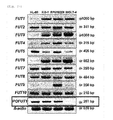
- the fucosyltransferase is not particularly limited as long as it transfers fucose from a fucose donor to a fucose acceptor (e.g., sugar chain, polypeptide, lipid, etc.), and it includes, for example, FUT1, FUT2, FUT3, FUT4, FUT5, FUT6 and FUT7, FUT8, FUT9, FUT10 and FUT11 known in the art.
- the fucosyltransferase is selected from the group consisting of FUT1, FUT2, FUT3, and FUT4.
- the fucosyltransferase is selected from the group consisting of FUT1, FUT2, FUT4, FUT5, FUT6 and FUT8. In yet another embodiment of the present invention, the fucosyltransferase is selected from the group consisting of FUT1, FUT2, FUT3, FUT4, FUT5, FUT6 and FUT8. In addition, in one embodiment of the present invention, the fucosyltransferase is preferably the one that can transfer fucose via ⁇ 1,4 4 linkage, and examples of such fucosyltransferase include FUT3, etc.
- preferable fucosyltransferase is FUT3 and/or FUT6 that have a strong association with production of CA19-9.
- the fucosyltransferase is preferably the one that can bind fucose to polypeptide, and examples of such fucosyltransferase include POFUT1, POFUT2, etc.
- preferable fucosyltransferase is POFUT1 that has a strong association with fucosylation of Notch-1.
- the fucosyltransferase may be expressed during a series of protein expression processes from transcription of genes to maturation of proteins; its expression can be detected at a genetic level and/or protein level.
- expression can be detected by any known gene expression analysis method including northern blotting, southern blotting, DNA microarray analysis, RNase protection assay, PCR method such as RT-PCR and real-time PCR, etc., in situ hybridization method, and in vitro transcription method, etc.
- at the protein level it can be detected by any known protein detection method including immunoprecipitation, electrophoresis, western blotting, mass spectrometry, EIA, ELISA, RIA, immunohistochemical method and immunocytochemical method, etc.
- the amount of expression of fucosyltransferase by the fucosylated molecule-producing cell is 2 times or more, preferably 5 times or more, more preferably 10 times or more, yet more preferably 20 times or more, and particularly preferably 50 times or more than that by a normal cell.
- the amount of expression of fucosyltransferase by the fucosylated molecule-producing cell is larger than that by the cell lines MIAPaCa, PANC-1, KP4, PK45H, HT-29, HCT-15, RBE, OCUG-1, TGBC14TKB, SSP-25, YSCCC, TKKK, HuH-28, MKN45, MKN74, NUGC-4 and/or MOLT-4, and it is equal to or larger than that by PK59, ASPC1, SW1116, LS174T, COLO205, LS180, HuCCT1, JR-St, HSC-39, NCI-N87 and/or HL-60.
- the cell having a fucose binding mechanism refers to cells having the above-described fucose binding mechanism. Details regarding the fucose binding mechanism are as described above. Furthermore, since the fucose binding mechanism is associated with the amount of production of fucosylated molecule and the amount of expression of fucosyltransferase, these can be used as an index of having a fucose binding mechanism. Therefore, in one embodiment of the present invention, the cell having a fucose binding mechanism produces a fucosylated molecule. In addition, in another embodiment of the present invention, the cell having a fucose binding mechanism expresses a fucosyltransferase. Details regarding the production of fucosylated molecule and expression of fucosyltransferase are as described above.
- the fucosyltransferase-expressing cell refers to cells expressing the above-described fucosyltransferase. Details regarding the expression of fucosyltransferase are as described above. Since the expression of fucosyltransferase is associated with the production of fucosylated molecule and the presence of fucose binding mechanism, these can be used as an index of fucosyltransferase expression. Accordingly, in one embodiment of the present invention, the fucosyltransferase-expressing cell produces a fucosylated molecule. Also, in another embodiment of the present invention, the fucosyltransferase-expressing cell has a fucose binding mechanism. Details regarding the production of fucosylated molecule and the presence of fucose binding mechanism are as described above.
- the medicament in the present invention is a drug for treating a disease related to a target cell (hereinafter, it may be referred to as a pharmaceutical compound), that may be targeted by the second ligand (hereinafter, it may be referred to as a targetd drug or a targeted pharmaceutical compound), or that may be a drug, contained in a carrier targeted by the second ligand (targeted carrier), for treating a disease related to a target cell (hereinafter, it may be referred to as a drug-containing targeted carrier), or that may be a targeted drug contained in a targeted carrier (hereinafter, it may be referred to as a targeted drug-containing targeted carrier).
- the targeted drug is not particularly limited as long as the second ligand forms a complex with the drug in such a manner that the second ligand can function as a targeting agent, and it includes those wherein the second ligand binds to the drug directly, or via an intervening chemical element such as a linker or a spacer, in a manner that the second ligand can be in contact with a target cell element.
- the second ligand can also be designed in the following manner: after the ligand is taken up by a target cell together with the drug, or at the time that the drug is taken up by a target cell, the ligand is separated from the drug and the drug exerts a desired effect.
- a method to bind sugar or sugar chain to desired compounds is well known.
- the targeted carrier is not particularly limited as long as the second ligand forms a complex with the carrier in such a manner that the second ligand can function as a targeting agent, and it includes those wherein the second ligand binds to the carrier directly, or via an intervening chemical element such as a linker or a spacer, in a manner that the second ligand can be in contact with a target cell element.
- Constituents of the carrier are not particularly limited, and any constituent known in the art of medicine and pharmaceutical may be used; those that can encapsulate or bind to the second ligand are preferable.
- Such constituent include lipids, for example, phospholipid such as glycerophospholipid, sphingolipid such as sphingomyelin, sterol such as cholesterol, vegetable oil such as soybean oil and poppy seed oil, mineral oil, lecithins such as egg yolk lecithin, polyethylene glycol, PEG:polymer carrier, etc., but they are not limited thereto.
- lipids for example, phospholipid such as glycerophospholipid, sphingolipid such as sphingomyelin, sterol such as cholesterol, vegetable oil such as soybean oil and poppy seed oil, mineral oil, lecithins such as egg yolk lecithin, polyethylene glycol, PEG:polymer carrier, etc., but they are not limited thereto.
- those which can constitute a liposome for example, natural phospholipid such as lecithin, semi-synthetic phospholipid such as dimyristoyl phosphatidylcholine (DMPC), dipalmitoylphosphatidylcholine (DPPC) and distearoylphosphatidylcholine (DSPC), as well as dioleyl phosphatidylethanolamine (DOPE), dilauroyl phosphatidylcholine (DLPC), and cholesterol are preferable.
- natural phospholipid such as lecithin
- semi-synthetic phospholipid such as dimyristoyl phosphatidylcholine (DMPC), dipalmitoylphosphatidylcholine (DPPC) and distearoylphosphatidylcholine (DSPC)
- DOPE dioleyl phosphatidylethanolamine
- DLPC dilauroyl phosphatidylcholine
- Particularly preferable constituents include those which can avoid being trapped by the reticuloendothelial system, for example, cationic lipids such as N-( ⁇ -trimethylammonioacetyl)-didodecyl-D-glutamate chloride (TMAG), N,N',N'',N''-tetramethyl-N,N',N'',N'''-tetrapalmityl spermine (TMTPS), 2,3-dioleyloxy-N-[2(sperminecarboxamide)ethyl]-N,N-dimethyl-1 -propanaminium trifluoroacetate (DOSPA), N-[1-(2,3-dioleyloxy)propyl]-N,N,N-trimethylammonium chloride (DOTMA), dioctadecyl dimethyl ammonium chloride (DODAC), didodecyl ammonium bromide (DDAB), 1,2-dioleyloxy-3-
- Binding or inclusion of a second ligand in the carrier of the invention is also possible by binding or inclusion of the second ligand to other constituents of the carrier by means of chemical and/or physical method.
- the method to bind second ligand to carrier include, but are not limited to: a method wherein a liposome is treated to have a hydrophilic property using tris(hydroxyalkyl)aminoalkane, to which a linker protein, for example a protein derived from living organisms such as human serum albumin (HSA) and bovine serum albumin (BSA), is bound, and a sugar chain is bound to the linker protein ( WO2007/091661 , Hirai et al., Biochem Biophys Res Commun.
- HSA human serum albumin
- BSA bovine serum albumin
- Patent Literature 1 a method to prepare liposomes using a sugar-added cholesterol derivative
- Patent Literature 2 a method wherein a sugar is added to poly-L-lysine
- a method wherein a liposome is prepared using a glycolipid or a method wherein p-aminophenyl-D-glycoside is covalently bound to phosphatidylethanolamine liposome using glutaraldehyde ( Ghosh P et al., Biochim Biophys Acta.
- Non-patent Literature 1 a method wherein a liposome is prepared using cholesten-5-yloxy-N-(4-((1-imino-2- ⁇ -D-thioglycosylethyl)amin o)butyl)formamide
- Non-patent Literature 1 a method wherein a liposome is prepared using cholesten-5-yloxy-N-(4-((1-imino-2- ⁇ -D-thioglycosylethyl)amin o)butyl)formamide
- binding or inclusion of a second ligand to the carrier of the invention is possible by mixing the second ligand with other constituents of the carrier at the time of preparing the carrier.
- the amount of the second ligand to be bound to or included in the carrier of the invention may be, without limitation, expressed by the weight ratio in the constituents of the carrier, 0.01%-100%, preferably 0.2%-20%, and more preferably 1-5%. Binding or inclusion of the second ligand to/in the carrier of the invention may be carried out before a drug, etc. is supported by the carrier, or by simultaneously mixing the carrier, second ligand, and a drug, or by mixing the carrier which has already supported a drug with the second ligand.
- the present invention also relates to a process for preparing a drug-containing targeted carrier, which includes a step of binding the second ligand to any existing drug-bound carrier or drug-encapsulated carrier, for example liposomal formulations such as DaunoXome®, Doxil, Caelyx®, Myocet®, etc.
- the form of the carrier may be any form, as long as it can deliver a desired substance or matter to target cells, and examples include, but are not limited to, polymer micelle, liposome, emulsion, microsphere, nanosphere, polymer matrix, and lipoplex.
- a liposomal form or lipoplex form is preferable, and a cationic liposome comprising a cationic lipid is particularly preferable.
- the molar ratio of the second ligand to the liposome-constitutive lipid is preferably from 8:1 to 1:8, more preferably from 4:1 to 1:4, yet more preferably from 2:1 to 1:2, and in particular, it is 1:1.
- the concentration of the second ligand in the carrier suspension is 5-500 ⁇ g/ml, preferably 10-250 ⁇ g/ml, more preferably 20-200 ⁇ g/ml, and furthermore preferably 25-100 ⁇ g/ml.
- the carrier may comprise a drug in its interior, or the carrier may be attached to the external of a drug, or the carrier may be mixed with a drug.
- “function as a targeting molecule” means that the carrier comprising the second ligand reaches and/or is taken up by the target cell more rapidly and/or in an amount larger than that in the carrier without the second ligand; this can be easily confirmed, e.g., by adding to a cell culture a carrier to which a label is attached or that comprises a label, and by analyzing the site of the label after a certain period of time.
- the second ligand when the second ligand is at least partially exposed external of the formulation comprising the carrier, or the second ligand is present in a form that it can be recognized by a target cell element, at the latest before reaching a target cell, then, the above requirements can be satisfied.
- the above medicament may be covered with an appropriate material, such as enteric coating or a material with timed disintegration, or the medicament may be incorporated in an appropriate drug release system.
- a drug for treating a disease related to a target cell encompasses any drug that can treat the disease related to the target cell.
- the drug for treating a disease related to a target cell includes, without limitation, for example, a drug that controls the activity or growth of fucosylated molecule-producing cells.
- the activity of fucosylated molecule-producing cells refers to various activities such as secretion, uptake and migration exhibited by said cells; in the case of tumor cells for example, it refers to activities involved in the onset, progression, recurrence and/or metastasis of tumors, and appearance and worsening of symptoms such as cachexia.
- activities include, but are not limited to, production and secretion of parathyroid hormone-related protein (PTHrP) and immunosuppressive acidic protein (IAP).
- PTHrP parathyroid hormone-related protein
- IAP immunosuppressive acidic protein
- the drug that controls activity or growth of fucosylated molecule-producing cells may be any drug that directly or indirectly suppresses physical, chemical and/or physiological actions, etc. of fucosylated molecule-producing cells related to the onset, progression and/or recurrence of diseases related to fucosylated molecule-producing cells.
- such drugs include, without limitation, drugs that inhibit activity or production of the above physiologically active substance, for example an antibody and an antibody fragment that neutralizes the physiologically active substance, a substance that suppresses expression of the physiologically active substance, such as RNAi molecules (for example, siRNA, shRNA, ddRNA, miRNA, piRNA, rasiRNA, etc.), ribozyme, and antisense nucleic acids (including RNA, DNA, PNA and a complex thereof), or a substance that has a dominant negative effect such as a dominant negative mutant, etc., or a vector expressing them, a cell activation inhibitor such as sodium channel inhibitor, cell growth inhibitors, such as an alkylating agent (e.g., ifosfamide, nimustine, cyclophosphamide, dacarbazine, melphalan, ranimustine etc.), an antitumor antibiotic (e.g., idarubicin, epirubicin, daun
- the drug that controls activity or growth of fucosylated molecule-producing cells in the present invention may be any drug that directly or indirectly accelerates physical, chemical and/or physiological actions, etc. of fucosylated molecule-producing cells directly or indirectly related to the suppression of the onset, progression, and/or recurrence of diseases related to fucosylated molecule-producing cells.
- Examples of the drug that controls activity or growth of fucosylated molecule-producing cells also include substances that suppress production of fucosylated molecules, for example, an antibody and an antibody fragment that inhibit functions of fucosyltransferase, a substance that suppresses expression of fucosyltransferase such as RNAi molecules (e.g., siRNA, shRNA, ddRNA, miRNA, piRNA, rasiRNA, etc.), ribozyme and antisense nucleic acids (including RNA, DNA, PNA, and a complex thereof), or a substance that has a dominant negative effect such as a dominant negative mutant, etc., or a vector expressing them.
- RNAi molecules e.g., siRNA, shRNA, ddRNA, miRNA, piRNA, rasiRNA, etc.
- ribozyme and antisense nucleic acids including RNA, DNA, PNA, and a complex thereof
- a substance that has a dominant negative effect such as a dominant negative mutant, etc., or
- fucosyltransferase examples include FUT1, FUT2, FUT3, FUT4, FUT5, FUT6, FUT7, and FUT8, etc., and examples of siRNA sequences corresponding thereof include those listed in Table 2 below.
- Other examples of fucosyltransferase include FUT9, FUT10, FUT11, POFUT1 and POFUT2, etc.
- fucosyltransferase to be inhibited is selected from the group consisting of FUT1, FUT2, FUT3 and FUT4. In another embodiment of the present invention, fucosyltransferase is selected from the group consisting of FUT1, FUT2, FUT4, FUT5, FUT6 and FUT8. In yet another embodiment of the present invention, fucosyltransferase is selected from the group consisting of FUT1, FUT2, FUT3, FUT4, FUT5, FUT6 and FUT8.
- fucosyltransferase to be inhibited is preferably the one that can transfer fucose via ⁇ 1,4 linkage, and examples of such fucosyltransferase include FUT3, etc.
- fucosyltransferase to be inhibited is FUT3 and/or FUT6 that have a strong association with production of CA19-9.
- fucosyltransferase to be inhibited is preferably the one that can bind fucose to polypeptide, and examples of such fucosyltransferase include POFUT1, POFUT2, etc.
- fucosyltransferase to be inhibited is POFUT1 that has a strong association with fucosylation of Notch-1.
- the disease related to fucosylated molecule-producing cells includes not only a disease caused by fucosylated molecule-producing cells, but also a disease affecting said cells, and examples include, without limitation, neoplastic diseases including tumors such as pancreatic tumor, biliary system tumor, liver tumor, digestive tract tumor, brain tumor, lung tumor, bone and soft tissue tumor, hematopoietic organ tumor, more specifically, for example, pancreatic cancer, biliary system cancer, liver cancer, stomach cancer, esophageal cancer, colorectal cancer, and further, breast cancer, lung cancer, endometrial cancer, prostate cancer, leukemia, lymphoma, etc., as well as inflammatory diseases such as pancreatitis, cirrhosis, hepatitis, etc.
- neoplastic diseases including tumors such as pancreatic tumor, biliary system tumor, liver tumor, digestive tract tumor, brain tumor, lung tumor, bone and soft tissue tumor, hematopoietic organ tumor, more specifically, for
- the drug for treating diseases related to fucosylated molecule-producing cells include for example, but are not limited to, antitumor agents that suppress the onset, progression and/or recurrence of neoplastic diseases, for example, without limitation, alkylating agents such as ifosfamide, nimustine (e.g., nimustine hydrochloride), cyclophosphamide, dacarbazine, melphalan, ranimustine, etc., antimetabolites such as gemcitabine (e.g., gemcitabine hydrochloride), enocitabine, cytarabine ocfosfate, cytarabine preparation, tegafur uracil, tegafur gimeracil oteracil potassium formulation (e.g., TS-1), doxifluridine, hydroxycarbamide, fluorouracil, methotrexate, mercaptopurine, etc., antitumor antibiotics such
- estramustine phosphate etc.
- platinum complexes such as carboplatin, cisplatin (CDDP), nedaplatin, etc.
- angiogenesis inhibitors such as thalidomide, Neovastat, bevacizumab, etc., and L-asparaginase and the like.
- Examples of the drug for treating diseases related to fucosylated molecule-producing cells may further include, but are not limited to, anti-inflammatory agents that suppress the onset, progression and/or recurrence of inflammatory diseases, for example, steroidal anti-inflammatory agents (prednisolone, beclomethasone, betamethasone, fluticasone, dexamethasone, hydrocortisone, etc.) and non-steroidal anti-inflammatory agents (acetylsalicylic acid, loxoprofen, acetaminophen, ketoprofen, tiaprofenic acid, suprofen, tolmetin, carprofen, benoxaprofen, piroxicam, benzydamine, naproxen, diclofenac, ibuprofen, diflunisal, azapropazone, etc.), substances that suppress expression of inflammatory cytokines such as RNAi molecules (e.g., siRNA, shRNA, ddRNA, miRNA,
- examples of a disease related to a target cell include, but are not limited to, various immunological diseases, for example, allergies, immunodeficiency, infectious diseases, tumors, cancers, etc.
- examples of the drug for treating a disease related to a target cell includes, but are not limited to, immunosuppressants such as steroids, azathioprine, mercaptopurine and cyclosporine, antigens, nucleic acid Vaccines such as DNA vaccines, etc., and NF ⁇ B decoy.
- examples of a disease related to a target cell include, but are not limited to, liver cancer, infectious diseases, e.g., viral hepatitis such as HBV infection and HCV infection, hepatocytes dysfunctions, such as hyperlipidemia and enzyme deficiencies, as well as diseases that can be cured by the introduction and expression of genes in hepatocytes, for example, diabetes, ADA deficiency and hemophilia, etc.
- infectious diseases e.g., viral hepatitis such as HBV infection and HCV infection
- hepatocytes dysfunctions such as hyperlipidemia and enzyme deficiencies
- diseases that can be cured by the introduction and expression of genes in hepatocytes for example, diabetes, ADA deficiency and hemophilia, etc.
- a drug for treating a disease related to a target cell varies depending on the disease, but the examples include, without limitation, anti-cancer agents, RNAi molecules that suppress the expression of viral genes (such as siRNA, shRNA, ddRNA, miRNA, piRNA rasiRNA, etc.), ribozymes, antisense nucleic acids (including RNA, DNA, PNA, or complexes thereof), apolipoprotein B gene, HMG-CoA reductase gene, insulin gene, adenosine deaminase gene, factor VIII gene, factor IX gene, and vectors to express such nucleic acid molecules.
- anti-cancer agents such as siRNA, shRNA, ddRNA, miRNA, piRNA rasiRNA, etc.
- ribozymes such as antisense nucleic acids (including RNA, DNA, PNA, or complexes thereof), apolipoprotein B gene, HMG-CoA reductase gene, insulin gene, adenosine de
- the drug for treating a disease related to a target cell is delivered to the interior of a target cell; however, depending on the situation, in some cases delivery to the periphery of a target cell may be preferred.
- the target cell is a fucosylated molecule-producing cell
- substances that suppress expression of inflammatory cytokines such as siRNA molecules and antisense nucleic acids can also be delivered to inflammatory cytokine-producing cells that do not produce fucosylated molecules, thereby enabling more effective treatment of diseases related to fucosylated molecule-producing cells such as pancreatitis and hepatitis.
- the drug for treating a disease related to a target cell may be or may not be labeled.
- labeling success/failure of delivery and increase/decrease of target cells can be monitored, and it is particularly useful at investigation and research levels.
- a label refers to any substance, wherein, the substance itself or a matter to which the substance is attached can be detected directly or indirectly.
- a label may be selected from substances known by those skilled in the art, for example, gas or substances that generate gas under physiological conditions, any radioisotopes, magnetic materials, nuclear magnetic resonance elements (e.g., hydrogen, phosphorus, sodium, fluorine, etc.), substances that affect relaxation time of nuclear magnetic resonance elements (e.g. metal atom or compound comprising thereof), substances that binds to a labeling substance (e.g., antibody), fluorescent materials, fluorophores, chemiluminescent substances, enzymes, biotin or its derivatives, avidin or its derivatives.
- a labeling substance e.g., antibody
- a label may be a detectable label, which includes any labels that can be detected by any existing detection means.
- detection method include, but are not limited to, naked eye, optical examination apparatus (e.g., optical microscope, fluorescence microscope, phase contrast microscope, in vivo imaging apparatus, etc.), X-ray apparatus (e.g., plain X-ray apparatus, computed tomography (CT) apparatus, etc.), magnetic resonance imaging (MRI) apparatus, nuclear medicine apparatus (e.g., scintigraphic apparatus, positron emission tomography (PET) apparatus, single photon emission computed tomography (SPECT) apparatus, etc.), ultrasonographic apparatus and thermographic apparatus, etc. Labels suitable for each detection means are known to a person skilled in the art, and described, for example, in Lecchi et al., Q J Nucl Med Mol Imaging. 2007; 51(2): 111-26 .
- Specific fluorescent labels which may be used include, but are not limited to, CyTM series (e.g., CyTM2, 3, 5, 5.5, 7, etc.), DyLightTM series (e.g., DyLightTM 405, 488, 549, 594, 633, 649, 680, 750, 800, etc.), Alexa Fluor® series (e.g., Alexa Fluor® 405, 488, 549, 594, 633, 647, 680, 750, etc.), HiLyte FluorTM series (e.g., HiLyte FluorTM 488, 555, 647, 680, 750, etc.), ATTO series (e.g., ATTO 488, 550, 633, 647N, 655, 740, etc.), FAM, FITC, Texas-Red, GFP, RFP, and Qdot.
- CyTM series e.g
- Fluorescent labels suitable for in vivo imaging are, for example, those emit a fluorescence of wavelength that is highly transmissive through living body and less susceptible to autonomous fluorescence, such as a fluorescence of near-infrared wavelength, or those exhibit strong fluorescent intensity.
- fluorescent labels include, but are not limited to, CyTM series, DyLightTM series, Alexa Fluor® series, HiLyte FluorTM series, ATTO series, Texas-Red, GFP, RFP, Qdot and derivatives thereof.
- Specific luminescent labels which may be used include, but are not limited to, for example, luminol, luciferin, lucigenin and aequorin, etc.
- Suitable labels for detection by X-ray apparatus include, for example, various contrast agents.
- Specific contrast agents which may be used include, but are not limited to, iodine atoms, iodine ions and iodine-containing compounds, etc.
- Suitable labels for detection by MRI apparatus include, for example, nuclear magnetic resonance elements and substances that affect relaxation time of nuclear magnetic resonance elements.
- nuclear magnetic resonance elements include hydrogen, phosphorus, sodium, fluorine, etc.
- substances that affect relaxation time of nuclear magnetic resonance elements include, but are not limited to, various metal atoms, or a compound comprising said metal atom(s), for example, complexes of said metal atom(s).
- Gd(III) gadolinium(III)
- yttrium-88 88 Y
- indium-111 111 In
- complexes of such metal atom(s) and a ligand such as diethylenetriaminepentaacetic acid (DTPA), tetraazacyclododecane-1, 4, 7,10-tetraacetic acid (DOTA), (1,2-ethanediyldinitrilo)tetraacetic acid (EDTA), ethylenediamine, 2,2'-bipyridine (bipy), 1,10-phenanthroline (phen), 1,2-bis(diphenylphosphino)ethane (DPPE), 2,4-pentanedione (acac), and oxalate (ox), as well as super-paramagnetic iron oxide (SPIO) and manganese oxide (MnO).
- DTPA diethylenetriaminepentaacetic acid
- DOTA 1,10-phenanthroline
- DPPE
- Radioisotopes which may be used include, but are not limited to, e.g., technetium-99m ( 99m Tc), indium-111 ( 111 In), iodine-123 ( 123 I), iodine-124 ( 124 I), iodine-125 ( 125 I), iodine-131 ( 131 I), thallium-201 ( 201 Tl), carbon-11 ( 11 C), nitrogen-13 ( 13 N), oxygen-15 ( 15 O), fluorine-18 ( 18 F), copper-64 ( 64 Cu), gallium-67 ( 67 Ga), krypton-81m ( 81m Kr), xenon-133 ( 133 Xe), strontium-89 ( 89 Sr) and yttrium-90 ( 90 Y).
- Compounds comprising a radioisotope include, but are not limited to, e.g., 123 I-IMP, 99m Tc-HMPAO, 99m Tc-ECD, 99m TC-MDP, 99m TC-tetrofosmin, 99m TC-MIBI, 99m TcO 4 -, 99m Tc-MAA, 99m Tc-MAG3, 99m Tc-DTPA, 99m Tc-DMSA, 18 F-FDG1, etc.
- Suitable labels for detection by ultrasonographic apparatus include, but are not limited to, bio-acceptable gases or substances that generate gas under physiological conditions, fatty acids, or substances comprising thereof.
- the gas include, but are not limited to, air, noble gas, nitrogen, N 2 O, oxygen, carbon dioxide, hydrogen, inert noble gas (e.g., helium, argon, xenon or krypton), sulfur fluoride (e.g., sulfur hexafluoride, disulfur decafluoride, trifluoromethyl sulfur pentafluoride), selenium hexafluoride, silane halides (e.g., tetramethylsilane), low-molecular-weight hydrocarbon (e.g., C 1-7 alkane (methane, ethane, propane, butane, pentane, etc.), cycloalkane (cyclobutane, cyclopentane, etc.), alkene (ethylene, propene,
- fluorine-containing gas examples include, but are not limited to, halogenated hydrocarbon gas (e.g., bromochlorodifluoromethane, chlorodifluoromethane, dichlorodifluoromethane, bromotrifluoromethane, chlorotrifluoromethane, chloropentafluoroethane, dichlorotetrafluoroethane, perfluorocarbon), fluorinated ketone (e.g., perfluoroacetone), fluorinated ether (e.g., perfluoro-diethyl ether).
- halogenated hydrocarbon gas e.g., bromochlorodifluoromethane, chlorodifluoromethane, dichlorodifluoromethane, bromotrifluoromethane, chlorotrifluoromethane, chloropentafluoroethane, dichlorotetrafluoroethane, perfluorocarbon
- perfluorocarbon examples include, but are not limited to, perfluoroalkane (e.g., perfluoromethane, perfluoroethane, perfluoropropane, perfluorobutane, perfluoro-n-butane, perfluoropentane, perfluorohexane, perfluoroheptane), perfluoroalkene (e.g., perfluoropropene, perfluorobutene (e.g., perfluorobut-2-ene), perfluorobutadiene), perfluoroalkyne (e.g., perfluorobut-2-yne), perfluorocycloalkane (e.g., perfluorocyclobutane, perfluoromethylcyclobutane, perfluorodimethylcyclobutane, perfluorotrimethylcyclobutane, perfluorocyclopentane, perfluoromethylcyclopentane,
- labels for detection by ultrasonographic apparatus those already commercially available may also be used.
- suitable labels for ultrasonographic detection include, but are not limited to, those of the first generation such as Albunex (Mallinckrodt), Echovist (SHU 454, Schering), Levovist (SHU 508, Schering), Myomap (Quadrant), Quantison (Quadrant), Sonavist (Schering), Sonazoid (GE Healthcare), etc.
- those of the second generation such as Definity/luminity (Bristol-Myers Squibb Medical Imaging), Imagent-imavist (Alliance), Optison (GE Healthcare), biSphere/cardiosphere (POINT Biomedical), SonoVue (BR1, Bracco), AI700/imagify (Acusphere), etc.
- those of the third generation such as Echogen (Sonus Pharmaceuticals), etc.
- the carrier or medicament can suitably be used to target the target cell; for example, the carrier or medicament is delivered to the target cell more rapidly, with higher efficiency and/or in a larger amount, compared to a non-target cell.
- the targeted drug or targeted carrier of the invention can be delivered to a target cell at a rate and/or efficiency of 1.1 times or more, 1.2 times or more, 1.3 times or more, 1.5 times or more, 2 times or more, and furthermore, 3 times or more, compared to a non-target cell.
- the first component comprising a first ligand and the second component comprising a medicament targeted by a second ligand may be present in any ratio in the combined pharmaceutical preparation of the present invention, as long as the first component enhances the target specificity of the second component; those skilled in the art can appropriately determine the suitable ratio by the following method, for example: to a subject such as an experimental animal, either a predetermined amount of the labeled second component and a varying amount of the first component relative to the second component, or a predetermined amount of the first component and a varying amount of the labeled second component relative to the first component, are administered, then the amount of the label in the target tissue or cells is measured.
- the ratio of mannose to fucose is, for example when represented by a mass ratio, 20000:1-200:1, 10000:1-300:1, 5000:1-500:1, 3000:1-1000:1, 2500:1-1500:1; when represented by a molar ratio, 16000:1-160:1, 8000:1-240:1, 4000:1-400:1, 2400:1-500:1, 2000:1-1200:1, etc.
- the dosage of the first component may be, in terms of mannose per 1 administration, 0.
- the first component and the second component can be administered simultaneously or sequentially. Accordingly, the first component may be administered simultaneously with the second component, administered before the second component, or administered after the second component.
- the second component may be administered sequentially and immediately after the first component
- the first component may be administered sequentially and immediately after the second component
- the second component may be administered with a certain time interval after administration of the first component
- the first component may be administered with a certain time interval after administration of the second component
- a combination thereof may be adopted. Therefore, for example, following the administration of the first component, the first and second components may be simultaneously administered after a certain time interval, then the first component may be administered after a further time interval.
- the time interval may be within 48 hr, within 36 hr, within 24 hr, within 12 hr, within 6 hr, within 5 hr, within 4 hr, within 3 hr, within 2 hr, within 1 hr, within 30 min, within 15 min, or within 10 min, etc.
- first and second components are administered to a subject such as an experimental animal with various sequences and time intervals, then the amount of label in target tissue or cells is measured.
- the combined pharmaceutical preparation of the present invention may be in a single dosage form when the first and second components are simultaneously administered, or the first component and the second component may be in separate dosage forms.
- the first and second components are not administered simultaneously, needless to say, the first component and the second component should be in separate dosage forms.
- the first component and the second component may be in separate dosage forms, or in a combination of a single dosage form containing the first and second components and a separate dosage form containing the first component alone.
- the first component may be supplied in the same package with the second component, or each component may supplied in a separate package.
- the combined pharmaceutical preparation of the present invention may further comprise instructions showing a method of combined use of first and second components, for example, an instruction leaflet, or a recording medium containing information on the method of use such as flexible disk, CD, DVD, blue ray disk, memory card, USB memory, etc.
- Another aspect of the present invention relates to a combined pharmaceutical composition for specifically delivering a substance to a target cell, comprising a first component containing a first ligand for a polyspecific lectin in a reticuloendothelial cell and a second component containing a carrier targeted by a second ligand for a polyspecific lectin in a reticuloendothelial cell which is different from the first ligand.
- reticuloendothelial cell, polyspecific lectin, first ligand, second ligand, targeting, carrier, ratio of first component to second component, and administration sequence are as described above for the combined pharmaceutical preparation of the present invention.
- the substance to be delivered by the combined pharmaceutical composition of the invention is not limited to a drug for treating diseases related to target cells, and includes any substance having a size that can be physically transferred in the body of an organism from the administration site to the site of lesion where the target cell is present.
- the pharmaceutical composition of the present invention can transport not only substances such as atoms, molecules, compounds, proteins, nucleic acids, etc., but also vectors, viral particles, cells, drug release systems composed of one or more elements, micromachines, etc.
- the above substances preferably have a characteristic to influence target cells and/or their periphery, and they include, for example, those which can label target cells, or can control (for example, enhance or suppress) the activity or growth of target cells and/or cells present in their periphery.
- the substance to be delivered is a label and/or a drug for treating a disease related to a target cell, described above regarding the combined pharmaceutical preparation of the present invention.
- Another aspect of the present invention relates to a combined pharmaceutical composition
- a combined pharmaceutical composition comprising a first component containing a first ligand for a polyspecific lectin in a reticuloendothelial cell and a second component containing a labeling agent targeted by a second ligand for a polyspecific lectin in a reticuloendothelial cell which is different from the first ligand, for labeling a target cell or tissue containing thereof (hereinafter, this may be referred to as target tissue) ; for detecting the target cell or the tissue containing thereof; for imaging the target cell or the tissue containing thereof; for diagnosing, detecting and/or monitoring a disease related to the target cell; for detecting the possibility of a disease related to a target cell; and/or for evaluating effects of treatment for a disease related to a target cell (hereinafter, this may be referred to as a label-containing composition).
- reticuloendothelial cell polyspecific lectin, first ligand, second ligand, targeting, ratio of first component to second component, and administration sequence are as described above for the combined pharmaceutical preparation of the present invention.
- the labeling agent may be composed of only a label targeted by the second ligand, or may be a label supported by the carrier that is targeted by the second ligand, or may be a label targeted by the second ligand that is supported by the carrier targeted by the second ligand.
- the label is as described above for the combined preparation of the present invention.
- tissue containing target cells include the following without limitation: in cases where the target cell is a fucosylated molecule-producing cell, tumor tissues, for example, tissues of pancreatic tumor, biliary system tumor, liver tumor, digestive tract tumor, brain tumor, lung tumor, bone and soft tissue tumor, hematopoietic organ tumor, more specifically, pancreatic cancer, biliary system cancer, liver cancer, stomach cancer, esophageal cancer, colorectal cancer, and further, breast cancer, lung cancer, endometrial cancer, prostate cancer, lymphoma, etc., as well as bone-marrow tissues affected by leukemia, tissues at the site of inflammation in inflammatory diseases such as pancreatitis, cirrhosis, hepatitis, etc., and tissues in the immune system such as the lymphatic system, and dermal tissues affected by wound, etc.; in cases where the target cell is a dendritic cell, for example, skin, nasal cavity, lung, gastrointestinal tract, etc.; and in cases where the target cell is a den
- Labeling and detection (including imaging) of the target cell or the tissue containing the target cell may be carried out in vivo or in vitro.
- said composition may comprise the label in an effective amount for labeling the target cell or the tissue containing the target cell, for detecting the target cell or the tissue containing the target cell, for imaging in vivo or in vitro the target cell or the tissue containing the target cell, for diagnosing, detecting and/or monitoring a disease related to the target cell, for detecting the possibility of a disease related to the target cell, or for evaluating effects of a treatment for a disease related to the target cell.
- Said effective amount may be, e.g., an amount that is taken into the target cell to a degree that the label can be detected in vivo or in vitro.
- composition may comprise, in addition to a labeling agent, any drug such as the above-described drug that controls the activity or growth of a target cell, and the drug that treats a disease related to a target cell, etc.
- a target specificity enhancing agent comprising a first ligand for a polyspecific lectin in a reticuloendothelial cell, wherein the agent is for a carrier, a medicament, or a labeling agent, each of which is targeted by a second ligand for a polyspecific lectin in a reticuloendothelial cell which is different from the first ligand (hereinafter, each of which may be abbreviated as a targeted carrier, etc.).
- reticuloendothelial cell polyspecific lectin, first ligand, second ligand, targeting, carrier, medicament, labeling agent, target specificity are as described above for the combined pharmaceutical preparation and combined pharmaceutical composition of the present invention.
- the target specificity enhancing agent of the present invention enhances the target specificity of the above-mentioned carrier etc. that is targeted by the second ligand. Namely, target specificity of the carrier etc. that is targeted by the second ligand is increased by the use of the target specificity enhancing agent of the invention, compared to the case wherein said agent is not used.
- a degree of target specificity can be evaluated as follows: the target specificity enhancing agent of the present invention and the carrier etc. that is targeted by the second ligand are administered to a subject, such as an experimental animal, then a difference in the distribution between the target cells and non-target cells, or therapeutic effect, etc. are compared with the difference in the distribution, or the therapeutic effect, etc. of the case wherein the carrier, etc.
- the target specificity enhancing agent of the invention is not used in combination with the target specificity enhancing agent of the invention.
- the ratio of the distribution in target cells to that in non-target cells, wherein the carrier, etc. targeted by the second ligand is used in combination with the target specificity enhancing agent is higher than the ratio wherein they are not used in combination, or when the therapeutic effect in the combined use case is superior than that in the case without combined use, then it is determined that the target specificity of the carrier, etc. is enhanced.
- the dose ratio of the target specificity enhancing agent of the invention and the carrier, etc. targeted by the second ligand may be any ratio as long as target specificity of the carrier, etc. is enhanced; those skilled in the art can appropriately determine the suitable ratio by the following method, for example: to a subject such as an experimental animal, either a predetermined amount of the labeled carrier, etc. and a varying amount of the target specificity enhancing agent relative to the carrier, etc. , or a predetermined amount of the target specificity enhancing agent and a varying amount of the labeled carrier, etc. relative to the target specificity enhancing agent, are administered, then the amount of the label in the target tissue or cells is measured.
- the ratio of mannose to fucose is, for example when represented by a mass ratio, 20000:1-200:1, 10000:1-300:1, 5000:1-500:1, 3000:1-1000:1, 2500:1-1500:1; when represented by a molar ratio, 16000:1-160:1, 8000:1-240:1, 4000:1-400:1, 2400:1-500:1, 2000:1-1200:1, etc.
- the dosage of the target specificity enhancing agent may be, in terms of mannose per 1 administration, 0.01-10000 mg/kg body weight, 0.1-1000 mg/kg body weight, 0.5-500 mg/kg body weight, 1-100 mg/kg body weight, 5-50 mg/kg body weight, or 0.05-50000 ⁇ mole/kg body weight, 0.5-5000 ⁇ mole/kg body weight, 2.5-2500 ⁇ mole/kg body weight, 5-500 ⁇ mole/kg body weight, 25-250 ⁇ mole/kg body weight, etc.
- the target specificity enhancing agent of the present invention can be administered simultaneously or sequentially with the carrier, etc. targeted by the second ligand. Accordingly, the target specificity enhancing agent may be administered simultaneously with the carrier, etc., administered before the carrier, etc., or administered after the carrier, etc.
- the carrier, etc. may be administered sequentially and immediately after the target specificity enhancing agent
- the target specificity enhancing agent may be administered sequentially and immediately after the carrier, etc.
- the carrier, etc. may be administered with a certain time interval after administration of the target specificity enhancing agent
- the target specificity enhancing agent may be administered with a certain time interval after administration of the carrier, etc., or a combination thereof may be adopted.
- the target specificity enhancing agent and the carrier, etc. may be simultaneously administered after a certain time interval, then the target specificity enhancing agent may be administered after a further time interval.
- the time interval may be within 48 hr, within 36 hr, within 24 hr, within 12 hr, within 6 hr, within 5 hr, within 4 hr, within 3 hr, within 2 hr, within 1 hr, within 30 min, within 15 min, or within 10 min, etc.
- a target specificity enhancing agent and a carrier, etc. are administered to a subject such as an experimental animal with various sequences and time intervals, then the amount of label in target tissue or cells is measured.
- the pharmaceutical preparation, pharmaceutical composition, or target specificity enhancing agent of the present invention may be administered via various routes including both oral and parenteral routes, and examples include, but are not limited to, oral, intravenous, intramuscular, subcutaneous, topical, rectal, intraarterial, intraportal, intraventricular, transmucosal, transdermal, intranasal, intraperitoneal, intrapulmonary, and intrauterine routes, etc., and the composition may be formulated in a dosage form suitable for each of the administration routes.
- any known dosage forms and formulation methods may be appropriately adopted (for example, see Hyojun Yakuzaigaku (Standard Pharmaceutics), Ed.
- Dosage forms suitable for oral administration include, but are not limited to, powders, granules, tablets, capsules, solutions, suspensions, emulsions, gels, syrups, etc.
- dosage forms suitable for parenteral administration include injections such as solution injections, suspension injections, emulsion injections and injections in a form that is prepared at the time of use.
- Formulations for parenteral administration may be in a form of aqueous or non-aqueous isotonic sterile solution or suspension.
- the pharmaceutical preparation or pharmaceutical composition of the present invention may be supplied in any forms, and from the viewpoint of preservation stability, it may be provided in a form that can be prepared at the time of use, for example, in a form that it can be prepared at a site of clinical practice or its vicinity by a doctor, and/or pharmacist, nurse, or other paramedical staff.
- the pharmaceutical preparation or pharmaceutical composition of the present invention is provided in one or more containers containing at least one of the essential constituents, and it is prepared before use, for example within 24 hr, preferably within 3 hr, and more preferably just prior to use.
- reagents, solvents and formulation tools usually available at a site of preparation can be appropriately used.
- kits for preparing a pharmaceutical preparation of the invention, or for treating a disease related to a target cell comprising one or more containers comprising, singly or in combination, a first ligand for a polyspecific lectin in a reticuloendothelial cell and a medicament for treating a disease related to a target cell, wherein the medicament is targeted by a second ligand for a polyspecific lectin in a reticuloendothelial cell which is different from the first ligand, and also relates to essential constituents of the pharmaceutical preparation of the invention provided in the form of such a kit.
- the present invention also relates to a kit comprising one or more containers comprising, singly or in combination, a first ligand for a polyspecific lectin in a reticuloendothelial cell and a carrier or a labeling agent targeted by a second ligand for a polyspecific lectin in a reticuloendothelial cell which is different from the first ligand, for preparing a pharmaceutical composition of the invention, for delivering a substance to a target cell, for labeling a target cell or a tissue containing a target cell, for detecting a target cell or a tissue containing a target cell, for imaging a target cell or a tissue containing a target cell, for diagnosing, detecting and/or monitoring a disease related to a target cell, for detecting the possibility of a disease related to a target cell, and/or for evaluating effects of treatment for a disease related to a target cell, and also relates to essential constituents of the pharmaceutical composition of the invention provided in the form of
- kits of the present invention are as described above for the pharmaceutical preparation and pharmaceutical composition of the present invention.
- the kit of the invention may further contain, in addition to the above, instructions regarding preparation method and administration method of the pharmaceutical preparation and pharmaceutical composition of the invention, for example, an instruction leaflet, or a recording medium containing information on the method of use such as flexible disk, CD, DVD, blue ray disk, memory card, USB memory, etc.
- the kit of the present invention may contain all the constituents necessary for completing the pharmaceutical preparation or the pharmaceutical composition of the invention, but it does not necessarily contain all the constituents. Accordingly, the kit of the present invention does not have to contain reagents and solvents usually available at a clinical practice site or experimental facility, such as sterile water, physiological saline, and glucose solution, etc.
- Further aspect of the present invention relates to a method for controlling an activity or growth of a target cell, or for treating a disease related to a target cell,comprising administering an effective amount of the pharmaceutical preparation and/or pharmaceutical composition of the invention to a subject in need thereof; and furthermore relates to a method for specifically delivering a substance to a target cell, for labeling a target cell or a tissue containing a target cell, for detecting a target cell or a tissue containing a target cell, for imaging a target cell or a tissue containing a target cell, for diagnosing, detecting and/or monitoring a disease related to a target cell, for detecting the possibility of a disease related to a target cell, and/or for evaluating effects of a treatment for a disease related to a target cell, comprising administering an effective amount of the pharmaceutical composition of the invention to a subject in need thereof.
- the effective amount may be, for example, in the case of the method for controlling the activity or growth of a target cell, an amount that can increase or decrease the activity or growth of the target cell; in the case of a method for treating a disease related to a target cell, it is an amount to suppress the onset or recurrence of, to alleviate the symptoms of, or to delay or halt the progression of said disease, and it is preferably an amount to prevent the onset or recurrence of, and to cure said disease; in the case of a method for specifically delivering a substance to a target cell, it is an amount that can deliver the substance to the target cell more rapidly and/or in a larger amount compared to non-target cells; in the case of a method for labeling in vivo or in vitro a target cell or a target tissue, for detecting in vivo or in vitro a target cell or a tissue containing a target cell, for imaging in vivo or in vitro a target cell or a tissue containing a target cell
- an amount that does not cause an adverse effect exceeding the benefit from the administration is preferred.
- Such an amount can be appropriately determined by in vitro tests using culture cells, or by tests using a laboratory animal such as a mouse, rat, dog or pig or disease model animals, and such test methods are well known to those skilled in the art.
- the doses of the first ligand and second ligand contained in the pharmaceutical preparation and of a drug and label used in the method of the present invention are known to a person skilled in the art, or may be determined as appropriate by the above-mentioned tests, etc.
- a substance to be delivered by the carrier is the label described above in relation to the pharmaceutical composition.
- the possibility of a disease related to a target cell includes presence of an index that has high relevance with the disease related to the target cell, and examples of such index include the number of target cells which is larger than that in normal individuals, activity of target cells which is higher than that in normal individuals, and detection result of target cells which is different from that in normal individuals, etc.
- the specific dose of a pharmaceutical preparation or pharmaceutical composition administered in the method of the present invention can be determined by taking into account various conditions regarding the subject in need of treatment, such as, type of target, aim of the method, contents of therapy, kind of disease, severity of symptoms, general health conditions of the subject, age, body weight, gender of the subject, diet, time and frequency of administration, concomitant medicines, response to therapy, and compliance to therapy.
- various routes including both oral and parenteral routes are included, for example, oral, intravenous, intramuscular, subcutaneous, topical, rectal, intraarterial, intraportal, intraventricular, transmucosal, transdermal, intranasal, intraperitoneal, intrapulmonary and intrauterine routes, etc.
- Frequency of administration differs depending on the nature of the preparation or composition used and the above conditions of the subject; examples may include multiple times per day (namely, 2, 3, 4 times, or 5 times or more per day), once a day, once every several days (namely, every 2, 3, 4, 5, 6, 7 days, etc.), several times per week (e.g., 2, 3, or 4 times a week), every one week, and every several weeks (namely, every 2, 3, or 4 weeks).
- each administration means this series of administration.
- the methods of detection, imaging, diagnosis, monitoring and/or evaluation of the present invention may furthermore contain detecting a label contained in said label-containing composition.
- a label may be contained in the composition at the time of detection, or may be present separately.
- Detection of the label may be carried out by any means that can detect the label, and examples include, but are not limited to, naked eye, optical examination apparatus (e.g., optical microscope, fluorescence microscope, phase contrast microscope, in vivo imaging apparatus, etc.), X-ray apparatus (e.g., plain X-ray apparatus, computed tomography (CT) apparatus, etc.), magnetic resonance imaging (MRI) apparatus, nuclear medicine apparatus (e.g., scintigraphic apparatus, PET apparatus, SPECT apparatus, etc.), ultrasonographic apparatus and thermographic apparatus, etc.
- optical examination apparatus e.g., optical microscope, fluorescence microscope, phase contrast microscope, in vivo imaging apparatus, etc.
- X-ray apparatus e.g., plain X-ray apparatus, computed
- Labels suitable for each detection means are known to a person skilled in the art (for example, refer to Lecchi et al., Q J Nucl Med Mol Imaging. 2007; 51(2): 111-26 , etc.), and non-limiting examples are already described above.
- target cells is detected (for example, imaged) in vivo.
- any apparatus suitable for in vivo detection can be used, and examples include, but are not limited to, optical examination apparatus (e.g., in vivo imaging apparatus, etc.), X-ray apparatus (e.g., plain X-ray apparatus, computed tomography (CT) apparatus, etc.), magnetic resonance imaging (MRI) apparatus, nuclear medicine apparatus (e.g., scintigraphic apparatus, PET apparatus, SPECT apparatus, etc.), ultrasonographic apparatus and thermographic apparatus, etc. Labels suitable for such detection are also known to a person skilled in the art (for example, refer to Lecchi et al., Q J Nucl Med Mol Imaging. 2007; 51(2): 111-26 , etc.).
- the present invention also relates to a method for determining the location of a target cell and/or the lesion of a disease related to a target cell, the method comprising administering an effective amount of said label-containing composition to a subject in need thereof.
- Such method can contribute to the diagnosis of diseases related to the target cell.
- detecting a label in vitro or in vivo it is possible to obtain information that contributes to the diagnosis of a disease related to a target cell, such as the number and distribution of target cells.
- the present invention also relates to a method for aiding the diagnosis of a disease related to a target cell, the method comprising administering an effective amount of said label-containing composition to a subject in need thereof.
- This method may further comprise providing information that contributes to the diagnosis of diseases related to the target cell, to a medical doctor.
- the method for detecting and the method for diagnosing a disease related to a target cell, the method for detecting the possibility of a disease related to a target cell, and the method for aiding the diagnosis of a disease related to a target cell of the present invention may furthermore comprise comparing the detection result of a label in a subject with the detection result of a reference label.
- the detection result of the reference label may be, for example, a detection result of a label in a subject who is determined not to have the disease related to the target cell (also referred to as "negative detection result”), or may be a detection result of a label in a subject who is determined to have the disease related to the target cells (also referred to as "positive detection result").
- the subject when the detection result of a label in a subject is equal to the negative detection result (for example, there is no significant difference between them), then the subject can be determined to be negative, and when the detection result of a label in a subject significantly exceeds the negative detection result, then the subject can be determined to be positive.
- the detection result of a label in a subject when the detection result of a label in a subject is equal to the positive detection result (for example, there is no significant difference between them), then the subject can be determined to be positive.
- the detection result of a label in the methods of detection, imaging, diagnostic aid, monitoring and/or evaluation of the present invention may be a signal intensity and/or signal distribution of the detected label.
- the signal intensity of a label is meant herein to refer to an intensity or a measurement similar thereto of various signals emitted from the label, such as fluorescent signal, luminescent signal, magnetic signal and radioactive signal, and typically is measured by an appropriate detection means. Specific examples of detection means are already discussed above.
- the signal intensity may be those obtained from an entire subject or those obtained from a specific site or region of a subject.
- the signal intensity may also be an average value or an integrated value with regard to the area or the volume of a site to be measured.
- the signal intensity of the present method may be of a specific time point, or may be integrated for a given time period.
- an increase in the signal intensity can be an index of presence or progression of the disease, and conversely, a decrease in the signal intensity can be an index of improvement of the disease.
- the signal distribution of a label is meant herein to refer to information on the position of a signal emitted from the label in a subject, and it may be two-dimensional or three-dimensional.
- the signal distribution of the present method may be of a specific time point, or may be integrated for a given time period.
- an expansion in the signal distribution can be an index of presence or progression of the disease, and conversely, a shrinkage in the signal distribution can be an index of improvement of the disease.
- the monitoring method of the present invention may comprise a step of comparing a detection result at a first time point with a detection result at a second time point that is later than the first time point. For instance, when the detection result is an index regarding the number of target cells (e.g., a signal intensity or signal distribution, etc. of a label taken up by target cells), and when the index at the second time point is smaller than the index at the first time point, this indicates a decrease in the number of target cells; when a disease related to a target cell is the one that worsens with growth of target cells, then this result means that the disease related to the target cell has been improved.
- the detection result is an index regarding the number of target cells (e.g., a signal intensity or signal distribution, etc. of a label taken up by target cells)
- the index at the second time point is smaller than the index at the first time point
- the signal intensity at the second time point when the signal intensity at the second time point is lower than the signal intensity at the first time point, then it can be determined that the disease has improved, and conversely, when the signal intensity at the second time point is higher than the signal intensity at the first time point, then it can be determined that the disease has worsened. Furthermore, for instance, when the signal distribution at the second time point is narrower than the signal distribution at the first time point, then it can be determined that the disease has improved, and conversely, when the signal distribution at the second time point is broader than the signal distribution at the first time point, then it can be determined that the disease has worsened.
- the evaluation method of effects of a treatment of the present invention may further comprise a step of comparing a detection result of a first time point prior to the treatment with a detection result of a second time point after the treatment, which is later than the first time point, or comparing a detection result of a first time point that is after a first treatment with a detection result of a second time point that is after a second treatment performed after the first treatment.
- the detection result is an index regarding the number of target cells (e.g., a signal intensity or signal distribution, etc.
- the signal distribution at the second time point when the signal distribution at the second time point is narrower than the signal distribution at the first time point, then it can be determined that the disease has improved by the treatment, and therefore the treatment is successful, and conversely, when the signal distribution at the second time point is broader than the signal distribution at the first time point, then it can be determined that the disease has worsened by the treatment, so that the treatment is not so successful or is unsuccessful.
- Further aspect of the present invention relates to a method for enhancing the target specificity of a carrier, medicament or labeling agent targeted by the second ligand of the present invention (hereinafter, those may be abbreviated as targeted carrier, etc.), comprising administering an effective amount of the target specificity enhancing agent of the invention to a subject in need thereof.
- the effective amount may be, for example, an amount to increase the target specificity of the above-mentioned carrier, medicament or labeling agent, or to increase therapeutic effect of the above medicament.
- an amount that does not cause an adverse effect exceeding the benefit from the administration is preferred.
- Such an amount can be appropriately determined by in vitro tests using culture cells, or by tests using a laboratory animal such as a mouse, rat, dog or pig, or disease model animals which aims to evaluate the target specificity as mentioned above.
- the dose of the first ligand contained in the target specificity enhancing agent may be determined as appropriate by the above-mentioned tests, etc.
- the ratio of mannose to fucose, and the dose of mannose are as described above for the target specificity enhancing agent of the present invention.
- the specific dose of a target specificity enhancing agent to be administered in the method of the present invention can be determined by taking into account various conditions regarding the subject in need of treatment, such as, type of target, kind of disease, severity of symptoms, general health conditions of the subject, age, body weight, gender of the subject, diet, time and frequency of administration, concomitant medicines, response to therapy, and compliance to therapy.
- various routes including both oral and parenteral routes are included, for example, oral, intravenous, intramuscular, subcutaneous, topical, rectal, intraarterial, intraportal, intraventricular, transmucosal, transdermal, intranasal, intraperitoneal, intrapulmonary and intrauterine routes, etc.
- Frequency of administration differs depending on the nature of the agent used and the above conditions of the subject; examples may include multiple times per day (namely, 2, 3, 4 times, or 5 times or more per day), once a day, once every several days (namely, every 2, 3, 4, 5, 6, 7 days, etc.), several times per week (e.g., 2, 3, or 4 times a week), every one week, and every several weeks (namely, every 2, 3, or 4 weeks).
- the target specificity enhancing agent may be administered plural times (2, 3, 4, 5 or more times), and such administration may be simultaneously with, and/or before and/or after the administration of the carrier, etc. Accordingly, the target specificity enhancing agent can be administered plural times at such timing as once before the administration of the carrier, etc., once simultaneously with the administration of the carrier, etc., and further once after the administration of the carrier, etc.
- the term "subject" means any individual organism, and is preferably an animal, more preferably a mammal, and furthermore preferably a human individual.
- the subject may be healthy or may suffer from a certain disease; when the treatment, detection, diagnosis, diagnostic aid or monitoring of a disease related to a target cell, or the detection of the possibility of a disease related to a target cell is contemplated, the subject means those suffer from said disease, or have a risk of suffering from said disease; when the enhancement of target specificity of a targeted medicament, labeling agent or carrier is contemplated, the subject means those who are planned to be administered with, or those who have already administered with such medicament, labeling agent or carrier; when the evaluation of effects of a treatment for a disease related to a target cell is contemplated, the subject typically means those who are receiving the treatment of said disease, or those who are going to receive the treatment.
- treatment is intended to encompass any kinds of medically acceptable preventive and/or therapeutic intervention with the aim of cure, transient remission or prevention of a disease.
- treatment encompasses medically acceptable interventions with various objects, including delay or halt of progression of a disease related to a target cell, regression or elimination of lesions, prevention of onset of or prevention of recurrence of said disease.
- One aspect of the present invention relates to a substance delivery carrier for fucosylated molecule-producing cells, which comprises fucose.
- a carrier that is targeted at fucosylated molecule-producing cells by fucose.
- the carrier may comprise an effective amount of fucose for the targeting of fucosylated molecule-producing cells.
- a carrier comprising an effective amount of fucose for the targeting of fucosylated molecule-producing cells, which is targeted at said cells.
- the carrier may be used to deliver a substance to fucosylated molecule-producing cells.
- one embodiment of the present invention relates to a carrier for delivering a substance to fucosylated molecule-producing cells, which comprises fucose. Fucosylated molecule-producing cells are as described above for the combined pharmaceutical preparation of the invention.
- Another aspect of the present invention relates to a substance delivery carrier for cells having a fucose binding mechanism, which comprises fucose.
- This carrier targets the fucose binding mechanism. Therefore, one embodiment of the present invention relates to a carrier that is targeted by fucose at cells having a fucose binding mechanism. Details of the fucose binding mechanism are as mentioned above.
- This carrier may comprise an effective amount of fucose for the targeting of cells having a fucose binding mechanism.
- one embodiment of the present invention relates to a carrier that is targeted at cells having a fucose binding mechanism, which comprises an effective amount of fucose for the targeting of said cells. Furthermore, this carrier can be used for delivering a substance to cells having a fucose binding mechanism.
- one embodiment of the present invention relates to a carrier for delivering a substance to cells having a fucose binding mechanism, which comprises fucose. Furthermore, since the fucose binding mechanism is associated with the amount of production of fucosylated molecule and the amount of expression of fucosyltransferase, these can be used as an index of having a fucose binding mechanism. Therefore, in one embodiment of the present invention, the cell having a fucose binding mechanism produces a fucosylated molecule. In addition, in another embodiment of the present invention, the cell having a fucose binding mechanism expresses a fucosyltransferase. Details regarding the production of fucosylated molecule and expression of fucosyltransferase are as described above for the combined pharmaceutical preparation of the invention.
- a further aspect of the present invention relates to a substance delivery carrier for cells expressing a fucosyltransferase, which comprises fucose.
- Said carrier may comprise an effective amount of fucose for the targeting of fucosyltransferase-expressing cells.
- one embodiment of the present invention relates to a carrier that is targeted at fucosyltransferase-expressing cells, which comprises an effective amount of fucose for the targeting of said cells.
- said carrier can be used for delivering a substance to fucosyltransferase-expressing cells.
- one embodiment of the present invention relates to a carrier for delivering a substance to fucosyltransferase-expressing cells, which comprises fucose.
- fucosyltransferase-expressing cell produces a fucosylated molecule.
- the fucosyltransferase-expressing cell has a fucose binding mechanism. Details regarding the production of fucosylated molecule and presence of fucose binding mechanism are as described above for the combined pharmaceutical preparation of the invention.
- targeting means that, compared to non-targeted substances, a substance such as a drug or carrier is delivered to a specific target, for example, a specific cell and tissue (in the present invention, a fucosylated molecule-producing cell and/or a cell having a fucose binding mechanism and/or a fucosyltransferase-expressing cell (hereinafter, only the fucosylated molecule-producing cell is mentioned as their representative), as well as a tissue containing said cell), more rapidly, efficiently and/or in a larger amount than to non-target cells and tissues, namely, such a substance is specifically delivered to the target;
- a targeting agent means a substance that, when it is bound to or reacted with another substance, it can make this another substance to be targeted in such a manner.
- target specificity means a degree of rapidness, efficiency, and/or an amount at which a targeted substance such as a medicament or carrier is delivered to a target cell compared to non-target cells; when target specificity is high, then the targeted substance is delivered to the target cell more efficiently, while its delivery to non-target cells is suppressed.
- the fucose contained in the carrier of the present invention is not particularly limited as long as it facilitates the delivery of a substance to fucosylated molecule-producing cells, and examples include L-fucose, D-fucose, a sugar chain comprising L-fucose and/or D-fucose, for example, a sugar chain comprising L-fucose and/or D-fucose at its side chain, or a sugar chain comprising L-fucose and/or D-fucose at its non-reducing terminal, and a polypeptide or lipid to which L-fucose and/or D-fucose is bound.
- the carrier of the invention may be composed of these kinds of fucose themselves, or may be composed by binding or including fucose to a carrier constituent other than fucose. Accordingly, the carrier of the invention may comprise a carrier constituent other than fucose.
- the relationship between fucose and a carrier constituent other than fucose is not particularly limited as long as the fucose forms a complex with a structure formed by the carrier constituent other than fucose, in a manner that the fucose can function as a targeting agent, and it includes those wherein the fucose binds to the structure formed by the carrier constituent other than fucose directly, or via an intervening chemical element such as a linker or a spacer, in a manner that the fucose can be in contact with a target cell element.
- the carrier constituent other than fucose without limitation, any components known in the fields of medicine and pharmacology may be used; however, those that can include fucose or that can bind to fu
- Such constituent include lipids, for example, phospholipid such as glycerophospholipid, sphingolipid such as sphingomyelin, sterol such as cholesterol, vegetable oil such as soybean oil and poppy seed oil, mineral oil, lecithins such as egg yolk lecithin, polyethylene glycol, PEG:polymer carrier, etc., but they are not limited thereto.
- lipids for example, phospholipid such as glycerophospholipid, sphingolipid such as sphingomyelin, sterol such as cholesterol, vegetable oil such as soybean oil and poppy seed oil, mineral oil, lecithins such as egg yolk lecithin, polyethylene glycol, PEG:polymer carrier, etc., but they are not limited thereto.
- those which can constitute a liposome for example, natural phospholipid such as lecithin, semi-synthetic phospholipid such as dimyristoyl phosphatidylcholine (DMPC), dipalmitoylphosphatidylcholine (DPPC) and distearoylphosphatidylcholine (DSPC), as well as dioleyl phosphatidylethanolamine (DOPE), dilauroyl phosphatidylcholine (DLPC), and cholesterol are preferable.
- natural phospholipid such as lecithin
- semi-synthetic phospholipid such as dimyristoyl phosphatidylcholine (DMPC), dipalmitoylphosphatidylcholine (DPPC) and distearoylphosphatidylcholine (DSPC)
- DOPE dioleyl phosphatidylethanolamine
- DLPC dilauroyl phosphatidylcholine
- Particularly preferable constituents include those which can avoid being trapped by the reticuloendothelial system, for example, cationic lipids such as N-( ⁇ -trimethylammonioacetyl)-didodecyl-D-glutamate chloride (TMAG), N,N',N'',N''-tetramethyl-N,N',N'',N'''-tetrapalmityl spermine (TMTPS), 2,3-dioleyloxy-N-[2(sperminecarboxamide)ethyl]-N,N-dimethyl-1 -propanaminium trifluoroacetate (DOSPA), N-[1-(2,3-dioleyloxy)propyl]-N,N,N-trimethylammonium chloride (DOTMA), dioctadecyl dimethyl ammonium chloride (DODAC), didodecyl ammonium bromide (DDAB), 1,2-dioleyloxy-3-
- binding or inclusion of fucose in the carrier of the invention is also possible by binding or inclusion of fucose to other constituents of the carrier by means of chemical and/or physical method.
- Examples of the method to bind fucose to a carrier include, but are not limited to: a method wherein a liposome is treated to have a hydrophilic property using tris(hydroxyalkyl)aminoalkane, to which a linker protein, for example a protein derived from living organisms such as human serum albumin (HSA) and bovine serum albumin (BSA), is bound, and a sugar chain is bound to the linker protein ( WO2007/091661 , Hirai et al., Biochem Biophys Res Commun.
- HSA human serum albumin
- BSA bovine serum albumin
- Patent Literature 1 a method to prepare liposomes using a sugar-added cholesterol derivative
- Patent Literature 2 a method wherein a sugar is added to poly-L-lysine
- a method wherein a liposome is prepared using a glycolipid or a method wherein p-aminophenyl-D-glycoside is covalently bound to phosphatidylethanolamine liposome using glutaraldehyde ( Ghosh P et al., Biochim Biophys Acta.
- Non-patent Literature 1 a method wherein a liposome is prepared using cholesten-5-yloxy-N-(4-((1-imino-2- ⁇ -D-thioglycosylethyl)amin o)butyl)formamide
- Non-patent Literature 1 a method wherein a liposome is prepared using cholesten-5-yloxy-N-(4-((1-imino-2- ⁇ -D-thioglycosylethyl)amin o)butyl)formamide
- the amount of fucose to be bound to or included in the carrier of the invention may be, without limitation, expressed by the weight ratio in the constituents of the carrier, 0.01%-100%, preferably 0.2%-20%, and more preferably 1-5%. Binding or inclusion of fucose to/in the carrier of the invention may be carried out before a drug, etc. is supported by the carrier, or by simultaneously mixing the carrier, fucose, and a drug, etc., or by mixing the carrier which has already supported a drug, etc. with fucose.
- the present invention also relates to a process for preparing a formulation specific to fucosylated molecule-producing cells, which includes a step of binding fucose to any existing drug-bound carrier or drug-encapsulated carrier, for example liposomal formulations such as DaunoXome®, Doxil, Caelyx®, Myocet®, etc.
- the form of the carrier of the invention may be any form, as long as it can deliver a desired substance or matter to target cells, and examples include, but are not limited to, polymer micelle, liposome, emulsion, microsphere, nanosphere, polymer matrix, and lipoplex.
- a liposomal form or lipoplex form is preferable, and a cationic liposome comprising a cationic lipid is particularly preferable.
- the molar ratio of the fucose to the liposome-constitutive lipid is preferably from 8:1 to 1:8, more preferably from 4:1 to 1:4, yet more preferably from 2:1 to 1:2, and in particular, it is 1:1.
- the concentration of the fucose in a carrier suspension is 5-500 ⁇ g/ml, preferably 10-250 ⁇ g/ml,more preferably 20-200 ⁇ g/ml,and furthermore preferably 25-100 ⁇ g/ml.
- the carrier may comprise a substance being transported in its interior, or the carrier may be attached to the external of a substance being transported, or the carrier may be mixed with a substance being transported.
- “function as a targeting molecule” means that the carrier comprising fucose reaches and/or is taken up by the target cell more rapidly and/or in a larger amount compared to the carrier without fucose; this can be easily confirmed, e.g., by adding to a cell culture a carrier to which a label is attached or that comprises a label, and by analyzing the site of the label after a certain period of time.
- the fucose when the fucose is at least partially exposed outside of the formulation comprising the carrier, or the fucose is present in a form that it can be recognized by a target cell element, at the latest before reaching a target cell, then, the above requirements can be satisfied.
- the substance or matter that is delivered by the carrier of the invention is not particularly limited, and it desirably has a size with which it can physically move inside the body from the administration site to the site of lesion where a target cell is present.
- the carrier of the invention can transport not only substances such as atoms, molecules, compounds, proteins, and nucleic acids, etc., but also matters such as vectors, virus particles, cells, drug-release systems composed of one or more elements, micromachines, etc.
- the above substances or matters preferably have a characteristic to influence target cells and/or their periphery, and they include, for example, those which can label target cells, or can control (for example, enhance or suppress) the activity or growth of target cells and/or cells present in their periphery.
- the substance delivered by the carrier is "a drug that controls the activity or growth of fucosylated molecule-producing cells" which is described above in relation to the combined pharmaceutical preparation of the invention.
- the substance to be delivered by the carrier of the invention is a drug to treat a disease related to fucosylated molecule-producing cells. These drugs are as described above for the combined pharmaceutical preparation of the invention.
- "for fucosylated molecule-producing cell” means that it is suitable to use a fucosylated molecule-producing cell as a target; this includes, e.g., that a substance can be delivered to a fucosylated molecule-producing cell more rapidly, with higher efficiency and/or in a larger amount than to a fucosylated molecule-non-producing cell.
- the carrier of the invention can deliver a substance to a fucosylated molecule-producing cell, at a rate and/or efficiency of 1.1 times or more, 1.2 times or more, 1.3 times or more, 1.5 times or more, 2 times or more, and furthermore, 3 times or more than to a fucosylated molecule-non-producing cell.
- the present invention also relates to a composition comprising said carrier and said drug that controls the activity or growth of fucosylated molecule-producing cells (hereinafter, this may be referred to as drug-containing composition), and to the use of said carrier in the preparation of such compositions.
- said composition may be those used for controlling the activity or growth of fucosylated molecule-producing cells, or for treating diseases related to fucosylated molecule-producing cells.
- said composition may comprise a drug that controls the activity or growth of fucosylated molecule-producing cells in an effective amount for controlling the activity or growth of fucosylated molecule-producing cells, or for treating diseases related to fucosylated molecule-producing cells.
- the effective amount is, in the latter case, an amount to suppress the onset or recurrence of, to alleviate the symptoms of, or to delay or halt the progression of said diseases, and it is preferably an amount to prevent the onset or recurrence of, and to cure said diseases.
- an amount that does not cause an adverse effect exceeding the benefit from the administration is preferred.
- Such an amount can be appropriately determined by in vitro tests using culture cells, and by examination using a model animal such as a mouse, rat, dog or pig, and such examination methods are well known to those skilled in the art.
- the doses of fucose contained in the carrier and of a drug used in the method of the present invention are known to a person skilled in the art, or may be determined as appropriate by the above-mentioned tests, etc.
- a drug that controls the activity or growth of fucosylated molecule-producing cells in the composition of the present invention and a disease related to fucosylated molecule-producing cells are as described above in relation to the combined pharmaceutical preparation of the present invention.
- said composition may comprise a labeled drug.
- said composition may comprise, in addition to the drug that controls the activity or growth of fucosylated molecule-producing cells, a label, and other drugs, for example, the above-mentioned drugs, etc. that treat diseases related to fucosylated molecule-producing cells.
- the present invention also relates to a composition comprising said carrier and a label (hereinafter, this may be referred to as a label-containing composition), and to the use of said carrier in the preparation of such compositions.
- said composition may be those for labeling fucosylated molecule-producing cells or tissue containing said cells, for detecting fucosylated molecule-producing cells or tissue containing said cells, for diagnosing, detecting and/or monitoring a disease related to fucosylated molecule-producing cells, for detecting the possibility of a disease related to fucosylated molecule-producing cells, for aiding the diagnosis of a disease related to fucosylated molecule-producing cells, or for evaluating the effects of a treatment of a disease related to fucosylated molecule-producing cells.
- Fucosylated molecule-producing cells or tissue containing said cells may be detected by in vivo or in vitro imaging. Accordingly, the above-mentioned composition may be used for in vivo or in vitro imaging of fucosylated molecule-producing cells or tissue containing said cells.
- said composition may comprise a label in an effective amount for labeling fucosylated molecule-producing cells or tissue containing said cells, for detecting fucosylated molecule-producing cells or tissue containing said cells, for in vivo or in vitro imaging fucosylated molecule-producing cells or tissue containing said cells, for diagnosing, detecting and/or monitoring a disease related to fucosylated molecule-producing cells, for detecting the possibility of a disease related to fucosylated molecule-producing cells, for aiding the diagnosis of a disease related to fucosylated molecule-producing cells, or for evaluating the effects of a treatment of a disease related to fucosylated molecule-producing cells.
- the effective amount of a label for labeling fucosylated molecule-producing cells or tissue containing said cells, for detecting fucosylated molecule-producing cells or tissue containing said cells, for in vivo or in vitro imaging fucosylated molecule-producing cells or tissue containing said cells, for diagnosing, detecting and/or monitoring a disease related to fucosylated molecule-producing cells, for detecting the possibility of a disease related to fucosylated molecule-producing cells, for aiding the diagnosis of a disease related to fucosylated molecule-producing cells, or for evaluating the effects of a treatment of a disease related to fucosylated molecule-producing cells may be an amount that is taken into fucosylated molecule-producing cells to a degree that the label can be detected in vivo or in vitro.
- an amount that does not cause an adverse effect exceeding the benefit from the administration is preferred.
- Such an amount can be appropriately determined by in vitro tests using culture cells, and by examination using a model animal such as a mouse, rat, dog or pig, and such examination methods are well known to those skilled in the art.
- a label in the label-containing composition and a disease related to fucosylated molecule-producing cells, and a tissue containing fucosylated molecule-producing cells are as described above in relation to the combined pharmaceutical preparation and combined pharmaceutical preparation of the present invention.
- Said composition may comprise, in addition to a label, any drug such as the above-described drug that controls the activity or growth of fucosylated molecule-producing cells, and a drug that treats a disease related to fucosylated molecule-producing cells, etc.
- the carrier may comprise a substance being delivered in its interior, or the carrier may attach to the exterior of a substance being delivered, or the carrier may be mixed with a substance being delivered. Accordingly, depending on the route of administration and the manner of drug release, the above composition may be covered with an appropriate material, such as enteric coating or a material with timed disintegration, or the composition may be incorporated in an appropriate drug release system.
- composition of the present invention may be administered via various routes including both oral and parenteral routes, and examples include, but are not limited to, oral, intravenous, intramuscular, subcutaneous, topical, rectal, intraarterial, intraportal, intraventricular, transmucosal, transdermal, intranasal, intraperitoneal, intrapulmonary, and intrauterine routes, etc., and the composition may be formulated in a dosage form suitable for each of the administration routes.
- any known dosage forms and formulation methods may be appropriately adopted (for example, see Hyojun Yakuzaigaku (Standard Pharmaceutics), Ed. Yoshiteru Watanabe et al., Nankodo, 2003 ).
- Dosage forms suitable for oral administration include, but are not limited to, powders, granules, tablets, capsules, solutions, suspensions, emulsions, gels, syrups, etc.
- dosage forms suitable for parenteral administration include injections such as solution injections, suspension injections, emulsion injections and injections in a form that is prepared at the time of use.
- Formulations for parenteral administration may be in a form of aqueous or non-aqueous isotonic sterile solution or suspension. Therefore, the composition of the present invention may be a pharmaceutical composition comprising one or more pharmaceutically acceptable surfactants, carriers, diluents and/or excipients.
- Pharmaceutically acceptable carriers and diluents, etc. are well known in the field of pharmaceuticals, and are described, for example, Remington's Pharmaceutical Sciences, 18th Ed., Mack Publishing Co., Easton, PA (1990), which is incorporated herein by reference in its entirety.
- the carrier or the composition of the present invention may be supplied in any forms, and from the viewpoint of preservation stability, preferably it is provided in a form that can be prepared at the time of use, for example, in a form that it can be prepared at a site of clinical practice or its vicinity by a doctor, and/or pharmacist, nurse, or other paramedical staff.
- the carrier or the composition of the present invention is provided in one or more containers containing at least one of the essential constituents, and it is prepared before use, for example within 24 hr, preferably within 3 hr, and more preferably just prior to use.
- reagents, solvents and formulation tools usually available at a site of preparation can be appropriately used.
- the present invention also relates to a kit for preparing the carrier or composition, the kit containing one or more containers that contain fucose, and/or a substance being delivered, and/or a carrier constituent other than fucose, singly or in a combination thereof, and also relates to an essential constituent of the carrier or composition provided in such a kit.
- the kit of the present invention may further contain, in addition to the above, instructions regarding preparation method and administration method of the carrier and composition of the invention, for example, an instruction leaflet, or a recording medium containing information on the method of use such as flexible disk, CD, DVD, blue ray disk, memory card, USB memory, etc.
- kit of the present invention may contain all the constituents necessary for completing the carrier or composition of the invention, but it does not necessarily contain all the constituents. Accordingly, the kit of the present invention does not have to contain reagents and solvents usually available at a clinical practice site or experimental facility, such as sterile water, physiological saline, and glucose solution, etc.
- the present invention further relates to a method for controlling the activity or growth of fucosylated molecule-producing cells, or for treating a disease related to fucosylated molecule-producing cells, the method comprising administering an effective amount of said drug-containing composition to a subject in need thereof.
- a fucosylated molecule-producing cell, activity of fucosylated molecule-producing cells, a disease related to fucosylated molecule-producing cells, and an effective amount, dose, administration route, administration frequency, subject and treatment are the same as those described above for the combined pharmaceutical preparation of the present invention, etc.
- the present invention further relates to a method that comprises administering an effective amount of said label-containing composition to a subject in need thereof, in order to label in vivo or in vitro fucosylated molecule-producing cells or tissue containing said cells, to detect in vivo or in vitro fucosylated molecule-producing cells or tissue containing said cells, to image in vivo or in vitro fucosylated molecule-producing cells or tissue containing said cells, to diagnose, detect and/or monitor a disease related to fucosylated molecule-producing cells, to detect the possibility of a disease related to fucosylated molecule-producing cells, to aid the diagnosis of a disease related to fucosylated molecule-producing cells, or to evaluate the effects of a treatment of a disease related to fucosylated molecule-producing cells.
- Said effective amount may be an amount that is effective for labeling fucosylated molecule-producing cells or tissue containing said cells, for detecting fucosylated molecule-producing cells or tissue containing said cells, for imaging fucosylated molecule-producing cells or tissue containing said cells, for diagnosing, detecting and/or monitoring a disease related to fucosylated molecule-producing cells, for detecting the possibility of a disease related to fucosylated molecule-producing cells, for aiding the diagnosis of a disease related to fucosylated molecule-producing cells, or for evaluating the effects of a treatment of a disease related to fucosylated molecule-producing cells, or an amount effective for detection.
- a fucosylated molecule-producing cell, a disease related to fucosylated molecule-producing cells, and an effective amount, etc. are the same as those described above for the combined pharmaceutical preparation and combined pharmaceutical composition of the present invention, etc.
- the present invention furthermore relates to a method for delivering a substance to fucosylated molecule-producing cells using the above carrier that is targeted at fucosylated molecule-producing cells.
- This method includes, but is not limited to, for example a step of making said carrier to support a substance being delivered, and a step of administering or adding the carrier that supports the substance being delivered to an organism or a medium, such as a culture medium, comprising fucosylated molecule-producing cells. These steps can be appropriately realized in accordance with any known method, or any method described herein.
- the above delivery method may be combined with other delivery method, such as other delivery method targeting at an organ in which fucosylated molecule-producing cells are present.
- the above method includes an embodiment wherein the method is carried out in vitro, and an embodiment wherein the method is carried out in vivo, e.g., an embodiment wherein fucosylated molecule-producing cells in the body are targeted.
- Pancreatic cancer cell lines KP4, PK-59, PK-45H, MIAPaCa2 and PANC-1, biliary tract cancer cell lines HuCCT1, RBE, TGBC24TKB, TGBC14TKB, SSP-25, YSCCC, TKKK and HuH-28, stomach cancer cell lines MKN45, MKN74, NUGC-4 and KATO-III were obtained from RIKEN BioResource Center
- stomach cancer cell line NCI-N87, leukemia cell lines HL-60, RPMI8226, KG-1 and MOLT-4 were obtained from American Type Culture Collection (ATCC), colorectal cancer cell line
- BxPC-3, AsPC-1, PANC-1, PK-45H, and PK-59 cells were cultured in RPMI-1640 medium (GIBCO) comprising L-glutamine and 1% penicillin-streptomycin (Invitrogen); KP4 and MIAPaCa2 cells were cultured in 10% FBS-supplemented DMEM (GIBCO) comprising L-glutamine and 1% penicillin-streptomycin (Invitrogen); COLO205, HCT-15, HuCCT1, RBE, SSP-25, YSCCC, NCI-N87, MKN45, MKN74, NUGC-4, KATO-III, HL-60, RPMI8226, KG-1 and MOLT-4 cells were cultured in 10% FBS-supplemented RPMI1640 medium (GIBCO); SW1116 cells were cultured in 10% FBS-supplemented Leibovitz's L-15 medium; LS174T, LS180 and HuH-
- PK59 and AsPC-1 were designated to be fucosylated sugar chain high-producing cell lines, and MIAPaCa2 and PANC-1 to be fucosylated sugar chain low-producing cell lines.
- RNA was extracted from 1 x 10 6 cells and subjected to RT-PCR. Using random hexamer (100 pM) and MMLV (GIBCO), total RNA (1 ⁇ g) was reverse-transcribed in accordance with manufacturer's instructions. Table 1 shows sequences of PCR primers used. [Table 1] Table 1.
- the cycle consists of 30 sec at 95°C, 30 sec at 55°C, and 60 sec at 72°C.
- primers for each FUT were prepared based on the reference: Mas. et al., Glycobiology. 1998; 8(6): 605-13 .
- PCR products were subjected to 1.2% agarose-gel electrophoresis, and expression was observed under UV. Results are shown in Fig. 1(b) . Expression of all the FUT genes except FUT7 was observed in various cell lines. Based on this result, PK59 and AsPC-1 were designated to be fucosyltransferase high-expression cell lines, and MIAPaCa2 and PANC-1 to be fucosyltransferase low-expression cell lines.
- fucose refers to L-fucose, unless otherwise stated
- binding of fucose to the fucosylated sugar chain high-producing cell line AsPC-1 and fucosylated sugar chain low-producing cell line PANC-1 was investigated using radiolabeled fucose.
- 1 x 10 5 cells were seeded and cultured overnight, and 14 C-fucose (specific activity: 55 mCi/mmol) diluted with BSA-PBS at a concentration of 0-200 nM was added to the cells and cultured at 4°C for 1 hr.
- the cells were washed with cold BSA-PBS, lysed by 1% Triton X100/PBS-0.25% trypsin, and the radioactivity of the 14 C-fucose bound to the cell membrane was measured ( Figs. 2 and 3 ).
- fucose binds to AsPC-1 and PANC-1 via a receptor-like mechanism, and its affinity is higher in the fucosylated sugar chain high-producing cell line AsPC-1.
- this mechanism was clarified to be fucose-specific. This indicates the presence of a fucose-specific receptor-like binding mechanism in fucosylated sugar chain-producing cells, in particular, fucosylated sugar chain high-producing cells.
- Liposome Lipotrust, 10 nmol
- L-fucose (0-20 nmol)
- FAM-labeled siRNA (random) (sense strand: 5'-CGAUUCGCUAGACCGGCUUCAUUGCAG-3' (SEQ ID NO: 19), antisense strand: 5'-GCAAUGAAGCCGGUCUAGCGAAUCGAU-3' (SEQ ID NO: 20)) was added and incubated, which was then added to AsPC-1 cells seeded on a chamber slide, and cultured for 1 hr. After culturing, the cells were washed with PBS and fixed with 4% paraformaldehyde, washed with PBS, and counterstained with DAPI and observed under a fluorescence microscope. The result revealed that the molar ratio of liposome:fucose of 1:1 provides the highest introduction efficiency ( Figs. 5 and 6 ).
- FUT is a causative gene of CA19-9 production in pancreatic cancer cell lines
- cells were transfected with siRNA and expression of various FUT genes was inhibited.
- siRNA oligonucleotides were prepared in a purified and annealed double-stranded form. Sequences targeting human FUT genes are shown in Table 2. [Table 2] Table 2.
- siRNA transfection experiment was performed using 100 nM of siRNA and TransMessenger Transfection Reagent (QIAGEN), in accordance with manufacturer's instructions. 40 hrs after the siRNA transfection, expression of FUT mRNA was analyzed by RT-PCR. Results of inhibition of expression of FUT genes by siRNA were shown in Fig. 10(a) .
- Fucosylated liposomes encapsulating Cy5.5 and cis-diaminedichloroplatinum(II) (cisplatin, CDDP) of the present invention were prepared as follows. First, CDDP3 was synthesized by a method of Dahara, S., Indian J. Chem. 1970; 7:193 -194 . Potassium tetrachloroplatinate (II) (4.15 g, 10 mmol) was dissolved in distilled water, potassium iodide (6.64 g, 40 mmol) was added, and stirred on ice under nitrogen atmosphere in the dark for 5 min.
- II Potassium tetrachloroplatinate
- aqueous ammonium solution (28%, 1.35 mL) was added to the reaction solution and stirred on ice for 3 hr. Yellow crystal formed was washed with distilled water and ethanol, dried at 40°C under reduced pressure for 10 hr. In this step, 4.49 g of cis-diaminediiodoplatinum(II) (CDDP2) were obtained. After CDDP2 (2.41 g, 5 mmol) was suspended in distilled water, silver nitride (1.68 g, 9.9 mmol) was added, and stirred on ice in the dark for 24 hr.
- the reaction solution was filtered through filtering paper to remove silver iodide, and then concentrated using a rotary evaporator, giving white crystal.
- the crystal was washed with ice-cold distilled water and ethanol, and dried at 40°C under reduced pressure for 10 hr.
- the final amount of production of CDDP3 was 1.0 g.
- dipalmitoylphosphatidylcholine DPPC
- cholesterol Chol
- ganglioside DPPC
- dicetyl phosphate DCP
- dipalmitoylphosphatidylethanolamine DPPE
- the lipid thin film obtained was dissolved in 30 mL of 10 mM N-[tris(hydroxymethyl)methyl]-3-aminopropanesulfonate (TAPS) buffer (pH 8.4) without NaCl, and subjected to ultrasonic treatment in order to obtain a homogenous micelle suspension.
- TAPS tris(hydroxymethyl)methyl]-3-aminopropanesulfonate
- Figure 11 shows an encapsulation scheme of CDDP.
- 1 g of CDDP3 was completely dissolved in 70 mL of 10 mM TAPS buffer without NaCl (pH 8.4), and pH is adjusted to 8.4 using 1M NaOH.
- a solution of CDDP3 and Cy5.5 was added to the above micelle suspension.
- the micelle solution was ultrafiltrated with 10 mM TAPS buffer (pH 8.4) using an ultrafiltration disc membrane (molecular weight cut off: 10,000) (Amicon PM10, Millipore) and an ultrafiltration cell holder (Amicon model 8200, Millipore) matched to the membrane.
- 100 mL of liposomes encapsulating CDDP3 were obtained.
- the obtained liposome was filtered through an ultrafiltration disc membrane (molecular weight cut off: 300,000) (Amicon XM300, Millipore), and the buffer was changed to 10 mM TAPS buffer comprising 150 mM NaCl (pH 8.4).
- Figure 12 (a) shows a fucosylation scheme of liposomes.
- HSA indicates human serum albumin
- BS 3 indicates bis(sulfosuccinimidyl)suberate
- Tris indicates tris(hydroxymethyl)aminomethane
- DTSSP indicates 3,3'-dithiobis(propionate 3-sulfosuccinimidyl).
- a treatment to provide hydrophilic property and binding of L-fucose to the liposome surface were performed following the methods described in Yamazaki, N. J Membrane Sci 1989; 41:249-267 and Yamazaki et al., Methods Enzymol. 1994; 242:56-65 .
- exchange buffer 5 mM sodium hydrogen carbonate buffer (CBS, pH 8.5) through Amicon XM300 membrane.
- CBS sodium hydrogen carbonate buffer
- BS 3 crosslinking agent
- Tris 400 mg were added and stirred at 25°C for 2 hr, and further stirred at 4°C overnight so that Tris bound to BS 3 .
- the suspension was ultrafiltrated with 10 mM TAPS buffer (pH 8.4) through Amicon XM300 membrane.
- HSA human serum albumin
- L-fucose was bound to the liposome surface by a crosslinking agent DTSSP.
- DTSSP crosslinking agent
- 100 mg of DTSSP were added to 100 mL of the liposome solution, stirred at 25°C for 2 hr, then further stirred at 4°C overnight.
- CBS buffer pH 8.5
- Amicon XM300 membrane To remove residual DTSSP, the solution was ultrafiltrated with CBS buffer (pH 8.5) through Amicon XM300 membrane. Fucose reducing terminal was aminated by glycosylamination reaction. 8 mg of fucose were dissolved in 2 mL of distilled water, 1 g of ammonium hydrogen carbonate was added, and stirred at 37 °C for 3 days.
- Aminated fucose was added such that its final concentration became 10, 25, 50, 100 g/mL, and stirred at 25°C for 2 hr. Thereafter, in order to repeatedly make the liposome surface hydrophilic, Tris was added such that its final concentration became 132 mg/mL, and stirred at 4°C overnight. To remove residual fucose and Tris, the solution was ultrafiltrated with HEPES buffer (pH 7.2) through Amicon SM300 membrane.
- Non-fucosylated liposomes were prepared similarly to the above-mentioned CDDP-encapsulated fucosylated liposomes, excluding the step of fucose binding.
- CDDP-encapsulated liposomes and CDDP-encapsulated fucosylated liposomes were ultrafiltrated with 20 mM HEPES buffer (pH 7.2) using Amicon XM300 membrane, and 10-times concentrated.
- Liposomes were prepared by modified cholic acid dialysis, so that their final concentrations became 25 (F25), 50 (F50), and 100 (F100) ⁇ g/mL, as shown in Fig. 12(a) , and aminated fucose was crosslinked to these liposomes via DTSSP. Furthermore, to make the liposome surface hydrophilic, BS 3 and Tris were bound.
- liposome surface hydrophilic By making the liposome surface hydrophilic, intake of liposomes into the reticuloendothelial system of the liver and spleen, macrophages and vascular endothelial cells can be prevented, and furthermore, adsorption of opsonic proteins in the plasma can be prevented, thereby enabling to keep the liposomes in the blood stream for a longer period of time. From the result of electron microscopic observation shown in Fig. 12(b) , almost all fucosylated liposomes were spherical, and the size of the Cy5.5-encapsulated liposomes was approximately 80 nm.
- An average particle size and zeta potential of liposomes prepared in water were measured at 25°C using a dynamic light scattering photometer calibrated with standard latex nanoparticles (Zetasizer Nano-S90, Malvern).
- the particle sizes measured by Zetasizer Nano-S90 coincided with microscopic observation results, and zeta potential that indicates an electric charge at the surface of liposome membrane was negative at -40mV or less in each liposome.
- the particle size distribution after 6-month storage at 4°C was almost the same as that immediately after preparation, indicating a stable nature of these liposomes.
- a fucosylated liposome that encapsulates Cy5.5 was transfected in CA19-9 producing or CA19-9 non-producing pancreatic adenocarcinoma cells.
- AsPC-1 cells were incubated with Cy5.5-encapsulated fucosylated liposomes for 2 hr, then washed twice with phosphate buffered saline, and visualized under a fluorescence microscope ( Fig. 14 ).
- AsCP-1 cells which secrete a large amount of CA19-9, fucosylated liposomes (F50), but not fucosylated liposomes (F0) efficiently introduced Cy5.5.
- Flow cytometry results ( FIG. 15 ) also showed that fucosylated liposomes (F50) most efficiently transfected Cy5.5 in CA19-9 producing cells ( Fig. 15(a) ), but not in CA19-9 non-producing cells ( Fig. 15(b) ). Moreover, because excessive fucose inhibited the efficient introduction (in the figure, +Fuc x100), it is suggested that the introduction of Cy5.5 by fucosylated liposomes is mediated in a fucose receptor-dependent manner.
- Table 4 shows physiochemical characteristics of CDDP-encapsulated fucosylated liposomes.
- the particle size of the CDDP-encapsulated fucosylated liposomes was approximately 200 nm, and the final concentration of CDDP was estimated to be approximately 2 mg/mL.
- CDDP concentration and encapsulation efficiency were carried out as follows. Fucosylated liposomes encapsulating CDDP were 10,000 times diluted with distilled water, and platinum concentration was measured using an automated flameless atomic absorption spectrometer (FAAS) (Model AA-6700, SHIMADZU). Cis-diaminedichloroplatinum was used as a standard substance. A calibration curve of platinum concentration of 50-250 ng/mL was made prior to analysis of each sample. A CDDP amount was calculated by Eq. (2).
- FAS automated flameless atomic absorption spectrometer
- CDDP concentration A x 300 / 195
- A indicates platinum concentration
- 300 indicates the molecular weight of CDDP
- 195 indicates the molecular weight of platinum.
- Encapsulation efficiency and weight ratio of CDDP to lipid were calculated by Eqs. (3) and (4), respectively.
- Encapsulation efficiency % Amount of CDDP in liposome / Initial amount of CDDP x ⁇ 100 Weight ratio of CDDP concentration mg / mL / Lipid concentration mg / mL
- Figure 16 shows results of investigation of cytotoxic effects of CDDP-encapsulated fucosylated liposomes by WST-1 assay.
- 2 x 10 4 cells from each cell line (AsPC-1, etc.) were transferred to a 24-well plate, and cultured for 1 day with RPMI-1640 supplemented by 10% fetal bovine serum, 5% L-glutamine, and 1% antibiotics. Then, the cells were incubated with various administration amounts of CDDP-encapsulated fucosylated liposomes or CDDP-encapsulated liposomes. After 2 hr incubation, the cells were washed twice with PBS, and finally suspended in RPMI-1640 comprising serum and antibiotics.
- CDDP-encapsulated liposomes (F50) (50 ⁇ g/mL of fucose bound to liposome) exhibited the highest cytotoxic effect ( Fig. 16(a) ).
- CDDP-encapsulated liposomes (F50) are more efficient than CDDP-encapsulated liposomes (F0), indicating a fucose-dependent cytotoxic effect ( Fig. 16(b) ).
- AsPC-1 cells (2 x 10 6 cells) were seeded on the back side of a mouse (4-6 weeks old). Bioluminescence was measured from 0 to 4 days after injection, and the mice were randomly divided into multiple groups before starting the treatment. In vivo optical imaging was performed using Xenogen-IVIS-cooled CCD optical system (Xenogen-IVIS). Bound CDDP (such as CDDP in fucosylated liposomes) or free CDDP was in a dose of 2 mg/kg for each administration. Injection was performed twice in the first week, then twice in the second and third weeks. All the mice used were sacrificed on the next day of the final injection prior to the final measurement of bioluminescence.
- Example 14 Accumulation of fucosylated liposomes in tumor by mannose treatment
- fucosylated liposomes Delivery of fucosylated liposomes in a pancreatic cancer model mouse was investigated, and it was observed that Cy5.5 encapsulated by fucosylated liposomes accumulates in the liver, and Cy5.5 accumulation in the tumor lesions is decreased.
- the present inventors predicted that this capture of fucosylated liposomes in the liver is caused by lectins present in non-parenchymal cells.
- Mannose is phosphorylated to mannose-6-phosphate by hexokinase, then converted to fructose-6-phosphate that is used in the glycolysis.
- 90% of the mannose taken into the body is excreted unchanged into urine within 30-60 min, and 99% of the remaining mannose is excreted within 8 hr.
- the amount of mannose administered corresponds to 1 mg of mannose for a mouse, which corresponds to 0.6 g for a human, and no apparent adverse effect was observed with this amount.
- Table 5 shows results of hematologic/biochemical analyses during the treatment period. Samples were collected from mouse orbital venous plexus.
- WBC white blood cell count
- RBC red blood cell count
- Hb hemoglobin concentration
- PLT platelet count
- AST aspartate aminotransferase concentration
- ALT represents alanine aminotransferase concentration
- Bil represents bilirubin concentration
- BS blood glucose
- Cr represents creatinine concentration.
- the amount of mannose used is a small amount relative to the total mannose in the human body.
- Example 15 Inhibition of tumor growth by CDDP-encapsulated fucosylated liposomes in xenograft model
- CDDP-encapsulated fucosylated liposomes were investigated. 2 x 10 4 cells of each type were seeded in a 96-well culture flask, and the cells were incubated with liposomes encapsulating CDDP, which are not fucosylated (F0), or which are fucosylated with various degrees (F50, F100).
- Example 19 Accumulation of fucosylated liposomes in tumor by mannose treatment
- LS180 cells were subcutaneously transplanted at each of two places on the back of a nude mouse (5 weeks old, Sankyo Lab Services). After tumor size reached 5 mm (approximately 2 weeks after the transplant), 50 ⁇ l of Cy5.5-included fucosylated liposomes (F100) were injected through the tail vein (Cy5.5: 0.3 ⁇ g, equivalent to 1 ⁇ g of fucose.
- F100+M 5 mg/100 ⁇ l of D-mannose (SIGMA) dissolved in PBS were intraperitoneally administered 1 hr before liposome administration, and were administered again via the tail vein at the time of liposome administration (total 10 mg/200 ⁇ l).
- SIGMA D-mannose
- mice 1 ⁇ 10 6 LS180 cells were subcutaneously transplanted at each of two places on the back of a nude mouse (5 weeks old, Sankyo Lab Services). After tumor size reached 5 mm (approximately 2 weeks after the transplant), the mice were divided into 5 groups (each containing 6 mice): non-treatment group (NT), CDDP-alone group (CDDP), CDDP-included non-fucosylated liposome group (F0-CDDP), CDDP-included fucosylated liposome groups (F50-CDDP and F100-CDDP), and the mice (except those in the non-treatment group) were injected with 100 ⁇ g of each treatment agent that is equivalent to 2 mg/kg of CDDP via the tail vein twice a week.
- NT non-treatment group
- CDDP CDDP-alone group
- F0-CDDP CDDP-included non-fucosylated liposome group
- F50-CDDP and F100-CDDP CDDP-included fucosylated lipo
- Example 21 Investigation of CA19-9 concentration in supernatant of various biliary tract cancer cell cultures
- cytotoxic effects of CDDP-encapsulated fucosylated liposomes were investigated. 2 x 10 4 cells of each type were seeded in a 96-well culture flask, and the cells were incubated with liposomes encapsulating CDDP, which were not fucosylated (F0), or which were fucosylated with various degrees (F25, F50, or F100). After 1 hr incubation, the cells were washed with PBS, and after replacement of the culture solution (10% FBS-supplemented RPMI1640 medium), further 72 hr of culturing was performed; then an assay using WST-1 reagent was performed similarly to Example 12, and viable cells were counted.
- Example 26 Investigation of expression of CD33 and Notch-1 in cells of various leukemia cell lines
- Example 27 Expression of fucosyltransferase in various leukemia cell lines
- RNA was extracted from 1 x 10 6 cells and subjected to RT-PCR. Using random hexamer (100 pM) and MMLV (GIBCO), total RNA (1 ⁇ g) was reverse-transcribed in accordance with manufacturer's instruction. Primers for each fucosyltransferase are listed in the table below. [Table 8] Table 8.
- Each cycle consists of 30 sec at 95°C, 30 sec at 55°C, and 60 sec at 72°C.
- PCR products were subjected to 1.2% agarose-gel electrophoresis, and expression was observed under UV. From the results shown in Fig. 37 , it is clarified that POFUT1, which is considered to be involved in the fucosylation of Notch-1, is expressed in each of Notch-1-positive HL-60, KG-1 and RPMI8226 cells, whereas almost no POFUT1 is expressed in Notch-1-negative MOLT-4. Based on this finding, HL-60 was used as the Notch-1 expressing strain, and MOLT-4 was used as the Notch-1 non-expressing strain in the following investigations.
- Doxorubicin-included fucosylated liposomes were prepared by a method similar to Example 8. 2 x 10 4 cells of each type were seeded in a 96-well culture flask, and the cells were incubated with various concentrations of doxorubicin-encapsulated fucosylated liposomes (F-DOX) or with doxorubicin alone (DOX).
- F-DOX doxorubicin-encapsulated fucosylated liposomes
- DOX doxorubicin alone
- Notch-1/CD33-positive cells were frequently observed in the acute myeloid leukemia (AML) samples except one sample of acute lymphatic leukemia (ALL).
- AML acute myeloid leukemia
- ALL acute lymphatic leukemia
- Table 10 the ratios of Notch-1 and/or CD33-positive cells in each sample were listed in Table 10 below. In the table, values of 20 or more are enclosed by a rectangle. Here, the samples are listed in the same sequence as in the above Table 9.
- doxorubicin-encapsulated fucosylated liposomes were investigated. 2 x 10 4 cells of each type were seeded in a 96-well culture flask, and the cells were incubated with 0.1 ⁇ M or 1.0 ⁇ M of doxorubicin alone (DOX), doxorubicin-included fucosylated liposomes (F25) or doxorubicin-included non-fucosylated liposomes (F0).
- DOX doxorubicin alone
- F25 fucosylated liposomes
- F0 doxorubicin-included non-fucosylated liposomes
Landscapes
- Health & Medical Sciences (AREA)
- Chemical & Material Sciences (AREA)
- Life Sciences & Earth Sciences (AREA)
- Medicinal Chemistry (AREA)
- General Health & Medical Sciences (AREA)
- Veterinary Medicine (AREA)
- Public Health (AREA)
- Pharmacology & Pharmacy (AREA)
- Animal Behavior & Ethology (AREA)
- Engineering & Computer Science (AREA)
- Epidemiology (AREA)
- Bioinformatics & Cheminformatics (AREA)
- General Chemical & Material Sciences (AREA)
- Chemical Kinetics & Catalysis (AREA)
- Biochemistry (AREA)
- Molecular Biology (AREA)
- Organic Chemistry (AREA)
- Nuclear Medicine, Radiotherapy & Molecular Imaging (AREA)
- Dispersion Chemistry (AREA)
- Oil, Petroleum & Natural Gas (AREA)
- Oncology (AREA)
- Hematology (AREA)
- Pain & Pain Management (AREA)
- Rheumatology (AREA)
- Pharmaceuticals Containing Other Organic And Inorganic Compounds (AREA)
- Medicinal Preparation (AREA)
- Medicines That Contain Protein Lipid Enzymes And Other Medicines (AREA)
- Medicines Containing Antibodies Or Antigens For Use As Internal Diagnostic Agents (AREA)
Applications Claiming Priority (2)
| Application Number | Priority Date | Filing Date | Title |
|---|---|---|---|
| JP2010259311 | 2010-11-19 | ||
| PCT/JP2011/074221 WO2012066896A1 (fr) | 2010-11-19 | 2011-10-20 | Préparation pharmaceutique combinée |
Publications (2)
| Publication Number | Publication Date |
|---|---|
| EP2668961A1 true EP2668961A1 (fr) | 2013-12-04 |
| EP2668961A4 EP2668961A4 (fr) | 2016-07-06 |
Family
ID=46083836
Family Applications (1)
| Application Number | Title | Priority Date | Filing Date |
|---|---|---|---|
| EP11842195.7A Withdrawn EP2668961A4 (fr) | 2010-11-19 | 2011-10-20 | Préparation pharmaceutique combinée |
Country Status (4)
| Country | Link |
|---|---|
| US (1) | US9757462B2 (fr) |
| EP (1) | EP2668961A4 (fr) |
| JP (1) | JP5936002B2 (fr) |
| WO (1) | WO2012066896A1 (fr) |
Families Citing this family (1)
| Publication number | Priority date | Publication date | Assignee | Title |
|---|---|---|---|---|
| WO2017147594A1 (fr) * | 2016-02-26 | 2017-08-31 | Yale University | Compositions et procédés d'utilisation d'arnpi pour le diagnostic et le traitement du cancer |
Family Cites Families (20)
| Publication number | Priority date | Publication date | Assignee | Title |
|---|---|---|---|---|
| US5435989A (en) | 1982-03-30 | 1995-07-25 | Vestar, Inc. | Method of targeting a specific location in a body |
| DK482685D0 (da) * | 1984-10-22 | 1985-10-21 | Hope Nat Medical Center | Fremgangsmaade til tilfoersel af micellulaere partikler, der indkapslerbilleddannende og kemoterapeutiske midler, til tumorer i et legeme |
| US5043107A (en) | 1986-08-21 | 1991-08-27 | Vestar Research, Inc. | Preparation small unilamellar vesicles including polyene antifungal antibiotics |
| IE60901B1 (en) * | 1986-08-21 | 1994-08-24 | Vestar Inc | Improved treatment of systemic fungal infections with phospholipid particles encapsulating polyene antifungal antibiotics |
| US4859449A (en) * | 1987-09-14 | 1989-08-22 | Center For Molecular Medicine And Immunology | Modified antibodies for enhanced hepatocyte clearance |
| US5196183A (en) | 1991-12-04 | 1993-03-23 | Sterling Winthrop Inc. | Contrast agents for ultrasound imaging |
| JPH08151335A (ja) | 1994-09-27 | 1996-06-11 | Otsuka Pharmaceut Co Ltd | 超音波造影剤およびその製造方法 |
| JPH08310971A (ja) | 1995-03-13 | 1996-11-26 | Dai Ichi Seiyaku Co Ltd | 超音波診断用造影剤 |
| RU2290409C2 (ru) | 2000-12-12 | 2006-12-27 | Митсубиси Кемикэл Корп. | Способ получения соединений, композиция для приготовления лекарственного средства |
| JP2002308802A (ja) | 2001-04-05 | 2002-10-23 | Fuji Photo Film Co Ltd | 超音波散乱体およびその製造方法、並びに超音波診断用造影剤 |
| US20060193906A1 (en) * | 2002-01-30 | 2006-08-31 | National Institute Of Advanced Industrial Science And Technology | Sugar-modified liposome and products comprising the liposome |
| DE602004029010D1 (de) | 2003-02-04 | 2010-10-21 | Bracco Suisse Sa | Ultraschall kontrastmittel und verfahren zur erstellung |
| EP1655022A4 (fr) * | 2003-08-01 | 2010-04-07 | Nat Inst Of Advanced Ind Scien | Remede contre les maladies inflammatoires ou produit pour les diagnostiquer, contenant des liposomes cibleurs |
| WO2005092288A1 (fr) * | 2004-03-19 | 2005-10-06 | Let There Be Hope Medical Research Institute | Liposomes derives d'hydrates de carbone destines a cibler des domaines de reconnaissance d'hydrates de carbone cellulaires de lectines ctl/ctld, et administration intracellulaire de composes therapeutiquement actifs |
| MXPA06014111A (es) | 2004-06-04 | 2007-03-07 | Acusphere Inc | Formulacion de dosificacion de agente de contraste de ultrasonido. |
| JP2007112768A (ja) | 2005-10-24 | 2007-05-10 | Kyoto Univ | 肝指向性リポソーム組成物 |
| WO2007091661A1 (fr) | 2006-02-08 | 2007-08-16 | National Institute Of Advanced Industrial Science And Technology | Liposome modifié par une chaîne de sucre convenant pour l'imagerie moléculaire et utilisation et production de celui-ci |
| JP2009046441A (ja) | 2007-08-22 | 2009-03-05 | Konica Minolta Holdings Inc | コレステロール誘導体、リポソーム、リポソームの形成方法及びx線用造影剤 |
| JP2010138137A (ja) | 2008-12-15 | 2010-06-24 | Kanagawa Acad Of Sci & Technol | パーフルオロカーボンエマルション及びそれから成る超音波造影剤 |
| JP5615509B2 (ja) * | 2009-03-31 | 2014-10-29 | 北海道公立大学法人 札幌医科大学 | フコシル化糖鎖産生細胞用物質送達担体 |
-
2011
- 2011-10-20 JP JP2012544162A patent/JP5936002B2/ja not_active Expired - Fee Related
- 2011-10-20 WO PCT/JP2011/074221 patent/WO2012066896A1/fr not_active Ceased
- 2011-10-20 EP EP11842195.7A patent/EP2668961A4/fr not_active Withdrawn
- 2011-10-20 US US13/885,811 patent/US9757462B2/en not_active Expired - Fee Related
Also Published As
| Publication number | Publication date |
|---|---|
| JPWO2012066896A1 (ja) | 2014-05-12 |
| JP5936002B2 (ja) | 2016-06-15 |
| WO2012066896A1 (fr) | 2012-05-24 |
| US20140030186A1 (en) | 2014-01-30 |
| EP2668961A4 (fr) | 2016-07-06 |
| US9757462B2 (en) | 2017-09-12 |
Similar Documents
| Publication | Publication Date | Title |
|---|---|---|
| Jia et al. | Lipid nanoparticles optimized for targeting and release of nucleic acid | |
| Bariwal et al. | Nanodiscs: a versatile nanocarrier platform for cancer diagnosis and treatment | |
| Mukherjee et al. | Current advances in the use of exosomes, liposomes, and bioengineered hybrid nanovesicles in cancer detection and therapy | |
| Aloss et al. | Recent preclinical and clinical progress in liposomal doxorubicin | |
| Ingram et al. | Ultrasound-triggered therapeutic microbubbles enhance the efficacy of cytotoxic drugs by increasing circulation and tumor drug accumulation and limiting bioavailability and toxicity in normal tissues | |
| Guimaraes et al. | Nanoparticles for immune cytokine TRAIL-based cancer therapy | |
| AU2018269742B2 (en) | Nano-enabled immunotherapy in cancer | |
| ES2821758T3 (es) | Proceso para la producción de hibridosomas | |
| RU2593367C2 (ru) | Основанная на наночастицах, нацеленная на опухоли доставка лекарственных средств | |
| ES2819059T3 (es) | Liposomas que encapsulan conjuntamente un bifosfonato y un agente anfipático | |
| ElBayoumi et al. | Tumor-specific anti-nucleosome antibody improves therapeutic efficacy of doxorubicin-loaded long-circulating liposomes against primary and metastatic tumor in mice | |
| CN103269722A (zh) | 治疗性和/或诊断性纳米载体的靶向的适体缀合物 | |
| US20140199233A1 (en) | Enhanced Growth Inhibition of Osteosarcoma by Cytotoxic Polymerized Liposomal Nanoparticles Targeting the Alcam Cell Surface Receptor | |
| KR20150107894A (ko) | Mmp-표적 치료 및/또는 진단 나노담체 | |
| Maeda et al. | Enhancement of anticancer activity in antineovascular therapy is based on the intratumoral distribution of the active targeting carrier for anticancer drugs | |
| JP2014528411A (ja) | 相補的オリゴヌクレオチドリンカーを用いる標的化ナノ粒子の遠隔アセンブリ | |
| Jacob et al. | The emerging role of lipid nanosystems and nanomicelles in liver diseases. | |
| Gupta et al. | Immunoliposomes: a targeted drug delivery system for cancer therapeutics and vaccination | |
| US20150017098A1 (en) | Carrier that targets fucosylated molecule-producing cells | |
| US9757462B2 (en) | Combined pharmaceutical preparation | |
| EP3426306A1 (fr) | Liposomes radiomarqués ciblant la moelle osseuse, le système réticulo-endothélial et/ou les noeuds lymphoïdes et méthodes de diagnostic et usage thérapeutique associés | |
| JP4848637B2 (ja) | リポソーム | |
| JP2005298486A (ja) | リポソームを含む癌治療用医薬組成物 | |
| Shaon | Review on RBC a natural model for avanced/targeted drug delivery system for anti-cancer therapy: potential and challenges | |
| Rethi et al. | Lipid-Based Nanomaterials for Drug Delivery Systems in Breast Cancer Therapy. Nanomaterials 2022, 12, 2948 |
Legal Events
| Date | Code | Title | Description |
|---|---|---|---|
| PUAI | Public reference made under article 153(3) epc to a published international application that has entered the european phase |
Free format text: ORIGINAL CODE: 0009012 |
|
| 17P | Request for examination filed |
Effective date: 20130619 |
|
| AK | Designated contracting states |
Kind code of ref document: A1 Designated state(s): AL AT BE BG CH CY CZ DE DK EE ES FI FR GB GR HR HU IE IS IT LI LT LU LV MC MK MT NL NO PL PT RO RS SE SI SK SM TR |
|
| DAX | Request for extension of the european patent (deleted) | ||
| RA4 | Supplementary search report drawn up and despatched (corrected) |
Effective date: 20160606 |
|
| RIC1 | Information provided on ipc code assigned before grant |
Ipc: A61P 35/00 20060101ALI20160531BHEP Ipc: A61K 9/127 20060101ALI20160531BHEP Ipc: A61K 47/48 20060101AFI20160531BHEP Ipc: A61P 29/00 20060101ALI20160531BHEP Ipc: A61K 47/26 20060101ALI20160531BHEP |
|
| 17Q | First examination report despatched |
Effective date: 20170911 |
|
| STAA | Information on the status of an ep patent application or granted ep patent |
Free format text: STATUS: THE APPLICATION IS DEEMED TO BE WITHDRAWN |
|
| 18D | Application deemed to be withdrawn |
Effective date: 20181103 |