EP2671582A1 - Ring-fused heterocyclic derivative - Google Patents
Ring-fused heterocyclic derivative Download PDFInfo
- Publication number
- EP2671582A1 EP2671582A1 EP12742448.9A EP12742448A EP2671582A1 EP 2671582 A1 EP2671582 A1 EP 2671582A1 EP 12742448 A EP12742448 A EP 12742448A EP 2671582 A1 EP2671582 A1 EP 2671582A1
- Authority
- EP
- European Patent Office
- Prior art keywords
- optionally substituted
- compound
- pharmaceutically acceptable
- same
- acceptable salt
- Prior art date
- Legal status (The legal status is an assumption and is not a legal conclusion. Google has not performed a legal analysis and makes no representation as to the accuracy of the status listed.)
- Granted
Links
- 125000000623 heterocyclic group Chemical group 0.000 title claims abstract description 119
- 150000003839 salts Chemical class 0.000 claims abstract description 103
- 125000000217 alkyl group Chemical group 0.000 claims abstract description 56
- 125000004435 hydrogen atom Chemical group [H]* 0.000 claims abstract description 37
- 125000005346 substituted cycloalkyl group Chemical group 0.000 claims abstract description 32
- 239000003795 chemical substances by application Substances 0.000 claims abstract description 31
- 208000003251 Pruritus Diseases 0.000 claims abstract description 20
- 102000003691 T-Type Calcium Channels Human genes 0.000 claims abstract description 18
- 108090000030 T-Type Calcium Channels Proteins 0.000 claims abstract description 18
- 230000003449 preventive effect Effects 0.000 claims abstract description 11
- 230000001225 therapeutic effect Effects 0.000 claims abstract description 11
- 125000001931 aliphatic group Chemical group 0.000 claims description 33
- 125000006615 aromatic heterocyclic group Chemical group 0.000 claims description 27
- 229910052736 halogen Inorganic materials 0.000 claims description 21
- 150000002367 halogens Chemical group 0.000 claims description 21
- 229910052757 nitrogen Inorganic materials 0.000 claims description 21
- 125000003710 aryl alkyl group Chemical group 0.000 claims description 19
- 125000004433 nitrogen atom Chemical group N* 0.000 claims description 19
- 125000003342 alkenyl group Chemical group 0.000 claims description 15
- 239000004480 active ingredient Substances 0.000 claims description 14
- 125000003107 substituted aryl group Chemical group 0.000 claims description 14
- 125000004432 carbon atom Chemical group C* 0.000 claims description 13
- 125000003545 alkoxy group Chemical group 0.000 claims description 10
- 201000010099 disease Diseases 0.000 claims description 10
- 208000037265 diseases, disorders, signs and symptoms Diseases 0.000 claims description 10
- DKNDOKIVCXTFHJ-HNNXBMFYSA-N 3,5-dichloro-n-[[1-[[(4s)-2,2-dimethyloxan-4-yl]methyl]-4-fluoropiperidin-4-yl]methyl]benzamide Chemical compound C1COC(C)(C)C[C@H]1CN1CCC(F)(CNC(=O)C=2C=C(Cl)C=C(Cl)C=2)CC1 DKNDOKIVCXTFHJ-HNNXBMFYSA-N 0.000 claims description 8
- 125000004174 2-benzimidazolyl group Chemical group [H]N1C(*)=NC2=C([H])C([H])=C([H])C([H])=C12 0.000 claims description 7
- 125000000392 cycloalkenyl group Chemical group 0.000 claims description 7
- 229910052799 carbon Inorganic materials 0.000 claims description 6
- QJGQUHMNIGDVPM-UHFFFAOYSA-N nitrogen group Chemical group [N] QJGQUHMNIGDVPM-UHFFFAOYSA-N 0.000 claims description 6
- 125000000304 alkynyl group Chemical group 0.000 claims description 5
- 125000002887 hydroxy group Chemical group [H]O* 0.000 claims 1
- 230000001105 regulatory effect Effects 0.000 abstract description 4
- 150000001875 compounds Chemical class 0.000 description 574
- HEDRZPFGACZZDS-MICDWDOJSA-N Trichloro(2H)methane Chemical compound [2H]C(Cl)(Cl)Cl HEDRZPFGACZZDS-MICDWDOJSA-N 0.000 description 376
- XEKOWRVHYACXOJ-UHFFFAOYSA-N Ethyl acetate Chemical compound CCOC(C)=O XEKOWRVHYACXOJ-UHFFFAOYSA-N 0.000 description 309
- 239000002904 solvent Substances 0.000 description 269
- 238000005160 1H NMR spectroscopy Methods 0.000 description 216
- OKKJLVBELUTLKV-UHFFFAOYSA-N Methanol Chemical compound OC OKKJLVBELUTLKV-UHFFFAOYSA-N 0.000 description 203
- YMWUJEATGCHHMB-UHFFFAOYSA-N Dichloromethane Chemical compound ClCCl YMWUJEATGCHHMB-UHFFFAOYSA-N 0.000 description 178
- 238000000034 method Methods 0.000 description 177
- 238000002330 electrospray ionisation mass spectrometry Methods 0.000 description 152
- HEDRZPFGACZZDS-UHFFFAOYSA-N Chloroform Chemical compound ClC(Cl)Cl HEDRZPFGACZZDS-UHFFFAOYSA-N 0.000 description 150
- YXFVVABEGXRONW-UHFFFAOYSA-N Toluene Chemical compound CC1=CC=CC=C1 YXFVVABEGXRONW-UHFFFAOYSA-N 0.000 description 147
- WYURNTSHIVDZCO-UHFFFAOYSA-N Tetrahydrofuran Chemical compound C1CCOC1 WYURNTSHIVDZCO-UHFFFAOYSA-N 0.000 description 145
- ZMXDDKWLCZADIW-UHFFFAOYSA-N N,N-Dimethylformamide Chemical compound CN(C)C=O ZMXDDKWLCZADIW-UHFFFAOYSA-N 0.000 description 141
- VLKZOEOYAKHREP-UHFFFAOYSA-N n-Hexane Chemical compound CCCCCC VLKZOEOYAKHREP-UHFFFAOYSA-N 0.000 description 126
- LFQSCWFLJHTTHZ-UHFFFAOYSA-N Ethanol Chemical compound CCO LFQSCWFLJHTTHZ-UHFFFAOYSA-N 0.000 description 121
- 239000000203 mixture Substances 0.000 description 118
- RTZKZFJDLAIYFH-UHFFFAOYSA-N Diethyl ether Chemical compound CCOCC RTZKZFJDLAIYFH-UHFFFAOYSA-N 0.000 description 114
- JUJWROOIHBZHMG-UHFFFAOYSA-N Pyridine Chemical compound C1=CC=NC=C1 JUJWROOIHBZHMG-UHFFFAOYSA-N 0.000 description 109
- ZMANZCXQSJIPKH-UHFFFAOYSA-N Triethylamine Chemical compound CCN(CC)CC ZMANZCXQSJIPKH-UHFFFAOYSA-N 0.000 description 105
- 239000011541 reaction mixture Substances 0.000 description 104
- WEVYAHXRMPXWCK-UHFFFAOYSA-N Acetonitrile Chemical compound CC#N WEVYAHXRMPXWCK-UHFFFAOYSA-N 0.000 description 99
- 230000002829 reductive effect Effects 0.000 description 96
- UIIMBOGNXHQVGW-UHFFFAOYSA-M Sodium bicarbonate Chemical compound [Na+].OC([O-])=O UIIMBOGNXHQVGW-UHFFFAOYSA-M 0.000 description 95
- -1 more specifically Chemical group 0.000 description 92
- 239000000243 solution Substances 0.000 description 78
- 239000007864 aqueous solution Substances 0.000 description 77
- YLQBMQCUIZJEEH-UHFFFAOYSA-N tetrahydrofuran Natural products C=1C=COC=1 YLQBMQCUIZJEEH-UHFFFAOYSA-N 0.000 description 71
- 238000010898 silica gel chromatography Methods 0.000 description 65
- XLYOFNOQVPJJNP-UHFFFAOYSA-N water Substances O XLYOFNOQVPJJNP-UHFFFAOYSA-N 0.000 description 65
- HEMHJVSKTPXQMS-UHFFFAOYSA-M Sodium hydroxide Chemical compound [OH-].[Na+] HEMHJVSKTPXQMS-UHFFFAOYSA-M 0.000 description 60
- 239000002585 base Substances 0.000 description 59
- 230000008569 process Effects 0.000 description 56
- KWYUFKZDYYNOTN-UHFFFAOYSA-M Potassium hydroxide Chemical compound [OH-].[K+] KWYUFKZDYYNOTN-UHFFFAOYSA-M 0.000 description 54
- UMJSCPRVCHMLSP-UHFFFAOYSA-N pyridine Natural products COC1=CC=CN=C1 UMJSCPRVCHMLSP-UHFFFAOYSA-N 0.000 description 53
- RYHBNJHYFVUHQT-UHFFFAOYSA-N 1,4-Dioxane Chemical compound C1COCCO1 RYHBNJHYFVUHQT-UHFFFAOYSA-N 0.000 description 52
- BWHMMNNQKKPAPP-UHFFFAOYSA-L potassium carbonate Chemical compound [K+].[K+].[O-]C([O-])=O BWHMMNNQKKPAPP-UHFFFAOYSA-L 0.000 description 52
- SJRJJKPEHAURKC-UHFFFAOYSA-N N-Methylmorpholine Chemical compound CN1CCOCC1 SJRJJKPEHAURKC-UHFFFAOYSA-N 0.000 description 51
- 239000012044 organic layer Substances 0.000 description 49
- JGFZNNIVVJXRND-UHFFFAOYSA-N N,N-Diisopropylethylamine (DIPEA) Chemical compound CCN(C(C)C)C(C)C JGFZNNIVVJXRND-UHFFFAOYSA-N 0.000 description 48
- XTHFKEDIFFGKHM-UHFFFAOYSA-N Dimethoxyethane Chemical compound COCCOC XTHFKEDIFFGKHM-UHFFFAOYSA-N 0.000 description 47
- IAZDPXIOMUYVGZ-WFGJKAKNSA-N Dimethyl sulfoxide Chemical compound [2H]C([2H])([2H])S(=O)C([2H])([2H])[2H] IAZDPXIOMUYVGZ-WFGJKAKNSA-N 0.000 description 46
- HPALAKNZSZLMCH-UHFFFAOYSA-M sodium;chloride;hydrate Chemical compound O.[Na+].[Cl-] HPALAKNZSZLMCH-UHFFFAOYSA-M 0.000 description 46
- 238000009835 boiling Methods 0.000 description 45
- WSLDOOZREJYCGB-UHFFFAOYSA-N 1,2-Dichloroethane Chemical compound ClCCCl WSLDOOZREJYCGB-UHFFFAOYSA-N 0.000 description 44
- 239000000047 product Substances 0.000 description 44
- GQHTUMJGOHRCHB-UHFFFAOYSA-N 2,3,4,6,7,8,9,10-octahydropyrimido[1,2-a]azepine Chemical compound C1CCCCN2CCCN=C21 GQHTUMJGOHRCHB-UHFFFAOYSA-N 0.000 description 43
- IAZDPXIOMUYVGZ-UHFFFAOYSA-N Dimethylsulphoxide Chemical compound CS(C)=O IAZDPXIOMUYVGZ-UHFFFAOYSA-N 0.000 description 42
- VEXZGXHMUGYJMC-UHFFFAOYSA-N Hydrochloric acid Chemical compound Cl VEXZGXHMUGYJMC-UHFFFAOYSA-N 0.000 description 42
- CSNNHWWHGAXBCP-UHFFFAOYSA-L Magnesium sulfate Chemical compound [Mg+2].[O-][S+2]([O-])([O-])[O-] CSNNHWWHGAXBCP-UHFFFAOYSA-L 0.000 description 37
- KDLHZDBZIXYQEI-UHFFFAOYSA-N Palladium Chemical compound [Pd] KDLHZDBZIXYQEI-UHFFFAOYSA-N 0.000 description 34
- CDBYLPFSWZWCQE-UHFFFAOYSA-L Sodium Carbonate Chemical compound [Na+].[Na+].[O-]C([O-])=O CDBYLPFSWZWCQE-UHFFFAOYSA-L 0.000 description 34
- FXHOOIRPVKKKFG-UHFFFAOYSA-N N,N-Dimethylacetamide Chemical compound CN(C)C(C)=O FXHOOIRPVKKKFG-UHFFFAOYSA-N 0.000 description 33
- VYPSYNLAJGMNEJ-UHFFFAOYSA-N Silicium dioxide Chemical compound O=[Si]=O VYPSYNLAJGMNEJ-UHFFFAOYSA-N 0.000 description 31
- SECXISVLQFMRJM-UHFFFAOYSA-N N-Methylpyrrolidone Chemical compound CN1CCCC1=O SECXISVLQFMRJM-UHFFFAOYSA-N 0.000 description 30
- 235000017557 sodium bicarbonate Nutrition 0.000 description 29
- 229910000030 sodium bicarbonate Inorganic materials 0.000 description 29
- WMFOQBRAJBCJND-UHFFFAOYSA-M Lithium hydroxide Chemical compound [Li+].[OH-] WMFOQBRAJBCJND-UHFFFAOYSA-M 0.000 description 27
- 239000002253 acid Substances 0.000 description 27
- 229910000027 potassium carbonate Inorganic materials 0.000 description 26
- 235000011181 potassium carbonates Nutrition 0.000 description 26
- 239000005909 Kieselgur Substances 0.000 description 25
- QTBSBXVTEAMEQO-UHFFFAOYSA-N Acetic acid Chemical compound CC(O)=O QTBSBXVTEAMEQO-UHFFFAOYSA-N 0.000 description 24
- PAYRUJLWNCNPSJ-UHFFFAOYSA-N Aniline Chemical compound NC1=CC=CC=C1 PAYRUJLWNCNPSJ-UHFFFAOYSA-N 0.000 description 24
- UHOVQNZJYSORNB-UHFFFAOYSA-N Benzene Chemical compound C1=CC=CC=C1 UHOVQNZJYSORNB-UHFFFAOYSA-N 0.000 description 24
- 239000003054 catalyst Substances 0.000 description 22
- 239000000654 additive Substances 0.000 description 21
- 230000000996 additive effect Effects 0.000 description 21
- 238000010992 reflux Methods 0.000 description 21
- LRHPLDYGYMQRHN-UHFFFAOYSA-N N-Butanol Chemical compound CCCCO LRHPLDYGYMQRHN-UHFFFAOYSA-N 0.000 description 20
- WQDUMFSSJAZKTM-UHFFFAOYSA-N Sodium methoxide Chemical compound [Na+].[O-]C WQDUMFSSJAZKTM-UHFFFAOYSA-N 0.000 description 20
- 235000011121 sodium hydroxide Nutrition 0.000 description 20
- VHYFNPMBLIVWCW-UHFFFAOYSA-N 4-Dimethylaminopyridine Chemical compound CN(C)C1=CC=NC=C1 VHYFNPMBLIVWCW-UHFFFAOYSA-N 0.000 description 19
- 235000011118 potassium hydroxide Nutrition 0.000 description 18
- NFHFRUOZVGFOOS-UHFFFAOYSA-N palladium;triphenylphosphane Chemical compound [Pd].C1=CC=CC=C1P(C=1C=CC=CC=1)C1=CC=CC=C1.C1=CC=CC=C1P(C=1C=CC=CC=1)C1=CC=CC=C1.C1=CC=CC=C1P(C=1C=CC=CC=1)C1=CC=CC=C1.C1=CC=CC=C1P(C=1C=CC=CC=1)C1=CC=CC=C1 NFHFRUOZVGFOOS-UHFFFAOYSA-N 0.000 description 17
- 229910000029 sodium carbonate Inorganic materials 0.000 description 17
- 235000017550 sodium carbonate Nutrition 0.000 description 17
- IMNFDUFMRHMDMM-UHFFFAOYSA-N N-Heptane Chemical compound CCCCCCC IMNFDUFMRHMDMM-UHFFFAOYSA-N 0.000 description 16
- FYSNRJHAOHDILO-UHFFFAOYSA-N thionyl chloride Chemical compound ClS(Cl)=O FYSNRJHAOHDILO-UHFFFAOYSA-N 0.000 description 16
- RIOQSEWOXXDEQQ-UHFFFAOYSA-N triphenylphosphine Chemical compound C1=CC=CC=C1P(C=1C=CC=CC=1)C1=CC=CC=C1 RIOQSEWOXXDEQQ-UHFFFAOYSA-N 0.000 description 16
- 229910052763 palladium Inorganic materials 0.000 description 15
- NLKNQRATVPKPDG-UHFFFAOYSA-M potassium iodide Chemical compound [K+].[I-] NLKNQRATVPKPDG-UHFFFAOYSA-M 0.000 description 15
- 125000006414 CCl Chemical group ClC* 0.000 description 14
- LWIHDJKSTIGBAC-UHFFFAOYSA-K tripotassium phosphate Chemical compound [K+].[K+].[K+].[O-]P([O-])([O-])=O LWIHDJKSTIGBAC-UHFFFAOYSA-K 0.000 description 14
- CTQNGGLPUBDAKN-UHFFFAOYSA-N O-Xylene Chemical compound CC1=CC=CC=C1C CTQNGGLPUBDAKN-UHFFFAOYSA-N 0.000 description 13
- PMZURENOXWZQFD-UHFFFAOYSA-L Sodium Sulfate Chemical compound [Na+].[Na+].[O-]S([O-])(=O)=O PMZURENOXWZQFD-UHFFFAOYSA-L 0.000 description 13
- 125000004429 atom Chemical group 0.000 description 13
- 125000002496 methyl group Chemical group [H]C([H])([H])* 0.000 description 13
- LPNYRYFBWFDTMA-UHFFFAOYSA-N potassium tert-butoxide Chemical compound [K+].CC(C)(C)[O-] LPNYRYFBWFDTMA-UHFFFAOYSA-N 0.000 description 13
- RAHZWNYVWXNFOC-UHFFFAOYSA-N sulfur dioxide Inorganic materials O=S=O RAHZWNYVWXNFOC-UHFFFAOYSA-N 0.000 description 13
- 239000008096 xylene Substances 0.000 description 13
- LQZMLBORDGWNPD-UHFFFAOYSA-N N-iodosuccinimide Chemical compound IN1C(=O)CCC1=O LQZMLBORDGWNPD-UHFFFAOYSA-N 0.000 description 12
- 208000002193 Pain Diseases 0.000 description 12
- DTQVDTLACAAQTR-UHFFFAOYSA-N Trifluoroacetic acid Chemical compound OC(=O)C(F)(F)F DTQVDTLACAAQTR-UHFFFAOYSA-N 0.000 description 12
- 230000003197 catalytic effect Effects 0.000 description 12
- 238000006243 chemical reaction Methods 0.000 description 12
- 125000001495 ethyl group Chemical group [H]C([H])([H])C([H])([H])* 0.000 description 12
- 125000001449 isopropyl group Chemical group [H]C([H])([H])C([H])(*)C([H])([H])[H] 0.000 description 12
- KWZSCXIYGVEHOB-UHFFFAOYSA-N oxan-4-amine;hydrochloride Chemical compound [Cl-].[NH3+]C1CCOCC1 KWZSCXIYGVEHOB-UHFFFAOYSA-N 0.000 description 12
- XHXFXVLFKHQFAL-UHFFFAOYSA-N phosphoryl trichloride Chemical compound ClP(Cl)(Cl)=O XHXFXVLFKHQFAL-UHFFFAOYSA-N 0.000 description 12
- SCVFZCLFOSHCOH-UHFFFAOYSA-M potassium acetate Chemical compound [K+].CC([O-])=O SCVFZCLFOSHCOH-UHFFFAOYSA-M 0.000 description 12
- 125000001424 substituent group Chemical group 0.000 description 12
- YTTXAQVYOWCDGM-UHFFFAOYSA-N 3-bromo-4-(4,4-difluorocyclohexyl)-1,1,1-trifluorobutan-2-one Chemical compound FC(F)(F)C(=O)C(Br)CC1CCC(F)(F)CC1 YTTXAQVYOWCDGM-UHFFFAOYSA-N 0.000 description 11
- 108091006146 Channels Proteins 0.000 description 11
- AFVFQIVMOAPDHO-UHFFFAOYSA-N Methanesulfonic acid Chemical compound CS(O)(=O)=O AFVFQIVMOAPDHO-UHFFFAOYSA-N 0.000 description 11
- KEAYESYHFKHZAL-UHFFFAOYSA-N Sodium Chemical compound [Na] KEAYESYHFKHZAL-UHFFFAOYSA-N 0.000 description 11
- QAOWNCQODCNURD-UHFFFAOYSA-N Sulfuric acid Chemical compound OS(O)(=O)=O QAOWNCQODCNURD-UHFFFAOYSA-N 0.000 description 11
- FFBHFFJDDLITSX-UHFFFAOYSA-N benzyl N-[2-hydroxy-4-(3-oxomorpholin-4-yl)phenyl]carbamate Chemical compound OC1=C(NC(=O)OCC2=CC=CC=C2)C=CC(=C1)N1CCOCC1=O FFBHFFJDDLITSX-UHFFFAOYSA-N 0.000 description 11
- 239000012312 sodium hydride Substances 0.000 description 11
- 229910000104 sodium hydride Inorganic materials 0.000 description 11
- 238000003786 synthesis reaction Methods 0.000 description 11
- NLXLAEXVIDQMFP-UHFFFAOYSA-N Ammonia chloride Chemical class [NH4+].[Cl-] NLXLAEXVIDQMFP-UHFFFAOYSA-N 0.000 description 10
- JRNVZBWKYDBUCA-UHFFFAOYSA-N N-chlorosuccinimide Chemical compound ClN1C(=O)CCC1=O JRNVZBWKYDBUCA-UHFFFAOYSA-N 0.000 description 10
- 210000004027 cell Anatomy 0.000 description 10
- 150000005234 imidazo[1,2-a]pyridines Chemical class 0.000 description 10
- 239000012046 mixed solvent Substances 0.000 description 10
- BQJCRHHNABKAKU-KBQPJGBKSA-N morphine Chemical compound O([C@H]1[C@H](C=C[C@H]23)O)C4=C5[C@@]12CCN(C)[C@@H]3CC5=CC=C4O BQJCRHHNABKAKU-KBQPJGBKSA-N 0.000 description 10
- CTSLXHKWHWQRSH-UHFFFAOYSA-N oxalyl chloride Chemical compound ClC(=O)C(Cl)=O CTSLXHKWHWQRSH-UHFFFAOYSA-N 0.000 description 10
- YJVFFLUZDVXJQI-UHFFFAOYSA-L palladium(ii) acetate Chemical compound [Pd+2].CC([O-])=O.CC([O-])=O YJVFFLUZDVXJQI-UHFFFAOYSA-L 0.000 description 10
- BDERNNFJNOPAEC-UHFFFAOYSA-N propan-1-ol Chemical compound CCCO BDERNNFJNOPAEC-UHFFFAOYSA-N 0.000 description 10
- 239000000725 suspension Substances 0.000 description 10
- 125000000008 (C1-C10) alkyl group Chemical group 0.000 description 9
- GEEAYLFEIFJFGP-UHFFFAOYSA-N 2-aminopyridine-4-carbonitrile Chemical compound NC1=CC(C#N)=CC=N1 GEEAYLFEIFJFGP-UHFFFAOYSA-N 0.000 description 9
- NUKYPUAOHBNCPY-UHFFFAOYSA-N 4-aminopyridine Chemical compound NC1=CC=NC=C1 NUKYPUAOHBNCPY-UHFFFAOYSA-N 0.000 description 9
- WKBOTKDWSSQWDR-UHFFFAOYSA-N Bromine atom Chemical compound [Br] WKBOTKDWSSQWDR-UHFFFAOYSA-N 0.000 description 9
- 125000006519 CCH3 Chemical group 0.000 description 9
- RYGMFSIKBFXOCR-UHFFFAOYSA-N Copper Chemical compound [Cu] RYGMFSIKBFXOCR-UHFFFAOYSA-N 0.000 description 9
- GSNUFIFRDBKVIE-UHFFFAOYSA-N DMF Natural products CC1=CC=C(C)O1 GSNUFIFRDBKVIE-UHFFFAOYSA-N 0.000 description 9
- FJDQFPXHSGXQBY-UHFFFAOYSA-L caesium carbonate Chemical compound [Cs+].[Cs+].[O-]C([O-])=O FJDQFPXHSGXQBY-UHFFFAOYSA-L 0.000 description 9
- 229910000024 caesium carbonate Inorganic materials 0.000 description 9
- 239000003153 chemical reaction reagent Substances 0.000 description 9
- 229910052802 copper Inorganic materials 0.000 description 9
- 229960004979 fampridine Drugs 0.000 description 9
- NPZTUJOABDZTLV-UHFFFAOYSA-N hydroxybenzotriazole Substances O=C1C=CC=C2NNN=C12 NPZTUJOABDZTLV-UHFFFAOYSA-N 0.000 description 9
- 230000000144 pharmacologic effect Effects 0.000 description 9
- PAMIQIKDUOTOBW-UHFFFAOYSA-N 1-methylpiperidine Chemical compound CN1CCCCC1 PAMIQIKDUOTOBW-UHFFFAOYSA-N 0.000 description 8
- 201000004624 Dermatitis Diseases 0.000 description 8
- 239000011575 calcium Substances 0.000 description 8
- OPQARKPSCNTWTJ-UHFFFAOYSA-L copper(ii) acetate Chemical compound [Cu+2].CC([O-])=O.CC([O-])=O OPQARKPSCNTWTJ-UHFFFAOYSA-L 0.000 description 8
- 239000013078 crystal Substances 0.000 description 8
- 239000003446 ligand Substances 0.000 description 8
- 238000012360 testing method Methods 0.000 description 8
- CYPYTURSJDMMMP-WVCUSYJESA-N (1e,4e)-1,5-diphenylpenta-1,4-dien-3-one;palladium Chemical compound [Pd].[Pd].C=1C=CC=CC=1\C=C\C(=O)\C=C\C1=CC=CC=C1.C=1C=CC=CC=1\C=C\C(=O)\C=C\C1=CC=CC=C1.C=1C=CC=CC=1\C=C\C(=O)\C=C\C1=CC=CC=C1 CYPYTURSJDMMMP-WVCUSYJESA-N 0.000 description 7
- 125000000027 (C1-C10) alkoxy group Chemical group 0.000 description 7
- SUEHUBXXIPWXHI-UHFFFAOYSA-N 2-amino-5-chloropyridine-4-carbonitrile Chemical compound NC1=CC(C#N)=C(Cl)C=N1 SUEHUBXXIPWXHI-UHFFFAOYSA-N 0.000 description 7
- UAGGGYXRGOCVHO-UHFFFAOYSA-N 3-[cyclohexyl(hydroxy)methyl]-n,n-diethyl-2-propan-2-ylimidazo[1,2-a]pyridine-7-carboxamide Chemical compound CC(C)C=1N=C2C=C(C(=O)N(CC)CC)C=CN2C=1C(O)C1CCCCC1 UAGGGYXRGOCVHO-UHFFFAOYSA-N 0.000 description 7
- DNSDOTKSZMHDOR-UHFFFAOYSA-N 4,4-difluorocyclohexane-1-carbaldehyde Chemical compound FC1(F)CCC(C=O)CC1 DNSDOTKSZMHDOR-UHFFFAOYSA-N 0.000 description 7
- OYPRJOBELJOOCE-UHFFFAOYSA-N Calcium Chemical compound [Ca] OYPRJOBELJOOCE-UHFFFAOYSA-N 0.000 description 7
- 241000699670 Mus sp. Species 0.000 description 7
- KWYHDKDOAIKMQN-UHFFFAOYSA-N N,N,N',N'-tetramethylethylenediamine Chemical compound CN(C)CCN(C)C KWYHDKDOAIKMQN-UHFFFAOYSA-N 0.000 description 7
- XYFCBTPGUUZFHI-UHFFFAOYSA-N Phosphine Chemical compound P XYFCBTPGUUZFHI-UHFFFAOYSA-N 0.000 description 7
- 230000006399 behavior Effects 0.000 description 7
- GDTBXPJZTBHREO-UHFFFAOYSA-N bromine Substances BrBr GDTBXPJZTBHREO-UHFFFAOYSA-N 0.000 description 7
- 229910052794 bromium Inorganic materials 0.000 description 7
- 229910052791 calcium Inorganic materials 0.000 description 7
- 239000010949 copper Substances 0.000 description 7
- 125000000753 cycloalkyl group Chemical group 0.000 description 7
- 229910052805 deuterium Inorganic materials 0.000 description 7
- IKDUDTNKRLTJSI-UHFFFAOYSA-N hydrazine monohydrate Substances O.NN IKDUDTNKRLTJSI-UHFFFAOYSA-N 0.000 description 7
- 239000002184 metal Chemical class 0.000 description 7
- 229910052751 metal Inorganic materials 0.000 description 7
- 125000006552 (C3-C8) cycloalkyl group Chemical group 0.000 description 6
- ZWEHNKRNPOVVGH-UHFFFAOYSA-N 2-Butanone Chemical compound CCC(C)=O ZWEHNKRNPOVVGH-UHFFFAOYSA-N 0.000 description 6
- FPQQSJJWHUJYPU-UHFFFAOYSA-N 3-(dimethylamino)propyliminomethylidene-ethylazanium;chloride Chemical compound Cl.CCN=C=NCCCN(C)C FPQQSJJWHUJYPU-UHFFFAOYSA-N 0.000 description 6
- CSCPPACGZOOCGX-UHFFFAOYSA-N Acetone Chemical compound CC(C)=O CSCPPACGZOOCGX-UHFFFAOYSA-N 0.000 description 6
- BHPQYMZQTOCNFJ-UHFFFAOYSA-N Calcium cation Chemical compound [Ca+2] BHPQYMZQTOCNFJ-UHFFFAOYSA-N 0.000 description 6
- QPLDLSVMHZLSFG-UHFFFAOYSA-N Copper oxide Chemical compound [Cu]=O QPLDLSVMHZLSFG-UHFFFAOYSA-N 0.000 description 6
- YZCKVEUIGOORGS-OUBTZVSYSA-N Deuterium Chemical compound [2H] YZCKVEUIGOORGS-OUBTZVSYSA-N 0.000 description 6
- DHMQDGOQFOQNFH-UHFFFAOYSA-N Glycine Chemical class NCC(O)=O DHMQDGOQFOQNFH-UHFFFAOYSA-N 0.000 description 6
- KFZMGEQAYNKOFK-UHFFFAOYSA-N Isopropanol Chemical compound CC(C)O KFZMGEQAYNKOFK-UHFFFAOYSA-N 0.000 description 6
- 229910001424 calcium ion Inorganic materials 0.000 description 6
- 229910052801 chlorine Inorganic materials 0.000 description 6
- NXQGGXCHGDYOHB-UHFFFAOYSA-L cyclopenta-1,4-dien-1-yl(diphenyl)phosphane;dichloropalladium;iron(2+) Chemical compound [Fe+2].Cl[Pd]Cl.[CH-]1C=CC(P(C=2C=CC=CC=2)C=2C=CC=CC=2)=C1.[CH-]1C=CC(P(C=2C=CC=CC=2)C=2C=CC=CC=2)=C1 NXQGGXCHGDYOHB-UHFFFAOYSA-L 0.000 description 6
- PYQQKNHPNDWBER-UHFFFAOYSA-N ethyl 2-amino-6-methylpyridine-4-carboxylate Chemical compound CCOC(=O)C1=CC(C)=NC(N)=C1 PYQQKNHPNDWBER-UHFFFAOYSA-N 0.000 description 6
- 230000002140 halogenating effect Effects 0.000 description 6
- 208000017169 kidney disease Diseases 0.000 description 6
- KWGKDLIKAYFUFQ-UHFFFAOYSA-M lithium chloride Chemical compound [Li+].[Cl-] KWGKDLIKAYFUFQ-UHFFFAOYSA-M 0.000 description 6
- 125000004430 oxygen atom Chemical group O* 0.000 description 6
- 235000011056 potassium acetate Nutrition 0.000 description 6
- 229910000160 potassium phosphate Inorganic materials 0.000 description 6
- 235000011009 potassium phosphates Nutrition 0.000 description 6
- 238000012746 preparative thin layer chromatography Methods 0.000 description 6
- FVAUCKIRQBBSSJ-UHFFFAOYSA-M sodium iodide Chemical compound [Na+].[I-] FVAUCKIRQBBSSJ-UHFFFAOYSA-M 0.000 description 6
- MFRIHAYPQRLWNB-UHFFFAOYSA-N sodium tert-butoxide Chemical compound [Na+].CC(C)(C)[O-] MFRIHAYPQRLWNB-UHFFFAOYSA-N 0.000 description 6
- 239000007787 solid Substances 0.000 description 6
- 229910052717 sulfur Inorganic materials 0.000 description 6
- 125000004434 sulfur atom Chemical group 0.000 description 6
- KZPYGQFFRCFCPP-UHFFFAOYSA-N 1,1'-bis(diphenylphosphino)ferrocene Chemical compound [Fe+2].C1=CC=C[C-]1P(C=1C=CC=CC=1)C1=CC=CC=C1.C1=CC=C[C-]1P(C=1C=CC=CC=1)C1=CC=CC=C1 KZPYGQFFRCFCPP-UHFFFAOYSA-N 0.000 description 5
- ZEMZPXWZVTUONV-UHFFFAOYSA-N 2-(2-dicyclohexylphosphanylphenyl)-n,n-dimethylaniline Chemical group CN(C)C1=CC=CC=C1C1=CC=CC=C1P(C1CCCCC1)C1CCCCC1 ZEMZPXWZVTUONV-UHFFFAOYSA-N 0.000 description 5
- DMQXWDXDEAGCFA-UHFFFAOYSA-N 2-acetyl-3-(cyclohexylmethyl)-n,n-diethylimidazo[1,2-a]pyridine-7-carboxamide Chemical compound CC(=O)C=1N=C2C=C(C(=O)N(CC)CC)C=CN2C=1CC1CCCCC1 DMQXWDXDEAGCFA-UHFFFAOYSA-N 0.000 description 5
- NMCINBPHUFMSMK-UHFFFAOYSA-N 2-propan-2-ylimidazo[1,2-a]pyridine-7-carbonitrile Chemical compound C1=CC(C#N)=CC2=NC(C(C)C)=CN21 NMCINBPHUFMSMK-UHFFFAOYSA-N 0.000 description 5
- SZERJJGGWYDPKB-UHFFFAOYSA-N 3-[(4,4-difluorocyclohexyl)methyl]-2-(trifluoromethyl)imidazo[1,2-a]pyridine-7-carboxylic acid Chemical compound FC(F)(F)C=1N=C2C=C(C(=O)O)C=CN2C=1CC1CCC(F)(F)CC1 SZERJJGGWYDPKB-UHFFFAOYSA-N 0.000 description 5
- QGQJNAXXEMCOON-UHFFFAOYSA-N 7-bromo-3-(cyclohexyloxymethyl)-2-propan-2-ylimidazo[1,2-a]pyridine Chemical compound CC(C)C=1N=C2C=C(Br)C=CN2C=1COC1CCCCC1 QGQJNAXXEMCOON-UHFFFAOYSA-N 0.000 description 5
- 229910021595 Copper(I) iodide Inorganic materials 0.000 description 5
- WSFSSNUMVMOOMR-UHFFFAOYSA-N Formaldehyde Chemical compound O=C WSFSSNUMVMOOMR-UHFFFAOYSA-N 0.000 description 5
- 101000932804 Homo sapiens Voltage-dependent T-type calcium channel subunit alpha-1H Proteins 0.000 description 5
- 206010028980 Neoplasm Diseases 0.000 description 5
- 125000003118 aryl group Chemical group 0.000 description 5
- 125000000484 butyl group Chemical group [H]C([*])([H])C([H])([H])C([H])([H])C([H])([H])[H] 0.000 description 5
- IJOOHPMOJXWVHK-UHFFFAOYSA-N chlorotrimethylsilane Chemical compound C[Si](C)(C)Cl IJOOHPMOJXWVHK-UHFFFAOYSA-N 0.000 description 5
- LSXDOTMGLUJQCM-UHFFFAOYSA-M copper(i) iodide Chemical compound I[Cu] LSXDOTMGLUJQCM-UHFFFAOYSA-M 0.000 description 5
- 229940098779 methanesulfonic acid Drugs 0.000 description 5
- 239000002808 molecular sieve Substances 0.000 description 5
- 229960005181 morphine Drugs 0.000 description 5
- 229910000073 phosphorus hydride Inorganic materials 0.000 description 5
- 239000011736 potassium bicarbonate Substances 0.000 description 5
- 235000015497 potassium bicarbonate Nutrition 0.000 description 5
- 229910000028 potassium bicarbonate Inorganic materials 0.000 description 5
- TYJJADVDDVDEDZ-UHFFFAOYSA-M potassium hydrogencarbonate Chemical compound [K+].OC([O-])=O TYJJADVDDVDEDZ-UHFFFAOYSA-M 0.000 description 5
- 229940086066 potassium hydrogencarbonate Drugs 0.000 description 5
- 238000011160 research Methods 0.000 description 5
- 230000004044 response Effects 0.000 description 5
- 238000006748 scratching Methods 0.000 description 5
- 230000002393 scratching effect Effects 0.000 description 5
- URGAHOPLAPQHLN-UHFFFAOYSA-N sodium aluminosilicate Chemical compound [Na+].[Al+3].[O-][Si]([O-])=O.[O-][Si]([O-])=O URGAHOPLAPQHLN-UHFFFAOYSA-N 0.000 description 5
- AKHNMLFCWUSKQB-UHFFFAOYSA-L sodium thiosulfate Chemical compound [Na+].[Na+].[O-]S([O-])(=O)=S AKHNMLFCWUSKQB-UHFFFAOYSA-L 0.000 description 5
- 125000004169 (C1-C6) alkyl group Chemical group 0.000 description 4
- LVEYOSJUKRVCCF-UHFFFAOYSA-N 1,3-bis(diphenylphosphino)propane Chemical compound C=1C=CC=CC=1P(C=1C=CC=CC=1)CCCP(C=1C=CC=CC=1)C1=CC=CC=C1 LVEYOSJUKRVCCF-UHFFFAOYSA-N 0.000 description 4
- NNTPEAXKKUPBHQ-UHFFFAOYSA-N 1-bromo-3-methylbutan-2-one Chemical compound CC(C)C(=O)CBr NNTPEAXKKUPBHQ-UHFFFAOYSA-N 0.000 description 4
- ONXSOJAOJSQLFI-UHFFFAOYSA-N 2-bromo-1-cyclohexyl-4,4-dimethylpentan-3-one Chemical compound CC(C)(C)C(=O)C(Br)CC1CCCCC1 ONXSOJAOJSQLFI-UHFFFAOYSA-N 0.000 description 4
- NRWDGURIGFFHLV-UHFFFAOYSA-N 3-(cyclohexylmethyl)-2-cyclopropyl-n,n-diethylimidazo[1,2-a]pyridine-7-carboxamide Chemical compound C1CC1C=1N=C2C=C(C(=O)N(CC)CC)C=CN2C=1CC1CCCCC1 NRWDGURIGFFHLV-UHFFFAOYSA-N 0.000 description 4
- LRSCESHGOHFZBW-UHFFFAOYSA-N 3-[(4,4-difluorocyclohexyl)methyl]-5-methyl-2-(1-methylcyclopropyl)-n-(oxan-4-yl)imidazo[1,2-a]pyridine-7-carboxamide Chemical compound N12C(C)=CC(C(=O)NC3CCOCC3)=CC2=NC(C2(C)CC2)=C1CC1CCC(F)(F)CC1 LRSCESHGOHFZBW-UHFFFAOYSA-N 0.000 description 4
- BMHLQSKZDHVRDJ-UHFFFAOYSA-N 3-[(4,4-difluorocyclohexyl)methyl]-5-methyl-2-(trifluoromethyl)imidazo[1,2-a]pyridine-7-carboxylic acid Chemical compound N12C(C)=CC(C(O)=O)=CC2=NC(C(F)(F)F)=C1CC1CCC(F)(F)CC1 BMHLQSKZDHVRDJ-UHFFFAOYSA-N 0.000 description 4
- XSTDIIJHHQWUER-UHFFFAOYSA-N 3-cyclohexyl-n,n-diethyl-5-(fluoromethyl)-2-propan-2-ylimidazo[1,2-a]pyridine-7-carboxamide Chemical compound CC(C)C=1N=C2C=C(C(=O)N(CC)CC)C=C(CF)N2C=1C1CCCCC1 XSTDIIJHHQWUER-UHFFFAOYSA-N 0.000 description 4
- YYROPELSRYBVMQ-UHFFFAOYSA-N 4-toluenesulfonyl chloride Chemical compound CC1=CC=C(S(Cl)(=O)=O)C=C1 YYROPELSRYBVMQ-UHFFFAOYSA-N 0.000 description 4
- NKGQYJXLGWNWAW-UHFFFAOYSA-N 6-bromo-3-[(4,4-difluorocyclohexyl)methyl]-n-phenyl-2-(trifluoromethyl)imidazo[1,2-a]pyridine-7-carboxamide Chemical compound BrC1=CN2C(CC3CCC(F)(F)CC3)=C(C(F)(F)F)N=C2C=C1C(=O)NC1=CC=CC=C1 NKGQYJXLGWNWAW-UHFFFAOYSA-N 0.000 description 4
- KSTZEUROUDELDO-UHFFFAOYSA-N 6-chloro-3-[(4,4-difluorocyclohexyl)methyl]-2-(1,1-difluoroethyl)-n-(oxan-4-yl)imidazo[1,2-a]pyridine-7-carboxamide Chemical compound ClC1=CN2C(CC3CCC(F)(F)CC3)=C(C(F)(F)C)N=C2C=C1C(=O)NC1CCOCC1 KSTZEUROUDELDO-UHFFFAOYSA-N 0.000 description 4
- MTFCNKCDLZTXBI-UHFFFAOYSA-N 8-chloro-3-[(4,4-difluorocyclohexyl)methyl]-n-(oxan-4-yl)-2-(trifluoromethyl)imidazo[1,2-a]pyridine-7-carboxamide Chemical compound FC(F)(F)C=1N=C2C(Cl)=C(C(=O)NC3CCOCC3)C=CN2C=1CC1CCC(F)(F)CC1 MTFCNKCDLZTXBI-UHFFFAOYSA-N 0.000 description 4
- IJGRMHOSHXDMSA-UHFFFAOYSA-N Atomic nitrogen Chemical compound N#N IJGRMHOSHXDMSA-UHFFFAOYSA-N 0.000 description 4
- 125000005914 C6-C14 aryloxy group Chemical group 0.000 description 4
- 102000003922 Calcium Channels Human genes 0.000 description 4
- 108090000312 Calcium Channels Proteins 0.000 description 4
- OKKJLVBELUTLKV-MZCSYVLQSA-N Deuterated methanol Chemical compound [2H]OC([2H])([2H])[2H] OKKJLVBELUTLKV-MZCSYVLQSA-N 0.000 description 4
- ZAFNJMIOTHYJRJ-UHFFFAOYSA-N Diisopropyl ether Chemical compound CC(C)OC(C)C ZAFNJMIOTHYJRJ-UHFFFAOYSA-N 0.000 description 4
- PIICEJLVQHRZGT-UHFFFAOYSA-N Ethylenediamine Chemical compound NCCN PIICEJLVQHRZGT-UHFFFAOYSA-N 0.000 description 4
- XLYOFNOQVPJJNP-ZSJDYOACSA-N Heavy water Chemical compound [2H]O[2H] XLYOFNOQVPJJNP-ZSJDYOACSA-N 0.000 description 4
- UFHFLCQGNIYNRP-UHFFFAOYSA-N Hydrogen Chemical compound [H][H] UFHFLCQGNIYNRP-UHFFFAOYSA-N 0.000 description 4
- BZLVMXJERCGZMT-UHFFFAOYSA-N Methyl tert-butyl ether Chemical compound COC(C)(C)C BZLVMXJERCGZMT-UHFFFAOYSA-N 0.000 description 4
- MZRVEZGGRBJDDB-UHFFFAOYSA-N N-Butyllithium Chemical compound [Li]CCCC MZRVEZGGRBJDDB-UHFFFAOYSA-N 0.000 description 4
- WCUXLLCKKVVCTQ-UHFFFAOYSA-M Potassium chloride Chemical compound [Cl-].[K+] WCUXLLCKKVVCTQ-UHFFFAOYSA-M 0.000 description 4
- 201000004681 Psoriasis Diseases 0.000 description 4
- FAPWRFPIFSIZLT-UHFFFAOYSA-M Sodium chloride Chemical compound [Na+].[Cl-] FAPWRFPIFSIZLT-UHFFFAOYSA-M 0.000 description 4
- DKGAVHZHDRPRBM-UHFFFAOYSA-N Tert-Butanol Chemical compound CC(C)(C)O DKGAVHZHDRPRBM-UHFFFAOYSA-N 0.000 description 4
- YNHIGQDRGKUECZ-UHFFFAOYSA-L bis(triphenylphosphine)palladium(ii) dichloride Chemical compound [Cl-].[Cl-].[Pd+2].C1=CC=CC=C1P(C=1C=CC=CC=1)C1=CC=CC=C1.C1=CC=CC=C1P(C=1C=CC=CC=1)C1=CC=CC=C1 YNHIGQDRGKUECZ-UHFFFAOYSA-L 0.000 description 4
- 239000003638 chemical reducing agent Substances 0.000 description 4
- 239000012320 chlorinating reagent Substances 0.000 description 4
- 239000000460 chlorine Substances 0.000 description 4
- DCFKHNIGBAHNSS-UHFFFAOYSA-N chloro(triethyl)silane Chemical compound CC[Si](Cl)(CC)CC DCFKHNIGBAHNSS-UHFFFAOYSA-N 0.000 description 4
- OXBLHERUFWYNTN-UHFFFAOYSA-M copper(I) chloride Chemical compound [Cu]Cl OXBLHERUFWYNTN-UHFFFAOYSA-M 0.000 description 4
- SSJXIUAHEKJCMH-UHFFFAOYSA-N cyclohexane-1,2-diamine Chemical compound NC1CCCCC1N SSJXIUAHEKJCMH-UHFFFAOYSA-N 0.000 description 4
- FAMRKDQNMBBFBR-BQYQJAHWSA-N diethyl azodicarboxylate Substances CCOC(=O)\N=N\C(=O)OCC FAMRKDQNMBBFBR-BQYQJAHWSA-N 0.000 description 4
- CSJLBAMHHLJAAS-UHFFFAOYSA-N diethylaminosulfur trifluoride Chemical compound CCN(CC)S(F)(F)F CSJLBAMHHLJAAS-UHFFFAOYSA-N 0.000 description 4
- 239000002552 dosage form Substances 0.000 description 4
- 238000001914 filtration Methods 0.000 description 4
- 239000012025 fluorinating agent Substances 0.000 description 4
- 230000006870 function Effects 0.000 description 4
- 125000004356 hydroxy functional group Chemical group O* 0.000 description 4
- 230000002401 inhibitory effect Effects 0.000 description 4
- ZXEKIIBDNHEJCQ-UHFFFAOYSA-N isobutanol Chemical compound CC(C)CO ZXEKIIBDNHEJCQ-UHFFFAOYSA-N 0.000 description 4
- 150000002739 metals Chemical class 0.000 description 4
- 150000002894 organic compounds Chemical class 0.000 description 4
- 150000002903 organophosphorus compounds Chemical class 0.000 description 4
- 239000007800 oxidant agent Substances 0.000 description 4
- LXNAVEXFUKBNMK-UHFFFAOYSA-N palladium(II) acetate Substances [Pd].CC(O)=O.CC(O)=O LXNAVEXFUKBNMK-UHFFFAOYSA-N 0.000 description 4
- 239000000825 pharmaceutical preparation Substances 0.000 description 4
- 125000001997 phenyl group Chemical group [H]C1=C([H])C([H])=C(*)C([H])=C1[H] 0.000 description 4
- 125000006239 protecting group Chemical group 0.000 description 4
- 206010040882 skin lesion Diseases 0.000 description 4
- 231100000444 skin lesion Toxicity 0.000 description 4
- QDRKDTQENPPHOJ-UHFFFAOYSA-N sodium ethoxide Chemical compound [Na+].CC[O-] QDRKDTQENPPHOJ-UHFFFAOYSA-N 0.000 description 4
- VZGDMQKNWNREIO-UHFFFAOYSA-N tetrachloromethane Chemical compound ClC(Cl)(Cl)Cl VZGDMQKNWNREIO-UHFFFAOYSA-N 0.000 description 4
- 238000011282 treatment Methods 0.000 description 4
- UAOUIVVJBYDFKD-XKCDOFEDSA-N (1R,9R,10S,11R,12R,15S,18S,21R)-10,11,21-trihydroxy-8,8-dimethyl-14-methylidene-4-(prop-2-enylamino)-20-oxa-5-thia-3-azahexacyclo[9.7.2.112,15.01,9.02,6.012,18]henicosa-2(6),3-dien-13-one Chemical compound C([C@@H]1[C@@H](O)[C@@]23C(C1=C)=O)C[C@H]2[C@]12C(N=C(NCC=C)S4)=C4CC(C)(C)[C@H]1[C@H](O)[C@]3(O)OC2 UAOUIVVJBYDFKD-XKCDOFEDSA-N 0.000 description 3
- GHYOCDFICYLMRF-UTIIJYGPSA-N (2S,3R)-N-[(2S)-3-(cyclopenten-1-yl)-1-[(2R)-2-methyloxiran-2-yl]-1-oxopropan-2-yl]-3-hydroxy-3-(4-methoxyphenyl)-2-[[(2S)-2-[(2-morpholin-4-ylacetyl)amino]propanoyl]amino]propanamide Chemical compound C1(=CCCC1)C[C@@H](C(=O)[C@@]1(OC1)C)NC([C@H]([C@@H](C1=CC=C(C=C1)OC)O)NC([C@H](C)NC(CN1CCOCC1)=O)=O)=O GHYOCDFICYLMRF-UTIIJYGPSA-N 0.000 description 3
- HUWSZNZAROKDRZ-RRLWZMAJSA-N (3r,4r)-3-azaniumyl-5-[[(2s,3r)-1-[(2s)-2,3-dicarboxypyrrolidin-1-yl]-3-methyl-1-oxopentan-2-yl]amino]-5-oxo-4-sulfanylpentane-1-sulfonate Chemical compound OS(=O)(=O)CC[C@@H](N)[C@@H](S)C(=O)N[C@@H]([C@H](C)CC)C(=O)N1CCC(C(O)=O)[C@H]1C(O)=O HUWSZNZAROKDRZ-RRLWZMAJSA-N 0.000 description 3
- SCYULBFZEHDVBN-UHFFFAOYSA-N 1,1-Dichloroethane Chemical compound CC(Cl)Cl SCYULBFZEHDVBN-UHFFFAOYSA-N 0.000 description 3
- KKHFRAFPESRGGD-UHFFFAOYSA-N 1,3-dimethyl-7-[3-(n-methylanilino)propyl]purine-2,6-dione Chemical compound C1=NC=2N(C)C(=O)N(C)C(=O)C=2N1CCCN(C)C1=CC=CC=C1 KKHFRAFPESRGGD-UHFFFAOYSA-N 0.000 description 3
- AHYWDVRTZVJORM-UHFFFAOYSA-N 2-(cyclopropanecarbonyl)-3-[(4,4-difluorocyclohexyl)methyl]-n,n-diethyl-5-methylimidazo[1,2-a]pyridine-7-carboxamide Chemical compound C1CC1C(=O)C=1N=C2C=C(C(=O)N(CC)CC)C=C(C)N2C=1CC1CCC(F)(F)CC1 AHYWDVRTZVJORM-UHFFFAOYSA-N 0.000 description 3
- GMLHMKIKKFCLMZ-UHFFFAOYSA-N 2-amino-3-chloropyridine-4-carbonitrile Chemical compound NC1=NC=CC(C#N)=C1Cl GMLHMKIKKFCLMZ-UHFFFAOYSA-N 0.000 description 3
- APOYTRAZFJURPB-UHFFFAOYSA-N 2-methoxy-n-(2-methoxyethyl)-n-(trifluoro-$l^{4}-sulfanyl)ethanamine Chemical compound COCCN(S(F)(F)F)CCOC APOYTRAZFJURPB-UHFFFAOYSA-N 0.000 description 3
- UJKHMSOWPUKWJS-UHFFFAOYSA-N 2-propan-2-ylimidazo[1,2-a]pyridine-7-carboxylic acid Chemical compound C1=CC(C(O)=O)=CC2=NC(C(C)C)=CN21 UJKHMSOWPUKWJS-UHFFFAOYSA-N 0.000 description 3
- LXPTVFCHZKXYAO-UHFFFAOYSA-N 2-tert-butyl-3-(cyclohexylmethyl)-n-methylimidazo[1,2-a]pyridin-7-amine Chemical compound CC(C)(C)C=1N=C2C=C(NC)C=CN2C=1CC1CCCCC1 LXPTVFCHZKXYAO-UHFFFAOYSA-N 0.000 description 3
- XCSKMLMLFVHMPJ-UHFFFAOYSA-N 2-tert-butyl-3-(cyclohexylmethyl)imidazo[1,2-a]pyridine Chemical compound C(C)(C)(C)C=1N=C2N(C=CC=C2)C=1CC1CCCCC1 XCSKMLMLFVHMPJ-UHFFFAOYSA-N 0.000 description 3
- BIBNLQXOPGKETJ-UHFFFAOYSA-N 3-(4,4-difluorocyclohexyl)propanoic acid Chemical compound OC(=O)CCC1CCC(F)(F)CC1 BIBNLQXOPGKETJ-UHFFFAOYSA-N 0.000 description 3
- JMNYWIGXOUXDJL-UHFFFAOYSA-N 3-(cyclohexylmethyl)-7-(diethylcarbamoyl)imidazo[1,2-a]pyridine-2-carboxylic acid Chemical compound OC(=O)C=1N=C2C=C(C(=O)N(CC)CC)C=CN2C=1CC1CCCCC1 JMNYWIGXOUXDJL-UHFFFAOYSA-N 0.000 description 3
- KOEUREKHUADXSU-UHFFFAOYSA-N 3-(dicyclopropylmethylsulfamoyl)-n-phenyl-2-propan-2-ylimidazo[1,2-a]pyridine-7-carboxamide Chemical compound CC(C)C=1N=C2C=C(C(=O)NC=3C=CC=CC=3)C=CN2C=1S(=O)(=O)NC(C1CC1)C1CC1 KOEUREKHUADXSU-UHFFFAOYSA-N 0.000 description 3
- QBWKPGNFQQJGFY-QLFBSQMISA-N 3-[(1r)-1-[(2r,6s)-2,6-dimethylmorpholin-4-yl]ethyl]-n-[6-methyl-3-(1h-pyrazol-4-yl)imidazo[1,2-a]pyrazin-8-yl]-1,2-thiazol-5-amine Chemical compound N1([C@H](C)C2=NSC(NC=3C4=NC=C(N4C=C(C)N=3)C3=CNN=C3)=C2)C[C@H](C)O[C@H](C)C1 QBWKPGNFQQJGFY-QLFBSQMISA-N 0.000 description 3
- LAJBPZXHUALSLQ-UHFFFAOYSA-N 3-[(4,4-difluorocyclohexyl)methyl]-2-(1,1-difluoroethyl)-5-methyl-n-(oxan-4-yl)imidazo[1,2-a]pyridine-7-carboxamide Chemical compound N12C(C)=CC(C(=O)NC3CCOCC3)=CC2=NC(C(C)(F)F)=C1CC1CCC(F)(F)CC1 LAJBPZXHUALSLQ-UHFFFAOYSA-N 0.000 description 3
- DREGDYMFXLYOHQ-UHFFFAOYSA-N 3-[(4,4-difluorocyclohexyl)methyl]-5-methyl-n-[(3-methyloxetan-3-yl)methyl]-2-(trifluoromethyl)imidazo[1,2-a]pyridine-7-carboxamide Chemical compound N12C(C)=CC(C(=O)NCC3(C)COC3)=CC2=NC(C(F)(F)F)=C1CC1CCC(F)(F)CC1 DREGDYMFXLYOHQ-UHFFFAOYSA-N 0.000 description 3
- DENYFXQFVDMTOG-UHFFFAOYSA-N 3-[(4,4-difluorocyclohexyl)methyl]-6-iodo-5-methyl-N-phenyl-2-(trifluoromethyl)imidazo[1,2-a]pyridine-7-carboxamide Chemical compound N12C(C)=C(I)C(C(=O)NC=3C=CC=CC=3)=CC2=NC(C(F)(F)F)=C1CC1CCC(F)(F)CC1 DENYFXQFVDMTOG-UHFFFAOYSA-N 0.000 description 3
- NHQDETIJWKXCTC-UHFFFAOYSA-N 3-chloroperbenzoic acid Chemical compound OOC(=O)C1=CC=CC(Cl)=C1 NHQDETIJWKXCTC-UHFFFAOYSA-N 0.000 description 3
- QSZKZRVLFLHMKC-UHFFFAOYSA-N 5-chloro-3-[(4,4-difluorocyclohexyl)methyl]-n-phenyl-2-(trifluoromethyl)imidazo[1,2-a]pyridine-7-carboxamide Chemical compound FC(F)(F)C=1N=C2C=C(C(=O)NC=3C=CC=CC=3)C=C(Cl)N2C=1CC1CCC(F)(F)CC1 QSZKZRVLFLHMKC-UHFFFAOYSA-N 0.000 description 3
- YNCYSDKMXDKCOF-UHFFFAOYSA-N 6-bromo-2-propan-2-ylimidazo[1,2-a]pyridine-7-carbonitrile Chemical compound C1=C(Br)C(C#N)=CC2=NC(C(C)C)=CN21 YNCYSDKMXDKCOF-UHFFFAOYSA-N 0.000 description 3
- QXPQVUIXWPWMKN-UHFFFAOYSA-N 6-chloro-3-[(4,4-difluorocyclohexyl)methyl]-5-methyl-2-(trifluoromethyl)imidazo[1,2-a]pyridine-7-carboxylic acid Chemical compound N12C(C)=C(Cl)C(C(O)=O)=CC2=NC(C(F)(F)F)=C1CC1CCC(F)(F)CC1 QXPQVUIXWPWMKN-UHFFFAOYSA-N 0.000 description 3
- IEPBVXVTRREAKX-UHFFFAOYSA-N 6-chloro-3-[(4,4-difluorocyclohexyl)methyl]-5-methyl-n-(oxan-4-yl)-2-(trifluoromethyl)imidazo[1,2-a]pyridine-7-carboxamide Chemical compound N12C(C)=C(Cl)C(C(=O)NC3CCOCC3)=CC2=NC(C(F)(F)F)=C1CC1CCC(F)(F)CC1 IEPBVXVTRREAKX-UHFFFAOYSA-N 0.000 description 3
- NNRHCPRPCYUURT-UHFFFAOYSA-N 6-chloro-3-[(4,4-difluorocyclohexyl)methyl]-n-phenyl-2-(trifluoromethyl)imidazo[1,2-a]pyridine-7-carboxamide Chemical compound ClC1=CN2C(CC3CCC(F)(F)CC3)=C(C(F)(F)F)N=C2C=C1C(=O)NC1=CC=CC=C1 NNRHCPRPCYUURT-UHFFFAOYSA-N 0.000 description 3
- ZCYVEMRRCGMTRW-UHFFFAOYSA-N 7553-56-2 Chemical compound [I] ZCYVEMRRCGMTRW-UHFFFAOYSA-N 0.000 description 3
- WFDIJRYMOXRFFG-UHFFFAOYSA-N Acetic anhydride Chemical compound CC(=O)OC(C)=O WFDIJRYMOXRFFG-UHFFFAOYSA-N 0.000 description 3
- WVDDGKGOMKODPV-UHFFFAOYSA-N Benzyl alcohol Chemical compound OCC1=CC=CC=C1 WVDDGKGOMKODPV-UHFFFAOYSA-N 0.000 description 3
- 229940127291 Calcium channel antagonist Drugs 0.000 description 3
- UXVMQQNJUSDDNG-UHFFFAOYSA-L Calcium chloride Chemical compound [Cl-].[Cl-].[Ca+2] UXVMQQNJUSDDNG-UHFFFAOYSA-L 0.000 description 3
- ZAMOUSCENKQFHK-UHFFFAOYSA-N Chlorine atom Chemical compound [Cl] ZAMOUSCENKQFHK-UHFFFAOYSA-N 0.000 description 3
- QOSSAOTZNIDXMA-UHFFFAOYSA-N Dicylcohexylcarbodiimide Chemical compound C1CCCCC1N=C=NC1CCCCC1 QOSSAOTZNIDXMA-UHFFFAOYSA-N 0.000 description 3
- RRSNDVCODIMOFX-MPKOGUQCSA-N Fc1c(Cl)cccc1[C@H]1[C@@H](NC2(CCCCC2)[C@@]11C(=O)Nc2cc(Cl)ccc12)C(=O)Nc1ccc(cc1)C(=O)NCCCCCc1cccc2C(=O)N(Cc12)C1CCC(=O)NC1=O Chemical compound Fc1c(Cl)cccc1[C@H]1[C@@H](NC2(CCCCC2)[C@@]11C(=O)Nc2cc(Cl)ccc12)C(=O)Nc1ccc(cc1)C(=O)NCCCCCc1cccc2C(=O)N(Cc12)C1CCC(=O)NC1=O RRSNDVCODIMOFX-MPKOGUQCSA-N 0.000 description 3
- 239000004471 Glycine Chemical class 0.000 description 3
- 206010020772 Hypertension Diseases 0.000 description 3
- OPFJDXRVMFKJJO-ZHHKINOHSA-N N-{[3-(2-benzamido-4-methyl-1,3-thiazol-5-yl)-pyrazol-5-yl]carbonyl}-G-dR-G-dD-dD-dD-NH2 Chemical compound S1C(C=2NN=C(C=2)C(=O)NCC(=O)N[C@H](CCCN=C(N)N)C(=O)NCC(=O)N[C@H](CC(O)=O)C(=O)N[C@H](CC(O)=O)C(=O)N[C@H](CC(O)=O)C(N)=O)=C(C)N=C1NC(=O)C1=CC=CC=C1 OPFJDXRVMFKJJO-ZHHKINOHSA-N 0.000 description 3
- QOVYHDHLFPKQQG-NDEPHWFRSA-N N[C@@H](CCC(=O)N1CCC(CC1)NC1=C2C=CC=CC2=NC(NCC2=CN(CCCNCCCNC3CCCCC3)N=N2)=N1)C(O)=O Chemical compound N[C@@H](CCC(=O)N1CCC(CC1)NC1=C2C=CC=CC2=NC(NCC2=CN(CCCNCCCNC3CCCCC3)N=N2)=N1)C(O)=O QOVYHDHLFPKQQG-NDEPHWFRSA-N 0.000 description 3
- 208000001647 Renal Insufficiency Diseases 0.000 description 3
- PSLUFJFHTBIXMW-WYEYVKMPSA-N [(3r,4ar,5s,6s,6as,10s,10ar,10bs)-3-ethenyl-10,10b-dihydroxy-3,4a,7,7,10a-pentamethyl-1-oxo-6-(2-pyridin-2-ylethylcarbamoyloxy)-5,6,6a,8,9,10-hexahydro-2h-benzo[f]chromen-5-yl] acetate Chemical compound O([C@@H]1[C@@H]([C@]2(O[C@](C)(CC(=O)[C@]2(O)[C@@]2(C)[C@@H](O)CCC(C)(C)[C@@H]21)C=C)C)OC(=O)C)C(=O)NCCC1=CC=CC=N1 PSLUFJFHTBIXMW-WYEYVKMPSA-N 0.000 description 3
- 239000012131 assay buffer Substances 0.000 description 3
- KGNDCEVUMONOKF-UGPLYTSKSA-N benzyl n-[(2r)-1-[(2s,4r)-2-[[(2s)-6-amino-1-(1,3-benzoxazol-2-yl)-1,1-dihydroxyhexan-2-yl]carbamoyl]-4-[(4-methylphenyl)methoxy]pyrrolidin-1-yl]-1-oxo-4-phenylbutan-2-yl]carbamate Chemical compound C1=CC(C)=CC=C1CO[C@H]1CN(C(=O)[C@@H](CCC=2C=CC=CC=2)NC(=O)OCC=2C=CC=CC=2)[C@H](C(=O)N[C@@H](CCCCN)C(O)(O)C=2OC3=CC=CC=C3N=2)C1 KGNDCEVUMONOKF-UGPLYTSKSA-N 0.000 description 3
- 125000002619 bicyclic group Chemical group 0.000 description 3
- 239000001110 calcium chloride Substances 0.000 description 3
- 229910001628 calcium chloride Inorganic materials 0.000 description 3
- 125000001309 chloro group Chemical group Cl* 0.000 description 3
- 229940125904 compound 1 Drugs 0.000 description 3
- 229940125797 compound 12 Drugs 0.000 description 3
- 229940126086 compound 21 Drugs 0.000 description 3
- 229940125833 compound 23 Drugs 0.000 description 3
- 229940125846 compound 25 Drugs 0.000 description 3
- GBRBMTNGQBKBQE-UHFFFAOYSA-L copper;diiodide Chemical compound I[Cu]I GBRBMTNGQBKBQE-UHFFFAOYSA-L 0.000 description 3
- 239000012043 crude product Substances 0.000 description 3
- 125000000113 cyclohexyl group Chemical group [H]C1([H])C([H])([H])C([H])([H])C([H])(*)C([H])([H])C1([H])[H] 0.000 description 3
- 206010012601 diabetes mellitus Diseases 0.000 description 3
- HPNMFZURTQLUMO-UHFFFAOYSA-N diethylamine Chemical compound CCNCC HPNMFZURTQLUMO-UHFFFAOYSA-N 0.000 description 3
- 125000000118 dimethyl group Chemical group [H]C([H])([H])* 0.000 description 3
- MKRTXPORKIRPDG-UHFFFAOYSA-N diphenylphosphoryl azide Chemical compound C=1C=CC=CC=1P(=O)(N=[N+]=[N-])C1=CC=CC=C1 MKRTXPORKIRPDG-UHFFFAOYSA-N 0.000 description 3
- 208000030172 endocrine system disease Diseases 0.000 description 3
- FNIWKDJBQXAXCB-UHFFFAOYSA-N ethyl 3-(4,4-difluorocyclohexyl)propanoate Chemical compound CCOC(=O)CCC1CCC(F)(F)CC1 FNIWKDJBQXAXCB-UHFFFAOYSA-N 0.000 description 3
- GAPVMSAOMZIFBT-UHFFFAOYSA-N ethyl 3-bromo-4-(4,4-difluorocyclohexyl)-2-oxobutanoate Chemical compound CCOC(=O)C(=O)C(Br)CC1CCC(F)(F)CC1 GAPVMSAOMZIFBT-UHFFFAOYSA-N 0.000 description 3
- 239000000706 filtrate Substances 0.000 description 3
- 208000016354 hearing loss disease Diseases 0.000 description 3
- 208000014951 hematologic disease Diseases 0.000 description 3
- 102000054636 human CACNA1H Human genes 0.000 description 3
- 229910052739 hydrogen Inorganic materials 0.000 description 3
- 239000001257 hydrogen Substances 0.000 description 3
- KIYOXVPZRXLLDR-UHFFFAOYSA-N imidazo[1,2-a]pyridine-7-carbonitrile Chemical compound C1=C(C#N)C=CN2C=CN=C21 KIYOXVPZRXLLDR-UHFFFAOYSA-N 0.000 description 3
- 239000007924 injection Substances 0.000 description 3
- 238000002347 injection Methods 0.000 description 3
- 229910052740 iodine Inorganic materials 0.000 description 3
- 210000003734 kidney Anatomy 0.000 description 3
- 201000006370 kidney failure Diseases 0.000 description 3
- 239000010410 layer Substances 0.000 description 3
- 238000007911 parenteral administration Methods 0.000 description 3
- 239000002504 physiological saline solution Substances 0.000 description 3
- 230000002265 prevention Effects 0.000 description 3
- 235000019345 sodium thiosulphate Nutrition 0.000 description 3
- 125000000999 tert-butyl group Chemical group [H]C([H])([H])C(*)(C([H])([H])[H])C([H])([H])[H] 0.000 description 3
- 125000002023 trifluoromethyl group Chemical group FC(F)(F)* 0.000 description 3
- ASGMFNBUXDJWJJ-JLCFBVMHSA-N (1R,3R)-3-[[3-bromo-1-[4-(5-methyl-1,3,4-thiadiazol-2-yl)phenyl]pyrazolo[3,4-d]pyrimidin-6-yl]amino]-N,1-dimethylcyclopentane-1-carboxamide Chemical compound BrC1=NN(C2=NC(=NC=C21)N[C@H]1C[C@@](CC1)(C(=O)NC)C)C1=CC=C(C=C1)C=1SC(=NN=1)C ASGMFNBUXDJWJJ-JLCFBVMHSA-N 0.000 description 2
- AOSZTAHDEDLTLQ-AZKQZHLXSA-N (1S,2S,4R,8S,9S,11S,12R,13S,19S)-6-[(3-chlorophenyl)methyl]-12,19-difluoro-11-hydroxy-8-(2-hydroxyacetyl)-9,13-dimethyl-6-azapentacyclo[10.8.0.02,9.04,8.013,18]icosa-14,17-dien-16-one Chemical compound C([C@@H]1C[C@H]2[C@H]3[C@]([C@]4(C=CC(=O)C=C4[C@@H](F)C3)C)(F)[C@@H](O)C[C@@]2([C@@]1(C1)C(=O)CO)C)N1CC1=CC=CC(Cl)=C1 AOSZTAHDEDLTLQ-AZKQZHLXSA-N 0.000 description 2
- UKSZBOKPHAQOMP-SVLSSHOZSA-N (1e,4e)-1,5-diphenylpenta-1,4-dien-3-one;palladium Chemical compound [Pd].C=1C=CC=CC=1\C=C\C(=O)\C=C\C1=CC=CC=C1.C=1C=CC=CC=1\C=C\C(=O)\C=C\C1=CC=CC=C1 UKSZBOKPHAQOMP-SVLSSHOZSA-N 0.000 description 2
- ABJSOROVZZKJGI-OCYUSGCXSA-N (1r,2r,4r)-2-(4-bromophenyl)-n-[(4-chlorophenyl)-(2-fluoropyridin-4-yl)methyl]-4-morpholin-4-ylcyclohexane-1-carboxamide Chemical compound C1=NC(F)=CC(C(NC(=O)[C@H]2[C@@H](C[C@@H](CC2)N2CCOCC2)C=2C=CC(Br)=CC=2)C=2C=CC(Cl)=CC=2)=C1 ABJSOROVZZKJGI-OCYUSGCXSA-N 0.000 description 2
- GLGNXYJARSMNGJ-VKTIVEEGSA-N (1s,2s,3r,4r)-3-[[5-chloro-2-[(1-ethyl-6-methoxy-2-oxo-4,5-dihydro-3h-1-benzazepin-7-yl)amino]pyrimidin-4-yl]amino]bicyclo[2.2.1]hept-5-ene-2-carboxamide Chemical compound CCN1C(=O)CCCC2=C(OC)C(NC=3N=C(C(=CN=3)Cl)N[C@H]3[C@H]([C@@]4([H])C[C@@]3(C=C4)[H])C(N)=O)=CC=C21 GLGNXYJARSMNGJ-VKTIVEEGSA-N 0.000 description 2
- SZUVGFMDDVSKSI-WIFOCOSTSA-N (1s,2s,3s,5r)-1-(carboxymethyl)-3,5-bis[(4-phenoxyphenyl)methyl-propylcarbamoyl]cyclopentane-1,2-dicarboxylic acid Chemical compound O=C([C@@H]1[C@@H]([C@](CC(O)=O)([C@H](C(=O)N(CCC)CC=2C=CC(OC=3C=CC=CC=3)=CC=2)C1)C(O)=O)C(O)=O)N(CCC)CC(C=C1)=CC=C1OC1=CC=CC=C1 SZUVGFMDDVSKSI-WIFOCOSTSA-N 0.000 description 2
- IUSARDYWEPUTPN-OZBXUNDUSA-N (2r)-n-[(2s,3r)-4-[[(4s)-6-(2,2-dimethylpropyl)spiro[3,4-dihydropyrano[2,3-b]pyridine-2,1'-cyclobutane]-4-yl]amino]-3-hydroxy-1-[3-(1,3-thiazol-2-yl)phenyl]butan-2-yl]-2-methoxypropanamide Chemical compound C([C@H](NC(=O)[C@@H](C)OC)[C@H](O)CN[C@@H]1C2=CC(CC(C)(C)C)=CN=C2OC2(CCC2)C1)C(C=1)=CC=CC=1C1=NC=CS1 IUSARDYWEPUTPN-OZBXUNDUSA-N 0.000 description 2
- YJLIKUSWRSEPSM-WGQQHEPDSA-N (2r,3r,4s,5r)-2-[6-amino-8-[(4-phenylphenyl)methylamino]purin-9-yl]-5-(hydroxymethyl)oxolane-3,4-diol Chemical compound C=1C=C(C=2C=CC=CC=2)C=CC=1CNC1=NC=2C(N)=NC=NC=2N1[C@@H]1O[C@H](CO)[C@@H](O)[C@H]1O YJLIKUSWRSEPSM-WGQQHEPDSA-N 0.000 description 2
- WWTBZEKOSBFBEM-SPWPXUSOSA-N (2s)-2-[[2-benzyl-3-[hydroxy-[(1r)-2-phenyl-1-(phenylmethoxycarbonylamino)ethyl]phosphoryl]propanoyl]amino]-3-(1h-indol-3-yl)propanoic acid Chemical compound N([C@@H](CC=1C2=CC=CC=C2NC=1)C(=O)O)C(=O)C(CP(O)(=O)[C@H](CC=1C=CC=CC=1)NC(=O)OCC=1C=CC=CC=1)CC1=CC=CC=C1 WWTBZEKOSBFBEM-SPWPXUSOSA-N 0.000 description 2
- STBLNCCBQMHSRC-BATDWUPUSA-N (2s)-n-[(3s,4s)-5-acetyl-7-cyano-4-methyl-1-[(2-methylnaphthalen-1-yl)methyl]-2-oxo-3,4-dihydro-1,5-benzodiazepin-3-yl]-2-(methylamino)propanamide Chemical compound O=C1[C@@H](NC(=O)[C@H](C)NC)[C@H](C)N(C(C)=O)C2=CC(C#N)=CC=C2N1CC1=C(C)C=CC2=CC=CC=C12 STBLNCCBQMHSRC-BATDWUPUSA-N 0.000 description 2
- QFLWZFQWSBQYPS-AWRAUJHKSA-N (3S)-3-[[(2S)-2-[[(2S)-2-[5-[(3aS,6aR)-2-oxo-1,3,3a,4,6,6a-hexahydrothieno[3,4-d]imidazol-4-yl]pentanoylamino]-3-methylbutanoyl]amino]-3-(4-hydroxyphenyl)propanoyl]amino]-4-[1-bis(4-chlorophenoxy)phosphorylbutylamino]-4-oxobutanoic acid Chemical compound CCCC(NC(=O)[C@H](CC(O)=O)NC(=O)[C@H](Cc1ccc(O)cc1)NC(=O)[C@@H](NC(=O)CCCCC1SC[C@@H]2NC(=O)N[C@H]12)C(C)C)P(=O)(Oc1ccc(Cl)cc1)Oc1ccc(Cl)cc1 QFLWZFQWSBQYPS-AWRAUJHKSA-N 0.000 description 2
- IWZSHWBGHQBIML-ZGGLMWTQSA-N (3S,8S,10R,13S,14S,17S)-17-isoquinolin-7-yl-N,N,10,13-tetramethyl-2,3,4,7,8,9,11,12,14,15,16,17-dodecahydro-1H-cyclopenta[a]phenanthren-3-amine Chemical compound CN(C)[C@H]1CC[C@]2(C)C3CC[C@@]4(C)[C@@H](CC[C@@H]4c4ccc5ccncc5c4)[C@@H]3CC=C2C1 IWZSHWBGHQBIML-ZGGLMWTQSA-N 0.000 description 2
- UDQTXCHQKHIQMH-KYGLGHNPSA-N (3ar,5s,6s,7r,7ar)-5-(difluoromethyl)-2-(ethylamino)-5,6,7,7a-tetrahydro-3ah-pyrano[3,2-d][1,3]thiazole-6,7-diol Chemical compound S1C(NCC)=N[C@H]2[C@@H]1O[C@H](C(F)F)[C@@H](O)[C@@H]2O UDQTXCHQKHIQMH-KYGLGHNPSA-N 0.000 description 2
- YQOLEILXOBUDMU-KRWDZBQOSA-N (4R)-5-[(6-bromo-3-methyl-2-pyrrolidin-1-ylquinoline-4-carbonyl)amino]-4-(2-chlorophenyl)pentanoic acid Chemical compound CC1=C(C2=C(C=CC(=C2)Br)N=C1N3CCCC3)C(=O)NC[C@H](CCC(=O)O)C4=CC=CC=C4Cl YQOLEILXOBUDMU-KRWDZBQOSA-N 0.000 description 2
- QFMZQPDHXULLKC-UHFFFAOYSA-N 1,2-bis(diphenylphosphino)ethane Chemical compound C=1C=CC=CC=1P(C=1C=CC=CC=1)CCP(C=1C=CC=CC=1)C1=CC=CC=C1 QFMZQPDHXULLKC-UHFFFAOYSA-N 0.000 description 2
- KEQGZUUPPQEDPF-UHFFFAOYSA-N 1,3-dichloro-5,5-dimethylimidazolidine-2,4-dione Chemical compound CC1(C)N(Cl)C(=O)N(Cl)C1=O KEQGZUUPPQEDPF-UHFFFAOYSA-N 0.000 description 2
- BDNKZNFMNDZQMI-UHFFFAOYSA-N 1,3-diisopropylcarbodiimide Chemical compound CC(C)N=C=NC(C)C BDNKZNFMNDZQMI-UHFFFAOYSA-N 0.000 description 2
- RNHDAKUGFHSZEV-UHFFFAOYSA-N 1,4-dioxane;hydrate Chemical compound O.C1COCCO1 RNHDAKUGFHSZEV-UHFFFAOYSA-N 0.000 description 2
- UHQRJHIGARTHMG-UHFFFAOYSA-N 1,4-dioxepan-6-ylmethanamine;hydrochloride Chemical compound Cl.NCC1COCCOC1 UHQRJHIGARTHMG-UHFFFAOYSA-N 0.000 description 2
- SXYKTHXPNQWGRB-UHFFFAOYSA-N 1-(4,4-difluorocyclohexyl)-4,4-difluoropentan-3-one Chemical compound CC(F)(F)C(=O)CCC1CCC(F)(F)CC1 SXYKTHXPNQWGRB-UHFFFAOYSA-N 0.000 description 2
- DCKYNSYVZRJXJS-UHFFFAOYSA-N 1-(4,4-difluorocyclohexyl)-4-fluoro-4-methylpent-1-en-3-one Chemical compound CC(C)(F)C(=O)C=CC1CCC(F)(F)CC1 DCKYNSYVZRJXJS-UHFFFAOYSA-N 0.000 description 2
- POQXMEVRXWPKGH-UHFFFAOYSA-N 1-(4,4-difluorocyclohexyl)-4-fluoro-4-methylpentan-3-one Chemical compound CC(C)(F)C(=O)CCC1CCC(F)(F)CC1 POQXMEVRXWPKGH-UHFFFAOYSA-N 0.000 description 2
- MAFXJPJZGLGWOZ-UHFFFAOYSA-N 1-(4,4-difluorocyclohexyl)-4-methylpent-1-en-3-one Chemical compound CC(C)C(=O)C=CC1CCC(F)(F)CC1 MAFXJPJZGLGWOZ-UHFFFAOYSA-N 0.000 description 2
- DYHVUROFQLRDGC-UHFFFAOYSA-N 1-(4,4-difluorocyclohexyl)-4-methylpentan-3-one Chemical compound CC(C)C(=O)CCC1CCC(F)(F)CC1 DYHVUROFQLRDGC-UHFFFAOYSA-N 0.000 description 2
- LUBJCRLGQSPQNN-UHFFFAOYSA-N 1-Phenylurea Chemical compound NC(=O)NC1=CC=CC=C1 LUBJCRLGQSPQNN-UHFFFAOYSA-N 0.000 description 2
- KQZLRWGGWXJPOS-NLFPWZOASA-N 1-[(1R)-1-(2,4-dichlorophenyl)ethyl]-6-[(4S,5R)-4-[(2S)-2-(hydroxymethyl)pyrrolidin-1-yl]-5-methylcyclohexen-1-yl]pyrazolo[3,4-b]pyrazine-3-carbonitrile Chemical compound ClC1=C(C=CC(=C1)Cl)[C@@H](C)N1N=C(C=2C1=NC(=CN=2)C1=CC[C@@H]([C@@H](C1)C)N1[C@@H](CCC1)CO)C#N KQZLRWGGWXJPOS-NLFPWZOASA-N 0.000 description 2
- WZZBNLYBHUDSHF-DHLKQENFSA-N 1-[(3s,4s)-4-[8-(2-chloro-4-pyrimidin-2-yloxyphenyl)-7-fluoro-2-methylimidazo[4,5-c]quinolin-1-yl]-3-fluoropiperidin-1-yl]-2-hydroxyethanone Chemical compound CC1=NC2=CN=C3C=C(F)C(C=4C(=CC(OC=5N=CC=CN=5)=CC=4)Cl)=CC3=C2N1[C@H]1CCN(C(=O)CO)C[C@@H]1F WZZBNLYBHUDSHF-DHLKQENFSA-N 0.000 description 2
- ONBQEOIKXPHGMB-VBSBHUPXSA-N 1-[2-[(2s,3r,4s,5r)-3,4-dihydroxy-5-(hydroxymethyl)oxolan-2-yl]oxy-4,6-dihydroxyphenyl]-3-(4-hydroxyphenyl)propan-1-one Chemical compound O[C@@H]1[C@H](O)[C@@H](CO)O[C@H]1OC1=CC(O)=CC(O)=C1C(=O)CCC1=CC=C(O)C=C1 ONBQEOIKXPHGMB-VBSBHUPXSA-N 0.000 description 2
- KYDTWFSSSMWOQU-UHFFFAOYSA-N 1-dimethoxyphosphoryl-3,3-difluorobutan-2-one Chemical compound COP(=O)(OC)CC(=O)C(C)(F)F KYDTWFSSSMWOQU-UHFFFAOYSA-N 0.000 description 2
- LMDZBCPBFSXMTL-UHFFFAOYSA-N 1-ethyl-3-(3-dimethylaminopropyl)carbodiimide Chemical compound CCN=C=NCCCN(C)C LMDZBCPBFSXMTL-UHFFFAOYSA-N 0.000 description 2
- PJUPKRYGDFTMTM-UHFFFAOYSA-N 1-hydroxybenzotriazole;hydrate Chemical compound O.C1=CC=C2N(O)N=NC2=C1 PJUPKRYGDFTMTM-UHFFFAOYSA-N 0.000 description 2
- AVFZOVWCLRSYKC-UHFFFAOYSA-N 1-methylpyrrolidine Chemical compound CN1CCCC1 AVFZOVWCLRSYKC-UHFFFAOYSA-N 0.000 description 2
- FQMZXMVHHKXGTM-UHFFFAOYSA-N 2-(1-adamantyl)-n-[2-[2-(2-hydroxyethylamino)ethylamino]quinolin-5-yl]acetamide Chemical compound C1C(C2)CC(C3)CC2CC13CC(=O)NC1=CC=CC2=NC(NCCNCCO)=CC=C21 FQMZXMVHHKXGTM-UHFFFAOYSA-N 0.000 description 2
- SMZOUWXMTYCWNB-UHFFFAOYSA-N 2-(2-methoxy-5-methylphenyl)ethanamine Chemical compound COC1=CC=C(C)C=C1CCN SMZOUWXMTYCWNB-UHFFFAOYSA-N 0.000 description 2
- NIXOWILDQLNWCW-UHFFFAOYSA-N 2-Propenoic acid Natural products OC(=O)C=C NIXOWILDQLNWCW-UHFFFAOYSA-N 0.000 description 2
- PYRKKGOKRMZEIT-UHFFFAOYSA-N 2-[6-(2-cyclopropylethoxy)-9-(2-hydroxy-2-methylpropyl)-1h-phenanthro[9,10-d]imidazol-2-yl]-5-fluorobenzene-1,3-dicarbonitrile Chemical compound C1=C2C3=CC(CC(C)(O)C)=CC=C3C=3NC(C=4C(=CC(F)=CC=4C#N)C#N)=NC=3C2=CC=C1OCCC1CC1 PYRKKGOKRMZEIT-UHFFFAOYSA-N 0.000 description 2
- PAYROHWFGZADBR-UHFFFAOYSA-N 2-[[4-amino-5-(5-iodo-4-methoxy-2-propan-2-ylphenoxy)pyrimidin-2-yl]amino]propane-1,3-diol Chemical compound C1=C(I)C(OC)=CC(C(C)C)=C1OC1=CN=C(NC(CO)CO)N=C1N PAYROHWFGZADBR-UHFFFAOYSA-N 0.000 description 2
- QLJHWNJEVKNAJO-KNXIQCGSSA-N 2-[dideuterio(oxan-4-yl)methyl]isoindole-1,3-dione Chemical compound O=C1C2=CC=CC=C2C(=O)N1C([2H])([2H])C1CCOCC1 QLJHWNJEVKNAJO-KNXIQCGSSA-N 0.000 description 2
- VVCMGAUPZIKYTH-VGHSCWAPSA-N 2-acetyloxybenzoic acid;[(2s,3r)-4-(dimethylamino)-3-methyl-1,2-diphenylbutan-2-yl] propanoate;1,3,7-trimethylpurine-2,6-dione Chemical compound CC(=O)OC1=CC=CC=C1C(O)=O.CN1C(=O)N(C)C(=O)C2=C1N=CN2C.C([C@](OC(=O)CC)([C@H](C)CN(C)C)C=1C=CC=CC=1)C1=CC=CC=C1 VVCMGAUPZIKYTH-VGHSCWAPSA-N 0.000 description 2
- WEMPYBBWDHFMFG-UHFFFAOYSA-N 2-amino-5-bromopyridine-4-carbonitrile Chemical compound NC1=CC(C#N)=C(Br)C=N1 WEMPYBBWDHFMFG-UHFFFAOYSA-N 0.000 description 2
- DUYHEHBIBIOIFW-UHFFFAOYSA-N 2-amino-5-iodopyridine-4-carbonitrile Chemical compound NC1=CC(C#N)=C(I)C=N1 DUYHEHBIBIOIFW-UHFFFAOYSA-N 0.000 description 2
- TVTJUIAKQFIXCE-HUKYDQBMSA-N 2-amino-9-[(2R,3S,4S,5R)-4-fluoro-3-hydroxy-5-(hydroxymethyl)oxolan-2-yl]-7-prop-2-ynyl-1H-purine-6,8-dione Chemical compound NC=1NC(C=2N(C(N(C=2N=1)[C@@H]1O[C@@H]([C@H]([C@H]1O)F)CO)=O)CC#C)=O TVTJUIAKQFIXCE-HUKYDQBMSA-N 0.000 description 2
- LUYHOUOCISXCKA-UHFFFAOYSA-N 2-amino-N,N-diethyl-6-methylpyridine-4-carboxamide Chemical compound CCN(CC)C(=O)C1=CC(C)=NC(N)=C1 LUYHOUOCISXCKA-UHFFFAOYSA-N 0.000 description 2
- BDEKHCLVPBNGCG-UHFFFAOYSA-N 2-amino-n,n-diethylpyridine-4-carboxamide Chemical compound CCN(CC)C(=O)C1=CC=NC(N)=C1 BDEKHCLVPBNGCG-UHFFFAOYSA-N 0.000 description 2
- GOJJJANELCMYDV-UHFFFAOYSA-N 2-amino-n,n-diethylpyrimidine-4-carboxamide Chemical compound CCN(CC)C(=O)C1=CC=NC(N)=N1 GOJJJANELCMYDV-UHFFFAOYSA-N 0.000 description 2
- ICSNLGPSRYBMBD-UHFFFAOYSA-N 2-aminopyridine Chemical compound NC1=CC=CC=N1 ICSNLGPSRYBMBD-UHFFFAOYSA-N 0.000 description 2
- GKFPFLBDQJVJIH-UHFFFAOYSA-N 2-aminopyrimidine-4-carboxylic acid Chemical compound NC1=NC=CC(C(O)=O)=N1 GKFPFLBDQJVJIH-UHFFFAOYSA-N 0.000 description 2
- HBCUKGXYRFTFPQ-UHFFFAOYSA-N 2-bromo-1-(4,4-difluorocyclohexyl)-4,4-dimethylpentan-3-one Chemical compound CC(C)(C)C(=O)C(Br)CC1CCC(F)(F)CC1 HBCUKGXYRFTFPQ-UHFFFAOYSA-N 0.000 description 2
- SIYDLWIQEJRYSG-UHFFFAOYSA-N 2-bromo-1-(4,4-difluorocyclohexyl)-4-fluoro-4-methylpentan-3-one Chemical compound CC(C)(F)C(=O)C(Br)CC1CCC(F)(F)CC1 SIYDLWIQEJRYSG-UHFFFAOYSA-N 0.000 description 2
- ZCYCHSGLJPZMJG-UHFFFAOYSA-N 2-bromo-1-(4,4-difluorocyclohexyl)-4-methylpentan-3-one Chemical compound CC(C)C(=O)C(Br)CC1CCC(F)(F)CC1 ZCYCHSGLJPZMJG-UHFFFAOYSA-N 0.000 description 2
- NWOOAOIXOOPYAW-UHFFFAOYSA-N 2-bromo-3-(4,4-difluorocyclohexyl)-1-[1-(trifluoromethyl)cyclopropyl]propan-1-one Chemical compound C1CC(F)(F)CCC1CC(Br)C(=O)C1(C(F)(F)F)CC1 NWOOAOIXOOPYAW-UHFFFAOYSA-N 0.000 description 2
- RITUFGHAAILQTI-UHFFFAOYSA-N 2-bromo-3-cyclohexyl-1-cyclopropylpropan-1-one Chemical compound C1CC1C(=O)C(Br)CC1CCCCC1 RITUFGHAAILQTI-UHFFFAOYSA-N 0.000 description 2
- ATXMZWCIFDNEMO-UHFFFAOYSA-N 2-bromo-4-methyl-1-phenylpentan-3-one Chemical compound CC(C)C(=O)C(Br)CC1=CC=CC=C1 ATXMZWCIFDNEMO-UHFFFAOYSA-N 0.000 description 2
- KAPGYLNACKXBDU-UHFFFAOYSA-N 2-dimethoxyphosphoryl-1-[1-(trifluoromethyl)cyclopropyl]ethanone Chemical compound COP(=O)(OC)CC(=O)C1(C(F)(F)F)CC1 KAPGYLNACKXBDU-UHFFFAOYSA-N 0.000 description 2
- DPGSPRJLAZGUBQ-UHFFFAOYSA-N 2-ethenyl-4,4,5,5-tetramethyl-1,3,2-dioxaborolane Chemical compound CC1(C)OB(C=C)OC1(C)C DPGSPRJLAZGUBQ-UHFFFAOYSA-N 0.000 description 2
- OPTYPFKXGHZRKP-UHFFFAOYSA-N 2-tert-butyl-3-(cyclohexylmethyl)-8-methylimidazo[1,2-a]pyridine-7-carboxylic acid Chemical compound CC(C)(C)C=1N=C2C(C)=C(C(O)=O)C=CN2C=1CC1CCCCC1 OPTYPFKXGHZRKP-UHFFFAOYSA-N 0.000 description 2
- VNXBVEIKNLKIEU-UHFFFAOYSA-N 2-tert-butyl-3-(cyclohexylmethyl)imidazo[1,2-a]pyrimidine-7-carboxylic acid Chemical compound CC(C)(C)C=1N=C2N=C(C(O)=O)C=CN2C=1CC1CCCCC1 VNXBVEIKNLKIEU-UHFFFAOYSA-N 0.000 description 2
- OHWNHZJISDOOCI-UHFFFAOYSA-N 2-tert-butyl-3-(cyclohexylmethyl)imidazo[1,2-c]pyrimidine-7-carboxylic acid Chemical compound CC(C)(C)C=1N=C2C=C(C(O)=O)N=CN2C=1CC1CCCCC1 OHWNHZJISDOOCI-UHFFFAOYSA-N 0.000 description 2
- LDFHWVNWLPRPOX-UHFFFAOYSA-N 2-tert-butyl-3-[(4,4-difluorocyclohexyl)methyl]imidazo[1,2-a]pyridine-7-carbonitrile Chemical compound CC(C)(C)C=1N=C2C=C(C#N)C=CN2C=1CC1CCC(F)(F)CC1 LDFHWVNWLPRPOX-UHFFFAOYSA-N 0.000 description 2
- IMLVWEHIKCQSGV-UHFFFAOYSA-N 2-tert-butyl-3-[(4,4-difluorocyclohexyl)methyl]imidazo[1,2-a]pyridine-7-carboxylic acid Chemical compound CC(C)(C)C=1N=C2C=C(C(O)=O)C=CN2C=1CC1CCC(F)(F)CC1 IMLVWEHIKCQSGV-UHFFFAOYSA-N 0.000 description 2
- DMTMFDNSMDRKLK-UHFFFAOYSA-N 3-(4,4-difluorocyclohexyl)-1-[1-(trifluoromethyl)cyclopropyl]prop-2-en-1-one Chemical compound C1CC(F)(F)CCC1C=CC(=O)C1(C(F)(F)F)CC1 DMTMFDNSMDRKLK-UHFFFAOYSA-N 0.000 description 2
- RSVUGOACRKJPHH-UHFFFAOYSA-N 3-(4,4-difluorocyclohexyl)-1-[1-(trifluoromethyl)cyclopropyl]propan-1-one Chemical compound C1CC(F)(F)CCC1CCC(=O)C1(C(F)(F)F)CC1 RSVUGOACRKJPHH-UHFFFAOYSA-N 0.000 description 2
- GUZYXMXNFYUDMH-UHFFFAOYSA-N 3-(cyclohexylmethyl)-2-(trifluoromethyl)imidazo[1,2-a]pyridine-7-carboxylic acid Chemical compound FC(F)(F)C=1N=C2C=C(C(=O)O)C=CN2C=1CC1CCCCC1 GUZYXMXNFYUDMH-UHFFFAOYSA-N 0.000 description 2
- NBAYVGSORHWGSF-UHFFFAOYSA-N 3-(cyclohexyloxymethyl)-6-methyl-2-propan-2-ylimidazo[1,2-a]pyridine-7-carbonitrile Chemical compound CC(C)C=1N=C2C=C(C#N)C(C)=CN2C=1COC1CCCCC1 NBAYVGSORHWGSF-UHFFFAOYSA-N 0.000 description 2
- WIZMLNIBIVDFEX-UHFFFAOYSA-N 3-(cyclohexyloxymethyl)-6-methyl-2-propan-2-ylimidazo[1,2-a]pyridine-7-carboxylic acid Chemical compound CC(C)C=1N=C2C=C(C(O)=O)C(C)=CN2C=1COC1CCCCC1 WIZMLNIBIVDFEX-UHFFFAOYSA-N 0.000 description 2
- MNGHBRMUJYPDEC-UHFFFAOYSA-N 3-[(4,4-difluorocyclohexyl)methyl]-2-(1,1-difluoroethyl)-5-methylimidazo[1,2-a]pyridine-7-carboxylic acid Chemical compound N12C(C)=CC(C(O)=O)=CC2=NC(C(C)(F)F)=C1CC1CCC(F)(F)CC1 MNGHBRMUJYPDEC-UHFFFAOYSA-N 0.000 description 2
- UWWMYYNSAYCVPS-UHFFFAOYSA-N 3-[(4,4-difluorocyclohexyl)methyl]-2-(2-hydroxypropan-2-yl)-5-methylimidazo[1,2-a]pyridine-7-carbonitrile Chemical compound N12C(C)=CC(C#N)=CC2=NC(C(C)(C)O)=C1CC1CCC(F)(F)CC1 UWWMYYNSAYCVPS-UHFFFAOYSA-N 0.000 description 2
- KFGCACQLQBPLED-UHFFFAOYSA-N 3-[(4,4-difluorocyclohexyl)methyl]-2-(2-methoxypropan-2-yl)-5-methylimidazo[1,2-a]pyridine-7-carbonitrile Chemical compound COC(C)(C)C=1N=C2C=C(C#N)C=C(C)N2C=1CC1CCC(F)(F)CC1 KFGCACQLQBPLED-UHFFFAOYSA-N 0.000 description 2
- XHQVHHDDZAWIEN-UHFFFAOYSA-N 3-[(4,4-difluorocyclohexyl)methyl]-2-(2-methoxypropan-2-yl)-5-methylimidazo[1,2-a]pyridine-7-carboxylic acid Chemical compound COC(C)(C)C=1N=C2C=C(C(O)=O)C=C(C)N2C=1CC1CCC(F)(F)CC1 XHQVHHDDZAWIEN-UHFFFAOYSA-N 0.000 description 2
- ZQMGHXTXLGKLHZ-UHFFFAOYSA-N 3-[(4,4-difluorocyclohexyl)methyl]-2-[1-(trifluoromethyl)cyclopropyl]imidazo[1,2-a]pyridine-7-carbonitrile Chemical compound N1=C2C=C(C#N)C=CN2C(CC2CCC(F)(F)CC2)=C1C1(C(F)(F)F)CC1 ZQMGHXTXLGKLHZ-UHFFFAOYSA-N 0.000 description 2
- BLZXPVCQXLQILA-UHFFFAOYSA-N 3-[(4,4-difluorocyclohexyl)methyl]-5-methyl-2-(1-methylcyclopropyl)imidazo[1,2-a]pyridine-7-carboxylic acid Chemical compound N12C(C)=CC(C(O)=O)=CC2=NC(C2(C)CC2)=C1CC1CCC(F)(F)CC1 BLZXPVCQXLQILA-UHFFFAOYSA-N 0.000 description 2
- RCWQIAPWKKLUND-UHFFFAOYSA-N 3-[(4,4-difluorocyclohexyl)methyl]-5-methyl-2-(trifluoromethyl)imidazo[1,2-a]pyridine-7-carboxamide Chemical compound N12C(C)=CC(C(N)=O)=CC2=NC(C(F)(F)F)=C1CC1CCC(F)(F)CC1 RCWQIAPWKKLUND-UHFFFAOYSA-N 0.000 description 2
- PRLBVPFKHRBMOV-UHFFFAOYSA-N 3-[(4,4-difluorocyclohexyl)methyl]-6-ethenyl-2-(trifluoromethyl)imidazo[1,2-a]pyridine-7-carbonitrile Chemical compound FC(F)(F)C=1N=C2C=C(C#N)C(C=C)=CN2C=1CC1CCC(F)(F)CC1 PRLBVPFKHRBMOV-UHFFFAOYSA-N 0.000 description 2
- XKPMLRCSRJZSKF-UHFFFAOYSA-N 3-[(4,4-difluorocyclohexyl)methyl]-6-ethenyl-2-(trifluoromethyl)imidazo[1,2-a]pyridine-7-carboxylic acid Chemical compound N12C=C(C=C)C(C(=O)O)=CC2=NC(C(F)(F)F)=C1CC1CCC(F)(F)CC1 XKPMLRCSRJZSKF-UHFFFAOYSA-N 0.000 description 2
- CODZAHIXJSNACJ-UHFFFAOYSA-N 3-[(4,4-difluorocyclohexyl)methyl]-6-iodo-2-(trifluoromethyl)imidazo[1,2-a]pyridine-7-carbonitrile Chemical compound FC(F)(F)C=1N=C2C=C(C#N)C(I)=CN2C=1CC1CCC(F)(F)CC1 CODZAHIXJSNACJ-UHFFFAOYSA-N 0.000 description 2
- OXMSVRSBYVZVLG-UHFFFAOYSA-N 3-[(4,4-difluorocyclohexyl)methyl]-6-methoxy-2-(trifluoromethyl)imidazo[1,2-a]pyridine-7-carboxylic acid Chemical compound FC(F)(F)C=1N=C2C=C(C(O)=O)C(OC)=CN2C=1CC1CCC(F)(F)CC1 OXMSVRSBYVZVLG-UHFFFAOYSA-N 0.000 description 2
- ABYLGMUCOWPVMC-UHFFFAOYSA-N 3-[(4,4-difluorocyclohexyl)methyl]-6-methyl-2-(trifluoromethyl)imidazo[1,2-a]pyridine-7-carboxylic acid Chemical compound FC(F)(F)C=1N=C2C=C(C(O)=O)C(C)=CN2C=1CC1CCC(F)(F)CC1 ABYLGMUCOWPVMC-UHFFFAOYSA-N 0.000 description 2
- WMLITMUELMJZEG-UHFFFAOYSA-N 3-[(4,4-difluorocyclohexyl)methyl]-7-n,7-n-diethyl-2-n-methoxy-2-n,5-dimethylimidazo[1,2-a]pyridine-2,7-dicarboxamide Chemical compound CON(C)C(=O)C=1N=C2C=C(C(=O)N(CC)CC)C=C(C)N2C=1CC1CCC(F)(F)CC1 WMLITMUELMJZEG-UHFFFAOYSA-N 0.000 description 2
- OMLZSIJZGVFAMA-UHFFFAOYSA-N 3-benzyl-2-propan-2-ylimidazo[1,2-a]pyridine-7-carbonitrile Chemical compound CC(C)C=1N=C2C=C(C#N)C=CN2C=1CC1=CC=CC=C1 OMLZSIJZGVFAMA-UHFFFAOYSA-N 0.000 description 2
- OYPXMURAHHBROQ-UHFFFAOYSA-N 3-benzyl-2-propan-2-ylimidazo[1,2-a]pyridine-7-carboxylic acid Chemical compound CC(C)C=1N=C2C=C(C(O)=O)C=CN2C=1CC1=CC=CC=C1 OYPXMURAHHBROQ-UHFFFAOYSA-N 0.000 description 2
- JJKYDFAOBXGAOK-UHFFFAOYSA-N 3-cyclohexyl-1-cyclopropylpropan-1-one Chemical compound C1CC1C(=O)CCC1CCCCC1 JJKYDFAOBXGAOK-UHFFFAOYSA-N 0.000 description 2
- GHQCLVUTBBPKSO-UHFFFAOYSA-N 3-cyclohexyl-n-methoxy-n-methylpropanamide Chemical compound CON(C)C(=O)CCC1CCCCC1 GHQCLVUTBBPKSO-UHFFFAOYSA-N 0.000 description 2
- GNWUXDZYENBJLJ-UHFFFAOYSA-N 3-cyclohexylsulfonyl-6-methyl-2-propan-2-ylimidazo[1,2-a]pyridine-7-carboxylic acid Chemical compound CC(C)C=1N=C2C=C(C(O)=O)C(C)=CN2C=1S(=O)(=O)C1CCCCC1 GNWUXDZYENBJLJ-UHFFFAOYSA-N 0.000 description 2
- ZCGWFCSWCMEJGD-UHFFFAOYSA-N 3-iodo-6-methyl-2-propan-2-ylimidazo[1,2-a]pyridine-7-carbonitrile Chemical compound C1=C(C#N)C(C)=CN2C(I)=C(C(C)C)N=C21 ZCGWFCSWCMEJGD-UHFFFAOYSA-N 0.000 description 2
- FWOFLZPYQVCFKM-UHFFFAOYSA-N 3-iodo-n-phenyl-2-propan-2-ylimidazo[1,2-a]pyridine-7-carboxamide Chemical compound C1=CN2C(I)=C(C(C)C)N=C2C=C1C(=O)NC1=CC=CC=C1 FWOFLZPYQVCFKM-UHFFFAOYSA-N 0.000 description 2
- LOAKPPIXAOEQOV-UHFFFAOYSA-N 4-(4,4-difluorocyclohexyl)-1,1,1-trifluorobutan-2-one Chemical compound FC(F)(F)C(=O)CCC1CCC(F)(F)CC1 LOAKPPIXAOEQOV-UHFFFAOYSA-N 0.000 description 2
- BMTZEAOGFDXDAD-UHFFFAOYSA-M 4-(4,6-dimethoxy-1,3,5-triazin-2-yl)-4-methylmorpholin-4-ium;chloride Chemical compound [Cl-].COC1=NC(OC)=NC([N+]2(C)CCOCC2)=N1 BMTZEAOGFDXDAD-UHFFFAOYSA-M 0.000 description 2
- BHNCZRFXNHVDDT-FIBGUPNXSA-N 4-(trideuteriomethoxy)oxane Chemical compound O1CCC(CC1)OC([2H])([2H])[2H] BHNCZRFXNHVDDT-FIBGUPNXSA-N 0.000 description 2
- SGVIYUBQEHEQET-UHFFFAOYSA-N 5-chloro-3-[(4,4-difluorocyclohexyl)methyl]-2-(trifluoromethyl)imidazo[1,2-a]pyridine-7-carboxylic acid Chemical compound FC(F)(F)C=1N=C2C=C(C(=O)O)C=C(Cl)N2C=1CC1CCC(F)(F)CC1 SGVIYUBQEHEQET-UHFFFAOYSA-N 0.000 description 2
- JSNOSGGCQSUWRW-UHFFFAOYSA-N 6-bromo-3-(cyclohexyloxymethyl)-2-propan-2-ylimidazo[1,2-a]pyridine-7-carbonitrile Chemical compound CC(C)C=1N=C2C=C(C#N)C(Br)=CN2C=1COC1CCCCC1 JSNOSGGCQSUWRW-UHFFFAOYSA-N 0.000 description 2
- WBPDITLLGURWGN-UHFFFAOYSA-N 6-bromo-3-[(4,4-difluorocyclohexyl)methyl]-2-(trifluoromethyl)imidazo[1,2-a]pyridine-7-carbonitrile Chemical compound FC(F)(F)C=1N=C2C=C(C#N)C(Br)=CN2C=1CC1CCC(F)(F)CC1 WBPDITLLGURWGN-UHFFFAOYSA-N 0.000 description 2
- ZVBGRDDDKYJGMV-UHFFFAOYSA-N 6-bromo-3-[(4,4-difluorocyclohexyl)methyl]-2-(trifluoromethyl)imidazo[1,2-a]pyridine-7-carboxylic acid Chemical compound N12C=C(Br)C(C(=O)O)=CC2=NC(C(F)(F)F)=C1CC1CCC(F)(F)CC1 ZVBGRDDDKYJGMV-UHFFFAOYSA-N 0.000 description 2
- BRZSSCLUVGBURW-UHFFFAOYSA-N 6-chloro-3-[(4,4-difluorocyclohexyl)methyl]-2-(1,1-difluoroethyl)imidazo[1,2-a]pyridine-7-carboxylic acid Chemical compound CC(F)(F)C=1N=C2C=C(C(O)=O)C(Cl)=CN2C=1CC1CCC(F)(F)CC1 BRZSSCLUVGBURW-UHFFFAOYSA-N 0.000 description 2
- IZWSZSBCSJKEGE-UHFFFAOYSA-N 6-chloro-3-[(4,4-difluorocyclohexyl)methyl]-2-(trifluoromethyl)imidazo[1,2-a]pyridine-7-carboxylic acid Chemical compound N12C=C(Cl)C(C(=O)O)=CC2=NC(C(F)(F)F)=C1CC1CCC(F)(F)CC1 IZWSZSBCSJKEGE-UHFFFAOYSA-N 0.000 description 2
- QACRDIVFENJQJW-UHFFFAOYSA-N 6-chloro-3-[(4,4-difluorocyclohexyl)methyl]-2-prop-1-en-2-ylimidazo[1,2-a]pyridine-7-carbonitrile Chemical compound CC(=C)C=1N=C2C=C(C#N)C(Cl)=CN2C=1CC1CCC(F)(F)CC1 QACRDIVFENJQJW-UHFFFAOYSA-N 0.000 description 2
- OWZDWMRGKJCSBI-UHFFFAOYSA-N 6-chloro-3-[(4,4-difluorocyclohexyl)methyl]-2-prop-1-en-2-ylimidazo[1,2-a]pyridine-7-carboxylic acid Chemical compound CC(=C)C=1N=C2C=C(C(O)=O)C(Cl)=CN2C=1CC1CCC(F)(F)CC1 OWZDWMRGKJCSBI-UHFFFAOYSA-N 0.000 description 2
- NNZBIUXZRCYMEC-UHFFFAOYSA-N 6-methyl-2-propan-2-ylimidazo[1,2-a]pyridine-7-carbonitrile Chemical compound C1=C(C)C(C#N)=CC2=NC(C(C)C)=CN21 NNZBIUXZRCYMEC-UHFFFAOYSA-N 0.000 description 2
- LIHRXPXMVHGRGM-UHFFFAOYSA-N 7-(phenylcarbamoyl)-2-propan-2-ylimidazo[1,2-a]pyridine-3-sulfonyl chloride Chemical compound C1=CN2C(S(Cl)(=O)=O)=C(C(C)C)N=C2C=C1C(=O)NC1=CC=CC=C1 LIHRXPXMVHGRGM-UHFFFAOYSA-N 0.000 description 2
- QUHAIUNOTQXCLB-UHFFFAOYSA-N 7-bromo-2-propan-2-ylimidazo[1,2-a]pyridine Chemical compound C1=CC(Br)=CC2=NC(C(C)C)=CN21 QUHAIUNOTQXCLB-UHFFFAOYSA-N 0.000 description 2
- PHUNJYLQFONJBF-UHFFFAOYSA-N 7-cyano-2-propan-2-ylimidazo[1,2-a]pyridine-3-sulfonic acid Chemical compound C1=C(C#N)C=CN2C(S(O)(=O)=O)=C(C(C)C)N=C21 PHUNJYLQFONJBF-UHFFFAOYSA-N 0.000 description 2
- PNRYIVZXXKALJB-UHFFFAOYSA-N 8-chloro-3-[(4,4-difluorocyclohexyl)methyl]-2-(trifluoromethyl)imidazo[1,2-a]pyridine-7-carboxylic acid Chemical compound FC(F)(F)C=1N=C2C(Cl)=C(C(=O)O)C=CN2C=1CC1CCC(F)(F)CC1 PNRYIVZXXKALJB-UHFFFAOYSA-N 0.000 description 2
- 208000030507 AIDS Diseases 0.000 description 2
- 206010063409 Acarodermatitis Diseases 0.000 description 2
- QTBSBXVTEAMEQO-UHFFFAOYSA-M Acetate Chemical compound CC([O-])=O QTBSBXVTEAMEQO-UHFFFAOYSA-M 0.000 description 2
- VHUUQVKOLVNVRT-UHFFFAOYSA-N Ammonium hydroxide Chemical compound [NH4+].[OH-] VHUUQVKOLVNVRT-UHFFFAOYSA-N 0.000 description 2
- KXDAEFPNCMNJSK-UHFFFAOYSA-N Benzamide Chemical compound NC(=O)C1=CC=CC=C1 KXDAEFPNCMNJSK-UHFFFAOYSA-N 0.000 description 2
- 208000008439 Biliary Liver Cirrhosis Diseases 0.000 description 2
- 208000033222 Biliary cirrhosis primary Diseases 0.000 description 2
- 239000007848 Bronsted acid Substances 0.000 description 2
- JQUCWIWWWKZNCS-LESHARBVSA-N C(C1=CC=CC=C1)(=O)NC=1SC[C@H]2[C@@](N1)(CO[C@H](C2)C)C=2SC=C(N2)NC(=O)C2=NC=C(C=C2)OC(F)F Chemical compound C(C1=CC=CC=C1)(=O)NC=1SC[C@H]2[C@@](N1)(CO[C@H](C2)C)C=2SC=C(N2)NC(=O)C2=NC=C(C=C2)OC(F)F JQUCWIWWWKZNCS-LESHARBVSA-N 0.000 description 2
- ISMDILRWKSYCOD-GNKBHMEESA-N C(C1=CC=CC=C1)[C@@H]1NC(OCCCCCCCCCCCNC([C@@H](NC(C[C@@H]1O)=O)C(C)C)=O)=O Chemical compound C(C1=CC=CC=C1)[C@@H]1NC(OCCCCCCCCCCCNC([C@@H](NC(C[C@@H]1O)=O)C(C)C)=O)=O ISMDILRWKSYCOD-GNKBHMEESA-N 0.000 description 2
- BQXUPNKLZNSUMC-YUQWMIPFSA-N CCN(CCCCCOCC(=O)N[C@H](C(=O)N1C[C@H](O)C[C@H]1C(=O)N[C@@H](C)c1ccc(cc1)-c1scnc1C)C(C)(C)C)CCOc1ccc(cc1)C(=O)c1c(sc2cc(O)ccc12)-c1ccc(O)cc1 Chemical compound CCN(CCCCCOCC(=O)N[C@H](C(=O)N1C[C@H](O)C[C@H]1C(=O)N[C@@H](C)c1ccc(cc1)-c1scnc1C)C(C)(C)C)CCOc1ccc(cc1)C(=O)c1c(sc2cc(O)ccc12)-c1ccc(O)cc1 BQXUPNKLZNSUMC-YUQWMIPFSA-N 0.000 description 2
- VEXZGXHMUGYJMC-UHFFFAOYSA-M Chloride anion Chemical compound [Cl-] VEXZGXHMUGYJMC-UHFFFAOYSA-M 0.000 description 2
- 206010008635 Cholestasis Diseases 0.000 description 2
- 229940126657 Compound 17 Drugs 0.000 description 2
- 229940126639 Compound 33 Drugs 0.000 description 2
- 229940127007 Compound 39 Drugs 0.000 description 2
- 229910021591 Copper(I) chloride Inorganic materials 0.000 description 2
- 206010012438 Dermatitis atopic Diseases 0.000 description 2
- 238000006646 Dess-Martin oxidation reaction Methods 0.000 description 2
- YIIMEMSDCNDGTB-UHFFFAOYSA-N Dimethylcarbamoyl chloride Chemical compound CN(C)C(Cl)=O YIIMEMSDCNDGTB-UHFFFAOYSA-N 0.000 description 2
- 208000030453 Drug-Related Side Effects and Adverse reaction Diseases 0.000 description 2
- 206010016654 Fibrosis Diseases 0.000 description 2
- PXGOKWXKJXAPGV-UHFFFAOYSA-N Fluorine Chemical compound FF PXGOKWXKJXAPGV-UHFFFAOYSA-N 0.000 description 2
- 206010017533 Fungal infection Diseases 0.000 description 2
- WQZGKKKJIJFFOK-GASJEMHNSA-N Glucose Natural products OC[C@H]1OC(O)[C@H](O)[C@@H](O)[C@@H]1O WQZGKKKJIJFFOK-GASJEMHNSA-N 0.000 description 2
- OAKJQQAXSVQMHS-UHFFFAOYSA-N Hydrazine Chemical compound NN OAKJQQAXSVQMHS-UHFFFAOYSA-N 0.000 description 2
- 206010020571 Hyperaldosteronism Diseases 0.000 description 2
- 208000006877 Insect Bites and Stings Diseases 0.000 description 2
- 206010025323 Lymphomas Diseases 0.000 description 2
- 239000012359 Methanesulfonyl chloride Substances 0.000 description 2
- BAPJBEWLBFYGME-UHFFFAOYSA-N Methyl acrylate Chemical compound COC(=O)C=C BAPJBEWLBFYGME-UHFFFAOYSA-N 0.000 description 2
- VVQNEPGJFQJSBK-UHFFFAOYSA-N Methyl methacrylate Chemical compound COC(=O)C(C)=C VVQNEPGJFQJSBK-UHFFFAOYSA-N 0.000 description 2
- HBNPJJILLOYFJU-VMPREFPWSA-N Mibefradil Chemical compound C1CC2=CC(F)=CC=C2[C@H](C(C)C)[C@@]1(OC(=O)COC)CCN(C)CCCC1=NC2=CC=CC=C2N1 HBNPJJILLOYFJU-VMPREFPWSA-N 0.000 description 2
- YNAVUWVOSKDBBP-UHFFFAOYSA-N Morpholine Chemical class C1COCCN1 YNAVUWVOSKDBBP-UHFFFAOYSA-N 0.000 description 2
- MMMCYLTUYKZCEN-NIIDSAIPSA-N N-(trideuteriomethyl)oxan-4-amine hydrochloride Chemical compound Cl.O1CCC(CC1)NC([2H])([2H])[2H] MMMCYLTUYKZCEN-NIIDSAIPSA-N 0.000 description 2
- PCLIMKBDDGJMGD-UHFFFAOYSA-N N-bromosuccinimide Chemical compound BrN1C(=O)CCC1=O PCLIMKBDDGJMGD-UHFFFAOYSA-N 0.000 description 2
- POFVJRKJJBFPII-UHFFFAOYSA-N N-cyclopentyl-5-[2-[[5-[(4-ethylpiperazin-1-yl)methyl]pyridin-2-yl]amino]-5-fluoropyrimidin-4-yl]-4-methyl-1,3-thiazol-2-amine Chemical compound C1(CCCC1)NC=1SC(=C(N=1)C)C1=NC(=NC=C1F)NC1=NC=C(C=C1)CN1CCN(CC1)CC POFVJRKJJBFPII-UHFFFAOYSA-N 0.000 description 2
- AHVYPIQETPWLSZ-UHFFFAOYSA-N N-methyl-pyrrolidine Natural products CN1CC=CC1 AHVYPIQETPWLSZ-UHFFFAOYSA-N 0.000 description 2
- 208000012902 Nervous system disease Diseases 0.000 description 2
- 201000009053 Neurodermatitis Diseases 0.000 description 2
- 208000025966 Neurological disease Diseases 0.000 description 2
- PXHVJJICTQNCMI-UHFFFAOYSA-N Nickel Chemical compound [Ni] PXHVJJICTQNCMI-UHFFFAOYSA-N 0.000 description 2
- KFSLWBXXFJQRDL-UHFFFAOYSA-N Peracetic acid Chemical compound CC(=O)OO KFSLWBXXFJQRDL-UHFFFAOYSA-N 0.000 description 2
- 206010034972 Photosensitivity reaction Diseases 0.000 description 2
- NQRYJNQNLNOLGT-UHFFFAOYSA-N Piperidine Chemical class C1CCNCC1 NQRYJNQNLNOLGT-UHFFFAOYSA-N 0.000 description 2
- 208000012654 Primary biliary cholangitis Diseases 0.000 description 2
- XBDQKXXYIPTUBI-UHFFFAOYSA-M Propionate Chemical compound CCC([O-])=O XBDQKXXYIPTUBI-UHFFFAOYSA-M 0.000 description 2
- 206010037083 Prurigo Diseases 0.000 description 2
- 241000447727 Scabies Species 0.000 description 2
- 206010039793 Seborrhoeic dermatitis Diseases 0.000 description 2
- VMHLLURERBWHNL-UHFFFAOYSA-M Sodium acetate Chemical compound [Na+].CC([O-])=O VMHLLURERBWHNL-UHFFFAOYSA-M 0.000 description 2
- PXIPVTKHYLBLMZ-UHFFFAOYSA-N Sodium azide Chemical compound [Na+].[N-]=[N+]=[N-] PXIPVTKHYLBLMZ-UHFFFAOYSA-N 0.000 description 2
- 208000024799 Thyroid disease Diseases 0.000 description 2
- 208000002474 Tinea Diseases 0.000 description 2
- 241000893966 Trichophyton verrucosum Species 0.000 description 2
- 208000024780 Urticaria Diseases 0.000 description 2
- 102100025482 Voltage-dependent T-type calcium channel subunit alpha-1H Human genes 0.000 description 2
- 206010048218 Xeroderma Diseases 0.000 description 2
- LJOOWESTVASNOG-UFJKPHDISA-N [(1s,3r,4ar,7s,8s,8as)-3-hydroxy-8-[2-[(4r)-4-hydroxy-6-oxooxan-2-yl]ethyl]-7-methyl-1,2,3,4,4a,7,8,8a-octahydronaphthalen-1-yl] (2s)-2-methylbutanoate Chemical compound C([C@H]1[C@@H](C)C=C[C@H]2C[C@@H](O)C[C@@H]([C@H]12)OC(=O)[C@@H](C)CC)CC1C[C@@H](O)CC(=O)O1 LJOOWESTVASNOG-UFJKPHDISA-N 0.000 description 2
- LNUFLCYMSVYYNW-ZPJMAFJPSA-N [(2r,3r,4s,5r,6r)-2-[(2r,3r,4s,5r,6r)-6-[(2r,3r,4s,5r,6r)-6-[(2r,3r,4s,5r,6r)-6-[[(3s,5s,8r,9s,10s,13r,14s,17r)-10,13-dimethyl-17-[(2r)-6-methylheptan-2-yl]-2,3,4,5,6,7,8,9,11,12,14,15,16,17-tetradecahydro-1h-cyclopenta[a]phenanthren-3-yl]oxy]-4,5-disulfo Chemical compound O([C@@H]1[C@@H](COS(O)(=O)=O)O[C@@H]([C@@H]([C@H]1OS(O)(=O)=O)OS(O)(=O)=O)O[C@@H]1[C@@H](COS(O)(=O)=O)O[C@@H]([C@@H]([C@H]1OS(O)(=O)=O)OS(O)(=O)=O)O[C@@H]1[C@@H](COS(O)(=O)=O)O[C@H]([C@@H]([C@H]1OS(O)(=O)=O)OS(O)(=O)=O)O[C@@H]1C[C@@H]2CC[C@H]3[C@@H]4CC[C@@H]([C@]4(CC[C@@H]3[C@@]2(C)CC1)C)[C@H](C)CCCC(C)C)[C@H]1O[C@H](COS(O)(=O)=O)[C@@H](OS(O)(=O)=O)[C@H](OS(O)(=O)=O)[C@H]1OS(O)(=O)=O LNUFLCYMSVYYNW-ZPJMAFJPSA-N 0.000 description 2
- CUQOJVLXASALJC-UHFFFAOYSA-N [1-(4,4-difluorocyclohexyl)-4,4-difluoropent-2-en-3-yl]oxy-triethylsilane Chemical compound CC[Si](CC)(CC)OC(C(C)(F)F)=CCC1CCC(F)(F)CC1 CUQOJVLXASALJC-UHFFFAOYSA-N 0.000 description 2
- DACREAMLGGKIFC-UHFFFAOYSA-N [3-(4,4-difluorocyclohexyl)-1-[1-(trifluoromethyl)cyclopropyl]prop-1-enoxy]-triethylsilane Chemical compound C1CC1(C(F)(F)F)C(O[Si](CC)(CC)CC)=CCC1CCC(F)(F)CC1 DACREAMLGGKIFC-UHFFFAOYSA-N 0.000 description 2
- SMNRFWMNPDABKZ-WVALLCKVSA-N [[(2R,3S,4R,5S)-5-(2,6-dioxo-3H-pyridin-3-yl)-3,4-dihydroxyoxolan-2-yl]methoxy-hydroxyphosphoryl] [[[(2R,3S,4S,5R,6R)-4-fluoro-3,5-dihydroxy-6-(hydroxymethyl)oxan-2-yl]oxy-hydroxyphosphoryl]oxy-hydroxyphosphoryl] hydrogen phosphate Chemical compound OC[C@H]1O[C@H](OP(O)(=O)OP(O)(=O)OP(O)(=O)OP(O)(=O)OC[C@H]2O[C@H]([C@H](O)[C@@H]2O)C2C=CC(=O)NC2=O)[C@H](O)[C@@H](F)[C@@H]1O SMNRFWMNPDABKZ-WVALLCKVSA-N 0.000 description 2
- QWQONZVLXJGXHV-UHFFFAOYSA-N [chlorosulfonyloxy(dimethyl)silyl]methane Chemical compound C[Si](C)(C)OS(Cl)(=O)=O QWQONZVLXJGXHV-UHFFFAOYSA-N 0.000 description 2
- SPEUIVXLLWOEMJ-UHFFFAOYSA-N acetaldehyde dimethyl acetal Natural products COC(C)OC SPEUIVXLLWOEMJ-UHFFFAOYSA-N 0.000 description 2
- KXKVLQRXCPHEJC-UHFFFAOYSA-N acetic acid trimethyl ester Natural products COC(C)=O KXKVLQRXCPHEJC-UHFFFAOYSA-N 0.000 description 2
- 208000017733 acquired polycythemia vera Diseases 0.000 description 2
- 208000005298 acute pain Diseases 0.000 description 2
- QBYJBZPUGVGKQQ-SJJAEHHWSA-N aldrin Chemical compound C1[C@H]2C=C[C@@H]1[C@H]1[C@@](C3(Cl)Cl)(Cl)C(Cl)=C(Cl)[C@@]3(Cl)[C@H]12 QBYJBZPUGVGKQQ-SJJAEHHWSA-N 0.000 description 2
- 150000001412 amines Chemical class 0.000 description 2
- 230000006229 amino acid addition Effects 0.000 description 2
- QGZKDVFQNNGYKY-UHFFFAOYSA-N ammonia Natural products N QGZKDVFQNNGYKY-UHFFFAOYSA-N 0.000 description 2
- 150000003863 ammonium salts Chemical class 0.000 description 2
- 208000007502 anemia Diseases 0.000 description 2
- XRWSZZJLZRKHHD-WVWIJVSJSA-N asunaprevir Chemical compound O=C([C@@H]1C[C@H](CN1C(=O)[C@@H](NC(=O)OC(C)(C)C)C(C)(C)C)OC1=NC=C(C2=CC=C(Cl)C=C21)OC)N[C@]1(C(=O)NS(=O)(=O)C2CC2)C[C@H]1C=C XRWSZZJLZRKHHD-WVWIJVSJSA-N 0.000 description 2
- 239000012298 atmosphere Substances 0.000 description 2
- 201000008937 atopic dermatitis Diseases 0.000 description 2
- 208000010668 atopic eczema Diseases 0.000 description 2
- 125000002393 azetidinyl group Chemical group 0.000 description 2
- 125000004069 aziridinyl group Chemical group 0.000 description 2
- 125000003354 benzotriazolyl group Chemical group N1N=NC2=C1C=CC=C2* 0.000 description 2
- 125000001797 benzyl group Chemical group [H]C1=C([H])C([H])=C(C([H])=C1[H])C([H])([H])* 0.000 description 2
- WGQKYBSKWIADBV-UHFFFAOYSA-N benzylamine Chemical compound NCC1=CC=CC=C1 WGQKYBSKWIADBV-UHFFFAOYSA-N 0.000 description 2
- HQABUPZFAYXKJW-UHFFFAOYSA-N butan-1-amine Chemical compound CCCCN HQABUPZFAYXKJW-UHFFFAOYSA-N 0.000 description 2
- MIFKECUYOXBTGR-UHFFFAOYSA-N butyl 3-[(4,4-difluorocyclohexyl)-hydroxymethyl]-5-methyl-2-(1-methylcyclopropyl)imidazo[1,2-a]pyridine-7-carboxylate Chemical compound C1CC1(C)C=1N=C2C=C(C(=O)OCCCC)C=C(C)N2C=1C(O)C1CCC(F)(F)CC1 MIFKECUYOXBTGR-UHFFFAOYSA-N 0.000 description 2
- UNSATVZAJKXYNS-UHFFFAOYSA-N butyl 3-[(4,4-difluorocyclohexyl)methyl]-5-methyl-2-(1-methylcyclopropyl)imidazo[1,2-a]pyridine-7-carboxylate Chemical compound C1CC1(C)C=1N=C2C=C(C(=O)OCCCC)C=C(C)N2C=1CC1CCC(F)(F)CC1 UNSATVZAJKXYNS-UHFFFAOYSA-N 0.000 description 2
- RDBYWHKWCGBNHX-UHFFFAOYSA-N butyl 3-iodo-5-methyl-2-(1-methylcyclopropyl)imidazo[1,2-a]pyridine-7-carboxylate Chemical compound N1=C2C=C(C(=O)OCCCC)C=C(C)N2C(I)=C1C1(C)CC1 RDBYWHKWCGBNHX-UHFFFAOYSA-N 0.000 description 2
- 201000011510 cancer Diseases 0.000 description 2
- 125000003917 carbamoyl group Chemical group [H]N([H])C(*)=O 0.000 description 2
- PFKFTWBEEFSNDU-UHFFFAOYSA-N carbonyldiimidazole Chemical compound C1=CN=CN1C(=O)N1C=CN=C1 PFKFTWBEEFSNDU-UHFFFAOYSA-N 0.000 description 2
- 150000001732 carboxylic acid derivatives Chemical class 0.000 description 2
- KXZJHVJKXJLBKO-UHFFFAOYSA-N chembl1408157 Chemical compound N=1C2=CC=CC=C2C(C(=O)O)=CC=1C1=CC=C(O)C=C1 KXZJHVJKXJLBKO-UHFFFAOYSA-N 0.000 description 2
- XTHPWXDJESJLNJ-UHFFFAOYSA-N chlorosulfonic acid Substances OS(Cl)(=O)=O XTHPWXDJESJLNJ-UHFFFAOYSA-N 0.000 description 2
- 231100000359 cholestasis Toxicity 0.000 description 2
- 230000007870 cholestasis Effects 0.000 description 2
- 208000020832 chronic kidney disease Diseases 0.000 description 2
- 208000022831 chronic renal failure syndrome Diseases 0.000 description 2
- 230000007882 cirrhosis Effects 0.000 description 2
- 208000019425 cirrhosis of liver Diseases 0.000 description 2
- 229940125773 compound 10 Drugs 0.000 description 2
- 229940126543 compound 14 Drugs 0.000 description 2
- 229940125758 compound 15 Drugs 0.000 description 2
- 229940126142 compound 16 Drugs 0.000 description 2
- 229940125782 compound 2 Drugs 0.000 description 2
- 229940125810 compound 20 Drugs 0.000 description 2
- 229940126208 compound 22 Drugs 0.000 description 2
- 229940125961 compound 24 Drugs 0.000 description 2
- 229940125851 compound 27 Drugs 0.000 description 2
- 229940127204 compound 29 Drugs 0.000 description 2
- 229940126214 compound 3 Drugs 0.000 description 2
- 229940125877 compound 31 Drugs 0.000 description 2
- 229940125878 compound 36 Drugs 0.000 description 2
- 229940125807 compound 37 Drugs 0.000 description 2
- 229940127573 compound 38 Drugs 0.000 description 2
- 229940126540 compound 41 Drugs 0.000 description 2
- 229940125936 compound 42 Drugs 0.000 description 2
- 229940125844 compound 46 Drugs 0.000 description 2
- 229940125898 compound 5 Drugs 0.000 description 2
- 125000004093 cyano group Chemical group *C#N 0.000 description 2
- MGNZXYYWBUKAII-UHFFFAOYSA-N cyclohexa-1,3-diene Chemical compound C1CC=CC=C1 MGNZXYYWBUKAII-UHFFFAOYSA-N 0.000 description 2
- 125000000596 cyclohexenyl group Chemical group C1(=CCCCC1)* 0.000 description 2
- PAFZNILMFXTMIY-UHFFFAOYSA-N cyclohexylamine Chemical compound NC1CCCCC1 PAFZNILMFXTMIY-UHFFFAOYSA-N 0.000 description 2
- KFGVRWGDTLZAAO-UHFFFAOYSA-N cyclopenta-1,3-diene dicyclohexyl(cyclopenta-1,3-dien-1-yl)phosphane iron(2+) Chemical compound [Fe++].c1cc[cH-]c1.C1CCC(CC1)P(C1CCCCC1)c1ccc[cH-]1 KFGVRWGDTLZAAO-UHFFFAOYSA-N 0.000 description 2
- NKLCNNUWBJBICK-UHFFFAOYSA-N dess–martin periodinane Chemical compound C1=CC=C2I(OC(=O)C)(OC(C)=O)(OC(C)=O)OC(=O)C2=C1 NKLCNNUWBJBICK-UHFFFAOYSA-N 0.000 description 2
- 125000004431 deuterium atom Chemical group 0.000 description 2
- 238000000502 dialysis Methods 0.000 description 2
- LCSNDSFWVKMJCT-UHFFFAOYSA-N dicyclohexyl-(2-phenylphenyl)phosphane Chemical group C1CCCCC1P(C=1C(=CC=CC=1)C=1C=CC=CC=1)C1CCCCC1 LCSNDSFWVKMJCT-UHFFFAOYSA-N 0.000 description 2
- 125000004459 dihydrobenzooxazolyl group Chemical group O1C(NC2=C1C=CC=C2)* 0.000 description 2
- 125000001070 dihydroindolyl group Chemical group N1(CCC2=CC=CC=C12)* 0.000 description 2
- 125000004611 dihydroisoindolyl group Chemical group C1(NCC2=CC=CC=C12)* 0.000 description 2
- 239000003085 diluting agent Substances 0.000 description 2
- LIKFHECYJZWXFJ-UHFFFAOYSA-N dimethyldichlorosilane Chemical compound C[Si](C)(Cl)Cl LIKFHECYJZWXFJ-UHFFFAOYSA-N 0.000 description 2
- XBDQKXXYIPTUBI-UHFFFAOYSA-N dimethylselenoniopropionate Natural products CCC(O)=O XBDQKXXYIPTUBI-UHFFFAOYSA-N 0.000 description 2
- 230000002124 endocrine Effects 0.000 description 2
- 206010015037 epilepsy Diseases 0.000 description 2
- QTUHWPGQVRLALI-ONEGZZNKSA-N ethyl (e)-3-(4,4-difluorocyclohexyl)prop-2-enoate Chemical compound CCOC(=O)\C=C\C1CCC(F)(F)CC1 QTUHWPGQVRLALI-ONEGZZNKSA-N 0.000 description 2
- ZFTAEJJVVQTXKD-UHFFFAOYSA-N ethyl 2-amino-6-chloropyridine-4-carboxylate Chemical compound CCOC(=O)C1=CC(N)=NC(Cl)=C1 ZFTAEJJVVQTXKD-UHFFFAOYSA-N 0.000 description 2
- GUFCZLQDLILEFF-UHFFFAOYSA-N ethyl 2-bromo-5-fluoropyridine-4-carboxylate Chemical compound CCOC(=O)C1=CC(Br)=NC=C1F GUFCZLQDLILEFF-UHFFFAOYSA-N 0.000 description 2
- IMHGYWSLSHZDMC-UHFFFAOYSA-N ethyl 3-[(4,4-difluorocyclohexyl)methyl]-2-(1,1-difluoroethyl)-5-methylimidazo[1,2-a]pyridine-7-carboxylate Chemical compound CC(F)(F)C=1N=C2C=C(C(=O)OCC)C=C(C)N2C=1CC1CCC(F)(F)CC1 IMHGYWSLSHZDMC-UHFFFAOYSA-N 0.000 description 2
- BOJXGNLVSRSXJA-UHFFFAOYSA-N ethyl 3-bromo-4-cyclohexyl-2-oxobutanoate Chemical compound CCOC(=O)C(=O)C(Br)CC1CCCCC1 BOJXGNLVSRSXJA-UHFFFAOYSA-N 0.000 description 2
- NEQYZXHGIKVHLY-UHFFFAOYSA-N ethyl 3-iodo-5-methyl-2-(1-methylcyclopropyl)imidazo[1,2-a]pyridine-7-carboxylate Chemical compound N1=C2C=C(C(=O)OCC)C=C(C)N2C(I)=C1C1(C)CC1 NEQYZXHGIKVHLY-UHFFFAOYSA-N 0.000 description 2
- XOARMWDSPGOTRL-UHFFFAOYSA-N ethyl 4-(4,4-difluorocyclohexyl)-2-oxobutanoate Chemical compound CCOC(=O)C(=O)CCC1CCC(F)(F)CC1 XOARMWDSPGOTRL-UHFFFAOYSA-N 0.000 description 2
- UFPSHGDJGXDEQL-UHFFFAOYSA-N ethyl 6-amino-3-chloro-2-methylpyridine-4-carboxylate Chemical compound CCOC(=O)C1=CC(N)=NC(C)=C1Cl UFPSHGDJGXDEQL-UHFFFAOYSA-N 0.000 description 2
- SUVCOTJTXTUHMO-UHFFFAOYSA-N ethyl 6-amino-3-iodo-2-methylpyridine-4-carboxylate Chemical compound CCOC(=O)C1=CC(N)=NC(C)=C1I SUVCOTJTXTUHMO-UHFFFAOYSA-N 0.000 description 2
- GBXHHBRABVQUPR-UHFFFAOYSA-N ethyl 7-cyano-3-[(4,4-difluorocyclohexyl)methyl]-5-methylimidazo[1,2-a]pyridine-2-carboxylate Chemical compound CCOC(=O)C=1N=C2C=C(C#N)C=C(C)N2C=1CC1CCC(F)(F)CC1 GBXHHBRABVQUPR-UHFFFAOYSA-N 0.000 description 2
- FAMRKDQNMBBFBR-UHFFFAOYSA-N ethyl n-ethoxycarbonyliminocarbamate Chemical compound CCOC(=O)N=NC(=O)OCC FAMRKDQNMBBFBR-UHFFFAOYSA-N 0.000 description 2
- 230000005284 excitation Effects 0.000 description 2
- 238000000605 extraction Methods 0.000 description 2
- 208000024386 fungal infectious disease Diseases 0.000 description 2
- 239000007789 gas Substances 0.000 description 2
- 239000008103 glucose Substances 0.000 description 2
- JAXFJECJQZDFJS-XHEPKHHKSA-N gtpl8555 Chemical compound OC(=O)C[C@H](N)C(=O)N[C@@H](CCC(O)=O)C(=O)N[C@@H](C(C)C)C(=O)N[C@@H](C(C)C)C(=O)N1CCC[C@@H]1C(=O)N[C@H](B1O[C@@]2(C)[C@H]3C[C@H](C3(C)C)C[C@H]2O1)CCC1=CC=C(F)C=C1 JAXFJECJQZDFJS-XHEPKHHKSA-N 0.000 description 2
- 210000002216 heart Anatomy 0.000 description 2
- 208000019622 heart disease Diseases 0.000 description 2
- 230000002440 hepatic effect Effects 0.000 description 2
- 208000006454 hepatitis Diseases 0.000 description 2
- 231100000283 hepatitis Toxicity 0.000 description 2
- 229940088597 hormone Drugs 0.000 description 2
- 239000005556 hormone Substances 0.000 description 2
- USZLCYNVCCDPLQ-UHFFFAOYSA-N hydron;n-methoxymethanamine;chloride Chemical compound Cl.CNOC USZLCYNVCCDPLQ-UHFFFAOYSA-N 0.000 description 2
- 230000001969 hypertrophic effect Effects 0.000 description 2
- 206010021198 ichthyosis Diseases 0.000 description 2
- ZQLZNGUJOGWVCB-UHFFFAOYSA-N imidazo[1,2-a]pyridine-7-carboxamide Chemical compound C1=C(C(=O)N)C=CN2C=CN=C21 ZQLZNGUJOGWVCB-UHFFFAOYSA-N 0.000 description 2
- TUKDVVKJZVLVTD-UHFFFAOYSA-N imidazo[1,2-a]pyridine-7-carboxylic acid Chemical compound C1=C(C(=O)O)C=CN2C=CN=C21 TUKDVVKJZVLVTD-UHFFFAOYSA-N 0.000 description 2
- 125000002632 imidazolidinyl group Chemical group 0.000 description 2
- 125000002883 imidazolyl group Chemical group 0.000 description 2
- 125000004857 imidazopyridinyl group Chemical group N1C(=NC2=C1C=CC=N2)* 0.000 description 2
- 230000002779 inactivation Effects 0.000 description 2
- 125000003453 indazolyl group Chemical group N1N=C(C2=C1C=CC=C2)* 0.000 description 2
- 125000001041 indolyl group Chemical group 0.000 description 2
- 229910017053 inorganic salt Inorganic materials 0.000 description 2
- 239000000543 intermediate Substances 0.000 description 2
- 230000003834 intracellular effect Effects 0.000 description 2
- 238000001990 intravenous administration Methods 0.000 description 2
- 229910052741 iridium Inorganic materials 0.000 description 2
- GKOZUEZYRPOHIO-UHFFFAOYSA-N iridium atom Chemical compound [Ir] GKOZUEZYRPOHIO-UHFFFAOYSA-N 0.000 description 2
- RBTARNINKXHZNM-UHFFFAOYSA-K iron trichloride Chemical compound Cl[Fe](Cl)Cl RBTARNINKXHZNM-UHFFFAOYSA-K 0.000 description 2
- 229940035429 isobutyl alcohol Drugs 0.000 description 2
- 125000000904 isoindolyl group Chemical group C=1(NC=C2C=CC=CC12)* 0.000 description 2
- ZLVXBBHTMQJRSX-VMGNSXQWSA-N jdtic Chemical compound C1([C@]2(C)CCN(C[C@@H]2C)C[C@H](C(C)C)NC(=O)[C@@H]2NCC3=CC(O)=CC=C3C2)=CC=CC(O)=C1 ZLVXBBHTMQJRSX-VMGNSXQWSA-N 0.000 description 2
- YNESATAKKCNGOF-UHFFFAOYSA-N lithium bis(trimethylsilyl)amide Chemical compound [Li+].C[Si](C)(C)[N-][Si](C)(C)C YNESATAKKCNGOF-UHFFFAOYSA-N 0.000 description 2
- RENRQMCACQEWFC-UGKGYDQZSA-N lnp023 Chemical compound C1([C@H]2N(CC=3C=4C=CNC=4C(C)=CC=3OC)CC[C@@H](C2)OCC)=CC=C(C(O)=O)C=C1 RENRQMCACQEWFC-UGKGYDQZSA-N 0.000 description 2
- HQKMJHAJHXVSDF-UHFFFAOYSA-L magnesium stearate Chemical compound [Mg+2].CCCCCCCCCCCCCCCCCC([O-])=O.CCCCCCCCCCCCCCCCCC([O-])=O HQKMJHAJHXVSDF-UHFFFAOYSA-L 0.000 description 2
- NXPHGHWWQRMDIA-UHFFFAOYSA-M magnesium;carbanide;bromide Chemical compound [CH3-].[Mg+2].[Br-] NXPHGHWWQRMDIA-UHFFFAOYSA-M 0.000 description 2
- VFZXMEQGIIWBFJ-UHFFFAOYSA-M magnesium;cyclopropane;bromide Chemical compound [Mg+2].[Br-].C1C[CH-]1 VFZXMEQGIIWBFJ-UHFFFAOYSA-M 0.000 description 2
- NUJOXMJBOLGQSY-UHFFFAOYSA-N manganese dioxide Chemical compound O=[Mn]=O NUJOXMJBOLGQSY-UHFFFAOYSA-N 0.000 description 2
- 239000012528 membrane Substances 0.000 description 2
- 208000030159 metabolic disease Diseases 0.000 description 2
- PKAUVIXBZJUYRV-UHFFFAOYSA-N methane;hydroiodide Chemical compound C.I PKAUVIXBZJUYRV-UHFFFAOYSA-N 0.000 description 2
- UKVIEHSSVKSQBA-UHFFFAOYSA-N methane;palladium Chemical compound C.[Pd] UKVIEHSSVKSQBA-UHFFFAOYSA-N 0.000 description 2
- QARBMVPHQWIHKH-UHFFFAOYSA-N methanesulfonyl chloride Chemical compound CS(Cl)(=O)=O QARBMVPHQWIHKH-UHFFFAOYSA-N 0.000 description 2
- BDAGIHXWWSANSR-UHFFFAOYSA-N methanoic acid Natural products OC=O BDAGIHXWWSANSR-UHFFFAOYSA-N 0.000 description 2
- CLLMSCPMFLDDGZ-UHFFFAOYSA-N methyl 2-amino-5-methoxypyridine-4-carboxylate Chemical compound COC(=O)C1=CC(N)=NC=C1OC CLLMSCPMFLDDGZ-UHFFFAOYSA-N 0.000 description 2
- NAQODWOOZJGDKM-UHFFFAOYSA-N methyl 2-bromo-5-methoxypyridine-4-carboxylate Chemical compound COC(=O)C1=CC(Br)=NC=C1OC NAQODWOOZJGDKM-UHFFFAOYSA-N 0.000 description 2
- HCAOOGLIHVQHIY-UHFFFAOYSA-N methyl 2-tert-butyl-3-(cyclohexylmethyl)-8-methylimidazo[1,2-a]pyridine-7-carboxylate Chemical compound CC(C)(C)C=1N=C2C(C)=C(C(=O)OC)C=CN2C=1CC1CCCCC1 HCAOOGLIHVQHIY-UHFFFAOYSA-N 0.000 description 2
- NWEBWXARSVMORZ-UHFFFAOYSA-N methyl 3-[(4,4-difluorocyclohexyl)methyl]-6-methoxy-2-(trifluoromethyl)imidazo[1,2-a]pyridine-7-carboxylate Chemical compound N12C=C(OC)C(C(=O)OC)=CC2=NC(C(F)(F)F)=C1CC1CCC(F)(F)CC1 NWEBWXARSVMORZ-UHFFFAOYSA-N 0.000 description 2
- KTMKRRPZPWUYKK-UHFFFAOYSA-N methylboronic acid Chemical compound CB(O)O KTMKRRPZPWUYKK-UHFFFAOYSA-N 0.000 description 2
- 229960004438 mibefradil Drugs 0.000 description 2
- 239000011259 mixed solution Substances 0.000 description 2
- 125000002911 monocyclic heterocycle group Chemical group 0.000 description 2
- 201000006417 multiple sclerosis Diseases 0.000 description 2
- IZXGNLIUSZUYKF-UHFFFAOYSA-N n,n-diethyl-3-iodo-2-propan-2-ylimidazo[1,2-a]pyridine-7-carboxamide Chemical compound C1=C(C(=O)N(CC)CC)C=CN2C(I)=C(C(C)C)N=C21 IZXGNLIUSZUYKF-UHFFFAOYSA-N 0.000 description 2
- KRKPYFLIYNGWTE-UHFFFAOYSA-N n,o-dimethylhydroxylamine Chemical compound CNOC KRKPYFLIYNGWTE-UHFFFAOYSA-N 0.000 description 2
- IOMMMLWIABWRKL-WUTDNEBXSA-N nazartinib Chemical compound C1N(C(=O)/C=C/CN(C)C)CCCC[C@H]1N1C2=C(Cl)C=CC=C2N=C1NC(=O)C1=CC=NC(C)=C1 IOMMMLWIABWRKL-WUTDNEBXSA-N 0.000 description 2
- PIDFDZJZLOTZTM-KHVQSSSXSA-N ombitasvir Chemical compound COC(=O)N[C@@H](C(C)C)C(=O)N1CCC[C@H]1C(=O)NC1=CC=C([C@H]2N([C@@H](CC2)C=2C=CC(NC(=O)[C@H]3N(CCC3)C(=O)[C@@H](NC(=O)OC)C(C)C)=CC=2)C=2C=CC(=CC=2)C(C)(C)C)C=C1 PIDFDZJZLOTZTM-KHVQSSSXSA-N 0.000 description 2
- AHVQYHFYQWKUKB-UHFFFAOYSA-N oxan-4-amine Chemical compound NC1CCOCC1 AHVQYHFYQWKUKB-UHFFFAOYSA-N 0.000 description 2
- 125000000160 oxazolidinyl group Chemical group 0.000 description 2
- PIBWKRNGBLPSSY-UHFFFAOYSA-L palladium(II) chloride Chemical compound Cl[Pd]Cl PIBWKRNGBLPSSY-UHFFFAOYSA-L 0.000 description 2
- 239000000546 pharmaceutical excipient Substances 0.000 description 2
- UHZYTMXLRWXGPK-UHFFFAOYSA-N phosphorus pentachloride Chemical compound ClP(Cl)(Cl)(Cl)Cl UHZYTMXLRWXGPK-UHFFFAOYSA-N 0.000 description 2
- FAIAAWCVCHQXDN-UHFFFAOYSA-N phosphorus trichloride Chemical compound ClP(Cl)Cl FAIAAWCVCHQXDN-UHFFFAOYSA-N 0.000 description 2
- 230000036211 photosensitivity Effects 0.000 description 2
- XKJCHHZQLQNZHY-UHFFFAOYSA-N phthalimide Chemical compound C1=CC=C2C(=O)NC(=O)C2=C1 XKJCHHZQLQNZHY-UHFFFAOYSA-N 0.000 description 2
- SIOXPEMLGUPBBT-UHFFFAOYSA-M picolinate Chemical compound [O-]C(=O)C1=CC=CC=N1 SIOXPEMLGUPBBT-UHFFFAOYSA-M 0.000 description 2
- SIOXPEMLGUPBBT-UHFFFAOYSA-N picolinic acid Chemical compound OC(=O)C1=CC=CC=N1 SIOXPEMLGUPBBT-UHFFFAOYSA-N 0.000 description 2
- 125000004193 piperazinyl group Chemical group 0.000 description 2
- BASFCYQUMIYNBI-UHFFFAOYSA-N platinum Chemical compound [Pt] BASFCYQUMIYNBI-UHFFFAOYSA-N 0.000 description 2
- 208000037244 polycythemia vera Diseases 0.000 description 2
- 239000001103 potassium chloride Substances 0.000 description 2
- 235000011164 potassium chloride Nutrition 0.000 description 2
- NNFCIKHAZHQZJG-UHFFFAOYSA-N potassium cyanide Chemical compound [K+].N#[C-] NNFCIKHAZHQZJG-UHFFFAOYSA-N 0.000 description 2
- 230000035935 pregnancy Effects 0.000 description 2
- MBGCMOXQCIMZOZ-UHFFFAOYSA-N propyl 2-tert-butyl-3-(cyclohexylmethyl)imidazo[1,2-c]pyrimidine-7-carboxylate Chemical compound N12C=NC(C(=O)OCCC)=CC2=NC(C(C)(C)C)=C1CC1CCCCC1 MBGCMOXQCIMZOZ-UHFFFAOYSA-N 0.000 description 2
- 125000003072 pyrazolidinyl group Chemical group 0.000 description 2
- 125000002755 pyrazolinyl group Chemical group 0.000 description 2
- 125000003226 pyrazolyl group Chemical group 0.000 description 2
- LEHBURLTIWGHEM-UHFFFAOYSA-N pyridinium chlorochromate Chemical compound [O-][Cr](Cl)(=O)=O.C1=CC=[NH+]C=C1 LEHBURLTIWGHEM-UHFFFAOYSA-N 0.000 description 2
- 125000000719 pyrrolidinyl group Chemical group 0.000 description 2
- 125000000168 pyrrolyl group Chemical group 0.000 description 2
- 238000012552 review Methods 0.000 description 2
- NKYTUCZHTKMKQX-UHFFFAOYSA-N s-[3-(cyclohexyloxymethyl)-2-propan-2-ylimidazo[1,2-a]pyridin-7-yl] n,n-dimethylcarbamothioate Chemical compound CC(C)C=1N=C2C=C(SC(=O)N(C)C)C=CN2C=1COC1CCCCC1 NKYTUCZHTKMKQX-UHFFFAOYSA-N 0.000 description 2
- 208000005687 scabies Diseases 0.000 description 2
- 231100000241 scar Toxicity 0.000 description 2
- 208000008742 seborrheic dermatitis Diseases 0.000 description 2
- 230000028327 secretion Effects 0.000 description 2
- 208000019116 sleep disease Diseases 0.000 description 2
- 208000020685 sleep-wake disease Diseases 0.000 description 2
- 239000001632 sodium acetate Substances 0.000 description 2
- 235000017281 sodium acetate Nutrition 0.000 description 2
- 239000012354 sodium borodeuteride Substances 0.000 description 2
- 239000011780 sodium chloride Substances 0.000 description 2
- 235000009518 sodium iodide Nutrition 0.000 description 2
- RMBAVIFYHOYIFM-UHFFFAOYSA-M sodium methanethiolate Chemical compound [Na+].[S-]C RMBAVIFYHOYIFM-UHFFFAOYSA-M 0.000 description 2
- JQWHASGSAFIOCM-UHFFFAOYSA-M sodium periodate Chemical compound [Na+].[O-]I(=O)(=O)=O JQWHASGSAFIOCM-UHFFFAOYSA-M 0.000 description 2
- AKEJUJNQAAGONA-UHFFFAOYSA-N sulfur trioxide Chemical compound O=S(=O)=O AKEJUJNQAAGONA-UHFFFAOYSA-N 0.000 description 2
- XXSLZJZUSYNITM-UHFFFAOYSA-N tetrabutylammonium tribromide Chemical compound Br[Br-]Br.CCCC[N+](CCCC)(CCCC)CCCC XXSLZJZUSYNITM-UHFFFAOYSA-N 0.000 description 2
- 230000006016 thyroid dysfunction Effects 0.000 description 2
- 208000021510 thyroid gland disease Diseases 0.000 description 2
- VZCYOOQTPOCHFL-UHFFFAOYSA-N trans-butenedioic acid Natural products OC(=O)C=CC(O)=O VZCYOOQTPOCHFL-UHFFFAOYSA-N 0.000 description 2
- 230000009466 transformation Effects 0.000 description 2
- TUQOTMZNTHZOKS-UHFFFAOYSA-N tributylphosphine Chemical compound CCCCP(CCCC)CCCC TUQOTMZNTHZOKS-UHFFFAOYSA-N 0.000 description 2
- AQRLNPVMDITEJU-UHFFFAOYSA-N triethylsilane Chemical compound CC[SiH](CC)CC AQRLNPVMDITEJU-UHFFFAOYSA-N 0.000 description 2
- DLQYXUGCCKQSRJ-UHFFFAOYSA-N tris(furan-2-yl)phosphane Chemical compound C1=COC(P(C=2OC=CC=2)C=2OC=CC=2)=C1 DLQYXUGCCKQSRJ-UHFFFAOYSA-N 0.000 description 2
- 208000037911 visceral disease Diseases 0.000 description 2
- KYLUAQBYONVMCP-UHFFFAOYSA-N (2-methylphenyl)phosphane Chemical compound CC1=CC=CC=C1P KYLUAQBYONVMCP-UHFFFAOYSA-N 0.000 description 1
- NWZSZGALRFJKBT-KNIFDHDWSA-N (2s)-2,6-diaminohexanoic acid;(2s)-2-hydroxybutanedioic acid Chemical compound OC(=O)[C@@H](O)CC(O)=O.NCCCC[C@H](N)C(O)=O NWZSZGALRFJKBT-KNIFDHDWSA-N 0.000 description 1
- OIIOPWHTJZYKIL-PMACEKPBSA-N (5S)-5-[[[5-[2-chloro-3-[2-chloro-3-[6-methoxy-5-[[[(2S)-5-oxopyrrolidin-2-yl]methylamino]methyl]pyrazin-2-yl]phenyl]phenyl]-3-methoxypyrazin-2-yl]methylamino]methyl]pyrrolidin-2-one Chemical compound C1(=C(N=C(C2=C(C(C3=CC=CC(=C3Cl)C3=NC(OC)=C(N=C3)CNC[C@H]3NC(=O)CC3)=CC=C2)Cl)C=N1)OC)CNC[C@H]1NC(=O)CC1 OIIOPWHTJZYKIL-PMACEKPBSA-N 0.000 description 1
- MGDJJMACDYXOPA-UHFFFAOYSA-N (7-bromo-2-propan-2-ylimidazo[1,2-a]pyridin-3-yl)methanol Chemical compound C1=C(Br)C=CN2C(CO)=C(C(C)C)N=C21 MGDJJMACDYXOPA-UHFFFAOYSA-N 0.000 description 1
- 125000003161 (C1-C6) alkylene group Chemical group 0.000 description 1
- SRKGZXIJDGWVAI-GVAVTCRGSA-M (e,3r)-7-[6-tert-butyl-4-(4-fluorophenyl)-2-propan-2-ylpyridin-3-yl]-3,5-dihydroxyhept-6-enoate Chemical compound CC(C)C1=NC(C(C)(C)C)=CC(C=2C=CC(F)=CC=2)=C1\C=C\C(O)C[C@@H](O)CC([O-])=O SRKGZXIJDGWVAI-GVAVTCRGSA-M 0.000 description 1
- GEYOCULIXLDCMW-UHFFFAOYSA-N 1,2-phenylenediamine Chemical compound NC1=CC=CC=C1N GEYOCULIXLDCMW-UHFFFAOYSA-N 0.000 description 1
- RAIPHJJURHTUIC-UHFFFAOYSA-N 1,3-thiazol-2-amine Chemical compound NC1=NC=CS1 RAIPHJJURHTUIC-UHFFFAOYSA-N 0.000 description 1
- GASNYJSTLHYBCX-UHFFFAOYSA-N 1,4-dioxepan-6-ylmethanol Chemical compound OCC1COCCOC1 GASNYJSTLHYBCX-UHFFFAOYSA-N 0.000 description 1
- 125000005962 1,4-oxazepanyl group Chemical group 0.000 description 1
- FCQWDLCXTOXBLF-UHFFFAOYSA-N 1-(4,4-difluorocyclohexyl)-4,4-difluoropent-1-en-3-one Chemical compound CC(F)(F)C(=O)C=CC1CCC(F)(F)CC1 FCQWDLCXTOXBLF-UHFFFAOYSA-N 0.000 description 1
- IJPTXACMOKSPLM-UHFFFAOYSA-N 1-[3-(cyclohexyloxymethyl)-2-propan-2-ylimidazo[1,2-a]pyridin-7-yl]-3-phenylurea Chemical compound C1=CN2C(COC3CCCCC3)=C(C(C)C)N=C2C=C1NC(=O)NC1=CC=CC=C1 IJPTXACMOKSPLM-UHFFFAOYSA-N 0.000 description 1
- 125000006017 1-propenyl group Chemical group 0.000 description 1
- XZRBHEZVBIEHDF-UHFFFAOYSA-N 2,2,9,9-tetrafluoroundec-4-en-3-one Chemical compound CCC(F)(F)CCCC=CC(=O)C(C)(F)F XZRBHEZVBIEHDF-UHFFFAOYSA-N 0.000 description 1
- ZFFMLCVRJBZUDZ-UHFFFAOYSA-N 2,3-dimethylbutane Chemical group CC(C)C(C)C ZFFMLCVRJBZUDZ-UHFFFAOYSA-N 0.000 description 1
- OXQFMJTXZOZKLB-UHFFFAOYSA-N 2-(3-methyloxetan-3-yl)ethanesulfonic acid Chemical compound OS(=O)(=O)CCC1(C)COC1 OXQFMJTXZOZKLB-UHFFFAOYSA-N 0.000 description 1
- NSVFSAJIGAJDMR-UHFFFAOYSA-N 2-[benzyl(phenyl)amino]ethyl 5-(5,5-dimethyl-2-oxido-1,3,2-dioxaphosphinan-2-yl)-2,6-dimethyl-4-(3-nitrophenyl)-1,4-dihydropyridine-3-carboxylate Chemical compound CC=1NC(C)=C(C(=O)OCCN(CC=2C=CC=CC=2)C=2C=CC=CC=2)C(C=2C=C(C=CC=2)[N+]([O-])=O)C=1P1(=O)OCC(C)(C)CO1 NSVFSAJIGAJDMR-UHFFFAOYSA-N 0.000 description 1
- UXFQFBNBSPQBJW-UHFFFAOYSA-N 2-amino-2-methylpropane-1,3-diol Chemical compound OCC(N)(C)CO UXFQFBNBSPQBJW-UHFFFAOYSA-N 0.000 description 1
- XELVYABXHBMJRZ-UHFFFAOYSA-N 2-amino-6-chloropyridine-4-carboxylic acid Chemical compound NC1=CC(C(O)=O)=CC(Cl)=N1 XELVYABXHBMJRZ-UHFFFAOYSA-N 0.000 description 1
- PIRWCSQJTNPBMN-UHFFFAOYSA-N 2-amino-6-methylpyridine-4-carbonitrile Chemical compound CC1=CC(C#N)=CC(N)=N1 PIRWCSQJTNPBMN-UHFFFAOYSA-N 0.000 description 1
- BARJEOMVLKJPRB-UHFFFAOYSA-N 2-amino-6-methylpyridine-4-carboxylic acid Chemical compound CC1=CC(C(O)=O)=CC(N)=N1 BARJEOMVLKJPRB-UHFFFAOYSA-N 0.000 description 1
- YSUIQYOGTINQIN-UZFYAQMZSA-N 2-amino-9-[(1S,6R,8R,9S,10R,15R,17R,18R)-8-(6-aminopurin-9-yl)-9,18-difluoro-3,12-dihydroxy-3,12-bis(sulfanylidene)-2,4,7,11,13,16-hexaoxa-3lambda5,12lambda5-diphosphatricyclo[13.2.1.06,10]octadecan-17-yl]-1H-purin-6-one Chemical compound NC1=NC2=C(N=CN2[C@@H]2O[C@@H]3COP(S)(=O)O[C@@H]4[C@@H](COP(S)(=O)O[C@@H]2[C@@H]3F)O[C@H]([C@H]4F)N2C=NC3=C2N=CN=C3N)C(=O)N1 YSUIQYOGTINQIN-UZFYAQMZSA-N 0.000 description 1
- VCUXURBVRXWSQQ-UHFFFAOYSA-N 2-bromo-1-(1-methylcyclopropyl)ethanone Chemical compound BrCC(=O)C1(C)CC1 VCUXURBVRXWSQQ-UHFFFAOYSA-N 0.000 description 1
- VRHKBNFQGHNLIJ-UHFFFAOYSA-N 2-bromo-5-fluoropyridine-4-carboxylic acid Chemical compound OC(=O)C1=CC(Br)=NC=C1F VRHKBNFQGHNLIJ-UHFFFAOYSA-N 0.000 description 1
- NEAQRZUHTPSBBM-UHFFFAOYSA-N 2-hydroxy-3,3-dimethyl-7-nitro-4h-isoquinolin-1-one Chemical compound C1=C([N+]([O-])=O)C=C2C(=O)N(O)C(C)(C)CC2=C1 NEAQRZUHTPSBBM-UHFFFAOYSA-N 0.000 description 1
- XOEVDPHIYOLYBA-UHFFFAOYSA-N 2-methylimidazo[1,2-a]pyridine-7-carbonitrile Chemical compound C1=CC(C#N)=CC2=NC(C)=CN21 XOEVDPHIYOLYBA-UHFFFAOYSA-N 0.000 description 1
- QSPVCUCNTXMSAE-UHFFFAOYSA-N 2-n-butyl-3-(cyclohexylmethyl)-7-n,7-n-diethylimidazo[1,2-a]pyridine-2,7-dicarboxamide Chemical compound CCCCNC(=O)C=1N=C2C=C(C(=O)N(CC)CC)C=CN2C=1CC1CCCCC1 QSPVCUCNTXMSAE-UHFFFAOYSA-N 0.000 description 1
- 125000000094 2-phenylethyl group Chemical group [H]C1=C([H])C([H])=C(C([H])=C1[H])C([H])([H])C([H])([H])* 0.000 description 1
- 125000003903 2-propenyl group Chemical group [H]C([*])([H])C([H])=C([H])[H] 0.000 description 1
- AHWFJQBJWDKZSE-UHFFFAOYSA-N 2-tert-butyl-3-(cyclohexylmethyl)-n-(dimethylsulfamoyl)-n-methylimidazo[1,2-a]pyridin-7-amine Chemical compound CC(C)(C)C=1N=C2C=C(N(C)S(=O)(=O)N(C)C)C=CN2C=1CC1CCCCC1 AHWFJQBJWDKZSE-UHFFFAOYSA-N 0.000 description 1
- XRXPFNVDEFLLSI-UHFFFAOYSA-N 2-tert-butyl-3-(cyclohexylmethyl)-n-phenylimidazo[1,2-a]pyrimidine-7-carboxamide Chemical compound CC(C)(C)C=1N=C2N=C(C(=O)NC=3C=CC=CC=3)C=CN2C=1CC1CCCCC1 XRXPFNVDEFLLSI-UHFFFAOYSA-N 0.000 description 1
- JOYLFIBILIPWAA-UHFFFAOYSA-N 2-tert-butyl-3-(cyclohexylmethyl)-n-phenylimidazo[1,2-c]pyrimidine-7-carboxamide Chemical compound CC(C)(C)C=1N=C2C=C(C(=O)NC=3C=CC=CC=3)N=CN2C=1CC1CCCCC1 JOYLFIBILIPWAA-UHFFFAOYSA-N 0.000 description 1
- GGKZLFUZUWDEIG-UHFFFAOYSA-N 2-tert-butyl-3-[(4,4-difluorocyclohexyl)methyl]-n-pyridin-4-ylimidazo[1,2-a]pyridine-7-carboxamide Chemical compound CC(C)(C)C=1N=C2C=C(C(=O)NC=3C=CN=CC=3)C=CN2C=1CC1CCC(F)(F)CC1 GGKZLFUZUWDEIG-UHFFFAOYSA-N 0.000 description 1
- UALFFEXRSRFEAB-UHFFFAOYSA-N 2-tert-butyl-6-chloro-3-[(4,4-difluorocyclohexyl)methyl]imidazo[1,2-a]pyridine-7-carbonitrile Chemical compound CC(C)(C)C=1N=C2C=C(C#N)C(Cl)=CN2C=1CC1CCC(F)(F)CC1 UALFFEXRSRFEAB-UHFFFAOYSA-N 0.000 description 1
- LEQJADUBGNHZMM-UHFFFAOYSA-N 2-tert-butyl-6-chloro-3-[(4,4-difluorocyclohexyl)methyl]imidazo[1,2-a]pyridine-7-carboxylic acid Chemical compound CC(C)(C)C=1N=C2C=C(C(O)=O)C(Cl)=CN2C=1CC1CCC(F)(F)CC1 LEQJADUBGNHZMM-UHFFFAOYSA-N 0.000 description 1
- FIFKTSYARMJAQE-UHFFFAOYSA-N 2-tert-butyl-n-cyclobutyl-3-(cyclohexylmethyl)imidazo[1,2-a]pyridine-7-carboxamide Chemical compound CC(C)(C)C=1N=C2C=C(C(=O)NC3CCC3)C=CN2C=1CC1CCCCC1 FIFKTSYARMJAQE-UHFFFAOYSA-N 0.000 description 1
- XFIVSDSTXAPJBW-UHFFFAOYSA-N 3-(cyclohexanecarbonyl)-N,N-diethyl-2-propan-2-ylimidazo[1,2-a]pyridine-7-carboxamide Chemical compound CC(C)C=1N=C2C=C(C(=O)N(CC)CC)C=CN2C=1C(=O)C1CCCCC1 XFIVSDSTXAPJBW-UHFFFAOYSA-N 0.000 description 1
- HGPDZJWPSCOXSC-UHFFFAOYSA-N 3-(cyclohexylidenemethyl)-N,N-diethyl-2-propan-2-ylimidazo[1,2-a]pyridine-7-carboxamide Chemical compound CC(C)C=1N=C2C=C(C(=O)N(CC)CC)C=CN2C=1C=C1CCCCC1 HGPDZJWPSCOXSC-UHFFFAOYSA-N 0.000 description 1
- IAVIKYVXEUORNG-UHFFFAOYSA-N 3-(cyclohexylmethyl)-2-(1,1-difluoroethyl)-n,n-diethylimidazo[1,2-a]pyridine-7-carboxamide Chemical compound CC(F)(F)C=1N=C2C=C(C(=O)N(CC)CC)C=CN2C=1CC1CCCCC1 IAVIKYVXEUORNG-UHFFFAOYSA-N 0.000 description 1
- HKSBHULTTDPVQU-UHFFFAOYSA-N 3-(cyclohexylmethyl)-2-(trifluoromethyl)imidazo[1,2-a]pyridine-7-carbonitrile Chemical compound FC(F)(F)C=1N=C2C=C(C#N)C=CN2C=1CC1CCCCC1 HKSBHULTTDPVQU-UHFFFAOYSA-N 0.000 description 1
- HFAVTQXIIBMCPA-UHFFFAOYSA-N 3-(cyclohexylmethyl)-7-n,7-n-diethyl-2-n-methoxy-2-n-methylimidazo[1,2-a]pyridine-2,7-dicarboxamide Chemical compound CON(C)C(=O)C=1N=C2C=C(C(=O)N(CC)CC)C=CN2C=1CC1CCCCC1 HFAVTQXIIBMCPA-UHFFFAOYSA-N 0.000 description 1
- JVXMOQZTUSSWEU-UHFFFAOYSA-N 3-(cyclohexyloxymethyl)-2-propan-2-yl-N-(1,3-thiazol-2-yl)imidazo[1,2-a]pyridine-7-carboxamide Chemical compound CC(C)C=1N=C2C=C(C(=O)NC=3SC=CN=3)C=CN2C=1COC1CCCCC1 JVXMOQZTUSSWEU-UHFFFAOYSA-N 0.000 description 1
- PLEMNLGXTJWSKG-UHFFFAOYSA-N 3-(cyclohexyloxymethyl)-2-propan-2-yl-n-pyridin-4-ylimidazo[1,2-a]pyridine-7-carboxamide Chemical compound CC(C)C=1N=C2C=C(C(=O)NC=3C=CN=CC=3)C=CN2C=1COC1CCCCC1 PLEMNLGXTJWSKG-UHFFFAOYSA-N 0.000 description 1
- TXTXRSKBLHBSSM-UHFFFAOYSA-N 3-(cyclohexyloxymethyl)-6-methyl-2-propan-2-yl-n-pyridin-4-ylimidazo[1,2-a]pyridine-7-carboxamide Chemical compound CC1=CN2C(COC3CCCCC3)=C(C(C)C)N=C2C=C1C(=O)NC1=CC=NC=C1 TXTXRSKBLHBSSM-UHFFFAOYSA-N 0.000 description 1
- MQNBUEQGCFTINA-UHFFFAOYSA-N 3-(cyclohexyloxymethyl)-N-methyl-N-phenyl-2-propan-2-ylimidazo[1,2-a]pyridine-7-carboxamide Chemical compound CC(C)C=1N=C2C=C(C(=O)N(C)C=3C=CC=CC=3)C=CN2C=1COC1CCCCC1 MQNBUEQGCFTINA-UHFFFAOYSA-N 0.000 description 1
- QJNHESQWUVISGH-UHFFFAOYSA-N 3-(cyclohexyloxymethyl)-n-(4,5-dihydro-1,3-thiazol-2-yl)-2-propan-2-ylimidazo[1,2-a]pyridine-7-carboxamide Chemical compound CC(C)C=1N=C2C=C(C(=O)NC=3SCCN=3)C=CN2C=1COC1CCCCC1 QJNHESQWUVISGH-UHFFFAOYSA-N 0.000 description 1
- STIWPIWRWVLUFY-UHFFFAOYSA-N 3-(cyclohexyloxymethyl)-n-phenyl-2-propan-2-ylimidazo[1,2-a]pyridine-7-carboxamide Chemical compound CC(C)C=1N=C2C=C(C(=O)NC=3C=CC=CC=3)C=CN2C=1COC1CCCCC1 STIWPIWRWVLUFY-UHFFFAOYSA-N 0.000 description 1
- VXMIARRLBHGCAD-UHFFFAOYSA-N 3-(cyclohexylsulfamoyl)-N-phenyl-2-propan-2-ylimidazo[1,2-a]pyridine-7-carboxamide Chemical compound CC(C)C=1N=C2C=C(C(=O)NC=3C=CC=CC=3)C=CN2C=1S(=O)(=O)NC1CCCCC1 VXMIARRLBHGCAD-UHFFFAOYSA-N 0.000 description 1
- DEYXZOHECQXHCG-UHFFFAOYSA-N 3-[(4,4-difluorocyclohexyl)methyl]-2-(trifluoromethyl)imidazo[1,2-a]pyridine-7-carbonitrile Chemical compound FC(F)(F)C=1N=C2C=C(C#N)C=CN2C=1CC1CCC(F)(F)CC1 DEYXZOHECQXHCG-UHFFFAOYSA-N 0.000 description 1
- UWTSLZMNDHFFBQ-UHFFFAOYSA-N 3-[(4,4-difluorocyclohexyl)methyl]-2-[1-(trifluoromethyl)cyclopropyl]imidazo[1,2-a]pyridine-7-carboxylic acid Chemical compound C1CC1(C(F)(F)F)C=1N=C2C=C(C(=O)O)C=CN2C=1CC1CCC(F)(F)CC1 UWTSLZMNDHFFBQ-UHFFFAOYSA-N 0.000 description 1
- FGXVKTRBMDXBFV-UHFFFAOYSA-N 3-[(4,4-difluorocyclohexyl)methyl]-5-methyl-2-propan-2-ylimidazo[1,2-a]pyridine-7-carboxylic acid Chemical compound CC(C)C=1N=C2C=C(C(O)=O)C=C(C)N2C=1CC1CCC(F)(F)CC1 FGXVKTRBMDXBFV-UHFFFAOYSA-N 0.000 description 1
- PGMKPPHFCLYIGC-UHFFFAOYSA-N 3-[(4,4-difluorocyclohexyl)methyl]-5-methyl-n-(oxan-4-yl)-2-(trifluoromethyl)imidazo[1,2-a]pyridine-7-carboxamide Chemical compound N12C(C)=CC(C(=O)NC3CCOCC3)=CC2=NC(C(F)(F)F)=C1CC1CCC(F)(F)CC1 PGMKPPHFCLYIGC-UHFFFAOYSA-N 0.000 description 1
- ZNGDQKHDOLZGFE-UHFFFAOYSA-N 3-[(4,4-difluorocyclohexyl)methyl]-6-iodo-5-methyl-2-(trifluoromethyl)imidazo[1,2-a]pyridine-7-carboxylic acid Chemical compound N12C(C)=C(I)C(C(O)=O)=CC2=NC(C(F)(F)F)=C1CC1CCC(F)(F)CC1 ZNGDQKHDOLZGFE-UHFFFAOYSA-N 0.000 description 1
- GREHARXLLQPYKD-UHFFFAOYSA-N 3-[(4,4-difluorocyclohexyl)methyl]-6-methyl-n-(oxan-4-yl)-2-(trifluoromethyl)imidazo[1,2-a]pyridine-7-carboxamide Chemical compound FC(F)(F)C=1N=C2C=C(C(=O)NC3CCOCC3)C(C)=CN2C=1CC1CCC(F)(F)CC1 GREHARXLLQPYKD-UHFFFAOYSA-N 0.000 description 1
- YWYQDXIUZMYXCV-UHFFFAOYSA-N 3-[(4,4-difluorocyclohexyl)methyl]-N-(oxan-4-yl)-2-[1-(trifluoromethyl)cyclopropyl]imidazo[1,2-a]pyridine-7-carboxamide Chemical compound N1=C2C=C(C(=O)NC3CCOCC3)C=CN2C(CC2CCC(F)(F)CC2)=C1C1(C(F)(F)F)CC1 YWYQDXIUZMYXCV-UHFFFAOYSA-N 0.000 description 1
- ACHBSZJSMPKIHS-UHFFFAOYSA-N 3-[(4,4-difluorocyclohexyl)methyl]-n-(1,3-dihydroxy-2-methylpropan-2-yl)-2-(trifluoromethyl)imidazo[1,2-a]pyridine-7-carboxamide Chemical compound FC(F)(F)C=1N=C2C=C(C(=O)NC(CO)(CO)C)C=CN2C=1CC1CCC(F)(F)CC1 ACHBSZJSMPKIHS-UHFFFAOYSA-N 0.000 description 1
- YXNGSQSXPZHAKJ-UHFFFAOYSA-N 3-[(4,4-difluorocyclohexyl)methyl]-n-(2,2-dimethyloxan-4-yl)-5-methyl-2-(trifluoromethyl)imidazo[1,2-a]pyridine-7-carboxamide Chemical compound N12C(C)=CC(C(=O)NC3CC(C)(C)OCC3)=CC2=NC(C(F)(F)F)=C1CC1CCC(F)(F)CC1 YXNGSQSXPZHAKJ-UHFFFAOYSA-N 0.000 description 1
- AKIOPYWOWSQFMK-UHFFFAOYSA-N 3-[(4,4-difluorocyclohexyl)methyl]-n-(4-methyloxan-4-yl)-2-(trifluoromethyl)imidazo[1,2-a]pyridine-7-carboxamide Chemical compound C1=CN2C(CC3CCC(F)(F)CC3)=C(C(F)(F)F)N=C2C=C1C(=O)NC1(C)CCOCC1 AKIOPYWOWSQFMK-UHFFFAOYSA-N 0.000 description 1
- WCQWUHJNJWRFJH-UHFFFAOYSA-N 3-[(4,4-difluorocyclohexyl)methyl]-n-pyridin-4-yl-2-(trifluoromethyl)imidazo[1,2-a]pyridine-7-carboxamide Chemical compound FC(F)(F)C=1N=C2C=C(C(=O)NC=3C=CN=CC=3)C=CN2C=1CC1CCC(F)(F)CC1 WCQWUHJNJWRFJH-UHFFFAOYSA-N 0.000 description 1
- WFOVEDJTASPCIR-UHFFFAOYSA-N 3-[(4-methyl-5-pyridin-4-yl-1,2,4-triazol-3-yl)methylamino]-n-[[2-(trifluoromethyl)phenyl]methyl]benzamide Chemical compound N=1N=C(C=2C=CN=CC=2)N(C)C=1CNC(C=1)=CC=CC=1C(=O)NCC1=CC=CC=C1C(F)(F)F WFOVEDJTASPCIR-UHFFFAOYSA-N 0.000 description 1
- CUYKNJBYIJFRCU-UHFFFAOYSA-N 3-aminopyridine Chemical compound NC1=CC=CN=C1 CUYKNJBYIJFRCU-UHFFFAOYSA-N 0.000 description 1
- LIZKZVQBLDHKCY-UHFFFAOYSA-N 3-azaspiro[5.5]undecane Chemical compound C1CCCCC21CCNCC2 LIZKZVQBLDHKCY-UHFFFAOYSA-N 0.000 description 1
- NMAZHVJQJQRWPL-UHFFFAOYSA-N 3-bromo-4-cyclohexyl-1,1,1-trifluorobutan-2-one Chemical compound FC(F)(F)C(=O)C(Br)CC1CCCCC1 NMAZHVJQJQRWPL-UHFFFAOYSA-N 0.000 description 1
- JLLJPPBGJVCFGG-UHFFFAOYSA-N 3-chloropyridine-4-carbonitrile Chemical compound ClC1=CN=CC=C1C#N JLLJPPBGJVCFGG-UHFFFAOYSA-N 0.000 description 1
- JUADTOTVJUYCRQ-UHFFFAOYSA-N 3-cyclohexylpropanoyl chloride Chemical compound ClC(=O)CCC1CCCCC1 JUADTOTVJUYCRQ-UHFFFAOYSA-N 0.000 description 1
- SHSXDSUUXFAAHY-UHFFFAOYSA-N 3-cyclohexylsulfanyl-6-methyl-2-propan-2-ylimidazo[1,2-a]pyridine Chemical compound C1(CCCCC1)SC1=C(N=C2N1C=C(C=C2)C)C(C)C SHSXDSUUXFAAHY-UHFFFAOYSA-N 0.000 description 1
- UIBRHHOUSLEFOO-UHFFFAOYSA-N 3-cyclohexylsulfanyl-n,n-diethyl-2-propan-2-ylimidazo[1,2-a]pyridine-7-carboxamide Chemical compound CC(C)C=1N=C2C=C(C(=O)N(CC)CC)C=CN2C=1SC1CCCCC1 UIBRHHOUSLEFOO-UHFFFAOYSA-N 0.000 description 1
- YJEUALDSXGLCFU-UHFFFAOYSA-N 3-cyclohexylsulfonyl-2-propan-2-yl-n-pyridin-4-ylimidazo[1,2-a]pyridine-7-carboxamide Chemical compound CC(C)C=1N=C2C=C(C(=O)NC=3C=CN=CC=3)C=CN2C=1S(=O)(=O)C1CCCCC1 YJEUALDSXGLCFU-UHFFFAOYSA-N 0.000 description 1
- KUGHACCUAZGFJF-UHFFFAOYSA-N 3-cyclohexylsulfonyl-6-methyl-2-propan-2-yl-n-pyridin-4-ylimidazo[1,2-a]pyridine-7-carboxamide Chemical compound CC1=CN2C(S(=O)(=O)C3CCCCC3)=C(C(C)C)N=C2C=C1C(=O)NC1=CC=NC=C1 KUGHACCUAZGFJF-UHFFFAOYSA-N 0.000 description 1
- GOSSNCWXWXZVHT-UHFFFAOYSA-N 3-cyclohexylsulfonyl-6-methyl-2-propan-2-ylimidazo[1,2-a]pyridine-7-carbonitrile Chemical compound CC(C)C=1N=C2C=C(C#N)C(C)=CN2C=1S(=O)(=O)C1CCCCC1 GOSSNCWXWXZVHT-UHFFFAOYSA-N 0.000 description 1
- PXVNCXGIVJMYQY-UHFFFAOYSA-N 3-cyclohexylsulfonyl-n,n-diethyl-2-propan-2-ylimidazo[1,2-a]pyridine-7-carboxamide Chemical compound CC(C)C=1N=C2C=C(C(=O)N(CC)CC)C=CN2C=1S(=O)(=O)C1CCCCC1 PXVNCXGIVJMYQY-UHFFFAOYSA-N 0.000 description 1
- ISULZYQDGYXDFW-UHFFFAOYSA-N 3-methylbutanoyl chloride Chemical compound CC(C)CC(Cl)=O ISULZYQDGYXDFW-UHFFFAOYSA-N 0.000 description 1
- JEGMWWXJUXDNJN-UHFFFAOYSA-N 3-methylpiperidine Chemical compound CC1CCCNC1 JEGMWWXJUXDNJN-UHFFFAOYSA-N 0.000 description 1
- REGFWZVTTFGQOJ-UHFFFAOYSA-N 4,5-dihydro-1,3-thiazol-2-amine Chemical compound NC1=NCCS1 REGFWZVTTFGQOJ-UHFFFAOYSA-N 0.000 description 1
- OSWFIVFLDKOXQC-UHFFFAOYSA-N 4-(3-methoxyphenyl)aniline Chemical compound COC1=CC=CC(C=2C=CC(N)=CC=2)=C1 OSWFIVFLDKOXQC-UHFFFAOYSA-N 0.000 description 1
- XGXQBPOBONGTLU-UHFFFAOYSA-N 4-bromo-6-(4,4-difluorocyclohexyl)-2,2-dimethylhexan-3-one Chemical compound CC(C)(C)C(=O)C(Br)CCC1CCC(F)(F)CC1 XGXQBPOBONGTLU-UHFFFAOYSA-N 0.000 description 1
- BAQKUNMKVAPWGU-UHFFFAOYSA-N 4-bromopyridin-2-amine Chemical compound NC1=CC(Br)=CC=N1 BAQKUNMKVAPWGU-UHFFFAOYSA-N 0.000 description 1
- QATHVLKLWVUSRC-UHFFFAOYSA-N 4-methyl-1-phenylpentan-3-one Chemical compound CC(C)C(=O)CCC1=CC=CC=C1 QATHVLKLWVUSRC-UHFFFAOYSA-N 0.000 description 1
- KRBWXOMZUGNOSA-UHFFFAOYSA-N 4-n-methylpyridine-2,4-diamine Chemical compound CNC1=CC=NC(N)=C1 KRBWXOMZUGNOSA-UHFFFAOYSA-N 0.000 description 1
- PCEKPXKJTHZVPU-UHFFFAOYSA-N 6-bromo-3-(hydroxymethyl)-2-propan-2-ylimidazo[1,2-a]pyridine-7-carbonitrile Chemical compound C1=C(C#N)C(Br)=CN2C(CO)=C(C(C)C)N=C21 PCEKPXKJTHZVPU-UHFFFAOYSA-N 0.000 description 1
- BFAYNMNZSQOIAM-UHFFFAOYSA-N 6-chloro-3-[(4,4-difluorocyclohexyl)methyl]-2-(1-methylcyclopropyl)-n-(oxan-4-yl)imidazo[1,2-a]pyridine-7-carboxamide Chemical compound N1=C2C=C(C(=O)NC3CCOCC3)C(Cl)=CN2C(CC2CCC(F)(F)CC2)=C1C1(C)CC1 BFAYNMNZSQOIAM-UHFFFAOYSA-N 0.000 description 1
- SDOJVJYHKKTTQH-UHFFFAOYSA-N 6-chloro-3-[(4,4-difluorocyclohexyl)methyl]-2-propan-2-ylimidazo[1,2-a]pyridine-7-carboxylic acid Chemical compound CC(C)C=1N=C2C=C(C(O)=O)C(Cl)=CN2C=1CC1CCC(F)(F)CC1 SDOJVJYHKKTTQH-UHFFFAOYSA-N 0.000 description 1
- YMUWZVGSCVLUIQ-UHFFFAOYSA-N 6-chloro-3-[(4,4-difluorocyclohexyl)methyl]-N-(oxan-4-yl)-2-[1-(trifluoromethyl)cyclopropyl]imidazo[1,2-a]pyridine-7-carboxamide Chemical compound N1=C2C=C(C(=O)NC3CCOCC3)C(Cl)=CN2C(CC2CCC(F)(F)CC2)=C1C1(C(F)(F)F)CC1 YMUWZVGSCVLUIQ-UHFFFAOYSA-N 0.000 description 1
- UGPJQQGWPXKJJP-UHFFFAOYSA-N 6-chloro-3-[(4,4-difluorocyclohexyl)methyl]-N-(oxan-4-yloxy)-2-(trifluoromethyl)imidazo[1,2-a]pyridine-7-carboxamide Chemical compound ClC1=CN2C(CC3CCC(F)(F)CC3)=C(C(F)(F)F)N=C2C=C1C(=O)NOC1CCOCC1 UGPJQQGWPXKJJP-UHFFFAOYSA-N 0.000 description 1
- AITITSSVIGRDED-UHFFFAOYSA-N 6-methyl-3-(2-oxa-6-azaspiro[3.3]heptan-6-ylsulfonyl)-N-phenyl-2-propan-2-ylimidazo[1,2-a]pyridine-7-carboxamide Chemical compound CC1=CN2C(S(=O)(=O)N3CC4(COC4)C3)=C(C(C)C)N=C2C=C1C(=O)NC1=CC=CC=C1 AITITSSVIGRDED-UHFFFAOYSA-N 0.000 description 1
- YPKFHNWYSHXOHT-UHFFFAOYSA-N 7-(1H-benzimidazol-2-yl)-3-(cyclohexyloxymethyl)-2-propan-2-ylimidazo[1,2-a]pyridine Chemical compound CC(C)C=1N=C2C=C(C=3NC4=CC=CC=C4N=3)C=CN2C=1COC1CCCCC1 YPKFHNWYSHXOHT-UHFFFAOYSA-N 0.000 description 1
- OCZLSGQOPKUHMC-UHFFFAOYSA-N 7-(diethylcarbamoyl)-3-[(4,4-difluorocyclohexyl)methyl]-5-methylimidazo[1,2-a]pyridine-2-carboxylic acid Chemical compound OC(=O)C=1N=C2C=C(C(=O)N(CC)CC)C=C(C)N2C=1CC1CCC(F)(F)CC1 OCZLSGQOPKUHMC-UHFFFAOYSA-N 0.000 description 1
- 240000001592 Amaranthus caudatus Species 0.000 description 1
- 235000009328 Amaranthus caudatus Nutrition 0.000 description 1
- QGZKDVFQNNGYKY-UHFFFAOYSA-O Ammonium Chemical class [NH4+] QGZKDVFQNNGYKY-UHFFFAOYSA-O 0.000 description 1
- 206010003210 Arteriosclerosis Diseases 0.000 description 1
- 206010003658 Atrial Fibrillation Diseases 0.000 description 1
- NOWKCMXCCJGMRR-UHFFFAOYSA-N Aziridine Chemical group C1CN1 NOWKCMXCCJGMRR-UHFFFAOYSA-N 0.000 description 1
- 208000008035 Back Pain Diseases 0.000 description 1
- 239000004342 Benzoyl peroxide Substances 0.000 description 1
- OMPJBNCRMGITSC-UHFFFAOYSA-N Benzoylperoxide Chemical compound C=1C=CC=CC=1C(=O)OOC(=O)C1=CC=CC=C1 OMPJBNCRMGITSC-UHFFFAOYSA-N 0.000 description 1
- 208000015163 Biliary Tract disease Diseases 0.000 description 1
- 108091003079 Bovine Serum Albumin Proteins 0.000 description 1
- 206010006187 Breast cancer Diseases 0.000 description 1
- 208000026310 Breast neoplasm Diseases 0.000 description 1
- BHMXWHUTJMBRDI-UHFFFAOYSA-N C(C)C=1C=CC=2N(C1C)C(=C(N2)C(C)C)C(O)C2CCC(CC2)(F)F Chemical compound C(C)C=1C=CC=2N(C1C)C(=C(N2)C(C)C)C(O)C2CCC(CC2)(F)F BHMXWHUTJMBRDI-UHFFFAOYSA-N 0.000 description 1
- 125000006416 CBr Chemical group BrC* 0.000 description 1
- NORBUQNSEFVFMF-UHFFFAOYSA-N CC(C)C=1N=C2C=C(S)C=CN2C=1COC1CCCCC1 Chemical compound CC(C)C=1N=C2C=C(S)C=CN2C=1COC1CCCCC1 NORBUQNSEFVFMF-UHFFFAOYSA-N 0.000 description 1
- 206010058019 Cancer Pain Diseases 0.000 description 1
- UGFAIRIUMAVXCW-UHFFFAOYSA-N Carbon monoxide Chemical compound [O+]#[C-] UGFAIRIUMAVXCW-UHFFFAOYSA-N 0.000 description 1
- 206010007572 Cardiac hypertrophy Diseases 0.000 description 1
- 208000006029 Cardiomegaly Diseases 0.000 description 1
- 208000000094 Chronic Pain Diseases 0.000 description 1
- KRKNYBCHXYNGOX-UHFFFAOYSA-K Citrate Chemical compound [O-]C(=O)CC(O)(CC([O-])=O)C([O-])=O KRKNYBCHXYNGOX-UHFFFAOYSA-K 0.000 description 1
- 208000014311 Cushing syndrome Diseases 0.000 description 1
- 208000002699 Digestive System Neoplasms Diseases 0.000 description 1
- NTURVSFTOYPGON-UHFFFAOYSA-N Dihydroquinazoline Chemical class C1=CC=C2C=NCNC2=C1 NTURVSFTOYPGON-UHFFFAOYSA-N 0.000 description 1
- 208000005171 Dysmenorrhea Diseases 0.000 description 1
- 238000003290 FLIPR Calcium 3 Assay Kit Methods 0.000 description 1
- 208000001640 Fibromyalgia Diseases 0.000 description 1
- VZCYOOQTPOCHFL-OWOJBTEDSA-N Fumaric acid Chemical compound OC(=O)\C=C\C(O)=O VZCYOOQTPOCHFL-OWOJBTEDSA-N 0.000 description 1
- WHUUTDBJXJRKMK-UHFFFAOYSA-N Glutamic acid Chemical class OC(=O)C(N)CCC(O)=O WHUUTDBJXJRKMK-UHFFFAOYSA-N 0.000 description 1
- 206010019280 Heart failures Diseases 0.000 description 1
- 241000282412 Homo Species 0.000 description 1
- 101000867850 Homo sapiens Voltage-dependent T-type calcium channel subunit alpha-1G Proteins 0.000 description 1
- 101000932785 Homo sapiens Voltage-dependent T-type calcium channel subunit alpha-1I Proteins 0.000 description 1
- 229920002153 Hydroxypropyl cellulose Polymers 0.000 description 1
- 206010060378 Hyperinsulinaemia Diseases 0.000 description 1
- 206010020850 Hyperthyroidism Diseases 0.000 description 1
- 206010061218 Inflammation Diseases 0.000 description 1
- 206010065390 Inflammatory pain Diseases 0.000 description 1
- 102000004310 Ion Channels Human genes 0.000 description 1
- 108090000862 Ion Channels Proteins 0.000 description 1
- 229910021578 Iron(III) chloride Inorganic materials 0.000 description 1
- CKLJMWTZIZZHCS-REOHCLBHSA-N L-aspartic acid Chemical class OC(=O)[C@@H](N)CC(O)=O CKLJMWTZIZZHCS-REOHCLBHSA-N 0.000 description 1
- WHUUTDBJXJRKMK-VKHMYHEASA-N L-glutamic acid Chemical class OC(=O)[C@@H](N)CCC(O)=O WHUUTDBJXJRKMK-VKHMYHEASA-N 0.000 description 1
- KDXKERNSBIXSRK-YFKPBYRVSA-N L-lysine Chemical class NCCCC[C@H](N)C(O)=O KDXKERNSBIXSRK-YFKPBYRVSA-N 0.000 description 1
- COLNVLDHVKWLRT-QMMMGPOBSA-N L-phenylalanine Chemical class OC(=O)[C@@H](N)CC1=CC=CC=C1 COLNVLDHVKWLRT-QMMMGPOBSA-N 0.000 description 1
- GUBGYTABKSRVRQ-QKKXKWKRSA-N Lactose Natural products OC[C@H]1O[C@@H](O[C@H]2[C@H](O)[C@@H](O)C(O)O[C@@H]2CO)[C@H](O)[C@@H](O)[C@H]1O GUBGYTABKSRVRQ-QKKXKWKRSA-N 0.000 description 1
- WHXSMMKQMYFTQS-UHFFFAOYSA-N Lithium Chemical compound [Li] WHXSMMKQMYFTQS-UHFFFAOYSA-N 0.000 description 1
- 239000012448 Lithium borohydride Substances 0.000 description 1
- 208000008930 Low Back Pain Diseases 0.000 description 1
- KDXKERNSBIXSRK-UHFFFAOYSA-N Lysine Natural products NCCCCC(N)C(O)=O KDXKERNSBIXSRK-UHFFFAOYSA-N 0.000 description 1
- 239000004472 Lysine Substances 0.000 description 1
- FYYHWMGAXLPEAU-UHFFFAOYSA-N Magnesium Chemical compound [Mg] FYYHWMGAXLPEAU-UHFFFAOYSA-N 0.000 description 1
- 241001465754 Metazoa Species 0.000 description 1
- CERQOIWHTDAKMF-UHFFFAOYSA-N Methacrylic acid Chemical compound CC(=C)C(O)=O CERQOIWHTDAKMF-UHFFFAOYSA-N 0.000 description 1
- 208000019695 Migraine disease Diseases 0.000 description 1
- 206010028391 Musculoskeletal Pain Diseases 0.000 description 1
- RZMHILVYCULGDQ-UHFFFAOYSA-N N-(2-aminophenyl)-3-(cyclohexyloxymethyl)-2-propan-2-ylimidazo[1,2-a]pyridine-7-carboxamide Chemical compound CC(C)C=1N=C2C=C(C(=O)NC=3C(=CC=CC=3)N)C=CN2C=1COC1CCCCC1 RZMHILVYCULGDQ-UHFFFAOYSA-N 0.000 description 1
- PHSPJQZRQAJPPF-UHFFFAOYSA-N N-alpha-Methylhistamine Chemical compound CNCCC1=CN=CN1 PHSPJQZRQAJPPF-UHFFFAOYSA-N 0.000 description 1
- 229910002651 NO3 Inorganic materials 0.000 description 1
- 206010029260 Neuroblastoma Diseases 0.000 description 1
- 206010029333 Neurosis Diseases 0.000 description 1
- NHNBFGGVMKEFGY-UHFFFAOYSA-N Nitrate Chemical compound [O-][N+]([O-])=O NHNBFGGVMKEFGY-UHFFFAOYSA-N 0.000 description 1
- 208000001294 Nociceptive Pain Diseases 0.000 description 1
- CBXNYKLIVLKQMR-UHFFFAOYSA-N O=C1[CH-]N=C1 Chemical class O=C1[CH-]N=C1 CBXNYKLIVLKQMR-UHFFFAOYSA-N 0.000 description 1
- 206010030113 Oedema Diseases 0.000 description 1
- MUBZPKHOEPUJKR-UHFFFAOYSA-N Oxalic acid Chemical compound OC(=O)C(O)=O MUBZPKHOEPUJKR-UHFFFAOYSA-N 0.000 description 1
- 229910019142 PO4 Inorganic materials 0.000 description 1
- 206010036376 Postherpetic Neuralgia Diseases 0.000 description 1
- 208000004550 Postoperative Pain Diseases 0.000 description 1
- 206010060862 Prostate cancer Diseases 0.000 description 1
- 208000000236 Prostatic Neoplasms Diseases 0.000 description 1
- 201000000582 Retinoblastoma Diseases 0.000 description 1
- KJTLSVCANCCWHF-UHFFFAOYSA-N Ruthenium Chemical compound [Ru] KJTLSVCANCCWHF-UHFFFAOYSA-N 0.000 description 1
- 208000013738 Sleep Initiation and Maintenance disease Diseases 0.000 description 1
- 239000004280 Sodium formate Substances 0.000 description 1
- 229920002472 Starch Polymers 0.000 description 1
- QAOWNCQODCNURD-UHFFFAOYSA-L Sulfate Chemical compound [O-]S([O-])(=O)=O QAOWNCQODCNURD-UHFFFAOYSA-L 0.000 description 1
- 102100033024 Voltage-dependent T-type calcium channel subunit alpha-1G Human genes 0.000 description 1
- 102100025484 Voltage-dependent T-type calcium channel subunit alpha-1I Human genes 0.000 description 1
- HCHKCACWOHOZIP-UHFFFAOYSA-N Zinc Chemical compound [Zn] HCHKCACWOHOZIP-UHFFFAOYSA-N 0.000 description 1
- UYISFVUBQUEZFF-UHFFFAOYSA-N [2-tert-butyl-3-(cyclohexylmethyl)imidazo[1,2-a]pyridin-7-yl]-(3-methylpiperidin-1-yl)methanone Chemical compound C1C(C)CCCN1C(=O)C1=CC2=NC(C(C)(C)C)=C(CC3CCCCC3)N2C=C1 UYISFVUBQUEZFF-UHFFFAOYSA-N 0.000 description 1
- 208000003554 absence epilepsy Diseases 0.000 description 1
- RAFKCLFWELPONH-UHFFFAOYSA-N acetonitrile;dichloromethane Chemical compound CC#N.ClCCl RAFKCLFWELPONH-UHFFFAOYSA-N 0.000 description 1
- 230000004913 activation Effects 0.000 description 1
- OQIQSTLJSLGHID-WNWIJWBNSA-N aflatoxin B1 Chemical compound C=1([C@@H]2C=CO[C@@H]2OC=1C=C(C1=2)OC)C=2OC(=O)C2=C1CCC2=O OQIQSTLJSLGHID-WNWIJWBNSA-N 0.000 description 1
- 229910052783 alkali metal Inorganic materials 0.000 description 1
- 229910052784 alkaline earth metal Inorganic materials 0.000 description 1
- HSFWRNGVRCDJHI-UHFFFAOYSA-N alpha-acetylene Natural products C#C HSFWRNGVRCDJHI-UHFFFAOYSA-N 0.000 description 1
- AZDRQVAHHNSJOQ-UHFFFAOYSA-N alumane Chemical class [AlH3] AZDRQVAHHNSJOQ-UHFFFAOYSA-N 0.000 description 1
- 235000012735 amaranth Nutrition 0.000 description 1
- 239000004178 amaranth Substances 0.000 description 1
- 125000004103 aminoalkyl group Chemical group 0.000 description 1
- VZTDIZULWFCMLS-UHFFFAOYSA-N ammonium formate Chemical compound [NH4+].[O-]C=O VZTDIZULWFCMLS-UHFFFAOYSA-N 0.000 description 1
- 239000005557 antagonist Substances 0.000 description 1
- 125000005428 anthryl group Chemical group [H]C1=C([H])C([H])=C2C([H])=C3C(*)=C([H])C([H])=C([H])C3=C([H])C2=C1[H] 0.000 description 1
- 229940054021 anxiolytics diphenylmethane derivative Drugs 0.000 description 1
- 125000003435 aroyl group Chemical group 0.000 description 1
- 206010003119 arrhythmia Diseases 0.000 description 1
- 208000011775 arteriosclerosis disease Diseases 0.000 description 1
- 125000001769 aryl amino group Chemical group 0.000 description 1
- 235000003704 aspartic acid Nutrition 0.000 description 1
- 125000003725 azepanyl group Chemical group 0.000 description 1
- HONIICLYMWZJFZ-UHFFFAOYSA-N azetidine Chemical compound C1CNC1 HONIICLYMWZJFZ-UHFFFAOYSA-N 0.000 description 1
- 125000003828 azulenyl group Chemical group 0.000 description 1
- 239000003855 balanced salt solution Substances 0.000 description 1
- 125000000499 benzofuranyl group Chemical group O1C(=CC2=C1C=CC=C2)* 0.000 description 1
- WPYMKLBDIGXBTP-UHFFFAOYSA-N benzoic acid Chemical compound OC(=O)C1=CC=CC=C1 WPYMKLBDIGXBTP-UHFFFAOYSA-N 0.000 description 1
- 125000005872 benzooxazolyl group Chemical group 0.000 description 1
- 125000001164 benzothiazolyl group Chemical group S1C(=NC2=C1C=CC=C2)* 0.000 description 1
- 125000004196 benzothienyl group Chemical group S1C(=CC2=C1C=CC=C2)* 0.000 description 1
- PASDCCFISLVPSO-UHFFFAOYSA-N benzoyl chloride Chemical compound ClC(=O)C1=CC=CC=C1 PASDCCFISLVPSO-UHFFFAOYSA-N 0.000 description 1
- 235000019400 benzoyl peroxide Nutrition 0.000 description 1
- 235000019445 benzyl alcohol Nutrition 0.000 description 1
- OQFSQFPPLPISGP-UHFFFAOYSA-N beta-carboxyaspartic acid Chemical class OC(=O)C(N)C(C(O)=O)C(O)=O OQFSQFPPLPISGP-UHFFFAOYSA-N 0.000 description 1
- 239000011230 binding agent Substances 0.000 description 1
- 230000008827 biological function Effects 0.000 description 1
- 230000005540 biological transmission Effects 0.000 description 1
- 230000037396 body weight Effects 0.000 description 1
- 210000000988 bone and bone Anatomy 0.000 description 1
- 229940098773 bovine serum albumin Drugs 0.000 description 1
- 210000004556 brain Anatomy 0.000 description 1
- 239000012267 brine Substances 0.000 description 1
- 244000309464 bull Species 0.000 description 1
- 125000004369 butenyl group Chemical group C(=CCC)* 0.000 description 1
- 125000000480 butynyl group Chemical group [*]C#CC([H])([H])C([H])([H])[H] 0.000 description 1
- 159000000007 calcium salts Chemical class 0.000 description 1
- 229910002091 carbon monoxide Inorganic materials 0.000 description 1
- 230000000747 cardiac effect Effects 0.000 description 1
- 230000003293 cardioprotective effect Effects 0.000 description 1
- 230000024245 cell differentiation Effects 0.000 description 1
- 230000004663 cell proliferation Effects 0.000 description 1
- 210000003169 central nervous system Anatomy 0.000 description 1
- 229940125400 channel inhibitor Drugs 0.000 description 1
- LNAMMBFJMYMQTO-FNEBRGMMSA-N chloroform;(1e,4e)-1,5-diphenylpenta-1,4-dien-3-one;palladium Chemical compound [Pd].[Pd].ClC(Cl)Cl.C=1C=CC=CC=1\C=C\C(=O)\C=C\C1=CC=CC=C1.C=1C=CC=CC=1\C=C\C(=O)\C=C\C1=CC=CC=C1.C=1C=CC=CC=1\C=C\C(=O)\C=C\C1=CC=CC=C1 LNAMMBFJMYMQTO-FNEBRGMMSA-N 0.000 description 1
- WGXZDYPGLJYBJW-UHFFFAOYSA-N chloroform;propan-2-ol Chemical compound CC(C)O.ClC(Cl)Cl WGXZDYPGLJYBJW-UHFFFAOYSA-N 0.000 description 1
- 238000004587 chromatography analysis Methods 0.000 description 1
- KRVSOGSZCMJSLX-UHFFFAOYSA-L chromic acid Substances O[Cr](O)(=O)=O KRVSOGSZCMJSLX-UHFFFAOYSA-L 0.000 description 1
- 230000001684 chronic effect Effects 0.000 description 1
- 125000000259 cinnolinyl group Chemical group N1=NC(=CC2=CC=CC=C12)* 0.000 description 1
- JGDFBJMWFLXCLJ-UHFFFAOYSA-N copper chromite Chemical compound [Cu]=O.[Cu]=O.O=[Cr]O[Cr]=O JGDFBJMWFLXCLJ-UHFFFAOYSA-N 0.000 description 1
- DOBRDRYODQBAMW-UHFFFAOYSA-N copper(i) cyanide Chemical compound [Cu+].N#[C-] DOBRDRYODQBAMW-UHFFFAOYSA-N 0.000 description 1
- 125000006310 cycloalkyl amino group Chemical group 0.000 description 1
- KZZKOVLJUKWSKX-UHFFFAOYSA-N cyclobutanamine Chemical compound NC1CCC1 KZZKOVLJUKWSKX-UHFFFAOYSA-N 0.000 description 1
- 125000001047 cyclobutenyl group Chemical group C1(=CCC1)* 0.000 description 1
- 125000001995 cyclobutyl group Chemical group [H]C1([H])C([H])([H])C([H])(*)C1([H])[H] 0.000 description 1
- 125000001162 cycloheptenyl group Chemical group C1(=CCCCCC1)* 0.000 description 1
- 125000000582 cycloheptyl group Chemical group [H]C1([H])C([H])([H])C([H])([H])C([H])([H])C([H])(*)C([H])([H])C1([H])[H] 0.000 description 1
- CMKBCTPCXZNQKX-UHFFFAOYSA-N cyclohexanethiol Chemical compound SC1CCCCC1 CMKBCTPCXZNQKX-UHFFFAOYSA-N 0.000 description 1
- HPXRVTGHNJAIIH-UHFFFAOYSA-N cyclohexanol Chemical compound OC1CCCCC1 HPXRVTGHNJAIIH-UHFFFAOYSA-N 0.000 description 1
- 125000000522 cyclooctenyl group Chemical group C1(=CCCCCCC1)* 0.000 description 1
- 125000000640 cyclooctyl group Chemical group [H]C1([H])C([H])([H])C([H])([H])C([H])([H])C([H])(*)C([H])([H])C([H])([H])C1([H])[H] 0.000 description 1
- 125000002433 cyclopentenyl group Chemical group C1(=CCCC1)* 0.000 description 1
- 125000001511 cyclopentyl group Chemical group [H]C1([H])C([H])([H])C([H])([H])C([H])(*)C1([H])[H] 0.000 description 1
- 125000000298 cyclopropenyl group Chemical group [H]C1=C([H])C1([H])* 0.000 description 1
- 125000001559 cyclopropyl group Chemical group [H]C1([H])C([H])([H])C1([H])* 0.000 description 1
- 125000003493 decenyl group Chemical group [H]C([*])=C([H])C([H])([H])C([H])([H])C([H])([H])C([H])([H])C([H])([H])C([H])([H])C([H])([H])C([H])([H])[H] 0.000 description 1
- 125000002704 decyl group Chemical group [H]C([H])([H])C([H])([H])C([H])([H])C([H])([H])C([H])([H])C([H])([H])C([H])([H])C([H])([H])C([H])([H])C([H])([H])* 0.000 description 1
- 125000005070 decynyl group Chemical group [H]C([H])([H])C([H])([H])C([H])([H])C([H])([H])C([H])([H])C([H])([H])C([H])([H])C([H])([H])C#C* 0.000 description 1
- GDGUATCKWWKTLM-UHFFFAOYSA-N dicyclopropylmethanamine Chemical compound C1CC1C(N)C1CC1 GDGUATCKWWKTLM-UHFFFAOYSA-N 0.000 description 1
- 235000014113 dietary fatty acids Nutrition 0.000 description 1
- WYACBZDAHNBPPB-UHFFFAOYSA-N diethyl oxalate Chemical compound CCOC(=O)C(=O)OCC WYACBZDAHNBPPB-UHFFFAOYSA-N 0.000 description 1
- 230000001079 digestive effect Effects 0.000 description 1
- 208000024558 digestive system cancer Diseases 0.000 description 1
- 125000000723 dihydrobenzofuranyl group Chemical group O1C(CC2=C1C=CC=C2)* 0.000 description 1
- BGRWYRAHAFMIBJ-UHFFFAOYSA-N diisopropylcarbodiimide Natural products CC(C)NC(=O)NC(C)C BGRWYRAHAFMIBJ-UHFFFAOYSA-N 0.000 description 1
- VONWDASPFIQPDY-UHFFFAOYSA-N dimethyl methylphosphonate Chemical compound COP(C)(=O)OC VONWDASPFIQPDY-UHFFFAOYSA-N 0.000 description 1
- 125000000532 dioxanyl group Chemical group 0.000 description 1
- CZZYITDELCSZES-UHFFFAOYSA-N diphenylmethane Chemical class C=1C=CC=CC=1CC1=CC=CC=C1 CZZYITDELCSZES-UHFFFAOYSA-N 0.000 description 1
- SXZIXHOMFPUIRK-UHFFFAOYSA-N diphenylmethanimine Chemical compound C=1C=CC=CC=1C(=N)C1=CC=CC=C1 SXZIXHOMFPUIRK-UHFFFAOYSA-N 0.000 description 1
- 239000003814 drug Substances 0.000 description 1
- 239000003937 drug carrier Substances 0.000 description 1
- 238000001035 drying Methods 0.000 description 1
- 230000000694 effects Effects 0.000 description 1
- 229950003102 efonidipine Drugs 0.000 description 1
- 210000003890 endocrine cell Anatomy 0.000 description 1
- 238000005516 engineering process Methods 0.000 description 1
- ISVLDAIKRGXNCZ-UHFFFAOYSA-N ethyl 2,2-difluoropropanoate Chemical compound CCOC(=O)C(C)(F)F ISVLDAIKRGXNCZ-UHFFFAOYSA-N 0.000 description 1
- CJRQQJKWNULSFQ-UHFFFAOYSA-N ethyl 2-fluoro-2-methylpropanoate Chemical compound CCOC(=O)C(C)(C)F CJRQQJKWNULSFQ-UHFFFAOYSA-N 0.000 description 1
- LAGJWSSAWFJRDY-UHFFFAOYSA-N ethyl 3-[(4,4-difluorocyclohexyl)-hydroxymethyl]-5-methyl-2-propan-2-ylimidazo[1,2-a]pyridine-7-carboxylate Chemical compound CC(C)C=1N=C2C=C(C(=O)OCC)C=C(C)N2C=1C(O)C1CCC(F)(F)CC1 LAGJWSSAWFJRDY-UHFFFAOYSA-N 0.000 description 1
- LUNLZWFTGTZCKH-UHFFFAOYSA-N ethyl 3-[(4,4-difluorocyclohexyl)methyl]-6-iodo-5-methyl-2-(trifluoromethyl)imidazo[1,2-a]pyridine-7-carboxylate Chemical compound N12C(C)=C(I)C(C(=O)OCC)=CC2=NC(C(F)(F)F)=C1CC1CCC(F)(F)CC1 LUNLZWFTGTZCKH-UHFFFAOYSA-N 0.000 description 1
- FKGBXCDWKAFEPH-UHFFFAOYSA-N ethyl 4-cyclohexyl-2-oxobutanoate Chemical compound CCOC(=O)C(=O)CCC1CCCCC1 FKGBXCDWKAFEPH-UHFFFAOYSA-N 0.000 description 1
- KQYVWIALGUMFBO-UHFFFAOYSA-N ethyl 5-chloro-3-[(4,4-difluorocyclohexyl)methyl]-2-(trifluoromethyl)imidazo[1,2-a]pyridine-7-carboxylate Chemical compound FC(F)(F)C=1N=C2C=C(C(=O)OCC)C=C(Cl)N2C=1CC1CCC(F)(F)CC1 KQYVWIALGUMFBO-UHFFFAOYSA-N 0.000 description 1
- PQJJJMRNHATNKG-UHFFFAOYSA-N ethyl bromoacetate Chemical compound CCOC(=O)CBr PQJJJMRNHATNKG-UHFFFAOYSA-N 0.000 description 1
- 125000002534 ethynyl group Chemical group [H]C#C* 0.000 description 1
- 238000001704 evaporation Methods 0.000 description 1
- 230000008020 evaporation Effects 0.000 description 1
- 239000000194 fatty acid Substances 0.000 description 1
- 229930195729 fatty acid Natural products 0.000 description 1
- 150000004665 fatty acids Chemical class 0.000 description 1
- 230000004720 fertilization Effects 0.000 description 1
- 239000011737 fluorine Substances 0.000 description 1
- 229910052731 fluorine Inorganic materials 0.000 description 1
- 235000019253 formic acid Nutrition 0.000 description 1
- 125000000524 functional group Chemical group 0.000 description 1
- AWJWCTOOIBYHON-UHFFFAOYSA-N furo[3,4-b]pyrazine-5,7-dione Chemical compound C1=CN=C2C(=O)OC(=O)C2=N1 AWJWCTOOIBYHON-UHFFFAOYSA-N 0.000 description 1
- 125000002541 furyl group Chemical group 0.000 description 1
- 201000010231 gastrointestinal system cancer Diseases 0.000 description 1
- 235000013922 glutamic acid Nutrition 0.000 description 1
- 239000004220 glutamic acid Chemical class 0.000 description 1
- 125000003187 heptyl group Chemical group [H]C([*])([H])C([H])([H])C([H])([H])C([H])([H])C([H])([H])C([H])([H])C([H])([H])[H] 0.000 description 1
- 125000006038 hexenyl group Chemical group 0.000 description 1
- 125000004051 hexyl group Chemical group [H]C([H])([H])C([H])([H])C([H])([H])C([H])([H])C([H])([H])C([H])([H])* 0.000 description 1
- 125000005980 hexynyl group Chemical group 0.000 description 1
- QOSATHPSBFQAML-UHFFFAOYSA-N hydrogen peroxide;hydrate Chemical compound O.OO QOSATHPSBFQAML-UHFFFAOYSA-N 0.000 description 1
- RCBVKBFIWMOMHF-UHFFFAOYSA-L hydroxy-(hydroxy(dioxo)chromio)oxy-dioxochromium;pyridine Chemical compound C1=CC=NC=C1.C1=CC=NC=C1.O[Cr](=O)(=O)O[Cr](O)(=O)=O RCBVKBFIWMOMHF-UHFFFAOYSA-L 0.000 description 1
- 239000001863 hydroxypropyl cellulose Substances 0.000 description 1
- 235000010977 hydroxypropyl cellulose Nutrition 0.000 description 1
- 230000003451 hyperinsulinaemic effect Effects 0.000 description 1
- 201000008980 hyperinsulinism Diseases 0.000 description 1
- 150000005238 imidazo[1,2-a]pyrimidines Chemical class 0.000 description 1
- PQWQQQGKMHENOC-UHFFFAOYSA-N imidazo[1,2-c]pyrimidine Chemical class C1=NC=CC2=NC=CN21 PQWQQQGKMHENOC-UHFFFAOYSA-N 0.000 description 1
- 150000005232 imidazopyridines Chemical class 0.000 description 1
- 150000005237 imidazopyrimidines Chemical class 0.000 description 1
- 230000004054 inflammatory process Effects 0.000 description 1
- 230000004941 influx Effects 0.000 description 1
- 239000003112 inhibitor Substances 0.000 description 1
- 206010022437 insomnia Diseases 0.000 description 1
- PNDPGZBMCMUPRI-UHFFFAOYSA-N iodine Chemical compound II PNDPGZBMCMUPRI-UHFFFAOYSA-N 0.000 description 1
- 239000011630 iodine Substances 0.000 description 1
- 125000000959 isobutyl group Chemical group [H]C([H])([H])C([H])(C([H])([H])[H])C([H])([H])* 0.000 description 1
- 125000001972 isopentyl group Chemical group [H]C([H])([H])C([H])(C([H])([H])[H])C([H])([H])C([H])([H])* 0.000 description 1
- 125000002183 isoquinolinyl group Chemical group C1(=NC=CC2=CC=CC=C12)* 0.000 description 1
- 125000001786 isothiazolyl group Chemical group 0.000 description 1
- 239000008101 lactose Substances 0.000 description 1
- 208000032839 leukemia Diseases 0.000 description 1
- 150000002632 lipids Chemical class 0.000 description 1
- 229910052744 lithium Inorganic materials 0.000 description 1
- GLXDVVHUTZTUQK-UHFFFAOYSA-M lithium;hydroxide;hydrate Chemical compound [Li+].O.[OH-] GLXDVVHUTZTUQK-UHFFFAOYSA-M 0.000 description 1
- 208000019423 liver disease Diseases 0.000 description 1
- 239000000314 lubricant Substances 0.000 description 1
- 239000011777 magnesium Substances 0.000 description 1
- 229910052749 magnesium Inorganic materials 0.000 description 1
- 159000000003 magnesium salts Chemical class 0.000 description 1
- 235000019359 magnesium stearate Nutrition 0.000 description 1
- 229910052943 magnesium sulfate Inorganic materials 0.000 description 1
- 235000019341 magnesium sulphate Nutrition 0.000 description 1
- LVKCSZQWLOVUGB-UHFFFAOYSA-M magnesium;propane;bromide Chemical compound [Mg+2].[Br-].C[CH-]C LVKCSZQWLOVUGB-UHFFFAOYSA-M 0.000 description 1
- VZCYOOQTPOCHFL-UPHRSURJSA-N maleic acid Chemical compound OC(=O)\C=C/C(O)=O VZCYOOQTPOCHFL-UPHRSURJSA-N 0.000 description 1
- 238000005259 measurement Methods 0.000 description 1
- 125000005948 methanesulfonyloxy group Chemical group 0.000 description 1
- 229940057952 methanol Drugs 0.000 description 1
- WSFSSNUMVMOOMR-BJUDXGSMSA-N methanone Chemical compound O=[11CH2] WSFSSNUMVMOOMR-BJUDXGSMSA-N 0.000 description 1
- 125000000956 methoxy group Chemical group [H]C([H])([H])O* 0.000 description 1
- FSDDABCHTOKSGO-UHFFFAOYSA-N methyl 2-amino-3-methylpyridine-4-carboxylate Chemical compound COC(=O)C1=CC=NC(N)=C1C FSDDABCHTOKSGO-UHFFFAOYSA-N 0.000 description 1
- 229920000609 methyl cellulose Polymers 0.000 description 1
- MHZRCUVVJMWSMP-UHFFFAOYSA-N methyl oxane-2-carboxylate Chemical compound COC(=O)C1CCCCO1 MHZRCUVVJMWSMP-UHFFFAOYSA-N 0.000 description 1
- 239000001923 methylcellulose Substances 0.000 description 1
- PGXWDLGWMQIXDT-UHFFFAOYSA-N methylsulfinylmethane;hydrate Chemical compound O.CS(C)=O PGXWDLGWMQIXDT-UHFFFAOYSA-N 0.000 description 1
- 206010027599 migraine Diseases 0.000 description 1
- 238000002156 mixing Methods 0.000 description 1
- 125000002950 monocyclic group Chemical group 0.000 description 1
- 230000004118 muscle contraction Effects 0.000 description 1
- 208000010125 myocardial infarction Diseases 0.000 description 1
- AYYYUFWHKBPEJE-UHFFFAOYSA-N n'-benzoyl-2-tert-butyl-3-(cyclohexylmethyl)imidazo[1,2-a]pyridine-7-carbohydrazide Chemical compound CC(C)(C)C=1N=C2C=C(C(=O)NNC(=O)C=3C=CC=CC=3)C=CN2C=1CC1CCCCC1 AYYYUFWHKBPEJE-UHFFFAOYSA-N 0.000 description 1
- PSHKMPUSSFXUIA-UHFFFAOYSA-N n,n-dimethylpyridin-2-amine Chemical compound CN(C)C1=CC=CC=N1 PSHKMPUSSFXUIA-UHFFFAOYSA-N 0.000 description 1
- JFCHSQDLLFJHOA-UHFFFAOYSA-N n,n-dimethylsulfamoyl chloride Chemical compound CN(C)S(Cl)(=O)=O JFCHSQDLLFJHOA-UHFFFAOYSA-N 0.000 description 1
- QQXUXIATIGMUEF-UHFFFAOYSA-N n-[2-tert-butyl-3-(cyclohexylmethyl)imidazo[1,2-a]pyridin-7-yl]-n,3-dimethylbutanamide Chemical compound CC(C)(C)C=1N=C2C=C(N(C)C(=O)CC(C)C)C=CN2C=1CC1CCCCC1 QQXUXIATIGMUEF-UHFFFAOYSA-N 0.000 description 1
- SQAPICAMRJHRMM-UHFFFAOYSA-N n-[3-(3,3-difluoroazetidin-1-yl)sulfonyl-2-propan-2-ylimidazo[1,2-a]pyridin-7-yl]benzamide Chemical compound C1=CN2C(S(=O)(=O)N3CC(F)(F)C3)=C(C(C)C)N=C2C=C1NC(=O)C1=CC=CC=C1 SQAPICAMRJHRMM-UHFFFAOYSA-N 0.000 description 1
- KKVYVHYMVXTFIC-UHFFFAOYSA-N n-[3-(cyclohexyloxymethyl)-2-propan-2-ylimidazo[1,2-a]pyridin-7-yl]-n-methylbenzamide Chemical compound CC(C)C=1N=C2C=C(N(C)C(=O)C=3C=CC=CC=3)C=CN2C=1COC1CCCCC1 KKVYVHYMVXTFIC-UHFFFAOYSA-N 0.000 description 1
- VGGIVCRGSMKHIG-UHFFFAOYSA-N n-[3-(cyclohexyloxymethyl)-2-propan-2-ylimidazo[1,2-a]pyridin-7-yl]benzamide Chemical compound C1=CN2C(COC3CCCCC3)=C(C(C)C)N=C2C=C1NC(=O)C1=CC=CC=C1 VGGIVCRGSMKHIG-UHFFFAOYSA-N 0.000 description 1
- BUXAPJFFEQHTOZ-UHFFFAOYSA-N n-benzyl-2-tert-butyl-3-(cyclohexylmethyl)imidazo[1,2-a]pyridine-7-carboxamide Chemical compound CC(C)(C)C=1N=C2C=C(C(=O)NCC=3C=CC=CC=3)C=CN2C=1CC1CCCCC1 BUXAPJFFEQHTOZ-UHFFFAOYSA-N 0.000 description 1
- FSIGMGGTKYPYOZ-UHFFFAOYSA-N n-cyclohex-3-en-1-yl-3-[(4,4-difluorocyclohexyl)methyl]-2-(trifluoromethyl)imidazo[1,2-a]pyridine-7-carboxamide Chemical compound FC(F)(F)C=1N=C2C=C(C(=O)NC3CC=CCC3)C=CN2C=1CC1CCC(F)(F)CC1 FSIGMGGTKYPYOZ-UHFFFAOYSA-N 0.000 description 1
- RHGDPFJEXLFYOP-UHFFFAOYSA-N n-methoxy-n-methyl-1-(trifluoromethyl)cyclopropane-1-carboxamide Chemical compound CON(C)C(=O)C1(C(F)(F)F)CC1 RHGDPFJEXLFYOP-UHFFFAOYSA-N 0.000 description 1
- 125000001624 naphthyl group Chemical group 0.000 description 1
- 125000004998 naphthylethyl group Chemical group C1(=CC=CC2=CC=CC=C12)CC* 0.000 description 1
- 125000004923 naphthylmethyl group Chemical group C1(=CC=CC2=CC=CC=C12)C* 0.000 description 1
- 125000004593 naphthyridinyl group Chemical group N1=C(C=CC2=CC=CN=C12)* 0.000 description 1
- 125000001971 neopentyl group Chemical group [H]C([*])([H])C(C([H])([H])[H])(C([H])([H])[H])C([H])([H])[H] 0.000 description 1
- 201000008383 nephritis Diseases 0.000 description 1
- 230000001537 neural effect Effects 0.000 description 1
- 208000004296 neuralgia Diseases 0.000 description 1
- 230000036403 neuro physiology Effects 0.000 description 1
- 210000002569 neuron Anatomy 0.000 description 1
- 230000008062 neuronal firing Effects 0.000 description 1
- 230000002981 neuropathic effect Effects 0.000 description 1
- 208000021722 neuropathic pain Diseases 0.000 description 1
- 208000015238 neurotic disease Diseases 0.000 description 1
- 239000002858 neurotransmitter agent Substances 0.000 description 1
- 238000006386 neutralization reaction Methods 0.000 description 1
- 229910052759 nickel Inorganic materials 0.000 description 1
- 125000005187 nonenyl group Chemical group C(=CCCCCCCC)* 0.000 description 1
- 125000001400 nonyl group Chemical group [H]C([*])([H])C([H])([H])C([H])([H])C([H])([H])C([H])([H])C([H])([H])C([H])([H])C([H])([H])C([H])([H])[H] 0.000 description 1
- 125000005071 nonynyl group Chemical group C(#CCCCCCCC)* 0.000 description 1
- 238000000655 nuclear magnetic resonance spectrum Methods 0.000 description 1
- 125000004365 octenyl group Chemical group C(=CCCCCCC)* 0.000 description 1
- 125000002347 octyl group Chemical group [H]C([*])([H])C([H])([H])C([H])([H])C([H])([H])C([H])([H])C([H])([H])C([H])([H])C([H])([H])[H] 0.000 description 1
- 125000005069 octynyl group Chemical group [H]C([H])([H])C([H])([H])C([H])([H])C([H])([H])C([H])([H])C([H])([H])C#C* 0.000 description 1
- 230000003287 optical effect Effects 0.000 description 1
- 125000001715 oxadiazolyl group Chemical group 0.000 description 1
- WUUOEJJGRCQGBQ-UHFFFAOYSA-N oxan-3-amine Chemical compound NC1CCCOC1 WUUOEJJGRCQGBQ-UHFFFAOYSA-N 0.000 description 1
- 125000002971 oxazolyl group Chemical group 0.000 description 1
- 125000003566 oxetanyl group Chemical group 0.000 description 1
- 125000000466 oxiranyl group Chemical group 0.000 description 1
- 125000004043 oxo group Chemical group O=* 0.000 description 1
- 125000001037 p-tolyl group Chemical group [H]C1=C([H])C(=C([H])C([H])=C1*)C([H])([H])[H] 0.000 description 1
- NXJCBFBQEVOTOW-UHFFFAOYSA-L palladium(2+);dihydroxide Chemical compound O[Pd]O NXJCBFBQEVOTOW-UHFFFAOYSA-L 0.000 description 1
- 125000002255 pentenyl group Chemical group C(=CCCC)* 0.000 description 1
- 125000001147 pentyl group Chemical group C(CCCC)* 0.000 description 1
- 125000005981 pentynyl group Chemical group 0.000 description 1
- 230000002093 peripheral effect Effects 0.000 description 1
- 210000001428 peripheral nervous system Anatomy 0.000 description 1
- CVXGFPPAIUELDV-UHFFFAOYSA-N phenacylazanium;chloride Chemical compound [Cl-].[NH3+]CC(=O)C1=CC=CC=C1 CVXGFPPAIUELDV-UHFFFAOYSA-N 0.000 description 1
- COLNVLDHVKWLRT-UHFFFAOYSA-N phenylalanine Chemical class OC(=O)C(N)CC1=CC=CC=C1 COLNVLDHVKWLRT-UHFFFAOYSA-N 0.000 description 1
- 235000008729 phenylalanine Nutrition 0.000 description 1
- 125000004346 phenylpentyl group Chemical group C1(=CC=CC=C1)CCCCC* 0.000 description 1
- 125000004344 phenylpropyl group Chemical group 0.000 description 1
- NBIIXXVUZAFLBC-UHFFFAOYSA-K phosphate Chemical compound [O-]P([O-])([O-])=O NBIIXXVUZAFLBC-UHFFFAOYSA-K 0.000 description 1
- 239000010452 phosphate Substances 0.000 description 1
- UXCDUFKZSUBXGM-UHFFFAOYSA-N phosphoric tribromide Chemical compound BrP(Br)(Br)=O UXCDUFKZSUBXGM-UHFFFAOYSA-N 0.000 description 1
- 125000004592 phthalazinyl group Chemical group C1(=NN=CC2=CC=CC=C12)* 0.000 description 1
- 230000035790 physiological processes and functions Effects 0.000 description 1
- IBBMAWULFFBRKK-UHFFFAOYSA-N picolinamide Chemical compound NC(=O)C1=CC=CC=N1 IBBMAWULFFBRKK-UHFFFAOYSA-N 0.000 description 1
- 150000004885 piperazines Chemical class 0.000 description 1
- 150000003053 piperidines Chemical class 0.000 description 1
- 229910052697 platinum Inorganic materials 0.000 description 1
- 239000011148 porous material Substances 0.000 description 1
- TZLVRPLSVNESQC-UHFFFAOYSA-N potassium azide Chemical compound [K+].[N-]=[N+]=[N-] TZLVRPLSVNESQC-UHFFFAOYSA-N 0.000 description 1
- 239000012286 potassium permanganate Substances 0.000 description 1
- 159000000001 potassium salts Chemical class 0.000 description 1
- IVDPWEKOUUEEBD-UHFFFAOYSA-N potassium;copper(1+);dicyanide Chemical compound [K+].[Cu+].N#[C-].N#[C-] IVDPWEKOUUEEBD-UHFFFAOYSA-N 0.000 description 1
- 239000002244 precipitate Substances 0.000 description 1
- 125000002924 primary amino group Chemical group [H]N([H])* 0.000 description 1
- 201000009395 primary hyperaldosteronism Diseases 0.000 description 1
- 235000019260 propionic acid Nutrition 0.000 description 1
- LHAHXXGSWGWWCI-UHFFFAOYSA-N propyl 6-aminopyrimidine-4-carboxylate Chemical compound CCCOC(=O)C1=CC(N)=NC=N1 LHAHXXGSWGWWCI-UHFFFAOYSA-N 0.000 description 1
- 125000001436 propyl group Chemical group [H]C([*])([H])C([H])([H])C([H])([H])[H] 0.000 description 1
- 125000002568 propynyl group Chemical group [*]C#CC([H])([H])[H] 0.000 description 1
- 108090000623 proteins and genes Proteins 0.000 description 1
- 230000001107 psychogenic effect Effects 0.000 description 1
- 238000000746 purification Methods 0.000 description 1
- 125000000561 purinyl group Chemical group N1=C(N=C2N=CNC2=C1)* 0.000 description 1
- 125000003373 pyrazinyl group Chemical group 0.000 description 1
- 125000002098 pyridazinyl group Chemical group 0.000 description 1
- 150000003222 pyridines Chemical class 0.000 description 1
- 125000005494 pyridonyl group Chemical group 0.000 description 1
- 125000004076 pyridyl group Chemical group 0.000 description 1
- 125000000714 pyrimidinyl group Chemical group 0.000 description 1
- 125000002294 quinazolinyl group Chemical group N1=C(N=CC2=CC=CC=C12)* 0.000 description 1
- IUVKMZGDUIUOCP-BTNSXGMBSA-N quinbolone Chemical compound O([C@H]1CC[C@H]2[C@H]3[C@@H]([C@]4(C=CC(=O)C=C4CC3)C)CC[C@@]21C)C1=CCCC1 IUVKMZGDUIUOCP-BTNSXGMBSA-N 0.000 description 1
- 125000002943 quinolinyl group Chemical group N1=C(C=CC2=CC=CC=C12)* 0.000 description 1
- 125000001567 quinoxalinyl group Chemical group N1=C(C=NC2=CC=CC=C12)* 0.000 description 1
- 238000001953 recrystallisation Methods 0.000 description 1
- 230000001084 renoprotective effect Effects 0.000 description 1
- 229910052703 rhodium Inorganic materials 0.000 description 1
- 239000010948 rhodium Substances 0.000 description 1
- MHOVAHRLVXNVSD-UHFFFAOYSA-N rhodium atom Chemical compound [Rh] MHOVAHRLVXNVSD-UHFFFAOYSA-N 0.000 description 1
- 229910052707 ruthenium Inorganic materials 0.000 description 1
- 239000012266 salt solution Substances 0.000 description 1
- 125000002914 sec-butyl group Chemical group [H]C([H])([H])C([H])([H])C([H])(*)C([H])([H])[H] 0.000 description 1
- 238000000926 separation method Methods 0.000 description 1
- 210000002027 skeletal muscle Anatomy 0.000 description 1
- 210000002460 smooth muscle Anatomy 0.000 description 1
- 239000012279 sodium borohydride Substances 0.000 description 1
- 229910000033 sodium borohydride Inorganic materials 0.000 description 1
- HLBBKKJFGFRGMU-UHFFFAOYSA-M sodium formate Chemical compound [Na+].[O-]C=O HLBBKKJFGFRGMU-UHFFFAOYSA-M 0.000 description 1
- 235000019254 sodium formate Nutrition 0.000 description 1
- 159000000000 sodium salts Chemical class 0.000 description 1
- ZNJHFNUEQDVFCJ-UHFFFAOYSA-M sodium;2-[4-(2-hydroxyethyl)piperazin-1-yl]ethanesulfonic acid;hydroxide Chemical compound [OH-].[Na+].OCCN1CCN(CCS(O)(=O)=O)CC1 ZNJHFNUEQDVFCJ-UHFFFAOYSA-M 0.000 description 1
- SUBJHSREKVAVAR-UHFFFAOYSA-N sodium;methanol;methanolate Chemical compound [Na+].OC.[O-]C SUBJHSREKVAVAR-UHFFFAOYSA-N 0.000 description 1
- 239000008107 starch Substances 0.000 description 1
- 235000019698 starch Nutrition 0.000 description 1
- 239000000126 substance Substances 0.000 description 1
- HXJUTPCZVOIRIF-UHFFFAOYSA-N sulfolane Chemical compound O=S1(=O)CCCC1 HXJUTPCZVOIRIF-UHFFFAOYSA-N 0.000 description 1
- UDYFLDICVHJSOY-UHFFFAOYSA-N sulfur trioxide pyridine complex Chemical compound O=S(=O)=O.C1=CC=NC=C1 UDYFLDICVHJSOY-UHFFFAOYSA-N 0.000 description 1
- HIFJUMGIHIZEPX-UHFFFAOYSA-N sulfuric acid;sulfur trioxide Chemical compound O=S(=O)=O.OS(O)(=O)=O HIFJUMGIHIZEPX-UHFFFAOYSA-N 0.000 description 1
- 208000024891 symptom Diseases 0.000 description 1
- 230000005062 synaptic transmission Effects 0.000 description 1
- 229940066771 systemic antihistamines piperazine derivative Drugs 0.000 description 1
- LLQUVHRKPDRJKT-UHFFFAOYSA-N tert-butyl n-[2-tert-butyl-3-(cyclohexylmethyl)imidazo[1,2-a]pyridin-7-yl]carbamate Chemical compound CC(C)(C)C=1N=C2C=C(NC(=O)OC(C)(C)C)C=CN2C=1CC1CCCCC1 LLQUVHRKPDRJKT-UHFFFAOYSA-N 0.000 description 1
- KRRBFUJMQBDDPR-UHFFFAOYSA-N tetrabutylazanium;cyanide Chemical compound N#[C-].CCCC[N+](CCCC)(CCCC)CCCC KRRBFUJMQBDDPR-UHFFFAOYSA-N 0.000 description 1
- SFLXUZPXEWWQNH-UHFFFAOYSA-K tetrabutylazanium;tribromide Chemical compound [Br-].[Br-].[Br-].CCCC[N+](CCCC)(CCCC)CCCC.CCCC[N+](CCCC)(CCCC)CCCC.CCCC[N+](CCCC)(CCCC)CCCC SFLXUZPXEWWQNH-UHFFFAOYSA-K 0.000 description 1
- 125000003718 tetrahydrofuranyl group Chemical group 0.000 description 1
- QEMXHQIAXOOASZ-UHFFFAOYSA-N tetramethylammonium Chemical class C[N+](C)(C)C QEMXHQIAXOOASZ-UHFFFAOYSA-N 0.000 description 1
- 125000003831 tetrazolyl group Chemical group 0.000 description 1
- 125000001113 thiadiazolyl group Chemical group 0.000 description 1
- 150000007979 thiazole derivatives Chemical class 0.000 description 1
- 125000000335 thiazolyl group Chemical group 0.000 description 1
- 125000001544 thienyl group Chemical group 0.000 description 1
- 125000004568 thiomorpholinyl group Chemical group 0.000 description 1
- 238000000844 transformation Methods 0.000 description 1
- 230000009495 transient activation Effects 0.000 description 1
- 230000001052 transient effect Effects 0.000 description 1
- 125000004306 triazinyl group Chemical group 0.000 description 1
- 125000001425 triazolyl group Chemical group 0.000 description 1
- GGUBFICZYGKNTD-UHFFFAOYSA-N triethyl phosphonoacetate Chemical compound CCOC(=O)CP(=O)(OCC)OCC GGUBFICZYGKNTD-UHFFFAOYSA-N 0.000 description 1
- ITMCEJHCFYSIIV-UHFFFAOYSA-N triflic acid Chemical compound OS(=O)(=O)C(F)(F)F ITMCEJHCFYSIIV-UHFFFAOYSA-N 0.000 description 1
- 125000005951 trifluoromethanesulfonyloxy group Chemical group 0.000 description 1
- NJZPXYDIPUBVIY-UHFFFAOYSA-K trifluoropalladium Chemical compound F[Pd](F)F NJZPXYDIPUBVIY-UHFFFAOYSA-K 0.000 description 1
- 206010044652 trigeminal neuralgia Diseases 0.000 description 1
- 239000005051 trimethylchlorosilane Substances 0.000 description 1
- LEIMLDGFXIOXMT-UHFFFAOYSA-N trimethylsilyl cyanide Chemical compound C[Si](C)(C)C#N LEIMLDGFXIOXMT-UHFFFAOYSA-N 0.000 description 1
- 229910000404 tripotassium phosphate Inorganic materials 0.000 description 1
- 235000019798 tripotassium phosphate Nutrition 0.000 description 1
- 125000000391 vinyl group Chemical group [H]C([*])=C([H])[H] 0.000 description 1
- 229920002554 vinyl polymer Polymers 0.000 description 1
- 238000005406 washing Methods 0.000 description 1
- 150000003751 zinc Chemical class 0.000 description 1
- GTLDTDOJJJZVBW-UHFFFAOYSA-N zinc cyanide Chemical compound [Zn+2].N#[C-].N#[C-] GTLDTDOJJJZVBW-UHFFFAOYSA-N 0.000 description 1
Classifications
-
- C—CHEMISTRY; METALLURGY
- C07—ORGANIC CHEMISTRY
- C07D—HETEROCYCLIC COMPOUNDS
- C07D471/00—Heterocyclic compounds containing nitrogen atoms as the only ring hetero atoms in the condensed system, at least one ring being a six-membered ring with one nitrogen atom, not provided for by groups C07D451/00 - C07D463/00
- C07D471/02—Heterocyclic compounds containing nitrogen atoms as the only ring hetero atoms in the condensed system, at least one ring being a six-membered ring with one nitrogen atom, not provided for by groups C07D451/00 - C07D463/00 in which the condensed system contains two hetero rings
- C07D471/04—Ortho-condensed systems
-
- A—HUMAN NECESSITIES
- A61—MEDICAL OR VETERINARY SCIENCE; HYGIENE
- A61K—PREPARATIONS FOR MEDICAL, DENTAL OR TOILETRY PURPOSES
- A61K31/00—Medicinal preparations containing organic active ingredients
- A61K31/33—Heterocyclic compounds
- A61K31/395—Heterocyclic compounds having nitrogen as a ring hetero atom, e.g. guanethidine or rifamycins
- A61K31/41—Heterocyclic compounds having nitrogen as a ring hetero atom, e.g. guanethidine or rifamycins having five-membered rings with two or more ring hetero atoms, at least one of which being nitrogen, e.g. tetrazole
- A61K31/4164—1,3-Diazoles
- A61K31/4184—1,3-Diazoles condensed with carbocyclic rings, e.g. benzimidazoles
-
- A—HUMAN NECESSITIES
- A61—MEDICAL OR VETERINARY SCIENCE; HYGIENE
- A61K—PREPARATIONS FOR MEDICAL, DENTAL OR TOILETRY PURPOSES
- A61K31/00—Medicinal preparations containing organic active ingredients
- A61K31/33—Heterocyclic compounds
- A61K31/395—Heterocyclic compounds having nitrogen as a ring hetero atom, e.g. guanethidine or rifamycins
- A61K31/41—Heterocyclic compounds having nitrogen as a ring hetero atom, e.g. guanethidine or rifamycins having five-membered rings with two or more ring hetero atoms, at least one of which being nitrogen, e.g. tetrazole
- A61K31/42—Oxazoles
-
- A—HUMAN NECESSITIES
- A61—MEDICAL OR VETERINARY SCIENCE; HYGIENE
- A61K—PREPARATIONS FOR MEDICAL, DENTAL OR TOILETRY PURPOSES
- A61K31/00—Medicinal preparations containing organic active ingredients
- A61K31/33—Heterocyclic compounds
- A61K31/395—Heterocyclic compounds having nitrogen as a ring hetero atom, e.g. guanethidine or rifamycins
- A61K31/435—Heterocyclic compounds having nitrogen as a ring hetero atom, e.g. guanethidine or rifamycins having six-membered rings with one nitrogen as the only ring hetero atom
- A61K31/4353—Heterocyclic compounds having nitrogen as a ring hetero atom, e.g. guanethidine or rifamycins having six-membered rings with one nitrogen as the only ring hetero atom ortho- or peri-condensed with heterocyclic ring systems
- A61K31/4355—Heterocyclic compounds having nitrogen as a ring hetero atom, e.g. guanethidine or rifamycins having six-membered rings with one nitrogen as the only ring hetero atom ortho- or peri-condensed with heterocyclic ring systems the heterocyclic ring system containing a five-membered ring having oxygen as a ring hetero atom
-
- A—HUMAN NECESSITIES
- A61—MEDICAL OR VETERINARY SCIENCE; HYGIENE
- A61K—PREPARATIONS FOR MEDICAL, DENTAL OR TOILETRY PURPOSES
- A61K31/00—Medicinal preparations containing organic active ingredients
- A61K31/33—Heterocyclic compounds
- A61K31/395—Heterocyclic compounds having nitrogen as a ring hetero atom, e.g. guanethidine or rifamycins
- A61K31/435—Heterocyclic compounds having nitrogen as a ring hetero atom, e.g. guanethidine or rifamycins having six-membered rings with one nitrogen as the only ring hetero atom
- A61K31/44—Non condensed pyridines; Hydrogenated derivatives thereof
- A61K31/4427—Non condensed pyridines; Hydrogenated derivatives thereof containing further heterocyclic ring systems
- A61K31/4439—Non condensed pyridines; Hydrogenated derivatives thereof containing further heterocyclic ring systems containing a five-membered ring with nitrogen as a ring hetero atom, e.g. omeprazole
-
- A—HUMAN NECESSITIES
- A61—MEDICAL OR VETERINARY SCIENCE; HYGIENE
- A61K—PREPARATIONS FOR MEDICAL, DENTAL OR TOILETRY PURPOSES
- A61K31/00—Medicinal preparations containing organic active ingredients
- A61K31/33—Heterocyclic compounds
- A61K31/395—Heterocyclic compounds having nitrogen as a ring hetero atom, e.g. guanethidine or rifamycins
- A61K31/435—Heterocyclic compounds having nitrogen as a ring hetero atom, e.g. guanethidine or rifamycins having six-membered rings with one nitrogen as the only ring hetero atom
- A61K31/44—Non condensed pyridines; Hydrogenated derivatives thereof
- A61K31/445—Non condensed piperidines, e.g. piperocaine
- A61K31/4523—Non condensed piperidines, e.g. piperocaine containing further heterocyclic ring systems
- A61K31/4525—Non condensed piperidines, e.g. piperocaine containing further heterocyclic ring systems containing a five-membered ring with oxygen as a ring hetero atom
-
- A—HUMAN NECESSITIES
- A61—MEDICAL OR VETERINARY SCIENCE; HYGIENE
- A61K—PREPARATIONS FOR MEDICAL, DENTAL OR TOILETRY PURPOSES
- A61K31/00—Medicinal preparations containing organic active ingredients
- A61K31/33—Heterocyclic compounds
- A61K31/395—Heterocyclic compounds having nitrogen as a ring hetero atom, e.g. guanethidine or rifamycins
- A61K31/495—Heterocyclic compounds having nitrogen as a ring hetero atom, e.g. guanethidine or rifamycins having six-membered rings with two or more nitrogen atoms as the only ring heteroatoms, e.g. piperazine or tetrazines
- A61K31/4965—Non-condensed pyrazines
- A61K31/497—Non-condensed pyrazines containing further heterocyclic rings
-
- A—HUMAN NECESSITIES
- A61—MEDICAL OR VETERINARY SCIENCE; HYGIENE
- A61K—PREPARATIONS FOR MEDICAL, DENTAL OR TOILETRY PURPOSES
- A61K31/00—Medicinal preparations containing organic active ingredients
- A61K31/33—Heterocyclic compounds
- A61K31/395—Heterocyclic compounds having nitrogen as a ring hetero atom, e.g. guanethidine or rifamycins
- A61K31/495—Heterocyclic compounds having nitrogen as a ring hetero atom, e.g. guanethidine or rifamycins having six-membered rings with two or more nitrogen atoms as the only ring heteroatoms, e.g. piperazine or tetrazines
- A61K31/505—Pyrimidines; Hydrogenated pyrimidines, e.g. trimethoprim
- A61K31/519—Pyrimidines; Hydrogenated pyrimidines, e.g. trimethoprim ortho- or peri-condensed with heterocyclic rings
-
- A—HUMAN NECESSITIES
- A61—MEDICAL OR VETERINARY SCIENCE; HYGIENE
- A61P—SPECIFIC THERAPEUTIC ACTIVITY OF CHEMICAL COMPOUNDS OR MEDICINAL PREPARATIONS
- A61P13/00—Drugs for disorders of the urinary system
- A61P13/12—Drugs for disorders of the urinary system of the kidneys
-
- A—HUMAN NECESSITIES
- A61—MEDICAL OR VETERINARY SCIENCE; HYGIENE
- A61P—SPECIFIC THERAPEUTIC ACTIVITY OF CHEMICAL COMPOUNDS OR MEDICINAL PREPARATIONS
- A61P17/00—Drugs for dermatological disorders
- A61P17/04—Antipruritics
-
- A—HUMAN NECESSITIES
- A61—MEDICAL OR VETERINARY SCIENCE; HYGIENE
- A61P—SPECIFIC THERAPEUTIC ACTIVITY OF CHEMICAL COMPOUNDS OR MEDICINAL PREPARATIONS
- A61P25/00—Drugs for disorders of the nervous system
-
- A—HUMAN NECESSITIES
- A61—MEDICAL OR VETERINARY SCIENCE; HYGIENE
- A61P—SPECIFIC THERAPEUTIC ACTIVITY OF CHEMICAL COMPOUNDS OR MEDICINAL PREPARATIONS
- A61P27/00—Drugs for disorders of the senses
- A61P27/16—Otologicals
-
- A—HUMAN NECESSITIES
- A61—MEDICAL OR VETERINARY SCIENCE; HYGIENE
- A61P—SPECIFIC THERAPEUTIC ACTIVITY OF CHEMICAL COMPOUNDS OR MEDICINAL PREPARATIONS
- A61P29/00—Non-central analgesic, antipyretic or antiinflammatory agents, e.g. antirheumatic agents; Non-steroidal antiinflammatory drugs [NSAID]
-
- A—HUMAN NECESSITIES
- A61—MEDICAL OR VETERINARY SCIENCE; HYGIENE
- A61P—SPECIFIC THERAPEUTIC ACTIVITY OF CHEMICAL COMPOUNDS OR MEDICINAL PREPARATIONS
- A61P35/00—Antineoplastic agents
-
- A—HUMAN NECESSITIES
- A61—MEDICAL OR VETERINARY SCIENCE; HYGIENE
- A61P—SPECIFIC THERAPEUTIC ACTIVITY OF CHEMICAL COMPOUNDS OR MEDICINAL PREPARATIONS
- A61P43/00—Drugs for specific purposes, not provided for in groups A61P1/00-A61P41/00
-
- A—HUMAN NECESSITIES
- A61—MEDICAL OR VETERINARY SCIENCE; HYGIENE
- A61P—SPECIFIC THERAPEUTIC ACTIVITY OF CHEMICAL COMPOUNDS OR MEDICINAL PREPARATIONS
- A61P5/00—Drugs for disorders of the endocrine system
-
- A—HUMAN NECESSITIES
- A61—MEDICAL OR VETERINARY SCIENCE; HYGIENE
- A61P—SPECIFIC THERAPEUTIC ACTIVITY OF CHEMICAL COMPOUNDS OR MEDICINAL PREPARATIONS
- A61P9/00—Drugs for disorders of the cardiovascular system
-
- C—CHEMISTRY; METALLURGY
- C07—ORGANIC CHEMISTRY
- C07D—HETEROCYCLIC COMPOUNDS
- C07D487/00—Heterocyclic compounds containing nitrogen atoms as the only ring hetero atoms in the condensed system, not provided for by groups C07D451/00 - C07D477/00
- C07D487/02—Heterocyclic compounds containing nitrogen atoms as the only ring hetero atoms in the condensed system, not provided for by groups C07D451/00 - C07D477/00 in which the condensed system contains two hetero rings
- C07D487/04—Ortho-condensed systems
-
- C—CHEMISTRY; METALLURGY
- C07—ORGANIC CHEMISTRY
- C07D—HETEROCYCLIC COMPOUNDS
- C07D519/00—Heterocyclic compounds containing more than one system of two or more relevant hetero rings condensed among themselves or condensed with a common carbocyclic ring system not provided for in groups C07D453/00 or C07D455/00
Definitions
- the present invention relates to a novel ring-fused heterocyclic derivative or a pharmaceutically acceptable salt thereof having a T-type calcium channel regulatory effect and useful as a therapeutic and/or preventive agent for pruritus, and the like, and to a T-type calcium channel inhibitor and the like that contain a ring-fused heterocyclic derivative or a pharmaceutically acceptable salt thereof as an active ingredient.
- Voltage-dependent calcium channels are ion channels that cause influx of calcium ions into cells under the potential difference between the interior and the exterior of a cell, and are known to have important biological functions, including neuronal excitation, synaptic transmission, muscle contraction, cardiac automaticity, secretion of neurotransmitters and hormones, cell proliferation and differentiation, and the like. Voltage-dependent calcium channels have been classified into any of the five categories T, L, P/Q, N, and R by their electrophysiological and pharmacological properties [ Physiological Review, Vol. 83, p.117 (2003 )]. Of these five channels, only the T-type channels are activated by high membrane potentials, and are called low-voltage-activated channels.
- HVA high-voltage-activated
- the HVA channels basically function as a heterotetramer having ⁇ 1, ⁇ 2/ ⁇ , ⁇ , and ⁇ subunits.
- the ⁇ 1 subunit is the subunit that forms a channel pore, whereas the other subunits function as regulatory or accessory subunits.
- the T-type calcium channels function with the ⁇ 1 subunit alone.
- ten ⁇ 1 subunits are known in voltage-dependent calcium channels, and three of these ⁇ 1 subunits, ⁇ 1G (Cav3.1), ⁇ 1H (Cav3.2), and ⁇ 1I (Cav3.3) are known to form the T-type calcium channels.
- T-type calcium channels has been confirmed in various regions, including the peripheral and central nervous systems, heart, kidneys, smooth muscle, skeletal muscle, endocrine cells, bone, sperm, and the like.
- physiological functions of the T-type calcium channels neuronal firing, sleeping, pain transmission, heart's pacemaker function, renovascular tonus, hormone secretion, fertilization, and the like are reported [ Physiological Review, Vol. 83, p. 117 (2003 ); Trends in Pharmacological Science, Vol. 30, p. 32 (2008 ); Proceedings of the National Academy of Science of the United States of America, Vol. 102, p1743 (2005 ); Proceedings of the National Academy of Science of the United States of America, Vol. 101, p.18195 (2004 )].
- T-type calcium channel antagonists are thus considered effective for the treatment or prevention of these diseases.
- T-type calcium channel inhibitors examples include efonidipine (see, Non-Patent Documents 1 and 2), mibefradil (see, Non-Patent Document 3), diphenylmethane derivatives (see, Patent Document 1), dihydroquinazoline derivatives (see, Patent Documents 2 and 3), piperidine derivatives (see, Patent Document 4), piperazine derivatives (see, Patent Document 5), azetidine and azetidone derivatives (see, Patent Document 6), thiazole derivatives (see, Patent Document 7), pyridine derivatives (see, Patent Document 8), and the like.
- efonidipine see, Non-Patent Documents 1 and 2
- mibefradil see, Non-Patent Document 3
- diphenylmethane derivatives see, Patent Document 1
- dihydroquinazoline derivatives see, Patent Documents 2 and 3
- piperidine derivatives see, Patent Document 4
- piperazine derivatives see, Patent Document 5
- imidazo[1,2- a ]pyridine derivatives (A) having arylamino at the 7-position (see Patent Document 9), imidazo[1,2- a ]pyridine derivatives (B) having aryl at the 2-or 3-position (see Patent Document 10), and the like are known.
- imidazo[1,2- a ]pyridine derivatives C) having aminoalkyl at the 3-position (see Patent Document 11), imidazo[1,2- a ]pyridine derivatives (D) having aralkyl at the 3-position (see Patent Document 12), imidazo[1,2- a ]pyridine derivatives (E) having cycloalkyl at also the 3-position (see Patent Document 13), and the like are known.
- imidazo[1,2- a ]pyridine derivatives F having cycloalkylamino and the like at the 3-position (see Patent Document 14), imidazo[1,2- a ]pyridine derivatives (G) having aroyl and the like at the 3-position (see Patent Document 15), imidazo[1,2- a ]pyridine derivatives (H) having a hydroxamic acid side chain at the 7-position (see Patent Document 16), imidazo[1,2- a ]pyridine derivatives (I) (see Patent Document 17) and (J) (see Patent Document 18) having a carbamoyl group at the 7-position, and the like are known.
- Compounds described in Patent Documents 20 to 35 are known yet as other examples of the imidazo[1,2- a ]pyridine derivatives.
- the imidazopyrimidine derivatives include imidazo[1,2-c]pyrimidine derivatives (K) having a carbamoyl group at the 7-position (see Patent Document 18), imidazo[1,2- a ]pyrimidine derivatives (L) having aralkyl at the 3-position (see Patent Document 19), and the like are known.
- the present invention relates to the following (1) to (35).
- R 1A has the same definition as the above R 1
- R 2A has the same definition as the above R 2
- Q A has the same definition as the above Q
- the present invention provides a novel ring-fused heterocyclic derivative or a pharmaceutically acceptable salt thereof and the like having a T-type calcium channel inhibitory effect and useful as a therapeutic and/or preventive agent for pruritus and the like.
- the invention also provides a T-type calcium channel inhibitor and the like that contains such a ring-fused heterocyclic derivative or a pharmaceutically acceptable salt thereof as an active ingredient.
- Examples of the lower alkyl and the lower alkyl moiety of the lower alkoxy include linear or branched alkyl having 1 to 10 carbon atoms, more specifically, methyl, ethyl, propyl, isopropyl, butyl, isobutyl, sec-butyl, tert-butyl, pentyl, isopentyl, neopentyl, hexyl, heptyl, octyl, nonyl, decyl, and the like.
- Examples of the lower alkenyl include linear or branched alkenyl having 2 to 10 carbon atoms, more specifically, vinyl, allyl, 1-propenyl, butenyl, pentenyl, hexenyl, heptenyl, octenyl, nonenyl, decenyl, and the like.
- Examples of the lower alkynyl include linear or branched alkynyl having 2 to 10 carbon atoms, more specifically, ethynyl, propynyl, butynyl, pentynyl, hexynyl, heptynyl, octynyl, nonynyl, decynyl, and the like.
- Examples of the cycloalkyl include cycloalkyl having 3 to 8 carbon atoms, more specifically, cyclopropyl, cyclobutyl, cyclopentyl, cyclohexyl, cycloheptyl, cyclooctyl, and the like.
- Examples of the cycloalkenyl include cycloalkenyl having 3 to 8 carbon atoms, more specifically, cyclopropenyl, cyclobutenyl, cyclopentenyl, cyclohexenyl, cycloheptenyl, cyclooctenyl, and the like.
- aralkyl examples include aralkyl having 7 to 16 carbon atoms, more specifically, benzyl, phenethyl, phenylpropyl, phenylbutyl, phenylpentyl, phenylhexyl, phenylheptyl, phenyloctyl, phenylnonyl, phenyldecyl, naphthylmethyl, naphthylethyl, naphthylpropyl, naphthylbutyl, naphthylpentyl, naphthylhexyl, anthrylmethyl, anthrylethyl, and the like.
- Examples of the aryl include aryl having 6 to 14 carbon atoms, more specifically, phenyl, naphthyl, azulenyl, anthryl, and the like.
- Examples of the aliphatic heterocyclic group include 5-to 7-membered monocyclic aliphatic heterocyclic groups containing at least one atom selected from a nitrogen atom, an oxygen atom, and a sulfur atom, and bicyclic or tricyclic fused-ring aliphatic heterocyclic groups of 3- to 8-membered rings fused to one another containing at least one atom selected from a nitrogen atom, an oxygen atom, and a sulfur atom.
- Specific examples include aziridinyl, azetidinyl, pyrrolidinyl, piperidino, piperidinyl, azepanyl, 1,2,5,6-tetrahydropyridyl, imidazolidinyl, pyrazolidinyl, piperazinyl, homopiperazinyl, pyrazolinyl, oxiranyl, tetrahydrofuranyl, 4,5-dihydro-1,3-thiazolyl, tetrahydro-2H-pyranyl, 5,6-dihydro-2H-pyranyl, oxazolidinyl, morpholino, morpholinyl, thioxazolidinyl, thiomorpholinyl, 2H-oxazolyl, 2H-thioxazolyl, dihydroindolyl, dihydroisoindolyl, dihydrobenzofuranyl, benzoimidazolidinyl, dihydr
- aromatic heterocyclic group examples include 5-or 6-membered monocyclic aromatic heterocyclic groups containing at least one atom selected from a nitrogen atom, an oxygen atom, and a sulfur atom, bicyclic or tricyclic fused-ring aromatic heterocyclic groups of 3- to 8-membered rings fused to one another containing at least one atom selected from a nitrogen atom, an oxygen atom, and a sulfur atom, and the like.
- Examples of the nitrogen-containing heterocyclic group formed with the adjacent nitrogen atom include 5- or 6-membered monocyclic heterocyclic groups containing at least one nitrogen atom (the monocyclic heterocyclic groups may contain other atoms selected from a nitrogen atom, an oxygen atom, and a sulfur atom), bicyclic or tricyclic fused-ring heterocyclic groups of 3- to 8-membered rings fused to one another containing at least one nitrogen atom (the fused-ring heterocyclic groups may contain other atoms selected from a nitrogen atom, an oxygen atom, and a sulfur atom), and the like.
- Specific examples include aziridinyl, azetidinyl, pyrrolidinyl, piperidino, azepanyl, pyrrolyl, imidazolidinyl, imidazolyl, pyrazolidinyl, pyrazolinyl, pyrazolyl, piperazinyl, homopiperazinyl, oxazolidinyl, 2 H -oxazolyl, thioxazolidinyl, 2 H -thioxazolyl, morpholino, thiomorpholinyl, dihydroindolyl, dihydroisoindolyl, indolyl, isoindolyl, tetrahydroquinolyl, tetrahydroisoquinolyl, dihydrobenzooxazolyl, dihydrobenzothioxazolyl, benzoimidazolidinyl, benzoimidazolidinyl, benzoimidazolidinyl
- the halogen means each atom of fluorine, chlorine, bromine, or iodine.
- the cycloalkyl formed by R A and R B combined together with the carbon atom attached thereto has the same meaning as the cycloalkyl above.
- the aliphatic heterocyclic group formed by R A and R B combined together with the carbon atom attached thereto has the same meaning as the aliphatic heterocyclic group above.
- substituents of the optionally substituted lower alkyl, the optionally substituted lower alkoxy, the optionally substituted lower alkenyl, and the optionally substituted lower alkynyl which may be the same or different and in number of 1 to 3, include substituents selected from the group comprising halogen, hydroxy, sulfanyl, nitro, cyano, carboxy, carbamoyl, C 3-8 cycloalkyl, an optionally substituted aliphatic heterocyclic group ⁇ examples of the substituents of the substituted aliphatic heterocyclic group, which may be in number of 1 to 3, include halogen, hydroxy, cyano, C 1-10 alkylsulfonyl, C 1-10 alkoxy, diC 1-10 alkylamino, optionally substituted C 1-10 alkyl (examples of the substituents of the substituted C 1-10 alkyl, which may be in number of 1 to 3, include hydroxy, C 1-10 alkoxy, and
- substituents of the optionally substituted aryl, the optionally substituted aromatic heterocyclic group, the optionally substituted aralkyl, and the optionally substituted benzimidazol-2-yl which may be the same or different and in number of 1 to 3, include substituents selected from the group comprising halogen, hydroxy, sulfanyl, nitro, cyano, carboxy, carbamoyl, C 1-10 alkyl, trifluoromethyl, C 3-8 cycloalkyl, C 6-14 aryl, an aliphatic heterocyclic group, an aromatic heterocyclic group, C 1-10 alkoxy, C 3-8 cycloalkoxy, C 6-14 aryloxy, C 7-16 aralkyloxy, C 2-11 alkanoyloxy, C 7-15 aroyloxy, C 1-10 alkylsulfanyl, C 1-10 alkylsulfonyl, -NR 13A R 14A (wherein R 13A and R 14A may be
- substituents of the optionally substituted cycloalkyl, the optionally substituted cycloalkenyl, the optionally substituted aliphatic heterocyclic group, the optionally substituted cycloalkyl formed by R A and R B combined together with the carbon atom attached thereto, the optionally substituted aliphatic heterocyclic group formed by R A and R B combined together with the carbon atom attached thereto, and the optionally substituted nitrogen-containing heterocyclic group formed with the adjacent nitrogen atom, which may be the same or different and in number of 1 to 3, include substituents selected from the group comprising oxo, halogen, hydroxy, sulfanyl, nitro, cyano, carboxy, carbamoyl, optionally substituted C 1-10 alkyl (examples of the substituents of the substituted C 1-10 alkyl, which may be in number of 1 to 3, include halogen, hydroxy, C 1-10 alkoxy, C 3-8 cycloalkyl, an aromatic heterocycl
- Examples of the C 1-10 alkyl, and the alkyl moieties of the C 1-10 alkoxy, the C 1-10 alkoxycarbonyl, the C 1-10 alkylsulfanyl, the C 1-10 alkylsulfonyl, the C 1-10 alkylcarbamoyl, the diC 1-10 alkylcarbamoyl, the C 2-11 alkanoyl, and the C 2-11 alkanoyloxy include the groups exemplified above for the lower alkyl.
- Examples of the C 3-8 cycloalkyl and the cycloalkyl moieties of the C 3-8 cycloalkoxy include the groups exemplified above for the cycloalkyl.
- Examples of the C 6-14 aryl, and the aryl moieties of the C 6-14 aryloxy, the C 7-15 aroyl, the C 7-15 aroyloxy, and the C 6-14 aryloxycarbonyl include the groups exemplified above for the aryl.
- Examples of the C 7-16 aralkyl, and the aralkyl moieties of the C 7-16 aralkyloxy and the C 7-16 aralkyloxycarbonyl include the groups exemplified above for the aralkyl.
- Examples of the aliphatic heterocyclic group, the aromatic heterocyclic group, and the halogen include the groups exemplified above for the aliphatic heterocyclic group, the aromatic heterocyclic group, and the halogen, respectively.
- R 1 or R 1A are lower alkyl optionally substituted with halogen, and the like.
- R 2 or R 2A are optionally substituted cyclohexyl and the like.
- Q are a hydrogen atom, methyl, a chlorine atom, and the like.
- Preferred as L 1 or L 1A are CH 2 , SO 2 , SO 2 NH, and the like.
- W 1 or W 1A which may be the same or different, are CH, C(CH 3 ), and the like.
- W 2 or W 2A which may be the same or different, are CH, C(CH 3 ), C(C1), and the like.
- Examples of the pharmaceutically acceptable salts of the compounds (I) and (IA) include pharmaceutically acceptable acid addition salts, metal salts, ammonium salts, organic amine addition salts, amino acid addition salts, and the like.
- Examples of the pharmaceutically acceptable acid addition salts of the compounds (I) and (IA) include inorganic acid salts such as hydrochloride, hydrobromate, nitrate, sulfate, phosphate and the like, and organic acid salts such as acetate, oxalate, maleate, fumarate, citrate, benzoate, methane sulfonate and the like.
- Examples of the pharmaceutically acceptable metal salts include alkali metal salts (such as sodium salts, potassium salts and the like), alkali-earth metal salts (such as magnesium salts, calcium salts and the like), aluminum salts, zinc salts, and the like.
- Examples of the pharmaceutically acceptable ammonium salts include salts of ammonium, tetramethylammonium, and the like.
- Examples of the pharmaceutically acceptable organic amine addition salts include addition salts of morpholine, piperidine, and the like.
- Examples of the pharmaceutically acceptable amino acid addition salts include addition salts of lysine, glycine, phenylalanine, aspartic acid, glutamic acid, and the like.
- Compounds (I) can be produced according to the following steps.
- R 9E has the same meaning as described above, and R 9F represents optionally substituted lower alkyl
- Y 1 and Y 2 may be the same or different, and each represents a chlorine atom, a bromine atom, or an iodine atom
- X 1 and X 2 may be the same or different, and each represents a chlorine atom, a bromine atom, an iodine atom, methanesulfonyloxy, trifluoromethanesulfonyloxy, or the like
- R 15 represents C 1-10 alkyl or C 7-16 aralkyl
- R 1 , R 2 , Q, R 8 , R 9 , R 9E , R 9F , L 1 , W 1 and W 2 have the same meanings as described above, respectively
- Compound (a-2) can be produced by reacting compound (a-1) in a solvent at a temperature between -20°C and the boiling point of the solvent used under ordinary pressure or increased pressure for 5 minutes to 72 hours in a carbon monoxide atmosphere in the presence of 1 equivalent to a large excess amount of R 15 OH (wherein R 15 has the same meaning as described above) and 1 to 100 mol% of a palladium catalyst, and, if necessary, 1 to 100 mol% of a catalyst ligand and/or 1 to 10 equivalents of a base.
- Examples of the base include potassium carbonate, potassium phosphate, potassium hydroxide, triethylamine, diisopropylethylamine, N-methylmorpholine, pyridine, 1,8-diazabicyclo[5.4.0]-7-undecene (DBU), potassium acetate, sodium acetate, and the like.
- Examples of the palladium catalyst include palladium acetate, tetrakis(triphenylphosphine)palladium, and the like.
- Examples of the catalyst ligand include triphenylphosphine, 1,1'-bis(diphenylphosphino)ferrocene, 1,3-bis(diphenylphosphino)propane, and the like.
- solvent examples include dichloromethane, chloroform, 1,2-dichloroethane, toluene, ethyl acetate, acetonitrile, diethyl ether, tetrahydrofuran (THF), 1,2-dimethoxyethane (DME), 1,4-dioxane, N,N-dimethylformamide (DMF), N,N-dimethylacetoamide (DMA), N-methylpyrrolidone (NMP), water, and the like. These may be used either alone or as a mixture.
- Compound (a-1) and R 15 OH can be obtained as commercially available products.
- Compound (a-3) can be produced using compound (a-2), by a method according to the removing method of the protective group described in, for example, Protective Groups in Organic Synthesis; T. W. Greene; John Wiley & Sons Inc. (1981 ), and the like.
- compound (a-3) can be produced by treating compound (a-2) in a water-containing solvent with 1 equivalent to a large excess amount of a base at a temperature between 0°C and the boiling point of the solvent used for 5 minutes to 72 hours.
- a base include sodium hydroxide, potassium hydroxide, lithium hydroxide, and the like.
- the solvent include methanol, ethanol, propanol, THF, 1,4-dioxane, DME, toluene, dichloromethane, DMF, and the like. Mixed solvents of these with water also can be used.
- compound (a-3) can be produced by treating compound (a-2) in a solvent or without solvent with 1 equivalent to a large excess amount of an acid at a temperature between -30°C and 100°C for 5 minutes to 72 hours.
- the acid include hydrochloric acid, sulfuric acid, trifluoroacetic acid, methanesulfonic acid, and the like.
- the solvent include methanol, ethanol, propanol, THF, 1,4-dioxane, DME, toluene, ethyl acetate, dichloromethane, DMF, water, and the like. These may be used either alone or as a mixture.
- Compound (a-4) can be produced by reacting compound (a-3) in a solvent or without solvent with 1 to 30 equivalents of HNR 8 R 9 (wherein R 8 and R 9 have the same meanings as described above, respectively) at a temperature between -30°C and 150°C for 5 minutes to 72 hours in the presence of 1 to 30 equivalents of a condensing agent, and, if necessary, in the presence of 0.1 to 30 equivalents of an additive.
- condensing agent examples include dicyclohexylcarbodiimide (DCC), diisopropylcarbodiimide, N-(3-dimethylaminopropyl)-N'-ethylcarbodiimide (EDC), EDC hydrochloride, 4-(4,6-dimethoxy-1,3,5-triazin-2-yl)-4-methylmorpholonium chloride (DMT-MM), and the like.
- DCC dicyclohexylcarbodiimide
- EDC N-(3-dimethylaminopropyl)-N'-ethylcarbodiimide
- EDC hydrochloride 4-(4,6-dimethoxy-1,3,5-triazin-2-yl)-4-methylmorpholonium chloride (DMT-MM), and the like.
- additives examples include 1-hydroxybenzotriazole hydrate, triethylamine, 4-dimethylaminopyridine (DMAP), potassium carbonate, sodium carbonate, sodium hydrogen carbonate, tetramethylethylenediamine (TMEDA), pyridine, tdiisopropylethylamine, DBU, and the like. These may be used either alone or as a mixture.
- DMAP 4-dimethylaminopyridine
- TEDA tetramethylethylenediamine
- pyridine tdiisopropylethylamine
- DBU tdiisopropylethylamine
- solvent examples include acetonitrile, dichloromethane, 1,2-dichloroethane, chloroform, DME, DMF, DMA, 1,4-dioxane, THF, diethyl ether, diisopropylether, benzene, toluene, xylene, pyridine, NMP, water, and the like. These may be used either alone or as a mixture.
- Compound (I-a) can be produced by reacting compound (a-4) with 0.1 to 10 equivalents of compound (a-5) in a solvent or without solvent at a temperature between 0°C and 300°C for 5 minutes to 72 hours, if necessary, in the presence of 1 to 10 equivalents of a suitable base, and, if necessary, in the presence of 0.1 to 1,000 weight% of a suitable additive.
- Examples of the base include potassium carbonate, sodium carbonate, potassium hydrogen carbonate, sodium hydrogen carbonate, potassium hydroxide, potassium hydroxide, triethylamine, diisopropylethylamine, N-methylmorpholine, pyridine, DBU, and the like.
- Examples of the additive include a molecular sieve 4A, and the like.
- Examples of the solvent include methanol, ethanol, propanol, butanol, DMF, DMA, NMP, acetonitrile, diethyl ether, THF, DME, 1,4-dioxane, dimethylsulfoxide (DMSO), and the like. These may be used either alone or as a mixture.
- Compound (a-5) can be obtained as a commercially available product.
- compound (a-5) may be synthesized by using a known method, or may be produced by using, for example, the method described in the producing process 12 below.
- Compound (a-6) can be produced in the same manner as in the above step 4, using compound (a-1) and compound (a-5).
- Compound (a-7) can be produced in the same manner as in the above step 1, using compound (a-6).
- Compound (a-7) can be produced in the same manner as in the above step 4, using compound (a-2).
- Compound (a-8) can be produced in the same manner as in the above step 2, using compound (a-7).
- Compound (I-a) can be produced in the same manner as in the above step 3, using compound (a-8).
- Compound (a-9) can be produced by reacting compound (a-1) in a solvent with 1 to 10 equivalents of a cyanylating agent at a temperature between 0°C and the boiling point of the solvent used for 5 minutes to 72 hours in the presence of 1 to 100 mol% of a catalyst and 1 to 100 mol% of a catalyst ligand with optionally added 1 to 10 equivalents of a base and an additive.
- Examples of the catalyst include palladium acetate, tris(dibenzylideneacetone)dipalladium and chloroform adducts thereof, tetrakis(triphenylphosphine)palladium, and the like.
- Examples of the catalyst ligand include tributylphosphine, 1,1'-bis(diphenylphosphino)ferrocene (DPPF), and the like.
- the base include potassium carbonate, sodium carbonate, sodium hydrogen carbonate, tetramethylethylenediamine (TMEDA), pyridine, triethylamine, diisopropylethylamine, DBU, DMAP, and the like.
- Examples of the additive include copper(I) iodide, potassium iodide, zinc powder, iron(III) chloride, and the like.
- Examples of the cyanylating agent include copper(I) cyanide, sodium cyanide, potassium cyanide, tetrabutylammonium cyanide, zinc cyanide, potassium copper(I) cyanide, trimethylsilyl cyanide, and the like.
- Examples of the solvent include THF, DME, 1,4-dioxane, DMF, DMA, NMP, DMSO, toluene, and the like. These may be used either alone or as a mixture.
- Compound (a-10) can be produced in the same manner as in the above step 4, using compound (a-9).
- Compound (a-8) can be produced by reacting compound (a-10) in a solvent at a temperature between 0°C and the boiling point of the solvent used for 5 minutes to 72 hours in the presence of 1 equivalent to a large excess amount of a base, or in the presence of a catalytic amount to a large excess amount of an acid.
- Examples of the base include sodium hydroxide, potassium hydroxide, lithium hydroxide, and the like.
- Examples of the acid include hydrochloric acid, sulfuric acid, acetic acid, trifluoroacetic acid, methanesulfonic acid, and the like.
- Examples of the solvent include methanol, ethanol, propanol, isobutyl alcohol, THF, 1,4-dioxane, DME, toluene, dichloromethane, DMF, water, and the like. These may be used either alone or as a mixture.
- Compound (a-8) can be produced in the same manner as in the above step 12, using compound (I-a).
- Compound (I-b) can be produced in the same manner as in the above step 3, using compound (a-8) and aqueous ammonia.
- Compound (I-b) can be produced in the same manner as in the above step 12, using compound (a-10).
- Compound (I-c) can be produced by reacting compound (I-b) in a solvent with 1 to 10 equivalents of compound (a-11) at a temperature between room temperature and 150°C for 5 minutes to 72 hours in the presence of a catalytic amount to 10 equivalents of a copper reagent or a palladium reagent.
- the reaction may be performed in the presence of a catalytic amount to 10 equivalents of a base, as well as in the presence of a catalytic amount to 10 equivalents of an organophosphorus compound.
- Examples of the copper reagent include copper(0), copper(I) iodide, copper(II) iodide, copper(II) acetate, copper(II) oxide, copper(I) chloride, and the like.
- Preferred examples include copper(I) iodide, copper(II) acetate, and the like.
- Examples of the palladium reagent include palladium (II) acetate, bis(triphenylphosphine)palladium(II) chloride, tetrakis(triphenylphosphine)palladium(0), [1,2-bis(diphenylphosphino)ethane]palladium(II) chloride, (1,1'-bis(diphenylphosphino)ferrocene)palladium(II) chloride, bis(dibenzylideneacetone)palladium(0), tris(dibenzylideneacetone)dipalladium(0), and the like.
- Preferred examples include palladium(II) acetate, bis(triphenylphosphine)palladium(II) chloride, tetrakis(triphenylphosphine)palladium(0), and the like.
- the base include potassium carbonate, cesium carbonate, lithium chloride, potassium chloride, potassium tert-butoxide, sodium tert-butoxide, triethylamine, potassium acetate, sodium ethoxide, sodium carbonate, sodium hydroxide, potassium phosphate, ethylenediamine, glycine, N-methylpyrrolidine, pyridine, 1,2-diaminocyclohexane, and the like.
- Preferred examples include potassium carbonate, cesium carbonate, potassium tert-butoxide, potassium phosphate, ethylenediamine, 1,2-diaminocyclohexane, and the like.
- organophosphorus compound include triphenylphosphine, tri(2-furyl)phosphine, 2-dicyclohexylphosphino-2'-( N , N -dimethylamino)biphenyl, diphenylphosphinoferrocene, 4,5'-bis(diphenylphosphino)-9,9'-dimethyl xanthene, and the like.
- Preferred examples include 2-dicyclohexylphosphino-2'-( N , N -dimethylamino)biphenyl, and the like.
- the solvent include diethyl ether, THF, 1,4-dioxane, DMF, DMA, DMSO, benzene, toluene, xylene, dichloromethane, chloroform, carbon tetrachloride, 1,2-dichloroethane, acetonitrile, ethyl acetate, methyl acetate, methyl ethyl ketone, methanol, ethanol, propanol, 2-propanol, butanol, hexane, and the like.
- Preferred examples include THF, 1,4-dioxane, DMF, and the like.
- Compound (a-11) can be obtained as a commercially available product, or by using known methods [for example, Jikken Kagaku Kouza, 4th Ed. , Vol. 19, p.416, Maruzen Co. , Ltd. (1992 ), and the like] or modified methods thereof.
- Compound (I-d) can be produced by reacting compound (I-c) with 1 to 20 equivalents of compound (a-12) in a solvent at a temperature between -10°C and the boiling point of the solvent used for 5 minutes to 72 hours, if necessary, in the presence of 1 to 20 equivalents of a base, and, if necessary, in the presence of 1 to 20 equivalents of an additive.
- Compound (a-12) can be obtained as a commercially available product, or by using known methods [for example, Jikken Kagaku Kouza, 4th Ed. , Vol. 19, p. 416, Maruzen Co. , Ltd. (1992 ), and the like] or modified methods thereof.
- the base include potassium carbonate, potassium hydroxide, sodium hydroxide, sodium methoxide, potassium tert-butoxide, sodium hydride, triethylamine, diisopropylethylamine, N-methylmorpholine, pyridine, DBU, DMAP, and the like.
- the additive include potassium iodide, and the like.
- solvent examples include methanol, ethanol, dichloromethane, chloroform, 1,2-dichloroethane, toluene, ethyl acetate, acetonitrile, diethyl ether, THF, DME, 1,4-dioxane, DMF, DMA, NMP, DMSO, pyridine, water, and the like. These may be used either alone or as a mixture.
- Compound (a-14) can be produced according to the method described in, for example, W02006/040520 , and the like, using compound (a-1).
- compound (a-14) can be produced by reacting compound (a-1) with 1 equivalent to a large excess amount of compound (a-13) in a solvent or without solvent at a temperature between room temperature and 250°C for 5 minutes to 72 hours, if necessary, in the presence of 1 to 20 equivalents of a base, and, if necessary, using a sealed container such as a seal tube, if necessary, with a microwave reactor.
- Compound (a-13) can be obtained as a commercially available product, or by using known methods [for example, Jikken Kagaku Kouza, 4th Ed. , Vol. 20, p.279, Maruzen Co. , Ltd. (1992 ), and the like] or modified methods thereof.
- Examples of the base include potassium carbonate, sodium carbonate, potassium hydrogen carbonate, sodium hydrogen carbonate, triethylamine, diisopropylethylamine, N -methylmorpholine, pyridine, DBU, and the like.
- Examples of the solvent include THF, DME, benzene, toluene, xylene, 1,4-dioxane, DMF, DMA, NMP, water, and the like. These may be used either alone or as a mixture.
- Compound (a-15) can be produced in the same manner as in the above step 4, using compound (a-14) and compound (a-5).
- Compound (I-e) can be produced by reacting compound (a-15) with 1 to 20 equivalents of compound (a-16) in a solvent at a temperature between -10°C and the boiling point of the solvent used for 5 minutes to 72 hours, if necessary, in the presence of 1 to 20 equivalents of a base.
- Compound (a-16) can be obtained as a commercially available product, or by using known methods [for example, Shin Jikken Kagaku Kouza, 4th Ed., Vol. 14, p. 1106, 1120, Maruzen Co., Ltd. (1977 ) and the like] or modified methods thereof.
- the base include potassium carbonate, sodium carbonate, lithium hydroxide, potassium hydroxide, sodium hydroxide, sodium hydride, sodium methoxide, potassium tert -butoxide, triethylamine, diisopropylethylamine, N -methylmorpholine, N -methylpiperidine, pyridine, DBU, 4-dimethylaminopyridine, and the like. These may be used either alone or as a mixture.
- solvent examples include methanol, ethanol, dichloromethane, chloroform, 1,2-dichloroethane, toluene, xylene, ethyl acetate, acetonitrile, diethyl ether, THF, DME, 1,4-dioxane, DMF, DMA, NMP, DMSO, pyridine, water, and the like. These may be used either alone or as a mixture.
- the compound in which R 16 is -CONHR 8 (wherein R 8 has the same meaning as described above) can be produced by reacting compound (a-15) with 1 to 10 equivalents of R 8 -NCO (wherein R 8 has the same meaning as described above) in a solvent or without solvent at a temperature between -30°C and the boiling point of the solvent used for 5 minutes to 72 hours.
- R 8 -NCO (wherein R 8 has the same meaning as described above) can be obtained as a commercially available product, or by using known methods [for example, Jikken Kagaku Kouza, 4th Ed., Vol. 20, p.304, p.360, Maruzen Co., Ltd.(1992 )] or modified methods thereof.
- solvent examples include methanol, ethanol, dichloromethane, chloroform, 1,2-dichloroethane, toluene, xylene, ethyl acetate, acetonitrile, diethyl ether, THF, DME, 1,4-dioxane, DMF, DMA, NMP, DMSO, pyridine, water, and the like. These may be used either alone or as a mixture.
- compound (I) in which R 3 is -NHR 16 (wherein R 16 has the same meaning as described above)
- Compound (I-f) can be produced in the same manner as in the above step 18, using compound (a-6) obtained in producing process 1, and compound (a-18).
- Compound (a-18) can be obtained as a commercially available product, or by using known methods [for example, Jikken Kagaku Kouza, 4th Ed. , Vol. 22, p. 137, Maruzen Co. , Ltd. (1992 )] or modified methods thereof.
- Compound (I-g) can be produced in the same manner as in the above step 17, using compound (I-f) and compound (a-19).
- Compound (a-19) can be obtained as a commercially available product, or by using known methods [for example, Jikken Kagaku Kouza, 4th Ed., Vol. 19, p. 416, Maruzen Co., Ltd. (1992 ), and the like] or modified methods thereof.
- Compound (a-20) can be produced by reacting compound (a-6) with 1 to 20 equivalents of sodium thiomethoxide in a solvent at a temperature between 0°C and the boiling point of the solvent used for 5 minutes to 72 hours.
- solvent examples include methanol, ethanol, dichloromethane, chloroform, 1,2-dichloroethane, toluene, ethyl acetate, acetonitrile, diethyl ether, THF, DME, 1,4-dioxane, DMF, DMA, NMP, DMSO, pyridine, and the like. These may be used either alone or as a mixture.
- Compound (a-21) can be produced by reacting compound (a-20) with 1 to 20 equivalents of N , N -dimethylcarbamoyl chloride in a solvent at a temperature between -10°C and the boiling point of the solvent used for 5 minutes to 72 hours, if necessary, in the presence of 1 to 20 equivalents of a base.
- Examples of the base include potassium carbonate, sodium carbonate, potassium hydrogen carbonate, sodium hydrogen carbonate, triethylamine, diisopropylethylamine, N-methylmorpholine, pyridine, DBU, and the like.
- Examples of the solvent include acetonitrile, dichloromethane, 1,2-dichloroethane, chloroform, DME, DMF, DMA, 1,4-dioxane, THF, diethyl ether, diisopropylether, benzene, toluene, xylene, pyridine, NMP, and the like. These may be used either alone or as a mixture.
- Compound (a-22) can be produced by reacting compound (a-21) with 1 to 20 equivalents of N -chlorosuccinimide and 1 to 10 equivalents of hydrochloric acid in a solvent at a temperature between -10°C and the boiling point of the solvent used for 5 minutes to 72 hours.
- the solvent include acetonitrile, water, and the like. These may be used either alone or as a mixture.
- Compound (I-h) can be produced by reacting compound (a-22) with 1 to 20 equivalents of compound (a-23) in a solvent at a temperature between -10°C and the boiling point of the solvent used for 5 minutes to 72 hours, if necessary, in the presence of 1 to 20 equivalents of a base, and, if necessary, in the presence of 1 to 20 equivalents of an additive.
- Compound (a-23) can be obtained as a commercially available product, or by using known methods [for example, Jikken Kagaku Kouza, 4th Ed. , Vol. 20, p.279, Maruzen Co. , Ltd. (1992 ), and the like] or modified methods thereof.
- the base include potassium carbonate, potassium hydroxide, sodium hydroxide, sodium methoxide, potassium tert -butoxide, triethylamine, diisopropylethylamine, N -methylmorpholine, pyridine, DBU, DMAP, and the like.
- the additive include potassium iodide, and the like.
- solvent examples include methanol, ethanol, dichloromethane, chloroform, 1,2-dichloroethane, toluene, ethyl acetate, acetonitrile, diethyl ether, THF, DME, 1,4-dioxane, DMF, DMA, NMP, DMSO, pyridine, water, and the like. These may be used either alone or as a mixture.
- Compound (a-24) can be produced by reacting compound (a-8) obtained in the same manner as in producing process 1 with 1 to 20 equivalents of hydrazine hydrate in a solvent at a temperature between -10°C and the boiling point of the solvent used for 5 minutes to 72 hours, if necessary, in the presence of 1 to 20 equivalents of a condensing agent, if necessary, in the presence of 1 to 20 equivalents of a base, and if necessary, in the presence of 1 to 20 equivalents of an additive.
- Examples of the base include potassium carbonate, potassium hydroxide, sodium hydroxide, sodium methoxide, potassium tert -butoxide, triethylamine, diisopropylethylamine, N -methylmorpholine, pyridine, DBU, DMAP, and the like.
- Examples of the condensing agent include 1,3-dicyclohexanecarbodiimide (DCC), 1,3-diisopropylcarbodiimide, 1-(3-dimethylaminopropyl)-3-ethylcarbodiimide (EDC), EDC hydrochloride, and the like.
- Examples of the additive include potassium iodide, and the like.
- solvent examples include methanol, ethanol, dichloromethane, chloroform, 1,2-dichloroethane, toluene, ethyl acetate, acetonitrile, diethyl ether, THF, DME, 1,4-dioxane, DMF, DMA, NMP, DMSO, pyridine, water, and the like. These may be used either alone or as a mixture.
- Compound (I-i) can be obtained by reacting compound (a-24) with 1 to 20 equivalents of compound (a-25) in a solvent at a temperature between -10°C and the boiling point of the solvent used for 5 minutes to 72 hours, preferably in the presence of 1 to 20 equivalents of a base, if necessary.
- Compound (a-25) can be obtained as a commercially available product, or by using known methods [for example, Jikken Kagaku Kouza , 4th Ed. , Vol. 22, p.115, Maruzen Co., Ltd. (1992 ), and the like] or modified methods thereof.
- the base include potassium carbonate, sodium carbonate, lithium hydroxide, potassium hydroxide, sodium hydroxide, sodium hydride, sodium methoxide, potassium tert-butoxide, triethylamine, diisopropylethylamine, N-methylmorpholine, N-methylpiperidine, pyridine, DBU, and the like.
- solvent examples include methanol, ethanol, dichloromethane, chloroform, 1,2-dichloroethane, toluene, xylene, ethyl acetate, acetonitrile, diethyl ether, THF, DME, 1, 4 -dioxane , DMF, DMA, NMP, DMSO, pyridine, water, and the like. These may be used either alone or as a mixture.
- Compound (I-j) can be produced by reacting compound (a-8) with 1 equivalent to a large excess amount of compound (a-26) in a solvent at a temperature between 0°C and 150°C for 5 minutes to 72 hours in the presence of 1 to a large excess amount of an azidizing agent, and, if necessary, 1 to a large excess amount of a base.
- Compound (a-26) can be obtained as a commercially available product, or by using known methods [for example, Jikken Kagaku Kouza , 4th Ed., Vol. 20, p.1, Maruzen Co., Ltd. (1992 ), and the like] or modified methods thereof.
- the azidizing agent include sodium azide, potassium azide, diphenylphosphoryl azide, and the like.
- the base include potassium carbonate, sodium carbonate, potassium hydrogen carbonate, sodium hydrogen carbonate, triethylamine, diisopropylethylamine, N-methylmorpholine, pyridine, DBU, and the like.
- the solvent include THF, DME, benzene, toluene, xylene, 1,4-dioxane, DMF, DMA, NMP, and the like. These may be used either alone or as a mixture.
- compound (I) in which R 3 is an optionally substituted benzimidazol-2-yl group also can be produced according to the following step.
- R 1 , R 2 , Q, L 1 , W 1 and W 2 have the same meanings as described above, respectively, and R 17 represents any of the substituents exemplified above for the substituents of the optionally substituted benzimidazol-2-yl
- Compound (I-l) can be produced by reacting compound (I-k) obtained in the producing process 1 in a solvent or without solvent at a temperature between -10°C and the boiling point of the solvent used for 5 minutes to 72 hours in the presence of 1 to 20 equivalents of an acid.
- Examples of the acid include acetic acid, hydrochloric acid, sulfuric acid, trifluoroacetic acid, methanesulfonic acid, and the like.
- Examples of the solvent include methanol, ethanol, propanol, THF, 1,4-dioxane, DME, toluene, ethyl acetate, dichloromethane, DMF, water, and the like. These may be used either alone or as a mixture.
- compound (I-1) also can be produced by reacting compound (I-k) obtained in the producing process 1 in a solvent or without solvent at a temperature between -10°C and the boiling point of the solvent used for 5 minutes to 72 hours in the presence of 1 to 20 equivalents of a base.
- Examples of the base include potassium carbonate, potassium hydroxide, sodium hydroxide, sodium methoxide, potassium tert -butoxide, triethylamine, diisopropylethylamine, N -methylmorpholine, pyridine, DBU, DMAP, and the like.
- Examples of the additive include potassium iodide, and the like.
- Examples of the solvent include methanol, ethanol, propanol, THF, 1,4-dioxane, DME, toluene, ethyl acetate, dichloromethane, DMF, water, and the like. These may be used either alone or as a mixture.
- R 2 , R 3 , Q, R 4 , R 4A , R 5 , R 6 , L 1 , W 1 and W 2 have the same meanings as described above, respectively, and M 1 represents a metallic group such as MgBr, MgCl, Li and the like)
- Compound (a-27) can be produced in the same manner as in the above step 2, using compound (I-m) obtained in the producing processes 1 to 5.
- Compound (I-n) can be produced in the same manner as in the above step 3, using compound (a-27) and compound (a-28).
- Compound (a-28) can be obtained as a commercially available product, or by using known methods [for example, Jikken Kagaku Kouza, 4th Ed. , Vol. 20, p.279, Maruzen Co. , Ltd. (1992 ), and the like] or modified methods thereof.
- Compound (I-o) can be obtained in the same manner as in the above step 29, using compound (a-27) and compound (a-29).
- Compound (a-29) can be obtained as a commercially available product, or by using known methods [for example, Jikken Kagaku Kouza, 4th Ed., Vol. 20, p.1, Maruzen Co., Ltd. (1992 ), and the like] or modified methods thereof.
- Compound (a-30) can be produced in the same manner as in the above step 3, using compound (a-27), and commercially available N,O -dimethylhydroxylamine, and the like.
- Compound (I-p) can be produced by reacting compound (a-30) with 1 to 10 equivalents of compound (a-31) in a solvent at a temperature between -78°C and the boiling point of the solvent used for 5 minutes to 72 hours.
- Compound (a-31) can be obtained as a commercially available product, or by using known methods [for example, Jikken Kagaku Kouza 18, Organic Compound Syntheses VI, Organic Syntheses using Metals, 5th Ed., p.59, Maruzen (2005 )] or modified methods thereof.
- the solvent include toluene, diethyl ether, THF, DME, dioxane, hexane, and the like. These may be used either alone or as a mixture.
- Compound (I-q) can be produced by reacting compound (I-p) with 1 equivalent to a large excess amount of a fluorinating agent in a solvent at a temperature between -78°C and the boiling point of the solvent used for 5 minutes to 72 hours.
- fluorinating agent examples include diethylaminosulfate trifluoride (DAST), bis(2-methoxyethyl)aminosulfur trifluoride, and the like.
- solvent examples include dichloromethane, 1,2-dichloroethane, and the like. These may be used either alone or as a mixture.
- Compound (a-34) can be produced by reacting compound (a-33) with 1 to 5 equivalents of a halogenating agent in a solvent or without solvent at a temperature between -30°C and 150°C for 5 minutes to 72 hours.
- halogenating agent examples include chlorine, bromine, iodine, N,N,N,N -tetra- n -butylammonium tribromide, N -chlorosuccinimide, N -bromosuccinimide, N -iodosuccinimide, and the like.
- solvent examples include acetone, 1,4-dioxane, acetonitrile, chloroform, dichloromethane, THF, DME, ethyl acetate, methanol, ethanol, DMF, acetic acid, water, and the like. These may be used either alone or as a mixture.
- Compound (a-33) can be obtained as a commercially available product, or by using known methods [for example, Jikken Kagaku Kouza, 4th Ed., Vol. 21, p.149, Maruzen Co., Ltd. (1992 ), and the like] or modified methods thereof.
- Compound (a-35) can be produced in the same manner as in the above step 4, using compound (a-32) and compound (a-34) obtained in the same manner as in the producing processes 1 and 2 and the like.
- Compound (a-32) can be obtained as a commercially available product, or by using known methods [for example, Jikken Kagaku Kouza, 4th Ed. , Vol. 20, p.279, Maruzen Co. , Ltd. (1992 ), and the like] or modified methods thereof.
- Compound (a-36) can be produced in the same manner as in the above step 37, using compound (a-35).
- Compound (I-r) can be produced by reacting compound (a-36) with 1 to 10 equivalents of compound (a-37) and 1 to 10 equivalents of compound (a-38) in a solvent at a temperature between -78°C and the boiling point of the solvent used for 5 minutes to 72 hours.
- the solvent include toluene, diethyl ether, THF, DME, dioxane, hexane, and the like. These may be used either alone or as a mixture.
- Compound (a-37) can be obtained as a commercially available product, or by using known methods [for example, Jikken Kagaku Kouza 18, Organic Compound Syntheses VI, Organic Syntheses using Metals, 5th Ed., p.59, Maruzen (2005)] or modified methods thereof.
- Compound (a-38) can be obtained as a commercially available product, or by using known methods [for example, Jikken Kagaku Kouza , 4th Ed., Vol. 21, p.1, Maruzen Co., Ltd. (1992 ), and the like] or modified methods thereof.
- Compound (I-s) can be produced by treating compound (I-r1) in which -R 2 of compound (I-r) is -CHR A R B (wherein R A and R B have the same meanings as described above, respectively) with 1 to 10 equivalents of a sulfonylating agent in a solvent or without solvent at a temperature between -20°C and 150°C for 5 minutes to 72 hours, if necessary, in the presence of a catalytic amount to 10 equivalents of a base.
- Examples of the sulfonylating agent include anhydrous trifluoromethanesulfonic acid, anhydrous methanesulfonic acid, methanesulfonyl chloride, p -toluenesulfonyl chloride, and the like.
- Examples of the base include triethylamine, diisopropylethylamine, pyridine, sodium hydride, and the like.
- solvent examples include dichloromethane, chloroform, 1,2-dichloroethane, toluene, ethyl acetate, acetonitrile, diethyl ether, THF, DME, dioxane, DMF, DMA, NMP, pyridine, and the like. These may be used either alone or as a mixture.
- Compound (I-t) can be produced in the same manner as in the above step 36, using compound (I-r).
- Compound (I-u) can be produced by treating compound (I-r) with 1 to 10 equivalents of an oxidizing agent in a solvent at a temperature between -20°C and the boiling point of the solvent used for 5 minutes to 72 hours.
- oxidizing agent examples include manganese dioxide, chromic acid, pyridinium chlorochromate, pyridinium dichromate, potassium permanganate, sulfur trioxide-pyridine, oxone, DMSO/oxalyl chloride, Dess-Martin periodinate, and the like.
- solvent examples include dichloromethane, chloroform, 1,2-dichloroethane, toluene, ethyl acetate, acetonitrile, diethyl ether, THF, DME, dioxane, DMF, DMA, NMP, DMSO, pyridine, hydrochloric acid, acetic acid, propionic acid, acetic anhydride, sulfuric acid, water, and the like. These may be used either alone or as a mixture.
- Compound (I-v) can be produced in the same manner as in the above step 17, using compound (I-r) and compound (a-39).
- Compound (a-39) can be obtained as a commercially available product, or by using known methods [for example, Jikken Kagaku Kouza , 4th Ed. , Vol. 19, p.416, Maruzen Co., Ltd. (1992 ), and the like] or modified methods thereof.
- compound (I) in which L 1 is -CH 2 O- also can be produced according to the following steps.
- Compound (a-40) can be produced by reacting compound (a-35) in formalin at a temperature between -10°C and 100°C for 5 minutes to 72 hours, if necessary, in the presence of 1 to 20 equivalents of an acid.
- the acid include acetic acid, hydrochloric acid, and the like.
- Compound (a-41) can be produced by treating compound (a-40) with 1 equivalent to a large excess amount of a chlorinating agent in a solvent or without solvent at a temperature between -20°C and 150°C for 5 minutes to 72 hours, if necessary, in the presence of a catalytic amount to 1 equivalent of an additive.
- chlorinating agent examples include phosphorus oxychloride, phosphorus pentachloride, phosphorus trichloride, thionyl chloride, and the like.
- additive examples include DMF, pyridine, diisopropylethylamine, and the like.
- solvent examples include dichloromethane, chloroform, 1,2-dichloroethane, toluene, diethyl ether, THF, DME, dioxane, DMF, DMA, NMP, pyridine, and the like. These may be used either alone or as a mixture.
- Compound (I-w) can be produced in the same manner as in the above step 17, using compound (a-41) and compound (a-42).
- Compound (a-42) can be obtained as a commercially available product, or by using known methods [for example, Jikken Kagaku Kouza, 4th Ed. , Vol. 20, p.1, Maruzen Co. , Ltd. (1992 ), and the like] or modified methods thereof.
- compound (I) in which L 1 is -S- and compound (I-y) in which L 1 is -S(O)n 3 -(wherein n 3 represents an integer of 1 to 2) also can be produced according to the following steps.
- Compound (I-x) can be produced by reacting compound (a-36) with 1 to 10 equivalents of compound (a-43) in a solvent at a temperature between room temperature and 140°C for 5 minutes to 72 hours in the presence of a catalytic amount to 10 equivalents of a copper reagent or a palladium reagent.
- the reaction also may be performed in the presence of a catalytic amount to 10 equivalents of a base in the presence of a catalytic amount to 10 equivalents of an additive. Further, the reaction can be performed in the presence of a catalytic amount to 10 equivalents of an organophosphorus compound.
- Compound (a-43) can be obtained as a commercially available product, or by using known methods [for example, Shin Jikken Kagaku Kouza, Vol. 14, p.1699, Maruzen Co. , Ltd. (1978 ), and the like] or modified methods thereof.
- the copper reagent include copper(0), copper(I) iodide, copper(II) iodide, copper(II) acetate, copper(II) oxide, copper(I) chloride, and the like.
- Preferred examples include copper(I) iodide, copper(II) acetate, and the like.
- Examples of the palladium reagent include palladium (II) acetate, bis(triphenylphosphine)palladium(II) chloride, tetrakis(triphenylphosphine)palladium(0), [1,2-bis(diphenylphosphino)ethane]palladium(II) chloride, (1,1'-bis(diphenylphosphino)ferrocene)palladium(II) chloride, and the like.
- Preferred examples include palladium(II) acetate, bis(triphenylphosphine)palladium(II) chloride, tetrakis(triphenylphosphine)palladium(0), and the like.
- Examples of the additive include ⁇ -pipecolic acid, and the like.
- Examples of the base include potassium carbonate, cesium carbonate, lithium chloride, potassium chloride, potassium tert-butoxide, sodium tert -butoxide, triethylamine, potassium acetate, sodium ethoxide, sodium carbonate, sodium hydroxide, potassium phosphate, ethylenediamine, glycine, N -methylpyrrolidine, pyridine, 1,2-diaminocyclohexane, and the like.
- Preferred examples include potassium carbonate, cesium carbonate, potassium tert -butoxide, potassium phosphate, ethylenediamine, 1,2-diaminocyclohexane, and the like.
- organophosphorus compound examples include triphenylphosphine, tri(2-furyl)phosphine, 2-dicyclohexylphosphino-2'-( N,N -dimethylamino)biphenyl, diphenylphosphinoferrocene, and the like.
- Preferred examples include 2-dicyclohexylphosphino-2'-( N,N -dimethylamino)biphenyl, and the like.
- Examples of the solvent include diethyl ether, THF, 1,4-dioxane, DMF, DMA, DMSO, benzene, toluene, xylene, dichloromethane, chloroform, carbon tetrachloride, 1,2-dichloroethane, acetonitrile, ethyl acetate, methyl acetate, methyl ethyl ketone, methanol, ethanol, propanol, 2-propanol, butanol, hexane, and the like.
- Preferred examples include THF, 1,4-dioxane, DMF, DMSO, and the like.
- Compound (I-y) can be produced by treating compound (I-x) with 1 to 10 equivalents of an oxidizing agent in a solvent at a temperature between -20°C and the boiling point of the solvent used for 5 minutes to 72 hours.
- oxidizing agent examples include m -chloroperbenzoic acid (m -CPBA), benzoyl peroxide, peracetic acid, hydrogen peroxide water, sodium periodate, and the like.
- solvent examples include methanol, ethanol, dichloromethane, chloroform, 1,2-dichloroethane, toluene, ethyl acetate, acetonitrile, diethyl ether, THF, DME, dioxane, DMF, DMA, NMP, water, and the like. These may be used either alone or as a mixture.
- compound (I-z) in which L 1 is -SO 2 -, and R 2 is -NR 18 R 19 (wherein R 18 has the same meaning as the above R 7 , and R 19 has the same meaning as the above R 2 , or R 18 and R 19 are combined together with the adjacent nitrogen atom thereto to form an optionally substituted nitrogen-containing heterocyclic group) also can be produced according to the following steps.
- Compound (a-44) can be produced by reacting compound (a-35) with 0.5 to 10 equivalents of a sulfonylating agent in a solvent or without solvent at a temperature between -30°C and the boiling point of the solvent used for 5 minutes to 72 hours.
- Examples of the solvent include 1,2-dichloroethane, chloroform, methylene chloride, sulfolane, ethyl acetate, and the like. These may be used either alone or as a mixture. Of these, 1,2-dichloroethane or methylene chloride is preferred.
- Examples of the sulfonylating agent include chlorosulfonic acid, trimethylsilyl chlorosulfonate, fuming sulfuric acid, sulfur trioxide, sulfur dioxide, and the like.
- Compound (a-44) is treated with 1 to 20 equivalents of an acid halogenating agent in a solvent or without solvent at a temperature between -20°C and the boiling point of the solvent used for 5 minutes to 72 hours to obtain a sulfonic acid halide of compound (a-44).
- 0.01 to 0.5 equivalents of DMF, pyridine, and the like may be added, if necessary.
- the resulting sulfonic acid halide is reacted with 0.5 to 5 equivalents of compound (a-45) in a solvent at a temperature between -20°C and the boiling point of the solvent used for 5 minutes to 72 hours in the presence of 1 to 10 equivalents of a base to produce compound (I-z).
- Compound (a-45) can be obtained by as a commercially available product, or by using known methods [for example, Jikken Kagaku Kouza, 4th Ed. , Vol. 20, p.279, Maruzen Co. , Ltd. (1992 ), and the like] or modified methods thereof.
- the solvent used for the reaction to obtain the sulfonic acid halide include 1,2-dichloroethane, chloroform, methylene chloride, pyridine, THF, DME, toluene, DMF, dioxane, ethyl acetate, and the like. These may be used either alone or as a mixture.
- 1,2-dichloroethane, methylene chloride, and toluene are preferred.
- the acid halogenating agent include thionyl chloride, oxalyl chloride, phosphorus oxychloride, and the like.
- the solvent used for the reaction with the sulfonic acid halide and compound (a-45) include 1,2-dichloroethane, chloroform, methylene chloride, pyridine, acetonitrile, THF, DME, toluene, DMF, dioxane, ethyl acetate, and the like. These may be used either alone or as a mixture.
- Examples of the base include pyridine, triethylamine, 4-(dimethylamino)pyridine, N,N-diisopropylethylamine, sodium hydrogen carbonate aqueous solution, sodium hydroxide aqueous solution, and the like. Of these, triethylamine is preferred.
- compound (I-bb) in which W 2 is C-R 12D (wherein R 12D represents optionally substituted lower alkyl, or optionally substituted cycloalkyl) also can be produced according to the following step.
- M 2 represents B(OR 20 ) (OR 21 ) (wherein R 20 and R 21 may be the same or different, and each represents a hydrogen atom or C 1-6 alkyl, or R 20 and R 21 together represent C 1-6 alkylene), or SnR 22 R 23 R 24 (wherein R 22 , R 23 , and R 24 may be the same or different, and each represents C 1-6 alkyl or phenyl) ⁇
- Compound (I-bb) can be produced by reacting compound (I-aa) obtained in the same manner as in the producing process 1 with 1 to 10 equivalents of compound (a-46) in a solvent at a temperature between -10°C and the boiling point of the solvent used for 5 minutes to 72 hours in the presence of 0.001 to 1 equivalent of a palladium catalyst, and, if necessary, 0.1 to 10 equivalents of a base.
- Compound (a-46) can be obtained as a commercially available product, or by using known methods [for example, Jikken Kagaku Kouza, 5th Ed. , Vol. 18, p.95, 183, Maruzen Co., Ltd. (2004 ), and the like] or modified methods thereof.
- the base include potassium acetate, sodium acetate, potassium carbonate, cesium carbonate, sodium carbonate, sodium hydrogen carbonate, sodium hydroxide, lithium hydroxide, potassium hydroxide, potassium phosphate, pyridine, triethylamine, N-methylmorpholine, N-methylpiperidine, diisopropylethylamine, DBU, and the like.
- Examples of the palladium catalyst include a compound in which a phosphine ligand is coordinated to the palladium atom.
- Example of the palladium source include palladium acetate, trifluoropalladium acetate, trisdibenzylideneacetone dipalladium, and chloroform adducts thereof, and the like.
- Examples of the phosphine ligand include triphenylphosphine, 1,1'-bisdiphenylphosphinoferrocene, o-tolylphosphine, and the like. Preferably, these are used in 1 to 10 equivalents with respect to above the palladium source.
- reagents for example, such as tetrakistriphenylphosphinepalladium, [1,1'-bis(diphenylphosphino)-ferrocene]dichloropalladium(I I), and the like.
- solvent include methanol, ethanol, dichloromethane, chloroform, 1,2-dichloroethane, toluene, xylene, ethyl acetate, acetonitrile, diethyl ether, THF, DME, 1,4-dioxane, DMF, DMA, NMP, DMSO, pyridine, water, and the like. These may be used either alone or as a mixture.
- compound (a-53) in which L 1 is -CH 2 -, and R 1 is trifluoromethyl compound (a-58) in which L 1 is -CH 2 -, and R 1 is R 1A-1 (wherein R 1A-1 represents optionally substituted lower alkyl, or optionally substituted cycloalkyl) also can be produced according to the following steps.
- R 25 , R 26 , and R 27 may be the same or different, and each represents C 1-6 alkyl or phenyl
- Compound (a-48) can be produced by reacting compound (a-38) with 1 to 10 equivalents of compound (a-47) in a solvent at a temperature between -78°C and the boiling point of the solvent used for 5 minutes to 72 hours in the presence of 1 to 10 equivalents of a base.
- Examples of the base include sodium hydride, potassium acetate, sodium hydrogen carbonate, potassium carbonate, potassium hydroxide, sodium hydroxide, sodium methoxide, potassium tert -butoxide, triethylamine, diisopropylethylamine, N -methylmorpholine, pyridine, DBU, and the like.
- Examples of the solvent include methanol, ethanol, dichloromethane, chloroform, 1,2-dichloroethane, toluene, ethyl acetate, acetonitrile, diethyl ether, THF, DME, dioxane, DMF, DMA, NMP, and the like. These may be used either alone or as a mixture.
- Compound (a-47) can be obtained as a commercially available product, or by using known methods [for example, Jikken Kagaku Kouza, 4th Ed. , Vol. 24, p.229, Maruzen Co. , Ltd. (1992 ), and the like] or modified methods thereof.
- Compound (a-49) can be produced by treating compound (a-48) in a solvent under a hydrogen atmosphere or in the presence of a suitable hydrogen source at a temperature between -20°C and the boiling point of the solvent used under ordinary pressure or increased pressure for 5 minutes to 72 hours in the presence of a suitable catalyst.
- Examples of the catalyst include palladium carbon, palladium, palladium hydroxide, palladium acetate, palladium black, and the like. These are used in 0.01 to 100 weight% with respect to compound (a-48).
- Examples of the hydrogen source include formic acid, ammonium formate, sodium formate, cyclohexadiene, hydrazine, and the like. These are used in 2 equivalents to a large excess amount.
- the solvent include methanol, ethanol, toluene, ethyl acetate, acetonitrile, diethyl ether, THF, DME, dioxane, DMF, DMA, NMP, water, and the like. These may be used either alone or as a mixture.
- Compound (a-50) can be produced in the same manner as in the above step 2, using compound (a-49).
- Compound (a-51) can be produced by treating compound (a-50) in a solvent or without solvent at a temperature between -20°C and the boiling point of the solvent used for 5 minutes to 72 hours, using 1 to 20 equivalents of an acid halogenating agent.
- an acid halogenating agent 0.01 to 0.5 equivalents of DMF, pyridine, and the like may be added, if necessary.
- Examples of the solvent include 1,2-dichloroethane, chloroform, methylene chloride, pyridine, THF, DME, toluene, DMF, dioxane, ethyl acetate, and the like. These may be used either alone or as a mixture. Of these, 1,2-dichloroethane, methylene chloride, and toluene are preferred.
- Examples of the acid halogenating agent include thionyl chloride, oxalyl chloride, phosphorus oxychloride, and the like.
- Compound (a-52) can be produced by reacting compound (a-51) with 1 to 20 equivalents of anhydrous trifluoroacetic acid in a solvent at a temperature between -20°C and the boiling point of the solvent used for 5 minutes to 72 hours in the presence of 1 to 20 equivalents of a base.
- Examples of the base include pyridine, and the like.
- Examples of the solvent include dichloromethane, diethyl ether, THF, DME, dioxane, and the like. These may be used either alone or as a mixture.
- Compound (a-53) can be produced in the same manner as in the above step 37, using a silyl enol ether of compound (a-52) obtained by the reaction of compound (a-52) with 1 to 10 equivalents of trimethylsilyl chloride in a solvent at a temperature between -10°C and the boiling point of the solvent used for 5 minutes to 78 hours in the presence of 1 to 10 equivalents of a base.
- Examples of the base include triethylamine, diisopropylethylamine, N -methylmorpholine, pyridine, DBU, and the like.
- Examples of the solvent include methanol, ethanol, dichloromethane, chloroform, 1,2-dichloroethane, toluene, ethyl acetate, acetonitrile, diethyl ether, THF, DME, dioxane, DMF, DMA, NMP, and the like. These may be used either alone or as a mixture.
- Compound (a-54) can be produced in the same manner as in the above step 34, using compound (a-50).
- Compound (a-57) can be produced by reacting compound (a-51) with 1 to 20 equivalents of compound (a-55) in a solvent at a temperature between -20°C and the boiling point of the solvent used for 5 minutes to 72 hours in the presence of a catalytic amount to 1 equivalent of a copper catalyst.
- Examples of the copper catalyst include copper chloride, and the like.
- Examples of the solvent include diethyl ether, THF, DME, dioxane, and the like. These may be used either alone or as a mixture.
- Compound (a-55) can be obtained as a commercially available product, or by using known methods [for example, Jikken Kagaku Kouza 18, Organic Compound Syntheses VI, Organic Syntheses using Metals, 5th Ed., p.59, Maruzen (2005 )] or modified methods thereof.
- Compound (a-57) can be produced in the same manner as in the above step 35, using compound (a-54) and compound (a-55).
- Compound (a-58) can be produced in the same manner as in the above step 37, using compound (a-57).
- Compound (a-54) can be obtained by reacting compound (a-51) with 1 to 20 equivalents of commercially available N,O -dimethylhydroxylamine in a solvent at a temperature between -10°C and the boiling point of the solvent used for 5 minutes to 72 hours, preferably in the presence of 1 to 20 equivalents of a base, if necessary.
- Examples of the base include potassium carbonate, sodium carbonate, lithium hydroxide, potassium hydroxide, sodium hydroxide, sodium hydride, sodium methoxide, potassium tert -butoxide, triethylamine, diisopropylethylamine, N -methylmorpholine, N -methylpiperidine, pyridine, DBU, and the like.
- Examples of the solvent include dichloromethane, chloroform, 1,2-dichloroethane, toluene, xylene, ethyl acetate, acetonitrile, diethyl ether, THF, DME, 1,4-dioxane, DMF, DMA, NMP, DMSO, pyridine, and the like. These may be used either alone or as a mixture.
- compound (a-35) in which R 3 is -CONR 8 R 9 (wherein R 8 and R 9 may be the same or different, and have the same meanings as described above, respectively) also can be produced according to the following steps.
- Compound (a-60) can be produced in the same manner as in the step 12 of the producing process 1, using compound (a-59).
- Compound (a-59) can be produced according to the method described in step 38 of the producing process 7.
- Compound (a-61) can be produced in the same manner as in the step 3 of the producing process 1, using compound (a-60).
- compound (a-10) in which L 1 is -CH 2 O- also can be produced according to the following steps.
- Compound (a-62) can be produced in the same manner as in the step 45 of the producing process 8, using compound (a-59).
- Compound (a-63) can be produced in the same manner as in the step 46 of the producing process 8, using compound (a-62).
- Compound (a-64) can be produced in the same manner as in the step 47 of the producing process 8, using compound (a-63) and compound (a-42).
- compound (a-6) in which L 1 is -CH 2 O- also can be produced according to the following steps.
- Compound (a-66) can be produced in the same manner as in the step 45 of the producing process 8, using compound (a-65).
- Compound (a-65) can be produced according to the method described in step 38 of the producing process 7.
- Compound (a-67) can be produced in the same manner as in the step 46 of the producing process 8, using compound (a-66).
- Compound (a-68) can be produced in the same manner as in the step 47 of the producing process 8, using compound (a-67) and compound (a-42).
- compound (a-59) in which W 2 is C-R 12D (wherein R 12D has the same meaning as described above) also can be produced according to the following step.
- Compound (a-70) can be produced in the same manner as in the step 51 of the producing process 11, using compound (a-69).
- Compound (a-69) can be produced according to the method described in step 38 of the producing process 7.
- compound (a-10) in which L 1 is -S(O)n 3 - (wherein n 3 has the same meaning as described above) also can be produced according to the following steps.
- Compound (a-72) can be produced in the same manner as in the step 47-1 of the producing process 9, using compound (a-71).
- Compound (a-71) can be produced according to the method described in step 39 of the producing process 7.
- Compound (a-73) can be produced in the same manner as in the step 48 of the producing process 9, using compound (a-72).
- compound (a-10) in which L 1 is -CH 2 O-, and W 2 is C-R 12D (wherein R 12D has the same meaning as described above) also can be produced according to the following step.
- Compound (a-75) can be produced in the same manner as in the step 51 of the producing process 11, using compound (a-74).
- Compound (a-74) can be produced according to the method described in the producing process 14.
- compound (a-2) and compound (a-9) compound (a-78) in which W 2 is C-Y 1 (wherein Y 1 has the same meaning as described above), and compound (a-79) in which W 1 is C-Y 2 (wherein Y 2 has the same meaning as described above) also can be produced according to the following steps.
- Compound (a-78) can be produced in the same manner as in the above step 37, using the compound (a-76).
- Compound (a-76) can be obtained as a commercially available product, or by using known methods [for example, W02008/009750 , and the like] or modified methods thereof.
- Compound (a-79) can be produced in the same manner as in the above step 37, using the compound (a-77).
- Compound (a-77) can be obtained as a commercially available product, or by using known methods [for example, W02008/009750 , and the like] or modified methods thereof.
- compound (a-84) in which W 2 is C-OR 30 (wherein R 30 represents optionally substituted lower alkyl) also can be produced according to the following steps.
- Compound (a-81) can be produced in the same manner as in the above step 3, using the compound (a-80) and R 15 -OH.
- Compound (a-80) can be obtained as a commercially available product, or by using known methods [for example, Jikken Kagaku Kouza, 4th Ed., Vol. 22, p.1, Maruzen Co., Ltd. (1992 ), and the like] or modified methods thereof.
- Compound (a-83) can be produced by reacting compound (a-81) with 1 to 20 equivalents of compound (a-82) in a solvent or without solvent at a temperature between -10°C and the boiling point of the solvent used for 5 minutes to 72 hours.
- the solvent include methanol, ethanol, and the like. These may be used either alone or as a mixture.
- Compound (a-82) can be obtained as a commercially available product.
- Compound (a-84) can be produced by reacting compound (a-83) with 1 to 20 equivalents of a nitrogen source in a solvent in the presence of 1 to 100 mol% of a palladium catalyst at a temperature between -20°C and the boiling point of the solvent used, if necessary, in the presence of 1 to 100 mol% of a catalyst ligand, and, if necessary, in the presence of 1 to a large excess amount of an acid under ordinary pressure or increased pressure for 5 minutes to 72 hours.
- Examples of the nitrogen source include lithium bis(trimethylsilyl)amide, benzophenoneimine, and the like.
- the palladium catalyst include palladium acetate, tetrakis(triphenylphosphine)palladium, tris(dibenzylideneacetone)dipalladium(0), and the like.
- the catalyst ligand include triphenylphosphine, 1,1'-bis(diphenylphosphino)ferrocene, 1,3-bis(diphenylphosphino)propane, 2-(dicyclohexylphosphino)biphenyl, and the like.
- the acid include hydrochloric acid, and the like.
- solvent examples include dichloromethane, chloroform, 1,2-dichloroethane, toluene, ethyl acetate, acetonitrile, diethyl ether, THF, DME, 1,4-dioxane, DMF, DMA, NMP, water, and the like. These may be used either alone or as a mixture.
- compound (a-5) in which L 1 is -CH 2 -, and R 1 is R 1A-1 also can be produced according to the following steps.
- Compound (a-88) can be produced by reacting compound (a-85) or compound (a-86) with 1 to 20 equivalents of compound (a-87) in a solvent or without solvent at a temperature between -78°C and the boiling point of the solvent used for 5 minutes to 72 hours in the presence of 1 to 20 equivalents of a base.
- Examples of the base include n-butyllithium, and the like.
- Examples of the solvent include toluene, diethyl ether, THF, DME, dioxane, hexane, and the like. These may be used either alone or as a mixture.
- Compound (a-85) can be obtained as a commercially available product, or by using known methods [for example, Jikken Kagaku Kouza, 4th Ed. , Vol. 22, p.43, Maruzen Co., Ltd. (1992 ), and the like] or modified methods thereof.
- Compound (a-86) can be obtained as a commercially available product, or by using known methods [for example, Jikken Kagaku Kouza, 4th Ed., Vol. 22, p.137, Maruzen Co., Ltd. (1992 ), and the like] or modified methods thereof.
- Compound (a-87) can be obtained as a commercially available product, or by using known methods [for example, Jikken Kagaku Kouza, 4th Ed. , Vol. 24, p.229, Maruzen Co. , Ltd. (1992 ), and the like] or modified methods thereof.
- Compound (a-89) can be produced in the same manner as in the above step 52, using compound (a-88) and compound (a-38).
- Compound (a-57) can be produced in the same manner as in the above step 53, using compound (a-89).
- Compound (a-58) can be produced in the same manner as in the above step 37 or step 57, using compound (a-57).
- compound (a-10) in which L 1 is -CH 2 - and R 1 is -C( O)OR 4 (wherein R 4 has the same meaning as described above), compound (a-98) in which R 1 is -C(R 30 ) 2 OH (wherein R 30 has the same meaning as described above), and compound (a-100) in which R 1 is -C(R 30 ) 2 OR 31 (wherein R 30 has the same meaning as described above, and R 31 represents lower alkyl) also can be produced according to the following steps.
- Compound (a-93) can be produced by reacting compound (a-49) with 1 to 20 equivalents of compound (a-92) in a solvent or without solvent at a temperature between -10°C and the boiling point of the solvent used for 5 minutes to 72 hours in the presence of 1 to 20 equivalents of a base.
- Examples of the base include sodium methoxide, sodium ethoxide, sodium tert-butoxide, and the like.
- Examples of the solvent include methanol, ethanol, tert -butanol, and the like. These may be used either alone or as a mixture.
- Compound (a-92) can be obtained as a commercially available product, or by using known methods [for example, Jikken Kagaku Kouza, 4th Ed. , Vol. 22, p.43, Maruzen Co. , Ltd. (1992 ), and the like] or modified methods thereof.
- Compound (a-94) can be produced by reacting compound (a-93) in a solvent at a temperature between -10°C and the boiling point of the solvent used for 5 minutes to 72 hours in the presence of 1 to 20 equivalents of an inorganic salt.
- Examples of the inorganic salt include sodium cyanide, potassium cyanide, sodium chloride, lithium chloride, and the like.
- Examples of the solvent include DMSO, and water. These are used as a mixture.
- Compound (a-95) can be produced in the same manner as in the above step 37, using compound (a-94).
- Compound (a-96) can be produced in the same manner as in the above step 4, using compound (a-95) and compound (a-9).
- Compound (a-98) can be produced in the same manner as in the above step 35, using compound (a-96) and compound (a-97).
- Compound (a-97) can be obtained as a commercially available product, or by using known methods [for example, Jikken Kagaku Kouza 18, Organic Compound Syntheses VI, Organic Syntheses using Metals, 5th Ed., p.59, Maruzen (2005 )] or modified methods thereof.
- Compound (a-100) can be produced in the same manner as in the above step 17, using compound (a-98) and compound (a-99).
- Compound (a-99) can be obtained as a commercially available product, or by using known methods [for example, Jikken Kagaku Kouza , 4th Ed. , Vol. 19, p.416, Maruzen Co. , Ltd. (1992 ), and the like] or modified methods thereof.
- compound (a-7) and compound (a-10) compound (a-103) in which L 1 is -CH(OH)-, and compound (a-104) in which L 1 is -CH 2 - also can be produced according to the following steps.
- Compound (a-101) can be produced in the same manner as in the above step 4, using compound (a-2) or (a-9) and compound (a-34).
- Compound (a-102) can be produced in the same manner as in the above step 37, using compound (a-101).
- Compound (a-103) can be produced in the same manner as in the above step 40, using compound (a-102), compound (a-37), and compound (a-38).
- Compound (a-104) can be produced by reacting compound (a-103) with 1 equivalent to a large excess amount of alkylchlorosilane and 1 equivalent to a large excess amount of sodium iodide in a solvent at a temperature between -20°C and the boiling point of the solvent used for 5 minutes to 72 hours.
- alkylchlorosilane examples include trimethylchlorosilane, triethylchlorosilane, dimethyldichlorosilane, and the like.
- the solvent examples include dichloromethane, hexane, acenitrile. These may be used either alone or as a mixture.
- Compound (a-104) can be produced by reacting compound (a-103) in a solvent at a temperature between -78°C and the boiling point of the solvent used for 5 minutes to 72 hours preferably in the presence of 1 to 10 equivalents of a reducing agent, and preferably 1 to 10 equivalents of Br ⁇ nsted acid.
- Examples of the reducing agent include sodium borohydride, lithium borohydride, triethylsilane, and the like.
- Examples of the Br ⁇ nsted acid include hydrochloric acid, sulfuric acid, trifluoroacetic acid, acetic acid, methanesulfonic acid, and the like.
- Examples of the solvent include toluene, THF, DME, 1,4-dioxane, DMF, and the like. These may be used either alone or as a mixture.
- compound (a-7) and compound (a-10), compound (a-106) in which L 1 is -SO 2 -, and R 2 is -NR 18 R 19 (wherein R 18 and R 19 have the same meanings as described above, respectively) also can be produced according to the following steps.
- Compound (a-105) can be produced in the same manner as in the above step 49, using compound (a-101) obtained in the above step 91.
- Compound (a-106) can be produced in the same manner as in the above step 50, using compound (a-105) and compound (a-45).
- Compound (a-108) can be produced in the same manner as in the above step 4, using compound (a-2) or (a-9), and compound (a-107) obtained according to the method of the above producing process 21.
- Compound (a-110) can be produced in the same manner as in the above step 51, using compound (a-109) obtained according to the method of the above producing process 1, and compound (a-46).
- Compound (a-112) can be produced in the same manner as in above step 51, using compound (a-109) and compound (a-111).
- Compound (a-111) can be obtained as a commercially available product, or by using known methods [for example, Jikken Kagaku Kouza , 5th Ed. , Vol. 18, p.95, 183, Maruzen Co., Ltd.(2004 ), and the like] or modified methods thereof.
- compound (I-a) in which R 8 and R 9 are combined together with the adjacent nitrogen atom thereto to form an optionally substituted nitrogen-containing heterocyclic (aziridine ring) group) also can be produced according to the following step.
- R 35 and R 36 may be the same or different, and each represents a hydrogen atom, or optionally substituted lower alkyl
- R 37 represents a methyl group or a p-tolyl group
- Y 1 , L 1 , R 1 , R 2 , Q, W 1 and W 2 have the same meanings as described above, respectively
- Compound (I-dd) can be produced by reacting compound (I-cc) obtained in the producing process 1 in a solvent at a temperature between -10°C and the boiling point of the solvent used for 5 minutes to 72 hours with 1 to 20 equivalents of compound (a-113), if necessary, in the presence of 1 to 20 equivalents of a base.
- the base include potassium carbonate, sodium carbonate, sodium hydrogen carbonate, TMEDA, pyridine, triethylamine, diisopropylethylamine, DBU, DMAP, and the like.
- solvent examples include acetonitrile, dichloromethane, 1,2-dichloroethane, chloroform, DME, DMF, DMA, 1,4-dioxane, THF, diethyl ether, diisopropylether, benzene, toluene, xylene, pyridine, NMP, water, and the like. These may be used either alone or as a mixture.
- Compound (a-113) can be obtained as a commercially available product.
- Compound (a-115) also can be produced according to the following step.
- Compound (a-115) can be produced in the same manner as in the above step 2 or the step 12, using compound (a-114) that can be synthesized according to the method of the above step 96.
- Compound (a-119) also can be produced according to the following steps.
- R 38 represents optionally substituted lower alkyl, optionally substituted cycloalkyl, an optionally substituted aliphatic heterocyclic group, or an optionally substituted aromatic heterocyclic group
- Compound (a-117) can be produced by reacting compound (a-116) in a solvent at a temperature between -10°C and the boiling point of the solvent used for 5 minutes to 72 hours in the presence of 1 to 20 equivalents of a deuterating reducing agent.
- Examples of the deuterating reducing agent include sodium borodeuteride, lithium borodeuteride, lithium aluminum deuteride, and the like.
- Examples of the solvent include acetonitrile, dichloromethane, 1,2-dichloroethane, chloroform, DME, DMF, DMA, 1,4-dioxane, THF, diethyl ether, diisopropylether, benzene, toluene, xylene, pyridine, NMP, methanol, ethanol, water, and deuterated solvents thereof, and the like. These may be used either alone or as a mixture.
- Compound (a-116) can be obtained as a commercially available product, or by using known methods [for example, Jikken Kagaku Kouza , 4th Ed. , Vol. 22, p.43, Maruzen Co., Ltd. (1992 ), and the like] or modified methods thereof.
- Compound (a-118) can be produced by reacting compound (a-117) with 1 to 20 equivalents of phthalimide in a solvent at a temperature between -78°C and the boiling point of the solvent used for 5 minutes to 72 hours in the presence of preferably 1 to 20 equivalents of a phosphine compound, and preferably 1 to 20 equivalents of an azo compound.
- Examples of the phosphine compound include triphenylphosphine, tributylphosphine, and the like.
- Examples of the azo compound include diethylazodicarboxylate(DEAD), di- tert -butyl azadicarboxylate (DBAD), diisopropyl azadicarboxylate, N,N,N',N' -tetramethyl azadicarboxamide, 1,1'-(azadicarbonyl)dipiperazine, N,N,N',N' -tetraisopropyl azadicarboxamide, and the like.
- DEAD diethylazodicarboxylate
- DBAD di- tert -butyl azadicarboxylate
- diisopropyl azadicarboxylate N,N,N',N' -tetramethyl azadicarboxamide
- 1,1'-(azadicarbonyl)dipiperazine N,
- Examples of the preferable combination of the phosphine compound used and the azo compound used include a combination of triphenylphosphine, and DEAD or DBAD.
- Examples of the solvent include dichloromethane, chloroform, 1,2-dichloroethane, toluene, ethyl acetate, acetonitrile, diethyl ether, THF, DME, 1,4-dioxane, DMF, DMA, NMP, and the like. These may be used either alone or as a mixture.
- Compound (a-119) can be produced by treating compound (a-118) with 1 equivalent to a large excess amount of a base in a water-containing solvent at a temperature between 0°C and the boiling point of the solvent used for 5 minutes to 72 hours.
- Examples of the base include sodium hydroxide, potassium hydroxide, lithium hydroxide, hydrazine monohydrate, and the like.
- Examples of the solvent include methanol, ethanol, propanol, THF, 1,4-dioxane, DME, toluene, dichloromethane, DMF, water, and the like. These may be used either alone or as a mixture.
- Compound (a-122) can be produced according to the following steps.
- Compound (a-121) can be produced in the same manner as in the above step 103, using compound (a-120).
- Compound (a-120) can be obtained as a commercially available product, or by using known methods [for example, Jikken Kagaku Kouza, 4th Ed. , Vol. 20, p.1, Maruzen Co., Ltd. (1992 ), and the like] or modified methods thereof.
- Compound (a-122) can be produced in the same manner as in the above step 104, using compound (a-121).
- Compound (a-124) can be produced by reacting the compound (a-2) or compound (a-9) with 1 to 20 equivalents of compound (a-123) in a solvent or without solvent at a temperature between 0°C and the boiling point of the solvent used for 5 minutes to 72 hours, if necessary, in the presence of 1 to 10 equivalents of a suitable base, and , if necessary, in the presence of 0.1 to 1,000 weight% of a suitable additive, and then treating with 1 equivalent to a large excess amount of a chlorinating agent or a brominating agent at a temperature between -20°C and 150°C for 5 minutes to 72 hours, if necessary, in the presence of a catalytic amount to 1 equivalent of an additive.
- Examples of the base include potassium carbonate, sodium carbonate, potassium hydrogen carbonate, sodium hydrogen carbonate, potassium hydroxide, potassium hydroxide, triethylamine, diisopropylethylamine, N-methylmorpholine, pyridine, DBU, and the like.
- Examples of the additive include molecular sieve 4A, and the like.
- Examples of the solvent include methanol, ethanol, propanol, butanol, DMF, DMA, NMP, acetonitrile, diethyl ether, THF, DME, 1,4-dioxane, DMSO, and the like. These may be used either alone or as a mixture.
- chlorinating agent examples include phosphorus oxychloride, phosphorus pentachloride, phosphorus trichloride, thionyl chloride, and the like.
- brominating agent examples include phosphorus oxybromide, phosphorus tribromide, and the like.
- additive examples include DMF, pyridine, diisopropylethylamine, and the like. Compound (a-123) can be obtained as a commercially available product.
- Compound (a-125) can be produced in the same manner as in the above step 49, using compound (a-124).
- Compound (a-126) can be produced in the same manner as in the above step 50, using compound (a-125) and compound (a-45).
- Compound (a-127) can be produced in the same manner as in the above step 2 or step 12, using compound (a-126).
- Compound (a-128) can be produced in the same manner as in the above step 3, using compound (a-127).
- Compound (I-ee) can be produced by reacting compound (a-128) with 1 to 20 equivalents of compound (a-129) in a solvent or without solvent at a temperature between -78°C and the boiling point of the solvent used for 5 minutes to 72 hours in the presence of 1 to 20 equivalents of a base.
- Examples of the base include sodium hydride, potassium acetate, sodium hydrogen carbonate, potassium carbonate, potassium hydroxide, sodium hydroxide, sodium methoxide, potassium tert -butoxide, triethylamine, diisopropylethylamine, N -methylmorpholine, pyridine, DBU, and the like.
- Examples of the solvent include dichloromethane, chloroform, 1,2-dichloroethane, toluene, ethyl acetate, acetonitrile, diethyl ether, THF, DME, dioxane, DMF, DMA, NMP, and the like. These may be used either alone or as a mixture.
- Compound (a-129) can be obtained as a commercially available product.
- Compound (I-ff) can be produced in the same manner as in the above step 77, using compound (a-128) and compound (a-82).
- Compound (I-gg) can be produced in the same manner as in the above step 77, using compound (a-128) and compound (a-130).
- Compound (a-130) can be obtained as a commercially available product.
- Compound (I-hh) can be produced in the same manner as in the above step 48, using compound (I-gg).
- compound (I-a) in which R 8 is H, and R 9 is a cyclohexenyl group) also can be produced according to the following step.
- Compound (I-jj) can be produced by reacting compound (I-ii) obtained according to the producing process 1 in a solvent at a temperature between -78°C and the boiling point of the solvent used for 5 minutes to 72 hours in the presence of 1 equivalent to a large excess amount of a fluorinating agent.
- Examples of the fluorinating agent include diethylaminosulfate trifluoride (DAST), bis(2-methoxyethyl)aminosulfur trifluoride , and the like.
- Examples of the solvent include dichloromethane, 1,2-dichloroethane, and the like. These may be used either alone or as a mixture.
- the transformation of the functional groups contained in R 1 , R 2 , R 3 , L 1 , Q, W 1 , or W 2 of compounds (I) may be performed by using known methods [for example, methods described in Comprehensive Organic Transformations, 2nd edition, R.C. Larock, Vch Verlagsgesellschaft Mbh (1999 ), and the like] or modified methods thereof.
- the intermediates and the target compounds in each above producing process can be isolated and purified by being subjected to separation and purification methods commonly used in organic synthesis chemistry, including, for example, filtration, extraction, washing, drying, evaporation, recrystallization, various chromatography techniques, and the like.
- the intermediates can also be used in to the next reaction without being purified.
- compound (I) and compound (IA) contain stereoisomers such as geometric isomers and optical isomers, tautomers and the like, it is to be understood that all such isomers and other possible isomers and mixtures thereof are encompassed within the scope of the present invention.
- some of or all of the atoms in compound (I) or compound (IA) may be replaced with corresponding isotope atoms, and the present invention includes all compounds in which such replacements with isotope atoms occur.
- some of or all of the hydrogen atoms in compound (I) or compound (IA) may be hydrogen atoms with an atomic weight of 2 (deuterium atoms).
- such compound can be produced in the same manner as in the above producing processes, using commercially available building blocks. Further, where some of or all of the atoms in compound (I) or compound (IA) are replaced with deuterium atoms, such compound can be synthesized by using, for example, 1) a method in which carboxylic acid and the like are deuterated under basic conditions using deuterium peroxide (see US Patent 3849458 ), 2) a method in which alcohol, carboxylic acid, and the like are deuterated by using an iridium complex as a catalyst, and deuterated water as a deuterium source [see J. Am.
- compound (I) or compound (IA) when compound (I) or compound (IA) is obtained in the form of a salt, it may be purified as it is. Further, when compound (I) or compound (IA) is obtained in a free form, compound (I) or compound (IA) may be dissolved or suspended in a suitable solvent, followed by addition of an acid or a base to form a salt. Then, the resulting salt may be isolated and purified.
- Compound (I) and compound (IA), and pharmaceutically acceptable salts thereof may exist in the form of adducts with water or various solvents. Such adducts are also encompassed within the scope of the present invention. Specific examples of compound (I) or compound (IA) of the present invention are presented in Table 1 to Table 19. However, it should be noted that the compounds of the present invention are not limited to the following.
- Intracellular calcium response was measured with an FLIPR Calcium 3 Assay Kit (Molecular Devices).
- an indicator solution the fluorescence indicator attached to the kit was dissolved in an assay buffer containing 20 mmol/L HEPES-NaOH (pH 7.4), 0.5 mmol/L CaCl 2 , 0.75 mg/mL amaranth, Hanks' Balanced Salt Solutions (calcium and magnesium free).
- a human Cav3.2 T-type Ca 2+ channel-expressing cell line was produced according to a known method [ Analytical Biochemistry, Vol. 400, p.163 (2010 )], using KJMGER8 cells (Namalwa cell-derived cell line) as a host.
- the cells were suspended in the indicator solution in 1 ⁇ 10 6 cells/mL density, and plated in a 384-well clear-bottom black plate (Nunc) in 40 ⁇ L/well portions, then incubated in a CO 2 incubator (95% air, 5% CO 2 ) at 37°C for 30 minutes.
- the difference between the minimum value and the maximum value of the fluorescence values after the CaCl 2 addition was used as the index of calcium response.
- the calcium response in the absence of the test compound was taken as 100% with respect to the calcium response in the presence of 3 ⁇ mol/L mibefradil (T-type Ca 2+ channel inhibitor; Sigma-Aldrich), and the test compound concentration that shows a 50% inhibitory effect (IC 50 value) was calculated.
- compound (I) or (IA) and pharmaceutically acceptable salts thereof inhibit the human Cav3.2 T-type Ca 2+ current. Therefore, compound (I) or (IA) and pharmaceutically acceptable salts thereof were considered useful as therapeutic and/or preventive agents for diseases associated with the T-type Ca 2+ channels.
- compound (I) or pharmaceutically acceptable salt thereof was considered useful as therapeutic and/or preventive agent for epilepsy (for example, absence epilepsy), sleep disorder (for example, insomnia), pain (for example, neuropathic pain, trigeminal neuralgia, diabetic pain, postherpetic neuralgia, neuropathic low back pain, HIV-related pain, fibromyalgia syndrome, cancer pain, inflammatory pain, acute pain, chronic pain, postoperative pain, acute pain after tooth extraction, chronic musculoskeletal pain, nociceptive pain, psychogenic pain, menstrual pain and the like), migraine, pruritus [for example, diseases accompanied by skin lesion, including, for example, atopic dermatitis, neurodermatitis, senile cutaneous pruritus, seborrheic dermatitis, caterpillar dermatitis, urticaria, eczema ⁇ dermatitis, photosensitivity, autosensitive dermatitis, prurigo, insect bites and stings, scabies,
- Morphine (1 nmol/5 ⁇ L, dissolved in physiological saline) or physiological saline was intrathecally administered between the fifth and sixth lumbar vertebrae of male ddY mice using a microsyringe fitted with a 30-gauge injection needle. Mice administered with only morphine were used as a control group, and mice administered with only physiological saline as a physiological saline-administered group.
- mice After the morphine administration, the number of scratching behavior with the hind legs which observed immediately in the mice was measured for 30 minutes. Because mice show a rapid, continuous scratching behavior in each scratching behavior, a series of such behavior was counted as a single scratching behavior.
- the test compounds were administered 30 minutes before the morphine administration. Each test compound was suspended in a 0.5% methylcellulose solution, and orally administered in 10 mL/kg volume.
- the increase of the scratching behavior observed in the morphine-induced pruritus mice was inhibited by the administration at a dose of 30 mg/kg or less of the compounds 14, 15, 21, 24, 34, 35, 36, 38, 41, 43, 44, 50, 51, 52, 54, 70, 72, 73, 75, 76, 78, 79, 80, 81, 84, 96, 100, 101, 103, 104, 105, 108, 109, 110, 111, 113, 114, 118, 126, 133, 148, or 182.
- compound (I) or (IA) and pharmaceutically acceptable salts thereof were useful as therapeutic and/or preventive agents for pruritus, for example, diseases accompanied by skin lesion such as atopic dermatitis, neurodermatitis, senile cutaneous pruritus, seborrheic dermatitis, caterpillar dermatitis, urticaria, eczema ⁇ dermatitis, photosensitivity, autosensitive dermatitis, prurigo, insect bites and stings, scabies, mycosis, cutaneous pruritus, hypertrophic scar, psoriasis such as plaque psoriasis, hydroa, xeroderma, lichen, ringworm, burn; as well as pruritus that are not necessarily accompanied by skin lesion, for example, those caused by visceral diseases such as hepatic and biliary diseases (cirrhosis such as primary biliary cirrhosis, cholestasis, hepati)
- Compound (I) or compound (IA) and a pharmaceutically acceptable salt thereof can be administered alone. However, usually, compound (I) or (IA) and a pharmaceutically acceptable salt thereof are preferably provided in various pharmaceutical preparations.
- the pharmaceutical preparations are used for animals or humans.
- the pharmaceutical preparations according to the present invention may contain compound (I) or (IA) and a pharmaceutically acceptable salt thereof as an active ingredient, either alone or as a mixture with any other active ingredient for other treatments. Further, the pharmaceutical preparations are prepared by mixing the active ingredient with one or more pharmaceutically acceptable carriers (for example, diluent, solvent, excipient, and the like) and then subjecting the mixture to any method well known in the technical field of pharmaceutics.
- pharmaceutically acceptable carriers for example, diluent, solvent, excipient, and the like
- the administration route it is preferred to select the most effective route of administration.
- the administration route include oral administration, and parenteral administration such as intravenous administration and the like.
- the dosage form include a tablet, injection, and the like.
- Suitable dosage forms for the oral administration for example, tablets, can be prepared by using excipients such as lactose, disintegrators such as starch, lubricants such as magnesium stearate, binders such as hydroxypropyl cellulose, and the like.
- Suitable dosage forms for the parenteral administration can be prepared by using diluents, or solvents, for example, a salt solution, a glucose solution, a mixture of brine with a glucose solution, and the like.
- the doses and the frequencies of administration of compound (I) or (IA) and a pharmaceutically acceptable salt thereof may vary depending upon dosage form, age and body weight of a patient, nature or seriousness of the symptom to be treated, and the like.
- a dose of 0.01 to 1,000 mg, preferably, 0.05 to 100 mg is administered to an adult patient once or several times a day.
- parenteral administration such as intravenous administration
- a dose of 0.001 to 1,000 mg, preferably, 0.01 to 100 mg is administered to an adult patient once or several times a day.
- these doses and frequencies of administration vary by the various conditions described above.
- reaction mixture was extracted with ethyl acetate after adding a saturated sodium hydrogen carbonate aqueous solution.
- the organic layer was washed with saturated brine, and dried over anhydrous magnesium sulfate.
- the solvent was then evaporated under reduced pressure.
- 3-Cyclohexyl-1-cyclopropylpropan-1-one (61.0 mg, 0.338 mmol) obtained in step 2 was dissolved in methanol (1.0 mL), and the mixture was cooled to -5°C, and a dilute solution of bromine (0.0200 mL, 0.372 mmol) in methanol (1.0 mL) was slowly dropped to the mixture. After the dropping, the mixture was stirred at room temperature for 3 hours. Under ice-cooled condition, a sodium thiosulfate aqueous solution was added, and the reaction mixture was extracted with ethyl acetate. The organic layer was washed with saturated brine, and dried over anhydrous magnesium sulfate. The solvent was then evaporated under reduced pressure.
- 2-Isopropylimidazo[1,2-a]pyridine-7-carbonitrile (15.9 g, 85.8 mmol) obtained in step 1 was dissolved in a 50% ethanol aqueous solution (80 mL). Under water-cooled condition, lithium hydroxide-1 hydrate (7.20 g, 172 mmol) was added, and the mixture was stirred under heat and reflux for 3 hours. Under ice-cooled condition, 3 mol/L hydrochloric acid (62 mL) was added to the reaction mixture. The precipitated crystals were collected by filteration, washed with water, and dried to give 2-isopropylimidazo[1,2-a]pyridine-7-carboxylic acid (14.6 g, yield 83%).
- N , N -Diethyl-3-iodo-2-isopropylimidazo[1,2- a lpyridine -7-carboxamide (300 mg, 0.779 mmol) obtained in step 3 was dissolved in THF (3.0 mL), and the solution was stirred at -5°C for 5 minutes after adding isopropylmagnesium bromide (2 mol/L THF solution) (0.428 mL, 0.857 mmol) at -78°C, and then at room temperature for 2 hours after adding cyclohexanecarboxyaldehyde (0.141 mL, 1.17 mmol).
- N , N -Diethyl-3-iodo-2-isopropylimidazo[1,2- a ]pyridine -7-carboxamide (100 mg, 0.260 mmol) obtained in step 3 of Example 7, copper iodide (I) (25.0 mg, 0.130 mmol), tripotassium phosphate (110 mg, 0.519 mmol), and ⁇ -pipecolic acid (16.0 mg, 0.130 mmol) were dissolved in DMSO (1.0 mL), and the mixture was stirred at 80°C. The reaction mixture was stirred for 4 hours after adding cyclohexanethiol (0.0960 mL, 0.389 mmol).
- Presep registered trademark; diatomaceous earth, granular type M, 4.5 g/25 mL.
- the solvent was then evaporated under reduced pressure.
- 2-Isopropylimidazo[1,2-a]pyridine-7-carbonitrile 500 mg, 2.70 mmol obtained in step 1 of Example 7 was suspended in a 38% formaldehyde aqueous solution (5.0 mL), and the suspension was stirred at 50°C for 7 hours after adding acetic acid (0.50 mL). Under ice-cooled condition, a saturated sodium hydrogen carbonate aqueous solution was added, and the reaction mixture was extracted with chloroform-isopropanol mixed solvent (6/1). The organic layer was washed with saturated brine, and dried over anhydrous magnesium sulfate. The solvent was then evaporated under reduced pressure.
- Presep registered trademark; diatomaceous earth, granular type M, 4.5 g/25 mL.
- the solvent was then evaporated under reduced pressure.
- the mixture was stirred at 150°C for 30 minutes after adding 7-bromo-3-cyclohexyloxymethyl-2-isopropylimidazo[1,2- a ]pyr idine (50.0 mg, 0.142 mmol) obtained in step 3 of Example 28, and benzenesulfoneamide (45.0 mg, 0.287 mmol), using a microwave chemical synthesizer (CEM Discover). After adding water to the reaction mixture, the reaction mixture was filtered through a Presep (registered trademark; diatomaceous earth, granular type M, 4.5 g/25 mL). The solvent was then evaporated under reduced pressure.
- Presep registered trademark; diatomaceous earth, granular type M, 4.5 g/25 mL
- 3-Cyclohexyloxymethyl-2-isopropylimidazo[1,2- a ]pyrid ine-7-thiol (210 mg, 0.691 mmol) obtained in step 1 was dissolved in 1,2-dichloroethane (2.0 mL). Under ice-cooled condition, triethylamine (0.140 mL, 1.00 mmol) and dimethylcarbamoyl chloride (0.0770 mL, 0.834 mmol) were added, and the mixture was stirred at room temperature for 30 minutes.
- N -Chlorosuccinimide (50.0 mg, 0.373 mmol) was added to a mixed solvent of acetonitrile (0.50 mL), water (0.10 mL), and concentrated hydrochloric acid (0.0160 mL), and the mixture was stirred at room temperature for 5 minutes. Under ice-cooled condition, an acetonitrile solution (0.5 mL) of S -3-(cyclohexyloxymethyl)-2-isopropylimidazo[1,2- a ]pyridin -7-yl dimethylthiocarbamate (35.3 mg, 0.0940 mmol) obtained in step 2 was gently added, and the mixture was stirred at room temperature for 30 minutes.
- Ethyl (E)-3-(4,4-difluorocyclohexyl)acrylate (520 mg, 2.39 mmol) obtained in step 1 was dissolved in ethanol (8.0 mL), and 10% palladium/carbon (containing water) (200 mg) was added. After displacing inside of the reaction vessel with hydrogen gas, the reaction mixture was stirred overnight at room temperature. The reaction mixture was filtered through Celite (registered trademark), and the solvent was evaporated under reduced pressure to give ethyl 3-(4,4-difluorocyclohexyl)propionate (522 mg, yield 99%).
- 3-(4,4-Difluorocyclohexyl)propionic acid (330 mg, 1.72 mmol) obtained in step 3 was dissolved in thionyl chloride (3.0 mL), and the solution was stirred for 4 hours under heat and reflux. The solvent was then evaporated under reduced pressure. The residue was dissolved in THF (3.3 mL) under ice-cooled condition, and the mixture was stirred at room temperature for 30 minutes after adding copper chloride (I) (8.5 mg, 0.086 mmol) and terf-butyl magnesium chloride (2 mol/L -THF solution) (1.03 mL, 2.06 mmol).
- 3-Cyclohexylmethyl-2-trifluoromethylimidazo[1,2- a ]py ridine-7-carbonitrile (157 mg, yield 54%) was obtained in the same manner as in step 2 of Example 1, using 3-bromo-4-cyclohexyl-1,1,1-trifluorobutan-2-one obtained according to the method described in J. Fluor. Chem. , Vol. 39, p.271 (1988 ), and 2-aminopyridine-4-carbonitrile.
- 3-(4,4-Difluorocyclohexyl)propionic acid (500 mg, 2.60 mmol) obtained in step 3 of Example 34 was dissolved in dichloromethane (5.0 mL), and the solution was stirred at room temperature for 30 minutes after adding oxalyl chloride (0.430 mL, 5.12 mmol) and DMF (0.010 mL). The solvent was then evaporated under reduced pressure. The residue was dissolved in dichloromethane (10 mL), and the mixture was cooled to -10°C, and stirred at room temperature for 2 hours after adding anhydrous trifluoroacetic acid (2.20 mL, 15.8 mmol) and pyridine (1.70 mL, 21. 3 mmol).
- step 1 4-(4,4-Difluorocyclohexyl)-1,1,1-trifluorobutan-2-on e (100 mg, 0.410 mmol) obtained in step 1 was dissolved in DMF (1.0 mL). Under ice-cooled condition, triethylamine (0.110 mL, 0.788 mmol) and chlorotrimethylsilane (0.0570 mL, 0.450 mmol) were added, and the mixture was stirred at 0°C for 30 minutes. The reaction mixture was extracted with hexane after adding saturated sodium hydrogen carbonate. The organic layer was washed with saturated brine, and dried over anhydrous magnesium sulfate. The solvent was then evaporated under reduced pressure.
- 3-(4,4-Difluorocyclohexylmethyl)-2-trifluoromethylim idazo[1,2-a]pyridine-7-carbonitrile (66.6 mg, yield 42%) was obtained in the same manner as in step 2 of Example 1, using 3-bromo-4-(4,4-difluorocyclohexyl)-1,1,1-trifluorobutan-2-one obtained in step 2, and 2-aminopyridine-4-carbonitrile.
- 6-Bromo-2-isopropylimidazo[1,2- a ]pyridine-7-carbonit rile (294 mg, yield 22%) was obtained in the same manner as in step 2 of Example 1, using 1-bromo-3-methylbutan-2-one obtained according to the method described in Org. Synth. , Vol. 55, p.24 , and 2-amino-5-bromopyridine-4-carbonitrile obtained according to the method described in WO2007/113226 .
- 6-Bromo-2-isopropylimidazo[1,2- a ]pyridine-7-carbonit rile (200 mg, 0.757 mmol) obtained in step 1 was dissolved in 1,4-dioxane-water (2/1) (1.5 mL), and the solution was stirred under heat and reflux for 3 hours after adding methylboronic acid (140 mg, 2.33 mmol), sodium carbonate (240 mg, 2.26 mmol), and [1,1'-bis(diphenylphosphino)-ferrocene]dichloropalladium(I I) (62.0 mg, 0.0759 mmol).
- Presep registered trademark; diatomaceous earth, granular type M, 4.5 g/25 mL
- 3-Cyclohexylsulfonyl-2-isopropyl-6-methylimidazo[1,2 -a]pyridine-7-carboxylic acid (179 mg, yield 72%) was obtained in the same manner as in step 2 of Example 7, using 3-cyclohexylsulfonyl-2-isopropyl-6-methylimidazo[1,2- a ]pyr idine-7-carbonitrile obtained in step 5.
- Methyl 2- tert -butyl-3-cyclohexylmethyl-8-methylimidazo[1,2- a ]pyri dine-7-carboxylate (44.8 mg, yield 39%) was obtained in the same manner as in step 2 of Example 1, using 2-bromo-1-cyclohexyl-4,4-dimethylpentan-3-one, and methyl 2-amino-3-methylpyridine-4-carboxylate obtained according to the method described in European Patent 1790650 .
- 6-Bromo-3-cyclohexyloxymethyl-2-isopropylimidazo[1,2 - a ]pyridine-7-carbonitrile (1.42 g, yield 65%) was obtained in the same manner as in step 2 of Example 21, using 6-bromo-3-hydroxymethyl-2-isopropylimidazo[1,2- a ]pyridine-7-carbonitrile obtained in step 1.
- Presep registered trademark; diatomaceous earth, granular type M, 4.5 g/25 mL
- Ethyl 3-(4,4-difluorocyclohexylmethyl)-5-methyl-2-trifluoromethy limidazo[1,2-a]pyridine-7-carboxylate (148 mg, yield 19%) was obtained in the same manner as in step 2 of Example 1, using 3-bromo-4-(4,4-difluorocyclohexyl)-1,1,1-trifluorobutan-2-one obtained in step 2 of Example 36, and ethyl 2-amino-6-methylpyridine-4-carboxylate obtained according to the method described in W02008/009750 .
- Methyl tetrahydro-2 H -pyrancarboxylate (1.00g, 6.94 mmol) was dissolved in a THF-CD 3 OD-D 2 0 (10:2:1) mixed solvent (25 mL). Under ice-cooled condition, sodium borodeuteride (0.581 g, 13.9 mmol) was added, and the mixture was stirred at 50°C for 2 hours. Under ice-cooled condition, acetone and a saturated sodium hydrogen carbonate aqueous solution were added, and the reaction mixture was extracted with ethyl acetate. The organic layer was washed with saturated brine, and dried over anhydrous magnesium sulfate. The solvent was then evaporated under reduced pressure.
- reaction mixture was extracted with ethyl acetate after adding a saturated ammonium chloride aqueous solution.
- the organic layer was washed with saturated brine, and dried over anhydrous magnesium sulfate.
- the solvent was then evaporated under reduced pressure.
- 3-(4,4-Difluorocyclohexyl)-1-(1-trifluoromethylcyclo propyl)propan-2-en-1-one (745 mg, yield 69%) was obtained in the same manner as in step 1 of Example 34, using dimethyl 2-oxo-2-(1-trifluoromethylcyclopropyl)ethylphosphonate obtained in step 1, and 4,4-difluorocyclohexanecarbaldehyde.
- 3-(4,4-Difluorocyclohexyl)-1-(1-trifluoromethylcyclo propyl)propan-2-en-1-one (0.746 g, 2.64 mmol) obtained in step 2 was dissolved in ethanol (10 mL), and allowed to react at 25°C in the full H2 mode of an H-cube (registered trademark) using 10% Pd/C CatCart (30 mm) (ThalesNano Technologies) to give 3-(4,4-difluorocyclohexyl)-1-(1-trifluoromethylcyclopropyl )propan-1-one (0.715 g, yield 95%).
- step 4 ⁇ 3-(4,4-Difluorocyclohexyl)-1-(1-trifluoromethylcycl opropyl)prop-1-enyloxy ⁇ triethylsilane (3.00 g, 7.53 mmol) obtained in step 4 was dissolved in dichloromethane (30 mL). Under ice-cooled condition, a dichloromethane solution (10 mL) of bromine (1.32 g, 8.28 mmmol) was added, and the mixture was stirred at room temperature for 1 hour. The reaction mixture was extracted with hexane after adding a saturated sodium hydrogen carbonate aqueous solution, and a sodium thiosulfate aqueous solution.
Landscapes
- Health & Medical Sciences (AREA)
- Chemical & Material Sciences (AREA)
- Organic Chemistry (AREA)
- Veterinary Medicine (AREA)
- Public Health (AREA)
- General Health & Medical Sciences (AREA)
- Animal Behavior & Ethology (AREA)
- Life Sciences & Earth Sciences (AREA)
- Medicinal Chemistry (AREA)
- Pharmacology & Pharmacy (AREA)
- Epidemiology (AREA)
- General Chemical & Material Sciences (AREA)
- Chemical Kinetics & Catalysis (AREA)
- Nuclear Medicine, Radiotherapy & Molecular Imaging (AREA)
- Bioinformatics & Cheminformatics (AREA)
- Engineering & Computer Science (AREA)
- Pain & Pain Management (AREA)
- Cardiology (AREA)
- Heart & Thoracic Surgery (AREA)
- Diabetes (AREA)
- Rheumatology (AREA)
- Endocrinology (AREA)
- Biomedical Technology (AREA)
- Neurology (AREA)
- Neurosurgery (AREA)
- Dermatology (AREA)
- Urology & Nephrology (AREA)
- Pharmaceuticals Containing Other Organic And Inorganic Compounds (AREA)
- Nitrogen Condensed Heterocyclic Rings (AREA)
Abstract
Description
- The present invention relates to a novel ring-fused heterocyclic derivative or a pharmaceutically acceptable salt thereof having a T-type calcium channel regulatory effect and useful as a therapeutic and/or preventive agent for pruritus, and the like, and to a T-type calcium channel inhibitor and the like that contain a ring-fused heterocyclic derivative or a pharmaceutically acceptable salt thereof as an active ingredient.
- Voltage-dependent calcium channels are ion channels that cause influx of calcium ions into cells under the potential difference between the interior and the exterior of a cell, and are known to have important biological functions, including neuronal excitation, synaptic transmission, muscle contraction, cardiac automaticity, secretion of neurotransmitters and hormones, cell proliferation and differentiation, and the like. Voltage-dependent calcium channels have been classified into any of the five categories T, L, P/Q, N, and R by their electrophysiological and pharmacological properties [Physiological Review, Vol. 83, p.117 (2003)]. Of these five channels, only the T-type channels are activated by high membrane potentials, and are called low-voltage-activated channels. The other four channels are called high-voltage-activated (hereinafter, "HVA") channels, because of their activation at low membrane potentials. As the name suggests, the T (transient)-type calcium channels are characterized by transient activation and quick inactivation. On the other hand, the HVA channels require a long time for inactivation.
- It is known that the HVA channels basically function as a heterotetramer having α1, α2/δ, β, and γ subunits. The α1 subunit is the subunit that forms a channel pore, whereas the other subunits function as regulatory or accessory subunits. On the other hand, it is believed that the T-type calcium channels function with the α1 subunit alone. To date, ten α1 subunits are known in voltage-dependent calcium channels, and three of these α1 subunits, α1G (Cav3.1), α1H (Cav3.2), and α1I (Cav3.3) are known to form the T-type calcium channels.
- The expression of T-type calcium channels has been confirmed in various regions, including the peripheral and central nervous systems, heart, kidneys, smooth muscle, skeletal muscle, endocrine cells, bone, sperm, and the like. As physiological functions of the T-type calcium channels, neuronal firing, sleeping, pain transmission, heart's pacemaker function, renovascular tonus, hormone secretion, fertilization, and the like are reported [Physiological Review, Vol. 83, p. 117 (2003); Trends in Pharmacological Science, Vol. 30, p. 32 (2008); Proceedings of the National Academy of Science of the United States of America, Vol. 102, p1743 (2005); Proceedings of the National Academy of Science of the United States of America, Vol. 101, p.18195 (2004)].
- As a disease associated with enhancement of the T-type calcium channels, epilepsy [Neuron, Vol. 31, p.35 (2001); Annals of Neurology, Vo. 54, p.239 (2003); Journal of Neurophysiology, Vol. 98, p.2274 (2007)], pain [Channels, Vo;. 1, p.238 (2007); EMBO Journal, Vol. 24, p.315 (2005); Journal of Neuroscience, Vol. 27, p.3305 (2007); Molecular Cells, Vol. 25, p. 242 (2008); Acta Pharamacologica Sinica, Vol. 27, p.1547 (2006); Genes, Brain and Behavior, Vol. 6, p.425 (2007) ; Pain, Vol. 105, p.159 (2003); Pain, Vol. 109, p.150 (2004); Pain, Vol. 145, p.184 (2009)], heart disease [Journal of Pharmacological Sciences, Vol. 99, p.197 (2005); Journal of Pharmacological Sciences, Vol. 99, p.205 (2005); Journal of Pharmacological Sciences, Vol. 99, p.211 (2005); Journal of Pharmacological Sciences, Vol. 99, p.214 (2005)], kidney disease [American Journal of Kidney Disease, Vol. 38, p.1241 (2001); Journal of Pharmacological Science, Vol. 99, p.221 (2005); Circulation Research, Vol. 100, p.342 (2007)], inflammation and edema [Pharmacological Research, Vol. 44, p.527 (2001)], arteriosclerosis [Cardiology, Vol. 89, p. 10 (1998)], aldosteronism [The Journal of Pharmacology and Experimental Therapeutics, Vol. 287, p.824 (1998)], cancer [Cell Calcium, Vol. 36, p.489 (2004); Molecular Pharmacology, Vol. 62, p. 210 (2002)], hearing impairment [Hearing Research, Vol. 226, p. 52 (2007)], and the like have been reported. T-type calcium channel antagonists are thus considered effective for the treatment or prevention of these diseases. In fact, the cardioprotective effect [Circulation Journal, Vol. 67, 139-145 (2003); Circulation, Vol. 101, p.758 (2000)] and the renoprotective effect [Hypertension Research, Vol. 30, p.621 (2007)] of T-type calcium channel antagonists are reported in the clinic. Further, involvement of T-type calcium channels in sleeping [Proceedings of the National Academy of Science of the United States of America, Vol. 102, p.1743 (2005); Proceedings of the National Academy of Science of the United States of America, Vol. 101, p. 18195 (2004)] is reported, and their antagonists are potentially effective for the treatment and/or prevention of sleep disorder [Current Opinion in Pharmacology, Vol. 8, p.33 (2008)]. Further, in recent years, it was reported that T-type calcium channel antagonists may be effective for the treatment and/or prevention of pruritus (
WO2010/110428 ). - From among the compounds that act on the T-type calcium channels, many compounds are known as, for example, T-type calcium channel inhibitors. Examples include efonidipine (see, Non-Patent Documents 1 and 2), mibefradil (see, Non-Patent Document 3), diphenylmethane derivatives (see, Patent Document 1), dihydroquinazoline derivatives (see, Patent Documents 2 and 3), piperidine derivatives (see, Patent Document 4), piperazine derivatives (see, Patent Document 5), azetidine and azetidone derivatives (see, Patent Document 6), thiazole derivatives (see, Patent Document 7), pyridine derivatives (see, Patent Document 8), and the like.
- On the other hand, as the known imidazopyridine derivatives, imidazo[1,2-a]pyridine derivatives (A) having arylamino at the 7-position (see Patent Document 9), imidazo[1,2-a]pyridine derivatives (B) having aryl at the 2-or 3-position (see Patent Document 10), and the like are known. Also, imidazo[1,2-a]pyridine derivatives (C) having aminoalkyl at the 3-position (see Patent Document 11), imidazo[1,2-a]pyridine derivatives (D) having aralkyl at the 3-position (see Patent Document 12), imidazo[1,2-a]pyridine derivatives (E) having cycloalkyl at also the 3-position (see Patent Document 13), and the like are known. Yet imidazo[1,2-a]pyridine derivatives (F) having cycloalkylamino and the like at the 3-position (see Patent Document 14), imidazo[1,2-a]pyridine derivatives (G) having aroyl and the like at the 3-position (see Patent Document 15), imidazo[1,2-a]pyridine derivatives (H) having a hydroxamic acid side chain at the 7-position (see Patent Document 16), imidazo[1,2-a]pyridine derivatives (I) (see Patent Document 17) and (J) (see Patent Document 18) having a carbamoyl group at the 7-position, and the like are known. Compounds described in Patent Documents 20 to 35 are known yet as other examples of the imidazo[1,2-a]pyridine derivatives.
- Furthermore, the imidazopyrimidine derivatives include imidazo[1,2-c]pyrimidine derivatives (K) having a carbamoyl group at the 7-position (see Patent Document 18), imidazo[1,2-a]pyrimidine derivatives (L) having aralkyl at the 3-position (see Patent Document 19), and the like are known.
-


-
- Patent Document 1:
WO2006/023883 - Patent Document 2:
WO2004/035000 - Patent Document 3: Publication of European Patent Application
01568695 - Patent Document 4:
W02007/002361 - Patent Document 5: Publication of European Patent Application
01757590 - Patent Document 6:
WO2008/033447 - Patent Document 7:
WO2007/075852 - Patent Document 8:
WO2007/120729 - Patent Document 9: Publication of
US Patent Application 2006/030610 - Patent Document 10:
WO2002/066478 - Patent Document 11: Publication of
US Patent Application 2005/0239822 - Patent Document 12:
US Patent 5420138 - Patent Document 13: Publication of
US Patent Application 2006/0281750 - Patent Document 14:
WO2006/094235 - Patent Document 15: Publication of
US Patent Application 2006/0148801 - Patent Document 16: Publication of
US Patent Application 2008/0085896 - Patent Document 17:
W02006/094235 - Patent Document 18:
WO2008/032764 - Patent Document 19:
WO2008/064157 - Patent Document 20:
WO2002/066477 - Patent Document 21:
WO1999/0037 - Patent Document 22:
W02008/008539 - Patent Document 23:
WO2006/101455 - Patent Document 24:
WO2003/070732 - Patent Document 25: Japanese Published Unexamined Patent Application No.
324688/1998 - Patent Document 26:
WO1991/0821 - Patent Document 27: Publication of
US Patent Application 2010/0168084 - Patent Document 28:
WO2011/097607 - Patent Document 29: Japanese Published Unexamined Patent Application No.
2011-140452 - Patent Document 30:
WO2011/057145 - Patent Document 31: Publication of
US Patent Application 2010/0184800 - Patent Document 32:
WO1998/37075 - Patent Document 33: Publication of European Patent Application
356234 - Patent Document 34:
WO2001/083481 - Patent Document 35: Publication of
European Patent Application 404190 -
- Non-Patent Document 1: Circulation Journal, 2003, Vol. 67, pp. 139-145
- Non-Patent Document 2: Hypertension Research, 2007, Vol. 30, pp. 621-626
- Non-Patent Document 3: Molecular Pharmacology, 1995, Vol. 48, pp. 540-549
- It is an object of the present invention to provide a novel ring-fused heterocyclic derivative or a pharmaceutically acceptable salt thereof and the like having a T-type calcium channel regulatory effect and useful as, for example, a T-type calcium channel inhibitor, a therapeutic and/or preventive agent for pruritus, and the like. Another object is to provide a T-type calcium channel inhibitor and the like that contain a ring-fused heterocyclic derivative or a pharmaceutically acceptable salt thereof as an active ingredient.
- The present invention relates to the following (1) to (35).
- (1) A T-type calcium channel inhibitor which comprises, as an active ingredient, a ring-fused heterocyclic derivative represented by the general formula (I) or a pharmaceutically acceptable salt thereof,
-

- [wherein R1 represents optionally substituted lower alkyl, optionally substituted lower alkenyl, optionally substituted cycloalkyl, optionally substituted lower alkoxy, an optionally substituted aromatic heterocyclic group, an optionally substituted aliphatic heterocyclic group, optionally substituted aralkyl, -C(=O)R4 (wherein R4 represents optionally substituted lower alkyl, optionally substituted aralkyl, optionally substituted cycloalkyl, or an optionally substituted aliphatic heterocyclic group), -C(=O)OR4 (wherein R4 has the same definition as described above), -C (=O)NR5R6 (wherein R5 and R6 may be the same or different, and each represents a hydrogen atom, optionally substituted lower alkyl, or optionally substituted aralkyl), -NR7C(=O)OR4(wherein R4 has the same definition as described above, and R7 represents a hydrogen atom, or optionally substituted lower alkyl), or -S(O)nR4 (wherein R4 has the same definition as described above, and n represents an integer of 0 to 2),
R2 represents optionally substituted cycloalkyl, optionally substituted aryl, an optionally substituted aromatic heterocyclic group, an optionally substituted aliphatic heterocyclic group, optionally substituted lower alkyl, optionally substituted lower alkenyl, or optionally substituted lower alkynyl,
Q represents a hydrogen atom, halogen, optionally substituted lower alkyl, optionally substituted cycloalkyl, or optionally substituted lower alkoxy,
R3 represents (i) -C(=O)NR8R9 {wherein R8 and R9 may be the same or different, and each represents a hydrogen atom, optionally substituted lower alkyl, optionally substituted lower alkenyl, optionally substituted cycloalkyl, optionally substituted cycloalkenyl, optionally substituted aralkyl, optionally substituted aryl, an optionally substituted aromatic heterocyclic group, an optionally substituted aliphatic heterocyclic group, or -OR10 (wherein R10 represents optionally substituted lower alkyl, optionally substituted lower alkenyl, optionally substituted cycloalkyl, optionally substituted aralkyl, optionally substituted aryl, an optionally substituted aromatic heterocyclic group, or an optionally substituted aliphatic heterocyclic group), or R8 and R9 are combined together with the adjacent nitrogen atom thereto to form an optionally substituted nitrogen-containing heterocyclic group}, (ii) -C(=O)NR74-NR7BC(=O)R10 (wherein R7A and R7B may be the same or different, and each has the same definition as the above R7, and R10 has the same definition as described above), (iii) -NR7AC(=O)R10 (wherein R7A and R10 have the same definitions as described above, respectively), (iv) -NR7AC(=O)NR8R9 (wherein R7A has the same definition as described above, and R8 and R9 may be the same or different, and have the same definitions as described above, respectively), (v) -NR7AC(=O)OR10 (wherein R7A and R10 have the same definitions as described above, respectively), (vi) -SO2NR8R9 (wherein R8 and R9 may be the same or different, and have the same definitions as described above, respectively), (vii) -NR7ASO2R10 (wherein R7A and R10 have the same definitions as described above, respectively), (viii) -NR7ASO2NR8R9 (wherein R7A has the same definition as described above, and R8 and R9 may be the same or different, and have the same definitions as described above, respectively), or (ix) optionally substituted benzimidazol-2-yl,
L1 represents -CR11AR11B- (wherein R11A and R11B may be the same or different, and each represents a hydrogen atom, optionally substituted lower alkyl, halogen, optionally substituted lower alkoxy, or hydroxy), or -(CR11AR11B)n1-L2-{wherein R11A and R11B may be the same or different, and have the same definitions as described above, respectively, n1 represents an integer of 0 to 1, and L2 represents -C(=O)-, -O-, -S(O)n2 (wherein n2 has the same definition as the above n), or -SO2NR7C- (wherein R7C represents a hydrogen atom, optionally substituted lower alkyl, or optionally substituted cycloalkyl)}, or
-L1-R2 represents -CR7C=CRARB (wherein R7C has the same definition as described above, and RA and RB are combined together with the carbon atom attached thereto to form optionally substituted cycloalkyl or an optionally substituted aliphatic heterocyclic group), and
W1 and W2 may be the same or different, and each represents a nitrogen atom, or C-R12 (wherein R12 represents a hydrogen atom, halogen, optionally substituted lower alkyl, optionally substituted cycloalkyl, optionally substituted lower alkoxy, or optionally substituted lower alkenyl)]. -
- (2) A ring-fused heterocyclic derivative represented by the general formula (IA) or a pharmaceutically acceptable salt thereof,

- [wherein R1A has the same definition as the above R1, R2A has the same definition as the above R2, and QA has the same definition as the above Q,
R3A represents (i) -C(=O)NHR9A {wherein R9A represents a hydrogen atom, optionally substituted lower alkyl, optionally substituted lower alkenyl, optionally substituted cycloalkyl, optionally substituted cycloalkenyl, optionally substituted aralkyl, optionally substituted aryl, an optionally substituted aromatic heterocyclic group, an optionally substituted aliphatic heterocyclic group, or -OR10 (wherein R10 has the same definition as described above)}, (ii) -C(=O)NR7A-NR7BC(=O)R10 (wherein R7A and R7B may be the same or different, and each has the same definition as the above R7, and R10 has the same definition as described above), (iii) -NHC(=O)R10 (wherein R10 has the same definition as described above), (iv) -NHC(=O)NR8AR9A (wherein R8A and R9A may be the same or different, and have the same definition as the above R9A), (v) -NR7AC(=O)OR10 (wherein R7A and R10 have the same definitions as described above, respectively), (vi) -SO2NR8AR9A (wherein R8A and R9A may be the same or different, and each has the same definition as the above R9A), (vii) -NHSO2R10 (wherein R10 has the same definition as described above), (viii) -NHSO2NR8AR9A (wherein R8A and R9A may be the same or different, and each has the same definition as the above R9A), or (ix) optionally substituted benzimidazol-2-yl,
L1A represents -CR11AR11B- (wherein R11A and R11B may be the same or different, and have the same definitions as described above, respectively), or -(CR11AR11B)n1-L2- (wherein R11A, R11B, n1, and L2 have the same definitions as described above, respectively), or
-L1A-R2A represents -CR7C=CRARB(wherein R7C, RA, and RB have the same definitions as described above, respectively), and
W1A and W2A may be the same or different, and each represents a nitrogen atom, or C-R12 (wherein R12 has the same definition as described above)]. -
- (3) The ring-fused heterocyclic derivative or a pharmaceutically acceptable salt thereof according to (2), wherein R1A is optionally substituted lower alkyl or optionally substituted cycloalkyl.
- (4) The ring-fused heterocyclic derivative or a pharmaceutically acceptable salt thereof according to (2), wherein R1A is optionally substituted lower alkyl.
- (5) The ring-fused heterocyclic derivative or a pharmaceutically acceptable salt thereof according to (2), wherein R1A is halogen-substituted lower alkyl.
- (6) The ring-fused heterocyclic derivative or a pharmaceutically acceptable salt thereof according to (2), wherein R1A is optionally substituted cycloalkyl.
- (7) The ring-fused heterocyclic derivative or a pharmaceutically acceptable salt thereof according to any one of (2) to (6), wherein R2A is optionally substituted cycloalkyl.
- (8) The ring-fused heterocyclic derivative or a pharmaceutically acceptable salt thereof according to any one of (2) to (6), wherein R2A is an optionally substituted aliphatic heterocyclic group.
-
- (9) The ring-fused heterocyclic derivative or a pharmaceutically acceptable salt thereof according to any one of (2) to (8), wherein L1A is -CR11AR11B-(wherein R11A and R11B may be the same or different, and have the same definitions as described above, respectively).
- (10) The ring-fused heterocyclic derivative or a pharmaceutically acceptable salt thereof according to (9), wherein R11A and R11B are hydrogen atoms.
- (11) The ring-fused heterocyclic derivative or a pharmaceutically acceptable salt thereof according to any one of (2) to (8), wherein L1A is - (CR11AR11B)n1-L2- (wherein R11A, R11B, n1, and L2 have the same definitions as described above, respectively).
- (12) The ring-fused heterocyclic derivative or a pharmaceutically acceptable salt thereof according to (11), wherein n1 is 0.
- (13) The ring-fused heterocyclic derivative or a pharmaceutically acceptable salt thereof according to (11), wherein n1 is 1.
- (14) The ring-fused heterocyclic derivative or a pharmaceutically acceptable salt thereof according to any one of (11) to (13), wherein L2 is -O-.
- (15) The ring-fused heterocyclic derivative or a pharmaceutically acceptable salt thereof according to any one of (11) to (13), wherein L2 is -S(O)n2-(wherein n2 has the same definition as described above).
- (16) The ring-fused heterocyclic derivative or a pharmaceutically acceptable salt thereof according to (15), wherein n2 is 2.
- (17) The ring-fused heterocyclic derivative or a pharmaceutically acceptable salt thereof according to any one of (11) to (13), wherein L2 is -SO2NR7C- (wherein R7C has the same definition as described above).
-
- (18) The ring-fused heterocyclic derivative or a pharmaceutically acceptable salt thereof according to any one of (2) to (17), wherein QA is a hydrogen atom, halogen, or optionally substituted lower alkyl.
- (19) The ring-fused heterocyclic derivative or a pharmaceutically acceptable salt thereof according to any one of (2) to (17), wherein QA is a hydrogen atom.
- (20) The ring-fused heterocyclic derivative or a pharmaceutically acceptable salt thereof according to any one of (2) to (17), wherein QA is halogen.
- (21) The ring-fused heterocyclic derivative or a pharmaceutically acceptable salt thereof according to any one of (2) to (17), wherein QA is optionally substituted lower alkyl.
-
- (22) The ring-fused heterocyclic derivative or a pharmaceutically acceptable salt thereof according to any one of (2) to (21), wherein R3A is -NHC(=O)R10 (wherein R10 has the same definition as described above).
- (23) The ring-fused heterocyclic derivative or a pharmaceutically acceptable salt thereof according to any one of (2) to (21), wherein R3A is -C(=O)NHR9A (wherein R9A has the same definition as described above).
- (24) The ring-fused heterocyclic derivative or a pharmaceutically acceptable salt thereof according to (23), wherein R9A is optionally substituted lower alkyl, optionally substituted aryl, an optionally substituted aromatic heterocyclic group, or an optionally substituted aliphatic heterocyclic group.
- (25) The ring-fused heterocyclic derivative or a pharmaceutically acceptable salt thereof according to (23), wherein R9A is optionally substituted lower alkyl.
- (26) The ring-fused heterocyclic derivative or a pharmaceutically acceptable salt thereof according to (23), wherein R9A is optionally substituted aryl.
- (27) The ring-fused heterocyclic derivative or a pharmaceutically acceptable salt thereof according to (23), wherein R9A is an optionally substituted aromatic heterocyclic group.
- (28) The ring-fused heterocyclic derivative or a pharmaceutically acceptable salt thereof according to (23), wherein R9A is an optionally substituted aliphatic heterocyclic group.
-
- (29) The ring-fused heterocyclic derivative or a pharmaceutically acceptable salt thereof according to any one of (2) to (28), wherein W1A and W2A, may be the same or different, and each is C-R12 (wherein R12 has the same definition as described above).
- (30) The ring-fused heterocyclic derivative or a pharmaceutically acceptable salt thereof according to (2) to (29), wherein W1A is C-R12A (wherein R12A represents a hydrogen atom).
- (31) The ring-fused heterocyclic derivative or a pharmaceutically acceptable salt thereof according to (2) to (30), wherein W2A is C-R12B (wherein R12B represents a hydrogen atom).
- (32) The ring-fused heterocyclic derivative or a pharmaceutically acceptable salt thereof according to (2) to (30), wherein W2A is C-R12C (wherein R12C represents halogen).
-
- (33) A T-type calcium channel inhibitor which comprises, as an active ingredient, the ring-fused heterocyclic derivative or a pharmaceutically acceptable salt thereof described in any one of (2) to (32).
- (34) A therapeutic and/or preventive agent for a disease associated with a T-type calcium channel, which comprises, as an active ingredient, the ring-fused heterocyclic derivative or a pharmaceutically acceptable salt thereof described in any one of (2) to (32).
- (35) A therapeutic and/or preventive agent for pruritus, which comprises, as an active ingredient, the ring-fused heterocyclic derivative or a pharmaceutically acceptable salt thereof described in any one of (2) to (32).
- The present invention provides a novel ring-fused heterocyclic derivative or a pharmaceutically acceptable salt thereof and the like having a T-type calcium channel inhibitory effect and useful as a therapeutic and/or preventive agent for pruritus and the like. The invention also provides a T-type calcium channel inhibitor and the like that contains such a ring-fused heterocyclic derivative or a pharmaceutically acceptable salt thereof as an active ingredient.
- In the following, a compound represented by general formula (I) will be referred to as compound (I). The compounds having the other formula numbers are referred to in the same manner.
In the definition of each group in the general formula (I) and (IA),
Examples of the lower alkyl and the lower alkyl moiety of the lower alkoxy include linear or branched alkyl having 1 to 10 carbon atoms, more specifically, methyl, ethyl, propyl, isopropyl, butyl, isobutyl, sec-butyl, tert-butyl, pentyl, isopentyl, neopentyl, hexyl, heptyl, octyl, nonyl, decyl, and the like. - Examples of the lower alkenyl include linear or branched alkenyl having 2 to 10 carbon atoms, more specifically, vinyl, allyl, 1-propenyl, butenyl, pentenyl, hexenyl, heptenyl, octenyl, nonenyl, decenyl, and the like.
Examples of the lower alkynyl include linear or branched alkynyl having 2 to 10 carbon atoms, more specifically, ethynyl, propynyl, butynyl, pentynyl, hexynyl, heptynyl, octynyl, nonynyl, decynyl, and the like. - Examples of the cycloalkyl include cycloalkyl having 3 to 8 carbon atoms, more specifically, cyclopropyl, cyclobutyl, cyclopentyl, cyclohexyl, cycloheptyl, cyclooctyl, and the like.
Examples of the cycloalkenyl include cycloalkenyl having 3 to 8 carbon atoms, more specifically, cyclopropenyl, cyclobutenyl, cyclopentenyl, cyclohexenyl, cycloheptenyl, cyclooctenyl, and the like. - Examples of the aralkyl include aralkyl having 7 to 16 carbon atoms, more specifically, benzyl, phenethyl, phenylpropyl, phenylbutyl, phenylpentyl, phenylhexyl, phenylheptyl, phenyloctyl, phenylnonyl, phenyldecyl, naphthylmethyl, naphthylethyl, naphthylpropyl, naphthylbutyl, naphthylpentyl, naphthylhexyl, anthrylmethyl, anthrylethyl, and the like.
- Examples of the aryl include aryl having 6 to 14 carbon atoms, more specifically, phenyl, naphthyl, azulenyl, anthryl, and the like.
Examples of the aliphatic heterocyclic group include 5-to 7-membered monocyclic aliphatic heterocyclic groups containing at least one atom selected from a nitrogen atom, an oxygen atom, and a sulfur atom, and bicyclic or tricyclic fused-ring aliphatic heterocyclic groups of 3- to 8-membered rings fused to one another containing at least one atom selected from a nitrogen atom, an oxygen atom, and a sulfur atom. Specific examples include aziridinyl, azetidinyl, pyrrolidinyl, piperidino, piperidinyl, azepanyl, 1,2,5,6-tetrahydropyridyl, imidazolidinyl, pyrazolidinyl, piperazinyl, homopiperazinyl, pyrazolinyl, oxiranyl, tetrahydrofuranyl, 4,5-dihydro-1,3-thiazolyl, tetrahydro-2H-pyranyl, 5,6-dihydro-2H-pyranyl, oxazolidinyl, morpholino, morpholinyl, thioxazolidinyl, thiomorpholinyl, 2H-oxazolyl, 2H-thioxazolyl, dihydroindolyl, dihydroisoindolyl, dihydrobenzofuranyl, benzoimidazolidinyl, dihydrobenzooxazolyl, dihydrobenzothioxazolyl, benzodioxolinyl, tetrahydroquinolyl, tetrahydroisoquinolyl, dihydro-2H-chromanyl, dihydro-1H-chromanyl, dihydro-2H-thiochromanyl, dihydro-1H-thiochromanyl, tetrahydroquinoxalinyl, tetrahydroquinazolinyl, dihydrobenzodioxanyl, dioxanyl, oxetanyl, 1,4-dioxepanyl, tetrahydro-2H-thiopyranyl, 2-oxa-6-azaspiro[3.3]heptanyl, 1,4-oxazepanyl, and the like. - Examples of the aromatic heterocyclic group include 5-or 6-membered monocyclic aromatic heterocyclic groups containing at least one atom selected from a nitrogen atom, an oxygen atom, and a sulfur atom, bicyclic or tricyclic fused-ring aromatic heterocyclic groups of 3- to 8-membered rings fused to one another containing at least one atom selected from a nitrogen atom, an oxygen atom, and a sulfur atom, and the like. Specific examples include furyl, thienyl, pyrrolyl, imidazolyl, pyrazolyl, oxazolyl, isooxazolyl, oxadiazolyl, thiazolyl, isothiazolyl, thiadiazolyl, triazolyl, tetrazolyl, pyridyl, pyridazinyl, pyrimidinyl, pyrazinyl, triazinyl, benzofuranyl, benzothiophenyl, benzooxazolyl, benzothiazolyl, isoindolyl, indolyl, indazolyl, benzoimidazolyl, benzotriazolyl, oxazolopyrimidinyl, thiazolopyrimidinyl, pyrrolopyridinyl, pyrrolopyrimidinyl, imidazopyridinyl, purinyl, quinolinyl, isoquinolinyl, cinnolinyl, phthalazinyl, quinazolinyl, quinoxalinyl, naphthyridinyl, pyridonyl, and the like.
- Examples of the nitrogen-containing heterocyclic group formed with the adjacent nitrogen atom include 5- or 6-membered monocyclic heterocyclic groups containing at least one nitrogen atom (the monocyclic heterocyclic groups may contain other atoms selected from a nitrogen atom, an oxygen atom, and a sulfur atom), bicyclic or tricyclic fused-ring heterocyclic groups of 3- to 8-membered rings fused to one another containing at least one nitrogen atom (the fused-ring heterocyclic groups may contain other atoms selected from a nitrogen atom, an oxygen atom, and a sulfur atom), and the like. Specific examples include aziridinyl, azetidinyl, pyrrolidinyl, piperidino, azepanyl, pyrrolyl, imidazolidinyl, imidazolyl, pyrazolidinyl, pyrazolinyl, pyrazolyl, piperazinyl, homopiperazinyl, oxazolidinyl, 2H-oxazolyl, thioxazolidinyl, 2H-thioxazolyl, morpholino, thiomorpholinyl, dihydroindolyl, dihydroisoindolyl, indolyl, isoindolyl, tetrahydroquinolyl, tetrahydroisoquinolyl, dihydrobenzooxazolyl, dihydrobenzothioxazolyl, benzoimidazolidinyl, benzoimidazolyl, dihydroindazolyl, indazolyl, benzotriazolyl, pyrrolopyridinyl, pyrrolopyrimidinyl, imidazopyridinyl, purinyl9H-carbazolyl, 3-azaspiro[5.5]undecane, 2H-spirobenzofuran-3,4'-piperidinyl, 2,3-dihydro-1H-pyrrolo[2.3-b]pyridyl, and the like.
- The halogen means each atom of fluorine, chlorine, bromine, or iodine.
The cycloalkyl formed by RA and RB combined together with the carbon atom attached thereto has the same meaning as the cycloalkyl above. The aliphatic heterocyclic group formed by RA and RB combined together with the carbon atom attached thereto has the same meaning as the aliphatic heterocyclic group above.
Examples of the substituents of the optionally substituted lower alkyl, the optionally substituted lower alkoxy, the optionally substituted lower alkenyl, and the optionally substituted lower alkynyl, which may be the same or different and in number of 1 to 3, include substituents selected from the group comprising halogen, hydroxy, sulfanyl, nitro, cyano, carboxy, carbamoyl, C3-8cycloalkyl, an optionally substituted aliphatic heterocyclic group {examples of the substituents of the substituted aliphatic heterocyclic group, which may be in number of 1 to 3, include halogen, hydroxy, cyano, C1-10alkylsulfonyl, C1-10alkoxy, diC1-10alkylamino, optionally substituted C1-10alkyl (examples of the substituents of the substituted C1-10alkyl, which may be in number of 1 to 3, include hydroxy, C1-10alkoxy, and the like), and the like), an aromatic heterocyclic group, C1-10alkoxy, C3-8cycloalkoxy, C6-14aryloxy, C7-16aralkyloxy, C2-11alkanoyloxy, C7-5aroyloxy, C1-10alkylsulfanyl, C1-10alkylsulfonyl, -NR13R14 (wherein R13 and R14 may be the same or different, and each represents a hydrogen atom, C1-10alkyl, C3-8cycloalkyl, C6-14aryl, an aromatic heterocyclic group, C7-16aralkyl, C2-11alkanoyl, C7-15aroyl, C1-10alkoxycarbonyl, or C7-16aralkyloxycarbonyl), C2-11alkanoyl, C7-15aroyl, C1-10alkoxycarbonyl, C6-14aryloxycarbonyl, C1-10alkylcarbamoyl, and diC1-10alkylcarbamoyl. - Examples of the substituents of the optionally substituted aryl, the optionally substituted aromatic heterocyclic group, the optionally substituted aralkyl, and the optionally substituted benzimidazol-2-yl, which may be the same or different and in number of 1 to 3, include substituents selected from the group comprising halogen, hydroxy, sulfanyl, nitro, cyano, carboxy, carbamoyl, C1-10alkyl, trifluoromethyl, C3-8cycloalkyl, C6-14aryl, an aliphatic heterocyclic group, an aromatic heterocyclic group, C1-10alkoxy, C3-8cycloalkoxy, C6-14aryloxy, C7-16aralkyloxy, C2-11alkanoyloxy, C7-15aroyloxy, C1-10alkylsulfanyl, C1-10alkylsulfonyl, -NR13AR14A (wherein R13A and R14A may be the same or different, and have the same meaning as the above R13), C2-11alkanoyl, C7-15aroyl, C1-10alkoxycarbonyl, C6-14aryloxycarbonyl, C1-10alkylcarbamoyl, and diC1-10alkylcarbamoyl.
- Examples of the substituents of the optionally substituted cycloalkyl, the optionally substituted cycloalkenyl, the optionally substituted aliphatic heterocyclic group, the optionally substituted cycloalkyl formed by RA and RB combined together with the carbon atom attached thereto, the optionally substituted aliphatic heterocyclic group formed by RA and RB combined together with the carbon atom attached thereto, and the optionally substituted nitrogen-containing heterocyclic group formed with the adjacent nitrogen atom, which may be the same or different and in number of 1 to 3, include substituents selected from the group comprising oxo, halogen, hydroxy, sulfanyl, nitro, cyano, carboxy, carbamoyl, optionally substituted C1-10alkyl (examples of the substituents of the substituted C1-10alkyl, which may be in number of 1 to 3, include halogen, hydroxy, C1-10alkoxy, C3-8cycloalkyl, an aromatic heterocyclic group, and the like), trifluoromethyl, C3-8cycloalkyl, C6-14aryl, an aliphatic heterocyclic group, an aromatic heterocyclic group, C1-10alkoxy, C3-8cycloalkoxy, C6-14aryloxy, C7-16aralkyloxy, C2-11alkanoyloxy, C7-15aroyloxy, C1-10alkylsulfanyl, C1-10alkylsulfonyl, -NR13BR14B (wherein R13B and R14B may be the same or different, and have the same meaning as the above R13), C2-11alkanoyl, C7-15aroyl, C1-10alkoxycarbonyl, C6-14aryloxycarbonyl, C1-10alkylcarbamoyl, and diC1-10alkylcarbamoyl.
- Examples of the C1-10alkyl, and the alkyl moieties of the C1-10alkoxy, the C1-10alkoxycarbonyl, the C1-10alkylsulfanyl, the C1-10alkylsulfonyl, the C1-10alkylcarbamoyl, the diC1-10alkylcarbamoyl, the C2-11alkanoyl, and the C2-11alkanoyloxy include the groups exemplified above for the lower alkyl.
Examples of the C3-8cycloalkyl and the cycloalkyl moieties of the C3-8cycloalkoxy include the groups exemplified above for the cycloalkyl. - Examples of the C6-14aryl, and the aryl moieties of the C6-14aryloxy, the C7-15aroyl, the C7-15aroyloxy, and the C6-14aryloxycarbonyl include the groups exemplified above for the aryl.
Examples of the C7-16aralkyl, and the aralkyl moieties of the C7-16aralkyloxy and the C7-16aralkyloxycarbonyl include the groups exemplified above for the aralkyl. - Examples of the aliphatic heterocyclic group, the aromatic heterocyclic group, and the halogen include the groups exemplified above for the aliphatic heterocyclic group, the aromatic heterocyclic group, and the halogen, respectively.
In the groups of the compound (I) or (IA),
Preferred as R1 or R1A are lower alkyl optionally substituted with halogen, and the like.
Preferred as R2 or R2A are optionally substituted cyclohexyl and the like.
Preferred as Q are a hydrogen atom, methyl, a chlorine atom, and the like.
Preferred as L1 or L1A are CH2, SO2, SO2NH, and the like.
Preferred as W1 or W1A, which may be the same or different, are CH, C(CH3), and the like.
Preferred as W2 or W2A, which may be the same or different, are CH, C(CH3), C(C1), and the like. - Examples of the pharmaceutically acceptable salts of the compounds (I) and (IA) include pharmaceutically acceptable acid addition salts, metal salts, ammonium salts, organic amine addition salts, amino acid addition salts, and the like. Examples of the pharmaceutically acceptable acid addition salts of the compounds (I) and (IA) include inorganic acid salts such as hydrochloride, hydrobromate, nitrate, sulfate, phosphate and the like, and organic acid salts such as acetate, oxalate, maleate, fumarate, citrate, benzoate, methane sulfonate and the like. Examples of the pharmaceutically acceptable metal salts include alkali metal salts (such as sodium salts, potassium salts and the like), alkali-earth metal salts (such as magnesium salts, calcium salts and the like), aluminum salts, zinc salts, and the like. Examples of the pharmaceutically acceptable ammonium salts include salts of ammonium, tetramethylammonium, and the like. Examples of the pharmaceutically acceptable organic amine addition salts include addition salts of morpholine, piperidine, and the like. Examples of the pharmaceutically acceptable amino acid addition salts include addition salts of lysine, glycine, phenylalanine, aspartic acid, glutamic acid, and the like.
- Producing processes of the compounds (I) are explained below.
In the producing processes below, when the defined groups undergo changes under the conditions of the producing processes, or are inappropriate for carrying out the producing processes, the desired products can be produced by using a method of introducing and removing protective groups commonly used in organic synthetic chemistry [for example, such as the method described in Protective Groups in Organic Synthesis, Third Edition; T. W. Greene; John Wiley & Sons Inc. (1999)], and the like. Further, the order of the reaction steps such as the introduction of substituents may be changed, if necessary. - Compounds (I) can be produced according to the following steps.
- Among compound (I), compound (I-a) in which R3 is -C(=O)NR8R9 (wherein R8 and R9 have the same meanings as described above, respectively), compound (I-b) in which R3 is -C(=O)NH2, compound (I-c) in which R3 is -C(=O)NHR9E (wherein R9E represents optionally substituted aryl or an optionally substituted aromatic heterocyclic group), and compound (I-d) in which R3 is -C(=O)NR9ER9F (wherein R9E has the same meaning as described above, and R9F represents optionally substituted lower alkyl) can be produced by the following steps.
-


- (wherein, Y1 and Y2 may be the same or different, and each represents a chlorine atom, a bromine atom, or an iodine atom, X1 and X2 may be the same or different, and each represents a chlorine atom, a bromine atom, an iodine atom, methanesulfonyloxy, trifluoromethanesulfonyloxy, or the like, R15 represents C1-10alkyl or C7-16aralkyl, and R1, R2, Q, R8, R9, R9E, R9F, L1, W1 and W2 have the same meanings as described above, respectively)
- Compound (a-2) can be produced by reacting compound (a-1) in a solvent at a temperature between -20°C and the boiling point of the solvent used under ordinary pressure or increased pressure for 5 minutes to 72 hours in a carbon monoxide atmosphere in the presence of 1 equivalent to a large excess amount of R15OH (wherein R15 has the same meaning as described above) and 1 to 100 mol% of a palladium catalyst, and, if necessary, 1 to 100 mol% of a catalyst ligand and/or 1 to 10 equivalents of a base.
- Examples of the base include potassium carbonate, potassium phosphate, potassium hydroxide, triethylamine, diisopropylethylamine, N-methylmorpholine, pyridine, 1,8-diazabicyclo[5.4.0]-7-undecene (DBU), potassium acetate, sodium acetate, and the like. Examples of the palladium catalyst include palladium acetate, tetrakis(triphenylphosphine)palladium, and the like. Examples of the catalyst ligand include triphenylphosphine, 1,1'-bis(diphenylphosphino)ferrocene, 1,3-bis(diphenylphosphino)propane, and the like. Examples of the solvent include dichloromethane, chloroform, 1,2-dichloroethane, toluene, ethyl acetate, acetonitrile, diethyl ether, tetrahydrofuran (THF), 1,2-dimethoxyethane (DME), 1,4-dioxane, N,N-dimethylformamide (DMF), N,N-dimethylacetoamide (DMA), N-methylpyrrolidone (NMP), water, and the like. These may be used either alone or as a mixture.
- Compound (a-1) and R15OH can be obtained as commercially available products.
- Compound (a-3) can be produced using compound (a-2), by a method according to the removing method of the protective group described in, for example, Protective Groups in Organic Synthesis; T. W. Greene; John Wiley & Sons Inc. (1981), and the like.
- For example, when R15 is C1-10alkyl, compound (a-3) can be produced by treating compound (a-2) in a water-containing solvent with 1 equivalent to a large excess amount of a base at a temperature between 0°C and the boiling point of the solvent used for 5 minutes to 72 hours.
Examples of the base include sodium hydroxide, potassium hydroxide, lithium hydroxide, and the like. Examples of the solvent include methanol, ethanol, propanol, THF, 1,4-dioxane, DME, toluene, dichloromethane, DMF, and the like. Mixed solvents of these with water also can be used. - As another example, when R15 is tert-butyl, compound (a-3) can be produced by treating compound (a-2) in a solvent or without solvent with 1 equivalent to a large excess amount of an acid at a temperature between -30°C and 100°C for 5 minutes to 72 hours.
Examples of the acid include hydrochloric acid, sulfuric acid, trifluoroacetic acid, methanesulfonic acid, and the like. Examples of the solvent include methanol, ethanol, propanol, THF, 1,4-dioxane, DME, toluene, ethyl acetate, dichloromethane, DMF, water, and the like. These may be used either alone or as a mixture. - Compound (a-4) can be produced by reacting compound (a-3) in a solvent or without solvent with 1 to 30 equivalents of HNR8R9 (wherein R8 and R9 have the same meanings as described above, respectively) at a temperature between -30°C and 150°C for 5 minutes to 72 hours in the presence of 1 to 30 equivalents of a condensing agent, and, if necessary, in the presence of 0.1 to 30 equivalents of an additive.
- Examples of the condensing agent include dicyclohexylcarbodiimide (DCC), diisopropylcarbodiimide, N-(3-dimethylaminopropyl)-N'-ethylcarbodiimide (EDC), EDC hydrochloride, 4-(4,6-dimethoxy-1,3,5-triazin-2-yl)-4-methylmorpholonium chloride (DMT-MM), and the like. Examples of the additive include 1-hydroxybenzotriazole hydrate, triethylamine, 4-dimethylaminopyridine (DMAP), potassium carbonate, sodium carbonate, sodium hydrogen carbonate, tetramethylethylenediamine (TMEDA), pyridine, tdiisopropylethylamine, DBU, and the like. These may be used either alone or as a mixture. Examples of the solvent include acetonitrile, dichloromethane, 1,2-dichloroethane, chloroform, DME, DMF, DMA, 1,4-dioxane, THF, diethyl ether, diisopropylether, benzene, toluene, xylene, pyridine, NMP, water, and the like. These may be used either alone or as a mixture.
- Compound (I-a) can be produced by reacting compound (a-4) with 0.1 to 10 equivalents of compound (a-5) in a solvent or without solvent at a temperature between 0°C and 300°C for 5 minutes to 72 hours, if necessary, in the presence of 1 to 10 equivalents of a suitable base, and, if necessary, in the presence of 0.1 to 1,000 weight% of a suitable additive.
- Examples of the base include potassium carbonate, sodium carbonate, potassium hydrogen carbonate, sodium hydrogen carbonate, potassium hydroxide, potassium hydroxide, triethylamine, diisopropylethylamine, N-methylmorpholine, pyridine, DBU, and the like. Examples of the additive include a molecular sieve 4A, and the like. Examples of the solvent include methanol, ethanol, propanol, butanol, DMF, DMA, NMP, acetonitrile, diethyl ether, THF, DME, 1,4-dioxane, dimethylsulfoxide (DMSO), and the like. These may be used either alone or as a mixture.
- Compound (a-5) can be obtained as a commercially available product. Alternatively, compound (a-5) may be synthesized by using a known method, or may be produced by using, for example, the method described in the producing process 12 below.
- Compound (a-6) can be produced in the same manner as in the above step 4, using compound (a-1) and compound (a-5).
- Compound (a-7) can be produced in the same manner as in the above step 1, using compound (a-6).
- Compound (a-7) can be produced in the same manner as in the above step 4, using compound (a-2).
- Compound (a-8) can be produced in the same manner as in the above step 2, using compound (a-7).
- Compound (I-a) can be produced in the same manner as in the above step 3, using compound (a-8).
- Compound (a-9) can be produced by reacting compound (a-1) in a solvent with 1 to 10 equivalents of a cyanylating agent at a temperature between 0°C and the boiling point of the solvent used for 5 minutes to 72 hours in the presence of 1 to 100 mol% of a catalyst and 1 to 100 mol% of a catalyst ligand with optionally added 1 to 10 equivalents of a base and an additive.
- Examples of the catalyst include palladium acetate, tris(dibenzylideneacetone)dipalladium and chloroform adducts thereof, tetrakis(triphenylphosphine)palladium, and the like. Examples of the catalyst ligand include tributylphosphine, 1,1'-bis(diphenylphosphino)ferrocene (DPPF), and the like. Examples of the base include potassium carbonate, sodium carbonate, sodium hydrogen carbonate, tetramethylethylenediamine (TMEDA), pyridine, triethylamine, diisopropylethylamine, DBU, DMAP, and the like. Examples of the additive include copper(I) iodide, potassium iodide, zinc powder, iron(III) chloride, and the like. Examples of the cyanylating agent include copper(I) cyanide, sodium cyanide, potassium cyanide, tetrabutylammonium cyanide, zinc cyanide, potassium copper(I) cyanide, trimethylsilyl cyanide, and the like. Examples of the solvent include THF, DME, 1,4-dioxane, DMF, DMA, NMP, DMSO, toluene, and the like. These may be used either alone or as a mixture.
- Compound (a-10) can be produced in the same manner as in the above step 4, using compound (a-9).
- Compound (a-8) can be produced by reacting compound (a-10) in a solvent at a temperature between 0°C and the boiling point of the solvent used for 5 minutes to 72 hours in the presence of 1 equivalent to a large excess amount of a base, or in the presence of a catalytic amount to a large excess amount of an acid.
- Examples of the base include sodium hydroxide, potassium hydroxide, lithium hydroxide, and the like. Examples of the acid include hydrochloric acid, sulfuric acid, acetic acid, trifluoroacetic acid, methanesulfonic acid, and the like. Examples of the solvent include methanol, ethanol, propanol, isobutyl alcohol, THF, 1,4-dioxane, DME, toluene, dichloromethane, DMF, water, and the like. These may be used either alone or as a mixture.
- Compound (a-8) can be produced in the same manner as in the above step 12, using compound (I-a).
- Compound (I-b) can be produced in the same manner as in the above step 3, using compound (a-8) and aqueous ammonia.
- Compound (I-b) can be produced in the same manner as in the above step 12, using compound (a-10).
- Compound (I-c) can be produced by reacting compound (I-b) in a solvent with 1 to 10 equivalents of compound (a-11) at a temperature between room temperature and 150°C for 5 minutes to 72 hours in the presence of a catalytic amount to 10 equivalents of a copper reagent or a palladium reagent. The reaction may be performed in the presence of a catalytic amount to 10 equivalents of a base, as well as in the presence of a catalytic amount to 10 equivalents of an organophosphorus compound.
- Examples of the copper reagent include copper(0), copper(I) iodide, copper(II) iodide, copper(II) acetate, copper(II) oxide, copper(I) chloride, and the like. Preferred examples include copper(I) iodide, copper(II) acetate, and the like. Examples of the palladium reagent include palladium (II) acetate, bis(triphenylphosphine)palladium(II) chloride, tetrakis(triphenylphosphine)palladium(0), [1,2-bis(diphenylphosphino)ethane]palladium(II) chloride, (1,1'-bis(diphenylphosphino)ferrocene)palladium(II) chloride, bis(dibenzylideneacetone)palladium(0), tris(dibenzylideneacetone)dipalladium(0), and the like. Preferred examples include palladium(II) acetate, bis(triphenylphosphine)palladium(II) chloride, tetrakis(triphenylphosphine)palladium(0), and the like. Examples of the base include potassium carbonate, cesium carbonate, lithium chloride, potassium chloride, potassium tert-butoxide, sodium tert-butoxide, triethylamine, potassium acetate, sodium ethoxide, sodium carbonate, sodium hydroxide, potassium phosphate, ethylenediamine, glycine, N-methylpyrrolidine, pyridine, 1,2-diaminocyclohexane, and the like. Preferred examples include potassium carbonate, cesium carbonate, potassium tert-butoxide, potassium phosphate, ethylenediamine, 1,2-diaminocyclohexane, and the like. Examples of the organophosphorus compound include triphenylphosphine, tri(2-furyl)phosphine, 2-dicyclohexylphosphino-2'-(N,N-dimethylamino)biphenyl, diphenylphosphinoferrocene, 4,5'-bis(diphenylphosphino)-9,9'-dimethyl xanthene, and the like. Preferred examples include 2-dicyclohexylphosphino-2'-(N,N-dimethylamino)biphenyl, and the like. Examples of the solvent include diethyl ether, THF, 1,4-dioxane, DMF, DMA, DMSO, benzene, toluene, xylene, dichloromethane, chloroform, carbon tetrachloride, 1,2-dichloroethane, acetonitrile, ethyl acetate, methyl acetate, methyl ethyl ketone, methanol, ethanol, propanol, 2-propanol, butanol, hexane, and the like. Preferred examples include THF, 1,4-dioxane, DMF, and the like.
- Compound (a-11) can be obtained as a commercially available product, or by using known methods [for example, Jikken Kagaku Kouza, 4th Ed. , Vol. 19, p.416, Maruzen Co. , Ltd. (1992), and the like] or modified methods thereof.
- Compound (I-d) can be produced by reacting compound (I-c) with 1 to 20 equivalents of compound (a-12) in a solvent at a temperature between -10°C and the boiling point of the solvent used for 5 minutes to 72 hours, if necessary, in the presence of 1 to 20 equivalents of a base, and, if necessary, in the presence of 1 to 20 equivalents of an additive.
- Compound (a-12) can be obtained as a commercially available product, or by using known methods [for example, Jikken Kagaku Kouza, 4th Ed. , Vol. 19, p. 416, Maruzen Co. , Ltd. (1992), and the like] or modified methods thereof.
Examples of the base include potassium carbonate, potassium hydroxide, sodium hydroxide, sodium methoxide, potassium tert-butoxide, sodium hydride, triethylamine, diisopropylethylamine, N-methylmorpholine, pyridine, DBU, DMAP, and the like. Examples of the additive include potassium iodide, and the like. Examples of the solvent include methanol, ethanol, dichloromethane, chloroform, 1,2-dichloroethane, toluene, ethyl acetate, acetonitrile, diethyl ether, THF, DME, 1,4-dioxane, DMF, DMA, NMP, DMSO, pyridine, water, and the like. These may be used either alone or as a mixture. - Among compound (I), compound (I-e) in which R3 is -NR7AR16 {wherein R7A has the same meaning as described above, and R16 represents -C(=O)R10 (wherein R10 has the same meaning as described above), -C(=O)NR8R9 (wherein R8 and R9 have the same meanings as described above, respectively), -C(=O)OR10 (wherein R10 has the same meaning as described above), -SO2R10 (wherein R10 has the same meaning as described above), or -SO2NR8R9 (wherein R8 and R9 have the same meanings as described above, respectively)} can be produced according to the following steps.
-

- (wherein, Y1, Y2, R1, R2, Q, R7A, R16, L1, W1, and W2 have the same meanings as described above, respectively, and Y3 has the same meaning as Y1 and Y2)
- Compound (a-14) can be produced according to the method described in, for example,
W02006/040520 , and the like, using compound (a-1). - For example, compound (a-14) can be produced by reacting compound (a-1) with 1 equivalent to a large excess amount of compound (a-13) in a solvent or without solvent at a temperature between room temperature and 250°C for 5 minutes to 72 hours, if necessary, in the presence of 1 to 20 equivalents of a base, and, if necessary, using a sealed container such as a seal tube, if necessary, with a microwave reactor.
Compound (a-13) can be obtained as a commercially available product, or by using known methods [for example, Jikken Kagaku Kouza, 4th Ed. , Vol. 20, p.279, Maruzen Co. , Ltd. (1992), and the like] or modified methods thereof. - Examples of the base include potassium carbonate, sodium carbonate, potassium hydrogen carbonate, sodium hydrogen carbonate, triethylamine, diisopropylethylamine, N-methylmorpholine, pyridine, DBU, and the like. Examples of the solvent include THF, DME, benzene, toluene, xylene, 1,4-dioxane, DMF, DMA, NMP, water, and the like. These may be used either alone or as a mixture.
- Compound (a-15) can be produced in the same manner as in the above step 4, using compound (a-14) and compound (a-5).
- Compound (I-e) can be produced by reacting compound (a-15) with 1 to 20 equivalents of compound (a-16) in a solvent at a temperature between -10°C and the boiling point of the solvent used for 5 minutes to 72 hours, if necessary, in the presence of 1 to 20 equivalents of a base.
- Compound (a-16) can be obtained as a commercially available product, or by using known methods [for example, Shin Jikken Kagaku Kouza, 4th Ed., Vol. 14, p. 1106, 1120, Maruzen Co., Ltd. (1977) and the like] or modified methods thereof.
Examples of the base include potassium carbonate, sodium carbonate, lithium hydroxide, potassium hydroxide, sodium hydroxide, sodium hydride, sodium methoxide, potassium tert-butoxide, triethylamine, diisopropylethylamine, N-methylmorpholine, N-methylpiperidine, pyridine, DBU, 4-dimethylaminopyridine, and the like. These may be used either alone or as a mixture. Examples of the solvent include methanol, ethanol, dichloromethane, chloroform, 1,2-dichloroethane, toluene, xylene, ethyl acetate, acetonitrile, diethyl ether, THF, DME, 1,4-dioxane, DMF, DMA, NMP, DMSO, pyridine, water, and the like. These may be used either alone or as a mixture. - Also, among compound (I-e), the compound in which R16 is -CONHR8 (wherein R8 has the same meaning as described above), can be produced by reacting compound (a-15) with 1 to 10 equivalents of R8-NCO (wherein R8 has the same meaning as described above) in a solvent or without solvent at a temperature between -30°C and the boiling point of the solvent used for 5 minutes to 72 hours.
R8-NCO (wherein R8 has the same meaning as described above) can be obtained as a commercially available product, or by using known methods [for example, Jikken Kagaku Kouza, 4th Ed., Vol. 20, p.304, p.360, Maruzen Co., Ltd.(1992)] or modified methods thereof. - Examples of the solvent include methanol, ethanol, dichloromethane, chloroform, 1,2-dichloroethane, toluene, xylene, ethyl acetate, acetonitrile, diethyl ether, THF, DME, 1,4-dioxane, DMF, DMA, NMP, DMSO, pyridine, water, and the like. These may be used either alone or as a mixture.
- Among compound (I), compound (I-f) in which R3 is -NHR16 (wherein R16 has the same meaning as described above), compound (I-g) in which R3 is -NR7A-1R16 (wherein R7A-1 represents optionally substituted lower alkyl, and R16 has the same meaning as described above), and compound (I-h) in which R3 is -SO2NR8R9 (wherein R8 and R9 have the same meanings as described above, respectively).
-
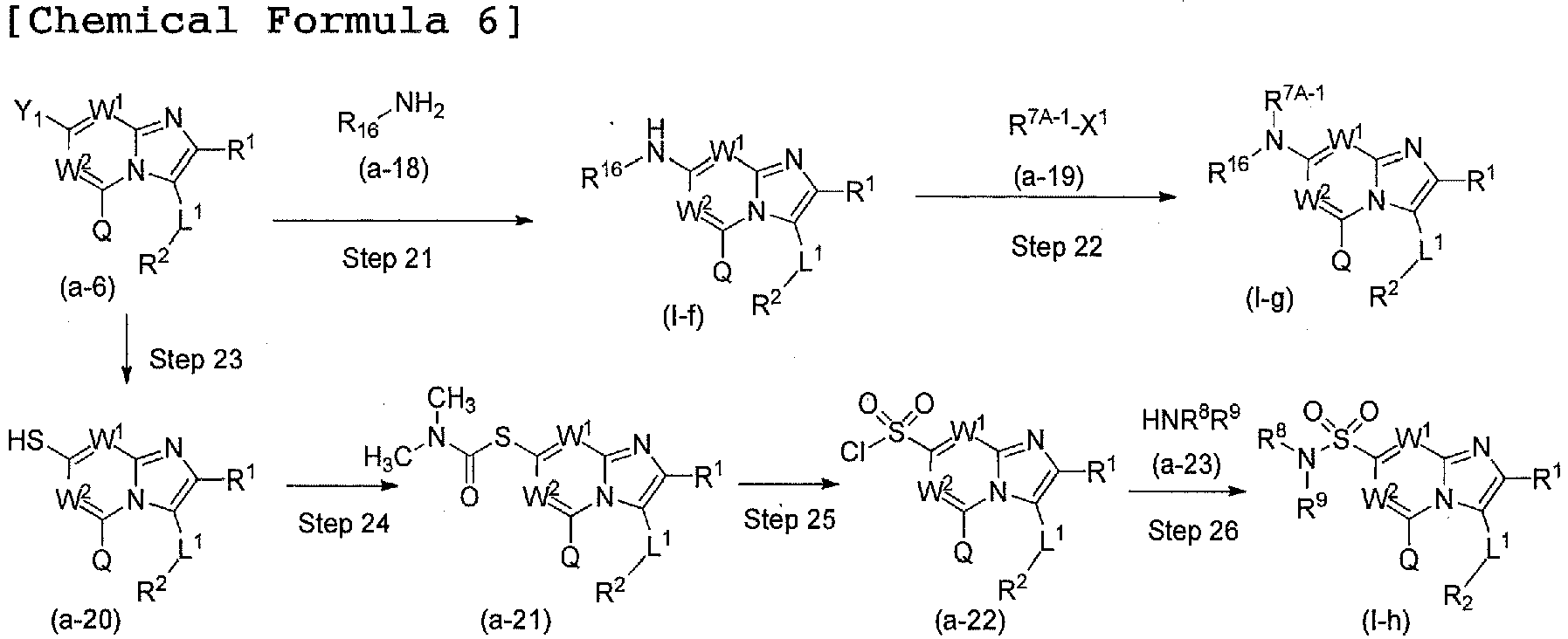
- (wherein, Y1, X1, L1, R1, R2, Q, R7A-1, R8, R9, R16, W1 and W2 have the same meanings as described above, respectively)
- Compound (I-f) can be produced in the same manner as in the above step 18, using compound (a-6) obtained in producing process 1, and compound (a-18).
- Compound (a-18) can be obtained as a commercially available product, or by using known methods [for example, Jikken Kagaku Kouza, 4th Ed. , Vol. 22, p. 137, Maruzen Co. , Ltd. (1992)] or modified methods thereof.
- Compound (I-g) can be produced in the same manner as in the above step 17, using compound (I-f) and compound (a-19).
- Compound (a-19) can be obtained as a commercially available product, or by using known methods [for example, Jikken Kagaku Kouza, 4th Ed., Vol. 19, p. 416, Maruzen Co., Ltd. (1992), and the like] or modified methods thereof.
- Compound (a-20) can be produced by reacting compound (a-6) with 1 to 20 equivalents of sodium thiomethoxide in a solvent at a temperature between 0°C and the boiling point of the solvent used for 5 minutes to 72 hours.
- Examples of the solvent include methanol, ethanol, dichloromethane, chloroform, 1,2-dichloroethane, toluene, ethyl acetate, acetonitrile, diethyl ether, THF, DME, 1,4-dioxane, DMF, DMA, NMP, DMSO, pyridine, and the like. These may be used either alone or as a mixture.
- Compound (a-21) can be produced by reacting compound (a-20) with 1 to 20 equivalents of N,N-dimethylcarbamoyl chloride in a solvent at a temperature between -10°C and the boiling point of the solvent used for 5 minutes to 72 hours, if necessary, in the presence of 1 to 20 equivalents of a base.
- Examples of the base include potassium carbonate, sodium carbonate, potassium hydrogen carbonate, sodium hydrogen carbonate, triethylamine, diisopropylethylamine, N-methylmorpholine, pyridine, DBU, and the like. Examples of the solvent include acetonitrile, dichloromethane, 1,2-dichloroethane, chloroform, DME, DMF, DMA, 1,4-dioxane, THF, diethyl ether, diisopropylether, benzene, toluene, xylene, pyridine, NMP, and the like. These may be used either alone or as a mixture.
- Compound (a-22) can be produced by reacting compound (a-21) with 1 to 20 equivalents of N-chlorosuccinimide and 1 to 10 equivalents of hydrochloric acid in a solvent at a temperature between -10°C and the boiling point of the solvent used for 5 minutes to 72 hours. Examples of the solvent include acetonitrile, water, and the like. These may be used either alone or as a mixture.
- Compound (I-h) can be produced by reacting compound (a-22) with 1 to 20 equivalents of compound (a-23) in a solvent at a temperature between -10°C and the boiling point of the solvent used for 5 minutes to 72 hours, if necessary, in the presence of 1 to 20 equivalents of a base, and, if necessary, in the presence of 1 to 20 equivalents of an additive.
- Compound (a-23) can be obtained as a commercially available product, or by using known methods [for example, Jikken Kagaku Kouza, 4th Ed. , Vol. 20, p.279, Maruzen Co. , Ltd. (1992), and the like] or modified methods thereof.
Examples of the base include potassium carbonate, potassium hydroxide, sodium hydroxide, sodium methoxide, potassium tert-butoxide, triethylamine, diisopropylethylamine, N-methylmorpholine, pyridine, DBU, DMAP, and the like. Examples of the additive include potassium iodide, and the like. Examples of the solvent include methanol, ethanol, dichloromethane, chloroform, 1,2-dichloroethane, toluene, ethyl acetate, acetonitrile, diethyl ether, THF, DME, 1,4-dioxane, DMF, DMA, NMP, DMSO, pyridine, water, and the like. These may be used either alone or as a mixture. - Among compound (I), compound (I-i) in which R3 is -C(=O)NH-NHC(=O)-R10 (wherein R10 has the same meaning as described above), and compound (I-j) in which R3 is -NHC(=O)OR10 (wherein R10 has the same meaning as described above) also can be produced according to the following steps.
-

- (wherein, Y1, R1, R2, Q, R10, L1, W1 and W2 have the same meanings as described above, respectively)
- Compound (a-24) can be produced by reacting compound (a-8) obtained in the same manner as in producing process 1 with 1 to 20 equivalents of hydrazine hydrate in a solvent at a temperature between -10°C and the boiling point of the solvent used for 5 minutes to 72 hours, if necessary, in the presence of 1 to 20 equivalents of a condensing agent, if necessary, in the presence of 1 to 20 equivalents of a base, and if necessary, in the presence of 1 to 20 equivalents of an additive.
- Examples of the base include potassium carbonate, potassium hydroxide, sodium hydroxide, sodium methoxide, potassium tert-butoxide, triethylamine, diisopropylethylamine, N-methylmorpholine, pyridine, DBU, DMAP, and the like. Examples of the condensing agent include 1,3-dicyclohexanecarbodiimide (DCC), 1,3-diisopropylcarbodiimide, 1-(3-dimethylaminopropyl)-3-ethylcarbodiimide (EDC), EDC hydrochloride, and the like. Examples of the additive include potassium iodide, and the like. Examples of the solvent include methanol, ethanol, dichloromethane, chloroform, 1,2-dichloroethane, toluene, ethyl acetate, acetonitrile, diethyl ether, THF, DME, 1,4-dioxane, DMF, DMA, NMP, DMSO, pyridine, water, and the like. These may be used either alone or as a mixture.
- Compound (I-i) can be obtained by reacting compound (a-24) with 1 to 20 equivalents of compound (a-25) in a solvent at a temperature between -10°C and the boiling point of the solvent used for 5 minutes to 72 hours, preferably in the presence of 1 to 20 equivalents of a base, if necessary.
- Compound (a-25) can be obtained as a commercially available product, or by using known methods [for example, Jikken Kagaku Kouza , 4th Ed. , Vol. 22, p.115, Maruzen Co., Ltd. (1992), and the like] or modified methods thereof.
Examples of the base include potassium carbonate, sodium carbonate, lithium hydroxide, potassium hydroxide, sodium hydroxide, sodium hydride, sodium methoxide, potassium tert-butoxide, triethylamine, diisopropylethylamine, N-methylmorpholine, N-methylpiperidine, pyridine, DBU, and the like. Examples of the solvent include methanol, ethanol, dichloromethane, chloroform, 1,2-dichloroethane, toluene, xylene, ethyl acetate, acetonitrile, diethyl ether, THF, DME, 1, 4 -dioxane , DMF, DMA, NMP, DMSO, pyridine, water, and the like. These may be used either alone or as a mixture. - Compound (I-j) can be produced by reacting compound (a-8) with 1 equivalent to a large excess amount of compound (a-26) in a solvent at a temperature between 0°C and 150°C for 5 minutes to 72 hours in the presence of 1 to a large excess amount of an azidizing agent, and, if necessary, 1 to a large excess amount of a base.
- Compound (a-26) can be obtained as a commercially available product, or by using known methods [for example, Jikken Kagaku Kouza , 4th Ed., Vol. 20, p.1, Maruzen Co., Ltd. (1992), and the like] or modified methods thereof.
Examples of the azidizing agent include sodium azide, potassium azide, diphenylphosphoryl azide, and the like. Examples of the base include potassium carbonate, sodium carbonate, potassium hydrogen carbonate, sodium hydrogen carbonate, triethylamine, diisopropylethylamine, N-methylmorpholine, pyridine, DBU, and the like. Examples of the solvent include THF, DME, benzene, toluene, xylene, 1,4-dioxane, DMF, DMA, NMP, and the like. These may be used either alone or as a mixture. - Among compound (I), compound (I-1) in which R3 is an optionally substituted benzimidazol-2-yl group) also can be produced according to the following step.
-

- (wherein, R1, R2, Q, L1, W1 and W2 have the same meanings as described above, respectively, and R17 represents any of the substituents exemplified above for the substituents of the optionally substituted benzimidazol-2-yl)
- Compound (I-l) can be produced by reacting compound (I-k) obtained in the producing process 1 in a solvent or without solvent at a temperature between -10°C and the boiling point of the solvent used for 5 minutes to 72 hours in the presence of 1 to 20 equivalents of an acid.
- Examples of the acid include acetic acid, hydrochloric acid, sulfuric acid, trifluoroacetic acid, methanesulfonic acid, and the like. Examples of the solvent include methanol, ethanol, propanol, THF, 1,4-dioxane, DME, toluene, ethyl acetate, dichloromethane, DMF, water, and the like. These may be used either alone or as a mixture.
Alternatively, compound (I-1) also can be produced by reacting compound (I-k) obtained in the producing process 1 in a solvent or without solvent at a temperature between -10°C and the boiling point of the solvent used for 5 minutes to 72 hours in the presence of 1 to 20 equivalents of a base. - Examples of the base include potassium carbonate, potassium hydroxide, sodium hydroxide, sodium methoxide, potassium tert-butoxide, triethylamine, diisopropylethylamine, N-methylmorpholine, pyridine, DBU, DMAP, and the like. Examples of the additive include potassium iodide, and the like. Examples of the solvent include methanol, ethanol, propanol, THF, 1,4-dioxane, DME, toluene, ethyl acetate, dichloromethane, DMF, water, and the like. These may be used either alone or as a mixture.
- Among compound (I), compound (I-n) in which R1 is -C(=O)NR5R6 (wherein R5 and R6 have the same meanings as described above), compound (I-o) in which R1 is -NHC(=O)OR4A (wherein R4A has the same meaning as above R4), compound (I-p) in which R1 is -C(=O)R4A (wherein R4A has the same meaning as above R4), and compound (I-q) in which R1 is -CF2R4A (wherein R4A has the same meaning as above R4) also can be produced according to the following steps.
-

- (wherein, R2, R3, Q, R4, R4A, R5, R6, L1, W1 and W2 have the same meanings as described above, respectively, and M1 represents a metallic group such as MgBr, MgCl, Li and the like)
- Compound (a-27) can be produced in the same manner as in the above step 2, using compound (I-m) obtained in the producing processes 1 to 5.
- Compound (I-n) can be produced in the same manner as in the above step 3, using compound (a-27) and compound (a-28).
- Compound (a-28) can be obtained as a commercially available product, or by using known methods [for example, Jikken Kagaku Kouza, 4th Ed. , Vol. 20, p.279, Maruzen Co. , Ltd. (1992), and the like] or modified methods thereof.
- Compound (I-o) can be obtained in the same manner as in the above step 29, using compound (a-27) and compound (a-29).
- Compound (a-29) can be obtained as a commercially available product, or by using known methods [for example, Jikken Kagaku Kouza, 4th Ed., Vol. 20, p.1, Maruzen Co., Ltd. (1992), and the like] or modified methods thereof.
- Compound (a-30) can be produced in the same manner as in the above step 3, using compound (a-27), and commercially available N,O-dimethylhydroxylamine, and the like.
- Compound (I-p) can be produced by reacting compound (a-30) with 1 to 10 equivalents of compound (a-31) in a solvent at a temperature between -78°C and the boiling point of the solvent used for 5 minutes to 72 hours.
- Compound (a-31) can be obtained as a commercially available product, or by using known methods [for example, Jikken Kagaku Kouza 18, Organic Compound Syntheses VI, Organic Syntheses using Metals, 5th Ed., p.59, Maruzen (2005)] or modified methods thereof.
Examples of the solvent include toluene, diethyl ether, THF, DME, dioxane, hexane, and the like. These may be used either alone or as a mixture. - Compound (I-q) can be produced by reacting compound (I-p) with 1 equivalent to a large excess amount of a fluorinating agent in a solvent at a temperature between -78°C and the boiling point of the solvent used for 5 minutes to 72 hours.
- Examples of the fluorinating agent include diethylaminosulfate trifluoride (DAST), bis(2-methoxyethyl)aminosulfur trifluoride, and the like. Examples of the solvent include dichloromethane, 1,2-dichloroethane, and the like. These may be used either alone or as a mixture.
- Among compound (I), compound (I-r) in which L1 is -CH(OH)-, compound (I-s) in which -L1-R2 is -CH=CRARB (wherein RA and RB have the same meanings as described above, respectively), compound (I-t) in which L1 is -C(F)H-, compound (I-u) in which L1 is -C(=O)-, and compound (I-v) in which L1 is -CH(OR11A-1)-(wherein R11A-1 represents optionally substituted lower alkyl) also can be produced according to the following steps.
-


- (wherein, Y1, Y2, Y3, M1, R1, R2, Q, R3, RA, RB, R11A-1, W1 and W2 have the same meanings as described above, respectively, and R28 represents C1-6alkyl or phenyl)
- Compound (a-34) can be produced by reacting compound (a-33) with 1 to 5 equivalents of a halogenating agent in a solvent or without solvent at a temperature between -30°C and 150°C for 5 minutes to 72 hours.
- Examples of the halogenating agent include chlorine, bromine, iodine, N,N,N,N-tetra-n-butylammonium tribromide, N-chlorosuccinimide, N-bromosuccinimide, N-iodosuccinimide, and the like. Examples of the solvent include acetone, 1,4-dioxane, acetonitrile, chloroform, dichloromethane, THF, DME, ethyl acetate, methanol, ethanol, DMF, acetic acid, water, and the like. These may be used either alone or as a mixture.
- Compound (a-33) can be obtained as a commercially available product, or by using known methods [for example, Jikken Kagaku Kouza, 4th Ed., Vol. 21, p.149, Maruzen Co., Ltd. (1992), and the like] or modified methods thereof.
- Compound (a-35) can be produced in the same manner as in the above step 4, using compound (a-32) and compound (a-34) obtained in the same manner as in the producing processes 1 and 2 and the like.
- Compound (a-32) can be obtained as a commercially available product, or by using known methods [for example, Jikken Kagaku Kouza, 4th Ed. , Vol. 20, p.279, Maruzen Co. , Ltd. (1992), and the like] or modified methods thereof.
- Compound (a-36) can be produced in the same manner as in the above step 37, using compound (a-35).
- Compound (I-r) can be produced by reacting compound (a-36) with 1 to 10 equivalents of compound (a-37) and 1 to 10 equivalents of compound (a-38) in a solvent at a temperature between -78°C and the boiling point of the solvent used for 5 minutes to 72 hours. Examples of the solvent include toluene, diethyl ether, THF, DME, dioxane, hexane, and the like. These may be used either alone or as a mixture.
- Compound (a-37) can be obtained as a commercially available product, or by using known methods [for example, Jikken Kagaku Kouza 18, Organic Compound Syntheses VI, Organic Syntheses using Metals, 5th Ed., p.59, Maruzen (2005)] or modified methods thereof.
Compound (a-38) can be obtained as a commercially available product, or by using known methods [for example, Jikken Kagaku Kouza , 4th Ed., Vol. 21, p.1, Maruzen Co., Ltd. (1992), and the like] or modified methods thereof. - Compound (I-s) can be produced by treating compound (I-r1) in which -R2 of compound (I-r) is -CHRARB (wherein RA and RB have the same meanings as described above, respectively) with 1 to 10 equivalents of a sulfonylating agent in a solvent or without solvent at a temperature between -20°C and 150°C for 5 minutes to 72 hours, if necessary, in the presence of a catalytic amount to 10 equivalents of a base.
- Examples of the sulfonylating agent include anhydrous trifluoromethanesulfonic acid, anhydrous methanesulfonic acid, methanesulfonyl chloride, p-toluenesulfonyl chloride, and the like. Examples of the base include triethylamine, diisopropylethylamine, pyridine, sodium hydride, and the like. Examples of the solvent include dichloromethane, chloroform, 1,2-dichloroethane, toluene, ethyl acetate, acetonitrile, diethyl ether, THF, DME, dioxane, DMF, DMA, NMP, pyridine, and the like. These may be used either alone or as a mixture.
- Compound (I-t) can be produced in the same manner as in the above step 36, using compound (I-r).
- Compound (I-u) can be produced by treating compound (I-r) with 1 to 10 equivalents of an oxidizing agent in a solvent at a temperature between -20°C and the boiling point of the solvent used for 5 minutes to 72 hours.
- Examples of the oxidizing agent include manganese dioxide, chromic acid, pyridinium chlorochromate, pyridinium dichromate, potassium permanganate, sulfur trioxide-pyridine, oxone, DMSO/oxalyl chloride, Dess-Martin periodinate, and the like. Examples of the solvent include dichloromethane, chloroform, 1,2-dichloroethane, toluene, ethyl acetate, acetonitrile, diethyl ether, THF, DME, dioxane, DMF, DMA, NMP, DMSO, pyridine, hydrochloric acid, acetic acid, propionic acid, acetic anhydride, sulfuric acid, water, and the like. These may be used either alone or as a mixture.
- Compound (I-v) can be produced in the same manner as in the above step 17, using compound (I-r) and compound (a-39).
- Compound (a-39) can be obtained as a commercially available product, or by using known methods [for example, Jikken Kagaku Kouza , 4th Ed. , Vol. 19, p.416, Maruzen Co., Ltd. (1992), and the like] or modified methods thereof.
- Among compound (I), compound (I-w) in which L1 is -CH2O-also can be produced according to the following steps.
-


- (wherein, R1, R2 , Q, R3, W1 and W2 have the same meanings as described above, respectively)
- Compound (a-40) can be produced by reacting compound (a-35) in formalin at a temperature between -10°C and 100°C for 5 minutes to 72 hours, if necessary, in the presence of 1 to 20 equivalents of an acid. Examples of the acid include acetic acid, hydrochloric acid, and the like.
- Compound (a-41) can be produced by treating compound (a-40) with 1 equivalent to a large excess amount of a chlorinating agent in a solvent or without solvent at a temperature between -20°C and 150°C for 5 minutes to 72 hours, if necessary, in the presence of a catalytic amount to 1 equivalent of an additive.
- Examples of the chlorinating agent include phosphorus oxychloride, phosphorus pentachloride, phosphorus trichloride, thionyl chloride, and the like. Examples of the additive include DMF, pyridine, diisopropylethylamine, and the like. Examples of the solvent include dichloromethane, chloroform, 1,2-dichloroethane, toluene, diethyl ether, THF, DME, dioxane, DMF, DMA, NMP, pyridine, and the like. These may be used either alone or as a mixture.
- Compound (I-w) can be produced in the same manner as in the above step 17, using compound (a-41) and compound (a-42).
- Compound (a-42) can be obtained as a commercially available product, or by using known methods [for example, Jikken Kagaku Kouza, 4th Ed. , Vol. 20, p.1, Maruzen Co. , Ltd. (1992), and the like] or modified methods thereof.
- Among compound (I), compound (I-x) in which L1 is -S-, and compound (I-y) in which L1 is -S(O)n3-(wherein n3 represents an integer of 1 to 2) also can be produced according to the following steps.
-

- (wherein, Y2, R1, R2, Q, R3, n3, W1 and W2 have the same meanings as described above, respectively)
- Compound (I-x) can be produced by reacting compound (a-36) with 1 to 10 equivalents of compound (a-43) in a solvent at a temperature between room temperature and 140°C for 5 minutes to 72 hours in the presence of a catalytic amount to 10 equivalents of a copper reagent or a palladium reagent. The reaction also may be performed in the presence of a catalytic amount to 10 equivalents of a base in the presence of a catalytic amount to 10 equivalents of an additive. Further, the reaction can be performed in the presence of a catalytic amount to 10 equivalents of an organophosphorus compound.
- Compound (a-43) can be obtained as a commercially available product, or by using known methods [for example, Shin Jikken Kagaku Kouza, Vol. 14, p.1699, Maruzen Co. , Ltd. (1978), and the like] or modified methods thereof.
Examples of the copper reagent include copper(0), copper(I) iodide, copper(II) iodide, copper(II) acetate, copper(II) oxide, copper(I) chloride, and the like. Preferred examples include copper(I) iodide, copper(II) acetate, and the like. Examples of the palladium reagent include palladium (II) acetate, bis(triphenylphosphine)palladium(II) chloride, tetrakis(triphenylphosphine)palladium(0), [1,2-bis(diphenylphosphino)ethane]palladium(II) chloride, (1,1'-bis(diphenylphosphino)ferrocene)palladium(II) chloride, and the like. Preferred examples include palladium(II) acetate, bis(triphenylphosphine)palladium(II) chloride, tetrakis(triphenylphosphine)palladium(0), and the like. Examples of the additive include α-pipecolic acid, and the like. Examples of the base include potassium carbonate, cesium carbonate, lithium chloride, potassium chloride, potassium tert-butoxide, sodium tert-butoxide, triethylamine, potassium acetate, sodium ethoxide, sodium carbonate, sodium hydroxide, potassium phosphate, ethylenediamine, glycine, N-methylpyrrolidine, pyridine, 1,2-diaminocyclohexane, and the like. Preferred examples include potassium carbonate, cesium carbonate, potassium tert-butoxide, potassium phosphate, ethylenediamine, 1,2-diaminocyclohexane, and the like. Examples of the organophosphorus compound include triphenylphosphine, tri(2-furyl)phosphine, 2-dicyclohexylphosphino-2'-(N,N-dimethylamino)biphenyl, diphenylphosphinoferrocene, and the like. Preferred examples include 2-dicyclohexylphosphino-2'-(N,N-dimethylamino)biphenyl, and the like. Examples of the solvent include diethyl ether, THF, 1,4-dioxane, DMF, DMA, DMSO, benzene, toluene, xylene, dichloromethane, chloroform, carbon tetrachloride, 1,2-dichloroethane, acetonitrile, ethyl acetate, methyl acetate, methyl ethyl ketone, methanol, ethanol, propanol, 2-propanol, butanol, hexane, and the like. Preferred examples include THF, 1,4-dioxane, DMF, DMSO, and the like. - Compound (I-y) can be produced by treating compound (I-x) with 1 to 10 equivalents of an oxidizing agent in a solvent at a temperature between -20°C and the boiling point of the solvent used for 5 minutes to 72 hours.
- Examples of the oxidizing agent include m-chloroperbenzoic acid (m-CPBA), benzoyl peroxide, peracetic acid, hydrogen peroxide water, sodium periodate, and the like. Examples of the solvent include methanol, ethanol, dichloromethane, chloroform, 1,2-dichloroethane, toluene, ethyl acetate, acetonitrile, diethyl ether, THF, DME, dioxane, DMF, DMA, NMP, water, and the like. These may be used either alone or as a mixture.
- Among compound (1), compound (I-z) in which L1 is -SO2-, and R2 is -NR18R19 (wherein R18 has the same meaning as the above R7, and R19 has the same meaning as the above R2, or R18 and R19 are combined together with the adjacent nitrogen atom thereto to form an optionally substituted nitrogen-containing heterocyclic group) also can be produced according to the following steps.
-

- (wherein, R1, Q, R3, R18, R19, W1 and W2 have the same meanings as described above, respectively)
- Compound (a-44) can be produced by reacting compound (a-35) with 0.5 to 10 equivalents of a sulfonylating agent in a solvent or without solvent at a temperature between -30°C and the boiling point of the solvent used for 5 minutes to 72 hours.
- Examples of the solvent include 1,2-dichloroethane, chloroform, methylene chloride, sulfolane, ethyl acetate, and the like. These may be used either alone or as a mixture. Of these, 1,2-dichloroethane or methylene chloride is preferred. Examples of the sulfonylating agent include chlorosulfonic acid, trimethylsilyl chlorosulfonate, fuming sulfuric acid, sulfur trioxide, sulfur dioxide, and the like.
- Compound (a-44) is treated with 1 to 20 equivalents of an acid halogenating agent in a solvent or without solvent at a temperature between -20°C and the boiling point of the solvent used for 5 minutes to 72 hours to obtain a sulfonic acid halide of compound (a-44). Here, 0.01 to 0.5 equivalents of DMF, pyridine, and the like may be added, if necessary. The resulting sulfonic acid halide is reacted with 0.5 to 5 equivalents of compound (a-45) in a solvent at a temperature between -20°C and the boiling point of the solvent used for 5 minutes to 72 hours in the presence of 1 to 10 equivalents of a base to produce compound (I-z).
- Compound (a-45) can be obtained by as a commercially available product, or by using known methods [for example, Jikken Kagaku Kouza, 4th Ed. , Vol. 20, p.279, Maruzen Co. , Ltd. (1992), and the like] or modified methods thereof.
Examples of the solvent used for the reaction to obtain the sulfonic acid halide include 1,2-dichloroethane, chloroform, methylene chloride, pyridine, THF, DME, toluene, DMF, dioxane, ethyl acetate, and the like. These may be used either alone or as a mixture. Of these, 1,2-dichloroethane, methylene chloride, and toluene are preferred. Examples of the acid halogenating agent include thionyl chloride, oxalyl chloride, phosphorus oxychloride, and the like. Examples of the solvent used for the reaction with the sulfonic acid halide and compound (a-45) include 1,2-dichloroethane, chloroform, methylene chloride, pyridine, acetonitrile, THF, DME, toluene, DMF, dioxane, ethyl acetate, and the like. These may be used either alone or as a mixture. Examples of the base include pyridine, triethylamine, 4-(dimethylamino)pyridine, N,N-diisopropylethylamine, sodium hydrogen carbonate aqueous solution, sodium hydroxide aqueous solution, and the like. Of these, triethylamine is preferred. - Among compound (I), compound (I-bb) in which W2 is C-R12D (wherein R12D represents optionally substituted lower alkyl, or optionally substituted cycloalkyl) also can be produced according to the following step.
-

- {wherein, Y1, R1, R2, Q, R3, R12D, L1, and W1 have the same meanings as described above, respectively, and M2 represents B(OR20) (OR21) (wherein R20 and R21 may be the same or different, and each represents a hydrogen atom or C1-6alkyl, or R20 and R21 together represent C1-6 alkylene), or SnR22R23R24 (wherein R22, R23, and R24 may be the same or different, and each represents C1-6alkyl or phenyl)}
- Compound (I-bb) can be produced by reacting compound (I-aa) obtained in the same manner as in the producing process 1 with 1 to 10 equivalents of compound (a-46) in a solvent at a temperature between -10°C and the boiling point of the solvent used for 5 minutes to 72 hours in the presence of 0.001 to 1 equivalent of a palladium catalyst, and, if necessary, 0.1 to 10 equivalents of a base.
- Compound (a-46) can be obtained as a commercially available product, or by using known methods [for example, Jikken Kagaku Kouza, 5th Ed. , Vol. 18, p.95, 183, Maruzen Co., Ltd. (2004), and the like] or modified methods thereof.
Examples of the base include potassium acetate, sodium acetate, potassium carbonate, cesium carbonate, sodium carbonate, sodium hydrogen carbonate, sodium hydroxide, lithium hydroxide, potassium hydroxide, potassium phosphate, pyridine, triethylamine, N-methylmorpholine, N-methylpiperidine, diisopropylethylamine, DBU, and the like. Examples of the palladium catalyst include a compound in which a phosphine ligand is coordinated to the palladium atom. Example of the palladium source include palladium acetate, trifluoropalladium acetate, trisdibenzylideneacetone dipalladium, and chloroform adducts thereof, and the like. Examples of the phosphine ligand include triphenylphosphine, 1,1'-bisdiphenylphosphinoferrocene, o-tolylphosphine, and the like. Preferably, these are used in 1 to 10 equivalents with respect to above the palladium source. It is also possible to use commercially available reagents, for example, such as tetrakistriphenylphosphinepalladium, [1,1'-bis(diphenylphosphino)-ferrocene]dichloropalladium(I I), and the like. Examples of the solvent include methanol, ethanol, dichloromethane, chloroform, 1,2-dichloroethane, toluene, xylene, ethyl acetate, acetonitrile, diethyl ether, THF, DME, 1,4-dioxane, DMF, DMA, NMP, DMSO, pyridine, water, and the like. These may be used either alone or as a mixture. - Among compound (a-5), compound (a-53) in which L1 is -CH2-, and R1 is trifluoromethyl, and compound (a-58) in which L1 is -CH2-, and R1 is R1A-1 (wherein R1A-1 represents optionally substituted lower alkyl, or optionally substituted cycloalkyl) also can be produced according to the following steps.
-

- (wherein, M1, Y1, R1A-1, and R2 have the same meanings as described above, respectively and R25, R26, and R27 may be the same or different, and each represents C1-6alkyl or phenyl)
- Compound (a-48) can be produced by reacting compound (a-38) with 1 to 10 equivalents of compound (a-47) in a solvent at a temperature between -78°C and the boiling point of the solvent used for 5 minutes to 72 hours in the presence of 1 to 10 equivalents of a base.
- Examples of the base include sodium hydride, potassium acetate, sodium hydrogen carbonate, potassium carbonate, potassium hydroxide, sodium hydroxide, sodium methoxide, potassium tert-butoxide, triethylamine, diisopropylethylamine, N-methylmorpholine, pyridine, DBU, and the like. Examples of the solvent include methanol, ethanol, dichloromethane, chloroform, 1,2-dichloroethane, toluene, ethyl acetate, acetonitrile, diethyl ether, THF, DME, dioxane, DMF, DMA, NMP, and the like. These may be used either alone or as a mixture.
- Compound (a-47) can be obtained as a commercially available product, or by using known methods [for example, Jikken Kagaku Kouza, 4th Ed. , Vol. 24, p.229, Maruzen Co. , Ltd. (1992), and the like] or modified methods thereof.
- Compound (a-49) can be produced by treating compound (a-48) in a solvent under a hydrogen atmosphere or in the presence of a suitable hydrogen source at a temperature between -20°C and the boiling point of the solvent used under ordinary pressure or increased pressure for 5 minutes to 72 hours in the presence of a suitable catalyst.
- Examples of the catalyst include palladium carbon, palladium, palladium hydroxide, palladium acetate, palladium black, and the like. These are used in 0.01 to 100 weight% with respect to compound (a-48). Examples of the hydrogen source include formic acid, ammonium formate, sodium formate, cyclohexadiene, hydrazine, and the like. These are used in 2 equivalents to a large excess amount. Examples of the solvent include methanol, ethanol, toluene, ethyl acetate, acetonitrile, diethyl ether, THF, DME, dioxane, DMF, DMA, NMP, water, and the like. These may be used either alone or as a mixture.
- Compound (a-50) can be produced in the same manner as in the above step 2, using compound (a-49).
- Compound (a-51) can be produced by treating compound (a-50) in a solvent or without solvent at a temperature between -20°C and the boiling point of the solvent used for 5 minutes to 72 hours, using 1 to 20 equivalents of an acid halogenating agent. Here, 0.01 to 0.5 equivalents of DMF, pyridine, and the like may be added, if necessary.
- Examples of the solvent include 1,2-dichloroethane, chloroform, methylene chloride, pyridine, THF, DME, toluene, DMF, dioxane, ethyl acetate, and the like. These may be used either alone or as a mixture. Of these, 1,2-dichloroethane, methylene chloride, and toluene are preferred. Examples of the acid halogenating agent include thionyl chloride, oxalyl chloride, phosphorus oxychloride, and the like.
- Compound (a-52) can be produced by reacting compound (a-51) with 1 to 20 equivalents of anhydrous trifluoroacetic acid in a solvent at a temperature between -20°C and the boiling point of the solvent used for 5 minutes to 72 hours in the presence of 1 to 20 equivalents of a base.
- Examples of the base include pyridine, and the like. Examples of the solvent include dichloromethane, diethyl ether, THF, DME, dioxane, and the like. These may be used either alone or as a mixture.
- Compound (a-53) can be produced in the same manner as in the above step 37, using a silyl enol ether of compound (a-52) obtained by the reaction of compound (a-52) with 1 to 10 equivalents of trimethylsilyl chloride in a solvent at a temperature between -10°C and the boiling point of the solvent used for 5 minutes to 78 hours in the presence of 1 to 10 equivalents of a base.
- Examples of the base include triethylamine, diisopropylethylamine, N-methylmorpholine, pyridine, DBU, and the like. Examples of the solvent include methanol, ethanol, dichloromethane, chloroform, 1,2-dichloroethane, toluene, ethyl acetate, acetonitrile, diethyl ether, THF, DME, dioxane, DMF, DMA, NMP, and the like. These may be used either alone or as a mixture.
- Compound (a-54) can be produced in the same manner as in the above step 34, using compound (a-50).
- Compound (a-57) can be produced by reacting compound (a-51) with 1 to 20 equivalents of compound (a-55) in a solvent at a temperature between -20°C and the boiling point of the solvent used for 5 minutes to 72 hours in the presence of a catalytic amount to 1 equivalent of a copper catalyst.
- Examples of the copper catalyst include copper chloride, and the like. Examples of the solvent include diethyl ether, THF, DME, dioxane, and the like. These may be used either alone or as a mixture.
Compound (a-55) can be obtained as a commercially available product, or by using known methods [for example, Jikken Kagaku Kouza 18, Organic Compound Syntheses VI, Organic Syntheses using Metals, 5th Ed., p.59, Maruzen (2005)] or modified methods thereof. - Compound (a-57) can be produced in the same manner as in the above step 35, using compound (a-54) and compound (a-55).
- Compound (a-58) can be produced in the same manner as in the above step 37, using compound (a-57).
- Compound (a-54) can be obtained by reacting compound (a-51) with 1 to 20 equivalents of commercially available N,O-dimethylhydroxylamine in a solvent at a temperature between -10°C and the boiling point of the solvent used for 5 minutes to 72 hours, preferably in the presence of 1 to 20 equivalents of a base, if necessary.
- Examples of the base include potassium carbonate, sodium carbonate, lithium hydroxide, potassium hydroxide, sodium hydroxide, sodium hydride, sodium methoxide, potassium tert-butoxide, triethylamine, diisopropylethylamine, N-methylmorpholine, N-methylpiperidine, pyridine, DBU, and the like. Examples of the solvent include dichloromethane, chloroform, 1,2-dichloroethane, toluene, xylene, ethyl acetate, acetonitrile, diethyl ether, THF, DME, 1,4-dioxane, DMF, DMA, NMP, DMSO, pyridine, and the like. These may be used either alone or as a mixture.
- In compound (a-35), compound (a-61) in which R3 is -CONR8R9 (wherein R8 and R9 may be the same or different, and have the same meanings as described above, respectively) also can be produced according to the following steps.
-

- (wherein, R1, Q, W1, W2, R8, and R9 have the same meanings as described above, respectively)
- Compound (a-60) can be produced in the same manner as in the step 12 of the producing process 1, using compound (a-59).
Compound (a-59) can be produced according to the method described in step 38 of the producing process 7. - Compound (a-61) can be produced in the same manner as in the step 3 of the producing process 1, using compound (a-60).
- In compound (a-10), compound (a-64) in which L1 is -CH2O-also can be produced according to the following steps.
-

- (wherein, R1, R2, Q, W1 and W2 have the same meanings as described above, respectively)
- Compound (a-62) can be produced in the same manner as in the step 45 of the producing process 8, using compound (a-59).
- Compound (a-63) can be produced in the same manner as in the step 46 of the producing process 8, using compound (a-62).
- Compound (a-64) can be produced in the same manner as in the step 47 of the producing process 8, using compound (a-63) and compound (a-42).
- In compound (a-6), compound (a-68) in which L1 is -CH2O-also can be produced according to the following steps.
-

- (wherein, R1, R2, Q, Y1, W1 and W2 have the same meanings as described above, respectively)
- Compound (a-66) can be produced in the same manner as in the step 45 of the producing process 8, using compound (a-65).
Compound (a-65) can be produced according to the method described in step 38 of the producing process 7. - Compound (a-67) can be produced in the same manner as in the step 46 of the producing process 8, using compound (a-66).
- Compound (a-68) can be produced in the same manner as in the step 47 of the producing process 8, using compound (a-67) and compound (a-42).
- In compound (a-59), compound (a-70) in which W2 is C-R12D (wherein R12D has the same meaning as described above) also can be produced according to the following step.
-


- (wherein, R1, Q, R12D, Y1 and W1 have the same meanings as described above, respectively)
- Compound (a-70) can be produced in the same manner as in the step 51 of the producing process 11, using compound (a-69).
Compound (a-69) can be produced according to the method described in step 38 of the producing process 7. - In compound (a-10), compound (a-73) in which L1 is -S(O)n3- (wherein n3 has the same meaning as described above) also can be produced according to the following steps.
-

- (wherein, R1, R2, Q, Y1, W1, W2 and n3 have the same meanings as described above, respectively)
- Compound (a-72) can be produced in the same manner as in the step 47-1 of the producing process 9, using compound (a-71).
Compound (a-71) can be produced according to the method described in step 39 of the producing process 7. - Compound (a-73) can be produced in the same manner as in the step 48 of the producing process 9, using compound (a-72).
- In compound (a-10), compound (a-75) in which L1 is -CH2O-, and W2 is C-R12D (wherein R12D has the same meaning as described above) also can be produced according to the following step.
-

- (wherein, R1, R2, Q, R12D, Y1 and W1 have the same meanings as described above, respectively)
- Compound (a-75) can be produced in the same manner as in the step 51 of the producing process 11, using compound (a-74).
Compound (a-74) can be produced according to the method described in the producing process 14. - Among compound (a-2) and compound (a-9), compound (a-78) in which W2 is C-Y1 (wherein Y1 has the same meaning as described above), and compound (a-79) in which W1 is C-Y2 (wherein Y2 has the same meaning as described above) also can be produced according to the following steps.
-

- [wherein, W1, W2, Y1, Y2, and Q have the same meanings as described above, respectively, and R29 represents -CN or -CO2R15 (wherein R15 has the same meaning as described above)]
- Compound (a-78) can be produced in the same manner as in the above step 37, using the compound (a-76).
Compound (a-76) can be obtained as a commercially available product, or by using known methods [for example,W02008/009750 , and the like] or modified methods thereof. - Compound (a-79) can be produced in the same manner as in the above step 37, using the compound (a-77).
Compound (a-77) can be obtained as a commercially available product, or by using known methods [for example,W02008/009750 , and the like] or modified methods thereof. - Among compound (a-2), compound (a-84) in which W2 is C-OR30 (wherein R30 represents optionally substituted lower alkyl) also can be produced according to the following steps.
-

- (wherein, Q, R15, R30, and W1 have the same meanings as described above, respectively)
- Compound (a-81) can be produced in the same manner as in the above step 3, using the compound (a-80) and R15-OH.
Compound (a-80) can be obtained as a commercially available product, or by using known methods [for example, Jikken Kagaku Kouza, 4th Ed., Vol. 22, p.1, Maruzen Co., Ltd. (1992), and the like] or modified methods thereof. - Compound (a-83) can be produced by reacting compound (a-81) with 1 to 20 equivalents of compound (a-82) in a solvent or without solvent at a temperature between -10°C and the boiling point of the solvent used for 5 minutes to 72 hours.
Examples of the solvent include methanol, ethanol, and the like. These may be used either alone or as a mixture. - Compound (a-82) can be obtained as a commercially available product.
- Compound (a-84) can be produced by reacting compound (a-83) with 1 to 20 equivalents of a nitrogen source in a solvent in the presence of 1 to 100 mol% of a palladium catalyst at a temperature between -20°C and the boiling point of the solvent used, if necessary, in the presence of 1 to 100 mol% of a catalyst ligand, and, if necessary, in the presence of 1 to a large excess amount of an acid under ordinary pressure or increased pressure for 5 minutes to 72 hours.
- Examples of the nitrogen source include lithium bis(trimethylsilyl)amide, benzophenoneimine, and the like. Examples of the palladium catalyst include palladium acetate, tetrakis(triphenylphosphine)palladium, tris(dibenzylideneacetone)dipalladium(0), and the like. Examples of the catalyst ligand include triphenylphosphine, 1,1'-bis(diphenylphosphino)ferrocene, 1,3-bis(diphenylphosphino)propane, 2-(dicyclohexylphosphino)biphenyl, and the like. Examples of the acid include hydrochloric acid, and the like. Examples of the solvent include dichloromethane, chloroform, 1,2-dichloroethane, toluene, ethyl acetate, acetonitrile, diethyl ether, THF, DME, 1,4-dioxane, DMF, DMA, NMP, water, and the like. These may be used either alone or as a mixture.
- Among compound (a-5), compound (a-58) in which L1 is -CH2-, and R1 is R1A-1 (wherein R1A-1 has the same meaning as described above) also can be produced according to the following steps.
-

- (wherein, Y1, R1A-1, R2, R26, R27 and R28 have the same meanings as described above, respectively)
- Compound (a-88) can be produced by reacting compound (a-85) or compound (a-86) with 1 to 20 equivalents of compound (a-87) in a solvent or without solvent at a temperature between -78°C and the boiling point of the solvent used for 5 minutes to 72 hours in the presence of 1 to 20 equivalents of a base.
- Examples of the base include n-butyllithium, and the like. Examples of the solvent include toluene, diethyl ether, THF, DME, dioxane, hexane, and the like. These may be used either alone or as a mixture.
Compound (a-85) can be obtained as a commercially available product, or by using known methods [for example, Jikken Kagaku Kouza, 4th Ed. , Vol. 22, p.43, Maruzen Co., Ltd. (1992), and the like] or modified methods thereof. - Compound (a-86) can be obtained as a commercially available product, or by using known methods [for example, Jikken Kagaku Kouza, 4th Ed., Vol. 22, p.137, Maruzen Co., Ltd. (1992), and the like] or modified methods thereof.
Compound (a-87) can be obtained as a commercially available product, or by using known methods [for example, Jikken Kagaku Kouza, 4th Ed. , Vol. 24, p.229, Maruzen Co. , Ltd. (1992), and the like] or modified methods thereof. - Compound (a-89) can be produced in the same manner as in the above step 52, using compound (a-88) and compound (a-38).
- Compound (a-57) can be produced in the same manner as in the above step 53, using compound (a-89).
- Compound (a-58) can be produced in the same manner as in the above step 37 or step 57, using compound (a-57).
- Among compounds (a-10), compound (a-96) in which L1 is -CH2- and R1 is -C(=O)OR4 (wherein R4 has the same meaning as described above), compound (a-98) in which R1 is -C(R30)2OH (wherein R30 has the same meaning as described above), and compound (a-100) in which R1 is -C(R30)2OR31 (wherein R30 has the same meaning as described above, and R31 represents lower alkyl) also can be produced according to the following steps.
-

- (wherein, X1, Y1, Q, R2, R4, R25, R30, R31, W1, W2, and M1 have the same meanings as described above, respectively)
- Compound (a-93) can be produced by reacting compound (a-49) with 1 to 20 equivalents of compound (a-92) in a solvent or without solvent at a temperature between -10°C and the boiling point of the solvent used for 5 minutes to 72 hours in the presence of 1 to 20 equivalents of a base.
- Examples of the base include sodium methoxide, sodium ethoxide, sodium tert-butoxide, and the like. Examples of the solvent include methanol, ethanol, tert-butanol, and the like. These may be used either alone or as a mixture.
Compound (a-92) can be obtained as a commercially available product, or by using known methods [for example, Jikken Kagaku Kouza, 4th Ed. , Vol. 22, p.43, Maruzen Co. , Ltd. (1992), and the like] or modified methods thereof. - Compound (a-94) can be produced by reacting compound (a-93) in a solvent at a temperature between -10°C and the boiling point of the solvent used for 5 minutes to 72 hours in the presence of 1 to 20 equivalents of an inorganic salt.
- Examples of the inorganic salt include sodium cyanide, potassium cyanide, sodium chloride, lithium chloride, and the like. Examples of the solvent include DMSO, and water. These are used as a mixture.
- Compound (a-95) can be produced in the same manner as in the above step 37, using compound (a-94).
- Compound (a-96) can be produced in the same manner as in the above step 4, using compound (a-95) and compound (a-9).
- Compound (a-98) can be produced in the same manner as in the above step 35, using compound (a-96) and compound (a-97).
- Compound (a-97) can be obtained as a commercially available product, or by using known methods [for example, Jikken Kagaku Kouza 18, Organic Compound Syntheses VI, Organic Syntheses using Metals, 5th Ed., p.59, Maruzen (2005)] or modified methods thereof.
- Compound (a-100) can be produced in the same manner as in the above step 17, using compound (a-98) and compound (a-99).
- Compound (a-99) can be obtained as a commercially available product, or by using known methods [for example, Jikken Kagaku Kouza , 4th Ed. , Vol. 19, p.416, Maruzen Co. , Ltd. (1992), and the like] or modified methods thereof.
- Among compound (a-7) and compound (a-10), compound (a-103) in which L1 is -CH(OH)-, and compound (a-104) in which L1 is -CH2- also can be produced according to the following steps.
-

- (wherein, Y1, Y2, R1, R2, R28, R29, M1, Q, W1 and W2 have the same meanings as described above, respectively)
- Compound (a-101) can be produced in the same manner as in the above step 4, using compound (a-2) or (a-9) and compound (a-34).
- Compound (a-102) can be produced in the same manner as in the above step 37, using compound (a-101).
- Compound (a-103) can be produced in the same manner as in the above step 40, using compound (a-102), compound (a-37), and compound (a-38).
- Compound (a-104) can be produced by reacting compound (a-103) with 1 equivalent to a large excess amount of alkylchlorosilane and 1 equivalent to a large excess amount of sodium iodide in a solvent at a temperature between -20°C and the boiling point of the solvent used for 5 minutes to 72 hours.
- Examples of the alkylchlorosilane include trimethylchlorosilane, triethylchlorosilane, dimethyldichlorosilane, and the like. Examples of the solvent include dichloromethane, hexane, acenitrile. These may be used either alone or as a mixture.
Compound (a-104) can be produced by reacting compound (a-103) in a solvent at a temperature between -78°C and the boiling point of the solvent used for 5 minutes to 72 hours preferably in the presence of 1 to 10 equivalents of a reducing agent, and preferably 1 to 10 equivalents of Brønsted acid. - Examples of the reducing agent include sodium borohydride, lithium borohydride, triethylsilane, and the like. Examples of the Brønsted acid include hydrochloric acid, sulfuric acid, trifluoroacetic acid, acetic acid, methanesulfonic acid, and the like. Examples of the solvent include toluene, THF, DME, 1,4-dioxane, DMF, and the like. These may be used either alone or as a mixture.
- Among compound (a-7) and compound (a-10), compound (a-106) in which L1 is -SO2-, and R2 is -NR18R19 (wherein R18 and R19 have the same meanings as described above, respectively) also can be produced according to the following steps.
-

- (wherein, R1, R18, R19, R29, Q, W1 and W2 have the same meanings as described above, respectively)
- Compound (a-105) can be produced in the same manner as in the above step 49, using compound (a-101) obtained in the above step 91.
- Compound (a-106) can be produced in the same manner as in the above step 50, using compound (a-105) and compound (a-45).
- Among compound (a-7) and compound (a-10), compound (a-108) in which L1 is -CH2-, and R1 is -C(=CH2)CH3) also can be produced according to the following step.
-
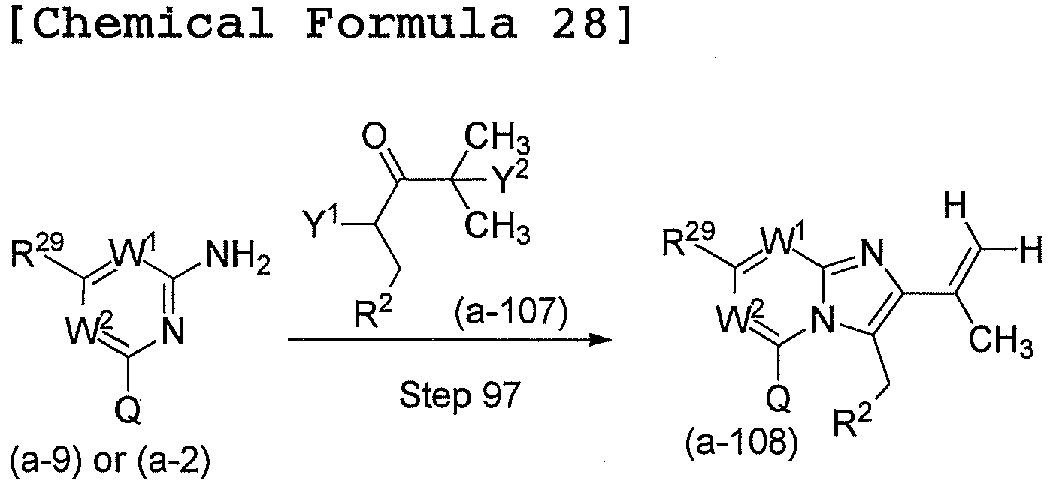
- (wherein, Y1, Y2, R2, R29, Q, W1 and W2 have the same meanings as described above, respectively)
- Compound (a-108) can be produced in the same manner as in the above step 4, using compound (a-2) or (a-9), and compound (a-107) obtained according to the method of the above producing process 21.
- Among compound (a-7) and compound (a-10), compound (a-110) in which W2 is C-R12D (wherein R12D has the same meaning as described above), and compound (a-112) in which W2 is C-CR12=CR33R34 (wherein R32, R33, and R34 may be the same or different, and each represents a hydrogen atom, or lower alkyl) also can be produced according to the following steps.
-

- (wherein, Y1, L1, R1, R2, R12D, R29, R32, R33, R34, M2, Q, and W1 have the same meanings as described above, respectively, and M3 has the same meaning as the above M2)
- Compound (a-110) can be produced in the same manner as in the above step 51, using compound (a-109) obtained according to the method of the above producing process 1, and compound (a-46).
- Compound (a-112) can be produced in the same manner as in above step 51, using compound (a-109) and compound (a-111).
Compound (a-111) can be obtained as a commercially available product, or by using known methods [for example, Jikken Kagaku Kouza , 5th Ed. , Vol. 18, p.95, 183, Maruzen Co., Ltd.(2004), and the like] or modified methods thereof. - Among compound (I-a), compound (I-dd) in which R8 and R9 are combined together with the adjacent nitrogen atom thereto to form an optionally substituted nitrogen-containing heterocyclic (aziridine ring) group) also can be produced according to the following step.
-
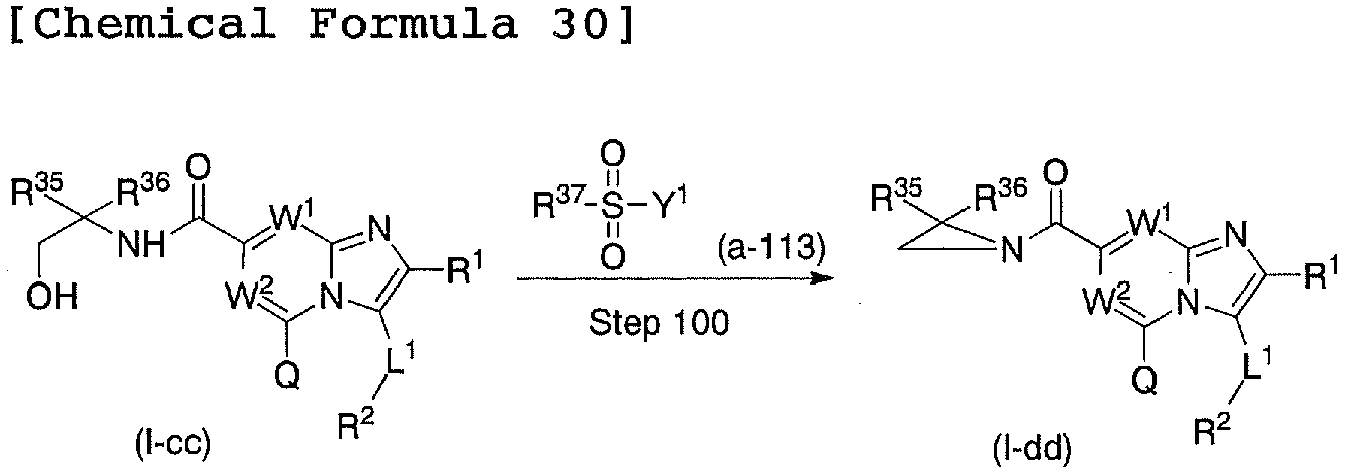
- (wherein, R35 and R36 may be the same or different, and each represents a hydrogen atom, or optionally substituted lower alkyl, R37 represents a methyl group or a p-tolyl group, and Y1, L1, R1, R2, Q, W1 and W2 have the same meanings as described above, respectively)
- Compound (I-dd) can be produced by reacting compound (I-cc) obtained in the producing process 1 in a solvent at a temperature between -10°C and the boiling point of the solvent used for 5 minutes to 72 hours with 1 to 20 equivalents of compound (a-113), if necessary, in the presence of 1 to 20 equivalents of a base.
Examples of the base include potassium carbonate, sodium carbonate, sodium hydrogen carbonate, TMEDA, pyridine, triethylamine, diisopropylethylamine, DBU, DMAP, and the like. Examples of the solvent include acetonitrile, dichloromethane, 1,2-dichloroethane, chloroform, DME, DMF, DMA, 1,4-dioxane, THF, diethyl ether, diisopropylether, benzene, toluene, xylene, pyridine, NMP, water, and the like. These may be used either alone or as a mixture. - Compound (a-113) can be obtained as a commercially available product.
- Compound (a-115) also can be produced according to the following step.
-

- (wherein, R1, R18, R19, R29, Q, and W2 have the same meanings as described above, respectively)
- Compound (a-115) can be produced in the same manner as in the above step 2 or the step 12, using compound (a-114) that can be synthesized according to the method of the above step 96.
- Compound (a-119) also can be produced according to the following steps.
-

- (wherein, R32 has the same meaning as described above, R38 represents optionally substituted lower alkyl, optionally substituted cycloalkyl, an optionally substituted aliphatic heterocyclic group, or an optionally substituted aromatic heterocyclic group)
- Compound (a-117) can be produced by reacting compound (a-116) in a solvent at a temperature between -10°C and the boiling point of the solvent used for 5 minutes to 72 hours in the presence of 1 to 20 equivalents of a deuterating reducing agent.
- Examples of the deuterating reducing agent include sodium borodeuteride, lithium borodeuteride, lithium aluminum deuteride, and the like. Examples of the solvent include acetonitrile, dichloromethane, 1,2-dichloroethane, chloroform, DME, DMF, DMA, 1,4-dioxane, THF, diethyl ether, diisopropylether, benzene, toluene, xylene, pyridine, NMP, methanol, ethanol, water, and deuterated solvents thereof, and the like. These may be used either alone or as a mixture.
- Compound (a-116) can be obtained as a commercially available product, or by using known methods [for example, Jikken Kagaku Kouza , 4th Ed. , Vol. 22, p.43, Maruzen Co., Ltd. (1992), and the like] or modified methods thereof.
- Compound (a-118) can be produced by reacting compound (a-117) with 1 to 20 equivalents of phthalimide in a solvent at a temperature between -78°C and the boiling point of the solvent used for 5 minutes to 72 hours in the presence of preferably 1 to 20 equivalents of a phosphine compound, and preferably 1 to 20 equivalents of an azo compound.
- Examples of the phosphine compound include triphenylphosphine, tributylphosphine, and the like. Examples of the azo compound include diethylazodicarboxylate(DEAD), di-tert-butyl azadicarboxylate (DBAD), diisopropyl azadicarboxylate, N,N,N',N'-tetramethyl azadicarboxamide, 1,1'-(azadicarbonyl)dipiperazine, N,N,N',N'-tetraisopropyl azadicarboxamide, and the like. Examples of the preferable combination of the phosphine compound used and the azo compound used include a combination of triphenylphosphine, and DEAD or DBAD. Examples of the solvent include dichloromethane, chloroform, 1,2-dichloroethane, toluene, ethyl acetate, acetonitrile, diethyl ether, THF, DME, 1,4-dioxane, DMF, DMA, NMP, and the like. These may be used either alone or as a mixture.
- Compound (a-119) can be produced by treating compound (a-118) with 1 equivalent to a large excess amount of a base in a water-containing solvent at a temperature between 0°C and the boiling point of the solvent used for 5 minutes to 72 hours.
- Examples of the base include sodium hydroxide, potassium hydroxide, lithium hydroxide, hydrazine monohydrate, and the like. Examples of the solvent include methanol, ethanol, propanol, THF, 1,4-dioxane, DME, toluene, dichloromethane, DMF, water, and the like. These may be used either alone or as a mixture.
- Compound (a-122) can be produced according to the following steps.
-

- (wherein, R38 has the same meaning as described above)
- Compound (a-121) can be produced in the same manner as in the above step 103, using compound (a-120).
Compound (a-120) can be obtained as a commercially available product, or by using known methods [for example, Jikken Kagaku Kouza, 4th Ed. , Vol. 20, p.1, Maruzen Co., Ltd. (1992), and the like] or modified methods thereof. - Compound (a-122) can be produced in the same manner as in the above step 104, using compound (a-121).
- Among compound (I), compound (I-ee) in which L1 is SO2-, R2 is -NR18R19 (wherein R18 and R19 have the same meanings as described above, respectively), and R1 is -NR39R40 (wherein R39 and R40 are combined together with the adjacent nitrogen atom thereto to form an optionally substituted nitrogen-containing heterocyclic group), compound (I-ff) in which R1 is -OR30 (wherein R30 has the same meaning as described above), compound (I-gg) in which R1 is -SR30 (wherein R30 has the same meaning as described above), and compound (I*-hh) in which R1 is -S(O)n4R30 (wherein n4 has the same meaning as n3, and R30 has the same meaning as described above) also can be produced according to the following steps.
-

- (wherein, Q, R8, R9, R18, R19, R29, R30, R39, R40, n4, W1 and W2 have the same meanings as described above, respectively, and Y4 represents chlorine or bromine)
- Compound (a-124) can be produced by reacting the compound (a-2) or compound (a-9) with 1 to 20 equivalents of compound (a-123) in a solvent or without solvent at a temperature between 0°C and the boiling point of the solvent used for 5 minutes to 72 hours, if necessary, in the presence of 1 to 10 equivalents of a suitable base, and , if necessary, in the presence of 0.1 to 1,000 weight% of a suitable additive, and then treating with 1 equivalent to a large excess amount of a chlorinating agent or a brominating agent at a temperature between -20°C and 150°C for 5 minutes to 72 hours, if necessary, in the presence of a catalytic amount to 1 equivalent of an additive.
- Examples of the base include potassium carbonate, sodium carbonate, potassium hydrogen carbonate, sodium hydrogen carbonate, potassium hydroxide, potassium hydroxide, triethylamine, diisopropylethylamine, N-methylmorpholine, pyridine, DBU, and the like. Examples of the additive include molecular sieve 4A, and the like. Examples of the solvent include methanol, ethanol, propanol, butanol, DMF, DMA, NMP, acetonitrile, diethyl ether, THF, DME, 1,4-dioxane, DMSO, and the like. These may be used either alone or as a mixture.
- Examples of the chlorinating agent include phosphorus oxychloride, phosphorus pentachloride, phosphorus trichloride, thionyl chloride, and the like. Examples of the brominating agent include phosphorus oxybromide, phosphorus tribromide, and the like. Examples of the additive include DMF, pyridine, diisopropylethylamine, and the like.
Compound (a-123) can be obtained as a commercially available product. - Compound (a-125) can be produced in the same manner as in the above step 49, using compound (a-124).
- Compound (a-126) can be produced in the same manner as in the above step 50, using compound (a-125) and compound (a-45).
- Compound (a-127) can be produced in the same manner as in the above step 2 or step 12, using compound (a-126).
- Compound (a-128) can be produced in the same manner as in the above step 3, using compound (a-127).
- Compound (I-ee) can be produced by reacting compound (a-128) with 1 to 20 equivalents of compound (a-129) in a solvent or without solvent at a temperature between -78°C and the boiling point of the solvent used for 5 minutes to 72 hours in the presence of 1 to 20 equivalents of a base.
- Examples of the base include sodium hydride, potassium acetate, sodium hydrogen carbonate, potassium carbonate, potassium hydroxide, sodium hydroxide, sodium methoxide, potassium tert-butoxide, triethylamine, diisopropylethylamine, N-methylmorpholine, pyridine, DBU, and the like. Examples of the solvent include dichloromethane, chloroform, 1,2-dichloroethane, toluene, ethyl acetate, acetonitrile, diethyl ether, THF, DME, dioxane, DMF, DMA, NMP, and the like. These may be used either alone or as a mixture.
- Compound (a-129) can be obtained as a commercially available product.
- Compound (I-ff) can be produced in the same manner as in the above step 77, using compound (a-128) and compound (a-82).
- Compound (I-gg) can be produced in the same manner as in the above step 77, using compound (a-128) and compound (a-130).
- Compound (a-130) can be obtained as a commercially available product.
- Compound (I-hh) can be produced in the same manner as in the above step 48, using compound (I-gg).
- Among compound (I-a), compound (I-jj) in which R8 is H, and R9 is a cyclohexenyl group) also can be produced according to the following step.
-

- (wherein, L1, R1, R2, Q, W1 and W2 have the same meanings as described above, respectively)
- Compound (I-jj) can be produced by reacting compound (I-ii) obtained according to the producing process 1 in a solvent at a temperature between -78°C and the boiling point of the solvent used for 5 minutes to 72 hours in the presence of 1 equivalent to a large excess amount of a fluorinating agent.
- Examples of the fluorinating agent include diethylaminosulfate trifluoride (DAST), bis(2-methoxyethyl)aminosulfur trifluoride , and the like. Examples of the solvent include dichloromethane, 1,2-dichloroethane, and the like. These may be used either alone or as a mixture.
The transformation of the functional groups contained in R1, R2, R3, L1, Q, W1, or W2 of compounds (I) may be performed by using known methods [for example, methods described in Comprehensive Organic Transformations, 2nd edition, R.C. Larock, Vch Verlagsgesellschaft Mbh (1999), and the like] or modified methods thereof. - The intermediates and the target compounds in each above producing process can be isolated and purified by being subjected to separation and purification methods commonly used in organic synthesis chemistry, including, for example, filtration, extraction, washing, drying, evaporation, recrystallization, various chromatography techniques, and the like. The intermediates can also be used in to the next reaction without being purified.
- Where compound (I) and compound (IA) contain stereoisomers such as geometric isomers and optical isomers, tautomers and the like, it is to be understood that all such isomers and other possible isomers and mixtures thereof are encompassed within the scope of the present invention.
Further, some of or all of the atoms in compound (I) or compound (IA) may be replaced with corresponding isotope atoms, and the present invention includes all compounds in which such replacements with isotope atoms occur. For example, some of or all of the hydrogen atoms in compound (I) or compound (IA) may be hydrogen atoms with an atomic weight of 2 (deuterium atoms). - Where some of or all of the atoms in compound (I) or compound (IA) are replaced with corresponding isotope atoms, such compound can be produced in the same manner as in the above producing processes, using commercially available building blocks. Further, where some of or all of the atoms in compound (I) or compound (IA) are replaced with deuterium atoms, such compound can be synthesized by using, for example, 1) a method in which carboxylic acid and the like are deuterated under basic conditions using deuterium peroxide (see
US Patent 3849458 ), 2) a method in which alcohol, carboxylic acid, and the like are deuterated by using an iridium complex as a catalyst, and deuterated water as a deuterium source [see J. Am. Chem. Soc., Vol. 124, No.10, 2092 (2002)], 3) a method in which fatty acid is deuterated by using a palladium carbon as a catalyst, and only deuterium gas as a deuterium source [see LIPIDS, Vol.9, No.11, 913 (1974)], 4) a method in which acrylic acid, methyl acrylate, methacrylic acid, methyl methacrylate, and the like are deuterated by using platinum, palladium, rhodium, ruthenium, iridium metal and the like as a catalyst, and, deuterated water, or deuterated water and deuterium gas as a deuterium source (seeJP-B-1993-19536 1986-277648 1986-275241 1988-198638 - To obtain a salt of compound (I) or compound (IA), when compound (I) or compound (IA) is obtained in the form of a salt, it may be purified as it is. Further, when compound (I) or compound (IA) is obtained in a free form, compound (I) or compound (IA) may be dissolved or suspended in a suitable solvent, followed by addition of an acid or a base to form a salt. Then, the resulting salt may be isolated and purified.
Compound (I) and compound (IA), and pharmaceutically acceptable salts thereof may exist in the form of adducts with water or various solvents. Such adducts are also encompassed within the scope of the present invention.
Specific examples of compound (I) or compound (IA) of the present invention are presented in Table 1 to Table 19. However, it should be noted that the compounds of the present invention are not limited to the following. - [Table 1]
Table 1 
Compound No. -R1 Compound No. -R1 1 
2 
3 
4 
5 
6 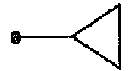
- [Table 2]
Table 2 
Compound No. -L1-R2 Compound No. -L1-R2 7 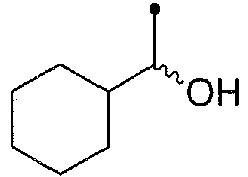
8 
9 
10 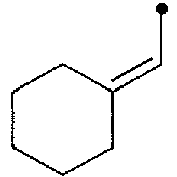
11 
12 
13 
- [Table 3]
Table 3 
Compound No. R3- Compound No. R3- 14 
15 
16 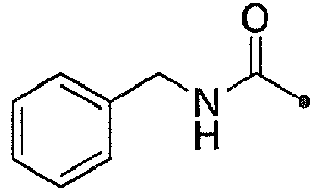
17 
18 
19 
20 
- [Table 4]
Table 4 
Compound No. R3- Compound No. R3- 21 
22 
23 
24 
25 
26 
27 
28 
29 
30 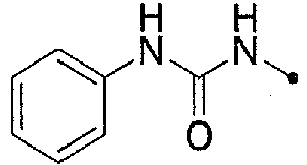
31 
32 
33 
- [Table 5]
Table 5 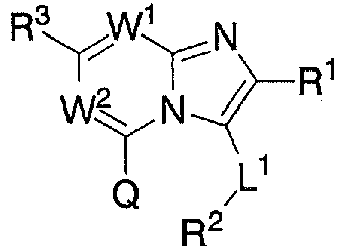
Compound No. R3- -Q -W1- -W2- -L1-R2 -R1 34 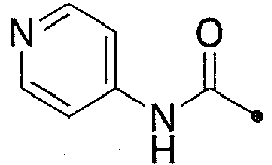
H C-H C-H 

35 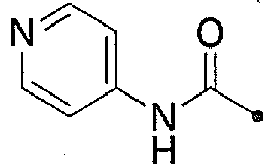
H C-H C-H 

36 
H C-H C-H 

37 
H C-H C-H 

38 
H C-H C-H 

39 
H C-H C-CH3 
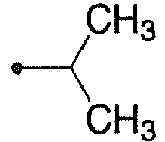
40 
H C-H C-H 

41 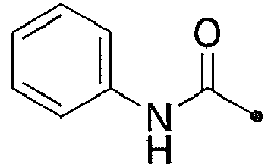
H C-H C-H 

- [Table 6]
Table 5 (continuation) Compound No. R3- -Q -W1- -W2- -L1-R2 -R1 42 
H C-CH3 C-H 

43 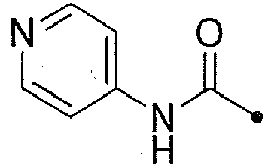
H C-H C-CH3 

44 
CH3 C-H C-H 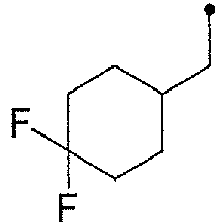

- [Table 7]
Table 6 
Compound No. R3- -W1- -W2- 45 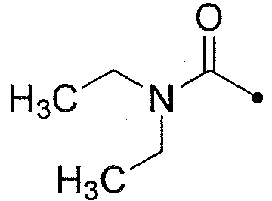
N C-H 46 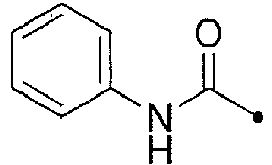
N C-H 47 
C-H N - [Table 8]
Table 7 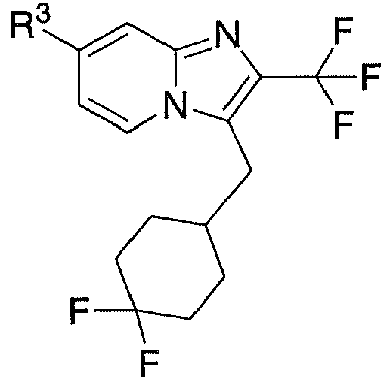
Compound No. R3- Compound No. R3- 48 
49 
50 
51 
52 
53 
54 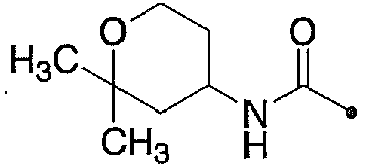
55 
56 
57 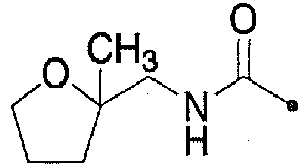
58 
59 
60 
61 
62 
63 
64 
- [Table 9]
Table 8 
Compound No. R3- -R2 -R1 65 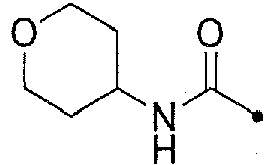


66 
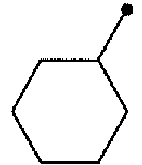
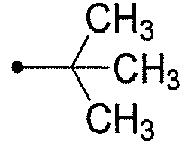
67 


- [Table 10]
Table 9 
Compound No. R3- Compound No. R3- 68 
69 
70 
71 
72 
73 
74 
75 
- [Table 11]
Table 9 (continuation) Compound No. R3- Compound No. R3- 76 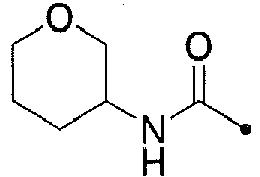
77 
78 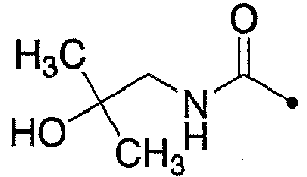
79 
80 
81 
82 
83 
84 
85 
86 
87 
88 
89 
90 
91 
92 
93 
94 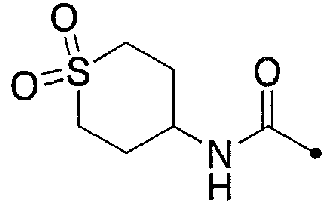
95 
- [Table 12]
Table 10 
Compound No. R3- -R1 Compond No. R3- -R1 96 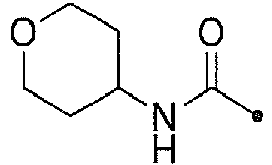

97 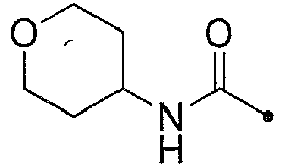

98 

99 

100 

101 

- [Table 13]
Table 11 
Compound No. R3- Compound No. R3- 102 
103 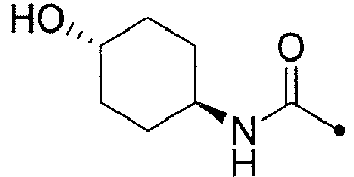
104 
105 
106 
- [Table 14]
Table 12 
Compound No. R3- -W2- -R1 Compound No. R3- -W2- -R1 107 
C-Cl 
108 
C-Cl 
109 
C-Cl 
110 
C-Cl 
111 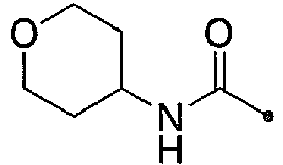
C-Cl 
112 
C-Cl 
113 
C-Cl 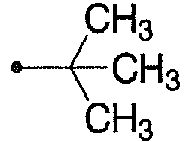
114 
C-Cl 
115 
C-Cl 
116 
C-Cl 
117 
C-Br 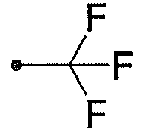
118 
C-CH3 
119 
C-OCH3 
- [Table 15]
Table 13 
Compound No. R3- -Q -W1- -W2- 120 
H C-H 
121 
H C-H 
122 
H C-CH3 C-H 123 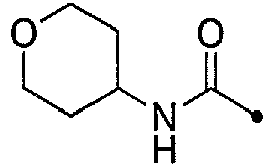
H C-Cl C-H 124 
CH3 C-H C-Cl 125 
CH3 C-H C-I 126 
H C-H C-H 127 
CH3 C-H C-H - [Table 16]
Table 14 
Compound No. R3- -L1-R2 Compound No. R3- -L1-R2 128 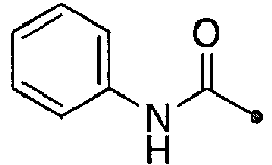

129 

130 

131 
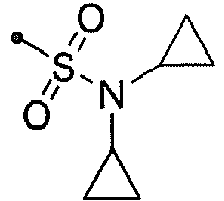
132 

133 

134 
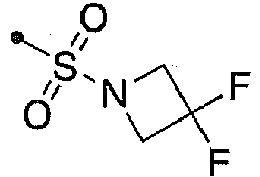
135 

136 

137 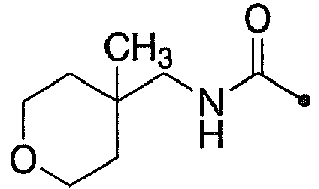

- [Table 17]
Table 15 
Compound No. -L1-R2 -R1 Compound No. -L1-R2 -R1 138 

139 

140 
141 

142 

143 

144 

145 

146 
147 

- [Table 18]
Table 16 
Compound No. R3- -L1-R2 -R1 148 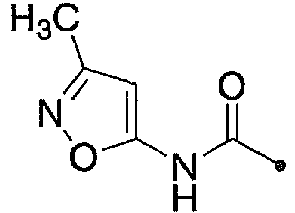


149 


150 
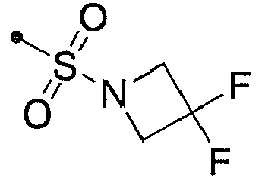

151 


152 


153 


154 

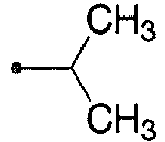
- [Table 19]
Table 16 (continuation) Compound No. R3- -L1-R2 -R1 155 
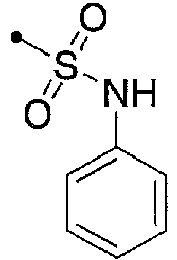

156 

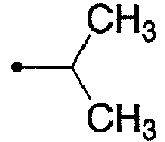
157 


158 


159 
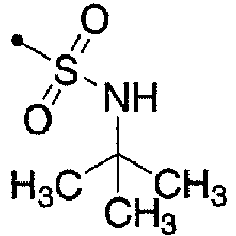

160 
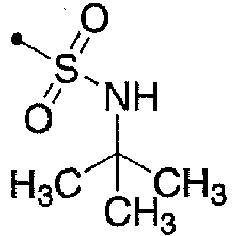

161 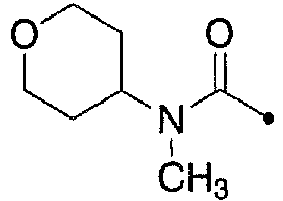


162 


- [Table 20]
Table 17 
Compound No. R3- -W2- -L1-R2 163 
C-CH3 
164 
C-CH3 
165 
C-CH3 
166 
C-CH3 
167 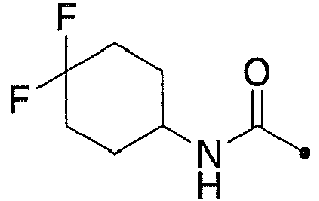
C-CH3 
168 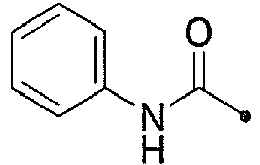
C-CH3 
169 
C-H 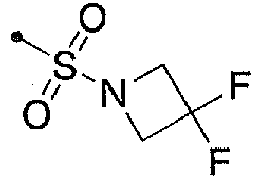
170 
C-Cl 
- [Table 21]
Table 18 
Compound No. R3- -W1- -W2- -L1-R2 -R1 171 
N C-H 

172 
N C-H 
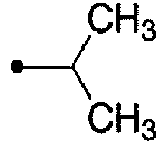
173 
N C-H 

174 
C-H N 

175 
C-H N 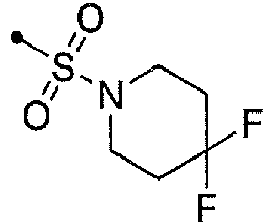

176 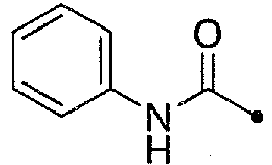
N C-H 

177 
N C-H 

- [Table 22]
Table 19 
Compound No. R3- -Q -W2- -L1-R2 -R1 178 
H C-Cl 

179 
H C-Cl 

180 
H C-H 

181 
H C-Cl 

182 
Cl C-H 

183 
CH3 C-H 

- Next, the pharmacological effects of the representative compounds (I) are described in detail using Test Examples.
- Intracellular calcium response was measured with an FLIPR Calcium 3 Assay Kit (Molecular Devices). To prepare an indicator solution, the fluorescence indicator attached to the kit was dissolved in an assay buffer containing 20 mmol/L HEPES-NaOH (pH 7.4), 0.5 mmol/L CaCl2, 0.75 mg/mL amaranth, Hanks' Balanced Salt Solutions (calcium and magnesium free).
- A human Cav3.2 T-type Ca2+ channel-expressing cell line was produced according to a known method [Analytical Biochemistry, Vol. 400, p.163 (2010)], using KJMGER8 cells (Namalwa cell-derived cell line) as a host. The cells were suspended in the indicator solution in 1 × 10⁶ cells/mL density, and plated in a 384-well clear-bottom black plate (Nunc) in 40 µL/well portions, then incubated in a CO2 incubator (95% air, 5% CO2) at 37°C for 30 minutes. By using an FDSS 6000 (Hamamatsu Photonics K.K.), a solution (5 µL/well) containing the test compound in 10-fold concentration of the final concentration (prepared using an assay buffer containing 1 vol% DMSO and 0.2 vol% bovine serum albumin) was added and incubated for 5 minutes. Then, 5 µL/well of an assay buffer containing 50 mmol/L CaCl2 (final concentration 5 mmol/L) was added to induce reaction, and the fluorescence (excitation wavelength 480 nm, fluorescence wavelength 540 nm) was measured every two seconds for 2 minutes and 40 seconds.
- The difference between the minimum value and the maximum value of the fluorescence values after the CaCl2 addition was used as the index of calcium response. The calcium response in the absence of the test compound was taken as 100% with respect to the calcium response in the presence of 3 µmol/L mibefradil (T-type Ca2+ channel inhibitor; Sigma-Aldrich), and the test compound concentration that shows a 50% inhibitory effect (IC50 value) was calculated.
The IC50 of compounds 12, 14, 15, 16, 17, 19, 20, 21, 24, 25, 28, 33, 34, 35, 37, 38, 39, 40, 41, 42, 43, 48, 50, 51, 52, 53, 56, 57, 59, 65, 68, 70, 71, 72, 73, 74, 75, 76, 78, 79, 80, 81, 84, 85, 86, 87, 90, 91, 93, 95, 96, 97, 100, 101, 102, 103, 104, 105, 106, 107, 108, 109, 110, 111, 113, 114, 115, 117, 120, 124, 125, 126, 127, 129, 130, 131, 132, 133, 135, 136, 138, 143, 146, 147, 148, 149, 150, 151, 152, 153, 154, 155, 156, 157, 158, 159, 162, 163, 165, 166, 168, 170, 171, 172, 175, 179, 180, 181, and 182 for the human Cav3.2 T-type Ca2+ current was < 100 nmol/L. It was confirmed that compound (I) or (IA) and pharmaceutically acceptable salts thereof inhibit the human Cav3.2 T-type Ca2+ current. Therefore, compound (I) or (IA) and pharmaceutically acceptable salts thereof were considered useful as therapeutic and/or preventive agents for diseases associated with the T-type Ca2+ channels. - Thus, compound (I) or pharmaceutically acceptable salt thereof was considered useful as therapeutic and/or preventive agent for epilepsy (for example, absence epilepsy), sleep disorder (for example, insomnia), pain (for example, neuropathic pain, trigeminal neuralgia, diabetic pain, postherpetic neuralgia, neuropathic low back pain, HIV-related pain, fibromyalgia syndrome, cancer pain, inflammatory pain, acute pain, chronic pain, postoperative pain, acute pain after tooth extraction, chronic musculoskeletal pain, nociceptive pain, psychogenic pain, menstrual pain and the like), migraine, pruritus [for example, diseases accompanied by skin lesion, including, for example, atopic dermatitis, neurodermatitis, senile cutaneous pruritus, seborrheic dermatitis, caterpillar dermatitis, urticaria, eczema·dermatitis, photosensitivity, autosensitive dermatitis, prurigo, insect bites and stings, scabies, mycosis, cutaneous pruritus, hypertrophic scar, psoriasis such as plaque psoriasis, hydroa, xeroderma, lichen, ringworm, burn, and the like; as well as forms of pruritus that are not necessarily accompanied by skin lesion, including, for example, those caused by visceral diseases such as hepatic and biliary tract diseases (cirrhosis such as primary biliary cirrhosis, cholestasis, hepatitis, and the like), kidney diseases (kidney failure such as chronic kidney failure, kidney dialysis, and the like), and endocrine and metabolic diseases (thyroid disease such as thyroid dysfunction, diabetes, and the like), cancers (such as malignant lymphoma, and digestive cancer), hematological disorders (such as polycythemia vera, and hypoferric anemia), neurological disorders (such as multiple sclerosis, and neurosis), AIDS, pregnancy, and drug side effects; and pruritus accompanied by ophthalmic or otorhinolaryngological diseases], heart diseases (for example, cardiac hypertrophy, heart failure, myocardial infarction, cardiac arrhythmia, atrial fibrillation, hypertension), kidney diseases (for example, nephritis, nephropathy, kidney failure), endocrine diseases (for example, aldosteronism, Cushing's syndrome, hyperthyroidism, hyperinsulinemia and the like), cancers (for example, prostate cancer, breast cancer, leukemia, neuroblastoma, retinoblastoma and the like), hearing impairment (for example, noise-induced hearing impairment), and the like.
- Morphine (1 nmol/5 µL, dissolved in physiological saline) or physiological saline was intrathecally administered between the fifth and sixth lumbar vertebrae of male ddY mice using a microsyringe fitted with a 30-gauge injection needle. Mice administered with only morphine were used as a control group, and mice administered with only physiological saline as a physiological saline-administered group.
- After the morphine administration, the number of scratching behavior with the hind legs which observed immediately in the mice was measured for 30 minutes. Because mice show a rapid, continuous scratching behavior in each scratching behavior, a series of such behavior was counted as a single scratching behavior.
The test compounds were administered 30 minutes before the morphine administration. Each test compound was suspended in a 0.5% methylcellulose solution, and orally administered in 10 mL/kg volume.
As a result, the increase of the scratching behavior observed in the morphine-induced pruritus mice was inhibited by the administration at a dose of 30 mg/kg or less of the compounds 14, 15, 21, 24, 34, 35, 36, 38, 41, 43, 44, 50, 51, 52, 54, 70, 72, 73, 75, 76, 78, 79, 80, 81, 84, 96, 100, 101, 103, 104, 105, 108, 109, 110, 111, 113, 114, 118, 126, 133, 148, or 182. - Therefore, it was confirmed that compound (I) or (IA) and pharmaceutically acceptable salts thereof were useful as therapeutic and/or preventive agents for pruritus, for example, diseases accompanied by skin lesion such as atopic dermatitis, neurodermatitis, senile cutaneous pruritus, seborrheic dermatitis, caterpillar dermatitis, urticaria, eczema·dermatitis, photosensitivity, autosensitive dermatitis, prurigo, insect bites and stings, scabies, mycosis, cutaneous pruritus, hypertrophic scar, psoriasis such as plaque psoriasis, hydroa, xeroderma, lichen, ringworm, burn; as well as pruritus that are not necessarily accompanied by skin lesion, for example, those caused by visceral diseases such as hepatic and biliary diseases (cirrhosis such as primary biliary cirrhosis, cholestasis, hepatitis, and the like), kidney diseases (kidney failure such as chronic kidney failure, kidney dialysis, and the like), endocrine and metabolic diseases (thyroid disease such as thyroid dysfunction, diabetes, and the like) and the like, cancers (malignant lymphoma, digestive system cancer, and the like), hematological disorders (such as polycythemia vera, and hypoferric anemia), neurological disorders (such as multiple sclerosis, and hematological disorders), AIDS, pregnancy, or drug side effects; and pruritus accompanied by ophthalmic and otorhinolaryngological diseases, and the like.
- Compound (I) or compound (IA) and a pharmaceutically acceptable salt thereof can be administered alone. However, usually, compound (I) or (IA) and a pharmaceutically acceptable salt thereof are preferably provided in various pharmaceutical preparations. The pharmaceutical preparations are used for animals or humans.
The pharmaceutical preparations according to the present invention may contain compound (I) or (IA) and a pharmaceutically acceptable salt thereof as an active ingredient, either alone or as a mixture with any other active ingredient for other treatments. Further, the pharmaceutical preparations are prepared by mixing the active ingredient with one or more pharmaceutically acceptable carriers (for example, diluent, solvent, excipient, and the like) and then subjecting the mixture to any method well known in the technical field of pharmaceutics. - As for the administration route, it is preferred to select the most effective route of administration. Examples of the administration route include oral administration, and parenteral administration such as intravenous administration and the like.
Examples of the dosage form include a tablet, injection, and the like.
Suitable dosage forms for the oral administration, for example, tablets, can be prepared by using excipients such as lactose, disintegrators such as starch, lubricants such as magnesium stearate, binders such as hydroxypropyl cellulose, and the like. - Suitable dosage forms for the parenteral administration, for example, injections, can be prepared by using diluents, or solvents, for example, a salt solution, a glucose solution, a mixture of brine with a glucose solution, and the like.
The doses and the frequencies of administration of compound (I) or (IA) and a pharmaceutically acceptable salt thereof may vary depending upon dosage form, age and body weight of a patient, nature or seriousness of the symptom to be treated, and the like. In the oral administration, in general, a dose of 0.01 to 1,000 mg, preferably, 0.05 to 100 mg, is administered to an adult patient once or several times a day. In parenteral administration such as intravenous administration, a dose of 0.001 to 1,000 mg, preferably, 0.01 to 100 mg, is administered to an adult patient once or several times a day. However, these doses and frequencies of administration vary by the various conditions described above. - The present invention is described below more specitically using Examples. However, it should be noted that the scope of the present invention is not limited by the these Examples.
Note that the proton nuclear magnetic resonance spectra (1H NMR) used in Examples were measured at 270 MHz, 300 MHz, or 400 MHz, and exchangeable protons may not be clearly observed depending on the compound and measurement conditions. Common notation is used to represent signal multiplicity. The symbol br denotes apparently wide signal. - Ethyl 3-cyclohexylmethyl-7-(N,N-diethylcarbamoyl)imidazo[1,2-a]p yridine-2-carboxylate (compound 1)
- Ethyl 4-cyclohexyl-2-oxobutanoate (200 mg, 0.943 mmol) obtained according to the method described in Chem. Pharm. Bull., Vol. 34, p.1128 (1986) was dissolved in ethanol (2.0 mL), and the solution was stirred under heat and reflux for 1 hour after adding tetra-n-butylammonium tribromide (460 mg, 0.954 mmol). The reaction mixture was allowed to cool to room temperature, and extracted with ethyl acetate after adding a sodium hydrogen carbonate aqueous solution. The organic layer was washed with saturated brine, and dried over anhydrous sodium sulfate. The solvent was then evaporated under reduced pressure. The residue was purified by silica gel column chromatography (hexane/ethyl acetate = 90/10) to give ethyl 3-bromo-4-cyclohexyl-2-oxobutanoate (198 mg, yield 72%). 1H NMR (270 MHz, CDCl3, δ): 5.14 (t, J= 7.4 Hz, 1H), 4.39 (q, J = 7.0 Hz, 2H), 1.94 (dd, J = 7.3, 7.3 Hz, 2H), 1.85-1.65 (m, 7H), 1.40 (t, J= 7.0 Hz, 3H), 1.33-1.12 (m, 4H).
- Ethyl 3-bromo-4-cyclohexyl-2-oxobutanoate (1.20 g, 4.12 mmol) obtained in step 1 was dissolved in n-butanol (12 mL), and the solution was stirred under heat and reflux for 1 hour after adding 2-amino-N,N-diethylpyridine-4-carboxamide(800 mg, 4.12 mmol) obtained according to the method described in
WO2008/032764 . The reaction mixture was allowed to cool to room temperature, and extracted with ethyl acetate after adding a sodium hydrogen carbonate aqueous solution. The organic layer was washed with saturated brine, and dried over anhydrous magnesium sulfate. The solvent was then evaporated under reduced pressure. The residue was purified by silica gel column chromatography (chloroform/methanol = 95/5) to give compound 1 (948 mg, yield 60%).
1H NMR (270 MHz, CDCl3, δ): 8.01 (dd, J= 7.1, 0.8 Hz, 1H), 7.63 (dd, J= 1.7, 0.8 Hz, 1H), 6.96 (dd, J= 7.3, 1.7 Hz, 1H), 4.47 (q, J= 7.2 Hz, 2H), 3.63-3.30 (br m, 4H), 3.19 (d, J = 7.3 Hz, 2H), 1.75-1.60 (m, 6H), 1.46 (t, J = 7.3 Hz, 3H), 1.29-1.08 (m, 11H); ESIMS m/z: [M + H]+ 386. - N-Butyl-3-cyclohexylmethyl-7-(N,N-diethylcarbamoyl)imidazo [1,2-a]pyridine-2-carboxamide (Compound 2)
- Compound 1 (947 mg, 2.46 mmol) was suspended in a 50% ethanol aqueous solution (10 mL), and the suspension was stirred at 50°C for 1 hour after adding lithium hydroxide·1 hydrate (130 mg, 3.10 mmol). Under ice-cooled condition, 3 mol/L hydrochloric acid was added to the reaction mixture. The precipitated solid was collected by filteration, and dried under reduced pressure to give 3-cyclohexylmethyl-7-(N,N-diethylcarbamoyl)imidazo[1,2-a]p yridine-2-carboxylic acid (579 mg, yield 66%).
1H NMR (300 MHz, CDCl3, δ): 8.04 (dd, J= 7.3, 1.1 Hz, 1H), 7.81-7.76 (br m, 1H), 7.00 (dd, J = 7.3, 1.5 Hz, 1H), 3.64-3.33 (brm, 4H), 3.23 (d, J = 7.3 Hz, 2H), 1.75-1.59 (m, 6H), 1.32-1.13 (m, 11H); ESIMS m/z: [M + H]+ 358. - 3-Cyclohexylmethyl-7-(N,N-diethylcarbamoyl)imidazo[1 ,2-a]pyridine-2-carboxylic acid (30.0 mg, 0.0839 mmol) obtained in step 1 was dissolved in THF (1.0 mL), and the solution was stirred at room temperature for 1 hour after adding butylamine (0.0120 mL, 0.122 mmol), 1-(3-dimethylaminopropyl)-3-ethylcarbodiimidehydrochloride (EDC·HCl) (24.0 mg, 0.125 mmol), and 1-hydroxybenzotriazolehydrate (HOBt·H2O) (20.0 mg, 0.131 mmol). The reaction mixture was extracted with ethyl acetate after adding a saturated sodium hydrogen carbonate aqueous solution. The organic layer was washed with saturated brine, and dried over anhydrous magnesium sulfate. The solvent was then evaporated under reduced pressure. The residue was purified by silica gel column chromatography (chloroform/methanol = 99/1 → 95/5) to give compound 2 (30.1 mg, yield 87%).
1H NMR (300 MHz, CDCl3, δ): 7.99 (dd, J= 7.1, 0.7 Hz, 1H), 7.51 (dd, J= 1.6, 0.7 Hz, 1H), 7.48-7.41 (br m, 1H), 6.88 (dd, J = 7.1, 1.6 Hz, 1H), 3.53-3.40 (m, 6H), 3.26 (d, J = 7.3 Hz, 2H), 1.72-1.57 (m, 6H), 1.48-1.38 (m, 2H), 1.29-1.12 (m, 13H), 0.96 (t, J = 7.3 Hz, 3H); ESIMS m/z: [M + H]+ 413. - 3-Cyclohexylmethyl-7-(N,N-diethylcarbamoyl)imidazo[1 ,2-a]pyridine-2-carboxylic acid (50.0 mg, 0.140 mmol) obtained in step 1 of Example 2 was dissolved in toluene (1.0 mL), and the solution was heated and refluxed for 3 hours after adding triethylamine (0.0400 mL, 0.278 mmol), diphenylphosphoryl azide (0.121 mL, 0.560 mmol), and benzyl alcohol (0.072 mL, 0.700 mmol). The reaction mixture was filtered through a Presep (registered trademark; diatomaceous earth, granular type M, 4.5 g/25 mL) after adding a saturated sodium hydrogen carbonate aqueous solution. The solvent was then evaporated under reduced pressure. The residue was purified by silica gel column chromatography (chloroform/methanol = 98/2 → 94/6) to give compound 3 (42.5 mg, yield 66%).
1H NMR (300 MHz, CDCl3, δ): 7.92 (d, J = 7.0 Hz, 1H), 7.49 (s, 1H), 7.37-7.31 (m, 6H), 6.88 (d, J = 7.0 Hz, 1H), 5.23 (s, 2H), 3. 63-3. 27 (m, 4H), 2.84 (d, J = 6.6 Hz, 2H), 1.60-1.56 (m, 5H), 1.28-0.98 (m, 12H); ESIMS m/z: [M + H]+ 463. - 2-Acetyl-3-cyclohexylmethyl-N,N-diethylimidazo[1,2-a]pyrid ine-7-carboxamide (compound 4)
- 3-Cyclohexylmethyl-7-(N,N-diethylcarbamoyl)imidazo[1 ,2-a]pyridine-2-carboxylic acid (181 mg, 0.506 mmol)obtained in step 1 of Example 2 was dissolved in DMF (1.8 mL), and the solution was stirred at room temperature for 2 hours after adding EDC·HCl (146 mg, 0.760 mmol), HOBt·H2O (116 mg, 0.760 mmol), N,O-dimethylhydroxylamine hydrochloride (74.0 mg, 0.760 mmol), and pyridine (0.0610 mL, 0.760 mmol). Under ice-cooled condition, a saturated sodium hydrogen carbonate aqueous solution was added, and the reaction mixture was extracted with ethyl acetate. The organic layer was washed with saturated brine, and dried over anhydrous magnesium sulfate. The solvent was then evaporated under reduced pressure. The residue was purified by silica gel column chromatography (chloroform/methanol = 100/0 → 95/5) to give 3-cyclohexylmethyl-7-(N,N-diethylcarbamoyl)-N-methoxy-N-me thylimidazo[1,2-a]pyridine-2-carboxamide (200 mg, yield 99%).
1H-NMR (270 MHz CDCl3, δ): 8.01 (dd, J= 7.0, 0.8 Hz, 1H), 7.60-7.56 (m, 1H), 6.92 (dd, J = 7.0, 1.7 Hz, 1H), 3.86 (s, 3H), 3.60-3.42 (m, 4H), 3.52 (s, 3H), 3.08 (d, J = 7.3 Hz, 2H), 1.80-1.55 (m, 5H), 1.35-0.99 (m, 12H) ; ESIMS m/z: [M + H]+ 401. - 3-Cyclohexylmethyl-7-(N,N-diethylcarbamoyl)-N-methox y-N-methylimidazo[1,2-a]pyridine-2-carboxamide (112 mg, 0.280 mmol) obtained in step 1 was dissolved in THF (1.0 mL). Under ice-cooled condition, methylmagnesium bromide (1 mol/L-THF solution) (0.420 mL, 0.420 mmol) was added, and the mixture was stirred at room temperature for 3 hours. Under ice-cooled condition, a saturated ammonium chloride aqueous solution was added, and the reaction mixture was extracted with ethyl acetate. The organic layer was washed with saturated brine, and dried over anhydrous magnesium sulfate. The solvent was then evaporated under reduced pressure. The residue was purified by silica gel column chromatography (chloroform/methanol = 98/2 → 95/5) to give compound 4 (26.7 mg, yield 27%).
1H-NMR (270 MHz CDCl3, δ): 8.01 (d, J= 7.0 Hz, 1H), 7.61 (s, 1H), 6.93 (d, J= 7.0 Hz, 1H), 3.69-3.30 (m, 4H), 3.18 (d, J = 7.3 Hz, 2H), 2.74 (s, 3H), 1.68-1.56 (m, 6H), 1.24-1.15 (m, 11H).; ESIMS m/z: [M + H]+ 356. - Compound 4 (10.0 mg, 0.0281 mmol) was dissolved in dichloromethane (1.0 mL). Under ice-cooled condition, bis(2-methoxyethyl)aminosulfur trifluoride (0.130 mL, 0.703 mmol) was added, and the mixture was stirred overnight at room temperature. Under ice-cooled condition, a saturated sodium hydrogen carbonate aqueous solution was added, and the reaction mixture was extracted with ethyl acetate. The organic layer was washed with saturated brine, and dried over anhydrous magnesium sulfate. The solvent was then evaporated under reduced pressure. The residue was purified by preparative thin-layer chromatography (hexane/ethyl acetate = 25/75) to give compound 5 (3.3 mg, yield 31%).
1H NMR (300 MHz, CDCl3, δ): 7.99 (d, J = 7.2 Hz, 1H), 7.59 (s, 1H), 6.94 (d, J = 7.2 Hz, 1H), 3.65-3.29 (m, 4H), 2.96 (d, J = 7.0 Hz, 2H), 2.14 (t, J = 18.7 Hz, 3H), 1.68-1.64 (m, 5H), 1.22-1.10 (m, 12H); ESIMS m/z: [M + H]+ 378. - 3-Cyclohexylmethyl-2-cyclopropyl-N,N-diethylimidazo[1,2-a] pyridine-7-carboxamide (compound 6)
- 3-Cyclohexylpropionic chloride (1.00 g, 5.71 mmol) was dissolved in dichloromethane (10 mL). Under ice-cooled condition, pyridine (0.910 mL, 11.3 mmol) and N,O-dimethylhydroxylamine hydrochloride (840 mg, 8.57 mmol) were added, and the mixture was stirred at room temperature for 2 hours. The reaction mixture was extracted with ethyl acetate after adding a saturated sodium hydrogen carbonate aqueous solution. The organic layer was washed with saturated brine, and dried over anhydrous magnesium sulfate. The solvent was then evaporated under reduced pressure. The residue was purified by silica gel column chromatography (hexane/ethyl acetate = 90/10 → 80/20) to give 3-cyclohexyl-N-methoxy-N-methylpropaneamide (1.13 g, yield 99%).
1H NMR (270 MHz, CDCl3, δ): 3.69 (d, J= 2.9 Hz, 3H), 3.18 (s, 3H), 2.46-2.38 (m, 2H), 1.78-0.83 (m, 13H). - 3-Cyclohexyl-N-methoxy-N-methylpropaneamide (100 mg, 0.502 mmol) obtained in step 1 was dissolved in THF (1.0 mL). Under ice-cooled condition, cyclopropylmagnesium bromide (0.5 mol/L THF solution) (1.20 mL, 0.600 mmol) was added, and the mixture was stirred at room temperature for 3 hours. The reaction mixture was extracted with ethyl acetate after adding a saturated ammonium chloride aqueous solution. The organic layer was washed with saturated brine, and dried over anhydrous magnesium sulfate. The solvent was then evaporated under reduced pressure. The residue was purified by silica gel column chromatography (hexane/ethyl acetate = 90/10 → 80/20) to give 3-cyclohexyl-1-cyclopropylpropan-1-one (61.7 mg, yield 68%).
1H NMR (270 MHz, CDCl3, δ): 2.55 (t, J= 6.7 Hz, 2H), 1.94-1.91 (m, 1H), 1.70-1.65 (m, 6H), 1.51-1.47 (m, 2H), 1.22-1.15 (m, 3H), 1.03-0.81 (m, 6H). - 3-Cyclohexyl-1-cyclopropylpropan-1-one (61.0 mg, 0.338 mmol) obtained in step 2 was dissolved in methanol (1.0 mL), and the mixture was cooled to -5°C, and a dilute solution of bromine (0.0200 mL, 0.372 mmol) in methanol (1.0 mL) was slowly dropped to the mixture. After the dropping, the mixture was stirred at room temperature for 3 hours. Under ice-cooled condition, a sodium thiosulfate aqueous solution was added, and the reaction mixture was extracted with ethyl acetate. The organic layer was washed with saturated brine, and dried over anhydrous magnesium sulfate. The solvent was then evaporated under reduced pressure. The residue was purified by silica gel column chromatography (ethyl acetate/hexane = 5/95) to give 2-bromo-3-cyclohexyl-1-cyclopropylpropan-1-one (87.6 mg, quantitative).
1H NMR (300 MHz, CDCl3, δ) : 4.47 (t, J= 7.5 Hz, 1H), 2.26-2.17 (m, 1H), 1.91 (dd, J = 6.8, 6.7 Hz, 2H), 1.70-1.65 (m, 4H), 1.51-1.44 (m, 1H), 1.26-0.86 (m, 10H). - 2-Bromo-3-cyclohexyl-1-cyclopropylpropan-1-one (82.0 mg, 0.318 mmol) obtained in step 3 was dissolved in n-butanol (1.0 mL), and the solution was stirred overnight at 130°C after adding 2-amino-N,N-diethylpyridine-4-carboxamide (64.0 mg, 0.366 mmol). The reaction mixture was extracted with ethyl acetate after adding a saturated sodium hydrogen carbonate aqueous solution. The organic layer was washed with saturated brine, and dried over anhydrous magnesium sulfate. The solvent was then evaporated under reduced pressure. The residue was purified by silica gel column chromatography (chloroform/methanol=98/2 → 94/6) to give compound 6 (69.5 mg, yield 62%).
1H NMR (270 MHz, CDCl3, δ): 7.87 (d, J = 7.1 Hz, 1H), 7.47 (s, 1H), 6.83 (d, J = 7.1 Hz, 1H), 3.57-3.34 (m, 4H), 2.83 (d, J = 6.9 Hz, 2H), 1.97-1.94 (m, 1H), 1.74-1.70 (m, 5H), 1.27-0.96 (m, 16H); ESIMS m/z: [M + H]+ 354. - 3-{Cyclohexyl (hydroxy)methyl}-N,N-diethyl-2-isopropylimidazo[1,2-a]pyri dine-7-carboxamide (compound 7)
- 2-Isopropylimidazo[1,2-a]pyridine-7-carbonitrile (2.27 g, yield 58%) was obtained in the same manner as in step 2 of Example 1, using 1-bromo-3-methylbutan-2-one obtained according to the method described in Org. Synth., Vol . 55, p . 24 , and 4-cyano-2-aminopyridine.
1H NMR (270 MHz, CDCl3, δ): 8.13 (dd, J= 6.9, 1.0 Hz, 1H), 7.96-7.94 (m, 1H), 7.50 (s, 1H), 6.89 (dd, J = 6.9, 1.7 Hz, 1H), 3.16 (sep, J = 6.9 Hz, 1H), 1.38 (d, J = 6.9 Hz, 6H); ESIMS m/z: [M + H]+ 186. - 2-Isopropylimidazo[1,2-a]pyridine-7-carbonitrile (15.9 g, 85.8 mmol) obtained in step 1 was dissolved in a 50% ethanol aqueous solution (80 mL). Under water-cooled condition, lithium hydroxide-1 hydrate (7.20 g, 172 mmol) was added, and the mixture was stirred under heat and reflux for 3 hours. Under ice-cooled condition, 3 mol/L hydrochloric acid (62 mL) was added to the reaction mixture. The precipitated crystals were collected by filteration, washed with water, and dried to give 2-isopropylimidazo[1,2-a]pyridine-7-carboxylic acid (14.6 g, yield 83%).
1H NMR (300 MHz, DMSO-d6, δ):8.52 (d, J = 7.0 Hz, 1H), 8.02 (d, J = 1.1 Hz, 1H), 7.88 (s, 1H), 7.25 (dd, J = 7.0, 1.1 Hz, 1H), 3.09-3.00 (m, 1H), 1.30 (d, J = 7.0 Hz, 6H); ESIMS m/z: [M + H]+ 205. - 2-Isopropylimidazo[1,2-a]pyridine-7-carboxylic acid (3.00 g, 14.7 mmol) obtained in step 2 was dissolved in DMF (15 mL), and the solution was stirred at 60°C for 2 hours after adding EDC-HCl (4.20 g, 22.0 mmol), HOBt·H2O (3.00 g, 22.0 mmol), and diethylamine (2.70 mL, 29.4 mmol). The reaction mixture was extracted with ethyl acetate after adding a saturated sodium hydrogen carbonate aqueous solution. The organic layer was washed with a saturated ammonium chloride aqueous solution and saturated brine, and dried over anhydrous magnesium sulfate. The solvent was then evaporated under reduced pressure. The resulting residue was dissolved in DMF (20 mL), and stirred under light shielding at room temperature for 1 hour after adding N-iodosuccinimide (4.20 g, 18.5 mmol). The reaction mixture was extracted with ethyl acetate after adding a saturated sodium hydrogen carbonate aqueous solution. The organic layer was washed with saturated brine, and dried over anhydrous magnesium sulfate. The solvent was then evaporated under reduced pressure. The residue was slurried with heptane. The resulting crystals were collected by filteration, and dried to give N,N-diethyl-3-iodo-2-isopropylimidazo[1,2-a]pyridine-7-car boxamide (6.40 g, yield 99%).
1H NMR (300 MHz, CDCl3, δ): 8.13 (d, J= 7.0 Hz, 1H), 7.54 (s, 1H), 6.95 (d, J= 7.0 Hz, 1H), 3.53-3.46 (m, 4H), 3.24-3.15 (m, 1H), 1.38 (d, J = 7.0 Hz, 6H), 1.31-0.99 (m, 6H); ESIMS m/z: [M + H]+ 386. - N,N-Diethyl-3-iodo-2-isopropylimidazo[1,2-alpyridine -7-carboxamide (300 mg, 0.779 mmol) obtained in step 3 was dissolved in THF (3.0 mL), and the solution was stirred at -5°C for 5 minutes after adding isopropylmagnesium bromide (2 mol/L THF solution) (0.428 mL, 0.857 mmol) at -78°C, and then at room temperature for 2 hours after adding cyclohexanecarboxyaldehyde (0.141 mL, 1.17 mmol). The reaction mixture was extracted with ethyl acetate after adding a saturated ammonium chloride aqueous solution. The organic layer was washed with saturated brine, and dried over anhydrous magnesium sulfate. The solvent was then evaporated under reduced pressure. The residue was purified by silica gel column chromatography (chloroform/methanol=98/2 → 94/6) to give compound 7 (134 mg, yield 46%).
1H NMR (270 MHz, CDCl3, δ):8.46 (d, J = 7.3 Hz, 1H), 7.51 (s, 1H), 6.72 (d, J = 7.3 Hz, 1H), 4.83 (d, J = 9. 5 Hz, 1H), 3.59-3.30 (m, 4H), 3.13-3.04 (m, 1H), 2.56-2.53 (m, 1H), 2.30-2.25 (m, 1H), 2.04-2.00 (m, 1H), 1.81-1.70 (m, 2H), 1.33 (dd, J= 6.4, 3.2 Hz, 6H), 1.25-1.11 (m, 12H), 0.88-0.84 (m, 1H); ESIMS m/z: [M + H]+ 372. - Compound 8 (10.5 mg, yield 21%) was obtained in the same manner as in Example 5, using compound 7.
1H NMR (300 MHz, CDCl3, δ):7.55 (s, 1H), 7.44 (s, 1H), 6.78 (s, 1H), 5.33 (dd, J= 45.5, 7.7 Hz, 1H), 3.59-3.31 (m, 4H), 3.19-3.10 (m, 1H), 2.17-1.58 (m, 5H), 1.39 (d, J = 5.4 Hz, 6H), 1.19-1.15 (m, 12H); ESIMS m/z: [M + H]+ 374. - Compound 7 (22.0 mg, 0.0590 mmol) was dissolved in DMF (0.5mL). Under ice-cooled condition, 60% sodium hydride (4.0 mg, 0.089 mmol) and methane iodide (0.0060 mL, 0.089 mmol) were added, and the mixture was stirred at room temperature for 2 hours. The reaction mixture was filtered through a Presep (registered trademark; diatomaceous earth, granular type M, 4.5 g/25 mL) after adding a saturated ammonium chloride aqueous solution. The solvent was then evaporated under reduced pressure. The residue was purified by silica gel column chromatography (chloroform/methanol = 100/0 → 96/4) to give compound 9 (16.3 mg, yield 71%).
1H NMR (300 MHz, CDCl3, δ): 8.39 (dd, J= 7.0, 0.8 Hz, 1H), 7.55 (dd, J= 1.5, 0.8 Hz, 1H), 6.77 (dd, J= 7.0, 1.5 Hz, 1H), 4.28 (d, J= 9.5 Hz, 1H), 3.57-3.39 (m, 4H), 3.19 (s, 3H), 3.11-3.07 (m, 1H), 2.28-2.24 (m, 1H), 2.01-1.97 (m, 1H), 1.82-1.78 (m, 1H), 1.65-1.62 (m, 2H), 1.39 (d, J = 7.3 Hz, 3H), 1.36 (d, J = 7.3 Hz, 3H), 1.24-1.19 (m, 12H); ESIMS m/z: tM + H]+ 386. - Compound 7 (130 mg, 0.350 mmol) was dissolved in DMF (2.0 mL). Under ice-cooled condition, 60% sodium hydride (21.0 mg, 0.525 mmol) and methanesulfonylchloride (0.0410 mL, 0.525 mmol) were added, and the mixture was stirred at 80°C for 2 hours. Under ice-cooled condition, a saturated ammonium chloride aqueous solution and a saturated sodium hydrogen carbonate aqueous solution were added, and the reaction mixture was filtered through a Presep (registered trademark; diatomaceous earth, granular type M, 4. 5 g/25 mL). The solvent was then evaporated under reduced pressure. The residue was purified by silica gel column chromatography (chloroform/methanol = 100/0 → 94/6) to give compound 10 (123 mg, quantitative).
1H NMR (300 MHz, CDCl3, δ) : 8.09 (brs, 1H), 7.98 (d, J = 7.0 Hz, 1H), 7.16 (brs, 1H), 5.93 (s, 1H), 3.72-3.59 (m, 4H), 3.20-3.13 (m, 1H), 2.43 (t, J= 5.9 Hz, 2H), 1.99 (t, J = 5.9 Hz, 2H), 1.74-1.53 (m, 6H), 1.45 (d, J= 7.0 Hz, 6H), 1.25-1.24 (m, 6H); ESIMS m/z: [M + H]+ 354. - Compound 7 (340 mg, 0.915 mmol) was dissolved in dichloromethane (3.4 mL). Under ice-cooled condition, Dess-Martin periodinate (427 mg, 1.01 mmol) was added, and the mixture was stirred for 3 hours. The reaction mixture was extracted with ethyl acetate after adding a saturated sodium hydrogen carbonate aqueous solution. The organic layer was washed with saturated brine, and dried over anhydrous magnesium sulfate. The solvent was then evaporated under reduced pressure. The residue was purified by silica gel column chromatography (hexane/ethyl acetate = 50/50 → 0/100) to give compound 11 (206 mg, yield 61%).
1H NMR (270 MHz, CDCl3, δ): 9.75 (dd, J = 7.1, 0.9 Hz, 1H), 7.65 (dd, J = 1.6, 0.9 Hz, 1H), 6.99 (dd, J = 7.1, 1.6 Hz, 1H), 3.69-3.46 (m, 3H), 3.47-3.24 (m, 2H), 3.15-3.10 (m, 1H), 1.93-1.89 (m, 4H), 1.75-1.62 (m, 3H), 1.48 (d, J = 6.6 Hz, 6H), 1.42-1.33 (m, 3H), 1.27-1.25 (m, 6H): ESIMS m/z: [M+H]+ 370. - N,N-Diethyl-3-iodo-2-isopropylimidazo[1,2-a]pyridine -7-carboxamide (100 mg, 0.260 mmol) obtained in step 3 of Example 7, copper iodide (I) (25.0 mg, 0.130 mmol), tripotassium phosphate (110 mg, 0.519 mmol), and α-pipecolic acid (16.0 mg, 0.130 mmol) were dissolved in DMSO (1.0 mL), and the mixture was stirred at 80°C. The reaction mixture was stirred for 4 hours after adding cyclohexanethiol (0.0960 mL, 0.389 mmol). After adding water, the reaction mixture was filtered through Celite (registered trademark), and extracted with ethyl acetate. The organic layer was washed with saturated brine, and dried over anhydrous magnesium sulfate. The solvent was then evaporated under reduced pressure. The residue was purified by silica gel column chromatography (chloroform/methanol = 100/0 → 96/4) to give compound 12 (50.0 mg, yield 52%).
1H NMR (270 MHz, CDCl3, δ): 8.45 (d, J= 7.2 Hz, 1H), 7.56 (s, 1H), 6.91 (d, J= 7.2 Hz, 1H), 3.42-3.33 (m, 5H), 2.84-2.80 (m, 1H), 1.94-1.79 (m, 2H), 1.80-1.67 (m, 2H), 1.59 (m, 1H), 1.43-1.34 (m, 6H), 1.33-1.02 (m, 11H); ESIMS m/z: [M + H]+ 374. - Compound 12 (334 mg, 0.894 mmol) was dissolved in dichloromethane (3.3 mL). Under ice-cooled condition, m-chloroperbenzoic acid (339 mg, 1.97 mmol) was added, and the mixture was stirred at room temperature for 4 hours. Under ice-cooled condition, a saturated sodium hydrogen carbonate aqueous solution was added, and the reaction mixture was filtered through a Presep (registered trademark; diatomaceous earth, granular type M, 4.5 g/25 mL). The solvent was then evaporated under reduced pressure. The residue was purified by silica gel column chromatography (chloroform/methanol = 100/0 → 96/4) to give compound 13 (238 mg, yield 66%).
1H NMR (270 MHz, CDCl3, δ): 8.92 (d, J = 7.8 Hz, 1H), 7.65-7.64 (m, 1H), 6. 99 (d, J = 7.8 Hz, 1H), 3.76-3.66 (m, 1H), 3. 56-3. 36 (m, 4H), 3.00-2.90 (m, 1H), 2.08-2.06 (m, 2H), 1.91-1.87 (m, 2H), 1.72-1.69 (m, 1H), 1.52-1.48 (m, 1H), 1.39 (d, J = 6.8 Hz, 6H), 1.23-1.19 (m, 10H); ESIMS m/z: [M + H]+ 406. - Compound 14 (36.1 mg, yield 92%) was obtained in the same manner as in step 2 of Example 2, using 2-tert-butyl-3-cyclohexylmethylimidazo[1,2-a]pyridine-7-ca rboxylic acid obtained according to the method described in
WO2008/032764 , and 3-methylpiperidine.
1H NMR (270 MHz, CDCl3, δ): 7.89 (dd, J= 7.3, 1.0 Hz, 1H), 7.54 (dd, J= 1.7, 1.0 Hz, 1H), 6.84 (dd, J= 7.3, 1.7 Hz, 1H), 4.31-4.06 (br m, 1H), 3.01-2.92 (br m, 1H), 2.91 (d, J = 6.9 Hz; 2H), 2.66-2.54 (m, 1H), 1.92-1.83 (m, 1H), 1.77-1.62 (m, 9H), 1.48 (s, 9H), 1.04-1.28 (m, 7H), 0.90 (d, J = 6.6 Hz, 3H); ESIMS m/z: [M + H]+ 396. - Compound 15 (58.3 mg, yield 99%) was obtained in the same manner as in step 2 of Example 2, using 2-tert-butyl-3-cyclohexylmethylimidazo[1,2-a]pyridine-7-ca rboxylic acid and cyclobutylamine.
1H NMR (300 MHz, CDCl3, δ): 7.91 (d, J= 7.3 Hz, 1H), 7.86 (d, J = 1.8 Hz, 1H), 7.23 (dd, J = 7.3, 1.8 Hz, 1H), 6.21 (d, J = 7.3 Hz, 1H), 4.65-4.49 (m, 1H), 2.92 (d, J= 7.3 Hz, 2H), 2.51-2.39 (m, 2H), 2.01-1.85 (m, 2H), 1.84-1.56 (m, 8H), 1.48 (s, 9H), 1.28-1.03 (m, 5H); ESIMS m/z: [M + H]+ 368. - Compound 16 (55.7 mg, yield 87%) was obtained in the same manner as in step 2 of Example 2, using 2-tert-butyl-3-cyclohexylmethylimidazo[1,2-a]pyridine-7-ca rboxylic acid and benzylamine.
1H NMR (300 MHz, CDCl3, δ): 7.94-7.89 (m, 2H), 7.39-7.28 (m, 6H), 6. 42 (t, J = 5.5 Hz, 1H), 4.65 (d, J = 5. 5 Hz, 2H), 2.92 (d, J = 7.3 Hz, 2H), 1.73-1.59 (m, 6H), 1.47 (s, 9H), 1.27-1.03 (m, 5H); ESIMS m/z: [M + H]+ 404. - N'-Benzoyl-2-tert-butyl-3-cyclohexylmethylimidazo[1,2-a]py ridine-7-carbohydrazide (compound 17)
- 2-tert-Butyl-3-cyclohexylmethylimidazo[1,2-a]pyridin e-7-carboxylic acid (500 mg, 1.59 mmol) was suspended in THF (5.0 mL), and the suspension was stirred at room temperature for 1 hour after adding carbonyldiimidazole (CDI) (280 mg, 1.73 mmol). The reaction mixture was stirred at room temperature for 1 hour after adding hydrazine monohydrate (0.240 mL, 4.80 mmol). Water was added to the reaction mixture. The precipitated solid was collected by filteration, and dried under reduced pressure to give 2-tert-butyl-3-cyclohexylmethylimidazo[1,2-a]pyridine-7-ca rbohydrazide (331 mg, yield 79%).
1H NMR (270 MHz, CDCl3, δ): 7.93 (d, J= 7.3 Hz, 1H), 7.90 (s, 1H), 7.55-7.38 (br m, 1H), 7.20 (d, J = 7.3 Hz, 1H), 2.93 (d, J = 7.3 Hz, 2H), 1.77-1.57 (m, 8H), 1.47 (s, 9H), 1.26-1.05 (m, 5H). - 2-tert-Butyl-3-cyclohexylmethylimidazo[1,2-a]pyridin e-7-carbohydrazide (100 mg, 0.304 mmol) obtained in step 1 was dissolved in dichloromethane (1.0 mL), and the solution was stirred at room temperature for 1 hour after adding pyridine (0.0370 mL, 0.459 mmol) and benzoyl chloride (0.0390 mL, 0.336 mmol). The reaction mixture was extracted with ethyl acetate after adding a saturated sodium hydrogen carbonate aqueous solution. The organic layer was washed with saturated brine, and dried over anhydrous magnesium sulfate. The solvent was then evaporated under reduced pressure. The residue was purified by silica gel column chromatography (chloroform/methanol=99/1 → 95/5) to give compound 17 (109 mg, yield 83%).
1H NMR (270 MHz, CDCl3, δ): 8.18 (d, J= 1.1 Hz, 1H), 7.94 (d, J = 7.0 Hz, 1H), 7. 90-7.86 (m, 2H), 7.62-7.42 (m, 3H), 7.27-7.24 (m, 2H), 2.94 (d, J = 7.3 Hz, 2H), 1.77-1.61 (m, 6H), 1. 49 (s, 9H), 1.27-1.03 (m, 6H); ESIMS m/z: [M + H]+ 433. - 2-tert-Butyl-3-cyclohexylmethylimidazo[1,2-a]pyridin e-7-carboxylic acid (45.0 mg, 0.143 mmol) was dissolved in toluene (1.0 mL), and the solution was stirred under heat and reflux for 1 hour after adding diphenylphosphoryl azide (0.0620 mL, 0.289 mmol) and triethylamine (0.0400mL, 0.287 mmol). The reaction mixture was stirred under heat and reflux for 1 hour after adding tert-butanol (0.0280mL, 0.284 mmol). After adding water to the reaction mixture, the reaction mixture was filtered through a Presep (registered trademark; diatomaceous earth, granular type M, 4.5 g/25 mL). The solvent was then evaporated under reduced pressure. The residue was purified by silica gel column chromatography (chloroform/methanol = 95/5) to give compound 18 (11.3 mg, yield 20%).
1H NMR (270 MHz, CDCl3, δ): 7.75 (d, J= 7.9 Hz, 1H), 7.27-7.18 (m, 2H), 6.55 (s, 1H), 2.85 (d, J = 6.9 Hz, 2H), 1.74-1.61 (m, 5H), 1.52 (s, 9H), 1.45 (s, 9H), 1.24-0.95 (m, 6H); ESIMS m/z: [M + H]+ 386. - N-(2-tert-Butyl-3-cyclohexylmethylimidazo[1,2-a]pyridin-7-yl)-N,3-dimethylbutanamide (compound 19)
- 2-Bromo-1-cyclohexyl-4,4-dimethylpentan-3-one (310 mg, 1.13 mmol) obtained according to the method described in
WO2008/032764 was dissolved in n-butanol (1.5 mL), and the solution was stirred overnight under heat and reflux after adding 2-amino-4-methylaminopyridine (230 mg, 1.87 mmol) obtained according to the method described inW02006/040520 and potassium carbonate (270 mg, 1.96 mmol). The reaction mixture was allowed to cool to room temperature, and extracted with ethyl acetate after adding a sodium hydrogen carbonate aqueous solution. The organic layer was washed with saturated brine, and dried over anhydrous magnesium sulfate. The solvent was then evaporated under reduced pressure. The residue was purified by silica gel column chromatography (hexane/ethyl acetate = 80/20 → 0/100) to give 2-tert-butyl-3-cyclohexylmethyl-N-methylimidazo[1,2-a]pyri dine-7-amine (197 mg, yield 58%).
1H NMR (270 MHz, CDCl3, δ): 7.56 (d, J= 7.6 Hz, 1H), 6.50 (d, J = 2.3 Hz, 1H), 6.16 (dd, J = 7.6, 2.3 Hz, 1H), 3.79 (q, J = 5.3 Hz, 1H), 2.84 (d, J = 5.3 Hz, 3H), 2.80 (d, J = 6.9 Hz, 2H), 1.69-1.53 (m, 6H), 1.44 (s, 9H), 1.22-0.97 (m, 5H); ESIMS m/z: [M + H]+ 300. - 2-tert-Butyl-3-cyclohexylmethyl-N-methylimidazo[1,2-a]pyridine-7-amine (0.0400 g, 0.134 mmol) obtained in step 1 was dissolved in dichloromethane (1.0 mL), and the solution was stirred at room temperature for 2 hours after adding isovaleryl chloride (0.0240 mL, 0.186 mmol) and triethylamine (0.0360 mL, 0.258 mmol). The reaction mixture was filtered through a Presep (registered trademark; diatomaceous earth, granular type M, 4.5 g/25 mL) after adding a saturated sodium hydrogen carbonate aqueous solution. The solvent was then evaporated under reduced pressure. The residue was purified by silica gel chromatography (chloroform/methanol = 95/5) to give compound 19 (34.5 mg, yield 67%).
1H NMR (300 MHz, CDCl3, δ): 7.89 (d, J= 7.3 Hz, 1H), 7.35 (d, J = 1.8 Hz, 1H), 6.57 (dd, J = 7.3, 1.8 Hz, 1H), 3.27 (s, 3H), 2.92 (d, J= 7.0 Hz, 2H), 2.24-2.08 (m, 3H), 1.79-1.65 (m, 6H), 1.48 (s, 9H), 1.27-1.09 (m, 5H), 0.87 (d, J = 6.2 Hz, 6H); ESIMS m/z: [M + H]+ 384. - 2-tert-Butyl-3-cyclohexylmethyl-N-methylimidazo[1,2-a]pyridine-7-amine (40.0 mg, 0.134 mmol) obtained in step 1 of Example 19 was dissolved in 1,2-dichloroethane (1.0 mL), and the solution was stirred at 100°C for 30 minutes after adding dimethylsulfamoyl chloride (0.0290 mL, 0.270 mmol) and N,N-dimethylaminopyridine (8.20 mg, 0.067 mmol). The reaction mixture was extracted with ethyl acetate after adding a saturated sodium hydrogen carbonate aqueous solution. The organic layer was washed with saturated brine, and dried over anhydrous magnesium sulfate. The solvent was then evaporated under reduced pressure. The residue was purified by silica gel chromatography (chloroform/methanol = 95/5) to give compound 20 (19.8 mg, yield 36%).
1H NMR (270 MHz, CDCl3, δ): 7.80 (d, J= 7.5 Hz, 1H), 7.44 (d, J = 2.2 Hz, 1H), 7.00 (dd, J = 7.5, 2.2 Hz, 1H), 3.30 (s, 3H), 2.90-2.84 (m, 2H), 2.85 (s, 6H), 1.77-1.63 (m, 6H), 1.46 (s, 9H), 1.25-1.06 (m, 5H); ESIMS m/z: [M + H]+ 407. - 3-Cyclohexyloxymethyl-2-isopropyl-N-phenylimidazo[1,2-a]py ridine-7-carboxamide (compound 21)
- 2-Isopropylimidazo[1,2-a]pyridine-7-carbonitrile (500 mg, 2.70 mmol) obtained in step 1 of Example 7 was suspended in a 38% formaldehyde aqueous solution (5.0 mL), and the suspension was stirred at 50°C for 7 hours after adding acetic acid (0.50 mL). Under ice-cooled condition, a saturated sodium hydrogen carbonate aqueous solution was added, and the reaction mixture was extracted with chloroform-isopropanol mixed solvent (6/1). The organic layer was washed with saturated brine, and dried over anhydrous magnesium sulfate. The solvent was then evaporated under reduced pressure. The residue was purified by silica gel column chromatography (hexane/ethyl acetate = 1/1) to give 3-hydroxymethyl-2-isopropyl[1,2-a]pyridine-7-carbonitrile (478 mg, yield 82%).
1H NMR (300 MHz, CDCl3, δ): 8.32 (d, J= 7.0 Hz, 1H), 7.97 (d, J = 1.5 Hz, 1H), 6.97 (dd, J = 7.0, 1.5 Hz, 1H), 5.03 (d, J = 5.1 Hz, 2H), 3.22 (sep, J = 7.0 Hz, 1H), 1.75 (t, J = 5.1 Hz, 1H), 1.37 (d, J = 7.0 Hz, 6H); ESIMS m/z: [M + H]+ 216. - Under ice-cooled condition, 60% sodium hydride (100 mg, 2.50 mmol) was suspended in DMF (2.0 mL), and the suspension was stirred at room temperature for 10 minutes while slowly dropping cyclohexanol (0.240 mL, 2.28 mmol) (solution A). Concurrently,
3-hydroxymethyl-2-isopropyl[1,2-a]pyridine-7-carbonitrile (245 mg, 1.14 mmol) obtained in step 1 was dissolved in thionyl chloride (2.0 mL), and the solution was stirred under heat and reflux for 2 hours. The solvent was evaporated from the reaction mixture under reduced pressure, and the residue was dissolved in DMF (2.0 mL). Then, the solution A prepared above was added under ice-cooled condition, and the mixture was stirred at 70°C for 2 hours. The reaction mixture was extracted with ethyl acetate after adding a sodium hydrogen carbonate aqueous solution. The organic layer was washed with saturated brine, and dried over anhydrous sodium sulfate. The solvent was then evaporated under reduced pressure. The residue was purified by silica gel chromatography (chloroform/methanol = 95/5) to give 3-cyclohexyloxymethyl-2-isopropyl[1,2-a]pyridine-7-carboni trile (336 mg, yield 99%).
1H NMR (270 MHz, CDCl3, δ): 8.24 (dd, J= 7.1, 0.8 Hz, 1H), 7.98 (dd, J= 1.7, 0.8 Hz, 1H), 6.94 (dd, J= 7.1, 1.7 Hz, 1H), 4.85 (s, 2H), 3.39-3.27 (m, 1H), 3.21 (sep, J = 6. 9 Hz, 1H), 1.97-1.67 (m, 4H), 1.38 (d, J = 6.9 Hz, 6H), 1.35-1.18 (m, 6H); ESIMS m/z: [M + H]+ 298. - 3-Cyclohexyloxymethyl-2-isopropyl[1,2-a]pyridine-7-c arboxylic acid (282 mg, yield 59%) was obtained in the same manner as in step 2 of Example 7, using 3-cyclohexyloxymethyl-2-isopropyl[1,2-a]pyridine-7-carboni trile obtained in step 2.
1H NMR (270 MHz, CDCl3, δ): 8.75 (s, 1H), 8.33 (d, J = 6.9 Hz, 1H), 7.77 (d, J= 6.9 Hz, 1H), 4.89 (s, 2H), 3.97 (br s, 1H), 3.41-3.25 (m, 2H), 1.97-1.86 (m, 2H), 1.79-1.70 (m, 2H), 1.52 (d, J= 6. 9 Hz, 6H), 1.18-1.40 (m, 6H); ESIMS m/z: [M + H]+ 317. - 3-Cyclohexyloxymethyl-2-isopropyl[1,2-a]pyridine-7-c arboxylic acid (50.0 mg, 0. 158 mmol) obtained in step 2 was dissolved in THF (1.0 mL), and the solution was stirred at 50°C for 1 hour after adding aniline (0.0300 mL, 0. 329 mmol), EDC-HCl (46.0 mg, 0.240 mmol), and HOBt·H2O (36.0 mg, 0.235 mmol). The reaction mixture was extracted with ethyl acetate after adding a saturated sodium hydrogen carbonate aqueous solution. The organic layer was washed with saturated brine, and dried over anhydrous magnesium sulfate. The solvent was then evaporated under reduced pressure. The residue was purified by silica gel column chromatography (chloroform/methanol=99/1 → 95/5) to give compound 21 (24.2 mg, yield 38%).
1H NMR (300 MHz, CDCl3, δ): 8.25 (dd, J= 7.3, 0.7 Hz, 1H), 8.10 (dd, J= 1.1, 0.7 Hz, 1H), 8.02 (s, 1H), 7.68-7.63 (m, 2H), 7.43-7.35 (m, 3H), 7.21-7.14 (m, 1H), 4.87 (s, 2H), 3.38-3.28 (m, 1H), 3. 22 (sep, J = 6.9Hz, 1H), 1.97-1.88 (m, 2H), 1.77-1.70 (m, 2H), 1.60-1.50 (m, 1H), 1.39 (d, J = 6.9 Hz, 6H), 1.38-1.16 (m, 5H); ESIMS m/z: [M + H]+ 392. - Compound 21 (68.0 mg, 0.173 mmol) was dissolved in DMF (0.5 mL). Under ice-cooled condition, potassium carbonate (48.0 mg, 0.348 mmol) and methane iodide (0.0160 mL, 0.257 mmol) were added, and the mixture was stirred overnight at room temperature. After adding water to the reaction mixture, the reaction mixture was filtered through a Presep (registered trademark; diatomaceous earth, granular type M, 4.5 g/25 mL). The solvent was then evaporated under reduced pressure. The residue was purified by silica gel column chromatography (chloroform/methanol = 97/3) to give compound 22 (201 mg, yield 290).
1H NMR (270 MHz, CDCl3, δ): 7.93 (dd, J= 7.1, 0.8 Hz, 1H), 7.55 (dd, J= 1.8, 0.8 Hz, 1H), 7.29-7.22 (m, 2H), 7.20-7.06 (m, 3H), 6.74 (dd, J = 7.1, 1.8 Hz, 1H), 4.75 (s, 2H), 3.51 (s, 3H), 3.30-3.20 (m, 1H), 3.13 (sep, J = 6.9 Hz, 1H), 1.94-1.79 (m, 2H), 1.75-1.63 (m, 2H), 1.32 (d, J = 6.9 Hz, 6H), 1.30-1.17 (m, 6H); ESIMS m/z: [M + H]+ 406. - Compound 23 (155 mg, yield 68%) was obtained in the same manner as in step 4 of Example 21, using 3-cyclohexyloxymethyl-2-isopropyl[1,2-a]pyridine-7-carboxy lic acid obtained in step 3 of Example 21, and 1,2-diaminobenzene.
1H NMR (270 MHz, CDCl3, δ): 8.24 (dd, J= 7.3, 0.7 Hz, 1H), 8.16-8.08 (m, 2H), 7.44 (d, J = 7.3 Hz, 1H), 7.39 (dd, J = 7.1, 1.8 Hz, 1H), 7.27-7.23 (m, 1H), 7.14-7.05 (m, 1H), 6.92-6.83 (m, 2H), 4.86 (s, 2H), 3.84 (br s, 1H), 3.36-3.17 (m, 2H), 1.96-1.86 (m, 2H), 1.78-1.61 (m, 2H), 1.39 (d, J= 6.9 Hz, 6H), 1.35-1.17 (m, 6H); ESIMS m/z: [M + H]+ 407. - Compound 24 (79.0 mg, yield 64%) was obtained in the same manner as in step 4 of Example 21, using 3-cyclohexyloxymethyl-2-isopropyl[1,2-a]pyridine-7-carboxy lic acid obtained in step 3 of Example 21, and 4-aminopyridine. 1H NMR (270 MHz, CDCl3, δ): 8.57 (dd, J= 4.8, 1.5 Hz, 2H), 8.35 (s, 1H), 8.26 (dd, J = 7.3, 1.5 Hz, 1H), 8.09 (dd, J = 1.8, 1.5 Hz, 1H), 7.62 (dd, J = 4.8, 1.5 Hz, 2H), 7.36 (dd, J = 7.3, 1.8 Hz, 1H), 4.86 (s, 2H), 3.39-3.30 (m, 1H), 3.21 (sep, J = 6.9 Hz, 1H), 1.98-1.88 (m, 2H), 1.77-1.75 (m, 2H), 1.38 (d, J= 6.9 Hz, 6H), 1.37-1.17 (m, 6H); ESIMS m/z: [M + H]+ 393.
- Compound 25 (40.6 mg, yield 65%) was obtained in the same manner as in step 4 of Example 21, using 3-cyclohexyloxymethyl-2-isopropyl[1,2-a]pyridine-7-carboxy lic acid obtained in step 3 of Example 21, and 2-aminothiazole. 1H NMR (270 MHz, CDCl3, δ): 11.72 (s, 1H), 8.30-8.25 (m, 2H), 7.40 (dd, J = 7.3, 1.7 Hz, 1H), 7.29 (d, J = 3.6 Hz, 1H), 6.98 (d, J = 3.6 Hz, 1H), 4.88 (s, 2H), 3.42-3.31 (m, 1H), 3.23 (sep, J= 6.9 Hz, 1H), 2.01-1.87 (m, 2H), 1.82-1.70 (m, 2H), 1.40 (d, J = 6.9 Hz, 6H), 1.38-1.19 (m, 6H); ESIMS m/z: [M + H]+ 399.
- Compound 25 (8.9 mg, yield 14%) was obtained in the same manner as in step 4 of Example 21, using 3-cyclohexyloxymethyl-2-isopropyl[1,2-a]pyridine-7-carboxy lic acid obtained in step 3 of Example 21, and 2-amino-4,5-dihydrothiazole.
1H NMR (300 MHz, CDCl3, δ): 8.53 (d, J= 1.6 Hz, 1H), 8.14 (d, J = 7.1 Hz, 1H), 7.58 (dd, J = 7.1, 1.6 Hz, 1H), 4.84 (s, 2H), 3.81 (t, J= 7.9 Hz, 2H), 3.37-3.28 (m, 3H), 3.20 (sep, J = 7.0 Hz, 1H), 1.96-1.86 (m, 2H), 1.79-1.70 (m, 2H), 1.39 (d, J = 7.0 Hz, 6H), 1.37-1.17 (m, 6H); ESIMS m/z: [M + H]+ 401. - The 3-cyclohexyloxymethyl-2-isopropyl[1,2-a]pyridine-7-carboxy lic acid (50.0 mg, 0.158 mmol) obtained in step 3 of Example 21 was dissolved in DMF (0.5 mL), and the solution was stirred at room temperature for 2 hours after adding EDC-HCl (61.0 mg, 0.318 mmol), HOBt-H2O (12.0 mg, 0.0784 mmol), 2-amino-1-phenylethanonehydrochloride (55.0 mg, 0.320 mmol), and triethylamine (0.0440mL, 0.315 mmol). A sodium hydrogen carbonate aqueous solution was added to the reaction mixture. The precipitated crystals were collected by filteration, washed with water, and reslurried in tert-butyl methyl ether to give compound 27 (47.1 mg, yield 69%).
1H NMR (270 MHz, CDCl3, δ): 8.24 (d, J= 7.3 Hz, 1H), 8.15 (s, 1H), 8.07-8.02 (m, 2H), 7.69-7.62 (m, 1H), 7.58-7.50 (m, 2H), 7.39 (t, J = 4.3 Hz, 1H), 7.34 (dd, J = 6.9, 1.7 Hz, 1H), 4.97 (d, J = 4.3 Hz, 2H), 4.87 (s, 2H), 3.38-3.28 (m, 1H), 3.21 (sep, J = 7.0 Hz, 1H), 1.97-1.86 (m, 2H), 1.77-1.60 (m, 2H), 1.40 (d, J = 6.9 Hz, 6H), 1.37-1.18 (m, 6H); ESIMS m/z: [M + H]+ 434. - N-(3-Cyclohexyloxymethyl-2-isopropylimidazo[1,2-a]pyridin-7-yl)benzamide (compound 28)
- 7-Bromo-2-isopropylimidazo[1,2-a]pyridine (594 mg, yield 41%) was obtained in the same manner as in step 2 of Example 1, using 1-bromo-3-methylbutan-2-one, and 4-bromo-2-aminopyridine.
1H NMR (270 MHz, CDCl3, δ): 7.91 (d, J= 6.9 Hz, 1H), 7.72 (d, J = 2.0 Hz, 1H), 7.31 (s, 1H), 6.82 (dd, J= 6.9, 2.0 Hz, 1H), 3.09 (sep, J= 6.9 Hz, 1H), 1.35 (d, J = 6.9 Hz, 6H); ESIMS m/z: [M + H]+ 239, 241. - (7-Bromo-2-isopropylimidazo[1,2-a]pyridin-3-yl)metha nol (562 mg, yield 84%) was obtained in the same manner as in step 1 of Example 21, using 7-bromo-2-isopropylimidazo[1,2-a]pyridine obtained in step 1.
1H NMR (270 MHz, CDCl3, δ): 8.08 (dd, J= 7.1, 0.8 Hz, 1H), 7.76 (dd, J= 2.0, 0.8 Hz, 1H), 6.92 (dd, J= 7.1, 2.0 Hz, 1H), 4.96 (d, J= 5.3 Hz, 2H), 3.17 (sep, J = 6.9 Hz, 1H), 1.54 (t, J = 5.3Hz, 1H)1.36 (d, J = 6.9 Hz, 6H); ESIMS m/z: [M + H]+ 269, 271. - 7-Bromo-3-cyclohexyloxymethyl-2-isopropylimidazo[1,2 -a]pyridine (649 mg, quantitative) was obtained in the same manner as in step 2 of Example 21, using (7-bromo-2-isopropylimidazo[1,2-a]pyridin-3-yl)methanol obtained in step 2.
1H NMR (270 MHz, CDCl3, δ): 8.02 (d, J= 7.3 Hz, 1H), 7.76 (d, J = 2.0 Hz, 1H), 6.88 (dd, J = 7.3, 2.0 Hz, 1H), 4.80 (s, 2H), 3.34-3.24 (m, 1H), 3.15 (sep, J = 6.9 Hz, 1H), 1.93-1.83 (m, 2H), 1.78-1.69 (m, 2H), 1.57-1.50 (m, 1H), 1.36 (d, J = 6.9 Hz, 6H), 1.34-1.15 (m, 5H); ESIMS m/z: [M + H]+ 351, 353. - 7-Bromo-3-cyclohexyloxymethyl-2-isopropylimidazo[1,2 -a]pyridine (50.0 mg, 0.142 mmol) obtained in step 3 was dissolved in 1,4-dioxane (1.0 mL), and the solution was stirred at 90°C for 2 hours after adding benzamide (34.4 mg, 0.284 mmol), palladium acetate (6.40 mg, 0.0252 mmol), 4,5'-bis (diphenylphosphino)-9,9'-dimethylxanthene (50.0 mg, 0.0863 mmol), and cesium carbonate (93.0 mg, 0.285 mmol). After adding a saturated sodium hydrogen carbonate aqueous solution to the reaction mixture, the reaction mixture was filtered through a Presep (registered trademark; diatomaceous earth, granular type M, 4.5 g/25 mL). The solvent was then evaporated under reduced pressure. The residue was purified by silica gel column chromatography (chloroform/methanol=98/2) to give compound 28 (46.3 mg, yield 83%).
1H NMR (270 MHz, CDCl3, δ): 8.12 (d, J= 7.6 Hz, 1H), 8.03 (br s, 1H), 7.92-7.87 (m, 2H), 7.71 (d, J = 2.0 Hz, 1H), 7.60-7.46 (m, 3H), 7.40 (dd, J = 7.6, 2.0 Hz, 1H), 4.82 (s, 2H), 3.37-3.25 (m, 1H), 3.15 (sep, J = 6.6 Hz, 1H), 1.96-1.87 (m, 2H), 1.80-1.71 (m, 2H), 1.58-1.52 (m, 1H), 1.36 (d, J = 6.6 Hz, 6H), 1.34-1.18 (m, 5H); ESIMS m/z: [M + H]+ 392. - Compound 29 (3.70 mg, yield 19%) was obtained in the same manner as in Example 9, using compound 28.
1H NMR (270 MHz, CDCl3, δ): 7.94 (d, J= 7.3 Hz, 1H), 7.44-7.38 (m, 2H), 7.33-7.18 (m, 4H), 6.45 (dd, J = 7.3, 2.0 Hz, 1H), 4.76 (s, 2H), 3.51 (s, 3H), 3.33-3.22 (m, 1H), 3.13 (sep, J = 6. 9 Hz, 1H), 1.92-1.83 (m, 2H), 1.78-1.69 (m, 2H), 1.59-1.53 (m, 1H), 1.34 (d, J = 6.9 Hz, 6H), 1.29-1.17 (m, 5H); ESIMS m/z: [M + H]+ 406. - 7-Bromo-3-cyclohexyloxymethyl-2-isopropylimidazo[1,2 -a]pyridine (50.0 mg, 0.142 mmol) obtained in step 3 of Example 28 was dissolved in 1,4-dioxane (1.0 mL), and the solution was stirred at 100°C for 2 hours after adding phenylurea (30.0 mg, 0.221 mmol), tris(dibenzylideneacetone)dipalladium(0)chloroform complex (15.0 mg, 0.0144 mmol), 4,5'-bis (diphenylphosphino)-9,9'-dimethylxanthene (25.0 mg, 0.0432 mmol), and cesium carbonate (70.0 mg, 0.215 mmol). After adding water to the reaction mixture, the reaction mixture was filtered through a Presep (registered trademark; diatomaceous earth, granular type M, 4.5 g/25 mL). The solvent was then evaporated under reduced pressure. The residue was purified by silica gel column chromatography (chloroform/methanol=98/2) to give compound 30 (17.7 mg, yield 31%).
1H NMR (300 MHz, DMSO-d6, δ): 8.93 (s, 1H), 8.76 (s, 1H), 8.12 (d, J = 7.3 Hz, 1H), 7.62 (d, J = 1.8 Hz, 1H), 7.49-7.44 (m, 2H), 7.34-7.26 (m, 2H), 7.03-6.93 (m, 2H), 4.76 (s, 2H), 3.34-3.29 (m, 1H), 3.11 (sep, J = 6.9 Hz, 1H), 1.88-1.79 (m, 2H), 1.69-1.61 (m, 2H), 1.51-1.41 (m, 1H), 1.29-1.19 (m, 6H), 1.24 (d, J = 6.9 Hz, 5H); ESIMS m/z: [M + H]+ 407. - Bis(dibenzylideneacetone)palladium(0) (16.0 mg, 0.0278 mmol), 2-dicyclohexylphosphino-2'-(dimethylamino)biphenyl (34.0 mg, 0.0862 mmol), and cesium carbonate (93.0 mg, 0.285 mmol) were dissolved in 1,4-dioxane (1.0 mL), and the solution was stirred at room temperature for 5 minutes. The mixture was stirred at 150°C for 30 minutes after adding 7-bromo-3-cyclohexyloxymethyl-2-isopropylimidazo[1,2-a]pyr idine (50.0 mg, 0.142 mmol) obtained in step 3 of Example 28, and benzenesulfoneamide (45.0 mg, 0.287 mmol), using a microwave chemical synthesizer (CEM Discover). After adding water to the reaction mixture, the reaction mixture was filtered through a Presep (registered trademark; diatomaceous earth, granular type M, 4.5 g/25 mL). The solvent was then evaporated under reduced pressure. The residue was purified by silica gel column chromatography (chloroform/methanol=98/2) to give compound 31 (28.8 mg, yield 47%).
1H NMR (300 MHz, CDCl3, 7.96 (dd, J= 8.1, 1.5 Hz, 2H), 7.90 (d, J= 7.3 Hz, 1H), 7.53-7.40 (m, 3H), 7.35 (d, J = 1.5 Hz, 1H), 6.84 (dd, J = 7.3, 2.2 Hz, 1H), 4.68 (s, 2H), 3.34-3.24 (m, 1H), 3.08 (sep, J = 7.0 Hz, 1H), 1.93-1.84 (m, 2H), 1. 77-1.68 (m, 2H), 1.57-1.49 (m, 1H), 1.33 (d, J = 7.0 Hz, 6H), 1.31-1.18 (m, 5H); ESIMS m/z: [M + H]+ 428. - 3-Cyclohexyloxymethyl-2-isopropyl-N-phenylimidazo[1,2-a]py ridine-7-sulfoneamide (compound 32)
- 7-Bromo-3-cyclohexyloxymethyl-2-isopropylimidazo[1,2 -a]pyridine (50.0 mg, 0.142 mmol) obtained in step 3 of Example 28 was dissolved in DMA (1.0 mL), and the solution was stirred at 160°C for 30 minutes after adding sodium thiomethoxide (80.0 mg, 1.14 mmol). After adding water to the reaction mixture, the reaction mixture was extracted with ethyl acetate. The organic layer was washed with saturated brine, and dried over anhydrous sodium sulfate. The solvent was then evaporated under reduced pressure. The residue was purified by silica gel chromatography (chloroform/methanol = 95/5) to give 3-cyclohexyloxymethyl-2-isopropylimidazo[1,2-a]pyridine-7-thiol (35.3 mg, yield 82%).
1H NMR (270 MHz, CDCl3, δ): 7.73 (br s, 1H), 7.48 (br s, 1H), 7.08 (br s, 1H), 4.72 (s, 2H), 3.91 (s, 1H), 3.36-3.26 (m, 1H), 3.10 (sep, J = 6.9 Hz, 1H), 1.94-1.82 (m, 2H), 1.78-1.67 (m, 2H), 1.57-1.51 (m, 1H), 1.37 (d, J = 6.9 Hz, 6H), 1.33-1.18 (m, 5H); ESIMS m/z: [M + H]+ 305. - 3-Cyclohexyloxymethyl-2-isopropylimidazo[1,2-a]pyrid ine-7-thiol (210 mg, 0.691 mmol) obtained in step 1 was dissolved in 1,2-dichloroethane (2.0 mL). Under ice-cooled condition, triethylamine (0.140 mL, 1.00 mmol) and dimethylcarbamoyl chloride (0.0770 mL, 0.834 mmol) were added, and the mixture was stirred at room temperature for 30 minutes. After adding a saturated sodium hydrogen carbonate aqueous solution to the reaction mixture, the reaction mixture was filtered through a Presep (registered trademark; diatomaceous earth, granular type M, 4.5 g/25 mL). The solvent was then evaporated under reduced pressure. The residue was purified by silica gel column chromatography (hexane/ethyl acetate = 70/30) to give S-3-(cyclohexyloxymethyl)-2-isopropylimidazo[1,2-a]pyridin -7-yl dimethylthiocarbamate (121 mg, yield 47%).
1H NMR (270 MHz, CDCl3, δ): 8.13 (dd, J= 7.1, 0.8 Hz, 1H), 7.72 (dd, J= 1.7, 0.8 Hz, 1H), 6.89 (dd, J= 7.1, 1.7 Hz, 1H), 4.81 (s, 2H), 3.34-2.94 (m, 8H), 1.94-1.85 (m, 2H), 1.78-1.68 (m, 2H), 1.59-1.45 (m, 1H), 1.36 (d, J = 6.9 Hz, 6H), 1.34-1.09 (m, 5H); ESIMS m/z: [M + H]+ 376. - N-Chlorosuccinimide (50.0 mg, 0.373 mmol) was added to a mixed solvent of acetonitrile (0.50 mL), water (0.10 mL), and concentrated hydrochloric acid (0.0160 mL), and the mixture was stirred at room temperature for 5 minutes. Under ice-cooled condition, an acetonitrile solution (0.5 mL) of S-3-(cyclohexyloxymethyl)-2-isopropylimidazo[1,2-a]pyridin -7-yl dimethylthiocarbamate (35.3 mg, 0.0940 mmol) obtained in step 2 was gently added, and the mixture was stirred at room temperature for 30 minutes. The mixture was further stirred at 50°C for 1 hour after adding aniline (90 mL, 0.987 mmol). Then, a saturated sodium hydrogen carbonate aqueous solution was added to the reaction mixture, the reaction mixture was filtered through a Presep (registered trademark; diatomaceous earth, granular type M, 4.5 g/25 mL). The solvent was then evaporated under reduced pressure. The residue was purified by silica gel column chromatography (chloroform/methanol = 95/5) to give compound 32 (3.00 mg, yield 7%).
1H NMR (270 MHz, CDCl3, δ): 8.17 (dd, J= 7.3, 0.7 Hz, 1H), 8.10 (dd, J= 2.0, 0.7 Hz, 1H), 7.30-7.21 (m, 4H), 7.16-7.03 (m, 3H), 4.81 (s, 2H), 3.36-3.24 (m, 1H), 3.18 (sep, J = 6.9 Hz, 1H), 1.95-1.69 (m, 4H), 1.36 (d, J = 6.9 Hz, 6H), 1.18-1.35 (m, 6H); ESIMS m/z: [M + H]+ 428. - Compound 23 (40.0 mg, 0.0985 mmol) was dissolved in acetic acid (1.0 mL), and the solution was stirred for 30 minutes under heat and reflux. After adding a saturated sodium hydrogen carbonate aqueous solution to the reaction mixture, the reaction mixture was filtered through a Presep (registered trademark; diatomaceous earth, granular type M, 4.5 g/25 mL). The solvent was then evaporated under reduced pressure. The residue was purified by silica gel column chromatography (chloroform/methanol = 95/5) to give compound 33 (21.8 mg, yield 57%).
1H NMR (270 MHz, DMSO-d6, δ): 8.39 (dd, J= 7.3, 1.0 Hz, 1H), 8.25 (dd, J= 1.7, 1.0 Hz, 1H), 7.71 (dd, J= 7.3, 1.7 Hz, 1H), 7.66-7.57 (m, 2H), 7.27-7.19 (m, 2H), 4.86 (s, 2H), 3.45-3.14 (m, 2H), 1.91-1.80 (m, 2H), 1.72-1.60 (m, 2H), 1.53-1.41 (m, 1H), 1.31 (d, J = 6.6 Hz, 6H), 1.31-1.12 (m, 5H); ESIMS m/z: [M + H]+ 389. - 2-tert-Butyl-3-(4,4-difluorocyclohexylmethyl)-N-(pyridin-4 -yl)imidazo[1,2-a]pyridine-7-carboxamide (compound 34)
- 60% sodium hydride (1.40 g, 35.0 mmol) was suspended in THF (50 mL), and Triethyl phosphonoacetate (7.00 mL, 35.3 mmol) was dropped under ice-cooled condition to the mixture. After the dropping, the mixture was stirred at room temperature for 10 minutes, and a mixture of 4,4-difluorocyclohexanecarbaldehyde (3.50 g, 23.6 mmol) and THF (10 mL) was dropped under ice-cooled condition in a manner that keeps the internal temperature at or below 10°C. After the dropping, the mixture was stirred at room temperature for 1 hour. Then, a saturated ammonium chloride aqueous solution was added to the reaction mixture, and the reaction mixture was extracted with ethyl acetate. The organic layer was washed with saturated brine, and dried over magnesium sulfate. The solvent was then evaporated under reduced pressure. The residue was purified by silica gel column chromatography (hexane/ethyl acetate = 90/10) to give ethyl (E)-3-(4,4-difluorocyclohexyl)acrylate (4.78 g, yield 93%). 1H NMR (270 MHz, CDCl3, δ): 6.90 (dd, J= 15.9, 6.9 Hz, 1H), 5.83 (dd, J= 15.9, 1.5 Hz, 1H), 4.20 (q, J= 7.2 Hz, 2H), 2.36-1.43 (m, 9H), 1.29 (t, J = 7.1 Hz, 3H).
- Ethyl (E)-3-(4,4-difluorocyclohexyl)acrylate (520 mg, 2.39 mmol) obtained in step 1 was dissolved in ethanol (8.0 mL), and 10% palladium/carbon (containing water) (200 mg) was added. After displacing inside of the reaction vessel with hydrogen gas, the reaction mixture was stirred overnight at room temperature. The reaction mixture was filtered through Celite (registered trademark), and the solvent was evaporated under reduced pressure to give ethyl 3-(4,4-difluorocyclohexyl)propionate (522 mg, yield 99%). 1H NMR (270 MHz, CDCl3, δ): 4.13 (q, J= 7.1 Hz, 2H), 2.32 (t, J = 7.7 Hz, 2H), 2.15-1.99 (m, 2H), 2.14-2.00 (m, 2H), 1.83-1.17 (m, 7H), 1.26 (t, J = 7.1 Hz, 3H).
- 3-(4,4-Difluorocyclohexyl)propionic acid (3.84 g, quantitative) was obtained in the same manner as in step 1 of Example 2, using ethyl 3-(4,4-difluorocyclohexyl)propionate obtained in step 2.
1H NMR (270 MHz, CDCl3, δ): 2.39 (t, J= 7.7 Hz, 2H), 2.18-2.01 (m, 2H), 1.85-1.21 (m, 9H). - 3-(4,4-Difluorocyclohexyl)propionic acid (330 mg, 1.72 mmol) obtained in step 3 was dissolved in thionyl chloride (3.0 mL), and the solution was stirred for 4 hours under heat and reflux. The solvent was then evaporated under reduced pressure. The residue was dissolved in THF (3.3 mL) under ice-cooled condition, and the mixture was stirred at room temperature for 30 minutes after adding copper chloride (I) (8.5 mg, 0.086 mmol) and terf-butyl magnesium chloride (2 mol/L -THF solution) (1.03 mL, 2.06 mmol). Under ice-cooled condition, a saturated ammonium chloride aqueous solution was added, and the reaction mixture was extracted with ethyl acetate. The organic layer was washed with saturated brine, and dried over anhydrous magnesium sulfate. The solvent was then evaporated under reduced pressure. The residue was dissolved in ethanol (4.0 mL), and the solution was stirred for 2 hours under heat and reflux after adding tetra-n-butylammonium tribromide (910 mg, 1.89 mmol). Under ice-cooled condition, a saturated sodium hydrogen carbonate aqueous solution was added, and the reaction mixture was extracted with ethyl acetate. The organic layer was washed with saturated brine, and dried over anhydrous magnesium sulfate. The solvent was then evaporated under reduced pressure. The residue was purified by silica gel column chromatography (hexane/ethyl acetate = 97/3 → 90/10) to give 2-bromo-1-(4,4-difluorocyclohexyl)-4,4-dimethylpentan-3-on e (433 mg, yield 81%).
1H NMR (270 MHz, CDCl3, δ): 4.71-4.68 (m, 1H), 2.15-1.16 (m, 11H), 1.23 (d, J = 5.6 Hz, 9H). - 2-tert-Butyl-3-(4,4-difluorocyclohexylmethyl)imidazo [1,2-a]pyridine-7-carbonitrile (70.0 mg, yield 34%) was obtained in the same manner as in step 2 of Example 1, using 2-bromo-1-(4,4-difluorocyclohexyl)-4,4-dimethylpentan-3-one obtained in step 4, and 2-aminopyridine-4-carbonitrile.
1H NMR (270 MHz, CDCl3, δ): 7.95 (dd, J= 1.8, 0.8 Hz, 1H), 7.93 (dd, J= 7.1, 0.8 Hz, 1H), 6.92 (dd, J= 7.1, 1.8 Hz, 1H), 3.02 (d, J= 7.3 Hz, 2H), 2.18-2.04 (m, 2H), 1.87-1.46 (m, 7H), 1.48 (s, 9H); ESIMS m/z: [M + H]+ 332. - 2-tert-Butyl-3-(4,4-difluorocyclohexylmethyl)imidazo[1,2-a]pyridine-7-carboxylic acid (40.0 mg, yield 54%) was obtained in the same manner as in step 2 of Example 7, using 2-tert-butyl-3-(4,4-difluorocyclohexylmethyl)imidazo[1,2-a ]pyridine-7-carbonitrile obtained in step 5.
1H NMR (300 MHz, CDCl3, δ): 8.61 (s, 1H), 8.28 (d, J = 7.0 Hz, 1H), 7.75 (d, J= 7.0 Hz, 1H), 4.25 (br s, 1H), 3.12 (d, J= 7.3 Hz, 2H), 2.16-2.01 (m, 2H), 1.94-1.40 (m, 7H), 1.58 (s, 9H); ESIMS m/z: [M + H]+ 351. - Compound 34 (31.0 mg, yield 75%) was obtained in the same manner as in step 4 of Example 21, using 2-tert-butyl-3-(4,4-difluorocyclohexylmethyl)imidazo[1,2-a ]pyridine-7-carboxylic acid obtained in step 6, and 4-aminopyridine.
1H NMR (270 MHz, CDCl3, δ): 8.58 (dd, J= 4.8, 1.5 Hz, 2H), 8.04 (dd, J= 2.0, 1.0 Hz, 1H), 7.98 (dd, J= 7.3, 1.0 Hz, 1H), 7.93 (s, 1H), 7.58 (dd, J = 4.8, 1.5 Hz, 2H), 7.36 (dd, J = 7.3, 2.0 Hz, 1H), 3.05 (d, J = 7.3 Hz, 2H), 2.19-2.04 (m, 2H), 1.83-1.38 (m, 7H), 1.49 (s, 9H); ESIMS m/z: [M + H]+ 427. - 3-Cyclohexylmethyl-N-(pyridin-4-yl)-2-trifluoromethylimida zo[1,2-a]pyridine-7-carboxamide (compound 35)
- 3-Cyclohexylmethyl-2-trifluoromethylimidazo[1,2-a]py ridine-7-carbonitrile (157 mg, yield 54%) was obtained in the same manner as in step 2 of Example 1, using 3-bromo-4-cyclohexyl-1,1,1-trifluorobutan-2-one obtained according to the method described in J. Fluor. Chem. , Vol. 39, p.271 (1988), and 2-aminopyridine-4-carbonitrile.
1H NMR (270 MHz, CDCl3, δ): 8.09-8.05 (m, 2H), 7.06 (dd, J = 7.3, 1.3 Hz, 1H), 2.96 (d, J = 6.9 Hz, 2H), 1.78-1.59 (m, 6H), 1.01-1.29 (m, 5H); ESIMS m/z: [M + H]+ 308. - 3-Cyclohexylmethyl-2-trifluoromethylimidazo[1,2-a]py ridine-7-carboxylic acid (157 mg, yield 95%) was obtained in the same manner as in step 2 of Example 7, using -cyclohexylmethyl-2-trifluoromethylimidazo[1,2-a]pyridine -7-carbonitrile obtained in step 1.
1H NMR (270 MHz, CDCl3, δ): 8.47 (s, 1H), 8.03 (d, J = 7.9 Hz, 1H), 7.53 (d, J= 7.9 Hz, 1H), 2.96 (d, J = 6.9 Hz, 2H), 1.75-1.60 (m, 6H), 1.23-1.10 (m, 5H); ESIMS m/z: [M + H]+ 327. - Compound 35 (38.0 mg, yield 51%) was obtained in the same manner as in step 4 of Example 21, using 3-cyclohexylmethyl-2-trifluoromethylimidazo[1,2-a]pyridine -7-carboxylic acid obtained in step 2, and 4-aminopyridine. 1H NMR (270 MHz, CDCl3, δ): 8.59 (dd, J= 4.8, 1.5 Hz, 2H), 8.19 (s, 1H), 8.11-8.07 (m, 2H), 7.61 (dd, J = 4.8, 1.5 Hz, 2H), 7.47 (dd, J = 6.9, 2.0 Hz, 1H) , 2.97 (d, J = 6.9 Hz, 2H), 1.78-1.65 (m, 6H), 1.24-1.06 (m, 5H); ESIMS m/z: [M + H]+ 403.
- 3-(4,4-Difluorocyclohexylmethyl)-N-(pyridin-4-yl)-2-triflu oromethylimidazo[1,2-a]pyridine-7-carboxamide (compound 36)
- 3-(4,4-Difluorocyclohexyl)propionic acid (500 mg, 2.60 mmol) obtained in step 3 of Example 34 was dissolved in dichloromethane (5.0 mL), and the solution was stirred at room temperature for 30 minutes after adding oxalyl chloride (0.430 mL, 5.12 mmol) and DMF (0.010 mL). The solvent was then evaporated under reduced pressure. The residue was dissolved in dichloromethane (10 mL), and the mixture was cooled to -10°C, and stirred at room temperature for 2 hours after adding anhydrous trifluoroacetic acid (2.20 mL, 15.8 mmol) and pyridine (1.70 mL, 21. 3 mmol). Upon being cooled to -10°C, the mixture was extracted with dichloromethane after gently adding water in a manner that keeps the internal temperature at or below 0°C. The organic layer was washed with 3 mol/L hydrochloric acid and a saturated sodium hydrogen carbonate aqueous solution, and then with saturated brine, and dried over anhydrous sodium sulfate. The solvent was then evaporated under reduced pressure. The residue was purified by silica gel chromatography (hexane/ethyl acetate = 70/30) to give 4-(4,4-difluorocyclohexyl)-1,1,1-trifluorobutan-2-one (204 mg, yield 35%).
1H NMR (300 MHz, CDCl3, δ): 2.75 (t, J= 7.3 Hz, 2H), 2.16-2.02 (m, 2H), 1.84-1.60 (m, 6H), 1.43-1.22 (m, 3H). - 4-(4,4-Difluorocyclohexyl)-1,1,1-trifluorobutan-2-on e (100 mg, 0.410 mmol) obtained in step 1 was dissolved in DMF (1.0 mL). Under ice-cooled condition, triethylamine (0.110 mL, 0.788 mmol) and chlorotrimethylsilane (0.0570 mL, 0.450 mmol) were added, and the mixture was stirred at 0°C for 30 minutes. The reaction mixture was extracted with hexane after adding saturated sodium hydrogen carbonate. The organic layer was washed with saturated brine, and dried over anhydrous magnesium sulfate. The solvent was then evaporated under reduced pressure. The residue was dissolved in dichloromethane (1.0 mL). Under ice-cooled condition, bromine (73.0 mg, 0.456 mmol) was added, and the mixture was stirred at room temperature for 30 minutes. The reaction mixture was filtered through a Presep (registered trademark; diatomaceous earth, granular type M, 4.5 g/25 mL) after adding a saturated sodium hydrogen carbonate aqueous solution and sodium thiosulfate aqueous solution. The solvent was then evaporated under reduced pressure. The residue was purified by silica gel column chromatography (hexane/ethyl acetate = 80/20) to give 3-bromo-4-(4,4-difluorocyclohexyl)-1,1,1-trifluorobutan-2-one (73.8 mg, yield 56%).
1H NMR (270 MHz, CDCl3, δ): 4.67 (dd, J= 8.6, 6.6 Hz, 1H), 2.17-1.23 (m, 11H). - 3-(4,4-Difluorocyclohexylmethyl)-2-trifluoromethylim idazo[1,2-a]pyridine-7-carbonitrile (66.6 mg, yield 42%) was obtained in the same manner as in step 2 of Example 1, using 3-bromo-4-(4,4-difluorocyclohexyl)-1,1,1-trifluorobutan-2-one obtained in step 2, and 2-aminopyridine-4-carbonitrile. 1H NMR (270 MHz, CDCl3, δ): 8.11-8.05 (m, 2H), 7.12-7.07 (m, 1H), 3.05 (d, J = 6.9 Hz, 2H), 2.17-2.04 (m, 2H), 1.84-1.39 (m, 7H).
- 3-(4,4-Difluorocyclohexylmethyl)-2-trifluoromethylim idazo[1,2-a]pyridine-7-carboxylic acid (63.0 mg, yield 90%) was obtained in the same manner as in step 2 of Example 7, using 3-(4,4-difluorocyclohexylmethyl)-2-trifluoromethylimidazo[ 1,2-a]pyridine-7-carbonitrile obtained in step 3.
1H NMR (270 MHz, CDCl3, δ): 8.49 (dd, J= 2.0, 1.2 Hz, 1H), 8.03 (dd, J= 7.4, 1.2 Hz, 1H), 7.56 (dd, J= 7.1, 2.0 Hz, 1H), 3.06 (d, J= 7.6 Hz, 2H), 1.90-1.27 (m, 9H); ESIMS m/z: [M+H]+ 363. - Compound 36 (32.1 mg, yield 66%) was obtained in the same manner as in step 4 of Example 21, using 3-(4,4-difluorocyclohexylmethyl)-2-trifluoromethylimidazo[ 1,2-a]pyridine-7-carboxylic acid obtained in step 4, and 4-aminopyridine.
1H NMR (300 MHz, CDCl3, δ): 8.60 (dd, J= 4.8, 1.5 Hz, 2H), 8.24 (s, 1H), 8.12 (dd, J = 1.6, 1.1 Hz, 1H), 8.08 (dd, J = 7.3, 1.1 Hz, 1H), 7.62 (dd, J = 4.8, 1.5 Hz, 2H), 7.51 (dd, J = 7.1, 1.6 Hz, 1H), 3.06 (d, J = 7.0 Hz, 2H), 2.19-2.05 (m, 2H), 1.86-1.22 (m, 7H); ESIMS m/z: [M + H]+ 439. - 3-Benzyl-2-isopropyl-N-(pyridin-4-yl)imidazo[1,2-a]pyridin e-7-carboxamide (compound 37)
- 4-Methyl-1-phenylpentan-3-one (330 mg, 1.88 mmol) obtained according to the method described in Tetrahedron Lett. , Vol. 23, p.5059 (1982) was dissolved in methanol (6.0 mL). Under ice-cooled condition, bromine (330 mg, 2.06 mmol) was gently added to the solution, and the mixture was stirred at room temperature for 5 hours. The reaction mixture was extracted with ethyl acetate after adding a sodium hydrogen carbonate aqueous solution and a saturated sodium thiosulfate aqueous solution. The organic layer was washed with saturated brine, and dried over anhydrous magnesium sulfate. The solvent was then evaporated under reduced pressure. The residue was purified by silica gel column chromatography (hexane/ethyl acetate = 90/10) to give 2-bromo-4-methyl-1-phenylpentan-3-one (401 mg, yield 84%). 1H NMR (300 MHz, CDCl3, δ): 7.34-7.15 (m, 5H), 4.58 (dd, J = 8.4, 6.2 Hz, 1H), 3.49 (dd, J = 13.9, 8.4 Hz, 1H), 3.15 (dd, J = 13.9, 6.2 Hz, 1H), 2.82 (sep, J = 7.0 Hz, 1H), 1.12 (d, J = 7.0 Hz, 3H), 0.88 (d, J = 7.0 Hz, 3H).
- 3-Benzyl-2-isopropylimidazo[1,2-a]pyridine-7-carboni trile (64.0 mg, yield 15%) was obtained in the same manner as in step 2 of Example 1, using 2-bromo-4-methyl-1-phenylpentan-3-one obtained in step 1, and 2-aminopyridine-4-carbonitrile.
1H NMR (270 MHz, CDCl3, δ): 7.98 (dd, J= 1.7, 0.8 Hz, 1H), 7.70 (dd, J= 7.3, 0.8 Hz, 1H), 7.33-7.21 (m, 3H), 7.08-7.03 (m, 2H), 6.79 (dd, J = 7.3, 1.7 Hz, 1H), 4.32 (s, 2H), 3.27 (sep, J = 6.9 Hz, 1H), 1.41 (d, J = 6.9 Hz, 6H); ESIMS m/z: [M + H]+ 276. - 3-Benzyl-2-isopropylimidazo[1,2-a]pyridine-7-carboxy lic acid (61.5 mg, yield 90%) was obtained in the same manner as in step 2 of Example 7, using 3-benzyl-2-isopropylimidazo[1,2-a]pyridine-7-carbonitrile obtained in step 2.
1H NMR (270 MHz, CDCl3, δ): 8.77 (s, 1H), 7.85 (d, J = 6.6 Hz, 1H), 7.65-7.60 (m, 1H), 7.35-7.21 (m, 3H), 7.11-7.06 (m, 2H), 4.37 (s, 2H), 3.44-3.10 (m, 2H), 1.55 (d, J = 6.9 Hz, 6H): ESIMS m/z: [M + H]+ 295. - Compound 37 (23.1 mg, yield 53%) was obtained in the same manner as in step 4 of Example 21, using 3-benzyl-2-isopropylimidazo[1,2-a]pyridine-7-carboxylic acid obtained in step 3, and 4-aminopyridine.
1H NMR (270 MHz, CDCl3, δ): 8.56 (dd, J= 4.8, 1.5 Hz, 2H), 8.08 (dd, J= 1.8, 0.8 Hz, 1H), 8.00 (s, 1H), 7.74 (dd, J = 7.1, 0.8 Hz, 1H), 7.56 (dd, J = 4.8, 1.5 Hz, 2H), 7.33-7.18 (m, 4H), 7.10-7.05 (m, 2H), 4.34 (s, 2H), 3.28 (sep, J = 6.9 Hz, 1H), 1.42 (d, J = 6.9 Hz, 6H); ESIMS m/z: [M + H]+ 371. - 3-Cyclohexylsulfonyl-2-isopropyl-N-(pyridin-4-yl)imidazo[1 ,2-a]pyridine-7-carboxamide (compound 38)
- Compound 13 (237 mg, 0.584 mmol) was dissolved in isobutyl alcohol (1.2 mL), and the solution was stirred overnight under heat and reflux after adding a 5 mol/L sodium hydroxide aqueous solution (1.2 mL). The reaction mixture was stirred after adding diethyl ether, and the aqueous layer was removed. Then, 3 mol/L hydrochloric acid (2.0 mL) was added to the aqueous layer, and the mixture was stirred. The precipitated crystals were collected by filteration to give 3-cyclohexylsulfonyl-2-isopropylimidazo[1,2-a]pyridine-7-c arboxylic acid (86.2 mg, yield 42%).
1H NMR (270 MHz, DMSO-d6, δ): 8.89 (d, J = 6.9 Hz, 1H), 8.20 (s, 1H), 7.56 (d, J = 6.9 Hz, 1H), 3.64-3.61 (m, 1H), 3.37-3.30 (m, 1H), 1.98-1.96 (m, 2H), 1.78-1.76 (m, 2H), 1.62-1.57 (m, 1H), 1.46-1.07 (m, 11H); ESIMS m/z: [M + H]+ 351. - Compound 38 (57.0 mg, yield 63%) was obtained in the same manner as in step 4 of Example 21, using 3-cyclohexylsulfonyl-2-isopropylimidazo[1,2-a]pyridine-7-c arboxylic acid obtained in step 1, and 4-aminopyridine.
1H NMR (270 MHz, CDCl3, δ): 9.00 (dd, J = 7.3, 1.2 Hz, 1H), 8.60 (dd, J = 4.8, 1.6 Hz, 2H), 8.15 (s, 1H), 8.12 (s, 1H), 7.61 (dd, J = 4.8, 1.6 Hz, 2H), 7.46 (dd, J = 7.3, 1.2 Hz, 1H), 3.77-3.68 (m, 1H), 3.02-2.96 (m, 1H), 2.09-2.05 (m, 2H), 1.91-1.89 (m, 2H), 1.57-1.44 (m, 2H), 1.40 (d, J = 6.0 Hz, 6H), 1.32-1.14 (m, 4H); ESIMS m/z: [M + H]+ 427. - 3-Cyclohexylsulfonyl-2-isopropyl-6-methyl-N-(pyridin-4-yl) imidazo[1,2-a]pyridine-7-carboxamide (compound 39)
- 6-Bromo-2-isopropylimidazo[1,2-a]pyridine-7-carbonit rile (294 mg, yield 22%) was obtained in the same manner as in step 2 of Example 1, using 1-bromo-3-methylbutan-2-one obtained according to the method described in Org. Synth. , Vol. 55, p.24, and 2-amino-5-bromopyridine-4-carbonitrile obtained according to the method described in
WO2007/113226 . 1H NMR (300 MHz, CDCl3, δ): 8.34 (s, 1H), 7.96 (s, 1H), 7.47 (s, 1H), 3.15 (sep, J = 6.9 Hz, 1H), 1.37 (d, J = 6.9 Hz, 6H); ESIMS m/z: [M + H]+ 264, 266. - 6-Bromo-2-isopropylimidazo[1,2-a]pyridine-7-carbonit rile (200 mg, 0.757 mmol) obtained in step 1 was dissolved in 1,4-dioxane-water (2/1) (1.5 mL), and the solution was stirred under heat and reflux for 3 hours after adding methylboronic acid (140 mg, 2.33 mmol), sodium carbonate (240 mg, 2.26 mmol), and [1,1'-bis(diphenylphosphino)-ferrocene]dichloropalladium(I I) (62.0 mg, 0.0759 mmol). The reaction mixture was allowed to cool to room temperature, and, after adding water, the mixture was filtered through a Presep (registered trademark; diatomaceous earth, granular type M, 4.5 g/25 mL). The solvent was then evaporated under reduced pressure. The residue was purified by silica gel column chromatography (chloroform/methanol=98/2) to give 2-isopropyl-6-methyl-imidazo[1,2-a]pyridine-7-carbonitrile (58.0 mg, yield 38%).
1H NMR (270 MHz, CDCl3, δ): 7.96 (s, 1H), 7.91 (s, 1H), 7.40 (s, 1H), 3.13 (sep, J = 6.9 Hz, 1H), 2.46 (s, 3H), 1.37 (d, J= 6.9 Hz, 6H); ESIMS m/z: [M + H]+ 200. - 2-Isopropyl-6-methylimidazo[1,2-a]pyridine-7-carboni trile (500 mg, 2.51 mmol) obtained in step 2 was dissolved in DMF (3.0 mL), and the solution was stirred at room temperature for 6 hours under light shielding after adding N-iodosuccinimide (621 mg, 2.76 mmol). A sodium carbonate aqueous solution was added to the reaction mixture. The precipitated crystals were collected by filteration, and dried under reduced pressure to give 3-iodo-2-isopropyl-6-methylimidazo[1,2-a]pyridine-7-carbon itrile (752 mg, yield 92%).
1H NMR (270 MHz, CDCl3, δ): 7.99 (br s, 1H), 7.89 (br s, 1H), 3.21-3.18 (m, 1H), 2.54 (s, 3H), 1.37 (d, J = 6.9 Hz, 6H). - 3-Cyclohexylthio-2-isopropyl-6-methylimidazo[1,2-a]p yridine-7-carbonitrile (241 mg, yield 50%) was obtained in the same manner as in Example 12, using 3-iodo-2-isopropyl-6-methylimidazo[1,2-a]pyridine-7-carbon itrile obtained in step 3.
1H NMR (300 MHz, CDCl3, δ): 8.31 (s, 1H), 7.92 (s, 1H), 3.51-3.42 (m, 1H), 2.88-2.83 (m, 1H), 2.53 (s, 3H), 1.85-1.77 (m, 4H), 1.60-1.58 (m, 1H), 1.37-1.34 (m, 5H), 1.36 (d, J = 7.0 Hz, 6H). - 3-Cyclohexylsulfonyl-2-isopropyl-6-methylimidazo[1,2 -a]pyridine-7-carbonitrile (237 mg, yield 90%) was obtained in the same manner as in Example 13, using 3-cyclohexylthio-2-isopropyl-6-methylimidazo[1,2-a]pyridin e-7-carbonitrile obtained in step 4.
1H NMR (300 MHz, CDCl3, δ): 8.80 (s, 1H), 7.99 (s, 1H), 3.70-3.61 (m, 1H), 2.95-2.90 (m, 1H), 2.51 (s, 3H), 2.03-2.00 (m, 2H), 1.88-1.86 (m, 2H), 1.70-1.67 (m, 1H), 1.53-1.11 (m, 5H), 1.34 (d, J = 6.6 Hz, 6H). - 3-Cyclohexylsulfonyl-2-isopropyl-6-methylimidazo[1,2 -a]pyridine-7-carboxylic acid (179 mg, yield 72%) was obtained in the same manner as in step 2 of Example 7, using 3-cyclohexylsulfonyl-2-isopropyl-6-methylimidazo[1,2-a]pyr idine-7-carbonitrile obtained in step 5.
1H NMR (270 MHz, DMSO-d6, δ): 8.63 (s, 1H), 8.11 (s, 1H), 3.65-3.55 (m, 1H), 3.47-3.43 (m, 1H), 2.50 (s, 3H), 1.97-1.93 (m, 2H), 1.78-1.76 (m, 2H), 1.61-1.58 (m, 1H), 1.46-1.06 (m, 5H), 1.28 (d, J = 7.3 Hz, 6H); ESIMS m/z: [M + H]+ 365. - Compound 39 (93.0 mg, yield 96%) was obtained in the same manner as in step 4 of Example 21, using 3-cyclohexylsulfonyl-2-isopropyl-6-methylimidazo[1,2-a]pyr idine-7-carboxylic acid obtained in step 6, and 4-aminopyridine.
1H NMR (270 MHz, CDCl3, δ): 8.76 (s, 1H), 8.59 (d, J = 6.6 Hz, 2H), 7.86-7.82 (br m, 2H), 7.56 (d, J = 6.6 Hz, 2H), 3.74-3.64 (m, 1H), 3.00-2.90 (m, 1H), 2.51 (s, 3H), 2.09-2.01 (m, 2H), 1.93-1.88 (m, 2H), 1.73-1.68 (m, 1H), 1.50-1.42 (m, 1H), 1.37 (d, J = 7.6 Hz, 6H), 1.30-1.12 (m, 4H); ESIMS m/z: [M + H]+ 441. - 3-Cyclohexylthio-2-isopropyl-N-phenylimidazo[1,2-a]pyridin e-7-carboxamide (compound 40)
- 3-Iodo-2-isopropyl-N-phenylimidazo[1,2-a]pyridine-7-carboxamide (2.91 g, quantitative) was obtained in the same manner as in step 3 of Example 7, using 2-isopropylimidazo[1,2-a]pyridine-7-carboxylic acid obtained in step 2 of Example 7, and aniline.
1H NMR (300 MHz, CDCl3, δ): 8.17 (d, J = 7.0 Hz, 1H), 8.02 (s, 1H), 7.99-7.88 (m, 1H), 7.64 (d, J = 7.0 Hz, 2H), 7.43-7.38 (m, 3H), 7.18 (t, J = 7.3 Hz, 1H), 3.26-3.17 (m, 1H), 1.39 (d, J = 6.6 Hz, 6H). - Compound 40 (98.0 mg, yield 20%) was obtained in the same manner as in Example 12, using 3-iodo-2-isopropyl-N-phenylimidazo[1,2-a]pyridine-7-carbox amide obtained in step 1.
1H NMR (270 MHz, CDCl3, δ): 8.48 (d, J = 7.2 Hz, 1H), 8.11-7.94 (m, 2H), 7.63 (d, J = 8.2 Hz, 2H), 7.39-7.37 (m, 3H), 7.19-7.15 (m, 1H), 3.54-3.44 (m, 1H), 2.88-2.84 (m, 1H), 1.93-1.75 (m, 4H), 1.37 (d, J = 6.9 Hz, 6H), 1.26-1.16 (m, 6H); ESIMS m/z: [M + H]+ 394. - Compound 41 (60.0 mg, yield 92%) was obtained in the same manner as in Example 13, using compound 40.
1H NMR (300 MHz, CDCl3, δ): 8.97 (d, J = 7.3 Hz, 1H), 8.20 (br s, 1H), 8.01-7.98 (m, 1H), 7.64 (d, J = 7.9 Hz, 2H), 7.46-7.41 (m, 3H), 7.23-7.17 (m, 1H), 3.80-3.65 (m, 1H), 3.00-2.96 (m, 1H), 2.10-2.05 (m, 2H), 1.92-1.87 (m, 2H), 1.60-1.11 (m, 6H), 1.40 (d, J = 6.9 Hz, 6H); ESIMS m/z: [M + H]+ 426. - 2-tert-Butyl-3-cyclohexylmethyl-8-methyl-N-(pyridin-4-yl)i midazo[1,2-a]pyridine-7-carboxamide (compound 42)
- Methyl 2-tert-butyl-3-cyclohexylmethyl-8-methylimidazo[1,2-a]pyri dine-7-carboxylate (44.8 mg, yield 39%) was obtained in the same manner as in step 2 of Example 1, using 2-bromo-1-cyclohexyl-4,4-dimethylpentan-3-one, and methyl 2-amino-3-methylpyridine-4-carboxylate obtained according to the method described in European Patent
1790650 .
1H NMR (270 MHz, CDCl3, δ): 7.71 (d, J= 7.3 Hz, 1H), 7.25 (d, J = 7.3 Hz, 1H), 3.91 (s, 3H), 2.96 (s, 3H), 2.89 (d, J = 7.3 Hz, 2H), 1.77-1.57 (m, 6H), 1.48 (s, 9H), 1.25-1.00 (m, 5H); ESIMS m/z: [M + H]+ 343. - 2-tert-Butyl-3-cyclohexylmethyl-8-methylimidazo[1,2-a]pyridine-7-carboxylic acid(38.5 mg, yield 90%) was obtained in the same manner as in step 1 of Example 2, using methyl 2-tert-butyl-3-cyclohexylmethyl-8-methylimidazo[1,2-a]pyri dine-7-carboxylate obtained in step 1.
1H NMR (270 MHz, CDCl3, δ): 7.94 (d, J= 6.9 Hz, 1H), 7.56 (d, J = 6.9 Hz, 1H), 3.10 (s, 3H), 2.99 (d, J= 7.6 Hz, 2H), 1.76-1.67 (m, 5H), 1.64 (s, 9H), 1.35-1.07 (m, 6H); ESIMS m/z: [M + H]+ 329. - Compound 42 (11.6 mg, yield 63%) was obtained in the same manner as in step 4 of Example 21, using 2-tert-butyl-3-cyclohexylmethyl-8-methylimidazo[1,2-a]pyri dine-7-carboxylic acid obtained in step 2, and 4-aminopyridine.
1H NMR (270 MHz, CDCl3, δ): 8.55 (dd, J= 5.0, 1.7 Hz, 2H), 8.03 (s, 1H), 7.71 (d, J = 6.9 Hz, 1H), 7.61 (dd, J = 5.0, 1.7 Hz, 2H), 6.77 (d, J = 6.9 Hz, 1H), 2.91 (d, J= 6.9 Hz, 2H), 2.79 (s, 3H), 1.76-1.58 (m, 6H), 1.49 (s, 9H), 1.21-1.05 (m, 5H); ESIMS m/z: [M + H]+ 405. - 3-Cyclohexyloxymethyl-2-isopropyl-6-methyl-N-(pyridin-4-yl )imidazo[1,2-a]pyridine-7-carboxamide (compound 43)
- 6-Bromo-3-hydroxymethyl-2-isopropylimidazo[1,2-a]pyr idine-7-carbonitrile (241 mg, yield 74%) was obtained in the same manner as in step 1 of Example 21, using 6-bromo-2-isopropylimidazo[1,2-a]pyridine-7-carbonitrile obtained in step 1 of Example 39.
1H NMR (270 MHz, CDCl3, δ): 8.52 (s, 1H), 7.98 (s, 1H), 5.02 (s, 2H), 3.20 (sep, J = 6.9 Hz, 1H), 1.80 (s, 1H), 1.36 (d, J = 6.9 Hz, 6H); ESIMS m/z: [M + H]+ 294, 296. - 6-Bromo-3-cyclohexyloxymethyl-2-isopropylimidazo[1,2 -a]pyridine-7-carbonitrile (1.42 g, yield 65%) was obtained in the same manner as in step 2 of Example 21, using 6-bromo-3-hydroxymethyl-2-isopropylimidazo[1,2-a]pyridine-7-carbonitrile obtained in step 1.
1H NMR (270 MHz, CDCl3, δ): 8.43 (s, 1H), 7.98 (s, 1H), 4.83 (s, 2H), 3.38-3.28 (m, 1H), 3.19 (sep, J = 7.0 Hz, 1H), 1.96-1.86 (m, 2H), 1.80-1.71 (m, 2H), 1.62-1.51 (m, 1H), 1.36 (d, J = 7.0 Hz, 6H), 1.34-1.18 (m, 5H); ESIMS m/z: [M + H]+ 376, 378. - 6-Bromo-3-cyclohexyloxymethyl-2-isopropylimidazo[1,2 -a]pyridine-7-carbonitrile (100 mg, 0.266 mmol) obtained in step 2 was dissolved in 1,4-dioxane-water (2/1) (1.5 mL), and the solution was stirred under heat and reflux for 3 hours after adding methylboronic acid (64.0 mg, 1.07 mmol), sodium carbonate (85.0 mg, 0.802 mmol), and [1,1'-bis (diphenylphosphino)-ferrocene]dichloropalladium(II) (44.0 mg, 0.0539 mmol). The reaction mixture was allowed to cool to room temperature, and, after adding water, the mixture was filtered through a Presep (registered trademark; diatomaceous earth, granular type M, 4.5 g/25 mL). The solvent was then evaporated under reduced pressure. The residue was purified by silica gel column chromatography (chloroform/rnethanol=98/2) to give 3-cyclohexyloxymethyl-2-isopropyl-6-methylimidazo[1,2-a]py ridine-7-carbonitrile (51.4 mg, yield 62%).
1H NMR (270 MHz, CDCl3, δ): 8.07-8.05 (m, 1H), 7.93 (s, 1H), 4.82 (s, 2H), 3.37-3.27 (m, 1H), 3.17 (sep, J= 6.9 Hz, 1H), 2.50 (s, 3H), 1.97-1.87 (m, 2H), 1.83-1.70 (m, 2H), 1.60-1.50 (m, 1H), 1.37 (d, J = 6.9 Hz, 6H), 1.36-1.18 (m, 5H); ESIMS m/z: [M + H]+ 312. - 3-Cyclohexyloxymethyl-2-isopropyl-6-methylimidazo[1, 2-a]pyridine-7-carboxylic acid (22.0 mg, yield 40%) was obtained in the same manner as in step 2 of Example 7, using 3-cyclohexyloxymethyl-2-isopropyl-6-methylimidazo[1,2-a]py ridine-7-carbonitrile obtained in step 3.
1H NMR (270 MHz, CDCl3, δ): 8.41 (br s, 1H), 7.87 (br s, 1H), 6.87 (br s, 1H), 4.75 (br s, 1H), 3.34-3.13 (m, 2H), 2.54 (s, 3H), 1.94-1.83 (m, 2H), 1.77-1.67 (m, 3H), 1.57-1.51 (m, 1H), 1.42 (d, J = 6.6 Hz, 6H), 1.34-1.18 (m, 5H); ESIMS m/z: [M + H]+ 331. - Compound 43 (26.3 mg, yield 90%) was obtained in the same manner as in step 4 of Example 21, using 3-cyclohexyloxymethyl-2-isopropyl-6-methylimidazo[1,2-a]py ridine-7-carboxylic acid obtained in step 4, and 4-aminopyridine.
1H NMR (270 MHz, CDCl3, δ): 9.47 (s, 1H), 8.54 (dd, J = 4.8, 1.5 Hz, 2H), 7.96 (s, 1H), 7.87 (s, 1H), 7.68 (dd, J = 4.8, 1.5 Hz, 2H), 4.78 (s, 2H), 3.35-3.26 (m, 1H), 3.13 (sep, J= 6.9 Hz, 1H), 2.47 (s, 3H), 1.96-1.86 (m, 2H), 1.80-1.71 (m, 2H), 1.60-1.51 (m, 1H), 1.35-1.21 (m, 11H); ESIMS m/z: [M + H]+ 407. - 3-(4,4-Difluorocyclohexylmethyl)-5-methyl-N-(tetrahydro-2H--pyran-4-yl)-2-trifluoromethylimidazo[1,2-a]pyridine-7-car boxamide (compound 44)
- Ethyl 3-(4,4-difluorocyclohexylmethyl)-5-methyl-2-trifluoromethy limidazo[1,2-a]pyridine-7-carboxylate (148 mg, yield 19%) was obtained in the same manner as in step 2 of Example 1, using 3-bromo-4-(4,4-difluorocyclohexyl)-1,1,1-trifluorobutan-2-one obtained in step 2 of Example 36, and ethyl 2-amino-6-methylpyridine-4-carboxylate obtained according to the method described in
W02008/009750 .
1H NMR (270 MHz, CDCl3, δ): 8.26 (s, 1H), 7.22 (s, 1H), 4.41 (q, J = 7.1 Hz, 2H), 3.23 (d, J = 6.2 Hz, 2H), 2.89 (s, 3H), 2.15-2.03 (br m, 2H), 1.83-1.29 (m, 7H), 1.41 (t, J = 7. Hz, 3H); ESIMS m/z: [M + H]+ 405. - 3-(4,4-Difluorocyclohexylmethyl)-5-methyl-2-trifluor omethylimidazo[1,2-a]pyridine-7-carboxylic acid (114 mg, yield 84%) was obtained in the same manner as in step 2 of Example 7, using ethyl 3-(4,4-difluorocyclohexylmethyl)-5-methyl-2-trifluoromethy limidazo[1,2-a]pyridine-7-carboxylate obtained in step 1.
1H NMR (300 MHz, DMSO-d6, δ): 7.75 (s, 1H), 7.25 (s, 1H), 3.14 (d, J = 7.0 Hz, 2H), 2.86 (s, 3H), 2.04-1.58 (m, 7H), 1.33-1.15 (m, 2H); ESIMS m/z: [M + H]+ 376. - Compound 44 (52.8 mg, yield 72%) was obtained in the same manner as in step 4 of Example 21, using 3-(4,4-difluorocyclohexylmethyl)-5-methyl-2-trifluoromethy limidazo[1,2-a]pyridine-7-carboxylic acid obtained in step 2, and 4-aminotetrahydropyran.
1H NMR (300 MHz, CDCl3, δ): 7.80 (d, J= 1.5 Hz, 1H), 7.11 (d, J = 1.5 Hz, 1H), 6.17 (d, J = 7.7 Hz, 1H), 4.26-4.13 (m, 1H), 4.05-3.97 (m, 2H), 3.59-3.49 (m, 2H), 3.21 (d, J = 5.5 Hz, 2H), 2.89 (s, 3H), 2.18-1.96 (m, 4H), 1.75-1.42 (m, 9H); ESIMS m/z: [M + H]+ 460. - 2-tert-Butyl-3-cyclohexylmethyl-N,N-diethylimidazo[1,2-a]p yrimidine-7-carboxamide (compound 45)
- 2-Amino-N,N-diethylpyrimidine-4-carboxamide (701 mg, yield 63%) was obtained in the same manner as in step 2 of Example 2, using commercially available 2-aminopyrimidine-4-carboxylic acid, and diethylamine.
1H NMR (270 MHz, CDCl3, δ): 8.39 (d, J = 5.1 Hz, 1H), 6.75 (d, J= 5.1 Hz, 1H), 5.10 (s, 2H), 3.52 (q, J= 7.1 Hz, 2H), 3.31 (q, J = 7.1 Hz, 2H), 1.24 (t, J = 7.1 Hz, 3H), 1.17 (t, J = 7.1 Hz, 3H). - Compound 45 (51.0 mg, yield 27%) was obtained in the same manner as in step 2 of Example 1, using 2-amino-N,N-diethylpyrimidine-4-carboxamide obtained in step 1, and 2-bromo-1-cyclohexyl-4,4-dimethylpentan-3-one obtained according to the method described in
W02008/032764 . 1H NMR (300 MHz, CDCl3, δ): 8.24 (d, J = 7.2 Hz, 1H), 7.20 (d, J= 7.2 Hz, 1H), 3.74 (q, J = 7.1 Hz, 2H), 3.58 (q, J = 7.1 Hz, 2H), 2.91 (d, J = 7.0 Hz, 2H), 1.69-1.65 (m, 5H), 1.50 (s, 9H), 1.28-1.07 (m, 12H); ESIMS m/z: [M + H]+ 371. - 2-tert-Butyl-3-cyclohexylmethyl-N-phenylimidazo[1,2-a]pyri midine-7-carboxamide (compound 46)
- 2-tert-Butyl-3-cyclohexylmethylimidazo[1,2-a]pyrimid ine-7-carboxylic acid (28.8 mg, yield 51%) was obtained in the same manner as in step 1 of Example 38, using compound 45. 1H NMR (270 MHz, CDCl3, δ): 8.41 (d, J = 7.2 Hz, 1H), 7.72 (d, J= 7.2 Hz, 1H), 2.98 (d, J = 7.3 Hz, 2H), 1.71-1.64 (m, 5H), 1.53 (s, 9H), 1.23-1.15 (m, 6H); ESIMS m/z: [M + H]+ 316.
- Compound 46 (8.8 mg, yield 18%) was obtained in the same manner as in step 4 of Example 21, using 2-tert-butyl-3-cyclohexylmethylimidazo[1,2-a]pyrimidine-7-carboxylic acid obtained in step 1, and aniline.
1H-NMR (300 MHz, CDCl3, δ): 9.93 (s, 1H), 8.38 (d, J = 7.0 Hz, 1H), 7.86-7.76 (m, 3H), 7.43-7.36 (m, 2H), 7.20-7.12 (m, 1H), 2.97 (d, J = 7.3 Hz, 2H), 1.79-1.60 (m, 6H), 1.54 (s, 9H), 1.26-1.15 (m, 5H); ESIMS m/z: [M + H]+ 391. - 2-tert-Butyl-3-cyclohexylmethyl-N-phenylimidazo[1,2-c]pyri midine-7-carboxamide (compound 47)
- Propyl 6-aminopyrimidine-4-carboxylate (1.20 g, 6.62 mmol) obtained according to the method described in
WO2008/032764 , and 2-bromo-1-cyclohexyl-4,4-dimethylpentan-3-one (1.21 g, 4.42 mmol) obtained according to the method described inWO2008/032764 were stirred overnight at 130°C. Under ice-cooled condition, a saturated sodium hydrogen carbonate aqueous solution was added, and the reaction mixture was extracted with ethyl acetate. The organic layer was washed with saturated brine, and dried over anhydrous magnesium sulfate. The solvent was then evaporated under reduced pressure. The residue was purified by silica gel column chromatography (hexane/ethyl acetate = 10/90 → 30/70) to give propyl 2-tert-butyl-3-cyclohexylmethylimidazo[1,2-c]pyrimidine-7-carboxylate (289 mg, yield 18%).
1H NMR (270 MHz, CDCl3, δ): 8.88 (d, J = 1.3 Hz, 1H), 8.33 (d, J= 1.3 Hz, 1H), 4.37 (t, J = 6.6 Hz, 2H), 3.00 (d, J = 7.0 Hz, 2H), 1.84-1.82 (m, 2H), 1.70-1.64 (m, 6H), 1.48 (s, 9H), 1.20-1.11 (m, 5H), 1.04 (t, J = 7.3 Hz, 3H). - Propyl 2-tert-butyl-3-cyclohexylmethylimidazo[1,2-c]pyrimidine-7-carboxylate (280 mg, 0.783 mmol) obtained in step 1 was dissolved in a 70% ethanol aqueous solution (3.0 mL), and the solution was stirred at room temperature for 1 hour after adding lithium hydroxide·1 hydrate (36.1 mg, 0.862 mmol). Under ice-cooled condition, 3 mol/L hydrochloric acid (0.287 mL) was added to the reaction mixture. The precipitated crystals were collected by filteration, and dried under reduced pressure to give 2-tert-butyl-3-cyclohexylmethylimidazo[1,2-c]pyrimidine-7-carboxylic acid (197 mg, yield 80%).
1H NMR (270 MHz, DMSO-d6, δ): 9.12 (s, 1H), 7.79 (s, 1H), 3.03 (d, J = 7.3 Hz, 2H), 1.60-1.53 (m, 6H), 1.40 (s, 9H), 1.20-1.10 (m, 5H). - Compound 47 (55.7 mg, yield 90%) was obtained in the same manner as in step 4 of Example 21, using 2-tert-butyl-3-cyclohexylmethylimidazo[1,2-c]pyrimidine-7-carboxylic acid obtained in step 2, and aniline.
1H NMR (270 MHz, CDCl3, δ): 9.76 (br s, 1H), 8.82-8.78 (br m, 1H), 8.43-8.42 (br m, 1H), 7.78-7.75 (m, 2H), 7.39-7.37 (m, 2H), 7.17-7.12 (m, 1H), 3.03 (d, J = 6.9 Hz, 2H), 1.73-1.71 (m, 5H), 1.55-1.48 (m, 2H), 1.50 (s, 9H), 1.20-1.16 (m, 4H); ESIMS m/z: [M + H]+ 391. - 3-(4,4-Difluorocyclohexylmethyl)-2-trifluoromethylim idazo[1,2-a]pyridine-7-carboxylic acid (50.0 mg, 0.138 mmol) obtained in step 4 of Example 36 was dissolved in dichloromethane (1.0 mL). Under ice-cooled condition, oxalyl chloride (0.0180 mL, 0.207 mmol) and DMF (0.0010 mL, 0.014 mmol) were added, and the mixture was stirred at room temperature for 20 minutes. The solvent was then evaporated under reduced pressure, and dichloroethane (1.0 mL) was added. After adding N,N-diisopropylethylamine (0.0480 mL, 0.276 mmol) and 3-methanesulfonephenylamine (0.0470 mg, 0.276 mmol), the mixture was stirred at 50°C for 2 hours. Then, a saturated sodium hydrogen carbonate aqueous solution was added to the reaction mixture, and the mixture was filtered through a Presep (registered trademark; diatomaceous earth, granular type M, 4.5 g/25 mL). The solvent was then evaporated under reduced pressure. The residue was purified by silica gel column chromatography (hexane/ethyl acetate = 50/50 → 0/100) to give compound 48 (21.3 mg, yield 34%).
1H NMR (270 MHz, CDCl3, δ): 8.74 (s, 1H), 8.22-8.15 (m, 3H), 8.08 (dd, J = 7.3, 0.7 Hz, 1H), 7.75-7.71 (m, 1H), 7.61 (dd, J = 8.1, 8.1 Hz, 1H), 7.53 (dd, J= 7.3, 1.8 Hz, 1H), 3.13 (s, 3H), 3.05 (d, J = 7.7 Hz, 2H), 2.06 (s, 2H), 1.80-1.46 (m, 7H); ESIMS m/z: [M + H]+ 516. - 3-(4,4-Difluorocyclohexylmethyl)-N-{(tetrahydro-2H-pyran-4 -yl)methyl-d2}-2-trifluoromethylimidazo[1,2-a]pyridine-7-c arboxamide (compound 62)
- Methyl tetrahydro-2H-pyrancarboxylate (1.00g, 6.94 mmol) was dissolved in a THF-CD3OD-D20 (10:2:1) mixed solvent (25 mL). Under ice-cooled condition, sodium borodeuteride (0.581 g, 13.9 mmol) was added, and the mixture was stirred at 50°C for 2 hours. Under ice-cooled condition, acetone and a saturated sodium hydrogen carbonate aqueous solution were added, and the reaction mixture was extracted with ethyl acetate. The organic layer was washed with saturated brine, and dried over anhydrous magnesium sulfate. The solvent was then evaporated under reduced pressure. The residue was purified by silica gel column chromatography (hexane/ethyl acetate = 80/20 → 50/50) to give (tetrahydro-2H-pyran-4-yl)methanol-d3 (0.581 g, yield 70%). 1H NMR (270 MHz, CDCl3, δ): 4.04-3.95 (m, 2H), 3.47-3.33 (m, 2H), 1.80-1.28 (m, 5H).
- (Tetrahydro-2H-pyran-4-yl)methanol-d3 (0.580 g, 4.87 mmol) obtained in step 1 was dissolved in toluene (6 mL), and the solution was stirred at 50°C for 1 hour after adding phthalimide (0.788 g, 5.35 mmol), triphenylphosphine (1.53 g, 5.84 mmol), and a toluene solution of diethyl azodicarboxylate (2.2 mol/L) (3.32 mL, 7.30 mmol). The solvent was then evaporated under reduced pressure. The residue was purified by silica gel column chromatography (hexane/ethyl acetate = 80/20 → 50/50) to give 2-{(tetrahydro-2H-pyran-4-yl)methyl-d2}isoindoline-1,3-dio ne (0.686 g, yield 57%).
1H NMR (270 MHz, CDCl3, δ): 7.88-7.83 (m, 2H), 7.76-7.70 (m, 2H), 4.01-3.93 (m, 2H), 3.41-3.29 (m, 2H), 2.11-1.98 (m, 1H), 1.64-1.31 (m, 4H). - 2-{(Tetrahydro-2H-pyran-4-yl)methyl-d2}isoindoline-1 ,3-dione (0.680 g, 2.75 mol) obtained in step 2 was suspended in ethanol (5.0 mL), and the suspension was stirred overnight under heat and reflux after adding hydrazine monohydrate (0.160 mL, 3.30 mmol). Under ice-cooled condition, hexane was added to the reaction mixture, and the precipitate was removed by filtration. Then, 2 mol/L hydrochloric acid (ethanol solution) (1.34 mL) was added to the filtrate under ice-cooled condition. The precipitated white crystals were collected by filteration, and dried under reduced pressure to give (tetrahydro-2H-pyran-4-yl)methaneamine-d3 hydrochloride (0.179 g, yield 42%).
1H NMR (270 MHz, CD3OD, δ): 4.00-3.93 (m, 2H), 3.47-3.37 (m, 2H), 1.93-1.82 (m, 1H), 1.72-1.63 (m, 2H), 1.42-1.27 (m, 2H). - 3-(4,4-Difluorocyclohexylmethyl)-2-trifluoromethylim idazo[1,2-a]pyridine-7-carboxylic acid (70 mg, 0.193 mmol) obtained in step 4 of Example 36 was dissolved in THF (1.0 mL), and the solution was stirred at room temperature for 1 hour after adding (tetrahydro-2H-pyran-4-yl)methaneamine-d3 hydrochloride (59 mg, 0.386 mmol), EDC·HCl (15 mg, 0. 097 mmol), HOBt·H2O (15 mg, 0.097 mmol), and potassium carbonate (53 mg, 0.386 mmol). After adding a saturated sodium hydrogen carbonate aqueous solution to the reaction mixture, the mixture was filtered through a Presep (registered trademark; diatomaceous earth, granular type M, 4.5 g/25 mL). The solvent was then evaporated under reduced pressure. The residue was purified by silica gel column chromatography (chloroform/methanol=98/2 → 95/5) to give compound 62 (29.5 mg, yield 21%).
1H NMR (270 MHz, CDCl3, δ): 8.02 (dd, J= 7.2, 1.0 Hz, 1H), 7.94 (dd, J= 2.0, 1.0 Hz, 1H), 7.44 (dd, J= 7.2, 2.0 Hz, 1H), 6.25 (br s, 1H), 4.05-3.96 (m, 2H), 3.47-3.33 (m, 2H), 3.03 (d, J = 7.2 Hz, 2H), 2.18-1.23 (m, 14H); ESIMS m/z: [M + H]+ 462. - 3-(4,4-Difluorocyclohexylmethyl)-2-trifluoromethylim idazo[1,2-a]pyridine-7-carboxylic acid (0.200 g, 0.552 mmol) obtained in step 4 of Example 36 was dissolved in DMF (2.0 mL), and the solution was stirred at room temperature for 1 hour after adding 2-amino-2-methyl-1,3-propanediol (0.116 g, 1.10 mmol), and 4-(4,6-dimethoxy-1,3,5-triazin-2-yl)-4-methylmorpholonium chloride (DMT-MM) (0.306 g, 1.10 mmol). Then, a saturated sodium hydrogen carbonate aqueous solution was added to the reaction mixture, and the mixture was filtered through a Presep (registered trademark; diatomaceous earth, granular type M, 4.5 g/25 mL). The solvent was then evaporated under reduced pressure. The residue was purified by silica gel column chromatography (chloroform/methanol = 95/5 → 90/10). The resulting white solid was reslurried in tert-butyl methyl ether to give compound 63 (230 mg, yield 93%).
1H NMR (270 MHz, DNSO-d6, δ): 8.65 (d, J = 7.3 Hz, 1H), 8.16 (s, 1H), 7.65 (br s, 1H), 7.40 (d, J = 7.3 Hz, 1H), 4.76 (t, J= 5.9 Hz, 2H), 3.69-3.54 (m, 4H), 3.08 (d, J = 7.3 Hz, 2H), 2.05-1.18 (m, 9H), 1.30 (s, 3H); ESIMS m/z: [M + H]+ 450. - Compound 63 (30.0 mg, 0.0670 mmol) was dissolved in pyridine (0.6 mL), and the solution was stirred at room temperature for 2 hours after adding p-toluenesulfonylchloride (14.0 mg, 0.0730 mmol). After adding a saturated sodium hydrogen carbonate aqueous solution to the reaction mixture, the mixture was filtered through a Presep (registered trademark; diatomaceous earth, granular type M, 4.5 g/25 mL), and the solvent was then evaporated under reduced pressure. The residue was purified by silica gel column chromatography (chloroform/methanol = 95/5 → 90/10) to give compound 64 (11.3 mg, yield 39%).
1H NMR (270 MHz, CDCl3, δ): 8.11 (d, J= 1.5 Hz, 1H), 7.91 (d, J = 7.3 Hz, 1H), 7.51 (dd, J = 7.3, 1.5 Hz, 1H), 4.53 (d, J = 8.4 Hz, 1H), 4.16 (d, J = 8.4 Hz, 1H), 3.83-3.74 (m, 1H), 3.59-3.48 (m, 1H), 3.02 (d, J = 7.0 Hz, 2H), 2.30-2.22 (m, 1H), 2.18-2.05 (m, 2H), 1.82-1.38 (m, 7H), 1.36 (s, 3H); ESIMS m/z: [M + H]+ 432. - 3-(4,4-Difluorocyclohexylmethyl)-N-(tetrahydro-2H-pyran-4-yl)-2-(1-trifluoromethylcyclopropyl)imidazo[1,2-a]pyridine -7-carboxamide (compound 65)
- Dimethyl methylphosphonate (4.06 mL, 37.9 mmol) was dissolved in THF (70 mL), and the solution was stirred for 30 minutes after adding n-butyllithium (1.63 mol/L -THF solution) (23.3 mL, 37.9 mmol) at -78°C. At the maintained temperature of -78°C, a THF (30 mL) solution of N-methoxy-N-methyl-1-trifluoromethylcyclopropanecarboxamid e (6.80 g, 34.5 mmol) obtained according to the method described in
W02008/30466
1H NMR (270 MHz, CDCl3, δ): 3.81 (d, J= 11.4 Hz, 6H), 3.36 (d, J = 21.3 Hz, 2H), 1.58-1.50 (m, 2H), 1.46-1.39 (m, 2H). - 3-(4,4-Difluorocyclohexyl)-1-(1-trifluoromethylcyclo propyl)propan-2-en-1-one (745 mg, yield 69%) was obtained in the same manner as in step 1 of Example 34, using dimethyl 2-oxo-2-(1-trifluoromethylcyclopropyl)ethylphosphonate obtained in step 1, and 4,4-difluorocyclohexanecarbaldehyde. 1H NMR (270 MHz, CDCl3, δ): 6.93 (dd, J= 15.4, 7.0 Hz, 1H), 6.64-6.57 (m, 1H), 2.36-2.24 (m, 1H), 2.19-2.07 (m, 2H), 1.91-1.32 (m, 10H).
- 3-(4,4-Difluorocyclohexyl)-1-(1-trifluoromethylcyclo propyl)propan-2-en-1-one (0.746 g, 2.64 mmol) obtained in step 2 was dissolved in ethanol (10 mL), and allowed to react at 25°C in the full H2 mode of an H-cube (registered trademark) using 10% Pd/C CatCart (30 mm) (ThalesNano Technologies) to give 3-(4,4-difluorocyclohexyl)-1-(1-trifluoromethylcyclopropyl )propan-1-one (0.715 g, yield 95%).
1H NMR (270 MHz, CDCl3, δ): 2.77 (t, J= 7.5 Hz, 2H), 2.15-2.00 (m, 2H), 1.82-1.51 (m, 6H), 1.45-1.18 (m, 7H). - 3-(4,4-Difluorocyclohexyl)-1-(1-trifluoromethylcyclo propyl)propan-1-one (0.200 g, 0.704 mmol) obtained in step 3 was dissolved in THF (2.0 mL). Under ice-cooled condition, DBU (0.117 mL, 0.774 mmol) and chlorotriethylsilane (0.130 mL, 0.774 mmol) were added, and the mixture was stirred at room temperature for 2 hours. The reaction mixture was extracted with heptane after adding a saturated sodium hydrogen carbonate aqueous solution. The organic layer was washed with saturated brine, and dried over anhydrous magnesium sulfate. The solvent was then evaporated under reduced pressure. The residue was purified by silica gel column chromatography (hexane/ethyl acetate = 95/5 → 90/10) to give (3-(4,4-difluorocyclohexyl)-1-(l-trifluoromethylcyclopropy l)prop-1-enyloxy}triethylsilane (0.253 g, yield 90%).
1H NMR (270 MHz, CDCl3, δ): 4.84 (t, J= 7.2 Hz, 1H), 2.12-0.63 (m, 30H). - {3-(4,4-Difluorocyclohexyl)-1-(1-trifluoromethylcycl opropyl)prop-1-enyloxy}triethylsilane (3.00 g, 7.53 mmol) obtained in step 4 was dissolved in dichloromethane (30 mL). Under ice-cooled condition, a dichloromethane solution (10 mL) of bromine (1.32 g, 8.28 mmmol) was added, and the mixture was stirred at room temperature for 1 hour. The reaction mixture was extracted with hexane after adding a saturated sodium hydrogen carbonate aqueous solution, and a sodium thiosulfate aqueous solution. The organic layer was washed with saturated brine, and dried over anhydrous magnesium sulfate. The solvent was then evaporated under reduced pressure. The residue was purified by silica gel column chromatography (hexane/ethyl acetate = 90/10 → 80/20) to give 2-bromo-3-(4,4-difluorocyclohexyl)-1-(1-trifluoromethylcyc lopropyl)propan-1-one (2.69 g, yield 98%).
1H NMR (270 MHz, CDCl3, δ): 4.79 (t, J= 7.3 Hz, 1H), 2.16-2.04 (m, 2H), 2.00-1.93 (m, 2H), 1.85-1.20 (m, 11H). - 2-Bromo-3-(4,4-difluorocyclohexyl)-1-(1-trifluoromet hylcyclopropyl)propan-1-one (0.512 g, 1.41 mmol) obtained in step 5, 2-amino-4-cyanopyridine (0.185 g, 1.55 mmol), and molecular sieve 4A (0.40 g) were suspended in n-butanol (3.0 mL), and the mixture was stirred under heat and reflux for 3 days. The reaction mixture was allowed to cool to room temperature, filtered through Celite (registered trademark) after adding a sodium hydrogen carbonate aqueous solution, and extracted with ethyl acetate. The organic layer was washed with saturated brine, and dried over anhydrous magnesium sulfate. The solvent was then evaporated under reduced pressure. The residue was purified by silica gel column chromatography (hexane/ethyl acetate = 80/20 → 65/35) to give 3-(4,4-difluorocyclohexylmethyl)-2-(1-trifluoromethylcyclo propyl)imidazo[1,2-a]pyridine-7-carbonitrile (0.0999 g, yield 18%).
1H NMR (270 MHz, CDCl3, δ): 8.03-7.99 (m, 2H), 6.99 (dd, J = 7.1, 1.6 Hz, 1H), 3.01 (d, J = 7.3 Hz, 2H), 2.20-2.04 (m, 2H), 1.98-1.38 (m, 9H), 1.28-1.17 (m, 2H). - 3-(4,4-Difluorocyclohexylmethyl)-2-(1-trifluoromethy lcyclopropyl)imidazo[1,2-a]pyridine-7-carboxylic acid (103 mg, yield 99%) was obtained in the same manner as in step 2 of Example 7, using 3-(4,4-difluorocyclohexylmethyl)-2-(1-trifluoromethylcyclo propyl)imidazo[1,2-a]pyridine-7-carbonitrile obtained in step 6.
1H NMR (270 MHz, DMSO-d6, δ): 13.33 (br s, 1H), 8.52 (d, J = 7.3 Hz, 1H), 8.07 (d, J= 1.5 Hz, 1H), 7.32 (dd, J = 7.3, 1.5 Hz, 1H), 3.02 (d, J = 7.3 Hz, 2H), 2.07-1.12 (m, 13H); ESIMS m/z: [M + H]+ 403. - Compound 65 (60.8 mg, yield 72%) was obtained in the same manner as in step 4 of Example 49, using 3-(4,4-difluorocyclohexylmethyl)-2-(1-trifluoromethylcyclo propyl)imidazo[1,2-a]pyridine-7-carboxylic acid obtained in step 7, and 4-aminotetrahydropyran hydrochloride.
1H NMR (270 MHz, CDCl3, δ): 7.97 (d, J= 7.1 Hz, 1H), 7.89 (d, J = 1.6 Hz, 1H), 7.31 (dd, J = 7.1, 1.6 Hz, 1H), 6.03 (d, J = 7.7 Hz, 1H), 4.28-4.13 (m, 1H), 4.06-3.96 (m, 2H), 3.60-3.49 (m, 2H), 2.99 (d, J = 7.3 Hz, 2H), 2.11-1.91 (m, 5H), 1.81-1.38 (m, 10H), 1.29-1.19 (m, 2H); ESIMS m/z: [M + H]+ 486. - N-{(1,4-Dioxepan-6-yl)methyl}-3-(4,4-difluorocyclohexylmet hyl)-5-methyl-2-trifluoromethylimidazo[1,2-a]pyridine-7-ca rboxamide (compound 93)
- 2-{(1,4-Dioxepan-6-yl)methylisoindoline-1,3-dione (251 mg, yield 85%) was obtained in the same manner as in step 2 of Example 49, using 1,4-dioxepan-6-ylmethanol obtained according to the method described in
W02008/29825
1H NMR (270 MHz, CDCl3, δ): 7.87-7.83 (m, 2H), 7.75-7.70 (m, 2H), 3.96-3.88 (m, 2H), 3.76 (s, 4H), 3.73-3.65 (m, 4H), 2.64-2.51 (m, 1H). - A crude product of (1,4-dioxepan-6-yl)methylamine hydrochloride was obtained in the same manner as in step 3 for compound 62, using 2-{(1,4-dioxepan-6-yl)methylisoindoline-1,3-dione obtained in step 1, and it was directly used for the next reaction.
- Compound 93 (39.9 mg, yield 44%) was obtained in the same manner as in step 4 of Example 49, using 3-(4,4-difluorocyclohexylmethyl)-5-methyl-2-trifluoromethy limidazo[1,2-a]pyridine-7-carboxylic acid obtained in step 2 of Example 44, and (1,4-dioxepan-6-yl)methylamine hydrochloride obtained in step 2.
1H NMR (270 MHz, CDCl3, δ): 7.80 (d, J= 1.3 Hz, 1H), 7.16 (d, J = 1.3 Hz, 1H), 6.97 (br s, 1H), 4.03 (dd, J= 12.8, 5.6 Hz, 2H), 3.79 (s, 4H), 3.78 (dd, J = 12.8, 5.6 Hz, 2H), 3.53 (t, J = 5.6 Hz, 2H), 3.22 (d, J= 6.3 Hz, 2H), 2.88 (s, 3H), 2.46-2.36 (m, 1H), 2.17-2.04 (m, 2H), 1.76-1.36 (m, 7H); ESIMS m/z: [M + H]+ 490. - Compound 94 (70.0 mg, yield 66%) was obtained in the same manner as in Example 13, using compound 74.
1H NMR (300 MHz, CDCl3, δ): 7.86 (s, 1H), 7.11 (s, 1H), 6.64 (d, J = 7.7 Hz, 1H), 4.35-4.24 (m, 1H), 3.24-3.13 (m, 6H), 2.90 (s, 3H), 2.49-2.03 (m, 6H), 1.74-1.38 (m, 7H); ESIMS m/z: [M + H]+ 508. - 3-(4,4-Difluorocyclohexylmethyl)-5-methyl-N-{(3-methyloxet an-3-yl)methyl)-2-trifluoromethylimidazo[1,2-a]pyridine-7-carboxamide (compound 95)
- 3-(4,4-Difluorocyclohexylmethyl)-5-methyl-2-trifluor omethylimidazo[1,2-a]pyridine-7-carboxamide (83.8 mg, yield 95%) was obtained in the same manner as in step 2 of Example 2, using 3-(4,4-difluorocyclohexylmethyl)-5-methyl-2-trifluoromethy limidazo[1,2-a]pyridine-7-carboxylic acid obtained in step 2 of Example 44, and aqueous ammonia.
1H NMR (300 MHz, CDCl3, δ): 7.87 (d, J= 1.1 Hz, 1H), 7.18 (d, J = 1.1 Hz, 1H), 3.23 (d, J = 6.6 Hz, 2H), 2. 90 (s, 3H), 2. 14-2.06 (m, 2H), 1.72-1.41 (m, 7H).
ESIMS m/z: [M + H]+ 376. - 3-(4,4-Difluorocyclohexylmethyl)-5-methyl-2-trifluor omethylimidazo[1,2-a]pyridine-7-carboxamide (150 mg, 0.400 mmol) obtained in step 1 was dissolved in DMF (1.0 mL), and the solution was stirred overnight at 50°C after adding (3-methyloxetan-3-yl)methyl methane sulfonic acid (86.0 mg, 0.480 mmol) obtained according to the method described in
WO2004/113322 , and cesium carbonate (651 mg, 2.00 mmol). After adding a saturated sodium hydrogen carbonate aqueous solution to the reaction mixture, the mixture was filtered through a Presep (registered trademark; diatomaceous earth, granular type M, 4.5 g/25 mL), and the solvent was evaporated under reduced pressure. The residue was purified by silica gel column chromatography (chloroform/methanol=98/2 → 95/5). The resulting white amorphous was reslurried in tert-butyl methyl ether to give compound 95 (39.6 mg, yield 22%).
1H NMR (300 MHz, CDCl3, δ): 7.85 (d, J= 1.3 Hz, 1H), 7.14 (d, J = 1.3 Hz, 1H), 6.63-6.55 (br m, 1H)4.52 (d, J = 6.3 Hz, 2H), 4.48 (d, J = 6.3 Hz, 2H), 3.66 (d, J = 5.9 Hz, 2H), 3.22 (d, J = 5.9 Hz, 2H), 2.89 (s, 3H), 2.19-2.03 (m, 2H), 1.72-1.41 (m, 7H), 1.36 (s, 3H); ESIMS m/z: [M + H]+ 460. - 3-(4,4-Difluorocyclohexylmethyl)-2-(1,1-difluoroethyl)-5-m ethyl-N-(tetrahydro-2H-pyran-4-yl)imidazo[1,2-a]pyridine-7 -carboxamide (compound 96)
- Dimethyl 3,3-difluoro-2-oxobutylphosphonate (6.11 g, yield 57%) was obtained in the same manner as in step 1 of Example 52, using ethyl 2,2-difluoropropionate.
1H NMR (300 MHz, CDCl3, δ): 3.82 (d, J= 11.4 Hz, 6H), 3.36 (dt, J = 22.1, 1.2 Hz, 2H), 1.74 (t, J = 19.2 Hz, 3H). - 1-(4,4-Difluorocyclohexyl)-4,4-difluoropenta-1-en-3-one (113 mg, yield 21%) was obtained in the same manner as in step 1 of Example 34, using dimethyl 3,3-difluoro-2-oxobutylphosphonate obtained in step 1, and 4,4-difluorocyclohexanecarbaldehyde.
1H NMR (300 MHz, CDCl3, δ): 7.14 (dd, J= 15.8, 6.6 Hz, 1H), 6.58-6.50 (m, 1H), 2.41-2.26 (m, 1H), 2.24-2.09 (m, 3H), 1.97-1.51 (m, 8H). - 1-(4,4-Difluorocyclohexyl)-4,4-difluoropentan-3-one (0.973 g, yield 84%) was obtained in the same manner as in step 3 of Example 52, using 1-(4,4-difluorohexyl)-4,4-difluoropenta-1-en-3-one obtained in step 2.
1H NMR (300 MHz, CDCl3, δ): 2.72 (tt, J= 7.3, 1.5 Hz, 2H), 2.15-2.01 (m, 2H), 1.82-1.21 (m, 12H). - {1-(4,4-Difluorocyclohexyl)-4,4-difluoropenta-2-en-3 -yloxy)triethylsilane (31.5 mg, yield 43%) was obtained in the same manner as in step 4 of Example 52, using 1-(4,4-difluorocyclohexyl)-4,4-difluoropentan-3-one obtained in step 3.
1H NMR (300 MHz, CDCl3, δ) 5.12 (t, J= 7.3 Hz, 1H), 2.16-1.21 (m, 14H), 0.99 (t, J = 7.9 Hz, 9H), 0.71 (q, J= 7.9 Hz, 6H). - 2-Bromo-1-(4,4-difluorocyclohexyl)-4,4-difluoropenta -3-one (39.2 mg, yield 87%) was obtained in the same manner as in step 5 of Example 52, using {1-(4,4-difluorocyclohexyl)-4,4-difluoropenta-2-en-3-yloxy }triethylsilane obtained in step 4.
1H NMR (300 MHz, CDCl3, δ): 4.85-4.78 (m, 1H), 2.18-1.23 (m, 14H). - Ethyl 3-(4,4-difluorocyclohexylmethyl)-2-(1,1-difluoroethyl)-5-m ethylimidazo[1,2-a]pyridine-7-carboxylate (7.90 mg, yield 13%) was obtained in the same manner as in step 6 of Example 52, using 2-bromo-1-(4,4-difluorocyclohexyl)-4,4-difluoropenta-3-one obtained in step 5, and ethyl 2-amino-6-methylpyridine-4-carboxylate obtained according to the method described in
WO2008/009750 .
1H NMR (300 MHz, CDCl3, δ): 8.22 (d, J= 1.1 Hz, 1H), 7.16 (d, J = 1.1 Hz, 1H), 4.40 (q, J = 7.1 Hz, 3H), 3.28 (d, J = 6.6 Hz, 2H), 2.88 (s, 3H), 2.26-1.33 (m, 14H); ESIMS m/z: [M + H]+ 401. - 3-(4,4-Difluorocyclohexylmethyl)-2-(1,1-difluoroethy l)-5-methylimidazo[1,2-a]pyridine-7-carboxylic acid (179 mg, yield 75%) was obtained in the same manner as in step 7 of Example 52, using ethyl 3-(4,4-difluorocyclohexylmethyl)-2-(1,1-difluoroethyl)-5-m ethylimidazo[1,2-a]pyridine-7-carboxylate obtained in step 6.
1H NMR (300 MHz, DMSO-d6, δ): 13.30 (br s, 1H), 7.97 (d, J = 1.1 Hz, 1H), 7.19 (d, J= 1.1 Hz, 1H), 3.21 (d, J = 7.0 Hz, 2H), 2.91 (s, 3H), 2.10 (t, J= 19.1 Hz, 3H), 2.02-1.18 (m, 9H); ESIMS m/z: [M + H]+ 373. - Compound 96 (44.4 mg, yield 45%) was obtained in the same manner as in step 4 of Example 49, using 3-(4,4-difluorocyclohexylmethyl)-2-(1,1-difluoroethyl)-5-m ethylimidazo[1,2-a]pyridine-7-carboxylic acid obtained in step 7, and 4-aminotetrahydropyran hydrochloride.
1H NMR (300 MHz, CDCl3, δ): 7.77 (d, J= 1.8 Hz, 1H), 7.06 (d, J = 1.8 Hz, 1H), 6.05 (d, J = 8.1 Hz, 1H), 4.26-4.12 (m, 1H), 4.06-3.96 (m, 2H), 3.61-3.48 (m, 2H), 3.26 (d, J = 6.2 Hz, 2H), 2.88 (s, 3H), 2.15 (t, J = 18.9 Hz, 3H), 2.11-1.96 (m, 4H), 1.72-1.39 (m, 9H); ESIMS m/z: [M + H]+ 456. - 3-(4,4-Difluorocyclohexylmethyl)-2-(2-methoxypropan-2-yl)-5-methyl-N-(tetrahydro-2H-pyran-4-yl)imidazo[1,2-a]pyridin e-7-carboxamide (compound 97)
- Ethyl 3-(4,4-difluorocyclohexyl)propionate (0.550 g, 2.50 mmol) obtained in step 2 of Example 34 was dissolved in ethanol (1.0 mL), and the solution was stirred under heat and reflux for 2 hours after adding sodium ethoxide (20% ethanol solution) (1.16 mL, 3.00 mmol) and diethyl oxalate (0.405 mL, 3.00 mmol). The solvent was evaporated under reduced pressure. The residue was extracted with water after adding diethyl ether. Then, concentrated sulfuric acid (0.160 mL, 3.00 mmol) was added to the aqueous layer, and the mixture was extracted with ethyl acetate. The organic layer was washed with saturated brine, and dried over anhydrous magnesium sulfate. The solvent was then evaporated under reduced pressure. The residue was dissolved in a DMSO-H2O (10:1) mixed solvent (3.3 mL), and the solution was stirred at 150°C for 30 minutes after adding sodium chloride (0.117 g, 3.03 mmol). The reaction mixture was allowed to cool to room temperature, and, after adding water, extracted with diethyl ether. The organic layer was washed with saturated brine, and dried over anhydrous magnesium sulfate. The solvent was then evaporated under reduced pressure. The residue was purified by silica gel column chromatography (hexane/ethyl acetate = 90/10 → 80/20) to give ethyl 4-(4,4-difluorocyclohexyl)-2-oxobutanoate (0.146 g, yield 39%).
1H NMR (270 MHz, CDCl3, δ): 4.33 (q, J= 7.1 Hz, 2H), 2.87 (t, J = 7.6 Hz, 2H), 2.16-2.01 (m, 2H), 1.82-1.53 (m, 6H), 1.42-1.21 (m, 6H). - Ethyl 3-bromo-4-(4,4-difluorocyclohexyl)-2-oxobutanoate (0.206 g, yield 65%) was obtained in the same manner as in step 1 of Example 1, using ethyl 4-(4,4-difluorocyclohexyl)-2-oxobutanoate obtained in step 1.
1H NMR (300 MHz, CDCl3, δ): 5.11 (dd, J= 8.8, 6.2 Hz, 1H), 4.39 (q, J= 7.1 Hz, 2H), 2.17-1.18 (m, 14H). - Ethyl 7-cyano-3-(4,4-difluorocyclohexylmethyl)-5-methylimidazo[1 ,2-a]pyridine-2-carboxylate (0.106 g, yield 24%) was obtained in the same manner as in step 6 of Example 52, using ethyl 3-bromo-4-(4,4-difluorocyclohexyl)-2-oxobutanoate obtained in step 2, and 2-amino-6-methyl-4-cyanopyridine obtained according to the method described in
WO2010/90716
1H NMR (300 MHz, CDCl3, δ): 7.97 (s, 1H), 6.71 (s, 1H), 4.48 (q, J = 7.2 Hz, 2H), 3.60 (d, J = 6.2 Hz, 2H), 2.89 (s, 3H), 2.16-2.04 (m, 2H), 1.74-1.51 (m, 7H), 1.46 (t, J = 7.2 Hz, 3H). - Ethyl 7-cyano-3-(4,4-difluorocyclohexylmethyl)-5-methylimidazo[1 ,2-a]pyridine-2-carboxylate (0.0410 g, 0.113 mmol) obtained in step 3 was dissolved in THF (1.0 mL), and the solution was stirred at -50°C for 2 hours and then at 0°C for 30 minutes after adding a THF solution of methylmagnesium bromide (1.1 mol/L) (0.446 mL, 0.500 mmol) at -50°C. Under ice-cooled condition, a saturated ammonium chloride aqueous solution was added to the reaction mixture, and the mixture was filtered through a Presep (registered trademark; diatomaceous earth, granular type M, 4.5 g/25 mL). The solvent was then evaporated under reduced pressure. The residue was purified by silica gel column chromatography (heptane/ethyl acetate = 80/20 → 65/35) to give 3-(4,4-difluorocyclohexylmethyl)-2-(2-hydroxypropan-2-yl)-5-methylimidazo[1,2-a]pyridine-7-carbonitrile (20.4 mg, yield 52%).
1H NMR (300 MHz, CDCl3, δ): 7.81 (s, 1H), 6.63 (s, 1H), 3.39 (d, J = 6.6 Hz, 2H), 2.84 (s, 3H), 2.41 (br s, 1H), 2. 14-2.02 (m, 2H), 1.71 (s, 6H), 1.67-1.39 (m, 7H); ESIMS m/z: [M + H]+ 347. - 3-(4,4-Difluorocyclohexylmethyl)-2-(2-methoxypropan-2-yl)-5-methylimidazo[1,2-a]pyridine-7-carbonitrile (17.5 mg, yield 73%) was obtained in the same manner as in Example 9, using 3-(4,4-difluorocyclohexylmethyl)-2-(2-hydroxypropan-2-yl)-5-methylimidazo[1,2-a]pyridine-7-carbonitrile obtained in step 4.
1H NMR (300 MHz, CDCl3, δ): 7.82 (d, J= 1.5 Hz, 1H), 6.62 (d, J = 1.5 Hz, 1H), 3.36 (d, J = 7.3 Hz, 2H), 3.25 (s, 3H), 2.83 (s, 3H), 2.18-1.99 (m, 2H), 1.59-1.34 (m, 13H); ESIMS m/z: [M + H]+ 362. - 3-(4,4-Difluorocyclohexylmethyl)-2-(2-methoxypropan-2-yl)-5-methylimidazo[1,2-a]pyridine-7-carboxylic acid (16.9 mg, yield 94%) was obtained in the same manner as in step 2 of Example 7, using 3-(4,4-difluorocyclohexylmethyl)-2-(2-methoxypropan-2-yl)-5-methylimidazo[1,2-a]pyridine-7-carbonitrile obtained in step 5.
1H NMR (300 MHz, CDCl3, δ): 8.27 (s, 1H), 7.11 (s, 1H), 3.37 (d, J= 7.3 Hz, 2H), 3.25 (s, 3H), 2.84 (s, 3H), 2.13-1.96 (m, 2H), 1.60-1.31 (m, 13H); ESIMS m/z: [M + H]+ 381. - Compound 97 (6.10 mg, yield 30%) was obtained in the same manner as in step 4 of Example 49, using 3-(4,4-difluorocyclohexylmethyl)-2-(2-methoxypropan-2-yl)-5-methylimidazo[1,2-a]pyridine-7-carboxylic acid obtained in step 6, and 4-aminotetrahydropyran hydrochloride.
1H NMR (300 MHz, CDCl3, δ): 7.74 (d, J= 1.5 Hz, 1H), 6.99 (d, J = 1.5 Hz, 1H), 5.99 (d, J = 8.1 Hz, 1H), 4.26-4.12 (m, 1H), 4.04-3.94 (m, 2H), 3.60-3.48 (m, 2H), 3.34 (d, J = 7.3 Hz, 2H), 3.24 (s, 3H), 2.83 (s, 3H), 2.16-1.97 (m, 4H), 1.68 (s, 6H), 1.64-1.34 (m, 9H); ESIMS m/z: [M + H]+ 464. - 2-(Cyclopropanecarbonyl)-3-(4,4-difluorocyclohexylmethyl)-N,N-diethyl-5-methylimidazo[1,2-a]pyridine-7-carboxamide (compound 98)
- 2-Amino-N,N-diethyl-6-methylisonicotinamide (2.22 g, yield 81%) was obtained in the same manner as in step 1 of Example 4, using 2-amino-6-methylisonicotinic acid obtained according to the method described in
US Patent Application 2010/261687 , and diethylamine.
1H NMR (300 MHz, CDCl3, δ): 6.46 (s, 1H), 6.25 (s, 1H), 4.46 (br s, 2H), 3.51 (q, J = 7.1 Hz, 2H), 3.23 (q, J = 7.1 Hz, 2H), 2.39 (s, 3H), 1.23 (t, J = 7.1 Hz, 3H), 1.10 (t, J = 7.1 Hz, 3H). - Butyl 7-(diethylcarbamoyl)-3-(4,4-difluorocyclohexylmethyl)-5-me thylimidazo[1,2-a]pyridine-2-carboxylate (294 mg, yield 23%) was obtained in the same manner as in step 6 of Example 52, using 2-amino-N,N-diethyl-6-methylisonicotinamide obtained in step 1, and ethyl 3-bromo-4-(4,4-difluorocyclohexyl)-2-oxobutanoate obtained in step 2 of Example 57.
1H NMR (300 MHz, CDCl3, δ): 7.53 (d, J= 1.5 Hz, 1H), 6.67 (d, J = 1.5 Hz, 1H), 4.41 (t, J = 7.0 Hz, 2H), 3.57 (d, J = 6.2 Hz, 2H), 3.55-3.34 (m, 4H), 2.85 (s, 3H), 2.15-2.02 (m, 2H), 1.88-1.77 (m, 2H), 1.72-1.15 (m, 15H), 0.97 (t, J= 7.3 Hz, 3H); ESIMS m/z: [M + H]+ 464. - 7-(Diethylcarbamoyl)-3-(4,4-difluorocyclohexylmethyl )-5-methylimidazo[1,2-a]pyridine-2-carboxylic acid (245 mg, yield 96%) was obtained in the same manner as in step 1 of Example 2, using butyl 7-(diethylcarbamoyl)-3-(4,4-difluorocyclohexylmethyl)-5-me thylimidazo[1,2-a]pyridine-2-carboxylate obtained in step 2. 1H NMR (300 MHz, CDCl3, δ): 7.67 (br s, 1H), 6.71 (s, 1H), 3.59 (d, J = 5.9 Hz, 2H), 3.55-3.36 (m, 4H), 2.88 (s, 3H), 2.17-1.50 (m, 9H), 1.29-1.22 (m, 6H); ESIMS m/z: [M + H]+ 408.
- 3-(4,4-Difluorocyclohexylmethyl)-7-(N,N-diethylcarba moyl)-N,5-dimethyl-N-methoxyimidazo[1,2-a]pyridine-2-carbo xamide (95.7 mg, yield 87%) was obtained in the same manner as in step 1 of Example 4, using 7-(diethylcarbamoyl)-3-(4,4-difluorocyclohexylmethyl)-5-me thylimidazo[1,2-a]pyridine-2-carboxylic acid obtained in step 3.
1H NMR (300 MHz, CDCl3, δ): 7.45 (s, 1H), 6.63 (s, 1H), 3.85 (s, 3H), 3.54-3.42 (m, 7H), 3.33 (d, J = 6.6 Hz, 2H), 2.84 (s, 3H), 2.13-2.00 (m, 2H), 1.75-1.18 (m, 13H); ESIMS m/z: [M + H]+ 451. - Compound 98 (19.1 mg, yield 40%) was obtained in the same manner as in step 2 of Example 4, using 3-(4,4-difluorocyclohexylmethyl)-7-(N,N-diethylcarbamoyl)-N,5-dimethyl-N-methoxyimidazo[1,2-a]pyridine-2-carboxamide obtained in step 4, and a THF solution of cyclopropylmagnesium bromide (0.5 mol/L).
1H NMR (300 MHz, CDCl3, δ): 7.51 (s, 1H), 6.64 (s, 1H), 3.63-3.31 (m, 7H), 2.85 (s, 3H), 2.12-1.99 (m, 2H), 1.73-1.16 (m, 15H), 1.10-1.01 (m, 2H); ESIMS m/z: [M + H]+ 432. - 3-(4,4-Difluorocyclohexylmethyl)-5-methyl-2-(1-methylcyclo propyl)-N-(tetrahydro-2H-pyran-4-yl)imidazo[1,2-a]pyridine -7-carboxamide (compound 100)
- Butyl 5-methyl-2-(1-methylcyclopropyl)imidazo[1,2-a]pyridine-7-c arboxylate (380 mg, yield 10%) was obtained in the same manner as in step 6 of Example 52, using 2-bromo-1-(1-methylcyclopropyl)ethanone obtained according to the method described in
W02004/26868
1H NMR (300 MHz, CDCl3, δ): 8.19 (s, 1H), 7.35 (s, 1H), 7.19 (s, 1H), 4.32 (t, J = 6.4 Hz, 2H), 2.61 (s, 3H), 1.80-1.69 (m, 2H), 1.60-0.81 (m, 12H); ESIMS m/z: [M + H]+ 287. - Butyl 5-methyl-2-(1-methylcyclopropyl)imidazo[1,2-a]pyridine-7-c arboxylate (370 mg, 1.29 mmol) obtained in step 1 was dissolved in DMF (3.0 mL), and the solution was stirred at room temperature for 3 hours after adding N-iodosuccinimide (320 mg, 1.42 mmol). Then, a saturated sodium hydrogen carbonate aqueous solution was added to the reaction mixture, and the mixture was filtered through a Presep (registered trademark; diatomaceous earth, granular type M, 4.5 g/25 mL). The solvent was then evaporated under reduced pressure. The residue was purified by silica gel column chromatography (heptane/ethyl acetate = 80/20) to give butyl 3-iodo-5-methyl-2-(1-methylcyclopropyl)imidazo[1,2-a]pyrid ine-7-carboxylate (351 mg, yield 66%).
1H NMR (300 MHz, CDCl3, δ): 8.16 (d, J= 1.1 Hz, 1H), 7.08 (d, J = 1.1 Hz, 1H), 4.32 (t, J = 6.4 Hz, 2H), 3.22 (s, 3H), 1.79-1.69 (m, 2H), 1.49-1.43 (m, 5H), 1.04-0.92 (m, 5H), 0.88-0.82 (m, 2H). - Butyl 3-{(4,4-difluorocyclohexyl) (hydroxy)methyl}-5-methyl-2-(1-methylcyclopropyl)imidazo[1 ,2-a]pyridine-7-carboxylate (109 mg, yield 38%) was obtained in the same manner as in step 4 of Example 7, using butyl 3-iodo-5-methyl-2-(1-methylcyclopropyl)imidazo[1,2-a]pyrid ine-7-carboxylate obtained in step 2, and 4,4-difluorocyclohexanecarbaldehyde.
1H NMR (300 MHz, CDCl3, δ): 8.17 (s, 1H), 7.19 (s, 1H), 5.35 (d, J = 9.9 Hz, 1H), 4.34 (t, J = 6.4 Hz, 2H), 2.97 (s, 3H), 2.52-2.43 (m, 1H), 2.34-0.80 (m, 23H). - Sodium iodide (121 mg, 0.805 mmol) was suspended in a dichloromethane-acetonitrile (1:1) mixed solvent (0.8 mL). Under ice-cooled condition, dichlorodimethylsilane (52.0 mg, 0.403 mmol) was added, and the mixture was stirred for 20 minutes. The reaction mixture was stirred at room temperature for 30 minutes after adding a dichloromethane solution (0.4 mL) of butyl 3-{(4,4-difluorocyclohexyl)(hydroxy)methyl}-5-methyl-2-(1-methylcyclopropyl)imidazo[1,2-a]pyridine-7-carboxylate (35.0 mg, 0.0810 mmol) obtained in step 3. Then, a saturated sodium hydrogen carbonate aqueous solution and a saturated sodium thiosulfate aqueous solution were added to the reaction mixture, and the mixture was filtered through a Presep (registered trademark; diatomaceous earth, granular type M, 4.5 g/25 mL). The solvent was then evaporated under reduced pressure. The residue was purified by silica gel column chromatography (heptane/ethyl acetate = 80/20 → 65/35) to give butyl 3-(4,4-difluorocyclohexylmethyl)-5-methyl-2-(1-methylcyclo propyl)imidazo[1,2-a]pyridine-7-carboxylate (24.6 mg, yield 73%).
1H NMR (300 MHz, CDCl3, δ): 8.15 (s, 1H), 7.07 (s, 1H), 4.32 (t, J = 6.4 Hz, 2H), 3.17 (d, J = 7.0 Hz, 2H), 2.81 (s, 3H), 2.17-2.02 (m, 2H), 1.82-1.20 (m, 14H), 1.04-0.93 (m, 5H), 0.84-0.78 (m, 2H); ESIMS m/z: [M + H]+ 419. - 3-(4,4-Difluorocyclohexylmethyl)-5-methyl-2-(1-methy lcyclopropyl)imidazo[1,2-a]pyridine-7-carboxylic acid (20.5 mg, yield 99%) was obtained in the same manner as in step 1 of Example 2, using butyl 3-(4,4-difluorocyclohexylmethyl)-5-methyl-2-(1-methylcyclo propyl)imidazo[1,2-a]pyridine-7-carboxylate obtained in step 4.
1H NMR (300 MHz, DMSO-d6, δ): 7.89 (s, 1H), 7.23 (s, 1H), 3.15 (d, J = 6.6 Hz, 2H), 2.88 (s, 3H), 2.01-1.92 (m, 2H), 1.88-1.58 (m, 5H), 1.43 (s, 3H), 1.37-1.21 (m, 2H), 0.99-0.94 (m, 2H), 0.84-0.78 (m, 2H); ESIMS m/z: [M + H]+ 363. - Compound 100 (11.5 mg, yield 59%) was obtained in the same manner as in step 4 of Example 49, using 3-(4,4-difluorocyclohexylmethyl)-5-methyl-2-(1-methylcyclo propyl)imidazo[1,2-a]pyridine-7-carboxylic acid obtained in step 5, and 4-aminotetrahydropyran hydrochloride.
1H NMR (300 MHz, CDCl3, δ): 7.70 (d, J= 1.5 Hz, 1H), 6.96 (d, J = 1.5 Hz, 1H), 6.00 (d, J = 7.7 Hz, 1H), 4.24-4.13 (m, 1H), 4.04-3.95 (m, 2H), 3.59-3.49 (m, 2H), 3.16 (d, J = 7.0 Hz, 2H), 2.80 (s, 3H), 2.16-1.97 (m, 4H), 1.79-1.21 (m, 12H), 1.02-0.97 (m, 2H), 0.83-0.78 (m, 2H); ESIMS m/z: [M + H]+ 446. - 3-(4,4-Difluorocyclohexylmethyl)-2-isopropyl-5-methyl-N-(t etrahydro-2H-pyran-4-yl)imidazo[1,2-a]pyridine-7-carboxami de (compound 101)
- 1-Bromo-3-methylbutan-2-one (4.43 g, 26.8 mmol) was dissolved in ethanol (10 mL), and the solution was stirred under heat and reflux for 2 days after adding ethyl 2-amino-6-methylpyridine-4-carboxylate (3.00 g, 16.7 mmol). The reaction mixture was allowed to cool to room temperature, and extracted with ethyl acetate after adding a sodium hydrogen carbonate aqueous solution. The organic layer was washed with saturated brine, and dried over anhydrous sodium sulfate. The solvent was then evaporated under reduced pressure. The residue was purified by silica gel column chromatography (heptane/ethyl acetate = 80/20 → 65/35) to give ethyl 5-methyl-2-(1-methylcyclopropyl)imidazo[1,2-a]pyridine-7-c arboxylate (835 mg, yield 21%).
1H NMR (300 MHz, CDCl3, δ) : 8.24-8.22 (m, 1H), 7.32-7.31 (m, 1H), 7.21-7.20 (m, 1H), 4.39 (q, J = 7.2 Hz, 2H), 3.22-3.13 (m, 1H), 2.61 (s, 3H), 1.43-1.38 (m, 9H). - Ethyl 3-iodo-5-methyl-2-(1-methylcyclopropyl)imidazo[1,2-a]pyrid ine-7-carboxylate (971 mg, yield 77%) was obtained in the same manner as in step 2 of Example 59, using ethyl 5-methyl-2-(1-methylcyclopropyl)imidazo[1,2-a]pyridine-7-c arboxylate obtained in step 1.
1H NMR (300 MHz, CDCl3, δ): 8.23 (d, J= 1.0 Hz, 1H), 7.08 (d, J = 1.0 Hz, 1H), 4.37 (q, J = 7.1 Hz, 2H), 3.30-3.19 (m, 1H), 3.22 (s, 3H), 1.39 (t, J = 7.1 Hz, 3H), 1.35 (d, J= 6.9 Hz, 6H). - Ethyl 3-{(4,4-difluorocyclohexyl)(hydroxy)methyl}-2-isopropyl-5-methylimidazo[1,2-a]pyridine-7-carboxylate (276 mg, yield 52%) was obtained in the same manner as in step 4 of Example 7, using ethyl 3-iodo-5-methyl-2-(1-methylcyclopropyl)imidazo[1,2-a]pyrid ine-7-carboxylate obtained in step 2, and 4,4-difluorocyclohexanecarbaldehyde.
1H NMR (300 MHz, CDCl3, δ): 8.22 (d, J= 1.8 Hz, 1H), 7.14 (d, J = 1.8 Hz, 1H), 5.25 (d, J = 9.2 Hz, 1H), 4.38 (q, J = 7.1 Hz, 2H), 3.50-3.38 (m, 1H), 2.87 (s, 3H), 2.50-0.73 (m, 19H) ; ESIMS m/z: [M + H]+ 395. - Ethyl 3-(4,4-difluorocyclohexylmethyl)-2-isopropyl-5-methylimida zo[1,2-a]pyridine-7-carboxylate (78.1 mg, yield 37%) was obtained in the same manner as in step 4 of Example 59, using ethyl 3-{(4,4-difluorocyclohexyl) (hydroxy)methyl}-2-isopropyl-5-methylimidazo[1,2-a]pyridin e-7-carboxylate obtained in step 3.
1H NMR (300 MHz, CDCl3, δ): 8.21 (d, J= 1.8 Hz, 1H), 7.07 (d, J = 1.8 Hz, 1H), 4.37 (q, J = 7.1 Hz, 2H), 3.14-3.05 (m, 1H), 3.03 (d, J= 7.0 Hz, 2H), 2.83 (s, 3H), 2.16-2.03 (m, 2H), 1.77-1.32 (m, 16H); ESIMS m/z: [M + H]+ 379. - 3-(4,4-Difluorocyclohexylmethyl)-2-isopropyl-5-methy limidazo[1,2-a]pyridine-7-carboxylic acid (123 mg, yield 83%) was obtained in the same manner as in step 1 of Example 2, using ethyl 3-(4,4-difluorocyclohexylmethyl)-2-isopropyl-5-methylimida zo[1,2-a]pyridine-7-carboxylate obtained in step 4.
1H NMR (300 MHz, DMSO-d6, δ): 7.86 (s, 1H), 7.05 (s, 1H), 3.17-3.08 (m, 1H), 3.03 (d, J = 7.0 Hz, 2H), 2.86 (s, 3H), 2.03-1.59 (m, 7H), 1.33-1.25 (m, 8H); ESIMS m/z: [M + H]+ 351. - Compound 100 (62.0 mg, yield 72%) was obtained in the same manner as in step 4 of Example 49, using 3-(4,4-difluorocyclohexylmethyl)-2-isopropyl-5-methylimida zo[1,2-a]pyridine-7-carboxylic acid obtained in step 5, and 4-aminotetrahydropyran hydrochloride.
1H NMR (300 MHz, CDCl3, δ) : 7.75 (d, J= 1.5 Hz, 1H), 6.98 (d, J = 1.5 Hz, 1H), 6.00 (d, J = 7.7 Hz, 1H), 4.25-4.12 (m, 1H), 4.03-3.94 (m, 2H), 3.59-3.49 (m, 2H), 3.13-2.99 (m, 3H), 2.84 (s, 3H), 2.17-1.96 (m, 4H), 1.77-1.66 (m, 2H), 1.58-1.52 (m, 7H), 1.35 (d, J = 6.6 Hz, 6H); ESIMS m/z: [M + H]+ 434. - 5-Chloro-3-(4,4-difluorocyclohexylmethyl)-N-phenyl-2-trifl uoromethylimidazo[1,2-a]pyridine-7-carboxamide (compound 102)
- 2-Amino-6-chloroisonicotinic acid (500 mg,2.90 mmol) was dissolved in ethanol (29.0 mL), and the solution was stirred under heat and reflux for 3 hours after adding thionyl chloride (1.06 mL, 14.5 mmol). The solvent was then evaporated under reduced pressure. The residue was extracted with chloroform after adding a sodium hydrogen carbonate aqueous solution. The organic layer was dried over anhydrous sodium sulfate, and the solvent was evaporated under reduced pressure to give ethyl 2-amino-6-chloroisonicotinate (510 mg, yield 88%).
1H NMR (400 MHz, CDCl3, δ): 7.18 (d, J= 1.0 Hz, 1H), 6.96 (d, J = 1.0 Hz, 1H), 4.70 (s, 2H), 4.37 (q, J= 7.2 Hz, 2H), 1.39 (t, J = 7.1 Hz, 3H). - Ethyl 2-amino-6-chloroisonicotinate (510 mg, 2.54 mmol) obtained in step 1 was suspended in n-butanol (5.08 mL), and the suspension was stirred overnight at 130°C after adding 3-bromo-4-(4,4-difluorocyclohexyl)-1,1,1-trifluorobutan-2-one (821 mg, 2.54 mmol) obtained in step 2 of Example 36, and molecular sieve 4A (510 mg). The reaction mixture was allowed to cool to room temperature, and, after adding a sodium hydrogen carbonate aqueous solution, the mixture was filtered through Celite (registered trademark), and extracted with ethyl acetate. The organic layer was washed with water and saturated brine, and dried over anhydrous sodium sulfate. The solvent was then evaporated under reduced pressure. The residue was purified by silica gel column chromatography (hexane/ethyl acetate = 9/1 → 2/1), amino silica gel column chromatography (hexane/ethyl acetate = 20/1 → 9/1), and preparative thin-layer chromatography (hexane/ethyl acetate = 9/1) to give ethyl 5-chloro-3-{(4,4-difluorocyclohexyl)methyl}-2-(trifluorome thyl)imidazo[1,2-a]pyridine-7-carboxylate (62.0 mg, yield 5.7%).
1H NMR (400 MHz, CDCl3, δ): 8.35-8.33 (m, 1H), 7.53-7.52 (m, 1H), 4.43 (q, J = 7.1 Hz, 2H), 3.36 (d, J = 6.8 Hz, 2H), 2.12-1.40 (m, 12H); ESIMS m/z: [M + H]+ 425. - Ethyl 5-chloro-3-(4,4-difluorocyclohexylmethyl)-2-trifluoromethy limidazo[1,2-a]pyridine-7-carboxylate (62 mg, 0.146 mmol) obtained in step 2 was suspended in a mixed solvent of THF (2.0 mL) and water (2.0 mL), and the suspension was stirred under heat and reflux for 3 hours after adding sodium hydroxide (29 mg, 0.730 mmol). The reaction mixture was allowed to cool to room temperature, and the solvent was then evaporated under reduced pressure. The residue was extracted with water after adding chloroform. Following neutralization with 1 mol/L hydrochloric acid, the solvent was evaporated under reduced pressure. After adding a mixed solution of chloroform/methanol = 4/1 to the residue, the insoluble matter was removed by filtration. The filtrate solvent was evaporated under reduced pressure to give a crude product of 5-chloro-3-(4,4-difluorocyclohexylmethyl)-2-trifluoromethy limidazo[1,2-a]pyridine-7-carboxylic acid (66 mg).
ESIMS m/z: [M - H]- 395. - A part of the crude product of 5-chloro-3-(4,4-difluorocyclohexylmethyl)-2-trifluoromethy limidazo[1,2-a]pyridine-7-carboxylic acid obtained in step 3 (28 mg) was dissolved in DMF (2.0 mL), and the solution was stirred overnight at room temperature after adding EDC·HCl (27 mg, 0.141 mmol), HOBt·H2O (22 mg, 0.141 mmol), and aniline (13 mg, 0.141 mmol). The reaction mixture was extracted with ethyl acetate after adding a sodium hydrogen carbonate aqueous solution. The organic layer was washed with water and saturated brine, and dried over anhydrous sodium sulfate. The solvent was then evaporated under reduced pressure. The residue was purified by preparative thin-layer chromatography (chloroform/methanol=9/1) to give 5-chloro-3-(4,4-difluorocyclohexylmethyl)-N-phenyl-2-trifl uoromethylimidazo[1,2-a]pyridine-7-carboxamide (18.0 mg, two-step yield 62%).
1H NMR (400 MHz, CDCl3, δ): 8.02 (d, J= 1.6 Hz, 1H), 7.82 (s, 1H), 7.62 (d, J= 8.2 Hz, 2H), 7.53 (d, J = 1.6 Hz, 1H), 7.41 (t, J = 7.9 Hz, 2H), 7.20 (d, J = 7.6 Hz, 1H), 3.37 (d, J = 6.6 Hz, 2H), 2.10-1.25 (m, 9H); ESIMS m/z: [M + H]+ 472. - 6-Chloro-3-(4,4-difluorocyclohexylmethyl)-N-phenyl-2-trifl uoromethylimidazo[1,2-a]pyridine-7-carboxamide (compound 107)
- 2-Amino-4-cyanopyridine (8.00 g, 67.2 mmol) was dissolved in DMF (40 mL), and the solution was stirred at 50°C for 1 hour after adding N-chlorosuccinimide (8.97 g, 67.2 mmol). After the reaction was completed, a sodium hydrogen carbonate aqueous solution was added under ice-cooled condition, and the precipitated solid was collected by filteration. The resulting solid was purified by silica gel column chromatography (chloroform/methanol = 95/5 → 90/10, heptane/ethyl acetate = 65/35 → 50/50) to give 2-amino-5-chloro-4-cyanopyridine (6.23 g, yield 60%) and 2-amino-3-chloro-4-cyanopyridine (0.254 g, yield 2%). 2-Amino-5-chloro-4-cyanopyridine
1H NMR (300 MHz, CDCl3, δ): 8.20 (s, 1H), 6.73 (s, 1H), 4.71 (s, 2H).
2-Amino-3-chloro-4-cyanopyridine
1H NMR (300 MHz, CDCl3, δ): 8.10 (d, J= 5.1 Hz, 1H), 6.89 (d, J = 5.1 Hz, 1H), 5.14 (s, 2H). - 6-Chloro-3-(4,4-difluorocyclohexylmethyl)-2-trifluor omethylimidazo[1,2-a]pyridine-7-carbonitrile (273 mg, yield 23%) was obtained in the same manner as in step 6 of Example 52, using 2-amino-5-chloro-4-cyanopyridine obtained in step 1, and 3-bromo-4-(4,4-difluorocyclohexyl)-1,1,1-trifluorobutan-2-one obtained in step 2 of Example 36.
1H NMR (300 MHz, CDCl3, δ): 8.12 (s, 1H), 8.11 (s, 1H), 3.02 (d, J = 7.0 Hz, 2H), 2.16-2.07 (m, 2H), 1.66-1.49 (m, 7H). - 6-Chloro-3-(4,4-difluorocyclohexylmethyl)-2-trifluor omethylimidazo[1,2-a]pyridine-7-carboxylic acid (567 mg, yield 76%) was obtained in the same manner as in step 2 of Example 7, using 6-chloro-3-(4,4-difluorocyclohexylmethyl)-2-trifluoromethy limidazo[1,2-a]pyridine-7-carbonitrile obtained in step 2. 1H NMR (300 MHz, DMSO-d6, δ): 8.97 (s, 1H), 8.14 (s, 1H), 3.08 (d, J = 7.3 Hz, 2H), 2.06-1.55 (m, 8H), 1.41-1.21 (m, 2H); ESIMS m/z: [M + H]+ 397.
- Compound 107 (40.9 mg, yield 69%) was obtained in the same manner as in step 4 of Example 21, using 6-chloro-3-(4,4-difluorocyclohexylmethyl)-2-trifluoromethy limidazo[1,2-a]pyridine-7-carboxylic acid obtained in step 3, and aniline.
1H NMR (300 MHz, CDCl3, δ): 8.07 (s, 1H), 8.04 (s, 1H), 7.86 (br s, 1H), 7.68-7.62 (m, 2H), 7.46-7.37 (m, 2H), 7.25-7.19 (m, 1H), 3.02 (d, J = 7.0 Hz, 2H), 2.20-2.07 (m, 2H), 1.79-1.43 (m, 7H); ESIMS m/z: [M + H]+ 472, 474. - 6-Chloro-3-(4,4-difluorocyclohexylmethyl)-2-(1,1-difluoroe thyl)-N-(tetrahydro-2H-pyran-4-yl)imidazo[1,2-a]pyridine-7 -carboxamide (compound 109)
- 6-Chloro-3-(4,4-difluorocyclohexylmethyl)-2-(1,1-dif luoroethyl)imidazo[1,2-a]pyridine-7-carbonitrile (491 mg, yield 45%) was obtained in the same manner as in step 6 of Example 52, using 2-amino-5-chloro-4-cyanopyridine obtained in step 1 of Example 62, and 2-bromo-1-(4,4-difluorocyclohexyl)-4,4-difluoropenta-3-one obtained in step 5 of Example 56.
1H NMR (300 MHz, CDCl3, δ): 8.08 (s, 1H), 8.05 (s, 1H), 3.03 (d, J = 7.0 Hz, 2H), 2. 20-2.07 (m, 5H), 1.80-1.40 (m, 7H) ; ESIMS m/z: [M + H]+ 374, 376. - 6-Chloro-3-(4,4-difluorocyclohexylmethyl)-2-(1,1-dif luoroethyl)imidazo[1,2-a]pyridine-7-carboxylic acid (480 mg, yield 94%) was obtained in the same manner as in step 2 of Example 7, using 6-chloro-3-(4,4-difluorocyclohexylmethyl)-2-(1,1-difluoroe thyl)imidazo[1,2-a]pyridine-7-carbonitrile obtained in step 1.
1H NMR (300 MHz, DMSO-d6, δ): 8.85 (s, 1H), 8.03 (s, 1H), 3.06 (d, J = 7.3 Hz, 2H), 2.08 (t, J = 19.1 Hz, 3H), 2.04-1.56 (m, 7H), 1.41-1.21 (m, 2H); ESIMS m/z: [M + H]+ 393, 395. - Compound 109 (72.0 mg, yield 74%) was obtained in the same manner as in step 4 of Example 49, using 6-chloro-3-(4,4-difluorocyclohexylmethyl)-2-(1,1-difluoroe thyl)imidazo[1,2-a]pyridine-7-carboxylic acid obtained in step 2, and 4-aminotetrahydropyran hydrochloride.
1H NMR (300 MHz, CDCl3, δ): 8.01 (s, 1H), 7.91 (s, 1H), 6.04 (d, J = 8.1 Hz, 1H), 4.30-4.19 (m, 1H), 4.04-3.97 (m, 2H), 3.61-3.49 (m, 2H), 3.02 (d, J = 7.3 Hz, 2H), 2.13 (t, J= 18.7 Hz, 3H), 2.13-2.01 (m, 4H), 1.83-1.39 (m, 9H); ESIMS m/z: [M + H]+ 476, 478. - 6-Chloro-3-(4,4-difluorocyclohexylmethyl)-2-isopropy 1-N-(tetrahydro-2H-pyran-4-yl)imidazo[1,2-a]pyridine-7-car boxamide (compound 111)
- 1-(4,4-Difluorocyclohexyl)-4-methylpenta-1-en-3-one (2.34 g, yield 70%) was obtained in the same manner as in step 1 of Example 34, using dimethyl 3-methyl-oxobutylphosphate obtained according to the method described in
US Patent Application 4775692 , and 4,4-difluorocyclohexanecarbaldehyde.
1H NMR (300 MHz, CDCl3, δ): 6.80 (dd, J= 15.8, 6.6 Hz, 1H), 6.18 (d, J= 15.8 Hz, 1H), 2.85-2.76 (m, 1H), 2.43-0.99 (m, 15H). - 1-(4,4-Difluorocyclohexyl)-4-methylpentan-3-one (1.46 g, yield 62%) was obtained in the same manner as in step 3 of Example 52, using 1-(4,4-difluorocyclohexyl)-4-methylpenta-1-en-3-one obtained in step 2.
1H NMR (300 MHz, CDCl3, δ): 2.67-2.53 (m, 1H), 2.47 (t, J = 7.7 Hz, 2H), 2.13-2.00 (m, 2H), 1.80-1.18 (m, 9H), 1.10 (d, J = 7.0 Hz, 6H). - 2-Bromo-1-(4,4-difluorocyclohexyl)-4-methylpentan-3-one (1.84 g, yield 93%) was obtained in the same manner as in step 3 of Example 6, using 1-(4,4-difluorocyclohexyl)-4-methylpentan-3-one obtained in step 2.
1H NMR (300 MHz, CDCl3, δ): 4.46 (dd, J= 8.8, 6.2 Hz, 1H), 3.11-3.01 (m, 1H), 2.19-1.25 (m, 11H), 1.19 (d, J = 6.6 Hz, 3H), 1.14 (d, J = 7.0 Hz, 3H). - 6-Chloro-3-(4,4-difluorocyclohexylmethyl)-2-isopropy limidazo[1,2-a]pyridine-7-carbonitrile (128 mg, yield 8%) was obtained in the same manner as in step 6 of Example 52, using 2-bromo-1-(4,4-difluorocyclohexyl)-4-methylpentan-3-one obtained in step 3, and 2-amino-5-chloro-4-cyanopyridine.
1H NMR (300 MHz, CDCl3, δ): 7.98 (s, 1H), 7.97 (s, 1H), 3.15-3.06 (m, 1H), 2.84 (d, J = 6.6 Hz, 2H), 2.17-2.05 (m, 2H), 1.82-1.41 (m, 7H), 1.35 (d, J = 7.0 Hz, 6H). - 6-Chloro-3-(4,4-difluorocyclohexylmethyl)-2-isopropy limidazo[1,2-a]pyridine-7-carboxylic acid (114 mg, yield 90%) was obtained in the same manner as in step 2 of Example 7, using 6-chloro-3-(4,4-difluorocyclohexylmethyl)-2-isopropylimida zo[1,2-a]pyridine-7-carbonitrile obtained in step 4.
1H NMR (300 MHz, DMSO-d6, δ): 13.38 (br s, 1H), 8.66 (s, 1H), 7.99 (s, 1H), 3.18-3.08 (m, 1H), 2.92 (d, J = 6.9 Hz, 2H), 2.01-1.57 (m, 7H), 1.40-1.28 (m, 2H), 1.25 (d, J = 6.6 Hz, 6H) ; ESIMS m/z: [M + H]+ 371, 373. - Compound 111 (41.5 mg, yield 51%) was obtained in the same manner as in step 4 of Example 49, using 6-chloro-3-(4,4-difluorocyclohexylmethyl)-2-isopropylimida zo[1,2-a]pyridine-7-carboxylic acid obtained in step 5, and 4-aminotetrahydropyran hydrochloride.
1H NMR (300 MHz, CDCl3, δ): 7.91 (s, 1H), 7.90 (s, 1H), 6.04 (d, J = 7.7 Hz, 1H), 4.31-4.16 (m, 1H), 4.04-3.95 (m, 2H), 3.59-3.49 (m, 2H), 3.15-3.03 (m, 1H), 2.83 (d, J = 6.6 Hz, 2H), 2.16-2.00 (m, 4H), 1.81-1.31 (m, 9H), 1.35 (d, J = 6.6 Hz, 6H); ESIMS m/z: [M + H]+ 454, 456. - 2-tert-Butyl-6-chloro-3-(4,4-difluorocyclohexylmethyl)-N-( tetrahydro-2H-pyran-4-yl)imidazo[1,2-a]pyridine-7-carboxam ide (compound 113)
- 2-tert-Butyl-6-chloro-3-(4,4-difluorocyclohexylmethy l)imidazo[1,2-a]pyridine-7-carbonitrile (161 mg, yield 9%) was obtained in the same manner as in step 6 of Example 52, using 2-bromo-1-(4,4-difluorocyclohexylmethyl)-4,4-dimethylpenta n-3-one obtained in step 4 of Example 34, and 2-amino-5-chloro-4-cyanopyridine obtained in step 1 of Example 62.
1H NMR (300 MHz, CDCl3, δ): 7.97 (s, 2H), 3.00 (d, J = 7.3 Hz, 2H), 2.20-2.09 (m, 2H), 1.81-1.16 (m, 16H). - 2-tert-Butyl-6-chloro-3-(4,4-difluorocyclohexylmethy l)imidazo[1,2-a]pyridine-7-carboxylic acid (139 mg, yield 88%) was obtained in the same manner as in step 2 of Example 7, using 2-tert-butyl-6-chloro-3-(4,4-difluorocyclohexylmethyl)imid azo[1,2-a]pyridine-7-carbonitrile obtained in step 1.
1H NMR (300 MHz, DMSO-d6, δ): 8.66 (s, 1H), 7.96 (s, 1H), 3.06 (d, J = 7.3 Hz, 2H), 2.06-1.19 (m, 18H); ESIMS m/z: [M + H]+ 385, 387. - Compound 113 (62.8 mg, yield 65%) was obtained in the same manner as in step 4 of Example 49, using 2-tert-butyl-6-chloro-3-(4,4-difluorocyclohexylmethyl)imid azo[1,2-a]pyridine-7-carboxylic acid obtained in step 2, and 4-aminotetrahydropyran hydrochloride.
1H NMR (300 MHz, CDCl3, δ): 7.91 (s, 1H), 7.89 (s, 1H), 6.05 (d, J = 7.7 Hz, 1H), 4.28-4.17 (m, 1H), 4.04-3.94 (m, 2H), 3.59-3.48 (m, 2H), 2.98 (d, J = 7.3 Hz, 2H), 2.18-2.00 (m, 4H), 1.72-1.19 (m, 18H); ESIMS m/z: [M + H]+ 468, 470. - 6-Chloro-3-(4,4-difluorocyclohexylmethyl-2-(propa-1-en-2-y l)-N-(tetrahydro-2H-pyran-4-yl)imidazo[1,2-a]pyridine-7-ca rboxamide (compound 116)
- Dimethyl 3-fluoro-3-methyl-2-oxobutylphosphate (7.71 g, yield 73%) was obtained in the same manner as in step 1 of Example 52, using ethyl 2-fluoro-2-methylpropionate.
1H NMR (300 MHz, CDCl3, δ) : 3.81 (d, J= 11.4 Hz, 6H), 3.36 (dd, J = 22.4, 4.0 Hz, 2H), 1.50 (d, J = 21.3 Hz, 6H). - 1-(4,4-Difluorocyclohexyl)-4-fluoro-4-methylpenta-1-en-3-one (93.2 mg, yield 17%) was obtained in the same manner as in step 1 of Example 34, using dimethyl 3-fluoro-3-methyl-2-oxobutylphosphate obtained in step 1, and 4,4-difluorocyclohexanecarbaldehyde.
1H NMR (300 MHz, CDCl3, δ): 7.00 (dd, J= 15.8, 7.0 Hz, 1H), 6.68 (ddd, J= 15.8, 3.7, 1.5 Hz, 1H), 2.36-2.23 (m, 1H), 2.22-2.07 (m, 2H), 1.94-1.53 (m, 6H), 1.49 (t, J = 12.6 Hz, 6H). - 1-(4,4-Difluorocyclohexyl)-4-fluoro-4-methylpentan-3 -one (1.24 g, yield 81%) was obtained in the same manner as in step 3 of Example 52, using 1-(4,4-difluorocyclohexyl)-4-fluoro-4-methylpenta-1-en-3-o ne obtained in step 2.
1H NMR (300 MHz, CDCl3, δ): 2.69 (td, J= 7.6, 3.2 Hz, 2H), 2.16-2.01 (m, 2H), 1.85-1.51 (m, 6H), 1.45 (d, J = 21.6 Hz, 6H), 1.39-1.20 (m, 3H). - 2-Bromo-1-(4,4-difluorocyclohexyl)-4-fluoro-4-methyl pentan-3-one (44.5 mg, yield 67%) was obtained in the same manner as in step 1 of Example 1, using 1-(4,4-difluorocyclohexyl)-4-fluoro-4-methylpentan-3-one
obtained in step 3.
1H NMR (300 MHz, CDCl3, δ): 4.97-4.90 (m, 1H), 2.17-1.18 (m, 17H). - 6-Chloro-3-(4,4-difluorocyclohexylmethyl)-2-(propa-1 -en-2-yl)imidazo[1,2-a]pyridine-7-carbonitrile (202 mg, yield 18%) was obtained in the same manner as in step 6 of Example 52, using 2-bromo-1-(4,4-difluorocyclohexyl)-4-fluoro-4-methylpentan-3-one obtained in step 4, and 2-amino-5-chloro-4-cyanopyridine obtained in step 1 of Example 62.
1H NMR (300 MHz, CDCl3, δ): 8.02 (s, 1H), 7.99 (s, 1H), 5.43-5.39 (m, 2H), 3.01 (d, J = 7.0 Hz, 2H), 2.26-2.24 (m, 3H), 2.17-2.02 (m, 2H), 1.83-1.18 (m, 7H); ESIMS m/z: [M + H]+ 350, 352. - 6-Chloro-3-(4,4-difluorocyclohexylmethyl)-2-(propa-1 -en-2-yl)imidazo[1,2-a]pyridine-7-carboxylic acid (146 mg, yield 69%) was obtained in the same manner as in step 2 of Example 7, using 6-chloro-3-(4,4-difluorocyclohexylmethyl)-2-(propa-1-en-2-yl)imidazo[1,2-a]pyridine-7-carbonitrile obtained in step 5. 1H NMR (300 MHz, DMSO-d6, δ): 8.90 (s, 1H), 8.06 (s, 1H), 5.52 (s, 1H), 5.40 (s, 1H), 3.11 (d, J = 7.3 Hz, 2H), 2.19 (s, 3H), 2.07-0.83 (m, 9H); ESIMS m/z: [M + H]+ 369, 371.
- Compound 116 (42.9 mg, yield 35%) was obtained in the same manner as in step 4 of Example 49, using 6-chloro-3-(4,4-difluorocyclohexylmethyl)-2-(propa-1-en-2-yl)imidazo[1,2-a]pyridine-7-carboxylic acid obtained in step 6, and 4-aminotetrahydropyran hydrochloride.
1H NMR (300 MHz, CDCl3, δ): 7.95 (s, 1H), 7.90 (s, 1H), 6.05 (d, J = 7.0 Hz, 1H), 5.40-5.38 (m, 1H), 5.37-5.34 (m, 1H), 4.31-4.17 (m, 1H), 4.05-3.96 (m, 2H), 3.60-3.49 (m, 2H), 2.99 (d, J = 7.0 Hz, 2H), 2.26-2.24 (m, 3H), 2.17-2.02 (m, 4H), 1.88-1.33 (m, 9H); ESIMS m/z: [M + H]+ 452, 454. - 6-Bromo-3-(4,4-difluorocyclohexylmethyl)-N-phenyl-2-triflu oromethylimidazo[1,2-a]pyridine-7-carboxamide (compound 117)
- 6-Bromo-3-(4,4-difluorocyclohexylmethyl)-2-trifluoro methylimidazo[1,2-a]pyridine-7-carbonitrile (141 mg, yield 18%) was obtained in the same manner as in step 6 of Example 52, using 2-amino-5-bromoisonicotinonitrile, and 3-bromo-4-(4,4-difluorocyclohexyl)-1,1,1-trifluorobutan-2-one obtained in step 2 of Example 36.
1H NMR (300 MHz, CDCl3, δ): 8.22 (s, 1H), 8.11 (s, 1H), 3.02 (d, J = 7.3 Hz, 2H), 2. 20-2.01 (m, 2H), 1.83-1.44 (m, 7H) ; ESIMS m/z: [M + H]+ 422, 424. - 6-Bromo-3-(4,4-difluorocyclohexylmethyl)-2-trifluoro methylimidazo[1,2-a]pyridine-7-carboxylic acid (56.8 mg, yield 50%) was obtained in the same manner as in step 2 of Example 7, using 6-bromo-3-(4,4-difluorocyclohexylmethyl)-2-trifluoromethyl imidazo[1,2-a]pyridine-7-carbonitrile obtained in step 1.
1H NMR (300 MHz, CDCl3, δ): 9.02 (s, 1H), 8.09 (s, 1H), 3.08 (d, J = 7.3 Hz, 2H), 2.04-1.21 (m, 9H); ESIMS m/z: [M + H]+ 441, 443. - Compound 117 (8.20 mg, yield 23%) was obtained in the same manner as in step 4 of Example 21, using 6-bromo-3-(4,4-difluorocyclohexylmethyl)-2-trifluoromethyl imidazo[1,2-a]pyridine-7-carboxylic acid obtained in step 2, and aniline.
1H NMR (300 MHz, CDCl3, δ): 8.17 (s, 1H), 7.92 (s, 1H), 7.81 (s, 1H), 7.65 (d, J = 8.1 Hz, 2H), 7.41 (t, J = 7.9 Hz, 2H), 7.22 (t, J = 7.3 Hz, 1H), 3.02 (d, J = 7.3 Hz, 2H), 2.19-1.38 (m, 9H); ESIMS m/z: [M + H]+ 516, 518. - 3-(4,4-Difluorocyclohexylmethyl)-6-methyl-N-(tetrahydro-2H -pyran-4-yl)-2-trifluoromethylimidazo[1,2-a]pyridine-7-car boxamide (compound 118)
- 3-(4,4-Difluorocyclohexylmethyl)-6-methyl-2-trifluor omethylimidazo[1,2-a]pyridine-7-carbonitrile (24.1 mg, yield 22%) was obtained in the same manner as in step 2 of Example 39, using 6-bromo-3-(4,4-difluorocyclohexylmethyl)-2-trifluoromethyl imidazo[1,2-a]pyridine-7-carbonitrile obtained in step 1 of Example 67.
1H NMR (300 MHz, CDCl3, δ): 8.05 (s, 1H), 7.84 (s, 1H), 3.01 (d, J = 7.3 Hz, 2H), 2.57 (d, J = 0.7 Hz, 3H), 2.16-2.06 (m, 2H), 1.43-1.40 (m, 7H); ESIMS m/z: [M + H]+ 358. - 3-(4,4-Difluorocyclohexylmethyl)-6-methyl-2-trifluor omethylimidazo[1,2-a]pyridine-7-carboxylic acid (24.9 mg, yield 98%) was obtained in the same manner as in step 2 of Example 7, using 3-(4,4-difluorocyclohexylmethyl)-6-methyl-2-trifluoromethy limidazo[1,2-a]pyridine-7-carbonitrile obtained in step 1. 1H NMR (300 MHz, CDOD3, δ): 8.25 (s, 1H), 8.14 (s, 1H), 3.08 (d, J = 7.0 Hz, 2H), 2.58 (d, J = 0.7 Hz, 3H), 2.17-1.36 (m, 9H); ESIMS m/z: [M + H]+ 377.
- Compound 118 (57.4 mg, yield 67%) was obtained in the same manner as in step 4 of Example 49, using 3-(4,4-difluorocyclohexylmethyl)-6-methyl-2-trifluoromethy limidazo[1,2-a]pyridine-7-carboxylic acid obtained in step 2, and 4-aminotetrahydropyran hydrochloride.
1H NMR (300 MHz, CDCl3, δ): 7.73 (s, 1H), 7.66 (s, 1H), 5.83 (d, J = 7.7 Hz, 1H), 4.27-4.13 (m, 1H), 4.06-3.97 (m, 2H), 3.60-3.49 (m, 2H), 2.99 (d, J = 7.0 Hz, 2H), 2.46 (s, 3H), 2.18-1.99 (m, 5H), 1.82-1.37 (m, 8H); ESIMS m/z: [M - H]- 458. - 3-(4,4-Dicyclohexylmethyl)-6-methoxy-N-(tetrahydro-2H-pyra n-4-yl)-2-trifluoromethylimidazo[1,2-a]pyridine-7-carboxam ide (compound 119)
- 2-Bromo-5-fluoroisonicotinic acid (500 mg, 2.27 mmol) was dissolved in ethanol (22.7 mL), and the solution was stirred under heat and reflux for 1 hour after adding thionyl chloride (0.829 mL, 11.3 mmol). The solvent was then evaporated under reduced pressure. The residue was extracted with chloroform after adding a sodium hydrogen carbonate aqueous solution. The organic layer was dried over anhydrous sodium sulfate, and the solvent was then evaporated under reduced pressure. The residue was purified by silica gel column chromatography (hexane/ethyl acetate = 100/0 → 4/1) to give ethyl 2-bromo-5-fluoroisonicotinate (434 mg, yield 77%).
1H NMR (400 MHz, CDCl3, δ): 8.38-8.38 (m, 1H), 7.92-7.78 (m, 1H), 4.48-4.40 (m, 2H), 1.40-1.35 (m, 3H). - Ethyl 2-bromo-5-fluoroisonicotinate (434 mg, 1.75 mmol) obtained in step 1 was dissolved in methanol (3.50 mL), and the solution was stirred at room temperature for 30 minutes after adding a 28% sodium methoxide-methanol solution (1.69 g, 8.75 mmol). The reaction mixture was extracted with ethyl acetate after adding water. The organic layer was washed with water and saturated brine, and dried over anhydrous sodium sulfate. The solvent was evaporated under reduced pressure to give methyl 2-bromo-5-methoxyisonicotinate (154 mg, yield 36%).
1H NMR (400 MHz, CDCl3, δ): 8.18 (s, 1H), 7.73-7.60 (m, 1H), 3.99-3.99 (m, 3H), 3.93-3.93 (m, 3H); ESIMS m/z: [M + H]+ 246, 248. - Tris(dibenzylideneacetone)dipalladium(0) (9.30 mg, 0.0102 mmol), 2-(dicyclohexylphosphino)biphenyl (3.56 mg, 0.0102 mmol), and methyl 2-bromo-5-methoxyisonicotinate (50 mg, 0.203 mmol) obtained in step 2 were suspended in toluene (0.5 mL), and the suspension was stirred at room temperature for 3 hours after adding lithium bis(trimethylsilyl)amide (1 mol/L THF solution) (0.224 mL, 0.224 mmol). The reaction mixture was stirred at room temperature for 10 minutes after adding diethyl ether (10 mL) and 1 mol/L hydrochloric acid (0.1 mL). Then, a 1 mol/L sodium hydroxide aqueous solution (5.0 mL) was added to the mixture, and the mixture was extracted with diethyl ether. The organic layer was washed with water and saturated brine, and dried over anhydrous sodium sulfate. The solvent was then evaporated under reduced pressure. The residue was purified by preparative thin-layer chromatography (chloroform/methanol=9/1) to give methyl 2-amino-5-methoxyisonicotinate (20.0 mg, yield 54%).
1H NMR (400 MHz, CDCl3, δ): 7.90 (s, 1H), 6.83 (s, 1H), 4.36-4.30 (m, 2H), 3.91 (s, 3H), 3.88 (s, 3H); ESIMS m/z: [M + H]+ 183. - Methyl 2-amino-5-methoxyisonicotinate (20 mg, 0.110 mmol) obtained in step 3 was suspended in n-butanol (1.10 mL), and the suspension was stirred overnight at 130°C after adding 3-bromo-4-(4,4-difluorocyclohexyl)-1,1,1-trifluorobutan-2-one (53 mg, 0.165 mmol) obtained in step 2 of Example 36, and molecular sieve 4A (20 mg). The reaction mixture was allowed to cool to room temperature, filtered through Celite (registered trademark) after adding a sodium hydrogen carbonate aqueous solution, and extracted with ethyl acetate. The organic layer was washed with water and saturated brine, and dried over anhydrous sodium sulfate. The solvent was then evaporated under reduced pressure. The residue was purified by preparative thin-layer chromatography (chloroform/methanol=15/1) to give methyl 3-(4,4-difluorocyclohexylmethyl)-6-methoxy-2-(trifluoromet hyl)imidazo[1,2-a]pyridine-7-carboxylate (23.0 mg, yield 52%).
1H NMR (400 MHz, CDCl3, δ): 8.11 (s, 1H), 7.42 (s, 1H), 3.95 (s, 3H), 3.94 (s, 3H), 3.55-3.50 (m, 2H), 2.10-1.26 (m, 9H); ESIMS m/z: [M + H]+ 407. - Methyl 3-(4,4-difluorocyclohexylmethyl)-6-methoxy-2-(trifluoromet hyl)imidazo[1,2-a]pyridine-7-carboxylate (23 mg, 0.057 mmol) obtained in step 4 was suspended in a mixed solvent of THF (1.0 mL) and water (1.0 mL), and the suspension was stirred under heat and reflux for 3 hours after adding sodium hydroxide (11 mg, 0.283 mmol). The reaction mixture was allowed to cool to room temperature, and the solvent was evaporated under reduced pressure. The residue was extracted with water after adding chloroform, then neutralized with 1 mol/L hydrochloric acid, the solvent was evaporated under reduced pressure. After adding a mixed solution of chloroform/methanol = 4/1 to the residue, the insoluble matter was removed by filtration. The filtrate solvent was evaporated under reduced pressure to give 3-(4,4-difluorocyclohexylmethyl)-6-methoxy-2-(trifluoromet hyl)imidazo[1,2-a]pyridine-7-carboxylic acid (22.0 mg, yield 99%).
1H NMR (400 MHz, CD3OD, δ): 7.77 (s, 1H), 7.49 (s, 1H), 3.92 (s, 3H), 3.07 (d, J = 7.6 Hz, 2H), 2.00-0.90 (m, 9H); ESIMS m/z: [M - H]- 391. - 3-(4,4-Difluorocyclohexylmethyl)-6-methoxy-2-(triflu oromethyl)imidazo[1,2-a]pyridine-7-carboxylic acid (22 mg, 0.056 mmol) obtained in step 5 was dissolved in DMF (2.0 mL), and the solution was stirred overnight at room temperature after adding EDC·HCl (21 mg, 0.112 mmol), HOBt·H2O (17 mg, 0.112 mmol), triethylamine (0.016 mL, 0.112 mmol), and tetrahydro-2H-pyran-4-amine hydrochloride (15 mg, 0.112 mmol). The reaction mixture was allowed to cool to room temperature, and extracted with ethyl acetate after adding a sodium hydrogen carbonate aqueous solution. The organic layer was washed with water and saturated brine, and dried over anhydrous sodium sulfate. The solvent was then evaporated under reduced pressure. The residue was purified by preparative thin-layer chromatography (chloroform/methanol=9/1) to give 3-(4,4-dicyclohexylmethyl)-6-methoxy-N-(tetrahydro-2H-pyra n-4-yl)-2-trifluoromethylimidazo[1,2-a]pyridine-7-carboxam ide (10.0 mg, yield 38%).
1H NMR (400 MHz, CDCl3, δ): 8.54 (s, 1H), 7.52 (d, J = 6.9 Hz, 1H), 7.45 (s, 1H), 4.31-4.19 (m, 1H), 4.02-3.98 (m, 5H), 3.60-3.52 (m, 2H), 2.99 (d, J= 6. 9 Hz, 2H), 2.06-0.85 (m, 13H); ESIMS m/z: [M + H]+ 476. - 3-(4,4-Difluorocyclohexylmethyl)-N-phenyl-2-trifluoromethy 1-6-vinylimidazo[1,2-a]pyridine-7-carboxamide (compound 120)
- 2-Amino-4-cyano-5-iodopyridine (597 mg, yield 29%) was obtained in the same manner as in step 2 of Example 59, using 2-amino-4-cyanopyridine.
1H NMR (300 MHz, CDCl3, δ): 8.44 (s, 1H), 6.76 (d, J = 0.7 Hz, 1H), 4.72 (br s, 2H). - 3-(4,4-Difluorocyclohexylmethyl)-6-iodo-2-trifluorom ethylimidazo[1,2-a]pyridine-7-carbonitrile (401 mg, yield 36%) was obtained in the same manner as in step 6 of Example 52, using 2-amino-4-cyano-5-iodopyridine obtained in step 1, and 3-bromo-4-(4,4-difluorocyclohexyl)-1,1,1-trifluorobutan-2-one obtained in step 2 of Example 36.
1H NMR (300 MHz, CDCl3, δ): 8.33 (s, 1H), 8.07 (s, 1H), 3.01 (d, J = 7.0 Hz, 2H), 2.24-2.02 (m, 4H), 1.83-1.22 (m, 5H); ESIMS m/z: [M + H]- 468. - 3-(4,4-Difluorocyclohexylmethyl)-6-iodo-2-trifluorom ethylimidazo[1,2-a]pyridine-7-carbonitrile (20.0 mg, 0.0430 mmol) obtained in step 2 was dissolved in 1,2-dichloromethane (0.60 mL), and the solution was stirred at 60°C for 1 hour after adding 4,4,5,5-tetramethyl-2-vinyl-1,3,2-dioxaborolane (24.0 mg, 0.153 mmol), tetrakis(triphenylphosphine)palladium(0) (4.93 mg, 0.00426 mmol), and water (0.2 mL). The reaction mixture was filtered through Celite (registered trademark), and the solvent was evaporated under reduced pressure. The residue was purified by silica gel column chromatography (hexane/ethyl acetate = 90/10 → 50/50) to give 3-(4,4-difluorocyclohexylmethyl)-2-trifluoromethyl-6-vinyl imidazo[1,2-a]pyridine-7-carbonitrile (11.0 mg, yield 70%). 1H NMR (300 MHz, CDCl3, δ): 8.08 (s, 1H), 8.05 (s, 1H), 6.93 (dd, J = 17.4, 11.2 Hz, 1H), 5.94 (d, J = 17.2 Hz, 1H), 5.65 (d, J = 11.0 Hz, 1H), 3.05 (d, J = 7.0 Hz, 2H), 2.24-2.03 (m, 2H), 1.87-1.21 (m, 7H); ESIMS m/z: [M + H]+ 370.
- 3-(4,4-Difluorocyclohexylmethyl)-2-trifluoromethyl-6 -vinylimidazo[1,2-a]pyridine-7-carboxylic acid (32.3 mg, yield 61%) was obtained in the same manner as in step 2 of Example 7, using 3-(4,4-difluorocyclohexylmethyl)-2-trifluoromethyl-6-vinyl imidazo[1,2-a]pyridine-7-carbonitrile obtained in step 3. 1H NMR (300 MHz, DMSO-d6, δ): 8.57 (s, 1H), 8.10 (s, 1H), 7.23 (dd, J = 17.2, 11.0 Hz, 1H), 5.78 (dd, J = 17.2, 1.1 Hz, 1H), 5.39 (dd, J = 11.0, 1.1 Hz, 1H), 3.15 (d, J = 7.0 Hz, 2H), 2.02-1.26 (m, 9H); ESIMS m/z: [M + H]+ 389.
- Compound 120 (16.1 mg, yield 54%) was obtained in the same manner as in step 4 of Example 21, using 3-(4,4-difluorocyclohexylmethyl)-2-trifluoromethyl-6-vinyl imidazo[1,2-a]pyridine-7-carboxylic acid obtained in step 4, and aniline.
1H NMR (300 MHz, CDCl3, δ): 8.02-7.84 (m, 3H), 7.64 (d, J = 7.7 Hz, 2H), 7.39 (dd, J = 7.7 Hz, 7,5 Hz, 2H), 7.20 (t, J = 7.5 Hz, 1H), 7.05 (dd, J = 17.2, 11.0 Hz, 1H), 5.68 (d, J = 17.2 Hz, 1H), 5.48 (d, J = 11.0 Hz, 1H), 3.03 (d, J = 7.0 Hz, 2H), 2.20-1.39 (m, 9H); ESIMS m/z: [M + H]+ 464. - 8-Chloro-3-(4,4-difluorocyclohexylmethyl)-N-(tetrahydro-2H -pyran-4-yl)-2-trifluoromethylimidazo[1,2-a]pyridine-7-car boxamide (compound 123)
- 8-Chloro-3-(4,4-difluorocyclohexylmethyl)-2-trifluor omethylimidazo[1,2-a]pyridine-7-carbonitrile (110 mg, yield 31%) was obtained in the same manner as in step 6 of Example 52, using 2-amino-3-chloro-4-cyanopyridine obtained in step 1 of Example 62, and 3-bromo-4-(4,4-difluorocyclohexyl)-1,1,1-trifluorobutan-2-one obtained in step 2 of Example 36.
1H NMR (300 MHz, CDCl3, δ): 7.99 (d, J= 7.3 Hz, 1H), 7.10 (d, J = 7.3 Hz, 1H), 3.04 (d, J = 7.0 Hz, 2H), 2.17-2.05 (m, 2H), 1.78-1.43 (m, 7H). - 8-Chloro-3-(4,4-difluorocyclohexylmethyl)-2-trifluor omethylimidazo[1,2-a]pyridine-7-carboxylic acid (100 mg, yield 85%) was obtained in the same manner as in step 2 of Example 7, using 8-chloro-3-(4,4-difluorocyclohexylmethyl)-2-trifluoromethy limidazo[1,2-a]pyridine-7-carbonitrile obtained in step 1. 1H NMR (300 MHz, DMSO-d6, δ): 8.65 (d, J= 7.2 Hz, 1H), 7.37 (d, J = 7.2 Hz, 1H), 3.07 (d, J = 7.2 Hz, 2H), 1.89-1.39 (m, 9H); ESIMS m/z: [M + H]+ 397.
- Compound 123 (46.7 mg, yield 48%) was obtained in the same manner as in step 4 of Example 49, using 8-chloro-3-(4,4-difluorocyclohexylmethyl)-2-trifluoromethy limidazo[1,2-a]pyridine-7-carboxylic acid obtained in step 2, and 4-aminotetrahydropyran hydrochloride.
1H NMR (300 MHz, CDCl3, δ): 7.94 (d, J= 7.1 Hz, 1H), 7.38 (d, J = 7.1 Hz, 1H), 6.50 (d, J = 6.6 Hz, 1H), 4.33-4.21 (m, 1H), 4.07-3.97 (m, 2H), 3.62-3.50 (m, 2H), 3.02 (d, J = 7.1 Hz, 2H), 2.18-2.02 (m, 4H), 1.81-1.41 (m, 9H) ; ESIMS m/z: [M + H]+ 480, 482. - 6-Chloro-3-(4,4-difluorocyclohexylmethyl)-5-methyl-N-(tetr ahydro-2H-pyran-4-yl)-2-trifluoromethylimidazo[1,2-a]pyrid ine-7-carboxamide (compound 124)
- Ethyl 6-amino-2-methylisonicotinate (2.00 g, 11.1 mmol) was dissolved in DMF (20 mL), and the solution was stirred at 50°C for 1 hour after adding N-chlorosuccinimide (1.48 g, 11.1 mmol). The reaction mixture was allowed to cool to room temperature, and a sodium hydrogen carbonate aqueous solution was added. The precipitated solid was collected by filteration to give ethyl 6-amino-3-chloro-2-methylisonicotinate (1.36 g, yield 57%). 1H NMR (300 MHz, CDCl3, δ): 6.58 (s, 1H), 4.48 (s, 2H), 4.39 (q, J= 7.1 Hz, 2H), 2.50 (s, 3H), 1.39 (t, J= 7.1 Hz, 3H).
- 6-chloro-3-(4,4-difluorocyclohexylmethyl)-5-methyl-2-trifl uoromethylimidazo[1,2-a]pyridine-7-carboxylate (491 mg, yield 24%) was obtained in the same manner as in step 6 of Example 52, using ethyl 6-amino-3-chloro-2-methylisonicotinate obtained in step 1, and 3-bromo-4-(4,4-difluorocyclohexyl)-1,1,1-trifluorobutan-2-one obtained in step 2 of Example 36.
1H NMR (300 MHz, CDCl3, δ): 7.99 (s, 1H), 4.43 (q, J = 7.1 Hz, 2H), 3.23 (d, J = 6.2 Hz, 2H), 2.99 (s, 3H), 2.03-2.18 (m, 3H), 1.65-1.26 (m, 9H). - 6-Chloro-3-(4,4-difluorocyclohexylmethyl)-5-methyl-2 -trifluoromethylimidazo[1,2-a]pyridine-7-carboxylic acid (315 mg, yield 69%) was obtained in the same manner as in step 3 of Example 61, using ethyl 6-chloro-3-(4,4-difluorocyclohexylmethyl)-5-methyl-2-trifl uoromethylimidazo[1,2-a]pyridine-7-carboxylate obtained in step 2.
1H NMR (300 MHz, DMSO-d6, δ): 13.80 (s, 1H), 7.91 (s, 1H), 3.18 (d, J = 6.8 Hz, 2H), 2.99 (s, 3H), 2.06-1.51 (m, 9H); ESIMS m/z: [M + H]+ 411. - Compound 124 (63.5 mg, yield 75%) was obtained in the same manner as in step 4 of Example 21, using 6-chloro-3-(4,4-difluorocyclohexylmethyl)-5-methyl-2-trifl uoromethylimidazo[1,2-a]pyridine-7-carboxylic acid obtained in step 3, and 4-aminotetrahydropyran.
1H NMR (300 MHz, CDCl3, δ): 7.65 (s, 1H), 5.84 (d, J = 7.7 Hz, 1H), 4.26-4.21 (m, 1H), 4.02-3.99 (m, 2H), 3.59-3.49 (m, 2H), 3.22 (d, J = 5.9 Hz, 2H), 2.97 (s, 3H), 2.08-2.04 (m, 4H), 1.72-1.41 (m, 9H); ESIMS m/z: [M + H]+ 494. - 3-(4,4-Difluorocyclohexylmethyl)-6-iodo-5-methyl-N-phenyl-2-trifluoromethylimidazo[1,2-a]pyridine-7-carboxamide (compound 125)
- Ethyl 6-amino-2-methylisonicotinate (2.00 g, 11.1 mmol) was dissolved in DMF (20 mL), and the solution was stirred overnight at 60°C after adding N-iodosuccinimide (2.50 g, 11.1 mmol). The reaction mixture was stirred at 60°C for 5 hours after adding N-iodosuccinimide (1.25 g, 5.55 mmol). The reaction mixture was allowed to cool to room temperature, and extracted with a mixed solvent of ethyl acetate and hexane after adding a sodium hydrogen carbonate aqueous solution. The organic layer was washed with saturated brine, and dried over anhydrous magnesium sulfate. The solvent was then evaporated under reduced pressure. The residue was purified by silica gel column chromatography (hexane/ethyl acetate = 80/20 → 50/50) to give ethyl 6-amino-3-iodo-2-methylisonicotinate (1.92 g, yield 57%).
1H NMR (300 MHz, CDCl3, δ): 6.44 (s, 1H), 4.52 (s, 2H), 4.39 (q, J= 7.1 Hz, 2H), 2.65 (s, 3H), 1.40 (t, J= 7.1 Hz, 3H). - 3-(4,4-difluorocyclohexylmethyl)-6-iodo-5-methyl-2-trifluo romethylimidazo[1,2-a]pyridine-7-carboxylate (179 mg, yield 10%) was obtained in the same manner as in step 6 of Example 52, using ethyl 6-amino-3-iodo-2-methylisonicotinate obtained in step 1, and 3-bromo-4-(4,4-difluorocyclohexyl)-1,1,1-trifluorobutan-2-one obtained in step 2 of Example 36.
1H NMR (300 MHz, CDCl3, δ): 7.83 (s, 1H), 4.43 (q, J = 7.1 Hz, 2H), 3.19 (d, J = 5.9 Hz, 2H), 3.17 (s, 3H), 2.11-2.09 (m, 2H), 1.71-1.24 (m, 10H). - 3-(4,4-Difluorocyclohexylmethyl)-6-iodo-5-methyl-2-t rifluoromethylimidazo[1,2-a]pyridine-7-carboxylic acid (149 mg, yield 90%) was obtained in the same manner as in step 3 of Example 61, using ethyl 3-(4,4-difluorocyclohexylmethyl)-6-iodo-5-methyl-2-trifluo romethylimidazo[1,2-a]pyridine-7-carboxylate obtained in step 2.
1H NMR (300 MHz, DMSO-d6, δ): 13.68 (s, 1H), 7.71 (s, 1H), 3.15-3.12 (m, 5H), 2.03-1.56 (m, 9H) ; ESIMS m/z: [M + H]+ 503. - Compound 125 (56.2 mg, yield 83%) was obtained in the same manner as in step 4 of Example 21, using 6-chloro-3-(4,4-difluorocyclohexylmethyl)-5-methyl-2-trifl uoromethylimidazo[1,2-a]pyridine-7-carboxylic acid obtained in step 3, and aniline.
1H NMR (300 MHz, CDCl3, δ): 7.66-7.60 (m, 3H), 7.49 (s, 1H), 7.45-7.38 (m, 2H), 7.27-7.18 (m, 1H), 3.23-3.14 (m, 5H), 2.15-2.04 (m, 2H), 1.73-1.40 (m, 5H), 1.31-1.23 (m, 2H); ESIMS m/z: [M + H]+ 578. - 3-(N-Cyclohexylsulfamoyl)-2-isopropyl-N-phenylimidazo[1,2-a]pyridine-7-carboxamide (compound 128)
- 2-Isopropylimidazo[1,2-a]pyridine-7-carbonitrile (300 mg, 1.62 mmol) obtained in step 1 of Example 7 was dissolved in 1,2-dichloroethane (3.0 mL), and the solution was stirred at 90°C for 3 hours after adding chlorosulfonic acid (0.215 mL, 3.24 mmol). Under ice-cooled condition, triethylamine (0.451 mL, 3.24 mmol) was added to the reaction mixture, and the mixture was stirred at 90°C for 15 minutes. Under ice-cooled condition, phosphoryl chloride (0.302 mL, 3.24 mmol) was added to the reaction mixture, and the mixture was stirred at 95°C for 1 hour. After adding water, the reaction mixture was extracted with dichloromethane under ice-cooled condition. The organic layer was dried over anhydrous magnesium sulfate, and the solvent was evaporated under reduced pressure. The residue was dissolved in acetonitrile (3.0 mL). Under ice-cooled condition, cyclohexylamine (371 mL, 3.24 mmol) was added, and the mixture was stirred at room temperature for 40 minutes. The reaction mixture was extracted with ethyl acetate after adding water. The organic layer was washed with saturated brine, and dried over anhydrous magnesium sulfate. The solvent was then evaporated under reduced pressure. The residue was purified by silica gel column chromatography (hexane/ethyl acetate = 80/20) to give 7-cyano-N-cyclohexyl-2-isopropylimidazo[1,2-a]pyridine-3-s ulfoneamide (358 mg, yield 64.2%).
1H NMR (300 MHz, CDCl3, δ): 8.77 (d, J= 7.3 Hz, 1H), 8.06 (s, 1H), 7.14 (d, J= 7.3 Hz, 1H), 4.95 (br s, 1H), 3.87-3.77 (m, 1H), 3.18-3.08 (m, 1H), 1.74-1.50 (m, 4H), 1.40 (d, J = 6.9 Hz, 6H), 1.22-1.13 (m, 6H); ESIMS m/z: [M + H]+ 347. - 3-(N-Cyclohexylsulfamoyl)-2-isopropyl-N-phenylimidaz o[1,2-a]pyridine-7-carboxylic acid (324 mg, yield 87%) was obtained in the same manner as in step 2 of Example 7, using 7-cyano-N-cyclohexyl-2-isopropylimidazo[1,2-a]pyridine-3-s ulfoneamide obtained in step 1.
1H NMR (300 MHz, DMSO-d6, δ): 8.75 (d, J= 7.0 Hz, 1H), 8.35 (br s, 1H), 8.20 (s, 1H), 7.57 (d, J = 7.0 Hz, 1H), 3.78-3.76 (m, 1H), 2.94-2.93 (m, 1H), 1.39-1.12 (m, 10H), 1.29 (d, J = 6.6 Hz, 6H); ESIMS m/z: [M + H]+ 366. - Compound 128 (83.9 mg, yield 99%) was obtained in the same manner as in step 4 of Example 21, using 3-(N-cyclohexylsulfamoyl)-2-isopropyl-N-phenylimidazo[1,2-a]pyridine-7-carboxylic acid obtained in step 2, and aniline. 1H NMR (300 MHz, CDCl3, δ): 8.70 (d, J= 7.0 Hz, 1H), 8.17 (s, 1H), 8.16 (br s, 1H), 7.65 (d, J = 7.7 Hz, 2H), 7.47-7.39 (m, 3H), 7.20-7.18 (m, 1H), 5.10 (br s, 1H), 3.89-3.80 (m, 1H), 3.14-3.12 (m, 1H), 1.66-1.49 (m, 4H), 1.40 (d, J = 6.6 Hz, 6H), 1.14-1.03 (m, 6H); ESIMS m/z: [M + H]+ 441.
- 3-{N-(Dicyclopropylmethyl)sulfamoyl}-2-isopropyl-N-phenyli midazo[1,2-a]pyridine-7-carboxamide (compound 129)
- The 2-isopropylimidazo[1,2-a]pyridine-7-carbonitrile (2.00 g, 10.8 mmol) obtained in step 1 of Example 7 was dissolved in dichloroethane (22 mL). Under ice-cooled condition, trimethylsilyl chlorosulfonate (4.08 g, 21.6 mmol) was added, and the mixture was stirred at 100°C for 3 hours. The solvent was evaporated under reduced pressure, and the residue was slurried in heptane. The resulting crystals were collected by filteration to give 7-cyano-2-isopropylimidazo[1,2-a]pyridine-3-sulfonic acid (2.71 g, yield 95%).
1H NMR (300 MHz, DMSO-d6, δ): 9.05-9.02 (m, 1H), 8.52-8.51 (m, 1H), 7.68-7.64 (m, 1H), 4.09-3.90 (m, 1H), 1.30 (d, J = 7.0 Hz, 6H); ESIMS m/z: [M - H]- 264. - 2-Isopropyl-3-sulfoimidazo[1,2-a]pyridine-7-carboxyl ic acid (2.06 g, yield 63%) was obtained in the same manner as in step 2 of Example 7, using 7-cyano-2-isopropylimidazo[1,2-a]pyridine-3-sulfonic acid obtained in step 1.
1H NMR (300 MHz, DMSO-d6, δ): 9.11 (d, J = 7.0 Hz, 1H), 8.22 (s, 1H), 7.90 (d, J = 7.0 Hz, 1H), 4.10-4.00 (m, 1H), 1.34 (d, J = 7.0 Hz, 6H); ESIMS m/z: [M - H]- 283. - 2-Isopropyl-3-sulfoimidazo[1,2-a]pyridine-7-carboxyl ic acid (0.93 g, 3.25 mmol) obtained in step 2 was dissolved in dichloroethane (30 mL), and the solution was stirred at 100°C for 4 hours after adding triethylamine (1.13 mL, 8.13 mmol) and phosphorus oxychloride (0.760 mL, 8.13 mmol). The reaction mixture was allowed to cool to room temperature, and stirred at room temperature for 2.5 hours after adding aniline (0.300 mL, 3.25 mmol). Then, a saturated sodium hydrogen carbonate aqueous solution was added to the reaction mixture, and the mixture was extracted with chloroform. The organic layer was dried over anhydrous magnesium sulfate, and the solvent was then evaporated under reduced pressure. The residue was purified by silica gel column chromatography (hexane/ethyl acetate = 80/20 → 50/50) to give 2-isopropyl-7-phenylcarbamoylimidazo[1,2-a]pyridine-3-sulf onylchloride (1.24 g, yield 97%).
1H NMR (300 MHz, CDCl3, δ): 8.91-8.88 (m, 1H), 8.22-8.20 (m, 1H), 7.87 (s, 1H), 7.68-7.64 (m, 3H), 7.45-7.39 (m, 2H), 7.24-7.21 (m, 1H), 3.87-3.78 (m, 1H), 1.43 (d, J = 6.8 Hz, 6H). - 2-Isopropyl-7-phenylcarbamoylimidazo[1,2-a]pyridine-3-sulfonylchloride (50.0 mg, 0.132 mmol) obtained in step 3 was dissolved in dichloromethane (5 mL), and the solution was stirred at room temperature for 1 hour after adding dicyclopropylmethylamine (74.0 mg, 0.662 mmol) and triethylamine (0.0920 mL, 0.662 mmol). After adding chloroform and a saturated sodium hydrogen carbonate aqueous solution to the reaction mixture, the mixture was filtered through a Presep (registered trademark; diatomaceous earth, granular type M, 4.5 g/25 mL). The solvent was then evaporated under reduced pressure. The residue was purified by silica gel column chromatography (hexane/ethyl acetate = 80/20 → 50/50), and reslurried with a mixed solvent of tert-butyl methyl ether and hexane to give compound 129 (46.0 mg, yield 77%).
1H NMR (300 MHz, CDCl3, δ): 8.74 (d, J = 7.3 Hz, 1H), 8.15 (s, 1H), 7.94 (s, 1H), 7.64 (d, J= 7.8 Hz, 2H), 7.52 (dd, J = 7.3, 2.0 Hz, 1H), 7.40 (t, J = 7.8 Hz, 2H), 7.20 (t, J = 7.3 Hz, 1H), 5.04 (s, 1H), 3.84-3.75 (m, 1H), 2.34-2.25 (m, 1H), 1.39 (d, J = 7.0 Hz, 6H), 0.84-0.72 (m, 2H), 0.49-0.38 (m, 2H), 0.24-0.13 (m, 4H), --0.04--0.12. (m, 2H) ; ESIMS m/z: [M + H]+ 453. - 2-(3,3-Difluoroazetidin-1-yl)-3-(4,4-difluoropiperidin-1-y lsulfonyl)-N-phenylimidazo[1,2-a]pyridine-7-carboxamide (compound 139)
- 2-Amino-4-cyanopyridine (3.00 g, 25.2 mmol) and ethyl bromoacetate (16.8 mL, 151 mmol) were mixed, and the mixture was stirred at 70°C for 2 hours. The reaction mixture was allowed to cool to room temperature. The precipitated solid was collected by filteration, and washed with ethyl acetate. The resulting solid was suspended in phosphoryl chloride (30 mL), and stirred overnight at 90°C. The solvent was evaporated under reduced pressure. The residue was suspended in ethanol, and the suspension was dropped on a saturated sodium hydrogen carbonate aqueous solution under ice-cooled condition. The precipitated white crystals were collected by filteration to give 2-chloroimidazo[1,2-a]pyridine-7-carbonitrile (2.26 g, yield 51%).
1H NMR (300 MHz, DMSO-d6, δ): 8.15 (d, J= 7.1 Hz, 1H), 7.95 (s, 1H), 7.66 (s, 1H), 7.02 (d, J = 7.1 Hz, 1H); ESIMS m/z: [M + H]+ 178. - 2-Chloro-3-(4,4-difluoropiperidin-1-ylsulfonyl)imida zo[1,2-a]pyridine-7-carbonitrile (2.09 g, yield 43%) was obtained in the same manner as in step 1 of Example 74, using 2-chloroimidazo[1,2-a]pyridine-7-carbonitrile obtained in step 1, and 4,4-difluoropiperidine hydrochloride.
1H NMR (300 MHz, CDCl3, δ): 8.97 (d, J= 7.2 Hz, 1H), 8.04 (s, 1H), 7.22 (d, J= 7.2 Hz, 1H), 3.51-3.49 (m, 4H), 2.19-2.07 (m, 4H); ESIMS m/z: [M + H]+ 361. - 2-Chloro-3-(4,4-difluoropiperidin-1-ylsulfonyl)imida zo[1,2-a]pyridine-7-carboxylic acid (2.30 g, yield 99%) was obtained in the same manner as in step 2 of Example 7, using 2-chloro-3-(4,4-difluoropiperidin-1-ylsulfonyl)imidazo[1,2 -a]pyridine-7-carbonitrile obtained in step 2.
1H NMR (300 MHz, DMSO-d6, δ): 8.90 (d, J= 7.3 Hz, 1H), 8.21 (s, 1H), 7.64 (d, J= 7.3 Hz, 1H), 3.45-3.32 (m, 4H), 2.13-2.03 (m, 4H); ESIMS m/z: [M + H]+ 380. - 2-Chloro-3-(4,4-difluoropiperidin-1-ylsulfonyl)-N-ph enylimidazo[1,2-a]pyridine-7-carboxamide (2.53 g, yield 92%) was obtained in the same manner as in step 4 of Example 21, using 2-chloro-3-(4,4-difluoropiperidin-1-ylsulfonyl)imidazo[1,2 -a]pyridine-7-carboxylic acid obtained in step 3, and aniline. 1H NMR (300 MHz, DMSO-d6, δ): 10.58 (s, 1H), 8.94 (d, J = 7.3 Hz, 1H), 8.45 (s, 1H), 7.80 (d, J = 7.8 Hz, 2H), 7.73 (d, J= 7.3 Hz, 1H), 7.40 (dd, J=7.9, 3.8 Hz, 2H), 7.17-7.14 (m, 1H), 3.41-3.38 (m, 4H), 2.12-2.09 (m, 4H) ; ESIMS m/z: [M + H]+ 455.
- 3,3-Difluoroazetidine hydrochloride (43.0 mg, 0.330 mmol) was dissolved in DMF (1.0 mL). Under ice-cooled condition, 60% sodium hydride (0.0260g, 0.660 mmol), and 2-chloro-3-(4,4-difluoropiperidin-1-ylsulfonyl)-N-phenylim idazo[1,2-a]pyridine-7-carboxamide (50.0 mg, 110 mmol) obtained in step 4 were added, and the mixture was stirred at 70°C for 2 hours, and then 120°C for 5 hours. At the maintained temperature of 120°C, the mixture was stirred overnight after adding 3,3-difluoroazetidinehydrochloride (142 mg, 1.10 mmol). The reaction mixture was allowed to cool to room temperature, and, after adding water, filtered through a Presep (registered trademark; diatomaceous earth, granular type M, 4.5 g/25 mL). The solvent was then evaporated under reduced pressure. The residue was purified by silica gel column chromatography (hexane/ethyl acetate = 85/15 → 40/60) to give compound 139 (3.2 mg, yield 6%).
1H NMR (300 MHz, CDCl3, δ) :8.65 (d, J= 7.3 Hz, 1H), 7.91 (s, 1H), 7.82 (s, 1H), 7.63 (dd, J = 8.4, 4.2 Hz, 2H), 7.45-7.38 (m, 3H), 7.22-7.20 (m, 1H), 4.64-4.60 (m, 4H), 3.36-3.34 (m, 4H), 2.10-1.98 (m, 4H); ESIMS m/z: [M + H]+ 512. - 2-Chloro-3-(4,4-difluoropiperidin-1-ylsulfonyl)-N-ph enylimidazo[1,2-a]pyridine-7-carboxamide (0.0500 mg, 0.110 mmol) obtained in step 4 of Example 76 was dissolved in DMF (1.0 mL), and the solution was stirred at 120°C for 5 hours after adding pyrrole (22.0 mg, 0.330 mmol) and potassium tert-butoxide (37.0 mg, 0.330 mmol). After adding pyrrole (37.0 mg, 0.550 mmol) and potassium tert-butoxide (62.0 mg, 0.550 mmol) to the reaction mixture, the mixture was stirred at 150°C for 1 hour. After adding water, the reaction mixture was filtered through a Presep (registered trademark; diatomaceous earth, granular type M, 4.5 g/25 mL), and the solvent was evaporated under reduced pressure. The residue was purified by silica gel column chromatography (hexane/ethyl acetate = 85/15 → 40/60) to give compound 140 (9.0 mg, yield 17%).
1H NMR (300 MHz, CDCl3, δ): 9.14 (d, J= 7.3 Hz, 1H), 8.12 (s, 1H), 7.90 (s, 1H), 7.67-7.64 (m, 2H), 7.57 (d, J=7.5 Hz, 1H), 7.45-7.39 (m, 4H), 7.24-7.20 (m, 1H), 6.40-6.39 (m, 2H), 3.18-3.16 (m, 4H), 1.89-1.76 (m, 4H); ESIMS m/z: [M + H]+ 486. - 2-Chloro-3-(4,4-difluoropiperidin-1-ylsulfonyl)-N-ph enylimidazo[1,2-a]pyridine-7-carboxamide (0.0520 mg, 0.114 mmol) obtained in step 4 of Example 76 was dissolved in DMF (1.0 mL), and the solution was stirred at 120°C for 1 hour after adding sodium thiomethoxide (28.0 mg, 0.399 mmol). The reaction mixture was allowed to cool to room temperature, and, after adding a saturated sodium hydrogen carbonate aqueous solution, filtered through a Presep (registered trademark; diatomaceous earth, granular type M, 4.5 g/25 mL). The solvent was then evaporated under reduced pressure. The residue was purified by silica gel column chromatography (hexane/ethyl acetate = 80/20 → 50/50) to give compound 141 (43.9 mg, yield 82%).
1H NMR (300 MHz, CDCl3, δ) : 8.71 (d, J= 6.8 Hz, 1H), 8.05-8.03 (m, 2H), 7.67-7.64 (m, 2H), 7.48 (d, J = 7.8 Hz, 1H), 7.42-7.40 (m, 2H), 7.22-7.20 (m, 1H), 3.46-3.44 (m, 4H), 2.67 (s, 3H), 2.10-2.04 (m, 4H); ESIMS m/z: [M + H]+ 467. - Compound 141 (0.05 g, 0.107 mol) was suspended in 1,2-dichloroethane (1 mL). Under ice-cooled condition, m-chloroperbenzoic acid (0.024 g, 0.139 mmol) was added, and the mixture was stirred for 0.5 hours. A sodium hydrogen carbonate aqueous solution was added to the reaction mixture. The precipitated solid was collected by filteration, and washed with water to give compound 142 (0.047 g, yield 91%).
1H NMR (300 MHz, DMSO-d6, δ): 10.60 (s, 1H), 8.92 (d, J = 7.8 Hz, 1H), 8.60 (s, 1H), 7.80-7.79 (m, 3H), 7.39-7.37 (m, 2H), 7.14-7.11 (m, 1H), 3.47-3.45 (m, 4H), 3.02 (s, 3H), 2.10-2.07 (m, 4H); ESIMS m/z: [M + H]+ 483. - Compound 141 (0.05 g, 0.107 mol) was suspended in 1,2-dichloroethane (1 mL). Under ice-cooled condition, m-chloroperbenzoic acid (0.065 g, 0.375 mmol) was added, and the mixture was stirred at 60°C for 3 hours. A sodium hydrogen carbonate aqueous solution was added to the reaction mixture. The precipitated solid was collected by filteration, and washed with water to give compound 143 (34.3 mg, yield 64%).
1H NMR (300 MHz, DMSO-d6, δ) : 10.61 (s, 1H), 9.05 (d, J = 6.8 Hz, 1H), 8.65-8.63 (m, 1H), 7.82-7.79 (m, 3H), 7.42-7.39 (m, 2H), 7.18-7.15 (m, 1H), 3.58-3.56 (m, 4H), 3.51 (s, 3H), 2.08-2.05 (m, 4H); ESIMS m/z: [M + H]+ 499. - 6-Chloro-3-(3,3-difluoroazetidin-1-ylsulfonyl)-2-isopropyl -N-(3-methylisooxazol-5-yl)imidazo[1,2-a]pyridine-7-carbox amide (compound 148)
- 6-Chloro-2-isopropylimidazo[1,2-a]pyridine-7-carboni trile (1.46 g, yield 51%) was obtained in the same manner as in step 2 of Example 1, using 2-amino-5-chloroisonicotinonitrile, and 1-bromo-3-methylbutan-2-one.
1H NMR (300 MHz, CDCl3, δ): 8.23-8.22 (m, 1H), 7.97-7.96 (m, 1H), 7.48-7.46 (m, 1H), 3.16-3.11 (m, 1H), 1.37 (d, J = 6.9 Hz, 6H). - 6-Chloro-7-cyano-2-isopropylimidazo[1,2-a]pyridine-3 -sulfonic acid (1.83 g, yield 99%) was obtained in the same manner as in step 1 of Example 75, using 6-chloro-2-isopropylimidazo[1,2-a]pyridine-7-carbonitrile obtained in step 1.
1H NMR (300 MHz, DMSO-d6, δ) : 8.98 (s, 1H), 8.57 (s, 1H), 3.90-3.84 (m, 1H), 1.25 (d, J= 6.6 Hz, 6H). - 6-Chloro-7-cyano-2-isopropylimidazo[1,2-a]pyridine-3 -sulfonic acid (2.16 g, 7.21 mmol) obtained in step 2 was dissolved in dichloroethane (20 mL), and the solution was stirred at 100°C for 4 hours after adding triethylamine (2.01 mL, 14.4 mmol) and phosphorus oxychloride (1.34 mL, 14.4 mL). The reaction mixture was extracted with chloroform after adding water. The organic layer was dried over anhydrous magnesium sulfate, and the solvent was then evaporated under reduced pressure. The residue was purified by silica gel column chromatography (hexane/ethyl acetate = 90/10 → 80/20) to give 6-chloro-7-cyano-2-isopropylimidazo[1,2-a]pyridine-3-sulfo nylchloride (1.73 g, yield 75%).
1H NMR (300 MHz, CDCl3, δ): 8.96 (d, J= 0.9 Hz, 1H), 8.15 (d, J = 0.9 Hz, 1H), 3.84-3.75 (m, 1H), 1.41 (d, J= 7.0 Hz, 6H). - 6-Chloro-7-cyano-2-isopropylimidazo[1,2-a]pyridine-3 -sulfonylchloride (1.00 g, 3.14 mmol) obtained in step 3 was dissolved in acetonitrile (10 mL), and the solution was stirred at room temperature for 1.25 hours after adding 3,3-difluoroazetidinehydrochloride (611 mg, 4.71 mmol) and triethylamine (1.31 mL, 9.43 mmol). A saturated sodium hydrogen carbonate aqueous solution was added to the reaction mixture. The precipitated crystals were collected by filteration, and washed with water. The resulting crude product was purified by silica gel column chromatography (heptane/ethyl acetate = 80/20 → 50/50) to give 6-chloro-3-(3,3-difluoroazetidin-1-ylsulfonyl)-2-isopropyl imidazo[1,2-a]pyridine-7-carbonitrile (1.10 g, yield 93%). 1H NMR (300 MHz, CDCl3, δ): 8.78 (s, 1H), 8.09 (s, 1H), 4.31 (t, J= 11.7 Hz, 4H), 3.75-3.68 (m, 1H), 1.37 (d, J = 6.8 Hz, 6H).
- 6-Chloro-3-(3,3-difluoroazetidin-1-ylsulfonyl)-2-iso propylimidazo[1,2-a]pyridine-7-carboxylic acid (462 mg, yield 76%) was obtained in the same manner as in step 3 of Example 61, using 6-chloro-3-(3,3-difluoroazetidin-1-ylsulfonyl)-2-isopropyl imidazo[1,2-a]pyridine-7-carbonitrile obtained in step 4.
1H NMR (300 MHz, DMSO-d6, δ): 8.72 (s, 1H), 8.23 (s, 1H), 4.41 (t, J = 12.5 Hz, 4H), 3.68-3.55 (m, 1H), 1.31 (d, J = 7.0 Hz, 6H). - Compound 148 (173 mg, yield 29%) was obtained in the same manner as in Example 48, using 6-chloro-3-(3,3-difluoroazetidin-1-ylsulfonyl)-2-isopropyl imidazo[1,2-a]pyridine-7-carboxylic acid obtained in step 5, and 3-methylisooxazole-5-amine.
1H NMR (300 MHz, CDCl3, δ): 8.90 (s, 1H), 8.78 (s, 1H), 8.21 (s, 1H), 6.44 (s, 1H), 4.30 (t, J = 11.7 Hz, 4H), 3.77-3.68 (m, 1H), 2.33 (s, 3H), 1.38 (d, J = 7.0 Hz, 6H); ESIMS m/z: [M + H]+ 474. - 6-Chloro-2-isopropyl-N-phenyl-3-(N-phenylsulfamoyl)imidazo [1,2-a]pyridine-7-carboxamide (compound 155)
- 6-Chloro-2-isopropyl-3-sulfoimidazo[1,2-a]pyridine-7 -carboxylic acid (754 mg, yield 79%) was obtained in the same manner as in step 2 of Example 7, using 6-chloro-7-cyano-2-isopropylimidazo[1,2-a]pyridine-3-sulfo nic acid obtained in step 2 of Example 81.
1H NMR (300 MHz, DMSO-d6, δ): 9.02 (s, 1H), 8.20 (s, 1H), 4.00-3.93 (m, 1H), 1.30 (d, J= 6.8 Hz, 6H). - 6-Chloro-2-isopropyl-3-sulfoimidazo[1,2-a]pyridine-7 -carboxylic acid (743 mg, 2.33 mmol) obtained in step 1 was dissolved in dichloroethane (10 mL), and the solution was stirred at 100°C for 4 hours after adding triethylamine (0.975 mL, 6.99 mmol) and phosphorus oxychloride (0.652 mL, 6.99 mmol). The reaction mixture was allowed to cool to room temperature, and, after adding aniline (0.123 mL, 3.25 mmol), stirred overnight at room temperature. After adding a saturated sodium hydrogen carbonate aqueous solution to the reaction mixture, the mixture was extracted with chloroform. The organic layer was dried over anhydrous magnesium sulfate, and the solvent was then evaporated under reduced pressure. The residue was purified by silica gel column chromatography (hexane/ethyl acetate = 80/20 → 50/50) to give compound 155 (43.5 mg, yield 4%).
1H NMR (300 MHz, CDCl3, δ): 8.72 (s, 1H), 7.99 (s, 1H), 7.88 (s, 1H), 7.62 (d, J = 7.7 Hz, 2H), 7.40 (t, J= 7.9 Hz, 2H), 7.21 (dd, J = 8.6, 4.9 Hz, 4H), 6.99-6.98 (m, 3H), 3.58-3.49 (m, 1H), 1.19 (d, J = 6.6 Hz, 6H); ESIMS m/z: [M + H]+ 469. - N-(3-(3,3-Difluoroazetidin-1-ylsulfonyl)-2-isopropylimidaz o[1,2-a]pyridin-7-yl}benzamide (compound 169)
- 7-Bromo-2-isopropylimidazo[1,2-a]pyridine (1.00g, 4.18 mmol) obtained in step 1 of Example 28 was dissolved in 1,2-dichloroethane (10 mL). Under ice-cooled condition, trimethylsilyl chlorosulfonate (1.20 mL, 8. 36 mmol) was added, and the mixture was stirred at 90°C for 3 hours. Under ice-cooled condition, triethylamine (1.17 mL, 8.36 mmol) and phosphoryl chloride (0.779 mL, 8.36 mmol) were added, and the mixture was stirred at 100°C for 1.5 hours. The solvent was evaporated under reduced pressure, and the residue was dissolved in acetonitrile. After adding a sodium hydrogen carbonate aqueous solution, the precipitated solid was collected by filteration to give 7-bromo-2-isopropylimidazo[1,2-a]pyridine-3-sulfonylchlori de (1.31g, yield 93%).
1H NMR (270 MHz, CDCl3, δ) : 8.64 (dd, J= 7.2, 0.7 Hz, 1H), 7.97 (dd, J= 2.0, 0.7 Hz, 1H), 7.27 (dd, J=7.2, 2.0Hz, 1H), 3.83-3.71 (m, 1H), 1.39 (d, J = 6.9 Hz, 6H). - 7-Bromo-2-isopropylimidazo[1,2-a]pyridine-3-sulfonyl chloride (500 mg, 1.481 mmol) obtained in step 1 was dissolved in acetonitrile (5.0 mL), and the solution was stirred at 50°C for 30 minutes after adding 3,3-difluoroazetidine hydrochloride (230 mg, 1. 78 mmol) and triethylamine (0.413 ml, 2.96 mmol). The reaction mixture was allowed to cool to room temperature, and a sodium hydrogen carbonate aqueous solution was added. The precipitated solid was collected by filteration to give 7-bromo-3-(3,3-difluoroazetidin-1-ylsulfonyl)-2-isopropyli midazo[1,2-a]pyridine (546 mg, yield 94%).
1H NMR (270 MHz, CDCl3, δ) : 8.48 (dd, J = 7.6, 0.8 Hz, 1H), 7.90 (dd, J = 2.0, 0.8 Hz, 1H), 7.13 (dd, J = 7.6, 2.0 Hz, 1H), 4.24 (t, J = 11.7 Hz, 4H), 3.77-3.67 (m, 1H), 1.36 (d, J = 6.9 Hz, 6H). - Compound 169 (7.40 mg, yield 13%) was obtained in the same manner as in step 4 of Example 28, using 7-bromo-3-(3,3-difluoroazetidin-1-ylsulfonyl)-2-isopropyli midazo[1,2-a]pyridine obtained in step 2, and benzamide.
1H NMR (270 MHz, CDCl3, δ): 8.58 (d, J = 7.6 Hz, 1H), 8.07 (d, J= 2.3 Hz, 1H), 7.93-7.88 (m, 2H), 7.65-7.44 (m, 5H), 4.23 (t, J = 11.8 Hz, 4H), 3.77-3.68 (m, 1H), 1.39 (d, J = 6.9 Hz, 6H) ; ESIMS m/z: [M + H]+ 435. - Compound 170 (68.5 mg, yield 89%) was obtained in the same manner as in Example 33, using compound 149.
1H NMR (300 MHz, CDCl3, δ) : 10.21 (s, 1H), 8.80 (d, J = 0.7 Hz, 1H), 8.75 (d, J = 0.7 Hz, 1H), 7.89-7.88 (m, 1H), 7.58-7.56 (m, 1H), 7.37-7.36 (m, 2H), 4.31 (t, J=11.9 Hz, 4H), 3.77-3.68 (m, 1H), 1.40 (d, J = 7.0 Hz, 6H); ESIMS m/z: [M + H]+ 466. - 3-(4,4-Difluoropiperidin-1-ylsulfonyl)-2-isopropyl-N-pheny limidazo[1,2-a]pyrimidine-7-carboxamide (compound 171) 2-(4,4-Difluoropiperidin-1-ylsulfonyl)-3-isopropyl-N-pheny limidazo[1,2-a]pyrimidine-7-carboxamide (compound 176)
- N,N-Diethyl-2-isopropylimidazo[1,2-a]pyrimidine-7-ca rboxamide (2.11 g, yield 40%) was obtained in the same manner as in step 1 of Example 60, using 2-amino-N,N-diethylpyrimidine-4-carboxamide obtained in step 1 of Example 45, and 1-bromo-3-methylbutan-2-one.
1H NMR (300 MHz, CDCl3, δ): 8.41 (d, J= 6.8 Hz, 1H), 7.37 (s, 1H), 7.26 (1, J= 6.8 Hz, 1H), 3.70 (q, J = 7.2 Hz, 2H), 3.58 (q, J = 7.2 Hz, 2H), 3.18 (sep, J = 6.8 Hz, 1H), 1.39 (d, J = 6.8 Hz, 6H), 1.28 (q, J = 7.2 Hz, 6H); ESIMS m/z: [M + H]+ 261. - 2-Isopropylimidazo[1,2-a]pyrimidine-7-carboxylic acid (272 mg, yield quantitative) was obtained in the same manner as in step 3 of Example 61, using N,N-diethyl2-isopropylimidazo[1,2-a]pyrimidine-7-carboxami de obtained in step 1.
1H NMR (300 MHz, DMSO-d6, δ) : 8.79 (d, J=7.0Hz, 1H), 7.66 (s, 1H), 7.46 (d, J= 7.0 Hz, 1H), 3.03 (sep, J = 7.0 Hz, 1H), 1.30 (d, J = 7.0 Hz, 6H). - 2-isopropylimidazo[1,2-a]pyrimidine-7-carboxylate (65.1 mg, yield 73%) was obtained in the same manner as in step 2 of Example 2, using 2-isopropylimidazo[1,2-a]pyrimidine-7-carboxylic acid obtained in step 2, and ethanol.
1H NMR (300 MHz, CDCl3, δ): 8.46 (d, J= 7.0 Hz, 1H), 7.60 (d, J = 7.0 Hz, 1H), 7.46 (s, 1H), 4.47 (q, J= 7.0 Hz, 2H), 3.21 (sep, J = 7.0 Hz, 1H), 1.45 (t, J = 7.0 Hz, 3H), 1.40 (d, J = 7.0 Hz, 6H); ESIMS m/z: [M + H]+ 234. - 7-(ethoxycarbonyl)-2-isopropylimidazo[1,2-a]pyrimidine-3-s ulfonic acid (470 mg, yield 98%) was obtained in the same manner as in step 1 of Example 75, using ethyl 2-isopropylimidazo[1,2-a]pyrimidine-7-carboxylate obtained in step 3.
1H NMR (300 MHz, DMSO-d6, δ): 9.43 (d, J= 7.3 Hz, 1H), 8.01 (d, J = 7.3 Hz, 1H), 4.43 (q, J = 7.2 Hz, 2H), 4.00 (sep, J = 7.0 Hz, 1H), 1.38 (t, J = 7.2 Hz, 3H), 1.31 (d, J = 7.0 Hz, 6H); ESIMS m/z: [M + H]+ 314. - 3-(chlorosulfonyl)-2-isopropylimidazo[1,2-a]pyrimidine-7-c arboxylate (314 mg, yield 63%) was obtained in the same manner as in step 3 of Example 75, using 7-(ethoxycarbonyl)-2-isopropylimidazo[1,2-a]pyrimidine-3-s ulfonic acid obtained in step 4, and 4,4-difluoropiperidine hydrochloride.
- Ethyl 3-(4,4-difluoropiperidin-1-ylsulfonyl)-2-isopropylimidazo[ 1,2-a]pyrimidine-7-carboxylate (310 mg, two-step yield 79%) was obtained in the same manner as in step 4 of Example 75, using ethyl 3-(chlorosulfonyl)-isopropylimidazo[1,2-a]pyrimidine-7-car boxylate obtained in step 5, and 4,4-difluoropiperidine hydrochloride.
1H NMR (300 MHz, CDCl3, δ): 9.12 (d, J= 7.0 Hz, 1H), 7.80 (d, J = 7.0 Hz, 1H), 4.50 (q, J = 7.2 Hz, 2H), 3.68 (sep, J = 6.6 Hz, 1H), 3.40-3.34 (m, 4H), 2.18-2.03 (m, 4H), 1.46 (t, J = 7.2 Hz, 3H), 1.42 (d, J= 6.6 Hz, 6H); ESIMS m/z: [M + H]+ 417. - 3-(4,4-Difluoropiperidin-1-ylsulfonyl)-2-isopropylim idazo[1,2-a]pyrimidine-7-carboxylic acid (112 mg, yield 60%) and 2-(4,4-difluoropiperidin-1-ylsulfonyl)-3-isopropylimidazo[ 1,2-a]pyrimidine-7-carboxylic acid (54.9 mg, yield 29%) were obtained as a mixture in the same manner as in step 3 of Example 61, using ethyl 3-(4,4-difluoropiperidin-1-ylsulfonyl)-2-isopropylimidazo[ 1,2-a]pyrimidine-7-carboxylate obtained in step 6. 3-(4,4-Difluoropiperidin-1-ylsulfonyl)-2-isopropylimidazo[ 1,2-a]pyrimidine-7-carboxylic acid
1H NMR (300 MHz, DMSO-d6, δ): 9.22 (d, J= 6.8 Hz, 1H), 7.72 (d, J = 6.8 Hz, 1H), 3.66 (sep, J = 6.8 Hz, 1H), 3.36-3.30 (m, 4H), 2.14-2.02 (m, 4H), 1.33 (d, J = 6.8 Hz, 6H); ESIMS m/z: [M + H]+ 389.
2-(4,4-Difluoropiperidin-1-ylsulfonyl)-3-isopropylimidazo[ 1,2-a]pyrimidine-7-carboxylic acid
1H NMR (300 MHz, DMSO-d6, δ): 9.27 (d, J= 7.8 Hz, 1H), 7.60 (d, J=7.8 Hz, 1H), 4.08 (sep, J=6.8 Hz, 1H), 3.49-3.42 (m, 4H), 2.17-2.05 (m, 4H), 1.44 (d, J = 6.8 Hz, 6H); ESIMS m/z: [M + H]+ 389. - Compound 171 (5.4 mg, yield 9%) and compound 176 (2.6 mg, yield 4%) were obtained in the same manner as in step 4 of Example 21, using the mixture of 3-(4,4-difluoropiperidin-1-ylsulfonyl)-2-isopropylimidazo[ 1,2-a]pyrimidine-7-carboxylic acid and 2-(4,4-difluoropiperidin-1-ylsulfonyl)-3-isopropylimidazo[ 1,2-a]pyrimidine-7-carboxylic acid obtained in step 7, and aniline.
- 1H NMR (400 MHz, CDCl3, δ): 9.83 (br s, 1H), 9.19 (d, J = 7.8 Hz, 1H), 8.06 (d, J= 7.8 Hz, 1H), 7.78 (d, J = 7.8 Hz, 2H), 7.42 (dd, J = 7.8, 7.8 Hz, 2H), 7.21 (dd, J = 7.8, 7.8 Hz, 1H), 3.73 (sep, J = 6.8 Hz, 1H), 3.45-3.37 (m, 4H), 2.20-2.07 (m, 4H), 1.46 (d, J = 6.8 Hz, 6H); ESIMS m/z: [M + H]+ 464.
- 1H NMR (400 MHz, CDCl3, δ): 9.76 (br s, 1H), 8.72 (d, J = 7.8 Hz, 1H), 7.99 (d, J= 7.8 Hz, 1H), 7.80 (d, J = 7.8 Hz, 2H), 7.42 (dd, J = 7.8, 7.8 Hz, 2H), 7.21 (dd, J = 7.8, 7.8 Hz, 1H), 4.31 (sep, J = 6.8 Hz, 1H), 3.70-3.61 (m, 4H), 2.23-2.10 (m, 4H), 1.53 (d, J = 6.8 Hz, 6H); ESIMS m/z: [M + H]+ 464.
- N-{3-(4,4-Difluoropiperidin-1-ylsulfonyl)-2-isopropylimida zo[1,2-c]pyrimidin-7-yl}benzamide (compound 174)
- 4-Amino-6-chloropyrimidine (100 mg, 0.772 mmol) was suspended in DMF (0.5 mL), and the suspension was stirred overnight at 50°C after adding 1-bromo-3-methylbutan-2-one (153 mg, 0.920 mmol) and molecular sieve 4A (200 mg). The reaction mixture was allowed to cool to room temperature. After adding a sodium hydrogen carbonate aqueous solution, the mixture was filtered through Celite (registered trademark), and extracted with ethyl acetate. The organic layer was washed with water and saturated brine, and dried over anhydrous sodium sulfate. The solvent was then evaporated under reduced pressure. The residue was purified by preparative thin-layer chromatography (chloroform/methanol=98/2) to give 7-chloro-2-isopropylimidazo[1,2-c]pyrimidine (64.7 mg, yield 43%).
1H NMR (300 MHz, CDCl3, δ): 8.80 (s, 1H), 7.48 (s, 1H), 7.39 (s, 1H), 3.18-3.06 (m, 1H), 1.36 (d, J = 7.0 Hz, 6H); ESIMS m/z: [M + H]+ 196, 198. - 7-Chloro-2-isopropylimidazo[1,2-c]pyrimidine-3-sulfo nic acid (641 mg, yield 91%) was obtained in the same manner as in step 1 of Example 75, using 7-chloro-2-isopropylimidazo[1,2-c]pyrimidine obtained in step 1.
1H NMR (300 MHz, DMSO-d6, δ): 9.47 (d, J = 1.1 Hz, 1H), 8.00 (d, J= 1.1 Hz, 1H), 3.88 (sep, J = 7.0 Hz, 1H), 1.25 (d, J = 7.0 Hz, 6H). - 7-Chloro-2-isopropylimidazo[1,2-c]pyrimidine-3-sulfo nylchloride (83.8 mg, yield 79%) was obtained in the same manner as in step 3 of Example 75, using 7-chloro-2-isopropylimidazo[1,2-c]pyrimidine-3-sulfonic acid obtained in step 2.
1H NMR (300 MHz, CDCl3, δ): 9.43 (d, J= 1.1 Hz, 1H), 7.71 (d, J = 1.1 Hz, 1H), 3.80 (sep, J = 6.6 Hz, 1H), 1.40 (d, J = 6.6 Hz, 6H). - 7-Chloro-3-(4,4-difluoropiperidin-1-ylsulfonyl)-2-is opropylimidazo[1,2-c]pyrimidine (98.4 mg, yield 91%) was obtained in the same manner as in step 4 of Example 75, using 7-chloro-2-isopropylimidazo[1,2-c]pyrimidine-3-sulfonylchl oride obtained in step 3, and 4,4-difluoropiperidine hydrochloride.
1H NMR (300 MHz, CDCl3, δ): 9.34 (s, 1H), 7.62 (s, 1H), 3.66 (sep, J = 6.8 Hz, 1H), 3.42-3.35 (m, 4H), 2.19-2.06 (m, 4H), 1.37 (d, J = 6.8 Hz, 6H); ESIMS m/z: [M + H]+ 379, 381. - Compound 174 (25.8 mg, yield 53%) was obtained in the same manner as in step 4 of Example 28, using 7-chloro-3-(4,4-difluoropiperidin-1-ylsulfonyl)-2-isopropy limidazo[1,2-c]pyrimidine obtained in step 4, and benzamide. 1H NMR (300 MHz, CDCl3, δ): 9.27 (d, J= 1.5 Hz, 1H), 8.64 (d, J = 1.5 Hz, 1H), 8.51 (br s, 1H), 7.97-7.91 (m, 2H), 7.65-7.51 (m, 3H), 3.65 (sep, J=70Hz, 1H), 3.44-3.35 (m, 4H), 2.19-2.04 (m, 4H), 1.39 (d, J = 7.0 Hz, 6H); ESIMS m/z: [M + H]+ 464.
- N-(Cyclohex-3-enyl)-3-(4,4-difluorocyclohexylmethyl)-2-tri fluoromethylimidazo[1,2-a]pyridine-7-carboxamide (compound 180)
- 3-(4,4-Difluorocyclohexylmethyl)-N-(4-hydroxycyclohe xyl)-2-trifluoromethylimidazo[1,2-a]pyridine-7-carboxamide (0.224 g, yield 88%) was obtained in the same manner as in Example 63, using 3-(4,4-difluorocyclohexylmethyl)-2-trifluoromethylimidazo[ 1,2-a]pyridine-7-carboxylic acid obtained in step 4 of Example 36, and trans-4-hydroxycyclohexaneamine.
1H NMR (300 MHz, CDCl3, δ): 8.01 (dd, J= 7.3, 0.7 Hz, 1H), 7.91 (dd, J= 1.8, 0.7 Hz, 1H), 7.42 (dd, J= 7.3, 1.8 Hz, 1H), 6.00 (d, J= 7.7 Hz, 1H), 4.04-3.91 (m, 1H), 3.73-3.64 (m, 1H), 3.03 (d, J = 7.0 Hz, 2H), 2.19-2.01 (m, 6H), 1.85-1.26 (m, 12H); ESIMS m/z: [M + H]+ 460. - 3-(4,4-Difluorocyclohexylmethyl)-N-(4-hydroxycyclohe xyl)-2-trifluoromethylimidazo[1,2-a]pyridine-7-carboxamide (0.050g, 0.109 mmol) obtained in step 1 was dissolved in 1,2-dichloromethane (1.0 mL). Under ice-cooled condition, bis(2-methoxyethyl)aminosulfur trifluoride (0.060 g, 0.271 mmol) was added, and the mixture was stirred overnight at room temperature. After adding a saturated sodium hydrogen carbonate aqueous solution to the reaction mixture, the mixture was filtered through a Presep (registered trademark; diatomaceous earth, granular type M, 4.5 g/25 mL), and the solvent was evaporated under reduced pressure. The residue was purified by silica gel column chromatography (chloroform/methanol = 95/5 → 90/10) to give compound 180 (16.0 mg, yield 27%).
1H NMR (300 MHz, CDCl3, δ) : 8.02 (d, J= 7.3 Hz, 1H), 7.94 (d, J = 1.5 Hz, 1H), 7.46 (dd, J = 7.3, 1.5 Hz, 1H), 6.28 (d, J =8.1 Hz, 1H), 5.82-5.74 (m, 1H), 5.73-5.63 (m, 1H), 4.47-4.33 (m, 1H), 3.04 (d, J = 7.0 Hz, 2H), 2.35-1.40 (m, 15H); ESIMS m/z: [M + H]+ 442. - 5-Chloro-3-(4,4-difluorocyclohexylmethyl)-2-trifluor omethylimidazo[1,2-a]pyridine-7-carboxylic acid (28 mg, 0.093 mmol) obtained in step 3 of Example 61 was dissolved in N,N-dimethylformamide (2.0 mL), and the solution was stirred overnight at room temperature after adding EDC·HCl (36 mg, 0.187 mmol), HOBt·H2O (29 mg, 0.187 mmol), and 1-amino-2-methylpropan-2-ol (17 mg, 0.187 mmol). The mixture was extracted with ethyl acetate after adding a sodium hydrogen carbonate aqueous solution. The organic layer was washed with water and saturated brine, and dried over anhydrous sodium sulfate. The solvent was then evaporated under reduced pressure. The residue was purified by preparative thin-layer chromatography (chloroform/methanol=9/1) to give compound 182 (40.4 mg, 85%).
1H NMR (400 MHz, CDCl3, δ): 7.95 (s, 1H), 7.46 (s, 1H), 6.60 (br s, 1H), 3.49 (d, J = 5.9 Hz, 2H), 3.35 (d, J = 6.9 Hz, 2H), 1.97-1.56 (m, 9H), 1.31 (s, 6H); ESIMS m/z: [M + H]+ 468. - 3-(4,4-Difluorocyclohexylmethyl)-5-methyl-2-propionyl-N-(t etrahydro-2H-pyran-4-yl)imidazo[1,2-a]pyridine-7-carboxami de (compound 183)
- Compound 99 (0.175 g, 0.417 mmol) was dissolved in isobutyl alcohol (1 mL), and the solution was stirred overnight under heat and reflux after adding a 10 mol/L potassium hydroxide aqueous solution (0.417 mL, 4.27 mmol). The reaction mixture was extracted with water after adding diethyl ether. Then, 3 mol/L hydrochloric acid (1.4 mL) was added to the aqueous layer, and the mixture was extracted with a chloroform-isopropanol mixed solvent (6:1). The organic layer was washed with saturated brine, and dried over anhydrous sodium sulfate. The solvent was evaporated under reduced pressure to give a crude product of 3-(4,4-difluorocyclohexylmethyl)-5-methyl-2-propionylimida zo[1,2-a]pyridine-7-carboxylic acid (53.8 mg, yield 35%).
1H NMR (300 MHz, CDCl3, δ): 8.33 (s, 1H), 7.16 (s, 1H), 3.59 (d, J = 6.6 Hz, 2H), 3.26 (q, J = 7.3 Hz, 2H), 2.89 (s, 3H), 2.14-1.45 (m, 10H), 1.23 (t, J= 7.3 Hz, 3H); ESIMS m/z: [M + H]+ 365. - Compound 183 (58.0 mg, yield 94%) was obtained in the same manner as in step 4 of Example 49, using 3-(4,4-difluorocyclohexylmethyl)-5-methyl-2-propionylimida zo[1,2-a]pyridine-7-carboxylic acid obtained in step 1, and 4-aminotetrahydropyran hydrochloride.
1H NMR (300 MHz, CDCl3, δ): 7.83 (s, 1H), 7.04 (s, 1H), 6.22 (d, J = 7.3 Hz, 1H), 4.27-4.09 (m, 1H), 4.06-3.96 (m, 2H), 3.61-3.44 (m, 4H), 3.28-3.17 (m, 2H), 2.88 (s, 3H), 2.13-1.96 (m, 4H), 1.73-1.41 (m, 9H), 1.26-1.17 (m, 3H); ESIMS m/z: [M + H]+ 448. - The following compounds were synthesized according to the synthesis method of the above compound 14.
- The following compound was synthesized according to the synthesis method of the above compound 28.
- The following compound was synthesized according to the synthesis method of the above compound 33.
- The following compounds were synthesized according to the synthesis method of the above compound 36.
- The following compounds were synthesized according to the synthesis method of the above compound 44.
- The following compound was synthesized according to the synthesis method of the above compound 64.
- The following compounds were synthesized according to the synthesis method of the above compound 65.
- The following compound was synthesized according to the synthesis method of the above compound 98.
- The following compounds were synthesized according to the synthesis method of the above compound 102.
- The following compounds were synthesized according to the synthesis method of the above compound 107.
- The following compound was synthesized according to the synthesis method of the above compound 120.
- The following compounds were synthesized according to the synthesis method of the above compound 128.
- The following compounds were synthesized according to the synthesis method of the above compound 129.
- The following compound was synthesized according to the synthesis method of the above compound 141.
- The following compounds were synthesized according to the synthesis method of the above compound 148.
- The following compounds were synthesized according to the synthesis method of the above compound 171.
- The following compound was synthesized according to the synthesis method of the above compound 174.
- The following compound was synthesized according to the synthesis method of the above compound 176.
- A tablet of the composition below is prepared using an ordinary method. Compound 34 (40 g), lactose (286.8 g), and potato starch (60 g) are mixed, and a 10% aqueous solution of hydroxypropyl cellulose (120 g) is added thereto. The resulting mixture is kneaded using an ordinary method, and granulated and dried. The mixture is then pulverized to form tableting granules. These are mixed with magnesium stearate (1.2 g) added thereto, and punched with a tableting machine (Kikusui; Model RT-15; 8-mm punch diameter) to obtain tablets (containing 20 mg of active ingredient per tablet).
Formulation Compound 34 20 Mg Lactose 143.4 Mg Potato starch 30 Mg Hydroxypropyl cellulose 6 Mg Magnesium stearate 0.6 Mg 200 Mg - An injection of the composition below is prepared using an ordinary method. Compound 34 (1 g) is added to and mixed with distilled water for injection. After adjusting the pH to 7 by adding hydrochloric acid and a sodium hydroxide aqueous solution, distilled water for injection is used to make the total amount 1,000 mL. The resulting mixture is aseptically charged into glass vials in 2-mL portions to obtain an injection (containing 2 mg of active ingredient per vial).
Formulation Compound 34 2 mg Hydrochloric acid appropriate amount Sodium hydroxide aqueous solution appropriate amount Distilled water for injection appropriate amount 2.00 mL - The present invention can provide a novel ring-fused heterocyclic derivative or a pharmaceutically acceptable salt thereof having a T-type calcium channel regulatory effect and useful as a therapeutic and/or preventive agent for pruritus, and the like. The present invention also can provide a T-type calcium channel inhibitor containing a ring-fused heterocyclic derivative or a pharmaceutically acceptable salt thereof as an active ingredient, and the like.
Claims (35)
- A T-type calcium channel inhibitor which comprises, as an active ingredient, a ring-fused heterocyclic derivative represented by the general formula (I) or a pharmaceutically acceptable salt thereof,

R2 represents an optionally substituted cycloalkyl, optionally substituted aryl, an optionally substituted aromatic heterocyclic group, an optionally substituted aliphatic heterocyclic group, optionally substituted lower alkyl, optionally substituted lower alkenyl, or optionally substituted lower alkynyl,
Q represents a hydrogen atom, halogen, optionally substituted lower alkyl, optionally substituted cycloalkyl, or optionally substituted lower alkoxy,
R3 represents (i) -C(=O)NR8R9 {wherein R8 and R9 may be the same or different, and each represents a hydrogen atom, optionally substituted lower alkyl, optionally substituted lower alkenyl, optionally substituted cycloalkyl, optionally substituted cycloalkenyl, optionally substituted aralkyl, optionally substituted aryl, an optionally substituted aromatic heterocyclic group, an optionally substituted aliphatic heterocyclic group, or -OR10 (wherein R10 represents optionally substituted lower alkyl, optionally substituted lower alkenyl, optionally substituted cycloalkyl, optionally substituted aralkyl, optionally substituted aryl, an optionally substituted aromatic heterocyclic group, or an optionally substituted aliphatic heterocyclic group), or R8 and R9 are combined together with the adjacent nitrogen atom thereto to form an optionally substituted nitrogen-containing heterocyclic group), (ii) -C(=O)NR7A-NR7BC(=O)R10 (wherein R7A and R7B may be the same or different, and each has the same definition as the above R7, and R10 has the same definition as described above), (iii) -NR7AC(=O)R10 (wherein R7A and R10 have the same definitions as described above, respectively), (iv) -NR7AC(=O)NR8R9 (wherein R7A has the same definition as described above, and R8 and R9 may be the same or different, and have the same definitions as described above, respectively), (v) -NR7AC(=O)OR10 (wherein R7A and R10 have the same definitions as described above, respectively), (vi) -SO2NR8R9 (wherein R8 and R9 may be the same or different, and have the same definitions as described above, respectively), (vii) -NR7ASO2R10 (wherein R7A and R10 have the same definitions as described above, respectively), (viii) -NR7ASO2NR8R9 (wherein R7A has the same definition as described above, and R8 and R9 may be the same or different, and have the same definitions as described above, respectively), or (ix) optionally substituted benzimidazol-2-yl,
L1 represents -CR11AR11B- (wherein R11A and R11B may be the same or different, and each represents a hydrogen atom, optionally substituted lower alkyl, halogen, optionally substituted lower alkoxy, or hydroxy), or -(CR11AR11B)n1-L2-{wherein R11A and R11B may be the same or different, and have the same definitions as described above, respectively, n1 represents an integer of 0 to 1, and L2 represents -C(=O)-, -O-, -S(O)n2- (wherein n2 has the same definition as the above n), or -SO2NR7C- (wherein R7C represents a hydrogen atom, optionally substituted lower alkyl, or optionally substituted cycloalkyl)}, or
-L1-R2 represents -CR7C=CRARB (wherein R7C has the same definition as described above, and RA and RB are combined together with the carbon atom attached thereto to form optionally substituted cycloalkyl or an optionally substituted aliphatic heterocyclic group), and
W1 and W2 may be the same or different, and each represents a nitrogen atom, or C-R12 (wherein R12 represents a hydrogen atom, halogen, optionally substituted lower alkyl, optionally substituted cycloalkyl, optionally substituted lower alkoxy, or optionally substituted lower alkenyl)]. - A ring-fused heterocyclic derivative represented by the general formula (IA) or a pharmaceutically acceptable salt thereof,

R3A represents (i) -C(=O)NHR9A {wherein R9A represents a hydrogen atom, optionally substituted lower alkyl, optionally substituted lower alkenyl, optionally substituted cycloalkyl, optionally substituted cycloalkenyl, optionally substituted aralkyl, optionally substituted aryl, an optionally substituted aromatic heterocyclic group, an optionally substituted aliphatic heterocyclic group, or -OR10 (wherein R10 has the same definition as described above)}, (ii) -C(=O)NR7A-NR7BC(=O)R10 (wherein R7A and R7B may be the same or different, and each has the same definition as the above R7, and R10 has the same definition as described above), (iii) -NHC(=O)R10 (wherein R10 has the same definition as described above), (iv) -NHC(=O)NR8AR9A (wherein R8A and R9A may be the same or different, and have the same definition as the above R9A), (v) -NR7AC(=O)OR10 (wherein R7A and R10 have the same definitions as described above, respectively), (vi) -SO2NR8AR9A (wherein R8A and R9A may be the same or different, and each has the same definition as the above R9A), (vii) -NHSO2R10 (wherein R10 has the same definition as described above), (viii) -NHSO2NR8AR9A (wherein R8A and R9A may be the same or different, and each has the same definition as the above R9A), or (ix) optionally substituted benzimidazol-2-yl,
L1A represents -CR11AR11B- (wherein R11A and R11B may be the same or different, and have the same definitions as described above, respectively), or -(CR11AR11B)n1-L2- (wherein R11A, R11B, n1, and L2 have the same definitions as described above, respectively), or
-L1A-R2A represents -CR7C=CRARB (wherein R7C, RA, and RB have the same definitions as described above, respectively), and
W1A and W2A may be the same or different, and each represents a nitrogen atom, or C-R12 (wherein R12 has the same definition as described above)]. - The ring-fused heterocyclic derivative or a pharmaceutically acceptable salt thereof according to claim 2, wherein R1A is optionally substituted lower alkyl or optionally substituted cycloalkyl.
- The ring-fused heterocyclic derivative or a pharmaceutically acceptable salt thereof according to claim 2, wherein R1A is optionally substituted lower alkyl.
- The ring-fused heterocyclic derivative or a pharmaceutically acceptable salt thereof according to claim 2, wherein R1A is halogen-substituted lower alkyl.
- The ring-fused heterocyclic derivative or a pharmaceutically acceptable salt thereof according to claim 2, wherein R1A is optionally substituted cycloalkyl.
- The ring-fused heterocyclic derivative or a pharmaceutically acceptable salt thereof according to any one of claims 2 to 6, wherein R2A is optionally substituted cycloalkyl.
- The ring-fused heterocyclic derivative or a pharmaceutically acceptable salt thereof according to any one of claims 2 to 6, wherein R2A is an optionally substituted aliphatic heterocyclic group.
- The ring-fused heterocyclic derivative or a pharmaceutically acceptable salt thereof according to any one of claims 2 to 8, wherein L1A is -CR11AR11B- (wherein R11A and R11B may be the same or different, and have the same definitions as described above, respectively).
- The ring-fused heterocyclic derivative or a pharmaceutically acceptable salt thereof according to claim 9, wherein R11A and R11B are hydrogen atoms.
- The ring-fused heterocyclic derivative or a pharmaceutically acceptable salt thereof according to any one of claims 2 to 8, wherein L1A is -(CR11AR11B)n1-L2- (wherein R11A, R11B, n1, and L2 have the same definitions as described above, respectively).
- The ring-fused heterocyclic derivative or a pharmaceutically acceptable salt thereof according to claim 11, wherein n1 is 0.
- The ring-fused heterocyclic derivative or a pharmaceutically acceptable salt thereof according to claim 11, wherein n1 is 1.
- The ring-fused heterocyclic derivative or a pharmaceutically acceptable salt thereof according to any one of claims 11 to 13, wherein L2 is -O-.
- The ring-fused heterocyclic derivative or a pharmaceutically acceptable salt thereof according to any one of claims 11 to 13, wherein L2 is -S(O)n2-(wherein n2 has the same definition as described above).
- The ring-fused heterocyclic derivative or a pharmaceutically acceptable salt thereof according to claim 15, wherein n2 is 2.
- The ring-fused heterocyclic derivative or a pharmaceutically acceptable salt thereof according to any one of claims 11 to 13, wherein L2 is -SO2NR7C- (wherein R7C has the same definition as described above).
- The ring-fused heterocyclic derivative or a pharmaceutically acceptable salt thereof according to any one of claims 2 to 17, wherein QA is a hydrogen atom, halogen, or optionally substituted lower alkyl.
- The ring-fused heterocyclic derivative or a pharmaceutically acceptable salt thereof according to any one of claims 2 to 17, wherein QA is a hydrogen atom.
- The ring-fused heterocyclic derivative or a pharmaceutically acceptable salt thereof according to any one of claims 2 to 17, wherein QA is halogen.
- The ring-fused heterocyclic derivative or a pharmaceutically acceptable salt thereof according to any one of claims 2 to 17, wherein QA is optionally substituted lower alkyl.
- The ring-fused heterocyclic derivative or a pharmaceutically acceptable salt thereof according to any one of claims 2 to 21, wherein R3A is -NHC(=O)R10 (wherein R10 has the same definition as described above).
- The ring-fused heterocyclic derivative or a pharmaceutically acceptable salt thereof according to any one of claims 2 to 21, wherein R3A is -C(=O)NHR9A (wherein R9A has the same definition as described above).
- The ring-fused heterocyclic derivative or a pharmaceutically acceptable salt thereof according to claim 23, wherein R9A is optionally substituted lower alkyl, optionally substituted aryl, an optionally substituted aromatic heterocyclic group, or an optionally substituted aliphatic heterocyclic group.
- The ring-fused heterocyclic derivative or a pharmaceutically acceptable salt thereof according to claim 23, wherein R9A is optionally substituted lower alkyl.
- The ring-fused heterocyclic derivative or a pharmaceutically acceptable salt thereof according to claim 23, wherein R9A is optionally substituted aryl.
- The ring-fused heterocyclic derivative or a pharmaceutically acceptable salt thereof according to claim 23, wherein R9A is an optionally substituted aromatic heterocyclic group.
- The ring-fused heterocyclic derivative or a pharmaceutically acceptable salt thereof according to claim 23, wherein R9A is an optionally substituted aliphatic heterocyclic group.
- The ring-fused heterocyclic derivative or a pharmaceutically acceptable salt thereof according to any one of claims 2 to 28, wherein W1A and W2A, may be the same or different, and each is C-R12 (wherein R12 has the same definition as described above).
- The ring-fused heterocyclic derivative or a pharmaceutically acceptable salt thereof according to claims 2 to 29, wherein W1A is C-R12A (wherein R12A represents a hydrogen atom).
- The ring-fused heterocyclic derivative or a pharmaceutically acceptable salt thereof according to claims 2 to 30, wherein W2A is C-R12B (wherein R12B represents a hydrogen atom).
- The ring-fused heterocyclic derivative or a pharmaceutically acceptable salt thereof according to claims 2 to 30, wherein W2A is C-R12C (wherein R12C represents halogen).
- A T-type calcium channel inhibitor which comprises, as an active ingredient, the ring-fused heterocyclic derivative or a pharmaceutically acceptable salt thereof described in any one of claims 2 to 32.
- A therapeutic and/or preventive agent for a disease associated with a T-type calcium channel, which comprises, as an active ingredient, the ring-fused heterocyclic derivative or a pharmaceutically acceptable salt thereof described in any one of claims 2 to 32.
- A therapeutic and/or preventive agent for pruritus which comprises, as an active ingredient, the ring-fused heterocyclic derivative or a pharmaceutically acceptable salt thereof described in any one of claims 2 to 32.
Applications Claiming Priority (2)
| Application Number | Priority Date | Filing Date | Title |
|---|---|---|---|
| JP2011019742 | 2011-02-01 | ||
| PCT/JP2012/052224 WO2012105594A1 (en) | 2011-02-01 | 2012-02-01 | Ring-fused heterocyclic derivative |
Publications (3)
| Publication Number | Publication Date |
|---|---|
| EP2671582A1 true EP2671582A1 (en) | 2013-12-11 |
| EP2671582A4 EP2671582A4 (en) | 2014-11-26 |
| EP2671582B1 EP2671582B1 (en) | 2016-07-13 |
Family
ID=46602801
Family Applications (1)
| Application Number | Title | Priority Date | Filing Date |
|---|---|---|---|
| EP12742448.9A Not-in-force EP2671582B1 (en) | 2011-02-01 | 2012-02-01 | Ring-fused heterocyclic derivative |
Country Status (7)
| Country | Link |
|---|---|
| US (1) | US9000186B2 (en) |
| EP (1) | EP2671582B1 (en) |
| JP (1) | JP5931752B2 (en) |
| KR (1) | KR20140048079A (en) |
| CN (1) | CN103298468A (en) |
| TW (1) | TW201242965A (en) |
| WO (1) | WO2012105594A1 (en) |
Cited By (26)
| Publication number | Priority date | Publication date | Assignee | Title |
|---|---|---|---|---|
| WO2016162318A1 (en) | 2015-04-08 | 2016-10-13 | Bayer Cropscience Aktiengesellschaft | Condensed bicyclic heterocycle derivatives as pest control agents and intermediate product |
| WO2017072039A1 (en) | 2015-10-26 | 2017-05-04 | Bayer Cropscience Aktiengesellschaft | Condensed bicyclic heterocycle derivatives as pest control agents |
| WO2017093180A1 (en) | 2015-12-01 | 2017-06-08 | Bayer Cropscience Aktiengesellschaft | Condensed bicyclic heterocycle derivatives as pest control agents |
| WO2017097671A1 (en) | 2015-12-10 | 2017-06-15 | Bayer Pharma Aktiengesellschaft | Substituted perhydropyrrolo[3,4-c]pyrrole derivatives and the use of same |
| WO2017144341A1 (en) | 2016-02-23 | 2017-08-31 | Bayer Cropscience Aktiengesellschaft | Condensed bicyclic heterocycle derivatives as pest control agents |
| WO2017174414A1 (en) | 2016-04-05 | 2017-10-12 | Bayer Cropscience Aktiengesellschaft | Naphthaline-derivatives as pest control agents |
| EP3241830A1 (en) | 2016-05-04 | 2017-11-08 | Bayer CropScience Aktiengesellschaft | Condensed bicyclic heterocyclic derivatives as pesticides |
| WO2018015289A1 (en) | 2016-07-19 | 2018-01-25 | Bayer Cropscience Aktiengesellschaft | Condensed bicyclic heterocycle derivatives as pest control agents |
| WO2018015196A1 (en) | 2016-07-20 | 2018-01-25 | Bayer Aktiengesellschaft | Substituted diazahetero-bicyclic compounds and their use |
| WO2018033455A1 (en) | 2016-08-15 | 2018-02-22 | Bayer Cropscience Aktiengesellschaft | Condensed bicyclic heterocycle derivatives as pest control agents |
| WO2018050825A1 (en) | 2016-09-19 | 2018-03-22 | Bayer Cropscience Aktiengesellschaft | Pyrazolo [1,5-a]pyridine derivatives and their use as pesticides |
| EP3305786A2 (en) | 2018-01-22 | 2018-04-11 | Bayer CropScience Aktiengesellschaft | Condensed bicyclic heterocycle derivatives as pesticides |
| WO2018138050A1 (en) | 2017-01-26 | 2018-08-02 | Bayer Aktiengesellschaft | Condensed bicyclic heterocyclene derivatives as pest control agents |
| WO2018197257A1 (en) | 2017-04-24 | 2018-11-01 | Bayer Aktiengesellschaft | Condensed bicyclic heterocyclic-compound derivatives as pest control agents |
| WO2018228909A1 (en) | 2017-06-14 | 2018-12-20 | Bayer Pharma Aktiengesellschaft | Substituted bridged diazepane derivatives and use thereof as task-1 and task-3 inhibitors |
| WO2018228907A1 (en) | 2017-06-14 | 2018-12-20 | Bayer Aktiengesellschaft | Diazabicyclic substituted imidazopyrimidines and their use for the treatment of breathing disorders |
| WO2019081353A1 (en) * | 2017-10-24 | 2019-05-02 | Bayer Aktiengesellschaft | SUBSTITUTED IMIDAZOPYRIDINAMIDES AND THEIR USE |
| WO2019162174A1 (en) | 2018-02-21 | 2019-08-29 | Bayer Aktiengesellschaft | Condensed bicyclic heterocyclic derivatives as pest control agents |
| US10759794B2 (en) | 2015-12-10 | 2020-09-01 | Bayer Pharma Aktiengesellschaft | 2-phenyl-3-(piperazinomethyl)imidazo[1,2-A]pyridine derivatives as blockers of task-1 and task-2 channels, for the treatment of sleep-related breathing disorders |
| WO2020173861A1 (en) | 2019-02-26 | 2020-09-03 | Bayer Aktiengesellschaft | Condensed bicyclic heterocyclic derivatives as pest control agents |
| WO2020173860A1 (en) | 2019-02-26 | 2020-09-03 | Bayer Aktiengesellschaft | Fused bicyclic heterocycle derivatives as pesticides |
| WO2020216669A1 (en) | 2019-04-23 | 2020-10-29 | Bayer Aktiengesellschaft | Phenyl-substituted imidazopyridine amides and use thereof |
| WO2020250183A1 (en) | 2019-06-13 | 2020-12-17 | Pi Industries Ltd. | Fused heterocyclic compounds and their use as pest control agents |
| EP3896065A1 (en) | 2015-08-07 | 2021-10-20 | Bayer CropScience Aktiengesellschaft | 2-(het)aryl-substituted condensed heterocycle derivatives as pesticides |
| WO2025177310A1 (en) | 2024-02-23 | 2025-08-28 | Pi Industries Ltd. | Fused heterocyclic compounds and its uses thereof |
| WO2025177312A1 (en) | 2024-02-23 | 2025-08-28 | Pi Industries Ltd. | Fused heterocyclic compounds and its uses thereof |
Families Citing this family (9)
| Publication number | Priority date | Publication date | Assignee | Title |
|---|---|---|---|---|
| EP2736509B1 (en) * | 2011-07-28 | 2015-09-23 | Laboratorios Lesvi, S.L. | Process for preparing prasugrel |
| EP2881394B1 (en) * | 2012-07-31 | 2018-03-21 | Kyowa Hakko Kirin Co., Ltd. | Condensed ring heterocyclic compound |
| GB201321736D0 (en) * | 2013-12-09 | 2014-01-22 | Ucb Pharma Sa | Therapeutic agents |
| US9856250B2 (en) | 2014-05-28 | 2018-01-02 | Toa Eiyo Ltd. | Substituted tropane derivatives |
| CN105820103B (en) * | 2015-01-28 | 2020-11-03 | 北京韩美药品有限公司 | N-benzoyloxy-substituted benzopyrroline-2-ketone derivative and application thereof |
| WO2016161572A1 (en) * | 2015-04-08 | 2016-10-13 | Merck Sharp & Dohme Corp. | TrkA KINASE INHIBITORS, COMPOSITIONS AND METHODS THEREOF |
| CN110967321A (en) * | 2018-09-29 | 2020-04-07 | 泰州医药城国科化物生物医药科技有限公司 | Homogeneous system cell fluorescence detection calcium flow method |
| CN114805237B (en) * | 2021-01-22 | 2026-04-21 | 武汉人福创新药物研发中心有限公司 | Preparation methods of heterocyclic compounds and their intermediates |
| WO2022156783A1 (en) * | 2021-01-22 | 2022-07-28 | 武汉人福创新药物研发中心有限公司 | Preparation method for imidazopyridine compound and intermediate thereof |
Family Cites Families (39)
| Publication number | Priority date | Publication date | Assignee | Title |
|---|---|---|---|---|
| US6087380A (en) | 1949-11-24 | 2000-07-11 | Boehringer Ingelheim Pharma Kg | Disubstituted bicyclic heterocycles, the preparations and the use thereof as pharmaceutical compositions |
| GB8820231D0 (en) | 1988-08-25 | 1988-09-28 | Fujisawa Pharmaceutical Co | New benzazole compounds processes for preparation thereof & pharmaceutical composition comprising same |
| FR2647451B1 (en) * | 1989-05-26 | 1994-08-05 | Sanofi Sa | IMIDAZO (1,2-A) PYRIDINE DERIVATIVES, PREPARATION METHOD, PHARMACEUTICAL COMPOSITIONS CONTAINING THEM |
| AU622330B2 (en) | 1989-06-23 | 1992-04-02 | Takeda Chemical Industries Ltd. | Condensed heterocyclic compounds having a nitrogen atom in the bridgehead for use as fungicides |
| IE904346A1 (en) | 1989-12-04 | 1991-06-05 | Searle & Co | IMIDAZO[1,2-a]PYRIDINYLALKYL COMPOUNDS FOR TREATMENT OF¹NEUROTOXIC INJURY |
| FR2687675B1 (en) | 1992-01-31 | 1997-04-18 | Roussel Uclaf | NOVEL BICYCLIC PYRIDINE DERIVATIVES, PROCESS FOR THEIR PREPARATION, THE NEW INTERMEDIATES OBTAINED, THEIR APPLICATION AS MEDICAMENTS AND THE PHARMACEUTICAL COMPOSITIONS CONTAINING THEM. |
| PE121699A1 (en) | 1997-02-18 | 1999-12-08 | Boehringer Ingelheim Pharma | BICYCLE HETERO CYCLES DISSTITUTED AS INHIBITORS OF THROMBIN |
| JPH10324688A (en) | 1997-03-21 | 1998-12-08 | Takeda Chem Ind Ltd | Imidazopyridine derivative and its production |
| AU745081B2 (en) | 1997-06-27 | 2002-03-14 | Fujisawa Pharmaceutical Co., Ltd. | Sulfonamide compounds and medicinal use thereof |
| CN1173975C (en) | 2000-04-27 | 2004-11-03 | 山之内制药株式会社 | imidazopyridine derivatives |
| SE0100567D0 (en) | 2001-02-20 | 2001-02-20 | Astrazeneca Ab | Compounds |
| SE0100568D0 (en) | 2001-02-20 | 2001-02-20 | Astrazeneca Ab | Compounds |
| CA2476681A1 (en) | 2002-02-19 | 2003-08-28 | Bruce N. Rogers | Fused bicyclic-n-bridged-heteroaromatic carboxamides for the treatment of disease |
| DE10246890A1 (en) | 2002-10-08 | 2004-04-22 | Grünenthal GmbH | New C-(imidazo-(1,2-a)-pyridin-3-yl)-methylamines, are nitrogen monoxide synthase inhibitors useful e.g. for treating migraine, septic shock, neurodegenerative diseases, inflammatory pain or cancer |
| WO2004035000A2 (en) | 2002-10-17 | 2004-04-29 | Merck & Co., Inc. | Enhancement of sleep with t-type calcium channel antagonists |
| US7538120B2 (en) | 2003-09-03 | 2009-05-26 | Array Biopharma Inc. | Method of treating inflammatory diseases |
| KR100610731B1 (en) | 2004-02-24 | 2006-08-09 | 한국과학기술연구원 | 3,4-dihydroquinazolin derivatives useful as T-type calcium channel blockers and methods for their preparation |
| US9212127B2 (en) | 2004-08-20 | 2015-12-15 | University Of Virginia Patent Foundation | T type calcium channel inhibitors |
| US7456289B2 (en) | 2004-12-31 | 2008-11-25 | National Health Research Institutes | Anti-tumor compounds |
| WO2006094235A1 (en) | 2005-03-03 | 2006-09-08 | Sirtris Pharmaceuticals, Inc. | Fused heterocyclic compounds and their use as sirtuin modulators |
| US7666880B2 (en) | 2005-03-21 | 2010-02-23 | S*Bio Pte Ltd. | Imidazo[1,2-A]pyridine derivatives: preparation and pharmaceutical applications |
| MY147647A (en) | 2005-03-21 | 2012-12-31 | S Bio Pte Ltd | Imidazo [1,2-a] pyridine derivatives : preparation and pharmaceutical applications |
| US7572807B2 (en) | 2005-06-09 | 2009-08-11 | Bristol-Myers Squibb Company | Heteroaryl 11-beta-hydroxysteroid dehydrogenase type I inhibitors |
| US20100222387A1 (en) | 2005-06-23 | 2010-09-02 | Barrow James C | 3-Fluoro-Piperidine T-Type Calcium Channel Antagonists |
| KR100654328B1 (en) | 2005-08-26 | 2006-12-08 | 한국과학기술연구원 | Piperazinylalkylpyrazole-Based T-type Calcium Channel Inhibiting Compounds and Method for Preparing the Same |
| AU2006331656B2 (en) | 2005-12-22 | 2012-08-09 | Icagen, Inc. | Calcium channel antagonists |
| EP2010493B1 (en) | 2006-04-12 | 2016-01-27 | Merck Sharp & Dohme Corp. | Pyridyl amide t-type calcium channel antagonists |
| PE20080403A1 (en) | 2006-07-14 | 2008-04-25 | Amgen Inc | FUSED HETEROCYCLIC DERIVATIVES AND METHODS OF USE |
| US8236841B2 (en) | 2006-09-13 | 2012-08-07 | Kyowa Hakko Kirin Co., Ltd. | Fused heterocycle derivative |
| WO2008033447A1 (en) | 2006-09-15 | 2008-03-20 | Schering Corporation | Azetidine and azetidone derivatives useful in treating pain and disorders of lipid metabolism |
| RS54510B1 (en) | 2006-11-22 | 2016-06-30 | Incyte Holdings Corporation | IMIDAZOTRIAZINS AND IMIDAZOPYRIMIDINS AS KINASE INHIBITORS |
| DK3106166T3 (en) | 2008-02-29 | 2021-01-11 | Vm Therapeutics Llc | CONNECTIONS FOR THE TREATMENT OF PAIN SYNDROME AND OTHER DISORDERS |
| US20100168084A1 (en) | 2008-05-08 | 2010-07-01 | Huber L Julie | Therapeutic compounds and related methods of use |
| US8293909B2 (en) | 2008-09-11 | 2012-10-23 | Bristol-Myers Squibb Company | Compounds for the treatment of hepatitis C |
| WO2010110428A1 (en) | 2009-03-27 | 2010-09-30 | 協和発酵キリン株式会社 | Prophylactic and/or therapeutic agent for pruritus |
| PE20121438A1 (en) * | 2009-09-24 | 2012-10-26 | Hoffmann La Roche | DERIVATIVES OF IMIDAZOPYRIDINE OR IMIDAZOPYRIMIDINE AS INHIBITORS OF PHOSPHODIESTERASE 10A |
| EP2496578A4 (en) | 2009-11-05 | 2013-08-21 | Univ Notre Dame Du Lac | IMIDAZO [1,2-A] PYRIDINE COMPOUNDS, THEIR SYNTHESIS AND METHODS OF USE THEREOF |
| JP5822055B2 (en) | 2010-01-06 | 2015-11-24 | 日産化学工業株式会社 | Solid agrochemical formulation with controlled release of agrochemical active ingredients |
| US20130085133A1 (en) | 2010-02-08 | 2013-04-04 | Sourthern Research Institute Office of Commercialization and Intellectual Prop. | Anti-viral treatment and assay to screenfor anti-viral agent |
-
2012
- 2012-02-01 TW TW101103281A patent/TW201242965A/en unknown
- 2012-02-01 JP JP2012555922A patent/JP5931752B2/en not_active Expired - Fee Related
- 2012-02-01 EP EP12742448.9A patent/EP2671582B1/en not_active Not-in-force
- 2012-02-01 CN CN201280004367XA patent/CN103298468A/en active Pending
- 2012-02-01 WO PCT/JP2012/052224 patent/WO2012105594A1/en not_active Ceased
- 2012-02-01 US US13/983,248 patent/US9000186B2/en not_active Expired - Fee Related
- 2012-02-01 KR KR1020137020504A patent/KR20140048079A/en not_active Withdrawn
Non-Patent Citations (2)
| Title |
|---|
| No further relevant documents disclosed * |
| See also references of WO2012105594A1 * |
Cited By (32)
| Publication number | Priority date | Publication date | Assignee | Title |
|---|---|---|---|---|
| WO2016162318A1 (en) | 2015-04-08 | 2016-10-13 | Bayer Cropscience Aktiengesellschaft | Condensed bicyclic heterocycle derivatives as pest control agents and intermediate product |
| EP3896066A2 (en) | 2015-08-07 | 2021-10-20 | Bayer CropScience Aktiengesellschaft | 2-(het)aryl-substituted condensed heterocycle derivatives as pesticides |
| EP3896065A1 (en) | 2015-08-07 | 2021-10-20 | Bayer CropScience Aktiengesellschaft | 2-(het)aryl-substituted condensed heterocycle derivatives as pesticides |
| WO2017072039A1 (en) | 2015-10-26 | 2017-05-04 | Bayer Cropscience Aktiengesellschaft | Condensed bicyclic heterocycle derivatives as pest control agents |
| WO2017093180A1 (en) | 2015-12-01 | 2017-06-08 | Bayer Cropscience Aktiengesellschaft | Condensed bicyclic heterocycle derivatives as pest control agents |
| US10759794B2 (en) | 2015-12-10 | 2020-09-01 | Bayer Pharma Aktiengesellschaft | 2-phenyl-3-(piperazinomethyl)imidazo[1,2-A]pyridine derivatives as blockers of task-1 and task-2 channels, for the treatment of sleep-related breathing disorders |
| WO2017097671A1 (en) | 2015-12-10 | 2017-06-15 | Bayer Pharma Aktiengesellschaft | Substituted perhydropyrrolo[3,4-c]pyrrole derivatives and the use of same |
| US10414765B2 (en) | 2015-12-10 | 2019-09-17 | Bayer Pharma Aktiengesellschaft | Substituted perhydropyrrolo[3,4-c]pyrrole derivatives and the use of same |
| WO2017144341A1 (en) | 2016-02-23 | 2017-08-31 | Bayer Cropscience Aktiengesellschaft | Condensed bicyclic heterocycle derivatives as pest control agents |
| WO2017174414A1 (en) | 2016-04-05 | 2017-10-12 | Bayer Cropscience Aktiengesellschaft | Naphthaline-derivatives as pest control agents |
| EP3241830A1 (en) | 2016-05-04 | 2017-11-08 | Bayer CropScience Aktiengesellschaft | Condensed bicyclic heterocyclic derivatives as pesticides |
| WO2018015289A1 (en) | 2016-07-19 | 2018-01-25 | Bayer Cropscience Aktiengesellschaft | Condensed bicyclic heterocycle derivatives as pest control agents |
| WO2018015196A1 (en) | 2016-07-20 | 2018-01-25 | Bayer Aktiengesellschaft | Substituted diazahetero-bicyclic compounds and their use |
| WO2018033455A1 (en) | 2016-08-15 | 2018-02-22 | Bayer Cropscience Aktiengesellschaft | Condensed bicyclic heterocycle derivatives as pest control agents |
| WO2018050825A1 (en) | 2016-09-19 | 2018-03-22 | Bayer Cropscience Aktiengesellschaft | Pyrazolo [1,5-a]pyridine derivatives and their use as pesticides |
| WO2018138050A1 (en) | 2017-01-26 | 2018-08-02 | Bayer Aktiengesellschaft | Condensed bicyclic heterocyclene derivatives as pest control agents |
| WO2018197257A1 (en) | 2017-04-24 | 2018-11-01 | Bayer Aktiengesellschaft | Condensed bicyclic heterocyclic-compound derivatives as pest control agents |
| WO2018228907A1 (en) | 2017-06-14 | 2018-12-20 | Bayer Aktiengesellschaft | Diazabicyclic substituted imidazopyrimidines and their use for the treatment of breathing disorders |
| WO2018228909A1 (en) | 2017-06-14 | 2018-12-20 | Bayer Pharma Aktiengesellschaft | Substituted bridged diazepane derivatives and use thereof as task-1 and task-3 inhibitors |
| US12180227B2 (en) | 2017-06-14 | 2024-12-31 | Bayer Aktiengesellschaft | Diazabicyclic substituted imidazopyrimidines and their use for the treatment of breathing disorders |
| US11098063B2 (en) | 2017-06-14 | 2021-08-24 | Bayer Aktiengesellschaft | Diazabicyclic substituted imidazopyrimidines and their use for the treatment of breathing disorders |
| WO2019081353A1 (en) * | 2017-10-24 | 2019-05-02 | Bayer Aktiengesellschaft | SUBSTITUTED IMIDAZOPYRIDINAMIDES AND THEIR USE |
| CN111225917A (en) * | 2017-10-24 | 2020-06-02 | 拜耳股份公司 | Substituted imidazopyridine amides and uses thereof |
| EP3305786A2 (en) | 2018-01-22 | 2018-04-11 | Bayer CropScience Aktiengesellschaft | Condensed bicyclic heterocycle derivatives as pesticides |
| WO2019162174A1 (en) | 2018-02-21 | 2019-08-29 | Bayer Aktiengesellschaft | Condensed bicyclic heterocyclic derivatives as pest control agents |
| WO2020173860A1 (en) | 2019-02-26 | 2020-09-03 | Bayer Aktiengesellschaft | Fused bicyclic heterocycle derivatives as pesticides |
| WO2020173861A1 (en) | 2019-02-26 | 2020-09-03 | Bayer Aktiengesellschaft | Condensed bicyclic heterocyclic derivatives as pest control agents |
| WO2020216669A1 (en) | 2019-04-23 | 2020-10-29 | Bayer Aktiengesellschaft | Phenyl-substituted imidazopyridine amides and use thereof |
| WO2020250183A1 (en) | 2019-06-13 | 2020-12-17 | Pi Industries Ltd. | Fused heterocyclic compounds and their use as pest control agents |
| US12384787B2 (en) | 2019-06-13 | 2025-08-12 | Pi Industries Ltd. | Fused heterocyclic compounds and their use as pest control agents |
| WO2025177310A1 (en) | 2024-02-23 | 2025-08-28 | Pi Industries Ltd. | Fused heterocyclic compounds and its uses thereof |
| WO2025177312A1 (en) | 2024-02-23 | 2025-08-28 | Pi Industries Ltd. | Fused heterocyclic compounds and its uses thereof |
Also Published As
| Publication number | Publication date |
|---|---|
| JP5931752B2 (en) | 2016-06-08 |
| CN103298468A (en) | 2013-09-11 |
| WO2012105594A1 (en) | 2012-08-09 |
| US9000186B2 (en) | 2015-04-07 |
| EP2671582A4 (en) | 2014-11-26 |
| KR20140048079A (en) | 2014-04-23 |
| TW201242965A (en) | 2012-11-01 |
| JPWO2012105594A1 (en) | 2014-07-03 |
| US20140038941A1 (en) | 2014-02-06 |
| EP2671582B1 (en) | 2016-07-13 |
Similar Documents
| Publication | Publication Date | Title |
|---|---|---|
| US9000186B2 (en) | Ring-fused heterocyclic derivative | |
| TWI877697B (en) | Pyridazinones as parp7 inhibitors | |
| US12435063B2 (en) | Nitrogen containing heterocycles as CDK12 inhibitors | |
| KR102719881B1 (en) | Aminopyridine derivatives and their use as selective alk-2 inhibitors | |
| EP4577549A1 (en) | Compounds and methods for modulating her2 | |
| WO2011019060A1 (en) | Hedgehog signal inhibitor | |
| WO2022117882A2 (en) | Novel par-2 inhibitors | |
| US20250320224A1 (en) | Novel par-2 inhibitors | |
| JP6193233B2 (en) | Fused heterocyclic compounds | |
| RU2826177C1 (en) | Aminopyridine derivatives and their use as alk-2 selective inhibitors | |
| EP3028703B1 (en) | Piperidine derivatives as wnt signaling inhibitor | |
| RU2815003C2 (en) | Heterocyclic compound | |
| HK1188116A (en) | Ring-fused heterocyclic derivative | |
| HK40043646B (en) | Heterocyclic compound | |
| HK40043646A (en) | Heterocyclic compound | |
| EA051808B1 (en) | AMINOPYRIDINE DERIVATIVES AND THEIR USE AS SELECTIVE ALK-2 INHIBITORS | |
| EA049492B1 (en) | AMINOPYRIDINE DERIVATIVES AND THEIR USE AS SELECTIVE ALK–2 INHIBITORS | |
| EA045493B1 (en) | AMINOPYRIDINE DERIVATIVES AND THEIR APPLICATION AS SELECTIVE ALK-2 INHIBITORS |
Legal Events
| Date | Code | Title | Description |
|---|---|---|---|
| PUAI | Public reference made under article 153(3) epc to a published international application that has entered the european phase |
Free format text: ORIGINAL CODE: 0009012 |
|
| 17P | Request for examination filed |
Effective date: 20130827 |
|
| AK | Designated contracting states |
Kind code of ref document: A1 Designated state(s): AL AT BE BG CH CY CZ DE DK EE ES FI FR GB GR HR HU IE IS IT LI LT LU LV MC MK MT NL NO PL PT RO RS SE SI SK SM TR |
|
| REG | Reference to a national code |
Ref country code: HK Ref legal event code: DE Ref document number: 1188116 Country of ref document: HK |
|
| DAX | Request for extension of the european patent (deleted) | ||
| A4 | Supplementary search report drawn up and despatched |
Effective date: 20141028 |
|
| RIC1 | Information provided on ipc code assigned before grant |
Ipc: A61K 31/4355 20060101ALI20141022BHEP Ipc: C07D 487/04 20060101ALI20141022BHEP Ipc: A61K 31/42 20060101ALI20141022BHEP Ipc: C07D 471/04 20060101ALI20141022BHEP Ipc: A61K 31/4439 20060101ALI20141022BHEP Ipc: A61P 43/00 20060101ALI20141022BHEP Ipc: A61K 31/519 20060101ALI20141022BHEP Ipc: A61K 31/497 20060101ALI20141022BHEP Ipc: A61K 31/4525 20060101ALI20141022BHEP Ipc: A61P 17/04 20060101ALI20141022BHEP Ipc: A61K 31/4184 20060101AFI20141022BHEP |
|
| 17Q | First examination report despatched |
Effective date: 20150611 |
|
| GRAP | Despatch of communication of intention to grant a patent |
Free format text: ORIGINAL CODE: EPIDOSNIGR1 |
|
| INTG | Intention to grant announced |
Effective date: 20160205 |
|
| GRAS | Grant fee paid |
Free format text: ORIGINAL CODE: EPIDOSNIGR3 |
|
| GRAA | (expected) grant |
Free format text: ORIGINAL CODE: 0009210 |
|
| AK | Designated contracting states |
Kind code of ref document: B1 Designated state(s): AL AT BE BG CH CY CZ DE DK EE ES FI FR GB GR HR HU IE IS IT LI LT LU LV MC MK MT NL NO PL PT RO RS SE SI SK SM TR |
|
| REG | Reference to a national code |
Ref country code: GB Ref legal event code: FG4D |
|
| REG | Reference to a national code |
Ref country code: AT Ref legal event code: REF Ref document number: 811724 Country of ref document: AT Kind code of ref document: T Effective date: 20160715 Ref country code: CH Ref legal event code: EP |
|
| REG | Reference to a national code |
Ref country code: IE Ref legal event code: FG4D |
|
| REG | Reference to a national code |
Ref country code: DE Ref legal event code: R096 Ref document number: 602012020450 Country of ref document: DE |
|
| REG | Reference to a national code |
Ref country code: LT Ref legal event code: MG4D |
|
| REG | Reference to a national code |
Ref country code: NL Ref legal event code: MP Effective date: 20160713 |
|
| REG | Reference to a national code |
Ref country code: AT Ref legal event code: MK05 Ref document number: 811724 Country of ref document: AT Kind code of ref document: T Effective date: 20160713 |
|
| REG | Reference to a national code |
Ref country code: FR Ref legal event code: PLFP Year of fee payment: 6 |
|
| PG25 | Lapsed in a contracting state [announced via postgrant information from national office to epo] |
Ref country code: NL Free format text: LAPSE BECAUSE OF FAILURE TO SUBMIT A TRANSLATION OF THE DESCRIPTION OR TO PAY THE FEE WITHIN THE PRESCRIBED TIME-LIMIT Effective date: 20160713 Ref country code: LT Free format text: LAPSE BECAUSE OF FAILURE TO SUBMIT A TRANSLATION OF THE DESCRIPTION OR TO PAY THE FEE WITHIN THE PRESCRIBED TIME-LIMIT Effective date: 20160713 Ref country code: FI Free format text: LAPSE BECAUSE OF FAILURE TO SUBMIT A TRANSLATION OF THE DESCRIPTION OR TO PAY THE FEE WITHIN THE PRESCRIBED TIME-LIMIT Effective date: 20160713 Ref country code: IS Free format text: LAPSE BECAUSE OF FAILURE TO SUBMIT A TRANSLATION OF THE DESCRIPTION OR TO PAY THE FEE WITHIN THE PRESCRIBED TIME-LIMIT Effective date: 20161113 Ref country code: NO Free format text: LAPSE BECAUSE OF FAILURE TO SUBMIT A TRANSLATION OF THE DESCRIPTION OR TO PAY THE FEE WITHIN THE PRESCRIBED TIME-LIMIT Effective date: 20161013 Ref country code: HR Free format text: LAPSE BECAUSE OF FAILURE TO SUBMIT A TRANSLATION OF THE DESCRIPTION OR TO PAY THE FEE WITHIN THE PRESCRIBED TIME-LIMIT Effective date: 20160713 Ref country code: IT Free format text: LAPSE BECAUSE OF FAILURE TO SUBMIT A TRANSLATION OF THE DESCRIPTION OR TO PAY THE FEE WITHIN THE PRESCRIBED TIME-LIMIT Effective date: 20160713 Ref country code: RS Free format text: LAPSE BECAUSE OF FAILURE TO SUBMIT A TRANSLATION OF THE DESCRIPTION OR TO PAY THE FEE WITHIN THE PRESCRIBED TIME-LIMIT Effective date: 20160713 |
|
| PG25 | Lapsed in a contracting state [announced via postgrant information from national office to epo] |
Ref country code: PT Free format text: LAPSE BECAUSE OF FAILURE TO SUBMIT A TRANSLATION OF THE DESCRIPTION OR TO PAY THE FEE WITHIN THE PRESCRIBED TIME-LIMIT Effective date: 20161114 Ref country code: GR Free format text: LAPSE BECAUSE OF FAILURE TO SUBMIT A TRANSLATION OF THE DESCRIPTION OR TO PAY THE FEE WITHIN THE PRESCRIBED TIME-LIMIT Effective date: 20161014 Ref country code: LV Free format text: LAPSE BECAUSE OF FAILURE TO SUBMIT A TRANSLATION OF THE DESCRIPTION OR TO PAY THE FEE WITHIN THE PRESCRIBED TIME-LIMIT Effective date: 20160713 Ref country code: BE Free format text: LAPSE BECAUSE OF FAILURE TO SUBMIT A TRANSLATION OF THE DESCRIPTION OR TO PAY THE FEE WITHIN THE PRESCRIBED TIME-LIMIT Effective date: 20160713 Ref country code: ES Free format text: LAPSE BECAUSE OF FAILURE TO SUBMIT A TRANSLATION OF THE DESCRIPTION OR TO PAY THE FEE WITHIN THE PRESCRIBED TIME-LIMIT Effective date: 20160713 Ref country code: SE Free format text: LAPSE BECAUSE OF FAILURE TO SUBMIT A TRANSLATION OF THE DESCRIPTION OR TO PAY THE FEE WITHIN THE PRESCRIBED TIME-LIMIT Effective date: 20160713 Ref country code: AT Free format text: LAPSE BECAUSE OF FAILURE TO SUBMIT A TRANSLATION OF THE DESCRIPTION OR TO PAY THE FEE WITHIN THE PRESCRIBED TIME-LIMIT Effective date: 20160713 Ref country code: PL Free format text: LAPSE BECAUSE OF FAILURE TO SUBMIT A TRANSLATION OF THE DESCRIPTION OR TO PAY THE FEE WITHIN THE PRESCRIBED TIME-LIMIT Effective date: 20160713 |
|
| REG | Reference to a national code |
Ref country code: DE Ref legal event code: R097 Ref document number: 602012020450 Country of ref document: DE |
|
| PG25 | Lapsed in a contracting state [announced via postgrant information from national office to epo] |
Ref country code: EE Free format text: LAPSE BECAUSE OF FAILURE TO SUBMIT A TRANSLATION OF THE DESCRIPTION OR TO PAY THE FEE WITHIN THE PRESCRIBED TIME-LIMIT Effective date: 20160713 Ref country code: RO Free format text: LAPSE BECAUSE OF FAILURE TO SUBMIT A TRANSLATION OF THE DESCRIPTION OR TO PAY THE FEE WITHIN THE PRESCRIBED TIME-LIMIT Effective date: 20160713 |
|
| PLBE | No opposition filed within time limit |
Free format text: ORIGINAL CODE: 0009261 |
|
| STAA | Information on the status of an ep patent application or granted ep patent |
Free format text: STATUS: NO OPPOSITION FILED WITHIN TIME LIMIT |
|
| PG25 | Lapsed in a contracting state [announced via postgrant information from national office to epo] |
Ref country code: DK Free format text: LAPSE BECAUSE OF FAILURE TO SUBMIT A TRANSLATION OF THE DESCRIPTION OR TO PAY THE FEE WITHIN THE PRESCRIBED TIME-LIMIT Effective date: 20160713 Ref country code: SM Free format text: LAPSE BECAUSE OF FAILURE TO SUBMIT A TRANSLATION OF THE DESCRIPTION OR TO PAY THE FEE WITHIN THE PRESCRIBED TIME-LIMIT Effective date: 20160713 Ref country code: BG Free format text: LAPSE BECAUSE OF FAILURE TO SUBMIT A TRANSLATION OF THE DESCRIPTION OR TO PAY THE FEE WITHIN THE PRESCRIBED TIME-LIMIT Effective date: 20161013 Ref country code: SK Free format text: LAPSE BECAUSE OF FAILURE TO SUBMIT A TRANSLATION OF THE DESCRIPTION OR TO PAY THE FEE WITHIN THE PRESCRIBED TIME-LIMIT Effective date: 20160713 Ref country code: CZ Free format text: LAPSE BECAUSE OF FAILURE TO SUBMIT A TRANSLATION OF THE DESCRIPTION OR TO PAY THE FEE WITHIN THE PRESCRIBED TIME-LIMIT Effective date: 20160713 |
|
| 26N | No opposition filed |
Effective date: 20170418 |
|
| PG25 | Lapsed in a contracting state [announced via postgrant information from national office to epo] |
Ref country code: SI Free format text: LAPSE BECAUSE OF FAILURE TO SUBMIT A TRANSLATION OF THE DESCRIPTION OR TO PAY THE FEE WITHIN THE PRESCRIBED TIME-LIMIT Effective date: 20160713 |
|
| PG25 | Lapsed in a contracting state [announced via postgrant information from national office to epo] |
Ref country code: MC Free format text: LAPSE BECAUSE OF FAILURE TO SUBMIT A TRANSLATION OF THE DESCRIPTION OR TO PAY THE FEE WITHIN THE PRESCRIBED TIME-LIMIT Effective date: 20160713 |
|
| REG | Reference to a national code |
Ref country code: CH Ref legal event code: PL |
|
| PG25 | Lapsed in a contracting state [announced via postgrant information from national office to epo] |
Ref country code: CH Free format text: LAPSE BECAUSE OF NON-PAYMENT OF DUE FEES Effective date: 20170228 Ref country code: LI Free format text: LAPSE BECAUSE OF NON-PAYMENT OF DUE FEES Effective date: 20170228 |
|
| REG | Reference to a national code |
Ref country code: IE Ref legal event code: MM4A |
|
| PG25 | Lapsed in a contracting state [announced via postgrant information from national office to epo] |
Ref country code: LU Free format text: LAPSE BECAUSE OF NON-PAYMENT OF DUE FEES Effective date: 20170201 |
|
| REG | Reference to a national code |
Ref country code: FR Ref legal event code: PLFP Year of fee payment: 7 |
|
| PG25 | Lapsed in a contracting state [announced via postgrant information from national office to epo] |
Ref country code: IE Free format text: LAPSE BECAUSE OF NON-PAYMENT OF DUE FEES Effective date: 20170201 |
|
| PG25 | Lapsed in a contracting state [announced via postgrant information from national office to epo] |
Ref country code: MT Free format text: LAPSE BECAUSE OF NON-PAYMENT OF DUE FEES Effective date: 20170201 |
|
| PG25 | Lapsed in a contracting state [announced via postgrant information from national office to epo] |
Ref country code: AL Free format text: LAPSE BECAUSE OF FAILURE TO SUBMIT A TRANSLATION OF THE DESCRIPTION OR TO PAY THE FEE WITHIN THE PRESCRIBED TIME-LIMIT Effective date: 20160713 |
|
| PG25 | Lapsed in a contracting state [announced via postgrant information from national office to epo] |
Ref country code: HU Free format text: LAPSE BECAUSE OF FAILURE TO SUBMIT A TRANSLATION OF THE DESCRIPTION OR TO PAY THE FEE WITHIN THE PRESCRIBED TIME-LIMIT; INVALID AB INITIO Effective date: 20120201 |
|
| REG | Reference to a national code |
Ref country code: DE Ref legal event code: R082 Ref document number: 602012020450 Country of ref document: DE Representative=s name: D YOUNG & CO LLP, DE Ref country code: DE Ref legal event code: R081 Ref document number: 602012020450 Country of ref document: DE Owner name: KYOWA KIRIN CO., LTD., JP Free format text: FORMER OWNER: KYOWA HAKKO KIRIN CO., LTD., TOKYO, JP |
|
| PG25 | Lapsed in a contracting state [announced via postgrant information from national office to epo] |
Ref country code: CY Free format text: LAPSE BECAUSE OF NON-PAYMENT OF DUE FEES Effective date: 20160713 |
|
| PG25 | Lapsed in a contracting state [announced via postgrant information from national office to epo] |
Ref country code: MK Free format text: LAPSE BECAUSE OF FAILURE TO SUBMIT A TRANSLATION OF THE DESCRIPTION OR TO PAY THE FEE WITHIN THE PRESCRIBED TIME-LIMIT Effective date: 20160713 |
|
| PG25 | Lapsed in a contracting state [announced via postgrant information from national office to epo] |
Ref country code: TR Free format text: LAPSE BECAUSE OF FAILURE TO SUBMIT A TRANSLATION OF THE DESCRIPTION OR TO PAY THE FEE WITHIN THE PRESCRIBED TIME-LIMIT Effective date: 20160713 |
|
| REG | Reference to a national code |
Ref country code: HK Ref legal event code: WD Ref document number: 1188116 Country of ref document: HK |
|
| PGFP | Annual fee paid to national office [announced via postgrant information from national office to epo] |
Ref country code: GB Payment date: 20201222 Year of fee payment: 10 |
|
| PGFP | Annual fee paid to national office [announced via postgrant information from national office to epo] |
Ref country code: FR Payment date: 20210215 Year of fee payment: 10 |
|
| PGFP | Annual fee paid to national office [announced via postgrant information from national office to epo] |
Ref country code: DE Payment date: 20210208 Year of fee payment: 10 |
|
| REG | Reference to a national code |
Ref country code: DE Ref legal event code: R119 Ref document number: 602012020450 Country of ref document: DE |
|
| GBPC | Gb: european patent ceased through non-payment of renewal fee |
Effective date: 20220201 |
|
| PG25 | Lapsed in a contracting state [announced via postgrant information from national office to epo] |
Ref country code: FR Free format text: LAPSE BECAUSE OF NON-PAYMENT OF DUE FEES Effective date: 20220228 |
|
| PG25 | Lapsed in a contracting state [announced via postgrant information from national office to epo] |
Ref country code: GB Free format text: LAPSE BECAUSE OF NON-PAYMENT OF DUE FEES Effective date: 20220201 Ref country code: DE Free format text: LAPSE BECAUSE OF NON-PAYMENT OF DUE FEES Effective date: 20220901 |