EP2675204A1 - Servervorrichtung, basisstationsvorrichtung, kleine basisstationsvorrichtung und interferenzsteuerverfahren - Google Patents
Servervorrichtung, basisstationsvorrichtung, kleine basisstationsvorrichtung und interferenzsteuerverfahren Download PDFInfo
- Publication number
- EP2675204A1 EP2675204A1 EP12744663.1A EP12744663A EP2675204A1 EP 2675204 A1 EP2675204 A1 EP 2675204A1 EP 12744663 A EP12744663 A EP 12744663A EP 2675204 A1 EP2675204 A1 EP 2675204A1
- Authority
- EP
- European Patent Office
- Prior art keywords
- transmission
- base station
- cell
- station apparatus
- terminals
- Prior art date
- Legal status (The legal status is an assumption and is not a legal conclusion. Google has not performed a legal analysis and makes no representation as to the accuracy of the status listed.)
- Granted
Links
Images






Classifications
-
- H—ELECTRICITY
- H04—ELECTRIC COMMUNICATION TECHNIQUE
- H04W—WIRELESS COMMUNICATION NETWORKS
- H04W28/00—Network traffic management; Network resource management
- H04W28/02—Traffic management, e.g. flow control or congestion control
- H04W28/04—Error control
-
- H—ELECTRICITY
- H04—ELECTRIC COMMUNICATION TECHNIQUE
- H04W—WIRELESS COMMUNICATION NETWORKS
- H04W24/00—Supervisory, monitoring or testing arrangements
- H04W24/10—Scheduling measurement reports ; Arrangements for measurement reports
Definitions
- the present invention relates to a server apparatus, a base station apparatus, a small cell base station apparatus, and an interference control method which control downlink transmission of a base station apparatus to thereby control interference between base station apparatuses.
- HeNB small cell base station apparatuses called “Pico eNB” or “Home eNB”
- these base station apparatuses are collectively called “HeNB”
- HeNBs are deployed for covering only restricted small areas such as homes or offices. Accordingly, HeNBs are less likely to involve congestion caused by traffic concentration and thus can be expected to achieve high throughput as compared with macro base station apparatuses, which have been already deployed (“Macro eNB” (hereinafter, referred to as "MeNB”)).
- MeNB macro eNB
- HeNBs may cause interference with MeNBs. The reason behind this is that the users of HeNBs can easily change the installation locations of HeNBs placed in their homes, and it is thus difficult for telecommunication carriers to manage the operational states of HeNBs, in particular.
- FIG. 1 illustrates an example of a case where one HeNB is installed in an MeNB cell, and a mobile station communicating with the MeNB (Macro User Equipment (hereinafter, abbreviated as "MUE”)) is located in the MeNB cell, and another mobile station communicating with the HeNB (Home User Equipment (hereinafter, abbreviated as "HUE”)) is located in the HeNB cell.
- MUE Micro User Equipment
- HUE Home User Equipment
- the HUE receives not only a downlink signal from the HeNB, which is a desired wave, but also a downlink signal from the MeNB, which is an interference wave, at the same time. In this case, the reception quality of the HUE is degraded, which results in a decrease in throughput.
- the MUE moves closer to the HeNB cell, the MUE is interfered by the signal from the HeNB, which results in a decrease in throughput.
- Non-Patent Literature 1 Non-Patent Literature 1
- ABS Almost Blank Subframe
- any one of or both of the MeNB and HeNB stop downlink transmission, periodically, so that the interfered base station (victim) is no longer interfered in a subframe where the interfering base station (aggressor) stops transmission.
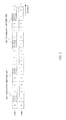
- FIG. 2 illustrates how the MeNB stops downlink transmission every fourth subframe, for example.
- an MeNB uses a large number of ABSs in a situation where the number of MUEs served by the MeNB cell is greater than the number of HUEs served by the HeNB cell in the MeNB cell, the interference to the HUEs can be avoided, but the throughput of the whole network decreases, however.
- a server apparatus includes: a number-of-terminals management section that manages the number of first terminals served by a cell of a macro base station apparatus, and the number of second terminals served by cells each of which is smaller than the cell of the macro base station apparatus and which are formed by all small cell base station apparatuses located in the cell of the macro base station apparatus; a ratio calculating section that calculates a ratio of the number of first terminals to the number of second terminals; a transmission and non-transmission pattern determining section that determines a first transmission and non-transmission pattern for the macro base station apparatus and a second transmission and non-transmission pattern for the small cell base station apparatuses based on the calculated ratio; and a transmission section that transmits, to the macro base station apparatus and the small cell base station apparatuses, a message including the determined first transmission and non-transmission pattern and identification information identifying a cell to which the determined first transmission and non-transmission pattern is to be applied, and the determined second transmission and non-transmission pattern and identification
- a base station apparatus includes: a counting section that counts the number of terminals served by the base station apparatus; a message generating section that generates a message including the counted number of terminals and identification information identifying a cell for which the number of terminals has been counted; an instructing section that instructs, periodically or when the counted number of terminals exceeds a predetermined threshold, the message generating section to generate a message; and a transmitting section that transmits the generated message.
- a small cell base station apparatus is located in a cell of a macro base station apparatus and configured to form a cell smaller than the cell of the macro base station apparatus, the small cell base station apparatus including: a counting section that counts the number of terminals served by the small cell base station apparatus; a message generating section that generates a message including the counted number of terminals and identification information identifying a cell for which the number of terminals has been counted; an instructing section that instructs, periodically or when the counted number of terminals exceeds a predetermined threshold, the message generating section to generate the message; and a transmitting section that transmits the generated message.
- An interference control method includes: managing the number of first terminals served by a cell of a base station apparatus and the number of second terminals served by cells each of which is smaller than the cell of the macro base station apparatus and which are formed by all small cell base station apparatuses located in the cell of the macro base station apparatus; calculating a ratio of the number of first terminals to the number of second terminals; determining a first transmission and non-transmission pattern for the macro base station apparatus and a second transmission and non-transmission pattern for the small cell base station apparatuses based on the calculated ratio; and a transmission section that transmits, to the macro base station apparatus and the small cell base station apparatuses, a message including the determined first transmission and non-transmission pattern and identification information identifying a cell to which the determined first transmission and non-transmission pattern is to be applied, and the determined second transmission and non-transmission pattern and identification information identifying a cell to which the determined second transmission and non-transmission pattern is to be applied.
- the present invention can improve the throughput of the whole network while avoiding inter-cell interference.
- FIG. 4 is a block diagram illustrating a configuration of base station (MeNB and HeNB) 100 according to an embodiment of the present invention. The configuration of base station 100 will be described below with reference to FIG. 4 .
- QoS information acquiring section 101 acquires QoS information of a UE served by a cell provided by base station 100 and outputs the acquired QoS information to number-of-serving-UEs counting section 102.
- the number of UEs being served is counted as one or more.
- the QoS value required by UEx is smaller than the QoS value used as the standard, the number of UEs being served is counted as one UE or less (decimals can be rounded off or up). Accordingly, taking QoS into account makes it possible to count the number of UEs more appropriate to actual conditions. More specifically, the number of UEs in the RRC_CONNECTED state is counted. The number of UEs thus counted is outputted to message generation instructing section 103 and message generating section 105.
- Message generation instructing section 103 monitors the number of UEs outputted from number-of-serving-UEs counting section 102 and instructs message generating section 105 to generate a number-of-UEs reporting message, when the number of UEs is updated. Specifically, message generation instructing section 103 sets two thresholds including a lower threshold (th1) and an upper threshold (th2) as illustrated in FIG. 5 . Message generation instructing section 103 issues an instruction to generate a number-of-UEs reporting message when the number of UEs decreases to a value below the lower threshold (th1) or increases to a value above the upper threshold (th2) from a range between the lower threshold (th1) and the upper threshold (th2). In the example illustrated in FIG.
- the instruction is issued at three timings t1, t2, and t3. In this manner, even if the number of UEs changes frequently, the number of times the reporting is made can be limited.
- Message generation instructing section 103 may be configured to periodically issue an instruction to generate a message, rather than based on an update for the number of UEs.
- Cell identification information management section 104 manages cell identification information (cell ID) and outputs cell identification information of the cell for which the number of UEs has been counted to message generating section 105.
- message generating section 105 When message generation instructing section 103 outputs the instruction to generate the message, message generating section 105 generates a number-of-UEs reporting message including the number of UEs outputted from number-of-serving-UEs counting section 102, and the cell identification information outputted from cell identification information management section 104 and outputs the generated number-of-UEs reporting message to message transmitting section 106.
- Message transmitting section 106 transmits the number-of-UEs reporting message outputted from message generating section 105 to an operation and maintenance center (OMC), which manages base stations.
- OMC operation and maintenance center
- Message receiving section 107 receives an ABS configuration message transmitted from the OMC and outputs the received ABS configuration message to ABS configuration analyzing section 108.
- ABS configuration analyzing section 108 analyzes the ABS configuration message outputted from message receiving section 107 and acquires the ABS configuration and cell identification information. The ABS configuration and cell identification information thus acquired are outputted to scheduling section 109.
- Scheduling section 109 determines the ABS pattern to be used in the applicable cell on the basis of the ABS configuration and cell identification information outputted from ABS configuration analyzing section 108. Scheduling section 109 outputs a scheduling instruction based on the determined ABS pattern to data signal generating section 110.
- Data signal generating section 110 generates a data signal on the basis of the scheduling instruction outputted from scheduling section 109 and outputs the generated signal to radio section 111.
- Radio section 111 transmits the data signal outputted from data signal generating section 110 to the UE via antenna 112.
- FIG. 6 is a block diagram illustrating a configuration of OMC 200 according to an embodiment of the present invention. The configuration of OMC 200 will be described below with reference to FIG. 6 .
- Message receiving section 201 receives the number-of-UEs reporting message transmitted from an MeNB or HeNB and outputs the received number-of-UEs reporting message to number-of-served-UEs management section 202.
- Number-of-served-UEs management section 202 analyzes the number-of-UEs reporting message outputted from message receiving section 201 and acquires the number of UEs being served and cell identification information. The number of UEs and cell identification information thus acquired are outputted to number-of-UEs ratio calculating section 204.
- Base station position determining section 203 determines the positional relation between an MeNB cell and HeNB cell in the MeNB cell and outputs the determined positional relation to number-of-UEs ratio calculating section 204.
- a method of determining the positional relation a method is available that uses neighbor relation (NR) information reported from each base station (neighboring cell information acquired by each base station) to the OMC.
- NR neighbor relation
- the NR information of the MeNB cell includes information on the HeNB cell
- the NR information of the HeNB cell includes information on the MeNB cell
- it is possible to determine that the HeNB cell is in the MeNB cell likewise.
- an OMC also keeps positional information of an MeNB and HeNB as well as cell range information in a database.
- the OMC can also determine the positional relation of an HeNB cell in the MeNB cell, which may be used as another method of determining a positional relation.
- Number-of-UEs ratio calculating section 204 calculates the ratio of the number of MUEs to the total number of HUEs after acquiring the number of UEs in each cell, on the basis of the positional relation between an MeNB cell outputted from base station position determining section 203 and an HeNB cell in the MeNB. The calculated ratio of the number of UEs is outputted to ABS configuration determining section 205.
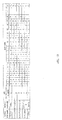
- ABS configuration determining section 205 includes an ABS configuration table associating the number-of-UEs ratios with ABS configurations as illustrated in FIG. 7 and determines ABS configurations to be applied respectively to an MeNB and HeNB, on the basis of the number-of-UEs ratios outputted from number-of-UEs ratio calculating section 204.
- the determined ABS configurations are outputted to ABS configuration message generating section 206.
- the ABS configuration to be determined herein may be determined as a configuration to be applied to both or any one of the MeNB cell and HeNB cell.
- ABS configuration table In the ABS configuration table illustrated in FIG. 7 , "0" indicates “transmission” and "1" indicates “no transmission.” A smaller ABS configuration number is associated with a smaller number of ABSs, resulting in a larger number of available resources. On the other hand, a larger ABS configuration number is associated with a larger number of ABSs, resulting in a smaller number of available resources.
- ABS configuration number 7" means that downlink transmission is performed every fourth subframe starting from subframe 3.
- a ratio indicating that the number of UEs served by the MeNB cell occupies a larger proportion of the ratio is associated with a lower ABS configuration number
- a ratio indicating that the number of UEs served by the MeNB cell occupies a smaller proportion of the ratio is associated with a higher ABS configuration number
- ABS configuration message generating section 206 generates an ABS configuration message including an ABS configuration outputted from ABS configuration determining section 205 and identification information on a cell to which this ABS configuration is applied, and outputs the ABS configuration message thus generated to message transmitting section 207.
- Message transmitting section 207 transmits the ABS configuration message outputted from ABS configuration message generating section 206 to an MeNB and HeNB. However, message transmitting section 207 stores the ABS configuration transmitted last time, and if the ABS configuration to be transmitted this time is different from the one transmitted last time, message transmitting section 207 transmits the ABS configuration. Specifically, if the ABS configuration to be transmitted this time is identical with the one transmitted last time, message transmitting section 207 does not transmit the ABS configuration. As a result, the amount of signaling can be reduced.
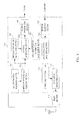
- message generating instructing section 103 sets an upper threshold and a lower threshold for the number of UEs being served, in step (hereinafter, referred to as "ST") 301.
- step 302 number-of-serving-UEs counting section 102 counts the number of UEs being served for each cell.
- message generation instructing section 103 determines whether or not the number of UEs counted in ST 302 exceeds the upper threshold or falls below the lower threshold set in ST 301. The procedure proceeds to ST 304 when message generation instructing section 103 determines that the counted number of UEs has exceeded the upper threshold or fallen below the lower threshold (YES), but the procedure returns to ST 302 when message generation instructing section 103 determines that the counted number of UEs has not exceeded the upper threshold or fallen below the lower threshold (NO).
- message transmitting section 106 transmits a number-of-UEs reporting message to the OMC to complete the procedure for transmitting a number-of-UEs reporting message.
- message receiving section 201 receives a number-of-UEs reporting message in ST 401.
- number-of-served-UEs management section 202 acquires the number of UEs being served and cell identification information.
- number-of-UEs ratio calculating section 204 calculates the ratio of the number of MUEs to the total number of HUEs.
- ABS configuration determining section 205 determines an ABS configuration on the basis of the ratio calculated in ST 403.
- message transmitting section 207 determines whether or not to change the ABS configuration determined last time in ST 404.
- message transmitting section 207 determines to change the ABS configuration (YES)
- the processing moves to ST 406, and when message transmitting section 207 determines not to change the ABS configuration (NO), the processing for setting an ABS configuration is terminated.
- message transmitting section 207 transmits an ABS configuration message including the different ABS configuration.
- the HeNB cells avoid interference by allocating resources during the ABS period of the MeNB cell to a UE that would otherwise be interfered by the MeNB cell.
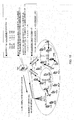
- MeNB 1, HeNB 1, and HeNB 2 transmit a number-of-UEs reporting message to the OMC.
- the OMC stores the number of UEs and cell identification information included in each of the number-of-UEs reporting messages in association with each other.
- the OMC calculates the ratio of the number of UEs served by the MeNB cell to the number of UEs served by the HeNB cells located in the MeNB cell. This ratio (x) is obtained as (the number of MUEs) / (the total number of HUEs), for example. In this case, the ratio (x) after the UEs move to the cells is 0.85.
- the OMC selects the ABS configuration corresponding to the calculated ratio from the ABS configuration table illustrated in FIG. 7 .
- the ratio (x) is 0.85
- ABS configuration number 3 or 4 is selected.
- An assumption is made that 3 is selected in this example.
- a plurality of ABS configurations are associated with a ratio within a certain range according to the ABS configuration table in FIG. 7 , and which one of the ABS configurations is to be selected is optional.
- the ABS configuration selected last time is selectable, the amount of signaling can be saved because the ABS configuration message transmitted last time does not have to be transmitted again.
- the ABS configuration to be applied to MeNB 1 is changed from ABS configuration 1 applied before the UEs move, to ABS configuration 3. For this reason, the OMC transmits an ABS configuration message to MeNB 1, HeNB 1 and HeNB 2.
- the ABS configuration message transmitted to each base station includes ABS configuration 3 and cell identification information M1.
- each base station Upon reception of the ABS configuration message from the OMC, each base station operates in the following manner. MeNB 1 sets the ABS pattern of ABS configuration 3 in cell M1 and stops downlink transmission according to the set ABS pattern.
- HeNB 1 transmits data to the interfered UE, using resources during the ABS period of cell M1.
- HeNB 2 transmits data to the interfered UE, using resources during the ABS period of cell M1.
- the processing to change the ABS configuration to be applied to an MeNB is performed by using the procedure described above.
- the MeNB cell avoids interference by allocating resources during the ABS period of the HeNB cell to a UE that would otherwise be interfered by the HeNB cell.
- MeNB 1, HeNB 1, and HeNB 2 transmit a number-of-UEs reporting message to the OMC.
- the OMC stores the number of UEs and cell identification information included in each of the number-of-UEs reporting messages in association with each other.
- the OMC calculates the ratio of the number of UEs served by the MeNB cell to the number of UEs served by the HeNBs located in the MeNB cell.
- the ratio (x) is obtained as (the number of MUEs) / (the total number of HUEs), for example. In this case, the ratio (x) after the UEs move to the cells is 0.85.
- the OMC selects the ABS configuration corresponding to the calculated ratio from the ABS configuration table illustrated in FIG. 12 .
- the ratio (x) is 0.85
- ABS configuration number 3 or 4 is selected.
- An assumption is made that 3 is selected in this example.
- the order of the ratios associated with the ABS configuration numbers in the ABS configuration table illustrated in FIG. 12 is reversed to the order of the ratios associated with the ABS configuration numbers in the ABS configuration table illustrated in FIG. 7 .
- ABS configuration to be applied to the HeNBs is changed from ABS configuration 6 applied before the UEs move, to ABS configuration 4. For this reason, the OMC transmits an ABS configuration message to MeNB 1, HeNB 1 and HeNB 2.
- the ABS configuration message transmitted to each base station includes ABS configuration 4 and cell identification information H1 and H2.
- each base station Upon reception of an ABS configuration message from the OMC, each base station operates in the following manner. If there is a UE interfered by cell H1 or cell H2 among the UEs served by cell M1, MeNB 1 transmits data to the interfered UE, using resources during the ABS period of cell H1 or H2.
- HeNB 1 sets the ABS pattern of ABS configuration 4 and stops downlink transmission according to the set ABS pattern.
- HeNB 2 sets the ABS pattern of ABS configuration 4 and stops downlink transmission according to the set ABS pattern.
- the processing to change the ABS configuration to be applied to an HeNB is performed using the procedure described above.
- the OMC includes an ABS configuration table associating ABS configurations with the ratios of the number of MUEs served by an MeNB cell to the total number of HUEs served by all HeNB cells located in this MeNB.
- the OMC calculates the ratio of the number of MUEs to the total number of HUEs, and determines an ABS configuration to be applied to the MeNB or HeNBs from the ABS configuration table in accordance with the calculated ratio.
- interference to neighboring base stations can be avoided, and a decrease in the throughput as a whole network can be limited as well.
- ABS configuration tables for MeNBs and HeNBs can be integrated into one as illustrated in FIG. 13 .
- an ABS configuration is optionally selectable when a plurality of ABS configurations are associated with a ratio within a certain range.
- different ABS configurations may be selected for the MeNB cell and HeNB cell, respectively. For example, an ABS configuration with a smaller number is selected for the MeNB, and an ABS configuration with a larger number is selected for the HeNB. Applying different ABS configurations respectively to the base stations in this manner allows the MeNB cell to ensure resources not involving interference from the HeNB while allowing the HeNB to ensure resources not involving interference from the MeNB.
- the present embodiment has been described with the assumption that the OMC transmits, to the MeNB and HeNBs, an ABS configuration message including an ABS configuration and identification information on a cell to which this ABS configuration is applied.
- an ABS pattern consisting of a total of 40 bits may be transmitted instead of an ABS configuration.
- the server apparatus, base station apparatus, small cell base station apparatus, and interference control method according to the present invention can be applied to mobile communication systems, for example.
Landscapes
- Engineering & Computer Science (AREA)
- Computer Networks & Wireless Communication (AREA)
- Signal Processing (AREA)
- Mobile Radio Communication Systems (AREA)
Applications Claiming Priority (2)
| Application Number | Priority Date | Filing Date | Title |
|---|---|---|---|
| JP2011027435 | 2011-02-10 | ||
| PCT/JP2012/000731 WO2012108154A1 (ja) | 2011-02-10 | 2012-02-03 | サーバ装置、基地局装置、小型基地局装置及び干渉制御方法 |
Publications (3)
| Publication Number | Publication Date |
|---|---|
| EP2675204A1 true EP2675204A1 (de) | 2013-12-18 |
| EP2675204A4 EP2675204A4 (de) | 2018-03-14 |
| EP2675204B1 EP2675204B1 (de) | 2020-09-09 |
Family
ID=46638381
Family Applications (1)
| Application Number | Title | Priority Date | Filing Date |
|---|---|---|---|
| EP12744663.1A Active EP2675204B1 (de) | 2011-02-10 | 2012-02-03 | Servervorrichtung und interferenzsteuerverfahren |
Country Status (5)
| Country | Link |
|---|---|
| EP (1) | EP2675204B1 (de) |
| JP (1) | JP5968791B2 (de) |
| CN (1) | CN103299664B (de) |
| ES (1) | ES2823476T3 (de) |
| WO (1) | WO2012108154A1 (de) |
Cited By (1)
| Publication number | Priority date | Publication date | Assignee | Title |
|---|---|---|---|---|
| US9374748B2 (en) * | 2014-10-22 | 2016-06-21 | Samsung Sds Co., Ltd. | Method of controlling interference in heterogeneous network |
Families Citing this family (4)
| Publication number | Priority date | Publication date | Assignee | Title |
|---|---|---|---|---|
| RU2015124171A (ru) * | 2012-11-23 | 2017-01-10 | Хуавэй Текнолоджиз Ко., Лтд. | Способ, узел сотрудничества и устройство со стороны сети для межсетевого сотрудничества |
| CN103888956B (zh) * | 2012-12-19 | 2019-01-25 | 中兴通讯股份有限公司 | 配置信息的处理方法及系统 |
| WO2015001797A1 (ja) * | 2013-07-05 | 2015-01-08 | 日本電気株式会社 | 基地局装置、無線通信システム、セル間干渉制御方法、及び記録媒体 |
| JP6170410B2 (ja) * | 2013-10-31 | 2017-07-26 | 日本電信電話株式会社 | 通信システムおよび通信方法 |
Family Cites Families (5)
| Publication number | Priority date | Publication date | Assignee | Title |
|---|---|---|---|---|
| EP2111068B1 (de) * | 2008-04-14 | 2014-01-01 | Alcatel Lucent | Picozell-Basisstation für drahtlose Telekommunikationen zur Bereitstellung von Funkbereichskeulen und Verfahren zur Identifizierung welches Keulenunterset ein Benutzerendgerät abdeckt |
| EP2352344B1 (de) * | 2008-11-28 | 2017-02-15 | Optis Wireless Technology, LLC | Funkkommunikationsbasisstationsvorrichtung und verfahren zur steuerung von deren gesamtübertragungsleistungen |
| KR101496897B1 (ko) * | 2009-03-10 | 2015-03-02 | 삼성전자주식회사 | 펨토 기지국을 갖는 통신 시스템 및 그의 간섭 제어 방법 |
| JP5522432B2 (ja) | 2009-07-21 | 2014-06-18 | 横河電機株式会社 | 電池試験装置 |
| JP5402771B2 (ja) * | 2010-03-25 | 2014-01-29 | ソニー株式会社 | 管理サーバ、基地局、通信システム、および通信方法 |
-
2012
- 2012-02-03 JP JP2012556779A patent/JP5968791B2/ja not_active Expired - Fee Related
- 2012-02-03 EP EP12744663.1A patent/EP2675204B1/de active Active
- 2012-02-03 WO PCT/JP2012/000731 patent/WO2012108154A1/ja not_active Ceased
- 2012-02-03 CN CN201280004365.0A patent/CN103299664B/zh active Active
- 2012-02-03 ES ES12744663T patent/ES2823476T3/es active Active
Non-Patent Citations (1)
| Title |
|---|
| See references of WO2012108154A1 * |
Cited By (1)
| Publication number | Priority date | Publication date | Assignee | Title |
|---|---|---|---|---|
| US9374748B2 (en) * | 2014-10-22 | 2016-06-21 | Samsung Sds Co., Ltd. | Method of controlling interference in heterogeneous network |
Also Published As
| Publication number | Publication date |
|---|---|
| EP2675204B1 (de) | 2020-09-09 |
| WO2012108154A1 (ja) | 2012-08-16 |
| EP2675204A4 (de) | 2018-03-14 |
| JP5968791B2 (ja) | 2016-08-10 |
| ES2823476T3 (es) | 2021-05-07 |
| CN103299664A (zh) | 2013-09-11 |
| JPWO2012108154A1 (ja) | 2014-07-03 |
| CN103299664B (zh) | 2016-08-17 |
Similar Documents
| Publication | Publication Date | Title |
|---|---|---|
| EP2712231B1 (de) | Interferenzkoordinationsverfahren und basisstation dafür | |
| EP3211820B1 (de) | Systeme und verfahren für adaptive übertragungen in einem drahtlosen netzwerk | |
| CN103096333B (zh) | 物理下行控制信道干扰的协调方法及基站 | |
| JP5388955B2 (ja) | 通信制御方法、通信システム、及び基地局装置 | |
| EP2975898A1 (de) | System und verfahren zur koordinierung der interferenz zwischen kommunikationsknoten | |
| CN105744560B (zh) | 一种确定服务基站、测量上报的方法及装置 | |
| EP2512175A1 (de) | Verfahren und ausrüstung zur koordinierung von interferenzen | |
| CN101986586A (zh) | 一种信道质量测量反馈方法及用户设备 | |
| CN102036296A (zh) | 一种确定上下行配置的方法、系统和设备 | |
| EP2675225A1 (de) | Basisstationsvorrichtung und sendeverfahren dafür | |
| US20140140295A1 (en) | Apparatus and Method for Proactive Inter-Cell Interference Coordination | |
| US20130288696A1 (en) | Server apparatus, small base-station apparatus, and interference control method | |
| WO2011066787A1 (zh) | 一种分层网络中避免信号干扰的方法及基站 | |
| JP6362150B2 (ja) | 無線通信システム内で無線リソースをミュートする方法およびシステム | |
| GB2510897A (en) | Controlling uplink transmit power in a plurality of basestations | |
| EP2675204B1 (de) | Servervorrichtung und interferenzsteuerverfahren | |
| US9363762B2 (en) | Method and device for determining transmission power | |
| US20140119319A1 (en) | Apparatus and Method for Reactive Inter-Cell Interference Coordination | |
| CN102857925B (zh) | 一种基于hii/oi的粗粒度动态频率复用方法 | |
| EP3148238A1 (de) | Verfahren und vorrichtung zur interferenzsteuerung sowie netzwerkelementvorrichtung | |
| KR101785874B1 (ko) | Ps-lte 망과 lte-r 망이 공존하는 환경에서 협력 통신 기법들을 이용한 lte-r 사용자 우선순위 기반의 자원 할당 및 간섭 관리 방법과 장치 | |
| KR20130063658A (ko) | 이동통신 시스템의 무선 자원 할당 방법 | |
| WO2016045312A1 (zh) | 干扰调节处理方法及装置 | |
| EP3236616A1 (de) | Verfahren und vorrichtung zur adaptiven erkennung von interferenzen eines zugangssystems mit gemeinsamer lizenz | |
| CN103906125A (zh) | 一种相对窄带发射功率测量方法及装置 |
Legal Events
| Date | Code | Title | Description |
|---|---|---|---|
| PUAI | Public reference made under article 153(3) epc to a published international application that has entered the european phase |
Free format text: ORIGINAL CODE: 0009012 |
|
| 17P | Request for examination filed |
Effective date: 20130703 |
|
| AK | Designated contracting states |
Kind code of ref document: A1 Designated state(s): AL AT BE BG CH CY CZ DE DK EE ES FI FR GB GR HR HU IE IS IT LI LT LU LV MC MK MT NL NO PL PT RO RS SE SI SK SM TR |
|
| DAX | Request for extension of the european patent (deleted) | ||
| RAP1 | Party data changed (applicant data changed or rights of an application transferred) |
Owner name: NOKIA SOLUTIONS AND NETWORKS OY |
|
| RIC1 | Information provided on ipc code assigned before grant |
Ipc: H04W 28/04 20090101AFI20171103BHEP Ipc: H04W 24/10 20090101ALI20171103BHEP |
|
| RA4 | Supplementary search report drawn up and despatched (corrected) |
Effective date: 20180209 |
|
| RIC1 | Information provided on ipc code assigned before grant |
Ipc: H04W 24/10 20090101ALI20180205BHEP Ipc: H04W 28/04 20090101AFI20180205BHEP |
|
| STAA | Information on the status of an ep patent application or granted ep patent |
Free format text: STATUS: EXAMINATION IS IN PROGRESS |
|
| 17Q | First examination report despatched |
Effective date: 20190404 |
|
| RAP1 | Party data changed (applicant data changed or rights of an application transferred) |
Owner name: NOKIA SOLUTIONS AND NETWORKS OY |
|
| REG | Reference to a national code |
Ref country code: DE Ref legal event code: R079 Ref document number: 602012072227 Country of ref document: DE Free format text: PREVIOUS MAIN CLASS: H04W0016100000 Ipc: H04W0028040000 |
|
| GRAP | Despatch of communication of intention to grant a patent |
Free format text: ORIGINAL CODE: EPIDOSNIGR1 |
|
| STAA | Information on the status of an ep patent application or granted ep patent |
Free format text: STATUS: GRANT OF PATENT IS INTENDED |
|
| RIC1 | Information provided on ipc code assigned before grant |
Ipc: H04W 24/10 20090101ALN20200402BHEP Ipc: H04W 28/04 20090101AFI20200402BHEP |
|
| INTG | Intention to grant announced |
Effective date: 20200416 |
|
| GRAS | Grant fee paid |
Free format text: ORIGINAL CODE: EPIDOSNIGR3 |
|
| GRAA | (expected) grant |
Free format text: ORIGINAL CODE: 0009210 |
|
| STAA | Information on the status of an ep patent application or granted ep patent |
Free format text: STATUS: THE PATENT HAS BEEN GRANTED |
|
| AK | Designated contracting states |
Kind code of ref document: B1 Designated state(s): AL AT BE BG CH CY CZ DE DK EE ES FI FR GB GR HR HU IE IS IT LI LT LU LV MC MK MT NL NO PL PT RO RS SE SI SK SM TR |
|
| REG | Reference to a national code |
Ref country code: GB Ref legal event code: FG4D |
|
| REG | Reference to a national code |
Ref country code: AT Ref legal event code: REF Ref document number: 1313120 Country of ref document: AT Kind code of ref document: T Effective date: 20200915 Ref country code: CH Ref legal event code: EP |
|
| REG | Reference to a national code |
Ref country code: DE Ref legal event code: R096 Ref document number: 602012072227 Country of ref document: DE |
|
| REG | Reference to a national code |
Ref country code: IE Ref legal event code: FG4D |
|
| REG | Reference to a national code |
Ref country code: NL Ref legal event code: FP |
|
| REG | Reference to a national code |
Ref country code: LT Ref legal event code: MG4D |
|
| PG25 | Lapsed in a contracting state [announced via postgrant information from national office to epo] |
Ref country code: NO Free format text: LAPSE BECAUSE OF FAILURE TO SUBMIT A TRANSLATION OF THE DESCRIPTION OR TO PAY THE FEE WITHIN THE PRESCRIBED TIME-LIMIT Effective date: 20201209 Ref country code: HR Free format text: LAPSE BECAUSE OF FAILURE TO SUBMIT A TRANSLATION OF THE DESCRIPTION OR TO PAY THE FEE WITHIN THE PRESCRIBED TIME-LIMIT Effective date: 20200909 Ref country code: SE Free format text: LAPSE BECAUSE OF FAILURE TO SUBMIT A TRANSLATION OF THE DESCRIPTION OR TO PAY THE FEE WITHIN THE PRESCRIBED TIME-LIMIT Effective date: 20200909 Ref country code: BG Free format text: LAPSE BECAUSE OF FAILURE TO SUBMIT A TRANSLATION OF THE DESCRIPTION OR TO PAY THE FEE WITHIN THE PRESCRIBED TIME-LIMIT Effective date: 20201209 Ref country code: FI Free format text: LAPSE BECAUSE OF FAILURE TO SUBMIT A TRANSLATION OF THE DESCRIPTION OR TO PAY THE FEE WITHIN THE PRESCRIBED TIME-LIMIT Effective date: 20200909 Ref country code: GR Free format text: LAPSE BECAUSE OF FAILURE TO SUBMIT A TRANSLATION OF THE DESCRIPTION OR TO PAY THE FEE WITHIN THE PRESCRIBED TIME-LIMIT Effective date: 20201210 Ref country code: LT Free format text: LAPSE BECAUSE OF FAILURE TO SUBMIT A TRANSLATION OF THE DESCRIPTION OR TO PAY THE FEE WITHIN THE PRESCRIBED TIME-LIMIT Effective date: 20200909 |
|
| REG | Reference to a national code |
Ref country code: AT Ref legal event code: MK05 Ref document number: 1313120 Country of ref document: AT Kind code of ref document: T Effective date: 20200909 |
|
| PG25 | Lapsed in a contracting state [announced via postgrant information from national office to epo] |
Ref country code: LV Free format text: LAPSE BECAUSE OF FAILURE TO SUBMIT A TRANSLATION OF THE DESCRIPTION OR TO PAY THE FEE WITHIN THE PRESCRIBED TIME-LIMIT Effective date: 20200909 Ref country code: RS Free format text: LAPSE BECAUSE OF FAILURE TO SUBMIT A TRANSLATION OF THE DESCRIPTION OR TO PAY THE FEE WITHIN THE PRESCRIBED TIME-LIMIT Effective date: 20200909 Ref country code: PL Free format text: LAPSE BECAUSE OF FAILURE TO SUBMIT A TRANSLATION OF THE DESCRIPTION OR TO PAY THE FEE WITHIN THE PRESCRIBED TIME-LIMIT Effective date: 20200909 |
|
| PG25 | Lapsed in a contracting state [announced via postgrant information from national office to epo] |
Ref country code: SM Free format text: LAPSE BECAUSE OF FAILURE TO SUBMIT A TRANSLATION OF THE DESCRIPTION OR TO PAY THE FEE WITHIN THE PRESCRIBED TIME-LIMIT Effective date: 20200909 Ref country code: RO Free format text: LAPSE BECAUSE OF FAILURE TO SUBMIT A TRANSLATION OF THE DESCRIPTION OR TO PAY THE FEE WITHIN THE PRESCRIBED TIME-LIMIT Effective date: 20200909 Ref country code: PT Free format text: LAPSE BECAUSE OF FAILURE TO SUBMIT A TRANSLATION OF THE DESCRIPTION OR TO PAY THE FEE WITHIN THE PRESCRIBED TIME-LIMIT Effective date: 20210111 Ref country code: CZ Free format text: LAPSE BECAUSE OF FAILURE TO SUBMIT A TRANSLATION OF THE DESCRIPTION OR TO PAY THE FEE WITHIN THE PRESCRIBED TIME-LIMIT Effective date: 20200909 Ref country code: EE Free format text: LAPSE BECAUSE OF FAILURE TO SUBMIT A TRANSLATION OF THE DESCRIPTION OR TO PAY THE FEE WITHIN THE PRESCRIBED TIME-LIMIT Effective date: 20200909 |
|
| REG | Reference to a national code |
Ref country code: ES Ref legal event code: FG2A Ref document number: 2823476 Country of ref document: ES Kind code of ref document: T3 Effective date: 20210507 |
|
| PG25 | Lapsed in a contracting state [announced via postgrant information from national office to epo] |
Ref country code: IS Free format text: LAPSE BECAUSE OF FAILURE TO SUBMIT A TRANSLATION OF THE DESCRIPTION OR TO PAY THE FEE WITHIN THE PRESCRIBED TIME-LIMIT Effective date: 20210109 Ref country code: AT Free format text: LAPSE BECAUSE OF FAILURE TO SUBMIT A TRANSLATION OF THE DESCRIPTION OR TO PAY THE FEE WITHIN THE PRESCRIBED TIME-LIMIT Effective date: 20200909 Ref country code: AL Free format text: LAPSE BECAUSE OF FAILURE TO SUBMIT A TRANSLATION OF THE DESCRIPTION OR TO PAY THE FEE WITHIN THE PRESCRIBED TIME-LIMIT Effective date: 20200909 |
|
| REG | Reference to a national code |
Ref country code: DE Ref legal event code: R097 Ref document number: 602012072227 Country of ref document: DE |
|
| PG25 | Lapsed in a contracting state [announced via postgrant information from national office to epo] |
Ref country code: SK Free format text: LAPSE BECAUSE OF FAILURE TO SUBMIT A TRANSLATION OF THE DESCRIPTION OR TO PAY THE FEE WITHIN THE PRESCRIBED TIME-LIMIT Effective date: 20200909 |
|
| PLBE | No opposition filed within time limit |
Free format text: ORIGINAL CODE: 0009261 |
|
| STAA | Information on the status of an ep patent application or granted ep patent |
Free format text: STATUS: NO OPPOSITION FILED WITHIN TIME LIMIT |
|
| 26N | No opposition filed |
Effective date: 20210610 |
|
| PG25 | Lapsed in a contracting state [announced via postgrant information from national office to epo] |
Ref country code: SI Free format text: LAPSE BECAUSE OF FAILURE TO SUBMIT A TRANSLATION OF THE DESCRIPTION OR TO PAY THE FEE WITHIN THE PRESCRIBED TIME-LIMIT Effective date: 20200909 Ref country code: DK Free format text: LAPSE BECAUSE OF FAILURE TO SUBMIT A TRANSLATION OF THE DESCRIPTION OR TO PAY THE FEE WITHIN THE PRESCRIBED TIME-LIMIT Effective date: 20200909 |
|
| PG25 | Lapsed in a contracting state [announced via postgrant information from national office to epo] |
Ref country code: MC Free format text: LAPSE BECAUSE OF FAILURE TO SUBMIT A TRANSLATION OF THE DESCRIPTION OR TO PAY THE FEE WITHIN THE PRESCRIBED TIME-LIMIT Effective date: 20200909 |
|
| REG | Reference to a national code |
Ref country code: BE Ref legal event code: MM Effective date: 20210228 |
|
| PG25 | Lapsed in a contracting state [announced via postgrant information from national office to epo] |
Ref country code: IT Free format text: LAPSE BECAUSE OF FAILURE TO SUBMIT A TRANSLATION OF THE DESCRIPTION OR TO PAY THE FEE WITHIN THE PRESCRIBED TIME-LIMIT Effective date: 20200909 Ref country code: CH Free format text: LAPSE BECAUSE OF NON-PAYMENT OF DUE FEES Effective date: 20210228 Ref country code: LI Free format text: LAPSE BECAUSE OF NON-PAYMENT OF DUE FEES Effective date: 20210228 Ref country code: LU Free format text: LAPSE BECAUSE OF NON-PAYMENT OF DUE FEES Effective date: 20210203 |
|
| PG25 | Lapsed in a contracting state [announced via postgrant information from national office to epo] |
Ref country code: IE Free format text: LAPSE BECAUSE OF NON-PAYMENT OF DUE FEES Effective date: 20210203 |
|
| PG25 | Lapsed in a contracting state [announced via postgrant information from national office to epo] |
Ref country code: BE Free format text: LAPSE BECAUSE OF NON-PAYMENT OF DUE FEES Effective date: 20210228 |
|
| PG25 | Lapsed in a contracting state [announced via postgrant information from national office to epo] |
Ref country code: HU Free format text: LAPSE BECAUSE OF FAILURE TO SUBMIT A TRANSLATION OF THE DESCRIPTION OR TO PAY THE FEE WITHIN THE PRESCRIBED TIME-LIMIT; INVALID AB INITIO Effective date: 20120203 Ref country code: CY Free format text: LAPSE BECAUSE OF FAILURE TO SUBMIT A TRANSLATION OF THE DESCRIPTION OR TO PAY THE FEE WITHIN THE PRESCRIBED TIME-LIMIT Effective date: 20200909 |
|
| P01 | Opt-out of the competence of the unified patent court (upc) registered |
Effective date: 20230606 |
|
| PG25 | Lapsed in a contracting state [announced via postgrant information from national office to epo] |
Ref country code: MK Free format text: LAPSE BECAUSE OF FAILURE TO SUBMIT A TRANSLATION OF THE DESCRIPTION OR TO PAY THE FEE WITHIN THE PRESCRIBED TIME-LIMIT Effective date: 20200909 |
|
| PG25 | Lapsed in a contracting state [announced via postgrant information from national office to epo] |
Ref country code: TR Free format text: LAPSE BECAUSE OF FAILURE TO SUBMIT A TRANSLATION OF THE DESCRIPTION OR TO PAY THE FEE WITHIN THE PRESCRIBED TIME-LIMIT Effective date: 20200909 |
|
| PG25 | Lapsed in a contracting state [announced via postgrant information from national office to epo] |
Ref country code: MT Free format text: LAPSE BECAUSE OF FAILURE TO SUBMIT A TRANSLATION OF THE DESCRIPTION OR TO PAY THE FEE WITHIN THE PRESCRIBED TIME-LIMIT Effective date: 20200909 |
|
| PGFP | Annual fee paid to national office [announced via postgrant information from national office to epo] |
Ref country code: NL Payment date: 20250726 Year of fee payment: 14 |
|
| PGFP | Annual fee paid to national office [announced via postgrant information from national office to epo] |
Ref country code: ES Payment date: 20250701 Year of fee payment: 14 |
|
| PGFP | Annual fee paid to national office [announced via postgrant information from national office to epo] |
Ref country code: DE Payment date: 20250729 Year of fee payment: 14 |
|
| PGFP | Annual fee paid to national office [announced via postgrant information from national office to epo] |
Ref country code: GB Payment date: 20250728 Year of fee payment: 14 |
|
| PGFP | Annual fee paid to national office [announced via postgrant information from national office to epo] |
Ref country code: FR Payment date: 20250725 Year of fee payment: 14 |