EP2678363B1 - Procédé de fabrication d'une peinture multicouche colorante et/ou à effet - Google Patents
Procédé de fabrication d'une peinture multicouche colorante et/ou à effet Download PDFInfo
- Publication number
- EP2678363B1 EP2678363B1 EP12705687.7A EP12705687A EP2678363B1 EP 2678363 B1 EP2678363 B1 EP 2678363B1 EP 12705687 A EP12705687 A EP 12705687A EP 2678363 B1 EP2678363 B1 EP 2678363B1
- Authority
- EP
- European Patent Office
- Prior art keywords
- polyurethane resin
- pigmented aqueous
- aqueous basecoat
- weight
- basecoat material
- Prior art date
- Legal status (The legal status is an assumption and is not a legal conclusion. Google has not performed a legal analysis and makes no representation as to the accuracy of the status listed.)
- Active
Links
- 0 CC(*(C)C)[C@@](NC1CCC(CC(CC2)CCC2NC(C)OCC2CCC(CO*)CC2)CC1)O Chemical compound CC(*(C)C)[C@@](NC1CCC(CC(CC2)CCC2NC(C)OCC2CCC(CO*)CC2)CC1)O 0.000 description 1
Classifications
-
- C—CHEMISTRY; METALLURGY
- C09—DYES; PAINTS; POLISHES; NATURAL RESINS; ADHESIVES; COMPOSITIONS NOT OTHERWISE PROVIDED FOR; APPLICATIONS OF MATERIALS NOT OTHERWISE PROVIDED FOR
- C09D—COATING COMPOSITIONS, e.g. PAINTS, VARNISHES OR LACQUERS; FILLING PASTES; CHEMICAL PAINT OR INK REMOVERS; INKS; CORRECTING FLUIDS; WOODSTAINS; PASTES OR SOLIDS FOR COLOURING OR PRINTING; USE OF MATERIALS THEREFOR
- C09D175/00—Coating compositions based on polyureas or polyurethanes; Coating compositions based on derivatives of such polymers
- C09D175/04—Polyurethanes
- C09D175/14—Polyurethanes having carbon-to-carbon unsaturated bonds
- C09D175/16—Polyurethanes having carbon-to-carbon unsaturated bonds having terminal carbon-to-carbon unsaturated bonds
-
- B—PERFORMING OPERATIONS; TRANSPORTING
- B05—SPRAYING OR ATOMISING IN GENERAL; APPLYING FLUENT MATERIALS TO SURFACES, IN GENERAL
- B05D—PROCESSES FOR APPLYING FLUENT MATERIALS TO SURFACES, IN GENERAL
- B05D7/00—Processes, other than flocking, specially adapted for applying liquids or other fluent materials to particular surfaces or for applying particular liquids or other fluent materials
- B05D7/50—Multilayers
- B05D7/52—Two layers
- B05D7/53—Base coat plus clear coat type
- B05D7/532—Base coat plus clear coat type the two layers being cured or baked together, i.e. wet on wet
-
- B—PERFORMING OPERATIONS; TRANSPORTING
- B05—SPRAYING OR ATOMISING IN GENERAL; APPLYING FLUENT MATERIALS TO SURFACES, IN GENERAL
- B05D—PROCESSES FOR APPLYING FLUENT MATERIALS TO SURFACES, IN GENERAL
- B05D1/00—Processes for applying liquids or other fluent materials
- B05D1/36—Successively applying liquids or other fluent materials, e.g. without intermediate treatment
-
- B—PERFORMING OPERATIONS; TRANSPORTING
- B05—SPRAYING OR ATOMISING IN GENERAL; APPLYING FLUENT MATERIALS TO SURFACES, IN GENERAL
- B05D—PROCESSES FOR APPLYING FLUENT MATERIALS TO SURFACES, IN GENERAL
- B05D3/00—Pretreatment of surfaces to which liquids or other fluent materials are to be applied; After-treatment of applied coatings, e.g. intermediate treating of an applied coating preparatory to subsequent applications of liquids or other fluent materials
- B05D3/007—After-treatment
-
- B—PERFORMING OPERATIONS; TRANSPORTING
- B05—SPRAYING OR ATOMISING IN GENERAL; APPLYING FLUENT MATERIALS TO SURFACES, IN GENERAL
- B05D—PROCESSES FOR APPLYING FLUENT MATERIALS TO SURFACES, IN GENERAL
- B05D3/00—Pretreatment of surfaces to which liquids or other fluent materials are to be applied; After-treatment of applied coatings, e.g. intermediate treating of an applied coating preparatory to subsequent applications of liquids or other fluent materials
- B05D3/06—Pretreatment of surfaces to which liquids or other fluent materials are to be applied; After-treatment of applied coatings, e.g. intermediate treating of an applied coating preparatory to subsequent applications of liquids or other fluent materials by exposure to radiation
-
- B—PERFORMING OPERATIONS; TRANSPORTING
- B05—SPRAYING OR ATOMISING IN GENERAL; APPLYING FLUENT MATERIALS TO SURFACES, IN GENERAL
- B05D—PROCESSES FOR APPLYING FLUENT MATERIALS TO SURFACES, IN GENERAL
- B05D7/00—Processes, other than flocking, specially adapted for applying liquids or other fluent materials to particular surfaces or for applying particular liquids or other fluent materials
- B05D7/50—Multilayers
- B05D7/52—Two layers
- B05D7/53—Base coat plus clear coat type
- B05D7/534—Base coat plus clear coat type the first layer being let to dry at least partially before applying the second layer
-
- C—CHEMISTRY; METALLURGY
- C08—ORGANIC MACROMOLECULAR COMPOUNDS; THEIR PREPARATION OR CHEMICAL WORKING-UP; COMPOSITIONS BASED THEREON
- C08G—MACROMOLECULAR COMPOUNDS OBTAINED OTHERWISE THAN BY REACTIONS ONLY INVOLVING UNSATURATED CARBON-TO-CARBON BONDS
- C08G18/00—Polymeric products of isocyanates or isothiocyanates
- C08G18/06—Polymeric products of isocyanates or isothiocyanates with compounds having active hydrogen
- C08G18/08—Processes
- C08G18/10—Prepolymer processes involving reaction of isocyanates or isothiocyanates with compounds having active hydrogen in a first reaction step
-
- C—CHEMISTRY; METALLURGY
- C08—ORGANIC MACROMOLECULAR COMPOUNDS; THEIR PREPARATION OR CHEMICAL WORKING-UP; COMPOSITIONS BASED THEREON
- C08G—MACROMOLECULAR COMPOUNDS OBTAINED OTHERWISE THAN BY REACTIONS ONLY INVOLVING UNSATURATED CARBON-TO-CARBON BONDS
- C08G18/00—Polymeric products of isocyanates or isothiocyanates
- C08G18/06—Polymeric products of isocyanates or isothiocyanates with compounds having active hydrogen
- C08G18/28—Polymeric products of isocyanates or isothiocyanates with compounds having active hydrogen characterised by the compounds used containing active hydrogen
- C08G18/30—Low-molecular-weight compounds
- C08G18/32—Polyhydroxy compounds; Polyamines; Hydroxyamines
- C08G18/3203—Polyhydroxy compounds
- C08G18/3212—Polyhydroxy compounds containing cycloaliphatic groups
-
- C—CHEMISTRY; METALLURGY
- C08—ORGANIC MACROMOLECULAR COMPOUNDS; THEIR PREPARATION OR CHEMICAL WORKING-UP; COMPOSITIONS BASED THEREON
- C08G—MACROMOLECULAR COMPOUNDS OBTAINED OTHERWISE THAN BY REACTIONS ONLY INVOLVING UNSATURATED CARBON-TO-CARBON BONDS
- C08G18/00—Polymeric products of isocyanates or isothiocyanates
- C08G18/06—Polymeric products of isocyanates or isothiocyanates with compounds having active hydrogen
- C08G18/28—Polymeric products of isocyanates or isothiocyanates with compounds having active hydrogen characterised by the compounds used containing active hydrogen
- C08G18/67—Unsaturated compounds having active hydrogen
- C08G18/68—Unsaturated polyesters
-
- C—CHEMISTRY; METALLURGY
- C08—ORGANIC MACROMOLECULAR COMPOUNDS; THEIR PREPARATION OR CHEMICAL WORKING-UP; COMPOSITIONS BASED THEREON
- C08G—MACROMOLECULAR COMPOUNDS OBTAINED OTHERWISE THAN BY REACTIONS ONLY INVOLVING UNSATURATED CARBON-TO-CARBON BONDS
- C08G18/00—Polymeric products of isocyanates or isothiocyanates
- C08G18/06—Polymeric products of isocyanates or isothiocyanates with compounds having active hydrogen
- C08G18/70—Polymeric products of isocyanates or isothiocyanates with compounds having active hydrogen characterised by the isocyanates or isothiocyanates used
- C08G18/72—Polyisocyanates or polyisothiocyanates
- C08G18/74—Polyisocyanates or polyisothiocyanates cyclic
- C08G18/75—Polyisocyanates or polyisothiocyanates cyclic cycloaliphatic
- C08G18/758—Polyisocyanates or polyisothiocyanates cyclic cycloaliphatic containing two or more cycloaliphatic rings
-
- C—CHEMISTRY; METALLURGY
- C09—DYES; PAINTS; POLISHES; NATURAL RESINS; ADHESIVES; COMPOSITIONS NOT OTHERWISE PROVIDED FOR; APPLICATIONS OF MATERIALS NOT OTHERWISE PROVIDED FOR
- C09D—COATING COMPOSITIONS, e.g. PAINTS, VARNISHES OR LACQUERS; FILLING PASTES; CHEMICAL PAINT OR INK REMOVERS; INKS; CORRECTING FLUIDS; WOODSTAINS; PASTES OR SOLIDS FOR COLOURING OR PRINTING; USE OF MATERIALS THEREFOR
- C09D151/00—Coating compositions based on graft polymers in which the grafted component is obtained by reactions only involving carbon-to-carbon unsaturated bonds; Coating compositions based on derivatives of such polymers
- C09D151/08—Coating compositions based on graft polymers in which the grafted component is obtained by reactions only involving carbon-to-carbon unsaturated bonds; Coating compositions based on derivatives of such polymers grafted on to macromolecular compounds obtained otherwise than by reactions only involving carbon-to-carbon unsaturated bonds
-
- C—CHEMISTRY; METALLURGY
- C09—DYES; PAINTS; POLISHES; NATURAL RESINS; ADHESIVES; COMPOSITIONS NOT OTHERWISE PROVIDED FOR; APPLICATIONS OF MATERIALS NOT OTHERWISE PROVIDED FOR
- C09D—COATING COMPOSITIONS, e.g. PAINTS, VARNISHES OR LACQUERS; FILLING PASTES; CHEMICAL PAINT OR INK REMOVERS; INKS; CORRECTING FLUIDS; WOODSTAINS; PASTES OR SOLIDS FOR COLOURING OR PRINTING; USE OF MATERIALS THEREFOR
- C09D161/00—Coating compositions based on condensation polymers of aldehydes or ketones; Coating compositions based on derivatives of such polymers
- C09D161/20—Condensation polymers of aldehydes or ketones with only compounds containing hydrogen attached to nitrogen
- C09D161/26—Condensation polymers of aldehydes or ketones with only compounds containing hydrogen attached to nitrogen of aldehydes with heterocyclic compounds
- C09D161/28—Condensation polymers of aldehydes or ketones with only compounds containing hydrogen attached to nitrogen of aldehydes with heterocyclic compounds with melamine
-
- C—CHEMISTRY; METALLURGY
- C09—DYES; PAINTS; POLISHES; NATURAL RESINS; ADHESIVES; COMPOSITIONS NOT OTHERWISE PROVIDED FOR; APPLICATIONS OF MATERIALS NOT OTHERWISE PROVIDED FOR
- C09D—COATING COMPOSITIONS, e.g. PAINTS, VARNISHES OR LACQUERS; FILLING PASTES; CHEMICAL PAINT OR INK REMOVERS; INKS; CORRECTING FLUIDS; WOODSTAINS; PASTES OR SOLIDS FOR COLOURING OR PRINTING; USE OF MATERIALS THEREFOR
- C09D175/00—Coating compositions based on polyureas or polyurethanes; Coating compositions based on derivatives of such polymers
- C09D175/04—Polyurethanes
-
- C—CHEMISTRY; METALLURGY
- C09—DYES; PAINTS; POLISHES; NATURAL RESINS; ADHESIVES; COMPOSITIONS NOT OTHERWISE PROVIDED FOR; APPLICATIONS OF MATERIALS NOT OTHERWISE PROVIDED FOR
- C09D—COATING COMPOSITIONS, e.g. PAINTS, VARNISHES OR LACQUERS; FILLING PASTES; CHEMICAL PAINT OR INK REMOVERS; INKS; CORRECTING FLUIDS; WOODSTAINS; PASTES OR SOLIDS FOR COLOURING OR PRINTING; USE OF MATERIALS THEREFOR
- C09D5/00—Coating compositions, e.g. paints, varnishes or lacquers, characterised by their physical nature or the effects produced; Filling pastes
- C09D5/02—Emulsion paints including aerosols
-
- C—CHEMISTRY; METALLURGY
- C09—DYES; PAINTS; POLISHES; NATURAL RESINS; ADHESIVES; COMPOSITIONS NOT OTHERWISE PROVIDED FOR; APPLICATIONS OF MATERIALS NOT OTHERWISE PROVIDED FOR
- C09D—COATING COMPOSITIONS, e.g. PAINTS, VARNISHES OR LACQUERS; FILLING PASTES; CHEMICAL PAINT OR INK REMOVERS; INKS; CORRECTING FLUIDS; WOODSTAINS; PASTES OR SOLIDS FOR COLOURING OR PRINTING; USE OF MATERIALS THEREFOR
- C09D5/00—Coating compositions, e.g. paints, varnishes or lacquers, characterised by their physical nature or the effects produced; Filling pastes
- C09D5/02—Emulsion paints including aerosols
- C09D5/024—Emulsion paints including aerosols characterised by the additives
-
- C—CHEMISTRY; METALLURGY
- C09—DYES; PAINTS; POLISHES; NATURAL RESINS; ADHESIVES; COMPOSITIONS NOT OTHERWISE PROVIDED FOR; APPLICATIONS OF MATERIALS NOT OTHERWISE PROVIDED FOR
- C09D—COATING COMPOSITIONS, e.g. PAINTS, VARNISHES OR LACQUERS; FILLING PASTES; CHEMICAL PAINT OR INK REMOVERS; INKS; CORRECTING FLUIDS; WOODSTAINS; PASTES OR SOLIDS FOR COLOURING OR PRINTING; USE OF MATERIALS THEREFOR
- C09D7/00—Features of coating compositions, not provided for in group C09D5/00; Processes for incorporating ingredients in coating compositions
- C09D7/40—Additives
- C09D7/43—Thickening agents
-
- B—PERFORMING OPERATIONS; TRANSPORTING
- B05—SPRAYING OR ATOMISING IN GENERAL; APPLYING FLUENT MATERIALS TO SURFACES, IN GENERAL
- B05D—PROCESSES FOR APPLYING FLUENT MATERIALS TO SURFACES, IN GENERAL
- B05D2503/00—Polyurethanes
-
- B—PERFORMING OPERATIONS; TRANSPORTING
- B05—SPRAYING OR ATOMISING IN GENERAL; APPLYING FLUENT MATERIALS TO SURFACES, IN GENERAL
- B05D—PROCESSES FOR APPLYING FLUENT MATERIALS TO SURFACES, IN GENERAL
- B05D2520/00—Water-based dispersions
-
- C—CHEMISTRY; METALLURGY
- C08—ORGANIC MACROMOLECULAR COMPOUNDS; THEIR PREPARATION OR CHEMICAL WORKING-UP; COMPOSITIONS BASED THEREON
- C08K—Use of inorganic or non-macromolecular organic substances as compounding ingredients
- C08K5/00—Use of organic ingredients
- C08K5/16—Nitrogen-containing compounds
- C08K5/205—Compounds containing groups, e.g. carbamates
-
- C—CHEMISTRY; METALLURGY
- C08—ORGANIC MACROMOLECULAR COMPOUNDS; THEIR PREPARATION OR CHEMICAL WORKING-UP; COMPOSITIONS BASED THEREON
- C08K—Use of inorganic or non-macromolecular organic substances as compounding ingredients
- C08K5/00—Use of organic ingredients
- C08K5/16—Nitrogen-containing compounds
- C08K5/34—Heterocyclic compounds having nitrogen in the ring
- C08K5/3467—Heterocyclic compounds having nitrogen in the ring having more than two nitrogen atoms in the ring
- C08K5/3477—Six-membered rings
- C08K5/3492—Triazines
- C08K5/34922—Melamine; Derivatives thereof
-
- C—CHEMISTRY; METALLURGY
- C08—ORGANIC MACROMOLECULAR COMPOUNDS; THEIR PREPARATION OR CHEMICAL WORKING-UP; COMPOSITIONS BASED THEREON
- C08L—COMPOSITIONS OF MACROMOLECULAR COMPOUNDS
- C08L61/00—Compositions of condensation polymers of aldehydes or ketones; Compositions of derivatives of such polymers
- C08L61/20—Condensation polymers of aldehydes or ketones with only compounds containing hydrogen attached to nitrogen
- C08L61/26—Condensation polymers of aldehydes or ketones with only compounds containing hydrogen attached to nitrogen of aldehydes with heterocyclic compounds
- C08L61/28—Condensation polymers of aldehydes or ketones with only compounds containing hydrogen attached to nitrogen of aldehydes with heterocyclic compounds with melamine
-
- Y—GENERAL TAGGING OF NEW TECHNOLOGICAL DEVELOPMENTS; GENERAL TAGGING OF CROSS-SECTIONAL TECHNOLOGIES SPANNING OVER SEVERAL SECTIONS OF THE IPC; TECHNICAL SUBJECTS COVERED BY FORMER USPC CROSS-REFERENCE ART COLLECTIONS [XRACs] AND DIGESTS
- Y10—TECHNICAL SUBJECTS COVERED BY FORMER USPC
- Y10T—TECHNICAL SUBJECTS COVERED BY FORMER US CLASSIFICATION
- Y10T428/00—Stock material or miscellaneous articles
- Y10T428/31504—Composite [nonstructural laminate]
- Y10T428/31551—Of polyamidoester [polyurethane, polyisocyanate, polycarbamate, etc.]
Definitions
- the present invention also relates to a pigmented aqueous basecoat comprising a polyurethane resin as binder and an associative thickener based on polyurethane, which is suitable for the production of color and / or effect multilayer coatings.
- the present invention relates to a multi-layer coating prepared according to the method using the basecoat on a substrate.
- Pigmented aqueous basecoats containing polyurethane resins as binders are known. They can be applied to different substrates and then cured physically, thermally and / or with actinic radiation, thereby producing coatings. They preferably contain color and / or effect pigments and are used for the production of color and / or effect coatings, for example basecoats in the context of multicoat paint systems or solid-color topcoats for, for example, automobile bodies or parts thereof.
- the use of aqueous coating materials is preferable from an ecological point of view to the use of coating materials based on organic solvents.
- runners When painting car bodies, a wide variety of application errors can occur. A common fault is the runners. Runner formation is understood as meaning the sagging of applied, but not yet completely dried, or cured coating materials on vertical or inclined surfaces. As a result of this sagging, an unsightly and uneven appearance generally results in the coating resulting after curing. If this process phenomenon occurs in a larger area, it is also referred to as a curtain formation. In general, a distinction is made between runners at edges and corners and the large-scale sagging of coatings on surfaces, which is also referred to as pushing. The formation of runners may have their causes in a wrong composition or in a wrong application of the coating material.
- the quality of a coating material and, consequently, a coating produced with this coating material with regard to the stability against runner formation is frequently determined on the basis of the runner limit.
- the runner limit is generally the wet film thickness of the applied Coating material referred to, above which the first runners occur after spray application to a vertical, perforated plate.
- the paint manufacturer tries to solve the problems by adding larger amounts of rheology aids, rheology-controlling additives or thickeners to the coating materials, in particular to the basecoats.
- rheology aids such as aluminum magnesium silicates, sodium magnesium and sodium magnesium fluorine lithium phyllosilicates of the montmorillonite type and the silicas such as aerosils.
- thickeners are special synthetic polymers with ionic and / or associative groups such as polyacrylamides and polymethacrylamides (poly (meth) acrylamides), poly (meth) acrylic acids, polyvinyl alcohols, polyvinylpyrrolidones, or styrene-maleic anhydride copolymers and their derivatives. Also used are certain modified natural products such as hydroxyethylcellulose, carboxymethylcellulose, hydroxypropylmethylcellulose, hydroxypropylcellulose or ethylhydroxyethylcellulose.
- Associative thickeners are water-soluble polymers which have strongly hydrophobic groups at the chain ends or in side chains and / or whose hydrophilic chains contain hydrophobic blocks or bundles in the interior. As a result, these polymers have a surfactant character and are capable of forming micelles. They are used as thickening additives in the production of a wide variety of aqueous systems, for example in automotive finishes or in general industrial coatings, architectural paints, printing inks and adhesive applications.
- the hydrophilic regions remain in the aqueous phase while the hydrophobic regions are incorporated into the particles of polymer dispersions, adsorbed on the surface of other solid particles such as pigments and / or fillers, and / or forming micelles in the aqueous phase.
- the described solid particles of a disperse system are included in the structuring, which ultimately results in a homogenization of the dispersion and a thickening effect, which is often much more effective than the aforementioned thickeners.
- Numerous, partly structurally distinct, associative thickeners are known.
- hydrophobically modified, alkaline activated polyacrylates examples are the hydrophobically modified cellulose ethers, the hydrophobically modified polyacrylamides, the hydrophobically modified polyethers and the polyurethane-based associative thickeners.
- the latter consist for example of hydrophilic polyether segments, which are capped or modified with at least two hydrophobic blocks at the chain ends, the side chains and / or inside the chain.
- the individual hydrophilic polyether segments and hydrophobic blocks are mainly linked via urethane bonds.
- the object of the present invention was therefore to provide a method of the type described above, with which color and / or effect multi-layer coatings are available, which show even after application of a pigmented aqueous basecoat in high layer thicknesses only a very low runners.
- the runner stability should therefore be excellent and also be improved compared to the prior art.
- color and / or effect multilayer coatings in particular those of automobile bodies or parts thereof, should be produced, which in addition to a high color intensity and color depth have a very uniform surface.
- the method should therefore in particular in the field of the automotive industry, in which high demands are placed on the optical profile, can be used.
- the present invention furthermore relates to a pigmented aqueous basecoat material comprising at least one polyurethane resin (A) as binder, at least one colorant and / or effect pigment and from 0.05 to 10% by weight, based on the total amount of the pigmented aqueous basecoat material associative thickener (B).
- a multicoat color and / or effect paint which has been produced according to the process of the invention.
- step (1) of the method according to the invention color and / or effect multi-layer coatings are obtained , which have a tremendously improved runner stability compared to the prior art.
- the multilayer coatings produced according to the invention showed significantly better runner properties than those multicoat paint systems prepared using pigmented aqueous basecoats containing conventionally employed associative thickeners based on polyurethane.
- the pigmented aqueous basecoat to be applied in step (1) can be applied in comparatively high layer thicknesses without the formation of runners.
- the multi-layer coatings thus have a high optical quality.
- the method is particularly advantageous in the automotive industry, in which high demands are placed on the optical profile can be used.
- the pigmented aqueous basecoat to be used in the process according to the invention is curable physically, thermally and / or thermally and with actinic radiation.
- it contains at least one polyurethane resin (A) described below which is curable physically, thermally and / or thermally and with actinic radiation.
- the pigmented aqueous basecoat is thermally and / or thermally curable and with actinic radiation.
- the pigmented aqueous basecoat can be self-crosslinking and / or externally crosslinking.
- the term "physical curing” means the formation of a film by release of solvent from polymer solutions or polymer dispersions. Usually, no crosslinking agents are necessary for this purpose.
- thermal curing means the heat-initiated crosslinking of a lacquer layer in which a separately present crosslinking agent or self-crosslinking binder is used in the underlying lacquer, either in addition to the binder.
- the crosslinking agent contains reactive functional groups that are complementary to the reactive functional groups present in the binders. This is usually referred to by experts as extraneous networking.
- the binder used in this case is referred to as Fremdvernetzendes binder. If the complementary reactive functional groups or autoreactive functional groups, that is to say groups which react with groups of the same type, are already present in the binder molecules, self-crosslinking binders are present.
- a binder has both self-crosslinking and crosslinking functional groups and then combined with crosslinking agents.
- suitable complementary reactive functional groups and autoreactive functional groups are known from the German patent application DE 199 30 665 A1 , Page 7, line 28, to page 9, lines 24, known.
- actinic radiation includes electromagnetic radiation such as near infrared (NIR) and UV radiation, in particular UV radiation, and also corpuscular radiation such as electron radiation understand. Curing by UV radiation is usually initiated by free-radical or cationic photoinitiators.
- NIR near infrared
- UV radiation in particular UV radiation
- corpuscular radiation such as electron radiation understand. Curing by UV radiation is usually initiated by free-radical or cationic photoinitiators.
- aqueous pigmented basecoats which are curable thermally and / or thermally and with actinic radiation, ie by means of "dual-cure", are preferred.
- the first essential constituent of the pigmented aqueous basecoat to be used in the process according to the invention is at least one polyurethane resin (A) as binder.
- the polyurethane resin (A) may be ionically and / or non-ionically hydrophilically stabilized. In preferred embodiments of the present invention, the polyurethane resin (A) is ionically hydrophilically stabilized. Particularly preferred is a polyurethane resin (A) grafted with olefinically unsaturated compounds.
- the polyurethane resin (A) is curable physically, thermally and / or thermally and with actinic radiation. In particular, it is curable thermally and / or thermally and with actinic radiation.
- the polyurethane resin (A) particularly preferably comprises reactive functional groups, by means of which external crosslinking is possible.
- Suitable polyurethanes are for example
- polyurethane resin (A) For the preparation of the polyurethane resin (A) are preferably known in the art aliphatic, cycloaliphatic, aliphatischcycloaliphatician, aromatic, aliphatic-aromatic and / or cycloaliphatic-aromatic polyisocyanates used.
- the alcohol component for the preparation of the polyurethane resins (A) are preferably known in the art, saturated and unsaturated higher molecular weight and low molecular weight polyols and optionally also monoalcohols used in minor amounts.
- the low molecular weight polyols used are in particular diols and, in minor amounts, triols for introducing branching.
- suitable higher molecular weight polyols are saturated or olefinically unsaturated polyester polyols and / or polyether polyols.
- polyester polyols are used as relatively high molecular weight polyols, in particular those having a number average molecular weight of from 400 to 5000 g / mol (measured by gel permeation chromatography against a polystyrene standard).
- the functional groups for cationic modification are, for example, primary, secondary and / or tertiary Amino groups, secondary sulfide groups and / or tertiary phosphine groups, in particular tertiary amino groups and secondary sulfide groups (functional groups which can be converted into cationic groups by neutralizing agents and / or quaternizing agents).
- cationic groups prepared from the abovementioned functional groups using neutralizing agents and / or quaternizing agents known to the person skilled in the art, such as primary, secondary, tertiary and / or quaternary ammonium groups, tertiary sulfonium groups and / or quaternary phosphonium groups, in particular quaternary ammonium groups and tertiary sulfonium groups ,
- the functional groups for anionic modification are, for example, carboxylic acid, sulfonic acid and / or phosphonic acid groups, in particular carboxylic acid groups (functional groups which can be converted into anionic groups by neutralizing agents), as well as from the abovementioned functional groups using the skilled person anionic groups prepared such as carboxylate, sulfonate and / or phosphonate groups.
- the functional groups for nonionic hydrophilic modification are preferably poly (oxyalkylene) groups, in particular poly (oxyethylene) groups.
- the ionic hydrophilic modifications may be introduced into the polyurethane resin (A) by monomers containing the (potentially) ionic groups.
- the nonionic modifications are introduced, for example, by the incorporation of poly (ethylene oxide) polymers as lateral or terminal groups of the polyurethane molecules.
- the hydrophilic modifications are introduced, for example, via compounds which contain at least one isocyanate-reactive group, preferably at least one hydroxy group.
- To introduce the ionic modification it is possible to use monomers which contain at least one hydroxy group in addition to the modifying groups.
- the polyurethane resin (A) is a graft polymer.
- it is a polyurethane resin (A) grafted with olefinically unsaturated compounds, preferably olefinically unsaturated monomers.
- the polyurethane is grafted with side groups and / or side chains based on olefinically unsaturated monomers.
- they are side chains based on poly (meth) acrylates.
- poly (meth) acrylates are polymers or polymeric radicals which comprise monomers containing acrylate and / or methacrylate groups, preferably consisting of acrylate and / or methacrylate group-containing monomers.
- Side chains based on poly (meth) acrylates are to be understood as meaning side chains which are built up in the graft polymerization using (meth) acrylate-group-containing monomers.
- more than 50 mol%, in particular more than 75 mol%, in particular 100 mol%, based on the total amount of the monomers used in the graft polymerization, of (meth) acrylate groups-containing monomers are preferably used in the graft polymerization.
- the described side chains are preferably introduced into the polymer after the preparation of a polyurethane resin primary dispersion.
- the polyurethane resin present in the primary dispersion may contain lateral and / or terminal olefinically unsaturated groups, via which the graft polymerization then proceeds with the olefinically unsaturated compounds.
- the polyurethane resin to be grafted may be an unsaturated polyurethane resin (A).
- the graft polymerization is then a free-radical polymerization of olefinically unsaturated reactants. It is also possible, for example, that the olefinically unsaturated compounds used for the graft polymerization contain at least one hydroxyl group.
- the lateral and / or terminal olefinically unsaturated groups in the polyurethane resin (A), over which the graft polymerization can proceed with the olefinically unsaturated compounds, are preferred over certain Monomers introduced into the polyurethane resin.
- These particular monomers contain, in addition to an olefinically unsaturated group, for example, at least one isocyanate-reactive group.
- Preferred are hydroxy groups as well as primary and secondary amino groups. Especially preferred are hydroxy groups.
- the polyurethane resin (A) is grafted with olefinically unsaturated compounds.
- the polyurethane resin (A) may be a self-crosslinking and / or externally crosslinking binder.
- the polyurethane resin (A) preferably comprises reactive functional groups, by means of which external crosslinking is possible.
- the pigmented aqueous basecoat preferably contains at least one crosslinking agent as described below.
- the reactive functional groups, by means of which external crosslinking is possible are hydroxyl groups.
- Polyhydroxy-functional polyurethane resins (A) can be used particularly advantageously in the context of the process according to the invention. This means that the polyurethane resin (A) contains on average more than one hydroxyl group per molecule.
- the preparation of the polyurethane resin (A) is carried out by the usual methods of polymer chemistry.
- this refers to the polymerization of polyisocyanates and polyols to form polyurethanes, and the graft polymerization which is preferably followed by olefinically unsaturated compounds.
- These methods are known to the person skilled in the art and can be adapted individually.
- Exemplary methods of preparation and reaction conditions are the European patent specification EP 0521 928 B1 , Page 2, line 57 to page 8, line 16.
- the content of the polyurethane resin (A) is, for example, 50 to 90% by weight, preferably 50 to 80% by weight and particularly preferably 50 to 70% by weight, based on the film-forming solid of the basecoat.
- the polyurethane resin content is, for example, between 10 and 80% by weight, preferably between 15 and 75% by weight and more preferably between 20 and 70% by weight, based in each case on the film-forming solid of the basecoat.
- Under film-forming solids is the non-volatile weight fraction of the basecoat without pigments and optionally fillers to understand.
- the fim-forming solid can be determined as follows: A sample of the pigmented aqueous basecoat material (about 1 g) is mixed with 50 to 100 times the amount of tetrahydrofuran and then stirred for about 10 minutes. Subsequently, the insoluble pigments and optionally fillers are filtered off, the residue is rinsed with a little THF and the THF removed from the filtrate thus obtained on a rotary evaporator. The residue of the filtrate is dried for two hours at 120 ° C and the resulting film-forming solid is weighed out.
- the polyurethane resin (A) preferably has a number average molecular weight of 200 to 30,000 g / mol, preferably 2,000 to 20,000 g / mol. It also has, for example, a hydroxyl number of 0 to 250 mg KOH / g, but especially from 20 to 150 mg KOH / g.
- the acid number of the polyurethane resin (A) is preferably from 5 to 200 mg KOH / g, in particular from 10 to 40 mg KOH / g.
- the hydroxyl number is determined according to DIN / ISO 4629, the acid number according to DIN 53402.
- the associative thickener (B) preferably consists of at least two compounds of the formula (I).
- the at least one associative thickener (B) is present in a proportion of 0.05 to 10 wt .-%, preferably 0.05 to 8 wt .-%, particularly preferably from 0.05 to 7 wt.% And most preferably from 0.05 to 2 wt .-%, based on the total weight of the pigmented aqueous basecoat used.
- the at least one associative thickener (B) is not suitable as a physically, thermally and / or thermally and actinic-radiation curable binder due to its thickening properties and specific structure. It is therefore explicitly different from the above-described polyurethane resin (A), which is used as a binder.
- the associative thickener (B) to be combined according to the invention with the polyurethane resin (A) is prepared by customary methods of organic synthetic chemistry.
- ethoxylation of the monoalcohol (1-methyl-1-phenylethyl) phenol may initially take place for the preparation.
- ethoxylation is based, for example, on the alkali-catalyzed addition of ethylene oxide onto the (deprotonated) monoalcohol, in which case a poly (oxyethylene) radical is built up by appropriately alkali-catalyzed polymerization of the ethylene oxide.
- Ethoxylated 4- (alpha, alpha-dimethylbenzyl) phenols are obtained as monoalcohols.
- polyurethane intermediates are obtained, for example, by the reaction of 1,4-cyclohexanedimethanol with methylenebis (4-cyclohexyl isocyanate) to form urethane bonds.
- reaction conditions such as the temperature or catalysts to be used and their amounts can be adapted by the skilled person without much effort. It can be obtained in a few goal-oriented experiments intermediates that meet the requirements given in formula (I).
- adducts can be obtained which comprise predominantly terminal isocyanate groups, especially terminal hydroxy groups or in approximately equimolar proportions of the two possible end groups.
- reaction of the ethoxylated 4- (alpha, alpha-dimethylbenzyl) phenols can be carried out with the polyurethane intermediates, from which the compounds of formula (I) are prepared and thus also the associative thickener (B) is prepared.
- Suitable organic solvents for the reactions are, for example, those which are able to dissolve poly (oxyethylene) -containing compounds and are also inert to a reaction with isocyanates.
- examples are organic solvents which do not contain active hydrogen functional groups, such as benzene, toluene or xylene.
- the reaction temperatures are in the usual for such reactions ranges, for example from about 25 ° C to 160 ° C, in particular from 40 ° C to 120 ° C.
- Suitable catalysts are alkali metal hydroxides such as potassium hydroxide (for ethoxylation) and the systems known in the art based on tertiary amines and / or organotin compounds, such as dibutyltin dilaurate, dioctyltin dilaurate or diacetate (for polyurethane synthesis).
- An associative thickener (B) is available, for example, as the commercial product Adeka Nol UH 756-VF (Adeka Corporation).
- the pigmented basecoat to be used in the process according to the invention is aqueous.
- basecoats are considered to be aqueous if they contain from 20 to 70% by weight of water, based on the total weight of the pigmented aqueous basecoat material.
- aqueous basecoat and waterborne basecoat are used interchangeably.
- the basecoat used according to the invention contains at least one color and / or effect pigment.
- color pigments and effect pigments are known to the person skilled in the art and are described, for example, in US Pat Rompp-Lexikon Lacke und Druckmaschine, Georg Thieme Verlag, Stuttgart, New York, 1998, pages 176 and 451 , described.
- the proportion of the pigments may, for example, be in the range from 1 to 40% by weight, preferably from 2 to 20% by weight, particularly preferably from 5 to 15% by weight, based on the total weight of the pigmented aqueous basecoat material.
- the pigmented aqueous basecoat to be used in the context of the process according to the invention preferably also contains at least one aminoplast resin and / or at least one blocked and / or free polyisocyanate as crosslinking agent.
- aminoplast resins are included, with melamine resins being preferred.
- the pigmented aqueous basecoat may contain at least one additional additive.
- additives are residue-free or essentially residue-free, thermally decomposable salts, resins which are physically, thermally and / or currently curable with actinic radiation as binders, further crosslinking agents, organic solvents, reactive diluents, transparent pigments, fillers, molecularly soluble dyes, nanoparticles, Light stabilizers, antioxidants, deaerating agents, emulsifiers, slip additives, polymerization inhibitors, radical polymerization initiators, adhesion promoters, leveling agents, film-forming aids, other thickeners other than the associative thickener (B), sag-control agents (SCAs), flame retardants, corrosion inhibitors, waxes, Biocides and matting agents.
- SCAs sag-control agents
- the solids content of the basecoat used according to the invention may vary depending on the requirements of the individual case. In the first place, the solids content depends on the viscosity required for application, in particular spray application, so that it can be determined by the person skilled in the art on the basis of its general nature May be adjusted, if appropriate, with the aid of less orienting experiments.
- the solids content of the pigmented aqueous basecoat is preferably from 5 to 70% by weight, more preferably from 10 to 65% by weight, and particularly preferably from 15 to 60% by weight.
- solids content is to be understood as meaning the proportion by weight which remains under evaporation as a residue under defined conditions.
- the solid was determined according to DIN EN ISO 3251.
- the drying time was 60 minutes at 125 ° C.
- the preparation of the basecoat used according to the invention can be carried out using the usual and known for the production of basecoats mixing methods and mixing units.
- the pigmented aqueous basecoat used according to the invention can be used both as a one-component (1K), two-component (2K) or multi-component (3K, 4K) system. Preference is given to (1 K) systems.
- the polyurethane resin (A) as a binder and a crosslinking agent as described above are present side by side, that is, in one component.
- the prerequisite for this is that the two constituents crosslink together only at higher temperatures and / or when exposed to actinic radiation.
- the polyurethane resin (A) and a crosslinking agent as described above are present separately from each other in at least two components, which are combined only shortly before application. This shape is chosen when the two components already react with each other at room temperature. Paints of this type are mainly used for coating thermally sensitive substrates, in particular in automotive refinish.
- the application of the pigmented aqueous basecoat material used according to the invention to a substrate can take place in the layer thicknesses customary within the framework of the automotive industry in the range of, for example, 5 to 100 micrometers, preferably 5 to 60 micrometers.
- the known methods such as spraying, doctoring, brushing, pouring, dipping, watering, trickling or rolling are used.
- spray application methods are used, such as compressed air spraying, airless spraying, high rotation, electrostatic spray application (ESTA), optionally combined with hot spray application such as hot air hot spraying.
- the pigmented aqueous basecoat After application of the pigmented aqueous basecoat, it can be dried by known methods.
- (1K) basecoats can be flashed off at room temperature for 1 to 60 minutes and subsequently dried at preferably slightly elevated temperatures of 30 to 80 ° C.
- flash drying and drying is to be understood to mean evaporation of organic solvents and / or water, as a result of which the paint is drier but not yet hardened. or not yet completely crosslinked paint film is formed.
- a commercial clearcoat is also applied according to common methods, wherein the layer thicknesses are again in the usual ranges, for example 5 to 100 micrometers.
- Such clearcoats are known to the person skilled in the art.
- the clearcoat After application of the clearcoat, it may be flashed off at room temperature for, for example, 1 to 60 minutes and, if appropriate, dried. Then the clearcoat is cured together with the applied pigmented basecoat. In this case, for example, crosslinking reactions take place, as a result of which a color and / or effect multilayer coating according to the invention is produced on a substrate.
- the curing is preferably carried out thermally and / or thermally and with actinic radiation at temperatures of 80 to 200 ° C.
- the waterborne basecoats 1 and 2 or, using these waterborne basecoats, a multicoat colorant finish prepared for this purpose were subjected to a so-called runner test. This was done as follows: A perforated sheet measuring 30 ⁇ 50 cm coated with a surfacer coating was provided with an adhesive strip in order to determine the layer thickness differences after painting. The respective pigmented water-based lacquer was applied in an electrostatically wedge-shaped manner. The resulting aqueous basecoat film was dried for 1 minute at room temperature and then for 10 minutes in a convection oven at 70 ° C, the sheet was placed vertically in the oven.
- the improved tendency to run could also be determined in the values of the oscillating viscosity determination.
- the waterborne basecoats according to Table 1 after adjusting a pH of 8.0 and the spray viscosity given above, were subjected to a rheology measurement with a rheometer (Haake Rheostress 600 device) at 23 ° C.
- a rheometer Haake Rheostress 600 device
- 0.5 ml of waterborne basecoats were applied to the measuring plate of the device and initially pre-treated for 5 minutes at a shear load of 1000 / s. Then the shear is reduced to 1 / s and the course of the sol-curve is measured against time.
- Important key figures are the 1- and the 8-minute value.
- Table 3 shows the values of the corresponding measurements.
- Table 3 Water-based paint 1-minute value in mPas 8-minute value in mPas 1 1261 1273 2 (comparison) 360 375
Landscapes
- Chemical & Material Sciences (AREA)
- Organic Chemistry (AREA)
- Engineering & Computer Science (AREA)
- Wood Science & Technology (AREA)
- Life Sciences & Earth Sciences (AREA)
- Materials Engineering (AREA)
- Chemical Kinetics & Catalysis (AREA)
- Medicinal Chemistry (AREA)
- Health & Medical Sciences (AREA)
- Polymers & Plastics (AREA)
- Dispersion Chemistry (AREA)
- Physics & Mathematics (AREA)
- Plasma & Fusion (AREA)
- Paints Or Removers (AREA)
- Application Of Or Painting With Fluid Materials (AREA)
Claims (15)
- Procédé pour la production d'un revêtement de peinture multicouche colorant et/ou à effet, dans lequel(1) on applique sur une subjectile une peinture de fond pigmentée à l'eau, contenant au moins une résine polyuréthane (A) en tant que liant et au moins un pigment colorant et/ou à effet,(2) un feuil de polymère est formé à partir de la peinture de fond appliquée dans l'étape (1),(3) on applique un vernis sur la couche de peinture de fond ainsi obtenue et ensuite(4) on fait durcir la couche de peinture de fond conjointement avec le vernis appliqué dans l'étape (3),
caractérisé en ce que la peinture de fond pigmentée à l'eau, appliquée dans l'étape (1), contient 0,05 à 10 % en poids, par rapport à la quantité totale de la peinture de fond pigmentée à l'eau, d'un épaississant associatif (B) différent de la résine polyuréthanne (A), l'épaississant associatif (B) étant constitué d'au moins un composé de formule (I) suivante :
R représentant
R1 représentant H ou R2, R2 représentant
étant entendu que pour au maximum 50 % en poids des composés de formule (I) m = 0 et R1 = H. - Procédé selon la revendication 1, caractérisé en ce que la peinture de fond pigmentée à l'eau, utilisée dans l'étape (1), contient 0,05 à 7 % en poids, par rapport à la quantité totale de la peinture de fond pigmentée à l'eau, d'un épaississant associatif (B).
- Procédé selon la revendication 2, caractérisé en ce que la peinture de fond pigmentée à l'eau, utilisée dans l'étape (1), contient 0,05 à 2 % en poids, par rapport à la quantité totale de la peinture de fond pigmentée à l'eau, d'un épaississant associatif (B).
- Procédé selon l'une quelconque des revendications 1 à 3, caractérisé en ce que pour au maximum 25 % en poids des composés de formule (I) m = 0 et R1 = H.
- Procédé selon l'une quelconque des revendications 1 à 4, caractérisé en ce que l'épaississant associatif (B) est constitué d'au moins deux composés de formule (I).
- Procédé selon la revendication 5, caractérisé en ce que pour au moins un composé (I) R1 = R2 et pour au moins un autre composé (I) m = 1 à 10 et R1 = H.
- Procédé selon l'une quelconque des revendications 1 à 6, caractérisé en ce que la résine polyuréthane (A) est une résine polyuréthane à fonction polyhydroxy.
- Procédé selon l'une quelconque des revendications 1 à 7, caractérisé en ce que dans la préparation de la résine polyuréthane (A) on utilise des monomètres qui contiennent un groupe à insaturation oléfinique ainsi qu'au moins un groupe réactif vis-à-vis de groupes isocyanate.
- Procédé selon la revendication 7 ou 8, caractérisé en ce que pour ce qui concerne la résine polyuréthane (A) il s'agit d'une résine polyuréthanne greffée avec des composés à insaturation oléfinique.
- Procédé selon la revendication 9, caractérisé en ce que la résine polyuréthane (A) est greffée avec des monomères à insaturation oléfinique, en utilisant dans la polymérisation par greffage plus de 50 % en moles de monomères contenant du (méth)acrylate, par rapport à la quantité totale des monomères utilisés dans la polymérisation par greffage.
- Procédé selon l'une quelconque des revendications 1 à 10, caractérisé en ce que la peinture de fond pigmentée à l'eau, utilisée dans l'étape (1), contient au moins une résine aminoplaste en tant qu'agent de réticulation.
- Procédé selon l'une quelconque des revendications 1 à 11, caractérisé en ce que la peinture de fond pigmentée à l'eau, utilisée dans l'étape (1), est durcissable thermiquement et/ou thermiquement et par un rayonnement actinique.
- Procédé selon l'une quelconque des revendications 1 à 12, caractérisé en ce que pour ce qui concerne le subjective il s'agit d'une carrosserie de véhicule ou d'une partie d'une carrosserie de véhicule.
- Peinture de fond pigmentée à l'eau, contenant au moins une résine polyuréthane (A) en tant que liant et au moins un pigment colorant et/ou à effet, caractérisée en ce qu'elle contient 0,05 à 10 % en poids, par rapport à la quantité totale de la peinture de fond pigmentée à l'eau, d'un épaississant associatif (B) différent de la résine polyuréthane (A), l'épaississant associatif (B) étant constitué d'au moins un composé de formule (I) suivante :

R représentant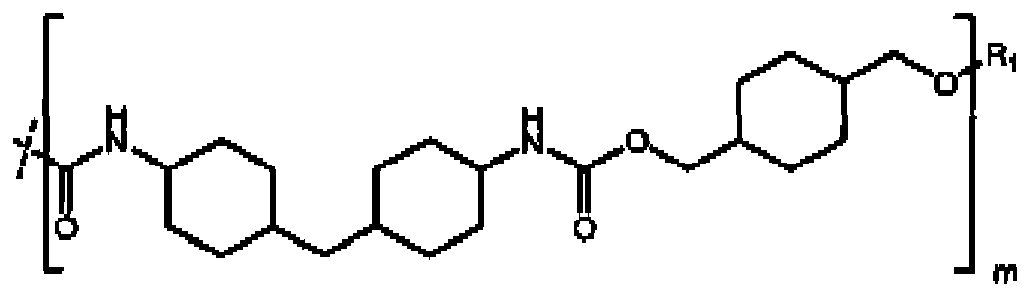
R1 représentant H ou R2,
R2 représentant
étant entendu que pour au maximum 50 % en poids des composés de formule (I) m = 0 et R1 = H. - Revêtement de peinture multicouche colorant et/ou à effet sur un subjectile, qui peut être produit par un procédé selon l'une quelconque des revendications 1 à 13.
Priority Applications (1)
| Application Number | Priority Date | Filing Date | Title |
|---|---|---|---|
| EP12705687.7A EP2678363B1 (fr) | 2011-02-24 | 2012-02-24 | Procédé de fabrication d'une peinture multicouche colorante et/ou à effet |
Applications Claiming Priority (4)
| Application Number | Priority Date | Filing Date | Title |
|---|---|---|---|
| US201161446064P | 2011-02-24 | 2011-02-24 | |
| EP11155808 | 2011-02-24 | ||
| EP12705687.7A EP2678363B1 (fr) | 2011-02-24 | 2012-02-24 | Procédé de fabrication d'une peinture multicouche colorante et/ou à effet |
| PCT/EP2012/053175 WO2012113914A1 (fr) | 2011-02-24 | 2012-02-24 | Procédé de fabrication d'une peinture multicouche colorante et/ou à effet |
Publications (2)
| Publication Number | Publication Date |
|---|---|
| EP2678363A1 EP2678363A1 (fr) | 2014-01-01 |
| EP2678363B1 true EP2678363B1 (fr) | 2014-12-24 |
Family
ID=46720122
Family Applications (1)
| Application Number | Title | Priority Date | Filing Date |
|---|---|---|---|
| EP12705687.7A Active EP2678363B1 (fr) | 2011-02-24 | 2012-02-24 | Procédé de fabrication d'une peinture multicouche colorante et/ou à effet |
Country Status (6)
| Country | Link |
|---|---|
| US (1) | US9187675B2 (fr) |
| EP (1) | EP2678363B1 (fr) |
| JP (1) | JP6008880B2 (fr) |
| KR (1) | KR101829499B1 (fr) |
| CN (1) | CN103403050B (fr) |
| WO (1) | WO2012113914A1 (fr) |
Families Citing this family (6)
| Publication number | Priority date | Publication date | Assignee | Title |
|---|---|---|---|---|
| JP6876714B2 (ja) * | 2016-03-14 | 2021-05-26 | ビーエーエスエフ コーティングス ゲゼルシャフト ミット ベシュレンクテル ハフツングBASF Coatings GmbH | ポリエーテルを主体としたヒドロキシ官能性反応生成物、および上記反応生成物を含む水性ベースコート材料 |
| CN109415593A (zh) * | 2016-06-15 | 2019-03-01 | 日涂汽车涂料有限公司 | 水性涂料组合物和使用其的金属外观涂膜的形成方法 |
| CN107793903B (zh) * | 2017-09-26 | 2020-01-14 | 中车青岛四方机车车辆股份有限公司 | 一种用于修复橡胶地板布的涂料组合物及其应用 |
| EP3928875A1 (fr) * | 2020-06-26 | 2021-12-29 | PPG Europe B.V. | Ensemble de pulvérisation de liquide et formulations liquides compatibles |
| WO2025153547A1 (fr) * | 2024-01-16 | 2025-07-24 | Basf Coatings Gmbh | Procédé de revêtement d'un substrat comportant des parties métalliques et en plastique |
| CN118956245B (zh) * | 2024-08-29 | 2025-10-03 | 信和新材料股份有限公司 | 一种用于炫彩漆的连接层组合物及其制备方法与应用 |
Family Cites Families (21)
| Publication number | Priority date | Publication date | Assignee | Title |
|---|---|---|---|---|
| GB1445104A (en) * | 1972-10-11 | 1976-08-04 | Ciba Geigy Ag | Pigment dispersions |
| DE3215876A1 (de) * | 1981-09-02 | 1983-03-17 | Bayer Ag, 5090 Leverkusen | Einschlussverbindungen, interkalationsverbindungen und feste loesungen farbiger organischer metallverbindungen |
| DE3545618A1 (de) | 1985-12-21 | 1987-06-25 | Basf Lacke & Farben | Wasserverduennbares ueberzugsmittel zur herstellung der basisschicht eines mehrschichtueberzuges |
| DE4010176A1 (de) * | 1990-03-30 | 1991-10-02 | Basf Lacke & Farben | Verfahren zur herstellung einer mehrschichtigen lackierung und waessriger lack |
| DE4107136A1 (de) | 1991-03-06 | 1992-09-10 | Basf Lacke & Farben | Verfahren zur herstellung einer mehrschichtigen, schuetzenden und/oder dekorativen lackierung |
| CA2127761C (fr) | 1993-07-16 | 2005-10-18 | Armin Gobel | Resines de polyurethane en dispersion aqueuse, methode pour leur fabrication, agents de revetement les contenant et leur utilisation |
| DE4437535A1 (de) | 1994-10-20 | 1996-04-25 | Basf Lacke & Farben | Polyurethanmodifziertes Polyacrylat |
| DE19930665A1 (de) | 1999-07-02 | 2001-01-11 | Basf Coatings Ag | Basislack und seine Verwendung zur Herstellung von farb- und/oder effektgebenden Basislackierungen und Mehrschichtlackierung |
| DE19945574A1 (de) | 1999-09-23 | 2001-04-05 | Basf Coatings Ag | Verwendung assoziativer Verdickungsmittel auf Polyurethanbasis und/oder von Dipropylenglykolmonoalkylethern zur Unterdrückung optischer Fehlstellen in farb- und/oder effektgebenden Mehrschichtlackierungen oder deren Reparaturlackierungen |
| DE19948004B4 (de) | 1999-10-06 | 2006-05-11 | Basf Coatings Ag | Polyurethane und Pfropfmischpolymerisate auf Polyurethanbasis sowie ihre Verwendung zur Herstellung von Beschichtungsstoffen, Klebstoffen und Dichtungsmassen |
| JP4650967B2 (ja) * | 2000-08-28 | 2011-03-16 | 株式会社Adeka | 増粘、粘性調整剤を含有する水系メタリックベース塗料組成物 |
| DE10043405C1 (de) | 2000-09-04 | 2002-06-27 | Basf Coatings Ag | Verfahren zur Herstellung farb- und/oder effektgebender Lackierungen |
| JP2002226542A (ja) | 2001-01-30 | 2002-08-14 | Asahi Denka Kogyo Kk | 増粘、粘性調整剤 |
| DE102005060302A1 (de) * | 2005-12-16 | 2007-06-28 | Basf Coatings Ag | Wässriger Beschichtungsstoff, Verfahren zu seiner Herstellung und seine Verwendung |
| US7803864B2 (en) * | 2006-01-05 | 2010-09-28 | Rohm And Haas Company | Associative thickener compositions and methods of use |
| JP5342235B2 (ja) * | 2006-07-18 | 2013-11-13 | 株式会社Adeka | 水系塗料組成物 |
| JP5594931B2 (ja) * | 2006-11-02 | 2014-09-24 | 関西ペイント株式会社 | 水性ベース塗料組成物 |
| JP5398153B2 (ja) * | 2007-02-16 | 2014-01-29 | 関西ペイント株式会社 | 着色塗料組成物 |
| JP5060202B2 (ja) * | 2007-08-09 | 2012-10-31 | 本田技研工業株式会社 | 光輝性塗膜形成方法 |
| WO2009075389A1 (fr) * | 2007-12-12 | 2009-06-18 | Kansai Paint Co., Ltd. | Compositions de peinture à base aqueuse |
| CN102471630B (zh) * | 2009-07-24 | 2015-03-25 | 关西涂料株式会社 | 水性涂料组合物以及用于形成多层涂膜的方法 |
-
2012
- 2012-02-24 JP JP2013554910A patent/JP6008880B2/ja active Active
- 2012-02-24 EP EP12705687.7A patent/EP2678363B1/fr active Active
- 2012-02-24 US US14/001,409 patent/US9187675B2/en active Active
- 2012-02-24 KR KR1020137025115A patent/KR101829499B1/ko not_active Expired - Fee Related
- 2012-02-24 WO PCT/EP2012/053175 patent/WO2012113914A1/fr not_active Ceased
- 2012-02-24 CN CN201280010096.9A patent/CN103403050B/zh active Active
Also Published As
| Publication number | Publication date |
|---|---|
| CN103403050A (zh) | 2013-11-20 |
| KR101829499B1 (ko) | 2018-02-14 |
| WO2012113914A1 (fr) | 2012-08-30 |
| JP6008880B2 (ja) | 2016-10-19 |
| US9187675B2 (en) | 2015-11-17 |
| KR20140012688A (ko) | 2014-02-03 |
| JP2014511266A (ja) | 2014-05-15 |
| EP2678363A1 (fr) | 2014-01-01 |
| CN103403050B (zh) | 2015-04-01 |
| US20150044478A1 (en) | 2015-02-12 |
Similar Documents
| Publication | Publication Date | Title |
|---|---|---|
| EP3178864B1 (fr) | Produits de reaction a base de polyether a fonction carboxy et appret en base aqueuse contenant les produits de reaction | |
| EP3402852B1 (fr) | Produits de réaction à base de polyéther à fonction carboxy et apprêt en base aqueuse contenant les produits de réaction | |
| EP3387039B1 (fr) | Produits de reaction a base de polyether a fonction carboxy et appret en base aqueuse contenant les produits de reaction | |
| EP3164433B1 (fr) | Produits de réaction à base de polyéther à fonction carboxy et apprêt en base aqueuse contenant les produits de réaction | |
| EP3164444B1 (fr) | Produits de réaction à base de polyéther et apprêt en base aqueuse contenant les produits de réaction | |
| EP2678365B1 (fr) | Procédé de fabrication d'un laquage multicouche colorant et/ou à effet | |
| EP3164438B1 (fr) | Produits de réaction et apprêt en base aqueuse contenant les produits de réaction | |
| EP3164457B1 (fr) | Produits de réaction à base d'acides gras dimères à fonction carboxy et apprêt en base aqueuse contenant les produits de réaction | |
| EP2678363B1 (fr) | Procédé de fabrication d'une peinture multicouche colorante et/ou à effet | |
| WO2015024710A1 (fr) | Produit de réaction contenant des acides gras dimères et agent de revêtement contenant ledit produit de réaction | |
| EP3039090B1 (fr) | Réactif de polyéther d'acides gras dimères et produit de revêtement contenant le réactif | |
| EP2820091B1 (fr) | Procédé de réalisation d'une peinture multicouche conférant une coloration et/ou des effets | |
| EP3164434B1 (fr) | Produits de réaction à base de polyéther et apprêt en base aqueuse contenant les produits de réaction | |
| EP2898023B1 (fr) | Procédé de production et de retouche d'une peinture multicouche de couleur et/ou à effets | |
| EP3039053B1 (fr) | Réactif de dimerdiol d'acides gras dimères et son utilisation dans des produits de revêtement | |
| DE102012215127A1 (de) | Verfahren zur Herstellung einer farb-und/oder effektgebenden mehrschichtigen Lackierung | |
| EP2898024B1 (fr) | Procédé de production et de retouche d'une peinture multicouche de couleur et/ou à effets | |
| EP2729538B1 (fr) | Procédé de fabrication d'une peinture multicouche colorante et/ou à effet | |
| EP2882813B1 (fr) | Procédé de production d'un laquage multicouche colorant ou à effet |
Legal Events
| Date | Code | Title | Description |
|---|---|---|---|
| PUAI | Public reference made under article 153(3) epc to a published international application that has entered the european phase |
Free format text: ORIGINAL CODE: 0009012 |
|
| 17P | Request for examination filed |
Effective date: 20130924 |
|
| AK | Designated contracting states |
Kind code of ref document: A1 Designated state(s): AL AT BE BG CH CY CZ DE DK EE ES FI FR GB GR HR HU IE IS IT LI LT LU LV MC MK MT NL NO PL PT RO RS SE SI SK SM TR |
|
| DAX | Request for extension of the european patent (deleted) | ||
| GRAP | Despatch of communication of intention to grant a patent |
Free format text: ORIGINAL CODE: EPIDOSNIGR1 |
|
| INTG | Intention to grant announced |
Effective date: 20140717 |
|
| GRAS | Grant fee paid |
Free format text: ORIGINAL CODE: EPIDOSNIGR3 |
|
| GRAA | (expected) grant |
Free format text: ORIGINAL CODE: 0009210 |
|
| AK | Designated contracting states |
Kind code of ref document: B1 Designated state(s): AL AT BE BG CH CY CZ DE DK EE ES FI FR GB GR HR HU IE IS IT LI LT LU LV MC MK MT NL NO PL PT RO RS SE SI SK SM TR |
|
| REG | Reference to a national code |
Ref country code: GB Ref legal event code: FG4D Free format text: NOT ENGLISH |
|
| REG | Reference to a national code |
Ref country code: CH Ref legal event code: EP |
|
| REG | Reference to a national code |
Ref country code: IE Ref legal event code: FG4D Free format text: LANGUAGE OF EP DOCUMENT: GERMAN |
|
| REG | Reference to a national code |
Ref country code: AT Ref legal event code: REF Ref document number: 703095 Country of ref document: AT Kind code of ref document: T Effective date: 20150115 |
|
| REG | Reference to a national code |
Ref country code: DE Ref legal event code: R096 Ref document number: 502012001900 Country of ref document: DE Effective date: 20150212 |
|
| REG | Reference to a national code |
Ref country code: NL Ref legal event code: VDEP Effective date: 20141224 |
|
| PG25 | Lapsed in a contracting state [announced via postgrant information from national office to epo] |
Ref country code: FI Free format text: LAPSE BECAUSE OF FAILURE TO SUBMIT A TRANSLATION OF THE DESCRIPTION OR TO PAY THE FEE WITHIN THE PRESCRIBED TIME-LIMIT Effective date: 20141224 Ref country code: LT Free format text: LAPSE BECAUSE OF FAILURE TO SUBMIT A TRANSLATION OF THE DESCRIPTION OR TO PAY THE FEE WITHIN THE PRESCRIBED TIME-LIMIT Effective date: 20141224 Ref country code: NO Free format text: LAPSE BECAUSE OF FAILURE TO SUBMIT A TRANSLATION OF THE DESCRIPTION OR TO PAY THE FEE WITHIN THE PRESCRIBED TIME-LIMIT Effective date: 20150324 |
|
| REG | Reference to a national code |
Ref country code: LT Ref legal event code: MG4D |
|
| PG25 | Lapsed in a contracting state [announced via postgrant information from national office to epo] |
Ref country code: SE Free format text: LAPSE BECAUSE OF FAILURE TO SUBMIT A TRANSLATION OF THE DESCRIPTION OR TO PAY THE FEE WITHIN THE PRESCRIBED TIME-LIMIT Effective date: 20141224 Ref country code: RS Free format text: LAPSE BECAUSE OF FAILURE TO SUBMIT A TRANSLATION OF THE DESCRIPTION OR TO PAY THE FEE WITHIN THE PRESCRIBED TIME-LIMIT Effective date: 20141224 Ref country code: LV Free format text: LAPSE BECAUSE OF FAILURE TO SUBMIT A TRANSLATION OF THE DESCRIPTION OR TO PAY THE FEE WITHIN THE PRESCRIBED TIME-LIMIT Effective date: 20141224 Ref country code: GR Free format text: LAPSE BECAUSE OF FAILURE TO SUBMIT A TRANSLATION OF THE DESCRIPTION OR TO PAY THE FEE WITHIN THE PRESCRIBED TIME-LIMIT Effective date: 20150325 Ref country code: HR Free format text: LAPSE BECAUSE OF FAILURE TO SUBMIT A TRANSLATION OF THE DESCRIPTION OR TO PAY THE FEE WITHIN THE PRESCRIBED TIME-LIMIT Effective date: 20141224 |
|
| PG25 | Lapsed in a contracting state [announced via postgrant information from national office to epo] |
Ref country code: NL Free format text: LAPSE BECAUSE OF FAILURE TO SUBMIT A TRANSLATION OF THE DESCRIPTION OR TO PAY THE FEE WITHIN THE PRESCRIBED TIME-LIMIT Effective date: 20141224 |
|
| PG25 | Lapsed in a contracting state [announced via postgrant information from national office to epo] |
Ref country code: SK Free format text: LAPSE BECAUSE OF FAILURE TO SUBMIT A TRANSLATION OF THE DESCRIPTION OR TO PAY THE FEE WITHIN THE PRESCRIBED TIME-LIMIT Effective date: 20141224 Ref country code: ES Free format text: LAPSE BECAUSE OF FAILURE TO SUBMIT A TRANSLATION OF THE DESCRIPTION OR TO PAY THE FEE WITHIN THE PRESCRIBED TIME-LIMIT Effective date: 20141224 Ref country code: CZ Free format text: LAPSE BECAUSE OF FAILURE TO SUBMIT A TRANSLATION OF THE DESCRIPTION OR TO PAY THE FEE WITHIN THE PRESCRIBED TIME-LIMIT Effective date: 20141224 Ref country code: RO Free format text: LAPSE BECAUSE OF FAILURE TO SUBMIT A TRANSLATION OF THE DESCRIPTION OR TO PAY THE FEE WITHIN THE PRESCRIBED TIME-LIMIT Effective date: 20141224 Ref country code: EE Free format text: LAPSE BECAUSE OF FAILURE TO SUBMIT A TRANSLATION OF THE DESCRIPTION OR TO PAY THE FEE WITHIN THE PRESCRIBED TIME-LIMIT Effective date: 20141224 |
|
| PG25 | Lapsed in a contracting state [announced via postgrant information from national office to epo] |
Ref country code: IS Free format text: LAPSE BECAUSE OF FAILURE TO SUBMIT A TRANSLATION OF THE DESCRIPTION OR TO PAY THE FEE WITHIN THE PRESCRIBED TIME-LIMIT Effective date: 20150424 Ref country code: PL Free format text: LAPSE BECAUSE OF FAILURE TO SUBMIT A TRANSLATION OF THE DESCRIPTION OR TO PAY THE FEE WITHIN THE PRESCRIBED TIME-LIMIT Effective date: 20141224 |
|
| REG | Reference to a national code |
Ref country code: DE Ref legal event code: R097 Ref document number: 502012001900 Country of ref document: DE |
|
| PG25 | Lapsed in a contracting state [announced via postgrant information from national office to epo] |
Ref country code: LU Free format text: LAPSE BECAUSE OF FAILURE TO SUBMIT A TRANSLATION OF THE DESCRIPTION OR TO PAY THE FEE WITHIN THE PRESCRIBED TIME-LIMIT Effective date: 20150224 |
|
| REG | Reference to a national code |
Ref country code: CH Ref legal event code: PL |
|
| PG25 | Lapsed in a contracting state [announced via postgrant information from national office to epo] |
Ref country code: DK Free format text: LAPSE BECAUSE OF FAILURE TO SUBMIT A TRANSLATION OF THE DESCRIPTION OR TO PAY THE FEE WITHIN THE PRESCRIBED TIME-LIMIT Effective date: 20141224 Ref country code: MC Free format text: LAPSE BECAUSE OF FAILURE TO SUBMIT A TRANSLATION OF THE DESCRIPTION OR TO PAY THE FEE WITHIN THE PRESCRIBED TIME-LIMIT Effective date: 20141224 Ref country code: CH Free format text: LAPSE BECAUSE OF NON-PAYMENT OF DUE FEES Effective date: 20150228 Ref country code: LI Free format text: LAPSE BECAUSE OF NON-PAYMENT OF DUE FEES Effective date: 20150228 |
|
| PLBE | No opposition filed within time limit |
Free format text: ORIGINAL CODE: 0009261 |
|
| STAA | Information on the status of an ep patent application or granted ep patent |
Free format text: STATUS: NO OPPOSITION FILED WITHIN TIME LIMIT |
|
| REG | Reference to a national code |
Ref country code: IE Ref legal event code: MM4A |
|
| 26N | No opposition filed |
Effective date: 20150925 |
|
| PG25 | Lapsed in a contracting state [announced via postgrant information from national office to epo] |
Ref country code: IE Free format text: LAPSE BECAUSE OF NON-PAYMENT OF DUE FEES Effective date: 20150224 |
|
| PG25 | Lapsed in a contracting state [announced via postgrant information from national office to epo] |
Ref country code: SI Free format text: LAPSE BECAUSE OF FAILURE TO SUBMIT A TRANSLATION OF THE DESCRIPTION OR TO PAY THE FEE WITHIN THE PRESCRIBED TIME-LIMIT Effective date: 20141224 |
|
| REG | Reference to a national code |
Ref country code: FR Ref legal event code: PLFP Year of fee payment: 5 |
|
| GBPC | Gb: european patent ceased through non-payment of renewal fee |
Effective date: 20160224 |
|
| PG25 | Lapsed in a contracting state [announced via postgrant information from national office to epo] |
Ref country code: MT Free format text: LAPSE BECAUSE OF FAILURE TO SUBMIT A TRANSLATION OF THE DESCRIPTION OR TO PAY THE FEE WITHIN THE PRESCRIBED TIME-LIMIT Effective date: 20141224 |
|
| PG25 | Lapsed in a contracting state [announced via postgrant information from national office to epo] |
Ref country code: GB Free format text: LAPSE BECAUSE OF NON-PAYMENT OF DUE FEES Effective date: 20160224 |
|
| REG | Reference to a national code |
Ref country code: FR Ref legal event code: PLFP Year of fee payment: 6 |
|
| PG25 | Lapsed in a contracting state [announced via postgrant information from national office to epo] |
Ref country code: BG Free format text: LAPSE BECAUSE OF FAILURE TO SUBMIT A TRANSLATION OF THE DESCRIPTION OR TO PAY THE FEE WITHIN THE PRESCRIBED TIME-LIMIT Effective date: 20141224 Ref country code: HU Free format text: LAPSE BECAUSE OF FAILURE TO SUBMIT A TRANSLATION OF THE DESCRIPTION OR TO PAY THE FEE WITHIN THE PRESCRIBED TIME-LIMIT; INVALID AB INITIO Effective date: 20120224 Ref country code: SM Free format text: LAPSE BECAUSE OF FAILURE TO SUBMIT A TRANSLATION OF THE DESCRIPTION OR TO PAY THE FEE WITHIN THE PRESCRIBED TIME-LIMIT Effective date: 20141224 |
|
| PG25 | Lapsed in a contracting state [announced via postgrant information from national office to epo] |
Ref country code: CY Free format text: LAPSE BECAUSE OF FAILURE TO SUBMIT A TRANSLATION OF THE DESCRIPTION OR TO PAY THE FEE WITHIN THE PRESCRIBED TIME-LIMIT Effective date: 20141224 |
|
| PG25 | Lapsed in a contracting state [announced via postgrant information from national office to epo] |
Ref country code: BE Free format text: LAPSE BECAUSE OF NON-PAYMENT OF DUE FEES Effective date: 20150228 Ref country code: PT Free format text: LAPSE BECAUSE OF FAILURE TO SUBMIT A TRANSLATION OF THE DESCRIPTION OR TO PAY THE FEE WITHIN THE PRESCRIBED TIME-LIMIT Effective date: 20150424 |
|
| PG25 | Lapsed in a contracting state [announced via postgrant information from national office to epo] |
Ref country code: TR Free format text: LAPSE BECAUSE OF FAILURE TO SUBMIT A TRANSLATION OF THE DESCRIPTION OR TO PAY THE FEE WITHIN THE PRESCRIBED TIME-LIMIT Effective date: 20141224 |
|
| REG | Reference to a national code |
Ref country code: FR Ref legal event code: PLFP Year of fee payment: 7 |
|
| REG | Reference to a national code |
Ref country code: AT Ref legal event code: MM01 Ref document number: 703095 Country of ref document: AT Kind code of ref document: T Effective date: 20170224 |
|
| PG25 | Lapsed in a contracting state [announced via postgrant information from national office to epo] |
Ref country code: AT Free format text: LAPSE BECAUSE OF NON-PAYMENT OF DUE FEES Effective date: 20170224 |
|
| PG25 | Lapsed in a contracting state [announced via postgrant information from national office to epo] |
Ref country code: MK Free format text: LAPSE BECAUSE OF FAILURE TO SUBMIT A TRANSLATION OF THE DESCRIPTION OR TO PAY THE FEE WITHIN THE PRESCRIBED TIME-LIMIT Effective date: 20141224 |
|
| PG25 | Lapsed in a contracting state [announced via postgrant information from national office to epo] |
Ref country code: AL Free format text: LAPSE BECAUSE OF FAILURE TO SUBMIT A TRANSLATION OF THE DESCRIPTION OR TO PAY THE FEE WITHIN THE PRESCRIBED TIME-LIMIT Effective date: 20141224 |
|
| PGFP | Annual fee paid to national office [announced via postgrant information from national office to epo] |
Ref country code: DE Payment date: 20260220 Year of fee payment: 15 |
|
| PGFP | Annual fee paid to national office [announced via postgrant information from national office to epo] |
Ref country code: IT Payment date: 20260220 Year of fee payment: 15 |
|
| PGFP | Annual fee paid to national office [announced via postgrant information from national office to epo] |
Ref country code: FR Payment date: 20260227 Year of fee payment: 15 |