EP2682454A1 - Procédé et composition d'infusion d'un ingrédient actif dans des tissus et utilisation d'un agent liant pour les microcapsules de ladite composition - Google Patents
Procédé et composition d'infusion d'un ingrédient actif dans des tissus et utilisation d'un agent liant pour les microcapsules de ladite composition Download PDFInfo
- Publication number
- EP2682454A1 EP2682454A1 EP12004957.2A EP12004957A EP2682454A1 EP 2682454 A1 EP2682454 A1 EP 2682454A1 EP 12004957 A EP12004957 A EP 12004957A EP 2682454 A1 EP2682454 A1 EP 2682454A1
- Authority
- EP
- European Patent Office
- Prior art keywords
- microcapsules
- active ingredient
- clothes
- cloths
- binder agent
- Prior art date
- Legal status (The legal status is an assumption and is not a legal conclusion. Google has not performed a legal analysis and makes no representation as to the accuracy of the status listed.)
- Withdrawn
Links
- 239000003094 microcapsule Substances 0.000 title claims abstract description 111
- 239000011230 binding agent Substances 0.000 title claims abstract description 53
- 239000004480 active ingredient Substances 0.000 title claims abstract description 40
- 238000000034 method Methods 0.000 title claims abstract description 31
- 239000000203 mixture Substances 0.000 title claims abstract description 26
- 239000003795 chemical substances by application Substances 0.000 title claims abstract description 23
- 238000005406 washing Methods 0.000 claims abstract description 50
- KDYFGRWQOYBRFD-UHFFFAOYSA-N succinic acid Chemical compound OC(=O)CCC(O)=O KDYFGRWQOYBRFD-UHFFFAOYSA-N 0.000 claims abstract description 39
- 239000001384 succinic acid Substances 0.000 claims abstract description 24
- 238000007669 thermal treatment Methods 0.000 claims abstract description 14
- 239000002245 particle Substances 0.000 claims abstract description 9
- XLYOFNOQVPJJNP-UHFFFAOYSA-N water Substances O XLYOFNOQVPJJNP-UHFFFAOYSA-N 0.000 claims abstract description 6
- 239000004744 fabric Substances 0.000 claims description 50
- 239000003205 fragrance Substances 0.000 claims description 20
- 238000010409 ironing Methods 0.000 claims description 11
- WSFSSNUMVMOOMR-UHFFFAOYSA-N Formaldehyde Chemical compound O=C WSFSSNUMVMOOMR-UHFFFAOYSA-N 0.000 claims description 6
- 230000000844 anti-bacterial effect Effects 0.000 claims description 4
- 230000001442 anti-mosquito Effects 0.000 claims description 4
- 239000012528 membrane Substances 0.000 claims description 4
- 238000012695 Interfacial polymerization Methods 0.000 claims description 3
- 229920000877 Melamine resin Polymers 0.000 claims description 3
- 239000002537 cosmetic Substances 0.000 claims description 3
- 239000008346 aqueous phase Substances 0.000 claims description 2
- 239000002775 capsule Substances 0.000 claims description 2
- 239000000171 lavandula angustifolia l. flower oil Substances 0.000 claims description 2
- JDSHMPZPIAZGSV-UHFFFAOYSA-N melamine Chemical compound NC1=NC(N)=NC(N)=N1 JDSHMPZPIAZGSV-UHFFFAOYSA-N 0.000 claims description 2
- 239000000178 monomer Substances 0.000 claims description 2
- 239000004615 ingredient Substances 0.000 abstract description 2
- 238000002156 mixing Methods 0.000 abstract 1
- 239000004753 textile Substances 0.000 description 15
- 239000002304 perfume Substances 0.000 description 14
- 238000012360 testing method Methods 0.000 description 14
- 239000002253 acid Substances 0.000 description 11
- 230000000694 effects Effects 0.000 description 11
- 229920000742 Cotton Polymers 0.000 description 10
- 150000007513 acids Chemical class 0.000 description 10
- 238000011282 treatment Methods 0.000 description 10
- HFVMEOPYDLEHBR-UHFFFAOYSA-N (2-fluorophenyl)-phenylmethanol Chemical compound C=1C=CC=C(F)C=1C(O)C1=CC=CC=C1 HFVMEOPYDLEHBR-UHFFFAOYSA-N 0.000 description 8
- 239000000835 fiber Substances 0.000 description 7
- 239000002351 wastewater Substances 0.000 description 7
- 239000004925 Acrylic resin Substances 0.000 description 5
- 229920000178 Acrylic resin Polymers 0.000 description 5
- 239000003599 detergent Substances 0.000 description 5
- 239000006185 dispersion Substances 0.000 description 5
- 238000004132 cross linking Methods 0.000 description 4
- 238000004626 scanning electron microscopy Methods 0.000 description 4
- 229920005822 acrylic binder Polymers 0.000 description 3
- 230000007423 decrease Effects 0.000 description 3
- 238000004900 laundering Methods 0.000 description 3
- 239000000463 material Substances 0.000 description 3
- 238000005259 measurement Methods 0.000 description 3
- 230000002035 prolonged effect Effects 0.000 description 3
- 239000000654 additive Substances 0.000 description 2
- 239000003054 catalyst Substances 0.000 description 2
- 238000005538 encapsulation Methods 0.000 description 2
- 238000004519 manufacturing process Methods 0.000 description 2
- 239000011347 resin Substances 0.000 description 2
- 229920005989 resin Polymers 0.000 description 2
- 238000003860 storage Methods 0.000 description 2
- 238000004383 yellowing Methods 0.000 description 2
- 239000010457 zeolite Substances 0.000 description 2
- RLHGFJMGWQXPBW-UHFFFAOYSA-N 2-hydroxy-3-(1h-imidazol-5-ylmethyl)benzamide Chemical compound NC(=O)C1=CC=CC(CC=2NC=NC=2)=C1O RLHGFJMGWQXPBW-UHFFFAOYSA-N 0.000 description 1
- 229920001634 Copolyester Polymers 0.000 description 1
- 239000001856 Ethyl cellulose Substances 0.000 description 1
- ZZSNKZQZMQGXPY-UHFFFAOYSA-N Ethyl cellulose Chemical compound CCOCC1OC(OC)C(OCC)C(OCC)C1OC1C(O)C(O)C(OC)C(CO)O1 ZZSNKZQZMQGXPY-UHFFFAOYSA-N 0.000 description 1
- 244000178870 Lavandula angustifolia Species 0.000 description 1
- 235000010663 Lavandula angustifolia Nutrition 0.000 description 1
- 239000004909 Moisturizer Substances 0.000 description 1
- 229910021536 Zeolite Inorganic materials 0.000 description 1
- NIXOWILDQLNWCW-UHFFFAOYSA-N acrylic acid group Chemical group C(C=C)(=O)O NIXOWILDQLNWCW-UHFFFAOYSA-N 0.000 description 1
- 238000004458 analytical method Methods 0.000 description 1
- 239000007864 aqueous solution Substances 0.000 description 1
- 235000019568 aromas Nutrition 0.000 description 1
- 230000009286 beneficial effect Effects 0.000 description 1
- 230000015572 biosynthetic process Effects 0.000 description 1
- 239000007767 bonding agent Substances 0.000 description 1
- 150000001735 carboxylic acids Chemical class 0.000 description 1
- 239000012876 carrier material Substances 0.000 description 1
- 238000003889 chemical engineering Methods 0.000 description 1
- 239000011248 coating agent Substances 0.000 description 1
- 238000000576 coating method Methods 0.000 description 1
- 239000012141 concentrate Substances 0.000 description 1
- 230000003247 decreasing effect Effects 0.000 description 1
- 230000008021 deposition Effects 0.000 description 1
- 238000011161 development Methods 0.000 description 1
- HNPSIPDUKPIQMN-UHFFFAOYSA-N dioxosilane;oxo(oxoalumanyloxy)alumane Chemical compound O=[Si]=O.O=[Al]O[Al]=O HNPSIPDUKPIQMN-UHFFFAOYSA-N 0.000 description 1
- 239000012153 distilled water Substances 0.000 description 1
- 238000009826 distribution Methods 0.000 description 1
- 238000005008 domestic process Methods 0.000 description 1
- 238000001035 drying Methods 0.000 description 1
- 239000000839 emulsion Substances 0.000 description 1
- 239000003822 epoxy resin Substances 0.000 description 1
- 235000019325 ethyl cellulose Nutrition 0.000 description 1
- 229920001249 ethyl cellulose Polymers 0.000 description 1
- 238000001704 evaporation Methods 0.000 description 1
- 230000008020 evaporation Effects 0.000 description 1
- 230000003203 everyday effect Effects 0.000 description 1
- 239000006260 foam Substances 0.000 description 1
- IVJISJACKSSFGE-UHFFFAOYSA-N formaldehyde;1,3,5-triazine-2,4,6-triamine Chemical compound O=C.NC1=NC(N)=NC(N)=N1 IVJISJACKSSFGE-UHFFFAOYSA-N 0.000 description 1
- 239000011521 glass Substances 0.000 description 1
- JUWSSMXCCAMYGX-UHFFFAOYSA-N gold platinum Chemical compound [Pt].[Au] JUWSSMXCCAMYGX-UHFFFAOYSA-N 0.000 description 1
- 230000002209 hydrophobic effect Effects 0.000 description 1
- 239000001102 lavandula vera Substances 0.000 description 1
- 235000018219 lavender Nutrition 0.000 description 1
- 230000005923 long-lasting effect Effects 0.000 description 1
- 230000007774 longterm Effects 0.000 description 1
- 238000001000 micrograph Methods 0.000 description 1
- 230000001333 moisturizer Effects 0.000 description 1
- 239000003921 oil Substances 0.000 description 1
- 235000020825 overweight Nutrition 0.000 description 1
- 150000002978 peroxides Chemical class 0.000 description 1
- 230000002085 persistent effect Effects 0.000 description 1
- 229920000647 polyepoxide Polymers 0.000 description 1
- 229920000642 polymer Polymers 0.000 description 1
- 229920001282 polysaccharide Polymers 0.000 description 1
- 229920002635 polyurethane Polymers 0.000 description 1
- 239000004814 polyurethane Substances 0.000 description 1
- 230000001681 protective effect Effects 0.000 description 1
- 238000011160 research Methods 0.000 description 1
- 230000009291 secondary effect Effects 0.000 description 1
- 229920002050 silicone resin Polymers 0.000 description 1
- 239000000243 solution Substances 0.000 description 1
- 239000000126 substance Substances 0.000 description 1
- 238000003786 synthesis reaction Methods 0.000 description 1
Images


Classifications
-
- C—CHEMISTRY; METALLURGY
- C11—ANIMAL OR VEGETABLE OILS, FATS, FATTY SUBSTANCES OR WAXES; FATTY ACIDS THEREFROM; DETERGENTS; CANDLES
- C11D—DETERGENT COMPOSITIONS; USE OF SINGLE SUBSTANCES AS DETERGENTS; SOAP OR SOAP-MAKING; RESIN SOAPS; RECOVERY OF GLYCEROL
- C11D3/00—Other compounding ingredients of detergent compositions covered in group C11D1/00
- C11D3/16—Organic compounds
- C11D3/20—Organic compounds containing oxygen
- C11D3/2075—Carboxylic acids-salts thereof
- C11D3/2082—Polycarboxylic acids-salts thereof
-
- C—CHEMISTRY; METALLURGY
- C11—ANIMAL OR VEGETABLE OILS, FATS, FATTY SUBSTANCES OR WAXES; FATTY ACIDS THEREFROM; DETERGENTS; CANDLES
- C11D—DETERGENT COMPOSITIONS; USE OF SINGLE SUBSTANCES AS DETERGENTS; SOAP OR SOAP-MAKING; RESIN SOAPS; RECOVERY OF GLYCEROL
- C11D17/00—Detergent materials or soaps characterised by their shape or physical properties
- C11D17/0039—Coated compositions or coated components in the compositions, (micro)capsules
-
- C—CHEMISTRY; METALLURGY
- C11—ANIMAL OR VEGETABLE OILS, FATS, FATTY SUBSTANCES OR WAXES; FATTY ACIDS THEREFROM; DETERGENTS; CANDLES
- C11D—DETERGENT COMPOSITIONS; USE OF SINGLE SUBSTANCES AS DETERGENTS; SOAP OR SOAP-MAKING; RESIN SOAPS; RECOVERY OF GLYCEROL
- C11D3/00—Other compounding ingredients of detergent compositions covered in group C11D1/00
- C11D3/50—Perfumes
- C11D3/502—Protected perfumes
- C11D3/505—Protected perfumes encapsulated or adsorbed on a carrier, e.g. zeolite or clay
-
- C—CHEMISTRY; METALLURGY
- C11—ANIMAL OR VEGETABLE OILS, FATS, FATTY SUBSTANCES OR WAXES; FATTY ACIDS THEREFROM; DETERGENTS; CANDLES
- C11D—DETERGENT COMPOSITIONS; USE OF SINGLE SUBSTANCES AS DETERGENTS; SOAP OR SOAP-MAKING; RESIN SOAPS; RECOVERY OF GLYCEROL
- C11D7/00—Compositions of detergents based essentially on non-surface-active compounds
- C11D7/22—Organic compounds
- C11D7/26—Organic compounds containing oxygen
- C11D7/265—Carboxylic acids or salts thereof
-
- D—TEXTILES; PAPER
- D06—TREATMENT OF TEXTILES OR THE LIKE; LAUNDERING; FLEXIBLE MATERIALS NOT OTHERWISE PROVIDED FOR
- D06M—TREATMENT, NOT PROVIDED FOR ELSEWHERE IN CLASS D06, OF FIBRES, THREADS, YARNS, FABRICS, FEATHERS OR FIBROUS GOODS MADE FROM SUCH MATERIALS
- D06M13/00—Treating fibres, threads, yarns, fabrics or fibrous goods made from such materials, with non-macromolecular organic compounds; Such treatment combined with mechanical treatment
- D06M13/10—Treating fibres, threads, yarns, fabrics or fibrous goods made from such materials, with non-macromolecular organic compounds; Such treatment combined with mechanical treatment with compounds containing oxygen
- D06M13/184—Carboxylic acids; Anhydrides, halides or salts thereof
- D06M13/192—Polycarboxylic acids; Anhydrides, halides or salts thereof
-
- D—TEXTILES; PAPER
- D06—TREATMENT OF TEXTILES OR THE LIKE; LAUNDERING; FLEXIBLE MATERIALS NOT OTHERWISE PROVIDED FOR
- D06M—TREATMENT, NOT PROVIDED FOR ELSEWHERE IN CLASS D06, OF FIBRES, THREADS, YARNS, FABRICS, FEATHERS OR FIBROUS GOODS MADE FROM SUCH MATERIALS
- D06M23/00—Treatment of fibres, threads, yarns, fabrics or fibrous goods made from such materials, characterised by the process
- D06M23/12—Processes in which the treating agent is incorporated in microcapsules
-
- C—CHEMISTRY; METALLURGY
- C11—ANIMAL OR VEGETABLE OILS, FATS, FATTY SUBSTANCES OR WAXES; FATTY ACIDS THEREFROM; DETERGENTS; CANDLES
- C11D—DETERGENT COMPOSITIONS; USE OF SINGLE SUBSTANCES AS DETERGENTS; SOAP OR SOAP-MAKING; RESIN SOAPS; RECOVERY OF GLYCEROL
- C11D2111/00—Cleaning compositions characterised by the objects to be cleaned; Cleaning compositions characterised by non-standard cleaning or washing processes
- C11D2111/10—Objects to be cleaned
- C11D2111/12—Soft surfaces, e.g. textile
Definitions
- the present invention relates in general in a first aspect, to a method to infuse an active ingredient into textiles by means of microencapsulation, and in particular, to a method to infuse fragrances into clothes.
- a second aspect of the invention relates to a composition containing a microencapsulated active ingredient (such a fragrance) prepared for gradual release of the active ingredient on laundered clothes either in a washing machine or in hand washing.
- a microencapsulated active ingredient such as a fragrance
- the invention also proposes the use of a binder agent for applying microcapsules containing an active ingredient on laundry either in a washing machine or in hand washing.
- EP 2342628 uses aqueous emulsions in the shape of foam for recharging textiles.
- Cognis uses oil mixtures in aqueous solutions to treat textiles in order to obtain beneficial effects for the human skin, but after the first wash the effect decreases.
- WO 2006/113091 includes the fragrance in a dispenser to be added in the tumble dryer; the product is mixed with a carrier that reacts at a certain temperature (170° F) infusing the fragrance onto the textile.
- microcapsules applied to textiles are based on non reactive shells.
- some auxiliary products are required to join microcapsules to the fibre surface, see Nelson G., 2001 "Microencapsulates in textile finising", Rev. Prog Color 31, 57-64 ; they are usually based on acrylic, polyurethanes, or silicone resins ( Li et al, 2008 "Effect of finishing methods on washing durability of microencapsulated aroma finishing”. Journal of the textile institute 99.2.177-183 , Rodrigues et al, 2009 "Microencapsulated perfumes for textile application", Chemical Engineering Journal 149.2009.463-472 ).
- the invention develops a method to infuse an active ingredient into textiles by means of microencapsulation, and in particular, to a method to infuse fragrances into clothes.
- the invention also proposes a composition formed by scented microcapsules and a binder agent, suitable for household washing machines, that reloads microcapsules on textiles.
- a composition formed by scented microcapsules and a binder agent suitable for household washing machines, that reloads microcapsules on textiles.
- the perfume durability linked to several textile compositions are also determined, as well as its effectiveness depending on the final use of the garment.
- composition is used while laundering, so that the microcapsules are introduced into fabric yarns.
- the resulting laundered textiles can be used as normal and the active ingredient will be released gradually from friction in everyday use of the garment.
- the method of the invention is intended for gradual release of an active ingredient (such as a fragrance or scented material) on laundered cloths either in a washing machine or by hand washing comprising as already known in the art:
- an active ingredient such as a fragrance or scented material
- succinic acid as a binder agent has been added blended with the microcapsules to bond the microcapsules to the clothes and then said clothes with microcapsules are submitted to a thermal treatment in order to provide a suitable curing of the binder agent.
- thermal treatment of the binder agent comprises curing it at about 150oC by ironing the clothes. Curing can be provided alternatively with tumble dryer.
- the active ingredient is selected among a fragrance, an anti-bacterial, an anti-mosquito, a moisturizer or a blend thereof.
- microencapsulation is carried on by an interfacial polymerization process (well know in the art) obtaining microcapsules with a membrane is formed using two monomers by preparing a pre-condensed using melamine and formaldehyde in aqueous phase.
- the wall of the microcapsule is a membrane allowing evaporation through it of said active ingredient.
- the size of said membrane ranges from 0.5 to 150 nanomicrometres.
- composition of the invention to infuse an active ingredient into cloths has been prepared to be used in domestic laundry either in a washing machine or in hand washing for gradual release of the active ingredient on laundered cloths and comprises microcapsules containing said active ingredient (selected among a fragrance, an anti-bacterial, an anti-mosquito, a cosmetic, a lavender oil or blend thereof) and a binder agent to adhere said microcapsules to the cloth fibres , so that said active ingredient is gradually delivered to the cloths trough the capsule wall, the composition comprising a microencapsulated active ingredient and succinic acid as a binder agent blended together.
- microcapsules containing said active ingredient selected among a fragrance, an anti-bacterial, an anti-mosquito, a cosmetic, a lavender oil or blend thereof
- a binder agent to adhere said microcapsules to the cloth fibres
- the binder agent should be cured at about 150oC for example by ironing.
- the microcapsules have a size between 2 to 20 microns.
- microcapsules have a size between 3-8 microns.
- the invention also teaches the use of succinic acid as a binder agent for microcapsules containing an active ingredient for applying said microcapsules on laundered cloths either in a washing machine or by hand washing.
- the present invention shows that scented perfume microcapsules developed by interfacial polymerization with an average size of 8 microns blended together with a binder agent are capable to bond to the textile surface and may last for several washes, releasing the microencapsulated fragrance gradually.
- Embodiments of the invention solve the problem of fragrance durability on clothes by creating a microencapsulated product that can be incorporated in domestic washing machines, making it possible for customers to recharge them for prolonging the fragrance or functional effects.
- This invention is the result of a search directed to found a suitable binder agent for microcapsules containing an active ingredient for applying said microcapsules on laundered cloths either in a washing machine or by hand washing, providing a good adhesion and permanence of the microcapsules bonded to the fibres when they are pasted onto the fabric while clothes are washed and resisting a high number of laundry cycles with the microcapsules remaining on the fabric.
- Microcapsules (CENTER FINISH 164/02 LAVANDA) were supplied by COLOR CENTER (Tarrasa, Spain). The wall material was melamine formaldehyde, and the microcapsules contained lavender fragrance. No further information was supplied by the provider. In order to bond the microcapsules to the fabric, an acrylic resin was applied, also supplied by Color Center and two policarboxilic acids, butanetetracarboxilic acid (BTCA) from Alfa Aesar and Succinic acid (SUC) from Panreac.
- BTCA butanetetracarboxilic acid
- SUC Succinic acid
- the fabric used was a 100% cotton twill fabric with 210 g/m2, which had been chemically bleached with peroxide in an industrial process.
- the equipment used to apply microcaspules was a domestic washing machine. Its capacity was 5 Kg and its maximum volume of water was 11 L.
- Microcapsules dispersion was made in a glass vessel. Four tests were conducted. Different samples were prepared depending on the binder nature. All the samples contained 5% owf (over weight of fibre) of microcapsules. One of the baths was comprised of microcapsules only.
- the recipe for samples with polycarboxilic acids (BTCA and SUC) as binder was formulated with 5% owf of microcapsules 4% owf of binder and 2% owf of catalyst.
- the test with acrylic binder (RES) was based on 5% owf of microcapsules and 12,5 % owf of binder. As soon as the washing machine finished, the fabrics were dried in an IR dryer at 100o C until the fabric was completely dry. Lately, fabrics should be thermally treated so as to polymerize the binder. Commercial brands suggest different temperatures but in this study the curing temperature has been selected in order to get the minimum yellowness on the cotton fibre and different curing temperatures have been evaluated.
- Table 1 summarises the treatment conditions herein studied. Table 1 (Laundry conditions) TEST 1 TEST 2 TEST 3 TEST 4 TEST 5 TEST 6 Microcapsules concentration (o.w.f) 5% 5% 5% 5% 5% 5% 5% 5% Binder concentration (o.w.f) 0% 20% 20% 20% 20% 20% 2,5% Binder composition -- BTCA BTCA SUC SUC RES Catalyst (owf) -- 2% 2% 2% 2% 2% 2% 2% 2% 2% -- Bath Temperature (o C) 30 30 30 30 30 30 30 30 30 30 30 30 30 30 30 30 30 30 30 30 30 30 30 30 30 30 30 30 30 30 30 30 30 30 30 30 30 30 30 30 30 30 30 30 30 30 30 30 30 30 30 30 30 30 30 30 30 30 30 30 30 30 30 30 30 30 30 30 30 30 30 30 30 30 30 30 30 30 30 30 30 30 30 30 30 30 30 30 30 30 30 30 30 30 30 30 30 30 30 30 30 30 30 30 30 30 30 30 30 30 30 30 30 30 30 30
- SEM scanning electron microscope
- FEI Company FEI Company
- the particle size distribution of the microcapsules was measured by a Coulter ® Counter apparatus (Multisizer Z2, Coulter Electronics, Northwell, UK). The particle size was expressed as the equivalent volume diameter and two replicates were performed for each batch of microcapsule, to reduce error an average curve was calculated and analysed.
- This method was used to measure the microcapsules dispersion just immediately it was prepared and the wastewater from the washing machine.
- the number of microcapsules remaining on the fabric was calculated as the difference between the number of microcapsules on the prepared bath and the number of microcapsules in wastewater.
- wastewater from ISO laundry was also measured to observe the microcapsules behaviour in each laundry cycle.
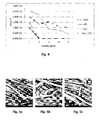
- Polycarboxilic acids should be cured at temperatures from 150o C in order to induce crosslinking. Knowing that thermal treatment on cellulosic fibres is responsible of yellowness, different curing temperatures have been evaluated. Figure 1 shows the whiteness index depending on the binder used and the temperature of treatment. The white colour decreases as the temperature increases, and it can be appreciated that if temperature is higher than 180o C cotton fibre whiteness considerably decreases. When fabrics are treated with binders the whiteness index is approximately the same than the fabric without treatment. As a result 150o C has been considered a good temperature for curing polycarboxilic acids.
- microcapsules deposition on fabric should be characterised. This was calculated as the difference in particles between the number of particles in the dispersion when it was just prepared to be put into the washing machine and the ones in the wastewater after treatment. Moreover, the number of particles in wastewater after each laundry was obtained. Figure 4 shows the behaviour of the microcapsules while washing the treated fabrics.
- Table 2 shows either the white index values for each sample and the difference in white compared with the cotton fabric without being treated. Table 2 (White index values).
- microcapsules on fabric change the whiteness of the original fabric, but if we compare all the measurements slight differences between the different used binders can be appreciated.
- ⁇ WI CIE differences
- BTCA-150 and SUC-150 are the ones with higher values.
- colorimetric values have been analysed and the difference between each sample and the untreated cotton have been calculated.
- CIE L*a*b*system [a,b].
- a washing machine can be a suitable device to apply microcapsules onto fabrics binder agent.
- the present study compares acrylic resin with two polycarboxilic acids and the thermal treatment to cure the binder agent. It is not surprising that microcapsules remain on fabric surface when the treatment includes some binder as it adheres microcapsules to fibre. It is noticeable that thermal treatment is required if the microcapsule effect should last more than one washing cycle.
- succinic acid displays the higher number of microcapsules on the fibre. Furthermore, acrylic binder develops some aggregates of microcapsules and makes impossible to test the binder appropriately.
Landscapes
- Chemical & Material Sciences (AREA)
- Engineering & Computer Science (AREA)
- Oil, Petroleum & Natural Gas (AREA)
- Life Sciences & Earth Sciences (AREA)
- Chemical Kinetics & Catalysis (AREA)
- Wood Science & Technology (AREA)
- Organic Chemistry (AREA)
- Emergency Medicine (AREA)
- Health & Medical Sciences (AREA)
- Textile Engineering (AREA)
- Dispersion Chemistry (AREA)
- Detergent Compositions (AREA)
- Chemical Or Physical Treatment Of Fibers (AREA)
- Treatments For Attaching Organic Compounds To Fibrous Goods (AREA)
Priority Applications (1)
| Application Number | Priority Date | Filing Date | Title |
|---|---|---|---|
| EP12004957.2A EP2682454A1 (fr) | 2012-07-04 | 2012-07-04 | Procédé et composition d'infusion d'un ingrédient actif dans des tissus et utilisation d'un agent liant pour les microcapsules de ladite composition |
Applications Claiming Priority (1)
| Application Number | Priority Date | Filing Date | Title |
|---|---|---|---|
| EP12004957.2A EP2682454A1 (fr) | 2012-07-04 | 2012-07-04 | Procédé et composition d'infusion d'un ingrédient actif dans des tissus et utilisation d'un agent liant pour les microcapsules de ladite composition |
Publications (1)
| Publication Number | Publication Date |
|---|---|
| EP2682454A1 true EP2682454A1 (fr) | 2014-01-08 |
Family
ID=46508222
Family Applications (1)
| Application Number | Title | Priority Date | Filing Date |
|---|---|---|---|
| EP12004957.2A Withdrawn EP2682454A1 (fr) | 2012-07-04 | 2012-07-04 | Procédé et composition d'infusion d'un ingrédient actif dans des tissus et utilisation d'un agent liant pour les microcapsules de ladite composition |
Country Status (1)
| Country | Link |
|---|---|
| EP (1) | EP2682454A1 (fr) |
Cited By (4)
| Publication number | Priority date | Publication date | Assignee | Title |
|---|---|---|---|---|
| WO2016192388A1 (fr) * | 2015-06-04 | 2016-12-08 | 常州市金坛翰广科技有限公司 | Procédé de finition de tissu par adoption de micro-capsules de répulsion de moustiques |
| WO2020016195A1 (fr) * | 2018-07-17 | 2020-01-23 | Unilever Plc | Particules de distribution d'agent bénéfique |
| DE102020110905A1 (de) | 2020-04-22 | 2021-10-28 | Fraunhofer-Gesellschaft zur Förderung der angewandten Forschung eingetragener Verein | Kern-Schale Kapseln für die Textilveredelung |
| EP4044993A1 (fr) * | 2019-10-16 | 2022-08-24 | Symrise AG | Articles pour le transfert indirect d'agents actifs cosmétiques sur la peau |
Citations (8)
| Publication number | Priority date | Publication date | Assignee | Title |
|---|---|---|---|---|
| US5066419A (en) | 1990-02-20 | 1991-11-19 | The Procter & Gamble Company | Coated perfume particles |
| EP0701600B1 (fr) | 1993-06-02 | 1998-03-25 | The Procter & Gamble Company | Systeme de diffusion de parfum comprenant des zeolites |
| WO2001023512A1 (fr) | 1999-09-28 | 2001-04-05 | Rhodia Chimie | Utilisation dans une composition de detergent d'un copolyester sulfo-fonctionnel comme element permettant de retenir le parfum |
| DE10000223A1 (de) * | 2000-01-05 | 2001-07-12 | Basf Ag | Mikrokapselzubereitungen und Mikrokapseln enthaltende Wasch- und Reinigungsmittel |
| WO2006113091A1 (fr) | 2005-04-14 | 2006-10-26 | Ecolab Inc. | Distributeur de fragrance pour sechoir et methode de distribution de fragrance sur un tissu dans un sechoir |
| US20080103265A1 (en) | 2004-11-05 | 2008-05-01 | Basf Aktiengesellschaft | Microcapsule Dispersions |
| US20100272860A1 (en) * | 2005-03-01 | 2010-10-28 | Martin Roy W | Tablet composition for the in-situ generation of chlorine dioxide for use in antimicrobial applications |
| EP2342628A1 (fr) | 2008-09-08 | 2011-07-13 | eBay Inc. | Intégration d'une infrastructure de nuage interne à des services et systèmes d'entreprise existants |
-
2012
- 2012-07-04 EP EP12004957.2A patent/EP2682454A1/fr not_active Withdrawn
Patent Citations (8)
| Publication number | Priority date | Publication date | Assignee | Title |
|---|---|---|---|---|
| US5066419A (en) | 1990-02-20 | 1991-11-19 | The Procter & Gamble Company | Coated perfume particles |
| EP0701600B1 (fr) | 1993-06-02 | 1998-03-25 | The Procter & Gamble Company | Systeme de diffusion de parfum comprenant des zeolites |
| WO2001023512A1 (fr) | 1999-09-28 | 2001-04-05 | Rhodia Chimie | Utilisation dans une composition de detergent d'un copolyester sulfo-fonctionnel comme element permettant de retenir le parfum |
| DE10000223A1 (de) * | 2000-01-05 | 2001-07-12 | Basf Ag | Mikrokapselzubereitungen und Mikrokapseln enthaltende Wasch- und Reinigungsmittel |
| US20080103265A1 (en) | 2004-11-05 | 2008-05-01 | Basf Aktiengesellschaft | Microcapsule Dispersions |
| US20100272860A1 (en) * | 2005-03-01 | 2010-10-28 | Martin Roy W | Tablet composition for the in-situ generation of chlorine dioxide for use in antimicrobial applications |
| WO2006113091A1 (fr) | 2005-04-14 | 2006-10-26 | Ecolab Inc. | Distributeur de fragrance pour sechoir et methode de distribution de fragrance sur un tissu dans un sechoir |
| EP2342628A1 (fr) | 2008-09-08 | 2011-07-13 | eBay Inc. | Intégration d'une infrastructure de nuage interne à des services et systèmes d'entreprise existants |
Non-Patent Citations (6)
| Title |
|---|
| LI ET AL.: "Effect of finishing methods on washing durability of microencapsulated aroma finishing", JOURNAL OF THE TEXTILE INSTITUTE, vol. 99.2, 2008, pages 177 - 183 |
| NELSON G: "MICROENCAPSULATES IN TEXTILE COLORATION AND FINISHING", REVIEW OF PROGRESS IN COLORATION, SOCIETY OF DYERS AND COLOURISTS. BRADFORD, GB, vol. 21, 1 January 1991 (1991-01-01), pages 72 - 85, XP000225719, ISSN: 0557-9325 * |
| NELSON G: "Microencapsulates in textile finising", REV, PROG COLOR, vol. 31, 2001, pages 57 - 64 |
| PASCU ET AL.: "Interfacial polymerization of an epoxy resin and carboxylic acids for the synthesis of microcapsules", M POLYMER INTERNATIONAL, vol. 57, 2008, pages 995 - 1006 |
| RODRIGUES: "Microencapsulated perfumes for textile application", CHEMICAL ENGINEERING JOURNAL, vol. 149, 2009, pages 463 - 472, XP026077507, DOI: doi:10.1016/j.cej.2009.02.021 |
| VONCINA , BADULESCU ET AL.: "Grafting of ethylcellulose microcapsules onto cotton fibres", CARBOHYDRATE POLYMERS, vol. 71, 2008, pages 85 - 91, XP022323308, DOI: doi:10.1016/j.carbpol.2007.05.028 |
Cited By (5)
| Publication number | Priority date | Publication date | Assignee | Title |
|---|---|---|---|---|
| WO2016192388A1 (fr) * | 2015-06-04 | 2016-12-08 | 常州市金坛翰广科技有限公司 | Procédé de finition de tissu par adoption de micro-capsules de répulsion de moustiques |
| WO2020016195A1 (fr) * | 2018-07-17 | 2020-01-23 | Unilever Plc | Particules de distribution d'agent bénéfique |
| CN112639067A (zh) * | 2018-07-17 | 2021-04-09 | 联合利华知识产权控股有限公司 | 有益剂递送颗粒 |
| EP4044993A1 (fr) * | 2019-10-16 | 2022-08-24 | Symrise AG | Articles pour le transfert indirect d'agents actifs cosmétiques sur la peau |
| DE102020110905A1 (de) | 2020-04-22 | 2021-10-28 | Fraunhofer-Gesellschaft zur Förderung der angewandten Forschung eingetragener Verein | Kern-Schale Kapseln für die Textilveredelung |
Similar Documents
| Publication | Publication Date | Title |
|---|---|---|
| JP5226782B2 (ja) | 織物柔軟剤組成物および使用方法 | |
| Golja et al. | Fragrant finishing of cotton with microcapsules: comparison between printing and impregnation | |
| US8470762B2 (en) | Fabric softening compositions comprising polymeric materials | |
| JP6214553B2 (ja) | ポリウレアマイクロカプセルの製造方法 | |
| JP4613205B2 (ja) | 繊維、布地および衣服へのマイクロカプセル処理のためのバインダー系 | |
| Özsevinç et al. | Polyurethane shell medicinal lavender release microcapsules for textile materials: An environmentally friendly preparation | |
| CN102586017A (zh) | 一种具有柔软功能的香精微胶囊及其制备方法 | |
| EP2682454A1 (fr) | Procédé et composition d'infusion d'un ingrédient actif dans des tissus et utilisation d'un agent liant pour les microcapsules de ladite composition | |
| WO2007146555A1 (fr) | Feuille de séchage | |
| Petrulyte et al. | Impregnation of microencapsulated aroma oil on ramie blended Terry textile and its bending rigidity | |
| CA2305529C (fr) | Produits de traitement pour le lavage du linge destines a des tissus a base de spandex? | |
| KR20250099452A (ko) | 산 처리된 키토산으로 제조된 전달 입자를 갖는 처리 조성물 | |
| JP7604133B2 (ja) | 繊維製品の賦香方法 | |
| Setthayanond et al. | Aroma finishing and pigment printing of Thai silk fabric by 1-step all-in printing process | |
| KR20020044741A (ko) | 섬유유연제 조성물 | |
| JP7740935B2 (ja) | 繊維製品の賦香方法 | |
| EP3789477A1 (fr) | Matériau textile de capture de colorant comprenant des parfums encapsulés | |
| JPH02264080A (ja) | 芳香繊維構造物及びその製造方法 | |
| KR20250099450A (ko) | 산화환원 개시제로 처리된 키토산으로 제조된 전달 입자를 갖는 처리 조성물 | |
| WO2024005753A1 (fr) | Nouveau procédé de libération de parfum | |
| KR100789600B1 (ko) | 다림 보조제 조성물 | |
| KR20040033165A (ko) | 섬유 유연제 조성물 | |
| CZ20001293A3 (cs) | Prostředek pro ošetření tkanin | |
| MXPA00003496A (en) | Laundry treatment products for spandex®containing fabrics |
Legal Events
| Date | Code | Title | Description |
|---|---|---|---|
| PUAI | Public reference made under article 153(3) epc to a published international application that has entered the european phase |
Free format text: ORIGINAL CODE: 0009012 |
|
| AK | Designated contracting states |
Kind code of ref document: A1 Designated state(s): AL AT BE BG CH CY CZ DE DK EE ES FI FR GB GR HR HU IE IS IT LI LT LU LV MC MK MT NL NO PL PT RO RS SE SI SK SM TR |
|
| AX | Request for extension of the european patent |
Extension state: BA ME |
|
| 17P | Request for examination filed |
Effective date: 20140630 |
|
| RBV | Designated contracting states (corrected) |
Designated state(s): AL AT BE BG CH CY CZ DE DK EE ES FI FR GB GR HR HU IE IS IT LI LT LU LV MC MK MT NL NO PL PT RO RS SE SI SK SM TR |
|
| 17Q | First examination report despatched |
Effective date: 20151210 |
|
| GRAP | Despatch of communication of intention to grant a patent |
Free format text: ORIGINAL CODE: EPIDOSNIGR1 |
|
| INTG | Intention to grant announced |
Effective date: 20160726 |
|
| STAA | Information on the status of an ep patent application or granted ep patent |
Free format text: STATUS: THE APPLICATION IS DEEMED TO BE WITHDRAWN |
|
| 18D | Application deemed to be withdrawn |
Effective date: 20161206 |