EP2684752B1 - Verfahren zur Erfassung eines gebremsten Rads - Google Patents
Verfahren zur Erfassung eines gebremsten Rads Download PDFInfo
- Publication number
- EP2684752B1 EP2684752B1 EP13159227.1A EP13159227A EP2684752B1 EP 2684752 B1 EP2684752 B1 EP 2684752B1 EP 13159227 A EP13159227 A EP 13159227A EP 2684752 B1 EP2684752 B1 EP 2684752B1
- Authority
- EP
- European Patent Office
- Prior art keywords
- wheel
- brake
- aircraft
- slip ratio
- speed
- Prior art date
- Legal status (The legal status is an assumption and is not a legal conclusion. Google has not performed a legal analysis and makes no representation as to the accuracy of the status listed.)
- Active
Links
Images


Classifications
-
- B—PERFORMING OPERATIONS; TRANSPORTING
- B60—VEHICLES IN GENERAL
- B60T—VEHICLE BRAKE CONTROL SYSTEMS OR PARTS THEREOF; BRAKE CONTROL SYSTEMS OR PARTS THEREOF, IN GENERAL; ARRANGEMENT OF BRAKING ELEMENTS ON VEHICLES IN GENERAL; PORTABLE DEVICES FOR PREVENTING UNWANTED MOVEMENT OF VEHICLES; VEHICLE MODIFICATIONS TO FACILITATE COOLING OF BRAKES
- B60T8/00—Arrangements for adjusting wheel-braking force to meet varying vehicular or ground-surface conditions, e.g. limiting or varying distribution of braking force
- B60T8/17—Using electrical or electronic regulation means to control braking
- B60T8/1701—Braking or traction control means specially adapted for particular types of vehicles
- B60T8/1703—Braking or traction control means specially adapted for particular types of vehicles for aircrafts
-
- B—PERFORMING OPERATIONS; TRANSPORTING
- B60—VEHICLES IN GENERAL
- B60T—VEHICLE BRAKE CONTROL SYSTEMS OR PARTS THEREOF; BRAKE CONTROL SYSTEMS OR PARTS THEREOF, IN GENERAL; ARRANGEMENT OF BRAKING ELEMENTS ON VEHICLES IN GENERAL; PORTABLE DEVICES FOR PREVENTING UNWANTED MOVEMENT OF VEHICLES; VEHICLE MODIFICATIONS TO FACILITATE COOLING OF BRAKES
- B60T8/00—Arrangements for adjusting wheel-braking force to meet varying vehicular or ground-surface conditions, e.g. limiting or varying distribution of braking force
Definitions
- the present disclosure is related to systems and methods for detecting a dragging brake for use in, for example, an aircraft.
- Aircraft often include one or more landing gear that comprise one or more wheels. Each wheel may have a brake that is operatively coupled to the wheel to slow the wheel, and hence the aircraft during, for example, landing or a rejected take off. Aircraft brakes are not typically engaged voluntarily during take off, as brake engagement would act to impede forward motion of the aircraft. However, in the event of brake malfunction, one or more brakes may be at least partially engaged during a take off. Such engagement may not be enough to affect the ability of the aircraft to take off, and indeed, may be undetectable to the aircraft pilot and crew. In other cases, a dragging brake may prevent an aircraft from achieving takeoff speed. A pilot may elect to reject the take off in response to a dragging brake. A concern is that partial engagement of an aircraft brake during take off tends to generate heat in the brake, as the brake absorbs energy from the rotation of the wheel and thus increases in temperature.
- a brake that is at least partially engaged at a time when no braking is commanded may be referred to as a "dragging" brake. If a brake drags during take off, it is not desirable to retract the wheel into the wheel well after take off due to the excess temperature of the brake. Retraction of a hot brake may pose a fire hazard and/or the tire may become too hot and fail. Thus, there is a need to detect a dragging brake at various times, such as during takeoff.
- GB 2 468 378 discloses a method to detect a dragging brake based on post-takeoff spindown.
- Spindown is the natural deceleration of the wheels after takeoff.
- the method comprises measuring spindown of a wheel to obtain spindown data.
- the spindown data is compared with a spindown envelope, and notification is provided if the spindown data indicates a wheel is spinning down outside a spindown envelope.
- the spindown envelope may be based at least in part on past data, may be empirical data, may be based on real time spindown from other wheels or may be based on gear retract braking.
- the spindown data may be determined to be outside the spindown envelope based on at least one of wheel energy, wheel velocity, wheel distance, wheel acceleration or wheel jerk rate.
- any reference to singular includes plural embodiments, and any reference to more than one component or step may include a singular embodiment or step.
- any reference to attached, fixed, connected or the like may include permanent, removable, temporary, partial, full and/or any other possible attachment option.
- any reference to without contact (or similar phrases) may also include reduced contact or minimal contact.
- Aircraft may comprise one or more types of aircraft wheel and brake assemblies.
- an aircraft wheel and brake assembly may comprise a non-rotatable wheel support, a wheel mounted to the wheel support for rotation, and a brake disk stack.
- the brake stack may have front and rear axial ends.
- the brake stack may also have alternating rotor and stator disks mounted with respect to the wheel support and wheel for relative axial movement.
- Each rotor disk may be coupled to the wheel for rotation therewith, and each stator disk may be coupled to the wheel support against rotation.
- a back plate may be located at the rear end of the disk pack and a brake head may be located at the front end.
- the brake head may house one or more actuator rams that extend to compress the brake disk stack against the back plate, or the brake disk stack may be compressed by other means. Torque is taken out by the stator disks through a static torque tube or the like.
- the actuator rams may be electrically operated actuator rams or hydraulically operated actuator rams, although some brakes may use pneumatically operated actuator rams.
- the actuator ram may be coupled to a power source via a brake servo valve ("BSV") and a shutoff valve (“SOV").
- BSV brake servo valve
- SOV shutoff valve
- the SOV effectively functions as a shutoff valve, wherein in a first position (e.g., an armed position), fluid pressure is permitted to pass through the valve, while in a second position (e.g., a disarmed position) fluid pressure is restricted or prevented from passing through the valve.
- a first position e.g., an armed position
- a second position e.g., a disarmed position
- fluid pressure is restricted or prevented from passing through the valve.
- the SOV is in the armed position, thereby permitting the flow of fluid pressure.
- the BSV based on braking commands from the pilot (often via an electronic controller that may implement, for example, anti-skid logic) controls the amount of fluid pressure provided to the actuator ram, and thus, the braking force applied to the wheel.
- the SOV is set in the disarmed position, thereby removing or decreasing fluid pressure from the BSV. Since the BSV does not receive sufficient fluid pressure, it cannot provide fluid pressure to the actuator ram, and thus, braking cannot be effected.
- a brake controller is coupled to one or more electromechanical actuator controllers ("EMAC") for a brake, which drives one or more electromechanical brake actuators.
- EMAC electromechanical actuator controller
- the brake controller may be in communication with a brake pedal, and thus may control the EMAC in accordance with pilot/copilot braking commands.
- other means are used to compress a brake disk stack.
- a brake controller may comprise a processor and a tangible, non-transitory memory.
- the brake controller may comprise one or more logic modules that implement brake logic.
- the brake controller may comprise other electrical devices to implement brake logic.
- Aircraft wheels often comprise a wheel base and a side rim.
- the wheel base is typically coupled to the aircraft brake for applying torque to cause the aircraft to decelerate.
- the side rim is typically coupled about a circumference of the wheel base and is often at least partially in contact with a tire.
- the side rim is typically held in position by the force exerted by a tire, and may transfer torque to the wheel base via, for example, a lock ring.
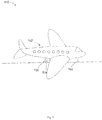
- Aircraft 102 on runway 100 is shown.
- Aircraft 102 may comprise right landing gear 108 and left landing gear 106.
- Nose landing gear 104 is located under the nose of aircraft 102 and may not include a brake.
- Landing gear assembly 200 comprises right landing gear 108.
- Right landing gear 108 comprises right outboard wheel 202 and right inboard wheel 204.
- Right outboard wheel 202 comprises right outboard brake 208 and right inboard wheel 206 comprises right in board brake 206.
- the configuration of aircraft on runway 100 and landing gear assembly 200 is used for example only as aircraft may comprise multiple landing gear and/or multiple wheels and brakes.
- a landing gear may comprise from about one to four wheels.
- each wheel may be operatively coupled to one brake to effect braking.
- wheel and tire assembly 300 is shown.
- Tire 302 and 304 rotates (10 m x 1 rev./ 10/ ⁇ m), ⁇ revolutions (rev), or ⁇ rev/s.
- the speed of the runway surface relative to the tire v t
- v t the speed of the runway surface relative to the tire
- a tire tends to slip.
- axle 314 travels 10 m, but tire 308 only rotates a distance of 9.5 m.
- the velocity of axle 314 is 10 m/s and the velocity of tire 308's linear speed is only 9.5 m/s.
- the .5m is represented as the distance from point 306 to point 316.
- V AIC V wheel such as shown in, for example, FIG. 3 where wheel point 302 and tire point 304 are shown to be coradial.
- slip ratio is relatively low (i.e., nearly 0).
- V AIC may be determined in accordance with a variety of methods.
- the velocity of one or more wheels of an aircraft, and often all wheels of an aircraft, may be measured and filtered to exclude potentially erroneous data (e.g., a failed sensor, etc).
- the velocities of each wheel may then be averaged to derive the aircraft speed.
- the brake controller may calculate aircraft speed in such a manner. Even using filtering, in embodiments where aircraft speed is derived from the speed of multiple wheels, which themselves may be experiencing a dragging brake, there may be an inaccuracy in the aircraft speed value.
- V AIC may also be determined using other types of aircraft speed sensors that may be present in an aircraft or in communication with an aircraft.
- Inaccuracies are inherent in all or nearly all measuring devices. Thus, inaccuracies are preferably handled or otherwise accounted for in various embodiments. If an inaccuracy associated with a given slip ratio calculation is too large, it may not be relied upon. For example, inaccuracies in aircraft speed and wheel speed tend to decrease as wheel speed or aircraft increase. For example, inaccuracy may decrease when the aircraft speed exceeds 10 knots, further decrease when the aircraft speed exceeds 50 knots, and may decrease further still when the aircraft speed exceeds 80 knots. To detect a dragging brake during take off, the detection may take place at a speed where inaccuracy is low enough to be useful, but the timeliness of detecting a dragging brake decreases as aircraft speed increases.
- Inaccuracy may also be illustrated mathematically via inclusion into the slip ratio calculation.
- SR % ⁇ ⁇ SR % ⁇ SR % 100 ⁇ V AIC ⁇ ⁇ AIC ⁇ V Wheel ⁇ ⁇ Wheel V Wheel ⁇ ⁇ Wheel ⁇ V AIC ⁇ V Wheel V Wheel
- SR % slip ratio percentage
- ⁇ SR% is the inaccuracy of the slip ratio percentage
- ⁇ Wheel is the inaccuracy of the wheel speed
- ⁇ AIC is the inaccuracy of the aircraft speed.
- ⁇ SR% 100 ⁇ V Wheel V AIC ⁇ ⁇ AIC ⁇ V AIC V Wheel ⁇ ⁇ Wheel V Wheel V Wheel ⁇ ⁇ Wheel
- ⁇ SR % 100 ⁇ V Wheel V AIC ⁇ ⁇ AIC ⁇ V AIC V Wheel ⁇ ⁇ Wheel V Wheel V Wheel ⁇ ⁇ Wheel
- ⁇ ⁇ SR % 100 ⁇ V AIC V Wheel ⁇ ⁇ Wheel V Wheel ⁇ ⁇ Wheel
- a slip ratio beyond a given threshold value may indicate a dragging brake. While the selection of a threshold value may be based upon aircraft size, weight, engine power, brake size, and other suitable factors, in various embodiments a threshold value may range from about 0.5% to 15%, more preferably from about 1% to about 10% and more preferably from about 1.5% to about 4%.
- the threshold value may be compared to the slip ratio of a particular wheel on an aircraft, though in various embodiments the threshold value may be compared to an average slip ratio of one or more of the wheels of an aircraft. For example, the threshold value may be compared to the average of the left outboard and left inboard wheel or the average of all aircraft wheels.
- the threshold value may be set at a slip ratio that is a predetermined amount above an "ambient" slip ratio. Stated another way, tires in motion tend to slip to some degree without braking. Thus, a rotating wheel may have an "ambient" slip ratio that is not the result of a brake application. For example, such a slip ratio may be 1%.
- the threshold value may be set to 3%, or 2% greater than the ambient ratio.
- Such "ambient" slip ratio may be calculated and adjusted over time, whether automatically or in response to changes in aircraft tires, wheels, brakes, or other components.
- two threshold values may be used.
- a first threshold value may be used against the slip ratio of one wheel or a subset of wheels and the second threshold value may be used against the average slip ratio of more than one wheel.
- a threshold value may be compared against the difference between the wheel having the greatest slip ratio and the average slip ratio across one or more wheels.
- Calculated slip ratios for one or more wheels may thus be processed to further determine whether a dragging brake is present.
- a slip ratio that is negative, such as a slip ratio having the opposite sign of braking, may be set to zero to improve calculations.
- An aircraft may take an action in response to a slip ratio that is beyond a given threshold value.
- a brake controller may send a signal indicative of a dragging brake to another aircraft component.
- a brake controller may send a dragging brake signal to a cockpit component.
- a cockpit component may be any system that delivers information to the cockpit.
- a cockpit component may cause a light, icon, graphic, or other visual or audio representation to appear in the cockpit to indicate a dragging brake.
- the aircraft pilot or other crew member may then take remedial action based upon the dragging brake signal. For example, a pilot may delay landing gear retraction until it is believed that the dragging brake has cooled.
- the temperature of the brake will increase over time in relation to the torque applies and the radians traveled (i.e., the rotations of the wheel).
- the brake controller or other component may calculate an estimate temperature of a dragging brake. This calculated temperature may then be used to calculate the time needed to cool to brake to a temperature suitable for retraction into the wheel well.
- a fixed period of time may be determined to delay landing gear retraction, such as a period of time that would allow even relatively hot brakes to cool. For example, such times may be between from about 5 minutes to about 20 minutes.
- slip ratio is calculated for an aircraft wheel.
- Slip ratio may be calculated in any suitable manner such as those disclosed herein.
- slip ratio may be calculated in response to aircraft speed exceeding a given speed, such as 50 knots.
- Step 402 may also include a calculation of an inaccuracy associated with the slip ratio and, if such inaccuracy exceeds an inaccuracy threshold value, the process may conclude and not proceed to step 404.
- Step 404 comprises comparing the slip ratio calculated in step 402 to a predetermined threshold value.
- the comparing may implemented by a simple comparator or by use of computer implemented logic.
- Step 406 comprises determining a dragging brake.
- a dragging brake may be sent to another aircraft component.
- a pilot or other crew member may then use the dragging brake signal to delay landing gear retraction to allow the dragging brake additional time to cool.
- a value is set to true or false in response to the determination of a dragging brake.
- slip ratio is calculated for each aircraft wheel of an aircraft that also has a brake associated with it. Slip ratio may be calculated in any suitable manner such as those disclosed herein. Moreover, slip ratio may be calculated in response to aircraft speed exceeding a given speed, such as 50 knots. Step 502 may also include a calculation of an inaccuracy associated with the slip ratios and, if such inaccuracy exceeds an inaccuracy threshold value in connection with one or more slip ratios, the process may conclude and not proceed to step 504.
- Step 504 comprises setting the negative slip ratios to zero.
- a slip ratio that is positive indicates braking.
- a slip ratio that is negative indicates either an error in measurement or a transient "gear walk" that cause velocity to be higher than the aircraft velocity.
- slip ratios are set to 0 for further processing.
- Step 506 comprises averaging all slip ratios except the highest slip ratio. This determines the average slip ratio of the wheels, excluding the most outlying slip ratio.
- Step 508 comprises subtracting the average found in step 506 from the highest slip ratio to yield a deviation from the slip ratio average.
- Step 510 comprises comparing the deviation from the slip ratio average to a predetermined threshold value.
- a dragging brake signal may be send to another aircraft component.
- a pilot or other crew member may then use the dragging brake signal to delay landing gear retraction to allow the dragging brake additional time to cool.
- a value is set to true or false in response to the determination of a dragging brake.
- the LHIB and RHIB values may be set to zero, as those values are negative. It is found that LHOB has the greatest slip ratio (4.2%).
- the terms “comprises”, “comprising”, or any other variation thereof, are intended to cover a non-exclusive inclusion, such that a process, method, article, or apparatus that comprises a list of elements does not include only those elements but may include other elements not expressly listed or inherent to such process, method, article, or apparatus.
Landscapes
- Engineering & Computer Science (AREA)
- Aviation & Aerospace Engineering (AREA)
- Transportation (AREA)
- Mechanical Engineering (AREA)
- Regulating Braking Force (AREA)
Claims (9)
- Verfahren zum Bestimmen, wenn eine Bremse zumindest teilweise zu einer Zeit in Eingriff genommen ist, wenn kein Bremsen angewiesen wird, umfassend:Berechnen eines Schlupfverhältnisses durch eine Bremssteuerung auf Grundlage einer Luftfahrzeuggeschwindigkeit (VAIC) und einer Geschwindigkeit (VRad) eines Luftfahrzeugrads (202, 204);Bestimmen durch die Bremssteuerung, dass das Schlupfverhältnis über einem Schwellenwert liegt; undSenden eines Signals eines gebremsten Rads an eine Luftfahrzeugkomponente durch die Bremssteuerung und als Reaktion darauf, dass das Schlupfverhältnis über dem Schwellenwert liegt, wobei das Berechnen gemäß der folgenden Gleichung erfolgt:

- Verfahren nach Anspruch 1, wobei die Luftfahrzeugkomponente ein Pilotenbenachrichtigungssystem ist.
- Verfahren nach Anspruch 1 oder 2, wobei das Berechnen durch ein rutschsicheres Modul der Bremssteuerung durchgeführt wird.
- Verfahren nach einem der vorhergehenden Ansprüche, wobei die Luftfahrzeuggeschwindigkeit (VAIC) auf Grundlage einer Geschwindigkeit eines zweiten Luftfahrzeugrads bestimmt wird.
- Verfahren nach einem der vorhergehenden Ansprüche, ferner umfassend Berechnen einer Ungenauigkeit des Schlupfverhältnisses.
- Verfahren nach Anspruch 5, ferner umfassend Bestimmen, ob die Ungenauigkeit über einem Ungenauigkeitsschwellenwert liegt.
- Verfahren nach einem der vorhergehenden Ansprüche, wobei das Bestimmen als Reaktion darauf eintritt, dass die Luftfahrzeuggeschwindigkeit 20,58 m/s (40 Knoten) überschreitet, vorzugsweise 25,72 m/s (50 Knoten) überschreitet.
- Verfahren nach einem der vorhergehenden Ansprüche, ferner umfassend Berechnen eines Betrags der Wärmeenergie, die durch eine Bremse des Luftfahrzeugrads (202, 204) absorbiert wird.
- Verfahren nach Anspruch 8, ferner umfassend Alarmieren einer Cockpitkomponente, um auf die Notwendigkeit zur Bremstemperaturbestimmung hinzuweisen.
Applications Claiming Priority (1)
| Application Number | Priority Date | Filing Date | Title |
|---|---|---|---|
| US13/546,936 US8843254B2 (en) | 2012-07-11 | 2012-07-11 | Systems and methods for dragging brake detection |
Publications (2)
| Publication Number | Publication Date |
|---|---|
| EP2684752A1 EP2684752A1 (de) | 2014-01-15 |
| EP2684752B1 true EP2684752B1 (de) | 2020-01-01 |
Family
ID=47913009
Family Applications (1)
| Application Number | Title | Priority Date | Filing Date |
|---|---|---|---|
| EP13159227.1A Active EP2684752B1 (de) | 2012-07-11 | 2013-03-14 | Verfahren zur Erfassung eines gebremsten Rads |
Country Status (2)
| Country | Link |
|---|---|
| US (1) | US8843254B2 (de) |
| EP (1) | EP2684752B1 (de) |
Cited By (1)
| Publication number | Priority date | Publication date | Assignee | Title |
|---|---|---|---|---|
| US12576823B2 (en) * | 2023-12-19 | 2026-03-17 | Goodrich Corporation | Brake coefficient of friction (μ) estimation for prognostics and health management (PHM) and improved load balance (LB) |
Families Citing this family (32)
| Publication number | Priority date | Publication date | Assignee | Title |
|---|---|---|---|---|
| US8965657B2 (en) * | 2013-07-02 | 2015-02-24 | Goodrich Corporation | System and method for detecting an on ground condition of an aircraft |
| CN104516783B (zh) * | 2013-09-27 | 2019-04-23 | 华为终端(东莞)有限公司 | 权限控制方法和装置 |
| GB2520694A (en) * | 2013-11-27 | 2015-06-03 | Airbus Operations Ltd | Aircraft electric braking system |
| US10087101B2 (en) | 2015-03-27 | 2018-10-02 | Goodrich Corporation | Formulations for oxidation protection of composite articles |
| GB2550364A (en) * | 2016-05-16 | 2017-11-22 | Airbus Operations Ltd | Aircraft brake temperature measurement |
| US10465285B2 (en) | 2016-05-31 | 2019-11-05 | Goodrich Corporation | High temperature oxidation protection for composites |
| US10377675B2 (en) | 2016-05-31 | 2019-08-13 | Goodrich Corporation | High temperature oxidation protection for composites |
| US10005566B2 (en) | 2016-06-13 | 2018-06-26 | Goodrich Corporation | Systems and methods for detection of dragging brake |
| US10508206B2 (en) | 2016-06-27 | 2019-12-17 | Goodrich Corporation | High temperature oxidation protection for composites |
| US10767059B2 (en) | 2016-08-11 | 2020-09-08 | Goodrich Corporation | High temperature oxidation protection for composites |
| US10526253B2 (en) | 2016-12-15 | 2020-01-07 | Goodrich Corporation | High temperature oxidation protection for composites |
| CN106599495B (zh) * | 2016-12-20 | 2017-09-05 | 湖北文理学院 | 基于萤火虫算法优化bp神经网络的最佳滑移率识别方法 |
| CN106828893B (zh) * | 2016-12-26 | 2019-04-30 | 北京航空航天大学 | 基于结合力估计的防滑刹车控制方法和系统 |
| US11383689B2 (en) | 2018-05-23 | 2022-07-12 | Haldex Brake Products Corporation | Brake monitoring system with temperature monitoring |
| US11046619B2 (en) | 2018-08-13 | 2021-06-29 | Goodrich Corporation | High temperature oxidation protection for composites |
| US11634213B2 (en) | 2018-11-14 | 2023-04-25 | Goodrich Corporation | High temperature oxidation protection for composites |
| CN110282119B (zh) * | 2019-06-18 | 2022-10-28 | 西安航空制动科技有限公司 | 一种基于踏板减速率控制的飞机刹车控制方法 |
| US12246994B2 (en) | 2019-12-27 | 2025-03-11 | Goodrich Corporation | High temperature oxidation protection for composites |
| US12128863B2 (en) * | 2020-05-11 | 2024-10-29 | Goodrich Corporation | Detection of brake failure using wheel speed during landing gear retraction |
| CN112622863A (zh) * | 2020-12-29 | 2021-04-09 | 中国航空工业集团公司西安飞机设计研究所 | 一种飞机防滑刹车系统故障处理方法 |
| CN112925347B (zh) * | 2021-01-29 | 2023-12-01 | 大连海事大学 | 一种基于数据驱动的多无人机滑模编队控制方法 |
| US12330996B2 (en) | 2021-05-05 | 2025-06-17 | Goodrich Corporation | High temperature oxidation protection for carbon-carbon composites |
| US12065380B2 (en) | 2021-11-16 | 2024-08-20 | Goodrich Corporation | High temperature oxidation protection for carbon-carbon composites |
| CN113879518B (zh) * | 2021-11-19 | 2024-06-14 | 中国商用飞机有限责任公司 | 防滑控制方法、装置、电子设备和可读存储介质 |
| GB2613414A (en) * | 2021-11-30 | 2023-06-07 | Airbus Operations Ltd | Temperature sensing device for aircraft wheel brake |
| US12344564B2 (en) | 2022-01-07 | 2025-07-01 | Goodrich Corporation | Oxidation protection with improved water resistance for composites |
| GB2617065A (en) * | 2022-03-25 | 2023-10-04 | Airbus Operations Ltd | Monitoring friction associated with a plurality of aircraft wheels |
| US12319622B2 (en) | 2022-05-18 | 2025-06-03 | Goodrich Corporation | Oxidation protection of composites |
| US12565450B2 (en) | 2022-06-17 | 2026-03-03 | Goodrich Corporation | Oxidation protection for carbon-carbon composites |
| US12559634B2 (en) | 2023-03-20 | 2026-02-24 | Goodrich Corporation | Oxidation protective systems and methods of manufacture |
| US12583785B2 (en) | 2023-03-20 | 2026-03-24 | Goodrich Corporation | Advanced oxidation protection system with broad temperature range capability |
| US20250347615A1 (en) * | 2024-05-10 | 2025-11-13 | Goodrich Corporation | ESTIMATING A COEFFICIENT OF FRICTION (µ) OF RUNWAYS AND/OR TAXIWAYS |
Family Cites Families (22)
| Publication number | Priority date | Publication date | Assignee | Title |
|---|---|---|---|---|
| US3520575A (en) * | 1968-07-12 | 1970-07-14 | Goodyear Tire & Rubber | Automatic brake control system |
| US4115756A (en) * | 1976-09-27 | 1978-09-19 | Avmar, Incorporated | Wheel and brake advisory system for aircraft |
| FR2402557A1 (fr) * | 1977-09-09 | 1979-04-06 | Aerospatiale | Systeme pour le freinage d'un vehicule, notamment d'un aeronef roulant sur le sol |
| US6604708B1 (en) * | 1989-12-26 | 2003-08-12 | The Boeing Company | Carbon brake wear for aircraft |
| US6123292A (en) * | 1994-03-17 | 2000-09-26 | The Boeing Company | Main landing gear having independent steering of each axle on multiple axle trucks |
| US5918951A (en) * | 1997-05-09 | 1999-07-06 | The B.F. Goodrich Company | Antiskid brake control system using kalman filtering |
| US6125318A (en) * | 1998-02-12 | 2000-09-26 | The B. F. Goodrich Company | Slip ratio antiskid controller using mu/slip ratio generated velocity reference |
| US6250430B1 (en) * | 1998-11-24 | 2001-06-26 | Meritor Heavy Vehicle Systems, Llc | System and method for determining brake lining wear using a temperature detector and a brake actuation system |
| WO2002012043A1 (en) * | 2000-08-04 | 2002-02-14 | Dunlop Aerospace Limited | Brake condition monitoring |
| GB0213372D0 (en) * | 2002-06-11 | 2002-07-24 | Airbus Uk Ltd | Aircraft braking method and apparatus |
| US6882920B2 (en) * | 2003-04-29 | 2005-04-19 | Goodrich Corporation | Brake control system |
| EP1732796B1 (de) * | 2004-03-12 | 2013-01-23 | Airbus Operations Limited | Fortschrittliches bremssystem für flugzeug |
| US20050216160A1 (en) * | 2004-03-23 | 2005-09-29 | Delphi Technologies Inc. | Method for detecting electric-mechanical-brake pad drag and/or calculating actuator efficiency |
| GB0500305D0 (en) * | 2005-01-08 | 2005-02-16 | Dunlop Aerospace Ltd | Electrically actuated aircraft brakes |
| US20060226698A1 (en) * | 2005-04-11 | 2006-10-12 | Gary Riebe | Aircraft taxi speed control system and method |
| FR2898334B1 (fr) * | 2006-03-13 | 2008-06-06 | Messier Bugatti Sa | Procede de repartition du freinage entre les freins d'un aeronef |
| US20070236211A1 (en) * | 2006-04-11 | 2007-10-11 | Cahill Eric D | True speed sensor |
| US7705972B2 (en) * | 2006-06-20 | 2010-04-27 | Virginia Tech Intellectual Properties, Inc. | Doppler sensor for the derivation of torsional slip, friction and related parameters |
| EP2060456B1 (de) * | 2007-11-14 | 2013-03-27 | Goodrich Corporation | Algorithmus zur Bestimmung der Abkühlung von Rad und Bremse |
| US8319623B2 (en) * | 2009-01-23 | 2012-11-27 | Mgm Brakes | Brake monitoring system and method |
| US8102280B2 (en) * | 2009-03-03 | 2012-01-24 | Goodrich Corporation | System and method for detecting a dragging brake |
| JP5273289B2 (ja) * | 2010-03-02 | 2013-08-28 | トヨタ自動車株式会社 | 車両状態演算装置及び車両制御装置 |
-
2012
- 2012-07-11 US US13/546,936 patent/US8843254B2/en active Active
-
2013
- 2013-03-14 EP EP13159227.1A patent/EP2684752B1/de active Active
Non-Patent Citations (1)
| Title |
|---|
| None * |
Cited By (1)
| Publication number | Priority date | Publication date | Assignee | Title |
|---|---|---|---|---|
| US12576823B2 (en) * | 2023-12-19 | 2026-03-17 | Goodrich Corporation | Brake coefficient of friction (μ) estimation for prognostics and health management (PHM) and improved load balance (LB) |
Also Published As
| Publication number | Publication date |
|---|---|
| US8843254B2 (en) | 2014-09-23 |
| EP2684752A1 (de) | 2014-01-15 |
| US20140018978A1 (en) | 2014-01-16 |
Similar Documents
| Publication | Publication Date | Title |
|---|---|---|
| US8843254B2 (en) | Systems and methods for dragging brake detection | |
| EP3257712B1 (de) | Systeme und verfahren zur detektion einer schleifenden bremse | |
| EP3659877B1 (de) | System und verfahren zur detektierung eines bremsversagen durch die bremsung während des einfahrens des fahrwerks | |
| US8102280B2 (en) | System and method for detecting a dragging brake | |
| EP3556619B1 (de) | Energiebasiertes antiblockierbremssteuerungssystem | |
| US10759524B2 (en) | Antiskid operation during degraded operation | |
| EP3403892B1 (de) | Beurteilung der oberflächenbedingungen von start- und landebahnen | |
| EP3015294B1 (de) | Verbessertes bremsregelsystem mit radmontiertem positionssensor | |
| EP2730474B1 (de) | Automatische Einstellung eines elektrischen Bremsaktuators für einen schleifenden Bremszustand | |
| US11970151B2 (en) | Systems and methods for aircraft antiskid braking | |
| EP4180287B1 (de) | Systeme und verfahren zur überwachung des zustands von bremsen | |
| BRPI0915949B1 (pt) | Método para controlar frenagem antiderrapagem de uma pluralidade de rodas em um grupo de rodas de uma aeronave e método para controlar frenagem anti-derrapagem de primeira e segunda rodas emparelhadas de uma aeronave | |
| EP3722206A1 (de) | Verteilte bremssteuersysteme und verfahren für hocheffiziente antischlupfleistung | |
| US12128863B2 (en) | Detection of brake failure using wheel speed during landing gear retraction | |
| US8538654B2 (en) | Systems and methods for improved aircraft braking | |
| EP3611064B1 (de) | Antiblockierbremsregelsystem mit achsmontiertem inertialsensor |
Legal Events
| Date | Code | Title | Description |
|---|---|---|---|
| PUAI | Public reference made under article 153(3) epc to a published international application that has entered the european phase |
Free format text: ORIGINAL CODE: 0009012 |
|
| AK | Designated contracting states |
Kind code of ref document: A1 Designated state(s): AL AT BE BG CH CY CZ DE DK EE ES FI FR GB GR HR HU IE IS IT LI LT LU LV MC MK MT NL NO PL PT RO RS SE SI SK SM TR |
|
| AX | Request for extension of the european patent |
Extension state: BA ME |
|
| 17P | Request for examination filed |
Effective date: 20140710 |
|
| RBV | Designated contracting states (corrected) |
Designated state(s): AL AT BE BG CH CY CZ DE DK EE ES FI FR GB GR HR HU IE IS IT LI LT LU LV MC MK MT NL NO PL PT RO RS SE SI SK SM TR |
|
| 17Q | First examination report despatched |
Effective date: 20140924 |
|
| STAA | Information on the status of an ep patent application or granted ep patent |
Free format text: STATUS: EXAMINATION IS IN PROGRESS |
|
| GRAP | Despatch of communication of intention to grant a patent |
Free format text: ORIGINAL CODE: EPIDOSNIGR1 |
|
| STAA | Information on the status of an ep patent application or granted ep patent |
Free format text: STATUS: GRANT OF PATENT IS INTENDED |
|
| INTG | Intention to grant announced |
Effective date: 20190709 |
|
| GRAS | Grant fee paid |
Free format text: ORIGINAL CODE: EPIDOSNIGR3 |
|
| GRAA | (expected) grant |
Free format text: ORIGINAL CODE: 0009210 |
|
| STAA | Information on the status of an ep patent application or granted ep patent |
Free format text: STATUS: THE PATENT HAS BEEN GRANTED |
|
| AK | Designated contracting states |
Kind code of ref document: B1 Designated state(s): AL AT BE BG CH CY CZ DE DK EE ES FI FR GB GR HR HU IE IS IT LI LT LU LV MC MK MT NL NO PL PT RO RS SE SI SK SM TR |
|
| REG | Reference to a national code |
Ref country code: GB Ref legal event code: FG4D |
|
| REG | Reference to a national code |
Ref country code: AT Ref legal event code: REF Ref document number: 1219416 Country of ref document: AT Kind code of ref document: T Effective date: 20200115 Ref country code: CH Ref legal event code: EP |
|
| REG | Reference to a national code |
Ref country code: IE Ref legal event code: FG4D |
|
| REG | Reference to a national code |
Ref country code: DE Ref legal event code: R096 Ref document number: 602013064522 Country of ref document: DE |
|
| REG | Reference to a national code |
Ref country code: NL Ref legal event code: MP Effective date: 20200101 |
|
| REG | Reference to a national code |
Ref country code: LT Ref legal event code: MG4D |
|
| PG25 | Lapsed in a contracting state [announced via postgrant information from national office to epo] |
Ref country code: NL Free format text: LAPSE BECAUSE OF FAILURE TO SUBMIT A TRANSLATION OF THE DESCRIPTION OR TO PAY THE FEE WITHIN THE PRESCRIBED TIME-LIMIT Effective date: 20200101 Ref country code: CZ Free format text: LAPSE BECAUSE OF FAILURE TO SUBMIT A TRANSLATION OF THE DESCRIPTION OR TO PAY THE FEE WITHIN THE PRESCRIBED TIME-LIMIT Effective date: 20200101 Ref country code: PT Free format text: LAPSE BECAUSE OF FAILURE TO SUBMIT A TRANSLATION OF THE DESCRIPTION OR TO PAY THE FEE WITHIN THE PRESCRIBED TIME-LIMIT Effective date: 20200527 Ref country code: NO Free format text: LAPSE BECAUSE OF FAILURE TO SUBMIT A TRANSLATION OF THE DESCRIPTION OR TO PAY THE FEE WITHIN THE PRESCRIBED TIME-LIMIT Effective date: 20200401 Ref country code: FI Free format text: LAPSE BECAUSE OF FAILURE TO SUBMIT A TRANSLATION OF THE DESCRIPTION OR TO PAY THE FEE WITHIN THE PRESCRIBED TIME-LIMIT Effective date: 20200101 Ref country code: RS Free format text: LAPSE BECAUSE OF FAILURE TO SUBMIT A TRANSLATION OF THE DESCRIPTION OR TO PAY THE FEE WITHIN THE PRESCRIBED TIME-LIMIT Effective date: 20200101 Ref country code: LT Free format text: LAPSE BECAUSE OF FAILURE TO SUBMIT A TRANSLATION OF THE DESCRIPTION OR TO PAY THE FEE WITHIN THE PRESCRIBED TIME-LIMIT Effective date: 20200101 |
|
| PG25 | Lapsed in a contracting state [announced via postgrant information from national office to epo] |
Ref country code: LV Free format text: LAPSE BECAUSE OF FAILURE TO SUBMIT A TRANSLATION OF THE DESCRIPTION OR TO PAY THE FEE WITHIN THE PRESCRIBED TIME-LIMIT Effective date: 20200101 Ref country code: SE Free format text: LAPSE BECAUSE OF FAILURE TO SUBMIT A TRANSLATION OF THE DESCRIPTION OR TO PAY THE FEE WITHIN THE PRESCRIBED TIME-LIMIT Effective date: 20200101 Ref country code: IS Free format text: LAPSE BECAUSE OF FAILURE TO SUBMIT A TRANSLATION OF THE DESCRIPTION OR TO PAY THE FEE WITHIN THE PRESCRIBED TIME-LIMIT Effective date: 20200501 Ref country code: GR Free format text: LAPSE BECAUSE OF FAILURE TO SUBMIT A TRANSLATION OF THE DESCRIPTION OR TO PAY THE FEE WITHIN THE PRESCRIBED TIME-LIMIT Effective date: 20200402 Ref country code: BG Free format text: LAPSE BECAUSE OF FAILURE TO SUBMIT A TRANSLATION OF THE DESCRIPTION OR TO PAY THE FEE WITHIN THE PRESCRIBED TIME-LIMIT Effective date: 20200401 Ref country code: HR Free format text: LAPSE BECAUSE OF FAILURE TO SUBMIT A TRANSLATION OF THE DESCRIPTION OR TO PAY THE FEE WITHIN THE PRESCRIBED TIME-LIMIT Effective date: 20200101 |
|
| REG | Reference to a national code |
Ref country code: DE Ref legal event code: R119 Ref document number: 602013064522 Country of ref document: DE |
|
| PG25 | Lapsed in a contracting state [announced via postgrant information from national office to epo] |
Ref country code: EE Free format text: LAPSE BECAUSE OF FAILURE TO SUBMIT A TRANSLATION OF THE DESCRIPTION OR TO PAY THE FEE WITHIN THE PRESCRIBED TIME-LIMIT Effective date: 20200101 Ref country code: SM Free format text: LAPSE BECAUSE OF FAILURE TO SUBMIT A TRANSLATION OF THE DESCRIPTION OR TO PAY THE FEE WITHIN THE PRESCRIBED TIME-LIMIT Effective date: 20200101 Ref country code: DK Free format text: LAPSE BECAUSE OF FAILURE TO SUBMIT A TRANSLATION OF THE DESCRIPTION OR TO PAY THE FEE WITHIN THE PRESCRIBED TIME-LIMIT Effective date: 20200101 Ref country code: MC Free format text: LAPSE BECAUSE OF FAILURE TO SUBMIT A TRANSLATION OF THE DESCRIPTION OR TO PAY THE FEE WITHIN THE PRESCRIBED TIME-LIMIT Effective date: 20200101 Ref country code: ES Free format text: LAPSE BECAUSE OF FAILURE TO SUBMIT A TRANSLATION OF THE DESCRIPTION OR TO PAY THE FEE WITHIN THE PRESCRIBED TIME-LIMIT Effective date: 20200101 Ref country code: RO Free format text: LAPSE BECAUSE OF FAILURE TO SUBMIT A TRANSLATION OF THE DESCRIPTION OR TO PAY THE FEE WITHIN THE PRESCRIBED TIME-LIMIT Effective date: 20200101 Ref country code: SK Free format text: LAPSE BECAUSE OF FAILURE TO SUBMIT A TRANSLATION OF THE DESCRIPTION OR TO PAY THE FEE WITHIN THE PRESCRIBED TIME-LIMIT Effective date: 20200101 |
|
| REG | Reference to a national code |
Ref country code: CH Ref legal event code: PL |
|
| PLBE | No opposition filed within time limit |
Free format text: ORIGINAL CODE: 0009261 |
|
| STAA | Information on the status of an ep patent application or granted ep patent |
Free format text: STATUS: NO OPPOSITION FILED WITHIN TIME LIMIT |
|
| REG | Reference to a national code |
Ref country code: AT Ref legal event code: MK05 Ref document number: 1219416 Country of ref document: AT Kind code of ref document: T Effective date: 20200101 |
|
| 26N | No opposition filed |
Effective date: 20201002 |
|
| REG | Reference to a national code |
Ref country code: BE Ref legal event code: MM Effective date: 20200331 |
|
| PG25 | Lapsed in a contracting state [announced via postgrant information from national office to epo] |
Ref country code: LU Free format text: LAPSE BECAUSE OF NON-PAYMENT OF DUE FEES Effective date: 20200314 |
|
| PG25 | Lapsed in a contracting state [announced via postgrant information from national office to epo] |
Ref country code: AT Free format text: LAPSE BECAUSE OF FAILURE TO SUBMIT A TRANSLATION OF THE DESCRIPTION OR TO PAY THE FEE WITHIN THE PRESCRIBED TIME-LIMIT Effective date: 20200101 Ref country code: CH Free format text: LAPSE BECAUSE OF NON-PAYMENT OF DUE FEES Effective date: 20200331 Ref country code: IT Free format text: LAPSE BECAUSE OF FAILURE TO SUBMIT A TRANSLATION OF THE DESCRIPTION OR TO PAY THE FEE WITHIN THE PRESCRIBED TIME-LIMIT Effective date: 20200101 Ref country code: LI Free format text: LAPSE BECAUSE OF NON-PAYMENT OF DUE FEES Effective date: 20200331 Ref country code: DE Free format text: LAPSE BECAUSE OF NON-PAYMENT OF DUE FEES Effective date: 20201001 Ref country code: IE Free format text: LAPSE BECAUSE OF NON-PAYMENT OF DUE FEES Effective date: 20200314 |
|
| PG25 | Lapsed in a contracting state [announced via postgrant information from national office to epo] |
Ref country code: BE Free format text: LAPSE BECAUSE OF NON-PAYMENT OF DUE FEES Effective date: 20200331 Ref country code: SI Free format text: LAPSE BECAUSE OF FAILURE TO SUBMIT A TRANSLATION OF THE DESCRIPTION OR TO PAY THE FEE WITHIN THE PRESCRIBED TIME-LIMIT Effective date: 20200101 Ref country code: PL Free format text: LAPSE BECAUSE OF FAILURE TO SUBMIT A TRANSLATION OF THE DESCRIPTION OR TO PAY THE FEE WITHIN THE PRESCRIBED TIME-LIMIT Effective date: 20200101 |
|
| PG25 | Lapsed in a contracting state [announced via postgrant information from national office to epo] |
Ref country code: TR Free format text: LAPSE BECAUSE OF FAILURE TO SUBMIT A TRANSLATION OF THE DESCRIPTION OR TO PAY THE FEE WITHIN THE PRESCRIBED TIME-LIMIT Effective date: 20200101 Ref country code: MT Free format text: LAPSE BECAUSE OF FAILURE TO SUBMIT A TRANSLATION OF THE DESCRIPTION OR TO PAY THE FEE WITHIN THE PRESCRIBED TIME-LIMIT Effective date: 20200101 Ref country code: CY Free format text: LAPSE BECAUSE OF FAILURE TO SUBMIT A TRANSLATION OF THE DESCRIPTION OR TO PAY THE FEE WITHIN THE PRESCRIBED TIME-LIMIT Effective date: 20200101 |
|
| PG25 | Lapsed in a contracting state [announced via postgrant information from national office to epo] |
Ref country code: MK Free format text: LAPSE BECAUSE OF FAILURE TO SUBMIT A TRANSLATION OF THE DESCRIPTION OR TO PAY THE FEE WITHIN THE PRESCRIBED TIME-LIMIT Effective date: 20200101 Ref country code: AL Free format text: LAPSE BECAUSE OF FAILURE TO SUBMIT A TRANSLATION OF THE DESCRIPTION OR TO PAY THE FEE WITHIN THE PRESCRIBED TIME-LIMIT Effective date: 20200101 |
|
| P01 | Opt-out of the competence of the unified patent court (upc) registered |
Effective date: 20230522 |
|
| PGFP | Annual fee paid to national office [announced via postgrant information from national office to epo] |
Ref country code: GB Payment date: 20260219 Year of fee payment: 14 |
|
| PGFP | Annual fee paid to national office [announced via postgrant information from national office to epo] |
Ref country code: FR Payment date: 20260219 Year of fee payment: 14 |