EP2690218B2 - Verfahren zur Risssanierung an Betonschwellen von Gleisanlagen - Google Patents
Verfahren zur Risssanierung an Betonschwellen von Gleisanlagen Download PDFInfo
- Publication number
- EP2690218B2 EP2690218B2 EP13177512.4A EP13177512A EP2690218B2 EP 2690218 B2 EP2690218 B2 EP 2690218B2 EP 13177512 A EP13177512 A EP 13177512A EP 2690218 B2 EP2690218 B2 EP 2690218B2
- Authority
- EP
- European Patent Office
- Prior art keywords
- crack
- filling
- carried out
- concrete
- track
- Prior art date
- Legal status (The legal status is an assumption and is not a legal conclusion. Google has not performed a legal analysis and makes no representation as to the accuracy of the status listed.)
- Active
Links
Images


Classifications
-
- E—FIXED CONSTRUCTIONS
- E01—CONSTRUCTION OF ROADS, RAILWAYS, OR BRIDGES
- E01B—PERMANENT WAY; PERMANENT-WAY TOOLS; MACHINES FOR MAKING RAILWAYS OF ALL KINDS
- E01B31/00—Working rails, sleepers, baseplates, or the like, in or on the line; Machines, tools, or auxiliary devices specially designed therefor
- E01B31/20—Working or treating non-metal sleepers in or on the line, e.g. marking, creosoting
Definitions
- JP 2007 255039 A or WO 2010/096182 A1 Crack repair on concrete sleepers by injection of a filler is known.
- JP 2007 255039 A describes a method in which a coating is carried out after the crack has been sealed.
- WO 2010/096182 A1 describes a method for repairing railway sleepers using UV-curable polymers.
- the object of the invention is to provide a method for crack repair on concrete sleepers of track systems, complex work such as removing the track, the track bed and the concrete sleeper can be avoided and a reliable complete crack filling is made possible.
- the invention achieves that a method for crack repair on concrete sleepers of track systems is created, a damage analysis or crack analysis taking place in successive steps on the concrete sleeper and then existing cracks being insulated.
- a filler is injected over exposed areas of the dam.
- corresponding areas of the dam are exposed and filled one after the other if the crack runs accordingly.
- This ensures that the filling or injection of the cracks is carried out completely and reliably.
- the stability of the concrete sleeper is restored.
- the process enables concrete sleepers to be renovated without removing them from the glass system. Time-consuming track work such as removing the rail or the track bed or parts of the track bed as well as the long-term locking of track systems can be omitted.
- a significant cost advantage is achieved by using a low pressure pump. In this way, unfavorable influences from high-pressure applications, such as shear forces and dynamic pressure, and thus obstacles to backfilling can be avoided.
- the leakage of the filler from the crack is monitored in a fifth step.
- the low pressure pump is controlled on the basis of the monitoring result. This monitors the quality of the backfill and the reliability of the process.
- one-component, two-component or multi-component epoxy resin or polyurethane is used as the filler.
- the optimal fillers can be selected, compiled and used. This improves the quality of the process and the subsequent renovation.
- the respective cracks are rinsed with a solvent, the initial conditions with regard to moisture, the type of pre-pollution and the degree of pollution can be positively influenced and completely eliminated.
- the filler to be used receives optimal application options and binding options to the concrete material of the concrete sleeper.
- the crack is blown out. This allows residues to be removed from the solvent used or other residues. The quality of the renovation and the reliability of the backfilling are improved.
- the injection device is inserted in the open area by means of filler neck into the crack or is placed on the crack by means of a rubber lip. In this way, optimal fillings or injections of the filler are achieved. This improves the quality of the process.
- backfilling is carried out as one work step, breaks in the overall strength of the backfill material due to time-delayed introduction and hardening are avoided. The reliability of the process is improved.
- the filling is carried out even with continuous or unsteady mechanical stress on the monolithic material. This means that concrete sleepers can be backfilled or refurbished even during short breaks in traffic between two trains. Time-consuming closures can be avoided. This achieves a cost advantage that should not be underestimated.
- the concrete sleeper in the area of the crack or the crack is mechanically expanded. This simplifies the filling process and makes it more reliable.
- the lower threshold area is individually sealed in the event of continuous crack formation by means of a quickly potting material by a lateral introduction. It is thereby achieved that the cracks in the lower area of the threshold are closed and thus the subsequently introduced filler cannot escape from the threshold downwards.
- the method according to the invention makes it possible to repair cracks, the concrete sleeper 6 to be renovated remaining in the track system during the renovation.
- the repair takes place in successive steps after an in-depth crack analysis.
- the crack is first blown out and rinsed with a solvent, which is, for example, hydrophobic.
- a solvent which is, for example, hydrophobic.
- dam 2 of crack 1 or cracks 1 is insulated. Insulation 2 is carried out here using the crack analysis. For this purpose, the dam 2 is applied to the crack 1 so that it is completely covered.
- the dam 2 is applied to the crack 1 in strips along the crack 1, the dam 2 being made removable at intervals.
- the crack is covered, for example, transversely to the course of the crack and overlaid by the dam 2.
- 2 open areas 3 are produced at the locations provided for this purpose by removing the insulation. If necessary, blowing out and rinsing of the cracks 1 or cracks 1 takes place again at this point of the method via the open areas 3.
- the filler 4 is injected into the crack 1 by means of an injection device known per se and a low-pressure pump.
- a low-pressure pump that is, filler necks 5, which are arranged in the crack 1, or by means of rubber lips 6 which can be placed or pressed onto the crack 1.
- the low pressure pump is controlled by means of a pressure drop sensor, so that the filler 4 can penetrate into the crack 1 without bubbles.
- the backfill is monitored by monitoring the emergence of the filler 4 from the crack 1.
- the low pressure pump is controlled on the basis of the monitoring result. Filling is carried out without interruption as one work step, the filling process being able to be delayed taking into account the pot life of the respective filler 4.
- Both an epoxy resin and polyurethane can be used as filler 4.
- a hydrophobic solvent such as acetone
- the suitable choice of the filling material 4 allows filling even with continuous or unsteady mechanical stress on the concrete sleeper 6.
- a quickly potting material is introduced laterally in this area by means of an injector.
- This material is a jelly-like, fast potting material, which is adjusted according to air humidity, dew point and building temperature. After this material has hardened, the fourth step according to claim 1 is carried out.
Landscapes
- Engineering & Computer Science (AREA)
- Mechanical Engineering (AREA)
- Architecture (AREA)
- Civil Engineering (AREA)
- Structural Engineering (AREA)
- Working Measures On Existing Buildindgs (AREA)
- Machines For Laying And Maintaining Railways (AREA)
- Bridges Or Land Bridges (AREA)
Description
- Verfahren zur Risssanierung an Betonschwellen von Gleisanlagen auch an verlegten Betonschwellen, gemäß dem Oberbegriff des Anspruchs 1.
- Gerissene oder geplatzte Betonschwellen stellen derzeit ein erhebliches Problem bei der Sanierung von Gleisanlagen dar, da diese aufwändig entfernt und ersetzt werden müssen. Eine Sanierung dieser Betonschwellen, wobei diese bei der Sanierung in der Gleisanlage verbleiben können, ist sehr wünschenswert, da hierdurch die Sanierungskosten erheblich reduziert werden können und eine vollfunktionstüchtige Betonschwelle wiederhergestellt wird.
- Aus
JP 2007 255039 A WO 2010/096182 A1 ist die Risssanierung an Betonschwellen durch Injektion eines Verfüllstoffes bekannt.JP 2007 255039 A WO 2010/096182 A1 beschreibt ein Verfahren zur Reparatur von Bahnschwellen mithilfe UV-härtbarer Polymere. Aufgabe der Erfindung ist es, ein Verfahren zur Risssanierung an Betonschwellen von Gleisanlagen zu schaffen, wobei aufwändige Arbeiten wie das Entfernen des Gleises, des Gleisbettes sowie der Betonschwelle vermieden werden kann und das eine zuverlässige vollständige Rissverfüllung ermöglicht wird. - Mit der Erfindung wird im angegebenen Anwendungsfall erreicht, dass ein Verfahren zur Risssanierung an Betonschwellen von Gleisanlagen geschaffen wird, wobei in nacheinander folgenden Schritten an der Betonschwelle eine Schadensanalyse oder Rissanalyse stattfindet und danach eine Verdämmung vorhandener Risse stattfindet. Über freizulegende Bereiche der Verdämmung wird ein Verfüllstoff injiziert. Hierbei wird jedoch berücksichtigt, dass bei entsprechendem Rissverlauf nacheinander entsprechende Bereiche der Verdämmung freigelegt und verfüllt werden. Hierdurch wird erreicht, dass die Verfüllung bzw. die Injektion der Risse vollständig und zuverlässig durchgeführt wird. Die Stabilität der Betonschwelle wird wieder hergestellt. Das Verfahren ermöglicht die Sanierung von Betonschwellen, ohne diese aus der Glasanlage zu entfernen. Aufwändige Gleisarbeiten wie das Entfernen der Schiene oder des Gleisbettes oder von Teilen des Gleisbettes sowie das längerfristige Sperren von Gleisanlagen können entfallen. Ein erheblicher Kostenvorteil wird erreicht, indem eine Niedrigdruckpumpe eingesetzt wird. Hierdurch lassen sich ungünstige Einflüsse von Hochdruckanwendungen, wie Scherkräfte und Staudruck und somit Verfüllhindernisse vermeiden.
- Vorteilhafte Ausgestaltungen des Verfahrens sind in den Ansprüchen 2 bis 10 dargestellt.
- Mit der Weiterbildung nach Anspruch 2 wird in einem fünften Schritt das Austreten des Verfüllstoffes aus dem Riss überwacht. Anhand des Überwachungsergebnisses wird die Niedrigdruckpumpe gesteuert. Hierdurch wird die Qualität der Verfüllung und die Zuverlässigkeit des Verfahrens überwacht. Nach Anspruch 3 wird als Verfüllstoff einkomponentiges, zweikomponentiges oder mehrkomponentiges Epoxidharz oder Polyurethan verwendet. Je nach Ausgangsbedingungen wie Feuchtigkeit, Art der Vorverschmutzung und Verschmutzungsgrad sowie Schadensbild lassen somit die optimalen Verfüllstoffe auswählen, zusammenstellen und einsetzen. Somit wird die Qualität des Verfahrens und der danach durchgeführten Sanierung verbessert.
- In dem nach Anspruch 4 die jeweiligen Risse mittels eines Lösungsmittels gespült werden, lassen sich die Ausgangsbedingungen hinsichtlich der Feuchtigkeit, des Art der Vorverschmutzung und des Verschmutzungsgrad positiv beeinflussen sowie vollständig beseitigen. Damit erhält der einzusetzende Verfüllstoff optimale Einsatzmöglichleiten und Bindungsmöglichkeiten zum Betonmaterial der Betonschwelle.
- Nach Anspruch 5 wird der Riss ausgeblasen. Hierdurch lassen sich Rückstände vom eingesetzten Lösungsmittel oder andere Rückstände entfernen. Die Qualität der Sanierung und die Zuverlässigkeit der Verfüllung werden verbessert.
- Mit der Weiterbildung nach Anspruch 6 wird die Injektionsvorrichtung an der Freifläche mittels Einfüllstutzen in den Riss eingesetzt oder mittels Gummilippe auf den Riss aufgesetzt. Hierdurch werden optimale Verfüllungen bzw. Injektionen des Verfüllstoffes erreicht. Somit wird die Qualität des Verfahrens verbessert.
- In dem nach Anspruch 7 das Verfüllen als ein Arbeitsgang durchgeführt wird, werden Abrisse in der Gesamtfestigkeit des Verfüllstoffes durch zeitversetztes Einbringen und Aushärten vermieden. Die Zuverlässigkeit des Verfahrens wird verbessert.
- Nach Anspruch 8 wird das Verfüllen auch bei kontinuierlicher oder unsteter mechanischer Beanspruchung des monolithischen Materials durchgeführt. Somit sind die Verfüllungen bzw. Sanierungen von Betonschwelle auch in kurzen Verkehrspausen zwischen zwei Zügen möglich. Aufwändige Sperrungen können vermieden werden. Hierdurch wird ein nicht zu unterschätzender Kostenvorteil erreicht.
- Nach Anspruch 9 wird die Betonschwelle im Bereich des Risses bzw. wird der Riss mechanisch erweitert. Hierdurch wird der Verfüllvorgang vereinfacht und zuverlässiger.
- Bei der Weiterbildung nach Anspruch 10 erfolgt eine individuelle Abdichtung des unteren Schwellebereiches bei durchgehenden Rissbildungen mittels eines schnell topfenden Materials durch eine seitliche Einbringung. Dadurch wird erreicht, dass die Risse im unteren Bereich der Schwelle verschlossen werden und somit der nachträglich eingebrachte Verfüllstoff nicht nach unten aus der Schwelle austreten kann.
- Mehrere Ausführungsbeispiele der Erfindung sind in den Zeichnungen dargestellt und werden im Folgenden näher beschrieben. Es zeigen:
-
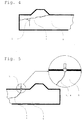
Fig. 1 bis 3 eine partielle Darstellung von einer Betonschwelle in jeweils verschiedenen Ansichten mit unterschiedlichen Rissbildern, -
Fig. 4 und 5 eine partielle Darstellung von einer Betonschwelle mit am Riss angesetzten Einfüllstutzen und -
Fig. 6 eine partielle Darstellung von einer Betonschwelle mit einem die Schwelle bearbeitenden mechanischen Werkzeug im Bereich eines Risses. - Die Sanierung von Rissen 1 an Betonschwellen 6 stellt für die Betreiber von Gleisanlagen einen hohen Kostenfaktor dar.
- Mittels des erfindungsgemäßen Verfahrens ermöglicht sich eine Risssanierung, wobei die zu sanierende Betonschwelle 6 bei der Sanierung in der Gleisanlage verbleibt. Beim erfindungsgemäßen Verfahren zur Risssanierung an Betonschwellen 6 erfolgt die Sanierung in aufeinanderfolgenden Schritten nach einer eingehenden Rissanalyse. Je nach Nässegrad sowie Verschmutzungsgrad und Art der Verschmutzung wird der Riss zunächst ausgeblasen und mit einem Lösungsmittel gespült, welches beispielsweise hydrophob ist. Je nach Reinigungsergebnis wird der Riss 1 oder werden die Risse 1 erneut ausgeblasen. Nach dem Reinigungsvorgang erfolgt die Verdämmung 2 des Risses 1 oder der Risse 1. Die Verdämmung 2 erfolgt hierbei anhand der Rissanalyse. Hierfür wird die Verdämmung 2 auf den Riss 1 so aufgebracht, dass dieser vollständig abgedeckt ist. Die Verdämmung 2 wird streifenförmig entlang des Risses 1 auf den Riss 1 aufgebracht, wobei die Verdämmung 2 in Abständen entfernbar ausgeführt wird. Hierfür wird der Riss beispielsweise quer zum Rissverlauf abgedeckt und von der Verdämmung 2 überlagert. Im nun folgenden Schritt werden an den dafür vorgesehenen Stellen durch Entfernen der Verdämmung 2 Freiflächen 3 hergestellt. Im Bedarfsfall erfolgt an dieser Stelle des Verfahrens über die Freiflächen 3 erneut ein Ausblasen sowie ein Spülen der Risses 1 oder der Risse 1.
- An den Freiflächen 3 wird in den Riss 1 mittels einer an sich bekannten Injektionsvorrichtung und einer Niedrigdruckpumpe der Verfüllstoff 4 injiziert. Dies ist unter Zuhilfenahme sogenannter Packer, also Einfüllstutzen 5, welche in den Riss 1 angeordnet werden, oder mittels auf den Riss 1 aufsetzbare oder anpressbare Gummilippen 6 möglich. Hierdurch wird ein optimales Verfüllergebnis erzielt. Mittels eines Druckabfallsensors wird die Niedrigdruckpumpe gesteuert, so dass der Verfüllstoff 4 blasenfrei in den Riss 1 eindringen kann. Weiterhin erfolgt in einem weiteren Schritt eine Überwachung der Verfüllung, indem das Austreten des Verfüllstoffes 4 aus dem Riss 1 überwacht wird. Anhand des Überwachungsergebnisses wird die Niedrigdruckpumpe gesteuert. Das Verfüllen wird unterbrechungsfrei als ein Arbeitsgang durchgeführt, wobei unter Berücksichtigung der Topfzeit des jeweiligen Verfüllstoffes 4 der Verfüllvorgang verzögert werden kann.
- Als Verfüllstoff 4 kommt sowohl ein Epoxidharz als auch Polyurethan in Frage. Insbesondere bei der Verwendung von Polyurethan ist das Spülen des Risses 1 mit einem Hydrophoben Lösungsmittel, wie beispielsweise Aceton, notwendig, um die Folgen der ungünstigen Wechselwirkung des Polyurethans mit Wasser zu vermeiden, wodurch die notwenige Stabilität nicht erreicht werden würde.
- Die geeignete Wahl des Verfüllstoffes 4 erlaubt ein Verfüllen auch bei kontinuierlicher oder unsteter mechanischer Beanspruchung der Betonschwelle 6.
- Um das Verfüllen zu vereinfachen, wird eine mechanische Erweiterung des Risses 1 bzw. des Bereiches unmittelbar am Riss vorgesehen. Hierbei ist besondere Sorgfalt geboten, um eine weitere Beschädigung der Betonschwelle 6 zu vermeiden. Durch die Erweiterung des Risses 1 lassen sich die Einfüllstutzen 5 sowie die Gummilippen 5 so setzen, dass ein Entweichen des Verfüllstoffes 4 unmittelbar an der Verfüllstelle vermieden werden wird.
- Durch die Anwendung des Verfahrens zur Sanierung von Betonschwellen 6 von Gleisanlagen, werden die zeitaufwendigen und kostenintensiven Maßnahmen, wie eine langfristige Sperre der jeweiligen Strecke und ein Entfernen der Gleisanlagen und des Gleisbettes vermieden, da die Betonschwellen 6 in der Gleisanlage verbleiben. Zudem erlaubt diese Verfahren eine Anwendung auch bei Betrieb der Strecke, so dass beim vorübergehenden Zugverkehr die Sanierung verzögert und in den Zugpausen die Sanierung normal fortgesetzt wird.
- Bei bis zum Schwellenboden durchgehenden Rissen 1 bis zur Unterseite wird ein schnell topfendes Material mittels eines Injektors seitlich in diesem Bereich eingebracht. Dieses Material ist ein geleeartiges, schnell topfendes Material, welches gemäß Luftfeuchtigkeit, Taupunkt und Bauwerkstemperatur angepasst ist. Nach dem Aushärten dieses Materials wird der vierte Schritt gemäß Anspruch 1 durchgeführt.
-
- 1
- - Riss
- 2
- - Verdämmung
- 3
- - Freifläche
- 4
- - Verfüllstoff
- 5
- - Einfüllstutzen, Gummilippe
- 6
- - Betonschwelle
- 7
- - Bohrer
Claims (11)
- Verfahren zur Risssanierung an Betonschwellen (6) von Gleisanlagen durch Injektion eines Verfüllstoffes, wobei der oder die Risse (1) zumindest partiell mit einer an sich bekannten Verdämmung (2) im oberen Bereich der Betonschwelle (6) auf deren Oberfläche verdämmt wird, wobei bei der Risssanierung die zu sanierende Betonschwelle (6) in der Gleisanlage verbleibt,
gekennzeichnet durch folgende Merkmale,- dass in einem ersten Schritt eine Rissanalyse durchgeführt wird,- dass in einem zweiten Schritt anhand der Rissanalyse der mindestens eine Riss (1) so verdämmt wird, dass die Verdämmung (2) vorzugsweise streifenförmig entlang des mindestens einen Risses (1) den Riss (1) bedeckend aufgebracht wird, wobei die Verdämmung (2) entlang des Risses (1) beabstandet entfernbar ausgeführt wird,- dass in einem dritten Schritt durch das Entfernen der Verdämmung (2) mindestens eine Freiflache (3) hergestellt wird,- dass in einem vierten Schritt an der mindestens einen Freifläche (3) in den Riss (1) mittels einer an sich bekannten Injektionsvorrichtung und einer Niedrigdruckpumpe der Verfüllstoff (4) injiziert wird, wobei mittels eines Druckabfallsensors die Niedrigdruckpumpe gesteuert wird und- dass der dritte und vierte Schritt nacheinander jeweils abwechselnd bis zur vollständigen Verfüllung durchgeführt werden. - Verfahren nach Anspruch 1, dadurch gekennzeichnet,
dass in einem fünften Schritt das Austreten des Verfüllstoffes (4) aus dem Riss (1) überwacht wird und anhand des Überwachungsergebnisses die Niedrigdruckpumpe gesteuert wird. - Verfahren nach den Ansprüchen 1 und 2, dadurch gekennzeichnet,
dass als Verfüllstoff (4) einkomponentiges, zweikomponentiges oder mehrkomponentiges Epoxidharz oder Polyurethan verwendet wird. - Verfahren nach einem der vorhergehenden Ansprüchen, dadurch gekennzeichnet,
dass der mindestens eine Riss (1) vor dem zweiten Schritt und/oder vor dem vierten Schritt mittels eines Lösungsmittels gespült wird. - Verfahren nach dem Anspruch 4, dadurch gekennzeichnet,
dass der Riss (1) vor dem Spülen, nach dem Spülen, vor dem zweiten Schritt und/oder vor dem vierten Schritt ausgeblasen wird. - Verfahren nach einem der vorhergehenden Ansprüchen, dadurch gekennzeichnet,
dass die Injektionsvorrichtung an der Freifläche (3) mittels Einfüllstutzen (5) in den Riss (1) eingesetzt oder mittels Gummilippe (5) auf den Riss (1) aufgesetzt wird. - Verfahren nach einem der vorhergehenden Ansprüchen, dadurch gekennzeichnet,
dass das Verfüllen als ein Arbeitsgang durchgeführt wird. - Verfahren nach einem der vorhergehenden Ansprüchen, dadurch gekennzeichnet,
dass das Verfüllen auch bei kontinuierlicher oder unsteter mechanischer Beanspruchung des monolithischen Materials (6) durchgeführt wird. - Verfahren nach einem der vorhergehenden Ansprüchen, dadurch gekennzeichnet,
dass die Betonschwelle (6) im Bereich des Risses (1) und/oder der Riss (1) mechanisch erweitert wird. - Verfahren nach einem der vorhergehenden Ansprüchen, dadurch gekennzeichnet,
dass bei durchgehenden Rissbildungen bis zur Unterseite im unteren Bereich der Betonschwelle ein schnell topfendes Material mittels eines Injektors seitlich in diesem Bereich eingebracht und nach dem Aushärten der vierte Schritt durchgeführt wird. - Verwendung des Verfahrens nach den Ansprüchen 1 bis 10, dadurch gekennzeichnet,
dass Betonschwellen von Gleisanlagen saniert werden, wobei die Betonschwellen in der Gleisanlage verbleiben und die Schienen und das Gleisbett unberührt bleiben.
Priority Applications (2)
| Application Number | Priority Date | Filing Date | Title |
|---|---|---|---|
| PL13177512T PL2690218T3 (pl) | 2012-07-22 | 2013-07-22 | Sposób naprawy pęknięć na podkładach betonowych torowisk |
| EP16200099.6A EP3269878A1 (de) | 2012-07-22 | 2013-07-22 | Verfahren zur risssanierung an betonschwellen von gleisanlagen |
Applications Claiming Priority (1)
| Application Number | Priority Date | Filing Date | Title |
|---|---|---|---|
| DE102012106632 | 2012-07-22 |
Related Child Applications (2)
| Application Number | Title | Priority Date | Filing Date |
|---|---|---|---|
| EP16200099.6A Division-Into EP3269878A1 (de) | 2012-07-22 | 2013-07-22 | Verfahren zur risssanierung an betonschwellen von gleisanlagen |
| EP16200099.6A Division EP3269878A1 (de) | 2012-07-22 | 2013-07-22 | Verfahren zur risssanierung an betonschwellen von gleisanlagen |
Publications (4)
| Publication Number | Publication Date |
|---|---|
| EP2690218A2 EP2690218A2 (de) | 2014-01-29 |
| EP2690218A3 EP2690218A3 (de) | 2015-04-15 |
| EP2690218B1 EP2690218B1 (de) | 2016-11-23 |
| EP2690218B2 true EP2690218B2 (de) | 2020-04-29 |
Family
ID=48915830
Family Applications (2)
| Application Number | Title | Priority Date | Filing Date |
|---|---|---|---|
| EP16200099.6A Withdrawn EP3269878A1 (de) | 2012-07-22 | 2013-07-22 | Verfahren zur risssanierung an betonschwellen von gleisanlagen |
| EP13177512.4A Active EP2690218B2 (de) | 2012-07-22 | 2013-07-22 | Verfahren zur Risssanierung an Betonschwellen von Gleisanlagen |
Family Applications Before (1)
| Application Number | Title | Priority Date | Filing Date |
|---|---|---|---|
| EP16200099.6A Withdrawn EP3269878A1 (de) | 2012-07-22 | 2013-07-22 | Verfahren zur risssanierung an betonschwellen von gleisanlagen |
Country Status (3)
| Country | Link |
|---|---|
| EP (2) | EP3269878A1 (de) |
| DE (2) | DE102013107822A1 (de) |
| PL (1) | PL2690218T3 (de) |
Families Citing this family (4)
| Publication number | Priority date | Publication date | Assignee | Title |
|---|---|---|---|---|
| DE102015119884B4 (de) | 2015-11-17 | 2020-02-13 | adicon dichte Bauwerke GmbH | Verfahren zur Sanierung von Betonschwellen |
| DE102021115681A1 (de) | 2021-06-17 | 2022-12-22 | adicon dichte Bauwerke GmbH | Verfahren zur Sanierung von Bahnschwellen für Schienenfahrzeuge |
| CN114952515B (zh) * | 2022-06-01 | 2023-06-09 | 郑州铁路职业技术学院 | 一种道岔转辙机修复装置 |
| CN120486192B (zh) * | 2025-06-25 | 2025-11-11 | 中国铁道科学研究院集团有限公司铁道建筑研究所 | 一种无砟道床轨枕与道床离缝修复方法及修复工装 |
Citations (3)
| Publication number | Priority date | Publication date | Assignee | Title |
|---|---|---|---|---|
| DE3620490A1 (de) † | 1986-06-19 | 1987-12-23 | Hilti Ag | Verfahren zur bauwerks-sanierung |
| WO2010096182A1 (en) † | 2009-02-20 | 2010-08-26 | Encore Rail Systems, Inc. | Methods for repair and preventative maintenance of railroad ties using uv curable polymers |
| EP2405080A1 (de) † | 2010-07-09 | 2012-01-11 | Sersa Group AG (Schweiz) | Schwellenrisssanierung |
Family Cites Families (4)
| Publication number | Priority date | Publication date | Assignee | Title |
|---|---|---|---|---|
| JP3903017B2 (ja) * | 2003-02-13 | 2007-04-11 | 積水化学工業株式会社 | まくら木の補修方法 |
| JP4224419B2 (ja) * | 2004-03-31 | 2009-02-12 | 積水化学工業株式会社 | まくら木連結構造、まくら木補修方法 |
| JP4226015B2 (ja) * | 2006-03-23 | 2009-02-18 | 住友大阪セメント株式会社 | コンクリート製枕木の補修方法 |
| US20090178731A1 (en) * | 2006-06-20 | 2009-07-16 | David Ollendick | Rehabilitation of discarded wooden railroad ties having disabling cracks in the ends of the ties |
-
2013
- 2013-07-22 DE DE102013107822.2A patent/DE102013107822A1/de not_active Withdrawn
- 2013-07-22 EP EP16200099.6A patent/EP3269878A1/de not_active Withdrawn
- 2013-07-22 EP EP13177512.4A patent/EP2690218B2/de active Active
- 2013-07-22 DE DE202013012347.8U patent/DE202013012347U1/de not_active Expired - Lifetime
- 2013-07-22 PL PL13177512T patent/PL2690218T3/pl unknown
Patent Citations (3)
| Publication number | Priority date | Publication date | Assignee | Title |
|---|---|---|---|---|
| DE3620490A1 (de) † | 1986-06-19 | 1987-12-23 | Hilti Ag | Verfahren zur bauwerks-sanierung |
| WO2010096182A1 (en) † | 2009-02-20 | 2010-08-26 | Encore Rail Systems, Inc. | Methods for repair and preventative maintenance of railroad ties using uv curable polymers |
| EP2405080A1 (de) † | 2010-07-09 | 2012-01-11 | Sersa Group AG (Schweiz) | Schwellenrisssanierung |
Non-Patent Citations (4)
| Title |
|---|
| "Füllen von Rissen", ZEMENT-MERKBLATT BETONTECHNIK, no. B26, June 2003 (2003-06-01), XP055415664, Retrieved from the Internet <URL:https://www.vdz-online.de/fileadmin/gruppen/vdz/3LiteraturRecherche/Zementmerkblaetter/B26.pdf> † |
| "Rißsanierung - Schließen, Abdichten, dehnfähiges und kraftschlüssiges Verbinden", WEBAC BROSCHUE, November 2001 (2001-11-01), pages 1 - 13, XP055415681 † |
| "Rißverpressung - Prinzipielle Anmerkungen zum Verpressen von Rissen in Betonbauteilen", June 2001 (2001-06-01), XP055415682, Retrieved from the Internet <URL:http://www.smp-ing.de/webyep-system/programm/download.php?FILENAME=14-2-at-download.pdf&ORG_FILENAME=Rissverpressung2001.pdf> † |
| ANONYMOUS: "Bundesanstalt f�r Stra�enwesen", ZUS�TZLICHE TECHNISCHE VERTRAGSBEDINGUNGEN UND RICHTLINIEN F�R INGENIEURBAUTEN (ZTV-ING) - TEIL 3, MASSIVBAU, ABSCHNITT 5, F�LLEN VON RISEEN UND HOHLR�UMEN IN BETONBAUTEILEN, XP055415660, Retrieved from the Internet <URL:https://www.farbe-bfi.de/1003_ZTV-ING-Teil-3-Abschn-5-Fuellen-Risse-Hohlraeume.pdf> [retrieved on 20171013] † |
Also Published As
| Publication number | Publication date |
|---|---|
| EP2690218A3 (de) | 2015-04-15 |
| EP3269878A1 (de) | 2018-01-17 |
| EP2690218A2 (de) | 2014-01-29 |
| EP2690218B1 (de) | 2016-11-23 |
| PL2690218T3 (pl) | 2017-08-31 |
| DE202013012347U1 (de) | 2016-06-02 |
| DE102013107822A1 (de) | 2014-01-23 |
Similar Documents
| Publication | Publication Date | Title |
|---|---|---|
| EP2690218B2 (de) | Verfahren zur Risssanierung an Betonschwellen von Gleisanlagen | |
| EP1730352B1 (de) | Verfahren zur höhenkorrektur einer festen schienenfahrbahn | |
| EP4165249B1 (de) | Verfahren zum reparatur- oder änderungsschweissen einer schiene | |
| EP2061933B1 (de) | Fahrweg und verfahren zur herstellung eines fahrweges | |
| DE102015119884B4 (de) | Verfahren zur Sanierung von Betonschwellen | |
| DE102015016866A1 (de) | Verfahren zur Reparatur eines überwalzten Schienenisolierstoßes | |
| DE102014112009A1 (de) | Verfahren zur Risssanierung an Betonelementen | |
| AT511240B1 (de) | Verfahren zum erstellen eines bauwerkes und mauerwerk-verankerungssystem | |
| DE3543808A1 (de) | Verfahren zur abdichtung von tuebbingen und dichtungsrahmen zur durchfuehrung des verfahrens | |
| EP4105384B1 (de) | Verfahren zur sanierung von bahnschwellen für schienenfahrzeuge | |
| DE102012202877A1 (de) | Bahnschwellensanierungsverfahren | |
| EP2558641B1 (de) | Schalldämmvorrichtung | |
| EP2194190B1 (de) | Dehnfugen-Überbrückungsvorrichtung | |
| EP3556938B1 (de) | Elastisch zu lagernde schiene | |
| DE4201108C2 (de) | Verfahren zur nachträglichen Höhenregulierung einer fugenlosen Betonfahrbahn | |
| EP2626467B1 (de) | Vorrichtung und Verfahren zur Nachverfestigung einer Schiene in einer schotterlosen Verlegung | |
| DE4439111B4 (de) | Behälter und Verfahren zu seiner Herstellung | |
| Wagner et al. | Maintenance‐optimised drainage system for the New Semmering Base tunnel and Pummersdorf Tunnel/Instandhaltungsoptimiertes Entwässerungssystem für den Semmering‐Basistunnel neu und Tunnel Pummersdorf | |
| EP4286586B1 (de) | Verfahren zur reparatur eines überwalzten schienenisolierstosses und vervwendung eines formkörpers aus offenporigem verbundstoffmaterial als reparatureinlagein diesem verfahren | |
| DE102014005896A1 (de) | Dichtungsprofil zur Anordnung in einer Bauwerksfuge | |
| KR102916669B1 (ko) | 균열 전주 에폭시 충전보수 장치 및 방법 | |
| WO2018068934A1 (de) | Verfahren zur herstellung von verklotzungen und applikationsvorrichtung | |
| EP2626466A2 (de) | Vorrichtung und Verfahren zur Nachverfestigung einer Schiene in einer schotterlosen Verlegung | |
| DE19909444C2 (de) | Verfahren zur Herstellung eines Gußasphaltdeckenanschlusses für eine Gleisanlage | |
| Strappler et al. | Two‐layer lining for ÖBB railway tunnel projects with TBM/Ein‐und zweischalige Auskleidung bei Tunnelbauprojekten der ÖBB mit kontinuierlichem Vortrieb |
Legal Events
| Date | Code | Title | Description |
|---|---|---|---|
| REG | Reference to a national code |
Ref country code: DE Ref legal event code: R138 Ref document number: 202013012347 Country of ref document: DE Free format text: GERMAN DOCUMENT NUMBER IS 502013005461 |
|
| PUAI | Public reference made under article 153(3) epc to a published international application that has entered the european phase |
Free format text: ORIGINAL CODE: 0009012 |
|
| AK | Designated contracting states |
Kind code of ref document: A2 Designated state(s): AL AT BE BG CH CY CZ DE DK EE ES FI FR GB GR HR HU IE IS IT LI LT LU LV MC MK MT NL NO PL PT RO RS SE SI SK SM TR |
|
| AX | Request for extension of the european patent |
Extension state: BA ME |
|
| PUAL | Search report despatched |
Free format text: ORIGINAL CODE: 0009013 |
|
| AK | Designated contracting states |
Kind code of ref document: A3 Designated state(s): AL AT BE BG CH CY CZ DE DK EE ES FI FR GB GR HR HU IE IS IT LI LT LU LV MC MK MT NL NO PL PT RO RS SE SI SK SM TR |
|
| AX | Request for extension of the european patent |
Extension state: BA ME |
|
| RIC1 | Information provided on ipc code assigned before grant |
Ipc: E01B 31/20 20060101AFI20150306BHEP |
|
| 17P | Request for examination filed |
Effective date: 20151009 |
|
| RBV | Designated contracting states (corrected) |
Designated state(s): AL AT BE BG CH CY CZ DE DK EE ES FI FR GB GR HR HU IE IS IT LI LT LU LV MC MK MT NL NO PL PT RO RS SE SI SK SM TR |
|
| RAP1 | Party data changed (applicant data changed or rights of an application transferred) |
Owner name: GETEK HOLDING GMBH |
|
| RIN1 | Information on inventor provided before grant (corrected) |
Inventor name: JUNGHANS, MARKO Inventor name: VON HAUENSCHILD, MATTHIAS Inventor name: KROLL, ANDREAS |
|
| GRAP | Despatch of communication of intention to grant a patent |
Free format text: ORIGINAL CODE: EPIDOSNIGR1 |
|
| INTG | Intention to grant announced |
Effective date: 20160616 |
|
| GRAS | Grant fee paid |
Free format text: ORIGINAL CODE: EPIDOSNIGR3 |
|
| GRAA | (expected) grant |
Free format text: ORIGINAL CODE: 0009210 |
|
| AK | Designated contracting states |
Kind code of ref document: B1 Designated state(s): AL AT BE BG CH CY CZ DE DK EE ES FI FR GB GR HR HU IE IS IT LI LT LU LV MC MK MT NL NO PL PT RO RS SE SI SK SM TR |
|
| REG | Reference to a national code |
Ref country code: GB Ref legal event code: FG4D Free format text: NOT ENGLISH |
|
| REG | Reference to a national code |
Ref country code: CH Ref legal event code: EP |
|
| REG | Reference to a national code |
Ref country code: IE Ref legal event code: FG4D Free format text: LANGUAGE OF EP DOCUMENT: GERMAN |
|
| REG | Reference to a national code |
Ref country code: AT Ref legal event code: REF Ref document number: 848044 Country of ref document: AT Kind code of ref document: T Effective date: 20161215 |
|
| REG | Reference to a national code |
Ref country code: DE Ref legal event code: R096 Ref document number: 502013005461 Country of ref document: DE |
|
| PG25 | Lapsed in a contracting state [announced via postgrant information from national office to epo] |
Ref country code: LV Free format text: LAPSE BECAUSE OF FAILURE TO SUBMIT A TRANSLATION OF THE DESCRIPTION OR TO PAY THE FEE WITHIN THE PRESCRIBED TIME-LIMIT Effective date: 20161123 |
|
| REG | Reference to a national code |
Ref country code: NL Ref legal event code: FP |
|
| REG | Reference to a national code |
Ref country code: LT Ref legal event code: MG4D |
|
| PG25 | Lapsed in a contracting state [announced via postgrant information from national office to epo] |
Ref country code: NO Free format text: LAPSE BECAUSE OF FAILURE TO SUBMIT A TRANSLATION OF THE DESCRIPTION OR TO PAY THE FEE WITHIN THE PRESCRIBED TIME-LIMIT Effective date: 20170223 Ref country code: SE Free format text: LAPSE BECAUSE OF FAILURE TO SUBMIT A TRANSLATION OF THE DESCRIPTION OR TO PAY THE FEE WITHIN THE PRESCRIBED TIME-LIMIT Effective date: 20161123 Ref country code: GR Free format text: LAPSE BECAUSE OF FAILURE TO SUBMIT A TRANSLATION OF THE DESCRIPTION OR TO PAY THE FEE WITHIN THE PRESCRIBED TIME-LIMIT Effective date: 20170224 Ref country code: LT Free format text: LAPSE BECAUSE OF FAILURE TO SUBMIT A TRANSLATION OF THE DESCRIPTION OR TO PAY THE FEE WITHIN THE PRESCRIBED TIME-LIMIT Effective date: 20161123 |
|
| PG25 | Lapsed in a contracting state [announced via postgrant information from national office to epo] |
Ref country code: HR Free format text: LAPSE BECAUSE OF FAILURE TO SUBMIT A TRANSLATION OF THE DESCRIPTION OR TO PAY THE FEE WITHIN THE PRESCRIBED TIME-LIMIT Effective date: 20161123 Ref country code: ES Free format text: LAPSE BECAUSE OF FAILURE TO SUBMIT A TRANSLATION OF THE DESCRIPTION OR TO PAY THE FEE WITHIN THE PRESCRIBED TIME-LIMIT Effective date: 20161123 Ref country code: FI Free format text: LAPSE BECAUSE OF FAILURE TO SUBMIT A TRANSLATION OF THE DESCRIPTION OR TO PAY THE FEE WITHIN THE PRESCRIBED TIME-LIMIT Effective date: 20161123 Ref country code: PT Free format text: LAPSE BECAUSE OF FAILURE TO SUBMIT A TRANSLATION OF THE DESCRIPTION OR TO PAY THE FEE WITHIN THE PRESCRIBED TIME-LIMIT Effective date: 20170323 Ref country code: RS Free format text: LAPSE BECAUSE OF FAILURE TO SUBMIT A TRANSLATION OF THE DESCRIPTION OR TO PAY THE FEE WITHIN THE PRESCRIBED TIME-LIMIT Effective date: 20161123 |
|
| PG25 | Lapsed in a contracting state [announced via postgrant information from national office to epo] |
Ref country code: RO Free format text: LAPSE BECAUSE OF FAILURE TO SUBMIT A TRANSLATION OF THE DESCRIPTION OR TO PAY THE FEE WITHIN THE PRESCRIBED TIME-LIMIT Effective date: 20161123 Ref country code: EE Free format text: LAPSE BECAUSE OF FAILURE TO SUBMIT A TRANSLATION OF THE DESCRIPTION OR TO PAY THE FEE WITHIN THE PRESCRIBED TIME-LIMIT Effective date: 20161123 Ref country code: SK Free format text: LAPSE BECAUSE OF FAILURE TO SUBMIT A TRANSLATION OF THE DESCRIPTION OR TO PAY THE FEE WITHIN THE PRESCRIBED TIME-LIMIT Effective date: 20161123 Ref country code: DK Free format text: LAPSE BECAUSE OF FAILURE TO SUBMIT A TRANSLATION OF THE DESCRIPTION OR TO PAY THE FEE WITHIN THE PRESCRIBED TIME-LIMIT Effective date: 20161123 |
|
| REG | Reference to a national code |
Ref country code: DE Ref legal event code: R026 Ref document number: 502013005461 Country of ref document: DE |
|
| PG25 | Lapsed in a contracting state [announced via postgrant information from national office to epo] |
Ref country code: BG Free format text: LAPSE BECAUSE OF FAILURE TO SUBMIT A TRANSLATION OF THE DESCRIPTION OR TO PAY THE FEE WITHIN THE PRESCRIBED TIME-LIMIT Effective date: 20170223 Ref country code: IT Free format text: LAPSE BECAUSE OF FAILURE TO SUBMIT A TRANSLATION OF THE DESCRIPTION OR TO PAY THE FEE WITHIN THE PRESCRIBED TIME-LIMIT Effective date: 20161123 Ref country code: SM Free format text: LAPSE BECAUSE OF FAILURE TO SUBMIT A TRANSLATION OF THE DESCRIPTION OR TO PAY THE FEE WITHIN THE PRESCRIBED TIME-LIMIT Effective date: 20161123 |
|
| PLBI | Opposition filed |
Free format text: ORIGINAL CODE: 0009260 |
|
| PLAX | Notice of opposition and request to file observation + time limit sent |
Free format text: ORIGINAL CODE: EPIDOSNOBS2 |
|
| 26 | Opposition filed |
Opponent name: DEUTSCHE BAHN AG Effective date: 20170823 |
|
| PLBB | Reply of patent proprietor to notice(s) of opposition received |
Free format text: ORIGINAL CODE: EPIDOSNOBS3 |
|
| PG25 | Lapsed in a contracting state [announced via postgrant information from national office to epo] |
Ref country code: SI Free format text: LAPSE BECAUSE OF FAILURE TO SUBMIT A TRANSLATION OF THE DESCRIPTION OR TO PAY THE FEE WITHIN THE PRESCRIBED TIME-LIMIT Effective date: 20161123 |
|
| REG | Reference to a national code |
Ref country code: CH Ref legal event code: PL |
|
| REG | Reference to a national code |
Ref country code: IE Ref legal event code: MM4A |
|
| REG | Reference to a national code |
Ref country code: FR Ref legal event code: ST Effective date: 20180330 |
|
| PG25 | Lapsed in a contracting state [announced via postgrant information from national office to epo] |
Ref country code: IE Free format text: LAPSE BECAUSE OF NON-PAYMENT OF DUE FEES Effective date: 20170722 Ref country code: LI Free format text: LAPSE BECAUSE OF NON-PAYMENT OF DUE FEES Effective date: 20170731 Ref country code: CH Free format text: LAPSE BECAUSE OF NON-PAYMENT OF DUE FEES Effective date: 20170731 |
|
| PG25 | Lapsed in a contracting state [announced via postgrant information from national office to epo] |
Ref country code: FR Free format text: LAPSE BECAUSE OF NON-PAYMENT OF DUE FEES Effective date: 20170731 |
|
| PLAB | Opposition data, opponent's data or that of the opponent's representative modified |
Free format text: ORIGINAL CODE: 0009299OPPO |
|
| REG | Reference to a national code |
Ref country code: BE Ref legal event code: MM Effective date: 20170731 |
|
| PG25 | Lapsed in a contracting state [announced via postgrant information from national office to epo] |
Ref country code: LU Free format text: LAPSE BECAUSE OF NON-PAYMENT OF DUE FEES Effective date: 20170722 |
|
| R26 | Opposition filed (corrected) |
Opponent name: DEUTSCHE BAHN AG Effective date: 20170823 |
|
| PG25 | Lapsed in a contracting state [announced via postgrant information from national office to epo] |
Ref country code: BE Free format text: LAPSE BECAUSE OF NON-PAYMENT OF DUE FEES Effective date: 20170731 |
|
| PG25 | Lapsed in a contracting state [announced via postgrant information from national office to epo] |
Ref country code: MT Free format text: LAPSE BECAUSE OF FAILURE TO SUBMIT A TRANSLATION OF THE DESCRIPTION OR TO PAY THE FEE WITHIN THE PRESCRIBED TIME-LIMIT Effective date: 20161123 |
|
| PLAB | Opposition data, opponent's data or that of the opponent's representative modified |
Free format text: ORIGINAL CODE: 0009299OPPO |
|
| R26 | Opposition filed (corrected) |
Opponent name: DEUTSCHE BAHN AG Effective date: 20170823 |
|
| PG25 | Lapsed in a contracting state [announced via postgrant information from national office to epo] |
Ref country code: MC Free format text: LAPSE BECAUSE OF FAILURE TO SUBMIT A TRANSLATION OF THE DESCRIPTION OR TO PAY THE FEE WITHIN THE PRESCRIBED TIME-LIMIT Effective date: 20161123 Ref country code: HU Free format text: LAPSE BECAUSE OF FAILURE TO SUBMIT A TRANSLATION OF THE DESCRIPTION OR TO PAY THE FEE WITHIN THE PRESCRIBED TIME-LIMIT; INVALID AB INITIO Effective date: 20130722 |
|
| PGFP | Annual fee paid to national office [announced via postgrant information from national office to epo] |
Ref country code: PL Payment date: 20190626 Year of fee payment: 7 |
|
| REG | Reference to a national code |
Ref country code: AT Ref legal event code: MM01 Ref document number: 848044 Country of ref document: AT Kind code of ref document: T Effective date: 20180722 |
|
| PG25 | Lapsed in a contracting state [announced via postgrant information from national office to epo] |
Ref country code: CY Free format text: LAPSE BECAUSE OF NON-PAYMENT OF DUE FEES Effective date: 20161123 |
|
| PGFP | Annual fee paid to national office [announced via postgrant information from national office to epo] |
Ref country code: CZ Payment date: 20190710 Year of fee payment: 7 |
|
| PG25 | Lapsed in a contracting state [announced via postgrant information from national office to epo] |
Ref country code: MK Free format text: LAPSE BECAUSE OF FAILURE TO SUBMIT A TRANSLATION OF THE DESCRIPTION OR TO PAY THE FEE WITHIN THE PRESCRIBED TIME-LIMIT Effective date: 20161123 |
|
| PG25 | Lapsed in a contracting state [announced via postgrant information from national office to epo] |
Ref country code: AT Free format text: LAPSE BECAUSE OF NON-PAYMENT OF DUE FEES Effective date: 20180722 |
|
| PUAH | Patent maintained in amended form |
Free format text: ORIGINAL CODE: 0009272 |
|
| STAA | Information on the status of an ep patent application or granted ep patent |
Free format text: STATUS: PATENT MAINTAINED AS AMENDED |
|
| PG25 | Lapsed in a contracting state [announced via postgrant information from national office to epo] |
Ref country code: TR Free format text: LAPSE BECAUSE OF FAILURE TO SUBMIT A TRANSLATION OF THE DESCRIPTION OR TO PAY THE FEE WITHIN THE PRESCRIBED TIME-LIMIT Effective date: 20161123 |
|
| 27A | Patent maintained in amended form |
Effective date: 20200429 |
|
| AK | Designated contracting states |
Kind code of ref document: B2 Designated state(s): AL AT BE BG CH CY CZ DE DK EE ES FI FR GB GR HR HU IE IS IT LI LT LU LV MC MK MT NL NO PL PT RO RS SE SI SK SM TR |
|
| REG | Reference to a national code |
Ref country code: DE Ref legal event code: R102 Ref document number: 502013005461 Country of ref document: DE |
|
| REG | Reference to a national code |
Ref country code: NL Ref legal event code: FP |
|
| PG25 | Lapsed in a contracting state [announced via postgrant information from national office to epo] |
Ref country code: AL Free format text: LAPSE BECAUSE OF FAILURE TO SUBMIT A TRANSLATION OF THE DESCRIPTION OR TO PAY THE FEE WITHIN THE PRESCRIBED TIME-LIMIT Effective date: 20161123 Ref country code: IS Free format text: LAPSE BECAUSE OF FAILURE TO SUBMIT A TRANSLATION OF THE DESCRIPTION OR TO PAY THE FEE WITHIN THE PRESCRIBED TIME-LIMIT Effective date: 20170323 |
|
| PGFP | Annual fee paid to national office [announced via postgrant information from national office to epo] |
Ref country code: NL Payment date: 20200728 Year of fee payment: 8 |
|
| PG25 | Lapsed in a contracting state [announced via postgrant information from national office to epo] |
Ref country code: CZ Free format text: LAPSE BECAUSE OF FAILURE TO SUBMIT A TRANSLATION OF THE DESCRIPTION OR TO PAY THE FEE WITHIN THE PRESCRIBED TIME-LIMIT Effective date: 20161123 |
|
| PGFP | Annual fee paid to national office [announced via postgrant information from national office to epo] |
Ref country code: GB Payment date: 20200728 Year of fee payment: 8 |
|
| REG | Reference to a national code |
Ref country code: NL Ref legal event code: MM Effective date: 20210801 |
|
| GBPC | Gb: european patent ceased through non-payment of renewal fee |
Effective date: 20210722 |
|
| PG25 | Lapsed in a contracting state [announced via postgrant information from national office to epo] |
Ref country code: GB Free format text: LAPSE BECAUSE OF NON-PAYMENT OF DUE FEES Effective date: 20210722 |
|
| PG25 | Lapsed in a contracting state [announced via postgrant information from national office to epo] |
Ref country code: NL Free format text: LAPSE BECAUSE OF NON-PAYMENT OF DUE FEES Effective date: 20210801 |
|
| PG25 | Lapsed in a contracting state [announced via postgrant information from national office to epo] |
Ref country code: PL Free format text: LAPSE BECAUSE OF NON-PAYMENT OF DUE FEES Effective date: 20200722 |
|
| PGFP | Annual fee paid to national office [announced via postgrant information from national office to epo] |
Ref country code: DE Payment date: 20250811 Year of fee payment: 13 |