EP2696677B1 - Insecticide, insectifuge et anti-irritation - Google Patents
Insecticide, insectifuge et anti-irritation Download PDFInfo
- Publication number
- EP2696677B1 EP2696677B1 EP12771587.8A EP12771587A EP2696677B1 EP 2696677 B1 EP2696677 B1 EP 2696677B1 EP 12771587 A EP12771587 A EP 12771587A EP 2696677 B1 EP2696677 B1 EP 2696677B1
- Authority
- EP
- European Patent Office
- Prior art keywords
- weight
- fatty acid
- methyl ester
- acid methyl
- composition
- Prior art date
- Legal status (The legal status is an assumption and is not a legal conclusion. Google has not performed a legal analysis and makes no representation as to the accuracy of the status listed.)
- Active
Links
Images




Classifications
-
- A—HUMAN NECESSITIES
- A01—AGRICULTURE; FORESTRY; ANIMAL HUSBANDRY; HUNTING; TRAPPING; FISHING
- A01N—PRESERVATION OF BODIES OF HUMANS OR ANIMALS OR PLANTS OR PARTS THEREOF; BIOCIDES, e.g. AS DISINFECTANTS, AS PESTICIDES OR AS HERBICIDES; PEST REPELLANTS OR ATTRACTANTS; PLANT GROWTH REGULATORS
- A01N25/00—Biocides, pest repellants or attractants, or plant growth regulators, characterised by their forms, or by their non-active ingredients or by their methods of application, e.g. seed treatment or sequential application; Substances for reducing the noxious effect of the active ingredients to organisms other than pests
- A01N25/02—Biocides, pest repellants or attractants, or plant growth regulators, characterised by their forms, or by their non-active ingredients or by their methods of application, e.g. seed treatment or sequential application; Substances for reducing the noxious effect of the active ingredients to organisms other than pests containing liquids as carriers, diluents or solvents
-
- A—HUMAN NECESSITIES
- A01—AGRICULTURE; FORESTRY; ANIMAL HUSBANDRY; HUNTING; TRAPPING; FISHING
- A01N—PRESERVATION OF BODIES OF HUMANS OR ANIMALS OR PLANTS OR PARTS THEREOF; BIOCIDES, e.g. AS DISINFECTANTS, AS PESTICIDES OR AS HERBICIDES; PEST REPELLANTS OR ATTRACTANTS; PLANT GROWTH REGULATORS
- A01N37/00—Biocides, pest repellants or attractants, or plant growth regulators containing organic compounds containing a carbon atom having three bonds to hetero atoms with at the most two bonds to halogen, e.g. carboxylic acids
- A01N37/02—Saturated carboxylic acids or thio analogues thereof; Derivatives thereof
-
- A—HUMAN NECESSITIES
- A01—AGRICULTURE; FORESTRY; ANIMAL HUSBANDRY; HUNTING; TRAPPING; FISHING
- A01N—PRESERVATION OF BODIES OF HUMANS OR ANIMALS OR PLANTS OR PARTS THEREOF; BIOCIDES, e.g. AS DISINFECTANTS, AS PESTICIDES OR AS HERBICIDES; PEST REPELLANTS OR ATTRACTANTS; PLANT GROWTH REGULATORS
- A01N37/00—Biocides, pest repellants or attractants, or plant growth regulators containing organic compounds containing a carbon atom having three bonds to hetero atoms with at the most two bonds to halogen, e.g. carboxylic acids
- A01N37/18—Biocides, pest repellants or attractants, or plant growth regulators containing organic compounds containing a carbon atom having three bonds to hetero atoms with at the most two bonds to halogen, e.g. carboxylic acids containing the group —CO—N<, e.g. carboxylic acid amides or imides; Thio analogues thereof
-
- A—HUMAN NECESSITIES
- A01—AGRICULTURE; FORESTRY; ANIMAL HUSBANDRY; HUNTING; TRAPPING; FISHING
- A01N—PRESERVATION OF BODIES OF HUMANS OR ANIMALS OR PLANTS OR PARTS THEREOF; BIOCIDES, e.g. AS DISINFECTANTS, AS PESTICIDES OR AS HERBICIDES; PEST REPELLANTS OR ATTRACTANTS; PLANT GROWTH REGULATORS
- A01N37/00—Biocides, pest repellants or attractants, or plant growth regulators containing organic compounds containing a carbon atom having three bonds to hetero atoms with at the most two bonds to halogen, e.g. carboxylic acids
- A01N37/18—Biocides, pest repellants or attractants, or plant growth regulators containing organic compounds containing a carbon atom having three bonds to hetero atoms with at the most two bonds to halogen, e.g. carboxylic acids containing the group —CO—N<, e.g. carboxylic acid amides or imides; Thio analogues thereof
- A01N37/20—Biocides, pest repellants or attractants, or plant growth regulators containing organic compounds containing a carbon atom having three bonds to hetero atoms with at the most two bonds to halogen, e.g. carboxylic acids containing the group —CO—N<, e.g. carboxylic acid amides or imides; Thio analogues thereof containing the group, wherein Cn means a carbon skeleton not containing a ring; Thio analogues thereof
-
- A—HUMAN NECESSITIES
- A61—MEDICAL OR VETERINARY SCIENCE; HYGIENE
- A61K—PREPARATIONS FOR MEDICAL, DENTAL OR TOILETRY PURPOSES
- A61K31/00—Medicinal preparations containing organic active ingredients
- A61K31/16—Amides, e.g. hydroxamic acids
- A61K31/164—Amides, e.g. hydroxamic acids of a carboxylic acid with an aminoalcohol, e.g. ceramides
-
- A—HUMAN NECESSITIES
- A61—MEDICAL OR VETERINARY SCIENCE; HYGIENE
- A61K—PREPARATIONS FOR MEDICAL, DENTAL OR TOILETRY PURPOSES
- A61K31/00—Medicinal preparations containing organic active ingredients
- A61K31/21—Esters, e.g. nitroglycerine, selenocyanates
- A61K31/215—Esters, e.g. nitroglycerine, selenocyanates of carboxylic acids
- A61K31/22—Esters, e.g. nitroglycerine, selenocyanates of carboxylic acids of acyclic acids, e.g. pravastatin
- A61K31/23—Esters, e.g. nitroglycerine, selenocyanates of carboxylic acids of acyclic acids, e.g. pravastatin of acids having a carboxyl group bound to a chain of seven or more carbon atoms
-
- A—HUMAN NECESSITIES
- A61—MEDICAL OR VETERINARY SCIENCE; HYGIENE
- A61K—PREPARATIONS FOR MEDICAL, DENTAL OR TOILETRY PURPOSES
- A61K47/00—Medicinal preparations characterised by the non-active ingredients used, e.g. carriers or inert additives; Targeting or modifying agents chemically bound to the active ingredient
- A61K47/06—Organic compounds, e.g. natural or synthetic hydrocarbons, polyolefins, mineral oil, petrolatum or ozokerite
- A61K47/08—Organic compounds, e.g. natural or synthetic hydrocarbons, polyolefins, mineral oil, petrolatum or ozokerite containing oxygen, e.g. ethers, acetals, ketones, quinones, aldehydes, peroxides
- A61K47/10—Alcohols; Phenols; Salts thereof, e.g. glycerol; Polyethylene glycols [PEG]; Poloxamers; PEG/POE alkyl ethers
-
- A—HUMAN NECESSITIES
- A61—MEDICAL OR VETERINARY SCIENCE; HYGIENE
- A61K—PREPARATIONS FOR MEDICAL, DENTAL OR TOILETRY PURPOSES
- A61K47/00—Medicinal preparations characterised by the non-active ingredients used, e.g. carriers or inert additives; Targeting or modifying agents chemically bound to the active ingredient
- A61K47/06—Organic compounds, e.g. natural or synthetic hydrocarbons, polyolefins, mineral oil, petrolatum or ozokerite
- A61K47/08—Organic compounds, e.g. natural or synthetic hydrocarbons, polyolefins, mineral oil, petrolatum or ozokerite containing oxygen, e.g. ethers, acetals, ketones, quinones, aldehydes, peroxides
- A61K47/12—Carboxylic acids; Salts or anhydrides thereof
-
- A—HUMAN NECESSITIES
- A61—MEDICAL OR VETERINARY SCIENCE; HYGIENE
- A61K—PREPARATIONS FOR MEDICAL, DENTAL OR TOILETRY PURPOSES
- A61K47/00—Medicinal preparations characterised by the non-active ingredients used, e.g. carriers or inert additives; Targeting or modifying agents chemically bound to the active ingredient
- A61K47/06—Organic compounds, e.g. natural or synthetic hydrocarbons, polyolefins, mineral oil, petrolatum or ozokerite
- A61K47/20—Organic compounds, e.g. natural or synthetic hydrocarbons, polyolefins, mineral oil, petrolatum or ozokerite containing sulfur, e.g. dimethyl sulfoxide [DMSO], docusate, sodium lauryl sulfate or aminosulfonic acids
-
- A—HUMAN NECESSITIES
- A61—MEDICAL OR VETERINARY SCIENCE; HYGIENE
- A61K—PREPARATIONS FOR MEDICAL, DENTAL OR TOILETRY PURPOSES
- A61K47/00—Medicinal preparations characterised by the non-active ingredients used, e.g. carriers or inert additives; Targeting or modifying agents chemically bound to the active ingredient
- A61K47/06—Organic compounds, e.g. natural or synthetic hydrocarbons, polyolefins, mineral oil, petrolatum or ozokerite
- A61K47/24—Organic compounds, e.g. natural or synthetic hydrocarbons, polyolefins, mineral oil, petrolatum or ozokerite containing atoms other than carbon, hydrogen, oxygen, halogen, nitrogen or sulfur, e.g. cyclomethicone or phospholipids
-
- A—HUMAN NECESSITIES
- A61—MEDICAL OR VETERINARY SCIENCE; HYGIENE
- A61P—SPECIFIC THERAPEUTIC ACTIVITY OF CHEMICAL COMPOUNDS OR MEDICINAL PREPARATIONS
- A61P33/00—Antiparasitic agents
Definitions
- This invention relates to pesticides, insecticides, insect repellant, insect anti-feeding, cleaning, glue dissolving and anti-irritation and wound healing compositions for humans and animals and, more particularly, to such compositions which are effective in killing, removing and/or repelling a wide range of endoparasites, ectoparasites and insects while also being non-toxic to humans, animals, and the environment.
- insects for example blood-sucking insects, such as mosquitoes, ticks, fleas, lice, bed bugs, tsetse flies and other nuisance insects.
- blood-sucking insects such as mosquitoes, ticks, fleas, lice, bed bugs, tsetse flies and other nuisance insects.
- a product that is capable of killing all lice in a single treatment, removes nits, is easy to apply, has a short treatment time, provides protection from reinfestation, is gentle to the scalp and other skin area to which it comes into contact with, is non-damaging to hair, is non-toxic to humans, is easy to remove and does not provide a lingering odor.
- a product it is desirable that there is little or no risk of development of resistance to the product, for example such a problem of resistance has been observed with pyrethroids and malathion. These products have a specific target site action, and mutation and therefore development of resistance is possible. In addition, malathion products have a 8 to 12 hour treatment time, which is not very convenient for a user. Accordingly, it is desirable for a product to have a mechanical mode of action in order to reduce the likelihood of developing resistance by the insects and/or pests that are intended to be controlled, killed, removed and/or repelled by the product.
- DE10216509 discloses a composition comprising fatty acid ester ("PEG7 Gylcerylcocoat”, “Glycoldistearat”, “PEG-9-Kokosfettsaureglyceride”%) in combination with cocamid DEA.
- the composition is a water based cosmetic composition.
- US5589181 discloses an insect repellent composition
- a fatty acid alkyl ester and different surfactants.
- the compositions are non aqueous.
- the present invention as defined in the claims is designed to overcome the above noted limitations that are attendant upon the use of conventional insecticides and pesticides and, toward this end, it contemplates the provision of aqueous compositions that are effective in killing, removing and/or repelling a wide range of insects while also being non-toxic to humans, animals, and the environment.
- compositions that are effective at controlling, killing, removing and/or repelling insects and other pests, such as head lice.
- compositions are effective at killing and/or removing head lice nits from hair.
- compositions have a short application time.
- compositions can be in the form a cosmetically elegant shampoo, for example odor free, drip free and easy to rinse.
- compositions can be used routinely in order to control new infestation.
- compositions are gentle and have beneficial effects on the skin.
- compositions may be used as a glue solvent and/or glue dissolver for a variety of types of glues and adhesives, and more particularly the glue produced by head lice that hold their eggs on hair.
- compositions are capable of relieving irritation from insect bites and skin abrasions.
- compositions may be used for aiding in the healing of scratches, cuts, abrasions and burns to promote faster healing and less scarring.
- compositions may be used as a spot on treatment for animals against fleas, mites, ticks and other biting insects.
- compositions may be used as an anti-parasitic treatment to both endoparasites and ectoparasites.
- such compositions may be used against infective gastrointestinal protozoa, such as coccidian and Cryptosporidium.
- compositions may be used against infections and/or irritations caused by bacteria, protozoa pathogens, fungi and virus of humans, animals and plants when applied externally or taken internally.
- compositions may be used as cleaning compounds, especially for the removal of glues and paints.
- An exemplary embodiment of the present invention is directed to an aqueous composition including a mixture of at least one amide, for example at least one ethanolamide, and more particularly diethanolamide, and at least one esterified fatty acid, for example a fatty acid methyl ester, that may be used as a cleaning composition, insecticide, insect repellant, glue solvent or to relieve irritation from and/or promote healing of insect bites, skin abrasions superficial burns and wounds.
- the fatty acid methyl esters may include the short chain esters, branched chain acids and uneven acids, for example methyl esters of C9, C11, C13, C15 in chain lengths C8 to C18, and the fatty acid methyl esters may further include all fatty acids of methyl esters between C8 and C18. Most efficacious are the methyl and ethyl esters, particularly lauric acid methyl ester, propyl and isopropyl esters.
- the aqueous composition may also include polyethylene glycol, one or more surfactants and/or detergents, one or more alcohols, one or more preservatives and one or more buffering agents.
- the aqueous composition may also include one or more stabilizers and/or one or more conditioning agents.
- the aqueous composition may be in the form of a shampoo, a lotion, a spray shampoo, a gel or a spray repellant.
- Another exemplary embodiment of the present invention is directed to an aqueous composition including at least one esterified fatty acid, for example a fatty acid methyl ester, water and at least one emulsifier.
- the aqueous composition may be used as a cleaning composition, insecticide, insect repellant, glue solvent or to relieve irritation from and/or promote healing of insect bites, skin abrasions superficial burns and wounds.
- At least one fatty acid methyl ester is any fatty acid methyl ester between C8 and C18, such as lauric acid methyl ester, caprylic acid methyl ester, capric acid methyl ester, myristic acid methyl ester, palmitic acid methyl ester, stearic acid methyl ester, unsaturated oleic acid methyl ester or mixtures thereof.
- the at least one esterified fatty acid used in the aqueous composition may also be a fatty acid ethyl ester, a fatty acid propyl ester or a fatty acid isopropyl ester.
- the at least one esterified fatty acid may be a blend of one or more of a fatty acid methyl ester, a fatty acid ethyl ester, a fatty acid propyl ester and/or a fatty acid isopropyl ester.
- a fatty acid methyl ester ethyl ester
- a fatty acid propyl ester ethyl esters of different chain lengths of the fatty acids and particularly methyl, ethyl, propyl and isopropyl esters of lauric acid or mixtures thereof may be used in the aqueous composition.
- ethyl, propyl and isopropyl fatty acid esters that may also be used in the aqueous composition include esters of lauric acid, caprylic acid, capric acid, myristic acid, palmitic acid, stearic acid, unsaturated oleic acid or mixtures thereof.
- the aqueous composition may also include at least one alcohol, for example ethanol.
- the aqueous composition may also include at least one fragrance and/or at least one preservative.
- aqueous compositions including fatty acid methyl esters and ethanolamides While it is understood that the present invention is directed to aqueous compositions including fatty acid methyl esters and ethanolamides. It should also be understood that the aqueous compositions including only esterified fatty acid, such as fatty acid methyl, ethyl and isopropyl esters in the C8 to C18 ranges have at least equal efficacy for at least the uses mentioned above than compositions including only fatty acids and ethanolamides, and much better efficacy than compositions including just plain fatty acids.
- esterified fatty acid such as fatty acid methyl, ethyl and isopropyl esters in the C8 to C18 ranges have at least equal efficacy for at least the uses mentioned above than compositions including only fatty acids and ethanolamides, and much better efficacy than compositions including just plain fatty acids.
- An exemplary embodiment of the present invention is directed to a composition that includes at least one amide, at least one esterified fatty acid, and water.
- the at least one amide of the composition may include diethanolamide, the at least one esterified fatty acid includes at least one esterified fatty acid from a coconut oil.
- a concentration of at least one amide in the composition is at least 80% by weight based upon the weight of the total composition, a concentration of the at least one esterified fatty acid in the composition is between 8-15% by weight based upon the weight of the total composition, and a concentration of a free amine radical in the composition is 1.5% or less by weight based upon the weight of the total composition.
- the at least one esterified fatty acid from the coconut oil is a fatty acid methyl ester
- the fatty acid methyl ester may be any one of lauric acid methyl ester, oleic acid methyl ester, palmitic acid methyl ester, myristic acid methyl ester, linoleic acid methyl ester, stearic acid methyl ester or mixtures thereof.
- the composition may be configured for use in aiding in the healing of scratches, cuts, abrasions and burns.
- Another exemplary embodiment of the present invention is directed to a composition that includes between 10-60% of water by weight based upon the weight of the total composition, between 5-50% of a mixture by weight based upon the weight of the total composition, wherein the mixture comprises diethanolamide and at least one esterified fatty acid, between 2-50% of polyethylene glycol by weight based upon the weight of the total composition, between 5-50% of at least one surfactant by weight based upon the weight of the total composition, between 5-35% of at least one alcohol by weight based upon the weight of the total composition, between 0.1-5% of at least one preservative by weight based upon the weight of the total composition, and at least one buffering agent.
- the at least one esterified fatty acid of the mixture comprises at least one esterified fatty acid from a coconut oil, a concentration of diethanolamide in the mixture is at least 80% by weight based upon the weight of the total mixture, a concentration of the at least one esterified fatty acid in the mixture is between 8-15% by weight based upon the weight of the total mixture, and a concentration of a free amine radical in the mixture is 1.5% or less by weight based upon the weight of the total mixture.
- the composition may also include at least one stabilizer, and at least one conditioning agent.
- the composition may be a shampoo, and the shampoo is configured for use in treatment or removal of blood sucking insects by applying the shampoo to dry hair.
- the mixture in the composition includes coconut diethanolamide.
- the composition more particularly includes about 25% by weight of water, about 30% by weight of the mixture and about 30% by weight of polyethylene glycol by weight based upon the weight of the total composition, and the at least one surfactant includes sodium methyl cocoyl taurate and sodium laureth sulfate, and the sodium methyl cocoyl taurate comprises about 6% by weight of the composition based upon the weight of the total composition and the sodium laureth sulfate comprises about 2% by weight of the composition based upon the weight of the total composition.
- the at least one alcohol comprises propanediol, and the propanediol comprises about 5% by weight of the composition based upon the weight of the total composition
- the at least one preservative comprises cocamidopropyl PG dimonium chloride phosphate
- cocamidopropyl PG dimonium chloride phosphate comprises about 1% by weight of the composition based upon the weight of the total composition
- the at least one buffering agent comprises citric acid
- the citric acid comprises about 1% by weight of the composition based upon the weight of the total composition.
- the at least one esterified fatty acid from the coconut oil is a fatty acid methyl ester
- the fatty acid methyl ester may be any one of lauric acid methyl ester, oleic acid methyl ester, palmitic acid methyl ester, myristic acid methyl ester, linoleic acid methyl ester, stearic acid methyl ester or mixtures thereof.
- the polyethylene glycol may be any one of octaethylene glycol, PEG-6, glyceryl ether benzoate, isobudecyl ether, glyceryl ether lactate, PEG-10, PEG-19, PEG-20 or mixtures thereof
- the at least one surfactant may be any one of sodium methyl cocoyl taurate, sodium laureth sulfate, sodium lauryl sulfate, ammonium lauryl sulfate, cocamidopropyl betaine, sodium cocoyl taurate, disodium cetearyl sulfosuccinamate or mixtures thereof
- the at least one alcohol may be any one of ethanol, propandiol, pentylene glycol, propylene glycol, butylene glycol, benzyl alcohol, isopropanol or mixtures thereof
- the at least one buffering agent may be any one of citric acid, lactic acid, phosphoric acid,
- Another exemplary embodiment of the present invention is directed to a composition that includes between 10-60% of water by weight based upon the weight of the total composition, between 5-50% of a mixture by weight based upon the weight of the total composition, wherein the mixture comprises diethanolamide and at least one esterified fatty acid, between 5-50% of polyethylene glycol by weight based upon the weight of the total composition, between 5-50% of at least one surfactant by weight based upon the weight of the total composition, between 5-35% of at least one alcohol by weight based upon the weight of the total composition, between 0.1-5% of at least one preservative by weight based upon the weight of the total composition, and at least one buffering agent.
- the at least one esterified fatty acid of the mixture comprises at least one esterified fatty acid from a coconut oil, a concentration of diethanolamide in the mixture is at least 80% by weight based upon the weight of the total mixture, a concentration of the at least one esterified fatty acid in the mixture is between 8-15% by weight based upon the weight of the total mixture, and a concentration of a free amine radical in the mixture is 1.5% or less by weight based upon the weight of the total mixture.
- the composition may also include at least one stabilizer, and at least one conditioning agent.
- the at least one stabilizer may be any one of PEG-120 methyl glucose dioleate, Distearate-75 IPDI, xanthan gum, acadia gum or a mixture thereof
- the at least one conditioning agent may be any one of phenyl trimethicone, cetrimonium chloride, stearamidopropyl dymethylamine, hydrolyzed wheat protein, Polyquaternium-7 or mixtures thereof.
- the composition may also include about 10% of a second alcohol by weight based upon the weight of the total composition, and between 1-5% of at least one emulsifier by weight based upon the weight of the total composition.
- the at least one stabilizer is between 2-6% by weight based upon the weight of the total composition
- the at least one conditioning agent is between 2-6% by weight based upon the weight of the total composition.
- the second alcohol may be any one of benzyl alcohol, ethanol, isopropanol or mixtures thereof
- the at least one emulsifier may be any one of polysorbate 20, disodium cetearyl sulfosuccinamate or mixtures thereof.
- the composition may further include 0.5% or less by weight based upon the weight of the total composition of at least one fragrance, and 0.5% or less by weight based upon the weight of the total composition of at least one coloring agent.
- the composition may be a spray shampoo, and the spray shampoo is configured for use in treatment or removal of blood sucking insects.
- the mixture in the composition includes coconut diethanolamide.
- the at least one esterified fatty acid from the coconut oil is a fatty acid methyl ester
- the fatty acid methyl ester may be any one of lauric acid methyl ester, oleic acid methyl ester, palmitic acid methyl ester, myristic acid methyl ester, linoleic acid methyl ester, stearic acid methyl ester or mixtures thereof.
- the polyethylene glycol may be any one of octaethylene glycol, PEG-6, glyceryl ether benzoate, isobudecyl ether, glyceryl ether lactate, PEG-10, PEG-19, PEG-20 or mixtures thereof
- the at least one surfactant may be any one of sodium methyl cocoyl taurate, sodium laureth sulfate, sodium lauryl sulfate, ammonium lauryl sulfate, cocamidopropyl betaine, sodium cocoyl taurate, disodium cetearyl sulfosuccinamate or mixtures thereof
- the at least one alcohol may be any one of ethanol, propandiol, pentylene glycol, propylene glycol, butylene glycol, benzyl alcohol or isopropanol or mixtures thereof
- the at least one buffering agent may be any one of citric acid, lactic acid, phosphoric acid
- Another exemplary embodiment of the present invention is directed to a composition that includes between 10-60% of water by weight based upon the weight of the total composition, between 5-50% of a mixture by weight based upon the weight of the total composition, wherein the mixture comprises diethanolamide and at least one esterified fatty acid, between 5-50% of polyethylene glycol by weight based upon the weight of the total composition, between 5-50% of at least one surfactant by weight based upon the weight of the total composition, between 5-35% of at least one alcohol by weight based upon the weight of the total composition, between 0.1-5% of at least one preservative by weight based upon the weight of the total composition, and at least one buffering agent.
- the at least one esterified fatty acid of the mixture comprises at least one esterified fatty acid from a coconut oil, a concentration of diethanolamide in the mixture is at least 80% by weight based upon the weight of the total mixture, a concentration of the at least one esterified fatty acid in the mixture is between 8-15% by weight based upon the weight of the total mixture, and a concentration of a free amine radical in the mixture is 1.5% or less by weight based upon the weight of the total mixture.
- the composition may also include at least one stabilizer, and at least one conditioning agent.
- the composition may also include between 2-4% of acrylates copolymer by weight based upon the weight of the total composition, and between 2-6% of Polyquaternium-7 by weight based upon the weight of the total composition.
- the at least one stabilizer is between 2-6% by weight based upon the weight of the total composition, and the at least one conditioning agent is between 2-6% by weight based upon the weight of the total composition.
- the composition may also include 0.5% or less by weight based upon the weight of the total composition of at least one fragrance, and 0.5% or less by weight based upon the weight of the total composition of at least one coloring agent.
- the composition may be in a gel form, and the gel form is configured for use in treatment or removal of blood sucking insects.
- the mixture in the composition includes coconut diethanolamide.
- the at least one esterified fatty acid from the coconut oil is a fatty acid methyl ester
- the fatty acid methyl ester may be any one of lauric acid methyl ester, oleic acid methyl ester, palmitic acid methyl ester, myristic acid methyl ester, linoleic acid methyl ester, stearic acid methyl ester or mixtures thereof.
- the polyethylene glycol may be any one of octaethylene glycol, PEG-6, glyceryl ether benzoate, isobudecyl ether, glyceryl ether lactate, PEG-10, PEG-19, PEG-20 or mixtures thereof
- the at least one surfactant may be any one of sodium methyl cocoyl taurate, sodium laureth sulfate, sodium lauryl sulfate, ammonium lauryl sulfate, cocamidopropyl betaine, sodium cocoyl taurate, disodium cetearyl sulfosuccinamate or mixtures thereof
- the at least one alcohol may be any one of ethanol, propandiol, pentylene glycol, propylene glycol, butylene glycol, benzyl alcohol or isopropanol or mixtures thereof
- the at least one buffering agent may be any one of citric acid, lactic acid, phosphoric acid
- a spray repellant composition may include between 10-70% of water by weight based upon the weight of the total composition, between 2-25% of a mixture by weight based upon the weight of the total composition, wherein the mixture comprises diethanolamide and at least one esterified fatty acid, about 5% of at least one stabilizer by weight based upon the weight of the total composition, at least one buffering agent, and between 0.1-0.5% of at least one fragrance by weight based upon the weight of the total composition.
- the at least one esterified fatty acid of the mixture includes at least one esterified fatty acid from a coconut oil, a concentration of diethanolamide in the mixture is at least 80% by weight based upon the weight of the total mixture, a concentration of the at least one esterified fatty acid in the mixture is between 8-15% by weight based upon the weight of the total mixture, and wherein a concentration of a free amine radical in the mixture is 1.5% or less by weight based upon the weight of the total mixture.
- the mixture in the spray repellant composition is coconut diethanolamide.
- the at least one esterified fatty acid from the coconut oil is a fatty acid methyl ester
- the fatty acid methyl ester may be any one of lauric acid methyl ester, oleic acid methyl ester, palmitic acid methyl ester, myristic acid methyl ester, linoleic acid methyl ester and stearic acid methyl ester.
- the spray repellant composition is configured for use in repelling biting insects.
- the at least one buffering agent may be any one of citric acid, lactic acid, phosphoric acid, sodium hydroxide, triethanolamine or mixtures thereof
- the at least one stabilizer may be any one of PEG-120 methyl glucose dioleate, Distearate-75 IPDI, xanthan gum, acadia gum or mixtures thereof.
- Another exemplary embodiment of the present invention is directed to a composition that may include between 70-90% of water by weight based upon the weight of the total composition, between 2-20% of a mixture by weight based upon the weight of the total composition, the mixture may include diethanolamide and at least one esterified fatty acid, about 2% of cocamidepropyl PG dimonium chloride phosphate by weight based upon the weight of the total composition, about 1% of at least one buffering agent by weight based upon the weight of the total composition, between 2-5% of propanediol by weight based upon the weight of the total composition, and between 2-5% of at least one surfactant by weight based upon the weight of the total composition.
- the at least one esterified fatty acid of the mixture comprises at least one esterified fatty acid from a coconut oil, a concentration of diethanolamide in the mixture is at least 80% by weight based upon the weight of the total mixture, a concentration of the at least one esterified fatty acid in the mixture is between 8-15% by weight based upon the weight of the total mixture, and a concentration of a free amine radical in the mixture is 1.5% or less by weight based upon the weight of the total mixture.
- the at least one esterified fatty acid from the coconut oil is a fatty acid methyl ester
- the fatty acid methyl ester may be any one of lauric acid methyl ester, oleic acid methyl ester, palmitic acid methyl ester, myristic acid methyl ester, linoleic acid methyl ester, stearic acid methyl ester and mixtures thereof.
- the mixture in the composition may include coconut diethanolamide.
- the composition may be configured for use in aiding in the healing of scratches, cuts, abrasions and burns.
- the composition is configured for use in aiding in the treatment, repellance and/or killing of bed bugs, flies and/or fleas.
- the composition is configured for use in effecting ovicidal activity on animal nematodes and haemonchus.
- the at least one buffering agent may be any one of citric acid, lactic acid, phosphoric acid, sodium hydroxide, triethanolamine or mixtures thereof
- the at least one surfactant may be any one of sodium methyl cocoyl taurate, sodium laureth sulfate, sodium lauryl sulfate, ammonium lauryl sulfate, cocamidopropyl betaine, sodium cocoyl taurate, disodium cetearyl sulfosuccinamate or mixtures thereof
- the composition may also include comprises about 80% by weight of water, and about 2% by weight of the mixture based upon the weight of the total composition.
- Another exemplary embodiment of the present invention is directed to a composition that may include between 65-95% of water by weight based upon the weight of the total composition, between 0.001-15% of at least one esterified fatty acid by weight based upon the weight of the total composition, and preferably 0.001-5% of the at least one esterified fatty acid by weight, between 5-20% of at least one emulsifier by weight based upon the weight of the total composition.
- the composition may also include between 0.1-30% of a mixture by weight based upon the weight of the total composition, the mixture may include diethanolamide and at least one coconut oil fatty acid methyl ester, a concentration of diethanolamide in the mixture is at least 80% by weight based upon the weight of the total mixture, a concentration of the at least one coconut oil fatty acid methyl ester in the mixture is between 8-15% by weight based upon the weight of the total mixture, a concentration of a free amine radical in the mixture is 1.5% or less by weight based upon the weight of the total mixture.
- the mixture in the composition is coconut diethanolamide
- the at least one coconut oil fatty acid methyl ester may be any one of lauric acid methyl ester, oleic acid methyl ester, palmitic acid methyl ester, myristic acid methyl ester, linoleic acid methyl ester and stearic acid methyl ester or mixtures thereof.
- the at least one esterified fatty acid may be any one of fatty acid methyl esters, fatty acid ethyl esters, fatty acid propyl esters and fatty acid isopropyl esters or mixtures thereof.
- the at least one esterified fatty acid is a fatty acid of a methyl ester between C8 and C18 methyl esters or mixtures thereof.
- the at least one esterified fatty acid may be any one of caprylic acid methyl ester, capric acid methyl ester, lauric acid methyl ester, myristic acid methyl ester, palmitic acid methyl ester, stearic acid methyl ester, unsaturated oleic acid methyl ester or mixtures thereof.
- the composition may also include between 0.1-5% of at least one alcohol by weight based upon the weight of the total composition, and the at least one alcohol may include ethanol.
- the composition may also include between 0.1-5% of at least one fragrance by weight based upon the weight of the total composition, between 0.1-5% of at least one preservative by weight based upon the weight of the total composition.
- the at least one preservative may be any one of cocamidopropyl PG dimonium chloride phosphate, sorbic acid, methylparaben, phenoxyethanol, chlorphenesin, potassium sorbate, sodium benzoate, sodium alginate or mixtures thereof
- the at least one emulsifier may be any one of PEG-120 Methyl Glucose Dioleate, Distearate-75 IPDI, xanthan gum, acadia gum, polysorbate 20, disodium cetearyl sulfosuccinamate or mixtures thereof.
- the composition may be configured for use as a pesticide, insecticide and/or insect repellant.
- the composition may be configured for use as a cleaning, paint removing, insect residue removing and/or glue dissolving solution.
- the composition may be configured for aiding in the healing of scratches, cuts, abrasions and burns.
- the composition may be configured for use in killing, removing and/or repelling endoparasites and/or ectoparasites.
- the composition is configured for use against infections and/or irritations caused by bacteria, protozoa pathogens, fungi and virus of humans, animals and plants.
- Another exemplary embodiment of the present invention is directed to a composition that may include between 65-95% of water by weight based upon the weight of the total composition, between 0.001-15% of at least one esterified fatty acid by weight based upon the weight of the total composition, and preferably between 0.001-5% of the at least one esterified fatty acid by weight, between 5-20% of at least one emulsifier by weight based upon the weight of the total composition.
- the at least one esterified fatty acid comprises lauric acid methyl ester.
- the composition may also include between 0.1-5% of at least one alcohol by weight based upon the weight of the total composition, and the at least one alcohol may include ethanol.
- the composition may also include between 0.1-5% of at least one fragrance by weight based upon the weight of the total composition, between 0.1-5% of at least one preservative by weight based upon the weight of the total composition.
- the at least one preservative may be any one of cocamidopropyl PG dimonium chloride phosphate, sorbic acid, methylparaben, phenoxyethanol, chlorphenesin, potassium sorbate, sodium benzoate, sodium alginate or mixtures thereof
- the at least one emulsifier may be any one of PEG-120 Methyl Glucose Dioleate, Distearate-75 IPDI, xanthan gum, acadia gum, polysorbate 20, disodium cetearyl sulfosuccinamate or mixtures thereof.
- the composition may be configured for use as a pesticide, insecticide and/or insect repellant.
- the composition may be configured for use as a cleaning, paint removing, insect residue removing and/or glue dissolving solution.
- the composition may be configured for aiding in the healing of scratches, cuts, abrasions and burns.
- the composition may be configured for use in killing, removing and/or repelling endoparasites and/or ectoparasites.
- the composition is configured for use against infections and/or irritations caused by bacteria, protozoa pathogens, fungi and virus of humans, animals and plants when applied externally or taken internally.
- compositions such as aqueous compositions that may be used as pesticides, insecticides, insect repellants, insect anti-feeding compositions, cleaning solutions, glue dissolving and anti-irritation and wound and burn healing compositions for humans and animals and, more particularly, to such compositions that are effective in killing, removing and/or repelling a wide range of endoparasites, ectoparasites and insects while also being non-toxic to humans, animals, and the environment, and the methods of using such compositions for purposes, such as, but not limited to, insecticides against ectoparasites, internal parasites, bacteria, protozoa and/or fungi of humans, animals and plants, for superficial burn and wound healing, including the healing of external and internal infections and irritations that may be caused by insects, bacteria, fungi or viruses and for internal healing of the gut or other organs.
- such compositions may be used against infective gastrointestinal protozoa, such as coccidian and cryptosporidium
- a first exemplary embodiment of the present invention is directed to an aqueous composition that includes a mixture that includes at least one amide, for example an ethanolamide, and more particularly diethanolamide, and at least one esterified fatty acid, for example a fatty acid methyl ester.
- the mixture of at least one amide and at least one esterified fatty acid includes mixtures such as Coconut Polydiethanolamide, Coconut Diethanolamide (Cocamide DEA), Babassu Diethanolamide, Olive Oil Fatty Acid Diethanolamide, Palm Kernel Oil Acid Diethanolamide, Palm Kernel Oil Acid Monoethanolamide, Peanut Oil Fatty Acid Monoethanolamide, Soy Oil Diethanolamide or any other mixture that includes at least one amide and at least one esterified fatty acid.
- Cocamide DEA (coconut diethanolamide) may be a mixture of diethanolamide and the esterified fatty acids of coconut oil, and may have the following general formula: Where RCO represents the esterified fatty acids derived from the coconut oil.
- RCO represents the esterified fatty acids derived from the coconut oil.
- Cocamide DEA formulation A an exemplary formulation, referred to hereinafter as Cocamide DEA formulation A, the amide content, which may include diethanolamide, of the formulation is approximately 90% or greater of the total composition of Cocamide DEA formulation A.
- the esterified fatty acid content of Cocamide DEA formulation A may be approximately 6% or less of the total composition of Cocamide DEA formulation A.
- the esterified fatty acid may be a fatty acid methyl ester, such as lauric acid methyl ester, oleic acid methyl ester, palmitic acid methyl ester, myristic acid methyl ester, linoleic acid methyl ester, and stearic acid methyl ester or mixtures thereof.
- the free amine radical of Cocamide DEA formulation A may be approximately 5% of the total composition of Cocamide DEA formulation A.
- Cocamide DEA formulation B Another exemplary formulation of Cocamide DEA, referred to hereinafter after Cocamide DEA formulation B, may also be used with the present invention.
- the amide content, which may include diethanolamide, of the Cocamide DEA formulation B is approximately 80% or greater of the total composition of the Cocamide DEA formulation B.
- the esterified fatty acid content of Cocamide DEA formulation B may be approximately 8-15% of the total composition of Cocamide DEA formulation B.
- the esterified fatty acid may be a fatty acid methyl ester, such as lauric acid methyl ester, oleic acid methyl ester, palmitic acid methyl ester, myristic acid methyl ester, linoleic acid methyl ester, and stearic acid methyl ester or mixtures thereof.
- the free amine radical of Cocamide DEA formulation B may be approximately 1.5% or less of the total composition of Cocamide DEA formulation B in the composition's raw form, and 0.4% or less when Cocamide DEA formulation B is included in an aqueous composition according to the present invention.
- the purification process of Cocamide DEA formulation B lowers the amount of free amine and also changes the fatty acid methyl ester characteristics and acid values of the formulation which provides superior insecticide strength in comparison to Cocamide DEA formulation A.
- Cocamide DEA formulation B has significantly improved efficacy against insects and parasites in comparison to Cocamide DEA formulation A, and has also been shown to have efficacy in wound and minor burn healing, and have anti-parasitic and anti-bacterial properties when used as an internal composition.
- Compositions including Cocamide DEA formulation B are also easier to apply to the skin when compared to compositions containing Cocamide DEA formulation A, since the compositions including Cocamide DEA formulation B can be sprayed on or applied by a quick drying lotion with no greasy build-up and less of the compositions are needed for topical applications. Accordingly, compositions including Cocamide DEA formulation B have superior cosmetic acceptability and practicality of use, and since the build-up of residue from repeated applications is reduced and/or eliminated, compositions including Cocamide DEA formulation B can be used more often.
- the aqueous composition according to the first exemplary embodiment of the invention may include 2%-50% by weight of Cocamide DEA formulation B, preferably approximately 30% by weight and 10%-90% by weight of water, preferably approximately 25% by weight.
- the aqueous composition according to the first embodiment of the present invention may also include polyethylene glycol, one or more surfactants and/or detergents, one or more alcohols, one or more preservatives and one or more buffering agents.
- the aqueous composition may also include one or more stabilizers, emulsifiers, flow agents and/or one or more conditioning agents.
- the aqueous composition may also include one or more fragrances and/or one or more coloring agents.
- the polyethylene glycol included in the aqueous composition may include octaethylene glycol (PEG-8), PEG-6, glyceryl ether benzoate (PEG-7), isobudecyl ether (PEG-9), glyceryl ether lactate, PEG-10, PEG-19, PEG-20 or the like.
- the one or more surfactants and/or detergents that may be used in the aqueous composition may include sodium methyl cocoyl taurate, sodium laureth sulfate, sodium lauryl sulfate, ammonium lauryl sulfate, cocamidopropyl betaine, sodium cocoyl taurate, disodium cetearyl sulfosuccinamate or the like.
- the one or more alcohols that may be used in the aqueous composition may include ethanol, propandiol, pentylene glycol, propylene glycol, butylene glycol, benzyl alcohol, isopropanol or the like.
- the buffering agent used to adjust the pH of the aqueous composition may include citric acid, lactic acid, Phosphoric Acid, Sodium Hydroxide, Triethanolamine.
- the buffering agent may be added to the aqueous composition as needed in order to adjust the pH to a suitable level. For example, an amount of a suitable buffering agent may be added in order to adjust the pH of the aqueous composition to 8.5 or greater or to between 7.0 and 8.0. It may be desirable to add an amount of the buffering agent to the aqueous composition so that the pH is between 7.5 and 8.0.
- the preservatives used in the aqueous composition may include cocamidopropyl PG dimonium chloride phosphate, sorbic acid, methylparaben, phenoxyethanol, chlorphenesin, potassium sorbate, sodium benzoate, sodium alginate or the like.
- the one or more emulsifiers, flow agents and/or stabilizers used in the aqueous composition may include PEG-120 Methyl Glucose Dioleate, Distearate-75 IPDI, xanthan gum, acadia gum, polysorbate 20, disodium cetearyl sulfosuccinamate or the like.
- the conditioning agents used in the aqueous composition may include phenyl trimethicone, cetrimonium chloride, stearamidopropyl dymethylamine, hydrolyzed wheat protein, Polyquaternium-7 or the like.
- the one or more fragrances used in the aqueous composition can be any fragrance whether natural or artificial, for example a citrus scent, and the one or more coloring agents can be any FDA approved food grade coloring agent.
- the aqueous composition may also include acrylates copolymer in order to produce a stable gel form of the aqueous composition. Furthermore, the aqueous composition may also include dimethicone.
- an aqueous composition according to another exemplary embodiment the present invention may include at least one esterified fatty acid without the addition of one or more ethanolamides.
- the aqueous composition may include at least one ester esterified fatty acid or a blend of esterified fatty acids, for example a blend of C8 through C18 fatty acid methyl esters.
- the at least one esterified fatty acid may be at least one fatty acid methyl ester, and may be any fatty acid methyl ester between C8 and C18, such as lauric acid methyl ester, caprylic acid methyl ester, capric acid methyl ester, myristic acid methyl ester, palmitic acid methyl ester, stearic acid methyl ester or unsaturated oleic acid methyl ester.
- the aqueous composition may include at least one fatty acid ethyl ester, at least one fatty acid propyl ester and/or at least one fatty acid isopropyl ester or mixtures thereof.
- the fatty acid ethyl ester may be lauric acid ethyl ester.
- the aqueous composition according to this exemplary embodiment of the present invention may include at least one emulsifier, at least one fragrance, at least one preservative and/or at least one alcohol.
- the one or more alcohols that may be used in the aqueous composition may include ethanol, propandiol, pentylene glycol, propylene glycol, butylene glycol, benzyl alcohol, isopropanol or the like.
- the one or more fragrances used in the aqueous composition can be any fragrance whether natural or artificial, for example a citrus or coconut scent
- the preservatives used in the aqueous composition may include cocamidopropyl PG dimonium chloride phosphate, sorbic acid, methylparaben, phenoxyethanol, chlorphenesin, potassium sorbate, sodium benzoate, sodium alginate or the like.
- the one or more emulsifiers used in the aqueous composition may include PEG-120 Methyl Glucose Dioleate, Distearate-75 IPDI, xanthan gum, acadia gum, polysorbate 20, disodium cetearyl sulfosuccinamate or the like.
- this exemplary embodiment of the aqueous composition may include any one of the components discussed above with respect to the first exemplary embodiment of the aqueous composition according to the present invention.
- the first exemplary embodiment of the aqueous composition according to the present invention may be in the form of a shampoo composition that can be used in the treatment and/or removal of blood sucking insects, such as head lice.
- the components and percentages of the components by weight of the aqueous composition in the form of the shampoo composition are shown in Table 1. While Cocamide DEA formulation B is listed in Table 1 as a component of the shampoo composition, it is understood that any other suitable mixture of at least one amide, for example an ethanolamide, and more particularly diethanolamide, and at least one esterified fatty acid, for example a fatty acid methyl ester may be used in the shampoo composition according to the present invention.
- the shampoo composition may be applied as a shampoo on dry hair, massaged through the hair to the scalp and rinsed off after 15-20 minutes.
- the shampoo composition can be used as a lice killing/removing treatment and a lice egg killer/remover, and glue solvent on the hair.
- the insect residues may be combed out of the hair with an appropriate comb.
- the shampoo composition is configured to dissolve the lice egg (nit) glue produced from head lice which holds their eggs onto the hair shaft, and therefore the shampoo composition assists in the removal nits after application of the shampoo composition.
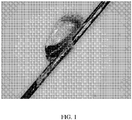
- FIG. 1 shows a photo of a nit on hair with the glue peeling away after the application of an aqueous composition (not necessarily the same composition listed above) in accordance with the present invention
- FIG. 1 provides an example of the manner in which the shampoo composition assists in the removal of nits.
- the shampoo composition may also be used as a maintenance shampoo in order to avoid reinfestation.
- the shampoo composition may be used as a regular cosmetic shampoo at least 2 times per week in place of other cleansing shampoos by wetting the hair, lathering the shampoo composition well and rinsing the shampoo composition from the hair.
- the aqueous composition may also be in the form of a spray shampoo composition, which can be used in the treatment and/or removal of blood sucking insects, such as head lice.
- the spray shampoo may include an additional alcohol, such as benzyl alcohol, ethanol, isopropanol, or the like, an emulsifier or flow agent such as polysorbate 20, disodium cetearyl sulfosuccinamate or the like, one or more fragrances, which can be any fragrance whether natural or artificial, and one or more coloring agents which can be any FDA approved food grade color.
- the components and percentages of the components by weight of the aqueous composition in the form of the spray shampoo are shown below in Table 2.
- Cocamide DEA formulation B is listed in Table 2 as a component of the spray shampoo composition, it is understood that any other suitable mixture of at least one amide, for example an ethanolamide, and more particularly diethanolamide, and at least one esterified fatty acid, for example a fatty acid methyl ester may be used in the spray shampoo composition according to the present invention.
- Table 2 Spray Shampoo Composition Ingredient % by weight Water 10-60 Cocamide DEA formulation B 5-50 Polyethylene glycol 5-50 Surfactant and/or Detergent 5-50 Alcohol 5-35 Additional Alcohol 10 Emulsifier or Flow Agent >1-5 Preservative 0.1-5 Buffering Agent as needed Stabilizer 2-6 Conditioning Agent 2-6 Fragrance >0.5 Coloring Agent >0.5
- the spray shampoo composition may be applied as a spray treatment. Enough of the spray shampoo composition is used by spraying the spray shampoo composition on the hair in order to cover all of the hair down to the scalp, e.g. 30-120 grams. The spray shampoo composition may then be further massaged through the hair, and left to remain on the hair for 15-20 minutes and then rinsed off from the hair. The insect residues may then be combed out from the hair with an appropriate comb.
- the spray shampoo composition is configured to dissolve the lice egg (nit) glue produced from head lice which holds their eggs onto the hair shaft, and therefore the spray shampoo composition assists in the removal nits after application of the spray shampoo composition.
- FIG. 1 shows a photo of a nit on hair with the glue peeling away after the application of an aqueous composition (not necessarily the same composition listed above) in accordance with the present invention
- FIG. 1 provides an example of the manner in which the spray shampoo composition assists in the removal of nits. May repeat the spray treatment using the spray shampoo composition one week later.
- the aqueous composition may also be in the form of a gel composition, which can be used in the treatment and/or removal of blood sucking insects, such as head lice.
- the gel composition may include acrylates copolymer, which can be used to make the gel composition into a stable gel form, Polyquaternium-7, which can be added as a hair conditioning agent, disodium cetearyl sulfosuccinamate, which can be added as a surfactant, dimethicone, which can be added as an additive to add smoothness and enhance the composition's ability to put a coating on hair, one or more fragrances and one or more coloring agents.
- the components and percentages of the components by weight of the aqueous composition in the form of the gel composition are shown below in Table 3.
- Cocamide DEA formulation B is listed in Table 3 as a component of the gel composition, it is understood that any other suitable mixture of at least one amide, for example an ethanolamide, and more particularly diethanolamide, and at least one esterified fatty acid, for example a fatty acid methyl ester may be used in the gel composition according to the present invention.
- Table 3 Gel Composition Ingredient % by weight Water 10-60 Cocamide DEA formulation B 5-50 Polyethylene glycol 5-50 Surfactant and/or Detergent 5-50 Alcohol 5-35 Acrylates copolymer 2-4 Polvquaternium-7 2-6 Preservative 0.1-5 Buffering Agent as needed Stabilizer 2-6 Conditioning Agent 2-6 Fragrance >0.5 Coloring Agent >0.5
- the gel composition may be used by massaging the gel composition into the hair prior to the hair being combed to remove lice eggs. In this manner, the gel composition is allowed to remain on the hair as a combing aid until combing.
- the gel composition is configured to dissolve the lice egg (nit) glue produced from head lice which holds their eggs onto the hair shaft, and therefore the gel composition assists in the removal nits after application of the gel composition.
- FIG. 1 shows a photo of a nit on hair with the glue peeling away after the application of an aqueous composition (not necessarily the same composition listed above) in accordance with the present invention, and FIG. 1 provides an example of the manner in which the gel composition assists in the removal of nits. After combing of the hair is finished, the gel composition may then be rinsed from the hair.
- the aqueous composition may also be in the form of a spray insect repellant composition and lotion composition to soothe and heal insect bites and superficial burns and skin wounds, and if so, the spray insect repellant and lotion composition may include one or more artificial or natural fragrances, such as a citrus or coconut scent.
- the spray insect repellant and lotion composition may include one or more artificial or natural fragrances, such as a citrus or coconut scent.
- the components and percentages of the components by weight of the aqueous composition in the form of the spray repellant composition are shown below in Table 4, and components and percentages of the components by weight of the aqueous composition in the form of the lotion composition are shown below in Table 4A.
- Table 4 Spray Repellant Composition Ingredient % by weight Water 10-70 Cocamide DEA formulation B 2-25 Stabilizer 5 Buffering Agent as needed Fragrance 0.1-0.5 Table 4A: Lotion composition for aiding in the healing of scratches, cut and abrasions, bed bugs, fleas, repellence for flies, ovicidal on animal nemotodes Ingredient % by weight Water 70-90 Cocamide DEA formulation B 2-20 Cocamidepropyl PG Dimonium Chloride 2 Buffering Agent 1 Propanediol 2-5 Surfactant 2-5
- An aqueous composition according another exemplary embodiment the present invention may include one or more esterified fatty acids and water, without the addition of one or more ethanolamides.
- the esterified fatty acids may be one or more fatty acid methyl esters.
- the aqueous composition may include at least one fatty acid methyl ester or a blend of fatty acid methyl esters, for example a blend of C8 through C18 fatty acid methyl esters.
- the fatty acid methyl ester may be any fatty acid methyl ester between C8 and C18, such as lauric acid methyl ester, caprylic acid methyl ester, capric acid methyl ester, myristic acid methyl ester, palmitic acid methyl ester, stearic acid methyl ester or unsaturated oleic acid methyl ester.
- the blend of C8 through C18 fatty acid methyl esters may, for example, include a blend of one or more of lauric acid methyl ester, caprylic acid methyl ester, capric acid methyl ester, myristic acid methyl ester, palmitic acid methyl ester, stearic acid methyl ester or unsaturated oleic acid methyl ester.
- the aqueous composition may include at least one fatty acid ethyl ester, at least one fatty acid propyl ester and/or at least one fatty acid isopropyl ester or mixtures thereof.
- the fatty acid ethyl ester may be lauric acid ethyl ester.
- fatty acid methyl esters may be used for internal or external uses for human and animals.
- the aqueous composition may be in the form of a repellant composition, lotion composition or internal composition that may be used for insect and/or parasite repellence and/or killing.
- the repellant composition may be in the form of a spray repellant composition.
- the use of fatty acid methyl esters, or other fatty acid esters enables the compositions to include less Cocamide DEA, for example Cocamide DEA formulation B. This provides for thinner, more sprayable and quicker drying compositions that have superior softening and conditioning effects on the skin and hair and more quickly penetrate the natural outer sheath of many insects.
- the fatty acid methyl esters such as lauric acid methyl esters, or particularly the fatty acid ethyl esters may be of food grade quality and nontoxic.
- Emulsifiers, flow and/or solvent agents, for example polysorbate 20, may be used in the compositions.
- the compositions can also include at least one alcohol, for example ethanol.
- the components and percentages of the components by weight of examples of the repellant, lotion and/or internal compositions are shown below in Tables 4B-4G.
- Table 4B Repellant, Lotion or Internal Composition for Endoparasites Ingredient % by weight Water 65-95 Cocamide DEA formulation B 0.1-30 Lauric Acid Ester 0.001-15 Emulsifier 5-20 Fragrance 0.1-0.5 Preservative 0.1-5 Alcohol 0-5
- the lauric acid ester in Table 4B may be lauric acid methyl ester or lauric acid ethyl ester or a mixture thereof.
- the one or more emulsifiers, flow agents and/or stabilizers used in the aqueous composition described in Table 4B and any of the Tables below may include PEG-120 Methyl Glucose Dioleate, Distearate-75 IPDI, xanthan gum, acadia gum, polysorbate 20, disodium cetearyl sulfosuccinamate or the like.
- the one or more alcohols that may be used in the aqueous composition described in Table 4B and any of the Tables below may include ethanol, propandiol, pentylene glycol, propylene glycol, butylene glycol, benzyl alcohol, isopropanol or the like.
- the one or more fragrances used in the aqueous composition described in Table 4B and any of the Tables below can be any fragrance whether natural or artificial, for example a citrus scent
- the preservatives used in the aqueous composition described in Table 4B and any of the Tables below may include cocamidopropyl PG dimonium chloride phosphate, sorbic acid, methylparaben, phenoxyethanol, chlorphenesin, potassium sorbate, sodium benzoate, sodium alginate or the like.
- the formulation identified in Table 4B may be used for any and/or all of the purposes discussed above and/or mentioned below.
- the formulation is particularly effective against insects, such as mosquitoes, bedbugs, ticks, flies, spiders.
- the formulation may be used for internal purposes in amounts between 0.1 and 20 mL.
- Table 4C Spray repellent or Internal Composition Ingredient % by weight Water 75-95 Lauric Acid Ester 0.001-15 Emulsifier 5-20 Fragrance 0.1-0.5 Preservative 0.1-5 Alcohol 0-5
- the lauric acid ester in Table 4C may be lauric acid methyl ester or lauric acid ethyl ester or a mixture thereof.
- Table 4D Repellant, Lotion or Internal Composition Ingredient % by weight Water 75-95 Lauric Acid Ester 0.001-15 Emulsifier 5-20 Alcohol 1-5
- the lauric acid ester in Table 4D may be lauric acid methyl ester or lauric acid ethyl ester or a mixture thereof.
- Table 4E Repellant, Lotion or Internal Composition Ingredient % by weight Water 75-95 Blend of C8 to C18 Fatty Acid Methyl Esters 0.001-15 Emulsifier 5-20 Alcohol 0-5
- the blend of C8 through C18 fatty acid methyl esters may include a blend of one or more of lauric acid methyl ester, caprylic acid methyl ester, capric acid methyl ester, myristic acid methyl ester, palmitic acid methyl ester, stearic acid methyl ester or unsaturated oleic acid methyl ester.
- Table 4F Repellant, Lotion or Internal Composition Ingredient % by weight Water 75-95 Caprylic Acid Methyl Ester 0.001-15 Emulsifier 5-20 Alcohol 0-5
- Table 4G Repellant, Lotion or Internal Composition Ingredient % by weight Water 75-95 Capric Acid Methyl Ester 0.001-15 Emulsifier 5-20 Alcohol 0-5
- any of the repellant, lotion and/or internal compositions may be used for pesticides, insecticides, insect repellants, insect anti-feeding compounds, cleaning solutions, glue dissolving solutions and anti-irritation and wound healing compositions for humans and animals and, more particularly, may be used for killing, removing and/or repelling a wide range of endoparasites, ectoparasites and insects.
- the repellant, lotion and/or internal composition may also be used for purposes, such as, but not limited to, insecticides against ectoparasites, internal parasites, bacteria, protozoa and/or fungi of humans, animals and plants, for superficial burn and wound healing, including the healing of external irritations that may be caused by insects, bacteria, fungi or viruses and for internal healing of the gut or other organs and infective gastrointestinal protozoa including coccidian and cryptosporidium.
- the repellant, lotion and/or internal compositions have activity against a wide range of organisms and biological systems, including arthropods (mites and insects), protozoal pathogens, bacteria and cells involved in wound healing and internal bacterial infections.
- the collecting technicians washed their hands with antibacterial soap and rinsed in clean tap water, followed by a rinse in 70% isopropanol to remove any possible contaminants.
- Using a lighted circular 6 X magnifying lamp the technicians collected lice from the heads of infested individuals. Lice of all stages were distributed among 4 prepared Petri dishes (15 x 60 mm). Each prepared Petri dish contained two 100% cotton cloth disk. The 100% cotton cloth disk was obtained from cotton kitchen towels that had been washed with a small quantity of non-medicated anionic shampoo, thoroughly rinsed and dried. Five centimeter diameter disks were cut from the prepared towels to form the 100% cotton cloth disks and to simulate hair.
- the cotton cloth disks in three Petri dishes were saturated in 1 mL of a treatment composition, and the cotton cloth disk in the fourth Petri dish was saturated in 1 distilled water, all cotton cloth disks were dampened with distilled water to prevent dehydration.
- the treatment composition is shown below in Table 5. Observation began when lice were placed on treatment, and observed at five minute intervals. Lice remained in treatment for 20 minutes and at that point the disk with lice was removed and transferred and placed on top of stretched panty hose over a beaker devised for the purpose of rinsing. The lice and disk were rinsed with 100 mL of distilled water. Observations were made as follows:
- the collecting technicians washed their hands with antibacterial soap and rinsed in clean tap water, followed by a rinse in 70% isopropanol to remove any possible contaminants.
- Using a lighted circular 6 X magnifying lamp the technicians collected lice from the heads of infested individuals. A total of 46 lice of all stages were distributed among 4 prepared Petri dishes (15 x 60 mm). Each prepared Petri dish contained a 100% cotton cloth disk. The 100% cotton cloth disk was obtained from cotton kitchen towels that had been washed with a small quantity of non-medicated anionic shampoo, thoroughly rinsed and dried. Five centimeter diameter disks were cut from the prepared towels to form the 100% cotton cloth disks and to simulate hair.
- the cotton cloth disk in one Petri dish was saturated in 2 mL of a treatment composition, and the cotton cloth disks in the other three Petri dishes were saturated in 1 mL of the treatment composition, all cotton cloth disks were dampened with distilled water to prevent dehydration.
- the treatment composition is shown below in Table 6. Observation began when lice were placed on treatment. Lice remained in treatment for 20 minutes and at that point the disk with lice was removed and transferred and placed on top of stretched panty hose over a beaker devised for the purpose of rinsing. The lice and disk were rinsed with 100 mL of distilled water. Observations were made as follows:
- the treatment composition was applied in one fifteen minute application to the dry hair and scalp of the test subjects, re-massaged through the hair, rinsed with water, combed thoroughly and naturally dried.
- Sixty subjects from fifteen households were included in the study with the following breakdown of ages: 2-6 years of age........ 14 test subjects 7-17 years of age& 38 test subjects 18-70 years of age/ 8 test subjects
- After treatment on Day 1 the test subjects were observed for the presence or absence of live lice.
- On Day 8 visual examination of the test subjects was conducted using a lighted 5X magnifier for the stage of nymphs or adults.
- Treatment composition Ingredient % by weight Water 25 Cocamide DEA formulation B 30 Polyethylene glycol 30 Sodium Methvl Cocovl Taurate 6 Propanediol 5 Sodium Laureth Sulfate 2 Cocamidopropyl PG Dimonium Chloride Phosphate 1 Citric Acid 1
- the treatment composition was applied in one fifteen minute application to the dry hair and scalp of the test subjects, re-massaged through the hair, rinsed with water, combed and dried with an electric hairdryer. Sixteen test subjects were treated on Day 1 followed by combing and inspection on Day 2, and another combing on Day 7. Eleven other test subjects were treated and combed with a nit comb immediately after the treatment composition had been washed out of the subjects' hair. The eleven test subjects were combed with separate nit combs until the subjects' hair was clear of all lice and nits. The comb was placed in a bag and taken to a laboratory for further inspection.
- Table 8 Treatment composition Ingredient % by weight Water 25 Cocamide DEA formulation B 30 Polyethylene glycol 30 Sodium Methyl Cocoyl Taurate 6 Propanediol 5 Sodium Laureth Sulfate 2 Cocamidopropyl PG Dimonium Chloride Phosphate 1 Citric Acid 1
- test subjects Of the sixteen test subjects, all of the test subjects were lice free on Day 2, and on the combing on Day 7 five of the test subjects had one or more adult louse present indicative of a recent re-infestation.
- nit combs obtained from the other eleven test subjects four of the nit combs showed no evidence of lice or nits in any stage, and seven of the nit combs showed dead lice or various developmental stages and nits.
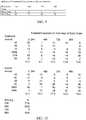
- Head lice were collected by human volunteers and placed in vials containing either the treatment composition listed in Table 9 or water as a control. Five vials containing the treatment composition were provided with ten nits each and two vials containing the water control were provided with five nits each. The ovicidal activity in each of the vials was observed for a ten day period. The weather, temperature and relative humidity was recorded for each of the ten days, and show in Table 10 below.
- Table 9 Treatment composition Ingredient % by weight Water 25 Cocamide DEA formulation B 30 Polyethylene glycol 30 Sodium Methyl Cocoyl Taurate 6 Propanediol 5 Sodium Laureth Sulfate 2 Cocamidopropyl PG Dimonium Chloride Phosphate 1 Citric Acid 1 Table 10: Weather conditions during test period Day Weather Temperature (°F) Relative Humidity (%) Day 1 Fair 86 70 Day 2 - 8:20 AM Fair 84.2 70 Day 2 - 4:20 PM Fair 86 70 Day 3 - 8:20 AM Fair 82.4 69 Dav 3 - 4:20 PM Fair 86 70 Dav 4 - 8:20 AM Fair 78.8 69 Day 4 - 8:20 PM Fair 91.4 70 Day 5 - 8:30 AM Fair 82.4 69 Day 5 - 4:20 PM Fair 86 70 Day 6 - 9:00 AM Fair 84.2 70 Dav 6 - 4:30 PM Fair 86 70 Dav 7 - 8:00 AM Rain 82.4 68 Day 7 - 4:00 PM Rain 84.3 70 Day
- Table 11 Results showing ovicidal activity Vial No. # of Nits in Vial # of Nits Hatched 1 Treatment Composition 10 0 2 Treatment Composition 10 0 3 Treatment Composition 10 2 4 Treatment Composition 10 0 5 Treatment Composition 10 0 1-C Water 5 4 2-C Water 5 3
- An aqueous solution containing Cocamide DEA formulation B aids in the healing process of wounds and reducing scarring.
- An aqueous formulation containing 7% Cocamide DEA formulation B as shown in Table 4, i.e. a formulation containing approximately 10-70% water, 7% Cocamide DEA formulation B, 5% of a stabilizer, a buffering agent and 0.1-0.5 of a fragrance was applied several times in one day to deep cat scratches on human skin.
- the solution was found to be soothing, and healing took place within 48 hours with no scarring.
- the formulation has good analgesic properties and promotes the healing process.
- the formulation eliminated the pain of deep cat scratches and accelerated healing without scaring on a human subject. Similar results were obtained on volunteers when a 5-10% aqueous solution was applied to various skin cuts and abrasions.
- the formulation is also shown to be bacteriostatic for certain common skin surface bacteria.
- the formulation has also been shown to help reduce the itching and speed up the healing process associated with insect bites.
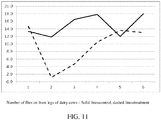
- FIG. 14 shows a chart showing wound size of treated and untreated wounds at days two and five.
- "Expt" wounds were treated with a diluted formulation, while "Control” wounds received no treatment at all. Accordingly, the formulation has major medical potentials for use in both over the counter products for cuts and grazes, and in more serious medical conditions such as burns, ulcers, bed sores and many post surgical procedures where promotion of healing would be useful.
- Table 12 Treatment Composition Ingredient % by weight Water 80 Cocamide DEA formulation B 2 Propanediol 2-5 Surfactant 2-5 Cocamidopropyl PG Dimonium Chloride Phosphate 2 Citric Acid 1
- the treatment composition listed in Table 12 was rubbed gently on skin. Tsetse flies avoided contact with skin and would not feed, the tsetse flies only initiated feeding when they could avoid walking on a treated surface. When the treatment composition came in contact with the feet of the tsetse fly, they died. When fed through a treated membrane the tsetse flies quickly died.
- Cocamide DEA formulation B in an aqueous carrier was tested in various dilutions (.05% - 50%) for repellence efficacy against 2 leading pesticide spot-on repellents. After 24 hours the formulation worked as well or better than both pesticides as shown in FIG. 2 .
- the first group on the graph of FIG. 2 was an aqueous solution of Cocamide DEA using 5 strengths noted on the graph shown in FIG. 2 .
- FIGS. 3-11 shows that repellence lasts up to 2 days when compared to the control.
- Repellence against horn flies (Haematobia irritans) in Brazil showed protection for up to 4 days.
- Repellence against ticks in a field trial showed no bites on a leg with the treatment composition from Table 11 when compared to an untreated leg.
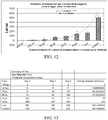
- nematode (haemonchus) larvae derived from sheep were placed in increasing concentrations of the treatment composition of Table 12. Larvae were incubated for 6 hours in three replicates and transferred to a 1.4% agar solution for a second incubation of 18 hours. The final counts are based on the L3 that have migrated out of the agar. Doses were done in triplicates. The results of the larvae migration test are shown in FIGS. 12 and 13 , and show the average, standard deviation and dose dependent effect.
- FIG. 15 shows the results from a test comparing the efficacy of fatty acids to fatty acid methyl and fatty acid ethyl esters on fleas.
- the fatty acids used in the test were mono laurin and lauric acid, while the fatty acid esters used in the test were methyl laurate, i.e. lauric acid methyl ester and ethyl dodecanoate, i.e. lauric acid ethyl ester.
- Each of these compounds were dissolved in ethanol in concentrations of 0.1% and 1%, and then 200 ⁇ L (micro liters) of each solution was placed on glass filter paper (15 x 150 mm).
- test samples named in Table 13 are composed as follows:
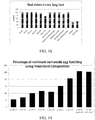
- FIGS. 16-18 show the results from a test regarding the efficacy of solutions containing Cocamide DEA formulation B and/or fatty acid esters against red mites.
- the red mites were placed in the tea bag and the top sealed with a paper clip or a staple.
- the teat bags were then submerged in solutions identified in FIG. 16 and 17 , and listed below and then hung up to dry.
- the mites are not removed from the bag but they are examined under a microscope and given a prod to stimulate them into movement if they are static. The number of dead mites is recorded, and FIGS. 16 and 17 represent the percentage of mites killed after exposure to each solution.
- FIG. 19 shows the results from an egg hatch test for nematode eggs, in particular haemonchus eggs, on cattle.
- haemonchus eggs derived from cattle were placed in increasing concentrations of the treatment composition of Table 12. The eggs were left for 24 hours in an incubator to hatch and then the number of hatched eggs was counted.
- Table 15 shows the results from the test, the results shown in FIG. 19 are the mean (average) results.
Landscapes
- Health & Medical Sciences (AREA)
- Life Sciences & Earth Sciences (AREA)
- General Health & Medical Sciences (AREA)
- Chemical & Material Sciences (AREA)
- Engineering & Computer Science (AREA)
- Veterinary Medicine (AREA)
- Pharmacology & Pharmacy (AREA)
- Medicinal Chemistry (AREA)
- Public Health (AREA)
- Animal Behavior & Ethology (AREA)
- Epidemiology (AREA)
- Plant Pathology (AREA)
- Agronomy & Crop Science (AREA)
- Environmental Sciences (AREA)
- Pest Control & Pesticides (AREA)
- Zoology (AREA)
- Wood Science & Technology (AREA)
- Dentistry (AREA)
- Chemical Kinetics & Catalysis (AREA)
- General Chemical & Material Sciences (AREA)
- Oil, Petroleum & Natural Gas (AREA)
- Emergency Medicine (AREA)
- Toxicology (AREA)
- Biophysics (AREA)
- Molecular Biology (AREA)
- Tropical Medicine & Parasitology (AREA)
- Nuclear Medicine, Radiotherapy & Molecular Imaging (AREA)
- Organic Chemistry (AREA)
- Agricultural Chemicals And Associated Chemicals (AREA)
- Dispersion Chemistry (AREA)
Claims (15)
- Composition destinée à être utilisée comme shampooing pour le traitement ou l'élimination d'insectes hématophages, comprenant :entre 10 et 60 % d'eau en poids sur la base du poids de la composition totale ;entre 5 et 50 % d'un mélange de diéthanolamide en poids sur la base du poids de la composition totale, le mélange de diéthanolamide comprenant une teneur en amide qui est d'au moins 80 % en poids sur la base du poids du mélange de diéthanolamide, une teneur en au moins un acide gras estérifié qui est entre 8 et 15 % en poids sur la base du poids du mélange de diéthanolamide, et une teneur en amine libre qui est de 1,5 % ou moins en poids sur la base du poids du mélange de diéthanolamide ;entre 5 et 50 % de polyéthylène glycol en poids sur la base du poids de la composition totale ;entre 5 et 50 % d'au moins un tensio-actif en poids sur la base du poids de la composition totale ;entre 5 et 35 % d'au moins un alcool en poids sur la base du poids de la composition totale ;entre 0,1 et 5 % d'au moins un conservateur en poids sur la base du poids de la composition totale ; etau moins un agent tampon,dans laquelle le mélange de diéthanolamide est un mélange de diéthanolamide de noix de coco, etdans laquelle l'au moins un acide gras estérifié du mélange de diéthanolamide comprend au moins un acide gras estérifié provenant d'une huile de noix de coco, etdans laquelle l'au moins un acide gras estérifié est choisi parmi l'un quelconque entre un ester méthylique d'acide gras, un ester éthylique d'acide gras, un ester propylique d'acide gras, un ester isopropylique d'acide gras, et un mélange d'un ou plusieurs parmi un ester méthylique d'acide gras, un ester éthylique d'acide gras, un ester propylique d'acide gras et un ester isopropylique d'acide gras.
- Composition selon la revendication 1, comprenant en outre au moins un stabilisant, et au moins un agent de conditionnement.
- Composition selon la revendication 1, dans laquelle l'au moins un acide gras estérifié provenant d'une huile de noix de coco est un ester méthylique d'acide gras, et dans laquelle l'ester méthylique d'acide gras est choisi dans un groupe consistant en l'un quelconque parmi l'ester méthylique de l'acide laurique, l'ester méthylique de l'acide oléique, l'ester méthylique de l'acide palmitique, l'ester méthylique de l'acide myristique, l'ester méthylique de l'acide linoléique, l'ester méthylique de l'acide stéarique et les mélanges de ceux-ci.
- Composition selon la revendication 1, dans laquelle le polyéthylène glycol comprend l'octaéthylène glycol, le PEG-6, le glycéryl éther benzoate, l'éther isobudécylique, le glycéryl éther lactate, le PEG-10, le PEG-19 et le PEG-20 ;
dans laquelle l'au moins un tensio-actif comprend le méthyl cocoyl taurate de sodium, le laureth sulfate de sodium, le lauryl sulfate de sodium, le lauryl sulfate d'ammonium, la cocamidopropyl bétaïne, le cocoyl taurate de sodium et le cétéaryl sulfosuccinamate disodique ;
dans laquelle l'au moins un alcool comprend l'éthanol, le propanediol, le pentylène glycol, le propylène glycol, le butylène glycol, l'alcool benzylique et l'isopropanol ;
dans laquelle l'au moins un agent tampon comprend l'acide citrique, l'acide lactique, l'acide phosphorique, l'hydroxyde de sodium et la triéthanolamine ;
dans laquelle l'au moins un conservateur comprend le cocamidopropyl PG dimonium chlorure phosphate, l'acide sorbique, le méthylparabène, le phénoxyéthanol, la chlorphénésine, le sorbate de potassium, le benzoate de sodium et l'alginate de sodium. - Composition selon la revendication 2, dans laquelle l'au moins un stabilisant comprend du PEG-120 méthylglucose dioléate, du Distéarate-75 IPDI, de la gomme xanthane et de la gomme arabique ;
dans laquelle l'au moins un agent de conditionnement comprend du phényl triméthicone, du chlorure de cétrimonium, de la stéaramidopropyl diméthylamine, des protéines de blé hydrolysées et du Polyquaternium-7 ;
dans laquelle la composition comprend en outre :10 % d'un second alcool en poids sur la base du poids de la composition totale ; etentre 1 et 5 % d'au moins un émulsifiant en poids sur la base du poids de la composition totale ; etdans laquelle l'au moins un stabilisant est entre 2 et 6 % en poids sur la base du poids de la composition totale ;
dans laquelle l'au moins un agent de conditionnement est entre 2 et 6 % en poids sur la base du poids de la composition totale ;
dans laquelle le second alcool est choisi dans un groupe consistant en l'alcool benzylique, l'éthanol, l'isopropanol et les mélanges de ceux-ci ; et
dans laquelle l'au moins un émulsifiant est choisi dans un groupe consistant en le polysorbate 20, le cétéaryl sulfosuccinamate disodique et les mélanges de ceux-ci. - Composition selon la revendication 5, dans laquelle la composition comprend en outre 0,5 % ou moins en poids sur la base du poids de la composition totale d'au moins un parfum ; et 0,5 % ou moins en poids sur la base du poids de la composition totale d'au moins un agent colorant.
- Composition selon la revendication 5, dans laquelle la composition est un shampooing en spray, et dans laquelle le shampooing en spray est destiné à être utilisé pour le traitement ou l'élimination d'insectes hématophages.
- Composition selon la revendication 2, dans laquelle la composition comprend en outre : entre 2 et 4 % de copolymère d'acrylates en poids sur la base du poids de la composition totale ; et
entre 2 et 6 % de Polyquaternium-7 en poids sur la base du poids de la composition totale ;
dans laquelle au moins un stabilisant est compris entre 2 et 6 % en poids sur la base du poids de la composition totale ; et
dans laquelle l'au moins un agent de conditionnement est compris entre 2 et 6 % en poids sur la base du poids de la composition totale. - Composition selon la revendication 8, dans laquelle la composition est sous forme de gel, et dans laquelle la forme de gel est destinée à être utilisée pour le traitement ou l'élimination d'insectes hématophages.
- Composition destinée à être utilisée comme répulsif en spray pour repousser les insectes piqueurs, comprenant :entre 10 et 70 % d'eau en poids sur la base du poids de la composition totale ;entre 2 et 25 % d'un mélange de diéthanolamide en poids sur la base du poids de la composition totale, le mélange de diéthanolamide comprenant une teneur en amide qui est d'au moins 80 % en poids sur la base du poids du mélange de diéthanolamide, une teneur en au moins un acide gras estérifié qui est entre 8 et 15 % en poids sur la base du poids du mélange de diéthanolamide, et une teneur en aminé libre qui est de 1,5 % ou moins en poids sur la base du poids du mélange de diéthanolamide ;5 % d'au moins un stabilisant en poids sur la base du poids de la composition totale ;au moins un agent tampon ; etentre 0,1 et 0,5 % d'au moins un parfum en poids sur la base du poids de la composition totale ;dans laquelle le mélange de diéthanolamide est un mélange de diéthanolamide de noix de coco ; etdans laquelle l'au moins un acide gras estérifié du mélange de diéthanolamide comprend au moins un acide gras estérifié provenant d'une huile de noix de coco ;dans laquelle l'au moins un acide gras estérifié provenant d'une huile de noix de coco est un ester méthylique d'acide gras, etdans laquelle l'ester méthylique d'acide gras est choisi dans un groupe consistant en l'ester méthylique de l'acide laurique, l'ester méthylique de l'acide oléique, l'ester méthylique de l'acide palmitique, l'ester méthylique de l'acide myristique, l'ester méthylique de l'acide linoléique, l'ester méthylique de l'acide stéarique et les mélanges de ceux-ci.
- Composition destinée à être utilisée comme répulsif ou lotion, comprenant :entre 65 et 95 % d'eau en poids sur la base du poids de la composition totale ;entre 0,001 et 5 % d'au moins un acide gras estérifié en poids sur la base du poids de la composition totale, l'au moins un acide gras estérifié étant un ou plusieurs parmi un ester méthylique d'acide gras et un autre ester d'acide gras,entre 5 et 20 % d'au moins un émulsifiant en poids sur la base du poids de la composition totale,comprenant en outre entre 0,1 et 30 % d'un mélange de diéthanolamide en poids sur la base du poids de la composition totale, le mélange de diéthanolamide comprenant une teneur en amide qui est d'au moins 80 % en poids sur la base du poids du mélange de diéthanolamide, et une teneur en au moins un acide gras estérifié qui est entre 8 et 15 % en poids sur la base du poids du mélange de diéthanolamide, et une teneur en aminé libre qui est de 1,5 % ou moins en poids sur la base du poids du mélange de diéthanolamide ;dans laquelle le mélange de diéthanolamide est un mélange de diéthanolamide de noix de coco ; etdans laquelle l'au moins un acide gras estérifié dans le mélange de diéthanolamide est choisi parmi l'un quelconque entre un ester méthylique d'acide gras, un ester éthylique d'acide gras, un ester propylique d'acide gras, un ester isopropylique d'acide gras, et un mélange d'un ou plusieurs parmi un ester méthylique d'acide gras, un ester éthylique d'acide gras, un ester propylique d'acide gras et un ester isopropylique d'acide gras.
- Composition selon la revendication 11, dans laquelle l'au moins un acide gras estérifié dans le mélange de diéthanolamide est au moins un ester méthylique d'acide gras d'huile de noix de coco, et l'autre ester d'acide gras est un ester méthylique d'acide gras d'huile de noix de coco, et l'ester méthylique d'acide gras d'huile de noix de coco est choisi dans un groupe consistant en l'ester méthylique d'acide laurique, l'ester méthylique d'acide oléique, l'ester méthylique d'acide palmitique, l'ester méthylique d'acide myristique, l'ester méthylique d'acide linoléique et l'ester méthylique d'acide stéarique ou des mélanges de ceux-ci.
- Composition selon la revendication 11, dans laquelle l'au moins un acide gras estérifié est un ester méthylique d'un acide gras choisis parmi les esters méthyliques d'acide gras en C8 à C18 ou des mélanges de ceux-ci.
- Composition selon la revendication 11, dans laquelle l'au moins un acide gras estérifié est choisi dans un groupe consistant en l'ester méthylique de l'acide caprylique, l'ester méthylique de l'acide caprique, l'ester méthylique de l'acide laurique, l'ester méthylique de l'acide myristique, l'ester méthylique de l'acide palmitique, l'ester méthylique de l'acide stéarique et l'ester méthylique de l'acide oléique insaturé.
- Composition selon la revendication 11, dans laquelle l'au moins un acide gras estérifié est l'ester méthylique de l'acide laurique pour une ou plusieurs des utilisations suivantes a) à c) :a) comme pesticide, insecticide et / ou répulsif contre les insectes ;b) comme médicament pour aider à la guérison des éraflures, des coupures, des abrasions et des brûlures ;c) comme médicament pour tuer, éliminer et / ou repousser les endoparasites et/ou les ectoparasites.
Applications Claiming Priority (2)
| Application Number | Priority Date | Filing Date | Title |
|---|---|---|---|
| US201161517140P | 2011-04-13 | 2011-04-13 | |
| PCT/US2012/033580 WO2012142452A2 (fr) | 2011-04-13 | 2012-04-13 | Composition nettoyante, insecticide, insectifuge, dissolvant la colle et anti-irritation |
Publications (3)
| Publication Number | Publication Date |
|---|---|
| EP2696677A2 EP2696677A2 (fr) | 2014-02-19 |
| EP2696677A4 EP2696677A4 (fr) | 2014-10-15 |
| EP2696677B1 true EP2696677B1 (fr) | 2021-08-11 |
Family
ID=47010002
Family Applications (1)
| Application Number | Title | Priority Date | Filing Date |
|---|---|---|---|
| EP12771587.8A Active EP2696677B1 (fr) | 2011-04-13 | 2012-04-13 | Insecticide, insectifuge et anti-irritation |
Country Status (4)
| Country | Link |
|---|---|
| US (2) | US9055745B2 (fr) |
| EP (1) | EP2696677B1 (fr) |
| CA (1) | CA2832490C (fr) |
| WO (1) | WO2012142452A2 (fr) |
Families Citing this family (5)
| Publication number | Priority date | Publication date | Assignee | Title |
|---|---|---|---|---|
| CN103748202A (zh) * | 2011-08-29 | 2014-04-23 | 罗门哈斯公司 | 可生物再生溶剂和清洁方法 |
| BR102012033146B1 (pt) * | 2012-12-26 | 2021-11-03 | Embrapa - Empresa Brasileira De Pesquisa Agropecuária | Composição nematotóxica de efeito sinérgico, uso de composição nematotóxica de efeito sinérgico |
| FR3112688B1 (fr) * | 2020-07-22 | 2023-04-07 | Surfactgreen | Utilisation d'un dérivé de glycine bétaïne comme agent pédiculicide |
| US12342828B2 (en) | 2020-09-14 | 2025-07-01 | Insight Pharmaceuticals Corporation | Repellant formulation and method |
| JP7704400B2 (ja) * | 2021-04-22 | 2025-07-08 | 株式会社大阪製薬 | 害虫忌避剤 |
Family Cites Families (65)
| Publication number | Priority date | Publication date | Assignee | Title |
|---|---|---|---|---|
| GB768129A (en) | 1952-12-18 | 1957-02-13 | Ciba Ltd | Cosmetic preparations for the treatment and care of the skin |
| US3670080A (en) | 1969-03-06 | 1972-06-13 | Shionogi & Co | Process for stabilization of a composition of 2{60 ,3{60 -epithio-androstanes and composition obtained thereby |
| US4185027A (en) | 1978-06-15 | 1980-01-22 | The Procter & Gamble Company | Hydrolysis of methyl esters |
| US4430245A (en) | 1981-04-06 | 1984-02-07 | Internationale Octrooi Maatschappij "Octropa" B.V. | Soap composition |
| US4689083A (en) | 1986-07-15 | 1987-08-25 | Solvay Construction Materials, Inc. | Chemical additive for hydraulic cement mixes |
| US5573700A (en) | 1986-08-08 | 1996-11-12 | Colgate-Palmolive Co. | Liquid household cleaning composition with insect repellent |
| FR2642423B1 (fr) * | 1989-01-31 | 1991-05-24 | Seppic Sa | Procede de preparation d'alkyldiethanolamides gras purifies, les produits obtenus et leurs utilisations |
| US6103768A (en) | 1991-05-01 | 2000-08-15 | Mycogen Corporation | Fatty acid based compositions and methods for the control of plant infections and pests |
| US5238933A (en) | 1991-10-28 | 1993-08-24 | Sri International | Skin permeation enhancer compositions |
| DE4206090C2 (de) | 1992-02-27 | 1998-02-05 | Perycut Chemie Ag | Insektenabwehrmittel |
| US5462736A (en) | 1993-06-02 | 1995-10-31 | The Mennen Company | Crystal clear cosmetic stick composition |
| CA2130375C (fr) | 1993-10-01 | 2004-08-17 | Lynn Sue James | Compositions insecticides et repulsives |
| EP0646314B1 (fr) | 1993-10-05 | 2004-08-11 | Sumitomo Chemical Company, Limited | Composition pesticide ou régulatrice de la croissance des plants à libération prolongée |
| US5496857A (en) | 1994-03-17 | 1996-03-05 | Targosz; Eugene F. | Whitefly insecticide |
| DE4424210C2 (de) | 1994-07-09 | 1997-12-04 | Beiersdorf Ag | Verwendung von Zusammensetzungen mit einem Gehalt an Tensiden sowie einem Gehalt an Ölkomponenten, die im übrigen wasserfrei sind, als kosmetische oder dermatologische Duschöle |
| EP0808152A1 (fr) | 1995-02-07 | 1997-11-26 | Unichema Chemie B.V. | Compositions cosmetiques de nettoyage comportant des esters d'alkylglycosides |
| US6555515B1 (en) | 1995-12-06 | 2003-04-29 | Henkel Kommanitgesellschaft Auf Aktien | Formulations for cleaning hard surfaces based on at least partly branched-chain alkyl oligoglucosides |
| US5776475A (en) | 1996-02-23 | 1998-07-07 | Colgate-Palmolive Company | Clear cosmetic stick composition containing sucrose esters and method of use |
| US5716627A (en) | 1996-04-25 | 1998-02-10 | Elizabeth Arden Co., Division Of Conopco, Inc. | Skin care compositions containing fatty acid amides, azoles, and retinol or retinyl ester |
| US5620695A (en) * | 1996-05-13 | 1997-04-15 | Elliott; Jennifer | Method and composition for treating minor skin irritations |
| TW411277B (en) | 1996-05-13 | 2000-11-11 | Hisamitsu Pharmaceutical Co | Percutaneous tape preparation containing fentanyl |
| ATE348518T1 (de) | 1996-10-25 | 2007-01-15 | Monsanto Technology Llc | Zusammensetzung und verfahren zur behandlung von pflanzen mit exogenen chemikalien |
| ATE442844T1 (de) | 1996-11-14 | 2009-10-15 | Lipomedica Ehf | Topische zusammensetzungen enthaltend als therapeutisch aktiven wirkstoff ein monoglycerid zur behandlung von schleimhautinfektionen |
| US5814310A (en) | 1997-01-24 | 1998-09-29 | E-L Management Corp | Monohydric alcohol-free cosmetic stick |
| JPH10276746A (ja) | 1997-03-31 | 1998-10-20 | Toru Okada | 鮮度保持用ゲル組成物 |
| JP3973265B2 (ja) * | 1997-06-11 | 2007-09-12 | 大日本除蟲菊株式会社 | 新規害虫忌避剤 |
| AU746589B2 (en) | 1997-07-30 | 2002-05-02 | Monsanto Company | Process and compositions promoting biological effectiveness of exogenous chemical substances in plants |
| DE19735790A1 (de) | 1997-08-18 | 1999-02-25 | Henkel Kgaa | Mikroemulsionen |
| TW492882B (en) | 1997-11-28 | 2002-07-01 | Caleb Pharmaceuticals Inc | Cholinergic antagonist plaster composition |
| US6919076B1 (en) | 1998-01-20 | 2005-07-19 | Pericor Science, Inc. | Conjugates of agents and transglutaminase substrate linking molecules |
| US6958148B1 (en) | 1998-01-20 | 2005-10-25 | Pericor Science, Inc. | Linkage of agents to body tissue using microparticles and transglutaminase |
| US5925615A (en) | 1998-03-06 | 1999-07-20 | Nu Skin International, Inc. | Awapuhi (Zingiber zerumbet) -containing hair cleansing and conditioning compositions |
| DE19830267A1 (de) | 1998-07-07 | 2000-01-13 | Henkel Kgaa | Handgeschirrspülmittel |
| US6607716B1 (en) | 1998-09-29 | 2003-08-19 | Tech Labs, Inc. | Pediculicidal compositions, a kit, and methods of use |
| DE19927075C1 (de) | 1999-06-15 | 2001-07-19 | Cognis Deutschland Gmbh | Verfahren zur dauerhaften Verformung von Keratinfasern sowie die Verwendung von alkoxylierten Carbonsäureestern und Partialglyceriden zur Herstellung von Well- und Fixiermitteln |
| US6107261A (en) | 1999-06-23 | 2000-08-22 | The Dial Corporation | Compositions containing a high percent saturation concentration of antibacterial agent |
| US6861397B2 (en) | 1999-06-23 | 2005-03-01 | The Dial Corporation | Compositions having enhanced deposition of a topically active compound on a surface |
| DE10005831A1 (de) | 2000-02-10 | 2001-08-16 | Clariant Gmbh | Mund- und Zahnpflegemittel |
| DE10018812A1 (de) | 2000-04-15 | 2001-10-25 | Cognis Deutschland Gmbh | Verfahren zur Herstellung von nichtionischen Tensidgranulaten |
| US6540987B2 (en) | 2001-03-15 | 2003-04-01 | Ethox Chemicals Llc | Polyesters based on hydroxy fatty acids and lower hydroxy alkyl acids and uses thereof |
| MXPA03008869A (es) | 2001-03-29 | 2004-05-24 | Dial Corp | Composiciones antibacterianas para el cuidado de la piel. |
| JP4744732B2 (ja) | 2001-07-05 | 2011-08-10 | アークレイ株式会社 | 洗浄剤 |
| WO2003032909A2 (fr) | 2001-10-18 | 2003-04-24 | Ilex Products, Inc. | Methode de traitement de la peau avec des derives de diphosphonate |
| US20040127553A1 (en) * | 2002-03-20 | 2004-07-01 | Hallahan David L. | Insect repellent compositions comprising dihydronepetalactone |
| DE10216509A1 (de) * | 2002-04-11 | 2003-10-23 | Beiersdorf Ag | Fließfähige kosmetische und dermatologische Reinigungsgele enthaltend ein oder mehrere vorgelatinisierte, quervernetzte Stärkederivate |
| FR2839516B1 (fr) * | 2002-05-13 | 2006-08-04 | Pierre Bruno Grascha | Formulation de detergent d'atelier |
| US6943197B2 (en) | 2002-06-21 | 2005-09-13 | Howard I. Maibach | Topical administration of pharmacologically active bases in the treatment of inflammatory dermatoses |
| US6821523B2 (en) | 2002-06-21 | 2004-11-23 | Dermatrends, Inc. | Topical administration of pharmacologically active bases in the treatment of warts |
| US6846837B2 (en) | 2002-06-21 | 2005-01-25 | Howard I. Maibach | Topical administration of basic antifungal compositions to treat fungal infections of the nails |
| US6696490B2 (en) * | 2002-07-10 | 2004-02-24 | Unilever Home & Personal Care Usa Division Of Conopco, Inc. | Slow release insect repellent compounds and process for delivering active |
| AU2003272878A1 (en) | 2002-09-13 | 2004-04-30 | Hisamitsu Pharmaceutical Co., Inc. | Adhesive patch |
| TWI296531B (en) | 2002-10-18 | 2008-05-11 | Hisamitsu Pharmaceutical Co | Transdermal adhesive preparations for topical administration of fentanyl |
| JP4137766B2 (ja) * | 2002-11-09 | 2008-08-20 | ウエラ アクチェンゲゼルシャフト | ポリエチレングリコールワックス及び疎水性物質を含むヘアワックス製品 |
| AU2005244665A1 (en) * | 2004-05-20 | 2005-12-01 | Nelson Mandela Metropolitan University | Insect repellent compositions |
| JP5013329B2 (ja) * | 2004-09-08 | 2012-08-29 | 独立行政法人理化学研究所 | 植物害虫の忌避剤及び忌避方法 |
| US20060270571A1 (en) | 2005-05-26 | 2006-11-30 | Burke Peter A | Deactivation of mineral encapsulated nanobacteria |
| US20070129253A1 (en) * | 2005-12-02 | 2007-06-07 | Alefesh Hailu | Fatty acid ester blends as carriers for pesticide active ingredients |
| GB0614471D0 (en) | 2006-07-20 | 2006-08-30 | Syngenta Ltd | Herbicidal Compounds |
| GB0615475D0 (en) | 2006-08-03 | 2006-09-13 | Livie Biopesticides Ltd | Insecticidal composition-dill oil |
| GB0708141D0 (en) | 2007-04-26 | 2007-06-06 | Syngenta Participations Ag | Improvements in or relating to organic compounds |
| EP2337544A2 (fr) | 2007-04-30 | 2011-06-29 | Living Proof, Inc. | Utilisation d'inhibiteurs de la métalloprotéinase de la matrice pour les soins de la peau |
| WO2009012785A2 (fr) | 2007-07-20 | 2009-01-29 | Nya Hamlet Pharma Ab | Complexes d'un agent émulsionnant et d'un acide gras |
| KR101517415B1 (ko) | 2008-05-14 | 2015-05-07 | 에스케이바이오팜 주식회사 | 난용성 항경련제를 함유하는 경비 항경련성 약학 조성물 |
| WO2010088645A2 (fr) * | 2009-02-02 | 2010-08-05 | Ecoblend, Llc | Compositions pesticides et procédés d'utilisation associés |
| WO2010151778A2 (fr) | 2009-06-25 | 2010-12-29 | Darlene Mccord | Compositions topiques et procédé de soin des plaies |
-
2012
- 2012-04-13 EP EP12771587.8A patent/EP2696677B1/fr active Active
- 2012-04-13 WO PCT/US2012/033580 patent/WO2012142452A2/fr not_active Ceased
- 2012-04-13 CA CA2832490A patent/CA2832490C/fr active Active
- 2012-04-13 US US14/007,221 patent/US9055745B2/en active Active
-
2015
- 2015-06-15 US US14/739,444 patent/US9538748B2/en active Active
Non-Patent Citations (1)
| Title |
|---|
| None * |
Also Published As
| Publication number | Publication date |
|---|---|
| US9055745B2 (en) | 2015-06-16 |
| US20150342179A1 (en) | 2015-12-03 |
| WO2012142452A2 (fr) | 2012-10-18 |
| EP2696677A4 (fr) | 2014-10-15 |
| CA2832490A1 (fr) | 2012-10-18 |
| US20140018434A1 (en) | 2014-01-16 |
| US9538748B2 (en) | 2017-01-10 |
| CA2832490C (fr) | 2016-06-21 |
| WO2012142452A3 (fr) | 2013-01-31 |
| EP2696677A2 (fr) | 2014-02-19 |
Similar Documents
| Publication | Publication Date | Title |
|---|---|---|
| ES2394788T3 (es) | Composiciones para el tratamiento de una infestación por ectoparásitos | |
| RU2127518C1 (ru) | Нетоксичная водная пестицидная композиция (варианты) | |
| AU728974B2 (en) | Pesticidal composition and method of use | |
| US9538748B2 (en) | Compositions for internal and external use as an insecticide, ovicide, repellent and for wound healing | |
| KR20020083144A (ko) | 이 및 서캐 박멸 처리용 조성물 및 머릿니 및 이의 서캐를사멸시키기 위한 방법 | |
| EP2081428B1 (fr) | Composition anti-pédiculose agissant par suffocation des poux | |
| NO149718B (no) | Insektisid blanding og anvendelse av samme | |
| US6596291B2 (en) | Compositions and methods for treating surfaces infected with ectoparasitic insects | |
| WO2005025587A1 (fr) | Composition contenant des ginkgolides et des bilobalides | |
| US6350724B1 (en) | Lice removing composition | |
| WO2024201283A1 (fr) | Compositions insecticides et arachnicides et utilisations associées | |
| EP2161990A1 (fr) | Répulsif anti-moustiques | |
| WO2001012173A1 (fr) | Composition a faible teneur pour traiter des parasites et procede associe | |
| Patyk | Practical evaluation of insecticides and their application | |
| Patyk | Practical evaluation of insecticides and their application. III Symposium on Medical and Veterinary Acaroentomology, Gdansk 25-28 September 1975 | |
| KR20050049577A (ko) | 애완동물용 액상 세정비누 조성물 | |
| WO2008082028A1 (fr) | Répulsif antimoustique comprenant un glycérol estérifié | |
| MXPA99001095A (en) | Pesticidal composition and method of use | |
| HK1051472A (en) | Pediculicidal and ovacidal treatment compositions and methods for killing head lice and their eggs |
Legal Events
| Date | Code | Title | Description |
|---|---|---|---|
| PUAI | Public reference made under article 153(3) epc to a published international application that has entered the european phase |
Free format text: ORIGINAL CODE: 0009012 |
|
| 17P | Request for examination filed |
Effective date: 20131112 |
|
| AK | Designated contracting states |
Kind code of ref document: A2 Designated state(s): AL AT BE BG CH CY CZ DE DK EE ES FI FR GB GR HR HU IE IS IT LI LT LU LV MC MK MT NL NO PL PT RO RS SE SI SK SM TR |
|
| DAX | Request for extension of the european patent (deleted) | ||
| RIC1 | Information provided on ipc code assigned before grant |
Ipc: A01N 37/18 20060101ALI20140904BHEP Ipc: A61K 31/164 20060101ALI20140904BHEP Ipc: A01N 37/20 20060101ALI20140904BHEP Ipc: A01N 37/02 20060101AFI20140904BHEP Ipc: A01N 25/04 20060101ALI20140904BHEP |
|
| A4 | Supplementary search report drawn up and despatched |
Effective date: 20140912 |
|
| TPAC | Observations filed by third parties |
Free format text: ORIGINAL CODE: EPIDOSNTIPA |
|
| 17Q | First examination report despatched |
Effective date: 20160119 |
|
| STAA | Information on the status of an ep patent application or granted ep patent |
Free format text: STATUS: EXAMINATION IS IN PROGRESS |
|
| RIC1 | Information provided on ipc code assigned before grant |
Ipc: A01N 37/02 20060101AFI20200407BHEP Ipc: A01N 25/04 20060101ALI20200407BHEP Ipc: A01N 37/18 20060101ALI20200407BHEP Ipc: A61P 33/00 20060101ALI20200407BHEP Ipc: A01P 7/02 20060101ALI20200407BHEP Ipc: A61K 33/00 20060101ALI20200407BHEP Ipc: A61K 31/23 20060101ALI20200407BHEP Ipc: A61K 31/164 20060101ALI20200407BHEP Ipc: A01N 37/20 20060101ALI20200407BHEP |
|
| REG | Reference to a national code |
Ref country code: DE Ref legal event code: R079 Ref document number: 602012076388 Country of ref document: DE Free format text: PREVIOUS MAIN CLASS: A01N0025000000 Ipc: A01N0037020000 |
|
| GRAP | Despatch of communication of intention to grant a patent |
Free format text: ORIGINAL CODE: EPIDOSNIGR1 |
|
| STAA | Information on the status of an ep patent application or granted ep patent |
Free format text: STATUS: GRANT OF PATENT IS INTENDED |
|
| RIC1 | Information provided on ipc code assigned before grant |
Ipc: A61P 33/00 20060101ALI20210126BHEP Ipc: A01P 7/02 20060101ALI20210126BHEP Ipc: A01N 25/04 20060101ALI20210126BHEP Ipc: A01N 37/02 20060101AFI20210126BHEP Ipc: A01N 37/18 20060101ALI20210126BHEP Ipc: A01N 37/20 20060101ALI20210126BHEP Ipc: A61K 31/23 20060101ALI20210126BHEP Ipc: A61K 31/164 20060101ALI20210126BHEP Ipc: A01P 5/00 20060101ALI20210126BHEP |
|
| INTG | Intention to grant announced |
Effective date: 20210223 |
|
| GRAS | Grant fee paid |
Free format text: ORIGINAL CODE: EPIDOSNIGR3 |
|
| GRAA | (expected) grant |
Free format text: ORIGINAL CODE: 0009210 |
|
| STAA | Information on the status of an ep patent application or granted ep patent |
Free format text: STATUS: THE PATENT HAS BEEN GRANTED |
|
| AK | Designated contracting states |
Kind code of ref document: B1 Designated state(s): AL AT BE BG CH CY CZ DE DK EE ES FI FR GB GR HR HU IE IS IT LI LT LU LV MC MK MT NL NO PL PT RO RS SE SI SK SM TR |
|
| REG | Reference to a national code |
Ref country code: GB Ref legal event code: FG4D |
|
| REG | Reference to a national code |
Ref country code: CH Ref legal event code: EP |
|
| REG | Reference to a national code |
Ref country code: DE Ref legal event code: R096 Ref document number: 602012076388 Country of ref document: DE |
|
| REG | Reference to a national code |
Ref country code: IE Ref legal event code: FG4D Ref country code: AT Ref legal event code: REF Ref document number: 1418440 Country of ref document: AT Kind code of ref document: T Effective date: 20210915 |
|
| REG | Reference to a national code |
Ref country code: LT Ref legal event code: MG9D |
|
| REG | Reference to a national code |
Ref country code: NL Ref legal event code: MP Effective date: 20210811 |
|
| REG | Reference to a national code |
Ref country code: AT Ref legal event code: MK05 Ref document number: 1418440 Country of ref document: AT Kind code of ref document: T Effective date: 20210811 |
|
| PG25 | Lapsed in a contracting state [announced via postgrant information from national office to epo] |
Ref country code: ES Free format text: LAPSE BECAUSE OF FAILURE TO SUBMIT A TRANSLATION OF THE DESCRIPTION OR TO PAY THE FEE WITHIN THE PRESCRIBED TIME-LIMIT Effective date: 20210811 Ref country code: FI Free format text: LAPSE BECAUSE OF FAILURE TO SUBMIT A TRANSLATION OF THE DESCRIPTION OR TO PAY THE FEE WITHIN THE PRESCRIBED TIME-LIMIT Effective date: 20210811 Ref country code: PT Free format text: LAPSE BECAUSE OF FAILURE TO SUBMIT A TRANSLATION OF THE DESCRIPTION OR TO PAY THE FEE WITHIN THE PRESCRIBED TIME-LIMIT Effective date: 20211213 Ref country code: NO Free format text: LAPSE BECAUSE OF FAILURE TO SUBMIT A TRANSLATION OF THE DESCRIPTION OR TO PAY THE FEE WITHIN THE PRESCRIBED TIME-LIMIT Effective date: 20211111 Ref country code: RS Free format text: LAPSE BECAUSE OF FAILURE TO SUBMIT A TRANSLATION OF THE DESCRIPTION OR TO PAY THE FEE WITHIN THE PRESCRIBED TIME-LIMIT Effective date: 20210811 Ref country code: AT Free format text: LAPSE BECAUSE OF FAILURE TO SUBMIT A TRANSLATION OF THE DESCRIPTION OR TO PAY THE FEE WITHIN THE PRESCRIBED TIME-LIMIT Effective date: 20210811 Ref country code: BG Free format text: LAPSE BECAUSE OF FAILURE TO SUBMIT A TRANSLATION OF THE DESCRIPTION OR TO PAY THE FEE WITHIN THE PRESCRIBED TIME-LIMIT Effective date: 20211111 Ref country code: LT Free format text: LAPSE BECAUSE OF FAILURE TO SUBMIT A TRANSLATION OF THE DESCRIPTION OR TO PAY THE FEE WITHIN THE PRESCRIBED TIME-LIMIT Effective date: 20210811 Ref country code: HR Free format text: LAPSE BECAUSE OF FAILURE TO SUBMIT A TRANSLATION OF THE DESCRIPTION OR TO PAY THE FEE WITHIN THE PRESCRIBED TIME-LIMIT Effective date: 20210811 Ref country code: SE Free format text: LAPSE BECAUSE OF FAILURE TO SUBMIT A TRANSLATION OF THE DESCRIPTION OR TO PAY THE FEE WITHIN THE PRESCRIBED TIME-LIMIT Effective date: 20210811 |
|
| PG25 | Lapsed in a contracting state [announced via postgrant information from national office to epo] |
Ref country code: PL Free format text: LAPSE BECAUSE OF FAILURE TO SUBMIT A TRANSLATION OF THE DESCRIPTION OR TO PAY THE FEE WITHIN THE PRESCRIBED TIME-LIMIT Effective date: 20210811 Ref country code: LV Free format text: LAPSE BECAUSE OF FAILURE TO SUBMIT A TRANSLATION OF THE DESCRIPTION OR TO PAY THE FEE WITHIN THE PRESCRIBED TIME-LIMIT Effective date: 20210811 Ref country code: GR Free format text: LAPSE BECAUSE OF FAILURE TO SUBMIT A TRANSLATION OF THE DESCRIPTION OR TO PAY THE FEE WITHIN THE PRESCRIBED TIME-LIMIT Effective date: 20211112 |
|
| PG25 | Lapsed in a contracting state [announced via postgrant information from national office to epo] |
Ref country code: NL Free format text: LAPSE BECAUSE OF FAILURE TO SUBMIT A TRANSLATION OF THE DESCRIPTION OR TO PAY THE FEE WITHIN THE PRESCRIBED TIME-LIMIT Effective date: 20210811 |
|
| PG25 | Lapsed in a contracting state [announced via postgrant information from national office to epo] |
Ref country code: DK Free format text: LAPSE BECAUSE OF FAILURE TO SUBMIT A TRANSLATION OF THE DESCRIPTION OR TO PAY THE FEE WITHIN THE PRESCRIBED TIME-LIMIT Effective date: 20210811 |
|
| REG | Reference to a national code |
Ref country code: DE Ref legal event code: R097 Ref document number: 602012076388 Country of ref document: DE |
|
| PG25 | Lapsed in a contracting state [announced via postgrant information from national office to epo] |
Ref country code: SM Free format text: LAPSE BECAUSE OF FAILURE TO SUBMIT A TRANSLATION OF THE DESCRIPTION OR TO PAY THE FEE WITHIN THE PRESCRIBED TIME-LIMIT Effective date: 20210811 Ref country code: SK Free format text: LAPSE BECAUSE OF FAILURE TO SUBMIT A TRANSLATION OF THE DESCRIPTION OR TO PAY THE FEE WITHIN THE PRESCRIBED TIME-LIMIT Effective date: 20210811 Ref country code: RO Free format text: LAPSE BECAUSE OF FAILURE TO SUBMIT A TRANSLATION OF THE DESCRIPTION OR TO PAY THE FEE WITHIN THE PRESCRIBED TIME-LIMIT Effective date: 20210811 Ref country code: EE Free format text: LAPSE BECAUSE OF FAILURE TO SUBMIT A TRANSLATION OF THE DESCRIPTION OR TO PAY THE FEE WITHIN THE PRESCRIBED TIME-LIMIT Effective date: 20210811 Ref country code: CZ Free format text: LAPSE BECAUSE OF FAILURE TO SUBMIT A TRANSLATION OF THE DESCRIPTION OR TO PAY THE FEE WITHIN THE PRESCRIBED TIME-LIMIT Effective date: 20210811 Ref country code: AL Free format text: LAPSE BECAUSE OF FAILURE TO SUBMIT A TRANSLATION OF THE DESCRIPTION OR TO PAY THE FEE WITHIN THE PRESCRIBED TIME-LIMIT Effective date: 20210811 |
|
| PLBE | No opposition filed within time limit |
Free format text: ORIGINAL CODE: 0009261 |
|
| STAA | Information on the status of an ep patent application or granted ep patent |
Free format text: STATUS: NO OPPOSITION FILED WITHIN TIME LIMIT |
|
| 26N | No opposition filed |
Effective date: 20220512 |
|
| PG25 | Lapsed in a contracting state [announced via postgrant information from national office to epo] |
Ref country code: IT Free format text: LAPSE BECAUSE OF FAILURE TO SUBMIT A TRANSLATION OF THE DESCRIPTION OR TO PAY THE FEE WITHIN THE PRESCRIBED TIME-LIMIT Effective date: 20210811 |
|
| PG25 | Lapsed in a contracting state [announced via postgrant information from national office to epo] |
Ref country code: SI Free format text: LAPSE BECAUSE OF FAILURE TO SUBMIT A TRANSLATION OF THE DESCRIPTION OR TO PAY THE FEE WITHIN THE PRESCRIBED TIME-LIMIT Effective date: 20210811 |
|
| REG | Reference to a national code |
Ref country code: BE Ref legal event code: MM Effective date: 20220430 |
|
| PG25 | Lapsed in a contracting state [announced via postgrant information from national office to epo] |
Ref country code: MC Free format text: LAPSE BECAUSE OF FAILURE TO SUBMIT A TRANSLATION OF THE DESCRIPTION OR TO PAY THE FEE WITHIN THE PRESCRIBED TIME-LIMIT Effective date: 20210811 Ref country code: LU Free format text: LAPSE BECAUSE OF NON-PAYMENT OF DUE FEES Effective date: 20220413 |
|
| PG25 | Lapsed in a contracting state [announced via postgrant information from national office to epo] |
Ref country code: BE Free format text: LAPSE BECAUSE OF NON-PAYMENT OF DUE FEES Effective date: 20220430 |
|
| PG25 | Lapsed in a contracting state [announced via postgrant information from national office to epo] |
Ref country code: IE Free format text: LAPSE BECAUSE OF NON-PAYMENT OF DUE FEES Effective date: 20220413 |
|
| PG25 | Lapsed in a contracting state [announced via postgrant information from national office to epo] |
Ref country code: HU Free format text: LAPSE BECAUSE OF FAILURE TO SUBMIT A TRANSLATION OF THE DESCRIPTION OR TO PAY THE FEE WITHIN THE PRESCRIBED TIME-LIMIT; INVALID AB INITIO Effective date: 20120413 |
|
| PG25 | Lapsed in a contracting state [announced via postgrant information from national office to epo] |
Ref country code: MK Free format text: LAPSE BECAUSE OF FAILURE TO SUBMIT A TRANSLATION OF THE DESCRIPTION OR TO PAY THE FEE WITHIN THE PRESCRIBED TIME-LIMIT Effective date: 20210811 Ref country code: CY Free format text: LAPSE BECAUSE OF FAILURE TO SUBMIT A TRANSLATION OF THE DESCRIPTION OR TO PAY THE FEE WITHIN THE PRESCRIBED TIME-LIMIT Effective date: 20210811 |
|
| PG25 | Lapsed in a contracting state [announced via postgrant information from national office to epo] |
Ref country code: MT Free format text: LAPSE BECAUSE OF FAILURE TO SUBMIT A TRANSLATION OF THE DESCRIPTION OR TO PAY THE FEE WITHIN THE PRESCRIBED TIME-LIMIT Effective date: 20210811 |
|
| PGFP | Annual fee paid to national office [announced via postgrant information from national office to epo] |
Ref country code: GB Payment date: 20250423 Year of fee payment: 14 |
|
| PGFP | Annual fee paid to national office [announced via postgrant information from national office to epo] |
Ref country code: FR Payment date: 20250422 Year of fee payment: 14 |
|
| PGFP | Annual fee paid to national office [announced via postgrant information from national office to epo] |
Ref country code: CH Payment date: 20250501 Year of fee payment: 14 |
|
| PGFP | Annual fee paid to national office [announced via postgrant information from national office to epo] |
Ref country code: DE Payment date: 20250626 Year of fee payment: 14 |
|
| PG25 | Lapsed in a contracting state [announced via postgrant information from national office to epo] |
Ref country code: TR Free format text: LAPSE BECAUSE OF FAILURE TO SUBMIT A TRANSLATION OF THE DESCRIPTION OR TO PAY THE FEE WITHIN THE PRESCRIBED TIME-LIMIT Effective date: 20210811 |