EP2700401B1 - Procédé de fabrication d'une pièce adhésive et pièce adhésive - Google Patents
Procédé de fabrication d'une pièce adhésive et pièce adhésive Download PDFInfo
- Publication number
- EP2700401B1 EP2700401B1 EP12774629.5A EP12774629A EP2700401B1 EP 2700401 B1 EP2700401 B1 EP 2700401B1 EP 12774629 A EP12774629 A EP 12774629A EP 2700401 B1 EP2700401 B1 EP 2700401B1
- Authority
- EP
- European Patent Office
- Prior art keywords
- drug
- patch
- adhesive layer
- alkali metal
- diacetate
- Prior art date
- Legal status (The legal status is an assumption and is not a legal conclusion. Google has not performed a legal analysis and makes no representation as to the accuracy of the status listed.)
- Active
Links
Images




Classifications
-
- A—HUMAN NECESSITIES
- A61—MEDICAL OR VETERINARY SCIENCE; HYGIENE
- A61K—PREPARATIONS FOR MEDICAL, DENTAL OR TOILETRY PURPOSES
- A61K9/00—Medicinal preparations characterised by special physical form
- A61K9/70—Web, sheet or filament bases ; Films; Fibres of the matrix type containing drug
- A61K9/7023—Transdermal patches and similar drug-containing composite devices, e.g. cataplasms
- A61K9/703—Transdermal patches and similar drug-containing composite devices, e.g. cataplasms characterised by shape or structure; Details concerning release liner or backing; Refillable patches; User-activated patches
- A61K9/7038—Transdermal patches of the drug-in-adhesive type, i.e. comprising drug in the skin-adhesive layer
- A61K9/7046—Transdermal patches of the drug-in-adhesive type, i.e. comprising drug in the skin-adhesive layer the adhesive comprising macromolecular compounds
- A61K9/7053—Transdermal patches of the drug-in-adhesive type, i.e. comprising drug in the skin-adhesive layer the adhesive comprising macromolecular compounds obtained by reactions only involving carbon to carbon unsaturated bonds, e.g. polyvinyl, polyisobutylene, polystyrene
- A61K9/7061—Polyacrylates
-
- A—HUMAN NECESSITIES
- A61—MEDICAL OR VETERINARY SCIENCE; HYGIENE
- A61K—PREPARATIONS FOR MEDICAL, DENTAL OR TOILETRY PURPOSES
- A61K31/00—Medicinal preparations containing organic active ingredients
- A61K31/21—Esters, e.g. nitroglycerine, selenocyanates
- A61K31/215—Esters, e.g. nitroglycerine, selenocyanates of carboxylic acids
- A61K31/216—Esters, e.g. nitroglycerine, selenocyanates of carboxylic acids of acids having aromatic rings, e.g. benactizyne, clofibrate
-
- A—HUMAN NECESSITIES
- A61—MEDICAL OR VETERINARY SCIENCE; HYGIENE
- A61K—PREPARATIONS FOR MEDICAL, DENTAL OR TOILETRY PURPOSES
- A61K31/00—Medicinal preparations containing organic active ingredients
- A61K31/33—Heterocyclic compounds
- A61K31/395—Heterocyclic compounds having nitrogen as a ring hetero atom, e.g. guanethidine or rifamycins
- A61K31/435—Heterocyclic compounds having nitrogen as a ring hetero atom, e.g. guanethidine or rifamycins having six-membered rings with one nitrogen as the only ring hetero atom
- A61K31/4353—Heterocyclic compounds having nitrogen as a ring hetero atom, e.g. guanethidine or rifamycins having six-membered rings with one nitrogen as the only ring hetero atom ortho- or peri-condensed with heterocyclic ring systems
-
- A—HUMAN NECESSITIES
- A61—MEDICAL OR VETERINARY SCIENCE; HYGIENE
- A61K—PREPARATIONS FOR MEDICAL, DENTAL OR TOILETRY PURPOSES
- A61K31/00—Medicinal preparations containing organic active ingredients
- A61K31/33—Heterocyclic compounds
- A61K31/395—Heterocyclic compounds having nitrogen as a ring hetero atom, e.g. guanethidine or rifamycins
- A61K31/55—Heterocyclic compounds having nitrogen as a ring hetero atom, e.g. guanethidine or rifamycins having seven-membered rings, e.g. azelastine, pentylenetetrazole
- A61K31/551—Heterocyclic compounds having nitrogen as a ring hetero atom, e.g. guanethidine or rifamycins having seven-membered rings, e.g. azelastine, pentylenetetrazole having two nitrogen atoms, e.g. dilazep
- A61K31/5513—1,4-Benzodiazepines, e.g. diazepam or clozapine
-
- A—HUMAN NECESSITIES
- A61—MEDICAL OR VETERINARY SCIENCE; HYGIENE
- A61K—PREPARATIONS FOR MEDICAL, DENTAL OR TOILETRY PURPOSES
- A61K47/00—Medicinal preparations characterised by the non-active ingredients used, e.g. carriers or inert additives; Targeting or modifying agents chemically bound to the active ingredient
- A61K47/06—Organic compounds, e.g. natural or synthetic hydrocarbons, polyolefins, mineral oil, petrolatum or ozokerite
- A61K47/08—Organic compounds, e.g. natural or synthetic hydrocarbons, polyolefins, mineral oil, petrolatum or ozokerite containing oxygen, e.g. ethers, acetals, ketones, quinones, aldehydes, peroxides
- A61K47/12—Carboxylic acids; Salts or anhydrides thereof
-
- A—HUMAN NECESSITIES
- A61—MEDICAL OR VETERINARY SCIENCE; HYGIENE
- A61K—PREPARATIONS FOR MEDICAL, DENTAL OR TOILETRY PURPOSES
- A61K9/00—Medicinal preparations characterised by special physical form
- A61K9/70—Web, sheet or filament bases ; Films; Fibres of the matrix type containing drug
- A61K9/7023—Transdermal patches and similar drug-containing composite devices, e.g. cataplasms
- A61K9/703—Transdermal patches and similar drug-containing composite devices, e.g. cataplasms characterised by shape or structure; Details concerning release liner or backing; Refillable patches; User-activated patches
- A61K9/7038—Transdermal patches of the drug-in-adhesive type, i.e. comprising drug in the skin-adhesive layer
- A61K9/7046—Transdermal patches of the drug-in-adhesive type, i.e. comprising drug in the skin-adhesive layer the adhesive comprising macromolecular compounds
- A61K9/7053—Transdermal patches of the drug-in-adhesive type, i.e. comprising drug in the skin-adhesive layer the adhesive comprising macromolecular compounds obtained by reactions only involving carbon to carbon unsaturated bonds, e.g. polyvinyl, polyisobutylene, polystyrene
-
- A—HUMAN NECESSITIES
- A61—MEDICAL OR VETERINARY SCIENCE; HYGIENE
- A61P—SPECIFIC THERAPEUTIC ACTIVITY OF CHEMICAL COMPOUNDS OR MEDICINAL PREPARATIONS
- A61P11/00—Drugs for disorders of the respiratory system
- A61P11/02—Nasal agents, e.g. decongestants
-
- A—HUMAN NECESSITIES
- A61—MEDICAL OR VETERINARY SCIENCE; HYGIENE
- A61P—SPECIFIC THERAPEUTIC ACTIVITY OF CHEMICAL COMPOUNDS OR MEDICINAL PREPARATIONS
- A61P13/00—Drugs for disorders of the urinary system
- A61P13/10—Drugs for disorders of the urinary system of the bladder
-
- A—HUMAN NECESSITIES
- A61—MEDICAL OR VETERINARY SCIENCE; HYGIENE
- A61P—SPECIFIC THERAPEUTIC ACTIVITY OF CHEMICAL COMPOUNDS OR MEDICINAL PREPARATIONS
- A61P17/00—Drugs for dermatological disorders
- A61P17/04—Antipruritics
-
- A—HUMAN NECESSITIES
- A61—MEDICAL OR VETERINARY SCIENCE; HYGIENE
- A61P—SPECIFIC THERAPEUTIC ACTIVITY OF CHEMICAL COMPOUNDS OR MEDICINAL PREPARATIONS
- A61P25/00—Drugs for disorders of the nervous system
- A61P25/24—Antidepressants
-
- A—HUMAN NECESSITIES
- A61—MEDICAL OR VETERINARY SCIENCE; HYGIENE
- A61P—SPECIFIC THERAPEUTIC ACTIVITY OF CHEMICAL COMPOUNDS OR MEDICINAL PREPARATIONS
- A61P37/00—Drugs for immunological or allergic disorders
- A61P37/08—Antiallergic agents
-
- A—HUMAN NECESSITIES
- A61—MEDICAL OR VETERINARY SCIENCE; HYGIENE
- A61P—SPECIFIC THERAPEUTIC ACTIVITY OF CHEMICAL COMPOUNDS OR MEDICINAL PREPARATIONS
- A61P43/00—Drugs for specific purposes, not provided for in groups A61P1/00-A61P41/00
Definitions
- the present invention relates to a method for producing a patch and the patch.
- Japanese Unexamined Patent Application Publication No. Hei 11-302161 (PTL 1) describes a patch containing a basic drug salt and an organic acid salt and describes that the organic acid salt is sodium acetate.
- International publication No. WO01/07018 (PTL 2) describes a patch containing an acid addition salt of a basic drug, an organic acid, and an organic acid salt, and describes that the organic acid includes acetic acid and lactic acid and the organic acid salt includes sodium acetate.
- International publication No. WO00/61120 (PTL 3) describes a patch containing a basic drug or a salt thereof and an organic acid or a salt thereof, and describes the organic acid includes acetic acid and propionic acid and the salt of the organic acid includes sodium acetate.
- 2004-500360 (PTL 6) describes a method for containing a hydroxide-releasing agent such as sodium acetate and potassium acetate in the presence of an aqueous fluid in a local formulation containing a drug and an inorganic hydroxide.
- a hydroxide-releasing agent such as sodium acetate and potassium acetate
- PTL 7 International Publication No. WO2009/110351 (PTL 7) describes a transdermal preparation containing a drug and a complex of an organic acid and an organic acid salt, and describes that the organic acid includes acetic acid and low-molecular-weight carboxylic acid and the organic acid salt includes sodium acetate.
- acetic acid and/or sodium acetate and the like are described as the organic acid and/or the organic acid salt.
- Alkaline metal acetates such as sodium acetate, however, are generally in the form of particles having high hardness and insoluble in a non-aqueous base.
- an adhesive layer made of a non-aqueous base using such alkaline metal acetates has such problems that residual particles in the adhesive layer produce unevenness on the surface of the adhesive layer or decrease the adhesiveness of the adhesive layer; a process for pulverizing the an alkaline metal acetate is required, which makes a production process complicated; and the obtained patch is not able to attain a sufficient effect of improving the skin permeation because it is difficult to uniformly disperse an alkaline metal acetate in the adhesive layer.
- the formation of the adhesive layer using acetic acid has such problems that it is difficult to obtain a patch containing a sufficient amount of acetic acid to produce a target effect of improving the skin permeation of the drug because the volatility of acetic acid is high, or the content of acetic acid decreases during the use or the storage of the patch and accordingly the effect of improving the skin permeation of the drug decreases.
- Japanese Unexamined Patent Application Publication Nos. Hei 3-83924 (PTL 8), Hei 7-33665 (PTL 9), and Hei 8-193030 (PTL 10) describe patches using a free type drug (emedastine).
- a free type drug emedastine
- Japanese Unexamined Patent Application Publication No. Hei 2-255612 (PTL 11) describes a method for setting the pH of an adhesive layer containing a basic drug to 7 or more
- Japanese Unexamined Patent Application Publication No. Hei 3-197420 (PTL 12) describes a method for containing a supplemental acid such as acetic acid in the salt of a drug.
- US 2008/0226697 A describes a pressure-sensitive adhesive composition for transdermal absorption which comprises a drug, a transdermal absorption promoter for the drug and polyvinylpyrrolidone for stabilizing the transdermal absorption promoter.
- US 2009/0004255 A describes a patch which contains a volatile organic acid and a basic drug which forms an ion pair with an anion component.
- US 2006/0110434 A discloses a patch containing a basic drug, a melting point lowering agent such acetic acid and/or sodium acetate and an adhesive base.
- An object of the present invention is to provide a method for producing a patch, which can easily give the patch excellent in skin permeation of a drug and can reduce variation in skin permeation of the drug for each pharmaceutical preparation, and the patch obtained by the production method.
- the present inventors have earnestly studied in order to achieve the above object. As a result, the present inventors have found that, in a method for producing a patch including a support layer and an adhesive layer, the formation of the adhesive layer using an adhesive layer composition obtained by mixing a drug and a nonaqueous adhesive base with an alkali metal diacetate in a specific ratio allows the alkali metal diacetate to significantly improve the skin permeation of the drug in the obtained patch.
- the present inventors have completed the present invention by finding that such a method for producing a patch enables easy production of the patch because a special process such as pulverization of particles is not necessary, and further can reduce variation in skin permeation of the drug for each pharmaceutical preparation obtained.
- the method for producing a patch of the present invention is a method for producing a patch including a support layer and an adhesive layer, comprising the step of forming the adhesive layer with use of an adhesive layer composition obtained by mixing an alkali metal diacetate, a drug, and a nonaqueous adhesive base such that the molar ratio between the drug and the alkali metal diacetate (the number of moles of the drug : the number of moles of the alkali metal diacetate) is from 1:0.5 to 1:15, wherein the drug is at least one selected from the group consisting of fumaric acid addition salts of a basic drug, maleic acid addition salts of a basic drug, citric acid addition salts of a basic drug, and hydrochloric acid addition salts of a basic drug, the basic drug is at least one selected from the group consisting of emedastine, setiptiline, and oxybutynin, and the nonaqueous adhesive base is at least one selected from the group consisting of a styrene
- the alkali metal diacetate is preferably sodium diacetate.
- the drug is preferably an acid addition salt of a basic drug, more preferably a polybasic acid addition salt or hydrochloric acid addition salt of a basic drug, and still more preferably at least one selected from the group consisting of fumaric acid addition salts of a basic drug, maleic acid addition salts of a basic drug, citric acid addition salts of a basic drug, and hydrochloric acid addition salts of a basic drug.
- the basic drug is preferably at least one selected from the group consisting of emedastine, setiptiline, and oxybutynin.
- the nonaqueous adhesive base is preferably at least one selected from the group consisting of a styrene-isoprene-styrene block copolymer, a (meth)acrylate (co)polymer, polyisobutylene, and a silicone polymer.
- the patch of the present invention is a patch comprising a support layer and an adhesive layer, in which the adhesive layer is formed with use of an adhesive layer composition obtained by mixing an alkali metal diacetate, a drug, and a nonaqueous adhesive base such that the molar ratio between the drug and the alkali metal diacetate (the number of moles of the drug : the number of moles of the alkali metal diacetate) is from 1:0.5 to 1:15.
- the alkali metal diacetate according to the present invention can be contained in the adhesive layer of the patch as a skin permeation enhancer for the drug when the adhesive layer is prepared, based on the finding found by the present inventors that, even without using acetic acid and/or an alkaline metal salt of acetic acid which are conventionally used, the use of the alkali metal diacetate in a specific ratio in combination with the drug surprisingly provides an excellent effect of improving the skin permeation of the drug as compared with the case using the acetic acid and/or the alkaline metal salt of the acetic acid.
- the powder particles of the alkali metal diacetate have lower hardness than the powder particles of the alkaline metal acetate and can be uniformly dispersed in the adhesive layer without requiring a special process such as pulverization of the particles even if used together with the nonaqueous adhesive base.
- the production method of the present invention easily provides the patch in which the alkali metal diacetate sufficiently exhibits an effect of improving the skin permeation of the drug. Furthermore, the present inventors suppose that it is possible to obtain the patch that has good appearance without unevenness on the surface of the adhesive layer and has decrease in adhesiveness suppressed.
- the production method of the present invention can provide the patch that always contains a certain amount of alkali metal diacetate and can exhibit a certain level of the effect of improving the skin permeation. Accordingly, the present inventors suppose that the variation in skin permeability of the drug for each pharmaceutical preparation can be reduced. Furthermore, since the decreased amount of the alkali metal diacetate is smaller than that of the acetic acid during the use or the storage of the obtained patch, the present inventors suppose that the decrease in effect of improving the skin permeation of the drug can be suppressed.
- the patch obtained by the production method of the present invention attains a sufficient effect of improving the skin permeation of the drug even without dependent on a method using a free type drug which has beer, conventionally conducted for the purpose of improving the skin permeability of the drug contained in a patch, the present inventors suppose that a more stable drug in the salt form can be used, making it possible to further improve the storage stability.
- the present invention can provide the method for producing a patch, which can easily give the patch excellent in skin permeation of the drug and can reduce variation in skin permeation of the drug for each pharmaceutical preparation, and the patch obtained by the production method.
- the method for producing a patch of the present invention is a method for producing a patch including a support layer and an adhesive layer, characterized by comprising the step of forming the adhesive layer with use of an adhesive layer composition obtained by mixing an alkali metal diacetate, a drug, and a nonaqueous adhesive base.
- the alkali metal diacetate according to the present invention is a complex compound in which two acetic acid molecules and one alkali metal atom form a salt, expressed by the following general formula (1) : MH(CH 3 COO) 2 ... (1) wherein, M represents an alkali metal atom.
- the complex compound is expressed by the following general formula (2) : CH 3 COOM ⁇ CH 3 COOH ⁇ XH 2 O ... (2) wherein, M represents an alkali metal, and X represents an integer.
- the alkali metal diacetate according to the present invention is preferably an anhydride.
- the alkali metal diacetate is preferably in the form of powder particles, and the particle size of the powder particle is preferably 150 ⁇ m or less and more preferably 3 to 10 ⁇ m.
- the particle size is less than the lower limit, the powder of the alkali metal diacetate tends to absorb moisture, so that the adhesive layer contains water; when it is over the upper limit, however, the effect of improving the skin permeability of the drug tends to decrease.
- the alkali metal atoms include lithium (Li), sodium (Na), potassium (K), rubidium (Rb), cesium (Cs), and francium (Fr).
- the alkali metal diacetate according to the present invention one alkali metal diacetate may be used alone, or two or more alkali metal diacetates may be used in combination, but sodium diacetate (NaH(CH 3 COO) 2 ) is preferred with the view of easy availability.
- Sodium diacetate will be described below as an example of the alkali metal diacetate according to the present invention.
- Sodium diacetate is in the form of crystalline powder particles having a melting point of 323°C to 329°C, and can be obtained, for example, by mixing acetic acid and sodium acetate in water in a molar ratio (the number of moles of acetic acid : the number of moles of sodium acetate) of 1 : 1 and then removing water for crystallization. Since acetic acid and sodium acetate are soluble in water, mixing both in water in this way can provide the sodium diacetate according to the present invention.
- the formation of the adhesive layer using the adhesive layer composition obtained by mixing the alkali metal diacetate according to the present invention with the drug and the nonaqueous adhesive base described below can improve the skin permeability of the drug in the obtained patch. Accordingly, the alkali metal diacetate according to the present invention can be used as a skin permeation enhancer for the drug.
- the drug is preferably a drug (basic drug) having a basic functional group such as an amino group with the view of excellent skin permeability.
- the basic drugs include hypnotics and sedatives (flurazepam, rilmazafone, medetomidine, dexmedetomidine), stimulants and psychostimulants (methamphetamine, methylphenidate), psychoneurotic agents (imipramine, diazepam, sertraline, fluvoxamine, paroxetine, citalopram, fluoxetine, alprazolam, haloperidol, clomipramine, amitriptyline, desipramine, amoxapine, maprotiline, mirtazapine, setiptiline, duloxetine, diazepam, etizolam), local anesthetics (lidocaine, procaine, tetracaine, dibucaine), agents for urinary organs (oxybutynin, tamuslosin, propiverine, imidafenacin, solifenacin, darifenacin, tolterodine), skeletal muscle
- the basic drug is preferably at least one selected from the group consisting of emedastine, setiptiline, and oxybutynin with the view of more excellent skin permeability.
- the drug according to the present invention is more preferably an pharmaceutically acceptable acid addition salt of the basic drug with the view to obtain excellent storage stability of the drug and suppress discoloration of the adhesive layer due to decomposition of the drug and with the view to suppress irritation to the skin.
- the patch of the present invention acquires excellent skin permeation even if such a drug in the salt form is used as the drug.
- the acids include monobasic acids such as hydrochloric acid, hydrobromic acid, and methanesulfonic acid; and polybasic acids such as fumaric acid, maleic acid, citric acid, and tartaric acid.
- polybasic acids such as maleic acid, fumaric acid, citric acid, and tartaric acid, or hydrochloric acid is preferred with the view of excellent skin permeation of the drug.
- Examples of fumaric acid addition salts of the basic drug include emedastine fumarate, clemastine fumarate, formoterol fumarate, and quetiapine fumarate.
- examples of maleic acid addition salts of the basic drug include setiptiline maleate, chlorpheniramine maleate, elanaprilmaleate, methylergometrine maleate, trimebutine maleate, irsogladine maleate, timolol maleate, carpipramine maleate, fluvoxamine maleate, trifluoperazine maleate, levomepromazine maleate, enalapril maleate, and fluphenazine maleate.
- citric acid addition salts of the basic drug examples include fentanyl citrate, pentoxyverine citrate, tamoxifen citrate, clomifene citrate, diethylcarbamazine citrate, tandospirone citrate, toremifene citrate, and sildenafil citrate.
- tartaric acid addition salts of the basic drug include ifenprodil tartrate, metoprolol tartrate, alimemazine tartrate, butorphanol tartrate, varenicline tartrate, tolterodinetartrate, and zolpidem tartrate.
- hydrochloric acid addition salts of the basic drug include oxybutynin hydrochloride, lofepramine hydrochloride, maprotiline hydrochloride, a perospirone hydrochloride hydrate, trihexyphenidyl hydrochloride, biperiden hydrochloride, azelastine hydrochloride, nortriptyline hydrochloride, imipramine hydrochloride, baclofen hydrochloride, diphenylpyraline hydrochloride, cloperastine hydrochloride, epinastine hydrochloride, cyclobenzaprine hydrochloride, talipexole hydrochloride, cyproheptadine hydrochloride, mianserin hydrochloride, pilocarpine hydrochloride, ambroxol hydrochloride, a cevimeline hydrochloride hydrate, lomerizine hydrochloride, verapamil hydrochloride, guanf
- the drug according to the present invention is more preferably at least one selected from the group consisting of the fumaric acid addition salts of the basic drug, the maleic acid addition salts of the basic drug, the citric acid addition salts of the basic drug, and the hydrochloric acid addition salts of the basic drug, and still more preferably at least one selected from the group consisting of the fumaric acid addition salts of the basic drug, the maleic acid addition salts of the basic drug, and the hydrochloric acid addition salts of the basic drug, with the view to obtain the patch excellent in storage stability and skin permeation of the drug.
- the drug according to the present invention is particularly preferably at least one selected from the group consisting of emedastine fumarate, setiptiline maleate, and oxybutynin hydrochloride with the view to obtain the patch more excellent in storage stability and skin permeation of the drug.
- emedastine fumarate As examples of the drug according to the present invention, emedastine fumarate, setiptiline maleate, and oxybutynin hydrochloride will be described below.
- the emedastine fumarate is a drug expressed by the following formula (3).
- the emedastine fumarate (1-(2-ethoxyethyl)-2-(hexahydro-4-methyl-1H-1,4-diazep in-1-yl) benzimidazole difumarate) is a benzimidazole derivative found by screening targeted for the antiallergic action.
- This emedastine fumarate is confiemed to have an antiallergic action, an antihistaminic action, an inhibitory action on histamine release, and the like.
- pharmaceutical preparations using such emedastine fumarate for example, capsules effective against allergic rhinitis, urticaria, and the like are known.
- such emedastine fumarate is preferably used with the view that there is a tendency to obtain the patch excellent in storage stability of the drug and prevent the patch from being colored with time.
- the setiptiline maleate is a drug expressed by the following formula (4).
- the setiptiline maleate (2,3,4,9-tetrahydro-2-methyl-1H-dibenzo[3,4,6,7]cycloh epta[1,2-c] pyridine maleate) is a tetracyclic antidepressant that improves neurotransmission in the brain.
- setiptiline maleate is preferably used with the view that there is a tendency to obtain the patch excellent in storage stability of the drug and prevent the patch from being colored with time.
- the oxybutynin hydrochloride is a drug expressed by the following formula (5).
- the oxybutynin hydrochloride (4-diethylamino-2-butynyl- ⁇ -cyclohexyl- ⁇ -phenylglycoll ate hydrochloride) is an anticholinergic drug that increases bladder capacity by suppressing bladder contraction.
- the oxybutynin hydrochloride is preferably used with the view that there is a tendency to obtain the patch excellent in storage stability of the drug and prevent the patch from being colored with time.
- the nonaqueous adhesive base according to the present invention is a base that mainly exhibits pressure-sensitive adhesion in the adhesive layer of the patch, and is substantially free of water.
- substantially free of water here means that water is not intentionally blended and the content of water obtained by the measurement with the Karl Fischer method based on the Japanese pharmacopoeia is less than 10% in the adhesive layer.
- nonaqueous adhesive bases examples include a (meth)acrylate (co)polymer, a rubber-based adhesive, a silicone polymer, and a polyurethane-based adhesive. One of these may be used alone, or two or more of these may be used in combination.
- the (meth)acrylate (co)polymer is a (co)polymer in which acrylate and/or methacrylate are polymerized as main monomer units, or copolymerized with any submonomer if necessary.
- the main monomer units include methyl (meth)acrylate, ethyl (meth)acrylate, butyl (meth)acrylate, hexyl (meth)acrylate, heptyl (meth)acrylate, octyl (meth)acrylate, and 2-ethylhexyl (meth) acrylate.
- 2-ethylhexyl (meth)acrylate is preferably used with the view to obtain the patch excellent in adhesion.
- the submonomer include, but are not particularly limited to, N-vinyl-2-pyrrolidone, methylvinyl pyrrolidone, (meth)acrylic acid, 2-ethylhexyl (meth)acrylate, and vinyl acetate.
- Examples of the rubber-based adhesive include natural rubber, polyisobutylene, polyvinyl ether, polyisoprene, polybutadiene, a styrene-butadiene copolymer, a styrene-isoprene copolymer, and a styrene-isoprene-styrene block copolymer.
- natural rubber polyisobutylene, polyvinyl ether, polyisoprene, polybutadiene, a styrene-butadiene copolymer, a styrene-isoprene copolymer, and a styrene-isoprene-styrene block copolymer.
- One of these may be used alone, or two or more of these may be used in combination.
- the nonaqueous adhesive base according to the present invention is preferably at least one selected from the group consisting of a styrene-isoprene-styrene block copolymer, a (meth)acrylate (co)polymer, polyisobutylene, and a silicone polymer with the view to obtain the patch excellent in skin permeation of the drug and adhesion.
- the alkali metal diacetate, the drug, and the nonaqueous adhesive base are mixed to obtain an adhesive layer composition.
- the molar ratio between the drug and the alkali metal diacetate (the number of moles of the drug : the number of moles of the alkali metal diacetate) needs to be from 1:0.5 to 1:15.
- the skin permeation of the drug in the patch can be relatively increased as the number of moles of the alkali metal diacetate is increased with respect to the number of moles of the drug.
- the molar ratio of the alkali metal diacetate to the drug is less than the lower limit, the effect of improving the skin permeation of the drug is not sufficiently exhibited; when it is over the upper limit, however, it is difficult to uniformly mix the alkali metal diacetate in the adhesive layer, which decreases the cohesiveness of the adhesive layer.
- the content of the alkali metal diacetate is preferably 1% to 18% by mass, and more preferably 3% to 12% by mass in the obtained adhesive layer.
- the content of the alkali metal diacetate is less than the lower limit, the effect of improving the skin permeation of the drug tends to decrease; when it is over the upper limit, however, there is a tendency that the adhesion of the patch decreases or the thickness of the adhesive layer is hardly adjusted to be even.
- the content of the drug can be appropriately adjusted according to the employed drug and the intended drug effect in the adhesive layer composition according to the present invention, it is usually preferred that the content of the drug in the obtained adhesive layer is 1% to 50% by mass.
- the content in the obtained adhesive layer is preferably 1% to 15% by mass.
- the content in the obtained adhesive layer is preferably 1% to 15% by mass.
- the content of the nonaqueous adhesive base is not particularly limited and can be adjusted according to the contents of the alkali metal diacetate and the drug.
- the adhesive layer composition according to the present invention may further contain a component other than the alkali metal diacetate, the drug, and the nonaqueous adhesive base if necessary without inhibiting the effects of the present invention.
- a component include tackifier resins, plasticizers, transdermal absorption promoting agents, solubilizers, stabilizers, and fillers. When such a component is contained, the content thereof is preferably 85% by mass or less in the obtained adhesive layer.
- a method for mixing the adhesive layer composition is not particularly limited, but preferably a method capable of uniformly mixing mixing the adhesive layer composition. Examples thereof include mixing methods with a propeller mixer, a paddle mixer, an anchor mixer, a planetary mixer, and a grinding machine.
- the production method of the present invention is characterized by comprising the step of forming the adhesive layer using the adhesive layer composition.
- the adhesive layer is preferably formed on one surface of the support layer.
- the support layer according to the present invention is not particularly limited and those known as a support layer of the patch can be appropriately employed.
- materials for such a support layer include synthetic resins such as polyethylene, polypropylene, polybutadiene, an ethylene-vinylacetate copolymer, a vinyl acetate-vinyl chloride copolymer, polyvinyl chloride, polyamide, polyester, nylon, cellulose derivatives, and polyurethane.
- Forms of the support layer include a film; a sheet; a sheet-like porous body; a sheet-like foam; textiles such as a woven fabric, a knitted fabric, and a nonwoven fabric; and a laminate of these.
- the thickness of the support layer is not particularly limited, but it is usually preferred that the thickness is about 2 to 3000 ⁇ m.
- the method for forming the adhesive layer is not particularly limited except that water is not blended and a known method for forming an adhesive layer can be appropriately employed. Examples thereof include a solvent method and a hot melt method.
- the adhesive layer composition dissolved and/or dispersed in a solvent is first coated on one surface of the support layer at a desired thickness, and then the layer on which this adhesive layer composition is coated is heated to remove the solvent, thereby forming the adhesive layer according to the present invention.
- the thickness of the coating is not particularly limited, but it is usually preferred that the thickness of the obtained adhesive layer is about 10 to 300 ⁇ m.
- the conditions for the heating can be appropriately selected according to the solvent, but it is preferred that the temperature condition is usually 60°C to 120°C and it is preferred that the heating condition is usually for 2 to 30 minutes.
- the solvent is preferably a nonaqueous organic solvent.
- the nonaqueous organic solvent can be appropriately selected according to the kinds of the alkali metal diacetate, the drug, the nonaqueous adhesive base, and the like to be used. Examples thereof include lower alcohols such as methanol, ethanol, and isopropanol; toluene, xylene, pentane, n-hexane, cyclohexane, heptane, octane, methyl acetate, ethyl acetate, propyl acetate, methyl butyrate, ethyl butyrate, and propyl butyrate.
- lower alcohols such as methanol, ethanol, and isopropanol
- the concentration of the nonvolatile content of the adhesive layer composition is preferably 10% to 70% by mass.
- the concentration is less than the lower limit, the energy efficiency associated with solvent drying in a production facility tends to decrease; when the concentration is over the upper limit, however, there is a tendency that the adhesive layer composition is hardly coated on the support layer or a release liner layer when forming the adhesive layer.
- the adhesive layer composition is first thermally melted while mixing, this is coated at a desired thickness on one surface of the support layer, and this is then cooled at room temperature to form the adhesive layer according to the present invention.
- the thickness of the coating is as described in the solvent method.
- the condition of the thermal melting can be appropriately selected according to the composition of the adhesive layer composition, but it is preferred that the condition is usually 70°C to 200°C.
- a patch sheet thus obtained including the support layer and the adhesive layer is appropriately cut to provide the patch according to the present invention.
- the production method of the present invention preferably comprises the step of further laminating a release liner layer on the surface of the adhesive layer opposite to the support layer.
- the release liner layer is not particularly limited and those known as a release liner layer of the patch can be appropriately employed. Examples of such a release liner layer include polyester, polypropylene, polyethylene, a paper, or a film made of a laminate of these, and those processed with a mold release treatment such as silicone coating are preferred to acquire easy releasing.
- the thickness of the release liner layer is not particularly limited, but it is preferred that the thickness is usually about 2 to 3000 ⁇ m.
- the adhesive layer composition may be first coated on one surface of the release liner layer to form the adhesive layer in the step of forming the adhesive layer, and the support layer may be then laminated on the surface of the adhesive layer opposite to the release liner layer.
- the production method of the present invention can provide the patch comprising the support layer and the adhesive layer easily and reproducibly, characterized in that the adhesive layer contains the nonaqueous adhesive base, the drug, and the alkali metal diacetate, and the molar ratio between the drug and the alkali metal diacetate (the number of moles of the drug : the number of moles of the alkali metal diacetate) is from 1:0.5 to 1:15 in the adhesive layer.
- Such a patch has excellent skin permeation of the drug and small variation in skin permeation of the drug for each pharmaceutical preparation.
- Example and Comparative Example the skin permeation test, the measurement of X-ray diffraction angle, and the storage stability evaluation test were each performed by the following procedures.
- a sample liquid was taken from the receptor tank every 6 hours for 24 hours, and the concentration of the drug in the receptor tank was quantitated by a high-performance liquid chromatographic method for each sample liquid taken.
- Pharmaceutical preparations having a large cumulative amount of the drug permeated is recognized as ones excellent in skin permeation.
- X-ray diffraction angles of sodium diacetate and sodium acetate were measured as reference samples. Depressions on a glass plate for the measurement were each filled with sodium diacetate or sodium acetate to make a measuring surface even and then the X-ray diffraction angles were measured with the following instrument under the following measurement conditions:
- the patch was packaged in an aluminum laminated plastic packing material and hermetically sealed with a heat sealer. It was allowed to stand and stored at 80°C for one week.
- the drugs were extracted from the adhesive layer of the patch before the storage and after one-week storage, respectively to make sample liquids.
- the concentration of the drug in the adhesive layer was quantitated by a high-performance liquid chromatographic method for each sample liquid taken.
- the residual percentage (%) of the drug was calculated on the basis of the concentration of the drug (% by mass) before the storage.
- the appearances of the patch before the storage and after one-week storage were visually observed, respectively.
- this adhesive layer composition was coated on one surface of a 75- ⁇ m-thick mold release liner layer made of polyethylene terephthalate such that the thickness after drying was 100 ⁇ m. This was dried at 60°C for 20 minutes to form an adhesive layer.
- a 30- ⁇ m-thick polyethylene terephthalate film was laminated as the support layer on the surface of the adhesive layer opposite to the release liner layer to provide a patch.
- the composition (except for toluene) of the adhesive layer composition is shown in Table 1.
- the molar ratio between emedastine fumarate and sodium diacetate was 1:7.5.
- Patches were obtained in the same way as in Example 1 except that the composition of an adhesive layer composition was as shown in Table 1.
- the molar ratios of emedastine fumarate to sodium diacetate were 1:7.5 in Example 2 and 1:6 in Example 3.
- the molar ratio between setiptiline maleate and sodium diacetate was 1:10.5.
- Example 1 Composition (parts by weight) Example 1 Example 2 Example 3 Comparative Example 1 Comparative Example 2 Comparative Example 3 Example 4 Comparative Example 4 Sodium Diacetate 10.0 10.0 8.0 - - - 9.9 - Sodium Acetate - - - - - 4.
- Example 5 Each patch was obtained in the same way as in Example 1 except that the composition of an adhesive layer composition is as shown in the following Table 2.
- the molar ratio between oxybutynin hydrochloride and sodium diacetate was 1:5.
- Composition (parts by weight) Example 5 Comparative Example 5 Sodium Diacetate 18.0 - Sodium Acetate - 9.0 Citric Acid - 2.5 Liquid Paraffin 20.0 10.5 Petroleum-Based Tackifier Resin 34.7 32.0 SIS 17.3 18.0 PIB - 13.0 Oxybutynin Hydrochloride 10.0 15.0 Total 100.0 100.0
- Example 1 and Comparative Example 1 were each subjected to the skin permeation test.
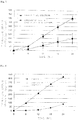
- the results of Example 1 and Comparative Example 1 are shown in Fig. 3 , the results of Example 2 and Comparative Example 2 in Fig. 4 , and the results of Example 3 and Comparative Example 3 in Fig. 5 , the results of Example 5 and Comparative Example 5 in Fig. 6 , respectively.
- the results of Example 4 and Comparative Example 4 are not shown, but after 18 hours and 24 hours, the cumulative amount of the drug permeated [Q] of the patch obtained in Example 4 was about twice as much as the cumulative amount of the drug permeated [Q] of the patch obtained in Comparative Example 4.
- Example 3 and Comparative Example 3 three samples for each patch were prepared in the same conditions and the cumulative amount of the drug permeated [Q] was calculated in the same way as above for each patch and the standard deviation of the cumulative amount of the drug permeated [Q] when taking each sample liquid was obtained. It was observed that the skin permeation of the obtained patch was more stable with a smaller value of the standard deviation.
- the standard deviation of the cumulative amount of the drug permeated [Q] when taking each sample liquids is shown in Table 3. [Table 3] Time (hour) Standard Deviation ( ⁇ g/cm 2 )
- Example 3 (Sodium Diacetate) Comparative Example 3 (Acetic Acid + Sodium Acetate) 0 0 0 6 8.9 11.4 12 19.7 39.7 18 26.5 57.3 24 30.0 65.5
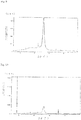
- Figs. 7 to 10 are graphs showing the spectra at an X-ray diffraction angle of 2 ⁇ ° of respective patches obtained in Example 3, Comparative Example 3, Example 4, and Comparative Example 4, respectively.
- a peak having high intensity from sodium diacetate was observed (near 22.4°) in the results shown in Figs. 7 and 9 , whereas the same peak having only low intensity was observed in the results shown in Figs. 8 and 10 .
- a peak having high intensity from sodium acetate was observed (near 8.7°) in the results shown in Figs. 8 and 10 , whereas the same peak was not observed in the results shown in Figs. 7 and 9 .
- the patches obtained by the production method of the present invention had significantly high skin permeation of the drug as compared with patches containing oleic acid, acetic acid, and sodium acetate which were conventionally known as compounds for improving the skin permeation of a drug.
- the patches obtained by the production method of the present invention contained a large amount of sodium diacetate and it was observed that the skin permeation of the drug in the patches was improved by using the sodium diacetate according the present invention.
- the present invention can provide the method for producing the patch, which can easily give the patch excellent in skin permeation of the drug and can reduce variation in skin permeation of the drug for each pharmaceutical preparation, and the patch obtained by the production method.
Landscapes
- Health & Medical Sciences (AREA)
- Engineering & Computer Science (AREA)
- Chemical & Material Sciences (AREA)
- Bioinformatics & Cheminformatics (AREA)
- Veterinary Medicine (AREA)
- Animal Behavior & Ethology (AREA)
- Medicinal Chemistry (AREA)
- Public Health (AREA)
- General Health & Medical Sciences (AREA)
- Pharmacology & Pharmacy (AREA)
- Life Sciences & Earth Sciences (AREA)
- Epidemiology (AREA)
- Dermatology (AREA)
- General Chemical & Material Sciences (AREA)
- Chemical Kinetics & Catalysis (AREA)
- Nuclear Medicine, Radiotherapy & Molecular Imaging (AREA)
- Organic Chemistry (AREA)
- Oil, Petroleum & Natural Gas (AREA)
- Emergency Medicine (AREA)
- Pulmonology (AREA)
- Psychiatry (AREA)
- Neurosurgery (AREA)
- Urology & Nephrology (AREA)
- Otolaryngology (AREA)
- Immunology (AREA)
- Neurology (AREA)
- Biomedical Technology (AREA)
- Pain & Pain Management (AREA)
- Medicinal Preparation (AREA)
- Acyclic And Carbocyclic Compounds In Medicinal Compositions (AREA)
- Pharmaceuticals Containing Other Organic And Inorganic Compounds (AREA)
Claims (2)
- Procédé de production d'un timbre comprenant une couche formant support et une couche adhésive, comprenant l'étape de formation de la couche adhésive avec l'utilisation d'une composition de couche adhésive obtenue par mélange d'un diacétate de métal alcalin, d'un médicament, et d'une base adhésive non aqueuse de sorte que le rapport molaire entre le médicament et le diacétate de métal alcalin (le nombre de moles du médicament:le nombre de moles du diacétate de métal alcalin) est de 1:0,5 à 1:15,
où
le médicament est au moins l'un sélectionné dans le groupe constitué des sels d'addition d'acide fumarique d'un médicament basique, des sels d'addition d'acide maléique d'un médicament basique, des sels d'addition d'acide citrique d'un médicament basique, et des sels d'addition d'acide chlorhydrique d'un médicament basique,
le médicament basique étant au moins l'un sélectionné dans le groupe constitué de l'émédastine, de la setiptiline, et de l'oxybutynine, et
la base adhésive non aqueuse étant au moins l'une sélectionnée dans le groupe constitué d'un copolymère séquencé de styrène-isoprène-styrène, d'un (co)polymère (méth)acrylate, de polyisobutylène, et d'un polymère de silicone. - Procédé de production d'un timbre selon la revendication 1, le diacétate de métal alcalin étant le diacétate de sodium.
Applications Claiming Priority (3)
| Application Number | Priority Date | Filing Date | Title |
|---|---|---|---|
| JP2011092477 | 2011-04-18 | ||
| JP2011243189 | 2011-11-07 | ||
| PCT/JP2012/059982 WO2012144405A1 (fr) | 2011-04-18 | 2012-04-12 | Procédé de fabrication d'une pièce adhésive et pièce adhésive |
Publications (3)
| Publication Number | Publication Date |
|---|---|
| EP2700401A1 EP2700401A1 (fr) | 2014-02-26 |
| EP2700401A4 EP2700401A4 (fr) | 2014-09-17 |
| EP2700401B1 true EP2700401B1 (fr) | 2020-01-15 |
Family
ID=47041515
Family Applications (1)
| Application Number | Title | Priority Date | Filing Date |
|---|---|---|---|
| EP12774629.5A Active EP2700401B1 (fr) | 2011-04-18 | 2012-04-12 | Procédé de fabrication d'une pièce adhésive et pièce adhésive |
Country Status (9)
| Country | Link |
|---|---|
| US (1) | US20140037710A1 (fr) |
| EP (1) | EP2700401B1 (fr) |
| JP (1) | JP5698837B2 (fr) |
| KR (1) | KR101774084B1 (fr) |
| CN (1) | CN103501770B (fr) |
| CA (1) | CA2833474C (fr) |
| ES (1) | ES2776146T3 (fr) |
| TW (1) | TWI537012B (fr) |
| WO (1) | WO2012144405A1 (fr) |
Families Citing this family (20)
| Publication number | Priority date | Publication date | Assignee | Title |
|---|---|---|---|---|
| WO2013081014A1 (fr) * | 2011-11-28 | 2013-06-06 | 株式会社 ケイ・エム トランスダーム | Timbre cutané adhésif |
| ES2710548T3 (es) * | 2012-10-11 | 2019-04-25 | Hisamitsu Pharmaceutical Co | Parche transdérmico |
| JP5307931B1 (ja) * | 2012-12-27 | 2013-10-02 | 久光製薬株式会社 | 貼付剤及びその製造方法 |
| MX366230B (es) * | 2012-12-28 | 2019-07-03 | Noven Pharma | Composiciones multipolimericas para liberación transdermica de farmaco. |
| JP2016135744A (ja) * | 2013-05-08 | 2016-07-28 | 株式会社 ケイ・エム トランスダーム | 貼付剤 |
| KR101827980B1 (ko) | 2013-10-07 | 2018-02-13 | 테이코쿠 팔마 유에스에이, 인코포레이티드 | 덱스메데토미딘 경피 전달 장치 및 이의 사용 방법 |
| CA2924233C (fr) | 2013-10-07 | 2018-10-23 | Teikoku Pharma Usa, Inc. | Methodes et compositions permettant de traiter le trouble d'hyperactivite avec deficit de l'attention, l'anxiete et l'insomnie a l'aide de compositions transdermiques de dexmedetomidine |
| BR112016006848A2 (pt) * | 2013-10-07 | 2017-08-01 | Teikoku Pharma Usa Inc | métodos e composições para distribuição transdérmica de uma quantidade não sedativa de dexmedetomidina |
| JPWO2015072494A1 (ja) * | 2013-11-12 | 2017-03-16 | 扶桑薬品工業株式会社 | 新規二酢酸ナトリウム結晶及び該結晶を含有する固形透析用製剤 |
| JP6173491B2 (ja) * | 2014-01-31 | 2017-08-02 | 久光製薬株式会社 | エメダスチン含有テープ剤 |
| WO2017061393A1 (fr) * | 2015-10-06 | 2017-04-13 | 久光製薬株式会社 | Patch adhésif |
| TWI764951B (zh) | 2016-10-31 | 2022-05-21 | 美商帝國製藥美國股份有限公司 | 用於處理疼痛之右美托咪啶經皮遞送裝置 |
| ES2769286T3 (es) | 2016-12-20 | 2020-06-25 | Lts Lohmann Therapie Systeme Ag | Sistema terapéutico transdérmico que contiene asenapina |
| WO2018115010A1 (fr) | 2016-12-20 | 2018-06-28 | Lts Lohmann Therapie-Systeme Ag | Système thérapeutique transdermique contenant de l'asénapine et un polysiloxane ou un polyisobutylène |
| EP3563852B1 (fr) * | 2016-12-28 | 2025-04-02 | Hisamitsu Pharmaceutical Co., Inc. | Timbre contenant du butorphanol |
| ES2881783T3 (es) | 2017-06-26 | 2021-11-30 | Lts Lohmann Therapie Systeme Ag | Sistema terapéutico transdérmico que contiene asenapina y polímero de acrílico y silicona |
| JP6827403B2 (ja) * | 2017-11-24 | 2021-02-10 | 久光製薬株式会社 | 貼付剤 |
| CN112533593A (zh) | 2018-06-20 | 2021-03-19 | 罗曼治疗系统股份公司 | 含有阿塞那平的透皮治疗系统 |
| CA3101420A1 (fr) | 2018-06-20 | 2019-12-26 | Lts Lohmann Therapie-Systeme Ag | Systeme therapeutique transdermique contenant de l'asenapine |
| WO2020071546A1 (fr) * | 2018-10-04 | 2020-04-09 | 株式会社 メドレックス | Préparation stabilisée au moyen d'un solvant non aqueux |
Family Cites Families (21)
| Publication number | Priority date | Publication date | Assignee | Title |
|---|---|---|---|---|
| DE3905050A1 (de) | 1989-02-18 | 1990-08-30 | Lohmann Therapie Syst Lts | Therapeutisches system zur verzoegerten und gesteuerten transdermalen oder transmucosalen verabreichung von wirkstoffen (ii) |
| JP2933944B2 (ja) | 1989-03-29 | 1999-08-16 | 日東電工株式会社 | 医療用貼付剤 |
| JPH0383924A (ja) | 1989-08-28 | 1991-04-09 | Kanebo Ltd | 経皮投与用組成物 |
| JPH0733665B2 (ja) | 1991-11-22 | 1995-04-12 | 株式会社古賀建基 | アンカー体打設工法 |
| JPH0733665A (ja) | 1993-05-18 | 1995-02-03 | Kanebo Ltd | エメダスチンを含有する粘着性貼付剤 |
| JPH08193030A (ja) | 1995-01-12 | 1996-07-30 | Nitto Denko Corp | エメダスチン貼付製剤 |
| JP4205778B2 (ja) | 1998-04-17 | 2009-01-07 | 久光製薬株式会社 | 貼付製剤 |
| CA2369012A1 (fr) * | 1999-04-13 | 2000-10-19 | Hisamitsu Pharmaceutical Co., Inc. | Preparations destinees a etre absorbees par voie percutanee |
| DK1201232T3 (da) * | 1999-07-27 | 2007-08-13 | Hisamitsu Pharmaceutical Co | Plastre til ydre anvendelse |
| NZ520015A (en) | 1999-12-16 | 2003-03-28 | Dermatrends Inc | Hydroxide-releasing agents as skin permeation enhancers |
| BR0207955A (pt) * | 2001-03-07 | 2004-02-25 | Hisamitsu Pharmaceutical Co | Agente de emplastro |
| KR100552307B1 (ko) * | 2003-06-12 | 2006-02-20 | 주식회사 청담화장품 | 항노화 효과가 있는 한약제 추출물이 첨가된 화장료 |
| CN100341513C (zh) * | 2003-12-01 | 2007-10-10 | 王国江 | 一种治疗皮肤癣病的软膏剂 |
| JP4961207B2 (ja) * | 2004-04-21 | 2012-06-27 | 久光製薬株式会社 | 粘着基剤中の吸収促進剤の含有率を高めた外用貼付剤 |
| WO2005115355A1 (fr) * | 2004-05-28 | 2005-12-08 | Hisamitsu Pharmaceutical Co., Inc. | Préparation de collage |
| DE602005010812D1 (de) * | 2004-11-22 | 2008-12-18 | Hisamitsu Pharmaceutical Co | Transdermales Pflaster enthaltend einen schmelzpunktsenkenden Hilfsstoff |
| WO2007092334A1 (fr) * | 2006-02-02 | 2007-08-16 | Hypnion, Inc. | Méthode pour traiter des troubles du sommeil |
| JP5037831B2 (ja) * | 2006-02-15 | 2012-10-03 | 久光製薬株式会社 | 凝集力向上及び徐放化の外用貼付剤 |
| EP2099503A4 (fr) | 2006-11-28 | 2013-11-13 | Ats Biotech Inc | Bandage pour brûlures |
| EP2258396B1 (fr) * | 2008-03-03 | 2017-09-06 | Hisamitsu Pharmaceutical Co., Inc. | Préparation pouvant être absorbée de façon transdermique |
| CN101284981B (zh) * | 2008-06-01 | 2010-08-11 | 李传涛 | 生物胶粘合剂及其制作方法 |
-
2012
- 2012-04-12 EP EP12774629.5A patent/EP2700401B1/fr active Active
- 2012-04-12 WO PCT/JP2012/059982 patent/WO2012144405A1/fr not_active Ceased
- 2012-04-12 CA CA2833474A patent/CA2833474C/fr active Active
- 2012-04-12 JP JP2013510964A patent/JP5698837B2/ja active Active
- 2012-04-12 ES ES12774629T patent/ES2776146T3/es active Active
- 2012-04-12 KR KR1020137030073A patent/KR101774084B1/ko active Active
- 2012-04-12 US US14/112,709 patent/US20140037710A1/en not_active Abandoned
- 2012-04-12 CN CN201280018519.1A patent/CN103501770B/zh active Active
- 2012-04-18 TW TW101113846A patent/TWI537012B/zh active
Non-Patent Citations (1)
| Title |
|---|
| None * |
Also Published As
| Publication number | Publication date |
|---|---|
| EP2700401A1 (fr) | 2014-02-26 |
| JP5698837B2 (ja) | 2015-04-08 |
| CN103501770B (zh) | 2015-04-29 |
| JPWO2012144405A1 (ja) | 2014-07-28 |
| TWI537012B (zh) | 2016-06-11 |
| WO2012144405A1 (fr) | 2012-10-26 |
| KR101774084B1 (ko) | 2017-09-01 |
| CN103501770A (zh) | 2014-01-08 |
| US20140037710A1 (en) | 2014-02-06 |
| TW201247247A (en) | 2012-12-01 |
| KR20140027262A (ko) | 2014-03-06 |
| ES2776146T3 (es) | 2020-07-29 |
| EP2700401A4 (fr) | 2014-09-17 |
| CA2833474A1 (fr) | 2012-10-26 |
| CA2833474C (fr) | 2017-09-19 |
Similar Documents
| Publication | Publication Date | Title |
|---|---|---|
| EP2700401B1 (fr) | Procédé de fabrication d'une pièce adhésive et pièce adhésive | |
| CN104138366B (zh) | 贴附剂的制造方法、贴附剂及包装体 | |
| US20160317465A1 (en) | Cover material-equipped patch and cover material-equipped patch kit | |
| JP5591685B2 (ja) | 経皮吸収製剤 | |
| US9370495B2 (en) | Adhesive patch | |
| US11382978B2 (en) | Percutaneous absorption composition | |
| WO2003037393A1 (fr) | Emplatre a support lamine | |
| US9238025B2 (en) | Transdermal preparation comprising a ropinirole derivative | |
| JP6259117B2 (ja) | 経皮吸収組成物 | |
| TW201605498A (zh) | 含有可樂寧之貼劑 | |
| JP2019026608A (ja) | 貼付剤 |
Legal Events
| Date | Code | Title | Description |
|---|---|---|---|
| PUAI | Public reference made under article 153(3) epc to a published international application that has entered the european phase |
Free format text: ORIGINAL CODE: 0009012 |
|
| 17P | Request for examination filed |
Effective date: 20131114 |
|
| AK | Designated contracting states |
Kind code of ref document: A1 Designated state(s): AL AT BE BG CH CY CZ DE DK EE ES FI FR GB GR HR HU IE IS IT LI LT LU LV MC MK MT NL NO PL PT RO RS SE SI SK SM TR |
|
| AX | Request for extension of the european patent |
Extension state: BA ME |
|
| A4 | Supplementary search report drawn up and despatched |
Effective date: 20140818 |
|
| RIC1 | Information provided on ipc code assigned before grant |
Ipc: A61K 9/70 20060101AFI20140811BHEP Ipc: A61K 31/435 20060101ALI20140811BHEP Ipc: A61P 43/00 20060101ALI20140811BHEP Ipc: A61K 31/551 20060101ALI20140811BHEP Ipc: A61K 47/34 20060101ALI20140811BHEP Ipc: A61P 11/02 20060101ALI20140811BHEP Ipc: A61K 47/12 20060101ALI20140811BHEP Ipc: A61P 37/08 20060101ALI20140811BHEP Ipc: A61P 17/04 20060101ALI20140811BHEP Ipc: A61K 47/32 20060101ALI20140811BHEP |
|
| STAA | Information on the status of an ep patent application or granted ep patent |
Free format text: STATUS: EXAMINATION IS IN PROGRESS |
|
| 17Q | First examination report despatched |
Effective date: 20180118 |
|
| GRAP | Despatch of communication of intention to grant a patent |
Free format text: ORIGINAL CODE: EPIDOSNIGR1 |
|
| STAA | Information on the status of an ep patent application or granted ep patent |
Free format text: STATUS: GRANT OF PATENT IS INTENDED |
|
| INTG | Intention to grant announced |
Effective date: 20190827 |
|
| GRAS | Grant fee paid |
Free format text: ORIGINAL CODE: EPIDOSNIGR3 |
|
| GRAA | (expected) grant |
Free format text: ORIGINAL CODE: 0009210 |
|
| STAA | Information on the status of an ep patent application or granted ep patent |
Free format text: STATUS: THE PATENT HAS BEEN GRANTED |
|
| AK | Designated contracting states |
Kind code of ref document: B1 Designated state(s): AL AT BE BG CH CY CZ DE DK EE ES FI FR GB GR HR HU IE IS IT LI LT LU LV MC MK MT NL NO PL PT RO RS SE SI SK SM TR |
|
| AX | Request for extension of the european patent |
Extension state: BA ME |
|
| REG | Reference to a national code |
Ref country code: CH Ref legal event code: EP Ref country code: GB Ref legal event code: FG4D |
|
| REG | Reference to a national code |
Ref country code: IE Ref legal event code: FG4D |
|
| REG | Reference to a national code |
Ref country code: DE Ref legal event code: R096 Ref document number: 602012067291 Country of ref document: DE |
|
| REG | Reference to a national code |
Ref country code: AT Ref legal event code: REF Ref document number: 1224541 Country of ref document: AT Kind code of ref document: T Effective date: 20200215 |
|
| REG | Reference to a national code |
Ref country code: NL Ref legal event code: MP Effective date: 20200115 |
|
| REG | Reference to a national code |
Ref country code: LT Ref legal event code: MG4D |
|
| REG | Reference to a national code |
Ref country code: ES Ref legal event code: FG2A Ref document number: 2776146 Country of ref document: ES Kind code of ref document: T3 Effective date: 20200729 |
|
| PG25 | Lapsed in a contracting state [announced via postgrant information from national office to epo] |
Ref country code: NO Free format text: LAPSE BECAUSE OF FAILURE TO SUBMIT A TRANSLATION OF THE DESCRIPTION OR TO PAY THE FEE WITHIN THE PRESCRIBED TIME-LIMIT Effective date: 20200415 Ref country code: PT Free format text: LAPSE BECAUSE OF FAILURE TO SUBMIT A TRANSLATION OF THE DESCRIPTION OR TO PAY THE FEE WITHIN THE PRESCRIBED TIME-LIMIT Effective date: 20200607 Ref country code: NL Free format text: LAPSE BECAUSE OF FAILURE TO SUBMIT A TRANSLATION OF THE DESCRIPTION OR TO PAY THE FEE WITHIN THE PRESCRIBED TIME-LIMIT Effective date: 20200115 Ref country code: RS Free format text: LAPSE BECAUSE OF FAILURE TO SUBMIT A TRANSLATION OF THE DESCRIPTION OR TO PAY THE FEE WITHIN THE PRESCRIBED TIME-LIMIT Effective date: 20200115 Ref country code: FI Free format text: LAPSE BECAUSE OF FAILURE TO SUBMIT A TRANSLATION OF THE DESCRIPTION OR TO PAY THE FEE WITHIN THE PRESCRIBED TIME-LIMIT Effective date: 20200115 |
|
| PG25 | Lapsed in a contracting state [announced via postgrant information from national office to epo] |
Ref country code: GR Free format text: LAPSE BECAUSE OF FAILURE TO SUBMIT A TRANSLATION OF THE DESCRIPTION OR TO PAY THE FEE WITHIN THE PRESCRIBED TIME-LIMIT Effective date: 20200416 Ref country code: HR Free format text: LAPSE BECAUSE OF FAILURE TO SUBMIT A TRANSLATION OF THE DESCRIPTION OR TO PAY THE FEE WITHIN THE PRESCRIBED TIME-LIMIT Effective date: 20200115 Ref country code: LV Free format text: LAPSE BECAUSE OF FAILURE TO SUBMIT A TRANSLATION OF THE DESCRIPTION OR TO PAY THE FEE WITHIN THE PRESCRIBED TIME-LIMIT Effective date: 20200115 Ref country code: BG Free format text: LAPSE BECAUSE OF FAILURE TO SUBMIT A TRANSLATION OF THE DESCRIPTION OR TO PAY THE FEE WITHIN THE PRESCRIBED TIME-LIMIT Effective date: 20200415 Ref country code: IS Free format text: LAPSE BECAUSE OF FAILURE TO SUBMIT A TRANSLATION OF THE DESCRIPTION OR TO PAY THE FEE WITHIN THE PRESCRIBED TIME-LIMIT Effective date: 20200515 Ref country code: SE Free format text: LAPSE BECAUSE OF FAILURE TO SUBMIT A TRANSLATION OF THE DESCRIPTION OR TO PAY THE FEE WITHIN THE PRESCRIBED TIME-LIMIT Effective date: 20200115 |
|
| REG | Reference to a national code |
Ref country code: DE Ref legal event code: R097 Ref document number: 602012067291 Country of ref document: DE |
|
| PG25 | Lapsed in a contracting state [announced via postgrant information from national office to epo] |
Ref country code: CZ Free format text: LAPSE BECAUSE OF FAILURE TO SUBMIT A TRANSLATION OF THE DESCRIPTION OR TO PAY THE FEE WITHIN THE PRESCRIBED TIME-LIMIT Effective date: 20200115 Ref country code: RO Free format text: LAPSE BECAUSE OF FAILURE TO SUBMIT A TRANSLATION OF THE DESCRIPTION OR TO PAY THE FEE WITHIN THE PRESCRIBED TIME-LIMIT Effective date: 20200115 Ref country code: LT Free format text: LAPSE BECAUSE OF FAILURE TO SUBMIT A TRANSLATION OF THE DESCRIPTION OR TO PAY THE FEE WITHIN THE PRESCRIBED TIME-LIMIT Effective date: 20200115 Ref country code: EE Free format text: LAPSE BECAUSE OF FAILURE TO SUBMIT A TRANSLATION OF THE DESCRIPTION OR TO PAY THE FEE WITHIN THE PRESCRIBED TIME-LIMIT Effective date: 20200115 Ref country code: SM Free format text: LAPSE BECAUSE OF FAILURE TO SUBMIT A TRANSLATION OF THE DESCRIPTION OR TO PAY THE FEE WITHIN THE PRESCRIBED TIME-LIMIT Effective date: 20200115 Ref country code: DK Free format text: LAPSE BECAUSE OF FAILURE TO SUBMIT A TRANSLATION OF THE DESCRIPTION OR TO PAY THE FEE WITHIN THE PRESCRIBED TIME-LIMIT Effective date: 20200115 Ref country code: SK Free format text: LAPSE BECAUSE OF FAILURE TO SUBMIT A TRANSLATION OF THE DESCRIPTION OR TO PAY THE FEE WITHIN THE PRESCRIBED TIME-LIMIT Effective date: 20200115 |
|
| REG | Reference to a national code |
Ref country code: AT Ref legal event code: MK05 Ref document number: 1224541 Country of ref document: AT Kind code of ref document: T Effective date: 20200115 |
|
| PLBE | No opposition filed within time limit |
Free format text: ORIGINAL CODE: 0009261 |
|
| STAA | Information on the status of an ep patent application or granted ep patent |
Free format text: STATUS: NO OPPOSITION FILED WITHIN TIME LIMIT |
|
| PG25 | Lapsed in a contracting state [announced via postgrant information from national office to epo] |
Ref country code: MC Free format text: LAPSE BECAUSE OF FAILURE TO SUBMIT A TRANSLATION OF THE DESCRIPTION OR TO PAY THE FEE WITHIN THE PRESCRIBED TIME-LIMIT Effective date: 20200115 |
|
| REG | Reference to a national code |
Ref country code: CH Ref legal event code: PL |
|
| 26N | No opposition filed |
Effective date: 20201016 |
|
| PG25 | Lapsed in a contracting state [announced via postgrant information from national office to epo] |
Ref country code: AT Free format text: LAPSE BECAUSE OF FAILURE TO SUBMIT A TRANSLATION OF THE DESCRIPTION OR TO PAY THE FEE WITHIN THE PRESCRIBED TIME-LIMIT Effective date: 20200115 Ref country code: LU Free format text: LAPSE BECAUSE OF NON-PAYMENT OF DUE FEES Effective date: 20200412 Ref country code: LI Free format text: LAPSE BECAUSE OF NON-PAYMENT OF DUE FEES Effective date: 20200430 Ref country code: CH Free format text: LAPSE BECAUSE OF NON-PAYMENT OF DUE FEES Effective date: 20200430 |
|
| REG | Reference to a national code |
Ref country code: BE Ref legal event code: MM Effective date: 20200430 |
|
| PG25 | Lapsed in a contracting state [announced via postgrant information from national office to epo] |
Ref country code: PL Free format text: LAPSE BECAUSE OF FAILURE TO SUBMIT A TRANSLATION OF THE DESCRIPTION OR TO PAY THE FEE WITHIN THE PRESCRIBED TIME-LIMIT Effective date: 20200115 Ref country code: BE Free format text: LAPSE BECAUSE OF NON-PAYMENT OF DUE FEES Effective date: 20200430 Ref country code: SI Free format text: LAPSE BECAUSE OF FAILURE TO SUBMIT A TRANSLATION OF THE DESCRIPTION OR TO PAY THE FEE WITHIN THE PRESCRIBED TIME-LIMIT Effective date: 20200115 |
|
| PG25 | Lapsed in a contracting state [announced via postgrant information from national office to epo] |
Ref country code: IE Free format text: LAPSE BECAUSE OF NON-PAYMENT OF DUE FEES Effective date: 20200412 |
|
| PG25 | Lapsed in a contracting state [announced via postgrant information from national office to epo] |
Ref country code: TR Free format text: LAPSE BECAUSE OF FAILURE TO SUBMIT A TRANSLATION OF THE DESCRIPTION OR TO PAY THE FEE WITHIN THE PRESCRIBED TIME-LIMIT Effective date: 20200115 Ref country code: MT Free format text: LAPSE BECAUSE OF FAILURE TO SUBMIT A TRANSLATION OF THE DESCRIPTION OR TO PAY THE FEE WITHIN THE PRESCRIBED TIME-LIMIT Effective date: 20200115 Ref country code: CY Free format text: LAPSE BECAUSE OF FAILURE TO SUBMIT A TRANSLATION OF THE DESCRIPTION OR TO PAY THE FEE WITHIN THE PRESCRIBED TIME-LIMIT Effective date: 20200115 |
|
| PG25 | Lapsed in a contracting state [announced via postgrant information from national office to epo] |
Ref country code: MK Free format text: LAPSE BECAUSE OF FAILURE TO SUBMIT A TRANSLATION OF THE DESCRIPTION OR TO PAY THE FEE WITHIN THE PRESCRIBED TIME-LIMIT Effective date: 20200115 Ref country code: AL Free format text: LAPSE BECAUSE OF FAILURE TO SUBMIT A TRANSLATION OF THE DESCRIPTION OR TO PAY THE FEE WITHIN THE PRESCRIBED TIME-LIMIT Effective date: 20200115 |
|
| P01 | Opt-out of the competence of the unified patent court (upc) registered |
Effective date: 20230522 |
|
| PGFP | Annual fee paid to national office [announced via postgrant information from national office to epo] |
Ref country code: DE Payment date: 20250305 Year of fee payment: 14 |
|
| PGFP | Annual fee paid to national office [announced via postgrant information from national office to epo] |
Ref country code: ES Payment date: 20250506 Year of fee payment: 14 |
|
| PGFP | Annual fee paid to national office [announced via postgrant information from national office to epo] |
Ref country code: GB Payment date: 20260313 Year of fee payment: 15 |
|
| PGFP | Annual fee paid to national office [announced via postgrant information from national office to epo] |
Ref country code: IT Payment date: 20260320 Year of fee payment: 15 |
|
| PGFP | Annual fee paid to national office [announced via postgrant information from national office to epo] |
Ref country code: FR Payment date: 20260309 Year of fee payment: 15 |