EP2700629A2 - Verfahren zur herstellung von dialkylcarbonat - Google Patents
Verfahren zur herstellung von dialkylcarbonat Download PDFInfo
- Publication number
- EP2700629A2 EP2700629A2 EP12774514.9A EP12774514A EP2700629A2 EP 2700629 A2 EP2700629 A2 EP 2700629A2 EP 12774514 A EP12774514 A EP 12774514A EP 2700629 A2 EP2700629 A2 EP 2700629A2
- Authority
- EP
- European Patent Office
- Prior art keywords
- reaction
- product
- dialkyl carbonate
- catalyst
- ionic liquid
- Prior art date
- Legal status (The legal status is an assumption and is not a legal conclusion. Google has not performed a legal analysis and makes no representation as to the accuracy of the status listed.)
- Withdrawn
Links
Images



Classifications
-
- C—CHEMISTRY; METALLURGY
- C07—ORGANIC CHEMISTRY
- C07C—ACYCLIC OR CARBOCYCLIC COMPOUNDS
- C07C68/00—Preparation of esters of carbonic or haloformic acids
-
- Y—GENERAL TAGGING OF NEW TECHNOLOGICAL DEVELOPMENTS; GENERAL TAGGING OF CROSS-SECTIONAL TECHNOLOGIES SPANNING OVER SEVERAL SECTIONS OF THE IPC; TECHNICAL SUBJECTS COVERED BY FORMER USPC CROSS-REFERENCE ART COLLECTIONS [XRACs] AND DIGESTS
- Y02—TECHNOLOGIES OR APPLICATIONS FOR MITIGATION OR ADAPTATION AGAINST CLIMATE CHANGE
- Y02P—CLIMATE CHANGE MITIGATION TECHNOLOGIES IN THE PRODUCTION OR PROCESSING OF GOODS
- Y02P20/00—Technologies relating to chemical industry
- Y02P20/50—Improvements relating to the production of bulk chemicals
- Y02P20/582—Recycling of unreacted starting or intermediate materials
Definitions
- the present invention relates to a method for preparing a dialkyl carbonate. More particularly, the present invention relates to a method for preparing a dialkyl carbonate in which a dialkyl carbonate such as dimethyl carbonate is economically prepared in an environmentally friendly manner at a higher yield while reducing generation of a by-product.
- Dimethyl carbonate (DMC) as a representative dialkyl carbonate material is colorless and odorless, and has an environmentally friendly molecular structure without toxicity to a human body. Further, since dimethyl carbonate has various chemical reactivities, a reactive group such as a methyl, methoxy, or methoxycarbonyl group may be introduced. Dimethyl carbonate may replace highly toxic and corrosive chemicals such as dimethyl sulfate or methyl halides by introducing the reactive group. In addition, dimethyl carbonate has high solubility and may therefore be used as an environmentally friendly solvent to replace a solvent such as chlorobenzene. Recently, dimethyl carbonate has been used as a substitute material for phosgene as a raw material of polycarbonate, an additive for improving an octane number for vehicles, or an electrolyte solution of a rechargeable battery.
- Dimethyl carbonate has been typically prepared with an alcohol such as methanol, phosgene, and a highly concentrated sodium hydroxide solution.
- an alcohol such as methanol, phosgene, and a highly concentrated sodium hydroxide solution.
- the EniChem process is a method for preparing dimethyl carbonate by oxidizing carbon monoxide and methanol using a monovalent copper chloride catalyst with oxygen in the air.
- the EniChem process has problems in that toxic carbon monoxide is used as a raw material, a conversion rate is low, and a cost of energy used to purify and circulate unreacted methanol is high due to generation of water as a by-product.
- the monovalent copper chloride catalyst is readily oxidized into divalent copper ions, catalytic activity is reduced, and supplementation of a reaction device against corrosion and handling of explosion are required.
- a refining cost is rapidly increased when dimethyl carbonate is used as an electrolyte solution.
- Still another method for preparing dimethyl carbonate is an Ube process in which methanol is oxidized into nitrogen dioxide to prepare methyl nitrate, water is removed, methyl nitrate reacts with carbon monoxide in the presence of a platinum catalyst to prepare dimethyl carbonate, nitrogen oxide comes into contact with air to again be converted into nitrogen dioxide, and nitrogen dioxide is circulated.
- the Ube process has problems in that, although a cost of energy for separation and purification is relatively low, the use of the highly toxic and corrosive carbon monoxide and nitrogen oxide requires an anti-corrosion reaction device, an anti-explosion safety device, and a precise concentration controlling device, and there is a risk of leakage of reactants.
- Yet another method for preparing dimethyl carbonate is a Texaco process in which ethylene oxide (or propylene oxide) and carbon dioxide are reacted with each other at high pressure in the presence of a catalyst to prepare ethylene carbonate (or propylene carbonate), and then prepare dimethyl carbonate and ethylene glycol (or propylene glycol) through an ester exchange reaction with methanol.
- the Texaco process does not use carbon monoxide and thus has excellent safety as compared to the EniChem process and the Ube process. However, since the process is performed at high temperature and pressure, there is a risk of explosion due to leakage of ethylene oxide used as a raw material.
- ester exchange reaction is performed at a high temperature, a conversion rate is not high, and thus there is a problem in that a large amount of energy is used to separate and purify unreacted materials as well as dimethyl carbonate and ethylene glycol as products.
- the known methods for preparing dimethyl carbonate using urea and methanol are as follows. (1) a method for reacting urea and methanol in the presence of a zinc acetate catalyst ( S. Bowden and E. Buther, J. Chem. Soc. 1939, Vol. 78 ), and (2) a method for synthesizing dialkyl carbonate by reacting urea, a primary aliphatic alcohol such as methanol, an organic metal compound, and a catalyst of a phosphine-based organic material ( Peter Ball, Heinz Fullmann, and Walter Heintz, "Carbonates and Polycarbonates from Urea and Alcohol", Angew. Chem. Int. Ed. Engl. 1980, Vol. 19, No. 9, pp 718-720 ; WO 95/17369 ).
- a dialkyl carbonate such as dimethyl carbonate at a sufficient yield.
- a (3) method for preparing a dialkyl carbonate by using a catalyst of an organotin-based compound and a high boiling point electron donor compound, such as a polyglycol ether compound, as a co-catalyst J. Yong Ryu, U.S. Patent 6,010,976
- various process patents are known based on the method (3).
- the aforementioned method has a drawback in that, since the catalyst of the organotin-based compound is unstable to water, activity thereof is reduced by water included in a raw material as an impurity, and also has a problem of toxicity.
- the polyglycol ether compound used as the co-catalyst may be decomposed or polymerized at high temperatures, and thus activity thereof as the co-catalyst may be reduced due to an occurrence of a change in viscosity or carbonization. Moreover, it is difficult to regenerate the catalyst and the co-catalyst, which may cause an environmental pollution.
- a method (4) for preparing dimethyl carbonate by using a catalyst in which transition metal oxides such as Zn, Pb, Mn, La, or Ce and alkali (earth) metal oxides such as K, Na, Cs, Li, Ca, or Mg are impregnated in alumina or silica, and directly reacting urea and methanol using a reactor or a distillation column is disclosed in U.S. Patent 7,271,120 B2 .
- the catalyst and reactants may be easily separated.
- N-MMC N-methylmethyl carbamate
- MC methyl carbamate
- the obtained distillate is an azeotropic mixture of dimethyl carbonate and methanol, and the concentration of dimethyl carbonate as the product may be reduced due to the azeotropic mixture at high pressure, which reduces productivity.
- by-products such as N-MMC or N,N-dimethylmethyl carbamate formed by reaction of methyl carbamate (MC) as the intermediate product may be produced in a large amount due to high reactivity of synthesized dimethyl carbonate ( Yoshio Ono, "Dimethyl carbonate for environmentally benign reaction", Pure & Appl. Chem., 1996, Vol. 68, No. 2, pp 367-375 ).
- the present invention has been made in an effort to provide a method for preparing a dialkyl carbonate, in which the dialkyl carbonate is economically prepared in an environmentally friendly manner at a higher yield while reducing generation of a by-product.
- An exemplary embodiment of the present invention provides a method for preparing a dialkyl carbonate.
- the method includes reacting urea, an alkyl carbamate having 1 to 3 carbon atoms, or a mixture thereof with a monovalent alcohol having 1 to 3 carbon atoms in the presence of a room temperature ionic liquid and a catalyst including a salt of a transition metal or a rare earth metal.
- the salt of the transition metal may be a salt of a transition metal of Group III or IV
- the salt of a transition metal or a rare earth metal of the catalyst may be a salt of Zr, Ce, La, or Y.
- the salt of the transition metal or the rare earth metal may be a nitrate or halide of the corresponding metal.
- the catalyst may be a salt of a transition metal or a rare earth metal of ZrO(NO 3 ) 2 , Ce(NO 3 ) 3 , CeCl 3 , ZrCl 4 , La(NO 3 ) 3 , or LaCl 3 .
- the room temperature ionic liquid may be a room temperature ionic liquid including a cation that is capable of generating a hydrogen ion (H + ) and a hydrophobic anion including fluorine.
- the cation may be a quaternary ammonium-based cation, an imidazolium-based cation, an N-hydroxyalkylpyridium-based cation, a pyrazolium-based cation, a pyrrolinium-based cation, a quaternary phosphonium-based cation, a thiazolium-based cation, or a sulfonium-based cation having an alkyl group or a hydroxyalkyl group.
- the anion may be a bis(trifluoromethylsulfonyl)imide anion, a trifluoromethanesulfonate anion, or a tris(trifluoromethylsulfonyl)methanide anion.
- the room temperature ionic liquid may be [Choline][NTf2] (ionic liquid in which ( ⁇ -hydroxyethyl)trimethylammonium + and bis(trifluoromethylsulfonyl)imide are bonded).
- the reacting may be carried out at a temperature of 130 to 300 °C and a pressure of 0.1 to 15 atm, and appropriately at about atmospheric pressure.
- the urea, the alkyl carbamate, or the mixture thereof, and the monovalent alcohol may be used at a molar ratio of 1:1 to 1:100.
- the catalyst and the room temperature ionic liquid may be used at a weight ratio of 1:1 to 1:1000.
- the reacting of the urea, the alkyl carbamate, or the mixture thereof with the monovalent alcohol may include a first reaction of reacting the urea, the alkyl carbamate having 1 to 3 carbon atoms, or the mixture thereof with the monovalent alcohol having 1 to 3 carbon atoms in the presence of the room temperature ionic liquid and the catalyst, and a second reaction of further reacting a product of the first reaction to convert isocyanic acid included in the product of the first reaction into alkyl carbamate.
- the first reaction may be carried out in a stirred reactor, and the second reaction may be carried out in a fixed-bed reactor.
- the fixed-bed reactor may be filled with Raschig rings or a formed body in which a metal oxide catalyst is impregnated. Further, the second reaction may be carried out with addition of the catalyst including oxides of one or more metals selected from the group consisting of Zr, Ce, Zn, Ti, Pb, and Mg.
- the method for preparing a dialkyl carbonate may further include, after the reacting of the urea, the alkyl carbamate, or the mixture thereof with the monovalent alcohol as reactants, separating a product including dialkyl carbonate, a by-product including ammonia, and an unreacted residue including monovalent alcohol and alkyl carbamate from a product of the reacting.
- the unreacted residue including the monovalent alcohol and the alkyl carbamate may be circulated into the reaction and reused.
- the by-product including ammonia may be removed.
- the separating may include: primarily distilling the product of the reaction in a first distillation column to circulate the unreacted residue of a column bottom into the reaction and purifying the by-product at a column top to form a first product including ammonia, monovalent alcohol, and dialkyl carbonate; deaerating and purifying ammonia remaining in the first product to form a second product including monovalent alcohol and dialkyl carbonate; secondarily distilling the second product in a second distillation column to circulate the unreacted residue of the column bottom into the reaction and form a third product including monovalent alcohol and dialkyl carbonate at the column top; membrane separating the third product in a membrane separation device to further separate the unreacted residue to circulate the unreacted residue into the second distillation column and form a fourth product including dialkyl carbonate at a concentration that is higher than the concentration of the third product; and tertiarily distilling the fourth product in a third distillation column to circulate a distillate of the column top into the
- a dialkyl carbonate can be economically prepared in an environmentally-friendly manner at a higher yield by using a room temperature ionic liquid and a catalyst in a predetermined metal salt form.
- the room temperature ionic liquid has excellent stability to water, air, or a temperature change, and a low vapor pressure at high temperatures, the room temperature ionic liquid is hardly consumed during the reaction, and can well-dissolve the urea or the alkyl carbamate as a reactant. Further, decomposition or sublimation of the reactant at high temperatures can be suppressed.
- a catalytic action in a metal salt form can be promoted even at atmospheric pressure and generation of a by-product can be suppressed to improve productivity by using the room temperature ionic liquid as a reaction medium, use of energy can be significantly reduced, and since waste materials are not generated, the method is environmentally friendly.
- a reuse ratio of the room temperature ionic liquid and the catalyst is high, and a yield of dialkyl carbonate can be significantly improved.
- a method for preparing a dialkyl carbonate including reacting urea, an alkyl carbamate having 1 to 3 carbon atoms, or a mixture thereof with a monovalent alcohol having 1 to 3 carbon atoms in the presence of a room temperature ionic liquid and a catalyst including a salt of a transition metal or rare earth metal is provided.
- the room temperature ionic liquid is used as a reaction medium and the catalyst in a predetermined metal salt form is used to apply urea and a monovalent alcohol such as methanol, thus preparing a dialkyl carbonate such as dimethyl carbonate.
- a dialkyl carbonate may be prepared at a higher yield and a higher reaction speed based on the following principle by using the room temperature ionic liquid as the reaction medium.
- a main reaction scheme of reacting alcohol and urea or an alkyl carbamate to prepare a dialkyl carbonate is equivalent to the following Reaction Scheme 1.
- Reaction Scheme 1 1 ROH + H 2 NCONH 2 ⁇ ROCONH 2 + NH 3 ⁇ 2 ROH + ROCONH 2 ⁇ ROCOOR + NH 3 ⁇
- Ke of Reaction Scheme 1 may be reduced, which may cause a reduction in yield and reaction speed.
- generation of sub-reactants such as N-alkylalkyl carbamate, N,N-dialkylalkyl carbamate, trialkylamine, dialkylamine, or monoalkylamine may be increased.
- a drawback according to high pressure may be solved by using the room temperature ionic liquid as a reaction medium.
- the room temperature ionic liquid is not reacted with alcohol used as the reactant, and may act as a heating medium for heating alcohol to the reaction temperature.
- the room temperature ionic liquid has excellent stability to water, air, or a temperature change and a low vapor pressure at high temperatures, the room temperature ionic liquid is hardly consumed during the reaction step, and may well-dissolve urea or alkyl carbamate as the reactant. Moreover, decomposition or sublimation of the reactant at high temperatures may be suppressed.
- the present inventors have continuously studied, resulting in the confirmation that the problems of the prior art can be completely solved by using the catalyst in a salt form of a transition metal or a rare earth metal.
- the term "salt of a transition metal or a rare earth metal” or “metal salt” may be understood to also include hydrates of the salts.
- the term "metal salt” may refer to an ionic bonded salt in a form where cations of a transition metal or a rare earth metal are bonded to anions.
- the catalyst in the metal salt form may be homogeneously dissolved in the room temperature ionic liquid to form an organic metal complex compound.
- the catalyst could be homogeneously dissolved in the room temperature ionic liquid as the reaction medium to largely improve activity and lifespan, and a dialkyl carbonate could be prepared at an excellent yield over a long period of time by using the catalyst in the metal salt form.
- the catalyst could be homogeneously dissolved in the room temperature ionic liquid as the reaction medium to provide excellent activity and operation by an interaction with the reaction medium even at low pressure conforming to atmospheric pressure. Therefore, in the preparation method of the exemplary embodiment, an increase in generation of the sub-reactant due to an increase in reaction pressure does not substantially occur, and a dialkyl carbonate may be efficiently prepared at a further improved yield and reaction speed.
- the catalyst can be used over a long period of time, generation of the by-product or the sub-reactant can be reduced, a reuse ratio of an unreacted residue can be increased, and thus a dialkyl carbonate can be prepared in a further environmentally friendly manner.
- an alkyl carbamate having 1 to 3 carbon atoms, or a mixture thereof with a monovalent alcohol having 1 to 3 carbon atoms a solution of urea dissolved in the monovalent alcohol may be injected into a reaction solution including the catalyst and the room temperature ionic liquid to carry out the reaction.
- the solution may be injected into the reaction solution to carry out the reaction.
- the reaction step may be carried out by dissolving and stirring the catalyst in the metal salt form in the room temperature ionic liquid, maintaining a predetermined reaction temperature, and injecting the alcohol solution in which urea, the alkyl carbamate, or the mixture thereof is dissolved at a predetermined flow rate.
- the dialkyl carbonate since the alcohol and alkyl carbamate do not cause steric hindrance, it is easy to perform the reaction to dialkyl carbonate. Since a boiling point of a generated dialkyl carbonate is lower than the reaction temperature, the dialkyl carbonate may be recovered in a gas phase.
- the monovalent alcohol having 1 to 3 carbon atoms such as methanol, ethanol, or n-propyl alcohol may be used as the alcohol.
- An alkyl carbamate having 1 to 3 carbon atoms such as methyl carbamate, ethyl carbamate, or n-propyl carbamate may be used as the alkyl carbamate.
- a dialkyl carbonate such as dimethyl carbonate, diethyl carbonate, or di-n-propyl carbonate may be prepared by using these reactants.
- the reaction step may be carried out at a temperature of about 130 to 300 °C, about 140 to 250 °C, or about 150 to 200 °C, and a pressure of about 0.1 to 15 atm, about 0.3 to 10 atm, or about 0.5 to 5 atm, and appropriately at about atmospheric pressure.
- the reaction step may be carried out at a relatively low pressure of around atmospheric pressure by using the room temperature ionic liquid as the reaction medium and using the catalyst in the metal salt form.
- generation of the sub-reactant may be reduced, and the dialkyl carbonate may be prepared at the high yield and reaction speed.
- the reaction step is not carried out only at about atmospheric pressure, and if necessary, the reaction step may be carried out while appropriately controlling reaction pressure by using a pressure control device.
- urea, alkyl carbamate, or the mixture thereof and the monovalent alcohol may be used at a molar ratio of about 1:1 to 1:100, about 1:10 to 1:50, about 1:15 to 1:45, or about 1:15 to 1:40.
- the molar ratio may be controlled through control of the use amount of each reactant such as the urea or alcohol, or further controlled by a method for vaporizing alcohol.
- the molar ratio is excessively low, the dialkyl carbonate may not be properly prepared or thermally decomposed by-products may be increased to reduce the yield.
- the molar ratio is excessively high, a quantity of heat required in vaporization may be increased due to an excessive amount of alcohol to reduce heat efficiency.
- urea, alkyl carbamate, or the mixture thereof may be used at a ratio at which the urea, alkyl carbamate, or the mixture thereof is maximally dissolved in alcohol to be saturated.
- urea and methanol it is most preferable that the urea be dissolved and used at a ratio of about 18 % at which urea is maximally dissolved in methanol at room temperature.
- solubility of the urea to alcohol may depend on the temperature, an appropriate concentration of urea may be selected and used in consideration of the reaction temperature or the yield.
- the room temperature ionic liquid is used as the reaction medium.
- the room temperature ionic liquid may refer to a material that is present in a liquid state at room temperature even though the room temperature ionic liquid is constituted by bonding of ions.
- the temperature required in the reaction may be maintained even though the reaction temperature is not increased by using the room temperature ionic liquid as the reaction medium.
- the dialkyl carbonate and ammonia may be efficiently continuously discharged to improve the yield and the reaction speed of the dialkyl carbonate.
- a matter including a cation that is capable of generating hydrogen ions (H + ) and hydrophobic anions including fluorine may be used as the room temperature ionic liquid.
- a room temperature ionic liquid including a quaternary ammonium-based cation, an imidazolium-based cation, a N-hydroxyalkylpyridium-based cation, a pyrazolium-based cation, a pyrrolinium-based cation, a quaternary phosphonium-based cation, a thiazolium-based cation, or a sulfonium-based cation having an alkyl group or a hydroxyalkyl group, and a bis(trifluoromethylsulfonyl)imide anion, a trifluoromethanesulfonate anion, or a tris(trifluoromethyl sulfonyl)methanide anion may be used.
- the room temperature ionic liquid has hydrophobicity such that the room temperature ionic liquid is not substantially reacted with alcohol in the reactant, and may act as the heating medium for heating alcohol to the reaction temperature. Accordingly, when an appropriate room temperature ionic liquid is used, an appropriate reaction temperature may be obtained even though the reaction pressure is not substantially increased, and thus the yield and the reaction speed of the dialkyl carbonate may be further improved.
- the room temperature ionic liquid basically has hydrophobicity and insolubility enabling separation from water to be easy, when performance of the catalyst is reduced or the catalyst is polluted, the metal salt catalyst dissolved therein may be removed through acid washing, and if necessary, the room temperature ionic liquid may be discolored by activated carbon and then washed with ether and distilled water to be reused. Accordingly, in the preparation method of the exemplary embodiment, since the catalyst and the reaction medium of the room temperature ionic liquid may be reused at a higher ratio, dialkyl carbonate may be prepared in an environmentally friendly manner.
- the most representative example of the room temperature ionic liquid may include [Choline][NTf2] (( ⁇ -hydroxyethyl)trimethylammonium + ⁇ bis(trifluoromethylsulfonyl)imide - ).
- the room temperature ionic liquid may have unusual catalytic characteristics and solubility due to its structure and electromagnetic polarity. Further, since vapor pressure is very low even at high temperatures, there is no concern of a loss. Even though the room temperature ionic liquid is exposed to air and water, the room temperature ionic liquid is stable, and thus it is easy to handle the room temperature ionic liquid.
- the room temperature ionic liquid is an environmentally-friendly liquid having hydrophobicity and insolubility to water and has excellent activity in the reaction of synthesizing dialkyl carbonate, and thus the room temperature ionic liquid may be appropriately used in the reaction step. Moreover, since the room temperature ionic liquid may suppress sublimation, vaporization, or decomposition of urea, and appropriately maintain urea or alkyl carbamate in a liquid phase at the reaction temperature, when the room temperature ionic liquid is used, the concentration of the reactant may be further increased to further improve reaction efficiency.
- the catalyst in a predetermined metal salt form which includes the salt of the transition metal or rare earth metal
- the scope of the term “salt of the transition metal or rare earth metal” or “metal salt” may be understood to also include hydrates of the salts.
- the salt of transition metal may be a salt of a transition metal of Group III or IV.
- a salt of Zr, Ce, La, or Y may be used as the salt of the transition metal or rare earth metal, and nitrates or haloids of the transition metal or rare earth metal may be used.
- Some specific examples of the catalysts may include ZrO(NO 3 ) 2 , Ce(NO 3 ) 3 , CeCl 3 , ZrCl 4 , La(NO 3 ) 3 , or LaCl 3 , or predetermined hydrates thereof.
- reaction step could be further promoted and dialkyl carbonate could be prepared at a higher yield by using the salt of the transition metal or rare earth metal of Group III or IV as the catalyst.
- the catalyst when the catalyst in the oxide form of the transition metal or rare earth metal is used, the catalyst may be deactivated and activity or lifespan of the catalyst may be reduced during the reaction step wherein the room temperature ionic liquid and the catalyst are stirred. Accordingly, the yield of dialkyl carbonate may be reduced according to the reaction time to largely increase the use amount of the catalyst.
- the activity and the lifespan of the catalyst could be largely improved and a dialkyl carbonate could be prepared at an excellent yield over a long period of time by using the catalyst in the metal salt form, such as nitrates or haloids, that is capable of being homogeneously dissolved in the room temperature ionic liquid to form the organic metal complex compound.
- the metal salt form such as nitrates or haloids
- the catalyst may be used in an amount set so that a weight ratio of the catalyst to the room temperature ionic liquid is about 1:1 to 1:1000, about 1:3 to 1:500, or about 1:5 to 1:200.
- the reaction step may be further efficiently activated, and economic efficiency and an environmentally-friendly characteristic of the reaction step may be optimized by using the catalyst in the aforementioned content.
- a second reaction step of further reacting a product of the first reaction step may be further carried out.
- the second reaction step may be understood as a reaction step of converting an isocyanic acid included in the product of the first reaction step into an alkyl carbamate. Further, in the second reaction step, urea included in the product of the first reaction step and the alkyl carbamate may be continuously reacted to form the dialkyl carbonate.
- the conditions such as the temperature and the pressure of the second reaction step may conform to that of the first reaction step, and the second reaction step may be carried out in the same reactor as the first reaction step or in a separate reactor.
- a metal oxide catalyst such as Zr, Ce, Zn, Ti, Pb, or Mg as will be described later may be further added, or the second reaction step may be carried out in a separate reactor including the aforementioned catalyst or may be carried out in a separate reactor where reaction conditions are partially controlled.
- the first reaction step and the second reaction step may be differentiated from each other by carrying out of the reaction step in the separate reactor and/or addition of the additional catalyst.
- differentiation of the first reaction step and the second reaction step of the reaction step may be considered as one of main features of the exemplary embodiment, different from that of the prior art.
- the reason why the exemplary embodiment has the excellent operation due to the aforementioned feature may be as follows.
- ammonium isocyanate may be precipitated in a solid phase in a cooler to be gradually converted into an ammonium cyanurate ((NH 4 ) 3 (NCO) 3 ) or cyanuric acid ((HNCO) 3 ) compound having a 6-membered ring, which is not dissolved in alcohol. This may clog a path of the cooler to reduce cooling efficiency, and in severe cases, may become a cause of frequent replacement of the cooler.
- the isocyanic acid may be reacted with alcohol to be converted into alkyl carbamate. Further, urea included in the product of the first reaction step and alkyl carbamate may be continuously reacted to form a dialkyl carbonate. Problems according to ammonium cyanurate or the cyanuric acid may be minimized, generation of the sub-reactant such as methylamine may be further reduced, and the yield or purification efficiency of dialkyl carbonate may be further improved by carrying out the second reaction step.
- the second reaction step may be continuously carried out in the same reactor as the first reaction step, or the first reaction step may be carried out in the stirred reactor and the second reaction step may be carried out in a column-type fixed-bed reactor in order to further efficiently react and remove the isocyanic acid.
- the metal oxide catalyst may be included in the fixed-bed reactor, and for example, the fixed-bed reactor may be filled with Raschig rings or a formed body in which the metal oxide catalyst is impregnated.
- the second reaction step may be carried out with addition of the catalyst including oxides of one or more metals selected from the group consisting of Zr, Ce, Zn, Ti, Pb, and Mg.
- the reactor may be filled with the metal oxide catalyst.
- the reactants such as urea, alkyl carbamate, or the mixture thereof and alcohol may be supplied at a speed of about 0.1 to 5.0 % V/W ⁇ min based on the room temperature ionic liquid to the reactor in which the first reaction step is carried out.
- the supply speed of the reactants may be variously controlled in consideration of a shape of the reactor or an amount of heat supplied to the reactor to maintain the reaction temperature.
- FIG. 1 is a block diagram schematically showing a method for continuously preparing the dialkyl carbonate, which includes the separation step.
- a step of separating the by-product and the unreacted residue from the products of the reaction steps may be carried out. That is, when each reaction step is carried out, the unreacted residue including unreacted alcohol and alkyl carbamate and ammonia as the by-product generated during the reaction step may be included together with the dialkyl carbonate as a final product in the product.
- the dialkyl carbonate may be obtained with high purity by carrying out a step of distilling the unreacted residue and the by-product from the product of the reaction step using a distillation column or separating the unreacted residue and the by-product by a method such as membrane separation using a membrane separation device. Further, the unreacted residue including the alcohol and the alkyl carbamate, which is separated from the product, may be circulated (e.g., refluxed into the stirred reactor for the first reaction step) into the reaction step using a reboiler included in the distillation column and reused. The by-product including ammonia may be removed.
- the final product including the dialkyl carbonate, from which the unreacted residue and the by-product are removed may be recovered and obtained with the high purity.
- overall reaction efficiency may be further increased and the total generation amount of the by-product may be further reduced to prepare the dialkyl carbonate in an environmentally-friendly manner.
- the separation step and/or the circulation and reuse steps are carried out.
- the second reaction step may be omitted and the separation step and/or the circulation and reuse steps may be carried out immediately after the reaction step corresponding to the first reaction step.
- dialkyl carbonate having the high purity may be obtained by removing the unreacted residue and the by-product from the product obtained through the reaction step, and the separated unreacted residue may be circulated by the reaction step (e.g., stirred reactor) or a reflux cooler connected to the stirred reactor and reused.
- the separation step and the circulation and reuse steps may be carried out together to continuously prepare the dialkyl carbonate.
- the dialkyl carbonate may be prepared in a batch form by carrying out only the separation step.
- FIG. 2 shows a more specific example of the method for preparing the dialkyl carbonate, which includes the separation step and/or the circulation and reuse steps, as a schematic flowchart.
- the preparation method of the exemplary embodiment may include, after the reaction step (e.g., first and second reaction steps) is carried out, primarily distilling the product of the reaction step in a first distillation column to circulate the unreacted residue of a column bottom into the reaction step and purifying the by-product at a column top to form a first product including ammonia, monovalent alcohol, and dialkyl carbonate, deaerating and purifying ammonia remaining in the first product to form a second product including monovalent alcohol and dialkyl carbonate, secondarily distilling the second product in a second distillation column to circulate the unreacted residue of the column bottom into the reaction step and form a third product including monovalent alcohol and dialkyl carbonate at the column top, membrane separating the third product in a membrane separation device to further separate the unreacted residue
- the reaction step
- the product of the reaction step may be distilled in the first distillation column.
- the first product including dialkyl carbonate for example, the mixture solution of dialkyl carbonate/alcohol may be generated together with the by-product including ammonia at the column top of the first distillation column. Accordingly, when a portion of the by-product is purified and removed, the mixture solution of dialkyl carbonate/alcohol may be generated.
- the concentration of dialkyl carbonate of the mixture solution may be about 5 to 30 wt%. Further, ammonia may partially remain in the mixture solution.
- the cooler in order to purify and remove a portion of the by-product including ammonia from the product of the column top, the cooler may be used, and ammonia may be separated and removed in a gas phase therethrough.
- the temperature of the cooler may be, for example, about 0 to 35 °C when methanol is used as alcohol.
- the temperature of the cooler is excessively low, the amount of alcohol discharged in a vapor phase together with ammonia may be reduced.
- ammonia and methylamines as the by-product may be dissolved in the distillate, and thus a high cost and a lot of time may be consumed to recover ammonia and purify the by-product.
- the temperature of the cooler is excessively high, a recovery ratio of methanol may be reduced. Therefore, the temperature of the cooler may be appropriately set in consideration of an economic aspect or a type of alcohol.
- the unreacted residue including alcohol and alkyl carbamate is separated at the column bottom of the first distillation column.
- the unreacted residue may be circulated into the reaction step, for example, the reactor for the first reaction step, and reused.
- a reflux ratio of the first distillation column may be about 2 to 24:1.
- An optimum yield of dialkyl carbonate may be obtained by refluxing alcohol at this reflux ratio.
- an appropriate reflux ratio may depend on the condition of the first distillation column and the distillate.
- the temperature of the reboiler of the first distillation column be maintained in order to reflux the unreacted residue.
- a temperature conforming to the boiling point thereof for example, a temperature of about 65 to 68 °C in the case of methanol, be maintained.
- the second product including the monovalent alcohol and dialkyl carbonate is formed by deaerating and purifying ammonia remaining in the first product.
- ammonia remaining after being partially removed in the primary distillation step may be substantially completely removed.
- ammonia may be removed by a method for stripping ammonia from the first product using carbon dioxide or nitrogen gas.
- remaining ammonia may be removed by various methods apparent to a person of ordinary skill in the art.
- the second product including alcohol and dialkyl carbonate is formed by deaerating and purifying remaining ammonia as described above
- the second product may be secondarily distilled.
- the unreacted residue such as alcohol is generated at the column bottom.
- the third product including remaining alcohol and dialkyl carbonate may be formed at the column top.
- the unreacted residue such as alcohol may be circulated in the reaction step, for example, in the reactor for the first reaction step, and reused.
- the third product may be further purified through the subsequent step.
- the second product may be subjected to azeotropic distillation.
- the third product formed at the column top of the second distillation column may be an azeotropic mixture of alcohol/dialkyl carbonate (e.g., in the case of the process for preparing dimethyl carbonate, the azeotropic mixture of 30 wt% dimethyl carbonate/70 wt% methanol at atmospheric pressure), and the unreacted residue such as remaining alcohol may be formed at the column bottom and concentrated. Concentrated alcohol may be circulated into the reaction step and reused.
- the unreacted residue generated in the first and second distillation columns may be circulated into the reaction step, for example, the first reaction step, and reused.
- the productivity may be reduced.
- the reactant and the unreacted residue are excessively rapidly injected, the productivity is increased.
- a purification cost of dialkyl carbonate for example, a recovery cost of alcohol in each distillation step after the reaction step, may be increased, which is not preferable in view of an economic aspect.
- alcohol of the unreacted residue circulated in the first and second distillation columns be added to alcohol supplied as the reactant and circulated and supplied to the reactor for the first reaction step so that the molar ratio of urea, alkyl carbamate, or the mixture thereof to alcohol included in the reactant is about 1:1 to 1:100, about 1:10 to 1:50, about 1:15 to 1:45, or about 1:15 to 1:40.
- the third product formed therefrom may be subjected to membrane separation in the membrane separation device to further separate the unreacted residue such as alcohol.
- the further separated alcohol may be circulated into the second distillation column and reused.
- an azeotropic point of the third product as the azeotropic mixture formed in the second distillation step may be broken, and through this, the fourth product including dialkyl carbonate may be formed at a higher concentration.
- a pervaporation device may be appropriately applied as the membrane separation device.
- the fourth product may be tertiarily distilled in the third distillation column.
- the distillate of the azeotropic mixture of alcohol and dialkyl carbonate may be generated at the column top due to azeotropy.
- the distillate of alcohol may be circulated into the membrane separation device and reused.
- the final product including the dialkyl carbonate may be formed at the column bottom of the third distillation column.
- the final product includes dialkyl carbonate with very high purity and thus may be recovered to finally obtain dialkyl carbonate having the high yield and purity.
- the device used to continuously prepare the dialkyl carbonate (e.g., dimethyl carbonate) according to the aforementioned method may have the following constitution.
- the preparation device may include: a first reactor where the first reaction step of urea, the alkyl carbamate having 1 to 3 carbon atoms, or the mixture thereof with the monovalent alcohol having 1 to 3 carbon atoms is carried out in the presence of the room temperature ionic liquid and the catalyst; a second reactor of further reacting the product of the first reaction step to convert the isocyanic acid included in the product of the first reaction step into alkyl carbamate; the first distillation column connected to the second reactor to carry out the primary distillation step; a deaeration unit connected to an upper portion of the first distillation column to carry out deaeration and purification steps of ammonia; the second distillation column connected to the deaeration unit to carry out the secondary distillation step; the membrane separation device connected to an upper portion of the second distillation column to carry out the
- dialkyl carbonate may be prepared at the high yield and reaction speed through the first and second reaction steps.
- the dialkyl carbonate having high purity may be efficiently obtained through the subsequent distillation step, membrane separation step, and deaeration step. Further, in each preparation process, generation of the by-product and the sub-reactant may be minimized and the reuse ratio of the unreacted residue may be increased. Therefore, dialkyl carbonate may be further economically prepared in a further environmentally friendly manner.
- the reaction system was constituted by the reactor, the condenser, the stirrer, and the metering pump capable of injecting a predetermined amount of alcohol.
- the temperature of the condenser was maintained at 5 °C to secure vaporized products in a liquid state.
- the aforementioned procedure was performed at atmospheric pressure, the product was collected every 2.5 hours to measure the yield of dimethyl carbonate, and the aforementioned procedure was repeated after reaction for 12.5 hours.
- the yield of dimethyl carbonate at 12.5 hours was 46.2 %, 53.9 %, and 55.6 % according to the number of repeated experiments, and a stable synthetic yield was obtained.
- Example 2 The same procedure as Example 1 was performed to prepare dimethyl carbonate, except that 2 g of ZnO as a metal oxide was used as the catalyst instead of 2 g of ZrO(NO 3 ) 2 .
- the yield of dimethyl carbonate at 12.5 hours was 40.0 %, 47.2 %, and 34.7 % according to the number of repeated experiments, and the yield was reduced in the thirdly repeated experiment.
- the metal oxide catalyst when used, it could be seen that activity of the catalyst was reduced, and it was confirmed that the lifespan and activity were poor as compared to the catalyst of the metal salt of Example 1.
- Example 2 The same procedure as Example 1 was performed to prepare dimethyl carbonate, except that 1.4 g of Ce(NO 3 ) 3 and 0.6 g of ZrO(NO 3 ) 2 were used as the catalyst instead of 2 g of ZrO(NO 3 ) 2 . After the experiment was repeated three times, the yield of dimethyl carbonate at the reaction time of 12.5 hours was 43.0 %.
- Example 2 The same procedure as Example 1 was performed to prepare dimethyl carbonate, except that 2 g of Ce(NO 3 ) 3 was used as the catalyst instead of 2 g of ZrO(NO 3 ) 2 . After the experiment was repeated three times, the yield of dimethyl carbonate at the reaction time of 12.5 hours was 36.3 %.
- Example 2 The same procedure as Example 1 was performed to prepare dimethyl carbonate, except that 2 g of La(NO 3 ) 3 was used as the catalyst instead of 2 g of ZrO(NO 3 ) 2 . After the experiment was repeated three times, the yield of dimethyl carbonate at the reaction time of 12.5 hours was 43.0 %.
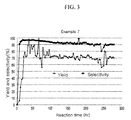
- the yield of dialkyl carbonate was measured by collecting samples after each reaction time and performing gas chromatography analysis (analysis condition: DB-WAX capillary column (0.25 mm ⁇ x 30 m x 0.25 ⁇ m), FID detector).
- the quantitative analysis of generated dimethyl carbonate was calculated by drawing a calibration curve using heptanol and analyzing the calibration curve, was applied to the following Math Figure 1 to calculate the yield, and measurement results of the yield of each example and comparative example are described in the following Tables 1 to 3.
- a dialkyl carbonate such as dimethyl carbonate was prepared by using the device for continuously preparing dialkyl carbonate, which was described in the specification.
- a stirred reactor made of glass was used as the first reactor of the device for preparing dialkyl carbonate.
- the first reactor included a 1/16" ⁇ Teflon tube for injecting the raw material thereinto to sufficiently immerse the raw material in the room temperature ionic liquid.
- a 4-blade turbine type of stirrer and stirring motor were used in order to vaporize alcohol such as methanol at the reaction temperature and disperse the alcohol well.
- a heating mantle and a thermostat were provided in order to control the temperature of the reactor.
- a fixed-bed reactor (or auxiliary distillation column; second reactor) filled with the 5 mm ⁇ x 5 mm Raschig rings made of glass as the filler was provided, and the temperature control device was also provided at the upper portion of the first reactor.
- a metering pump and a digital scale for precisely measuring the supply amount were provided in order to supply the urea/alcohol (methanol) solution into the first reactor. Connection was performed so that refluxed alcohol (methanol) was supplied to the first reactor, and alcohol (methanol) was set to be vaporized in the first reactor through the Teflon tube.
- the first distillation column two columns were provided and constituted by the lower distillation column (vacuum outer cover of 25 mm ⁇ x 350 mm) and the upper distillation column (vacuum outer cover of 12.7 mm ⁇ x 610 mm).
- the upper and lower columns were provided so that the reactant generated from the second reactor and the vapor of unreacted alcohol (methanol) were injected into the center of the upper and lower columns to distill dialkyl carbonate such as dimethyl carbonate.
- the reboiler at the lower portion of the first distillation column was a three neck round flask having a volume of 250 ml, and a metering pump for refluxing the alcohol (methanol)/dialkyl carbamate (methyl carbamate) solution separated by the reboiler to the reactor and the liquid level controller for controlling a liquid level of the reboiler were provided while being linked with the alcohol (methanol) supply pump. Further, a digital scale capable of measuring the supply amount of alcohol (methanol) was provided, and a thermostat capable of controlling the temperature of the reboiler and the magnetic stirrer for preventing boiling were provided.
- a reflux controller and a reflux valve were attached in order to control the reflux ratio
- a differential pressure meter was provided in order to regularly check leakage of the alcohol (methanol) vapor and clogging of the inside of the device
- an absorption bottle for absorbing non-condensed ammonia from the upper portion of the cooler of the distillation column and a safety bottle for preventing backflow were provided to constitute the device for continuously preparing dialkyl carbonate.
- Example 7 The same procedure as Example 7 was performed to prepare dimethyl carbonate, except that methyl carbamate was dissolved in methanol at a concentration of 23.8 wt% and used as the raw material. The yield and selectivity were analyzed by the same method as Example 7, and are shown in FIG. 4 .
- Example 1 The same procedure as Example 1 was performed to prepare diethyl carbonate, except that 75 ml of ethyl alcohol was used instead of methanol of Example 1.
- Example 1 The same procedure as Example 1 was performed to prepare di-n-propyl carbonate, except that 75 ml of n-propyl alcohol was used instead of methanol of Example 1.
- dialkyl carbonate could be prepared by using urea or alkyl carbamate as the raw material.
Landscapes
- Chemical & Material Sciences (AREA)
- Organic Chemistry (AREA)
- Organic Low-Molecular-Weight Compounds And Preparation Thereof (AREA)
- Low-Molecular Organic Synthesis Reactions Using Catalysts (AREA)
- Catalysts (AREA)
Applications Claiming Priority (2)
| Application Number | Priority Date | Filing Date | Title |
|---|---|---|---|
| KR20110036777 | 2011-04-20 | ||
| PCT/KR2012/003070 WO2012144856A2 (ko) | 2011-04-20 | 2012-04-20 | 디알킬카보네이트의 제조 방법 |
Publications (2)
| Publication Number | Publication Date |
|---|---|
| EP2700629A2 true EP2700629A2 (de) | 2014-02-26 |
| EP2700629A4 EP2700629A4 (de) | 2014-09-24 |
Family
ID=47042074
Family Applications (1)
| Application Number | Title | Priority Date | Filing Date |
|---|---|---|---|
| EP12774514.9A Withdrawn EP2700629A4 (de) | 2011-04-20 | 2012-04-20 | Verfahren zur herstellung von dialkylcarbonat |
Country Status (5)
| Country | Link |
|---|---|
| US (1) | US9334228B2 (de) |
| EP (1) | EP2700629A4 (de) |
| JP (1) | JP5952384B2 (de) |
| CN (1) | CN103476739B (de) |
| WO (1) | WO2012144856A2 (de) |
Cited By (4)
| Publication number | Priority date | Publication date | Assignee | Title |
|---|---|---|---|---|
| WO2015132801A1 (en) * | 2014-03-03 | 2015-09-11 | Council Of Scientific And Industrial Research | Process for the synthesis of dimethylcarbonate |
| WO2016151602A3 (en) * | 2015-03-23 | 2016-10-27 | Council Of Scientific & Industrial Research | A process for the synthesis of dialkyl carbonates |
| EP3237370A4 (de) * | 2014-12-24 | 2018-01-24 | Posco | Verfahren und vorrichtung zur reinigung von dimethylcarbonat mittels pervaporation |
| CN109529395A (zh) * | 2019-01-16 | 2019-03-29 | 格瑞拓动力股份有限公司 | 蒸发控制设备及方法 |
Families Citing this family (5)
| Publication number | Priority date | Publication date | Assignee | Title |
|---|---|---|---|---|
| WO2015087341A1 (en) * | 2013-12-12 | 2015-06-18 | Council Of Scientific & Industrial Research | An improved process for the preparation of dimethyl carbonate using ionic liquids as catalyst |
| US11110449B2 (en) * | 2015-03-27 | 2021-09-07 | Council Of Scientific & Industrial Research | Process for recovery and regeneration of deactivated catalysts used in dialkyl carbonate synthesis |
| JP7111105B2 (ja) * | 2017-08-21 | 2022-08-02 | 三菱瓦斯化学株式会社 | ジアルキルカーボネートの製造方法 |
| TWI654178B (zh) * | 2017-12-28 | 2019-03-21 | 財團法人工業技術研究院 | 二烷基碳酸酯之製備方法 |
| CN117586219A (zh) * | 2023-11-23 | 2024-02-23 | 惠州市绿色能源与新材料研究院 | 一种尿素醇解合成环状碳酸酯的方法 |
Family Cites Families (7)
| Publication number | Priority date | Publication date | Assignee | Title |
|---|---|---|---|---|
| DE3021554A1 (de) * | 1980-06-07 | 1981-12-24 | Basf Ag, 6700 Ludwigshafen | Verfahren zur herstellung von carbonaten |
| US5565603A (en) | 1993-12-20 | 1996-10-15 | Saleh; Ramzi Y. | Process for manufacturing dialkyl carbonate from urea and alcohol |
| JP3881386B2 (ja) | 1994-10-21 | 2007-02-14 | 多摩化学工業株式会社 | 炭酸ジアルキルの製造方法 |
| US5902894A (en) | 1998-08-26 | 1999-05-11 | Catalytic Distillation Technologies | Process for making dialkyl carbonates |
| CN100395019C (zh) * | 2004-08-27 | 2008-06-18 | 中国科学院山西煤炭化学研究所 | 用于由尿素和甲醇合成碳酸二甲酯的催化剂及其制法和应用 |
| CN101417229B (zh) * | 2007-10-22 | 2015-03-11 | 拜耳材料科技(中国)有限公司 | 用于有机碳酸酯合成的催化剂、其制备方法及其用途 |
| KR101102537B1 (ko) * | 2009-07-31 | 2012-01-04 | 재단법인 포항산업과학연구원 | 디알킬카보네이트를 제조하는 방법 |
-
2012
- 2012-04-20 JP JP2014506335A patent/JP5952384B2/ja active Active
- 2012-04-20 WO PCT/KR2012/003070 patent/WO2012144856A2/ko not_active Ceased
- 2012-04-20 EP EP12774514.9A patent/EP2700629A4/de not_active Withdrawn
- 2012-04-20 CN CN201280019089.5A patent/CN103476739B/zh active Active
-
2013
- 2013-10-18 US US14/057,111 patent/US9334228B2/en active Active
Cited By (6)
| Publication number | Priority date | Publication date | Assignee | Title |
|---|---|---|---|---|
| WO2015132801A1 (en) * | 2014-03-03 | 2015-09-11 | Council Of Scientific And Industrial Research | Process for the synthesis of dimethylcarbonate |
| EP3237370A4 (de) * | 2014-12-24 | 2018-01-24 | Posco | Verfahren und vorrichtung zur reinigung von dimethylcarbonat mittels pervaporation |
| US10377696B2 (en) | 2014-12-24 | 2019-08-13 | Posco | Method and apparatus for purification of dimethyl carbonate using pervaporation |
| WO2016151602A3 (en) * | 2015-03-23 | 2016-10-27 | Council Of Scientific & Industrial Research | A process for the synthesis of dialkyl carbonates |
| US10336681B2 (en) | 2015-03-23 | 2019-07-02 | Council Of Scientific & Industrial Research | Process for the synthesis of dialkyl carbonates |
| CN109529395A (zh) * | 2019-01-16 | 2019-03-29 | 格瑞拓动力股份有限公司 | 蒸发控制设备及方法 |
Also Published As
| Publication number | Publication date |
|---|---|
| WO2012144856A3 (ko) | 2013-01-17 |
| US20140051880A1 (en) | 2014-02-20 |
| US9334228B2 (en) | 2016-05-10 |
| JP5952384B2 (ja) | 2016-07-13 |
| WO2012144856A2 (ko) | 2012-10-26 |
| CN103476739A (zh) | 2013-12-25 |
| JP2014518553A (ja) | 2014-07-31 |
| EP2700629A4 (de) | 2014-09-24 |
| CN103476739B (zh) | 2017-11-14 |
Similar Documents
| Publication | Publication Date | Title |
|---|---|---|
| US9334228B2 (en) | Method for preparing dialkyl carbonate | |
| US9371269B2 (en) | Method for preparing dialkyl carbonate | |
| JP3374863B2 (ja) | ジアルキルカーボネートの製造方法 | |
| US7279592B2 (en) | Process for making dialkyl carbonates | |
| WO2005102986A2 (en) | Process for making dialkyl carbonates | |
| EP3305747B1 (de) | Verfahren zur herstellung von konjugiertem dien | |
| US6031122A (en) | Process for producing dialkyl carbonate | |
| KR101525192B1 (ko) | 디알킬카보네이트의 제조 방법 | |
| US20210017108A1 (en) | Integrated capture and conversion of co2 to methanol or methanol and glycol | |
| US20110245513A1 (en) | Synthesis process of polyol carbonate from polyols, conducted in using a solvent selective for polyols carbonates | |
| US5773643A (en) | Process for preparation of isocyanate compounds | |
| US7683221B2 (en) | Process for the production of alkylene glycols using homogeneous catalysts | |
| CN102186807A (zh) | 自有机碳酸酯流移除烷醇杂质的方法 | |
| JP4673028B2 (ja) | エチレンカーボネートの精製方法 | |
| CN108727192B (zh) | 碳酸二苯酯类化合物的制备方法 | |
| KR100690010B1 (ko) | 불소화 디알킬 카보네이트의 제조 방법 | |
| KR100744824B1 (ko) | 디알킬 카보네이트의 제조방법 | |
| CN109265344B (zh) | 碳酸二苯酯类化合物的制备方法 | |
| US20230132735A1 (en) | Method and apparatus for preparation of alkylene carbonate using polyamine-heterogeneous catalyst | |
| CN108722493B (zh) | 制备碳酸二苯酯类化合物的催化剂及其应用 | |
| JP3800247B2 (ja) | 6員環カーボネートの製造方法 | |
| JPH10259166A (ja) | ジアルキルカーボネートの製造方法 | |
| WO2012176928A1 (en) | Method for producing amino alcohol compound | |
| JPH10259165A (ja) | ジアリルカーボネートの製造方法 |
Legal Events
| Date | Code | Title | Description |
|---|---|---|---|
| PUAI | Public reference made under article 153(3) epc to a published international application that has entered the european phase |
Free format text: ORIGINAL CODE: 0009012 |
|
| 17P | Request for examination filed |
Effective date: 20131119 |
|
| AK | Designated contracting states |
Kind code of ref document: A2 Designated state(s): AL AT BE BG CH CY CZ DE DK EE ES FI FR GB GR HR HU IE IS IT LI LT LU LV MC MK MT NL NO PL PT RO RS SE SI SK SM TR |
|
| DAX | Request for extension of the european patent (deleted) | ||
| A4 | Supplementary search report drawn up and despatched |
Effective date: 20140825 |
|
| RIC1 | Information provided on ipc code assigned before grant |
Ipc: C07C 68/00 20060101AFI20140815BHEP Ipc: C07C 69/96 20060101ALI20140815BHEP |
|
| GRAP | Despatch of communication of intention to grant a patent |
Free format text: ORIGINAL CODE: EPIDOSNIGR1 |
|
| INTG | Intention to grant announced |
Effective date: 20160413 |
|
| STAA | Information on the status of an ep patent application or granted ep patent |
Free format text: STATUS: THE APPLICATION IS DEEMED TO BE WITHDRAWN |
|
| 18D | Application deemed to be withdrawn |
Effective date: 20160824 |